



Platinum blonde pixie cuts for thick hair work best when the haircut does the heavy lifting before the color even enters the room. Thick hair can swallow a weak pixie shape in a heartbeat; you get a puffed-out helmet at the sides, a blunt crown, and that weird “too much hair, not enough cut” look that makes short hair feel harder than long hair. The right version changes that fast. It trims bulk where it gathers, leaves enough length where the face needs softness, and turns platinum into a clean, icy outline instead of a flat wash of color.
That’s why this combo can look so sharp. Thick hair gives the cut a built-in structure, and platinum blonde makes every angle more visible. A little bevel at the fringe matters. A tighter nape matters. Even the way the crown lifts off the scalp matters, because light hair shows shape instead of hiding it. The result can feel crisp, modern, and a little bit ruthless in the best way.
And no, it does not have to look severe. Some of the prettiest versions keep a soft sweep at the temple, a feathery top, or a longer sideburn so the cut still moves. Others go blunt and sculpted, which is a different mood entirely. The point is to use thickness as fuel, not fight it.
Why These 22 Cuts Feel Different on Thick Hair
-
Bulk gets controlled, not just shortened. The best pixie cuts for dense hair remove weight from the inside of the shape, so the hair lays close without going flat.
-
Platinum makes the silhouette visible. Ice blonde shows off every layer, bevel, and nape taper, which is why a clean cut line matters more here than on darker hair.
-
Short can still be soft. A longer fringe, feathered crown, or tucked sideburn keeps the cut from reading as boxy or overworked.
-
The grow-out has to behave. Thick hair grows out with attitude, so the cut needs a plan for week four and week six, not just the first salon day.
-
Styling should be quick. A good platinum pixie on thick hair should need a little paste, a short blow-dry, and maybe a touch of flat iron at the fringe — not a full production.
1. Feathered Crown Pixie
This is the one I reach for when thick hair wants to look airy instead of bulky. The crown stays a touch longer, then gets feathered with point cutting so the top moves while the sides stay controlled. On platinum blonde, those soft layers pick up light and keep the whole cut from reading like one solid block.
Why it works on dense hair
The feathering breaks up that heavy, shelf-like look thick hair can create after it’s lightened. You still get body, but the body sits in little pieces instead of one dense mound. That matters a lot when the color is pale, because platinum makes every blunt edge louder.
Ask for internal weight removal, not just surface texturizing. Big difference. The first gives you shape; the second can leave the top frizzy and the underside still heavy.
A pea-sized dab of matte paste rubbed through the crown is usually enough. Push it up with your fingers, not a brush, or you’ll flatten the feathered texture you paid for.
2. Platinum Undercut Crop
This one has a sharper personality. The sides and nape are clipped tight or undercut, while the top stays fuller and slightly choppy, so thick hair loses its bulk where it tends to balloon out most. The platinum finish makes that contrast look deliberate instead of harsh.
A clean undercut is a strong move if your hair sits wide at the ears or bulks up behind the jaw. It also buys you a little breathing room on styling days, because the narrow lower section dries fast and stays put. If you’ve ever fought a dense pixie that turns into a triangle by noon, this is the fix.
Best for
- Hair that expands at the sides
- Strong jawlines that can handle a crisp outline
- People who like a short, cool silhouette with very little fluff
Keep the top about 2 to 3 inches if you want movement. Shorter than that and you lose the contrast that makes the cut interesting. Longer than that and the undercut starts to look like an afterthought.
3. Side-Swept Long-Top Pixie
Why does this one work so well? Because thick hair needs somewhere to go, and a long side-swept fringe gives it a direction. The top is kept long enough to sweep across the forehead, then blended down into shorter sides so the shape feels softer than a crop and sleeker than a bob.
I like this cut for anyone who wants platinum but not too much scalp exposure. The longer top lets the color melt into a smooth, polished line, which helps if your hair is coarse or grows out with stubborn cowlicks. It also plays nicely with glasses, since the fringe can stop just above the frame instead of competing with it.
What to watch for
If the fringe is left too heavy, it collapses into a curtain. If it’s thinned too aggressively, it can look wispy in a bad way. The sweet spot is a diagonal sweep with enough density to hold shape, but enough bevel that it moves when you turn your head.
4. Tapered Nape Pixie
This is the quiet control freak of the group. The nape is closely tapered, sometimes almost shaved at the neckline, while the back of the head keeps a soft roundness that stops thick hair from puffing out under the occipital bone. In platinum, that clean neckline looks almost architectural.
You notice this cut most when the hair is drying. Thick hair usually starts to swell at the nape as soon as it loses moisture, and a good taper keeps that from happening. It also makes collars, turtlenecks, and earrings look sharper because there’s no fuzzy bulk stealing the line.
A light pomade along the nape and around the ears keeps the shape neat. Use less than you think. Platinum hair can go stringy fast if you overload the ends.
5. Curly-Forward Pixie
Curly thick hair and platinum blonde can be gorgeous together, but only if the cut respects the curl pattern. This version keeps a little more length through the top and front, then lets the curls fall forward instead of puffing out to the sides. The result is softer, face-framing, and much less pyramid-shaped than a rushed short cut.
The trick is to cut for shrinkage. A curl that looks like an inch in the chair might spring to three after it dries, and thick hair does not forgive bad estimates. Leave enough length in the fringe and crown so the curls can stack, not perch.
A curl cream mixed with a dab of gel is the easiest finish. Scrunch while the hair is damp, diffuse on low, and stop touching it once the curls set. Platinum shows frizz fast, so hands off after the shape locks in.
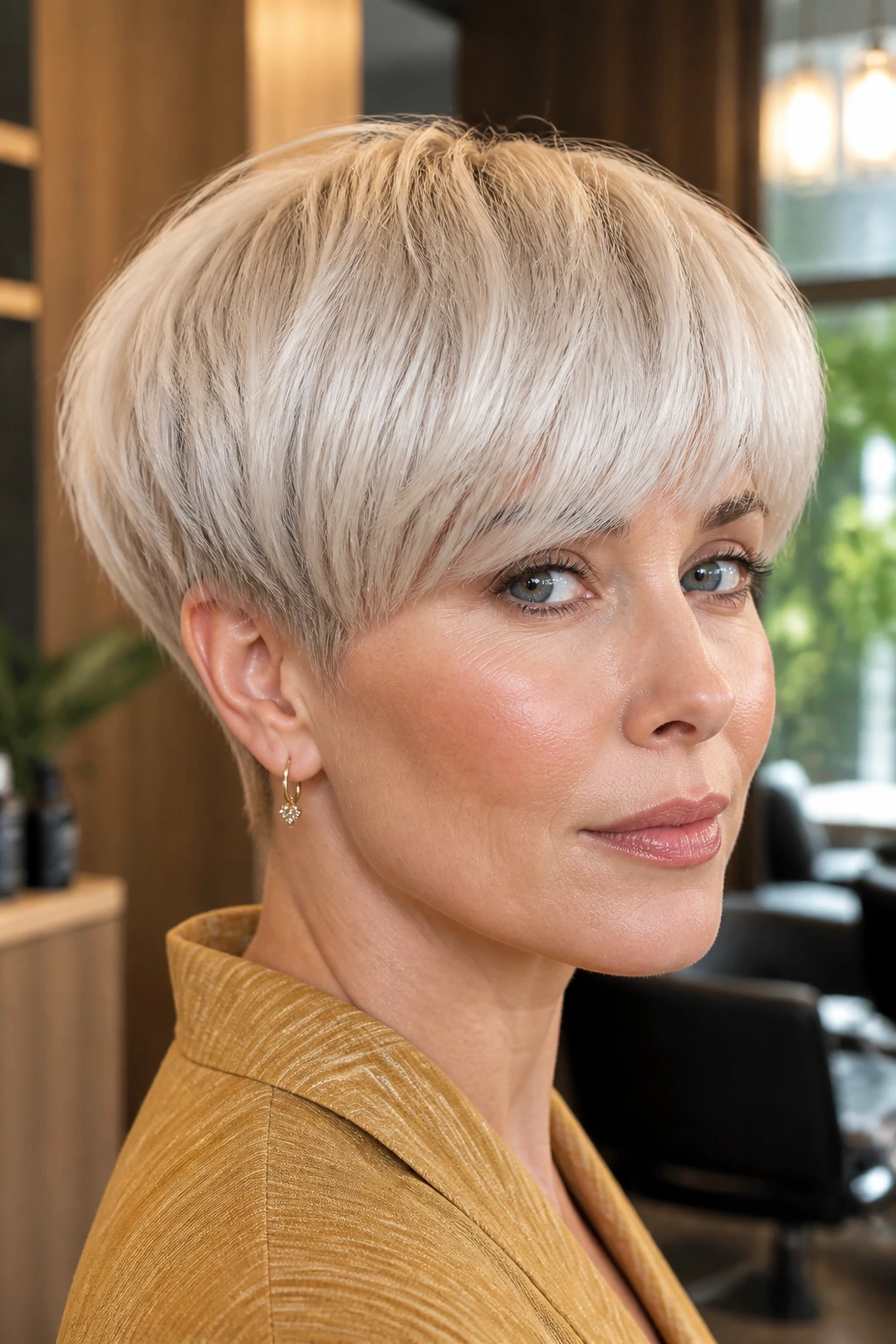
6. Rounded Bowl Pixie
A rounded bowl pixie sounds risky, and that’s exactly why it can be so good on thick hair. Done well, it gives you a smooth, curved silhouette that uses the density instead of trying to strip it out. The line stays soft around the head, with just enough taper at the edges to keep it from turning helmet-like.
The platinum shade matters here. On darker hair, this kind of shape can read too heavy. On icy blonde, it looks lighter and more intentional, especially if the ends are point cut and the fringe has a whisper of movement.
Why it stands out
It is not for people who want a messy, bedhead crop. It wants polish. A round brush, a small amount of smoothing cream, and a cool shot from the dryer will do more for this cut than a pile of texture spray ever will.
If your hair is coarse, ask for soft graduation through the sides. That tiny bit of stacking helps the bowl shape sit instead of jutting out.
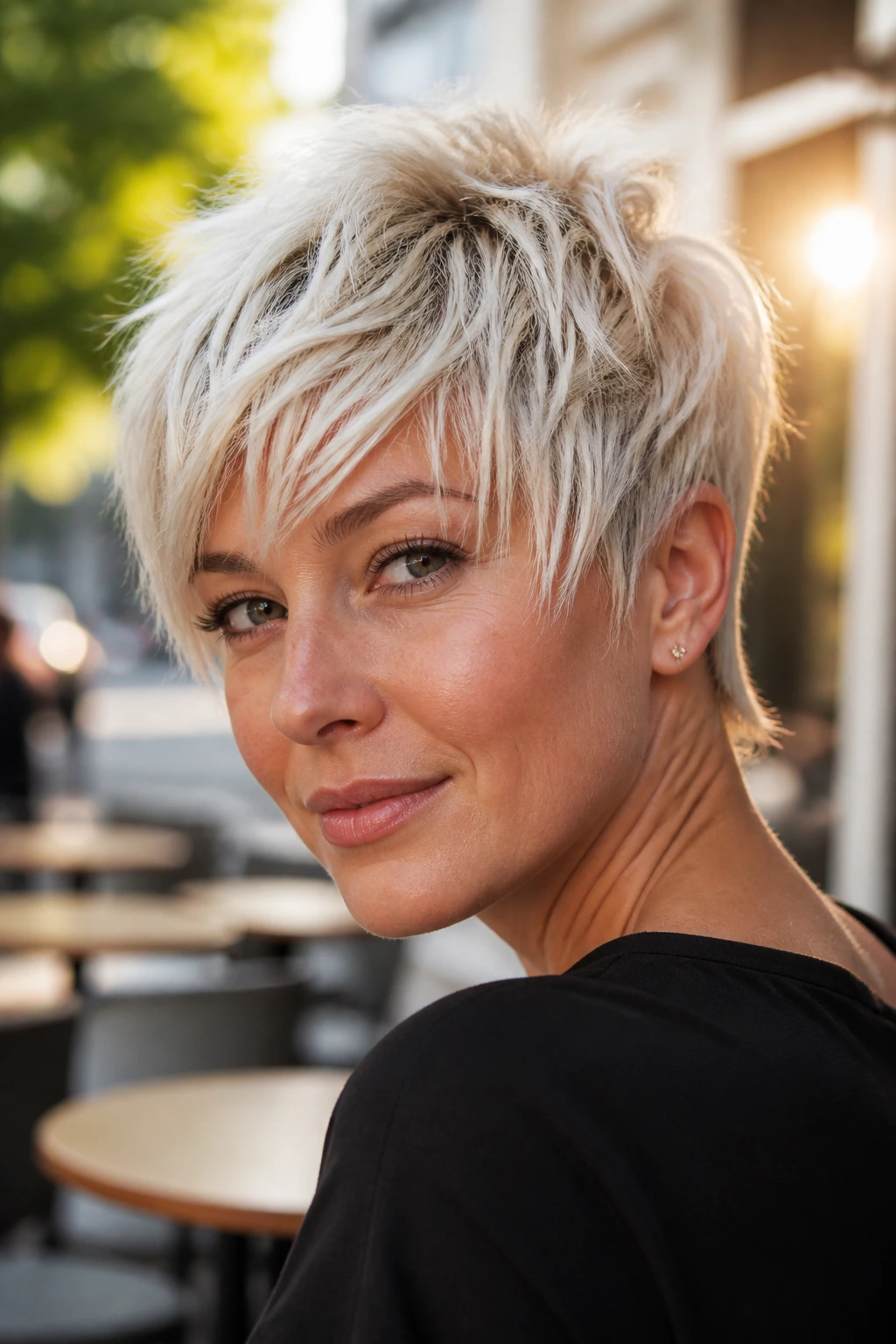
7. Shaggy Fringe Pixie
The first thing you notice is the fringe. It falls in soft, broken pieces, not one clean line, which is exactly why thick hair loves it. The texture eats some of the density and makes the whole cut feel lighter, almost windswept, even when the hair is short and heavily layered.
I’m fond of this version for platinum because the color shows every piece of the fringe. It looks best when the front isn’t too tidy. A little unevenness is the point. If the cut is too symmetrical, it starts looking manufactured.
How to get the most from it
- Keep the fringe between brow and cheekbone length.
- Ask for slicing or point cutting through the front, not heavy thinning.
- Use a dry texturizing spray at the roots, then pinch the ends with your fingers.
The shape is forgiving, which is useful. Thick hair often needs room to misbehave a little, and this cut gives it that without falling apart.
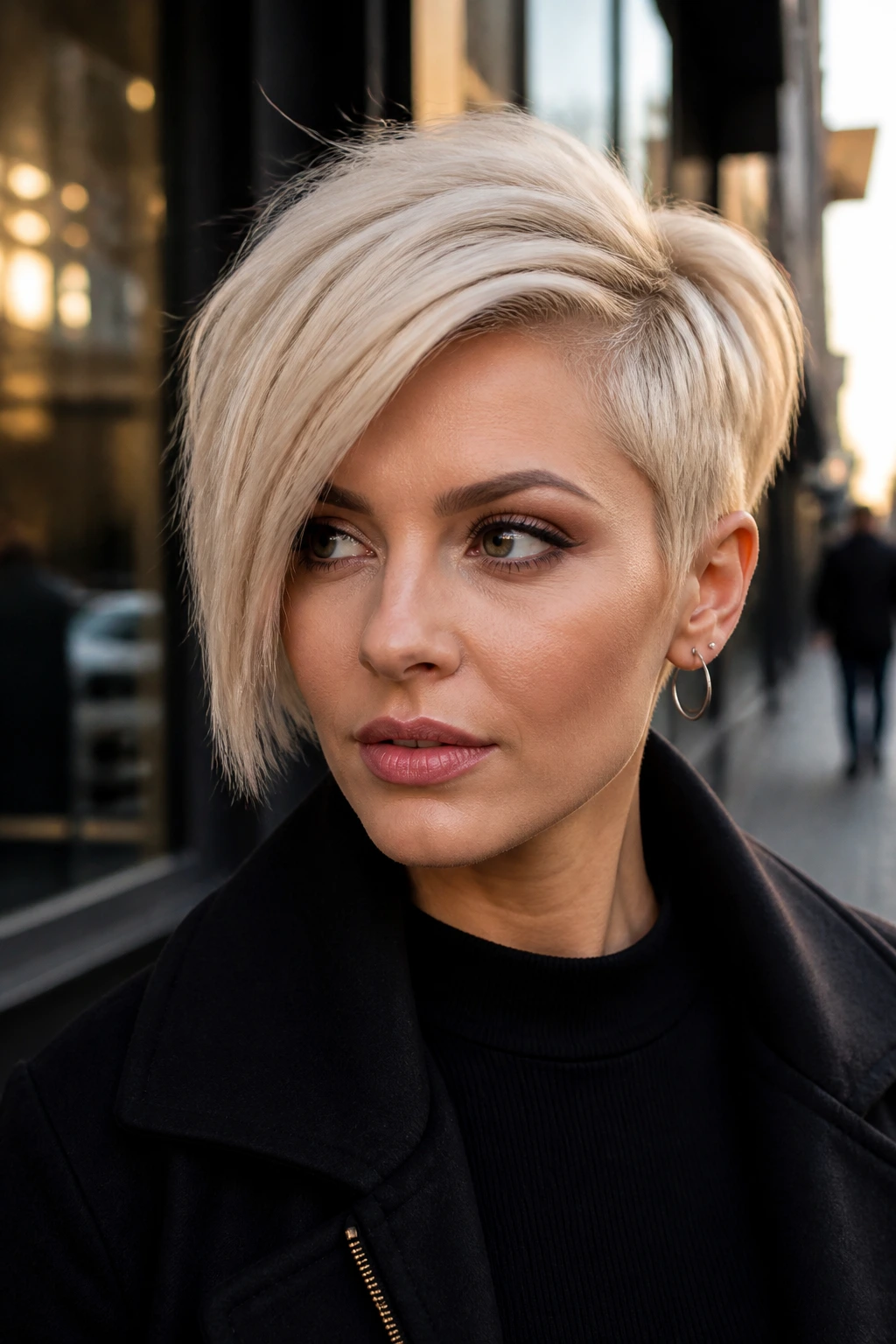
8. Asymmetrical Sweep Pixie
Unlike a balanced pixie, this one lets one side run longer and lean over the face. That asymmetry is useful on thick hair because it creates movement where the density would otherwise sit too square. Platinum blonde makes the shift in length obvious, which is half the appeal.
This cut is especially good if you want a little drama without committing to a full mohawk or a severe undercut. The longer side can soften one cheek, narrow a broad forehead, or just make the whole look less precious. It feels a little sharper than a standard side-parted pixie, and that edge matters.
Keep the short side tight enough that the long side has something to contrast against. If both sides sit nearly the same length, the asymmetry disappears and you’re left with extra hair for no reason. The contrast is the whole show here.
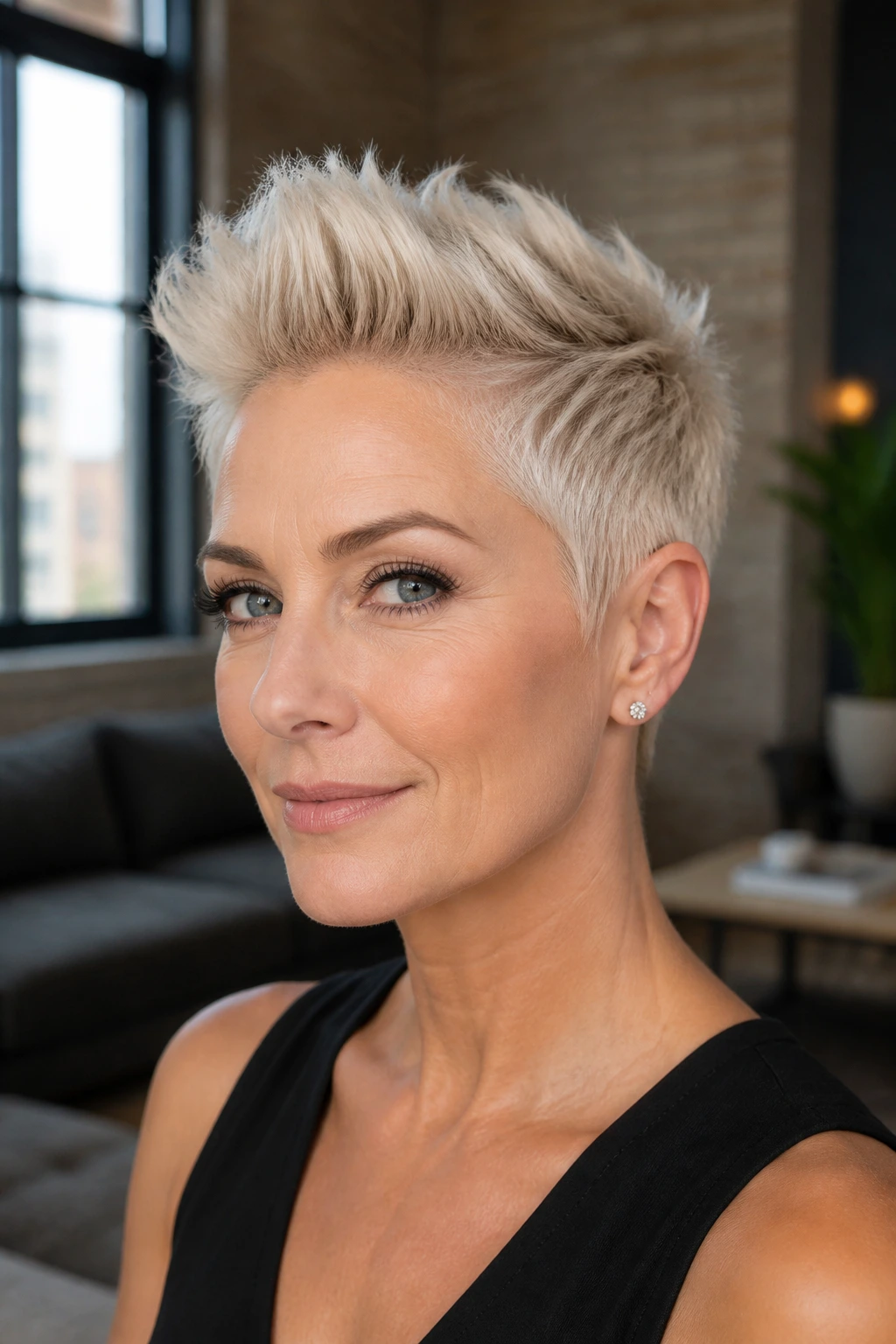
9. Brushed-Up Tapered Crop
Here’s the version that gives thick hair a little height without turning it into a mushroom. The sides are tapered close, the top is left with enough length to brush upward, and the crown gets internal shaping so the lift looks clean rather than puffy. Platinum blonde adds a cool, almost metallic finish to the volume.
This cut works because it uses thickness at the top, where lift looks intentional, and removes it around the ears, where it usually just spreads out. If you like a sporty, polished shape, this is a strong choice. It also plays well with strong brows and angular faces, since the upward movement draws the eye vertically.
A root-lift spray at the base and a quick blast with the dryer are enough on most mornings. Once the hair is dry, a small touch of paste at the front keeps the shape from sliding back down.
10. Sleek Glass Pixie
A sleek glass pixie is the polished one in the group. The hair is cut close and refined, then smoothed so it looks glossy rather than fluffy. Thick hair can handle this style better than fine hair because the density gives it enough substance to hold that tidy shape, and platinum blonde turns the surface shine into the main event.
The one rule: the cut must be precise. If the perimeter is sloppy, the sleek finish exposes every uneven corner. But if the lines are clean, the result is chic in a very direct way. No frills. No fuss.
Use a lightweight smoothing cream on damp hair, blow-dry with a brush, then tap a flat iron only where the fringe bends or the ends flip. Too much heat makes platinum brittle fast, so the goal is control, not frying the life out of it. A satin-finish serum at the ends is enough.
11. Faux-Hawk Pixie
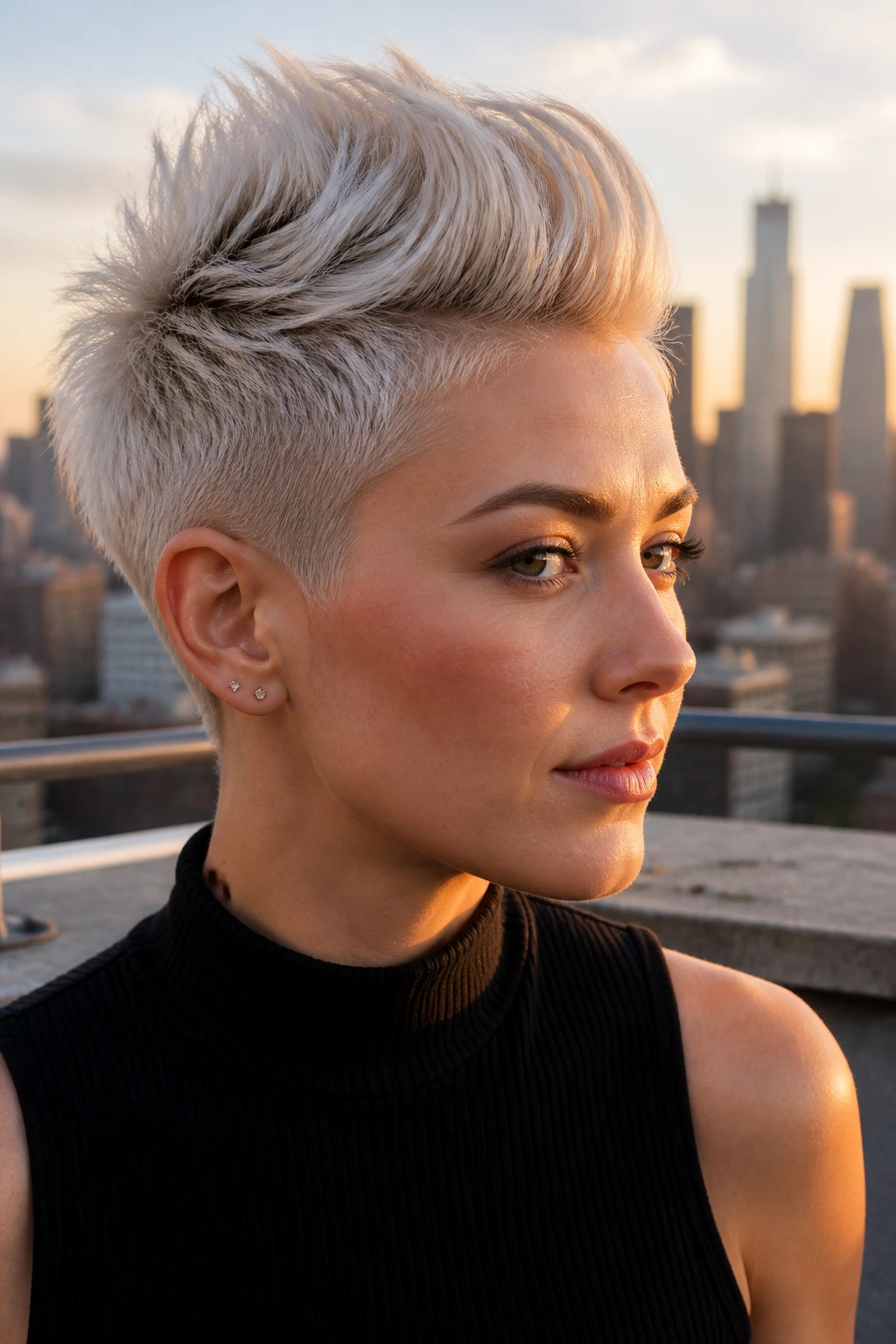
Why do so many thick-haired people end up loving this shape? Because the center ridge gives the hair a place to stack, while the sides get clipped or tightly tapered so the bulk disappears where it causes the most trouble. The platinum shade makes the center strip look even more defined.
This cut is bold, but it’s not as wild as it sounds. You can keep the ridge soft and brushed up for daytime, then rough it higher with paste if you want more attitude. The sides can be subtle or very short; that’s the part that changes the mood.
Who it suits
- Thick hair that naturally wants volume
- Faces that can handle height at the crown
- Anyone who likes a cut that still looks alive at the end of the day
If your hair grows forward at the hairline, ask for a little extra length near the front so the ridge doesn’t collapse. That small adjustment makes the whole cut easier to wear.
12. Ear-Length Pixie Bob
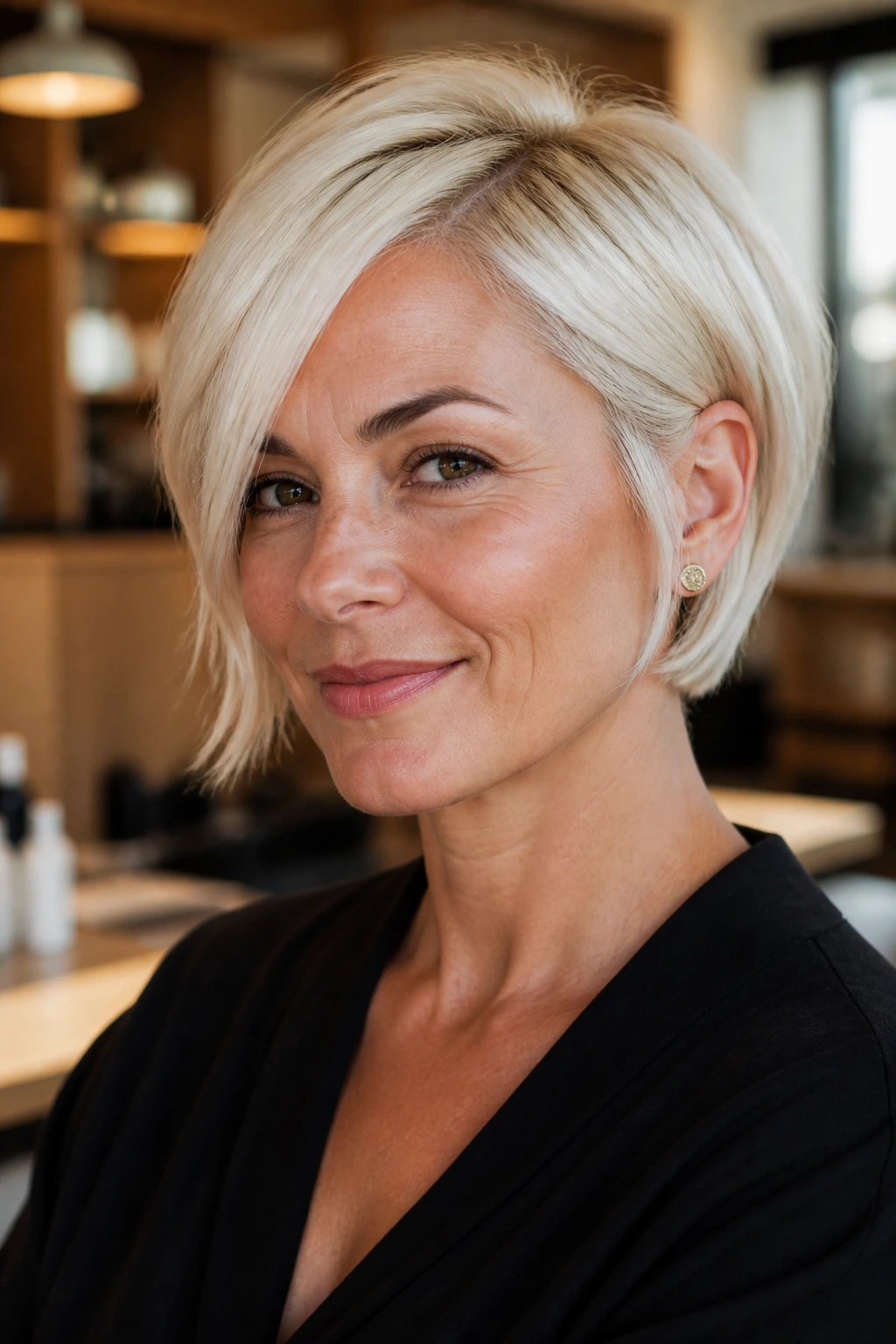
This is the bridge between a true pixie and a short bob, and it’s a smart place to land if you’re nervous about going too short with thick hair. The hair skims the ears, stays fuller through the sides, and keeps enough length around the face to soften the platinum color. It reads lighter than a bob and less exposed than a crop.
The reason it works is simple. Thick hair likes a little length to settle into, but it still needs the neckline and internal layers cleaned up or it starts to swell. This cut gives you both. You get the ease of short hair without losing the swing that helps the shape breathe.
A side tuck behind one ear can change the whole mood. So can a slight off-center part. Don’t over-style it; the cut already has enough structure.
13. Baby Bang Pixie
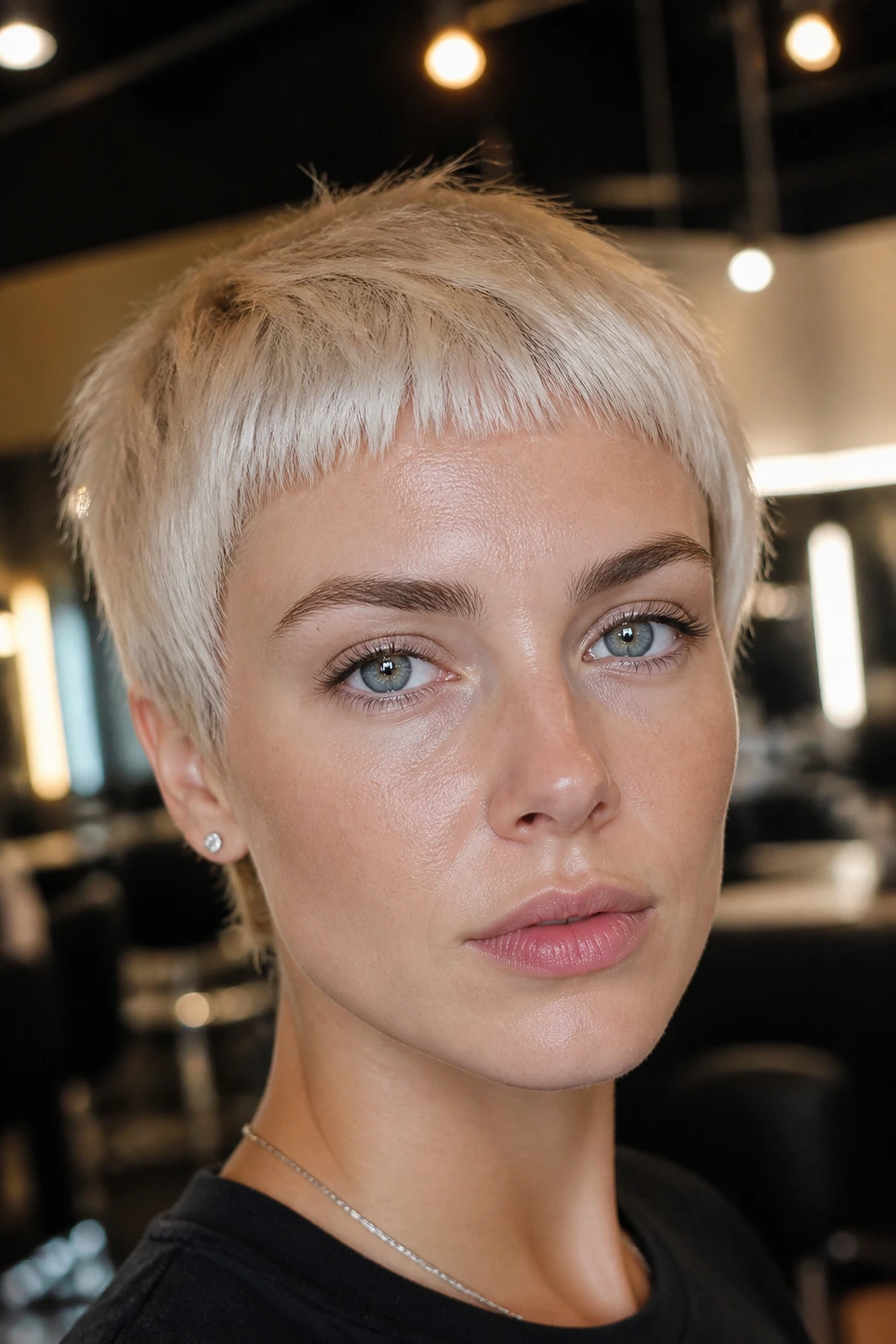
Baby bangs are not shy, and on thick hair they’re even less shy. The short fringe puts the color right against the brows and gives the face a hard line at the front, which looks especially striking in platinum. It’s a little vintage, a little sharp, and not for people who want to hide.
The challenge is density. Thick hair can make baby bangs look like a heavy shelf if they’re cut too blunt. The fix is to keep them narrow, lightly textured, and just long enough to move instead of sitting like a ruler across the forehead.
If your forehead is short or your face is already very compact, you may want a softer version with a touch more length. Otherwise, this cut brings a clean, high-contrast effect that feels fresh without trying too hard. Not every pixie needs to be soft around the edges. This one isn’t.
14. Deep Side-Part Pixie
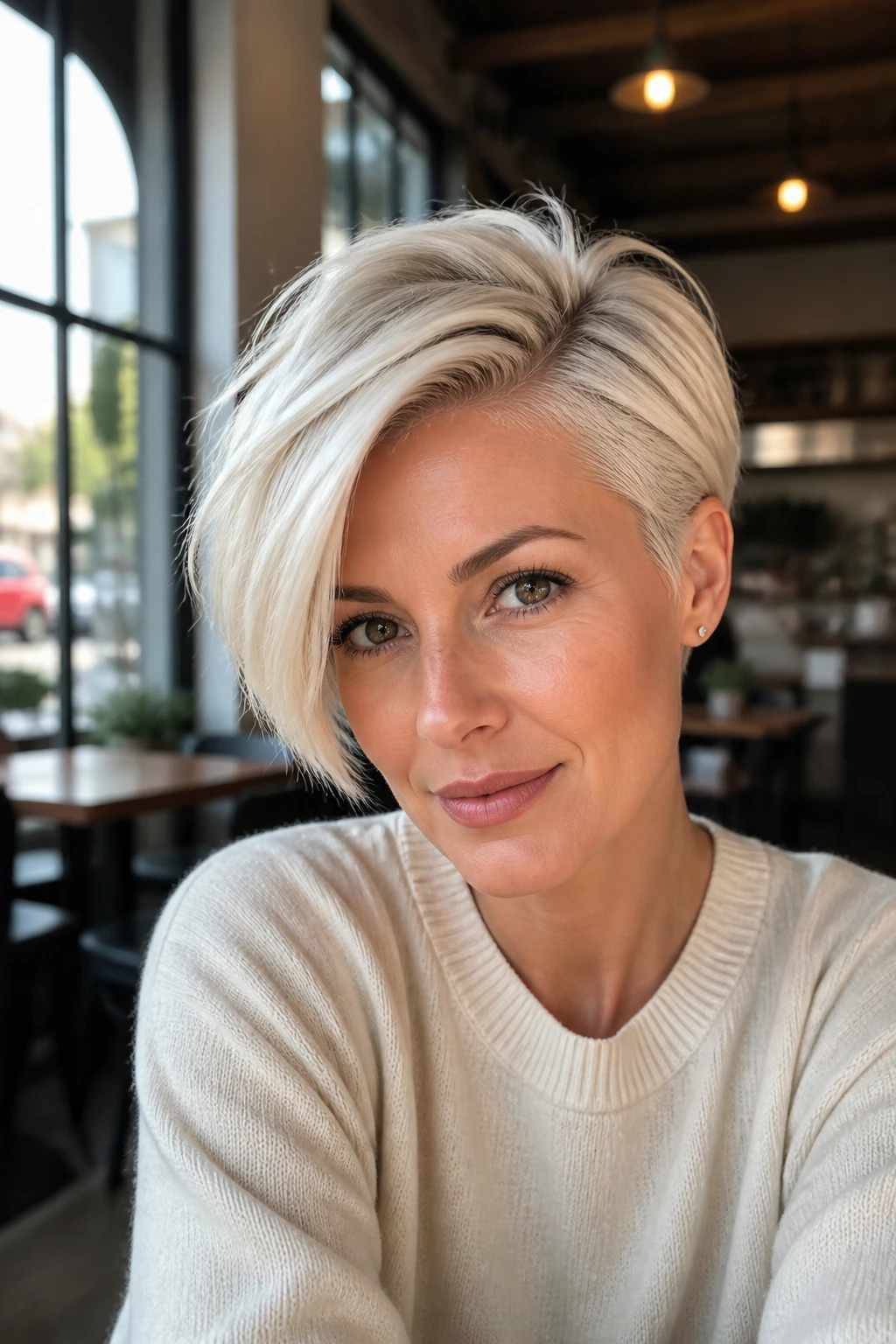
A deep side part can calm thick hair in a way people underestimate. It lets one side sit flatter, pushes the fringe across the forehead, and creates a long diagonal line that makes the whole pixie look slimmer. Platinum blonde helps because the part line and the sweep read clearly.
I like this shape for square or round faces. The diagonal movement takes pressure off the widest points, and the side with less hair gives the style some air. It’s also easy to wear with a slightly grown-out crown, which is handy if you do not get to the salon every month.
Keep the part a little farther over than you think you need. A tiny shift barely shows. A deep shift changes the whole cut.
15. Razor-Textured Pixie
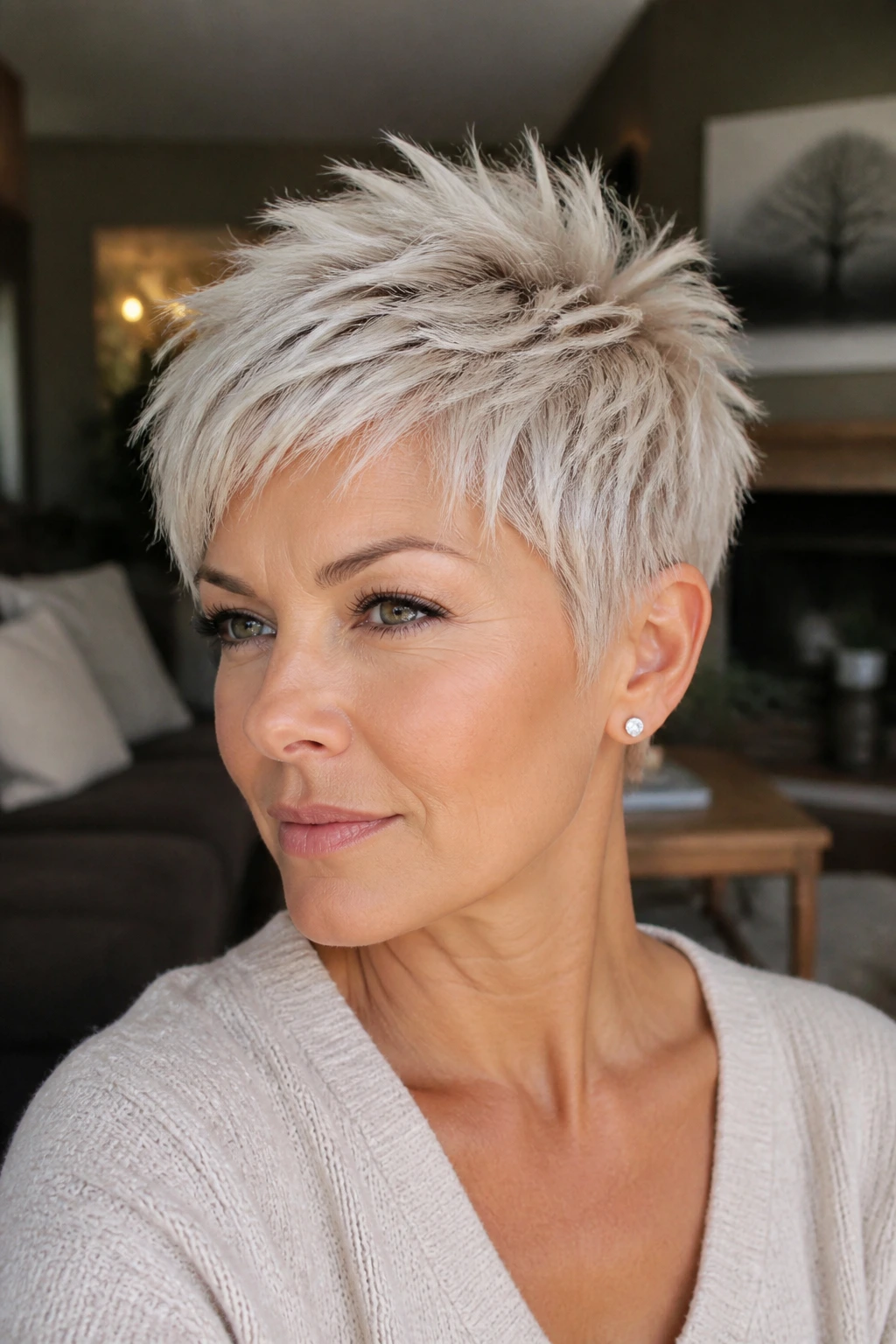
This one has a sharper, broken edge than a scissor-cut pixie. The razor work gives the ends a little bite, which can be a relief on thick hair because it softens the outline without making the shape wispy. In platinum, the texture looks almost frosted at the tips.
The benefit is movement. Thick hair can feel stubborn when it’s cut blunt, especially if it’s straight and heavy. Razor texturing loosens the line so the hair falls in separate bits instead of one solid slab. You still want control, though. Too much razor work and the ends can get ragged fast, especially once the blonde has been lightened.
What to ask for
Ask for texture mainly through the crown, fringe, and upper sides. Leave the base cleaner. That balance keeps the cut from fraying out after the first wash, which is a mistake I see all the time.
16. Long Sideburn Pixie
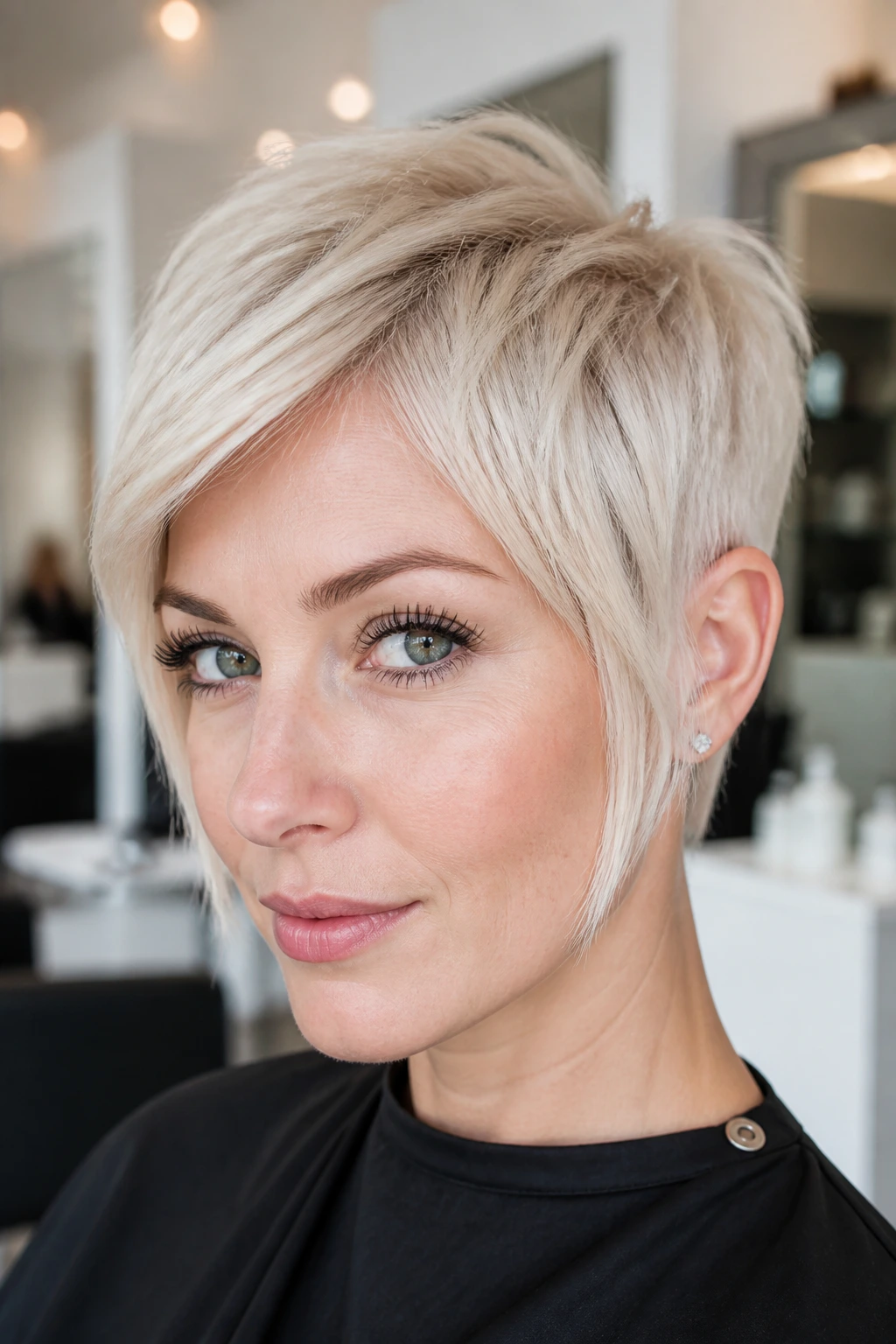
A long sideburn pixie gives thick hair a little face-framing anchor. The sideburns are left longer, often grazing the cheek or the top of the jaw, while the crown and back stay cropped and controlled. That contrast is lovely in platinum because the lighter pieces around the face soften the overall effect.
This is one of the easiest ways to make a pixie feel feminine without making it fussy. The sideburns can curve inward, tuck under, or hang straight depending on how you style them. They also help if your hairline is uneven, or if you simply want a little more shape near the ears.
Keep the sideburns soft, not blocky. Sharp corners there can make thick hair look chunky, and that defeats the point. A gentle taper through the last inch is usually enough.
17. Hidden Undercut Pixie
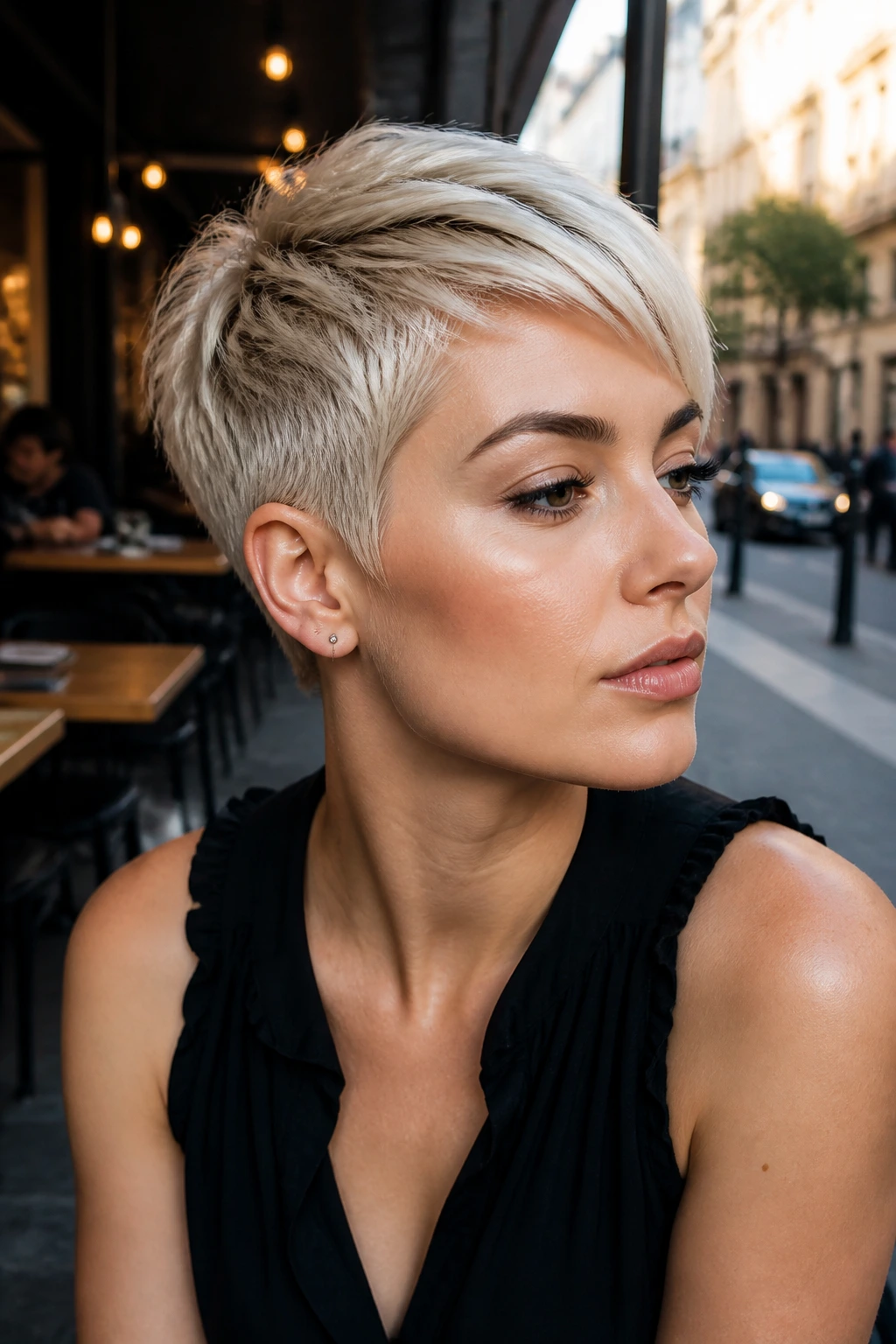
If you want the relief of an undercut without advertising it, this is the move. The hair underneath is trimmed short or buzzed in places you only see when the top lifts, which means thick hair loses weight but keeps a more modest profile. Platinum blonde softens the contrast between the top and the hidden areas, especially if the root is slightly deeper.
This cut is practical. It dries faster. It sits closer to the head. It feels cooler, which people notice more than they expect. And because the undercut hides under the top layer, you can wear the style in a softer way when you want to.
The big mistake is leaving the top too thick. Hidden undercuts need a real removal of bulk above them, or the hair just sits on top like a lid. That’s not the look.
18. Rooted Grow-Out Pixie
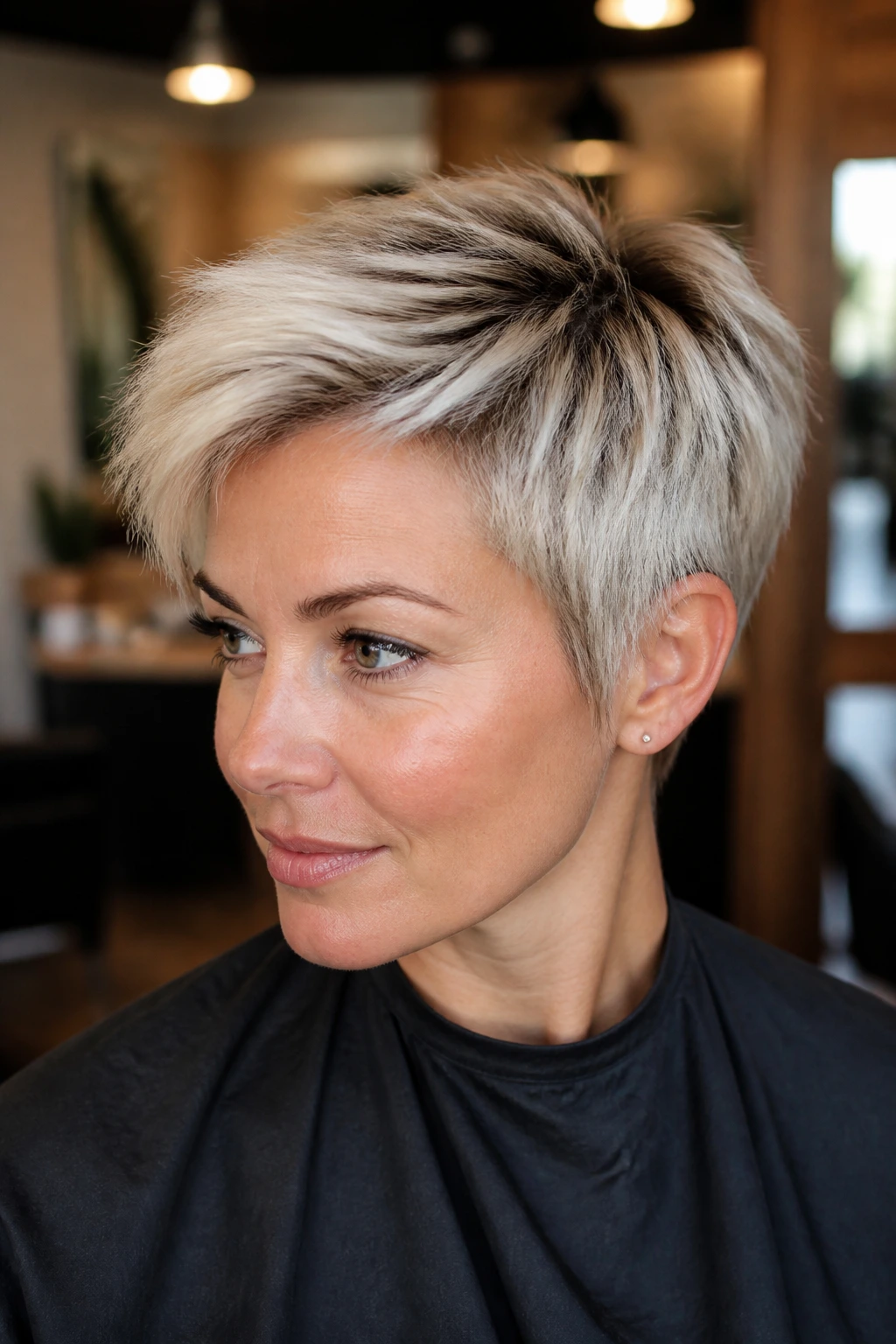
Not every platinum pixie has to pretend to be freshly toned and icy every second. A rooted grow-out pixie keeps a darker root shadow or soft natural regrowth, which is a blessing on thick hair because it breaks up the bluntness and buys you more time between color sessions. The cut itself usually stays short at the nape and a little longer through the top.
This one is practical in a way I appreciate. Platinum is maintenance-heavy. A shadow root turns some of that maintenance into a feature instead of a problem, and dense hair benefits because the deeper root makes the silhouette look less heavy near the scalp.
If your hair lifts warm, ask for a root that’s only one to two shades deeper than the mids, not a harsh stripe. The blend should look deliberate, not like you forgot to book a toner.
19. Soft Bixie Pixie

A soft bixie sits between a pixie and a bob, and thick hair often behaves beautifully in that middle ground. The length reaches past the ears, sometimes brushing the jaw, while the top is layered enough to keep the shape from ballooning. Platinum blonde gives the cut a lighter feel than the length suggests.
This is the style for people who like short hair but still want to tuck a piece behind the ear or let the front fall forward. It’s less severe than a classic crop, which can matter if you’re nervous about exposing too much face. The extra length also gives thick hair room to settle instead of springing outward.
Best done with
A soft side part, a little bend through the front, and a blow-dry that lifts the roots just enough. If you over-polish it, the shape can lose its easy movement. Keep it loose.
20. Angular Fringe Pixie
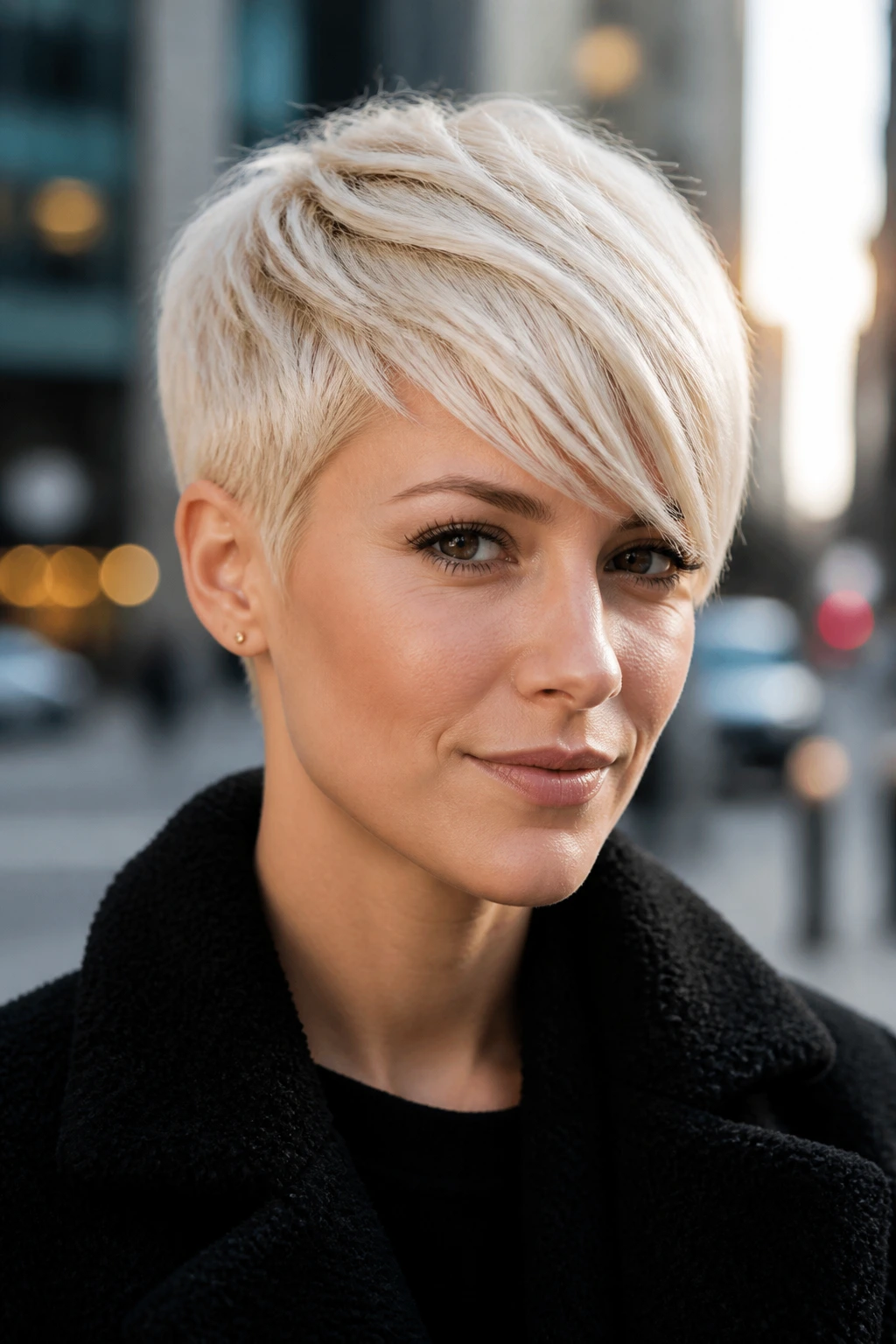
An angular fringe is one of the smartest ways to control thick hair at the front. Instead of a straight-across bang, the fringe falls on a diagonal, which narrows the face and stops the hair from building a heavy shelf over the brows. In platinum, the line looks crisp and deliberate.
This cut suits people who want definition. The angle gives the eye somewhere to go, and the rest of the pixie can stay simple. If the sides are kept close and the crown is lightly textured, the fringe becomes the star rather than just a curtain you have to live with.
I’d skip this if your hair whips around wildly at the front. A good diagonal fringe still needs cooperation. But if your hair settles well after a blow-dry, the payoff is strong.
21. Swept-Back Glam Pixie
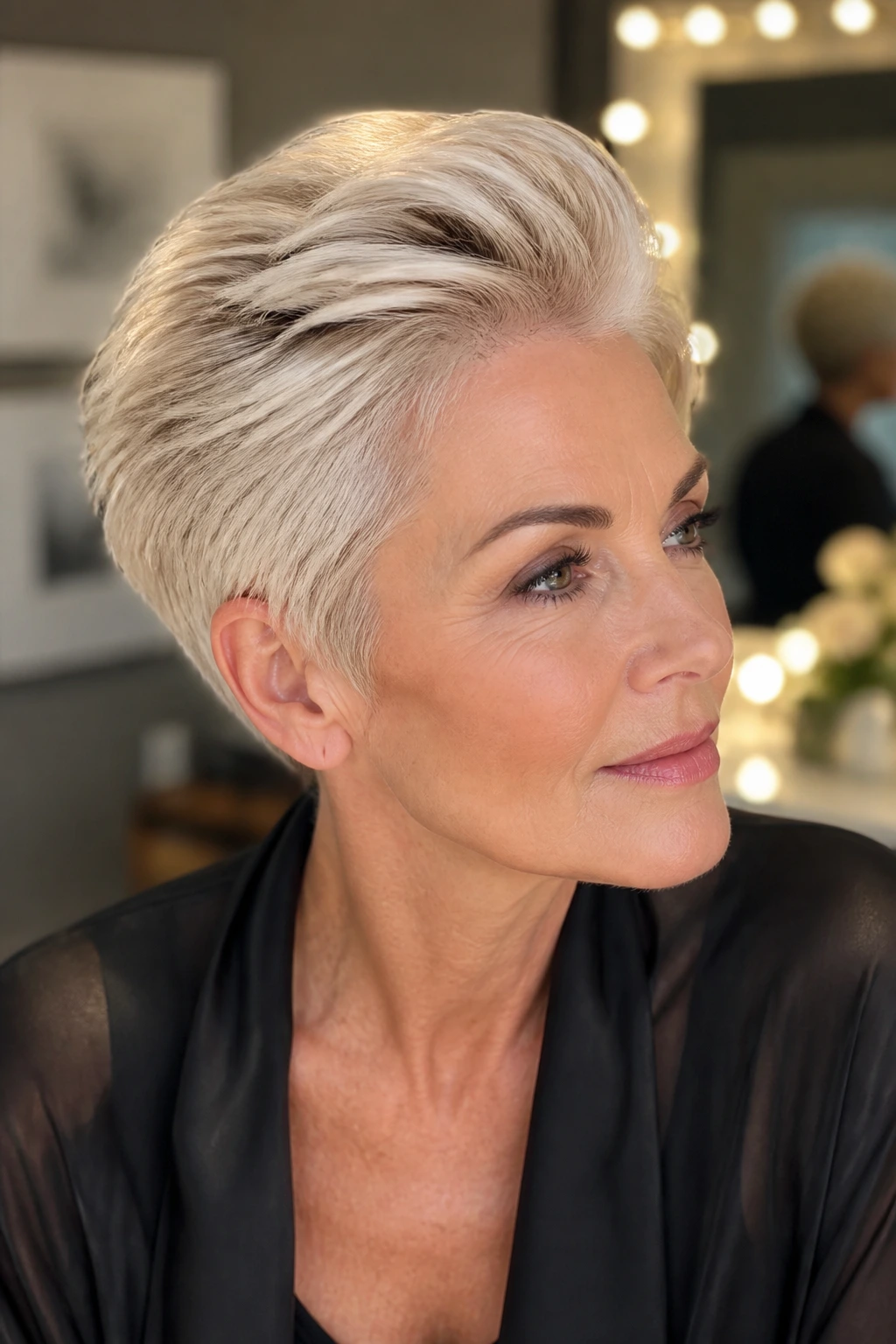
A swept-back glam pixie has a little old-school polish and a little modern bite. The hair is brushed away from the forehead, often with a soft lift at the front, while the sides stay close enough to keep thick hair from expanding. Platinum blonde makes the sweep look clean and expensive without needing a lot of ornament.
This shape is especially good when you want your face to stay open. It shows off brows, earrings, and cheekbones in a way that a forward fringe can’t. It also pairs well with a side part that isn’t too deep, since the goal is movement, not drama for its own sake.
Use a light mousse at the roots and a brush to direct the hair back while drying. Then finish with a tiny bit of shine cream, only on the surface. Too much product and the sweep gets greasy fast. Too little and it collapses before lunch.
22. Classic Salon-Finish Pixie
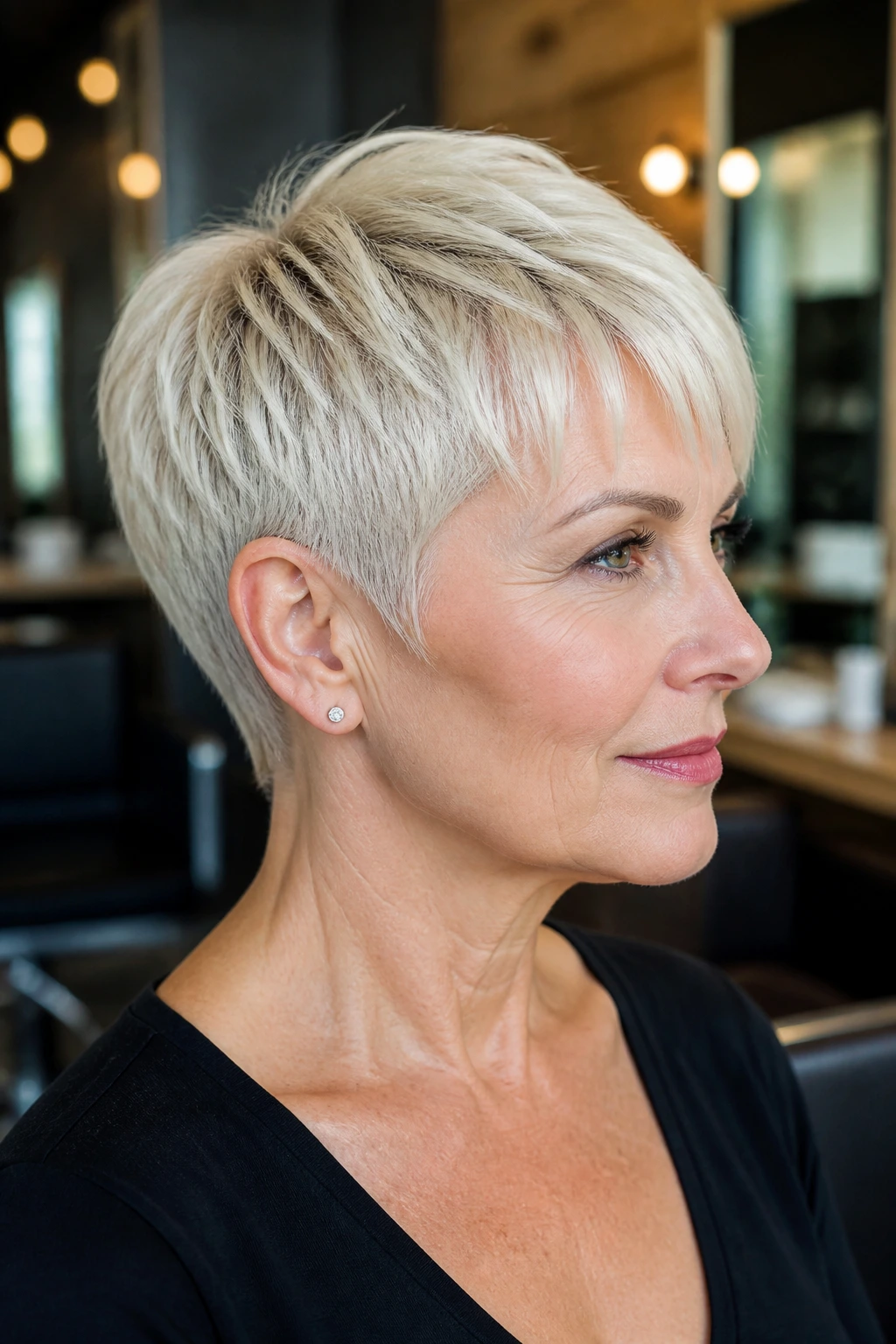
This is the clean, timeless version — the one that looks like it was cut with a real plan. The lines are neat, the crown is controlled, the nape is tucked in, and the fringe is softened just enough to keep thick hair from feeling blocky. Platinum blonde gives it a cool, almost editorial finish.
I like this style because it doesn’t chase tricks. No overworked texture. No dramatic undercut unless the hair actually needs it. Just a balanced short cut that uses precise blending to make density look elegant rather than heavy. That sounds simple, and it is. Simple is hard.
If you want one style that can move from casual to dressed-up without changing the cut, this is the one to keep in mind. It works because the shape is honest. Nothing is fighting the hair.
Why Thick Hair and Platinum Blonde Need a Smarter Pixie Shape
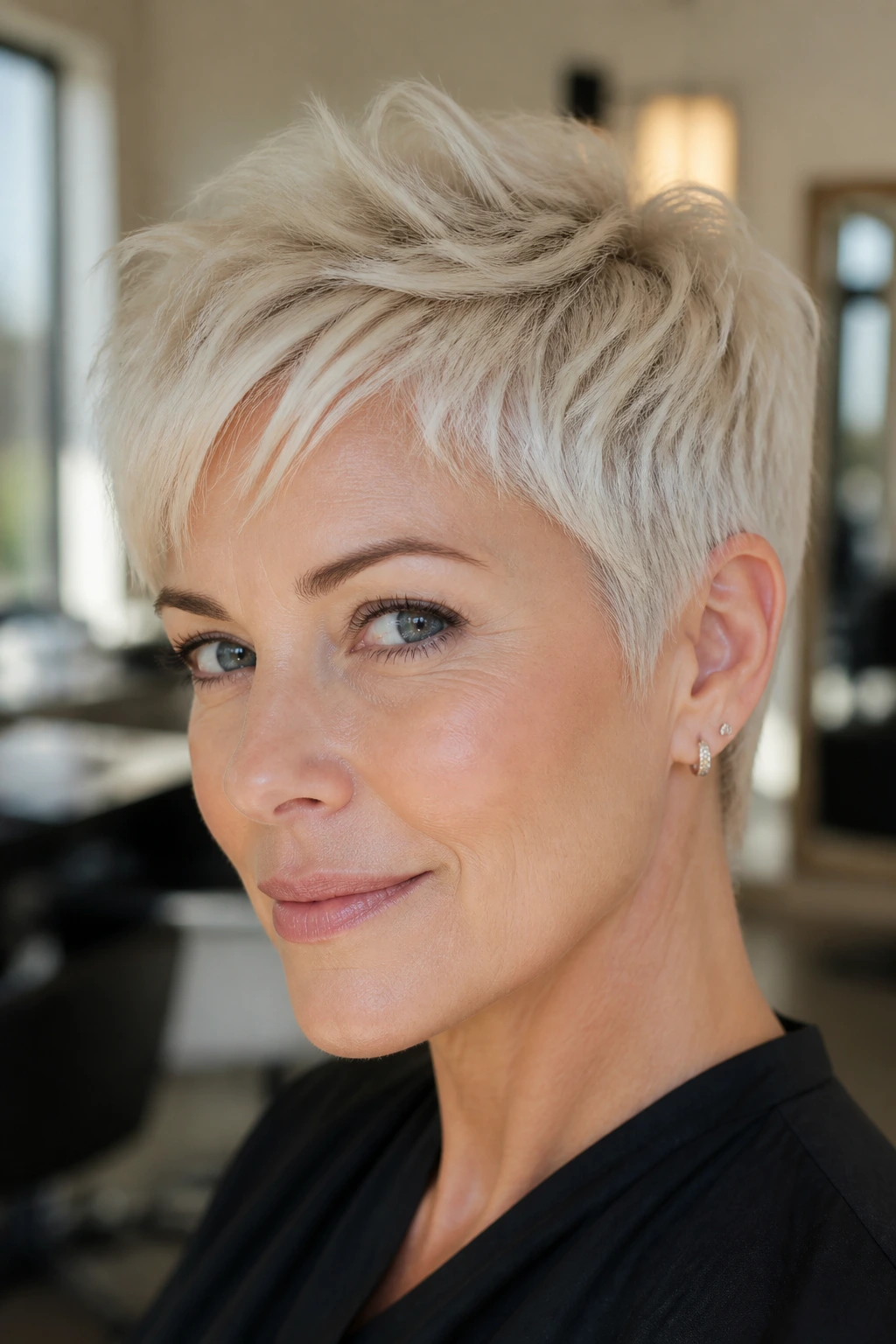
Thick hair is generous, but it can be stubborn. Once it’s cut short, every blunt edge gets louder. Once it’s bleached to platinum, every mistake in the outline shows up in bright daylight. That combination can go bad fast if the haircut is built like a generic short crop instead of a shape designed for density.
The best pixie cuts for thick hair remove weight in the places that make the head look wide: behind the ears, under the crown, around the nape, and sometimes right at the inner side of the fringe. That lets the outer layer sit cleaner. You can feel the difference when you run your fingers through it. The hair stops fighting your hand.
Platinum adds another layer of work. It pulls warmth out, so the cut line turns icy and obvious. That’s helpful when the shape is good and unforgiving when it isn’t. A choppy crown looks artistic. A badly blended corner just looks unfinished. So the color is not a separate choice from the cut; it’s part of the same design.
The smartest approach is to think in terms of silhouette first, tone second, styling third. If the silhouette is strong, platinum makes it sing. If it’s weak, platinum shines a light on the weak spots.
Essential Tools for These Styles
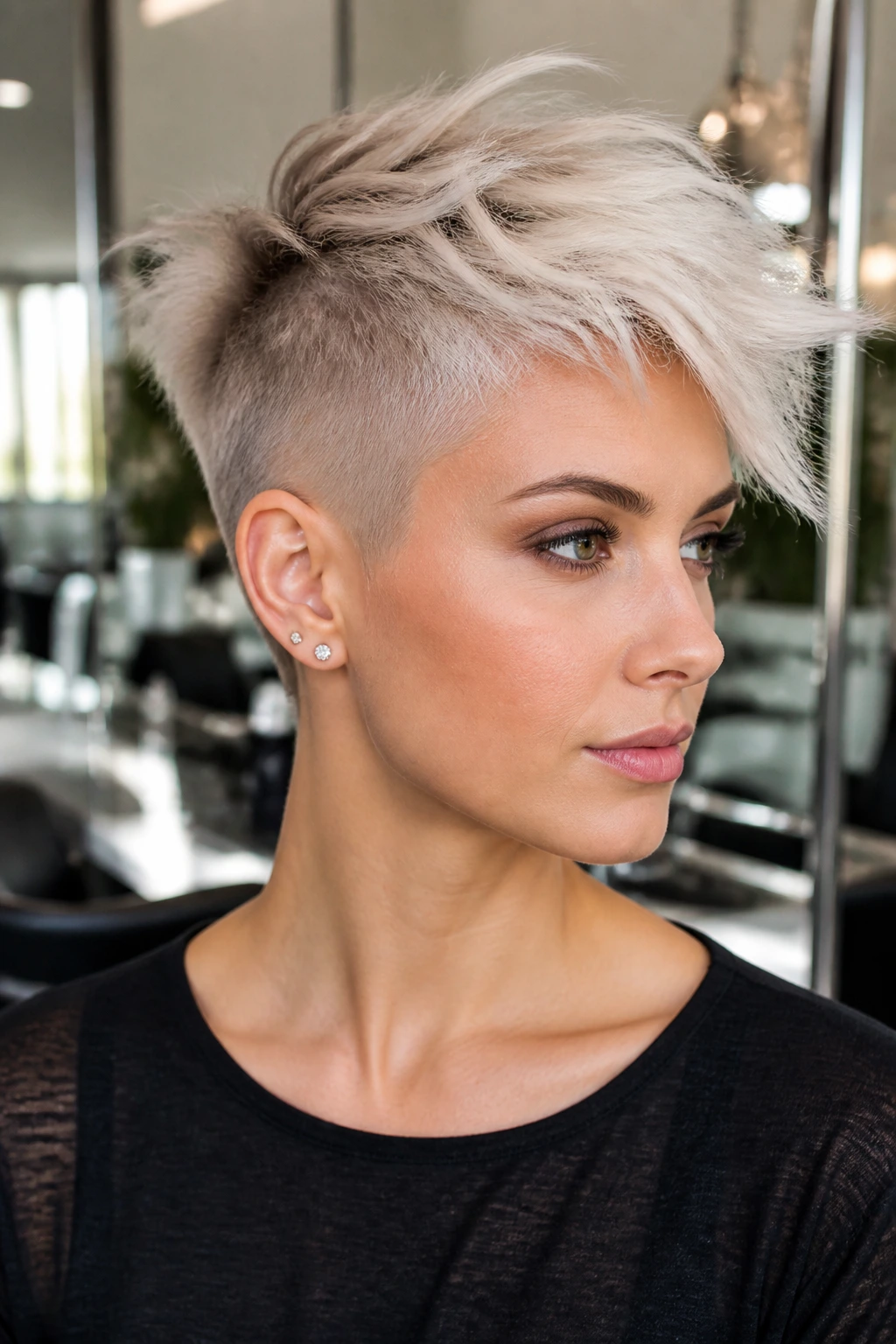
- Blow dryer with a narrow nozzle: Directs airflow at the roots so thick hair doesn’t dry puffed out.
- Small round brush: Good for lifting the crown or bending a long fringe under just a touch.
- Flat brush or vent brush: Helps smooth the sides without overbuilding volume.
- Heat protectant spray: A non-negotiable if you use a dryer or flat iron on platinum hair.
- Purple shampoo: Use it sparingly to keep brass from creeping back into the blonde.
- Light mousse: Handy for lifted crowns, brushed-back styles, and soft texture.
- Matte paste or light pomade: Controls short ends without making them greasy.
- Texturizing spray: Best for shaggy, feathered, or asymmetrical cuts that need separation.
- Wide-tooth comb: Gentler than a fine comb when hair is dry and lightened.
- Sectioning clips: Keep thick hair manageable when you dry, tone, or style it.
- Satin pillowcase or sleep cap: Helps the pixie stay smoother overnight, especially around the crown.
- Tint brush and gloves: Useful if you maintain tone at home, but be careful and follow product directions closely.
Smart Salon Notes for the Cut and the Color
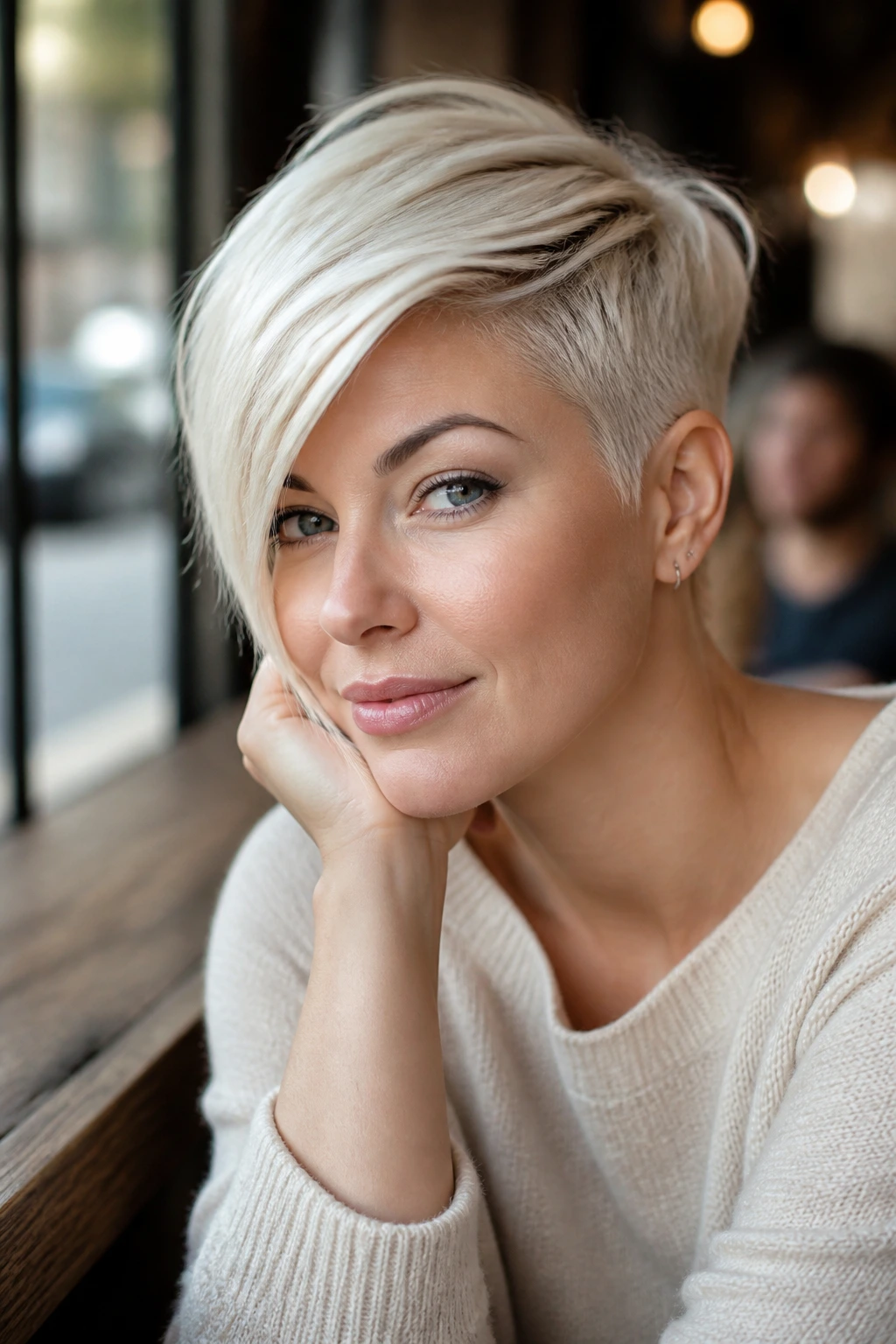
Bring photos, but bring the right photos. One should show the silhouette you want, one should show the fringe, and one should show the color tone. That sounds fussy until you sit in a chair with thick hair and realize that “short platinum pixie” can mean ten different things to ten different people. A picture of the crown matters more than a picture of the celebrity’s jawline.
Ask for internal weight removal if your hair is dense. That means the stylist removes bulk from inside the shape instead of just thinning the surface. Surface thinning alone can leave the top puffy, dry, and weirdly fuzzy after a wash. For thick hair, the hidden structure matters more than the visible texture.
Platinum color needs a conversation too. If your hair is dark, previously colored, or naturally coarse, a clean icy blonde may take more than one appointment. That’s not a failure. That’s chemistry being honest. A good colorist will talk about lift, toner, and whether a root shadow will make your life easier.
If you live with hard water, ask about that before you go lighter. Mineral buildup can turn platinum dull or yellow faster than people expect. Sometimes a shower filter helps more than another purple shampoo ever will.
How to Wear These Cuts Without Fighting the Shape
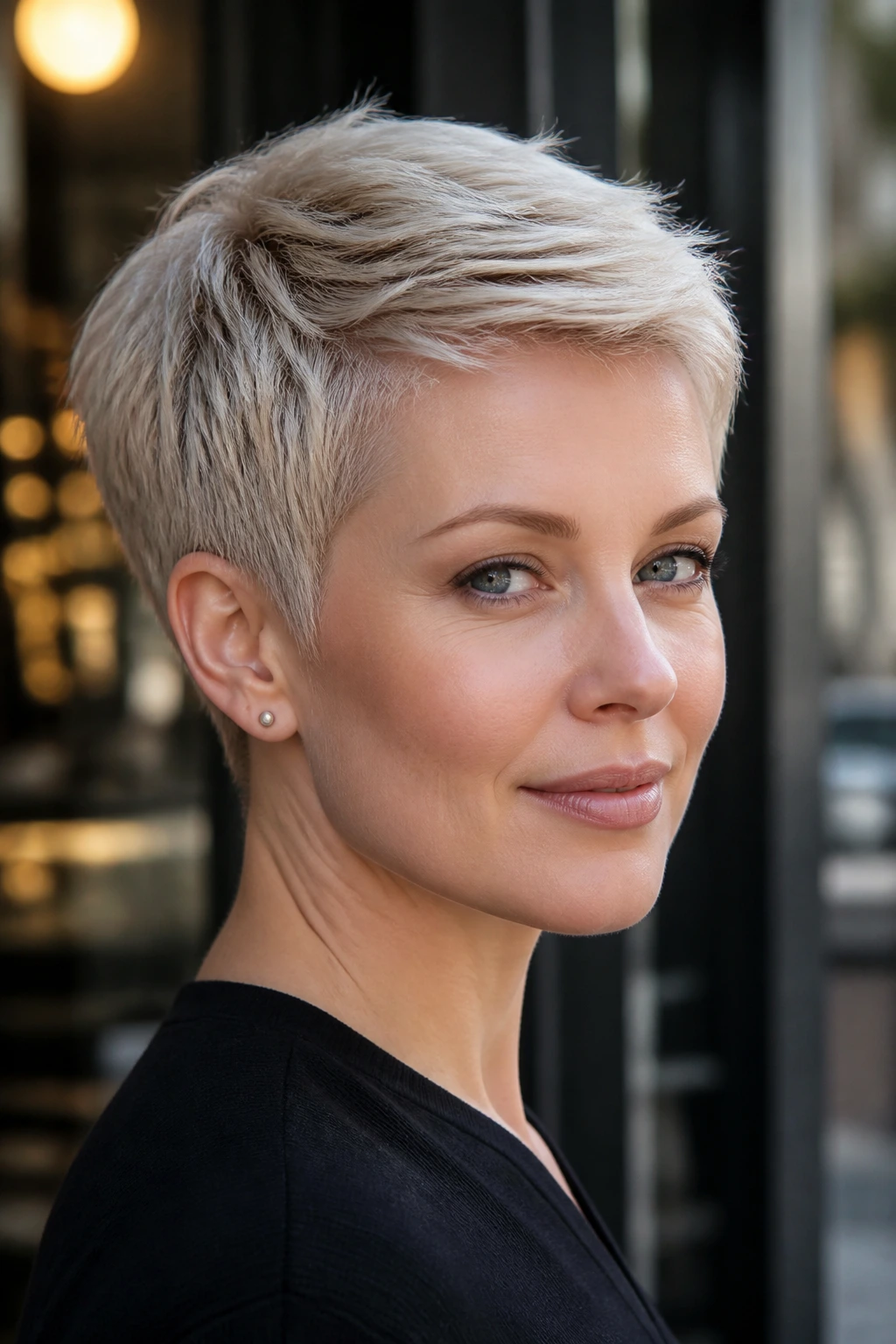
Presentation: Let the cut decide the finish. A feathered or shaggy pixie wants fingers and a little paste; a glassy crop wants a brush, a smooth blow-dry, and almost no fluff at the ends. If the crown looks too big, don’t keep adding product. Re-dry the roots with the nozzle aimed downward for a few seconds.
Accessories: Small hoops, thin headbands, slim eyeglass frames, and clean ear cuffs work well because they don’t compete with the silhouette. Thick hair already brings presence. The accessory should support it, not shout over it.
Clothing: Open necklines, crisp collars, and simple knits make platinum pixies look sharper. High-volume scarves can swallow the nape and ruin the clean line you worked for. If you want the haircut to stand out, keep the neckline tidy.
Finish: Matte paste gives edge, while a light cream gives softness. Pick one mood and stay with it. Mixing too many products usually just makes thick, lightened hair feel coated.
Additional Styling Moves That Make the Color Pop
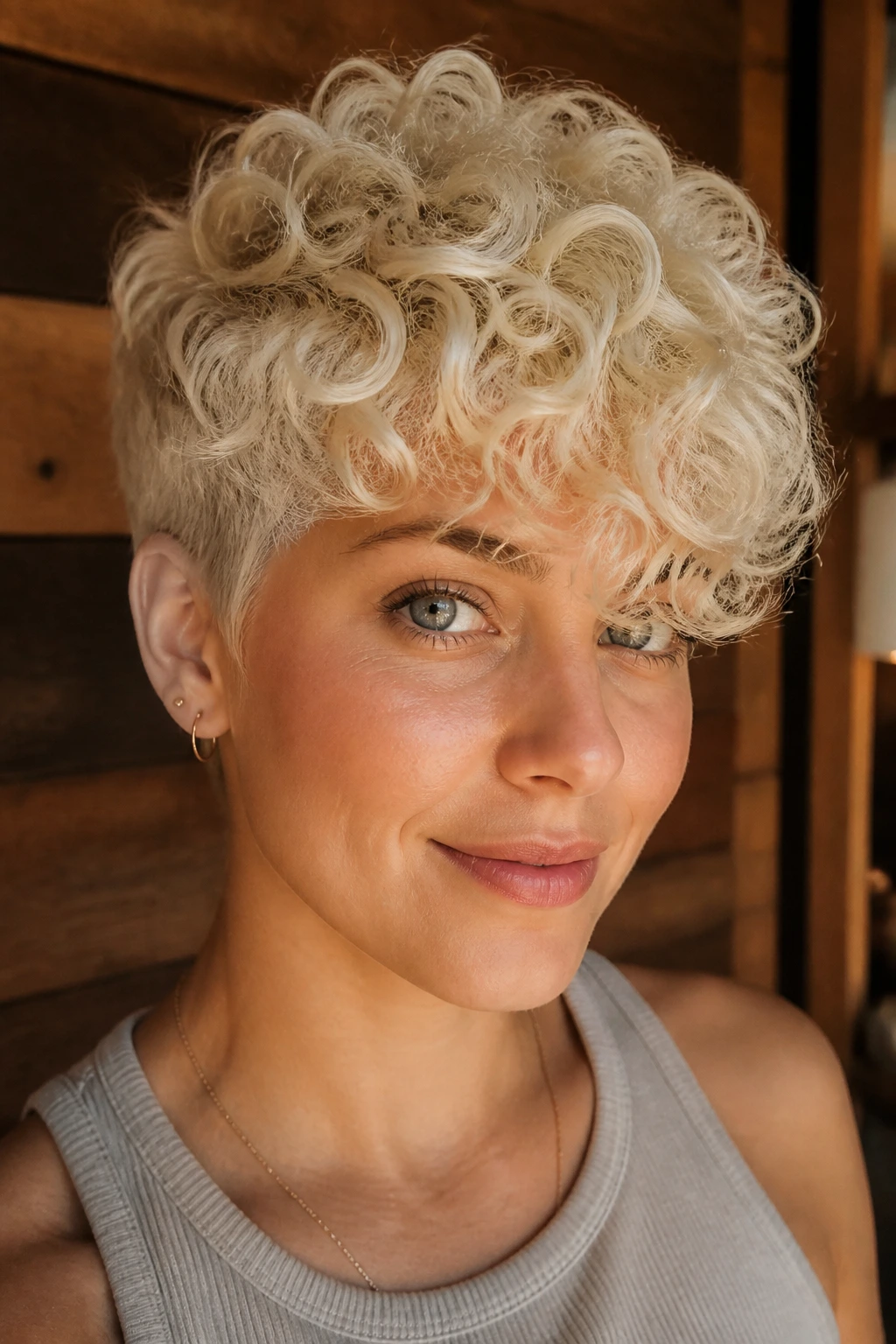
Color Lift: A soft root shadow or slightly deeper base around the scalp can make platinum look brighter, not darker. The contrast makes the blonde read cleaner and can stretch time between toners.
Texture Boost: A tiny amount of paste, worked only into the ends, can separate a choppy fringe or feathered crown. Use less than a pea-sized amount first; thick hair will take more if it needs it, but it usually doesn’t.
Customization: If your face is narrow, keep more width through the sides. If it’s round, let the fringe angle diagonally instead of sitting straight across. Small changes in the perimeter matter more than big styling tricks.
Make-It-Yours: Wavy hair can keep a little more length on top and be diffused for softness. Straight hair usually benefits from sharper texturing and a touch more taper at the sides. Curly hair needs shape left in the crown, not stripped away in the chair.
Keeping the Cut in Shape Between Trims
Short blonde hair is not high-maintenance because it’s short. It’s high-maintenance because every tiny shift shows. Plan on a trim every 4 to 6 weeks if the cut is very short and tapered. If it’s a longer pixie bob or bixie, 6 to 8 weeks can work, but the nape will still need attention sooner if your hair grows fast.
Wash rhythm matters. Thick hair that’s been lightened can dry out if you shampoo too often, so 2 to 4 washes a week is a reasonable range for most people. Use a gentle shampoo on regular washes and save purple shampoo for once a week or when the tone starts looking warm. Leave purple shampoo on too long and you can get a dingy lavender cast. That’s not the same thing as bright blonde.
Night care helps more than people admit. A satin pillowcase cuts down on the roughing-up that happens at the crown and fringe. If the front tends to stand up in the morning, dampen it with a little water or leave-in spray, then blow-dry just the roots for 30 to 60 seconds. You do not need to restyle the whole head.
If you heat-style often, give the hair a break from flat irons every few days. Platinum hair shows dryness fast, and thick hair can hide it until the ends start to snap. That’s the point where the shape gets fuzzy and the blonde looks tired.
Common Mistakes That Make Thick Pixies Look Heavy
The biggest mistake is leaving too much width at the sides. Thick hair already wants to sit wide. If the cut doesn’t remove that bulk near the ears and behind the jaw, the pixie expands into a box. The fix is a real taper, not just a shorter trim.
Another one is over-thinning the crown. I see this a lot. The stylist takes out so much weight that the top frizzes while the base still feels heavy. The result looks airy for two days, then patchy. Better to remove bulk carefully and keep some structure at the root.
A third problem is a blunt fringe that’s too thick for platinum. Once the hair is lightened, that heavy front line can dominate the whole face. If you want bangs, ask for softness through the edge or a diagonal sweep.
And then there’s the color mistake: chasing a perfect icy blonde in one rushed session on hair that isn’t ready. That can lead to breakage, banding, or a flat toner that fades too fast. Healthy lift is better than scorched lift. Always.
Variations and Adaptations to Try
Shadow-Root Platinum: Keep 1 to 2 shades of depth at the root so the grow-out looks soft and the crown doesn’t feel overexposed. This is the easiest version to live with if you hate frequent toners.
Curly Platinum Crop: Leave more length through the top and front, then shape around the curl pattern instead of forcing it flat. It works best when the stylist cuts it dry or partially dry, so the shrinkage doesn’t surprise anyone.
Edgy Buzzed Nape: Tighten only the lower back section and keep the top a little longer. You get the relief of an undercut without committing to a dramatic side shave.
Soft Feminine Sweep: Keep the fringe longer and direct it across the forehead, then leave the sideburns soft. This is a good compromise if you want platinum blonde without a severe line.
Grown-Out Pixie Bob: Let the front graze the cheeks or jaw while the back stays tapered. It’s the best bridge for anyone moving away from a very short crop.
Bold Frosted Fringe: Add a brighter toner or slightly lighter front pieces around the hairline. The face gets more light, and the rest of the cut can stay a little deeper for contrast.
Frequently Asked Questions
Will platinum blonde make thick hair look even bigger?
It can, if the haircut is blunt and wide at the sides. The trick is to remove weight inside the shape so the blonde shows a clean outline instead of a puffed silhouette.
How short should the sides be on a pixie for thick hair?
Short enough that the ear area lies flat, but not so short that the top loses balance. Most dense hair looks better with a tighter taper at the sides and a little more length through the crown.
Can curly thick hair handle a platinum pixie?
Yes, but the cut has to respect the curl pattern and the shrinkage. Leave more length than you think you need, and style with moisture and a diffuser so the curls stack neatly.
How often will I need toner?
That depends on water, heat styling, and how pale you want the blonde to stay. Many people refresh tone every 3 to 6 weeks, especially if brass starts showing near the crown or fringe.
Is an undercut a good idea for thick hair?
Often, yes. It removes weight where thick hair tends to balloon, and it can make a platinum pixie feel much lighter to wear. Hidden undercuts are a good option if you want the benefit without the drama.
What if my hair grows out fast?
Choose a shape with a soft grow-out plan: a rooted pixie, a longer fringe, or a pixie bob hybrid. Those styles hold their line better between trims than ultra-short crops.
Do I need to bleach all the way to white for platinum?
Not always. A clean pale blonde with a cool toner can read platinum, especially on a short pixie where the cut itself does part of the visual work. Forcing every strand to paper white can be rough on the hair.
How do I stop the crown from puffing up?
Dry the roots in the direction you want them to sit, use a small brush or your fingers only at the end, and keep heavy product off the scalp. If the crown is still wide, the cut probably needs more internal removal.
The Shape That Keeps Working
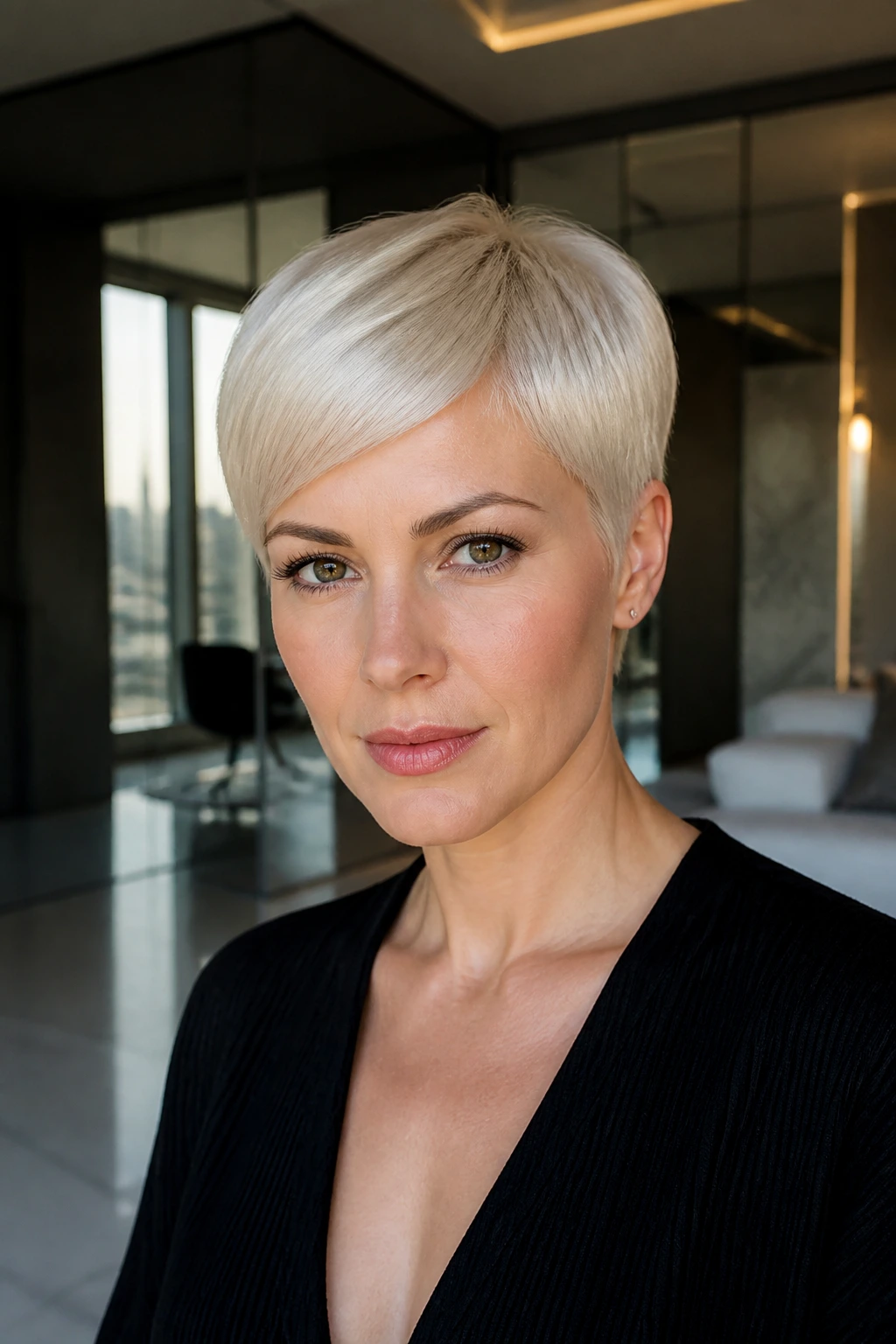
Thick hair doesn’t need to be tamed into submission. It needs a cut with enough intelligence to use the density instead of letting it boss the silhouette around. Platinum blonde sharpens that shape, which is why the best versions look so clean: the color reveals the work the haircut is already doing.
Pick the version that matches your patience level as much as your style taste. If you want low fuss, the rooted or tapered shapes will treat you well. If you want edge, the undercut, baby bang, or faux-hawk versions bring it fast. And if you want something softer, keep the fringe longer and let the crown feather out a little. That’s the sweet spot many people end up loving most.