



The wrong haircut can make a good face look busy. The right one lets the hair breathe, even if your routine is five minutes, one round brush, and a half-cold cup of coffee on the counter.
That’s the real appeal of 40 something hairstyles for women over 50: they don’t chase youth, and they don’t settle for stiffness either. They sit in that useful middle ground where hair still has movement, the outline stays clean, and you don’t spend every morning fighting the same awkward flip at the ends. Around this stage, hair often changes in two directions at once — some strands get finer, some get wirier, and gray pieces can behave like they’ve got their own opinions. A cut that understands that shift is worth far more than a trendy shape that only looks good on the salon cape.
I’m a fan of styles that keep a real perimeter, because see-through ends age faster than almost anything. I’m also a fan of softness around the face, but not mushy softness. There’s a difference. One looks intentional; the other looks like you gave up halfway through the blow-dry.
Why These 40-Something Hairstyles Feel Easy to Wear
-
They keep the outline honest: A strong perimeter around the jaw, collarbone, or nape makes the cut look deliberate even when the styling is a little loose.
-
They work with changing texture: Gray, silver, and coarse strands often need more shape and less over-layering, and these cuts leave room for that.
-
They don’t demand perfect blowouts: Several of these styles still look finished with air-drying, a quick bend from a curling iron, or a rough-dry and a little lift at the roots.
-
They soften the face without hiding it: Face-framing pieces around the cheekbone or collarbone pull the eye upward in a calm, flattering way.
-
They grow out with manners: A cut that can survive six or eight weeks without turning into a triangle saves you time, money, and frustration.
1. The Collarbone Lob With Soft Ends
The collarbone lob is the haircut I recommend when someone wants length without the drag. It brushes the collarbone, moves when you turn your head, and still tucks behind the ears when you want it out of the way. The soft ends matter here. Hard, blunt ends at this length can look heavy; slightly beveled or point-cut ends keep the line alive.
Why It Works
This shape sits in a very useful zone. It’s long enough to feel feminine and flexible, but short enough that the ends don’t go wispy and thin. If your hair has lost some density at the bottom, that matters.
The best version keeps the front a touch longer than the back, usually by about half an inch to an inch, so it angles around the jaw instead of hanging like a curtain. A quick bend through the mid-lengths with a 1-inch iron makes it look polished without turning it into pageant hair.
Best For
- Fine hair that needs a fuller-looking outline
- Straight or softly wavy textures
- Glasses wearers who want hair that clears the frames
- Anyone who likes to tuck one side back and leave the other loose
How to Style It
A round brush and a lightweight mousse at the roots are enough for most days. If you want movement, curl only the pieces from the cheekbone down and leave the last inch straighter. That little detail keeps the ends from looking overworked.
2. Feathered Midi Layers That Move When You Turn
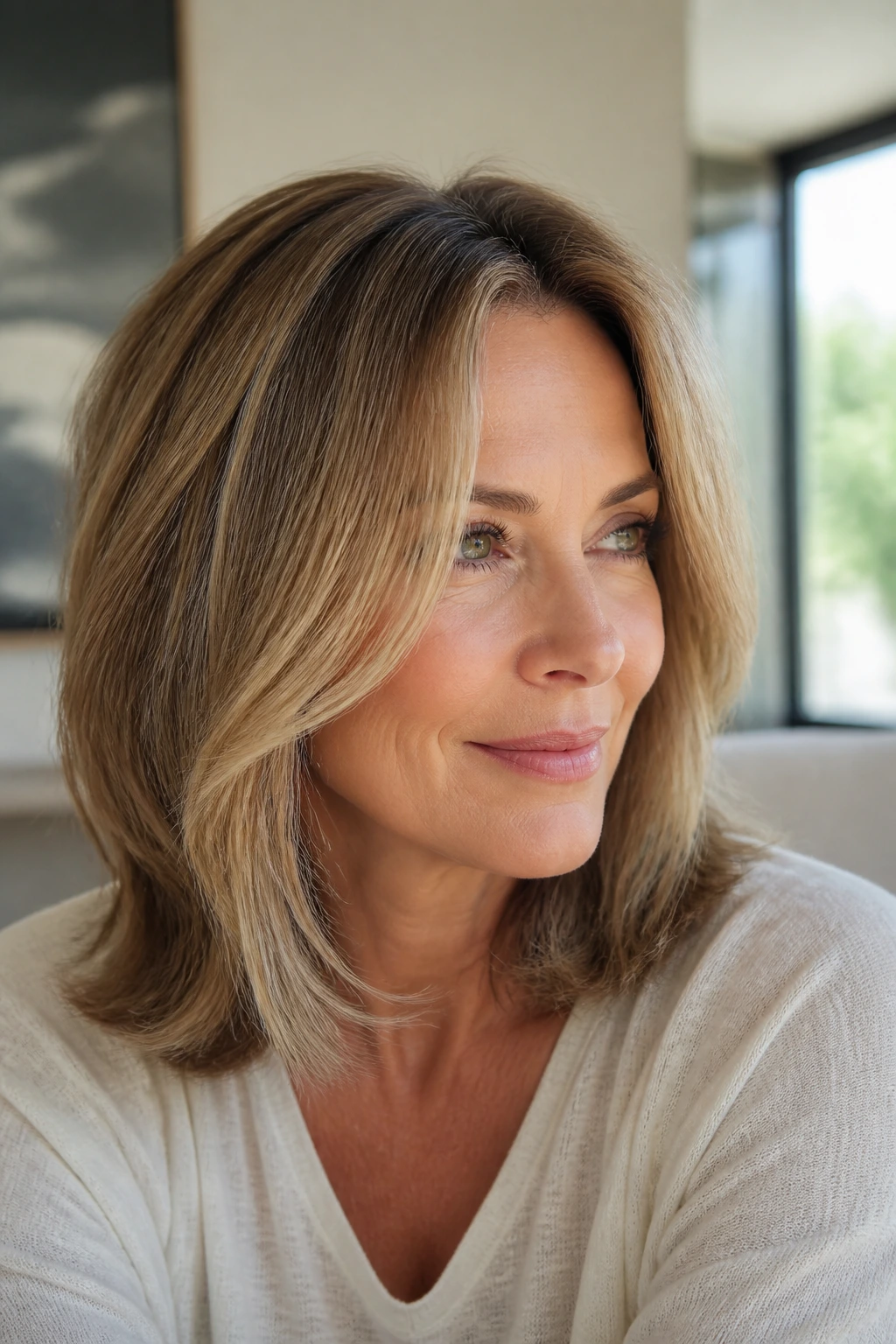
Feathered midi layers are for women who want motion more than drama. The haircut hits somewhere between the shoulder and the upper chest, then the layers are softened so they lift instead of sticking out in chunks. It has a gentle swing to it. Nothing sharp. Nothing fussy.
What Makes It Different
This is not the kind of layer work that chews hair up until the ends look ragged. The useful version removes weight in the middle and keeps the lower edge clean. That gives the hair some bounce at the sides without sacrificing shape.
I like this cut on medium-density hair that tends to sit flat at the crown but puff at the ends. The layers create a little air around the head, which is far more flattering than a blunt sheet when your hair has some texture to it.
Ask for This
- Shoulder-to-chest length
- Long, feathered layers starting below the cheekbone
- Soft face framing that blends into the rest of the cut
- Light texturizing only at the ends, not all through the crown
A blowout is nice, but not mandatory. If you air-dry, twist the front pieces once while damp and clip them back until dry. It makes the layers bend instead of frizz.
3. The Curtain-Bang Shag With Easy Shape
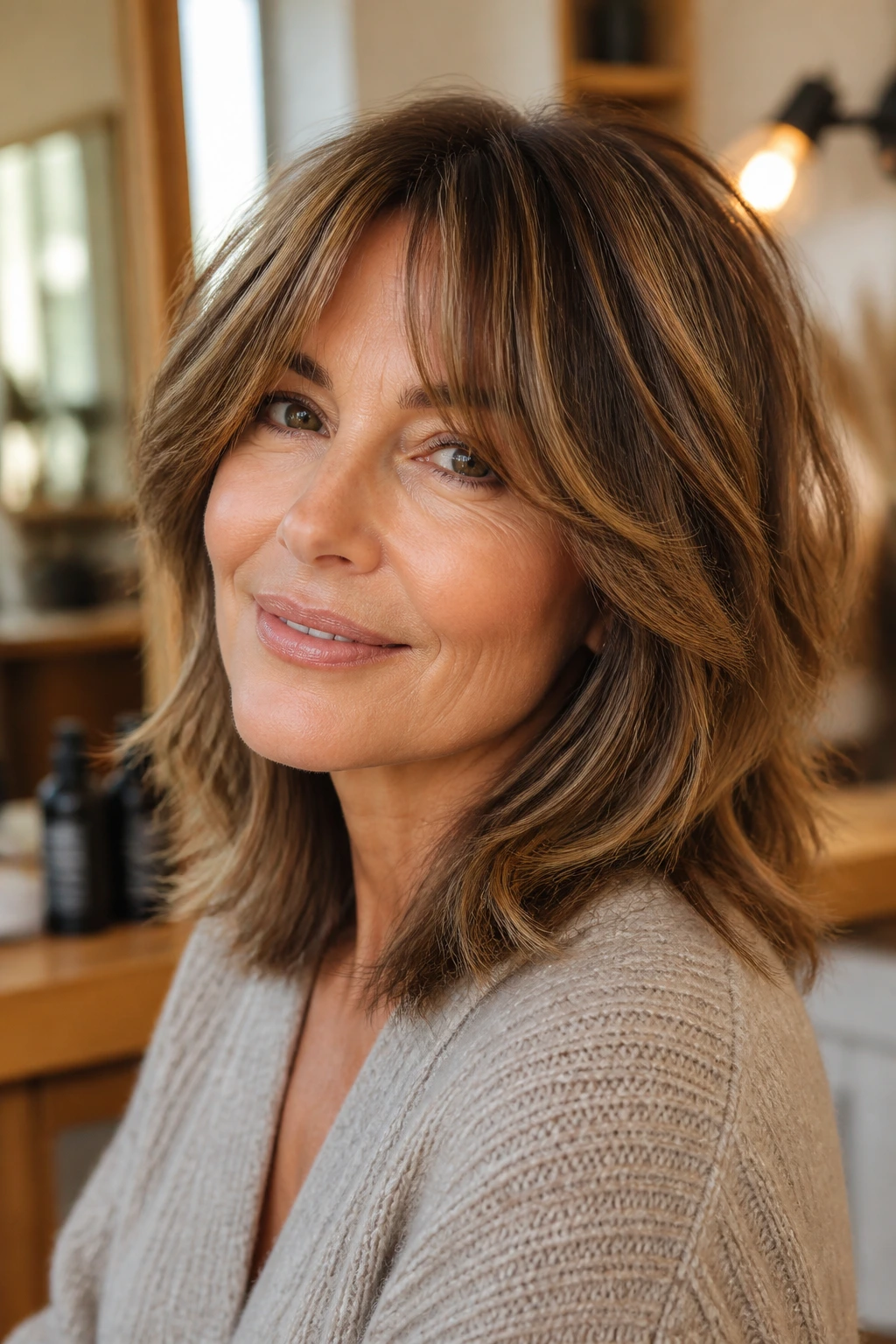
Why does the curtain-bang shag keep showing up in good salons? Because it solves two problems at once. It softens the forehead, and it stops medium-length hair from going stiff at the sides. The fringe opens in the middle, drapes around the cheekbones, and then disappears into layered lengths that sit somewhere between the jaw and collarbone.
Why It Works
This cut is built for hair that wants movement. It doesn’t demand perfect symmetry, which is a relief if your hair grows with a slight bend or a cowlick near the hairline. Curtain bangs also make the face look more open without the bluntness of straight-across fringe.
There’s a catch, though. The shag needs restraint. If the layers are cut too high or thinned too aggressively, the ends can start to look broken. A good version keeps most of the texture around the front and mid-lengths, then leaves enough density at the bottom to anchor the whole thing.
Best For
- Wavy hair
- Round or heart-shaped faces
- Women who like a little edge without a severe crop
- Anyone who can tolerate a quick round-brush refresh around the bangs
If you wear glasses, keep the curtain pieces long enough to sweep to the side without sitting on the frames. That tiny detail makes the cut look intentional instead of crowded.
4. The French Bob That Sits Right at the Jaw
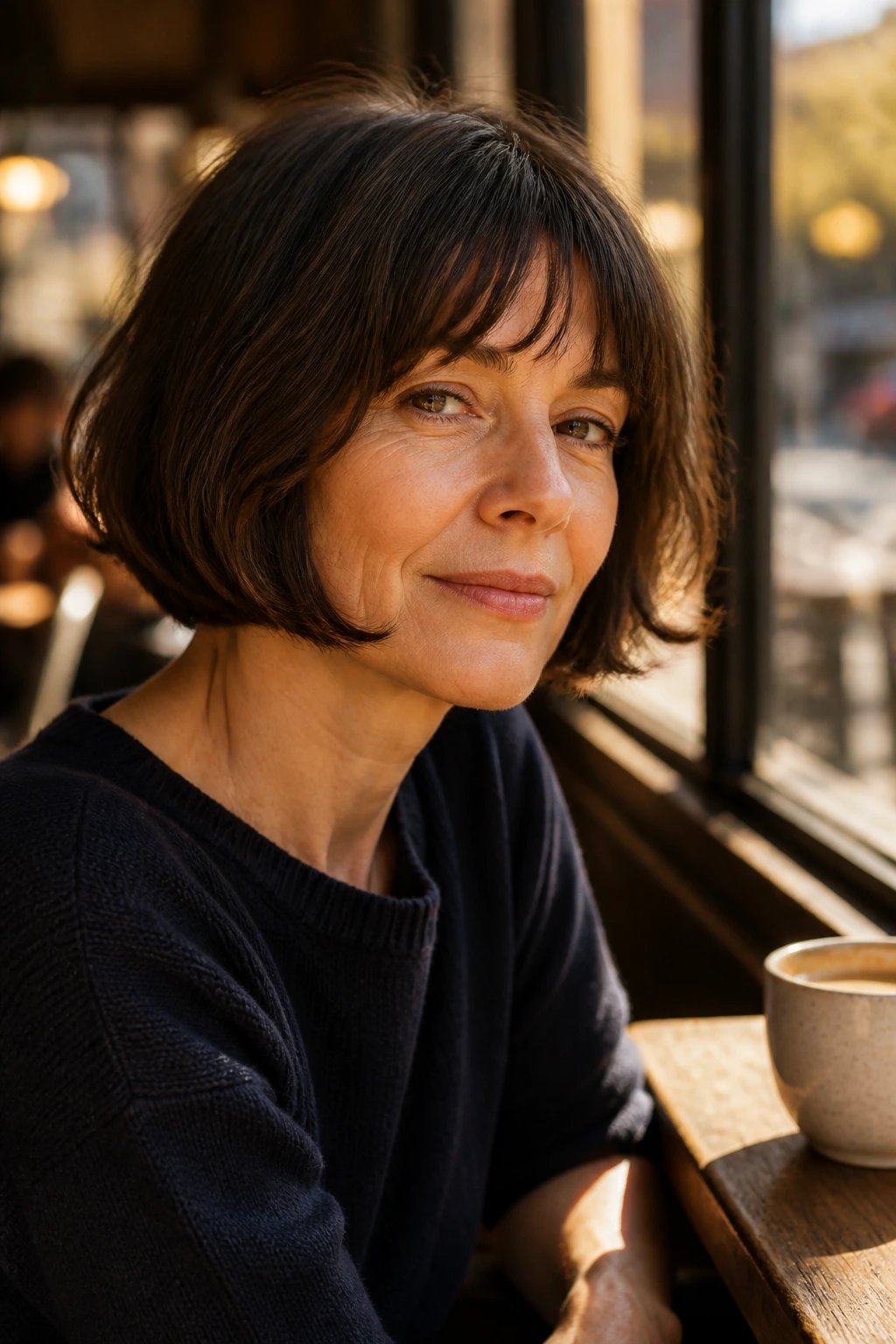
A French bob at the jawline has attitude without trying too hard. It’s shorter than a lob, cleaner than a shag, and usually paired with a bend, not pin-straight polish. The silhouette is small and neat around the neck, which makes earrings, collars, and jawline all do a bit more work.
Why It Works
The length matters. When a bob stops right at the jaw, it gives the face a frame instead of swallowing it. That can be especially useful if your hair is fine and loses shape past the shoulders.
I like this cut best when the ends are blunt but slightly softened at the corners. A hard boxy edge can look severe, especially on straighter hair. A soft French bob still has its line, but it moves when you talk, laugh, or tuck one side back.
What to Tell Your Stylist
- “Keep it around jaw length, not chin-short.”
- “I want shape, not a helmet.”
- “Soften the corners a little.”
- “Leave enough length for a small bend or wave.”
It’s a sharp look. That’s the point. But it works because the cut is tidy, not stiff.
5. Shoulder-Length Hair With Face-Framing Pieces
Shoulder-length hair can look sleepy if nobody gives it a plan. Add a thoughtful face frame, and the whole thing wakes up. I’m talking about pieces that start around the cheekbone, skim the jaw, and blend down into the body of the haircut. Not giant, floppy layers. Just enough movement to make the front feel lighter than the back.
A Small Change, A Big Difference
This is one of the best options for women who like to keep length but hate the weight that builds at the sides. The face-framing pieces create a lifted line without taking the haircut into pixie territory. They also make the style easier to wear with a side part, which is handy if your crown gets flat.
The key is proportion. If the layers start too high, the haircut can start to look busy. If they start too low, you miss the whole point. The sweet spot is usually around the mouth to cheekbone area, then blending downward.
Who It Flatters
- Medium to thick hair
- Slight waves
- Faces that benefit from a little vertical line
- People who want a good air-dry cut with backup from a blow dryer
One blunt thought: this works only if the ends stay full. If the last two inches are see-through, the style loses its shape fast.
6. The Swept-Back Pixie With Height at the Crown
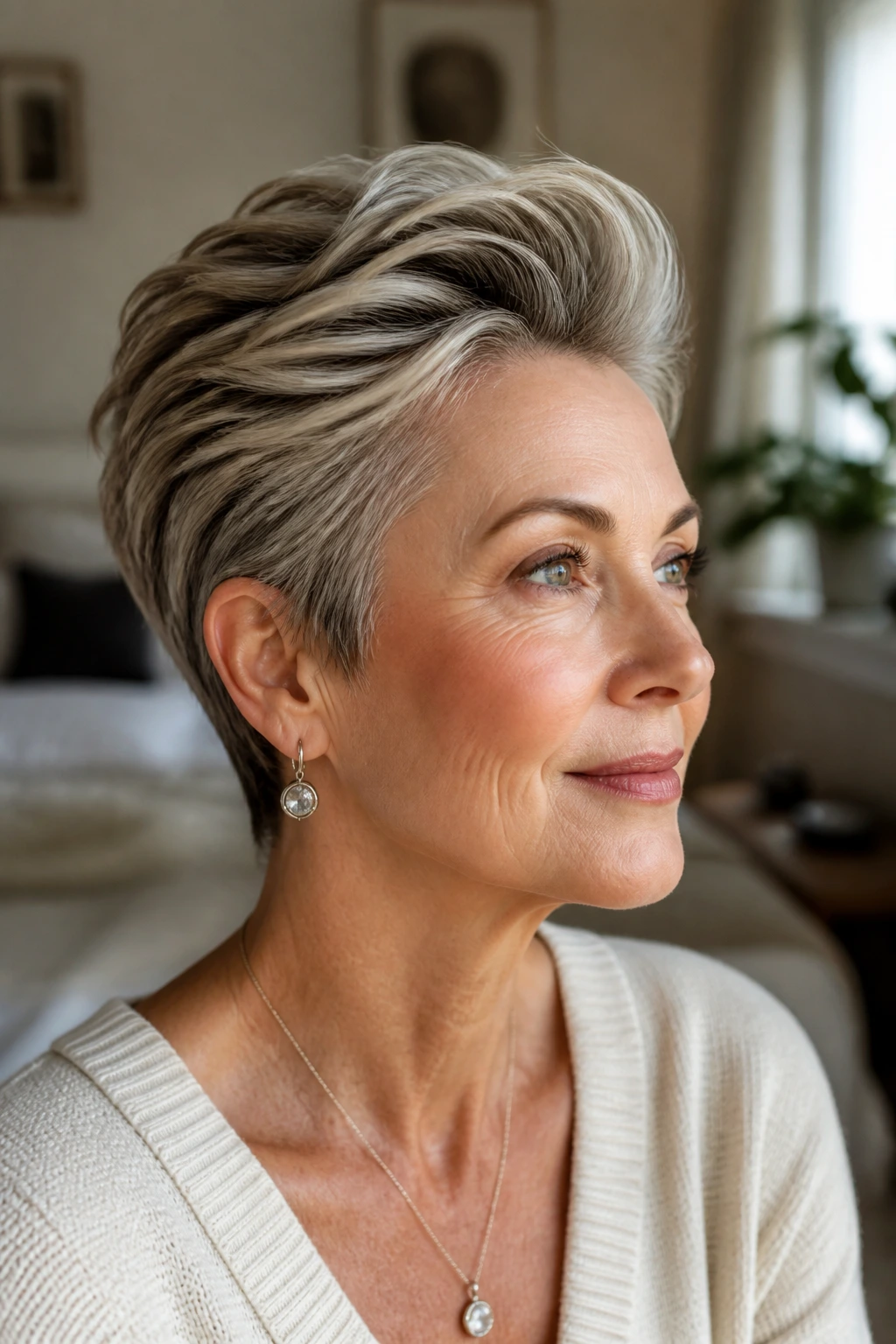
A good pixie is not a haircut that apologizes. This version keeps a little lift at the crown, a clean taper around the ears, and enough length on top to sweep backward with fingers or a small brush. It feels crisp, but not hard. Think polished, not severe.
Why It Works
Short hair can be a gift after 50 if the crown is flat and the sides have started to widen. A swept-back pixie solves both. It draws the eye up, opens the face, and removes the dead weight that can hang around the nape on longer cuts.
The trick is not cutting the top too short. If the crown is chopped down to nothing, you lose the ability to style it. Leave enough length — often around 1.5 to 3 inches on top — so you can brush it back, separate it slightly, or give it a bit of lift with paste.
Styling Notes
Use a pea-sized amount of styling cream or matte paste, warm it between your palms, and work it through dry hair from front to back. Then pinch a few pieces loose near the forehead. Too much product makes this style look helmet-like. Too little and it just lies there.
This cut is at its best when you want strong bones and easy necklines.
7. A Rounded Layered Bob That Never Looks Boxy
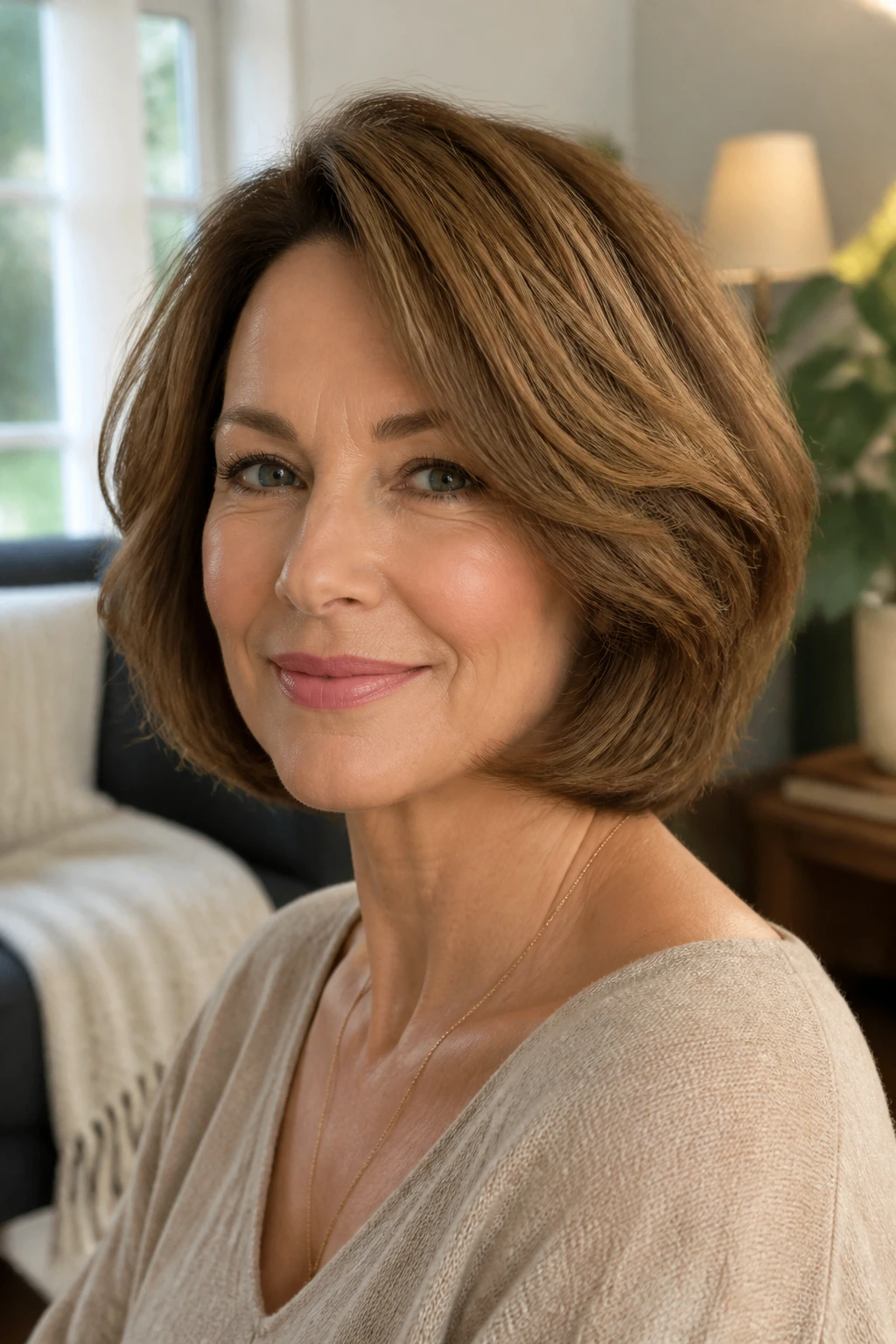
The rounded layered bob is what happens when you want a bob with a little softness around the sides. Instead of sitting square, it curves gently around the head. That rounded shape is useful if your hair is thick, because it keeps the bulk from building up at the corners.
Why It Works
Boxy bobs can make the head look wider than it is. A rounded bob narrows that effect by keeping the shape tucked in at the jaw and fuller through the back crown. It’s especially nice when hair has a natural wave that kicks out at the ends.
The layers should be subtle. You want enough internal removal to stop the haircut from puffing, but not so much that the perimeter becomes thin. The outline should still feel like a bob, not a layered shag pretending to be one.
Quick Styling Clues
- Blow-dry with a medium round brush
- Curve the sides inward at the last pass
- Keep the back slightly shorter than the front
- Use a light spray wax on the ends if they flip out too much
I like this on women who want structure, but not sharpness. It behaves.
8. The Modern Wedge With a Clean Neckline
The wedge came from a more structured era, but the modern version is softer and far easier to wear. It keeps the nape neat, builds a little volume in the back, and tapers toward the sides so the shape doesn’t spread outward. On the right head, it looks smart and clean in a way longer cuts can’t match.
Why It Works
A wedge is one of the few short cuts that can make the back of the head look intentional without a ton of styling. If your hair grows out around the neck in awkward little flares, this shape solves that problem by working with the natural line of growth.
The modern version should not feel crunchy. Ask for softness through the sides and a gentle graduation in the back, not the stiff stacked look people remember from old photographs. A few longer pieces around the temples keep it from reading too harsh.
Best For
- Straight to slightly wavy hair
- Women who like a short neckline
- People with thick hair that needs a compact shape
- Busy routines that do not allow a long blow-dry
The neckline is the whole story here. If that line is clean, the haircut looks sharp even on a plain T-shirt day.
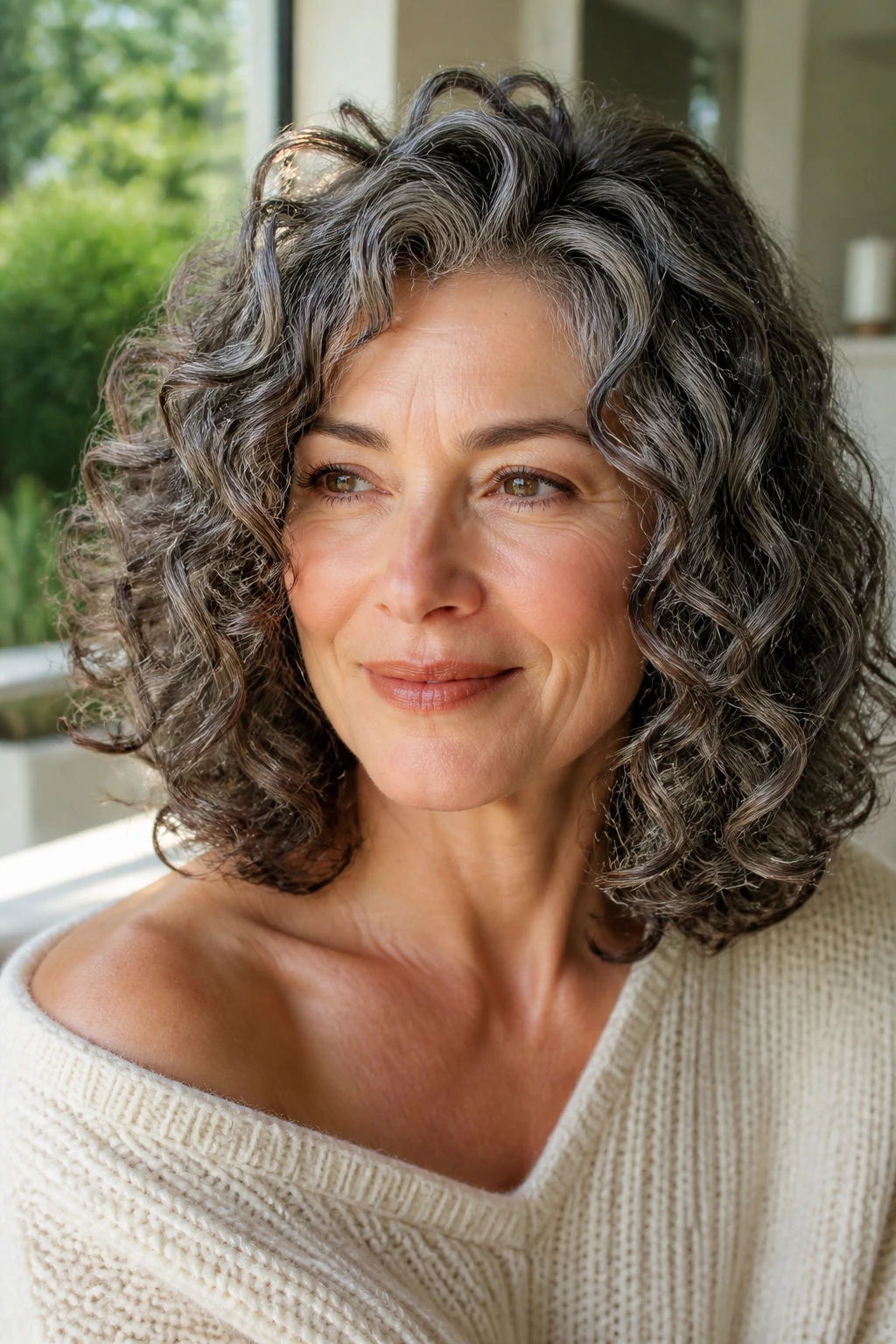
9. Curly Shoulder-Length Hair With Shape at the Bottom
Curly hair after 50 often wants less weight at the wrong places and more shape where the curls actually live. A shoulder-length cut with a shaped bottom does exactly that. It keeps the curls long enough to spring, but removes the bottom-heavy triangle that can make curly hair feel bulky.
What This Cut Does Well
The mistake with curly hair is treating it like straight hair with extra volume. It isn’t. Curls need room, and they need a cut that respects shrinkage. Shoulder length gives the curls enough length to form a real pattern, while a rounded bottom line keeps the whole thing from getting puffy.
I prefer this cut when the stylist shapes curl by curl or section by section, especially around the face. That means the front pieces can sit a little shorter without the rest of the haircut collapsing. If you’ve got silver curls, this approach is even better, because the shape shows off the curl pattern instead of hiding it.
Styling Help
A curl cream, a diffuser on low heat, and a hands-off drying period are usually enough. Scrunching too much can make the top frizzy. Leave the curls alone once they’re set.
If your curls expand fast, keep the ends a touch longer than you think. Shrinkage is real.
10. The Blunt Lob With Hidden Internal Layers
A blunt lob sounds simple, and that’s exactly why it works. The outline is clean and full, usually somewhere between the chin and the collarbone, but the inside has a few hidden layers so the hair doesn’t feel like one heavy block. It’s a nice compromise between polish and movement.
Why It Works
This is the haircut for women who want the security of a solid line. A blunt perimeter makes fine hair look thicker, and hidden internal layers stop thick hair from becoming a brick. The result is tidy on the outside, lighter underneath, and easy to brush into shape.
The danger is over-layering. If too much weight gets removed, you lose the clean edge that makes the style sing. I’d rather see a slightly heavier lob with good swing than a shredded one that can’t decide what it is.
A Useful Rule
If your hair lies mostly straight, keep the front a touch longer than the back. If it bends naturally, let the layers live underneath the surface and keep the top line strong.
This cut is not flashy. It’s better than flashy. It looks expensive when the ends are trimmed clean and the part is placed with purpose.
11. A Deep Side-Part Midi Cut With Long Fringe
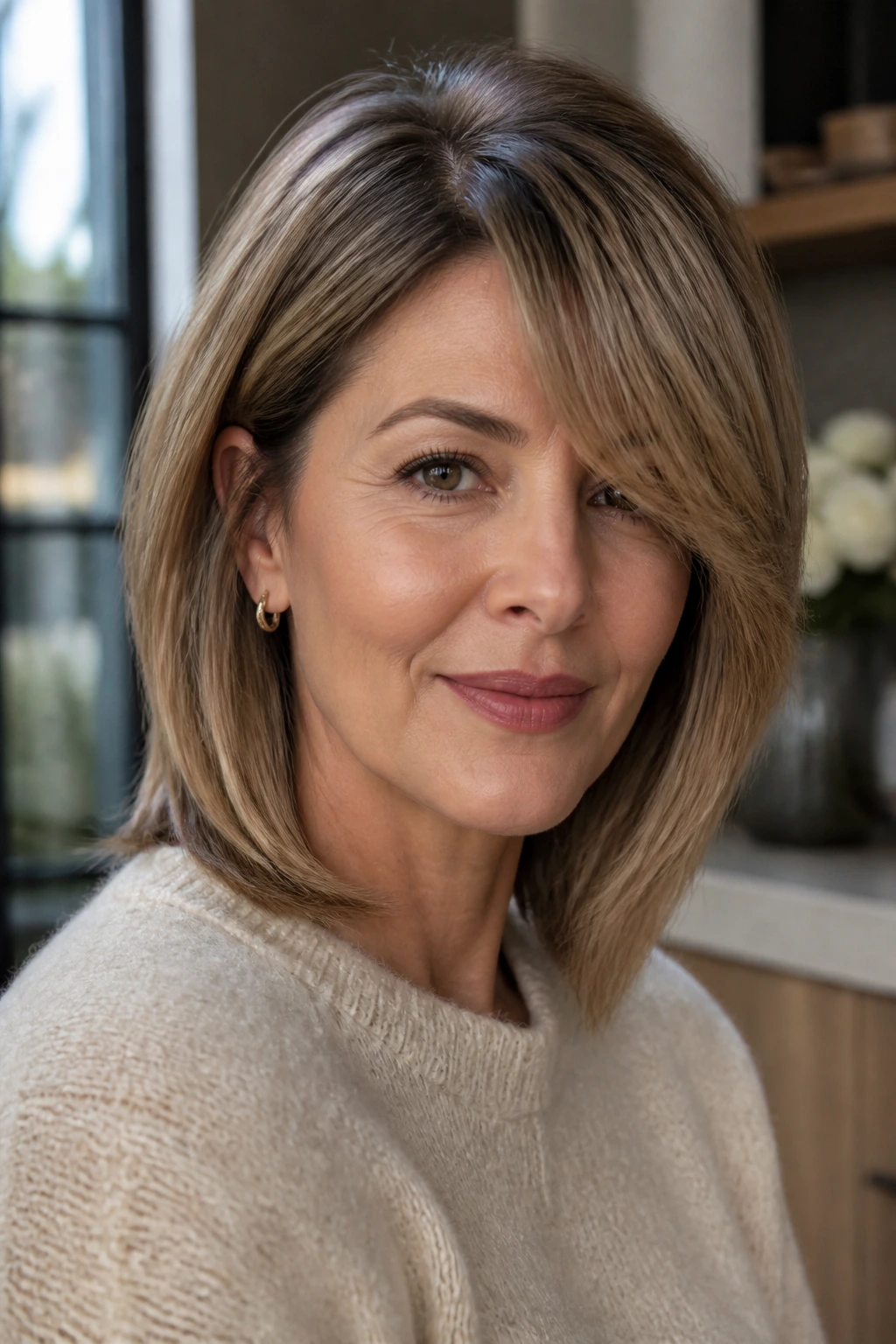
The deep side part does more than shift the hair around. It creates height at the crown, softens the forehead, and gives the whole haircut a little slant so it doesn’t sit flat and predictable. Add a long fringe that sweeps across the face, and you get a shape that feels easy but not lazy.
Why It Works
Center parts can be nice, but they are unforgiving when the crown is flat or the hairline is uneven. A side part gives the hair somewhere to travel. It also helps if one side of your face feels fuller than the other — which is most of us, if we’re honest.
The long fringe should be long enough to tuck behind the ear or blend into the layers. A short side bang can feel dated fast. A longer fringe reads softer and gives you options on days when you want the hair out of your eyes.
Who Should Try It
- Flat crowns that need lift
- Hair with a slight wave
- Women who like asymmetry
- Anyone who wears statement earrings and wants one side open
A little root-lift spray at the part makes this cut far better than a heavy mousse. Heavy mousse tends to sit there. Nobody needs that.
12. The Tapered Crop That Keeps the Sides Soft
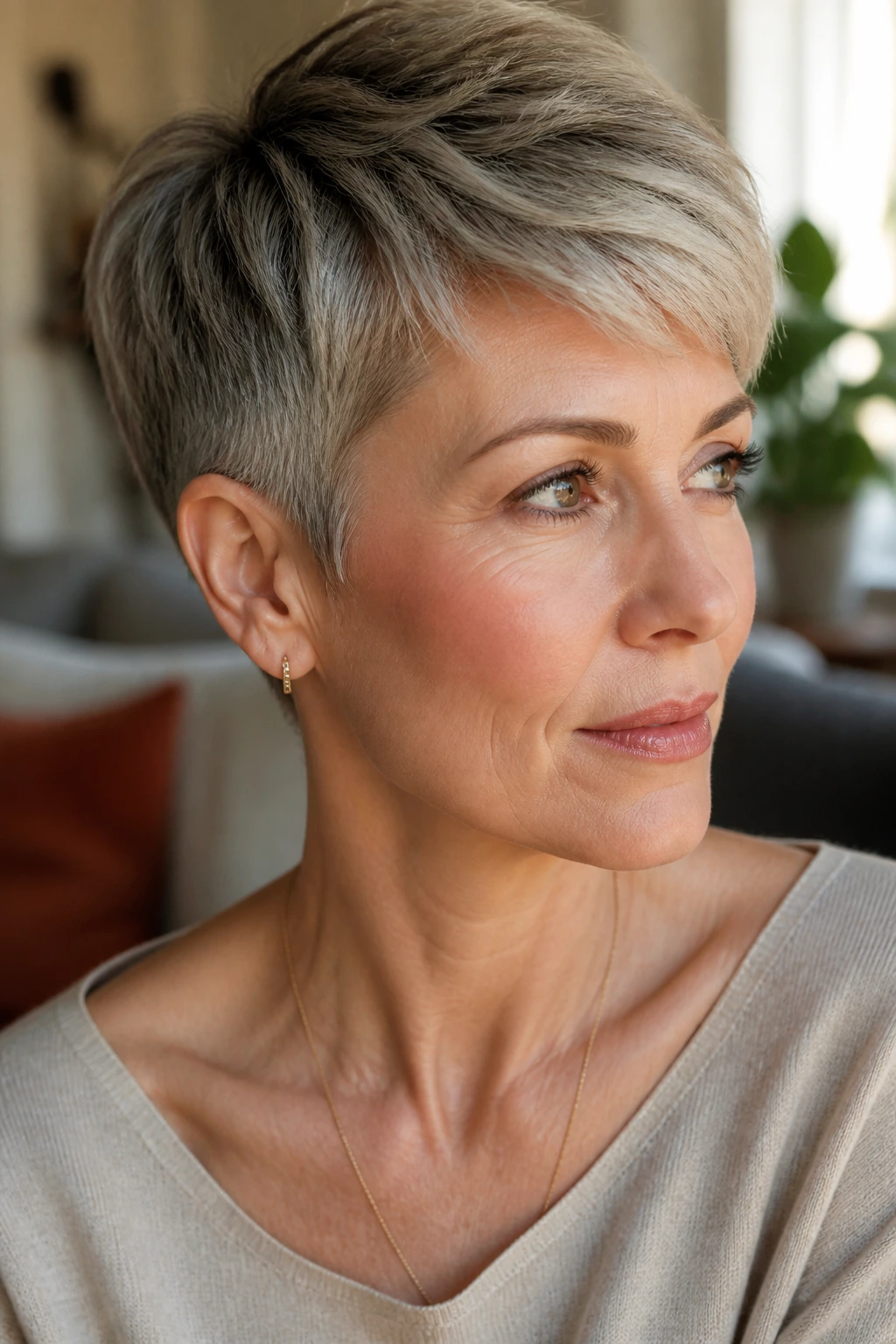
A tapered crop is short without being severe. The sides stay close to the head, the top has enough length to bend forward or up, and the neckline stays neat. It’s one of the best short cuts for coarse hair, because it reduces bulk where the hair wants to puff out.
Why It Works
This shape is controlled in a good way. It gives you structure around the ears and nape, which means less daily fuss, but it doesn’t flatten the crown into a dull sheet. A bit of piecey texture on top keeps it from feeling too neat.
I’m partial to this cut on women who are done with shoulder-dragging lengths but don’t want a very short pixie. The tapered crop feels decisive. It also pairs well with glasses, because the sides stay clean instead of crowding the frames.
Styling It
Use a small round brush or just your fingers while blow-drying. Then add a tiny bit of paste through the top only. If you put product all the way to the roots, the crop can look greasy. Keep it sparse.
This cut has a sharp outline. That outline is the point.
13. Wolf-Cut Lite for Women Who Want Edge Without Chaos
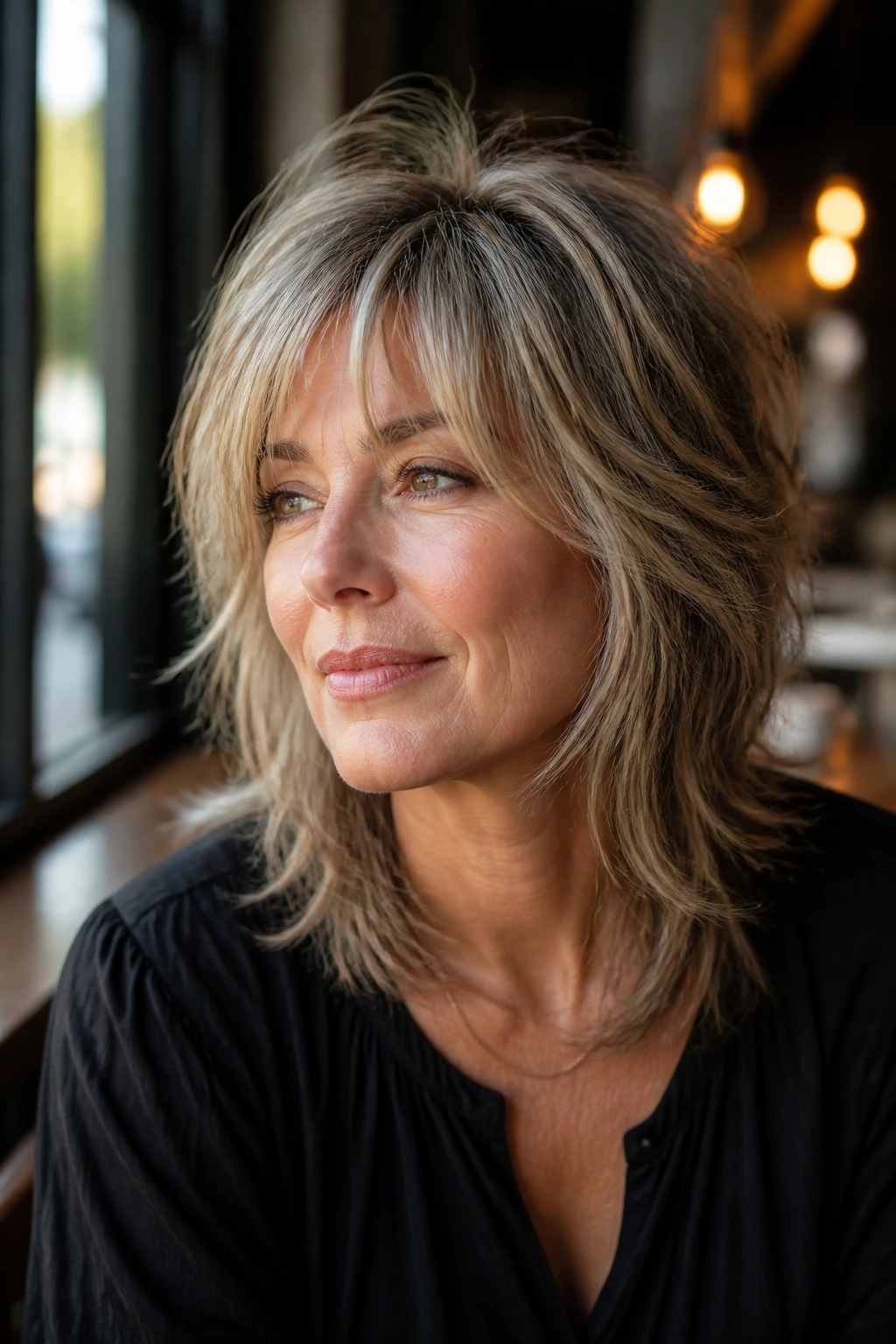
A full wolf cut can be a lot. The lighter version is easier to live with. It keeps some shag energy — a little lift at the crown, some separation through the lengths, and softer fringe pieces around the face — but it stops short of the wild, heavily disconnected version that can look messy on the wrong hair.
What Makes It Different
This cut is for the woman who wants movement and a little attitude, not a full-on rock-and-roll shell. The layers should be long enough to keep the ends full, and the crown should have just enough lift to stop the silhouette from hanging flat.
I like this especially on wavy hair that starts to go limp by the second day. The layers give the wave somewhere to sit, and the roughness can look deliberate instead of accidental. Still, this style needs some restraint. Too many short layers, and it starts to fray.
Best For
- Thick hair with natural bend
- Wavy textures
- People who like a lived-in finish
- Anyone who wants to skip heavy blowouts
If you want this shape to read polished, keep the ends healthy and use a light cream rather than a lot of dry texture spray.
14. An A-Line Bob With Longer Front Pieces

The A-line bob is the haircut equivalent of a good angle in a photograph. Shorter in the back, longer in the front, it creates a clean diagonal that sharpens the jaw and lengthens the neck. It looks tailored, especially when the front pieces graze the collarbone or sit just below it.
Why It Works
That diagonal line does useful work. It draws the eye downward and forward, which can be flattering if the face feels wider near the middle. It also keeps the back compact, so the haircut doesn’t spread around the neck like a mushroom.
The best A-line bobs aren’t extreme. I don’t love the dramatic, sharply stacked version on most women over 50. A softer slope is easier to wear and easier to grow out. The front still needs enough length to tuck or bend.
Styling Notes
A smooth blowout shows the angle best, but a soft wave also works. If you curl it, bend the front away from the face by a half-turn so the angle stays visible.
This cut is one of the easiest ways to make straight hair look more considered without adding layers everywhere.
15. Long Layers That Don’t Leave the Ends Thin
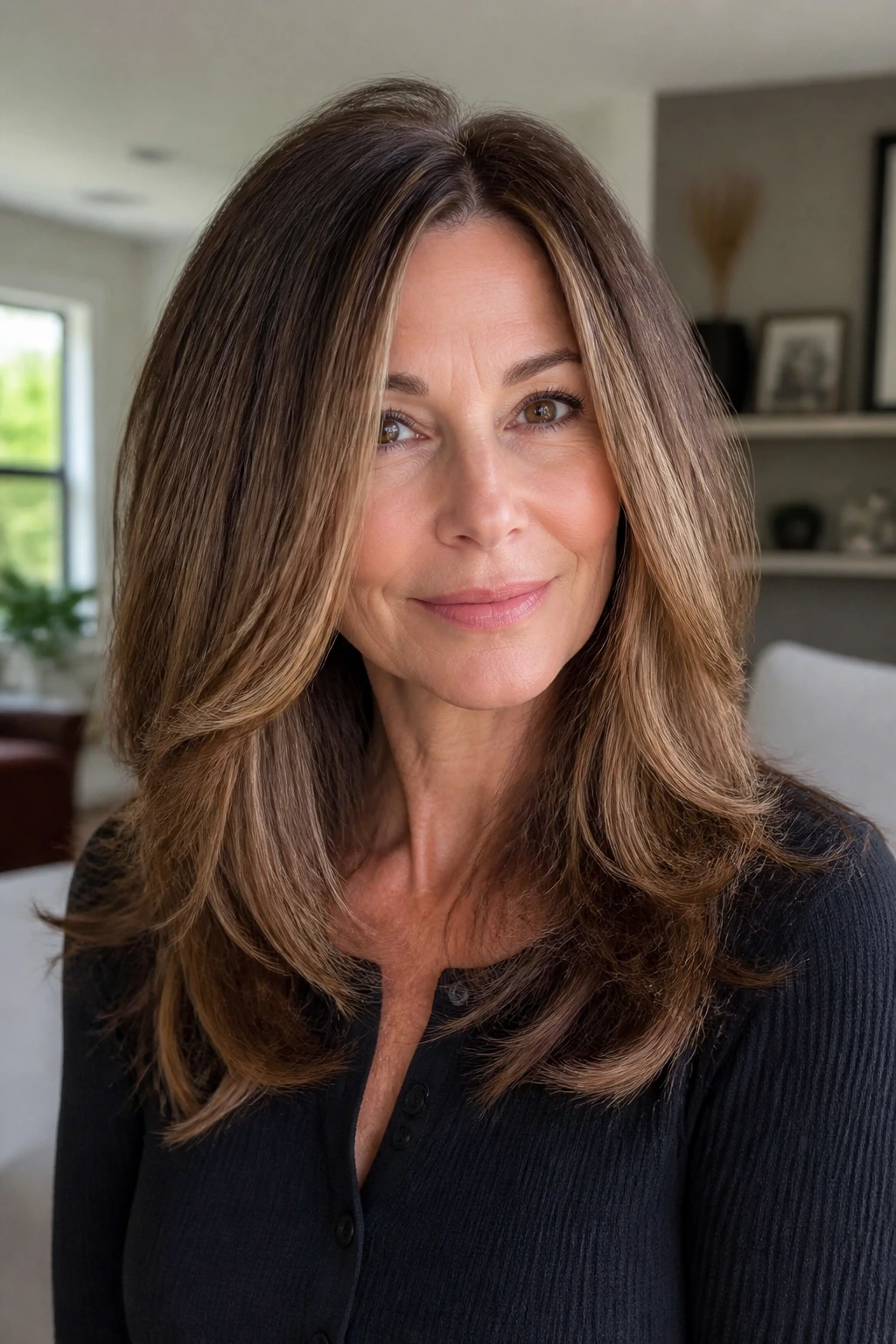
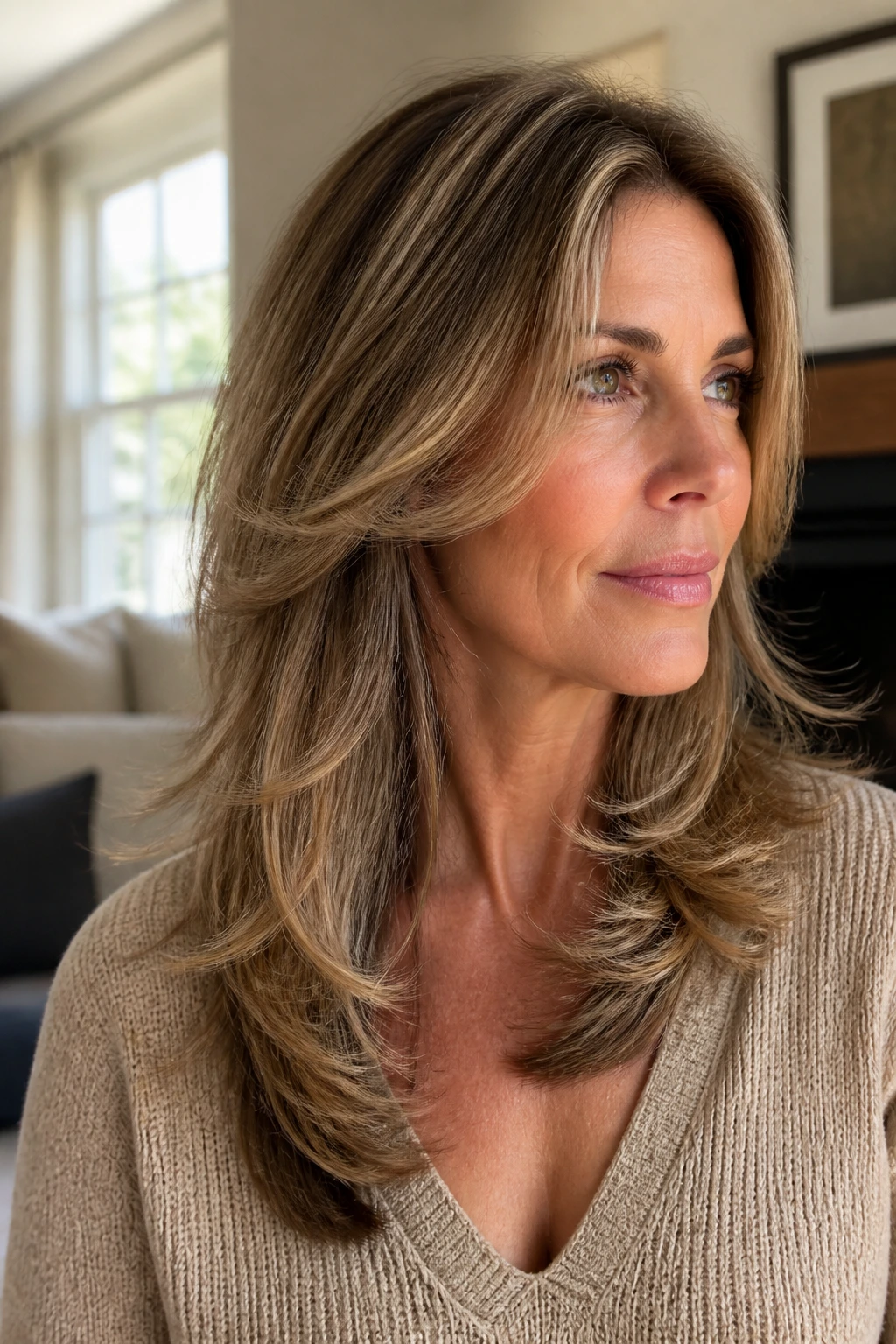
Long layers get a bad reputation because people often ask for too many of them. The good version keeps the ends full and only removes weight where the hair actually needs movement. That means a shape that still feels long, but doesn’t drag the face down.
Why It Works
If your hair has good density and you like length, this is the most forgiving option on the list. The layers should begin below the chin or around the collarbone so the top doesn’t get too broken up. You want motion, not holes.
Long layers also work well with growing-out gray because the shape stays soft. Gray hair often needs a little more moisture, and a layered length keeps it from looking like a single heavy sheet. A shine cream on the ends helps, but not too much. A small amount goes a long way.
Best For
- Thick straight hair
- Wavy hair that wants to move
- Women who like buns, clips, and ponytails
- Anyone growing out a shorter cut
If the ends start to look stringy, the haircut has gone past its prime. Trim before that happens.
16. The Curly Shag That Lets the Pattern Stack
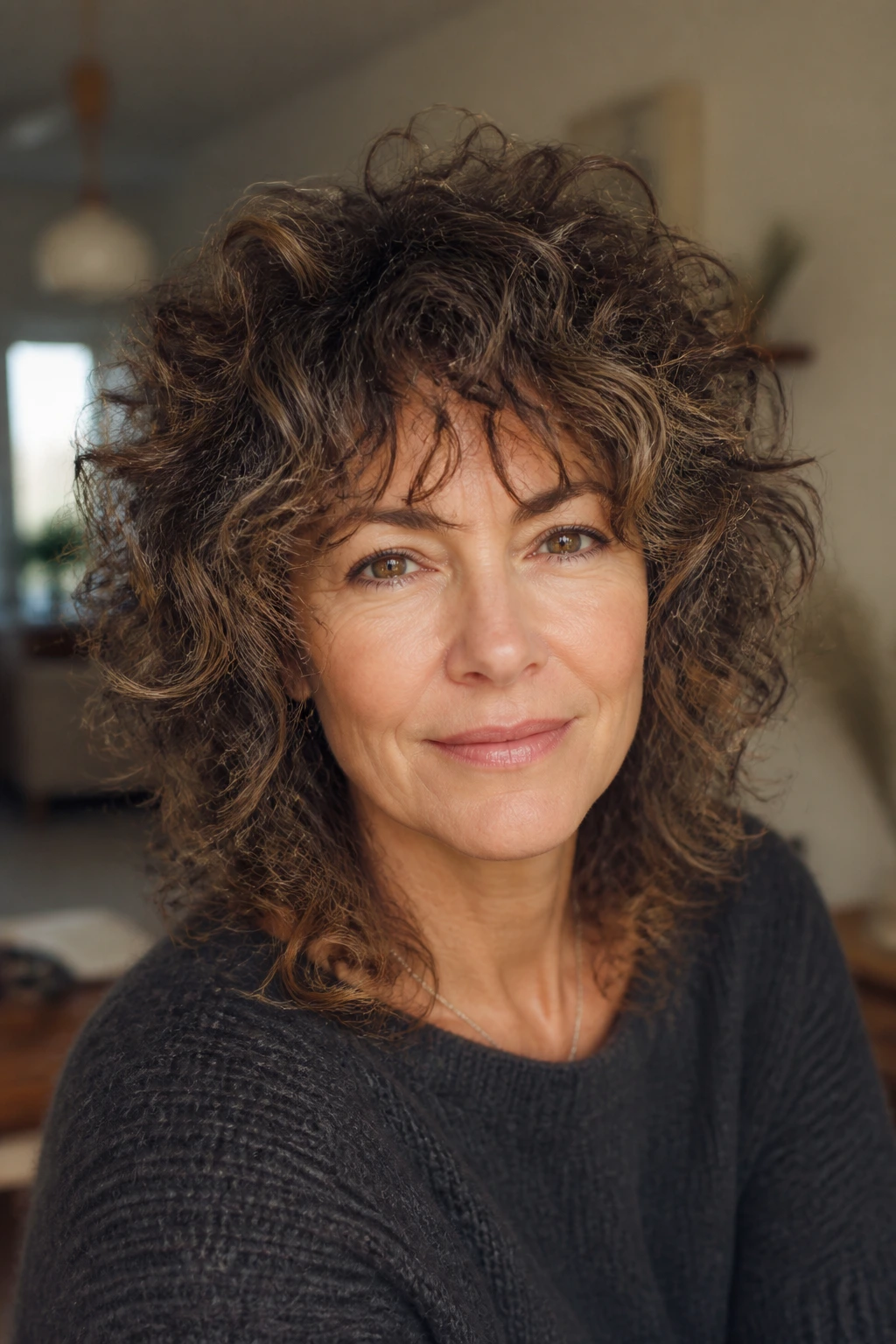
A curly shag can be a revelation when it’s cut well. The whole point is to let curls stack naturally instead of fighting each other. The top gets lift, the face frame gets shape, and the bottom stays light enough that the curls don’t collapse into a triangle.
Why It Works
Curly hair needs room between the layers. A good shag gives that room. The top is shorter, the middle has movement, and the perimeter still keeps enough weight to define the shape. Done right, the curls look like they have energy from root to tip.
The worst version of this cut is the one that gets too thin at the ends. Then the curls frizz, separate badly, and lose their spring. Keep the layers long enough to hold curl clumps together. That matters more than people think.
How to Wear It
Air-dry with curl cream, or diffuse on low heat. Scrunching with a towel is rougher than most people realize — use a cotton T-shirt or microfiber cloth if you can. It cuts down on frizz without flattening the curl.
This style has personality. It should.
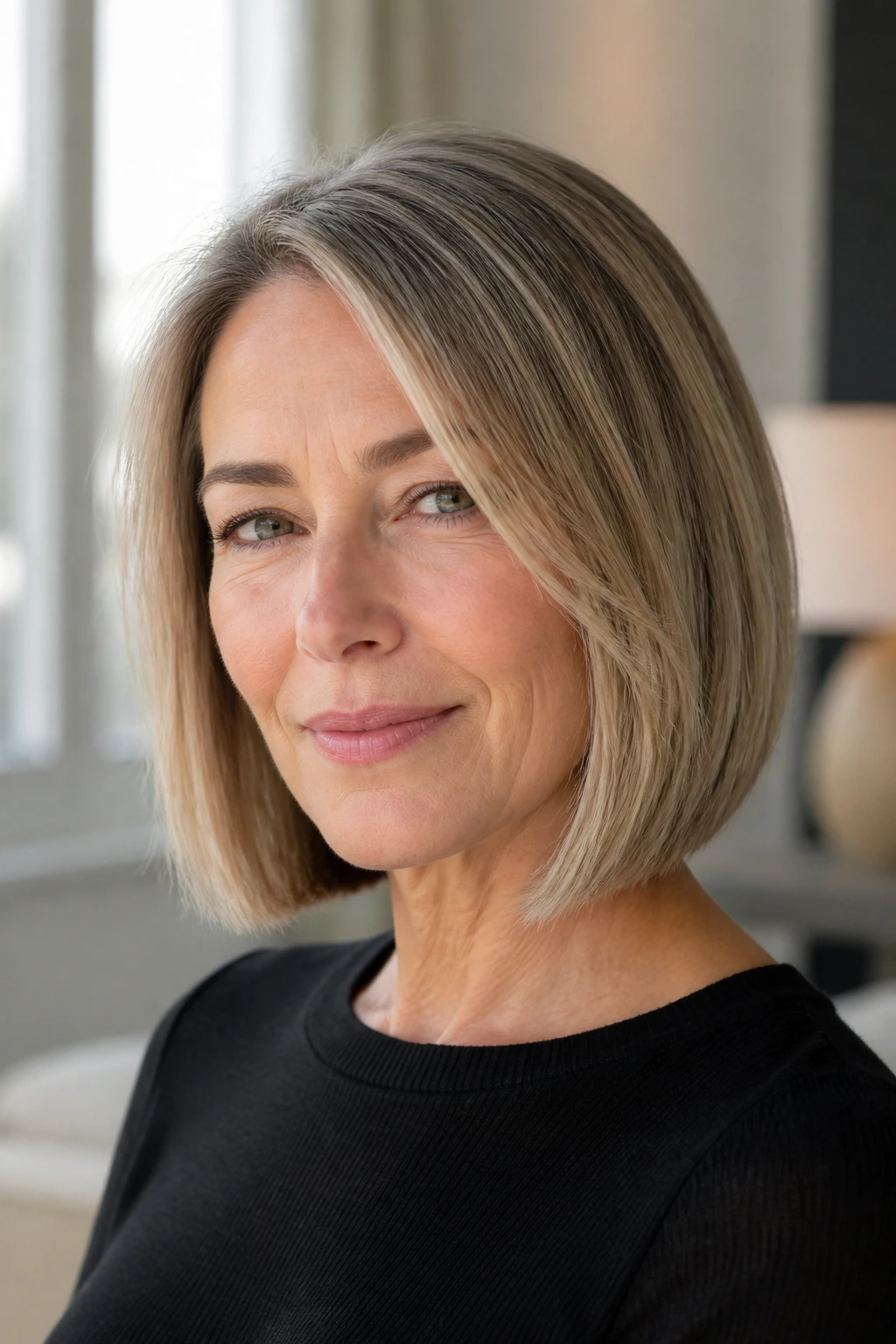
17. The Ear-Tuck Sleek Bob
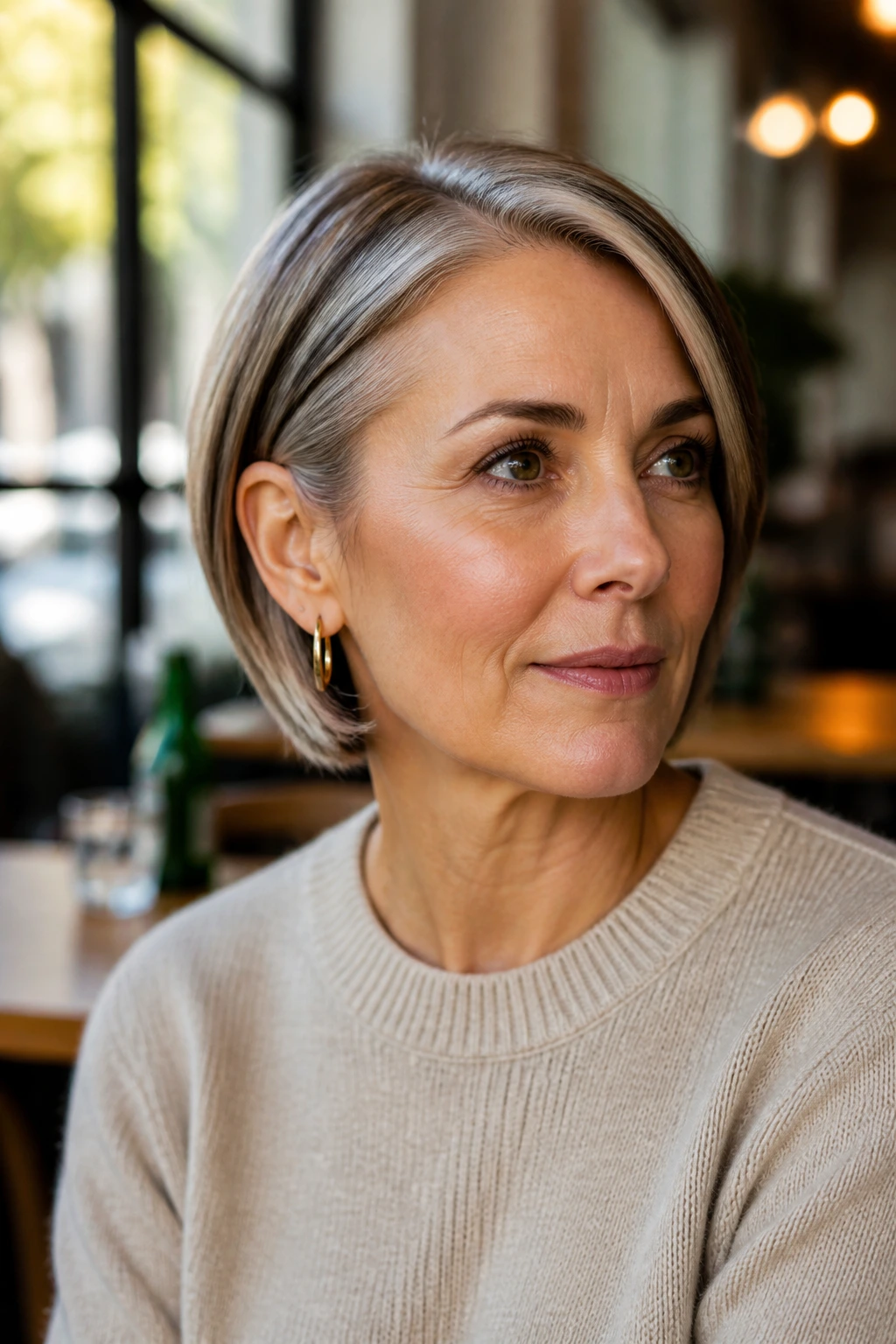
There’s something clean about a bob that can tuck neatly behind the ear and still hold its shape. The ear-tuck sleek bob is sharp at the line, smooth through the sides, and light enough to move when you tuck one side back or wear it with a side part. It’s understated, but not dull.
Why It Works
This cut gives you a polished shape without a lot of visible layers. That’s useful if your hair is straight and you want the cut itself, not the styling, to do the work. It also makes cheekbones and earrings matter, which is a nice bonus.
The line should be soft enough to bend, not so blunt that it looks like it was snapped off. A slight bevel at the ends helps. If the bob hits at chin level or just below, the tuck behind the ear looks natural rather than cramped.
Best For
- Straight or relaxed hair
- Women who wear glasses or statement earrings
- Anyone who likes a neat neckline
- Low-friction styling routines
I like this cut because it survives a bad blow-dry. A sleek bob that only works on salon day is a bad investment. This one behaves.
18. Blowout Layers That Bend at the Ends
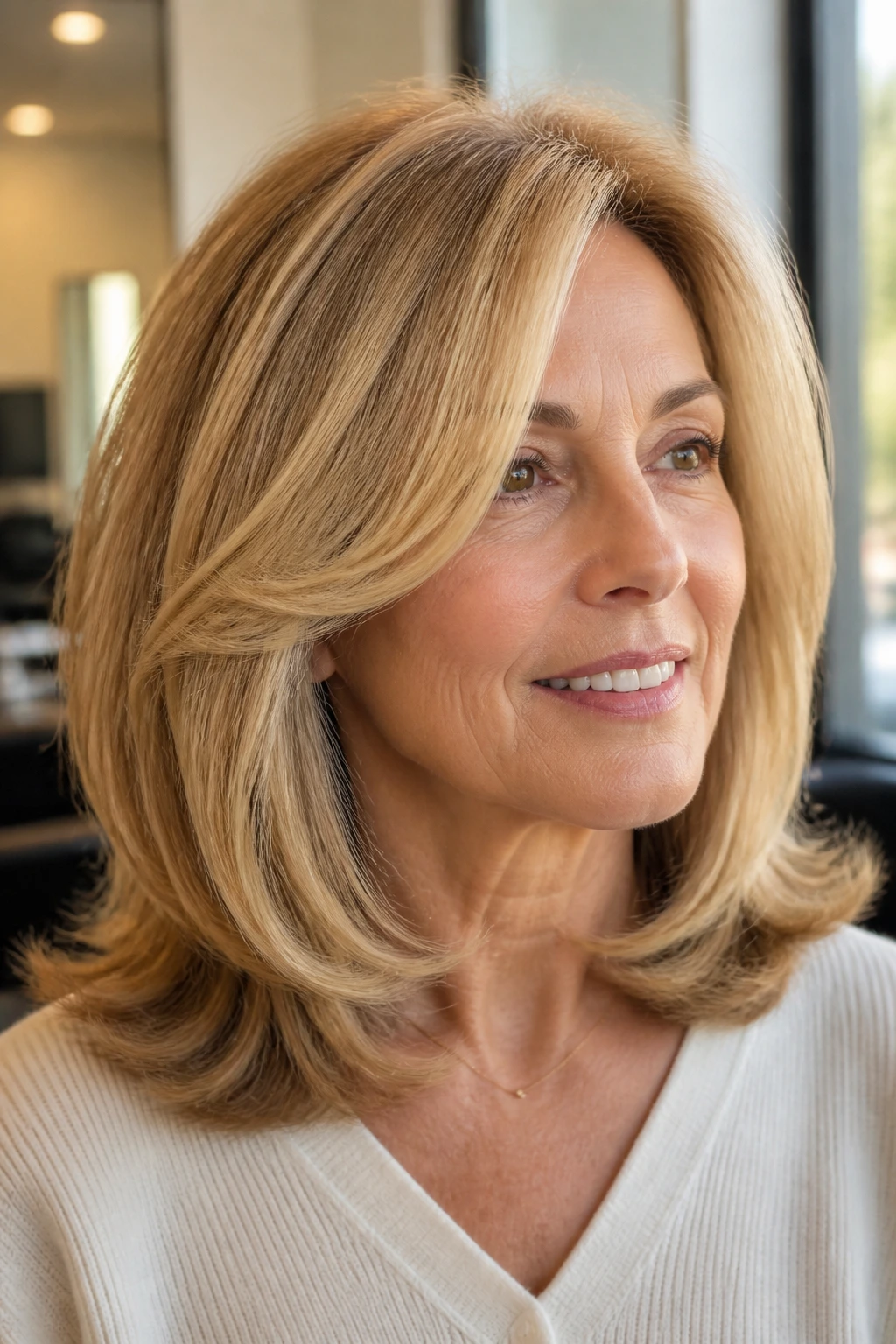
Some haircuts look unfinished until the ends turn under or flick out. Blowout layers are built for that little movement. The layers start low, the crown gets a hint of lift, and the ends carry a soft bend that makes the whole haircut look like it was styled on purpose.
Why It Works
This is a good option if you like volume but do not want stiff curls. The bend at the ends adds shape without making the style look dressed up. On medium-density hair, it gives enough body to avoid limpness while keeping the outline smooth.
I prefer this cut around the shoulders or just below. Shorter than that and the bends can feel too bouncy; longer than that and the effect gets lost. The sweet spot is hair that can skim a sweater collar and still show a movement at the edge.
Styling Notes
Use a 1.5-inch round brush and aim the dryer downward on the last pass to smooth the cuticle. Then wrap only the last 2 inches of each front piece around a curling iron for a soft curve. That tiny bit of control makes all the difference.
This is one of those styles that looks like effort even when the effort was modest. Useful. Very useful.
19. Flip-Out Shoulder-Length Hair With Movement
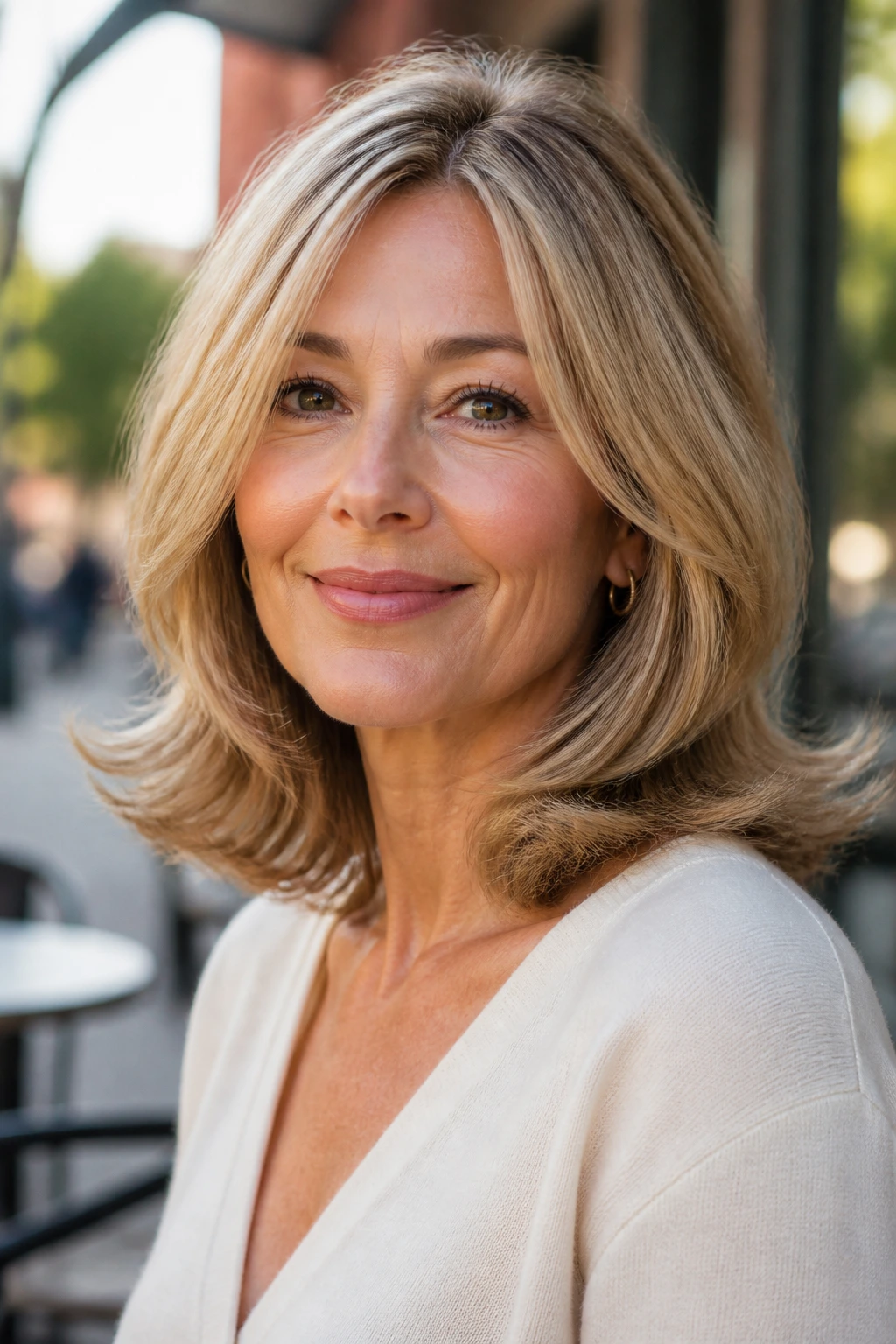
Flip-out ends are back because they solve a basic problem: shoulders eat hair. Once hair hits that line, it can either hang there or flip away from it. I prefer the flip. It keeps the silhouette lighter and stops the ends from getting bent into odd shapes.
Why It Works
The shoulder is a trouble spot. Hair that lands there can kick in weird directions, especially if the strands are straight and a little coarse. A deliberate flip-out at the ends gives the shape a finish instead of letting gravity win.
This style works best with light layers and a clean outline. The top can stay smooth while the ends turn out just enough to show movement. If you want a softer version, flip only the front pieces and leave the back straighter.
Who Should Try It
- Hair that sits flat at the crown
- Women who like a playful, lifted edge
- Medium to thick textures
- Anyone who wants shoulder length without heaviness
A small round brush or a flat iron with a gentle wrist turn can create the flip. Don’t overdo it. One clean bend beats ten sloppy ones.
20. The Bixie With Side-Swept Fringe
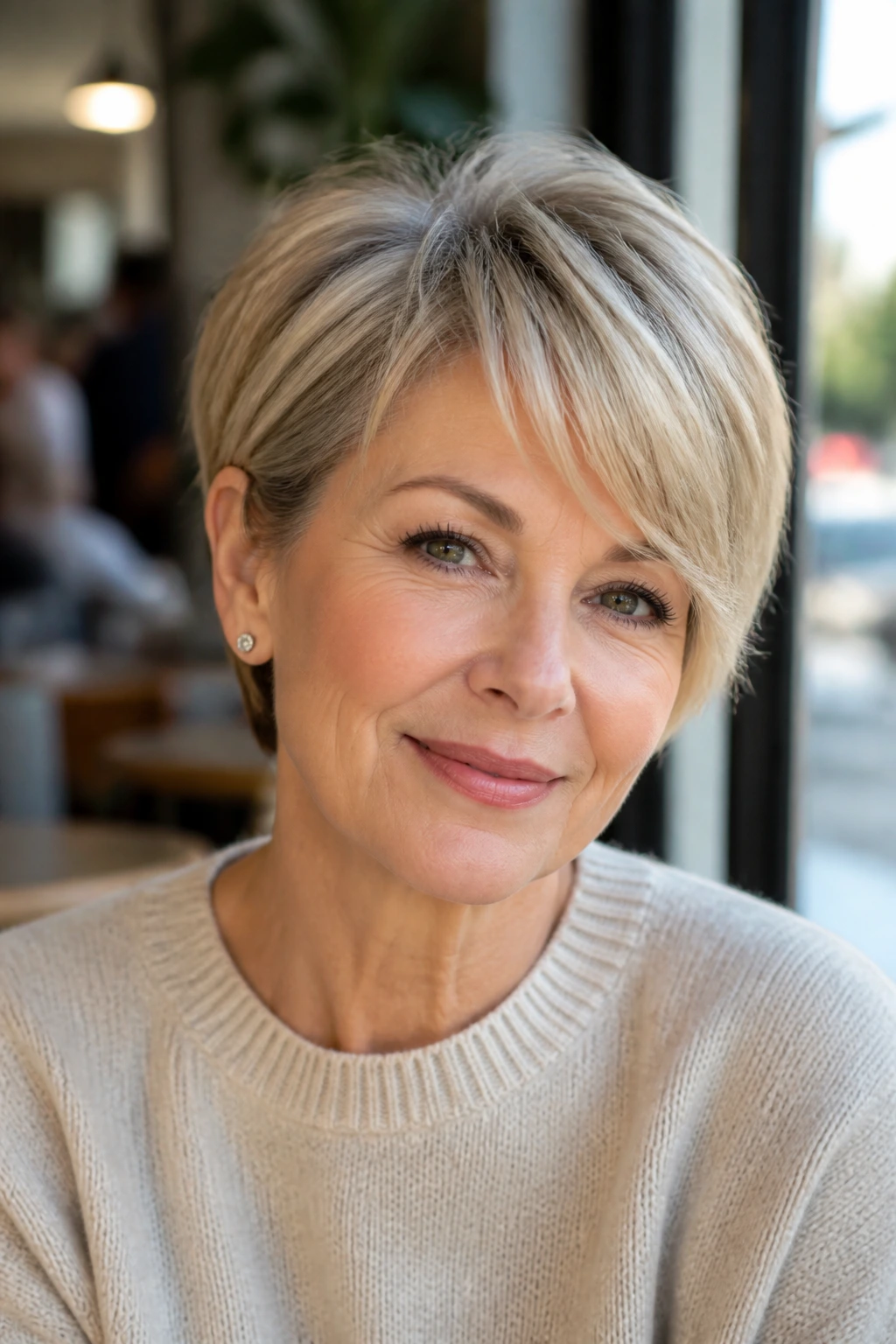
The bixie sits between a bob and a pixie, and that in-between length is the whole charm. It’s short enough to feel light, but long enough on top and around the fringe to stay soft. Side-swept fringe keeps it from feeling too severe and gives the cut a little motion across the forehead.
Why It Works
A bixie is useful when you want shorter hair but aren’t ready to go all the way to a crop. It lifts the neck, opens the face, and usually takes less time to dry than a bob. At the same time, the fringe and longer top pieces keep it from looking overly cropped.
I’d call this one friendly. Not childish. Friendly. It’s the sort of cut that can look neat with almost no styling, which matters on mornings when you are not in the mood for negotiation.
Ask For
- Shorter sides and nape
- Longer crown pieces
- A side-swept fringe that blends into the top
- Soft texturing, not choppy spikes
If you wear it with a little cream and finger-styling, the bixie reads modern fast.
21. The Collarbone Cut With Curtain Fringe
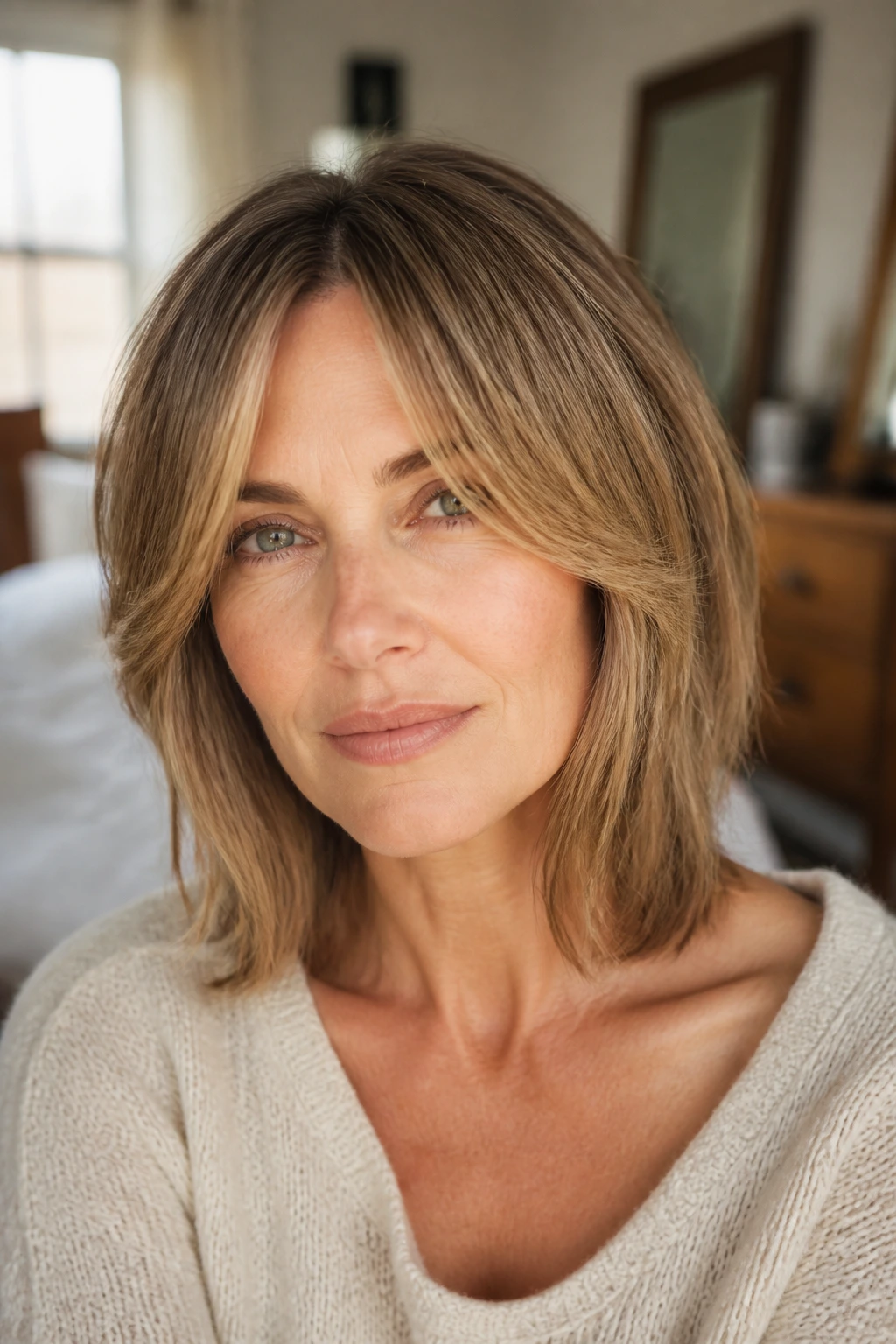
A collarbone cut gets a second life when curtain fringe joins it. The fringe splits in the middle, falls away from the forehead, and frames the eyes without locking them in. The overall cut stays long enough to feel versatile, but the front has enough personality that it doesn’t drift into plain territory.
Why It Works
This style is excellent when you want to keep your hair off your face without pulling everything back. The fringe adds interest right where people look first, and the length keeps the rest of the cut flexible. You can wear it smooth, wavy, tucked, clipped, or brushed into a loose blowout.
I also like this on women whose face shape benefits from a soft diagonal line. The fringe creates that line naturally. It can hide a forehead a little, but more importantly, it adds movement around the eyes and cheekbones.
Styling Notes
Dry the fringe first, not last. That’s the part that gets wonky if you wait too long. Use a round brush or even your fingers and a low dryer setting, then let the rest of the hair catch up.
The haircut is easy. The fringe is the detail. That’s the trade.
22. The Soft Graduated Bob That Grows Out Gracefully

A soft graduated bob is the kind of haircut that earns repeat appointments. The back is slightly shorter, the front stays longer, and the line between them is gentle instead of dramatic. It gives shape to the head without looking rigid, and it grows out in a way that usually still makes sense two or three weeks later.
Why It Works
Graduation adds lift where bob-length hair can flatten, especially through the back crown. The soft version avoids the hard stack that can feel dated or fussy. Instead, it gives the cut a little curve, which helps the hair sit neatly against the neck and jaw.
This is one of my favorite cuts for women who want structure but hate constant styling. It looks good blown smooth, but it also behaves when air-dried with a little cream. And if the gray pieces around the temples are a little wiry, the shape keeps them from flying apart.
Best For
- Fine hair that needs body in the back
- Straight textures
- Women who want a bob with more lift than a blunt line
- Anyone who wants a cut that still looks decent at six weeks
The soft graduate is quiet workhorse hair. Not flashy. Just useful, which is better.
Why These 40-Something Hairstyles Work Better Than a One-Length Chop

A one-length cut has its place, but it can turn heavy fast once hair loses a bit of density or starts changing texture around the temples and ends. These 40 something hairstyles for women over 50 do something smarter: they keep a shape that still reads clean, then add movement where the hair actually needs it. That difference matters when the front of the hair wants to sit one way, the back wants to sit another, and the crown has its own opinion.
The best cuts here understand weight. Hair around the collarbone or jawline often needs a strong edge so it doesn’t go transparent. Hair around the face often needs a little release so it doesn’t drag downward. And hair at the crown usually needs lift, not a pile of short layers that stick up and expose the scalp.
There’s also a practical side people ignore. A cut that can survive a rough-dry, a quick bend with a brush, or a day without full styling is worth keeping. Not every haircut should require a full production. Some should just fall into place. That’s the point of these shapes. They leave room for real life.
One more thing: the right haircut can make color look better. Gray, silver, highlights, lowlights — all of it shows more clearly when the haircut has a clean line and a little movement. Flat hair hides color. A better shape lets it show.
The Tools That Make These Styles Easier at Home
-
Hair dryer with a concentrator nozzle: The nozzle keeps airflow directed so the cuticle lies flatter and the shape looks cleaner.
-
Round brush in two sizes: A 1.5-inch brush works well for bangs and shorter layers; a 2-inch brush is better for bobs and shoulder-length hair.
-
1-inch curling iron or wand: This gives a soft bend, not a tight curl, which is exactly what most of these styles need.
-
Flat iron with rounded edges: Useful for a smooth bob, a flipped-out end, or a small turn through the face-framing pieces.
-
Sectioning clips: They keep the crown and fringe separate while you dry, which matters more than people think.
-
Lightweight mousse or root-lift spray: Use it at the roots before blow-drying if your hair goes flat by noon.
-
Texturizing spray or dry shampoo: Good for second-day lift and for keeping the front pieces from collapsing.
-
Shine serum: One small drop, warmed between the hands, can calm the ends of gray or coarse hair.
-
Wide-tooth comb: Handy for curls and waves; it detangles without destroying the shape.
-
Tail comb: Best for clean parting and sectioning when you want the haircut to sit on purpose.
How to Choose 40 Something Hairstyles for Women Over 50 by Texture
The smartest haircut is the one that matches the hair you actually have, not the hair you used to have, and not the hair in the photo you saved three months ago. Fine hair usually needs stronger lines and fewer short layers. Thick hair usually needs more weight removal underneath, not a pile of choppy pieces around the face. Curly hair wants shape cut into the pattern itself. Straight hair wants a perimeter with enough bend or angle that it doesn’t lie there looking bored.
If your hair is fine or medium-fine, ask for a cut that keeps the outline solid. Collarbone lobs, blunt bobs, soft graduations, and long layers with a clean perimeter do the best job of making hair look fuller. Too many short layers can expose scalp and make the ends feel thin. That’s a bad trade.
Thick hair needs a different sort of restraint. Ask for internal weight removal and clean ends, not a heavy texture job that frays the surface. A rounded bob, a soft wedge, a shoulder-length cut with face-framing pieces, or a wolf-cut lite can all work if the stylist keeps control of the outline.
Curly and wavy hair are their own category. A shag, curly shoulder cut, or curtain-fringe shape can be excellent, but only if the cut is adjusted for shrinkage. A dry cut or a careful curl-by-curl approach often helps. Straight hair, meanwhile, tends to shine in sharper shapes: the French bob, the ear-tuck bob, the A-line bob, or the sleek blunt lob.
How to Wear These Cuts Without Fighting Them
Presentation: Keep the finish tied to the shape. A French bob wants polish through the line and a little looseness at the end. A shag wants separation. A sleek bob wants smooth sides and a clean part. If the styling fights the haircut, the whole thing looks accidental.
Accessories: Glasses, earrings, scarves, and collars all change the way a haircut reads. A tucked bob loves hoops. A pixie looks sharper with a clean neckline and smaller earrings. Collarbone cuts and long layers sit best with open necklines or V-necks, because the hair already has enough presence.
Scale: Match the cut to your density. Fine hair usually looks better a little shorter, because the ends stay fuller. Dense hair often needs more structure in the back and around the perimeter so it doesn’t spread. Curly hair can afford more length, but only if the shape keeps the curls grouped together instead of scattered.
Best Match: If you want the least daily work, choose a cut that still looks good with finger-drying or a quick rough blow-dry. If you don’t mind a brush and dryer, the blowout layers, curtain fringe, and collarbone lobs will give you more styling options. I’d rather see a haircut that behaves on ordinary days than one that only shines after twenty minutes of fussing.
Additional Styling Tips and Finishing Moves
Root Lift: Clip the crown up while it’s still warm from the dryer, then release it after five to ten minutes. That tiny set makes a bigger difference than most thick sprays.
Texture: For waves and bends, curl only the middle section of the strand and leave the first inch near the roots and the last inch at the ends a bit straighter. The result looks softer and far less “done.”
Polish: If gray or silver hair looks dry, use one drop of serum — no more — on damp ends and another tiny touch after styling. Too much oil weighs the shape down fast.
Shortcut: Dry shampoo works best before hair gets greasy, not after it turns limp. A few sprays at the roots at night can wake the hair up better by morning.
Make-It-Yours: If you like an air-dried finish, choose shaggy or layered shapes. If you like a brushed finish, stick with bobs, lobs, and wedges. Fighting your own habit is a waste of time.
Common Haircut Mistakes That Age the Look Fast
The first mistake is asking for too many short layers on fine hair. The haircut may look lively on day one, but after a wash or two the ends start to fray and the scalp shows through. The fix is simple: keep the perimeter stronger and let the movement live lower down.
Another problem is length that hangs past the point where the ends still look full. When the hair gets stringy at the bottom, it drags the whole face down. A trim an inch sooner is usually better than trying to rescue dead ends with products.
Too-short bangs cause trouble more often than people admit. They can split awkwardly, sit high above glasses, or make the forehead feel boxed in. If you want fringe, let it graze the brows or sweep to the side so it has room to move.
Over-thinning thick hair is another bad habit. A stylist can remove bulk without carving the cut into pieces. If the hair comes home feeling fluffy at the ends and flat at the crown, too much texturizing happened.
And then there’s the no-plan haircut: same length everywhere, no contour, no edge, no part. It sounds safe. It isn’t. Hair needs a shape to return to after sleep, wind, humidity, and a not-great day.
Variations and Adaptations to Try
Fine-Hair Boost: Choose blunt edges, shorter lobs, and soft graduation at the back. Keep layers long and low so the ends stay thick, and ask for root lift at the crown rather than lots of thinning.
Curly-First Version: Let the curls dictate the outline. A shag, curly shoulder cut, or soft mid-length shape works best when the hair is cut to spring, not stretched. Ask for shrinkage to be considered before anyone reaches for the scissors.
Gray-and-Glossy Version: Use softer layers and a clean line around the face so silver strands catch light without looking frizzy. A light shine cream and regular trims keep the shape crisp.
Glasses-Friendly Shape: Pick fringe that clears the frames and sides that don’t crowd the temples. Ear-tuck bobs, side-parted mids, and collarbone cuts usually behave best here.
Low-Heat Routine: If you hate styling tools, choose cuts with strong outlines — French bob, blunt lob, rounded bob, soft graduated bob. These shapes do more of the work on their own, so air-drying doesn’t leave you stranded.
Trim Timing, Grow-Out, and Day-Two Hair
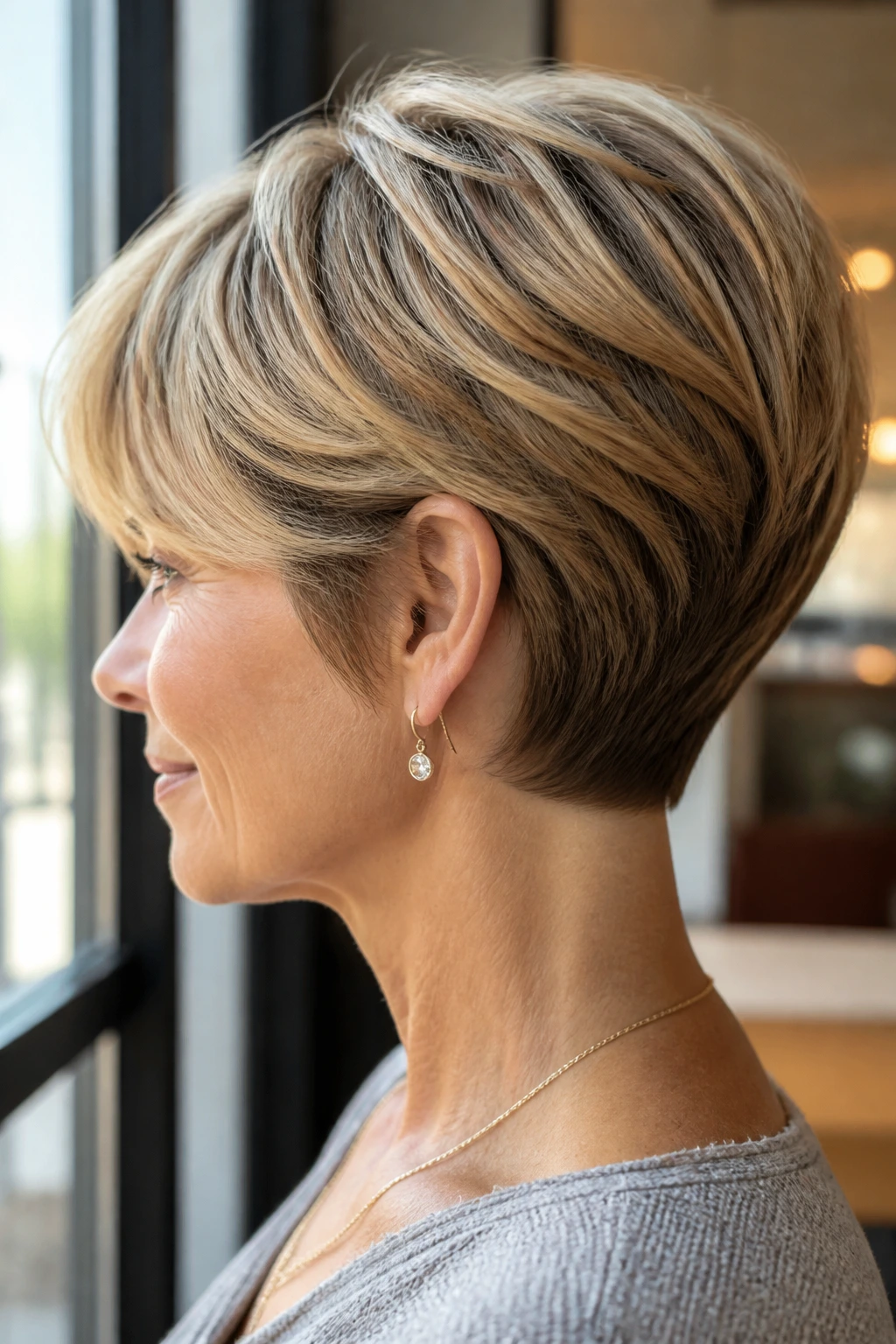
Short cuts need more frequent trims than long ones. A pixie or bixie usually wants a clean-up every 4 to 6 weeks, because the shape can go soft fast. Bobs and lobs usually hold together for 6 to 8 weeks. Shoulder-length layers often stretch to 8 to 10 weeks if the ends stay full. Long layers can usually wait 10 to 12 weeks, though dry ends may ask for attention sooner.
Day-two hair is where many of these cuts earn their keep. A little dry shampoo at the roots, a quick bend on the front pieces, and a fingertip reshape around the crown are often enough. For curls, mist lightly with water and add a touch of leave-in instead of starting from scratch. For straight cuts, a pass with a brush and warm dryer can bring the whole shape back.
Store your tools like they matter. Not glamorous, but true. A good brush, a dryer that still has a strong nozzle, and clips that actually grip are the difference between a cut that looks intentional and one that just lies there. If a style depends on a brush or iron, keep those tools handy so the haircut doesn’t get abandoned after three mornings.
Questions People Ask Before They Book the Cut
What haircut makes hair look thicker after 50?
A blunt lob, a rounded bob, or a soft graduated bob usually creates the strongest outline. Those shapes keep the perimeter full, which is the fastest way to make fine hair look denser without piling on product.
Can women over 50 wear bangs without regret?
Yes, if the bangs fit the hairline and the lifestyle. Curtain bangs and long side-swept fringe are the easiest to live with because they grow out gently and don’t demand daily precision.
Is long hair still a good idea after 50?
Only if the ends stay full and the hair has enough density to support the length. Long hair with a clean perimeter and a few strategic layers can look beautiful; long hair with thin, see-through ends looks tired fast.
What if my hair is gray and coarse?
Choose a cut with shape, not too much thinning. Gray hair often behaves better in a bob, pixie, or soft layered cut where the ends are kept clean and the surface gets a little shine product instead of heavy oil.
Which of these styles is easiest to air-dry?
The shag, the bixie, the curly shoulder cut, and the long layered lob tend to air-dry well. They already contain movement, so they don’t collapse into a flat sheet when you skip the brush.
How do I talk to my stylist without sounding vague?
Bring 2 or 3 photos that show the front, side, and back. Then say where you want the length to hit, how much styling you’re willing to do, and what you dislike about your current haircut. That is far more useful than saying you want something “fresh.”
What if I hate it once it grows a half-inch?
That usually means the shape depends too much on daily styling or too many short layers. Next time, ask for a stronger outline and longer internal layers so the haircut can still hold together after a few weeks.
Should I choose a center part or side part?
Pick the part that gives your crown the most lift and your face the cleanest line. A center part can look neat on straight, balanced hair; a side part usually helps if the crown is flat, the hairline is uneven, or one side of the face needs a little softening.
The Cut That Still Feels Like You
The best haircut in this whole group is the one that behaves on ordinary days. Not the one that only looks good in the salon mirror. Not the one that needs eight products and a prayer. The one that falls back into shape after sleep, wind, a scarf, or a rushed morning in the bathroom.
That’s why these 40 something hairstyles for women over 50 work so well: they respect the hair you have now. They leave room for softness, weight, lift, and a little personality. And once a cut gets those things right, it stops looking like a trend and starts looking like part of you.
Pick the version that keeps its outline on day three, not just on day one, and you’ll probably keep reaching for it.