



Taper fades for thick hair and square faces work because they pull the bulk out of the sides while keeping enough shape on top to balance a strong jaw. That sounds simple. It isn’t.
If your hair grows wide at the temples, flares at the ears, or turns into a little mushroom by lunch, the taper fade is one of the few cuts that actually respects that density instead of fighting it. And for square faces, the right taper keeps the haircut from echoing the same hard angles you already have through the jaw and forehead.
The trick is shape, not just shortness. A good taper fade trims the outline, opens up the ear area, and gives you room to add height, movement, or texture where it matters. The wrong version leaves too much width on the sides and a blocky top. That’s how you end up looking more squared off, not less.
Why These Fades Work So Well on Thick Hair and Square Faces
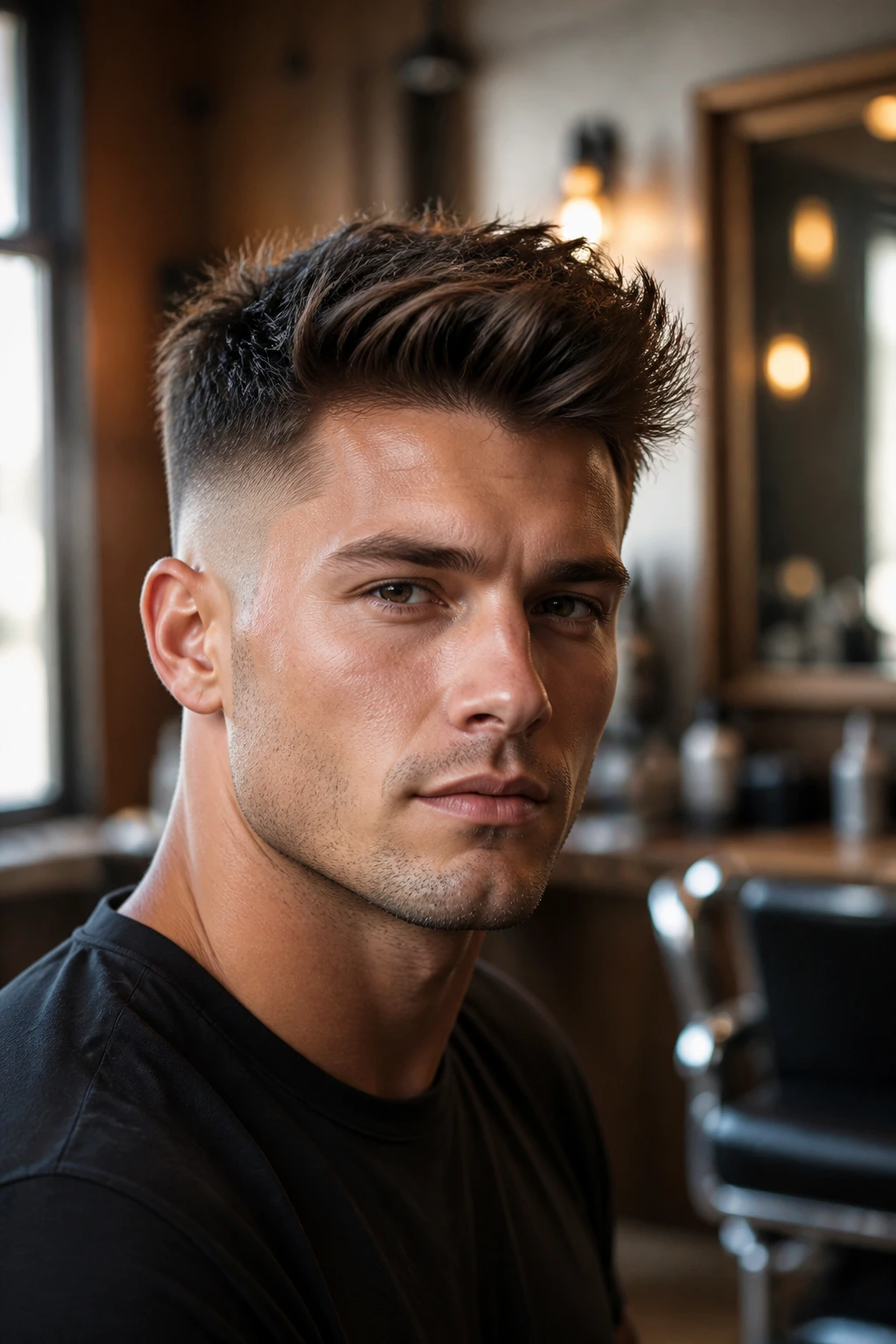
Bulk Control: Thick hair needs a haircut that removes weight at the edges first, because that’s where the silhouette gets heavy fastest.
Face Balance: Square faces read strongest when the haircut adds either height or diagonal movement, not more straight lines.
Growth Pattern Friendly: A taper grows out cleaner than a hard skin fade, so the cut keeps its shape longer between barber visits.
Styling Flexibility: You can wear the top brushed up, side-swept, curly, cropped, or slicked back without changing the basic shape.
Barber-Friendly Language: It’s easier to describe a taper fade with guard lengths and top length than to guess at a vague “clean look.”
1. Low Taper Fade with Heavy Texture
The low taper fade is the cut I’d hand to a guy who says, “My hair gets huge on the sides, and I don’t want to look too sharp.” It keeps the fade low around the ears and nape, which means the top still carries some presence, but the outline stops ballooning out around the jaw. On a square face, that matters. You’re not flattening the personality of the cut; you’re trimming the boxy edges.
Why It Fits This Face Shape
The low taper keeps the attention near the eyes and forehead instead of the widest part of the face. With thick hair, that gives you room to leave 2 to 3 inches on top and point-cut the ends so the shape moves instead of sitting like a helmet.
A little matte clay is enough here. Work it into dry or barely damp hair, then push the front forward and upward with your fingers. If the top sits too neatly, it starts looking formal in a bad way.
Ask For This
- Low taper starting just above the sideburns
- Soft blend around the nape
- 2 to 3 inches left on top
- Point-cut texture, not blunt weight
2. Mid Taper Fade with a Side Part
A mid taper fade with a side part brings order to thick hair without making the head look too narrow. The part gives the eye a line to follow, and that line breaks up the squareness of the face in a useful way. It also stops dense hair from falling straight down on both sides, which is where a lot of square-faced guys get stuck with a block.
Why This One Stays Clean
The mid taper starts a little higher than the low version, so the temples get more relief. That gives the top enough contrast to show the part without turning the fade into a skin-tight strip. Ask your barber for a part that follows your natural growth pattern, not a forceful razor line if your hair doesn’t want it.
A side part looks especially good when the top is cut to 2.5 to 4 inches and combed with some separation. Heavy, glued-down sides make the face look wider. A soft part with a matte cream does the opposite.
3. High Taper Fade with a Brush Up
Want height without a giant puff of hair? Go higher on the taper and push the top straight up. Thick hair holds a brush-up like a stubborn flag, which is half the charm and half the problem. The higher taper clears the temples so the top can rise without the sides competing with it.
The square face benefit is obvious once you see it in the mirror. Vertical movement makes the forehead and jaw feel less mirror-imaged. That’s the whole game here.
Use a blow-dryer first. Seriously. Dry the roots upward with your fingers or a vent brush, then finish with a small scoop of matte paste. If you skip the blow-dryer, thick hair usually collapses into a blunt mound by midday. Not ideal.
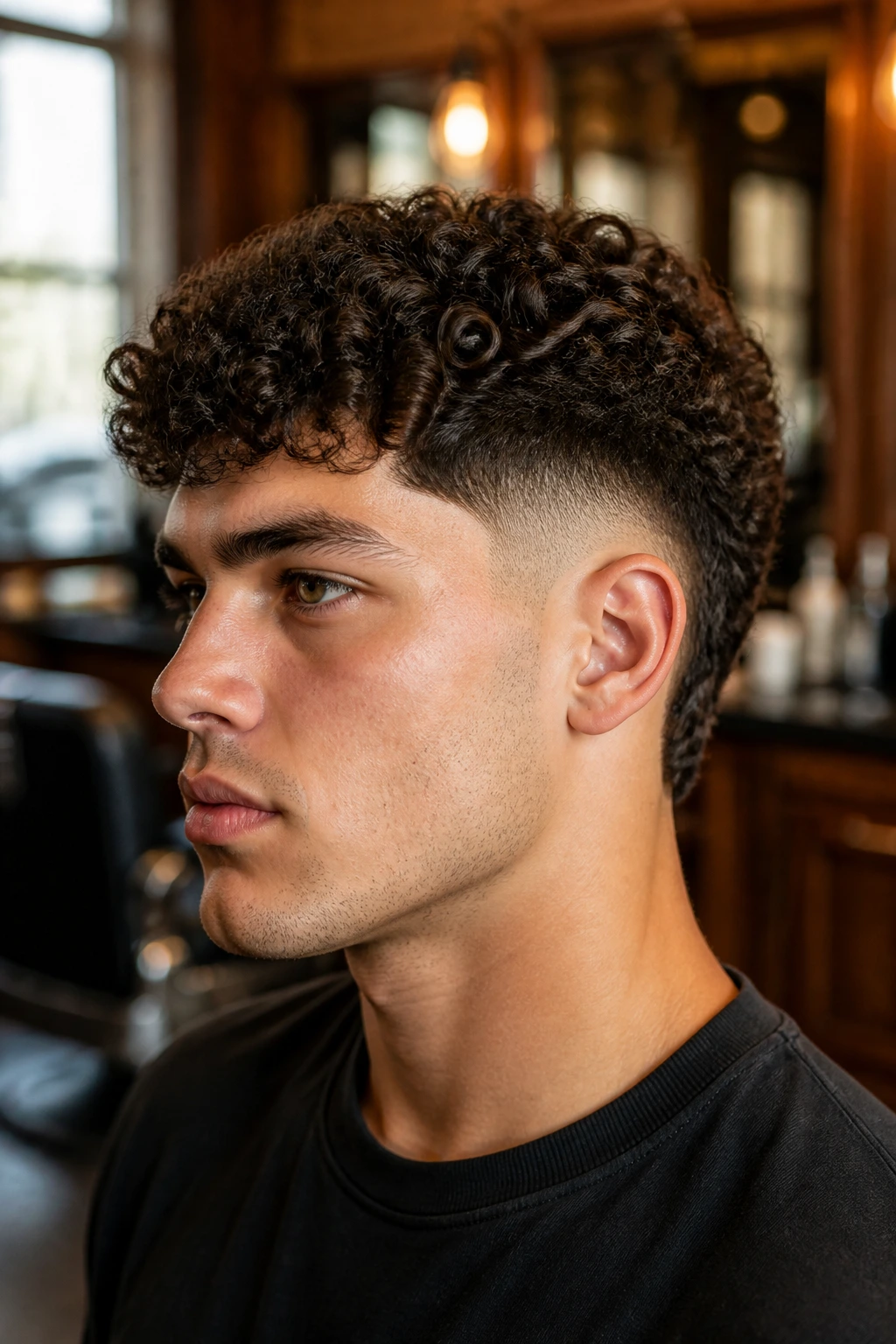
4. Drop Taper Fade with Loose Curls
A drop taper fade follows the curve of the head behind the ear, which is one of the nicest things you can do for thick curls. Instead of cutting a straight band around the head, it drops lower at the back and gives the curls room to sit naturally on top. Square faces benefit because the curved fade softens the corners without hiding the jawline.
You’ll see this cut at its best when the curls are 2 to 4 inches long and hydrated enough to clump instead of frizz apart. A curl cream, then a light gel or mousse, usually beats heavy wax every time. Heavy wax makes curls sag; they don’t need that.
What To Tell Your Barber
Ask for a drop taper that keeps the neckline neat but doesn’t erase the bulk all the way around the head. If your curls are tight, keep more length at the crown and let the fade handle the sides. If they’re looser, the top can be shaped a little closer.
5. Temple Taper Fade with a Short Quiff
Temple tapers are sneaky good because they clean up the exact spots that make thick hair look wide. The ears stay neat, the temples open up, and the quiff gives you enough lift to lengthen a square face. It’s a tidy cut, but it still has a little attitude.
The short quiff works best when the front is left a touch longer than the rest of the top. Think 3 inches in the front and a bit less behind it. Blow it back and slightly up, not straight vertical, or you’ll end up with a stiff ridge that looks dated fast.
A medium-hold matte product is the sweet spot here. Too much shine and the quiff looks stiff. Too little hold and thick hair just falls into your eyes like it’s giving up.
6. Burst Taper Fade with a Curly Top
Burst fades wrap around the ear in a rounded shape, and that shape is a gift for square faces. The curve softens the strong angles without making the haircut feel soft or vague. On thick curly hair, the burst taper also keeps the sides from bulking out where the ear meets the cheek.
This cut wants personality. The top can stay curly, coily, or tightly textured, but the fade around the ear should be crisp enough to show the shape change. If the taper is too blurry, you lose the whole point.
A lot of guys try to wear this too long on the sides. Don’t. The burst works because the ear area gets carved down while the top keeps its round, full shape. That contrast is what makes it clean.
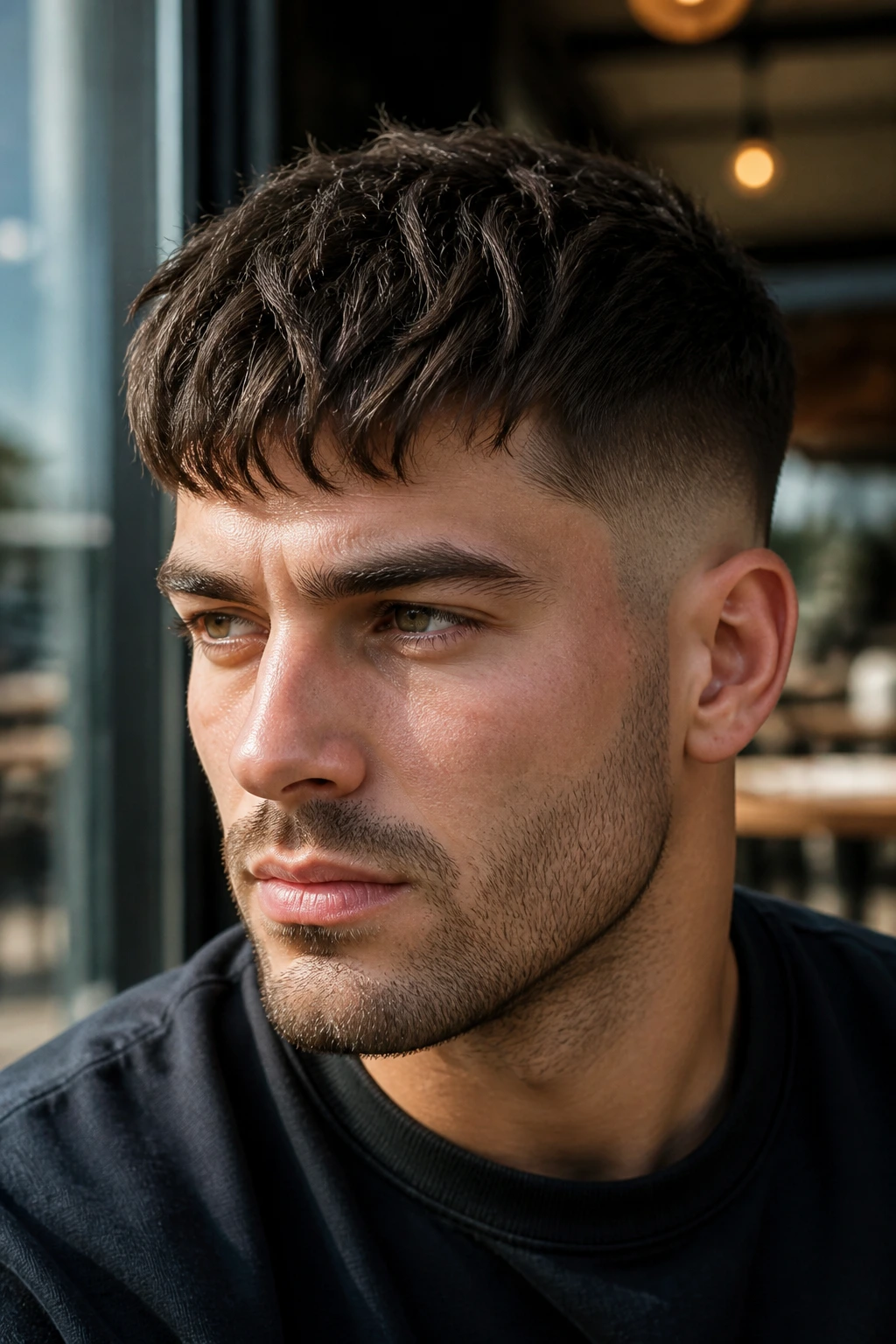
7. French Crop with a Taper Fade
If your hair likes to sit forward, the French crop is one of the most useful answers in the book. The fringe takes weight off the forehead, and the taper fade stops thick hair from puffing at the temples. For square faces, the choppy front can soften the upper line without hiding the structure underneath.
The mistake people make is cutting the fringe too straight. A blunt, even line can make a square face look harder. Keep the front textured and a little broken up so it feels lived-in rather than stamped across the forehead.
Best Way To Style It
Rub a tiny amount of matte clay between your palms and push the fringe forward with your fingertips. Leave a few strands uneven. That messiness is the point. You want the crop to look cut with intention, not flattened into a flat shelf.
8. Textured Crop with a Hard Part
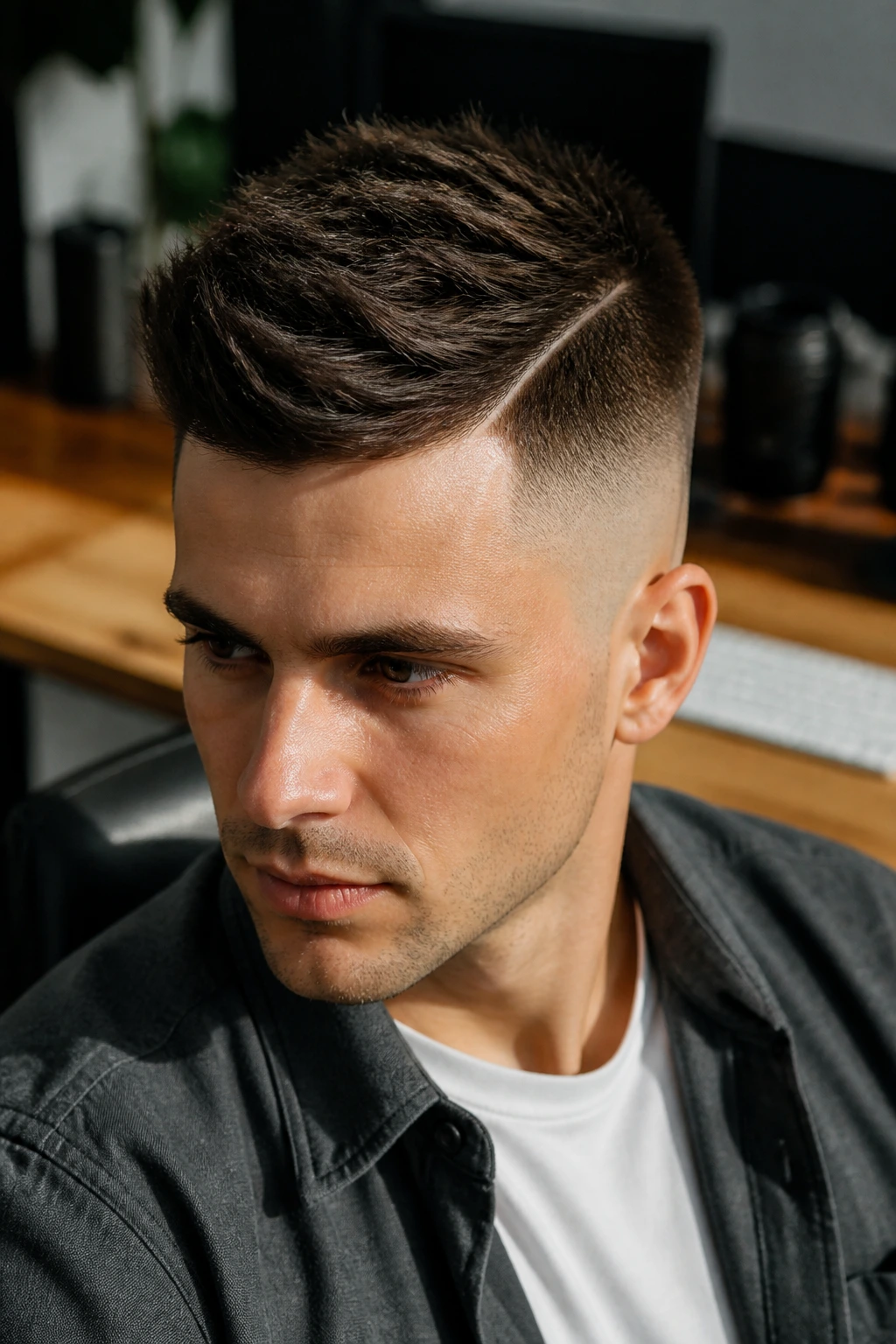
A hard part on thick hair can be either smart or way too loud. The difference is whether the rest of the cut stays controlled. On a square face, a sharp part line can work because it interrupts the blocky outline, but only if the top has enough texture to keep the haircut from becoming rigid.
This is a cut for hair that wants direction. If your hair grows diagonally or slightly forward, a hard part gives it a lane to follow. If your growth pattern fights the part every morning, save yourself the irritation and skip it.
The top should sit in that 2 to 3 inch range, with the barber removing bulk from the sides and the crown. Thick hair can turn into a brick if every section is left the same length. One flat length. One heavy cap. That’s the thing to avoid.
9. Ivy League Taper Fade
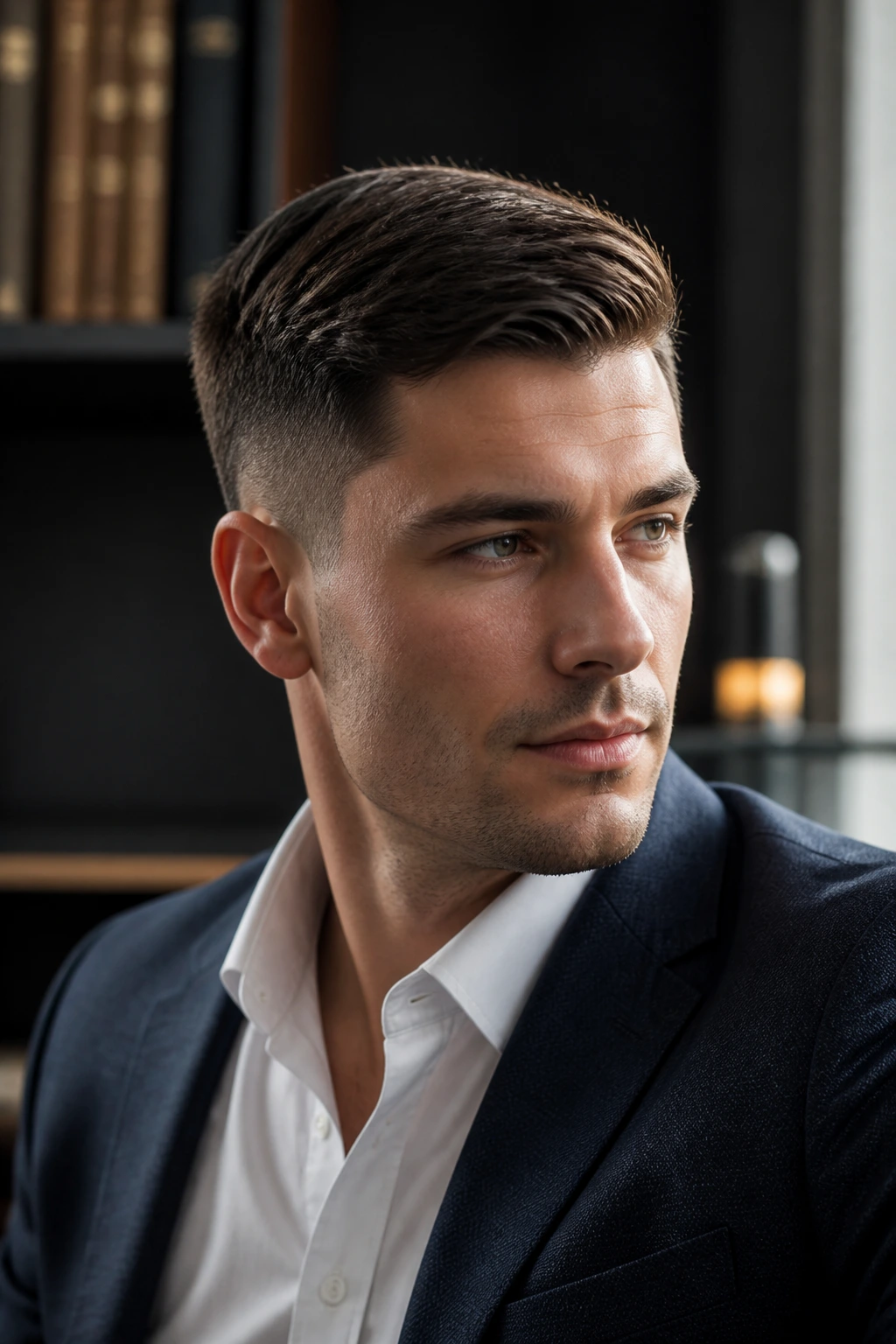
The Ivy League is what you wear when you want thick hair to look controlled instead of loud. It’s basically a cleaner, shorter cousin of the side part, with enough length on top to sweep neatly to one side. On square faces, that side sweep makes the face feel a touch longer and less boxy.
This cut works especially well if your hair has natural density but not a ton of curl. Ask for the sides tapered tight but not shaved to skin, and keep the top around 1.5 to 2.5 inches. Anything longer starts to feel like a college dean with pomade, which is not the mood.
A soft, matte finish works better than a shiny comb-over product. You want movement at the front and a little lift at the crown. Not a shell.
10. Slick Back Taper Fade
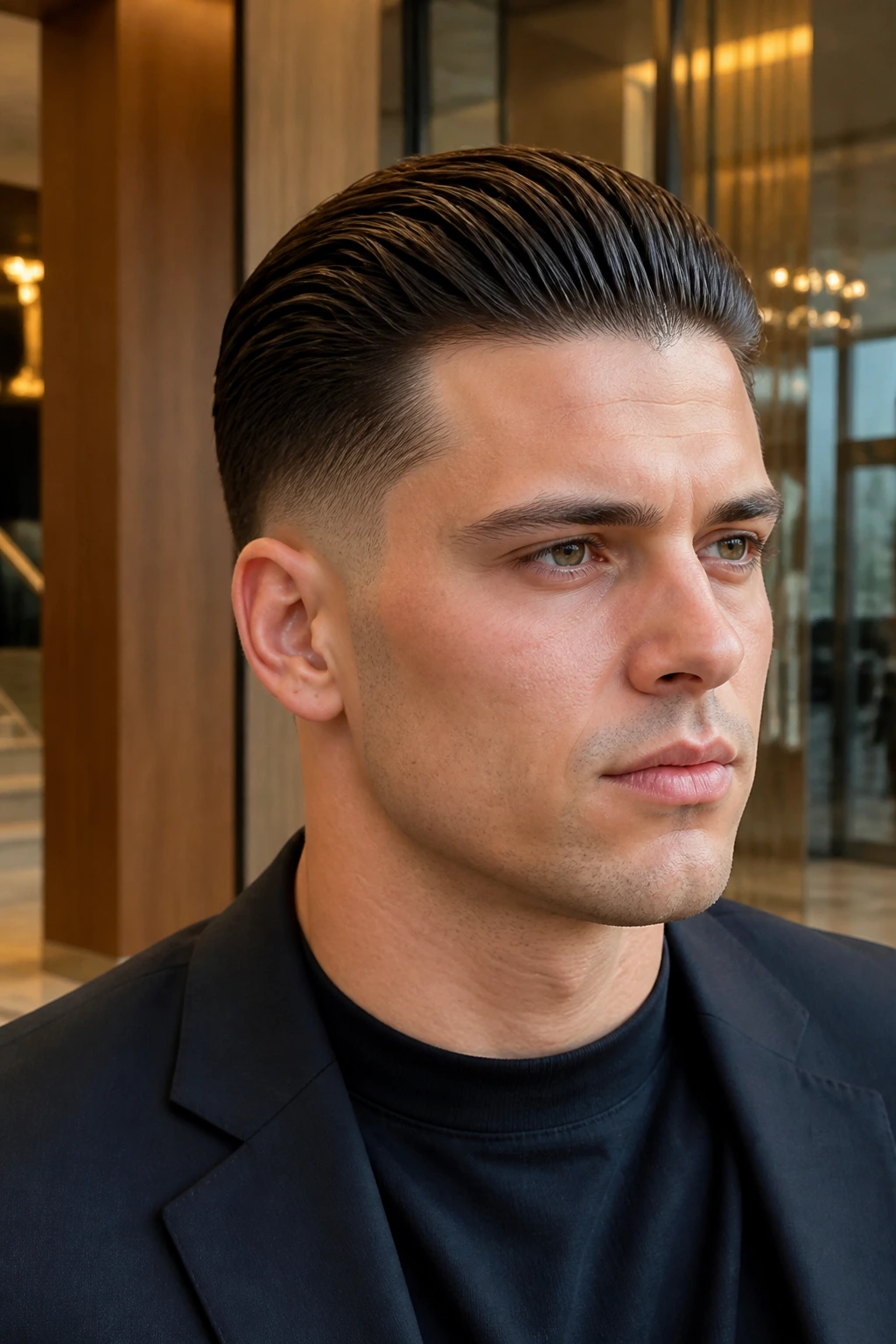
A slick back looks sharp on thick hair because the density gives the style weight. That’s useful. The key is keeping the taper clean enough that the sides don’t fight the slicked-back line. Square faces get a lengthening effect from the backward sweep, especially when the top is left long enough to flow rather than stick.
Here’s the catch: if the hair is too dry, the slick back turns puffy and separate. If it’s too greasy, it looks wet in a bad way. A light pomade or grooming cream, plus a quick blow-dry straight back, usually gets you the controlled finish you want.
What To Watch For
- Don’t slick it back from soaking-wet hair; the shape collapses.
- Keep the taper neat around the temples, or the head reads wider.
- Leave enough length on top for movement, not just comb marks.
11. Caesar Taper Fade
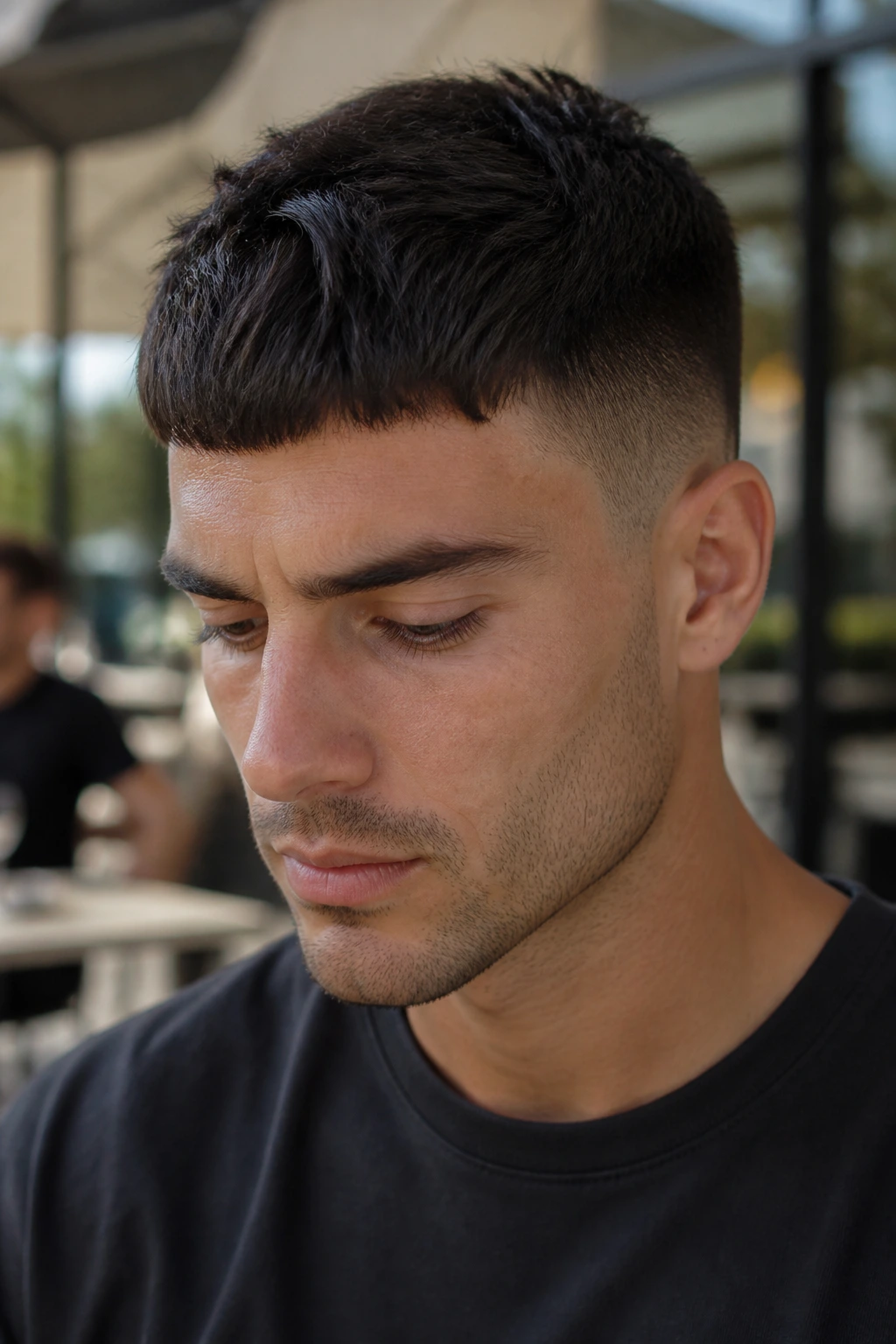
The Caesar can be a smart move for thick hair if you keep the fringe choppy. The short forward fringe takes the pressure off the forehead, and the taper fade trims the perimeter so the cut doesn’t puff out at the sides. On a square face, that little bit of forward texture softens the upper line without hiding the jaw you already have.
Do not ask for a perfectly straight fringe unless you want a harder look. Thick hair makes blunt edges look extra blunt. A barber who point-cuts the front will leave the fringe a bit irregular, which is exactly what keeps the cut modern.
This is one of those styles that looks better when it’s not overworked. Finger-dry it forward, add a touch of paste, and leave the edges slightly messy.
12. Buzz Cut with a Taper Fade
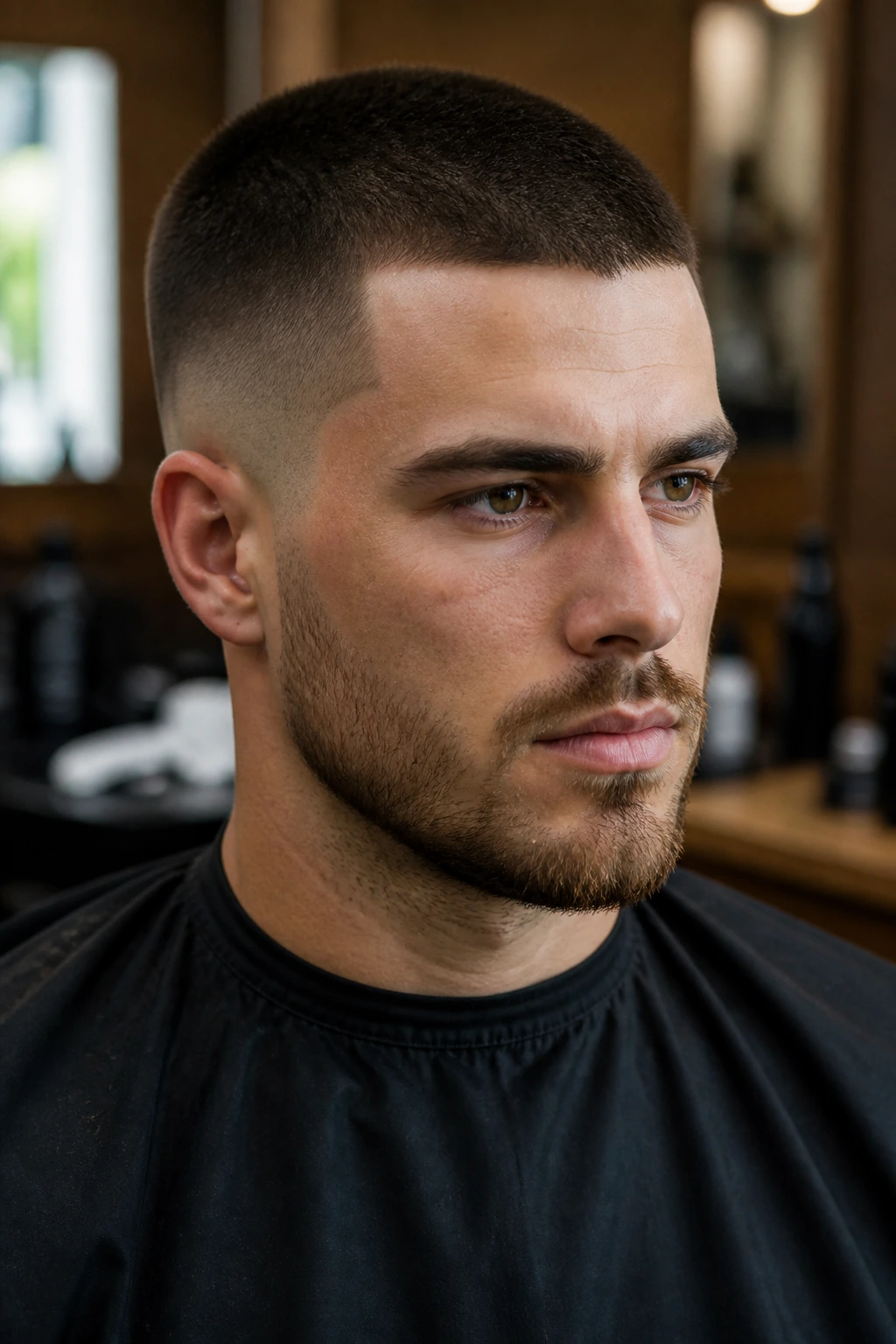
A buzz cut with a taper fade is the cleanest no-nonsense option in the lineup. Thick hair responds well because the fade removes the bulk at the edges, and the short top keeps the head shape tidy. Square faces can carry this cut because the strong jawline matches the short, blunt energy up top.
The secret is not going too short everywhere. A #2 or #3 guard on top usually looks better than going straight to a skin-close buzz if your face already has sharp angles. The taper around the temples and neck gives enough polish that the cut doesn’t look unfinished.
This one is low maintenance, yes, but not zero maintenance. The fade still grows out, and thick hair will show that quickly around the ears.
13. Crew Cut with a Taper Fade
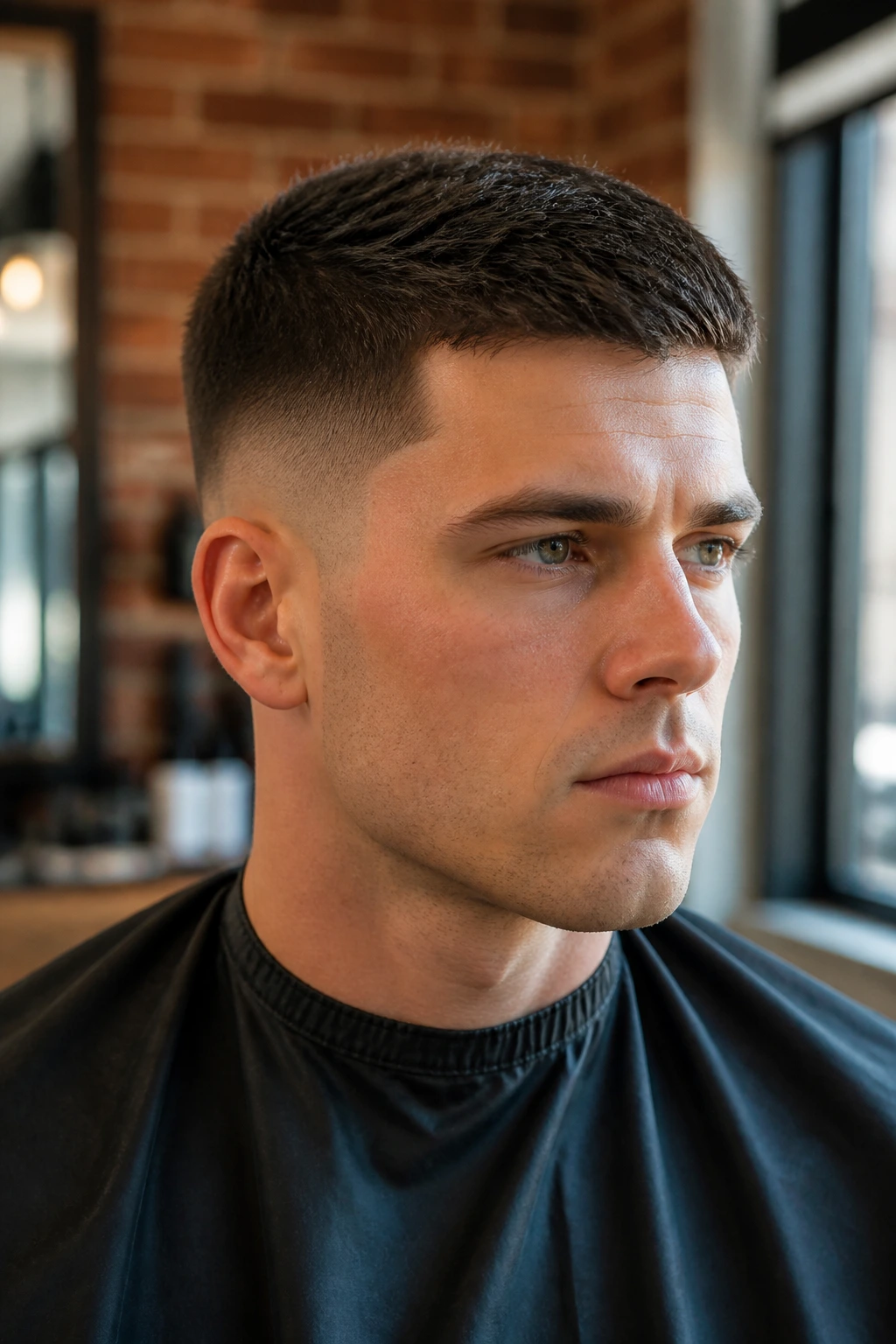
A crew cut with a taper fade is what you choose when you want structure without styling drama. The front ridge gives thick hair a bit of shape, the sides are tapered down, and the face keeps its angle without feeling boxed in. Square faces wear this well because the short top adds subtle height while the clean sides keep everything balanced.
This cut is especially good if your hair stands up on its own in the morning. Instead of wrestling with it, let the crew cut work with that lift. Keep the front slightly longer than the crown if you want the style to read with a little movement instead of a flat plateau.
A small dab of matte cream is enough. Use your fingers. Don’t overthink it.
14. Pompadour Taper Fade
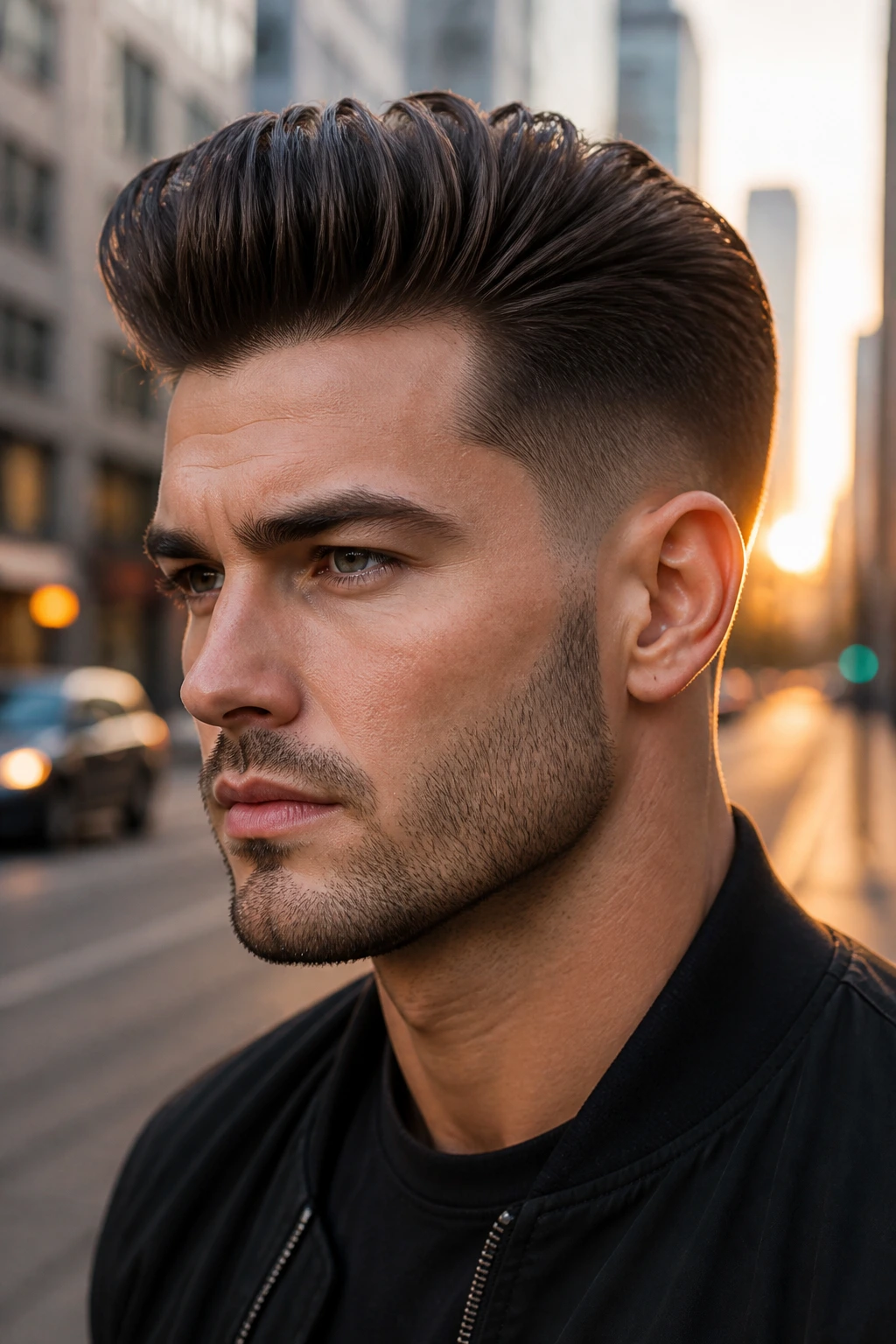
The pompadour is where thick hair earns its keep. The density gives you the body the style needs, and the taper fade keeps the sides from turning the whole head into one giant shape. For square faces, the height on top stretches the profile in a way that softens the jaw-heavy look.
But this cut only works if you respect the proportions. Too much width in the pompadour and you just build a second square on top of the first one. Keep the front high, the sides tight, and the curve smooth.
A round brush, a blow-dryer, and a medium-hold product are doing most of the work here. Lift the roots, direct the front back and slightly up, then let the hair cool before you touch it again. That cooling step matters more than people think.
15. Faux Hawk Taper Fade
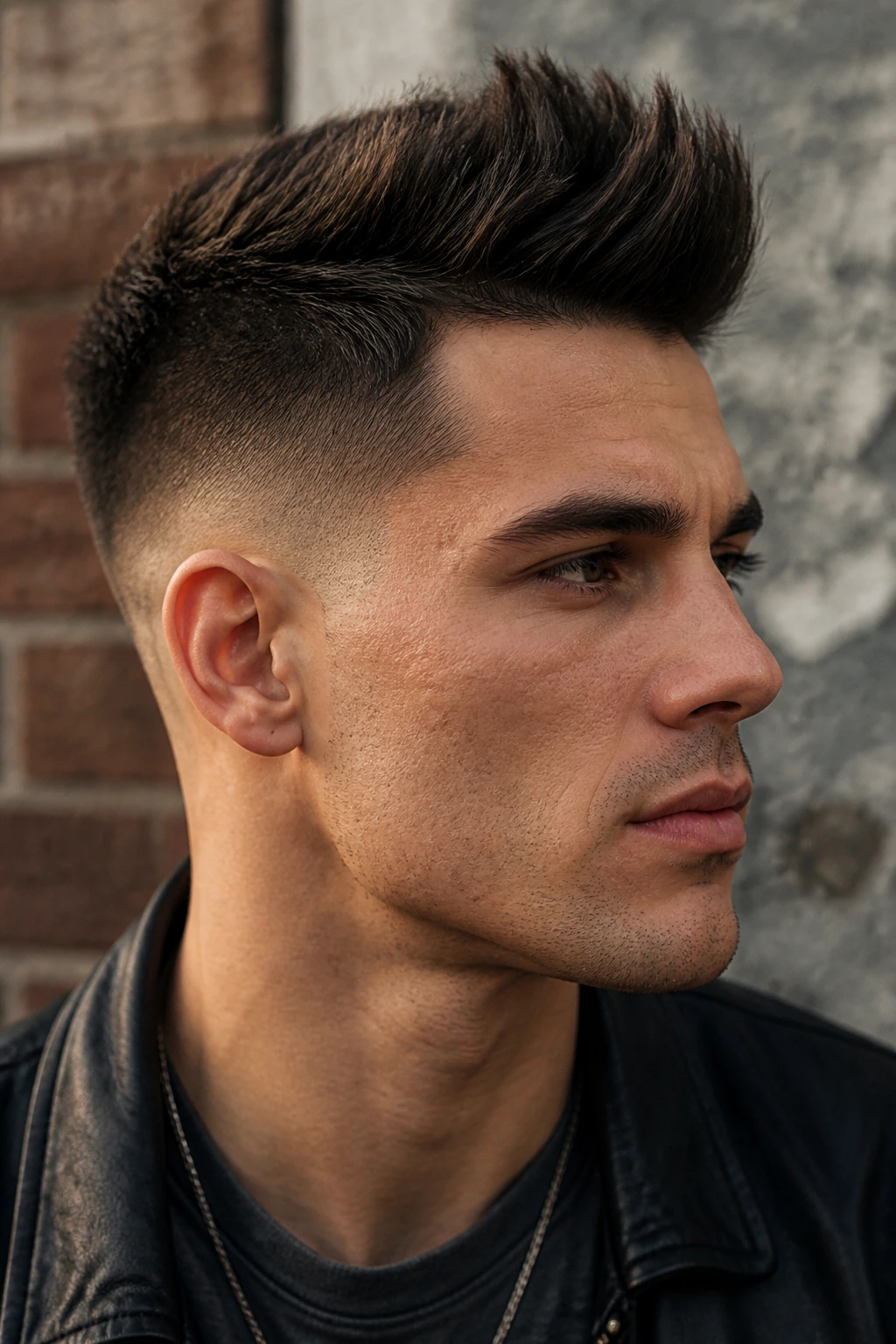
The faux hawk is where a square face can lean into edge without going full cartoon. Thick hair holds the central ridge well, and the taper fade reduces the side bulk so the middle section looks intentional. It’s sharper than the crop, but less formal than a pompadour.
The shape should narrow as it rises, not explode outward. That’s the whole difference between a good faux hawk and a tired one. Keep the sides tight enough to show contrast, but not so tight that the cut turns harsh against a square jaw.
Use a product with grip, not shine. A little texture powder at the roots helps if your hair resists standing up. If the crown has a swirl, work with it instead of forcing the middle ridge dead straight. That fight never ends well.
16. Afro Taper Fade
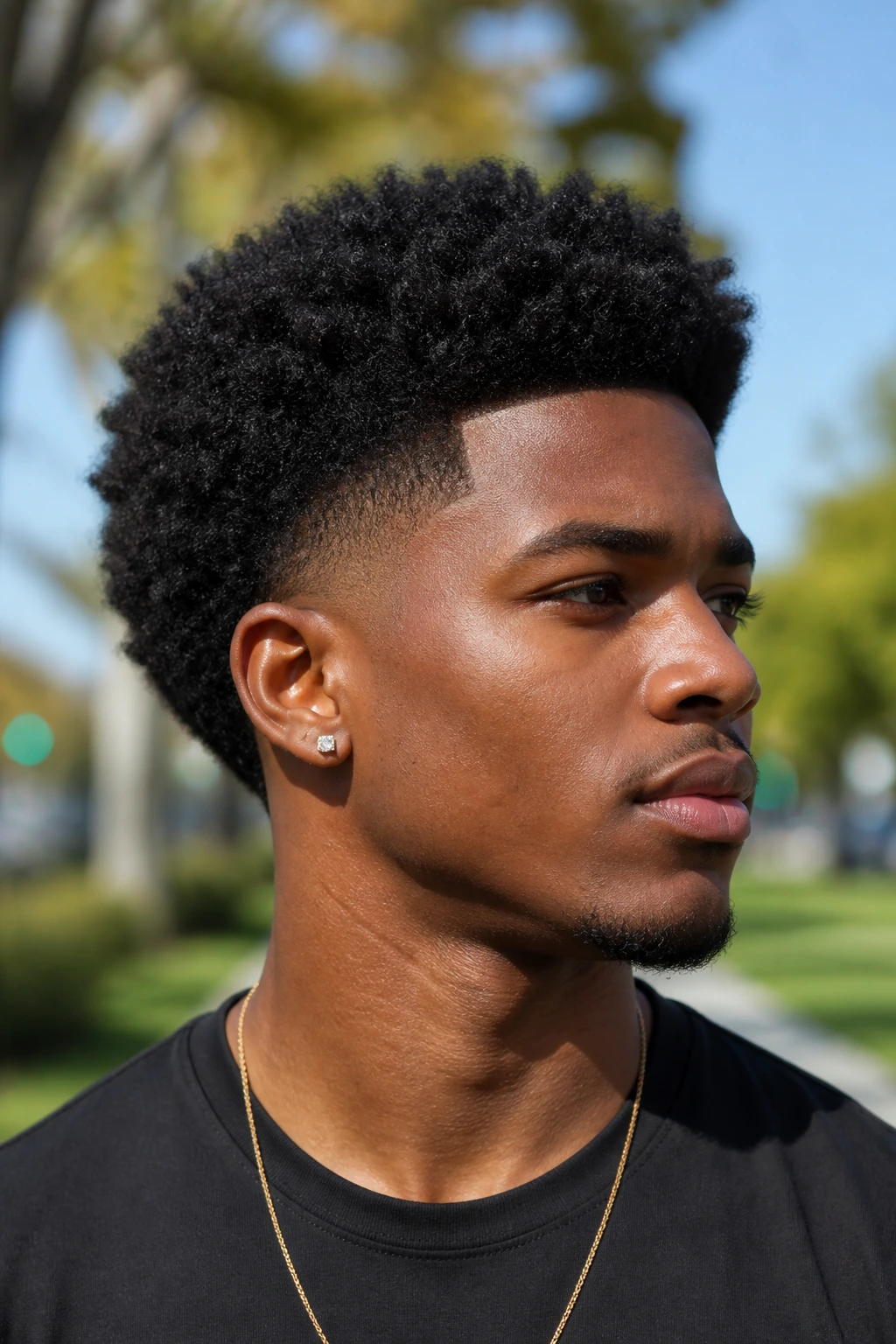
An afro taper fade is one of the cleanest ways to frame thick coils or dense textured hair without chopping off the character. The taper sharpens the outline at the temples and nape, but the top stays rounded and full, which lets the haircut breathe. On a square face, that rounded top softens the jawline without hiding the face’s structure.
The best version keeps the shape even, not pyramid-like. If the sides are trimmed too low too soon, the top can start to look like it’s floating. A good barber will blend the taper into the natural curve of the head and leave enough volume to keep the silhouette balanced.
Moisture matters here. A leave-in conditioner or curl cream keeps the hair soft enough to shape, and a light sponge or pick can help define the top without making it stiff.
17. Comb Over Taper Fade
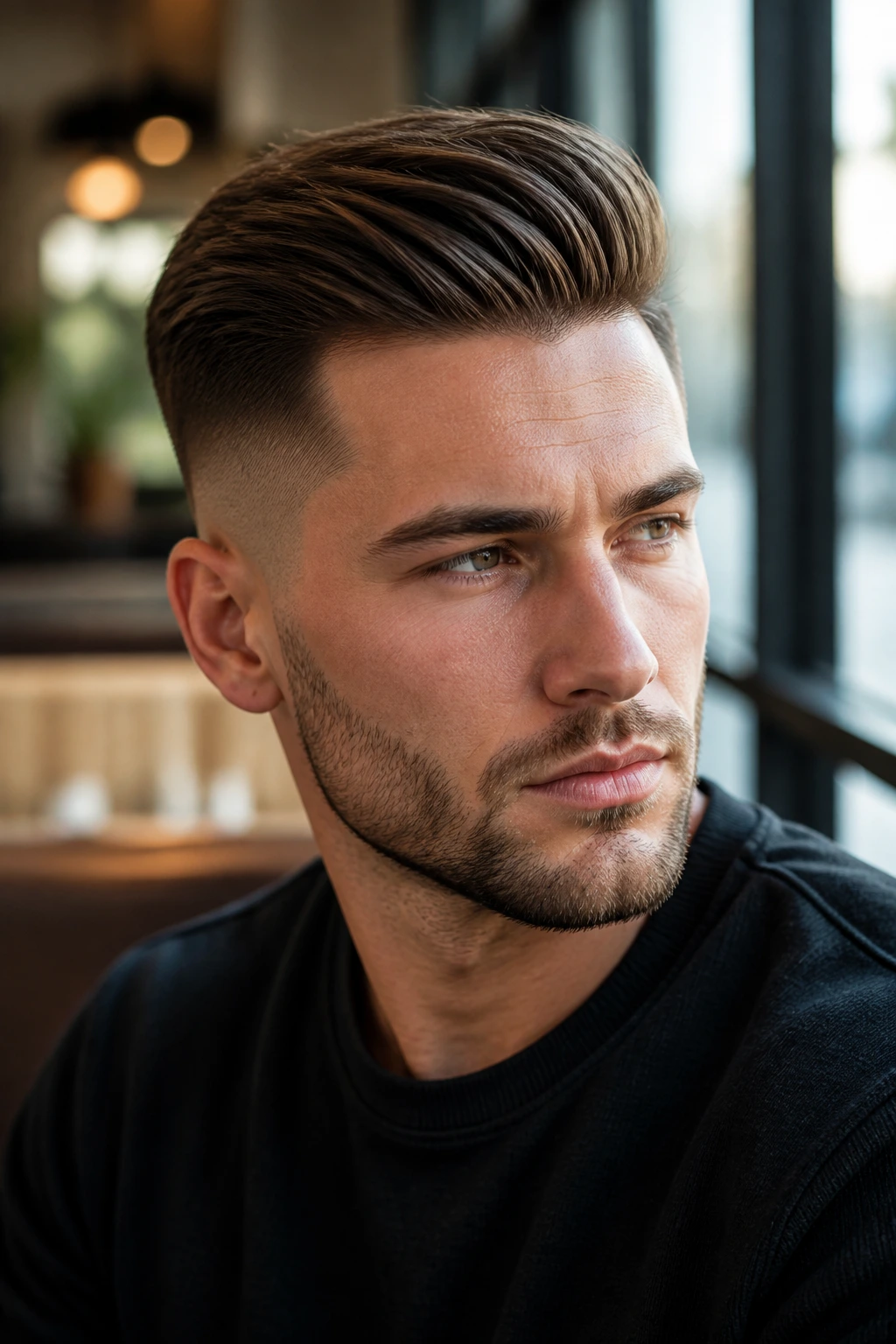
A comb over on thick hair needs discipline, not a heavy hand. The taper fade clears the sides so the top can sweep across cleanly, and that diagonal line helps square faces by breaking up the straight-on symmetry. It’s a neat style, but it has to move.
The old-school comb over dies the second you load it with too much product. Keep the hold light to medium. Let some hair separate. If every strand is glued down, the style gets flat and a little dated.
You can ask for a hard part, but you do not have to. A soft side sweep often looks better with thick hair because it feels less forced. If your growth pattern naturally pushes one direction, use that. Fighting the grain is a waste of time.
18. Side-Swept Taper Fade
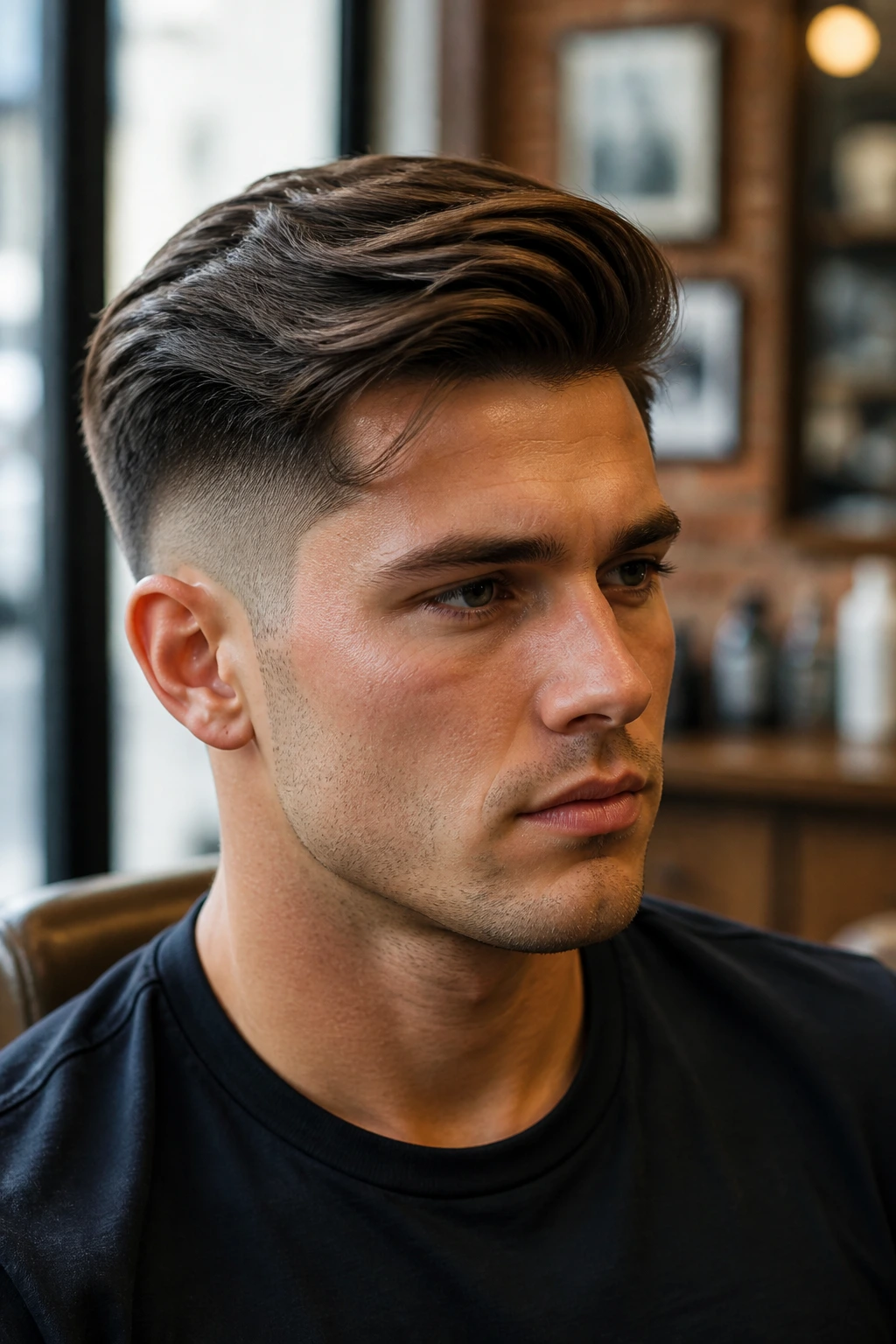
The side-swept taper fade is the relaxed cousin in the group, and I like it for that reason. Thick hair already brings enough presence; it doesn’t need to shout. A loose sweep across the forehead or toward one temple adds movement that keeps a square face from reading too rigid.
This cut looks best when the barber leaves enough length on top to bend, not just stand. Somewhere around 3 inches gives you options. Shorter hair can still sweep, but it won’t have that easy fall that makes this style feel casual rather than stiff.
The taper should stay clean around the ears and nape so the top gets the attention. If the sides stay bulky, the sweep loses its shape. That’s the part people miss.
What Makes a Taper Fade Behave on Thick Hair
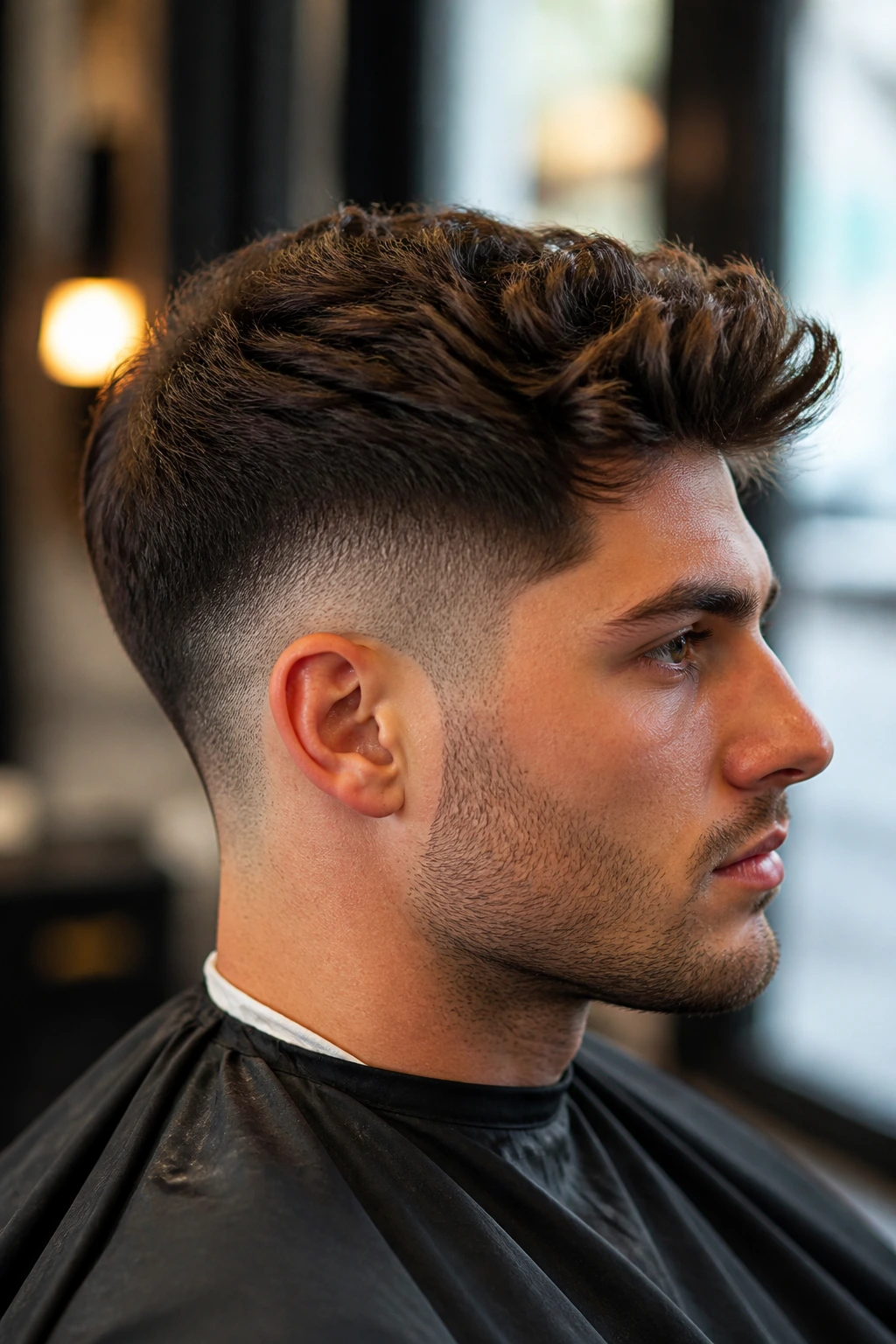
Thick hair is generous until it isn’t. It gives you fullness, hold, and texture, then it turns on you and grows out sideways at the first sign of humidity. A taper fade works because it removes weight where hair naturally piles up: around the sideburns, the temple corner, the back of the neck, and the lower side area near the ears.
That’s a smarter move than stripping the whole head down to the skin. The fade keeps some softness at the perimeter, which helps square faces avoid a harsh, box-on-box effect. Strong jawlines can carry sharp haircuts, sure, but there’s a difference between sharp and bulky. The taper gives you clean edges without making the whole head feel squared off.
The other piece people miss is growth pattern. Thick hair doesn’t just sit there. It pushes out, swirls, and lifts. A taper fade works with that energy by keeping the outer edges controlled while leaving room on top for direction. That’s why these cuts tend to age better over the weeks between barber visits. The shape fades out more gracefully. Or at least, less rudely.
Essential Equipment for These Cuts
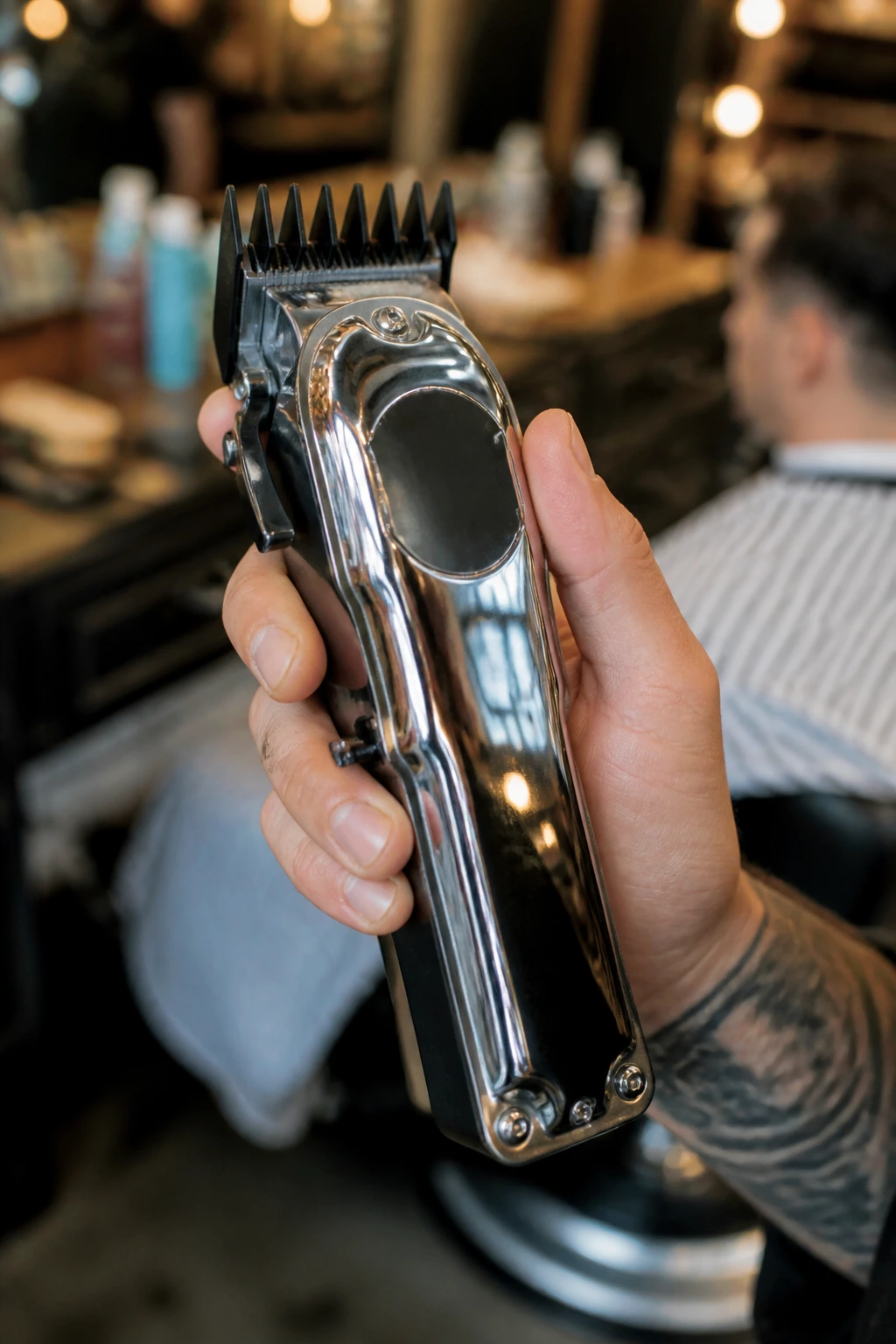
- Clippers with multiple guards — Useful for home touch-ups and for understanding the length you want, even if a barber is doing the real cut.
- Detail trimmer — Best for cleaning sideburns, neckline edges, and around the ears without taking off too much hair.
- Shears and thinning shears — Thick hair often needs bulk removed with scissors, not just clippers.
- Blow-dryer with a nozzle — Directs the top upward, backward, or sideways so dense hair doesn’t puff in every direction.
- Vented brush or round brush — Choose a vent brush for quick lift, a round brush for quiffs, pomps, and slick backs.
- Matte clay or paste — Gives grip without a greasy shine, which is usually what thick hair wants.
- Curl cream or leave-in conditioner — A better match for curly or coily textures than heavy wax.
- Hand mirror — Lets you check the taper at the back before you leave the chair or after an at-home clean-up.
How to Brief Your Barber for the Right Shape
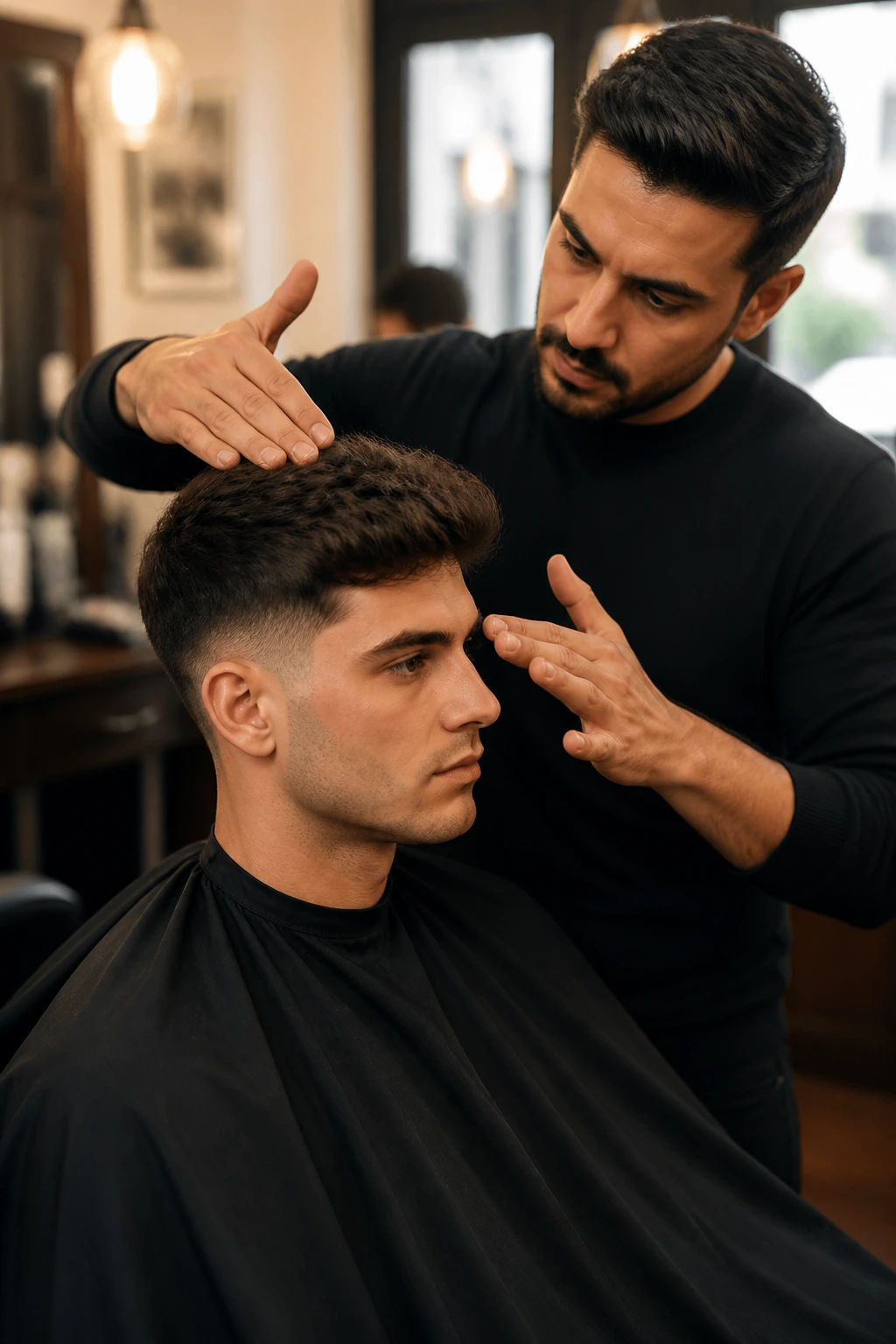
The fastest way to get the haircut wrong is to say, “Just clean it up,” and then hope the barber guesses your face shape, hair density, and daily routine. Bring one photo for the fade height and another for the top length. Those two reference points tell a barber far more than a vague celebrity picture where the lighting is doing half the work.
Say what your hair does on its own. If it pushes forward, say that. If it flares at the temples, say that too. Thick hair needs different handling depending on whether it grows straight out, curls back, or swirls at the crown. A square face also changes the brief: ask for some height, or a diagonal line, or a rounded top if you want to soften the width.
Use guard numbers when you can. “Low taper with a #1 or #1.5 around the ears and nape, then leave about 3 inches on top” is a lot more useful than “short but not too short.” If you wear a beard, say whether you want the sideburns blended into it or disconnected. That small detail changes the whole silhouette.
How to Wear and Style These Cuts
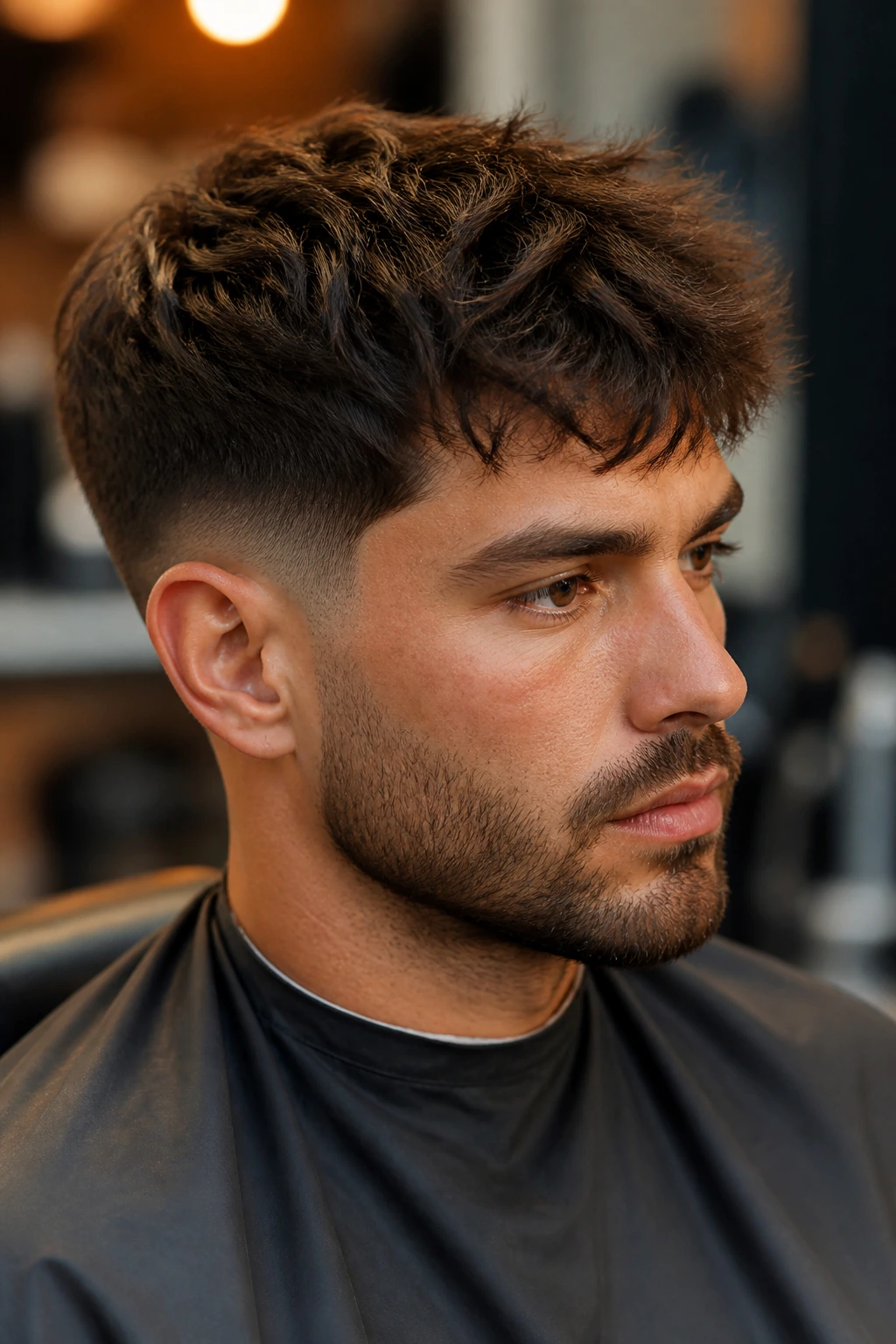
Presentation: Keep the silhouette clean at the edges and let the top do one clear thing — sweep, lift, curl, or lay forward. Thick hair looks better when it has a direction, not when it’s fluffed in every direction at once.
Accompaniments: A short beard, stubble, or even a sharp sideburn line can help tie the cut together on a square face. If you wear glasses, rounded or softly angled frames usually play nicer with strong jawlines than boxy ones.
Portions: For crops and French crop styles, 1.5 to 3 inches on top is enough. For quiffs and pomps, 3 to 5 inches gives you more shape. If the top is any longer, the sides need to stay tighter or the whole cut can start to feel wide.
Product Pairing: Matte clay, texture powder, curl cream, light pomade, and grooming cream all have a job here, but heavy grease is usually the wrong move unless you’re going slicked back on purpose. Use less product than you think, then add a touch more only if the hair still refuses to stay where you put it.
Additional Tips and Finishers
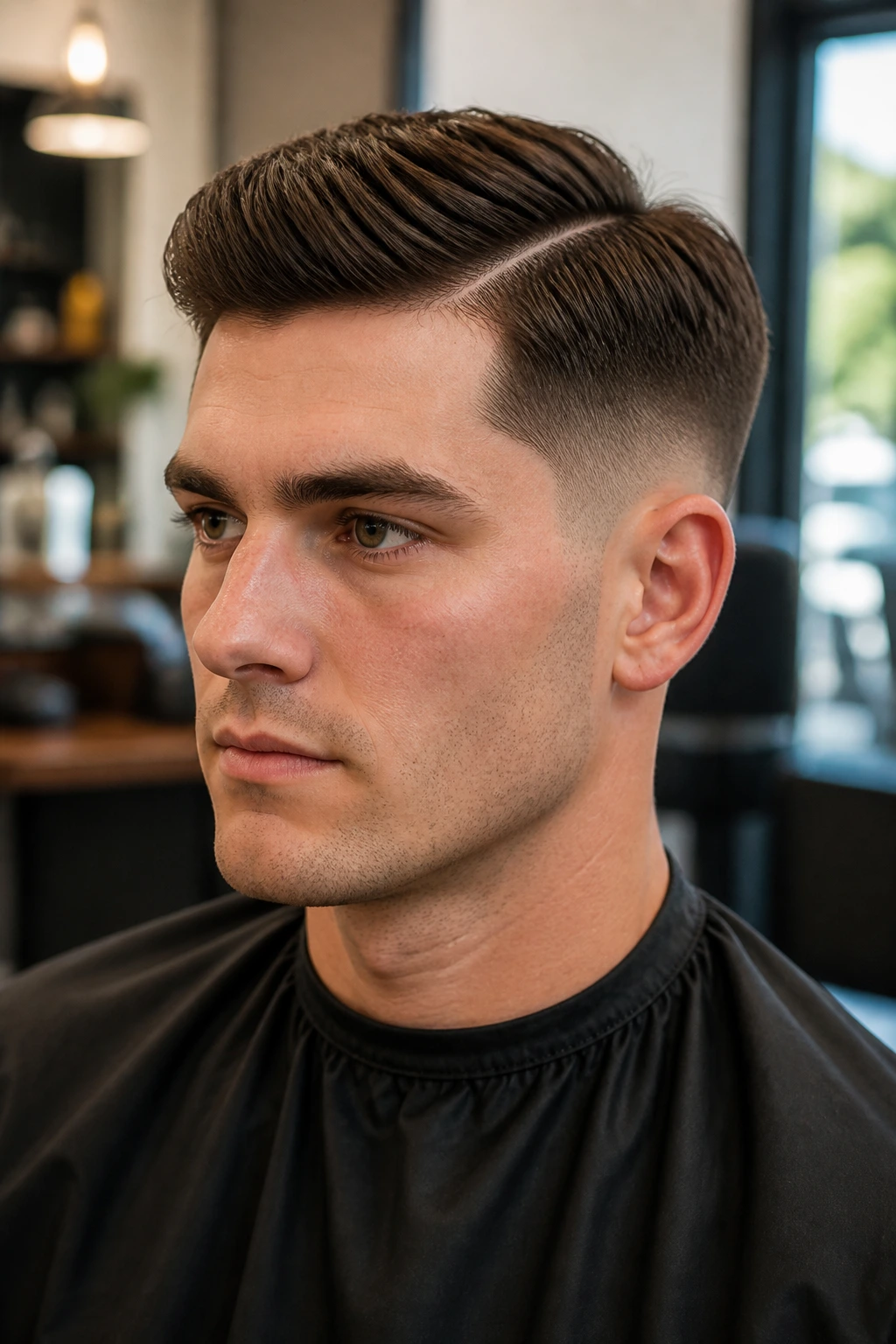
Texture Control: Thick hair almost always needs some kind of debulking, whether that’s point-cutting, slide cutting, or thinning near the crown. A barber who never removes weight and only uses one guard size is not helping you much.
Shape Control: If your face is very square, keep some bend or movement at the front. Straight-up blunt lines on the fringe and sides can make the haircut feel like it was built with a ruler.
Time-Saver: Dry the top in the direction you want it to live, then stop. Ten seconds of choosing the right direction beats five minutes of fixing it after it dries wrong.
Finish Line: For curls and coils, stop messing with the top once the shape looks right. The more you rake your hands through it, the wider the silhouette gets.
How to Keep the Fade Looking Fresh Between Cuts
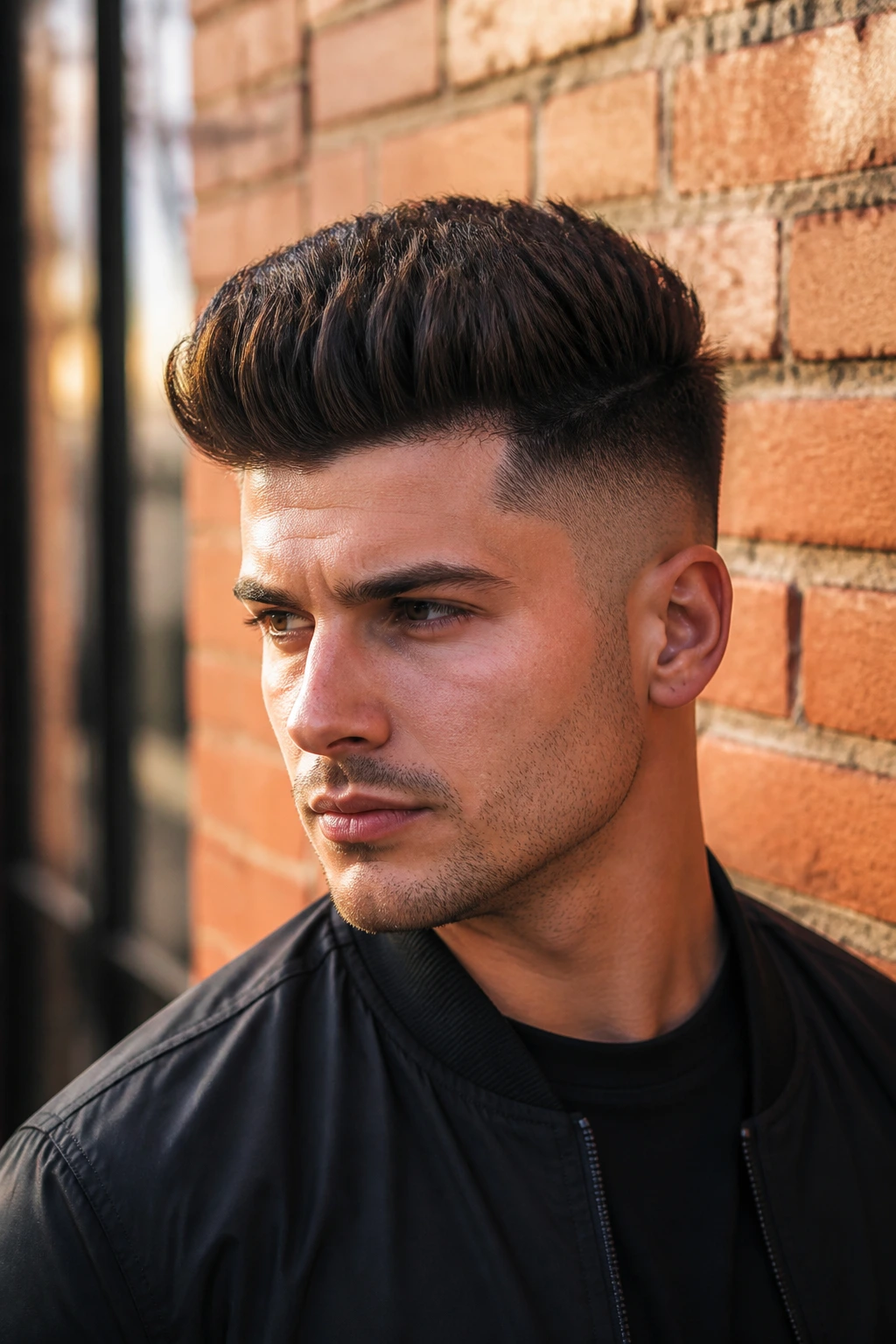
A taper fade on thick hair can look tidy for a while, but the edges tell the truth first. The neckline and sideburns start to blur before the top does, and that’s usually the moment the cut stops looking deliberate. For most guys, a clean-up every 2 to 3 weeks keeps the fade crisp enough to matter. If you wear a sharper temple or neckline line, you may want a quick edging sooner.
The top stretches longer between trims. Short crops usually need a shape check every 4 to 5 weeks, while quiffs, side parts, and pomps can go 5 to 7 weeks if the barber leaves the length intentionally. Thick hair grows in with attitude, though, so if the top starts sitting heavy or splitting at the front, don’t wait for the fade to get fuzzy before booking the cut.
Wash the scalp before product starts building into the roots. Heavy clay, pomade, and texture powder all sit in thick hair longer than people expect, and buildup makes the hair feel dull and bloated. A gentle shampoo 2 to 4 times a week works for most guys, with conditioner every wash if the top has any real length. If you blow-dry often, a light heat protectant is worth the extra minute.
Sleeping habits matter more than most people admit. A satin pillowcase won’t save a bad cut, but it can stop the top from getting crushed into weird angles. If your hair bends hard overnight, a quick damp re-style in the morning is usually enough. No drama.
Variations and Adaptations to Try
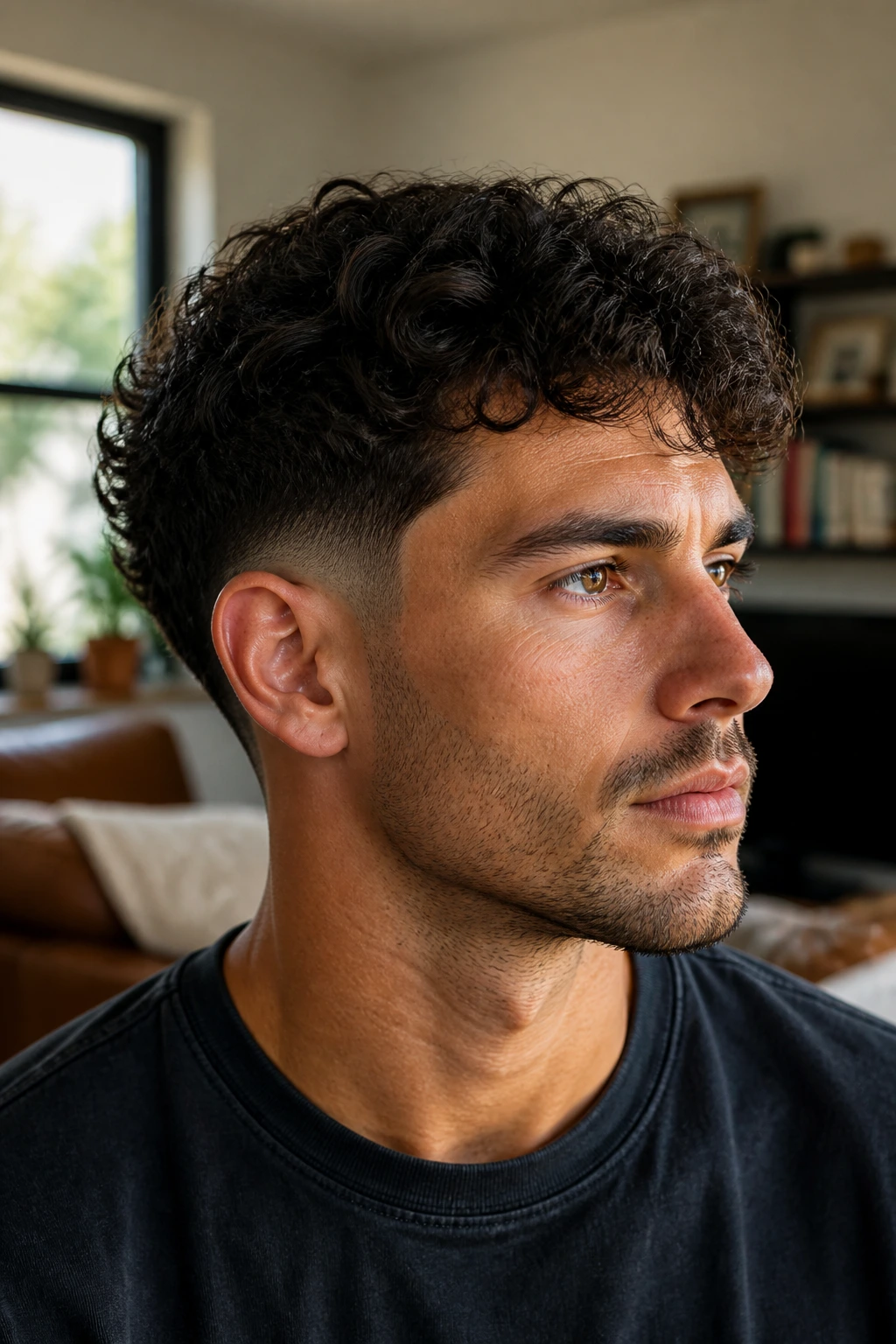
The Low-Key Office Version: Keep the taper low, leave 2 to 3 inches on top, and style with a soft side part or light sweep. It reads polished without looking stiff.
The Curls-First Version: Leave more length on top, keep the taper tight around the temples, and use curl cream instead of matte paste. This works best when the curls are part of the shape, not hidden under it.
The Beard-Balanced Version: Blend the taper into a short beard or heavy stubble so the sideburn area doesn’t feel disconnected. Square faces often look cleaner when the haircut and beard meet in the same language.
The High-Contrast Version: Go tighter on the sides and keep the top textured and lifted. This is the loudest option in the group, and it works when you want the haircut to be the statement.
The Low-Maintenance Grow-Out Version: Choose a lower taper, keep the top moderate, and avoid hard lines. It grows out more gracefully, which matters if you don’t want to see your barber every two weeks.
Common Mistakes to Avoid
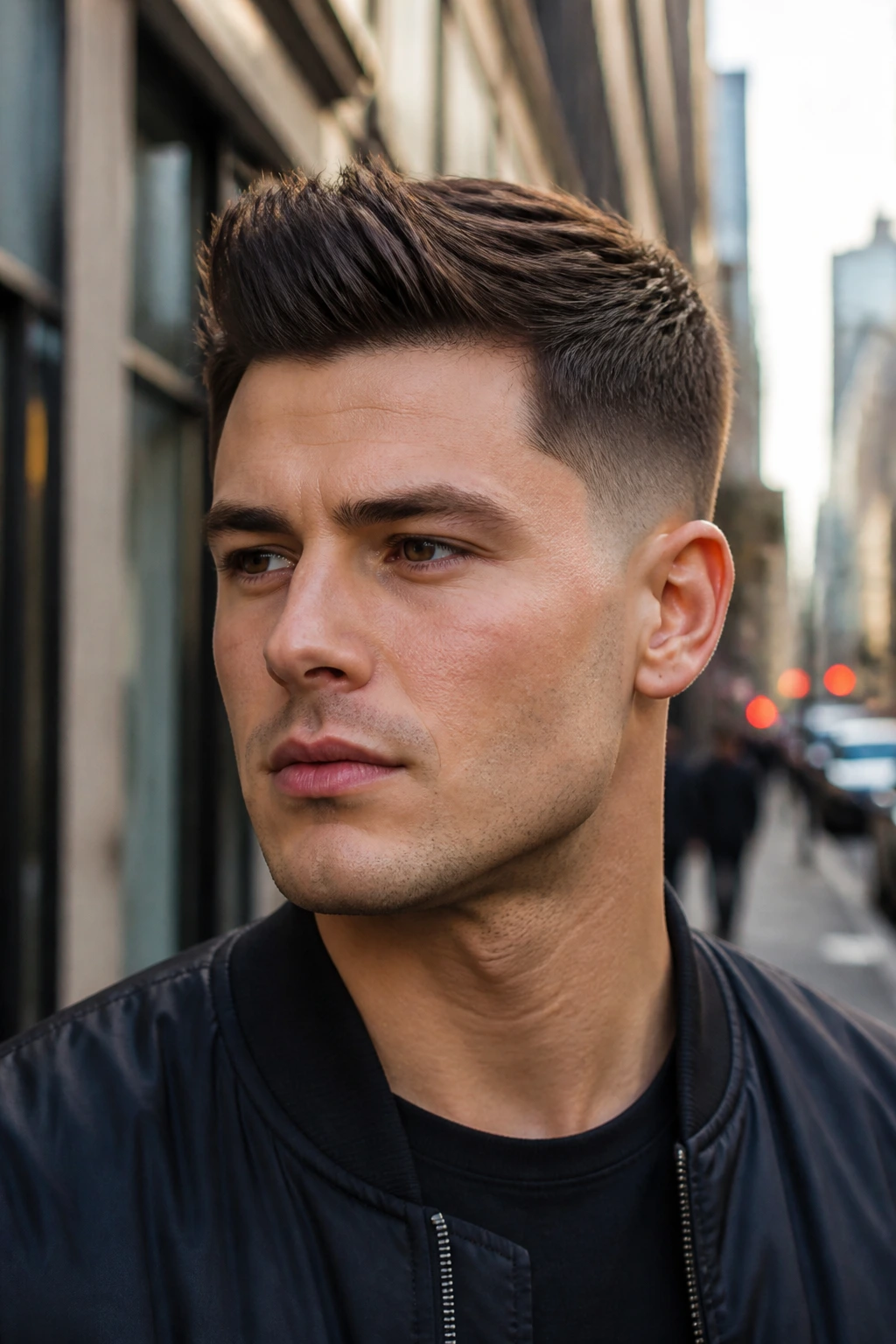
Leaving too much width at the sides: Thick hair already wants to spread. If the taper stays too low or too soft around the temples, the head can look wider than the jaw. The fix is simple: clean up the perimeter and make sure the barber actually removes bulk.
Going too hard with the fade on a square face: A skin-tight high fade can look great on some faces, but on a square face it can feel severe if the top is flat. Keep some height or movement on top so the haircut doesn’t become a big sharp rectangle.
Using shiny product on dense hair: Thick hair can look greasy fast, and shine makes every strand stand out in a way that often reads messy rather than neat. Matte clay, cream, or curl-friendly product usually gives a better finish.
Cutting the fringe straight across when it needs texture: A blunt front can make the whole haircut look heavy. If you want a crop, Caesar, or French crop, ask for broken texture at the front so the top doesn’t sit like a shelf.
Ignoring the crown swirl: This one bites people all the time. If your crown grows in a spiral, don’t force the top into a direction it won’t hold. Work with the growth pattern and build the style around it.
Frequently Asked Questions
Which taper fade is best for thick hair and square faces?
The low taper fade with texture is the easiest starting point because it controls bulk without making the face look harder. If you want more drama, a mid taper with a side part or a brush-up can add height and soften the jawline in a different way.
Can thick curly hair pull off a taper fade?
Yes, and it often looks better than on straight hair because the fade gives the curls a clean edge. The key is leaving enough length on top so the curls spring naturally instead of getting smashed flat by product or overcutting.
How often should I get it trimmed?
A clean fade usually needs attention every 2 to 3 weeks, especially around the neckline and temples. The top can go longer, but once the silhouette starts puffing out at the sides, the haircut loses the shape that made it work in the first place.
What should I tell the barber so I don’t get the wrong cut?
Give guard lengths, top length, and fade height if you can. “Low taper, leave 3 inches on top, texture the front, and don’t over-thin the crown” is much clearer than “just make it neat.”
Do taper fades make square faces look softer?
They can, if the top has movement or height. The taper removes the boxy bulk at the edges, and the top can then pull the eye upward or diagonally instead of leaving the face framed by the same hard line all around.
Should I use pomade or matte clay?
Matte clay is the safer choice for most thick-hair taper fades because it gives grip without shine. Pomade makes sense if you’re doing a slick back or a cleaner side part, but too much of it can make dense hair look flat and oily.
Can I wear a beard with these cuts?
Absolutely, and in some cases the beard helps the whole shape make sense. Keep the sideburns blended or intentionally disconnected, but don’t leave them awkwardly in between. That middle zone is where the look falls apart.
What if my hair sticks up after styling?
Use a blow-dryer to set the direction before product goes in. Thick hair usually needs heat and tension to settle, and if it’s still poking up after that, you probably need less product, not more.
A Shape That Holds Its Line
The nicest thing about these cuts is that they don’t ask thick hair to pretend it’s thin. They take the bulk seriously, clean up the outline, and give square faces a little breathing room without erasing the strong parts that make those faces work in the first place.
That’s the real reason taper fades keep showing up in barbershops. They’re not flashy for the sake of it. They solve a shape problem.
If your hair keeps swelling at the temples or your face reads too boxy under the wrong cut, start with a taper that trims the edges first and leaves the top room to move. The rest gets easier after that.