



The wrong haircut on curly hair does one of two things: it turns the sides into a triangle, or it chops the top so short that the curl pattern disappears. Boys notice that fast. Parents do too, usually around the second morning when the top starts springing in every direction and the neckline looks like it needs its own appointment.
That’s why tapered haircuts for boys with curly hair matter so much. A taper takes weight out where curls puff first — around the ears, sideburns, and nape — while leaving enough length on top for the curls to sit in their own shape. Done right, it looks clean at the barber chair and still makes sense three weeks later. Done badly, it grows into a helmet. No one wants that.
Curly hair has a memory of its own. Wet curls lie, dry curls shrink, and a half-inch can change the whole outline. That’s the game here: not fighting the curl, not flattening it either, but trimming around it so the shape looks deliberate instead of accidental.
Why These 18 Cuts Work Better Than a One-Length Shape
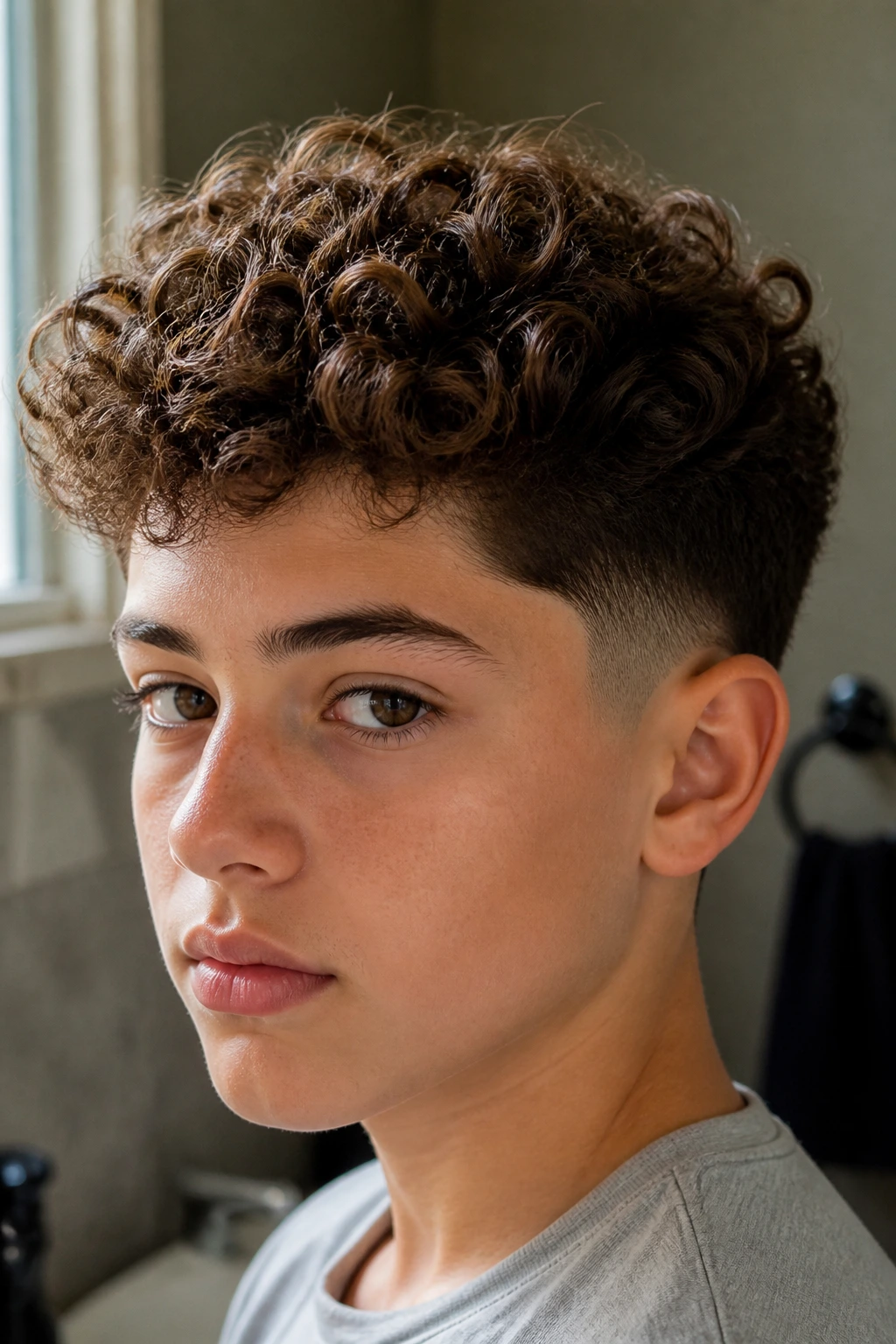
-
They control the puff zone: A taper removes bulk exactly where curly hair tends to flare out first, which keeps the outline from turning boxy by lunchtime.
-
They leave the curl pattern visible: The top stays long enough for ringlets, coils, or loose bends to show up instead of getting chopped into fuzz.
-
They grow out with less drama: A taper softens the transition from fresh cut to grown-out cut, so the style doesn’t fall apart the minute the barber cape comes off.
-
They suit different curl types: Loose waves, springy ringlets, and tight coils all behave better when the sides and back are cleaned up with a taper.
-
They cut morning work down: A mist bottle, a little leave-in, and a quick scrunch are usually enough. No ten-step routine. Good.
-
They work for school and weekends: A taper can look neat in a classroom and still have enough personality for a basketball court or a birthday party.
Why Curly Hair Likes a Taper
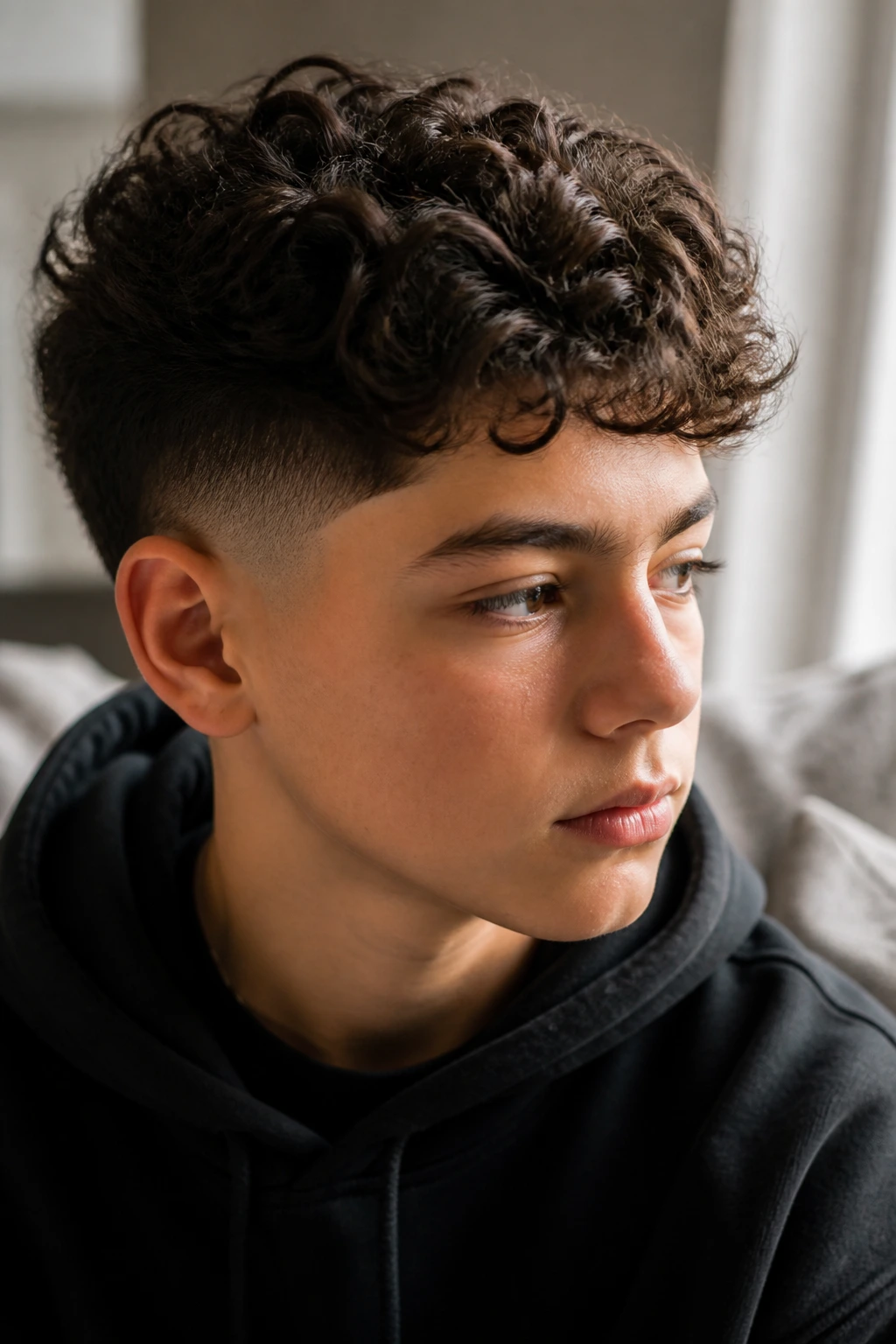
Curly hair rarely looks bad because it has too much texture. It usually looks bad because the texture is fighting the outline. A taper fixes that by shrinking the visual weight at the edges without robbing the top of its shape.
The best part is the grow-out. A straight-across cut on curls tends to form a shelf, especially on the sides. A taper softens that shelf before it gets started. That means fewer “We need another haircut already” mornings, which is worth a lot when the child is not in the mood to sit still.
1. Low Taper with a Rounded Curl Top
A low taper is the safest place to start, and I mean that in the best way. The sides stay mostly full until the taper drops near the ear and neckline, while the top keeps enough length — usually around 2.5 to 4 inches — for the curls to round out instead of sticking straight up like a toy brush.
What Makes It Work
The low taper doesn’t steal attention. It just quietly cleans up the edges. That matters on curly hair because the eye naturally goes to the volume first; if the sides are too short, the whole cut can start looking top-heavy. With a low taper, the curls keep their softness and the head shape still reads neat.
What to Ask For
- Keep the taper low around the ears and nape.
- Leave the top rounded, not flat.
- Use scissors on top if the curl pattern is uneven.
- Keep the front long enough to fall forward a little.
That last part matters more than people think. If the front is too short, curls spring up and expose the forehead in a way some boys hate. A little extra length fixes that.
Styling Notes
A dime-size amount of curl cream on damp hair is usually enough. Scrunch, don’t rake the curls apart too much. If the hair dries with a hard cast from gel, break it with clean hands once it’s fully dry. Not before. Early touching makes the curls frizz.
2. Mid Taper with Defined Ringlets
A mid taper sits in that useful middle zone where the haircut still feels clean, but the contrast is visible enough to look intentional. The ringlets on top get room to sit up while the taper begins a little higher on the sides, which gives the whole cut a sharper outline without turning it severe.
The boys who wear this best usually have curl pattern that springs back fast after a wash. You can see the ringlets. Not just “wavy hair with a mood,” but real loops that form when the hair is dry and handled lightly.
Ask the barber to keep the top long enough to clump — about 3 to 5 inches works for many curl types — and avoid taking the taper too high at the temples. If the taper climbs too far, the cut starts feeling abrupt. Good mid tapers feel balanced. The curls are still the star, but the sides know their place.
For styling, I like a light mousse under a small amount of gel. Mousse gives lift; gel keeps the ringlets from fraying out by the end of the school day. If the hair is too heavy, skip the extra cream. Too much product on ringlets makes them droop, and droopy ringlets are not the goal.
3. Temple Taper with Short Afro Curls
This one is all about the temples. Not the whole side of the head, not a skin-fade blast, just a clean taper right where the hairline starts to blur. On boys with tighter curls or short afro texture, that small cleanup makes the whole haircut look sharper without cutting into the body of the hair.
Why It Changes the Outline
The temple area is where many curly cuts look unfinished first. A little puff there throws off the balance, especially around glasses or smaller faces. Clean that area up and the top suddenly looks more intentional. The curls still stay full. They just stop spilling into the side of the face.
Best For
- Tight curls or coily hair
- Boys who want a neat look without losing fullness
- Families who want a cut that grows out politely
This is also a smart choice if the child does not love heavy styling. A temple taper does a lot of the visual work by itself. A little leave-in and a quick brush-up at the front are usually enough.
4. Drop Taper with a Side Part
A drop taper curves lower behind the ears and follows the natural shape of the head. On curly hair, that shape helps a lot. It stops the sides from looking boxy, and with a side part in the top section, the cut gets a little structure without losing the curl.
The side part does not need to be shaved in. In fact, on curly hair, a hard part can look too forced if the hair wants to move on its own. A soft part, made with a comb while the hair is damp, usually behaves better. You can nudge the curls over, then let them land where they want.
This cut suits boys who like a tidy look but do not want their curls flattened. It also does a nice job on round faces because the drop taper draws the eye down and back instead of straight across. That simple shift changes the whole profile.
One warning: do not over-comb it once it’s dry. That breaks the clumps and makes the part look vague in the worst way. A damp reset works better every time.
5. High Taper with Sponge-Defined Texture
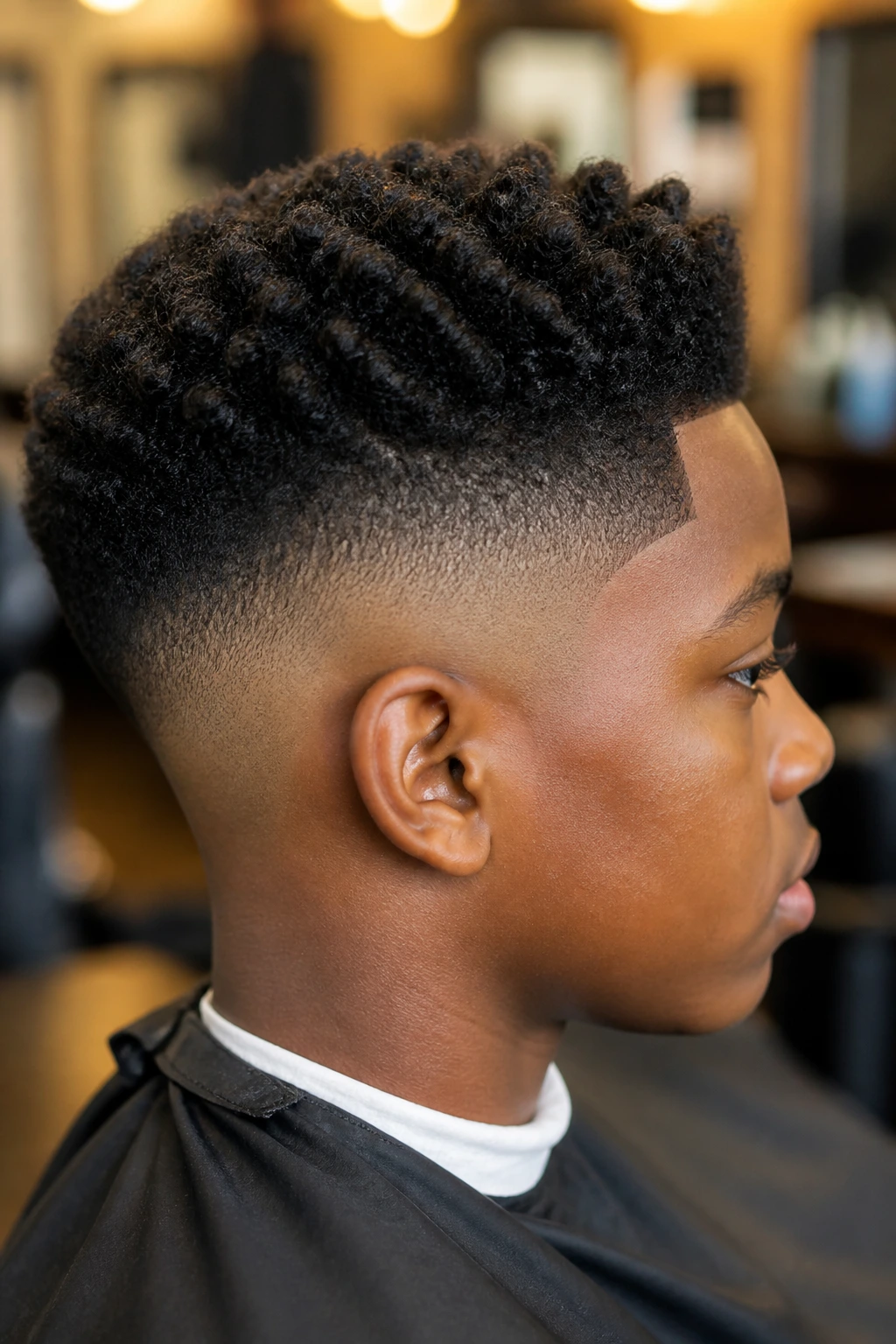
A high taper is for a boy who wants the top to stand up and announce itself. The sides and back are taken up higher, so the curl texture on top gets stronger contrast. On coarser curls, this can look fantastic. On looser waves, it can look a little too sharp if the top is cut too short.
The sponge comes into play when the hair is still damp and has a little leave-in in it. Tap and twist lightly. Don’t grind the sponge into the scalp like you’re sanding a floor. That’s how you get frizz. The goal is to pull the hair into small, neat texture groups so the top reads clean instead of wild.
This cut has a bit more attitude. Not in a bad way. It just has less softness than a low taper. If the boy likes a cut with a stronger outline — especially for older elementary or middle-school age — this one makes sense.
A good high taper needs maintenance. The shape is visible fast, which is the point, but it also means the edges show growth sooner. The reward is a cut that looks deliberate from every angle.
6. Tapered Curly Fringe
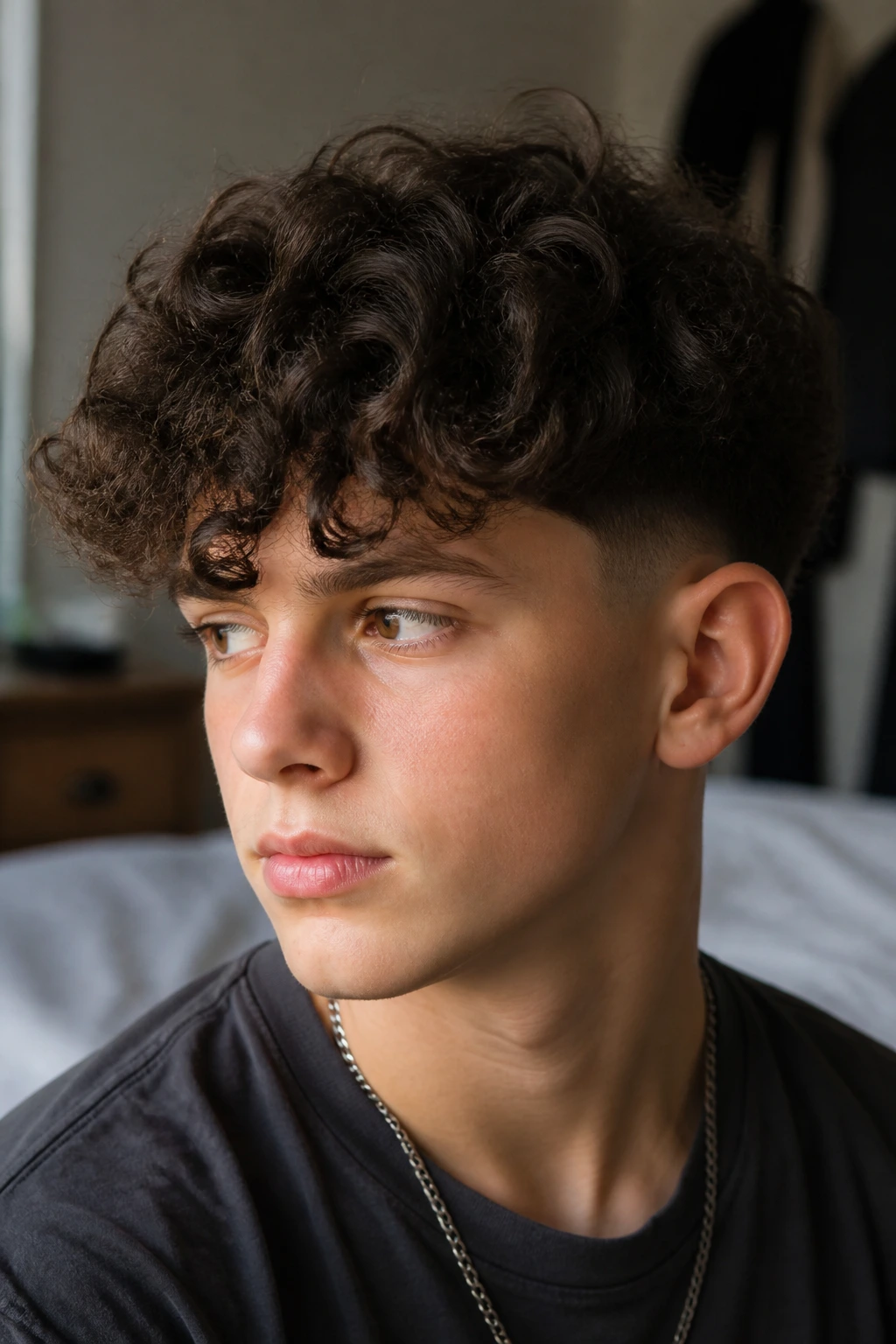
The fringe is the part that falls forward, and on curly hair, that forward movement can be either a mess or the nicest part of the haircut. With a taper underneath, the fringe becomes a feature. It sits over the forehead in soft curls instead of puffing outward like a bad draft.
The Fringe Needs a Little Room
Leave the front long enough to curl back on itself — usually around 2.5 to 4 inches, depending on curl tightness. If it’s cut too short, the fringe springs up and loses the shape that makes this style work. Too long, and it hangs into the eyes every ten minutes. That line is narrow. You can feel it.
The taper keeps the sides neat so the fringe can do the visual work. Without the taper, this style often looks like a haircut that was never finished. With it, the front feels deliberate and a little softer, which some boys wear better than a pushed-up style.
Styling Trick
Use a spray bottle and push the fringe forward with your fingers, not a brush. A brush separates the curl clusters. Fingers keep them together. That difference is the whole haircut.
7. Tapered Frohawk
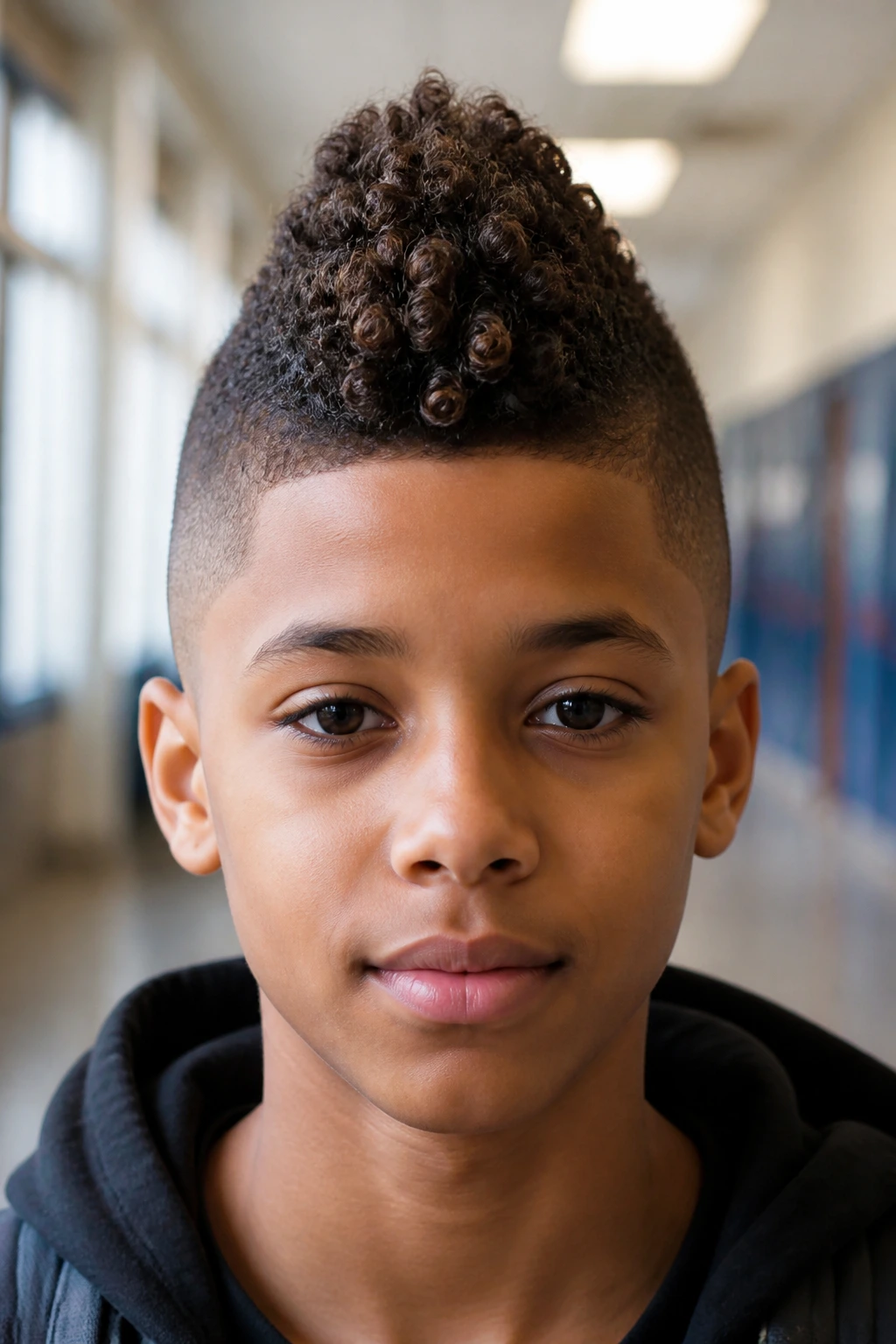
A tapered frohawk is for the boy who doesn’t want the usual school cut. The sides are tapered low or mid, while the middle stays longer and fuller, forming that ridge down the center of the head. It’s playful, but it can still look tidy if the taper is clean and the top is shaped well.
This cut works especially well on thick curls because the center strip can carry a lot of height without collapsing. Tight curls can get a sharper, more sculpted version. Looser curls get a softer version that leans casual rather than edgy.
The key is restraint. A frohawk gets silly fast if the sides are taken too high or the middle is left to wander. Keep the ridge narrow enough to look intentional and broad enough to still feel like hair, not a crest.
Parents sometimes worry this style is too much. It usually isn’t, if the taper is clean and the top is kept rounded. The haircut does most of the talking. No need to add designs unless the kid really wants them.
8. Tapered Shag with Layers

A curly shag is the opposite of stiff. It lives on movement, layers, and a little mess — the controlled kind, not the “someone forgot to comb it” kind. With a taper around the sides and back, the shag stops looking bulky and starts looking shaped.
This is one of my favorites for looser curls and medium-length hair because the layers let the curls stack without building a hard shelf. The taper underneath keeps the neckline tidy, which is what keeps the whole cut from drifting into mushroom territory.
Good When the Hair Wants to Be Longer
If a boy likes having hair to touch, flip, or push out of his face, the tapered shag gives him room. The top and crown can stay around 4 to 6 inches, with the layers removing weight where the curls would otherwise bunch together.
The best versions look a little lived in. Not sloppy. Lived in. That means the cut has enough shape to survive a windy playground and enough texture to look easy when it settles.
9. Burst Taper Around the Ear
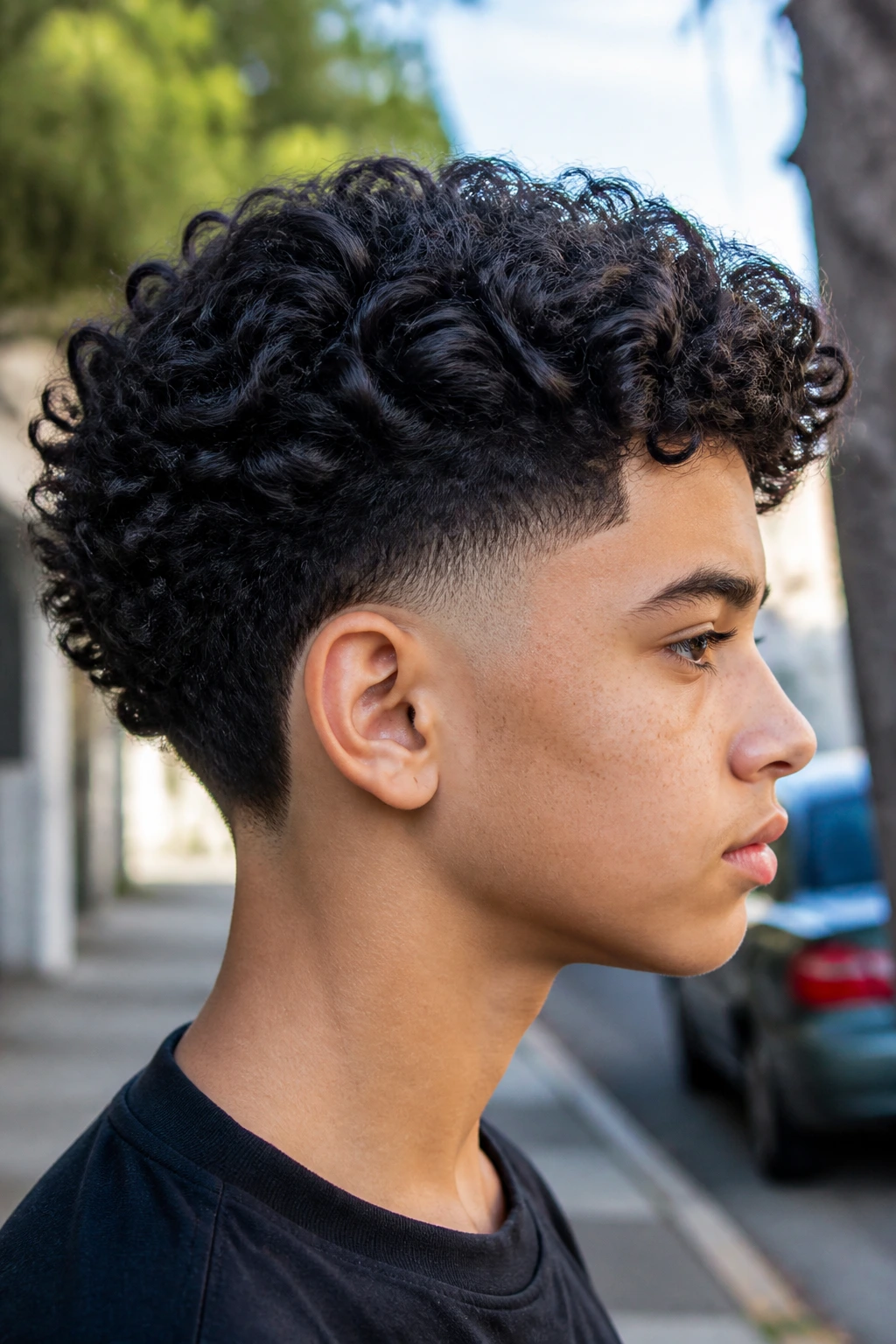
The burst taper is one of those cuts that solves a small problem really well. The hair around the ear gets cleaned up in a curved shape, almost like the taper is wrapping around the ear instead of dropping straight down. On boys with thick curls, that curve matters. It opens the side of the face and keeps the hair from sticking out in the exact place where headsets, hats, and hoodie collars all make trouble.
The Ear Shape Matters More Than You Think
Curly hair likes to puff right behind the ear. That’s where a straight taper can fall short. A burst taper follows the curve, and that keeps the outline softer and more balanced. It’s one of the easiest ways to make curly hair look deliberate without taking much length off the top.
Ask for the top to stay dense, not thinned out. That’s where people mess this style up. They clean the sides beautifully and then razor-thin the top until the curls lose body. Don’t do that. The contrast between the curved taper and the full crown is the point.
This cut looks especially good if the child wears glasses. The curved cleanup keeps the frames from fighting the hairline.
10. Taper with a Hard Part
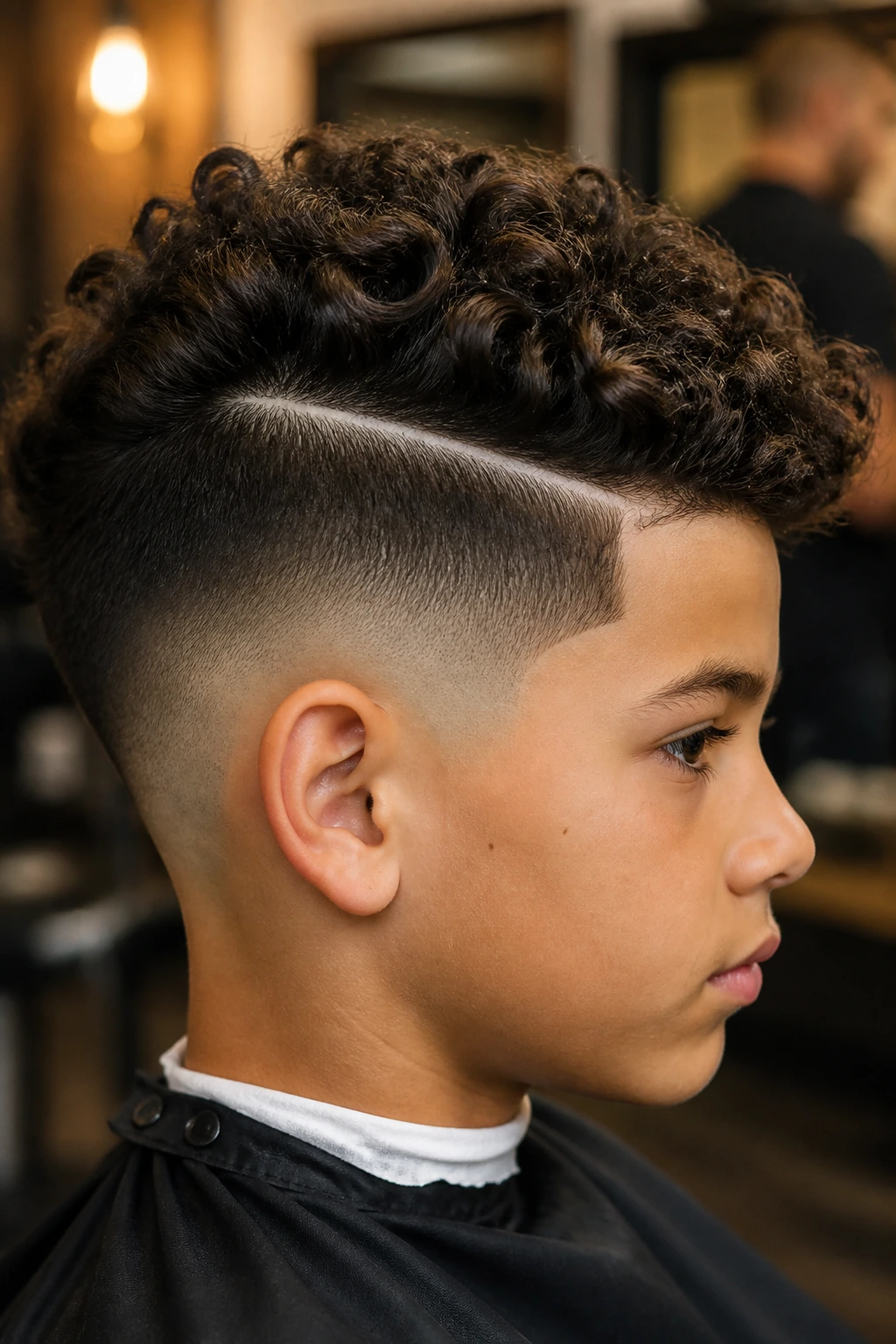
A hard part brings structure to curls that naturally want to move. It’s a shaved or closely etched line that marks the part, and with a taper on the sides, it creates a sharper, more disciplined shape. Some boys love that. Some don’t. But when it works, it really works.
The trick is not to force the hair texture into obedience. Let the curls keep their spring. The hard part is the anchor, not a command to flatten everything else. If the top is left medium length — think 3 to 4 inches — the curls can still breathe on top while the part gives the eye a place to rest.
This style asks for upkeep. A hard part grows out faster than people expect, and when it starts blurring, the whole haircut can look slightly unfinished. If the family is fine with regular barber visits, that’s no big deal. If not, a softer side part might be a better bet.
One honest note: this is not the easiest style for a very young child who hates being touched with clippers. The line is precise, and precise work requires stillness.
11. Curly Crop with Tapered Sides
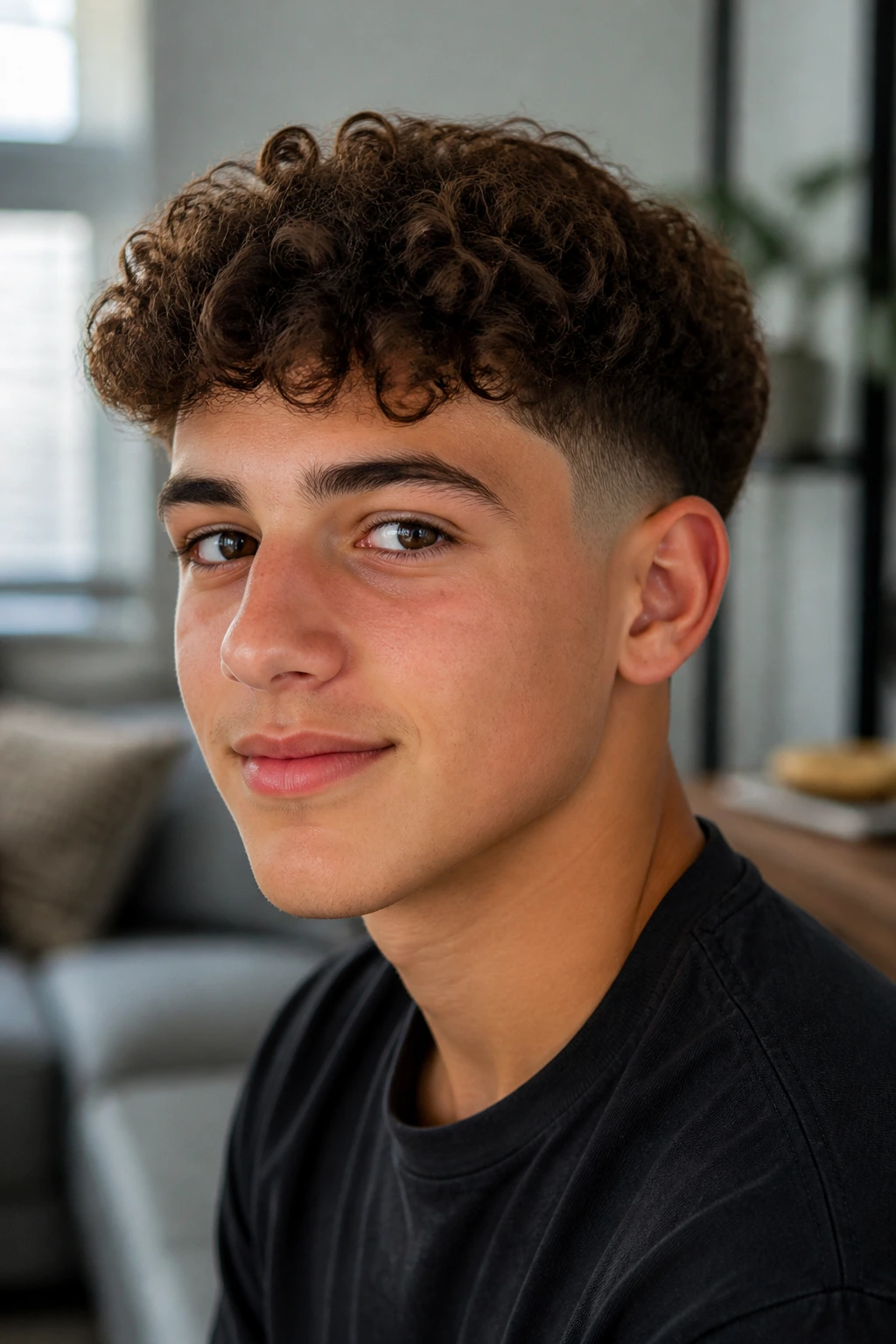
A curly crop is short, neat, and hard to mess up. The top stays shorter — often around 1.5 to 3 inches — and the curls sit forward or slightly up, while the tapered sides keep the whole look clean. If you want the lowest-fuss option in this whole list, this is a serious contender.
Short but Not Flat
Short curls need shape more than they need length. That’s the part people forget. If the crop is cut with some texture on top and not just clipped down evenly, the curls still show. They just show in a tighter, more compact way.
This is a smart pick for active boys, sweaty sports schedules, and mornings where nobody wants a battle with the comb. Wash, squeeze out water, add a little lightweight product, and go. That’s about it.
Keep the taper low or mid so the top doesn’t look like it’s sitting on a base. That base effect is what makes short curly cuts look awkward. A nice taper stops that fast.
12. Clean Neck Taper with Longer Crown
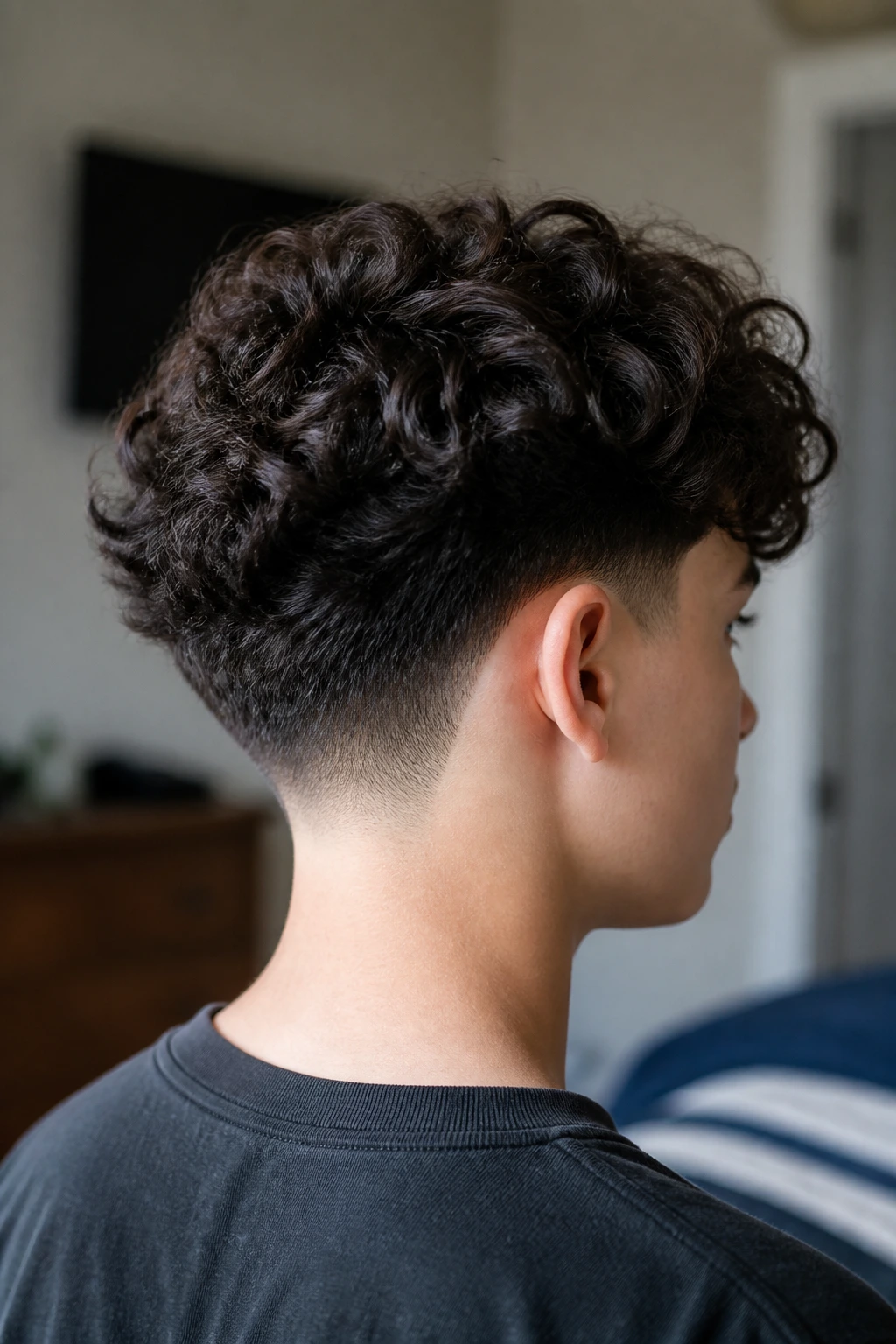
Some families care most about the neckline. They want it neat. They want it to stay neat. They want the haircut to look fresh from the back even when the top is starting to get a little wild. A clean neck taper does exactly that.
The top in this version stays longer, often 4 to 6 inches, so the curls can form a fuller crown. The neckline and lower sides are cleaned up carefully, which creates a polished outline without making the sides too bare. It’s a good compromise for boys who like length but still need to look put together.
What to Ask for
- Keep the crown longer and rounded.
- Taper the neckline softly instead of cutting it blunt.
- Blend the sideburns into the taper so the cut doesn’t stop abruptly.
- Avoid thinning the top too much; curls need body.
This one grows out well, too. The nape may need a touch-up before the rest of the haircut does, but that’s the trade. You get a cut that looks neat from behind and still keeps the curls where they belong.
13. Tapered Mullet for Boys
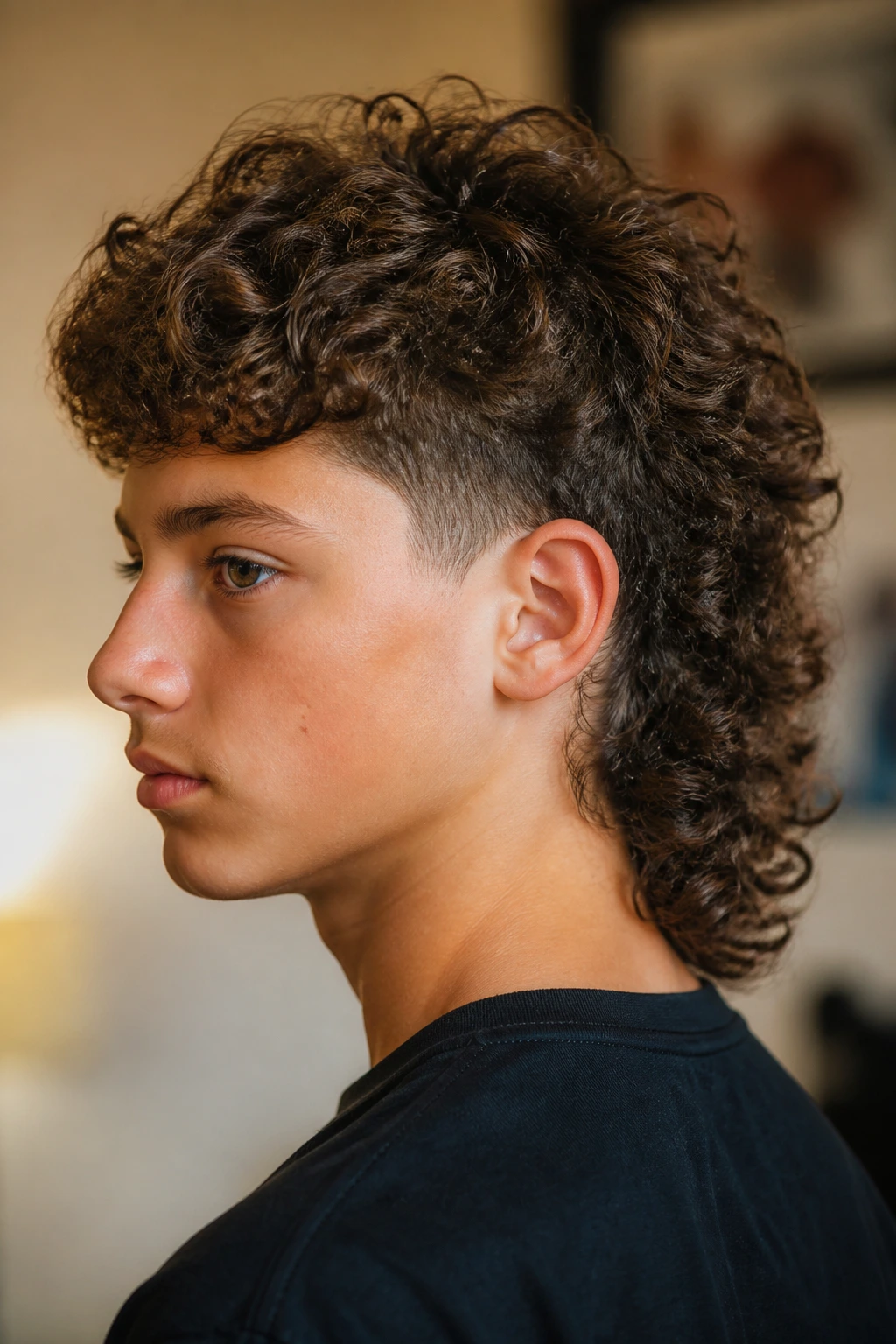
A tapered mullet sounds more dramatic than it usually is. On curly hair, it can look surprisingly balanced if the sides are tapered cleanly and the back is left longer with some shape. The result is less “costume” and more “this kid knows exactly what he wants.”
The important part is the transition. The top and sides need a smooth taper so the longer back doesn’t look pasted on. That’s where a lot of bad mullets go wrong. They keep the back long but forget to connect it to the rest of the cut. On curls, that disconnect shows fast.
This style fits boys who don’t mind a little personality in their haircut. It’s especially good if the curls at the back are stronger than the curls on the temples, because the taper can quietly tidy up the sides while the back carries the shape.
Not every school will be thrilled. Worth saying. If the dress code is strict, keep the back only slightly longer and let the taper do most of the work.
14. Boxy Taper with Square Shape
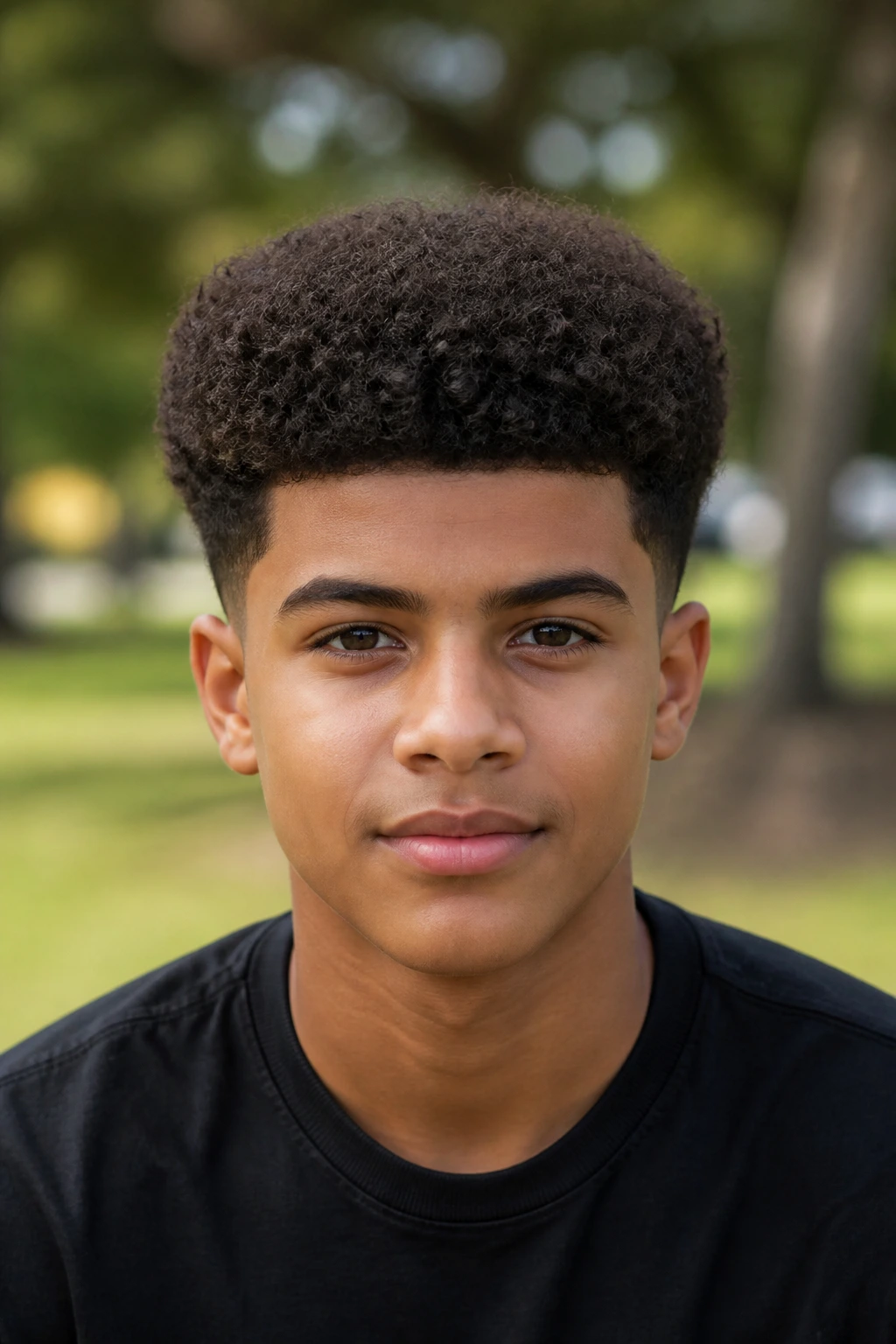
A boxier shape sounds harsh, but with curls it can look balanced when it’s done carefully. The top is kept full, the sides are tapered in a way that preserves the square outline, and the corners are softened just enough that the haircut doesn’t look blocky.
This style works well for dense curls and fuller heads of hair because it lets the natural volume stay visible. Instead of fighting the fullness, the cut frames it. The taper around the ears and nape keeps the shape from spreading too wide.
Best for Dense Curls
If the curls are thick, a rounded cut can sometimes make the head look smaller on top and wider on the sides. A boxier outline helps correct that. It gives the hair a cleaner perimeter and more presence from the front.
The mistake is taking too much off the outer edges with thinning shears. That can leave the top wispy while the sides still puff. Better to keep the top strong and let the taper clean the low zones.
15. Taper Fade for Loose Waves
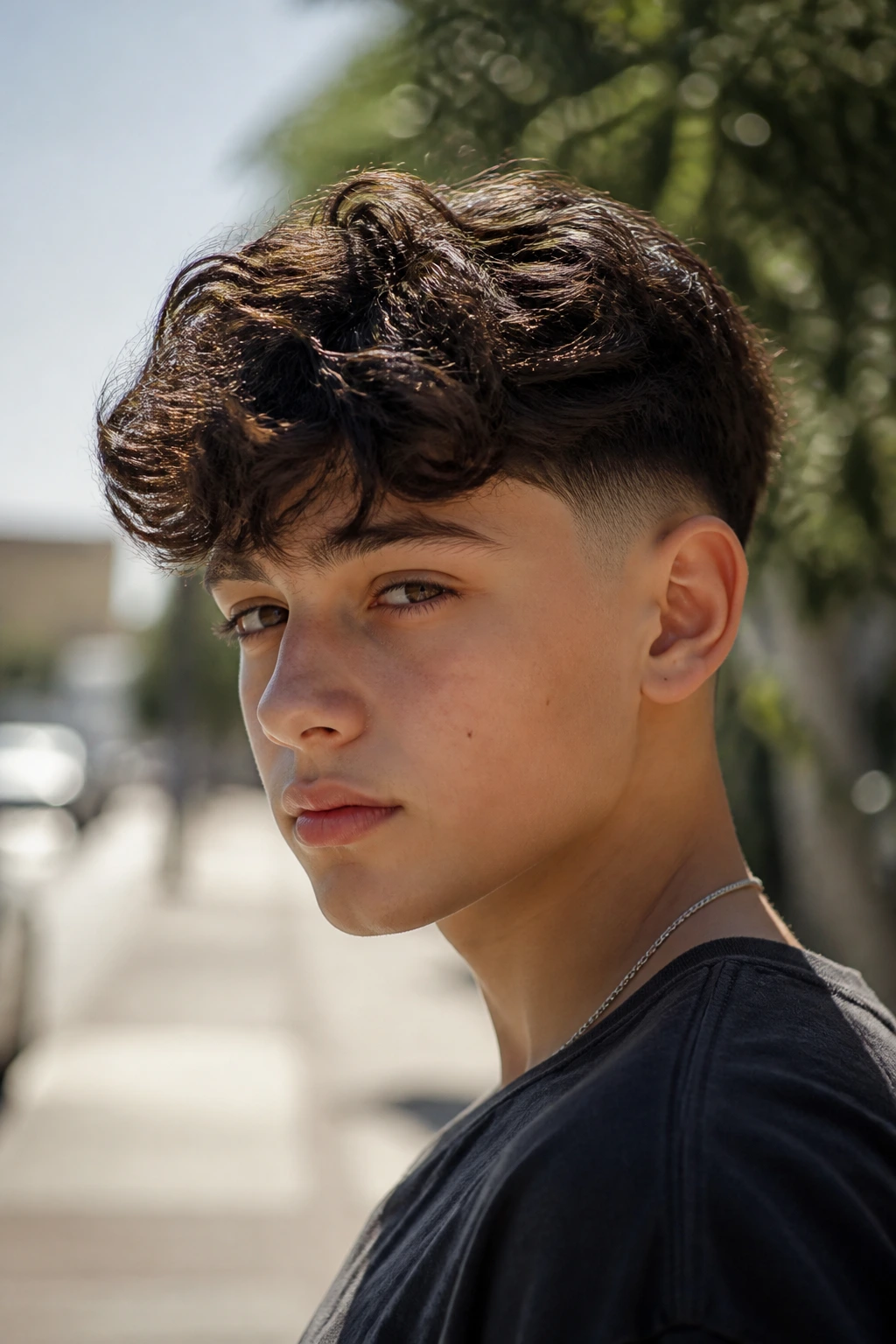
Loose waves need a different hand than tight curls. They don’t always stack the same way, and if the taper is too aggressive, the haircut can look thinner than intended. A taper fade with soft blending works well here because it keeps the sides neat without making the top feel disconnected.
This cut is a nice middle ground for boys whose hair is more wavy than curly but still has enough bend to need shape. It can be worn forward, brushed to the side, or left a little messy. The fade should stay soft enough that the transition isn’t harsh.
The top usually looks best when it’s left slightly longer in front than on the crown. That gives the waves something to fall over instead of lifting straight up. If the hair gets puffy after a wash, a small amount of mousse beats heavy cream almost every time.
A nice thing about this cut: it doesn’t demand much. It just needs the outline kept clean and the top left alone enough to move.
16. Scissor Taper for Soft Edges
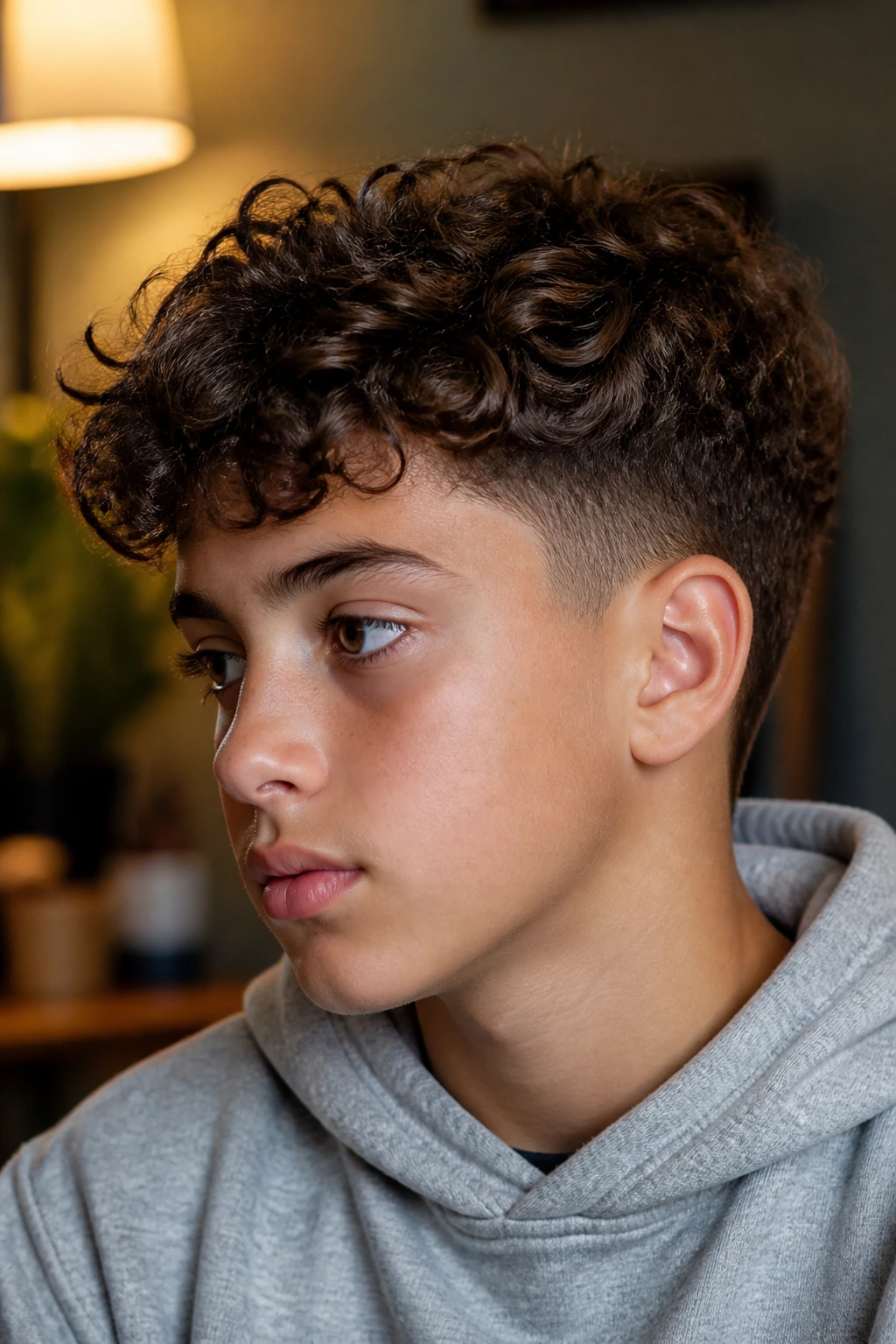
Not every taper needs clippers screaming around the sides. A scissor taper uses more shear work and softer blending, which is excellent for boys who are sensitive about buzzing sounds or for curl patterns that look better when the shape is built gently.
The top stays textured and flexible. The sides are shortened by hand so the transition feels softer than a machine-heavy fade. That can be a relief for parents who want neatness without a severe edge.
Why This Is the Easiest Clean-Up
Scissor work tends to grow out with less obvious lines. That means the haircut can look good for longer before it starts calling for a trim. It also suits curls that expand a lot when dry, because the barber can judge the shape more gradually.
Ask for light point-cutting on top if the curls are thick. That removes some bulk without killing the curl clusters. Too much point-cutting, though, and the hair frizzes out. So yes, there’s a balance.
This is one of the most forgiving options in the whole list. Quiet. Soft. Practical. Sometimes that is exactly what the head needs.
17. Taper with a Mini Lineup
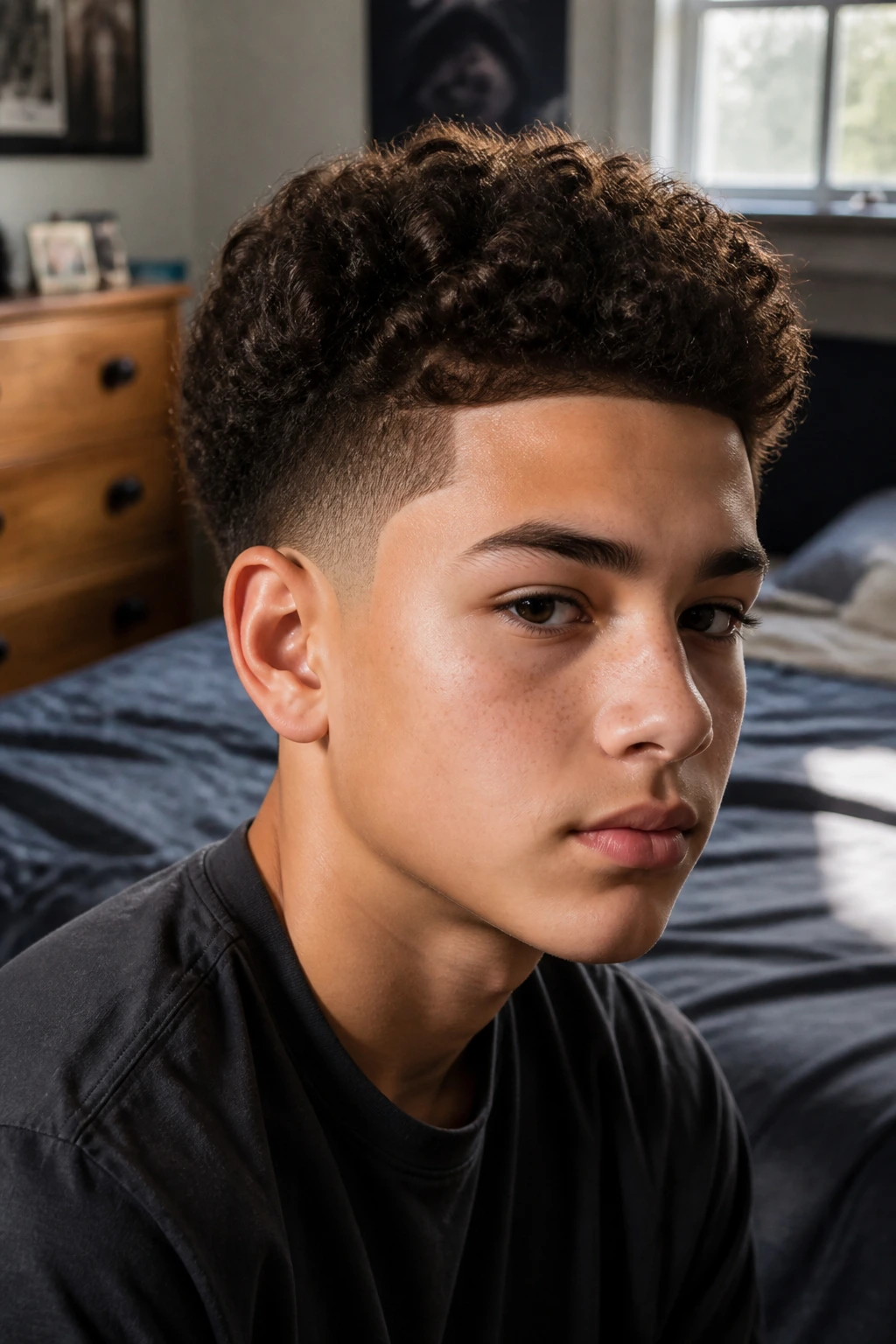
A mini lineup is the small, clean edge-up around the hairline and temples, not the full sharp-box treatment some boys end up with. On curly hair, a little lineup can make the front look tidy without making the style too rigid.
The taper handles the bulk. The mini lineup handles the frame. Together, they give the haircut just enough crispness for the eye to notice the shape without stealing the softness that makes curls look good in the first place.
Keep the Line Soft if the Hairline Is Uneven
That’s the part people miss. A very hard line can expose every tiny bend in a natural hairline, which sometimes looks harsher than the hair itself. A gentler lineup, cleaned carefully with the trimmer, usually reads better on younger boys.
This style works best when the top has enough texture to echo the neat front edge. If the curls are loose, a tiny bit of product helps keep the front from separating too much. If they’re tight, a mini lineup can make the whole cut feel sharper with almost no extra effort.
18. Long Top, Tight Sides Taper
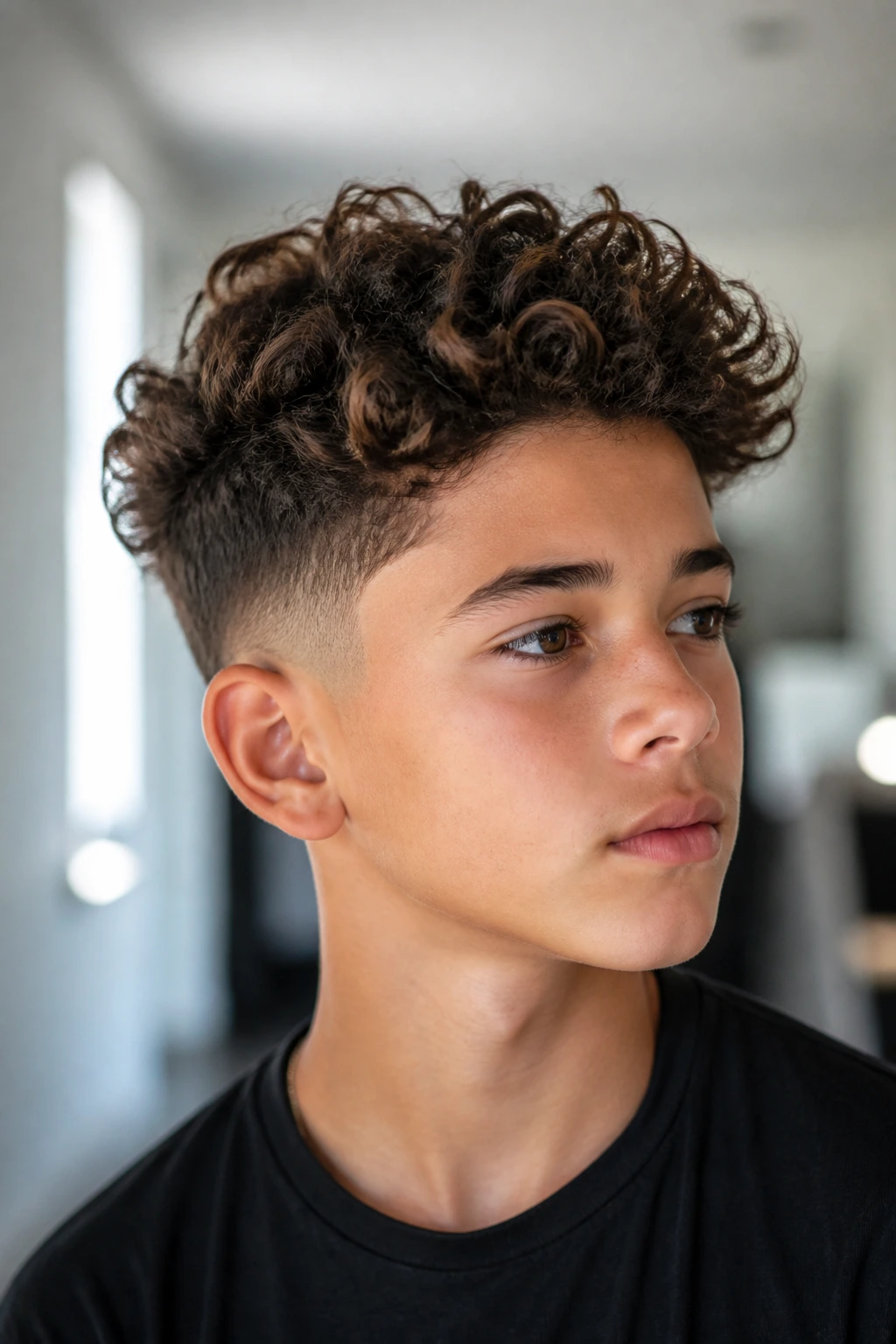
If you want the curl pattern to be the main event, this is the one. The top stays longer — often 5 inches or more, depending on the curl — while the sides and back are tapered tightly enough to keep the bulk under control. It’s a strong silhouette. Clean edges. Full curls. No confusion.
The reason this style works so well is simple: curls need room. Shortening the top too much removes the very thing that makes the haircut interesting. Leaving the top longer lets the pattern show, especially if the hair has good spring and a bit of natural shine after conditioner.
This cut can be styled in a few directions. Push it forward for a looser look. Lift the front a little for more height. Let it fall naturally if the curls already have a good shape. The taper gives you a clean border, so the top can move without the whole head turning messy.
It does ask for maintenance. Longer curls show bedhead fast. But if the family is willing to mist, scrunch, and keep the neckline neat, this is one of the best-looking options in the bunch.
What to Tell the Barber Before the Clippers Start
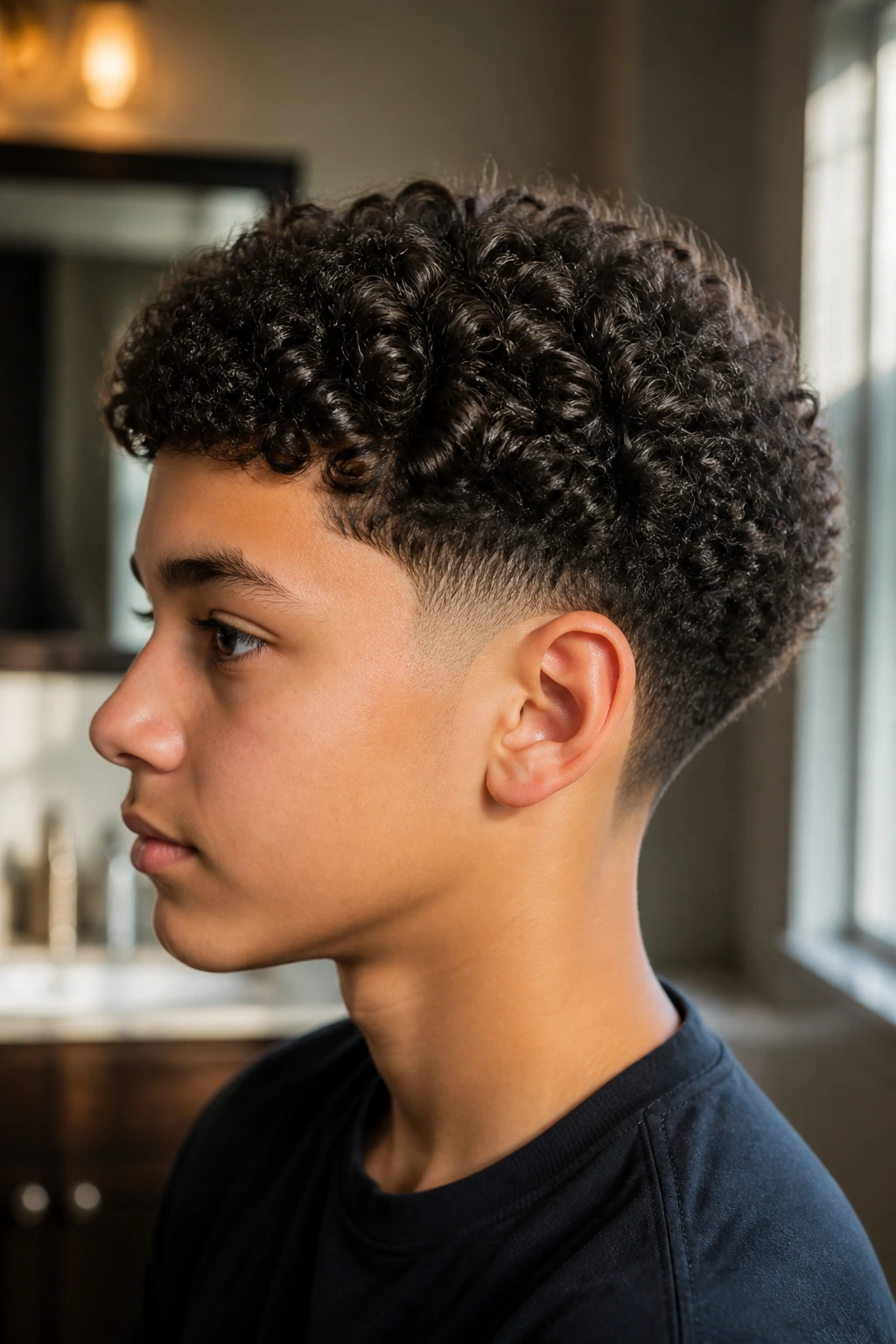
A good barber can work with curly hair. A better barber asks the right questions before touching it. That conversation matters because curls shrink when they dry, and a cut that looks fine wet can become a surprise later.
Bring a photo if you can, but talk through the details too. Say how much curl you want left on top, how short you want the sides, and whether the taper should stay low, mid, or high. If the child hates hair on the ears or neck, say that plainly. If the curl pattern changes a lot from front to crown, mention that too. Hair grows in patches sometimes. The cut should respect that.
Also ask whether the barber cuts curly hair wet, dry, or both. Wet cutting can make the shape easier to see at first, but dry trimming is often where the real balance shows up. A barber who knows curls usually checks both. That is the sort of small detail that separates a good cut from one that looks off after the first wash.
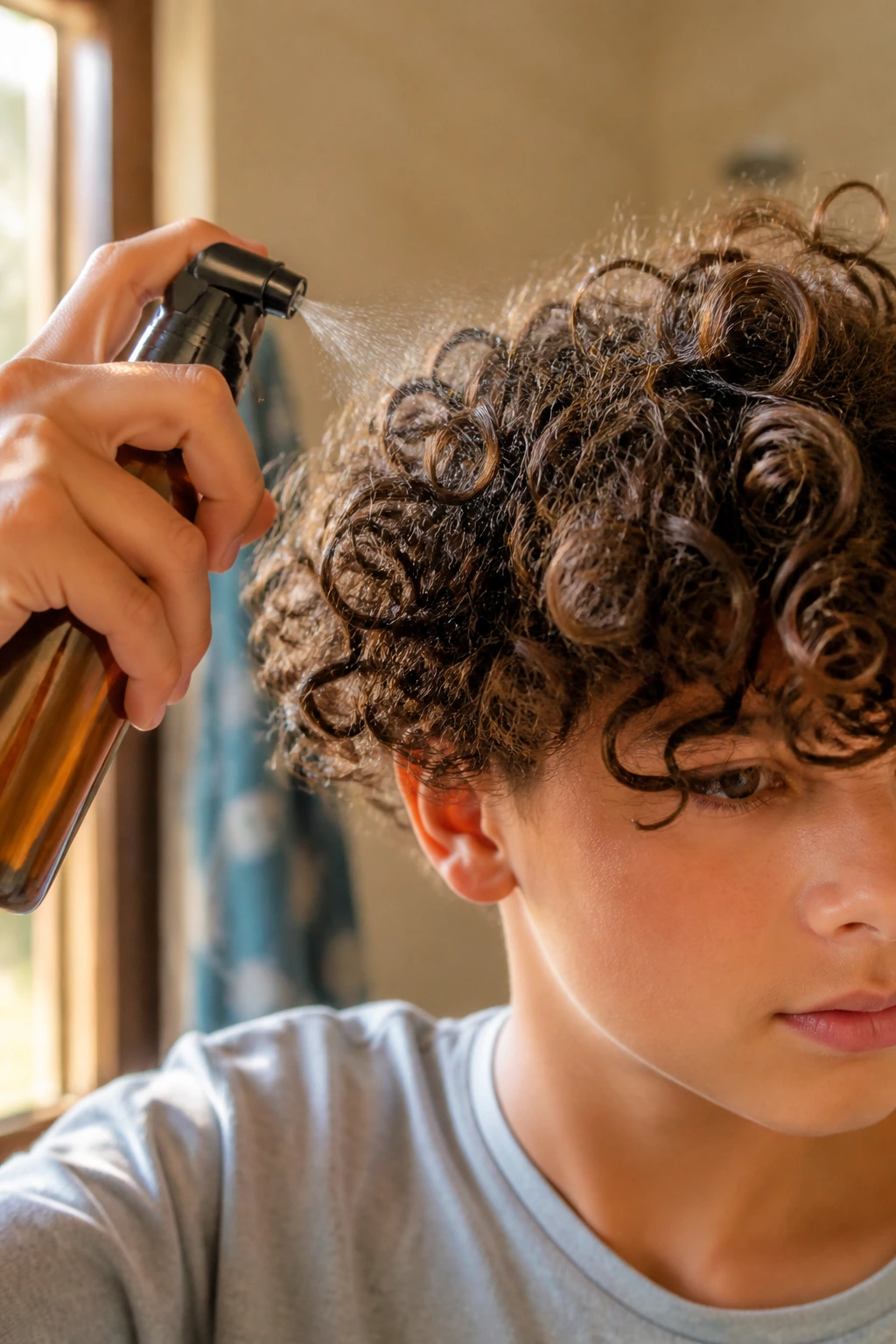
Essential Tools for Styling Curly Hair at Home
-
Spray bottle with clean water: A quick mist wakes curls up in the morning and helps product spread evenly without soaking the hair.
-
Leave-in conditioner: Use a light one so the curls stay soft; too much weighs the top down and makes the taper look flatter.
-
Curl cream or lightweight mousse: Curl cream helps shape, mousse helps lift. Either one can work, but heavy cream on fine curls tends to collapse the top.
-
Light gel: Good for boys whose curls frizz by noon. Pick a flexible hold so the hair does not dry into a helmet.
-
Wide-tooth comb: Useful on damp hair only. It separates curls gently without tearing them apart.
-
Microfiber towel or cotton T-shirt: Better than a bath towel for drying. Less roughness, less frizz.
-
Diffuser attachment: Handy if the boy’s hair takes forever to dry or needs a little extra lift at the roots.
-
Satin pillowcase or bonnet: Cuts down on bedhead and keeps the taper from looking rough the next morning.
Products That Help the Shape Hold
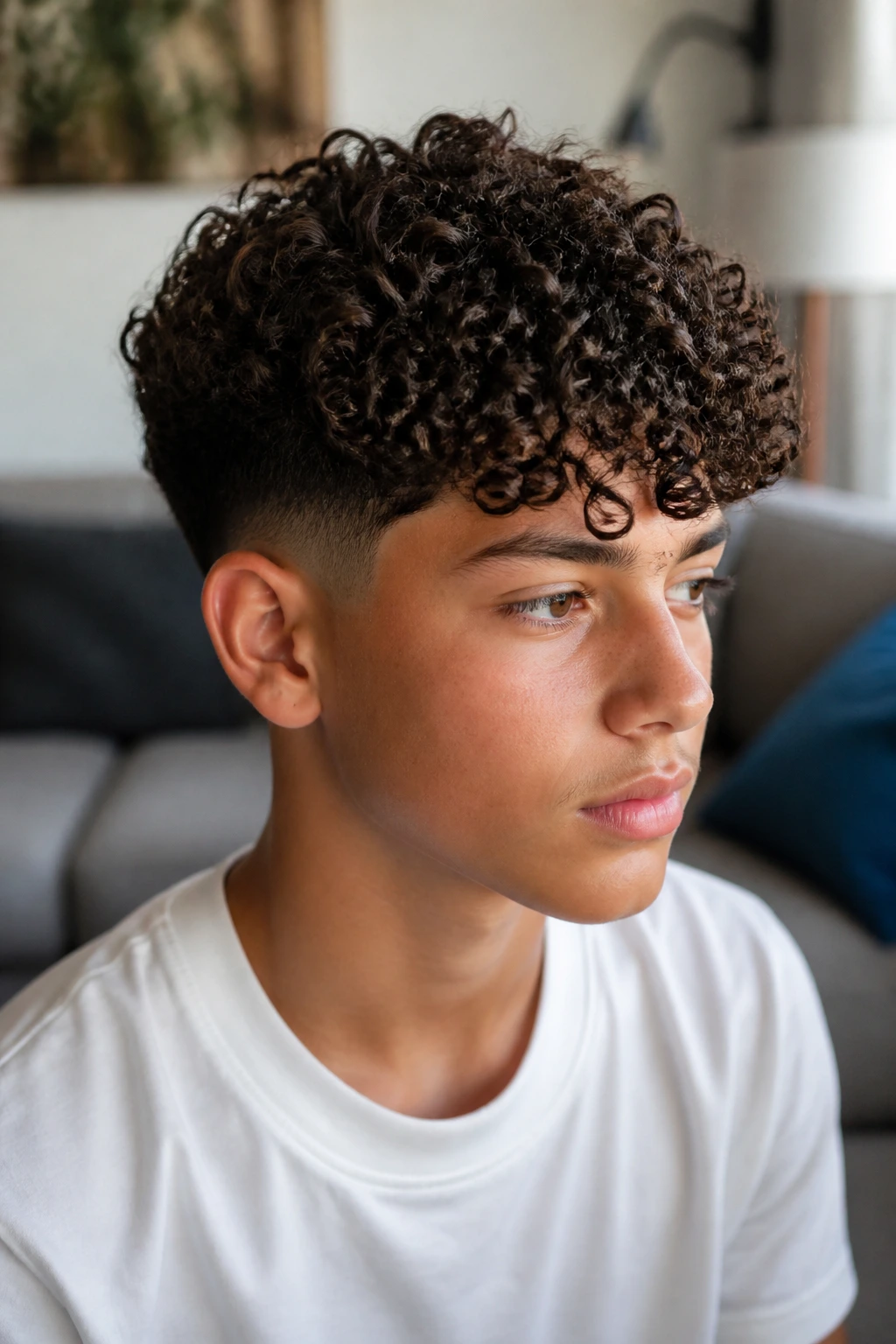
Product choice on curly hair is half the battle. Too little, and the curls puff. Too much, and the hair turns stringy or greasy-looking by lunch. The sweet spot is usually a light base product plus a small amount of hold.
Leave-in conditioner should feel slippery in the hands but not creamy enough to coat the hair heavily. That keeps the curls soft and helps the taper blend better into the top. Curl cream is nice for thicker or drier curls, but use less than you think. A nickel-size amount can cover a surprising amount of hair if the hair is damp and divided into sections.
Mousse is underrated on boys’ cuts. It adds lift without much weight, which is useful when the top is shorter or the curls lie close to the scalp. Gel is better for shape retention, especially if the curls split apart after school. Just do not pile on a thick layer. Flakes are ugly. There’s no polite way to say it.
Heavy pomades and waxes usually do not belong here. They flatten the curl pattern or create greasy patches near the scalp. If the hair is very dry, a tiny drop of oil on the ends can help, but that should be the exception, not the routine.
How to Style the Cut So the Taper Shows Up
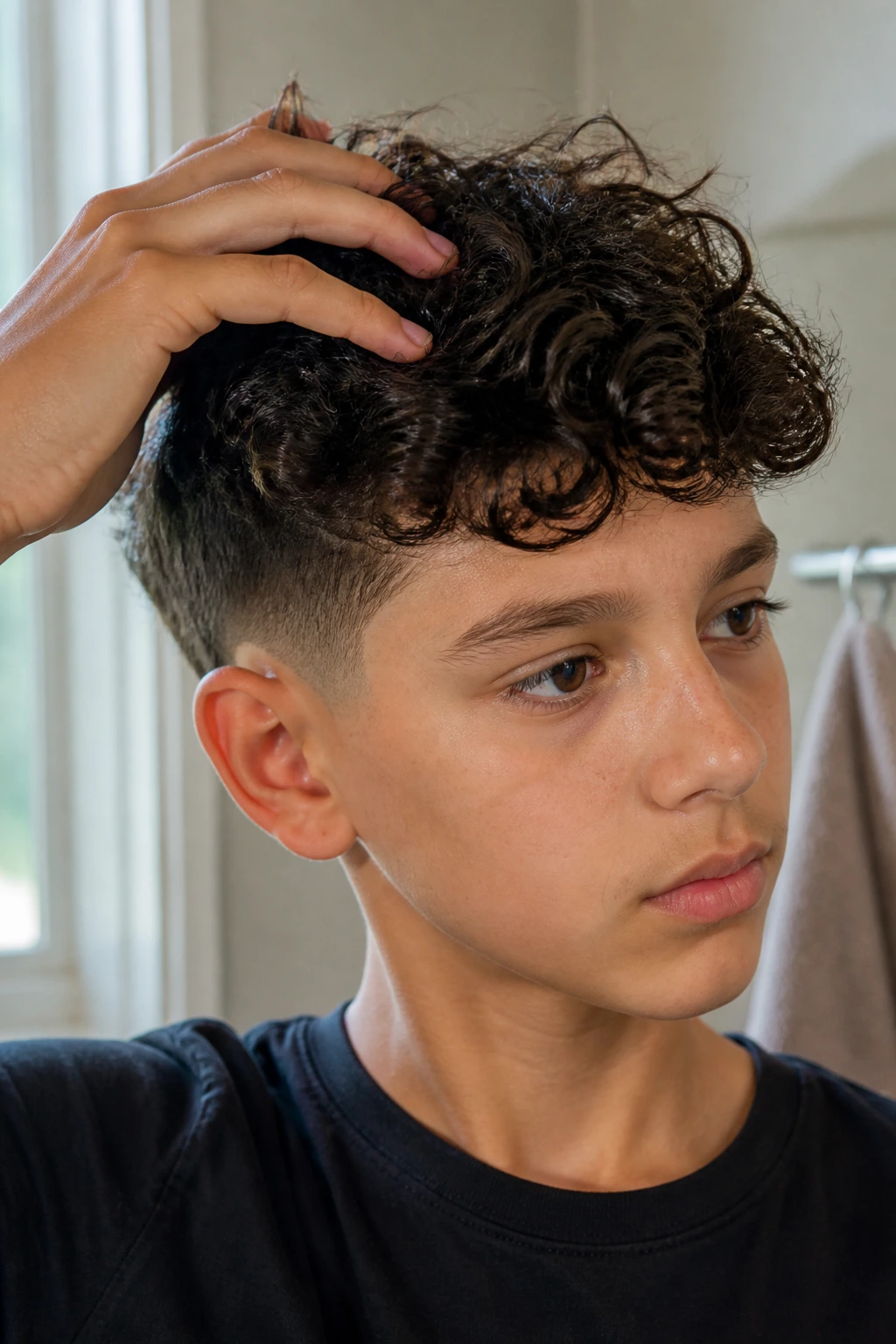
The tapers in this list do their best work when the curls are arranged with a little intention. That does not mean fussing forever in the bathroom mirror. It means giving the hair enough direction that the shape reads clean before the school bell rings.
-
Start with damp hair, not dripping hair.
Water should be there, but not running down the neck. A mist bottle is enough for most mornings. -
Work product in sections.
Use your fingers to spread leave-in, cream, or mousse from the crown toward the front. If you slap product on top and forget the sides, the cut will look lopsided. -
Scrunch upward or guide forward, depending on the style.
A fringe wants forward motion. A rounded top wants a gentle lift. A frohawk wants the curls nudged toward the middle. -
Let the curls dry before touching them much.
This is where people cause frizz. The hair is still setting. Leave it alone. -
Break the cast only when the hair is dry.
If you use gel and the hair gets a little stiff, scrunch it softly once it’s fully dry. That keeps the shape and removes the crunchy finish.
For boys who hate product, the fast version is water, a small squeeze of leave-in, and fingers. That’s enough for a lot of cuts. Seriously. A clean taper does half the styling for you.
Keeping the Taper Clean Between Visits
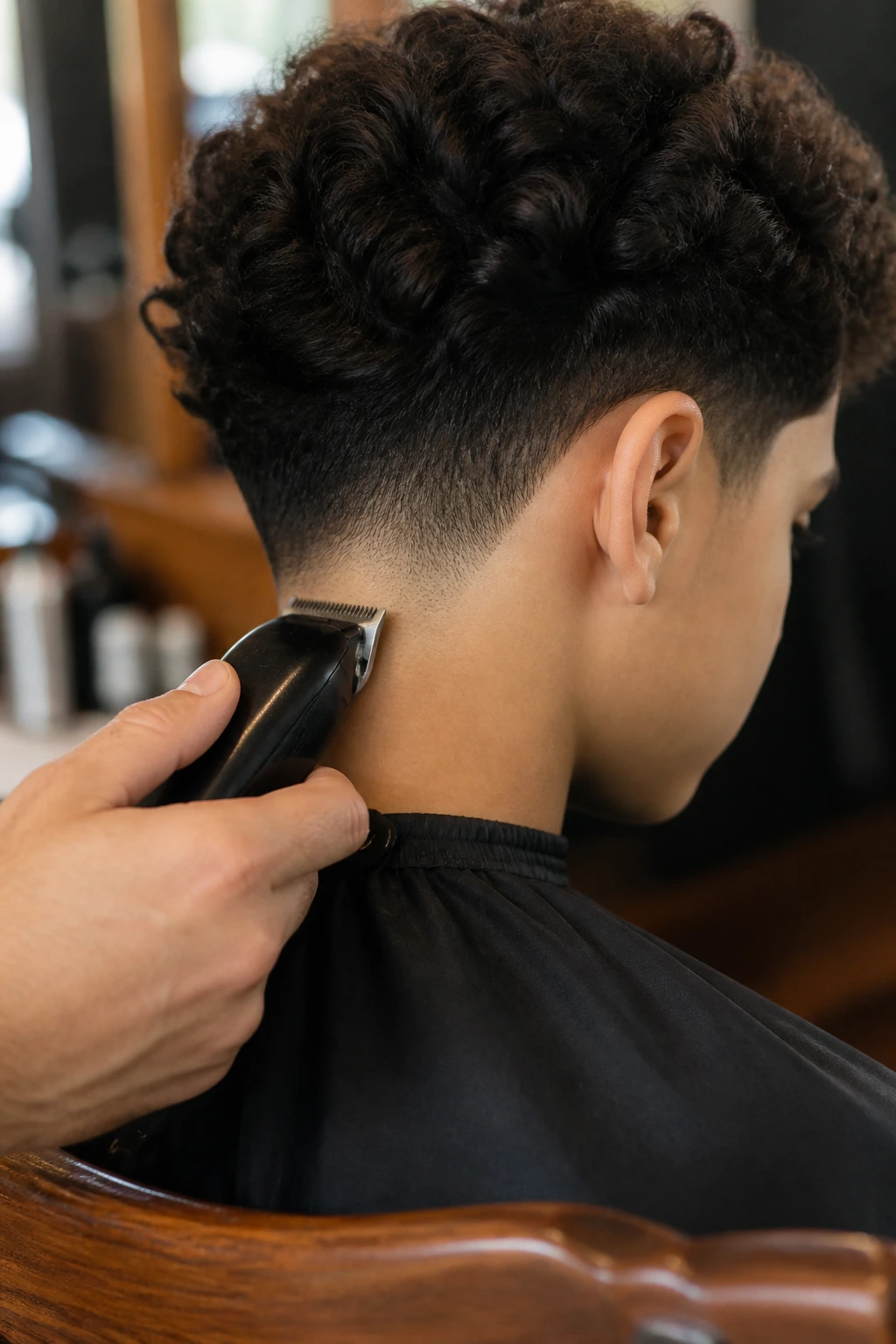
A taper looks best when the neckline and sideburns stay neat. That does not mean the family needs to run to the barber every week. It just means paying attention before the outline gets fuzzy.
For most boys, a full trim every 3 to 5 weeks keeps the taper from losing its shape. If the neck grows fast, a small cleanup at the nape every 10 to 14 days can make the whole cut look fresh again. That tiny touch-up matters more than people think. The neckline is where growth shows first.
At home, protect the shape during sleep. A satin pillowcase helps. So does not going to bed with heavy product caked in the hair. Wash enough to remove buildup, but not so often that the curls dry out and puff. Two to three washes a week is a reasonable place for many curly heads, though sweaty sports days may call for more frequent rinsing with conditioner only.
If the boy wears hats a lot, the curls at the crown may flatten. A quick mist and scrunch when the hat comes off usually fixes that. No need to panic. Curly hair springs back if you give it a little water and patience.
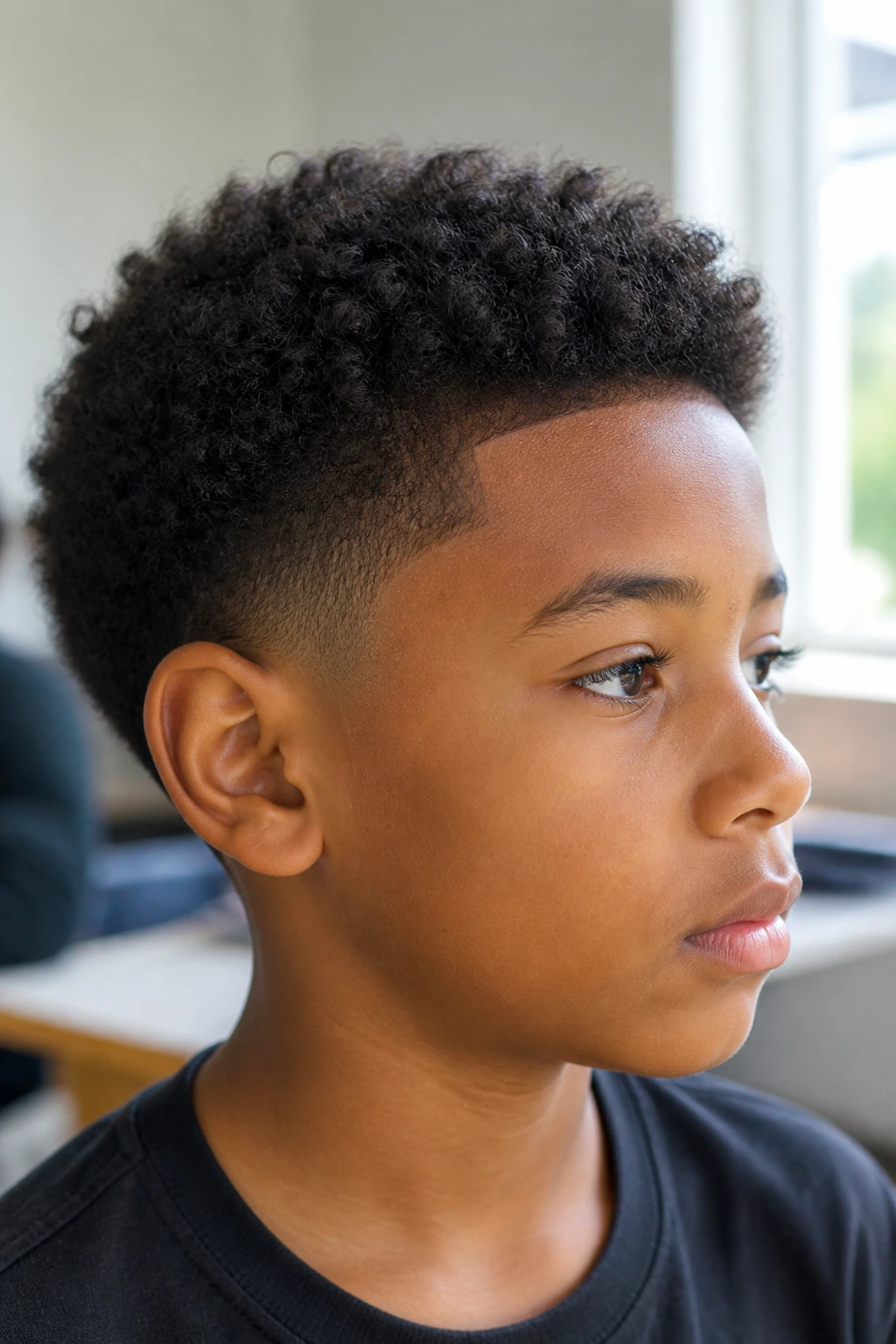
Common Mistakes That Make Curly Hair Look Bigger, Not Better
-
Taking the taper too high too soon:
The sides can end up exposed and the top starts floating like a separate piece. Keep the taper low or mid unless the style really calls for height. -
Cutting the top too short because the hair looks longer when wet:
Curly hair shrinks. A lot. If the top is taken down too far, there is no curl shape left to work with once it dries. -
Using heavy product on fine curls:
The hair turns flat at the roots and greasy at the ends. Light mousse or a small amount of curl cream usually works better. -
Brushing curls dry:
That breaks clumps and sends the top into frizz. Detangle when damp, then leave the curls alone as they dry. -
Ignoring the neckline until it looks wild:
A fuzzy neck can ruin an otherwise good taper. A small cleanup keeps the whole cut looking deliberate. -
Trying to force every curl into the same direction:
Curly hair has its own pattern. If one section wants to fall forward and another wants to stand up, work with that shape instead of fighting it.
Variations for Different Curl Patterns, Ages, and School Rules
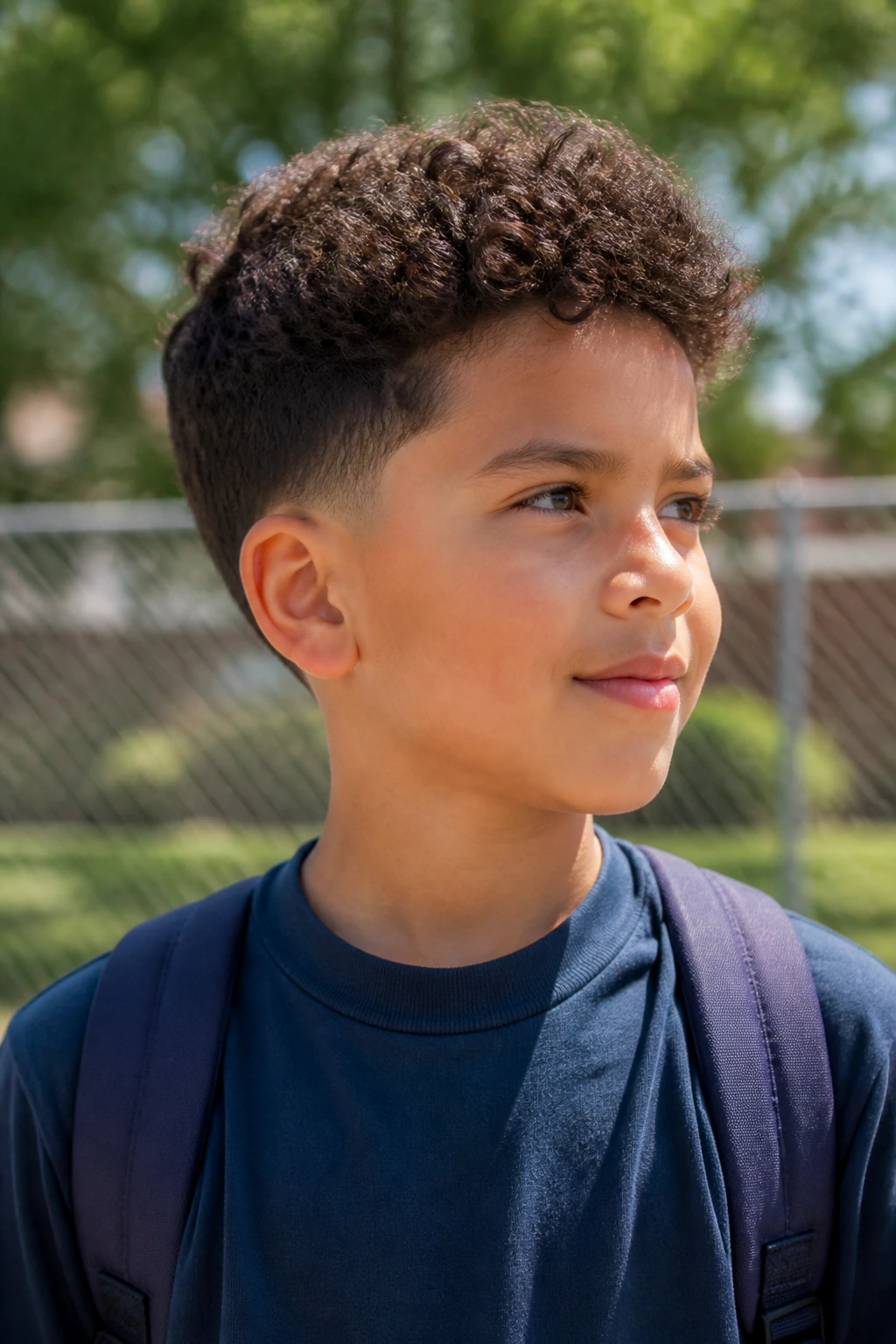
The Playground-Proof Low Taper
This version keeps the taper low, the top medium, and the styling simple. It’s the easiest pick for younger boys who are active all day and do not want hair in their face. A little leave-in and a quick scrunch are enough.
The Defined Ringlet School Cut
Leave the top longer and use a soft taper with a clean outline around the ears. This one suits boys whose ringlets naturally clump into visible spirals. It looks neat without needing a lot of brushing or constant resets.
The Soft-Edge Scissor Taper
If clippers feel too harsh or the hair texture is fine, a scissor taper gives a gentler result. It grows out with less visible linework and works especially well for boys who are sensitive about noise or skin irritation.
The Curly Fringe With More Forehead Coverage
Let the front sit forward and keep the taper low. This works well for boys who prefer a little hair near the brow line and want the style to feel softer. The fringe needs a touch of product, but not much.
The Longer Crown Taper
Keep more length on top and let the curls build height through the crown. This is a smart option for tighter curls that look best when they have room to stack. The sides stay clean, but the top carries the shape.
Frequently Asked Questions
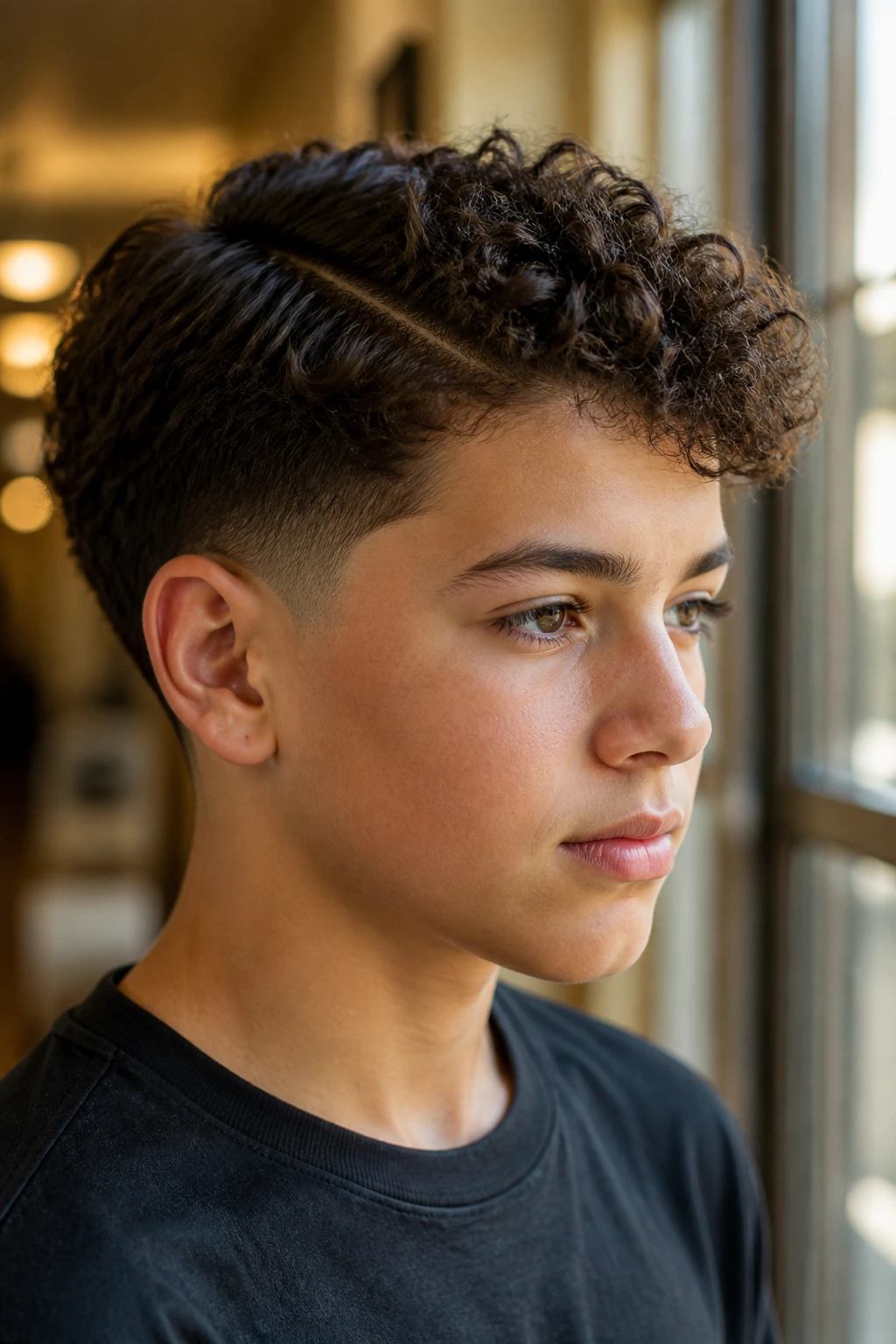
How short can the sides go on curly hair without making it look too wide?
Usually, a low or mid taper is the safest range if the curls are thick. Going too high on the sides can make the top look detached, especially when the hair dries and shrinks.
Should curly hair be cut wet or dry?
Both methods help. Wet cutting shows the rough shape, but dry trimming shows the real curl pattern and shrinkage, which is where the fit gets decided. A barber who knows curls often checks both.
What do I ask for at the barber if I want a taper but not a fade?
Say you want a taper on the sideburns, around the ears, and at the neckline, while keeping the sides fuller than a skin fade. That wording helps the barber understand you want a softer transition.
How often should a curly taper be touched up?
Most boys do well with a full cut every 3 to 5 weeks. If the neckline grows fast, a small cleanup in between can keep the style from looking fuzzy.
Can a taper work on very tight curls or coils?
Yes, and it often works better than a blunt cut. Tight curls gain shape from the cleaned-up outline, while the top keeps enough length to show texture instead of becoming a tight fuzz cap.
What if the curls puff up after washing?
Use less towel rubbing, more squeezing. Add leave-in to damp hair, then scrunch with a microfiber towel or T-shirt. If needed, use a little mousse at the roots and let the hair air-dry or diffuse on low heat.
Is a hard part a good idea for kids with curly hair?
It can be, but it needs upkeep. If the child grows hair fast or dislikes regular barber visits, a soft side part is easier to live with and looks less harsh as it grows out.
Can I keep the taper neat at home between appointments?
You can tidy the neckline carefully if you’re comfortable with a trimmer, but avoid guessing at the taper itself. A small mistake on curly hair shows fast. Keep the touch-ups to the edge, not the shape.
A Clean Grow-Out Ends Better Than a Rush Job
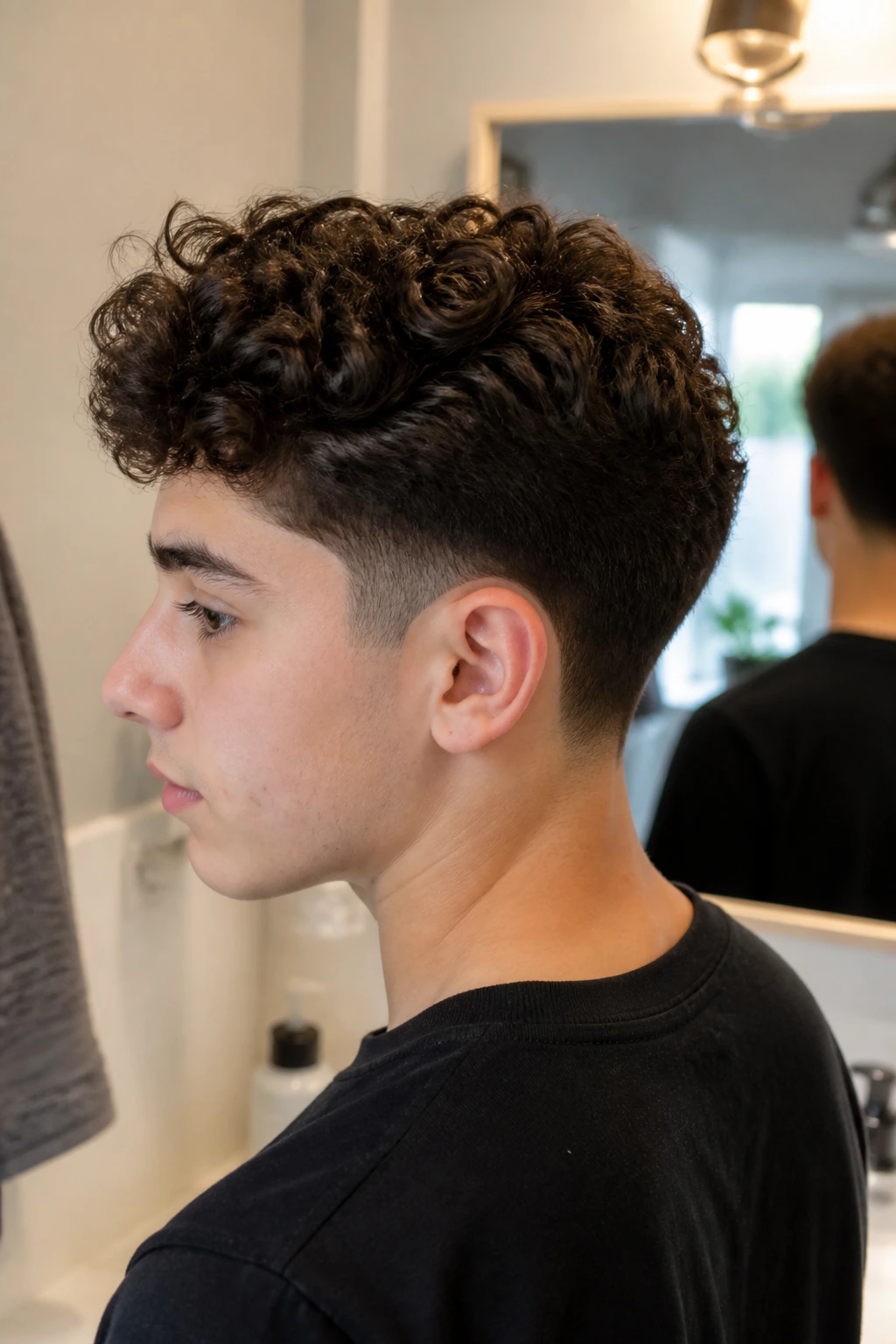
A good taper on curly hair doesn’t have to be dramatic to look sharp. It just has to respect the way curls move, shrink, and puff. That’s the whole trick. The best cuts in this group make the top feel alive and the sides feel deliberate, which is a much better bargain than forcing the hair into a shape it won’t hold.
The nicest part is how forgiving the right taper can be. It behaves on school mornings, survives hats and sports, and still looks decent when the next appointment is a week away. That’s what makes these cuts worth keeping in the rotation. Pick the version that matches the curl pattern, keep the neckline tidy, and let the curls do what they already want to do.