



Fine hair tells on you fast. One heavy curl, one too-tight ponytail, one blob of hairspray near the crown, and the whole style starts sagging like it lost an argument. That’s why white character hairstyles for fine hair need a different kind of thinking: not more hair, not more product, just smarter shape. A style that looks airy on screen or in a photo can collapse by lunch if the sections are too thick or the roots are too smooth.
The good news is that fine hair can look expensive, soft, and polished without much length or density. You just have to stop fighting its nature. The best looks use a little lift at the roots, controlled looseness around the face, and shapes that suggest fullness instead of trying to fake a giant mane. That’s the whole game.
Some of these styles lean preppy. Some are a touch romantic. A few are plain practical, which is exactly why they deserve a place here. The point isn’t to turn your hair into something it isn’t. It’s to make the most of the strand you actually have, then leave before it gets overworked and flat.
Why These Styles Earn Their Keep
- Fine-hair friendly structure: Each look builds shape with pins, bends, braids, or parting tricks instead of relying on heavy density that fine hair does not have.
- Low-product logic: These styles work with a small amount of mousse, dry shampoo, or texture spray, so your roots don’t turn soft and slippery halfway through the day.
- Softness around the face: A few loose pieces near the cheeks make fine hair look fuller because the eye reads movement first, not strand count.
- Easy day-two wear: Several of these looks get better after a little settling, especially if you sleep on them with a silk scarf or loose clip.
- Flexible length range: Most of these can be adjusted for a bob, lob, or shoulder-length cut without needing extensions.
- Real-life friendly: These are not red-carpet sculptures. They hold up for school runs, office days, errands, dinner, and the odd humid afternoon that tries to ruin everything.
1. The Low Chignon with a Soft Side Part
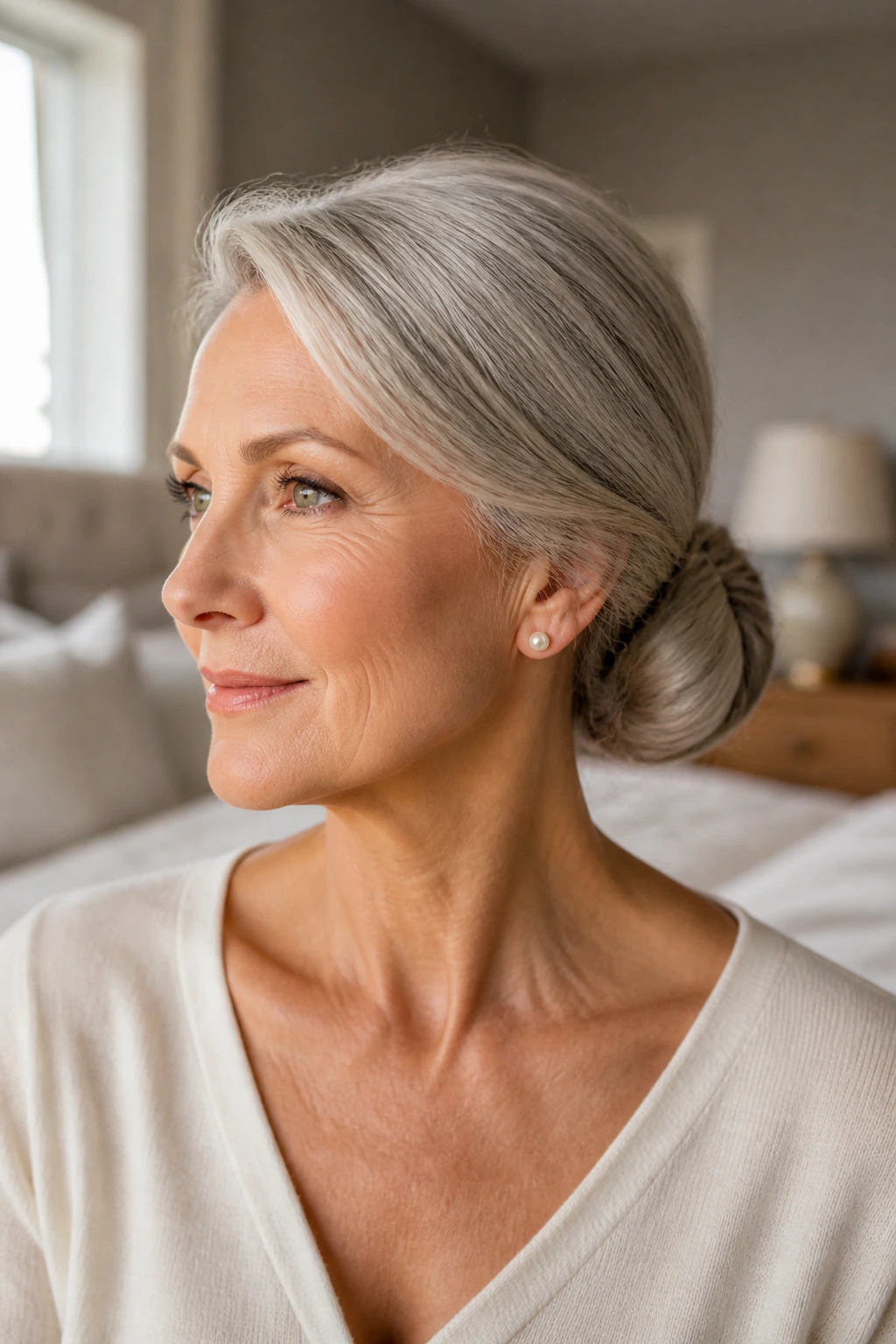
A low chignon is one of the few updos that can make fine hair look richer instead of thinner. The reason is simple: it keeps the silhouette compact and clean, so you don’t expose every weak spot at the crown. A soft side part helps too. It adds a little asymmetry, which is kinder to fine hair than a dead-center line when the roots are flat.
Why It Works on Fine Hair
The twist sits close to the nape, where fine hair usually has enough length and weight to stay controlled. You’re not building height; you’re building presence. That matters. A low bun with a few tucked ends can look fuller than a big messy knot that keeps slipping apart.
Use a light mist of texture spray through the mid-lengths before you gather the hair. Then twist loosely and pin in a crisscross pattern so the bun feels anchored but not jammed flat against the scalp.
- Best for: second-day hair, work, weddings, dinner
- Avoid: ultra-smooth serum at the roots; it makes the bun slip
- Shape cue: the bun should sit just below the occipital bone, not at the very bottom of the neck
Pro tip: Leave two thin pieces near the temples and curve them with a 1-inch iron for ten seconds each. That tiny bend does more for balance than another dozen bobby pins.
2. The Headband Blowout That Hides Flat Roots
Here’s the blunt truth: a headband can do what a teasing brush sometimes cannot. It gives fine hair a front-facing frame, which means the crown does not have to carry the whole job alone. When the roots are limp, a padded or fabric headband adds shape in one move.
The look works best with a loose blowout and a slight bend through the ends. You want the hair to move when you turn your head. Not flop. Move.
How to Wear It Without Looking Stiff
Push the headband back about an inch from the hairline, then gently lift the hair above it with your fingertips before smoothing the top layer. If the front is too polished, the style reads flat. If it’s too loose, the band slides. Somewhere in the middle is the sweet spot.
This is one of those styles that looks better with a little imperfection. Fine hair likes a tiny bit of grit.
- Pairs well with: small hoops, knit sweaters, collared shirts
- Best finish: soft blowout, not pin-straight
- Watch for: headbands with hard edges; they press the roots down
3. The Half-Up Twist That Keeps Volume at the Crown
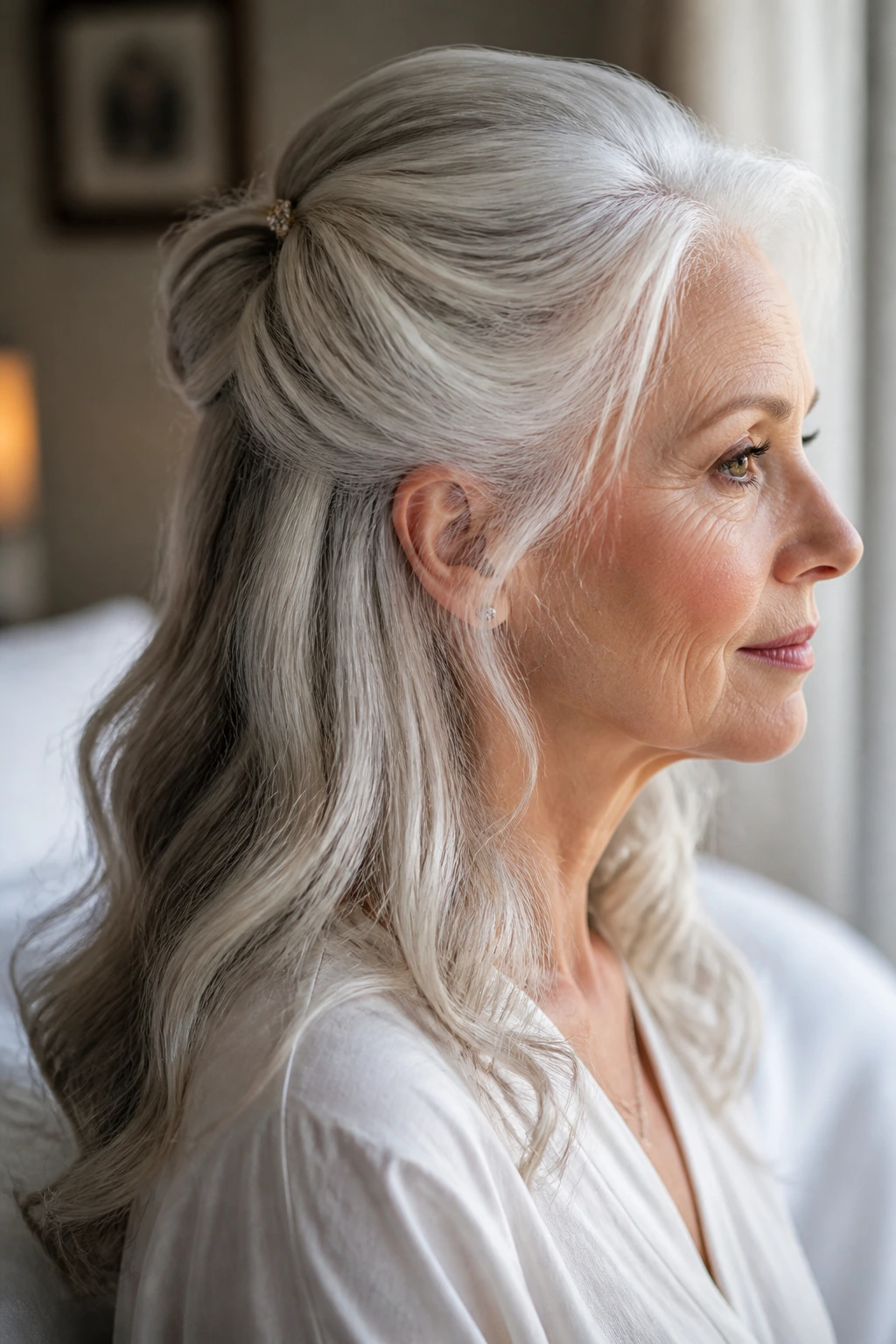
Half-up styles are the friendliest thing you can do for fine hair if the crown tends to collapse. You get some lift on top, some length left down, and a shape that doesn’t ask the whole head to behave at once. A twisted half-up version feels a little more polished than a basic clip-back.
The trick is section size. Take too much hair and the top goes limp. Take too little and the twist disappears. Use the upper third of the hair, no more.
How to Build It
Twist each side back loosely, secure them together at the back crown, then pinch the twist open just a bit with your fingers. That small widening makes the style look denser. Finish with a tiny elastic or a pin hidden under the twist.
A half-up style also lets the lower hair do what fine hair does best: move. If your ends are decent, let them show off.
Quick note: If your hair is freshly washed, add texture spray at the roots first. Clean hair can be so silky that the twist slides before you leave the bathroom.
4. The Pancaked French Braid
A French braid can look too narrow on fine hair if you braid it tightly and walk away. Pancaking fixes that. You gently pull at the braid’s outer loops after it’s secured, which widens the shape and makes the whole thing look thicker than it is.
The style reads soft and a little bookish. It also keeps shorter layers from escaping every few minutes, which is its own reward.
Start the braid with a side part or a loose center part, depending on where your hair naturally settles. Braid with even tension, not death-grip tension. Then pancake from the bottom up, only on the outer edges, so the center line stays neat.
- Best on: hair past the chin, ideally shoulder length or longer
- Works best with: dry shampoo or a light texture spray
- Avoid: over-pulling at the crown; it creates holes
A small opinion: this style almost always looks better after five minutes of mess than the moment you finish it.
5. The Claw-Clip Twist That Looks Easy Because It Is
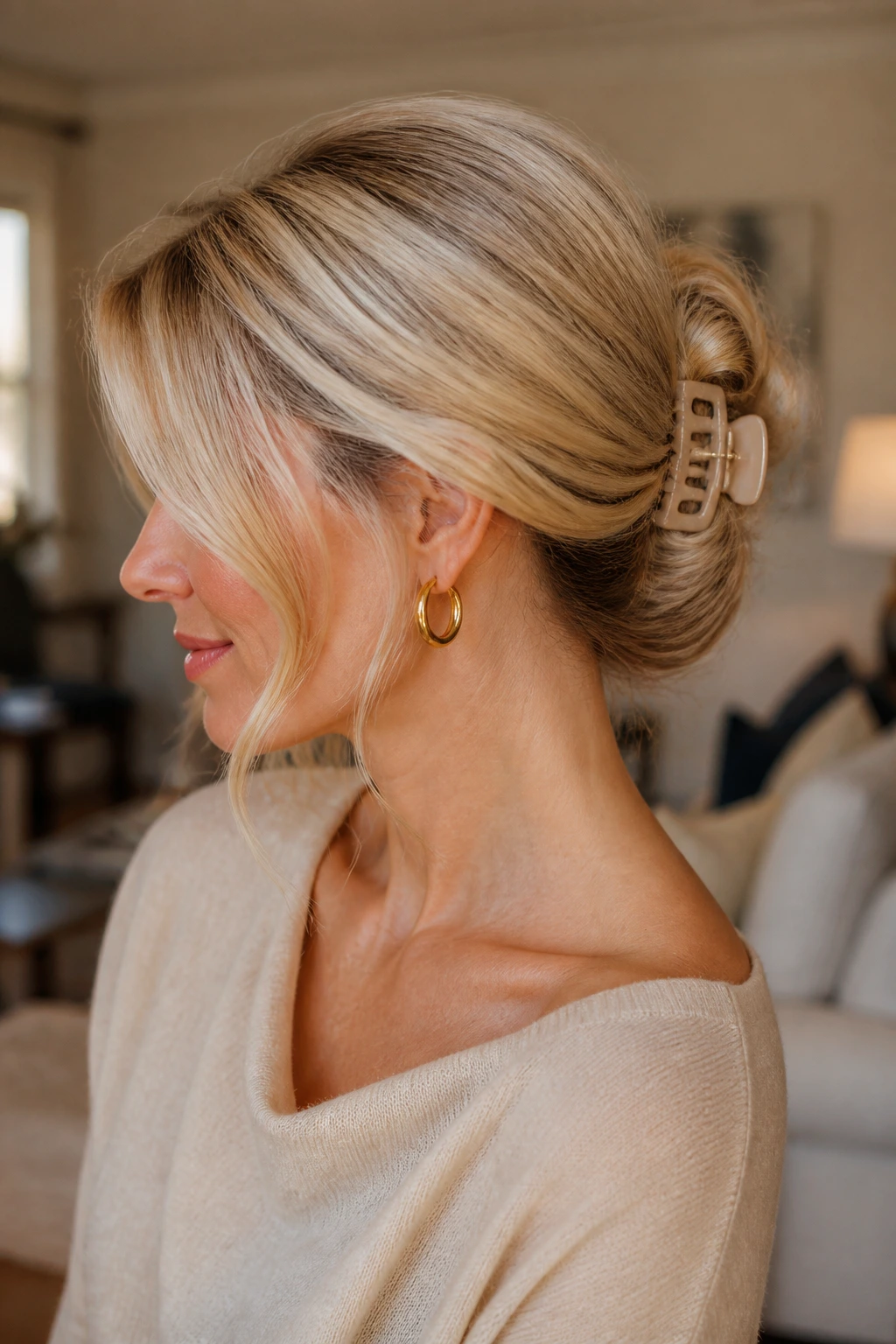
Claw clips can be lazy in the best possible way. Fine hair often does better in a clip than a tight elastic because the clip holds without scraping the root area flat. The result is a loose French twist shape that feels modern instead of fussy.
The secret is rolling the hair up rather than cramming it. Gather it low, twist once or twice, lift it upward, and let the ends tuck inside the clip. If the clip is huge for your hair, the style will slide. If it’s too small, it will pinch and spring open.
A medium clip usually works better than the giant jaw clips that swallow fine hair whole. You want grip, not bulk.
Best move: pull out a few face-framing strands, then bend them softly with the flat iron so they do not look like accidental escapees.
6. The Bubble Ponytail That Pretends You Have More Hair
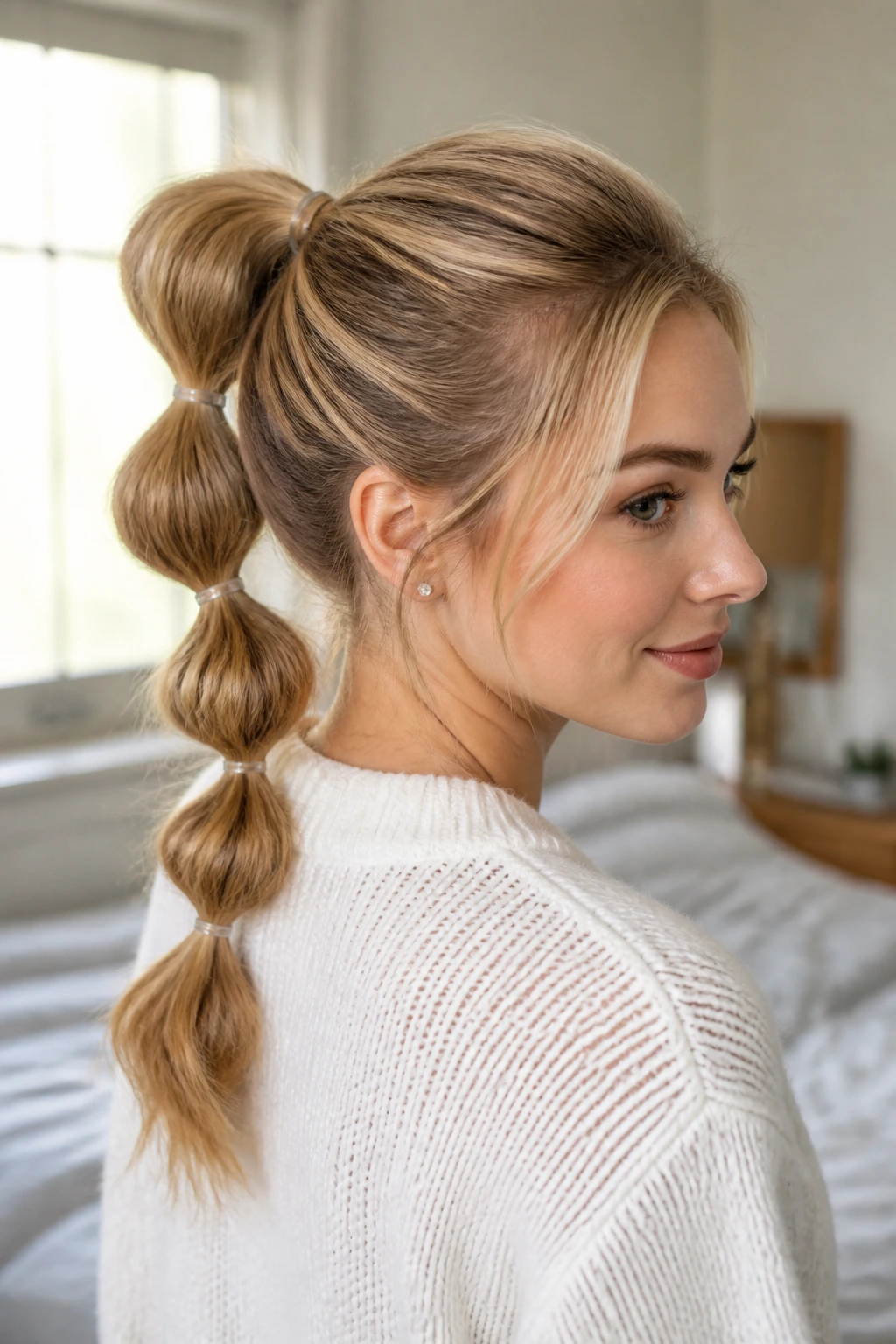
A bubble ponytail is one of the sneakiest tricks in this whole lineup. Fine hair often looks sparse in a regular ponytail because the length pulls everything into one thin line. A bubble pony breaks that line into sections, which gives the eye more to look at.
Use clear elastics or thin ties every 2 to 3 inches down the ponytail. Then tug each section outward until it forms a rounder shape. Not huge. Just fuller. If you pull too hard, the bubbles flatten and the pony starts looking sad.
This style works especially well if your hair has some layers. The bubbles hide the fact that not every strand reaches the same length.
- Best for: straight or lightly waved hair
- Best base: medium-height pony, not super high
- Good detail: wrap a tiny strand of hair around the top elastic for a cleaner finish
7. Curtain Bangs With a Rounded Blowout
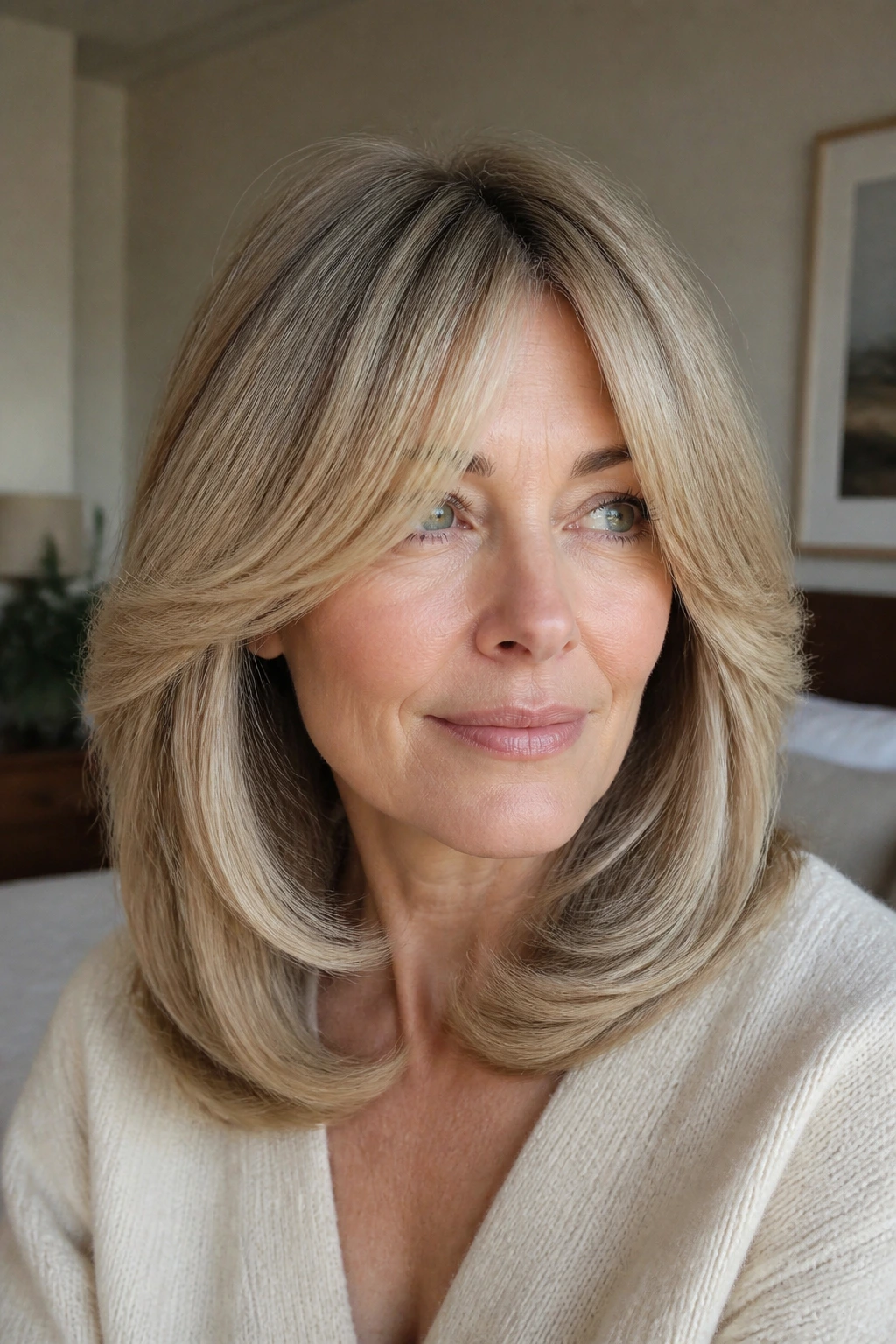
Curtain bangs are almost unfair to fine hair in the best way. They add front-of-face movement, which can make the rest of the hair seem fuller even when it is not. The bangs also redirect attention upward, where you need it most.
The blowout matters here. You want a round brush or a blow-dryer brush that turns the ends slightly inward and away from the face, not a stiff helmet shape. If the bangs are too straight, they separate and show scalp. If they are too curled, they date the whole look.
Keep the Flow Soft
Use a light mousse at the roots while the hair is damp, then blow-dry the bangs first so they don’t dry in a split direction. Once they set, the rest of the hair can stay looser.
A little face-framing wave helps too. Fine hair doesn’t need aggressive curl. It needs direction.
8. The Tucked-Behind-Ears Lob
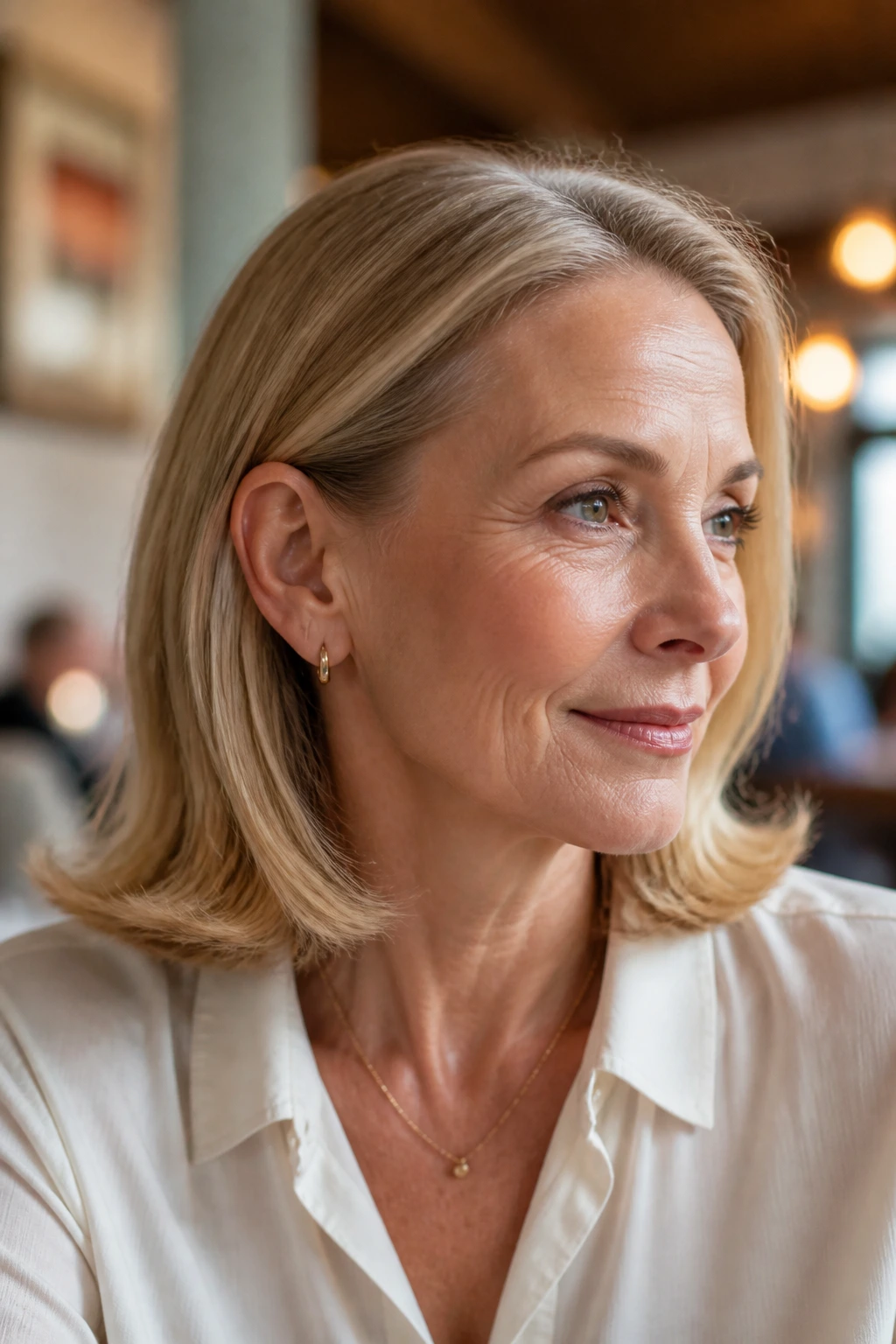
A lob can be a gift to fine hair because the length is manageable enough to keep some lift, but long enough to feel deliberate. Tucking both sides behind the ears gives the cut shape, especially if the front pieces are slightly longer than the back.
The style depends on one thing: bend in the mid-lengths. If the hair is perfectly straight, it can read flat and severe. A soft S-bend with a flat iron or curling iron changes that instantly. You do not need ringlets. Just movement.
This look is best when the ears are visible and the ends are slightly flipped or curved under. It feels clean, not severe. Clean is good. Severe is where fine hair starts looking thin.
Best pairing: small studs, thin scarf, high-neck top, or a collar that frames the jaw.
9. The Ribbon-Tied Low Ponytail
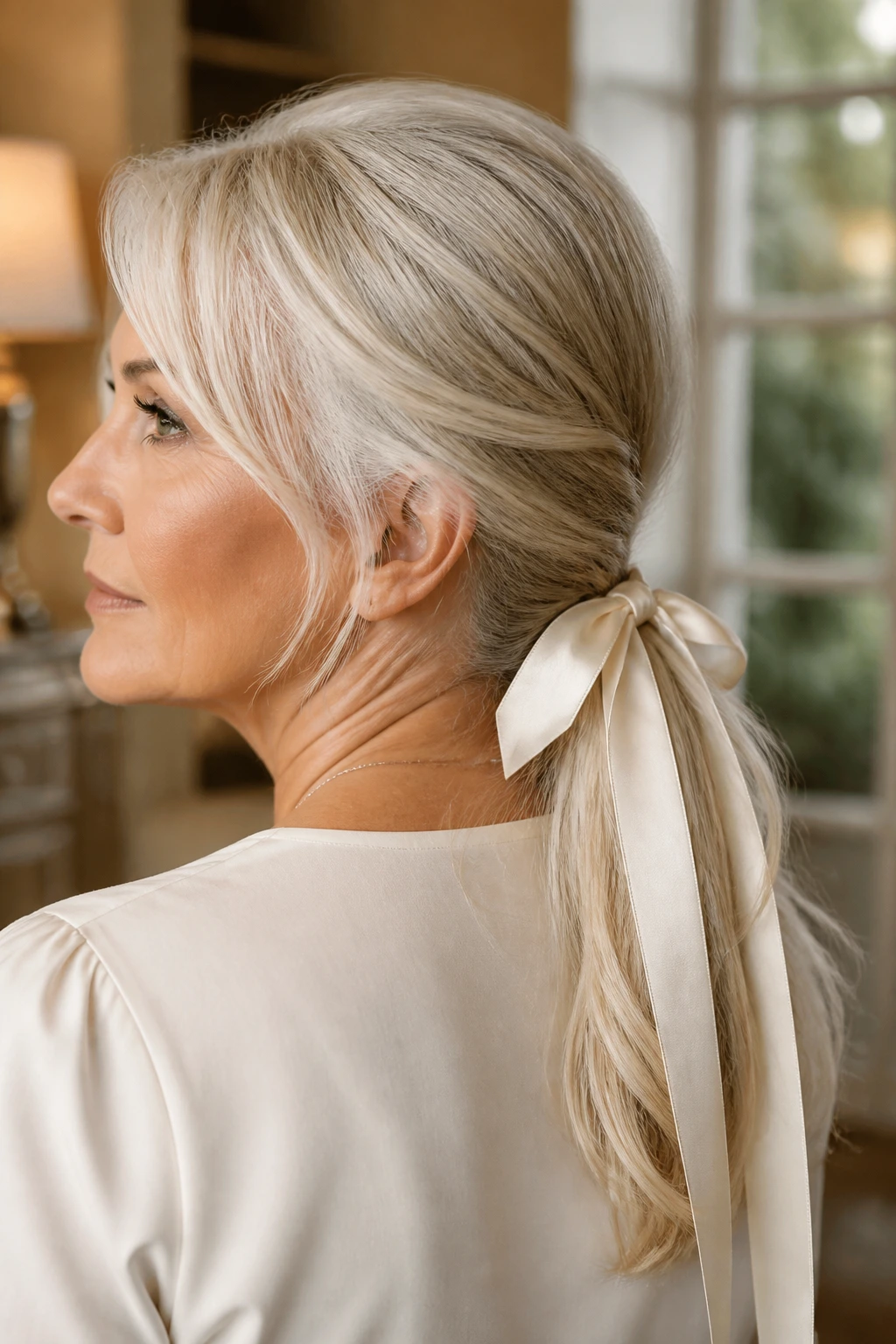
A ribbon does more than decorate. It changes the visual weight of a fine-hair ponytail, which is exactly why it works. Instead of letting the elastic do all the talking, the ribbon draws the eye to the base and gives the style a little softness.
Keep the pony low and secure it with a small elastic first. Then tie the ribbon around the base, leaving the tails long enough to drape. Satin looks polished. Cotton feels more casual. Velvet works in colder months, but it can snag if the hair is already fragile.
The ponytail itself should not be sleeked within an inch of its life. Leave a little crown volume and smooth the top only enough to control flyaways.
Tiny detail that matters: match the ribbon color to one tone in your outfit, not necessarily the exact shade. That keeps the style from looking costume-like.
10. The Crown Twist Into a Loose Bun
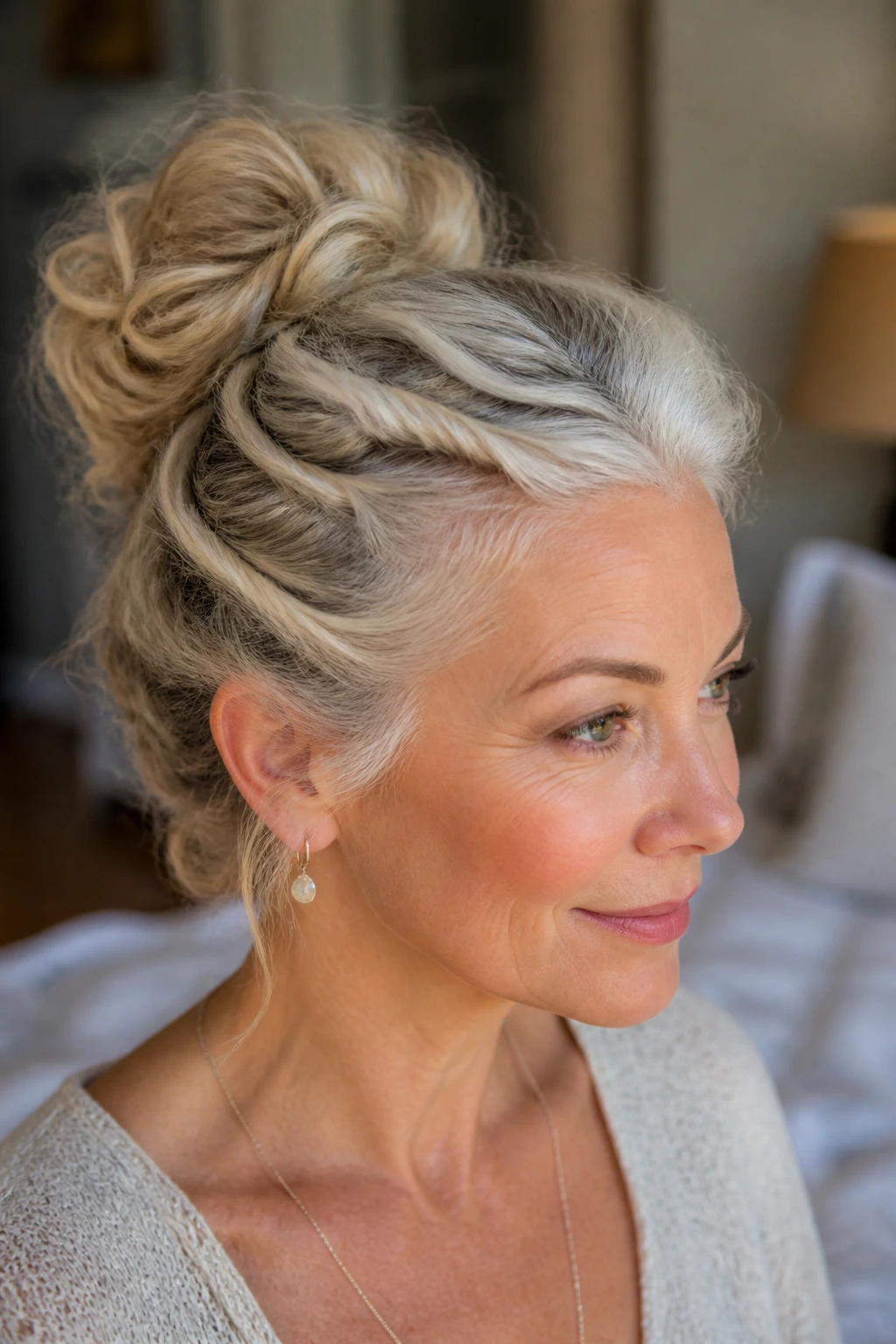
A crown twist is a kinder version of a braid crown for fine hair. Braids can sometimes look too skinny if the strands are narrow. Twists take up more visual space with less effort. That is the appeal.
Take small sections from each side near the temples, twist them back, and secure them together at the back of the head before forming a loose bun. The finished look should sit a little higher than a standard low bun, but not near the top of the head. Mid-back crown is the sweet spot.
This style is good when you want something romantic without spending twenty minutes trying to make the front behave. The twists give you structure; the bun gives you a landing place.
If your hair is freshly washed, add a touch of dry shampoo before you start. It gives the twist something to grip.
11. The Piece-y Pixie With Root Lift
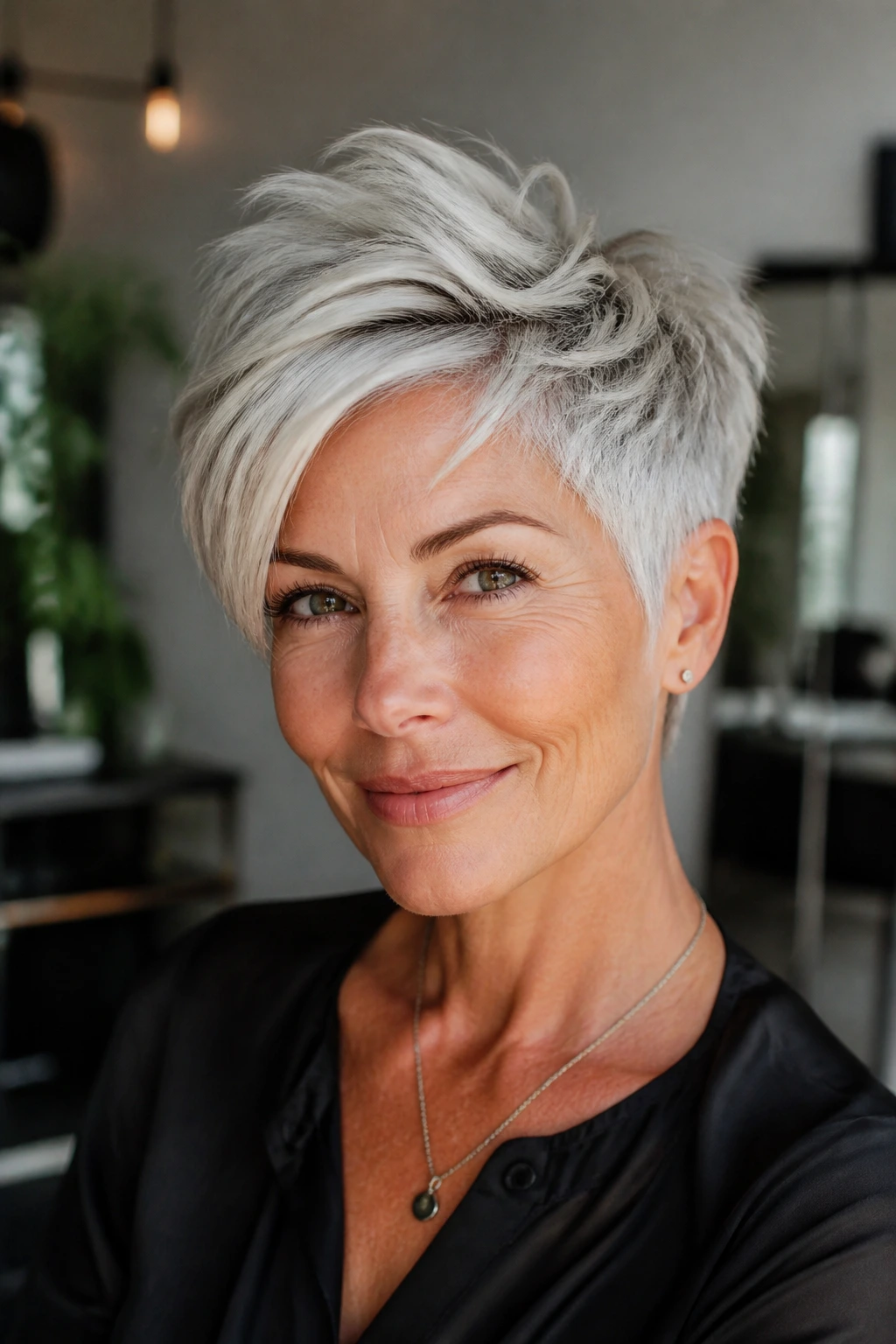
A pixie cut on fine hair can look airy and expensive when it has the right lift at the roots and a few sharp ends. The goal is not helmet volume. It’s separation. You want the pieces to have direction so the cut reads intentional instead of collapsed.
Rub a tiny amount of light wax or pomade between your fingers, then pinch the top layers upward. The sides should stay close to the head, while the crown gets the lift. That contrast is what keeps the cut alive.
What Makes It Work
Fine hair in a pixie responds fast to product. Too much and it clumps. Too little and it disappears. The sweet spot is barely there. Use enough to define the top, then stop touching it.
A side-swept front piece can help too, especially if your hairline is uneven or you want to soften the forehead. The shape matters more than the length here.
12. The Side-Swept Wave That Feels Old-Hollywood Without the Weight
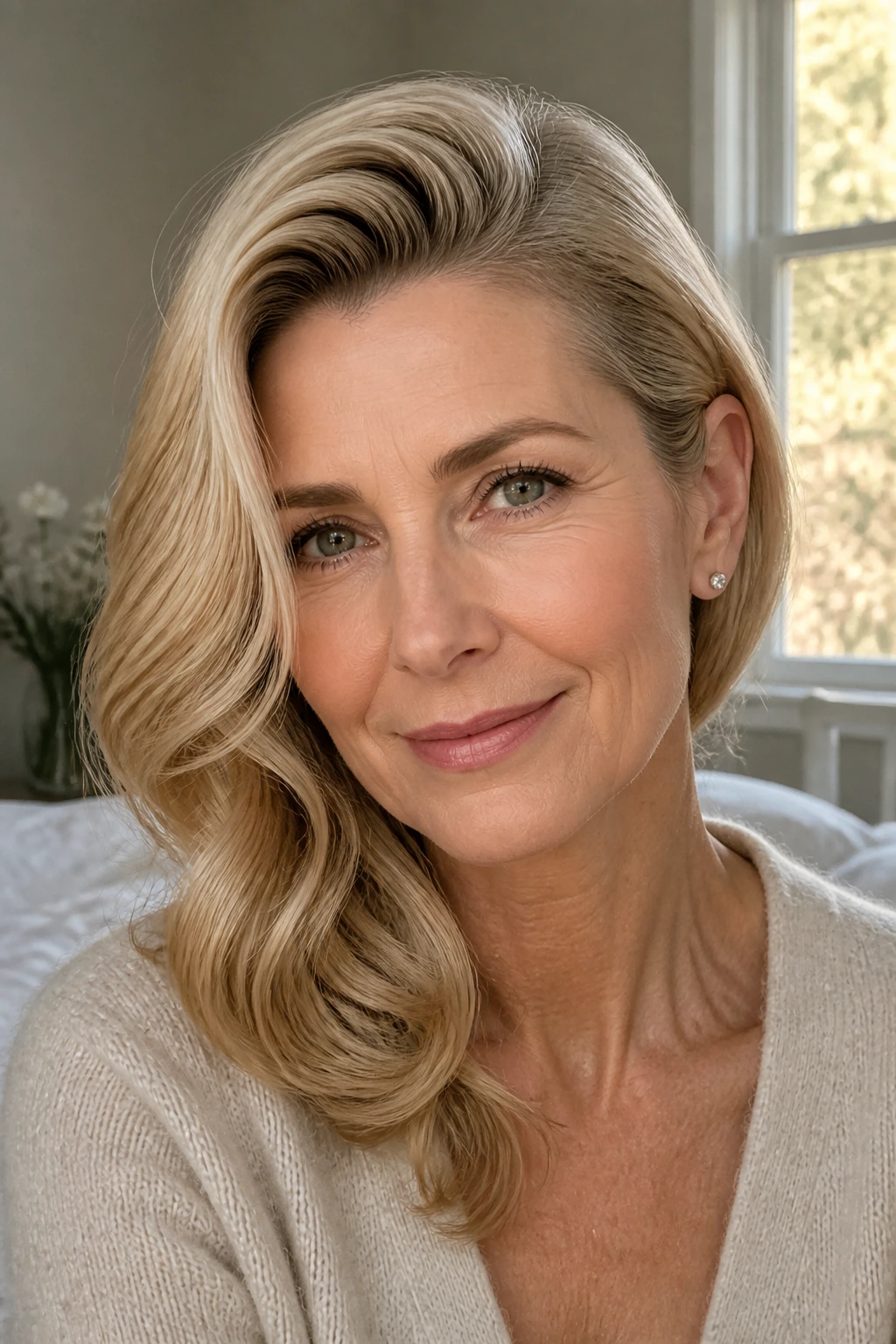
A side-swept wave gives fine hair one of its best visual tricks: concentrated volume on one side. Instead of spreading the hair evenly across the head, you let the shape build along a single line, which makes the style look fuller than it is.
This works best with a deep side part and a large-barrel iron. Curl away from the face, set the wave, then brush lightly once the hair cools. You’re after a smooth arc, not tight curls. Fine hair gets overwhelmed fast when the wave pattern is too small.
There’s a reason this look keeps showing up on polished character styles. It looks deliberate, and it flatters soft texture.
Use this when: you want a dressier finish but don’t want to tease the crown or spray the whole head into a shell.
13. The Braided Headband With Open Length
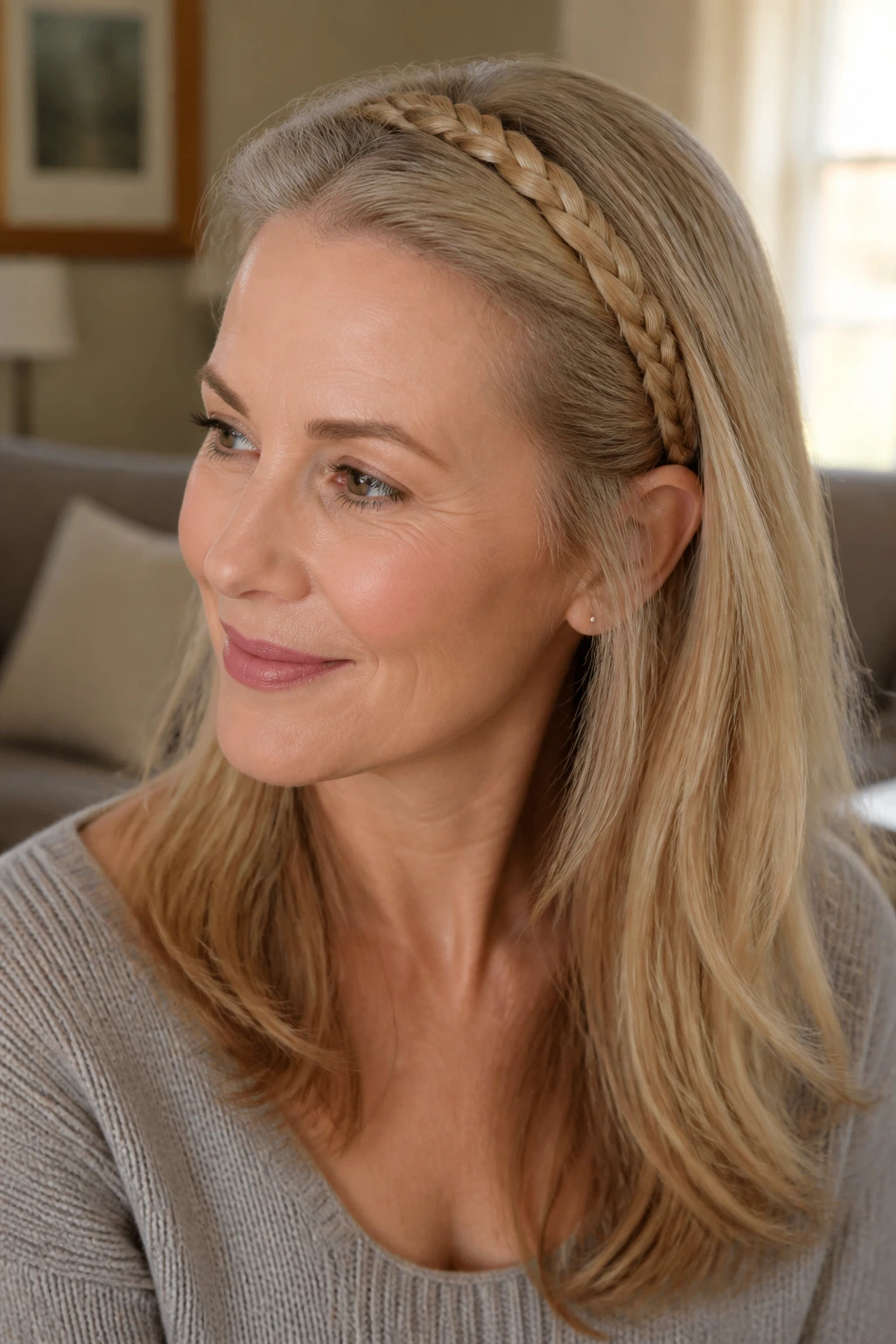
A braided headband can solve the age-old problem of hair that falls into the face and refuses to stay put. It also gives fine hair one of its nicest illusions: a more substantial hairline. The braid acts like a built-in frame.
Braid a small section near one temple or use a pre-braided clip-in piece if your own hair is too short. Lay it across the front of the head and pin it behind the opposite ear. Then leave the rest of the hair down with a slight bend through the mid-lengths.
This is one of the best everyday looks if your front layers are too short to tuck neatly. The braid keeps them in line while the length stays soft.
Pro move: pancake the braid after it’s secured so it reads wider and more visible. Thin braids can vanish in fine hair unless you deliberately widen them.
14. The Messy Knot That Is Actually Controlled
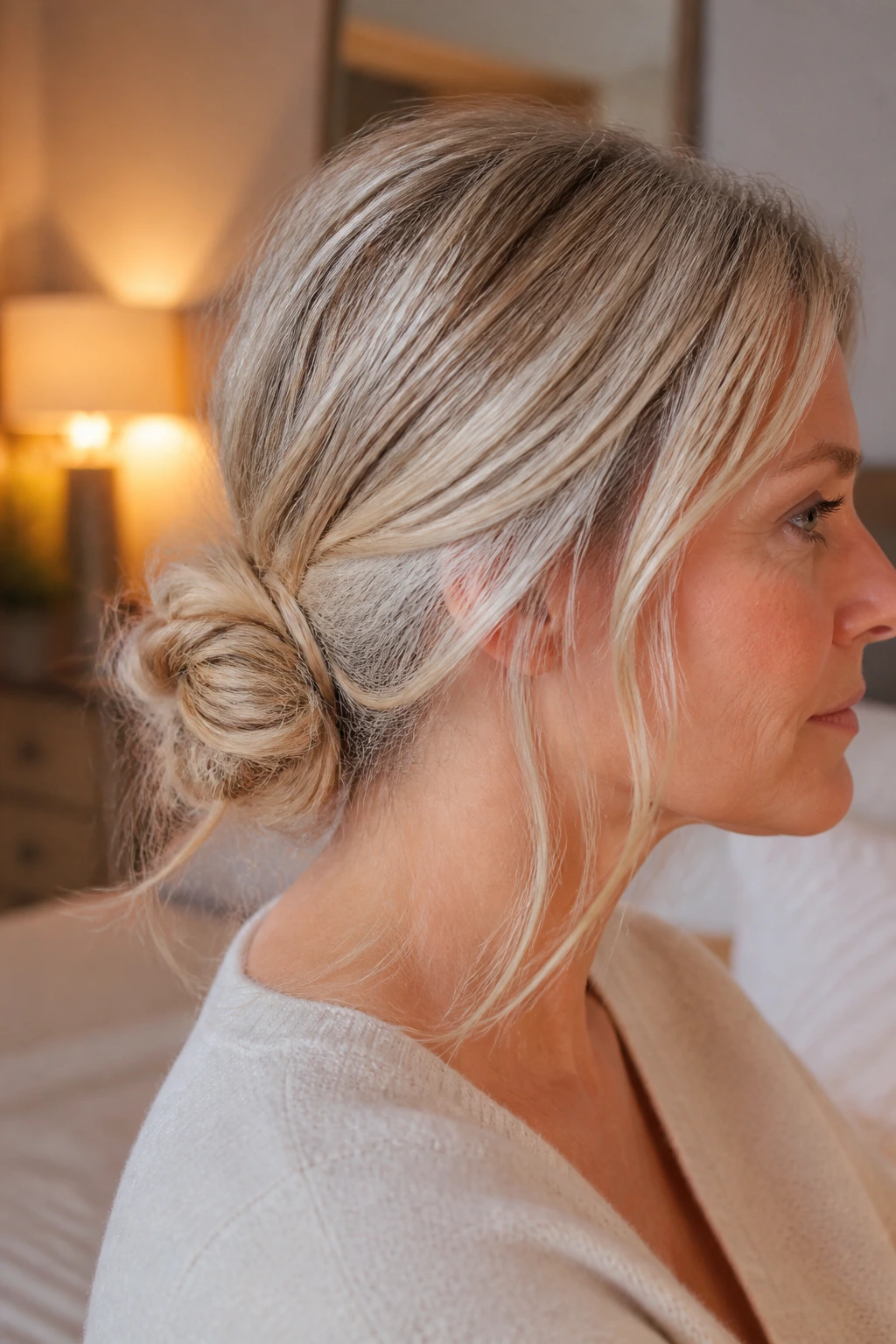
A messy knot sounds casual, but on fine hair the difference between casual and collapsed is one bobby pin. You need enough control to keep the knot from thinning out at the edges. The best version starts with a loose ponytail, then folds upward into itself and pins at the base.
The charm here is in the texture. Fine hair often looks better when it has a little roughness rather than a fully sleek surface. A texturizing spray or a touch of dry shampoo gives the knot some grip.
Leave one or two pieces loose near the jaw. Not a dozen. Just enough to soften the shape. Too many loose pieces make the whole style look unfinished.
This is the kind of look that saves a bad hair day without looking like you gave up.
15. The Sleek Wet Look Tuck
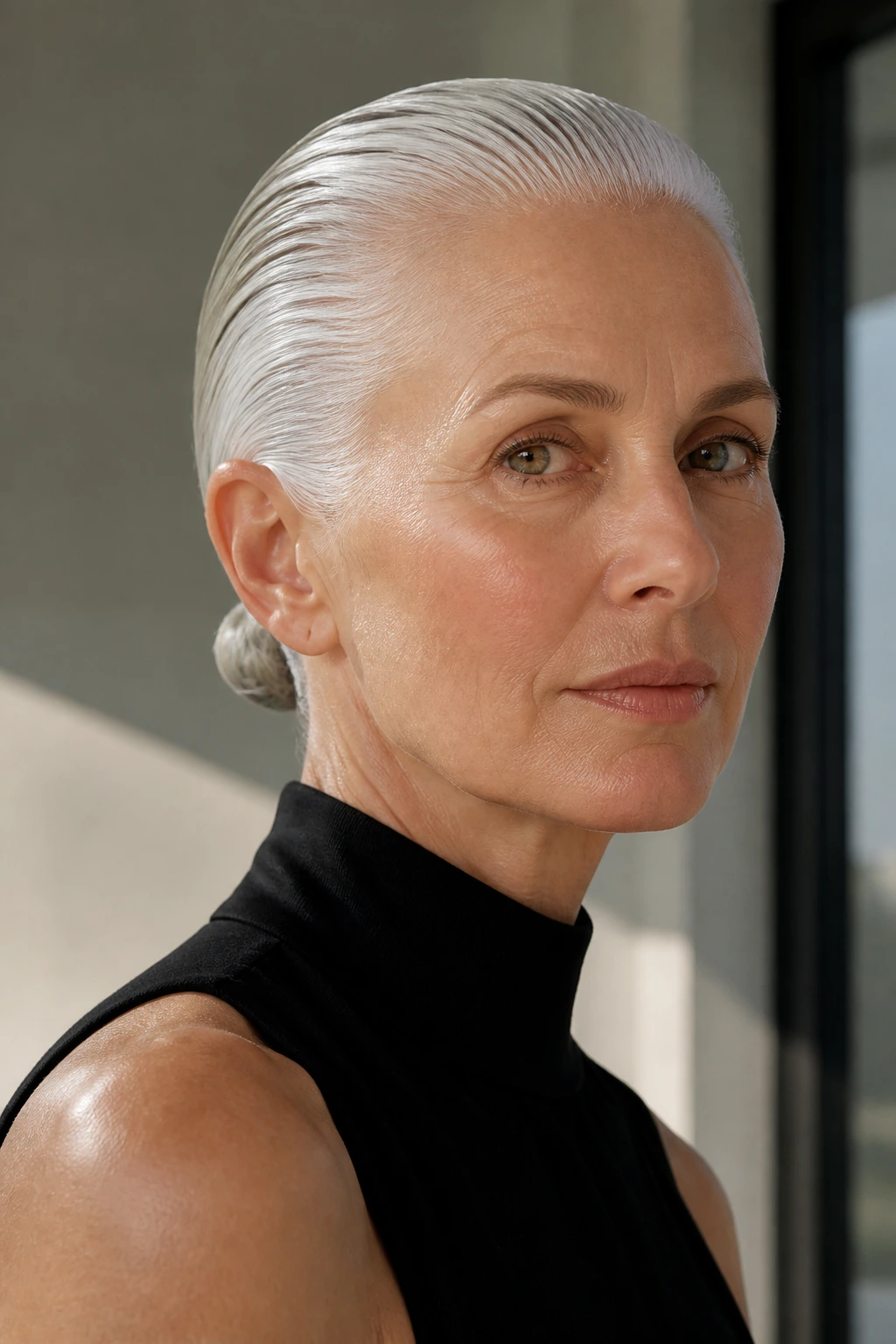
Not every fine-hair style needs volume. Sometimes the sharpest move is to go sleek and make the lack of density part of the design. A wet-look tuck uses gel or cream to smooth the hair back, then tucks the ends behind the ears or into a low knot.
The key is even distribution. If product lands in one patch, the hair will look greasy there and dry everywhere else. Work a small amount through damp hair, comb it back with a fine-tooth comb, and keep the crown tight but not crushed.
This style is strongest when paired with strong features: structured earrings, a crisp shirt, a bold lip, or a clean neckline. The shape needs contrast.
Warning: do not overload the roots. Fine hair can go limp in ten minutes if you do.
16. The Flipped-Out Ends Lob
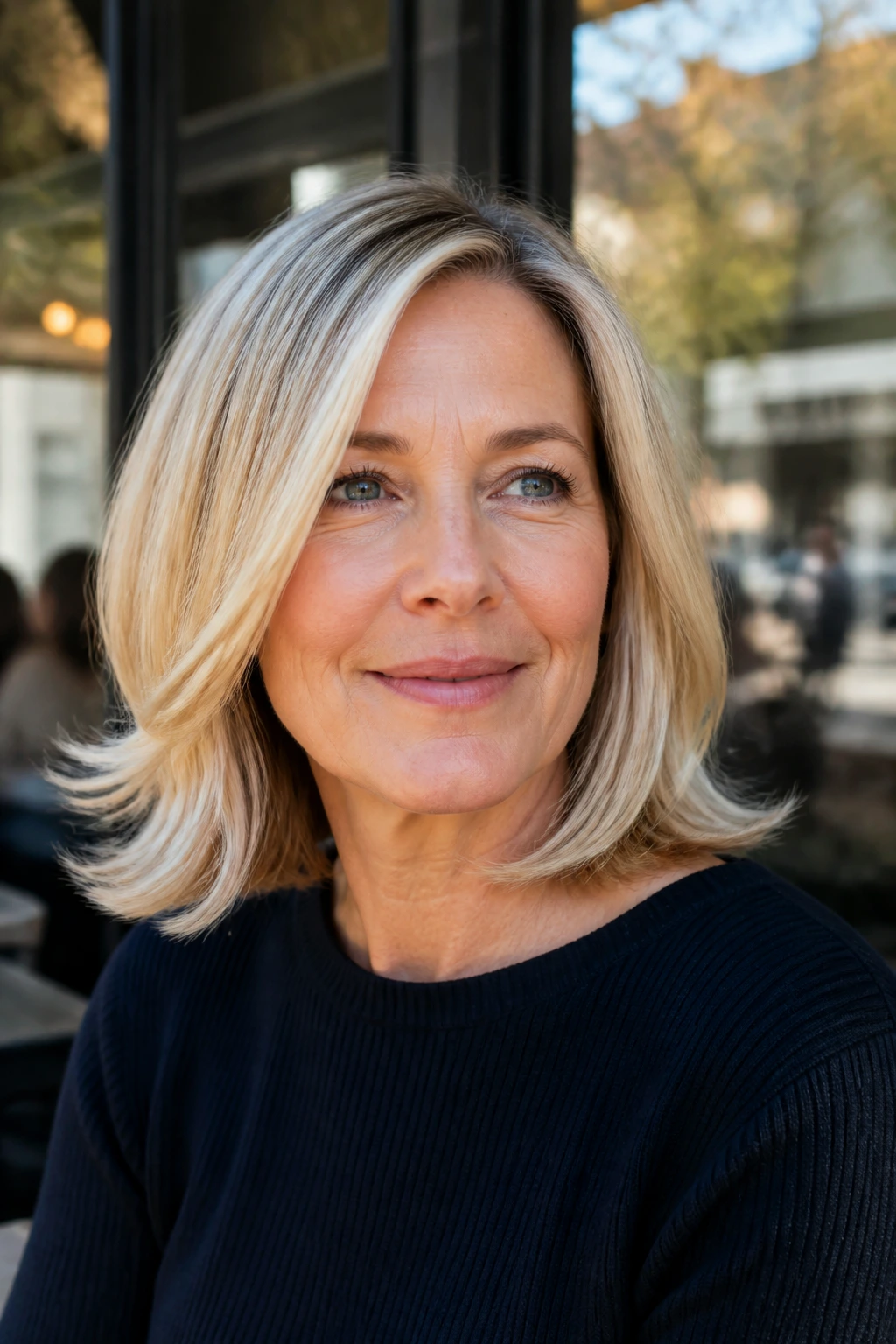
A flipped-out lob can make fine hair look more playful and full because the ends kick away from the neck instead of hanging straight. That outward bend widens the silhouette just enough to matter. It also hides thin-looking ends better than a blunt, poker-straight finish.
Use a flat iron or round brush to flip the last inch of the hair outward on both sides. The shape should be soft, not retro-costume dramatic. If the flip is too rigid, the whole look feels dated. If it’s too small, the effect disappears.
A center part or a slightly off-center part both work. What matters is the ends.
This is one of those styles that looks surprisingly good on day two, especially after a little dry shampoo at the roots and a quick refresh at the tips.
17. The Two-Mini-Braid Half-Up
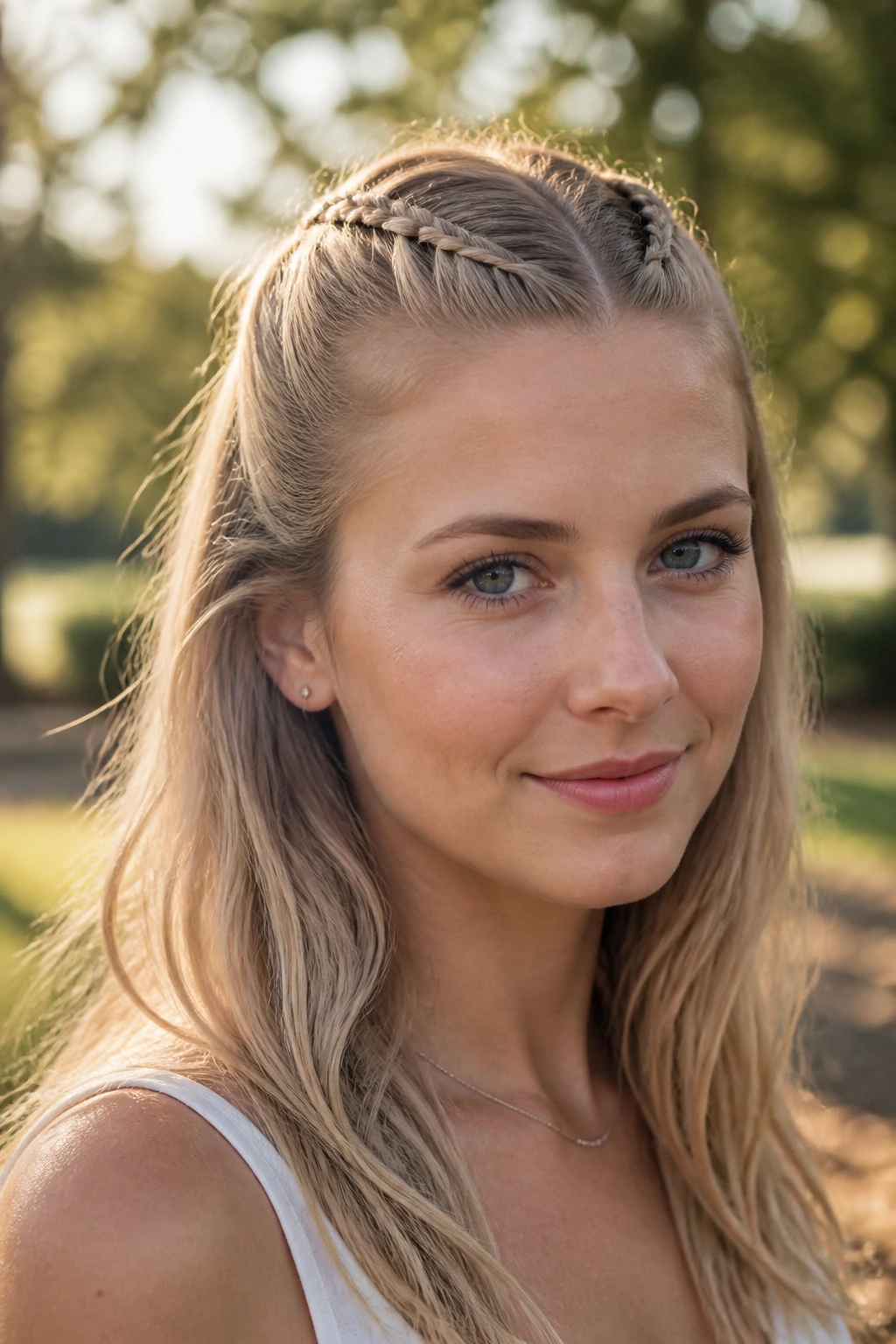
Mini braids are an easy way to make fine hair look like it has more going on without asking the scalp to do too much. A pair of tiny braids pulled back into a half-up section gives texture at the crown and leaves the length free.
Keep the braids narrow. If they are too thick, they steal too much hair from the sides and expose the scalp. Small braids tucked behind the crown are enough. Secure them with a pin or small elastic, then let the rest fall naturally.
This style works especially well when you want something a little youthful but not childish. The braids add interest. The loose length keeps it grounded.
Best detail: if your hair is slippery, mist the section with texture spray before braiding. It changes the whole hold.
18. The Soft French Bob With Airy Ends
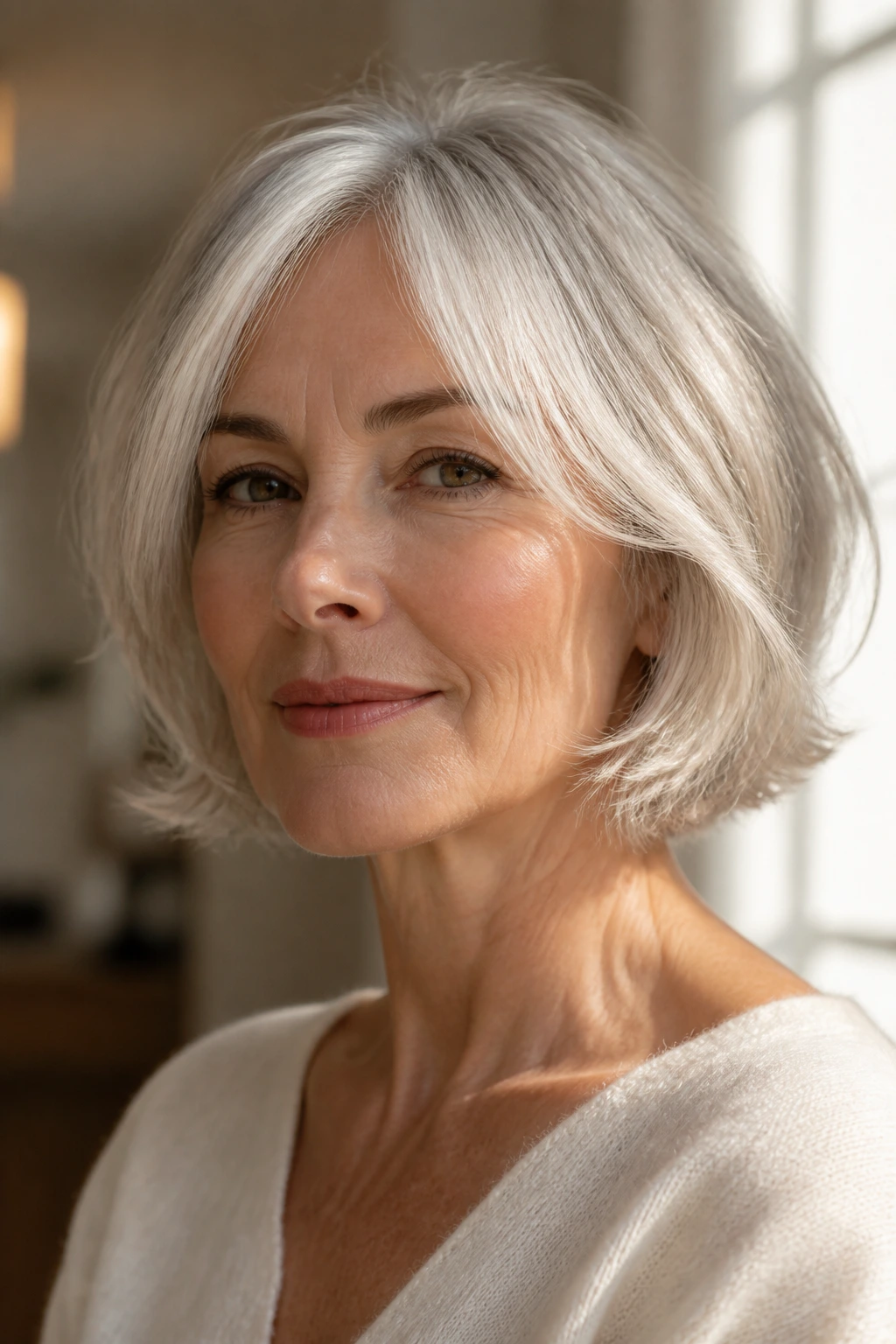
A French bob can be a dream for fine hair because the shorter length removes weight and lets the cut move. The trick is to keep the ends soft and slightly airy rather than razor-straight. A little bend makes the bob look fuller around the jaw.
If your hair is naturally straight, tuck the ends under with a round brush or a flat iron flick. If it has a wave, let it do its thing and just control the top. A deep side part can add lift; a center part gives a cleaner frame.
This cut and style combination does not need much ornament. The shape itself does the work.
Opinion: a bob that sits exactly at the jaw can look sharp on fine hair, but one that kisses the cheekbone often feels more balanced. Slightly longer is usually kinder.
19. The Scarf-Wrapped Pony or Bun
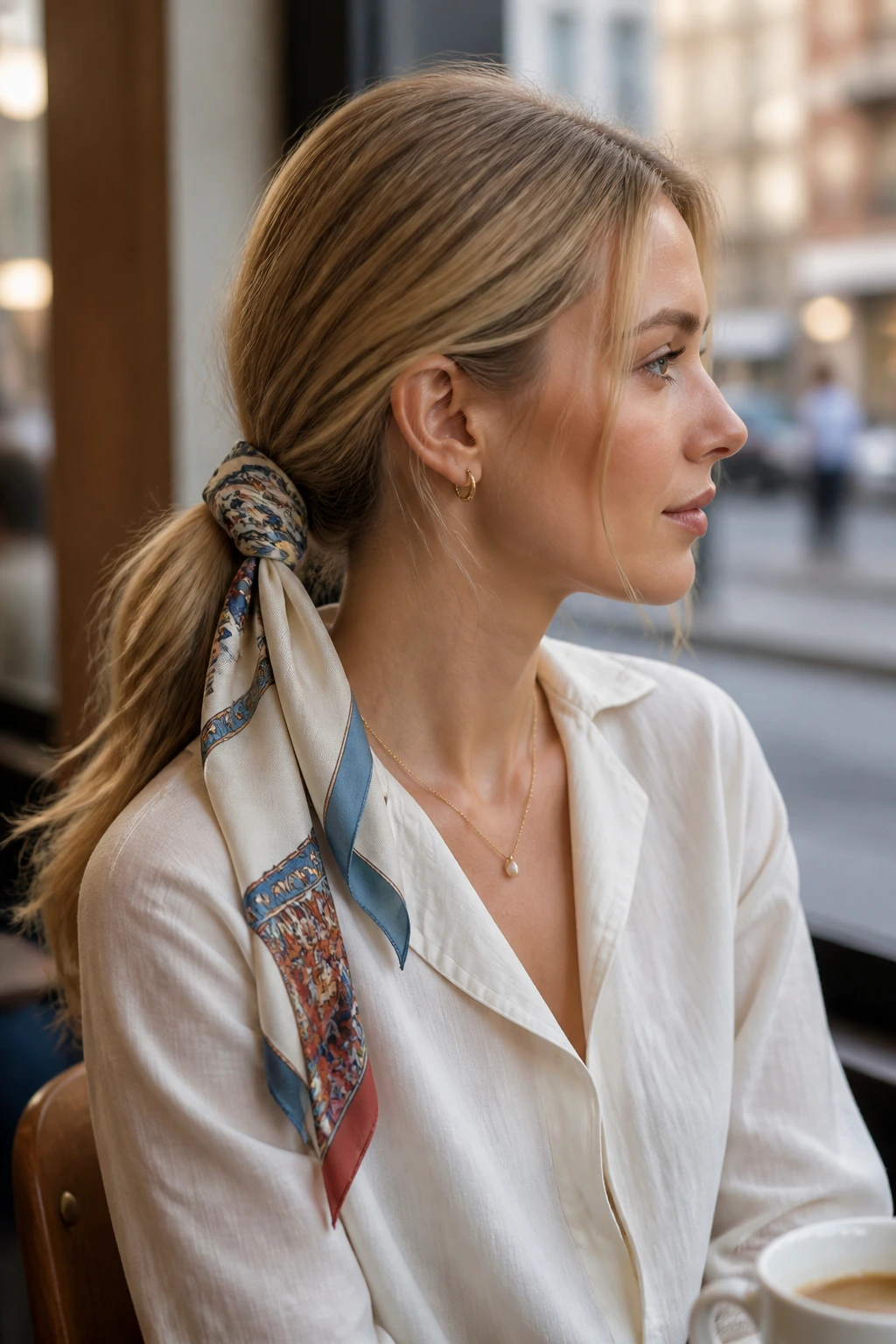
Scarves do a lot of heavy lifting for fine hair. They distract from a thin ponytail, anchor a small bun, and introduce color or pattern without demanding more hair than you have. A scarf-wrapped style is one of the easiest ways to make a basic shape feel finished.
Tie the scarf over a low pony or around the base of a bun, then let the tails hang or knot them off to one side. Silk is smooth and elegant, while cotton stays more casual and grippy. If the scarf is too thick, it swallows the hair. A medium-weight square usually works best.
This look also solves a practical problem: it hides the elastic and gives your style a place to end. That matters more than people admit.
Small detail: use a thin scarf if your hair is short; bulky fabric can make the base slide.
20. The Soft Side-Swept Ponytail
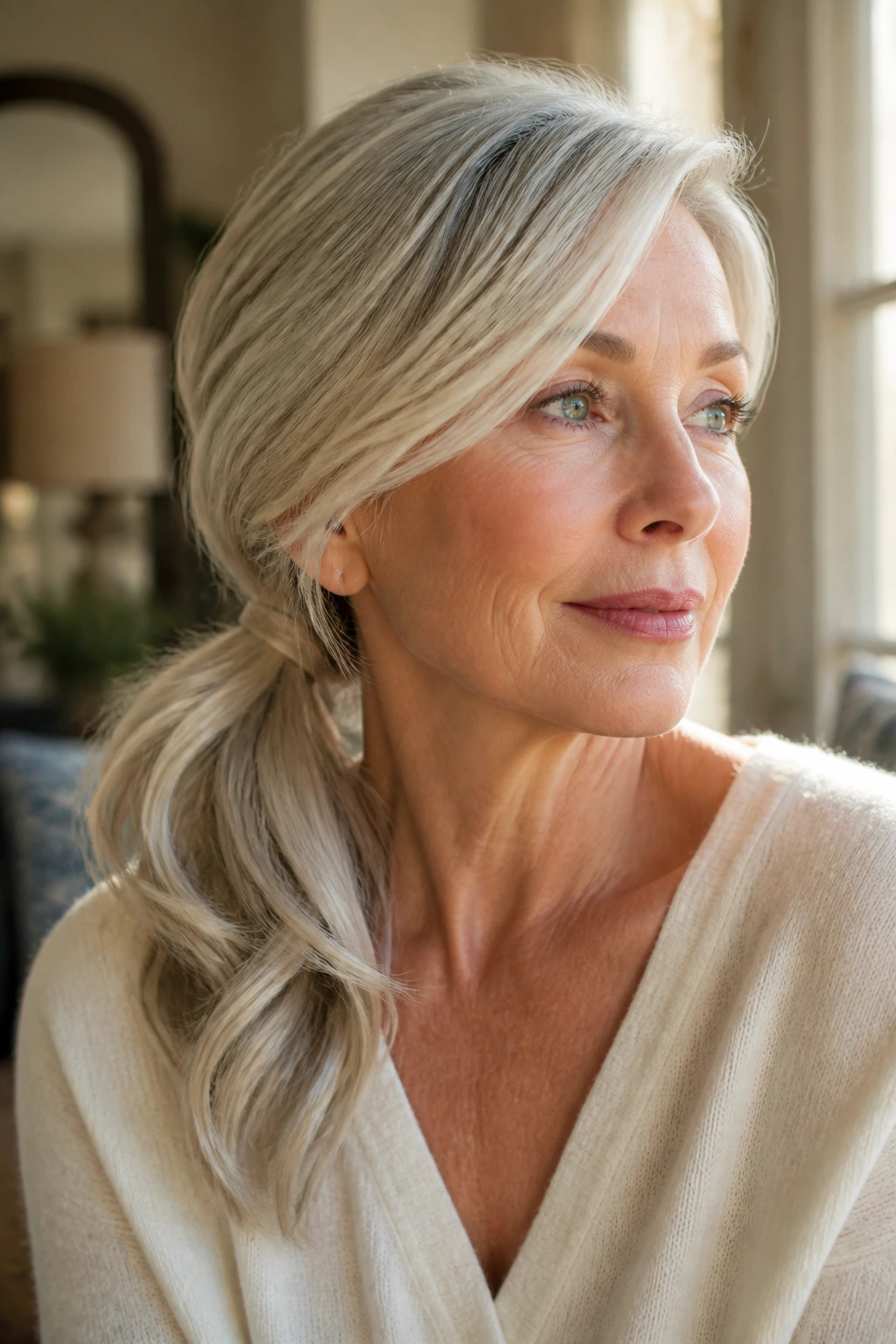
A side ponytail can look childish in the wrong hands. Done right, it reads soft, polished, and kind to fine hair because it gathers the hair into one asymmetric shape instead of stretching it thin across the scalp.
Set the pony a little below ear level and offset it just enough to create a curve through the neck line. Add a small wave to the tail and leave the crown slightly lifted. A side part helps the style feel intentional. Without it, the pony can look accidental.
This is a useful style on days when your roots are flat but the ends still have life. It lets you work with what’s there instead of pretending the whole head has the same density.
The best version is not tight. It’s loose, controlled, and touched with a bit of motion.
Why Fine Hair Changes the Shape of Every Style
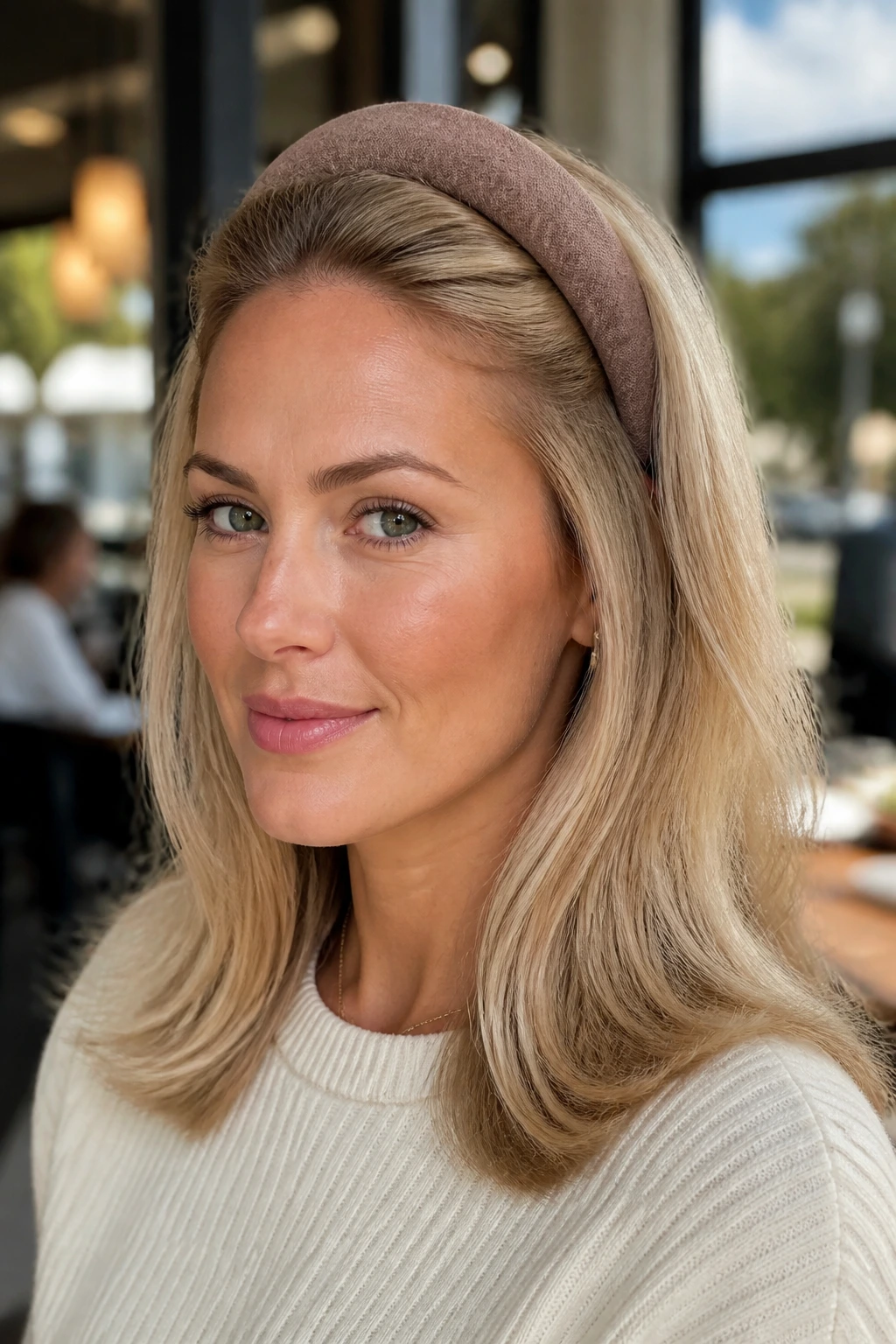
Fine hair does not behave like thick hair with less volume. It is its own thing. The strand diameter is smaller, the bend is easier, and product builds up faster. That means every style has to earn its hold with a better structure, not more force.
A style that looks “done” on fine hair usually has three things going for it: root lift, visible separation, and a line that does not drag the eye downward. That last part matters more than people think. Fine hair looks thicker when the silhouette widens at the right places — crown, temples, bun base, braid edge — instead of hanging straight from every point.
And yes, a little mess helps.
Not chaos. Just enough looseness to keep the style from reading severe.
Essential Tools for These Looks
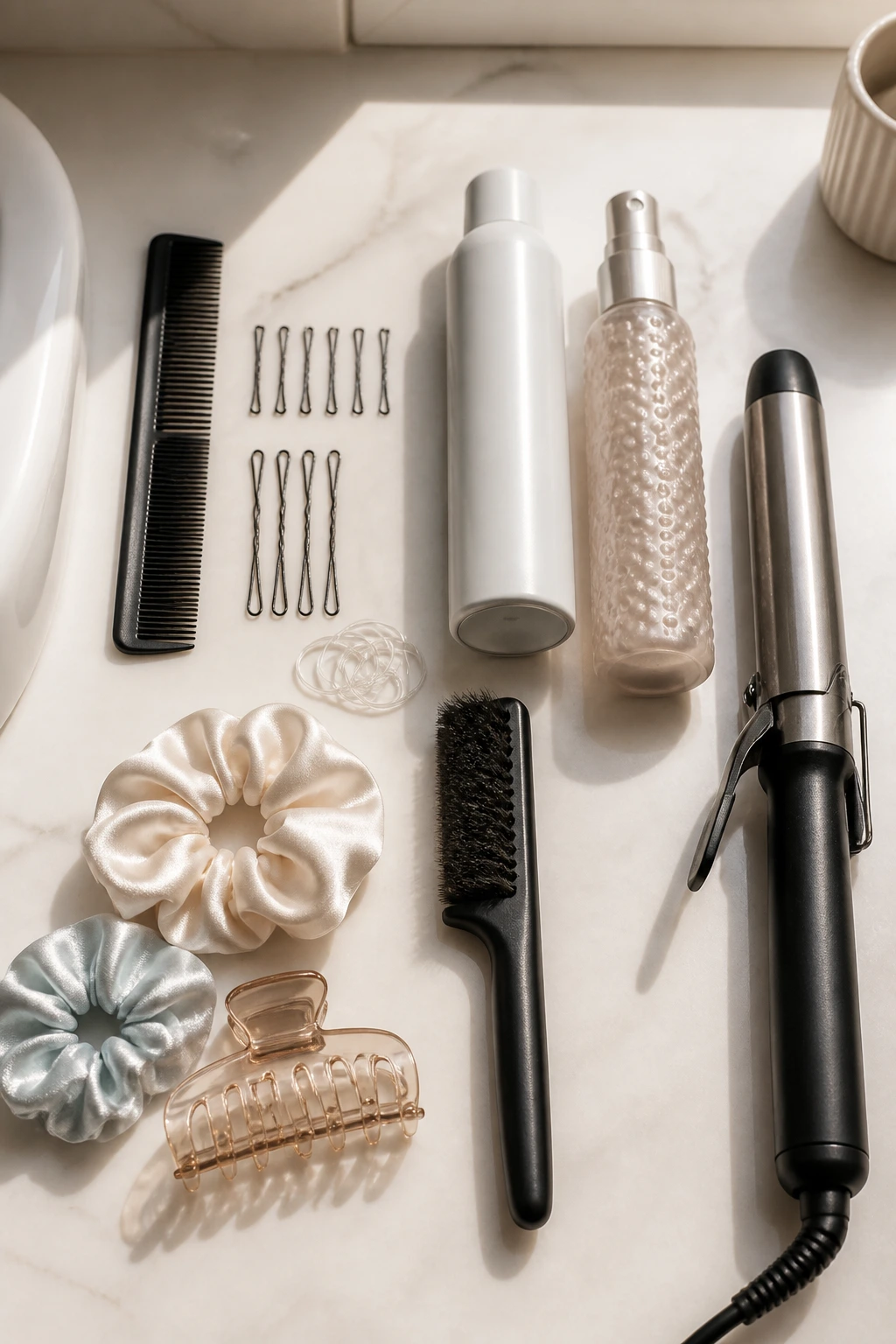
- Fine-tooth comb: Useful for clean parts, slick looks, and placing sections exactly where you want them.
- Bobby pins in two lengths: Short pins hold the little pieces; longer pins anchor buns and twists without overstuffing the shape.
- Clear elastics: They keep ponytails and braids small so the hair does not have to hide a chunky tie.
- Dry shampoo: Good on clean hair for grip, and even better at the roots on day-two styles.
- Texturizing spray: Gives fine hair a little roughness so braids, twists, and clips stay in place.
- 1-inch curling iron or wand: The sweet spot for adding bend without making the hair look overcurled.
- Blow-dryer with concentrator nozzle: Helps direct airflow at the roots instead of blasting everything flat.
- Teasing brush or tail comb: Use it lightly at the crown if you need lift. Go easy. Fine hair shows abuse fast.
- Silk scrunchies and scarf: Gentler than tight elastics and useful for overnight preservation.
- Medium claw clip: A better size for fine hair than the giant clips that slip on too little hair.
Smart Product and Hair-Tool Picks
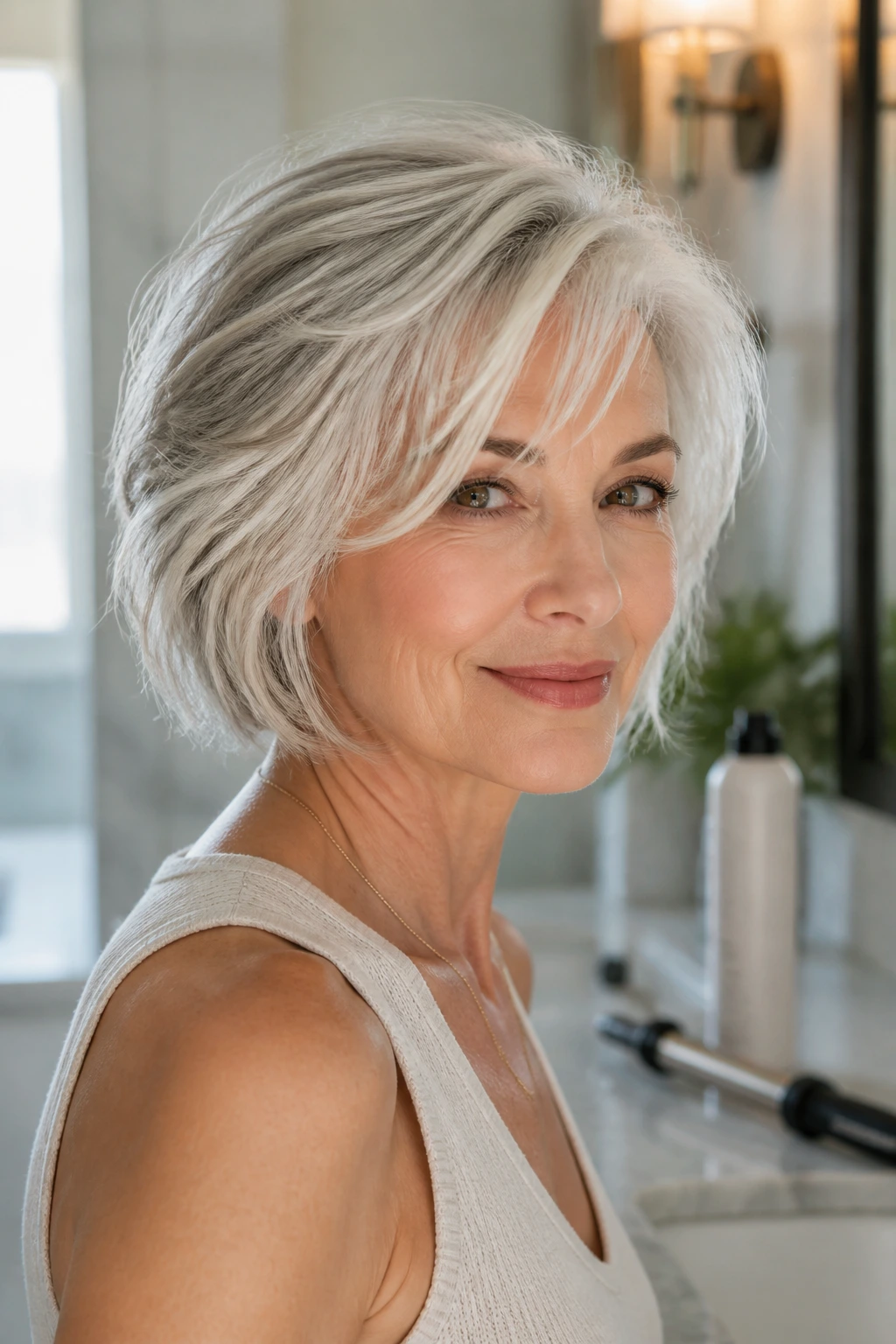
Fine hair usually does best with products that leave the strand a little matte or grippy. A lightweight mousse at the roots before blow-drying can change everything. So can a powder dry shampoo in the crown area. Heavy oils, thick creams, and glossy serums are where many people go wrong. They can be nice on the ends, but the roots? Usually a bad trade.
Look for products that say volume, lift, texture, or light hold rather than heavy moisture. That does not mean moisture is bad. It means you want it placed where the hair actually needs it, usually from the ears down. A pea-sized amount is often enough.
Tool choice matters too. A 1-inch barrel is more useful than a giant curling wand on fine hair because it creates bends that survive brushing. Giant waves can collapse before lunch. Smaller bends hold shape longer and make the hair look denser. Also, a decent brush with natural or mixed bristles can smooth the surface without stripping the body you just built.
One more thing. If your elastics are too thick, they work against you. Thin ones disappear better and put less strain on the hairline. Tiny details, big difference.
How to Wear These Styles Without Fighting Your Hair Texture
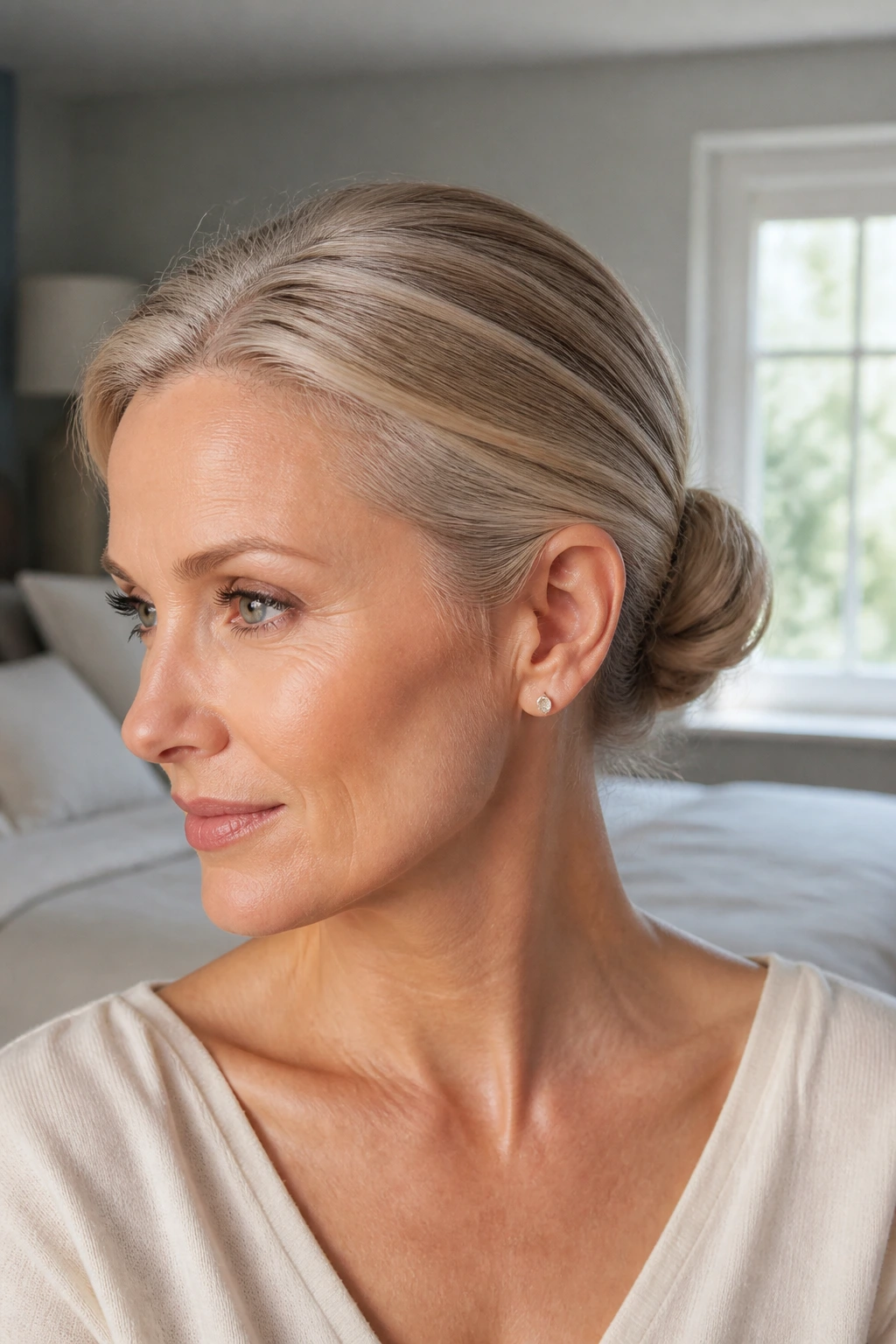
Presentation: Aim for a silhouette that has one clear idea. A bun should sit low and compact. A ponytail should have a lifted crown or a wrapped base. A braid should look wider than the section you started with. Fine hair gets lost when the shape is vague.
Accompaniments: Small hoops, slim headbands, ribbon ties, and delicate clips all suit these styles because they don’t overpower the hair. If you wear a strong neckline or a big collar, choose a cleaner style like the low chignon or wet-look tuck. If your outfit is soft and simple, the braided or ribboned looks can carry more of the visual weight.
Scale: Shorter fine hair needs smaller sections and lower placements. Longer fine hair can handle a wider braid or a larger bun, but only if the base stays controlled. Don’t force a style into the wrong size. It just looks unfinished.
Best Setting: Use the sleek, tucked styles for work or polished evenings. Save the bubble ponytail, ribbon pony, and half-up twists for weekends, errands, or low-key dinners. The point is not to dress the hair up for its own sake. It is to choose the shape that matches the day.
Extra Lift and Personal Touches
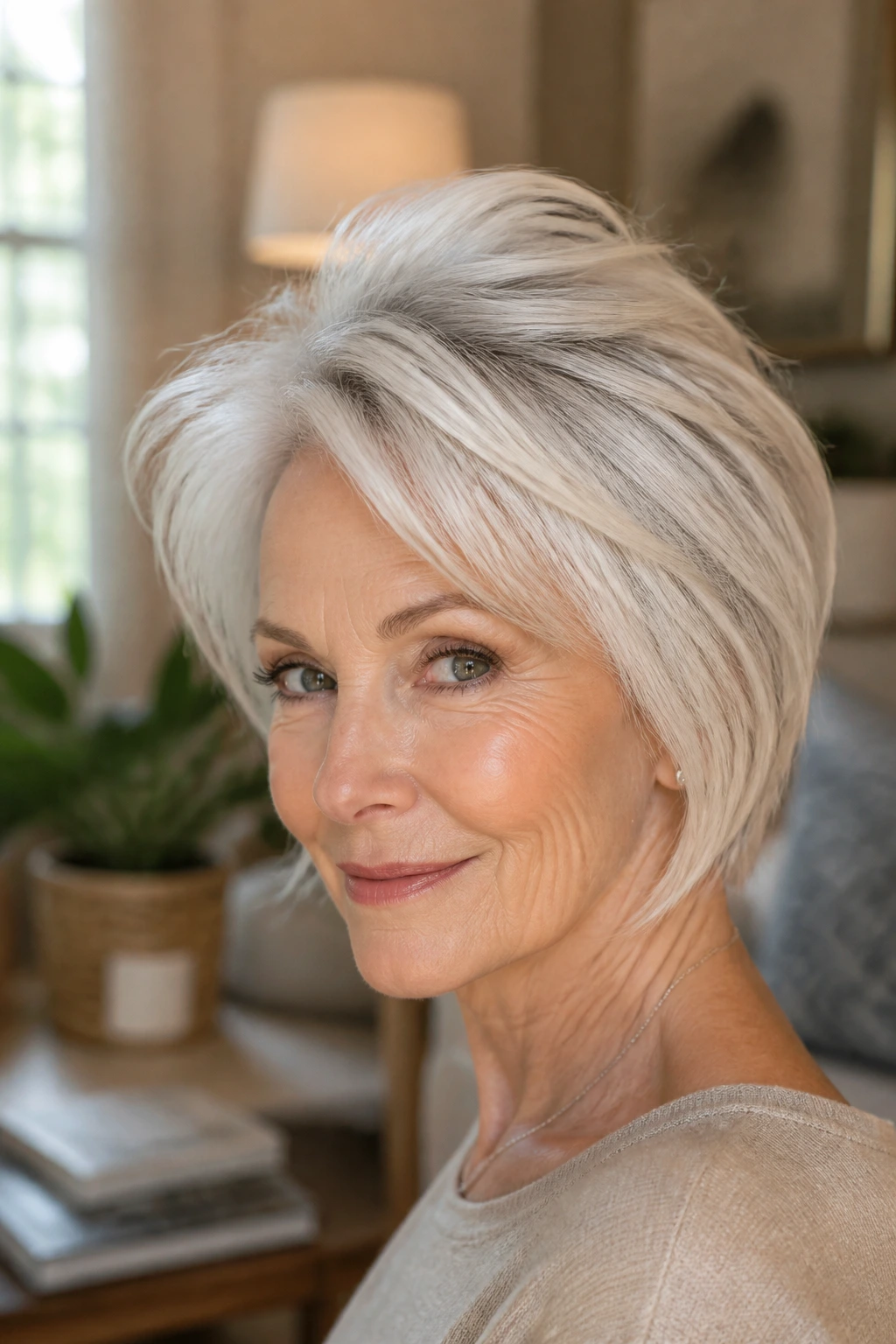
Lift at the Root: A little dry shampoo sprayed under the top layer before styling gives fine hair a rougher base. Lift the section and spray underneath, then wait 30 seconds before brushing it through.
Customization: If your face is longer, add side pieces or a side part. If it’s rounder, keep the crown a touch taller and the sides softer. Tiny changes in placement matter more than people think.
Finishing Touch: A shine spray on the mid-lengths can make a style look finished, but keep it away from the roots. A mist from 10 inches away is enough. More than that and the hair gets slick.
Make-It-Yours: If you like a softer, romantic look, pull a few pieces loose around the ears. If you prefer sharp and neat, pin everything back and keep the flyaways under control with a toothbrush and a little spray. Both are valid. The hair just needs a clear plan.
Night Care, Day-Two Refresh, and Tool Cleanup
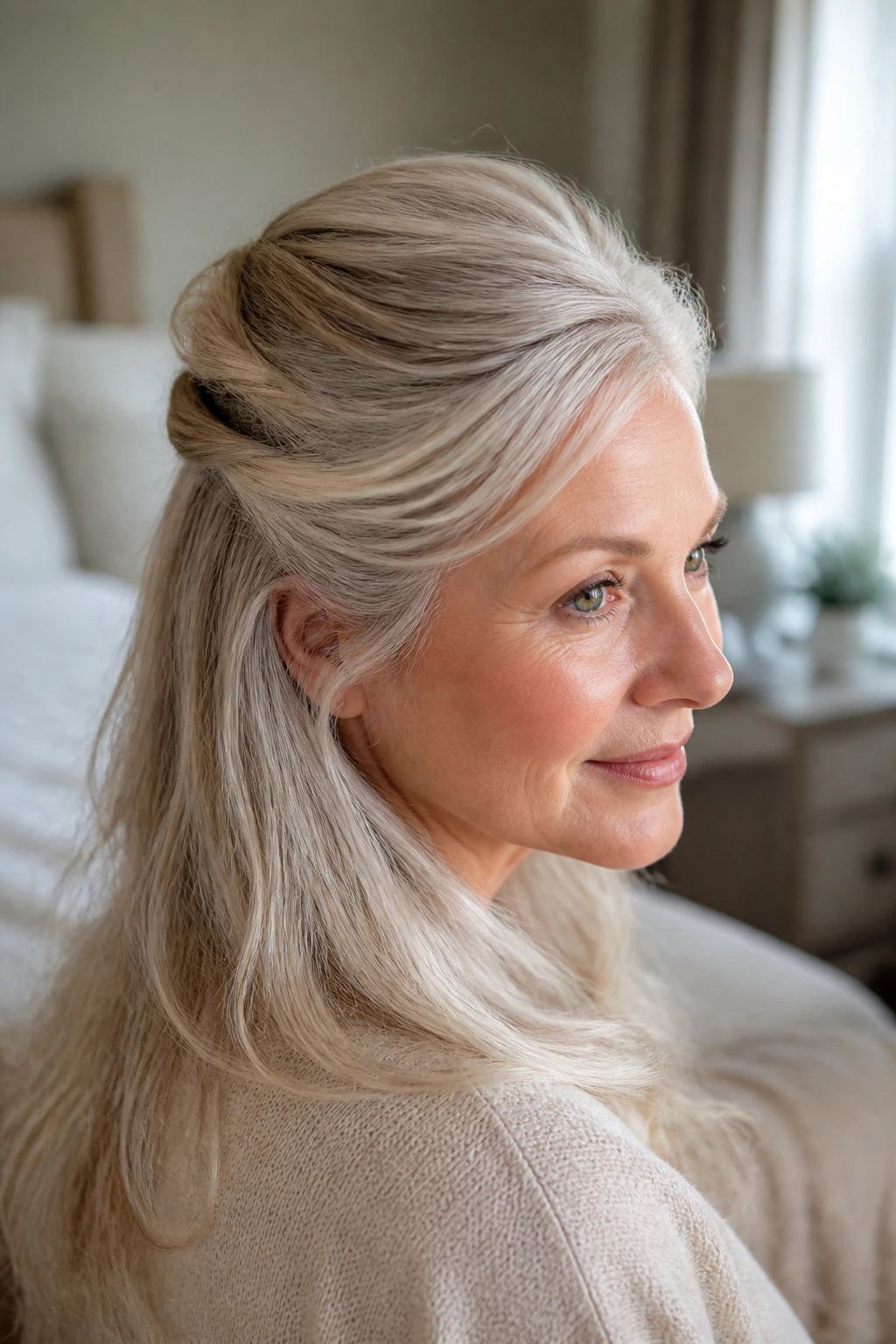
Fine hair benefits from a little night work, especially if you want a braid, wave, or half-up style to survive until morning. A loose silk scrunchie, a low braid, or a soft clip can keep the bend from disappearing. A silk pillowcase helps too, because it cuts down on friction. Cotton will rough up the cuticle more than you’d think.
For day-two refreshes, spray a tiny amount of dry shampoo at the roots, wait a minute, then shake the hair out with your fingers. If the ends have gone limp, wrap just the bottom inch around a curling iron for five seconds per section. Don’t rework the entire head. That only strips away the shape you already had.
Clips and elastics deserve a little care as well. Clean product buildup off brushes every week or so, and replace stretched elastics once they stop gripping. A stretched elastic on fine hair is basically a promise to slip.
Variations and Adaptations to Try
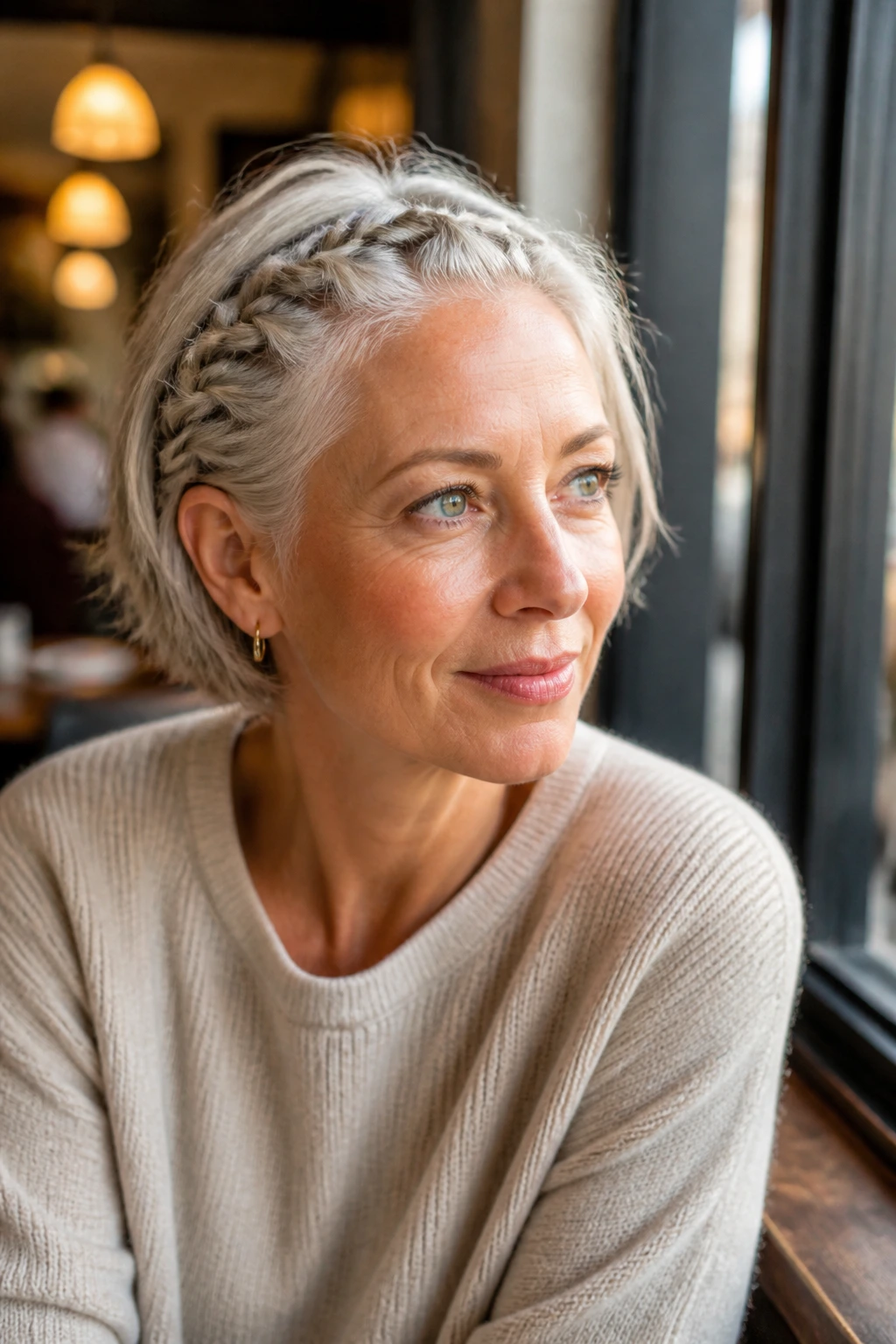
Short-Hair Version: Swap larger buns and braids for mini twists, side clips, and tucked waves. Chin-length fine hair usually looks better with smaller shapes than with oversized updos.
Heatless Morning Set: Use damp braids, foam rollers, or a loose twist overnight. Fine hair takes shape quickly, so you do not need a marathon setting time to get movement.
Humidity Shield: Stick to tighter bases, lower buns, and more pinned styles when the air is heavy. Loose curls swell fast on fine hair, and then the whole look drifts.
Office-Sleek Version: Choose low ponies, chignons, and tucked styles with one clean part. Keep the finish neat and the accessories small.
Accessory-Heavy Version: If your hair is especially fine, let the clips, ribbons, or headbands do some of the visual work. The style can stay simple underneath; the accessory carries the mood.
Common Mistakes to Avoid
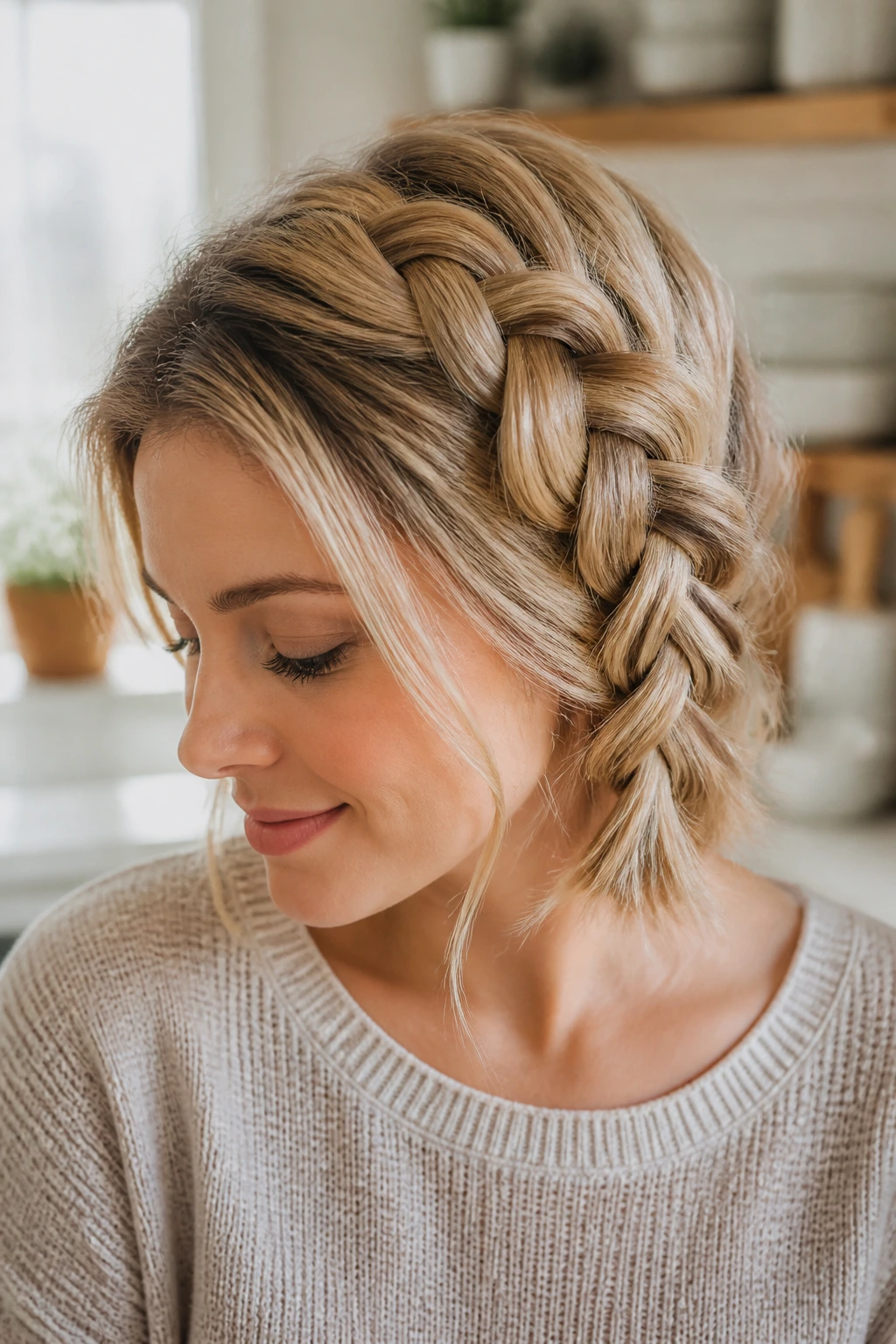
The biggest mistake is overloading the roots with product. Fine hair does not need a palmful of mousse or a serious coat of serum. It needs a small, well-placed amount. If the style goes flat in an hour, this is usually why.
Another trap: making sections too big. Big braid sections, big twists, big ponytails. They all look nice in theory and then fall apart because there isn’t enough hair to support them. Smaller sections give the illusion of density.
Don’t tease until the front feels rough. A little lift at the crown is fine. A tangled base is not. Once the hair gets frayed, it gets harder to smooth back down later, and fine hair shows every bad brush stroke.
Watch the tension around the hairline too. Tight elastics can leave dents that take hours to recover from. Better to use a soft tie, anchor the base with pins, and leave the scalp alone.
And please skip the giant clip if you have barely enough hair for it. Oversized accessories can slide on fine hair, which turns a tidy style into a rescue mission.
Frequently Asked Questions
What hairstyles make fine hair look thicker fastest?
Low buns, half-up styles, bubble ponies, and side parts usually do the most with the least effort. They change the silhouette instead of demanding density you do not have.
Is teasing bad for fine hair?
A little teasing at the crown is fine if you brush it gently later and do not turn it into a knot. Aggressive backcombing causes breakage and leaves the top layer fuzzy, which fine hair shows immediately.
Can I do these styles without heat?
Yes. Braids, twist-backs, claw-clip updos, ribbon ponies, and scarf styles all work heat-free. If you want bend in the hair without heat, set it damp overnight in loose braids or twists.
Why does my ponytail keep slipping?
Usually the roots are too smooth or the elastic is too weak. Add a touch of dry shampoo, use a smaller tie, and secure the base with a pin or two if needed.
Should fine hair be layered?
Often, yes, but light layering works better than heavy choppy layers. Too much layering can thin out the ends and make every style look sparse. A stylist who understands fine hair will keep the shape soft and controlled.
What if my hair is too short for braids or buns?
Use half-up twists, mini clips, headbands, and tucked ends instead. Fine short hair usually looks better when the style is scaled down rather than stretched into a larger shape.
How do I keep day-two hair from looking oily at the roots?
Use dry shampoo at the crown before bed or first thing in the morning, then brush it through lightly. If the ends are dry but the roots are flat, refresh only the top section and leave the lengths alone.
Can I wear these styles with bangs?
Absolutely. Curtain bangs work especially well with half-up looks, low buns, and blowouts. Straight bangs need a bit more maintenance, but they can frame sleek styles nicely if you keep the roots from getting greasy.
A Final Pin and a Last Spray
Fine hair does not need to be bullied into looking fuller. It needs the right frame, the right amount of lift, and the kind of styling that stops before it gets heavy. That’s why these white character hairstyles work: they rely on shape, not brute force. They read polished because they are controlled, and they stay wearable because they don’t waste energy fighting the strand.
The best part is how little you actually need. A clean part. A small elastic. One ribbon. Two pins. Maybe a little dry shampoo. Not a suitcase of tools, not an hour in front of the mirror. Just enough intention to make the hair look like it knows where it’s going.