



A toddler with wavy hair can look neat at breakfast and windswept by the time the car seat buckle clicks. That’s not a flaw in the hair. It’s the hair doing exactly what wavy hair does: bending, puffing, shrinking, and catching on every collar, hood, and lunch napkin it meets.
The trick is choosing a haircut that works with the wave pattern instead of flattening it into submission. Too-short sides can make the top stand up like a startled brush. Too much thinning can turn a nice bend into a fuzzy halo. And a blunt cut in the wrong spot? That can sit like a shelf until the first humid breath of the day.
The best toddler haircuts for wavy hair do three things at once. They keep hair out of the eyes, leave enough length for the waves to form, and still grow out without looking accidental. That’s a hard balance, and most parents learn it the annoying way—after one too-brisk trim and a few weeks of hats.
Why These Cuts Work So Well on Wavy Hair
-
They keep the wave’s weight in the right place: Wavy hair needs a little length to make the bend behave, especially around the crown and fringe, where short hair can spring up faster than you expected.
-
They stay tidy without looking stiff: The best cuts here still have movement. When a toddler runs, naps, or refuses a comb, the shape should wobble a little and still look intentional.
-
They make grow-out less painful: A good wavy haircut should still look fine three weeks later, even if one side flips out and the part has wandered off.
-
They work with easy routines: Most of these styles can be refreshed with water, fingers, and a tiny bit of leave-in conditioner. No one needs a 12-minute styling routine for a three-year-old.
-
They fit different wave strengths: Loose waves, stronger S-patterns, and hair that’s halfway between straight and curly all need slightly different shapes. These cuts cover that range.
1. Jaw-Length Blunt Bob with Soft Ends
A jaw-length blunt bob gives wavy toddler hair a clean frame without sanding down all the movement. The line sits right where the face opens up, so the ends can bounce a little instead of collapsing into the neck. On a kid with loose to medium waves, this cut looks polished in the morning and still readable after a nap.
Why It Works
The blunt shape keeps the hair from puffing out at random lengths, which is a common problem when wavy hair gets over-layered. Soft ends stop it from feeling boxy. You want the perimeter to hold its line, but not so sharply that it looks like a helmet.
What to Ask For
- Keep the length at the jaw or just below it.
- Leave the ends blunt, then soften only the very bottom edge.
- Avoid heavy texturizing near the crown.
- Let the front pieces be a touch longer if your child has a strong side part.
Best For
- Toddlers with loose waves and medium density
- Kids who hate hair touching the neck
- Parents who want something tidy without a lot of styling
A jaw-length bob is one of those cuts that looks simple until you see it on the right head. Then it suddenly makes sense. If the hair flips at the ends, that’s not a failure here; it’s part of the charm. Just keep the line clean, and don’t let anyone carve too much weight out of the back.
2. Short Curly Shag with Crown Layers
A short shag on wavy toddler hair lives on movement. The crown gets a little lift, the sides stay soft, and the whole cut looks like it was designed for running, climbing, and flinging a snack cup across the room. It’s not stiff. Good. That’s the point.
What Makes It Different
This cut works because it spreads the shape through the hair instead of hanging everything on one blunt edge. The layers around the crown and temples help the wave land where it wants to land. If the hair has some thickness, this is one of the easiest ways to stop it from ballooning outward.
Key Details
- Keep the top layers short enough to show texture, but not so short that they stand straight up.
- Leave more weight at the bottom than most adult shags.
- Ask for scissor work rather than aggressive razor thinning.
- Keep the neckline soft so it grows out cleanly.
My opinion: this looks best when it still feels a little messy. If the layers are too perfect, you lose the whole personality of the cut.
It’s a strong choice for a toddler whose hair gets bigger by noon, especially if the waves are more pronounced on top than near the nape. The shag gives you shape without forcing a neat little outline that won’t survive the playground.
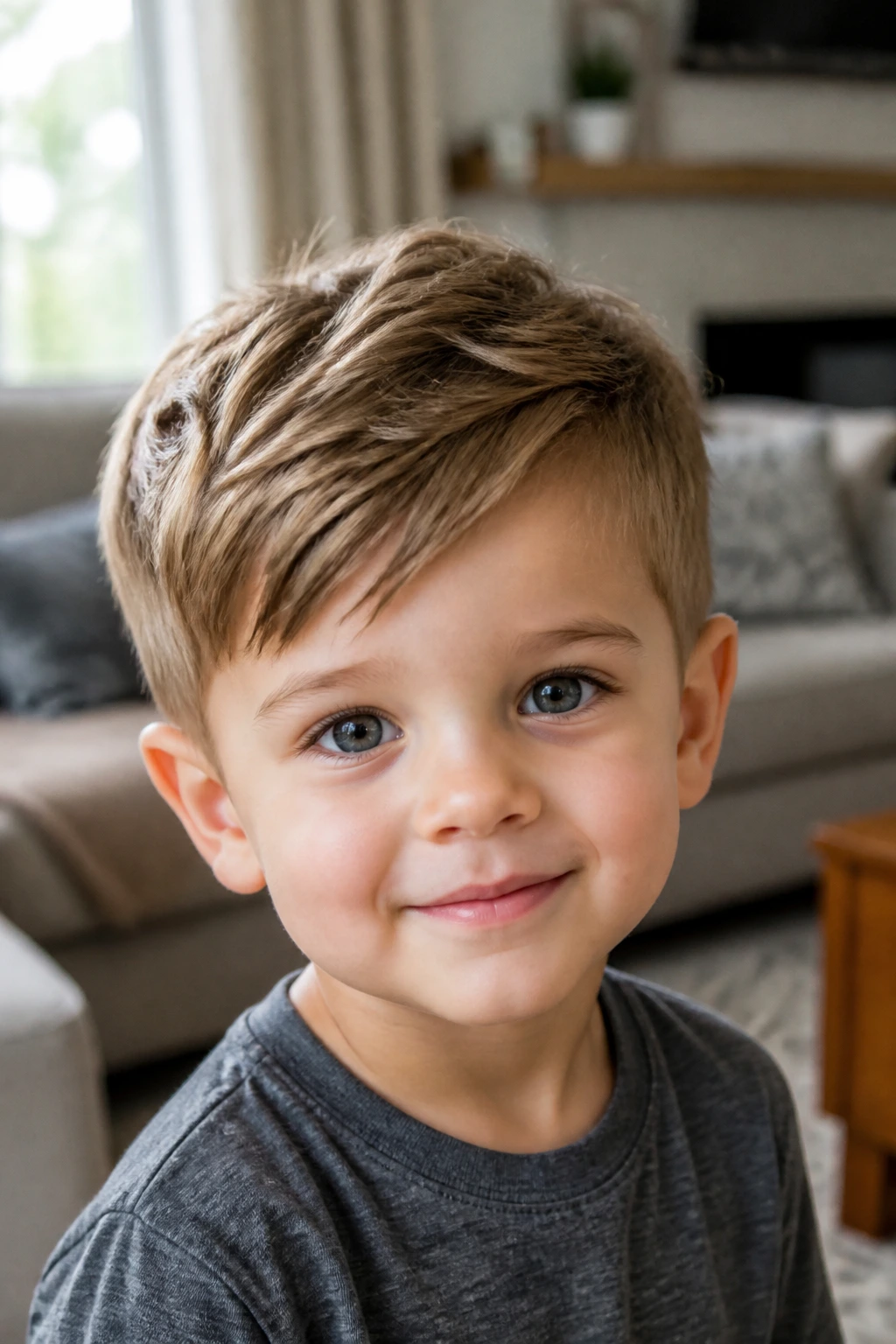
3. Side-Swept Pixie Crop
Why do some toddlers look better in a pixie than in longer hair? Because the hair stops fighting the face. A side-swept pixie crop keeps the ears clear, trims the bulk around the sides, and leaves just enough top length for the wave to bend across the forehead instead of poking straight down into the eyes.
Best For Tiny Busy Bodies
This cut is ideal when your child never sits still and has a strong natural part or a cowlick near the front. The longer fringe can be brushed to one side with damp fingers, and then it mostly does its own thing. That matters. A lot.
What to Tell the Stylist
- Leave the top about 1.5 to 2.5 inches, depending on density.
- Keep the sides shorter, but not shaved tight.
- Sweep the fringe diagonally, not straight across.
- Soften the temples so the cut does not look harsh.
This is one of the lowest-fuss shapes on the list, but it needs a careful hand. Cut it too short on top and the wave disappears. Cut it too long on the sides and it starts looking like the haircut is growing sideways instead of forward. That middle ground is the whole game.
A pixie crop works nicely for children who dislike hair on the neck, hate brushing, or get irritated by anything touching the ears.
4. Chin-Length French Bob with Airy Fringe
The French bob has a little attitude, even on a toddler. Chin-length hair with a soft fringe frames the face, shows off the wave pattern, and looks tidy without turning severe. It’s the sort of cut that makes a child look dressed, even if they’re wearing rain boots and dinosaur pajamas.
Why It Fits Wavy Hair
That chin-length line gives waves enough room to shape themselves, while the fringe keeps the front from dropping into the eyes. The trick is making the bangs airy, not heavy. Wavy toddler hair can turn blunt bangs into a triangle if the cut is too dense.
Good Notes to Give the Salon
- Keep the bob around the chin, not above it.
- Ask for fringe that can split or sweep, not a thick slab of bangs.
- Keep texture soft around the cheeks.
- Make sure the back follows the same rounded line as the front.
Best For
- Loose to medium waves
- Hair that grows forward quickly
- Parents who want a clean shape without a lot of layers
I like this cut when the child’s hair has a soft bend but not enough curl to spring upward. It keeps the face open and the style practical. And if the fringe lands a little messy after a nap, it still feels like part of the look.
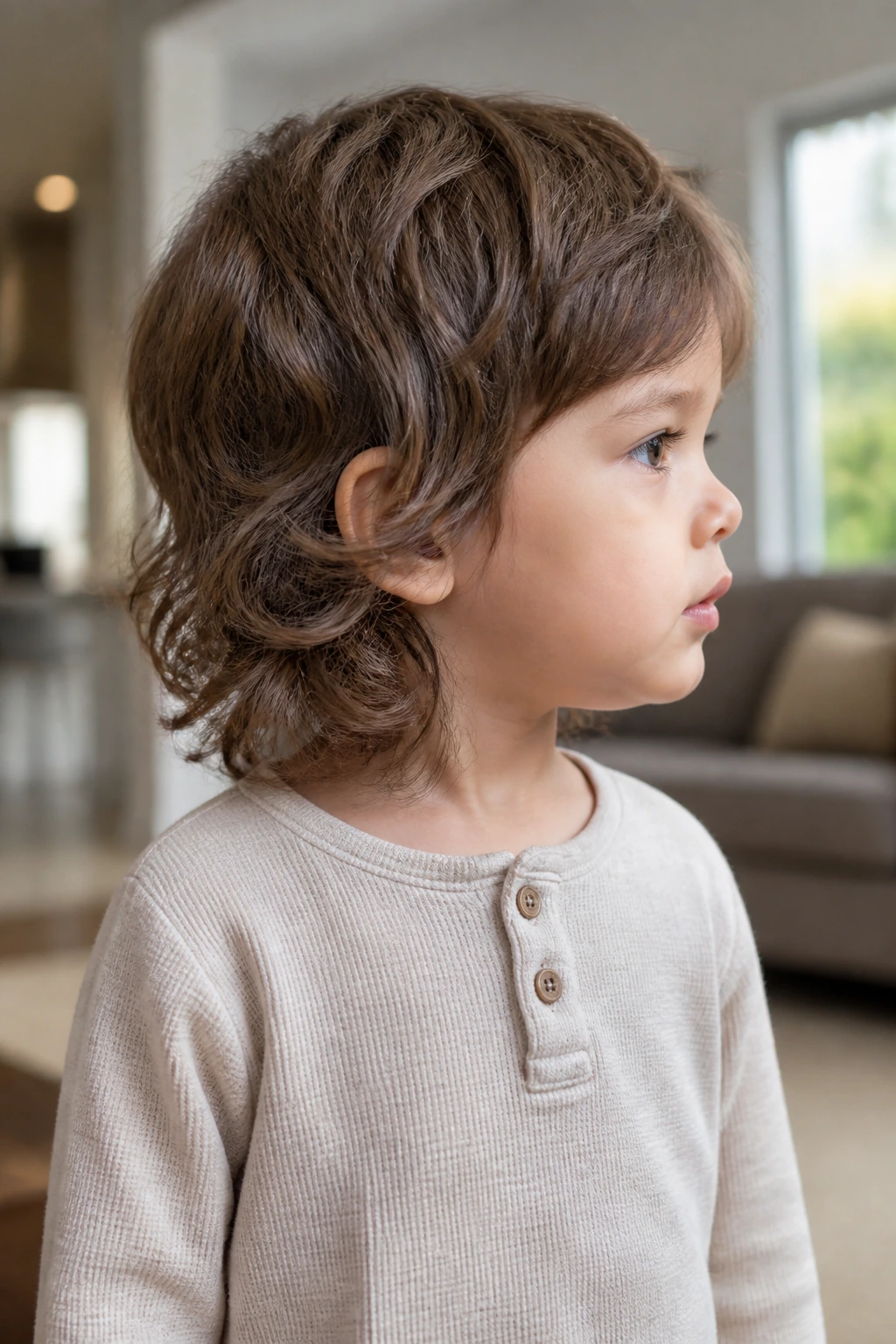
5. Mini Wolf Cut with Soft Texture
A mini wolf cut is the playful cousin of a shag. It keeps the crown a bit shorter, leaves the bottom lengthier, and creates that slightly wild shape that feels modern without trying too hard. On toddlers, the version that works is softer and less dramatic than the adult version. No one needs a miniature rock-star helmet.
Why Parents Pick It
Because it handles volume. If your child’s waves puff out at the sides or build up at the crown, this cut redistributes the shape so the hair falls in a more relaxed way. The layers should be gentle enough to move, but not so many that the ends look frayed.
How It Should Be Cut
- Keep the crown textured, not thinned to nothing.
- Leave the perimeter longer for swing and softness.
- Avoid chopping the layers into obvious steps.
- Soften the front pieces around the cheekbones.
This is a good choice for thicker waves and for kids who look a little flat in clean, blunt shapes. It also grows out better than people expect, as long as the stylist doesn’t carve it into sharp peaks.
A mini wolf cut works best when the goal is shape with a little edge. Not messy. Not polished. Just enough personality to make the wave pattern visible.
6. Layered Lob with Interior Movement
A layered lob sits in that sweet spot between “still long enough to tuck behind the ear” and “short enough to stop fighting snack time.” For wavy toddler hair, it’s one of the most forgiving cuts around. The layers live mostly inside the shape, so you get movement without losing the overall outline.
Why It Works
The interior layers help the wave fall in soft bends instead of hanging as one thick block. That matters when the hair is dense or when the crown tends to form a little shelf. The outside line stays smooth, which keeps the cut from getting too puffy.
What I’d Ask For
- Keep the length somewhere between the chin and the top of the shoulders.
- Add internal layers, not short choppy surface layers.
- Leave enough weight at the ends so the waves still clump.
- Keep the front slightly longer if the child wears a side part.
This is one of my favorite options for families who want a haircut that can survive a long grow-out. It still looks like a shape after six weeks, and it can be pulled into a tiny half-up section when needed.
The layered lob is practical, yes, but it’s also one of the nicer-looking choices when the hair dries on its own. That’s not a small thing.
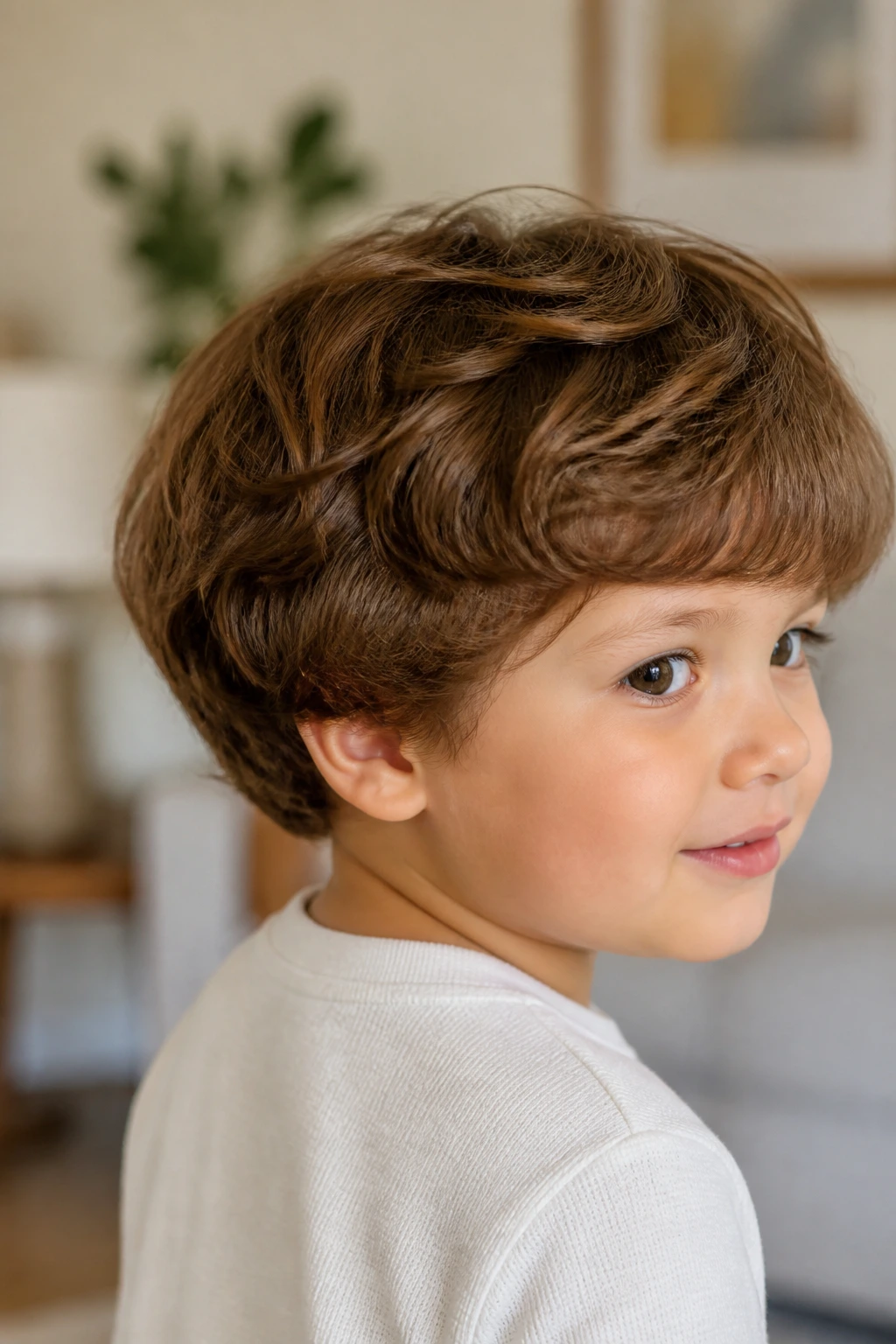
7. Rounded Mop Top with a Tidy Nape
A rounded mop top sounds old-school until you see the updated version on wavy toddler hair. The trick is keeping the top soft and full while cleaning up the nape so the back does not turn into a fuzzy collar. It feels easy, but the shape has to be handled with some care.
Shape and Balance
The rounded top gives waves a place to sit, while the tidy nape stops the whole cut from looking overloaded. If the child has a stronger cowlick at the back of the head, this style can be a lifesaver. Too much length in the nape will kick outward. Too little and it looks cropped in a hurry.
What to Watch For
- Keep the crown full, not flattened.
- Taper the nape gently instead of cutting it blunt and high.
- Leave the fringe long enough to sweep over, not paste to the forehead.
- Use scissors near the ears to keep the shape soft.
This cut suits active toddlers because it doesn’t demand perfection. The outline remains round even when the hair has been slept on, and the nape cleanup helps with comfort under collars and hoodies.
If you like neat edges but still want the wave to show, this is a solid middle path.
8. Curtain Bangs and a Wavy Lob
Curtain bangs on a toddler can look a little too precious if they’re cut too short. Leave them airy, pair them with a wavy lob, and the whole haircut suddenly gets more relaxed. The fringe splits naturally, the sides frame the face, and the length gives the waves room to move.
Why It’s a Smart Combo
Curtain bangs work with wavy hair because they don’t need to sit flat. They can part, separate, and bend a little without looking wrong. With a lob, the lower length balances the fringe so the haircut doesn’t feel front-heavy.
Ask for This Instead of That
- Ask for fringe that falls around the cheekbone.
- Keep the center of the bangs the shortest point, but still soft.
- Leave the lob around the collarbone or a bit above it.
- Keep the ends light, not razor-thinned.
This style is useful when you want the hair out of the eyes but refuse to give up length. It also makes grow-out less annoying, because the bangs can blend into the front layers instead of turning into a hard line.
A curtain fringe can be fussy if it’s cut too blunt or too short. Done well, though, it’s one of the easiest ways to soften a toddler face without making the cut look overly styled.
9. Textured Crop with Short Sides
A textured crop with short sides is tidy, modern, and very good at keeping wavy hair from exploding around the ears. The top keeps enough length to show movement, while the sides stay neat. It’s not a fade-heavy haircut unless you want that; on toddlers, I prefer a softer taper because it grows out with less drama.
Why It Works on Wavy Hair
Waves need somewhere to sit. If the top is left around 2 inches or so and cut with a little texture, the movement shows up without making the style look flat. The short sides keep the shape clean, especially for children who get sweaty, run hot, or hate hair brushing against the neck.
Practical Notes
- Keep the top textured but not shredded.
- Ask for the sides to taper gradually.
- Let the fringe sit a touch longer if the child has a cowlick.
- Avoid hard lines unless you’re prepared for quick upkeep.
This is a good cut for parents who want something athletic and neat without losing the natural wave. It also photographs well in the ordinary sense of the word: the shape is clear, the top has character, and there’s no fluff blocking the face.
If the hair is fine, keep the texture subtle. Too much thinning and it starts to look see-through by the second week.
10. Asymmetrical Bob with a Gentle Tilt
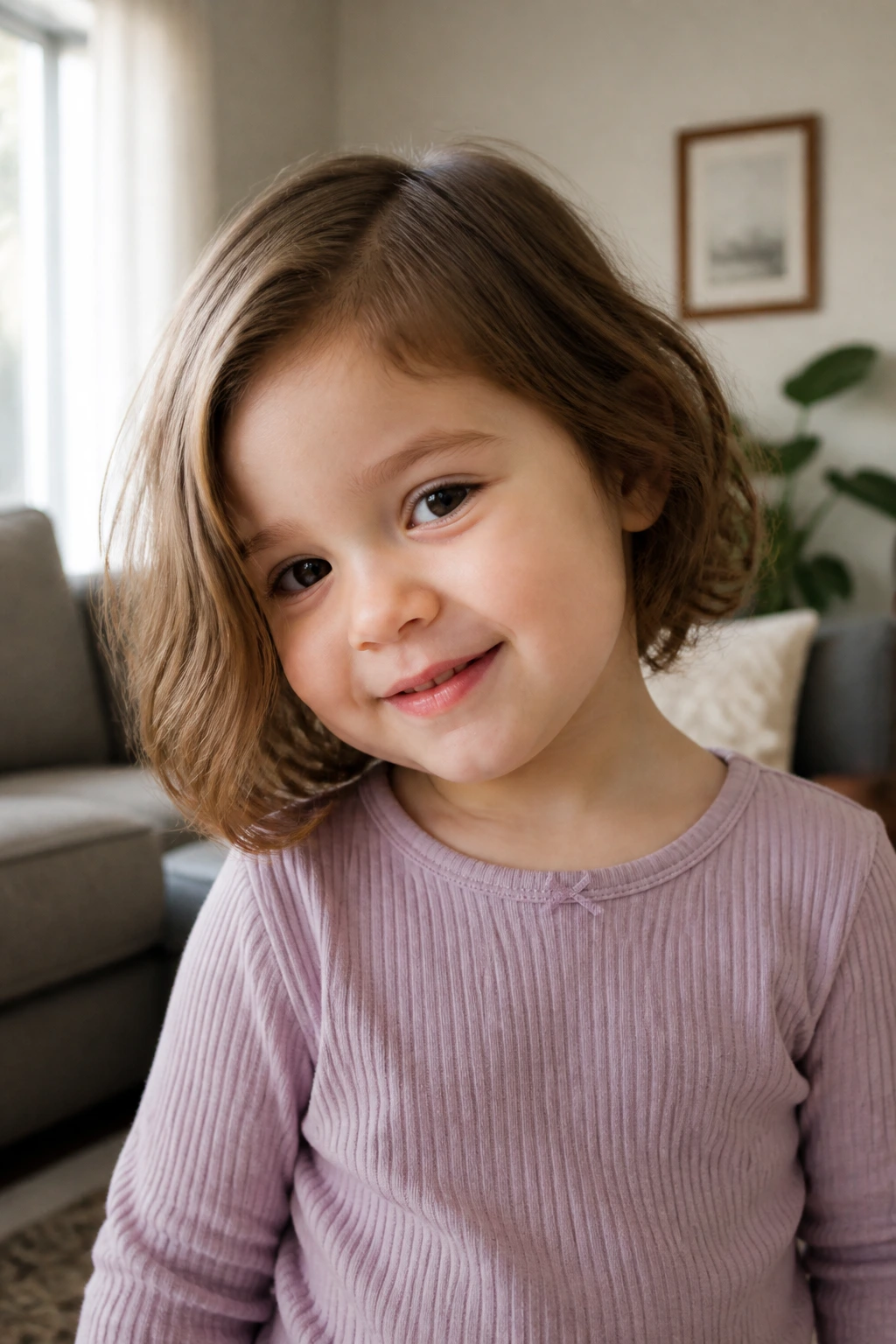
An asymmetrical bob sounds bold, but for toddlers it usually means one side sits just a little longer than the other. That tiny tilt can solve a lot of wavy-hair problems. It gives the cut some movement, helps with awkward parts, and keeps the face from looking too boxed in.
When It Helps Most
I like this cut for kids whose hair naturally falls to one side and refuses to cooperate anywhere else. Instead of fighting that bend, the cut uses it. The longer side can help balance a stronger wave on one side or soften a cowlick that keeps kicking the fringe away.
What to Ask For
- Keep the difference subtle, not dramatic.
- Let the longer side fall at chin length or just below.
- Keep the shorter side soft around the jaw.
- Do not over-layer the front; the asymmetry should come from length, not choppy texture.
This haircut has a little more personality than a straight bob, but it still grows out well if the tilt is gentle. Too sharp, and it turns into a maintenance problem. Subtle is the smart move here.
A toddler asymmetrical bob can be charming, easy to tuck behind one ear, and surprisingly forgiving when the part shifts around.
11. Tapered Crop with a Longer Top
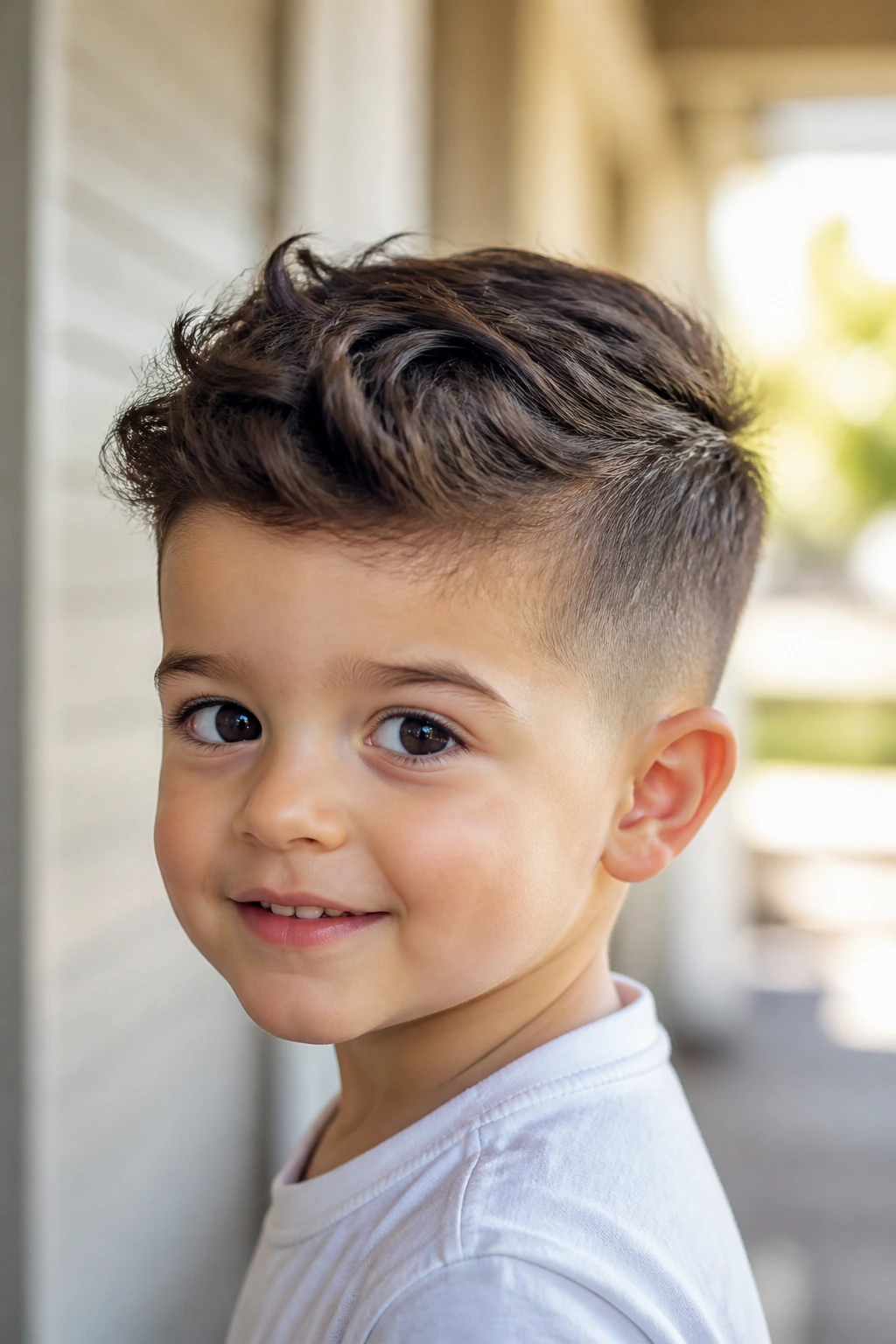
A tapered crop with a longer top is one of those cuts that looks neat from every angle. The sides and nape are cleaned up, the top stays long enough for waves to bend, and the silhouette reads as intentional even when the child has been rolling around in the back seat for twenty minutes.
Why It Works
The taper removes bulk where toddlers usually feel annoyed by it—around the ears and neck. The longer top gives the wave pattern room to move instead of flattening it into the scalp. That combination is useful when the hair is thick near the crown but finer at the temples.
Best Practices
- Keep the taper soft, not skin-close.
- Leave the top enough length to side-sweep or mess up with fingers.
- Blend the transition carefully so the haircut does not look chopped into sections.
- If there’s a strong front cowlick, leave extra length at the fringe.
This is a sensible cut for active kids who need hair off the ears but don’t want a super short style. It also reads nicely on camera because the shape is clear without looking overworked.
If you’re nervous about going short, this is often the safest place to start.
12. Soft Bowl Cut with Feathered Edges
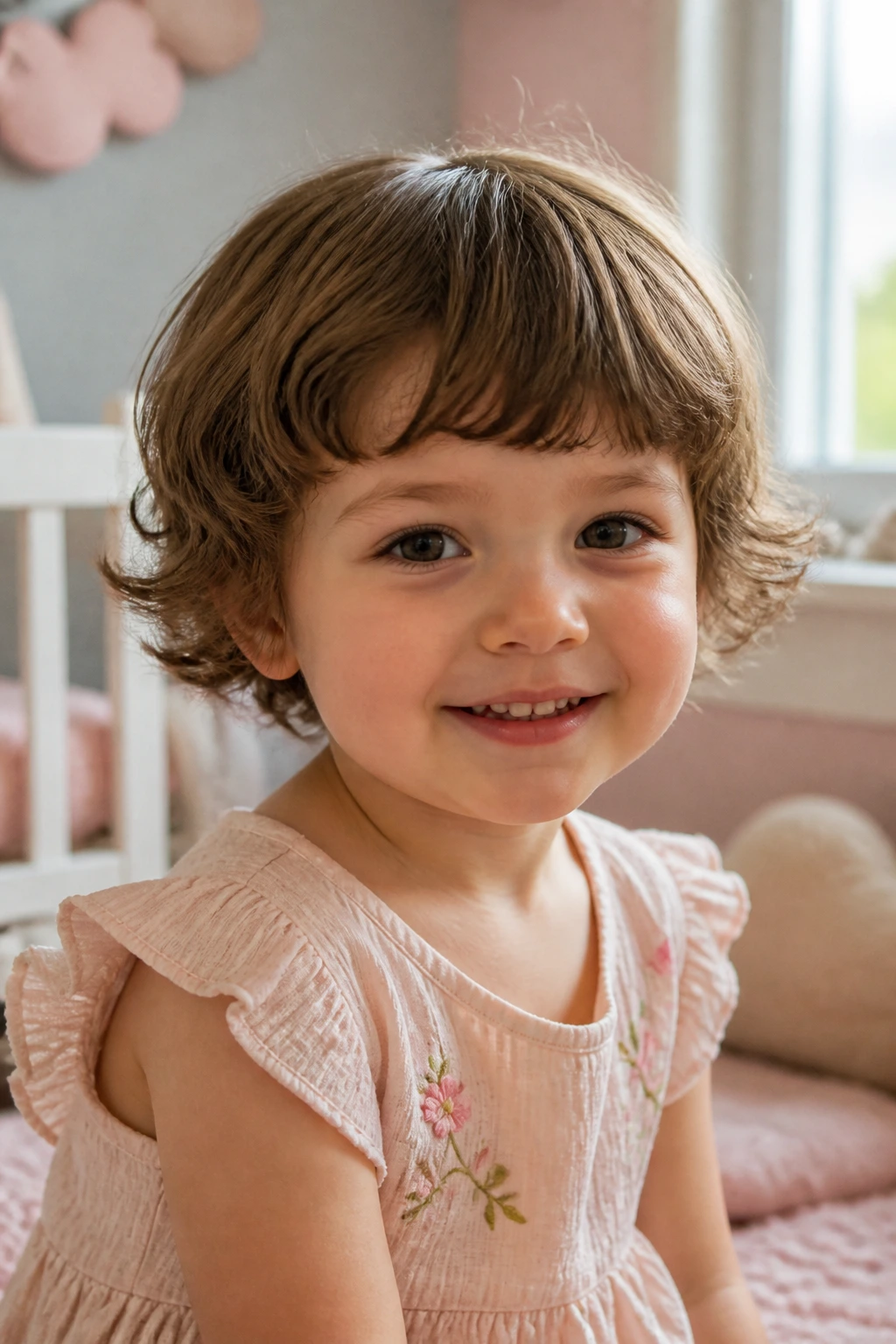
A bowl cut gets a bad reputation because people remember the heavy, blunt version. The soft bowl cut is different. The outline is rounded, but the edges are feathered so the wave can move instead of sitting like a hard cap. On the right toddler, it’s charming in that clean, slightly retro way that still feels current.
What Makes It Work Now
The shape follows the head more closely, which can be lovely on wavy hair if the stylist leaves enough texture at the bottom. The soft edge keeps it from looking stiff. I’d avoid this cut if the hair is extremely thick and bulky at the temples, unless the stylist knows exactly how much weight to remove.
Good Cut Notes
- Keep the perimeter rounded, not sharply graphic.
- Feather the ends lightly.
- Leave enough length to show a wave at the fringe.
- Do not cut the bangs too high above the brow.
A soft bowl cut works best when the waves are loose and the child has a face that can handle a strong outline. It keeps hair controlled, and it stays cute as it grows, which is more than I can say for some sharper toddler cuts.
There’s a lot to like here, but only if the cut stays soft. Hard bowl lines on wavy hair can go sideways fast.
13. Ear-Length Pageboy with a Wave

The pageboy is having a quiet little comeback in toddler haircuts, and wavy hair is part of the reason. Ear-length sides, a soft fringe, and rounded ends create a shape that stays neat without looking stiff. The wave adds life to a style that could otherwise feel too formal.
Why It’s a Good Match
Because the ends sit just at or below the ears, the cut stays out of the face and feels comfortable under hats. The rounded shape gives the wave somewhere to curl inward or flick out, depending on the child’s texture. Either way, it reads as part of the haircut instead of a mistake.
Details Worth Requesting
- Keep the fringe light and flexible.
- Make the sides close to ear length, not above them.
- Round the back softly so it doesn’t kick out.
- Leave enough weight in the ends to prevent puffiness.
This is a tidy option for parents who want a haircut that looks neat in school photos, but not severe. It also works well if the child hates having hair near the collar, because the length stays controlled.
The pageboy is underrated. It’s one of the few shorter styles that can look polished on day one and still make sense two weeks later.
14. Blunt Shoulder-Length Lob
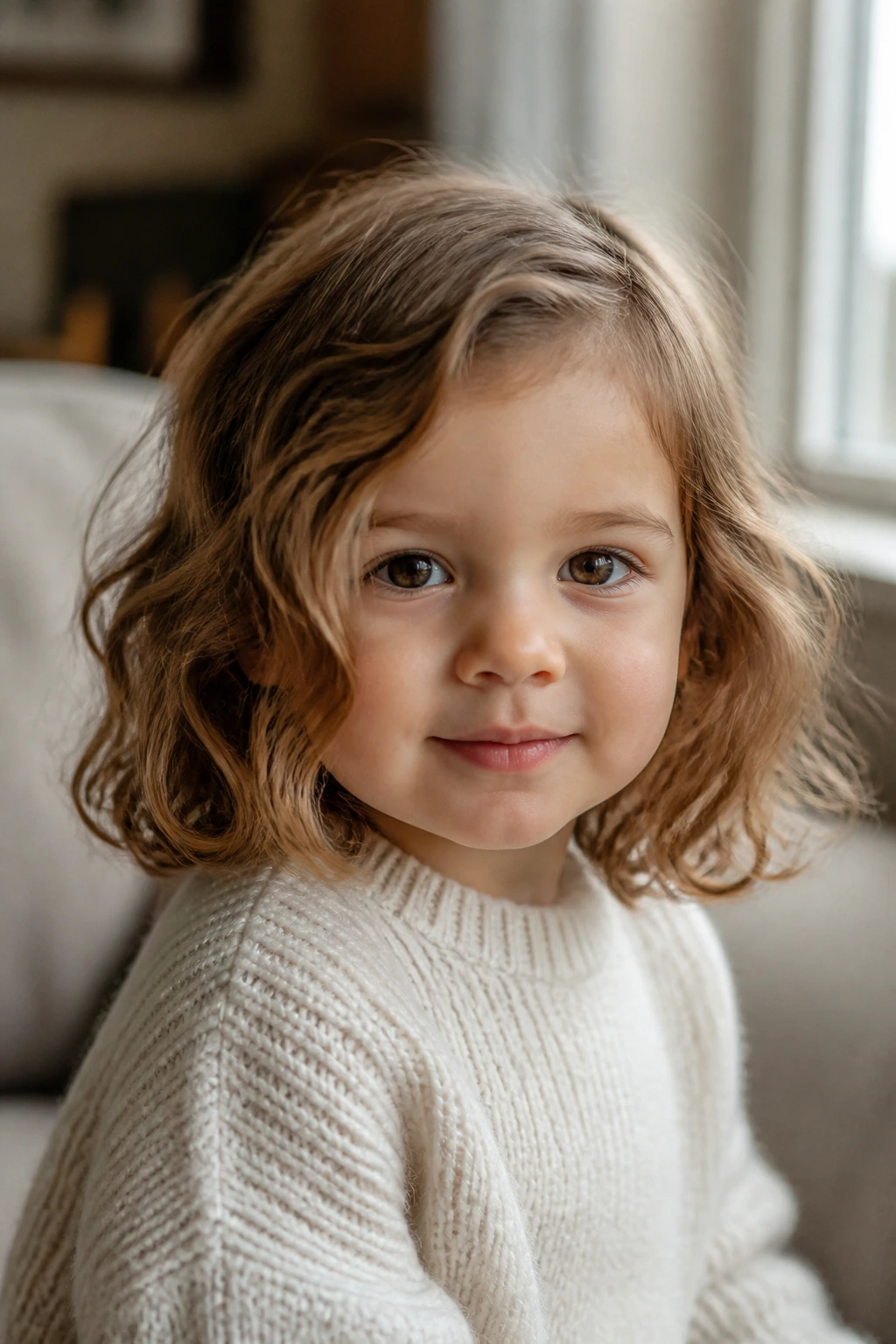
A shoulder-length lob is the long-haul option. It gives wavy toddler hair maximum movement, keeps the face framed, and makes ponytails, clips, and tiny half-up knots possible. If you’re not ready for short hair, this is the style I’d keep on the table.
Why It Earns Its Spot
Shoulder length lets the wave fully form. That means more visible texture and fewer awkward flips at the temples. The blunt bottom keeps the ends looking full, while any face-framing should stay subtle enough not to create layers that frizz out by midday.
What Makes It Different
- The length is long enough for tying back, but not so long that it tangles constantly.
- The blunt base keeps the shape from looking wispy.
- It can be worn with a center part, side part, or a slightly messy natural part.
This is a smart choice for toddlers with strong growth spurts, because it buys you time between trims. It also works well for families who like versatility. Some days it’s a loose lob. Some days it’s clipped back. That’s the point.
If you want the least commitment and the most styling options, this is probably your safest cut.
15. Feathered Layers with a Center Part
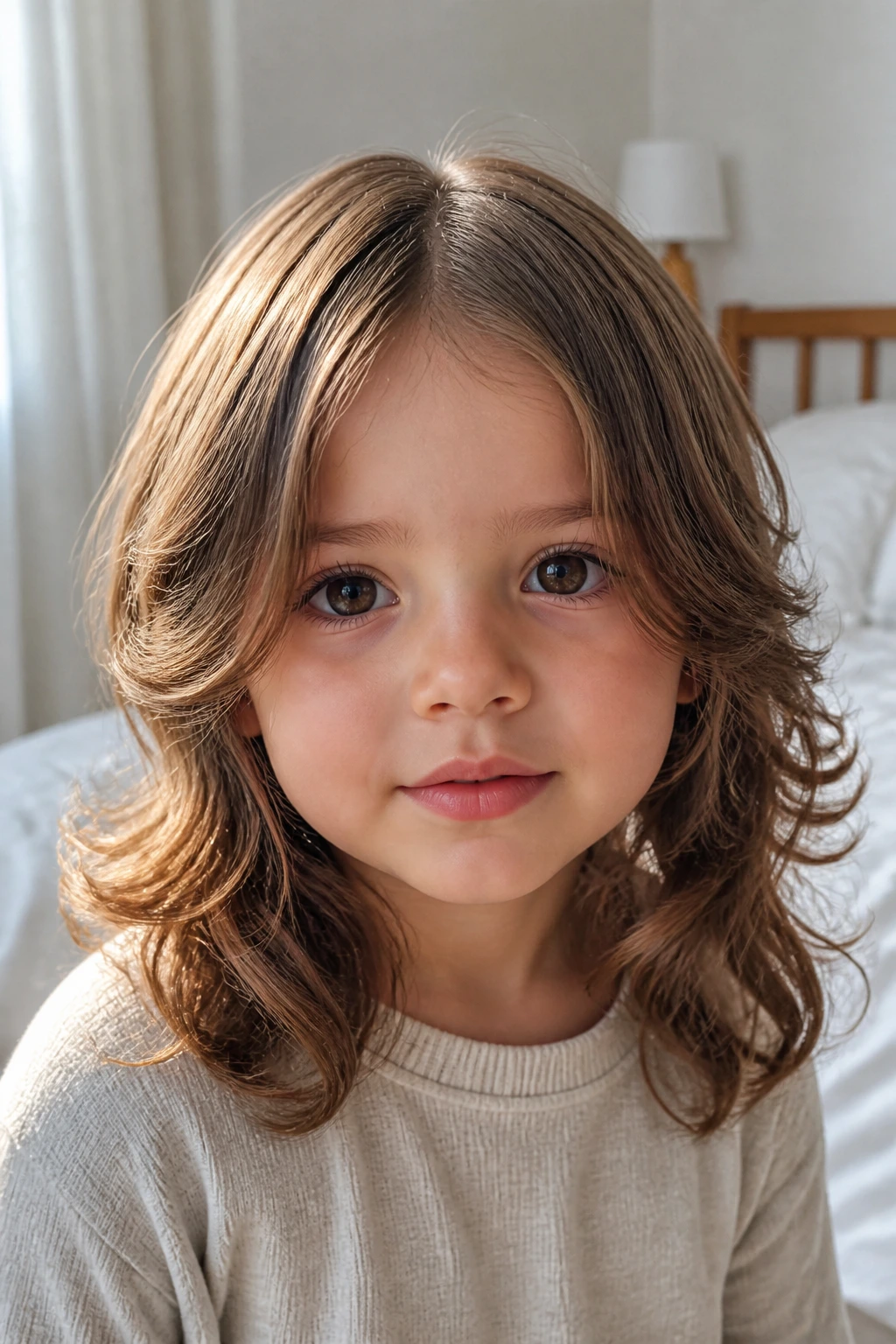
Feathered layers are not the same thing as thin layers. That difference matters. On wavy toddler hair, feathering softens the line, helps the hair fall in clean bends, and keeps the center part from looking severe. The result feels light, but not wispy.
What It Solves
This cut is useful when the hair is medium to long and tends to sit flat at the crown. The feathering around the cheeks and lower lengths gives the waves room to break up the shape without making the whole haircut look chopped. A center part can work well here, though it can be shifted if a cowlick insists on taking over.
Helpful Notes
- Ask for layers that start lower, not high up near the crown.
- Keep the feathering soft around the face.
- Leave enough weight at the ends so the hair doesn’t blow apart.
- Use the part your child naturally makes, not the one you wish they had.
This style is one of the better choices if your toddler has a lot of hair and you want it to feel lighter without sacrificing length. It also grows out in a graceful way, which is rare enough to be worth celebrating.
The center part can look modern and tidy, but only if the haircut has enough softness to balance it.
16. Clean Side-Part Classic Cut
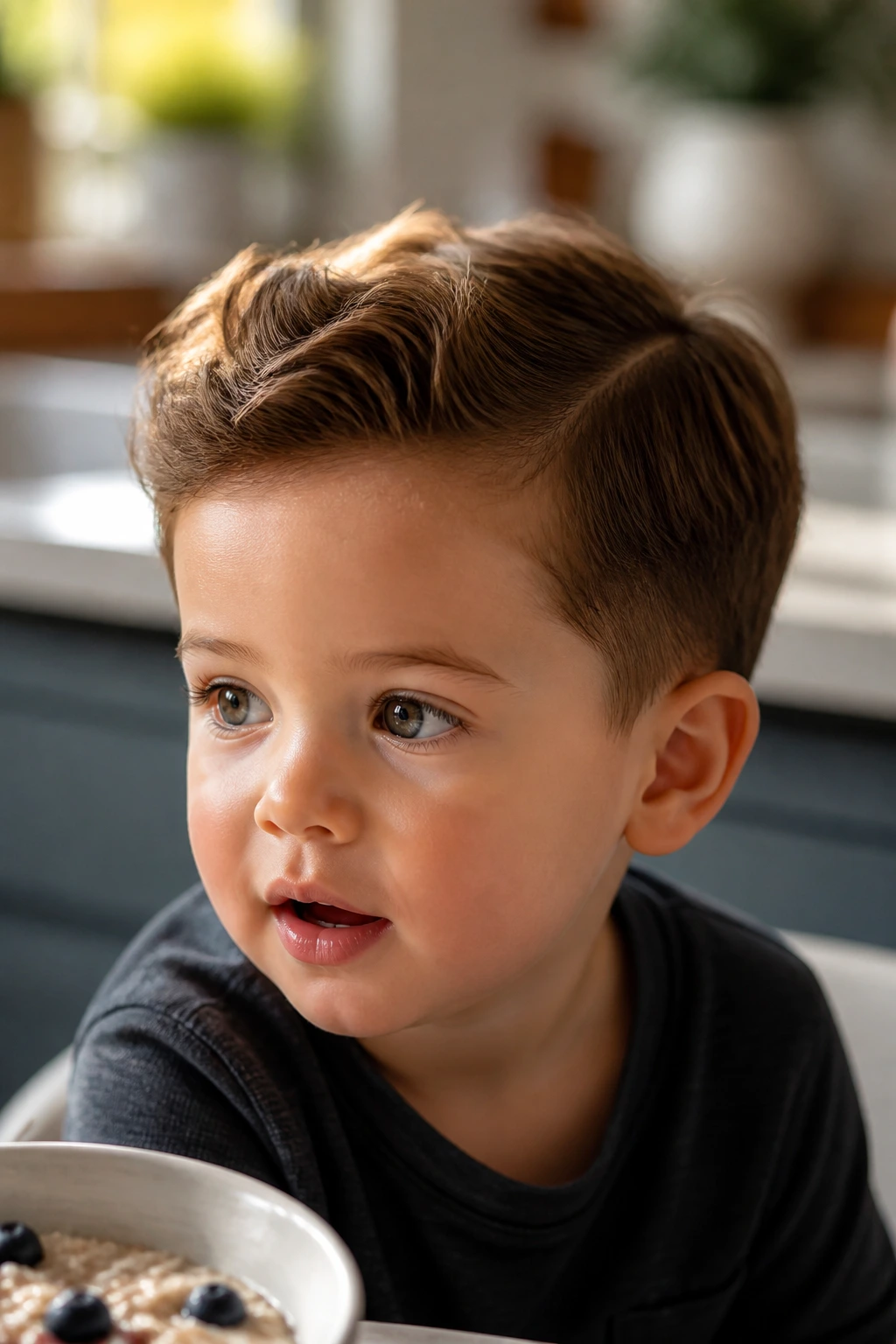
A clean side-part classic cut may sound plain, but plain is sometimes the smartest choice. On wavy toddler hair, a defined side part gives the style direction, the shorter sides keep the bulk down, and the top can keep just enough bend to look alive instead of stiff.
Why It Still Works
The side part helps direct waves that would otherwise spring in every direction. It’s especially helpful for toddlers with one stubborn cowlick or a front section that always falls the wrong way. A classic shape also makes it easier to keep the haircut looking neat between trims.
What to Request
- Keep the part natural or only slightly emphasized.
- Let the top stay long enough to show texture.
- Taper the sides gently.
- Avoid heavy gel unless you like crunchy hair that feels like a toy.
This is a strong option for family photos, events, or simply mornings when you want the hair to stay put. It’s also a nice bridge between a more casual crop and a more polished style.
I’m a fan of this cut when the hair is wavy but not wildly thick. It’s calm. It’s tidy. And it doesn’t try to be more than it is.
17. Tucked-Behind-the-Ears Crop

A tucked-behind-the-ears crop is exactly what it sounds like: a cut that leaves enough length to tuck the sides back, but keeps the overall shape compact. On wavy toddler hair, that little bit of extra room around the ears makes a big difference. The child can move, play, and sweat without the hair falling directly into the face.
Why Parents Like It
Because it’s practical. Hair can be brushed back quickly, tucked with a clip if needed, or left loose when the wave is behaving. The crop should stay light around the temples and slightly longer on top, so it has some shape without turning into a mushroom.
Best Cut Notes
- Leave the sides just long enough to tuck cleanly.
- Keep the top textured but controlled.
- Softly taper around the ears for comfort.
- Keep the nape tidy so collars don’t flip it out.
This style is good for toddlers who chew hair, pull hair, or get annoyed by anything touching the face. It’s also easy to maintain when paired with a quick mist-and-finger-comb routine.
The beauty of this cut is that it doesn’t pretend hair will behave all day. It just gives you a way to get it back under control fast.
18. Grow-Out Friendly Mixed-Length Cut
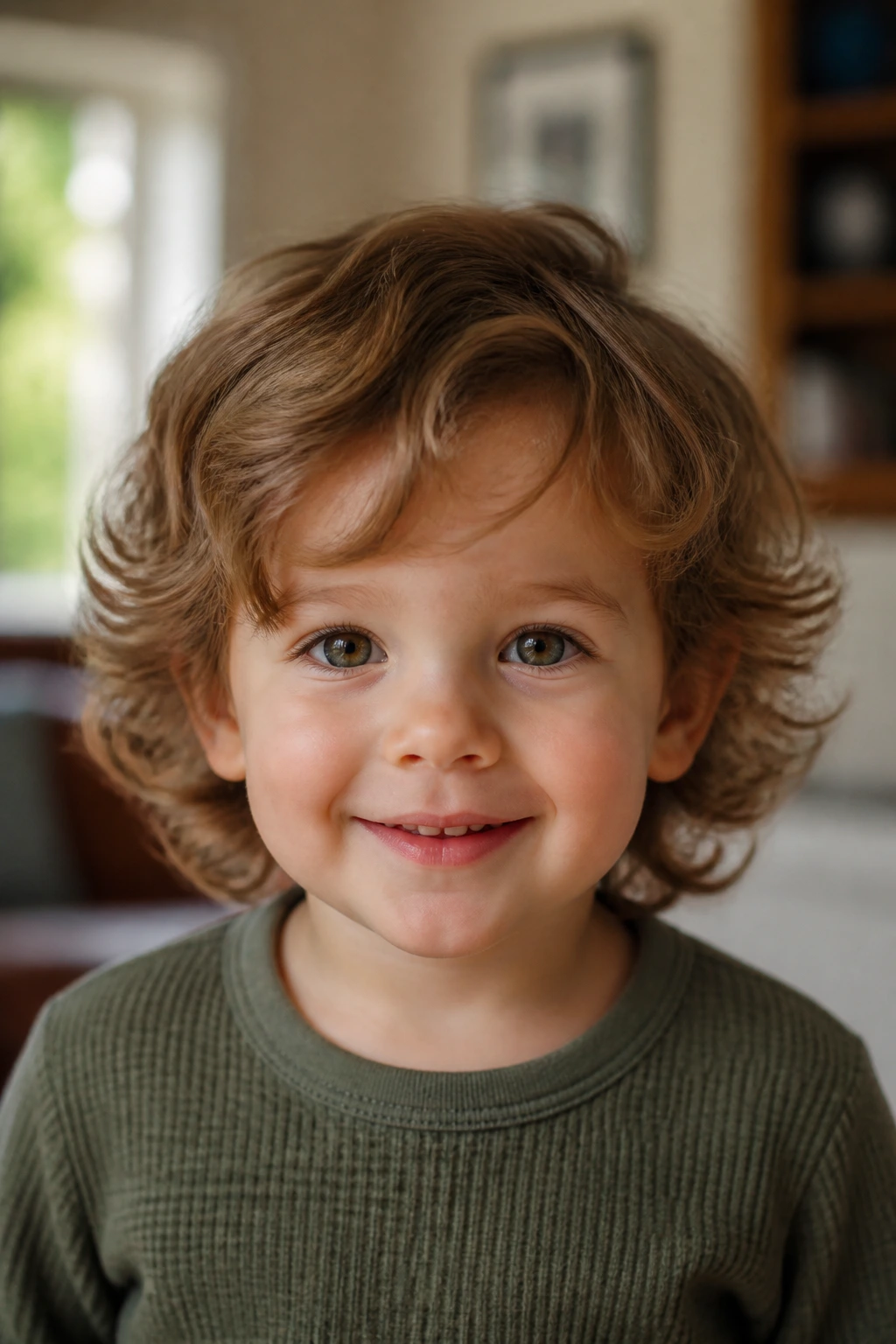
A mixed-length cut is the one I recommend when you want the haircut to survive real life. Some pieces are a touch shorter around the face, the back keeps enough weight to hold the wave, and the overall shape still looks deliberate a month later. It’s not the flashiest style here. It might be the smartest.
Why It’s Worth Considering
Toddlers do not wait for neat trim cycles. Some sit still for five minutes, some don’t, and some go through a phase where every comb feels like an insult. A mixed-length cut gives you flexibility. It can be worn messy, tucked, clipped, or left to dry on its own without looking unfinished.
What to Ask For
- Keep the front pieces a bit shorter for the eyes.
- Leave the back longer so the cut grows out without a hard line.
- Add only enough layering to shape the wave.
- Ask for soft blending rather than obvious sections.
This is the haircut I’d pick for a child whose hair grows fast or whose routine changes constantly. It can live as a bob, a lob, or a little shag-adjacent shape depending on the exact lengths. That kind of flexibility is worth a lot.
It’s not trying to win a style contest. It’s trying to stay useful. That’s a very good goal.
Why Wavy Toddler Hair Needs Shape, Not a Fight
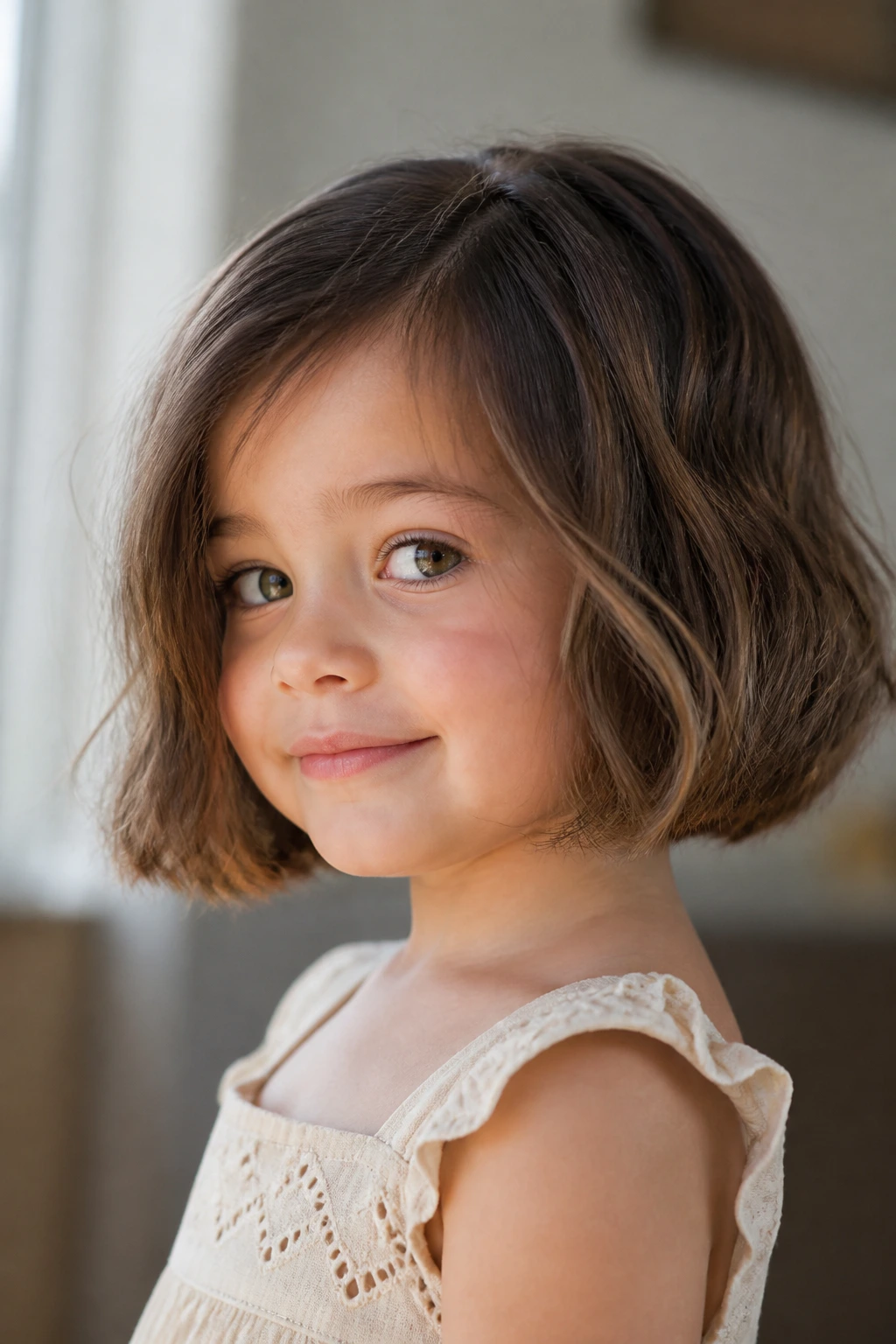
Wavy toddler hair is not straight hair with a few bends thrown in. It has its own habits. Shorten it too much, and it stands up. Thin it too aggressively, and it turns frizzy at the edges. Leave too much weight in the wrong place, and the whole cut slumps into the neck or balloons out at the sides.
The best haircut respects that push and pull. It leaves enough length for the wave to form, but not so much weight that the shape disappears. That’s why a bob can look cleaner than a shag on one child and worse on another, even if both have “wavy hair.” Density, parting, cowlicks, and face shape all matter. A lot.
I also think parents sometimes underestimate how much a toddler haircut has to do in a week. It needs to handle sweat, nap time, booster seats, and the occasional wrestling match on the floor. If a cut only looks good in a neat salon chair, it’s not the right cut.
The Small Toolkit That Makes Toddler Haircuts Easier

- Spray bottle: A light mist helps reset waves without soaking the hair.
- Wide-tooth comb: Better than a brush for detangling when the hair is already dry.
- Detangling spray: Useful after naps, baths, and playground tangles.
- Sharp haircutting shears: Worth having if you trim fringe or clean up a shape at home.
- Child-sized cape or towel: Keeps tiny hairs off the neck and makes the process less miserable.
- Clips or duckbill clips: Handy for separating the top from the sides on longer cuts.
- Soft bristle brush: Best for smoothing the surface on styles that need a little polish.
- Handheld mirror: Helps toddlers see what you’re doing, which sometimes makes them calmer. Sometimes.
If you trim at home, do not use kitchen scissors. They chew the ends and leave the haircut looking jagged in the worst way.
How to Talk to a Stylist Without the Guesswork
The easiest way to get a good toddler haircut for wavy hair is to show the stylist what you mean in plain terms. Bring photos with hair that looks like your child’s hair, not straight hair pretending to be wavy. That matters more than the style name itself.
Bring the Right Photos
Use photos that show the front, side, and back. One glamorous front shot is not enough. If you can find a photo with a similar wave pattern and density, even better. A French bob on fine, straight hair behaves differently than a French bob on loose toddler waves, and the difference shows up fast once the scissors come out.
Say Where You Want the Line to Sit
Tell the stylist whether you want hair off the ears, below the chin, at the jaw, or grazing the shoulders. Those details are more useful than asking for “something cute.” Cute is subjective. Jaw length is not.
Mention the Problem Spots
If there’s a cowlick at the crown, a swirl near one ear, or a patch that flips out near the nape, point it out before the cut starts. That one minute of conversation can save you weeks of frustration.
Ask for Growth, Not Just Day One
A good toddler cut should still work after six weeks. If the stylist starts cutting in a way that only looks sharp on appointment day, I’d slow that down. The grow-out matters.
How to Refresh the Shape in Two Minutes

You do not need a full styling session to make wavy toddler hair look decent. You need a rinse, a mist, and a little discipline about where you touch the hair.
Start with water, not product. A fine mist over the mid-lengths is usually enough to wake the wave back up. If the ends are dry, a pea-sized amount of leave-in conditioner rubbed between your palms can help, but only on the lower half of the hair.
Use your fingers first. Comb the hair into place with your hands, then use a wide-tooth comb only where the tangles sit. Brushing wavy hair hard when it’s dry is a fast route to puffiness. It looks fast. It isn’t.
Pick one part and leave it alone. The more you keep moving the part around, the more the hair will fight you. If the side part is the natural one, use it. If the center part keeps splitting weirdly, shift it a half inch and stop there.
Let the hair air-dry whenever possible. A towel can rough-dry the surface, but rubbing hard is what creates that fuzzy top layer. Press, squeeze, and move on.
Mistakes That Flatten or Puff Out Toddler Waves
The most common mistake is cutting too short near the crown. The hair springs up, the waves lose their bend, and the style starts standing away from the head. The fix is simple: leave a little extra length on top, especially if your child has a cowlick or strong swirl.
Another one is overusing thinning shears or razors. It can look neat for a day, then the hair starts puffing into a dry halo because the ends have lost too much weight. If the hair is thick, ask for controlled internal layering instead of aggressive thinning. There’s a difference, and it shows.
Brushing dry waves like straight hair is another classic problem. The hair looks smooth for about ten seconds, then separates and frizzes. Use water, detangler, or leave-in first. Dry brushing is the fastest route to a puffier shape than you bargained for.
Parents also forget that bangs shrink more than expected once they dry. That’s how you end up with a fringe that sits high on the forehead by lunchtime. Leave them longer than you think you need, especially on wavy hair.
And then there’s waiting too long between trims on a short cut. Short wave-friendly styles can lose shape quickly around the ears and nape. If the haircut depends on a clean outline, a small trim every 6 to 8 weeks helps a lot.
Variations for Loose Waves, Strong Waves, and Fine Hair
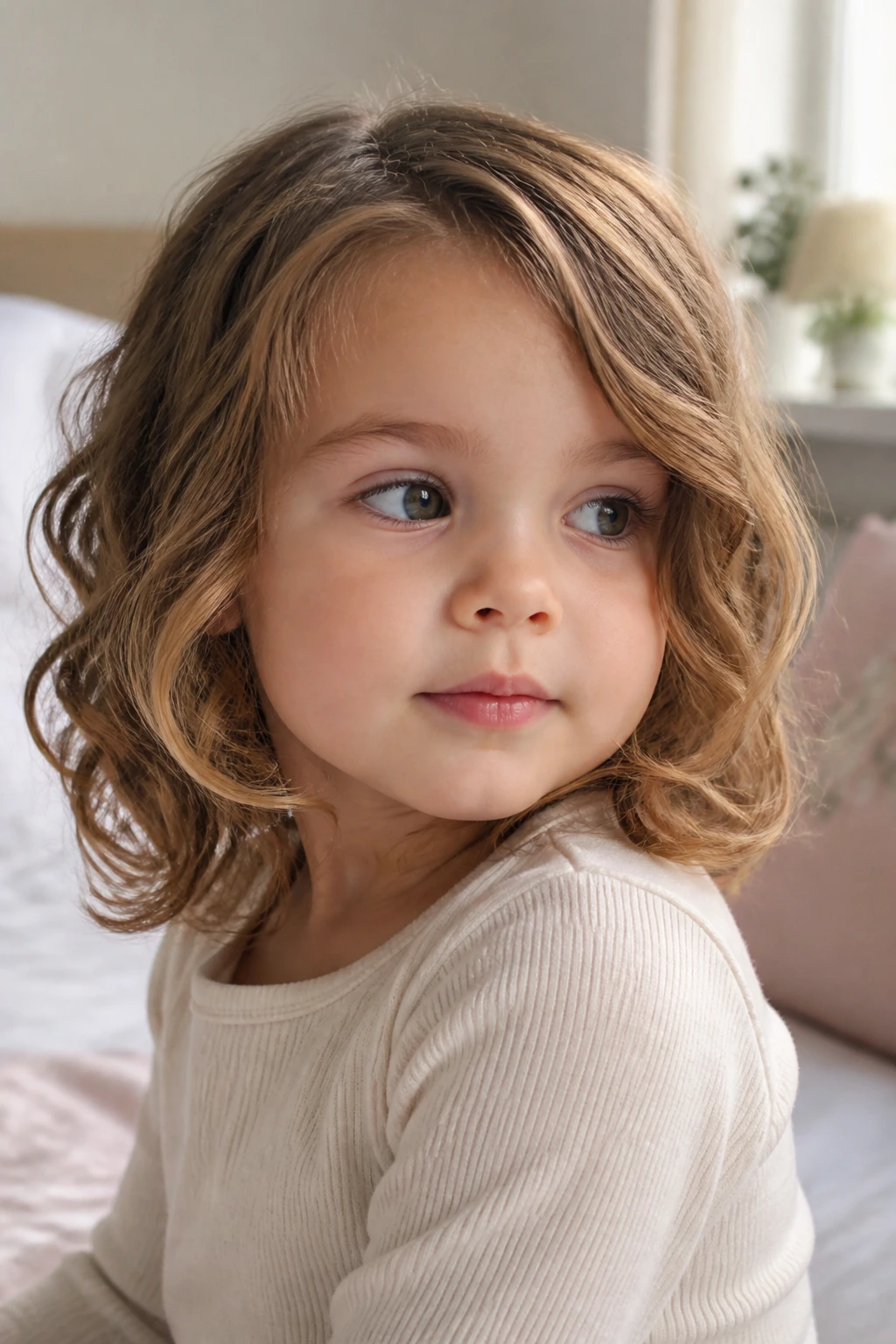
Loose-Wave Softening: If your toddler’s hair barely bends, keep the layers long and the fringe minimal. A blunt bob, shoulder-length lob, or side-swept pixie will usually behave better than a shag that needs more texture to show up.
Strong-Wave Control: For stronger S-waves, choose cuts that keep some weight at the bottom. The mini wolf cut, rounded mop top, or layered lob can hold the shape without turning into a puff ball. Just don’t remove too much at the crown.
Fine-Hair Lift: Fine wavy hair usually hates heavy layering. A blunt bob, French bob, or clean side-part cut keeps the shape fuller. Too much texturizing can make the ends look see-through.
Clippers-Optional Version: If your child is sensitive to noise, stick with scissor cuts and softer tapers. You can get the same tidy outline without the vibration around the ears and neck.
Long-Grow Version: If you want to stretch appointments, choose a mixed-length cut or a shoulder-grazing lob. These survive grow-out better than sharper crops and still let the wave pattern show.
How to Keep the Shape Between Trims
Most toddler wavy cuts stay happiest with a wash schedule every 2 to 3 days, though some children can go longer if the scalp is dry and the hair isn’t getting grimy. Too much washing strips the hair and leaves waves frizzier than they need to be. Too little, and the scalp gets sticky and the shape clumps in the wrong places.
Shorter cuts usually need a trim every 6 to 8 weeks. Shoulder-length styles can stretch to 8 to 10 weeks if the ends stay healthy. Bangs are a different story. If they touch the eyes, you may need a tiny cleanup every 3 to 4 weeks.
At home, the goal is keeping the cut from losing its line. Mist the hair lightly after sleep, smooth the fringe with damp fingers, and tuck or clip the sides before they start sticking out at odd angles. If the hair flips at the nape, a quick wetting there and a soft towel press usually resets it. You do not need heat unless you want it.
Frequently Asked Questions

How short can you cut toddler wavy hair and still keep the wave?
Usually not as short as people think. If the hair is cut too close to the scalp, the wave pattern can disappear or turn into a puff. Leaving at least 1.5 to 2 inches on top usually gives the bend room to show.
Should toddler wavy hair be cut wet or dry?
A damp cut is fine for most styles, but many stylists like to finish wavy hair when it’s mostly dry so they can see the real shape. That matters most around the fringe, crown, and nape, where waves shrink as they dry.
Do bangs work on wavy toddler hair?
Yes, if they’re soft and long enough to move. Hard, thick bangs are the problem, not bangs themselves. Curtain fringe or airy side-swept fringe usually behaves much better than a blunt line.
Is a bob or layers better for toddler waves?
A bob is better when you want a clean outline and lower maintenance. Layers help when the hair is thick, bulky, or getting too wide at the sides. The right answer depends on the hair density more than the age.
How often should I trim a toddler haircut for wavy hair?
Short cuts usually need attention every 6 to 8 weeks. Longer styles can go 8 to 10 weeks. If the fringe hits the eyes or the nape starts curling weirdly, move the trim up.
What if my child hates clippers?
Choose scissor-based cuts with soft tapers instead of hard fades. A talented stylist can clean the ears and neckline without clippers, and for many toddlers that makes the whole appointment calmer.
What if one side always flips out more than the other?
That’s usually a parting or cowlick issue, not a bad haircut. Keep a little more length on the rebellious side and ask the stylist to balance the weight there. Sometimes the fix is as small as shifting the part half an inch.
Can I style these cuts without heat?
Absolutely. Water, fingers, a wide-tooth comb, and a small amount of leave-in conditioner are usually enough. Toddler hair rarely needs a blowout to look good, and honestly, most toddlers won’t stand still for one anyway.
A Cut That Grows Gracefully
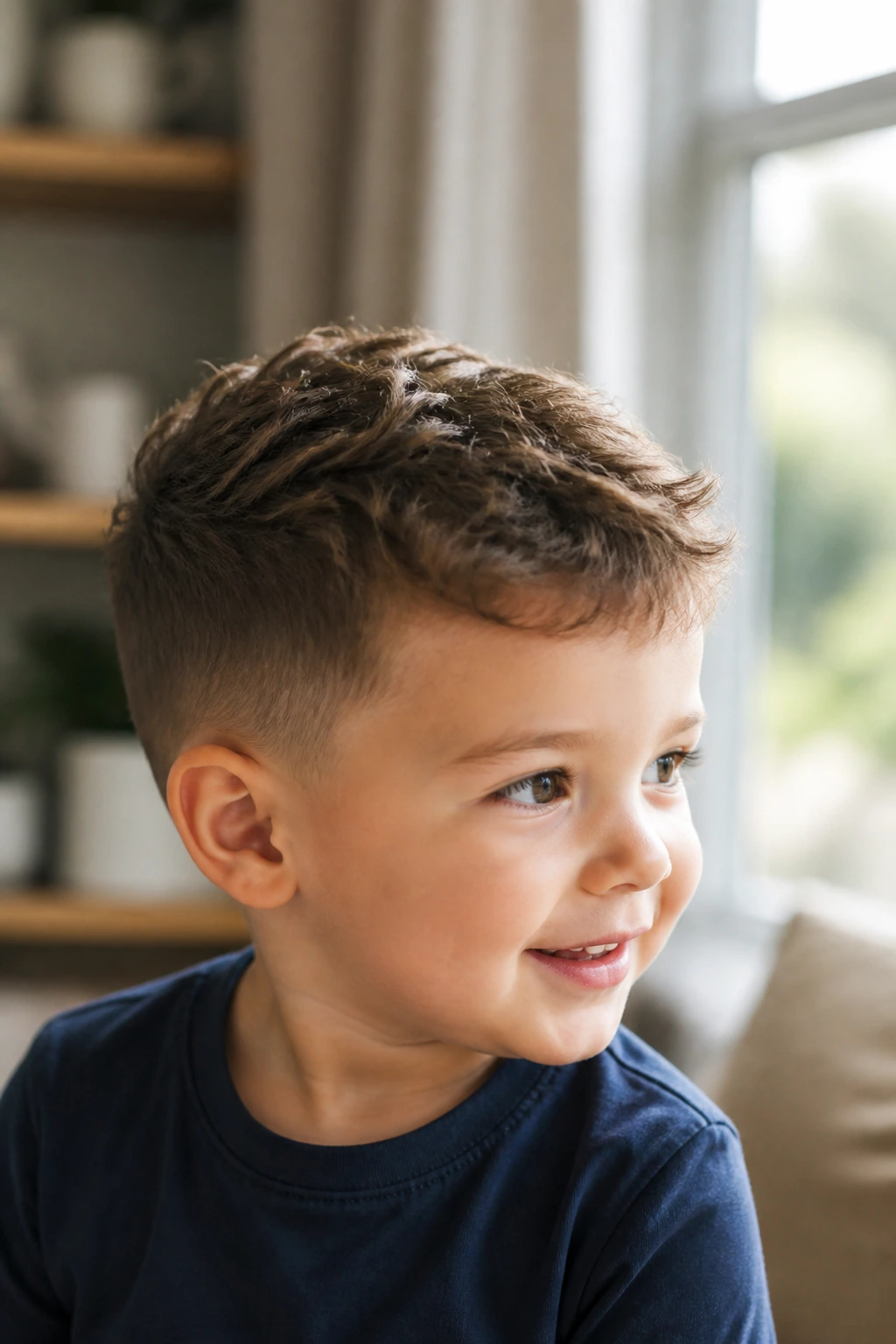
The nicest toddler haircuts for wavy hair are the ones that can handle a bad nap, a damp hoodie, and a refusal to sit still. They keep the wave pattern visible, but they also leave room for the hair to misbehave a little and still look on purpose.
That’s the real mark of a good cut here. Not perfection. Shape. Softness. Enough length in the right places so the waves can do their thing without turning the whole head into static.
Pick the version that matches your child’s texture, not the one that looks best in a perfect salon photo. The photo only has to last a second. The haircut has to survive the week.