



Flat roots and a too-tight elastic can make a ponytail look like an afterthought. A volume ponytail for busy mornings with side-swept bangs does the opposite: it gives you lift at the crown, a clean face frame, and enough movement that the style still looks deliberate when you’re halfway through the day and the dryer air is already stealing your shine.
The real trick is not piling on product. It’s placement, direction, and restraint. A ponytail sits differently when you tease the crown under the surface instead of roughing up the top layer, and side-swept bangs behave better when they’re dried toward the cheekbone instead of shoved straight across the forehead. Small things. Big difference.
Some of these styles are polished enough for a workday. Some are intentionally a little undone, the kind of undone that still looks like you knew exactly what you were doing. A few need a brush, a few need nothing but your fingers and a good elastic, and one or two are the hairstyle equivalent of a five-minute rescue mission. The best part is that all of them can be built around the same basic idea: keep the front soft, lift the crown, and give the ponytail a little shape instead of dragging it straight back.
Why These Volume Ponytails Earn Their Keep
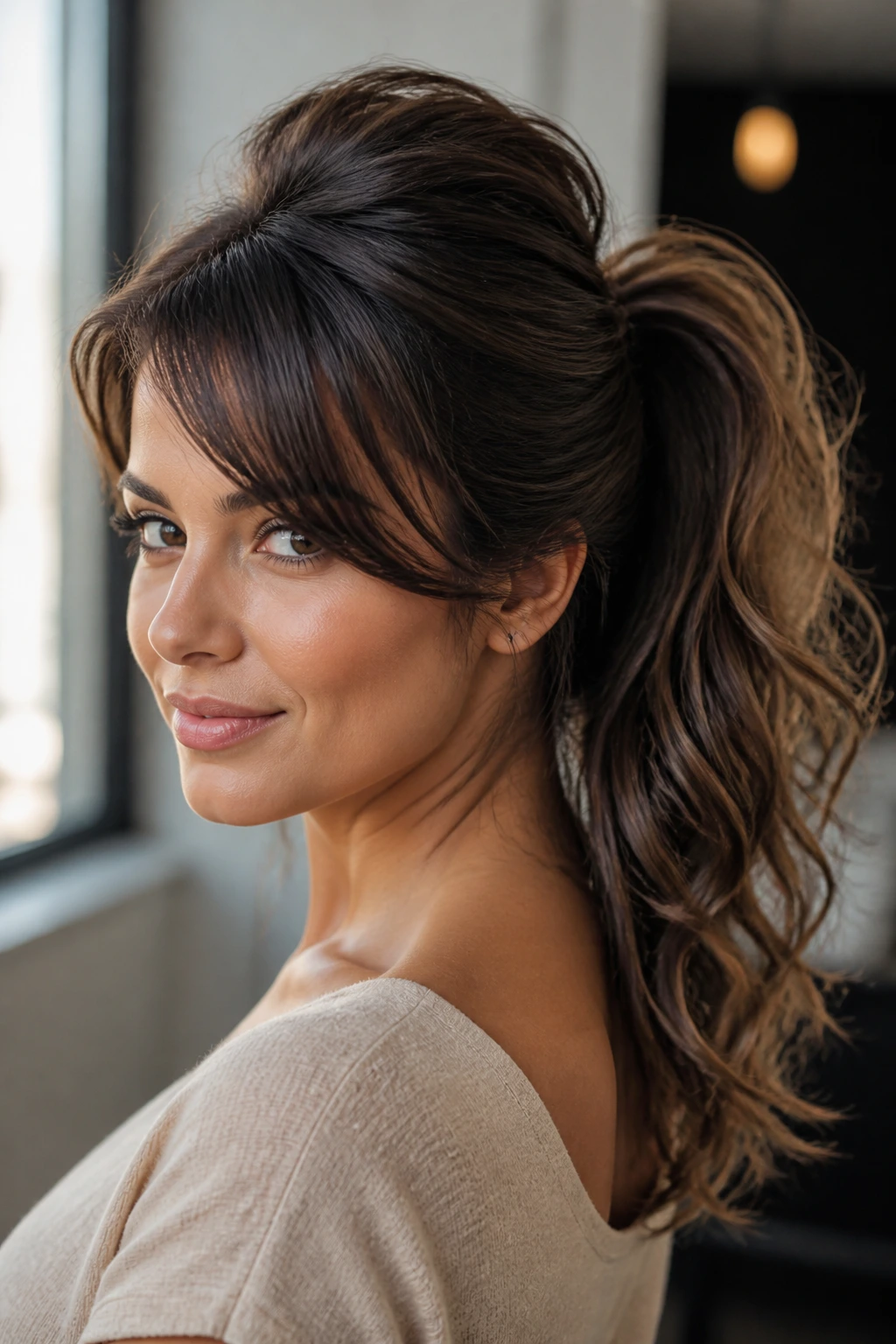
- Root lift without a full blowout: The height comes from the crown and top layers, so you do not need a round-brush marathon before breakfast.
- Side-swept bangs hide the rough spots: A diagonal fringe softens a high crown, disguises a day-two root, and keeps the style from looking severe.
- They work with second-day hair: Hair that has a little grit holds teasing, pins, and texture spray far better than squeaky-clean hair does.
- One base idea, many finishes: Change the placement, the wrapping, or the texture, and the same ponytail reads sleek, casual, retro, or dressy.
- They hold up through the day: A pony that starts with a lifted base and a secure anchor usually slumps less than a flat, tightly scraped-back version.
- They let your bangs do useful work: Side-swept bangs aren’t just decoration here; they help balance the face and make the volume feel intentional.
1. The High Crown Lift Pony
This is the ponytail I reach for when the hair at the roots has gone limp but the rest still has life. The pony sits high enough to lift the cheekbones, yet not so high that it turns into a gym tie-back. Side-swept bangs soften the top line and keep the whole thing from looking like a cheerleader throwback.
Quick way to build it
Start with a deep or soft side part, then mist the crown with dry shampoo and lift 1-inch sections with a teasing comb. Gather the pony at the top-back of the head, not dead center, so the shape feels a little more natural. If the bangs are stubborn, hit the roots with the blow-dryer for 20 seconds while directing the airflow toward the sweep you want.
Best on: fine to medium hair that loses height fast.
Anchor point: just above the crown line.
Finish: flexible-hold hairspray, never a stiff shell.
Time: about 5 minutes if your hair already has texture.
One thing I love here: a tiny pinch-and-pull at the crown after the elastic goes in. It looks small. It isn’t.
2. The Sleek Rope-Wrapped Pony
The sleeker the front, the fuller the pony reads. That’s the whole game here. The crown stays smooth, the pony sits clean and neat, and a small rope-twist wrap at the base adds enough visual weight that the style looks finished instead of plain.
The twist is what makes this version worth bothering with. Pull a narrow section from just behind the side-swept bangs, split it into two strands, twist them tightly, then wrap that twist around the elastic and pin it underneath. It sounds fussy, but once you’ve done it twice, it becomes a habit. The twist gives the base a little architecture, and the smooth crown lets the eye go straight to the shape rather than the frizz.
Use a light mousse on damp hair if your ends tend to puff out. If the bangs are short, keep them loose and let them fall across one eyebrow instead of forcing a deep side sweep. Forced bangs usually look like they’re fighting for their lives.
3. The Soft Teased Mid-Length Pony
Why does a mid-height pony sometimes look fuller than a high one? Because it leaves room for the crown to lift without pulling the face straight back. The eye sees a thicker silhouette, especially when the side-swept bangs break up the front line and keep the style from becoming a single hard shape.
How to style it
Tease only the underside of the top section, then smooth the outer layer with a brush so the teasing stays hidden. Secure the pony right around the midpoint between ear and crown. After that, press the elastic upward a touch with one hand and tug the top layer very lightly with the other; that tiny adjustment creates the kind of volume that lasts longer than a dramatic tease ever does.
This is the style I’d pick for someone who likes volume but hates obvious volume. It reads soft. It behaves well in wind. And if your bangs are long enough to brush the cheekbone, even better.
4. The Elastic-Wrapped Low Pony
Late morning. One eye half-open. You need something that looks like you planned it. This is that ponytail. The base sits low, but the volume comes from a lifted crown and a wrapped elastic, so the whole style feels cleaner than a standard low tie.
The move is simple: create a side sweep, raise the crown with a little teasing or root-lifting spray, then secure the pony low at the nape. Take a thin strip of hair from underneath the pony, wrap it around the elastic, and pin it under the base where no one can see. That wrapped detail does more than hide the band. It gives the pony a built-in finish, which matters when the rest of the morning has been chaos.
- Keeps the neck clear.
- Works with collars and jackets.
- Looks polished on second-day hair.
- Needs almost no heat if the front has been set right.
If your hair slips easily, rough up the roots with a texturizing spray before you gather it. Clean hair and low ponytails do not always make peace.
5. The Bubble Pony with a Loose Fringe
A bubble ponytail can look a little playful, but the side-swept bangs pull it back into grown-up territory. The segmented shape adds volume down the length, which is a nice trick if your pony tends to look skinny by the time it reaches the shoulders.
Build the pony first, then add small clear elastics every 2 to 3 inches down the tail. Gently pull each section outward so it rounds into a soft bubble rather than a sharp sausage. Keep the fringe loose at the front; if you over-sweep the bangs, the style loses that easy balance and starts looking overworked.
What makes it work: the bubbles create width without teasing the whole tail.
What to avoid: pulling every section exactly the same size. Too tidy and it gets stiff.
Best hair length: shoulder blade length and longer.
A little gloss spray on the ends helps here. Not on the roots. Roots do not need shine when you’re trying to fake lift.
6. The Loop-Through Pony with Side Sweep
Unlike a classic ponytail, the loop-through version gives you a soft fold at the base, and that fold adds instant depth. It is one of those styles that looks more complicated than it is, which makes it ideal when you want volume but only have a mirror, two hands, and a dying coffee.
Gather the hair into a pony, leave the elastic a little loose on the final pull, and thread the tail through the center to create that looped bend. Don’t yank it tight. The looseness is the point. Let the side-swept bangs curve across the forehead, then tuck the shorter front pieces behind the loop if they keep escaping.
This one suits medium to thick hair best because the loop has enough mass to hold its shape. Fine hair can do it too, but the pony needs a little dry shampoo at the root first or the whole thing collapses into a limp hinge.
7. The Bouffant Nape Pony
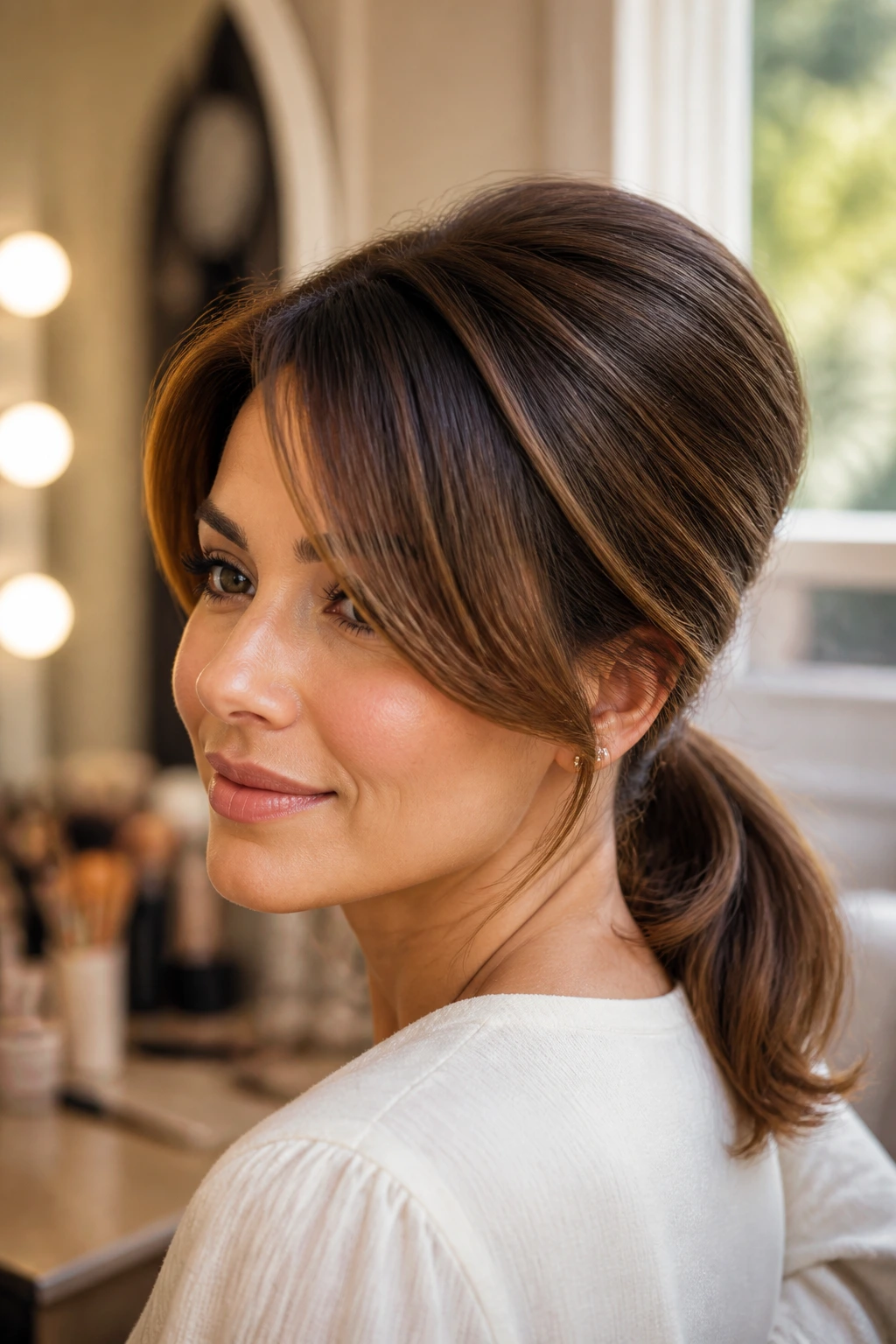
The bouffant nape pony has a slightly retro feel, but not in a costume way. It gives you that lifted crown, a smooth side-swept front, and a low ponytail that sits right at the nape like it actually belongs there. The result is soft but not sleepy.
What to notice as you build it
- Tease a 2-inch panel at the crown, but keep the top layer smooth.
- Brush the bang section diagonally toward the opposite cheekbone.
- Set the pony low and secure it with a snag-free elastic.
- Pull the crown up a few millimeters after the elastic is in.
- Finish with a light mist, then stop. More spray just makes the hair feel dusty.
The bouffant shape is useful when the back of your head needs more presence than the front. It gives the ponytail a little spine. If you have a round face, that lift can be flattering; if you have a long face, keep the crown softer so you do not exaggerate length.
8. The Braided Crown Ponytail
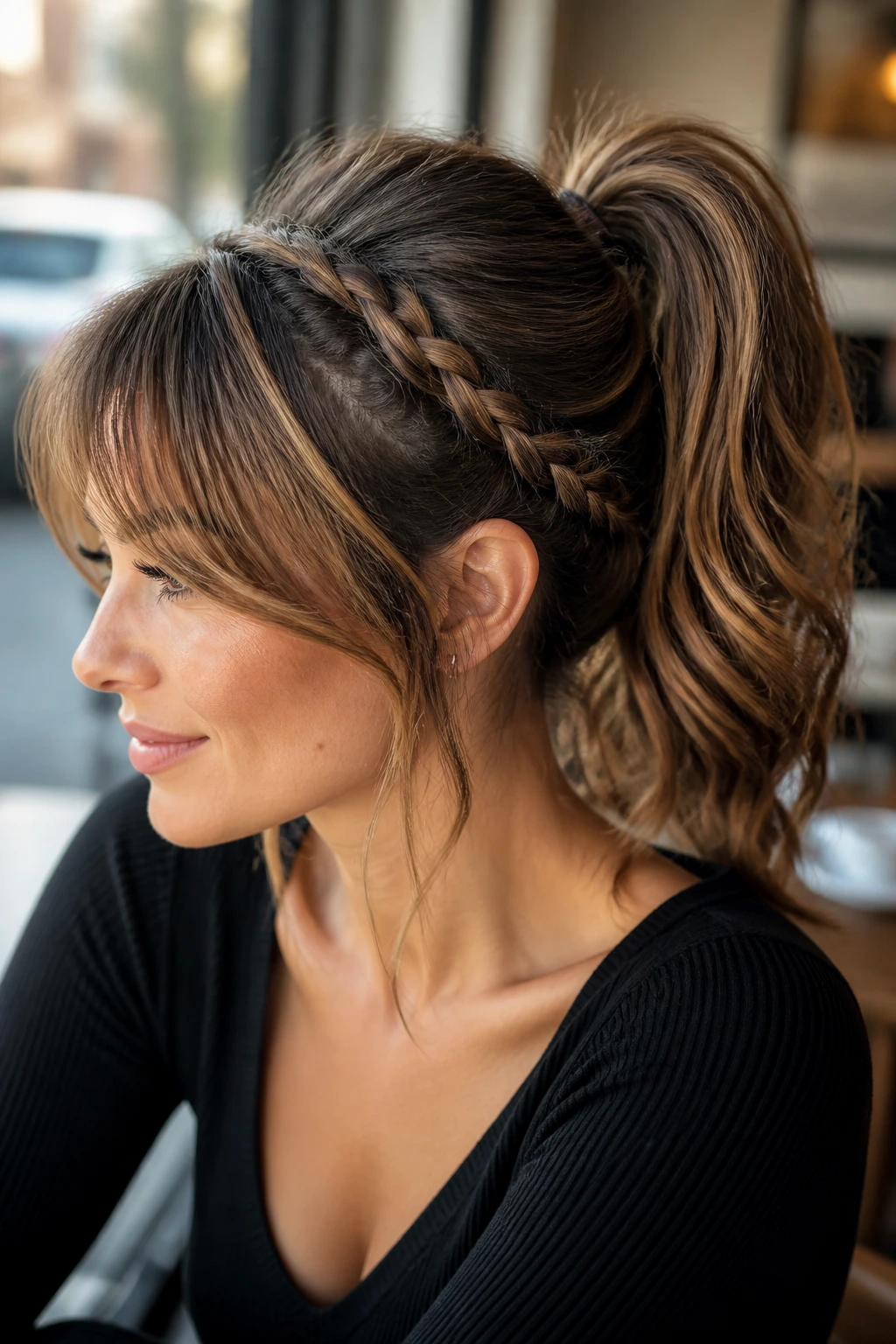
Can a braid and a ponytail share the same head without turning into a tangled mess? Yes, if the braid stays narrow and the ponytail stays simple. The braid acts like a visual frame, and the side-swept bangs stop the whole thing from looking too rigid or too precious.
Start a small three-strand braid from the heavy side of the part, usually just above the temple, and carry it back toward the ponytail base. Don’t braid the whole front section unless you want the style to read bohemian. Here, the braid is a detail, not the main event. Secure everything into a mid or high pony, then tuck the braid into the side so it blends into the base.
Best use case
This is the style for mornings when you want the front of the hair to stay put all day. The braid holds the side sweep in place better than hairspray alone, which is useful if your bangs split the second you step outside.
9. The Flipped-Ends Pony
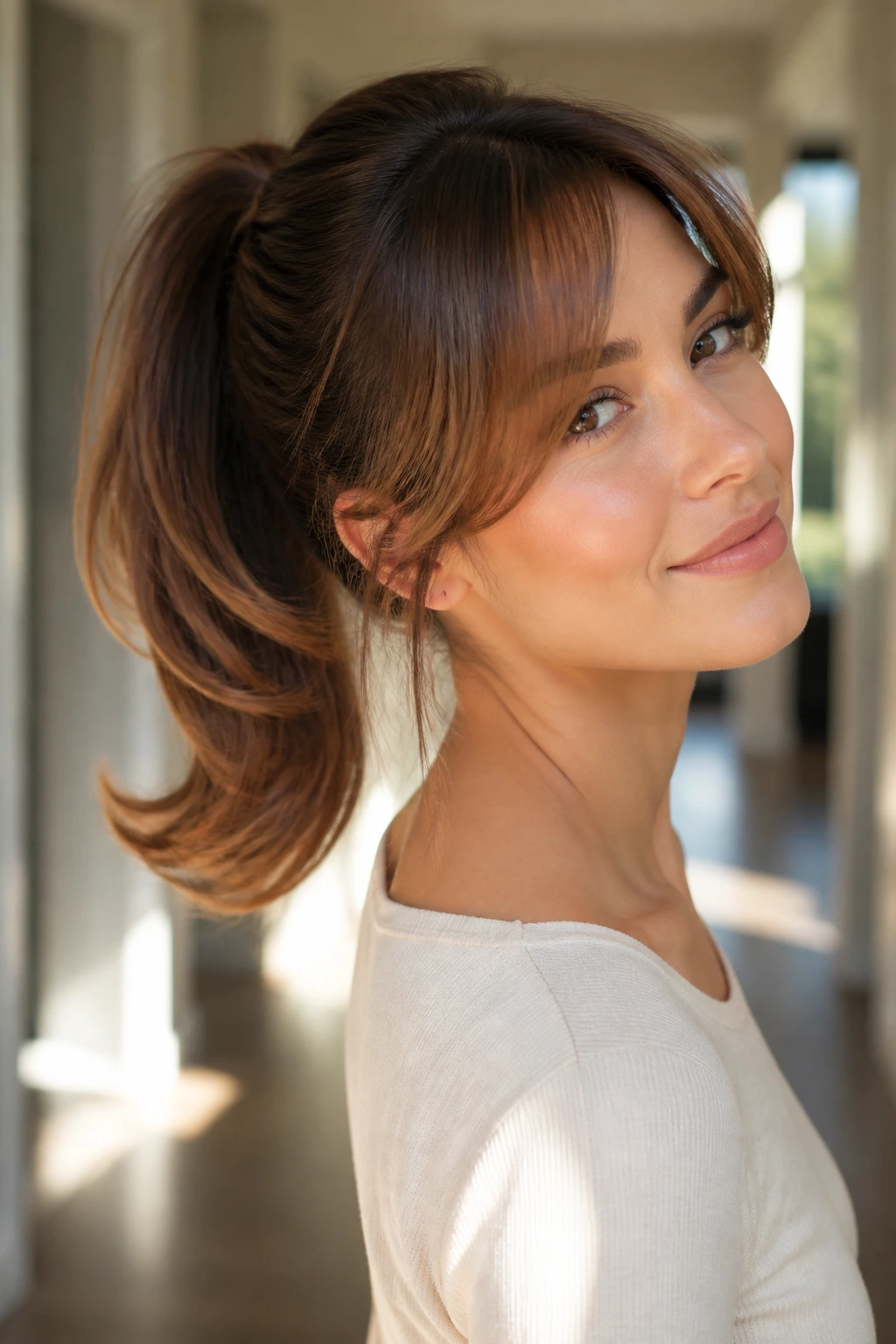
The ends do half the styling work here. If they’re flat and dead straight, the pony looks unfinished. If they’re turned under or flicked out just a little, the whole shape feels fuller, even if the base is simple.
Wrap the pony high or mid-height, then use a 1-inch iron, a round brush, or even a quick twist of the blow-dryer to give the ends some bend. The side-swept bangs should echo that movement, not fight it. A soft front and a lively tail are a good match. Too much curl in the bangs and the style gets fussy. Too little and it loses the link between front and back.
I like this one for hair that sits flat at the ends no matter what else you do. A little flip breaks the long line and tricks the eye into seeing more body. It’s not subtle, and that’s the point.
10. The Claw-Clip Lift Pony
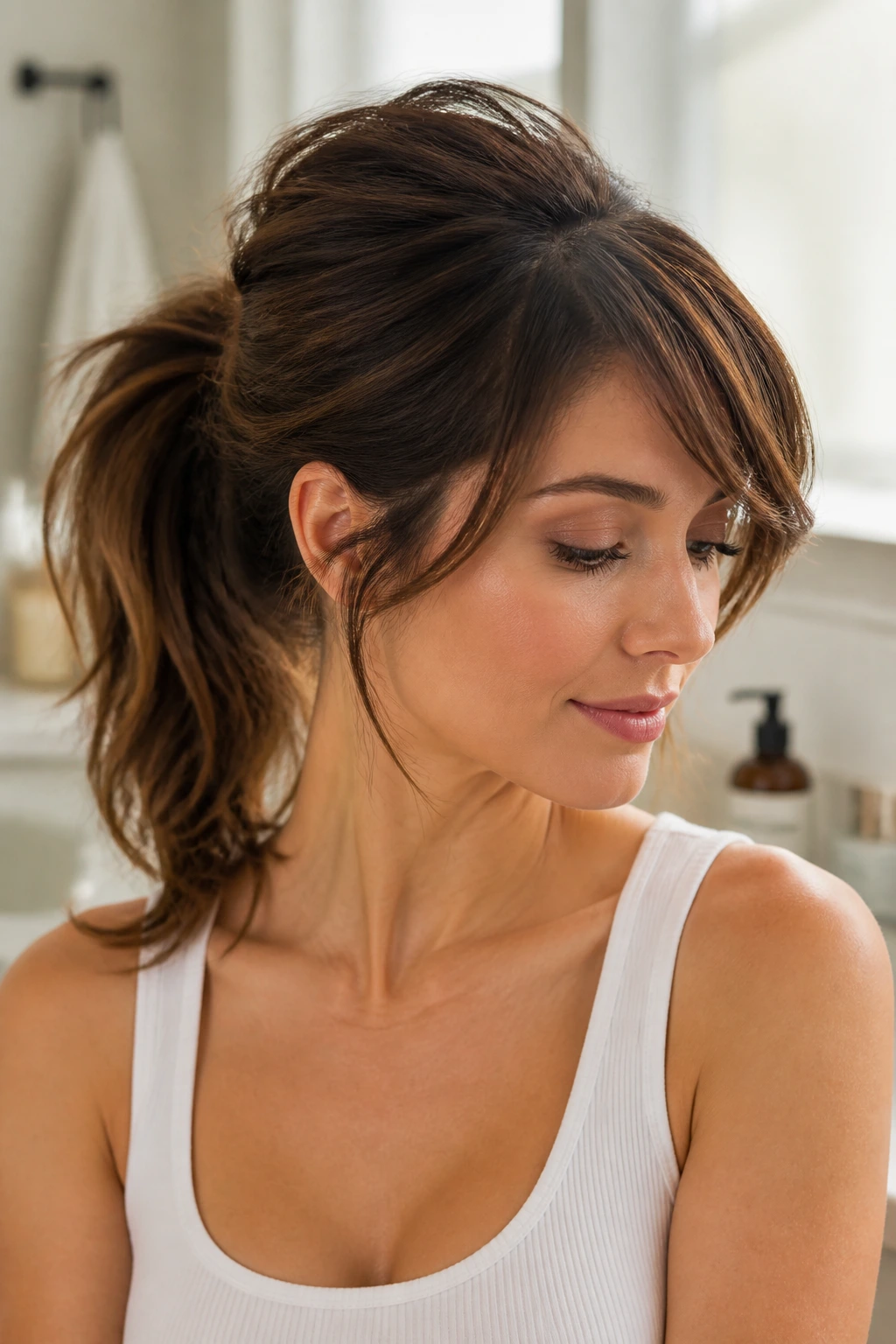
Sometimes you do not want to tease your hair at all. You want lift without the damage, and you want to be done before your tea gets cold. A claw-clip lift pony gets there by building volume at the base before the elastic ever goes in.
Lift the crown with your fingers, clamp a small clip underneath the top layer for two or three minutes while you do makeup or brush your teeth, then remove it and gather the pony where the clip created that bump. The side-swept bangs help hide the transition from lifted crown to smooth front.
- Good for fine hair that hates heavy teasing.
- Useful on fresh hair that needs a little grip.
- Fast enough for a school-run morning.
- Easier to refresh later than a heavily backcombed style.
If the clip shows through, you placed it too high. It should disappear under the top section, not sit like an accessory. Tiny difference. Annoyingly important.
11. The Curled Ends Pony
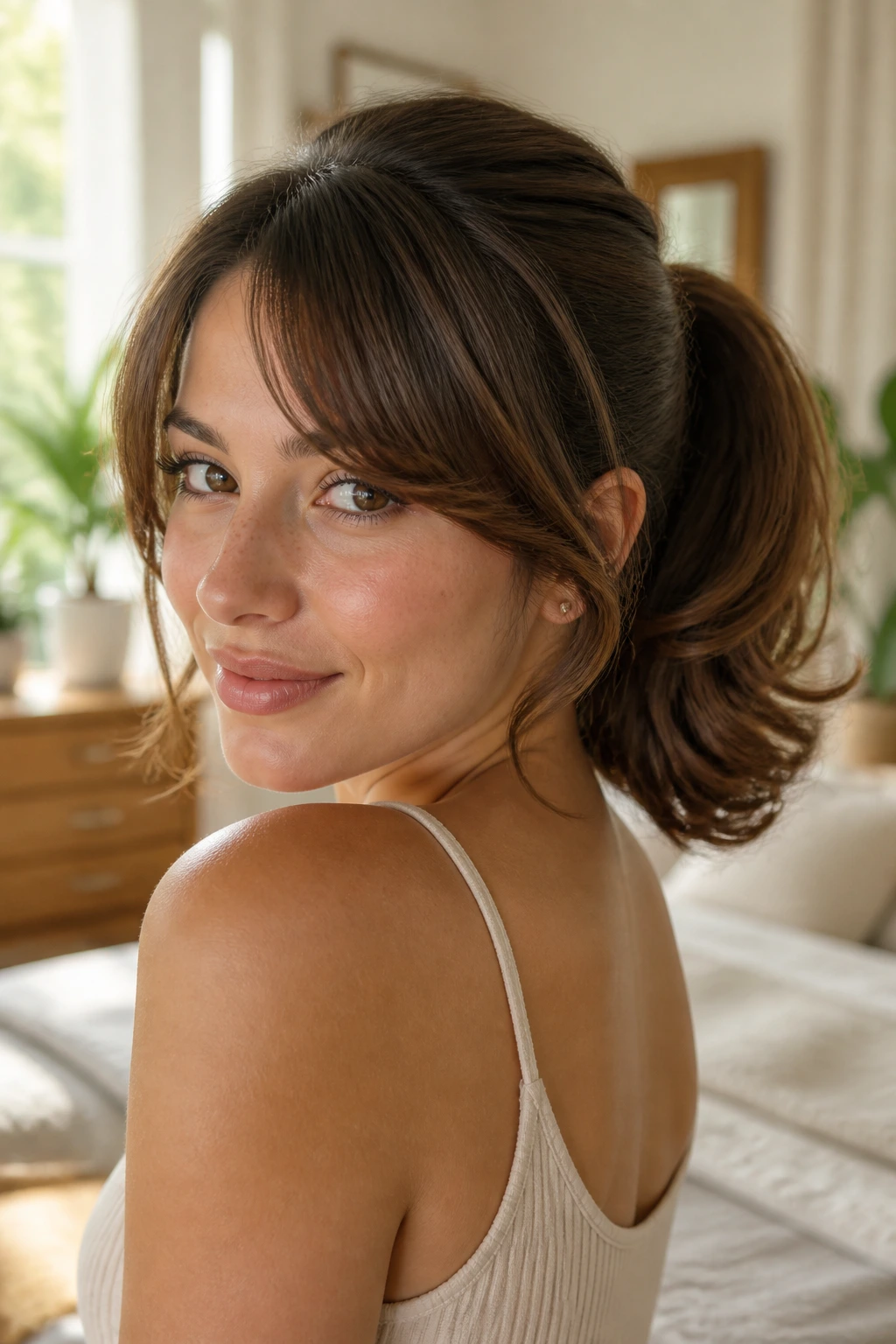
Soft curls at the ends change the whole mood of a ponytail. They make the tail look denser, and with side-swept bangs in front, the style gets a little movement on both sides of the face instead of looking pulled in one direction.
Use a 1-inch barrel for shoulder-length hair and a 1¼-inch barrel if the hair is longer. Wrap the last third of the pony around the iron, not the whole length, so the roots stay calm and the ends get the lift. That contrast is what makes the style read polished instead of bridal.
The bangs should stay smooth and slightly curved. If they’re curly too, the style can go full glam quickly. That’s not bad, but it’s a different look. For busy mornings, a soft bend is enough.
12. The Sporty High Pony with Tucked Bangs
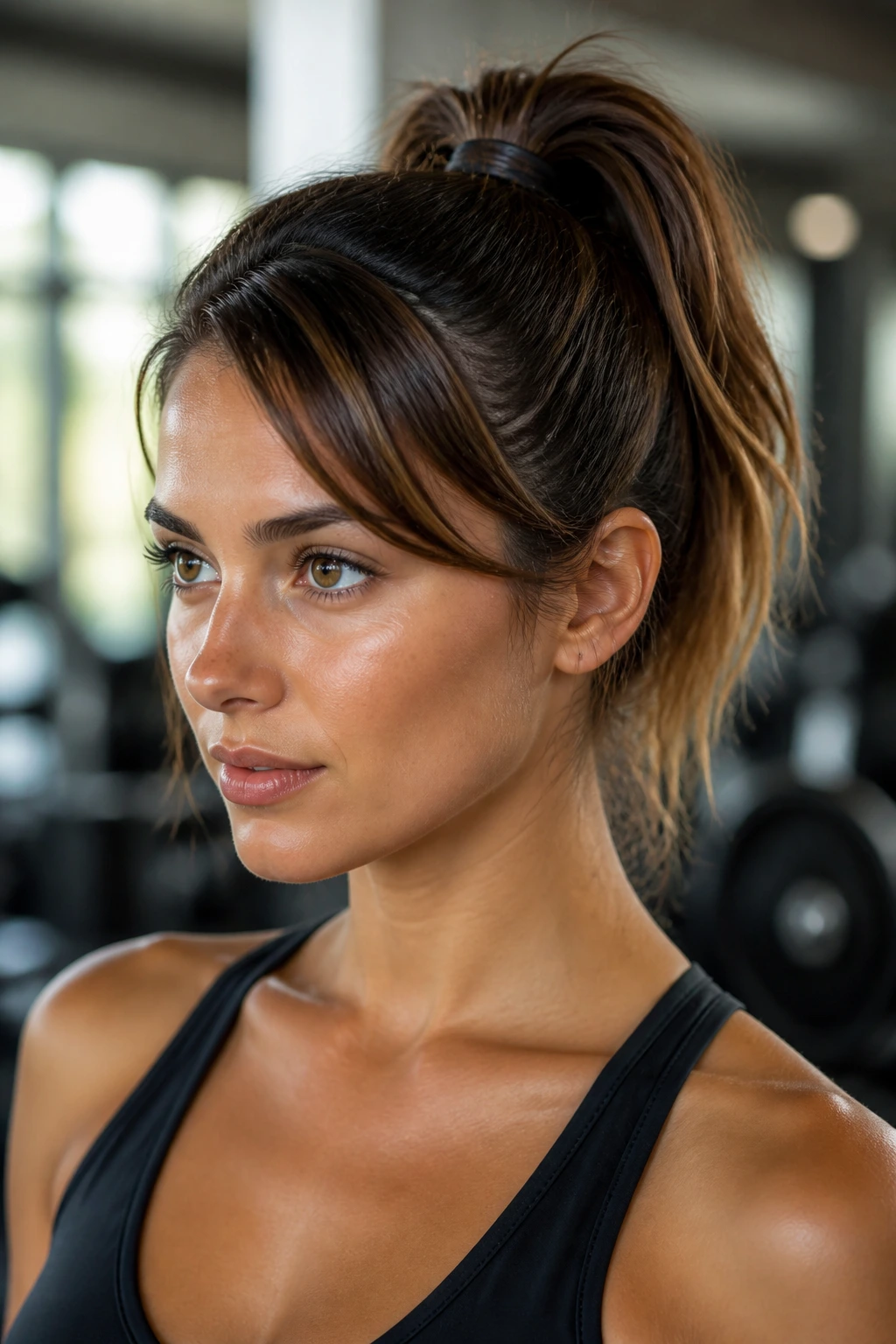
A sporty high pony is not the same thing as a sloppy one. The difference lives in the bangs. Tucked side-swept bangs keep the front clean, while the lifted crown gives the pony some shape so it doesn’t collapse into a plain elastic tie.
Compared with a gym pony, this version uses more control at the sides and more height at the top. That makes it better for days when you want to look awake in a hurry. It also works well if you plan to move around a lot, because the side sweep can be secured with one pin just behind the temple.
Choose a matte paste for the front if your hairline needs taming. Choose a light spray if the crown tends to frizz. Do not use both heavily. The style needs grip, not glue.
13. The Half-Up Crown Boost Pony
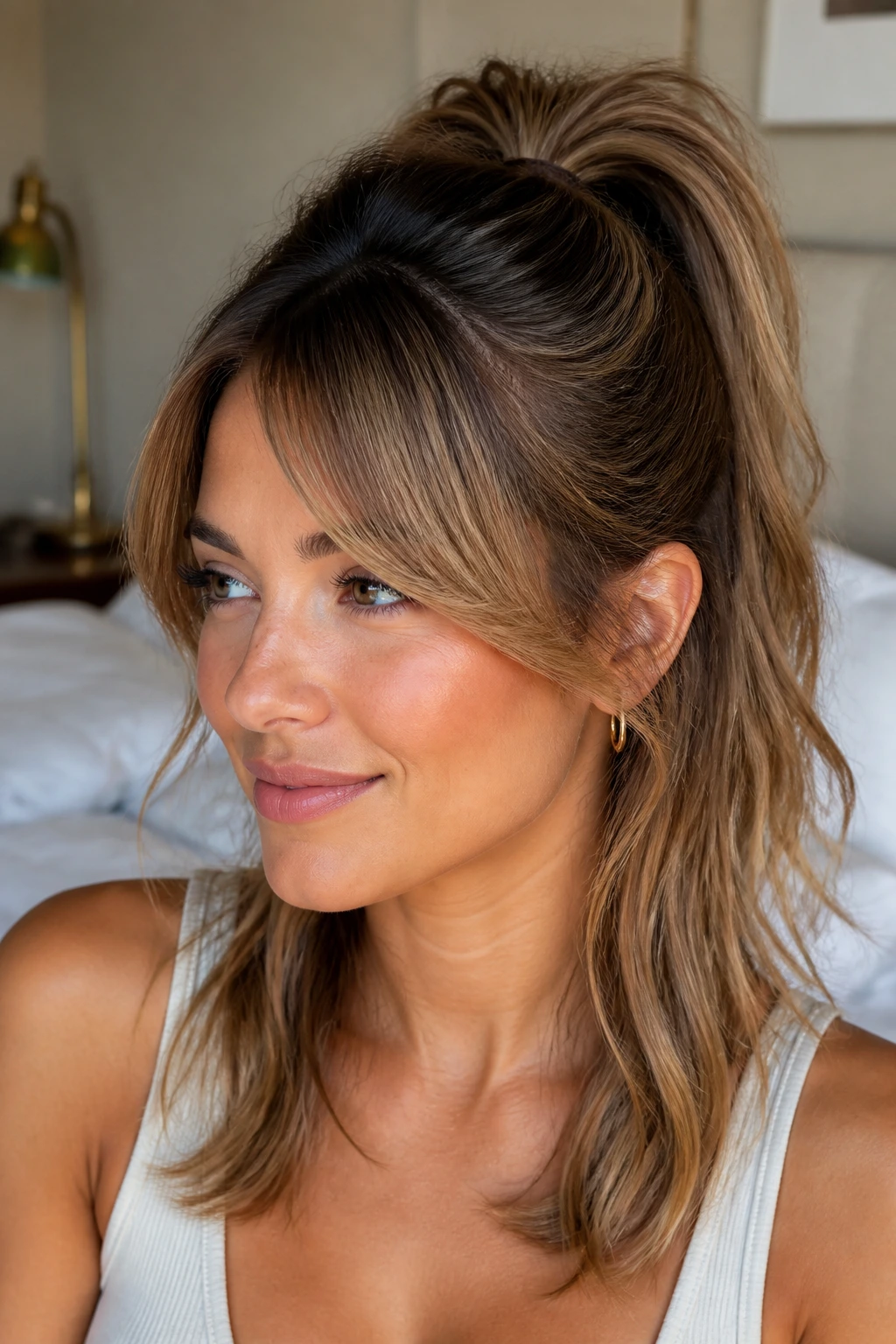
What if your hair only needs lift at the top, not all the way through the length? Then a half-up crown boost pony makes more sense than forcing every strand into one base. It gives the illusion of thickness up top and leaves the bottom free, which is useful for medium-length hair that gets overwhelmed in a full pony.
Pull the top half into a high pony, smooth the side-swept bangs across the forehead, and leave the bottom layers loose and straight or lightly waved. The trick is to keep the top section broad enough to create height but not so broad that the pony loses shape. If the crown is flat, gently pinch the roots after tying. If the bottom layer is thick, let it fall naturally; trying to polish every inch ruins the effect.
Best for
- Hair that hits the shoulders.
- Layers that fall out of full ponytails.
- Days when you want movement without a heavy tie.
This one is quietly flattering. It does not shout.
14. The Side-Anchor Twisted Pony
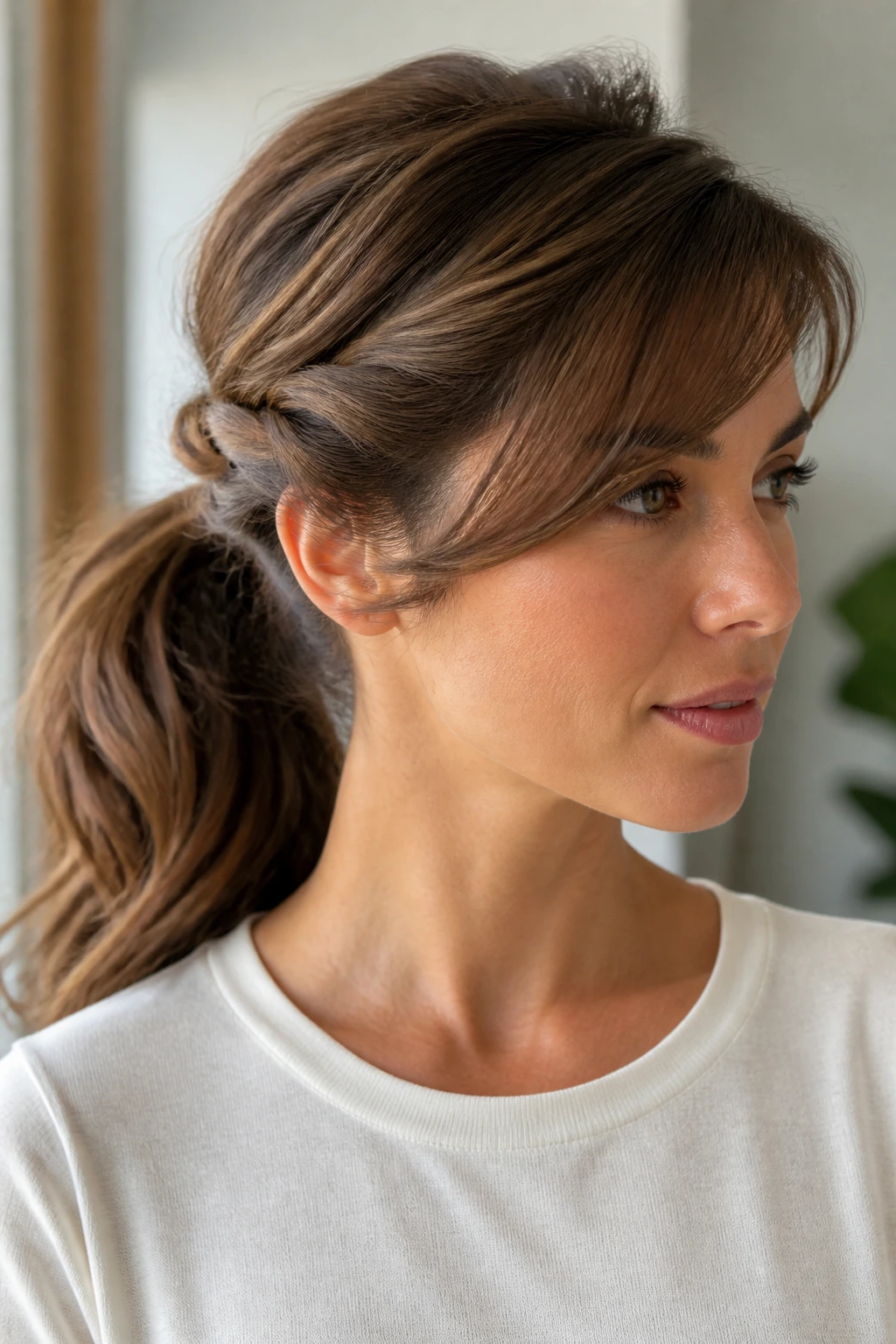
The anchor twist is what sells the volume. Instead of dragging the whole front straight back, you twist each side section toward the ponytail base and pin it low under the top layer. That creates lift at the front and a little shadow at the sides, which makes the ponytail look thicker than it is.
The side-swept bangs should flow into the twist on the heavier side of the part. Keep the twist loose. Tight twists flatten the crown and expose the scalp in an awkward way. Loose twists give the hair room to sit up.
This style is a good answer for hair that wants to puff at the temples but fall flat at the crown. The twist controls the sides, the bangs soften the forehead, and the ponytail gets enough support that it does not droop by noon. Not a bad trade.
15. The Mini-Fishtail Wrapped Pony
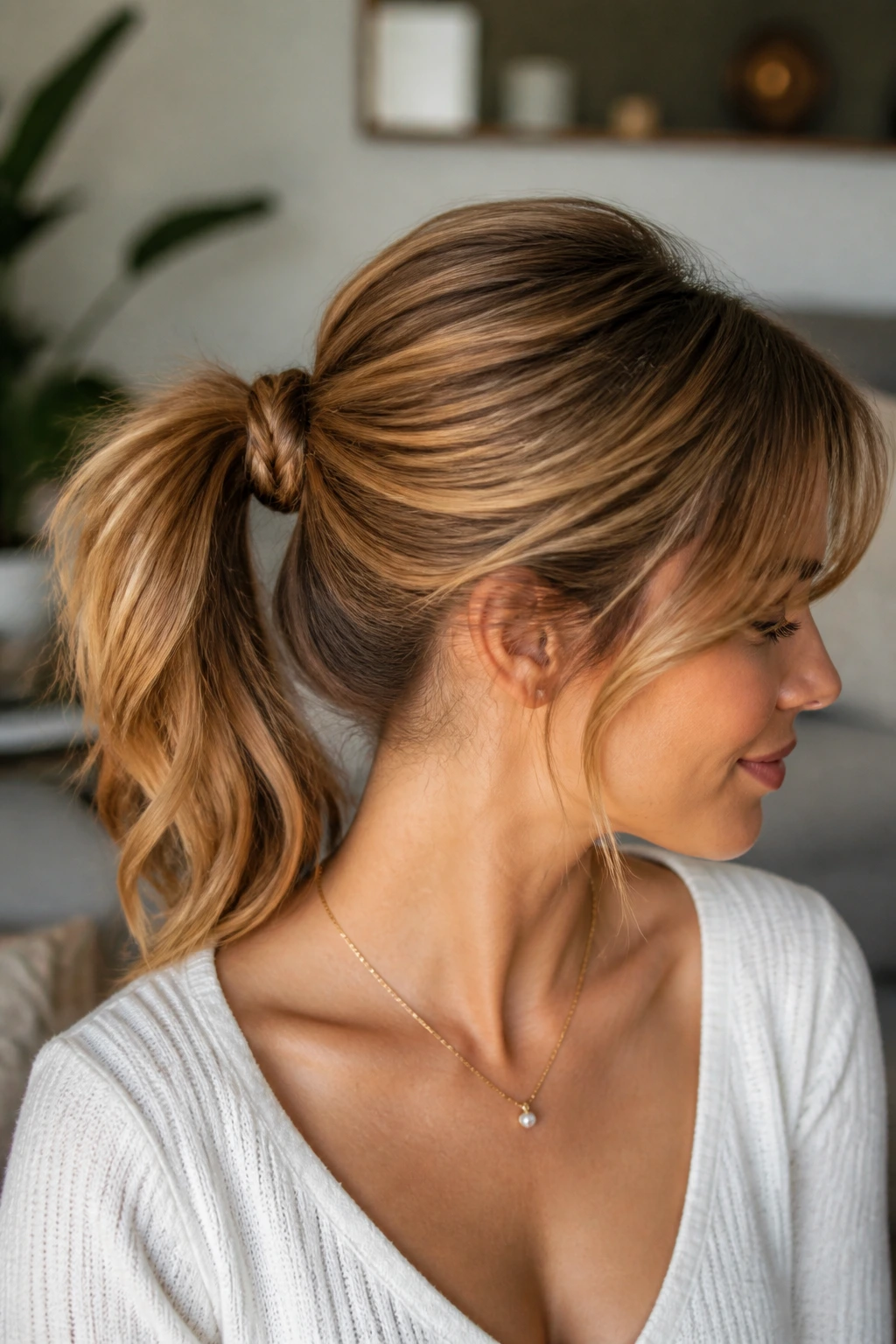
A tiny fishtail wrap around the base is a nice way to make a plain pony feel finished without adding real time. The texture from the fishtail gives the eye something to land on, and the side-swept bangs keep the front from becoming too busy.
Braid a narrow fishtail from a front section or from a bit of the ponytail itself, then wrap it around the elastic and pin it under. The braid does not need to be perfect. In fact, a slightly uneven fishtail usually looks better here because the texture blends with the volume at the crown.
This is one of those styles that rewards hair with a little grip. Day-two hair, dry shampoo, or even a bit of roughness from previous styling helps the braid stay visible. Slick hair can do it too, but it needs a touch of texture spray first or the wrap slips.
16. The Ribbon-Tied Volume Pony
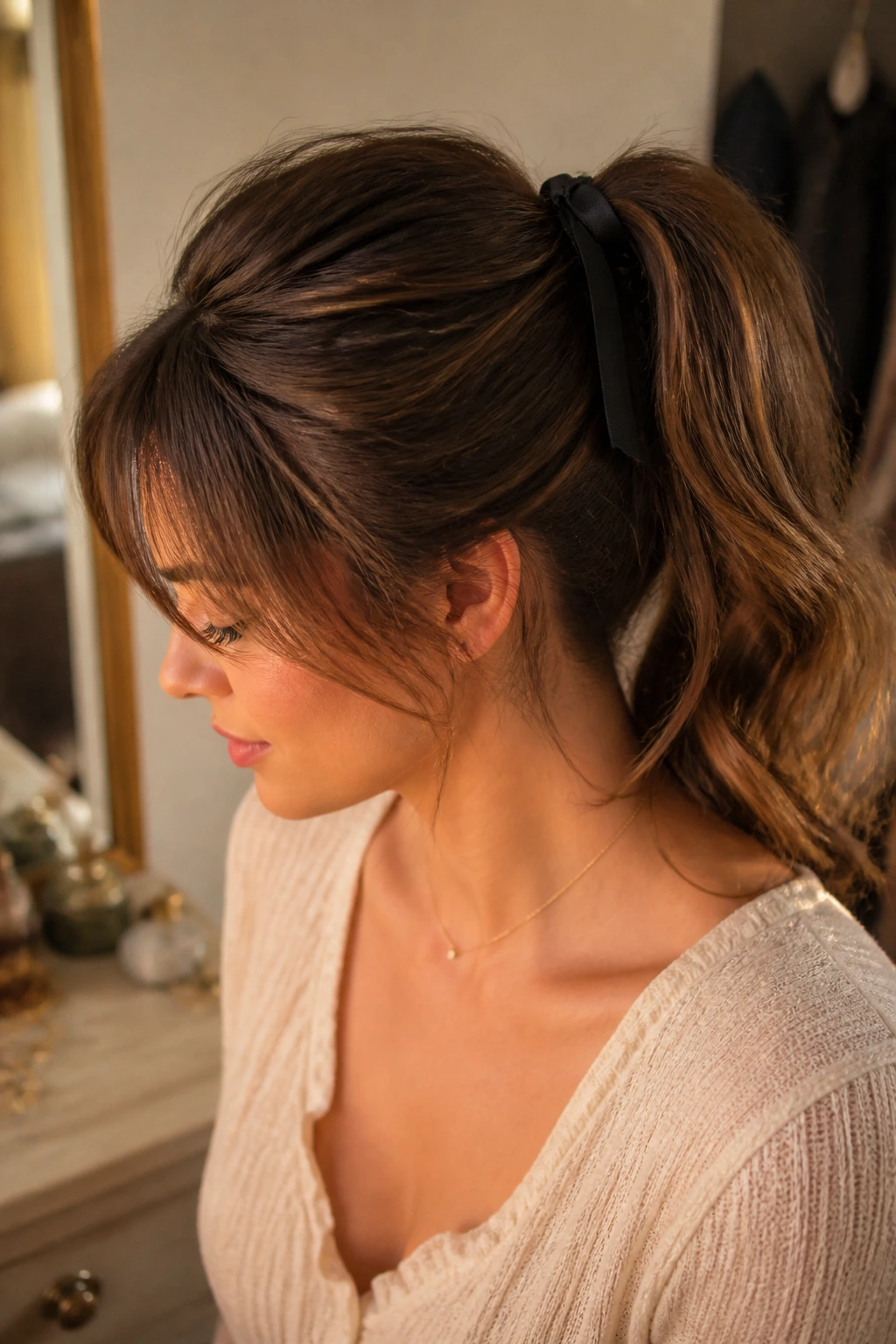
A ribbon tied around the base changes the tone fast. It can take a ponytail from plain to finished in one minute, and because the ribbon hides the elastic, the base can stay just a little loose without looking messy. That slack matters when you’re trying to keep volume alive.
Pick a narrow ribbon in a matte fabric if you want the style to feel easy. Satin reads dressier and can slide more. Tie the pony first, pull the crown up a touch, then knot the ribbon around the elastic and let the tails fall softly. The side-swept bangs keep the front from fighting the ribbon’s shape, which is half the reason this works at all.
If you want the style to last, pin the ribbon knot under the pony instead of letting it sit on top of the head. It keeps the look cleaner and stops the ribbon from drifting off to one side.
17. The Crimped-Root Pony
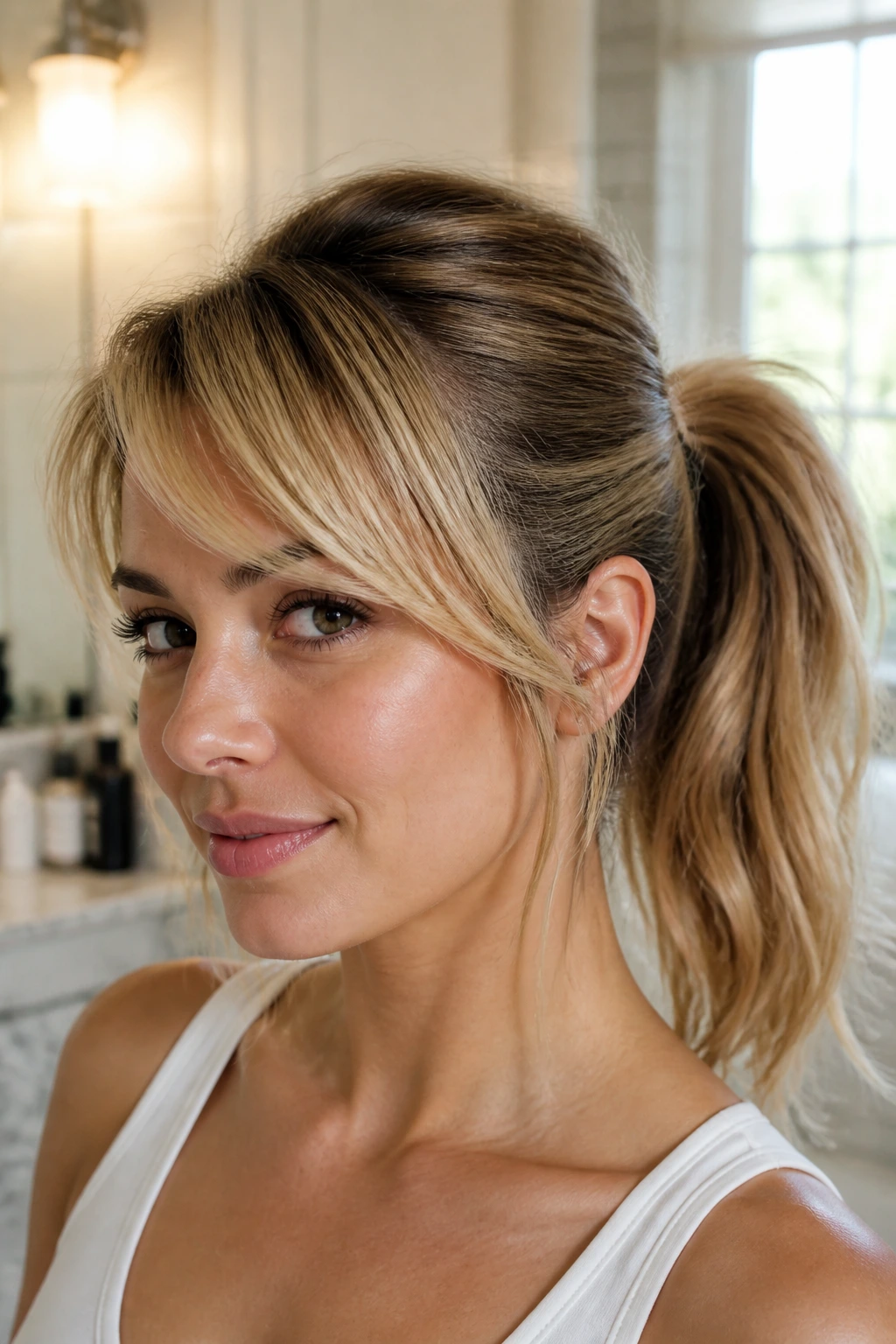
Crimped roots sound dramatic, but the move can be subtle. You do not need full 90s zigzags from forehead to nape. Just a light crimp under the top layer gives the crown enough texture to hold up against flat hair and humid air.
Run a crimper or create tiny overnight braids in the underlayer, then smooth the surface with your hands so the crimp stays hidden. Gather the pony, let the side-swept bangs fall where they want, and stop before the style gets too polished. Crimped texture likes a little freedom.
This works well for hair that refuses to hold teasing. It gives volume from the inside out. The surface stays soft, the base stays lifted, and the whole thing looks fuller even when the pony is only medium-height.
18. The Messy Nape Pony with Soft Ends
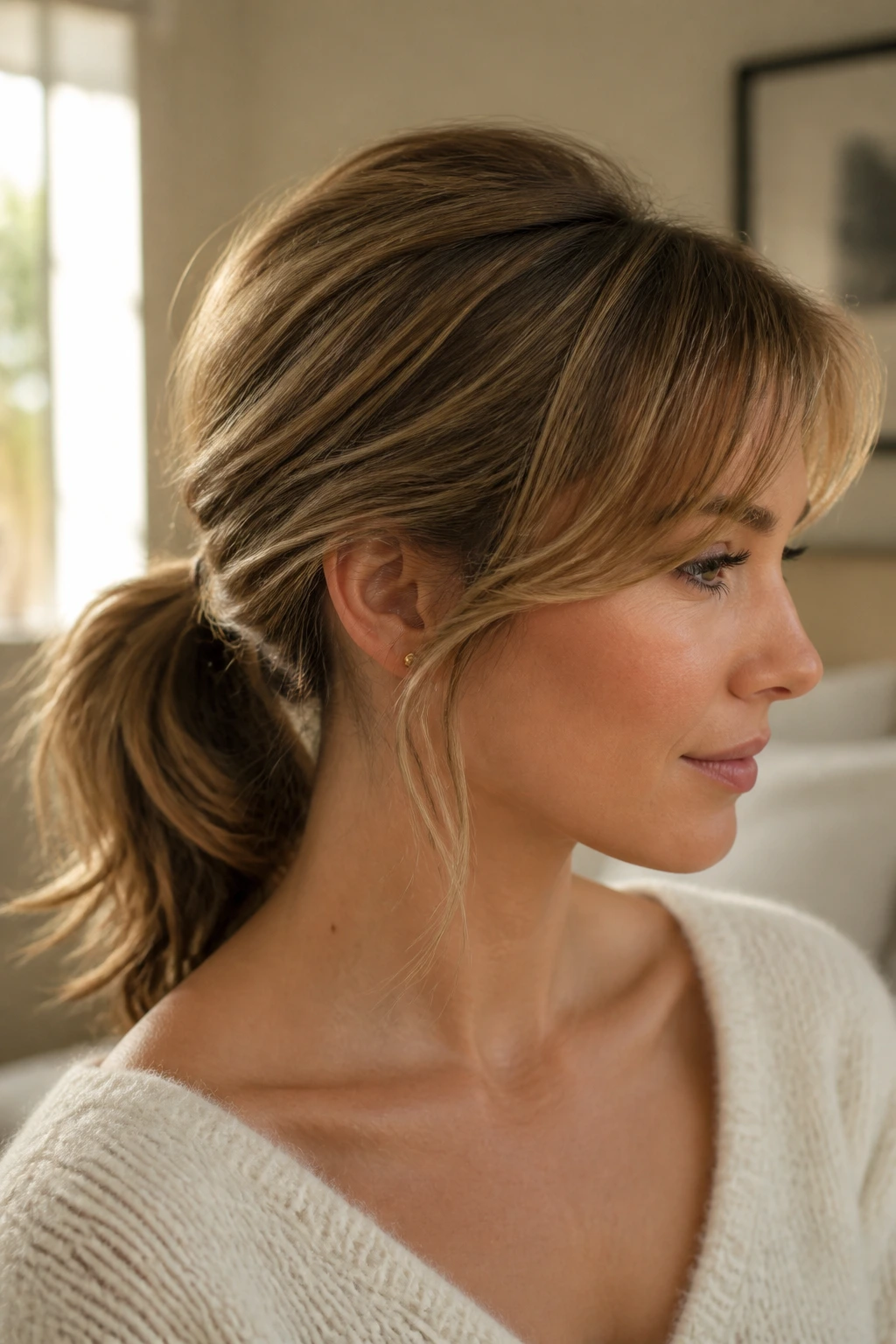
Compared with a sleek low pony, this one has more air around the head and less tension at the hairline. That makes it a better choice when your scalp feels tender, your bangs are acting stubborn, or your hair simply looks better with a little bend instead of a hard line.
Gather the pony low, but not tight. Let a few crown pieces stay loose enough to create a soft ridge, then curve the side-swept bangs across the forehead and tuck the ends behind the ear if they won’t behave. The tail itself should stay soft, with gentle bends rather than a sharp finish.
This is the style I’d choose for thick hair that fights high placement. It lies better at the nape, and the loose crown keeps it from looking like a heavy knot at the back of the head.
19. The Hidden-Pin Lift Pony
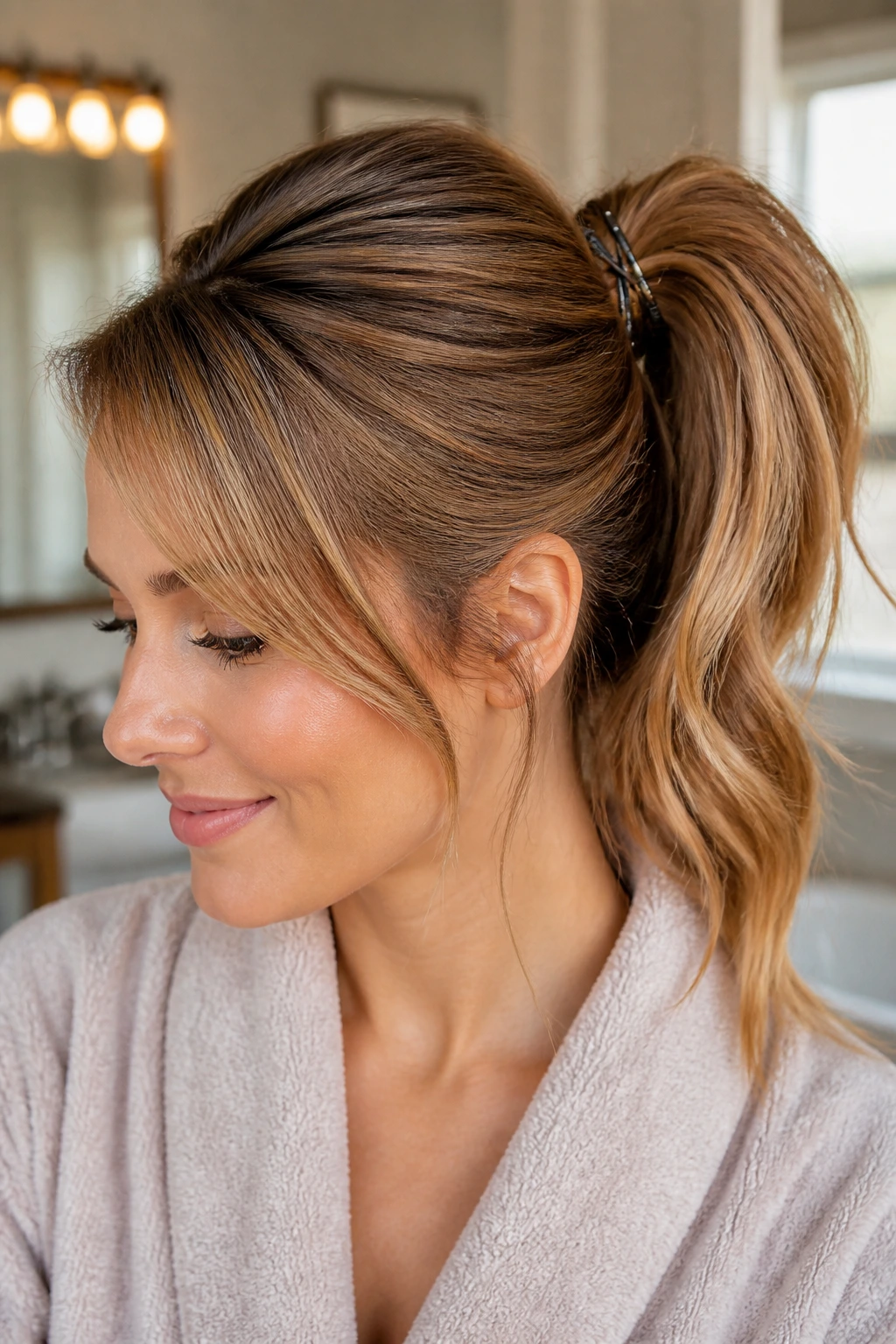
The secret here is not teasing. It’s pinning. A couple of crossed bobby pins under the pony base can lift the entire shape without adding much bulk, which is useful when you want height but hate visible backcombing.
After you secure the pony, slide one pin upward from underneath the base and another across it in the opposite direction. The crossed pins create a tiny shelf that props the pony up. Then smooth the side-swept bangs into place and press the crown lightly with your fingertips. Not flat. Not puffy. Somewhere in the middle.
This method is especially good for medium hair that slips out of elastic-heavy styles. It also keeps the crown from collapsing when the pony is low and the hair has a lot of weight at the ends.
20. The Three-Minute Rescue Pony
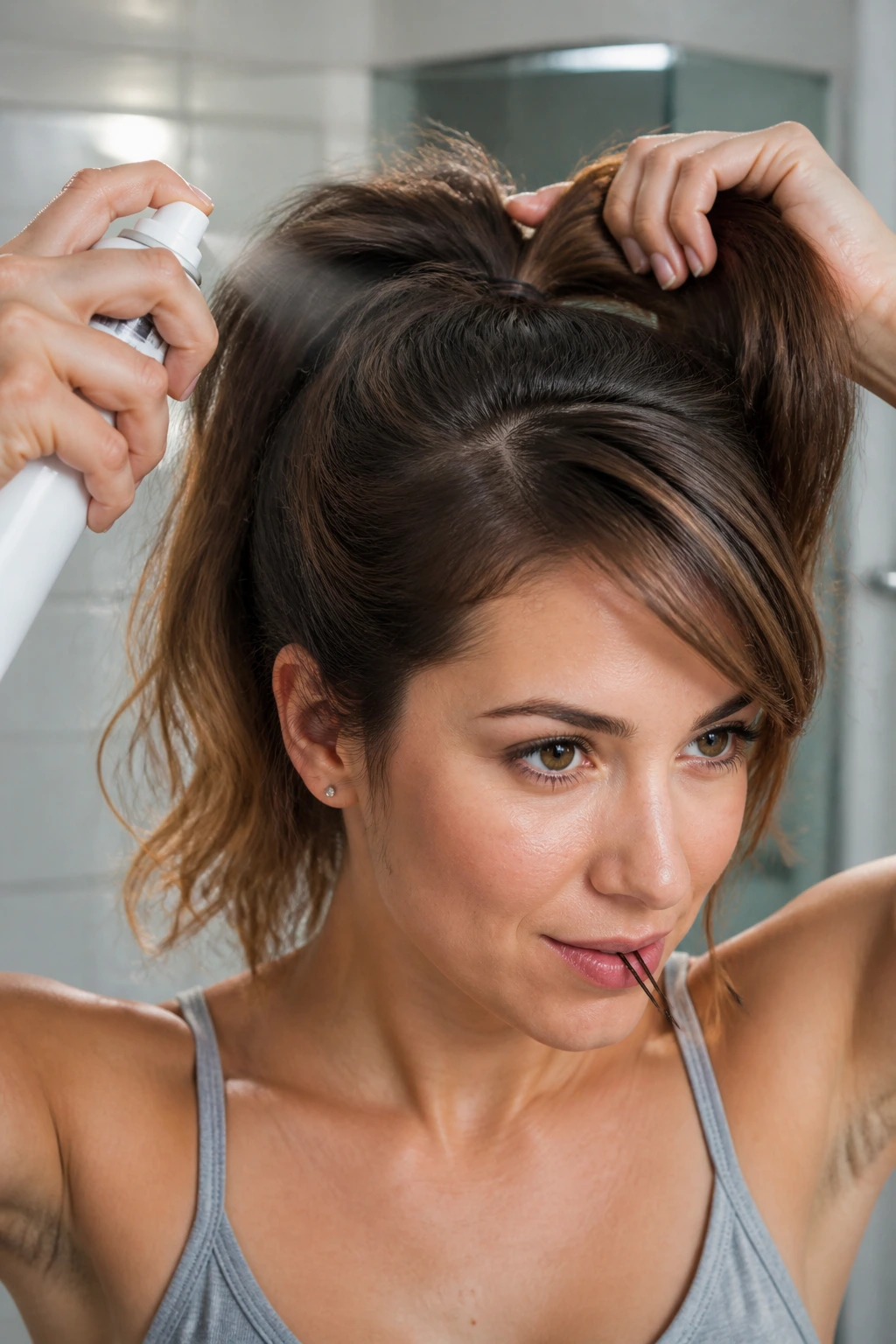
What if you have three minutes and your hair looks like it lost an argument with your pillow? Start here. This is the emergency pony: dry shampoo at the roots, a fast side sweep, one elastic, one pin, done. It is not fancy, but it can be saved.
Shake dry shampoo into the crown, wait ten seconds, then massage it in with your fingertips so it disappears. Sweep the bangs diagonally, gather the hair at a medium-high point, and secure it. If the crown still looks too flat, slide a bobby pin under the base and tug the top layer up a touch. That lift is small, but it keeps the style from looking pasted to the head.
Why it works in a rush
The style depends on shape, not detail. If the crown rises and the bangs move across the forehead with some softness, most people will read the whole thing as intentional. That is a useful truth on rushed mornings.
Why Volume and Side-Swept Bangs Work So Well Together
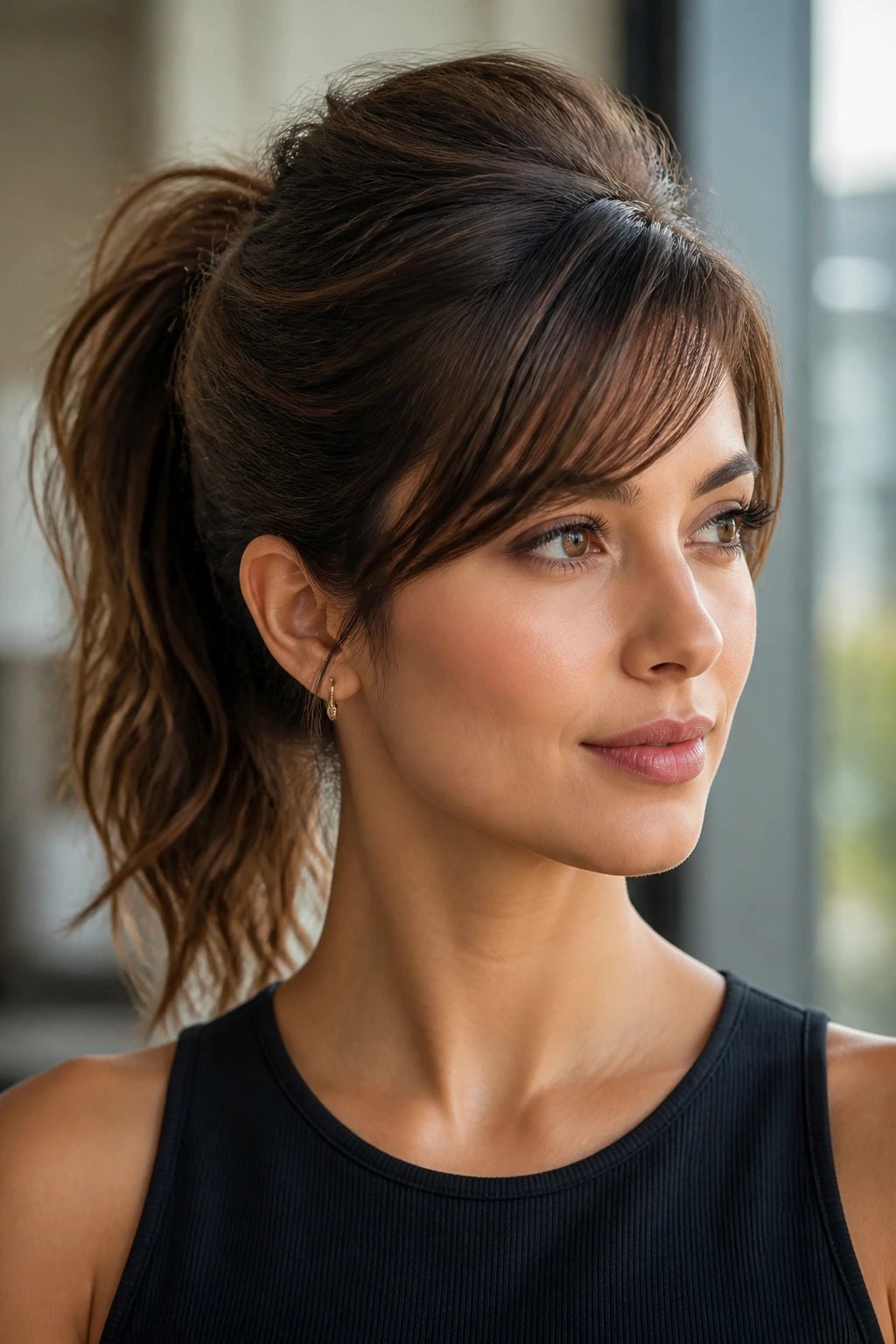
Side-swept bangs are doing more than framing the face here. They create a diagonal line, and diagonal lines are forgiving. They blur the join between the lifted crown and the ponytail base, which matters a lot when you’ve teased the hair or added a root-lifting product and do not want the front to look stiff.
The volume itself should happen at the crown, not all over the head. That keeps the silhouette clean. A ponytail with height at the top and softness at the front usually reads more finished than one that has been puffed everywhere, because the eye can still find a shape. Too much volume at the sides makes the head look wider than it needs to be.
There’s also a practical reason this pairing works. Side-swept bangs are easy to refresh during the day. If they separate, you can mist the roots, pinch the line back into place, and keep going. The ponytail does the heavy lifting. The bangs do the repair work. That’s a decent division of labor.
Essential Tools for These Styles
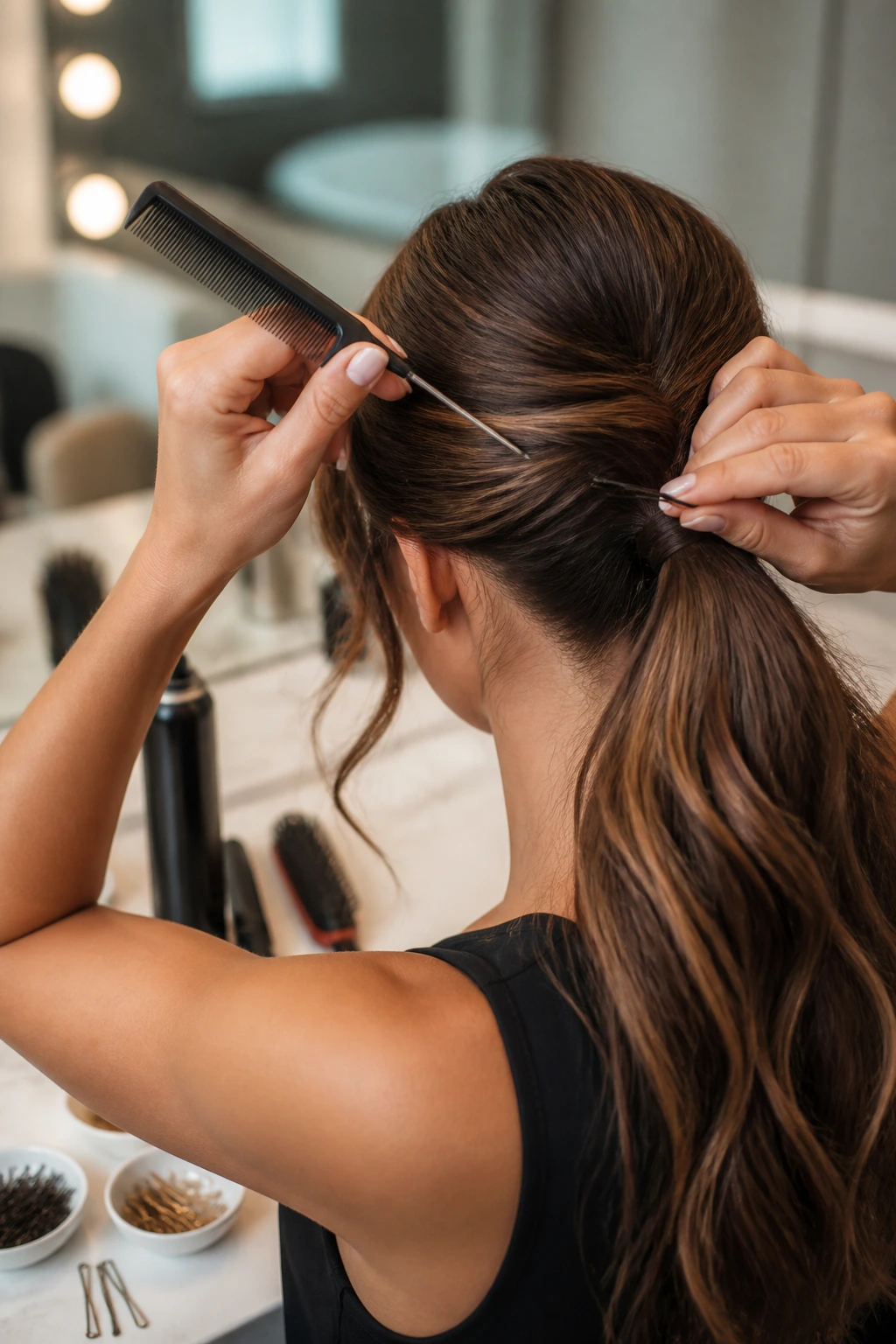
- Tail comb: The pointed end helps with clean parts and with lifting the crown one section at a time.
- Teasing comb or fine brush: Useful for adding hidden root lift under the top layer without roughing up the surface.
- Dry shampoo: Best for giving fine or clean hair a little grip at the roots before styling.
- Flexible-hold hairspray: Keeps the bangs and crown in place without turning the hair crunchy.
- Snag-free elastics: Clear or matte elastics hold better and pull less than old rubber bands.
- Bobby pins: Crossed pins under the base can prop up the pony and hide loose side pieces.
- Round brush: Handy for directing side-swept bangs and bending the ends of the ponytail.
- Blow dryer with nozzle: The nozzle matters more than people think; it helps aim airflow at the roots instead of blasting hair everywhere.
- Texture spray or volumizing powder: Optional, but useful when the hair is too clean or too slippery to cooperate.
Keep the tools near where you get ready. If you have to hunt for the tail comb while one side of your hair is already half tied, the style gets messier than it needs to be.
Smart Prep for Volume Ponytails on Busy Mornings
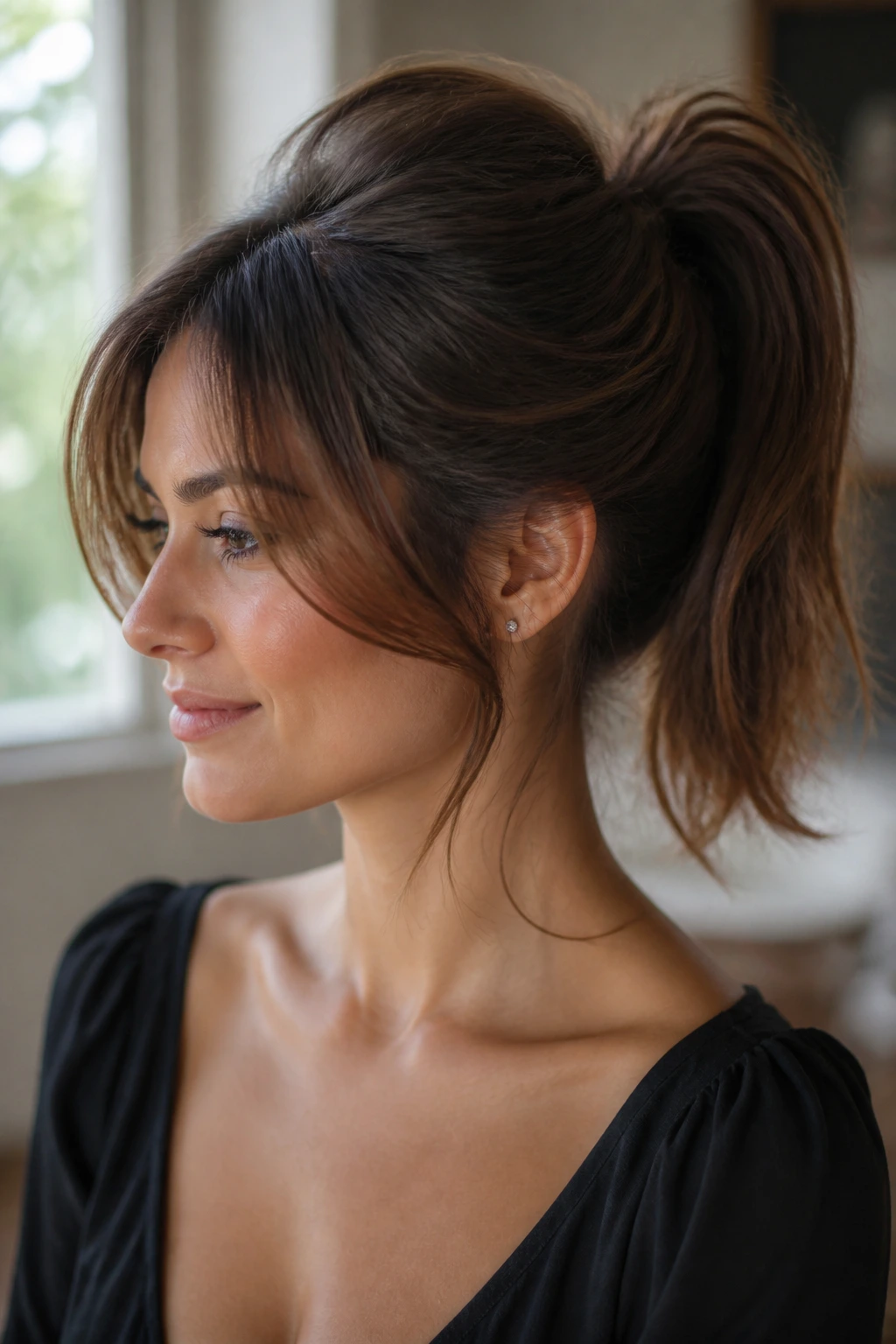
The prep matters more than the ponytail itself. Clean hair can work, but hair with a little grit usually behaves better because it holds shape instead of sliding around the elastics. If your hair is freshly washed and fluffy, put dry shampoo or texture spray at the roots before you start. Let it sit for a minute, then brush it through only at the surface.
Fine Hair
Fine hair needs lift underneath, not just product on top. Use a light mousse at the roots on damp hair, blow-dry the crown in the opposite direction of the part, and keep the pony placement slightly higher than you think you need. Too low and the style collapses fast.
Thick Hair
Thick hair has the opposite problem. It can get bulky at the base and heavy at the nape. Work in sections, use a smoothing cream on the front half only, and keep the elastic strong enough that you do not have to wrap it three times. Two wraps, sometimes three, depending on the stretch. If you go too loose, the pony hangs and the crown flattens.
Curly or Wavy Hair
Curly hair does not need to be forced into a bone-straight front. That usually fails. Refresh the bangs with a little water or curl cream, smooth the side sweep with a brush or fingers, and leave enough wave in the ponytail that the texture looks like part of the style, not a mistake.
How to Wear Them With Outfits, Jewelry, and Face Shapes
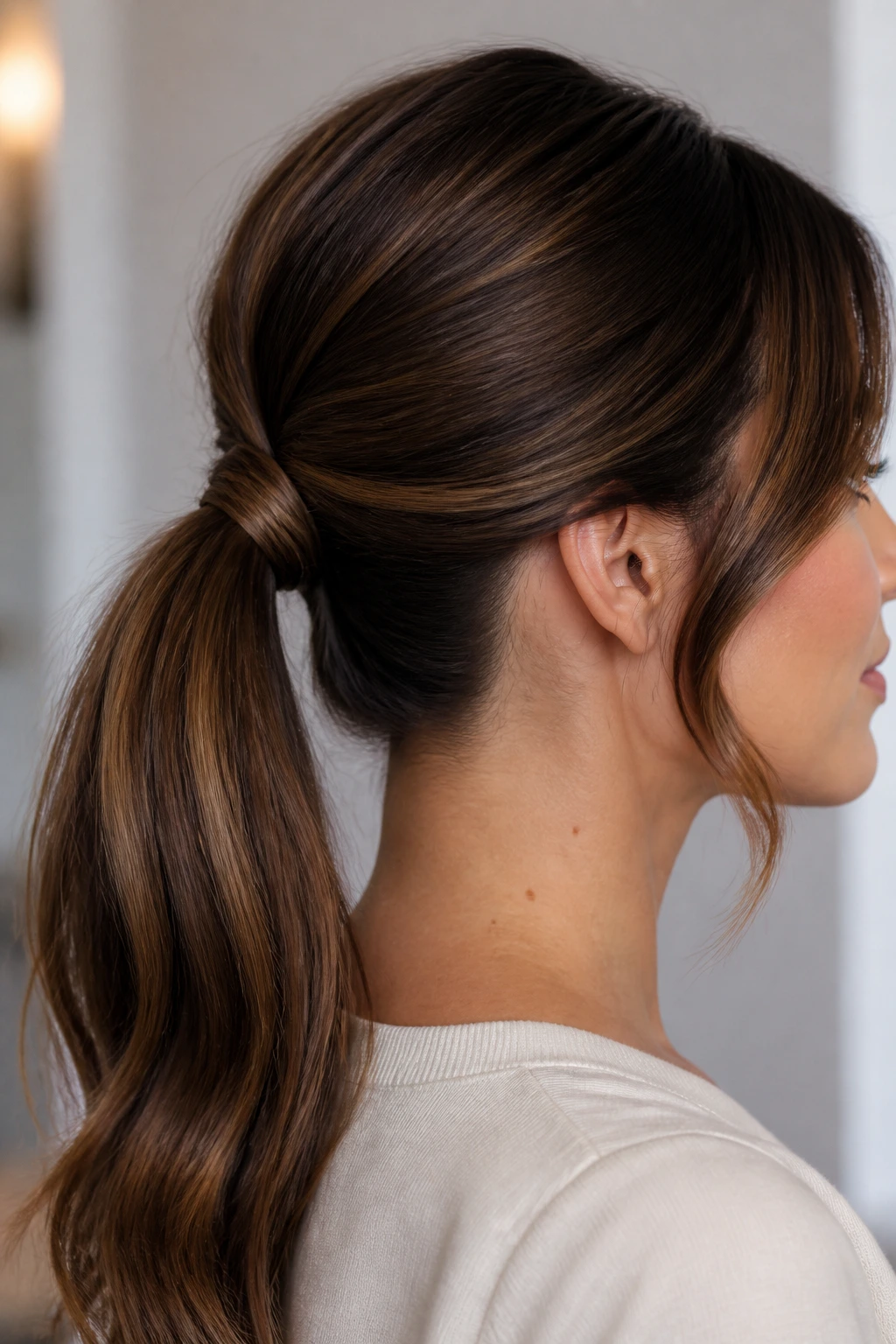
Presentation: Higher ponytails lift the eye and feel lighter around the face, while lower versions look calmer and more grounded. If you want the side-swept bangs to do real work, keep the front soft and let the ponytail sit just above or just below the crown instead of dead center every time.
Accompaniments: Hoops, small studs, or a single ear cuff work especially well because the bangs already frame one side of the face. Collars matter too. A high ponytail looks sharp with a crew neck or a structured jacket, while a low volume pony sits neatly with a wide neckline or a soft knit.
Portions: Shoulder-length hair can handle mid-height and low styles best, especially when the ends are curled or flipped. Longer hair can take the higher lifts and the bubble shapes. If your hair is very fine, do not overload it with too many accessories; the ponytail itself should stay the point.
Best Settings: These styles work for office days, errands, travel, school runs, and dinners that start straight from a workday. A sleeker version with a wrapped base feels clean enough for meetings. A bubble or ribbon version has more personality and reads a little more relaxed.
Additional Tips and Texture Boosters
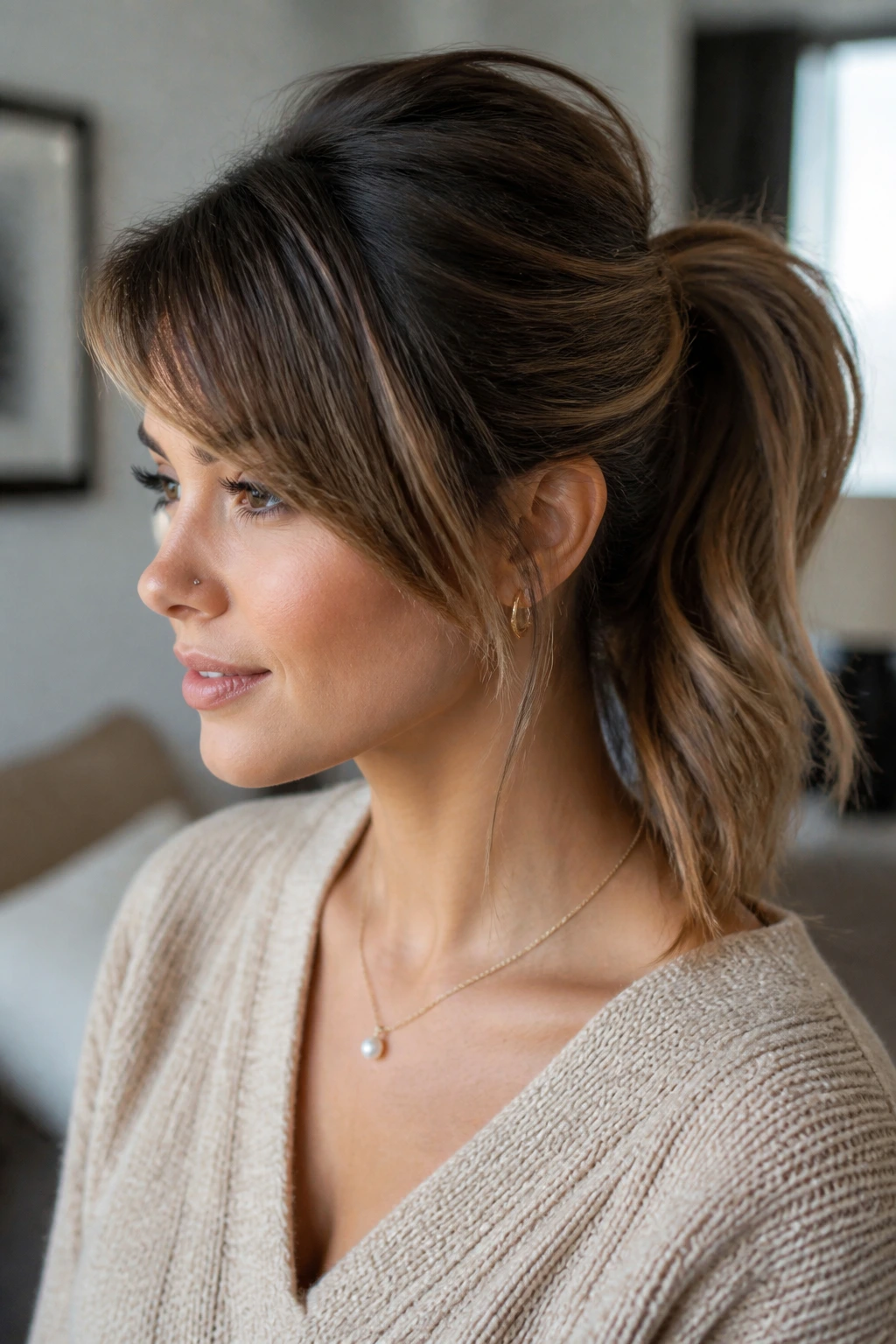
Root Lift: Blow-dry the crown in the opposite direction of the part, then let it cool before you gather the pony. Cooling sets the shape better than warm hair ever will. If you skip the cool-down, the lift often vanishes before you leave the house.
Texture Boost: Put product where the pony needs support, not everywhere. A light dusting of volumizing powder at the crown and a mist of texture spray on the mid-lengths usually does more than a heavy coat of hairspray. Heavy spray can make the bangs stiff and the pony greasy-looking by lunch.
Accessory Move: A matte ribbon, a slim barrette near the temple, or one clean bobby pin can finish a style that would otherwise look unfinished. Shiny accessories can work, but they pull attention away from the pony if the rest of the hair is already busy.
Make-It-Yours: Fine hair likes a higher lift and softer ends. Thick hair usually behaves better with a lower anchor and a smoother front. Curly hair can keep more texture in the tail, while straighter hair often looks fuller with a little bend at the ends.
Mistakes That Flatten the Style
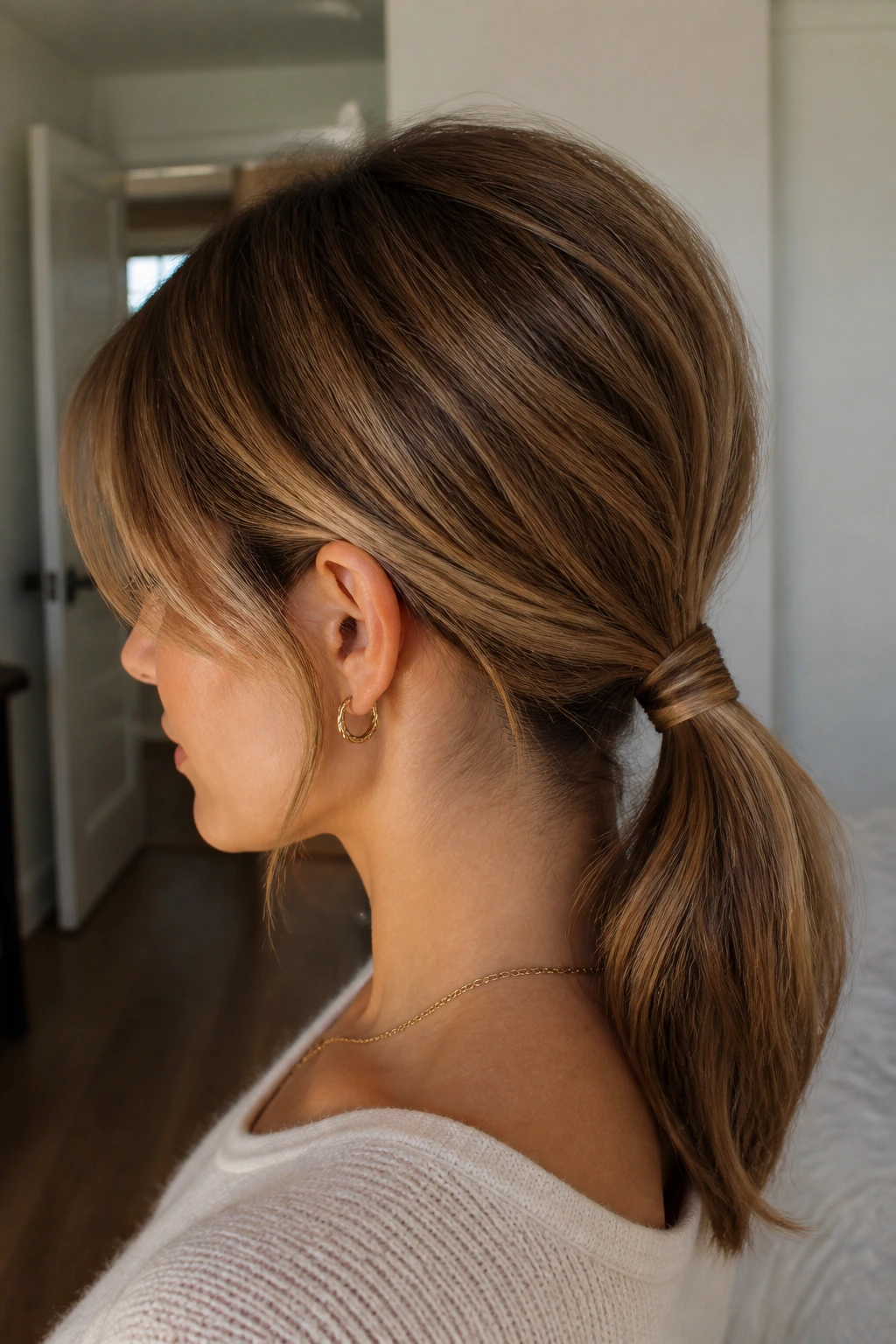
The first mistake is teasing the top layer instead of the hidden section underneath. That leaves the crown looking frayed and makes the pony feel puffy in the wrong place. The fix is simple: lift the top section, tease below it, then smooth the surface lightly with a brush or your palm.
The second mistake is pulling the bangs too tight across the forehead. The side sweep stops reading as a sweep and starts reading as a barrier. If that happens, mist the bang section lightly, brush it into the diagonal you want, and pin it for a minute while it cools.
Another common miss is placing the pony where your head is widest instead of where the shape wants to sit. Too high can look cartoonish on some faces. Too low can drag the crown down. Adjust by half an inch at a time; that tiny shift often changes everything.
The last one is using too much oil or serum near the roots. Shine belongs on the ends. Put slick product near the crown and the whole style goes flat fast, especially on clean hair.
Variations and Adaptations to Try
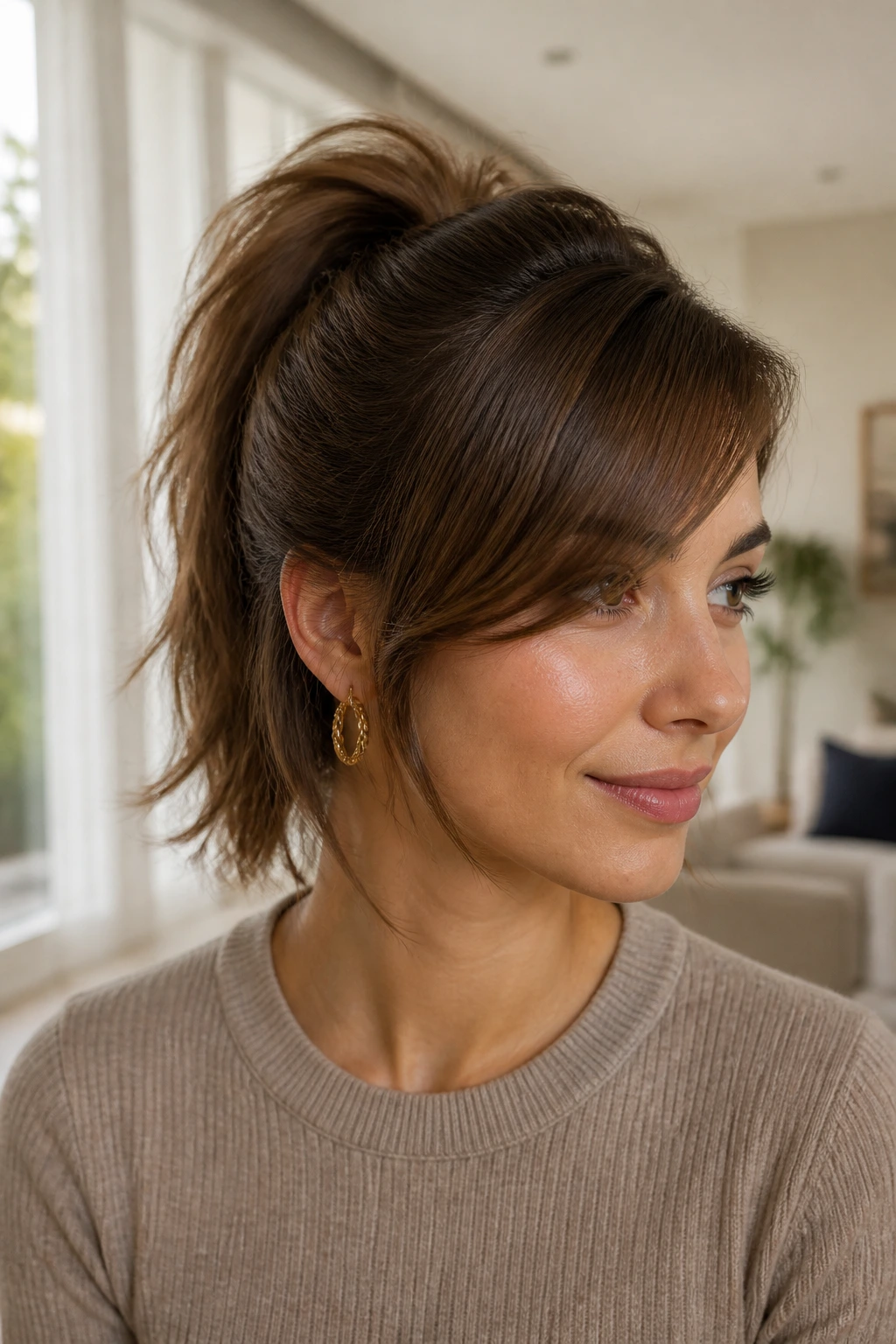
Fine-Hair Lift Kit: Use dry shampoo, a hidden tease at the crown, and a slightly higher base. Skip heavy creams and keep the front airy so the hair doesn’t collapse under its own weight.
Curly-Texture Sweep: Leave more wave in the tail and smooth only the bang section. This gives the pony shape without flattening the natural curl pattern, which usually looks better than over-straightening the front.
Heat-Free Overnight Base: Create a loose braid or two at the crown before bed, then shake the hair out in the morning and gather it into a pony. The texture gives you built-in volume without a hot tool.
Humidity-Ready Control: Work a small amount of anti-frizz cream only through the bangs and outer layers, then use a flexible spray at the crown. Too much product in humid air can pull the style down faster than the weather itself.
Short-Length Faux Pony: If your hair is too short for a full ponytail, pull the top section into a mini pony and leave the bottom layers loose. The side-swept bangs make the style look intentional instead of like a half-finished idea.
Keeping Volume Ponytails Alive Past Lunch
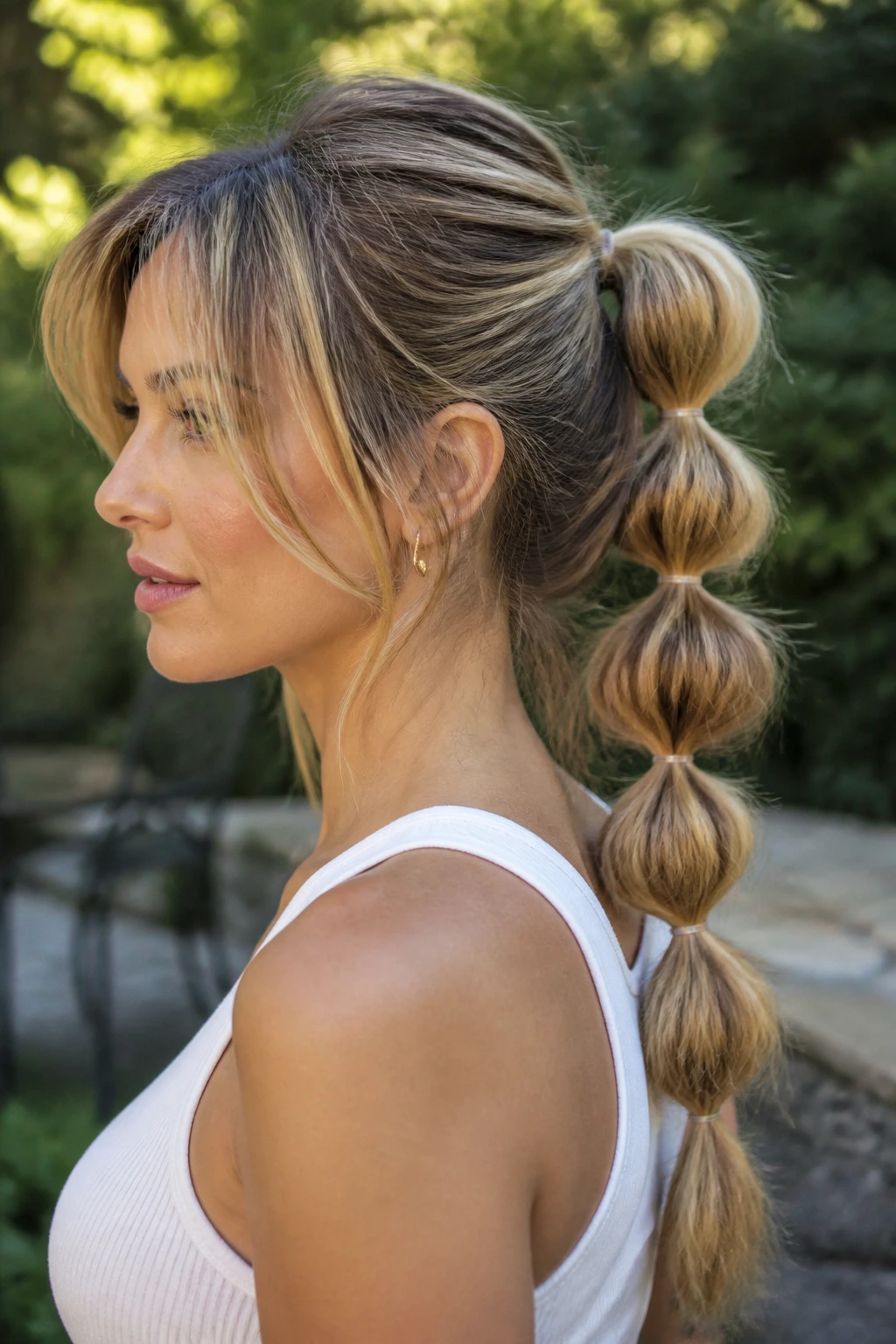
A style like this does not need a full reset to last. It needs one or two small fixes. Keep a travel-size dry shampoo, two bobby pins, and one spare elastic in your bag or desk drawer. That is enough to revive most of these ponytails after they start to sag.
If the crown sinks, slide a pin under the base and lift the top layer with your fingertips. If the bangs split, smooth them with a tiny mist of water, then brush them back into the diagonal shape. Five seconds. Maybe ten. You do not need a bathroom mirror for every repair.
Overnight, take the pony out, brush it gently, and let the hair rest loose if you can. If you want to preserve the shape for a second day, sleep on a silk pillowcase or tie the hair with a loose silk scrunchie at the nape. Tight elastics left in the same spot night after night will leave a crease and make the crown harder to lift the next morning.
Frequently Asked Questions
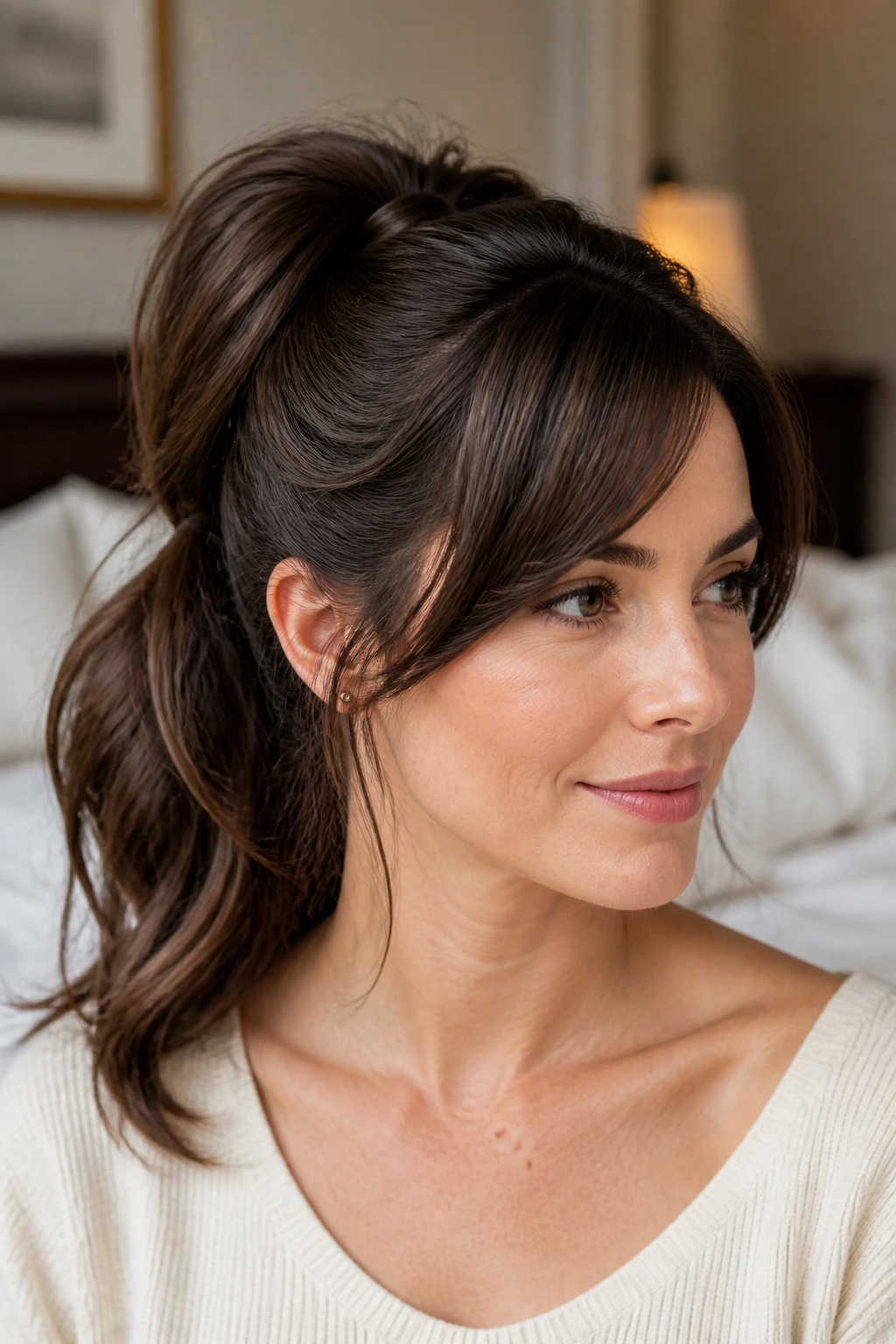
How do I make a ponytail look thicker without extensions?
Start with texture at the roots and loosen the crown after the elastic goes in. A tiny tease underneath the top layer, a pinch-and-pull at the crown, and a wrapped elastic at the base usually create more visual fullness than piling on product.
What side should side-swept bangs go on?
Sweep them toward the side that already feels heavier or more natural when your hair dries. If you fight the growth pattern, the bangs split faster. A bang that wants to fall left should usually stay left.
Can I do these styles on freshly washed hair?
Yes, but fresh hair usually needs dry shampoo, mousse, or texture spray first or it slips too much. Clean hair is easiest for sleek versions, while day-two hair tends to hold volume better. That’s not a moral issue. It’s just friction.
How do I keep the bangs from separating during the day?
Dry them in the direction you want, let them cool there, then pin them for a minute if they still rebel. If they separate later, mist the roots lightly and press them back with your fingers instead of brushing them hard. Hard brushing usually makes the split worse.
Is teasing bad for hair?
Heavy teasing every day can rough up the surface and create tangles, so keep it small and focused under the top layer. A light tease once in a while is a different thing from aggressive backcombing from scalp to ends. Use the gentlest version that gives you the lift you need.
What if my hair is too short for a full ponytail?
Use a half-up crown boost pony or a low mini pony and leave the shortest layers free around the face. Side-swept bangs help knit the look together so it still reads as a finished style. Short hair often looks better with a little looseness anyway.
Which elastic is best for volume ponytails?
A snag-free elastic with good stretch usually works better than a stiff old rubber band. If you want a polished base, choose one that matches your hair color or hide it with a wrap. If you need extra hold, use a second elastic underneath rather than yanking the first one too tight.
How do I keep the crown lifted in humidity?
Build the lift at the roots first, then seal it with a light flexible spray. Keep heavy oils away from the crown and save smoothing serums for the ends. Humid air punishes overloaded hair fast.
The Ponytail You’ll Reach For First
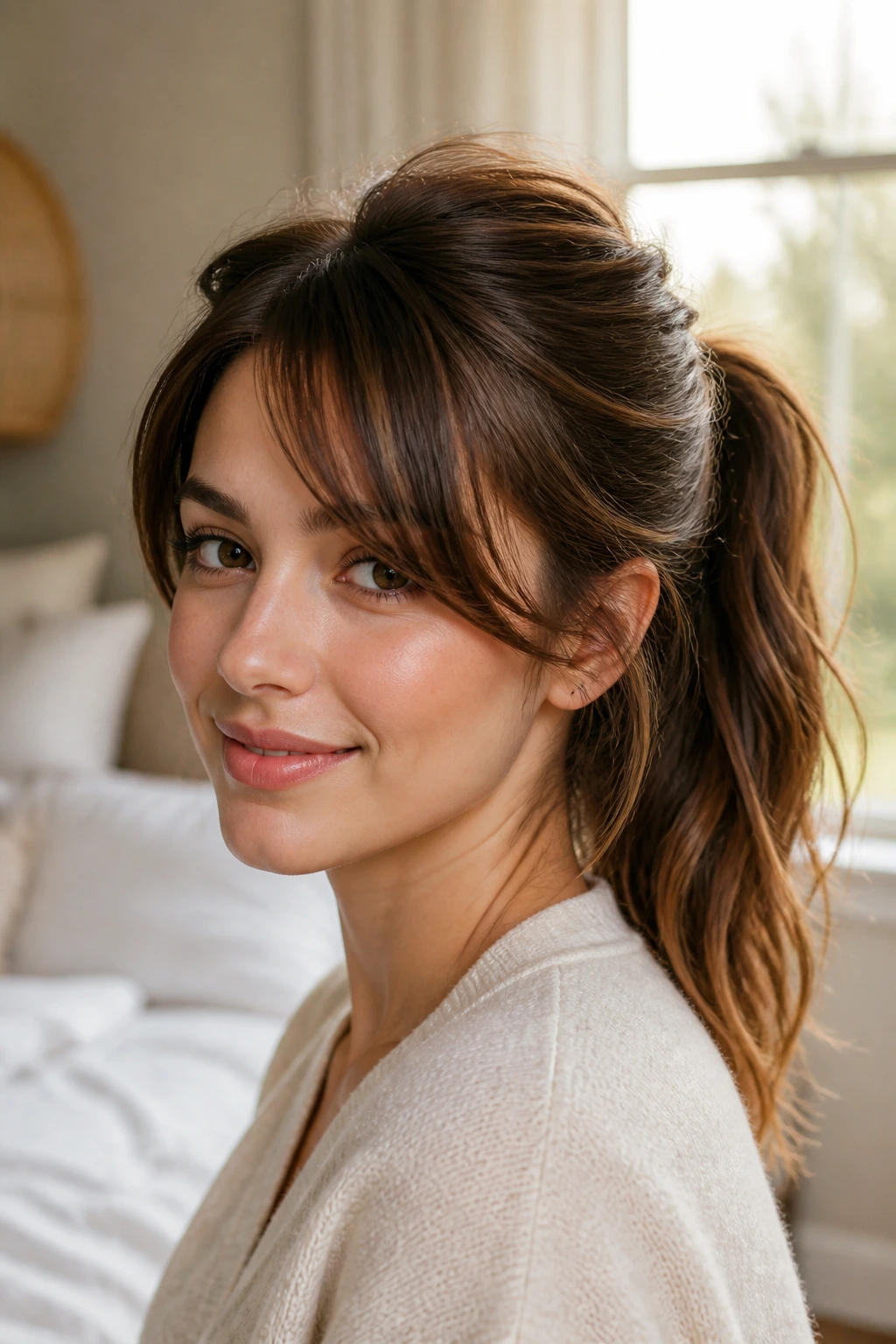
A good volume ponytail with side-swept bangs is not about pretending you had a long morning. It’s about making a quick style look finished, balanced, and a little fuller than the clock would suggest. That’s why the crown, the bangs, and the base all matter; if one of them is off, the whole thing reads flat.
The smartest move is to pick the version that matches your hair’s habits, not the one that looks most dramatic in a photo. Fine hair needs lift. Thick hair needs control. Curly hair needs room to behave. Once you know which ponytail does that job best, the style stops being a backup plan and starts being the first thing you reach for when the morning is moving too fast.