



The mother of the bride does not need a stiff, sprayed-to-death helmet of hair. Half up hairstyles for mother of the bride sit in that sweet spot I keep coming back to: enough lift at the crown to shape the face, enough softness left down to keep the look from turning severe, and enough structure to survive handshakes, hugs, photos, and a dance floor that goes on longer than anyone planned.
The best versions do a few things at once. They keep the neck and shoulders from feeling crowded, they leave room for earrings and a neckline to breathe, and they still look finished from the side and back. That last part matters more than people think. A style that only looks good from the front is a bad deal.
I like these looks because they can lean classic, romantic, modern, or quietly glamorous without making the mother of the bride look like she is trying to outshine anyone. A little crown height changes the whole mood. A clean twist changes it again. Add brushed-out waves, pearl pins, a braid, or a ribbon, and suddenly the same outline reads in a completely different way.
Why These Half-Up Looks Earn Their Keep
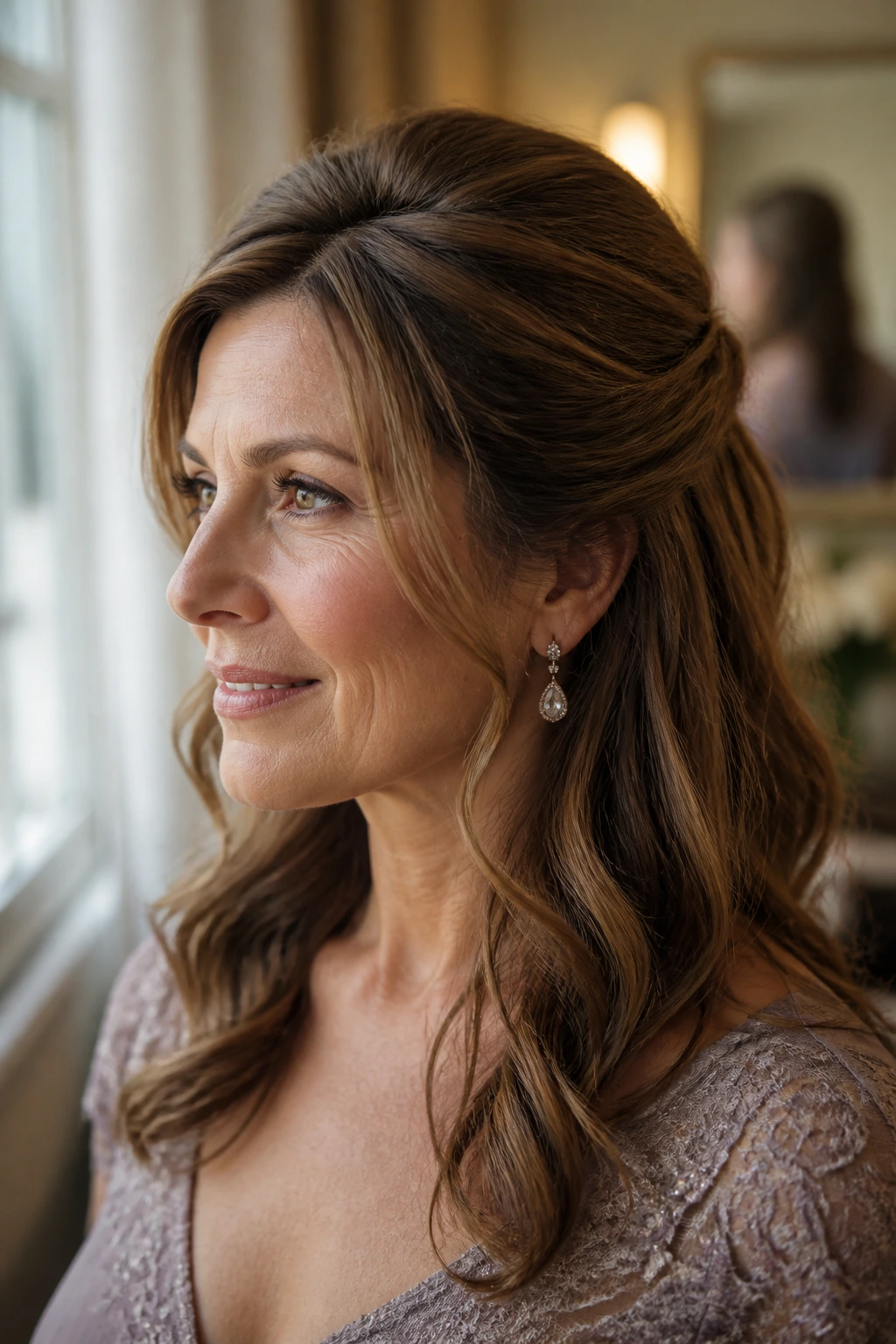
-
Keeps the face open: The top section lifts the hair away from the eyes and cheekbones, which matters in photos where loose strands can sometimes swallow the face.
-
Leaves the length visible: If your hair is long enough to wear down but too much to leave completely loose, a half-up shape gives you both structure and movement.
-
Plays well with jewelry: A half-up style leaves the ears and neckline visible, so statement earrings or a detailed dress do not end up fighting the hair.
-
Stays comfortable for hours: Because the whole head is not pulled into a tight bun, there is less tension at the temples and nape.
-
Works across textures: Fine hair, thick hair, waves, curls, and straight blowouts can all be shaped into half-up styles with the right amount of volume and pinning.
-
Can read formal or relaxed: The same basic outline can look ballroom-polished with a smooth finish or softer and more garden-party if you leave a few pieces loose around the face.
How to Choose the Right Shape Before You Book the Appointment
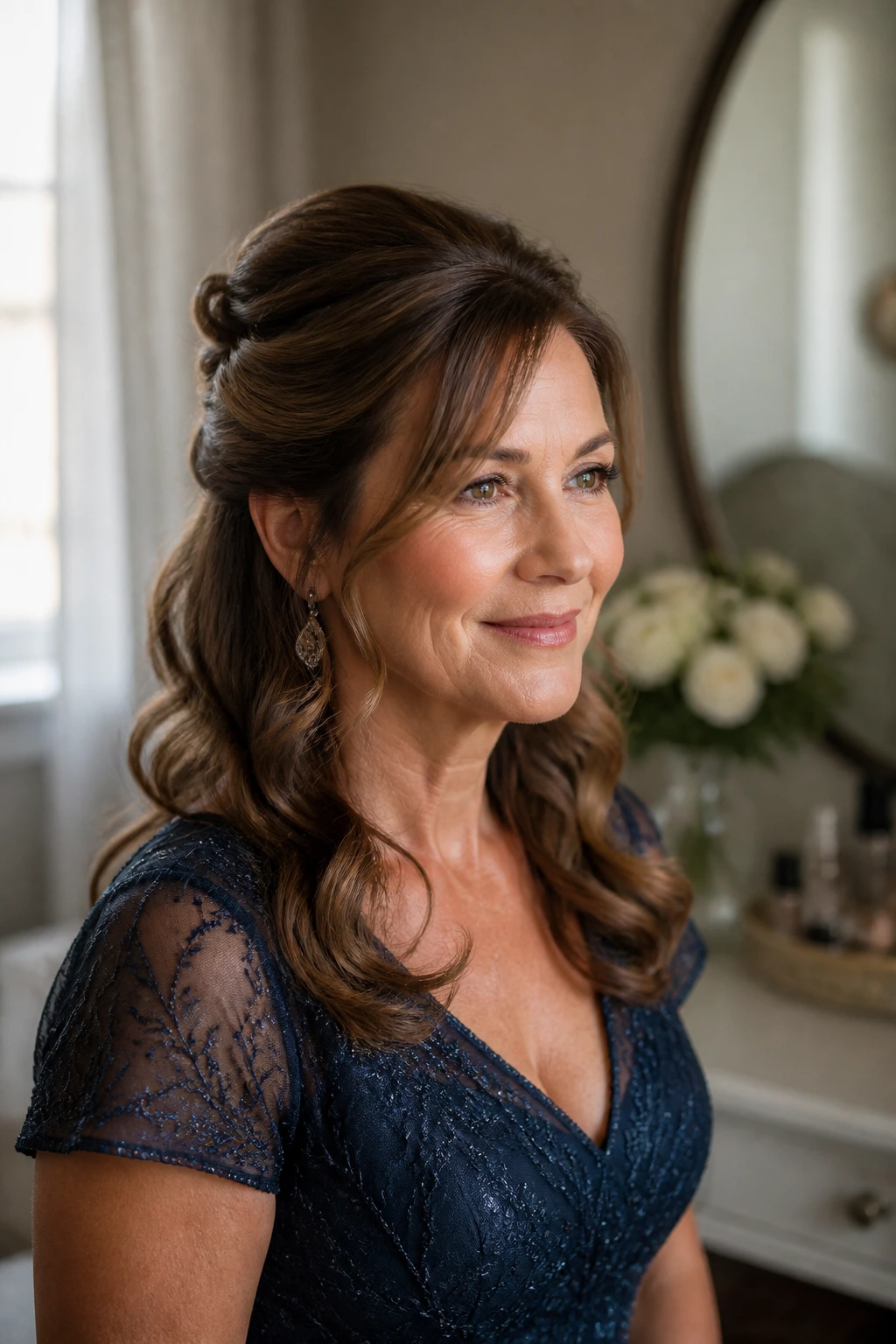
Dress neckline first. Hair second. That order saves a lot of regret.
A high neck, illusion neckline, or heavily embellished bodice usually looks better with a lower half-up placement and a quieter finish. You want the hair to support the dress, not crowd it. Strapless, off-the-shoulder, and sweetheart necklines can take more crown height and more wave, because the open neckline can handle the extra shape.
Hair texture changes the plan too. Fine hair needs a little root lift and a base that is pinned close to the scalp, not a big, heavy knot that drags the style down by hour two. Thick hair can handle braids, twists, and more width at the back, but it also needs better anchoring. Curly hair looks best when the curl pattern is respected instead of brushed into submission.
And yes, the venue matters. A humid garden ceremony asks for stronger pins and a less fragile curl set than a ballroom evening. If you know there will be wind, a deep side sweep or a lower twist will usually behave better than airy loose pieces that want to fly everywhere.
1. Soft Twisted Crown and Loose Waves
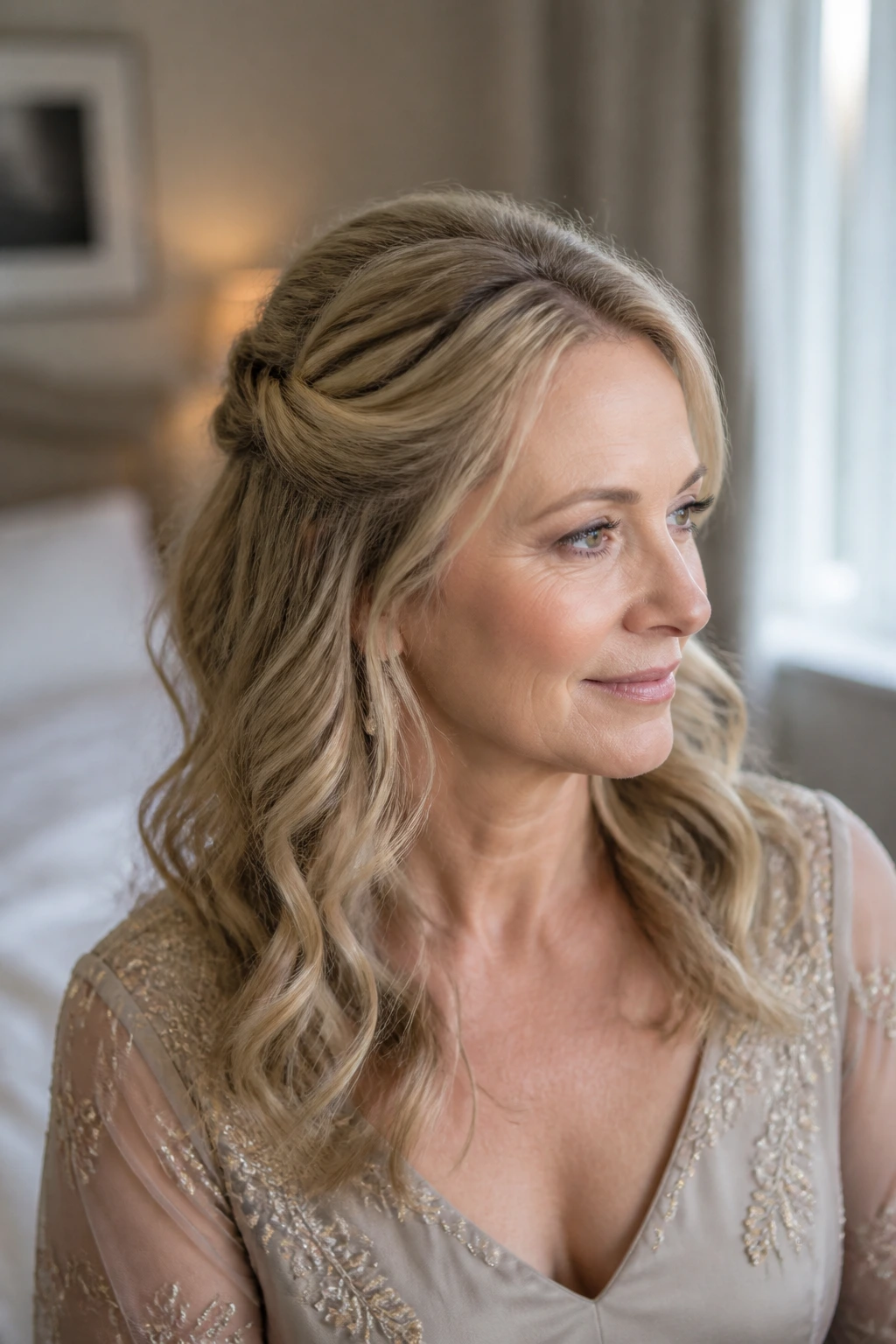
This is the half-up style I reach for when the dress already has detail and the hair needs to stay graceful, not loud. Two small sections from the temples are twisted back, pinned at the crown, and paired with loose, brushed-out waves through the length. The result is soft without looking vague. You can still see the shape of the hair, which is the whole point.
It works especially well on medium to long hair because the loose ends need enough length to fall in a smooth line, not a choppy one. Use a 1.25-inch curling iron, curl away from the face, and brush the curls once they cool so the finish settles into a gentle wave. If the mother of the bride wants something familiar but polished, this one is a strong first choice.
2. Braided Halo Half-Up
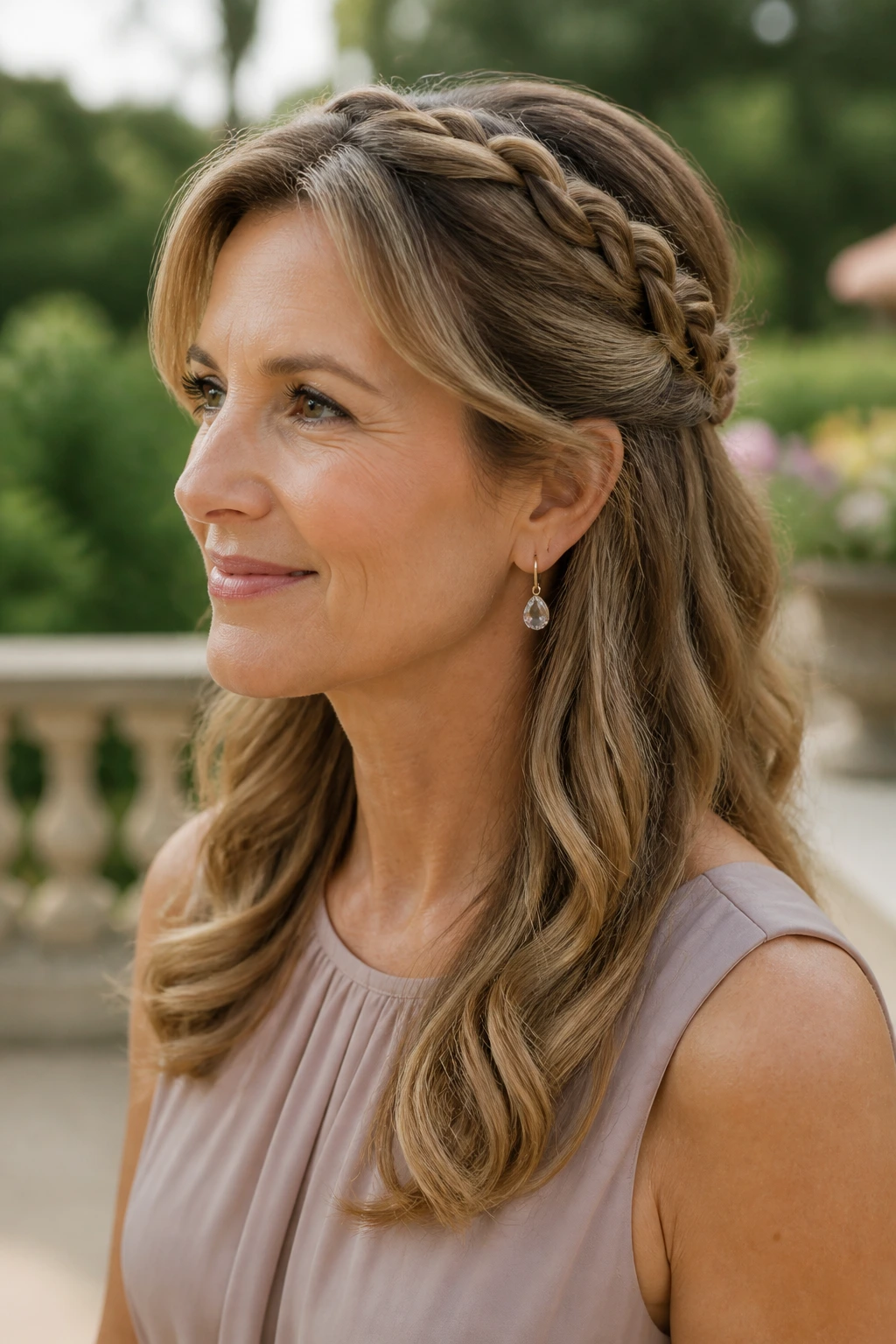
Want braid texture without the schoolgirl feel? Keep the braid narrow and let it curve like a frame, not a crown-heavy headband. A thin braid from each side, joined at the back and pinned underneath loose length, gives the hair structure while keeping the top soft.
This style is especially good for thicker hair, because the braid helps control volume instead of fighting it. It also holds up well in outdoor settings; the woven texture gives the style grip, which is useful when the weather is slightly damp or breezy. I’d pair it with small earrings and a dress that doesn’t already have a lot of neckline drama.
3. Crown Lift With Brushed-Out Curls
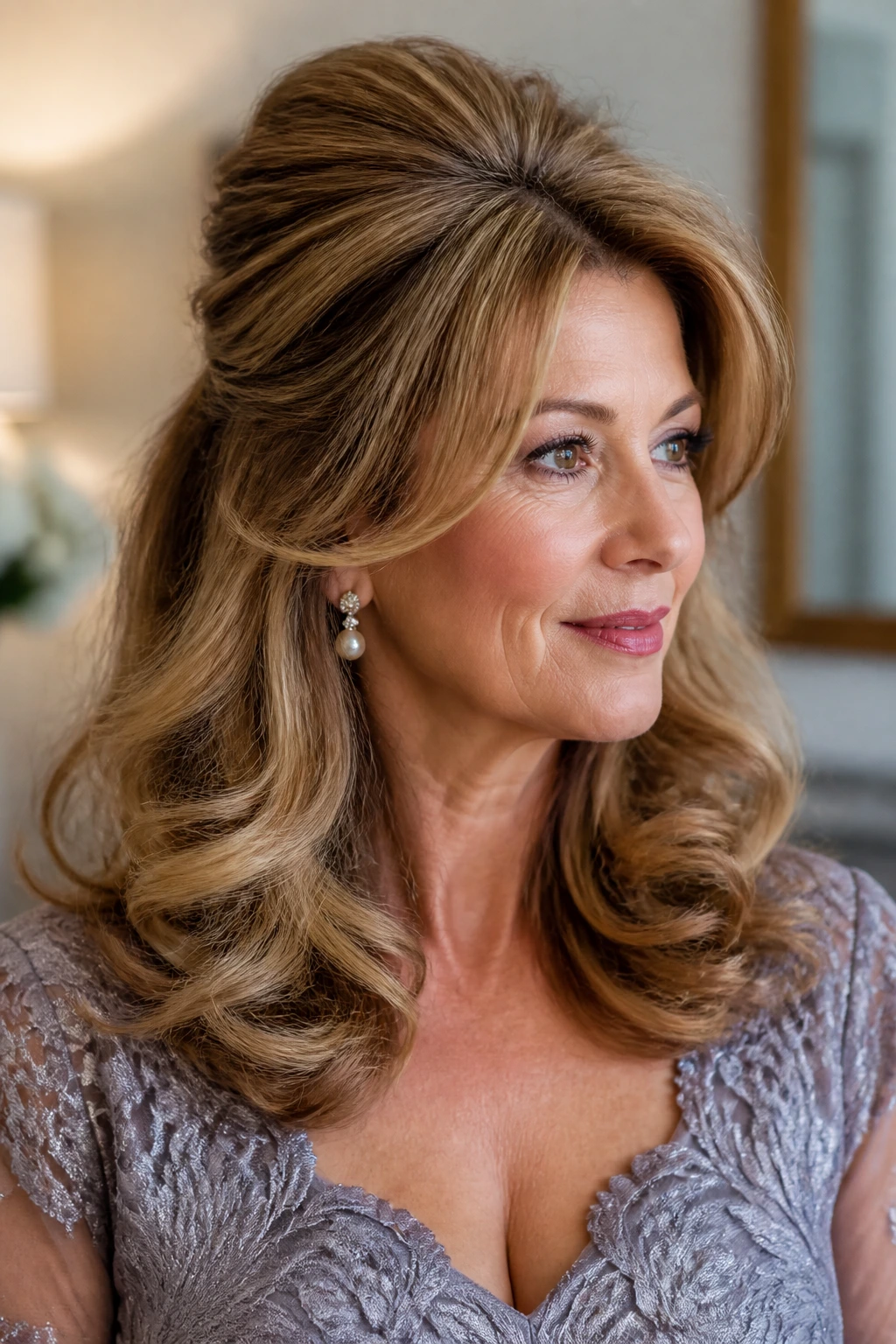
A little height at the crown changes everything. A lot of height can go sideways fast. The sweet spot is a soft cushion of volume, lifted with backcombing only at the root area, then covered by a smooth top layer so the teasing does not show.
After that, curl the lower section in 1-inch pieces and brush them out so the ends sit in glossy waves rather than tight spirals. This reads formal in a very usable way. If the mother of the bride wants the hair to feel special in photos but not overly styled, this is the one I’d point to first.
4. Rope-Twist Half-Up With Pearl Pins
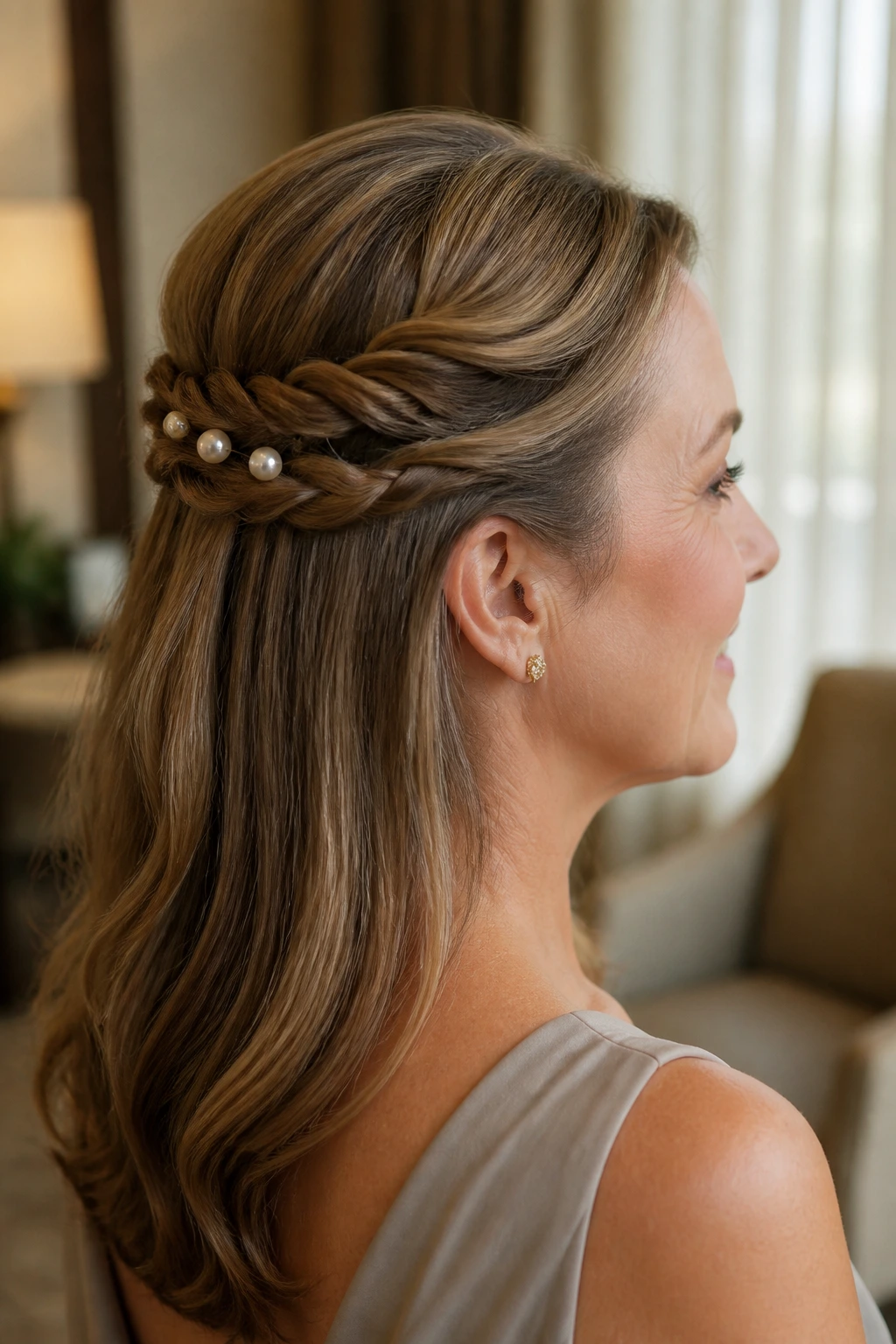
Rope twists are underrated because they look more complicated than they are. Twist two small sections in the same direction, then wrap them around each other in the opposite direction and pin them across the back of the head. The texture is neat, compact, and clean.
Pearl pins make this style feel wedding-ready without turning it sugary. Keep the pearls clustered close to the twist line instead of scattering them everywhere. One or two deliberate accents are enough. On straight or slightly wavy hair, this style has that tailored feel that works nicely with satin, crepe, or a dress that already has some shine.
5. Low Knotted Half-Up
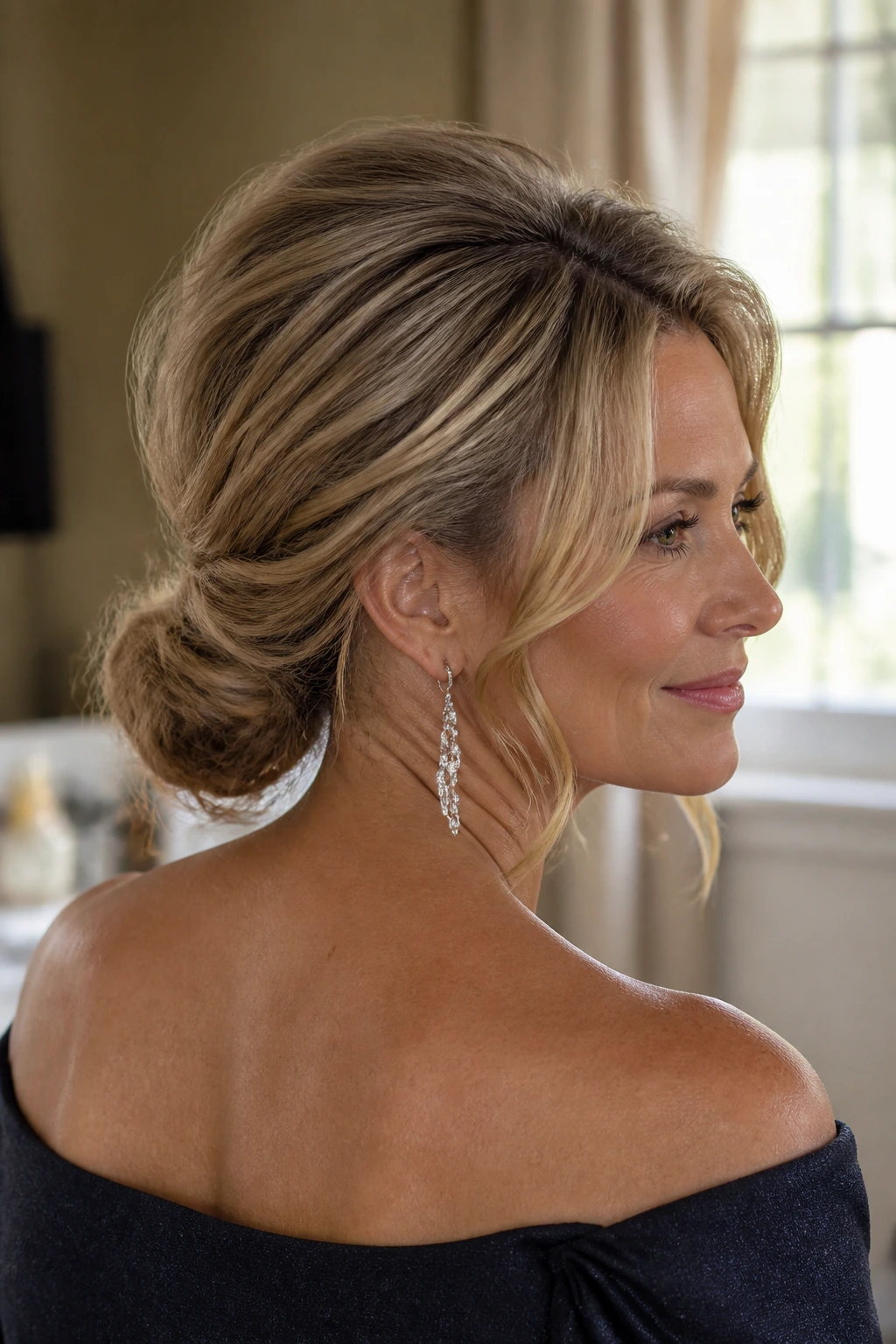
There is something calm about a low knot placed just above the nape. It gives the back of the head a finished shape while keeping the overall look soft and usable. Unlike a full bun, it does not visually close off the style, so the rest of the hair can still move.
This is a good option when the mother of the bride wants less width at the sides of the head. It also behaves well with long earrings because the knot sits low enough to keep the ears clear. If the hair is silky, mist it with a light texturizing spray first or the knot may slip faster than you expect.
6. Side-Swept Hollywood Half-Up
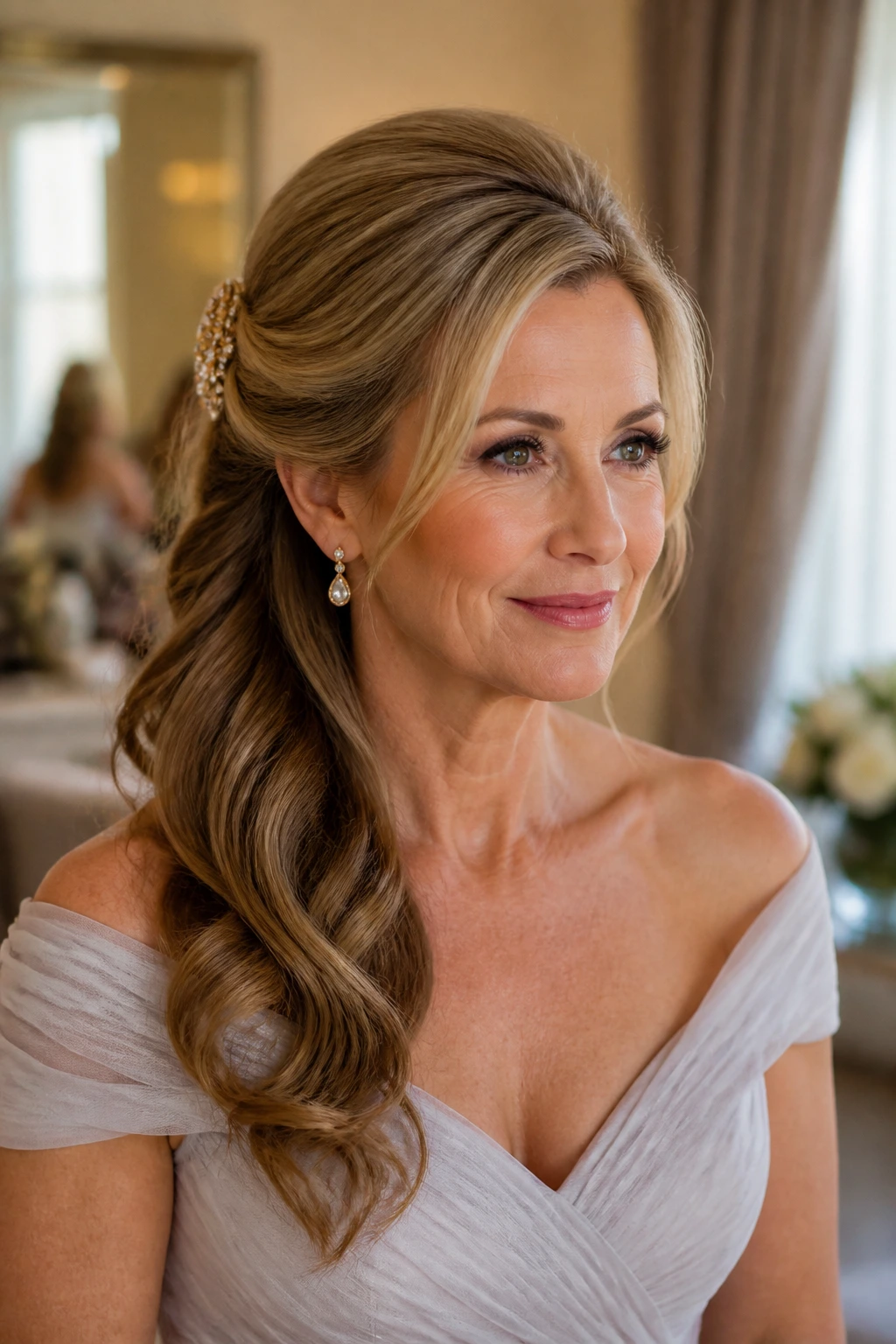
This one is all about the line. Start with a deep side part, sweep a thicker section back from one side, and pin it just behind the crown so the rest falls into a glossy wave over one shoulder. The shape feels more dramatic than a center-parted version, but it stays controlled.
It flatters a lot of face shapes, especially when the side sweep opens one cheek and softens the jawline. It also looks especially good with dresses that have asymmetrical draping or a single shoulder detail. Keep the wave pattern broad and brushed, not too curly, or the style starts to look too stiff.
7. Waterfall Braid Half-Up
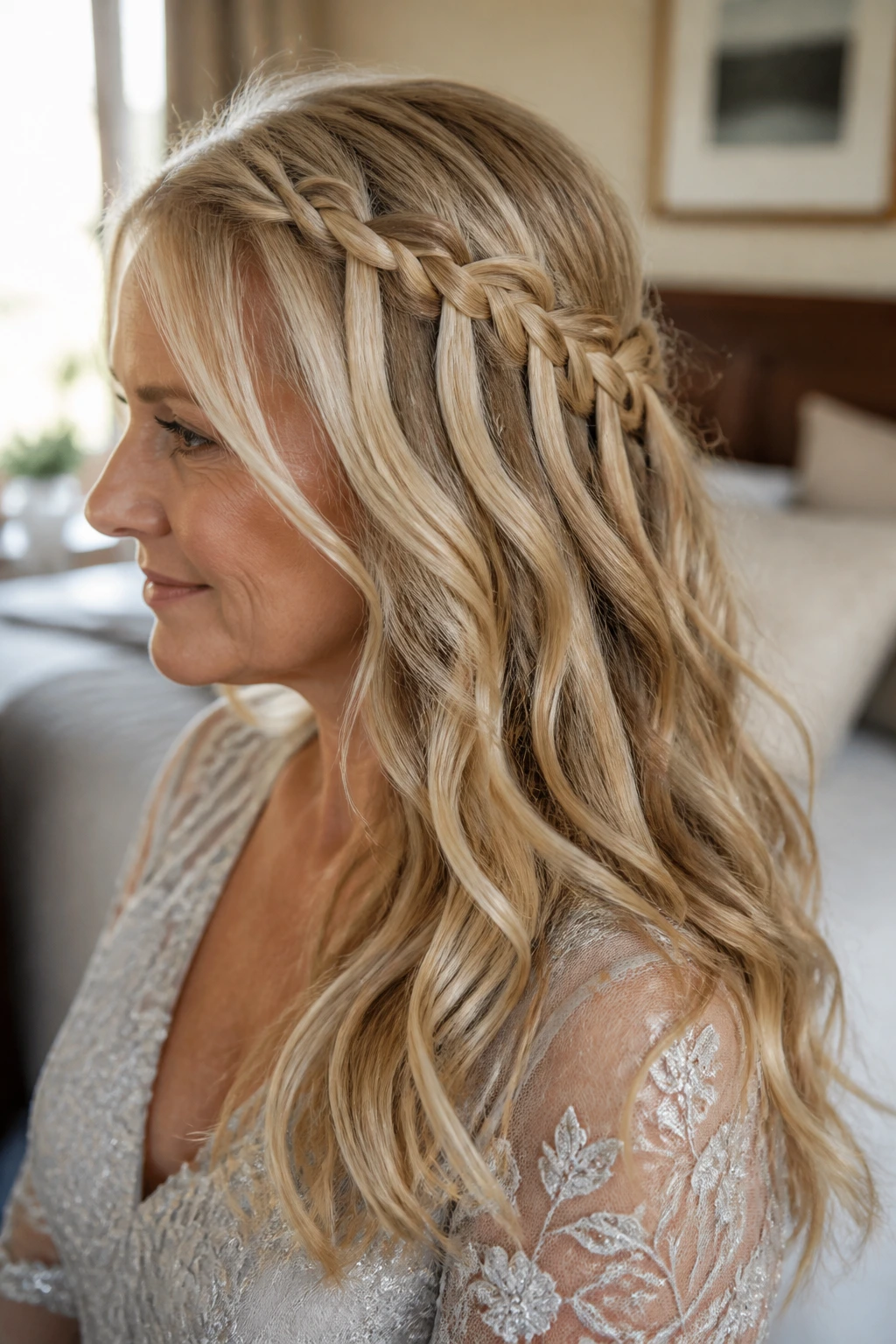
A waterfall braid gives the half-up style movement that is hard to fake with pins alone. The braid acts like a decorative line across the head, while the dropped strands keep the look airy. I like this best on longer hair where the cascading pieces have room to show.
The key is restraint. Make the braid loose enough that it does not dig into the scalp, then leave the hanging pieces in soft bends rather than tight ringlets. If the hair is very fine, a light dusting of root powder before braiding can keep the section from slipping apart while you work.
8. Smooth Blowout Half-Up
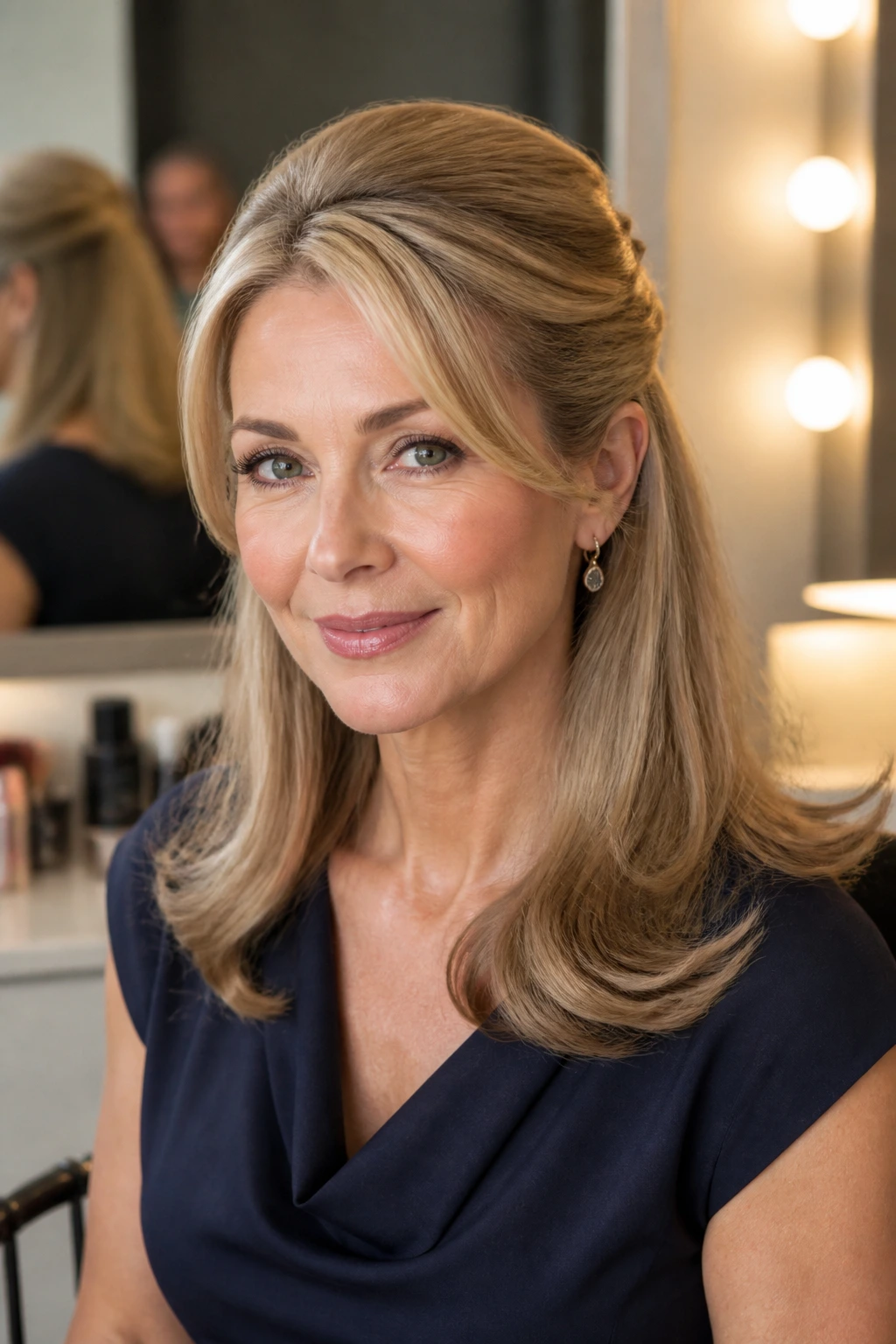
This is for the mother of the bride who likes a cleaner, more tailored finish. Think polished roots, soft bend through the ends, and a half-up section that sits neatly at the back without obvious teasing. It is not flashy. It is sharp in the best way.
Use a round brush blowout or a large-barrel brush attachment, then pin the top section after the hair cools. A small amount of serum on the ends keeps the line shiny, but do not smear it near the roots or the style will collapse early. This version looks especially good with column dresses, satin, and modern jewelry.
9. Curly Cascade Half-Up
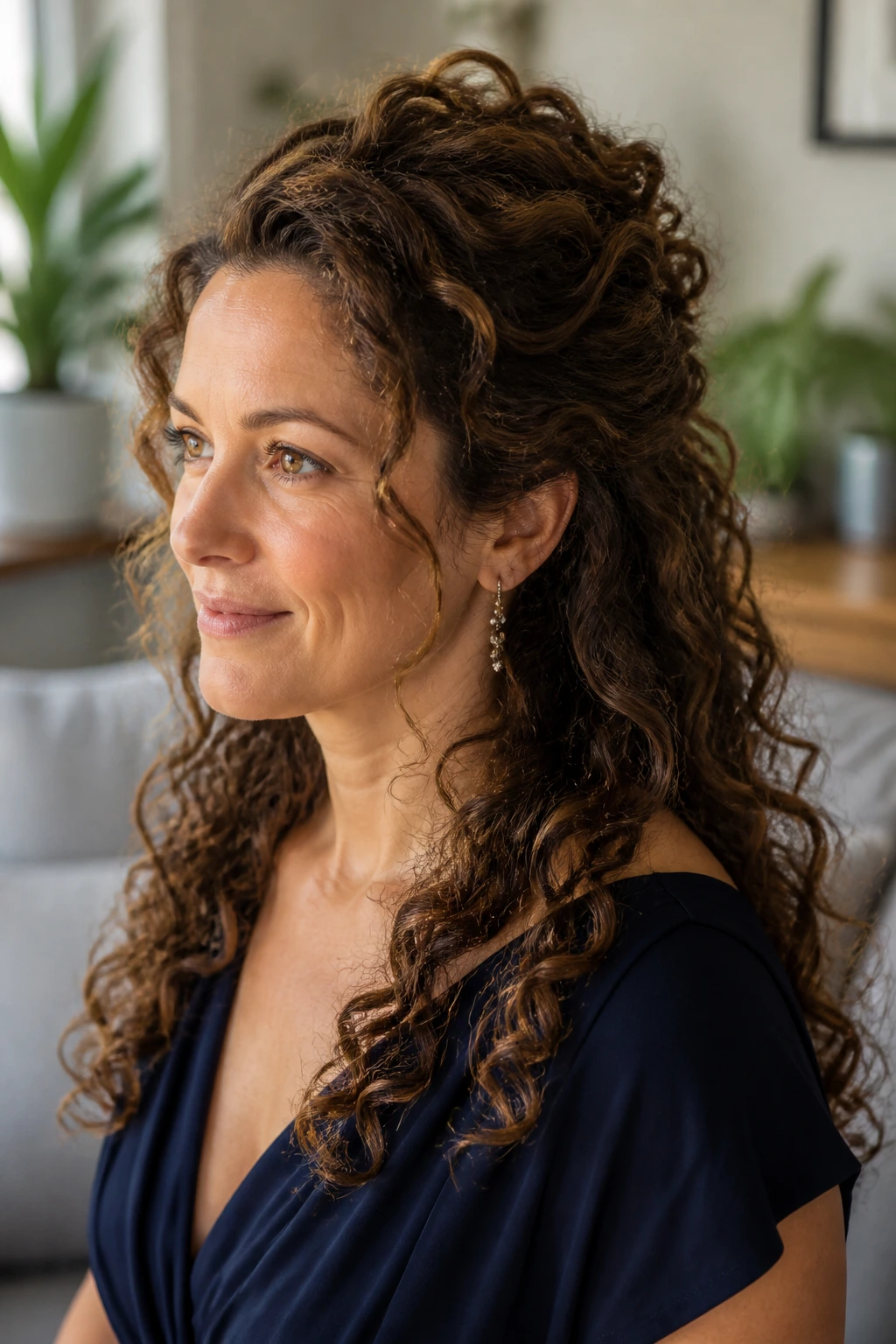
If the natural curl pattern is working, do not flatten it just to chase a smoother idea. A curly cascade half-up keeps the top section controlled and lets the rest of the curls spill down in their own shape. That contrast is the charm.
The trick is to define the curls first, then pin back only enough hair to open the face. Too much hair pulled up can make curls look thin below. Use a curl cream or gel that leaves the hair soft, not crunchy, then lift the crown slightly so the style does not disappear in profile.
10. Velvet Bow Half-Up
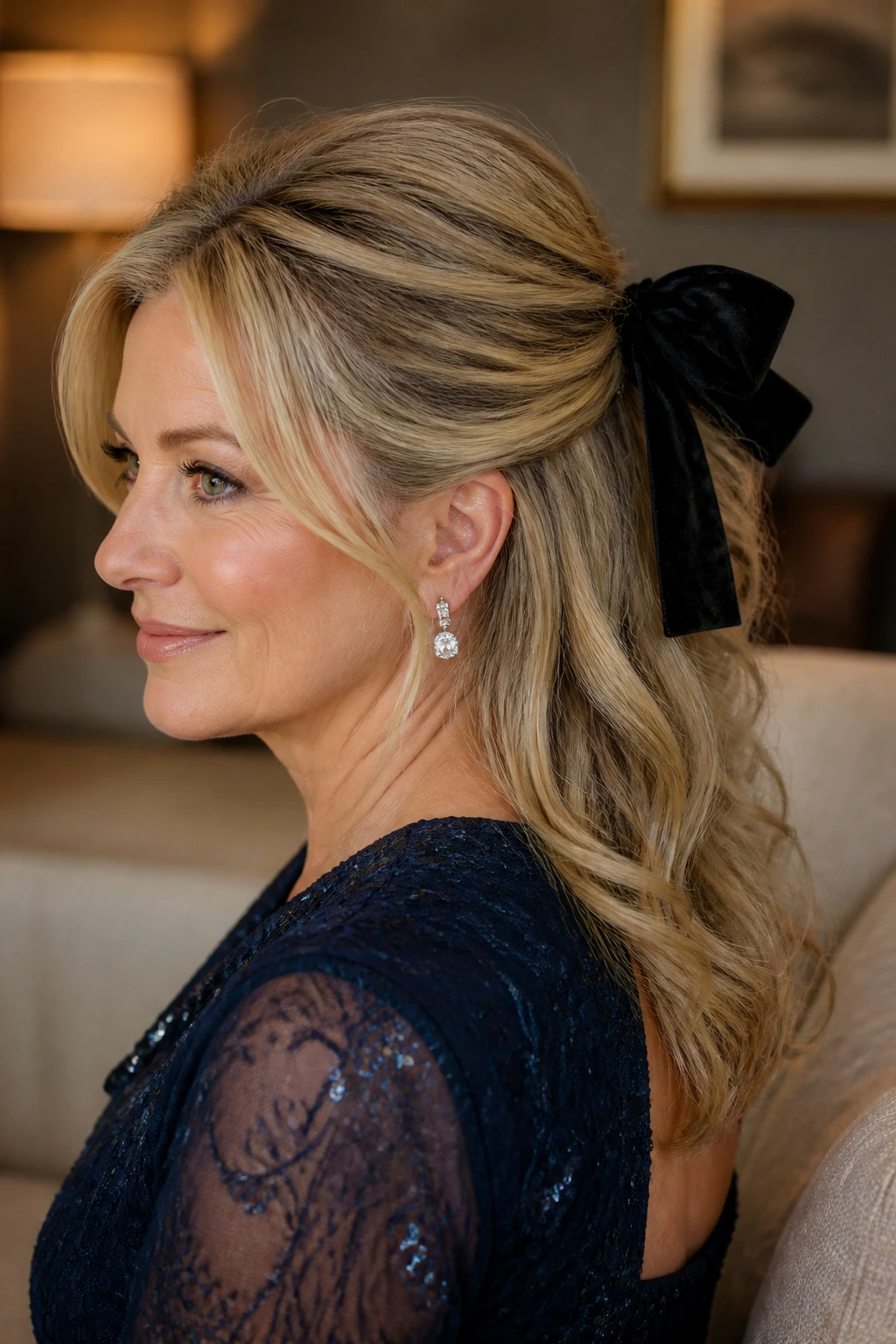
A velvet bow changes the whole mood in one move. The style underneath can be simple — a twist, a low knot, or a half-pony — but the bow makes the finish feel intentional and dressed up. It is a good choice when the mother of the bride wants a little color or texture near the back without piling on more jewelry.
Keep the bow in proportion to the hair. A large bow on fine hair can overpower the head shape, while a tiny bow on long thick hair can look lost. I prefer a medium ribbon with a matte finish. It photographs with a softer line than satin, which can catch too much shine.
11. Tucked Roll Half-Up
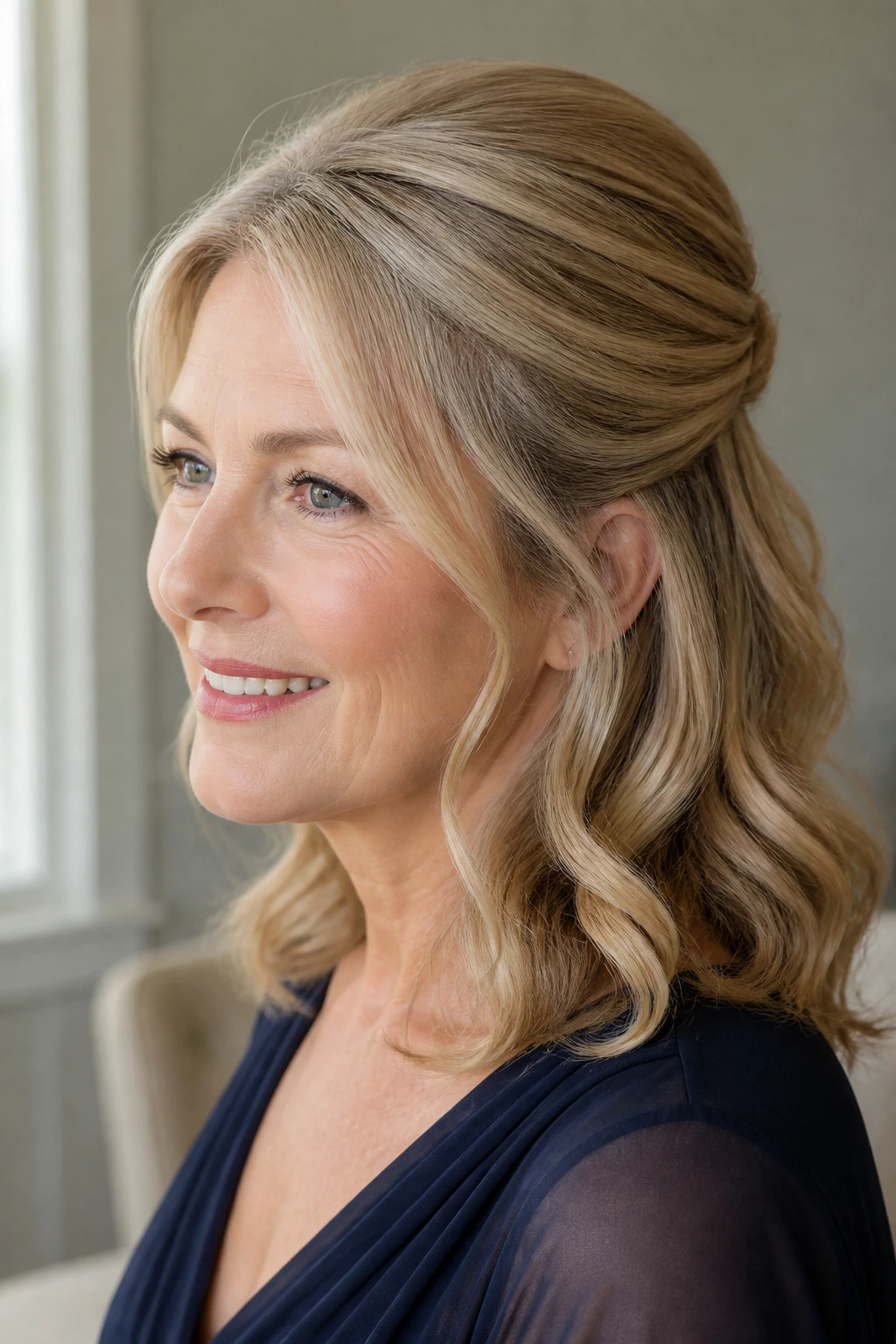
This one has old-school polish without feeling frozen in time. Roll the upper section back on itself, tuck the ends underneath, and pin it flat enough to create a smooth ridge across the crown. The lower hair can stay in soft waves or a brushed-out set.
It is a smart option for mothers of the bride who prefer a more classic profile. It also works well with shorter lengths that cannot support a big braid or a long twist. The best versions keep the roll small and neat; if it gets too bulky, the whole thing starts to look costume-y.
12. Minimal Pin-Back Half-Up
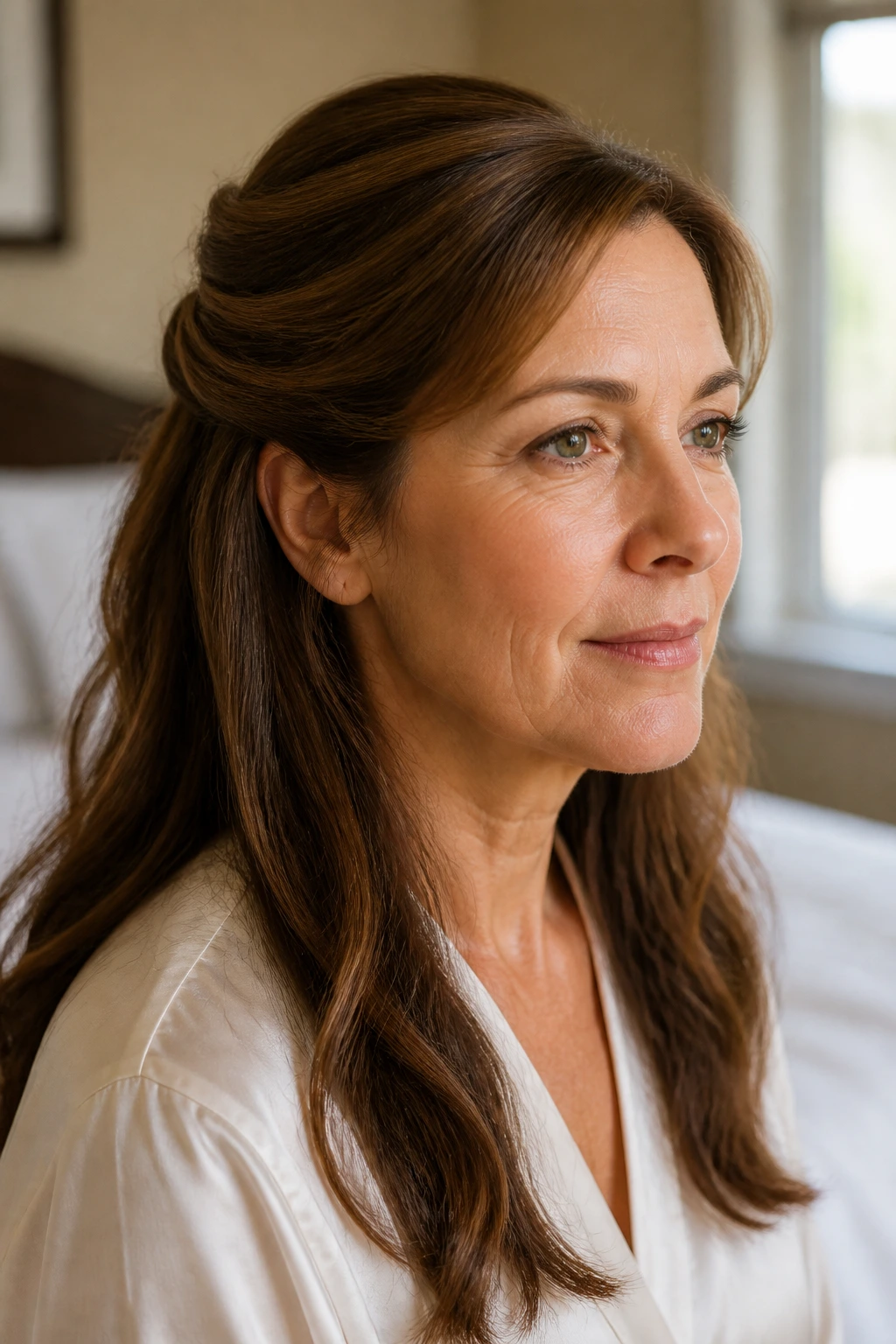
Not every wedding hairstyle needs a visible feature. Sometimes the best move is the quiet one: lift just enough hair from each temple, pin it cleanly behind the crown, and let the rest fall naturally. The effect is understated, but it still looks finished.
This suits strong dresses, bold earrings, or a mother of the bride who simply does not want the hair to take over the outfit. Use hidden pins that match the hair color and keep the part neat. If the hair is naturally sleek, that simplicity becomes the style. If it is very textured, you may want a little wave in the lower section so the contrast feels deliberate.
13. Fishtail Half-Up
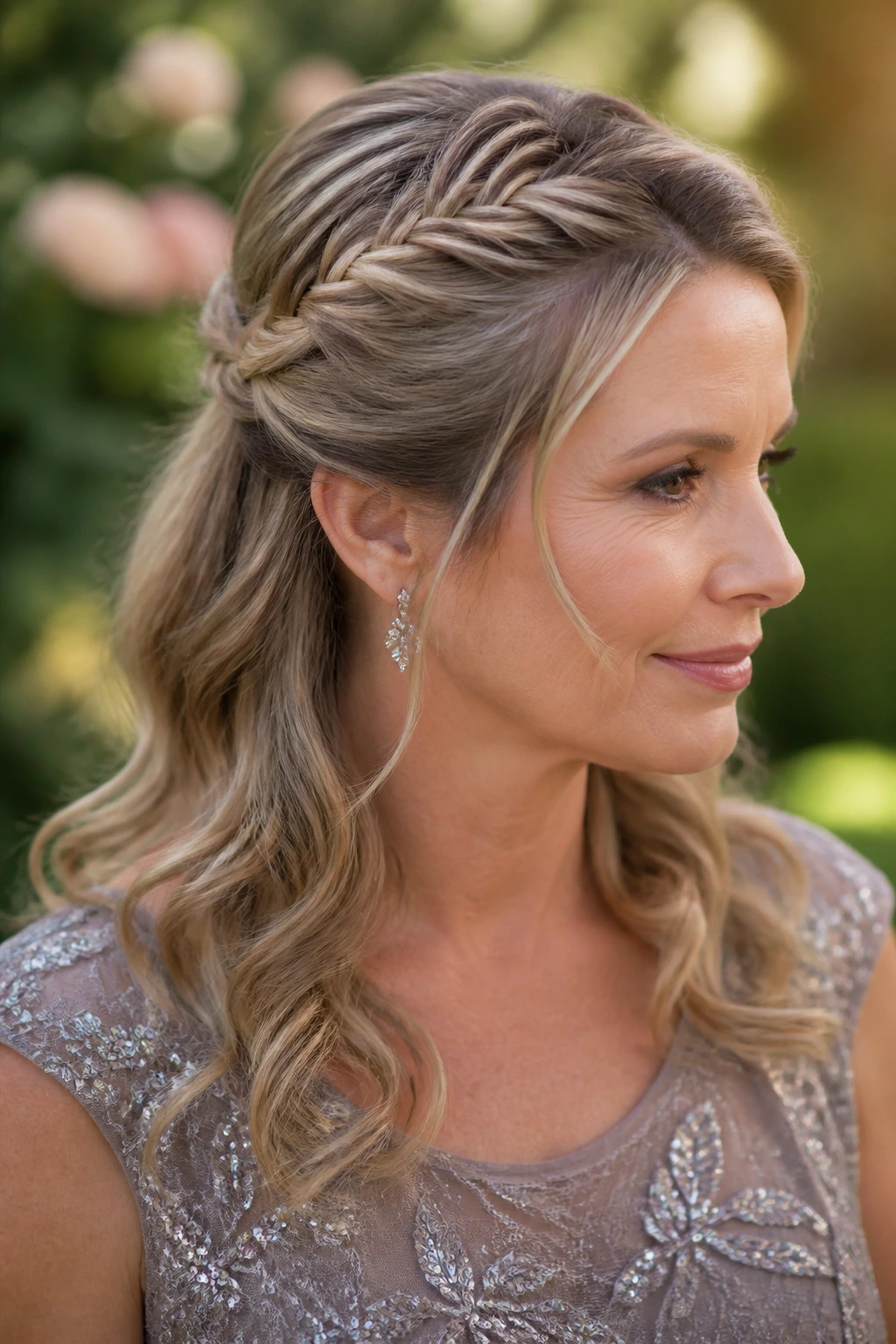
A fishtail braid brings more visual detail than a standard three-strand braid without needing a huge section of hair. It looks especially nice when only the top half is braided and the rest stays loose and soft. That combination gives you structure and movement at the same time.
This is a strong pick for longer hair because fishtails need length to show their pattern. Once the braid is secured, gently pull it wider with your fingers so it does not look tight or narrow. I would keep the rest of the style simple — loose waves, minimal jewelry, and a dress that lets the braid be the quiet focal point.
14. Floral Accent Half-Up
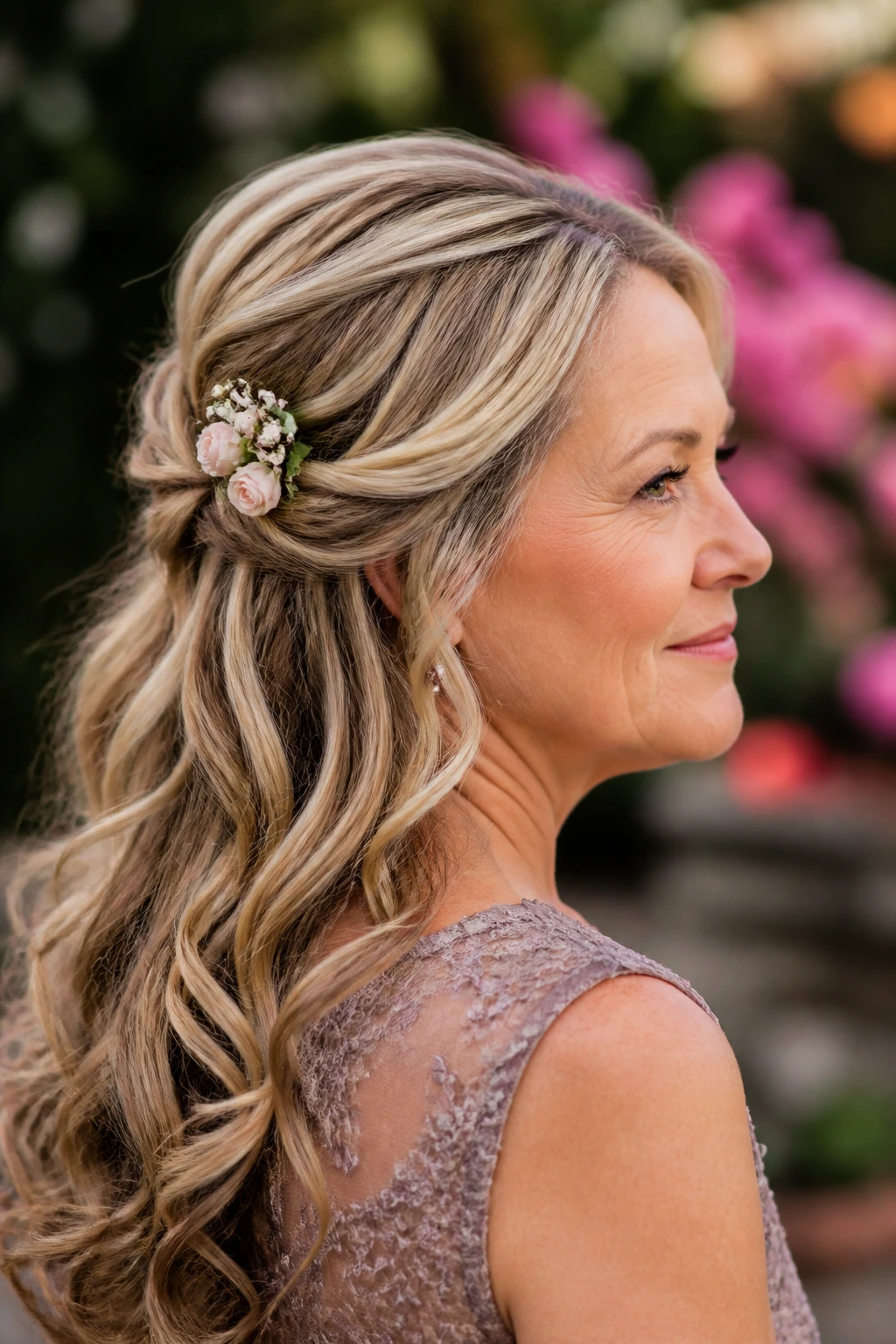
A few small flowers can turn a simple half-up style into something wedding-specific fast. The trick is to choose blooms or floral pins that look like they belong in the hair, not like they were stuck on as an afterthought. A cluster near the twist point or off to one side is usually enough.
This style works best when the dress and bouquet already point toward a softer, more romantic feel. For outdoor ceremonies, I like smaller, sturdier flowers that will hold shape for several hours. If fresh flowers are too risky, delicate floral pins often do the job with less fuss.
15. Half-Up Chignon Blend
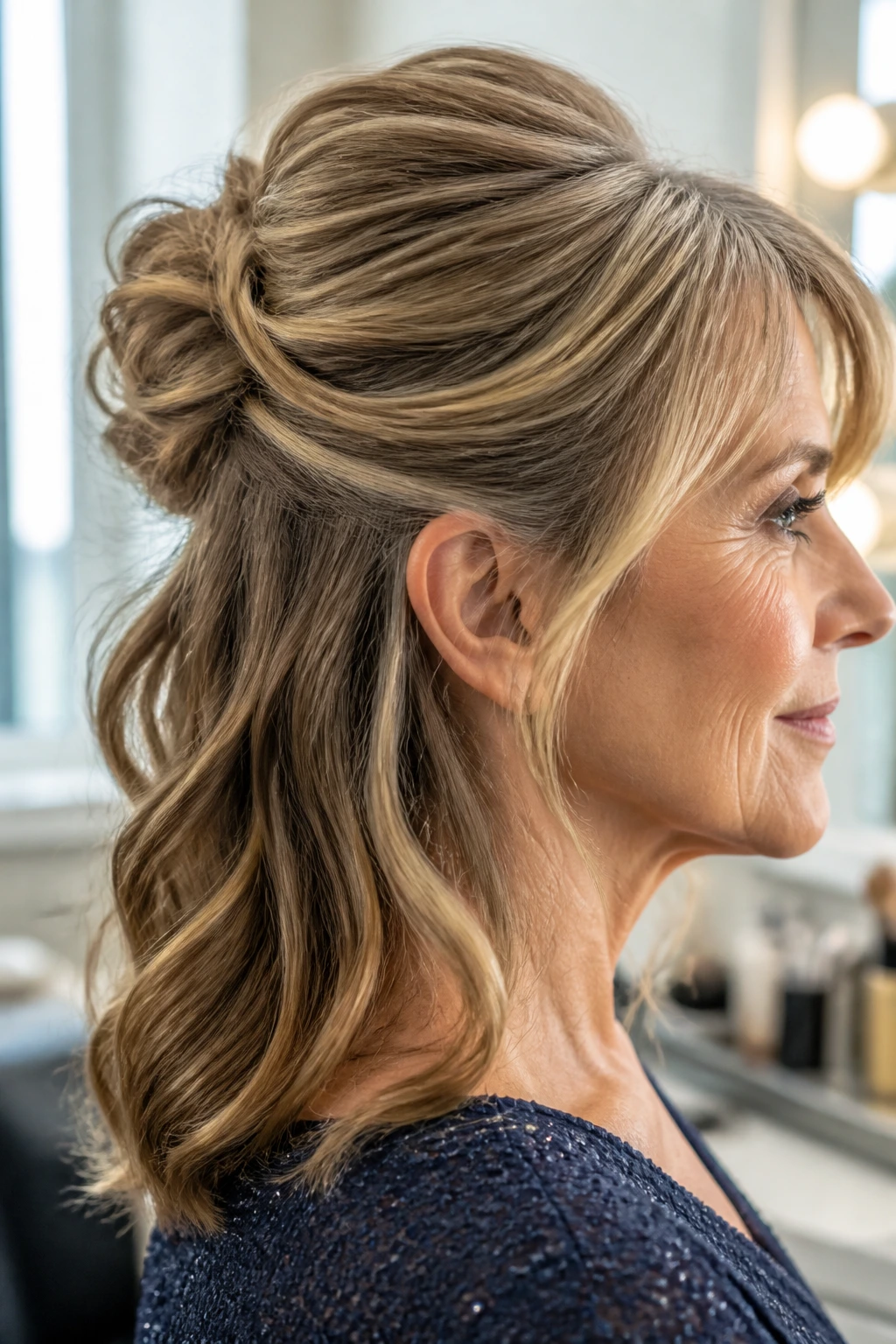
Think of this as a half-up style with a little more back-of-head structure. The upper section is gathered and twisted into a small chignon-like knot, while the lower hair stays down. It gives the profile more polish than a simple pin-back, but it still keeps the hair long and visible.
It suits medium to thick hair especially well because the top section needs enough density to build a compact shape. The lower part can be curled or left brushed smooth, depending on the dress. This one reads elegant without being precious, which is a useful line to walk.
16. Straight Sleek Half-Up
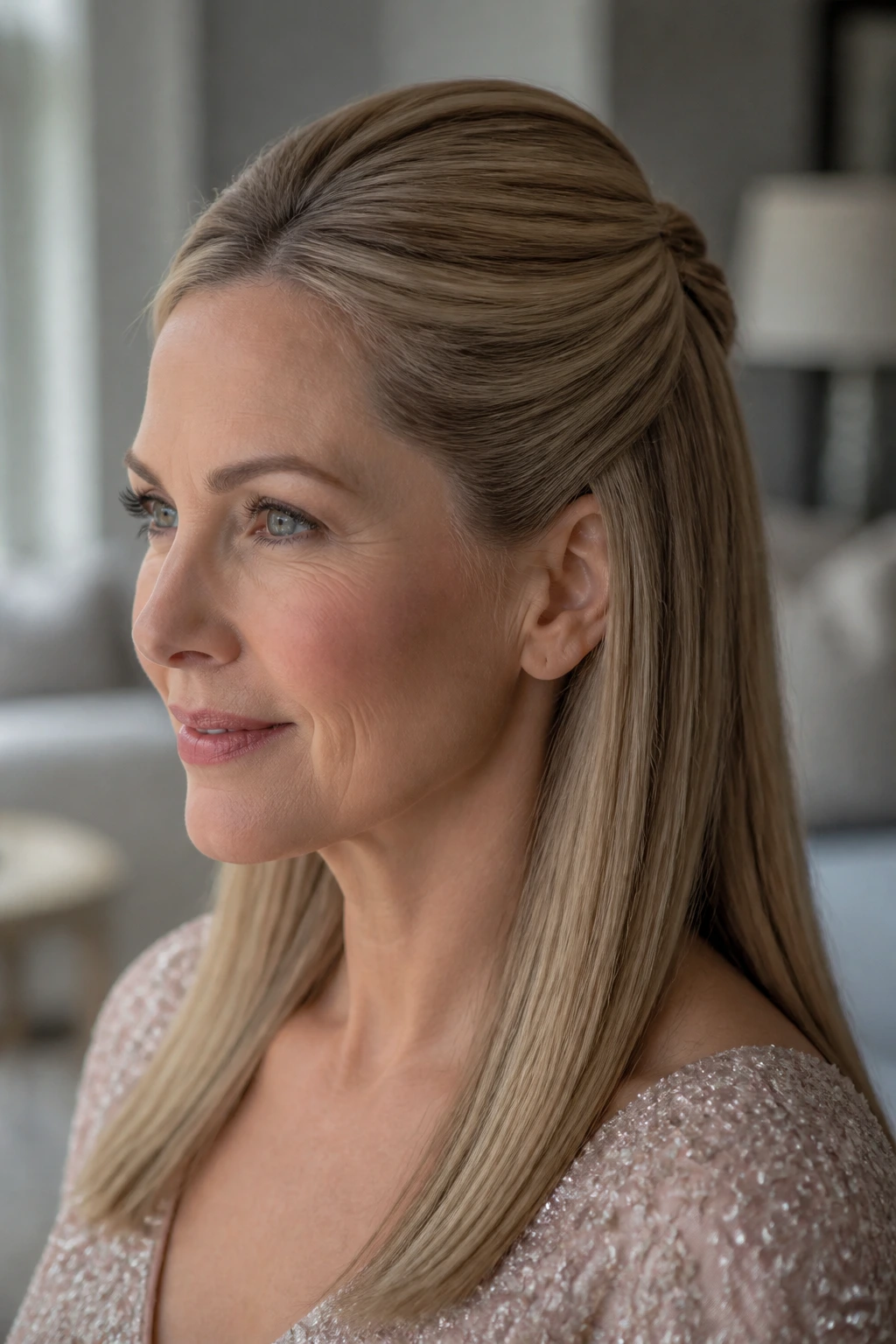
If the hair is naturally straight or has been blown out smooth, do not force curls into it just because weddings tend to push people that direction. A sleek half-up style can look expensive in a plain, controlled way. The shape comes from parting, shine, and placement rather than wave.
Keep the top section taut but not pulled tight, and wrap a small strand around the pin point so the back looks finished. This works particularly well with sharp necklines, tailored suits, and contemporary dresses. The danger is over-flattening the crown. Leave a little lift or the style can go limp in photos.
17. Double Twist Half-Up
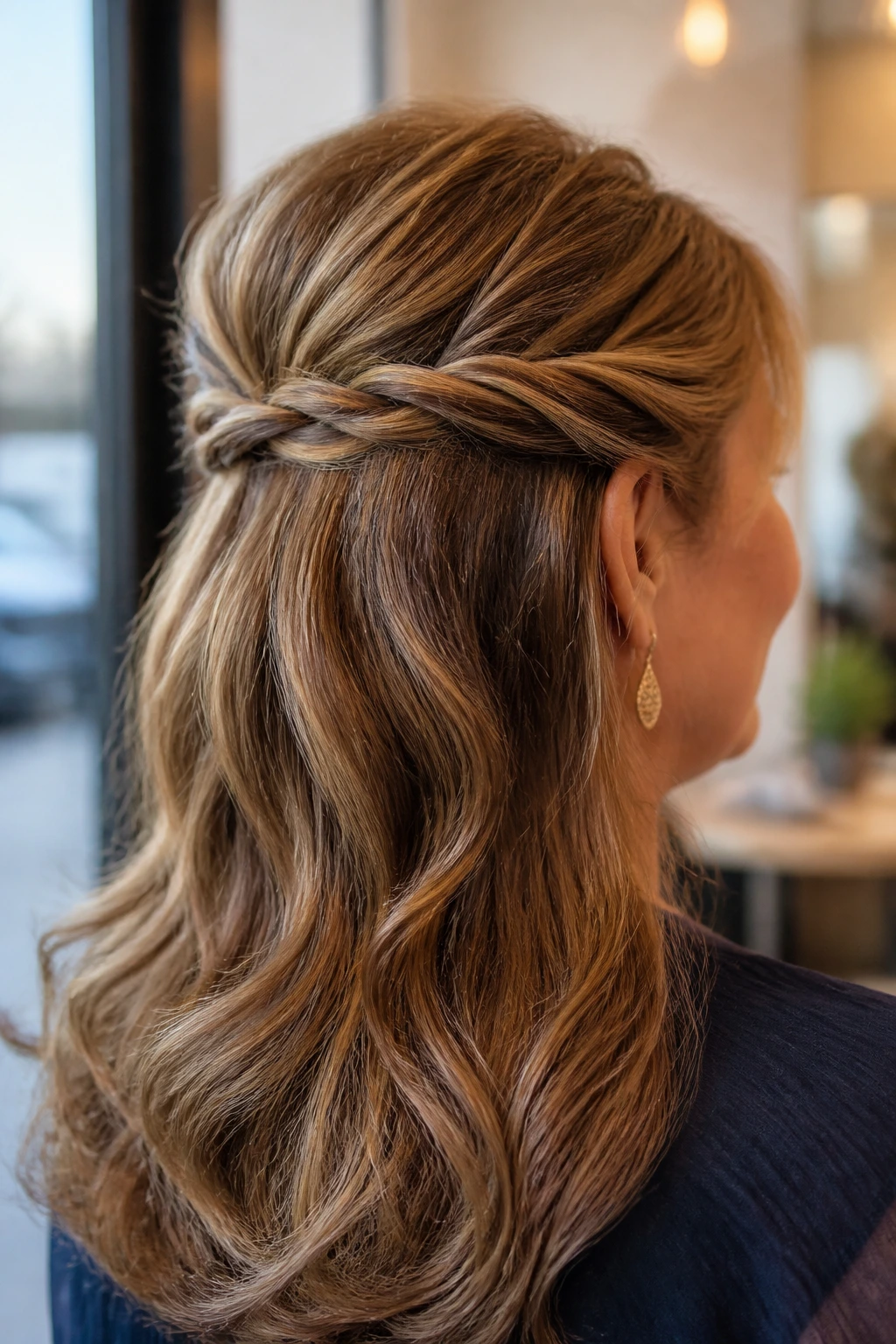
Two narrow twists from each side meeting at the back give the hair a tidy, almost architectural feel. The line is clean, and the style stays secure because the twists support each other. It is also one of the easier half-up options to do at home without a stylist hovering over your shoulder.
I like it on hair that has a little grip — not squeaky-clean, freshly washed hair that slides apart every time you touch it. A touch of texture spray helps. If the mother of the bride wants a dependable style that still looks thoughtful, this one is a strong candidate.
18. Bubble Half-Pony
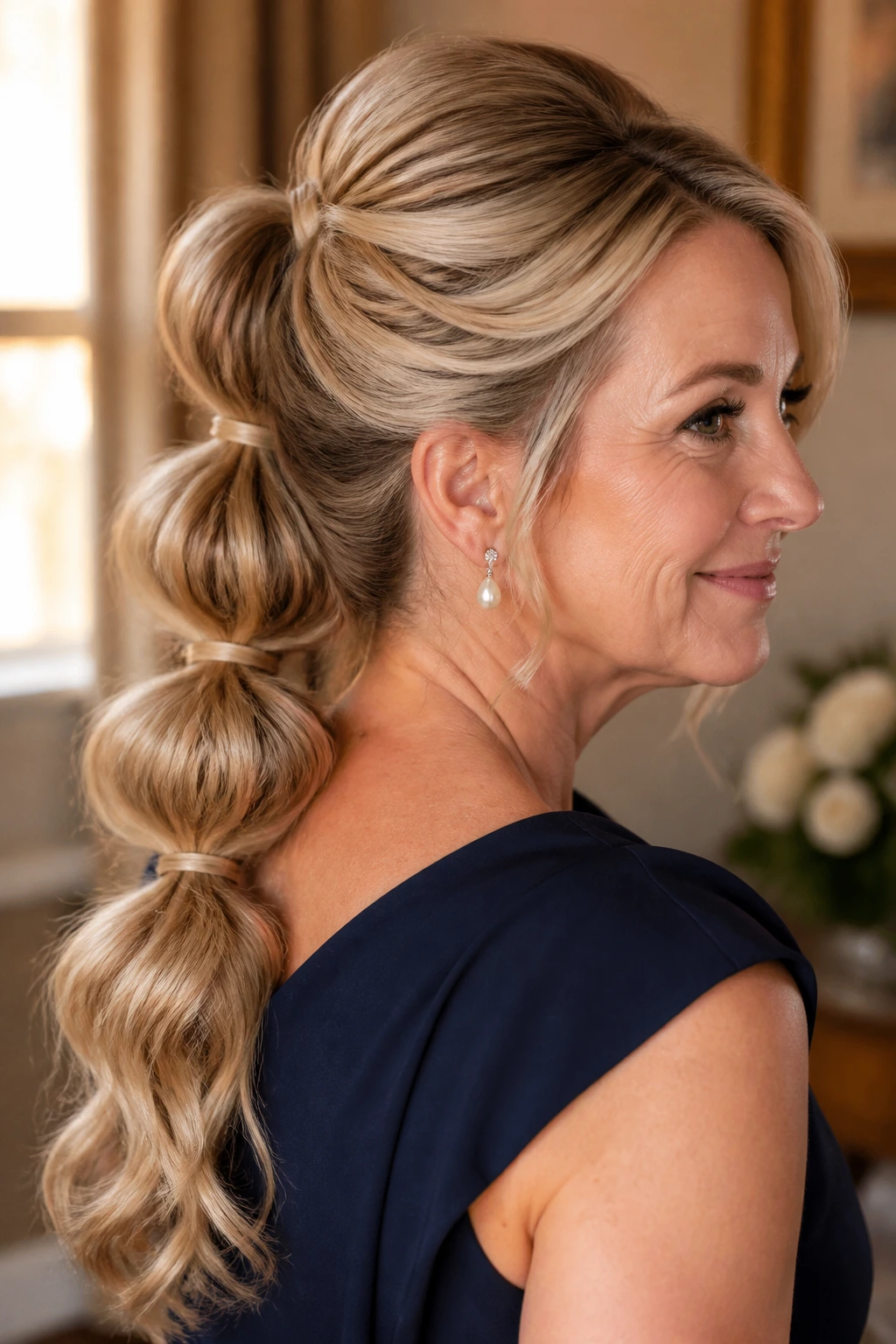
A bubble half-pony brings a small modern edge to an otherwise classic shape. The top section is pulled into a soft half-pony, then broken up with clear elastics at intervals so each segment puffs slightly. It sounds playful, and it is, but it can still look formal if the rest of the hair is smooth and the elastics are hidden well.
This works best on longer hair, where the bubbles have room to show. I would keep the sections consistent, about 1.5 to 2 inches apart, so the shape looks deliberate. If the dress is simple and the mother of the bride wants a slightly updated feel, this is a nice detour from the usual twists and braids.
19. Messy Romantic Half-Up
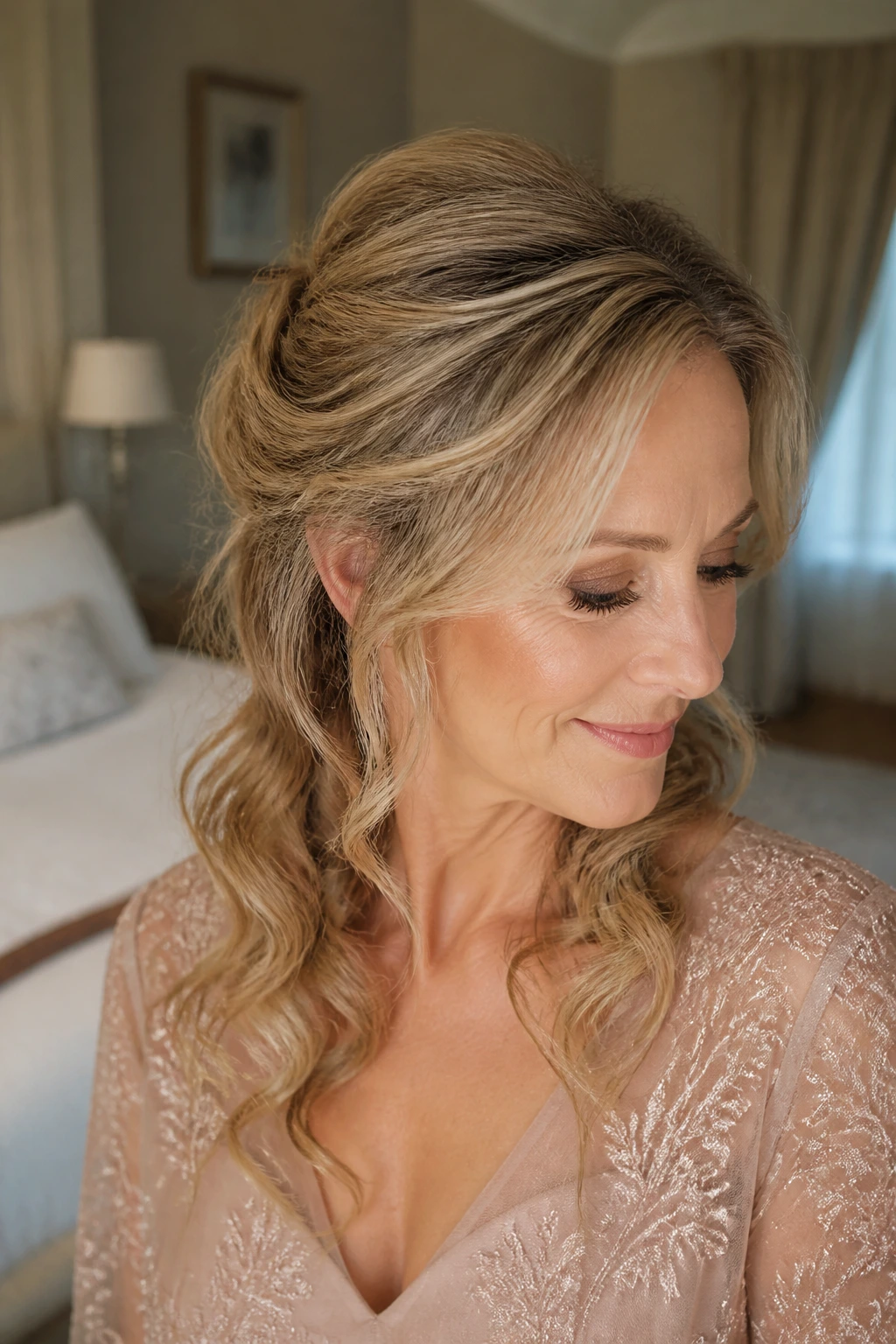
Messy is a dangerous word. Done badly, it looks unfinished. Done well, it looks soft, airy, and expensive in a quiet way. The right version has loose bends, a bit of crown lift, and a few face-framing pieces that stay controlled rather than hanging in the eyes.
Use this for chiffon, lace, or dresses with a softer silhouette. It works especially well if the mother of the bride wants movement but not the stiffness of a formal set. The key is to keep the mess in the structure, not in the parts that should look neat: the parting, the pins, and the back of the crown.
20. Pin-Curl Inspired Half-Up
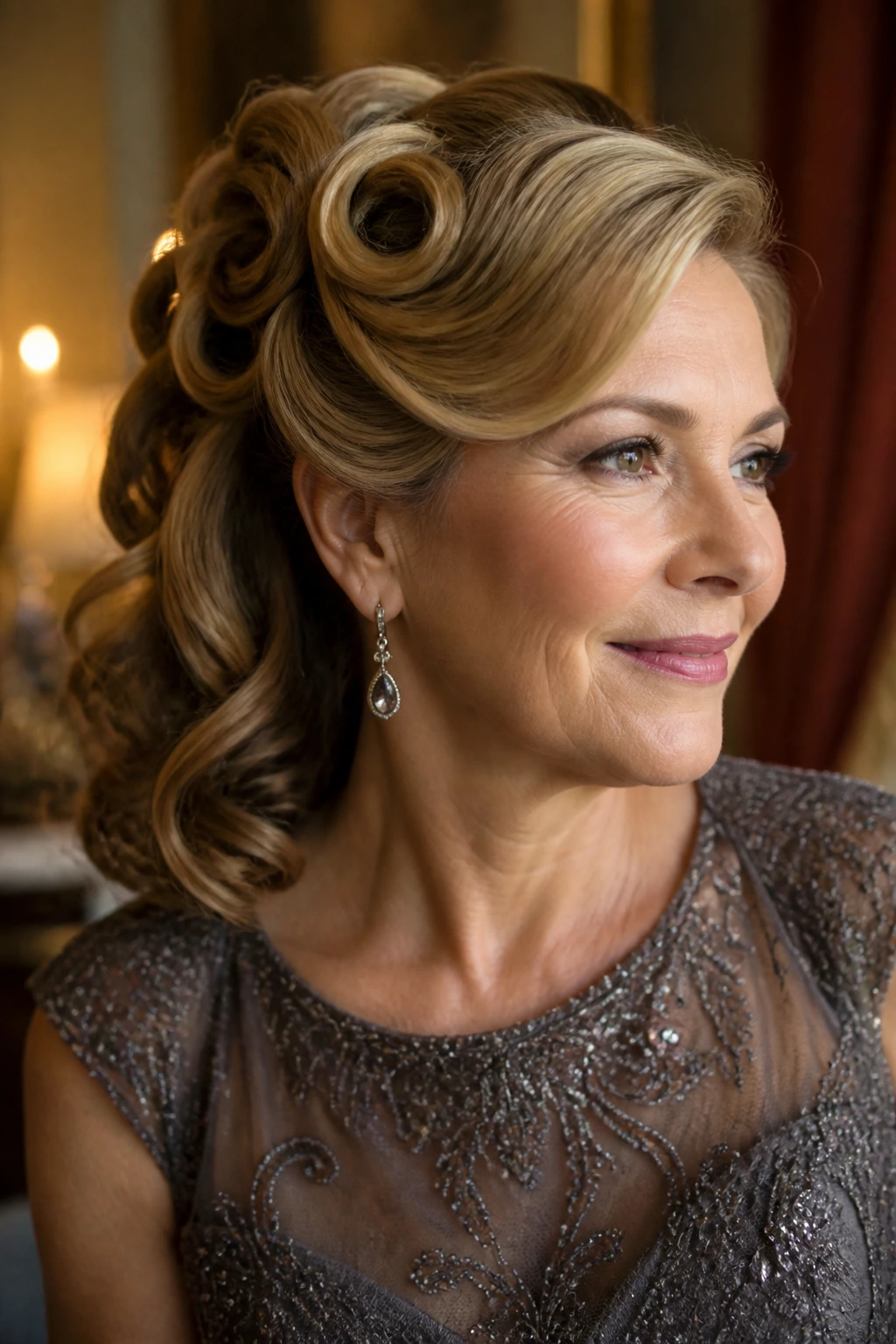
For a nod to vintage hair without going full retro, pin-curl inspired waves are a lovely middle ground. Set the hair in smaller sections, let the curl cool, and brush it into a smooth wave pattern before pinning the upper half back. The effect is more sculpted than loose curls, which gives the style some real presence.
This is one of the best options for a formal evening wedding or a mother of the bride who likes classic makeup and jewelry. It also works nicely with a side part and a little shine spray at the ends. If the dress has a vintage or heirloom feel, the hairstyle will sit right with it.
21. Side Braid Into Half-Up
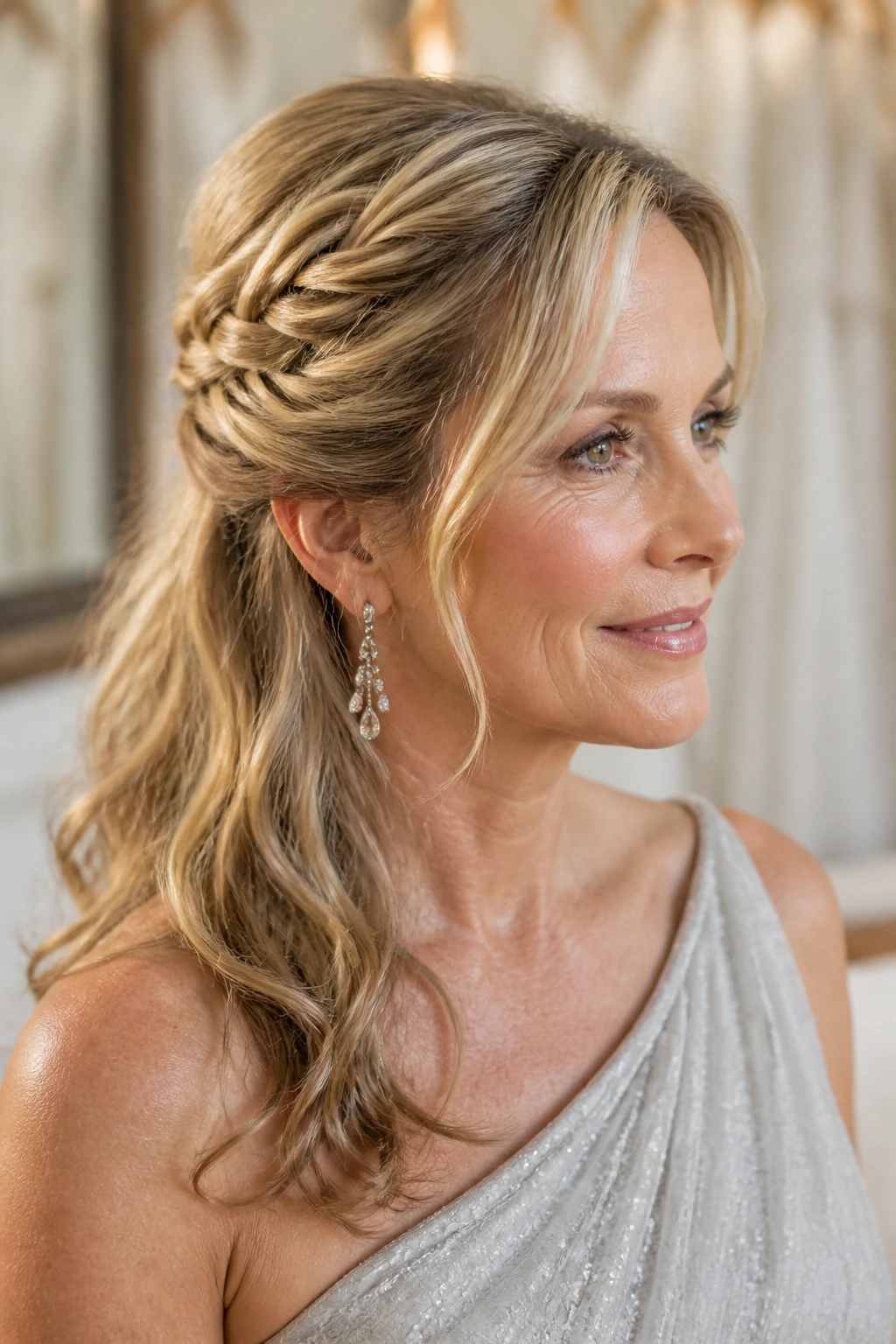
A single side braid can do a lot of work. It pulls one side of the hair back, leaves the rest open, and creates a gentle diagonal line that makes the style feel less predictable. I like this for one-shoulder dresses or any neckline that needs a bit of asymmetry.
The braid should stay fairly loose so it does not compete with the rest of the hair. Once it crosses to the back, pin it under the top section rather than on top of it. That small placement choice keeps the braid from sticking out like an afterthought.
22. Wavy Lob Half-Up
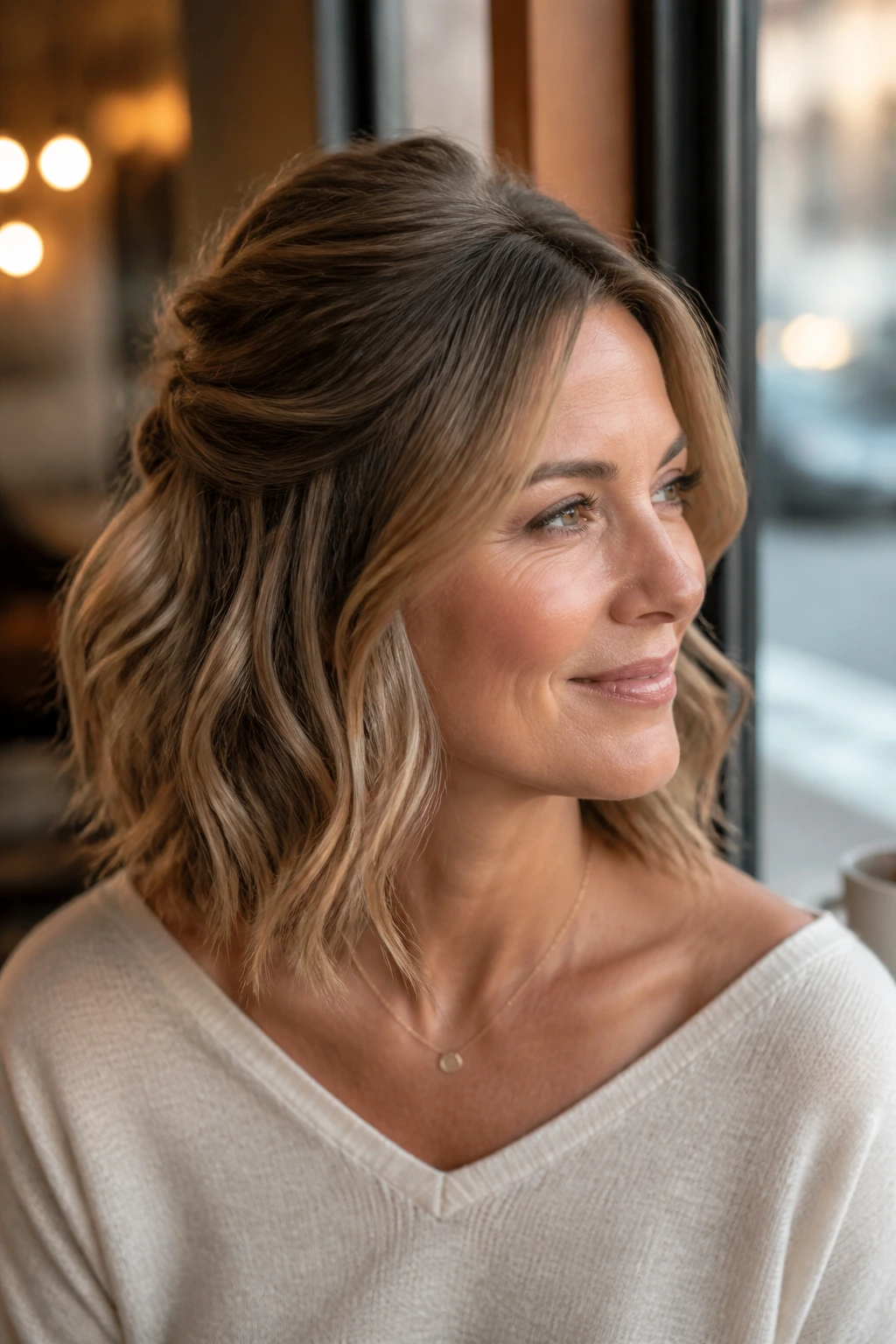
A lob can absolutely work for a half-up style. In fact, shoulder-grazing lengths often look more intentional when they are half-pinned because the style creates shape without asking the hair to be longer than it is. A soft wave through the ends gives the cut movement, and a small lift at the crown keeps the front from falling flat.
This is one of the best answers for mothers of the bride with medium-length hair who do not want extensions. The half-up section can be tiny and still look purposeful. Keep the lower wave broad and modern rather than tight, or the length can start to feel busier than it should.
23. Half-Up French Twist
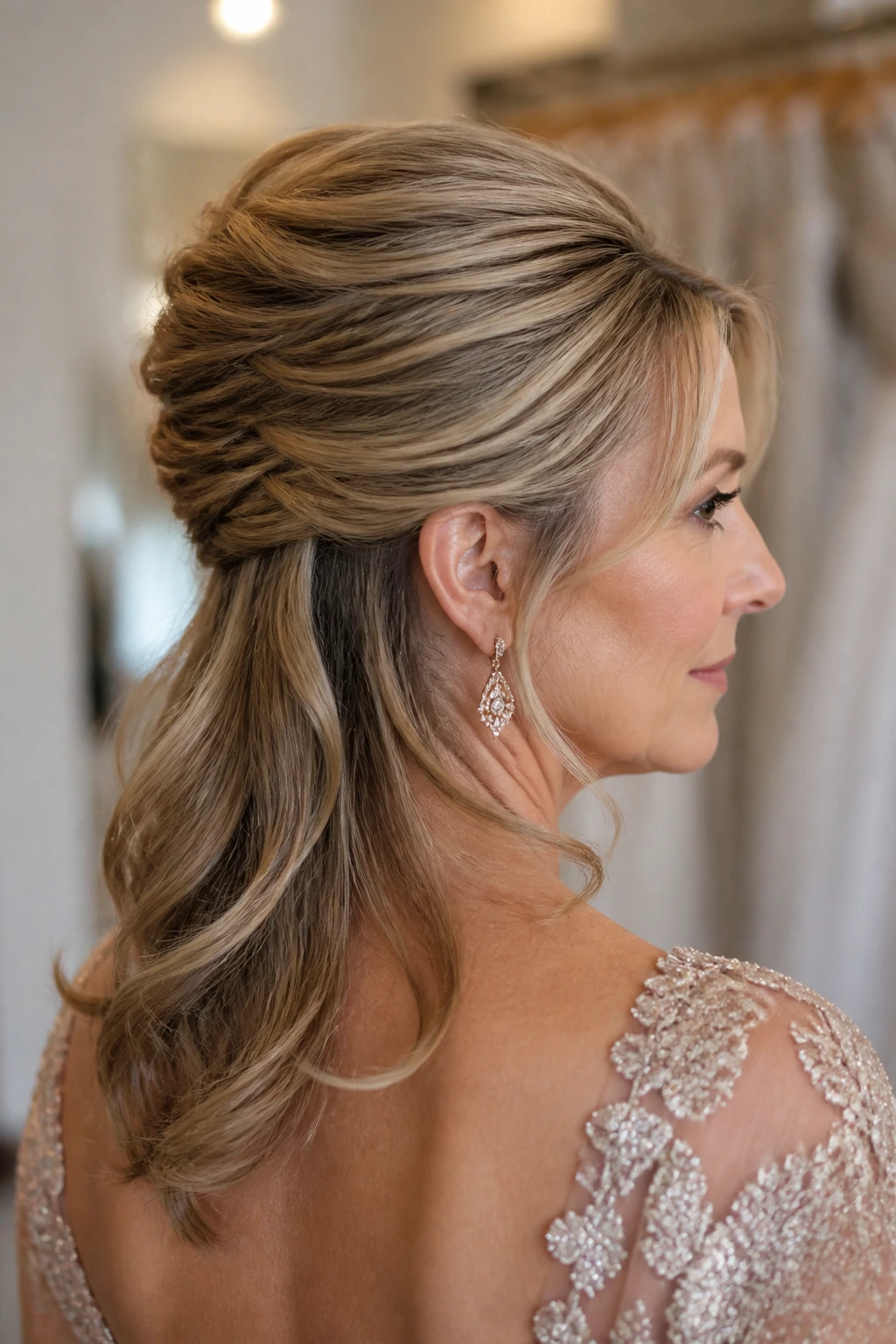
This is the most formal of the bunch, and it has the discipline to prove it. The upper section is gathered into a vertical twist that creates a clean line at the back of the head, while the lower hair stays down and softened. It gives you structure without forcing the whole style into a full updo.
It pairs well with gowns that have sharp lines, refined fabrics, or a more tailored finish. Because the twist sits higher and more centered, it can elongate the neck nicely in photos. Just keep the lower length smooth enough that the style still feels balanced; too much volume underneath can fight the twist.
24. Lifted Crown Half-Up for Fine Hair
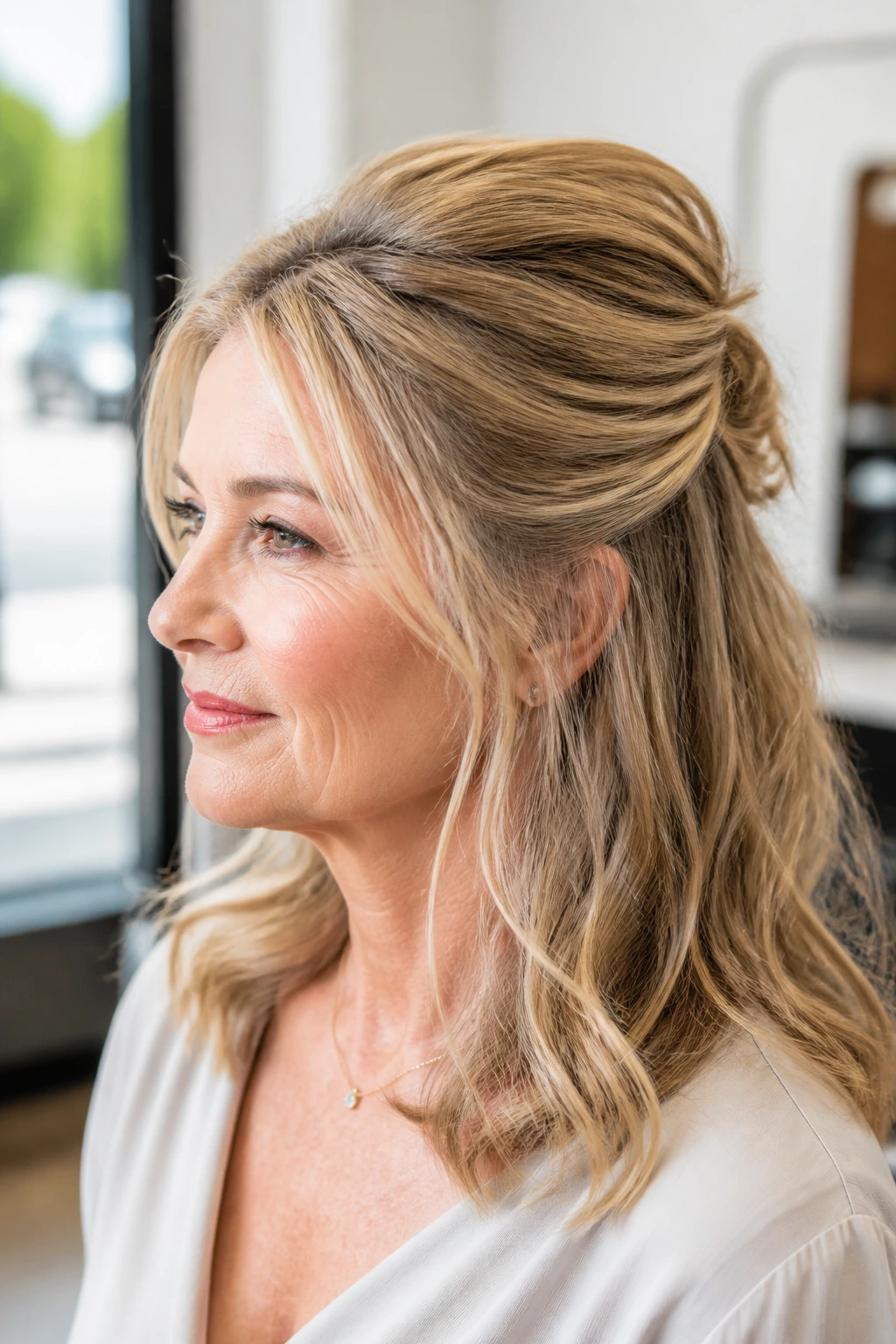
Fine hair can do a lot if you stop asking it to behave like thick hair. This style starts with root lift at the crown, a light backcomb at the pin point, and small hidden pins crossing under the top section so the weight stays distributed. The goal is height without visible bulk.
I would pair this with soft bends in the lower half rather than heavy curls. Heavy curls can drag fine hair down by the second hour, and no one wants that. A texturizing spray at the roots, used sparingly, is usually better than loading on more hairspray after the fact.
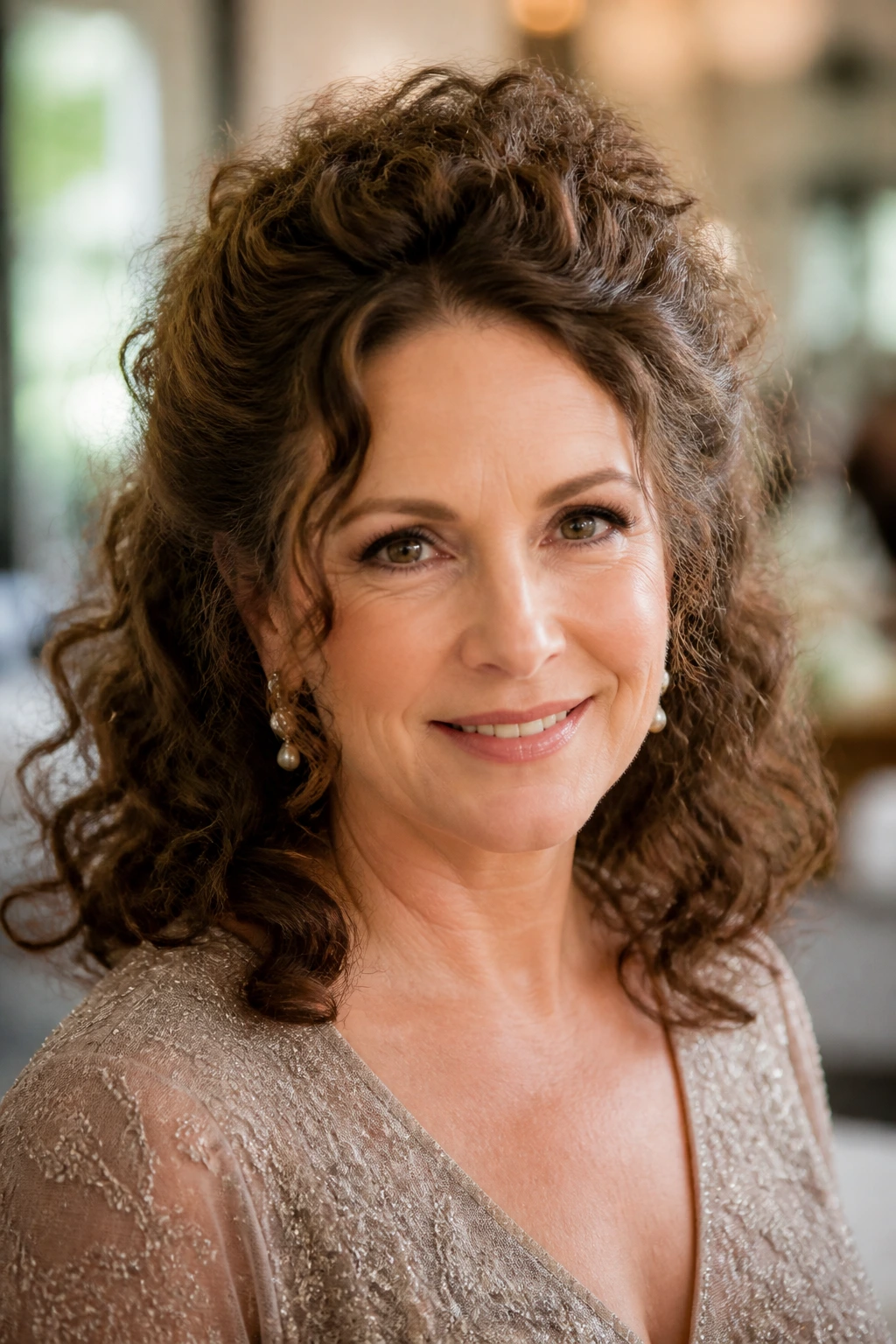
25. Curly Halo Half-Up
Natural curls can make a stunning half-up shape when the top section is lifted into a soft halo and the rest is left free. The curls add body on their own, so the style does not need much decoration. What it needs is control at the crown and careful separation of the curls so they do not puff into a cloud.
This is particularly good when the mother of the bride wants to honor her hair texture instead of forcing it into a straightened look. A curl-defining cream and a little oil on the ends can keep the shape glossy. If there is a veil, it usually sits better beneath the lifted section than above it.
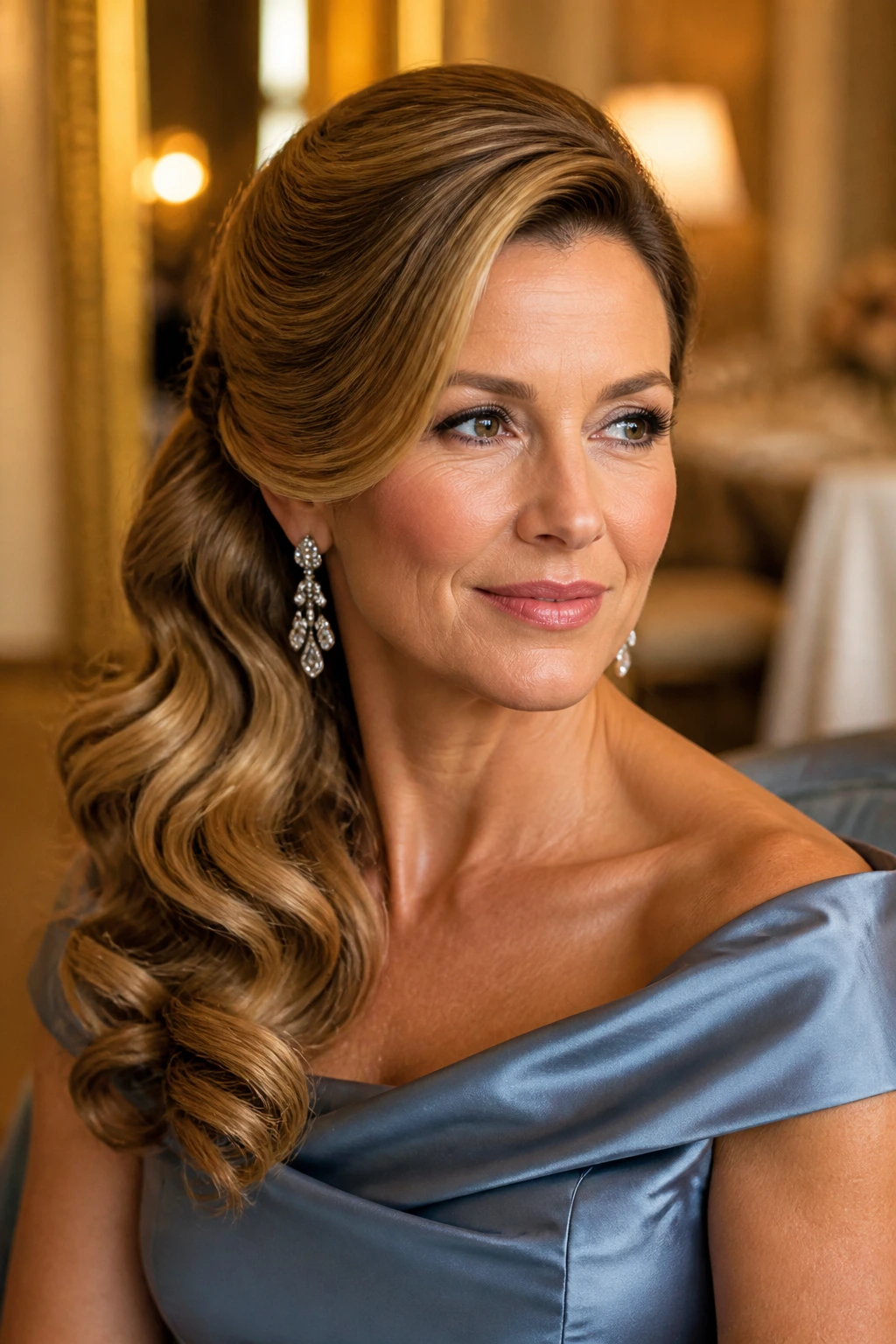
26. Old Hollywood Side Half-Up
Big side waves and a half-up pin-back have a strong red-carpet feel, but they can still read age-appropriate and polished when the wave is brushed soft. The side part and pinned crown create a dramatic line, while the shoulder-length fall keeps the style from looking severe.
This is a smart pick for satin dresses, long earrings, or a more evening-heavy ceremony. I like the wave to be broad and glossy, not crunchy. One brushed-out wave over one shoulder and the pinned side on the other gives the face a flattering frame that stays balanced in photos.
27. Wrapped Knot Half-Up
A wrapped knot style uses a twist or knot at the back, then hides the pinch point with a strip of hair or a slim wrap so the finish looks cleaner. It has enough detail to feel planned, but not so much that it becomes the center of attention. That balance is useful for mothers who want something softer than a chignon but more shaped than a simple pin-back.
It is especially good if the hair has a bit of natural wave or bend. Straight hair can work too, but it needs texture first or the wrap may slip. The wrapped finish is also a nice way to hide mixed tones, extensions, or a bit of uneven density in the top layer.
28. Deep Center-Part Half-Up With Curtain Pieces
A deep center part with long curtain pieces at the front gives the face a very open, modern shape. The half-up section can be as simple as two pinned-back side sections, but the front is what makes the style land. Those longer face-framing pieces soften the cheeks and keep the style from feeling too formal.
This works especially well with dresses that are sleek, minimalist, or already structured. The key is to keep the curtain pieces soft around the jawline, not curled into stiff spirals. If the hair is long enough, the lower section can fall in smooth waves that make the whole look feel calm and current.
Practical Tips for Making the Style Last
Prep the hair with the finish in mind. Clean hair can be too slippery for some half-up styles, especially rope twists and braids, so a wash the day before often gives better grip. If the hair is fine and freshly blown out, add a small amount of root spray at the crown and let it dry before you start pinning.
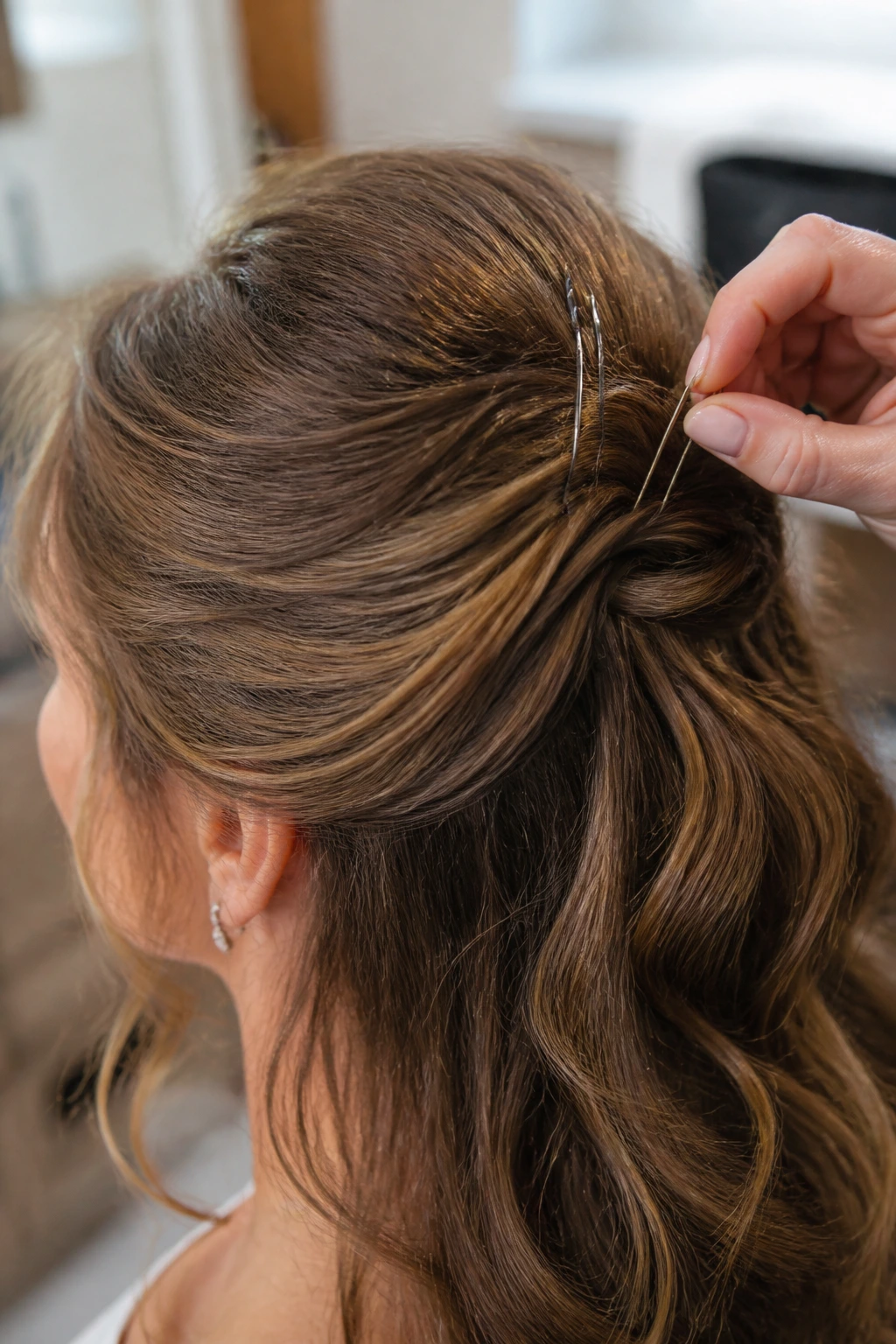
Anchor the pins where the head is strongest. The best bobby pins go in crisscrossed, not parallel. Slide one up, the other down, and catch a little scalp-level hair under each one. It sounds fussy, but that tiny X pattern is the difference between a style that survives the first hug and one that starts sagging by cocktail hour.
Keep the crown controlled. Too much teasing at the top makes the hair look like it belongs to a different decade. Use enough lift to create shape, then smooth the outer layer with a brush or your fingers. The surface should still look like hair, not a helmet.
Bring a tiny emergency kit. Two extra pins, a travel-size flexible hairspray, and a small comb cover most disasters. If the weather is humid or windy, tuck the kit into the clutch or hand it to someone who will actually remember where it is.
Don’t overdo shine products near the roots. A touch of serum on the ends is usually enough. The base needs grip, not slipperiness.
Common Mistakes That Flatten the Style or Make It Age Too Fast
Placing the half-up section too low. When the pin line sits almost at the nape, the style can look like it ran out of energy halfway through. Move the section higher, closer to the back of the crown or just above the ear line, so the shape reads on purpose.
Using too much curl on already detailed hair. Tight curls, braid texture, pearls, and floral pins all at once can turn the style busy fast. Pick one lead feature and let the rest support it. The eye needs a place to rest.
Letting heavy accessories carry the whole look. Big combs and oversized clips can drag on fine hair and slide out of softer textures. If the hair is light, use two or three smaller pins arranged close together instead of one heavy piece.
Skipping the test from the side and back. The front can look done while the back is quietly collapsing. Take a mirror photo before leaving the house. If the twist looks flat from one side, fix it then. Later is worse.
Using too much finishing spray too soon. If the style is still warm from curling, spraying immediately can lock in shape that you have not checked yet. Let the hair cool, brush if needed, then spray lightly from about 10 inches away.
Variations and Alternatives Worth Trying
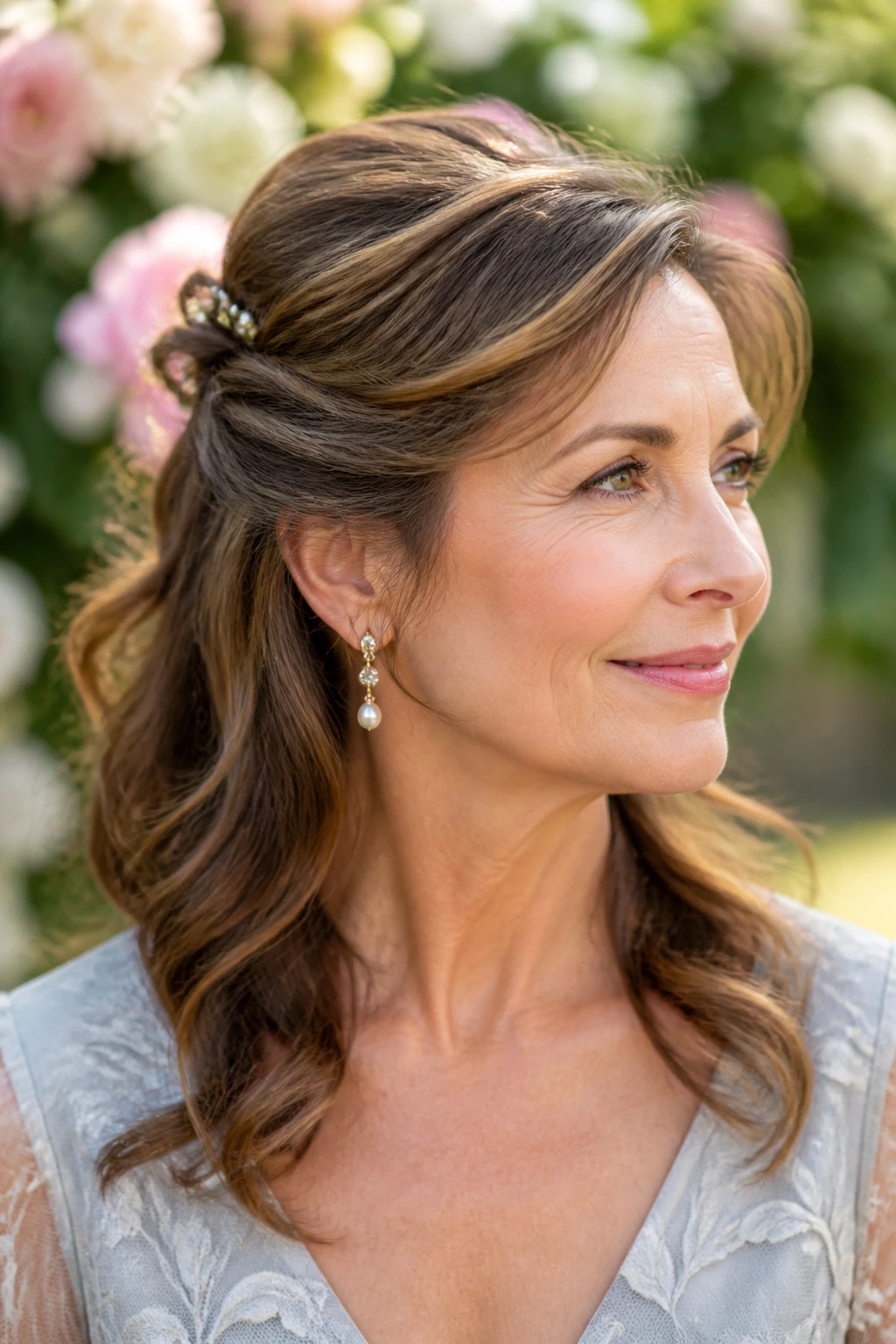
The Modern Minimalist: Keep the top section pinned with almost no visible twist, then leave the lower hair in a smooth blowout. This suits simple dresses, clean lines, and anyone who wants the hair to stay in the background.
The Garden-Party Softness: Swap the pins for a small floral comb, add loose waves, and keep the crown lift gentle. This is the prettiest choice for outdoor ceremonies where the whole look can lean lighter and airier.
The Formal Evening Version: Choose a side part, brushed waves, and a more structured pin-back at the crown. It feels dressier than a loose romantic shape, and it holds up well with satin, beading, or a longer reception.
The Curly-First Version: Keep the curl pattern visible, lift only the top third of the hair, and pin the crown with hidden U-pins instead of trying to flatten the texture. That approach looks better than forcing curls into a smooth mold they do not want.
The Shorter-Hair Adaptation: If the hair stops at the shoulders or a bit above, use smaller twists, a low braid, or a tucked pin-back that does not demand extra length. The trick is to make the style intentional at the scale the hair already has.
Tools and Accessories You’ll Actually Use
-
Bobby pins in the hair color: The ordinary ones are often the most useful; keep a few crossed at the base of the twist.
-
U-pins: Helpful for thicker hair or curly styles where you need support without flattening the shape.
-
Tail comb: The pointed end makes clean parts and precise sectioning easier than trying to wing it with fingers.
-
1-inch or 1.25-inch curling iron: Small enough to shape the hair, large enough to keep the finish soft and not too tight.
-
Round brush or paddle brush: The round brush helps set volume; the paddle brush is better for brushing out waves and smoothing the surface.
-
Sectioning clips: They save time and keep the top section from getting tangled while you work on the lower layers.
-
Flexible-hold hairspray: Strong enough to hold the style, light enough not to turn the hair stiff or crunchy.
-
Texturizing spray or root lift spray: Useful for fine hair, slippery hair, or styles that need a little grip before pinning.
-
Small decorative pins, combs, or a ribbon: Use one accent, not five. The finish should support the style, not wrestle it.
-
Hand mirror or phone camera: A back view catches what the mirror in front of you will miss.
How to Keep the Style Fresh From Ceremony to Last Dance
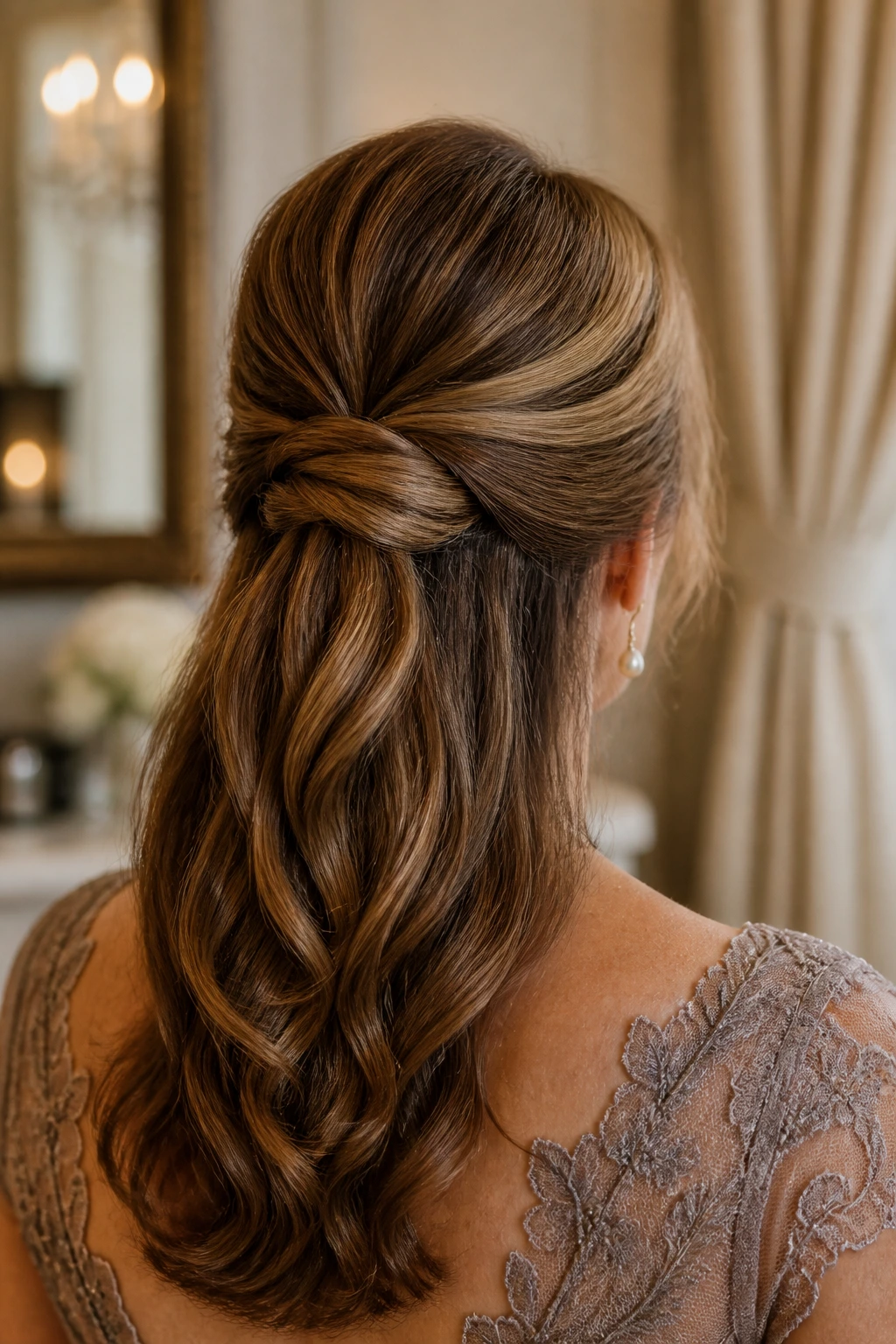
Before the ceremony: Set the style as close to the event as possible, then let the hair cool before moving around too much. If you are using hot tools, give each section time to cool in shape. Warm hair falls faster than people expect.
During the reception: Tuck a few spare pins and a travel spray in the clutch or hand them to the maid of honor. If a side piece starts slipping, do not panic and rebuild the whole style. One pin, one tuck, done.
If humidity is part of the day: Keep the finish flexible and avoid over-brushing. Humidity can puff out the crown or make curls collapse, so the goal is controlled movement, not frozen perfection. A light mist of spray at the end and a few hidden pins usually beat a heavy cloud of lacquer.
If you want to keep it for the next morning: Sleep on a satin pillowcase and clip the twisted sections lightly so they do not flatten oddly. Loose waves may survive, but the crown will usually need a quick refresh with a brush and a touch of dry shampoo at the roots.
Frequently Asked Questions
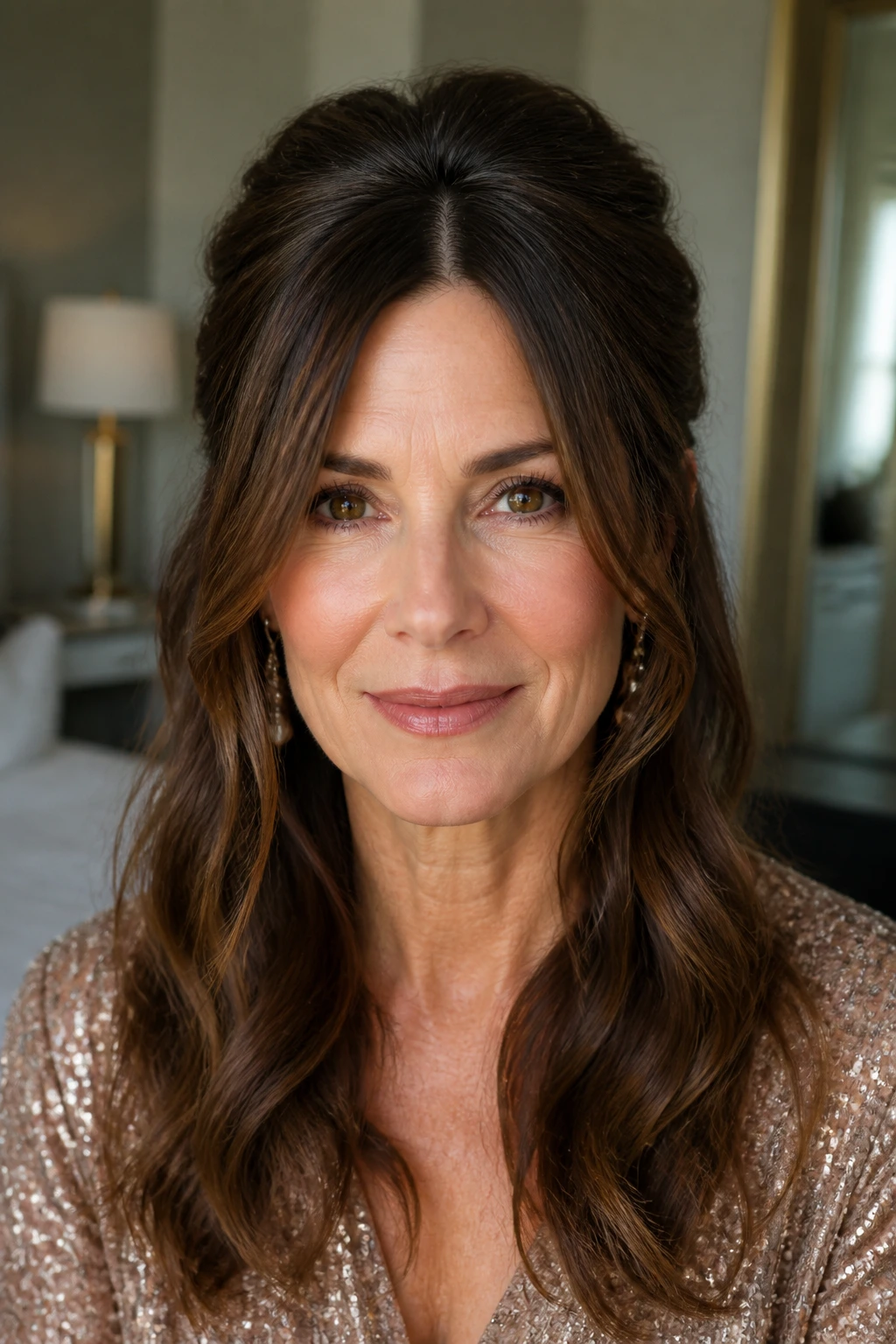
Can a half-up style look formal enough for the mother of the bride?
Absolutely. The formality comes from placement, polish, and accessories, not from forcing all the hair into a bun. A smooth crown, clean pinning, and a good wave set can look every bit as dressed up as a full updo.
What hair length works best for half-up styles?
Shoulder-length hair can work, and longer hair gives you more options, but you do not need waist-length hair to make the style read well. The trick is choosing a shape that fits the actual length instead of asking it to behave like something it is not.
Can fine hair hold a half-up style without falling flat?
Yes, if you build the base correctly. Use texture spray, a little root lift, and crossed pins at the crown. Heavy accessories and too much oil near the roots are what usually sink the style early.
What if the hair is curly or frizz-prone?
Work with the texture instead of flattening it. Define the curls first, then pin back only the top section and leave the rest shaped. For frizz-prone hair, a humidity-resistant finishing spray and a touch of smoothing cream on the ends can help.
Should the hair be washed the same day or the day before?
For many half-up styles, day-before hair has better grip and gives braids or twists more staying power. Very fine hair can do better with a fresh wash and a little texturizer. The choice depends on how slippery or coarse the hair feels when you touch it.
Can a veil, comb, or fascinator work with a half-up style?
Yes, but placement matters. A veil usually sits better under or just below the pinned section, while a comb or fascinator needs a secure base that will not shift when you move your head. Test the accessory before the final spray goes on.
How do I stop the style from collapsing at the crown?
Use hidden support under the lifted section, not just hairspray on top. A little backcombing, a few crossed pins, and a cool finish after curling make a far bigger difference than piling on spray. If the crown still droops, it usually means the section was too large or too heavy.
Can these styles work for short or medium hair?
Yes, with smaller twists, lower placement, and a little bit of strategic pinning. The goal is not to force the hair into a style built for longer lengths. A smaller, cleaner half-up shape often looks better than a stretched-out version that cannot quite hold together.
A Soft Finish That Still Reads Formal
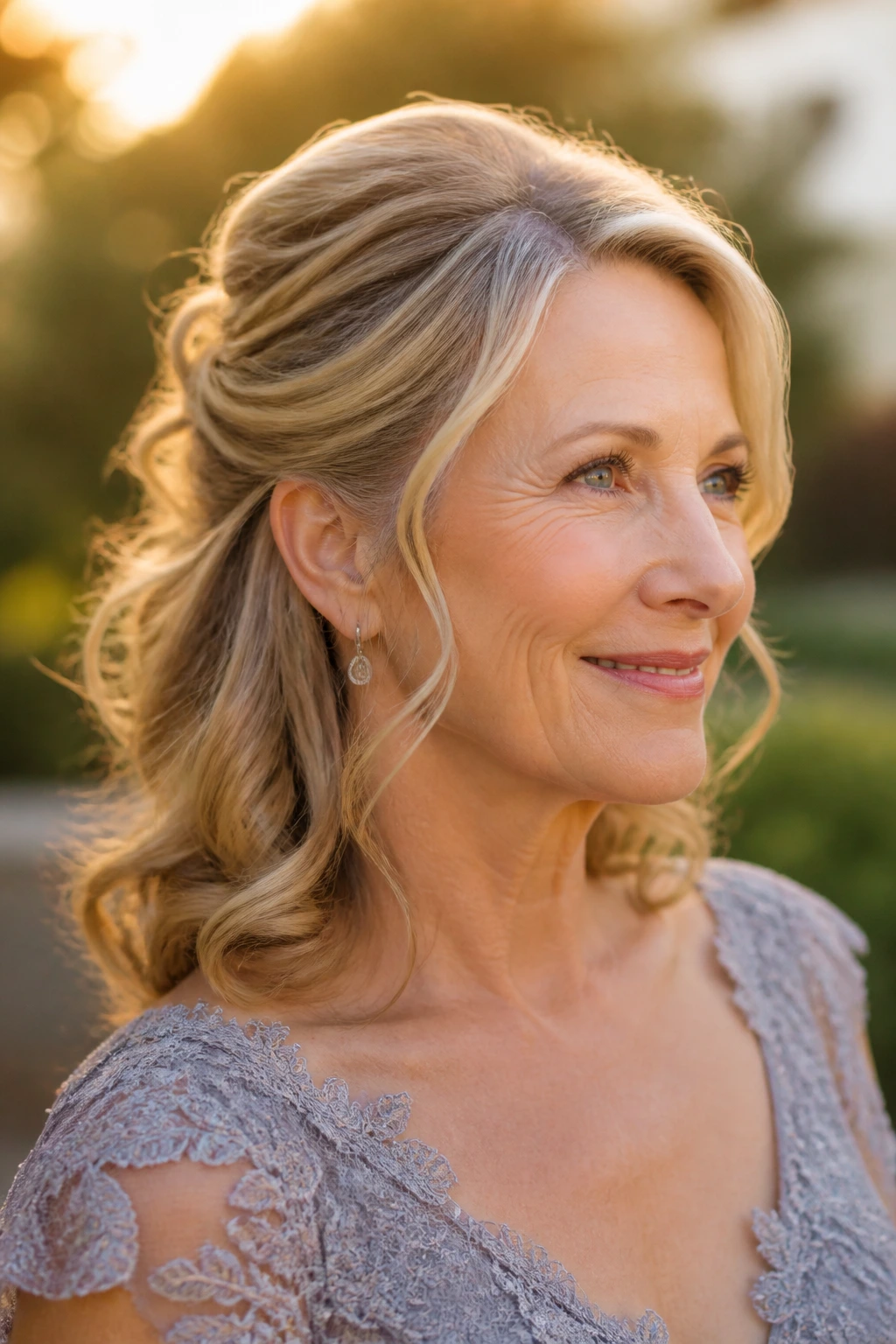
Half-up hairstyles for mother of the bride work because they solve a real problem without making a fuss about it. They keep the face open, soften the profile, and let the hair feel styled rather than trapped. That middle ground is where a lot of the best wedding hair lives.
If you keep one thing in mind, make it this: the style should support the dress and the day, not compete with them. A clean twist, a controlled wave, or one well-placed braid is usually enough. The right half-up shape does not shout. It settles in, looks calm in photos, and still holds up when the dancing starts.