



Medium hair has a funny reputation. It’s long enough to gather, twist, and wrap, but short enough that every sloppy elastic choice shows up fast. A ponytail on collarbone-length or shoulder-skimming hair can look razor-sharp or half-finished, and the difference is usually a single inch of placement, a better brush, or one hidden bobby pin.
A ponytail should never look like a default setting. On an oval face, that matters even more. Too much height can stretch the face a touch too far; too much flatness can make the whole style disappear into the back of the head. The sweet spot is usually somewhere in the middle — a low sweep that shows off the cheekbones, a wrapped base that feels deliberate, or a lifted crown that still leaves the face open.
These styles lean into that sweet spot. Some are polished enough for a blazer and hoops, some are loose enough for a ribbed tee and errands, and a few use little cheats — a second elastic, a ribbon, a narrow braid, a quick curve at the ends — so medium-length hair looks fuller than it actually is.
Why You’ll Love These Ponytails
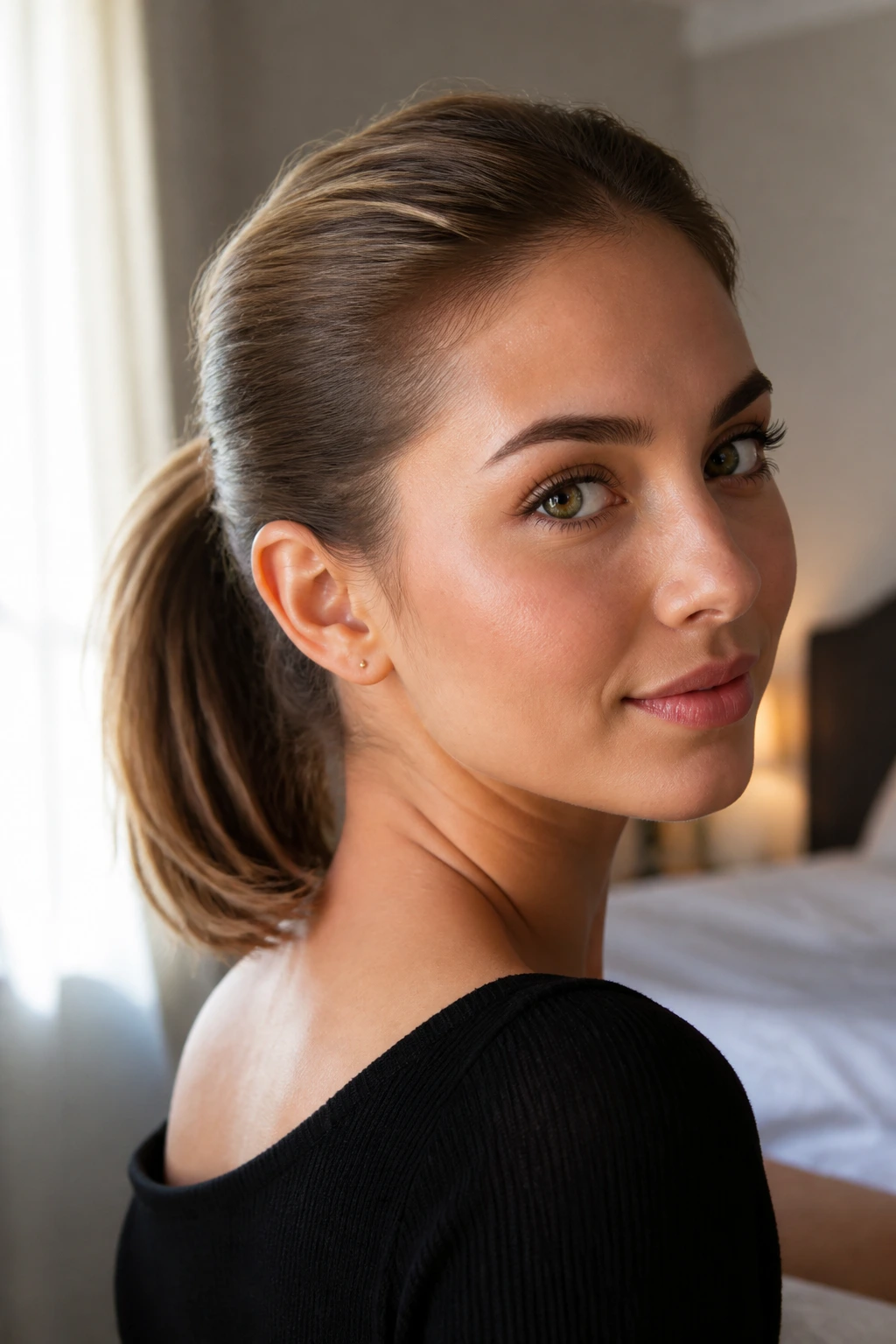
- Built for medium length: These styles rely on shape, parting, and texture, not on pretending you have waist-length hair.
- Kind to oval faces: The placements keep your features open while still adding lift, softness, or width where it helps.
- Not one-note: You get sleek, braided, bubbled, ribboned, and wavy versions, so the look can change with the outfit.
- Uses ordinary tools: A tail comb, a few elastics, a curling iron, and a handful of bobby pins cover most of the list.
- Easy to dress up or down: Swap a matte elastic for a satin ribbon, or leave two front pieces loose, and the mood changes fast.
- Actually wearable: These ponytails are meant to stay put through a workday, a dinner, or a long walk without falling apart by noon.
Why Ponytails on Medium Hair and Oval Faces Work So Well
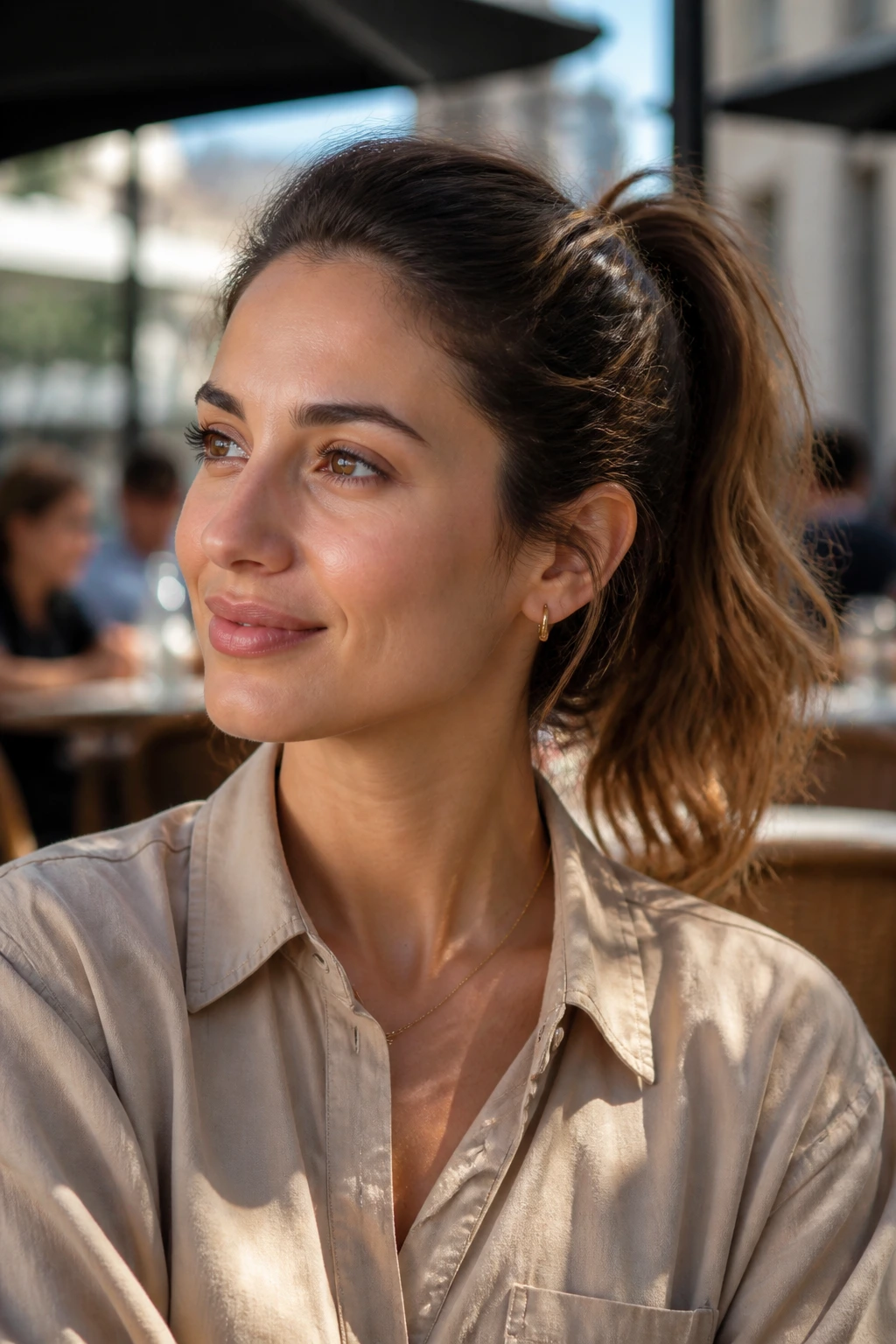
Medium hair gives a ponytail shape. That sounds obvious, but it matters more than people think. Very long hair can drag a ponytail down and hide the base. Very short hair can feel too small to style with much drama. Medium-length hair sits in the middle: the tail has enough swing to look finished, but not so much weight that it sags into a limp rope by the time you leave the house.
The length does half the styling for you
Collarbone-length hair and shoulder-skimming cuts hold a bend better than long hair, which is why a quick curl at the ends makes such a difference here. One-inch sections around a curling iron are usually enough. You don’t need a salon wave set — you need movement, a little polish, and a base that doesn’t look like an emergency ponytail from the back row of a gym.
Oval faces can take shape, but they don’t need exaggeration
An oval face is balanced already. That’s a gift, and also a trap. You can pull the ponytail high, low, side-swept, or sleek, but if you pile on too much crown height or build a lot of vertical line with no side softness, the style can feel longer than flattering. The best ponytails here use one clear idea at a time: lift, softness, shine, braid detail, or texture.
The finish matters more than the height
A ponytail on medium hair usually looks best when one part of it is doing the talking. A wrapped elastic. A curved end. A single braid. A ribbon with a tail that hangs a few inches past the base. Pick one thing and let it lead. When everything is loud, the style starts to look busy. When one detail is clean, the whole head looks edited.
1. The Mid-Height Wrap Ponytail
This is the ponytail I reach for when I want the hair to look intentional without turning into a project. The base sits halfway between the crown and the nape, which gives medium hair enough lift to move but not so much height that an oval face starts looking stretched upward.
Keep the top smooth, gather the hair where the tops of your ears meet the back of your head, then pull out a thin 1-inch strip from underneath the ponytail. Wrap it around the elastic once or twice and pin the end underneath with a bobby pin. If your hair is layered, mist that strip lightly first so the ends don’t fray while you wrap.
The best part is the shape. Medium hair has enough bounce for this ponytail to swing, and that movement keeps the style from looking stiff. A slight bend at the ends reads cleaner than poker-straight lengths here. Clean, not severe.
2. The Deep Side-Sweep Low Ponytail
Why does a deep side part make a low ponytail feel more polished? Because it breaks the symmetry in a way that looks chosen, not accidental.
Brush the front section across one temple, keep the part low and deliberate, then gather the ponytail at the nape just behind one ear. On an oval face, that off-center placement softens the line from forehead to chin without hiding the face. It’s a quiet trick, but it changes the whole balance.
Small details that keep it chic
- Keep the top layer smooth, not plastered flat. A little bend near the part keeps the style from looking severe.
- Leave a face-framing piece on the heavier side if you want softness around the cheekbone.
- Use a matte elastic or a small ribbon if the tail is fine; a shiny thick band can eat the whole look.
This is one of those styles that looks better than it sounds. A low pony can seem plain on paper. Add the side sweep and a clean nape, and it turns into something you’d actually choose, not something you’d settle for.
3. The Crown-Lift High Ponytail
High ponytails can go wrong fast on oval faces, mostly because people chase height instead of shape. What you want is a lifted crown, not a little tower.
Use mousse or root spray at the front and crown, blow-dry the roots upward if you can, then gather the ponytail at the upper-back of the head, just above the line where a mid pony would sit. Secure it firmly — medium hair can slip if the elastic is weak — and wrap a small strand around the base for a cleaner finish.
The tail can stay straight, or you can bend the last few inches with a 1-inch iron so the ends don’t hang like a broom. On an oval face, this height keeps the features open without overpowering them, as long as you don’t pull the base so high that the face starts reading longer than you want.
A tiny bit of lift at the crown. That’s the move. Not a shellacked dome.
4. The Bubble Line Ponytail
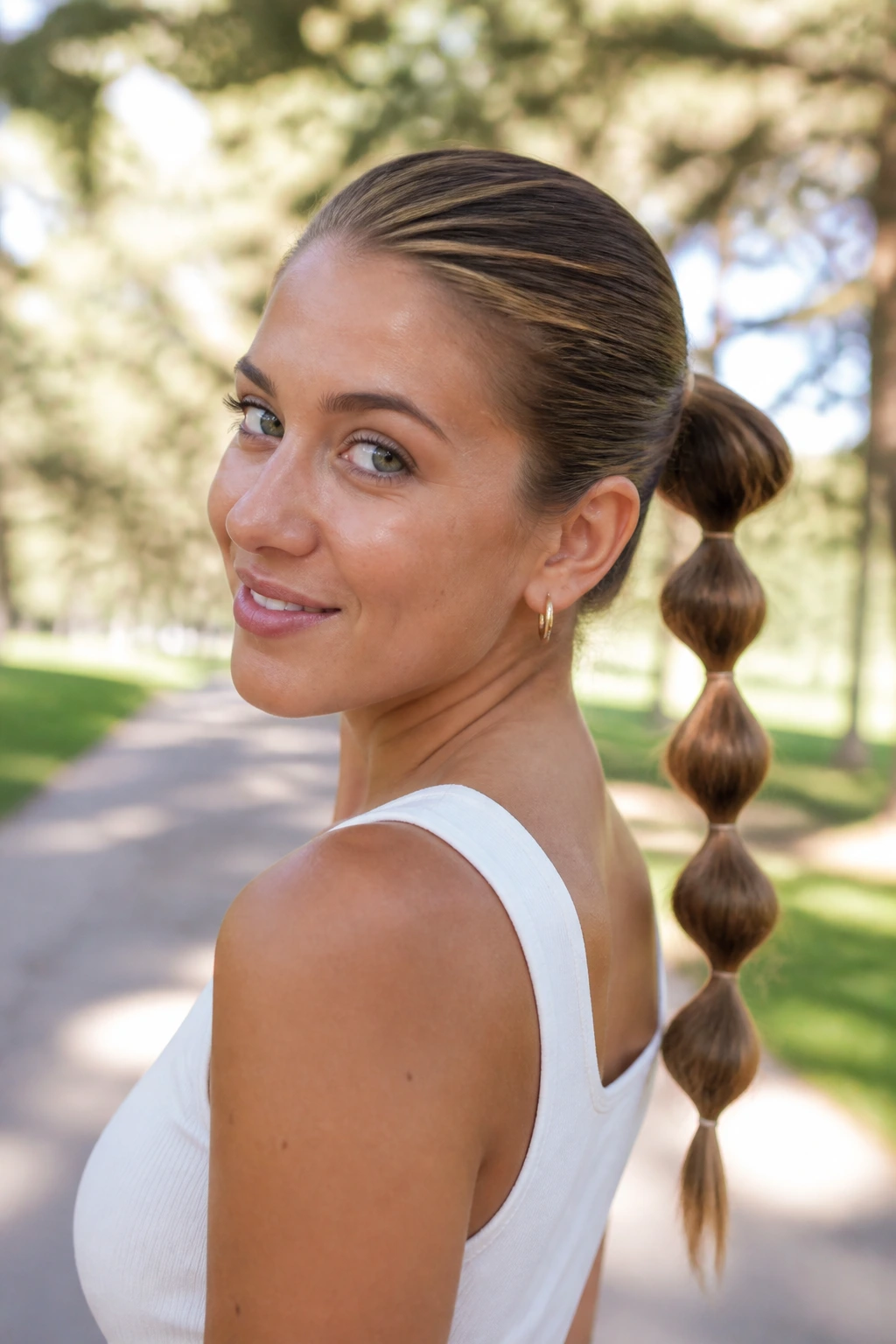
The clear elastics make little dents, then the hair puffs between them. That puff is the whole point.
Start with a mid-high ponytail and smooth the base first. Then place small elastics every 2½ to 3 inches down the tail, and tug each section gently from the sides until it rounds out. Don’t yank straight outward — that makes odd bumps. A slow side-pull is what gives each bubble that soft, even shape.
On medium hair, bubble ponytails work better than people expect because the tail doesn’t have to be super long to show the pattern. Keep the first bubble a few inches below the crown so the style doesn’t climb too high on an oval face. If the bubbles start too close to the top of the head, the whole thing starts feeling vertical.
This is a good one when plain straight hair feels too flat but a full curl set feels like too much effort. You get shape, rhythm, and a little attitude. Not fussy. Just not boring.
5. The Soft Wave Ponytail
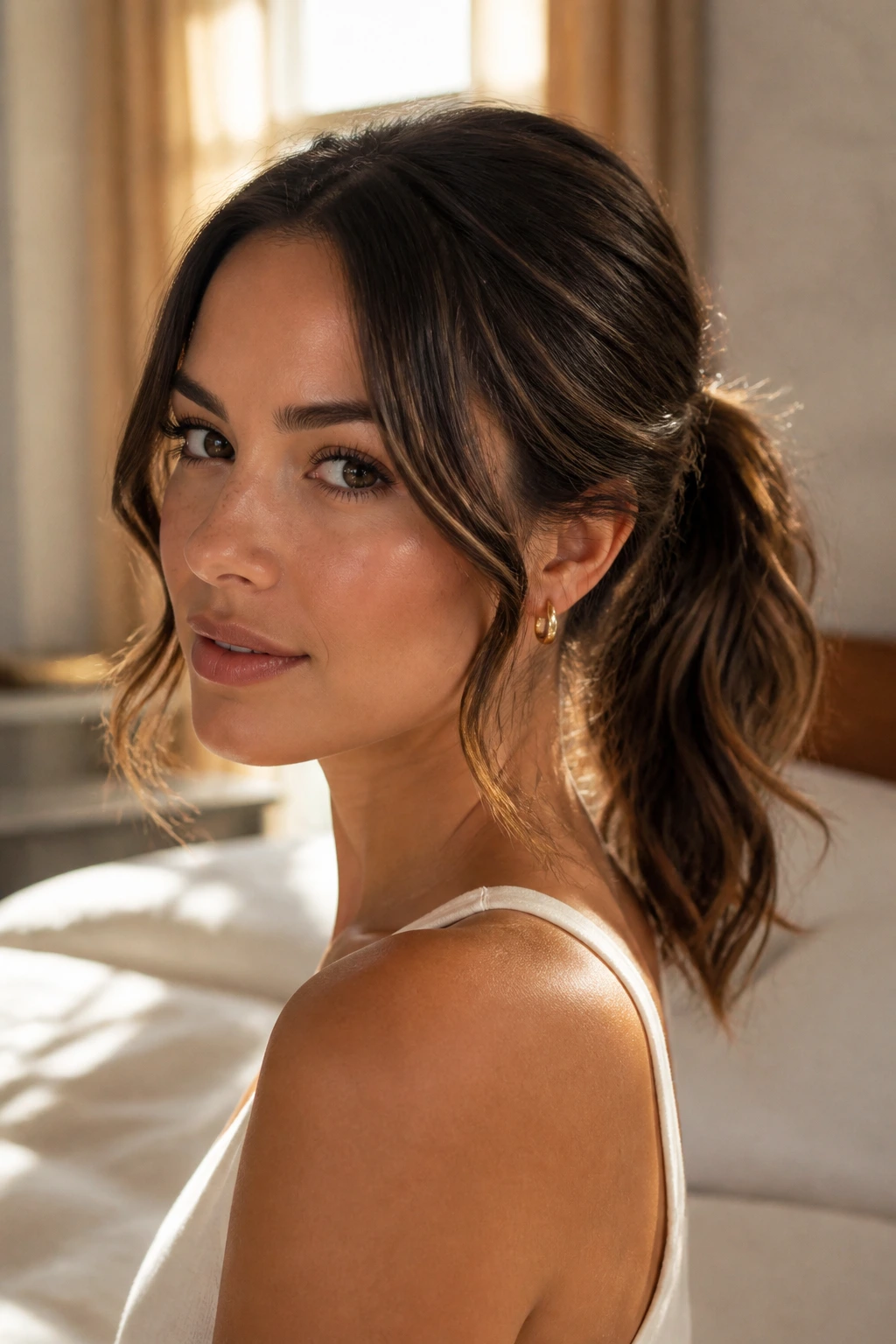
If you need a ponytail for dinner and don’t want it to look like you grabbed it between tasks, this is the answer.
Curl the ponytail in 1-inch sections, alternating directions so the waves don’t stack into one giant pattern. Leave two front pieces out before you tie the base, then bend them away from the face with the iron so they don’t stick straight forward. Medium hair loves this because it holds a wave without going heavy at the ends.
Don’t brush the curls into fluff. That’s the mistake. Use your fingers to separate them, then add a drop of light oil only to the ends if they look dry. On an oval face, the face-framing pieces soften the symmetry and keep the look from feeling too pulled back.
A lot of ponytails fail here because the finish is too neat. This one wants a little motion. Not mess. Motion.
6. The Braided-Base Ponytail
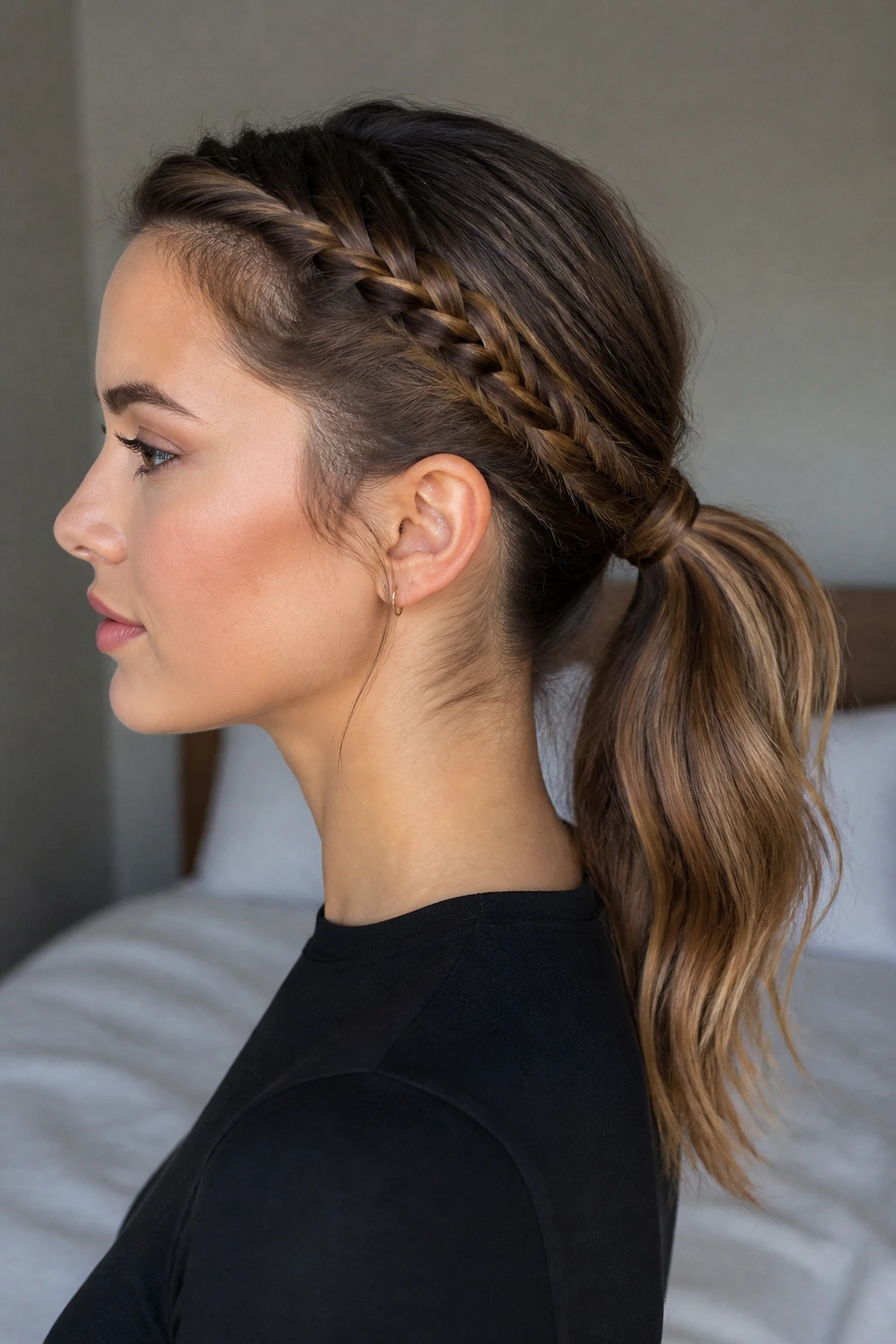
A braid doesn’t have to be the star. It can just do the useful part and step out of the way.
Start with a narrow braid along one side of the head, or braid both temple sections back in slim rows, then join them into a low or mid ponytail. The braid should stay narrow enough that you don’t lose much length — medium hair can disappear fast if the braid eats up too much of the tail. That’s the tradeoff people miss.
Where the braid belongs
- Put it on the heavier side if your part naturally leans that way.
- Keep it tight enough to lie flat, loose enough that it doesn’t pull at the roots.
- Finish the ponytail with a wrapped elastic if you want the braid detail to feel refined instead of sporty.
On oval faces, this works because the braid frames the face rather than boxing it in. It gives the ponytail a point of interest right where the eye lands first. I like it when the rest of the tail stays soft — the braid does the talking, and the ends can just behave.
7. The Temple Twist Ponytail
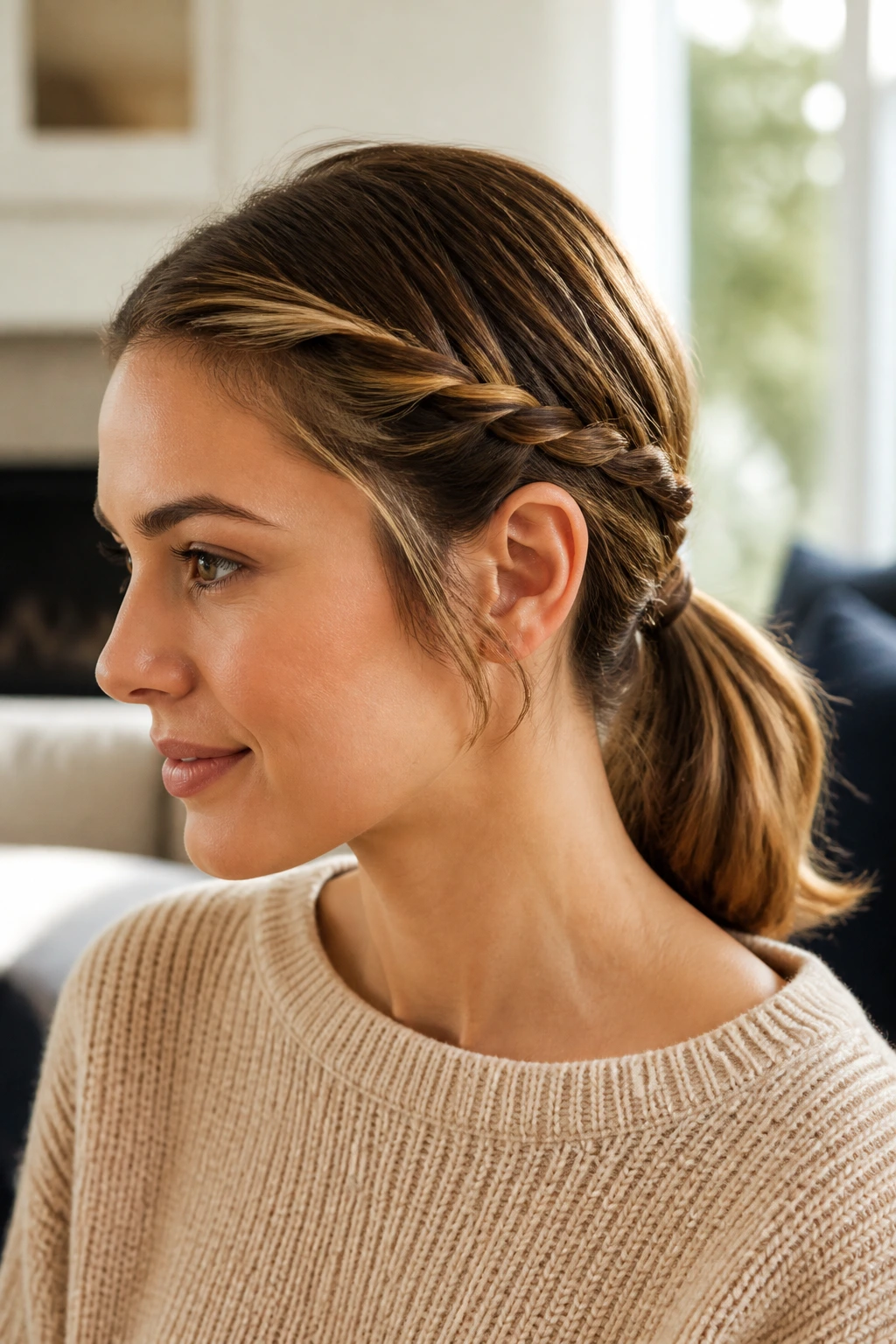
Twists are quieter than braids, and that is exactly why they work.
Take two 2-inch sections from the temples, twist each one back toward the nape, and secure them into a low ponytail. The twist keeps the sides neat without flattening the whole head. It also uses less length than a braid, which matters on medium hair where every inch counts.
Oval faces benefit from this shape because the twist creates a soft frame without crowding the cheekbones. You still see the face. You just see it with a little more structure. That’s the sweet spot.
If your hair slips easily, mist the twisted sections with a touch of texturizing spray before you start. A smooth twist is nice; a twist that stays where you put it is better. And if your ends are layered, tuck the shortest pieces under the elastic with one small pin rather than fighting them into the twist itself.
8. The Ribbon-Tied Low Ponytail
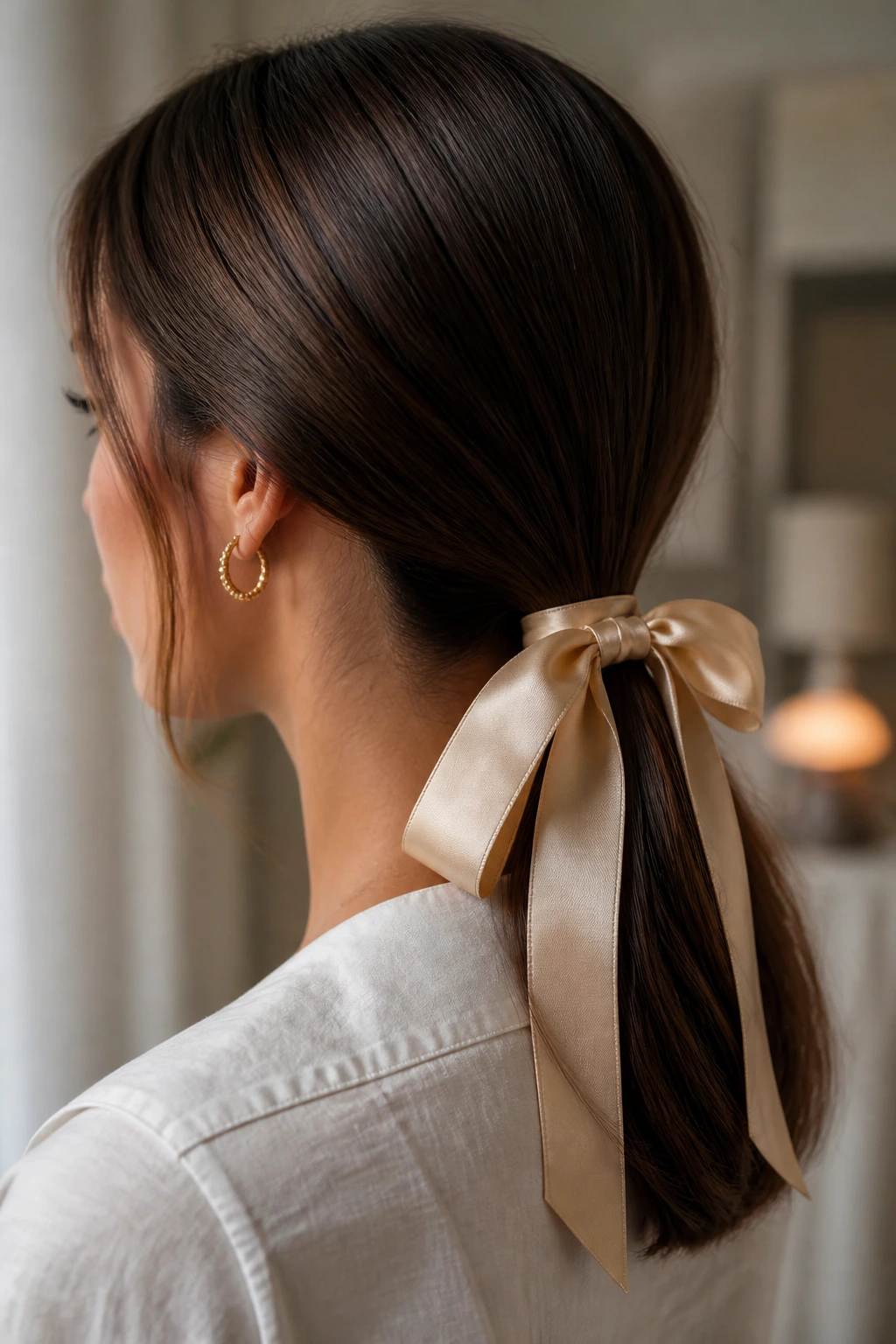
A ribbon does more than decorate the elastic. It changes the mood of the whole ponytail.
Gather the hair low at the nape, keep the surface smooth, and tie a satin or grosgrain ribbon around the base with the tails hanging 4 to 6 inches. If your hair is fine, choose a narrow ribbon. If your hair is thicker, a ribbon with a bit more width balances the tail better and doesn’t look like it got lost.
This is one of the easiest ways to make medium hair look deliberate. A low ponytail on its own can feel plain. Add ribbon, and suddenly the tail reads as styled, not just tied back. On an oval face, the softness of the ribbon offsets the clean symmetry nicely.
I like this most with a shirt collar, a knit dress, or a simple black top. The ribbon gives the eye something to land on. The rest can stay clean.
9. The Stacked-Length Ponytail
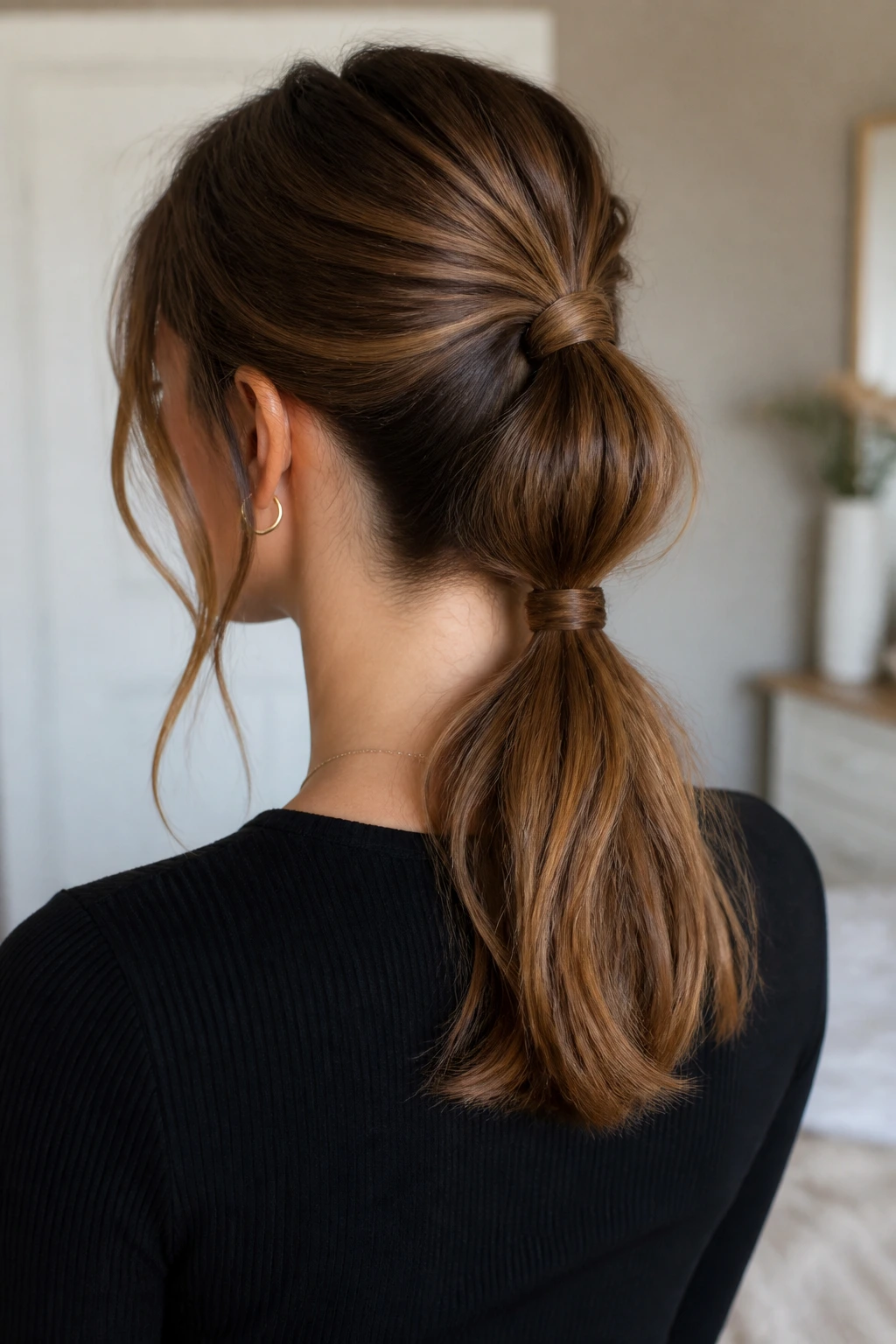
Medium hair sometimes needs a fake-out. Not a dramatic one — just a clever one.
Split the hair into two horizontal sections, tie the top half first, then gather the lower half into the same base so the upper pony sits over it. This creates the look of a longer, fuller tail without extensions. It’s the old double-pony trick, and it still works because gravity can’t argue with geometry.
On layered hair, this helps even more. The top section hides the lower elastic, and the lower section adds length so the tail doesn’t look stubby. Keep the top pony slightly looser than you think you need; if it’s too tight, the lower section will peek out in an awkward way.
For oval faces, keep the first pony a little below the crown, not right at the hairline. You want fullness, not a vertical stretch. A couple of loose bends through the tail finish it better than dead-straight lengths.
10. The Rope-Braid Ponytail
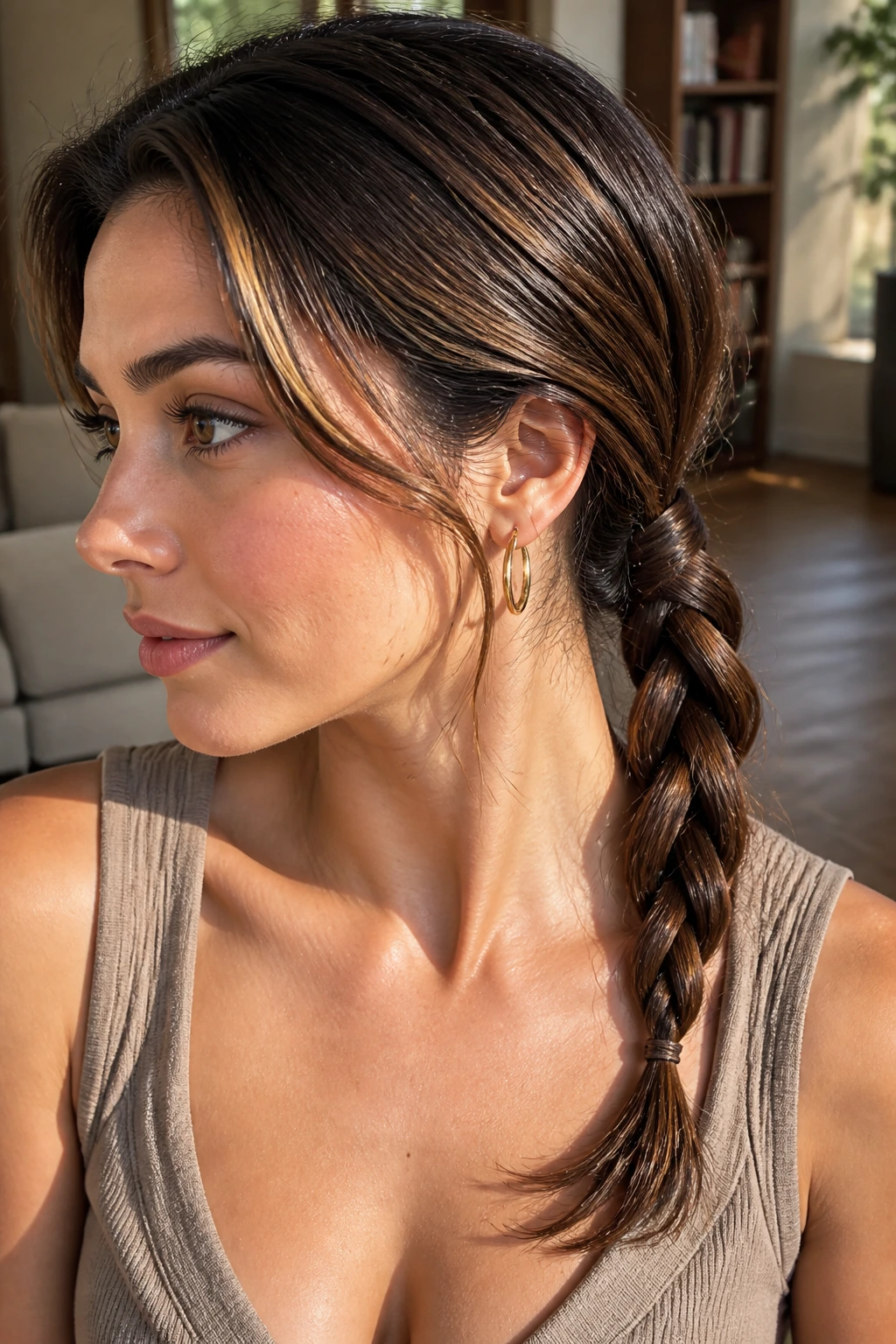
Compared with a three-strand braid, a rope braid looks smoother and takes less time.
Gather the hair into a low or mid ponytail, split the tail into two equal pieces, twist each piece away from your face, then wrap the two twisted pieces around each other in the opposite direction. Secure the end with a small elastic. The key is the opposite twist — if both sections twist the same way, the braid loosens and starts puffing apart.
This is a smart move for medium hair because it keeps the ends tidy without chewing up length. It also handles a little frizz well. If the weather turns damp or your hair tends to fluff at the ends, a rope braid contains that chaos instead of pretending it isn’t there.
On an oval face, a low rope braid feels clean and slightly polished, especially if the part is centered or just off-center. It’s not flashy. It doesn’t need to be. The shape does enough.
11. The Cloud-Textured Ponytail
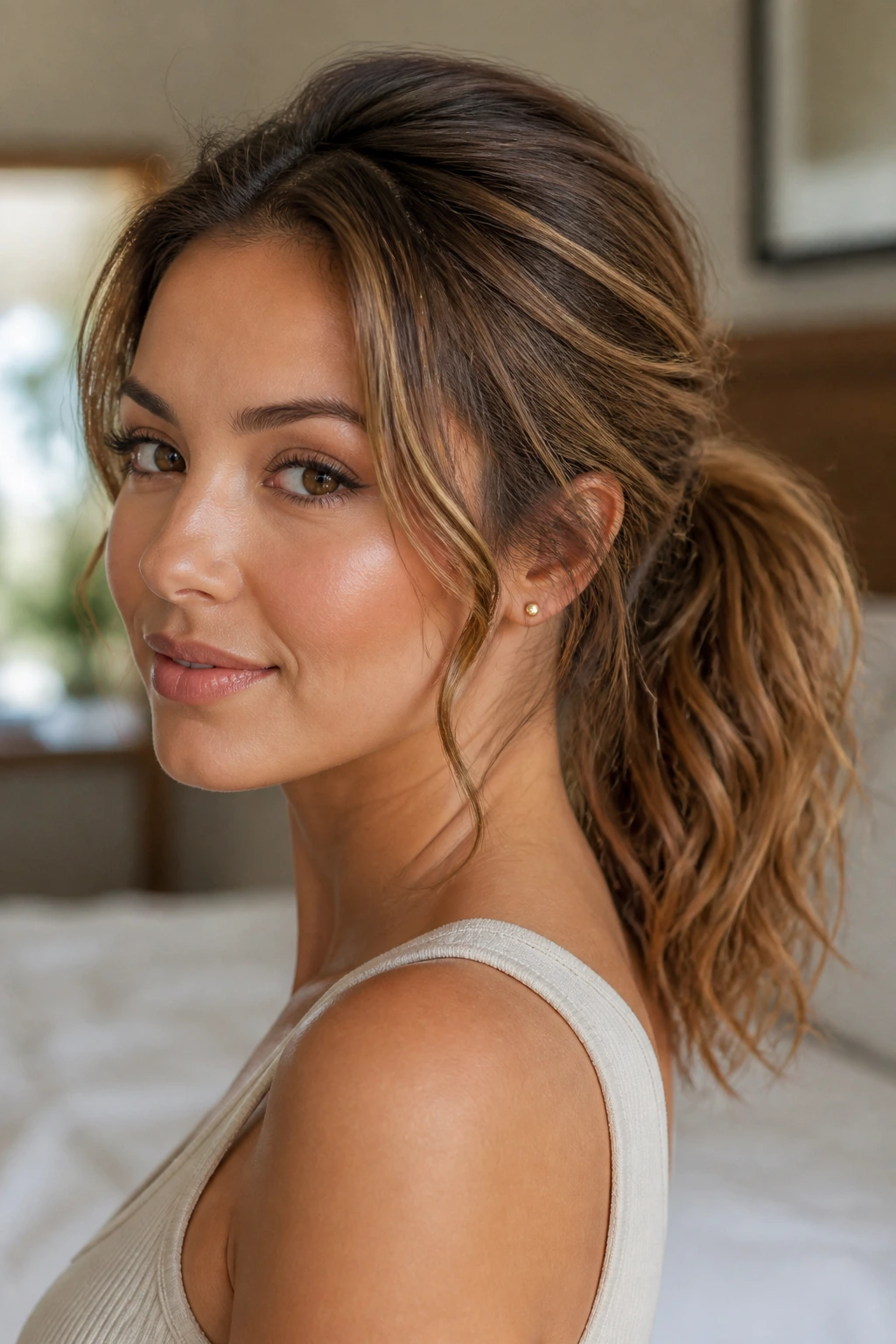
Messy only works when the mess is controlled.
Start with dry hair, mist a little texture spray at the roots, and rough-dry or bend the lengths with a curling iron so they have some bend before you gather them. Then pull the hair back with your fingers instead of a brush, leaving a little air at the crown and a few soft pieces near the temples. The goal is lift, not frizz.
Oval faces need some width at the sides when the crown is loose. If all the volume lives on top, the look starts climbing up the head and away from the face. Keep the ponytail mid-low so the shape spreads a bit rather than stretching upward.
I like this one for weekends, long drives, or any day when a sharply polished pony feels like too much effort. It has body. It has movement. It still looks like you meant to do it.
12. The Side-Stacked Ponytail
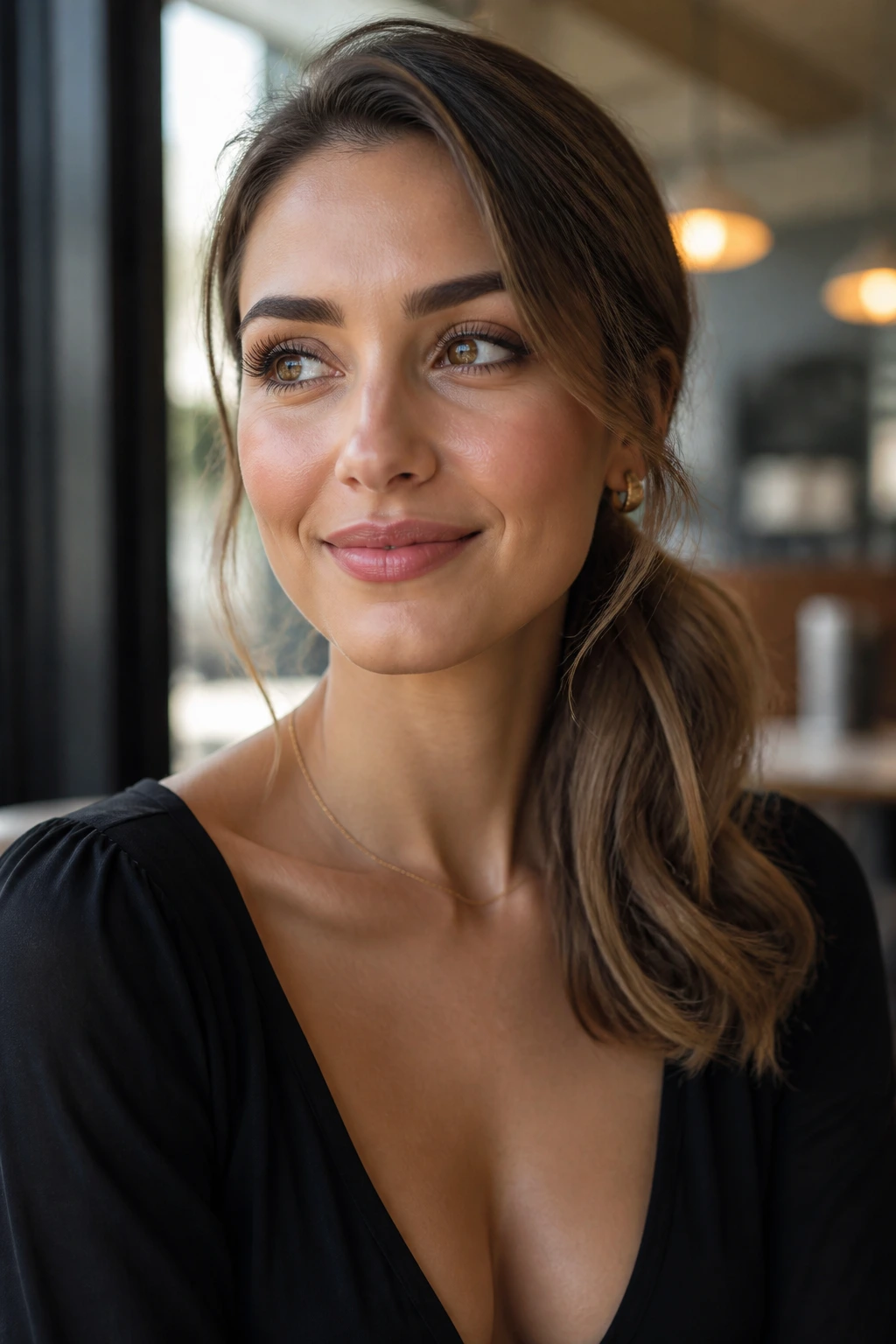
What happens when you move the ponytail off center and let it sit over one shoulder? The whole look gets a little dressier, without needing a single extra product.
Gather the hair low and slightly to one side, almost behind the ear but not quite. Leave the crown smooth, then let the tail stack over the front of one shoulder. On medium hair, that side placement gives the tail enough visibility to look full, while the shoulder keeps it from hanging in a straight vertical line.
This style is especially good with open necklines, earrings, or a sweater that shows one collarbone. Oval faces handle the asymmetry easily, and the side sweep keeps the style from feeling too formal. If your hair is layered, tuck the shortest pieces at the nape with one pin so the base stays clean.
It’s a nice reminder that a ponytail doesn’t have to sit in the center of the head to count as neat. Sometimes a half-inch shift is the whole story.
13. The Topsy-Tail Ponytail
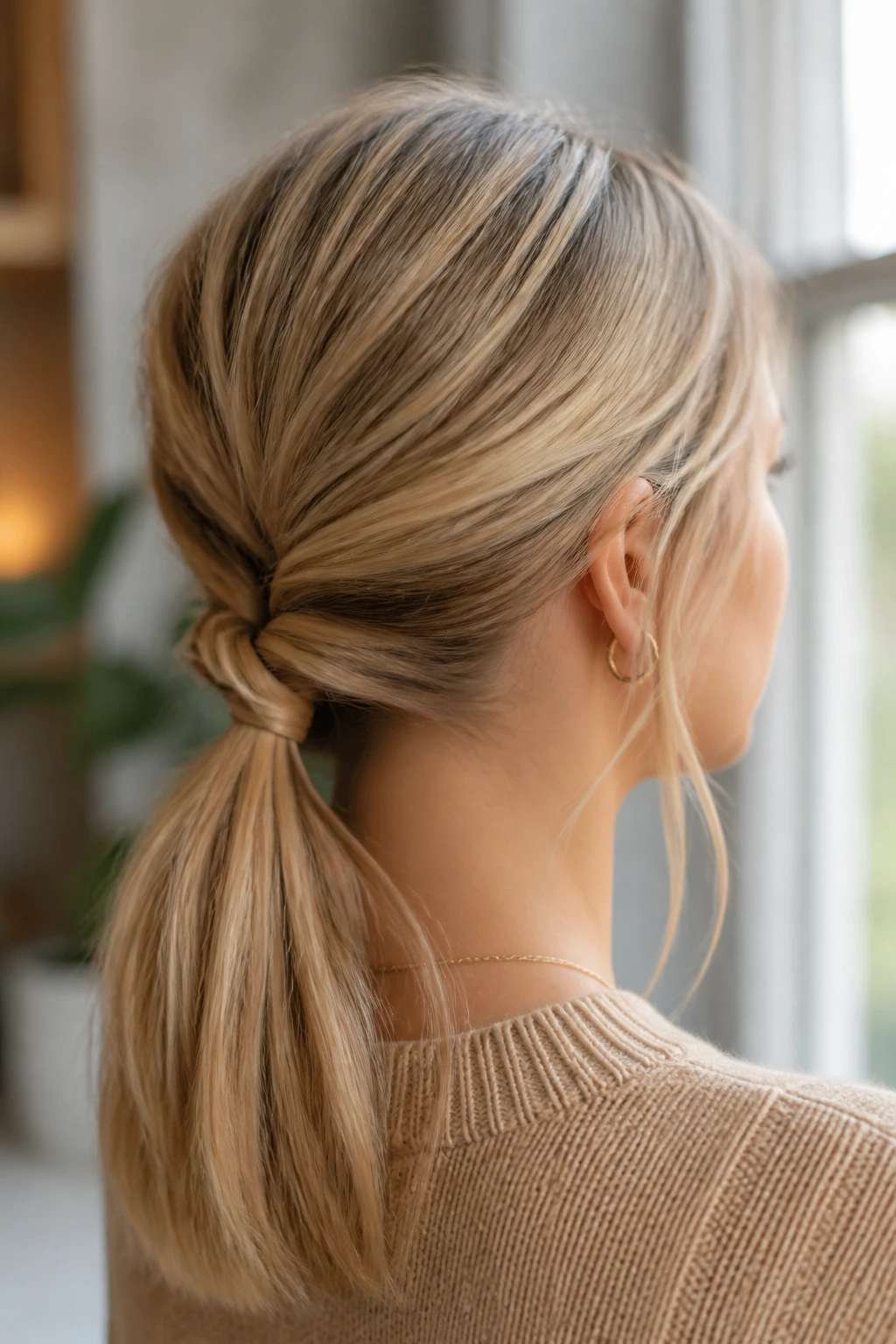
This one looks more complicated than it is. That’s part of the charm.
Make a low or mid-low ponytail, leave a small gap above the elastic, split the hair just above the band, and flip the tail through the opening once. The result is a soft twisted knot effect that gives medium hair a little architecture without braiding or curling. If the hair is slippery, secure the gap with a finger while you flip, then push a bobby pin into the underside to keep it from loosening.
Oval faces work well with this because the twist adds shape close to the nape instead of building height at the crown. That keeps the balance clean. It’s a tidy style, but not a severe one.
I like this when a regular low pony feels too plain and a full braid feels like too much effort. It has that edited feel people notice without always being able to name. Which is a nice place to be.
14. The Mini Bubble Ponytail
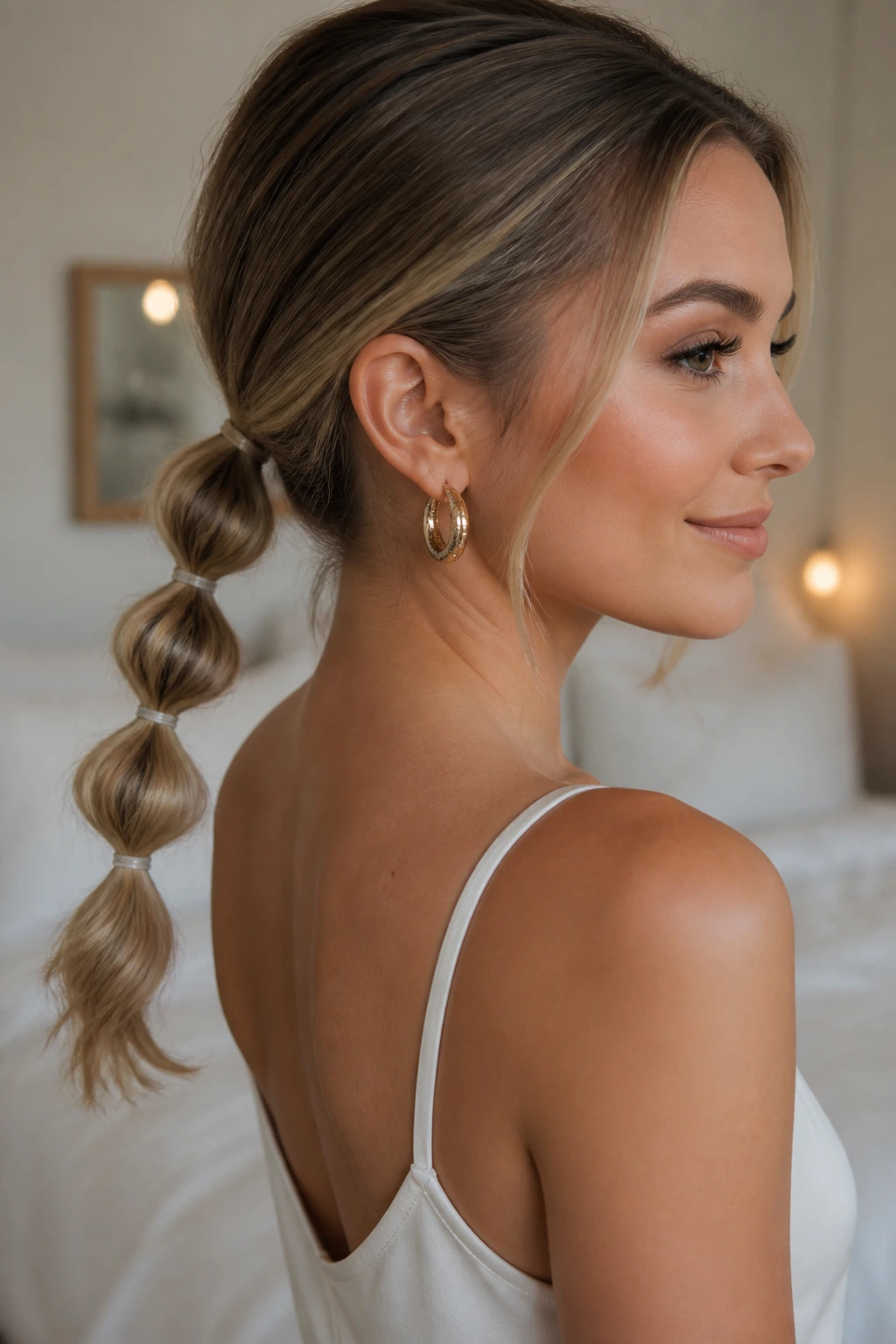
Small bubbles suit medium hair better than giant ones. The proportions are kinder.
Start with a low or mid ponytail, then place tiny clear elastics every 1½ to 2 inches down the tail. Gently tug each section from the sides until it rounds out, but don’t overinflate them. The bubbles should look neat and linked, not like they’re competing with one another.
Because the sections are smaller, the style stays crisp even on shoulder-skimming hair. On an oval face, keep the first bubble below the crown so the silhouette stays balanced and doesn’t stretch upward. If your hair is fine, a bit of texturizing spray at the tail before you section it helps the bubbles hold their shape.
This is a good one when you want something playful but still adult. Too many bubble ponytails get cartoonish because the sections are too huge. These smaller bubbles solve that fast.
15. The Sport-Sleek Ponytail
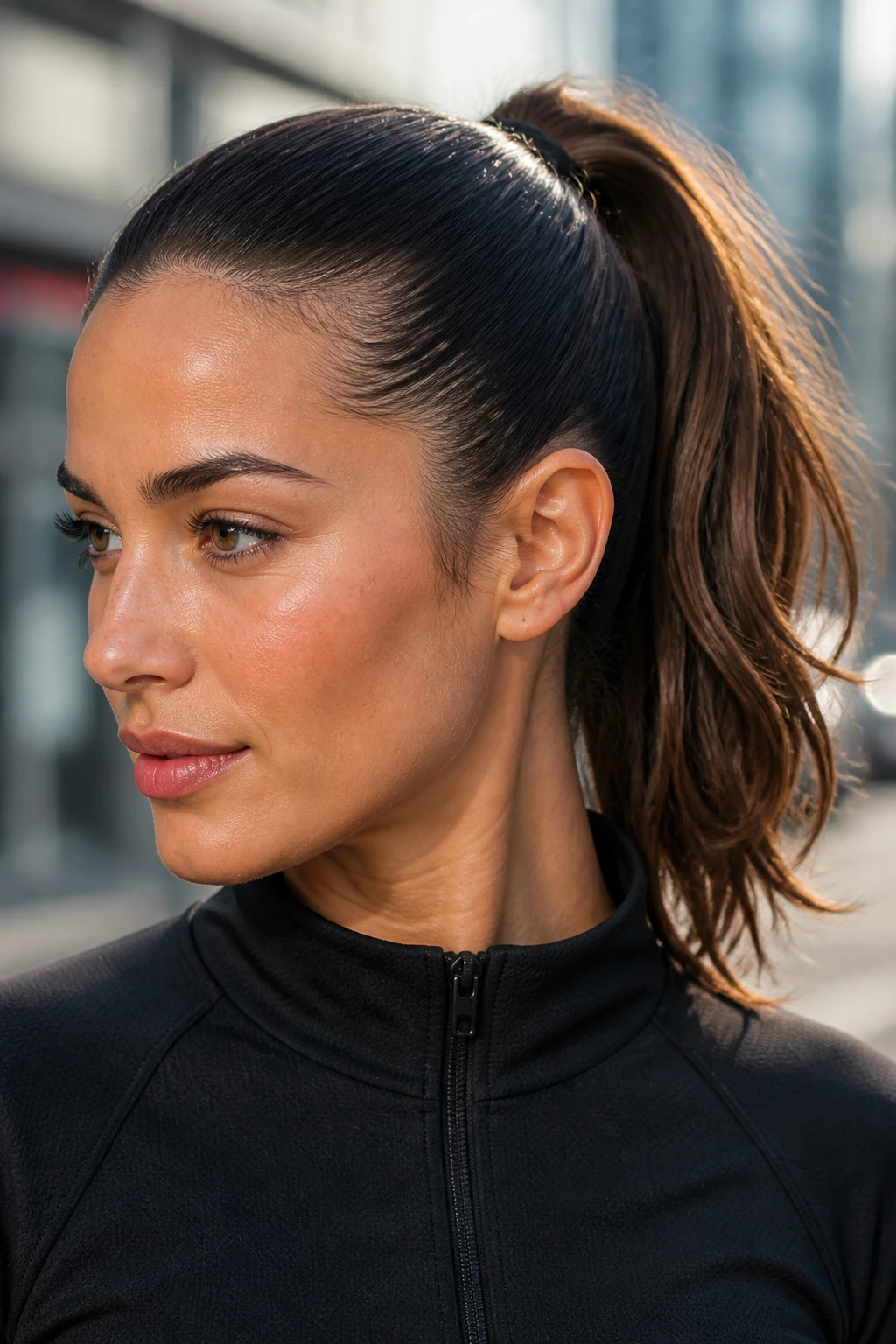
Pulling hair back hard is easy. Making it look chic is the part people skip.
Use a smoothing cream or a tiny amount of gel at the hairline, brush the hair back with a boar-bristle brush, and secure a mid-high ponytail with a firm elastic. Keep the base clean and the crown smooth, but don’t drag the pony so high that it turns into a cheerleader shape unless that’s the look you want. Medium hair usually behaves better when the pony sits just above midline rather than at the very top.
This style is built for wind, errands, commuting, and long days where you don’t want to think about your hair again. Oval faces can wear it easily because the openness around the face feels neat, not harsh, as long as you leave a little softness at the temples.
The trick is restraint. One clean base. One smooth crown. Then stop.
16. The Curved Retro Ponytail
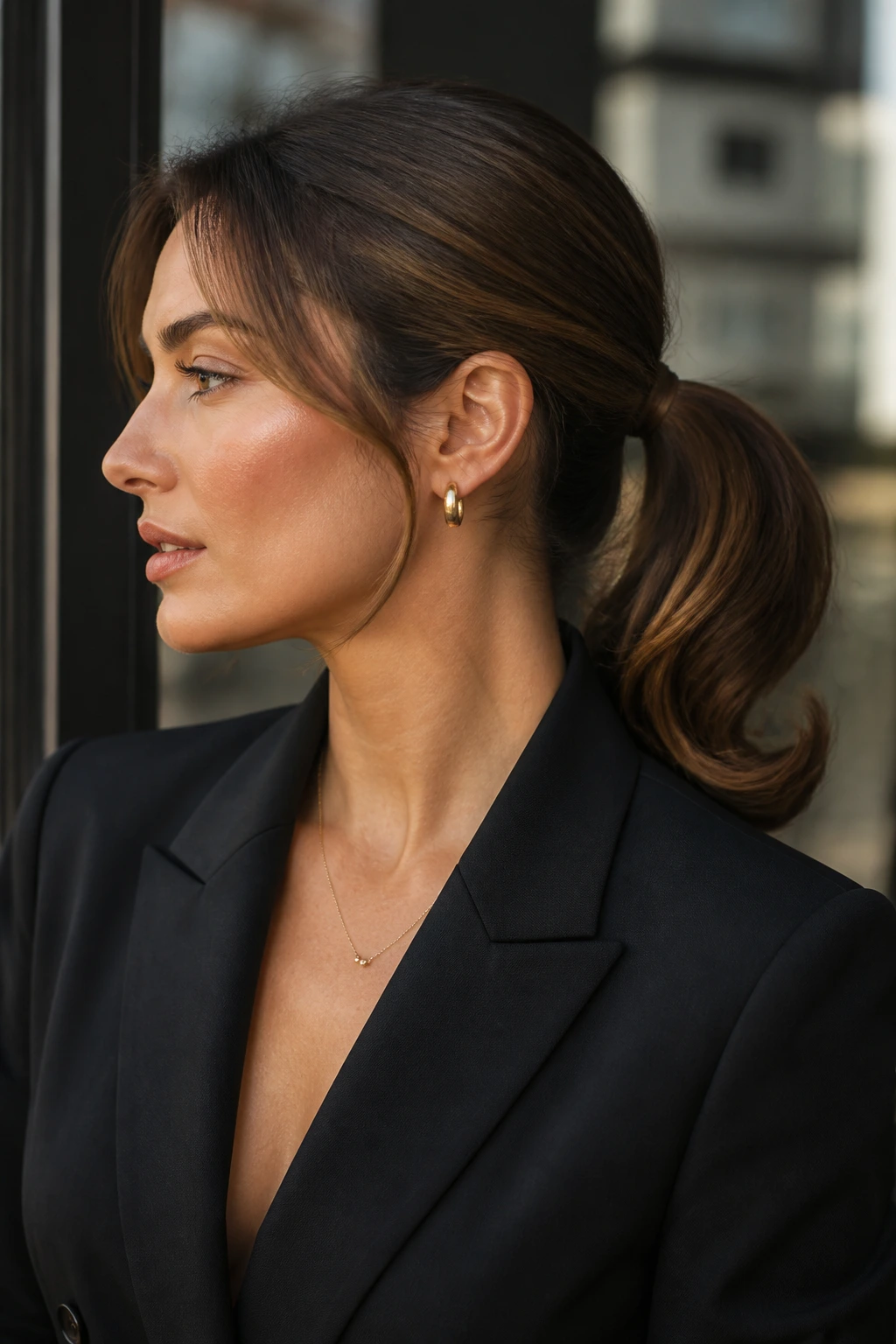
Nothing softens a ponytail faster than a curved end.
Make a low or mid-low ponytail, smooth the top, then curl the last few inches of the tail under or out with a 1¼-inch iron or a round brush and blow-dryer. The curve adds a little width near the jawline, which suits an oval face because it breaks up the straight line of the tail. It also gives medium hair more finish without asking for much length.
If you want the style to feel especially tidy, keep the part centered and the base wrapped. If you want it a little looser, let the crown have a touch of height and keep the ends flicked outward. Either way, don’t overthink the curl — the point is movement, not ringlets.
This is one of my favorites with structured clothes. Blazers, crisp shirts, square necklines. The ponytail gives the outfit a softer edge without losing its polish.
17. The Glossy Clipped-Back Ponytail
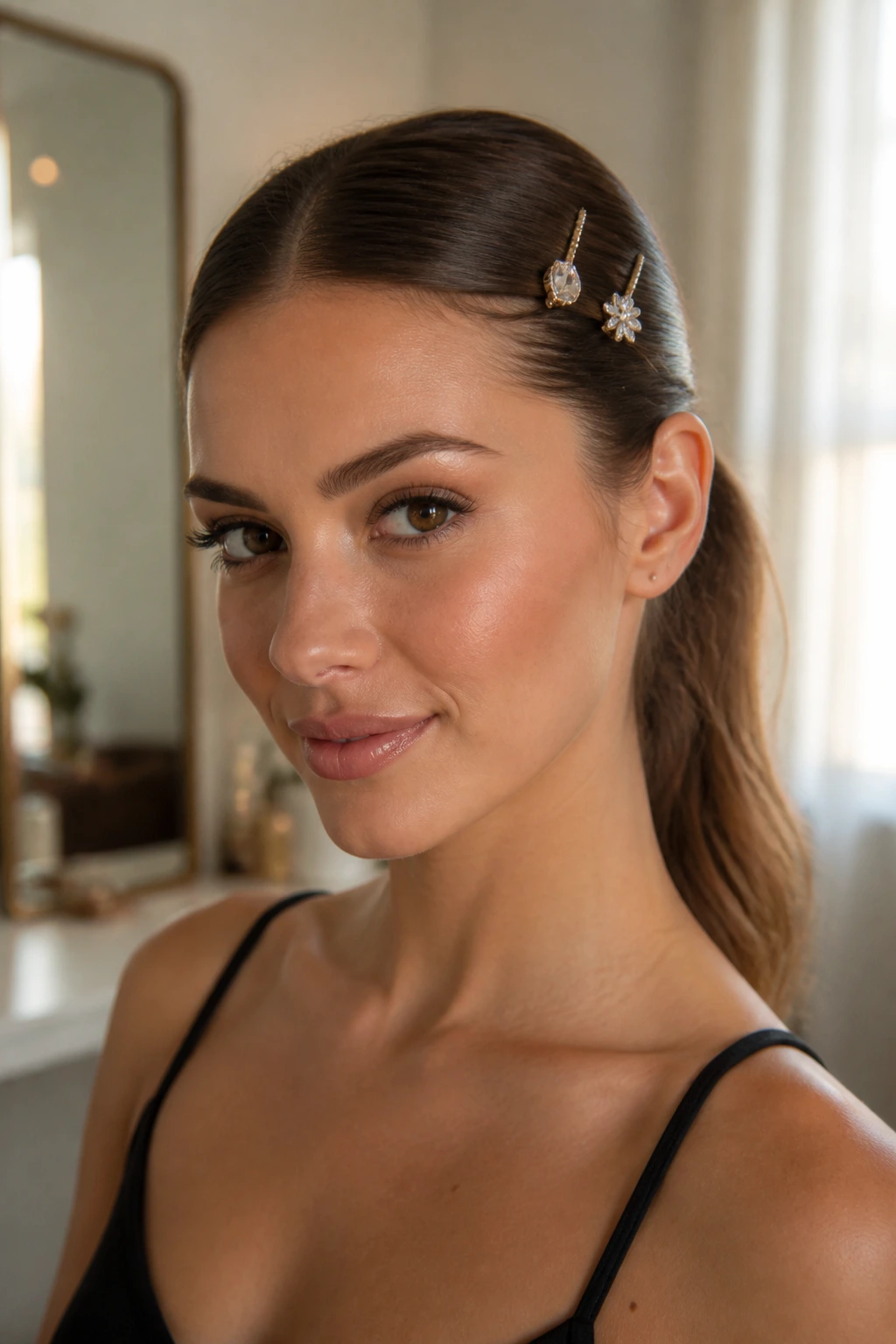
If you like earrings, this is your ponytail.
Use two small decorative clips or simple barrettes to pin the sides back before gathering the rest of the hair into a low or mid ponytail. The clips aren’t just pretty; they help hold the shorter front layers in place so the base looks cleaner. On medium hair, that matters because shorter pieces can puff out fast if they’re left to their own devices.
Oval faces benefit from the open frame. You see more of the cheekbones and the jawline, and the clips keep the look from sliding too casual. Pick a small metal clip for a sharper feel, or a pearl clip if you want something softer.
This style works best when the rest of the hair stays glossy and simple. The clips are the detail. The ponytail is the structure. That’s enough.
18. The Flicked-End Evening Ponytail
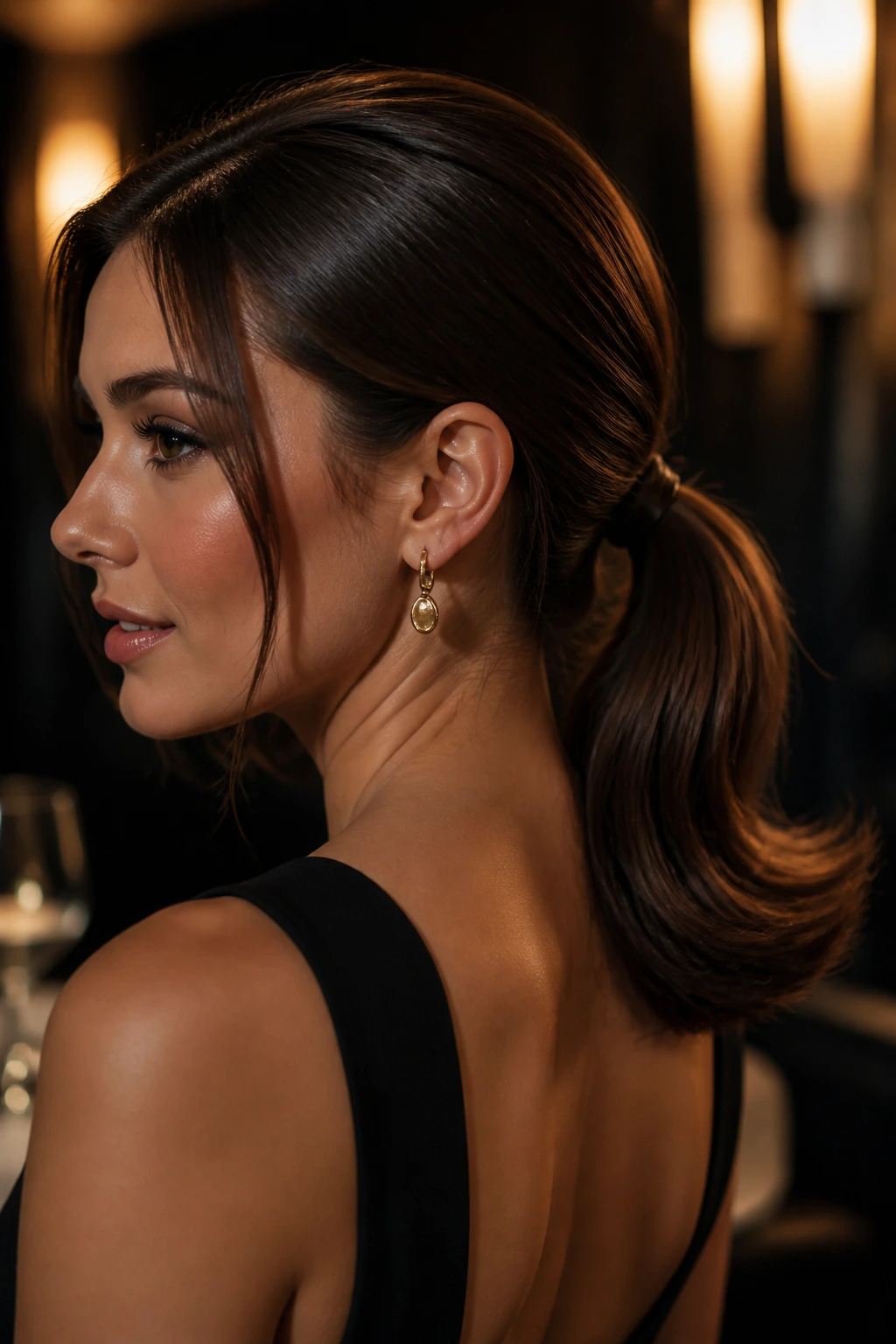
The finish is the whole story here.
Smooth the hair into a low-to-mid ponytail, keep the base clean, then flick the ends outward or under with a curling iron so the tail has a little swing at the bottom. Use a shine spray lightly from mid-lengths down, not at the roots, so the top stays neat. Medium hair is ideal for this because the tail looks light and stays shaped instead of collapsing under its own weight.
On an oval face, the clean base and subtle flick keep the look refined without turning severe. If you want a softer read, leave one very narrow face-framing piece loose. If you want it sharper, tuck everything back and keep the part crisp.
This is the kind of ponytail that works for dinners, events, and any evening when you want the hair to look done but not fussy. It has a little swing. A little shine. Enough.
Essential Tools for These Ponytails
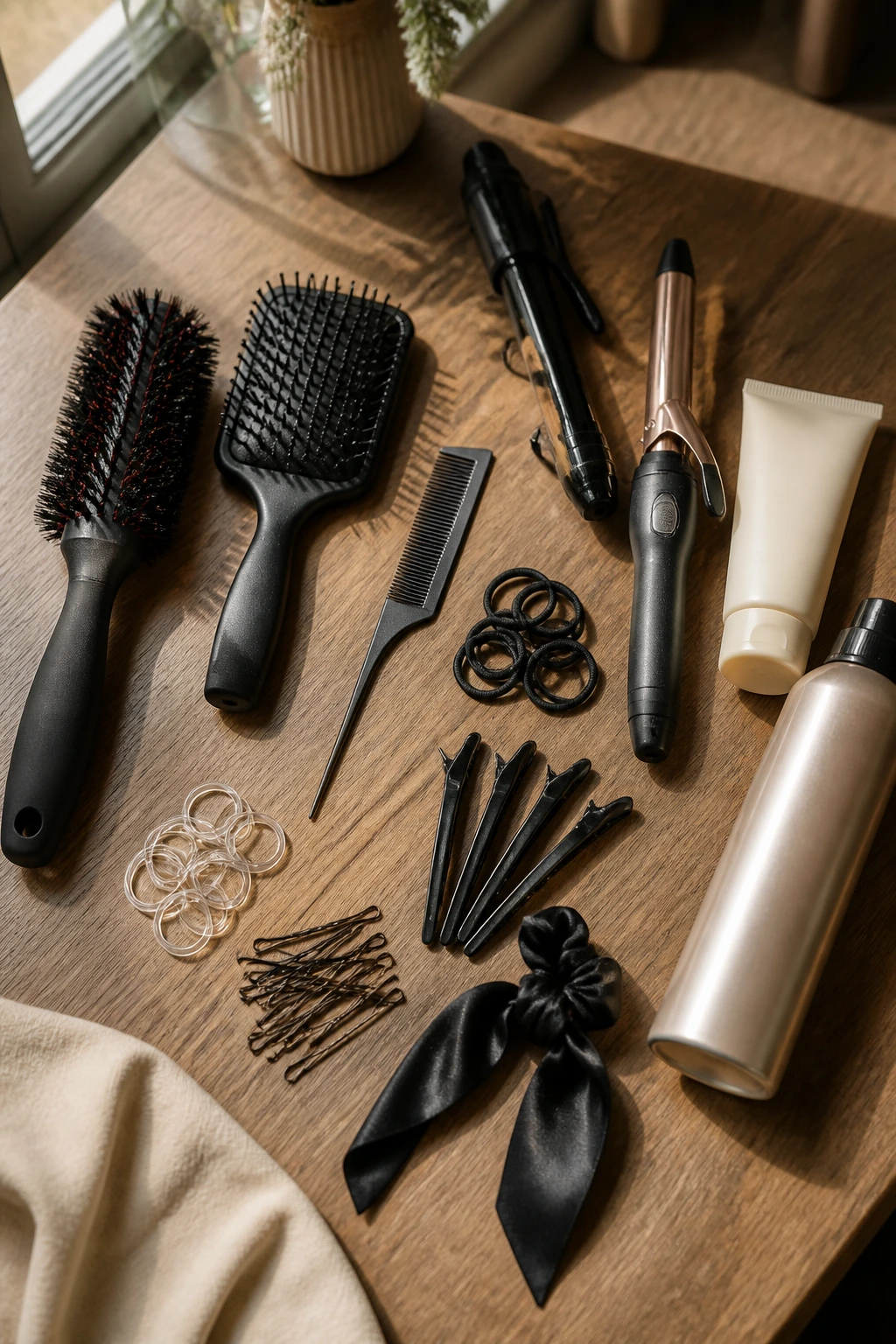
- Tail comb: Clean parting matters more than people admit, and a tail comb is the easiest way to get it.
- Boar-bristle brush: Best for smoothing the top without making the whole head look flattened.
- Paddle brush: Good for gathering medium hair quickly before the final smoothing pass.
- Small snag-free elastics: These hold medium-length hair without chewing up the ends.
- Clear elastics: Useful for bubble ponytails, rope braids, and tucked sections.
- Bobby pins: A few hidden pins keep wrapped bases, twists, and flyaways in place.
- Sectioning clips: Handy when you’re working on temple twists, braids, or the double-pony trick.
- 1-inch curling iron: The most useful size for curling ends and face-framing pieces on medium hair.
- 1¼-inch curling iron or flat iron: Nice for a soft curve or a flicked-out finish.
- Texturizing spray or dry shampoo: Adds grip at the roots and helps ponytails stay put.
- Light smoothing cream or serum: Use sparingly on the top layer or tail ends to calm frizz.
- Flexible-hold hairspray: Keeps movement, which matters more here than helmet-level stiffness.
- Satin ribbon or scrunchie: A quick way to change the mood of a ponytail without changing the structure.
Smart Product and Shopping Notes for Medium Hair and Oval-Face Ponytails
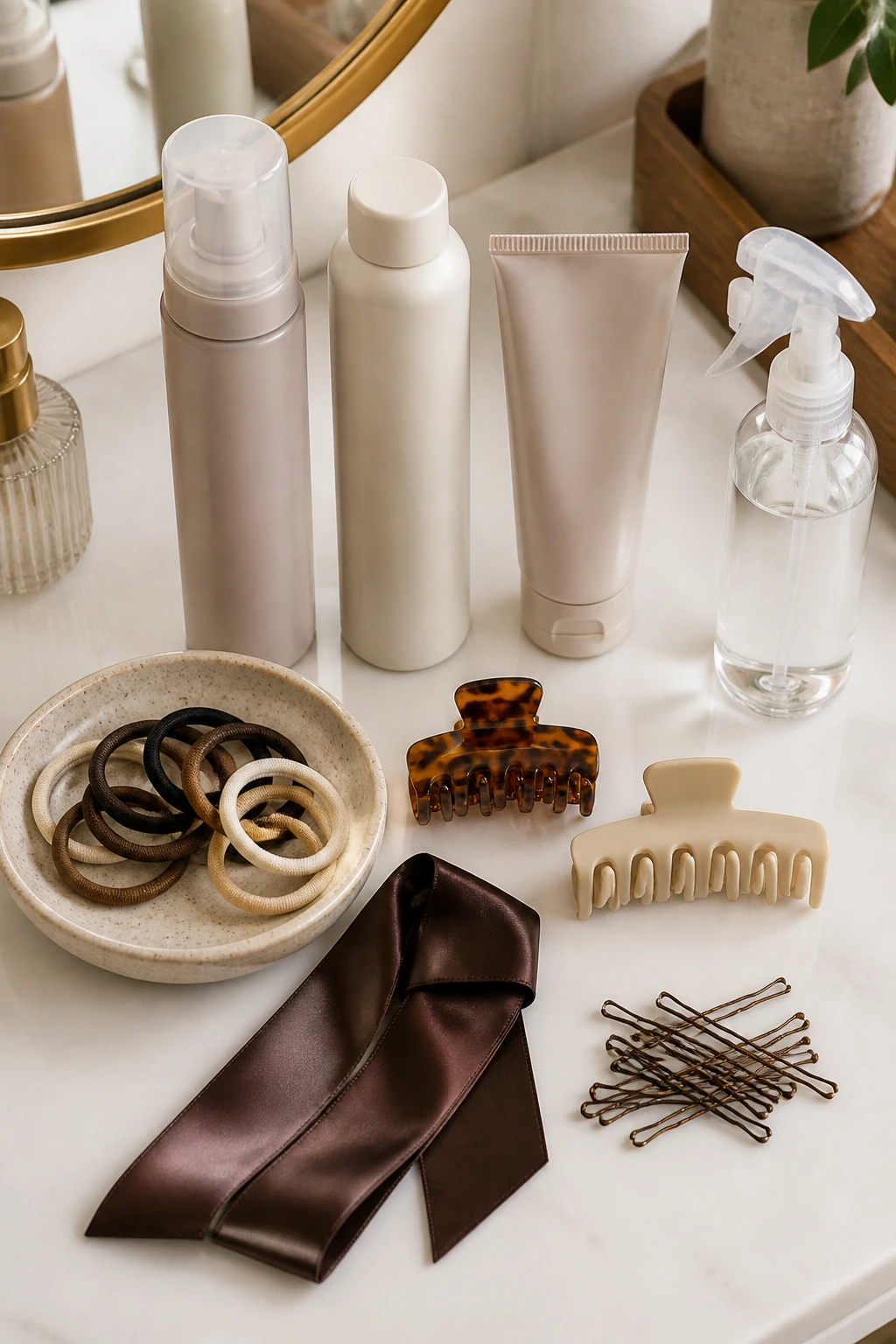
The best products for these looks are the ones that help shape without swallowing it. For fine medium hair, a light mousse or dry shampoo at the roots gives enough grip to stop the ponytail from sliding, while a heavy cream can make the whole head go flat by lunchtime. For thicker hair, the priority shifts: you want a stronger elastic, a little smoothing cream on the outer layer, and maybe a second bobby pin under the wrap so the base doesn’t pull apart.
I’m picky about elastics here. Metal seams snag medium hair faster than people expect, especially if the ends are layered or slightly dry. Snag-free elastics cost almost nothing and save a lot of breakage. If you’re buying ribbons or clips, choose the size based on the amount of hair at the base, not the outfit. A tiny ribbon on dense hair can disappear; a giant bow on fine hair can overwhelm the whole shape.
Product-wise, flexible hold usually beats hard hold for this kind of styling. A crunchy ponytail is easy to spot from across the room, and not in a good way. The goal is a tail that moves when you walk. If you want shine, add it to the mid-lengths and ends, not the scalp. That one small rule stops a lot of greasy-looking mistakes.
How to Wear These Ponytails With Clothes, Earrings, and Necklines
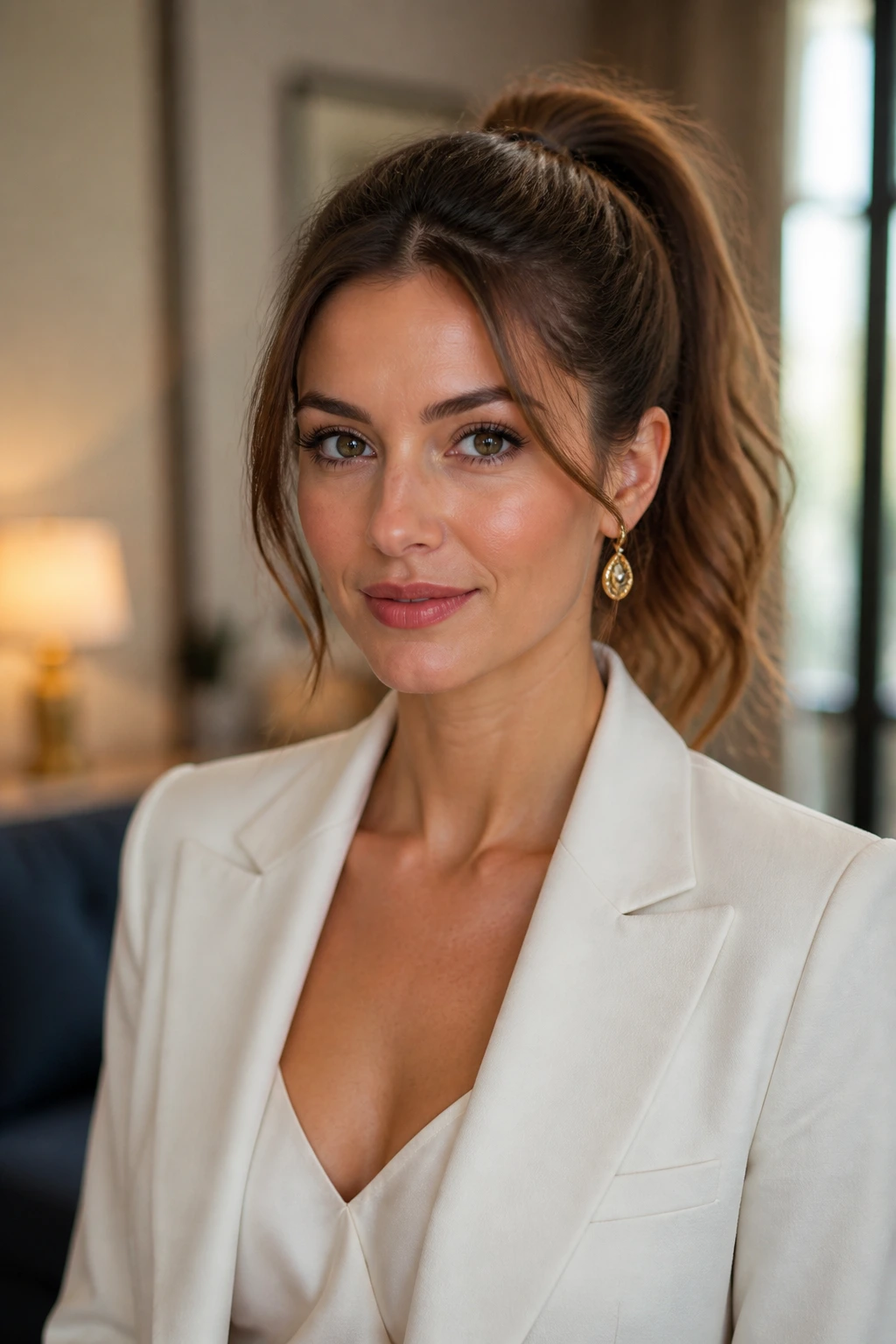
Presentation: Keep the ponytail height in line with the outfit. A low wrapped ponytail reads clean with a blazer or a collared shirt, a mid-height ponytail works with knit tops and dresses, and a higher ponytail feels sharper when the neckline is open. On an oval face, a center part feels crisp, while a side part loosens the mood fast.
Accompaniments: Earrings matter more than most people think. Hoops look good with slick styles, studs keep a braid or bubble ponytail feeling understated, and a simple drop earring works nicely with a side-swept or clipped-back ponytail. I also like these styles with square necklines, off-shoulder tops, and turtlenecks, because the ponytail clears the neck and lets the clothes breathe.
Portions: Medium hair usually looks best when the ponytail isn’t overloaded with volume at both the crown and the tail. If the top is high and the tail is huge, the head starts looking top-heavy. Choose one focal point. If the tail is fuller, keep the crown smoother. If the crown has lift, keep the tail softer.
Beverage Pairing: A cold coffee, sparkling water, or a glass of wine in your hand somehow matches the same tidy mood as a clean ponytail. It’s not a styling rule, obviously. It just fits the scene.
Extra Tips and Finishers That Change the Whole Look
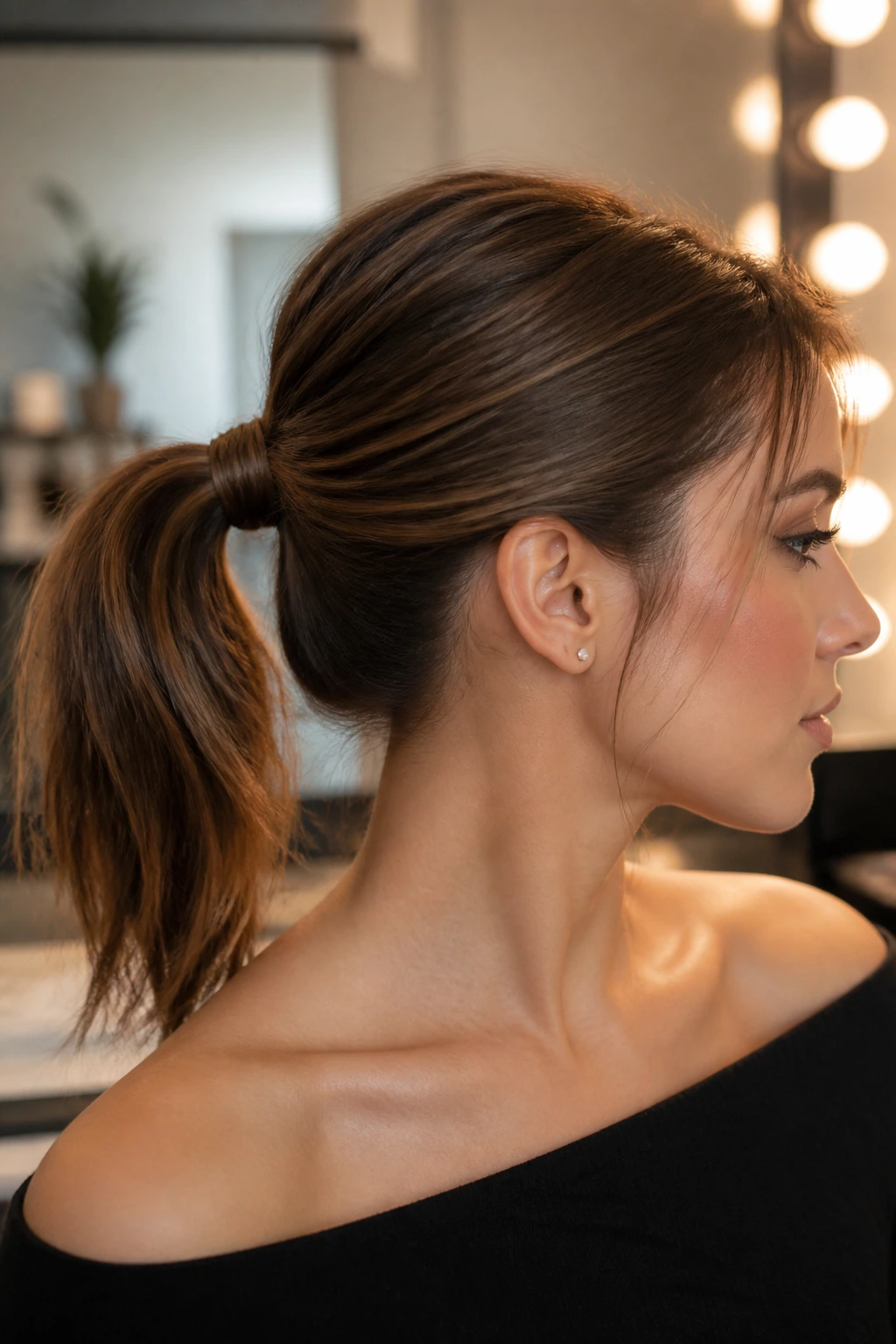
Texture Enhancement: If your hair is freshly washed, spray a little dry shampoo or texturizing spray at the roots before you gather it. Clean hair can be too slippery, especially on medium lengths that don’t have enough weight to anchor themselves.
Shape Control: After tying the ponytail, pinch the hair just above the elastic with your thumb and forefinger and lift upward a touch. That tiny move gives the base a little room and keeps the style from looking pulled tight to the skull.
Shine Without Grease: Warm a pea-sized amount of serum between your palms and smooth it only through the ponytail length and ends. Never start at the scalp unless you want the roots to look oily by the afternoon.
Accessory Choice: A ribbon softens a simple low ponytail, while a metal barrette or clip sharpens the look right away. If your hair is fine, keep the accessory narrow. If your hair is dense, go a little larger so the detail doesn’t vanish.
Make-It-Yours: If you wear glasses, a side part and a lower base usually keep the temples from getting crowded. If your hair is curly, don’t brush the tail into puff — let the curl pattern keep its shape and only smooth the front.
Common Mistakes That Flatten the Shape
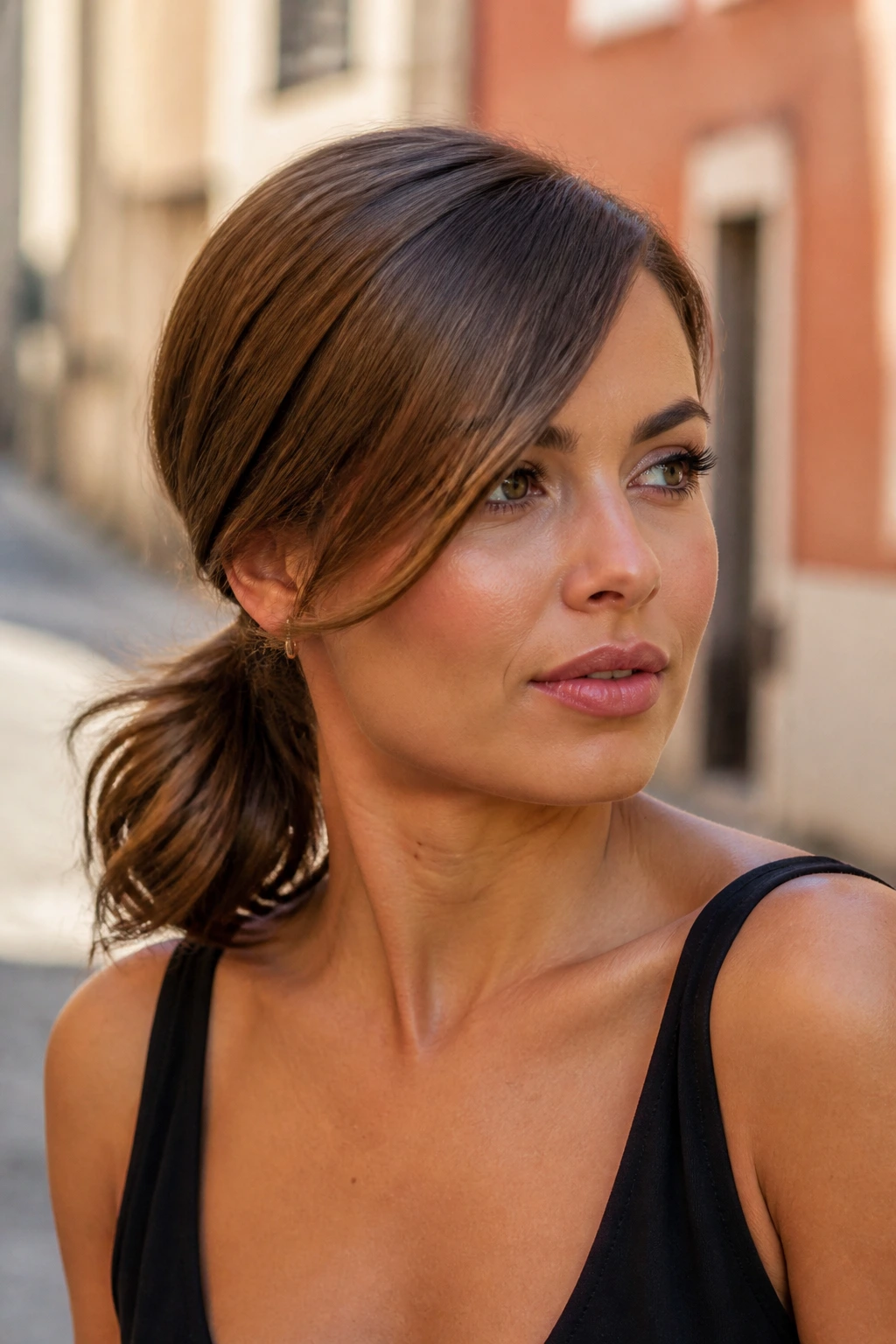
- Placing the ponytail too high on an oval face: The face can start looking longer than it needs to. Fix it by dropping the base down an inch or two and adding width through the sides instead.
- Smoothing every strand flat: A ponytail can look thin and a little severe if the crown is too slick. Leave a touch of bend at the roots or use a little texture spray before gathering.
- Using too much oil or cream: Medium hair gets greasy-looking fast if you overdo the finish product. Keep anything shiny away from the roots and use the smallest amount possible on the ends.
- Ignoring layers: Short pieces around the face or nape can pop out and make the style feel unfinished. Pin them down with a tiny bobby pin, or choose a braid, twist, or clipped-back style that naturally holds them in place.
- Choosing an accessory that’s bigger than the ponytail: A huge bow on fine hair can swallow the style, while a tiny ribbon on thicker hair can disappear. Match the scale of the accessory to the amount of hair at the base.
- Skipping base support: If the elastic is weak, the whole ponytail will sag by lunch. Use a firmer elastic or double it up if your hair is heavy or freshly washed.
Variations and Adaptations to Try
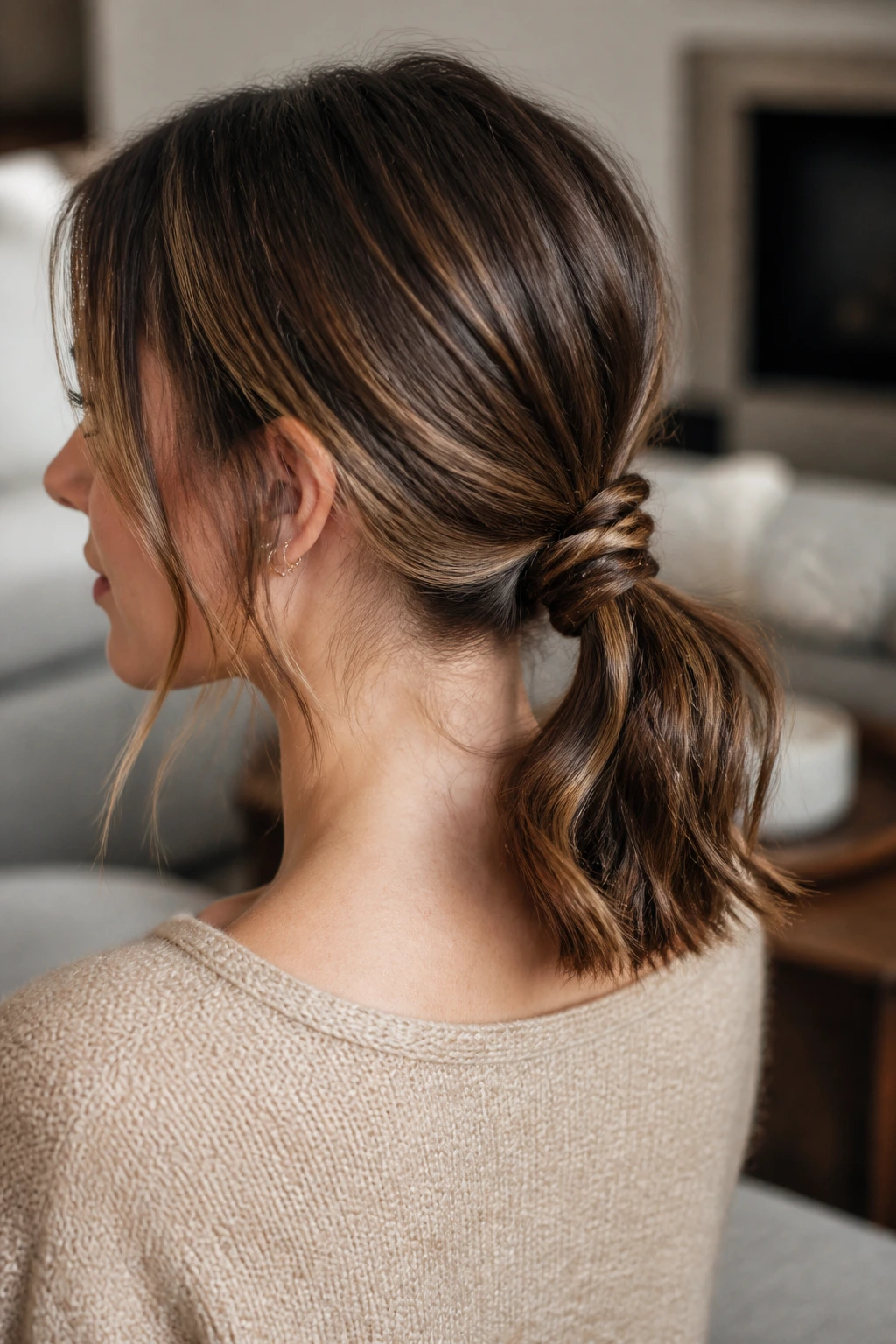
Fine-Hair Lift: Start with dry shampoo at the roots, use a double-elastic base, and keep the tail slightly curled so it doesn’t look stringy. Mid-height wraps and mini bubble ponytails usually give the best shape without needing a ton of hair.
Thick-Hair Control: Use a smoothing cream on the top layer, a strong snag-free elastic, and a low or mid ponytail with a wrap or rope braid. Thick hair holds shape well, but it can pull a base loose if the tie is flimsy.
Humidity Shield: Go for a sleek low ponytail, a rope braid, or a curved retro tail, and finish with a flexible anti-frizz spray. Skip heavy oils near the roots; they can make frizz look wetter instead of smoother.
Soft Day-Off Pony: Keep a few face-framing pieces loose, add a satin ribbon, and use a low side-sweep or cloud-textured finish. This variation looks relaxed, but it still needs a clean base or it turns sloppy fast.
Event-Ready Pony: Choose the high pony with crown lift, the clipped-back gloss ponytail, or the flicked-end evening style. Add a wrapped base, stronger shine, and earrings that match the neckline so the hair and clothes don’t fight each other.
Curly-Hair Version: Don’t brush curls out before tying. Gather them gently, use a wide satin scrunchie or a strong elastic, and let the tail keep its pattern. A loose wrap or clipped-back front can help the shape stay tidy without killing the curl.
How to Keep Ponytails Fresh Through the Day
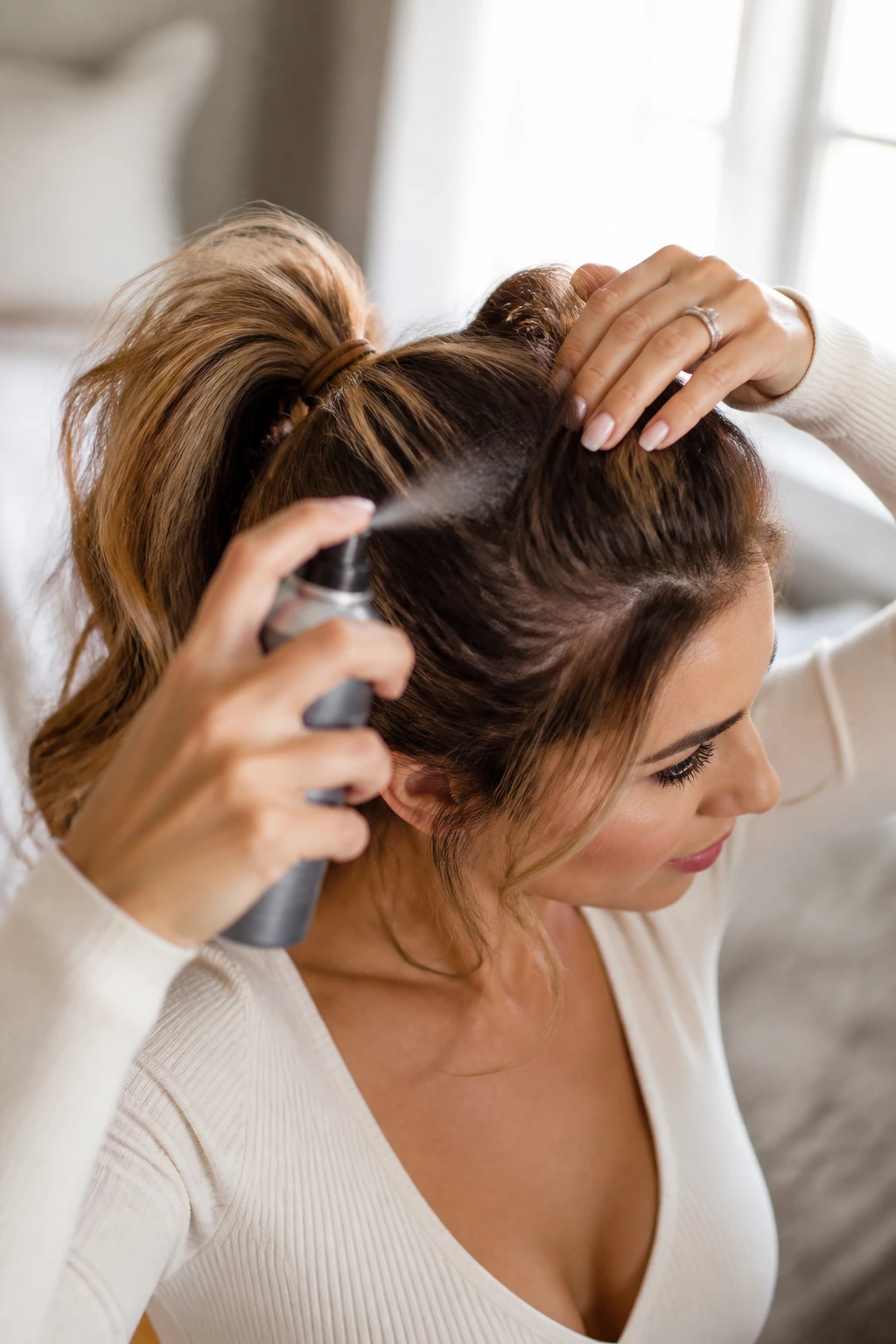
Ponytails on medium hair tend to hold best when they start on dry, lightly textured hair rather than hair that’s freshly slicked with conditioner. If you know you’ll wear one all day, rough-dry the roots a little, let the crown cool if you used heat, and keep the lengths from getting too soft before you tie them back.
Midday refresh is simple. Lift the ponytail base with one finger, mist the roots with a touch of dry shampoo if needed, and smooth the top again with a brush or your palm. Don’t keep tightening the elastic every hour. That just leaves dents and makes the hair underneath feel sore. If the pony starts sagging, move the base down slightly and rewrap it. A small repositioning usually works better than a hard tug.
For overnight wear, keep expectations realistic. A ponytail can survive one night in a loose satin scrunchie, but it won’t wake up looking crisp unless the structure is soft to begin with. If you want the next day to be easy, sleep in a very low ponytail or a loose braid, then refresh with one pass of serum on the ends and a cool blast at the crown in the morning. The style will never be identical to the first day. It can be close enough.
Frequently Asked Questions
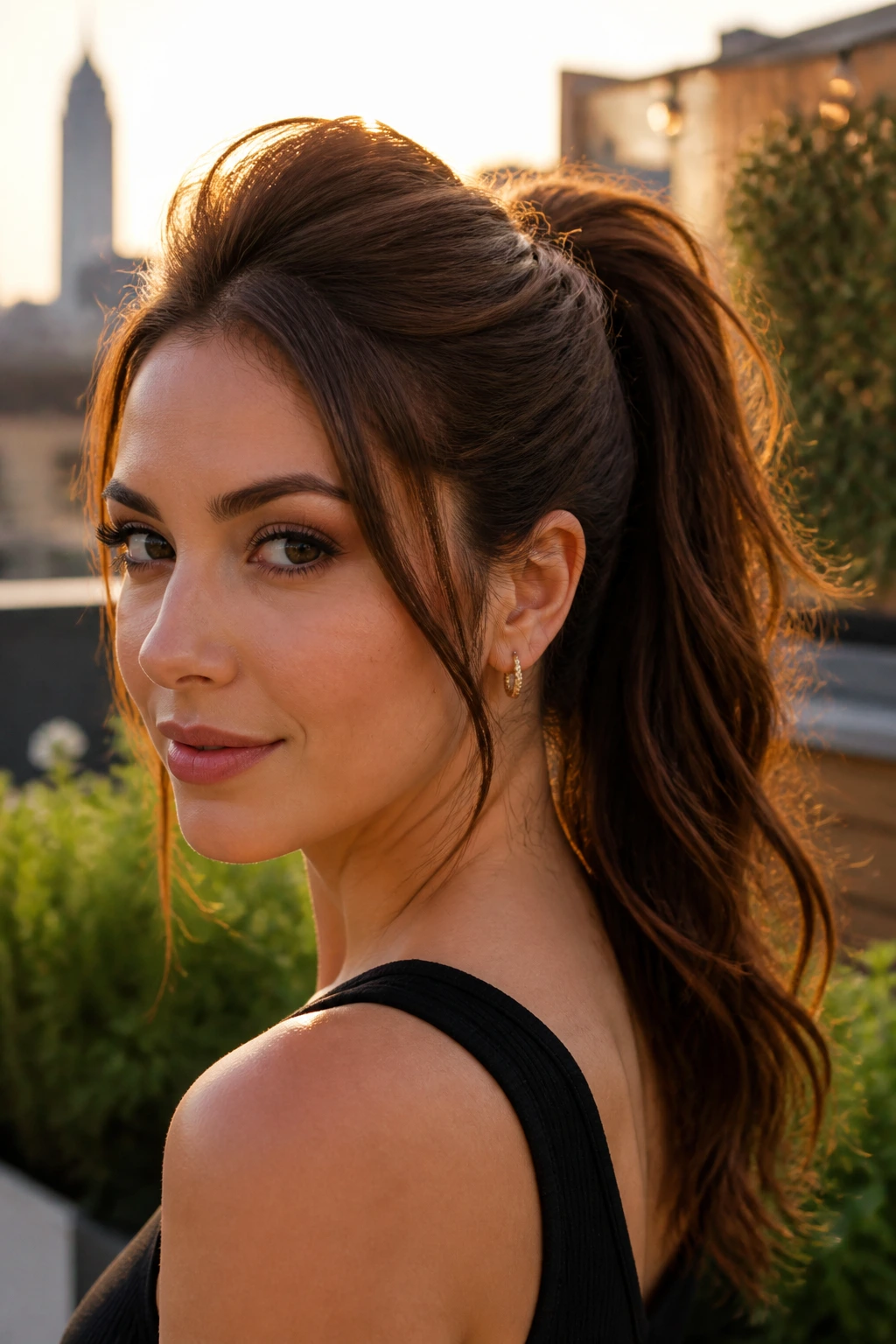
Which ponytail height is most flattering on an oval face?
Mid-height and low ponytails are the safest bets because they keep the face open without stretching it upward. A high pony can still work, but it looks best when the crown lift is controlled and the tail has some softness.
How do I make medium hair look thicker in a ponytail?
Use dry shampoo or texturizing spray at the roots, then split the ponytail into two horizontal sections before tying if you want extra fullness. Curling the ends or adding a bubble section pattern also gives the tail more visual weight.
Can I wear a sleek high ponytail with medium-length hair?
Yes, but the base needs to be secure. If your hair is shoulder-skimming or layered, use a firm elastic and consider a second hidden tie below the first so the tail doesn’t slide down by lunchtime.
What if my layers keep falling out of the ponytail?
That usually means the style needs either more texture or a different structure. Try a braid, a twist, or a clipped-back version, and keep a couple of small bobby pins ready for the shortest front pieces.
Is a side part better than a center part for oval faces?
Both can work. A center part feels crisp and symmetrical; a side part softens the shape and gives a low ponytail more movement. If you wear statement earrings or a bold neckline, a side part often looks easier.
How do I stop the ponytail from sagging after an hour?
Start with a stronger elastic, not a looser one, and don’t overload the base with too much cream or oil. If your hair is heavy, a double-elastic or stacked-length technique will hold better than one tie alone.
What ponytail is best for a formal event?
The flicked-end evening ponytail, the glossy clipped-back version, or a ribbon-tied low ponytail all read dressier without looking stiff. The difference is in the finish: smoother crown, cleaner base, and one polished detail instead of three.
Can I do these styles on second-day hair?
Honestly, second-day hair often behaves better. It has more grip, less slip, and usually needs less product. If the roots are too flat, add a little dry shampoo at the crown before you start.
A Ponytail That Knows Its Shape
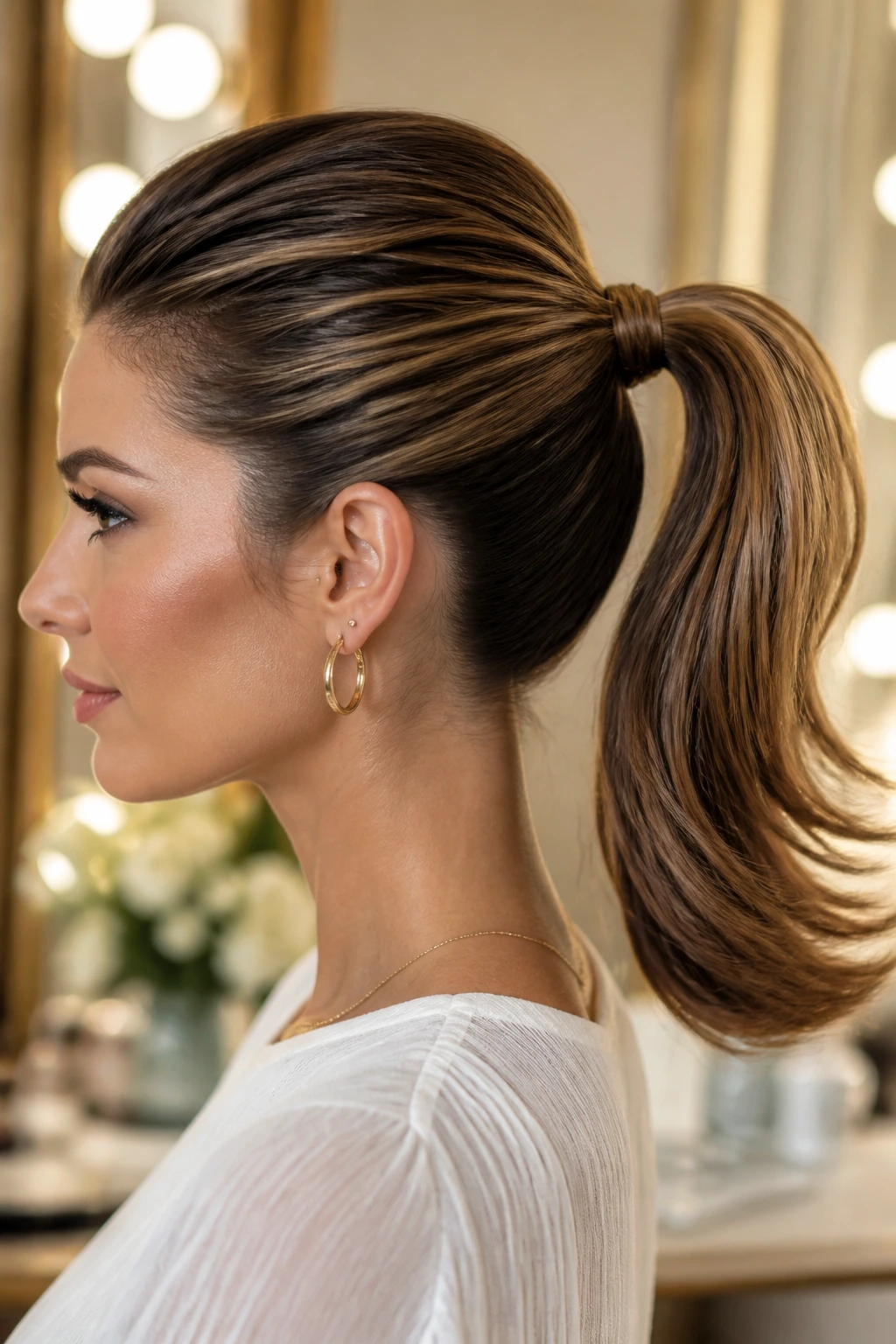
A good ponytail on medium hair doesn’t depend on length. It depends on shape. Once the base is placed well and the finish is chosen on purpose, the whole style stops looking accidental and starts looking like a decision.
Oval faces make that easier than most face shapes, which is probably why the wrong ponytail looks so unnecessary here. You don’t need to fight your features. You just need a cleaner part, a smarter height, or one detail — a wrap, a twist, a ribbon, a curve at the ends — that tells the eye where to look.
Start with the one that matches your day, then change only one thing next time: the part, the height, or the finish. That’s usually how a ponytail goes from practical to personal.