



Short hair with curls, coils, waves, or bends has one very nice habit: it tells the truth fast. There’s nowhere for the shape to hide, no long lengths to drag the curl pattern down, no extra inches to pretend the cut is doing more work than it is. That’s exactly why natural texture hairstyles for short hair can look sharper, softer, or more playful than the same ideas on longer hair. A cropped cut shows the part. It shows the nape. It shows whether your edges were brushed down while the product was still wet or after it had already started to set.
And yes, that can feel unforgiving the first few times. It can also be a gift. With short hair, a clean twist set, a careful side part, or a tiny puff can change the whole mood of the cut in a way that long hair often can’t. One inch matters. Sometimes half an inch does. That’s why people with short natural hair tend to become very loyal to the styles that actually work on their texture instead of the ones that only look good in a mood board.
The best short styles don’t fight shrinkage or volume. They use it. They let the root lift, the curl clump, the taper, the fringe, the side sweep — all the little things that make a cropped style feel intentional instead of accidental. And the nice part is this: once you learn which shapes flatter your density and curl pattern, getting dressed in the morning gets easier in a way that is hard to overstate. You stop wrestling the cut and start styling it.
Why Short Texture Loves a Cropped Cut
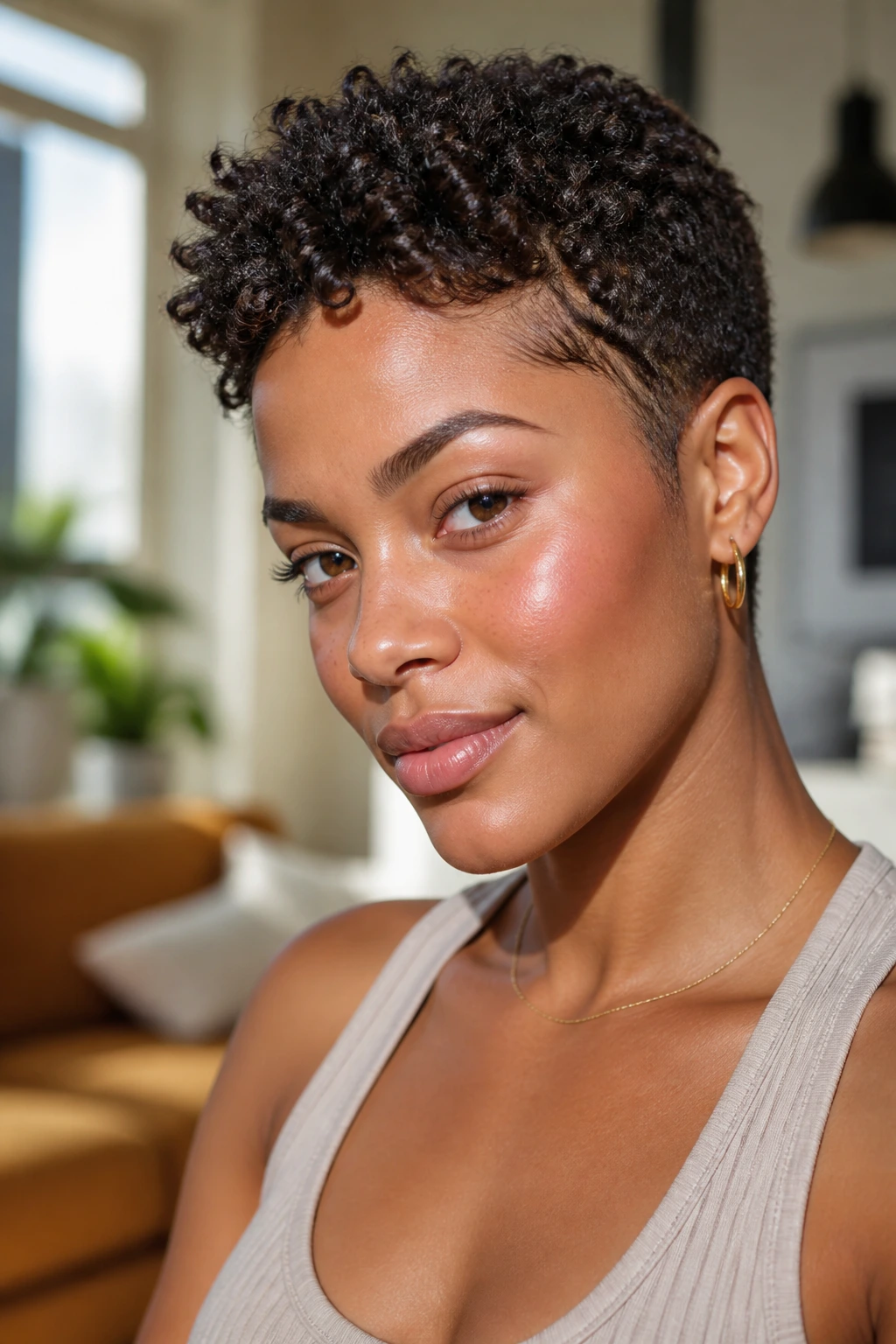
Less length means more shape control. On short hair, a half-inch of lift at the root can change the silhouette, which is why the same gel or cream gives a bigger visual payoff than it does on longer hair.
Your curl pattern shows up faster. Tight coils, loose waves, and mixed textures each create a different outline when the hair sits close to the head, so the style itself feels more personal.
Product goes farther. A pea-size amount can do the job on a pixie, TWA, or short bob; using too much is the fastest way to flatten the whole look.
Short hair dries faster. That matters. Wash-and-go styles, twist-outs, and set styles are easier to manage when you’re not waiting on shoulder-length sections to dry all the way through.
The neckline and sideburns become part of the style. A neat nape, a clean temple, or one clipped-back side can do as much for the look as the curls on top.
1. Defined Wash-and-Go Crop
A short wash-and-go works best when the curl pattern gets to be the main event. The hair sits close to the head, the clumps stay visible, and the finish looks crisp instead of fussy. I like this on 2 to 4 inches of hair because the shape stays compact and the roots still have enough room to lift.
The trick is product placement. Put your leave-in on soaking-wet hair, then seal with a gel that gives enough hold to keep the curl clumps from puffing apart as they dry. If your hair is very dense, rake the product through in tiny sections instead of smearing it over the top. That’s the difference between defined and mushy.
For the cleanest version, diffuse on low heat until the crown is about 80 percent dry, then let the rest air-dry. Do not touch it while it’s setting. The curl cast needs to form first, and short hair does not forgive constant scrunching.
2. Side-Swept Curly Pixie
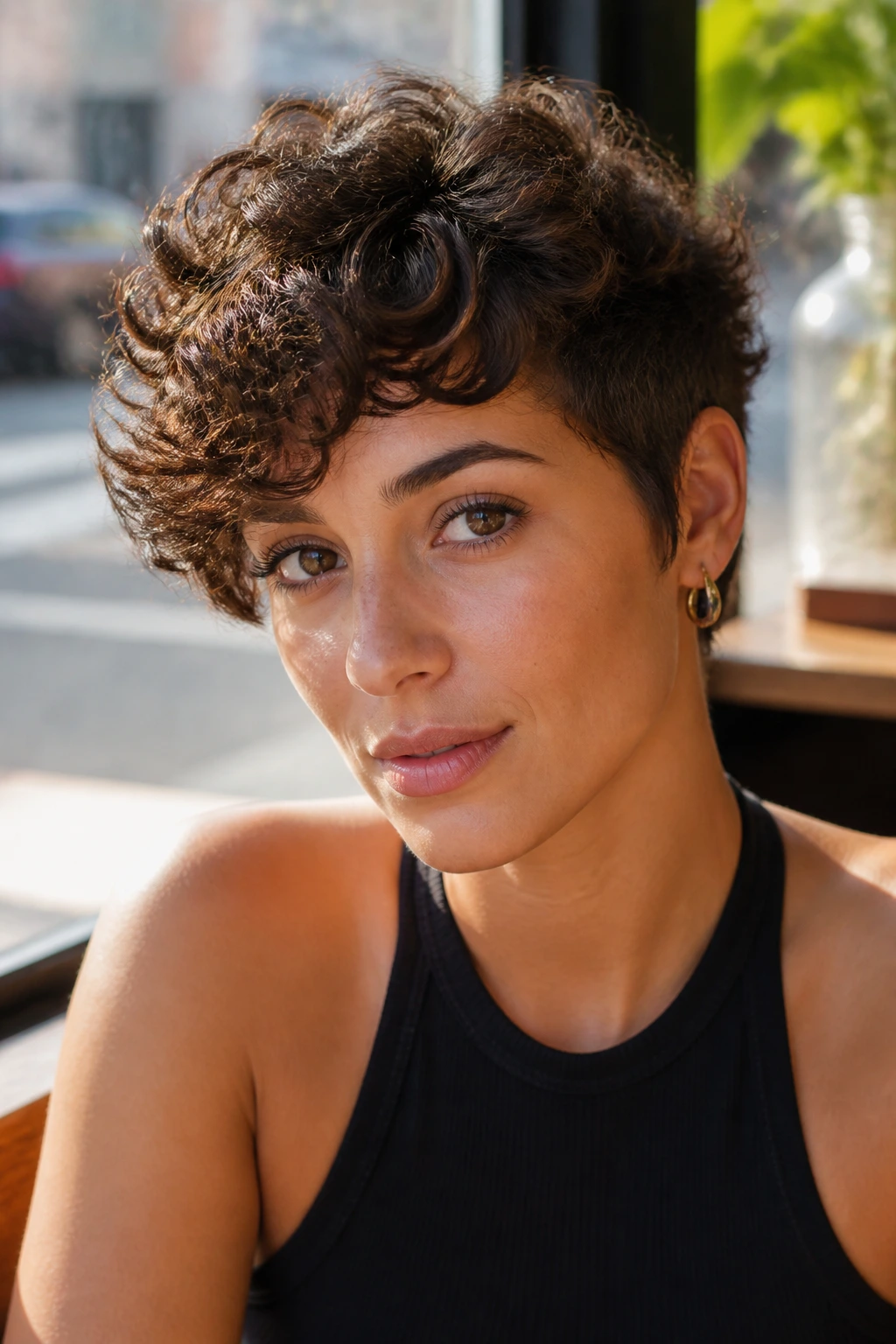
A side-swept pixie is one of those cuts that looks simple until you notice the details. One side has a little more height, the front falls across the forehead, and the shorter side keeps the profile neat. That small imbalance gives the style a lot of energy without making it feel overworked.
I like this best when the top has enough length to bend over with a comb or fingers. A light cream plus a firm gel on the front section keeps the sweep in place, while the back can stay softer and more natural. If the roots on the heavier side collapse, clip them at the scalp for 10 to 15 minutes while the hair dries. It makes a real difference.
Best when you want:
- A sharper shape around the cheekbones.
- A cut that looks styled even on low-effort days.
- Something that handles a deep side part without turning flat.
A tiny curl at the temple or a clean ear tuck keeps it from reading too stiff. That little bit of looseness matters.
3. Tapered TWA With Sculpted Edges
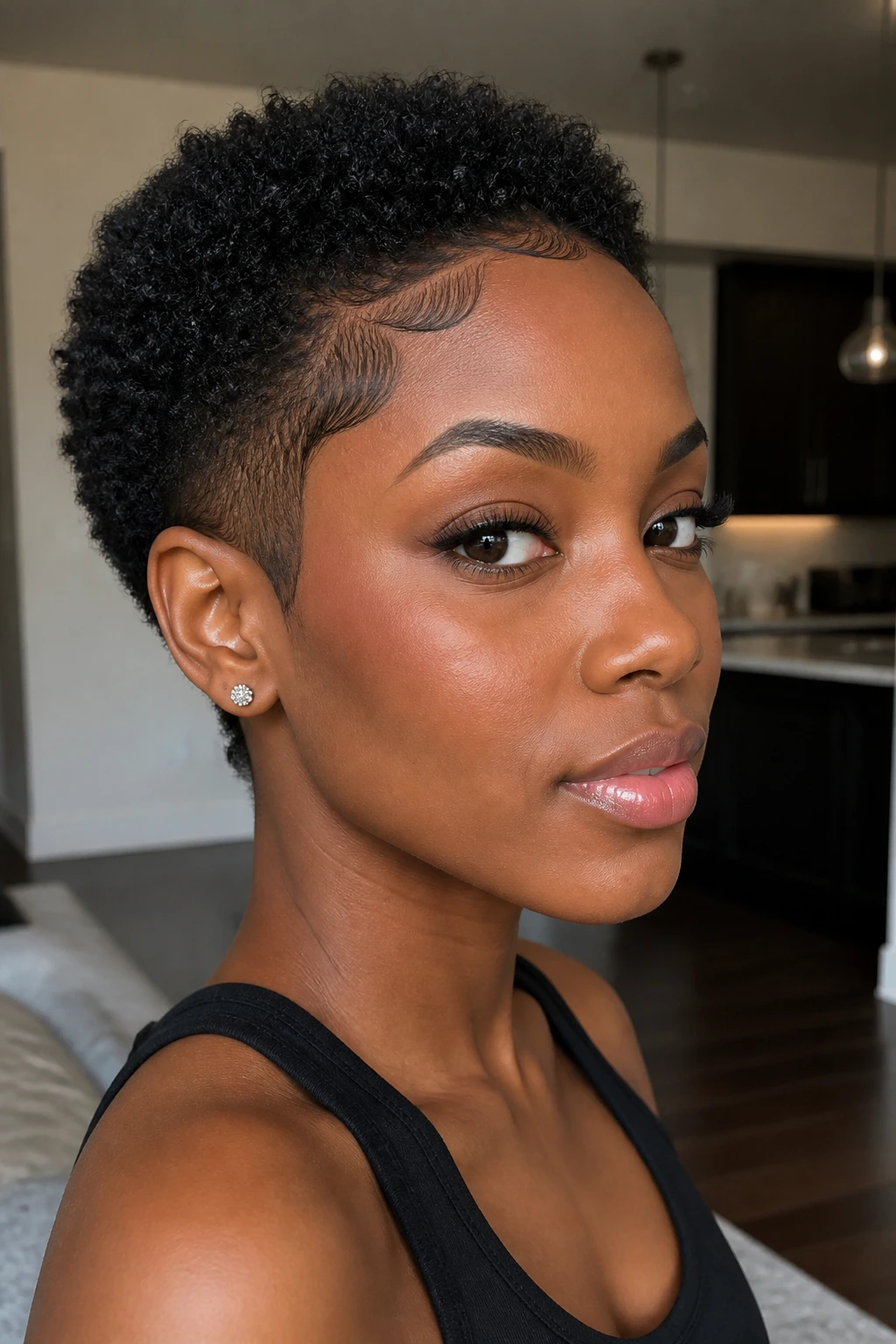
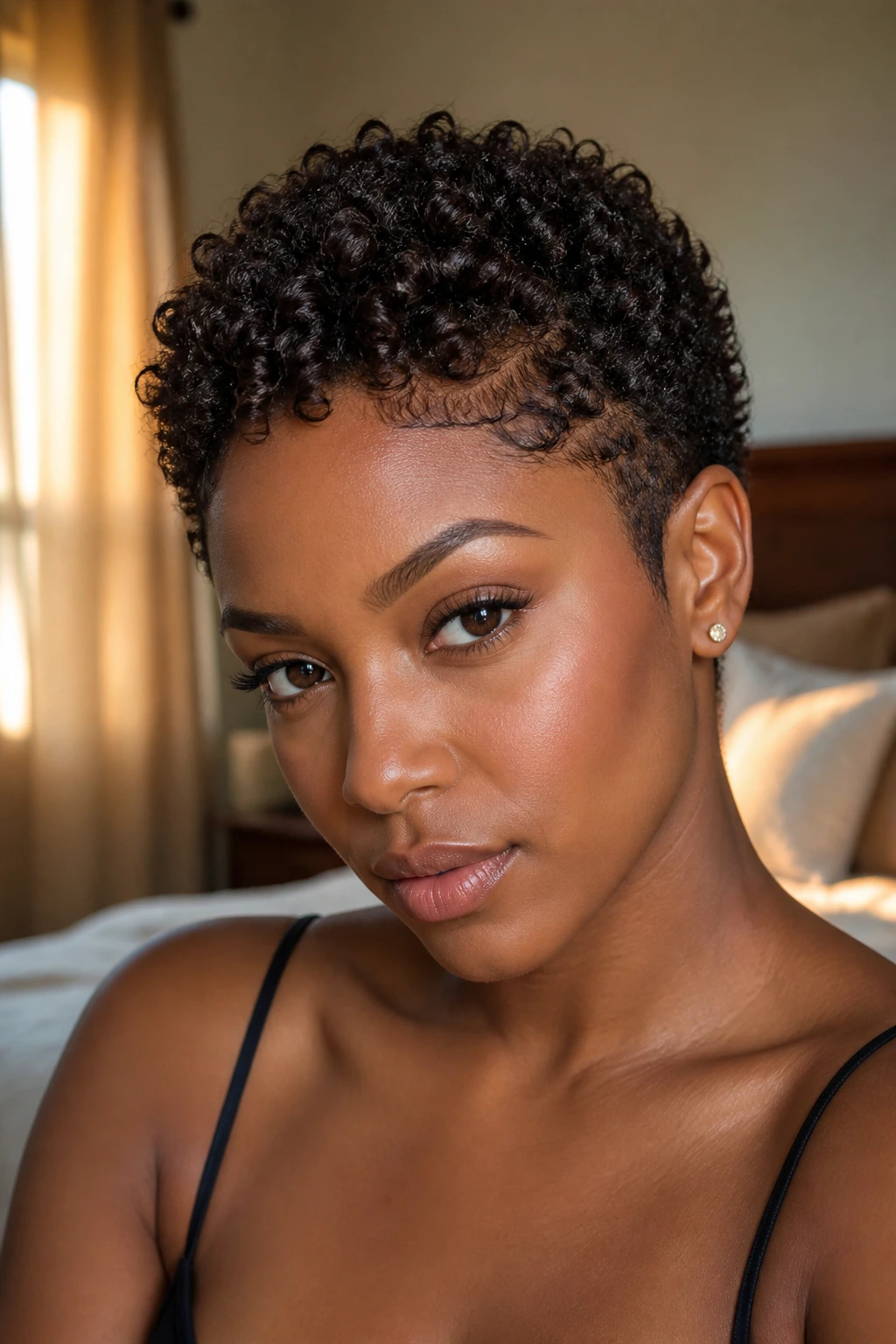
A tapered teeny-weeny afro has a built-in advantage: the cut does half the styling for you. The sides sit shorter, the crown keeps more texture, and the whole shape reads clean even when you don’t pile on product. It’s one of the easiest styles to make look deliberate on tightly coiled hair.
What makes this version work is the contrast. The nape and sides stay neat, while the top gets a little lift and softness. I’d use a defining cream at the crown and a touch of gel only at the hairline. If the edges are laid down too hard, the whole cut can look stiff. You want shaped, not shellacked.
A tapered TWA is especially good if your hair shrinks a lot. The shrinkage stays part of the silhouette instead of fighting it. That’s a win. It also grows out well because the shape changes slowly, not all at once.
4. Mini Twist-Out Bob
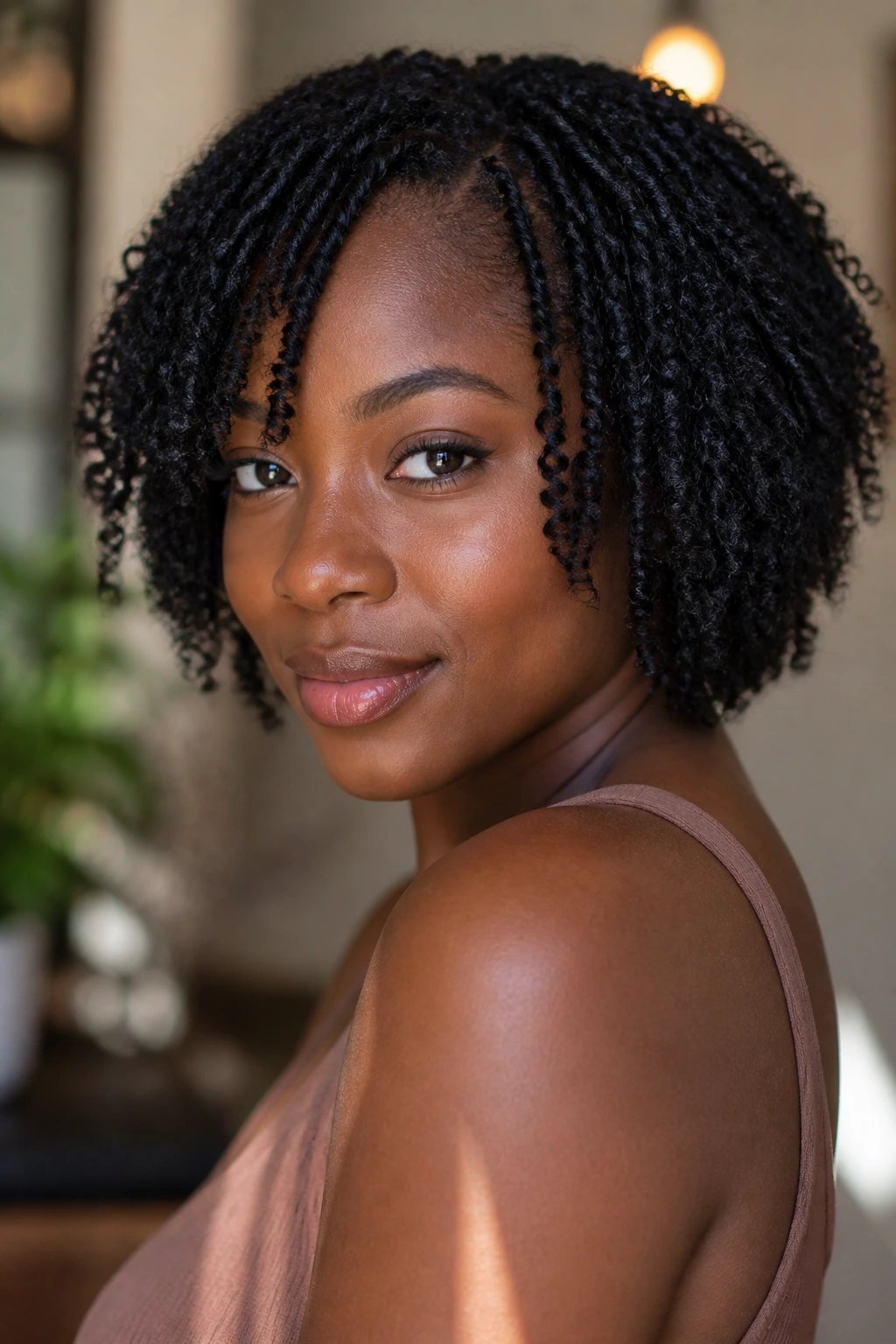
A mini twist-out gives short hair that soft ropey texture that sits somewhere between fluffy and defined. The result looks fuller than a straight twist set, but more organized than a loose fluff-out. On short hair, that balance is gold.
Start with small two-strand twists made on damp, not dripping, hair. If the hair is too wet, the inside of the twist can stay damp longer than you expect, and the take-down gets puffy in all the wrong places. Once the twists are fully dry, oil your fingertips lightly and separate only once or twice. Keep going and you’ll lose the shape.
This style is a good fit when you want body around the head without using heat. It also hides uneven lengths well, which makes it useful during grow-out. The finished shape should feel soft at the ends and a little springy near the roots. Not fuzzy. Springy.
5. Finger Coils With a Clean Part
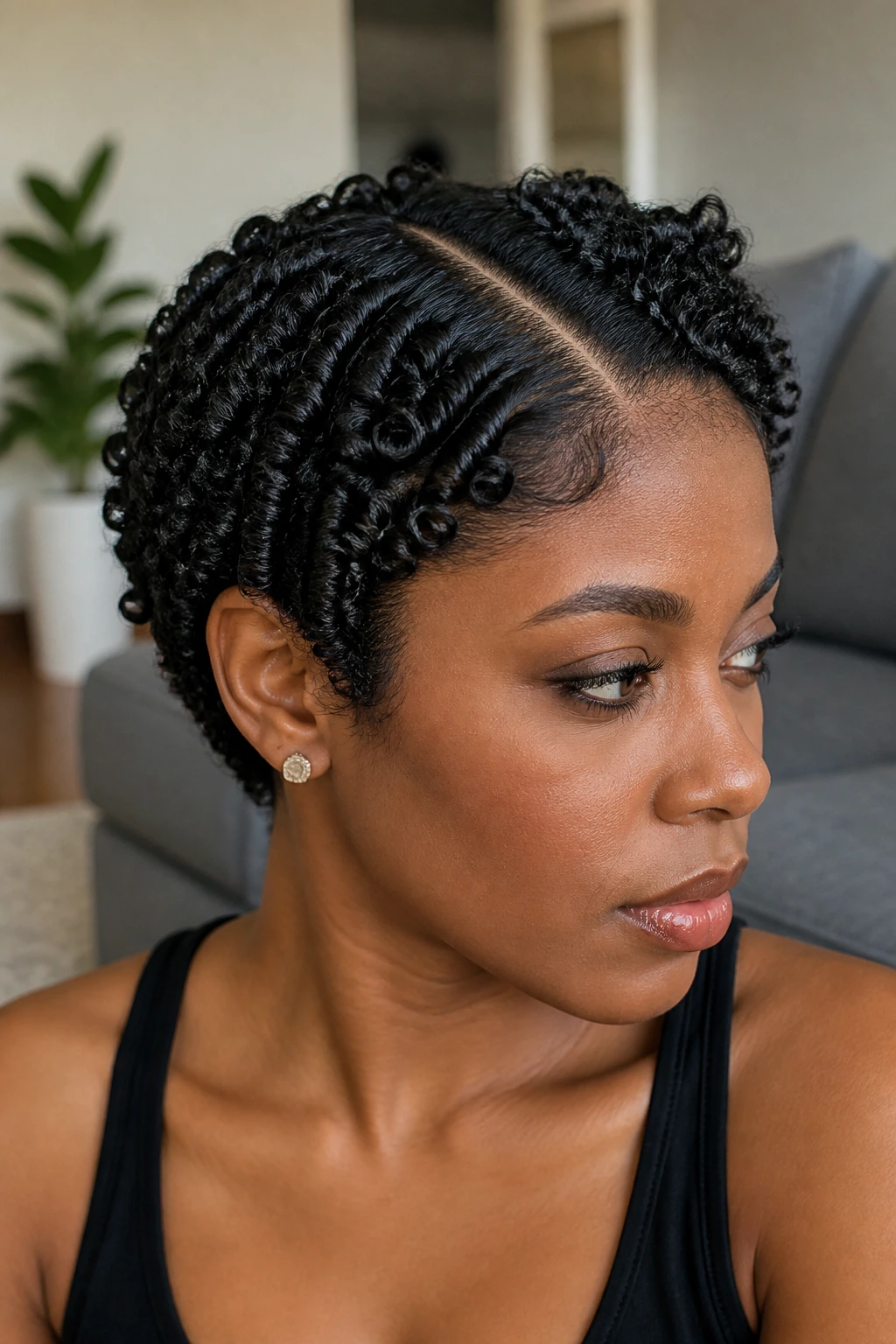
Finger coils on short hair look neat in a way few other styles can match. Each coil sits in its own little lane, and the parting gives the whole head a tidy grid that can be very striking on a short cut. It’s a little time-consuming, yes. The payoff is real.
Use a rat-tail comb to create clean sections, then wrap each piece around your finger until it forms a tiny spiral. A strong-hold gel helps the coil keep its shape as it dries, especially if your curl pattern is loose or mixed. The section size matters here. Too big and the coil loosens before lunch. Too small and the style can feel overdone.
This is one of the best short styles for anyone who likes a crisp finish that holds for days. If a coil frizzes, smooth just that one coil with damp fingers instead of redoing the whole head. Less drama. More control.
6. Bantu Knot-Out With Soft Ends
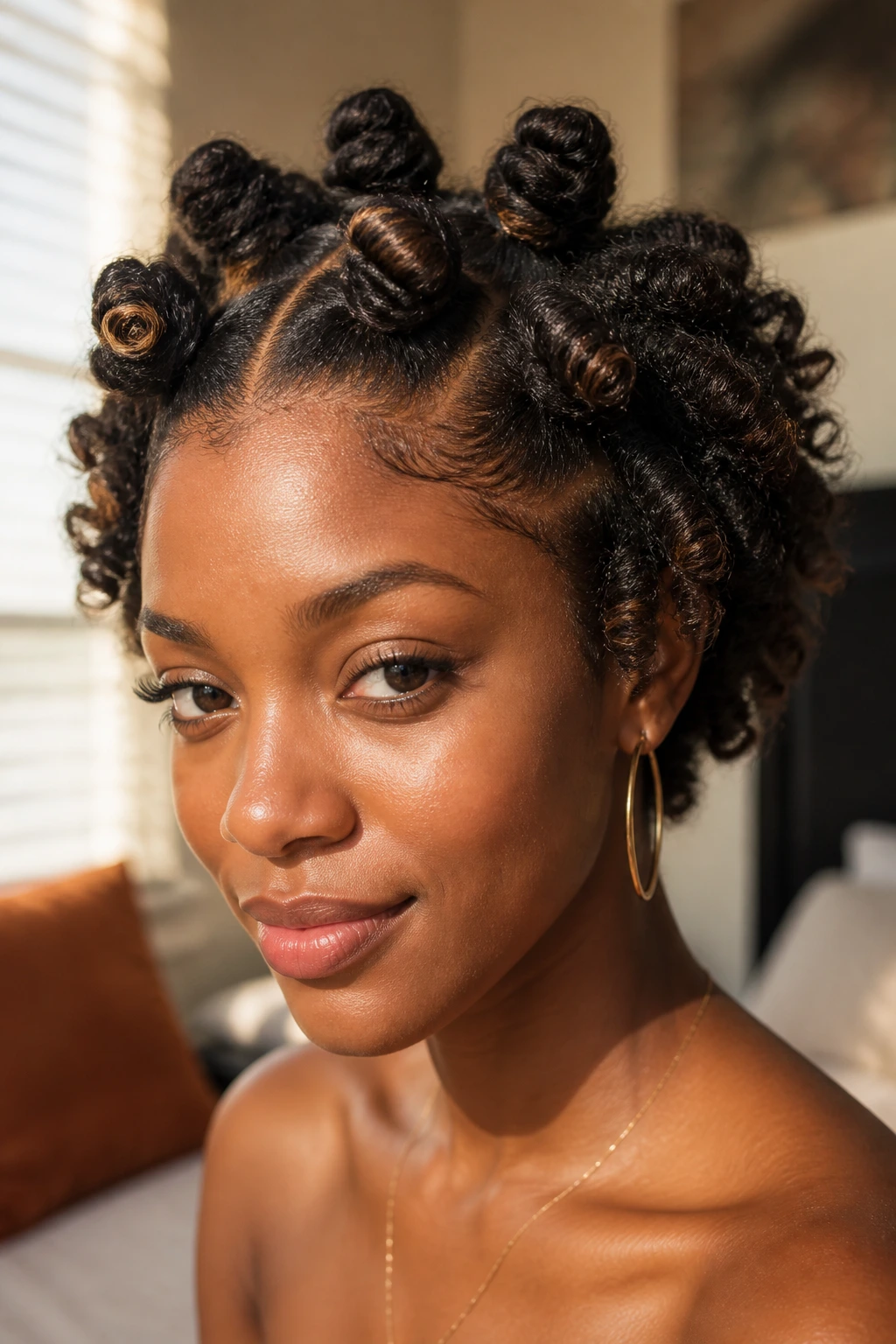
Bantu knots on short hair can look adorable on their own, but the take-down is where the fun starts. A knot-out gives you springy, rounded curls with a lot of lift at the root and a softer finish at the ends. On short lengths, that shape reads playful without getting messy.
The key is making the knots small enough to dry fully. If they’re too bulky, the center stays damp and the curl pattern won’t set cleanly. I like to apply a cream first, then a small amount of gel on top for hold. Once the hair is dry, unwrap slowly and separate only where the curl naturally wants to split.
This style works especially well on coily hair that needs definition but not a stiff cast. You get movement, but the hair still holds a shape. And if one section comes out a little tighter than the rest, leave it alone. That unevenness is part of the charm.
7. Flat-Twist Crown
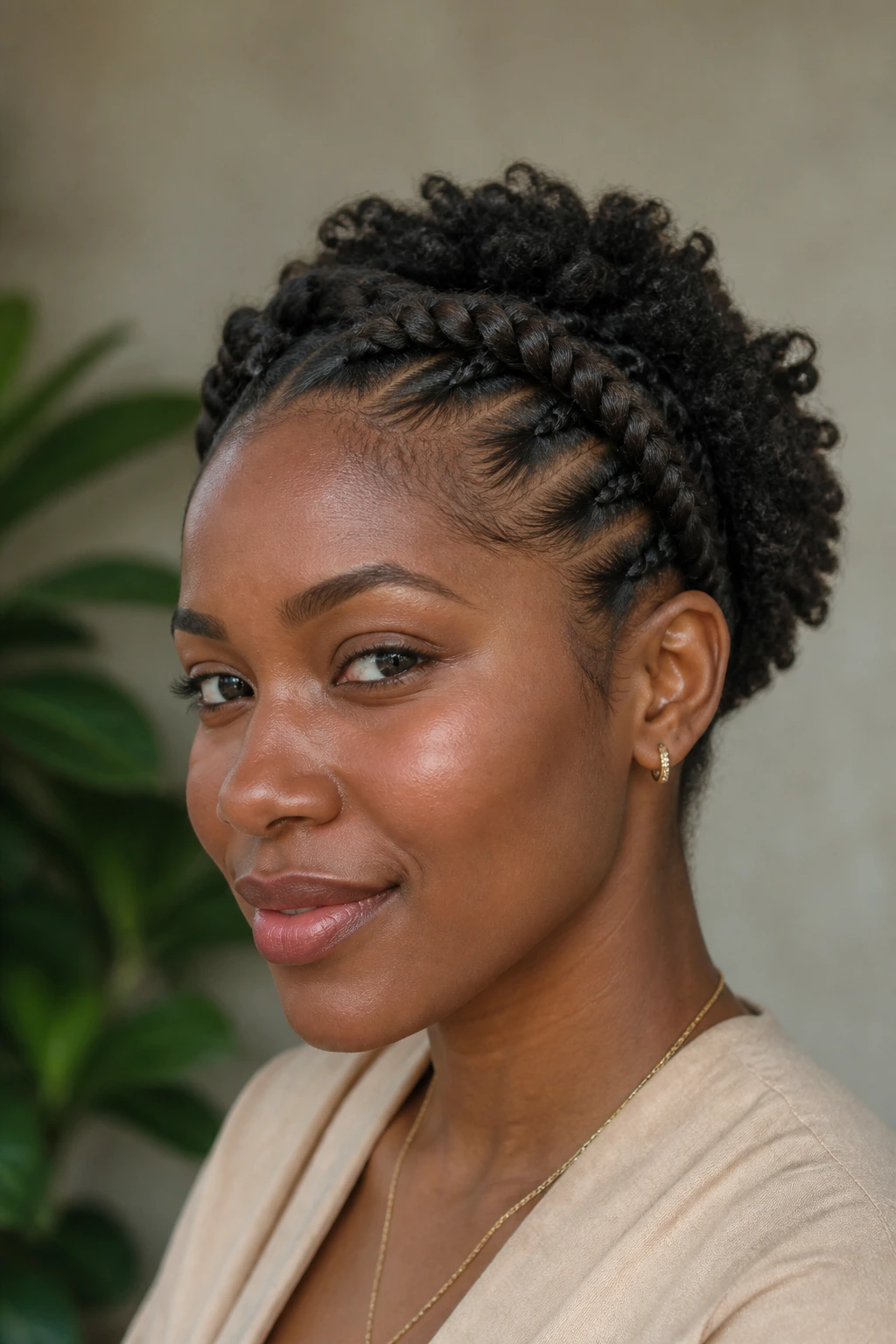
A flat-twist crown is a smart move when you want the front and sides controlled without flattening the whole head. The twists follow the hairline and circle back toward the crown or nape, which leaves the rest of the texture free to breathe. It gives short hair a finished look fast.
This style shines on stretched or lightly elongated curls, but it also works on tighter coils if the sections are kept small and neat. Use a little gel at the roots of each twist so the part stays clean. A rat-tail comb helps, but finger-combing is fine if your texture is delicate and you don’t want to pull.
One thing I like about this look: it handles awkward grow-out. If your sides are shorter than the top or your neckline is in that weird in-between phase, the crown twists pull the eye upward. That’s useful. Very useful.
8. Frohawk With Pinned Sides
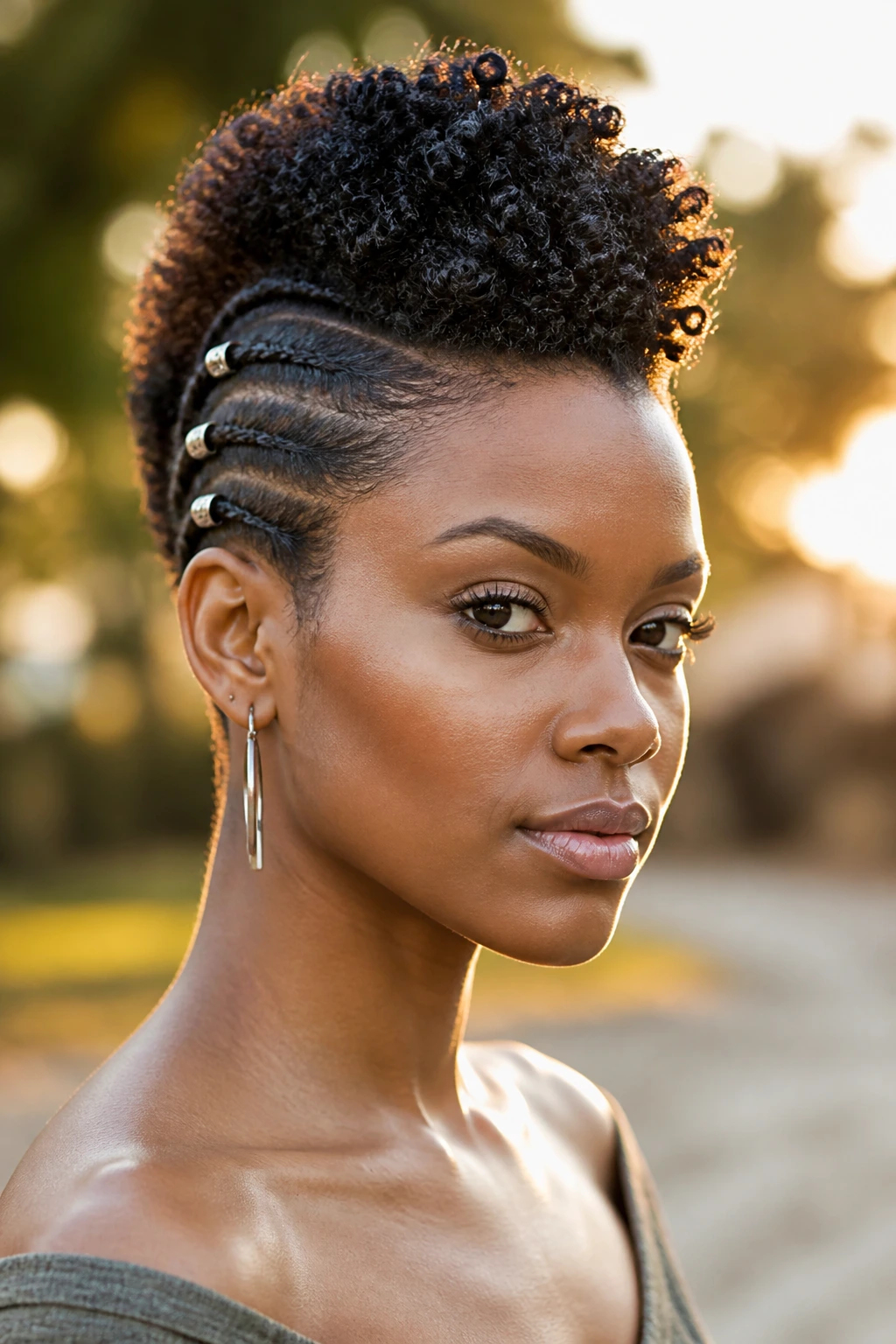
A frohawk gives short natural hair a little attitude, and I mean that in the best way. The sides get slicked or pinned down, the center ridge stays full, and the whole head turns into one clean line from front to back. It’s bold without needing extra length.
The most common mistake is making the middle section too wide. Keep the center narrow enough that the shape looks intentional, not like a forgotten puff. A light gel on the sides, plus a few well-placed bobby pins, usually does the job. If your hair is thick, pin the sides in two layers so they stay put under the top texture.
This style reads especially well on hair with a strong curl pattern or lots of shrinkage, because the center ridge keeps its height. Add a side part at the front if you want it to feel more directional. It’s a small move that changes the whole face of the style.
9. Fluffed-Out Picked Afro
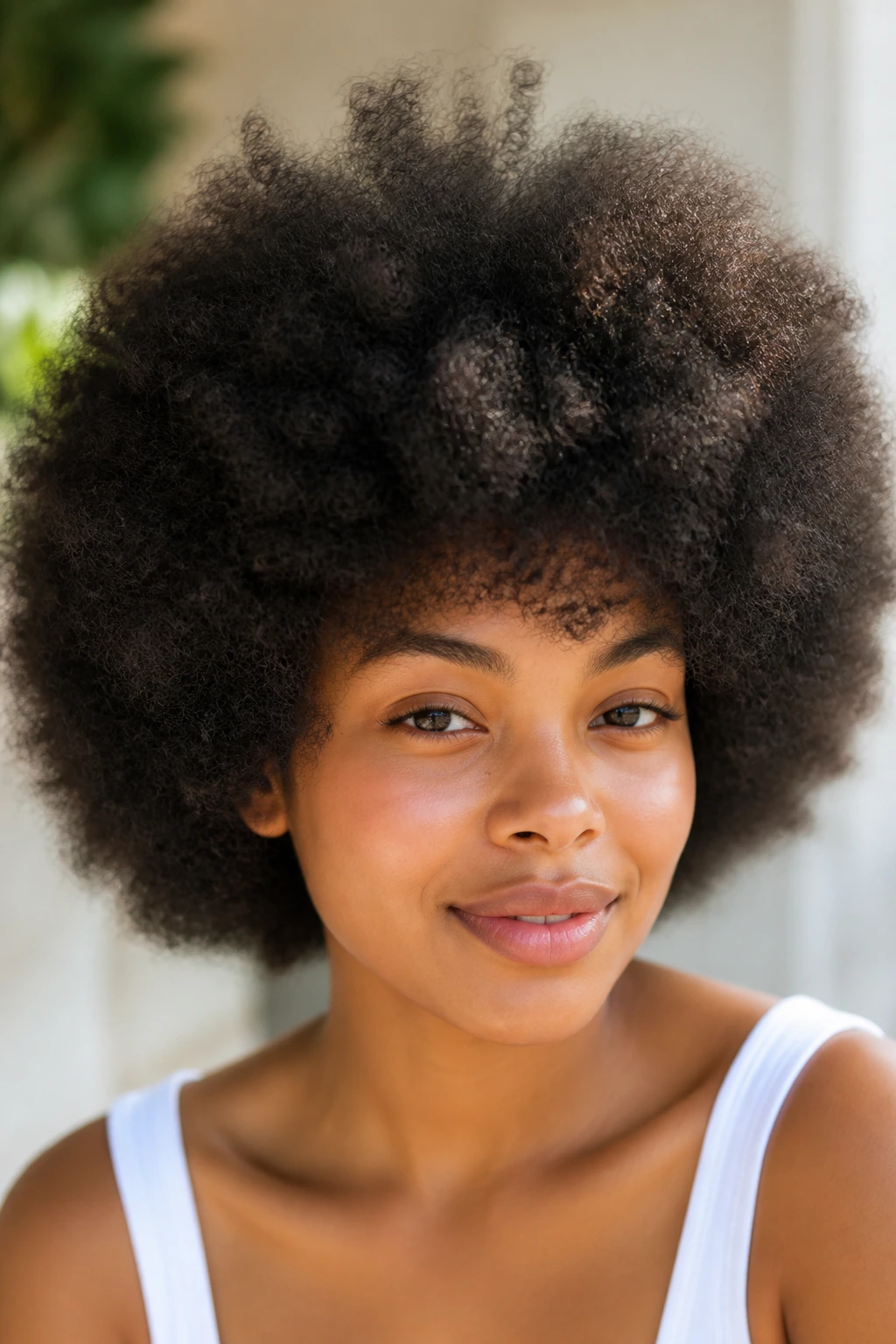
A picked-out afro on short hair has a softness that no gel-heavy style can fake. The shape is round, airy, and very alive. If your hair is dense, this is one of the fastest ways to show off the texture instead of smoothing it down into something smaller.
The real trick is patience. Pick the roots only when the hair is completely dry, and stop before you reach the ends. The ends need to keep their curl or coil so the silhouette doesn’t turn into a cloud with no shape. A little oil on the pick can reduce snagging, though too much will make the roots collapse.
I like this style when the cut has a strong base shape already. It lets the haircut speak. If the sides are tapered, the roundness on top feels sculpted. If the cut is more even, you get a fuller, older-school afro shape that still looks current because it’s honest about the hair’s texture.
10. Wet-Look Coil Crop
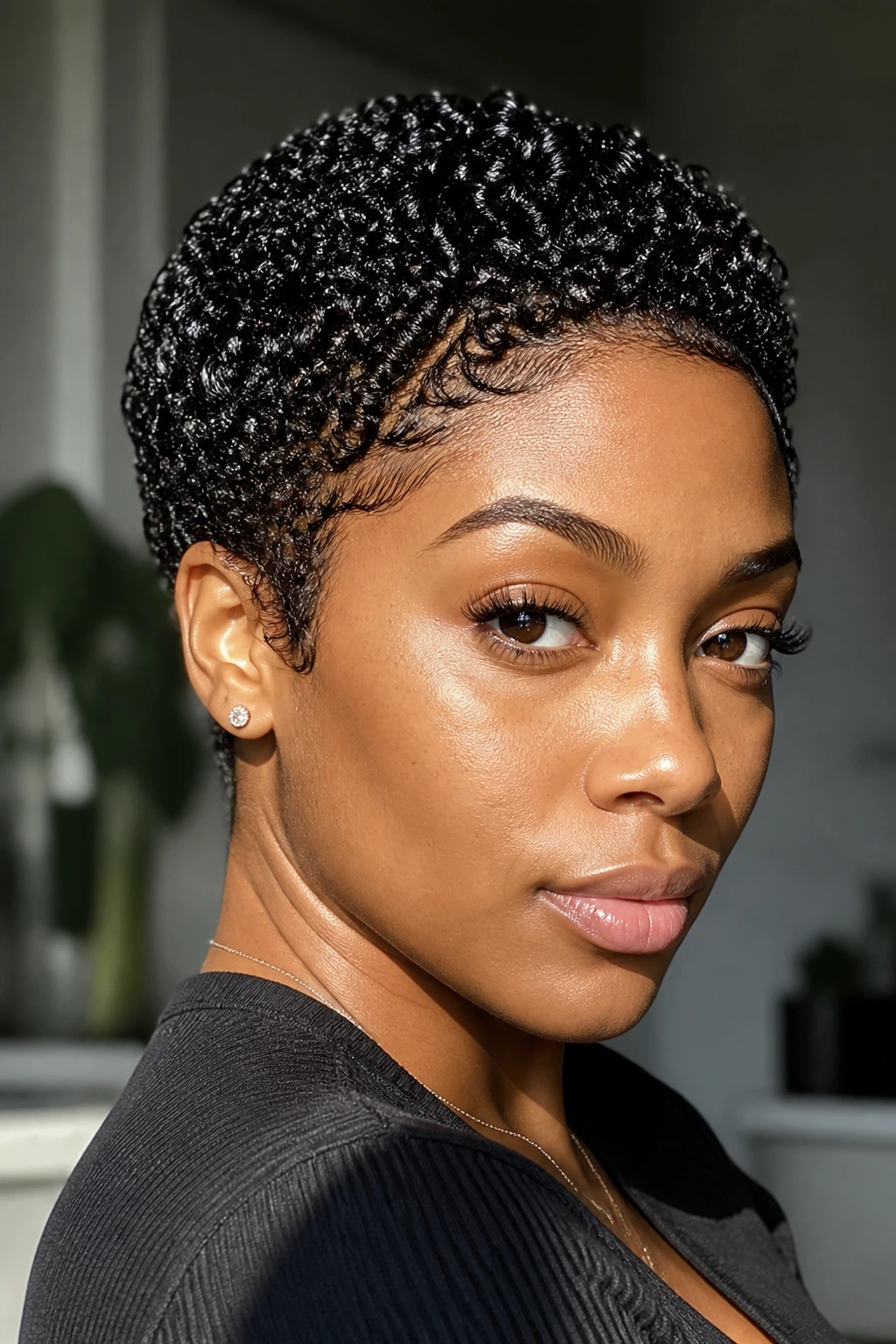
The wet look on short hair can be gorgeous when it’s done with discipline. The finish is glossy, the coils clump together tightly, and the whole style looks deliberate from the first inch at the hairline to the last curl at the crown. Short hair suits this look because the shape stays compact.
Apply product on very wet hair, then smooth it down with your fingers or a fine-tooth comb if your texture can handle it. The goal is clumping, not soaking in layers of cream and gel until the hair feels heavy. If you see white residue forming, the products are fighting each other. Stop there and simplify.
This look is a good choice for evenings out or any time you want the cut to look clean and high-contrast. The shine matters. So does the part. A sharp side part or a curved front line makes the style feel finished instead of accidental.
11. Half-Up Puff for Short Coils
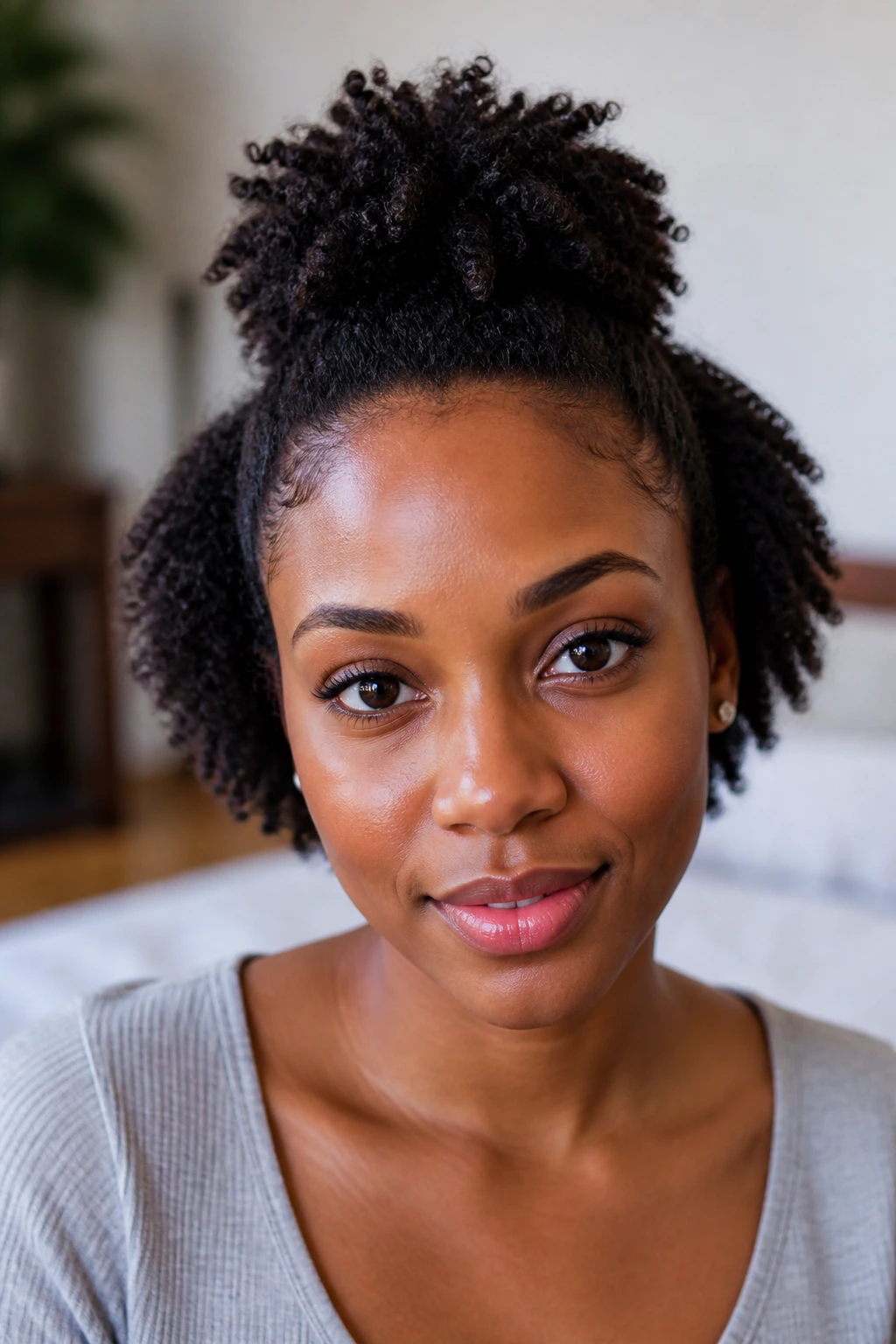
A half-up puff is one of the easiest ways to change the shape of short curly hair without hiding the cut. Pull the top section into a small puff or knot, then let the sides stay free. On short hair, the puff may be tiny. That’s fine. Tiny can be cute and sculptural.
The base should sit high enough to lift the face but not so high that the hairline gets pulled tight. I’d use a satin scrunchie or a soft elastic, never a thin band that bites into the strands. If the puff looks flat, fan it gently with your fingers before you head out the door.
This style is especially handy on second- or third-day hair, when the roots need a reset but the ends still look good. It buys you another day without making the hair look neglected. And it keeps the neckline open, which is nice when the weather is warm or you just want less hair on your skin.
12. Curly Fringe With Temple Length
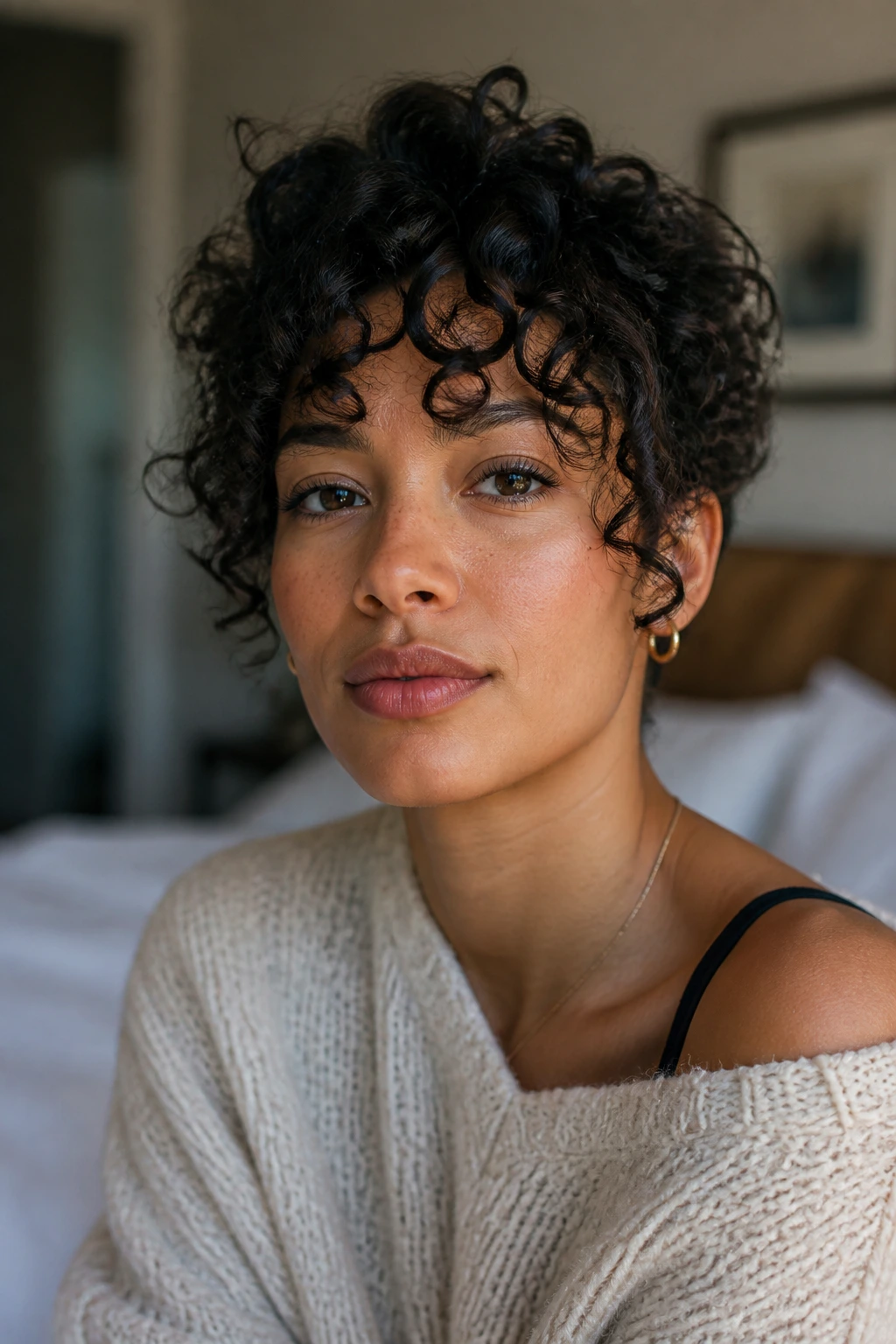
A curly fringe on short hair changes the whole mood of the cut. The front drops a little lower, the temples stay soft, and the face gets framed in a way that feels deliberate instead of severe. It’s one of my favorite shapes for short natural hair because it makes the texture look personal.
This style works best when the fringe is coaxed forward while the hair is still damp. Finger-coil the front pieces if they tend to split apart, then let them dry in the direction you want them to fall. If the fringe is fighting you, a small clip at the roots while it dries can help train the shape.
A fringe like this can soften a strong jawline or balance a high forehead, but the bigger point is simpler: it gives the cut movement. Short hair can look sharp; a little curl across the forehead keeps it from looking too stern.
13. Tucked Side Clip-Back
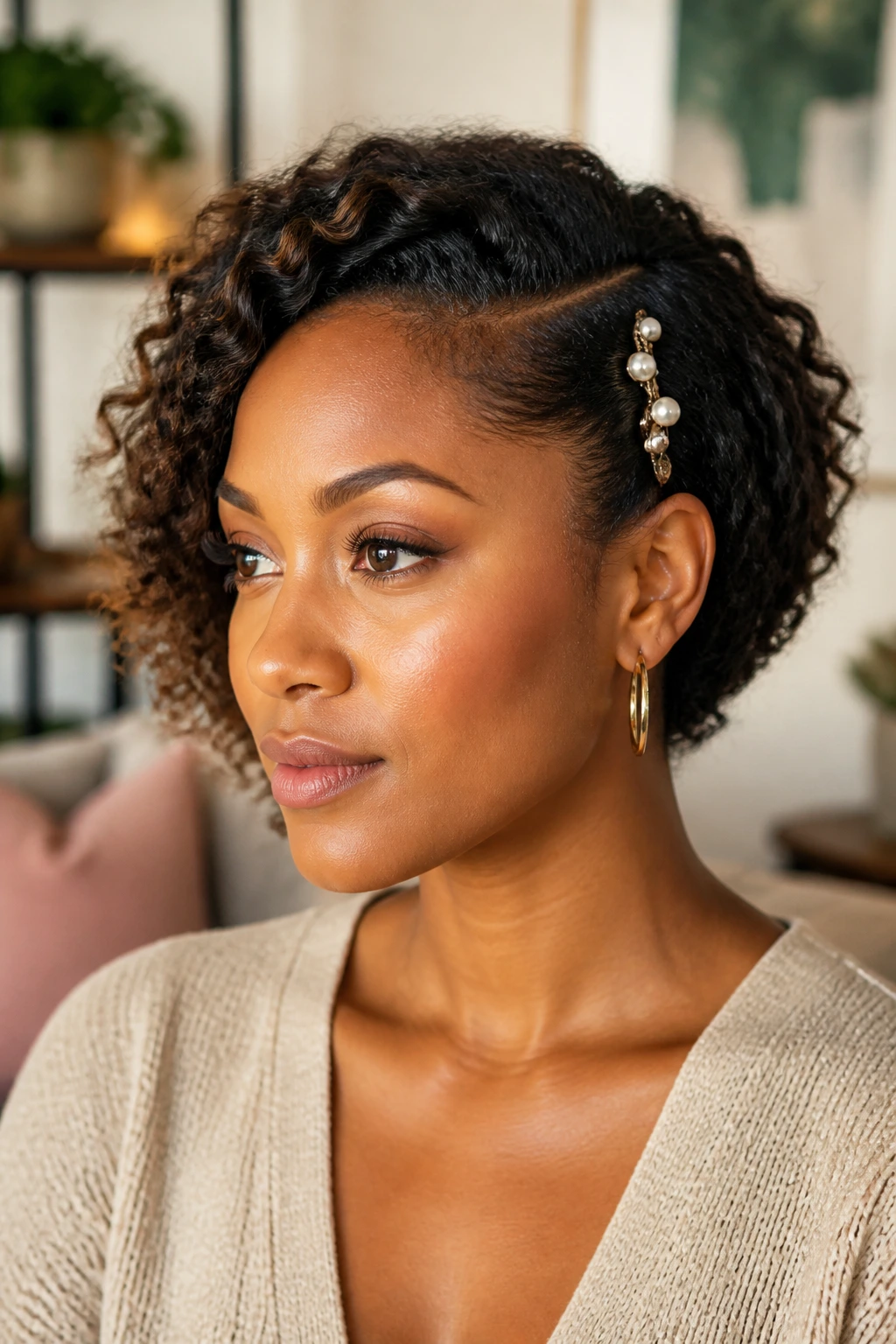
Sometimes the smartest style is the one that solves one annoying side of the head and leaves the rest alone. A tucked side clip-back does exactly that. One side gets pinned or clipped behind the ear, the other side stays loose, and the asymmetry makes the cut feel styled with almost no fuss.
Use a decorative clip if you want the style to look intentional, or a matte bobby pin if you want the focus on the hair itself. This is one of those styles that works best when the texture on the loose side has a little definition, not a full wet finish. Too much shine on one side and matte softness on the other can look disconnected.
I reach for this when one temple won’t cooperate or when the haircut is growing out unevenly. It turns a problem into a detail. That’s the whole move.
14. Two-Strand Twist Bob
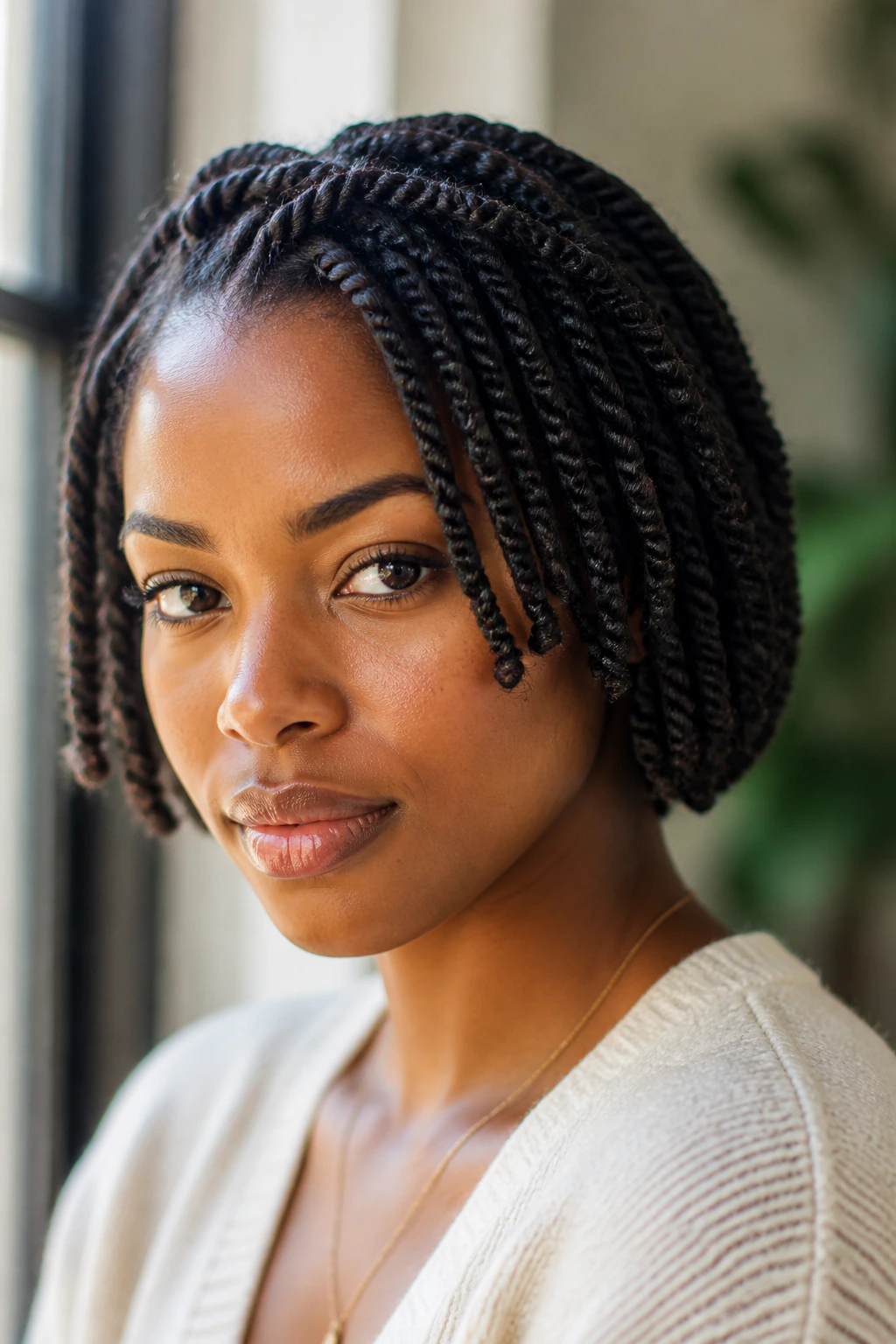
A short two-strand twist bob gives you options, which is probably why people come back to it again and again. You can wear the twists as-is for a tidy ropey look, or unravel them later for a fuller twist-out with more movement. On short hair, that flexibility is useful.
The twists should be uniform enough to set well but not so tiny that they lose body. If the hair is very soft, use a cream plus a light gel to help the twists keep their shape. If it’s coarse or very dense, a stronger hold product can keep the frizz down between wash days.
What I like here is the way the ends tuck into the shape instead of sticking out. It gives short hair a neat outline, even when the texture is bold. And when you take the twists down, the length appears to stretch without needing heat.
15. Slicked-Back Coil Crop
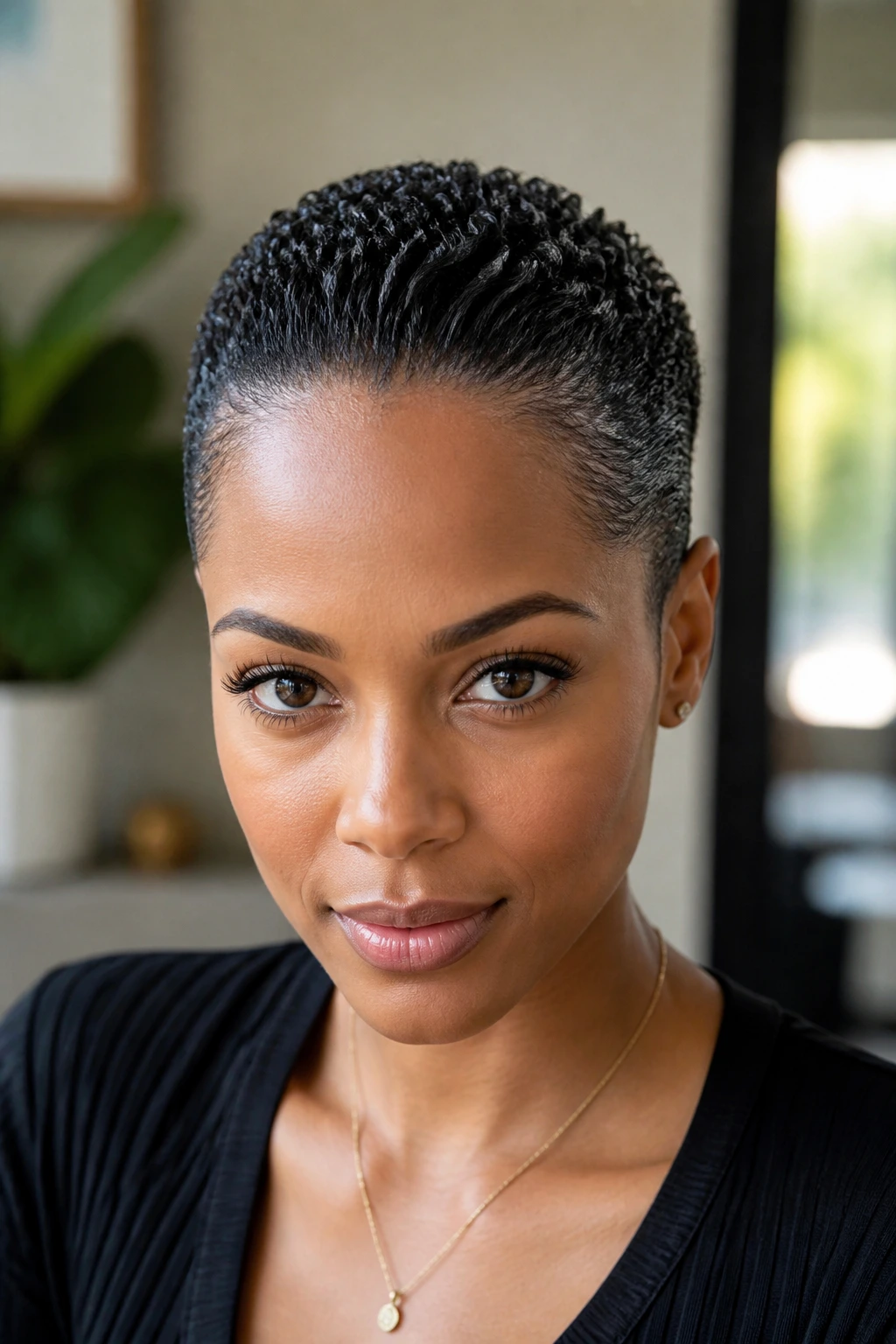
A slicked-back coil crop is clean, sharp, and a little bit dramatic in the best way. The hair is brushed back from the face, the root line stays smooth, and the texture at the crown keeps the style from looking flat or severe. On short hair, that contrast is the whole point.
Use a gel or pomade that has real hold, then brush the hair back in the direction it naturally wants to sit. If you fight the growth pattern, the style will puff at the temples by midday. I like to work in layers: a little product, brush, repeat. It keeps the finish smooth without turning greasy.
This is a strong choice for humid days or for haircuts that need the face to stay open. It also sets off earrings and strong brows nicely. Nothing fancy. Just a neat, controlled shape that knows what it wants to do.
16. Rolled-and-Pinned Faux Bob
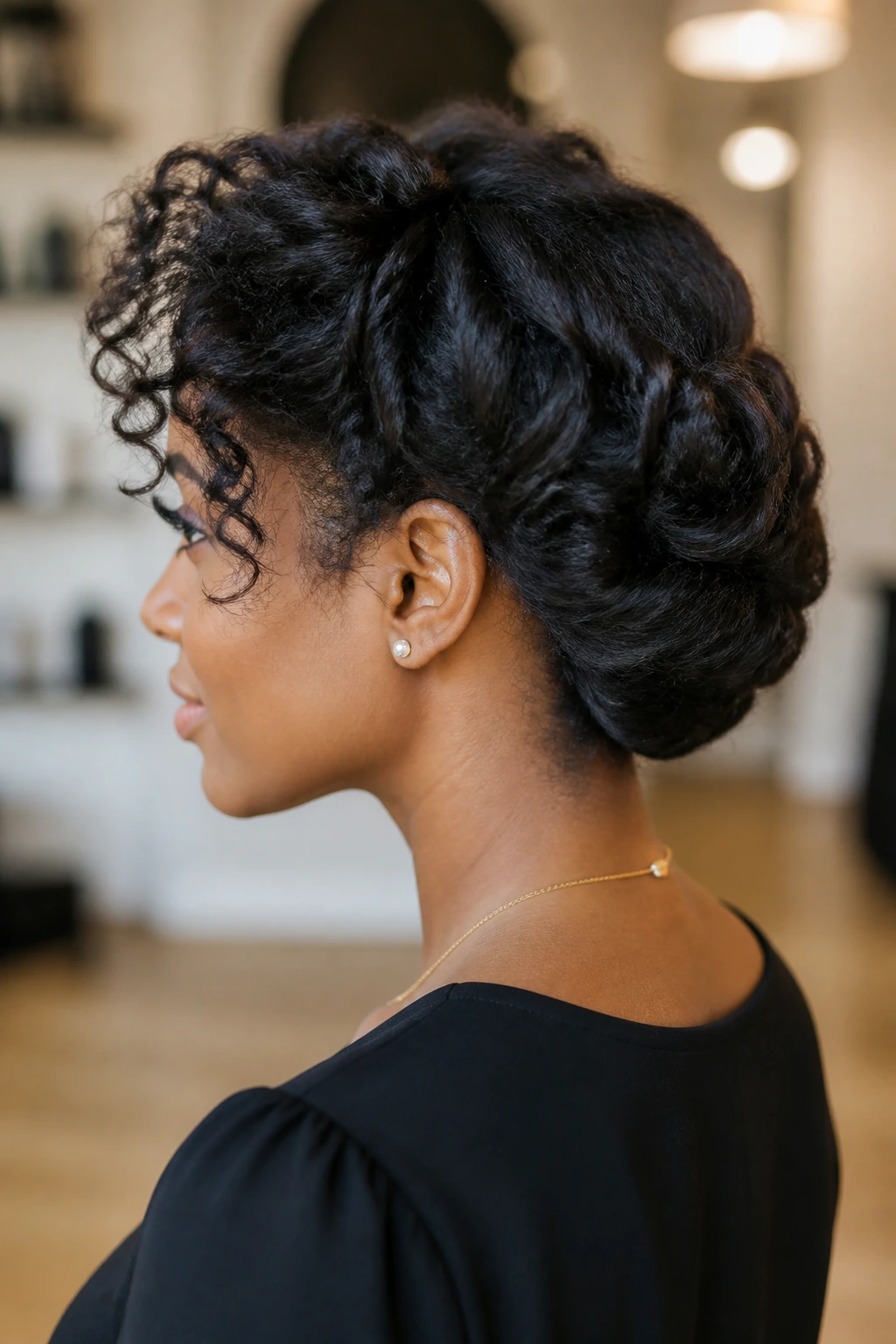
A faux bob on short natural hair sounds odd until you see how well it works. You tuck the back under, pin the length in soft rolls, and suddenly the cut looks a little longer and more layered. It’s a smart trick when you want a different silhouette for a night out.
The secret is pinning the underlayer securely enough that it doesn’t pop loose when you turn your head. Use U-pins or strong bobby pins, not the flimsy kind that bend if you look at them wrong. Keep the front slightly loose so the style doesn’t look stuffed into place. A tiny bit of volume at the crown makes the fake bob read as style, not disguise.
This one is best on hair with at least a few inches of length to work with. If the nape is too short, the roll won’t hold. But when it does hold, the result is surprisingly elegant.
17. Starter Loc Bob With Barrel Twists
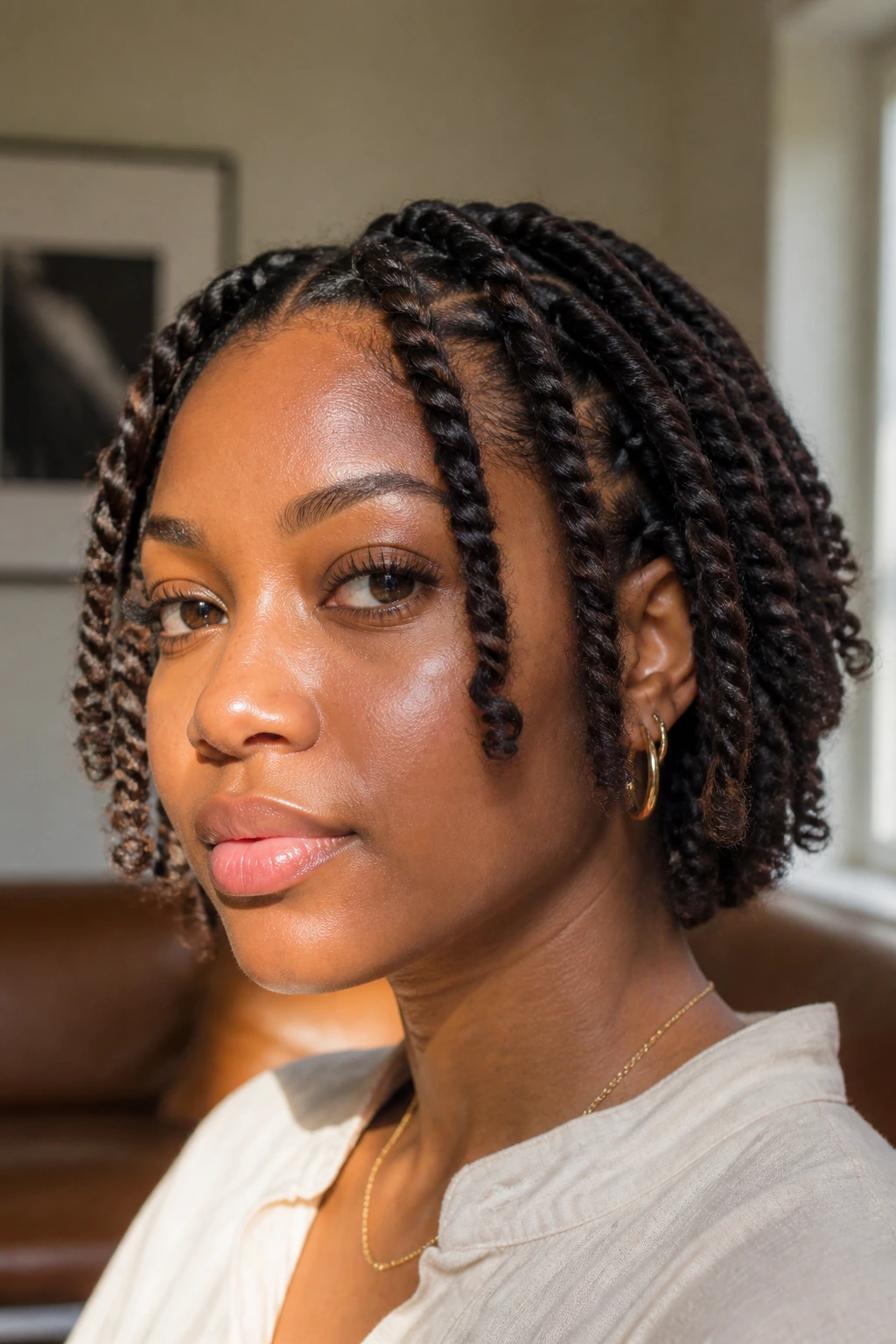
Short locs can do a lot, and one of the nicest shapes is a bob that sits around the jaw or just below it. Add a few barrel twists at the front or sides, and the style gets a bit of structure without losing that easy loc texture. It feels tidy without looking stiff.
The bob shape keeps the weight balanced, which matters when the locs are still new or short. If your locs are in the starter stage, avoid over-manipulating the roots. Keep the styling gentle and let the shape come from the cut and the parting, not from constant pulling.
A short loc bob looks especially good with a clean side part or a slight curve at the front. That little asymmetry keeps it from reading boxy. And if a few locs stick out, I’d leave them. That loose edge is part of the charm.
18. Short Halo Braid
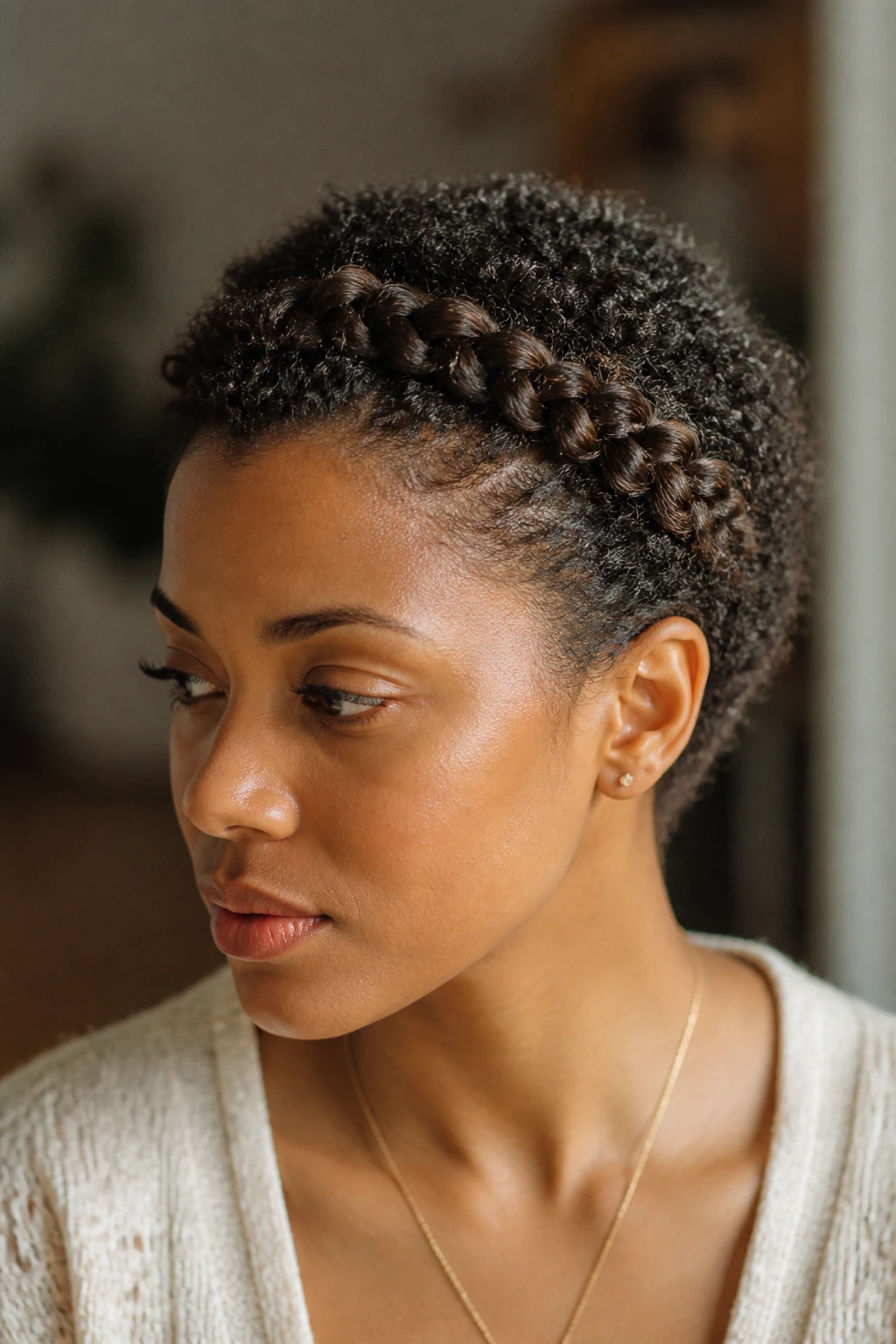
A halo braid on short hair usually needs a little creative pinning, and that’s fine. The braid or twist can travel around the hairline like a crown, with the back tucked or softly left out depending on length. It gives short texture a wrapped, finished look that works for events or for days when you want the hair completely off the face.
The most important part is keeping the sections even so the braid doesn’t get lumpy where the hair is shorter. Use a bit of styling cream to reduce flyaways, but don’t soak the scalp. Too much product near the part can make the braid slide instead of hold.
I like this when a grow-out phase needs some order. It hides uneven lengths around the edges and makes the haircut feel intentional. There’s a reason people keep coming back to it.
19. Side-Parted Coil Mohawk
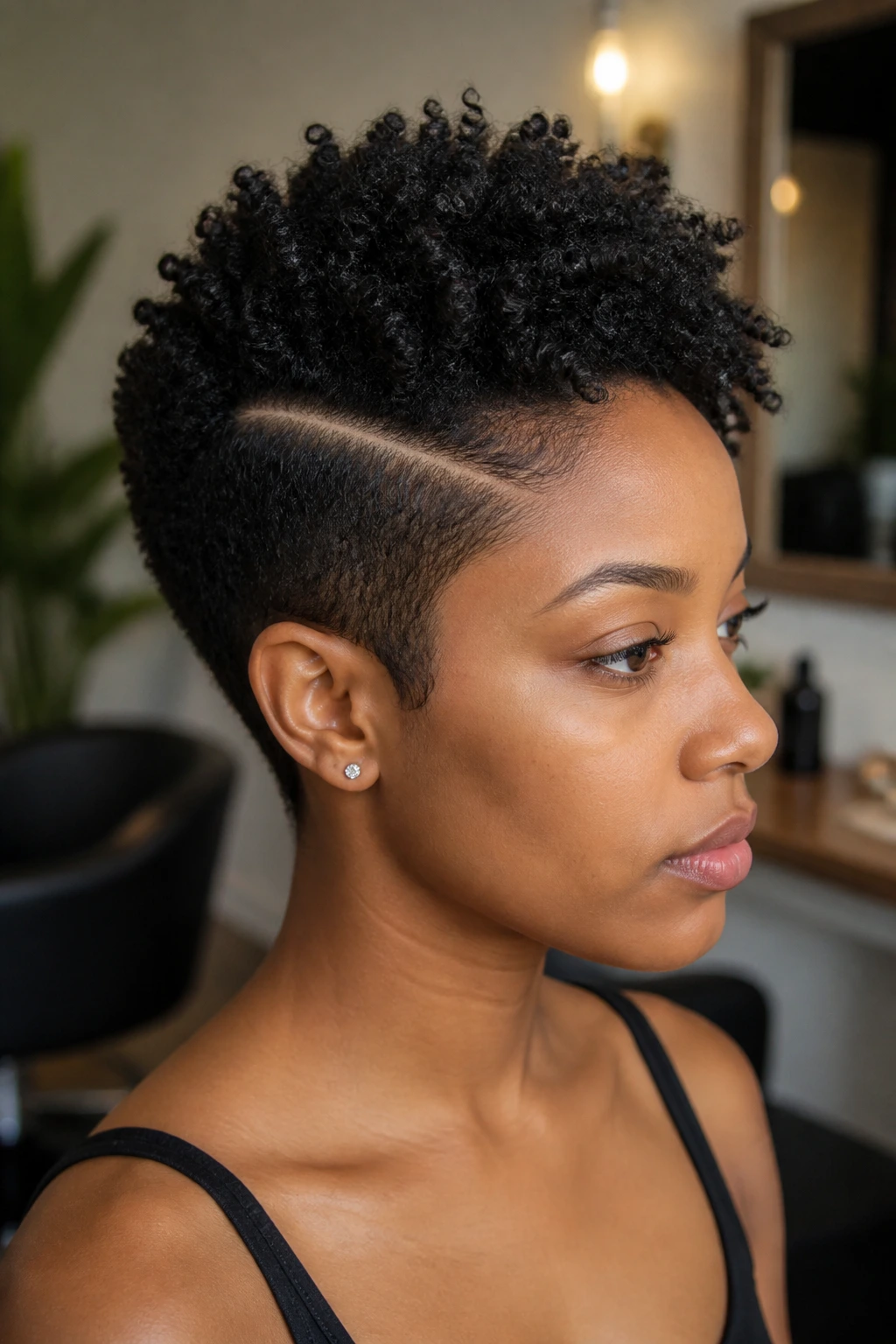
A side-parted coil mohawk looks cleaner than a full frohawk, and I think that’s what gives it its appeal. The part puts structure into the front, the center stays tall, and the sides are controlled closely enough that the top gets all the attention. It’s a nice middle ground between soft and sharp.
This style works well if you want height without making the whole head look big. The side part narrows the silhouette, which can be helpful if your hair is dense around the temples. Use a small brush and a firm product at the sides, then leave the center looser so the coils can stand up.
One strong note: keep the center section hydrated. If it dries out before you finish shaping it, the middle loses definition and starts to feel rough. A quick mist and a dab of leave-in solve that fast.
20. Scarf-Wrapped Texture Crop
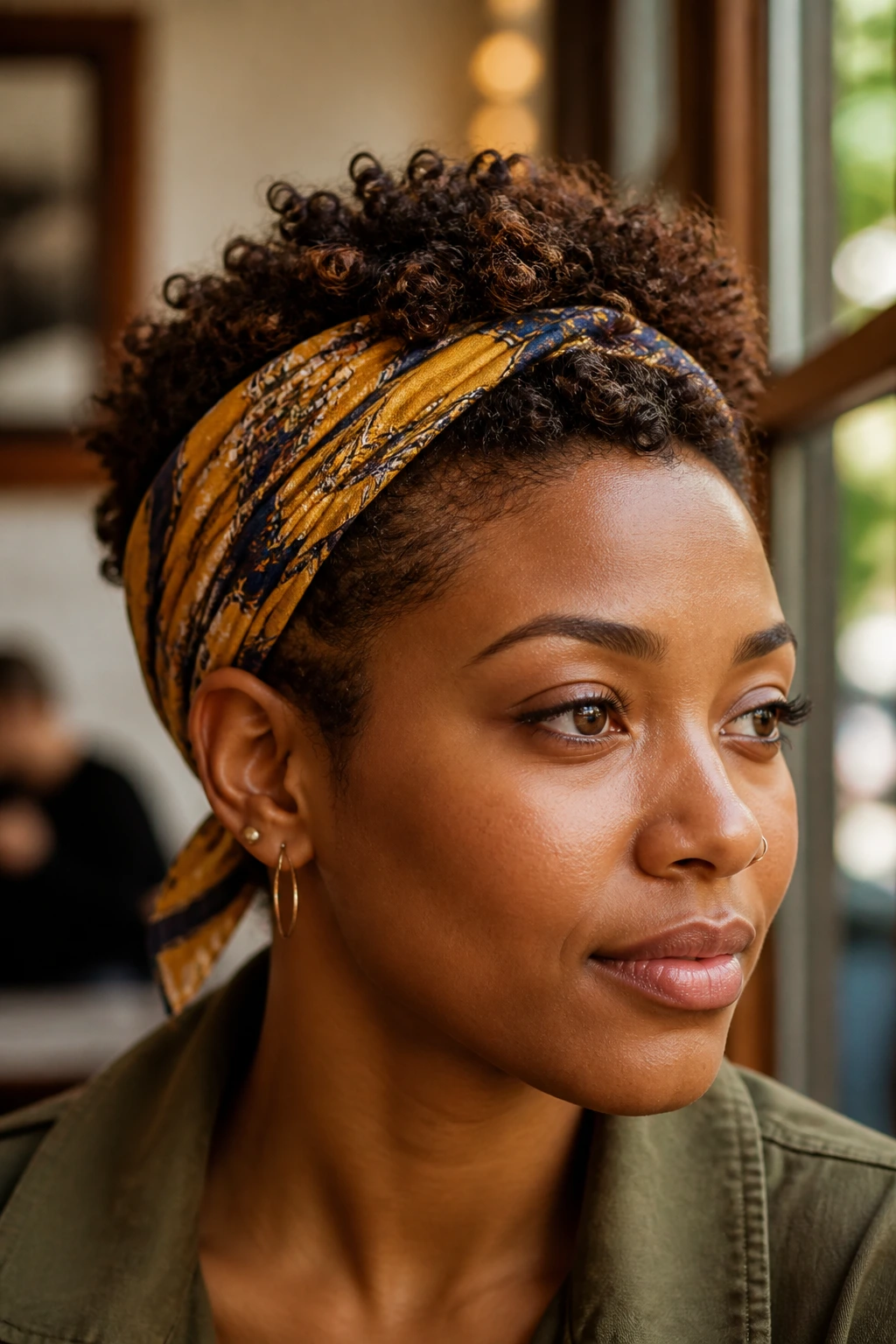
A scarf can rescue short natural hair on days when the crown needs help but you do not want to start over. Wrap it around the hairline, tie it at the back or on the side, and let the curls peek out above or below the fabric. The result can look casual, but it also looks thought-through.
This is one of the easiest ways to dress up a short cut without changing the actual shape. Use a silk or satin scarf if you want it to glide over the hair, or cotton if you want a firmer hold around the edges. The best part is how it lets you stretch a style for another day without overloading it with product.
I like this with a puff, a twist-out, or a fluffy crop. The scarf becomes the frame. The hair stays the focal point.
21. Asymmetrical Curly Bob
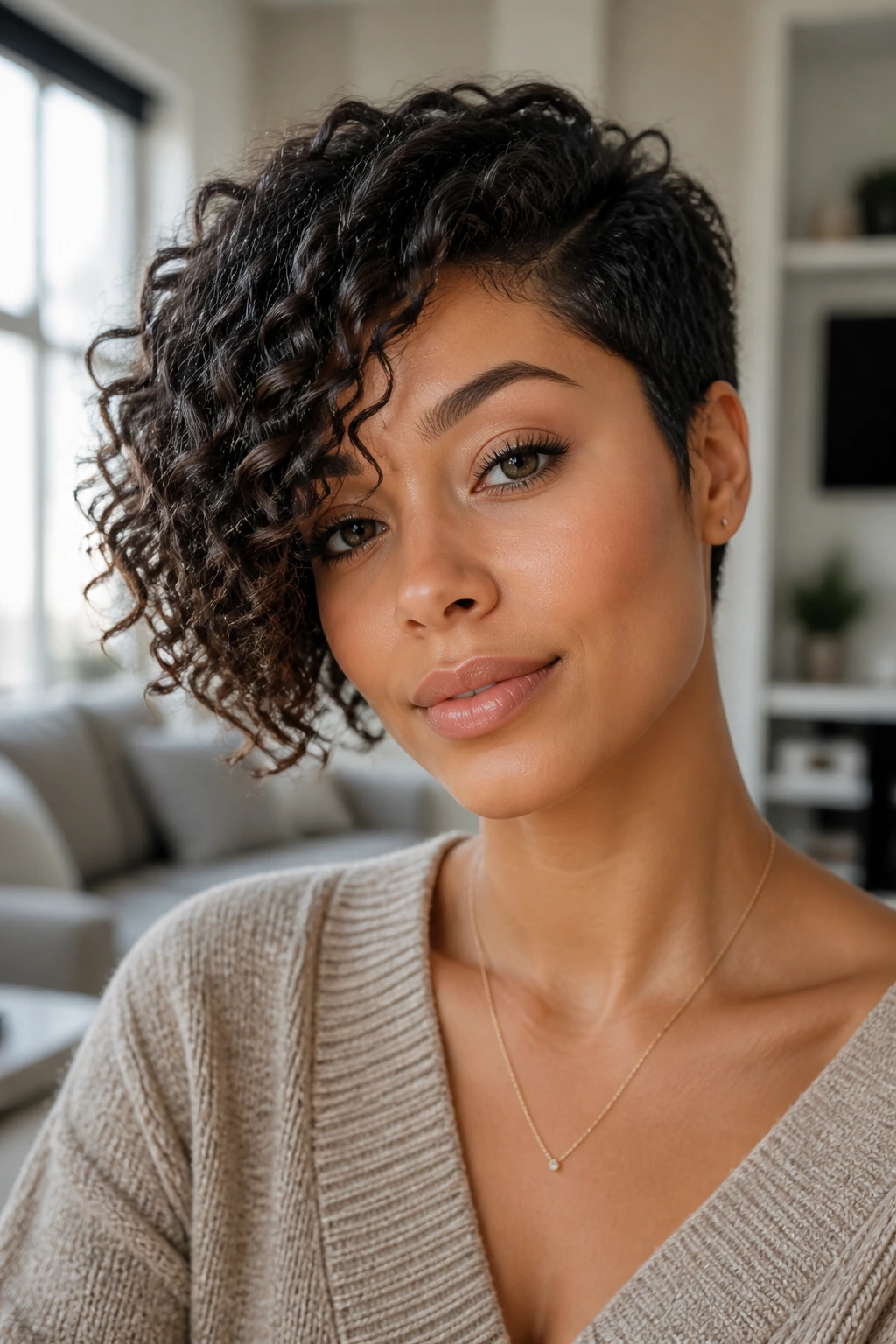
An asymmetrical curly bob gives short texture a built-in point of view. One side hangs a little longer, the other stays shorter, and the diagonal line across the face keeps the cut from feeling static. On curls and coils, that angle looks even stronger because the texture adds depth to the shape.
The style works best when the longer side gets a touch more definition so it doesn’t collapse. Use a little extra product there, but keep the heavier side light at the root. If the side part sits too far back, the whole shape can look accidental. Bring the part forward until the line feels deliberate.
This is a good cut for people who want short hair with some movement around the jaw and cheek. It frames the face without crowding it. That’s a fine line, and this style handles it well.
22. Pin-Curl Set With Vintage Lift
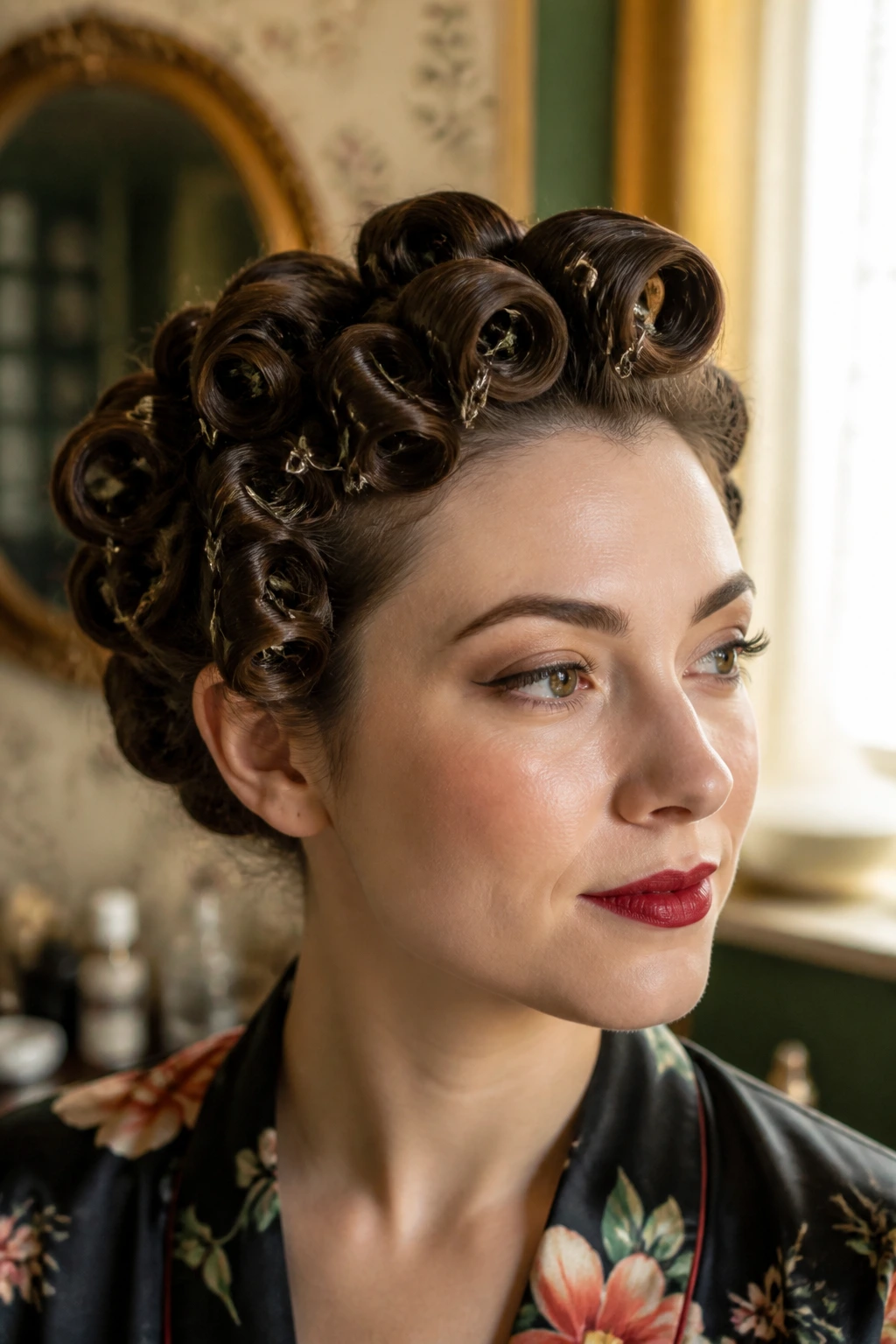
Pin curls on short hair are old-school in the best sense. They create rounded loops, tidy lift at the root, and a finish that feels neat without being severe. If you want the hair to sit with a little height instead of lying flat against the head, this is a smart set.
Set the hair in small curls while it’s damp, pin each loop flat, and make sure it dries all the way through before you take anything down. That drying part matters more than people think. If the center is still cool or damp, the curl will droop once it’s released. A light setting lotion or mousse helps the shape keep its memory.
This style is a nice choice when you want short hair to read a little dressed up. It’s controlled, but not stiff. And if the curls loosen during the day, the style usually just gets softer instead of falling apart.
23. Undercut Coil Shape
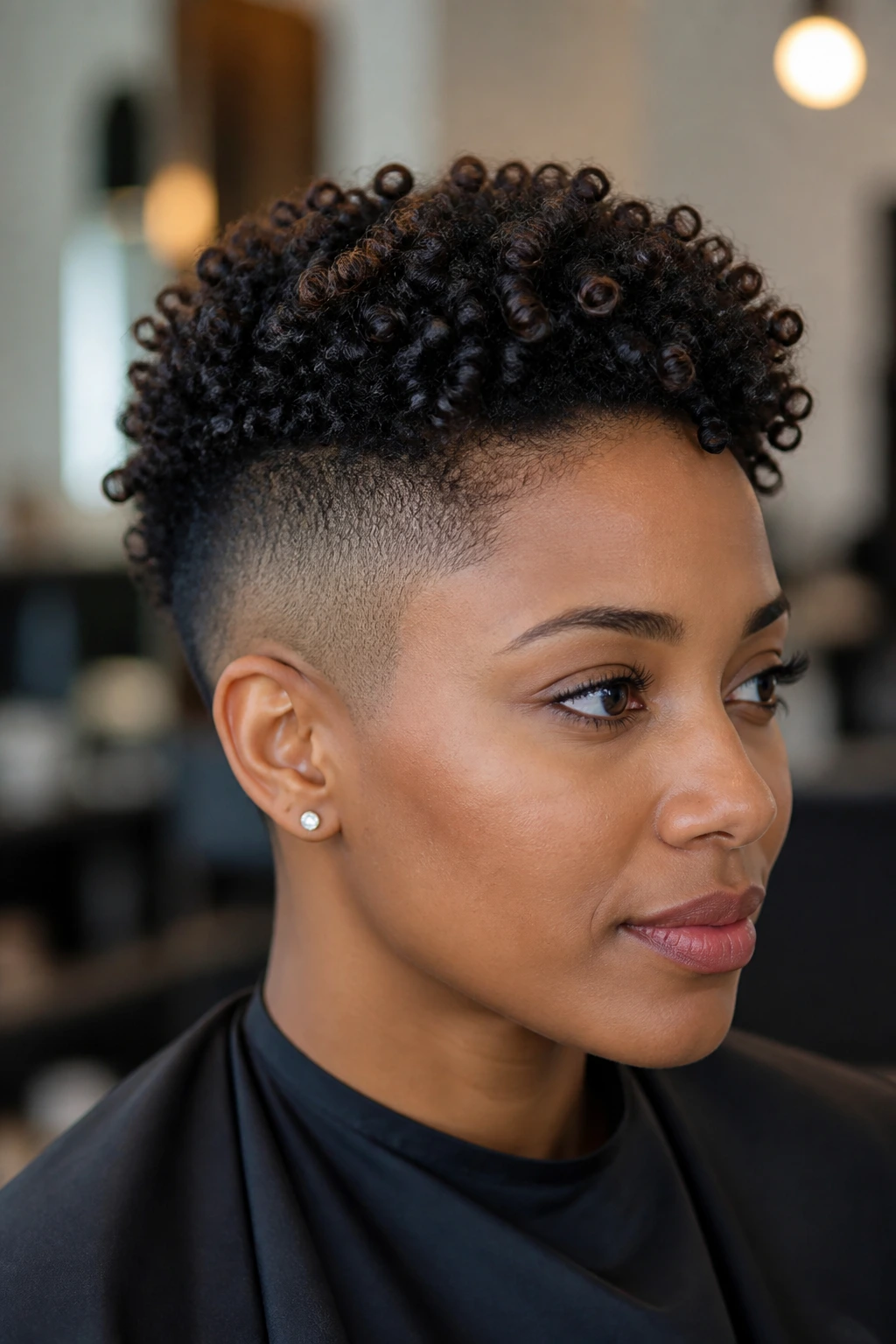
An undercut changes the whole behavior of short natural hair. By taking bulk out of the sides or nape, the top gets room to move and the shape becomes easier to manage. On thick coils, that can be the difference between a style that sits well and one that feels bulky by noon.
I like this because it lets the top texture stay soft and visible while the sides stay tidy. You can wear it with a side part, a frohawk, a puff, or a coil crop. The undercut does not need to show off. It just needs to reduce bulk where the hair tends to swell most.
If you’re considering this shape, make sure your stylist leaves enough length on top to keep the balance. Too little length and the style can look severe. The sweet spot is a top section with enough curl to move and enough side control to keep the outline clean.
24. Messy Top Puff for Short Hair
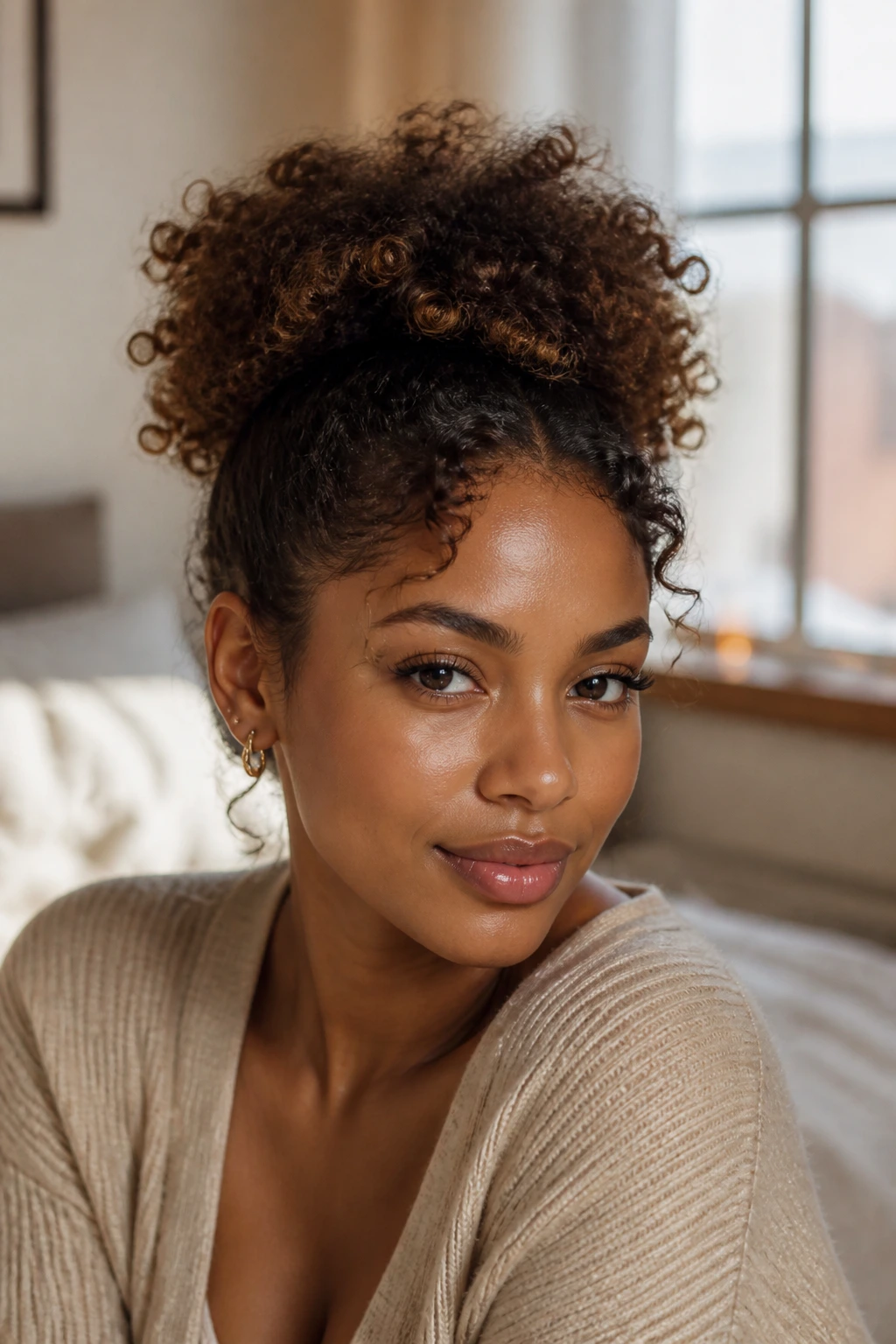
A top puff on short hair is never as tiny as people expect, and that’s part of its charm. Pull the crown up, let the shorter pieces stay loose around the edges, and the whole look turns into a soft little cloud with shape. It’s fast, but it does not have to look lazy.
This style works best when you use a soft elastic and stop before the hairline gets stretched. A puff that sits too tight can make the front look thin and tense. Leave a few pieces free around the temple or nape if your cut has layers; those stray bits make the puff look lived-in rather than forced.
It’s one of the easiest ways to get the hair off the face while still keeping the texture visible. The shape should be easy to read from across the room. If it disappears into the crown, loosen it a bit.
25. Soft Finger-Wave Pixie
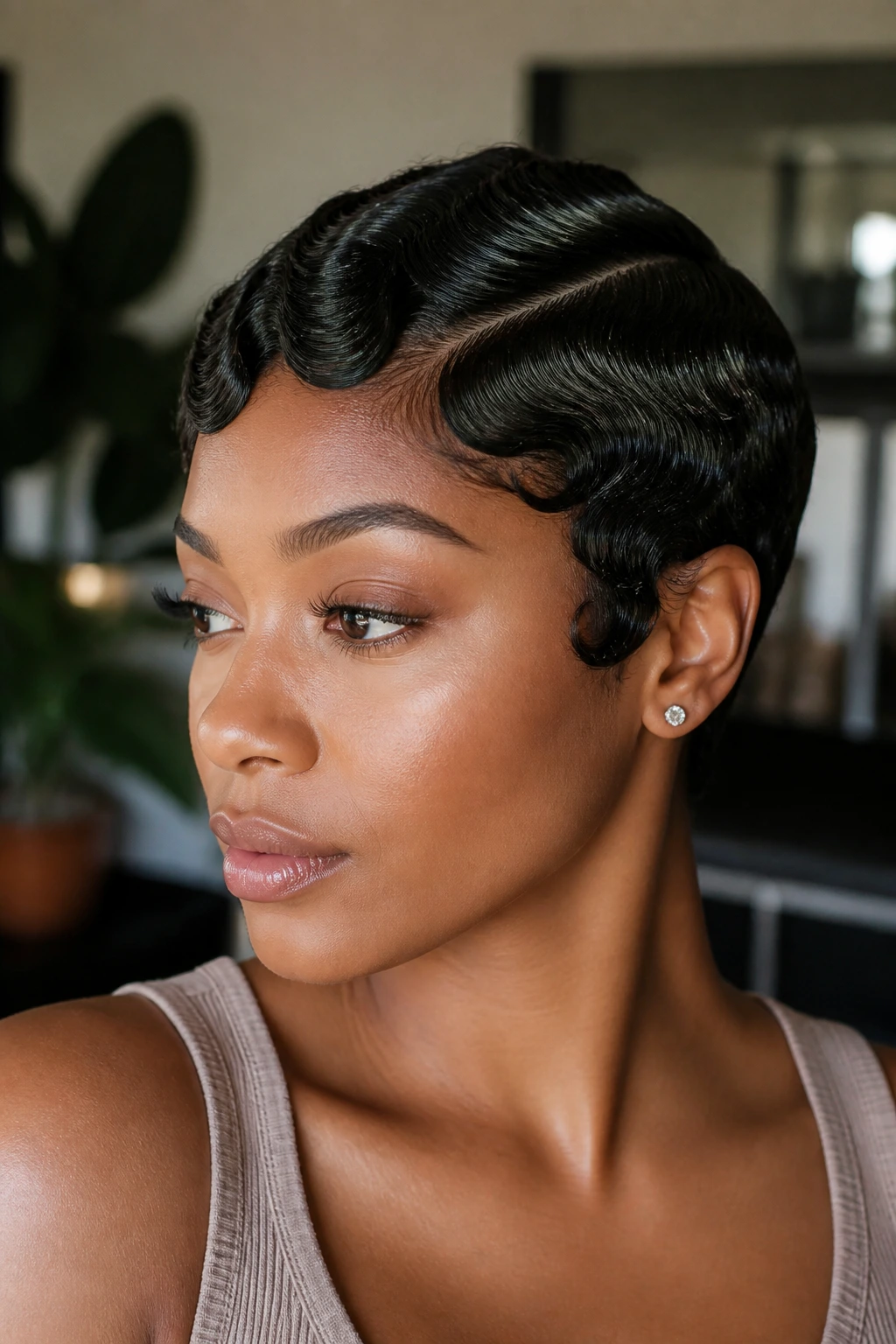
Finger waves on short natural hair can look beautifully sharp when the cut is short enough to hold the bends. The waves lie close to the head in smooth S-shapes, and the finish gives the pixie a vintage edge that feels clean rather than heavy. Short hair suits the style because the lines stay visible.
Use setting foam or gel on damp hair, then shape the waves with a fine-tooth or rat-tail comb. The motion is small. Push, curve, pin, repeat. If the hair is too long for true finger waves, you can still create soft ripple-like bends at the front and temples, which gives a similar effect without forcing the pattern.
This style is a favorite when the goal is polish with a little drama. It frames the face well and keeps the focus on the cut itself. No extra fluff. Just shape.
What Makes Short Texture Feel Intentional
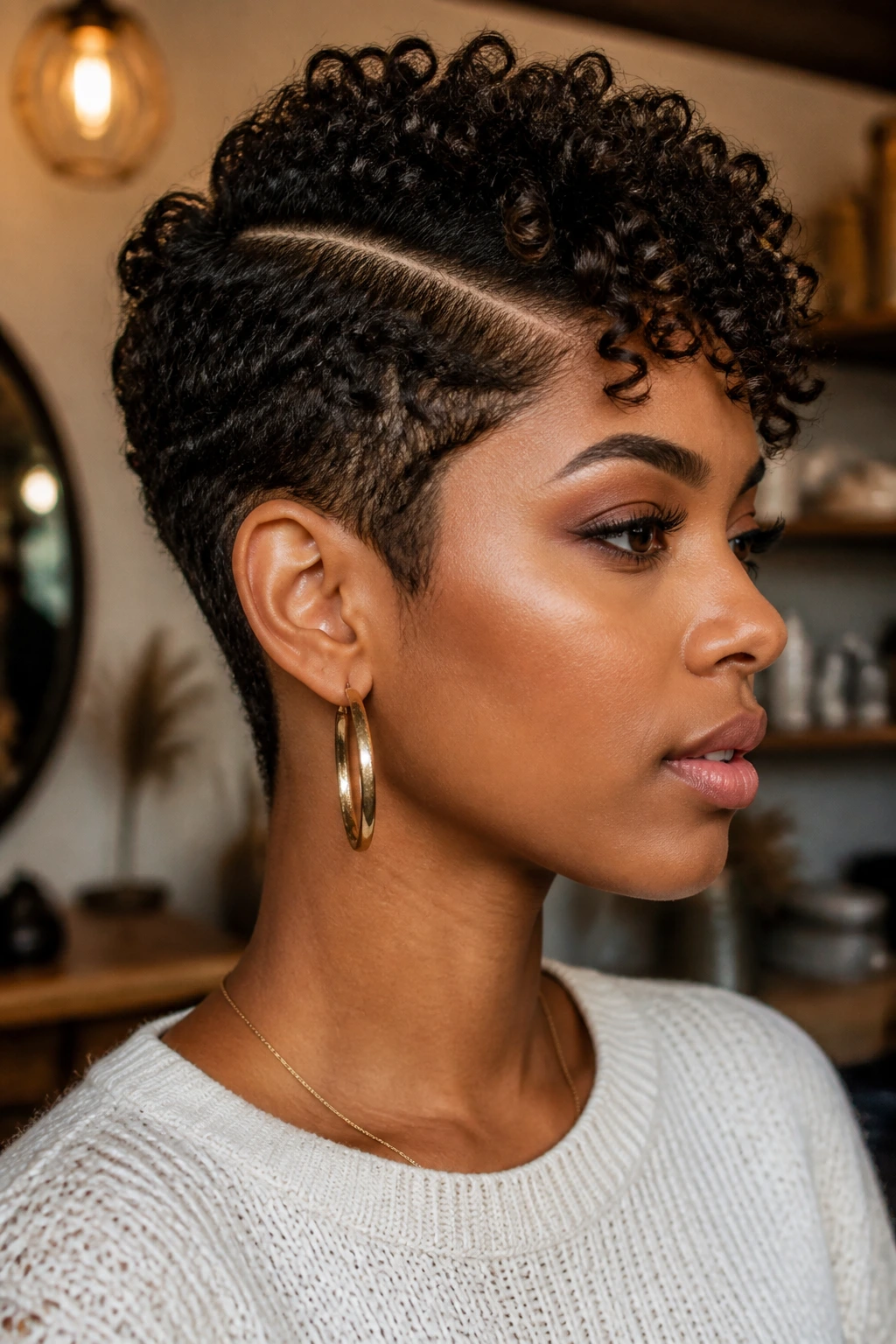
The reason natural texture on short hair works so well is that the haircut stops acting like a background prop. The shape is right there in front of you. The taper, the part, the curl clump, the fringe, the puff — all of it shows up at once, which means the style either lands or it doesn’t.
That can sound unforgiving, but it’s actually freeing. You do not need to fight for length. You need to choose the right outline. A neat side part, a soft twist-out, or a sculpted frohawk can give a short cut more personality than extra inches ever would.
And short hair dries faster, resets faster, and lets you try a different shape tomorrow without losing half a day to styling. That is the part people forget. Short texture is not a compromise. It’s a format.
The Best Tools for Natural Texture on Short Hair
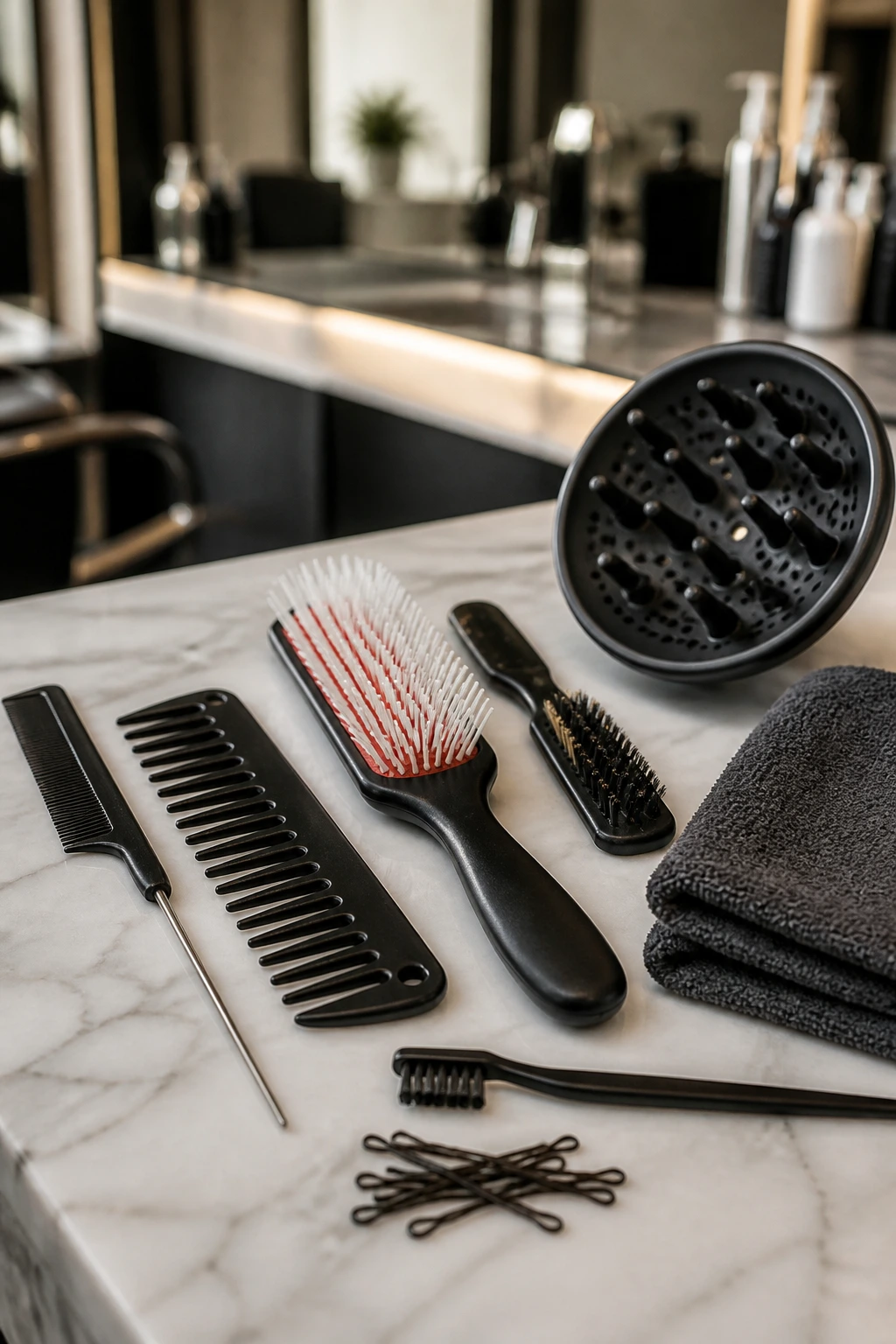
- Rat-tail comb: Clean parts, sectioning, and wave shaping all depend on a slim pointed tail.
- Wide-tooth comb: Useful for detangling curls before product goes on, especially if the strands are delicate.
- Denman-style brush or small styling brush: Helps define coils, smooth the sides, and pull shapes back into place.
- Microfiber towel or cotton T-shirt: Blots water without roughing up the curl pattern the way terry cloth can.
- Spray bottle: Lets you re-wet one section at a time instead of soaking the entire head again.
- Duckbill clips: Hold parts, twists, or root sections in place while they dry.
- Bobby pins and U-pins: Essential for pins, faux bobs, clipped sides, and tucked shapes.
- Satin scarf or bonnet: Keeps the shape from getting crushed overnight.
- Diffuser: Helps short curls dry with lift instead of falling flat under their own weight.
- Edge brush: Good for refining the hairline without pulling the rest of the style apart.
- Styling cream, mousse, and gel: The core product trio for definition, hold, and structure.
- Light oil or serum: Best used sparingly for finger separation, shine, or smoothing the very ends.
Product Prep That Makes Short Natural Hair Behave Better
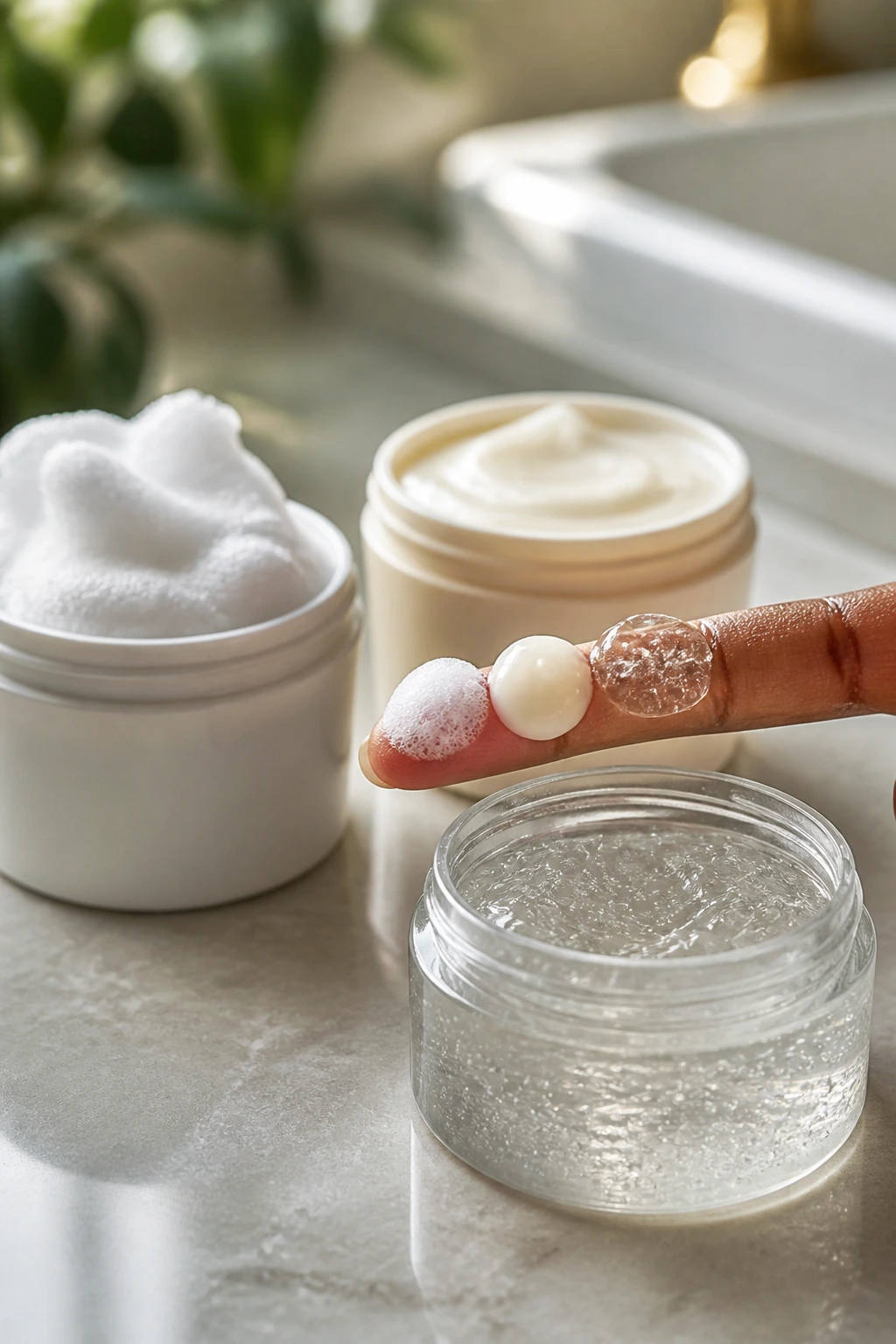
Short hair does not need a heavy stack of products. It needs the right order. Start with a clean scalp and damp hair, not hair that still has old cream clinging to it from yesterday. If the surface is already coated, new product slides around instead of gripping the strands.
For looser curls and waves, mousse or foam can give shape without drowning the cut. For tighter coils, a cream plus gel combo usually works better because the cream keeps the hair supple while the gel locks the clumps in place. I’d skip the urge to pile on oil before gel. That’s a common flake factory.
The feel you want after product application is slippery, not greasy. If the hair feels coated enough to leave residue on your hands, you probably used too much. Short hair only needs enough product to define the pattern and control the front and sides. More than that can crush the silhouette you were trying to build.
How to Wear These Styles in Real Life
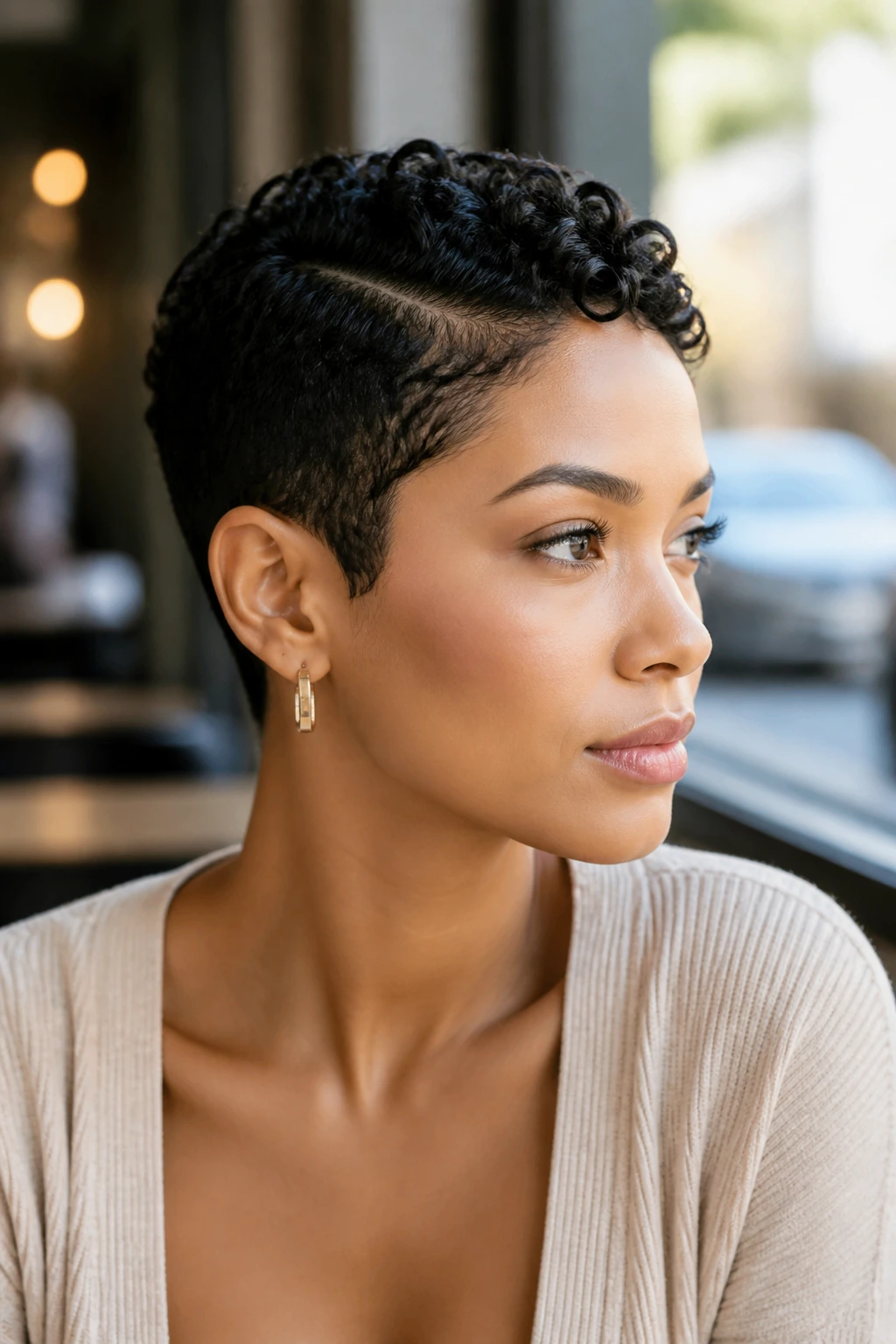
Presentation: Pick one part of the style to make crisp — the part line, the edge, the twist pattern, or the puff shape — and let the rest stay a little softer. That contrast keeps short hair from reading flat.
Accessory pairing: Small clips, satin scarves, narrow headbands, and a few metallic pins can change the whole mood of a cropped style. A single barrette at the temple often does more than a pile of accessories.
Shape control: If your face reads round, give the crown a touch more height. If your forehead is the main feature, let a fringe or soft curl fall forward. If the cut feels too boxy, loosen one side and tuck the other.
Dress code: Clean parts, slicked sides, and defined coils lean sharper. Fluffier twist-outs, picked-out afros, and scarf wraps feel more relaxed. Neither is better. They just say different things.
The neat part is how easily these styles move between settings. A twist-out that looks casual in daylight can look polished with a clean side part and a good earring. That kind of flexibility is why short natural hair stays interesting.
Ways to Get More Out of the Style
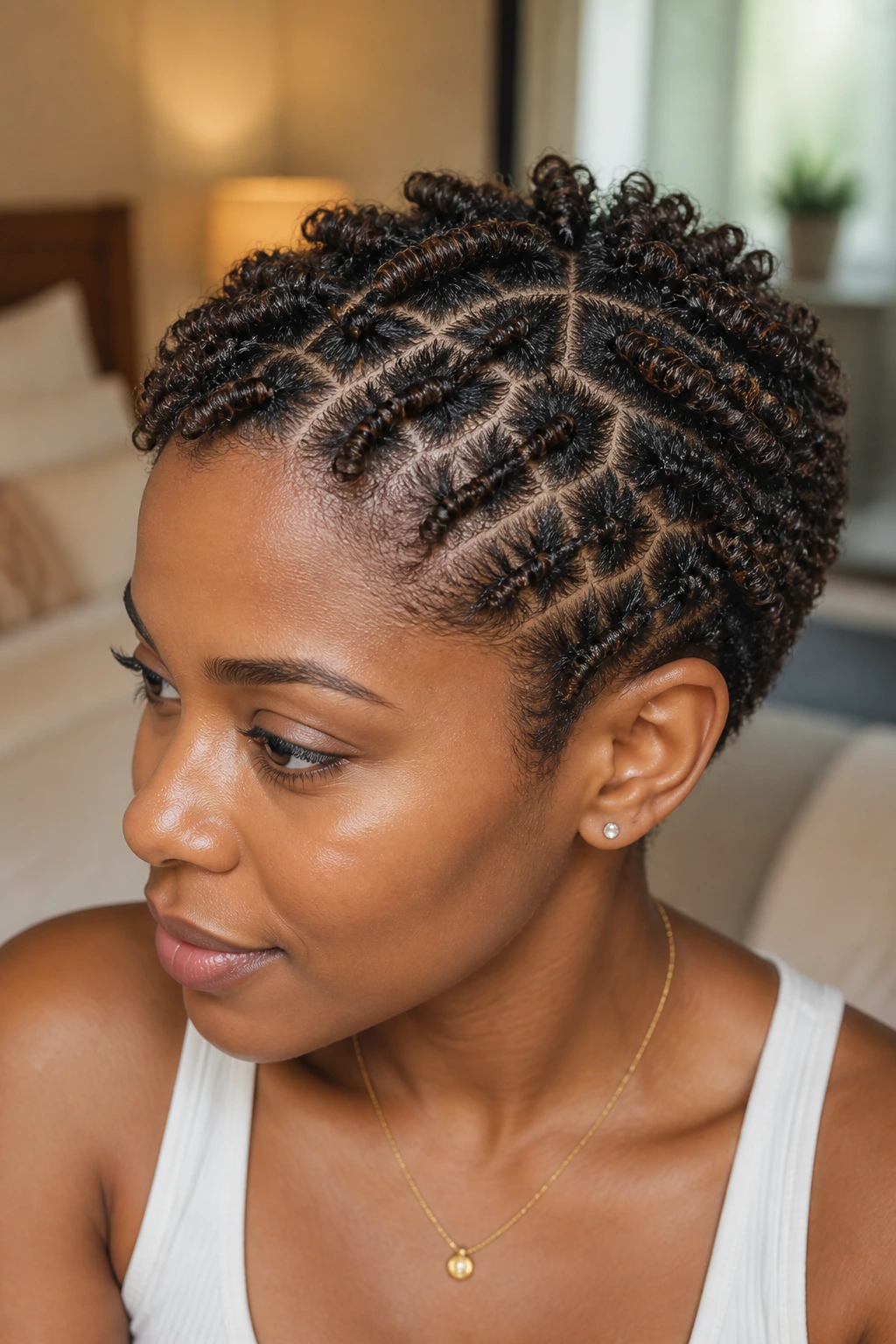
Definition Boost: Work in sections no wider than your comb teeth can control. On short hair, tiny sections are what keep coil sets and wash-and-gos from turning into one soft blur.
Volume Boost: Once the hair is fully dry, lift only at the roots with a pick or fingertips. Don’t chase volume through the ends, or you’ll stretch out the shape and lose the style’s outline.
Fast Fix: If the front goes flat, mist just the roots with water, add a small dab of gel, and clip the section up for 10 minutes. That tiny reset is usually enough.
Make-It-Yours: A side clip, scarf tie, or a curved part changes the mood without changing the whole routine. I like this especially for short cuts that need a little variety but not a new process.
Humidity Help: Styles with stronger hold — finger coils, wet-look sets, slicked-back crops — usually survive moisture better than fluffy styles. If the air is heavy, choose shape over softness for the day.
Night Care, Refreshes, and How Long Each Style Holds
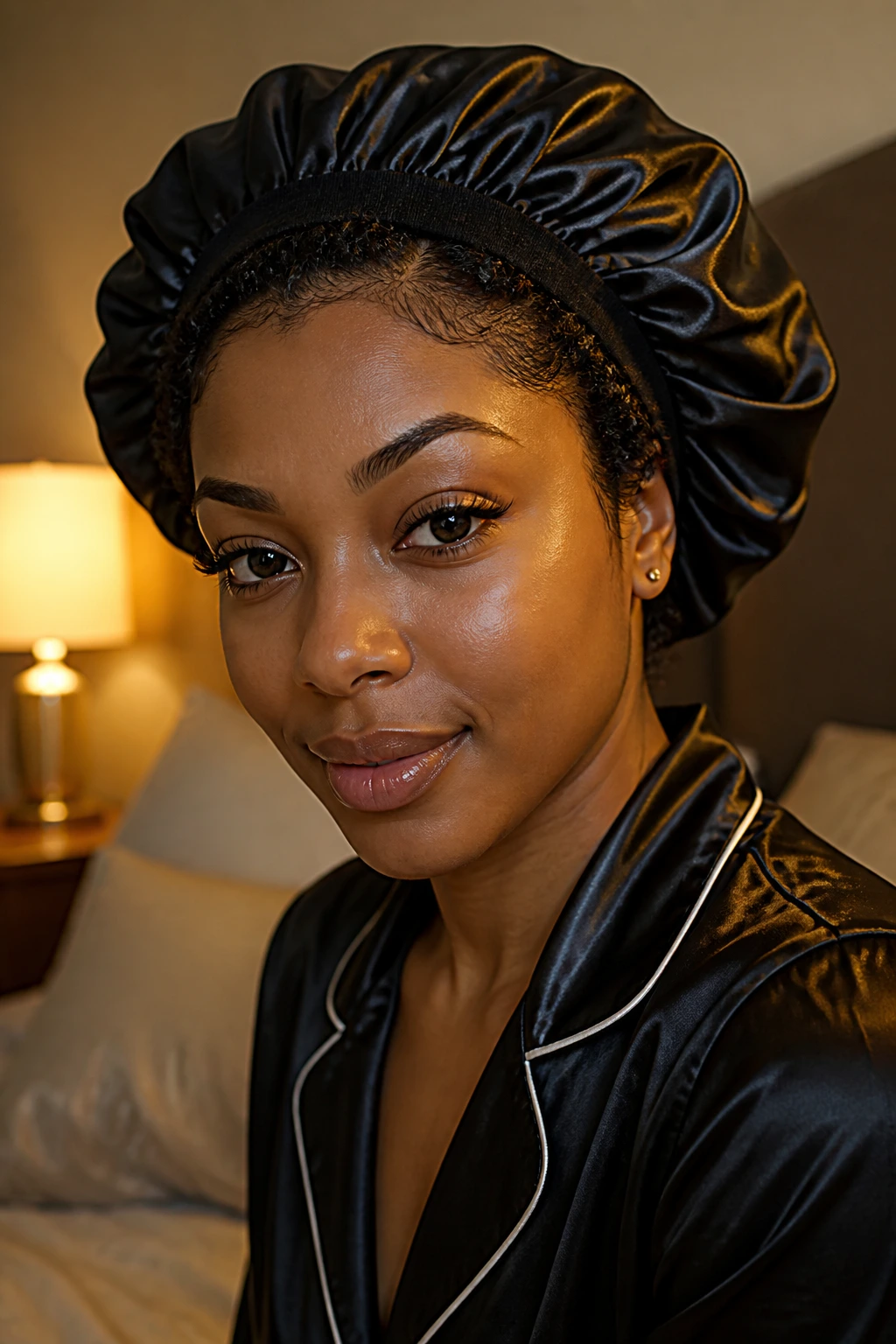
Short natural hair still needs bedtime care, even when the style looks tiny enough to survive on its own. A satin bonnet or scarf keeps the cuticle from getting rough against cotton, and that matters most on twist-outs, coils, and defined wash-and-go shapes. If your hair has a puff or high crown, a loose bonnet with room for the top is easier than squashing everything flat under a tight wrap.
Different styles have different lives. Finger coils and pin curls can hold for 5 to 7 days if you keep your hands off them and refresh the roots lightly. Twist-outs usually look best in the 3 to 5 day window before the ends start losing their pattern. Wash-and-go crops often last 4 to 6 days, depending on density and how much friction your pillow creates. Slicked styles and wet-look crops tend to be one- or two-day looks unless you’re willing to redo the front.
For refreshes, mist the dull sections, smooth a tiny amount of leave-in between your palms, and pinch the curls back into shape. Do not soak the whole head unless you plan to restyle it from scratch. Wetting everything on day four often creates more frizz than it fixes.
Common Mistakes That Make Short Styles Miss the Mark
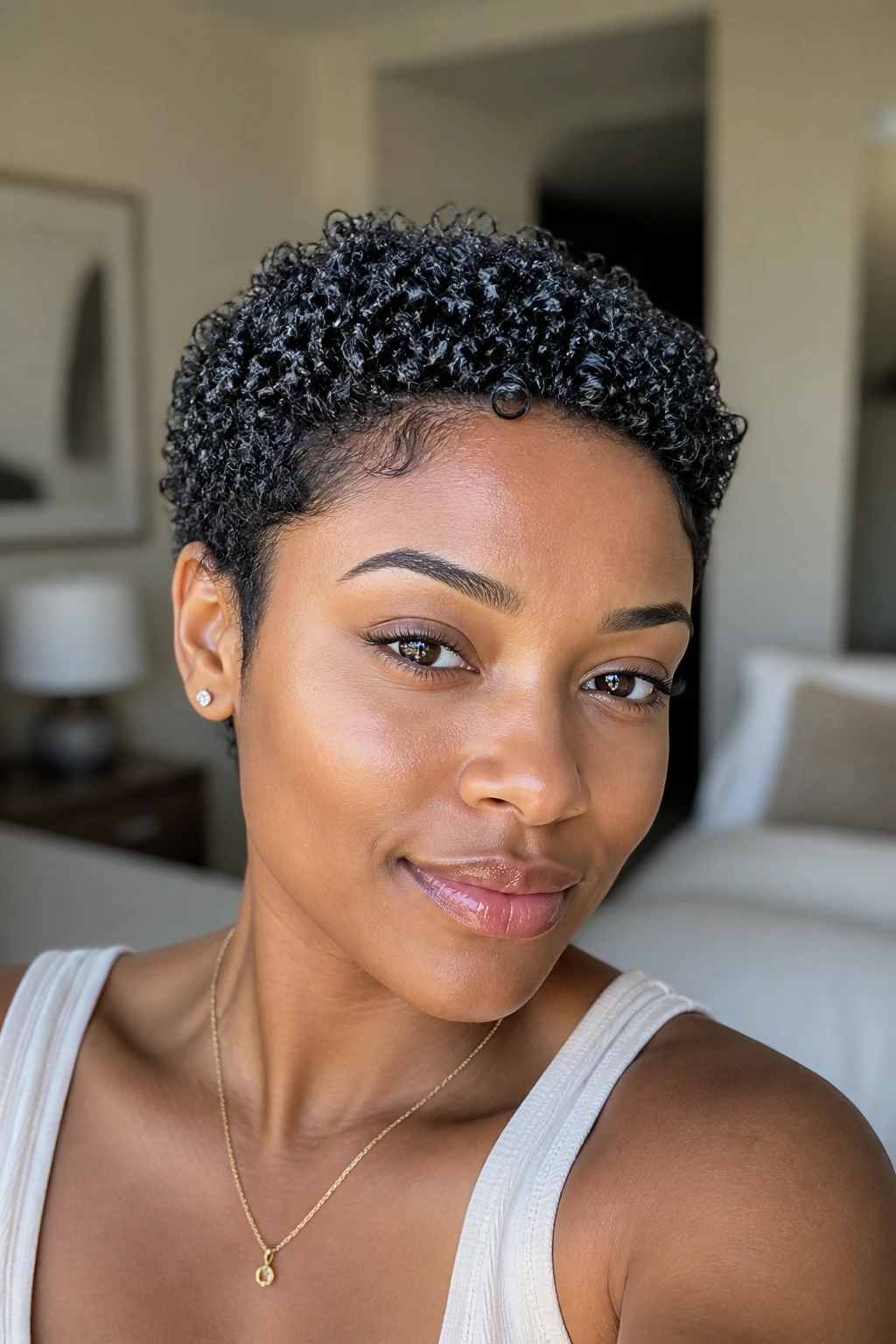
The biggest mistake is loading short hair with too much product. The symptom is easy to spot: the roots go limp, the curls clump into sad ropes, or the hair turns white and flaky once it dries. The fix is simpler than people want to hear. Use less, section smaller, and stop adding product just because the first pass looked thin.
Another common problem is styling before the hair is dry enough to hold its shape. A twist-out taken down too soon puffs apart. A finger coil set that still feels cool at the center will swell and frizz later. If the hair doesn’t feel fully dry from root to tip, give it more time or use low heat.
Brushing or picking while the hair is still damp can wreck the outline. The style may look fine for ten minutes, then collapse into fuzz. Wait until the shape has set, then adjust the volume with a pick or fingertips.
And yes, sleeping without a scarf or bonnet will ruin even a short style faster than most people expect. Cotton steals moisture and rubs the front flat. That part is boring, but it’s true.
Smart Ways to Change the Look Without Starting Over
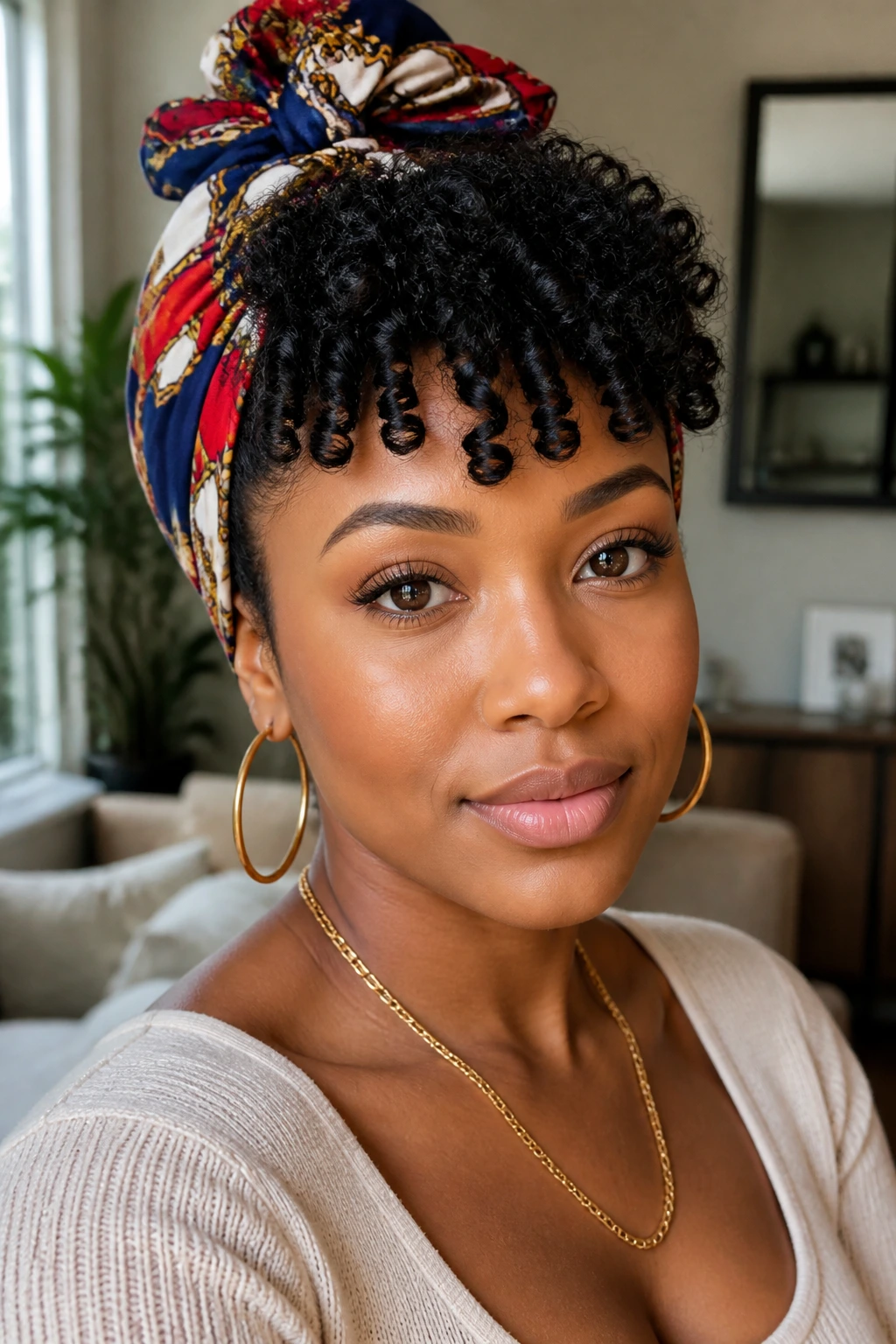
Fine-Hair Lift-Off: Choose mousse, foam, and light gel instead of thick cream. Fine hair needs shape with air in it, not heavy products that glue the strands together.
Thick-Coil Sculpt: Use a stronger-hold gel and work in smaller sections. Dense coils can take more product, but they still need clean parting if you want the shape to show.
Low-Manipulation Week: Pick one set style — twists, coils, or a braid-and-pin look — and wear it for several days with tiny refreshes. This cuts down on daily handling and keeps the cut from getting tired.
Accessory-First Edit: Start with a scarf, clip, or headband, then build the hair shape around it. That works well when the cut is in an awkward grow-out phase and needs a visual anchor.
Heat-Free Stretch Day: Use banding, twists, or a large section set overnight to reduce shrinkage without a blow-dryer. The hair looks longer, but it still feels like itself.
Short-Loc Friendly Version: For starter locs or short mature locs, keep the shape simple and use pins only for front detail. The locs should stay the main texture. No need to over-style them.
Questions People Ask Before Trying These Looks
What natural texture hairstyle works best on very short hair?
A defined wash-and-go crop, a finger-wave pixie, or a tiny frohawk usually gives the most shape on very short hair. These styles don’t depend on a lot of length, so the texture itself becomes the visual feature.
Can 4C hair do these styles without heat?
Yes. Finger coils, twist-outs, flat twists, bantu knot-outs, and a picked-out afro all work well on 4C hair. The main adjustment is product hold and section size; tighter textures usually need smaller sections and stronger setting products.
How much product should I use on short natural hair?
Less than you think. Start with a pea-size amount for a small section and build only if the strands still feel dry. If the hair feels sticky or coated, that is a sign to stop.
Why does my wash-and-go flatten so fast?
Usually the roots were weighed down, the hair was touched before it dried, or the cut needs more lift at the crown. Try a lighter product, diffuse the roots first, and clip the top section up while it sets.
How do I keep finger coils from unraveling?
Use cleaner sectioning, a stronger gel, and smaller coils. Also, leave them alone until they are fully dry. A coil that is unwrapped too early usually loses shape before the day is over.
Do these styles work during grow-out?
They do, and sometimes they work better. Grow-out creates uneven lengths that a side part, twist set, or scarf wrap can hide. The cut looks more deliberate when you choose a shape that follows the length you have instead of the length you wish you had.
Can I sleep in a puff or puff-adjacent style?
You can, but it helps to loosen the elastic a little and cover the hair with satin. If the puff sits too high or too tight, the crown gets crushed and the next-day shape turns awkward.
What if one side of my short cut is longer than the other?
Use it. An asymmetrical bob, a side-swept pixie, or a tucked side clip-back turns that unevenness into style. Short hair rarely needs perfect symmetry to look finished.
Tiny Length, Big Shape
Short natural hair has a way of making every choice visible. That’s the charm and the challenge. A part placed a little too far back, a puff pulled a little too tight, a twist set taken down too soon — all of it shows up fast. But the upside is just as clear: the right style lands with almost no wasted motion.
The looks above work because they respect the cut. They don’t ask short hair to behave like long hair. They let coils bunch, waves bend, edges sharpen, and volume sit where it wants to sit. That’s the sweet spot.
Pick one shape, keep the product light enough to let the texture breathe, and give the hair a real chance to dry and set. The next time the cut feels too short to do anything interesting, start with the shape, not the length.