



Grow-out pixie cuts for gray hair with thick hair can go one of two ways: crisp and intentional, or puffy and boxy by lunchtime. Thick strands have a habit of standing up for themselves, and gray hair adds another layer of trouble because every blunt line shows. Put the bulk in the wrong spot and the whole cut starts to look like it’s wearing a helmet. Put the weight where it belongs, though, and the same grow-out reads polished, modern, and a little bit sharp in the best way.
Gray hair changes the game more than people expect. Silver strands reflect light, so the shape of the haircut matters more than the color itself. Thick hair adds density at the sides, fullness at the crown, and that stubborn little kick at the nape that seems to appear the minute you think the style is under control. I’ve always thought that’s why short layered cuts can look so good on gray hair: the cut has to do real work, not just sit there and hope for the best.
The styles below lean into that reality. Some keep the nape tight. Some leave a longer crown. Some soften the fringe so you can survive the awkward stage without looking overgrown. A few are cleaner and more polished, a few are shaggy, and a few sit right in that useful middle ground where a pixie starts looking like a short bob before it commits. That in-between space is where thick gray hair often looks its smartest.
Why These 20 Cuts Make the Grow-Out Easier
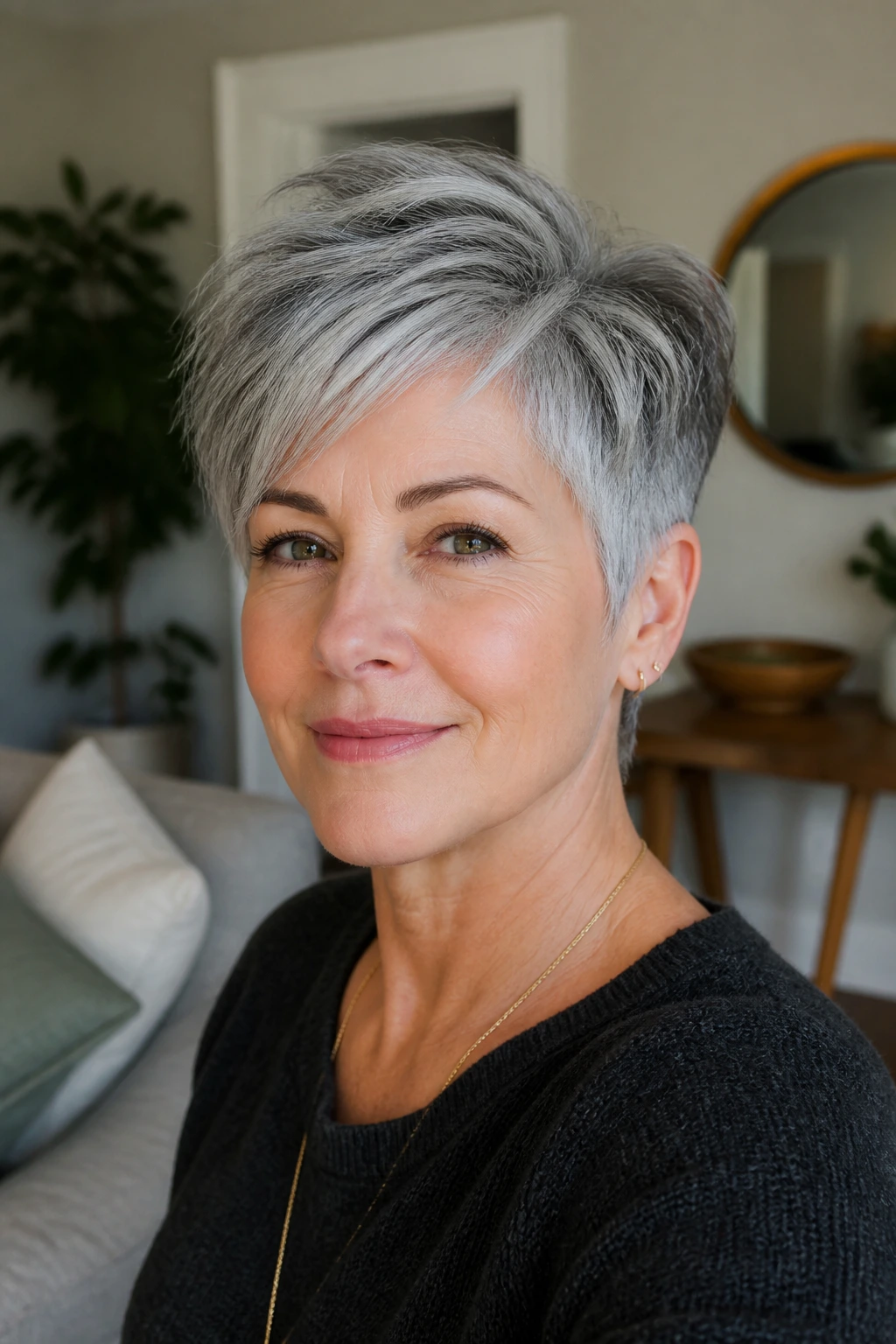
-
Bulk gets controlled, not erased: Thick hair needs smart weight removal at the sides and crown, not a blunt chop that turns into a mushroom shape two weeks later.
-
Gray strands get a better frame: Silver and salt-and-pepper hair shows off layers fast, so these cuts keep the outline clear instead of fuzzy.
-
The awkward stage has an exit plan: Every style here can move toward a bixie, a short bob, or a longer pixie without a harsh line.
-
Styling stays realistic: Most of these shapes need a round brush, a vent brush, or a dab of paste, not a salon-level blowout every morning.
-
The cut can handle weather and growth: Thick hair grows with attitude. These shapes leave enough structure that a few weeks of growth do not wreck the silhouette.
-
Face-framing is built in: Longer fringes, tucked sides, and soft sideburns keep the grow-out from swallowing your features.
1. Soft Tapered Crop With a Longer Crown
A soft tapered crop is where I’d start if your gray pixie is already growing out and the hair around your ears has started to swell. Keep the crown around 3 to 4 inches, trim the nape close, and let the sides sit just long enough to skim the top of the ear. That little difference in length keeps thick hair from building a shelf at the sides. It also gives the silver strands some lift, which matters more than people think.
Why it works on thick gray hair
Gray hair shows edges. Thick hair shows bulk. Put those two together and you need a shape that trims the underside without flattening the top. A soft taper does exactly that. Ask for point cutting through the crown and a gentle clipper taper at the nape so the cut still moves when you shake it out.
- Best for: straight-to-wavy gray hair with dense sides.
- Ask for: 3 to 4 inches on top, softly tapered ears, and a snug nape.
- Style with: a pea-sized amount of matte cream on dry hair.
- Skip if: you want a lot of face-framing length right away.
Pro tip: keep the crown a little longer than the fringe. Thick hair looks boxy when the front gets chopped too high.
2. Feathered Bixie That Skims the Jaw
The bixie is what happens when a pixie stops pretending to be tiny and starts doing some real work. On thick gray hair, that extra jaw-skimming length gives the grow-out a place to land. Feathered ends keep the perimeter soft, so the cut does not turn into a hard line around the face. It’s a smart choice if you’re tired of the very short stage but not ready for a bob that hangs on your neck.
The trick is in the finish. Ask your stylist to keep the interior light and the edges feathered, not blunt. If the hair is coarse, too much thinning can make the ends fray, so I prefer light point cutting over aggressive texturizing. Blow-dry it with a small round brush, then bend the ends under just a touch. That little curve keeps the cut from flipping outward and looking dated.
This shape suits people who want the grow-out to look deliberate without asking for much morning effort. It’s one of those cuts that seems to improve when it gets a little messy.
3. Side-Swept Pixie Bob With Heavy Fringe
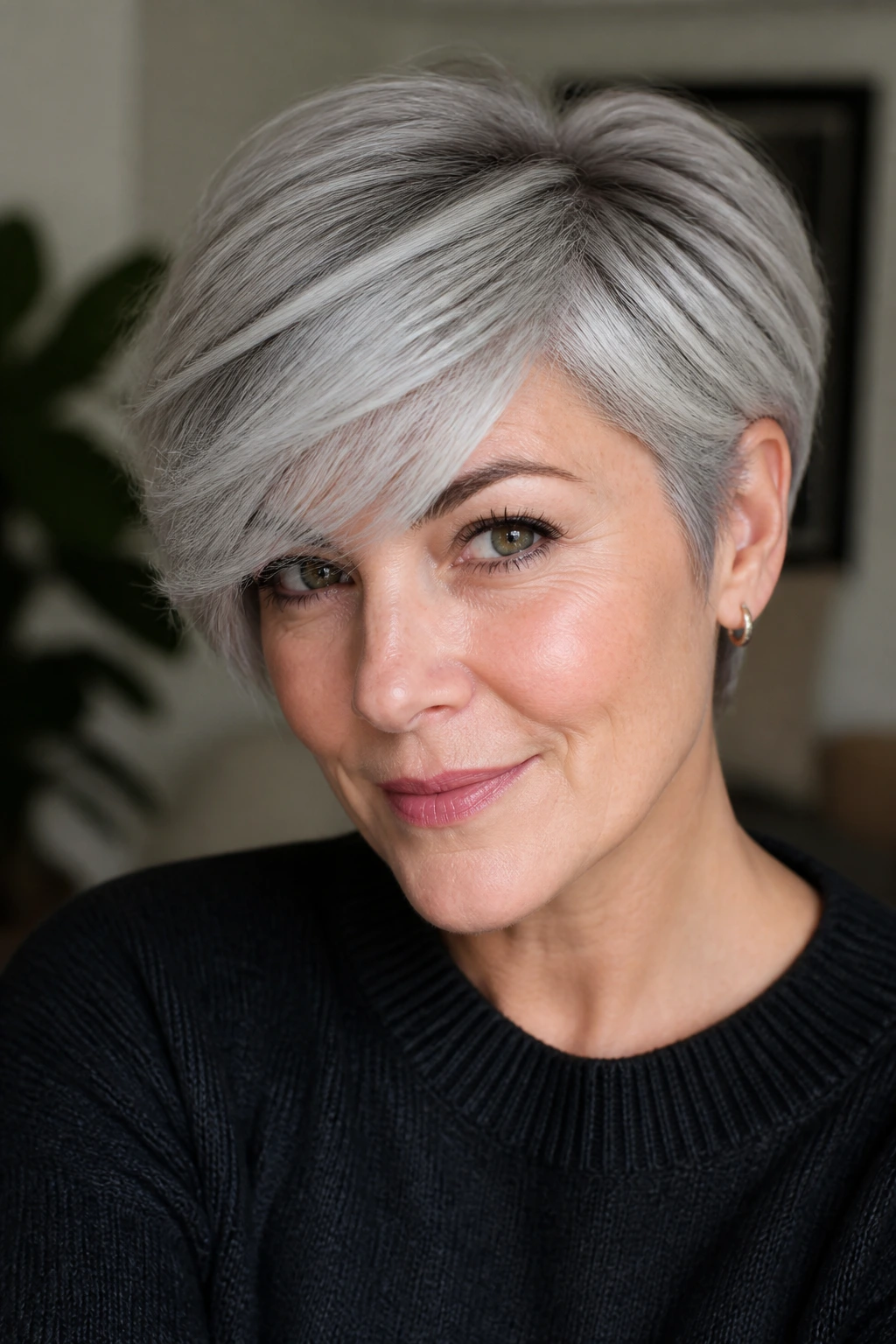
Need a cut that hides the awkward line at the forehead while the top grows? A side-swept pixie bob does that job without looking like you’re hiding from the scissors. The fringe stays heavy enough to sweep across the front, and the sides sit at that useful in-between length near the cheekbone and jaw. On thick gray hair, that diagonal line softens the width that can build up at the temples.
How to wear it
Part the hair slightly off-center and direct the fringe over the heavier side. If your hair has a stubborn bend, dry the fringe from side to side first, then set it in the direction you want. A round brush can smooth it, but you do not need a polished helmet. A little bend at the ends gives the whole style some life.
This cut is especially good if you wear glasses. The fringe can clear the frames without getting chopped too short, and the longer sides help the face keep its shape. It’s a strong choice for anyone who wants softness up front and a cleaner line at the back.
4. Choppy Textured Pixie With a Loose Quiff
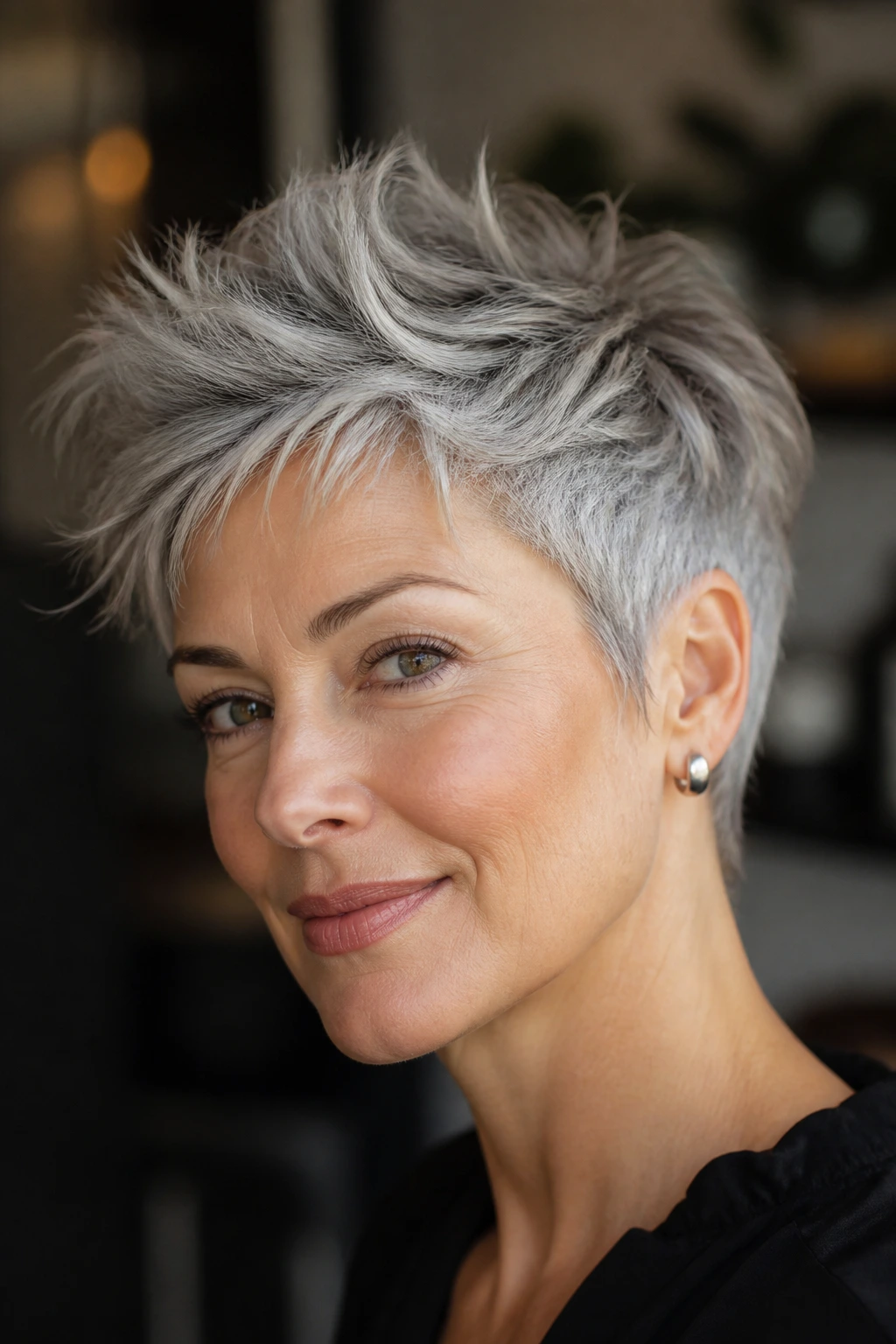
A thick head of gray hair can do the “I woke up like this” thing if the cut is choppy in the right places and chaotic in the wrong ones. A loose quiff gives the top some height without forcing the sides to puff out. The point here is not volume everywhere. It’s lift where you want the eye to go and softness where the hair tends to bulk up.
Picture a crop with short, broken-up layers through the crown and fringe, plus enough length on top to sweep up and back with your fingers. That shape works especially well if you have one cowlick that likes to kick straight up. A little mousse at the roots, a quick blow-dry with your head tipped forward, and a fingertip of paste through the ends is usually enough. No need to overwork it.
- Best for: thick hair with a stubborn front or crown cowlick.
- Styling move: blow-dry upward, then break the top apart with paste.
- Avoid: heavy cream near the roots; it flattens the lift fast.
- Good look for: people who want texture more than polish.
One-liner: if the cut has movement, gray hair looks sharper; if it sits flat, the same hair can look heavy.
5. Stacked Nape Pixie With Airy Layers
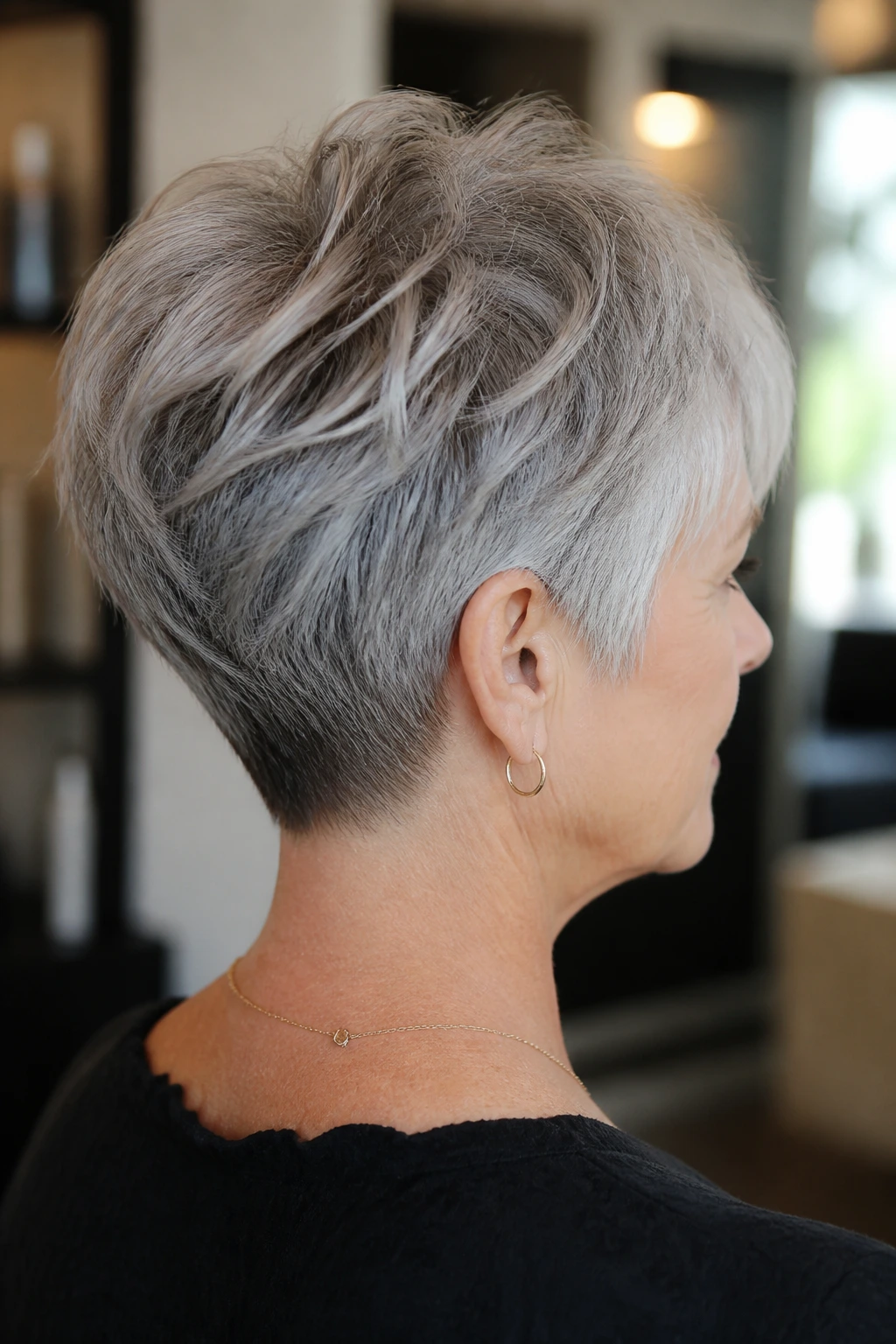
The stacked nape is one of those old-school ideas that still earns its keep, especially on thick gray hair that grows into the back of the neck like it has a grudge. By stacking the back, you remove weight where the cut wants to balloon and keep the top airy enough to move. The result is a rounded shape that still feels light.
This cut needs a careful hand. Too much stacking and the back turns too puffy. Too little, and the nape sits like a shelf. I like it best when the layers are kept soft through the crown and the nape is cleaned up every few weeks, so the outline stays neat as it grows. It’s one of the better choices if your head shape is balanced and you want the haircut to look tidy even on day three.
A round brush and a dryer nozzle help, but the real work happens in the cut. Ask for a graduated back, soft interior layers, and a perimeter that doesn’t sit in one solid block.
6. Asymmetrical Grow-Out With One Long Side
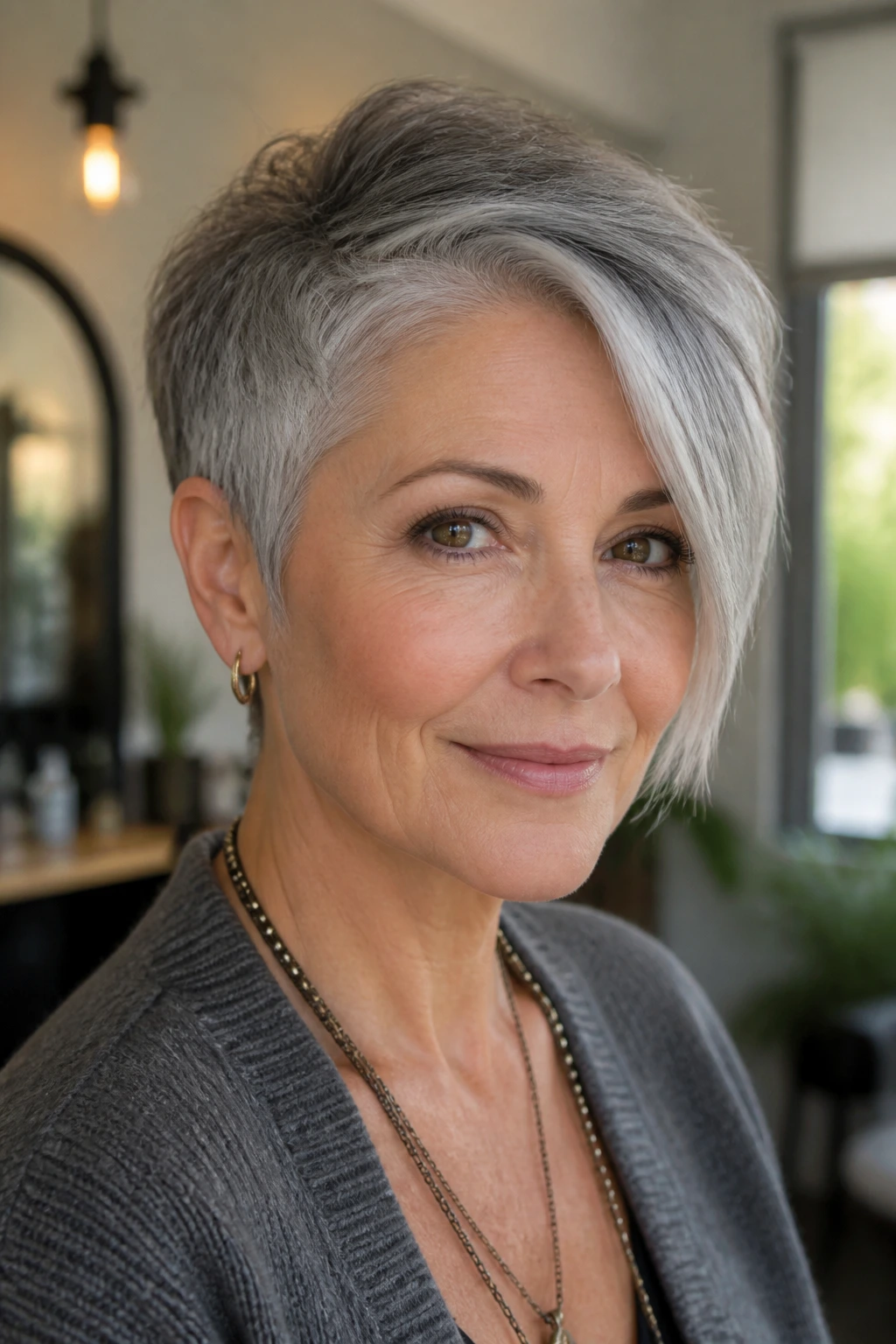
A symmetrical pixie is tidy. An asymmetrical grow-out gives you a little more personality and a lot more room to cheat. One side stays longer, usually around the cheekbone or jaw, while the other side stays cleaner and shorter. On thick gray hair, that difference pulls the eye away from bulk and toward the line of the haircut. It also buys you time if one side always grows faster than the other. Most heads do.
The cut works best when the longer side can be tucked behind the ear or slipped forward as a soft curtain. I like it for people who don’t want the grow-out to look “unfinished.” It looks intentional even when the back is only a little shorter than the front. Gray hair makes the asymmetry read clearly, which is part of the appeal.
If you like earrings, this one is a gift. The longer side frames the face, the shorter side keeps the neck area open, and the whole thing feels a bit sharper than a standard pixie bob.
7. Curved Bowlish Crop With Soft Edges
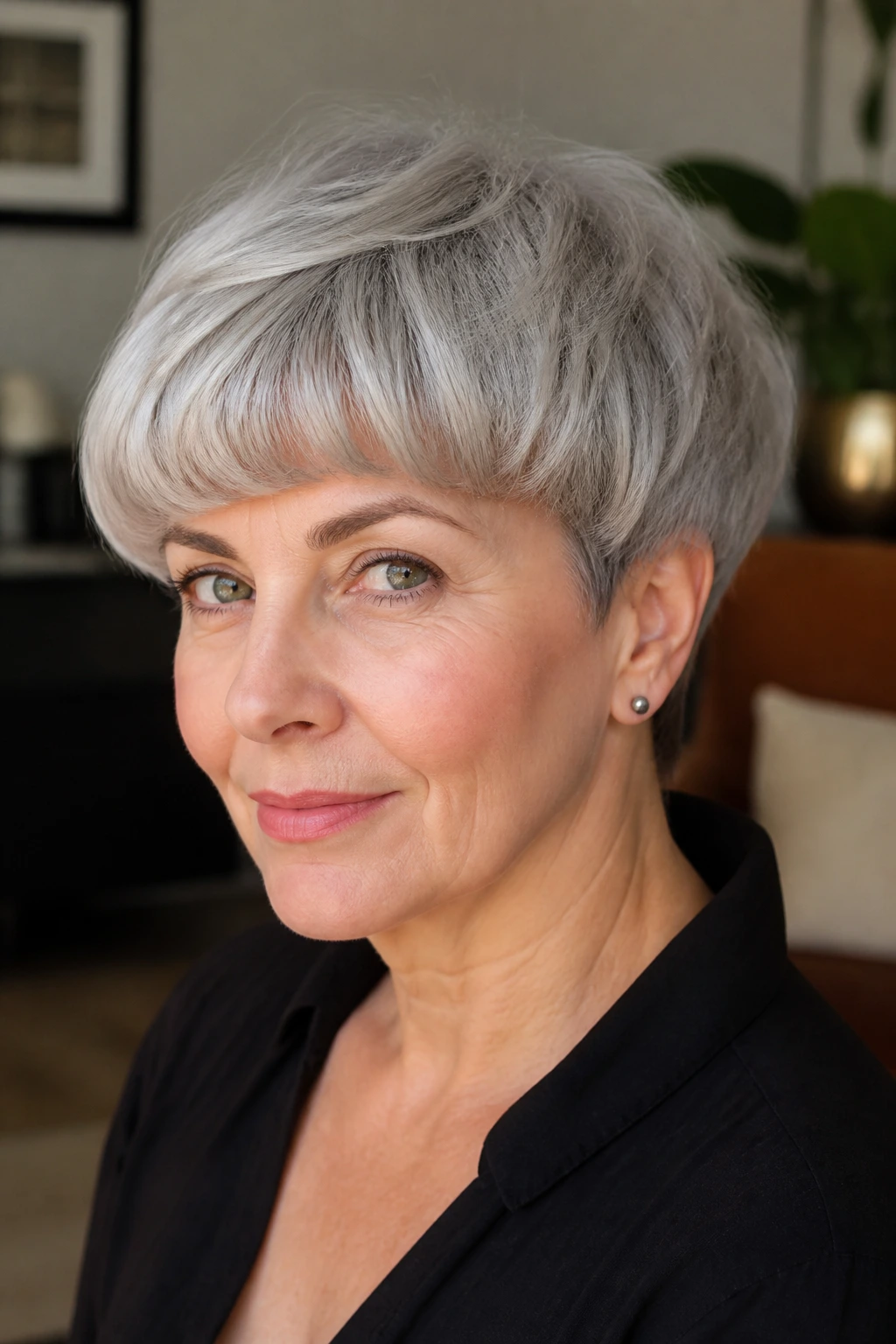
A bowlish crop can sound harsh, but the softened version is a different animal. Think curved outline, not helmet. The sides sit close enough to control bulk, the fringe arcs gently across the forehead, and the nape stays neat so thick gray hair doesn’t flare out behind the ears. The shape is strong, but it should still move.
This cut works best when the hair has some bend or a slight wave, because that texture keeps the curve from looking too strict. Ask for soft edges around the perimeter and internal layering through the crown so the top doesn’t sit like a cap. I would not overdo the texture on coarse strands. A little structure goes a long way here.
The nice thing about this crop is that it can look polished with almost no styling. A quick blow-dry, a touch of smoothing cream on the ends, and you’re done. It’s a good option if your gray hair has gotten wirier and you want something that looks neat without looking stiff.
8. Shaggy Pixie With Wispy Neck Length
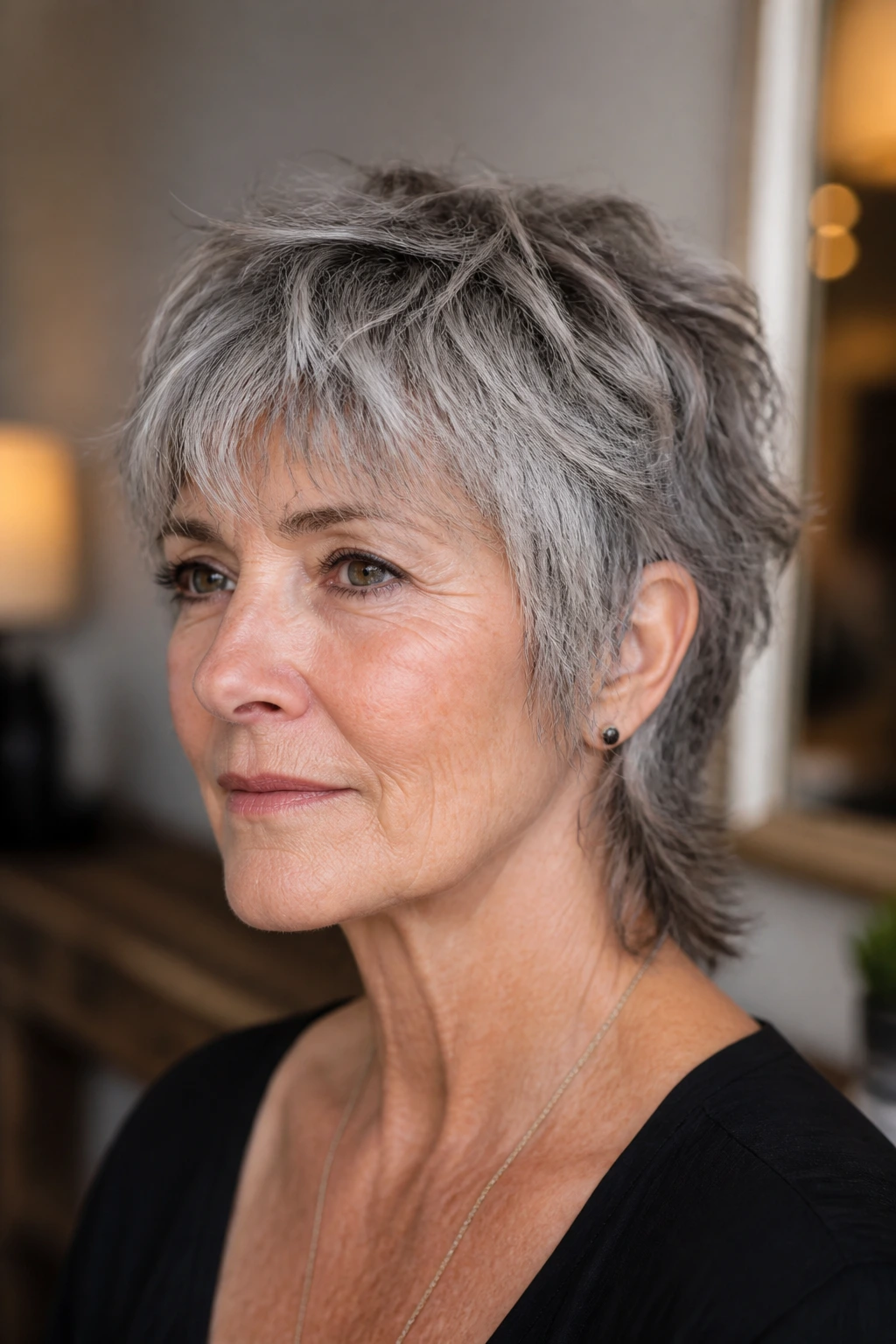
A shaggy pixie is where gray hair gets to stop apologizing for being thick. Instead of fighting every strand into the same line, the cut uses wispy layers and a little extra length at the neck to make the grow-out look soft. It’s not sloppy. It just has room to breathe.
The thing I like most about this shape is that it plays nicely with hair that wants to puff. Shorter around the ears, a bit longer at the nape, and feathered through the top, it breaks up the blocky outline thick hair can create. If your strands are coarse, ask for light texturizing rather than a heavy razor pass. Razor work can make the ends look frayed on gray hair, and frizz is not the look we’re after.
This one looks best when you leave a little bend in it. Rough-dry, scrunch the crown once, and let the ends stay slightly piecey.
9. Ear-Length Pixie Bob With Tucked Sides
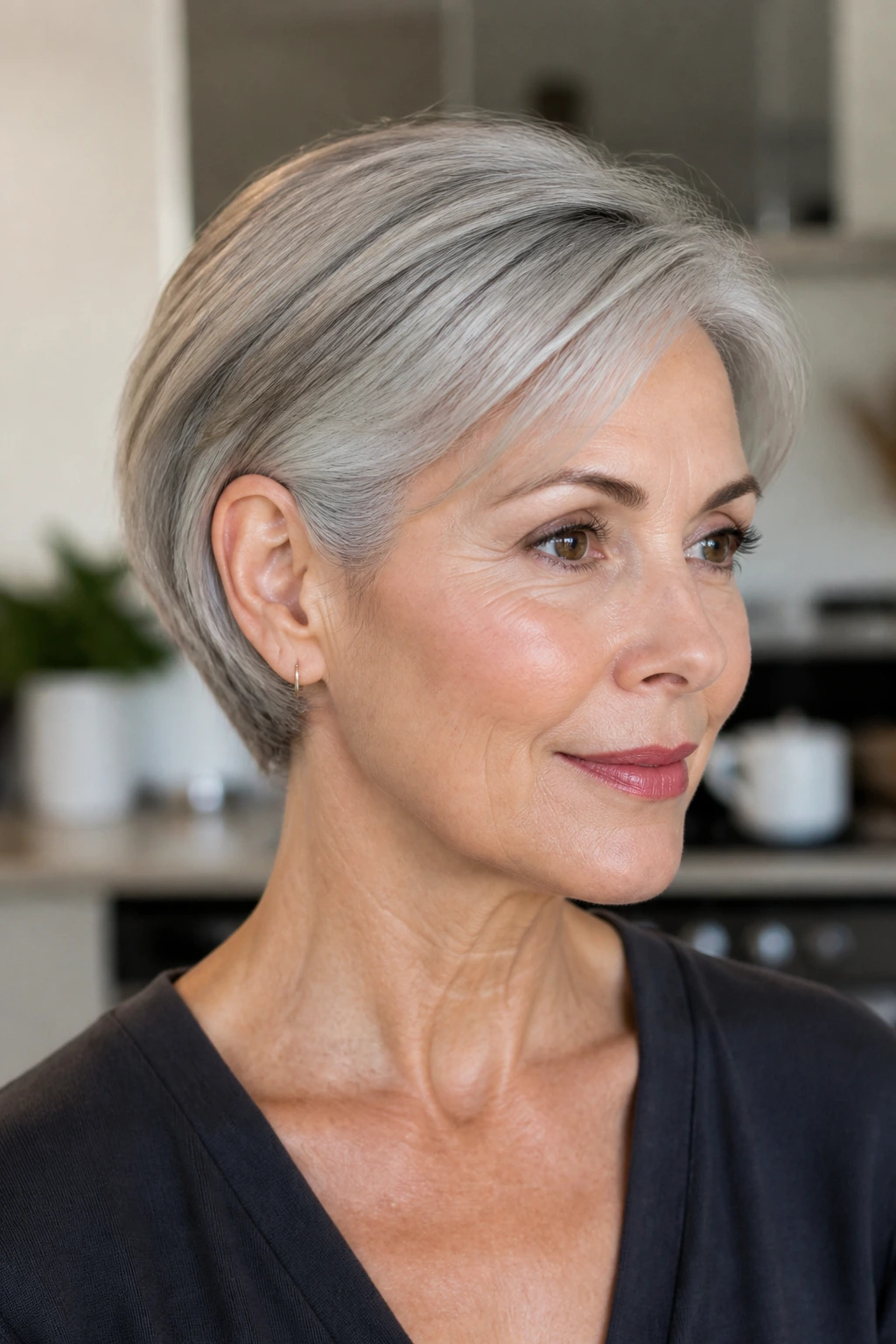
Why does a cut look so much better when it can tuck behind the ear? Because that little bit of extra length gives you control. An ear-length pixie bob is one of the most forgiving grow-out shapes for thick gray hair. It’s short enough to keep the neck open, long enough to tuck, and forgiving enough that an uneven growth pattern doesn’t show from across the room.
How to wear it
Part it where your hair naturally falls, then tuck one or both sides behind the ears. If the sides feel too full, ask your stylist to remove weight with internal layering instead of cutting the outline shorter. That keeps the silhouette soft.
This is a nice bridge cut for anyone moving from a pixie into bob territory. It works with glasses, pearl earrings, and days when you want the hair off your face without pulling it back into a tiny clip. It’s practical in a way that never feels dull. That’s rare.
10. Razored Crown Crop With Piecey Ends
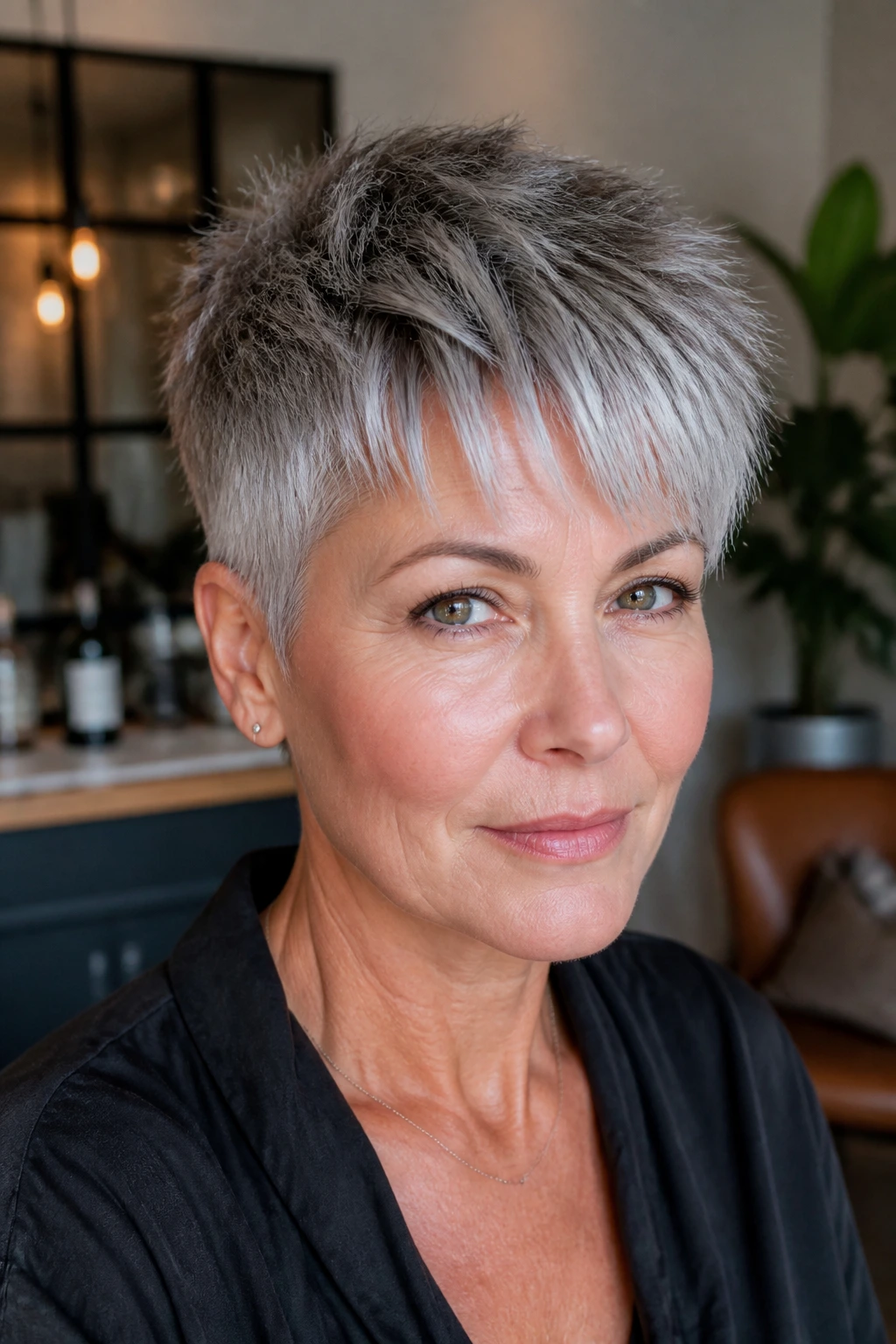
On thick gray hair, the crown can either rise with you or fight you all day. A razored crown crop uses controlled texture at the top so the hair breaks into pieces instead of standing up in one big block. The ends stay jagged enough to show movement, but the overall shape still stays compact.
This is a good option if your hair has a lot of density at the top but lies flatter at the sides. The crown gets room to lift, the fringe gets some edge, and the nape stays snug. I would be cautious with razor cutting on very coarse gray strands, though. If the stylist goes too far, the ends can feel dry and airy in a bad way. A mix of point cutting and light razor work usually gives better results than a full razor pass.
A tiny amount of styling wax is enough here. Warm it between your palms, press it into the crown, and pinch the ends so the texture shows. Done.
11. Rounded Pixie for Dense Hair
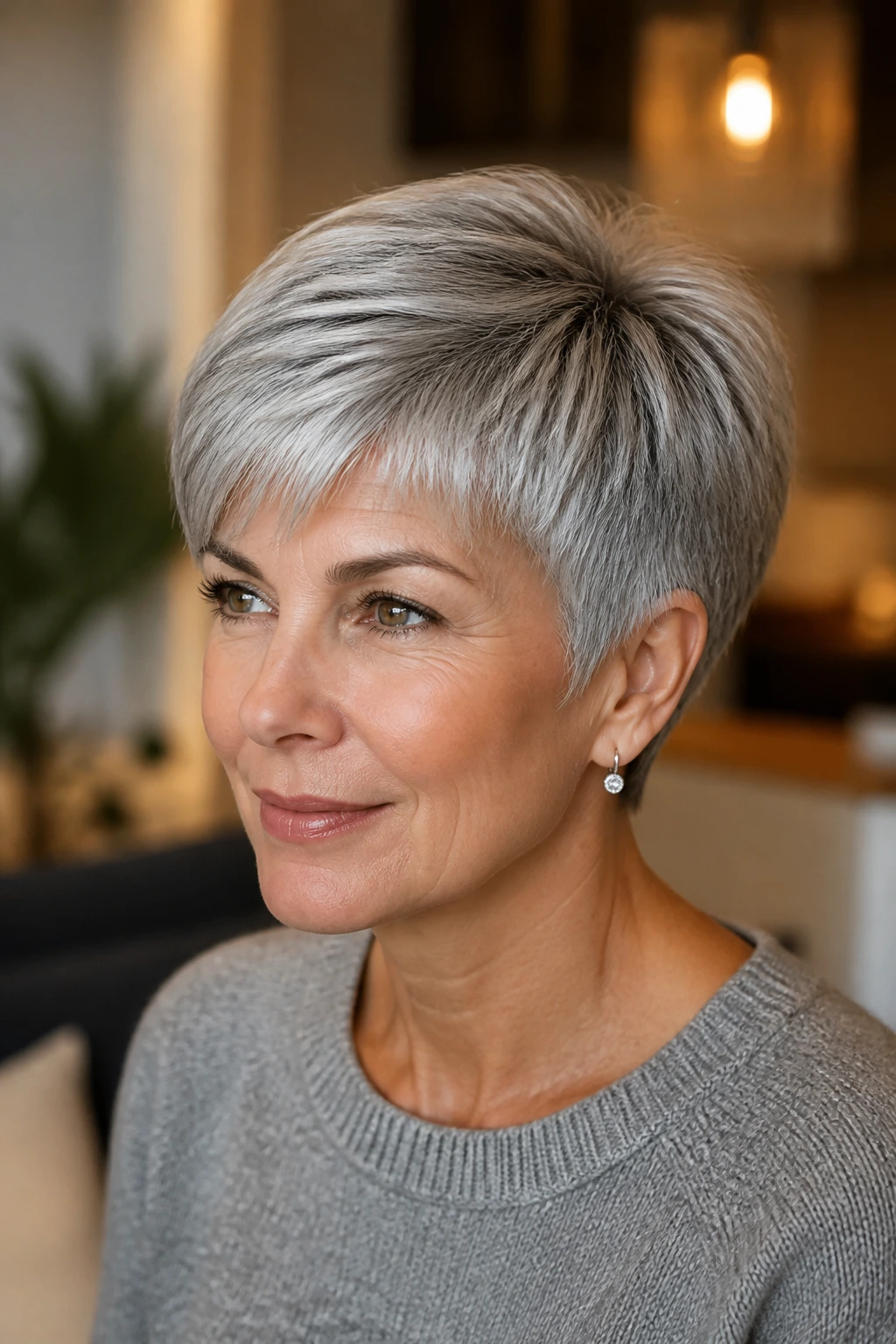
A rounded pixie sounds tame until you see how useful it is on really dense gray hair. The outline stays curved rather than square, which means the sides don’t jut out and the crown doesn’t turn into a stack of layers that all fight each other. If your hair is thick enough to look like it has its own weather system, a rounded shape can calm things down.
The key is internal debulking. You want weight removed from inside the cut, not hacked off the perimeter. That keeps the finish smooth. Gray hair often looks best in this shape because the rounded line lets the light move across the cut instead of getting broken up by a bunch of uneven edges. It reads clean. It reads intentional.
This style is good for people who like a polished look and don’t want to spend every morning wrestling with texture. A vent brush and a soft hold cream are usually enough. The shape does the heavy lifting.
12. Curly Gray Pixie With Lift at the Root
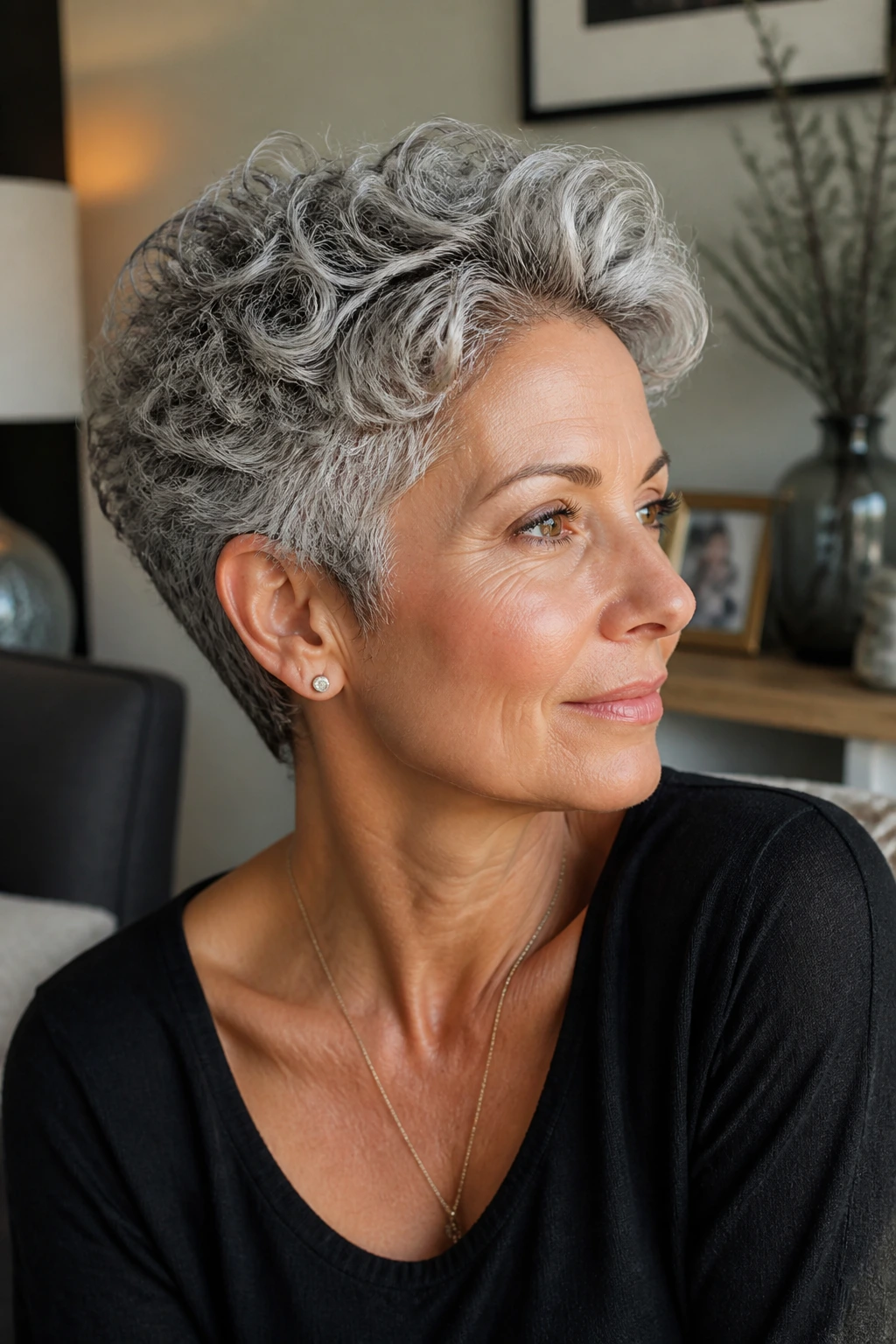
Curly gray hair needs a little more respect than people tend to give it. A short cut that ignores the curl pattern will puff at the sides and collapse at the crown. A curly pixie with root lift handles both problems by leaving enough length on top for the curl to spring and enough structure around the sides to keep the outline neat.
Unlike straight hair, curly gray hair usually looks better when it’s shaped dry or nearly dry, because the curl pattern can fool a stylist when it’s wet. Ask for soft layers that follow the curl, not sharp removal at random spots. A diffuser, a little gel on damp hair, and a hands-off dry-down will keep the curls from frizzing into a halo.
This cut works best if you like texture and do not mind a little height. The silver strands can look beautiful here because each curl catches the light differently. It’s one of the most forgiving ways to grow out a pixie when your texture does half the styling for you.
13. Soft Mullet Pixie With Length at the Back
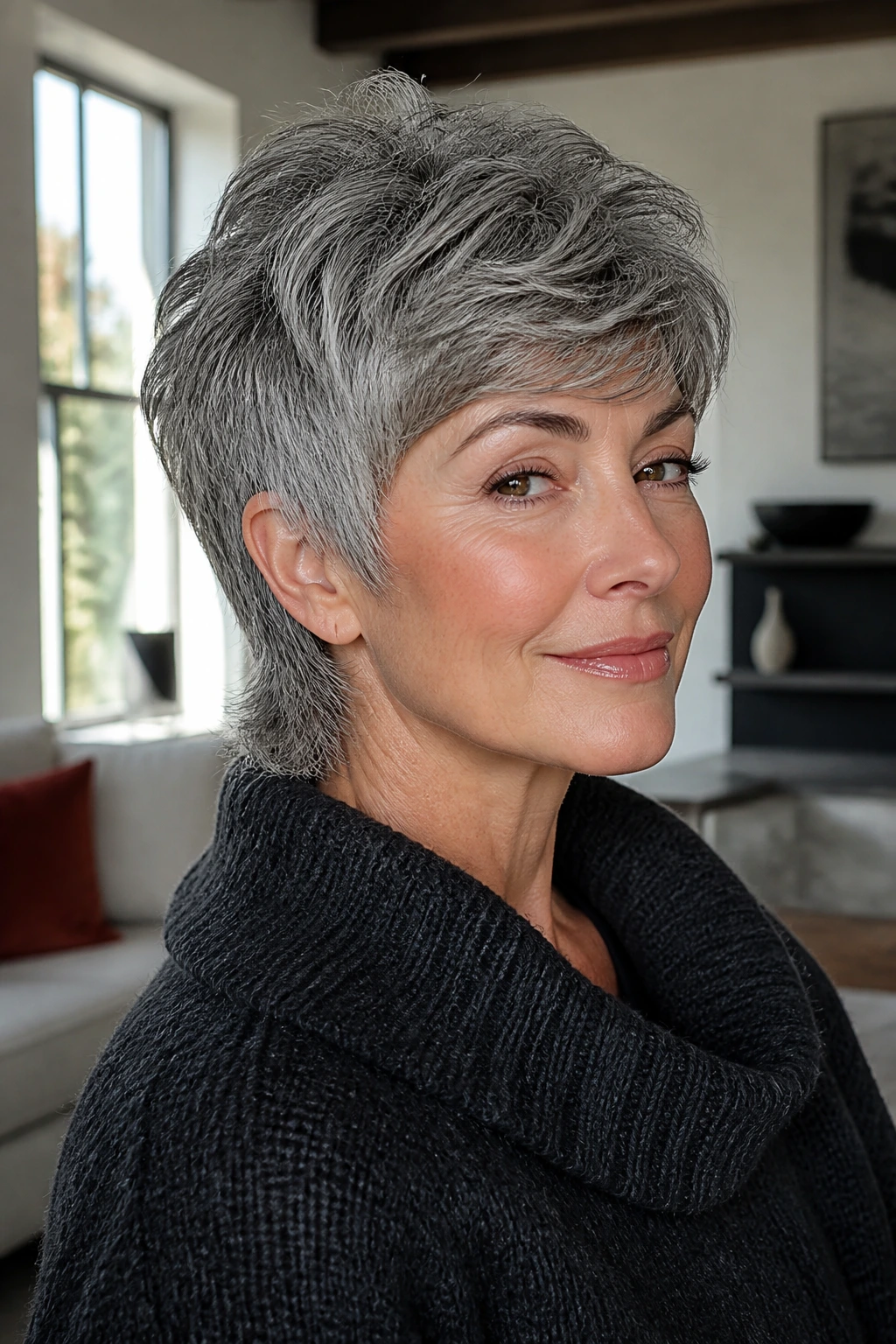
A soft mullet pixie is not trying to be edgy for the sake of it. It’s trying to solve a problem: thick gray hair that grows out too fast at the nape and too wide at the sides. Leaving more length in the back helps the cut flow into the next stage, while the top and sides stay short enough to keep shape.
Why it works
The back length adds a little swing, which takes pressure off the crown. The shorter top keeps the style from looking heavy. If you want a grow-out that can carry you toward a shaggy bob later, this is one of the smartest paths. The trick is to keep the transition soft. No hard disconnects. No sharp shelf at the back.
It’s especially good if your hair has some wave or natural movement. A bit of mousse, a quick scrunch, and a rough-dry are usually enough. If the back starts to flare, a small trim there can reset the whole silhouette.
14. Layered Crop With Sideburn Framing
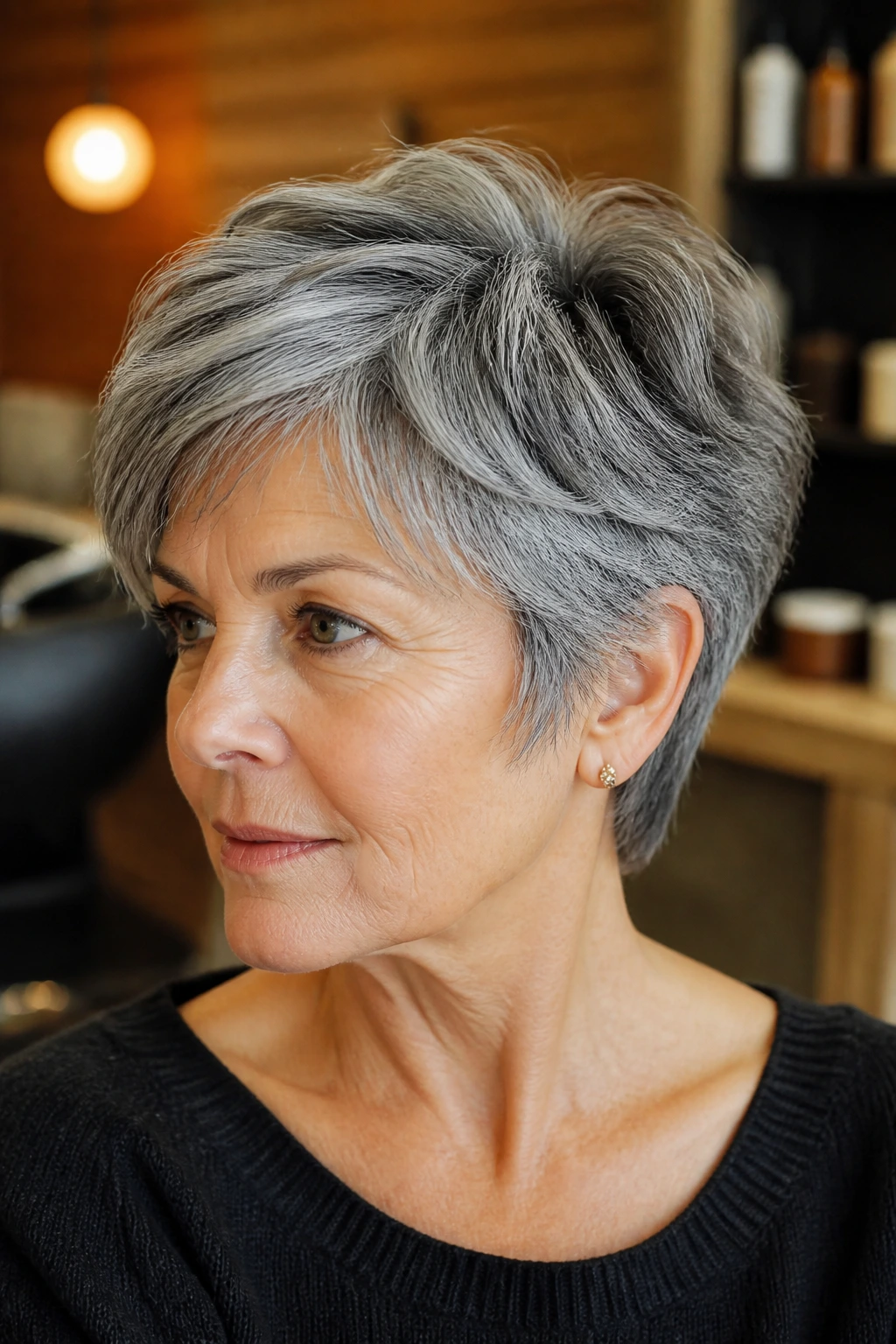
Sideburns get ignored in haircut talk, which is a shame, because on gray thick hair they do a lot of quiet work. A layered crop with sideburn framing keeps a little length in front of the ears so the face doesn’t get swallowed by density. That matters even more during grow-out, when the sides can turn blunt fast.
I like this shape for anyone who wears frames, hoops, or anything that sits near the jawline. The sideburn area softens the transition from face to hair, so the cut does not feel abrupt. Ask your stylist to keep that area tapered but not shaved down to nothing. A little length there can make the whole haircut look kinder.
This style also gives you options. Tuck it. Let it fall. Bend it forward. Gray hair makes the frame stand out, and a layered crop can use that to its advantage without adding bulk.
15. Tousled Wedge With Slimmed-Side Volume
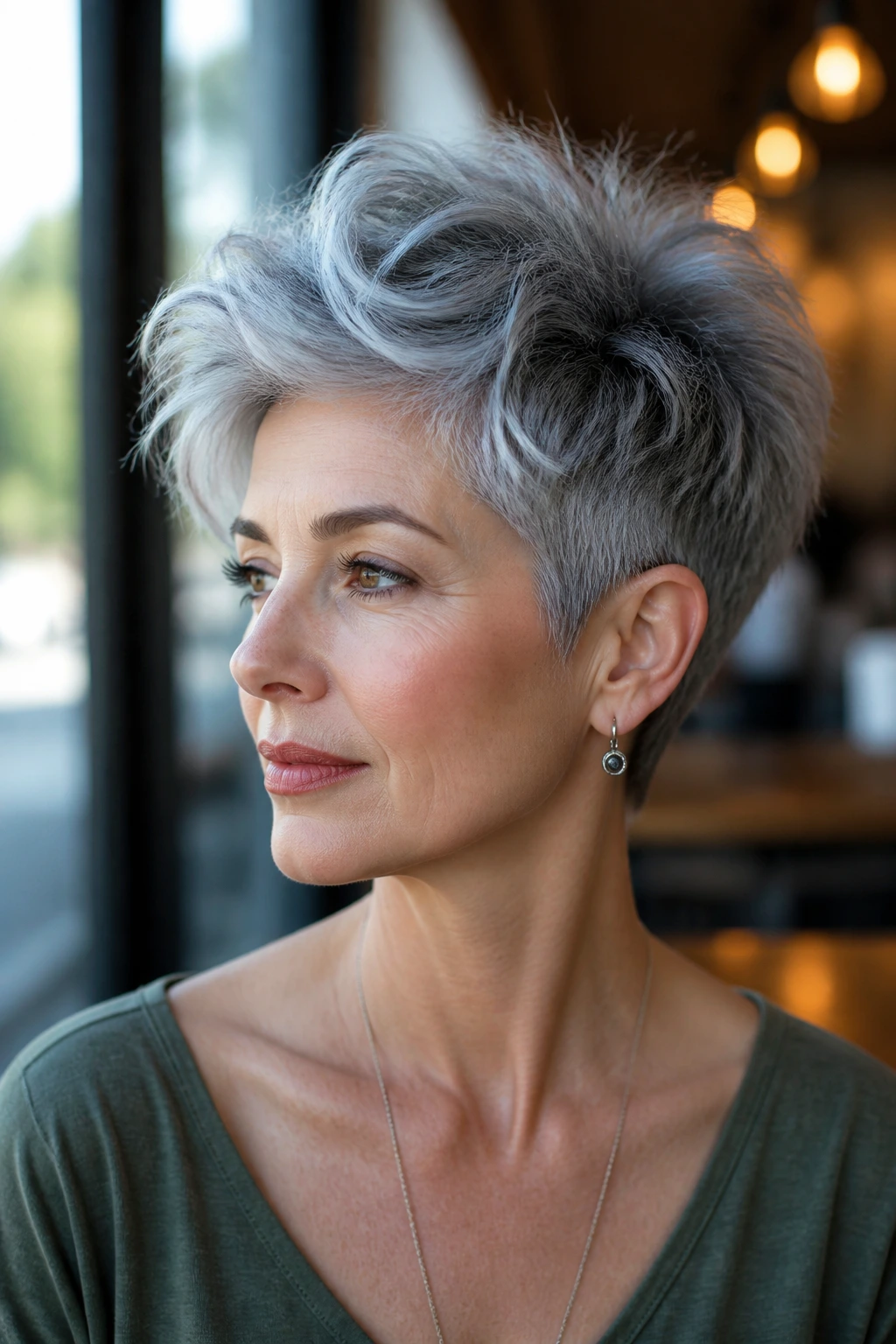
A wedge shape gets better when the sides are controlled and the back has enough lift to keep the haircut from dragging down. On thick gray hair, that means slimmed side volume and a slightly fuller back curve. It sounds fussy, but it’s really about balance.
The cut is useful if your hair wants to puff near the temples or sit heavy over the ears. The wedge shape pulls the silhouette inward at the sides and gives the crown a subtle push upward. I’d keep the texture soft, though. A wedge that’s too choppy starts to look dated fast, and gray hair does not need any help looking overprocessed.
This is a strong choice if you like a little structure around the head and don’t mind setting the top with a brush. It is one of the cleanest ways to handle a thick grow-out without going all the way to a bob.
16. Long-Crown Pixie With a Clean Nape
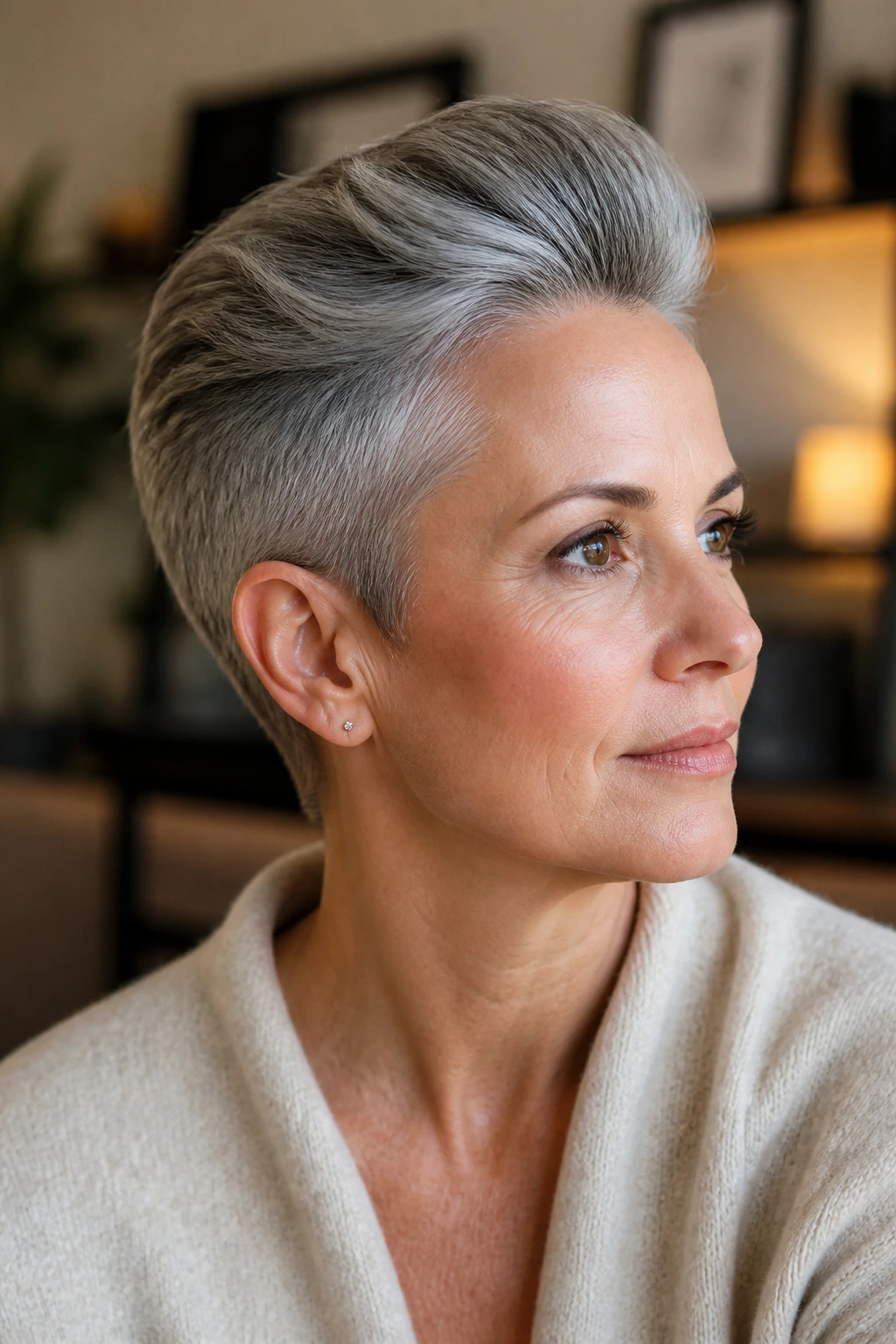
A long-crown pixie works because it keeps the top interesting while leaving the back disciplined. That’s a useful combination for gray hair with bulk. The crown can be brushed up, swept back, or bent diagonally across the forehead, while the nape stays snug and neat.
The contrast matters. Thick hair often wants to puff at the back first, so a clean nape keeps the silhouette from spreading. At the same time, a longer crown stops the cut from looking too severe. If you want a grow-out that still looks office-friendly or polished with little effort, this one earns its place.
This shape is especially easy to live with if you’re willing to book short trim visits. The nape wants a cleanup before it gets fuzzy. The top can go a little longer. That’s the whole balance.
17. Air-Dried Silver Crop With Micro Layers

Some people want a gray pixie that never sees a blow-dryer unless it’s a special occasion. A micro-layered crop can handle that. The layers are small and careful, designed to stop thick hair from building too much weight in one area. Air-drying leaves the texture visible, which suits silver strands nicely because the color shift shows up in the waves and bends.
I’d keep this one soft around the hairline and not too aggressively thinned. Micro layers do the smoothing work without stripping the body away. If your hair is coarse, a leave-in conditioner on the mid-lengths and ends will help the hair settle without turning greasy at the roots. That part matters. Gray hair can go dry at the ends fast.
This crop is for people who want low-fuss hair and don’t mind a little natural movement. It will not look like a glassy salon blowout. It will look real. Sometimes that’s the better deal.
18. Brush-Back Pixie With Lifted Top
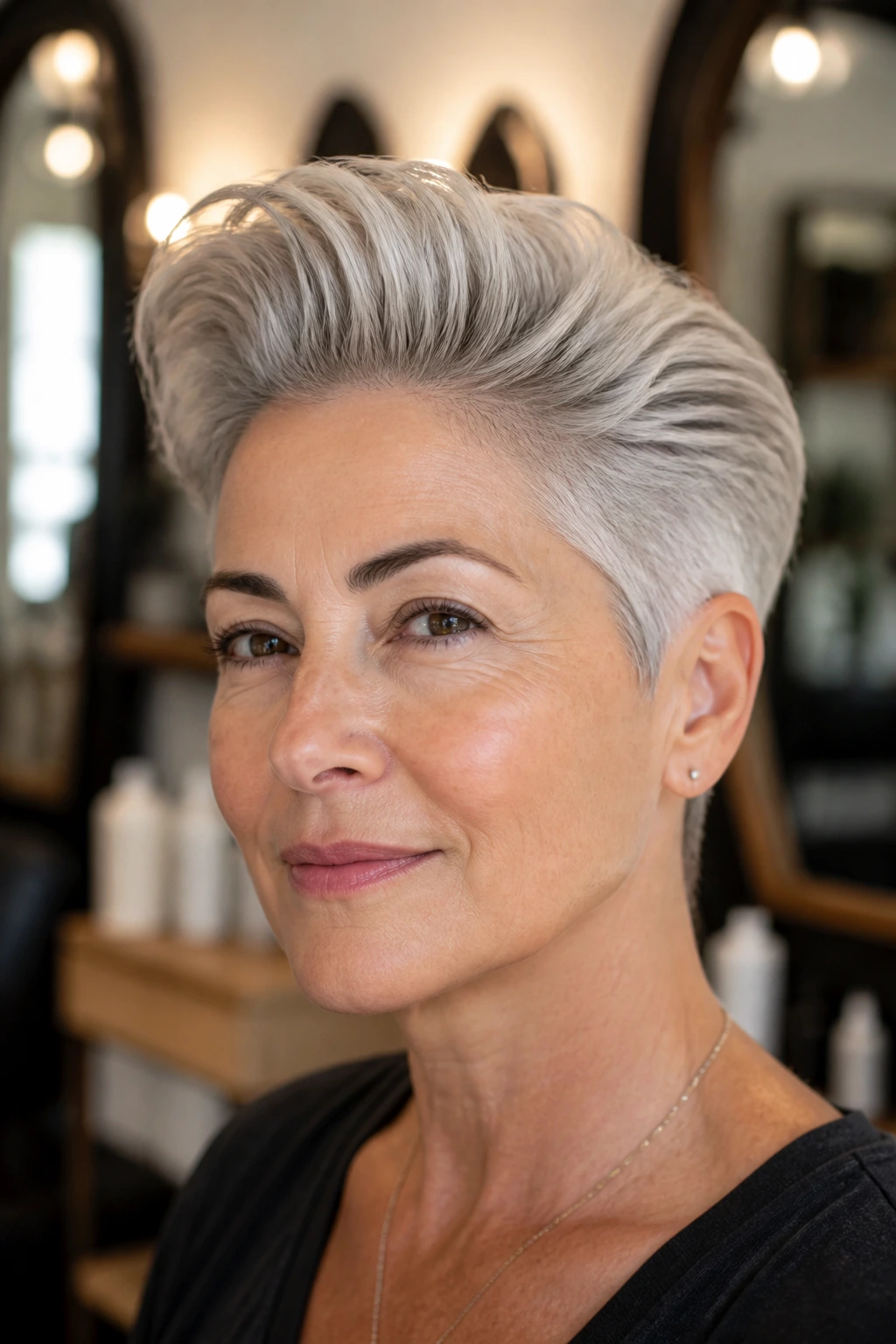
A brush-back pixie is the answer when the front of the hair wants to hang in your eyes but the sides need to stay tidy. The top has enough length to push back with a round brush or vent brush, while the sides stay close enough to keep the shape narrow. On thick gray hair, that narrowness is the difference between sharp and puffy.
The lifted top gives the cut some presence without forcing the fringe to do all the work. I like it for oval and heart-shaped faces, especially when the hair has a little natural body. A root-lift spray and a quick blow-dry in sections can set the direction. Finish with your fingers, not a heavy comb, or you’ll flatten the lift.
This is one of those cuts that looks more styled than it is. That matters when the grow-out starts to creep into the “I should probably book a trim” zone.
19. Collarbone-Ready Pixie Bob Transition
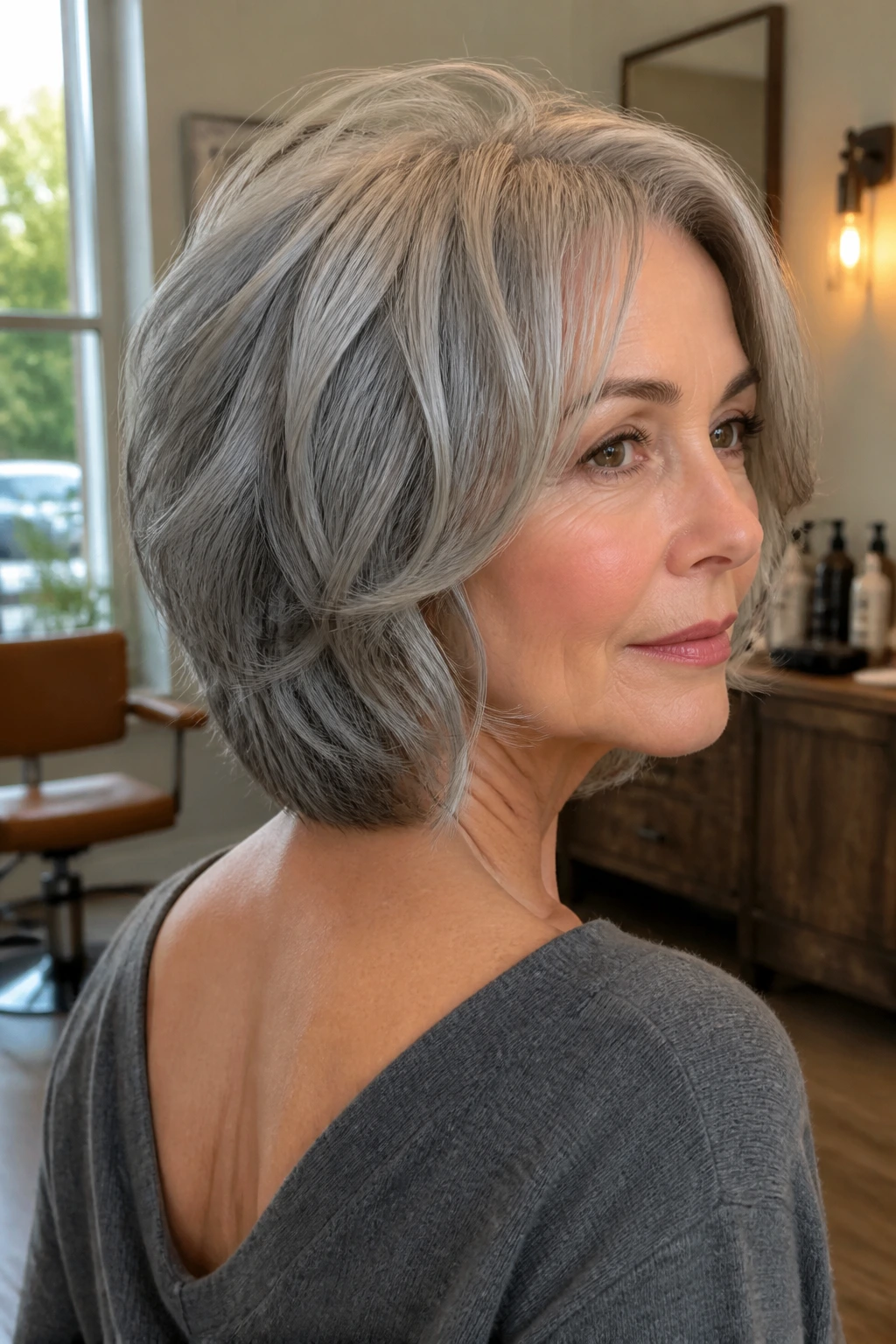
If you’re ready to move beyond the pixie but not all the way into a full bob, the collarbone-ready transition cut is the cleanest bridge. The back has enough length to approach the neckline, the sides curve toward the jaw, and the crown stays layered so thick gray hair doesn’t turn into a block. It’s a grown-up shape without feeling stiff.
This one is good for people who know they want to keep growing their hair but hate that odd in-between period where nothing looks deliberate. The collarbone-ready length buys time. It also lets the gray look richer because there’s more movement through the lengths. A soft bend or low wave through the ends can keep the shape from dropping flat.
Ask for a transitional bob with a pixie backbone. That phrase makes sense to most stylists, and it keeps the cut from sliding too short or too heavy.
20. Tucked-Behind-Ear Crop With a Soft Fringe
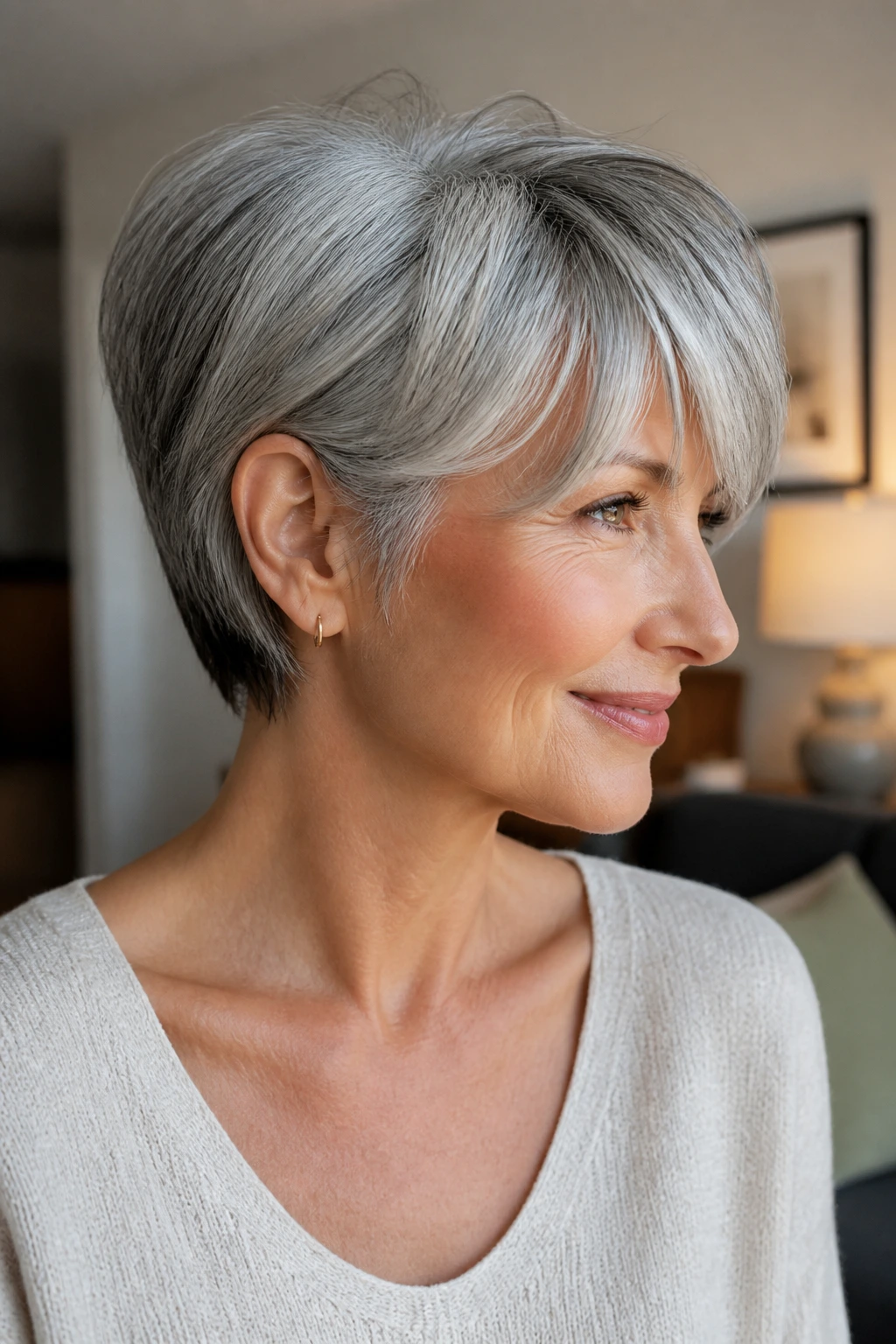
A tucked-behind-ear crop is one of my favorites because it feels neat without being severe. The fringe stays soft and movable, the sides are long enough to tuck, and the nape stays crisp enough that the cut doesn’t spread out. On thick gray hair, this can be a very flattering final stage before a bob, or just a long-term shape if you like your hair short.
The real benefit is control. You can wear both sides tucked, only one side tucked, or let the fringe fall loose and change the whole mood of the haircut. That flexibility is useful when gray hair grows with a bit of a mind of its own. If the top starts to get heavy, a tiny trim through the fringe and side pieces can reset the shape fast.
This is the sort of cut that looks polished even on a day when you’ve done almost nothing to it. Those are worth keeping.
How to Stop a Thick Gray Pixie From Puffing Out
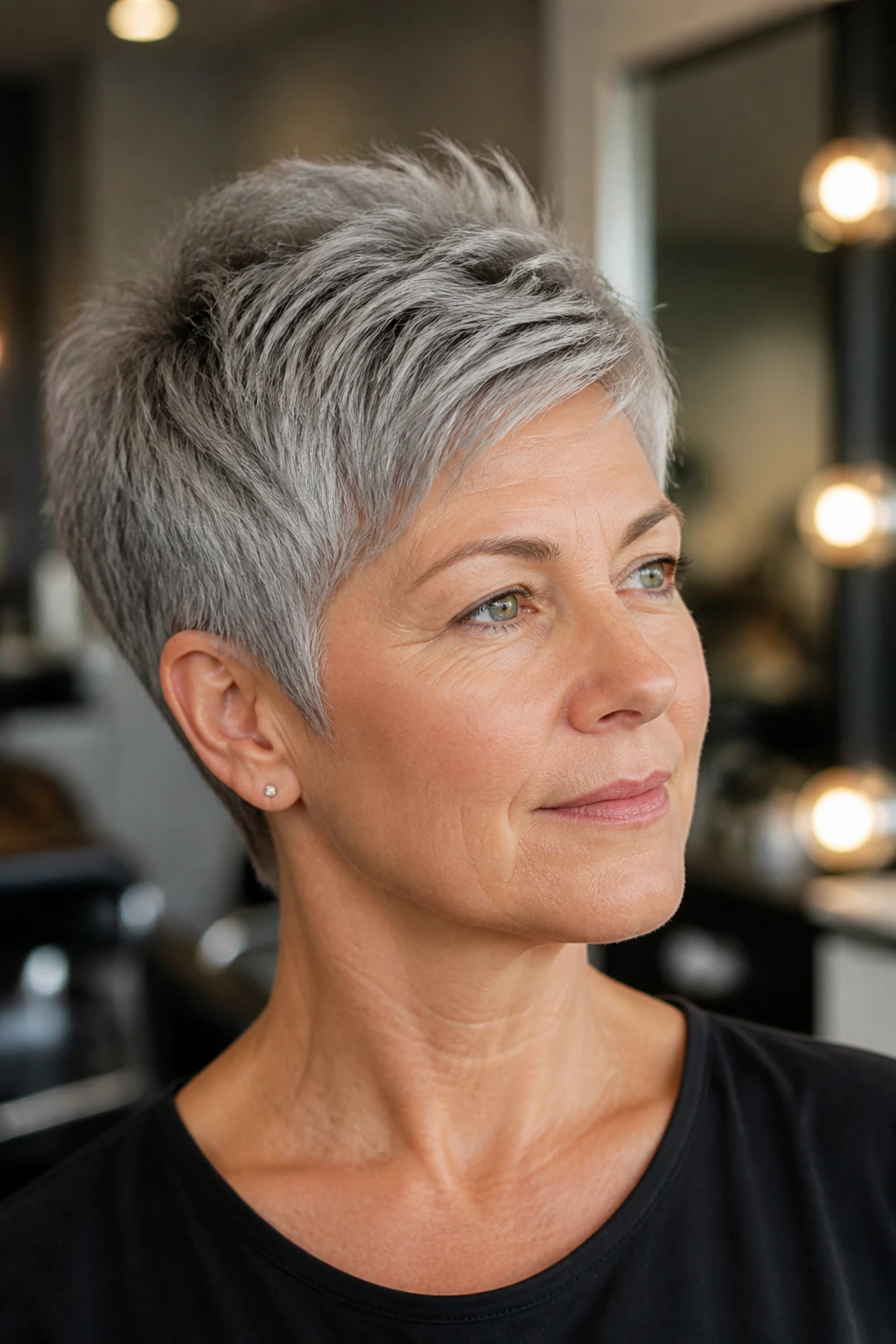
Thick gray hair usually does one of three annoying things during grow-out: it bulks up around the ears, kicks at the nape, or collapses at the crown while puffing everywhere else. The fix is not more product. It’s smarter shape control. Start by removing weight where the hair naturally swells, not where it already lies flat. That means the sides, the area behind the ears, and the lower back of the head.
Dry the heaviest zones first. The nape and sides need direction before they start to dry in whatever shape they feel like taking. A concentrator nozzle on the dryer helps, and so does brushing the hair downward while it’s still damp. If you rough-dry thick gray hair from the start, it often freezes into a wider shape than you wanted.
Use product sparingly. A dime-size amount of cream can be enough for short hair. More than that and the cut starts to collapse. I’d rather see a little lift at the crown with a touch of texture through the ends than a smooth, heavy cap that sits on the head like it’s been glued down.
And one more thing: if the hairline around your ears is growing faster than the rest, don’t ignore it. Tiny edge cleanups matter. They’re boring. They also keep the whole haircut from drifting into chaos.
Tools That Make Styling the Grow-Out Easier
-
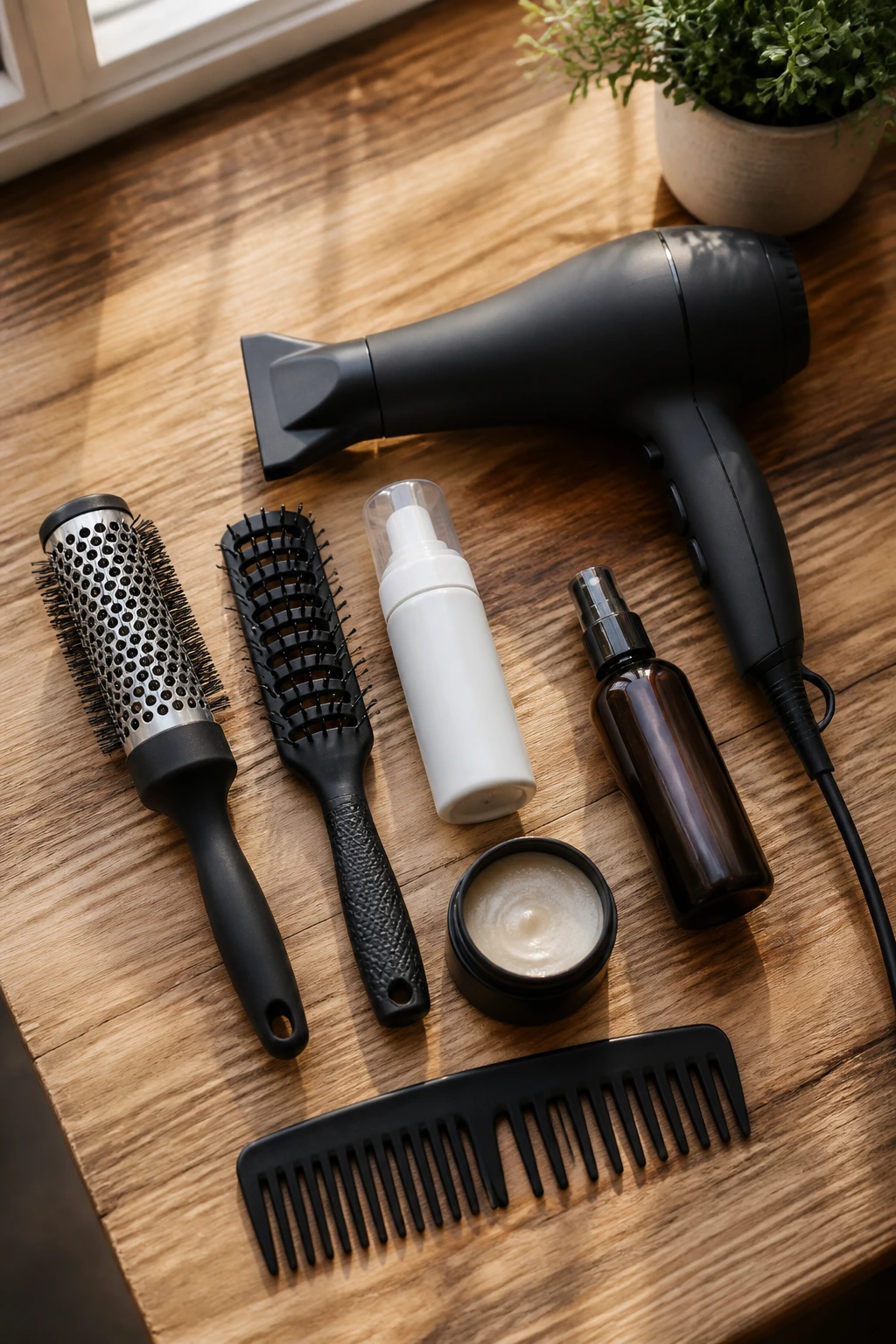
Blow-dryer with a concentrator nozzle: Directs air where you want it and helps keep the sides from ballooning.
-
Small round brush, 1 to 1.5 inches: Good for lifting the crown and bending the fringe without creating too much volume.
-
Vent brush: Faster for rough-drying thick hair and keeping the nape smooth.
-
Lightweight mousse: Adds grip at the roots without making gray hair feel sticky or stiff.
-
Matte paste or soft wax: Best for piecey ends, quiffs, and controlled texture on dry hair.
-
Heat protectant spray: Worth using anytime you’re blow-drying or touching up with a hot brush.
-
Wide-tooth comb: Useful for detangling without stretching the shape of the cut.
-
Hand mirror: The nape lies. A second mirror tells the truth.
-
Purple shampoo, optional: Helpful if gray hair picks up yellow tones from product buildup or hard water.
What to Ask Your Stylist for at the Next Trim
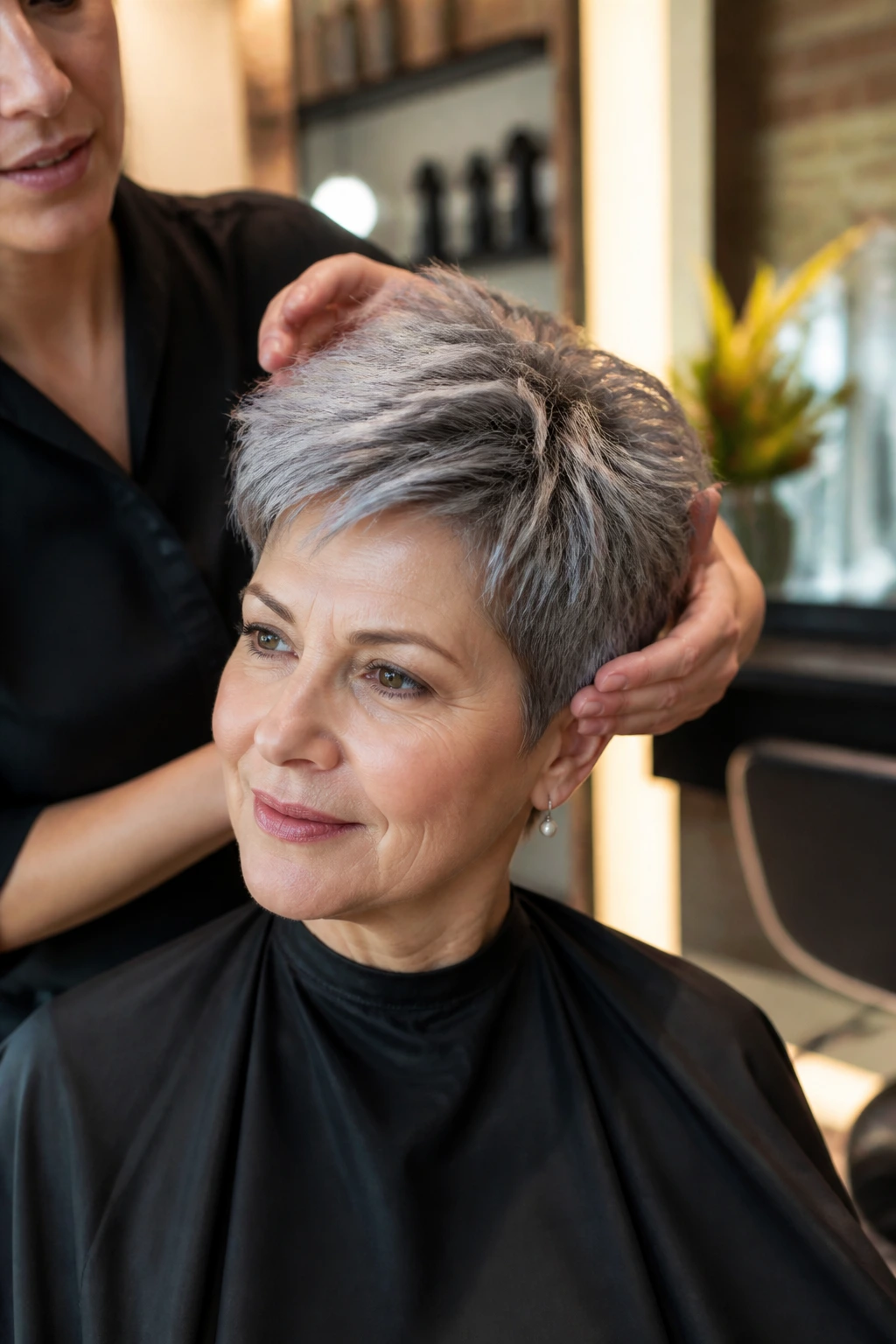
The easiest way to miss the mark on a grow-out pixie is to ask for a “cleanup” and hope the stylist reads your mind. Don’t do that. Be specific about bulk, fringe, and the future shape. If your hair is thick, say where it puffs: above the ears, behind the ears, at the crown, or at the nape. That tells the stylist where to remove weight and where to leave structure.
Bulk removal: ask for internal layering or point cutting in the places that flare out, especially around the sides and back. Length markers: tell them which pieces need to stay long enough to tuck, sweep, or blend into a bob later. Fringe plan: if you wear glasses or want to hide a high forehead, keep the front longer and softer rather than cropped too short.
I also like to tell stylists the end goal. If you’re heading toward a bob, say so. If you want to stay in pixie territory, say that too. The growth path changes the cut. A stylist can only shape the bridge if they know where the bridge is going.
How to Maintain the Shape Between Salon Visits
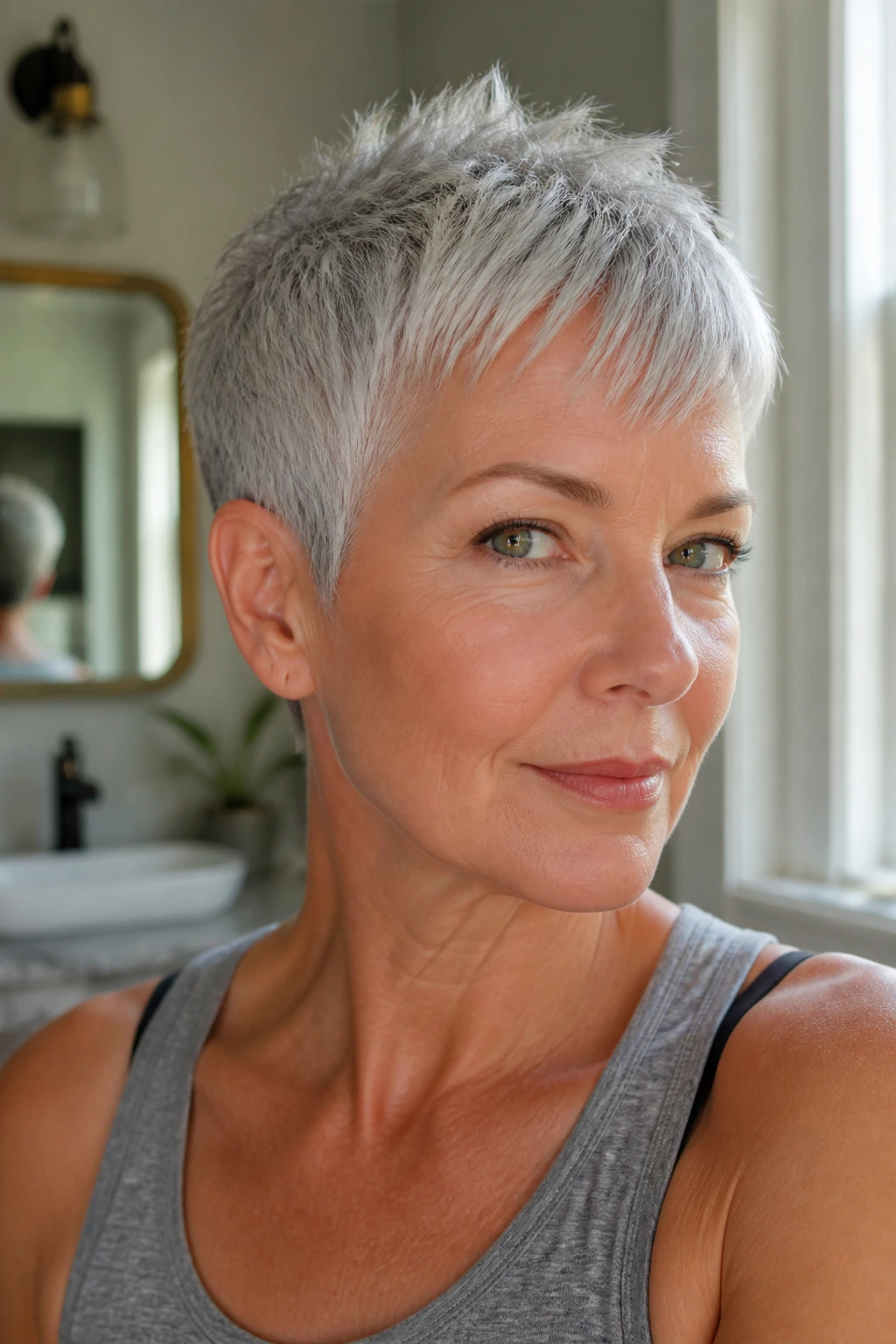
A thick gray pixie grows in a way that can make a clean cut look tired fast. That doesn’t mean you need a full haircut every time a strand moves. It does mean the nape and fringe need attention on a schedule. For most people, a shape-up every 4 to 6 weeks keeps a pixie crisp. If you’re letting it edge into bixie territory, 6 to 8 weeks is usually enough, as long as the outline still behaves.
Fringe cleanup: every 2 to 3 weeks, even if the rest of the cut is fine. A fringe that drops into the eyes changes the whole haircut.
Nape cleanup: when it starts to brush the collar or stick out at the neckline. That fuzzy edge makes thick hair look bigger than it is.
Root care: use dry shampoo lightly on day two or three, then re-activate the top with a little water and a quick blow-dry if it collapses.
Gray hair often feels drier than pigmented hair, so don’t wash it into straw. Two to four washes a week is enough for many people, depending on scalp oil and product use. Conditioner belongs on the ends, not the roots. Simple rule. Useful rule.
Common Mistakes That Make the Grow-Out Look Boxy
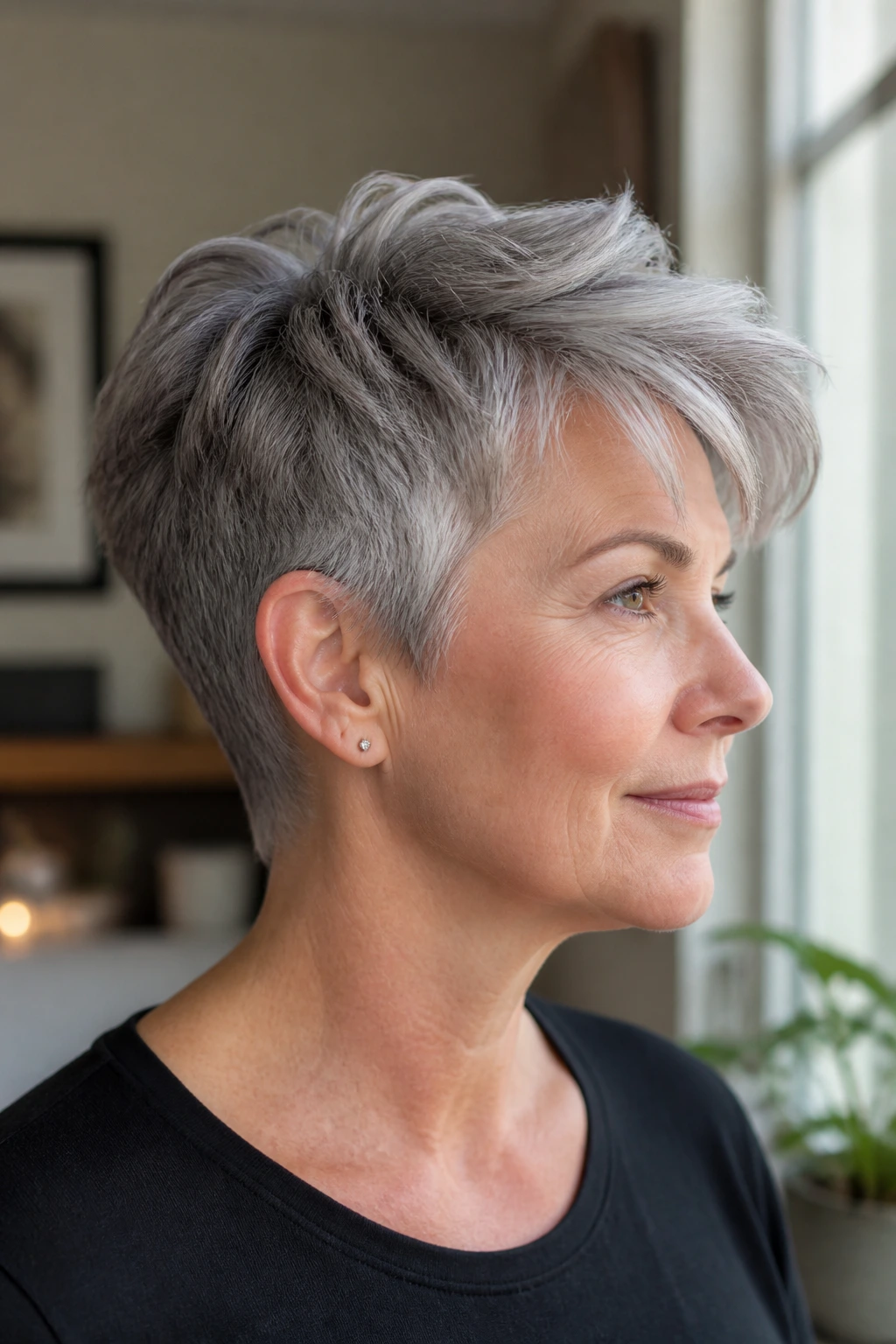
The first mistake is cutting the sides too blunt. Thick hair then pushes out at the ears and creates that pyramid shape nobody wants. The fix is soft layering and a little internal debulking, not a square edge.
The second mistake is taking too much length off the fringe too early. Grow-out pixies need a front piece that can sweep, tuck, or soften the face. If the fringe gets cropped too short, the haircut starts looking severe and the only move left is waiting.
Another one: thinning the wrong way. Heavy thinning shears can make coarse gray hair feel fluffy at the ends. The hair still has bulk, but now it’s a dry-looking bulk. Better to remove weight strategically in the interior and leave the edges controlled.
And please don’t forget the nape. Ignoring the back of the neck is the fastest way to make a neat cut look messy. A small trim there changes everything. Small. Cheap. Worth it.
Variations and Alternatives for Different Texture and Face Shapes
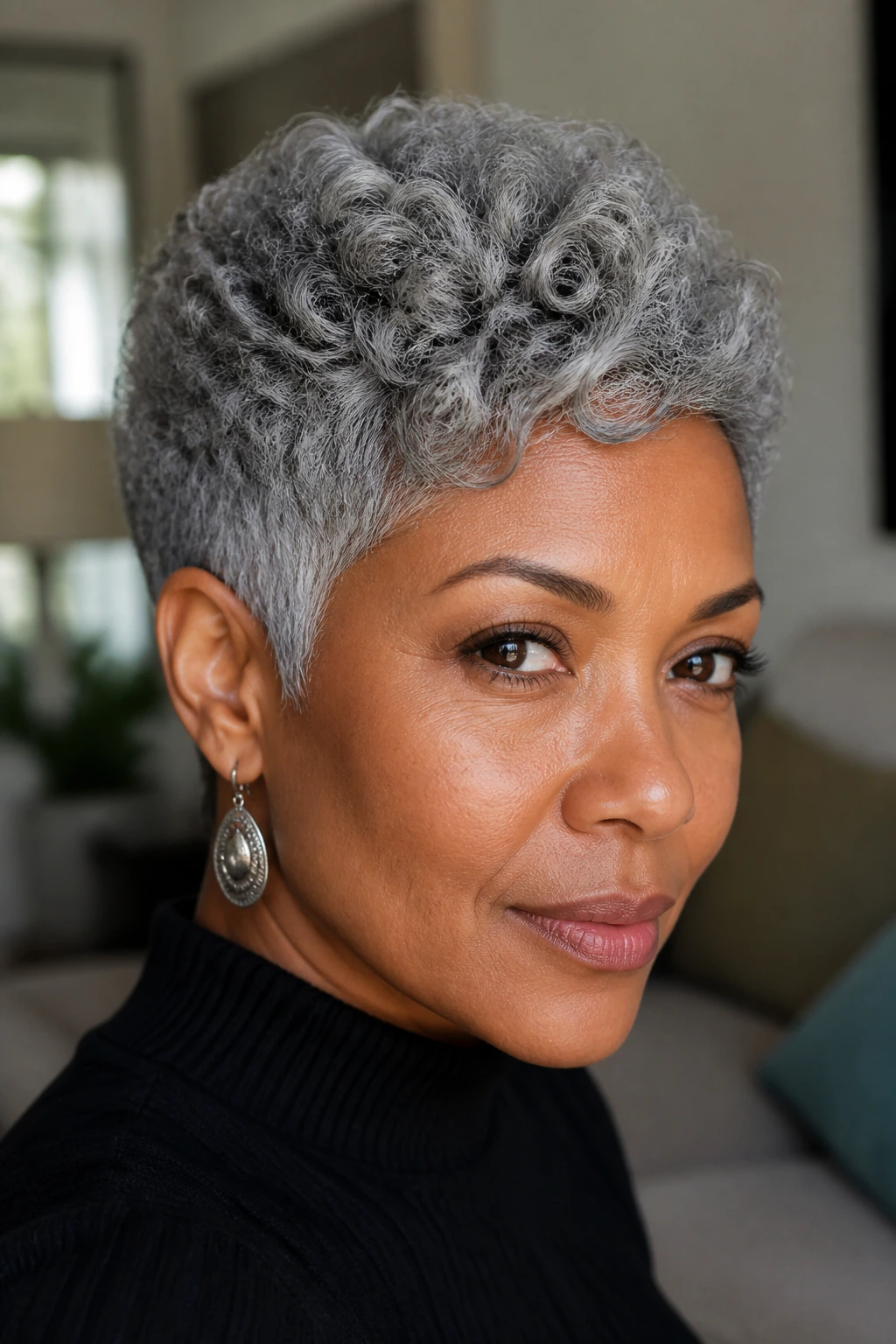
The Silver Bixie Bridge: This is the softer, longer version of a pixie, with just enough jaw length to move toward a bob. It works well if you want to keep the grow-out gentle and avoid a harsh line at the face.
The Glasses-Friendly Sweep: Leave the fringe diagonal and the sides long enough to slip behind the ears. That keeps the frames from fighting the haircut, and it gives the face a cleaner opening.
The Coily Gray Crop: For curly or coily textures, keep the crown layered and the outline rounded. The shape should follow the curl pattern, not bully it into a straight line.
The Polished Office Crop: Tight nape, soft side pieces, and a clean brush-back top. This one looks tidy with almost no fuss and holds up well if you need the haircut to behave all day.
The Edgy Nape Undercut: If the hair is extremely dense, a hidden undercut at the nape can remove a lot of bulk without changing the visible length much. It’s a smart fix, not just a style choice.
Frequently Asked Questions
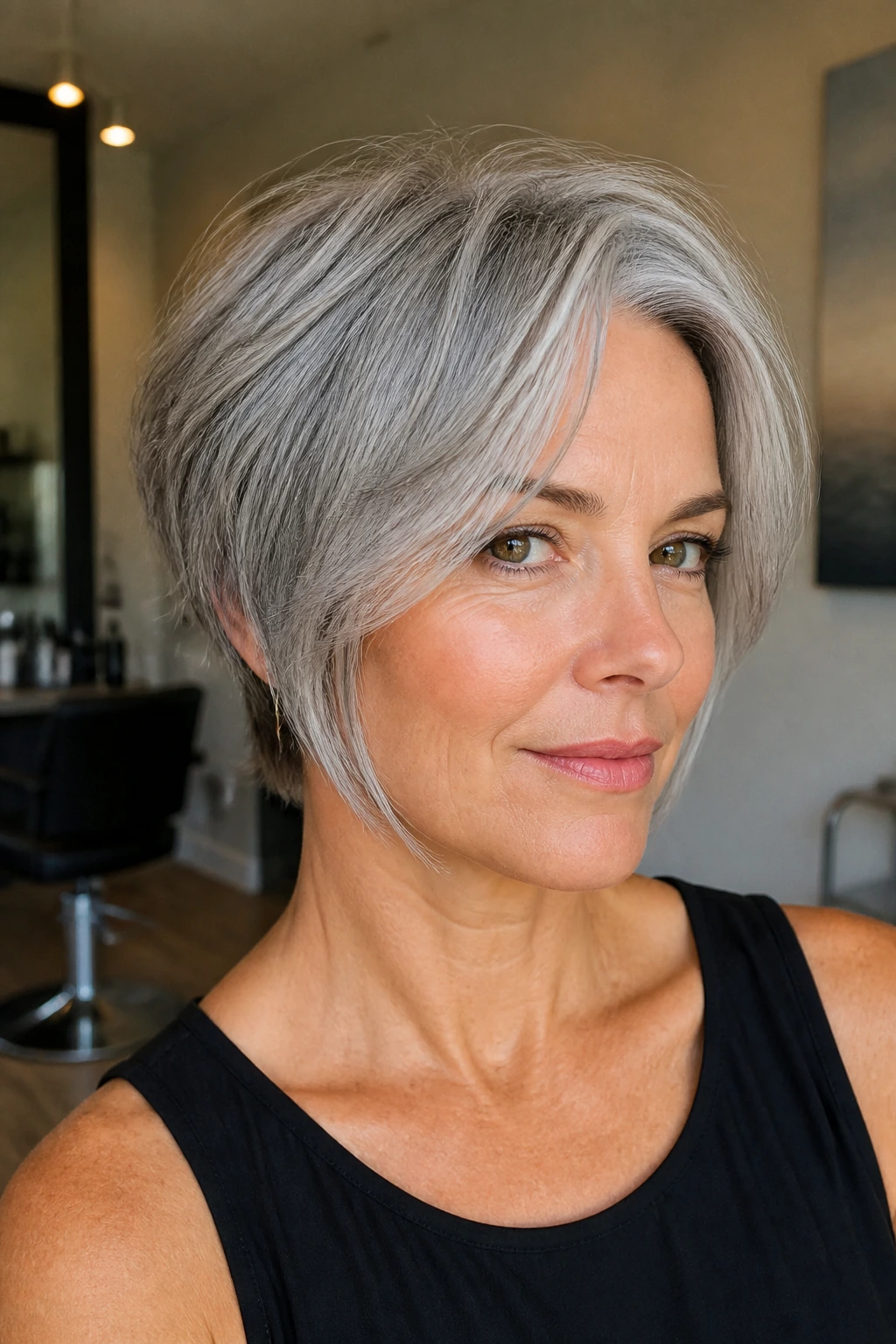
How often should a grow-out pixie on thick gray hair be trimmed?
Every 4 to 6 weeks is the sweet spot if you want to keep the shape clean. If you’re intentionally growing toward a bixie or bob, you can stretch that to 6 to 8 weeks, but the nape and fringe still need small cleanups.
Is thinning shears a good idea for thick gray hair?
Sometimes, but not blindly. Heavy thinning can make coarse gray ends look frayed and dry, so it’s better when the stylist uses point cutting or internal debulking instead of taking out chunks with thinning shears.
Can I grow out a pixie without heat styling?
Yes. Air-drying works if the cut has enough internal shape and you use a light mousse or cream. The finish will be more relaxed, less polished, and that’s fine if you prefer movement over sleekness.
What if my hair flips out at the nape?
That usually means the nape is sitting too long or the weight line is in the wrong place. A small trim below the occipital area, plus blow-drying the back downward, usually calms it down.
Does gray hair need purple shampoo in a pixie cut?
Not always. If the silver is bright and clean, leave it alone. If you’re seeing yellowing from hard water or product buildup, use purple shampoo every few washes, not every day.
Can a grow-out pixie work with a round face?
Yes, if the cut keeps height at the crown and avoids too much width at the cheeks. Side-swept fringe and a tapered nape help the face look longer without making the haircut severe.
Should I keep sideburns while growing out a pixie?
Usually, yes. Even a small amount of sideburn length softens the line near the ears and makes thick hair easier to tuck or sweep. It’s one of the easiest ways to keep the grow-out from looking blunt.
What if one side of my hair grows faster than the other?
That’s normal. Ask for a slightly asymmetrical shape or keep one side a touch longer so the difference looks intentional instead of accidental. A grow-out works better when it has a plan.
A Grow-Out That Still Looks Intentional
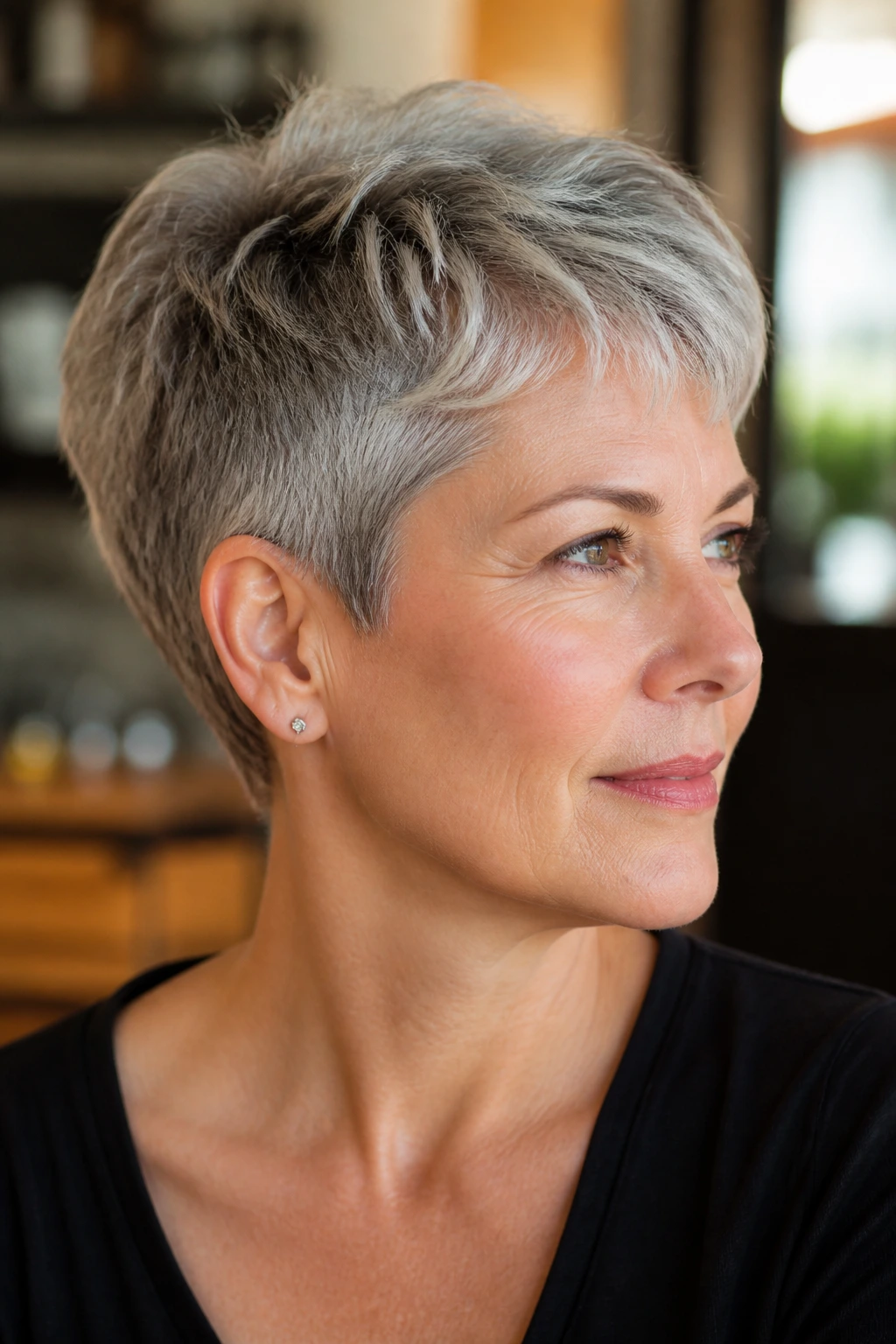
The best grow-out pixie on gray, thick hair doesn’t pretend the hair is finer, softer, or easier than it is. It works with the density. It trims the bulk where the bulk causes trouble and leaves enough length where the cut needs movement. That’s the whole trick, really. Shape first. Style second.
Gray hair has a clean, bright way of showing a good haircut. Thick hair has the strength to hold one. Put those two together and the grow-out stage becomes less of a waiting room and more of a look in its own right. If you keep the crown lifted, the nape clean, and the sides soft, the style has room to grow without losing its line.