



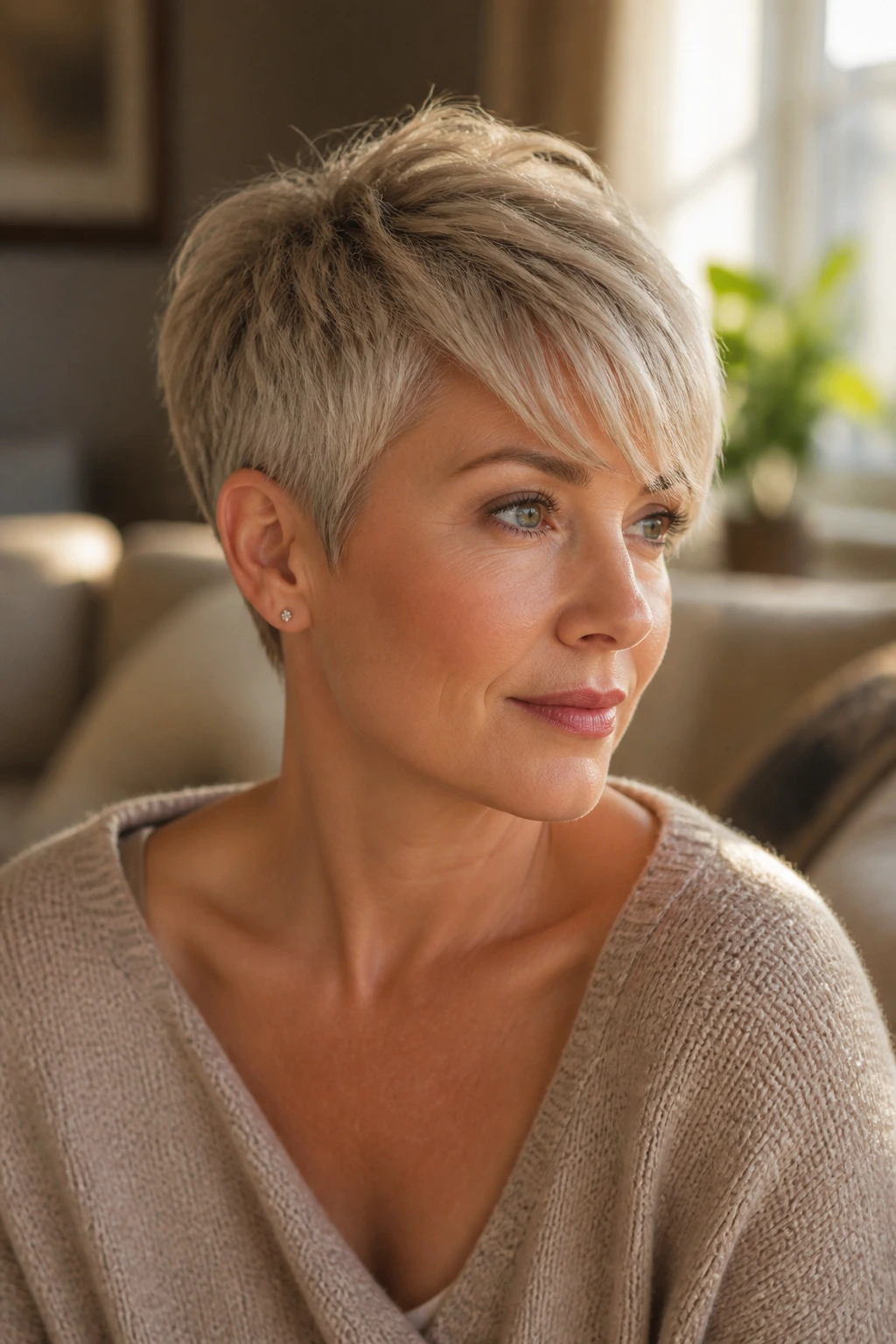
A fine pixie cut can be a little ruthless in the best way. It shows you exactly where the shape is strong, where the fringe needs help, and where the crown wants a lift that a longer cut can usually hide. Fine pixie cuts for women over 40 with side-swept bangs do something especially useful: they put softness in the front and structure everywhere else, so the hair looks intentional even on days when you barely touched it.
The side-swept bang is the detail that saves the whole thing from looking too severe. A straight-across fringe can flatten fine hair and pull the eye into one hard line. A diagonal sweep, though, gives the face movement, breaks up forehead width, and makes the top section feel fuller because the hair is moving from one side to the other instead of just hanging down.
I like this family of cuts because it’s not one-note. Some versions are neat and polished, some are choppy and modern, some lean soft and feathered, and some let gray or silver hair do the heavy lifting. The common thread is shape: a clean nape, controlled length where the hair needs it, and a front section that falls with enough ease to feel flattering rather than stiff. The 20 ideas below cover the sweet spot between easy, fresh, and actually wearable.
Why These Pixies Earn Their Place
-
They build lift where fine hair usually sags: Shorter sides and a controlled crown stop the top from sliding flat against the scalp by noon.
-
The diagonal fringe softens the face fast: A side-swept bang breaks up a broad forehead, a strong brow, or a sharp hairline without hiding the face.
-
They’re easier to style than longer cuts with the same hair type: Fine hair can look stringy when it gets long; a pixie keeps the ends close enough together to look denser.
-
They work with gray, brunette, blonde, or highlighted hair: Color changes the effect, but the shape does the work. The cut stays visible even when the hair itself is delicate.
-
They can be polished or messy with the same base cut: A quick blow-dry gives one result. A little paste and a finger comb gives another.
-
They suit a lot of face shapes when the fringe is adjusted right: That’s the nice part. A pixie is not one rigid haircut; it’s a set of proportions.
1. Feathered Crown Pixie with a Long Side Sweep
This is the pixie I think of when someone wants softness first and edge second. The crown is lightly feathered so the hair lifts instead of sitting like a cap, and the long side sweep glides across the forehead in a clean diagonal that never feels heavy. On fine hair, that feathering matters. It keeps the top from looking carved into one flat plane.
The length should stay a little longer through the front than at the nape, which gives the style a gentle slope instead of a blunt stop. That slope is what makes it easy to wear with glasses, earrings, or a little bronzer and mascara only. There’s no hard line fighting your face.
It looks best when the ends are point-cut rather than chopped blunt. Ask for movement, not bulk. That’s the difference between a pixie that looks airy and one that looks like it was cut by a ruler.
2. Tapered Pixie Bob with Swooping Bangs
A tapered pixie bob is the answer when you like the idea of a pixie but don’t want to lose all that perimeter at the jaw and nape. The back is short and clean, while the front keeps enough length to read as a small bob with a very short back. The swooping bang is the thing that makes the whole cut feel softer and more expensive.
Why It Flatters Fine Hair
The longer front edge gives fine strands something to gather into, so the style reads fuller than a pure close crop. It also helps if your hair tends to separate at the temples, because the extra front length can be directed across the face instead of trying to stand up on its own.
This is a smart choice if you want a little neck coverage, especially under jackets or turtlenecks. It doesn’t cling the way a fully layered pixie can.
- Best for: oval, heart, and softly square faces.
- Styling note: use a 1-inch round brush at the front, then let the ends swing forward on purpose.
- Watch the weight line: too much bulk at the jaw makes the cut feel helmet-like.
3. Choppy Micro Pixie with Wispy Fringe
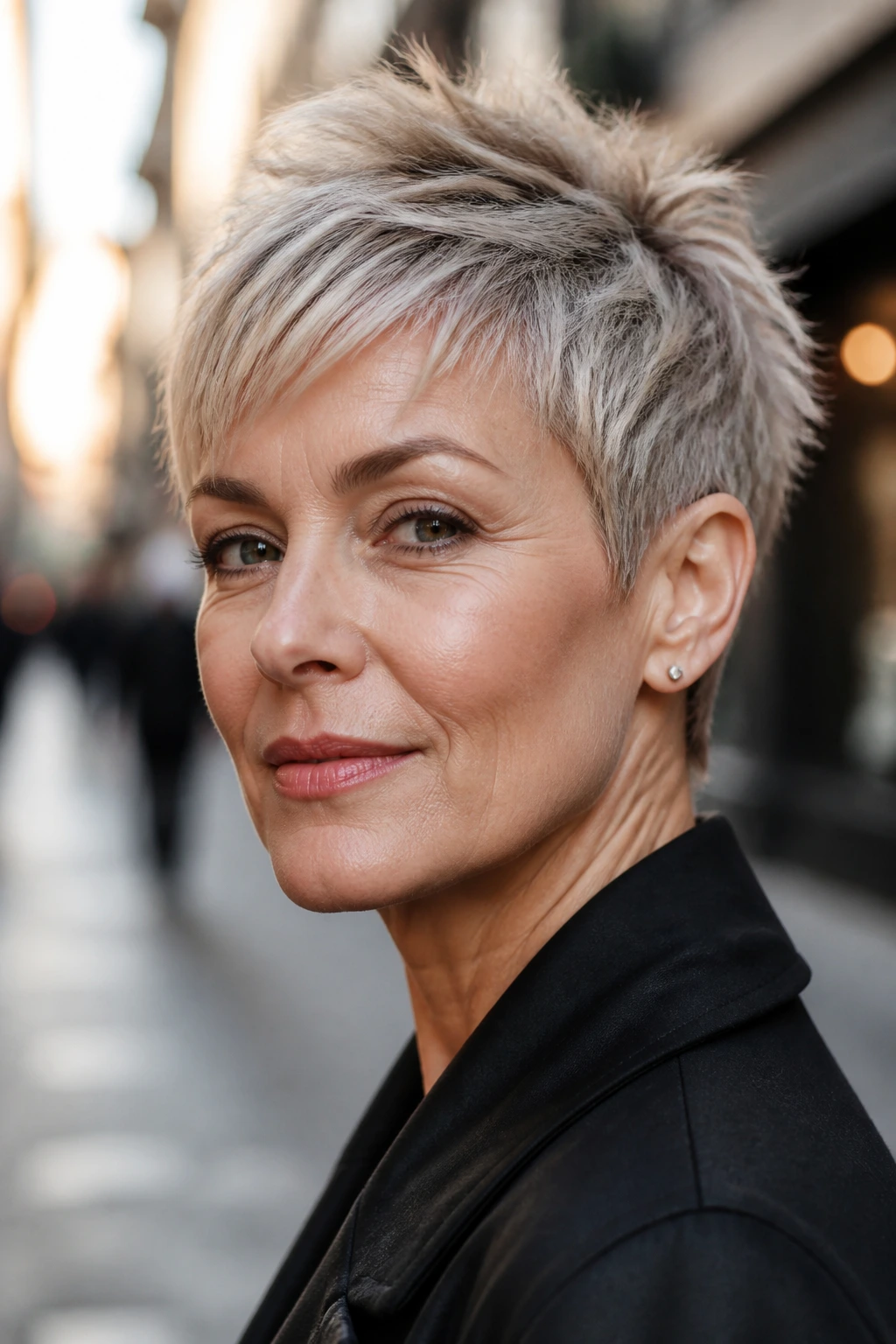
Can a very short pixie still feel feminine and soft? Absolutely, if the fringe is wispy rather than blunt. This version keeps the sides tight and the top short, but the front is broken up into tiny pieces that fall forward instead of building one solid line.
That matters on fine hair because chunky bangs can overpower the face and show every sparse spot. Wispy fringe doesn’t do that. It lies lightly, moves easily, and gives you a little shading around the eyes without swallowing the forehead.
I like this cut on women who want low fuss and don’t mind seeing their features clearly. It has a crisp, modern feel, but the softness in the front keeps it from looking severe. A dab of lightweight paste at the ends is enough. More than that, and you lose the airy effect.
4. Silver-First Pixie with a Soft Curtain Sweep
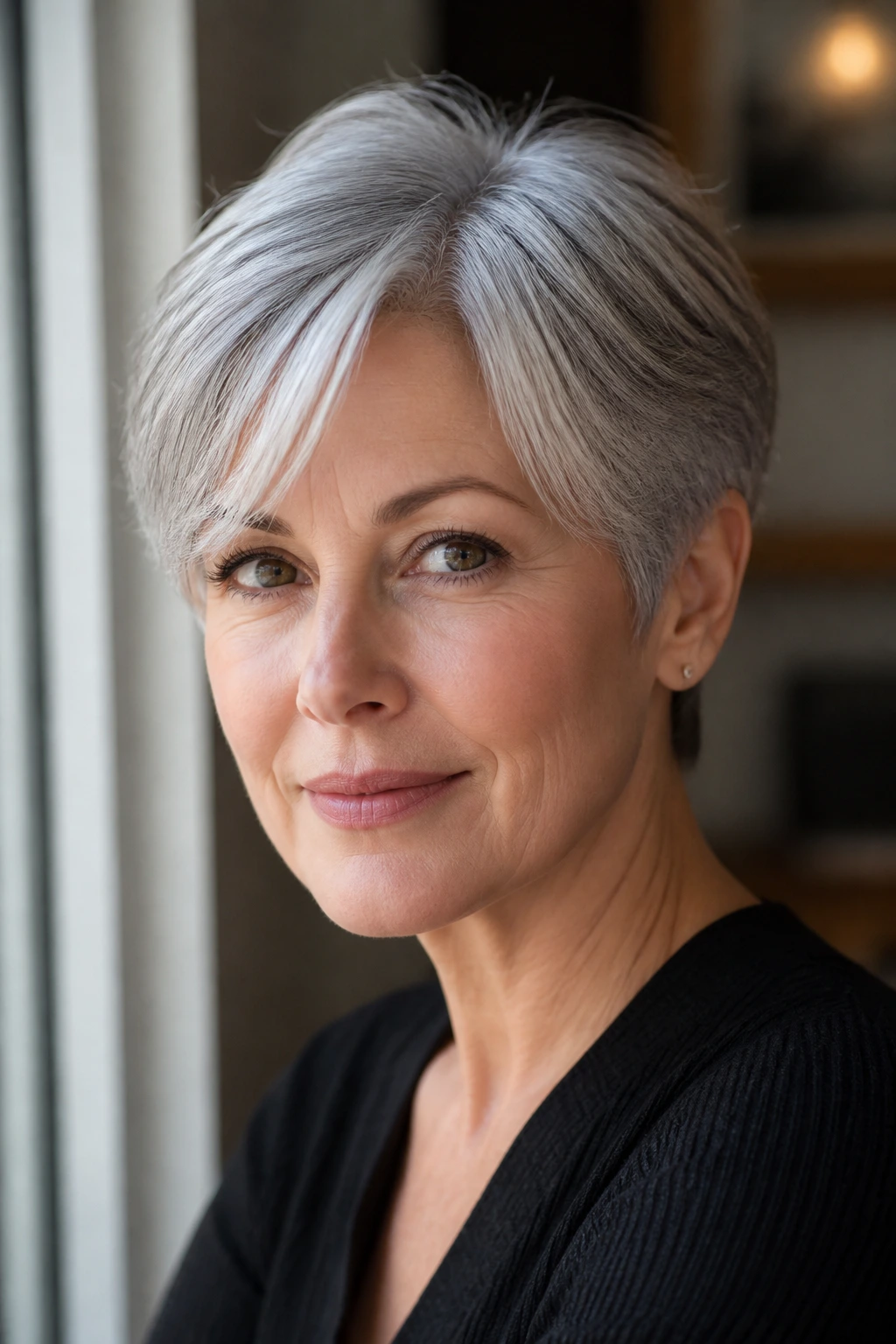
Gray and silver hair can look spectacular in a pixie when the shape is allowed to breathe. This version keeps the bangs longer and softly split, so they sweep across the forehead in a way that feels closer to a curtain than a hard side fringe. The result is elegant without trying too hard.
A lot of silver hair has a little wiry texture, which means the cut should avoid over-thinning. Let the stylist preserve enough density at the top and around the temples so the color has body. Thin it too much and the hair starts to flutter in odd places.
- Ask for: a soft nape taper, not a shaved finish.
- Color note: a gloss every few weeks keeps silver looking bright instead of chalky.
- Styling trick: blow-dry the fringe first, before the rest dries and sets in the wrong direction.
5. Asymmetrical Pixie with a Deep Side Part
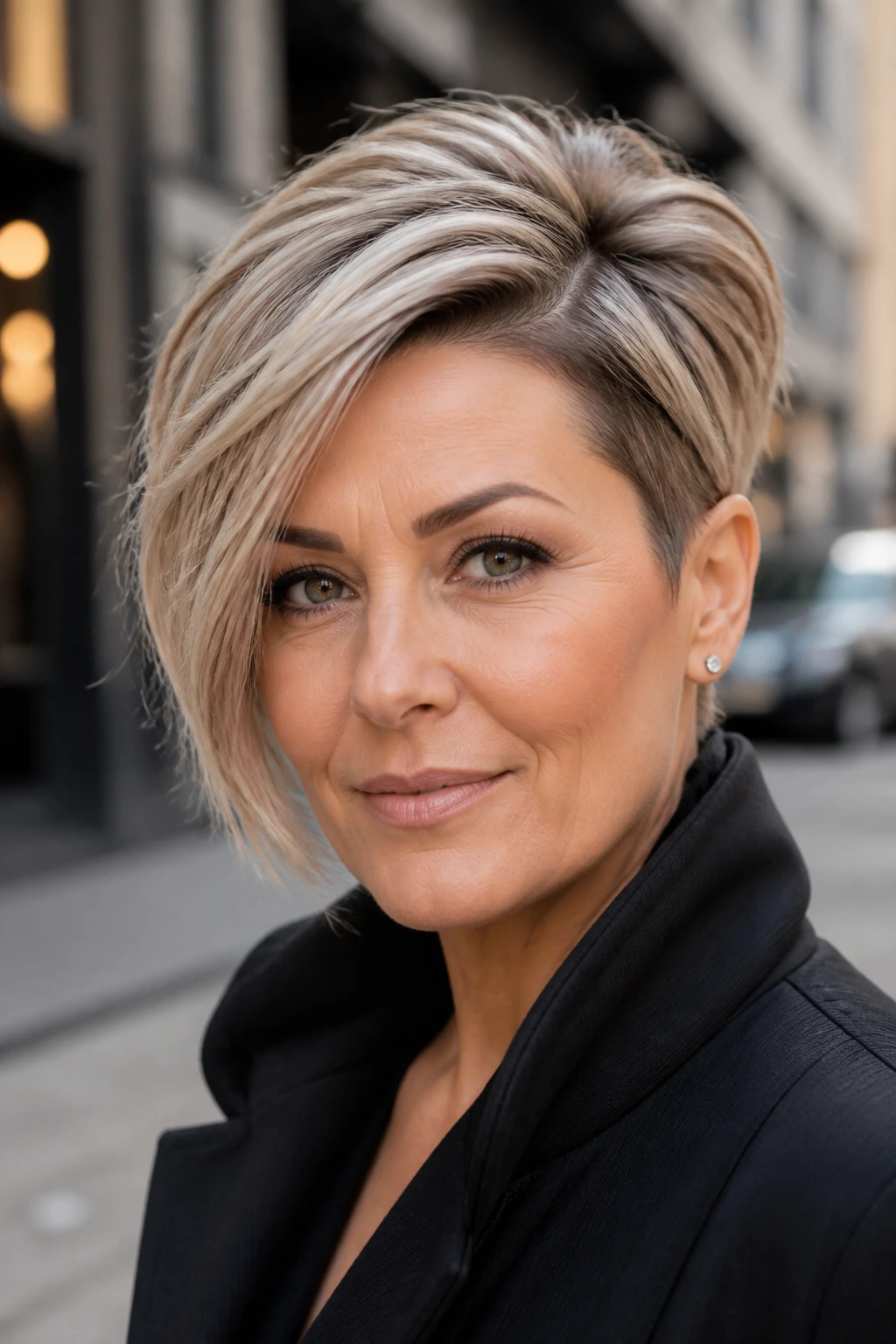
A deep side part changes everything. It takes a plain pixie and gives it a visible line of drama, which is useful if your hair is fine and tends to fall evenly on both sides in a way that looks limp. The longer side creates a forward sweep, while the shorter side keeps the profile neat and sharp.
This cut is especially good when one side of your hair has a stubborn cowlick. Instead of fighting the bend, you build the shape around it. The asymmetry also pulls the eye upward, which helps the whole cut look more dimensional.
You do need a bit of maintenance here, because the part has to stay in the same place or the shape loses its point. But if you like a cut that looks deliberate from every angle, this one has real personality.
6. Tousled Piecey Pixie with Lifted Crown
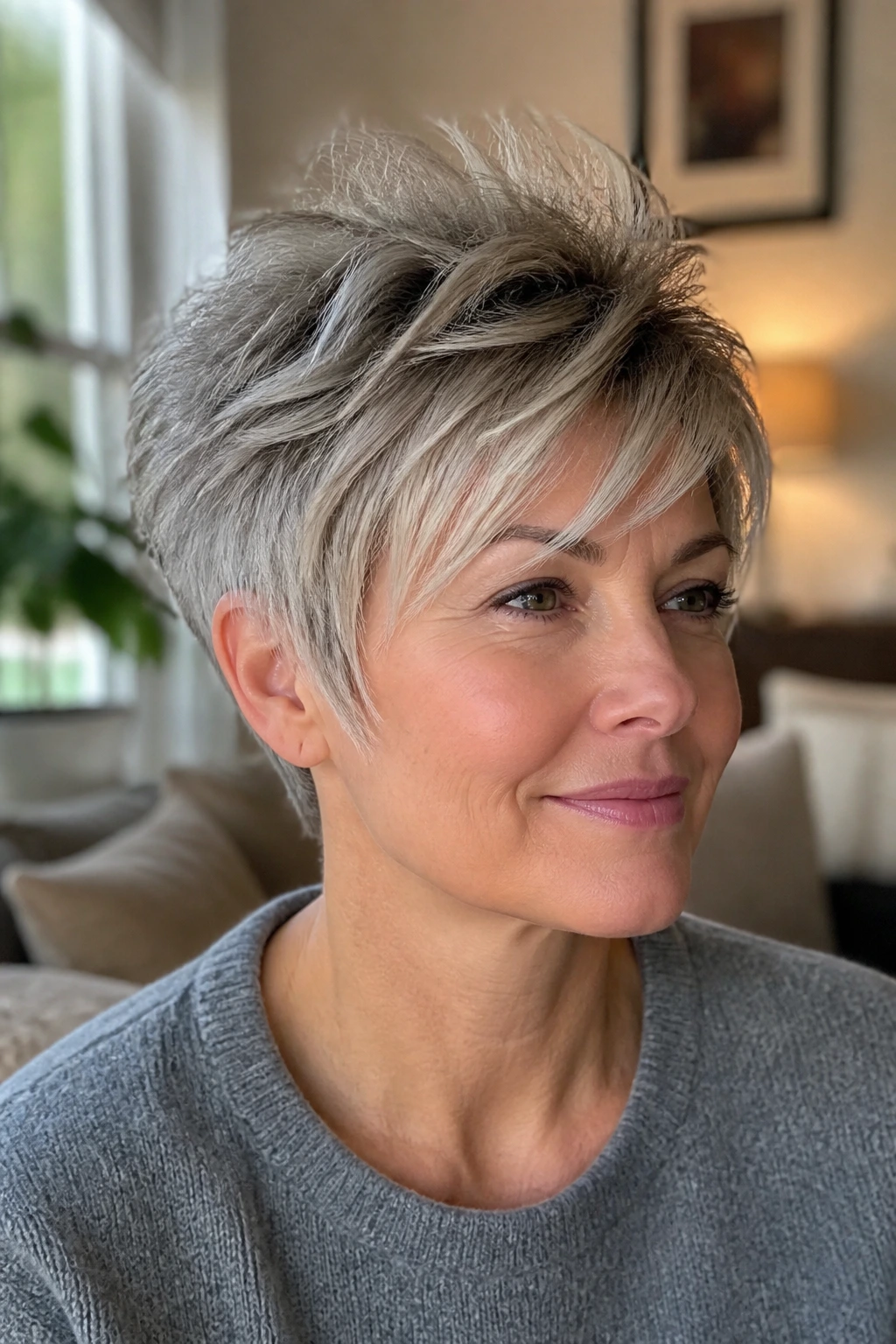
This is the cut for people who like hair that looks touched, not shellacked. The crown stays slightly longer so it can be lifted with a blow-dryer, then broken apart with a small amount of texture cream or matte paste. The side-swept bang stays soft, but the ends around it are piecey enough to keep the shape lively.
Fine hair often benefits from separation, not smoothness. If every strand lies in the same direction, the style can look thin. A little separation gives the illusion of more hair because the eye reads movement and shadow.
Use your fingers more than a brush here. A brush can flatten the top before it dries. Fingers keep the shape loose, which is the whole point.
7. Rounded Pixie with Airy Side Bangs
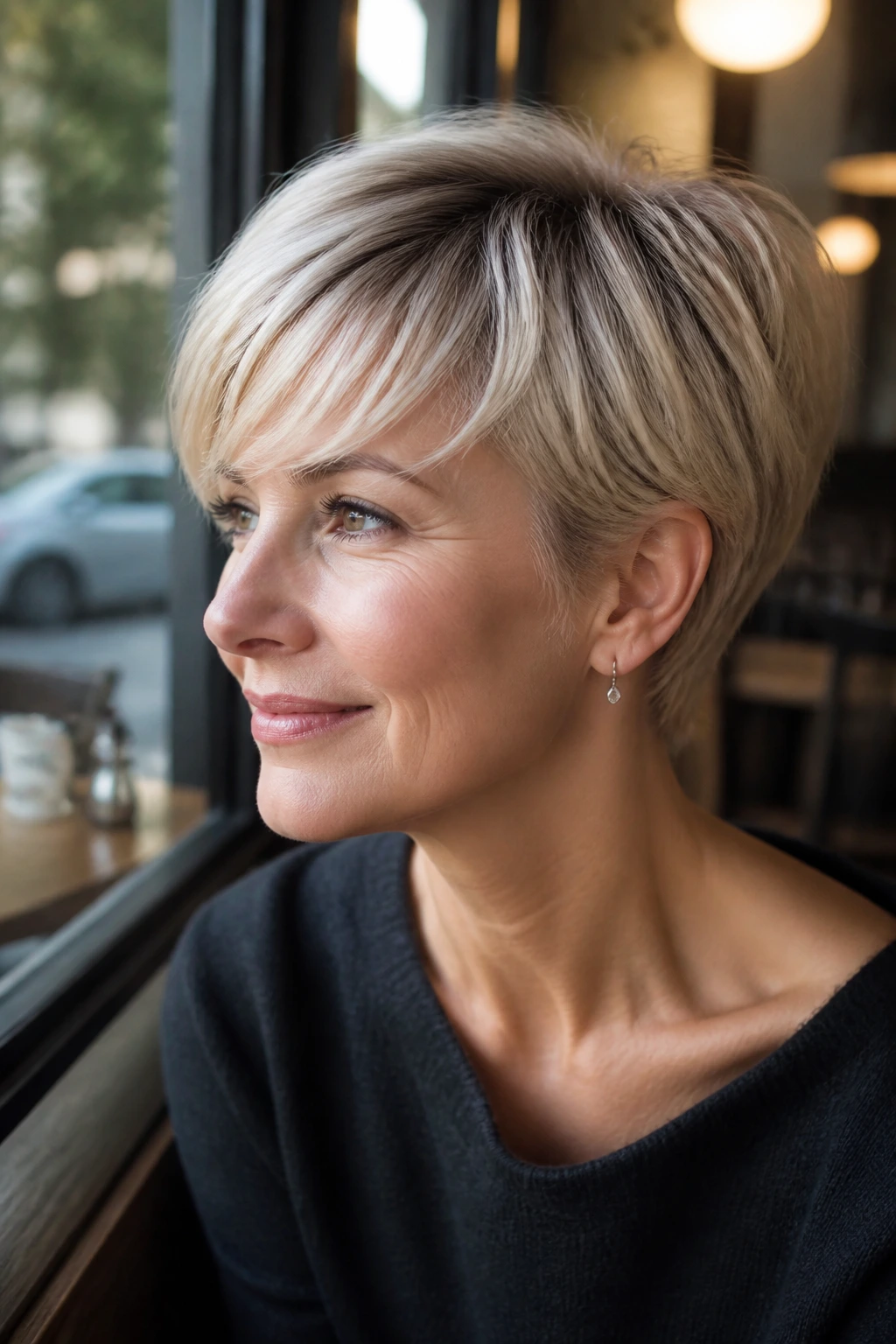
A rounded pixie sounds simple, but the shape is doing some sneaky good work. The crown curves gently instead of spiking up, and the silhouette hugs the head in a way that makes the hairline look tidy and controlled. The side bangs stay airy so the front doesn’t feel too heavy against the cheeks.
Shape Notes
This works especially well if your face feels angular and you want something softer. The rounded outline takes the edge off a strong jaw or sharp cheekbone without turning the cut into a helmet. That’s the trap with round pixies: too much uniformity, not enough movement.
- Keep the crown lifted, not puffy.
- Leave the fringe feather-light.
- Avoid over-rounding the nape if your hair is very fine; the back can disappear.
It’s one of those cuts that looks better with a little imperfection. Perfectly smooth can actually make it less flattering.
8. Undercut Pixie with Longer Top Length
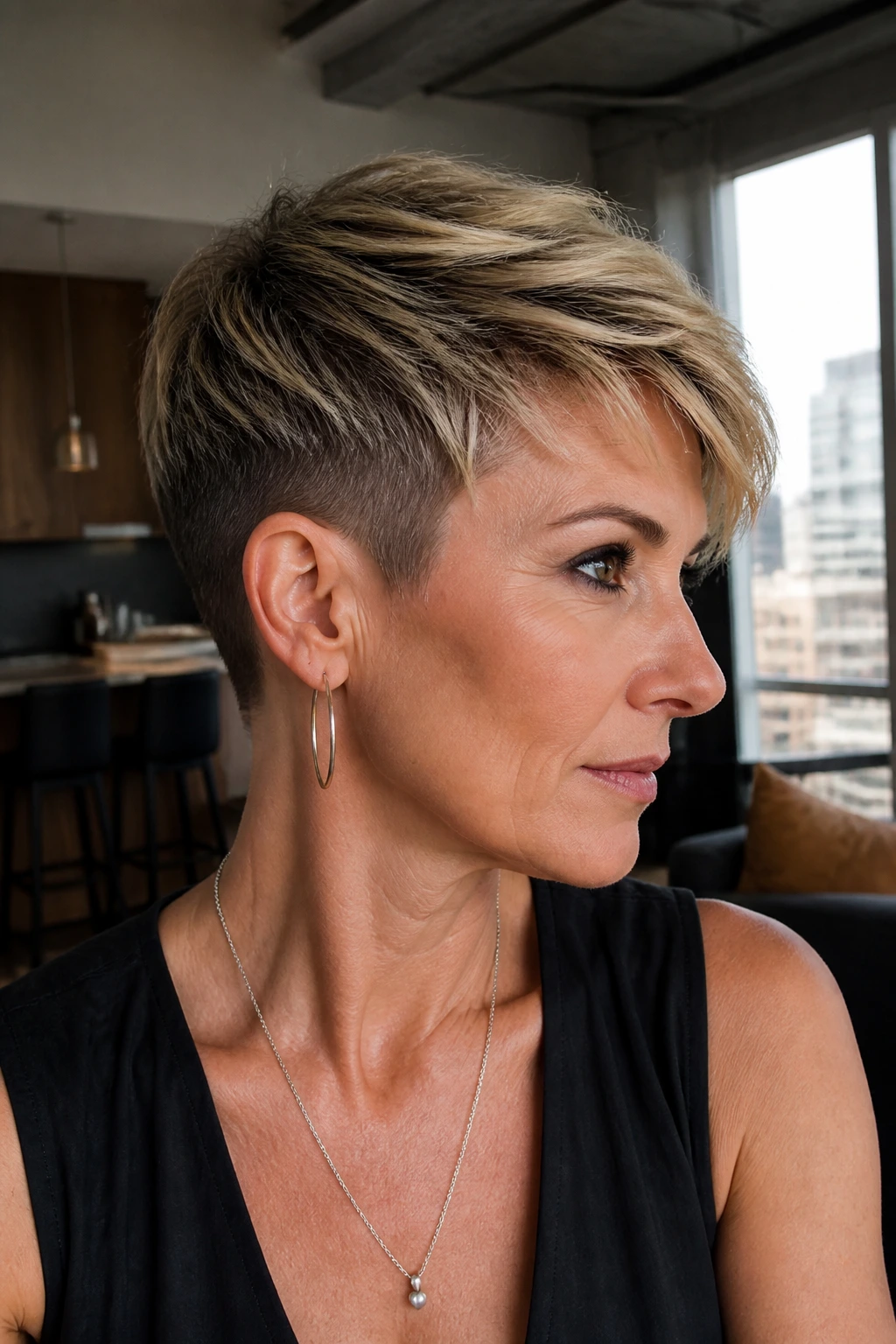
An undercut pixie can be fantastic on fine hair, but only if the undercut is controlled. The point is not to shave half your head and hope for volume. The point is to take away bulk at the nape and behind the ears so the longer top can sit cleanly and the side-swept bangs can fall without competing with too much hair underneath.
If your hair grows thick at the base but feels fine through the lengths, this is one of the neatest solutions. It creates a sharper outline while keeping the top long enough to style forward, sideways, or up and over.
Be careful with extreme removal if your density is already low. Fine hair needs enough support to hold the top section in place. A subtle undercut is enough.
9. Soft Layered Pixie for an Oval Face
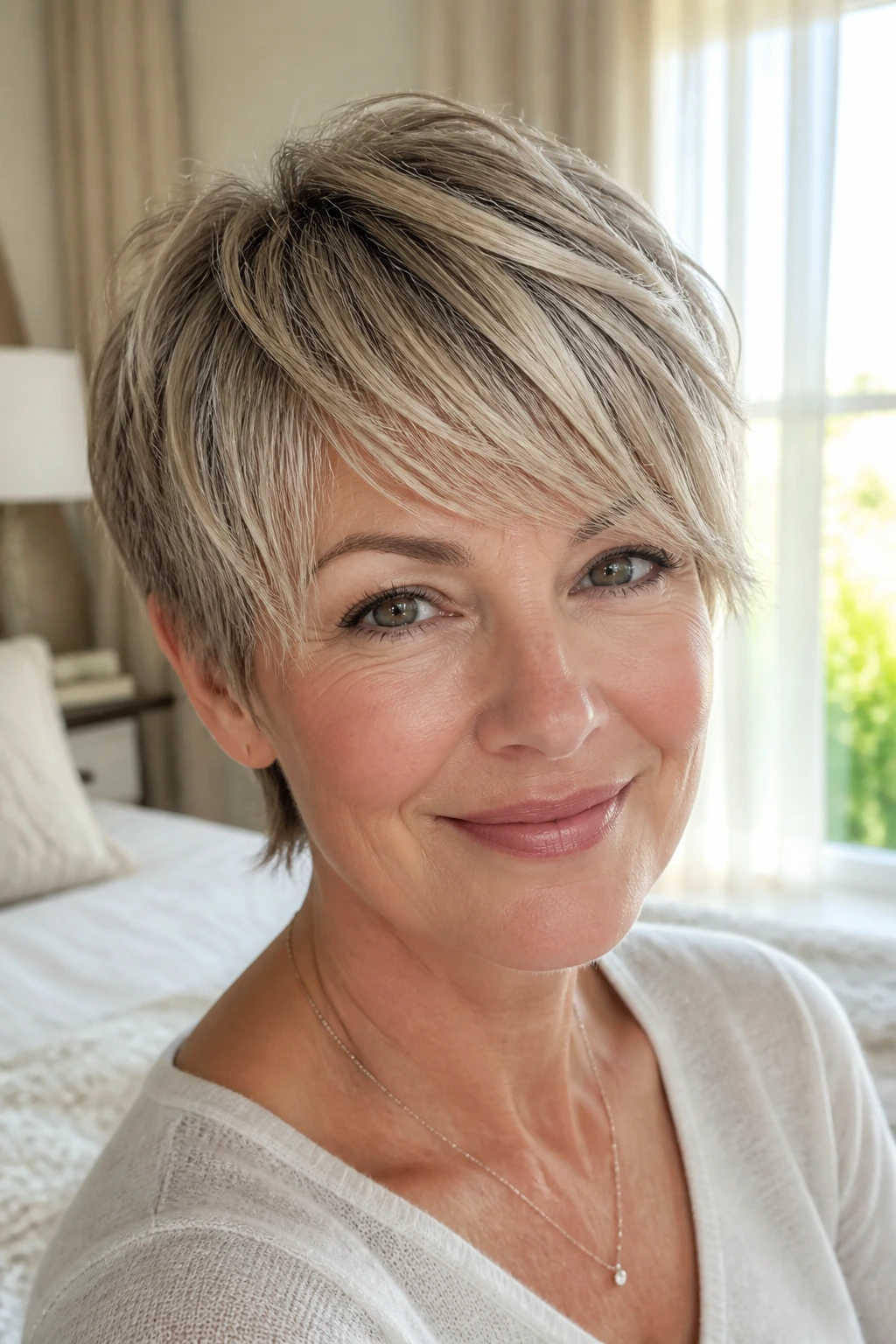
Oval faces get to cheat a little here. The proportions are already balanced, so the cut can lean softer and less engineered. A soft layered pixie with a side-swept bang adds movement without over-correcting anything.
The main thing to watch is height. Too much crown lift on an oval face can stretch it out. Keep the top airy, not tall, and let the fringe sweep over one eye just enough to break up the center line of the face.
This is the kind of pixie that looks good whether you wear it tucked behind one ear or tousled with your fingers. It doesn’t demand a lot of styling theater. That’s one reason I like it.
10. Curly Pixie with Side-Falling Front Pieces
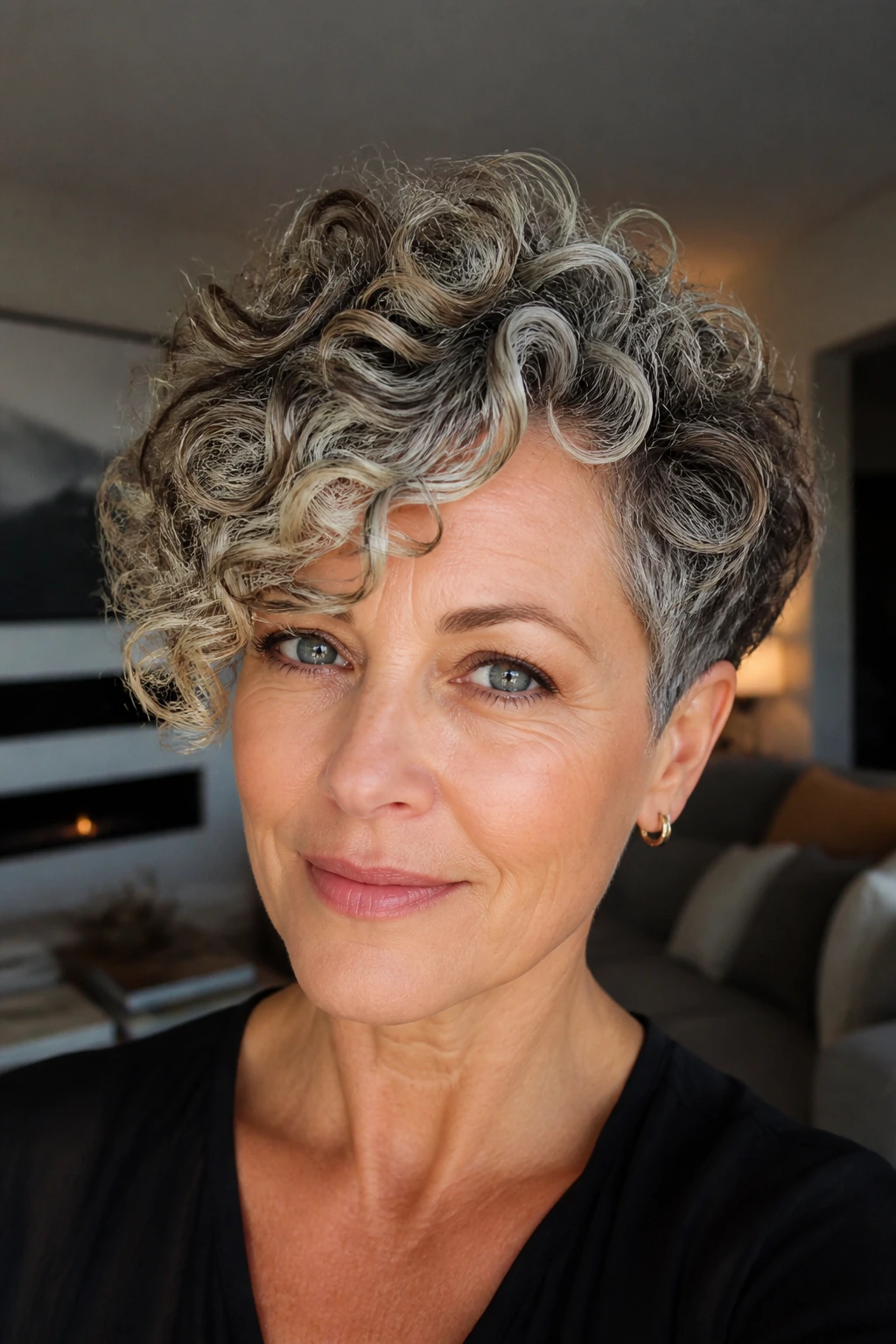
A curly pixie is its own animal. The curls need room to bend, and the front needs to stay long enough that the side-swept bang can actually sweep once it dries. If you cut curly hair too short in the front, the bangs spring up and the whole shape loses its softness.
The best version keeps the top a little longer than you think, especially near the forehead and temples. That extra length lets the curl form a diagonal wave instead of a short puff. A curl cream or light gel helps hold the bend without crunch.
Diffusing upside down can help lift the root, but stop before the curls frizz out. Fine curly hair can collapse if you over-handle it. A few careful scrunches are enough.
11. Nape-Tapered Pixie with Face-Framing Fringe
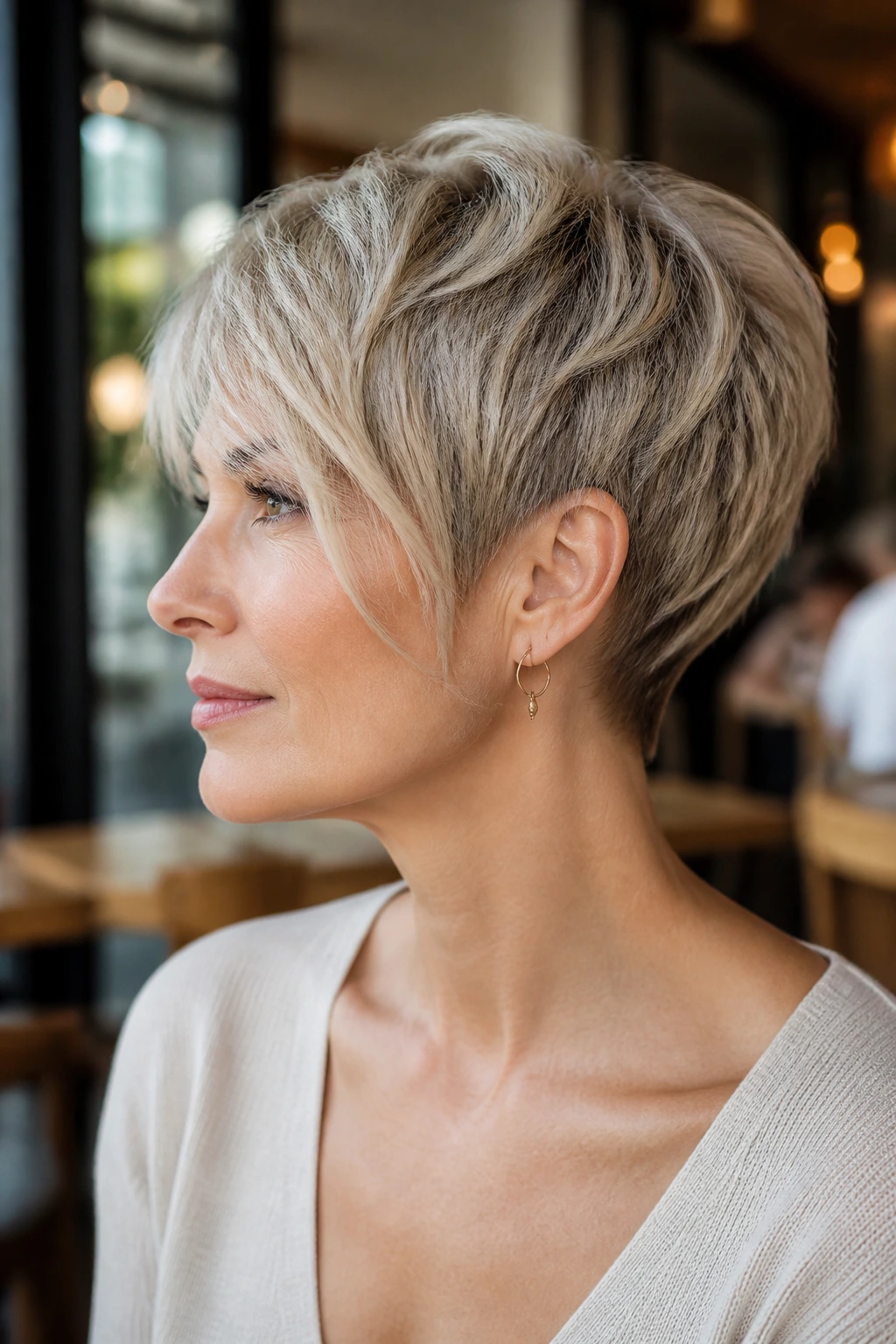
This one is all about contrast. The nape is clean and tapered so the neck looks long and the back stays neat, while the fringe stays longer at the front and front sides, where it can frame the cheekbones. That front softness is what keeps the cut from feeling severe.
It’s a smart shape if you like earrings, scarves, or open necklines. The tapered back shows off the line of the neck, and the fringe gives the front some ease so the whole look doesn’t become too crisp.
A little root spray at the crown helps, but don’t overdo the product. The front needs movement, not stiffness. If the fringe sticks in one place, the cut loses the very thing that makes it flattering.
12. Brushed-Back Pixie with a Side-Falling Front
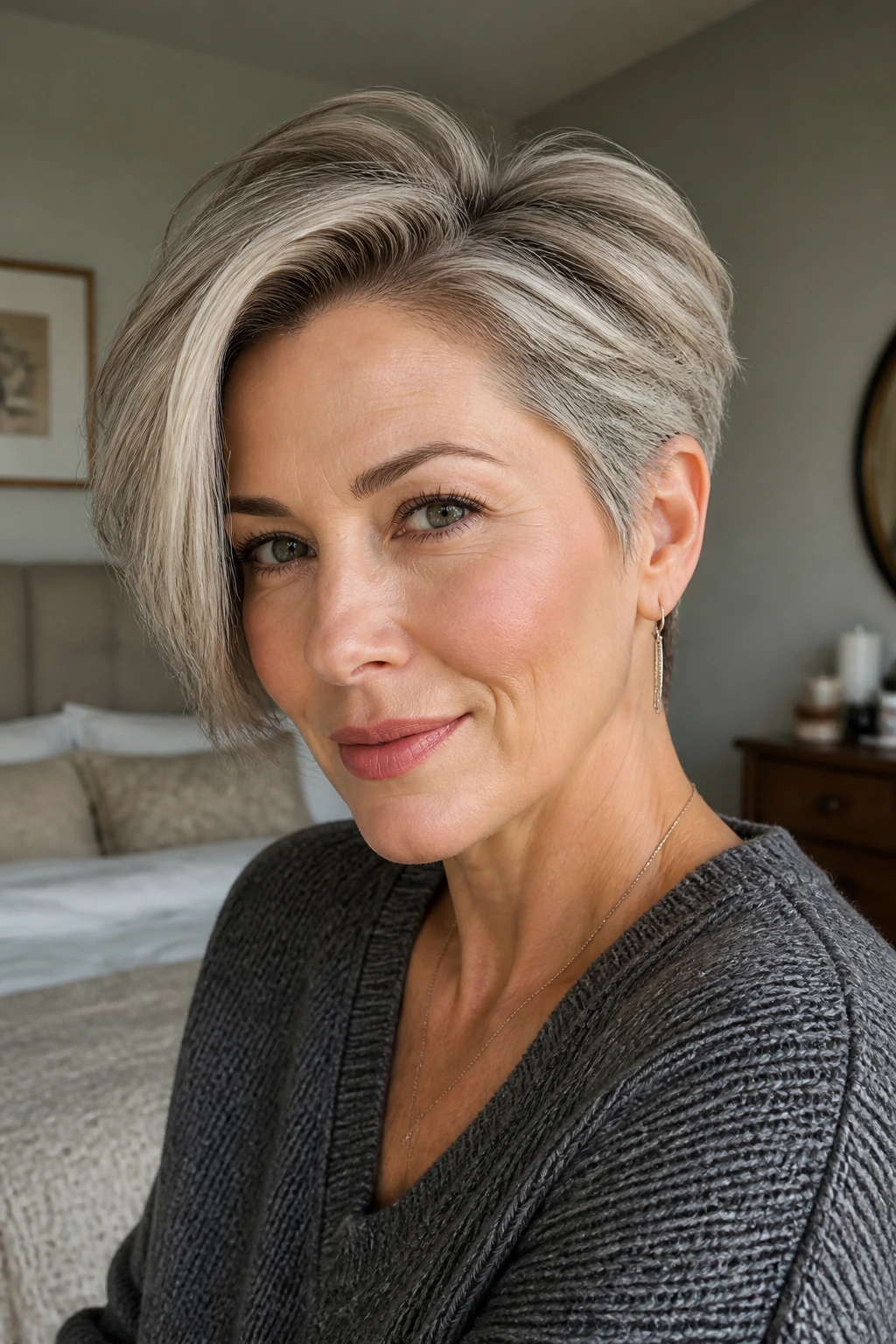
Some days you want hair off your face, period. This cut gives you that option without sacrificing softness. The front is long enough to be brushed back or angled to the side, so you can change the direction depending on how much polish you want.
It’s a good choice for people who wear glasses or spend a lot of time pushing hair out of their eyes. The side-falling front keeps the look feminine and balanced, while the brushed-back shape gives a cleaner profile for work or evenings out.
A quick blow-dry with the nozzle aimed at the roots makes a big difference. Fine hair usually needs that root direction set before it dries. Skip that, and the front will collapse forward in a way that looks accidental.
13. Dimensional Brunette Pixie with Subtle Highlights
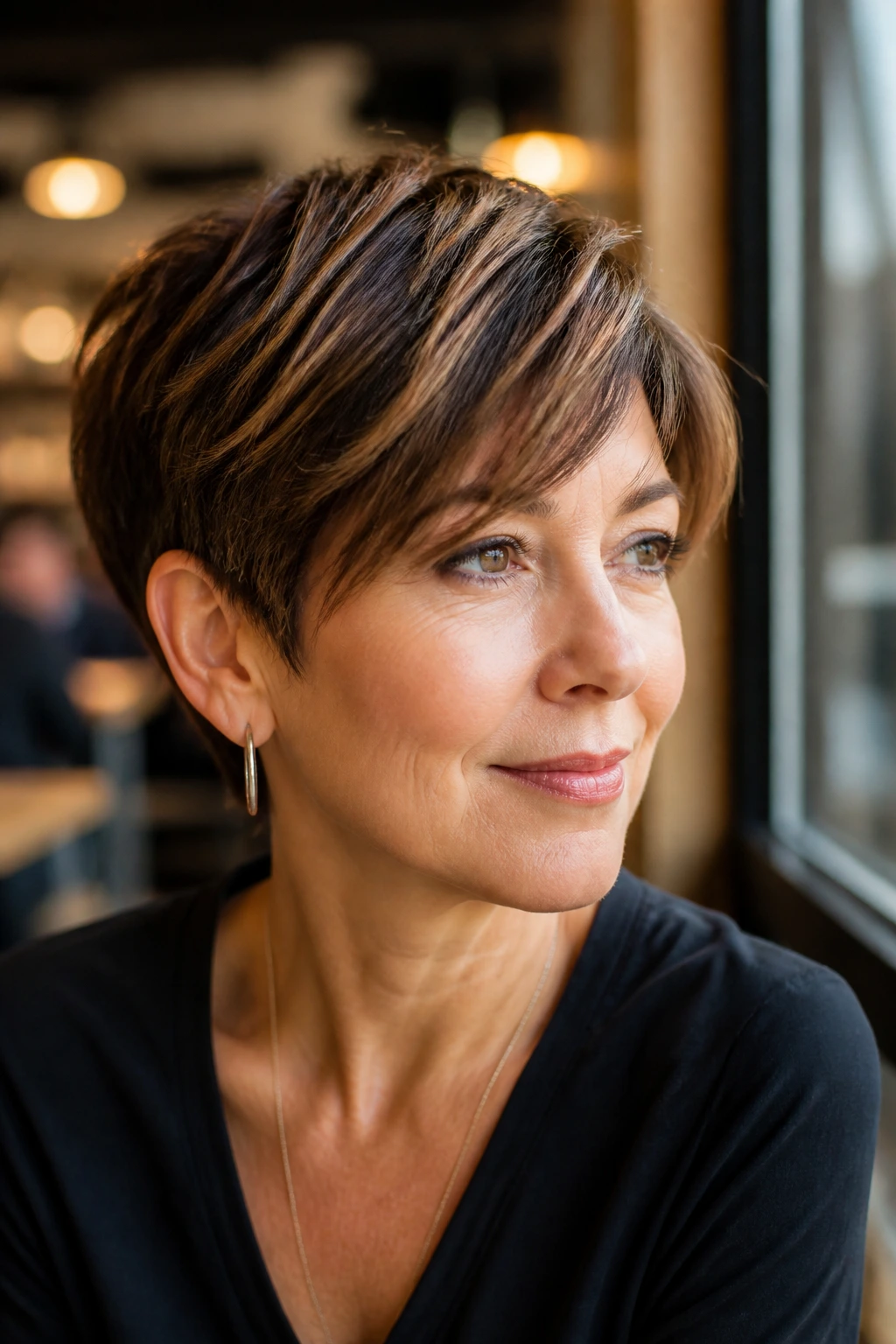
Color can do more for a pixie than people expect. On fine hair, a single flat brunette shade sometimes swallows the cut; subtle highlights create tiny bands of light that make the layers visible. That’s especially helpful with side-swept bangs, because the sweep reads more clearly when there’s dimension in it.
I prefer soft caramel, chestnut, or mocha ribbons over chunky highlights here. Big streaks can make a pixie look striped, which is the opposite of what you want. Tiny pieces of contrast around the fringe and crown give the cut movement.
If your hair is naturally dark, a gloss or lowlight can also help deepen the base and make the ends look thicker. It’s a small trick with a big visual payoff.
14. Blonde Pixie with a Light, Sweeping Bang
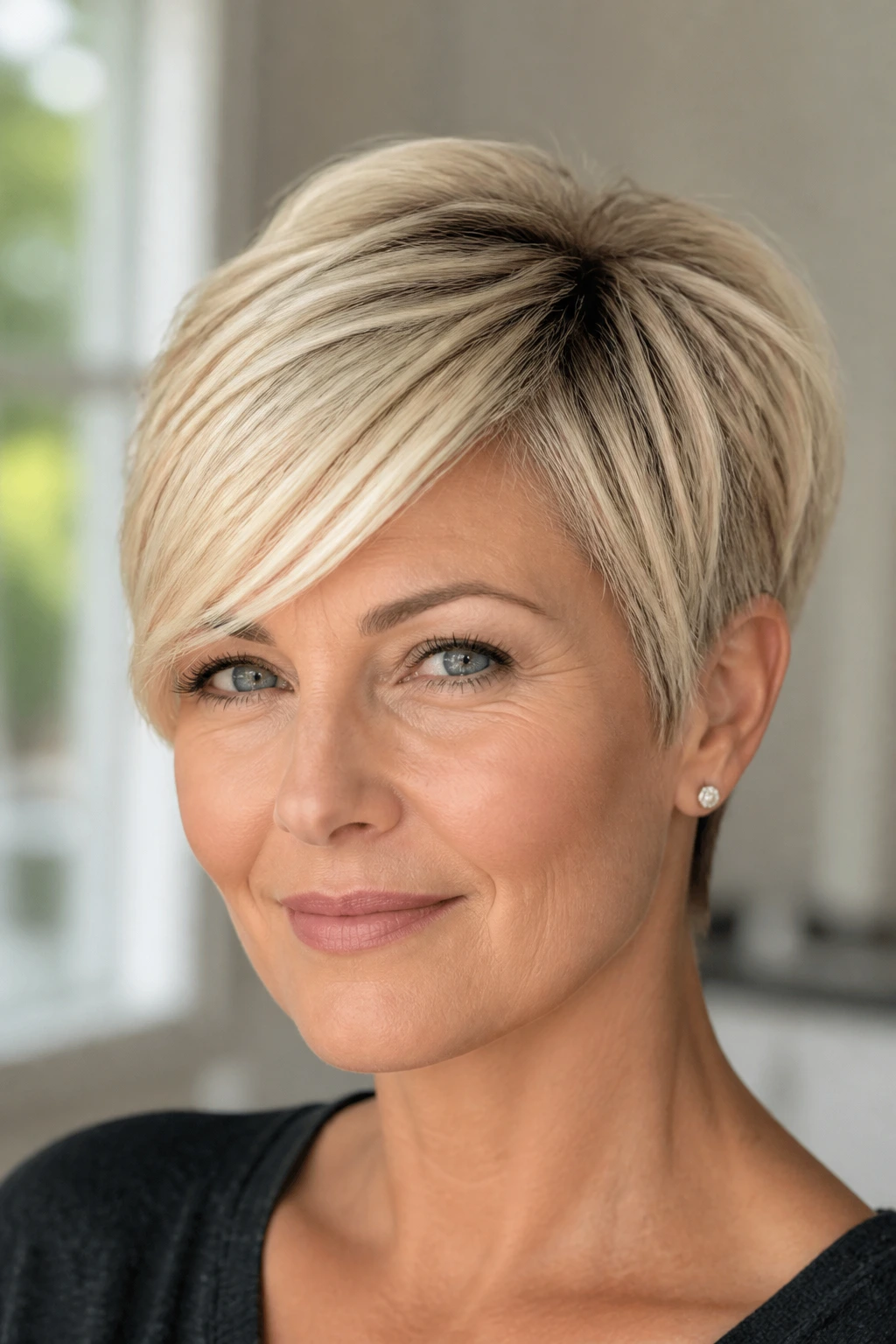
Blonde pixies can look airy and expensive when the bang is handled with care. The fringe should stay light, not shredded to the point of disappearing. Side-swept bangs work especially well in blonde because the diagonal line shows up even when the rest of the cut is short.
A touch of root shadow keeps the style from looking washed out. That little bit of depth near the scalp helps the crown feel fuller. All-over pale blonde on fine hair can sometimes erase shape; a soft root gives the cut a backbone.
This version suits people who want brightness around the face without long hair maintenance. The color does some of the softening that layers usually do.
15. Salt-and-Pepper Razor Pixie
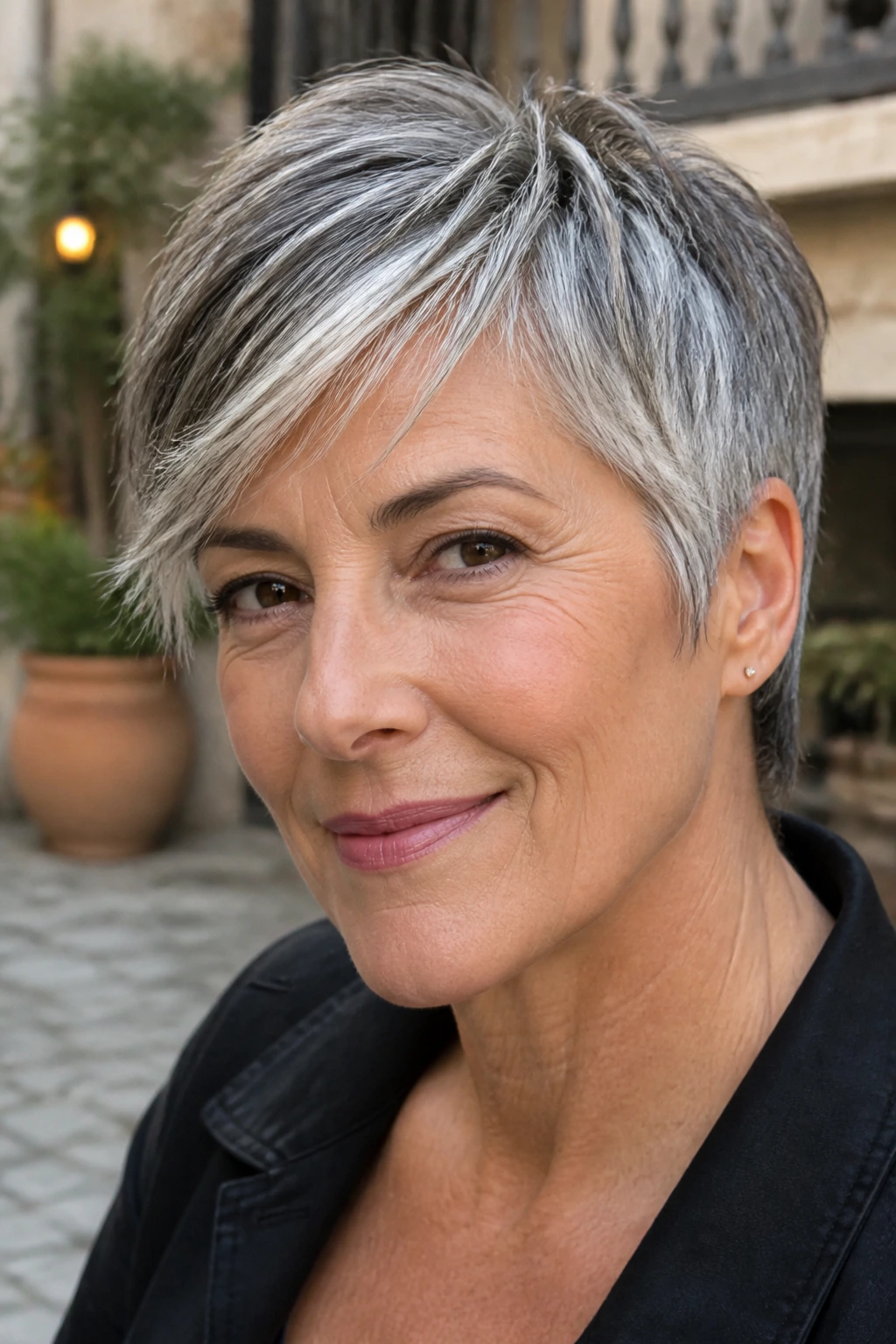
Salt-and-pepper hair has its own texture story, and a razor pixie can make that story feel sharp in a good way. The razor creates airy ends and a little movement through the top, which lets the darker and lighter strands mix in a way that looks intentional instead of patchy.
But here’s the catch: a razor cut is not for every fine head of hair. If your strands are fragile or prone to fraying, the stylist may need to use point-cutting instead of a heavy razor pass. The goal is texture, not shredded ends.
The side-swept bang is what softens the overall shape. It keeps the cut from looking too edgy or too short around the forehead. That front diagonal is doing more work than people realize.
16. Low-Maintenance Wash-and-Go Pixie
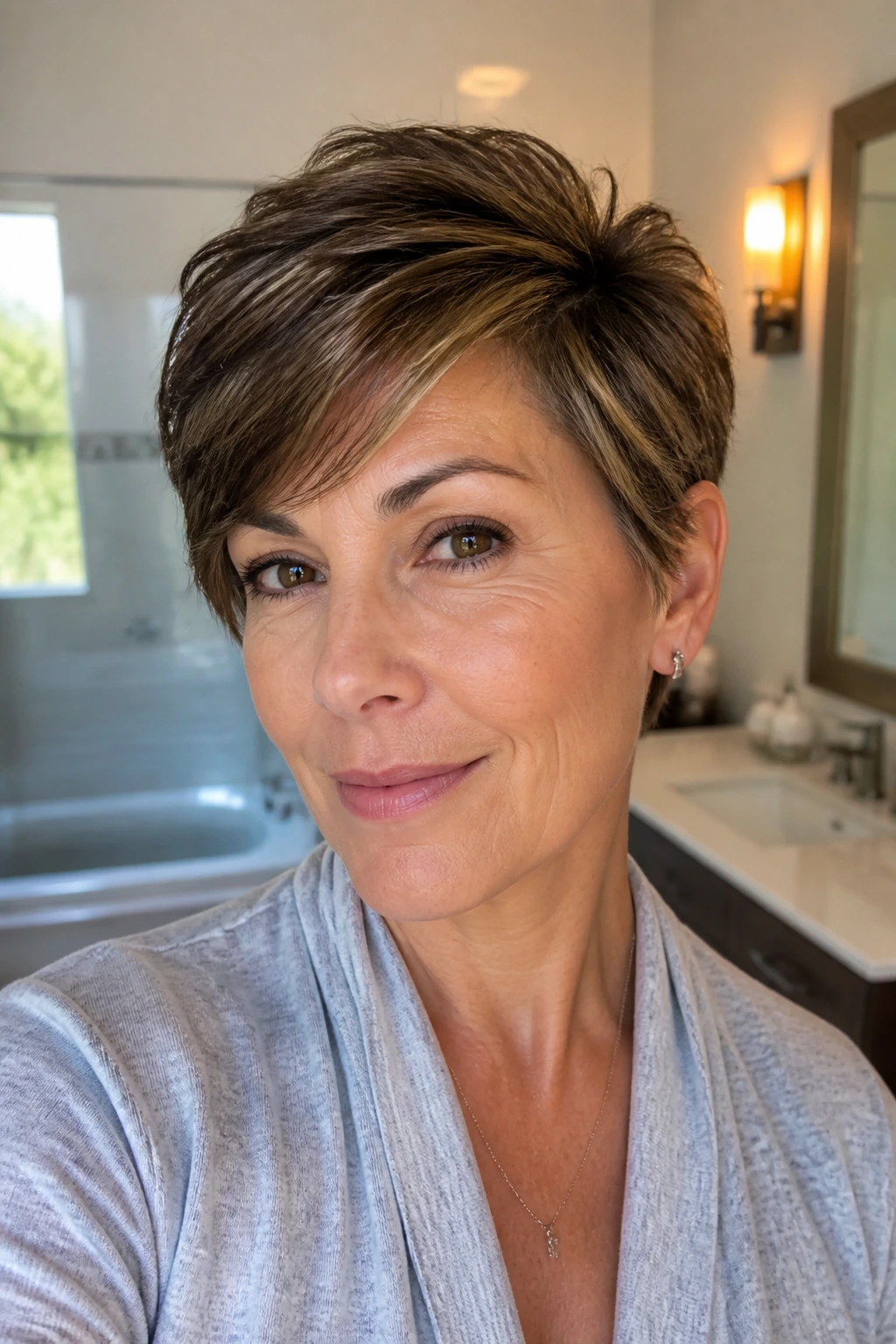
If you want a pixie that doesn’t ask for a full styling session every morning, this is the one. The top stays long enough to fall into place with a bit of mousse, and the sides stay close enough to the head that they don’t puff out or flip weirdly. The side-swept bang gives you a built-in direction even when you air-dry.
The cut should be designed around your natural part and your natural cowlicks. That’s the part many people miss. A wash-and-go pixie is not lazy; it’s planned.
I’d keep this shape slightly longer than a super-short crop so you have room to redirect the bangs on second-day hair. Fine hair likes options. A cut with just enough length gives them to you.
17. Sweeping Fringe Pixie for Rounder Faces
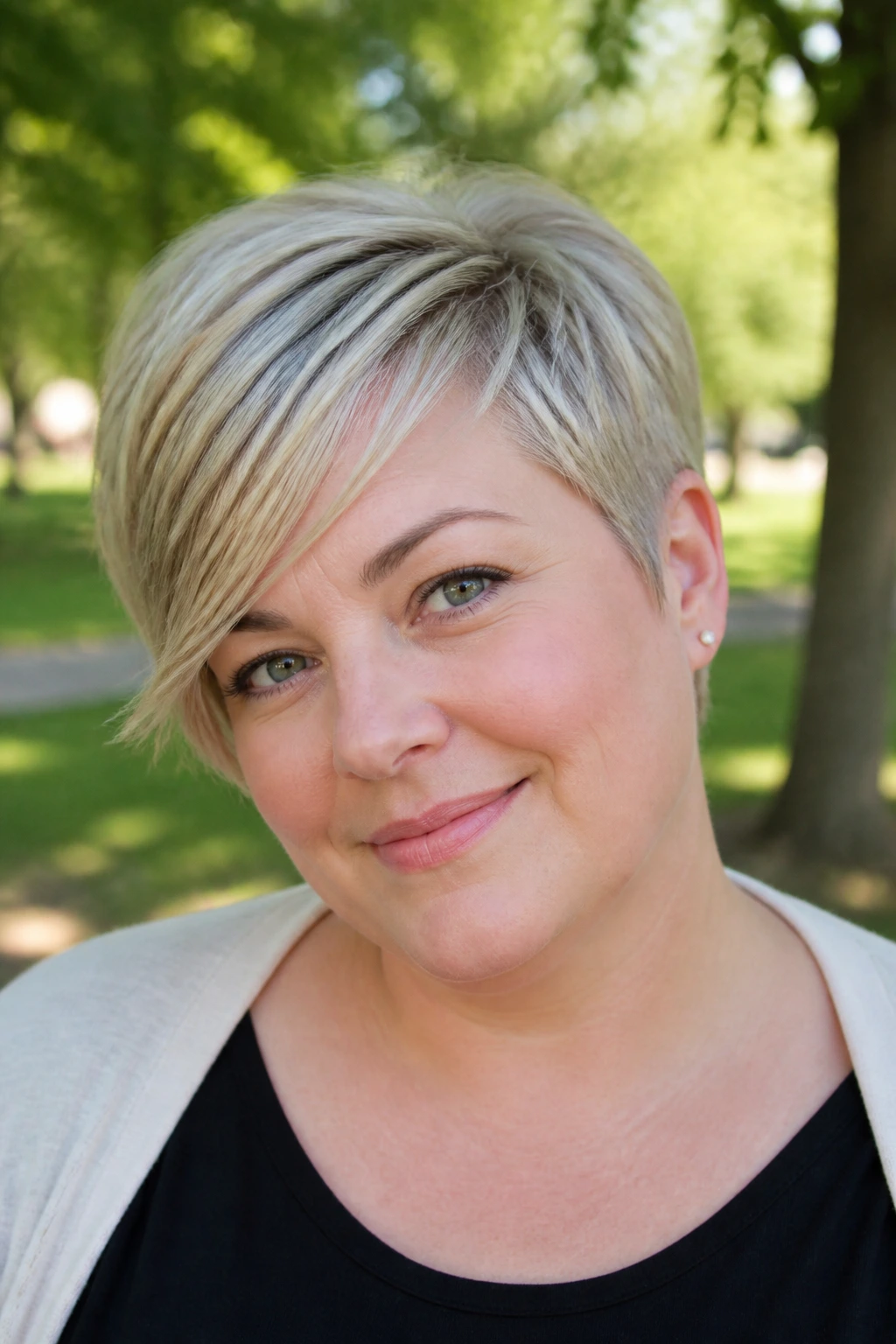
A sweeping fringe can make a round face look more lifted because the line runs diagonally instead of horizontally. That diagonal pulls the eye upward and outward, which breaks the width at the cheeks. The rest of the cut should stay a little closer at the sides and a touch fuller on top.
This is not the place for a straight bang that cuts the face in half. It chops the shape into a wider-looking block. A side sweep is much kinder because it leaves a vertical opening in the middle of the face.
If you want the face to look a bit longer, keep the fringe light near the brow and let the longest piece land just past the outer corner of the eye. Small shift. Big effect.
18. Elongated Tapered Pixie for Longer Faces
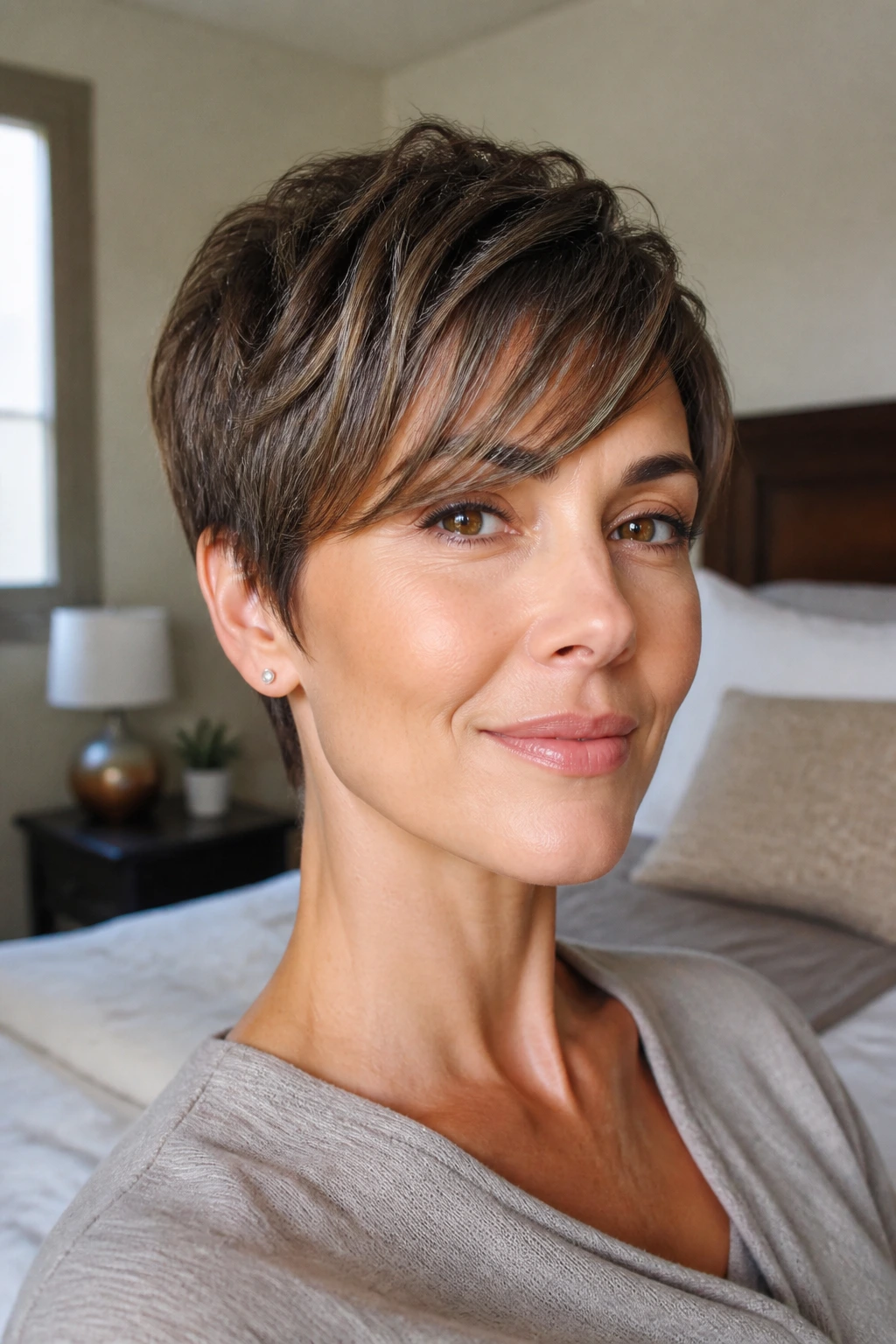
Longer faces need a different strategy. Too much crown height can stretch the proportions, so the trick is to keep the top controlled and the fringe a little longer. The taper still gives shape at the nape and sides, but the front should soften the forehead instead of lifting away from it.
This is where side-swept bangs earn their keep. They interrupt the vertical line and bring the face back into balance. I’d avoid super short pieces at the hairline unless you want a very sharp finish.
The best version has enough width through the temples to keep the silhouette from looking too narrow. Fine hair can go hollow at the sides if the cut is too tight. You want taper, not disappearance.
19. Ear-Hugging Pixie with Soft Edges
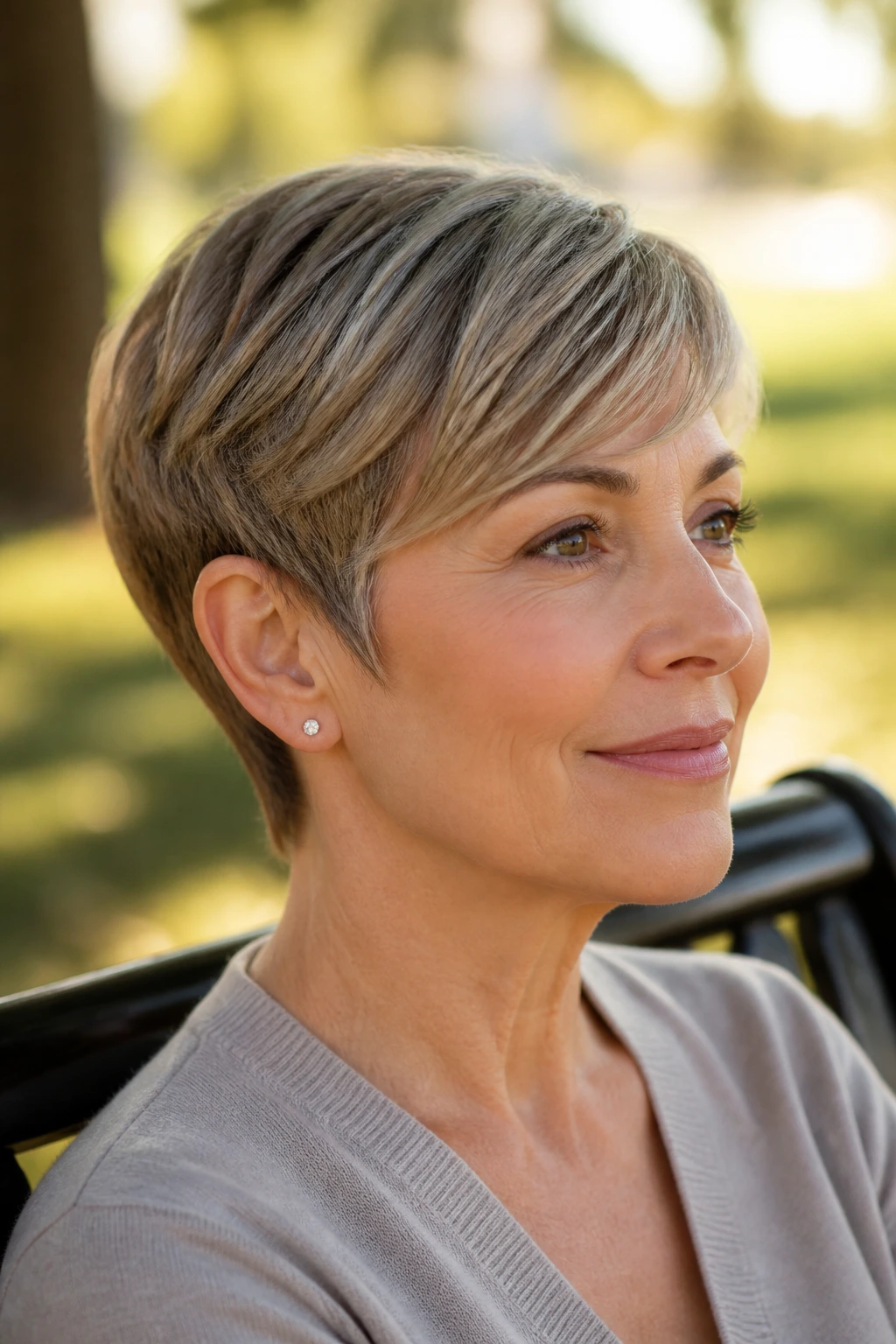
This cut has one of my favorite little tricks: it follows the ear without feeling severe. The side sections tuck neatly but still leave a soft edge around the temples and fringe, so the shape feels intimate rather than severe. If you like showing earrings or the line of the jaw, this is a good one.
The side-swept bangs are the important part here because they keep the front from getting too clean and straight. A tiny bit of softness at the forehead makes the ear-hugging shape feel feminine and easy to wear.
It’s also a strong choice if your hair tends to puff out around the ears. Keeping that area neat makes the whole cut look intentional. No fluff, no bulk, no fuss.
20. Modern Classic Pixie with Long Side Bangs
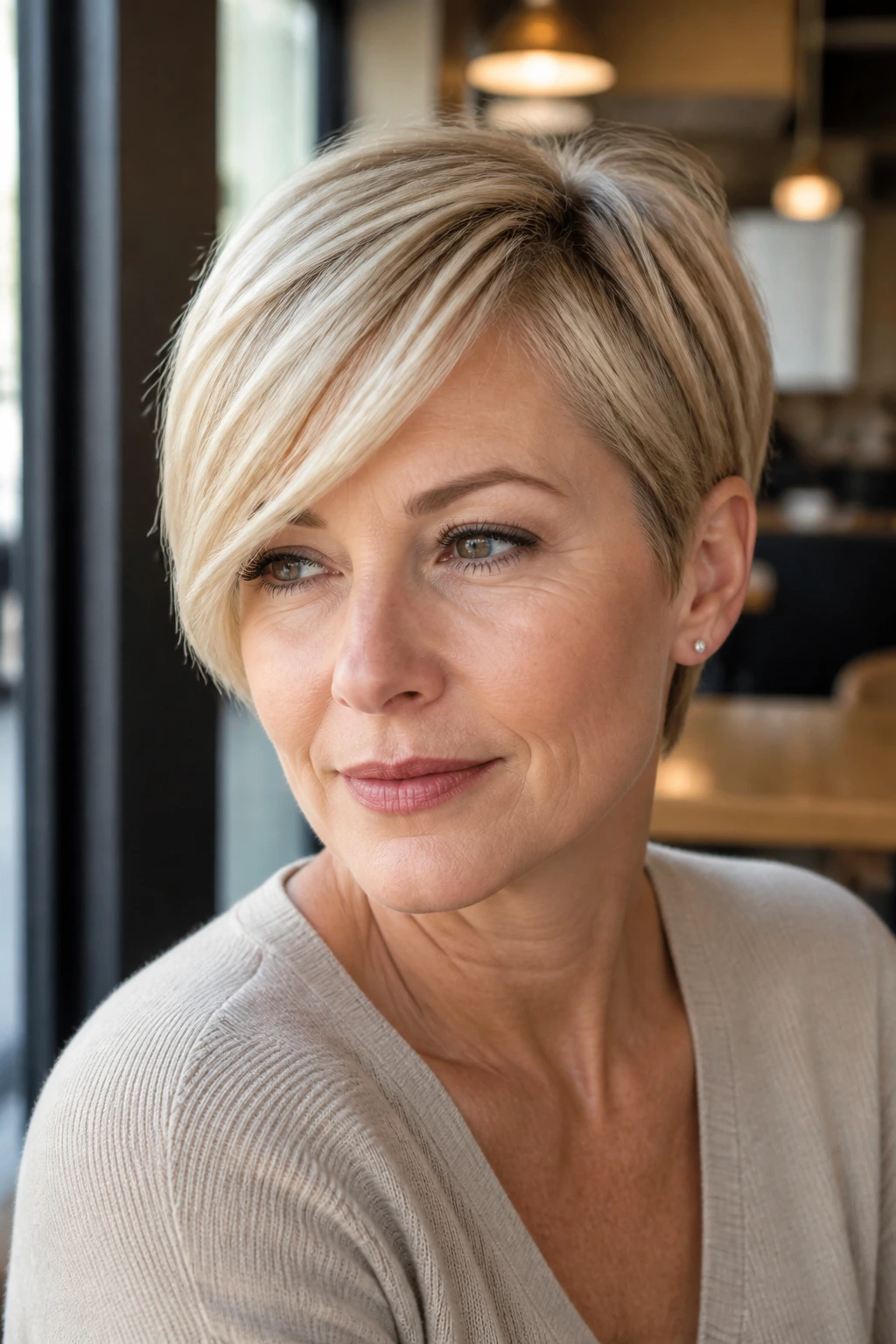
This is the pixie I’d point to for someone who wants a cut that can move from casual to polished without a full change in styling. The shape is classic: short around the back and sides, longer through the top, and a generous side bang that falls across the forehead in one clean sweep. It’s simple, but not plain.
The long bang is the reason it stays wearable as your taste changes. You can tuck it, pin it, sweep it, or let it soften a strong brow line. Fine hair benefits from that flexibility because the style doesn’t depend on one exact finish.
If you only want one pixie to live with for a while, this is probably the safest bet. It has enough structure for busy days and enough softness for everything else.
Why This Shape Makes Fine Hair Look Fuller
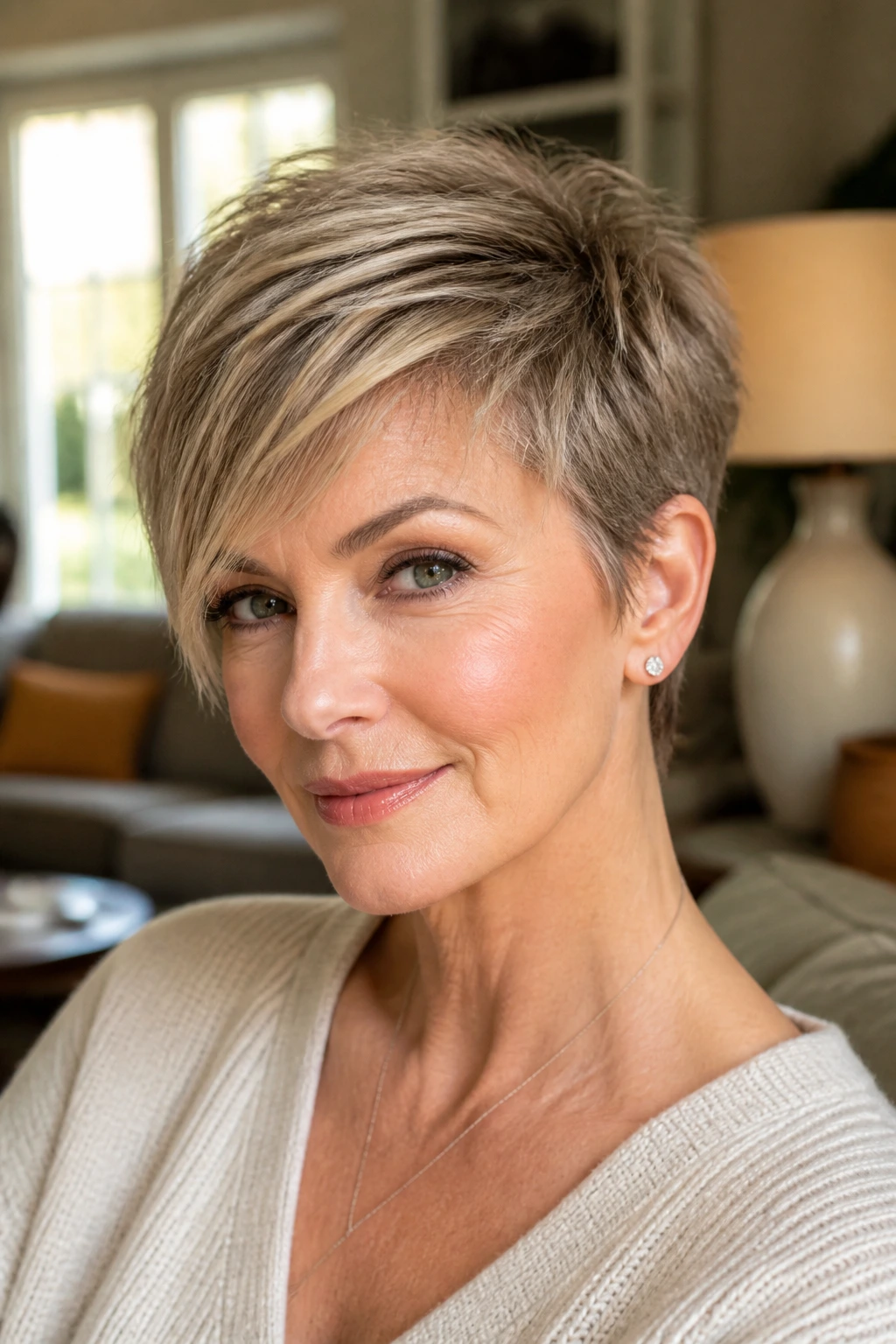
Fine hair usually looks sparse when the cut asks it to do too much. Long ends hang. Heavy bangs separate. Layers placed in the wrong spot take away density instead of creating movement. A good pixie avoids those traps by keeping the silhouette short enough to support itself.
Side-swept bangs are a big part of the equation because they create a diagonal line across the face. Diagonals move the eye. Straight lines stop it. That’s why a side sweep can make a forehead feel softer, a crown feel higher, and the whole cut feel less stiff in one pass.
The other reason these pixies work is simple: the weight is where it counts. The back is tapered, the sides are controlled, and the top keeps just enough length to show texture. That balance matters more than age, honestly. Hair density, growth pattern, and face shape do most of the talking.
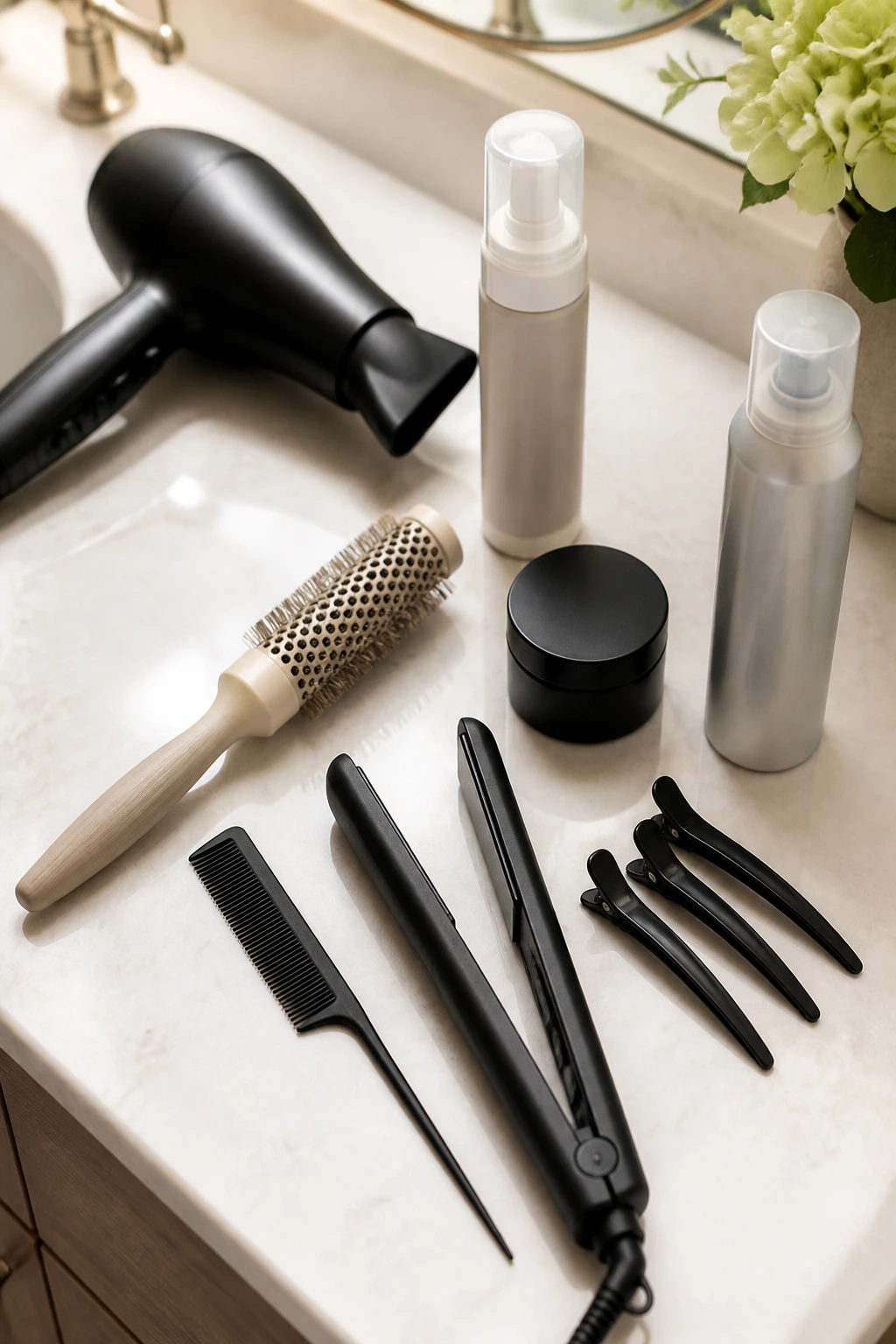
Essential Equipment for These Cuts
-
Blow dryer with a narrow nozzle: Helps direct the fringe and push the roots where you want them.
-
Small round brush, about 1 to 1.25 inches: Best for lifting fine hair at the crown without making the ends puff out.
-
Lightweight mousse or root lift spray: Gives the top some grip before the hair dries.
-
Matte texturizing paste: A tiny amount can separate the fringe and keep the ends piecey.
-
Dry shampoo: Useful for day-two volume, especially at the bangs and crown.
-
Tail comb: Makes it easier to set a side part cleanly and section the front.
-
Flat iron with narrow plates: Optional, but handy if the side sweep bends the wrong way.
-
Duckbill clips: Good for setting the fringe while it cools in shape.
How to Talk to Your Stylist About Fine Pixie Cuts for Women Over 40 with Side-Swept Bangs
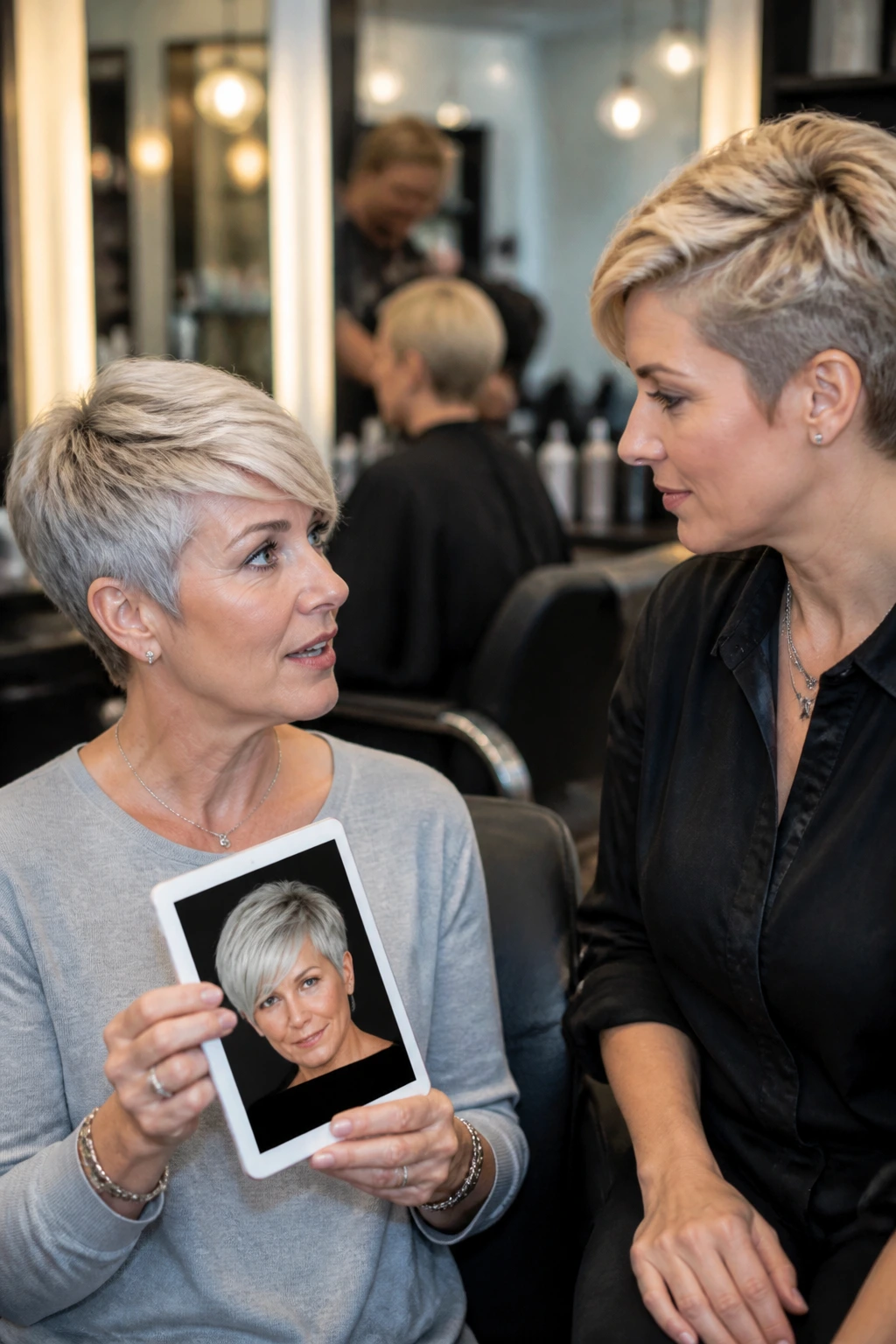
Bring photos, but bring the right kind. A picture of a model with thick hair and a heavy undercut won’t help if your hair is fine and soft. Look for cuts with similar density, similar growth patterns, and a fringe length that matches the amount of forehead you actually want to show.
Say exactly where you want weight removed and where you do not. Fine hair can look thin if a stylist thins it everywhere. The better question is, “Can you keep the density through the top and only remove bulk where it crowds the shape?” That phrasing gets to the real issue fast.
Mention cowlicks, especially at the front hairline and crown. A side-swept bang needs to be cut with those natural bends in mind. If your bangs always split or kick up, tell the stylist before the scissors come out.
How to Wear These Pixies Day to Day
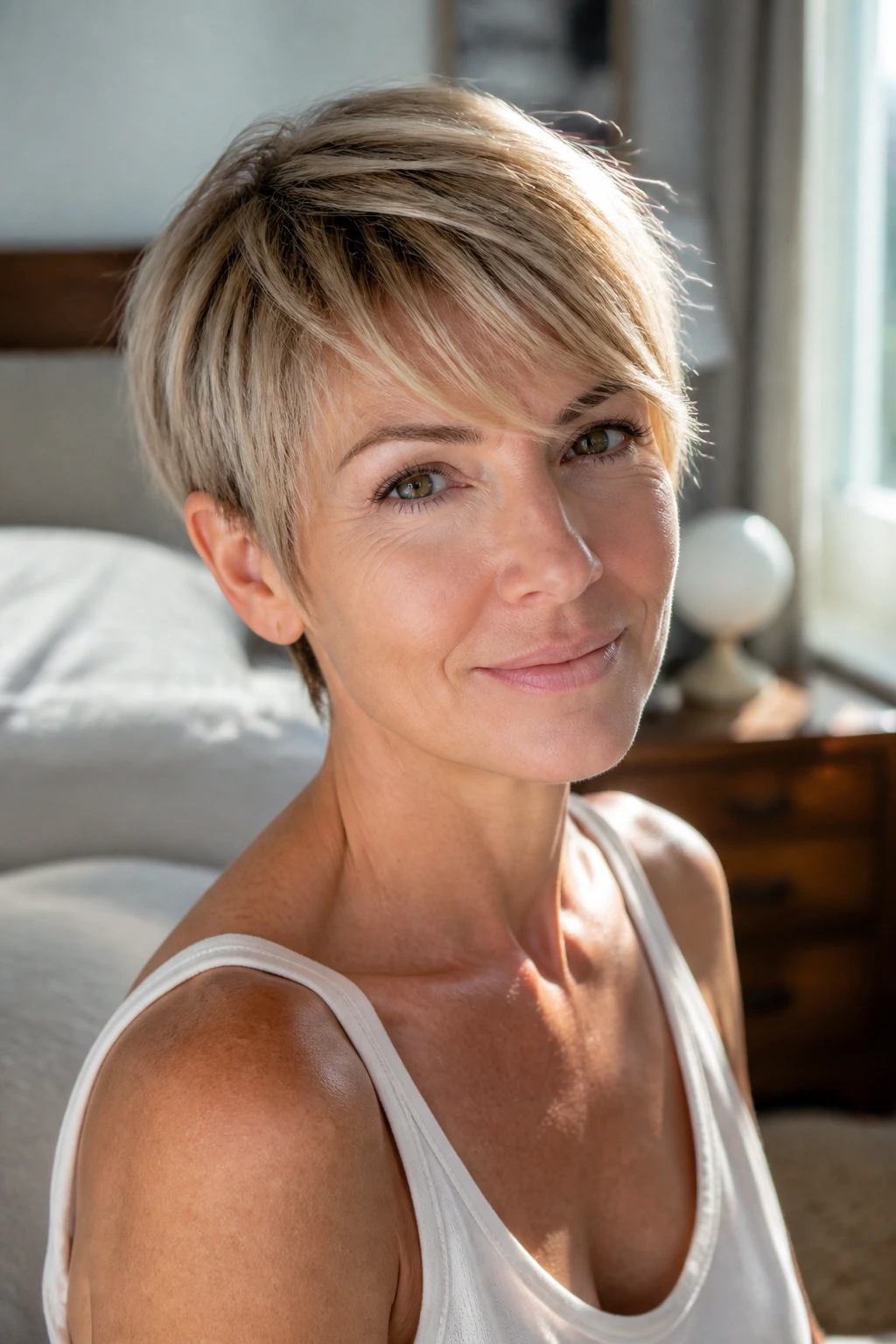
Daily Styling: Start with a pea-sized amount of mousse at the roots, then blow-dry the front in the direction you want it to fall. That first minute of drying matters more than people think.
Second-Day Refresh: Mist the crown lightly with water or a leave-in spray, hit the roots with a blow dryer for 20 to 30 seconds, and pinch the fringe back into place with your fingers.
For Glasses: Keep the bang slightly longer at the outer edge so it doesn’t sit directly on the frame line. That tiny detail keeps the front from feeling crowded.
For Busy Mornings: Use dry shampoo at the crown, then flip the front side to side once before setting the final part. It wakes the roots up fast.
Additional Tips and Style Boosters
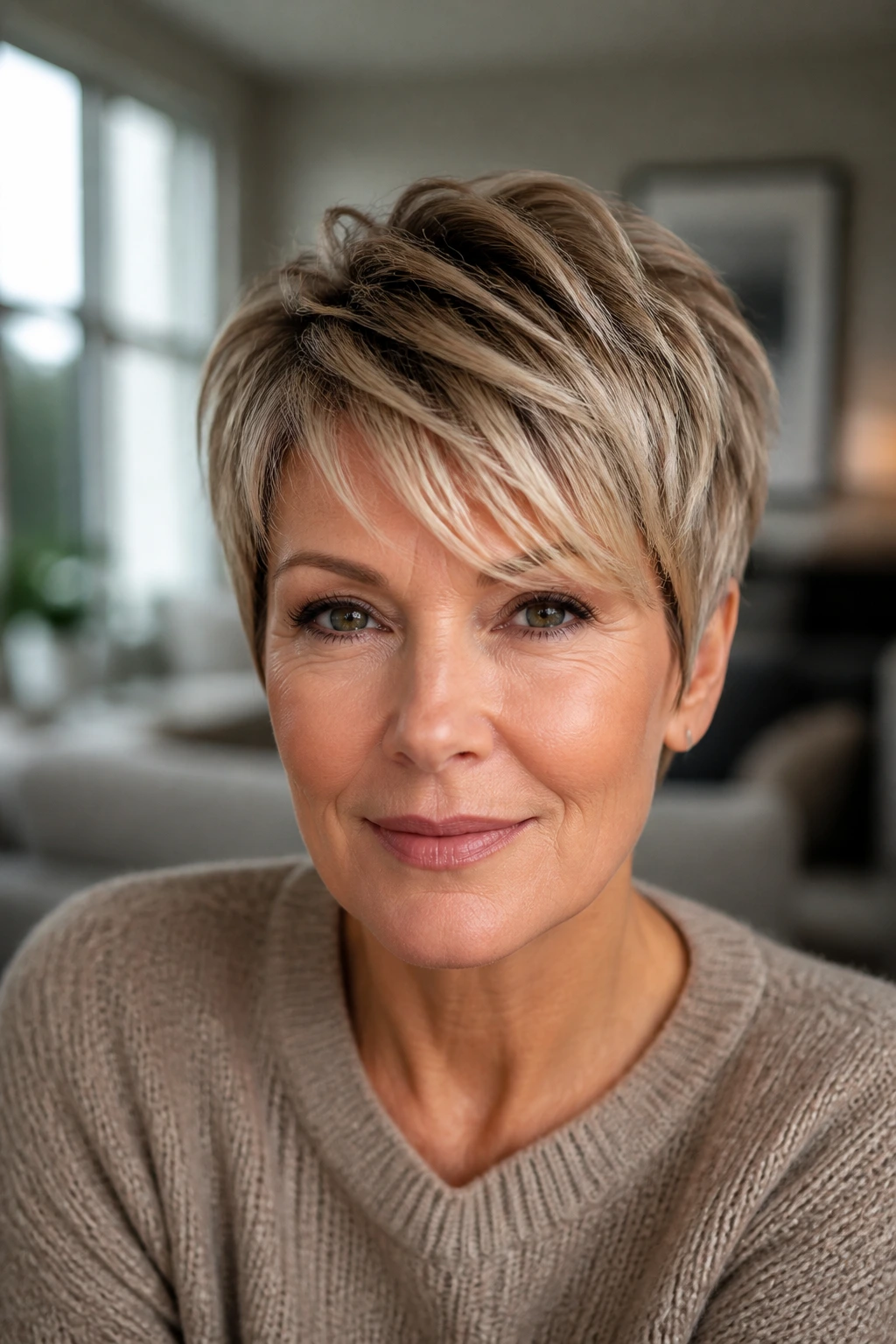
Volume Boost: Dry the crown first, not last. If the roots set flat, the rest of the style has to work twice as hard to fake lift.
Fringe Control: Let the side-swept bang cool over a clip for 2 to 3 minutes after drying. That short set makes the sweep hold its shape without extra hairspray.
Color Lift: A few subtle highlights around the fringe can make a pixie read fuller because the eye sees separate planes, not one flat cap of hair.
Finish Touch: Run a little styling paste only through the last inch of the fringe and top layers. If you put it at the roots, the cut goes limp.
Make-It-Yours: If you prefer more softness, leave a touch more length at the temples. If you like sharper lines, tighten the nape and ears while keeping the top longer.
Maintenance, Grow-Out, and Between-Trim Care
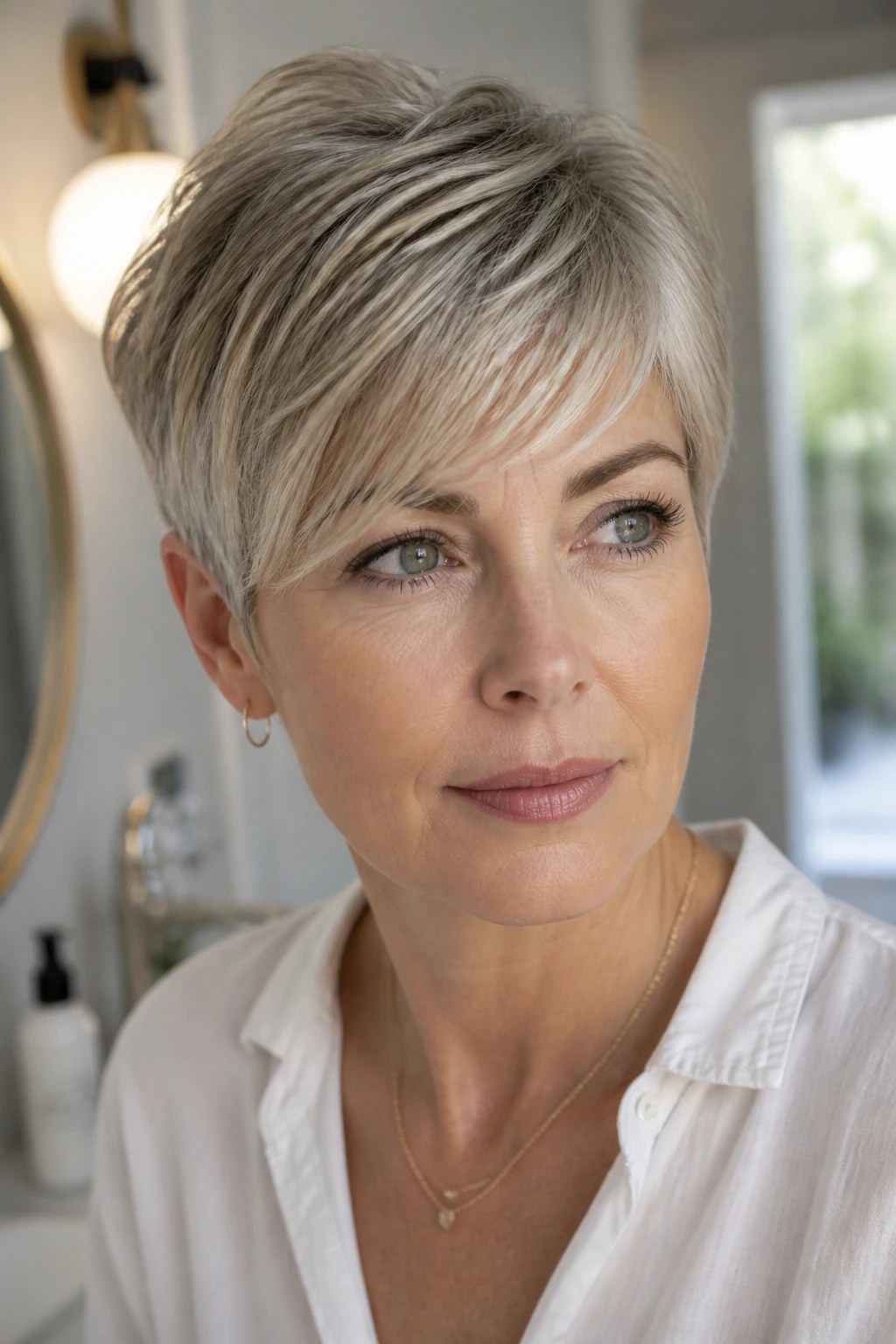
Pixies live or die by the trim schedule. For most fine-haired heads, the shape starts to blur after about 4 to 6 weeks, especially around the ears and nape. The bangs may need a tiny fringe trim sooner, often every 2 to 3 weeks if they’re long enough to brush the lashes.
A good grow-out plan keeps the top slightly longer than the sides from the beginning. That way, when the cut softens, it turns into a neat short crop instead of a lopsided grow-out. If you know you want to transition later, ask for a longer temple area and a nape that’s tapered rather than shaved.
At home, use lightweight shampoo and a conditioner only from mid-lengths to ends. Heavy conditioners at the roots can flatten fine hair fast. If your hair gets oily quickly, a dry shampoo at the crown on the second day can buy you another 24 hours without making the fringe sticky.
Variations and Adaptations to Try
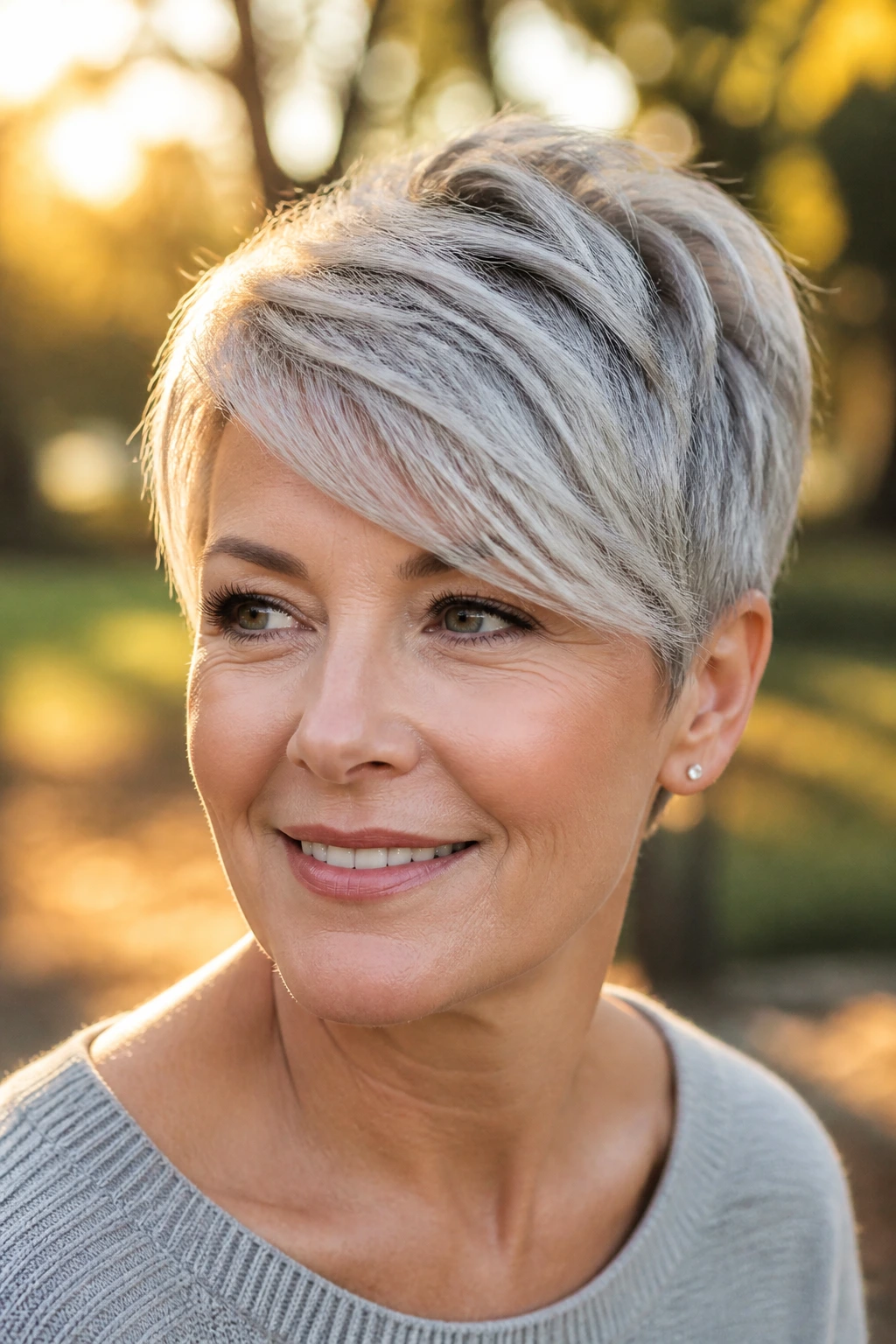
Soft Silver Sweep: Let your natural gray or silver come through and keep the fringe long and softly feathered. A gloss every so often keeps the color bright and the cut looks cleaner because the shine shows off the shape.
Curly Crown Pixie: Leave extra length through the top and fringe so curls can bend instead of puff. This version needs a gentle diffuser and a light gel, not a heavy cream that drags the roots down.
Office-Polished Pixie: Ask for cleaner lines at the nape and temples, plus a longer side bang that can be tucked behind the ear. It works well if you want the cut to look sharp with a blazer and easy with a sweater.
Textured Weekend Pixie: Keep the same base cut, then style it with matte paste and a side-to-side finger ruffle. This version gives you more visible pieces through the fringe and crown without changing the haircut itself.
Glasses-Friendly Pixie: Leave the side bang a touch longer and keep the temple area soft so the frames don’t fight the hairline. The front should skim, not sit heavy.
Common Mistakes to Avoid
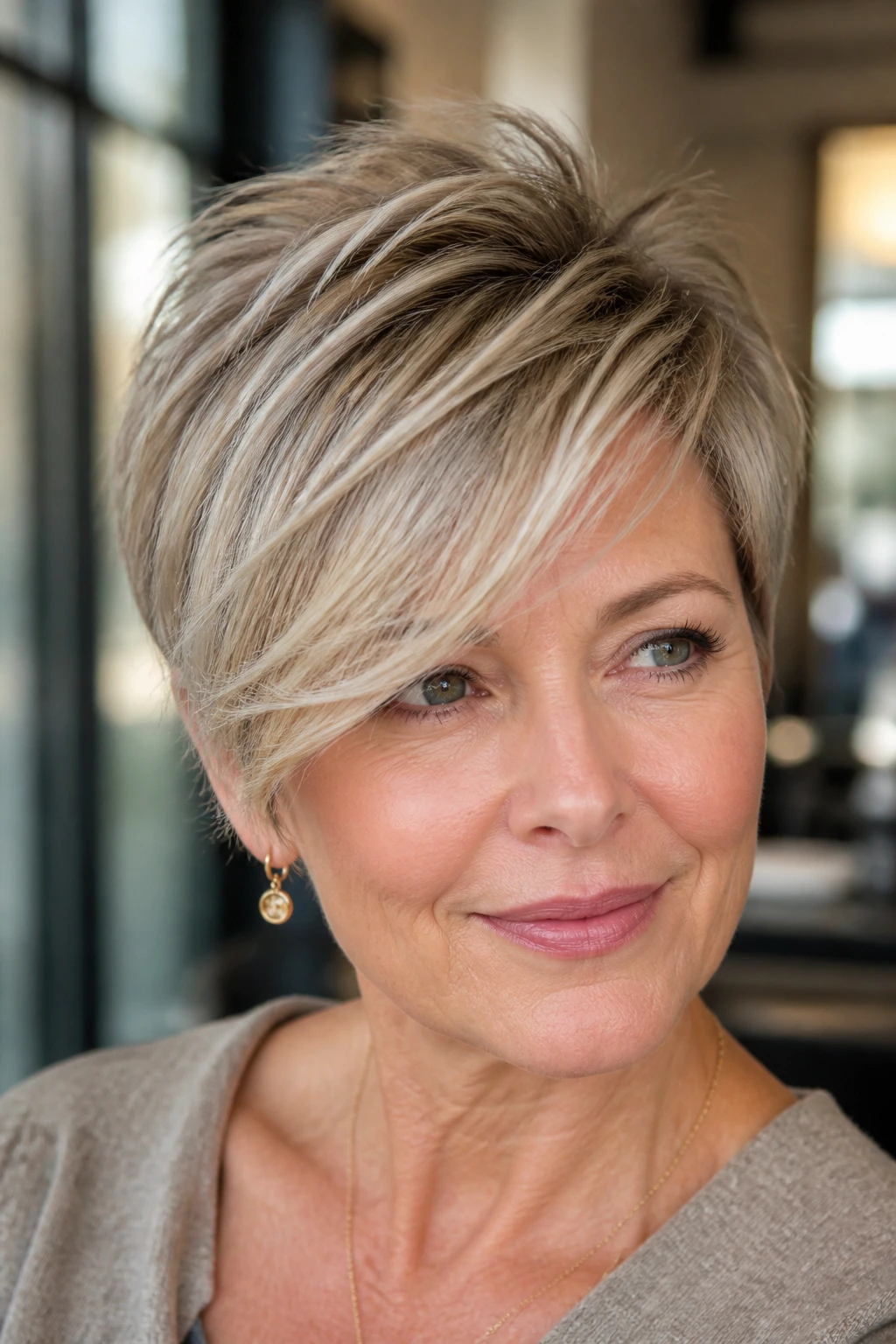
The biggest mistake is removing too much bulk from fine hair. It sounds helpful in theory, but the symptom is easy to spot: the cut starts looking see-through and wispy at the ends. Ask for controlled thinning only where the hair truly crowds, not all over.
Another problem is cutting the side-swept bang too short on the first visit. Short bangs can pop up, split, or sit awkwardly above the brow, and fine hair doesn’t have much weight to force them down. Leave more length than you think, then trim later if needed.
Watch the product hand too. Heavy creams and oils at the root make a pixie collapse before lunch. Keep richer products on the ends or skip them entirely in favor of mousse, root spray, or a tiny bit of paste.
The last trap is ignoring your natural growth pattern. A gorgeous pixie cut that fights a stubborn cowlick will become a morning argument. Work with the bend, part, and swirl.
Frequently Asked Questions
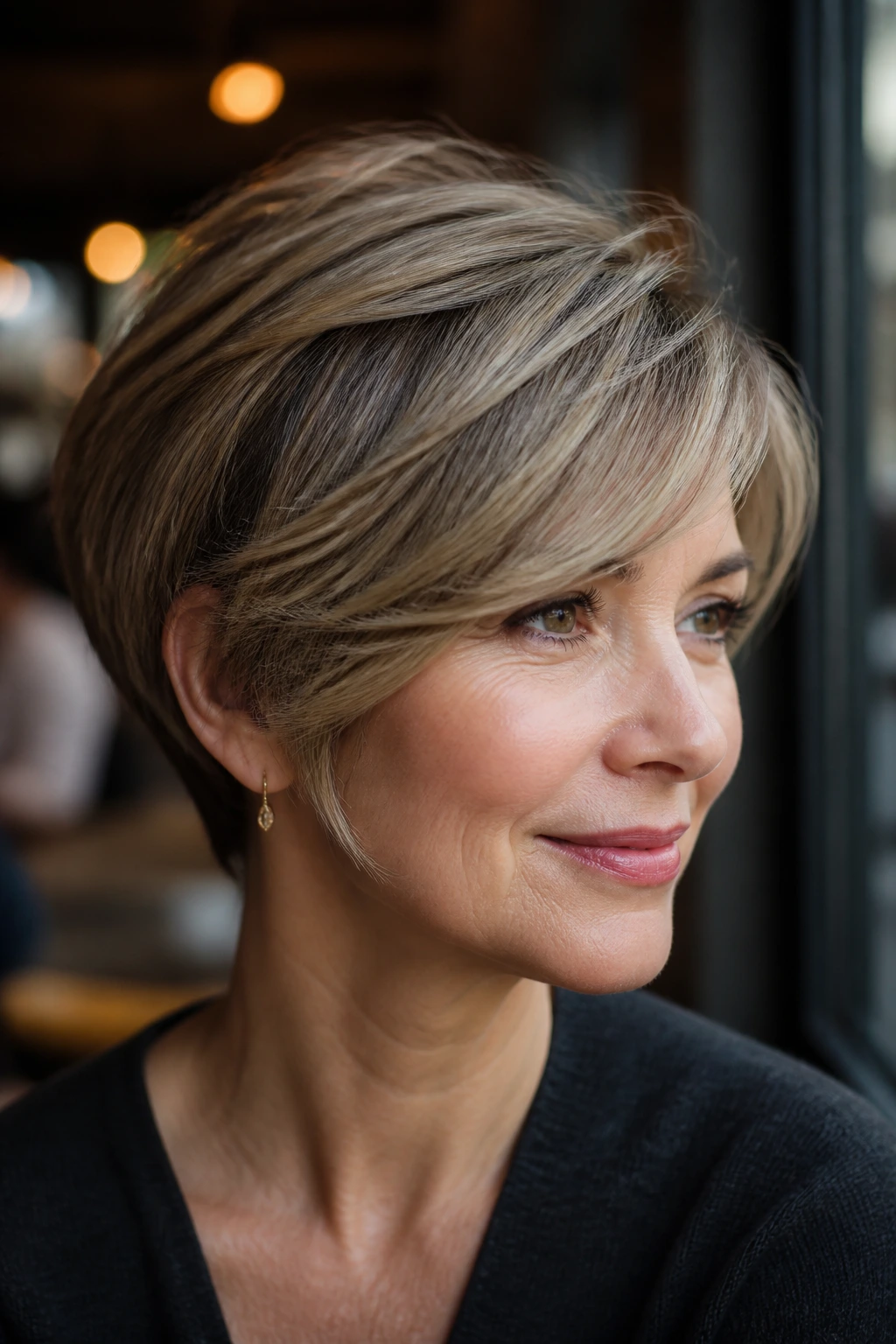
Will a pixie cut make fine hair look thinner?
Not if the cut is built with the right shape. Fine hair tends to look thinner when it grows long and separates, so a well-cut pixie often looks denser because the ends stay close together and the crown can be lifted.
How long should side-swept bangs be on fine hair?
Long enough to move, not so long that they fall in your eyes all day. For many people, that means the longest piece lands around the brow or just below it, then tapers shorter toward the opposite side.
Do I need to blow-dry a pixie every day?
No, but the front usually behaves better if you give it at least a quick directional dry. Even 60 seconds at the roots can keep the bang from flattening or splitting in the wrong place.
Can I wear this cut with glasses?
Yes, and the side-swept bang often looks better with glasses than a blunt fringe. The key is keeping the outer edge of the bang long enough to clear the frame line so the hair and glasses do not crowd each other.
What if my crown is flat and my hair grows straight down?
Ask for a little more length at the crown and use a root-lift product before blow-drying. The cut needs room to bend upward, and the roots need to be set before they dry if you want lasting lift.
Is this a good cut for gray hair?
Very. Gray and silver hair show off the shape of a pixie because the lighter color catches the layers and fringe movement. A soft side sweep keeps it from looking harsh around the forehead.
How do I grow out a pixie without looking awkward?
Keep the nape and sides trimmed while the top grows a little faster. That keeps the proportions clean so the cut turns into a short layered style instead of a shaggy compromise.
Should the stylist use a razor or scissors?
It depends on your hair. A razor can create softer edges, but very fine hair may fray if it’s overdone. Point-cutting with scissors is often safer when the strands are delicate.
The Shape That Keeps Giving
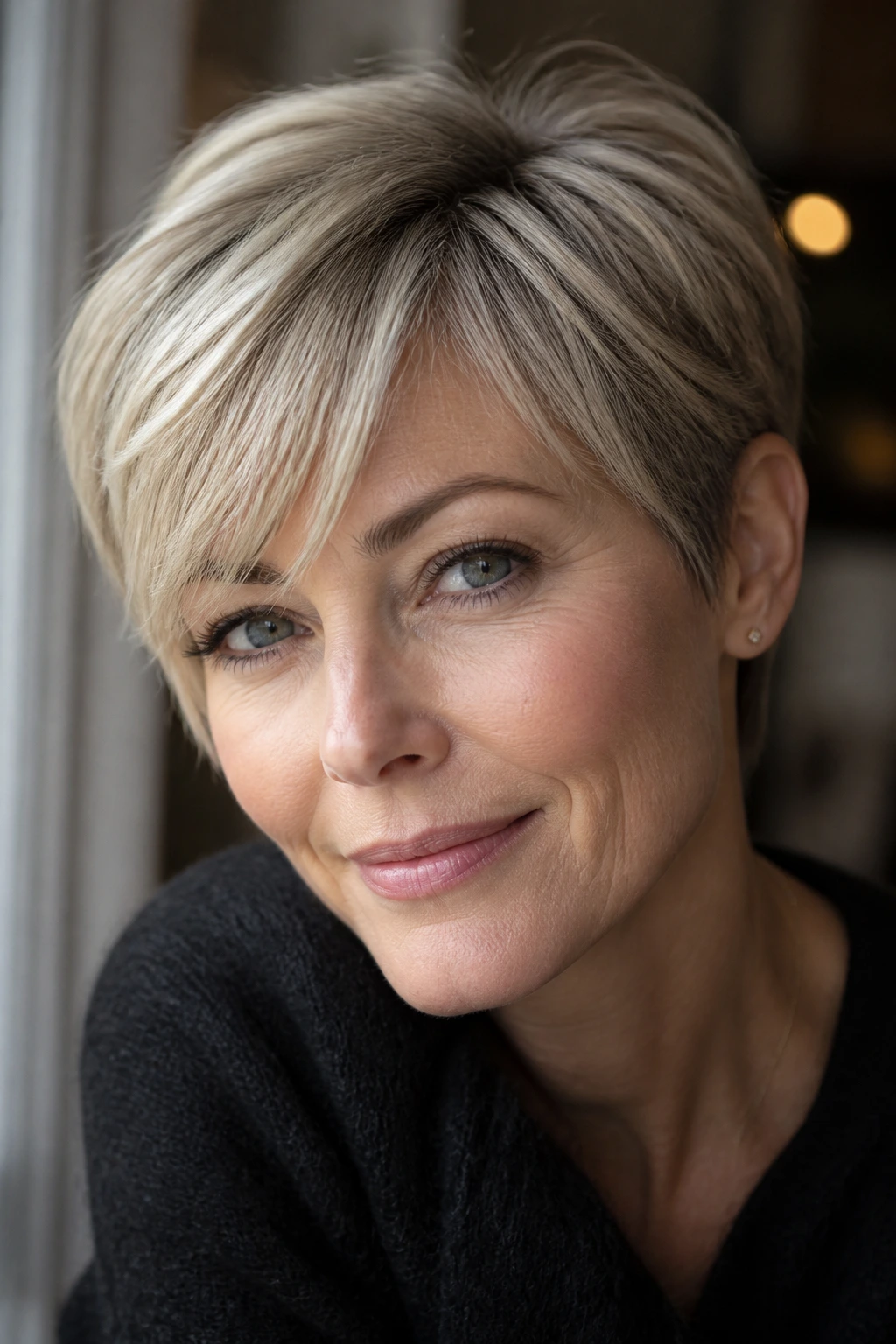
A good pixie doesn’t need much apologizing. It shows the face, supports fine hair, and puts the fringe exactly where it can do the most work. Side-swept bangs are the small detail that makes the whole thing feel livable instead of severe.
If your hair has been hanging on to length out of habit, one of these shapes may be the cleaner answer. Not bigger. Not fussier. Just smarter at the hairline, smarter at the crown, and easier to live with on a real Tuesday morning.