



Fine hair can make long haircuts look tricky at first glance. One bad cut and the shape goes soft in the wrong way — flat at the roots, see-through at the ends, and a little too much like the hair gave up halfway through the day. But give fine strands the right line, the right layers, and a little room to move, and the whole thing changes.
That’s the part most people miss. Long hair on boys with fine hair does not fail because the hair is fine. It fails when the cut tries to fight the hair instead of working with its natural fall. A blunt perimeter can sit like a shelf. Too much thinning can make the ends look wispy. The sweet spot is somewhere in the middle: enough length to show shape, enough structure to keep the hair from collapsing.
I like long boys’ cuts on fine hair when they feel light, not heavy. The best ones let the hair graze the brow, skim the ears, or brush the neck without turning into a shapeless curtain. That means layers, careful tapering, and a little restraint — not the kind that leaves the head looking shaved at the sides and stringy on top, but the kind that keeps the silhouette clean when the hair dries naturally.
Why These Long Cuts Work on Fine Hair
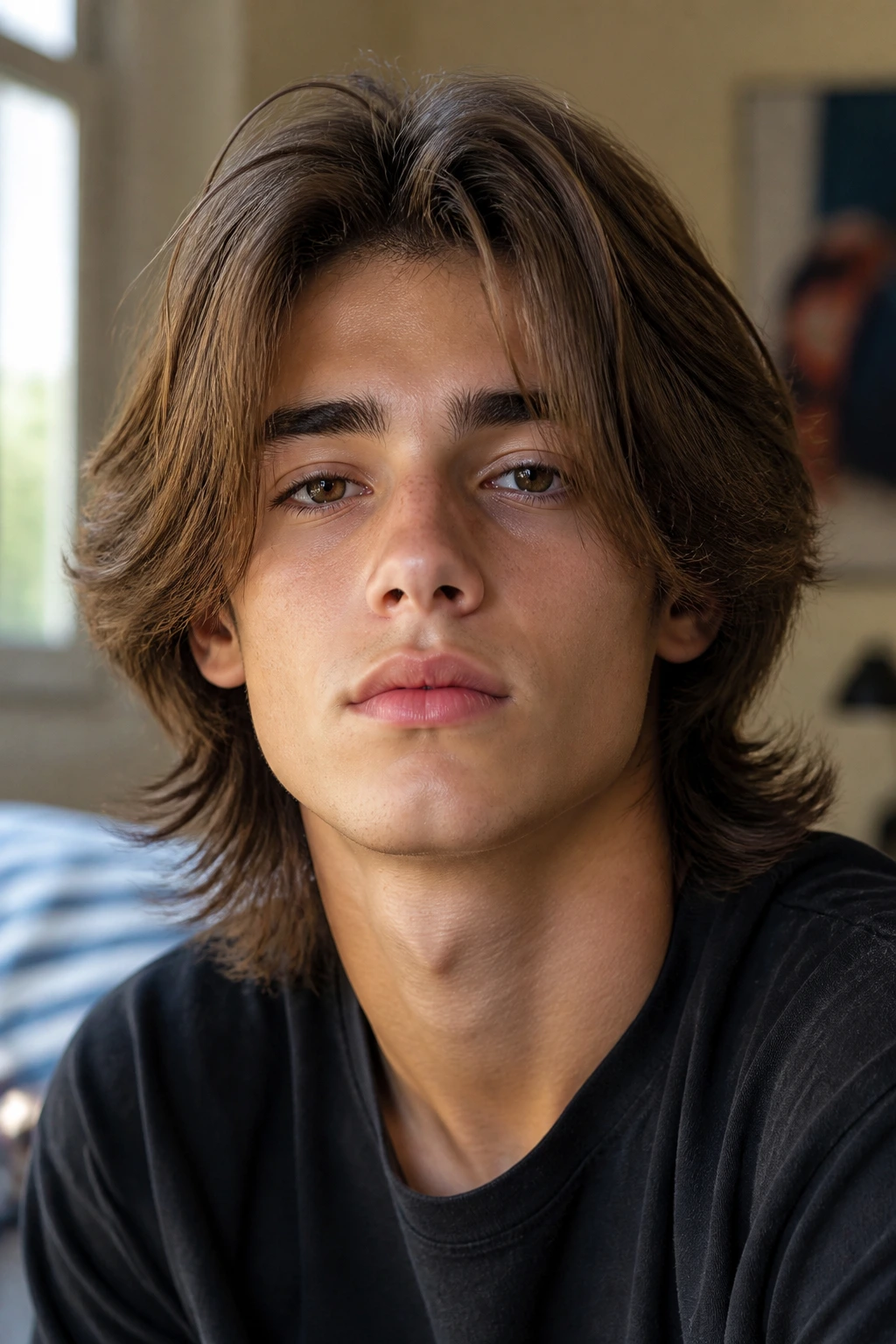
-
They keep the perimeter visible: Fine hair needs a clear outer line so the ends don’t disappear into a wispy blur by the time the school bell rings.
-
They use shape instead of bulk: The right long cut makes the hair look fuller by controlling where it falls, not by piling more product on top of it.
-
They grow out without getting ugly fast: A good long shape can survive six to eight weeks without turning into a helmet, which is a small mercy for anyone chasing after a kid with scissors.
-
They work with air-drying: Fine hair usually loses fight when it’s blasted with heat. These cuts are built to look decent with a towel-dry, a few finger-combs, and maybe a bit of mousse.
-
They suit a range of face shapes: A curtain, a shag, or a soft flow can lengthen a round face, soften a square jaw, or keep a narrow face from looking too sharp.
-
They don’t depend on thick hair to do the heavy lifting: That’s the real trick. The cut creates the appearance of density, which is more useful than pretending the hair is something it isn’t.
1. Soft Curtain Flow
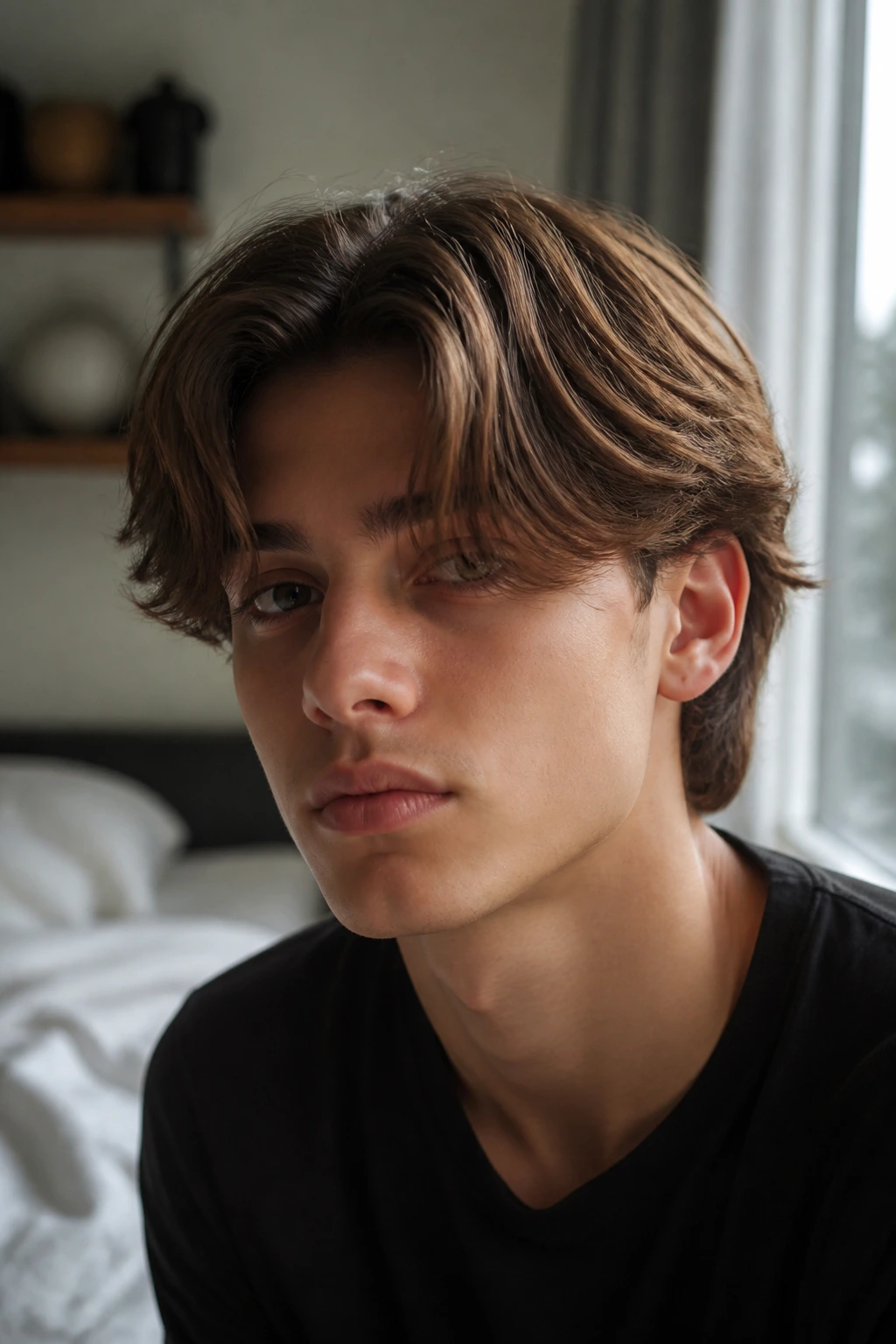
This is the cut I reach for when a boy wants length but not a mop. The front falls open in the middle, the sides stay light enough to tuck, and the whole thing moves without looking over-styled. On fine hair, that matters. If the cut is too blunt, the hair lies like one flat sheet and every part line shows.
Why the Curtain Shape Helps Fine Hair
The center split gives the eye two narrow lanes instead of one heavy block. That sounds small, but it changes the whole silhouette. Fine hair reads fuller when it has separation, and a curtain shape creates that separation without making the hair choppy.
A little soft layering around the cheekbones keeps the ends from collapsing into the face. I prefer point cutting here — not a harsh texture job, just a few careful snips that break up the line and let the front move.
- Keep the front long enough to hit the eyebrows when dry.
- Leave the sides long enough to tuck behind the ears.
- Ask for soft point cutting at the ends, not aggressive thinning.
- Let the crown keep some weight so the top doesn’t pop up like a wedge.
Tip: blow-dry the roots at the part first, then sweep the front forward with your fingers instead of a comb. The curtain stays softer, and the hair doesn’t look lacquered.
2. Feathered Bro Flow
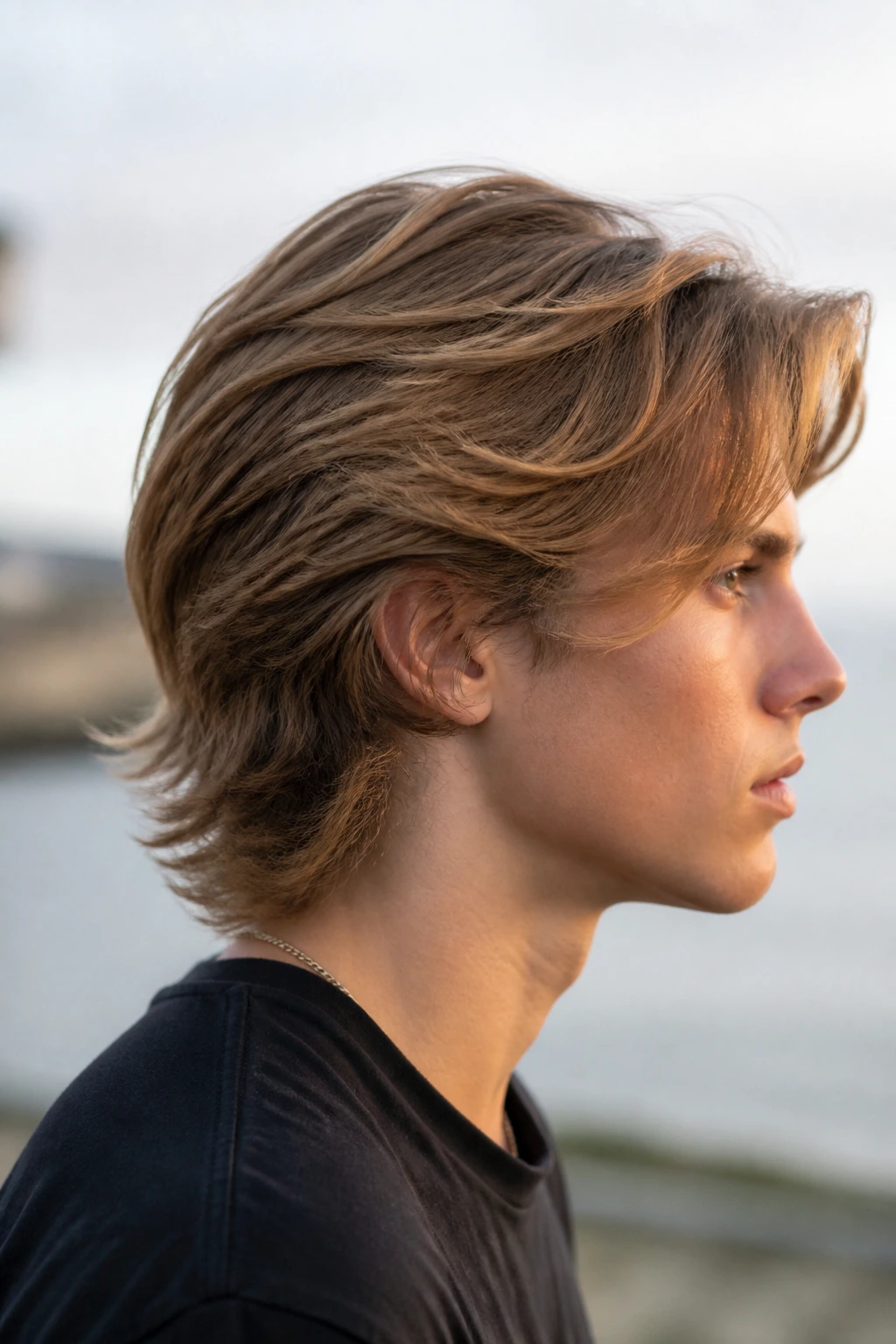
If the hair has even a slight bend, the feathered bro flow is one of the easiest long cuts to make look intentional. The length moves backward and outward instead of hanging straight down, and the feathered ends keep the whole shape from feeling heavy. Fine hair likes that kind of air around it.
The useful part is the balance. You keep enough length for the flow, but the barber feathers the ends so they don’t sit in one blunt line around the head. On a boy with thin-looking strands, that soft edge is worth more than extra inches.
This cut works best when the sides are trimmed just enough to stay clean near the ears, but not so much that the top looks disconnected. I’d rather see a gentle taper than a harsh undercut here. Harsh contrast can make fine hair look even finer.
3. Layered Surfer Shag
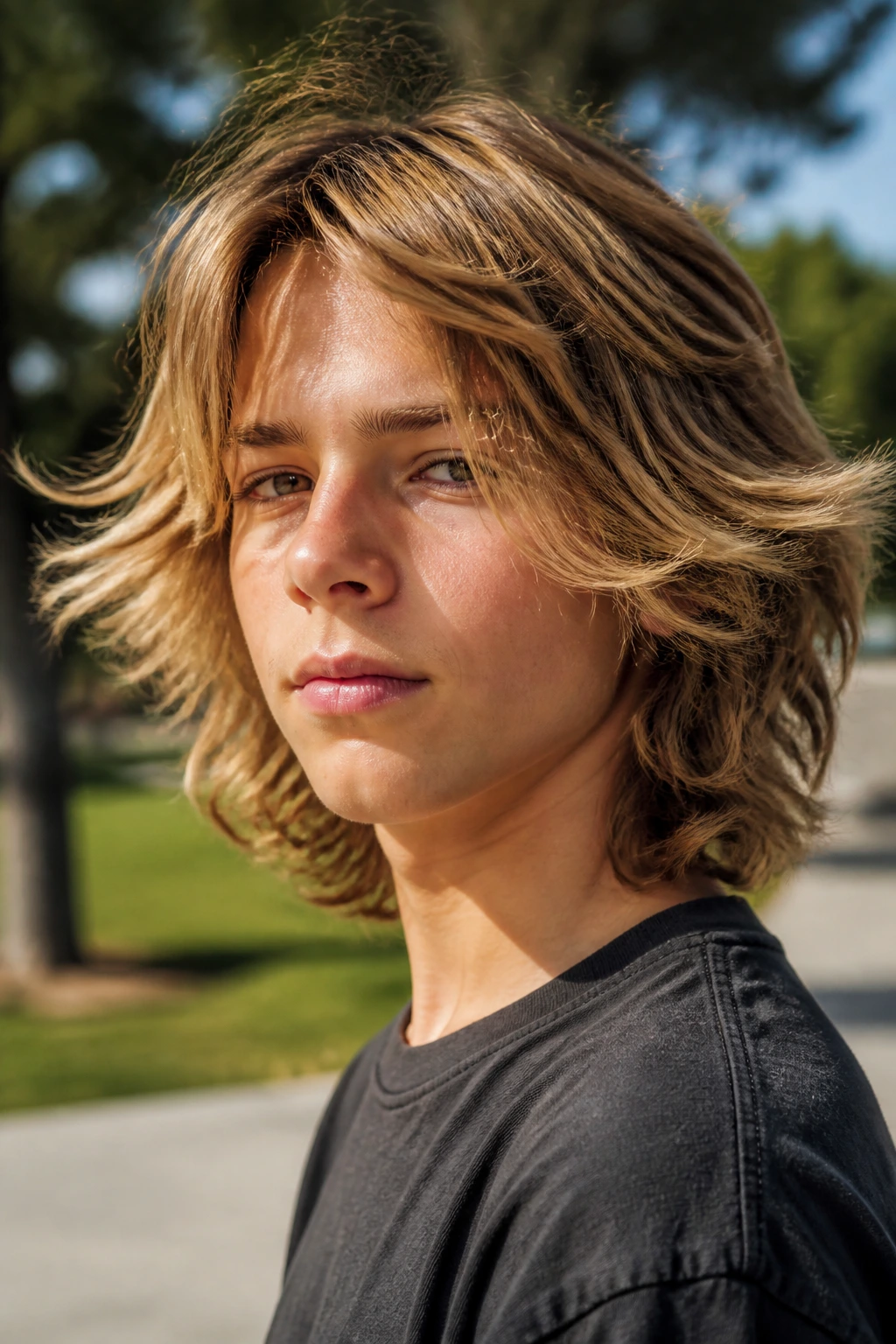
Why does a shag work on fine hair at all? Because it gives the strands a job. Instead of sitting in one flat curtain, the hair breaks into short, airy pieces that lift around the crown and fall loose through the ends. That movement matters more than density when the hair is fine.
The surfer version stays softer than a punky shag. Think shoulder-skimming pieces, a loose fringe, and layers that start around the cheek or jaw rather than way up near the roots. If the layers are cut too high, the hair can go see-through fast. That’s the one thing I would avoid here.
How to Wear It
Let the hair air-dry after a towel squeeze, then twist a few sections with damp fingers. A tiny bit of sea salt spray helps, but too much turns fine hair rough and dry. This is the kind of cut that looks better with a little mess in it. Clean, but not polished.
4. Center-Parted Neck-Length Curtains
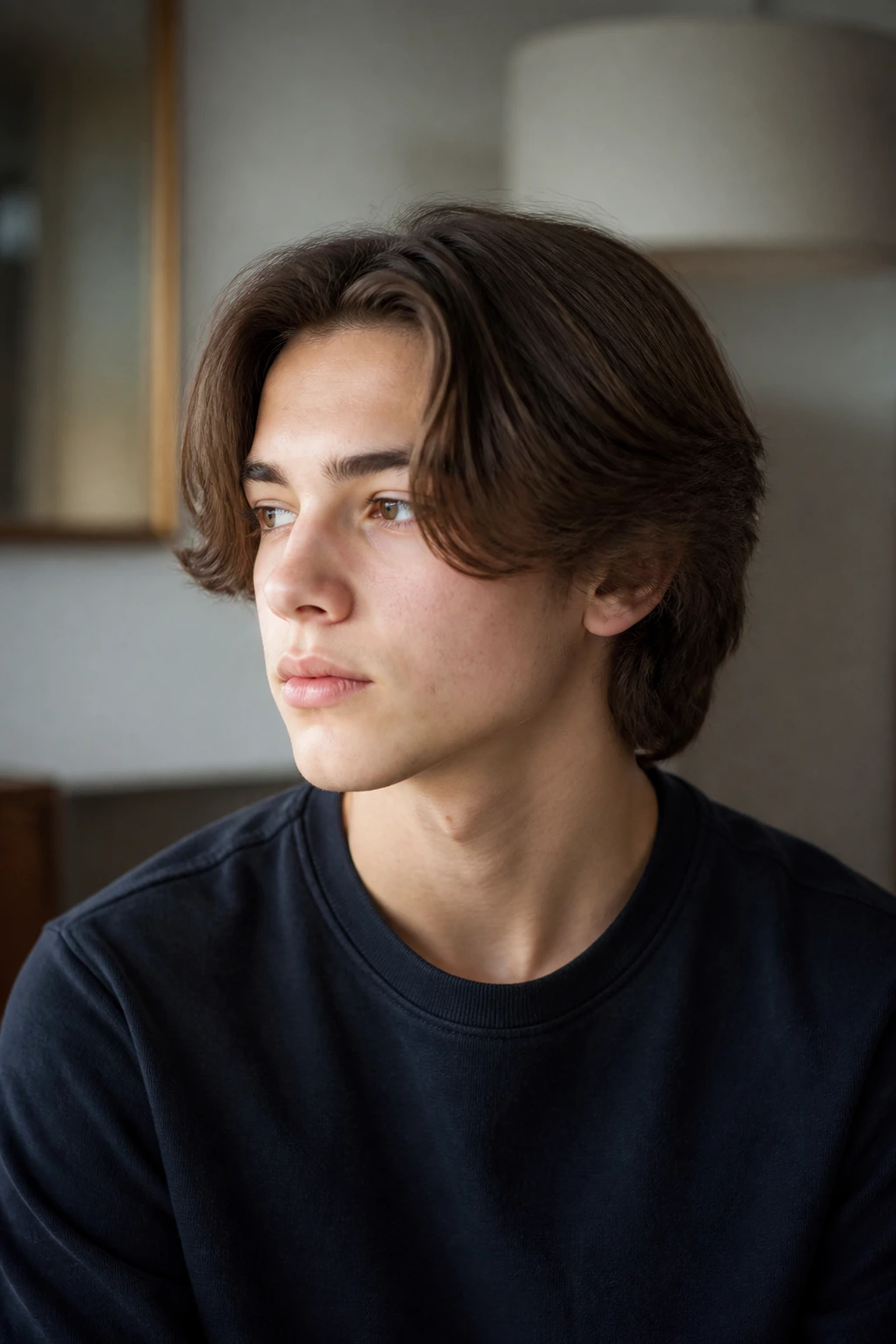
Picture a boy with hair that falls just to the neck, splits cleanly in the middle, and frames the face without swallowing it. That’s the shape here. It sounds simple, and it is — but simple is not the same thing as boring.
The cut works because the length keeps enough weight at the ends to avoid a transparent look, while the center part gives the hair structure. Fine hair usually needs structure more than it needs volume. Without that center line, the whole head can drift sideways and lose shape by midday.
A small note: this style is best when the hair grows straight or only slightly wavy. If the crown has a strong swirl, the part may need to be adjusted a half-inch off center so it doesn’t fight the cowlick every morning.
- Best when the hair reaches the base of the neck.
- Ask for soft layering through the front half only.
- Keep the perimeter clean so the ends don’t fray.
- Use a light blow-dry at the roots if the part keeps collapsing.
5. Long Fringe with Tapered Sides
This one solves a very common problem: the front is fine, the sides are neat, and the hair still feels long. The fringe sits just above or at the brows, while the taper around the ears and neckline keeps everything from puffing out in the wrong places. For school-aged boys, that neat edge matters.
Fine hair benefits from the taper because it removes the visual bulk where the head is widest. If the sides stay too full, the hair can look sparse on top. A low taper gives the cut a cleaner outline without making it feel clipped.
I like this style for kids who hate hair in their eyes but still want length. It’s tidy without feeling stiff. And if the barber leaves the fringe a touch longer than expected, the cut still grows out in a useful way.
6. Airy Wolf Cut Lite
A full wolf cut can go too far on fine hair. It can get shredded, stringy, and a little desperate-looking if the layers are carved without restraint. The lighter version keeps the attitude but dials back the damage.
This cut keeps the crown airy, the sides soft, and the back a little longer so the shape has swing. The key is leaving enough hair in the mid-lengths to keep coverage. Fine hair can handle a wolf cut when the barber trims with a light hand and avoids turning the ends into a fringe cloud.
It suits boys who want something edgy but still wearable at school. That’s the whole point. A good wolf cut lite looks like it was meant to move, not like it was attacked by thinning shears.
7. Swept-Back Schoolboy Flow

This is the cut for a boy who wants long hair but still needs to look neat when it’s brushed back. The front lifts away from the face, the sides stay controlled, and the top has just enough length to flow backward without sticking straight up. It has a tidy, old-school feel that works better than people expect.
Fine hair often behaves better in a swept-back style than in a strict forward fringe. When the hair is brushed back, the root lift gives the top a little body. A tiny amount of mousse or light cream helps the strands hold their direction without turning greasy.
What I like here: it’s one of the easiest styles to reset after recess, sports, or a windy walk home. Fingers through the top, a little water at the roots, and it’s back in place.
8. Chin-Length Layered Mop
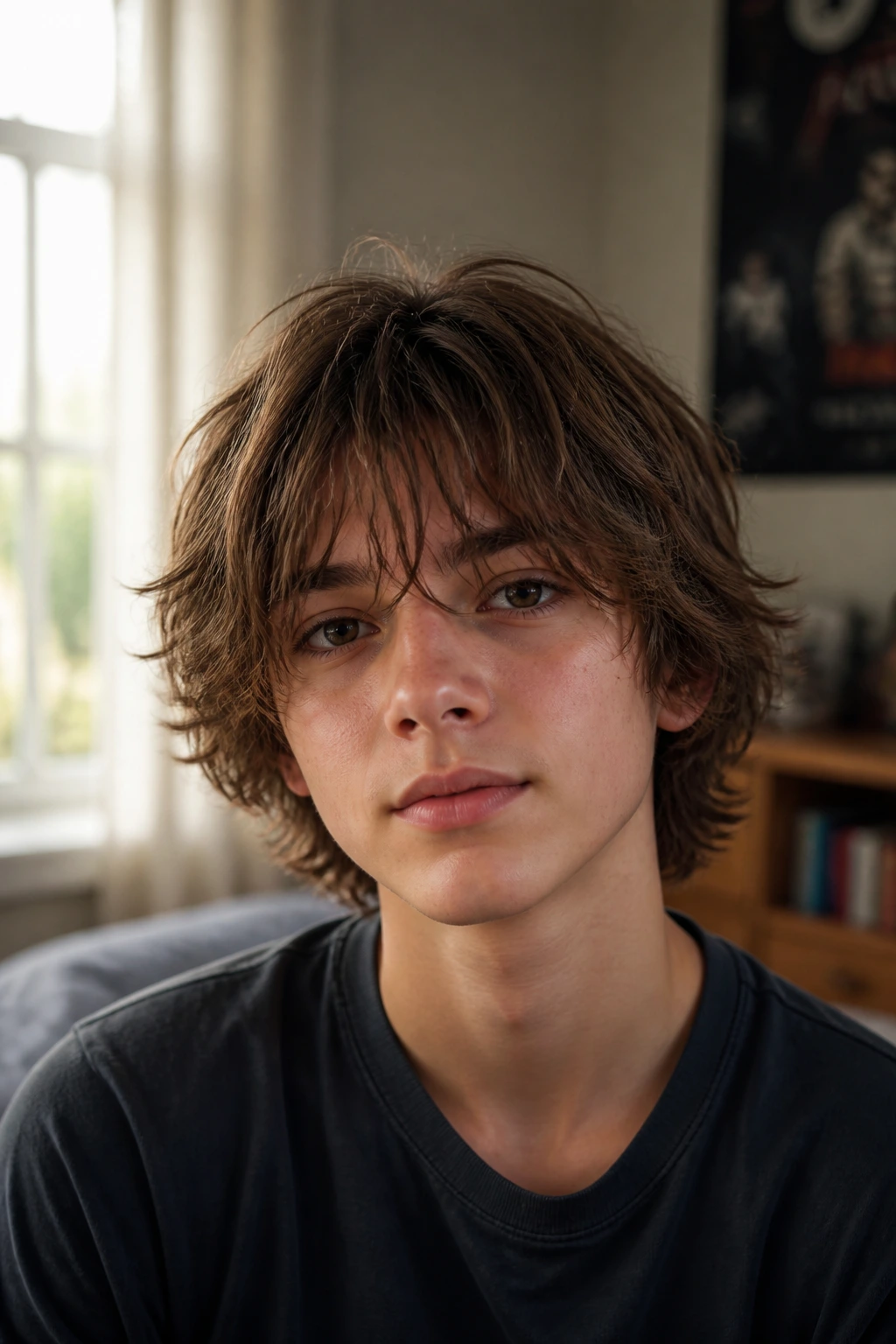
A chin-length mop can look soft and easy, but the useful version has hidden structure. The layers are tucked inside the cut, so the outer shape stays rounded while the inside keeps the hair from lying flat against the head. That matters a lot when the strands are fine.
The fringe can be loose and a little uneven, which helps the cut feel relaxed instead of over-coiffed. I like this shape on boys with straight hair that naturally falls forward. It gives the face some frame without making the forehead disappear.
If the hair is cut all one length at the chin, it can fall into a triangle. Internal layers solve that. A good barber will leave the weight where it helps and remove it where it doesn’t.
9. Side-Swept Long Crop
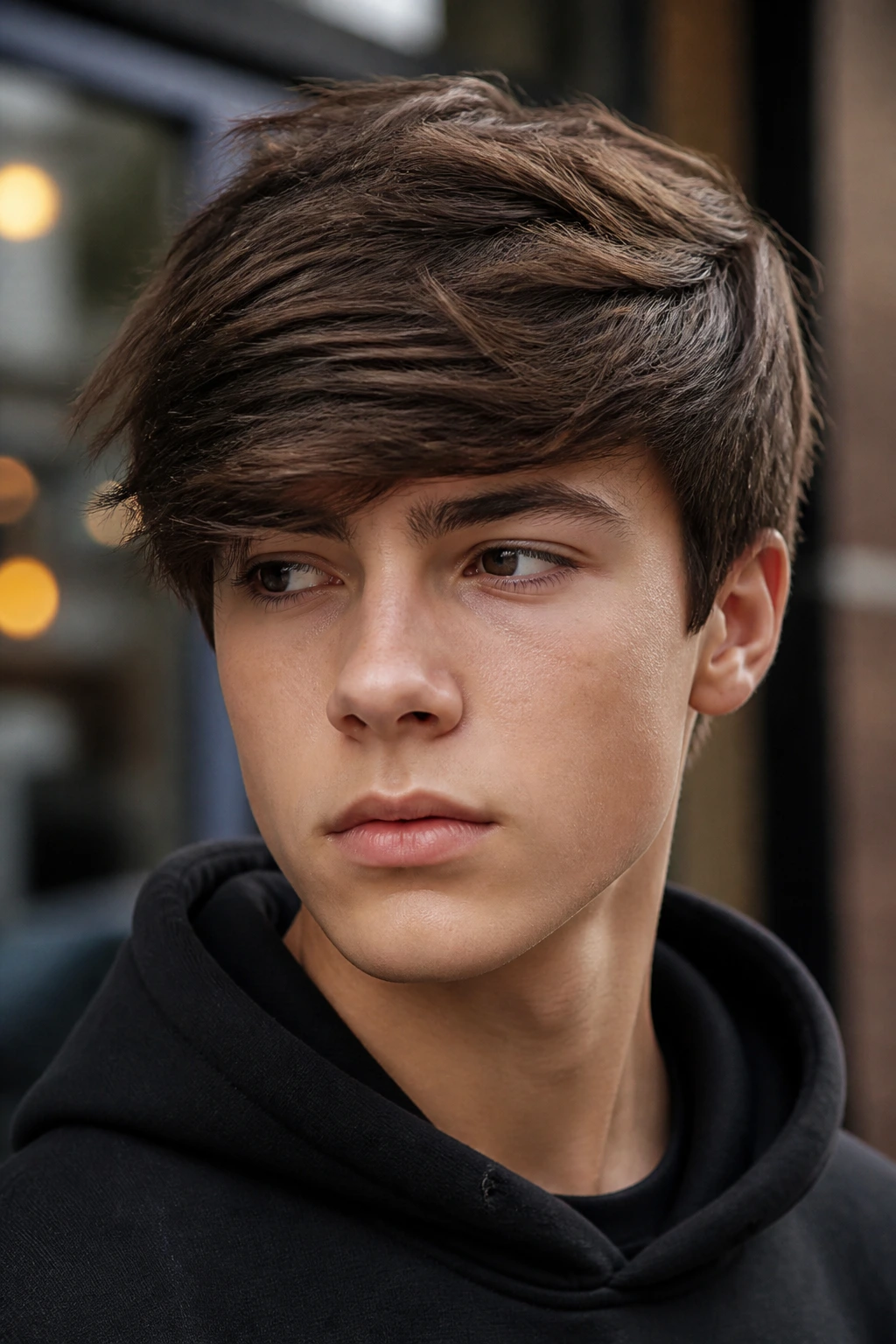
Why does a side sweep work so well on fine hair? Because it makes the hair look directed. A middle part can expose every thin spot if the density is low, but a side-swept cut gives the front a reason to sit somewhere specific.
This style keeps the top longer, lets the fringe drift across the forehead, and trims the sides just enough to keep the outline neat. It’s a good choice for boys who want something a little more polished than a shag but less formal than a comb-over. There’s a sweet spot there, and this cut lands in it.
How to Ask for It
Tell the barber to keep the top long enough to sweep across the brow, but not so long that it droops into the eyes. Ask for soft layering through the front and a low taper near the ears. The difference between tidy and flat is usually only a half-inch.
10. Shoulder-Length Skate Flow
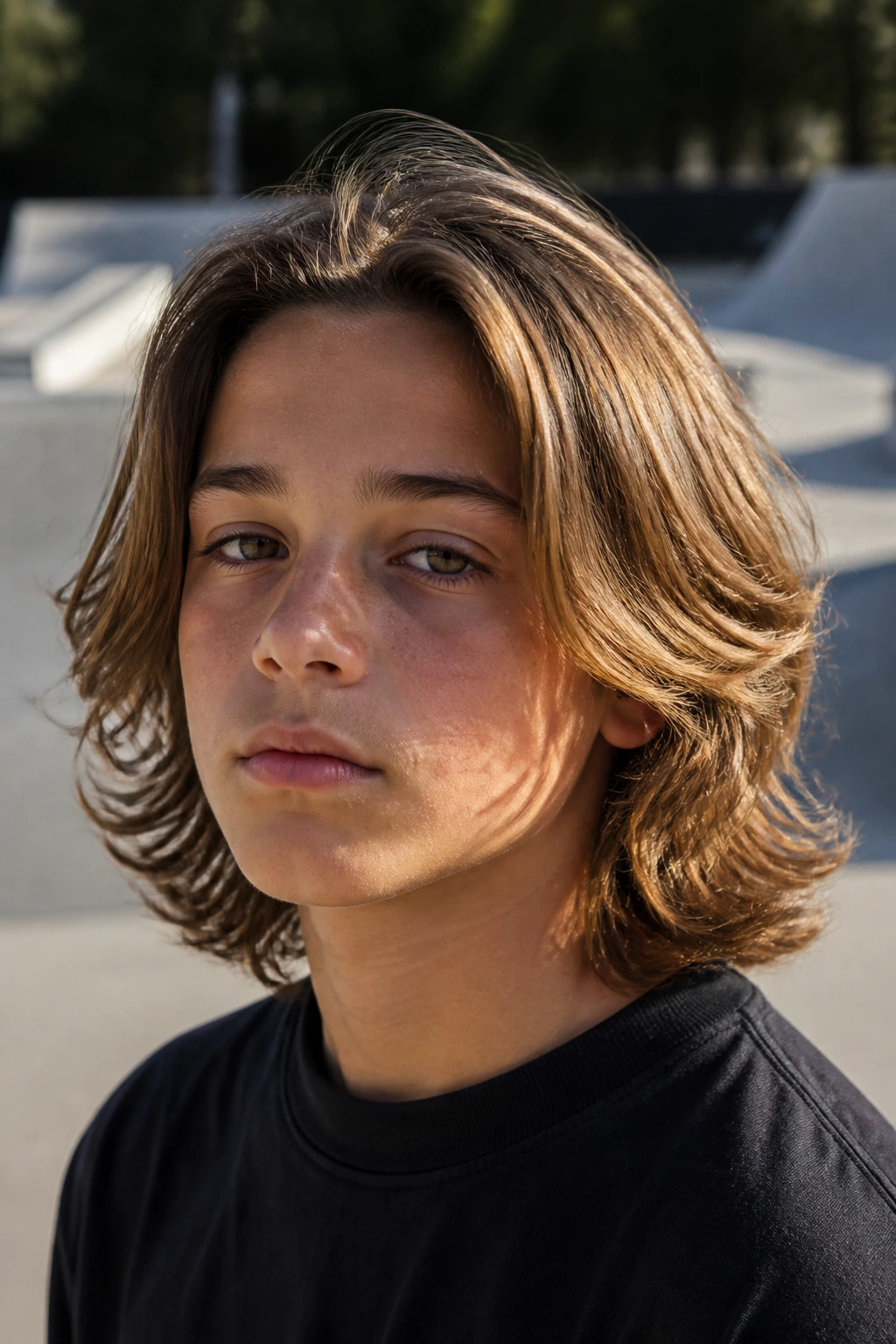
This is the cut that looks like it grew naturally over time, only cleaner. The hair sits at or just below the shoulders, the ends move loosely, and the whole shape has that skate-park ease without looking sloppy. Fine hair can pull this off if the length is supported with a few smart layers.
The danger is letting all the length collect at the bottom. Then the hair starts to hang like a curtain rod. Internal layering and a slight bevel at the ends keep the movement alive. I’d rather see this cut a little uneven in a good way than perfectly blunt and strangely tired.
It works well on boys who tuck hair behind the ears or push it back with their hands every five minutes. In other words, kids. Real life helps this haircut.
11. Grown-Out Tapered Mullet
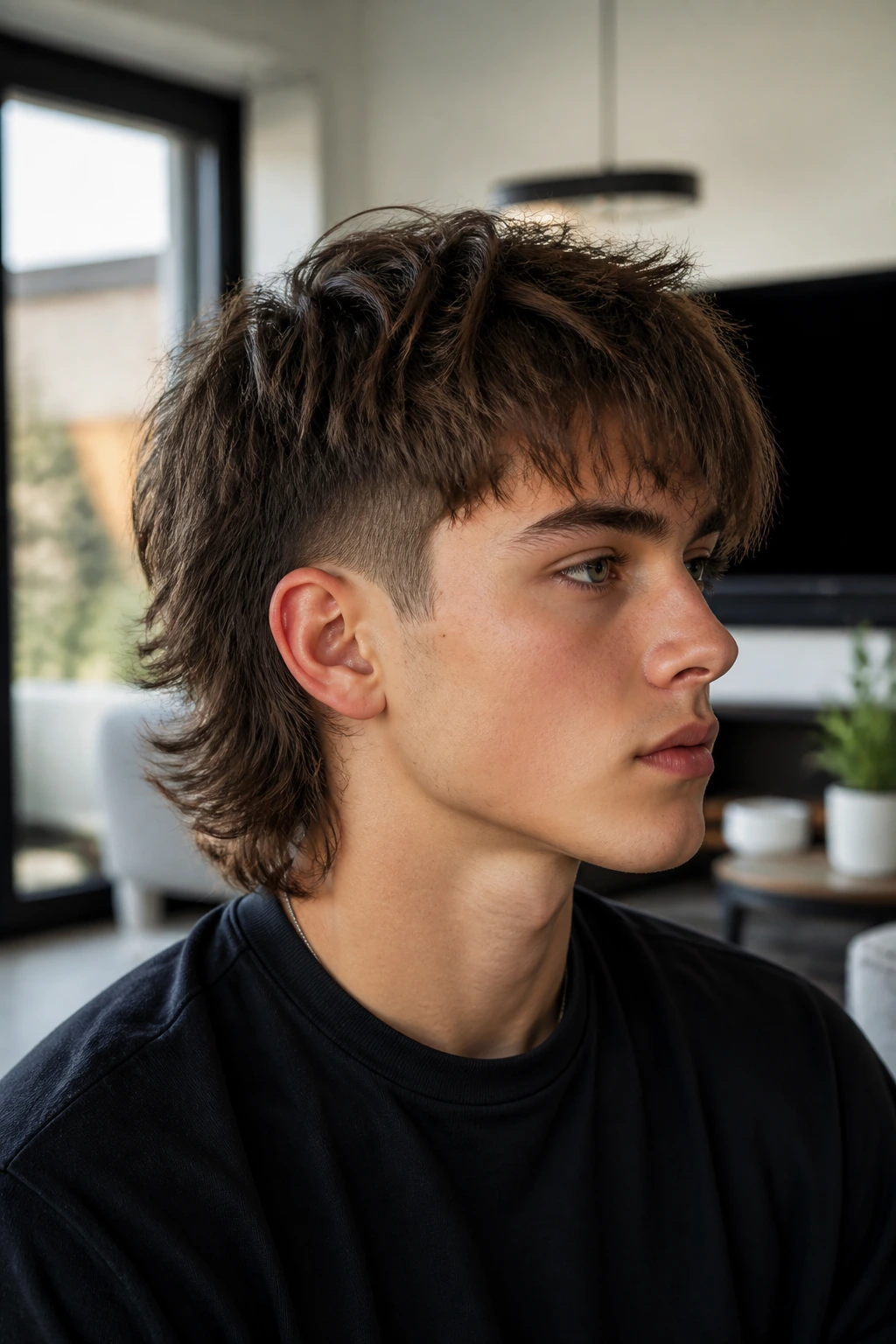
A soft mullet is not the loud, shiny version people picture from old photos. The modern version has a longer nape, controlled sides, and enough length through the top to keep the shape connected. On fine hair, that back length can make the whole head look fuller.
The taper matters. Too much contrast between the sides and the back, and the haircut starts to look skinny in the middle. Keep the transition gentle, and the shape reads as intentional instead of accidental.
This cut has one big advantage: it gives visual density where fine hair often needs it most — around the crown and back. That’s why it can look thicker than a shorter style with the same amount of hair.
12. Long Textured Bowl
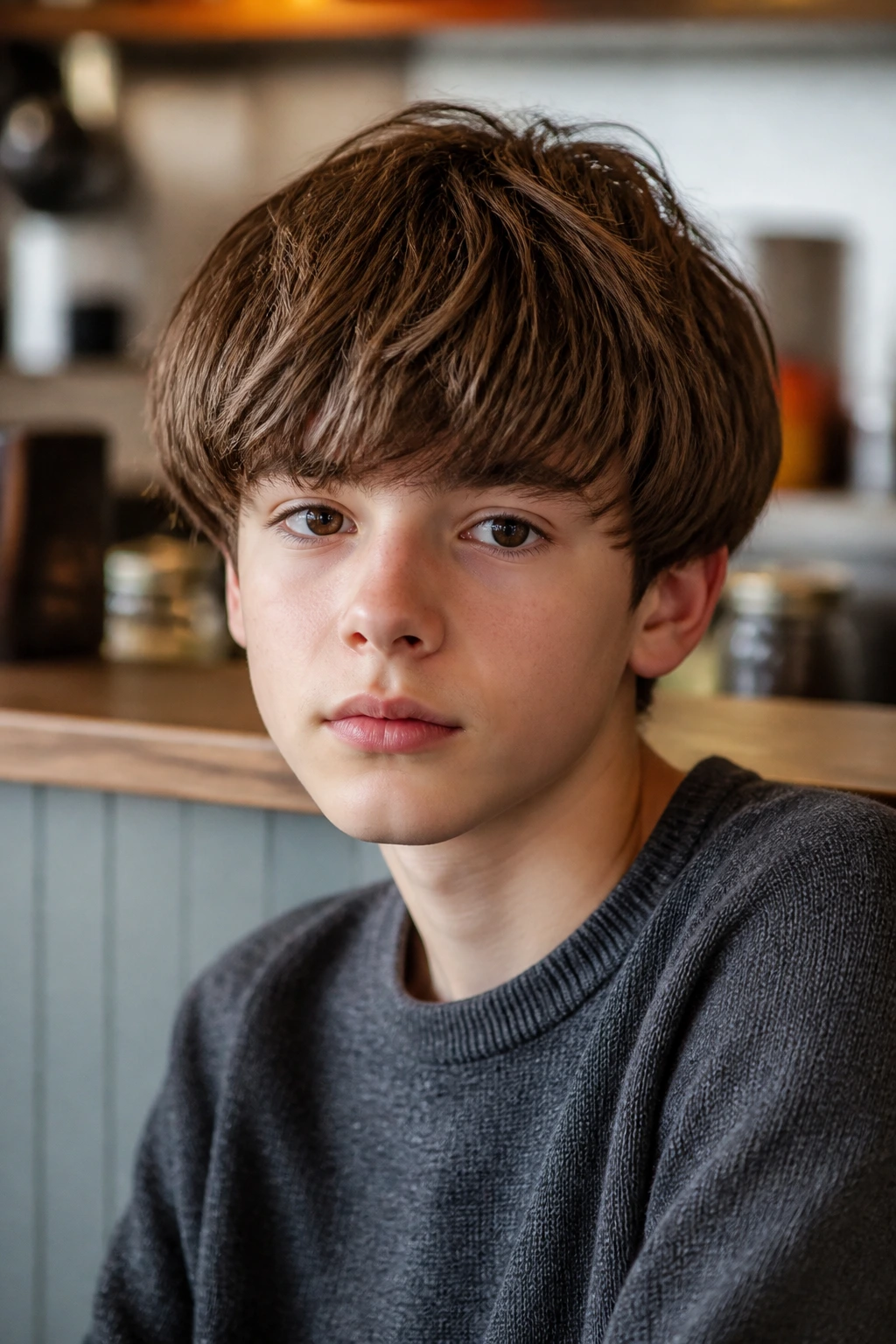
A bowl cut gets a bad reputation because people remember the old helmet shape. Fair enough. Nobody wants that. But the modern textured bowl is softer, longer, and much more forgiving on fine hair.
The outline is rounded, but the ends are broken up with point cutting so the hair doesn’t sit like a plastic cap. The fringe can sit just above the brows, and the sides can curve gently around the ears. Fine hair likes the clean perimeter because it gives the eye a solid line to follow.
What makes it work is the internal movement. The cut still has shape, but it doesn’t feel rigid. If a boy wants something neat, slightly artsy, and easy to maintain, this one is worth a look.
13. Loose Undercut Flow
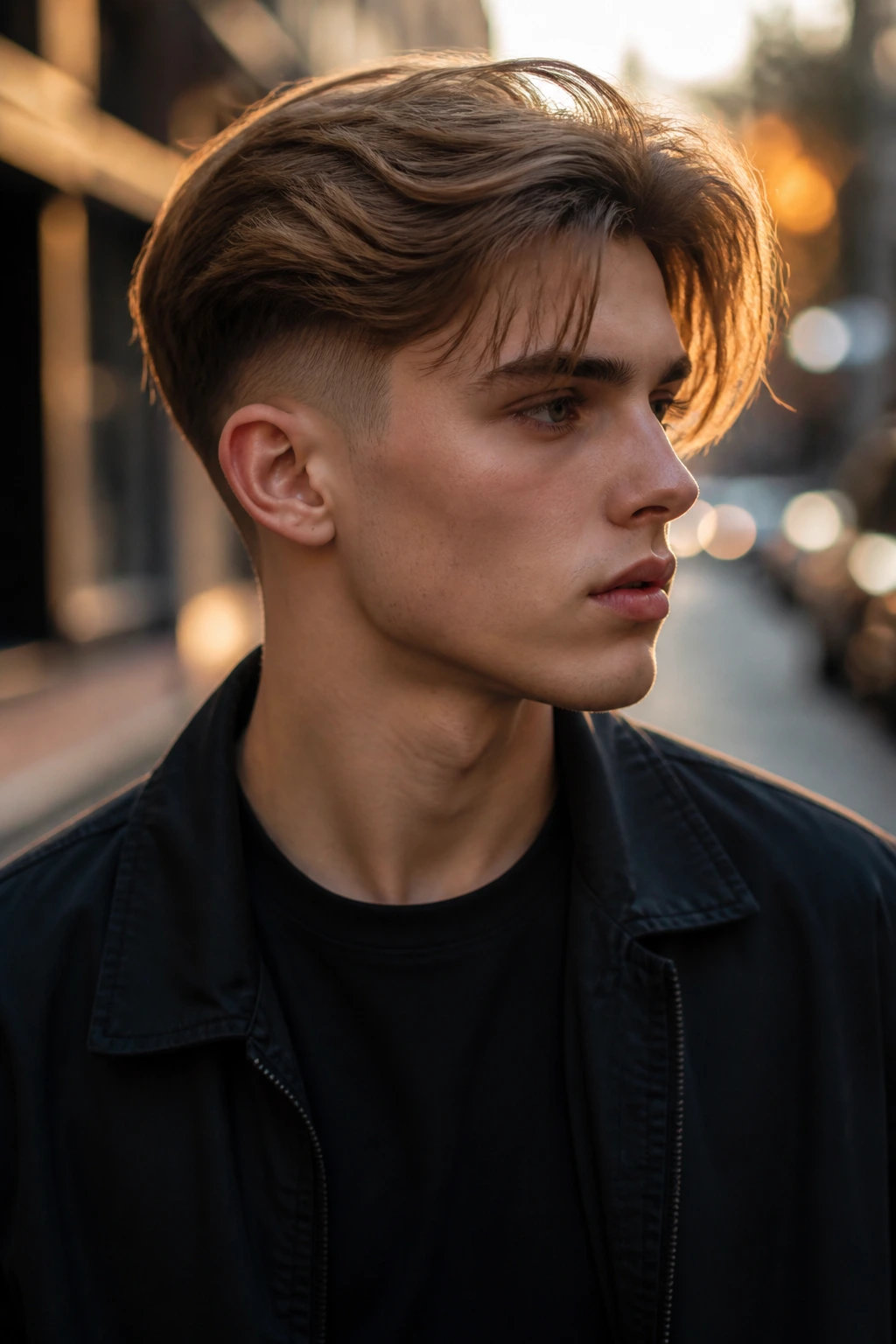
This cut keeps the top and front long while trimming the sides and nape enough to make the top stand out. On fine hair, that can be useful — with one warning. If the undercut is too sharp, the top starts to look thinner by comparison.
So keep the fade soft. I prefer a low taper or a gentle disconnect, not a dramatic shave. The point is to lighten the sides, not to create a billboard for how little hair is on the crown.
The loose undercut flow works best when the top has enough length to sweep, part, or tuck back. If the front is only barely long, the contrast can look accidental. Give it room, and it behaves.
14. Wavy Feather Layers
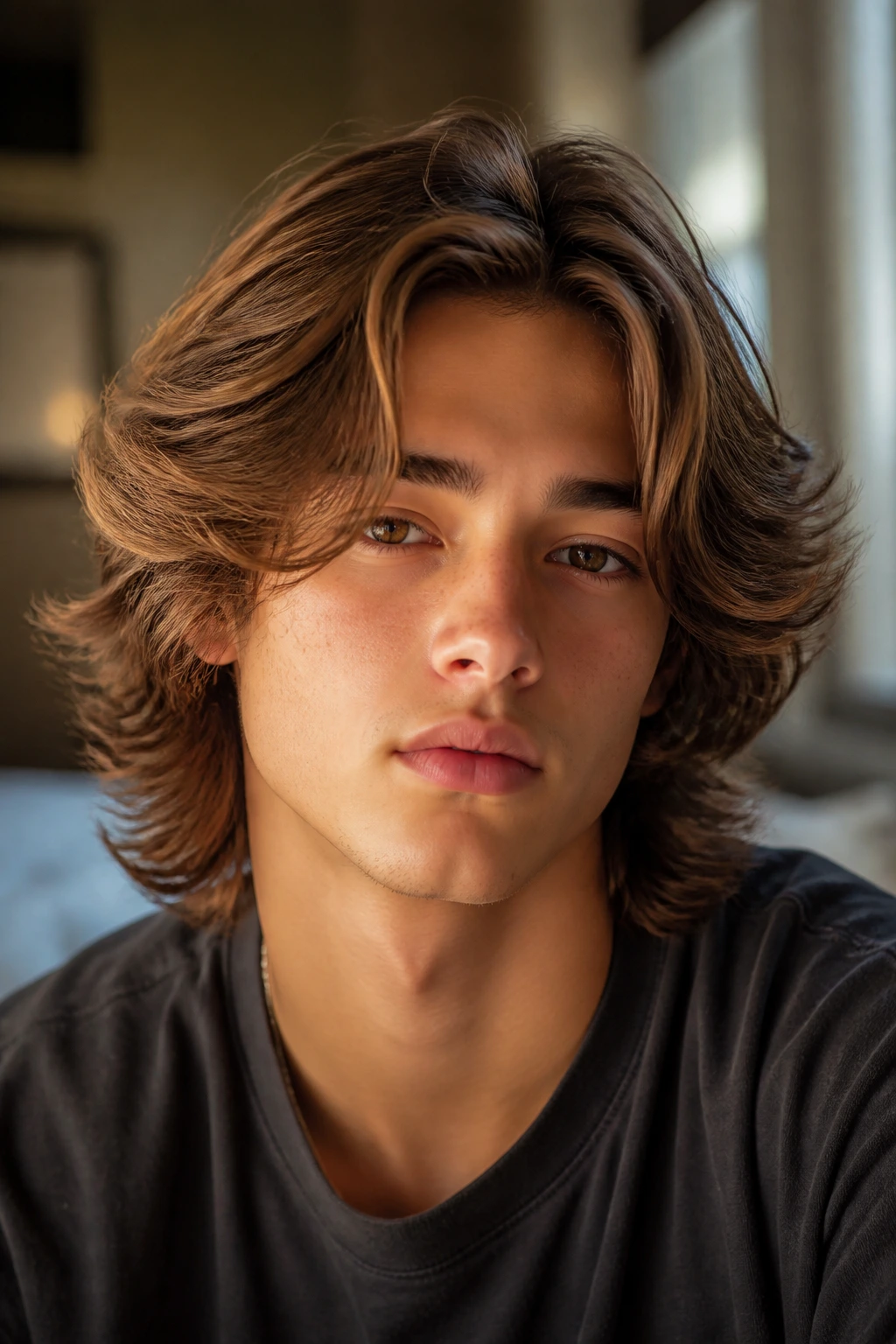
Wavy fine hair is its own animal. It can look full one day and flat the next, depending on humidity, sleep, and whether someone piled a hood over it for two hours. Feather layers help because they follow the wave instead of fighting it.
The layers should be soft and long, not chopped high into the crown. That keeps the wave pattern intact while stopping the hair from hanging in one straight, heavy sheet. Around the face, a few feathered pieces can lighten the profile and keep the hair from taking over the cheeks.
A small amount of leave-in mist or curl cream can help here, but keep the product light. Fine wavy hair does not need a cream that feels like frosting. It needs slip and a little shape.
15. Slicked-Back Length with Soft Side Part
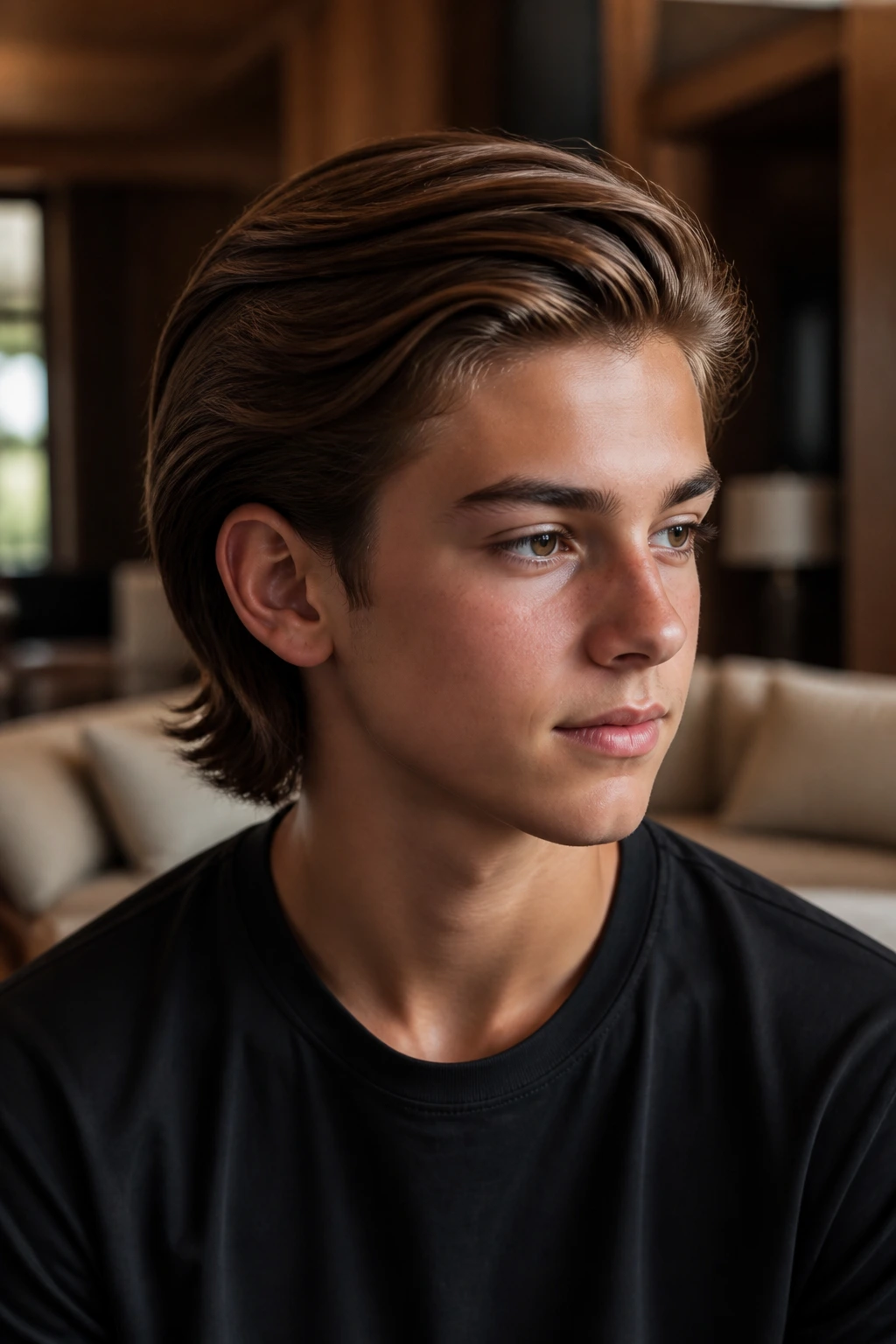
This one is for boys who need a neat look but still want the length to show. The hair is brushed back, not plastered down, and the side part stays soft enough to keep the shape alive. Fine hair can actually do this look well if it isn’t overloaded with product.
I’m not talking about the wet, greasy style that makes the scalp shout from across the room. Keep the finish matte or just faintly natural. A touch of mousse, then a careful blow-dry backward, usually gets the job done better than any heavy pomade ever could.
It’s a good choice for family photos, school events, or any day when the hair needs to behave for a while. The key is keeping the roots lifted instead of smashed flat against the head.
16. Messy Curtain Shag

What makes this cut different from the regular curtain flow? The fringe is looser, the crown is choppier, and the whole shape looks deliberately imperfect. That sounds casual, but it’s actually a smart way to use fine hair.
The extra mess gives the eye more texture to read. A little separation between strands can make a head of fine hair look fuller than it is, especially when the front pieces fall in uneven lengths around the brow and cheekbones. The haircut gets its life from movement.
How to Use It
Let it air-dry about 70 percent, then pinch a few pieces at the fringe with damp fingers. If the hair is very straight, a light mist of sea salt spray at the mids can help. Don’t rake a thick paste through it unless you want the whole thing to collapse into little sticky ropes.
17. Tucked-Behind-Ears Length
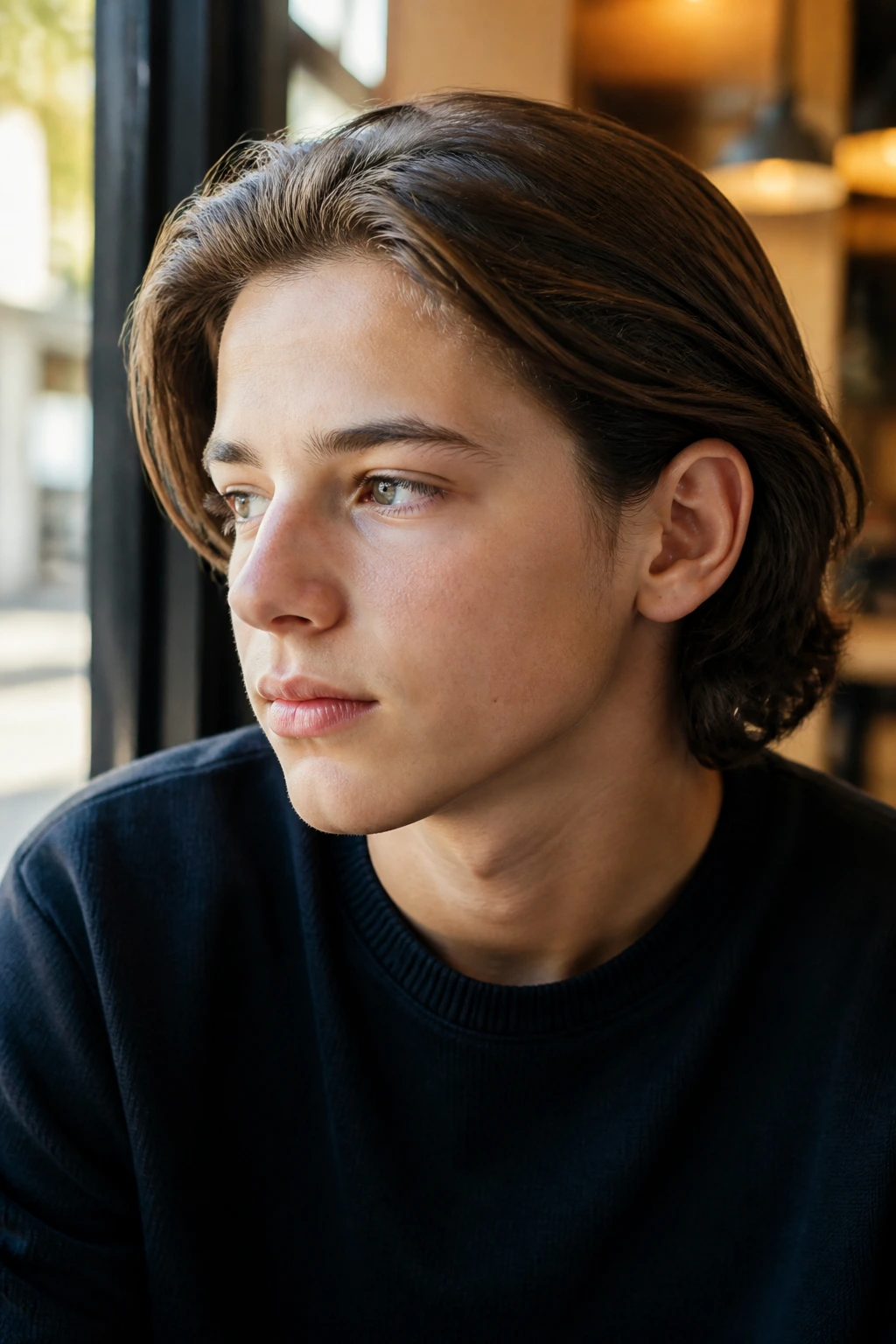
Some boys do not want a style that announces itself. They want hair that can get out of the way when needed, tuck behind the ears, and still fall back into place without fuss. This cut does exactly that.
It keeps enough length to show softness around the face, but the ends are trimmed clean enough to sit neatly when tucked. Fine hair benefits from that kind of restraint because it avoids the over-layered, see-through effect. The shape stays calm.
This is also one of the easier cuts for kids who hate constant styling. Brush, tuck, move on. If the hair grows a little longer before the next trim, it usually still behaves.
18. Long Layers with Low Taper
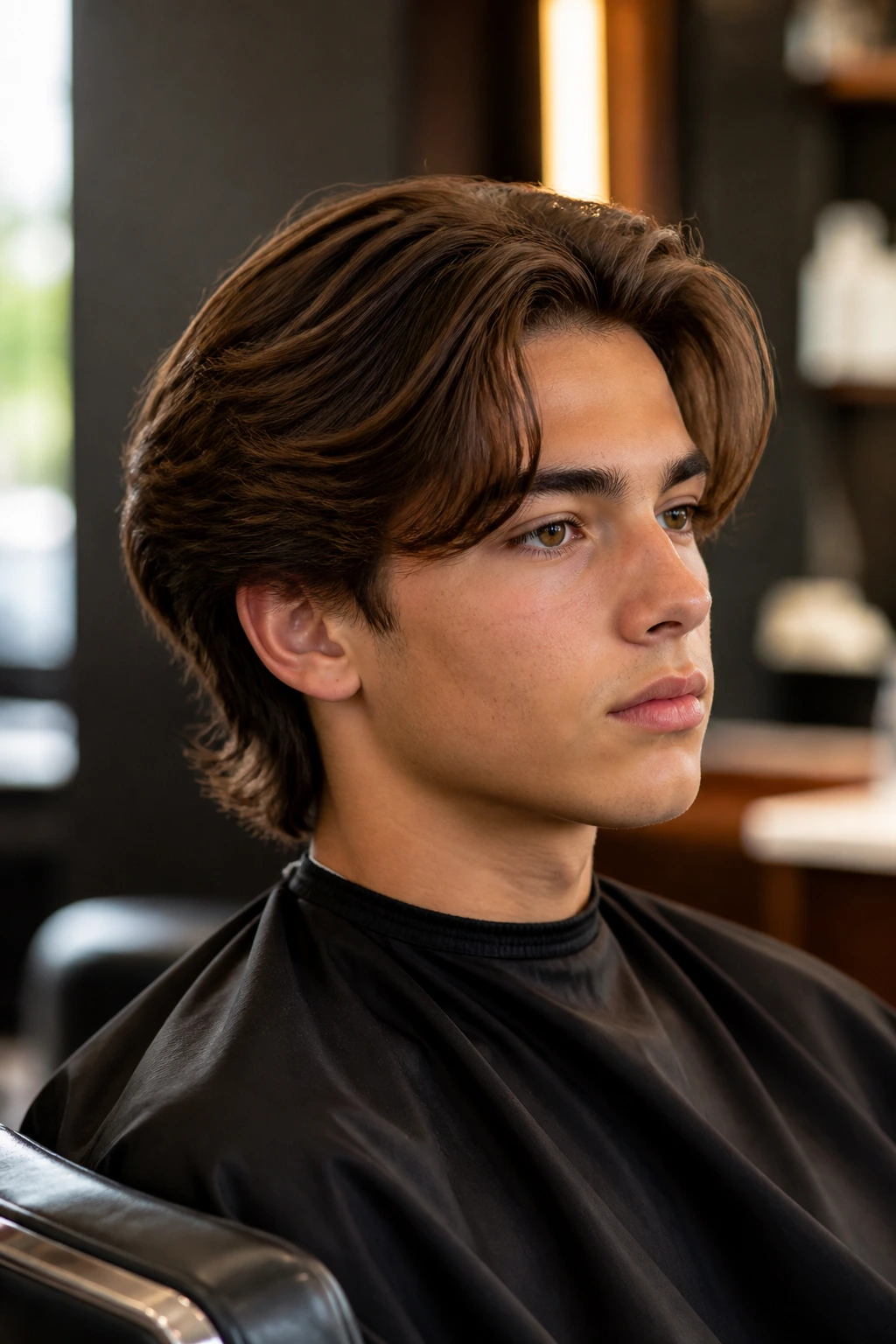
This is the safest choice, and I mean that in the best way. Long layers through the top and sides give the hair movement, while a low taper at the neckline and around the ears keeps the outline sharp enough for real life. It’s flexible, which is rare and useful.
Fine hair does best when the barber leaves enough weight at the ends to keep the shape from looking see-through. A low taper helps the haircut stay neat without carving too much away. That balance is the whole game.
If a parent wants one long cut that can slide between school, sports, and weekend wear without drama, this is the one I’d hand over first. It grows out well, it doesn’t need much product, and it won’t fight a kid’s cowlicks quite as hard as some flashier shapes.
How to Talk to the Barber Without Losing the Length
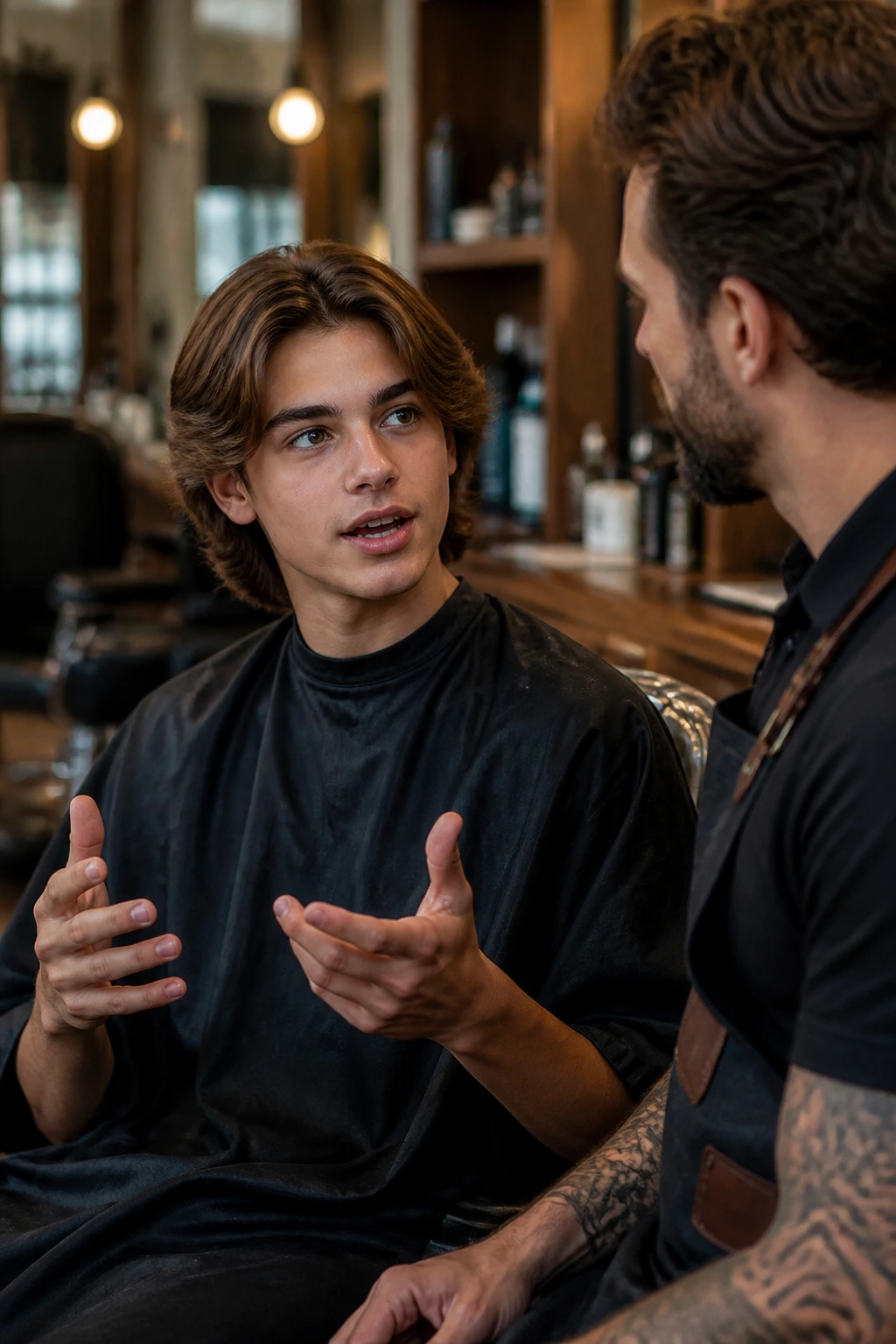
A good haircut starts with a clear sentence. Not a speech. Just a few details that tell the barber what to keep, what to soften, and what to leave alone. With fine hair, that conversation matters more than most people think, because a tiny mistake can take away the weight that makes the cut work.
Say how the hair behaves when it dries. Does it fall forward? Does the crown stick up? Does one side flip out near the ear? Those little facts help the barber decide where to leave length and where to trim the shape. If you skip that part, you often end up with a cut that looks fine in the chair and weird two hours later.
A useful script sounds like this: keep the length around the ears, leave enough weight through the ends so it doesn’t look see-through, and use soft layers or point cutting instead of heavy thinning. If the school is strict, ask for a low taper at the neckline and around the sideburns. Bring a front photo and, if possible, a side photo. Front-only pictures lie.
Essential Tools for Styling and Maintenance
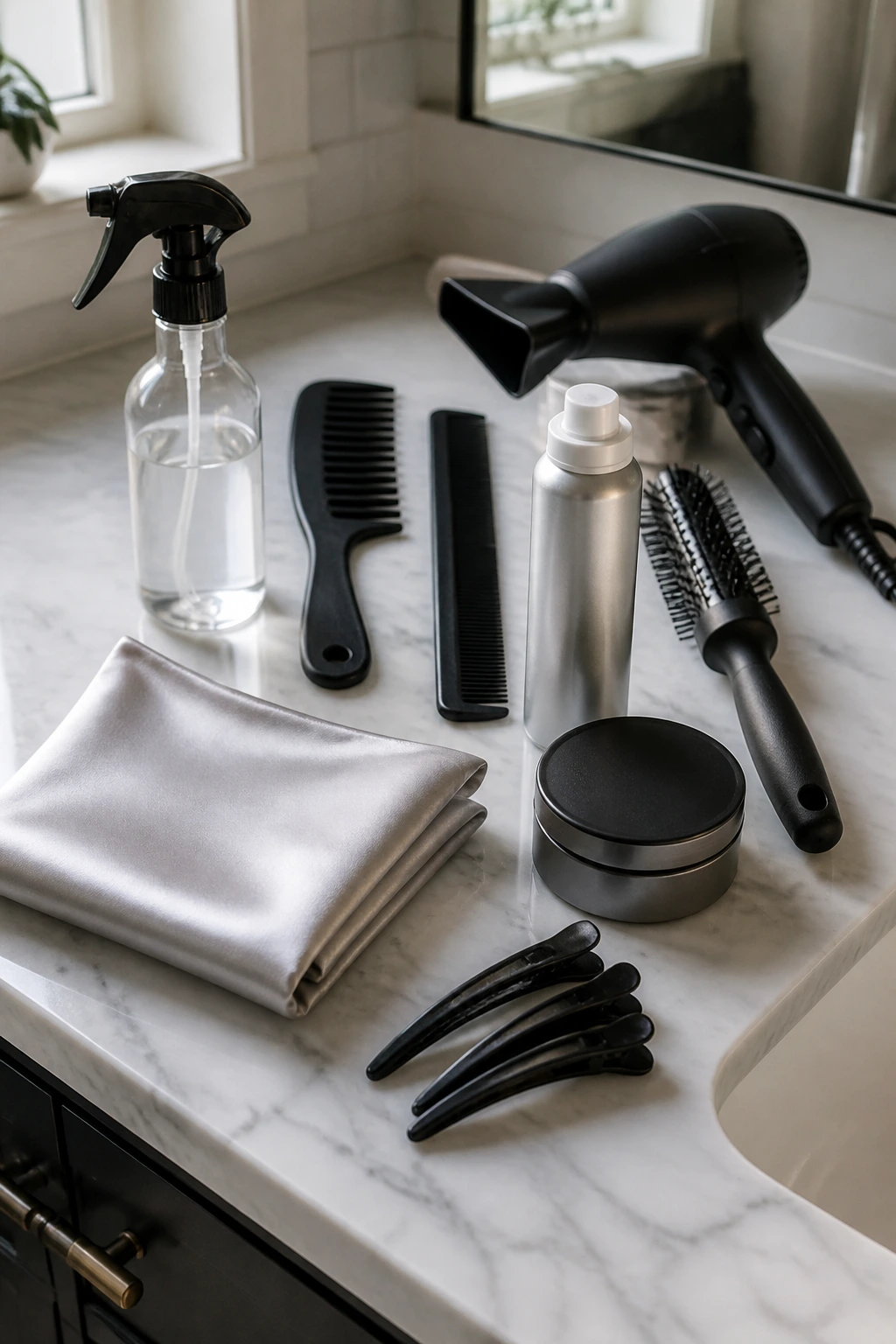
-
Spray bottle with clean water: A few spritzes wake up flattened hair faster than a full rewash.
-
Wide-tooth comb: Best for detangling longer fine hair without ripping through fragile ends.
-
Fine-tooth comb: Useful for clean parts, fringe placement, and taming cowlicks near the crown.
-
Blow dryer with a nozzle attachment: The nozzle points air at the roots instead of blasting the whole head into a puff.
-
Small vent brush or round brush: Helps lift the roots on styles that need a bit of bend or volume.
-
Lightweight mousse: Gives hold without the greasy clump fine hair hates.
-
Matte cream or paste: Good for soft control on swept-back or side-parted looks.
-
Leave-in conditioner mist: Easier on long fine hair than thick creams, especially if tangles show up after sports.
-
Satin pillowcase: Not fancy, just useful. It cuts down on overnight friction, which matters when the hair is already delicate.
-
Hair clips: Optional, but handy for keeping longer fringe out of the face during drying or trimming around the ears.
Smart Product Picks for Fine Hair
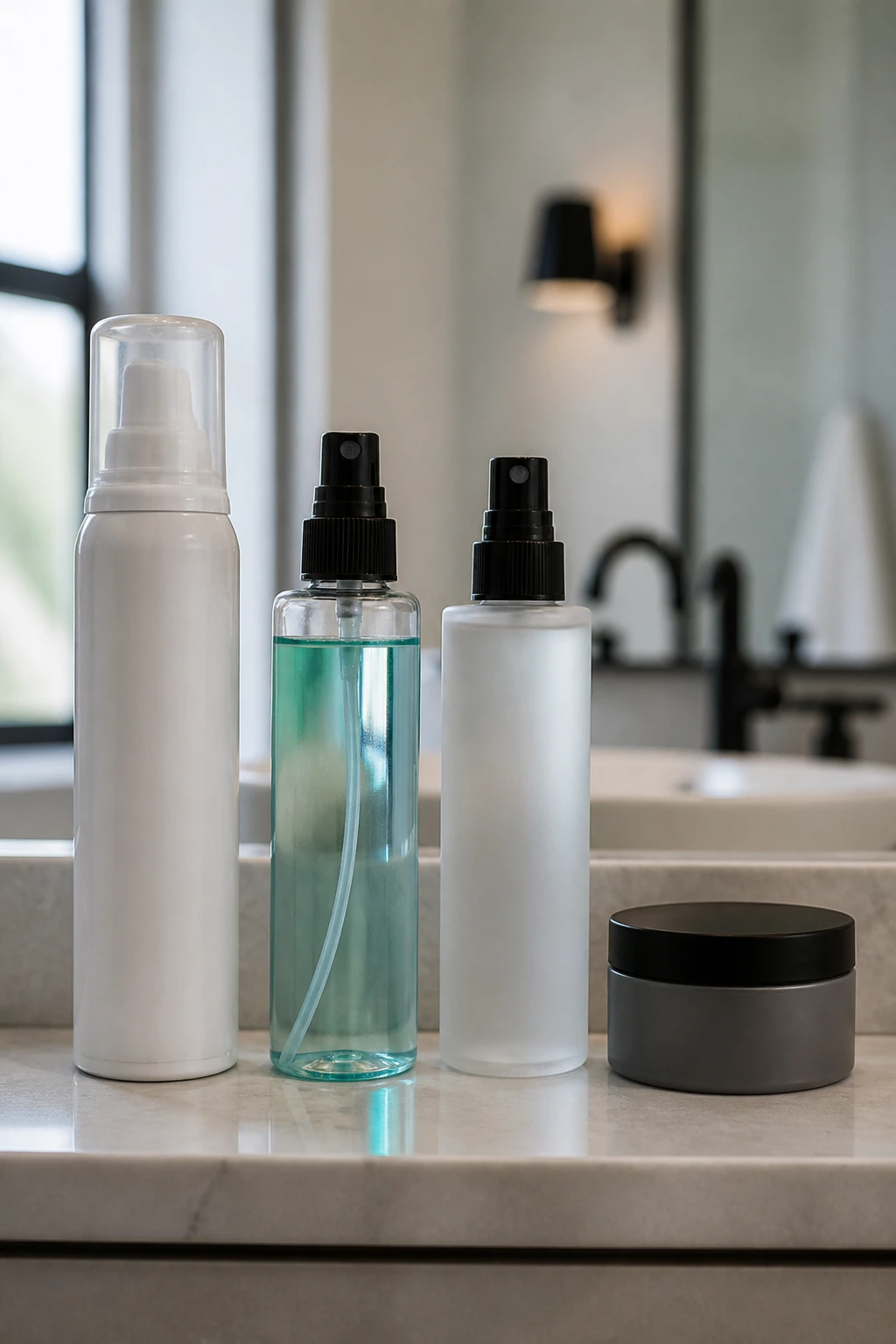
Fine hair is picky in a way that dense hair usually is not. Heavy products sit on it, separate it into stringy sections, and make the scalp more visible. So the best product choice is usually the one with the lightest hand. That’s not glamorous. It works.
For shampoo, look for something gentle enough for regular washing but not so rich that it leaves a coating. If the scalp gets oily fast, a clarifying wash once a week can help, but don’t overdo it. Fine hair can start to feel squeaky and dry if the cleanser is too strong too often.
Conditioner should go from the ears down, not at the roots. A lightweight conditioner or leave-in mist is usually enough for long styles. For styling, mousse gives lift, sea salt spray adds rough texture, and matte paste gives quiet control. Thick pomades and shiny waxes? Usually a bad trade. They make fine strands group together in awkward little ropes.
How to Style These Cuts on Busy Mornings
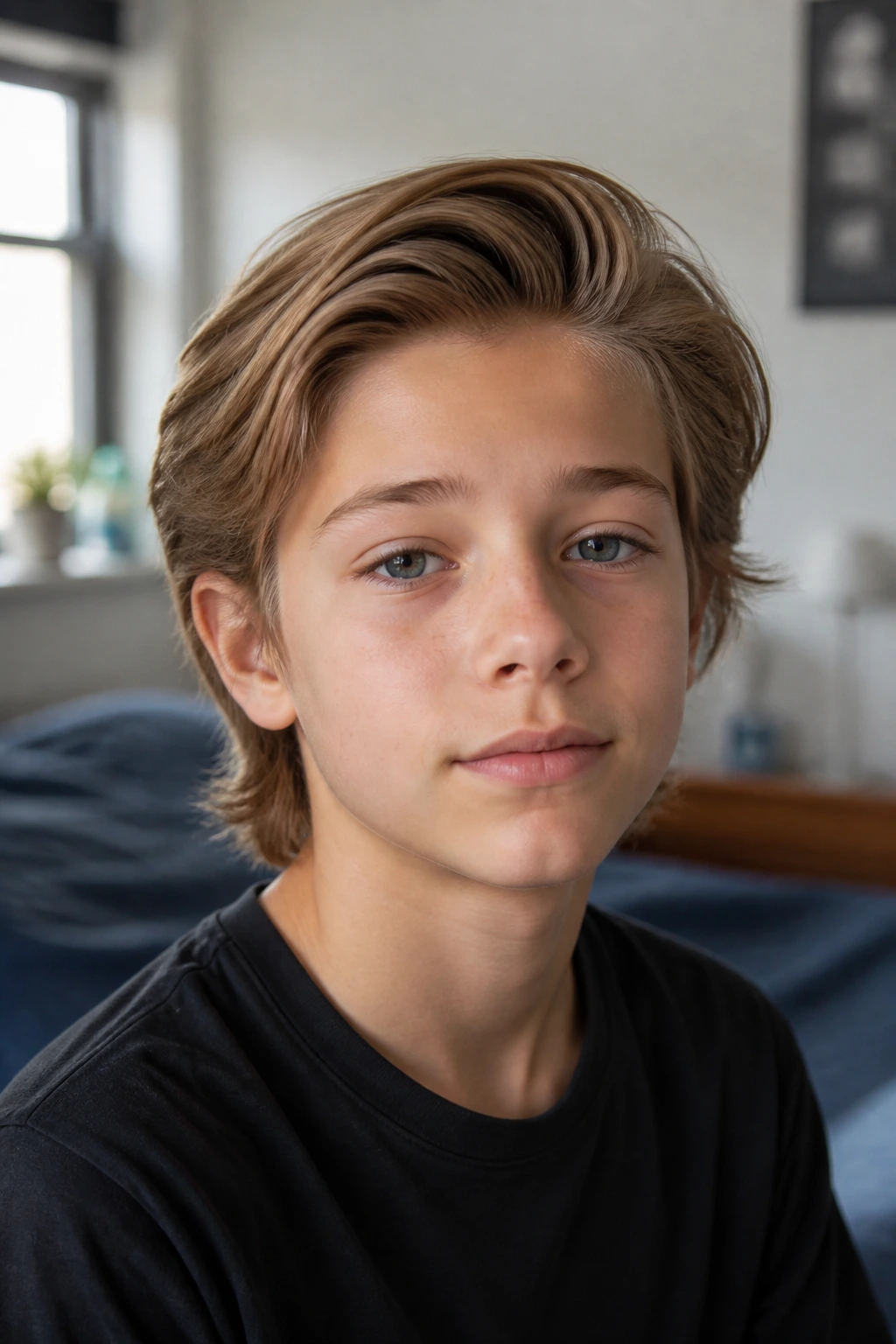
A long cut on fine hair does not need a ten-minute battle before school. It needs a fast routine that gives the roots a little life and leaves the ends alone. The moment you try to control every strand, the hair starts looking overworked.
Dry the roots first: blot with a towel, then blow-dry the roots for 30 to 60 seconds while lifting the hair with your fingers. Focus on the crown and front hairline. That’s where flatness starts.
Use less product than feels safe: a pea-sized amount of mousse or a nickel-sized puff for longer hair is usually enough. If the hair feels sticky before it looks styled, the amount is already too high.
Let the part follow the cowlick: forcing a part against the natural growth pattern usually backfires. Move it a little until the hair settles without fighting you.
Reset, don’t rebuild: after sports or a sweaty recess, dampen the ends and reshape with fingers. There’s no need to start from scratch unless the hair is soaked.
Extra Touches That Keep the Hair from Looking Flat

Texture at the ends: point cutting or soft feathering at the perimeter helps fine hair move instead of hanging in one strip. That tiny irregularity is what keeps the shape alive.
Lift at the crown: if the top lies too close to the scalp, blow-dry the roots against their natural fall for a few seconds, then let them settle. It gives the cut a little air without making it puff.
Clean edges: a low taper around the ears and neckline makes long hair look deliberate, not neglected. The contrast doesn’t need to be dramatic. Small changes do the job.
Soft finish: if the hair is already fine, don’t chase shine. Shine reads as grease faster on this hair type. Matte or natural finishes keep the cut looking cleaner.
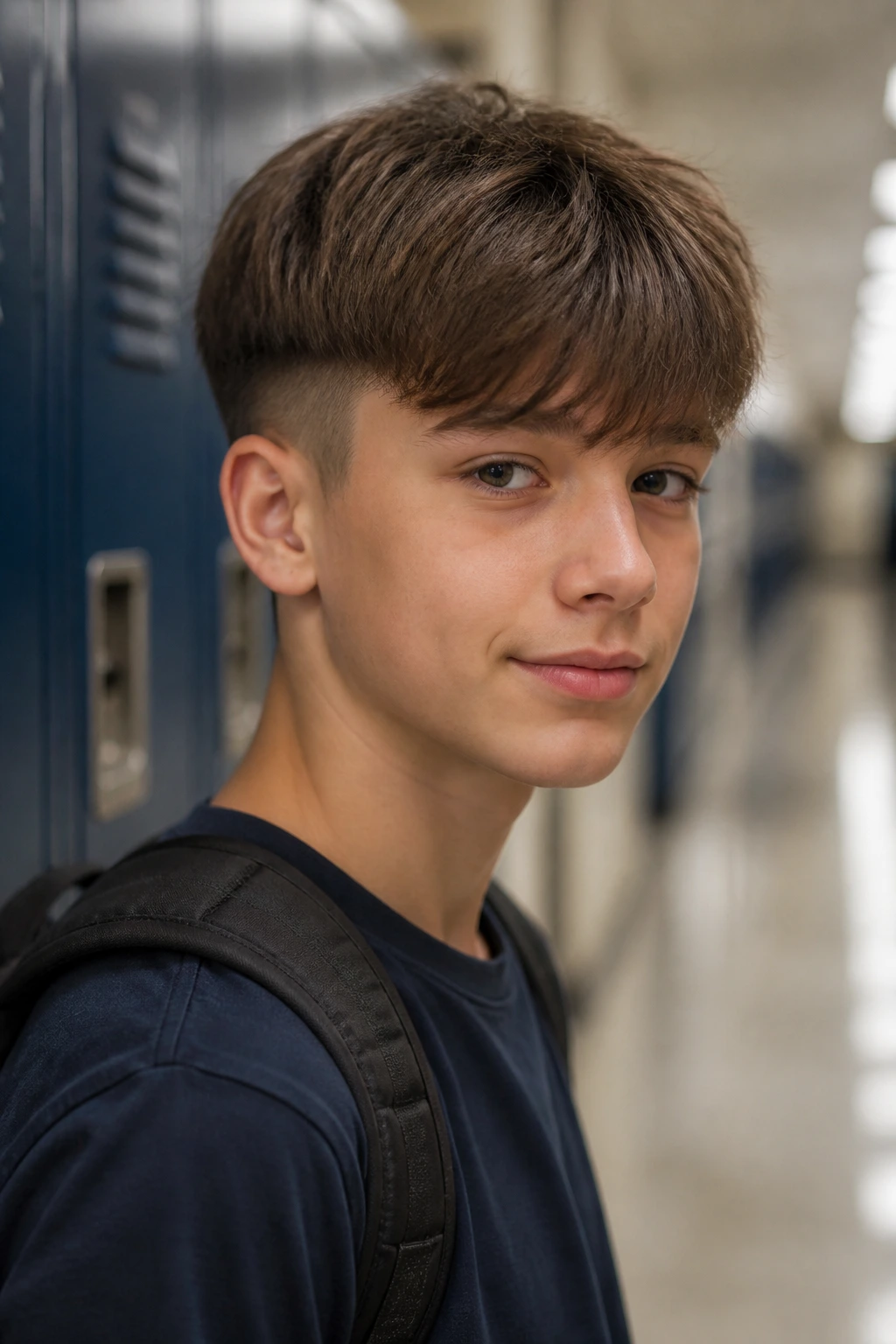
Common Mistakes That Make Fine Hair Look Thinner
-
Too much thinning: The symptom is easy to spot — ends that look cloudy, frayed, and transparent under bright light. Fix it by asking for point cutting or light layering instead of heavy texturizing.
-
A blunt shape with no movement: A one-length cut can make the hair sit like a block, especially around the jaw or shoulders. The fix is soft layers through the interior so the outer line still looks full.
-
Heavy product at the roots: When the hair clumps together and the scalp starts showing through, the product is doing too much. Use lighter formulas and keep creams off the scalp.
-
Skipping trims for too long: Fine hair frays at the ends faster than thick hair, so the shape starts to look wispy. A small trim every six to eight weeks keeps the perimeter from breaking apart.
-
Ignoring growth patterns: If the crown pushes one way and the front falls another, the cut will never sit cleanly. Work with the cowlick and the natural part instead of fighting them every morning.
-
Cutting the sides too short for the top length: That creates a top-heavy shape that can make the hair look even finer. Keep the transition soft unless the haircut is meant to be clearly disconnected.
Variations and Alternatives for Different Faces and House Rules
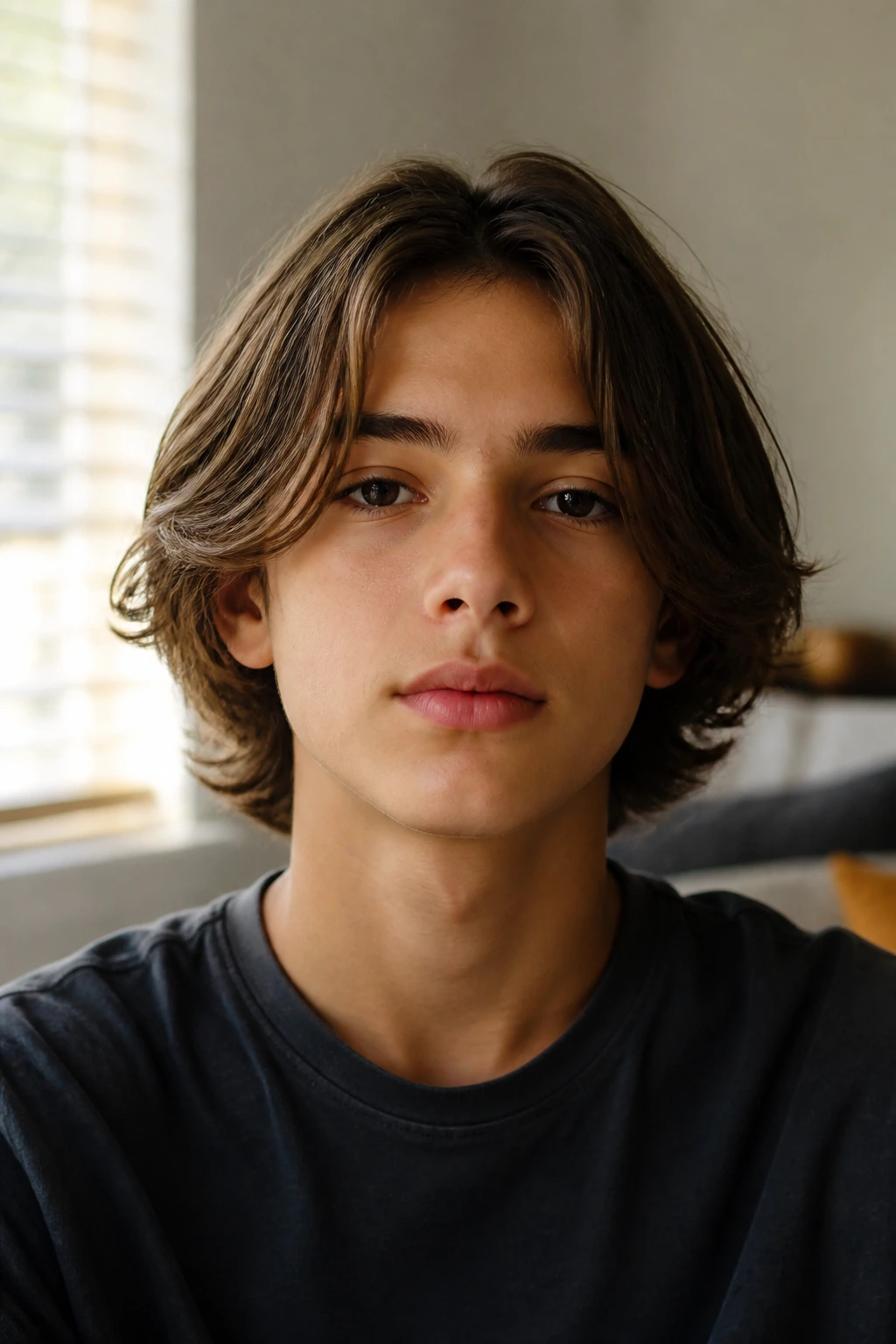
The School-Rule Trim: Keep the long top, but tighten the neckline and ears with a low taper. This is the easiest version to keep neat without losing the length that makes the haircut interesting.
The Surfer Grow-Out: Leave the fringe loose, keep the layers soft, and lean into the natural wave or bend. It suits boys who don’t want much styling and don’t mind a little movement around the face.
The Center-Part Artist Cut: A clean middle part with cheekbone-length framing pieces gives straight fine hair a calm, balanced look. It works well on round or fuller faces because it adds vertical shape.
The Sport-Ready Sweep: Pull the front back and keep the sides slightly shorter, but not clipped down to the skin. It stays out of the eyes and still looks like a long haircut, which is useful if helmets, caps, or practice gear are part of the day.
The Shoulder-Length Statement: Let the length go past the jaw and toward the shoulders, then keep the ends trimmed so they don’t split apart. This one needs the most maintenance, but it can look great on boys with enough density to carry it.
Keeping the Cut in Shape Between Barber Visits
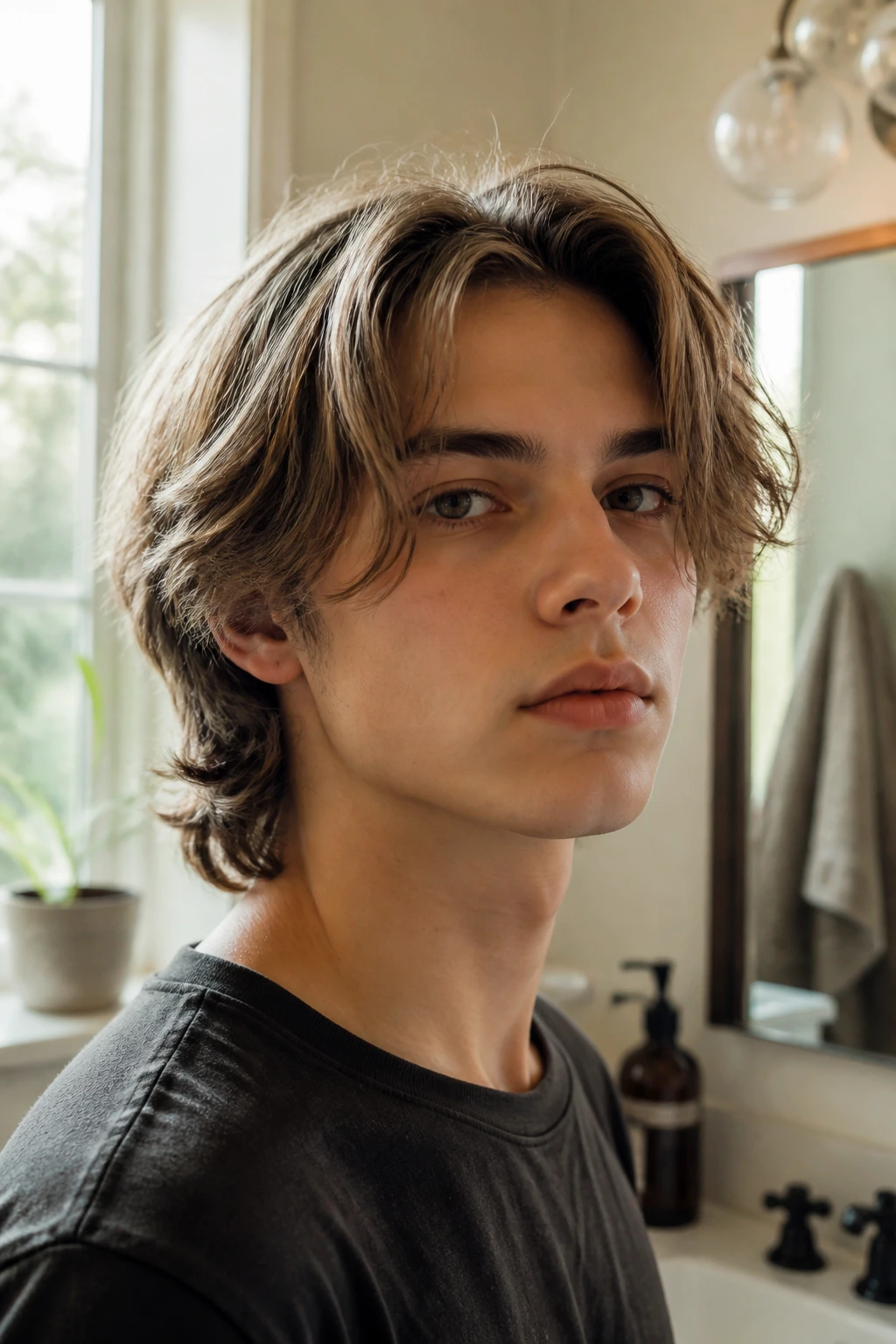
Long fine hair tends to look best when it gets small, regular upkeep instead of dramatic rescue jobs. Waiting until the ends are wrecked usually means the haircut has already lost the clean line that made it work in the first place.
A good rhythm is a light trim every six to eight weeks, with fringe or neckline cleanup sooner if the hair starts blocking the eyes or curling out at the nape. If the style relies on a taper around the ears, that area may need attention a little earlier. The top usually lasts longer than people expect. The edges do not.
At home, wash the scalp as needed, condition only the mid-lengths and ends, and keep a small amount of product in the routine. If the hair gets tangled after sports or sleep, a leave-in mist and a wide-tooth comb do more good than dragging a brush through dry ends. And if a trim starts to look overdue, don’t keep stretching it. Fine hair announces split ends faster than thicker hair does.
Frequently Asked Questions About Long Haircuts for Boys with Fine Hair
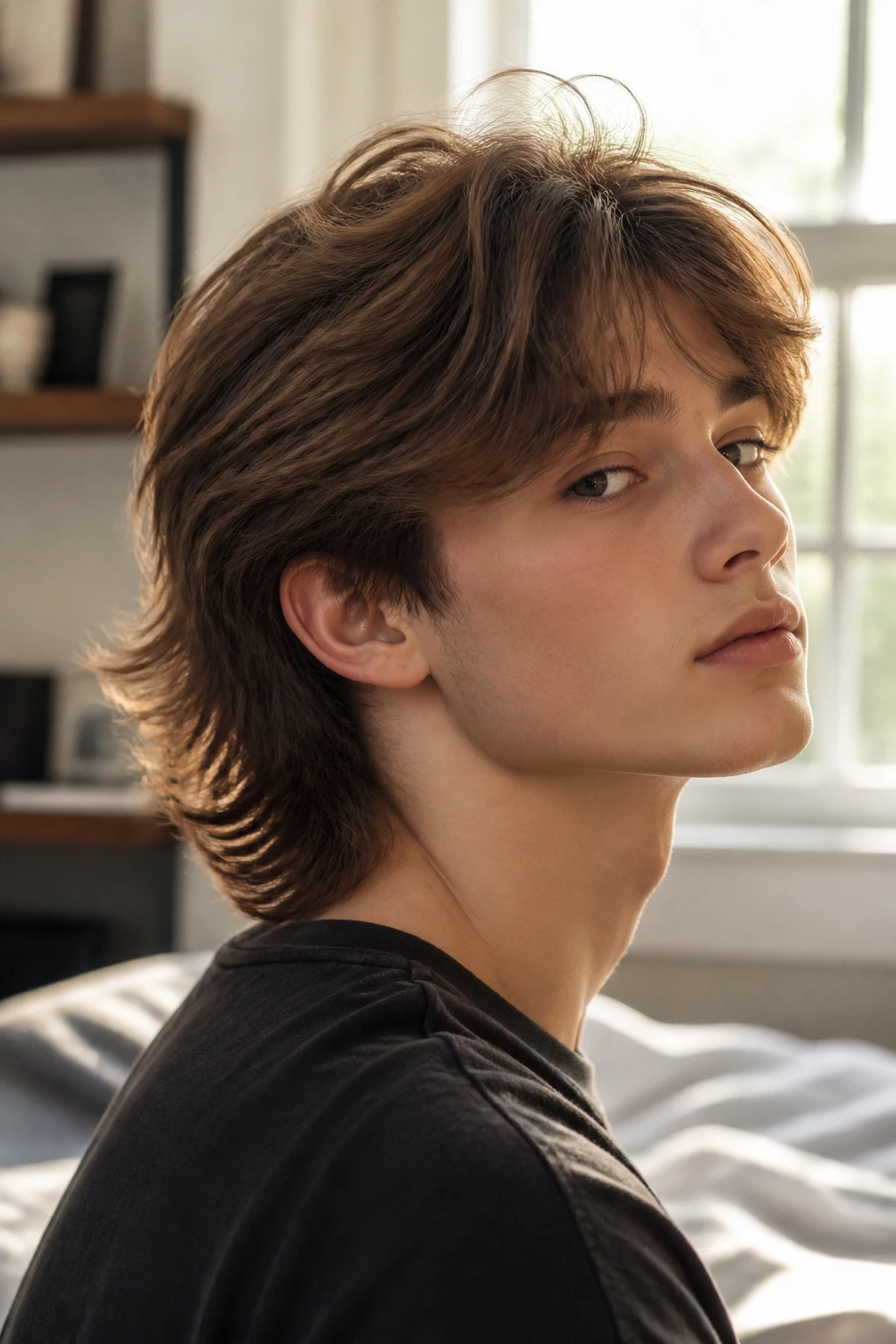
Can boys with fine hair actually wear long hair without it looking stringy?
Yes, but the cut has to keep some weight at the perimeter. Soft layers and a clean outer line stop the hair from looking see-through at the ends. The worst thing you can do is over-thin it.
Is a middle part better than a side part for fine hair?
Not always. A middle part can look clean and balanced, but if there’s a strong cowlick or uneven growth pattern, a soft side part may sit better and need less daily fixing. Try the hair dry before deciding.
Should the barber use thinning shears on long fine hair?
Usually no, or only with a very light hand. Thinning shears can remove the little bit of density fine hair already has, which leaves the ends wispy. Point cutting is safer and usually looks better.
How often should these haircuts be trimmed?
Most of them benefit from a cleanup every six to eight weeks. If the fringe grows into the eyes or the neckline starts to puff out, go sooner. Fine hair loses shape at the edges before it loses length at the top.
What if the hair goes flat by midday?
That usually means the roots need lift, not more product. Blow-dry the crown for a few seconds after towel-drying, and use a lightweight mousse or root spray instead of a heavy cream. A small part shift can help too.
Can wavy or curly fine hair use these same cuts?
Yes, with a little adjustment. Wavy fine hair can hold feathered layers and shags especially well, while curly fine hair usually needs more length in the perimeter so the curl pattern doesn’t spring too far up. The barber should cut for the texture, not just the length.
What should I tell the barber if I want long hair but not a full shag?
Ask for length that stays around the ears or neck, with soft layers and a clean outline. Say you want movement, not a choppy texture job. That distinction saves a lot of regret later.
Is it okay to use conditioner every day on fine hair?
Only if it’s a very light conditioner and it stays off the roots. Some fine hair needs it after swimming, sports, or dry weather, but heavy daily conditioning can make the hair droop. Mid-lengths and ends only is the safer rule.
The Shape That Stays Long
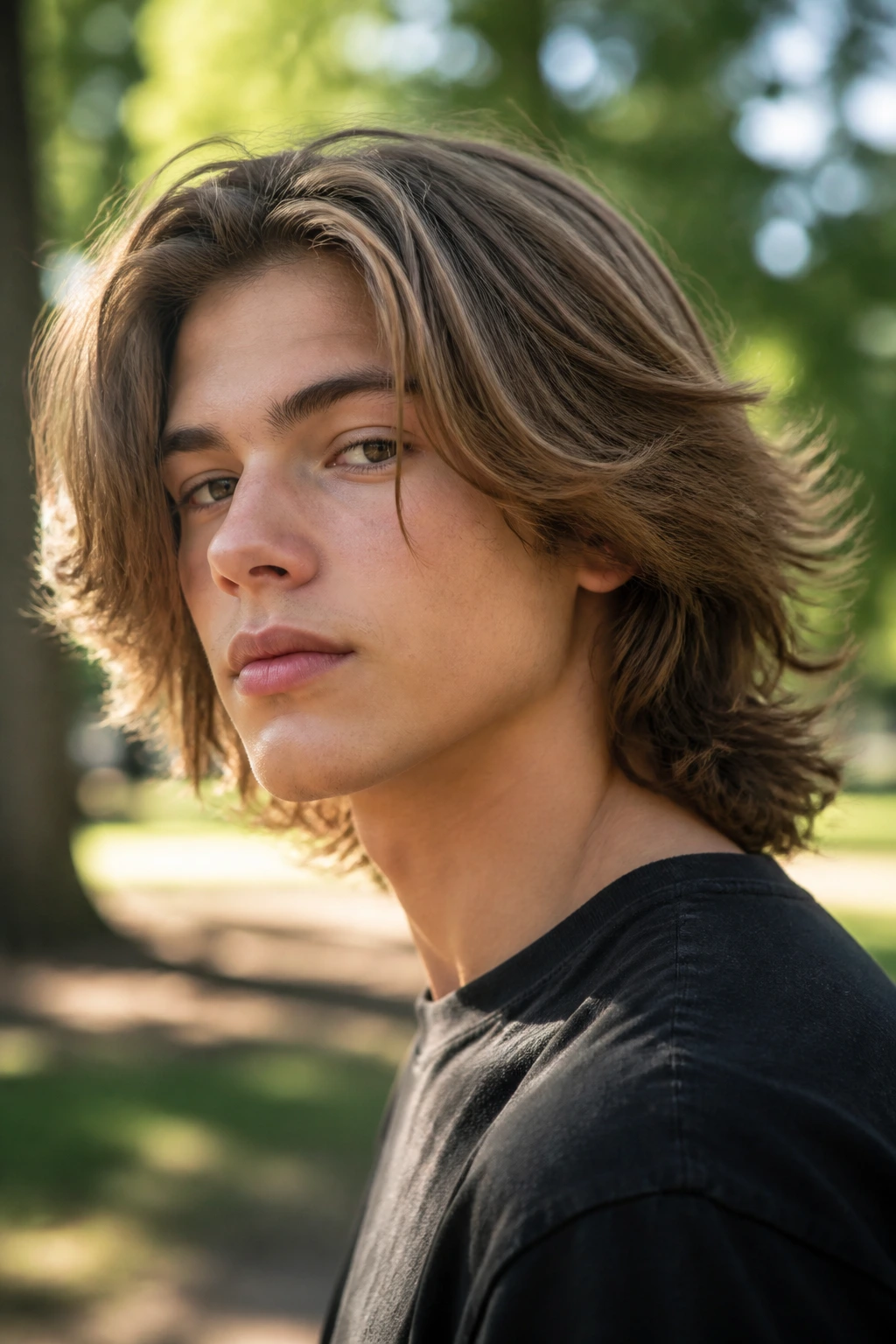
Long haircuts for boys with fine hair work best when they respect the hair’s actual behavior. Fine strands do not need to be forced into fake thickness. They need a shape that keeps enough weight to look full, enough layering to move, and enough cleanup around the edges to stay neat.
That’s why the best cuts in this lineup are the ones that look calm from a few feet away and still hold up in close-up. A clean curtain, a soft flow, a feathered shag, a tapered long crop — all of them can work, but only if the barber leaves the hair enough room to breathe. Too much cutting makes it flimsy. Too little makes it limp. The middle ground is where the good stuff lives.
Give the hair a little structure, keep the products light, and trim before the ends start to fray. That’s the routine that keeps a long cut looking intentional instead of accidental, and it’s the one worth sticking with when the goal is length that still has shape.