



Thin hair after 60 does not need to be hidden under more length. It needs a shape that keeps the eye moving: a lifted crown, a clean edge at the jaw, a side-swept fringe that breaks up scalp show-through, and a nape that doesn’t fray into little see-through wisps by week three.
Short hairstyles for women over 60 with thin hair work best when they use structure instead of bulk. A good crop can make a gray halo look crisp, a fine bob can sit neatly around glasses, and a pixie can open the face without leaving the top feather-light in the wrong way. What fails most often is not shortness itself; it’s too much thinning, too much length, or a cut that was designed for thick hair and then asked to do a thin-hair job.
I have a soft spot for cuts that keep a real perimeter. Not the helmet look. The good ones leave enough line around the cheek, ear, or neck to make the hair read as denser than it is, and that is where the visual payoff lives. The list below leans hard on that idea, because it works in the mirror and in real life, which is where the haircut has to survive.
Why These Cuts Earn Their Keep
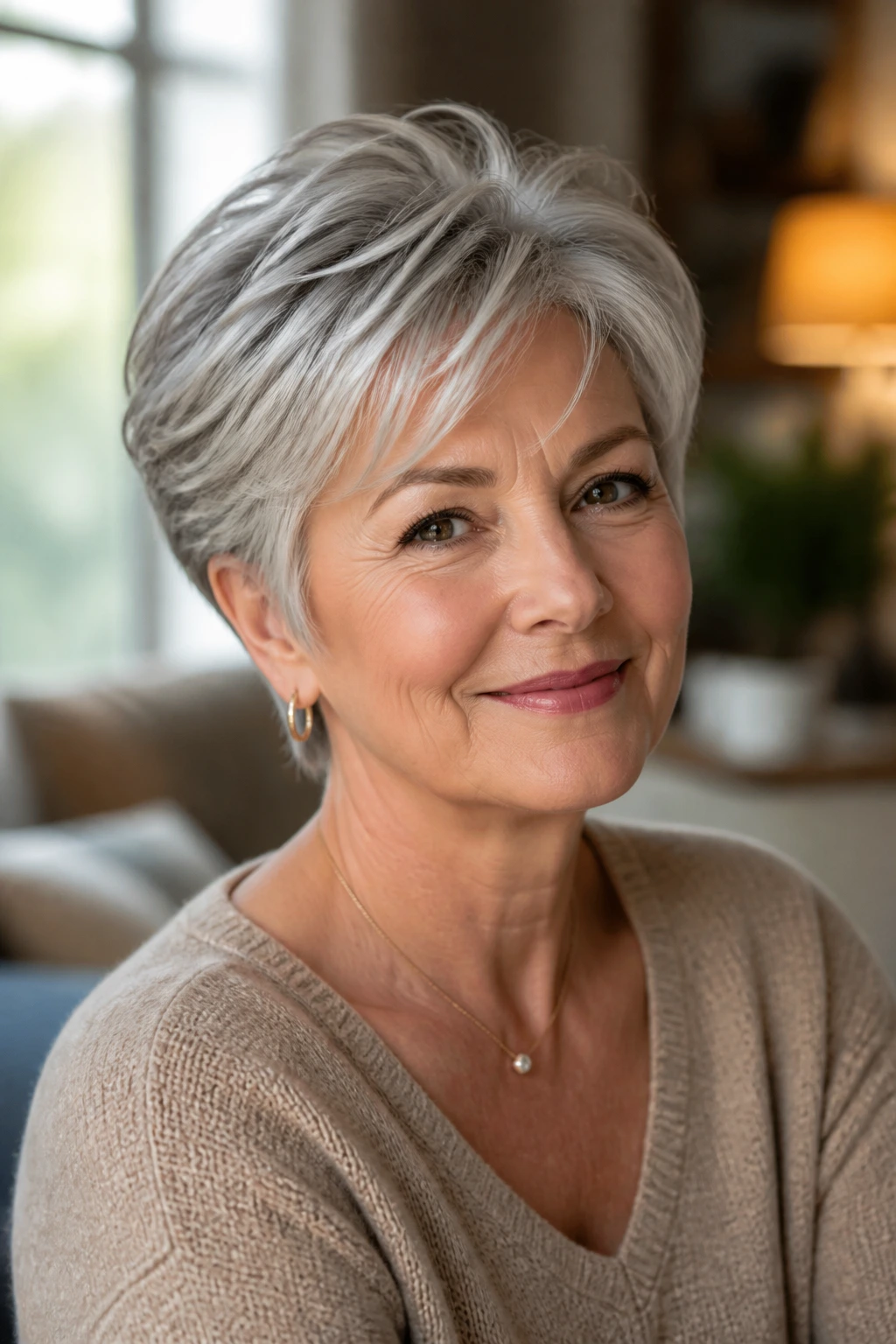
Crown lift: A little height at the crown stops the top of the head from collapsing into the scalp, which is the fastest way short hair starts looking sparse.
Clean perimeter: A blunt edge, a soft bevel, or a careful taper gives the ends something to do instead of letting them dissolve into flyaway strands.
Face framing: Side-swept fringe, temple pieces, and cheekbone-length front sections shift attention away from thin spots at the part.
Low-friction styling: These cuts are built to work with a round brush, a finger-dry, or a quick pass of a small iron, not a 40-minute battle with your own hair.
Glasses-friendly shapes: A lot of women over 60 wear frames, and the best short cuts leave enough room around the temples and ears that the hair and glasses don’t fight each other.
Trim-friendly length: Short hair loses shape fast when the ends get scraggly, so the better cuts still look intentional after a four- to six-week maintenance cycle.
1. Side-Swept Feathered Pixie
A feathered pixie with a side sweep is one of those cuts that looks easy in the chair and smarter than it sounds once you live with it. The top stays a little longer, usually around 2 to 3 inches, while the sides and nape are kept close enough to show the shape of your head without exposing every little gap. The side fringe is the part I like best; it breaks up a thin temple area and gives the front some motion.
Why it works
Thin hair often looks flatter when it lies straight back from the forehead. A side-swept pixie interrupts that line and creates a diagonal, which the eye reads as fuller. The feathering matters too, but only when it’s done lightly. Too much razor work and you get soft frizz instead of movement. The sweet spot is a cut that bends, not one that disappears.
Best for
- Fine strands with a flat crown
- Women who like to air-dry or rough-dry
- Hair that needs glasses room at the temples
Styling note
Use a pea-sized amount of mousse at the roots, then blow-dry the fringe in the opposite direction first. Flip it over at the end. That little trick gives the front a bend without making it stiff.
2. Jaw-Length French Bob
A jaw-length French bob has a very specific effect: it puts a clean line right where the face wants structure, and thin hair usually needs that line more than it needs more layering. This is not a shaggy bob that pretends to be casual. It’s neater than that. The ends skim the jaw, the back stays tidy, and the overall shape reads as compact.
What makes it different
On thin hair, the bluntness of the edge matters more than a pile of layers. A French bob keeps the shape dense at the perimeter, so the hair looks thicker where people actually see it. If your hair is straight, this cut can be almost rude in the best way: it doesn’t ask for much. If your hair has a bit of bend, the soft bevel at the ends keeps it from puffing out in a hard line.
Quick reality check
This is a good cut if you want hair that sits near the face and doesn’t drag your features down. It is less happy if your hair is very sparse at the sides, because you need enough density to keep the jaw line clean. A stylist who can cut dry and check how the ends fall is worth their weight here.
3. Crown-Lift Tapered Crop
If your hair goes limp at the top by noon, this is the kind of cut that actually changes the shape of the whole head. The sides and nape are tapered close, while the crown is left with enough length to stand up when it’s brushed forward and then back. That simple change creates height where thin hair usually collapses.
Why it helps thin hair
A lot of women try to fix flatness with more product. That usually fails. A crown-lift crop works because the cut itself gives the roots less weight to carry. When the top is too long, it drags; when the sides are too bulky, the head looks wider instead of fuller. This one trims both problems down.
How to wear it
- Blow-dry with a small vent brush or fingers
- Aim the nozzle at the root for the first 30 seconds
- Use a cool shot to lock the lift in place
That’s enough. Seriously. If the cut is right, you do not need a salon blowout every morning.
4. Bixie With Piecey Ends
The bixie sits in that useful middle ground between a bob and a pixie, and for thin hair it can be a very forgiving shape. It keeps more length than a classic crop, which helps around the ears and nape, but the top stays short enough that the whole cut still looks light and modern. The piecey ends are the point. They add separation without eating away at density.
Why it works
A bixie gives you options without demanding thick hair. You can tuck the sides behind the ears one day, brush them forward the next, and still keep the outline tidy. I like it for women whose hair is fine but not fragile, because it can handle a little movement. If your hair bends on its own, even better.
Ask for this
- Soft graduation at the back
- Longer top layers, not choppy ones
- Point-cut ends, not over-thinned ends
A bixie turns ugly fast if the stylist gets happy with the thinning shears. Ask them to keep the perimeter honest. That’s what makes the style read as full instead of wispy.
5. Stacked Bob With a Slim Nape
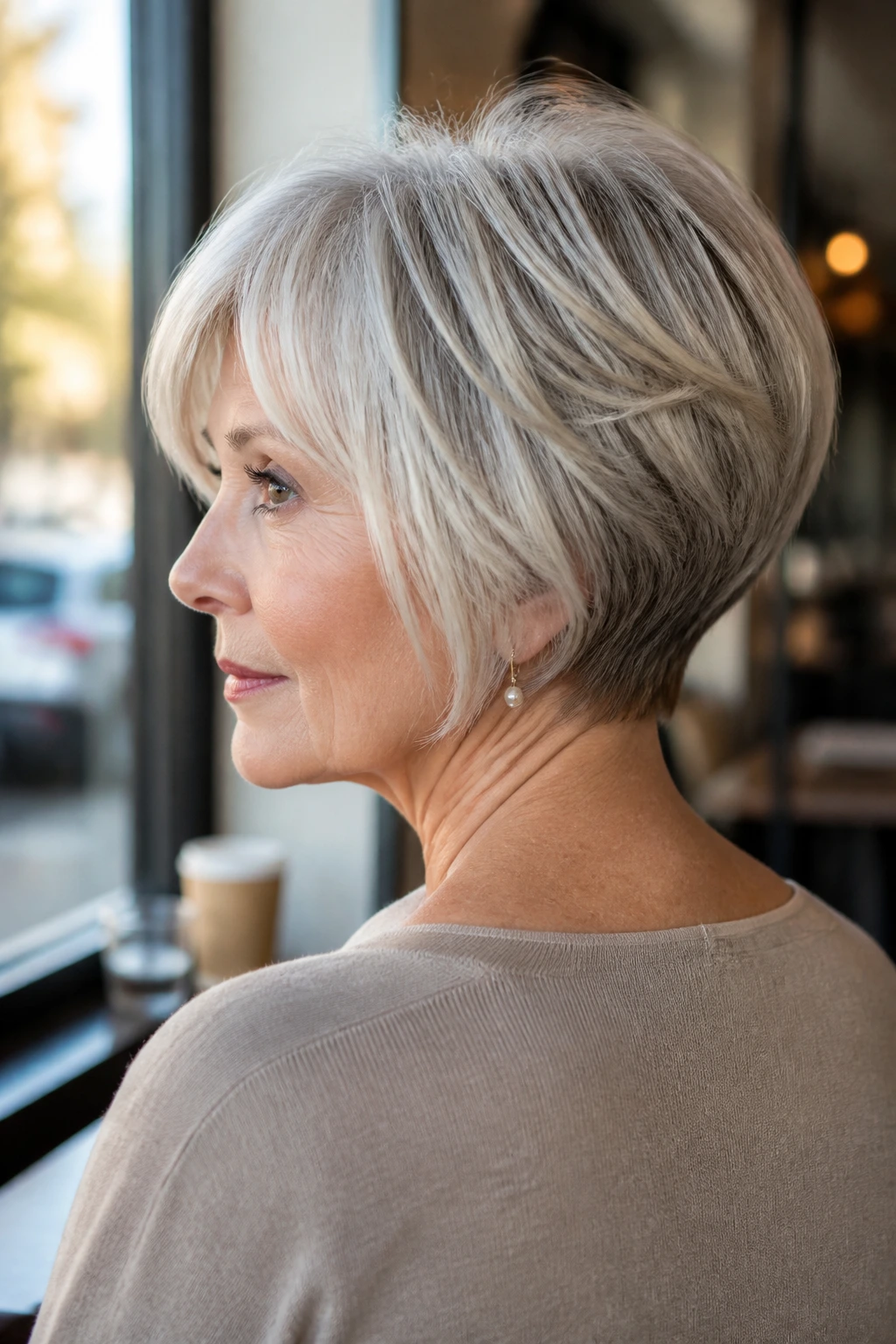
A stacked bob does one job very well: it sneaks visual volume into the back of the head. The graduated layers lift the rear shape, while the nape stays slim and clean, which keeps the cut from looking heavy. On thin hair, that back shape can make the whole style feel more present from every angle.
Why I like it
Some bobs feel flat in profile. This one doesn’t. The stacking creates a little shelf of fullness, and because the weight lives higher up, the lower part of the cut doesn’t go stringy as quickly. It also suits straight hair beautifully, because the structure stays visible. Wavy hair can wear it too, but the stacking should be softer so the back doesn’t kick out.
Keep an eye on this
Too much stacking turns the silhouette into a wedge you didn’t ask for. Too little, and you lose the lift. The right version sits somewhere in the middle, with enough bevel to make the back feel rounded rather than hollow.
6. Rounded Bob With Interior Layers
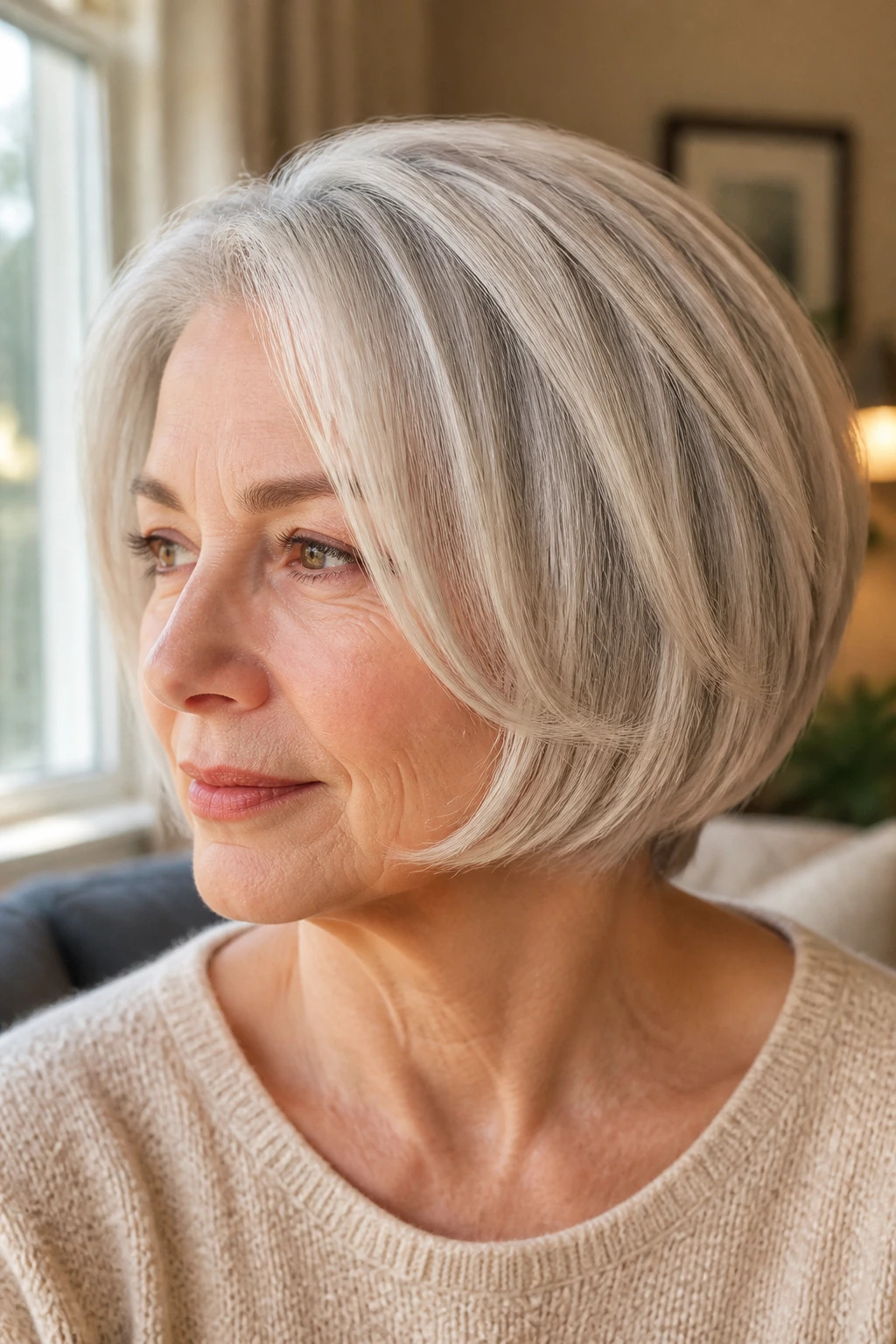
A rounded bob is one of my favorite quiet fixes for thin hair because it uses shape, not drama. The outline curves gently around the head, and the interior layers remove just enough weight so the hair doesn’t hang like one long curtain. The outside line stays intact. That matters more than people think.
What makes it flattering
Fine hair usually looks better when the perimeter is visible. A rounded bob keeps that edge in place while building a soft curve through the mid-lengths. It’s a nice match for silver or white hair, too, because the curve picks up light in a way that flat, one-length cuts often don’t. If you’ve got a cowlick at the crown, this style can still work, but the interior layers have to be controlled.
Styling rhythm
Dry it with a medium round brush and bend the ends under just a little. Not a sausage curl. Just enough bend to show the line. That small finish keeps the bob from sitting flat against the neck.
7. Deep Side-Part Asymmetrical Bob
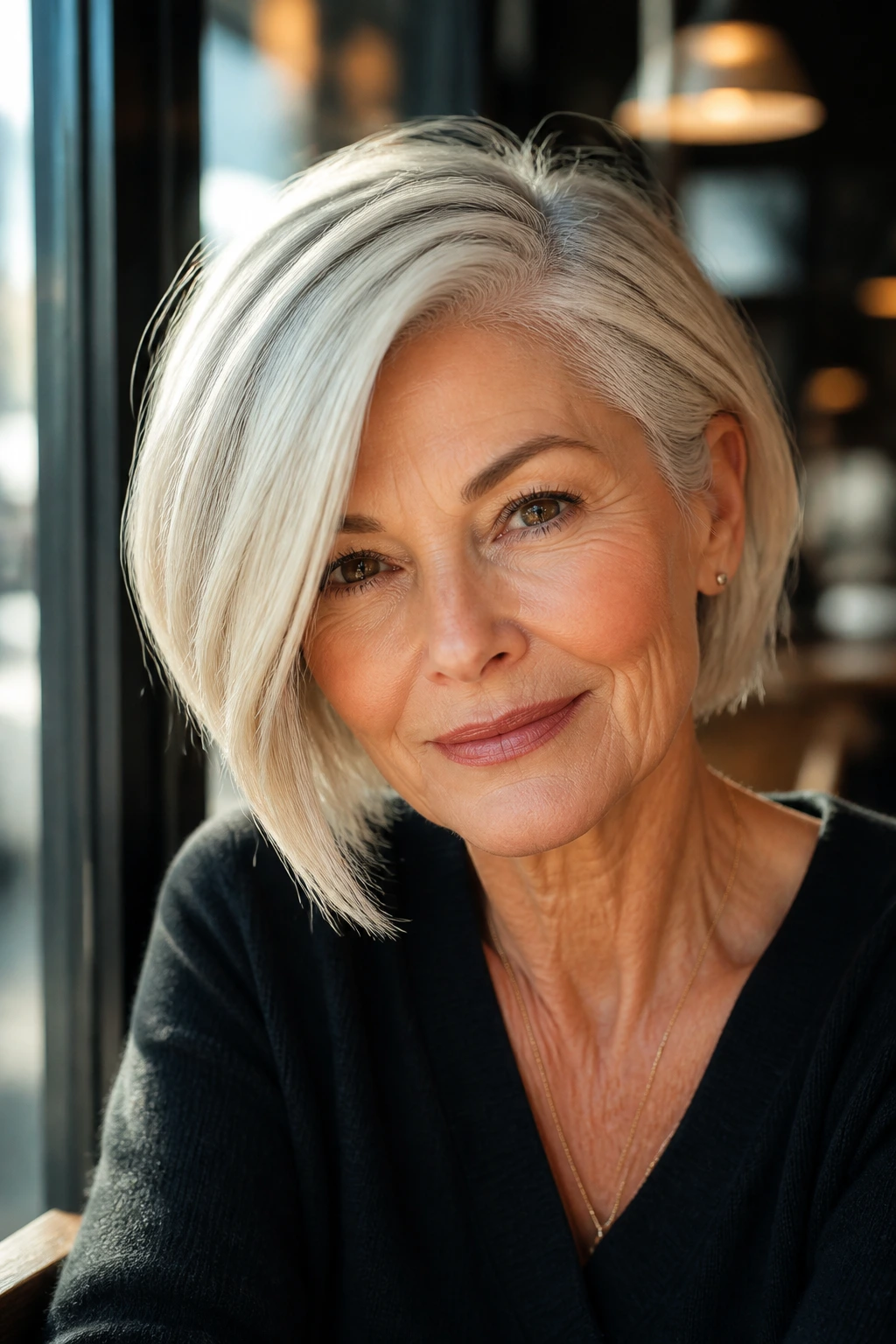
A deep side part can do more for thin hair than a shelf of volumizing spray ever will. The asymmetrical bob uses that part to push most of the hair to one side, which builds the impression of density where the eye lands first. It also softens a sparse temple area because the heavier side does the talking.
Why it stands out
This cut is especially useful if your hair is fine but not evenly thin. Maybe one side is better than the other. Maybe the crown opens up more on one side of the part. A deep side-part bob gives you a way to work with that instead of pretending both sides behave the same.
A small styling trick
Dry the hair in the opposite direction of the part first, then swing it back. That adds root lift and keeps the part from looking painted onto the scalp. If you wear glasses, this shape often sits neatly above the frame line and doesn’t crowd the temples.
8. Feathered Shag Crop
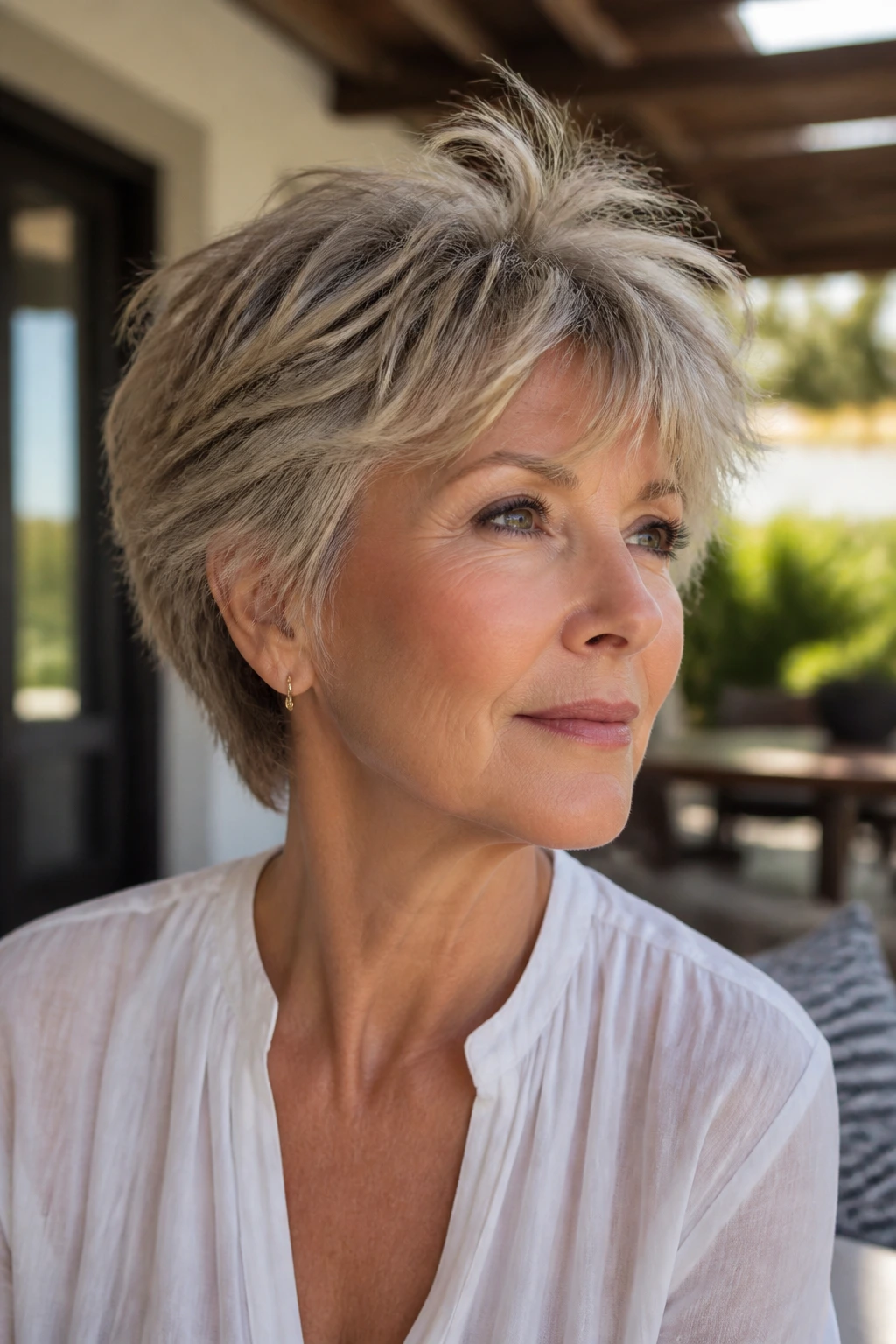
A feathered shag crop is for women who want movement without committing to a full shag that eats up all the ends. The layers are soft, the top has lift, and the fringe usually breaks into little pieces rather than one solid sheet. On thin hair, that looseness can make the cut feel lighter and more alive.
What it does well
The biggest problem with thin hair is often not lack of style; it’s lack of motion. A feathered shag crop solves that by creating texture where the hair can actually move. The trick is restraint. The layers need to be visible, but not so chopped up that the ends look see-through.
Best for
- Slight wave
- Hair that gets a little puffy when it’s one length
- Women who don’t want to smooth every strand into place
If your hair is extremely fine, ask for softer feathering around the face and keep the ends a little fuller. Over-thinning here is a mess. It looks airy for about ten minutes, then the haircut starts betraying itself.
9. Ear-Length Tapered Crop
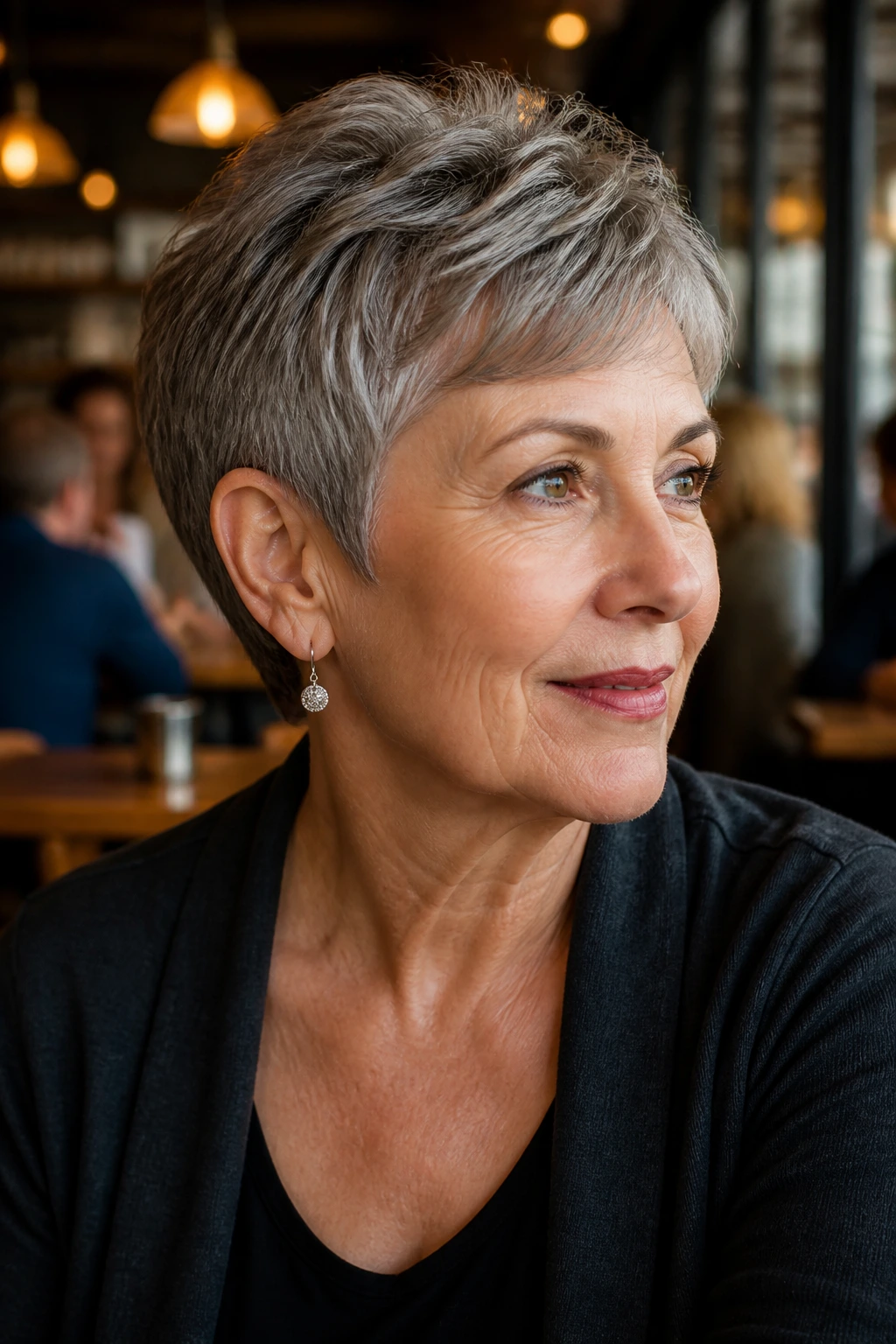
An ear-length tapered crop is short enough to feel fresh, but not so short that it exposes every line of the scalp. The sides hug the head, the back tapers cleanly, and the top keeps a touch of length so you can finger-style it. It’s one of those cuts that looks neat in the morning and still looks neat at dinner.
Why it works on thin hair
Because the cut is compact, there isn’t much length available to go limp. That alone helps. The taper also prevents the lower half from getting scraggly, which is where thin hair often gives itself away. I like this shape for active people who want the hair out of the way without having to keep it buzz-short.
Maintenance note
You do need regular trims. Every four to five weeks is the range I’d trust for this one, especially around the ears and neckline. Once the edges soften too much, the whole style loses its clean line.
10. Curly Crop With Soft Fringe
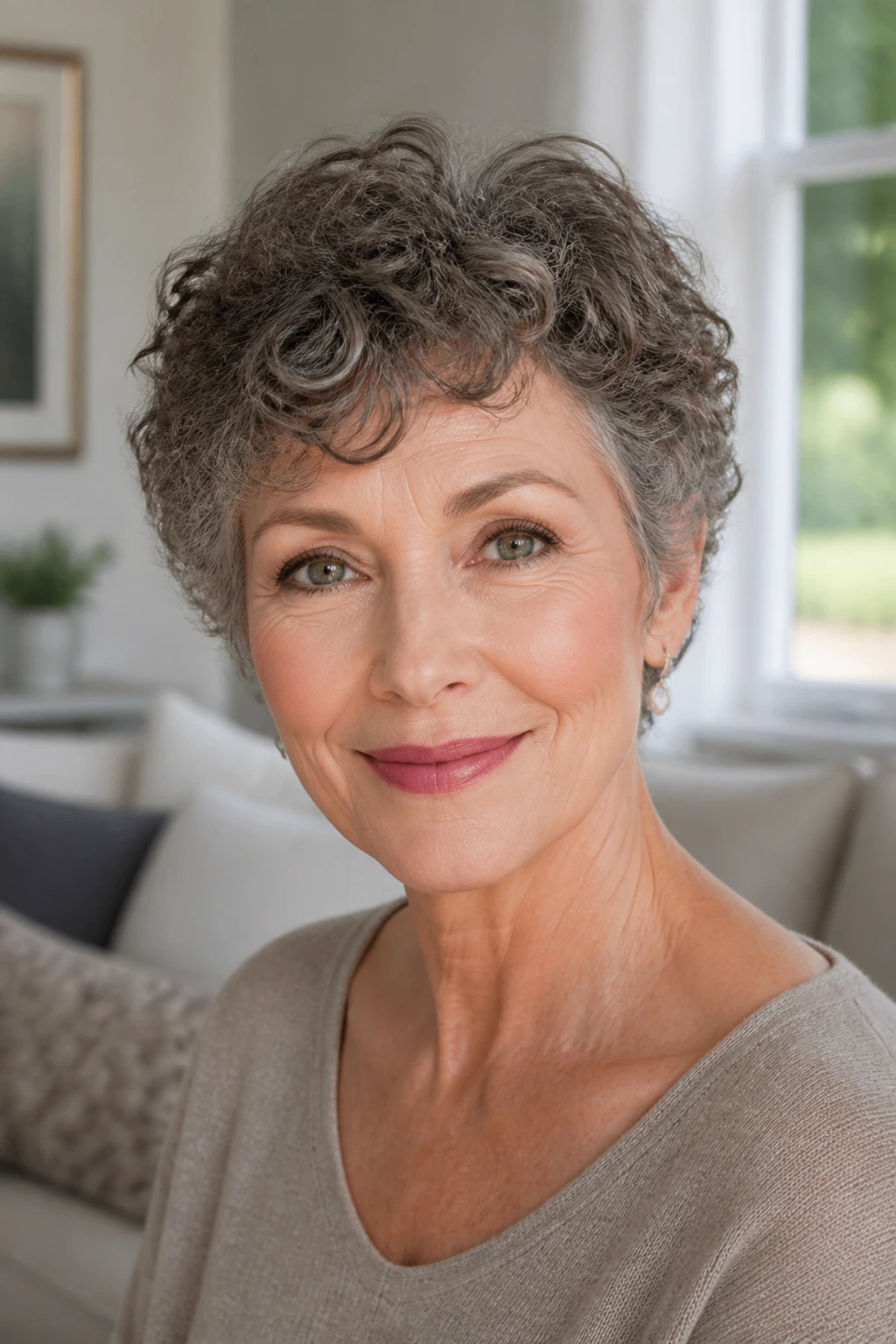
Curly and thin can be a tricky combination, but a short curly crop gives the curls room to spring instead of hanging in flat loops. The soft fringe is the useful part. It breaks up the forehead area and keeps the style from looking too round or too severe.
What to ask for
Cut it in a way that respects the curl pattern. Ideally, the stylist shapes it while the hair is dry or mostly dry so they can see the curl’s true bounce. Thin curls don’t want aggressive thinning. They want a shape that lets the curl clump together naturally. That’s the difference between a cute crop and a frizzy halo.
Styling note
Use a light gel or mousse, scrunch once, and leave it alone. A diffuser on low heat is enough. If you keep touching it while it dries, the curl separation goes away and the crown can look sparse.
11. Sleek Crop Tucked Behind the Ears
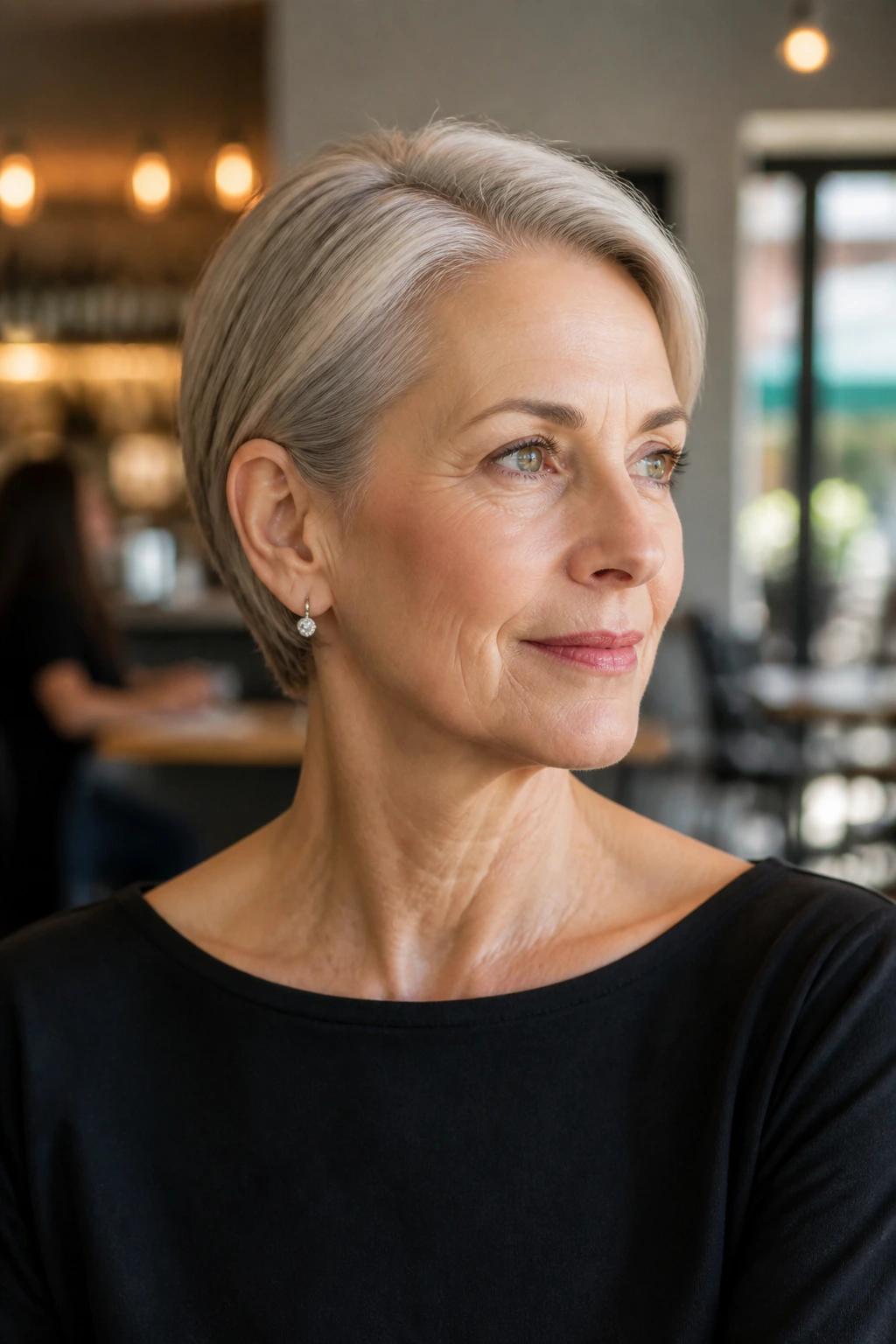
Some short cuts try too hard to look fluffy. This one doesn’t. The sleek crop tucked behind the ears uses smooth sides and a controlled top to create a neat outline that looks polished without much fuss. For straight, fine hair, that can be a relief.
Why I’d recommend it
When hair is thin, bulky styling can backfire. A sleek crop keeps the shape close to the head while still giving you enough length on top to tuck, sweep, or pin. It also works very well with statement earrings and glasses, because the hair doesn’t compete for space around the face.
Small warning
This style depends on good condition and clean ends. Split ends show fast on a sleek cut. If your hair is fragile, keep the top slightly textured rather than glassy smooth, because a little texture hides density changes better than a super-flat finish.
12. Wispy Micro-Bob
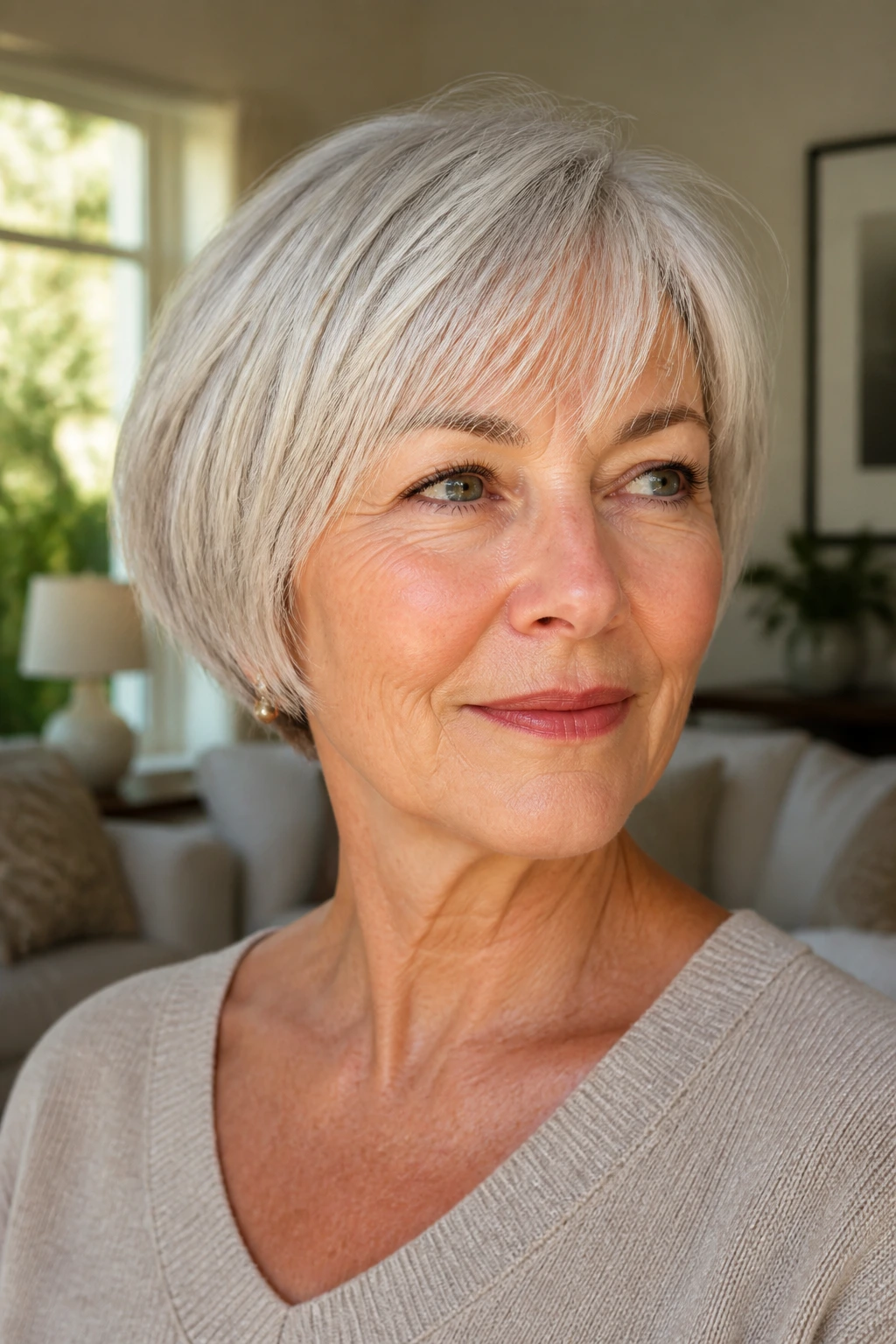
A wispy micro-bob sits just below the ear or skims the top of the jaw, which makes it shorter than a classic bob but longer than a crop. That middle ground is useful if you want some face frame and neck coverage without carrying extra weight in the ends. The wispy part should live in the surface layers, not the whole outline.
Why this cut earns a spot
It gives thin hair a neat shape without needing much styling. The micro-bob has enough line to look intentional, and enough softness to avoid that boxy helmet effect. I especially like it for women who want to keep a little length around the jaw but cannot stand heavy hair on the neck.
Styling reality
A flat brush or a small round brush is enough. Bend the ends in slightly, then stop. If you overwork it, the wispy top layers start separating in the wrong places and the cut looks tired.
13. Short Shag With Crown Texture
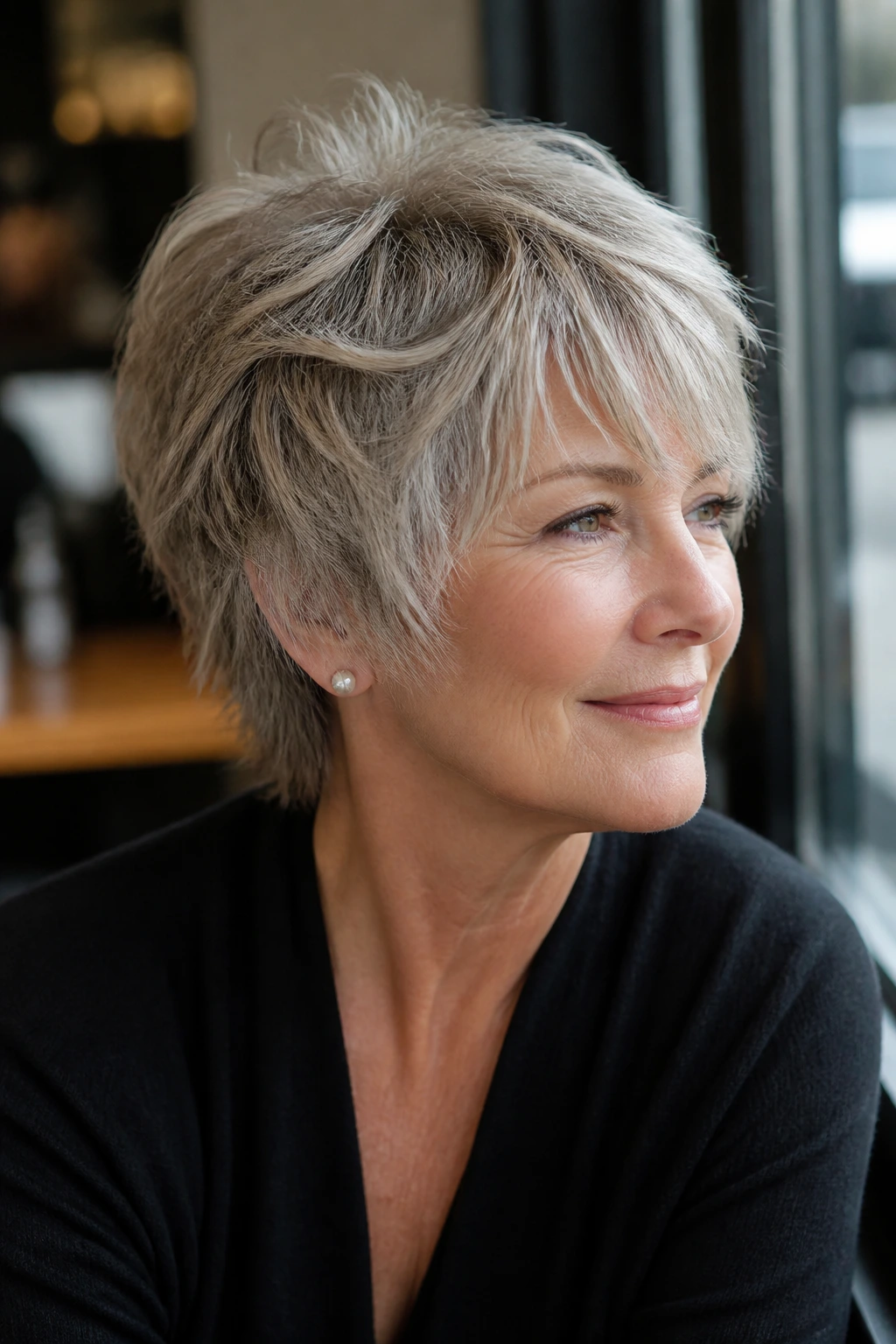
A short shag with crown texture has a little more attitude than the softer crops, but it can be fantastic on thin hair when the top needs lift and the sides need movement. The crown layers are the main event. They create height without turning the haircut into a puffball.
What makes it different
This cut works because it spreads attention around the head instead of putting all the weight at the bottom. That’s a smart move when the ends are sparse. The best version keeps the perimeter visible and leaves enough length in the front pieces to frame the face. If those pieces are cut too short, the whole style can get pointy.
Use it if
- Your hair falls flat by noon
- You like a rough-dry finish
- You want texture that looks a little lived-in
A short shag is not the place for heavy creams. Use a light mousse or a dry texturizing spray and stop there. Too much product collapses the crown.
14. Soft Undercut Pixie
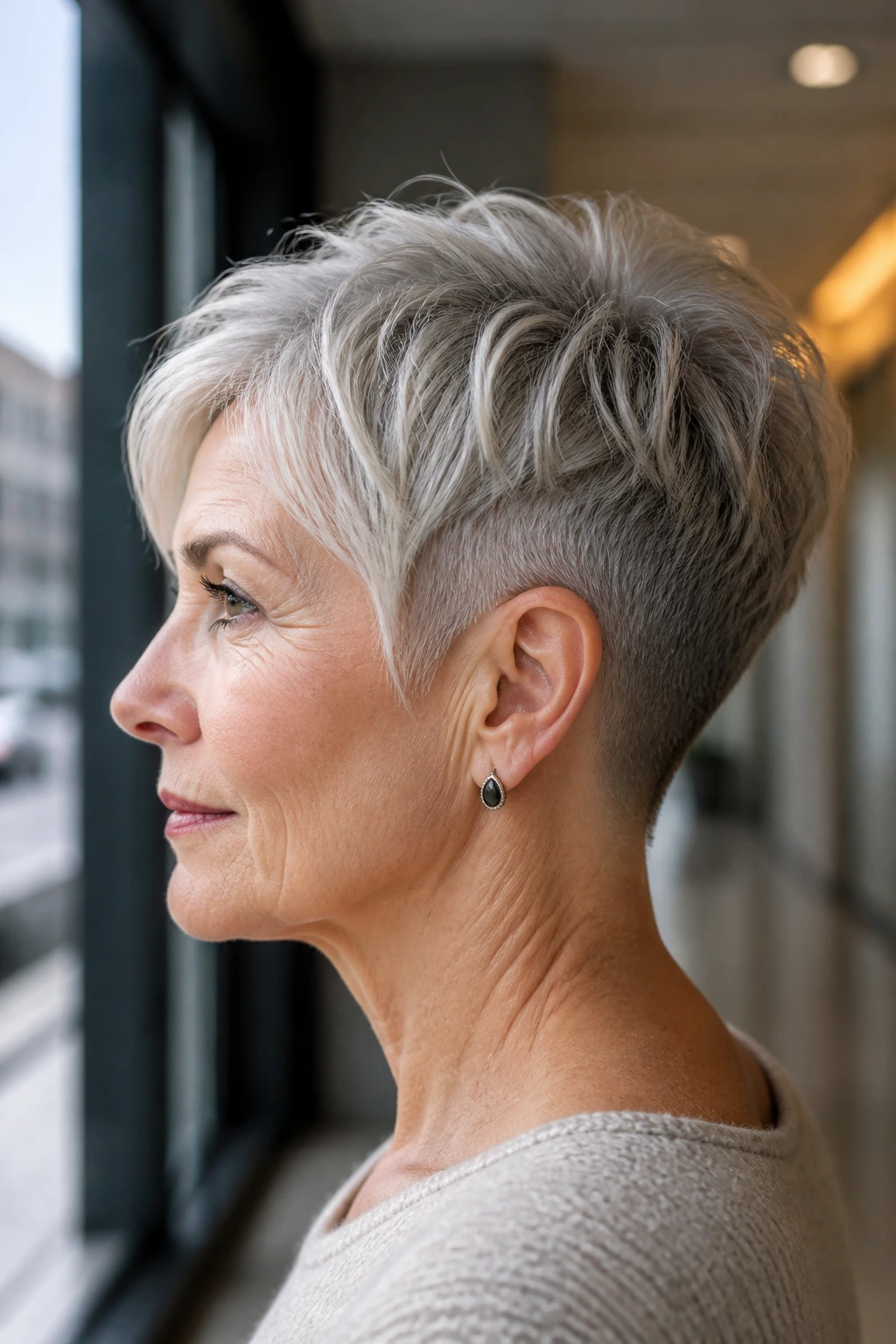
A soft undercut pixie can be a lifesaver if your hair is thick at the nape but still looks thin on top, or if the lower sections puff out and make the head look wider than it needs to be. The key word is soft. You want a hidden or very light undercut, not a harsh shave line that exposes more scalp than you want.
Why it works
Removing a little bulk underneath lets the top sit better. That gives the crown a chance to lift without getting dragged down by the sides. It also makes styling faster, since there’s less hair to bend and tame at the neckline. On silver hair, this shape can look clean and sharp in a way that feels modern without shouting.
Don’t overdo this part
If your hair is genuinely sparse, a strong undercut can backfire and make the lower head look too open. Ask for a whisper of removal, not a dramatic cut-away. The best version still looks like a pixie from every angle, not a barbershop experiment.
15. Blunt Jaw-Grazing Bob
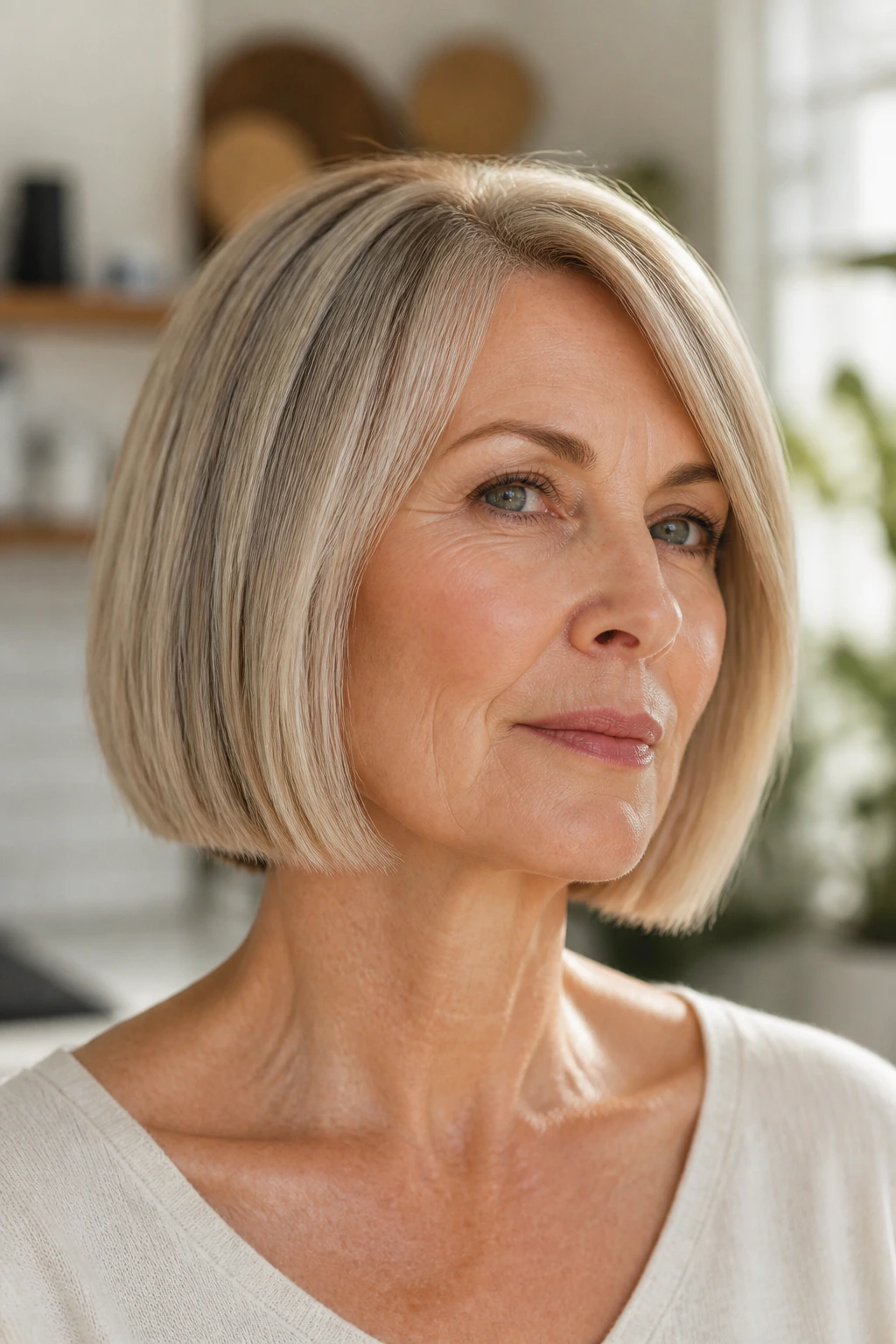
A blunt jaw-grazing bob is blunt for a reason: the line creates the illusion of density. For thin hair, that clean edge at the jaw can be more effective than six layers trying to create movement that isn’t there. It’s crisp, neat, and surprisingly flattering when the hair is straight or only slightly bent.
Why it holds up
Thin ends are what give away fine hair first. A blunt line solves that by making the edge look deliberate and full. The jaw length also lifts the face a little, which is why this cut works so well after 60. It frames the lower face without dragging the eyes down.
A blunt bob needs honesty
If the hair is very sparse, this cut can look limp unless the ends are beveled just enough to sit. If the hair has some density but the strands are fine, it’s a strong choice. The cut is less about texture and more about clean shape. That’s the whole point.
16. Salt-and-Pepper Layered Crop
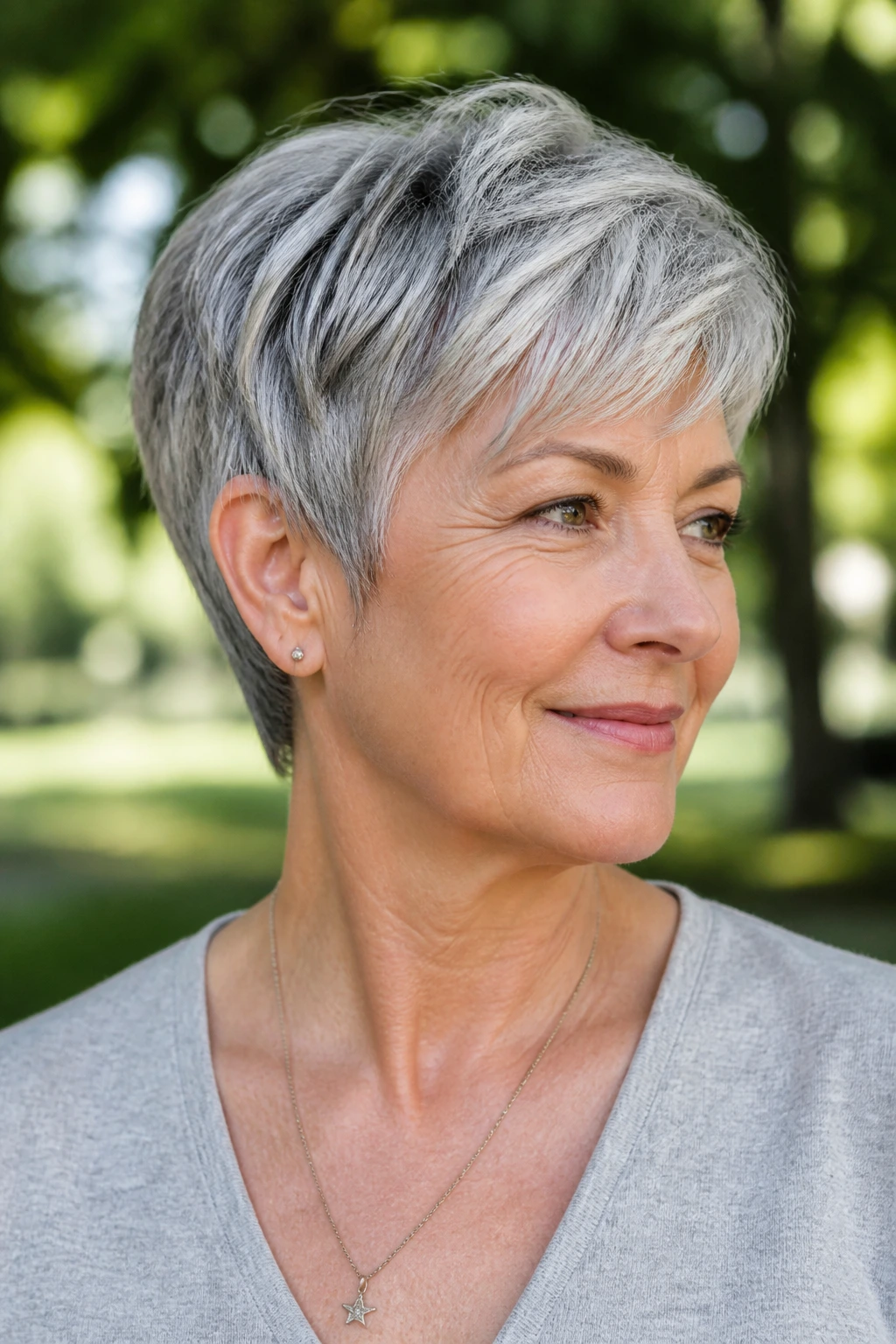
Salt-and-pepper hair changes the haircut conversation because the color itself starts doing some of the visual lifting. A layered crop lets those silver and darker strands separate enough to show depth, which can make thin hair read as fuller than it is. The trick is to keep the layers soft enough to move, not so chopped that the ends vanish.
Why I like it for gray hair
Gray hair often reflects light sharply, which can make flatness more obvious. A layered crop breaks that surface up. The result is a softer, more dimensional look that doesn’t depend on length. If your hair has a mix of white, silver, and darker streaks, this style can look richer than a longer cut that falls all in one sheet.
Styling note
A light cream or foam is enough. The cut already has the visual texture. You do not need a sticky paste to make it happen, and too much product will dull the silver.
17. Side-Volume Crop
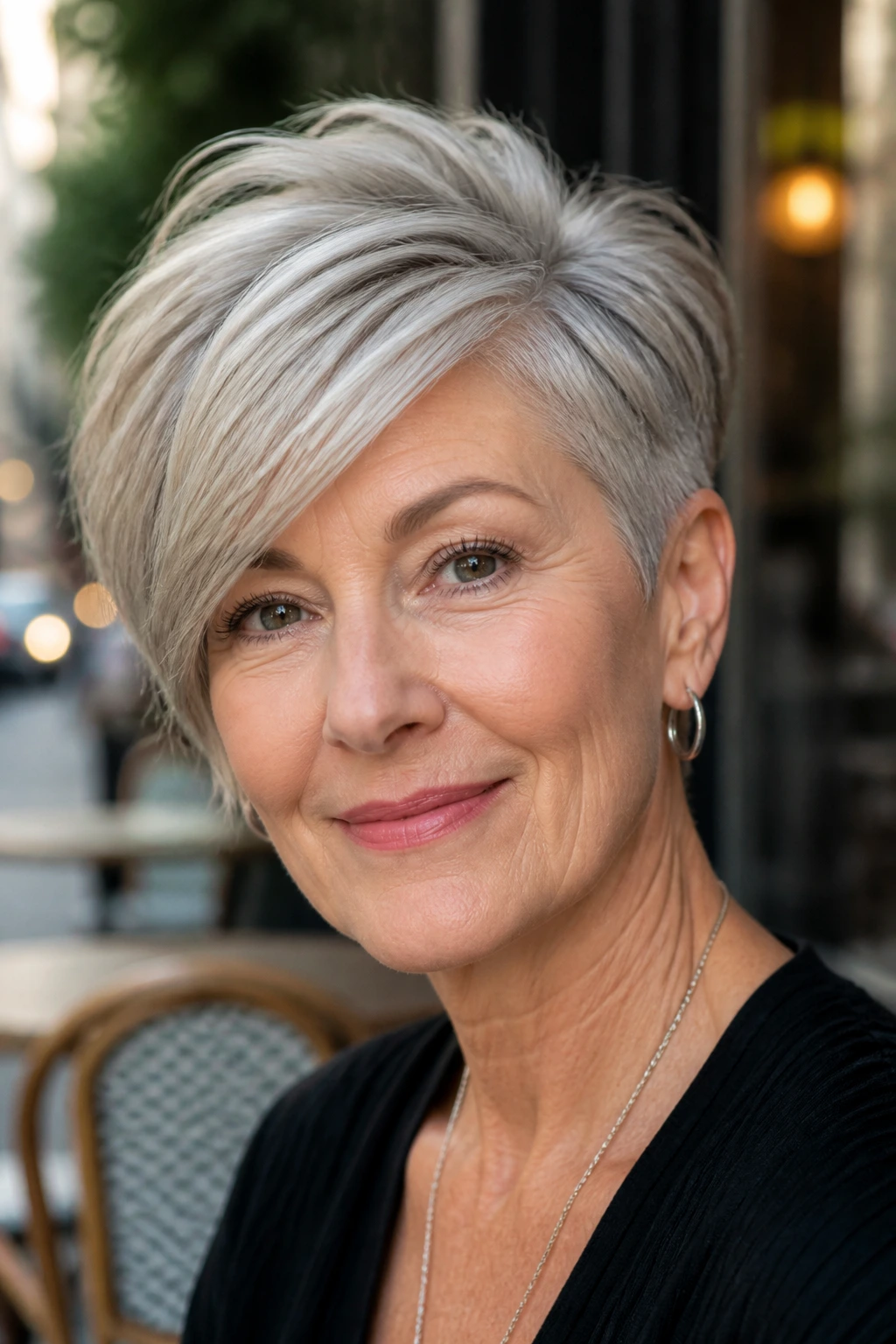
A side-volume crop is built around one idea: move the weight away from the center and give one side some lift. That helps if your part is widening or your crown wants to go flat in the middle. The asymmetry can be soft, almost invisible, but the effect on thin hair is real.
Why it works
Hair tends to look fuller when the root line is broken up. A side-volume crop does that by shifting the visual bulk. It’s especially nice if you have one stubborn cowlick near the part, because you can work with the direction instead of trying to force it into a center line it hates.
Best way to wear it
Dry the roots on the heavier side first, then shape the top with fingers and a vent brush. A little root powder at the part can help, but only a little. If you pile on dry shampoo, the scalp starts to look dusty instead of fuller.
18. Neck-Taper Layered Crop
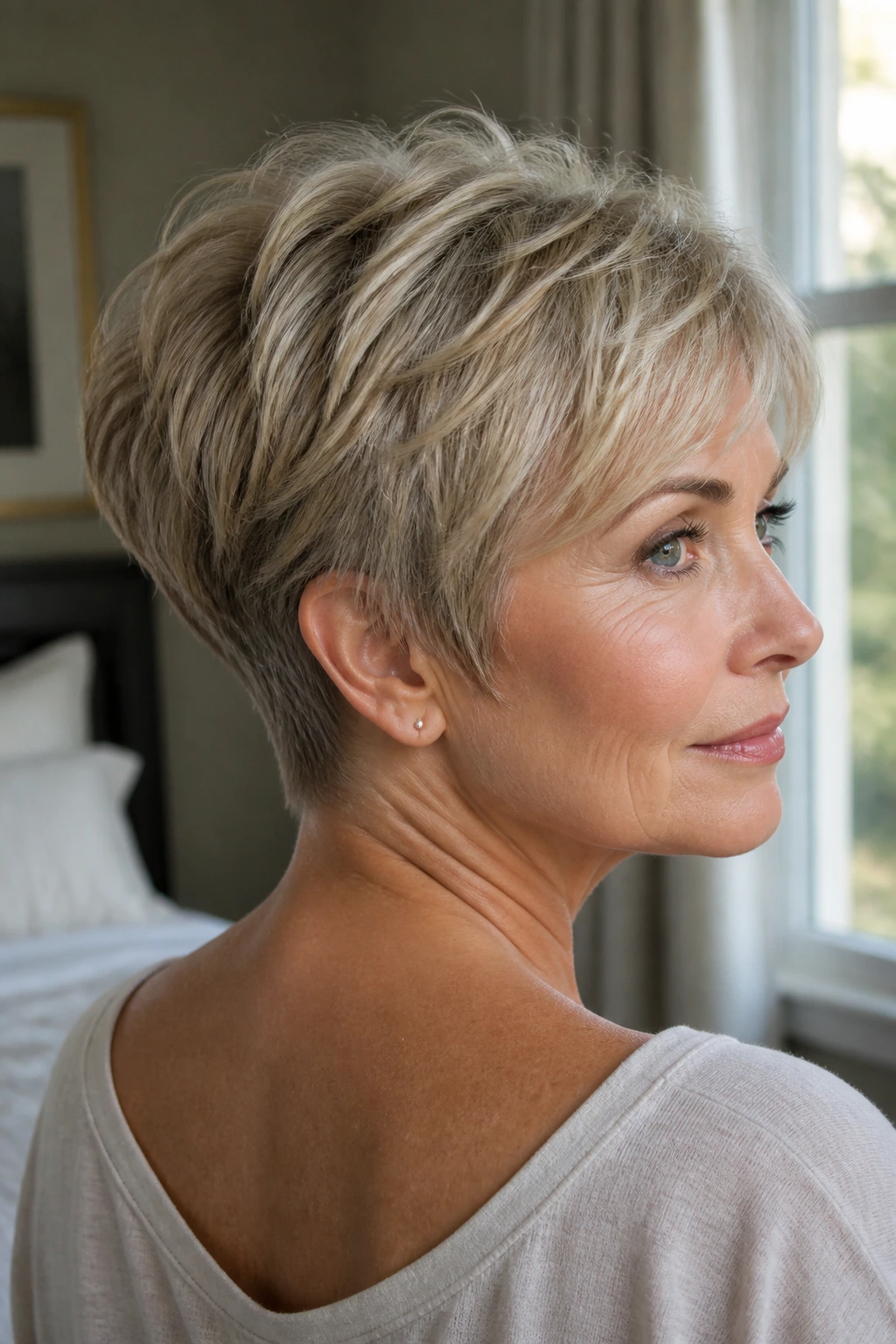
A neck-taper layered crop keeps the neckline clean while leaving more shape through the upper head and front. That balance is useful when you want the back neat but don’t want to sacrifice movement up top. It’s a practical cut, and I mean that in the best way.
Why it deserves a spot here
Thin hair around the nape tends to go stringy first. A taper controls that. Meanwhile, the upper layers stay long enough to give you some height and softness around the face. This is one of the easiest styles to live with if you want to look put together without touching your hair all morning.
Good for women who like this kind of routine
- Quick blow-dry
- Minimal product
- Clean neckline between trims
If your neck hair grows fast, this cut rewards discipline. Keep the trim schedule tight and it stays elegant. Let it go too long, and the shape disappears.
What Thin Hair Actually Needs From a Short Cut
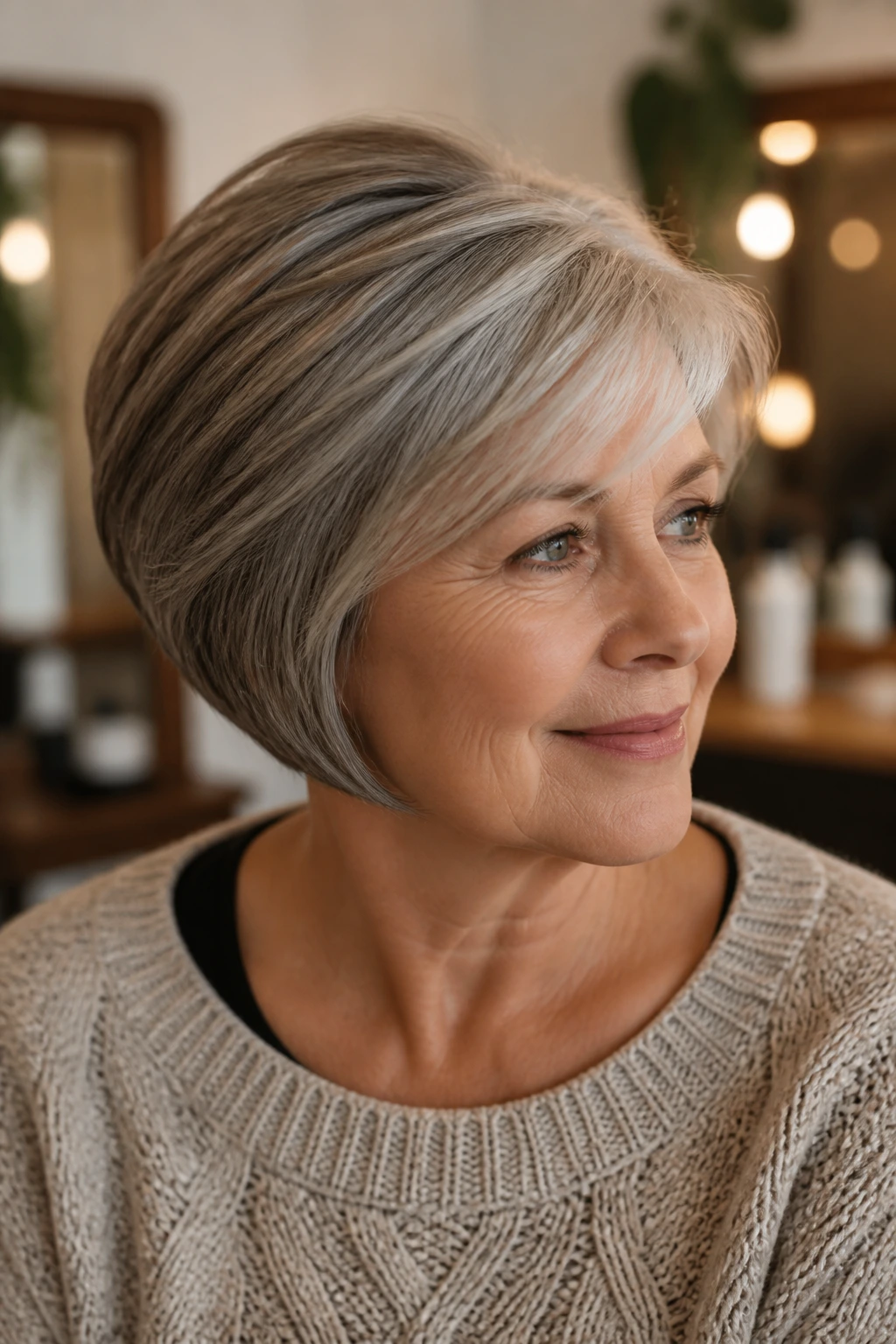
Thin hair is not one thing, and that’s where a lot of bad haircut advice falls apart. Fine strands and low density are different problems. You can have a head of hair that feels silky but sparse, or hair that’s plentiful but still fine enough to go limp. A good short cut knows the difference.
Perimeter first
The perimeter is the line that gives hair its read on the eye. On thin hair, that line matters more than elaborate internal layering. A strong edge at the jaw, ear, or nape makes the hair look deliberate. Too much interior thinning can make that edge disappear.
Crown lift without fluff
A little height at the crown is useful. A teased, puffy crown is not. The best short cuts build lift with shape, not with two cans of spray and wishful thinking. A small amount of root support at the base is enough if the cut already supports the silhouette.
Part lines and fringe
Part placement can change the whole haircut. A side part breaks up scalp visibility better than a dead-center part on many heads, especially when the crown is sparse. Fringe helps too, but it has to be light enough to sit softly and not drag the front down.
Essential Tools for Styling These Cuts
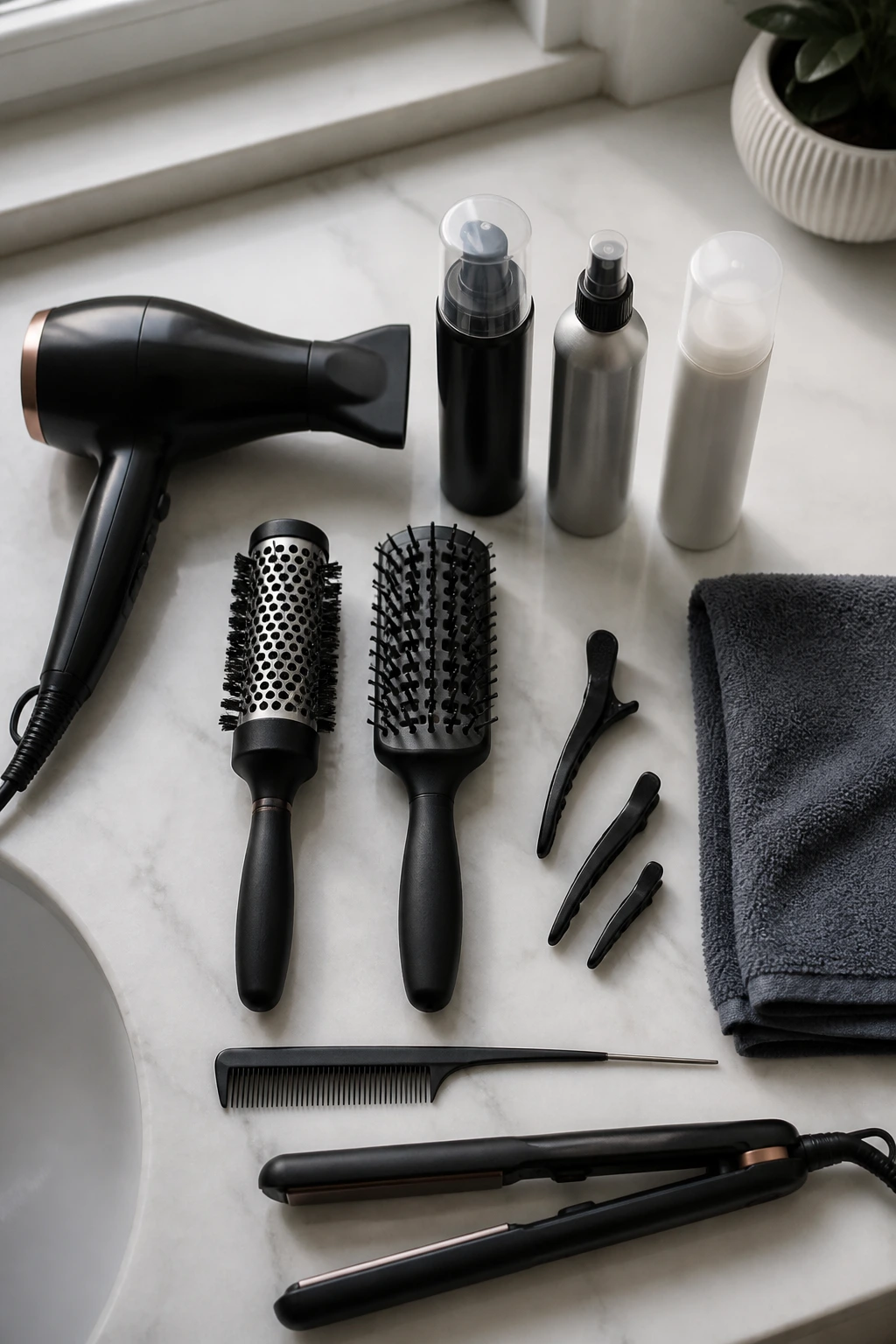
- A blow dryer with a narrow nozzle: The nozzle sends air where you want it, which matters when you’re trying to lift the roots instead of blasting the whole style flat.
- A small round brush, 1 to 1.5 inches: This size gives better control on short layers and fringe than a big barrel ever will.
- A vent brush: Good for rough-drying the crown fast when you don’t want a polished blowout.
- Lightweight mousse or root-lift foam: Adds support without turning the hair sticky or dull.
- Texturizing spray: Best for piecey crops and shags, especially on day two.
- Dry shampoo: Useful at the roots, but use a light hand. Too much can leave a gray cast on silver hair.
- Tail comb: Handy for clean parts and for lifting small sections at the crown.
- Hair clips: These make sectioning easier when you’re blow-drying the top and sides separately.
- Microfiber towel: Helps remove water without roughing up thin strands.
- Flat iron or small bend iron: Optional, but useful for turning a bob’s ends under or creating a soft bend in the fringe.
How to Ask for the Right Shape at the Salon
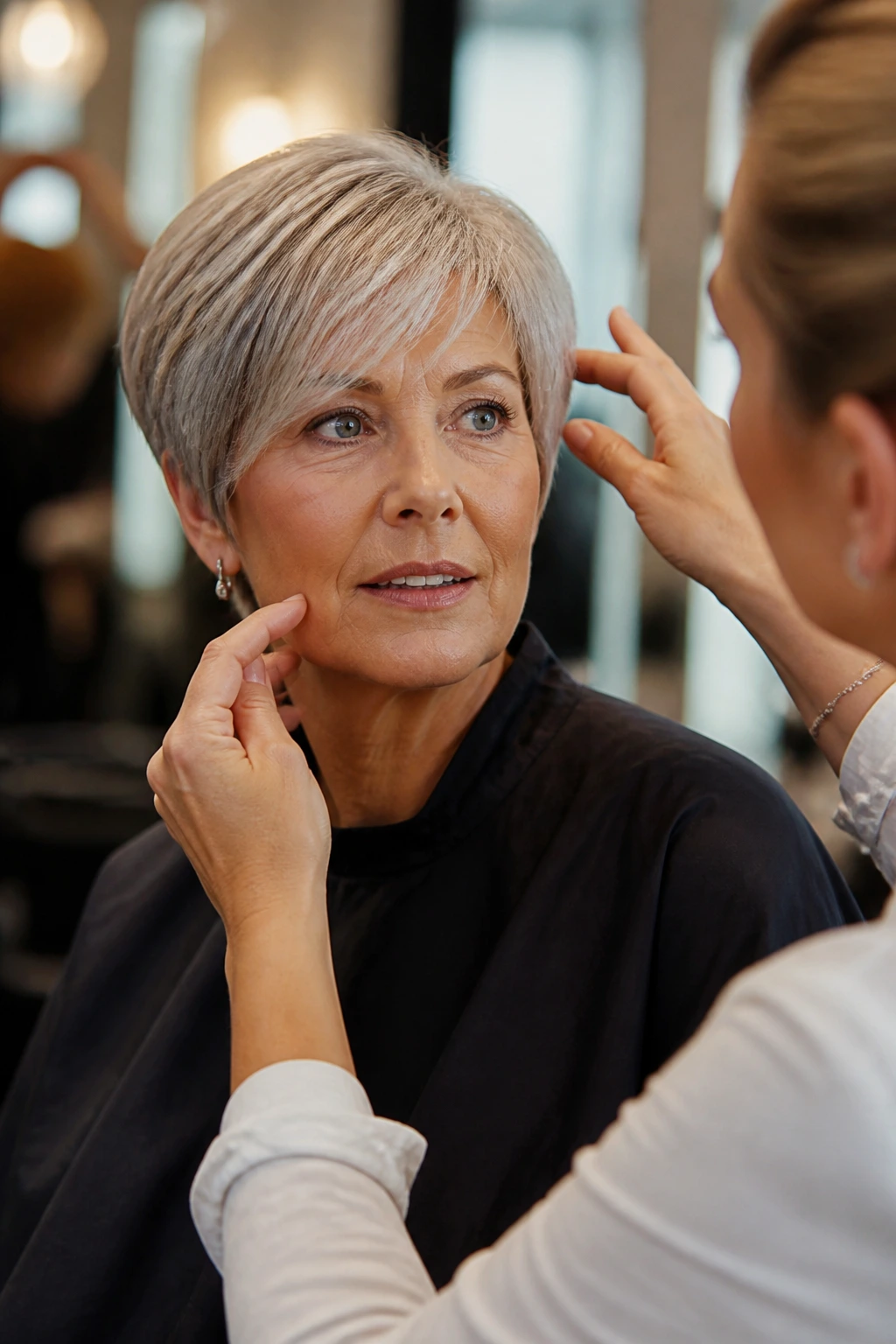
Bring photos, but bring the right kind of photos. One picture of the shape you like, one of the fringe or front length, and one that shows the back view will save you from a lot of vague conversation. A stylist can work with that. “Something short” is how people end up with a cut they can’t explain to their mirror.
Say what your hair does on its own. Does it flatten at the crown? Split at the part? Puff at the ears? Kick out at the nape? That is the useful information. If you wear glasses, tell them where the frames sit so the sides don’t get cut into a collision course with your temples.
If you usually air-dry, say that. If you heat-style twice a week, say that too. The cut should match the routine, not the other way around. And if your stylist can cut some of the final shape dry, especially around the fringe and crown, that is a good sign. Hair looks different when it’s wet. Fine hair can lie to everybody in the chair.
Practical Styling Moves That Keep Fine Hair from Falling Flat
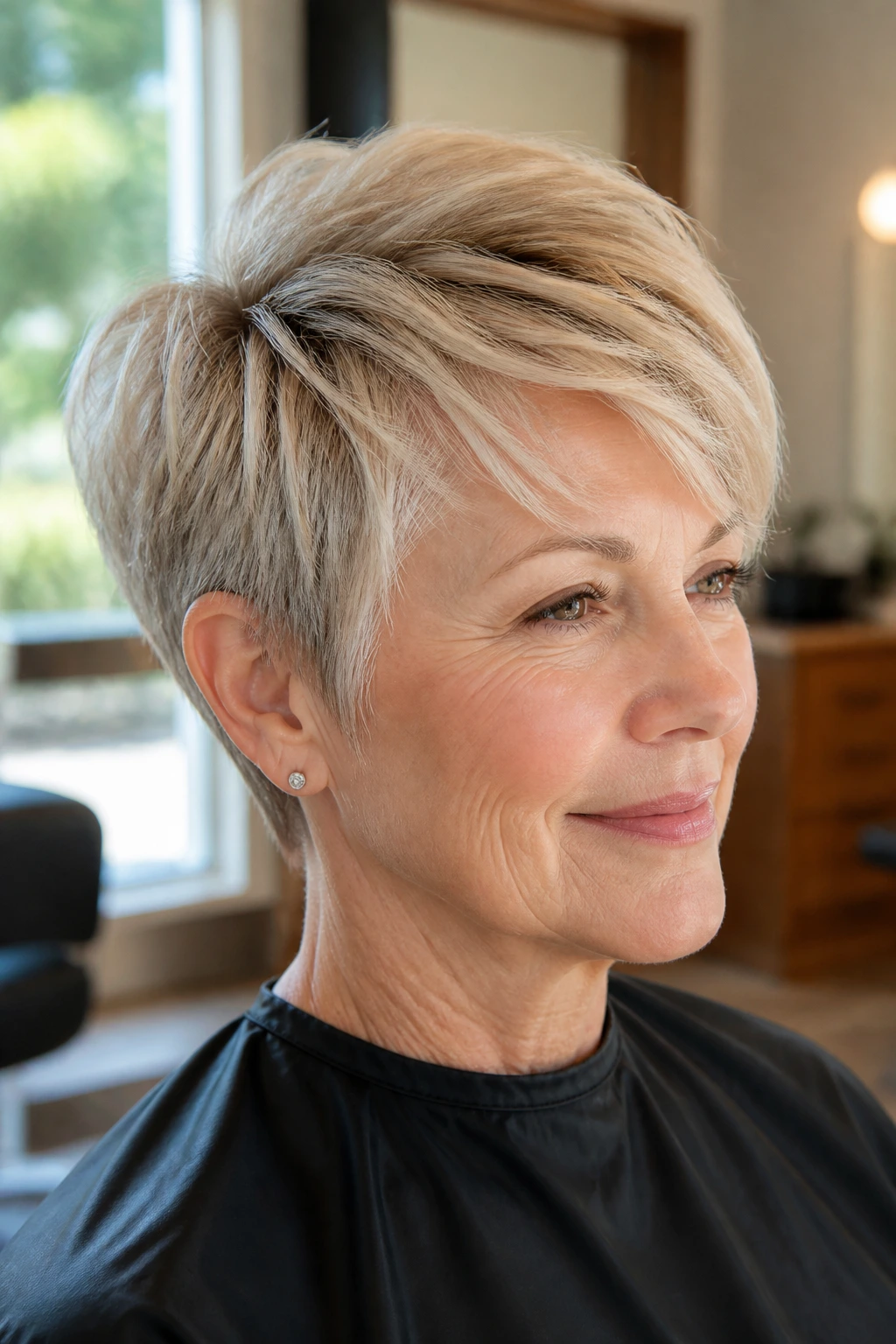
Root lift: Put mousse or root foam on damp hair only at the scalp area, not through the ends. Then lift the hair with your fingers or a small brush as you dry. The first 30 to 45 seconds of heat matter most; that’s when the shape decides where it wants to sit.
Heat control: High heat is not the answer every time. Medium heat with a nozzle often gives better control on thin hair because it dries the roots without blasting the top open. Finish with a cool shot so the lift doesn’t collapse the minute you walk out the door.
Texture: Use texturizing spray on the mid-lengths, not the scalp. Scalp-heavy spray makes fine hair gritty in a hurry. A little texture through the top and sides is enough to keep the cut from looking too shiny and flat.
Finish: Stop before the hair feels loaded. Thin hair shows product fast. If your fingers start sticking, you’ve used too much. A light mist and a quick finger comb are usually enough, especially on pixies and bixies.
Common Mistakes That Make Short Hair Look Flatter

Too much thinning at the ends: The haircut may feel airy in the chair, but after the first wash the ends can look see-through. Ask for soft shaping, not aggressive thinning, unless your hair is truly dense.
Letting the part stay frozen in one place: A hard center part on sparse hair can carve a line right down the scalp. Shift it a half-inch or use a side part to break that up.
Using rich creams everywhere: Heavy serums and smoothing creams can turn fine hair stringy by lunchtime. Save the richer products for the very ends, and keep the roots lighter.
Skipping trim appointments: Short hair does not drift politely into a longer style. It just loses its shape. Once the neckline softens and the fringe grows into the eyes, the cut starts looking unfinished.
Trying to force volume in the wrong place: A puffed-up crown with flat sides looks odd on thin hair. Better to build modest lift at the roots and keep the outline clean. The silhouette matters more than the height.
Variations and Adaptations to Try

The Glasses-Friendly Sweep: Ask for a side fringe that starts just above the brow and curves away from the temple. This keeps the hair from crowding the frame line and softens the area where glasses can create a visual break.
The Air-Dry Version: Keep the top a touch longer and the layers softer so the cut settles well with very little heat. This is useful if you’d rather scrunch, tuck, and go.
The Silver-First Finish: For gray or white hair, ask for a shape that keeps the surface smooth and the ends neat. Silver strands reflect light sharply, so a clean outline often looks richer than a heavily textured one.
The Round-Brush Blowout Version: Leave a little more length through the front and crown so you can bend the ends under with a small round brush. This works best if you like a polished finish and don’t mind spending ten minutes on styling.
The Wash-and-Leave-It Version: Pick a crop or pixie with strong perimeter shape and very light layering. This is the one for people who want to towel-dry, add a touch of mousse, and move on with the day.
Upkeep, Trim Dates, and Night Care
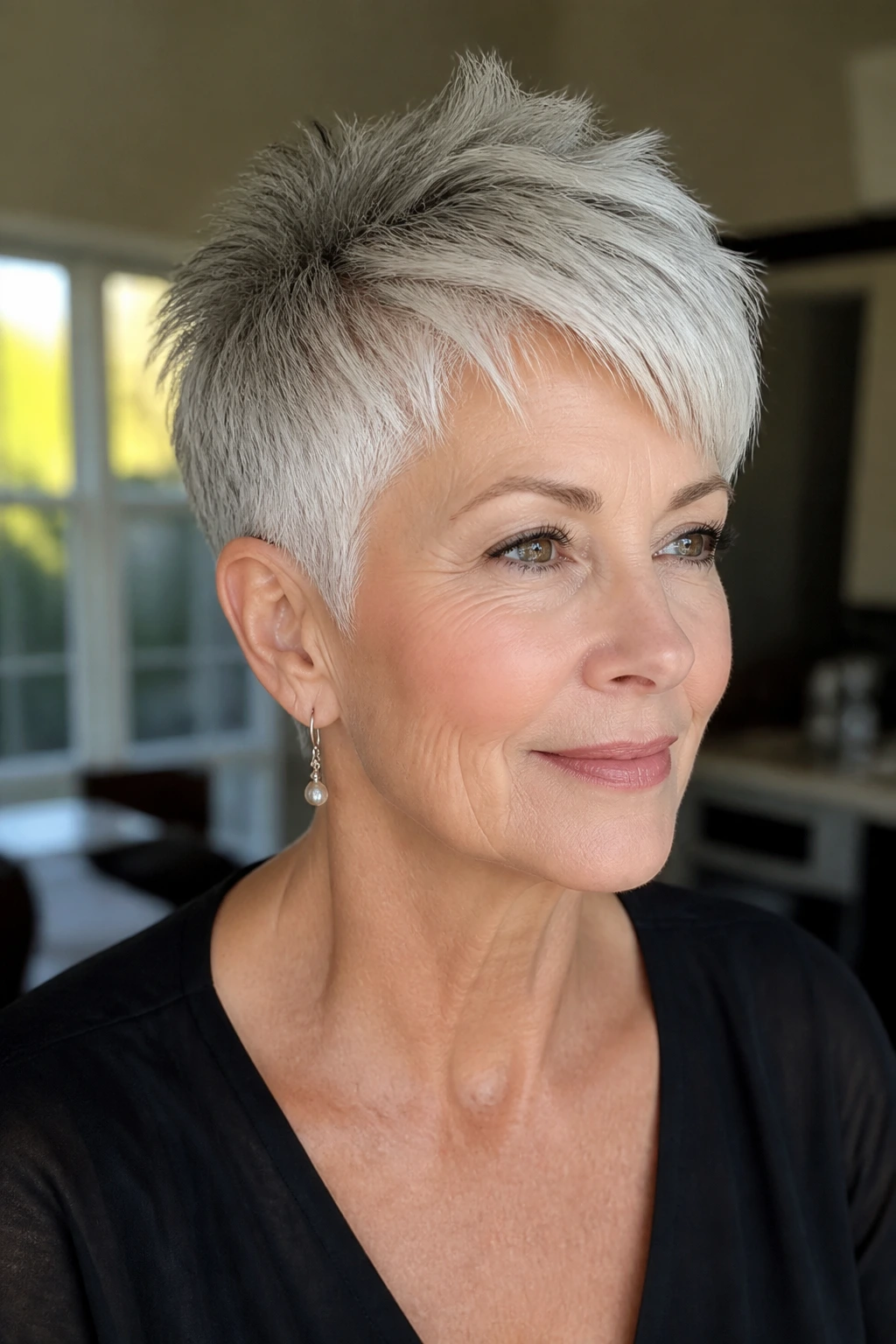
Short hair with thin strands needs regular maintenance, but not fussy maintenance. That’s a relief. Pixies, crops, and neck-tapered cuts usually want a trim every 4 to 5 weeks if you want them to hold their line. Bobs can often stretch to 6 or 7 weeks, though the fringe and nape may need cleanup sooner if your hair grows fast there.
At night, a silk or satin pillowcase cuts down on friction, which matters more than people think with fine hair. If your crown lies flat from sleeping, a quick mist of water at the roots and a 2-minute blast with the dryer can bring it back. You don’t need a full restyle every morning.
If you use dry shampoo, apply it before the hair looks greasy, not after. That keeps the roots from getting slick in the first place. And if your cut relies on a bend at the ends, a few minutes in small velcro rollers while you do makeup can reset the shape without heat. It’s old-school, but it works.
Frequently Asked Questions
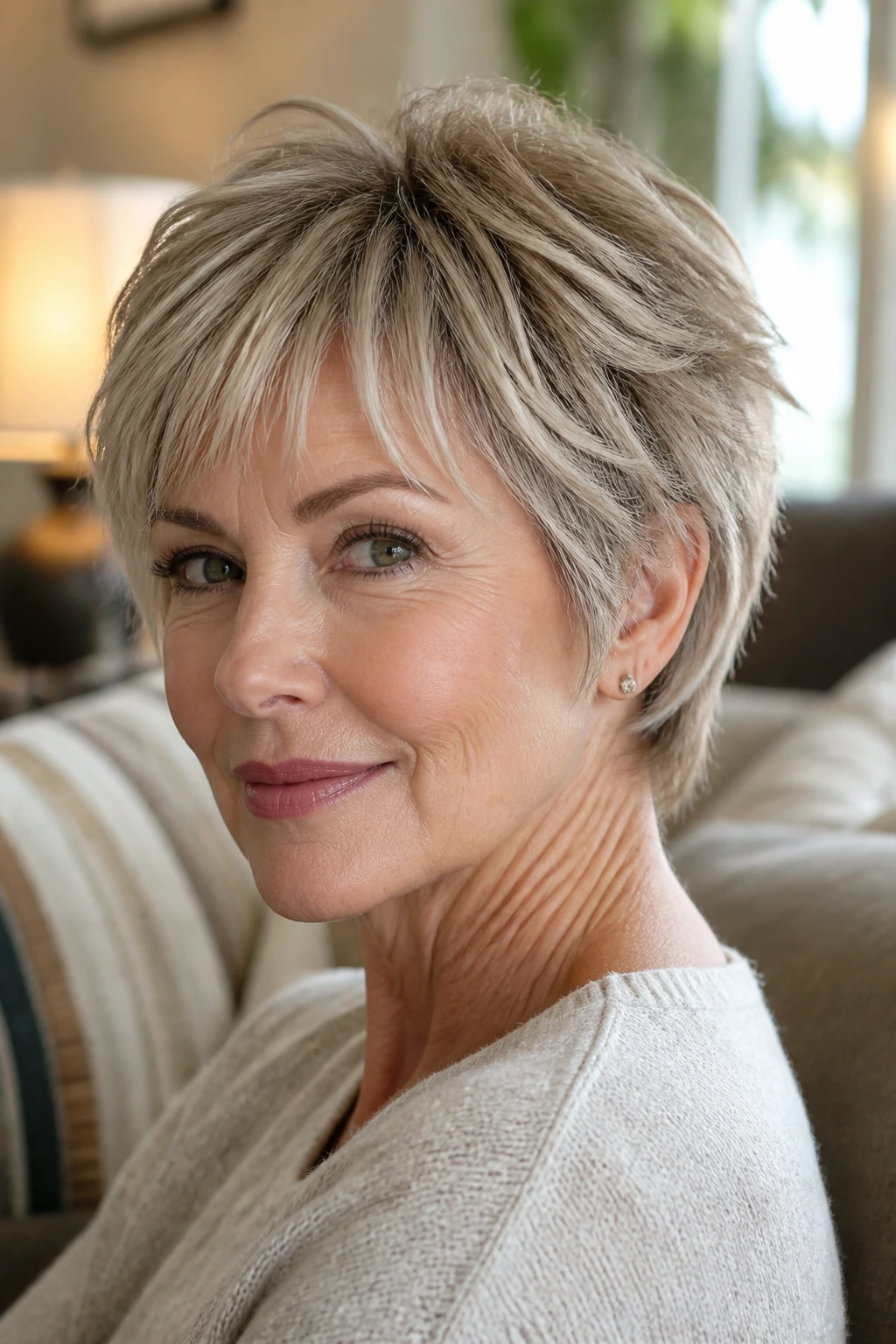
Which short hairstyle makes thin hair look the fullest?
A blunt bob, a stacked bob, or a cropped pixie with a clean perimeter usually gives the strongest fullness effect. The best choice depends on whether your hair is fine all over or thin mainly at the crown and temples.
Should women over 60 with thin hair avoid layers?
Not all layers. Heavy, choppy layers can make fine hair look sparse, but soft internal layers can help shape a crop or bob without eating away at the edge. The point is control, not zero layering.
Is a pixie or a bob better for thin hair?
A pixie gives more lift and less maintenance, while a bob gives more face-framing and a bit more versatility. If your hair gets flat fast, the pixie may behave better. If you want to tuck hair behind the ears or wear it with glasses, a bob often wins.
Can I wear bangs if my hair is thin?
Yes, but keep them light. Heavy bangs can drain the front of volume, while side-swept or wispy fringe can hide a wider part and soften the forehead without swallowing the haircut.
How do I stop my crown from looking sparse?
Keep the top slightly shorter than the very front, dry the roots in the opposite direction first, and avoid over-layering the crown area. A tiny lift at the roots matters more than piling on product.
What if my hair is straight and sticks to my head?
Choose a cut with a strong outline and a little top length, like a tapered crop or a stacked bob. Straight hair needs shape more than chaos. Too many tiny layers usually make the problem worse.
Does gray hair change which cut works best?
It can. Gray and silver strands often show texture and movement better, so a clean crop or a softly layered bob can look fuller than the same cut in darker hair. The cut still matters, but the color can help the shape read better.
How often should I wash short thin hair?
There’s no fixed rule, but many fine-haired people do best washing every 1 to 3 days. If the roots get flat quickly, a light dry shampoo at the crown on day two can buy you another day without making the hair feel coated.
The Cut That Fits Your Face and Your Morning Routine

The best short haircut is the one that still looks like itself after sleep, humidity, a windy parking lot, and a rushed morning with the kettle on. Thin hair has enough to think about already. The cut should make its life easier, not turn every wash into a small project.
That is why these styles keep coming back to the same few ideas: a strong edge, a sensible crown, and a shape that respects the hair you actually have. Bring that to your stylist, bring a couple of honest photos, and ask for the version that fits your part, your glasses, and your patience. That’s the haircut worth keeping.