



Fine hair does not play fair. Leave too much length on top and it falls flat before the school bell rings; take the sides too tight and the head starts to look bigger than the haircut, which is rarely the goal. For boys with fine hair, the trick is not chasing volume out of thin air. It is choosing a cut that makes the hair look denser, cleaner, and more deliberate from the first comb-through.
That usually means a little less length than people expect, a little more texture than they think they need, and a lot more attention to the shape around the temples, crown, and fringe. A good boys’ haircut for fine hair does not fight the hair’s natural fall. It uses it. The barbering details matter here — blunt edges, low tapers, soft layering, and careful scissor work do more for fine strands than a heavy pile of product ever will.
And yes, a few styles should stay off the table. Over-thinned tops, high disconnects that expose the scalp, and long layers that look airy in the chair but stringy by the afternoon all make fine hair look thinner. The cuts below steer around that trap. They lean on shape, not fluff, and that makes a bigger difference than most parents expect.
Why These Haircuts Make Fine Hair Look Fuller
Texture does more work than length. A top that sits around 1.5 to 3 inches, cut with point cutting or light scissor texture, often looks thicker than a longer style that drapes flat across the scalp.
Low tapers beat harsh contrasts. Keeping the sides tight without stripping them down to the skin gives the haircut a darker edge near the temple, which makes the top look denser by comparison.
Forward motion helps. Fringe, crop, Caesar, and side-swept styles all make use of the way fine hair naturally wants to lie. Fighting that movement usually ends in collapse.
Matte products are kinder. Lightweight clay, paste, or texture cream gives grip without shine. Shine can expose the scalp and separate fine strands in a way boys’ hair rarely benefits from.
The crown needs backup. If the whorl at the back sits low or splits open, the cut has to respect it. A good barber will leave a touch more length there or soften the transition so the crown doesn’t go bald-looking by noon.
1. French Crop with Choppy Texture
The French crop is one of the safest bets for boys with fine hair because it keeps the top short, the fringe forward, and the shape controlled. That front edge does a lot of heavy lifting. When the hair wants to lie flat, the crop gives it a place to land.
Why It Works on Fine Hair
The blunt fringe makes the hairline look fuller, especially if the front has a few thin patches or a cowlick that likes to split open. Ask for 1 to 1.5 inches on top, with the ends point cut so they don’t sit in one clean sheet. The sides can be a low taper or a #1 to #2 guard depending on how neat you want it.
A crop like this is a quiet haircut. No drama. No puffed-up styling routine. Just a little matte paste rubbed into damp hair and pushed forward with the fingers, not a comb. That forward direction helps hide gaps better than a style that tries to stand up.
What to Ask for at the Barber
- Keep the fringe blunt but not boxed.
- Leave a little extra length at the crown.
- Texture the top with scissors, not thinning shears.
- Taper the sides low so the haircut stays soft around the ears.
Best for: straight or slightly bent hair that falls flat fast.
2. Textured Ivy League
An Ivy League is what happens when a neat school haircut gets smarter about fine hair. It keeps the overall shape clean, but the top is long enough to part, brush, or casually sweep without looking like a helmet.
The version that works best here usually has 2 to 3 inches on top and a low or mid taper on the sides. If the top is cut with too much weight removed, it turns wispy. If it is left too long, it collapses. The sweet spot is right in the middle, where a barber can scissor in just enough texture to create movement.
I like this cut for boys who need something that looks tidy in a classroom but still has some shape after recess or sports. A pea-sized amount of lightweight cream on damp hair is usually enough. Comb it into a side part, then break the front loose with your fingers. That little bit of imperfection keeps the hair from lying too flat.
3. Side-Swept Fringe with a Low Taper
Fine hair with a stubborn front cowlick can be a nuisance. Or, frankly, a gift. A side-swept fringe uses that movement instead of wrestling it into place.
Keep the top around 2 to 3 inches and let the front stay the longest part. The fringe should sweep across the forehead at a soft angle, not a dramatic wave. A low taper on the sides keeps the weight line from getting too sharp, which matters because hard edges can make thin hair look even thinner.
What Makes It Different
The trick is in the direction. Straight-across bangs can expose sparse spots if the fringe separates. A diagonal sweep does a better job of covering the front without looking heavy. It also grows out better than a blunt crop, so you do not need a trim every couple of weeks to keep it alive.
If the hair keeps splitting at the front, dry it first with a small blast from a blow dryer while brushing the fringe sideways. Heat sets the bend. Water alone does not.
Good pick if: the front sticks up, splits, or changes direction on its own.
4. Short Quiff with Skin Fade
A quiff on fine hair can look fantastic. It can also look ridiculous if the top is too long, the fade is too high, or the product is too sticky. The workable version is shorter than people imagine.
Think 2.5 to 3.5 inches on top, with the longest point at the front and a clean fade that starts low enough to keep the haircut from looking disconnected. The quiff needs support from the roots, so a quick blow-dry matters more than a blob of gel. Aim the airflow upward and slightly back, then pinch the front with your fingers while it cools.
I’d keep the product matte. Shine shows scalp. Strong hold gel tends to freeze fine hair in clumps, and clumps are the enemy here. A dry paste or light clay gives lift without making the top look crunchy.
This cut suits boys who want something a little sharper and are willing to spend three minutes on it in the morning. Not fifteen. Three.
5. Crew Cut with Tapered Sides
The crew cut is the haircut I trust when nobody wants to fuss. It is close, clean, and honest about the hair’s density. That honesty works in its favor.
On fine hair, the crew cut looks best when the top is kept around 1 to 1.75 inches and the sides are tapered instead of chopped down aggressively. The top can be cut slightly longer toward the front, which gives the head shape without making it look like a flat cap. A tight, buzzed top can make the scalp stand out more than a soft crew ever will.
Why Parents Keep Coming Back to It
It dries fast. It survives hats. It still looks decent after a rough day. And if a boy does not love having hair in his eyes, the crew cut solves the problem without making him look overly severe.
A little bit of styling cream can help, but most days this cut works best when it is left alone. If you want more depth, ask the barber to keep a touch more length at the front than at the crown. That subtle slope gives the haircut shape without overcomplicating it.
6. Caesar Cut with a Soft Edge
The Caesar is old, but it has never stopped making sense for fine hair. Short fringe, short top, controlled outline. That combination gives the hair a denser look because everything is moving in the same direction.
Ask for a soft, forward fringe rather than a sharp block across the forehead. A hard Caesar can look heavy on boys with very straight hair. A softer edge keeps it modern and keeps the front from looking like a shelf. The top usually sits around 1 inch, sometimes a touch longer if the hair is especially fine.
The cut is especially useful when the crown is thin or the hairline is maturing early. The forward fringe distracts the eye. That is the whole trick, really. It does not pretend the hair is thicker than it is. It gives the eye fewer places to notice the thinness.
A tiny bit of matte paste can add grip. Too much and the fringe gets greasy at the roots. Less is more here.
7. Messy Brush-Up with Matte Finish
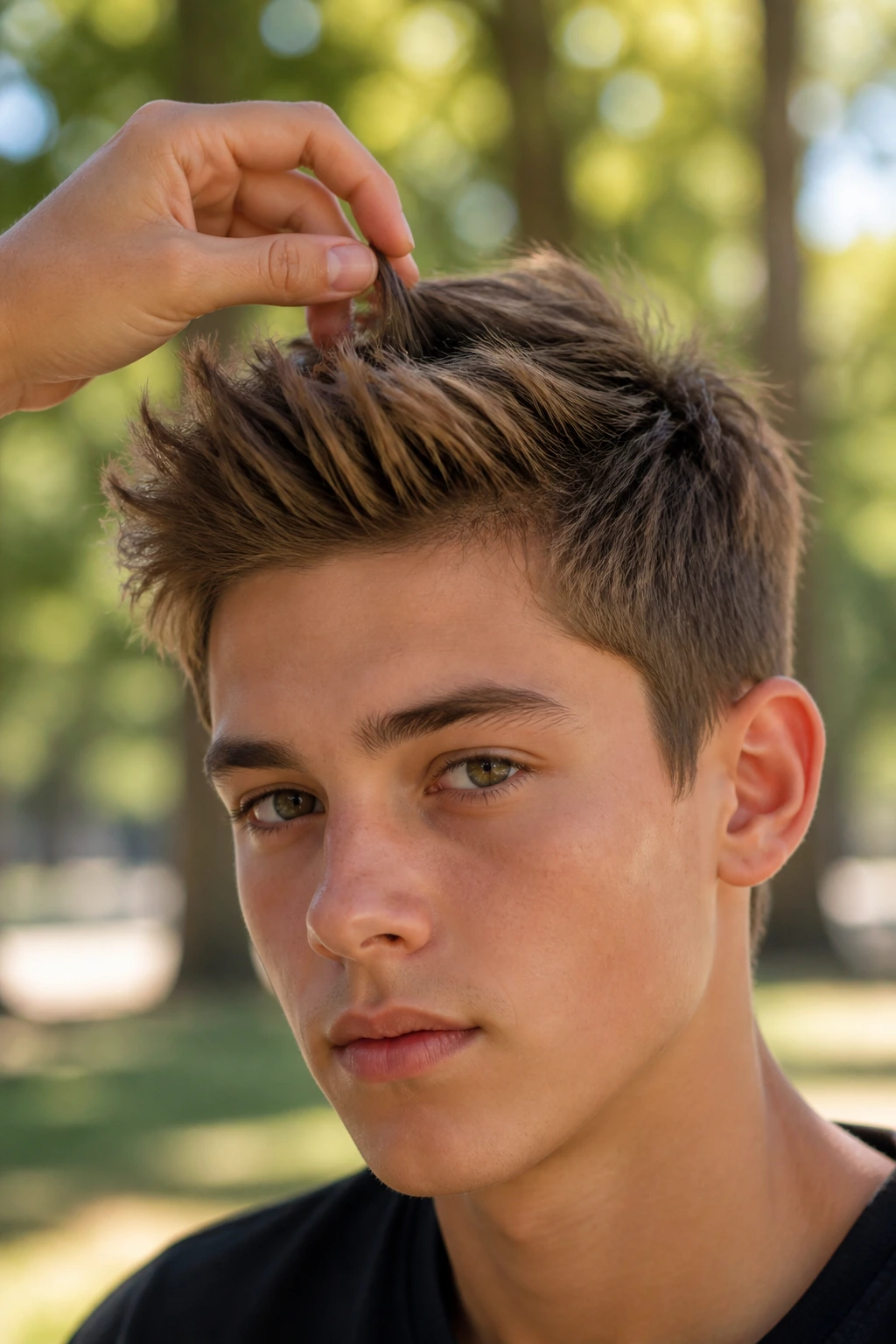
This one works because it gives fine hair movement without asking it to do too much. A brush-up sounds lofty, but on fine hair it should stay short and loose.
Keep the top around 2 to 3 inches, longer in the front than the back, and ask for soft texturing through the top. The sides can stay tapered or faded, but I would avoid going ultra-high unless the boy has a lot of confidence and a strong front hairline. The higher the contrast, the more the top has to do.
How It Should Sit
The front lifts a little. Not straight up. Not sculpted into spikes. Just raised enough that light does not flatten every strand together. Blow-dry with the fingers lifting at the roots, then use a matte paste or texture spray and rough it up with the fingertips.
This is a good cut for boys who like a lived-in look. It can look neat after school and a little messier after a bike ride without tipping into chaos.
One thing to avoid: wet-look gel. It turns the top into separate shiny ropes, which is the opposite of what fine hair needs.
8. Classic Side Part with a Taper
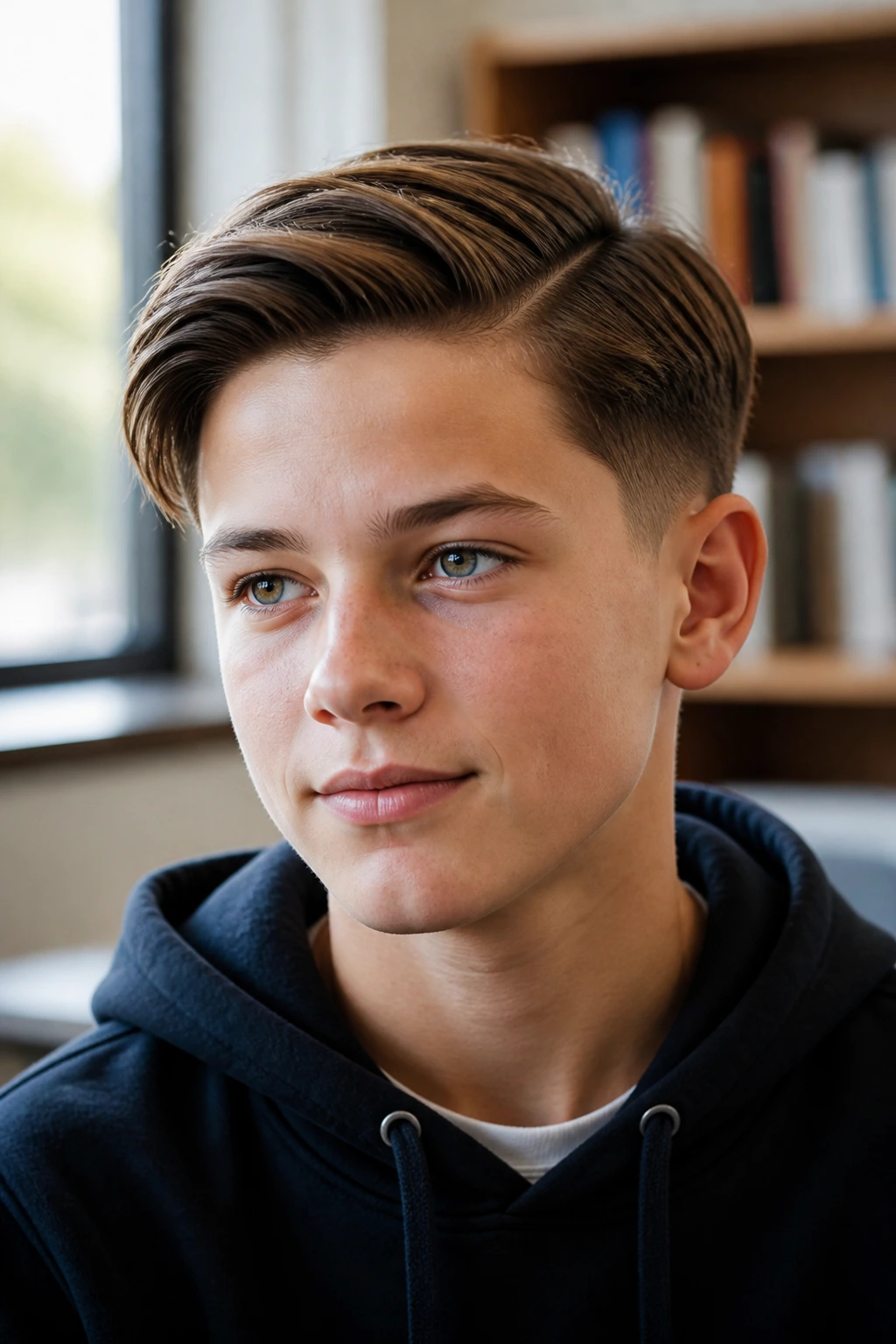
A side part gives fine hair structure, and structure is half the battle. The key is keeping the part soft enough that the head does not look overlined or severe.
The top usually sits best at 2 to 3 inches, with the longer section brushed across instead of flattened down. A taper on the sides keeps the transition clean without shaving away too much support. I prefer a natural side part here rather than a hard razor line, because hard parts can exaggerate a sparse hairline if the hair is very light.
This cut has a nice side effect: it makes the front look controlled even when the hair is growing out. The part line gives the eye a place to land. Fine hair that would otherwise sit limp suddenly looks intentional.
If the boy’s hair is pin-straight, a blow dryer helps. If it has even a slight bend, use a light cream and comb it while it is damp. Then leave it alone. Constant touching ruins the shape faster than bad weather.
9. Soft Faux Hawk
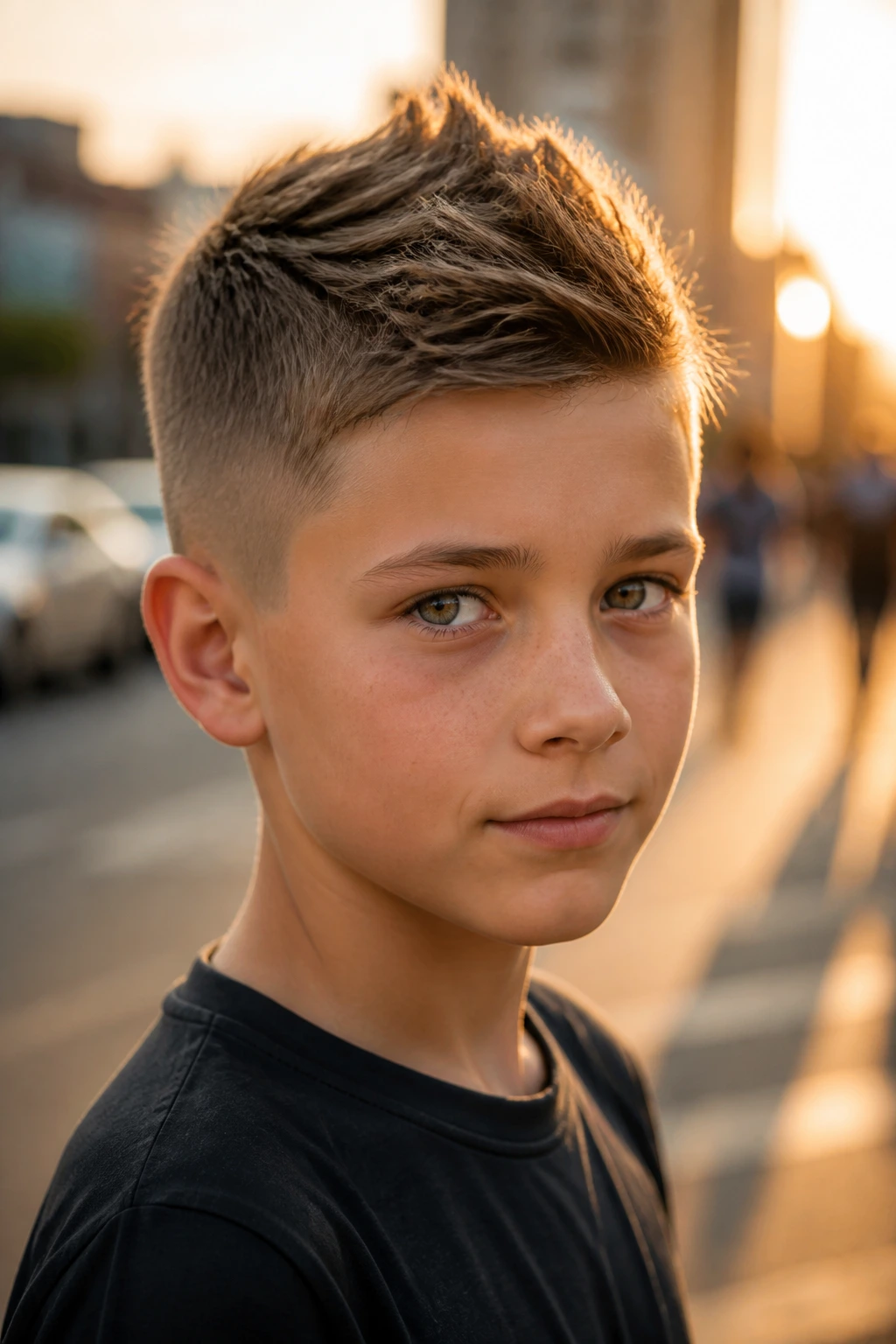
A faux hawk for fine hair works when it is kept soft. The aggressive version with shaved sides and a tall ridge can expose too much scalp. The easier version keeps the sides tapered and the center just a bit longer.
Think of it as a narrow strip of texture running from the forehead toward the crown. The top can be 2 to 3 inches, and the sides should not be stripped down to skin. That little shadow along the edges makes the center look fuller than it really is.
Best For Boys Who Don’t Sit Still
This cut has energy. It looks good when it is slightly undone, which is handy because most boys are not going to stand in front of a mirror checking symmetry. A small dab of paste pushed upward through the center, then pinched into loose points, is enough.
Do not make the spikes uniform. That is where the cut turns cartoonish. Uneven is better. A bit of texture at the front, a softer ridge toward the crown, and a clean but not harsh taper on the sides — that is the version that holds up in real life.
10. Modern Shag with Light Layers
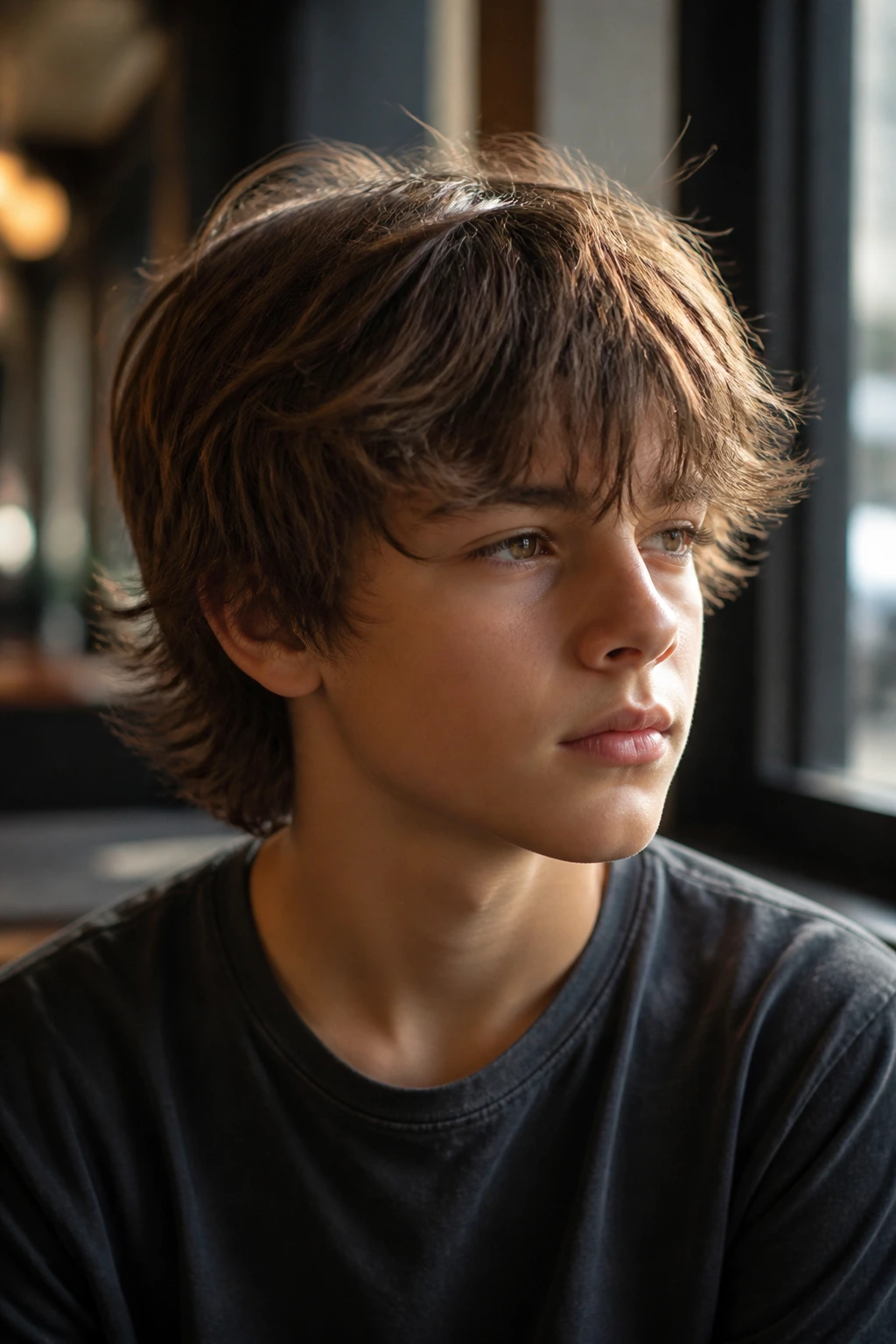
A shag can be brilliant on fine hair if the layers are light and the top is not thinned out to death. The goal is movement, not frizz.
This version usually works best when the hair has at least a little natural bend, though straight hair can handle it if the cut is conservative. Keep the layers soft around the crown and the sides, and avoid chopping the top so aggressively that it falls apart into wisps. A length of 3 to 4 inches is common here, though the exact number depends on the child’s face and hairline.
The modern shag is one of the few longer looks that can make fine hair appear fuller because it creates overlap. The strands do not sit in one flat sheet. They overlap at slightly different lengths, and that makes the top look thicker from normal viewing distance.
It is not a high-maintenance cut. It does need a little finger-drying or a light texture spray, though. If the hair is air-dried untouched, the layers can separate in odd places and the cut loses its shape.
11. Rounded Bowl with Texture
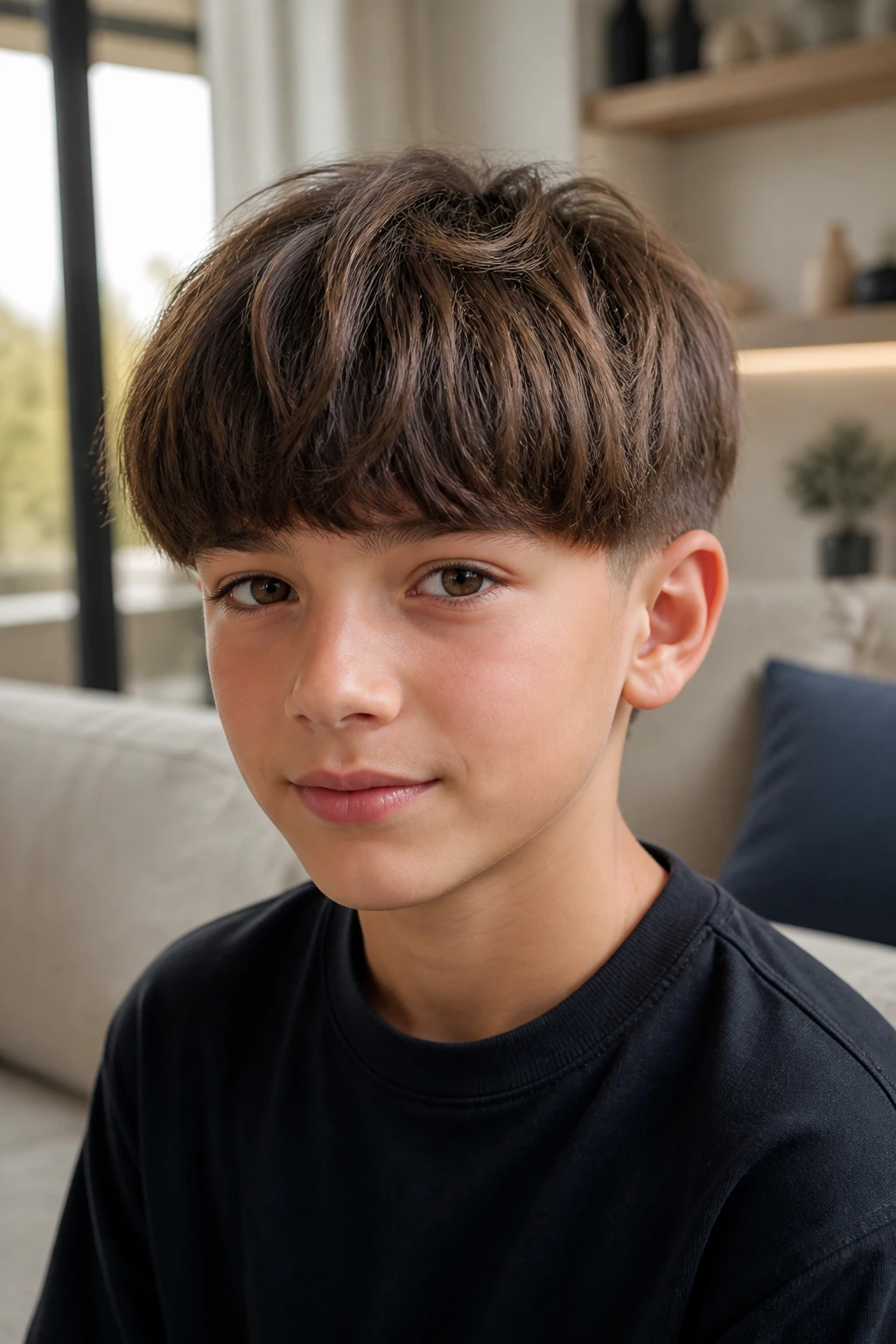
A bowl cut sounds like a dare. In the right hands, it is a very good cut for fine hair.
The mistake people make is leaving the perimeter too blunt and too heavy. That hard line is what gives old bowl cuts their awkward look. The better version keeps the shape rounded but textured, with soft ends and a little movement around the fringe and sides. The top usually sits around 2 to 3 inches, and the outline should skim the head rather than clamp onto it.
This cut works because the shape feels full even when the strands are fine. The eye reads the silhouette first. If the silhouette is clean and rounded, the hair seems thicker than it is.
I’d only choose this if the barber is comfortable with scissor work and point cutting. A cheap clipper-heavy version can look blunt in a bad way. The good version looks modern, soft, and a little unexpected. And yes, it grows out better than the joke-image people still carry around in their heads.
12. Buzz Cut with a Clean Line-Up
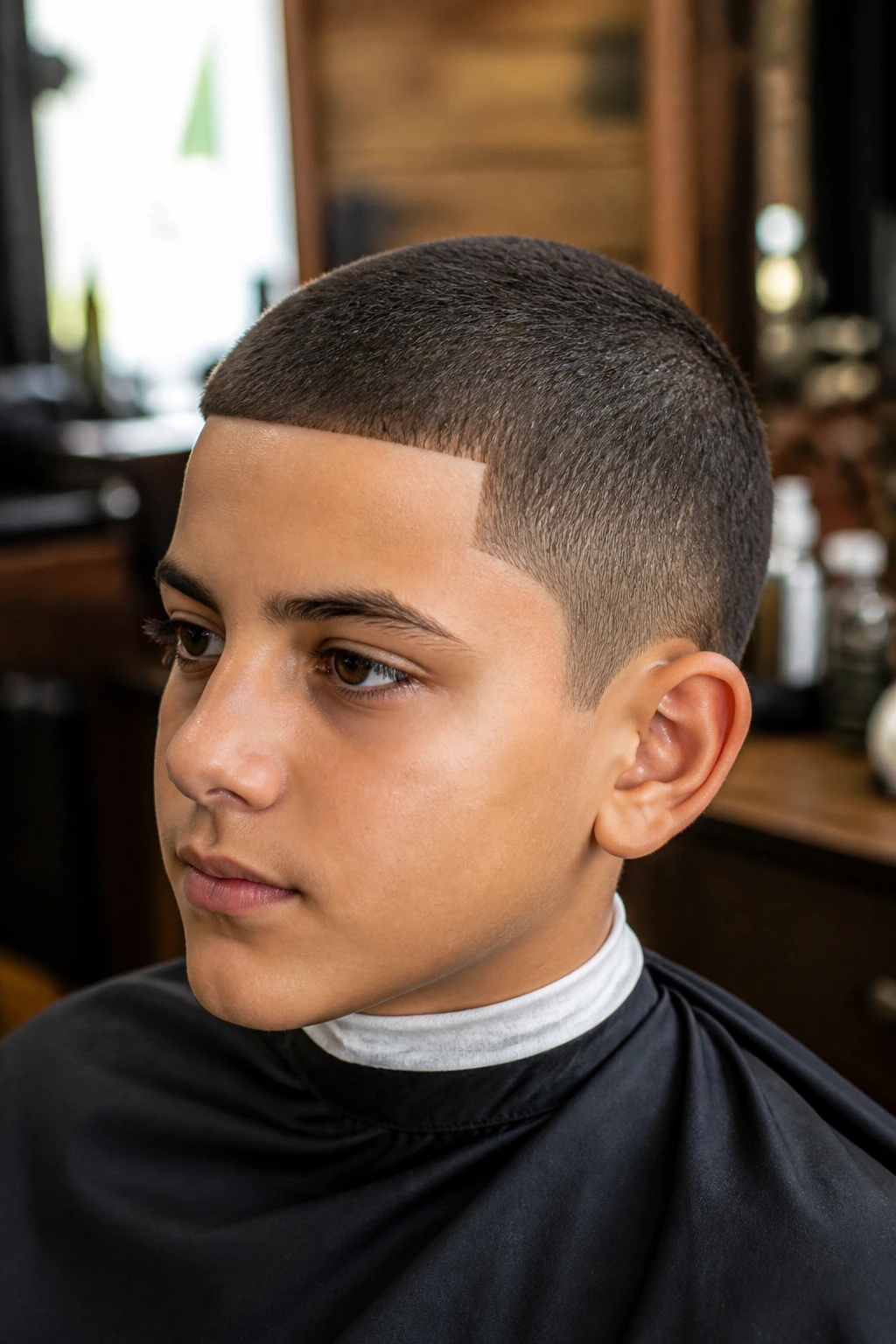
Sometimes the answer is simple. If the hair is very fine and the child does not want to style anything in the morning, a buzz cut with tidy edges is not a compromise. It is a solution.
A buzz works best when it is not too short. I like somewhere in the #2 to #4 guard range on top for most boys, with the sides blended down neatly. Going too close to the scalp can make the head shape and scalp tone matter more than the haircut itself. Slightly more length gives the hair a cleaner, denser look.
The Part People Forget
The line-up matters. A neat neckline, a careful temple edge, and a soft taper at the sideburns make the buzz cut look intentional rather than accidental. If the edges are sloppy, the whole haircut feels unfinished.
This is also the easiest cut to maintain after sports, sweat, or a packed schedule. It does not need paste. It does not need a comb. It just needs a barber who can keep the blend smooth.
13. Undercut with Wispy Top
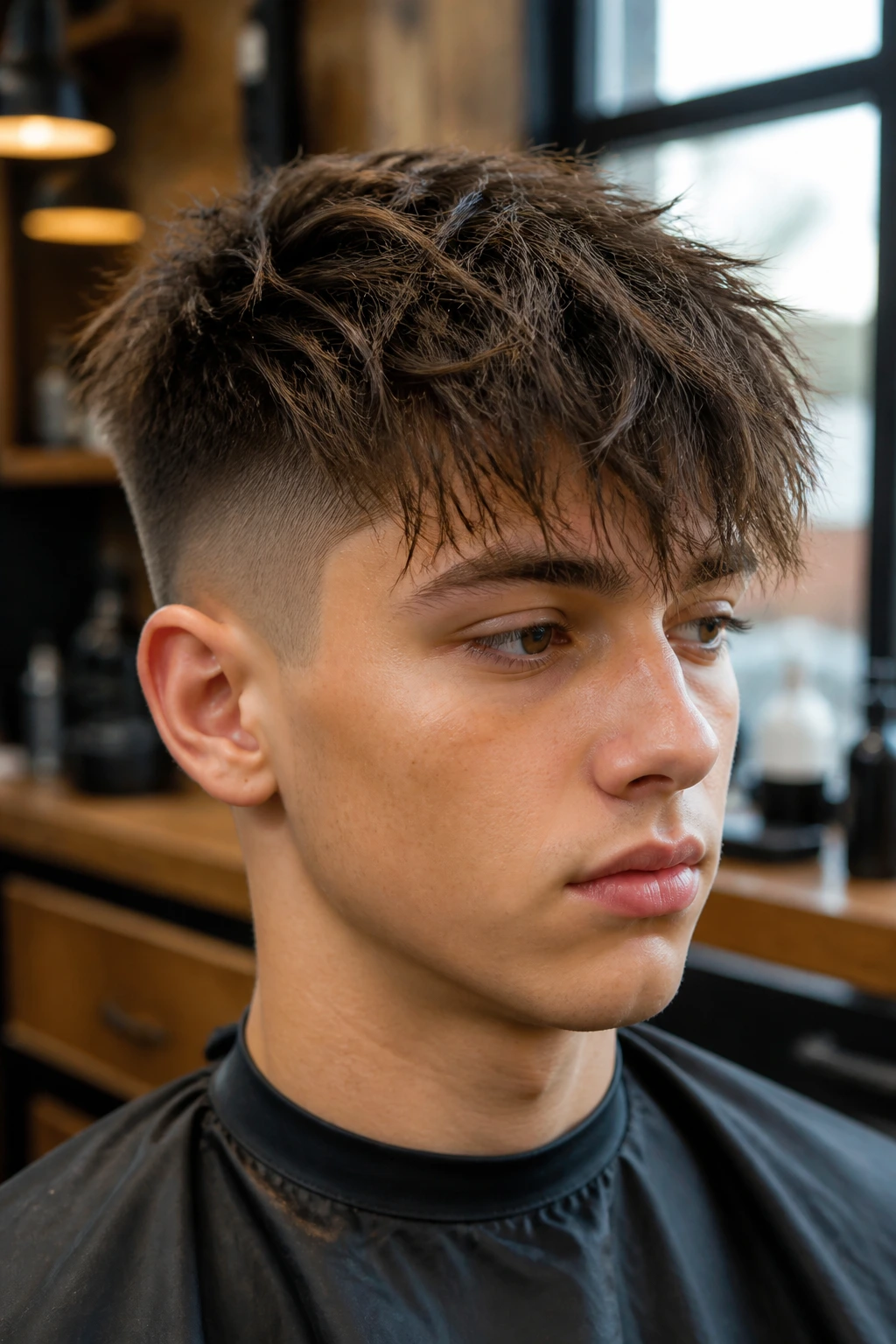
An undercut can work on fine hair, but only if the top has enough length to show shape and the disconnect is not too severe. If the contrast is extreme, the scalp on top can look sparse by comparison. That is the problem.
A better version keeps the top around 3 to 4 inches and the sides short but not skin-bald. The top should be cut with texture so it can fall forward, sideways, or slightly back depending on the morning. Boys who like a little edge tend to like this cut because it looks older without requiring a huge styling routine.
The wispy part is important. Fine hair should not be treated like thick hair. Heavy gel, stiff spikes, and square lines all work against the softness of the strand. A loose matte cream and a fingertip sweep are enough.
If the boy’s hairline is already high or the crown is light, I would keep the undercut softer. Too much disconnect can make the top look like it is floating.
14. Comb Over with a Low Taper Fade
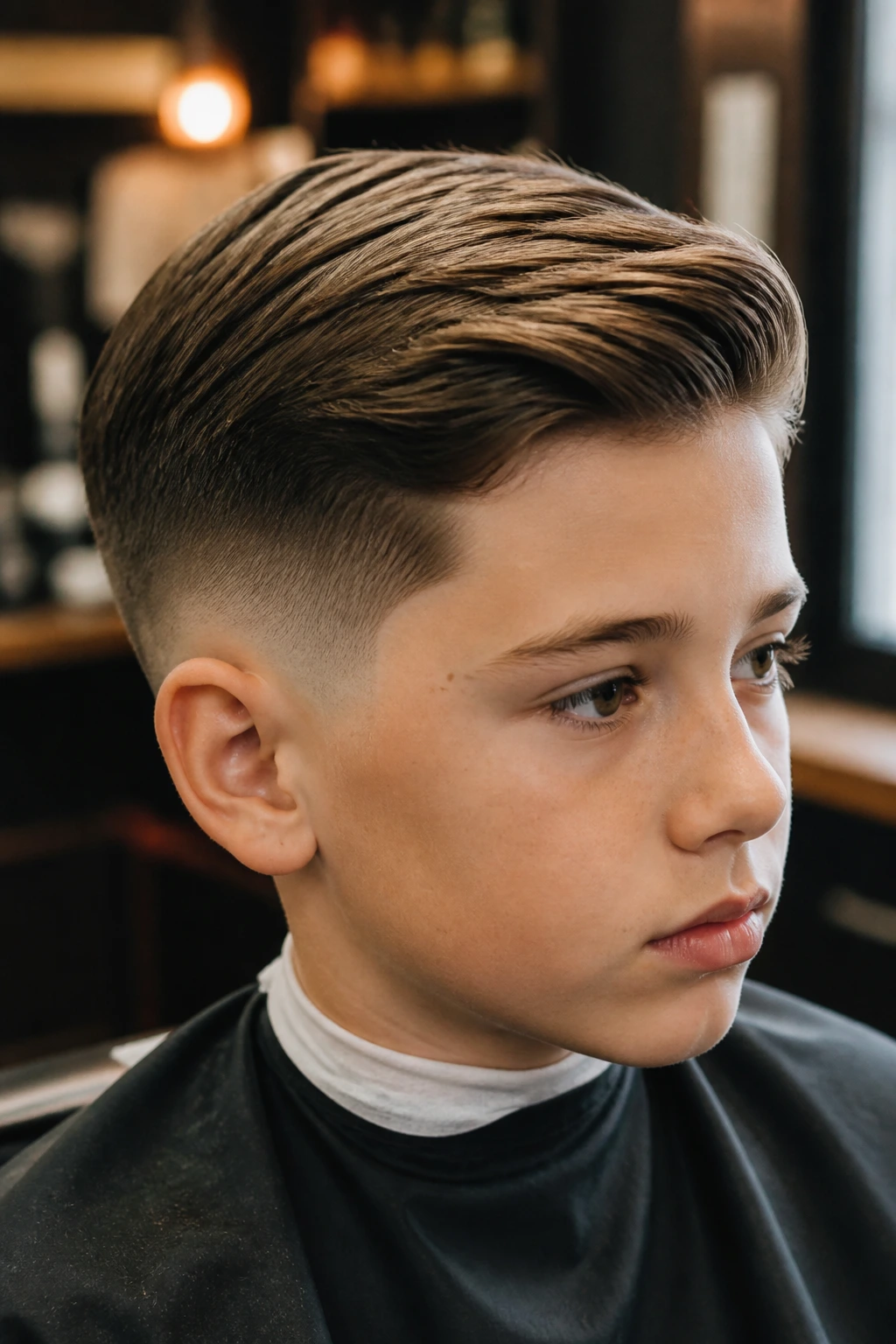
A comb over gets a bad reputation when it is overdone. On fine hair, though, a soft, low-key version can be one of the smartest ways to hide a thin spot without pretending the hair is heavier than it is.
The difference between this and a classic side part is width. A comb over usually sweeps more of the top across the head, which helps cover lighter areas near the part or crown. Keep the top around 2.5 to 3.5 inches, and ask for a low taper fade rather than anything high and severe.
The style works best when the hair is blown dry in the direction it will sit. If you brush it wet and hope for the best, the front will split apart as soon as it dries. A small amount of matte paste rubbed through the mid-lengths gives grip without making the hair separate into greasy lines.
This cut looks neat at school and a little sharper for family events or photos. It is one of those styles that quietly does its job.
15. Layered Mop Top

A mop top can sound old-fashioned, but the layered version has real use for fine hair, especially when the boy wants more length around the ears and forehead. The key is keeping the layers soft enough that the haircut falls in pieces, not in one limp sheet.
This cut usually needs 3 to 4 inches on top and enough length around the sides to create movement. The fringe can brush the eyebrows, and the crown should be layered so it does not split open. That split is the usual problem with longer fine hair. If the crown is left too heavy or too flat, the haircut suddenly looks tired.
Why It Doesn’t Turn Into a Helmet
Because the layers are distributed, not stacked. The better barber cuts around the natural fall instead of forcing a rounded shell. That gives the hair air and movement, which reads as fullness even when the individual strands are soft.
A little sea salt spray and a rough dry with the fingers can bring this cut to life. Skip heavy creams. They only drag the hair down.
16. Spiky Crop with Forward Texture
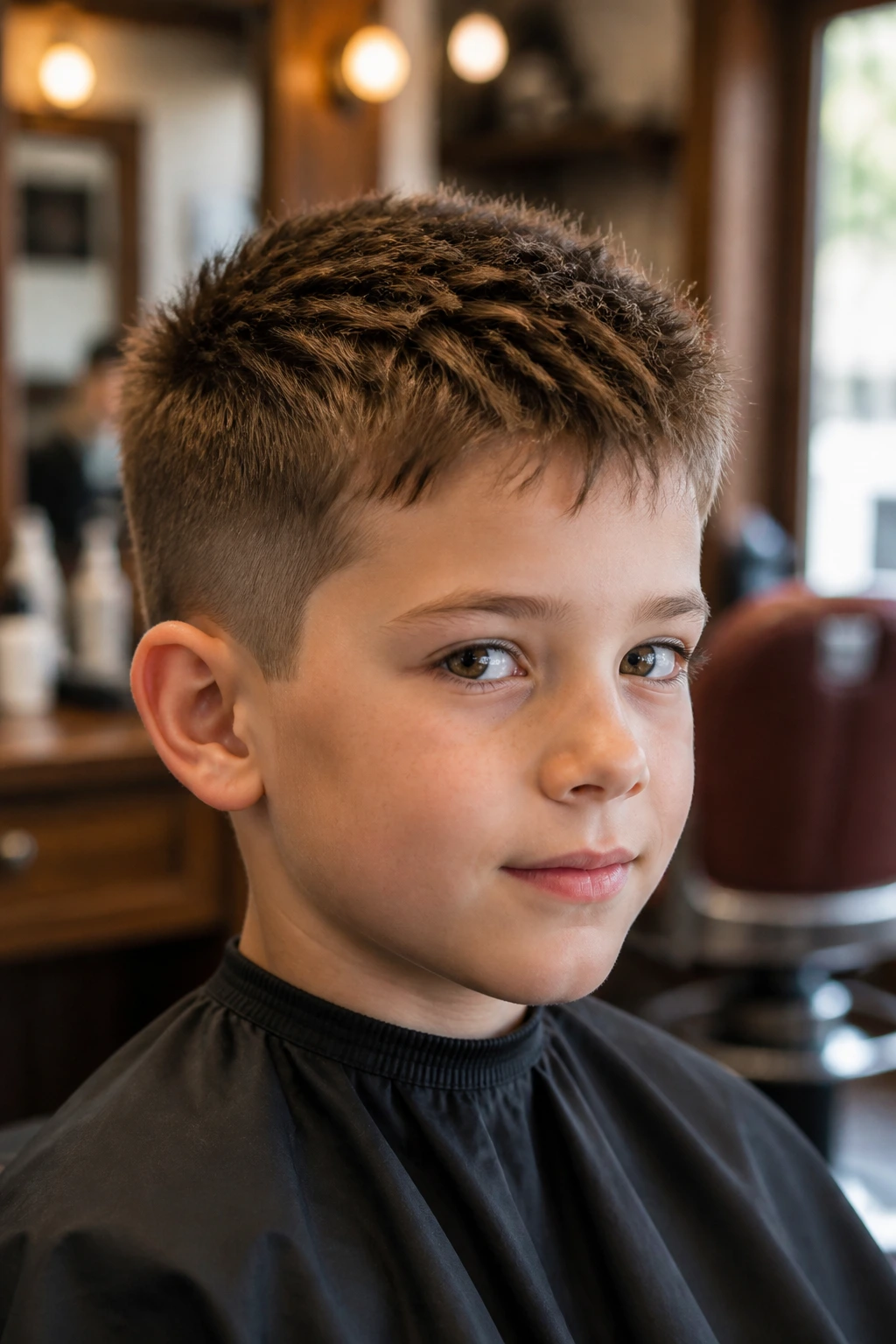
A spiky crop is not the same thing as those stiff, crunchy spikes from years ago. On fine hair, the newer version is shorter, more forward, and much less rigid.
Keep the top around 1.5 to 2 inches, with the hair cut short enough that it can stand up a little without tipping over. The sides should be tapered or faded low. If the sides are too bare, the top loses its balance.
What makes this cut work is how the spikes are created. Use a small amount of matte clay, warm it in the palms, and push the hair upward in uneven sections. The result should look broken up and touchable, not pasted into rows. If the front has a cowlick, even better. Let it help.
I like this style for boys who move a lot. It keeps shape through the day and does not require a comb. If it flattens, a quick rework with damp fingers is enough.
17. Scissor Cut with a Tapered Nape
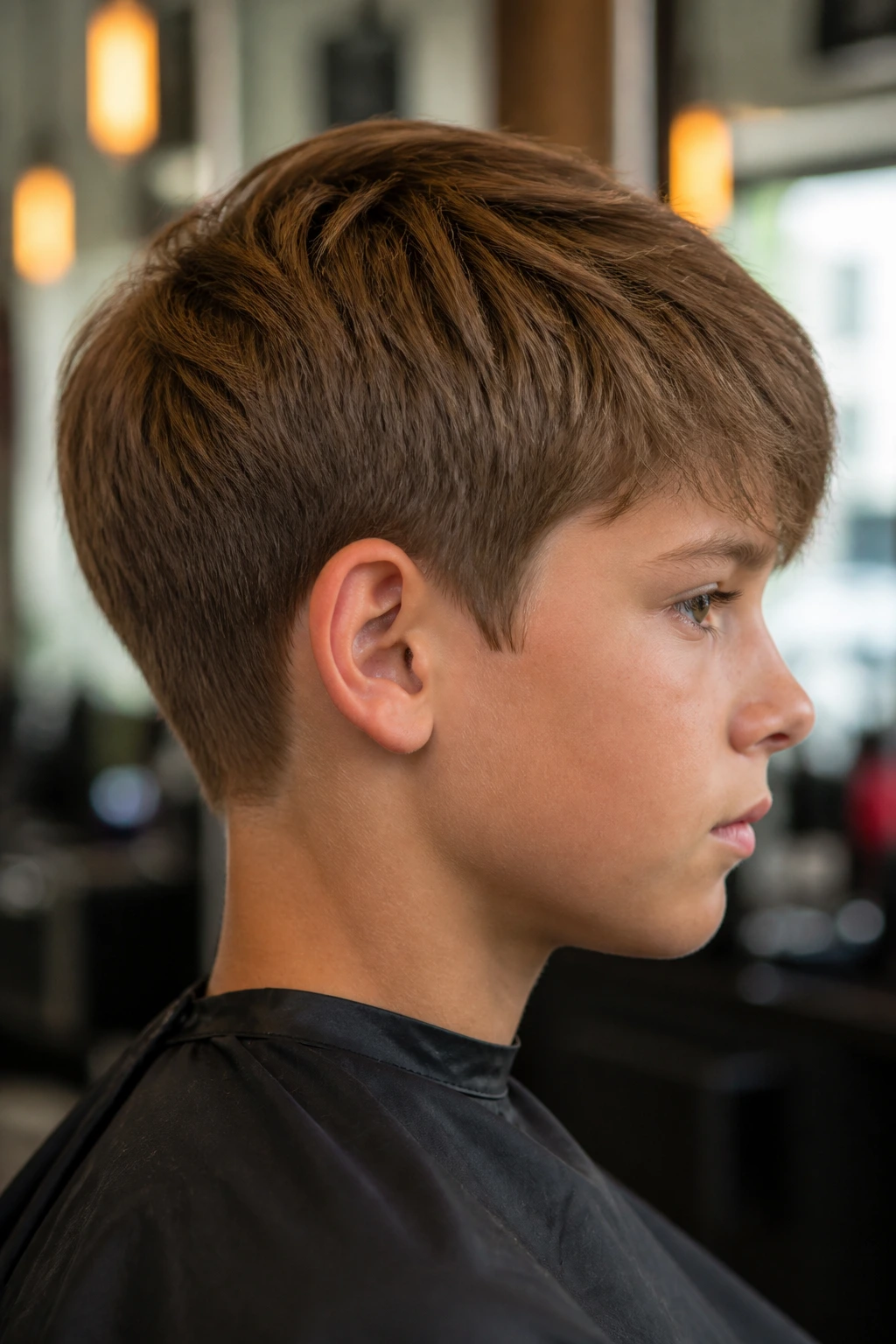
Some boys need a cut that follows the head shape instead of trying to be trendy about it. A full scissor cut with a tapered nape does exactly that.
The top, sides, and back are all left with enough length to move, usually somewhere in the 2 to 3 inch range depending on density. The taper at the nape and around the ears keeps the haircut tidy, but the shape stays soft. That softness matters for fine hair because harsh clipper steps can make the head look segmented.
This is a strong choice if the hair grows in odd directions or if the child hates the feel of a tight fade. It also works when the hairline around the ears is sensitive. Less machine work, more scissor control. Simple.
A styling cream with a little grip is enough here. The cut should not need sculpting. If it does, the shape is probably wrong.
18. Curtain Fringe with Soft Layers
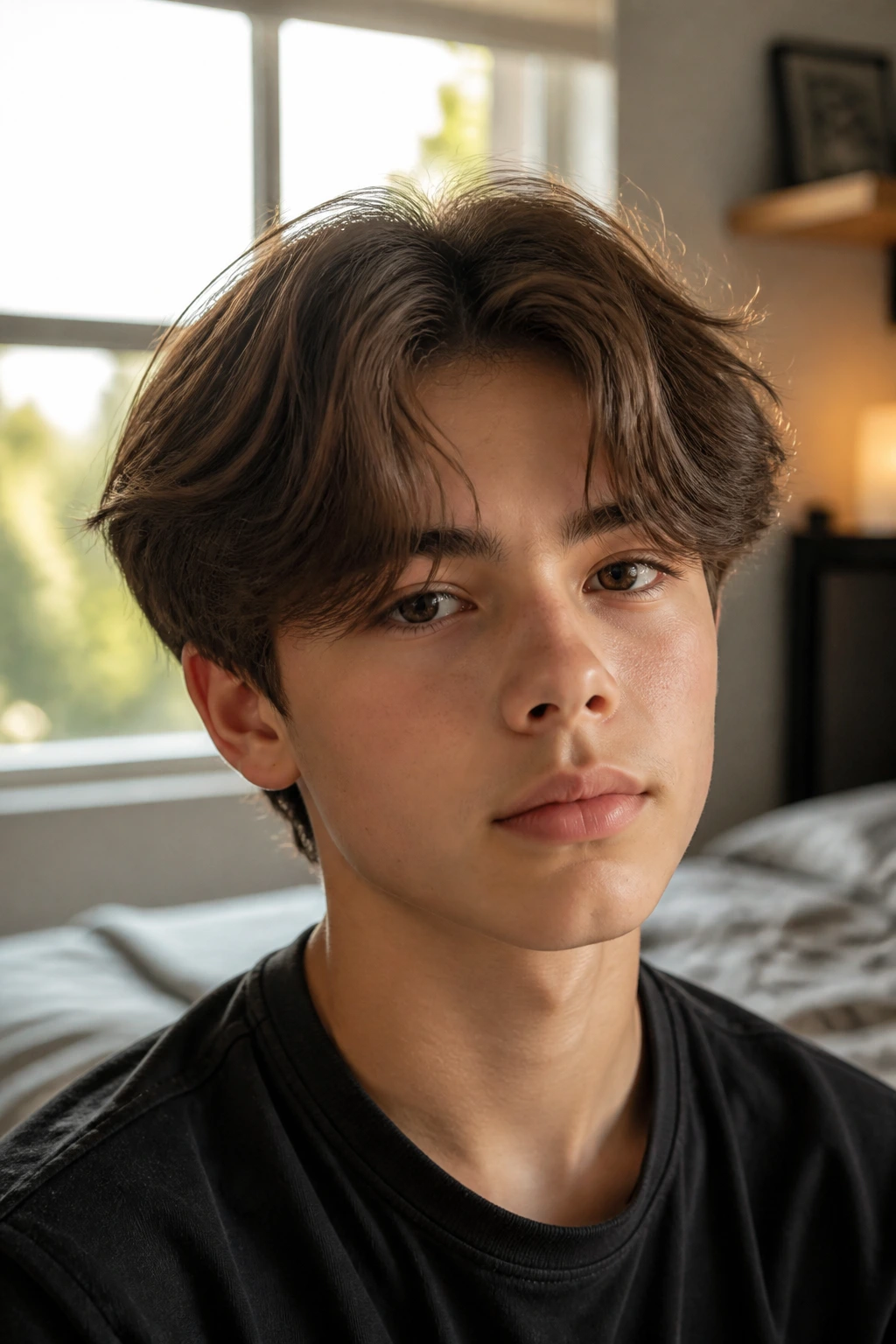
Curtains are not only for older teens. On fine hair, a gentle middle-part fringe can look excellent if the layers are light and the length is controlled.
You want enough length in front to split away from the center — usually 3 to 4 inches — but not so much that the strands hang in flat strings. The sides should stay soft and lightly tapered so the whole cut does not turn into a triangular shape. A good curtain fringe frames the face and keeps the attention on the eyes instead of the scalp.
This cut does need a little more commitment than a crop or crew. Blow-drying the front away from the middle, then letting it fall back naturally, gives the fringe the lift it needs. A tiny amount of texture spray or lightweight cream helps the strands separate without looking greasy.
It is a nice option for boys who want a longer style without the weight that usually crushes fine hair. Done badly, it looks limp. Done well, it looks easy in the best possible way.
Why Boys with Fine Hair Need a Different Cut Strategy
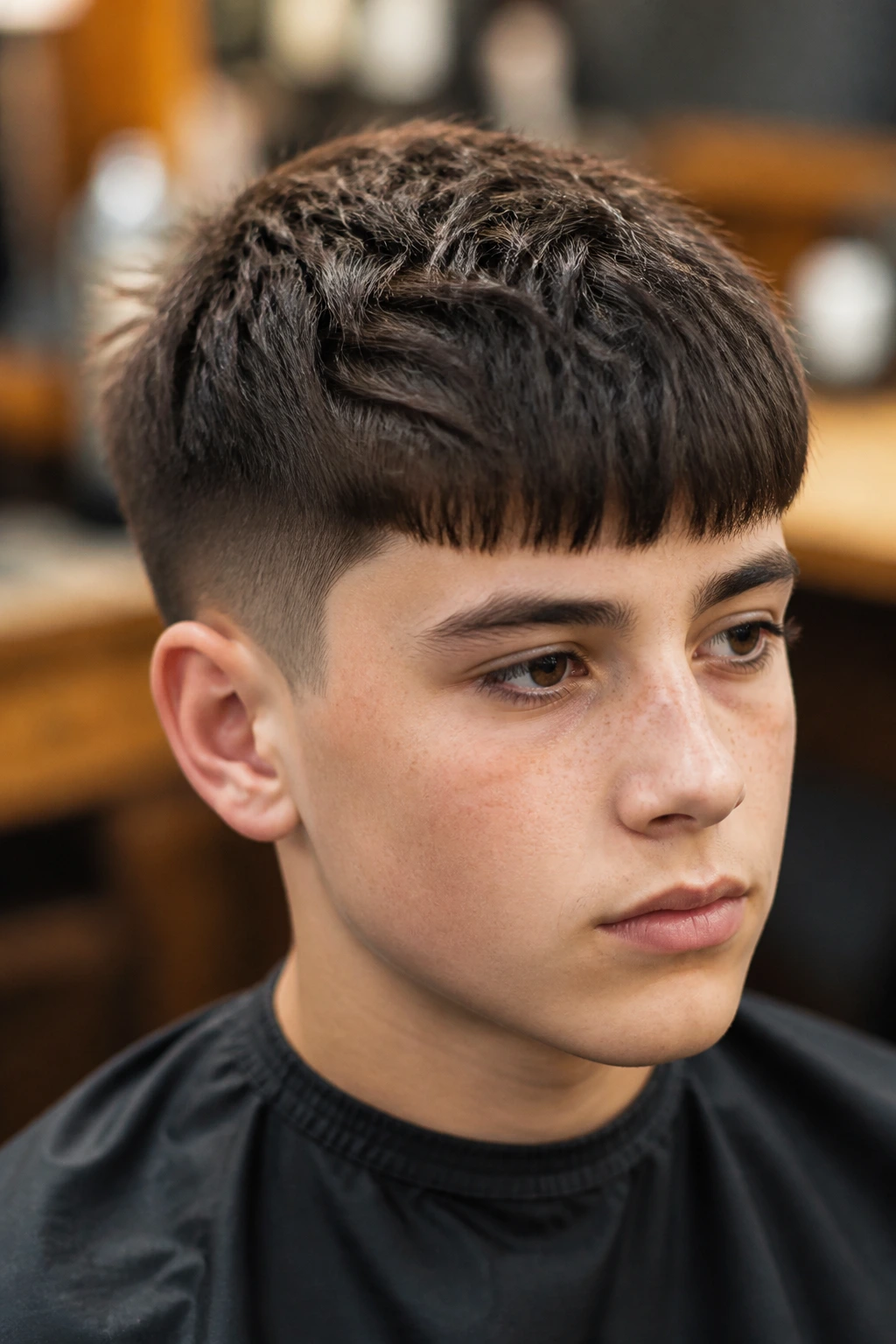
A cut for thick hair can be a mess for fine hair. That sounds obvious, but a lot of bad barbering happens because people ask for the same shape on a very different texture. Thick hair can take chunks out of it and still hold a line. Fine hair often can’t.
The most reliable strategy is to create visual density. That means keeping a little more weight at the perimeter, especially around the temples and fringe, and avoiding over-texturizing the top. Thinning shears are useful in the right hands, but overuse them and the hair turns stringy. You see the scalp. The whole head suddenly looks lighter, even if the haircut is technically neat.
A good boys’ haircut for fine hair also works with growth. Kids do not sit still for salon-level maintenance every two weeks. The cut should look decent after a month, not only on day one. That is why low tapers, soft scissor blending, and crops with forward motion tend to win. They hold their shape longer.
And one more thing: the crown matters more than most people realize. If the top is cut too short at the whorl, it can split open. If it is left too long, it can separate and droop. The sweet spot sits right around the cowlick. That is the part a good barber watches before the scissors even open.
The Tools That Make Styling Easier
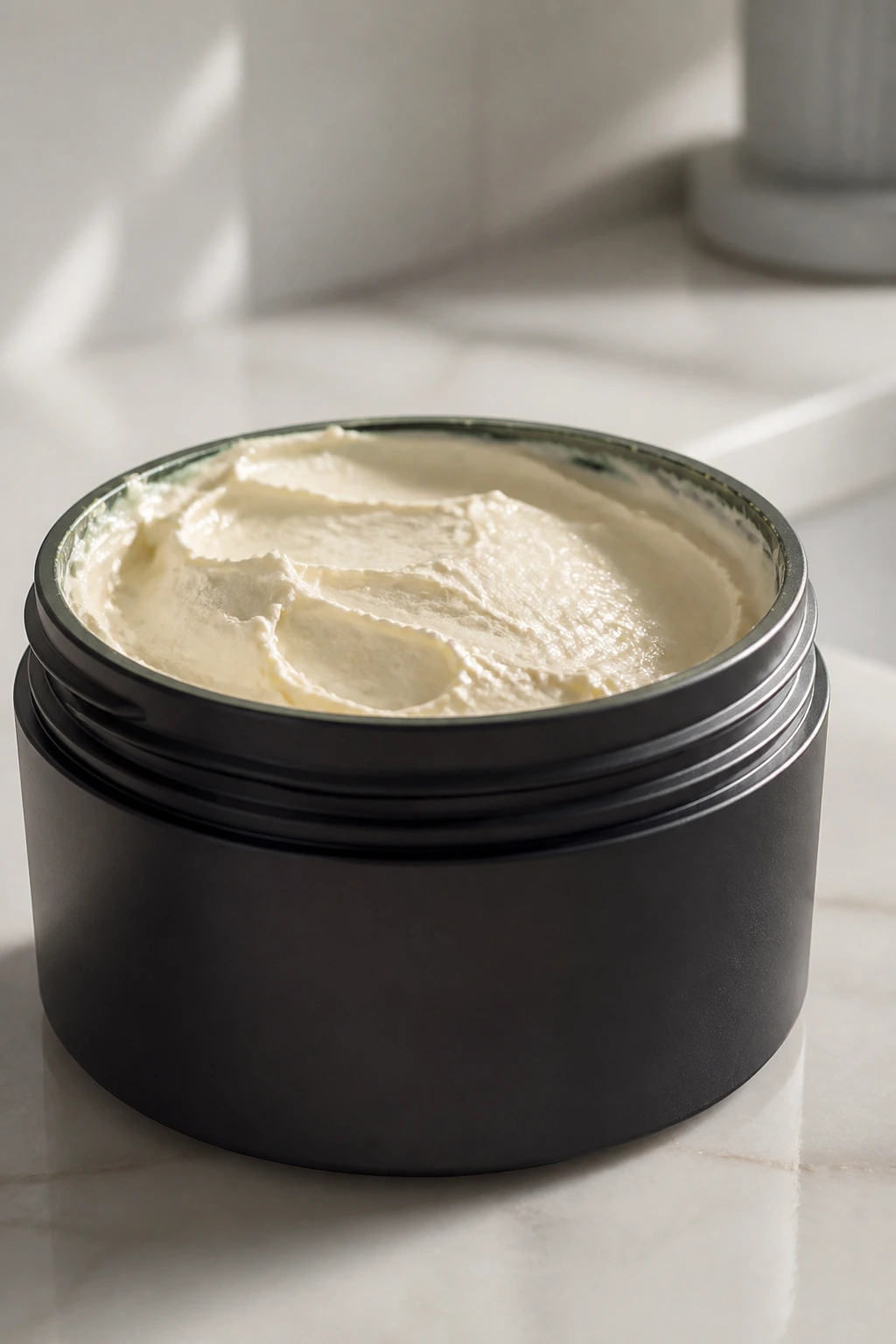
You do not need a crowded bathroom shelf. You need a small set of tools that actually help fine hair keep its shape.
- Fine-mist spray bottle: Dampen the hair without soaking it, which is better for blow-drying control.
- Blow dryer with a narrow nozzle: Directs airflow at the roots so the front and crown lift instead of sticking flat.
- Vent brush or small round brush: Good for guiding fringe, quiff, and side-swept styles while drying.
- Matte paste or clay: Gives grip without shine; fine hair usually looks fuller with a dry finish.
- Light texture spray or sea salt spray: Useful for crops, shags, and brush-ups when the hair needs a little separation.
- Wide-tooth comb: Better than a stiff fine comb for longer fringe or curtain styles that can snag.
- Soft towel or microfiber towel: Cuts down on rough drying, which can leave fine hair frizzy and separated.
- Small trimmer or detailer, optional: Handy for keeping the neckline tidy between barber visits, if you know how to use it.
What to Tell the Barber Chair
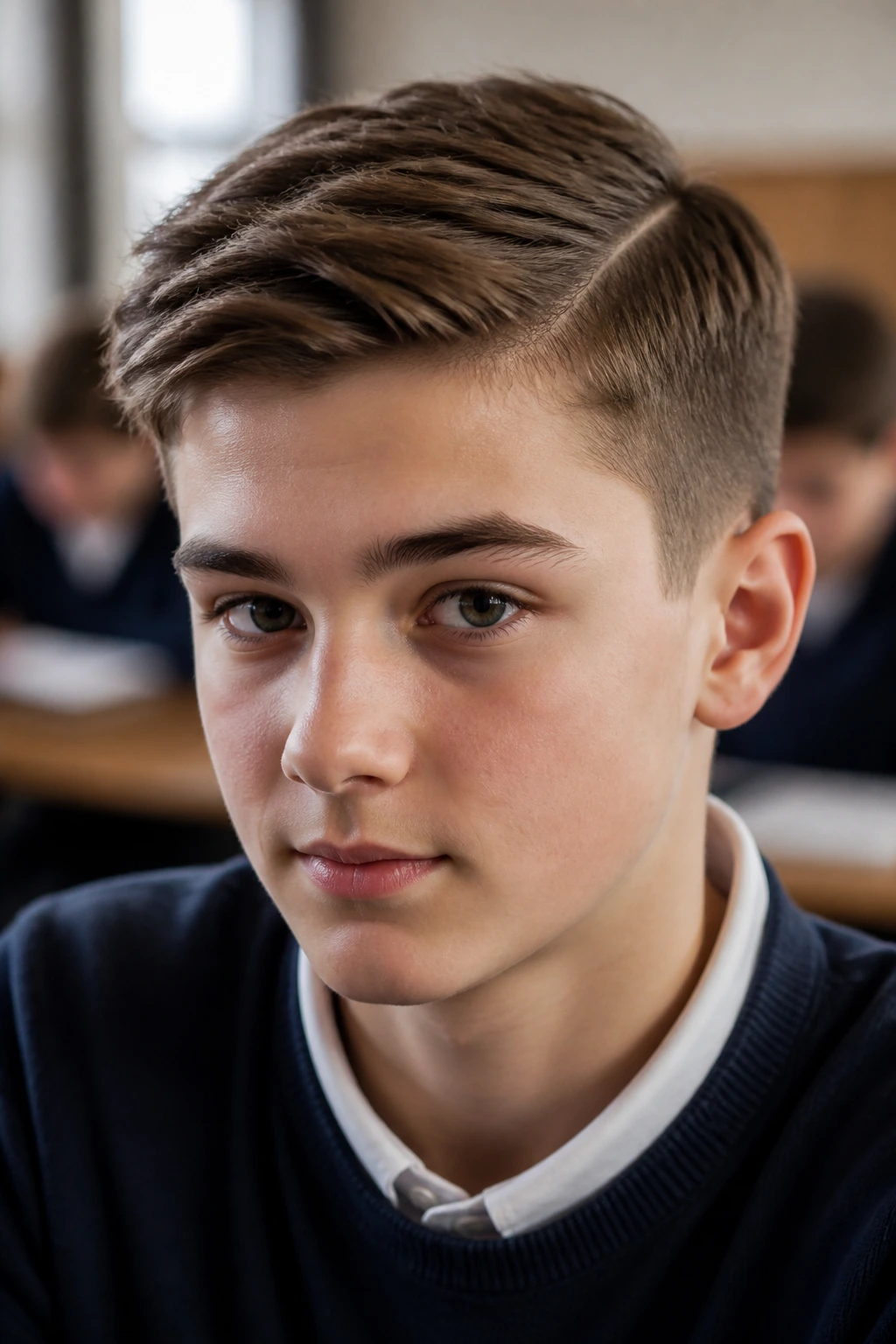
The fastest way to improve a boys’ haircut for fine hair is to stop describing it in vague words. “Short on the sides, longer on top” is not enough. That can mean almost anything, and on fine hair, a couple of bad inches changes the whole look.
Bring a photo if you have one, but also give numbers. Say how long you want the top in inches, whether you want the fringe to cover the forehead, and how low you want the taper. If the boy has a strong cowlick, point to it. If the crown shows scalp, point there too. A barber can work around those spots only if they know where they are.
Here is a phrase that helps: “Keep the top textured, but don’t thin it out too much.” That tells the barber you want movement without losing density. If you like a low-maintenance finish, say “I want it to still look decent when it air-dries.” That simple line saves a lot of trouble.
I’d also ask whether the cut should be done mostly dry or with damp hair. Dry cutting can reveal how fine hair falls in real time, especially around the fringe and crown. Wet hair stretches longer, and that can trick even experienced barbers into removing too much.
How to Style These Cuts on a School-Morning Schedule
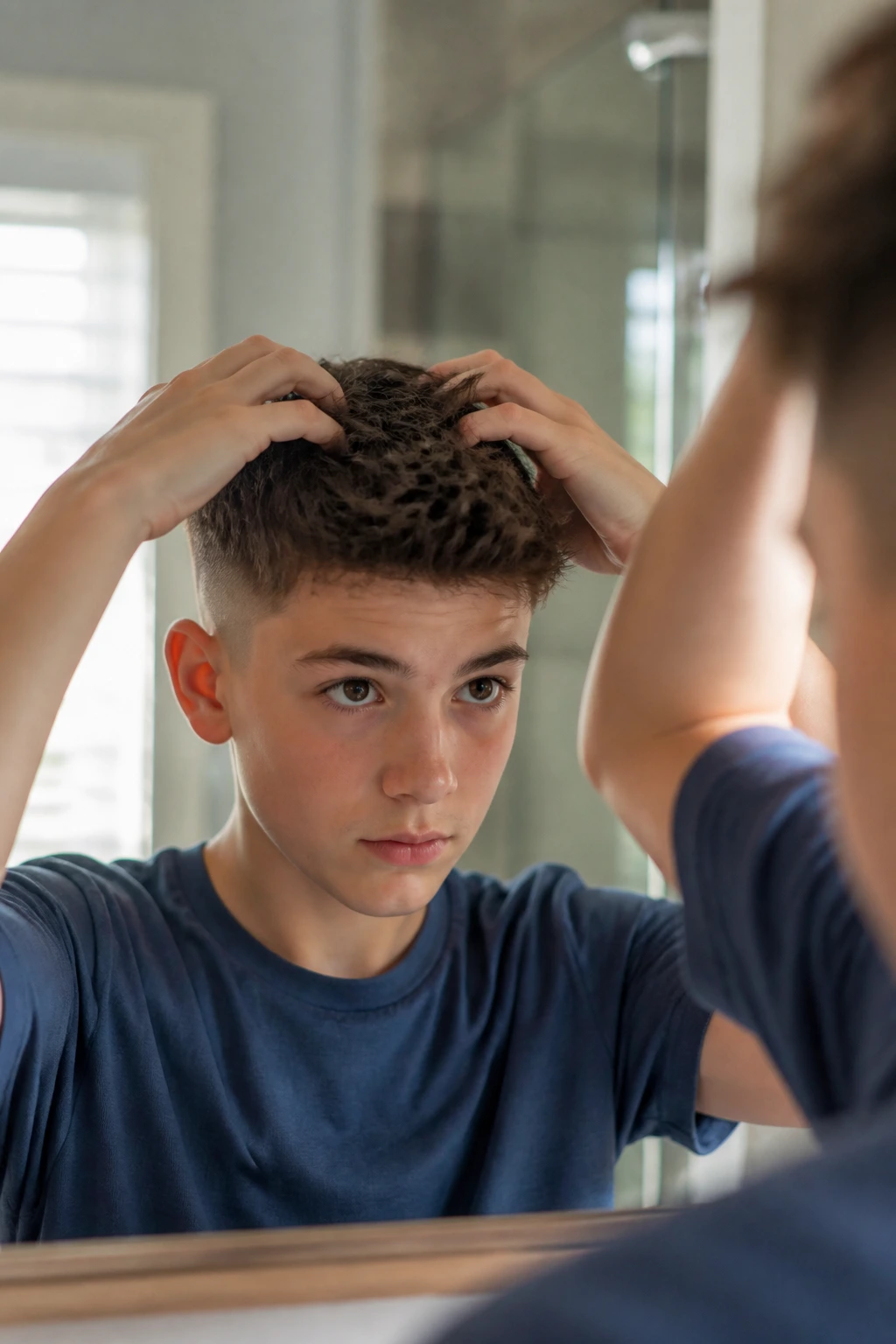
A good haircut should not need a ritual. Most of these styles can be done in under five minutes if the routine stays simple.
Five-Minute Routine: mist the hair lightly, work in a pea-size amount of matte paste or cream, then push the hair into place with your fingers. For crops and crews, that might mean forward. For quiffs and brush-ups, it means lifting the roots while drying for 30 to 60 seconds first.
Best Finish: matte, every time. Shine can make fine hair look separated and oily, especially near the front hairline. If the hair needs a little control, use product on the mid-lengths and keep the roots cleaner.
If the front falls flat: blow-dry the fringe in the opposite direction for a few seconds, then sweep it back the way you want it. That little reset can give the front enough memory to hold through the morning.
After sports or a sweaty afternoon: skip adding more product. Rinse with water, blot dry, and reshape with damp fingers. Too many layers of product on fine hair make it limp and sticky.
Common Mistakes That Make Fine Hair Look Thinner
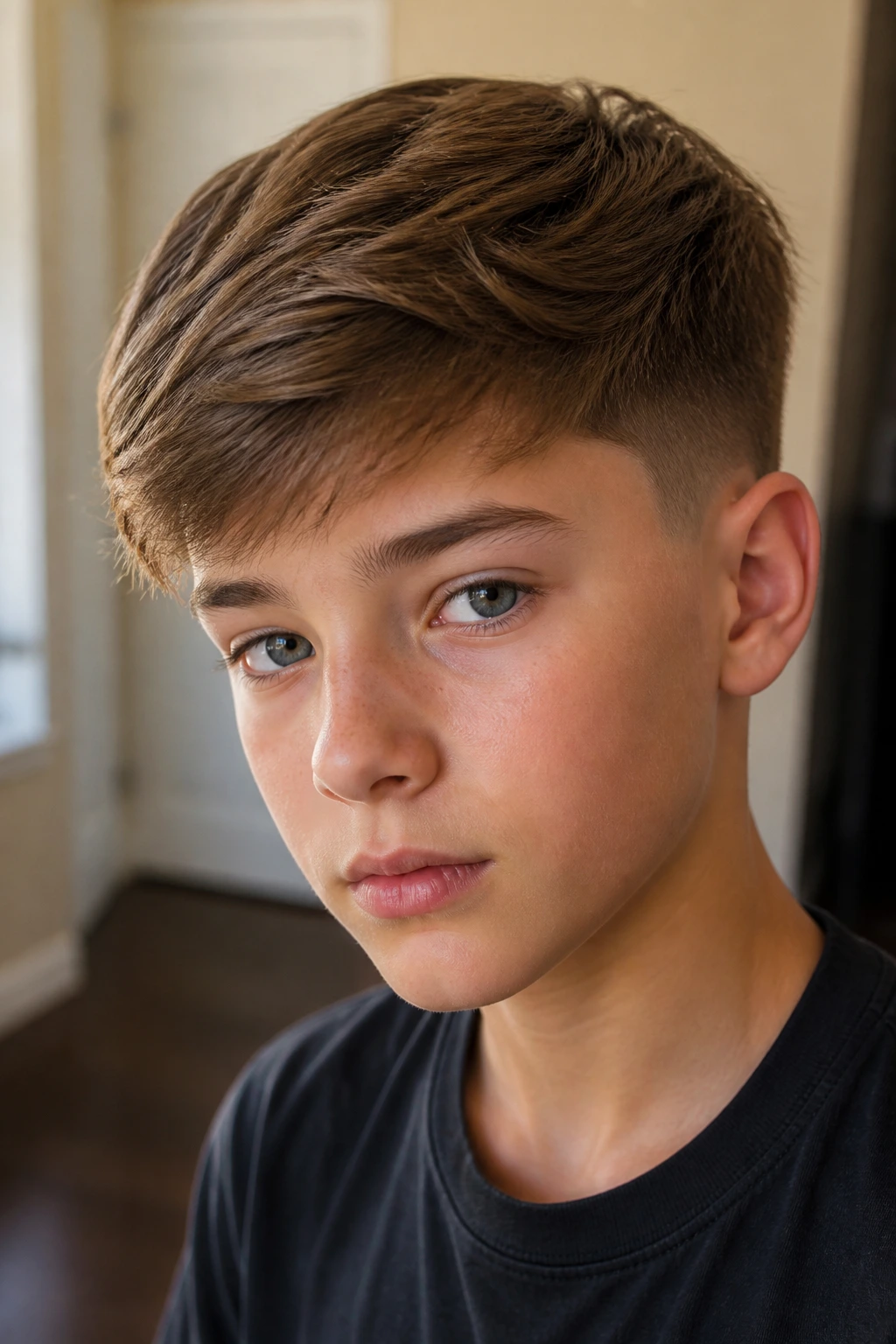
The first mistake is over-thinning the top. Fine hair does not need razor-heavy texturizing on every pass. If the strands start separating into see-through pieces, the haircut has lost density and there is no product that fully fixes that.
Another common problem is cutting the top too long without enough support on the sides. That sounds fashionable in theory. In practice, the top droops, the part opens, and the haircut gets stringy by lunchtime. Fine hair usually looks fuller when the top is shorter than people expect and the sides are tapered with care.
Then there is using the wrong product. Heavy pomade, greasy wax, and shiny gel all tend to expose the scalp. A matte paste or texture spray usually does a better job because it adds grip without slicking the strands into separate lines.
Ignoring the crown is a big one too. A cowlick or whorl that is cut too short will split open. Cut too long, and it lies in a weak curtain. The barber needs to work with that point, not around it.
Finally, high fades can be too aggressive on very fine hair. A little contrast is good. Too much contrast makes the top seem even lighter, which is a bad trade.
Variations and Tweaks That Change the Whole Look
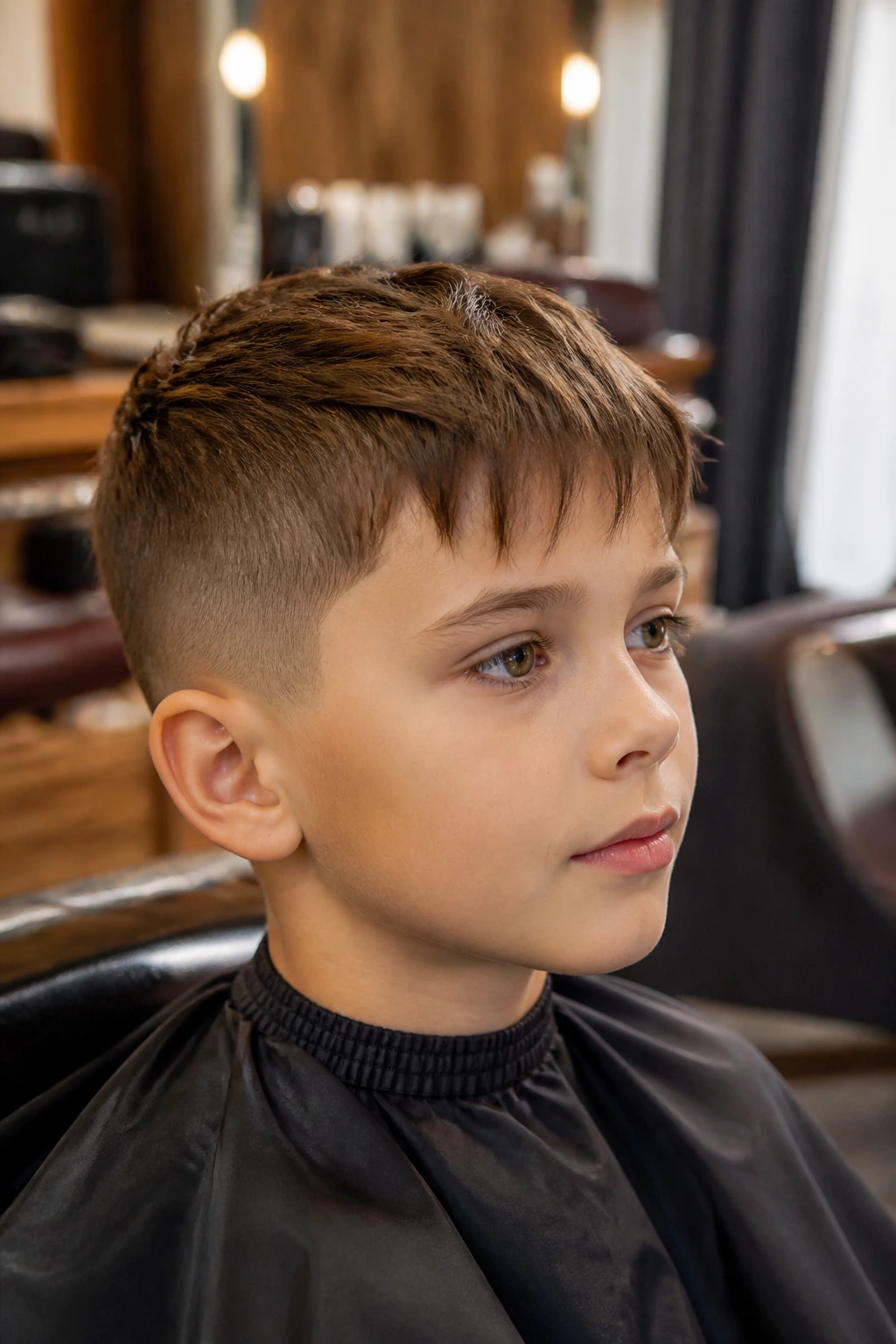
School-Rule Short Cut: Keep the top under 1.5 inches with a low taper and a soft fringe. This is the version to choose when length limits matter or when the child refuses styling in the morning.
Wavy-Fine Hybrid: If the hair has even a slight wave, leave the top a little longer and ask for light layers. The bend gives the cut movement, and the layers stop it from sitting like a sheet.
Older-Kid Curtain Length: Push the top to 3.5 or 4 inches and split the fringe near the middle. This suits boys who want something more relaxed without crossing into heavy, floppy territory.
Sports-Ready Crop: Go with a French crop or crew cut and keep the fringe short enough not to fall into the eyes. It stays tidy after helmets, sweat, and fast movement.
Sensitive-Scalp Version: Choose an all-scissor cut with a soft taper at the neckline and ears. That skips the harsher clipper work while keeping the shape neat.
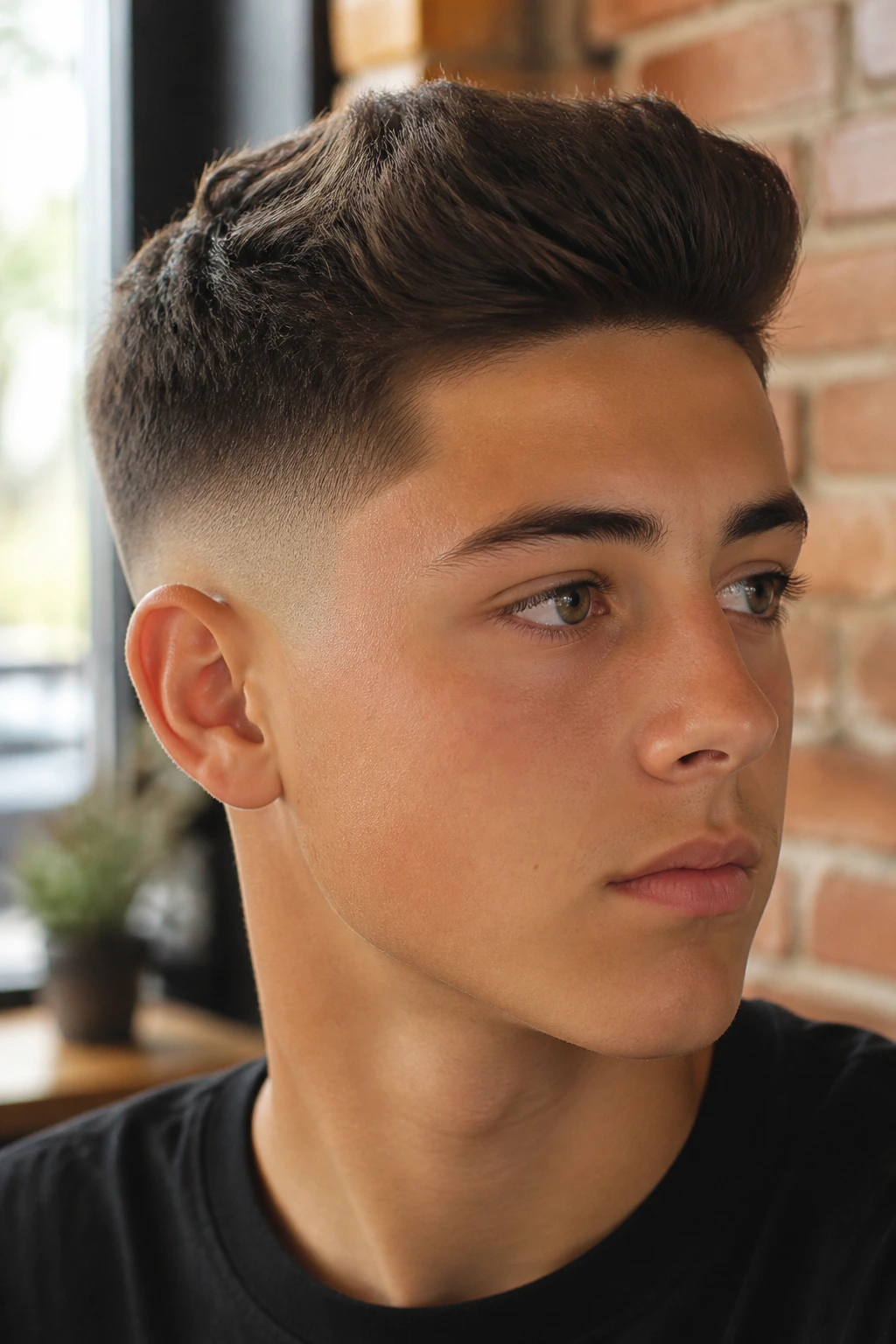
Bold But Controlled Quiff: Keep the fade low, leave the front longest, and style it with a blow dryer and matte paste. This gives enough lift for a sharper look without turning the hair into a helmet.
Keeping the Cut Full Between Barber Visits
Fine hair can go from neat to limp fast if the routine gets sloppy. The good news is that maintenance is not complicated. It just needs to be regular.
Short crops, crews, buzz cuts, and fades usually look sharp for 3 to 5 weeks before the sides start losing their shape. Longer fringes, curtain cuts, shags, and mop-style cuts can often stretch to 5 to 7 weeks, but only if the neckline and fringe are cleaned up before they get wild. If the child’s hair grows fast around the ears or nape, that is usually the first place to book a touch-up.
Washing matters too. Fine hair tends to collect oil at the roots faster than thick hair, so a light shampoo routine helps. Every day is not always necessary, and in some kids it makes the hair too soft, which sounds nice until the top lies flat all afternoon. A small amount of conditioner on the ends is enough for longer styles; too much conditioner near the scalp weighs the hair down.
Product buildup is another sneaky problem. If the hair starts looking dull, sticky, or strangely separated even before styling, use a clarifying shampoo every couple of weeks. That clears out the residue that makes fine strands clump in a bad way.
Frequently Asked Questions About Boys’ Haircuts for Fine Hair
What haircut makes fine hair look thickest?
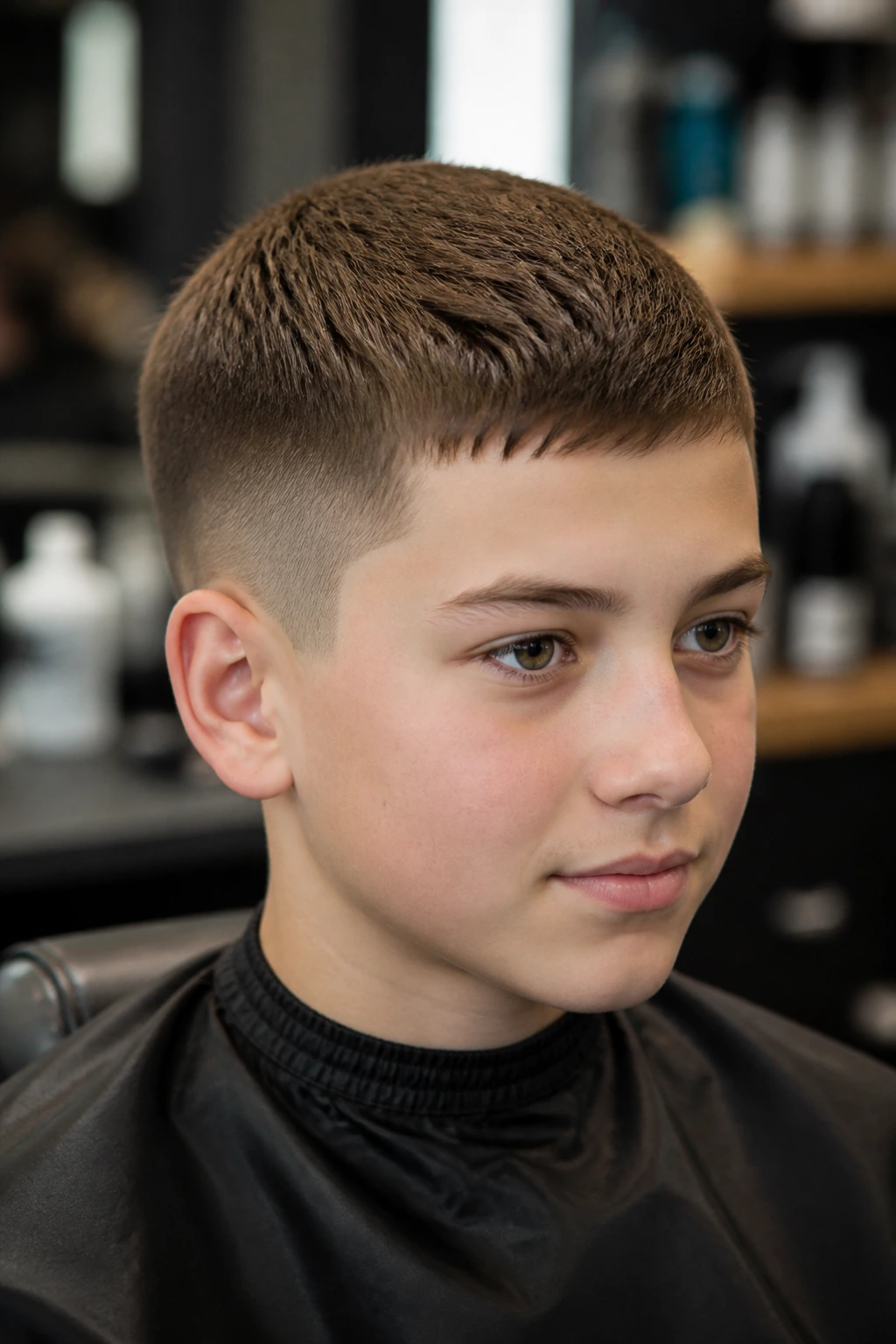
Short textured cuts usually win: French crop, crew cut, Caesar, or a soft Ivy League. They keep the hair close enough to control while using shape and texture to create the look of density.
Should boys with fine hair get a fade?
Yes, if the fade stays low or soft. A harsh high fade can make the top look thinner by comparison, while a low taper gives clean edges without stripping away too much visual weight.
Is it better to cut fine hair wet or dry?
Dry or mostly dry cutting is often better for fine hair because it shows how the strands actually fall. Wet hair can stretch longer than it lives in real life, which leads to cuts that look fine in the chair and flat later.
Can fine hair wear longer styles?
It can, but the length needs structure. Curtains, shags, and layered mop tops work when the haircut has soft layering and the product stays light. Long, heavy styles with no shape usually collapse.
What product should I use on fine hair?
Matte paste, lightweight clay, or texture spray are the safest picks. Heavy wax and glossy gel tend to separate the strands and make scalp show more obvious.
How often should boys with fine hair get trims?
Short cuts usually need a trim every 3 to 5 weeks. Longer layered styles can stretch a little longer, but once the crown and fringe lose shape, the whole cut starts looking tired.
What if the crown keeps splitting open?
That usually means the hair there is either too short or too heavy for the cowlick pattern. Ask the barber to leave a touch more length and soften the area with scissors instead of cutting it down tight.
Can I fix a flat top with more product?
Not usually. Too much product on fine hair makes it limp, sticky, or shiny. A quick blow-dry at the roots and a smaller amount of matte product does far more than piling on extra paste.
Cuts That Hold Their Shape
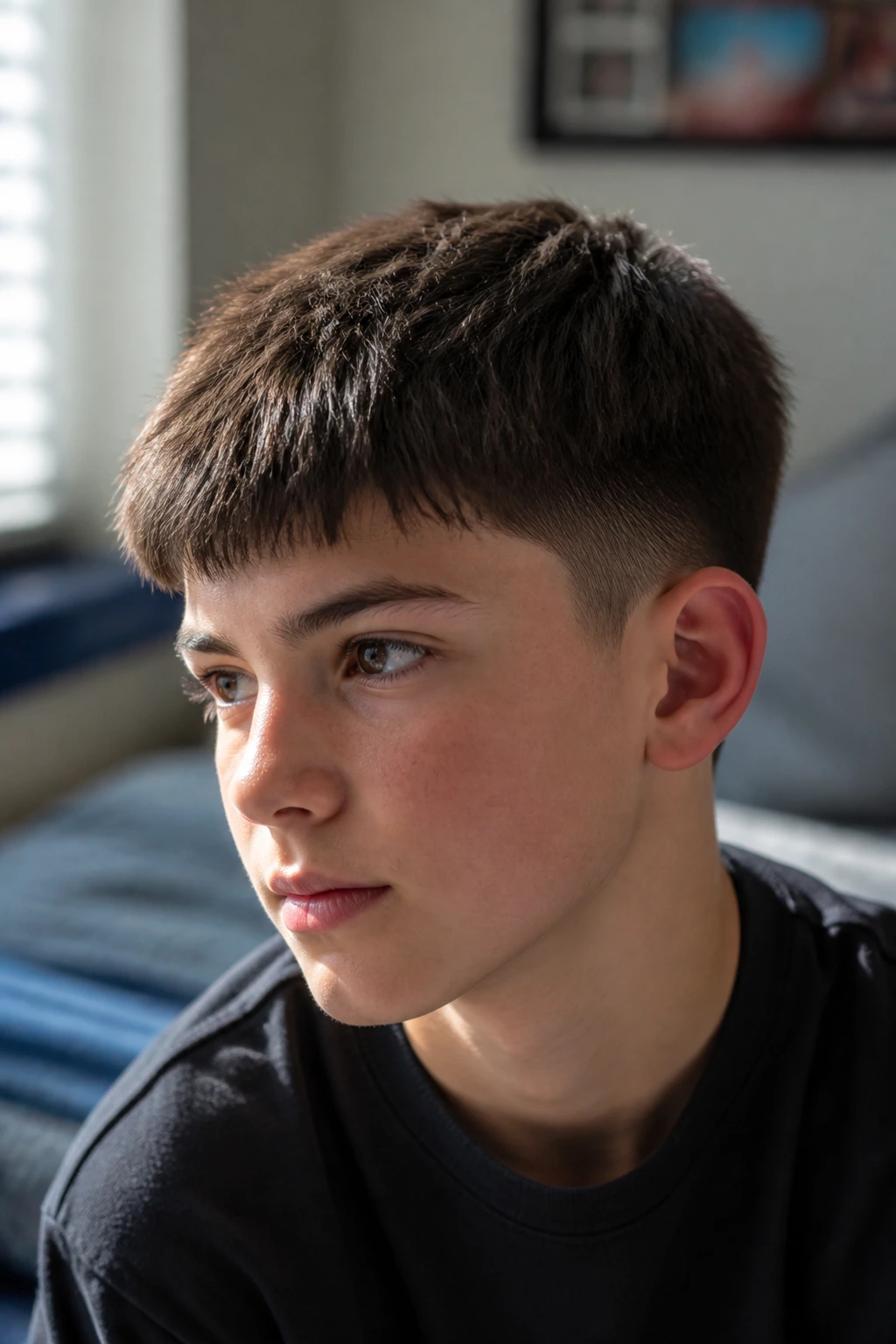
The best boys’ haircuts for fine hair do not try to bully the strand into behaving like something it is not. They build shape where the hair already wants to move, keep the sides honest, and leave just enough texture on top to make the whole head look fuller.
A crop, crew, Ivy League, or soft fringe can all work beautifully when the cut respects the hair’s density. That part matters more than trend names or barbershop jargon. Get the shape right, keep the product light, and the haircut does the rest without needing a daily battle in front of the mirror.
If you are choosing between two cuts, I’d usually take the one with cleaner structure and less bulk. Fine hair likes a clear plan. Give it one, and it pays you back in the mirror.