



Thin hair can look expensive when the cut is doing the talking. It can also look tired in about twelve minutes if the shape is wrong. The best edgy trendy hairstyles for women with thin hair lean on clean lines, smart asymmetry, and controlled texture — not on over-layering, puffed-up teasing, or a mountain of product that collapses by lunch.
The mistake most people make is asking for “more layers” and hoping fullness appears from nowhere. Thin strands do not usually reward that kind of wishful thinking. They need a perimeter that stays visible, a crown that isn’t stripped bare, and styling that gives the eye something sharper to follow than the scalp beneath it.
What works here is a little more exact than the usual hair advice. A blunt bob can look denser than long layers ever will. A chopped pixie can feel tougher and more modern than hair that’s been thinned to pieces. A lob can swing edgy instead of limp if the ends sit in one deliberate line. Once you start thinking in terms of shape, not fantasy volume, the options get better fast.
Why These Edgy Trendy Hairstyles for Women with Thin Hair Work So Well
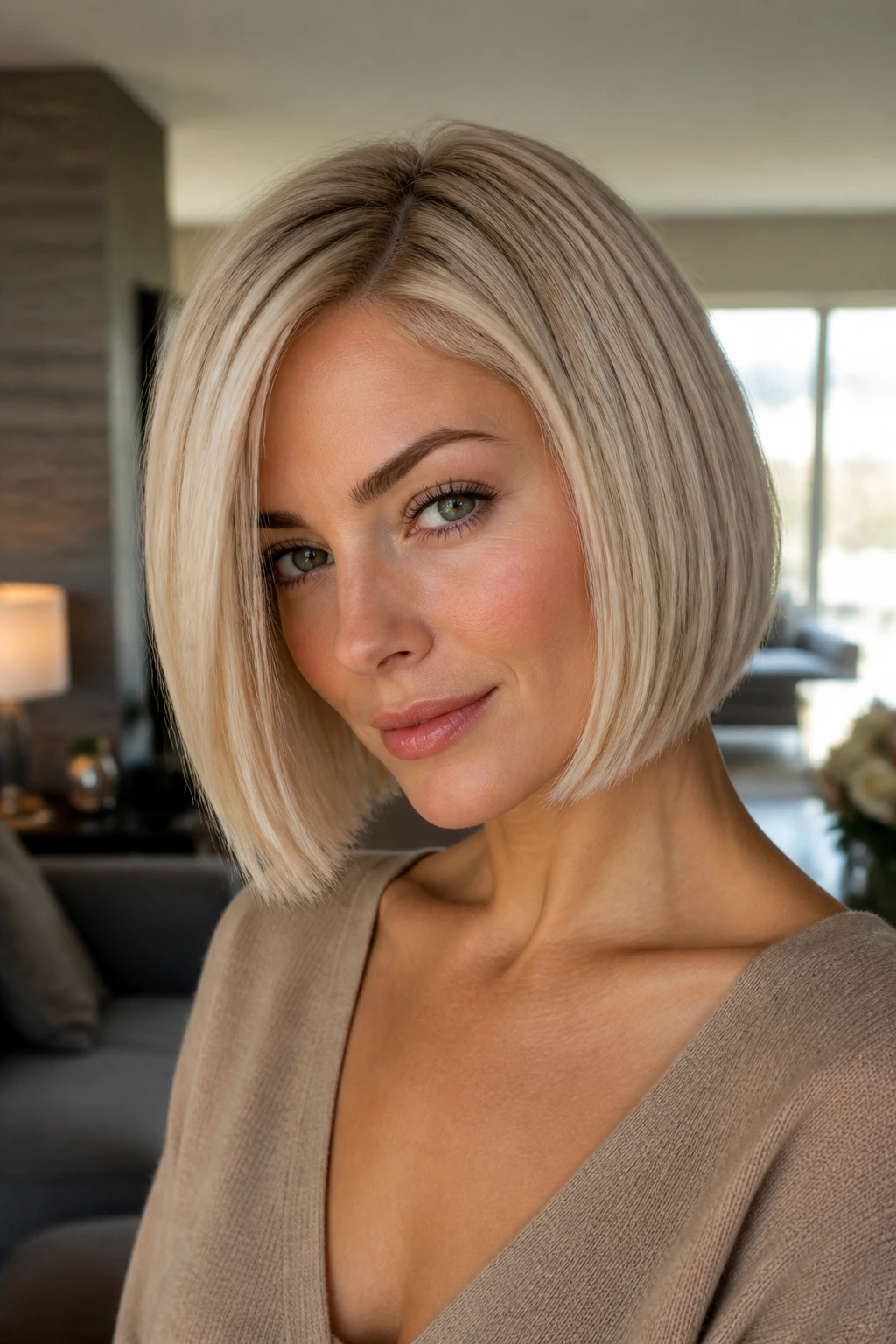
- Blunt edges read fuller: A solid line at the jaw or collarbone keeps every end in the same visual place, which makes the hair look denser than it is.
- Shorter lengths fight gravity: Hair that stops around the chin or above has less weight pulling at the roots, so lift lasts longer and flatness shows up later.
- Texture has a job here: Piecey ends, soft bends, and broken-up fringe add attitude where the eye lands first, instead of scattering texture all over the head.
- Asymmetry does real work: A deep side part or one longer side creates movement and makes the shape feel intentional, even when the hair itself is fine.
- Day-two hair becomes useful: Thin hair often looks better after a little air, a little dry shampoo, and some grit. It stops trying to be perfect and starts looking styled.
- The cuts are wearable, not theatrical: These looks still make sense at school pickup, in a meeting, or under a leather jacket. That matters.
1. Blunt Chin-Length Bob
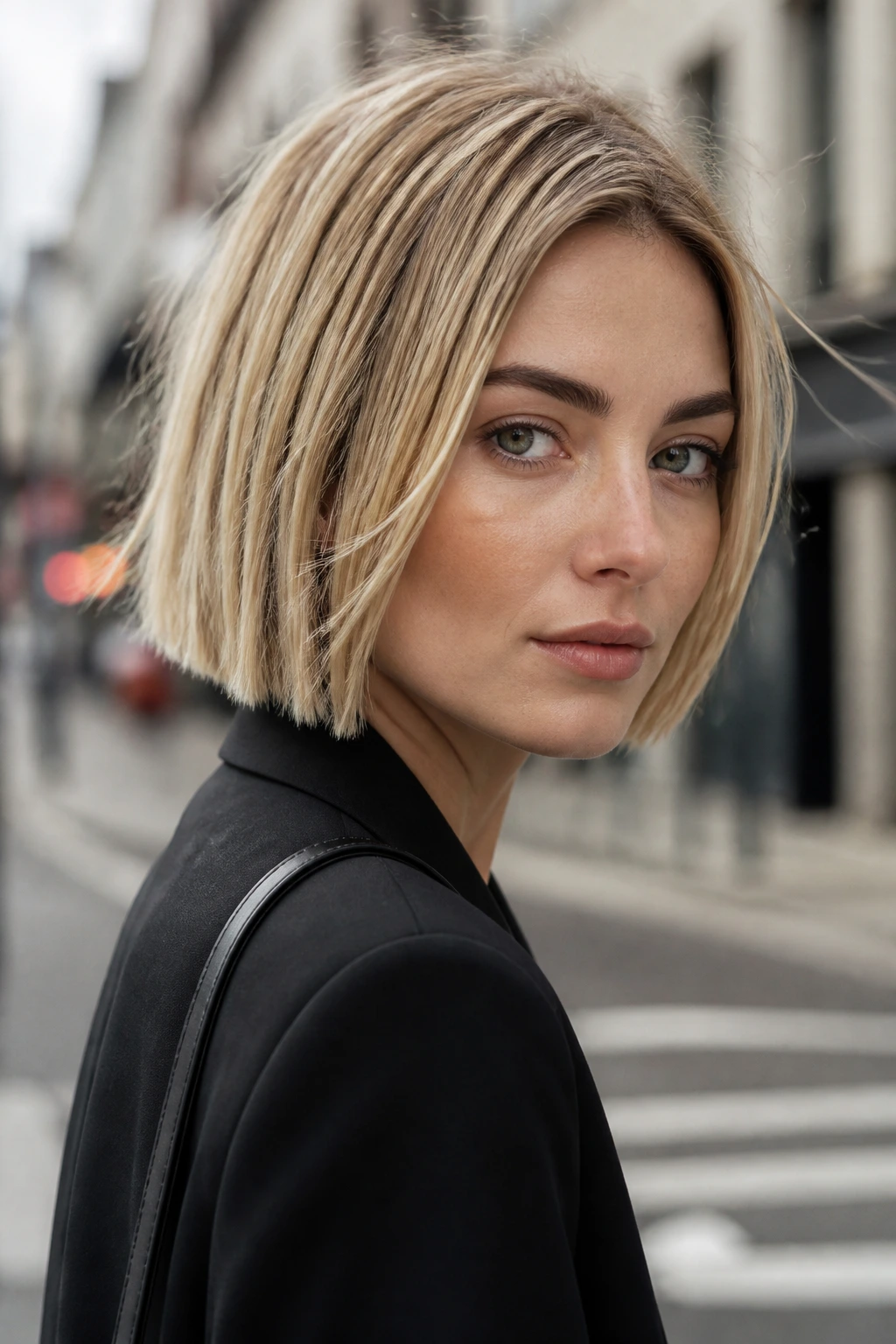
A blunt chin-length bob is one of those cuts that looks almost stubborn in the best way. The line sits right at the jaw, so the eye gets a full, even edge instead of wispy ends that drop away and disappear. On thin hair, that single decision can do more than a dozen clever styling tricks.
Ask for a solid perimeter with minimal internal layering. If your hair flips out at the ends, a stylist can add a whisper of graduation in the back, but the outer line should stay crisp. Too much texturizing turns the bob fuzzy, and fuzzy is the enemy when density is already limited.
How to wear it
Keep the part slightly off-center if your crown goes flat fast. Blow-dry with a small round brush or add a tiny bend with a flat iron — just a gentle curve under, not a hard curl. Finish with a mist of flexible-hold spray, then leave the roots alone. Don’t bury them under oil. That’s how the bob turns sad.
2. French Bob With Micro Bangs
A French bob with micro bangs has a sharp little attitude problem, and I mean that as praise. It sits shorter than a classic bob, usually somewhere between lip and chin length, while the fringe cuts high enough to make the eyes look more open and the face feel more graphic. Thin hair likes the compactness.
This cut works because it keeps the whole shape tight. There’s no extra length hanging around to look stringy, and the fringe shifts attention upward, which is where thin hair often needs it most. If the bangs are too heavy, though, the look turns helmet-like. That’s the line to avoid.
What to ask for
Ask for soft texture at the ends, not shredded layers. If you want the fringe edgy but not severe, leave a tiny bit more length so it brushes the brow instead of stopping far above it. A light pass with a flat iron or a quick round-brush blowout keeps the bangs from clumping.
3. Cropped Pixie With Choppy Crown
A cropped pixie is one of the easiest ways to make thin hair look deliberate. When the length comes off, the strands stop sagging under their own weight, and the crown can stand up with a little help from mousse or paste. The whole cut reads sharper because it has nowhere to hide.
The trick is to keep the top choppy and the sides clean. You want movement at the crown, not a shredded mess. If the stylist takes too much out of the interior, the pixie starts exposing more scalp than you asked for, and that’s not the vibe.
Best styling note
Work a pea-sized amount of matte paste through dry hair, then pinch the top pieces upward with your fingertips. Don’t smooth everything down. Let some pieces stand on their own. That roughness is the point, and it’s exactly what keeps the cut from looking flat by noon.
4. Bixie Cut
A bixie is the nice little bridge between a bob and a pixie, and it’s one of the smartest cuts for thin hair if you want edge without going all the way short. The back stays cropped, the sides stay neat, and the top keeps enough length to flip, bend, or piece out. It has more personality than a regular bob and less commitment than a full pixie.
What I like about the bixie is that it gives thin hair a strong silhouette without forcing it to carry too much weight. The shape can look airy, but not see-through, if the ends stay blunt enough and the crown isn’t over-thinned. That balance is the whole game.
You can style it messy with a little texture spray, or make it sleeker with a side part and a dab of styling cream on the ends. Either way, it looks intentional. And intentional beats “I forgot to blow-dry” every time.
5. Asymmetrical Bob
An asymmetrical bob does a sneaky kind of magic. One side sits longer than the other, so the shape gives the eye something to chase instead of landing on a straight, predictable line. On thin hair, that slant can make the cut feel fuller and more modern at the same time.
It’s also useful if one side of your hair grows flatter, or if your part tends to expose more scalp on one temple. The longer side pulls attention away from that, while the shorter side adds snap. You do not need dramatic extremes here. Even a subtle one-inch difference can change how the cut sits.
The good version
Keep the ends blunt and the asymmetry clean. If the cut gets too feathered, the shape loses its edge. A flat iron bend at the front pieces sharpens the line, and a tuck behind one ear makes the longer side feel even more deliberate.
6. Collarbone Blunt Lob
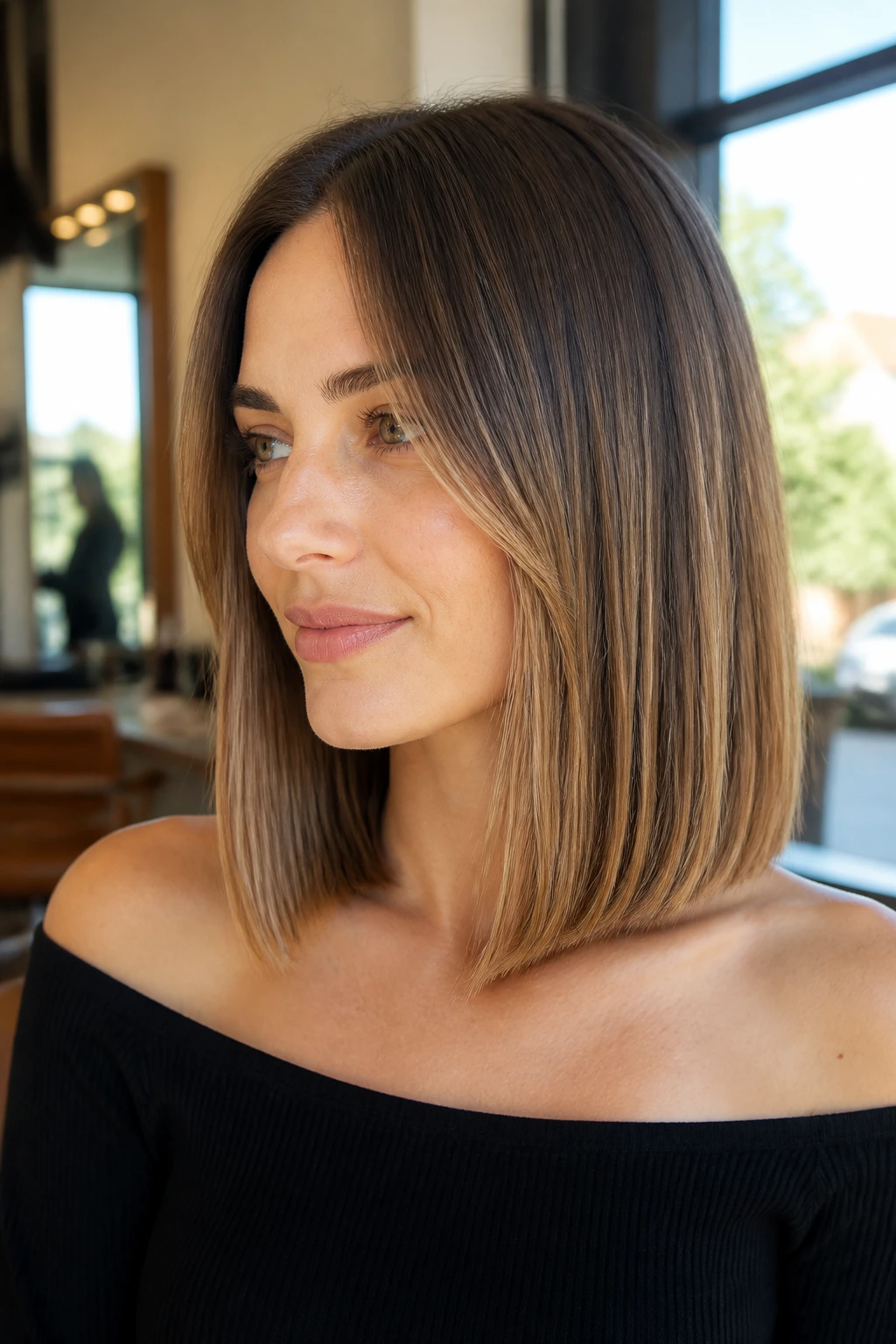
A blunt lob that lands at the collarbone is the long-haired person’s answer to flatness. It keeps some movement and some styling room, but it doesn’t drag itself into the ground the way longer thin hair often does. The key word is blunt. If the ends look too airy, the whole thing reads thinner than it is.
This cut works especially well if you want to keep enough length for a ponytail or a clip, but still want the edge of a cleaner outline. A collarbone lob can flip under, flip out, tuck neatly, or sit sleek and straight. It’s versatile, yes, but the real reason to choose it is that the weight stays where it can help you.
If your hair tends to split at the ends, keep the last inch healthy and trimmed every six to eight weeks. A ragged lob is a rough look on thin hair. A clean one has presence.
7. Shaggy Lob With Curtain Bangs

A shaggy lob can work on thin hair, but only if the layers are long, light, and placed with restraint. I’m not a fan of the shredded version people sometimes ask for after scrolling too long. That can eat away at density fast. A better shag keeps the outline intact and lets the movement happen around the cheekbones and fringe.
Curtain bangs help because they open the face without chopping a giant hole in the front. They also make the cut look more current without screaming for attention. The bangs should fall softly, not split into stringy little pieces the second you step outside.
Styling note
Blow-dry the bangs away from the face first, then let them fall naturally. Put mousse at the roots, not oil. If you want more grit, use a mist of texture spray on the mid-lengths after everything is dry. Thin hair and heavy texture products are not friends.
8. Soft Wolf Cut
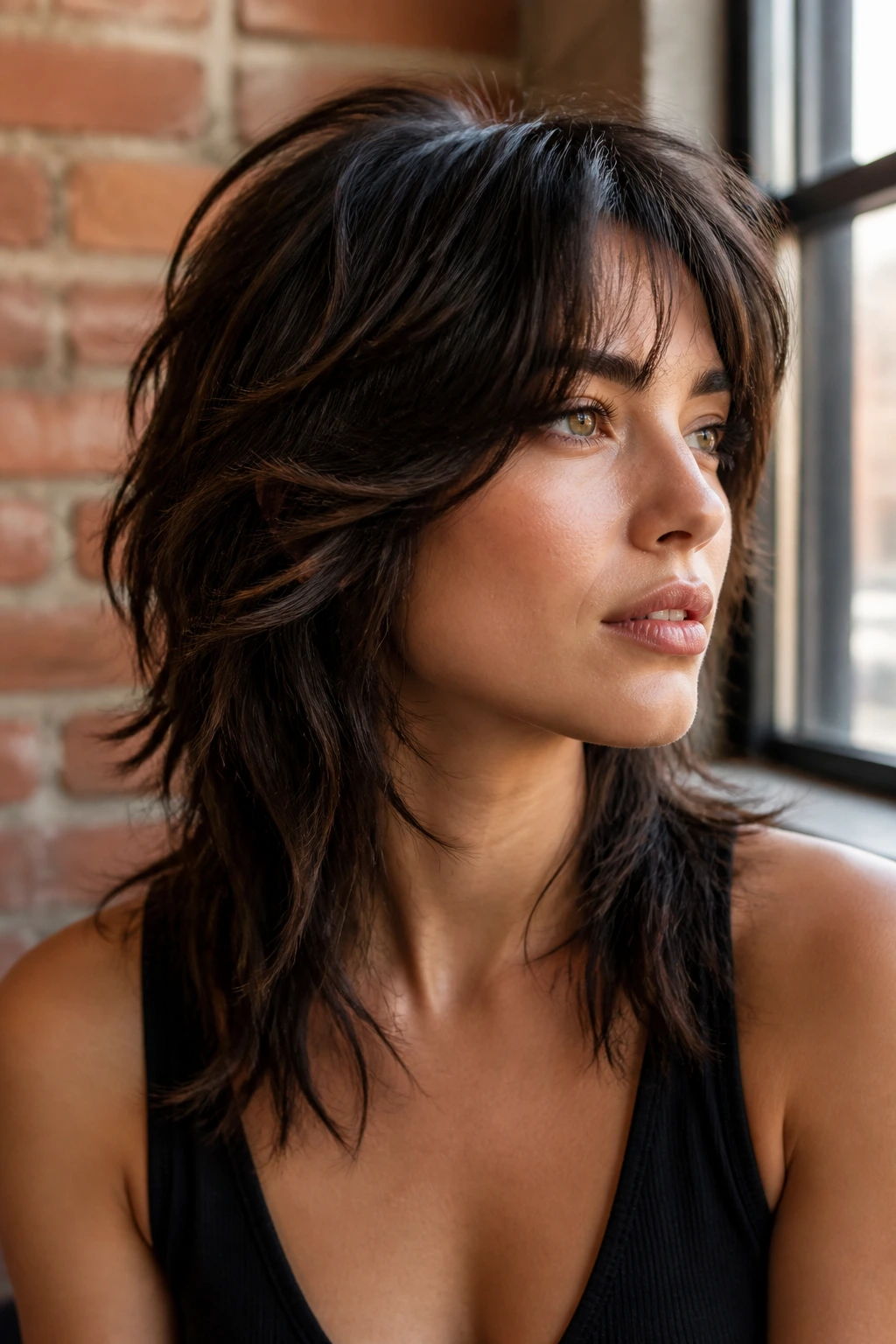
A soft wolf cut is what happens when a shag and a mullet get a little more civilized. On thin hair, that restraint matters. You want the rock-and-roll shape — some lift at the crown, some movement through the sides — but you do not want the ends chewed to bits.
The best version of this cut keeps the top layered enough to create lift, while the lower lengths hold more weight. That way the hair still has a perimeter. Without that, the wolf cut can drift into see-through territory fast, especially if the hair is very fine.
It’s a good choice if you like a messy finish and don’t mind that the cut has some attitude even on air-dry days. A diffuser, a little mousse, and a finger-combed finish are usually enough. If your hair is straight as wire, keep the layers longer. The softer version ages better.
9. Deep Side-Part Tucked Bob
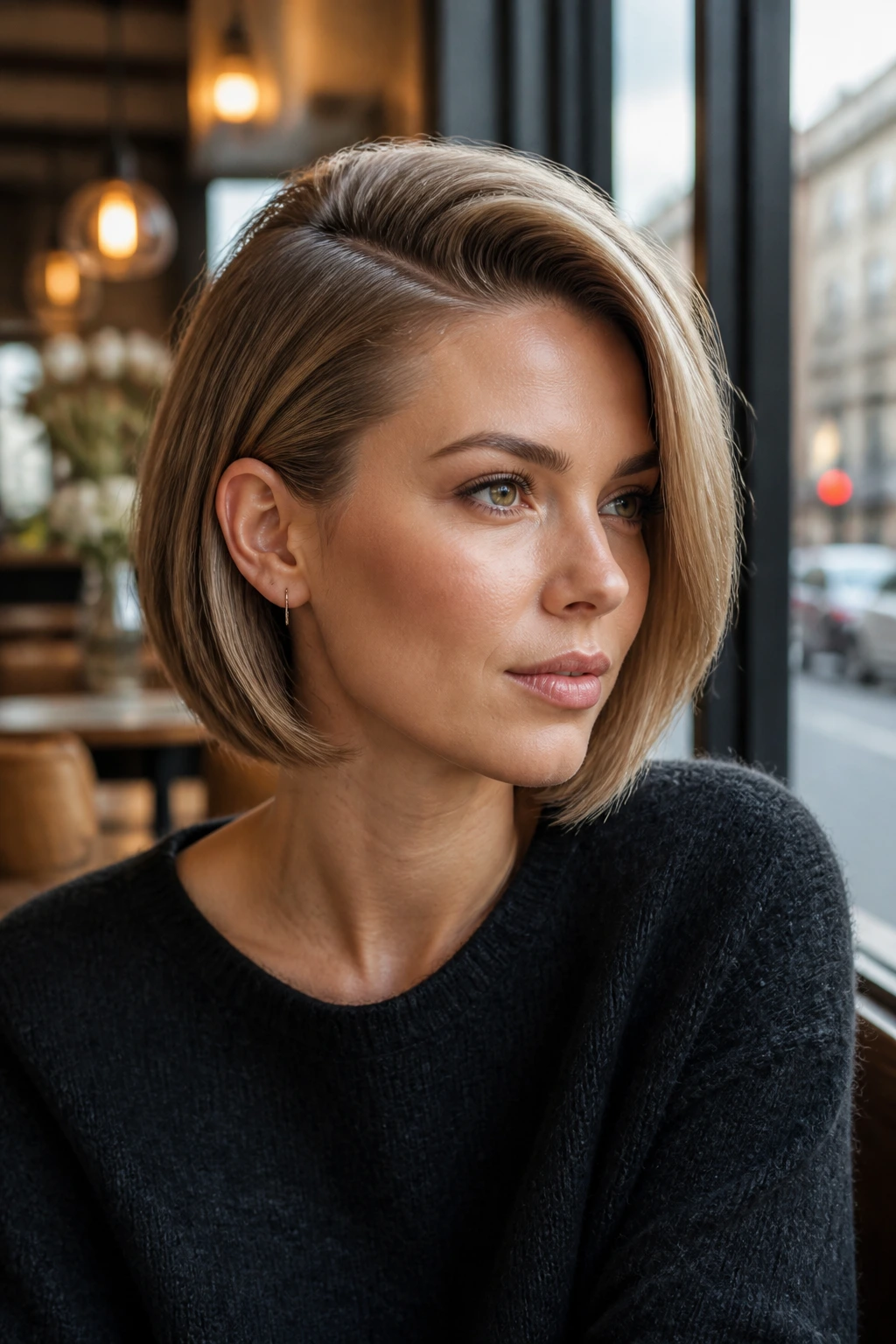
Sometimes the edgiest move is the simplest one. A deep side part on a bob can give you more lift than a drawer full of styling products, because the roots on the heavy side have to rise to the occasion. Then you tuck one side behind the ear, and the whole face opens up.
This is a very good trick for thin hair that goes flat at the crown but still has enough length to sit in a bob or lob. The part creates instant asymmetry, and asymmetry always reads as more intentional than a dead-center part that collapses straight down.
Tiny styling detail that matters
Use a tail comb to make the part clean. Spray a little root-lift mist at the top side, then blow-dry that area in the opposite direction for a few seconds before laying it down. The lift lasts longer that way. A small ear cuff or statement earring makes the shape feel even sharper.
10. Slicked-Back Wet Look
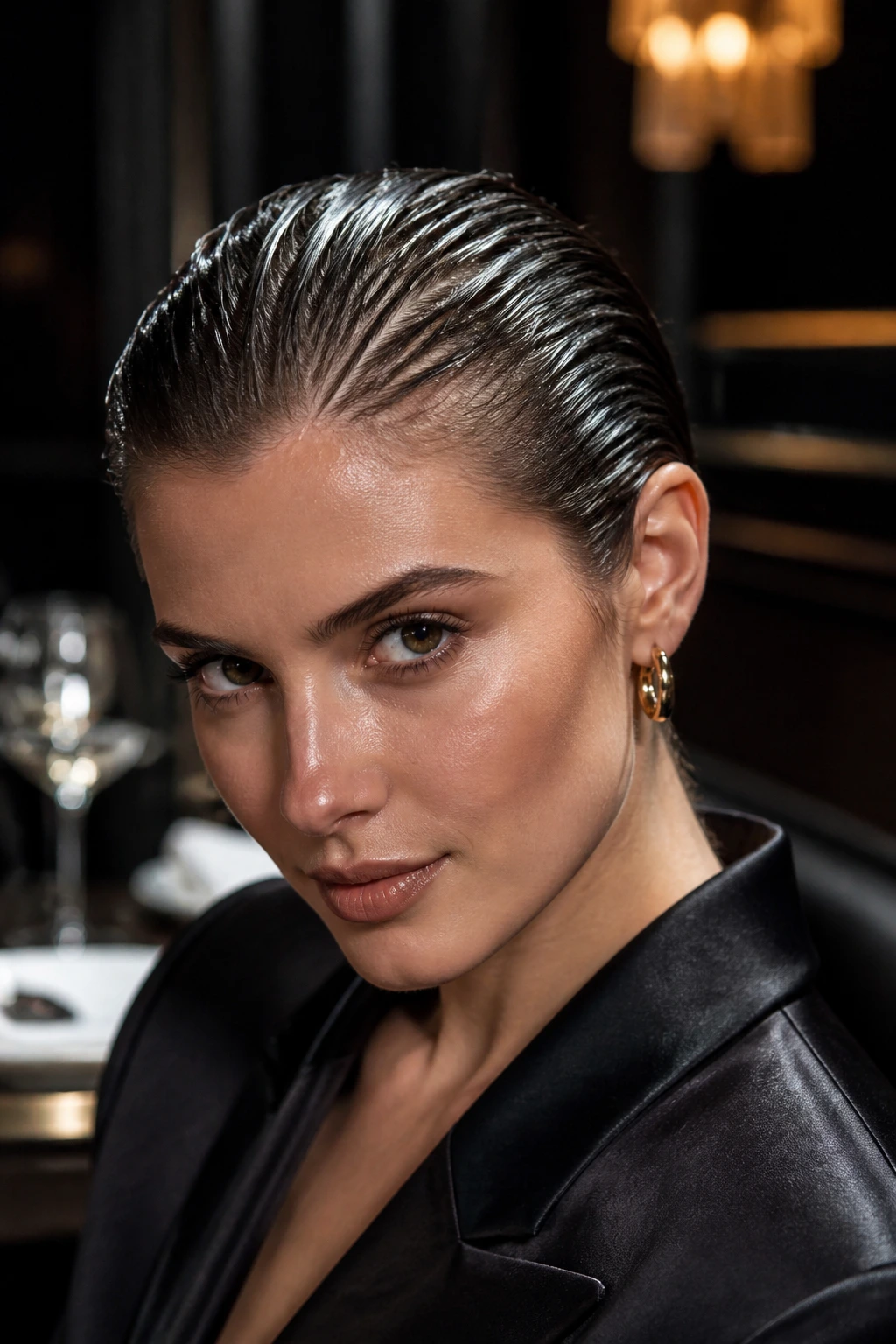
A slicked-back wet look is one of the rare styles thin hair can wear without apology. You’re not pretending the hair has more body than it does. You’re turning that into the style. That honesty is half the appeal.
This look leans on gel, combing, and shine. Thin hair often takes to it well because the strands don’t have to support bulky structure. The scalp can show a little at the crown, and the style still makes sense. In fact, that sleek contrast is part of what gives it edge.
Don’t drown the hair in heavy oil. Use a strong-hold gel or styling cream, comb the hair back while it’s damp, and let the front sit close to the head. The texture at the ends can stay slightly soft, but the top should be controlled. It’s a dinner-out style, a party style, and a “I know exactly what I’m doing” style all at once.
11. Flipped-Out Bob

A flipped-out bob gives thin hair a lift that feels almost cheeky. Instead of curling the ends under, you send them outward in a small, deliberate flick. That movement makes the hair look more alive and less like it was cut by accident on a busy Tuesday.
This works especially well on jaw-length or chin-length bobs. The flip creates shape around the face and neck, which helps the cut read full even if the strands themselves are fine. A tiny outward bend at the ends is enough. You do not need pageant hair.
Use a flat iron or round brush to push just the last inch or so away from the face. Keep the roots smooth and the ends lively. If the flip is too big, the style turns costume-y. The sweet spot is a sharp little kick at the bottom.
12. Undercut Pixie
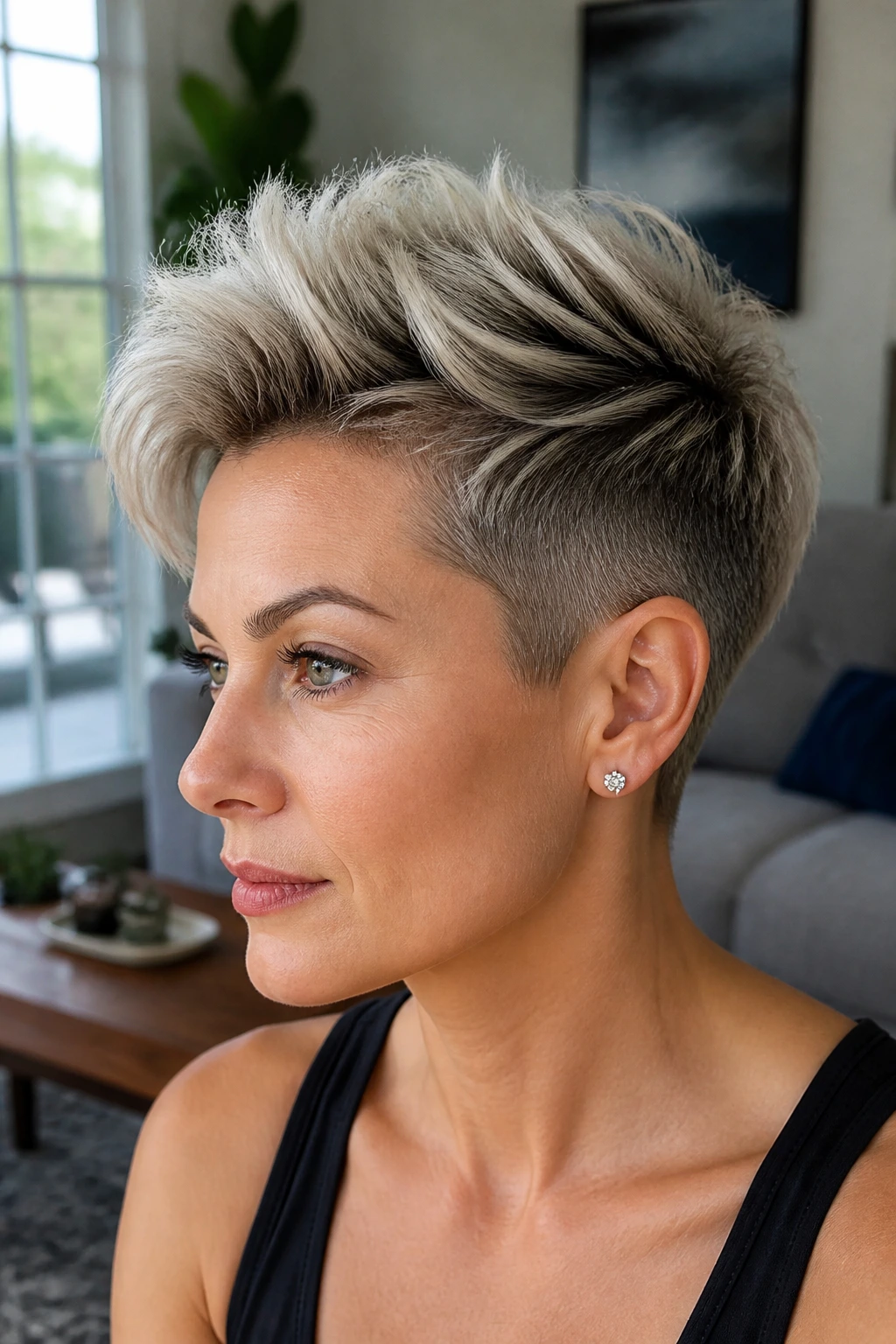
An undercut pixie is for the person who likes their hair with a little bite. The undercut removes bulk from the nape or sides, while the top keeps the visual energy. On thin hair, this can be a smart contradiction: removing hair underneath can make the top feel more pronounced, not less.
The advantage is shape. The top can be styled upward or forward, and the sides stay neat instead of puffing out in weird places. If your hairline at the nape gets fuzzy fast, an undercut can keep the cut looking clean longer. It does mean more regular trims, though. No way around that.
Best for
This is a strong choice if you like strong earrings, sharp makeup, or a style that looks different from the usual salon-bob crowd. It’s less forgiving than a lob, but it has real personality. Use matte paste on the top and keep the sides close.
13. Glass-Hair Center-Part Lob
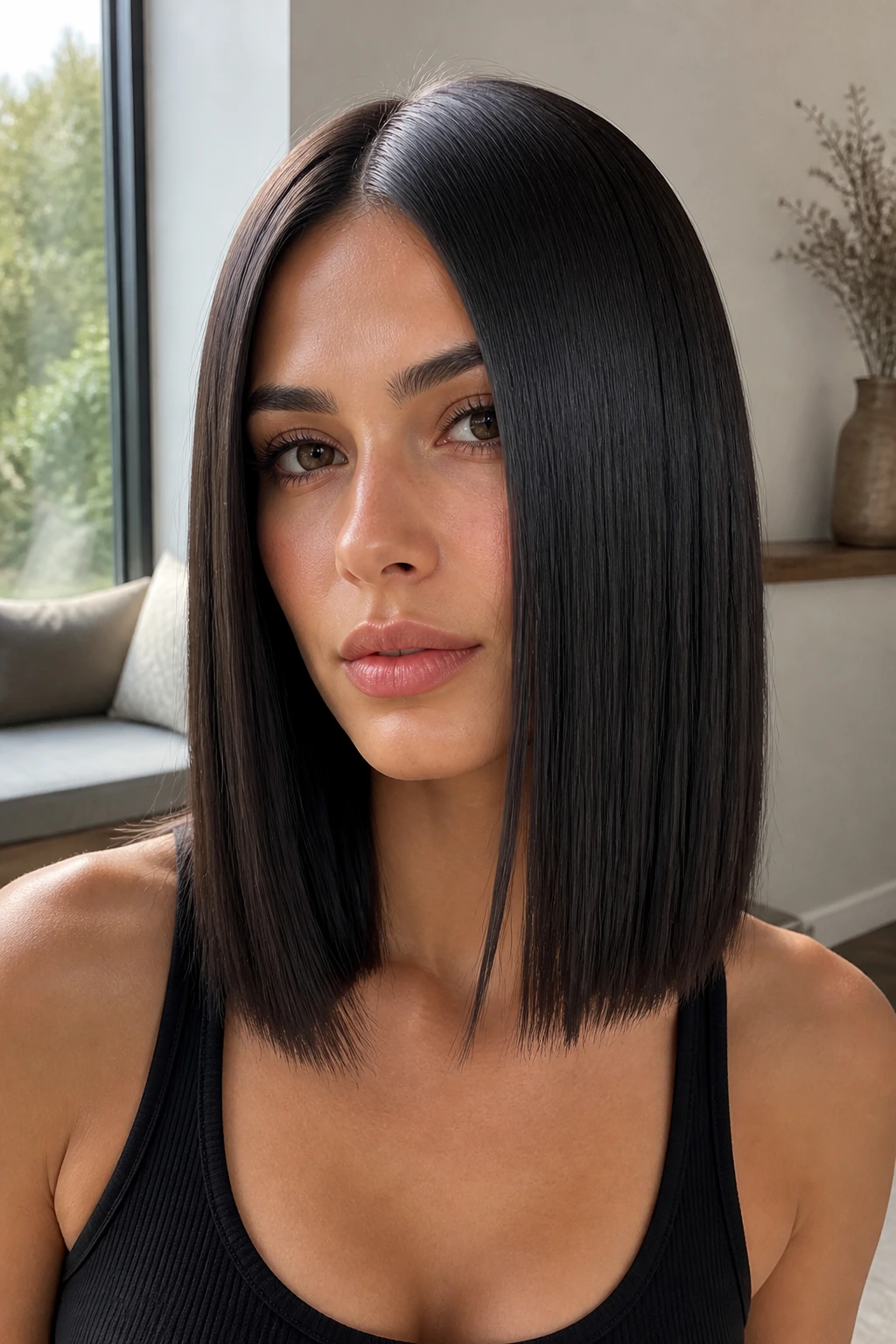
A glass-hair lob can look almost severe, and that’s the charm. Thin hair often shines more easily than thick hair once it’s smoothed correctly, because there’s less bulk competing with the light. A blunt collarbone-length cut with a clean center part makes that shine part of the look.
The important thing here is condition. Split ends are loud in a glass-hair style. If the ends are dry or frayed, the sleekness falls apart fast. Keep the perimeter fresh, use heat protectant, and finish with a tiny amount of smoothing serum only on the last few inches.
This is one of those styles that looks polished with almost nothing else. A plain black top, a good brow, and a straight lob can carry the whole outfit. Simple. Maybe a little severe. That’s fine.
14. Bubble Bob
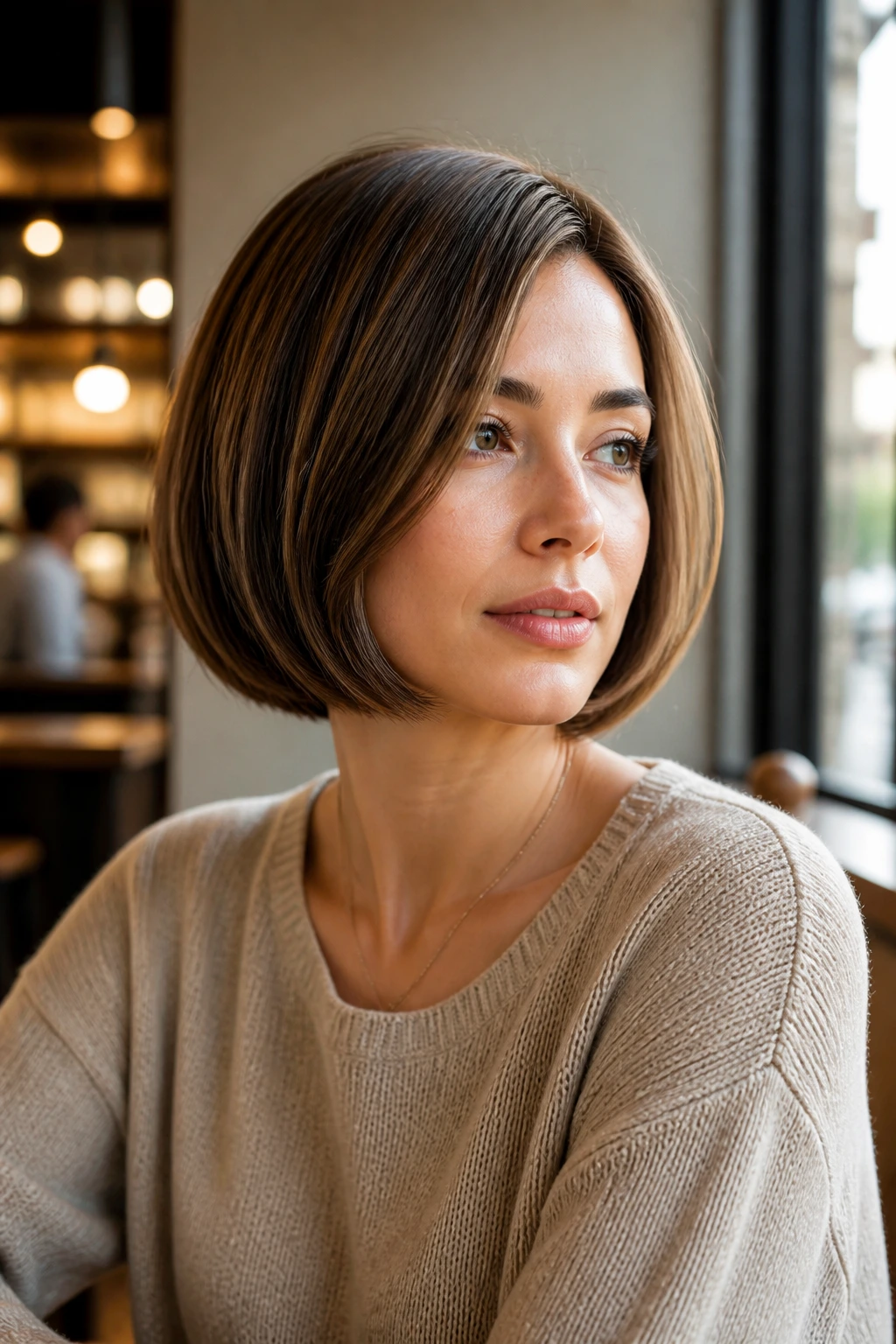
A bubble bob curves inward so the outline looks rounded and fuller, almost like the hair is holding air inside it. That shape helps thin hair because it gives the eye width at the sides instead of letting everything fall straight down. The result is softer than a blunt bob, but still neat.
I like this cut for hair that naturally wants to slip flat at the jaw. A little roundness at the bottom brings the shape back into view. It can be worn sleek or softly textured, but the curve is what makes it work.
How to style it
Blow-dry with a round brush or set the ends in large rollers for a few minutes while the hair cools. Don’t skip the cooling part. That’s what locks the bend in place. A light mist of hairspray keeps the rounded shape from drooping before lunch.
15. Hairline Braids and Loose Length
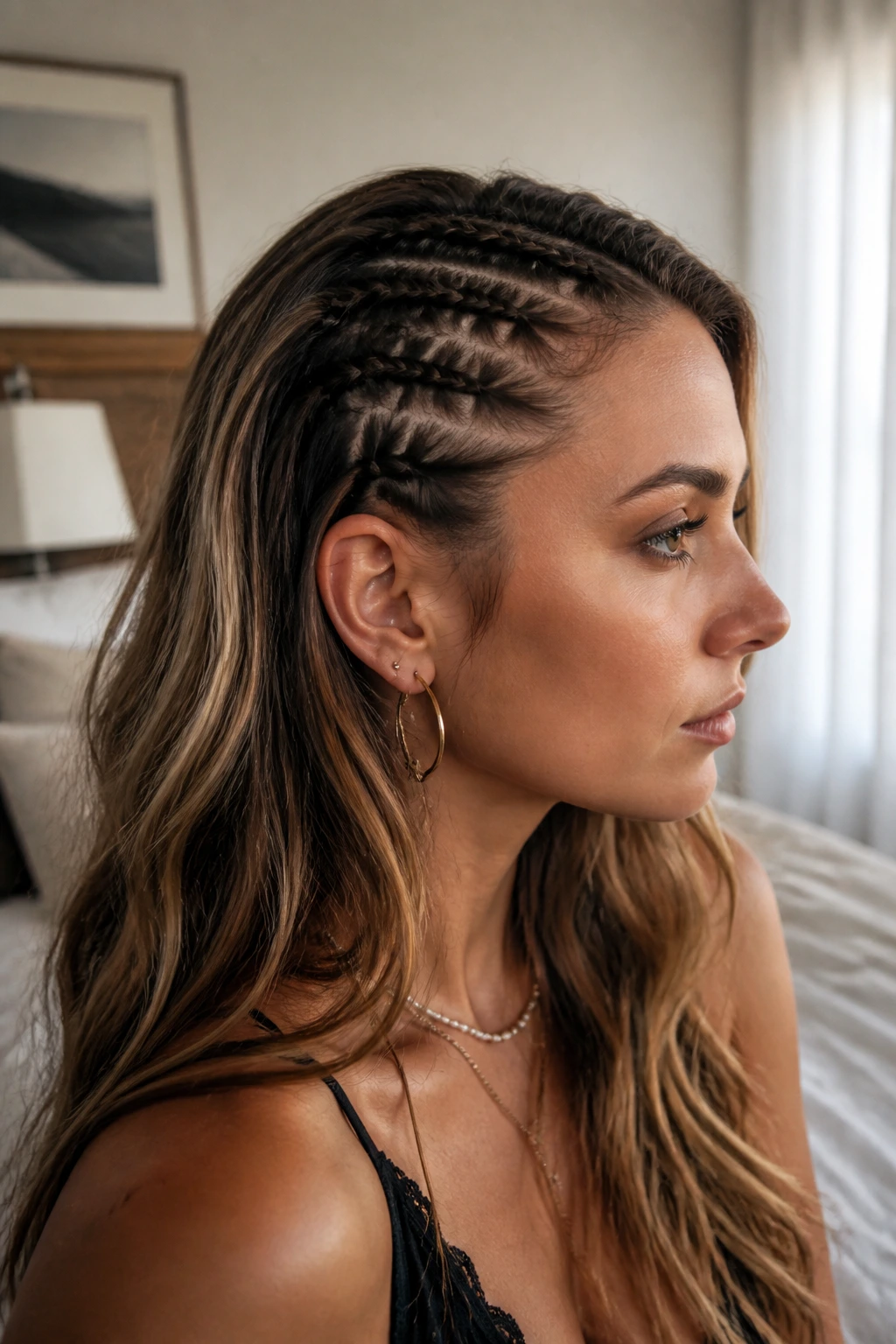
Tiny braids along the hairline add edge without asking thin hair to do something impossible. They can sit on one side, frame the part, or run just back from the temples. The rest of the hair stays loose, which means you keep the length you want while still changing the mood.
This style is especially useful on days when the roots look flat and you don’t want to fight them. A couple of braids can hide a slightly oily crown, make a simple lob feel tougher, and give straight hair some surface interest. They’re also useful if you’re growing out bangs or old layers.
Keep the braids small and close to the scalp. If they’re too chunky, they pull the rest of the hair tight and expose more of the scalp than you want. A little texturizing spray before braiding helps the strands grip.
16. Half-Up Mini Top Knot
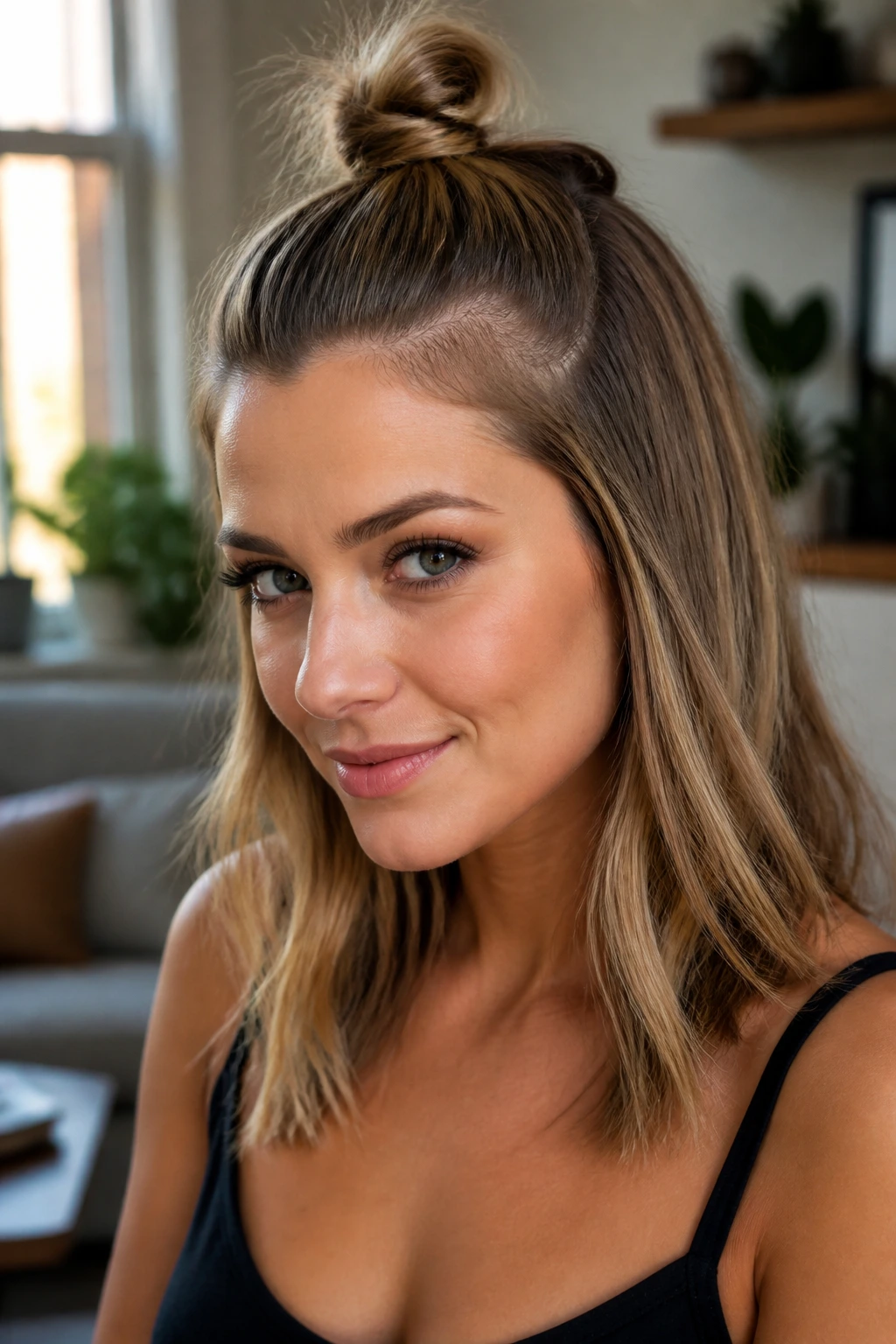
A half-up mini top knot gives thin hair a quick lift without asking the whole head to do the work. The top section gets twisted into a small knot, while the lower half stays down and soft. That split creates volume on top and keeps the style from looking overbuilt.
The knot should stay compact. People often make it too large, and then the hair starts to look stretched instead of styled. A small knot has more attitude and less desperation. Leave a few front pieces loose if you want the face to feel less severe.
This is a strong casual option for medium and shoulder-length hair. Dry shampoo at the roots first, especially if the hair is clean and silky. Freshly washed thin hair can be slippery, and slippery hair does not hold a knot well. Not a mystery.
17. Claw-Clip Twist
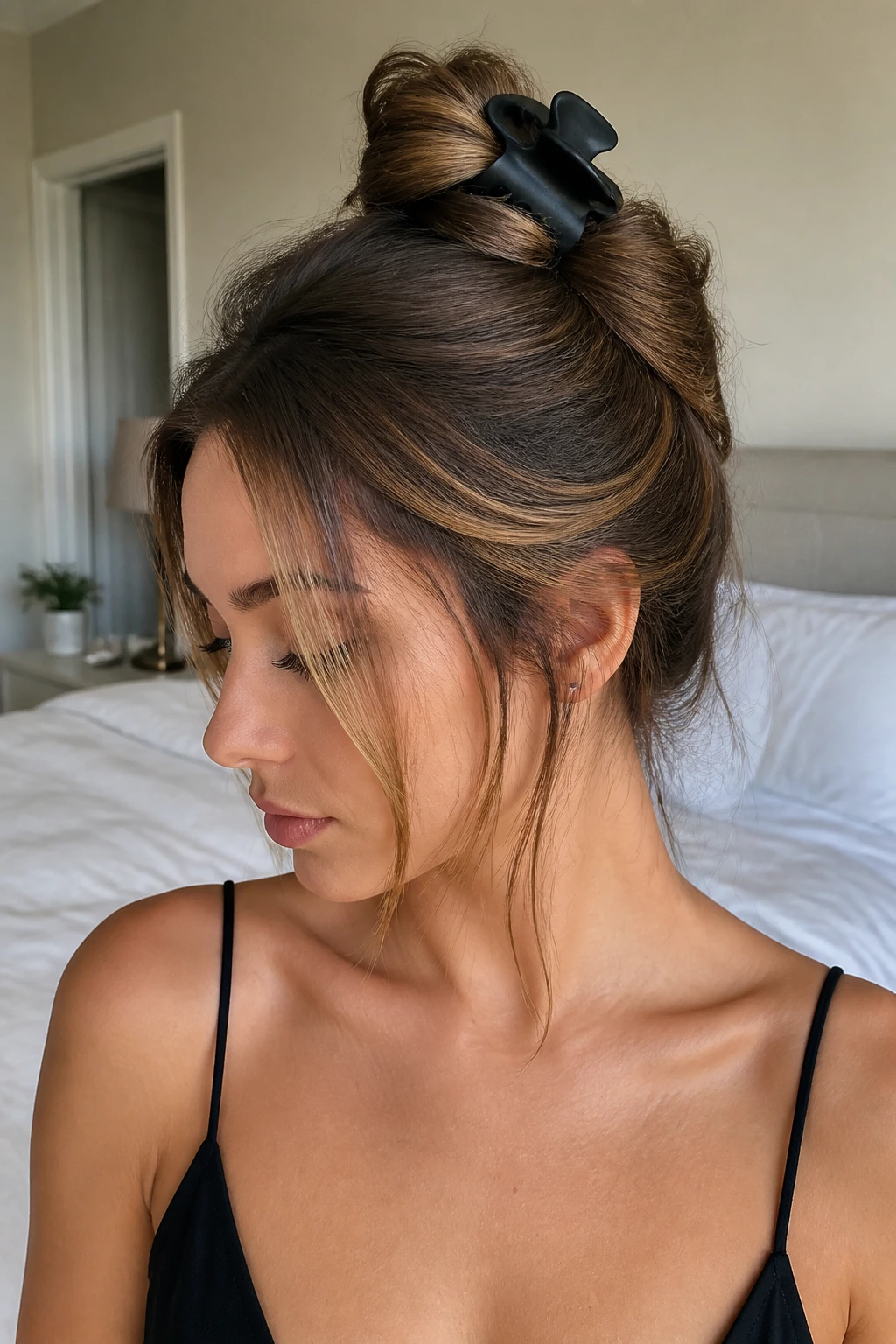
A claw-clip twist works because it gives the roots a little height before pinning the hair in place. Thin hair often looks better in a clip than in a tight elastic because the twist keeps some softness and the ends don’t get pulled flat against the scalp. It feels modern instead of fussy.
Leave a few pieces out around the face if you want the style to read softer. If you want it sharper, keep the front smooth and tuck the ends inward. Either way, the clip should sit high enough to create a small lift at the crown.
This is one of the easiest second-day styles in the whole list. A little dry shampoo, a loose twist, and a good clip can save the morning. If your hair slips out fast, choose a matte clip with a stronger grip rather than one of those smooth decorative ones that looks pretty and does nothing.
18. Sculpted Faux Hawk
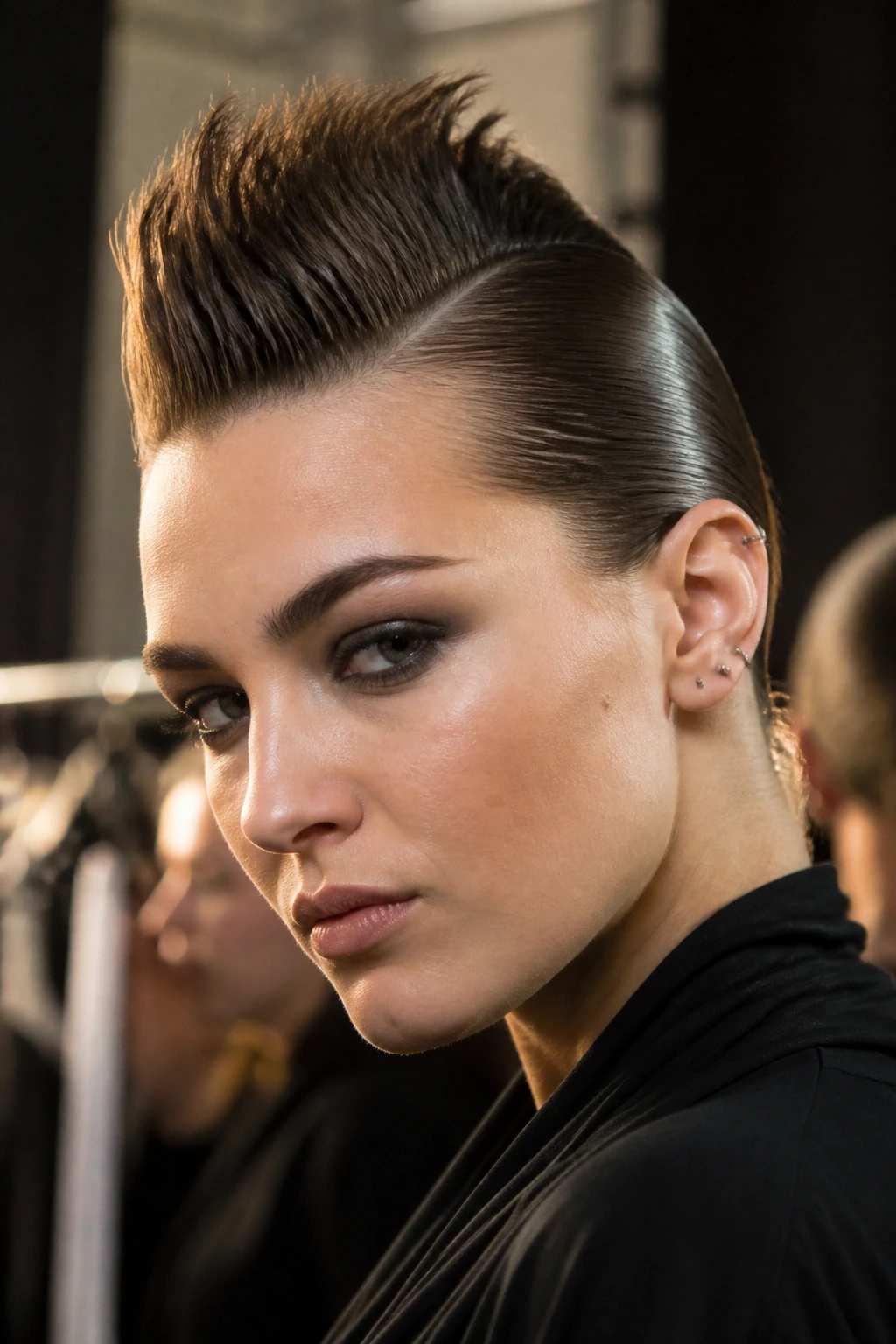
A sculpted faux hawk has the most attitude in the bunch, and thin hair can actually make it easier to pull off. You’re creating a ridge down the center and pinning or smoothing the sides close to the head, so the style depends on silhouette more than sheer volume. That’s good news.
Keep the ridge narrow and the sides tight. If the top gets too puffy, the shape turns messy instead of sharp. A little backcombing at the crown is fine, but don’t build a nest. The good version of this style looks deliberate and a little dangerous in a fun way.
Use a strong-hold spray, a few bobby pins, and a fine-tooth comb. This is not the place for soft, fluffy product. If you want a strong dinner look, a concert look, or a night-out look that makes straight hair feel less predictable, this one delivers.
What Thin Hair Needs More Than Length
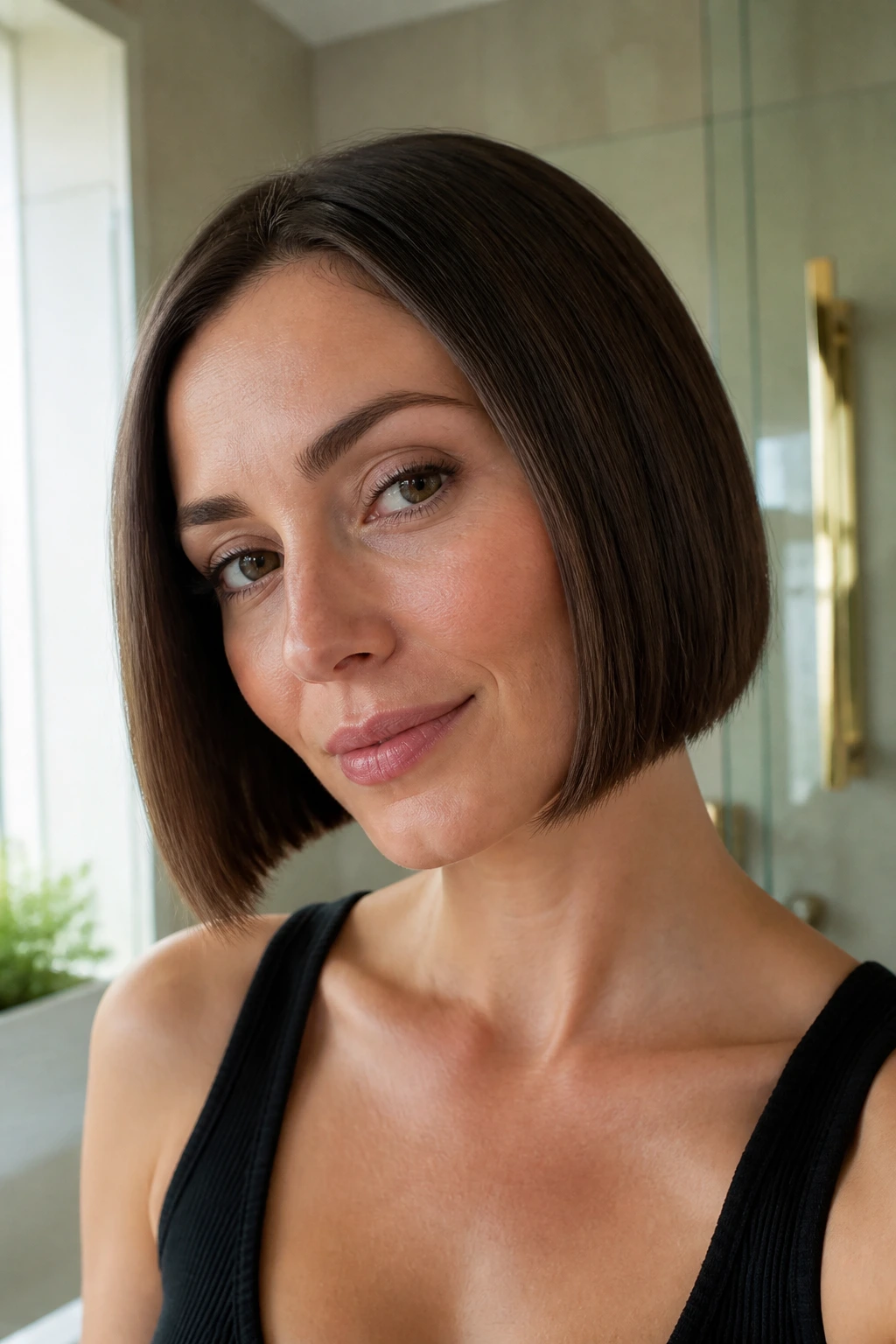
Thin hair often gets treated like it needs to grow longer to look better. Sometimes that’s true. Often it isn’t. Length can help if the ends stay healthy, but long thin hair can also lie flat, split, and expose every weak spot in the cut. The real issue is usually shape.
Density and strand size are not the same thing. Fine strands can look thin even when there are plenty of them. Sparse density can make the scalp more visible even when the strands themselves are thick. That’s why the same haircut can work beautifully on one head and flop on another. You’re not just choosing a style; you’re choosing where the hair should hold its weight.
Thin hair usually does best when the perimeter is visible and the layers are controlled. A blunt edge keeps the line honest. Strategic texture at the front, crown, or ends adds personality without erasing the base. Too much internal thinning removes the structure that fine hair needs to look full in the first place.
And yes, color matters a little too. A subtle root shadow, a few face-framing highlights, or a gentle shift in tone can create depth without needing more volume. Heavy bleaching on fragile hair, though? That’s a fast way to turn “edgy” into “please stop touching it.” No thanks.
What to Buy When Thin Hair Needs Shape, Not Weight

The product shelf can sabotage thin hair faster than a bad cut. Heavy cream, oily masks at the root, and giant volumes of “smoothing” serum all sound harmless until the hair loses its lift before you’ve left the house. The goal is support, not coating.
- Volumizing mousse: Pick a lightweight foam you can work into damp roots and mid-lengths without making the hair feel sticky.
- Root-lift spray: This helps at the crown and part line, where thin hair usually collapses first.
- Dry shampoo: A translucent or tinted version adds grit and keeps fresh-clean hair from slipping flat too quickly.
- Flexible-hold hairspray: Strong enough to keep a bend or part in place, light enough to avoid helmet hair.
- Matte paste or light pomade: Best for pixies, bixies, and short shags where you need piecey definition.
- Heat protectant: Especially important if you’re curling the ends or flipping a bob with a flat iron.
- Small round brush: A 1- to 1.5-inch brush helps lift roots and shape the ends without dragging the hair down.
- Tail comb: Clean parts matter more on thin hair than people like to admit.
- Duckbill clips: Useful for setting crown volume while hair cools.
- Silk or satin pillowcase: Not glamorous, but it helps reduce friction and keeps day-two hair from turning into static.
Buy fewer products. Buy better ones. Thin hair usually doesn’t need a cabinet full of things — it needs the right three or four.
How to Ask for the Cut Without Getting a Mystery Layer Job
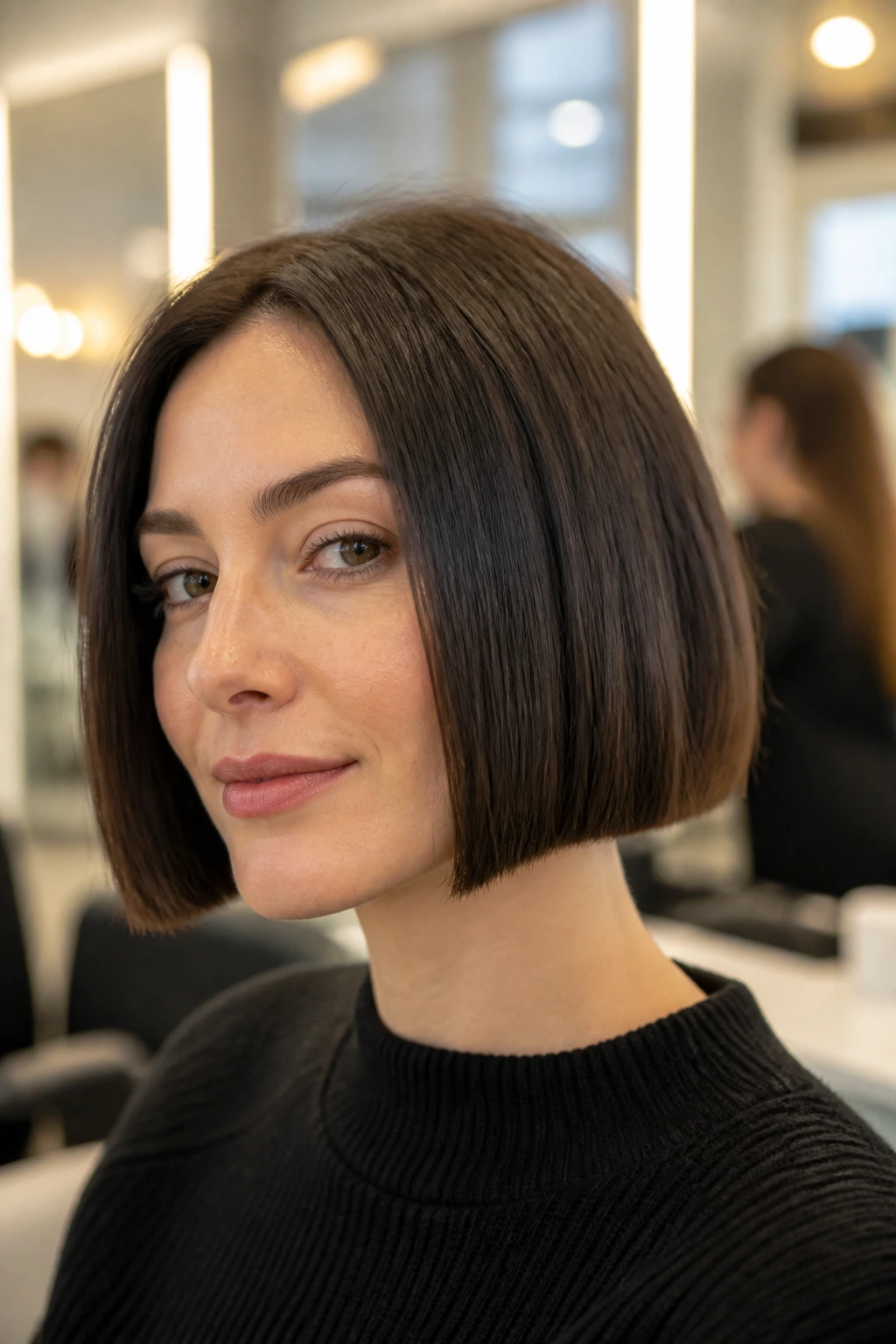
The phrase “give me layers” is how people end up with a haircut they didn’t ask for and can’t easily fix. Thin hair needs more precise language. A stylist can work with that. In fact, most good stylists prefer it.
Bring shape words, not just a photo
Say where you want the weight to stay. Point to the jaw, the collarbone, the nape, or the fringe. A photo is useful, but only if you can explain what you actually like about it: the blunt end, the side part, the crown lift, the tucked side, the micro fringe. Otherwise you may get the wrong version of the right cut.
Ask what should stay blunt
If you want a bob or lob, ask for a solid perimeter. If you want movement, ask for long internal layers or soft face-framing only rather than all-over thinning. That distinction matters. One preserves shape. The other can wipe it out.
Say what you want to avoid
Be plain about it. “I don’t want my ends shredded.” “I don’t want the crown over-thinned.” “I want the cut to look sharp even when I don’t style it.” Those lines sound simple because they are. They also tell the stylist more than a dozen vague compliments ever will.
How to Style Thin Hair Without Flattening the Crown
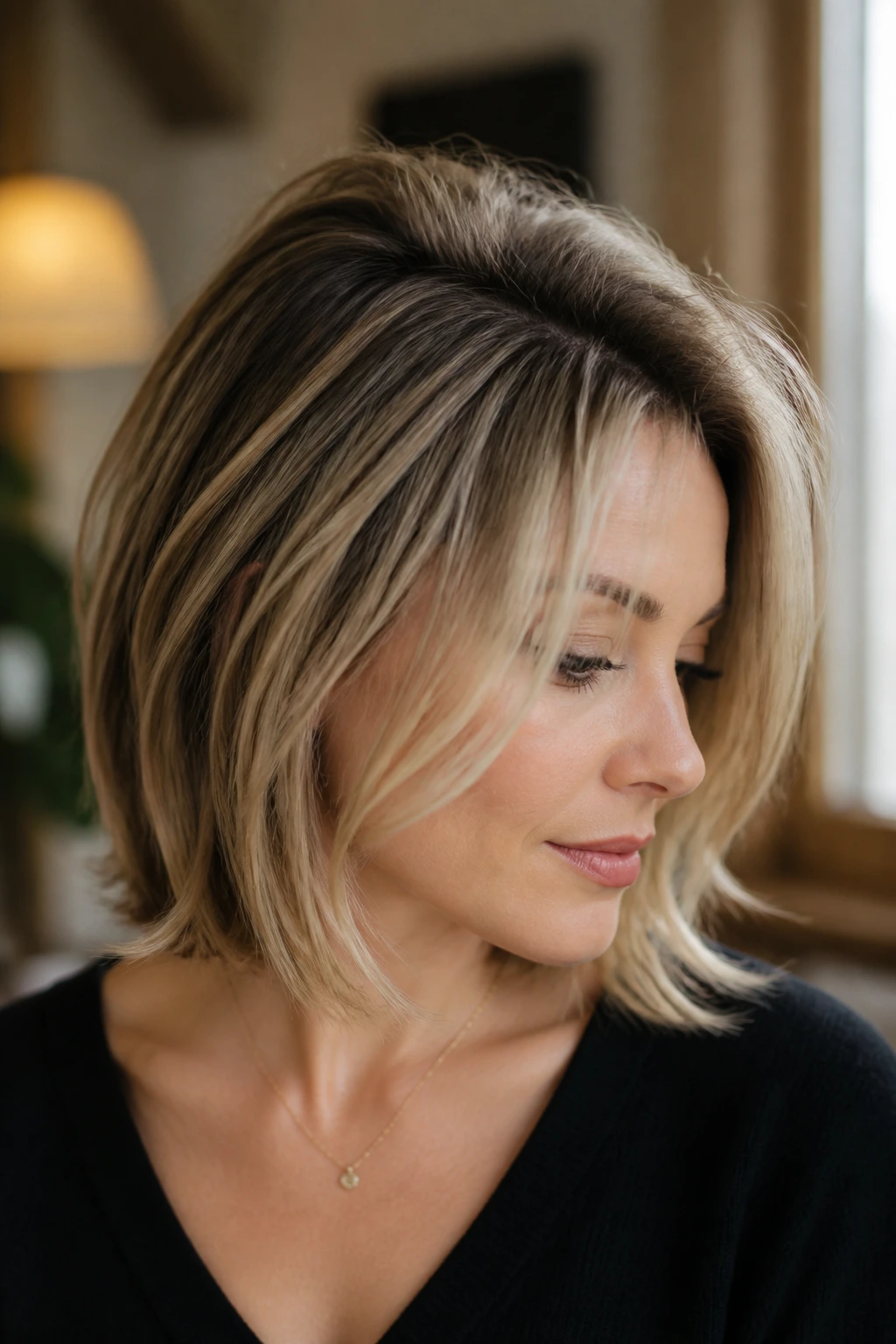
The crown is where thin hair gives up first, so that’s where the routine has to start. Not at the ends. Not with curls. At the roots.
Root lift first
Work a small amount of volumizing mousse or root spray into damp hair at the crown and part. Then blow-dry that area against the direction it naturally falls for the first minute or two. You’re not trying to create a giant lift. You’re trying to give the roots a little memory before they settle.
Shape second
Once the top has some movement, turn to the ends. Use a round brush for a bob or lob, or a flat iron for a small bend. Keep the sections small. Large sections create lazy bends that disappear quickly. Thin hair likes precision.
Finish last
Let the hair cool before you touch it. That part matters more than most people think. A bend or curve that’s brushed out too soon tends to vanish. Once everything is cool, use your fingers to break up the style. Not a brush. A brush can pull the lift right out.
If the hair gets oily fast, dry shampoo can go in before styling on day two. That sounds backward, but it gives the roots grip. Heavy product at the start is what flattens thin hair. Light grit at the start usually helps it hold.
How to Wear These Looks With Glasses, Earrings, and Necklines
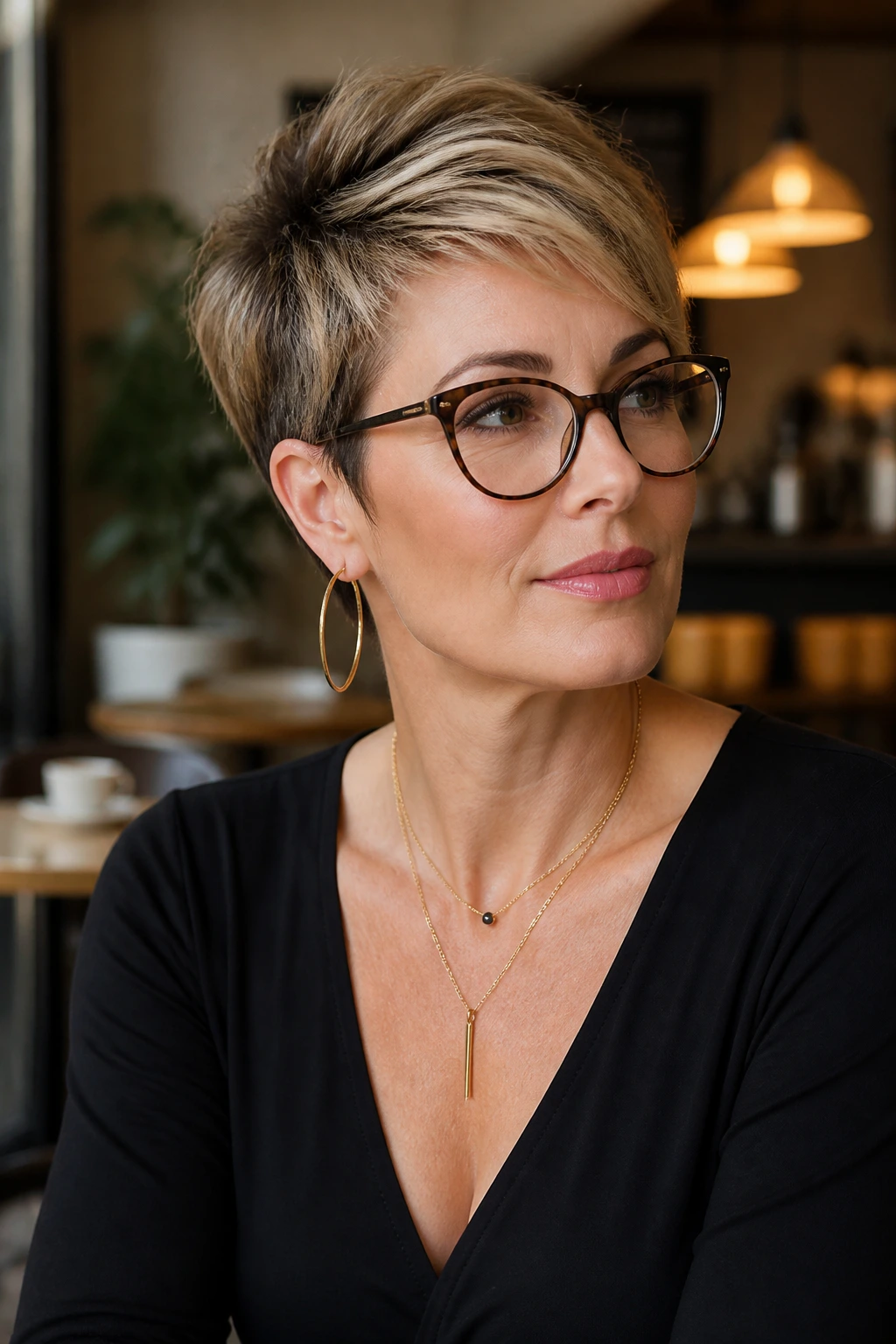
Presentation: Keep the strongest line where the eye naturally lands. A chin-length bob should sit clean at the jaw. A pixie should leave the cheekbones visible. A lob looks sharper when the ends stop cleanly at the collarbone instead of drifting past it.
Accompaniments: These cuts love a little contrast. Hoops work especially well with bobs and pixies because they echo the shape without crowding it. V-necks and scoop necks open up the neckline, while mock necks look cleaner with shorter cuts or a slicked-back style. Glasses are not a problem; they just need the fringe or side pieces to stop fighting the frames.
Portions: Fine but dense hair can usually carry a lob, a shaggy lob, or a bixie with no issue. Very fine, lower-density hair often looks strongest in a bob, French bob, pixie, or cropped cut where the hair isn’t forced to support too much length. If your hair grows limp by midday, go shorter than your instinct tells you.
Beverage Pairing: A sharp bob feels like espresso. A slicked-back wet look feels like iced coffee with no sweetener. A soft shag wants sparkling water, or maybe a dry white wine if the rest of your outfit has already decided to be slightly dramatic.
Extra Lift and Edge Without Adding More Hair
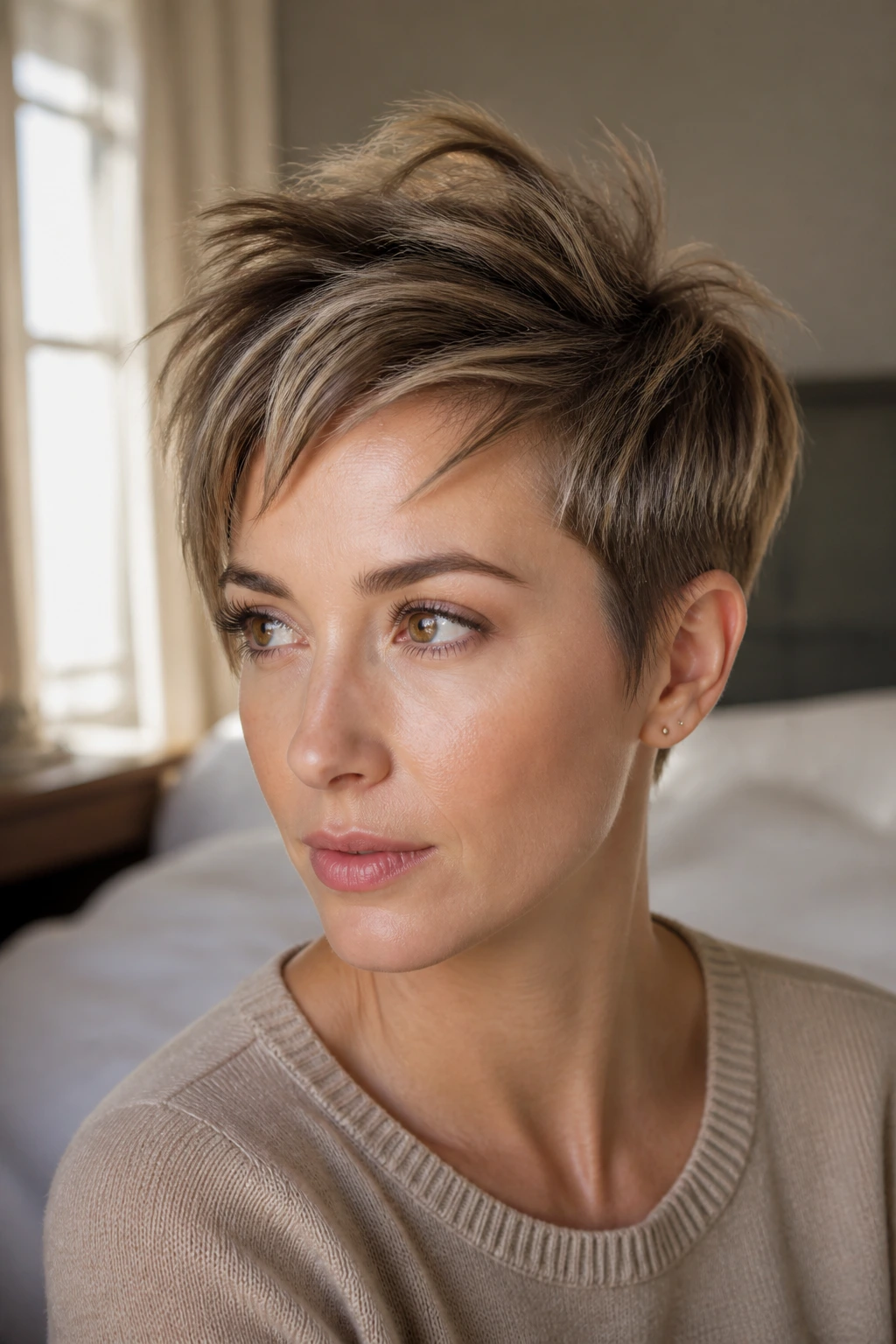
Lift at the roots: Before blow-drying, clip the crown up for ten minutes while the rest of your routine happens. That little pause helps the roots dry with a bit more height. It’s old-school, and it works.
Edge without weight: On pixies, bixies, and short bobs, a tiny amount of matte paste at the ends creates separation that reads modern rather than fluffy. The trick is using less than you think. Thin hair gets greasy fast, and product build-up kills the point.
Customization: Tuck one side behind the ear, switch the part, add a micro fringe, or leave one front piece longer than the other. Small shifts do more than major changes here. They make the cut look personal instead of copied from a salon menu.
Color that helps shape: A subtle root shadow can make the base look deeper. A few face-framing highlights can make the front pieces pop. Heavy all-over lightening is trickier, because thin hair can look patchy if it’s pushed too far. A little depth goes a long way.
Mistakes That Make Thin Hair Fall Flat
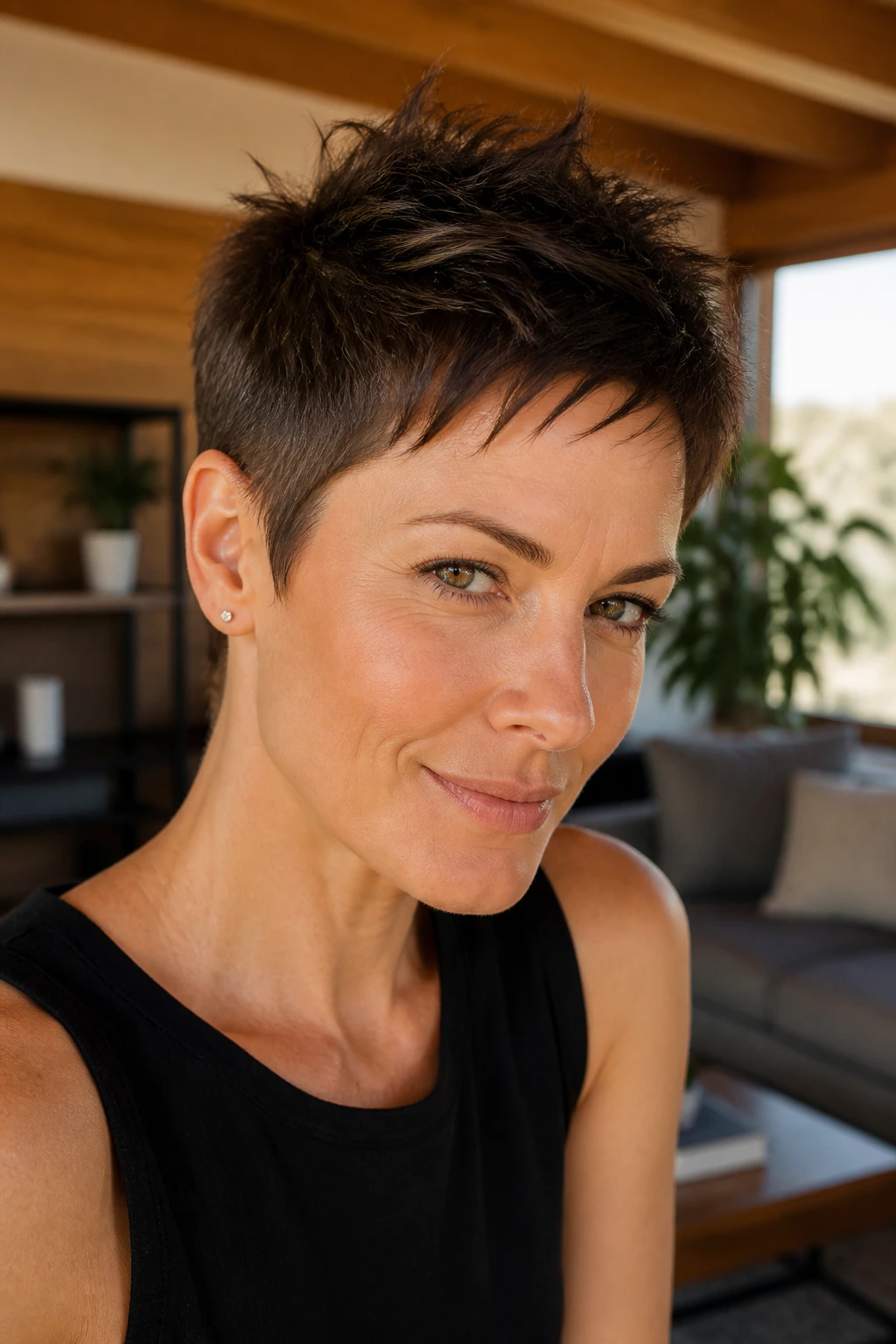
The first mistake is over-layering. The haircut may look airy in the chair, then collapse into thin wisps a week later. The fix is simple: keep the perimeter stronger and ask for layers only where they serve the shape.
Another common slip is loading the roots with heavy conditioner, oil, or smoothing cream. The symptom is instant limpness and a crown that refuses to wake up. Keep those products from mid-lengths to ends, and use a lighter hand at the top.
Over-teasing is a bad bargain. It creates volume for twenty minutes and dull, tangled hair for the rest of the day. A little root lift with heat or clips works better than aggressive backcombing, which can also break delicate strands.
A fourth mistake is parting the hair the same way forever. Thin hair can develop a weak spot at the part line if it’s always stressed in one place. Switching sides every so often gives the roots a break and can make the style look fuller without changing the cut.
Then there’s the big one: using too much product because the hair feels too soft. Soft does not always mean wrong. Sometimes it just needs a bit of grip. Dry shampoo, mousse, and light hairspray usually do the job. More is not better here. It rarely is.
Smart Variations for Different Textures and Commitments
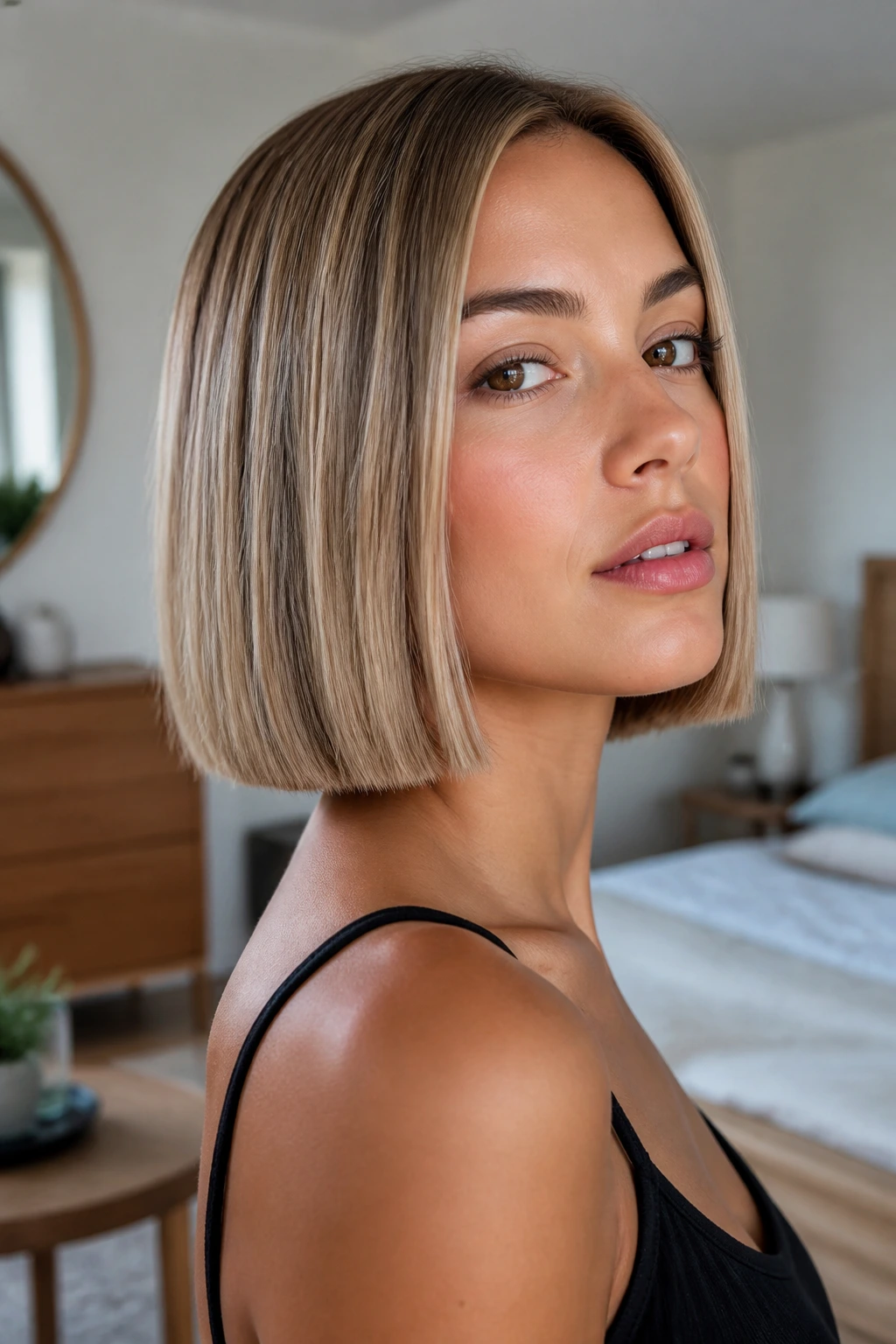
Fine-and-Straight Sharpness: If your hair is pin-straight and delicate, lean into blunt bobs, sharp lobs, and sleek pixies. These cuts keep the line clean and stop the hair from looking stringy. Skip the chopped-up ends unless you’re willing to style every morning.
Wavy-Texture Edge: If your hair has a natural wave, a shaggy lob, soft wolf cut, or flipped bob can look especially good. The wave supplies movement, and the cut gives it a frame. Keep the layers longer so the density stays visible.
Curly Thin-Hair Edit: Curly hair can also be thin, and it needs a different kind of respect. A rounded bob, bixie, or curly lob tends to work better than a heavy layered shag that steals too much body. Shape matters more than length here, and moisture matters even more.
Low-Commitment Styling Version: If you don’t want to heat-style every day, the claw-clip twist, half-up mini knot, deep side-part tuck, and hairline braids are your best friends. They use the shape of the hair instead of fighting it.
Bold Color Accent Version: A root shadow, a bold money piece, or a clean face-framing highlight can make thin hair look more dimensional. Keep the color work controlled, though. Too much bleaching on fine strands can make the ends fragile and the whole look harder to maintain.
Keeping the Shape Between Wash Days
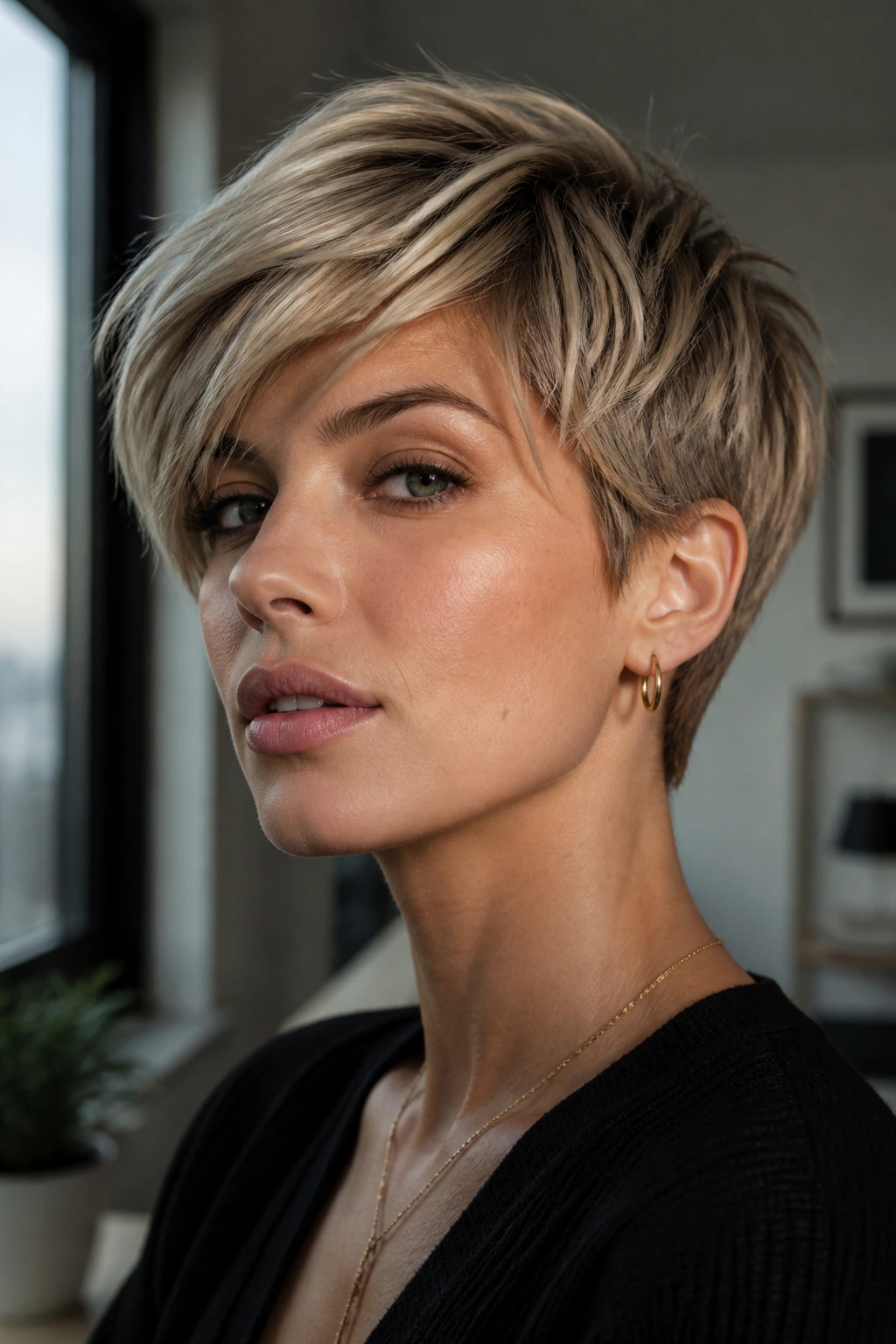
Thin hair often behaves best on day one and gets smarter on day two. That’s not a flaw. It’s a scheduling issue.
If you wear a blunt bob, bixie, or pixie, plan on a quick refresh every morning: dry shampoo at the roots, a finger-comb through the crown, and a tiny reset with a blow-dryer if needed. That usually takes five minutes, not a full re-style. A lob or shag may need a touch more bend in the front pieces, especially if they’ve slept flat.
Overnight care matters more than most people think. A silk pillowcase cuts down on friction, which keeps the ends from frizzing and the crown from lifting in random directions. Shorter styles can be clipped loosely at the front or pinned away from the face. Longer styles do well in a loose top twist or a low, soft clip that doesn’t crease the ends.
Trims are the part people skip and then regret. Bobs and pixies usually need a trim every four to six weeks if you want the shape to stay sharp. Lobs can stretch farther, often six to eight weeks. If you wait too long, the ends go soft and the whole point of the cut starts to blur.
Frequently Asked Questions

Which haircut makes thin hair look thickest?
A blunt bob is hard to beat. The dense-looking perimeter gives the impression of more hair because every end lands in the same place. A pixie can also work well if you want the crown to feel fuller by removing weight.
Are layers bad for thin hair?
Not all layers, no. Heavy, all-over layers are the problem because they remove the very weight thin hair needs to look full. Long internal layers, face-framing pieces, or a little crown shaping can work if the base stays strong.
Can thin hair pull off a shag or wolf cut?
Yes, but the softer versions usually win. Thin hair needs a shag or wolf cut with restraint — longer layers, a visible perimeter, and not too much shredding through the top. If the cut looks too broken up in the chair, it may look sparse at home.
Is a bob or pixie better for thin hair?
That depends on how much length you want to keep. A pixie creates lift fast and usually needs less daily styling. A bob gives a fuller perimeter and a little more softness around the face. Both can work; the better one is the one you’ll actually maintain.
How often should I trim thin hair?
Short cuts like pixies and bobs often need a trim every four to six weeks. Lobs can usually go six to eight weeks before the ends start looking tired. If you’re chasing a sharp shape, waiting too long is the fastest way to lose it.
Do bangs work on thin hair?
They can, especially micro bangs or light curtain bangs. Heavy fringe can make the front feel sparse, so the better version is usually softer and more controlled. Keep the fringe light enough that it moves.
What products should thin hair avoid?
Skip heavy oils at the roots, thick smoothing creams all over the scalp, and too much wax or paste in the crown. Those products weigh the hair down fast. Thin hair usually behaves better with mousse, root spray, dry shampoo, and a flexible hairspray.
Can I make thin hair look fuller without heat styling every day?
Yes. A strong cut, a clean part, overnight protection, and a little dry shampoo can do a lot of the work. Claw clips, mini braids, half-up styles, and a blunt perimeter help the hair look intentional even on low-effort days.
Where Thin Hair Looks Sharpest
The best edgy cut for thin hair is rarely the loudest one in the room. It’s the one that keeps its edges honest, lets the roots breathe, and gives the eye a shape to follow. That may be a blunt bob. It may be a pixie with a choppy crown. It may be a slick lob that looks almost severe in the morning and a little cooler by dinner.
Once the haircut stops fighting thinness and starts working with it, the whole thing gets easier. Less product. Less fuss. Less panic at the mirror when the wind moves your hair three inches to the left.
Pick the shape that fits your life, not the one that only looks good in a single photo. The right cut will still look sharp when it’s a little messy, a little tired, and very much lived in.