



Straight hair can be a blessing and a little menace at the same time. On boys, it shows every line cleanly. Every part, every taper, every fringe. And when the face underneath is oval, the haircut has even more room to breathe — which sounds easy until you realize that easy can turn into flat, bowl-ish, or oddly stretched if the shape is off by half an inch.
The good news is that oval faces are generous. They can carry short cuts, medium cuts, fringe-heavy cuts, and styles with a bit of height on top without looking forced. Straight hair gives the barber crisp edges to work with, but it also means there’s nowhere to hide a bad blend or a blunt line that sits too low on the forehead. The cut has to earn its keep.
That’s why the best straight haircuts for boys and oval faces aren’t random trendy styles pulled from a photo dump. They’re cuts that respect balance: not too wide at the sides, not too tall on top, not so heavy in the fringe that the eyes disappear, and not so severe that the head shape starts looking boxy. Get that part right, and straight hair starts looking sharp in the nicest possible way.
Why These Boy’s Haircuts Work on Oval Faces
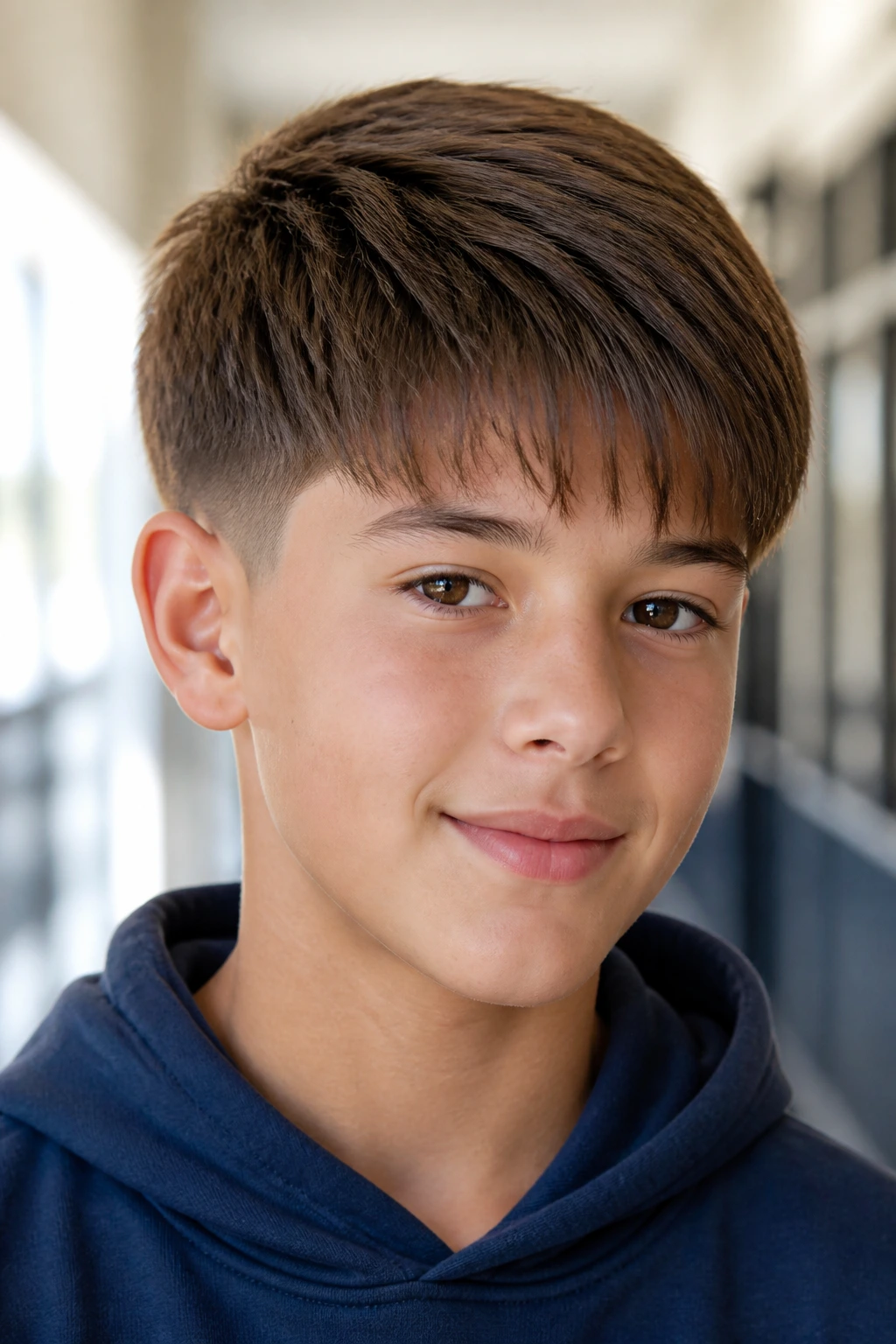
Balanced proportions: Oval faces already have a lot of shape in the right places, so these cuts keep the forehead, cheek area, and jawline in calm balance instead of fighting the face.
Straight hair shows detail: Clean edges, soft tapering, and smart texture all read clearly on straight hair. You can actually see the haircut doing its job.
Easy to wear at school: Most of these styles stay neat after a backpack strap, a hoodie, or a gym class. That matters more than people admit.
Flexible for different ages: A 6-year-old, a middle-schooler, and a teenager can wear the same cut at different lengths and make it look age-appropriate.
Barber-friendly options: These are the kinds of cuts a barber can explain with clipper guards, scissor length, and fringe length — not vague “make it cool” instructions.
Better grow-out: Oval faces forgive a slightly longer fringe or a taper that’s starting to soften. The cut doesn’t collapse the moment it grows 3/8 inch.
1. Classic Crew Cut
The crew cut is the old reliable of boys haircuts for straight hair, and I mean that in the nicest way. On an oval face, it keeps the silhouette tight without making the head look pinched, and the short top lets the natural face shape stay visible. Straight hair helps here because the cut sits clean, almost architectural, with no fluff fighting the line.
Ask for short sides with a tapered neckline and a top that’s left slightly longer in front — usually around 1 to 1½ inches. That tiny bit of length keeps the style from looking like a military cut and gives you a place to add a dab of matte cream if you want a touch of separation. If the boy has a strong cowlick at the front, this cut handles it better than most because the length stays short enough to lie down.
A crew cut works best when you want a no-fuss shape that still looks intentional. It’s neat. It’s quick. And on straight hair, it doesn’t puff up later in the day the way some longer cuts do.
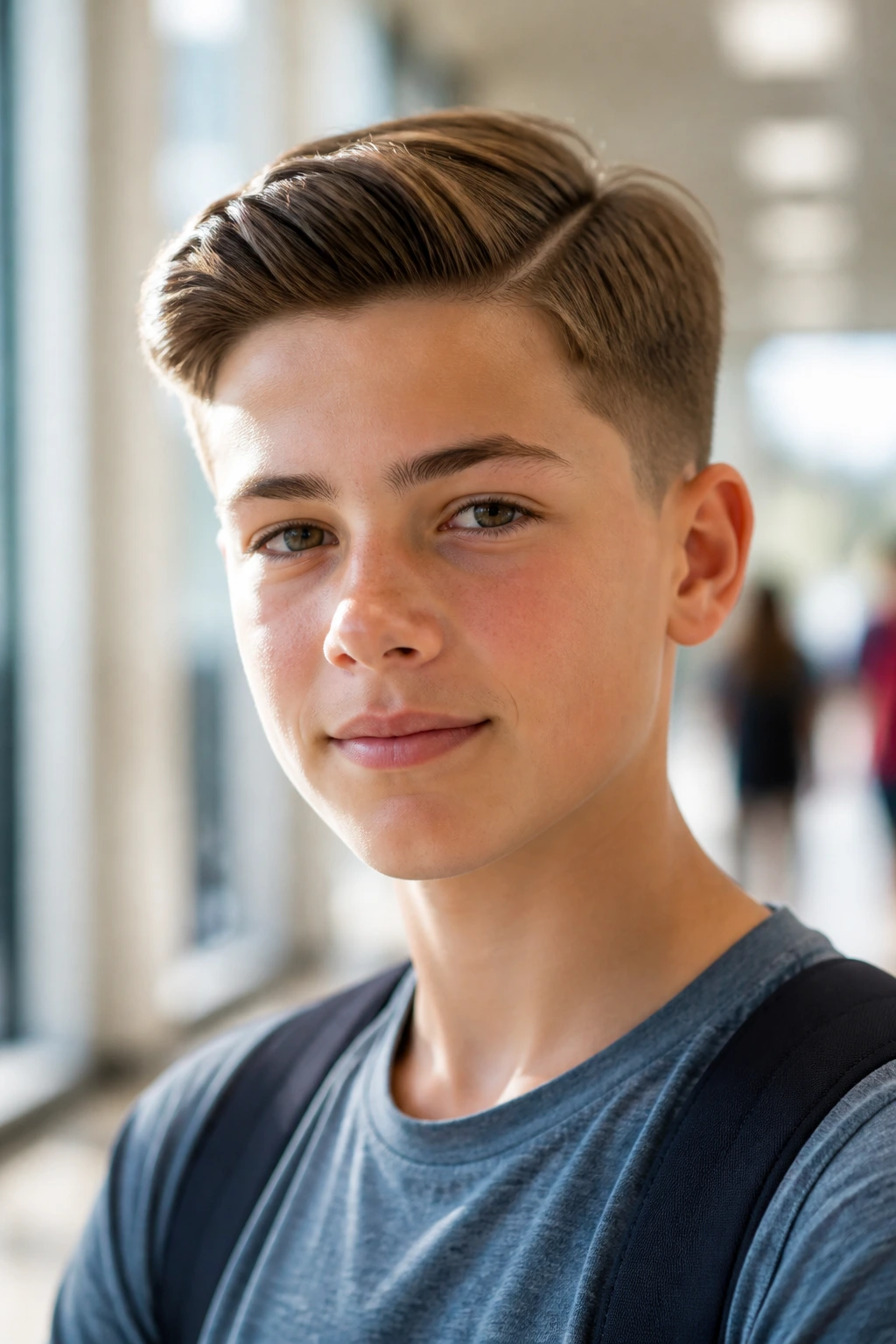
2. Tapered Side Part
Want something school-photo clean without looking stiff? The tapered side part is the answer. It plays especially well with an oval face because the part line gives structure while the taper keeps the sides light, so the face stays open instead of swallowed by width.
The key is not to overdo the part. Ask for a soft side part with scissor-cut top length around 2 to 3 inches and a low or mid taper around the ears and neckline. On straight hair, the part shows clearly, which is nice, but that also means a hard part can look too sharp on younger boys unless that’s the exact effect you want. I usually prefer a natural part for kids. It grows out better. Less drama.
How it wears
- Comb the top over with a little water or lightweight cream.
- Keep the sides tight enough that the ears stay clean.
- Leave enough top length so the part doesn’t vanish after a hat comes off.
This one feels polished without screaming for attention. Good cut. Quiet confidence. No fuss.
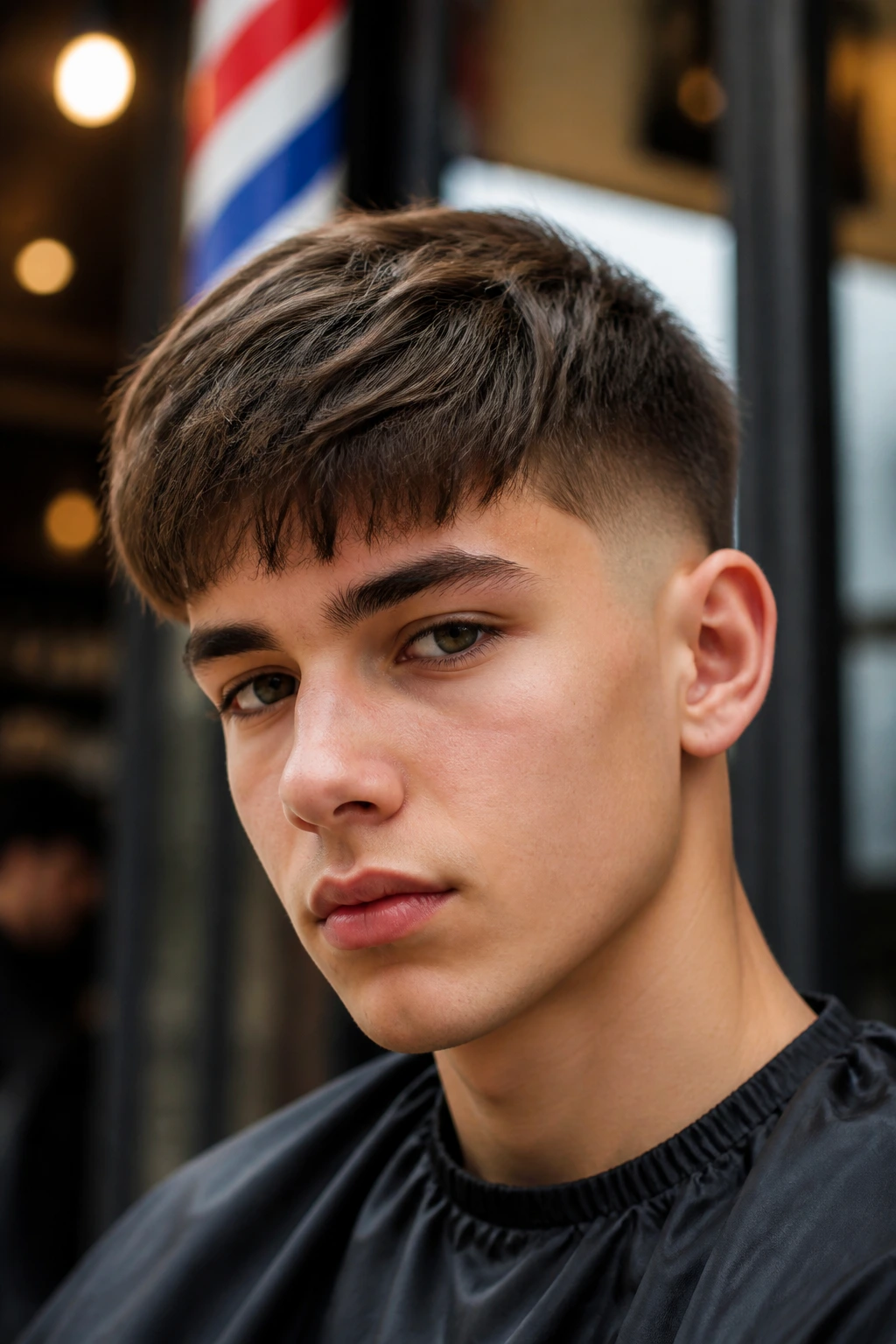
3. Textured French Crop
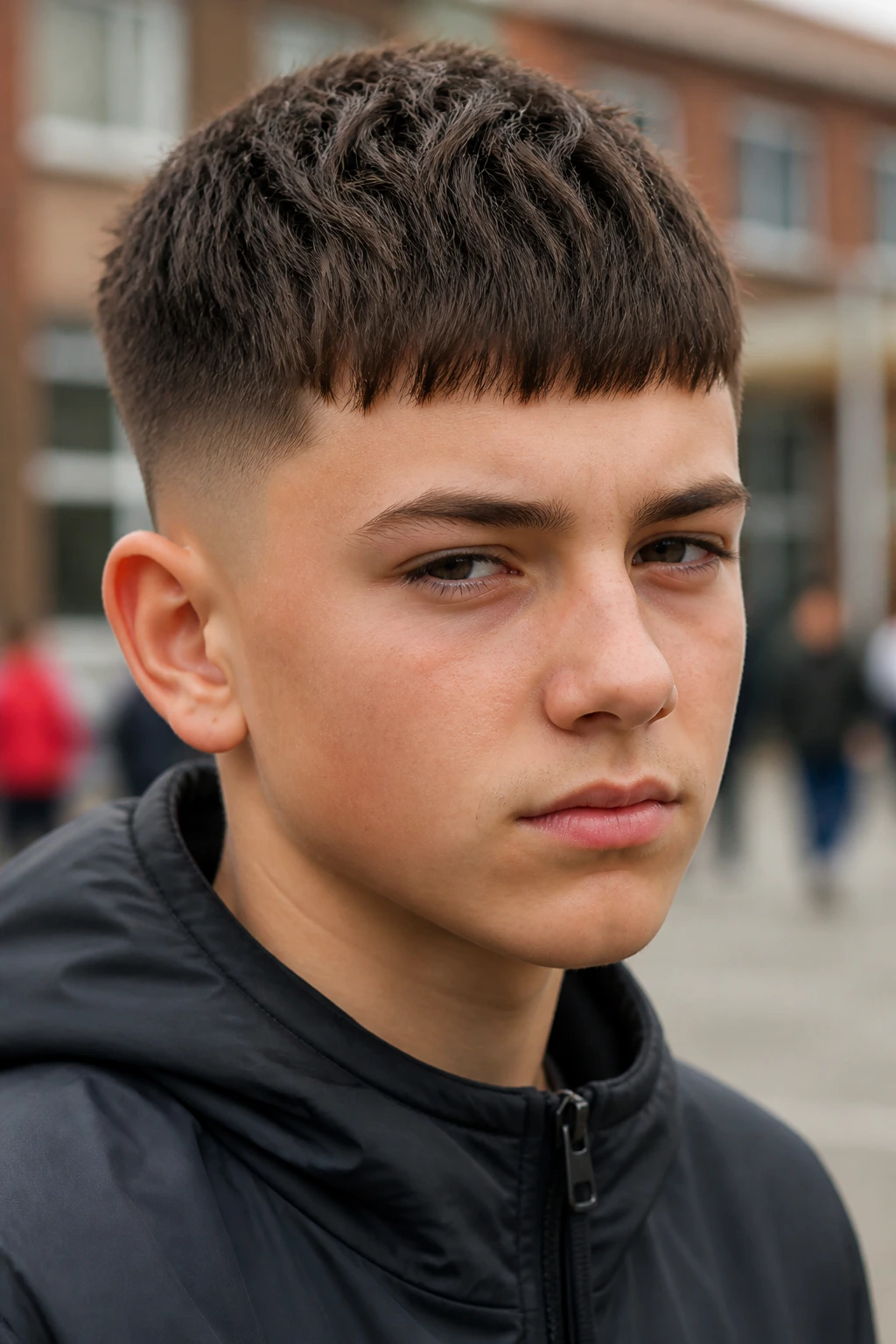
The French crop is one of the smartest straight-haircuts for boys with oval faces because it solves a common problem: straight hair can lie too flat across the forehead. The crop uses texture up top and a blunt or slightly choppy fringe in front, which gives shape without needing much styling time.
Ask for 2 to 3 inches on top, textured with scissors, and a fringe that ends just above the eyebrows or brushes them lightly. Keep the sides tighter with a taper fade or low fade, depending on how clean you want the finish. The reason this works on an oval face is simple: the fringe shortens the visual length of the forehead without making the face look wide.
It’s one of those cuts that looks better a little messy. Use a pea-sized amount of matte paste, rub it between your palms until it almost disappears, and pinch the top forward. Don’t slick it down. That kills the point.
4. Ivy League
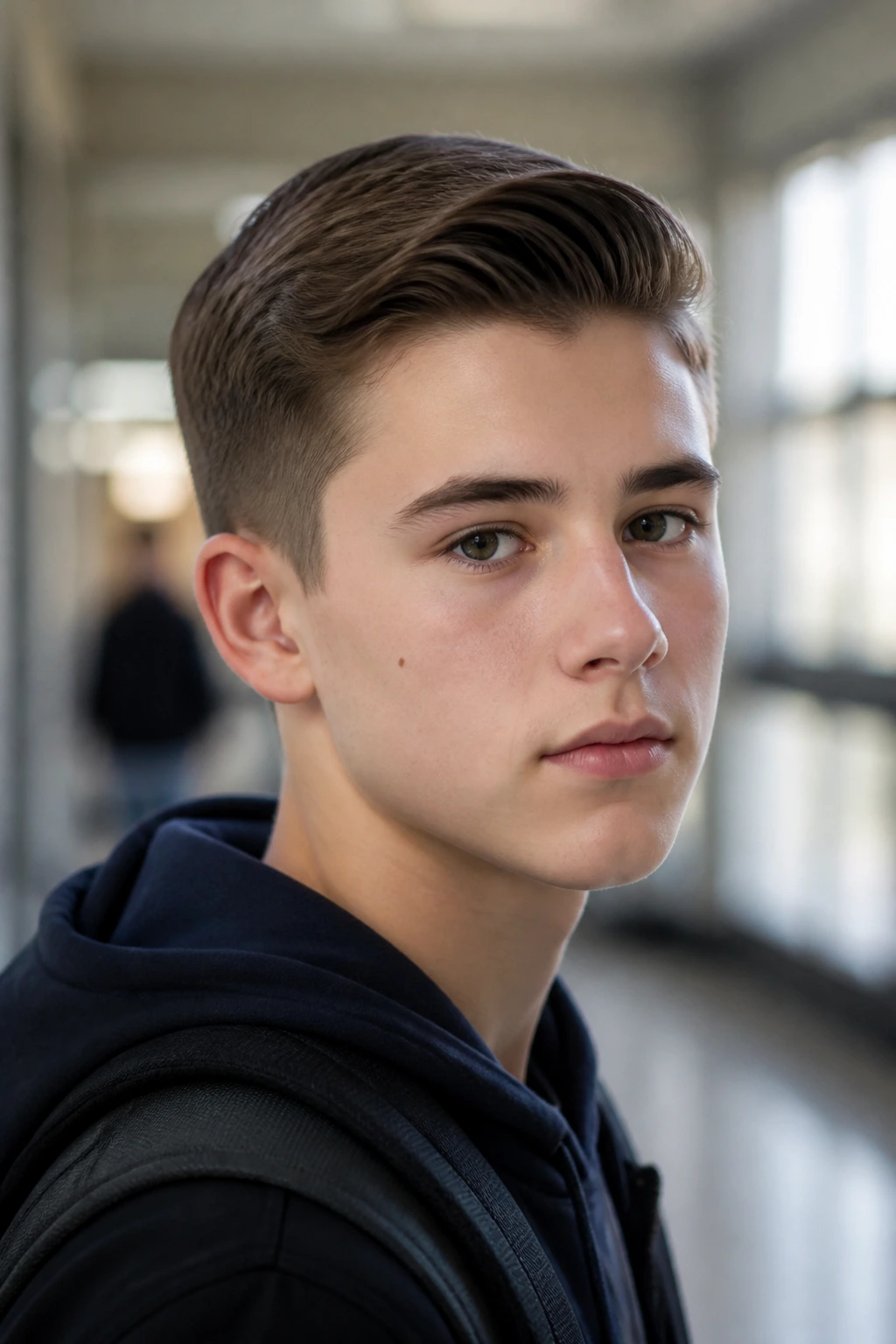
The Ivy League is what happens when a crew cut grows up and learns manners. It’s short enough for busy mornings, but the extra length on top lets straight hair show a neat side sweep or a light brush-up. On an oval face, that slight lift in front gives polish without stretching the face too far.
Ask for tapered sides, not a harsh fade, and about 2 to 3 inches on top so the front can be directed to the side. The crown should stay controlled; if it gets too long back there, the whole cut starts to lean floppy. Straight hair helps keep the shape crisp, but only if the barber removes a little weight through the top with scissors.
This is a good pick for boys who need something that looks proper but not severe. It can pass at a family dinner, on a school day, or at a formal event without changing much. That’s a useful haircut. Boring in the best sense.
5. Caesar Cut
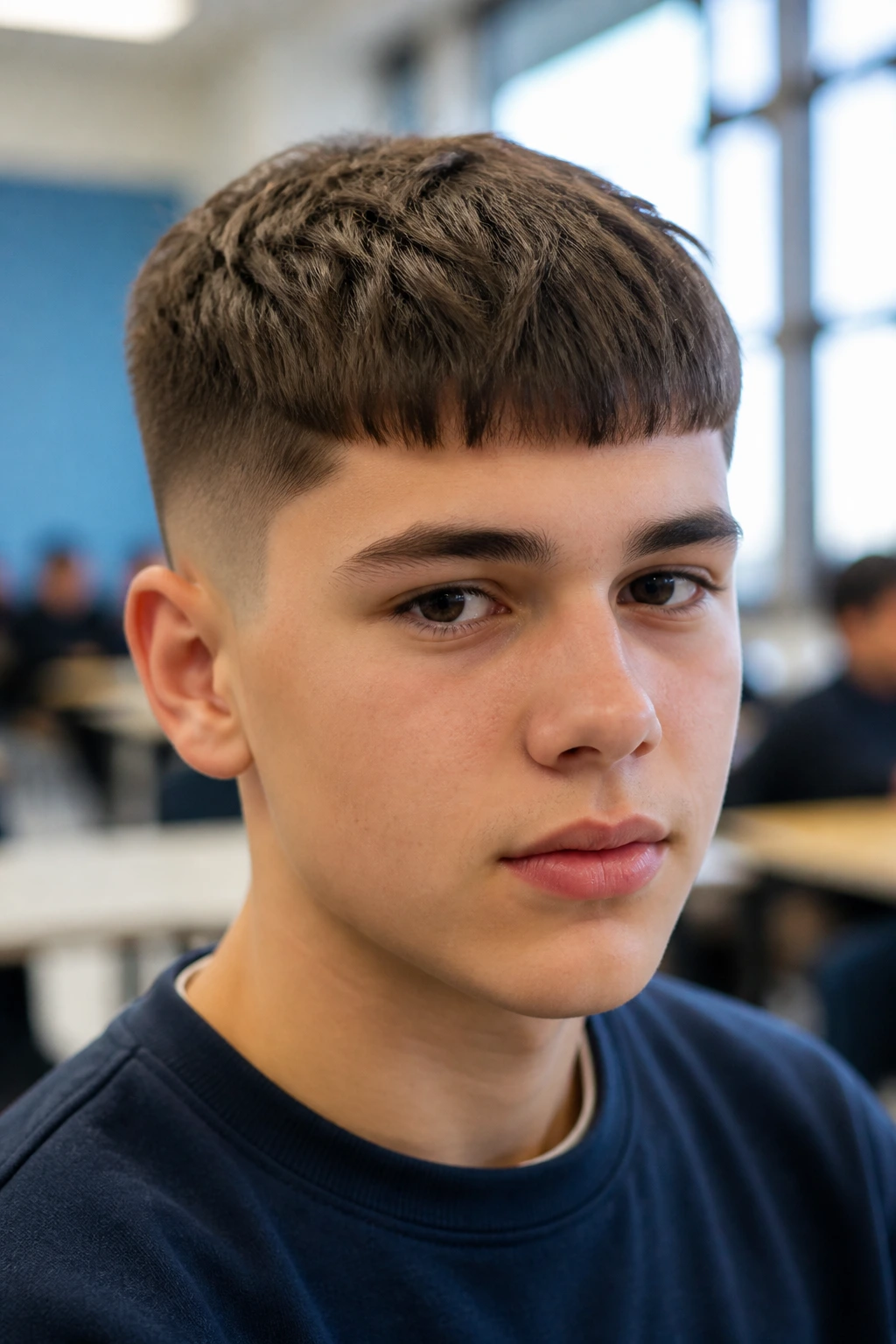
The Caesar cut is short, blunt, and bluntly useful. It keeps the fringe forward, which can be handy if the forehead runs a bit taller, and the straight hair makes the line across the front look neat rather than fuzzy. Oval faces can wear it well because the cut doesn’t fight the face shape; it just frames it.
Request short, even length on top — about 1 to 2 inches — with a small, straight fringe. The sides can be tapered or faded, but don’t take them so tight that the top looks like it’s floating. The best Caesar cuts for boys have a little softness at the edges, not a helmet shape. That’s the trap.
What to watch for
The fringe should sit forward, not be shoved hard down. If it lands too low, it can make the eyes look buried. If it sits too high, the cut loses the whole point. Straight hair makes the line easy to read, so your barber’s scissor work matters here.
6. Short Quiff
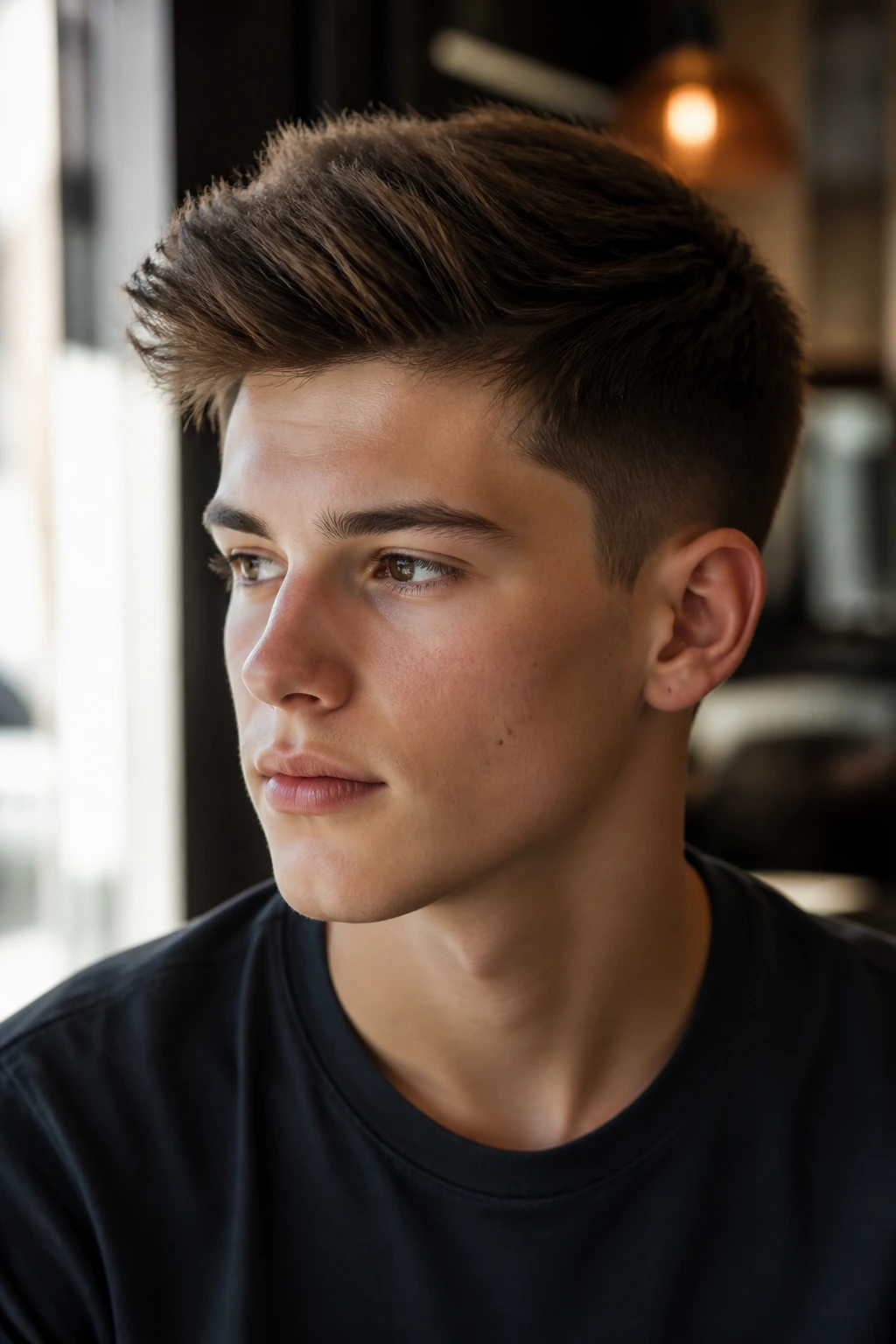
The short quiff gives straight hair a little lift without turning the head into a tower. On an oval face, that matters. You want some height, sure, but not so much that the face starts looking longer than it is. A compact quiff gives the front a bit of energy and keeps the overall balance intact.
Ask for 2 to 3 inches on top with the front left longest, and keep the sides in a low taper or short fade. The top should be textured enough to push upward with a blow-dryer and a small brush. A round brush is fine, but even a vent brush does the job if you’re not trying to create a formal shape. Use a touch of matte clay, not shiny gel. Shine can make straight hair look too hard.
This is the cut for boys who like a little personality in the front. Not loud. Just lifted.
7. Brush Up With a Taper Fade
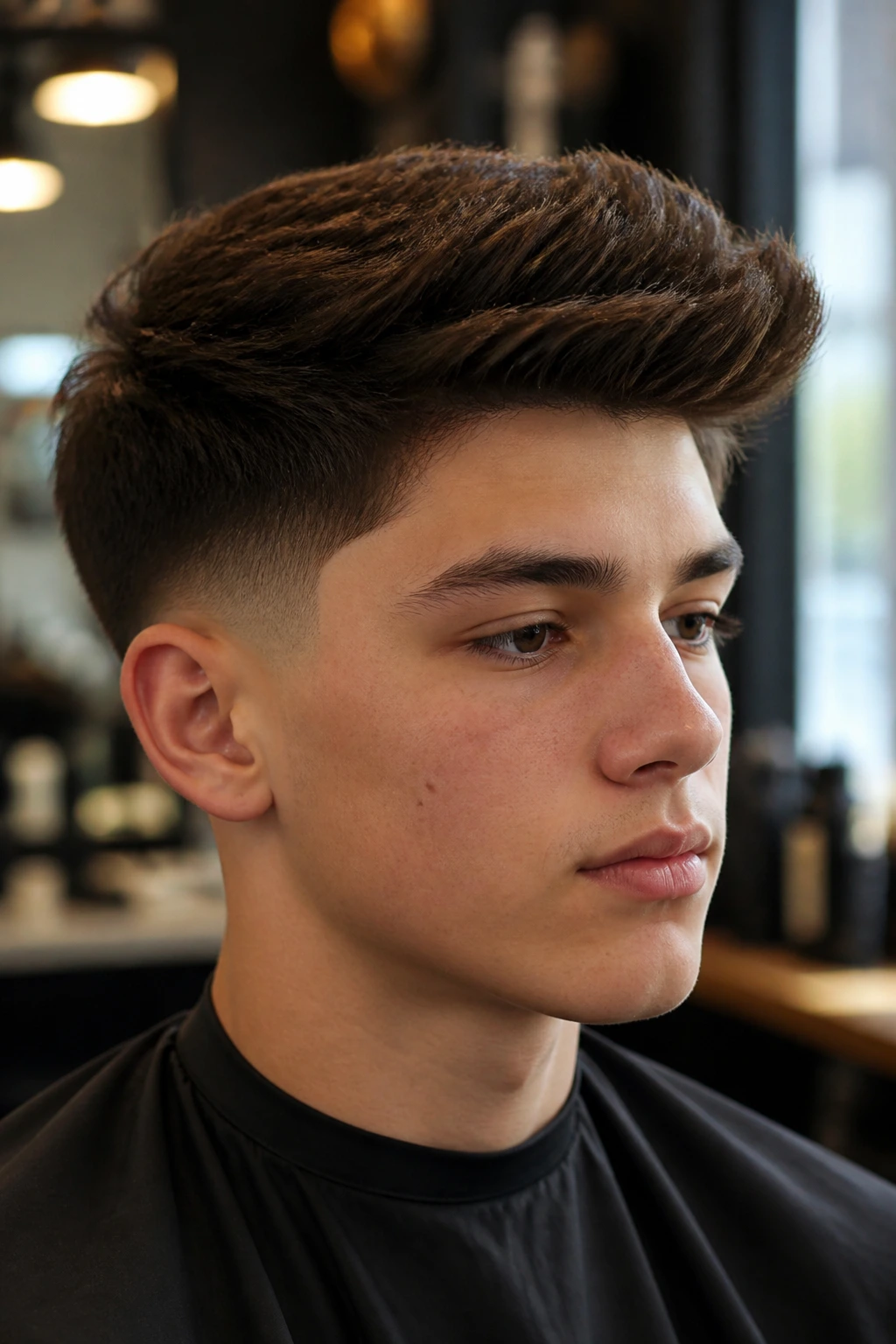
A brush-up is a cousin of the quiff, but it’s looser and less formal. Straight hair takes to it well because the strands can stand with a little help from heat and product. On an oval face, the style adds vertical interest without messing up the width at the cheeks.
Ask the barber for about 2 to 4 inches on top, textured through the front, with a taper fade that stays low around the ears and neck. The top should not be cut into a flat sheet. If the barber point-cuts the top, the hair will rise and separate more naturally. That matters. Flat ends make brush-ups look bulky.
A quick blast with a dryer and a small amount of matte paste is usually enough. Blow it straight up and slightly back, then press the shape into place with your fingers. If the hair falls flat halfway through the day, the top probably needs a little more length at the front, not more product. People get that backward all the time.
8. Curtain Fringe
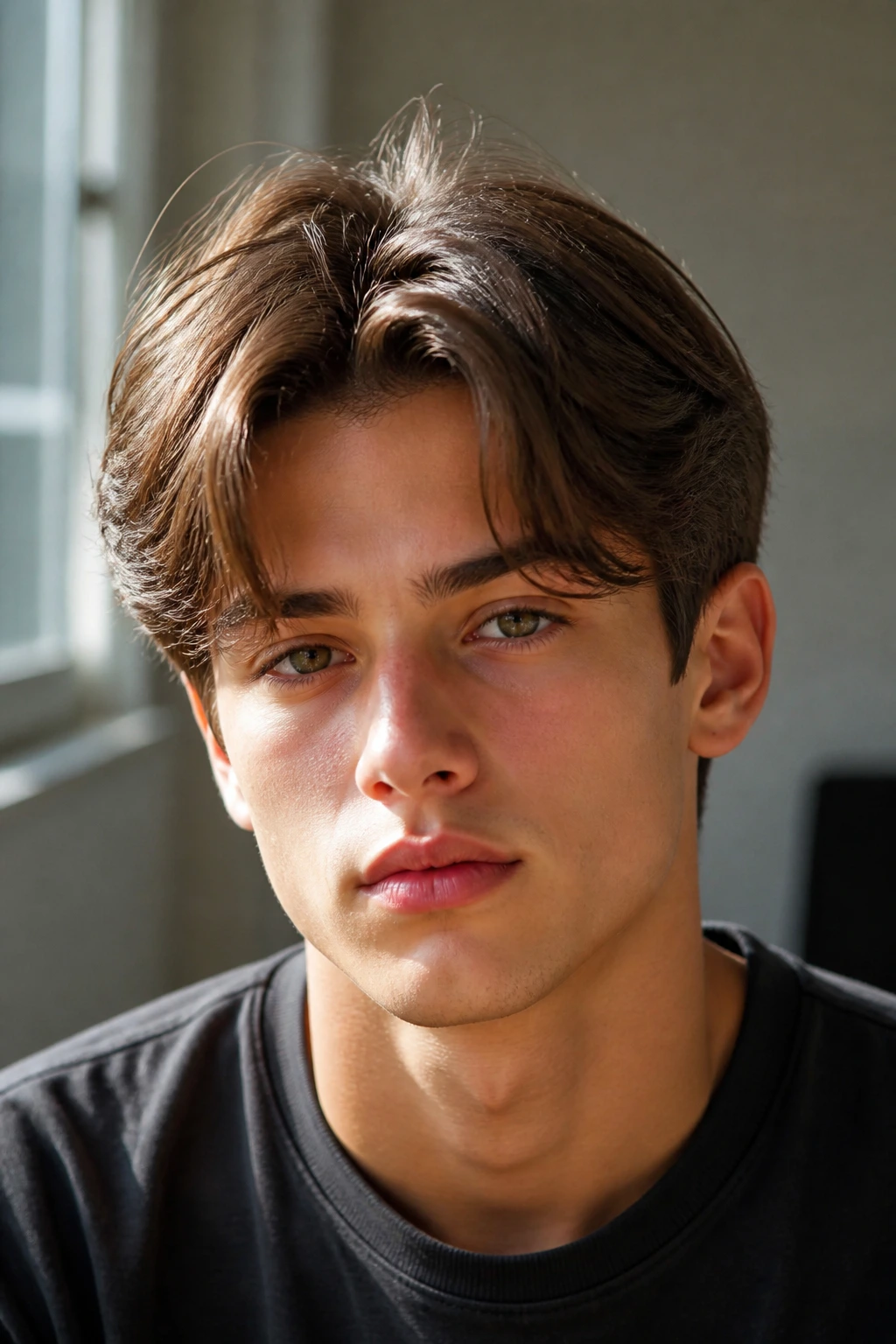
Curtain fringe sounds trendy, but on a straight-haired boy with an oval face, it can be surprisingly practical. The middle part opens the face and shows the balanced shape underneath, while the front lengths soften the forehead. When it’s cut well, the look has movement without turning into a floppy mess.
Ask for longer top length — usually 3 to 5 inches — with the front pieces cut to fall to each side of the forehead. The sides should stay lighter, usually with a soft taper or scissor-over-comb finish, so the front doesn’t feel too heavy. Straight hair is good here because the curtain shape reads clearly, but it also means the fringe needs some internal layering. Without that, it hangs like a sheet.
This is a nice choice for boys who don’t want a severe short cut. It needs a bit more styling, but not much. A mist of water and a dab of cream is often enough.
9. Modern Bowl Cut
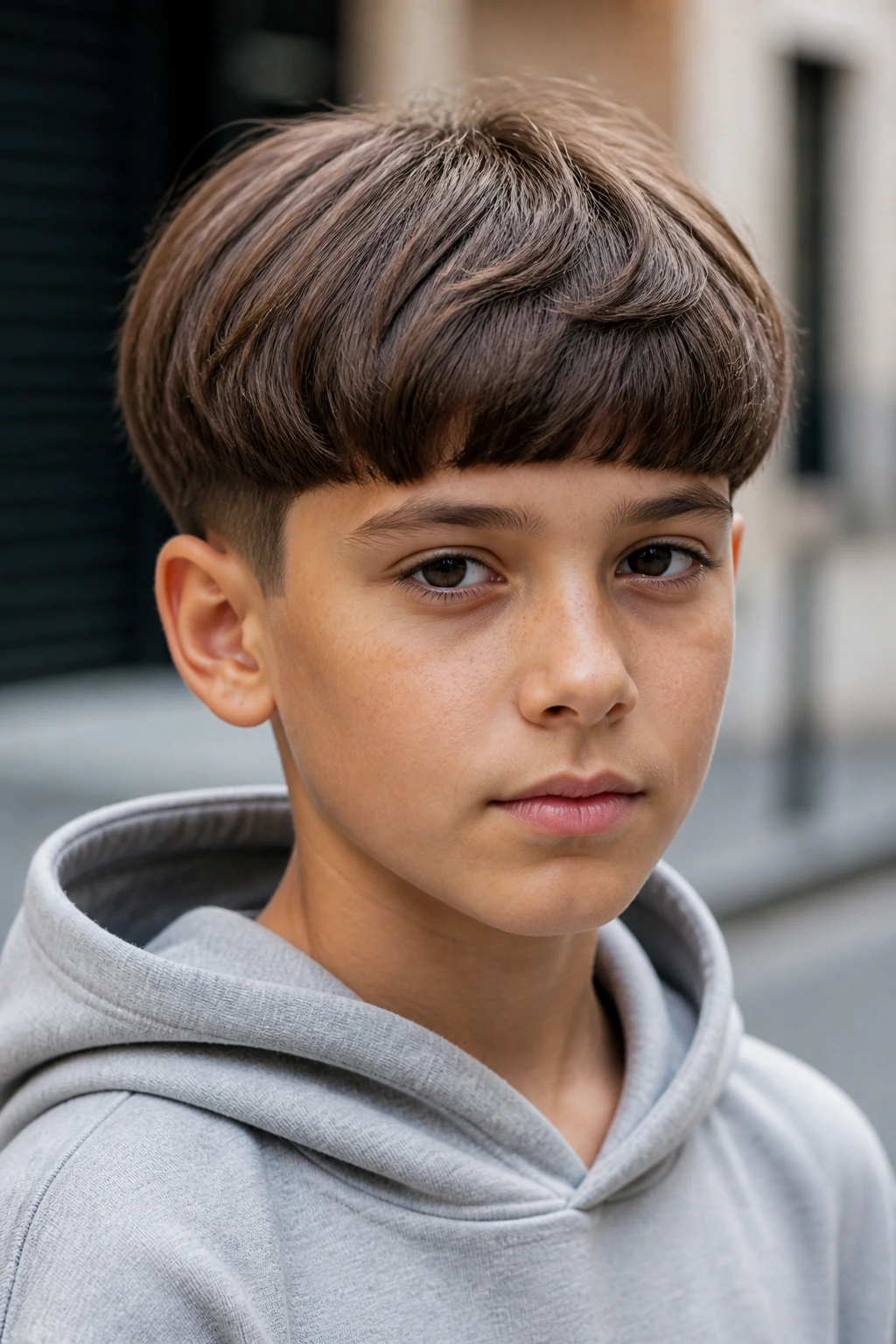
Yes, the bowl cut can be good. Not the heavy, mushroom-shaped version people remember from old school photos. The modern bowl cut has cleaner edges, softer weight removal, and a more controlled perimeter that sits better on straight hair. On an oval face, it can look balanced instead of awkward because the face shape can carry a rounded frame.
The trick is keeping the sides and back slightly tapered so the cut doesn’t balloon out. Ask for a rounded shape on top with the perimeter cut to follow the head, not cling too hard to it. The fringe should sit above or right at the brows, and the barber should thin the interior a little so the top doesn’t get too dense.
This cut has attitude. It works best on boys who are comfortable wearing something a little different. If that sounds risky, it is — a little. But when the proportions are right, it looks deliberate rather than childish.
10. Two-Block Cut
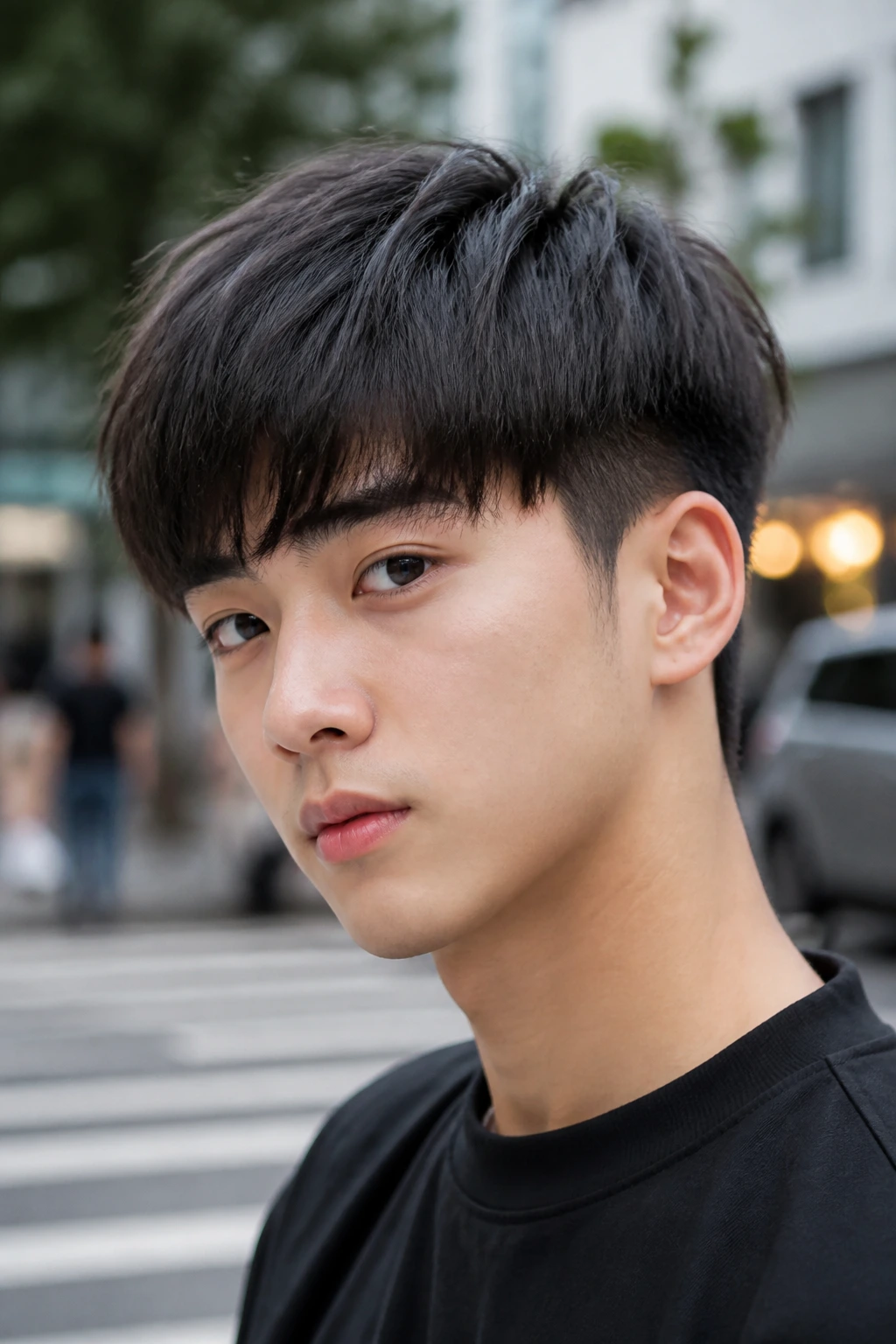
The two-block cut gives you a longer top and noticeably shorter sides, which makes straight hair look sharp without needing much daily effort. Oval faces can take the contrast well because the top keeps some length while the sides stay neat, so the face doesn’t get overwhelmed.
Ask for short, clipped sides with a longer top that falls forward or can be swept aside. The transition between the two areas should be clean, but not so disconnected that the head looks split in half. That’s a real danger if the top is left too heavy. Straight hair shows the divide clearly, which can be a good thing if the barber balances it.
This style suits boys who want something modern without going full undercut. It’s especially handy if the top has a little natural fall and the sides grow out fast.
11. Shaggy Layered Mop
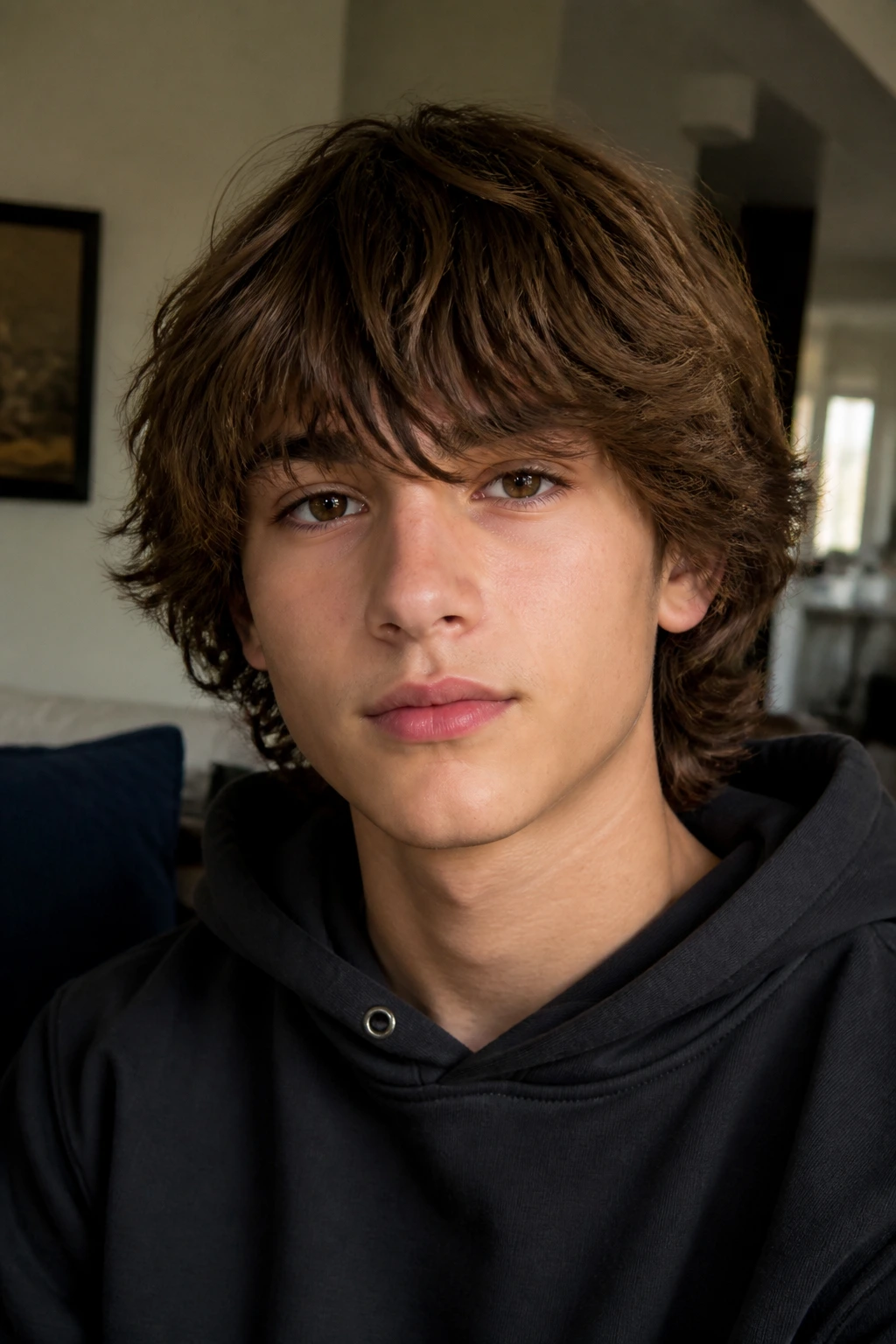
The shaggy mop is the cut for boys who don’t want their hair behaving like it was ironed into place. On straight hair, layers matter here because they keep the ends from hanging in one blunt block. For oval faces, the messier top adds softness around the forehead and temples without making the face look short.
Ask for medium length on top and around the sides, with layers cut in to remove weight. The fringe can skim the brows, but it should not sit in a single heavy line. That’s the difference between cool and sloppy. A good shag has movement. A bad one looks like a haircut that has given up.
It’s one of the better choices for boys who hate product and don’t mind a little hair falling where it wants. Use a light cream or leave it almost bare. A towel dry and finger-comb is often enough.
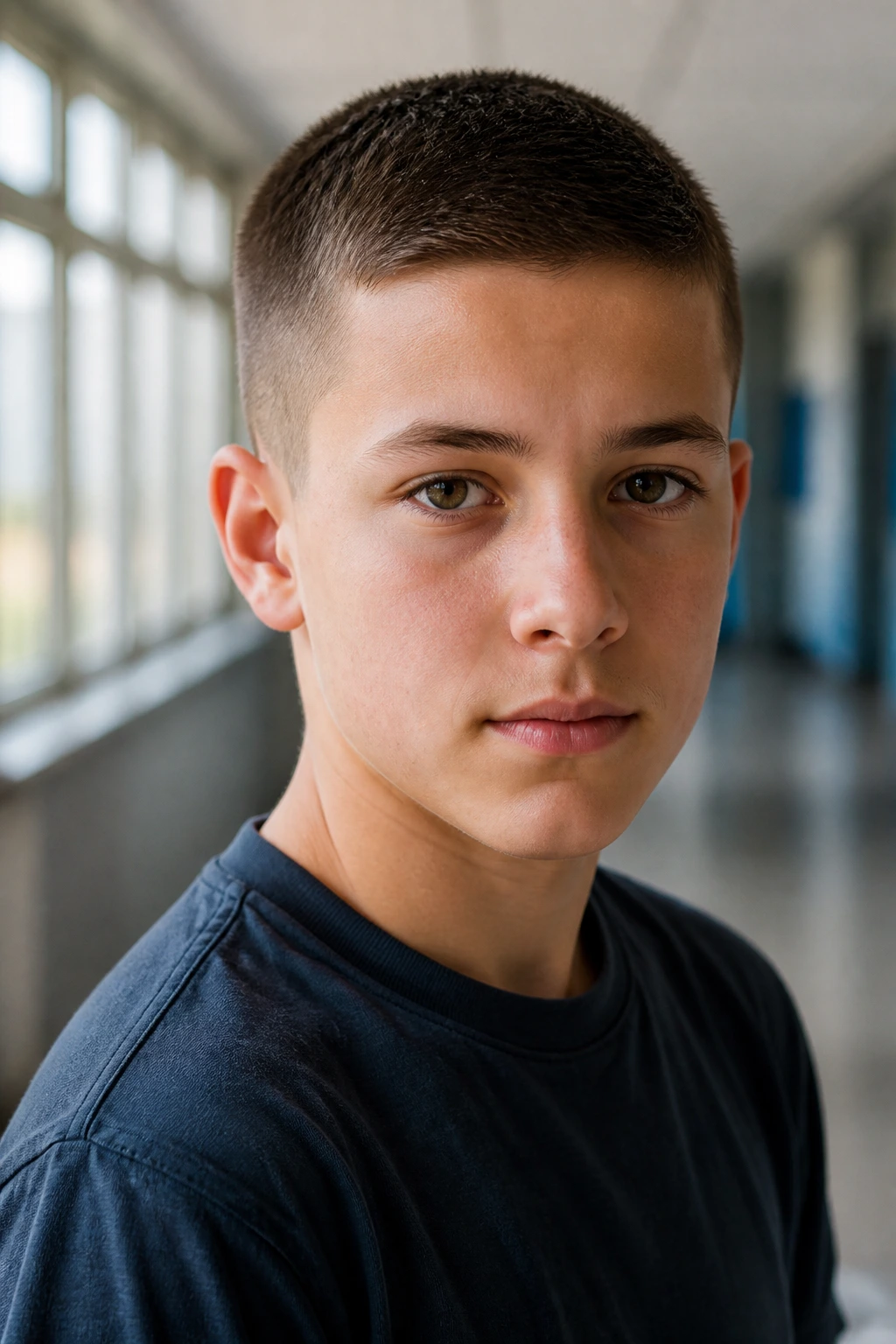
12. Buzz Cut With a Sharp Line-Up
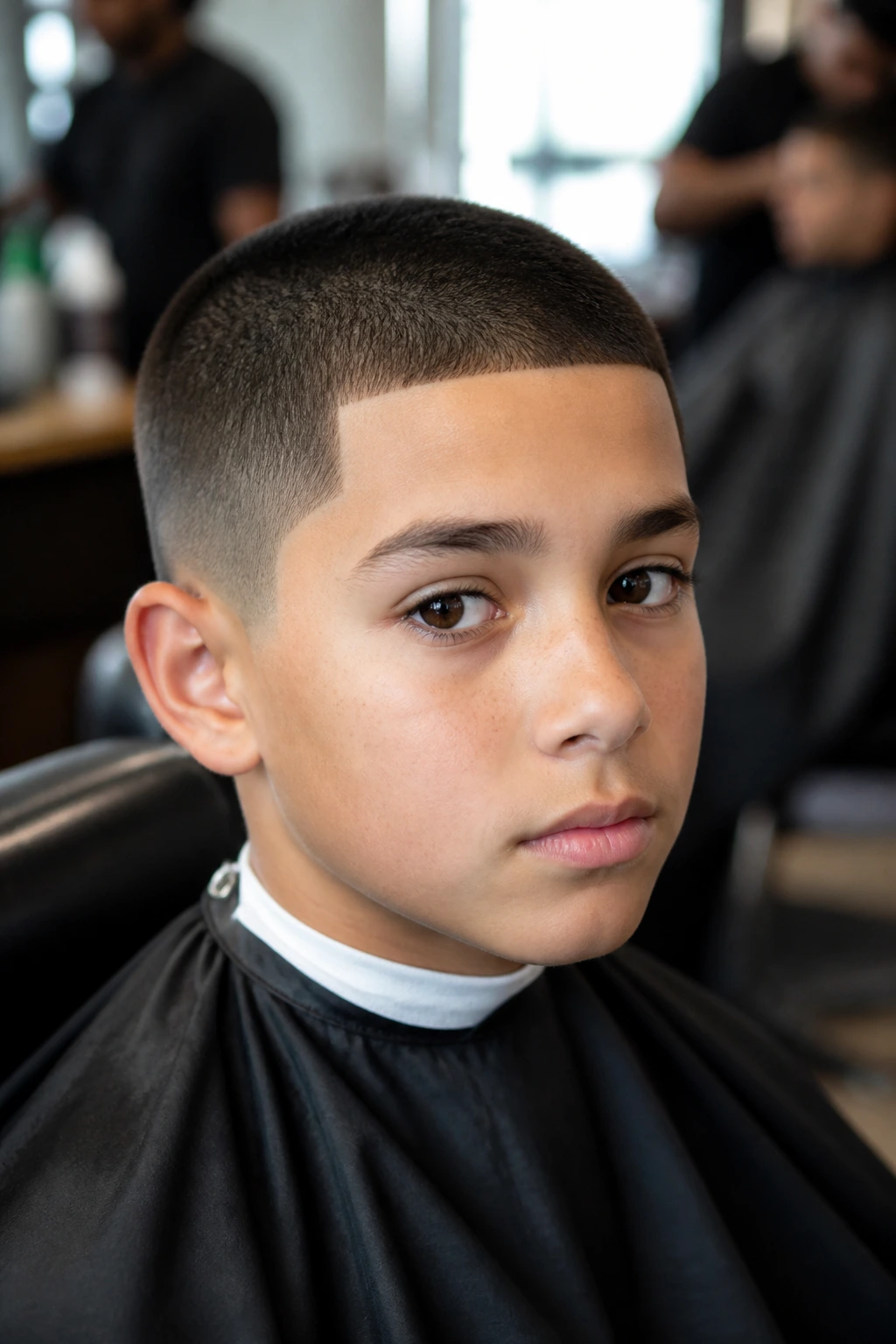
The buzz cut is brutally simple, and that can be a good thing. Straight hair doesn’t hide anything here, which is why the line-up and fade matter so much. On an oval face, the short length keeps the face open and balanced. There’s nowhere for the cut to hide, so the barber has to make the shape clean.
Ask for a #1, #2, or #3 guard on top depending on how short you want it, with a clean line-up at the forehead and temples if the boy likes that sharper finish. If the hairline is naturally uneven, a softer edge is kinder. A sharp boxy line can look too hard on a young face.
This is the easiest cut to maintain, and I’d never pretend otherwise. It also exposes scalp bumps, cowlicks, and growth patterns, so it’s best when the head shape is fairly even and the family wants low maintenance above all else.
13. Slick Back With a Low Taper
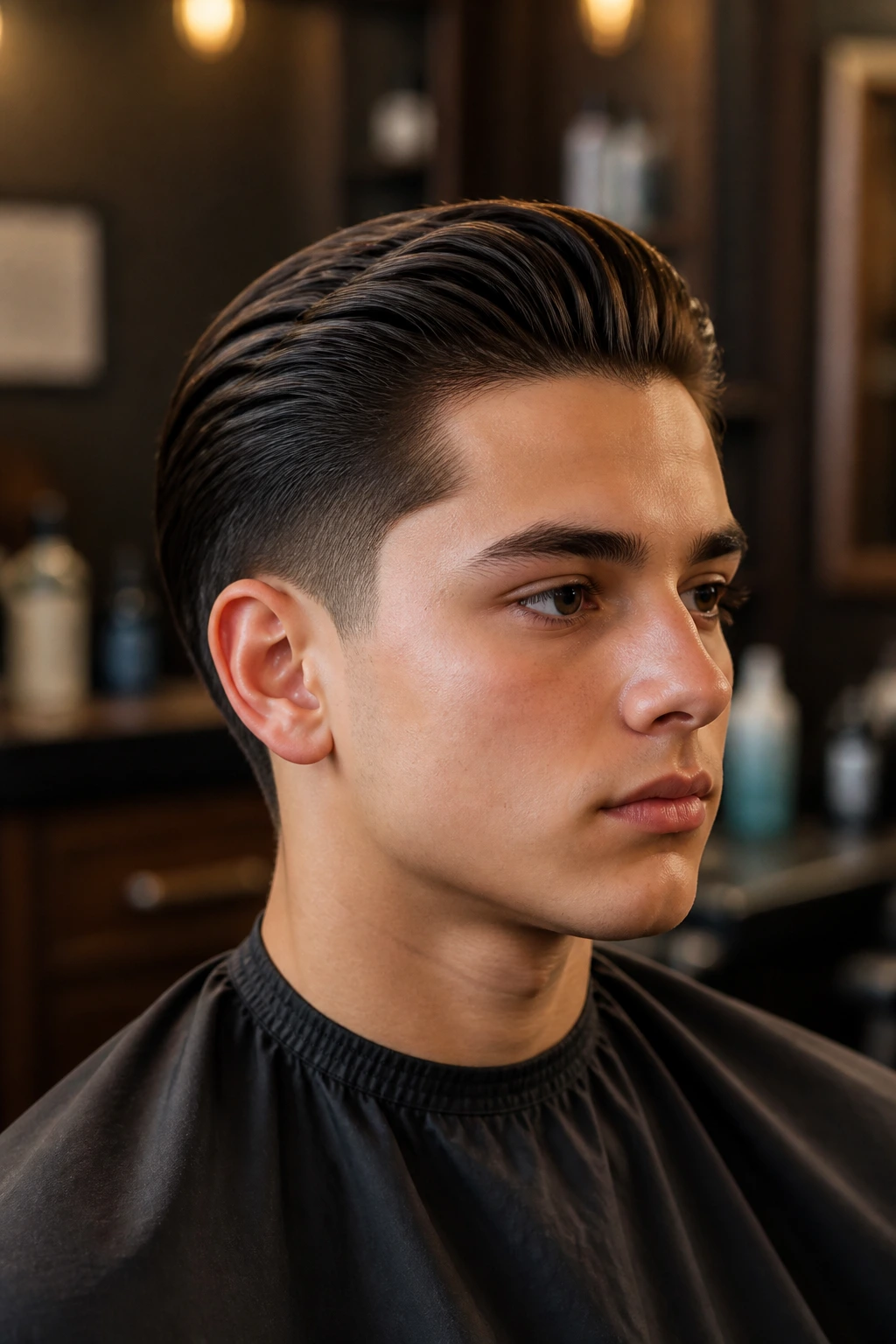
Straight hair slicks back cleanly when it has enough length, and on an oval face the style can look polished without becoming severe. The low taper keeps the sides tidy while the top stays long enough to sweep straight back or slightly back and to the side. The result is neat, but not helmet-neat.
Ask for 3 to 5 inches on top and a low taper around the ears and neckline. If the hair is very fine, a barber may need to leave a bit more length so it can stay in place after drying. Use a light pomade or cream — enough to control the front, not enough to make the hair shiny and stuck down like paint.
This works well for boys who like a more dressed-up look. It’s not the best for those with stubborn cowlicks at the front unless the top is left long enough to redirect the growth.
14. Hard Part Comb Over
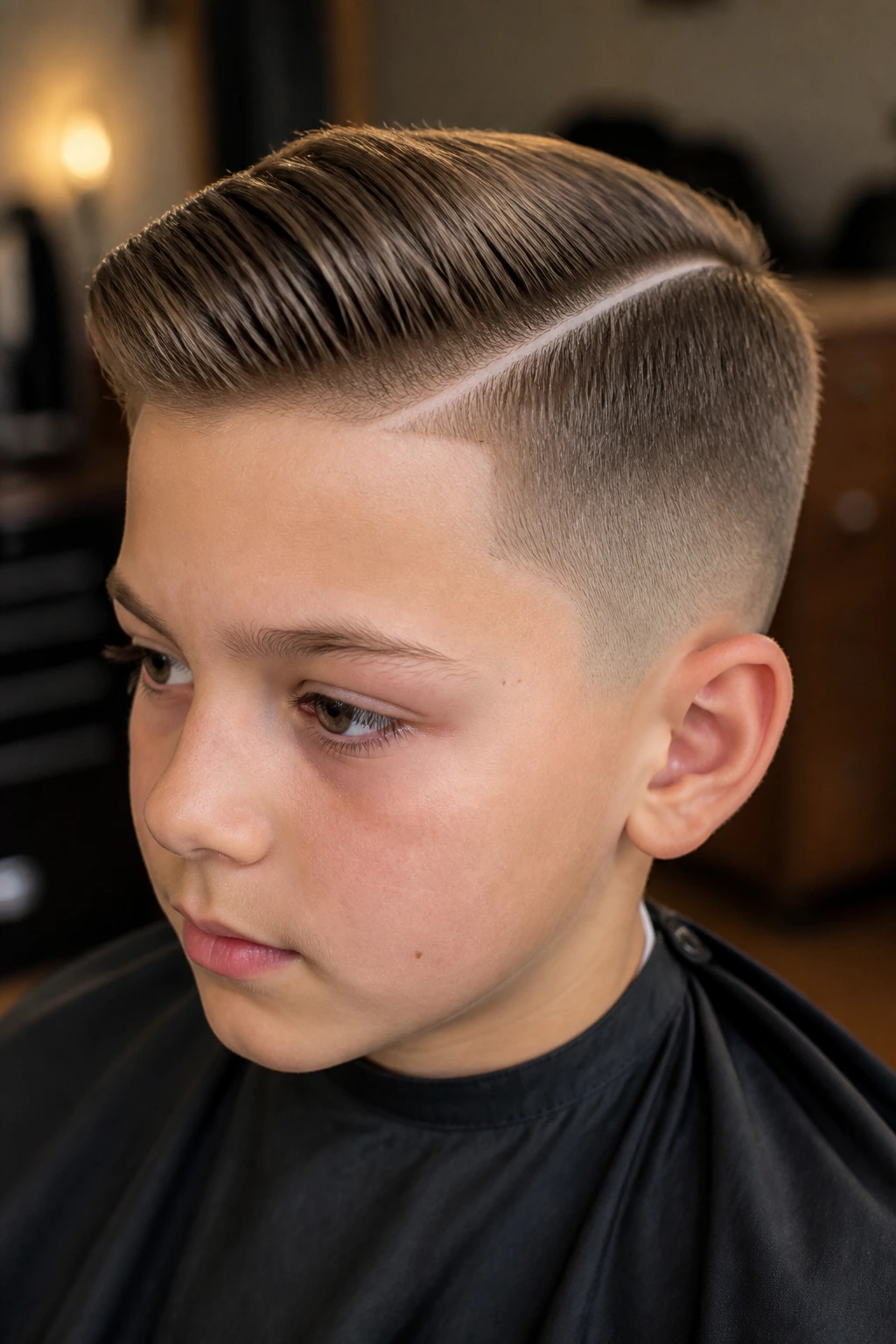
The hard part comb over is a sharper, more styled version of the side part. Straight hair makes the line crisp, which is the whole appeal. On an oval face, the part adds order without creating too much width, especially when the sides are clipped tight and the top is kept smooth.
The trick is restraint. Ask for a visible part line, short faded or tapered sides, and about 2 to 4 inches on top so the hair can sweep over with some coverage. If the top is too long, the style starts to slump. Too short, and the hard part looks overdrawn. Somewhere in the middle is where it works.
What makes it different
- The part is a feature, not an accident.
- The top needs combing and a little product every morning.
- It’s best for boys who like a tidy, defined shape.
If you want a haircut that looks deliberate from a distance, this is one of the cleanest options.
15. Mid-Length Flow Cut
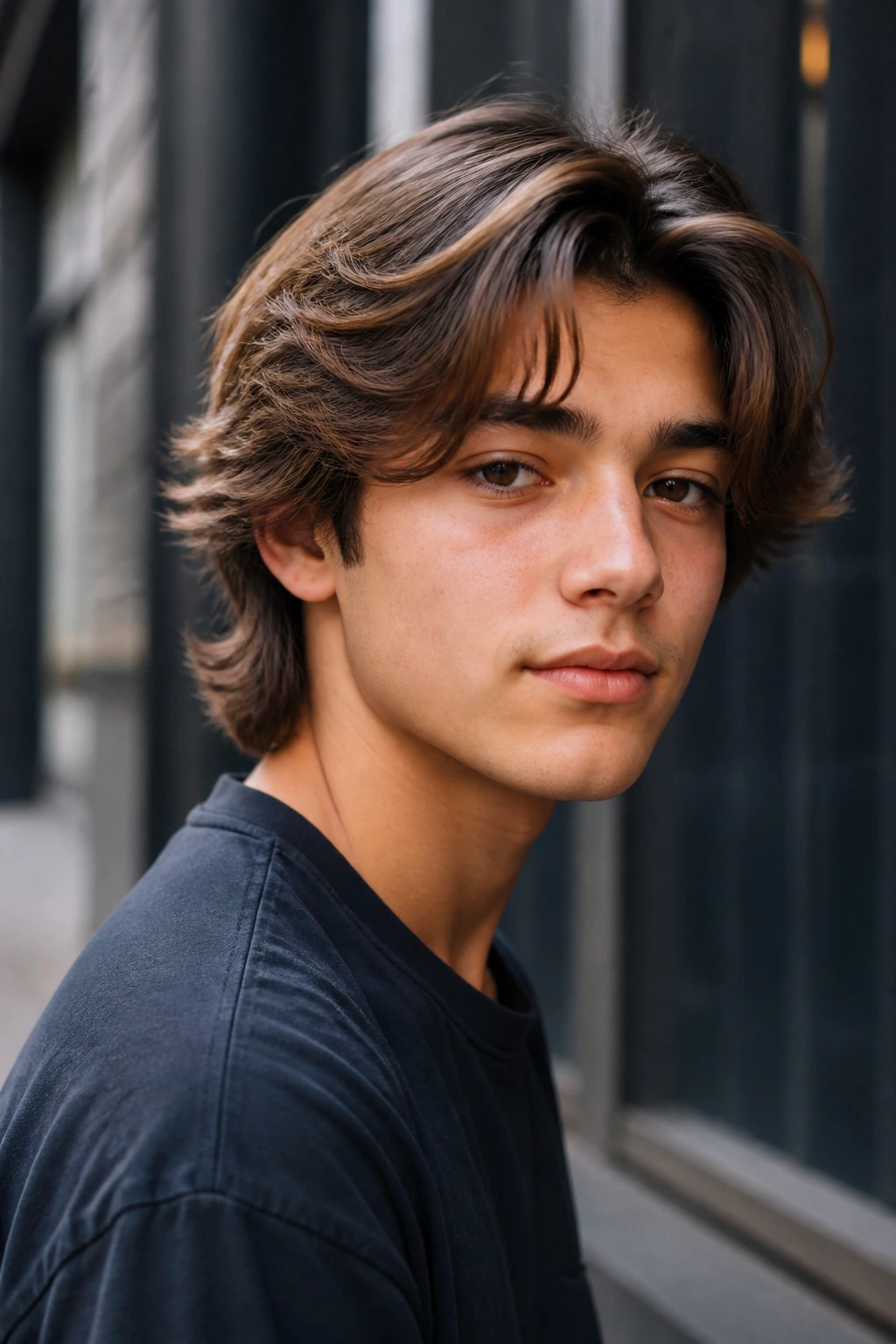
The flow cut is for boys who want hair that moves. Straight hair can do that beautifully when the layers are right, and an oval face can support the length without getting swallowed by it. The shape falls away from the face in a relaxed way, which keeps the cut from feeling too stiff.
Ask for medium length through the top and sides with soft layering. The back should not be chopped bluntly; it needs to fall naturally into the neckline. A little movement at the ends keeps the style from looking like one big rectangle. If the boy has a strong forehead, a longer front piece helps balance the face without hiding it completely.
This one needs patience during the grow-out stage. Not forever. Just enough to avoid cutting it too short too soon. A small amount of leave-in cream can keep the ends from looking dry or separated.
16. Faux Hawk Taper
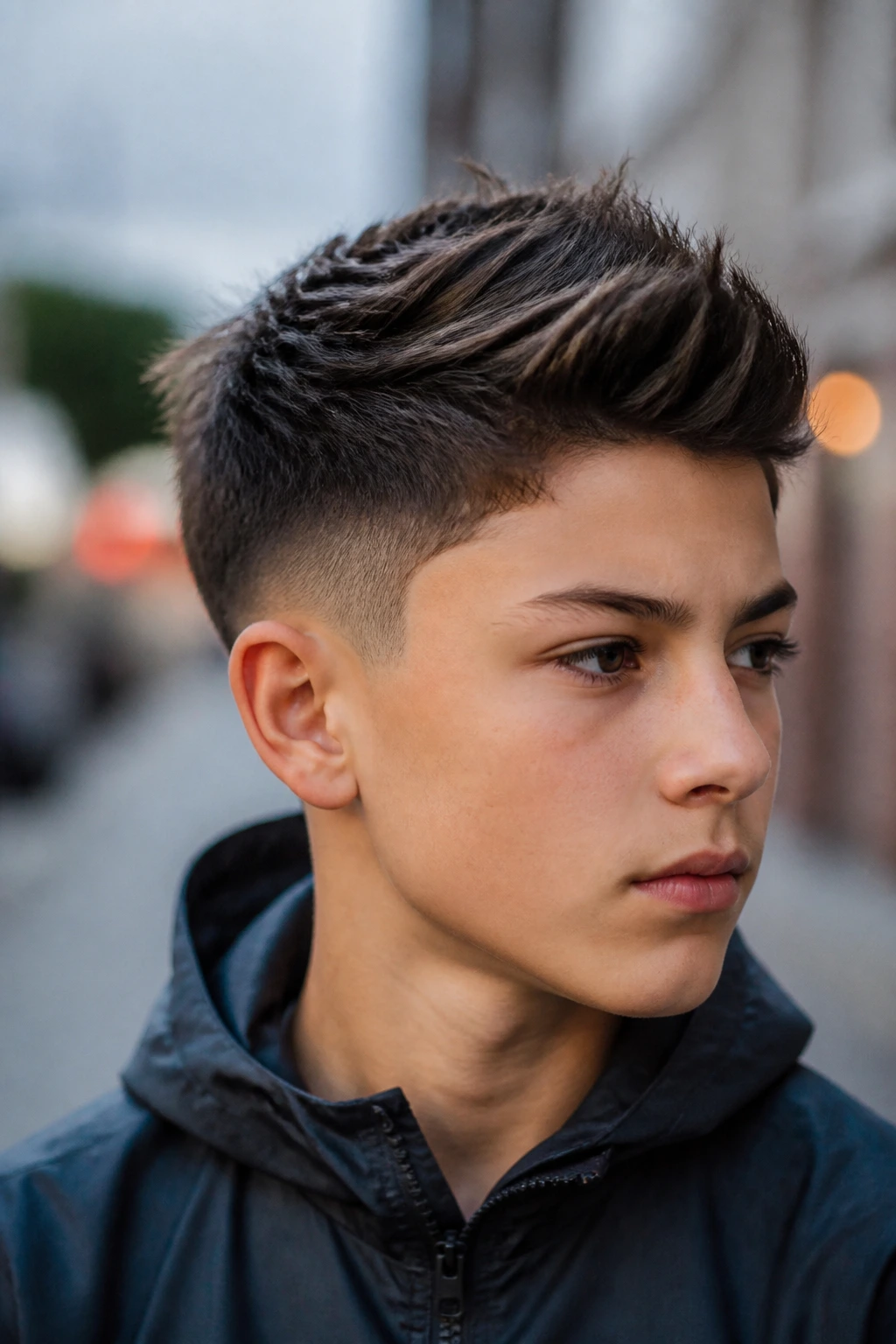
The faux hawk adds edge without going full mohawk, which is why it works for boys who want something energetic but not extreme. Straight hair helps the middle strip stay defined, and the oval face keeps the proportions forgiving as long as the sides don’t flare out too much.
Ask for shorter sides with a taper or fade and a longer center section that can be pushed slightly up. The middle does not need to stand at attention. It just needs more height than the sides. If the top is too narrow, the cut can look severe; if it’s too wide, it loses the faux hawk shape.
This is a good pick for active boys. It holds up well after a quick finger-style with a matte product, and it doesn’t need a lot of time at the sink. Give it too much gel and it becomes stiff in a bad way. Keep it touchable.
17. Disconnected Undercut
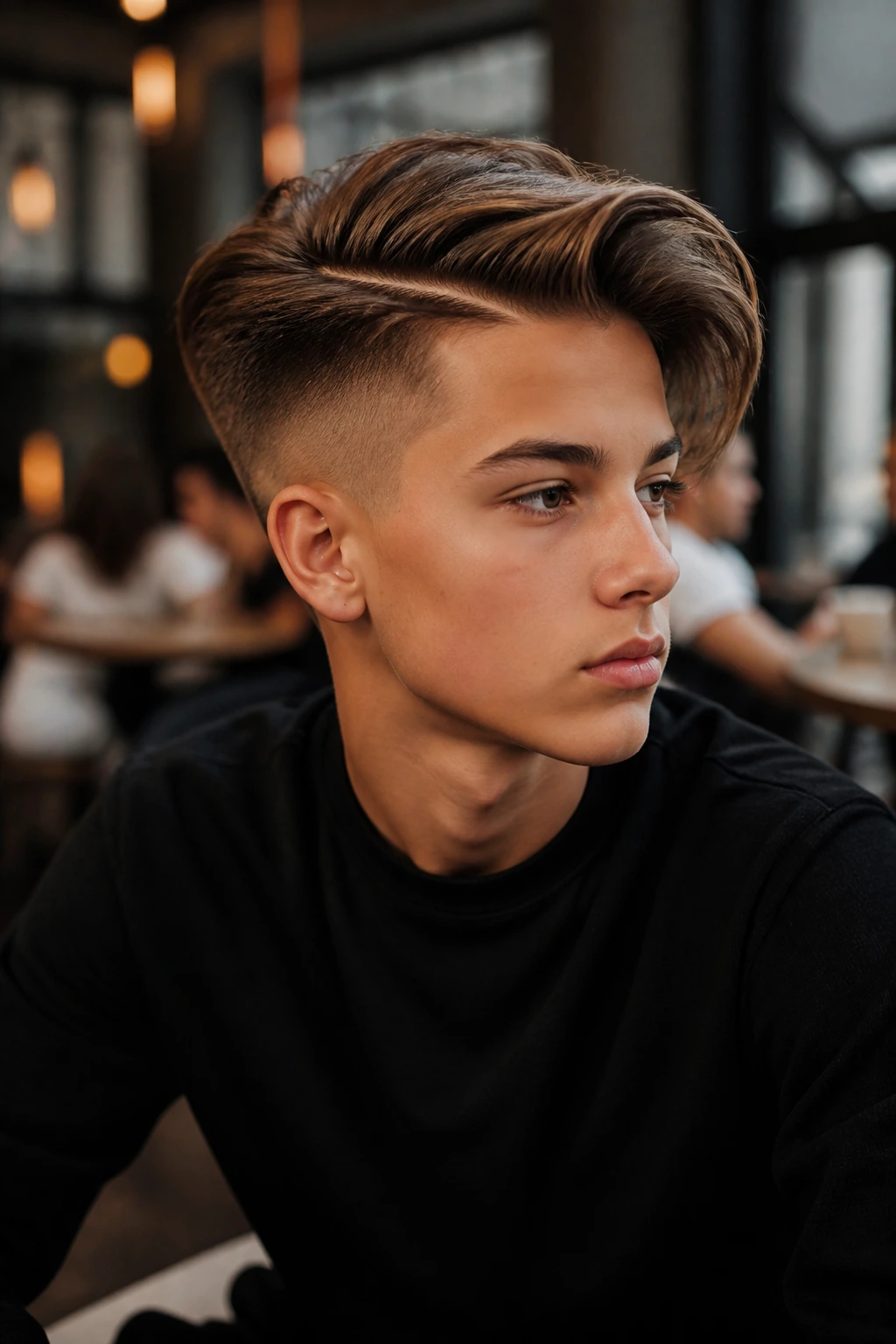
The disconnected undercut is a bold choice, but on straight hair it can look very clean if the contrast is intentional. The sides are clipped short — sometimes very short — while the top stays longer and sits apart from the side length. Oval faces can handle that contrast because the face shape already has balance; the haircut just adds a sharper frame.
The important part is not to go half-hearted. If the top is only a little longer than the sides, the disconnect looks accidental. Ask for clear separation between top and sides, with the top long enough to sweep back, lay over, or push into a loose side shape. Straight hair makes the divide obvious, so the barber needs to blend or disconnect on purpose. There’s no in-between here.
This cut is for boys who want something with edge and can handle a bit of maintenance. It can look fantastic. It can also look too grown-up if the fade is too severe, so keep the proportions age-appropriate.
18. Layered Scissor Cut With a Natural Finish

If you want the safest all-around answer, this is it. A layered scissor cut with a natural finish works because it respects the straight hair instead of forcing it into a hard shape. On an oval face, that softness is a nice match. The face stays visible, the hair moves, and the whole thing looks like it belongs on the boy wearing it.
Ask the barber for scissor-cut layers all over, with the sides kept neat but not clipped too tight. The top can sit around 2 to 4 inches, depending on age and styling habit. The goal is a cut that falls naturally after a towel dry and still looks presentable without a heavy product load. That matters more than people think.
This is the one I’d hand to a parent who wants flexibility. It can be brushed, parted, tousled, or left alone. Good scissors work here. Cheap shortcuts show fast.
What Makes a Great Straight-Hair Cut on an Oval Face
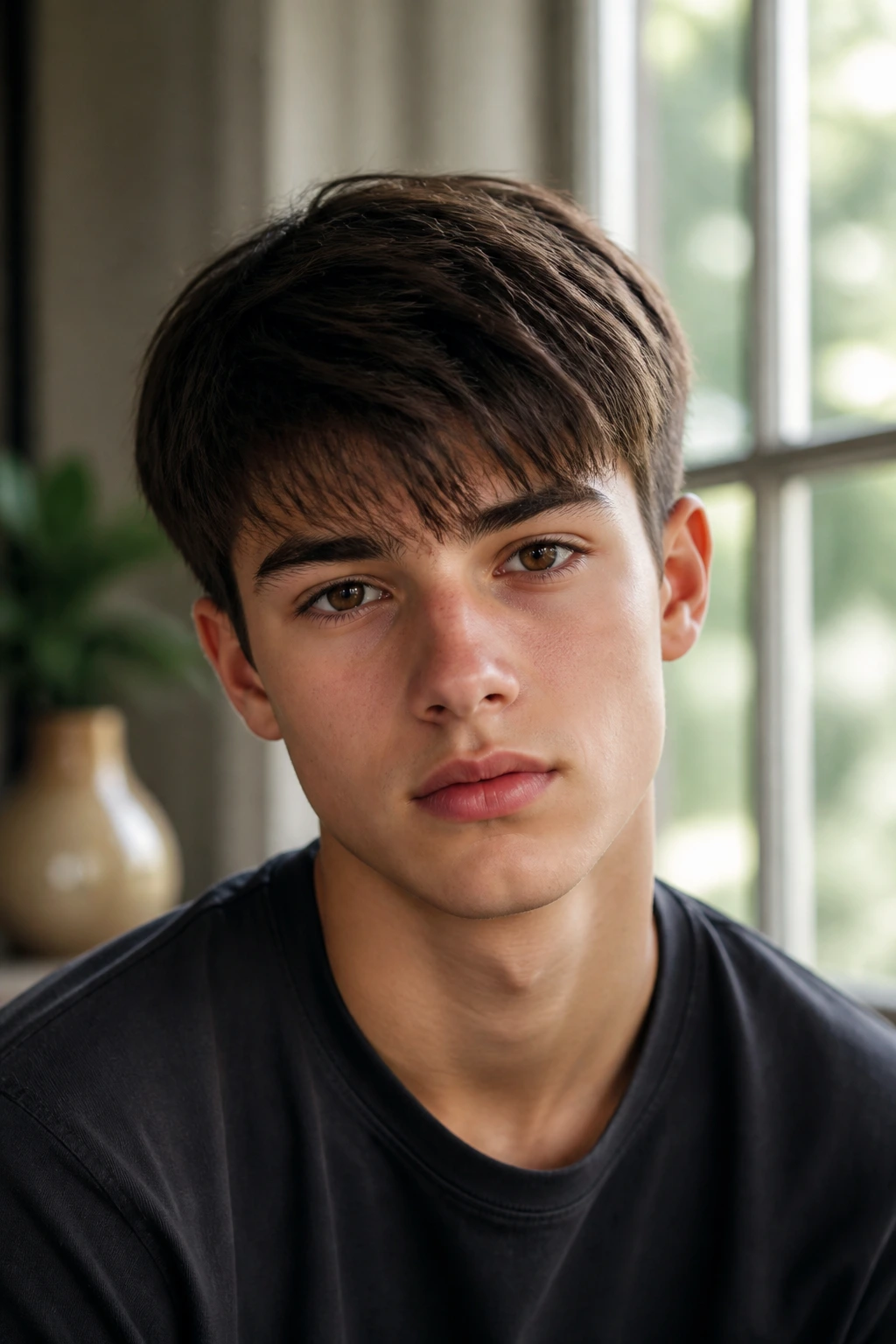
Oval faces give you room, but that room can be wasted if the haircut ignores proportions. The easiest mistake is piling too much height on top and leaving the sides too bare. That makes the head look longer than it needs to be. Straight hair will happily hold that shape, which is precisely why you have to watch it.
The other trap is a blunt fringe that sits too low and too wide. It can close off the forehead and make the face feel shorter, which sounds fine until the whole cut starts looking heavy. A better approach is to decide what the haircut should emphasize first: eyes, forehead, cheekbones, or jawline. Then cut to that purpose instead of chasing a trend.
A barber with a good eye will usually talk about three things: top length, side weight, and fringe placement. Those are the levers. Move one, and the whole cut changes. Move two, and you’ve got a new style. That’s why boys with straight hair and oval faces can wear a wide range of cuts, but not all at the same proportions.
Tools That Keep These Haircuts Looking Clean
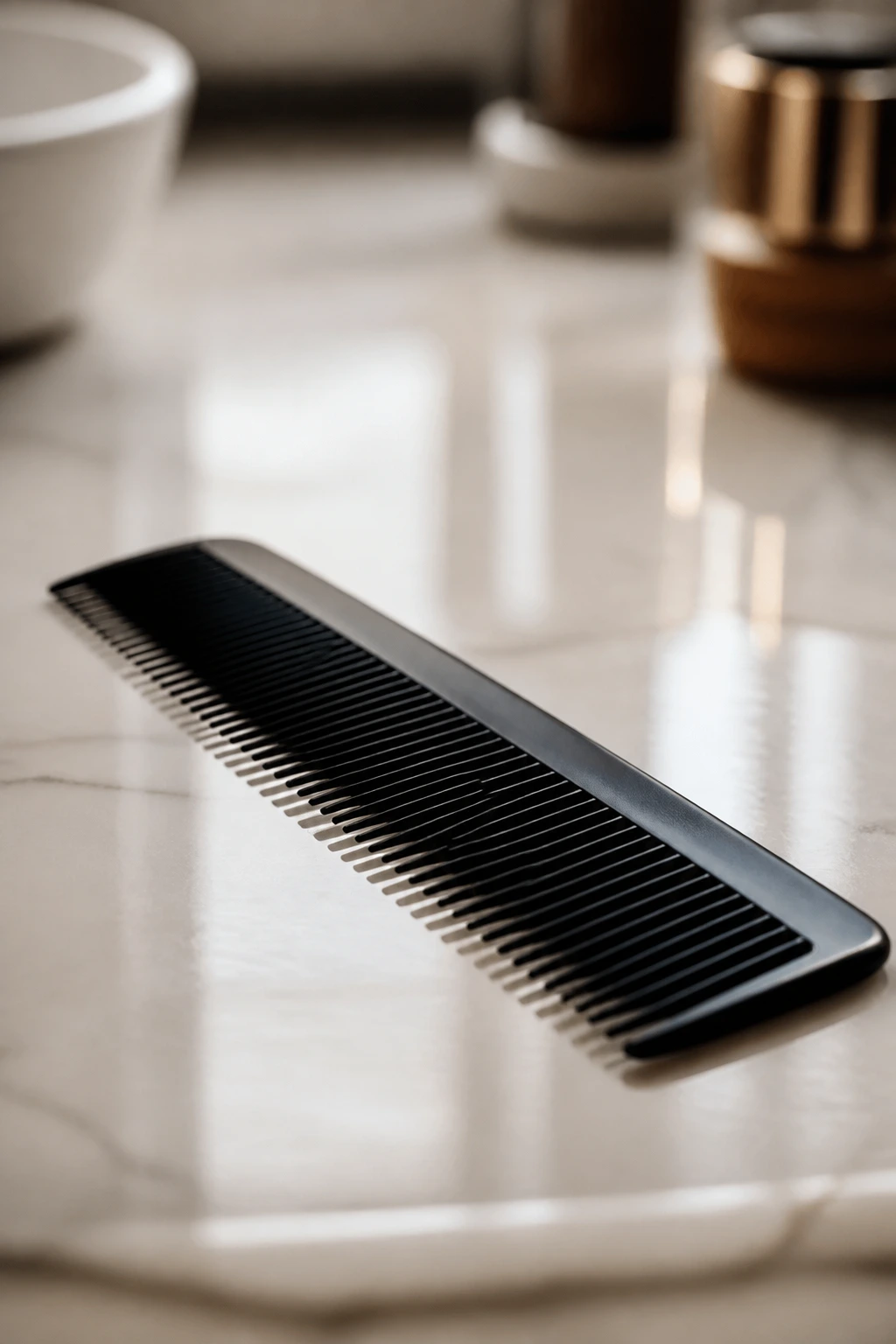
- Fine-tooth comb: Helps create clean parts and smooth side-swept styles on straight hair.
- Wide-tooth comb: Useful for longer cuts like curtains, flow cuts, and shaggy layers.
- Matte paste or clay: Best for crops, quiffs, brush-ups, and messy texture without shine.
- Light cream: Good for softer styles where you want control without stiffness.
- Small boar-bristle brush: Handy for slick backs and side parts that need a neat finish.
- Blow-dryer with a nozzle: Gives straight hair lift at the front and helps set shape faster.
- Clippers with guards: Not for home use unless you’re comfortable; barbers use them to keep tapers even.
- Spray bottle with water: The cheapest useful tool in the bathroom. A little dampness makes straight hair obey.
How to Ask the Barber for the Right Cut
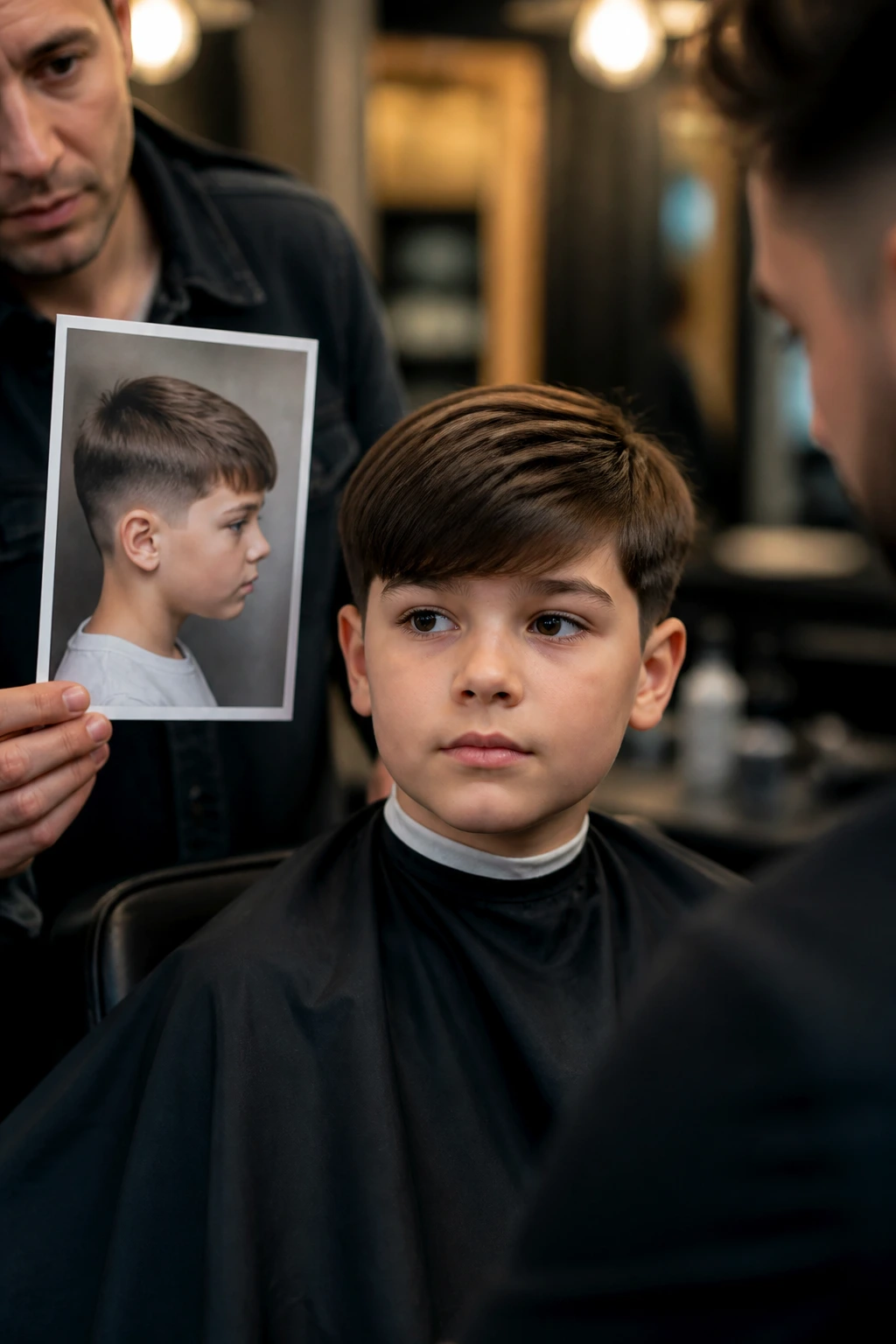
Bring a photo. Not because barbers need art direction, but because photos settle the argument over length. A “short top” means one thing to you and another thing to the person holding the scissors. Point to the photo and name the parts you care about: the fringe, the fade, the crown, the neckline.
Say the numbers if you know them. #2 on the sides, 2 inches on top, low taper at the neck is a lot more useful than “make it neat.” If you want a part, say whether you want it natural or hard. If you want the hair to lie forward, say so. If the boy hates hair on his forehead, that matters too.
Straight hair gives almost no camouflage. A bad blend shows fast. A fringe that’s 1 inch too long hangs in the eyes all afternoon. A taper that stops too low can make the sides look heavy. Say what you want, but also say what the haircut should avoid. That’s the part most people skip, and it’s often the important one.
How to Style These Cuts on Busy Mornings
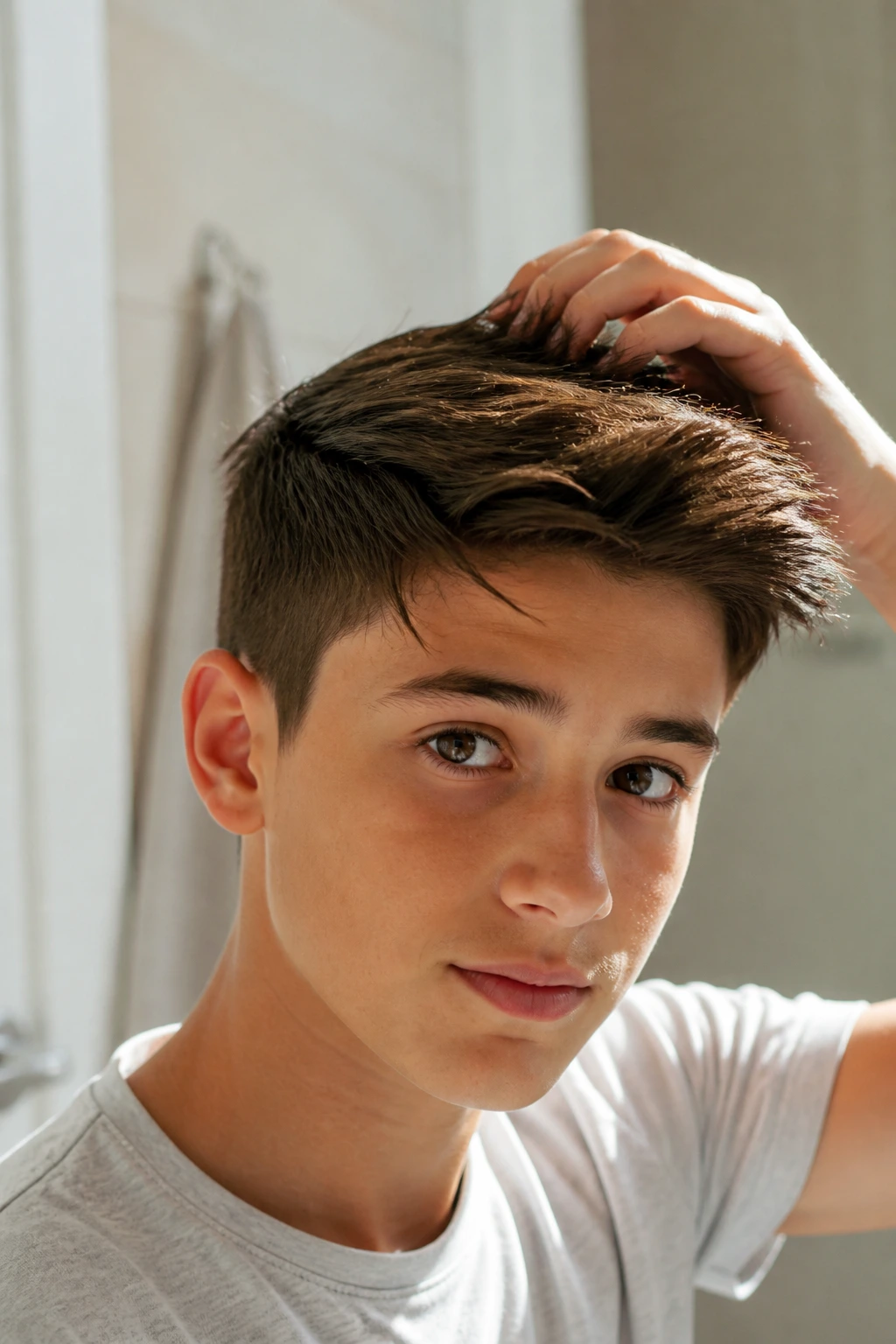
School Day: Use a spray bottle to dampen the top, add a fingertip of matte paste, and comb or finger-style the hair into place. Keep it light. If the product is visible, you used too much.
Sports Practice: Go shorter and cleaner. A crew cut, buzz cut, or tapered crop needs the least fixing after a helmet or sweat. If the hair is longer, a small amount of cream and a quick brush-back works better than trying to force perfection.
Picture Day: Use a blow-dryer on low heat to shape the front, especially for quiffs, brush-ups, and slick backs. A little more product is fine here, but don’t let it get glossy unless that’s the point.
Grow-Out Week: When the cut starts losing shape, don’t panic and don’t overcompensate with a heavy product. Water, combing, and a quick trim around the ears can buy time. That little cleanup matters more than people expect.
Keeping the Cut Sharp Between Visits
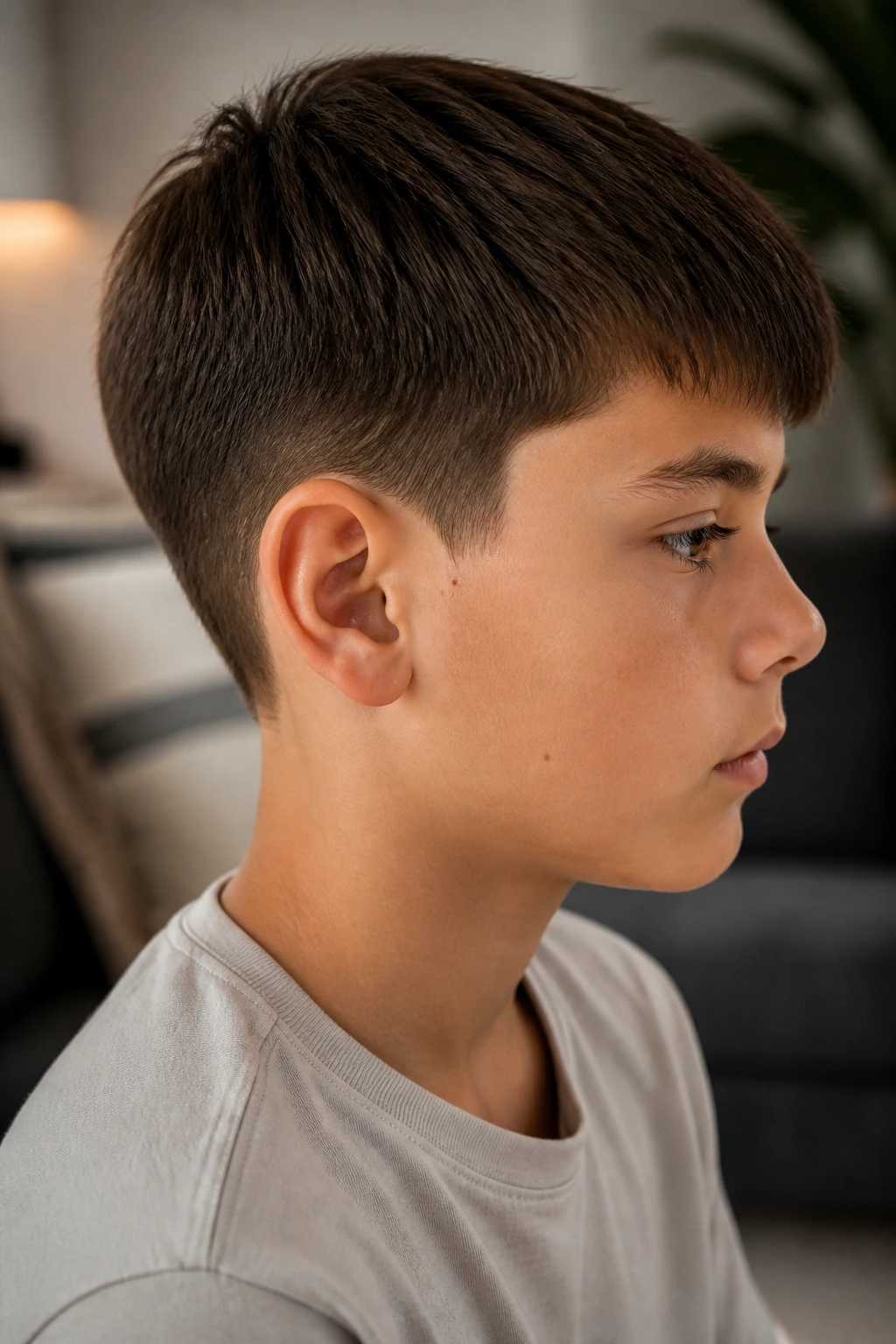
Straight hair grows in a way that makes the edges look messy before the length looks long. That’s just how it is. The neckline softens first. The sideburns blur. The fringe starts touching the lashes. If you wait until the whole cut looks “too long,” you’ve usually waited too long.
For shorter styles, a trim every 3 to 5 weeks keeps the shape honest. Medium styles can stretch to 5 to 7 weeks if the taper is still sitting clean. Longer cuts need less frequent cutting, but they do need a quick shape check around the ears and neck so they don’t drift into shapeless territory.
Use conditioner if the hair feels dry at the ends, especially on layered cuts. Straight hair shows roughness quickly, and dry ends stick out like little wires. That doesn’t mean slather on heavy stuff. A small amount, then rinse well.
Common Mistakes to Avoid
Going too tall on top: On an oval face, extra height can work, but too much makes the face look longer than it is. Keep the lift modest unless the style is meant to be a true quiff or brush-up.
Cutting the fringe too blunt: Straight hair makes blunt bangs look heavier than expected. If the fringe sits too low or too thick, the eyes disappear and the cut starts feeling flat.
Leaving the sides too wide: Boys’ straight haircuts can balloon at the temples if the barber doesn’t remove enough side weight. That makes the face feel rounder and less balanced.
Using too much product: Straight hair needs less product than people think. A small amount does the job. If the hair turns shiny or stiff, the style usually stops moving and starts looking helmet-like.
Skipping the grow-out plan: A good cut can look awkward after three weeks if no one planned for growth. Ask how it will sit when it’s not freshly cut. That question saves a lot of headaches.
Easy Variations and Tweaks

The Soft School Version: Keep the same haircut shape but leave the top a half inch longer and soften the edges around the ears. This works for boys who need a neat look with less barber-shop sharpness.
The Sport Short Cut: Take the sides tighter and trim the top down by 1/2 to 1 inch. It keeps the style low-maintenance and helps with helmets, swim caps, and sweaty afternoons.
The Older-Kid Upgrade: Add a little more length on top and a cleaner taper at the temples. The style looks more mature without crossing into grown-man territory.
The Low-Maintenance Grow-Out: Ask the barber to keep the top layered and the neckline soft so the cut still looks decent six weeks later. This is the one to choose when visits are irregular.
The Clean-Finish Version: Add a sharper line-up, more defined part, or a tighter fade. Good for boys who like crisp edges and don’t mind a bit more upkeep.
Frequently Asked Questions
What haircut is best for a boy with straight hair and an oval face?
There isn’t one single best cut, which is the nice part. Crew cuts, tapered side parts, French crops, and layered scissor cuts all work well because they keep the face balanced while letting straight hair stay neat.
Should boys with oval faces avoid long hair?
Not automatically. Longer straight styles can look great on oval faces if the layers are cut well and the top doesn’t get too heavy. The problem usually comes from bad shape, not length.
Do straight haircuts need more texture?
Usually, yes. Straight hair can lie flat, so texture keeps the top from looking like one solid sheet. Point cutting, choppy layers, or a matte product can fix that fast.
Is a fade good on oval faces?
Yes, as long as the fade doesn’t climb so high that the head starts looking stretched. Low and mid fades usually give the cleanest balance for boys.
What if my child has a cowlick at the front?
Shorter cuts like crew cuts, crops, and Caesar cuts handle cowlicks well because there’s less length fighting the growth pattern. For longer cuts, leave enough length to redirect the hair instead of cutting it too short and making the cowlick pop up harder.
How often should a boy get a trim?
Short cuts usually need attention every 3 to 5 weeks. Medium styles can last 5 to 7 weeks if the neckline and sideburns stay neat. Longer styles need shape checks more than full cuts.
Can these cuts work without product?
Some of them can. Crew cuts, buzz cuts, and tight tapers need almost nothing. Longer styles like quiffs, curtains, and flow cuts usually look better with a little cream or paste, even if it’s only a small amount.
What should I tell the barber if I don’t know haircut terms?
Point to a photo, then say how much hair you want left on top, how short you want the sides, and whether you want the fringe off the forehead. Those three pieces are enough to get most of the job done.
The Cut That Fits the Face
Oval faces make life easier, but straight hair makes the truth visible. That’s why these boys’ haircuts work: they don’t rely on tricks. They use shape, balance, and a little restraint. Clean sides. Sensible top length. A fringe that sits where it should. That’s the whole game.
If you keep the face shape in mind and let the hair’s natural straightness do some of the work, the result usually looks better than anything over-styled or over-cut. Simple can be sharp. Soft can be clean. And when the proportions are right, even a basic cut starts looking like somebody thought about it.
The next time you sit in the barber chair, aim for balance first. The style will take care of the rest.