



Wavy toddler hair changes character fast. One nap, one cap, one walk through humid air, and the same head of hair can go from neat to puffed-out in a blink. That’s why toddler haircuts for little boys with wavy hair are less about “making it behave” and more about choosing a shape that can take a little chaos without falling apart.
The wrong cut does two annoying things at once. It cuts the wave pattern too short, so the hair sticks up like little springs, or it leaves too much bulk in the wrong places, so the sides balloon and the crown turns into a helmet. The sweet spot is somewhere in the middle: enough length for the wave to bend, enough structure around the ears and neckline to keep the whole thing from drifting into mop territory.
A good wavy-hair cut also has to grow out cleanly. That part gets ignored far too often. Little boys don’t hold still for perfect upkeep, and parents shouldn’t have to fight a fringe every morning with a spray bottle and a prayer. The smartest cuts are the ones that still look like a haircut after three weeks of play, naps, hats, and a bath with too much splashing.
Why These Cuts Earn Their Keep
-
They work with the wave pattern, not against it: Wavy hair needs a little room to bend, and these cuts leave enough length on top for that movement to happen naturally.
-
They keep the sides from puffing out: A low taper, soft fade, or clean neckline stops the ears and temples from turning fuzzy before the rest of the haircut grows out.
-
They’re easier to fix on rushed mornings: Most of these styles can be reset with water on the front and a quick finger-comb, which matters when nobody has patience before school or daycare.
-
They leave room for growth: A cut that still looks decent at week four is worth more than one that looks perfect on day one and awkward by day ten.
-
They suit different wave strengths: Loose waves, strong bends, and almost-curly texture need different amounts of length and layering, and these picks cover the range.
-
They give you something clear to ask for: “Short on the sides, longer on top” is vague. These styles give you better language for the barber’s chair.
1. Soft Textured Crop
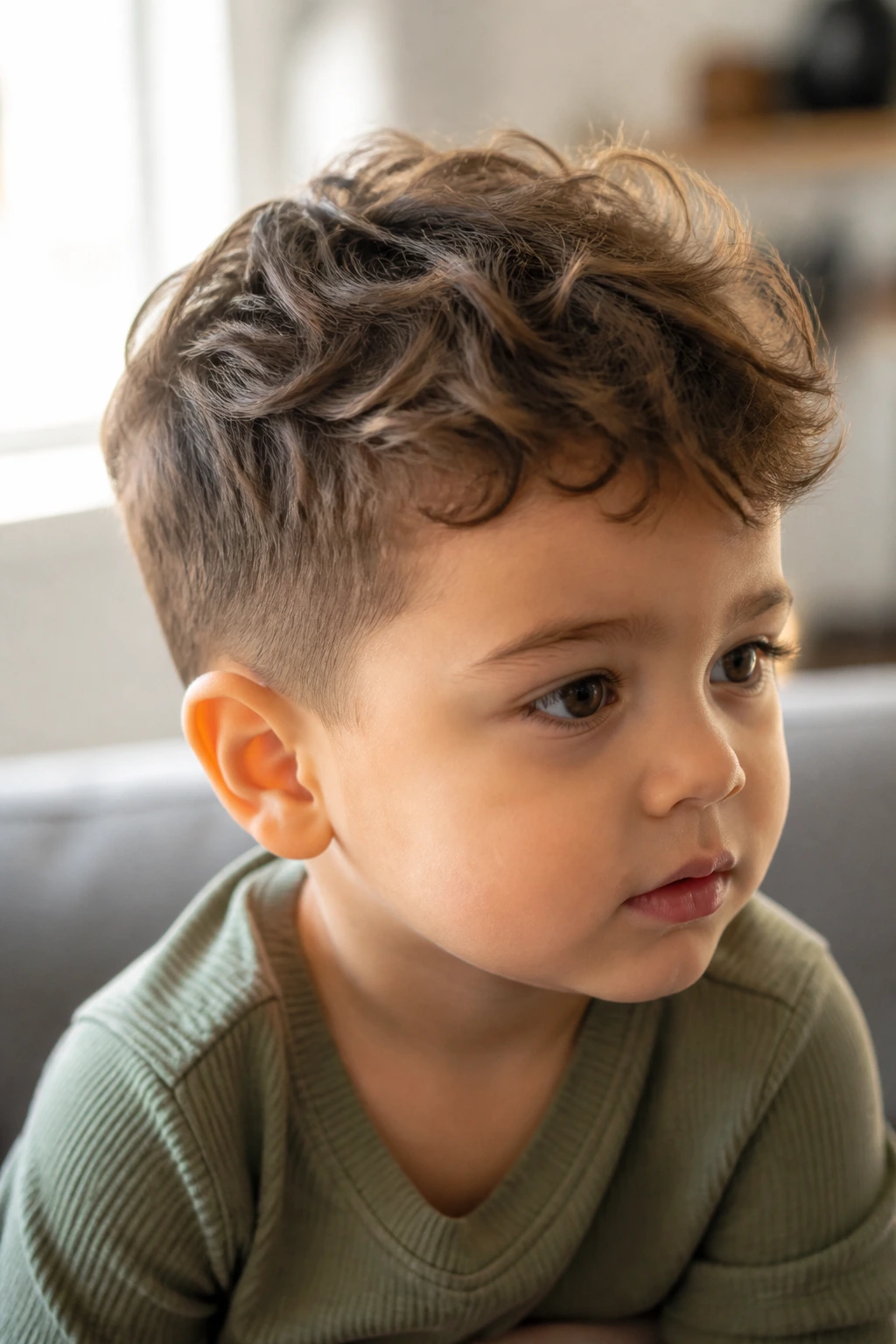
This is the haircut I reach for first when the wave is loose, the cowlicks are unpredictable, and you want the hair to sit down without looking stiff. The top stays short enough to avoid that mushroomy puff, but not so short that the wave disappears. The whole cut has a neat outline with a little broken texture on top, which keeps it from looking like a flat helmet.
Why it works on wavy toddler hair
A textured crop controls the edges while letting the bend show through in the middle. That matters because wavy hair tends to swell at the sides when it loses too much length, and this cut keeps the weight where it’s useful. Ask for a low taper around the ears and neckline, then keep the top around 1.5 to 2.5 inches so the wave can still fold instead of spring straight up.
What to tell the barber
- Keep the top short, but not buzzed.
- Use point-cutting or light scissor texture on the crown.
- Leave a soft taper around the ears and neck.
- Avoid a harsh fade if the hair is fine, because it can make the top look thinner than it is.
A pea-sized dab of light styling cream is enough for most days. More than that, and the hair starts to look sticky instead of soft.
2. Mini Side Part with Low Taper
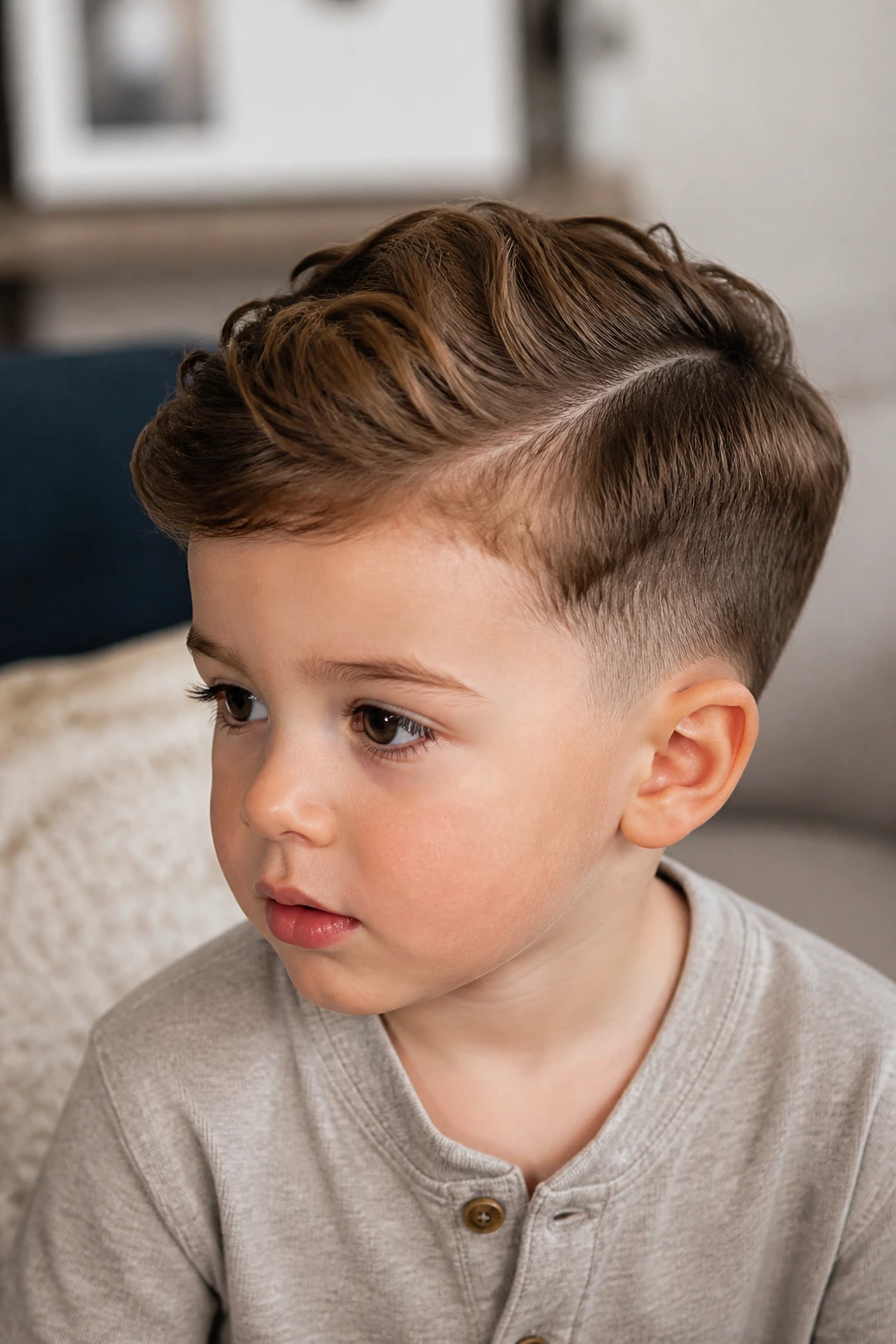
If your toddler’s hair naturally falls to one side, lean into it. Fighting a natural direction is one of the fastest ways to create a morning battle, and a soft side part solves that by giving the wave a lane to travel in. The low taper keeps the shape clean without making the style too grown-up or too fussy.
This cut looks especially good when the front has one stubborn cowlick that keeps flipping backward. A side part gives it a job. The top should stay long enough to comb over with your fingers, usually around 2 to 3 inches, and the part itself should be soft rather than razor-sharp. A hard part on a toddler can look oddly severe, and it grows out in an uneven way.
Use a damp comb or your fingers after bath time. If the hair dries with a slight bend at the front, leave it alone. That’s the sweet spot.
3. Curly Fringe With Clean Sides
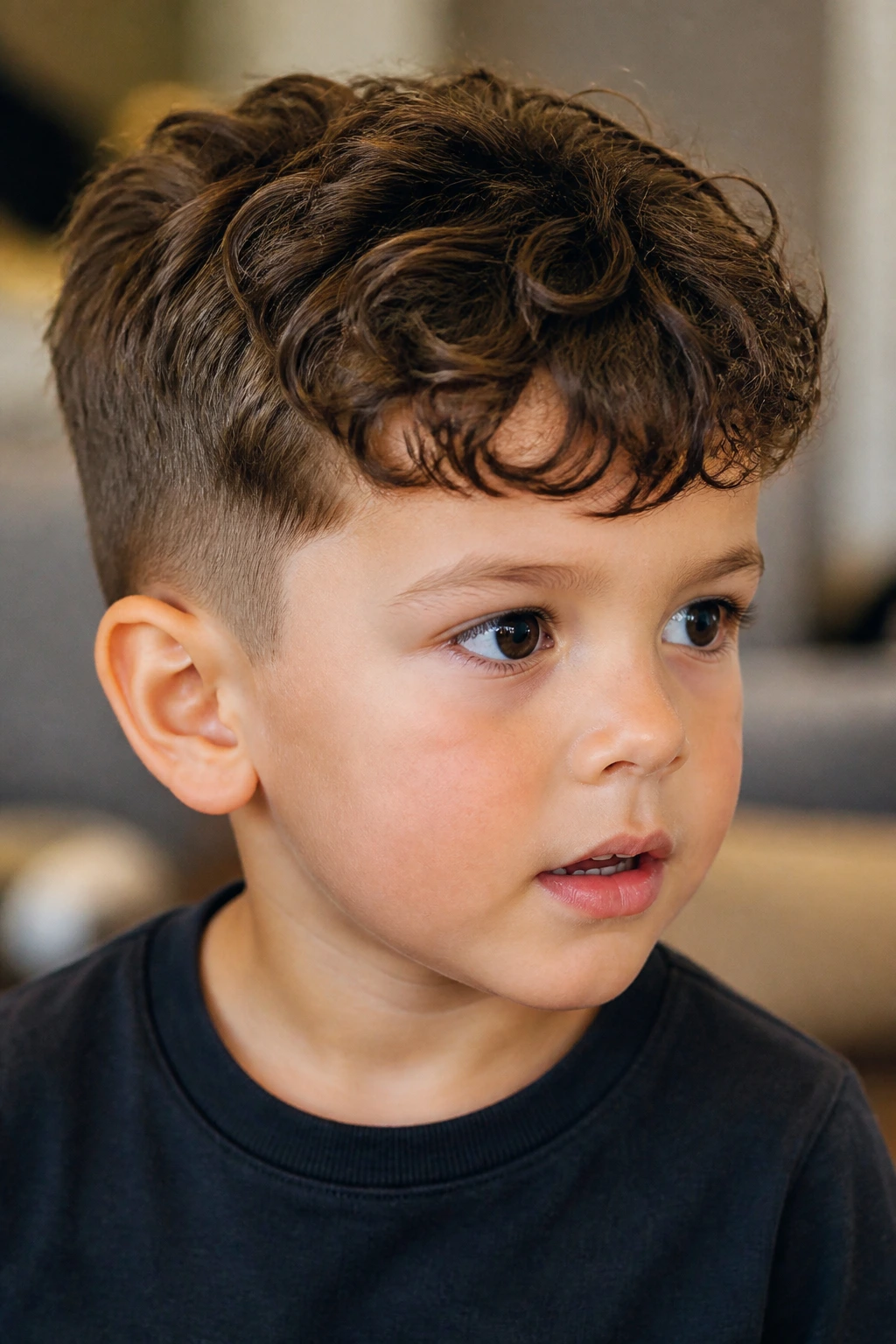
Some little boys have wavy hair that wants to fall forward no matter what, and this is the cut that stops pretending that’s a problem. Keep the fringe soft and rounded near the eyebrows, then shorten the sides enough to keep the ears visible and the shape tidy. It’s a nice answer for kids with a strong forehead wave or hair that gets heavy right across the front.
The trick is length control. Too short, and the fringe shoots up. Too long, and it falls into the eyes by lunch. The best version sits just above the brows when dry, because wavy hair rises a little as it loses moisture.
Best for
- Hair that naturally falls forward
- Thick wave patterns
- Toddlers who hate hair in their eyes
Barber note
Ask for soft, broken texture in the fringe, not a blunt line. A blunt edge on wavy hair tends to look chunky, and it can separate into little pieces that stick out at odd angles. A quick trim every 3 to 4 weeks usually keeps this one in shape.
4. Long Layered Mop Top
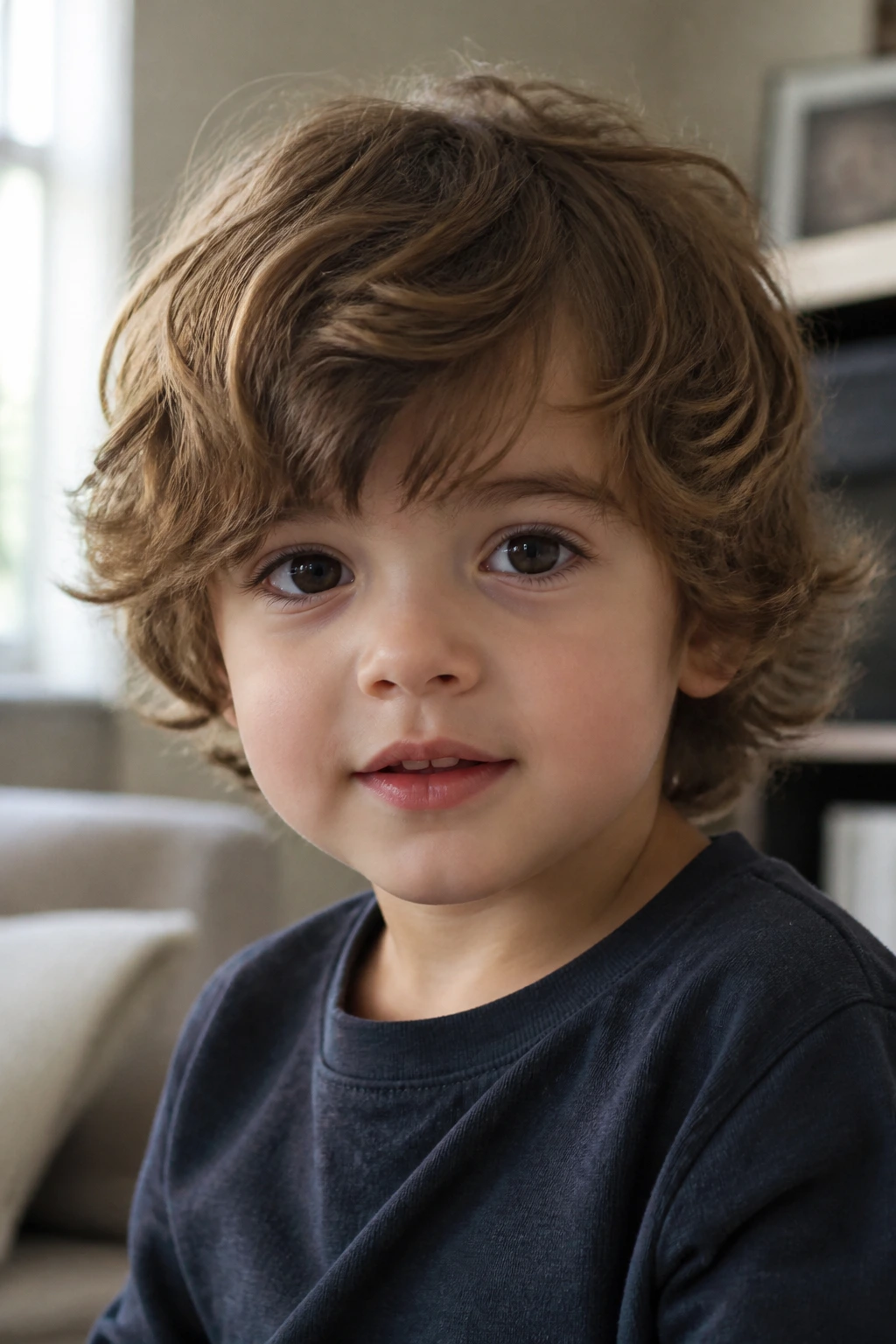
This is the cut for families who like a little length and don’t want the haircut to look over-managed. The hair stays longer all around, but the layers remove enough weight to keep the wave from collapsing into a shapeless block. It has a relaxed, lived-in look that suits toddlers who move a lot and don’t sit still long enough for precision styling anyway.
The danger here is overcutting the interior layers. If the barber takes too much bulk out near the crown, the top can spring up and leave the ends hanging in odd places. A better approach is soft scissor layering with a slightly tapered neckline and just enough cleanup around the ears to keep the outline intentional.
This cut works best when you’re willing to let the hair air-dry and do its thing. A little leave-in spray on damp hair, then finger-scrunching the waves into place, is usually all it needs.
5. Classic Crew Cut With Texture
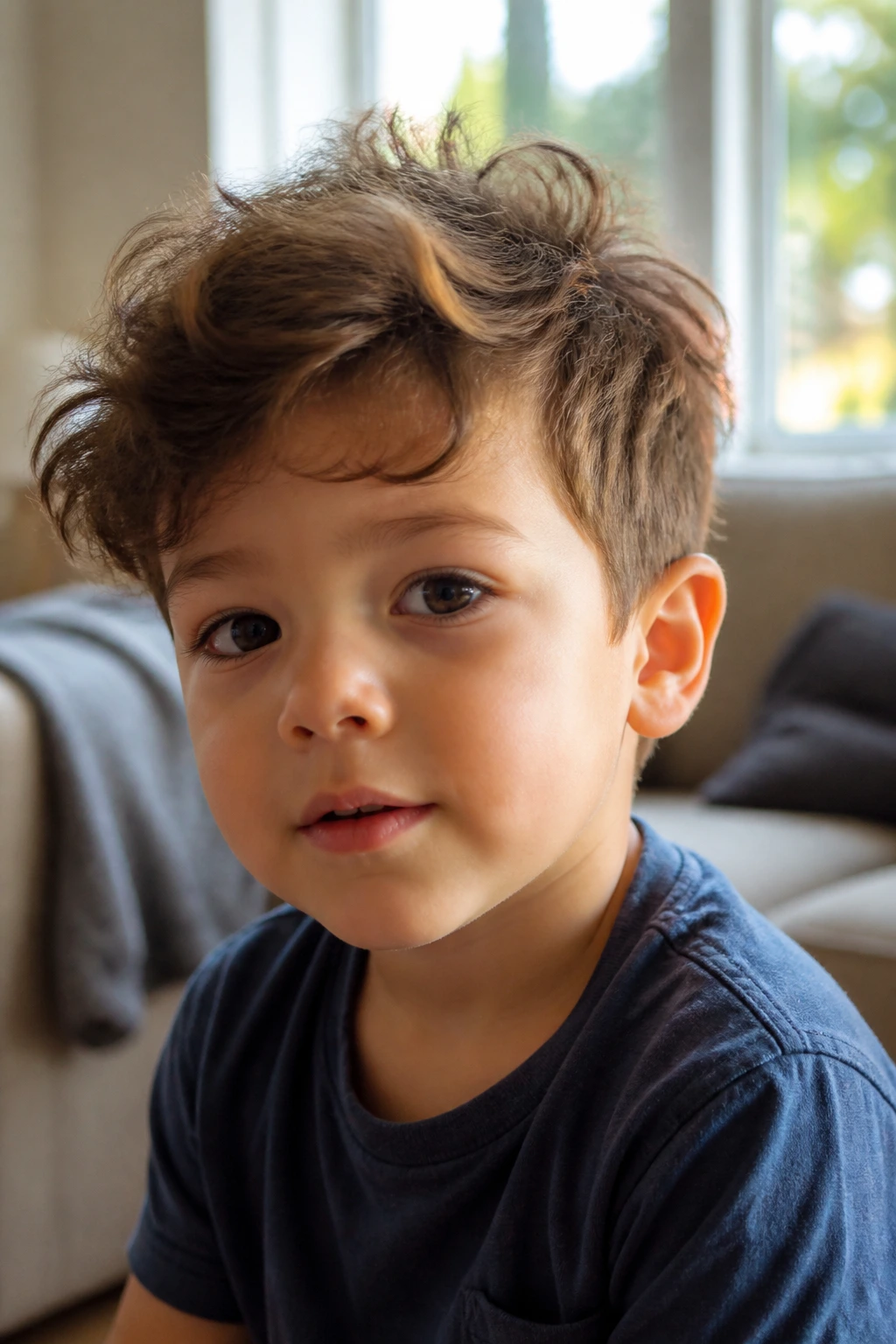
The crew cut still belongs in the conversation, but wavy toddler hair needs a softer version than the flat, severe kind some people imagine. Keep the top short enough to stay tidy, but not so short that the wave turns into fuzz. The sides can be tapered low, which keeps the haircut neat without exposing every little swirl on the scalp.
This is the best choice when you want a cut that survives playground time, car-seat naps, and a few days of not thinking about hair at all. It is not fancy. That’s the point. But it only works if the top keeps enough length to show texture. If the barber goes too short, the wave pattern loses its shape and the whole thing turns blunt.
A crew cut like this needs regular trims, usually every 4 to 5 weeks, because the balance between the top and the sides matters more than it does in longer styles.
6. Scissor-Only Shag
A scissor-only shag is a smart move when clippers upset your child or when the hair is thick enough to need real shaping instead of a hard perimeter. This cut uses layers all over the head, which helps the wave settle and keeps the bulk from building up at the sides and back. It feels softer than a fade and grows out with less drama.
The benefit is movement. Hair that has some lift on top and a little swing at the back looks intentional even when it’s messy. That said, the shag does need a barber who knows how to point-cut and remove weight without chopping the outline into pieces. If the layers are too choppy, the wave can separate in odd little shelves.
For home care, water is usually enough. A spray bottle and a quick scrunch are often better than any product, especially if your child has fine hair that gets weighed down easily.
7. Wavy French Crop
The French crop sits in a useful middle ground. It has a short fringe, tighter sides, and a textured top that gives the hair a controlled but still playful shape. On wavy toddler hair, it works because the front can fall slightly forward while the rest of the cut stays close enough to the head to stay tidy.
The fringe is the key. If it’s too blunt, the cut looks boxy. If it’s too long, the bangs start touching the eyes and the whole style loses its shape. Aim for a soft line that sits near the brow when dry, with enough texture that the wave can break naturally rather than forming one heavy curtain.
This cut is a good fit for kids whose hair wants to push forward at the front and swell at the temples. The short sides keep the haircut looking sharp even when the top gets a little messy.
8. Messy Brushed-Forward Cut
Brushed-forward hair is underrated for toddlers with waves. Instead of forcing a side part or trying to flatten the front, this cut directs the wave forward in a loose, easy shape. It’s tidy enough for daily life, but not so structured that it fights the child’s natural hair pattern.
The trick is leaving the front a touch longer than the crown. That way, the hair can fall forward with bend instead of sticking straight up. If the top is cut too evenly, the front and back compete with each other and the style starts to flip in odd directions. A little difference in length solves that.
What to watch for
- Keep the front soft, not chopped blunt.
- Use a low taper around the ears.
- Don’t overload the hair with product.
- Reset with a damp hand and a quick comb-through.
I like this cut for mornings when nobody wants a production. It looks better a little tousled than overdone, which is half the battle with toddler hair anyway.
9. Tapered Ivy League

The Ivy League is the cleanest-looking option on this list, but it still works for wavy hair because the top stays just long enough to move. Think of it as a small, controlled side-sweep rather than a slicked-down style. The low taper keeps the edges neat, while the top gives the wave a little room to show.
This is one of the better choices if you want a haircut that reads polished without feeling too stiff for a toddler. It works for family photos, church, or any day you want the hair to look tidy by default. The only catch is that it needs a comb after washing, and a light touch matters more than product.
Ask the barber to keep the side length soft and the top long enough to sweep, not press flat. If the top gets too short, the Ivy League stops looking like an Ivy League cut and starts looking like a very ordinary short cut.
10. Short Side-Swept Fringe
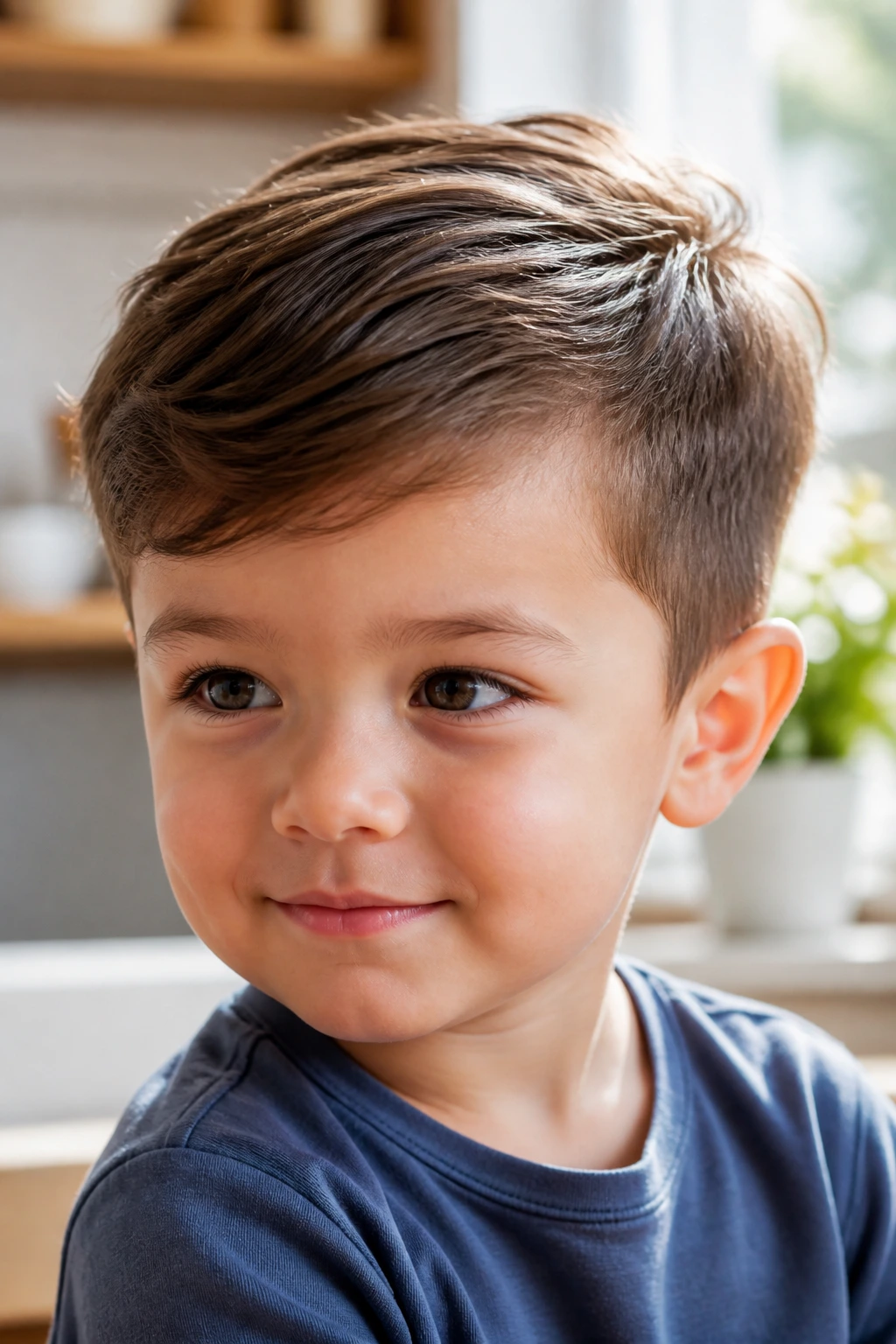
A side-swept fringe is one of the easiest ways to balance a wavy forehead area without chopping off all the personality in the hair. The front stays slightly longer and moves across the forehead at a soft angle, which helps when the face is round, the hairline is high, or the wave pattern likes to fall in one direction.
The nice thing here is flexibility. You can wear it brushed a bit more to one side on clean hair or let it fall looser after playtime. It doesn’t need a hard part, and it doesn’t need a lot of styling. That makes it practical for toddlers, who are not interested in maintaining a perfect line across their forehead.
If you want this cut to last, keep the fringe trimmed before it reaches the eyes. Wavy bangs always seem a little shorter when they’re dry, so leave a small buffer. A barber can clean up the temples and neckline while letting the front stay soft.
11. Surfer Layers With a Nape Taper

This is the cut for parents who like length but don’t want it to turn shaggy at the neckline. The top and back stay longer, the wave gets to move, and the nape is cleaned up just enough to stop the haircut from looking unfinished. It has a relaxed, beachy feel without needing any fancy product or effort.
The biggest advantage is grow-out. Longer wavy hair often looks worse when the neckline is ignored, and a tapered nape fixes that. The cut can keep its shape for a good stretch because the length on top absorbs the growth instead of making the whole style collapse.
A little leave-in conditioner or detangling spray helps if the hair tangles at the ends. Don’t drown it in cream. The whole point is movement, not stiffness. If your child has thick waves, this can be one of the easiest cuts to live with.
12. Textured Caesar

The Caesar has a simple, almost old-school shape, but wavy hair gives it a softer edge than you might expect. The fringe is kept short and forward, which helps control a front cowlick or a wave that keeps lifting off the forehead. The top stays short and textured, and the sides are neat without being stripped bare.
What makes it useful for toddlers is the low maintenance. It doesn’t ask for a part, and it doesn’t need a lot of morning fixing. If the hair grows fast or the child is rough on their hairstyle, the Caesar keeps looking decent longer than a more delicate shape would.
The fringe should be soft enough to break naturally, not cut into one hard line. That detail matters more than most people think. A blunt Caesar on wavy hair can look boxy fast. Add a little texture and it becomes much easier to wear.
13. Tiny Faux Hawk With Soft Fade
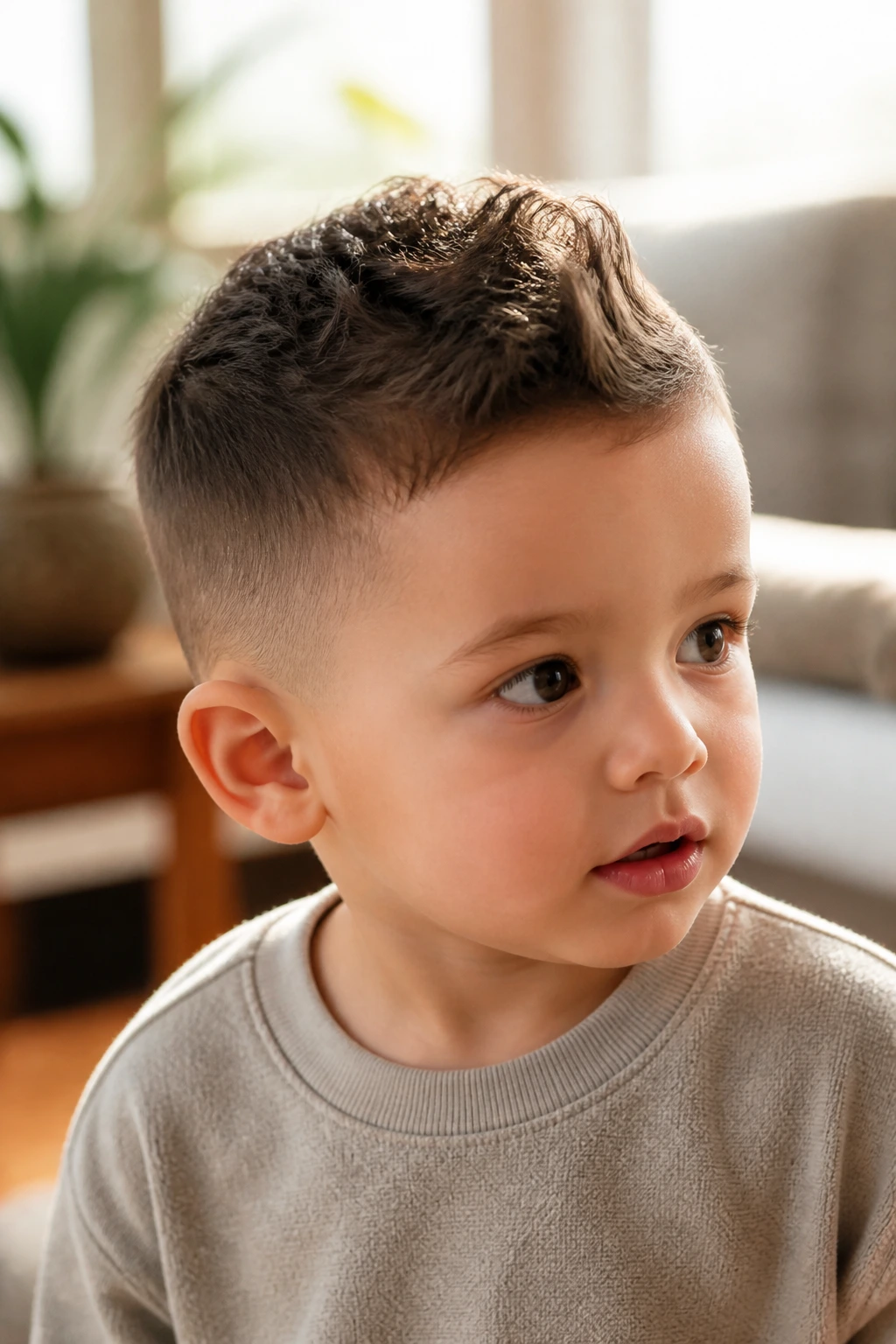
A faux hawk can be fun on wavy hair, but it works only when you keep it soft. The center strip stays a little longer, the sides are faded or tapered close, and the whole cut relies on shape more than spiky product. If you try to force the spikes, it starts looking stiff and odd on a toddler.
This style suits thicker hair best, because the wave gives the middle enough body to stand up without collapsing. It’s a good pick for kids who like movement and parents who want something playful without a lot of length around the ears. Keep in mind that the center should not be too narrow. A strip that is too skinny can look thin instead of bold.
A tiny amount of light cream or just damp fingers is usually enough. That’s a nice thing about this cut: it already has the shape built in. You are not manufacturing the style every morning.
14. Reimagined Bowl Cut

The bowl cut gets a bad reputation because people remember the old version: blunt, heavy, and carved like a helmet. The softer version works much better on wavy toddler hair. The top and sides follow a rounded shape, but the edges are softened and the interior has enough texture to keep the wave from turning into a hard shell.
This cut can look charming on the right child because it gives a clean frame to the face while still letting the hair do a little bending. It’s especially useful when the wave pattern is even all over and you want the haircut to grow out in a predictable way. Ask for softened edges around the ears and neck, not a hard perimeter.
The main risk is going too geometric. If the line is too sharp, the cut looks dated fast. If it’s softened and layered, it reads as deliberate and fresh instead. That difference is tiny on paper and huge in real life.
15. Medium Layered Cut With a Tapered Neckline
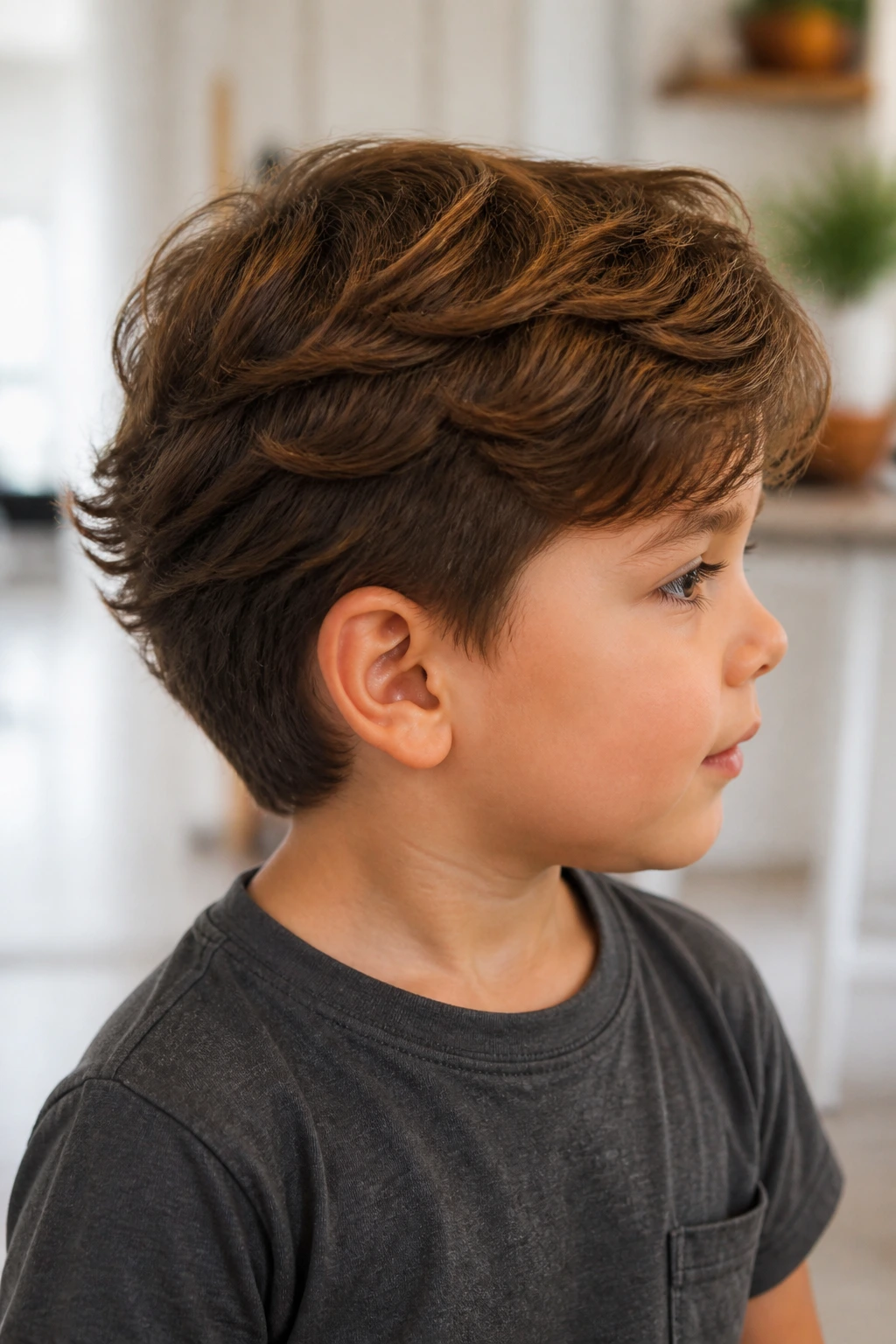
This is the practical middle road. The hair stays medium in length, with layers that stop the wave from becoming heavy and a tapered neckline that keeps the whole thing looking tidy. It’s one of the best options for parents who want a haircut that can live through several weeks of growth without falling apart.
Medium length gives wavy hair room to move, but the layers stop it from hanging in one flat sheet. The neckline matters more than you’d think. A clean nape makes the haircut feel maintained, even when the top is getting a little wild. That makes this style a strong choice for busy families.
If the child has thick hair, ask the barber to remove bulk carefully through the crown without thinning the ends into frizz. Point-cutting usually beats aggressive thinning here. The result should feel light, not shredded.
16. Side-Swept Comb Over With Movement

A comb over on a little boy sounds formal until you soften it. On wavy hair, it becomes a relaxed sweep that follows the natural curve of the head instead of sitting flat and slick. The top is long enough to move, the sides are tapered, and the finish stays loose.
This is a good cut when you want something a little neater than a shag but less stiff than a full part. The wave gives the comb over some texture, so it doesn’t need shiny product to stay in place. A light styling lotion or a few drops of water are enough to direct it.
The key is keeping the front from getting too heavy. If the front collapses over the eyes, the cut loses that clean sweep. If it’s too short, it won’t comb over at all. The balance is what makes it work.
17. Mini Pompadour With Natural Wave
A toddler pompadour should never look like it belongs to a much older kid. The good version has a little height at the front, some softness through the top, and tapered sides that keep the shape from getting boxy. Wavy hair helps here because the bend gives the front a bit of lift without needing serious product.
This cut is best for denser hair that already has some body. If the hair is too fine, the pompadour can collapse by noon. But when it works, it gives a neat, lively shape that feels playful without being messy.
The clean way to style it
Blow-dry on low heat for a few seconds while brushing the front upward with your fingers, then stop. Do not overbuild the height. A toddler pompadour should look like it has been lightly nudged into place, not shellacked.
18. Clean Temple Taper With Free Waves
This might be the smartest cut on the whole list if you want the wave pattern to stay visible and still look tidy. The temples, sideburns, and neckline get cleaned up, but the top is left alone enough for the natural bend to do its thing. The result looks relaxed, not overworked.
It is a strong choice for toddlers who hate product, hate combing, or hate being touched for long. The haircut carries more of the job itself, which means the morning routine gets much shorter. That matters. A style that only works when everything is perfect is not much use on a real child.
This cut also grows out nicely because the taper keeps the outline fresh even as the top gets a little longer. If I had to pick one “safe” wavy cut that can handle naps, hats, and a little chaos, this would be near the top of the list.
Why Wavy Hair Needs Shape, Not Armor
Wavy hair on a toddler is a funny thing. It looks tame when it’s wet, then opens up as it dries and starts showing every bend, swirl, and cowlick at once. That’s why heavy gels, hard parts, and over-short fades often miss the point. They try to lock the hair down instead of giving it a shape that can bend on its own.
The hair also changes where the bulk sits. Too much weight near the temples makes the sides puff. Too much length at the crown can push the top forward or back in a way that feels messy rather than soft. A good cut balances those two pressures. Shorten where the hair gets bulky, keep length where the wave needs to form.
I’m a bigger fan of clean edges and soft tops than harsh outlines. Wavy hair wants movement, not armor. When the haircut has room to breathe, it stays looking decent longer, and that buys you time between visits.
Reading the Wave Pattern Before You Pick a Cut
Not all waves behave the same way. Some are loose bends that barely show until the hair dries. Some form clear S-shapes. Others sit right on the edge of curly. If you choose a cut without looking at that pattern, you end up fighting the hair instead of using it.
Loose wave, usually called 2A
This kind of hair looks close to straight when damp and takes on movement later in the day. It does well with crops, side parts, and short textured cuts, because it doesn’t need much length to show the bend. Too many layers can make it fall flat.
Defined wave, usually called 2B
Here the wave is visible earlier and has more spring. It likes fringe cuts, shags, and layered tops, because the bend has enough body to hold its shape. Leave more length through the front and crown so the wave doesn’t pop out in random spots.
Strong wave or near-curly texture, often 2C
This hair needs a little more room. Short sides help, but the top should stay longer and softer so the wave doesn’t turn into a puff. Heavy blunt edges make this texture look bulky fast, which is why point-cutting and soft layers work so well.
Cowlicks matter too. A strong front cowlick can change the whole plan, and a barber who ignores it will give you a haircut that fights you every morning. Wet hair hides a lot, so I always like to see how the hair dries before calling it done.
Essential Tools for a Clean, Tear-Free Trim
-
Spray bottle with clean water: Dampen the hair in small sections so you can see the wave without soaking it into a flat sheet.
-
Wide-tooth comb: This moves through wavy hair without pulling hard on tangles or making the child miserable.
-
Fine-tooth comb: Useful for clean parts and checking the line near the fringe or neckline.
-
Child-safe haircut scissors: Sharp enough to cut cleanly, because dull scissors chew the ends and make wavy hair frizzier.
-
Clippers with guards: Good for low tapers, neck cleanup, and side blending, especially if the child tolerates clippers.
-
Soft cape or large towel: Keeps hair off clothing and helps the child feel less itchy while the haircut happens.
-
Leave-in detangler or light styling cream: One light product is enough for most wavy cuts; heavy pomades usually do too much.
-
Hand mirror: Handy for showing the back and neckline so you can check shape without guessing.
What to Tell the Barber Without Rambling
Barber chairs can get awkward when parents try to explain five different ideas at once. Keep it simple. Start with how the hair behaves, then say how much length you want to keep on top, and finally mention what matters most around the ears and neckline.
A useful script sounds like this: “He has wavy hair that puffs if it gets too short on the sides. I want to keep enough length on top for the wave to show, and I’d like a low taper around the ears and neck.” That gives the barber shape, texture, and maintenance clues all at once.
Bring one or two photos, but bring the right kind. A front photo is good. A side photo is better. If the cut has a particular neckline or fringe, show that too. A single polished picture from a different hair type can mislead everybody in the chair.
And mention your child’s limits. If clippers are a no-go, say it upfront. If bangs touching the eyes cause trouble, say that too. The more practical the instructions, the better the result.
How to Style the Cut on Busy Mornings
Air-Dry Finish: For most wavy toddler cuts, this is the easiest route. Pat the hair with a towel, add a little water to the front if needed, then finger-comb the waves into the direction they already want to go. If the cut is right, that may be enough.
Quick Reset: If the hair wakes up messy, mist the top with water, rub a pea-size amount of light cream between your palms, and smooth it through the top only. Don’t coat the sides. The goal is to soften the wave, not freeze it.
When the Front Misbehaves: Press the fringe down with damp fingers for a few seconds, then let it release on its own. Wavy bangs often settle better if you stop touching them halfway through.
What to Skip: Heavy gel, sticky wax, and aggressive brushing usually make the cut look worse. They flatten the bend or split the wave into hard clumps, and toddlers do not need that kind of fuss.
Small Tweaks That Make the Waves Behave
Flavor Enhancement: If you want a touch more shape without hard product, use a light leave-in spray on damp hair and scrunch the ends upward once or twice. That tiny move can make the wave sit better without looking styled.
Time Saver: Ask the barber to keep the neckline slightly tapered instead of blunt. It hides growth longer, which means you can buy yourself a little extra time between cuts.
Shape Control: Leave the crown a bit longer than the sides. Wavy hair often needs that extra half-inch to avoid sticking up in the back.
Fringe Control: Keep bangs just above the brows, not on top of them. Wavy hair shortens as it dries, and what looks fine wet can turn into eye pokers by afternoon.
Make-It-Yours: For fine hair, keep the cut softer and shorter on top. For thick hair, keep the top longer and remove weight carefully through the interior. For sensitive scalps, go easier on clippers around the ears and neckline.
Common Mistakes That Make Wavy Toddler Hair Fight Back
The most common mistake is cutting too short while the hair is still wet. Wet waves stretch out and lie to you. When they dry, they spring back up, and suddenly the top is shorter than planned. The fix is simple: leave more length than you think you need, especially at the front and crown.
Another problem is using thinning shears as a shortcut for bulk. On wavy hair, that often creates frizz and little flyaway patches that never sit right. Point-cutting and soft layering usually work better.
High fades can also cause trouble if the hair is fine or medium in density. The sides can disappear too fast, which makes the top look wider by comparison. A low taper usually ages better on toddlers.
Heavy styling products are a bad bet too. Wavy hair can turn stringy fast, and toddlers tend to touch their hair constantly. A little water or light cream beats a sticky pomade almost every time.
Finally, don’t ignore the cowlicks at the front and crown. They’re not small details. They decide where the hair wants to sit, and a cut that ignores them spends the next month looking like it is losing a small argument.
Other Ways to Wear the Same Cut
The Low-Maintenance Grow-Out: Keep every cut half an inch longer than the barber first suggests. This works well if you prefer fewer trims and don’t mind a softer, slightly messier finish by week four.
The School-Photo Version: Tighten the taper at the temples and neckline, then keep the top neatly swept or lightly side-parted. It looks cleaner without becoming stiff.
The Playground Version: Leave the top longer and keep the sides soft. This is the cut that still looks fine after a nap, a hat, and a chase around the yard.
The Sensitive-Scalp Version: Ask for scissors around the ears and nape instead of clippers. A lot of toddlers tolerate that much better, and the haircut still looks tidy if the outline is cleaned up carefully.
The Thick-Hair Version: Leave more length on top and remove bulk with layered scissor work rather than aggressive thinning. Thick waves need shape, not punishment.
The Fine-Hair Version: Keep the style shorter and softer so it doesn’t hang stringy. Fine waves can lose body quickly, so a little less length often looks better.
Keeping the Shape Between Haircuts
A wavy toddler cut usually looks best with trims every 4 to 6 weeks, though the exact timing depends on how fast the hair grows and how much fringe is involved. If the bangs reach the eyes or the neckline starts to fuzz out, the haircut is past its clean stage.
At home, a quick rinse and a little conditioner help keep the ends from tangling. You do not need to shampoo every day unless the hair is getting dirty fast. Too much washing can leave the wave dry and poofy, which makes styling harder.
If the child wakes up with a flattened crown or a bent fringe, a few drops of water and a finger-comb usually fix it. Bedhead is normal. Trying to erase every bit of it is not worth the effort.
For cuts with a visible neckline, a barber cleanup between full trims can keep the whole look crisp. Even a small edge trim around the ears and nape makes the haircut look cared for.
Frequently Asked Questions
How short can you cut wavy toddler hair before it puffs up?
Usually shorter than 1 inch on top is where many wave patterns start to stand up instead of bend. The exact line depends on density, but keeping a little more length at the crown and fringe gives the hair room to fold.
Is a fade good for wavy little boys’ hair?
Yes, if it stays low and soft. A high fade can make fine or medium waves look too wide on top, while a low taper keeps the sides tidy without stealing the hair’s shape.
Should wavy toddler hair be cut wet or dry?
A wet cut is common, but it needs a careful finish check because waves shrink as they dry. For fringe and crown areas, seeing the hair partly dry helps avoid cutting too much off.
What if one side of his hair is straighter than the other?
That’s normal. Many kids have mixed texture on the same head, especially near the hairline or crown. A barber should cut to the stronger wave pattern and leave the straighter side a little more length so it doesn’t vanish.
How often should these cuts be trimmed?
Most of them look best every 4 to 6 weeks. Fringe-heavy cuts may need attention sooner, while longer layered styles can stretch farther if the neckline stays neat.
Can I use product every day on a toddler?
Yes, but keep it light. A little leave-in spray or a pea-size amount of cream is enough. Heavy waxes and gels can build up fast and make the hair sticky.
What if my child hates clippers?
Ask for a scissor-led cut or a scissor-only shape with just a light neckline cleanup. Plenty of the styles here work without a full clipper fade.
Should wavy hair be thinned out to reduce bulk?
Not usually by default. Over-thinning can create frizz and uneven patches. Point-cutting and careful layering are safer ways to remove weight.
Which cut is best if I want the least morning work?
The clean temple taper, soft textured crop, and textured Caesar are strong choices. They keep their shape with minimal brushing and survive a rough day better than styles that rely on perfect parting.
The Cut That Grows Out Gracefully
The best haircut for a toddler with wavy hair is the one that still makes sense after the child has rolled through a nap, tugged at the fringe, and forgotten all about style by snack time. That is the real test. Not how it looks under the barber cape. Not how clean the lines are right after the clipper stops. How it behaves a week later.
If you keep the wave pattern in mind, leave enough length where the hair needs to bend, and clean up the sides with some restraint, you get a cut that holds together in real life. That’s worth more than a flashy shape that needs a perfect morning to survive.
Start with the wave, not the photo. The rest usually falls into place.