



Thick hair has opinions. Cut it too blunt and it pushes out at the sides like it’s trying to leave the salon on its own. Thin it too hard and it frays at the ends, which is a fast way to turn a sharp shape into a puffball with regrets.
That’s why short hair with thick hair is such a specific game. The length matters, but the shape matters more. A good short cut on dense hair doesn’t just remove inches; it changes where the weight sits, where the movement starts, and how much time you spend fighting it with a brush at 7:10 in the morning.
The good news is that thick hair gives you room to play. You can wear a cropped pixie that looks soft instead of severe, a bob that sits like a clean block instead of a helmet, or a shag that moves instead of mushrooming. The trick is knowing which lengths do the heavy lifting and which ones make your hair do that awkward triangle thing nobody asked for.
Why These 18 Short Styles Work So Well on Thick Hair
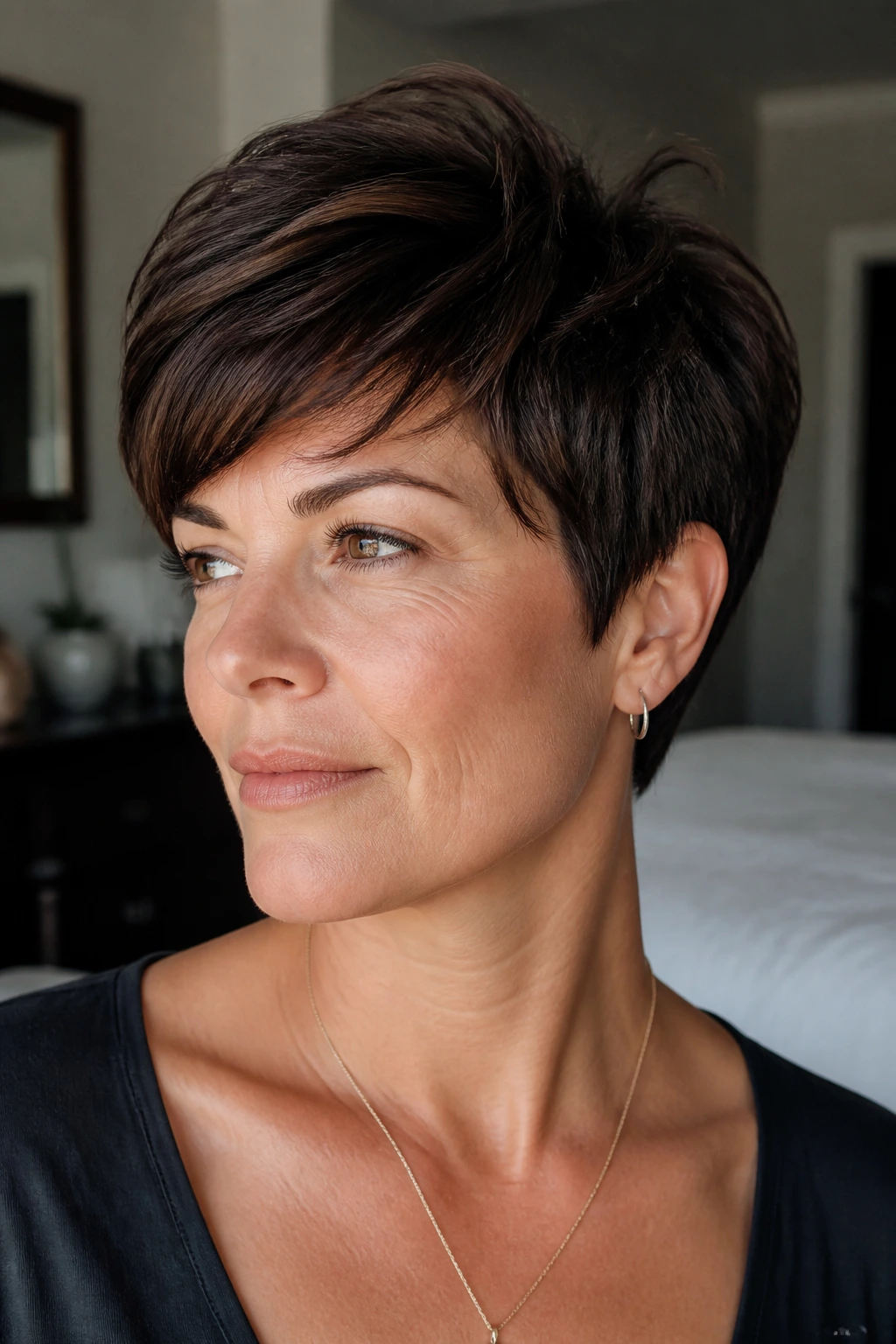
-
Weight control: Shorter lengths take pressure off the ends, so thick hair stops drooping at the bottom and starting its own shape where you don’t want it.
-
Cleaner silhouette: Dense hair holds a line better than fine hair, which means a blunt bob or a carved pixie can look crisp instead of flimsy.
-
Faster styling: Thick hair still takes work, but a shorter cut dries faster and needs less product to move into place.
-
Better neck and jaw balance: The right short cut opens up the neckline and can make heavy hair feel lighter around the face without looking wispy.
-
Room for texture: Thick strands hold bend, wave, and piecey separation well, so a little paste or mousse goes a long way.
-
Less daily negotiation: When the perimeter is shaped well, you spend less time fighting the same bulge at the sides every single morning.
The Shape Thick Hair Actually Wants at Short Lengths
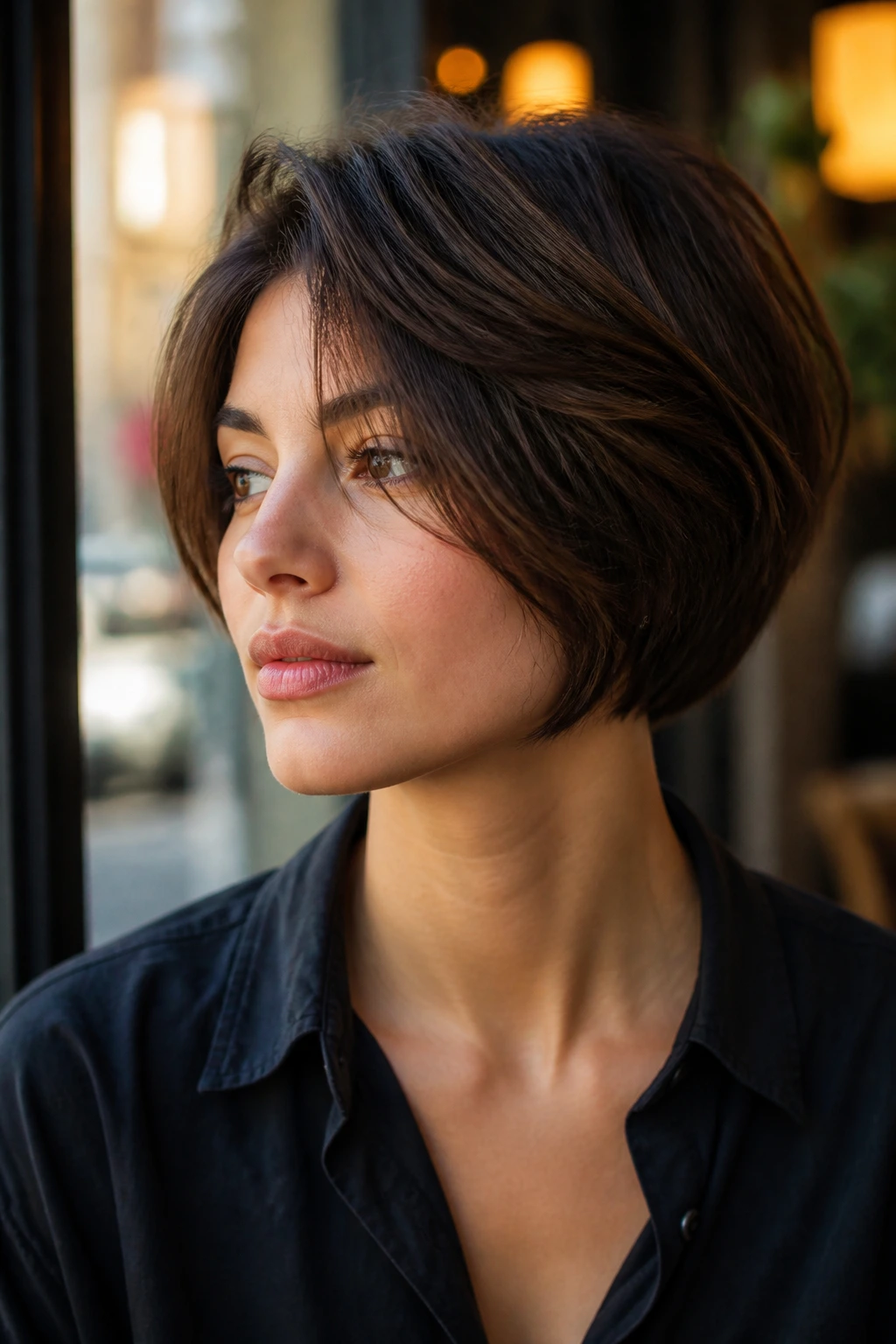
Thick hair is not one thing. Dense hair can be fine in texture but packed tightly, while coarse hair may have a bigger strand and a heavier hand. That matters, because the same pixie or bob behaves differently depending on whether you’re dealing with bulk, spring, or both. A good stylist reads that before the scissors even open.
The short cuts that work best almost always do one of three things: they remove weight in the interior, they build a strong perimeter, or they create a deliberate break in the silhouette with bangs, undercut panels, or asymmetry. Random thinning is not the same as smart weight removal. Random thinning is how you get little fuzzy shelves that frizz out under humidity and feel strange when you run your hands through them.
If your hair is thick and straight, blunt lines can look fantastic because they make the density look expensive rather than bulky. If your hair is thick and wavy or curly, a dry cut or curl-specific shaping usually gives a truer finish, because curls spring up after they dry and can hide a bad wet cut fast. The right short hairstyle doesn’t fight your density. It uses it.
1. Textured Pixie with a Longer Crown
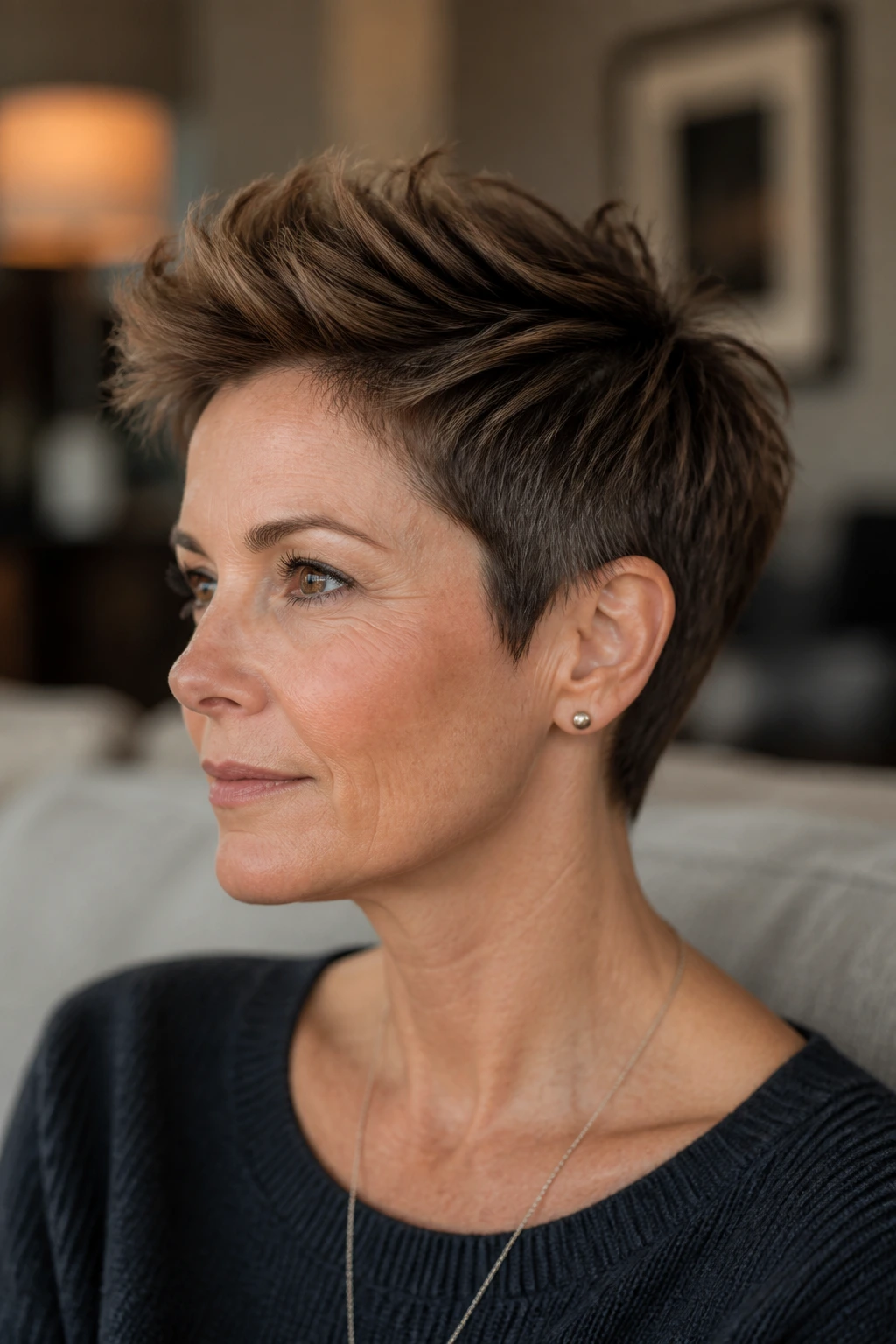
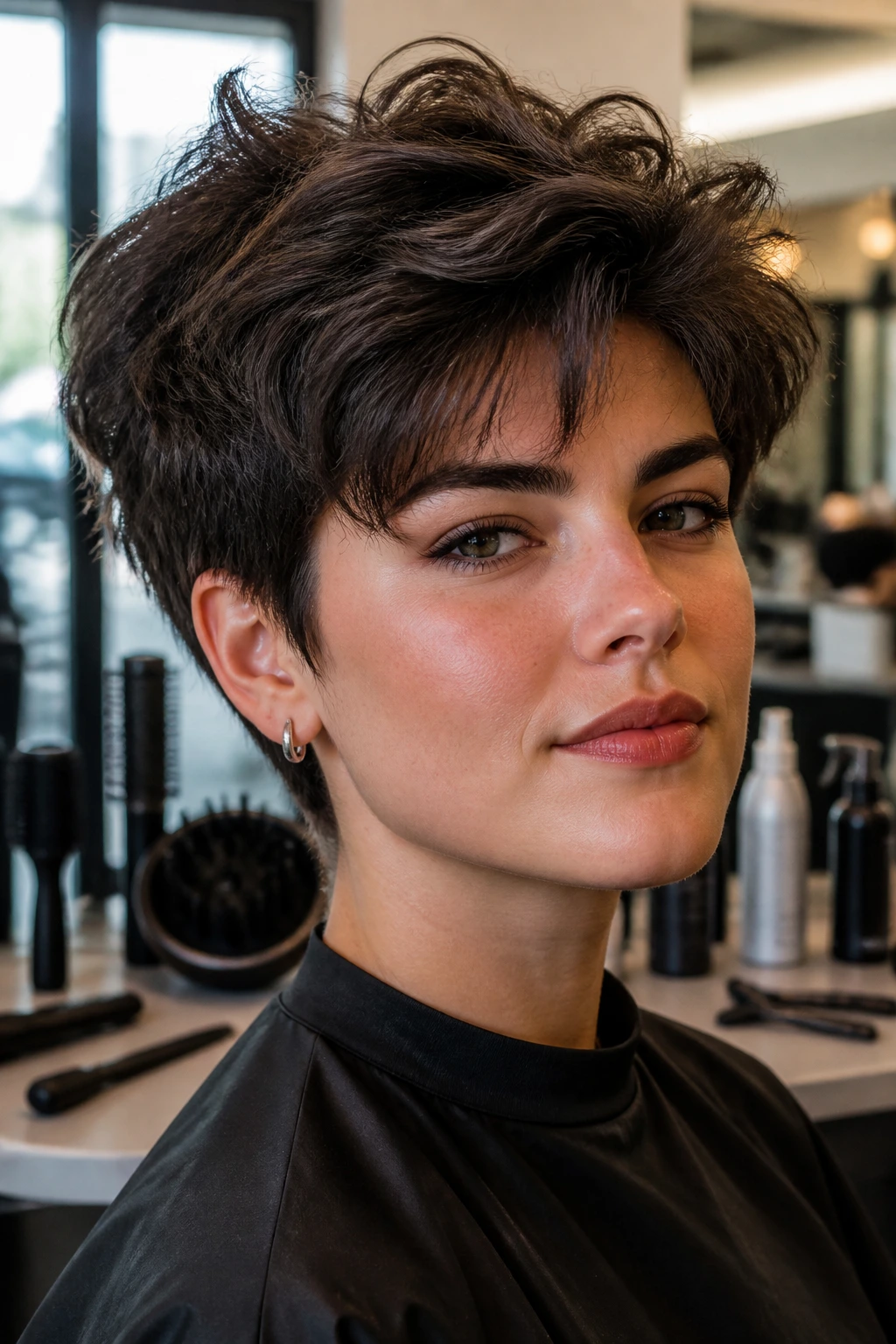
A textured pixie with a longer crown is one of those cuts that makes thick hair look intentional instead of heavy. The sides are tight enough to clear the ears, but the top keeps 2 to 4 inches of length so the shape can move instead of sticking straight up like a brush.
Why It Works
Thick hair has enough body to support a short crown, which means you can get lift without teasing the life out of it. The trick is keeping the perimeter neat and carving texture into the top with point-cutting, not hacking away at random. If the crown is too short, the cut can puff. If it’s too long everywhere, it loses the point.
Styling Cue
Work a pea-sized amount of matte paste or flexible cream through damp hair, then blow-dry with your fingers aimed forward and slightly down. That keeps the top from becoming helmet-shaped. A touch of root lift spray at the crown helps, but don’t drown it. Thick hair holds product more than people expect.
Salon Note
Ask for short, tapered sides, a longer textured top, and soft debulking inside the crown. Mention that you want movement, not spikes. If your hair grows straight out from the head, this is the sort of detail that keeps the cut wearable at home.
2. Tapered Crop with a Side Sweep
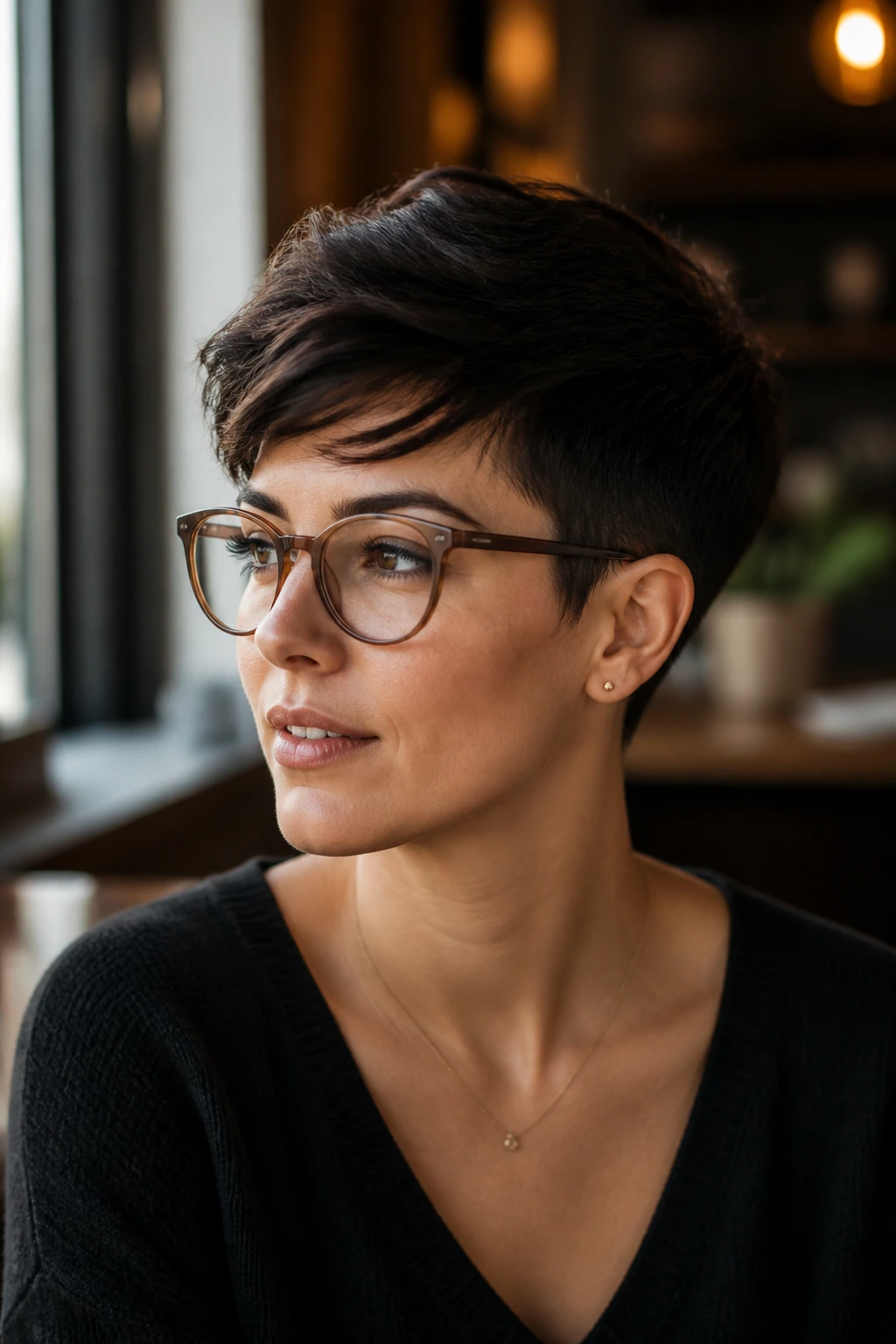
This cut sits close to the head at the nape and around the ears, then leaves enough length on top for a side sweep that softens the whole look. On thick hair, that side sweep does a lot of work. It breaks up the fullness and keeps the cut from feeling boxy.
The tapered crop is especially good if you wear glasses. The hair doesn’t compete with the frames, and the diagonal fringe gives the face a little line without covering it up. I like this cut because it looks polished with almost no effort, but it never feels stiff. It moves when you move.
Blow-dry the top in the direction you want the sweep to fall, then use a small round brush or your fingers to bend the front over. A light cream or soft wax is enough. Heavy pomade will flatten the volume and make thick hair feel greasy by midday.
3. Bixie Cut with Feathered Ends
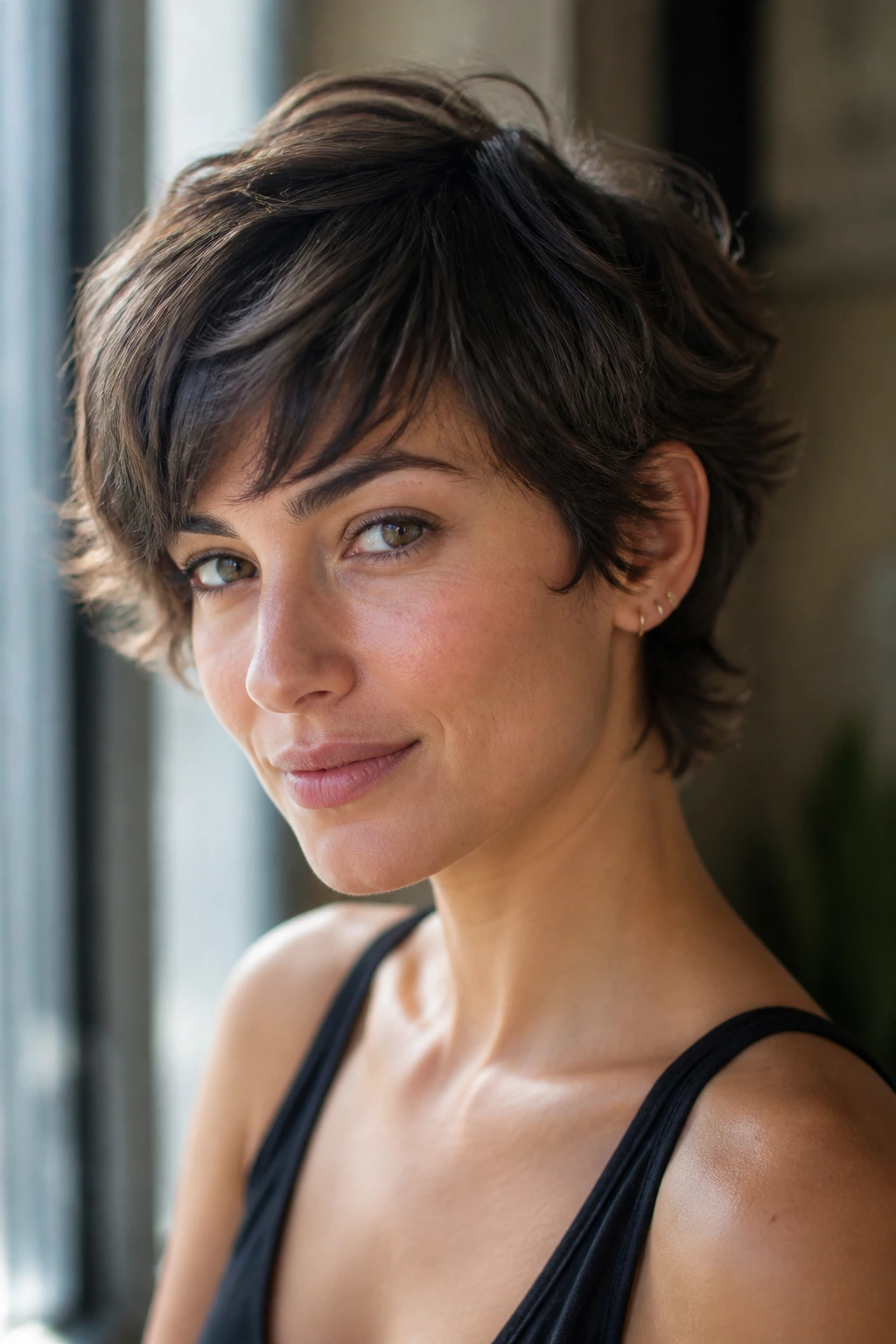
A bixie lives halfway between a bob and a pixie, and thick hair gives it real shape. You get the shorter neck and ear area of a pixie, but the edges are soft enough to tuck behind one ear or flip forward when you want a little drama. Feathered ends keep the outline from going blunt in a way that can make dense hair look bulky.
What to Ask For
Tell your stylist you want a bob-pixie hybrid, soft feathering at the edges, and enough length in front to skim the cheekbone. That cheekbone piece matters. It gives the cut a face-framing line so the bulk stays under control instead of spreading sideways.
How to Wear It
This one looks best with a little bend, not a perfect blowout. Spray in a small amount of texture mist, rough-dry to about 80 percent, then use a round brush on the top sections only. The ends should look touched, not shaped into little curls.
Best For
Bixies work well on thick hair that feels too heavy for a classic pixie but too dense for a razor-cut shag. They’re also useful if you want a short style that can grow out into a bob without looking awkward after three weeks.
4. Jaw-Length Blunt Bob
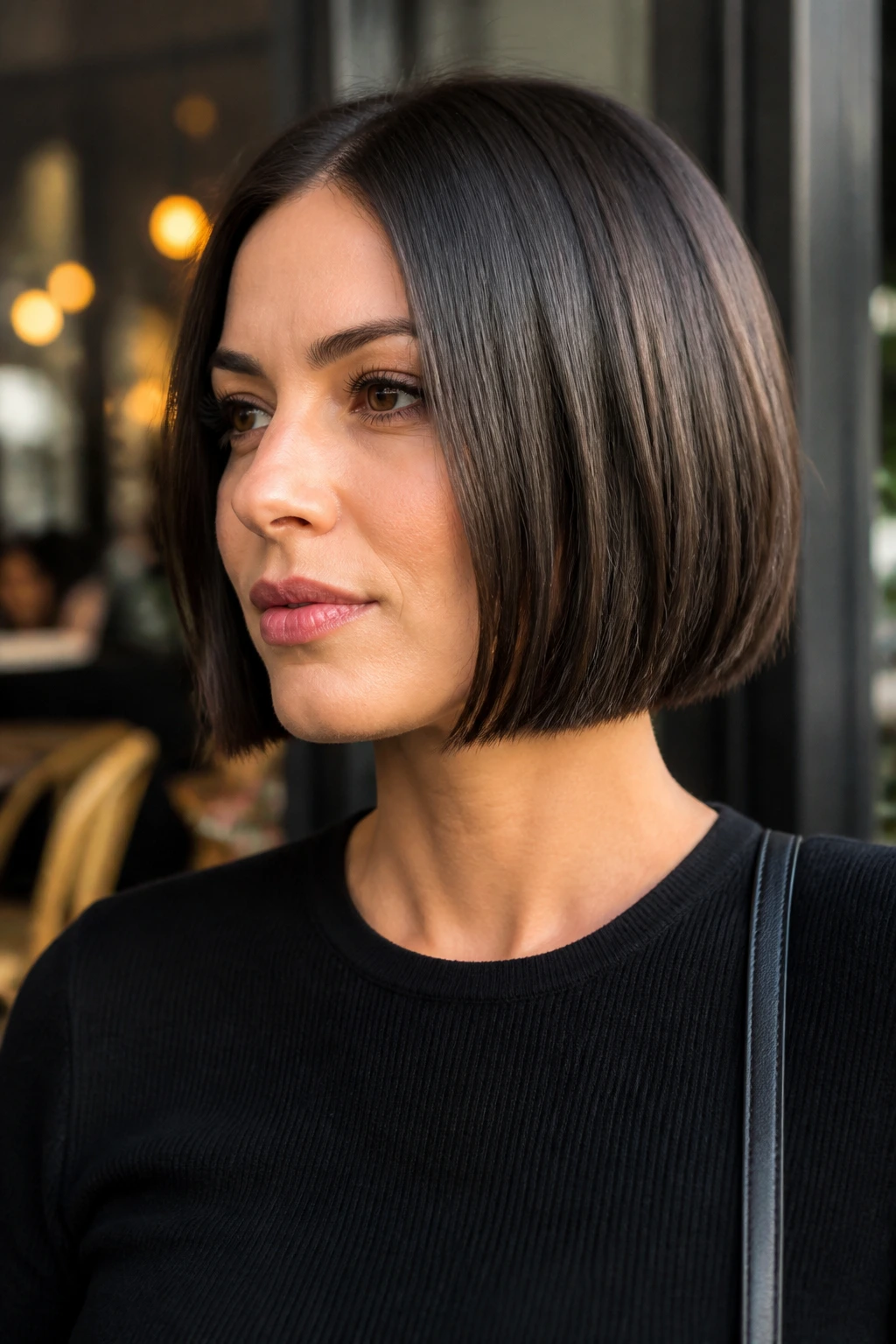
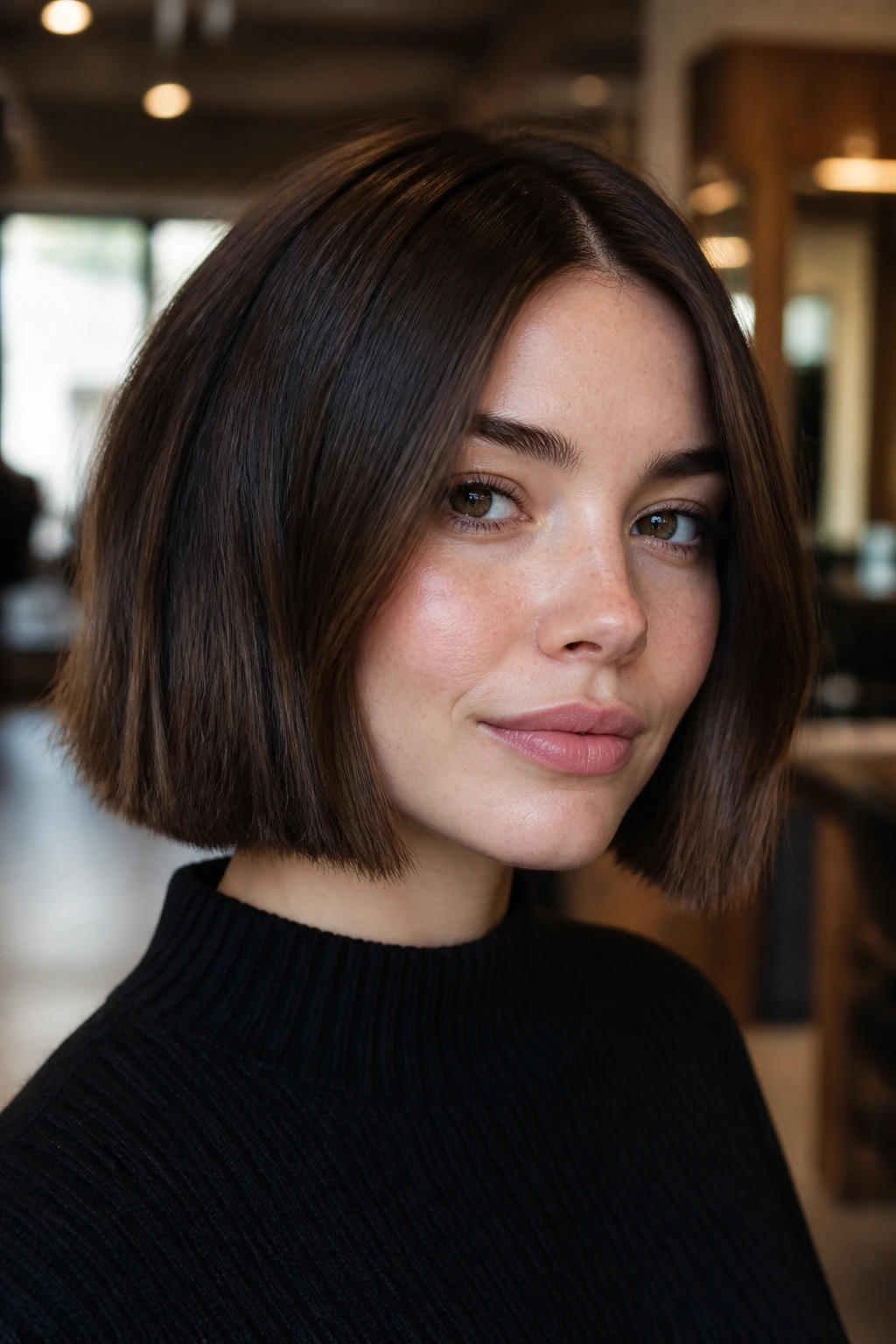
A jaw-length blunt bob is one of the strongest shapes you can give thick hair. There’s nowhere for the ends to hide, which sounds severe until you see how good a dense, clean line can look. Done right, it lands right at the jaw or just below it and makes the whole head look tidy.
The catch is inside the cut. If the perimeter is blunt but the interior is left too full, the bob turns into a shelf. If the interior is thinned too much, the ends get frizzy and see-through. You want controlled weight removal, usually through careful internal layering, not rough thinning shears.
This cut likes a flat brush blow-dry and a small amount of smoothing cream on the mids and ends. Thick hair will often bend a little under its own weight, which is useful. Let that happen. Don’t force every strand into a perfect bend unless you enjoy spending twenty minutes on a bob that should have taken eight.
5. Stacked Bob with a Full Back
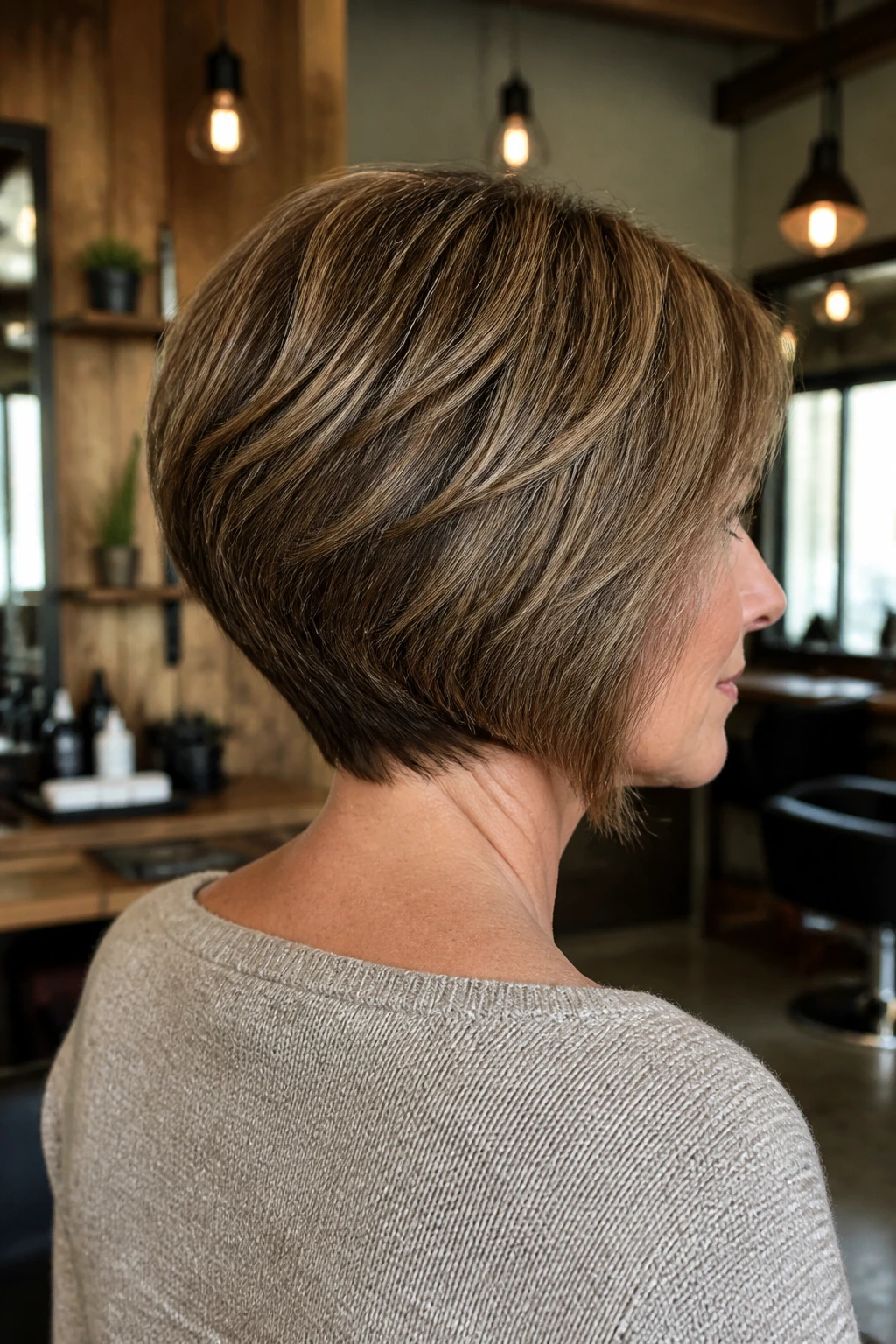
A stacked bob is made for thick hair that tends to balloon at the nape. The back is graduated so it hugs the neck, while the front stays slightly longer and softer. That built-in lift at the back creates shape without making the head look wide from the side.
I like this cut when someone says their hair grows outward instead of downward. The stack uses that natural push. It turns a problem into a feature. And because the shape is built into the cut, you do not need to chase volume with rollers every morning.
The one thing to watch is precision. A stacked bob falls apart fast if the graduation is sloppy. Ask for a rounded back profile and clean weight distribution through the crown. It should feel lifted, not puffy.
6. Asymmetrical Bob with a Deep Side Part
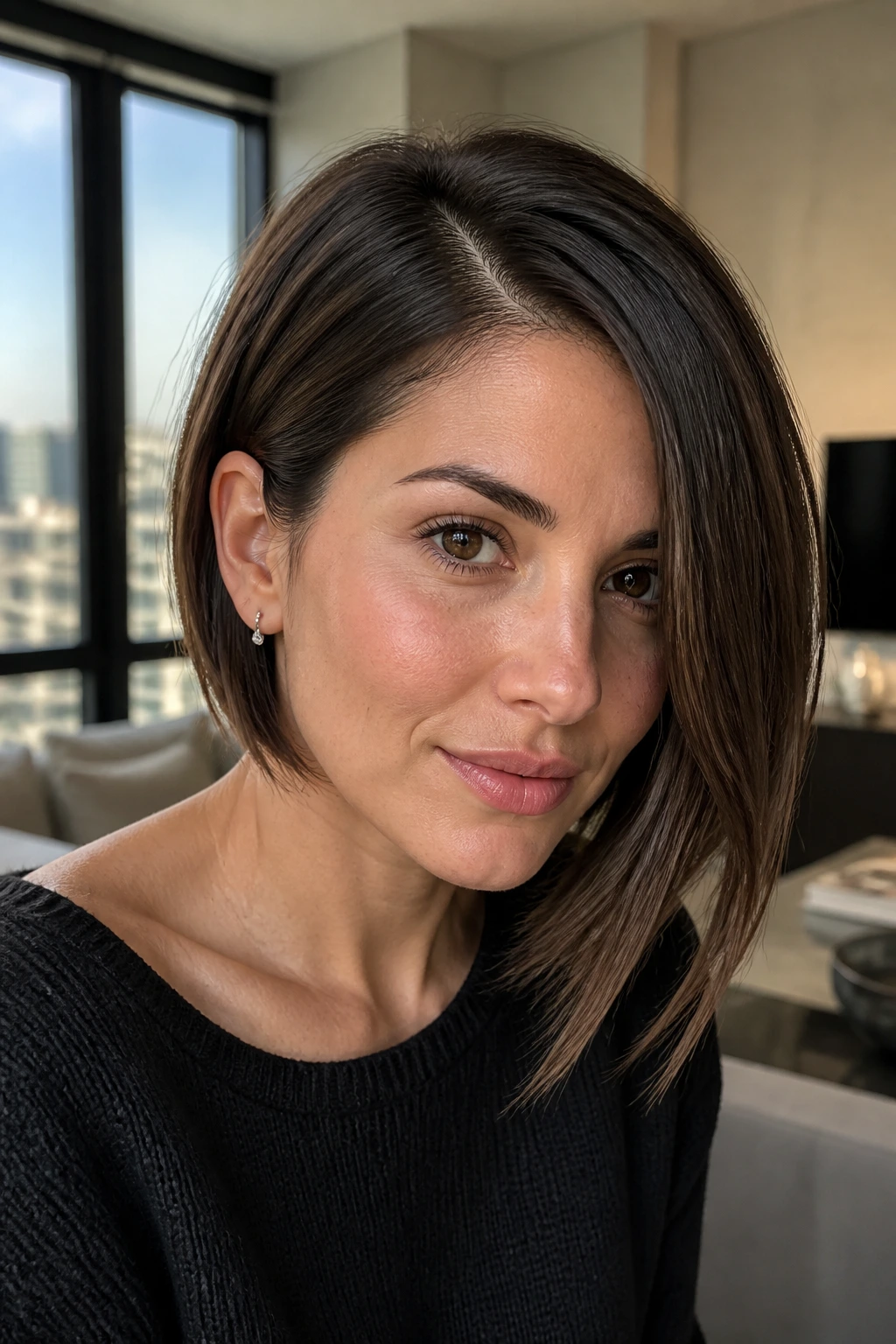
If your thick hair has a stubborn habit of puffing on both sides, an asymmetrical bob can settle the argument. One side is kept a little longer, which visually stretches the face and breaks up the bulk. The deep side part adds a line that thick hair can hold without collapsing halfway through the day.
This is a strong cut for people who want structure. It reads sharp. It also gives you some flexibility, because the longer side can be tucked behind the ear for a softer look or worn forward when you want the cut to feel more dramatic.
The styling note is simple: keep the part intentional. Thick hair hates indecision. A middle part that wants to travel, or a side part that keeps slipping back to center, will make this shape look off. Use a tail comb on damp hair, set the part early, then dry in that direction.
7. Shaggy Crop with Choppy Layers
A shaggy crop is one of the best answers to dense hair that feels too solid. The layers are choppy, the ends are broken up, and the whole shape looks airy instead of packed. That doesn’t mean messy in a lazy way. It means the cut has air between the sections.
Why It Works
Thick hair often needs movement at the ends more than volume at the roots. Choppy layers create that movement, especially if your hair has even a slight wave. The crop length keeps the weight from building at the nape, which is where thick hair usually starts misbehaving.
Product Match
Use a lightweight mousse at the roots and a soft texturizing spray at the ends. Skip heavy creams unless your hair is coarse and dry. Too much slip makes a shag collapse into a wet-looking triangle. Nobody wants that.
Best Fit
This cut is happiest on hair that air-dries with a little bend. If your strands are pin-straight and resistant, you’ll need a quick pass with a diffuser or round brush to keep the layers visible. Otherwise, the shape can disappear into the bulk.
8. Curly French Bob
A curly French bob sits around the jawline, sometimes a touch below, with enough room for curls to spring without becoming too wide. On thick curly hair, that length is the sweet spot. It lets the curls stack neatly instead of hanging long and heavy.
Dry cutting helps here. Curls do not behave like straight hair, and a wet curl can fool you into thinking the shape is shorter than it really is. If your stylist knows curly hair, ask for the cut in a way that respects the curl pattern, especially around the front where the shortest pieces will frame the cheeks.
Use a curl cream or light gel, then diffuse or air-dry without touching the hair too much. Thick curls love to expand when they’re disturbed. Let them set before you separate them. If you want a softer finish, use a small amount of oil on the ends only after the hair is fully dry.
9. Rounded Bob with Interior Weight Removal
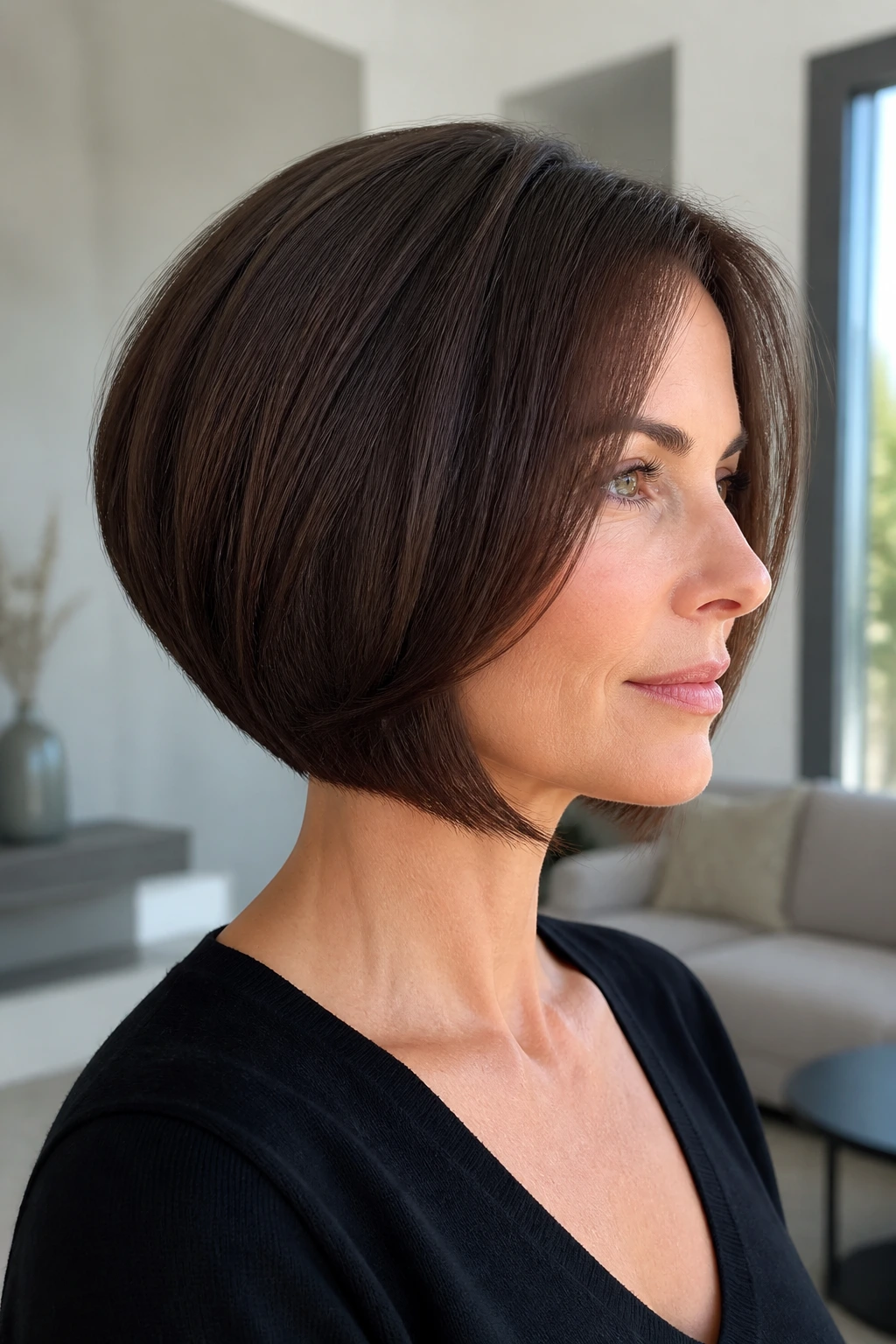
A rounded bob keeps more fullness through the silhouette, but the shape curves inward at the bottom instead of flaring out. That makes it a smart pick for thick hair that needs structure without a hard edge. The roundness softens the look, while interior weight removal keeps it from turning into a helmet.
This cut is a little underappreciated. People hear “rounded” and think “puffy,” which is the wrong read. A good rounded bob is controlled. It has enough bend at the edges to look polished, but the inside has been opened up so the hair can sit down rather than out.
It works especially well if your hair is dense at the back of the head. The shape supports the crown while taking pressure off the ends. Ask for a bob that follows the head shape and has internal debulking through the middle sections. If the stylist starts reaching for thinning shears like a reflex, ask what they plan to remove and where. You want a reason, not a habit.
10. Undercut Pixie with a Soft Top
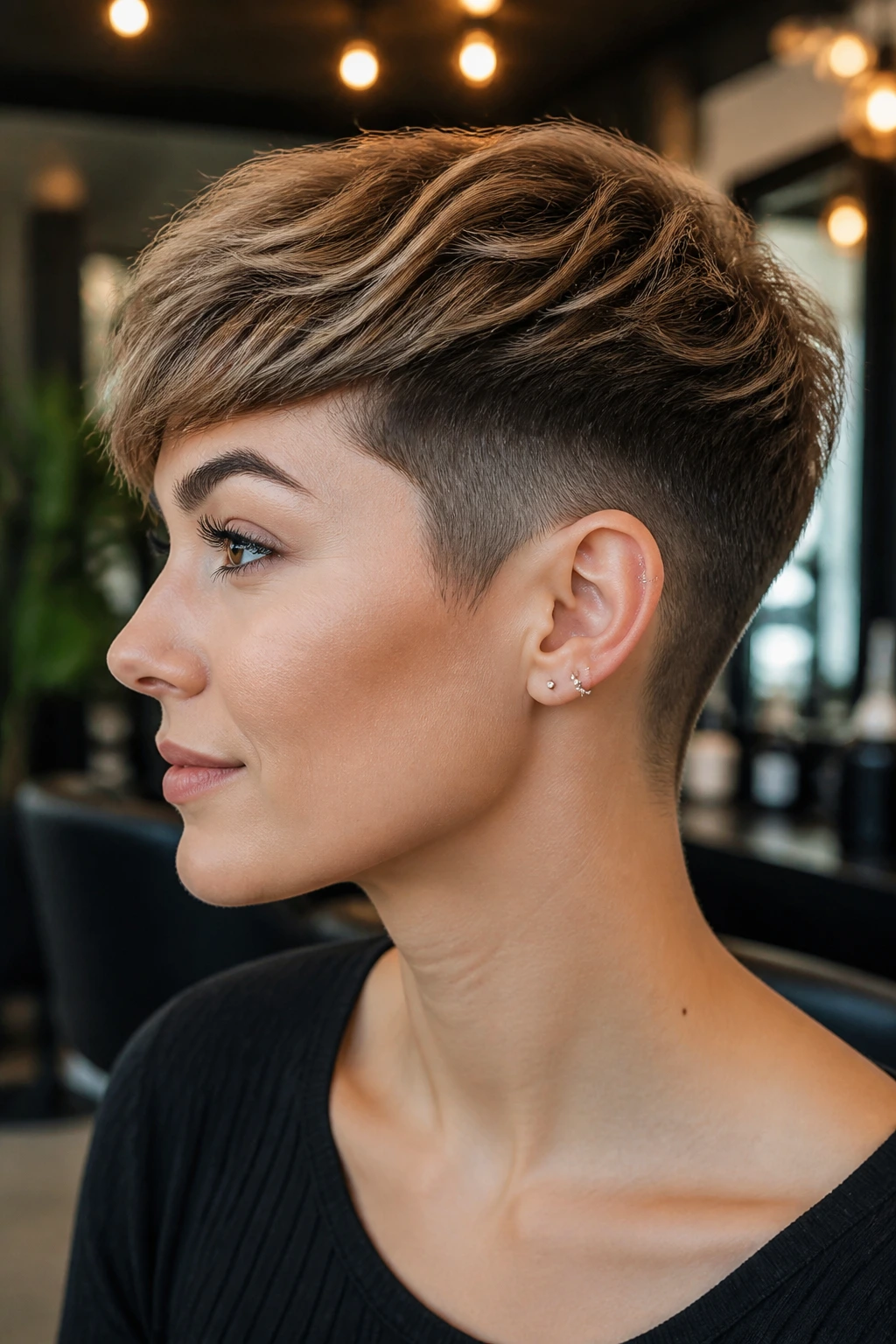
A soft-top pixie with an undercut is one of the most practical short hairstyles for thick hair when the bulk is genuinely stubborn. The undercut removes hidden weight from the nape and sides, which means the visible top can stay soft and touchable without fighting a cushion of hair underneath.
That hidden removal matters more than most people think. It changes how the whole cut sits on the head. Thick hair that used to kick out at the neckline starts lying flat, and the top gains room to bend instead of lifting away from the skull.
The grow-out phase is the catch. An undercut needs upkeep, usually every 4 to 6 weeks if you want the clean outline to stay sharp. If you’re okay with a slightly more lived-in finish, you can stretch that longer, but the nape will start to tell on you.
11. Mini Lob with Blunt Ends
A mini lob is a short long bob, usually hovering between the chin and the upper neck. On thick hair, that in-between length can be a relief. It’s long enough to tuck behind the ear, but short enough that the bottom doesn’t drag around a load of extra weight.
The blunt ends are the point. Thick hair often looks richest when the edge is clean, because the density makes the line feel deliberate. If the ends are over-layered, the shape can start to fray and lose its crispness. Keep the perimeter tidy and let the mids carry the movement.
This is a good cut if you want short hair that still feels substantial. It also plays nicely with straight or slightly wavy textures. A quick pass with a flat brush or large round brush is usually enough. No need to over-style it into submission.
Ask for This
Tell your stylist you want a blunt mini lob, light interior weight removal only, and enough length to tuck one side back. That last part matters if you wear earrings or glasses. It gives the cut a little life.
12. Curtain-Bang Bob
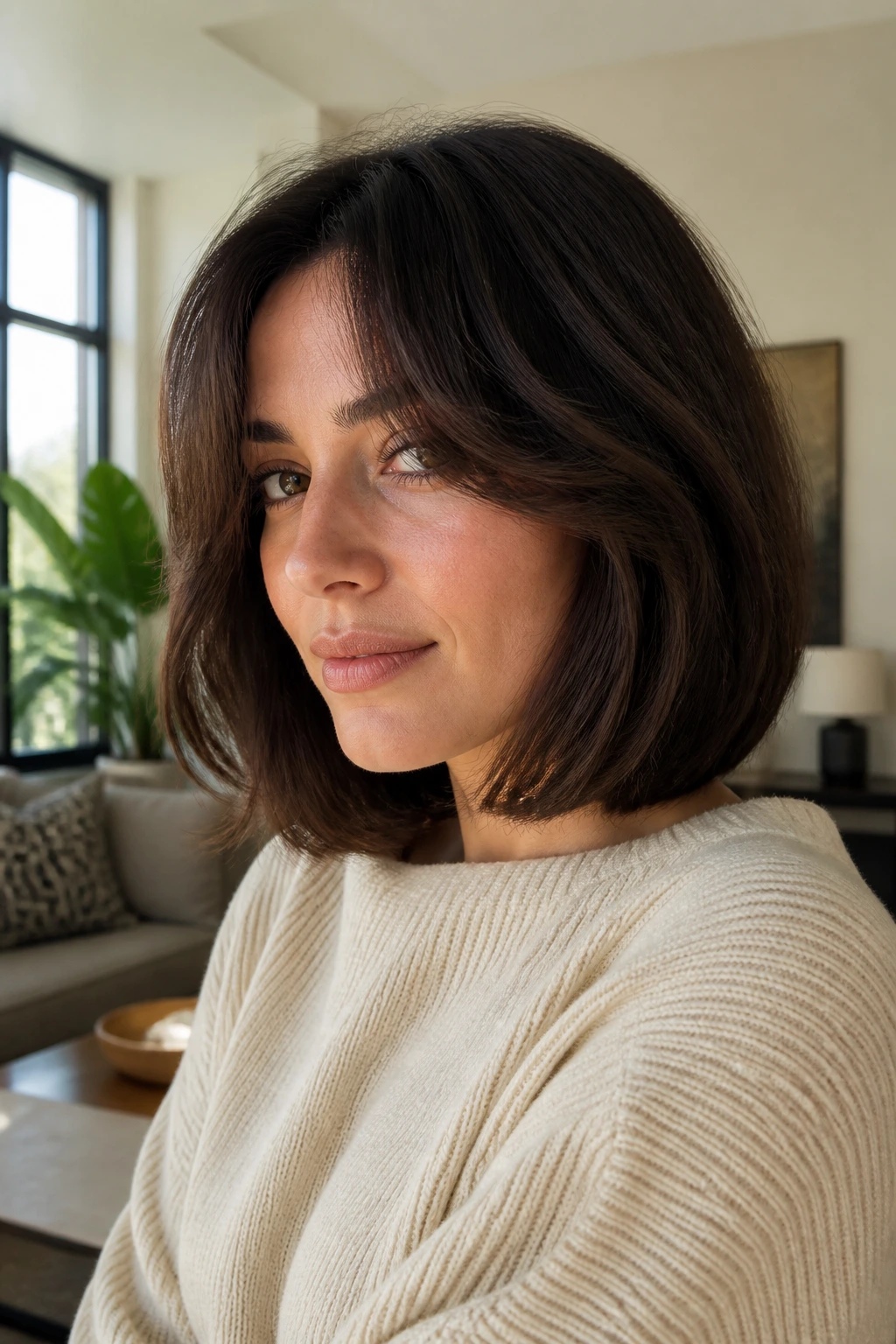
A curtain-bang bob gives thick hair something it likes: a front section to break up the mass. The bob keeps the length controlled, while the bangs open in the middle and fall to each side of the face. That soft split is useful when thick hair feels too blunt around the forehead.
The trick is not making the bangs too heavy. Thick hair will happily give you a dense fringe, but a heavy fringe can overwhelm the face and shorten it visually in a bad way. Curtain bangs should be sliced with enough softness that they sweep, not sit like a wall.
Styling takes a little more attention than a simple bob, though not much. Blow-dry the bangs first, using a round brush to pull them away from the face and then back in. That bend keeps them from separating in odd little spikes. If your hair is coarse, a tiny amount of smoothing cream on the fringe only can tame the puff without flattening the rest of the cut.
13. Wedge Cut
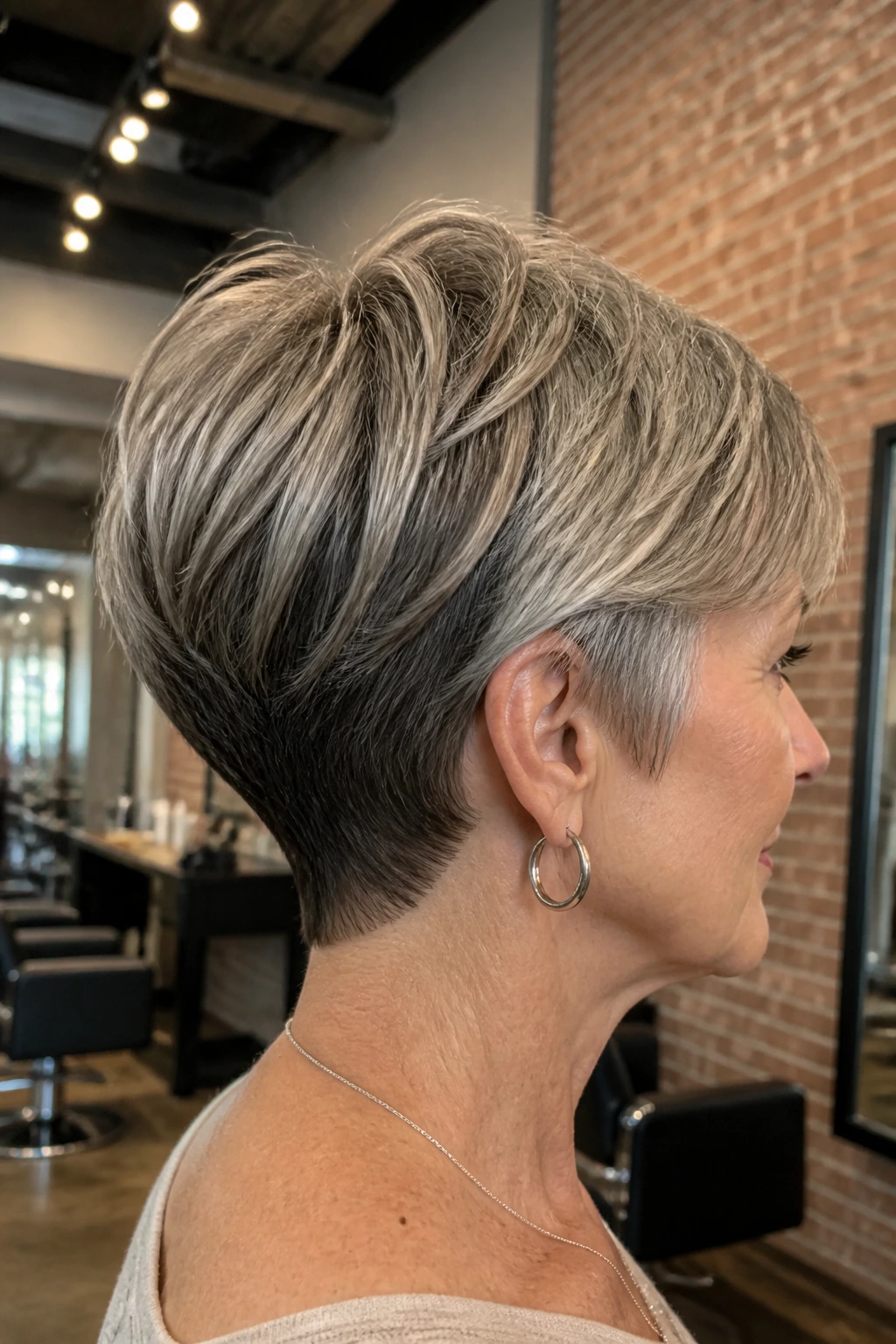
The wedge cut gets a bad rap from old photos, which is a shame, because the shape itself is smart for thick hair. It’s shorter and tighter at the nape, with a gradual rise toward the crown and more structure through the back. That angle takes weight off the neck and gives dense hair a clear direction.
What I like here is the geometry. Thick hair often looks best when the haircut has a plan. The wedge has one. It creates lift where the head needs it and removes bulk where the hair tends to stack. If the edges are softened a little, the result looks current rather than dated.
This is not the place for sloppy blending. A wedge needs clean sectioning and a steady hand. If you’re considering it, bring photos that show the side and back shape, not just the front. The back is the whole point.
14. Soft Mullet with Short Layers

A soft mullet sounds bolder than it wears. On thick hair, it’s basically a short, layered shape with a little extra length in the back and more texture around the crown and sides. The best versions look airy, not ragged.
Why does it work? Because thick hair can support contrast. Shorter layers at the top keep the shape from sitting like one solid block, while the longer rear section gives the cut a bit of swing. If your hair has wave, this can be a very flattering way to show it off without losing the neck.
The danger is over-texturizing. A little separation is good. Too much and the ends can look dry and broken. Ask for soft transitions, not aggressive choppiness, unless you want the look to feel deliberately rough. Air-dry cream and a touch of paste at the crown are usually enough.
15. Blunt Micro Bob
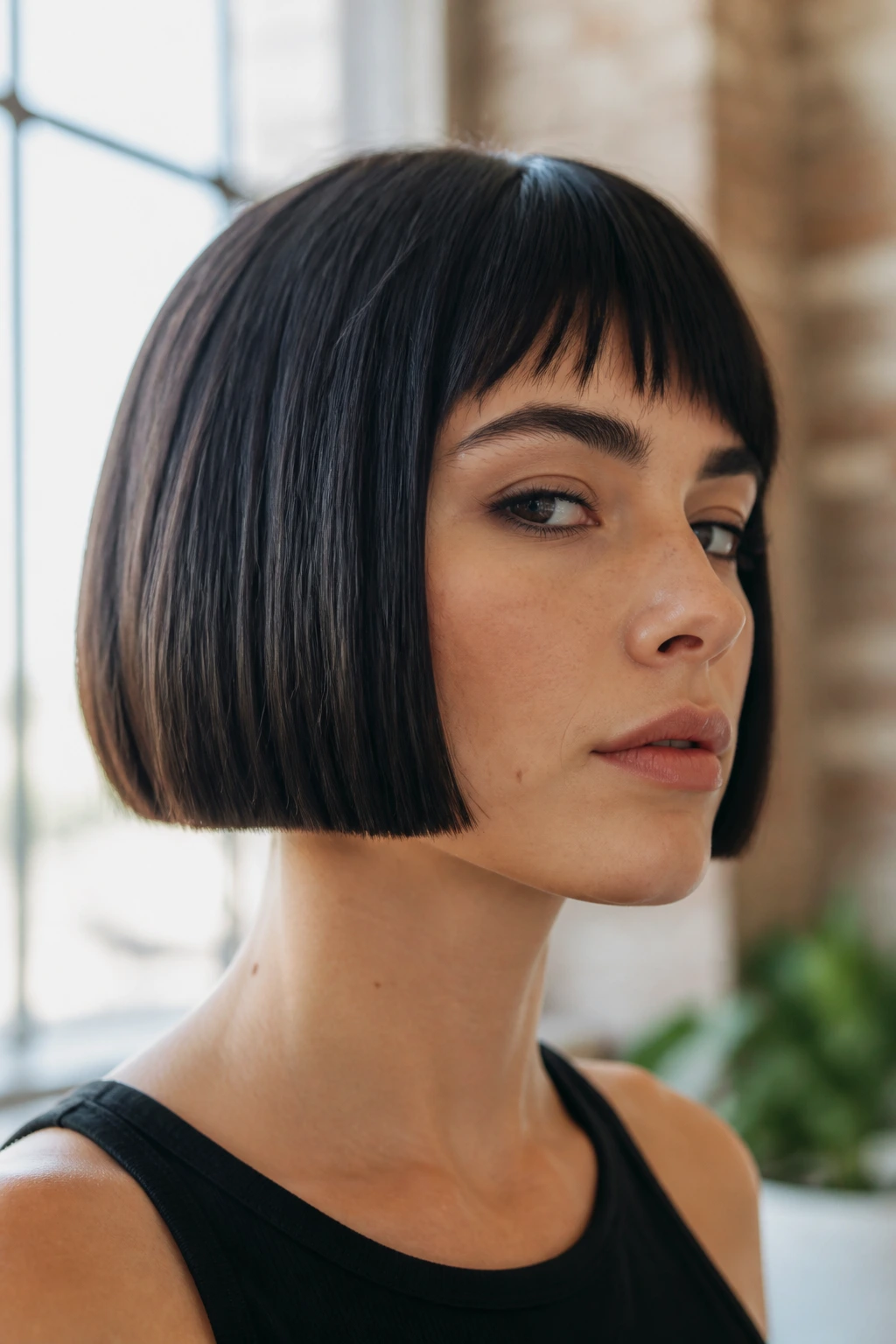
A micro bob is short, neat, and a little bit fearless. It usually hits around the cheekbone or jawline, and on thick hair the blunt edge makes the density look strong instead of bulky. The whole effect is crisp, almost architectural.
This cut works best when the hair is naturally straight or only lightly wavy. The line needs to stay visible. If your hair is very curly, a micro bob can spring up much shorter than you planned. That isn’t a flaw, exactly. It’s just math, and curly hair is not shy about it.
The reason I like it on thick hair is the discipline it brings. You can’t hide behind layers or vague shape. The cut either holds or it doesn’t. A little smoothing serum on the ends and a flat brush blow-dry will keep it sharp without making it flat.
16. Piecey Crop with Wispy Fringe
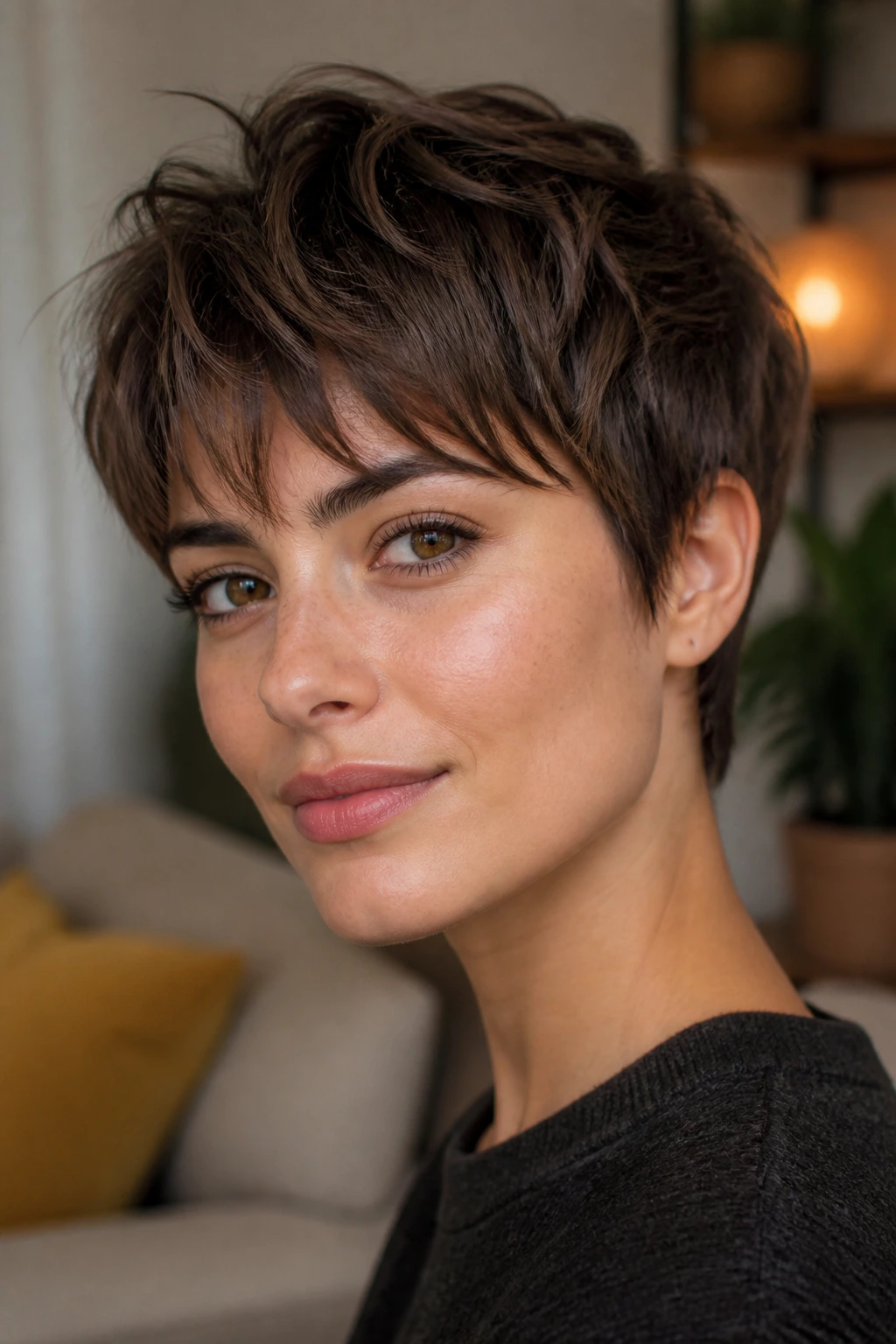
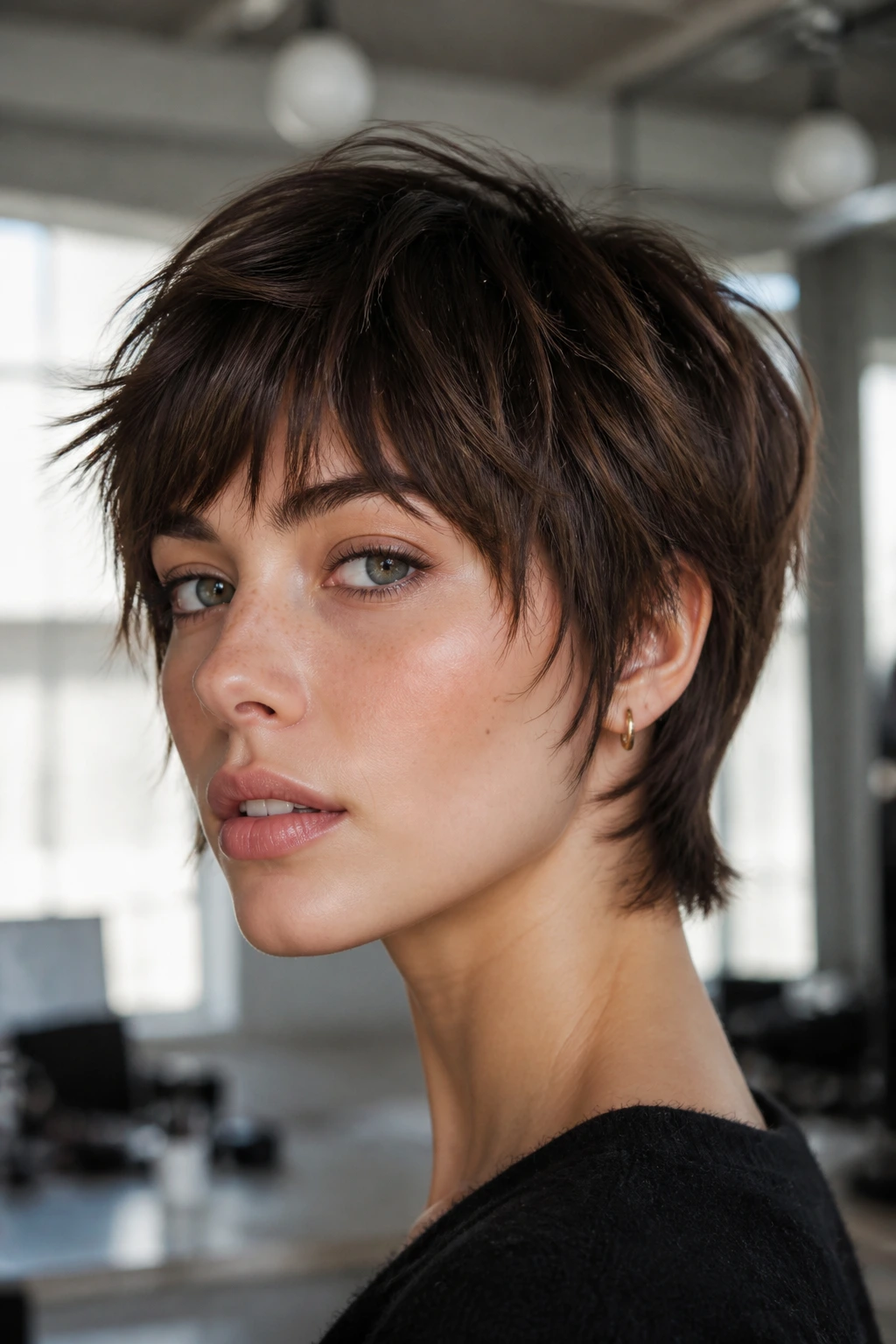
A piecey crop is for anyone who wants short hair that looks touched, not overworked. Thick hair gives this cut a real advantage because the strands hold separation well. The wispy fringe keeps the front light, while the crop length at the sides and back keeps the bulk under control.
Why It Feels Different
This is not a heavy, sculpted pixie. It has little gaps in the texture, so the shape feels looser and more casual. That makes it useful if your thick hair tends to look severe when cut too cleanly.
Styling Move
Use a tiny amount of wax or paste on dry hair and pinch only the top layers. If you work product through everything, the fringe can clump and the whole cut goes flat. Keep the roots cleaner than the ends. That’s where the piecey look survives.
Who It Suits
It’s a good fit for oval and heart-shaped faces, and it also plays nicely with strong brows. The wispy fringe keeps the forehead open enough that the cut doesn’t feel boxed in.
17. Layered Crop with a Tucked Nape
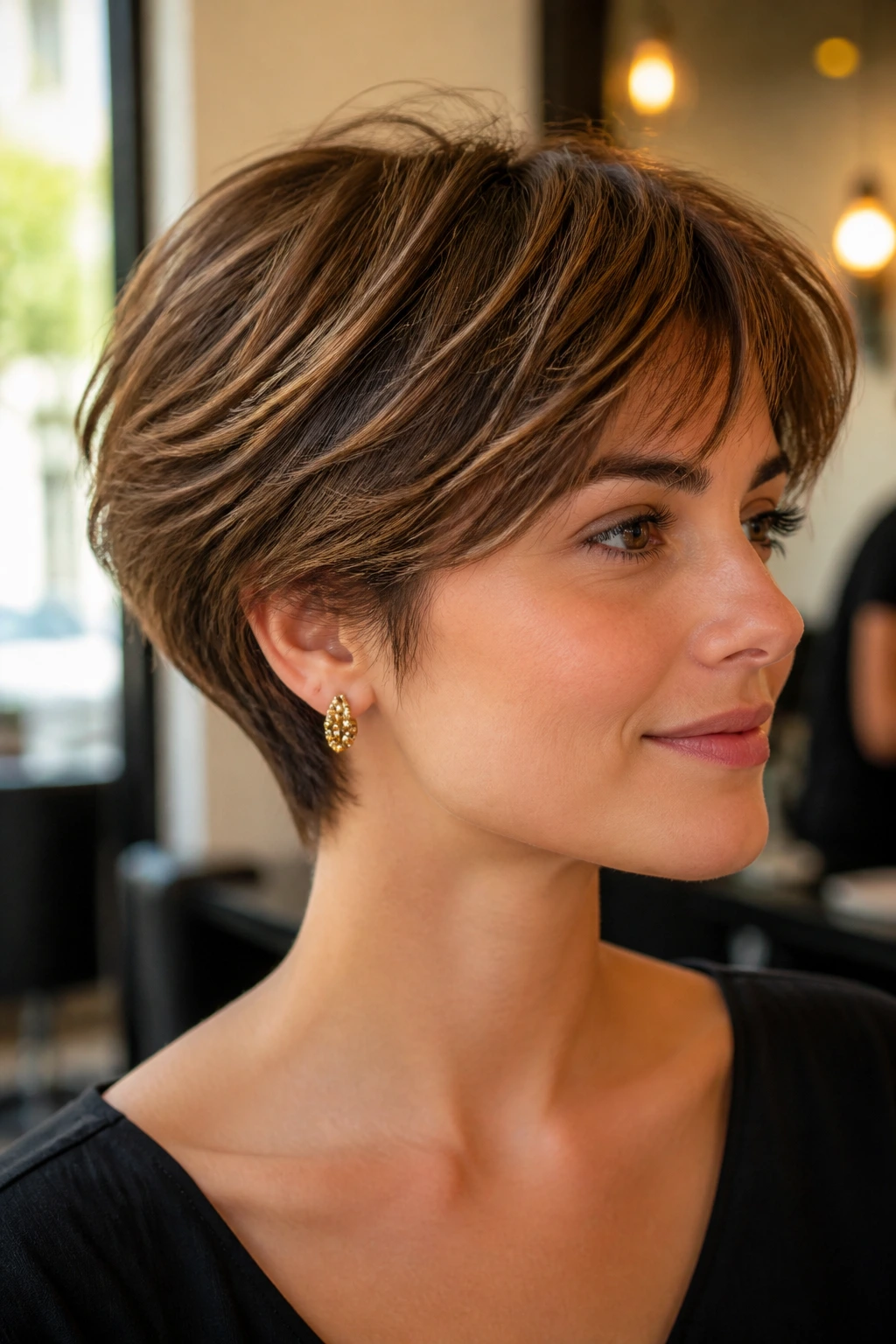
A layered crop with a tucked nape solves a problem thick hair creates all the time: too much bulk at the neckline. By keeping the nape neat and adding layers above it, the cut folds into the head instead of kicking out from it. The shape feels light, but not sparse.
This is a very wearable style if you want short hair that still looks soft around the ears. It can be dressed up or left a little messy. The layers should be enough to create movement, not so many that the haircut starts looking stringy.
The best version has a nape that sits close and clean, with the top feathered just enough to move when you shake it out. If your hair grows fast in the back, this one needs regular clean-up. The good news is that even a small trim refreshes the shape fast. The bad news is that the neck area announces neglect sooner than any other part of the head.
18. Slicked-Back Short Style
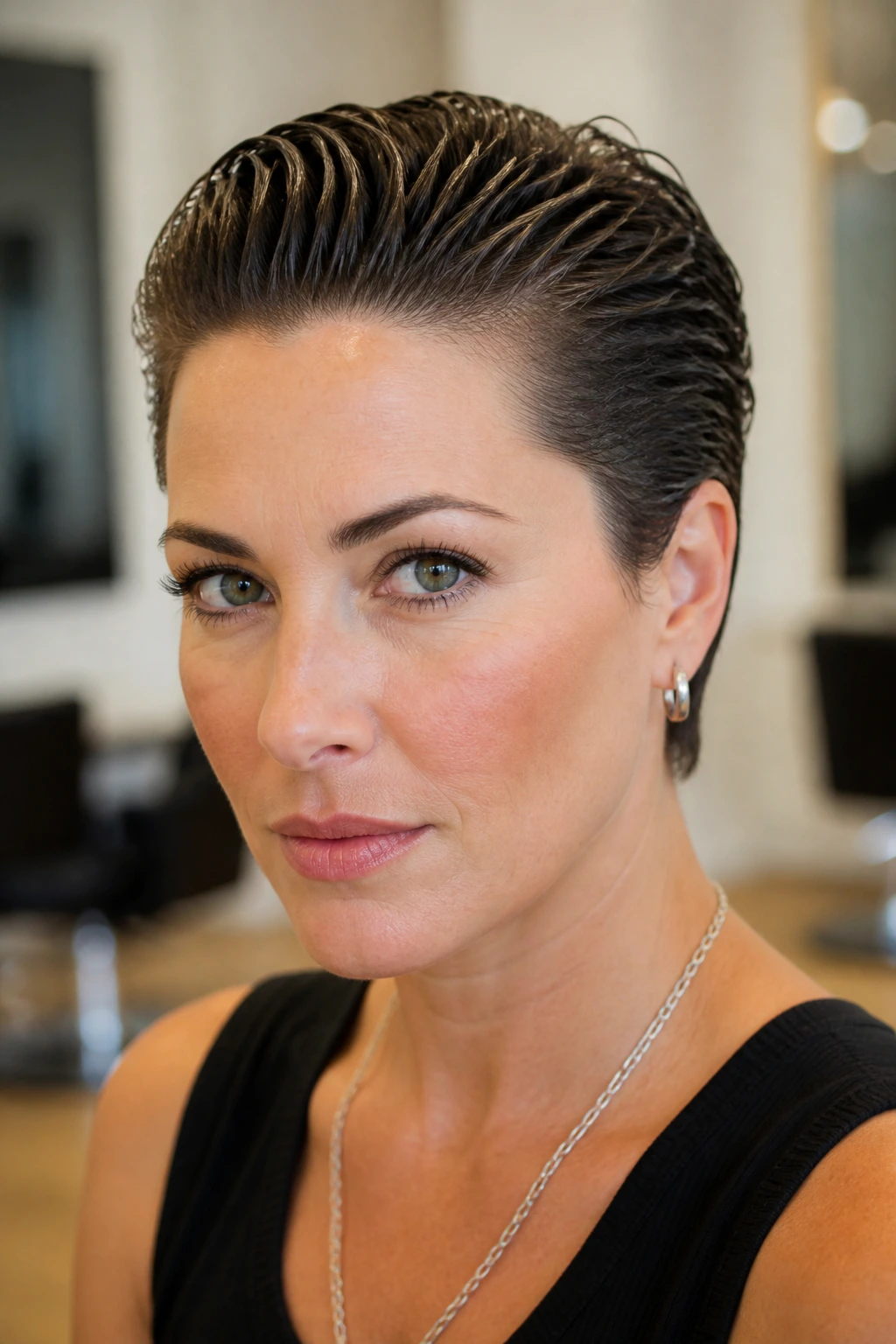
Sometimes thick hair wants to be dramatic, and the slicked-back short style gives it a reason. The hair is cropped short enough to stay controlled, then combed back with gel or styling cream for a smooth, polished finish. On dense hair, this can look powerful in the best sense of the word.
It’s also practical on humid days or when you want the face completely open. Because the hair has so much natural body, you don’t need much product to get it moving backward. A fine-tooth comb can sharpen the part or keep the finish neat, but fingers give a softer result if you don’t want the style to look too tight.
Use this as an occasional styling option even if you don’t wear it that way every day. Thick hair holds the shape well once it’s set, and the slicked-back finish can make a simple short cut feel deliberate in a way loose styling sometimes misses.
Why Short Thick Hair Needs a Different Cutting Hand
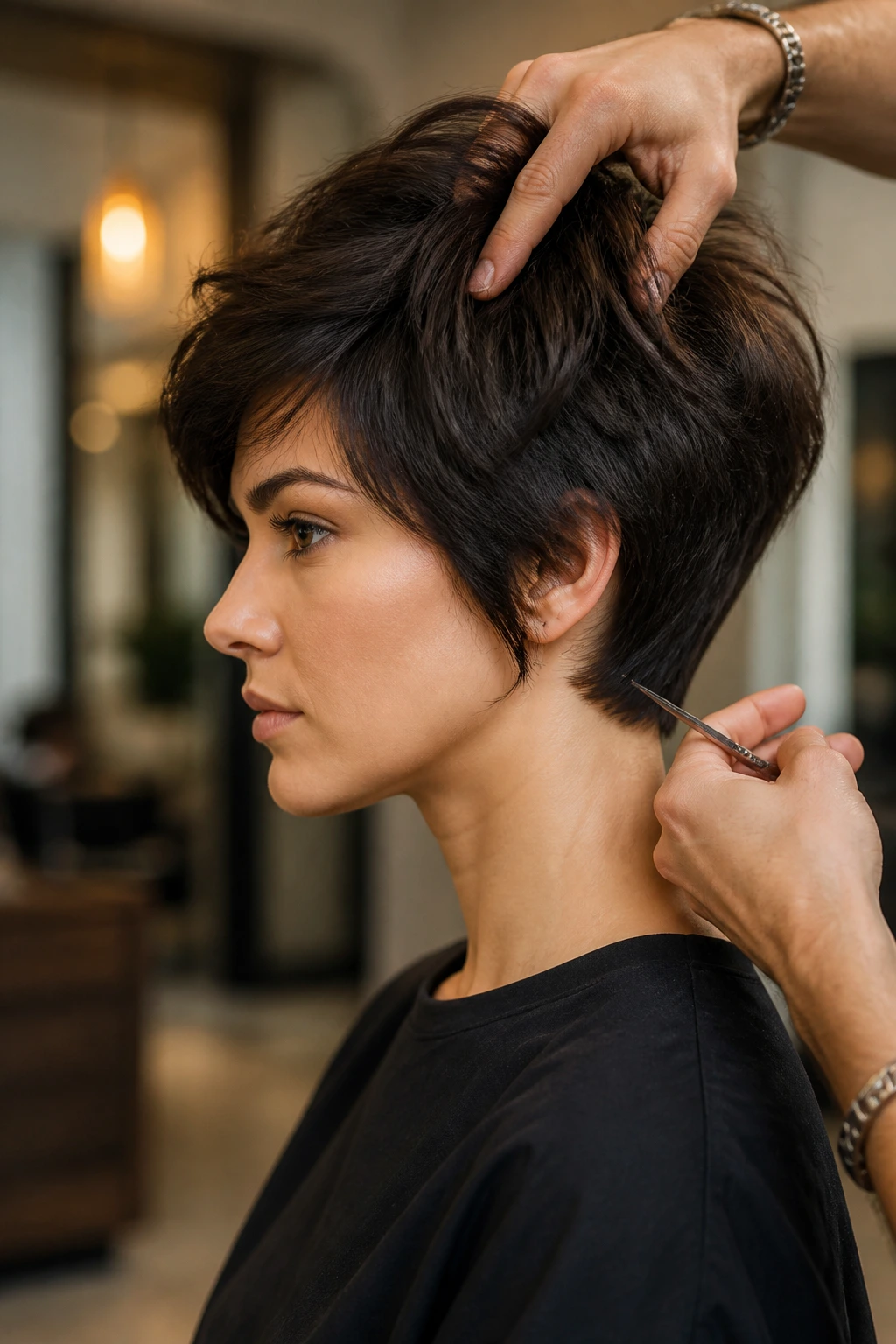
Short hair and thick hair don’t misbehave for the same reasons every time. Sometimes the trouble is bulk, sometimes it’s spring, and sometimes it’s a stubborn crown that lifts no matter how carefully you dry it. That’s why a short cut for thick hair has to be built, not merely clipped shorter.
A cleaner outline often beats a softer one. That sounds backward until you see thick hair in a blunt jaw-length bob or a clean pixie: the structure gives the density a place to land. When the outline is too vague, the hair expands into whatever space it can find. Not charming.
The real skill is balance. Keep enough weight to make the cut look full, but remove enough of it that the shape can breathe.
Essential Tools for Styling Short Thick Hair
-
A blow dryer with a nozzle: Directs airflow so thick hair doesn’t expand all over the place while drying.
-
A round brush, 1 to 1.5 inches: Useful for bangs, crown lift, and bending ends on bob-length styles.
-
A diffuser: Worth having if your thick hair is curly or wavy and you want shape without frizz.
-
A rat-tail comb: Helps set parts cleanly and lift small sections at the crown.
-
Texturizing spray: Good for bixies, shags, and piecey crops when you want separation.
-
Matte paste or molding cream: Best for pixies and crops that need control without shine overload.
-
Light smoothing serum: Use a few drops on blunt bobs and micro bobs; don’t drench the roots.
-
Sectioning clips: Small but useful, especially when you’re blow-drying thick hair in layers.
Smart Cut and Product Choices for Thick Hair
The first thing to get right is the cut conversation. Say “dense,” “coarse,” or “wavy” if those describe your hair, because thick does not tell the whole story. A stylist who knows the difference will handle the weight differently, and that changes everything from the nape shape to how much interior layering makes sense.
Bring photos that show the side and back, not only the front. Thick hair lives in the perimeter. A bob that looks neat from the face can mushroom in profile if the back is too full or the neckline is left broad. If you wear glasses, mention that too. So many short cuts fall apart around the ear because nobody planned for the arms of the frames.
Product-wise, less than you think. Thick hair can take more cream than fine hair, but it still goes limp if you bury it in product. Mousse at the roots, paste on the ends, light serum only where the cut needs polish. That’s the rhythm I trust.
How to Wear These Cuts Without Fighting Them
Presentation: Keep the shape visible. A tuck behind one ear, a clean side part, or a slight bend at the ends is often enough. Thick hair looks better when the outline is clear, not when every strand is persuaded into the same position.
Accessories: Short thick hair handles bold earrings, thin headbands, clips, and even glasses frames without collapsing under them. The cut should support the accessory, not hide it.
Texture Level: Sleek versions suit blunt bobs and micro bobs. Piecey finishes work better on pixies, bixies, and shag cuts. If the shape is already busy, keep the styling quieter.
Occasions: The same cut can read soft in daylight and sharper at night if you change the part or add product at the roots. That little shift matters more than people think.
Additional Tips and Texture Boosters
Shape Boost: Dry the hair in the direction you want it to live. Thick hair remembers the first strong direction you give it.
Texture Boost: A tiny bit of salt spray or texturizing mist through the mids can stop a crop from looking too solid. Use less on coarse hair, more on soft dense hair that needs separation.
Fringe Control: If bangs swell at the forehead, dry them first while they’re still damp and pin them off your face for a minute before releasing them. That helps the bend settle.
Finish Touch: A drop of serum rubbed between the palms and pressed only into the ends can make blunt short cuts look polished without flattening the crown.
Common Mistakes to Avoid

The biggest mistake is asking for “thinner” hair and getting too much removed with thinning shears. Thick hair often looks fluffy or fuzzy after that, especially at the ends. Ask for weight removal through shaping and interior cutting, not random debulking.
Another one: cutting the fringe too heavy. Thick bangs can swallow the face fast. If you want curtain bangs or a soft fringe, they need enough transparency to move.
Don’t ignore the back profile. A cut that looks fine from the front can flare out at the nape and side panels. Always check the side mirror before leaving the chair.
And please do not assume short means low-maintenance. Thick short hair still needs a plan. The difference is that the plan is about shaping, not wrestling.
Variations and Adaptations to Try
Curly-First Version: Keep the structure the same, but have the cut shaped around the curl pattern rather than against it. This works beautifully for curly bobs and shaggy crops, where the curl wants to make the silhouette.
Straight-and-Sleek Version: Favor blunt lines, clean parts, and a serum finish. This is the best route for micro bobs and jaw-length cuts when you want a sharper outline.
Low-Drama Version: Choose the same shapes but soften the edges with fewer visible layers. Good if you want the haircut to grow out quietly and still look neat between trims.
Bold Fringe Version: Add curtain bangs, a side sweep, or a wispy forward fringe to break up density around the forehead. This changes the whole mood of a short cut without shortening the perimeter much.
Hidden-Undercut Version: Keep the visible shape classic, but remove bulk underneath at the nape or behind the ears. That’s the move for very thick hair that needs relief but doesn’t want to look edgy.
Keeping the Shape Sharp Between Cuts
Short thick hair grows out with opinions. The nape shows first. The sides follow. If you want the cut to stay tidy, plan on a trim every 4 to 6 weeks for pixies and crops, and every 6 to 8 weeks for bobs and mini lobs. That’s not vanity. That’s upkeep.
At home, use a silk or satin pillowcase if your hair frizzes easily, and avoid piling heavy cream at the roots. A dry shampoo at the crown can buy you a day or two, especially on cuts that rely on lift. If your hair is curly, refreshing with water and a small amount of curl cream is usually better than piling on more product.
One more thing: clarify the scalp every so often if you use paste, spray, or gel daily. Thick hair can hold residue like it’s storing supplies for winter. When it gets coated, the cut loses movement fast.
Frequently Asked Questions
Will short hair make thick hair puff out more?
It can, if the cut is too blunt in the wrong places or if the interior weight is not controlled. A short cut that uses tapering, stacking, or careful internal shaping usually reduces puff instead of causing it.
Is thinning shears a bad idea for thick hair?
Not always, but they’re easy to overuse. On coarse or frizz-prone hair, too much thinning can leave the ends fuzzy. Clean sectioning, point-cutting, and shape-based debulking are usually safer.
What is the easiest short style to maintain on thick hair?
A jaw-length blunt bob or a tapered crop tends to be the easiest because the shape holds well and the styling routine stays short. Both need trims, but they do not usually need complicated daily work.
Can curly thick hair wear a pixie or bob?
Yes, and both can look excellent. The key is shaping the cut for shrinkage and curl pattern, which is why dry cutting or curl-specific cutting matters so much.
How do I stop the back of my short cut from sticking out?
Ask for a tighter nape, proper graduation, or an undercut in the back if your hair is very dense. At home, drying the nape downward with a nozzle and a brush helps the cut sit flatter.
Should I choose layers or a blunt edge?
If your hair is straight and dense, a blunt edge with light interior shaping is often stronger. If your hair is wavy or curly, softer layers may move better and keep the silhouette from turning heavy.
What if my short haircut turns triangular after a week or two?
That usually means the bulk is sitting too low or the shape was cut without enough support at the crown. A trim focused on the sides and back can fix it, and a little root lift while drying helps keep the line closer to the head.
Can I air-dry these styles, or do I need heat tools?
You can air-dry many of them, especially textured crops and curly cuts. Blunt bobs and polished pixies usually look sharper with a small amount of heat, even if it’s only a quick blast at the roots.
How much product is too much on thick short hair?
If your roots feel damp, sticky, or stiff after styling, it’s too much. Start with less than a dime-sized amount for creams or pastes, then add only where the shape needs help.
The Cuts That Let Thick Hair Breathe
Short hair with thick hair works best when the cut does some of the talking for you. A good pixie, bob, or crop does not just remove length. It shifts the weight, tightens the outline, and gives dense strands a place to land without swelling into a blur.
That’s the part worth remembering when you sit in the chair. Thick hair likes a plan. Give it one with a clean perimeter, a smart amount of texture, and a stylist who understands how your hair behaves at the nape, around the ears, and through the crown. The payoff is a shape that feels lighter the second it dries.
And if you want the safest place to start, I’d still put my money on a blunt bob, a tapered crop, or a textured pixie. Those three have the best track record for thick hair that needs shape, not surrender.