



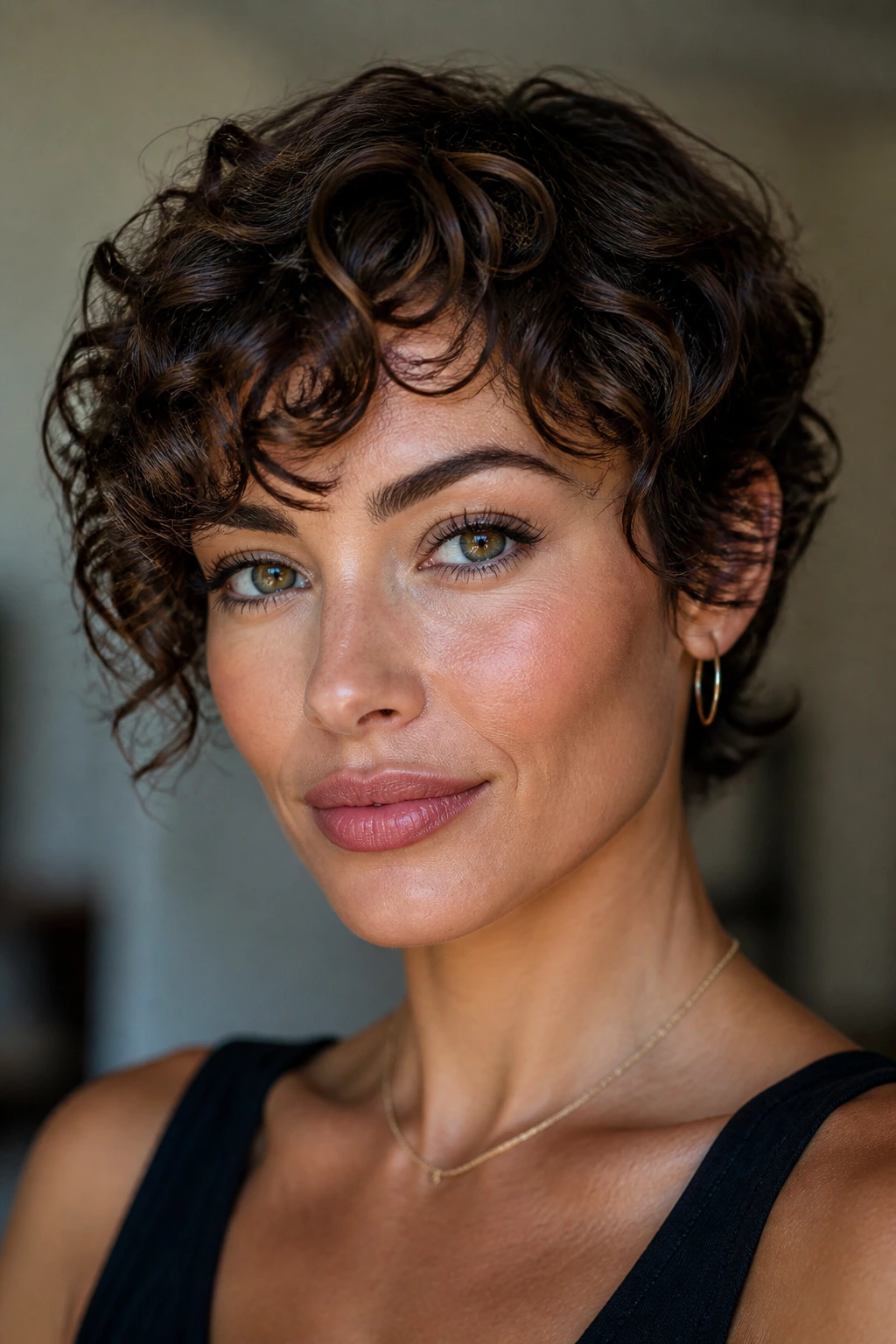
Long pixie cuts for curly hair and square faces work best when the shape does not fight the curl. That sounds obvious until you’ve seen a blunt, puffed-out crop sit right on top of a jawline and turn the whole face into a box. The right long pixie does the opposite. It bends the eye upward, softens the corners at the temples and jaw, and gives your curls room to spring without ballooning outward in the wrong places.
The sweet spot is movement with control. A few extra inches on top can make a huge difference, especially when the sides are tapered, the fringe is swept, and the nape is cleaned up just enough to keep the silhouette light. Square faces need that diagonal energy. Curls need space, but they also need boundaries. A good cut gives both.
And that balance is where this style category gets interesting. Some versions lean polished and sculpted. Others are shaggy, a little wild, and better for wash-and-go routines. A few are great if your curls are loose and soft. Others make tighter coils look sharper and more deliberate, not fluffy or overgrown. The trick is knowing which shape solves which problem, because a long pixie can either flatter a square face beautifully or expose every hard angle if the layers are wrong.
Why These 15 Cuts Earn Their Keep
-
They soften the jaw without hiding the face. The best long pixie shapes keep length around the cheekbone and top of the ear, which breaks up the square outline without swallowing your features.
-
They control curl expansion. Curly hair wants to widen. A smart pixie uses tapering, layers, and strategic length so the curl has room to move up instead of puffing straight out.
-
They work with side parts and face-framing angles. A deep part or a longer fringe adds a diagonal line, and that line is your best friend on a square face.
-
They can be styled fast. Many of these cuts look finished with a diffuser and a dab of gel, then a little finger-shaping at the front. No marathon blowout required.
-
They grow out better than a short crop. When the top and fringe stay a touch longer, the cut usually moves into a shaggy pixie or mini bob without that awkward helmet phase.
-
They give you options on bad curl days. If one side is stubborn, a long pixie lets you tuck, pin, or redirect it. That flexibility matters more than people admit.
1. Side-Swept Curly Long Pixie
A side-swept long pixie is the safest flattering bet when you want the cut to soften a square face instead of spotlighting the jaw. The front stays longer, usually grazing the cheekbone or just below it, while the fringe gets trained across the forehead in a clean diagonal. That line matters. It pulls the eye away from the corners of the face and makes the whole shape look a little longer.
Why It Flatters
The side sweep works because curls create natural texture, and texture plus angle is a strong combination. If your hair tends to puff around the temples, this cut gives you a way to direct the volume forward and down instead of out to the sides. Ask for light graduation at the nape and a little softness around the ears so the shape does not turn blocky.
A little length in front also gives you room to play on days when your curls are behaving differently. One side can sit flatter, one side can sit fuller. That asymmetry is not a flaw here. It gives the cut life.
Best for: medium-density curls, loose ringlets, and anyone who wants a low-drama shape that still looks intentional.
Good styling cue: part while the hair is damp, then clip the fringe into the direction you want before diffusing. Curl memory loves a little early direction.
2. Crown-Heavy Long Pixie with Tapered Sides
This one is for the people who need height. Square faces often look better when the eye is pulled upward, and a crown-heavy pixie does exactly that without making the sides bulky. The top stays long enough for curls to stack and lift, while the sides are tapered close enough to keep the outline neat.
The result feels cleaner than a shag and less severe than a buzzed pixie. You get height, yes, but not that top-heavy mushroom shape that happens when the sides and crown are both too full. The cut needs internal layering through the top so the curls can sit one over another instead of forming a single wide shelf.
If you wear glasses, this cut is quietly excellent. The frame of the glasses and the lift at the crown create a nice vertical line, which square faces often benefit from. It’s also one of the better choices if your curls flatten at the roots after a few hours.
Ask your stylist for: extra length at the crown, soft tapering above the ear, and no heavy horizontal line across the widest part of the face.
Styling note: a small root clip at the crown while the hair cools can make a real difference. Not dramatic. Just enough.
3. Asymmetrical Curl-Forward Pixie
Why does asymmetry work so well here? Because a square face already has strong symmetry built in. A long pixie with one side longer breaks that geometry in a way that feels modern without looking forced. The longer side should skim the cheek and curve forward, not hang limp like a grown-out bob.
How to Wear It
The shape is strongest when the shorter side hugs the head and the longer side carries a soft curl drop toward the jawline. That movement makes the face look less rigid. It also lets curly texture do what it does best: bend the silhouette in a way straight hair cannot fake.
Keep the nape tidy and the transition from short to long smooth. Harsh steps defeat the point. You want a visible difference in length, but not a slice-and-dice look. The curve should feel deliberate, almost like the hair is turning the corner for you.
A side part usually helps this cut more than a center part. The diagonal line works with the asymmetry instead of against it. If your curls are tighter, leave the front long enough to avoid bounce-up that shortens the shape too much.
4. Shaggy Long Pixie with Choppy Layers
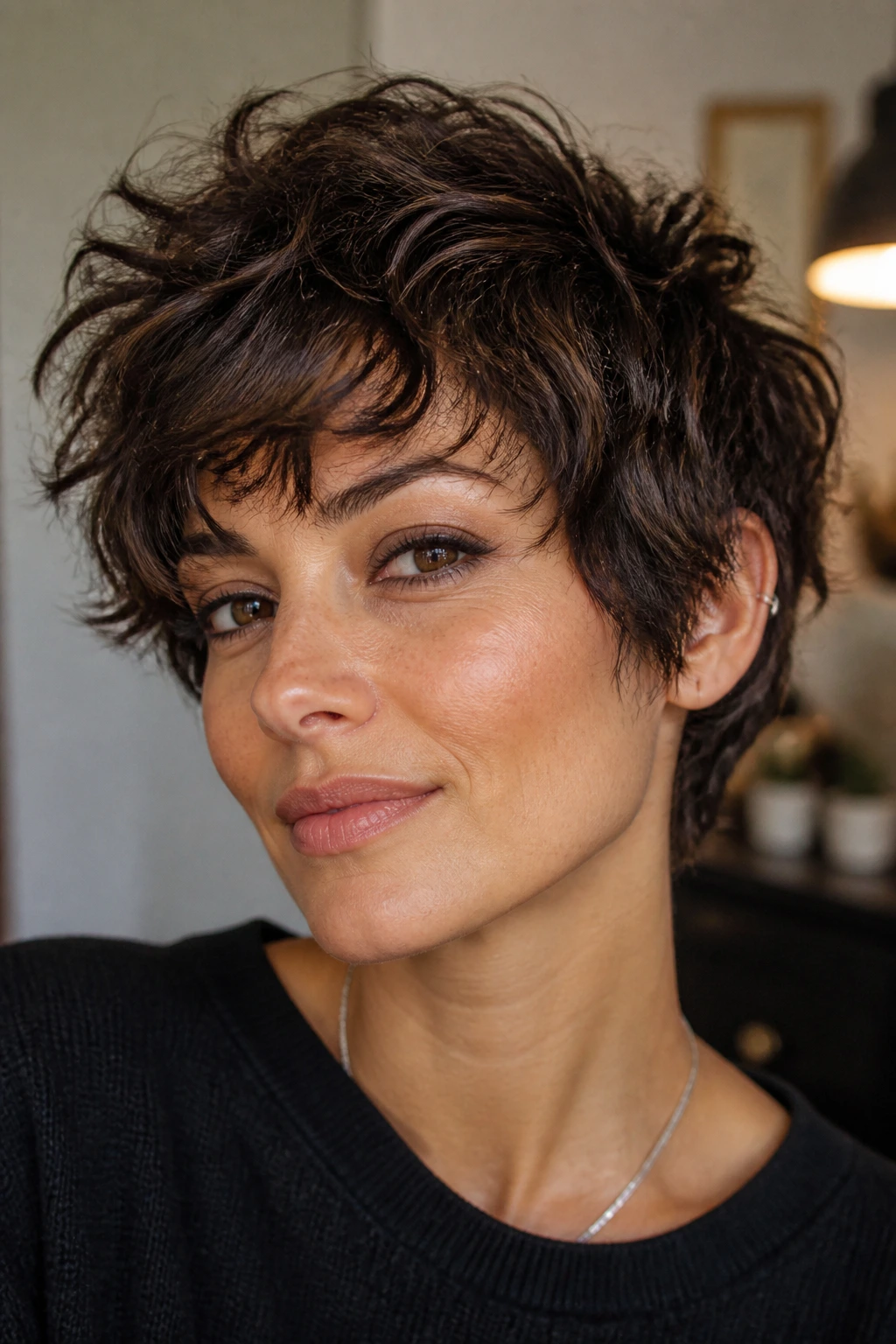
Imagine a long pixie that looks like it has been air-dried, finger-scrunched, and left alone because it already knew what it was doing. That’s the shaggy version. It’s softer than a precision crop and much better for curls that get frizzy when you try to force them into a neat shape.
The choppy layers stop the curls from clumping into a single round puff. They also break up the hard edges that can make square faces look sharper than you want. Keep the fringe longer and the sides lightly feathered. A few uneven ends are the point, not a mistake.
What Makes It Different
This cut works best when your curls have a bit of spring and body. Loose spirals, curly waves, and even some coily textures can wear it well if the layers are cut with shrinkage in mind. That means the stylist should not cut it too short while the hair is wet. Curls can bounce up hard once they dry.
- Keep the top layered enough to move.
- Leave the front longer than the temples.
- Avoid a straight-across bang line.
- Use a lightweight cream, not a heavy butter.
The shaggy pixie is a little messier than the others here. That’s not a drawback if you like hair that looks better after you’ve lived in it for a few hours.
5. Deep Side-Part Long Pixie
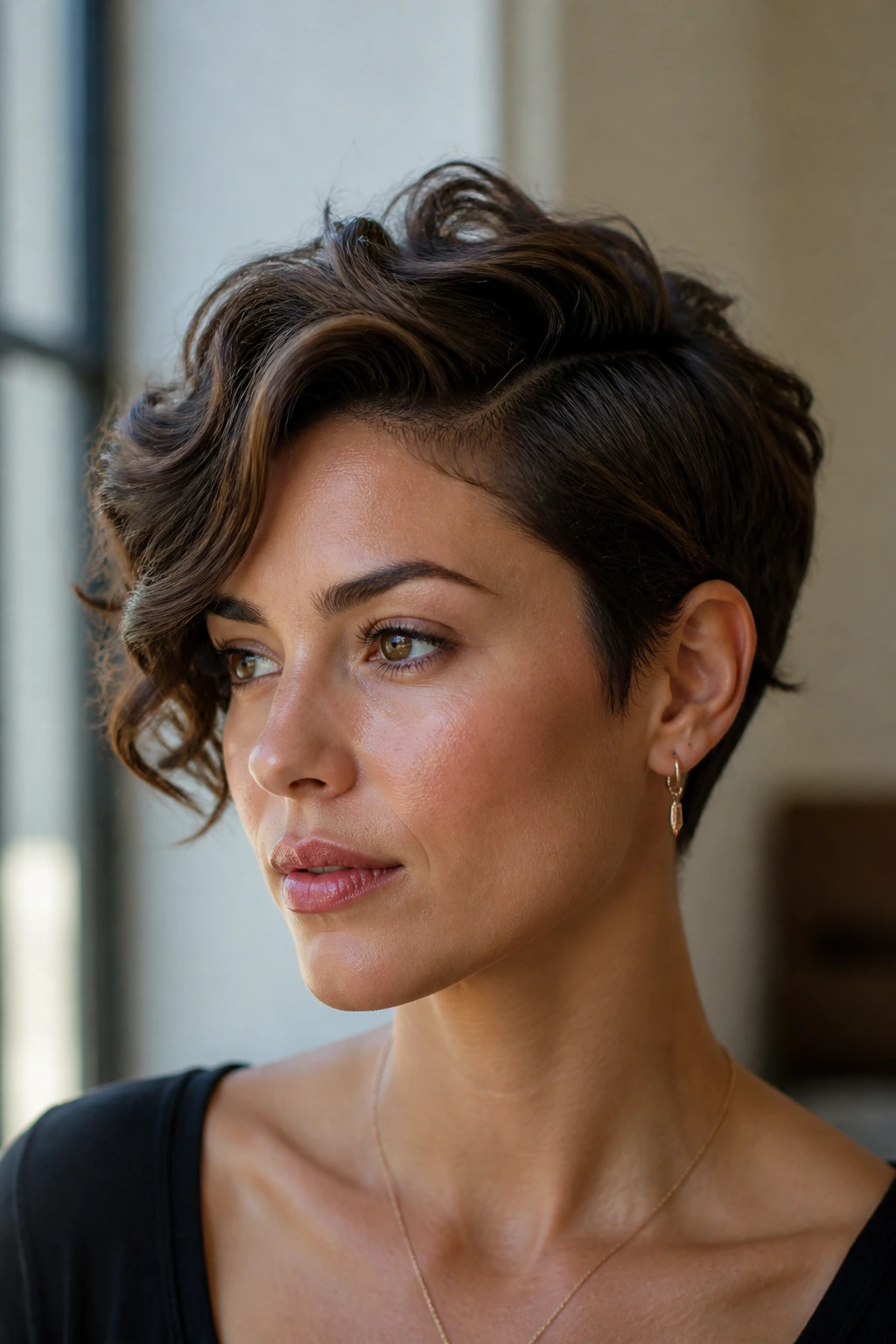
A deep side part changes the whole mood of a square face. It creates a long diagonal line from the forehead into the cheek area, and that line is doing quiet cosmetic work the whole time. The face looks less squared off because the hair is interrupting the strong horizontal and vertical lines.
This is one of the easiest long pixies to wear if your curls have different personalities on each side. One side can have more lift, the other more sweep, and the imbalance becomes part of the design. The cut should still have enough length at the front to tuck behind the ear if needed. That little bit of versatility saves a bad hair day.
Keep the part where the hair naturally wants to fall if you can. Fighting curl direction is exhausting and usually unnecessary. If the roots want a left part, there is probably a reason.
Styling cue
Use a light mousse at the roots, then rake a gel or curl cream through the top section only. That keeps the side part from collapsing while the fringe stays soft.
6. Curly Long Pixie with Undercut Nape
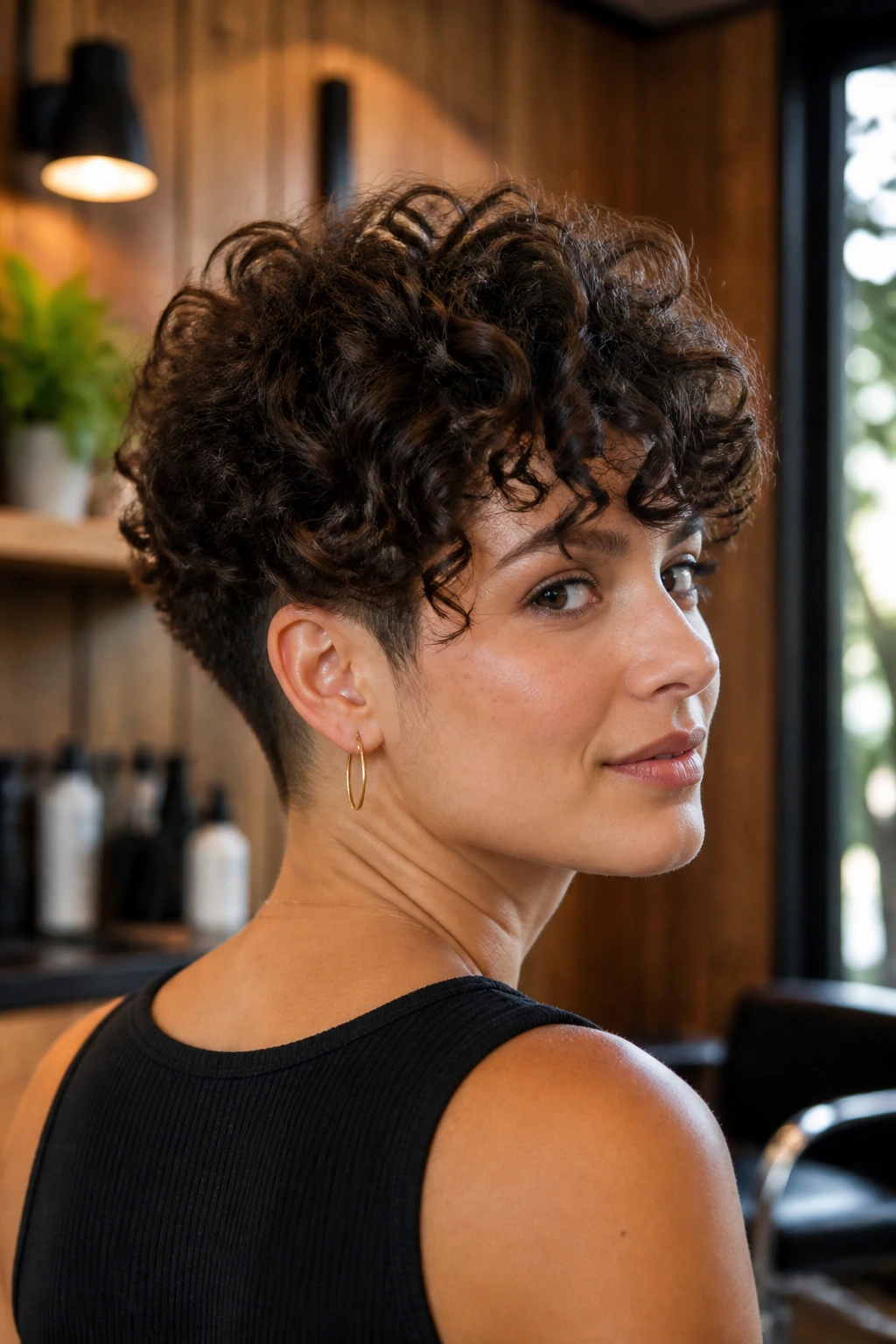
This is the practical one. If your curls pile up at the back and the nape gets bulky fast, an undercut at the nape can clean up the silhouette without changing the front at all. That’s useful on square faces because the back of the head stops competing with the jawline.
The undercut should not be so high that it looks disconnected unless that is the look you want. A low undercut or a close taper usually works better with curls because it removes bulk where it tends to explode outward after drying. The top stays longer, the front stays soft, and the whole cut feels lighter on the neck.
This shape is especially good if you dislike the feeling of hair rubbing the collar or sticking out under jackets. Little things matter. Hair that sits better at the nape gets worn more often.
Who it suits best
- Dense curls that grow wide in back
- Anyone who wants an easier neckline cleanup
- Square faces that need less bulk around the jaw and neck
- People who like a sharper outline without losing curl volume on top
A quick trim every few weeks keeps the undercut from growing into the rest of the cut.
7. Soft Curved Bangs Long Pixie

A blunt fringe can turn a square face into a rectangle if you are not careful. Soft curved bangs do the opposite. They arc gently across the forehead, with the longest pieces sitting near the temples or cheekbones. That curve eases the boxiness and gives curly texture a place to land.
The shape is lovely when the bangs are not too dense. You want air in them. A heavy bang on curly hair tends to shrink, split, or puff. Curved bangs keep the front light and let the rest of the cut do the work. Pair them with a slightly tapered side and you’ve got a line that feels easy, not hard.
If your curls are tight, ask for the bangs to be cut longer than you think you need. That sounds cautious because it is. Curl shrinkage does not care about your feelings.
Quick shaping notes
- Dry-cutting the bang area usually gives better results.
- Ask for point-cut ends rather than a blunt straight line.
- Keep the center of the fringe a touch shorter than the edges.
That tiny curve makes a square face look softer almost immediately.
8. Piecey Long Pixie with Temple Fade
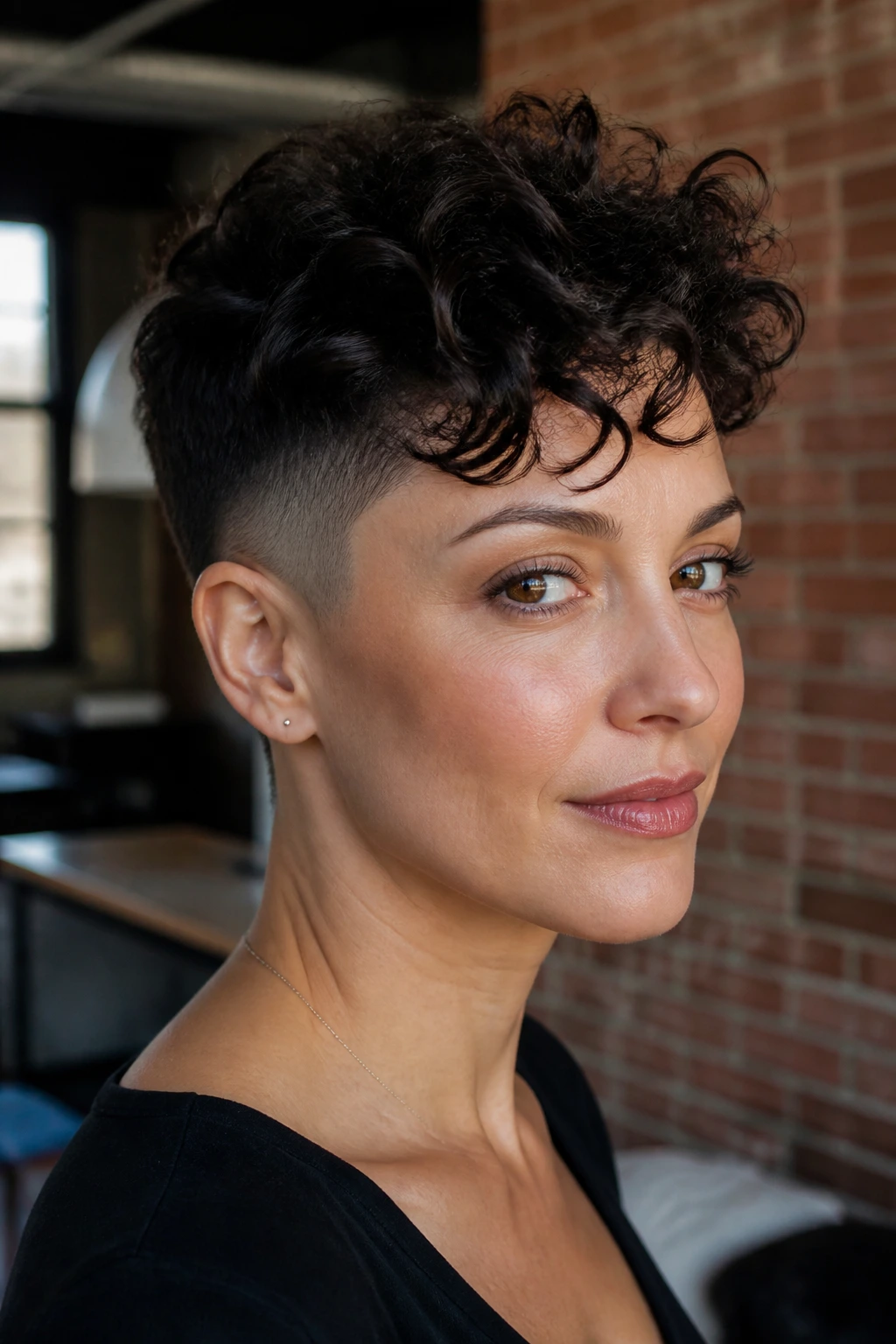
A temple fade is a small detail that changes the whole outline. By cleaning up the hair at the temples, you remove width exactly where a square face can look strongest. Then the longer pieces on top and in front fall forward in separated curls, which keeps the style airy instead of bulky.
The “piecey” part matters too. You are not trying to create one solid curl mass. You want definition, small clumps, and visible separation near the front. That keeps the shape modern and stops the hair from widening at the upper cheeks.
This cut has a little attitude. Not loud. Just sharper than the softer pixies on this list. It’s a good match if you like seeing the structure of the cut rather than a fully fluffy finish.
Best products for this one: a light curl cream, a medium-hold gel, and a touch of oil only on the ends after drying. Too much product and the piecey effect disappears into shiny heaviness.
9. Rounded Long Pixie with Airy Crown
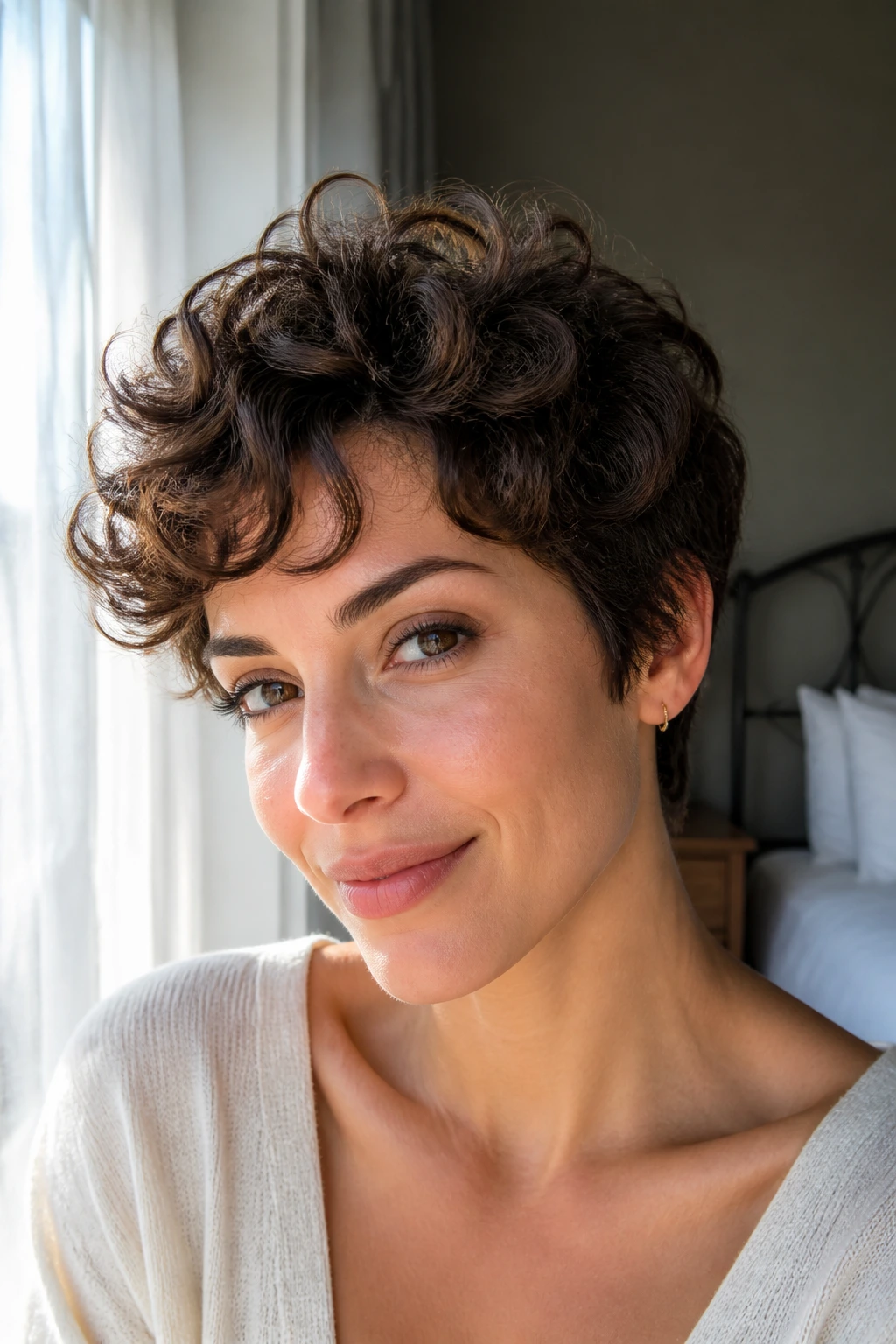
A rounded long pixie sounds counterintuitive on a square face, but it works when the rounding happens up high rather than at the jaw. The crown stays airy and softly domed, while the sides and nape stay controlled. That shifts the balance upward and keeps the face from feeling too angular.
The cut should never puff evenly from top to bottom. That’s how you get a helmet shape. Instead, the length should be concentrated at the top front, with the sides staying close enough to the head to preserve a neat contour. The curls can still be full. They just need a clear boundary.
Why it works
The rounded crown gives loose curls a better landing zone. They stack on each other, bounce a little, and then stop. That bounce lifts the eye away from the jaw, which is exactly what a square face often needs. If your hair is dense, this cut also keeps the top from feeling heavy in the front.
A small diffuser and a gentle side lift at the roots help the shape stay light. You do not want the top flattened down. That ruins the whole point.
10. Long Pixie-Bob Hybrid with Jaw-Skimming Front
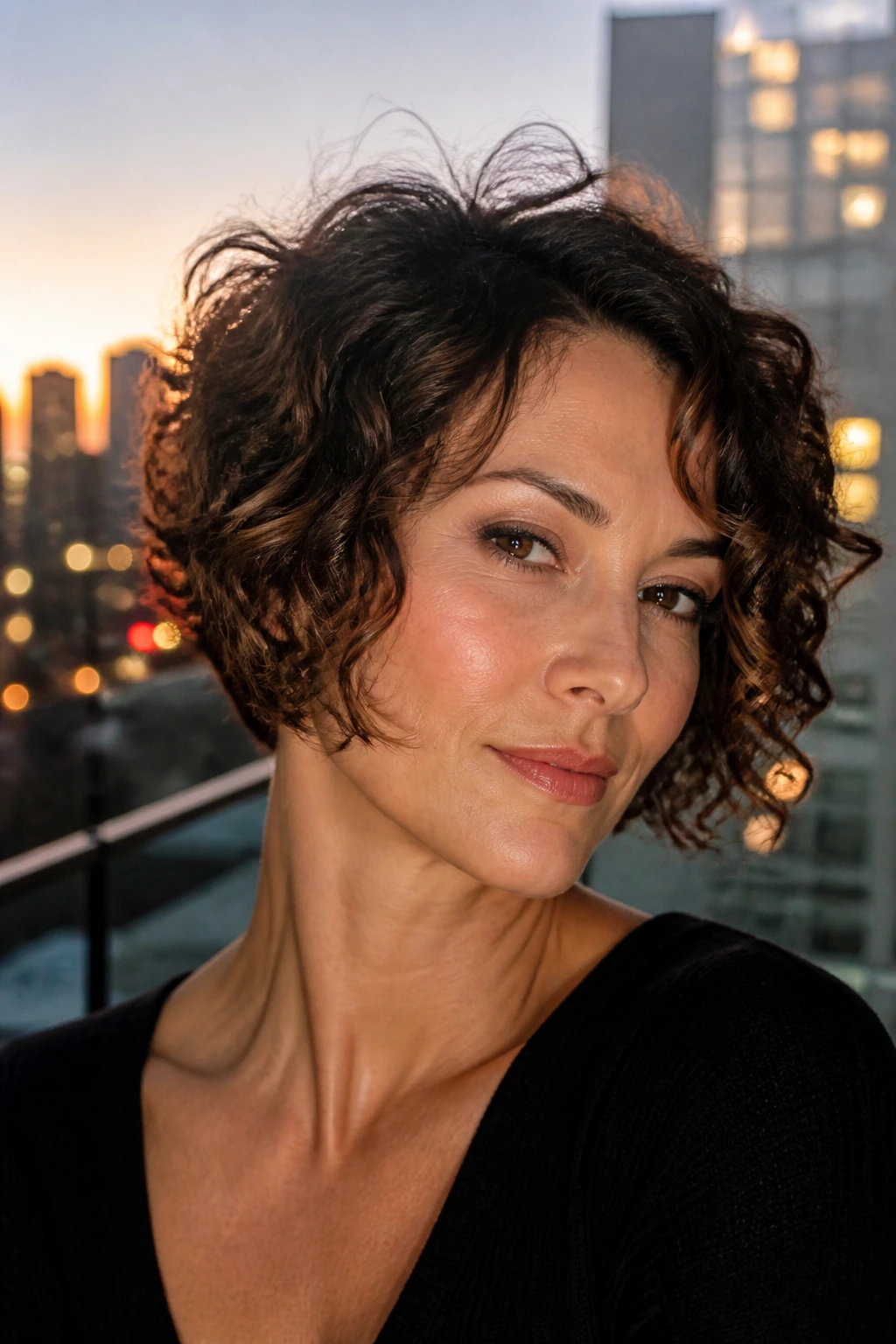
This cut lives in the middle, and that’s its charm. It’s longer than a classic pixie, shorter than a bob, and especially useful if you want some coverage near the jaw without the commitment of a full bob. On a square face, jaw-skimming front pieces soften the corners without making the lower face look bulky.
The trick is to keep the back clearly shorter than the front. If everything sits at the same length, the shape becomes boxy fast. Curly hair needs layered weight removal here, especially underneath, so the front can fall in a clean curve instead of flipping outward.
You can wear this one tucked, parted, or pushed back depending on the day. That makes it a good bridge cut if you are growing out a shorter style. It also works if you’re nervous about going fully pixie-short and want a softer landing.
Best use case
A hybrid cut is smart when your curls shrink a full inch or more after drying. The extra length protects the silhouette. Without it, the cut can end up shorter and rounder than you meant.
11. Curly Curtain Fringe Pixie
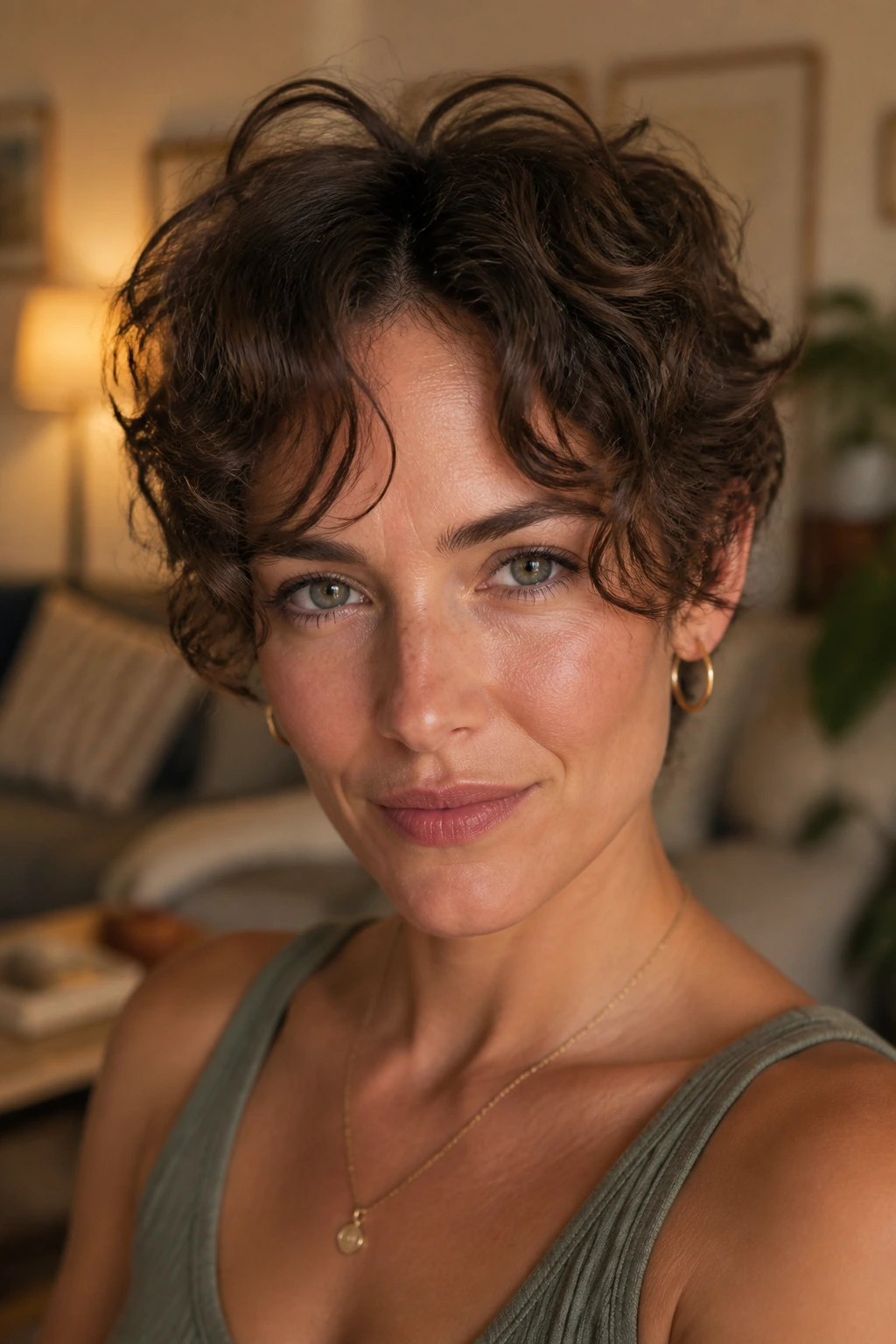
A curtain fringe on curly hair is trickier than it looks, which is probably why I like it. When it’s cut well, it splits softly at the center or just off-center and frames the face in two curved sections that skim the temples and cheekbones. That soft split is a gift for square faces. It breaks the straight line across the forehead and keeps the front from feeling heavy.
The rest of the pixie should stay lean enough to let the fringe breathe. If the sides are too full, curtain bangs can start to feel awkward and triangular. A little internal layering helps the front pieces fall in a natural drape rather than sticking out in a stiff V.
This style is best if your curls are not too tight and not too springy. You want bend, not bounce chaos.
How to style it
Finger-coil the front two sections while damp, then let them dry away from the face. Once dry, separate only if needed. Too much touching turns those neat curves into frizz in about thirty seconds.
12. Feathered Long Pixie with Open Sides
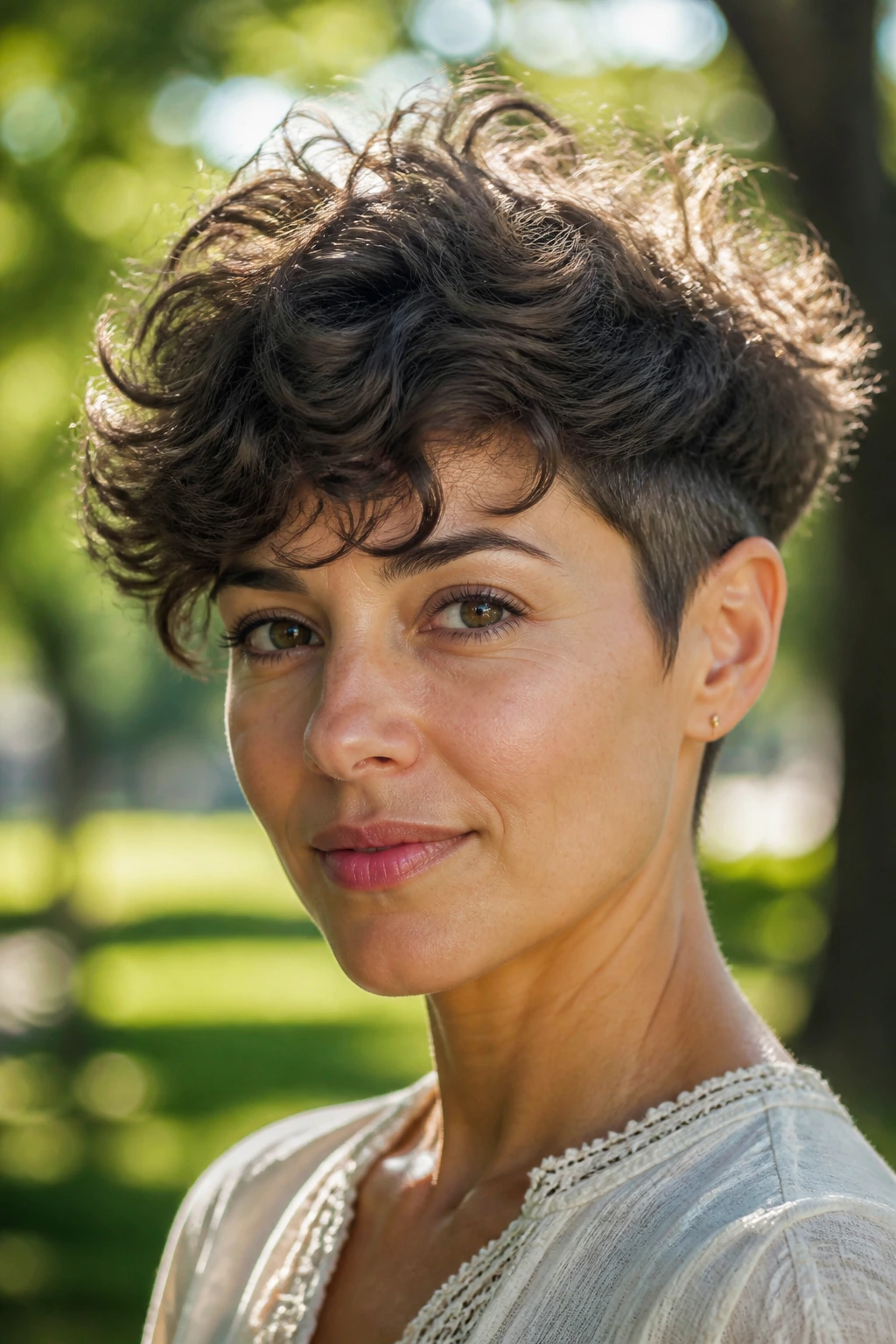
Unlike a heavy pixie that piles all the volume into the sides, a feathered version leaves the sides open and light. That’s a smart move for square faces because the width does not sit exactly where the face is widest. The eye sees lift and softness instead of a hard perimeter.
Feathering works best when the cut has visible movement around the ears and temple area. The hair should skim, not grip. That means the stylist should use point cutting or slide cutting in the right places, depending on curl pattern and density. Done right, the result feels breezy without turning wispy or thin.
This is one of the better cuts for people who like soft edges around their glasses or earrings. The hair doesn’t crowd those details. It frames them.
Who should try it: medium-to-thick curls, especially if the sides tend to spread out and create a square outline.
One caution: feathering too much on fine curls can make the ends look sparse. The cut needs enough interior weight to hold its shape.
13. Tapered Pixie with Swept-Back Top
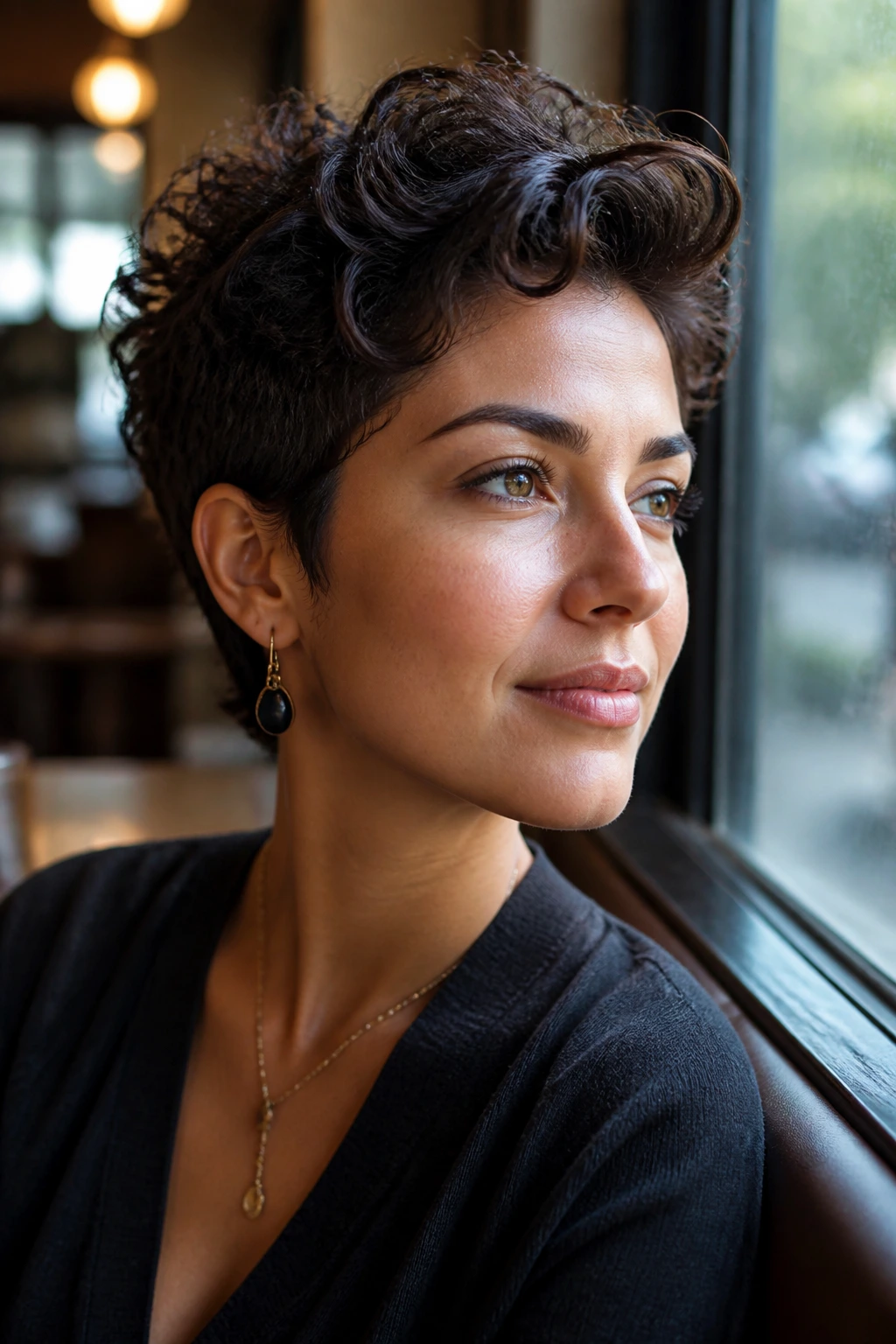
A swept-back top changes the face from front-heavy to lifted. The curls move away from the forehead and stack at the crown, which gives square faces a more vertical line. That vertical line matters more than people think. It keeps the silhouette elegant without turning rigid.
The taper on the sides and back should be smooth, not shaved bare unless you want that contrast. Curly hair tends to look best when there is some softness in the transition. Too much contrast can make the top look like it was dropped onto the head instead of built into it.
This cut is especially good if your curls cling to your forehead when short. Sweeping them back opens the face and shows off brows and cheekbones. It does need a little product. A light hold cream or foam is usually enough.
Good for mornings when you are in a hurry
Push the top back with damp hands, diffuse for a few minutes, and leave it alone. The shape often settles better when you stop fussing with it.
14. Tousled Long Pixie with Micro Layers
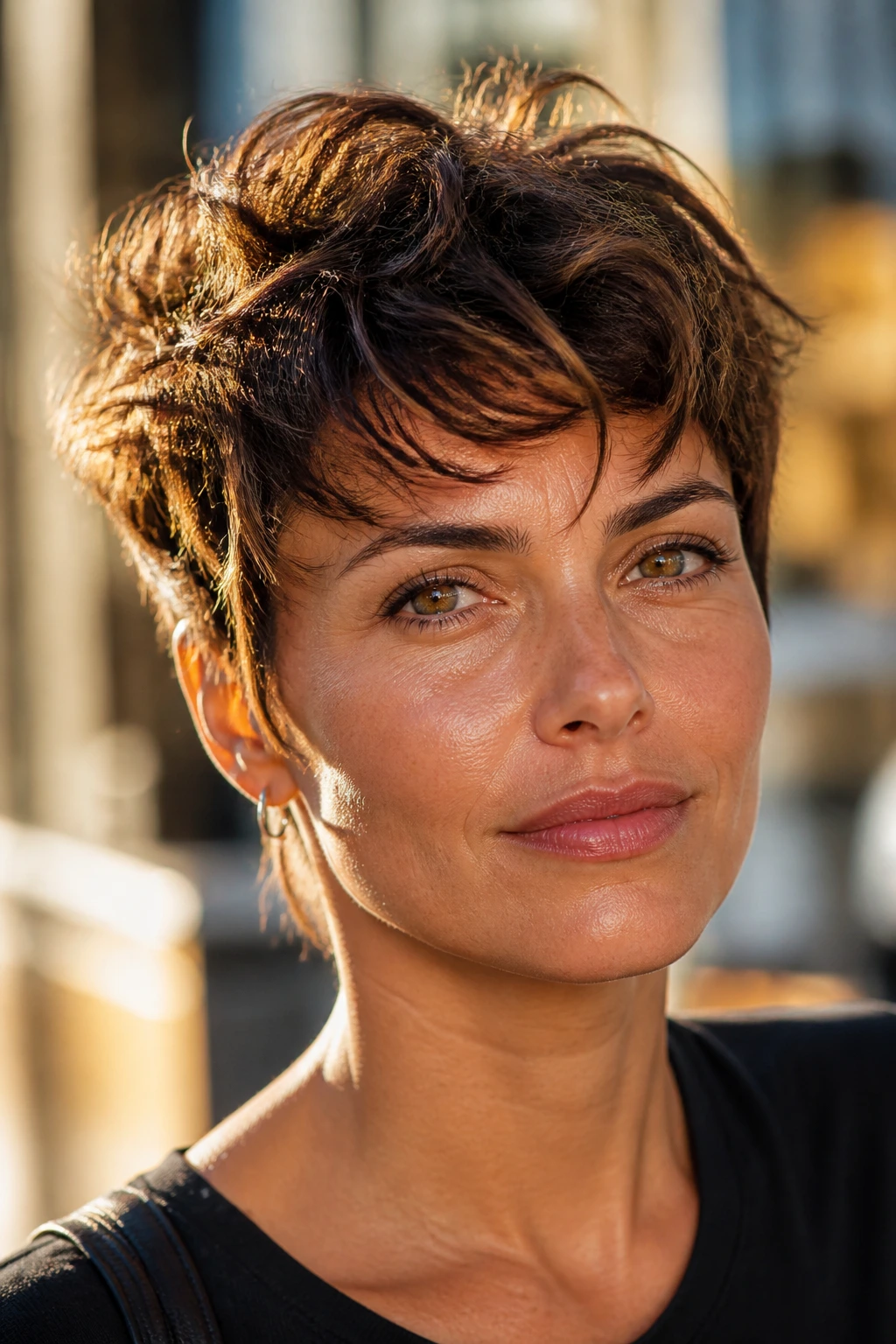
Micro layers are tiny, precise layers placed close together so the cut does not collapse into one thick block. On curly hair, that matters a lot. It gives the curls room to separate and keeps the silhouette from getting too wide through the sides or too dense through the top.
The tousled finish works because it softens the hard corners of a square face without requiring polished styling. You can wear this one with a little lift at the root, a bit of separation at the front, and a loose texture through the crown. The whole thing should look lived-in, but not sloppy.
This style is a good match for people who want movement first and neatness second. It forgives imperfect styling better than a more sculpted pixie. If your hair gets bigger as the day goes on, this is one of the cuts that can absorb that change without losing its shape.
Key details
- Micro layers help reduce bulk.
- Keep the fringe longer than the temples.
- Ask for soft texture, not razor-thin ends.
- Use a diffuser on low heat to avoid frizzing the top layer.
15. Grow-Out Friendly Long Pixie
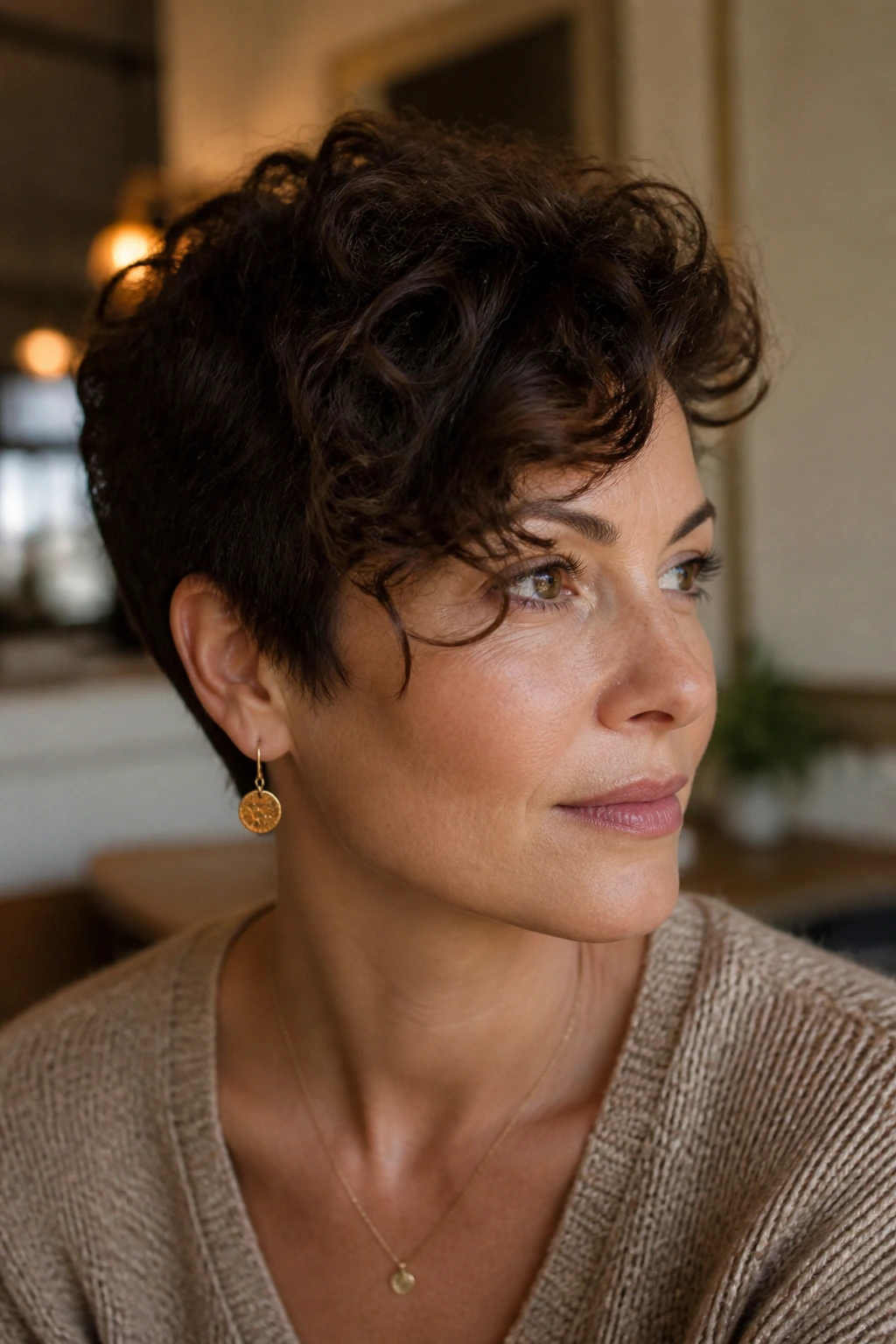
What happens when you like the pixie but do not want a hard maintenance cycle? You choose a grow-out friendly version. The front, crown, and sides all stay long enough to pass through the awkward stages with less drama, which is a blessing if you are deciding whether to stay short or move toward a bob.
For square faces, this shape is useful because it keeps the edges soft during every stage. The front can shift from pixie to mini fringe to bob-length face frame without suddenly exposing the jaw. The key is restraint. Keep the back cleaner than the front, but never so short that the contrast becomes harsh.
This cut also gives curly hair room to stretch out between trims. That matters when your curl pattern changes with humidity, product, or seasonless things like indoor heating. The cut doesn’t need to be perfect every day. It just needs to stay in the same family.
How to wear it
Part it where the hair naturally settles, tuck one side behind the ear, and let the longer front pieces sit on the cheekbones. That simple move keeps the whole shape soft while you decide whether to keep growing or cut it back.
Why Long Pixie Cuts for Curly Hair and Square Faces Work So Well
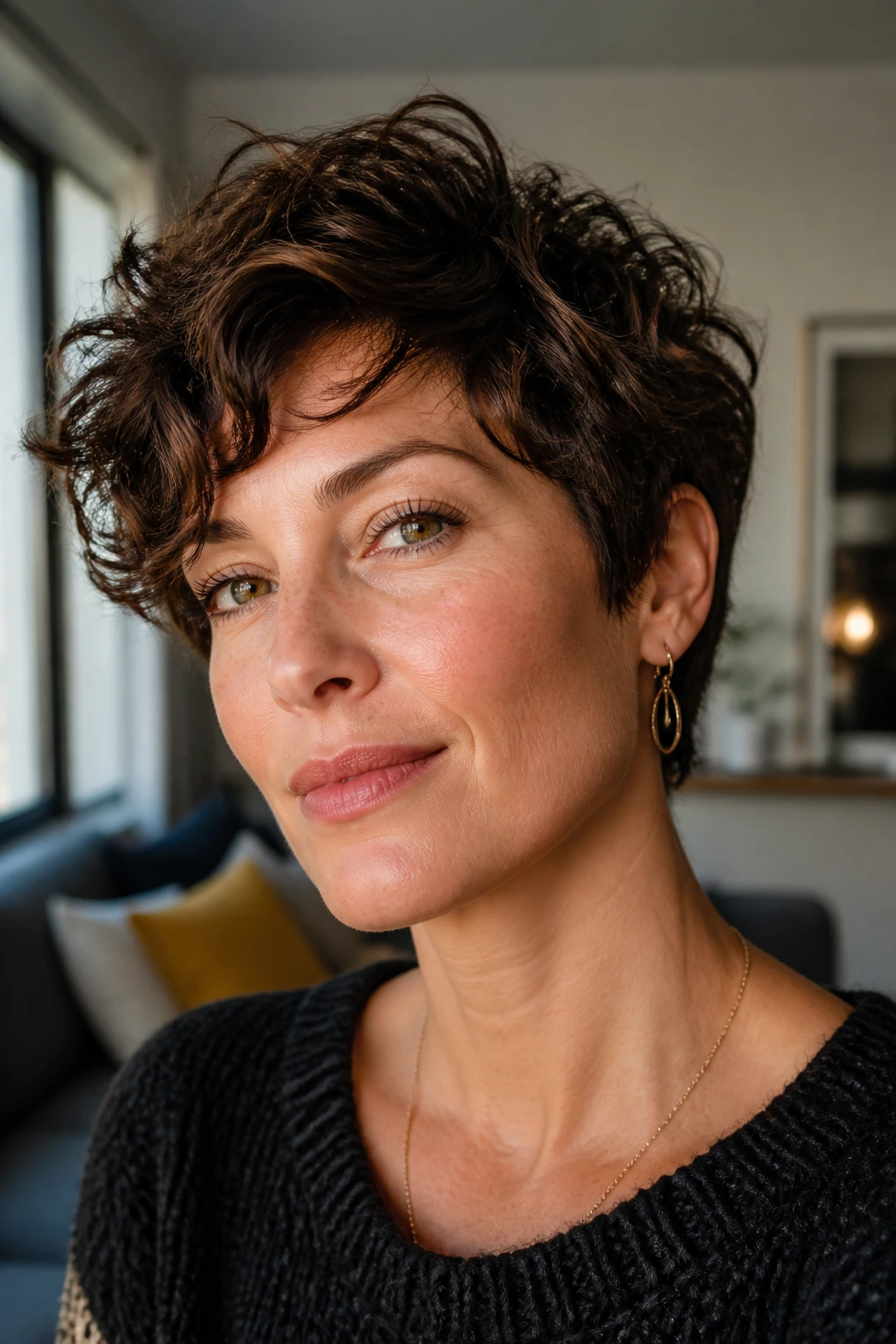
The best long pixie on curly hair is not just short hair with some layers hacked into it. It’s a shape job. The cut has to respect curl shrinkage, the way curls widen as they dry, and the hard geometry of a square face. If the stylist cuts for wet hair only, the result can come back tighter, shorter, and wider than expected. That is where these styles earn their keep: they give you room to account for all of that.
A square face usually looks strongest when the cut softens the jawline and breaks up parallel lines. That does not mean hiding the face. I’m not a fan of hiding faces, honestly. It means placing movement where the eye wants to rest: around the cheekbones, the temples, and the front edge of the hairline. Long pixies do that when they keep the fringe longer, the crown a little higher, and the sides controlled.
Curly hair changes the equation because it already has texture. You do not need to fake fullness. You need shape. The best pixies use internal layering, tapering, and strategic asymmetry so the curls stack in useful places instead of ballooning at the wrong ones. One inch can change everything here. Two inches can change the whole silhouette.
How to Ask for Long Pixie Cuts for Curly Hair and Square Faces at the Salon
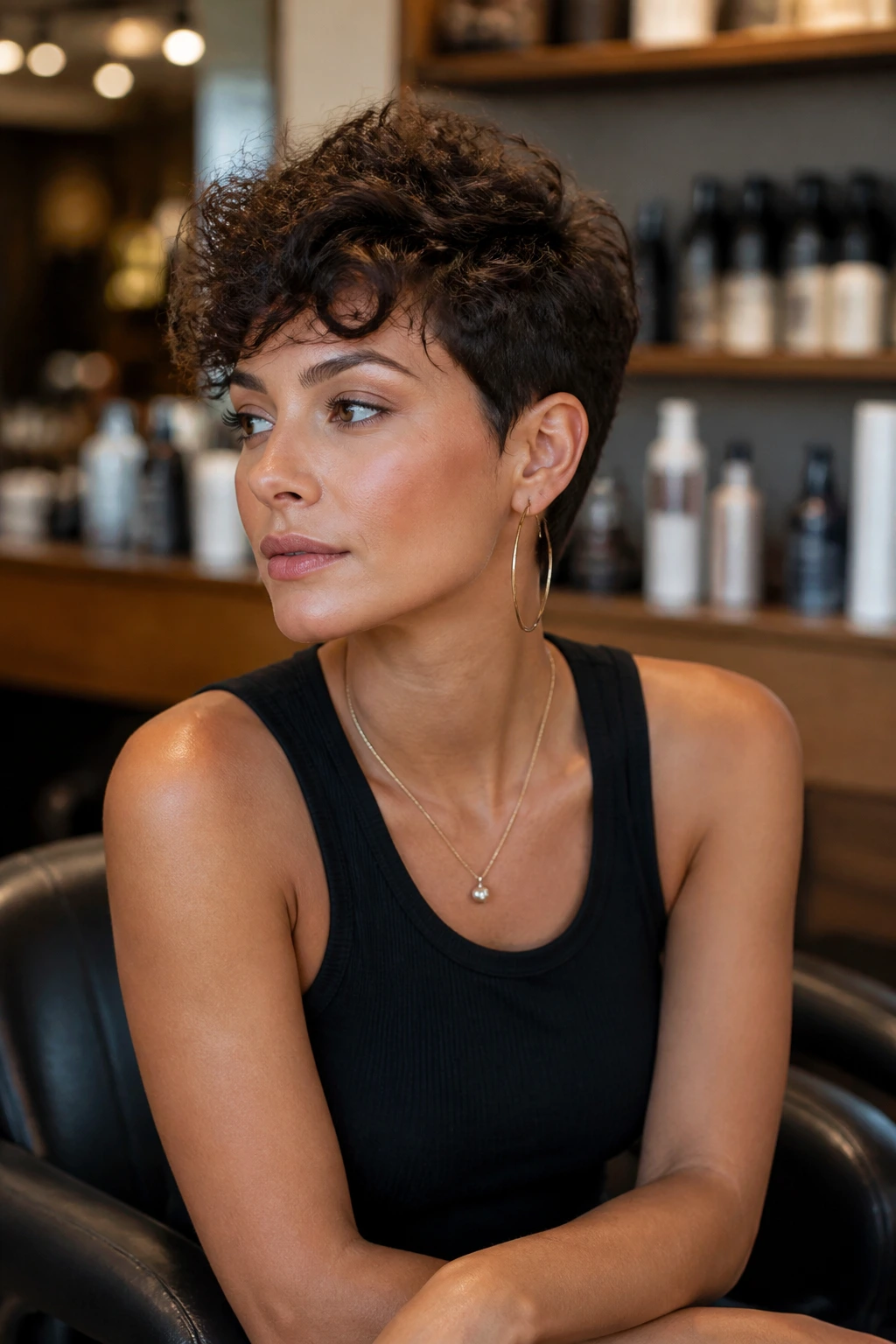
Bring photos, yes, but bring the right photos. You want images of people with similar curl density and a similar jawline, not just the same face shape. A pixie on fine waves and a pixie on dense ringlets are two different animals. If the photo has straight hair, ask the stylist to show you how the same balance would translate to curls.
Be specific about length zones. Say where you want the front to land, where you want the top to sit, and how much taper you want around the ears and nape. For a square face, phrases like “keep the front at cheekbone length,” “soften the temple area,” and “avoid width at the jaw” are useful. So is asking for a dry check before the final snip.
What to say out loud
- “I want the top longer than the sides so the shape pulls upward.”
- “Please keep weight off the jawline.”
- “I need curl shrinkage planned for.”
- “Can we dry-check the fringe before we finalize it?”
If your curls are tight or uneven, a curl-by-curl or dry-cut approach can help. Not every stylist works that way, but the ones who do usually understand how to prevent surprise shrinkage better than anyone else.
Essential Tools and Products for Curly Pixie Styling
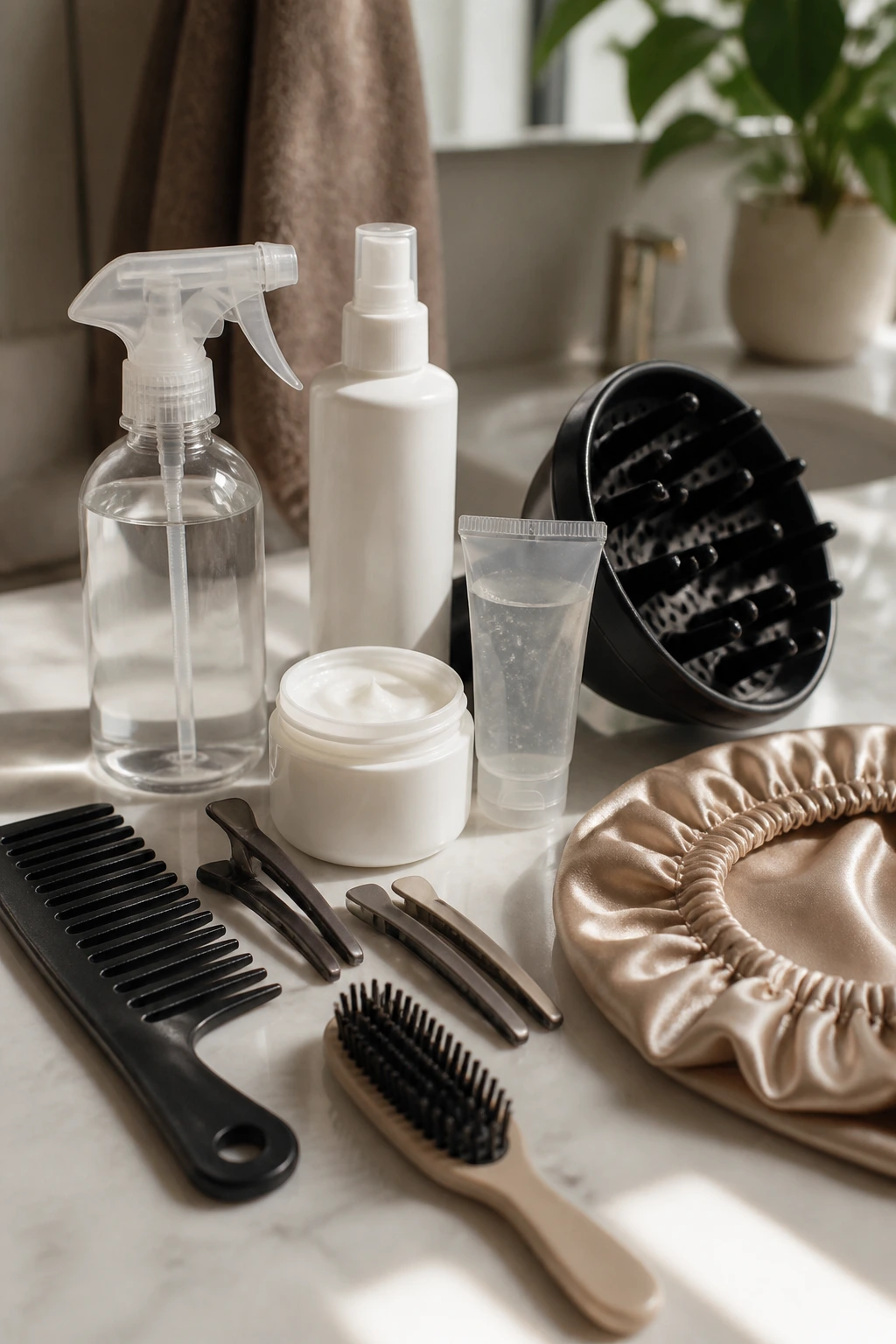
- Water spray bottle: A fine mist helps reactivate curls in the front without soaking the whole head.
- Leave-in conditioner: Use a light layer on damp hair to keep curls from feeling rough after washing.
- Curl cream or foam: Choose one, not five. Cream gives softness; foam gives lift and less weight.
- Medium-hold gel: This holds the top and fringe in place while the curl sets, especially around the crown.
- Diffuser attachment: Low heat and low speed protect the curl pattern and reduce frizz at the ends.
- Duckbill clips: Handy for lifting roots at the crown or setting a side sweep while drying.
- Wide-tooth comb or fingers: Better than a brush for preserving curl clumps in a short cut.
- Satin pillowcase or bonnet: Keeps the fringe from getting crushed flat overnight.
- Small styling brush: Useful for shaping bangs or smoothing the part line if you like a neater finish.
Daily Styling That Keeps the Shape in Place
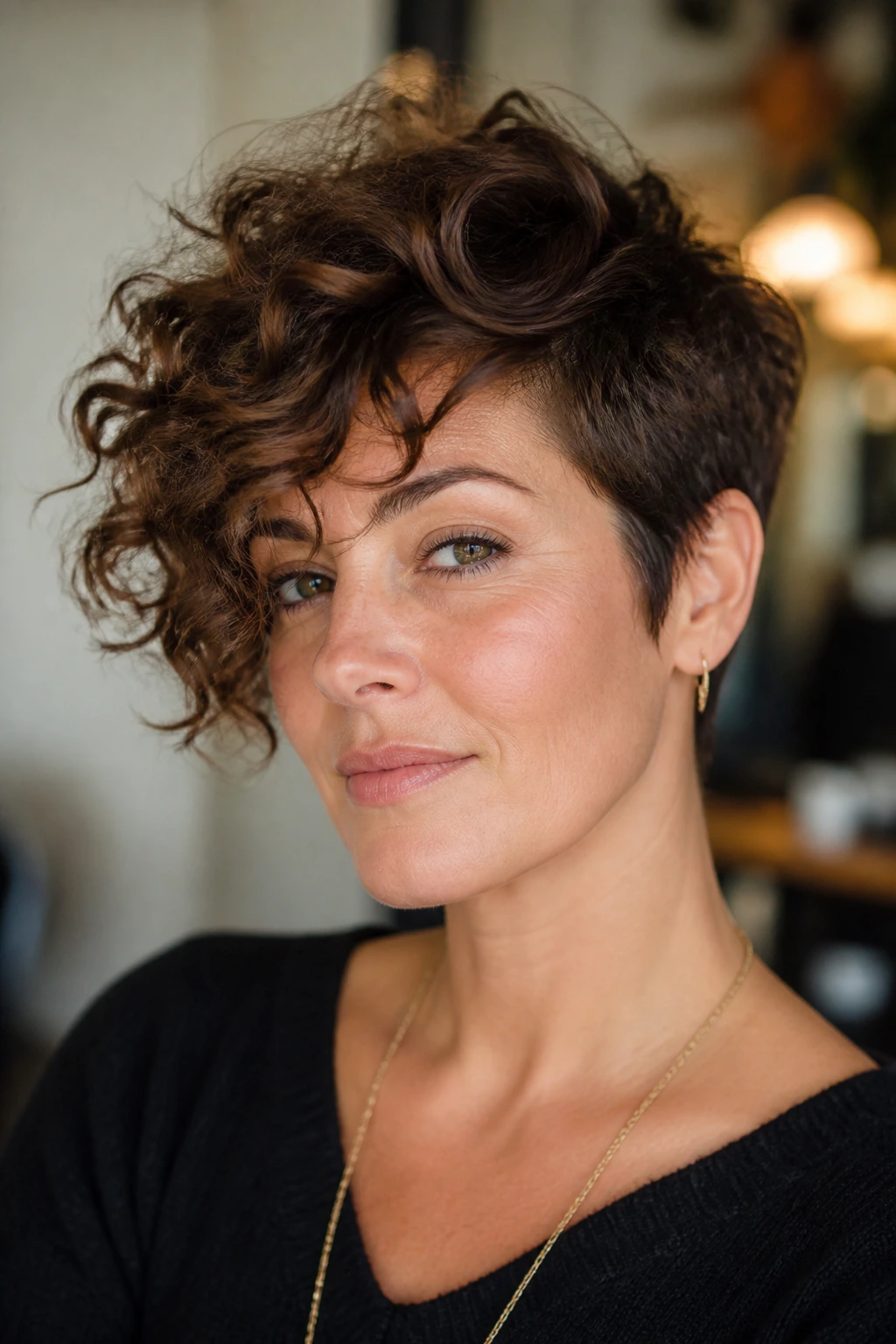
Curly pixies behave better when you style them in small sections. Start with damp hair, not dripping hair. Saturated curls take forever to dry, and the top can flatten before the rest sets. Work a small amount of leave-in through the mid-lengths, then add a mousse or gel near the roots and fringe where the shape needs support.
Use your fingers to direct the front where you want it. That sounds minor, but it matters. If the fringe wants to fall left and you keep pushing it right, the cut will fight back. A side-swept or deep-parted long pixie usually holds best when the roots are trained in the right direction while they’re still damp.
Diffusing on low heat is usually the cleanest way to keep the cut from expanding too much. Stop when the hair is about 80 to 90 percent dry, then let it finish on its own. That last bit of air-drying often gives curls a softer edge and keeps the crown from getting crunchy. If you prefer a more separated look, break the cast only after the hair is fully dry. Not before.
Keeping Long Pixie Cuts for Curly Hair and Square Faces Fresh Between Trims
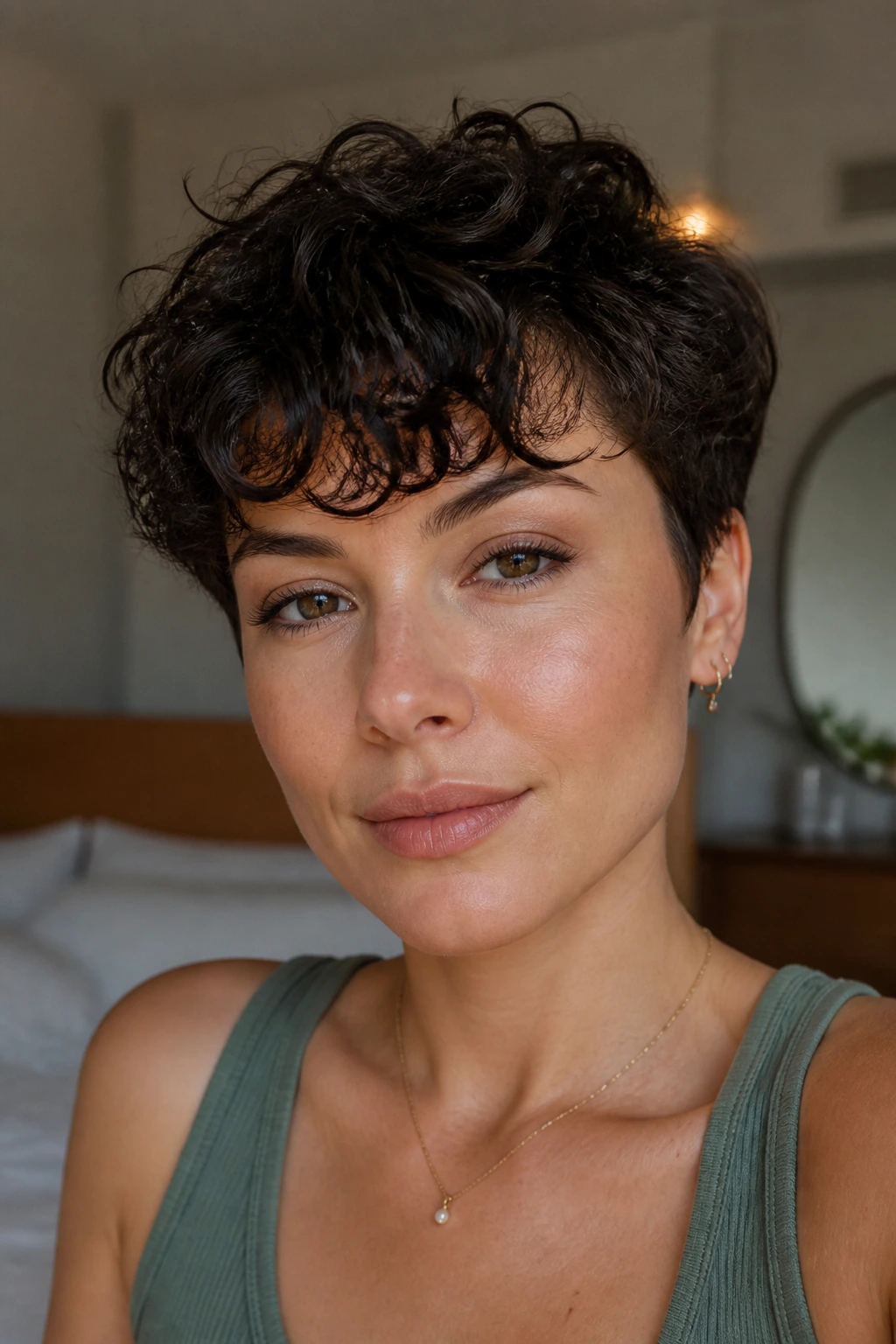
A long pixie is generous, but it still needs maintenance. Most curly versions benefit from a trim every 6 to 8 weeks if you want the outline to stay sharp. If the style is intentionally shaggy or grow-out friendly, you can stretch that a little longer, but once the nape starts puffing out and the side balance disappears, the face shape gets lost.
Night care is not optional if you want the fringe to behave. Sleep on a satin pillowcase or wear a bonnet, especially if the front is long enough to touch your forehead. That reduces friction and keeps the curl pattern from getting mashed into odd angles. In the morning, a light mist and a little finger reshaping usually bring the front back without needing a full wash.
If the roots start lying flat, use a quick refresh instead of rewriting the whole style. A few sprays of water, a dab of foam, and a 2-minute diffuser pass can bring the top back to life. The cut stays looking intentional far longer when you treat it like a shape, not just a collection of curls.
Common Mistakes That Make a Pixie Look Boxy
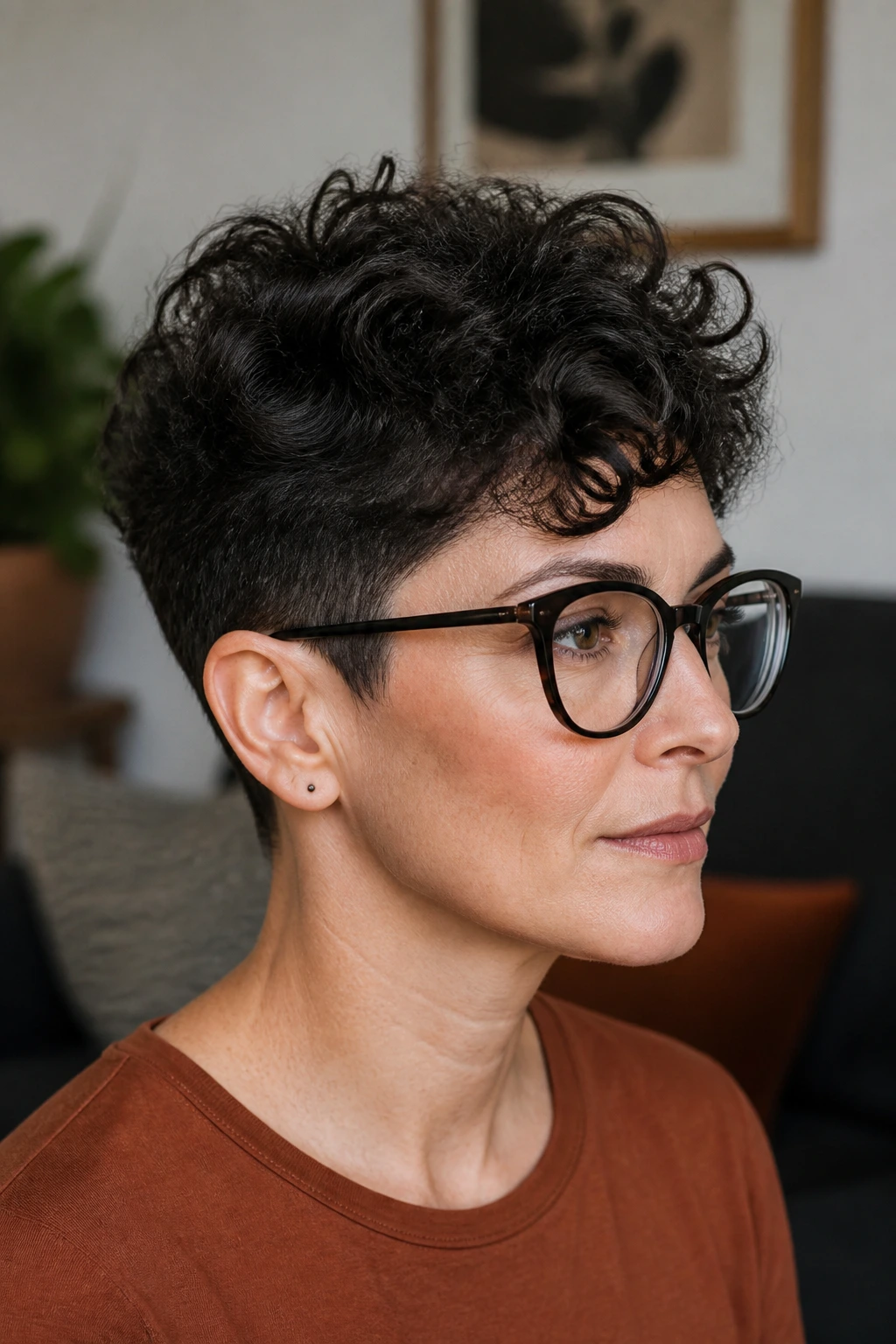
The biggest mistake is cutting the sides too full. On a square face, that adds width exactly where you do not want it. The fix is simple: ask for tapering at the temples and around the ears, then keep the curl volume focused higher up or forward.
Another problem is forgetting that curly hair shrinks. A fringe that looks cheekbone-length when wet can jump well above the brow once dry. If you like length in the front, insist on a dry check or ask for the cut to be left longer than the first draft. Curly pixies are not forgiving of overconfidence.
Heavy product causes its own trouble. A thick curl butter can weigh the top down and make the sides separate into greasy-looking clumps. That ruins the lift you need for a square face. Use the lightest product that still gives you hold, then add more only if the hair asks for it.
The last trap is ignoring the nape. If the back grows out unchecked, the whole shape can drift into a mushroom. That is the moment people blame the pixie when the real issue is maintenance. Clean the neckline before it starts stealing the shape.
Variations and Alternatives to Try
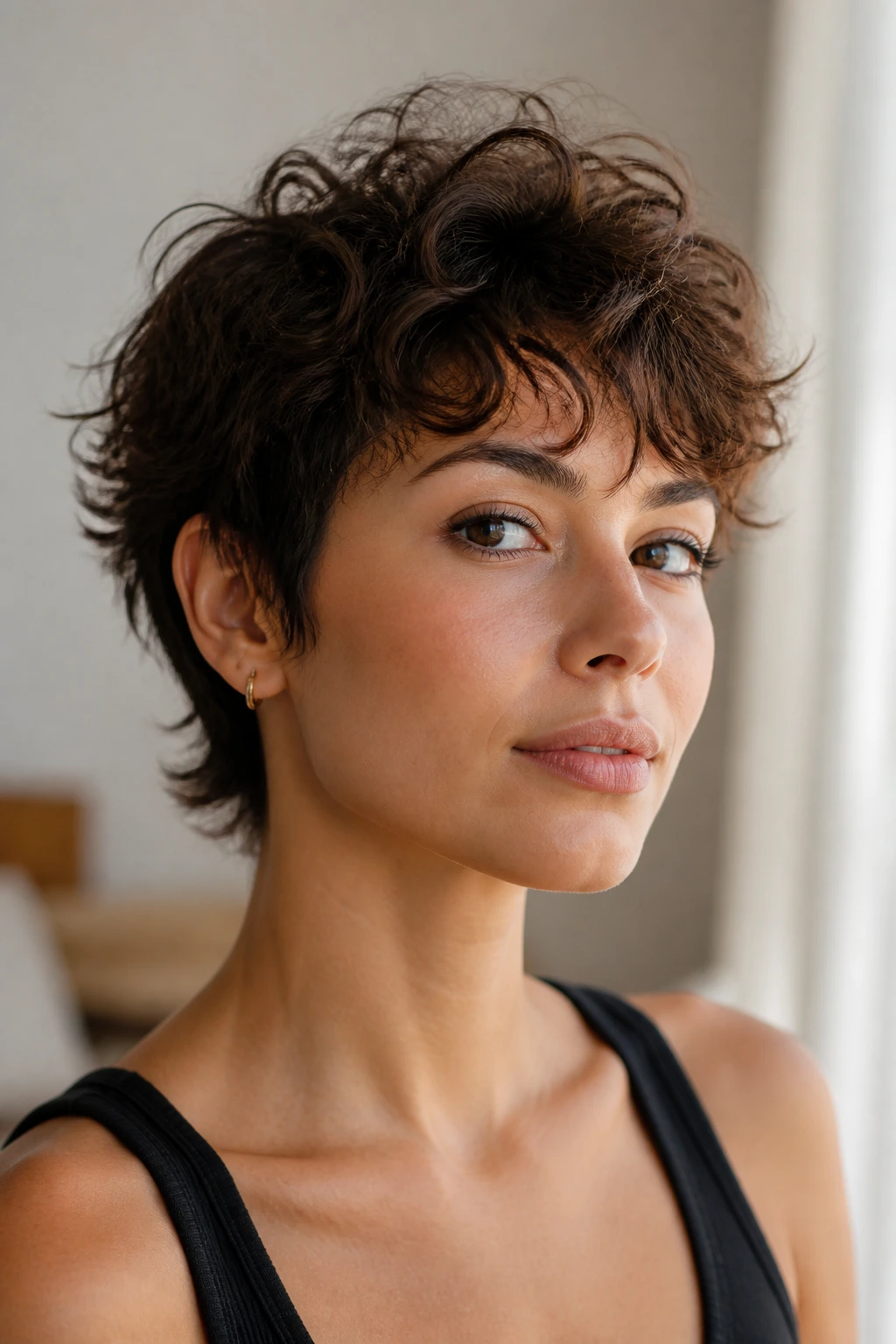
Soft Wolf-Pixie Crossover:
This version keeps the top longer and the layers a little messier, with a hint of shag around the crown. It works if you want more movement and do not mind a rougher edge. Square faces benefit from the broken-up outline, especially when the fringe is swept diagonally.
Polished Side-Part Pixie:
If you like cleaner lines, this is the sleek option. The part is deep, the fringe is controlled, and the nape stays neat. It’s a better fit for work settings or anyone who wants curls to look shaped rather than undone.
Bold Tapered Fade Pixie:
Take the undercut idea further and fade the sides tighter. This makes the top look fuller and more sculpted. It’s sharper, yes, but the contrast can be gorgeous on dense curls when you want the face to stay open.
Mini Bob Transition Cut:
This is for people growing out a pixie but not ready for a full bob. The front stays longer, the back stays shorter, and the whole cut softens the jawline without losing too much shape. It can be the easiest bridge from short to medium length.
Air-Dry Curl Pixie:
Designed for low-effort mornings, this version relies on a good cut and minimal product. It’s best if your curl pattern forms well on its own and you do not want a lot of heat styling. The trick is a shape that lands properly even when the finish is a little imperfect.
Frequently Asked Questions
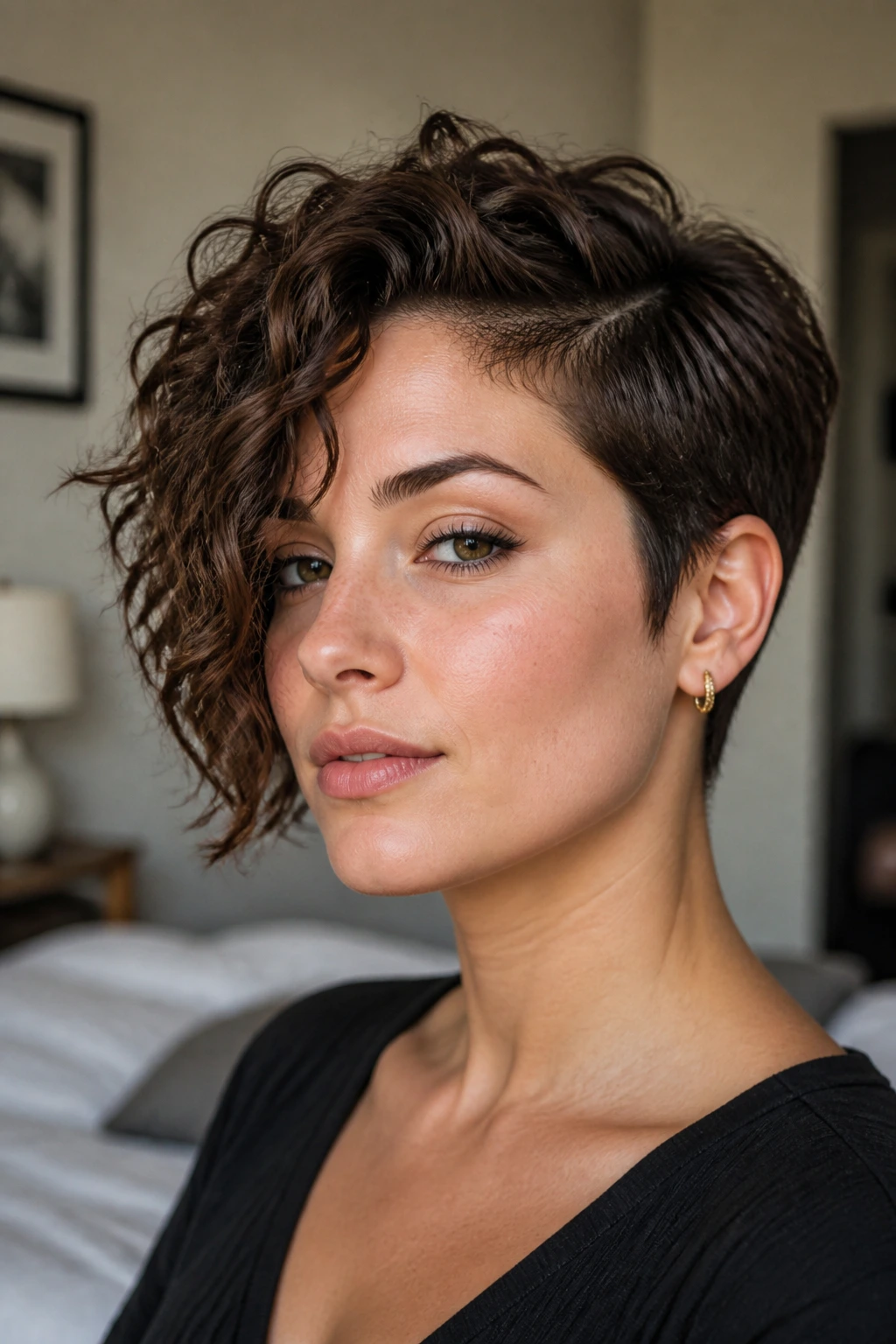
Will a long pixie make a square face look wider?
It can, if the sides are too full or the fringe is too blunt. The fix is to keep width away from the jaw and temples, then use diagonal lines, longer front pieces, and some height at the crown to balance the face.
Is this style better for loose curls or tight curls?
It works for both, but the cut needs to change. Loose curls can handle more side sweep and soft layering, while tighter curls usually need more length left in the front and a careful dry check so shrinkage does not shorten everything too much.
Should curly pixies be cut wet or dry?
Dry or partially dry cutting usually gives better control because curl shrinkage is easier to judge. Some stylists still cut wet first and refine dry, which can work if they understand your pattern. The key is not trusting a wet curl to tell the full story.
How often should I trim a long curly pixie?
Most versions need attention every 6 to 8 weeks. If the nape grows fast or the front starts losing its shape, you may want a cleanup sooner. Longer, shaggy versions can stretch a bit farther, but the outline should still be visible.
What if my curls puff out at the sides?
That usually means the cut has too much bulk at the temples or too little layering in the interior. Ask for more taper around the sides and a little more length on top so the volume moves upward instead of outward.
Can I wear a long pixie without heat styling?
Yes, if your curl pattern forms a decent shape on its own. Use leave-in, a small amount of gel, and finger-shaping while damp, then let it dry with minimal touching. A diffuser helps, but it is not mandatory.
How do I grow this into a bob without a bad in-between stage?
Keep the front and crown longer than the back, and ask for shaping trims instead of full resets. That lets the cut pass through the awkward stage with some face-framing length still intact. The grow-out looks better when the top is allowed to lead.
What product matters most for this cut?
For most people, it’s a medium-hold gel or foam. That one product holds the shape long enough for the curls to set without crushing them. After that, the next most useful thing is a diffuser or a good satin pillowcase.
A Shape That Softens Without Hiding
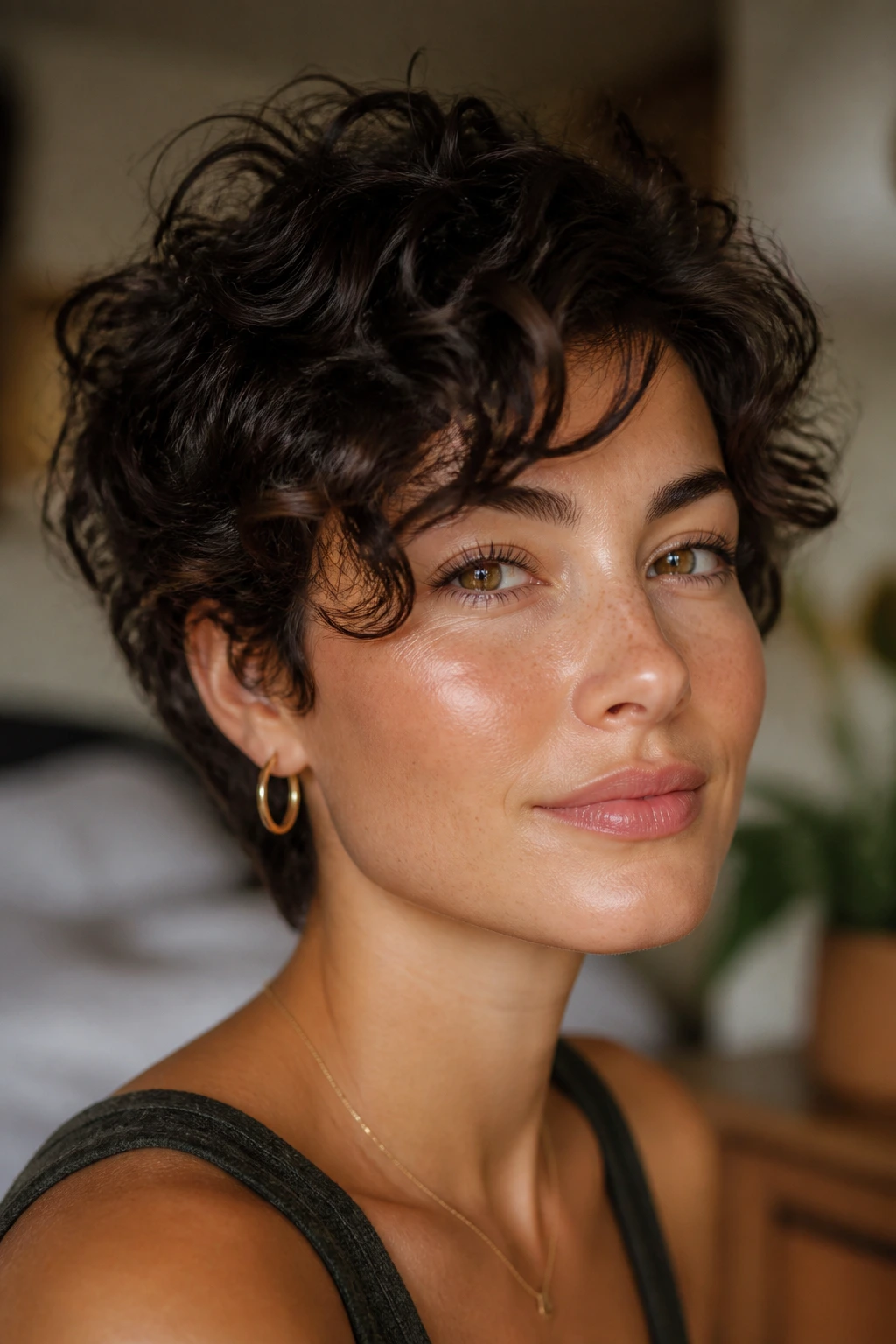
The best long pixie on curly hair does not ask your face to disappear. It gives your curls a frame and your jawline a little breathing room, which is a better trade. Square faces usually look stronger when the cut adds movement at the front, softness at the temples, and just enough lift on top to break the horizontal line.
That’s why this category has real staying power. Some versions are sleek, some are messy, some lean edgy, and some are close to bob territory. But the good ones all do the same quiet job: they let the curls move while easing the hard corners of the face. Once you find the right balance, the cut stops feeling like a compromise and starts feeling like the shape your hair was waiting for.