



Flat roots are the enemy. Fine hair can go from airy to limp in one humid afternoon, and the fastest fix is rarely more product — it’s shape. Edgy hairstyles for women with fine hair work best when the cut itself does some of the heavy lifting: a cleaner perimeter, a sharper part, a little asymmetry, maybe a fringe that breaks up the front so the whole head doesn’t read as one soft blur.
That’s the part people get wrong. Fine hair is not the same thing as thin hair, and it is not a sentence to long, sad layers that dissolve at the ends. The right cut can make a small amount of hair look deliberately styled instead of accidentally sparse. I’m talking about shapes that hold their line by noon, not cuts that only look good in the salon mirror with a round brush still hovering nearby.
Some of the strongest looks here are short. Some sit at the jaw. A few keep a little length at the collarbone so you can still tuck, clip, or bend them into something sharper on day two. What matters is not how much hair you have to “work with.” It’s whether the outline has enough clarity to stand up on its own.
Why These Cuts Give Fine Hair More Edge, Not More Fuss
-
Blunt ends keep the hemline thick: A straight, clean edge at the bottom makes fine strands look denser because the eye reads one solid line instead of see-through tips.
-
Shorter crowns fight collapse: A little height at the top gives fine hair structure where it usually sags first, especially around the crown and part line.
-
Asymmetry breaks up flatness: One side longer, one side tucked, or a deep off-center part stops the style from sitting like a helmet.
-
Texture belongs near the top: Choppy movement at the crown adds lift; choppy movement through the last inch of hair can make the ends look scrappy.
-
Minimal product wins: Mousse, dry texture spray, and a touch of paste hold better than creamy stylers that slide the cut back down.
-
Edgy does not have to mean messy: The best cuts here look sharp, even when they’re tousled. Clean edges make the “undone” part feel intentional.
The Shape Rules That Keep Fine Hair Looking Intentional
Keep the perimeter blunt
The easiest way to fake density is to stop shredding the ends. A blunt line at the bob, lob, or pixie fringe gives fine hair a thicker visual edge, even if the strands themselves are delicate. If a stylist over-thins the bottom with aggressive point cutting, the ends start to look like they’ve been nibbled away.
Put movement where it lifts, not where it disappears
Short crown layers, a little internal bevel, or a soft piecey top can raise the whole silhouette. What you do not want is a bunch of sliced layers through the lower half that leave the outline see-through. I’d rather see a tiny bit of weight at the bottom than a haircut that looks airy in the chair and tired two hours later.
Use the part as a styling tool
A deep side part is not a small detail. It’s volume on demand. On fine hair, a part change can create a ridge at the root, shift attention off any thin temple area, and give the cut an attitude it didn’t have before. Center parts can work too, but only when the rest of the shape is clean enough to support them.
Let the front carry some of the drama
Fringe, face-framing pieces, or a longer front corner on one side can make the whole cut feel sharper. The front is where people notice the shape first. If you want an edge without losing softness, keep the back disciplined and the front slightly more expressive.
1. Razor-Cut Micro Bob
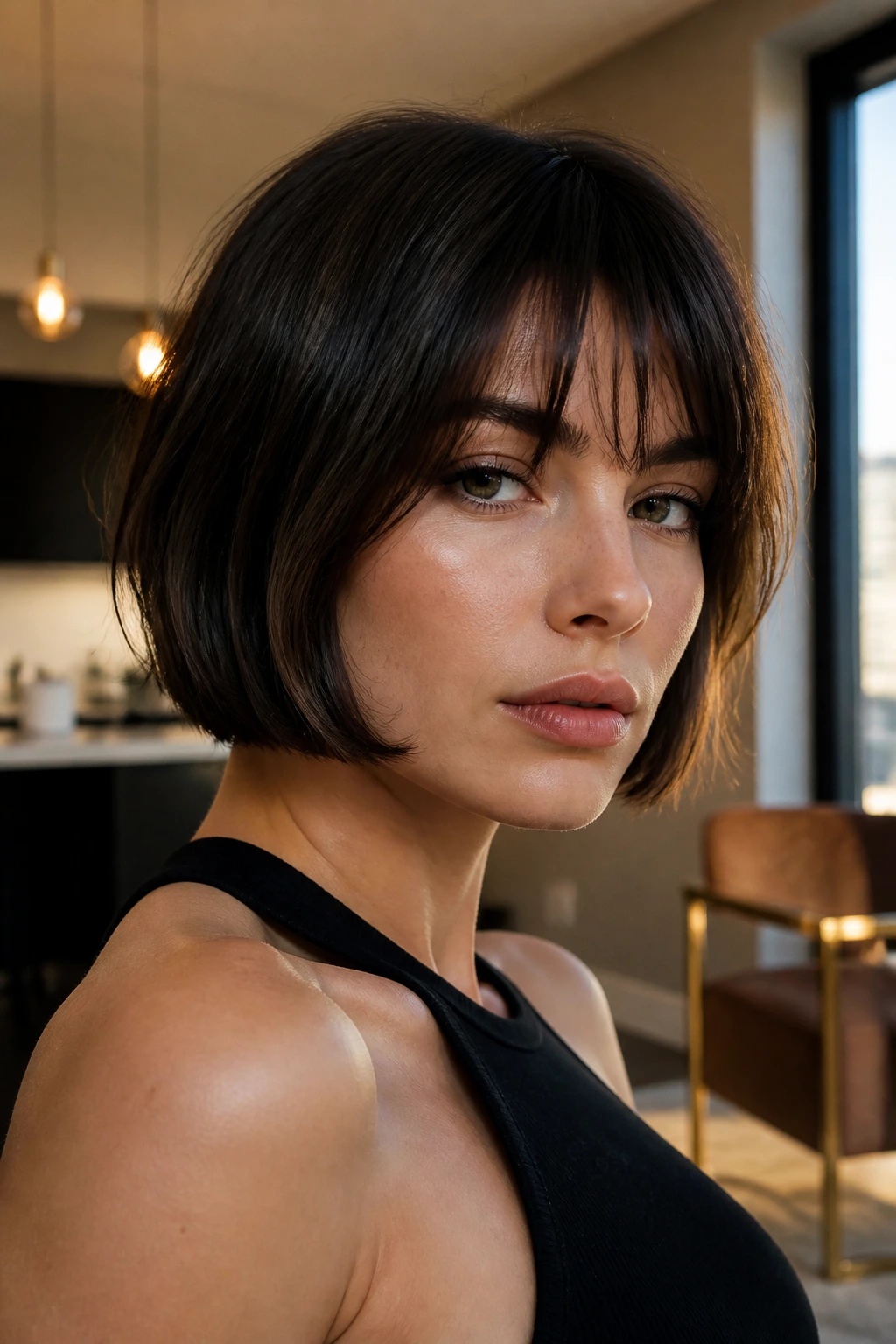
A micro bob that skims the jawline is one of my favorite fixes for fine hair that keeps drooping at the shoulders. The length is short enough to remove drag, but long enough to leave you with a real outline. That outline matters. It gives the hair a place to stop instead of melting into your collarbone by lunch.
Why it works
The micro bob does two things at once: it removes weight and keeps the edge clean. If the stylist uses a gentle razor pass only through the top layer and leaves the perimeter blunt, you get movement without the fluffy ends that make fine hair look wispy. A tiny bend under the chin is enough; this cut does not need a full-page blowout to read as polished.
Best styling move: Blow-dry with a small round brush, then tap a touch of matte paste on the last half-inch.
Who it suits: Women who want short hair that still feels sharp and adult, not pixie-short.
2. Choppy Pixie with Crown Lift
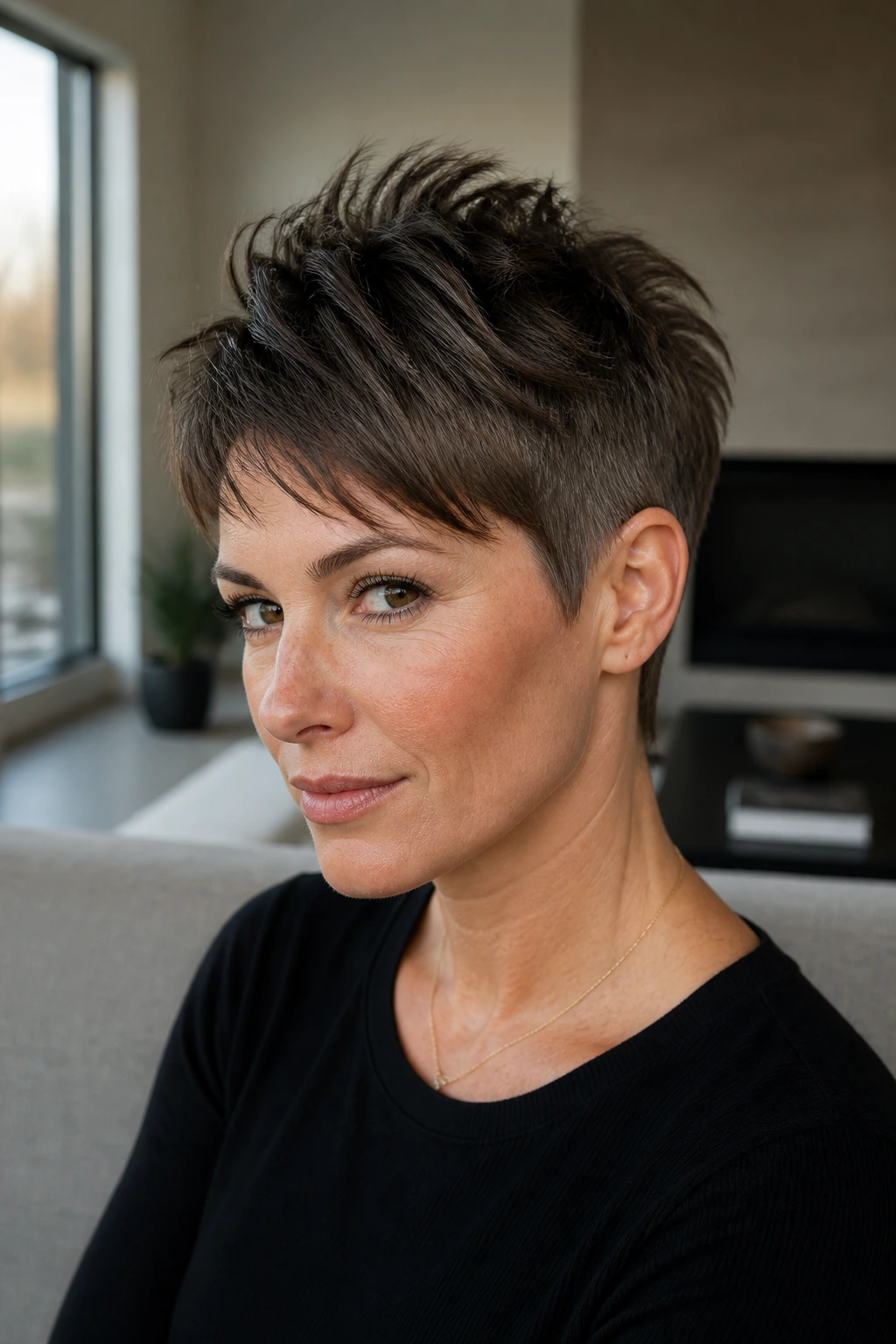
This is the cut that says you’re done pretending your hair wants to be long. The crown stays a little longer, the sides stay tight, and the top gets just enough separation to look lived-in instead of helmeted. On fine hair, that separation is the point. It gives the eye something to follow upward.
A choppy pixie works because the short sides take away weight where fine hair usually lies flat, while the crown pieces are long enough to pinch and lift with your fingers. Keep the pieces piecey, not shredded. There’s a difference, and it shows fast.
If you wear glasses or bold earrings, this cut is especially good. It clears the face, so the whole look feels deliberate, not fussy. A pea-sized dab of paste, worked into dry hair at the crown, is usually enough. Too much product and the pixie goes soft in the wrong way.
3. French Bob with Blunt Bangs

Why does this cut keep showing up in the best fine-hair conversations? Because blunt bangs and a jaw-grazing bob give the illusion of more hair than there is. The line is doing the job, not the bulk. That’s the whole trick.
A French bob on fine hair should feel compact, tidy, and slightly cheeky. The bangs can sit at the brows or skim them, but they should not be over-thinned. Over-thinned fringe splits and clumps, which is the opposite of the effect you want. A clean edge at the fringe makes the hair around the face look denser, and the shorter length keeps the body from dragging downward.
How to wear it
- Blow-dry the bangs first, side to side, so they don’t set in a flat line.
- Use a round brush just on the ends, not through the whole head.
- Tuck one side behind the ear if you want a little asymmetry.
- Add a light shine spray only to the mid-lengths and ends.
It’s a small cut with a lot of attitude.
4. Bixie with a Tapered Neckline
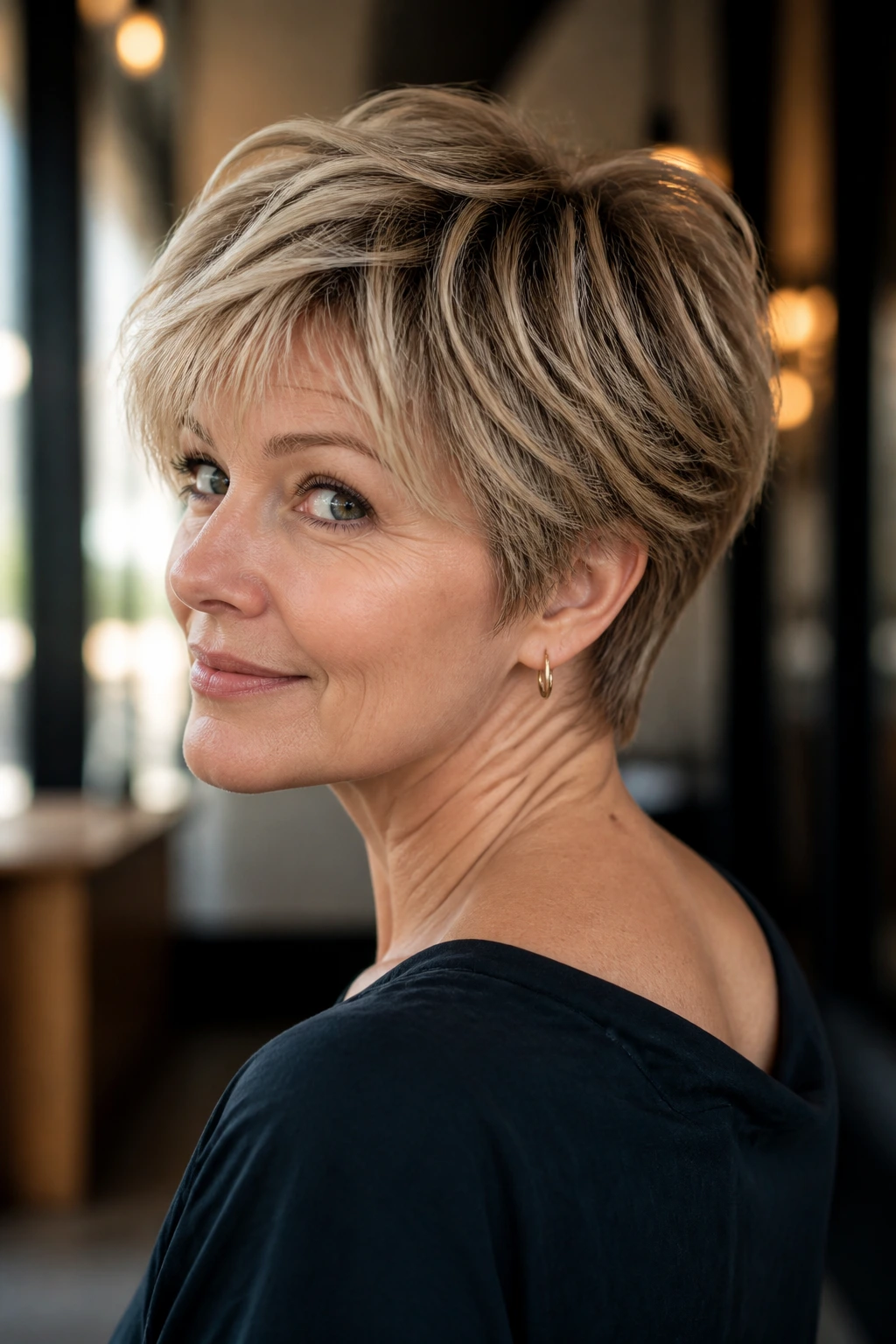
The bixie sits between a bob and a pixie, which is exactly why so many women with fine hair end up loving it. You keep enough length around the face to feel feminine if that’s your thing, but the tapered nape stops the back from looking bulky or fuzzy. Fine hair often looks best in this middle ground. Too short can expose too much scalp. Too long can just droop.
The tapered neckline is the piece that makes this haircut feel current rather than generic. It cleans up the back so the shape narrows neatly toward the neck, and that narrowness makes the top feel fuller by contrast. I’d ask for soft texture through the top and sides, not all-over thinning.
A good bixie should move when you turn your head. If it stays frozen, the cut needs more internal shape.
5. Asymmetrical Jawline Bob
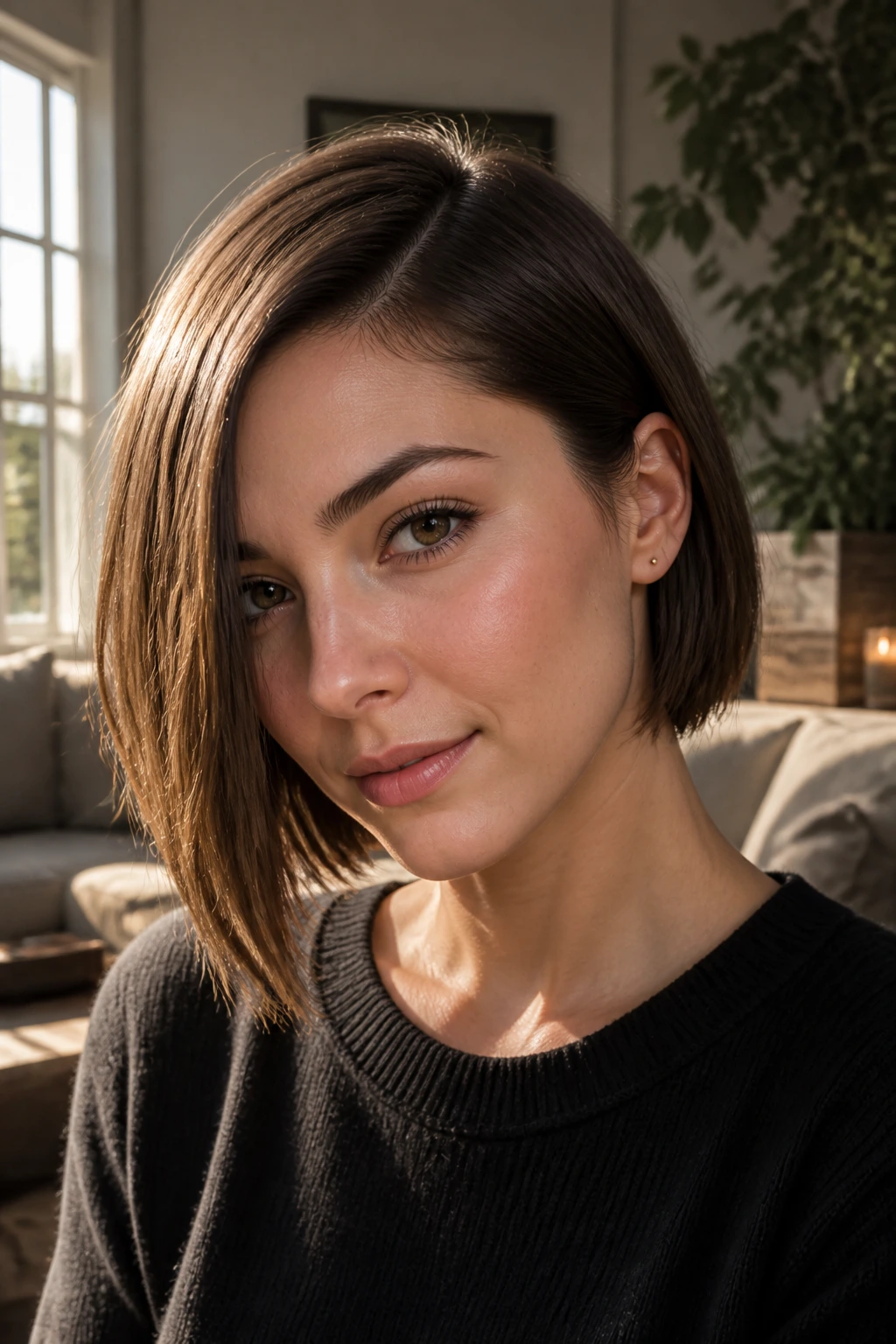
One side longer than the other sounds dramatic because it is. That’s the point. Fine hair can sometimes disappear in symmetrical cuts because there isn’t enough mass to create a lot of visual weight, so a slight asymmetry gives the style a built-in focal point.
The longer side can skim the jaw while the shorter side sits a touch higher, or the whole front can angle forward on one side. Keep the perimeter crisp. If the ends get over-texturized, the asymmetry loses its edge and starts to look accidental. A deep side part makes this cut even better because it adds lift right where flat hair usually gives up.
If you want one haircut that can be worn sleek one day and bent the next, this is a strong contender. It takes a flat iron bend well, and it also looks good air-dried with a little root spray. Not every edgy cut can do both. This one can.
6. Shaggy Lob with Curtain Fringe
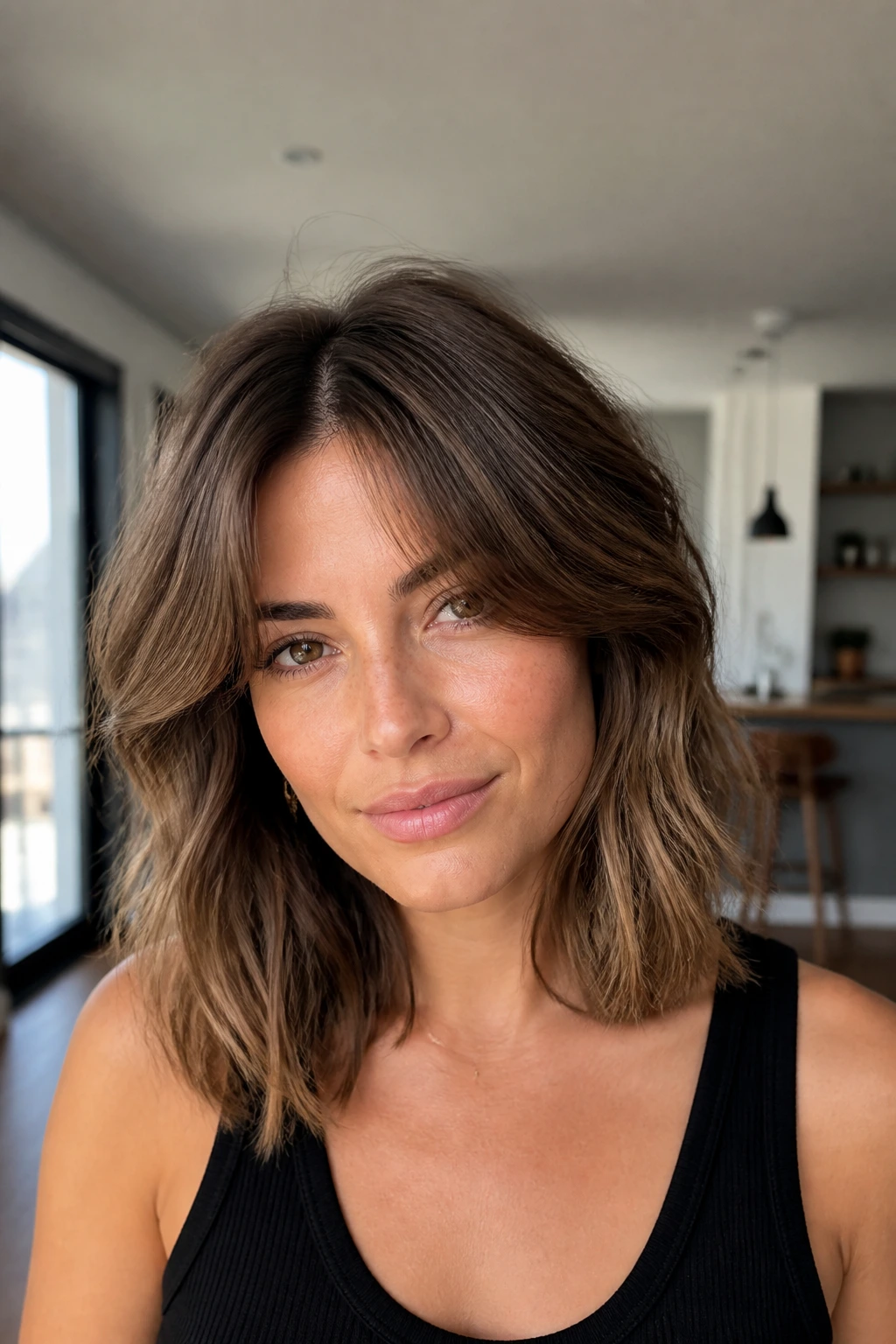
A lob gives you insurance. If you’re nervous about going short, the collarbone length keeps some familiar shape while still letting the cut feel modern. On fine hair, though, I’d keep the shag part restrained. A sloppy shag and fine hair do not get along; the ends start to drift apart and you lose the outline.
The curtain fringe is where the style earns its edge. Split down the center and swept away from the face, it opens the cheekbones and makes the front feel less heavy. The rest of the cut should have soft, controlled layers that start above the collarbone, not a dozen short slices all over the place. You want movement, not a haircut that eats its own body.
This one looks best with a rough blow-dry and a little bend in the mid-lengths. If your hair is naturally straight, wrap random two-inch sections around a wand for a few seconds, then comb them through with your fingers. Keep the finish loose. Too neat and the shag disappears.
7. Slicked-Back Pixie
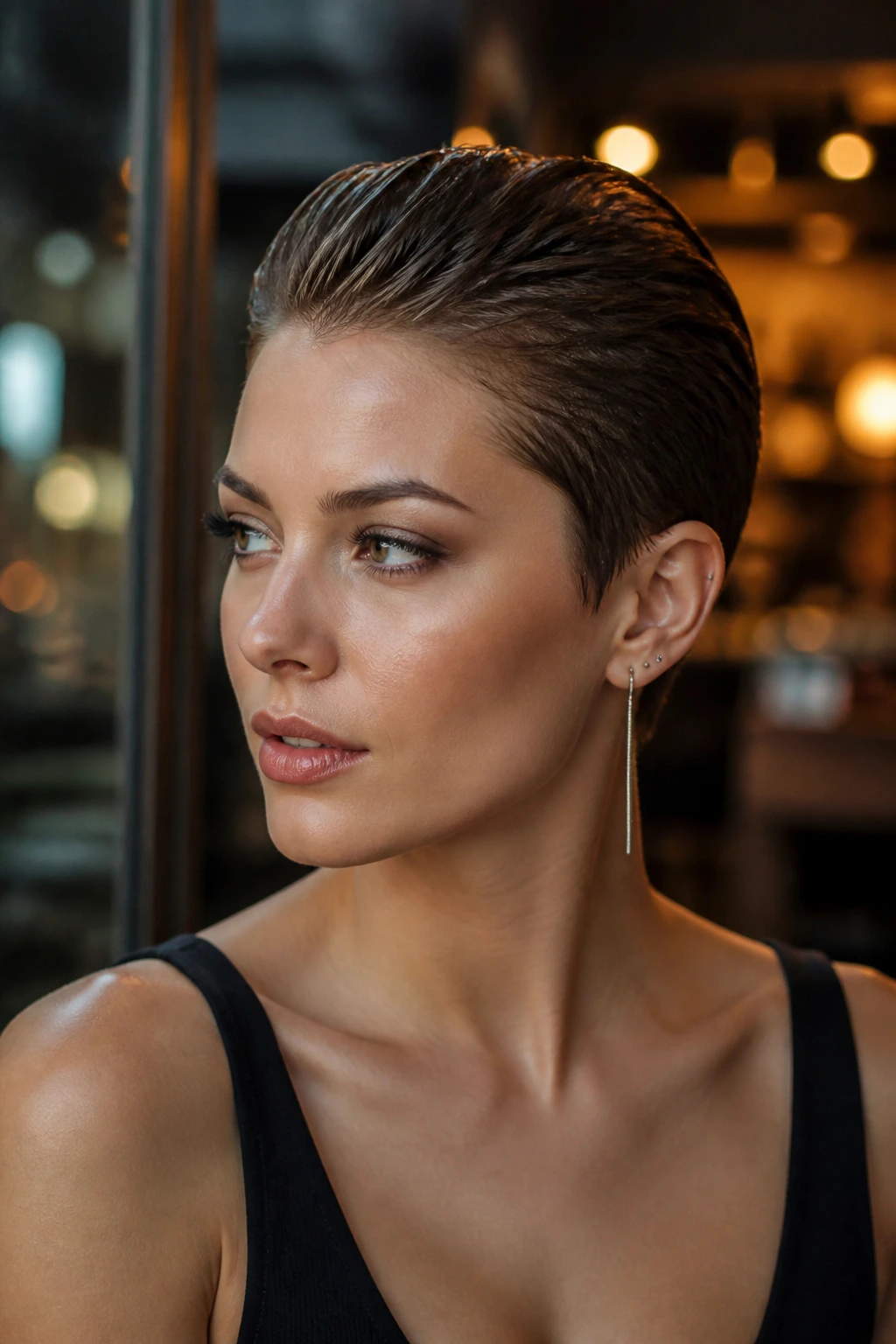
A slicked-back pixie is a confidence cut. It works because it stops pretending the hair is trying to be bigger than it is. Fine hair can look especially elegant when it’s controlled close to the head, and the slicked-back shape makes the face, neck, and ears part of the style.
The secret is not drowning the hair in gel. That’s the fastest way to make fine strands look stringy. Use a light styling cream or a small amount of gel on damp hair, comb it back with a fine-tooth comb, and then blow-dry it in the direction you want it to stay. Once dry, pinch the front into a slight ridge at the top if you want a little height.
Best for: evenings, sharp makeup, strong brows, and earrings you actually want people to notice.
Not for: anyone who wants volume at the crown. This one is about shape and shine.
8. Modern Mullet Lite
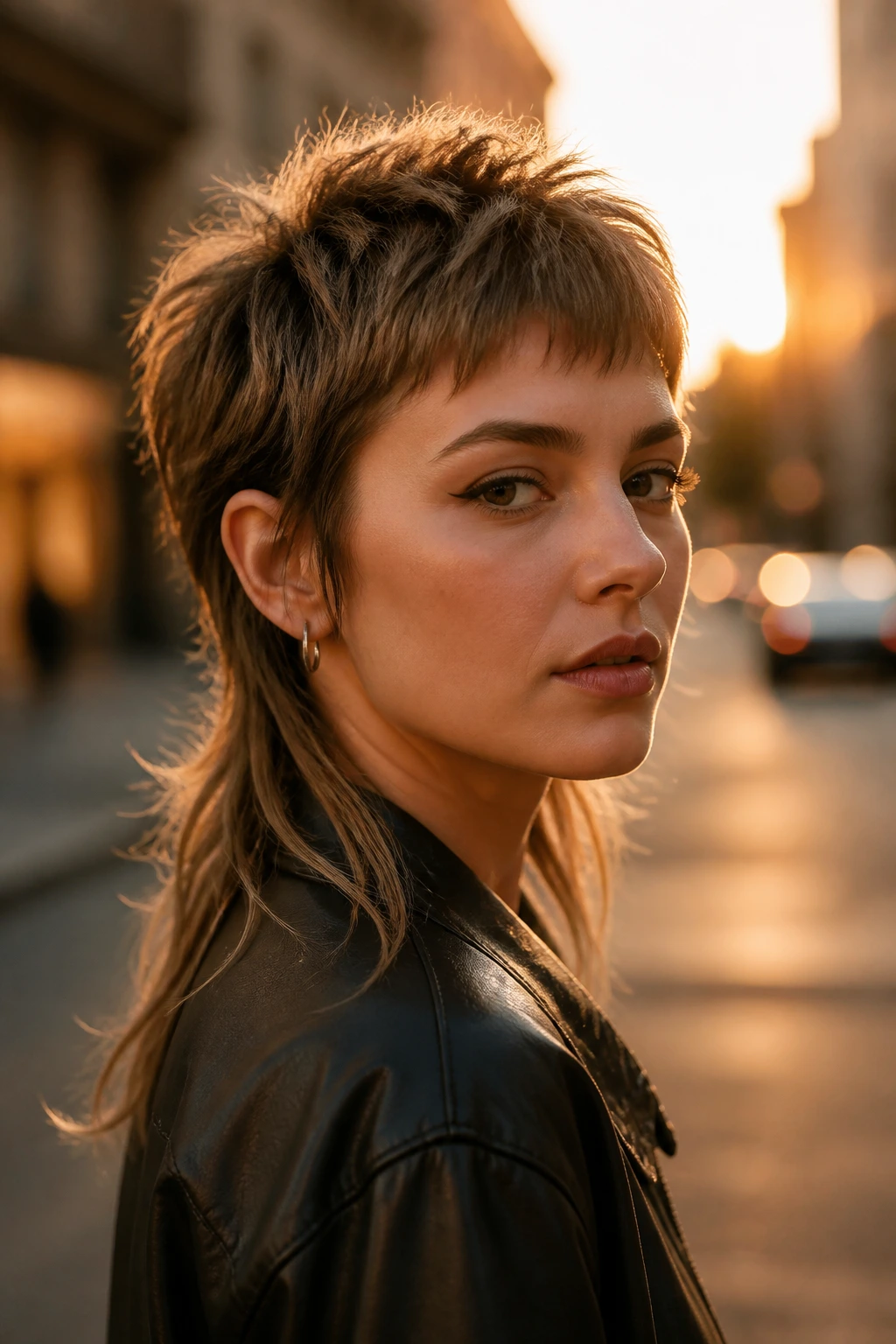
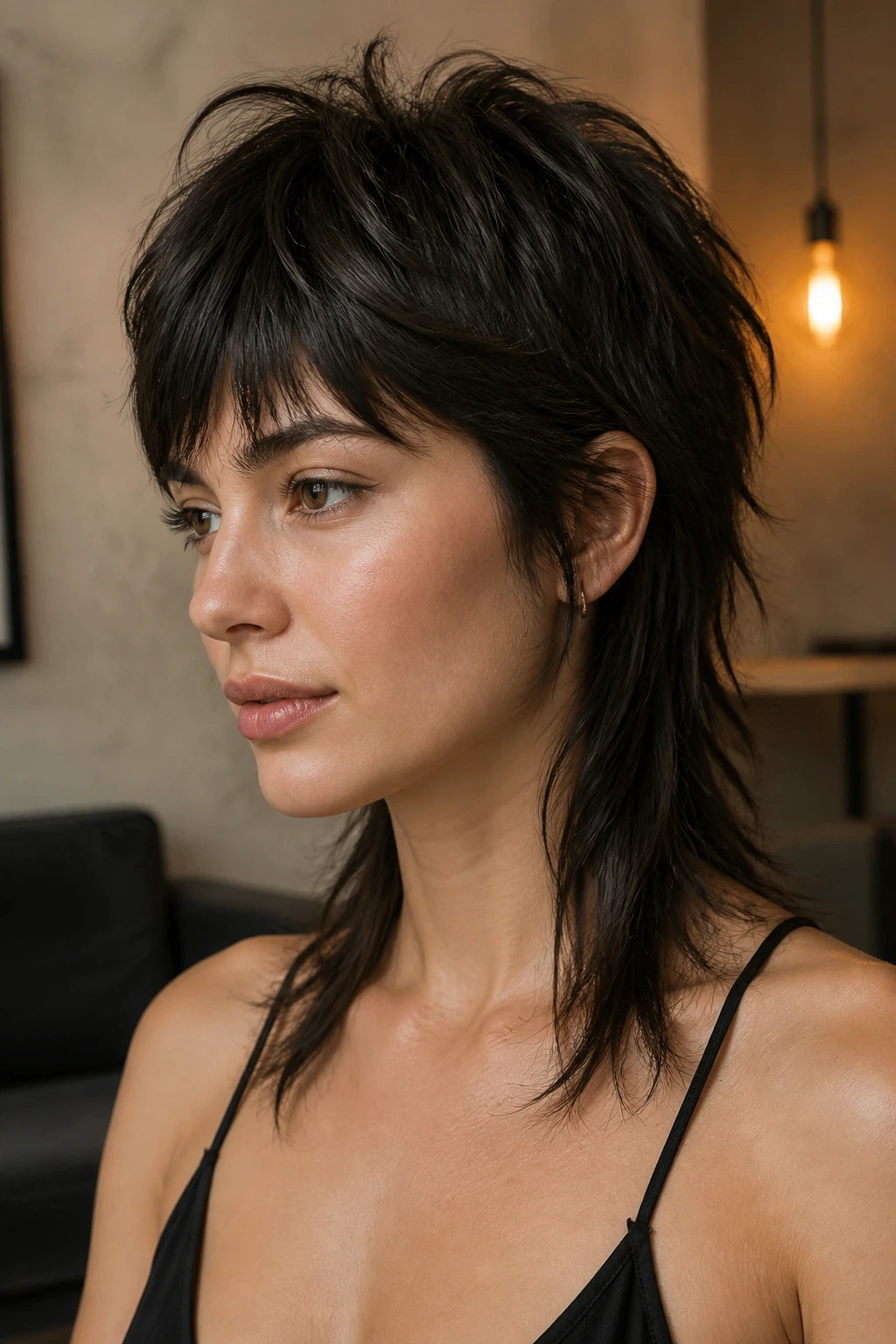
A full mullet can be too much for fine hair if the lengths get too disconnected. A modern “lite” version is the better move. It keeps the top and front short enough to lift, leaves a little extra length in the back, and softens the transition so the cut doesn’t fall into costume territory.
What I like about this version is the movement around the temples and nape. Fine hair often looks dead straight when it’s all one length, but this cut creates a narrow waist in the silhouette. The head reads more sculpted. The trick is to keep the top airy and the back controlled — not mullet by math, but by shape.
Use a texture spray at the roots and a touch of wax through the front pieces. If the back starts to feel mullet-heavy, it’s usually because the top wasn’t short enough to balance it. Ask for moderation, not drama-by-accident.
9. Collarbone Cut with Piecey Ends
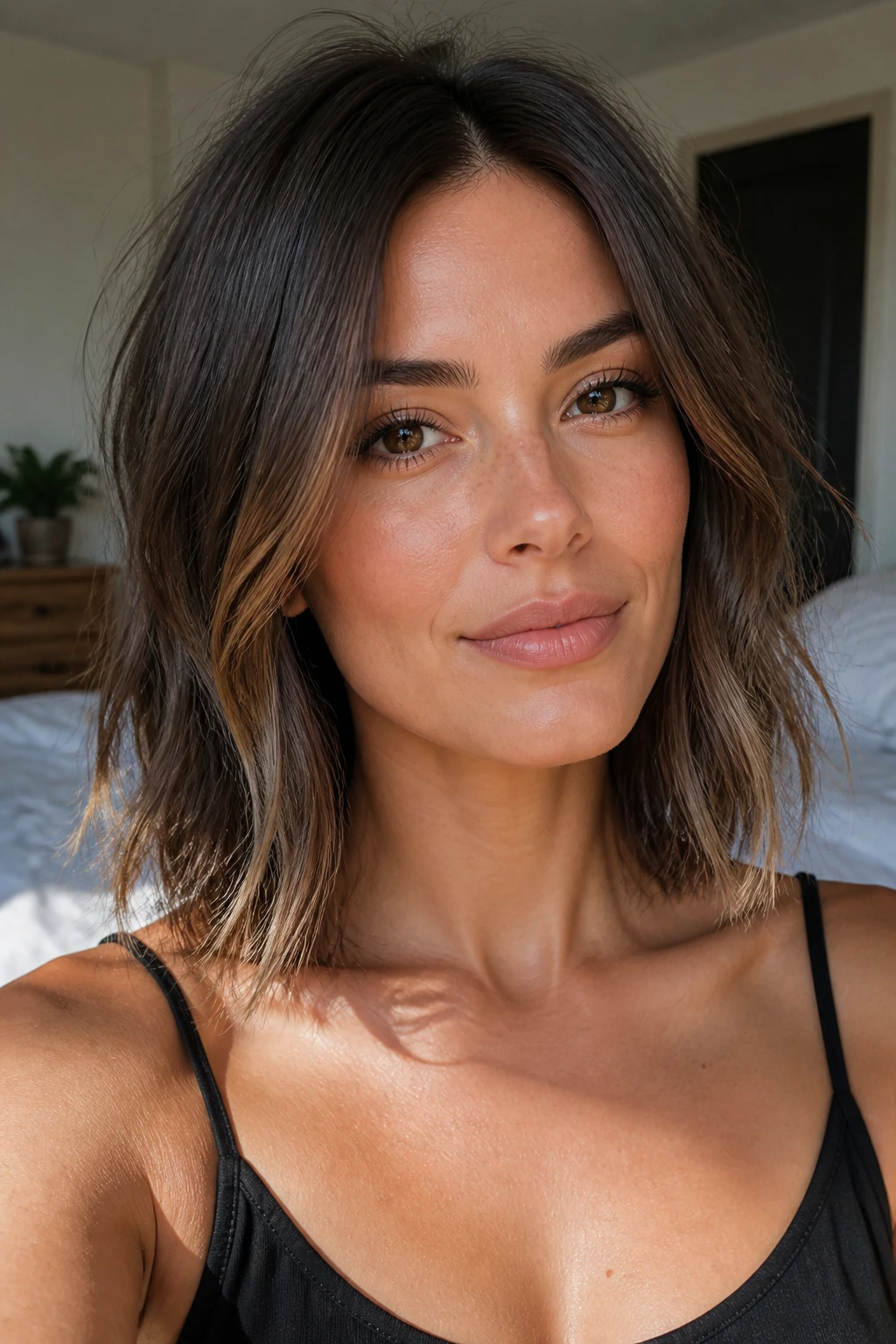
This is the cut for women who want to keep some length and still make fine hair look deliberate. Collarbone length gives the hair enough swing to tuck behind the ears or pull into a low knot, while piecey ends keep it from reading as heavy and flat.
The reason this works is simple: the hair can move, but it doesn’t get so long that the ends disappear into the rest of your clothes. That’s the problem with a lot of fine-hair lengths. They keep growing, but visually they don’t get stronger. A collarbone cut stops right before that drag begins.
I like this cut with a middle part or a low off-center part. Add a few face-framing slices only at the front, not all over the head. On day two, a dry shampoo lift at the roots and a light bend at the ends are usually enough to bring it back.
10. Side-Swept Undercut Crop
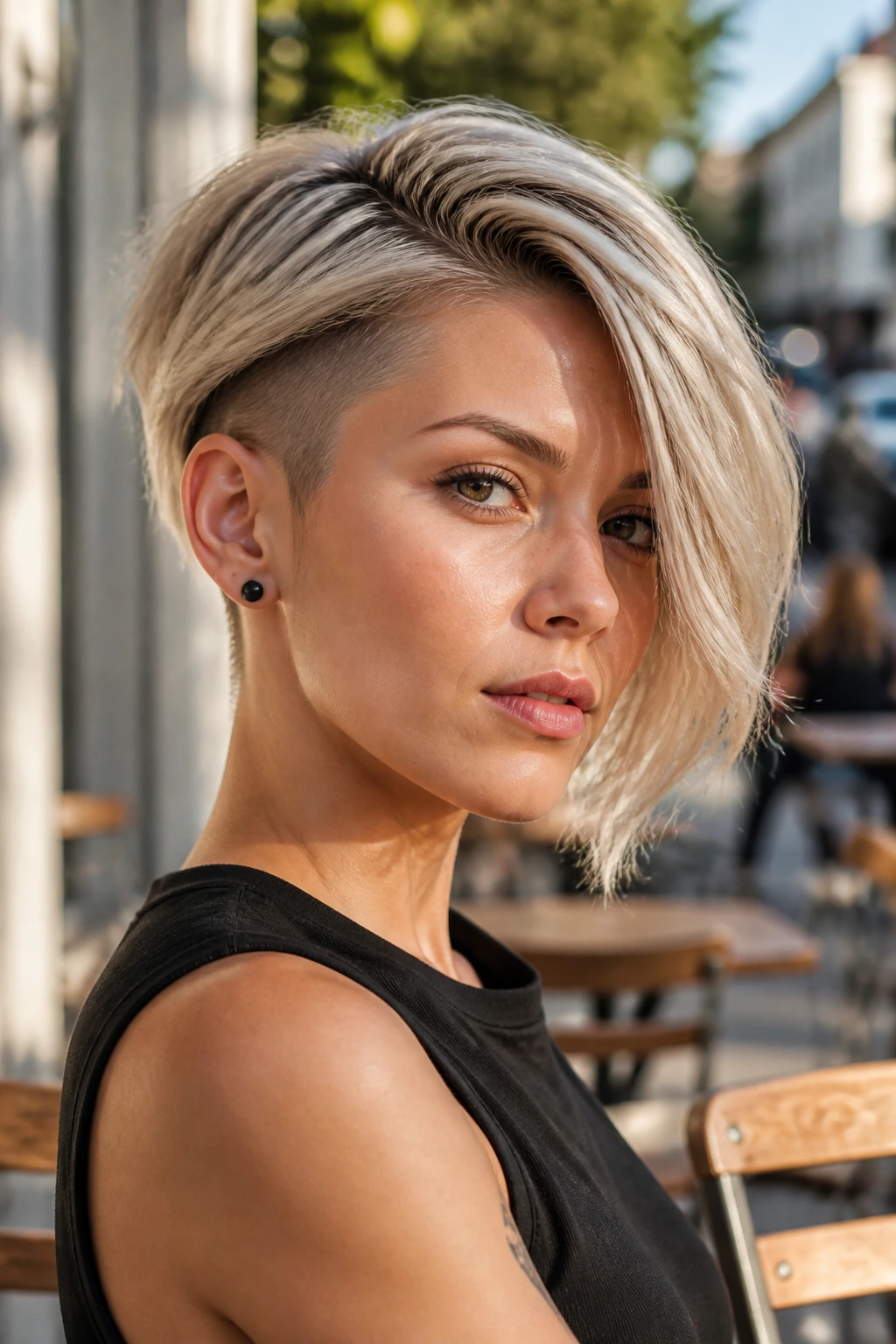
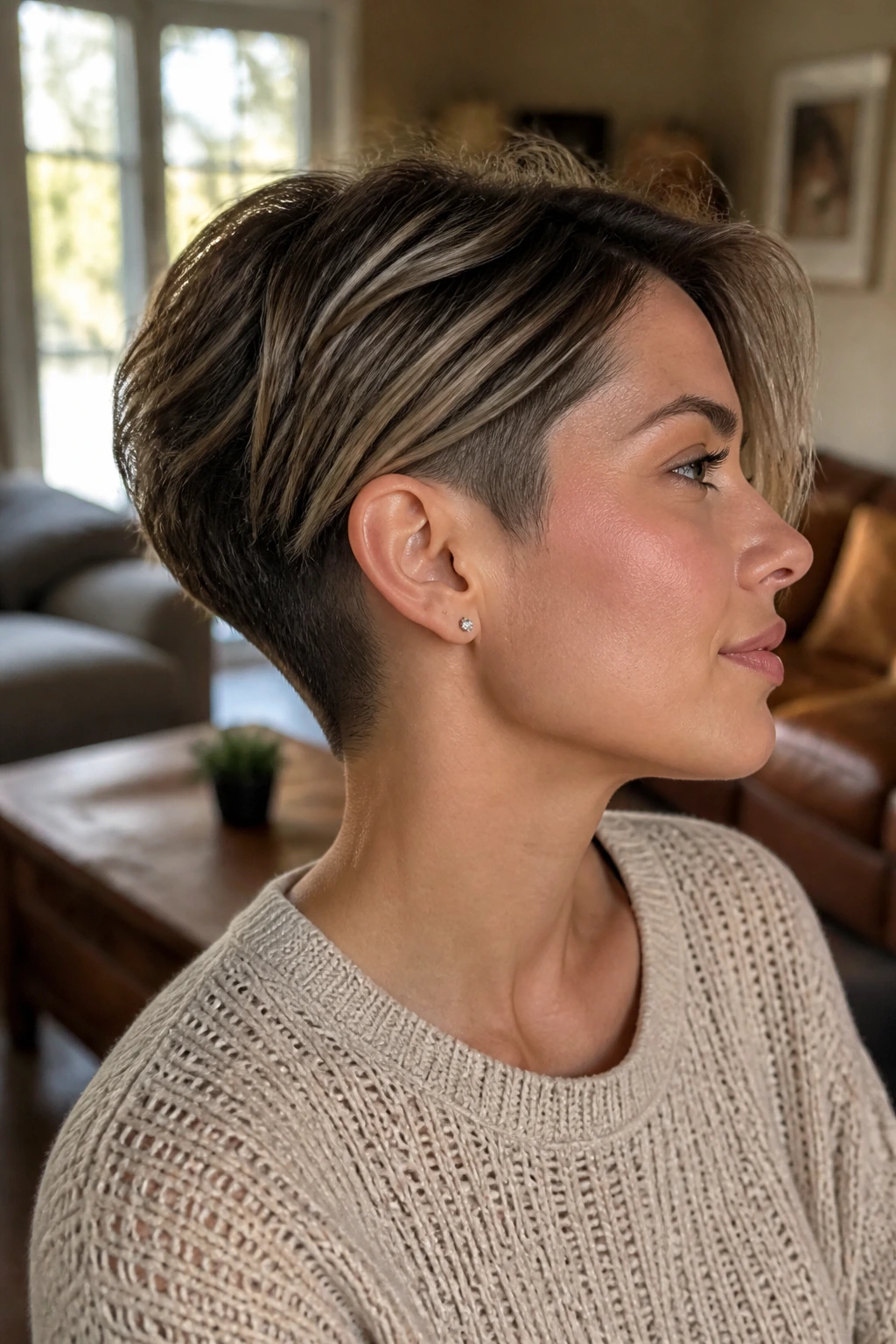
If you want edge with a little rebellion built in, this is the one. One side stays longer and sweeps across the forehead; the other side can be tucked shorter or even subtly undercut for contrast. Fine hair often benefits from that contrast because the side-swept top makes the remaining length look fuller by comparison.
An undercut on fine hair needs care. Too much shaved away and you can expose more scalp than you wanted. Too little and the shape gets muddy. I prefer a hidden undercut or a very tight internal taper at the nape, then longer side-swept length on top so the profile stays clean.
The payoff: the style looks sharp from the front and neat from the back, which is harder to get than it sounds.
11. Chin-Length Bob with Deep Side Part
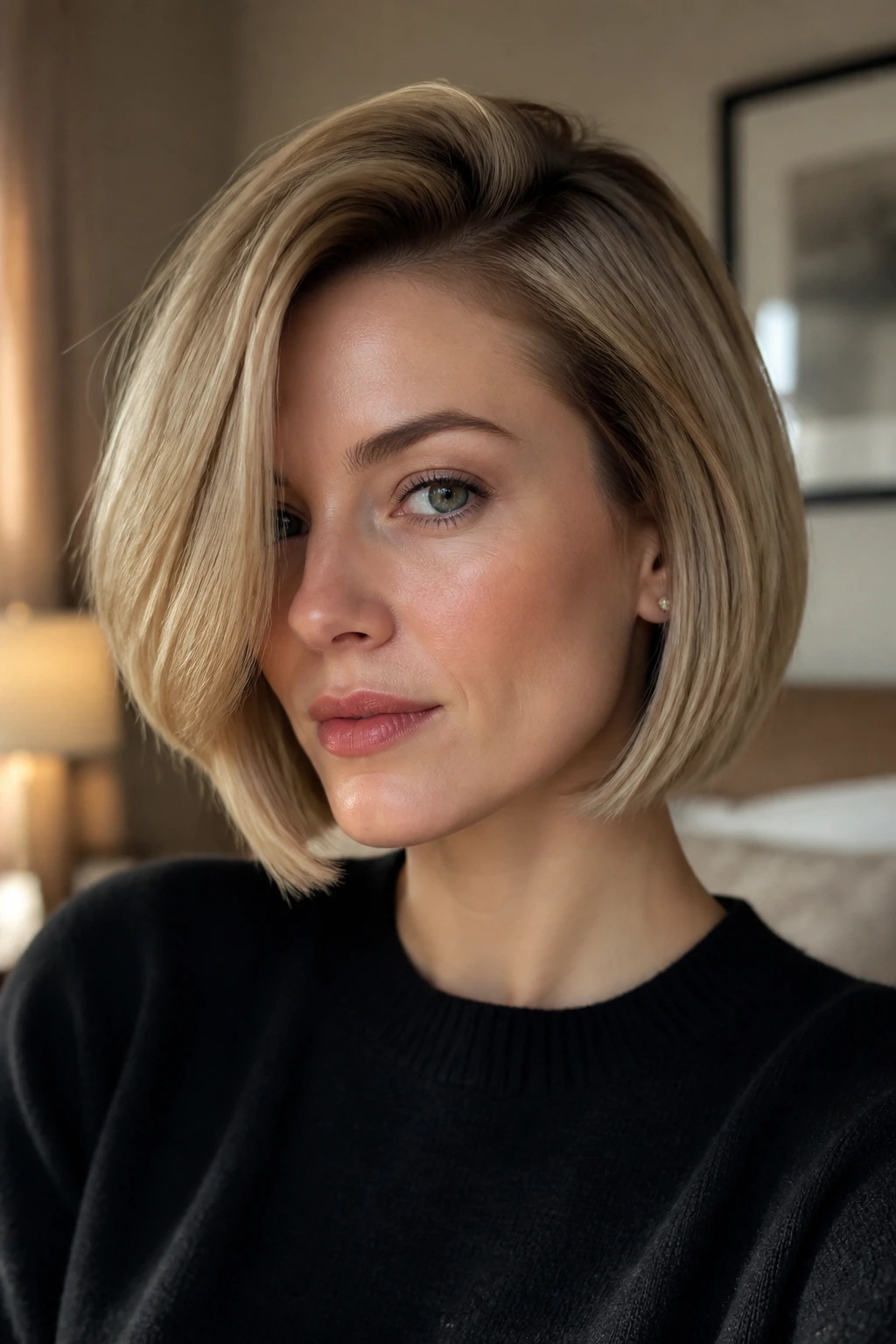
A chin-length bob is short enough to keep the body up, but not so short that it feels severe. Add a deep side part and the whole thing wakes up. Fine hair loves this cut because it doesn’t have to fight gravity for long. The ends sit where they should, and the part gives you instant root lift.
The deep side part does one job especially well: it creates a heavier-looking side without needing more hair. That can be a lifesaver if one temple or hairline area looks sparse. Style the roots in the opposite direction first, then flip the part back and let it cool. That little trick sets a ridge at the root that lasts longer than teasing, and it looks cleaner too.
A chin-length bob with a smooth bend under the ends is one of those cuts that can look expensive without trying very hard. I’m using that word carefully. The shape is doing the work, not the label.
12. Feathered Crop with Baby Bangs
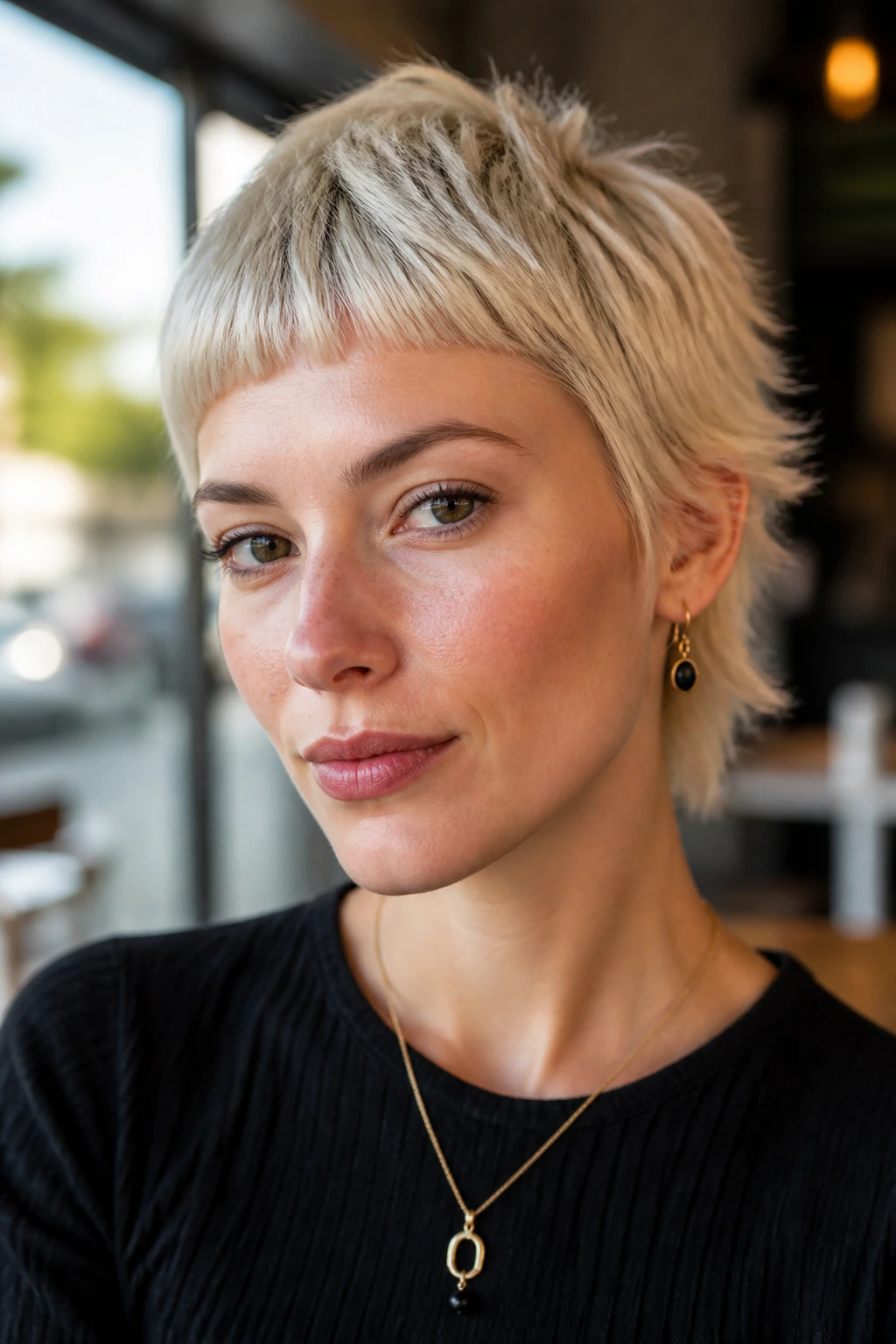
Baby bangs are not timid. They’re blunt, short, and unapologetic, which means they can give fine hair a lot of personality very fast. Pair them with a feathered crop and you get something light on the head but visually strong at the front.
The feathering should be soft, not shredded. That matters. Fine hair that’s over-feathered looks fuzzy fast, especially around the temples. Keep the top a touch airy and let the fringe stay crisp enough to read from across the room. This cut works best when the bangs are cut with real intention — short enough to matter, long enough to still look balanced with the rest of the face.
A matte paste at the fringe and a little texture spray through the crown are enough. If you hate baby bangs in the mirror, this is probably not your style. If you love them, they can make even very fine hair look like it has attitude.
13. Textured Ear-Length Crop
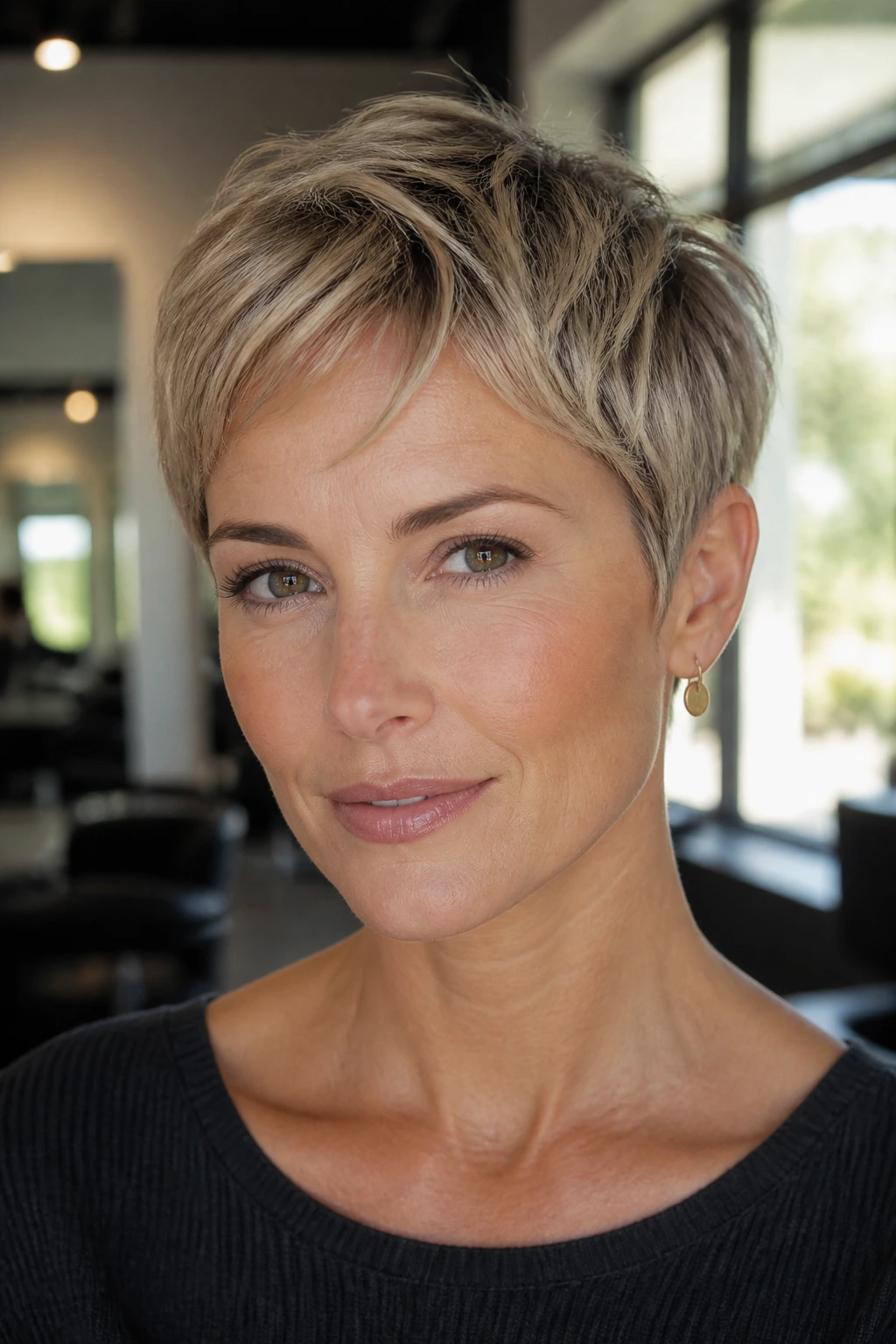
Ear-length hair sounds tiny until you see what a sharp crop can do for fine strands. The length keeps the weight off the shoulders, the ends stay visible, and the texture can be concentrated at the top instead of dragged down through the whole head.
This is a good option when you want the face to stay open and the style to feel a little harder around the edges. Add a small amount of rough texture on top, keep the sides neat, and let the outline stay close to the head. The crop should hug the cheekbones or sit just below the ears, not float somewhere in the middle of the neck where it starts to lose shape.
How to style it
- Blow-dry in sections with a small brush.
- Pinch the top with a light paste.
- Leave the ends neat.
- Avoid heavy cream near the roots.
That last part matters. Ear-length cuts turn limp fast if they get overloaded.
14. Soft Wolf Cut for Fine Hair
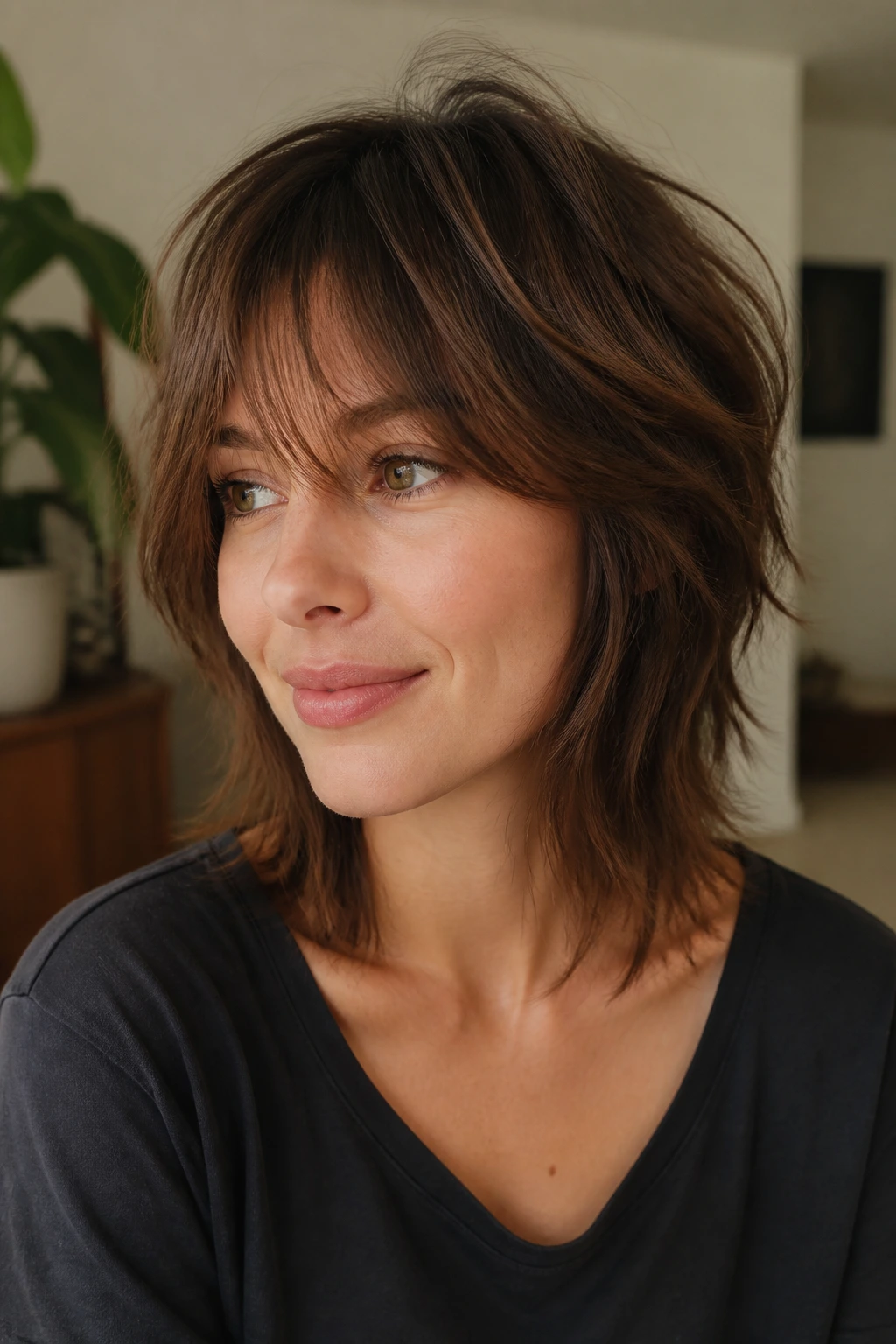
A wolf cut can be a disaster on fine hair if it’s cut too aggressively. Too many layers and the ends vanish. Too much shag and the whole thing turns stringy. But a softer version, with restrained layers and a more controlled perimeter, can bring a real edge without sacrificing body.
Think of this as a wolf cut with manners. The crown gets lift, the fringe area gets motion, and the back stays long enough to preserve some thickness at the ends. The result is a hair shape that bends and flips in a way straight blunt cuts do not. It feels younger, a little rougher, but not sloppy.
Best on naturally wavy hair or straight hair that holds a bend with a round brush. If your hair is ultra-fine and pin-straight, ask your stylist to keep the layers longer than you think. That keeps the silhouette from falling apart.
15. Tucked-Behind-Ear Lob
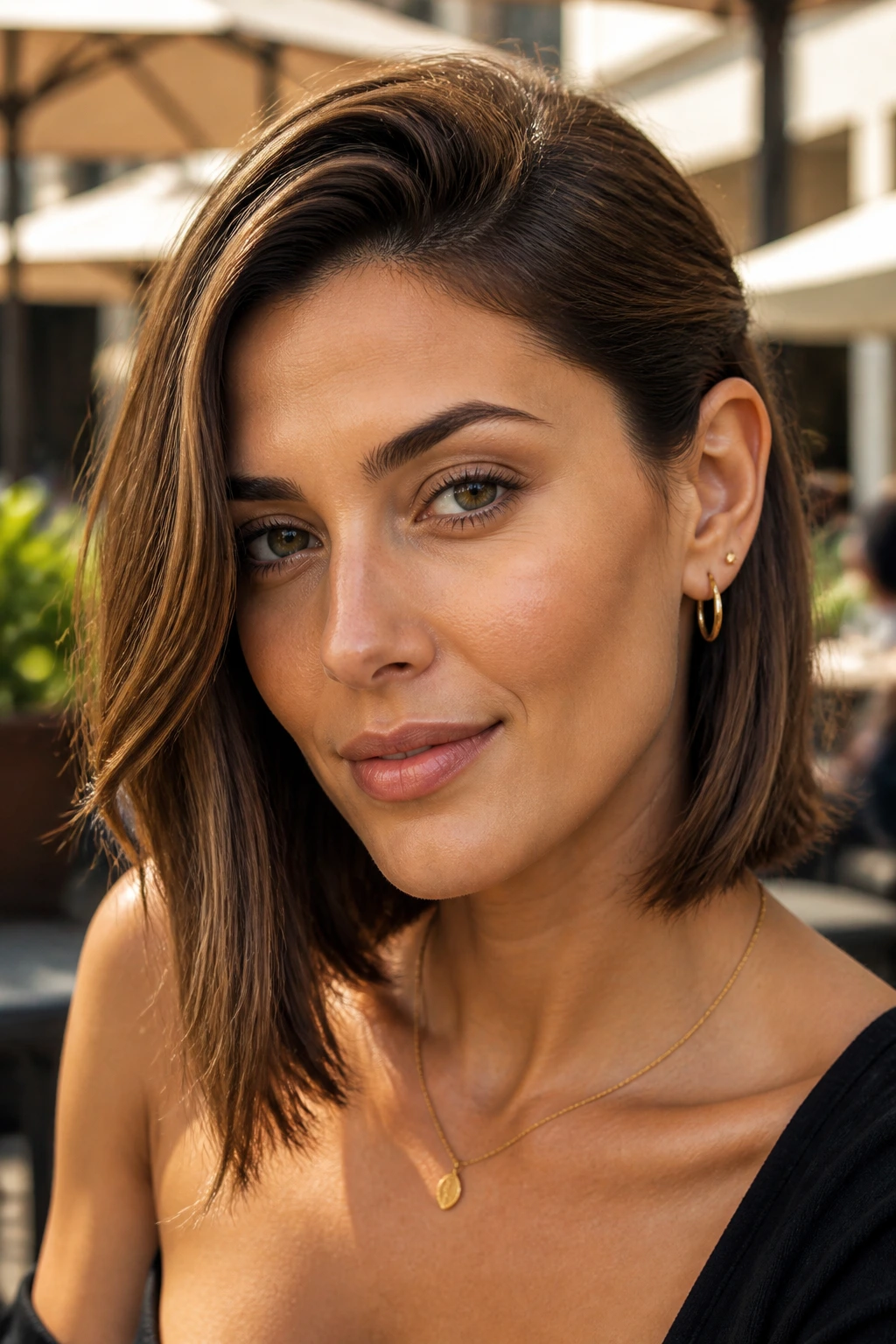
This is one of my favorite low-effort edgy looks because the edge comes from styling, not haircut gymnastics. A lob gives you enough length to tuck one side behind the ear and leave the other side forward. That asymmetry instantly makes fine hair look more styled.
The tucked side should be smooth and close to the head, with a little lift at the root so it doesn’t collapse into your cheek. The loose side can have a subtle bend or a soft wave. Fine hair often looks better when one side is controlled and the other side carries the movement. It keeps the look from feeling too symmetrical, which is where long fine hair often goes flat.
Add an ear cuff, a strong earring, or even a plain bobby pin placed with intention. Tiny accessories matter here. They make the style look finished instead of like you forgot to un-tuck your hair.
16. Sliced Long Pixie
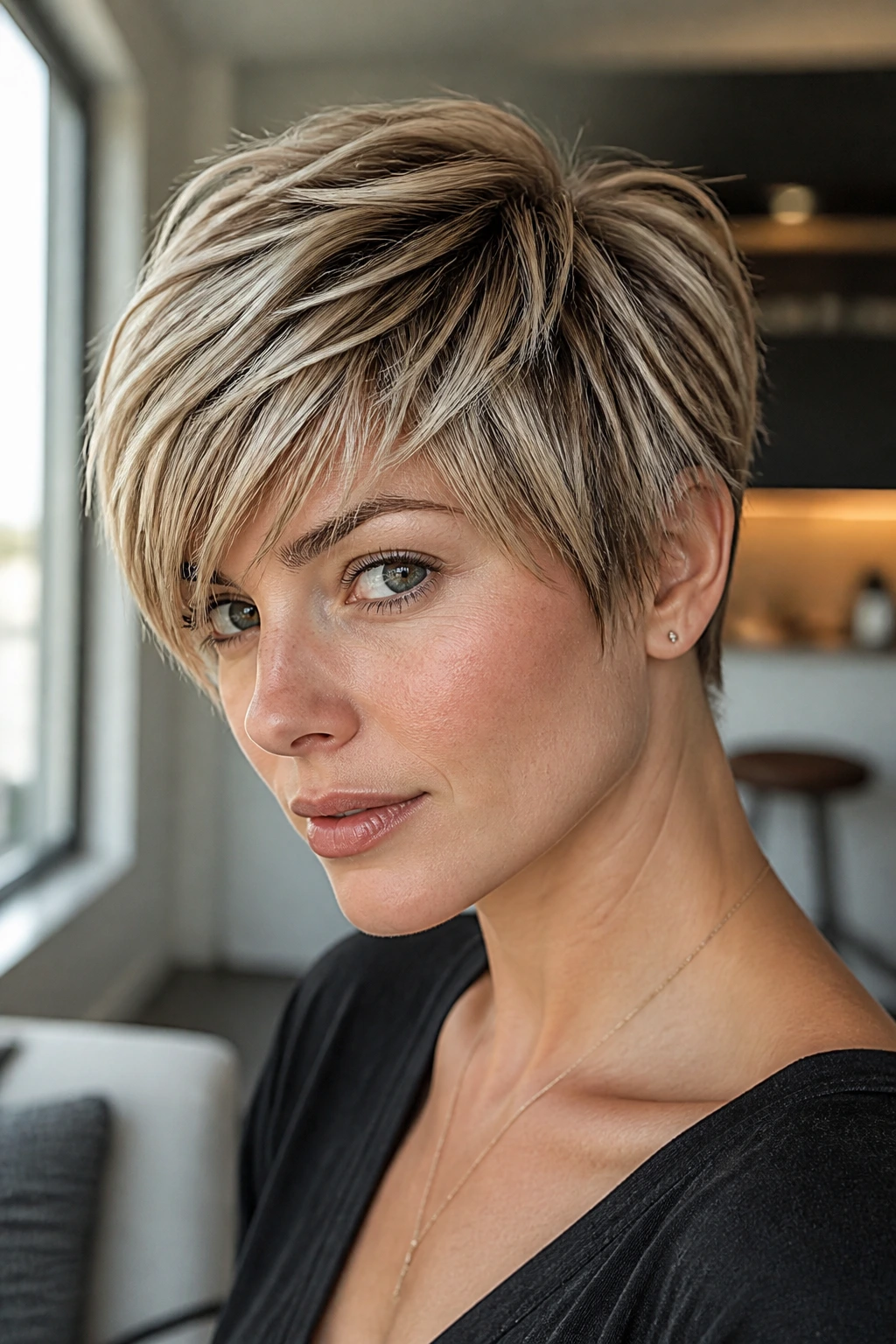
A sliced long pixie is the grown-up answer to “I want short hair, but not a full crop.” The top stays long enough to sweep, the nape stays tight, and the shape leans sleek rather than fluffy. Fine hair benefits from this because the cut keeps the weight where it’s needed and removes it where it drags.
The word “sliced” can be misleading. You want pieces, not wisps. The top should move in sections, almost like it was set with fingers instead of a curling iron. If the cut is too aggressively thinned, the shape starts to separate in weird ways. Keep the density at the front and crown, and let the nape do the clean work.
This is a strong choice if you’re growing out a shorter pixie and want something less awkward in the in-between stage. A little pomade through the front and a quick blow-dry with a vent brush are usually enough.
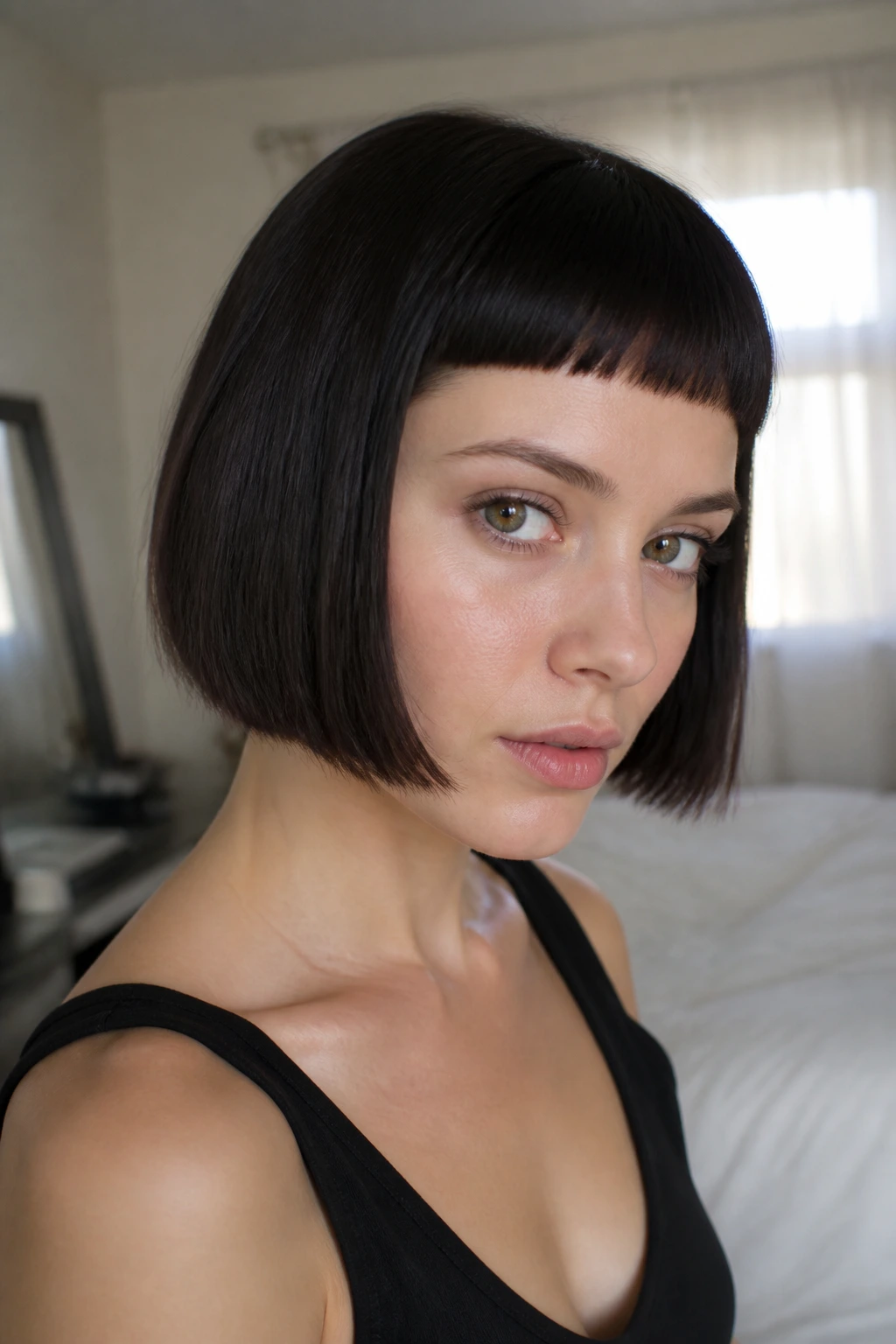
17. Micro Fringe Bob
A micro fringe bob is for women who do not want to play it safe. The short fringe changes the whole mood of the cut, and on fine hair it works because the bangs don’t need a huge amount of density to hold their shape. The bob underneath can stay blunt and compact, which keeps the ends from disappearing.
What makes this version edgy is the contrast. The fringe is tiny, the bob is clean, and the forehead becomes part of the design. It’s a cut that looks sharp with very little styling once the shape is right. If the bangs are cut too thick, though, the look can turn boxy fast. Ask for a light hand and a fringe that can move a little rather than sit like a shelf.
This cut likes a strong brow line and a confident face. That’s not a rule, just an observation. The micro fringe asks to be noticed.
18. Layered Shullet
The shullet — shag plus mullet — can get messy fast, so the version that works on fine hair needs guardrails. Keep the layers controlled, the shape narrow through the crown, and the back long enough to preserve some strength at the ends. Then the haircut reads as cool instead of chaotic.
This cut shines when you want texture with a little rebellion. The front pieces can frame the face and the back can skate just past the neck, which gives the whole silhouette a restless feel. Fine hair benefits from that restless feel only if the stylist keeps the layers from shredding the outline.
Best way to wear it
- Rough-dry to keep the texture loose.
- Scrunch in a light foam if your hair bends naturally.
- Use a dab of wax on the ends, not the roots.
- Keep the crown soft, not puffy.
A shullet needs a little attitude and a little restraint. That mix is what makes it work.
19. Soft Undercut Pixie Bob
This cut gives you the body of a bob with the ease of a pixie. The hidden undercut or very tight internal taper removes bulk underneath, which can sound odd for fine hair, but it actually helps the top sit with a cleaner shape. The visible outer layer stays full enough to feel feminine and easy to style.
The smart part is keeping the undercut soft enough that it does not show unless you want it to. That gives you edge without making the cut feel severe from every angle. Fine hair often benefits from this kind of hidden structure because it keeps the silhouette from puffing oddly at the nape.
I like this style with a side part and a subtle bend at the ends. It’s not a high-maintenance cut if the shape is right. It just needs regular trimming so the hidden short bits don’t poke through in awkward ways.
20. Glassy Blunt Bob with Hidden Texture
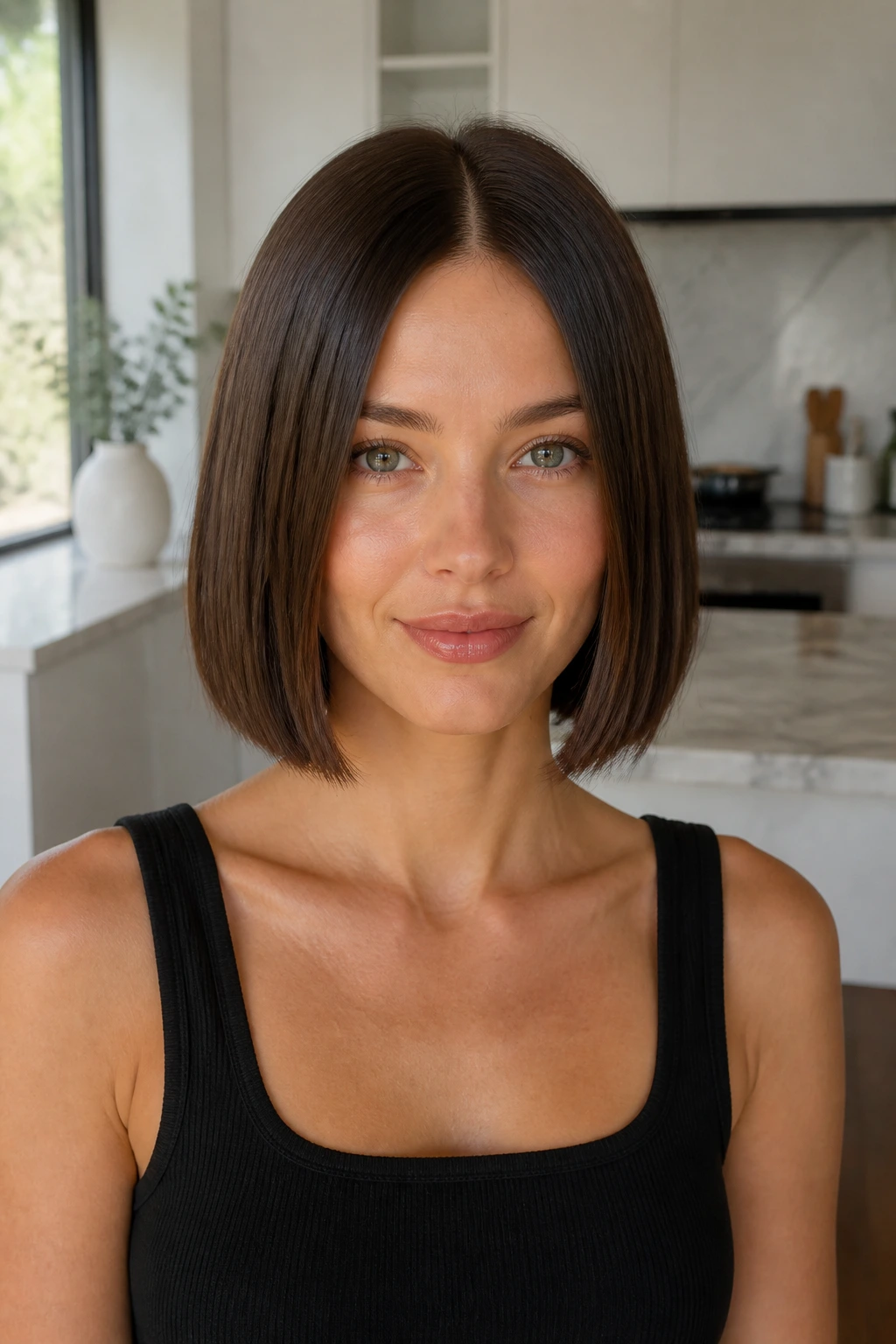
This one is sleek, sharp, and a little expensive-looking in the best sense of the word. The outside line is blunt, smooth, and reflective, while the inside has just enough hidden texture to keep the bob from sitting like a block. Fine hair loves this contradiction. It gets the density of a blunt cut and the movement of a softer one.
The trick is not to let the texture show all the way through the ends. Keep the interior work subtle. The surface should still fall in a clean sheet, especially when the hair is straightened or blown smooth. If you want an edgy result without an obviously choppy haircut, this is the cleanest route.
A center part makes it modern; a deep side part makes it a little meaner. Both work. Add a shine spray at the very end, and keep anything oily away from the roots. Fine hair does not need help getting flatter.
How to Style Fine Hair Without Crushing the Root
A good cut still needs the right styling routine, and fine hair is not shy about punishing lazy habits. The biggest rule is simple: put hold at the roots and softness only where you want movement. If you load conditioner, oil, or cream all the way up to the scalp, the cut loses the edge you paid for before you’ve left the driveway.
Start with a lightweight volumizing mousse on towel-damp hair. Work it through the crown and the upper sides, not just the ends. Then blow-dry with the nozzle pointed where you want the hair to sit, using a round brush or a vent brush to lift the roots away from the scalp. That lift matters more than people think. Fine hair often needs a directional set, not a mountain of product.
For day two, dry shampoo at the roots beats another round of heavy styling. Let it sit for a minute, then massage it in with your fingertips. If the ends look sleepy, use a tiny bit of texture spray or paste on the last inch only. A lot of people overdo the mid-lengths and wonder why their hair looks dusty. The answer is usually right there in the product placement.
Heat styling works best in sections that are small enough to control. One-inch pieces are plenty. Anything larger and the bend disappears before it cools.
What Usually Goes Wrong With Fine Hair Cuts
The most common mistake is too much layering. Fine hair can’t afford to lose its perimeter. The symptom is obvious: the ends look feathery, and the hair feels thinner the second you move it. The fix is a blunt or blunt-ish outline with only selective layering near the crown or fringe.
Another problem is trying to keep the hair too long because it feels safer. Long fine hair often hangs there like wet ribbon unless it has a strong shape. If the cut sits below the shoulders and the ends are transparent, that length is working against you.
Heavy creams are a silent disaster. They make the hair feel smooth for ten minutes and then flatten the roots into submission. If the style needs polish, use shine spray on the surface only, and keep oils off the scalp.
Bangs can go wrong fast if they’re too thick or too sparse. Thick fringe on fine hair splits into chunks; wispy fringe can look underfed if it’s cut too long. The answer is usually a crisp bang line with enough softness to move.
One more: skipping trims. Fine hair shows uneven growth faster than coarse hair does. A cut that looked sharp six weeks ago can drift into shapelessness surprisingly quickly.
Shape Swaps and Safer Alternatives
The Softer Edge Version
If you like the idea of an edgy cut but don’t want hard lines, keep the same shape and soften only the front pieces. A micro bob can become a softer bob with a bend at the ends, and a pixie can keep just a little more length around the ears. You still get structure, just less contrast.
The Grow-Out Friendly Version
A bixie or collarbone lob is easier to live with if you hate frequent trims. These cuts keep enough length to look intentional while growing, which matters when your schedule is packed or you want fewer salon visits. I’d pick this route before I’d ask fine hair to survive a long, layered shag.
The Straight-Hair Version
If your fine hair is pin-straight, lean into blunt ends, side parts, and cuts that create shape through geometry rather than curl. A glassy bob or asymmetrical bob works better than a fluffy cut that depends on texture you don’t naturally have.
The Wavy-Fine Version
If your hair has a soft wave, a controlled shag, shullet, or lob with curtain fringe can bring out movement without collapsing. Keep the layers longer and fewer, because waves need room to form. Too much slicing and the wave pattern scatters.
The Big-Event Version
For nights out or a sharper mood, a slicked-back pixie, tucked lob, or micro fringe bob changes the whole face. These styles don’t need a lot of movement; they need clean lines and confidence. A strong earring helps. So does not fussing with the ends every ten seconds.
Tools That Actually Help Fine Hair Hold Shape
- Lightweight volumizing mousse: Gives roots grip without the crunchy feel heavier gels can leave behind.
- Root-lift spray: Best aimed at the crown and side part before blow-drying; it creates height where fine hair usually caves in.
- Dry shampoo: Useful on clean hair as well as day two hair, especially at the crown and hairline.
- Small round brush, 1 to 1.5 inches: The smaller barrel gives better root lift and a cleaner bend on short cuts.
- Vent brush: Fast for rough-drying pixies, bobs, and lobs without flattening the hair into the scalp.
- Fine-tooth comb: Handy for slicked-back styles and precise parting.
- Light paste or cream wax: Good for piecey ends, short fringe, and pixies; use a tiny amount.
- Texturizing spray: Adds separation without the oily slip that some finishing sprays leave behind.
- Heat protectant: Non-negotiable if you use a flat iron or curling wand, even on short hair.
- Clips and sectioning pins: Small sections mean better control, which is half the battle with fine strands.
Keeping the Cut Sharp Between Salon Visits
Short cuts need the most frequent trims. A pixie or bixie usually starts losing its shape after about 4 to 6 weeks, especially around the ears and nape. Bobs can stretch a little longer, often 6 to 8 weeks, while lobs can go 8 to 10 if the line stays clean.
Bangs need their own schedule. Micro fringe and blunt fringe often need a tiny trim every 3 to 4 weeks, or they drop into your eyes and lose the whole point. If you trim them at home, take less than you think. A quarter inch can change everything.
Between appointments, keep the roots from drowning in product buildup. Fine hair gets tired fast when dry shampoo, mousse, and texture spray stack up for days. A clarifying wash every couple of weeks can reset the scalp and bring the cut back to life. Follow with conditioner only on the middle lengths and ends.
Sleep matters more than people expect. A loose clip at the crown or a silk pillowcase can keep a bob or lob from going weird overnight. That’s not glamorous. It works, though.
Questions Women Ask Before They Cut Fine Hair
Are layers bad for fine hair?
Not always, but too many layers are a problem. Fine hair usually looks better with a strong perimeter and only selective layering near the crown or front, where a little lift helps the whole shape.
Is a bob better than long hair for fine strands?
Usually, yes, if the long hair has no shape. Bobs and lobs keep the ends looking thicker because the weight doesn’t drag them down as much.
Can fine hair wear bangs?
Absolutely, but the type of bang matters. Blunt bangs, micro fringe, and curtain fringe can work well; very wispy, over-thinned fringe tends to split and look sparse.
What if my hair is fine but dense?
Then you have more room to play. Dense fine hair can handle a little more texture and slightly longer layers, but I’d still avoid over-thinning the ends.
How do I stop fine hair from falling flat by noon?
Build lift at the root with mousse or root spray, blow-dry in the opposite direction of your part first, and keep heavy creams away from the scalp. Flatness usually starts there.
Do edgy cuts work if I air-dry most days?
Yes, but choose the right ones. Soft shags, collarbone lobs, and bixies usually air-dry better than blunt micro bobs or slick styles that need more control.
What if my hairline is uneven or my temples are sparse?
A deep side part, asymmetrical bob, or side-swept fringe can help hide that. The trick is to shift attention instead of trying to make both sides match perfectly.
How often should I use heat on fine hair?
As little as you can get away with. Fine strands show heat damage fast, so if a style works with a blow-dry and a touch of paste, I’d stay there instead of reaching for a hot tool every morning.
The Cut That Keeps Its Shape
The best edgy haircut for fine hair is the one that still looks like itself when you’re three hours past wash day. That’s the real test. Not the salon mirror. Not the first selfie. The version you see after a coat, a commute, a windy sidewalk, and a day of touching it less than you want to.
A strong edge on fine hair comes from shape, not from trying to bully the hair into being bigger. Clean lines, smart parts, restrained layering, and a little product in the right places can do more than a drawer full of heavy creams ever will. Pick the cut that matches how much styling you’re willing to do, then keep the outline sharp. That’s where the payoff lives.
If you’ve been waiting for permission to go shorter, sharper, or a little more angular, take the hint. Fine hair often looks best when it stops apologizing and starts drawing a line.