



Boys with fine hair do not need more hair. They need a shape that stops the hair from collapsing the second it dries.
That’s the part people miss. Fine strands can be soft, straight, wavy, or even dense, but they tend to lie flat faster than thicker hair, and they show every awkward edge when a cut is too long or too heavily thinned. Leave the top heavy and the crown starts looking patchy. Leave the fringe long and it swings into the eyes by lunchtime. Keep the sides bloated and the whole head looks smaller than it is.
The good news is that the right haircut can cheat the eye in your favor. Short texture, clean tapering, and a little bit of movement do more for fine hair than a shelf of styling products ever will. I’d take a clean crew cut over a floppy long top on fine hair most days, and for boys who hate fuss, that’s usually the smarter call anyway.
Why These Haircuts Earn Their Keep
- Shorter tops hold their shape better: Fine strands lose lift when they get too long, so these cuts keep the top in the range where the hair still stands on its own.
- Tapered sides make the top look fuller: A neat fade or taper tightens the outline, which tricks the eye into seeing more density on top.
- Texture matters more than bulk: Point-cutting, scissor-over-comb work, and soft fringe shapes keep the hair from falling into one flat sheet.
- Most of these cuts are school-morning friendly: A quick comb, a dab of matte paste, or no product at all is enough for many of them.
- They grow out without turning into a mess immediately: That matters more than people think. A cut that still looks decent after three weeks saves a lot of arguments in the bathroom.
- They work with real life: Helmets, hoodies, sports, and sweaty recess do not play nice with fancy styles. These cuts can handle that.
1. Textured Crew Cut
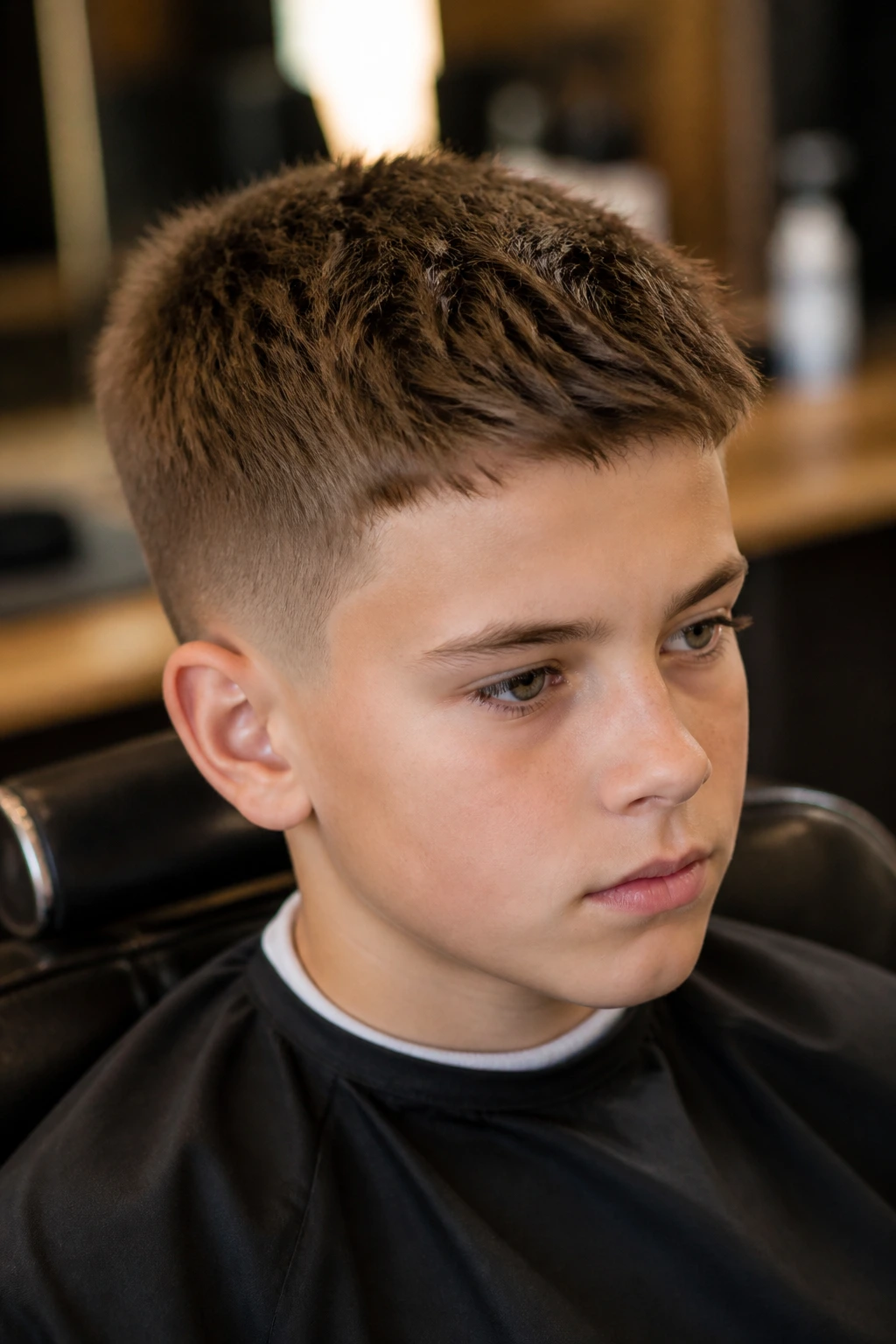
The crew cut is the haircut I reach for when a boy wants to look neat without looking overworked. On fine hair, the textured version is better than the plain one because the broken-up top keeps the scalp from peeking through as one smooth, thin surface.
Keep the top around 1 to 1.5 inches, then taper the sides with a #2 to #4 guard blend. The key is not length. It’s the tiny, choppy bits on top that catch light in different directions instead of lying in one flat line.
What to ask for at the chair
- Keep the top short enough to stand up with almost no product.
- Ask for point cutting on the top so the ends don’t look blunt.
- Leave a little more length at the crown if there’s a swirl back there.
- Taper the temples and neckline cleanly, but do not push the fade too high.
Best tip: dry the top forward first, then lift it with your fingertips at the front. That small change gives the hair a little air without turning it into a spiky helmet.
2. French Crop
If fine hair falls into the face by lunch, this is the cut I trust first. The French crop keeps the fringe short and useful, which means the front of the head looks denser instead of wispy.
The shape works because the fringe sits forward with purpose. Instead of trying to create volume where the hair does not naturally want to sit, the crop leans into the hair’s own direction. I like it with a low taper on the sides and a textured top that is kept just messy enough to avoid a helmet effect.
It also behaves well on straight fine hair. That matters. Straight fine hair is usually the first to go limp, and the French crop gives it a place to land without needing a full blow-dry and half a scoop of product.
For boys who hate hair in their eyes, this is a clean fix. For parents who want something that still looks decent after recess, it’s even better.
3. Caesar Cut
Can a short fringe make hair look thicker? Yes, if the front is kept blunt instead of wispy.
The Caesar cut does that well. The fringe is cut straight across the forehead, usually around half an inch to 1 inch, with the top kept short and controlled. On fine hair, that short front edge creates a stronger line than a side-swept bang that keeps separating into pieces.
How to ask for it
- Keep the fringe even across the front.
- Leave the top short, usually no more than 1.5 inches.
- Blend the sides tighter than the top, but not dramatically.
- Avoid aggressive thinning at the crown.
This cut is especially useful if the hairline is a little uneven or if there’s a front cowlick that likes to split open. A Caesar doesn’t fight the forehead. It frames it.
A lot of people assume this cut looks severe. It doesn’t, not when it’s done with some texture. The best version has a soft, lived-in front, not a hard shelf.
4. Classic Buzz Cut
A buzz cut is blunt, and that’s why it works. Fine hair can start to look weak when it’s dragged into a shape it can’t hold, but a buzz cut removes the struggle completely.
I’d use #2 to #4 guards for most boys with fine hair. Going all the way down to skin close on the sides can expose scalp texture more than parents expect, especially under bathroom lighting or bright school hall lights. A slightly longer buzz usually looks fuller and kinder.
- #4 keeps a little softness.
- #3 gives a clean, athletic look.
- #2 is tighter and shows the head shape more.
This cut is the one for helmets, sports, and kids who do not want hair in their face ever. It also grows out evenly, which saves a lot of awkward stages.
Short. Clean. Done.
5. High and Tight
The high and tight is the buzz cut’s sharper cousin. The sides are cut very short, and the top is left just long enough to read as a shape rather than a shave.
That small difference matters on fine hair. Too much length on top can make the cut droop. Too little can make the head look bare. The sweet spot is usually around 0.5 to 1.25 inches on top, with a tight fade or clipper blend on the sides.
The best high and tight feels crisp around the ears and at the neckline. It gives the face a clean frame, which is useful if the hair itself is soft and pale and tends to disappear into the scalp.
I like this cut for active boys who still want a bit of structure. It’s tougher-looking than a crew cut, but not fussy. If the crown is flat, keep a touch more length there so the shape doesn’t collapse backward.
6. Ivy League Taper
The Ivy League is what happens when a crew cut gets a little manners. The top stays short, but not shaved-short, and it can be brushed to the side with just enough control to look intentional.
For fine hair, that’s the trick. You get the suggestion of style without overloading the strands. I usually like 1.5 to 2.5 inches on top with a neat taper on the sides. Any longer, and the hair starts to separate. Any shorter, and you lose the side-part look that makes the cut work.
This is a strong pick for boys who need a haircut that works at school, at dinner, and in a photo without changing much. It also grows out neatly, which is one of those boring practical details that becomes very important by week four.
If the boy’s hair naturally leans one way, let it. The cut looks better when it follows the head instead of arguing with it.
7. Side Part Taper
A side part can look too formal if it’s pushed too hard. On fine hair, though, the softer version is useful because the part gives the hair direction before the strands have a chance to fall apart.
Picture a school day haircut that still works after a bike ride. That’s the lane here. Keep the top around 2 to 3 inches, taper the sides low or mid, and let the part follow the natural split instead of carving a dramatic line into the scalp.
Key details that make it work
- Use a low taper, not a high fade.
- Leave enough length on top to brush over, not flop over.
- Keep the part soft unless the hair is dense enough for a hard part.
- Trim the sideburns cleanly so the shape stays neat.
This cut is one of the best choices for boys who like looking tidy without seeming polished. It’s modest in the best way.
8. Short Quiff
Want a little height without a stiff, sprayed-up look? Keep the quiff short.
Fine hair can wear a quiff if the front is kept restrained and the top is not stretched into a long, floppy wave. The lift should come from the root, not from extra length. I usually want the front around 2 inches, with the rest of the top just slightly shorter, and the sides clipped low so the shape has somewhere to go.
Dry the front upward with your fingers for 20 to 30 seconds, then use a pea-size amount of matte paste. That’s enough. More than that starts to clump the strands, and clumping is the enemy here.
This style works best when the boy likes a little personality in the cut but still needs something manageable. It says “styled” without shouting.
9. Brush-Up Fade
The brush-up is the softer cousin of a spiky top. Instead of creating separate points, the hair is brushed upward into one loose ridge, which is much kinder to fine strands.
That difference matters. Fine hair often looks thinner when it gets divided into spikes, but a brush-up keeps the strands together and gives the illusion of lift. Keep the top around 1.5 to 2 inches, pair it with a low fade, and style it with fingertips or a vent brush.
How to use it
- Start with slightly damp hair.
- Blow-dry the front up and back for a few seconds.
- Use a matte clay or paste, not shiny gel.
- Pinch the front lightly instead of twisting it into spikes.
This cut works especially well for boys who want something sporty but not too aggressive. It has enough shape for a real haircut and enough looseness that it doesn’t look overdone.
10. Forward Fringe Crop
The forward fringe crop is one of my favorites for fine hair because it hides weak points without pretending they’re not there. If the front hairline is sparse, uneven, or prone to sticking up, a forward fringe gives the hair a place to settle.
The length usually stays short on top, with the front brought forward and slightly textured. It’s different from the French crop in one important way: the fringe is softer and less blunt. That makes the haircut feel casual rather than boxy.
A boy with a cowlick at the front often does better here than in a side part. The hair is guided forward in the same direction it wants to move anyway, so the cut spends less time fighting the morning chaos.
One clean scissor cut can make this style look much fuller than a long, wispy fringe ever will.
11. Short Spiky Cut

Short spikes are a classic boy haircut for a reason. They look playful, they’re simple to explain at the barber chair, and they don’t require much length to work.
On fine hair, though, keep the spikes short and soft. Long, crunchy spikes make the scalp show between the strands. That’s a bad trade. What you want is a short top, usually around 1 to 1.5 inches, with the hair lifted just enough to break the surface line.
A little matte paste goes a long way. Emphasis on little. Rub it between the palms, then push the hair upward in small sections. If the product looks wet, you’ve already used too much.
This cut is a good fit for boys who like a bit of edge but don’t want a full faux hawk. It’s one of the easiest styles to reset after a nap, which parents tend to appreciate more than they admit.
12. Tapered Comb Over

A comb over on fine hair can go wrong fast if it’s too tall or too shiny. But the tapered version is much better. It keeps the part shallow, the top short, and the overall shape controlled.
Think of it as a neat side sweep rather than a dramatic cover-up. The hair is left long enough to comb over naturally, usually around 2 to 2.5 inches, while the sides taper gently so the top does not look like it’s sitting on a pedestal.
This style is best when the hair naturally parts on one side. If you try to force the opposite direction every morning, the hair will fight back, and fine hair loses that argument.
I’d choose this for boys who need something tidy for school but not too grown-up. It has a little polish, but not the stiff kind.
13. Soft Faux Hawk

A faux hawk can work on fine hair, but it needs to stay soft. The strip down the middle should be low and narrow, not a stiff ridge that depends on half a tube of gel.
The sides stay short, usually with a taper or low fade, while the center top is left a bit longer. The sweet spot is around 1.5 to 2 inches through the middle. That gives enough length to lift, but not so much that the hair collapses or splits apart.
Why it works
- It creates one clear line of lift.
- It keeps the sides tidy, which makes the top look denser.
- It works well with matte paste and finger styling.
- It gives a more playful shape than a crew cut without becoming high-maintenance.
For boys who want something with a little attitude, this is a safe place to land. Clean edges. Controlled center. No drama.
14. Scissor-Cut Layered Top
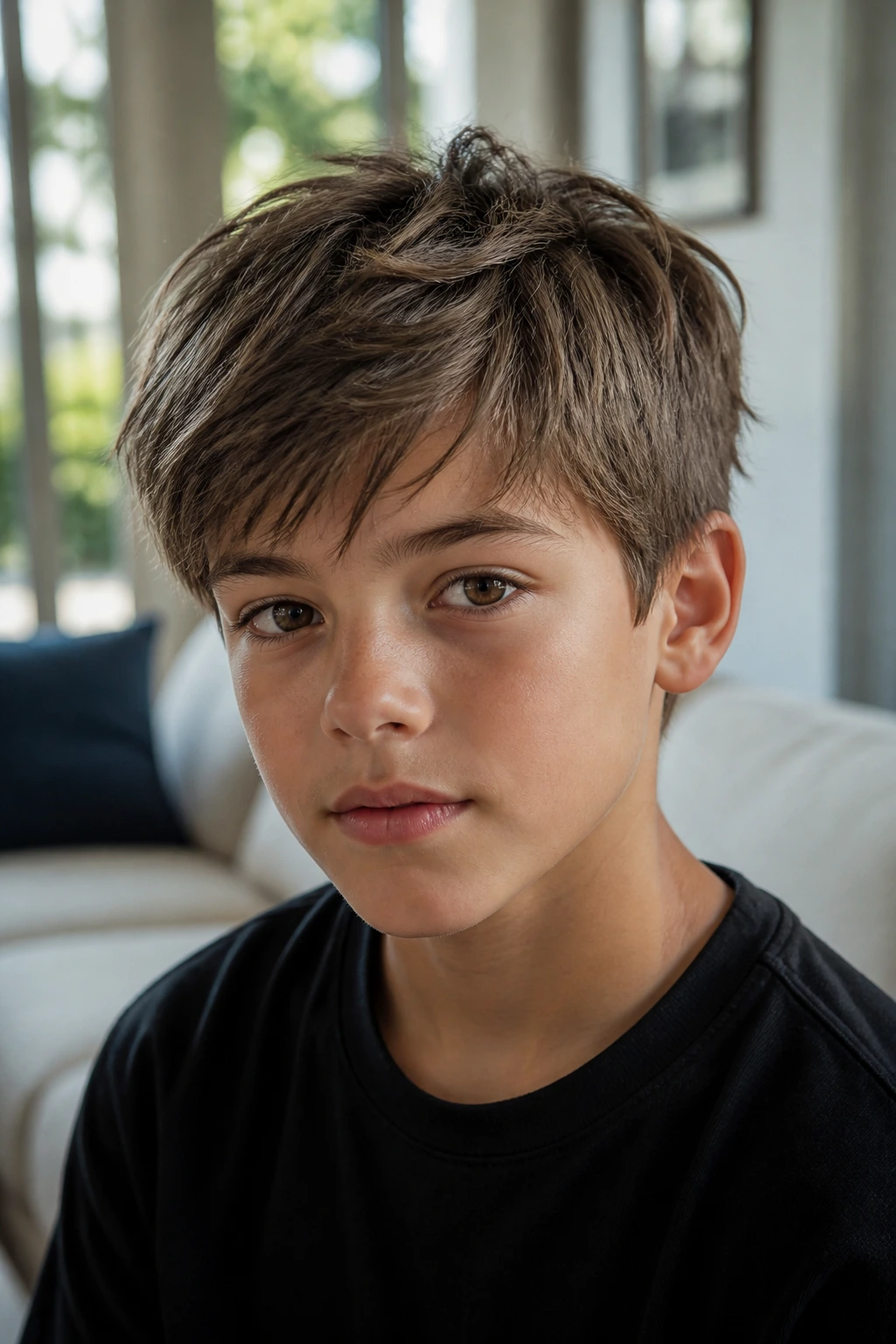
This is the cut for boys who want movement more than sharpness. The barber uses shears on the top, keeps the layers short, and leaves enough length for the hair to shift a little instead of sitting like a flat cap.
Fine hair can actually benefit from light layering, but only if the layers are short and tidy. Too much thinning turns the top see-through. The goal is to break up the shape just enough so the hair catches air and doesn’t fall into one flat sheet.
A layered top works especially well if the hair is straight or only slightly wavy. It also gives you flexibility. You can comb it forward, brush it to the side, or let it sit loose with a little matte cream.
No skin fade needed here. In fact, a softer taper often looks better because it keeps the cut from becoming too severe.
15. Short Shag

A shag sounds messy, but the short version can be surprisingly practical. The trick is to keep the layers controlled and the overall length modest so the cut reads as relaxed rather than shaggy in the bad sense.
Fine hair likes movement, and a short shag gives it that without trying to fake volume. The top and sides are layered, the nape is cleaned up, and the fringe can fall forward or off to one side. If the hair is too long, though, it starts to separate and look stringy. That’s why I’d keep this style short and intentional.
This cut suits boys who do not want to comb their hair perfectly every morning. It has a little edge, a little softness, and enough shape to grow out without looking sloppy immediately.
If the barber goes heavy with the layers, back off. Fine hair only needs a light touch here.
16. Side-Swept Crop
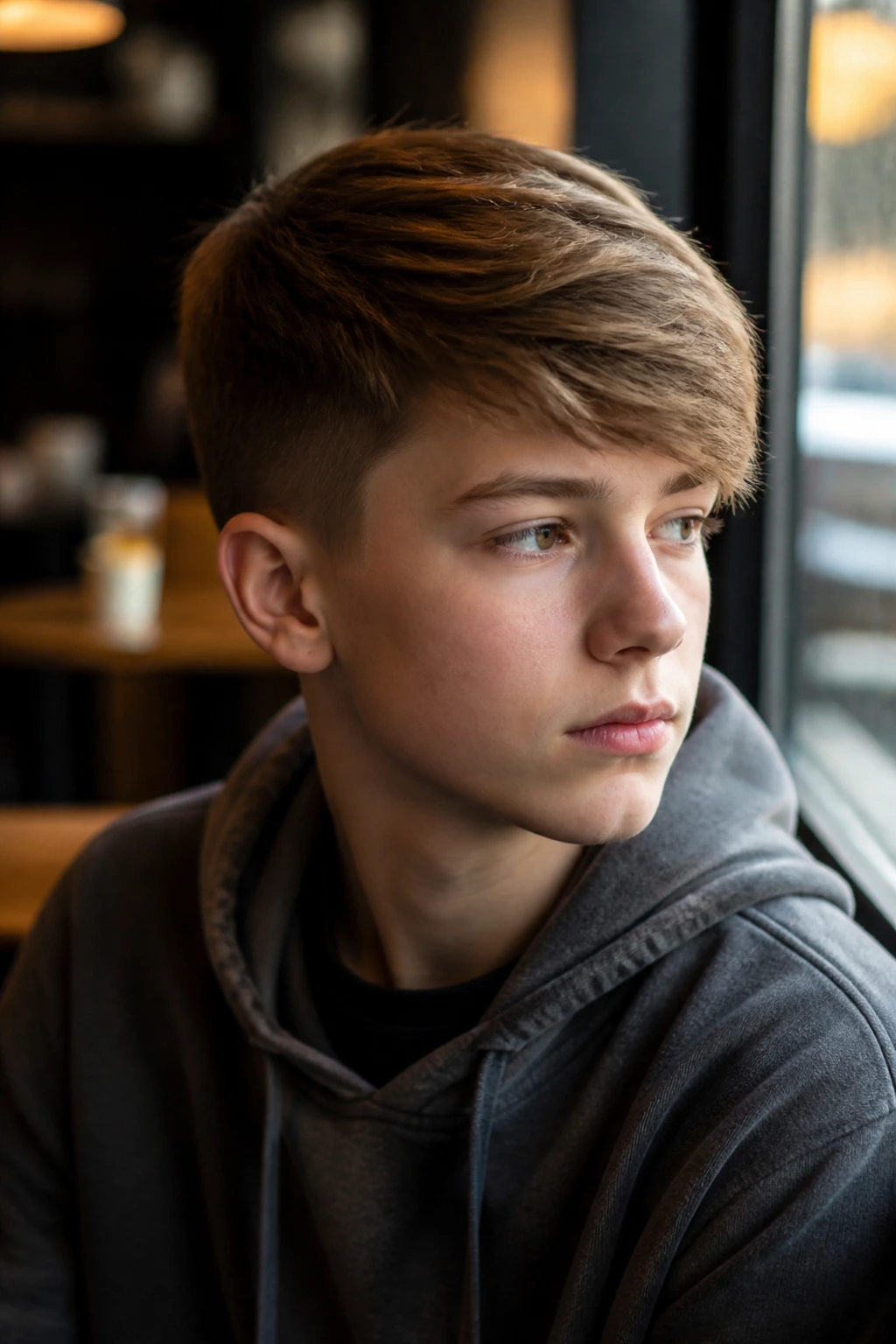
Some boys hate a blunt fringe but still need hair out of their eyes. The side-swept crop solves that problem without much fuss.
The top is kept short enough to stay light, but the front is left a touch longer so it can sweep to one side. The sides stay tapered so the sweep does not get buried in bulk. On fine hair, this is a useful middle ground between a full crop and a classic side part.
The cut looks best when the sweep follows the natural growth pattern. Force it the wrong way, and the front will split by mid-morning. Follow the grain, and it settles quickly.
I like this one for boys who are growing out a shorter cut and need a graceful in-between stage. It also works well for kids who want to keep a little softness around the face.
17. Regular Cut With a Natural Part
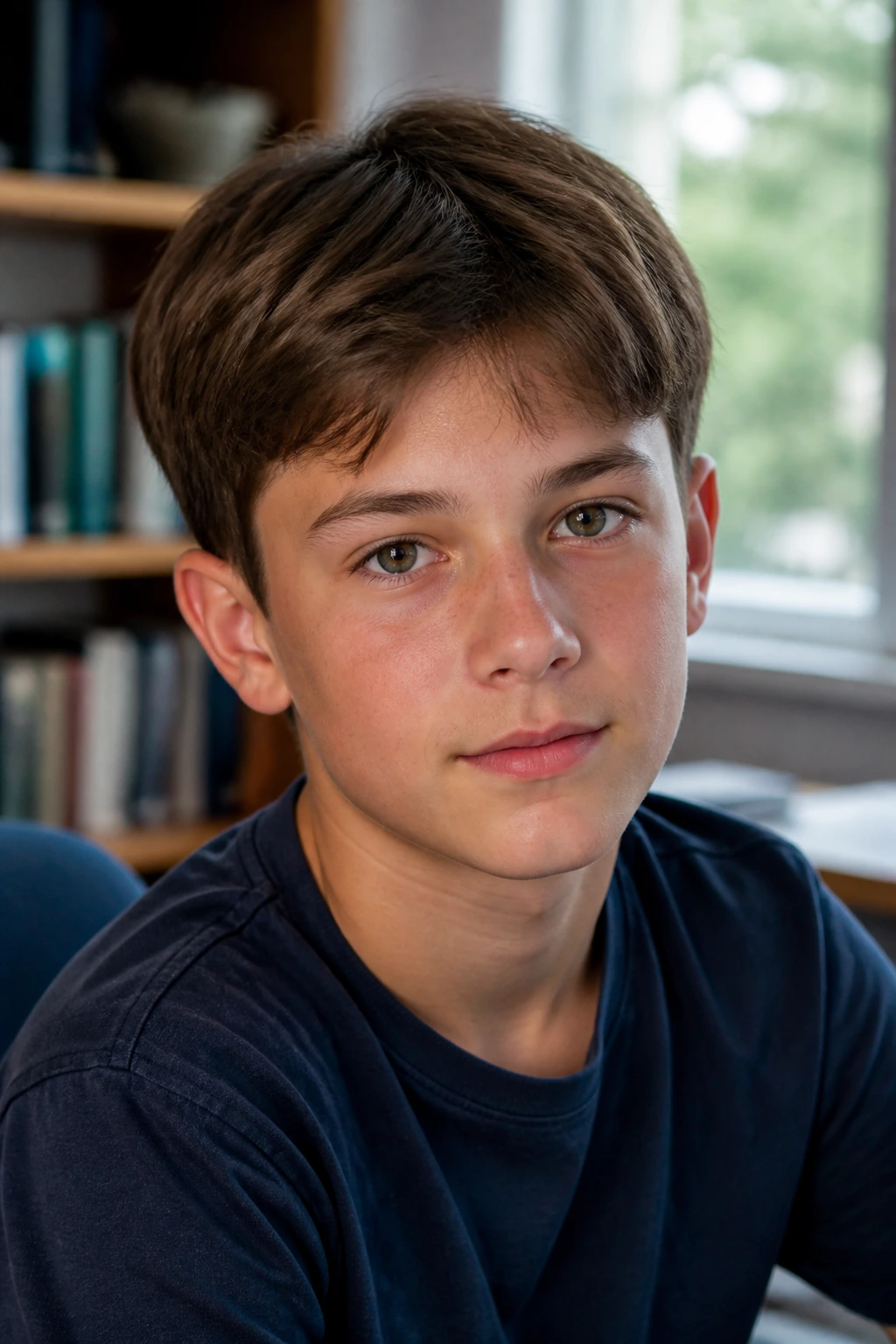
Sometimes the smartest haircut is the plain one. A regular cut with a natural part doesn’t try to reinvent the wheel, which is exactly why it works for fine hair.
Keep the top around 1.5 to 2.5 inches, trim the sides with a gentle taper, and let the hair fall where it wants to. No hard part. No dramatic sweep. Just a clean, simple shape that respects the way the hair grows.
This is a strong option for boys whose hair lies flat but not lifeless. It gives enough length to part, brush, or push to one side, yet it never gets so long that the strands separate into thin wisps.
It’s also one of the easiest haircuts to grow out. That matters more than most people admit. A cut that still looks tidy when the barber visit gets delayed is worth keeping in the rotation.
18. Butch Cut With a Soft Taper
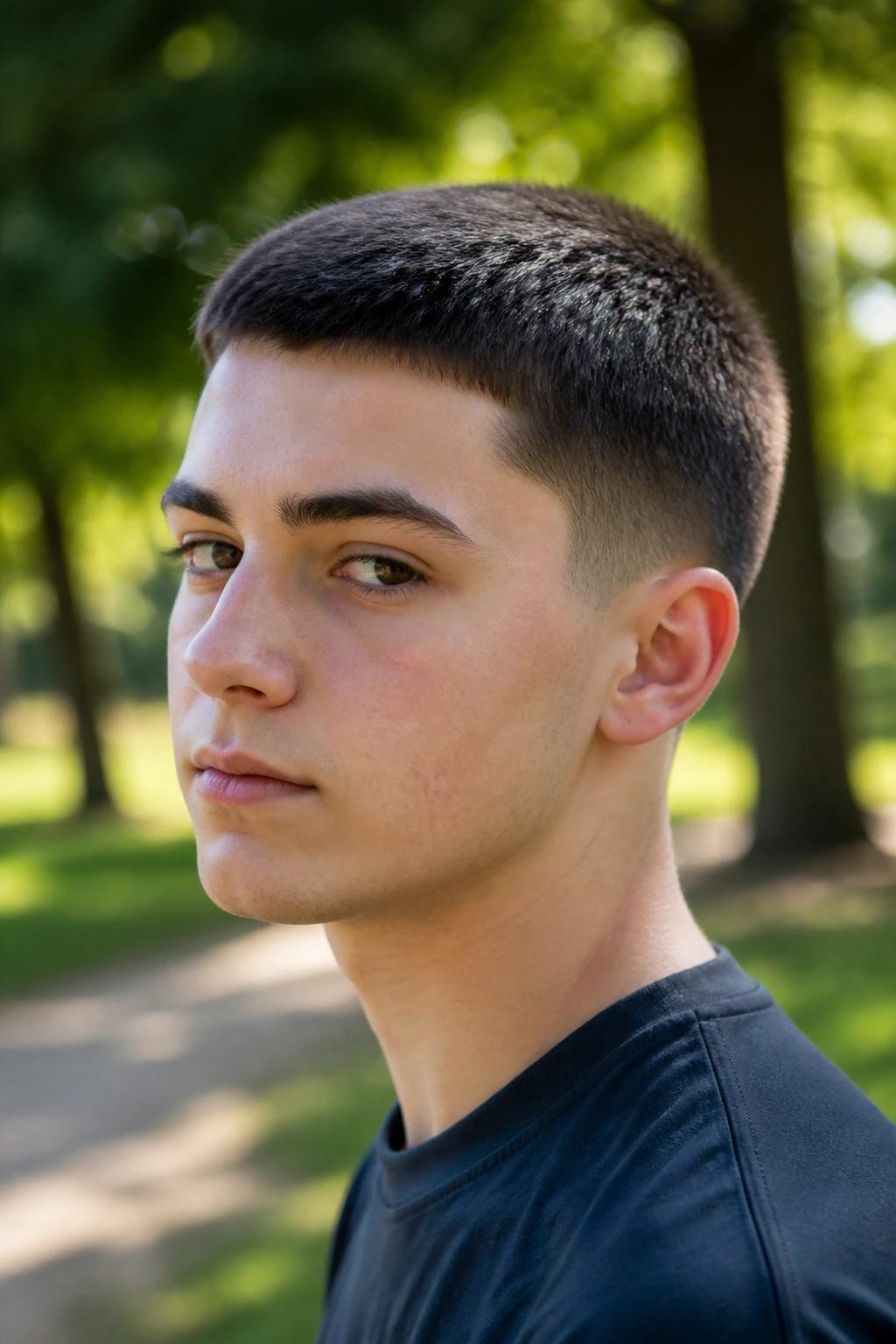
If the goal is clean, short, and no product at all, the butch cut is the blunt answer.
It sits between a buzz cut and a crew cut, which makes it useful for fine hair. The top has just enough length to look like a haircut instead of a shave, while the soft taper around the ears and neckline keeps the whole thing from looking boxy. I’d keep the top in the #3 to #5 guard range if the scalp shows easily.
This cut is especially good for boys who are hard on their hair. Sports, swimming, summer heat, constant hat-wearing—it doesn’t care. It stays tidy with almost no effort, and it grows out in a way that rarely looks awkward.
Plain? Yes. Boring? Not really. There’s a difference.
Why Shorter Shapes Suit Fine Hair Better
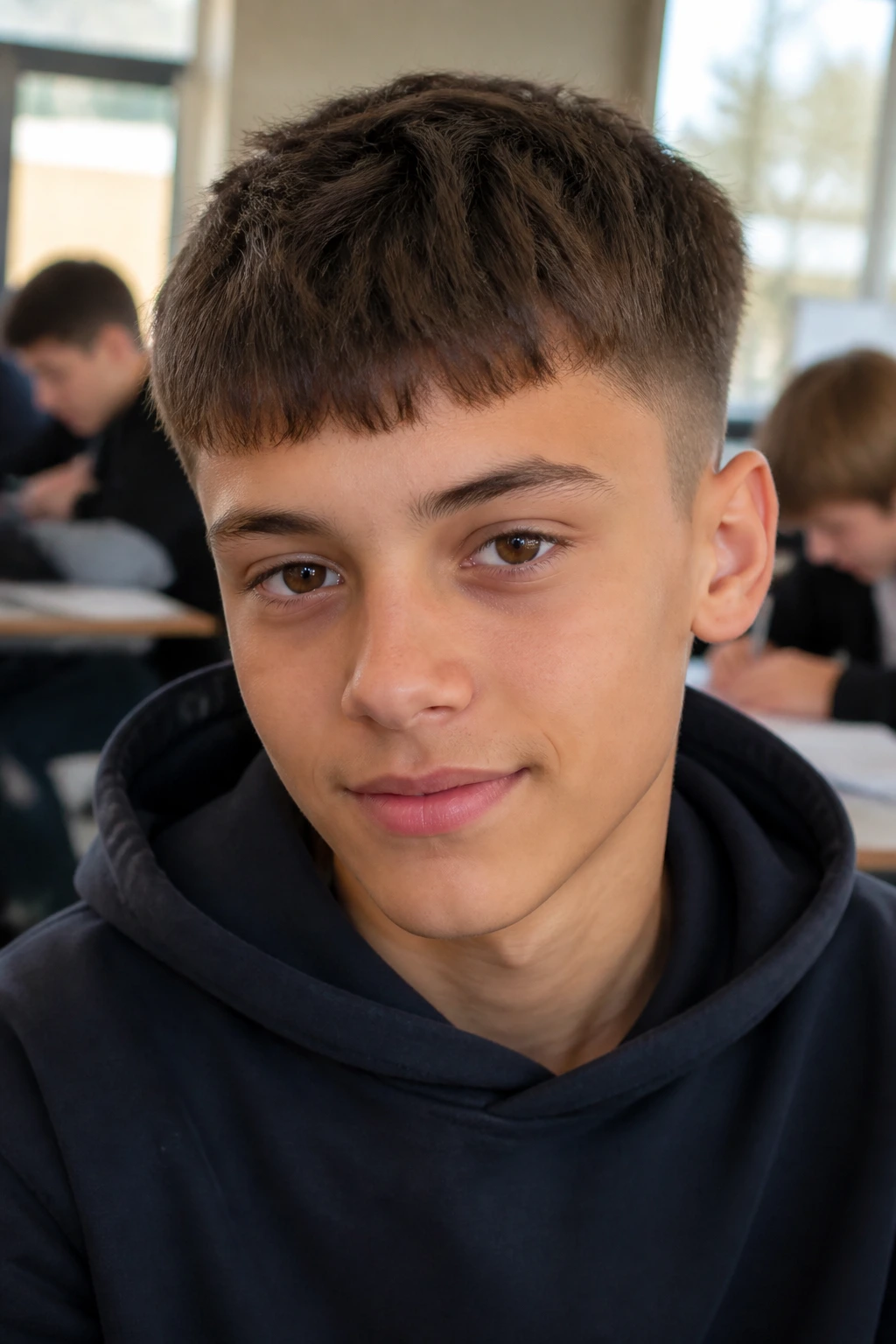
Fine hair is tricky because it can look fuller at one length and strangely empty at another. The strand itself is the issue, not always the total amount of hair. A boy can have plenty of fine hair and still get a see-through crown once the top gets too long.
That’s why shorter cuts usually win. They keep the strands close enough together that the eye reads the hair as denser. They also reduce the way gravity pulls at the front, which is the main reason long tops on fine hair start drooping by midday.
Fine hair is not the same as thin hair
That distinction matters. Fine hair refers to the width of each strand. Thin hair refers to density, or how much hair there is on the head. A boy can have fine-but-dense hair and still do well with a crop or Ivy League. He can also have fine-and-sparse hair, where a buzz, crew, or butch cut makes more sense because there’s less to separate.
Texture beats bulk every time
Heavy layering sounds helpful, but on fine hair it can backfire. The more the top is thinned out, the more scalp shows through. Point cutting and soft scissor texture are better because they break up the surface without taking away too much weight. That’s the sweet spot: enough movement to keep the cut from looking flat, enough substance to keep it from looking wispy.
Tools That Make These Cuts Easier
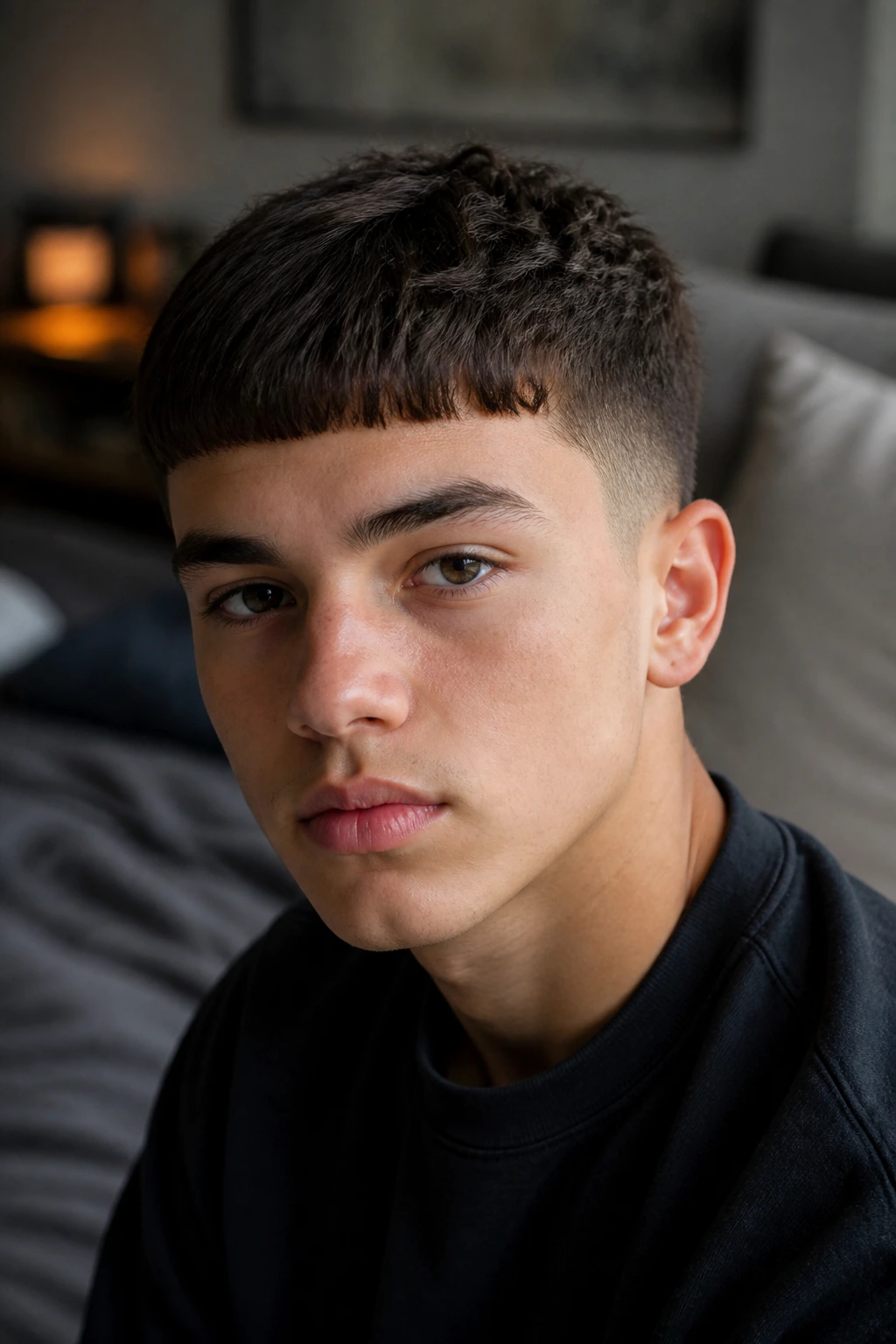
You do not need a drawer full of gear, but a few solid tools make a huge difference.
- Barber clippers with guards #0.5 to #4: This range covers buzz cuts, high and tights, and most tapers.
- Sharp hair shears: Needed for crew cuts, crops, Ivy League tops, and any scissor-cut style.
- A fine-tooth comb: Good for side parts and tighter control when the hair is damp.
- A wide-tooth comb: Better for detangling fine hair without pulling out shape.
- Spray bottle with water: A few misted passes help the hair sit in sections before cutting or styling.
- Matte paste or clay: This gives hold without the shiny, separated look that makes fine hair look thinner.
- Lightweight blow-dryer: Helpful for quiffs, brush-ups, and forward crops.
- Neck duster and cape: Not glamorous. Still useful. Short cuts shed tiny hairs everywhere.
- Thinning shears, used carefully: Optional, and only if the person cutting knows when to stop. Fine hair can go see-through fast if it gets over-thinned.
What to Tell the Barber Before the Cape Goes On
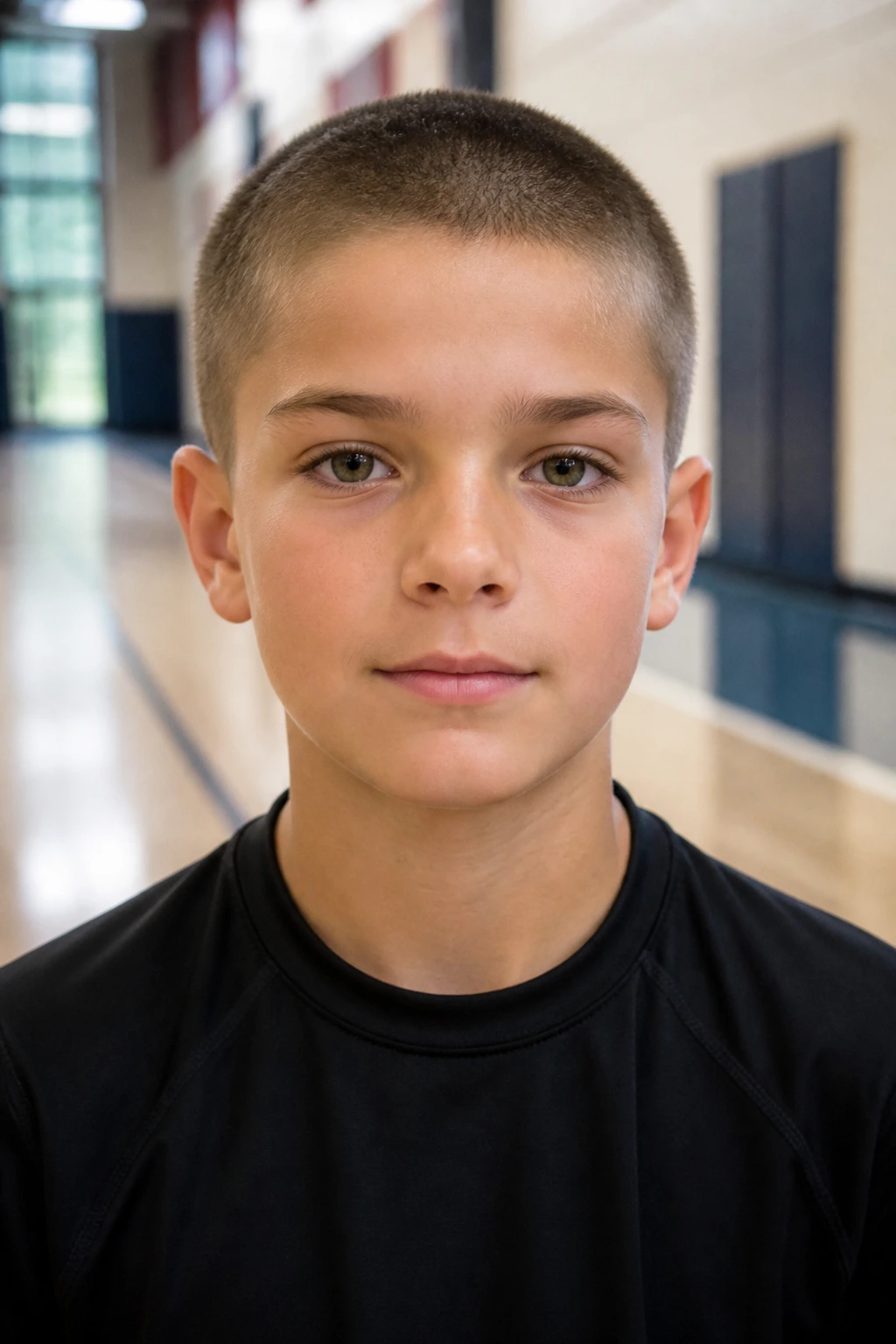
The best haircut starts with plain language. “Short on the sides” is not enough. Neither is “clean it up.” If you want a cut that works on fine hair, say exactly what the hair needs to do.
Start with length. If you know the guard number or the approximate inch length, say it. “Keep the top around two inches” is useful. “Leave it longer” is not. Then talk about the crown. If there’s a swirl back there, mention it before the scissors start moving. A crown that sticks up needs a different plan than a flat one.
Bring one or two photos, not twenty. Show the barber the front and the side if you can. Then point to the part you care about most: fringe, taper, crown, or neckline. That saves everyone time.
Also say what you do not want. If you hate product, say so. If the hair falls into the eyes easily, say that too. Fine hair behaves better when the cut is built around its quirks instead of pretending they are not there.
How to Style These Cuts on School Days and Game Days
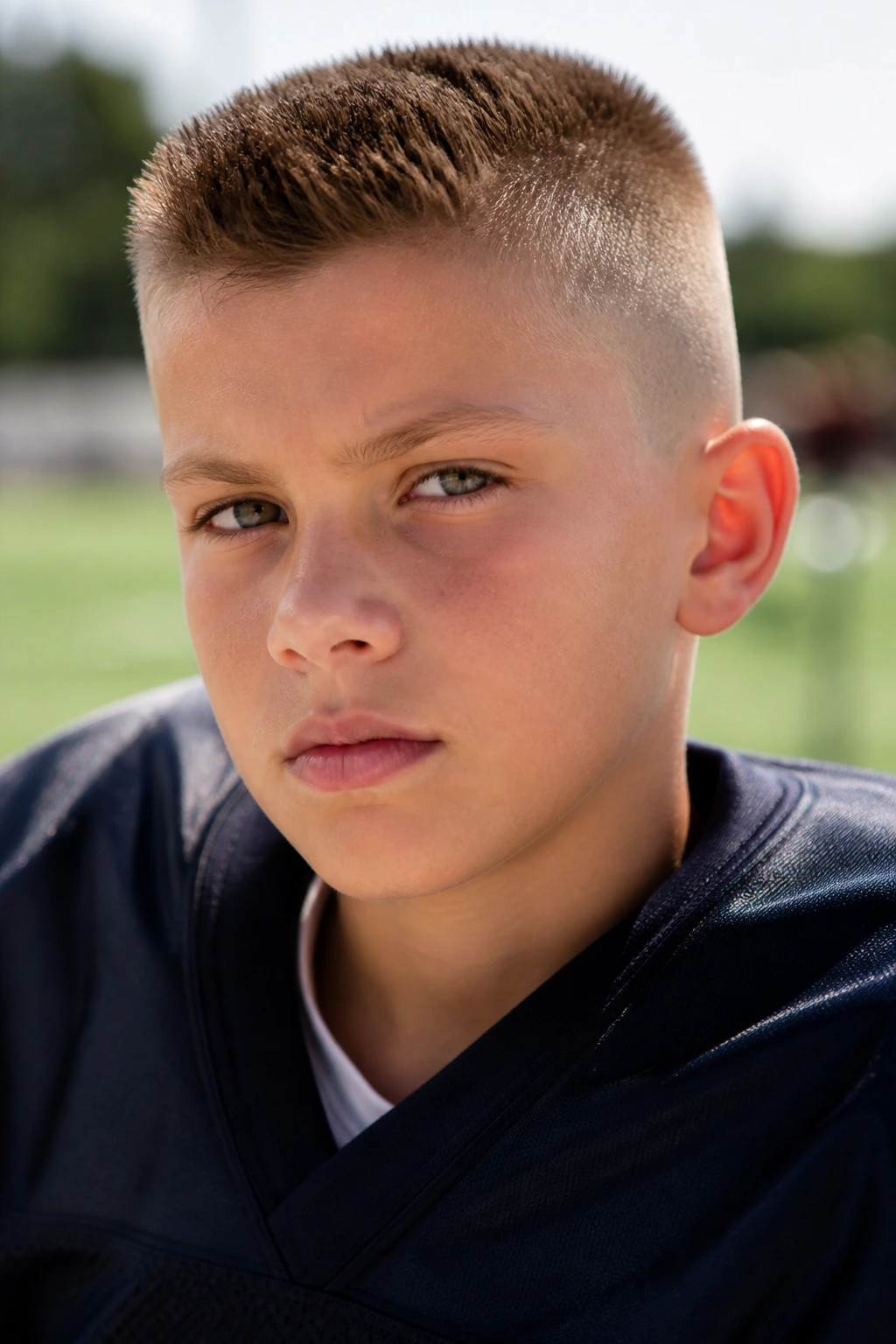
Presentation: Pick a finish that matches the cut instead of fighting it. Crops and crew cuts usually look best with a matte, slightly broken-up surface, while side parts and Ivy League styles want a cleaner sweep. If the hair is pushed too glossy, fine strands separate into lines and the top starts looking thinner.
Accompaniments: A light matte paste, a small spray bottle, and a comb with widely spaced teeth do more for these styles than heavy gel ever will. A clean neckline helps too. Boys may not notice it, but the haircut looks sharper when the edges are tidy.
Portions: Product should stay small. Use a pea-size amount for shorter cuts and a dime-size amount for longer tops. If it takes more than that to make the style stay, the cut probably needs a trim, not more wax.
Beverage Pairing: A quick mist of water before styling. Fine hair responds better to damp control than to dry tugging, and a few sprays are often enough to make the hair cooperate.
Small Texture Tricks That Make Fine Hair Look Fuller
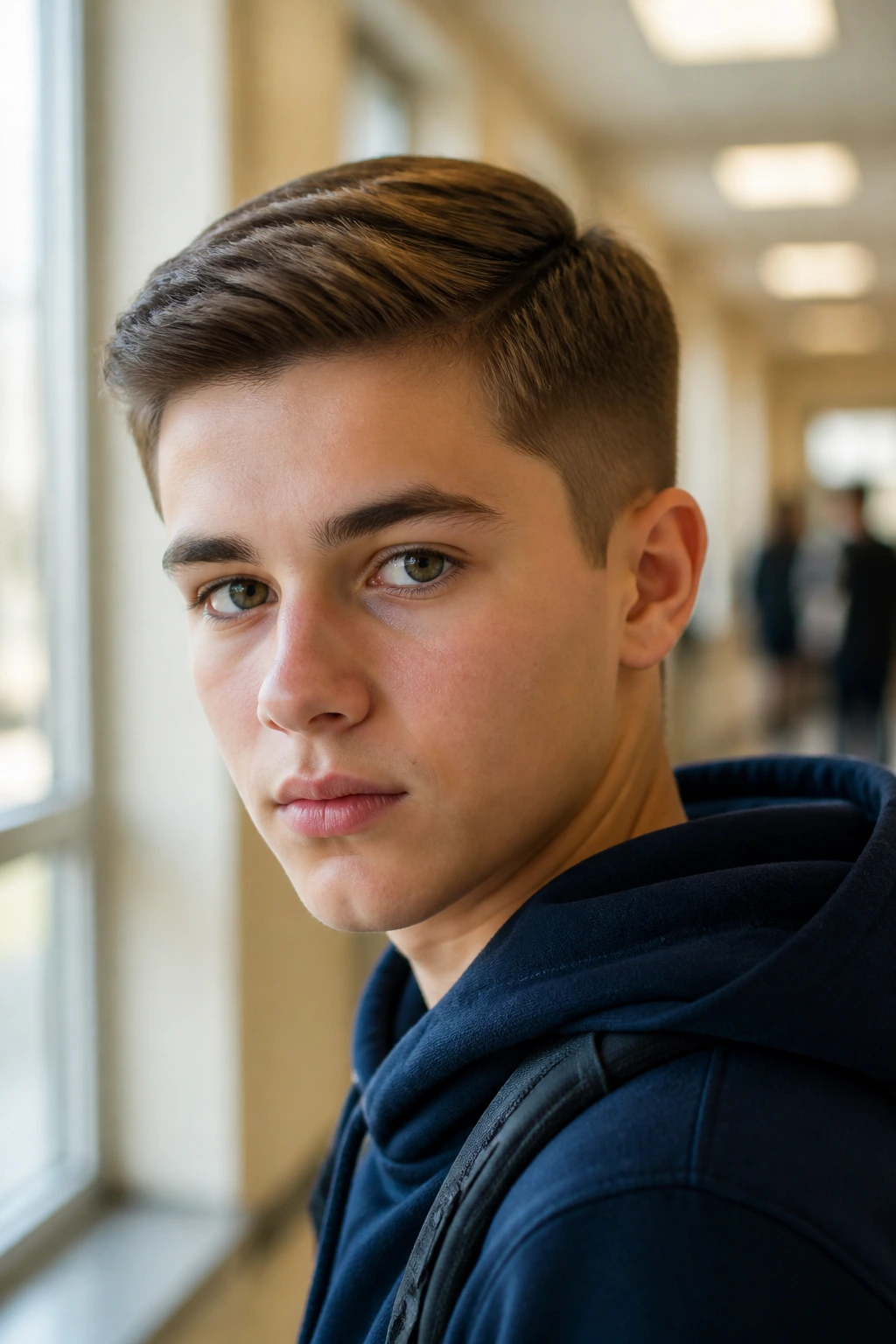
A lot of volume advice is nonsense. Blow-dry it bigger. Use more product. Tease it. All of that can make fine hair look stiffer, not fuller.
What actually helps is restraint.
Root Lift: Dry the roots in the opposite direction for the first few seconds, then guide the top back into place. That tiny lift at the base keeps the hair from lying flat against the scalp.
Matte Finish: Shine makes fine hair look separated. Clay, paste, or texture powder usually works better than glossy pomade or heavy gel.
Soft Separation: Pinch the top in two or three small sections instead of raking it into one chunk. The eye reads those little breaks as texture, not thinness.
Fringe Control: If the front collapses, keep the fringe shorter than the crown. If the front is the strongest part, let it take more length and keep the rest shorter.
Crown Respect: Do not overwork the crown. That swirl area is where fine hair exposes itself fastest. A neat taper and careful length there help more than aggressive styling.
How Often These Cuts Need a Trim
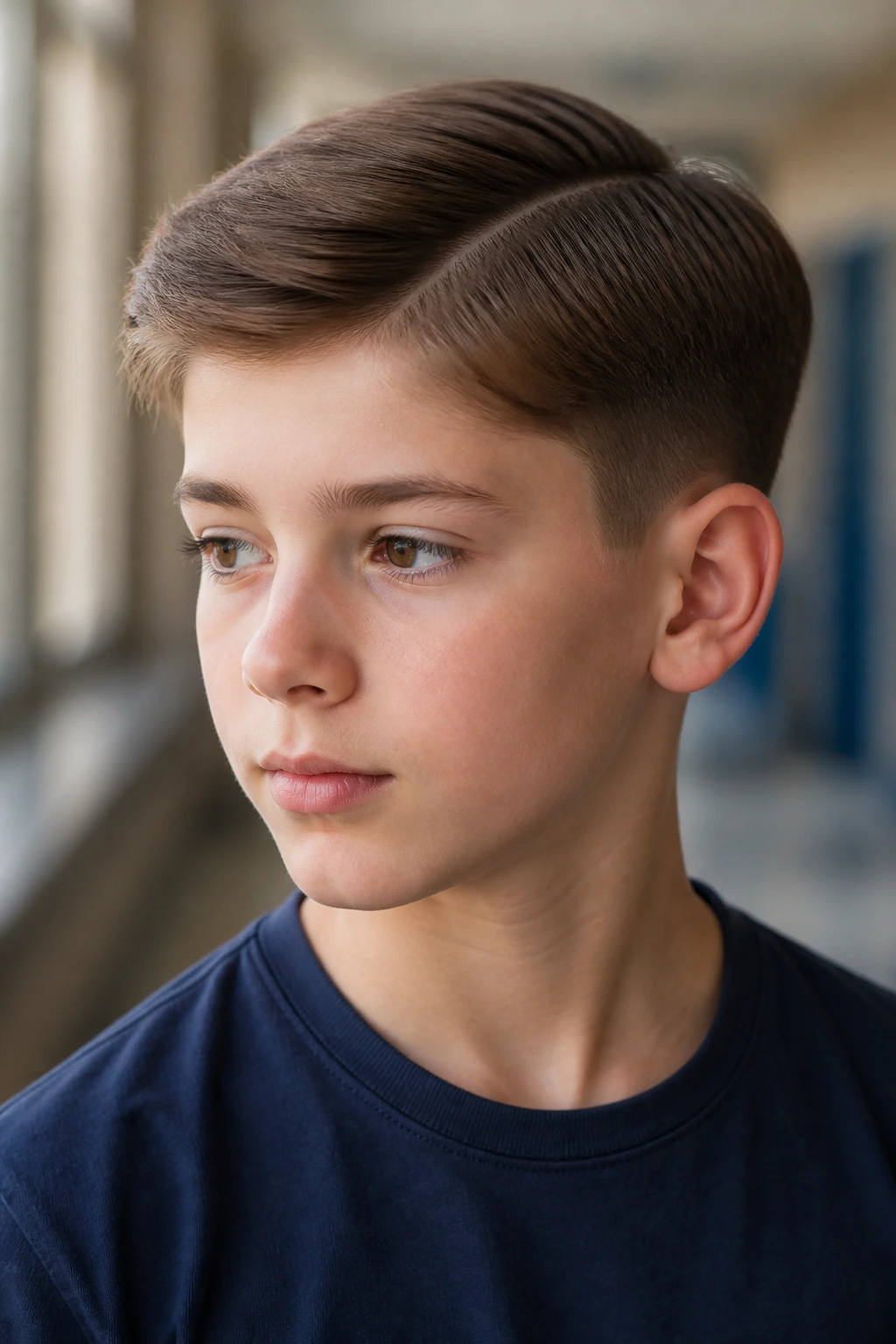
Fine hair tells on a grown-out cut quickly. The sides puff, the fringe loses shape, and the top starts to separate. The haircut still exists, but the shape goes soft in a bad way.
Shorter styles need the most upkeep. Buzz cuts, high and tights, and butch cuts usually need a touch-up every 2 to 3 weeks if you want them to stay crisp. Crew cuts, French crops, and Caears usually stretch to 3 to 4 weeks before they start looking shaggy around the edges.
Longer tops like the Ivy League, side part taper, comb over, and short quiff can usually go 4 to 6 weeks before they need a full reshaping. Styles with layers, like the short shag or scissor-cut top, may last a little longer, but only if the neckline and sideburns are cleaned up in the meantime.
If you cut at home, do the neckline and around the ears carefully between barber visits. That tiny cleanup keeps the whole haircut from looking late.
Common Mistakes With Fine Hair
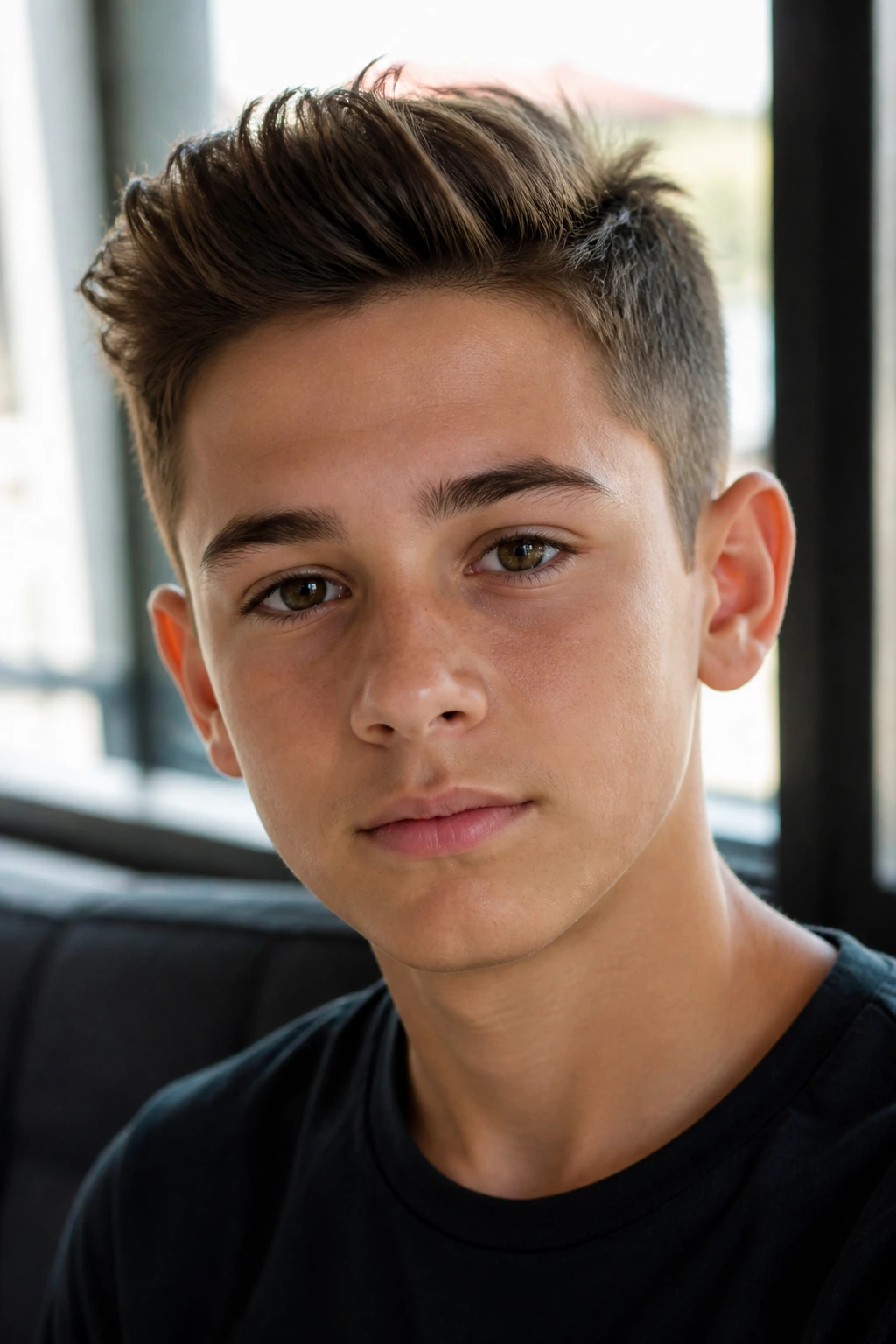
The first mistake is leaving too much length on top. Fine hair loses lift as it gets longer, and a top that looks full in the barber chair can look flat by the next morning. Keep the top shorter than you think.
The second mistake is using too much product. Wet gel makes fine hair clump into thin, shiny strands, which is the opposite of what you want. Matte paste, clay, or a touch of texture cream usually works better, and less is almost always more.
The third mistake is over-thinning the top. A barber can get enthusiastic with thinning shears and strip away the little weight the hair has. The result is a see-through surface that never quite recovers. On fine hair, texture should be added carefully, not carved out aggressively.
The fourth mistake is taking the fade too high when the crown is already flat. That can make the head look narrow on top and heavy on the sides. A lower taper often solves the problem without drawing attention to the scalp.
The fifth mistake is ignoring the natural growth pattern. Cowlicks, side parts, and front swirls matter. If the haircut fights them, the hair wins. Every time.
Variations and Adaptations to Try
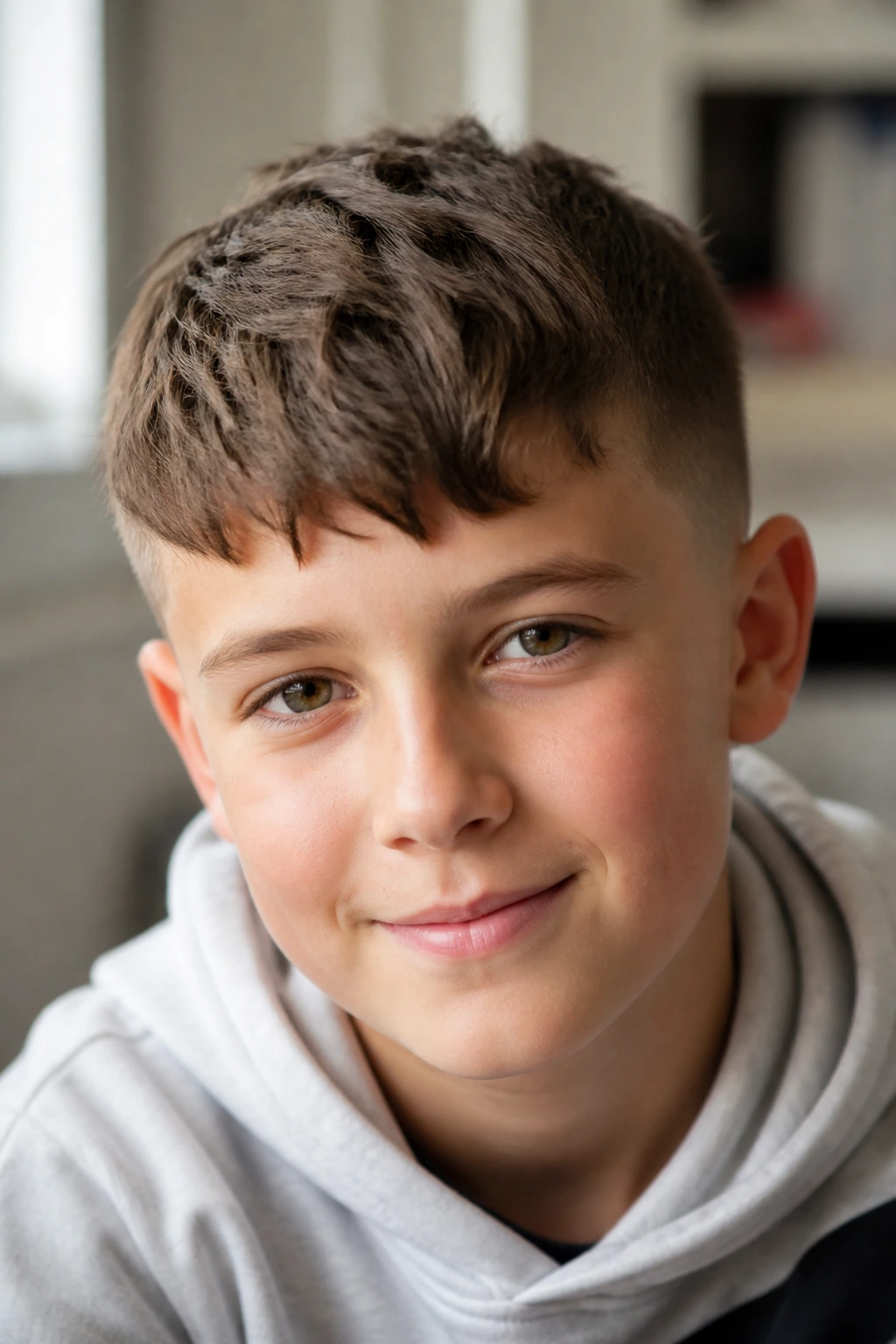
The School-Photo Clean Version: Keep the top modestly short, choose a low taper, and skip any dramatic fringe or spikes. This works best when the haircut needs to look neat from every angle and stay that way through a long day.
The Sports-First Version: Go with a buzz cut, high and tight, or butch cut. These stay out of the eyes, dry fast after sweat, and do not need much product. If helmets are part of daily life, this is the practical lane.
The Cowlick-Friendly Version: Choose a French crop, forward fringe crop, or side-swept crop. These styles work with the hair’s natural bend instead of trying to force it flat. That keeps the front from exploding into a weird split.
The Soft Grown-Up Version: An Ivy League, side part taper, or tapered comb over gives a more polished shape without asking the hair to do too much. Good for boys who want something tidy but not stiff.
The Sensitive-Scalp Version: Stay away from skin fades and use a lower guard on the sides with a little softness left around the edges. Fine hair and a sensitive scalp can feel scratchy fast if the clipper work is too tight.
Questions Parents Ask at the Barber Chair
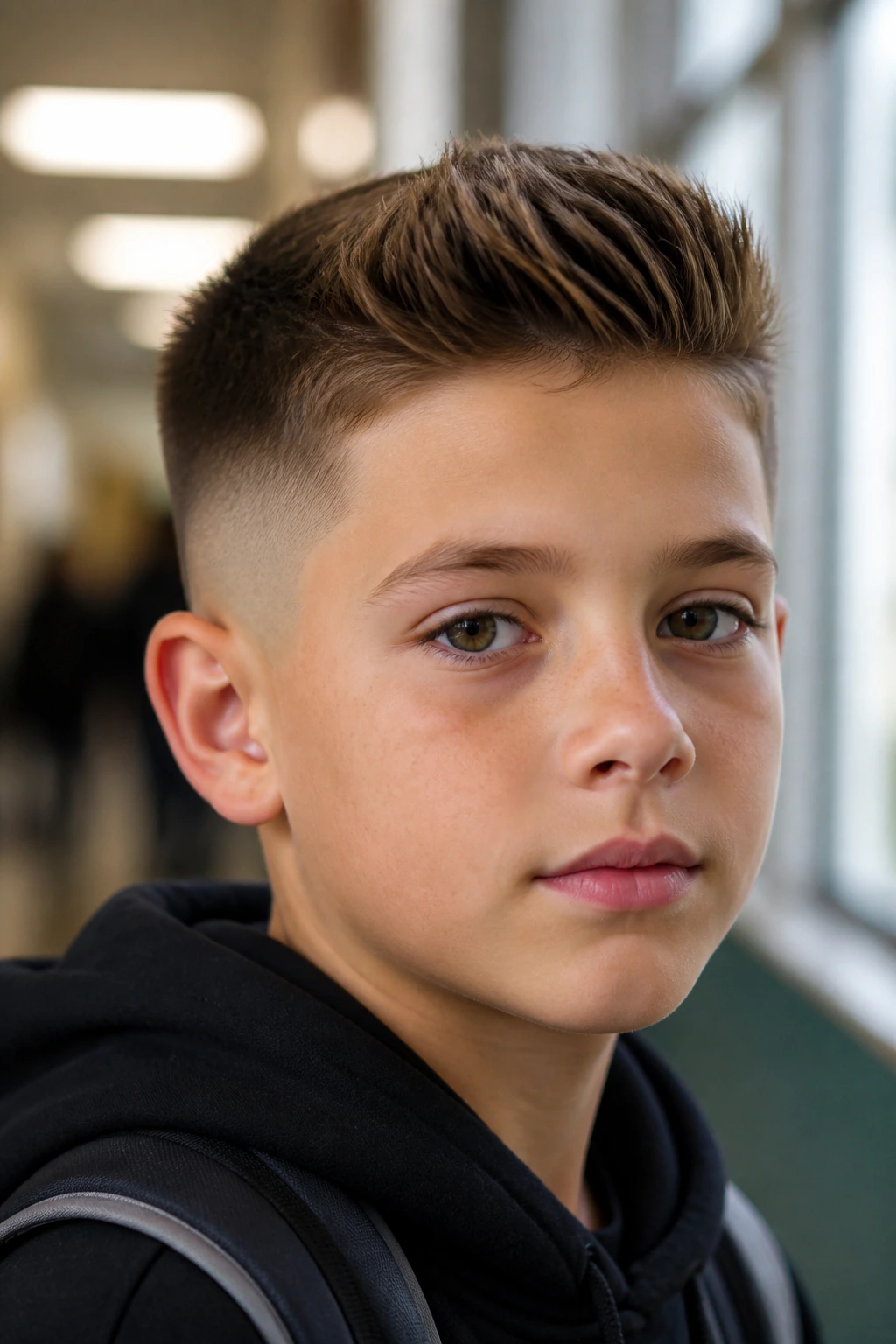
Which haircut makes fine hair look thickest?
Short textured styles usually win. A crew cut, French crop, or Caesar cut keeps the hair close enough together that the scalp does not show through as much. Once the top gets too long, fine hair separates and starts looking weaker.
Should boys with fine hair keep it short?
Usually, yes. Not shaved-short, necessarily, but short enough that the hair can stand up on its own. Longer styles can work if the hair is dense and the cut uses light layers, but most fine hair looks fuller when the top stays modest.
Is a fade good for fine hair?
A fade can be excellent if it is not pushed too high. A low or mid fade makes the top look fuller by tightening the sides. A skin fade can be a little harsh if the scalp shows easily, so many boys do better with a softer taper.
What product should fine hair use?
Matte paste or clay is usually the safest bet. Shine-heavy products tend to separate the strands and make the hair look thinner. A pea-size amount is enough for most short cuts.
Can you do these cuts at home?
Some of them, yes. A buzz cut, butch cut, or basic taper is manageable if you have steady hands and good clipper guards. Crops, quiffs, and side parts usually look better when a barber handles the top.
What if the crown sticks up?
Leave a little more length there and do not cut it too short. The crown is one of the first places fine hair shows through, so a barber should work with the swirl rather than shaving it flat.
How often should the haircut be trimmed?
Shorter cuts need touch-ups every 2 to 4 weeks. Longer tops can go 4 to 6 weeks, depending on how fast the hair grows and how clean you want the shape to stay.
Can thinning shears help?
Sometimes, but use them carefully. On fine hair, over-thinning can remove too much weight and make the top look see-through. Point cutting or light scissor texture is usually safer.
The Cut That Holds
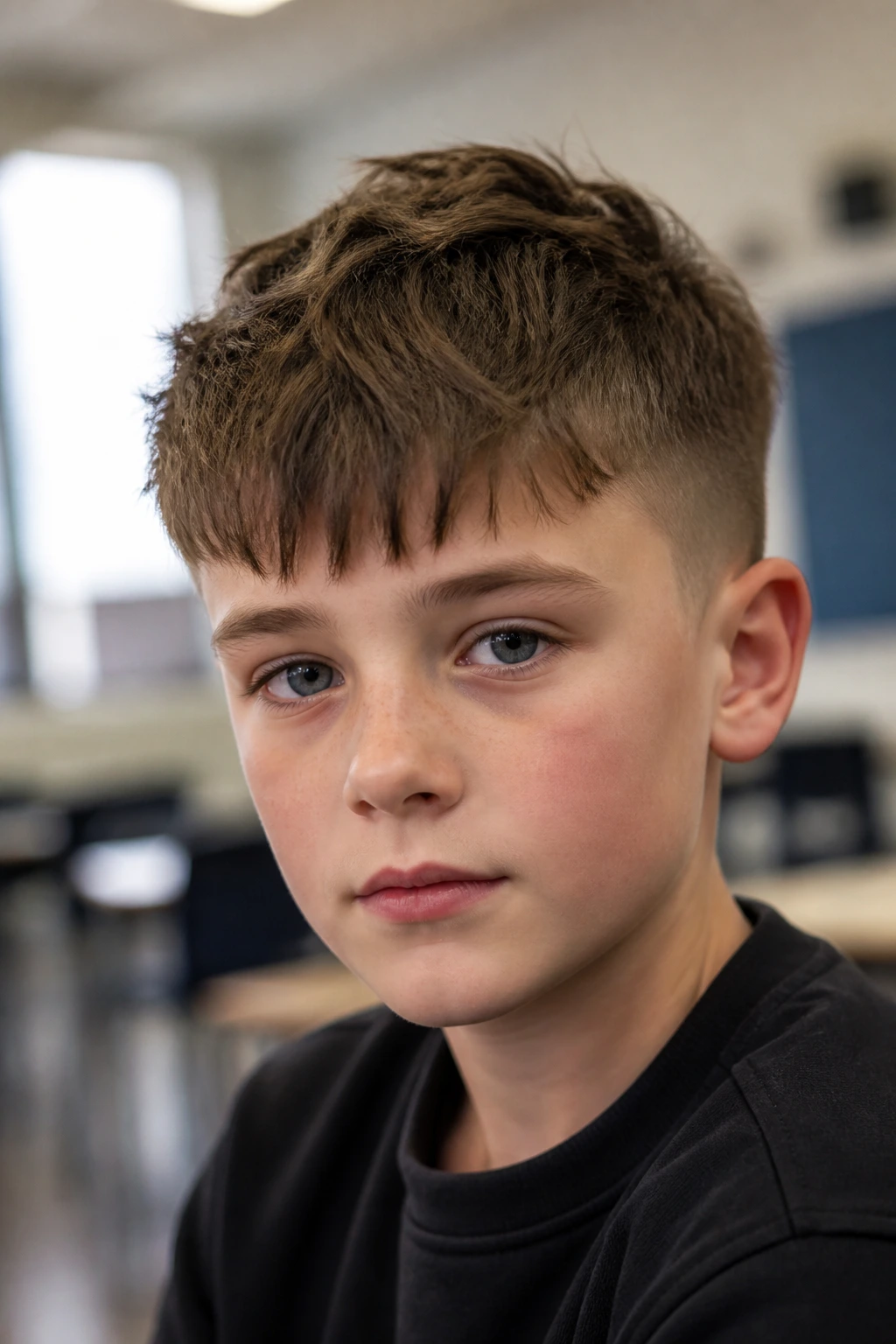
Fine hair does not need to be bullied into looking thicker. It needs a haircut that understands where the hair wants to go and gives it a shape it can actually keep. Short texture, soft tapering, and a little restraint usually beat flashy styling every time.
Pick one of these cuts based on the boy’s routine, not just the photo. Sports kid? Buzz, high and tight, or butch cut. School-picture kid? Ivy League, side part taper, or regular cut. Hair in the eyes all day? French crop, Caesar, or forward fringe crop. That’s the real test.
A good boys’ haircut for fine hair should make the morning easier, not harder. If it can survive a backpack, a bike ride, and a sweaty recess without falling apart, it’s doing its job.