



Straight hair and heart-shaped faces can work together in a way that feels almost unfair when the cut is right. The trick is not volume for volume’s sake. It’s balance: a little softness at the forehead, a little presence near the jaw, and enough shape through the length that the hair doesn’t fall into one flat curtain from temple to collarbone.
That matters more on straight hair than people think. Straight strands show every line of a cut. They show where the weight sits, where the ends stop, and whether the face-framing pieces were actually thought through or just hacked in because somebody said “layers.” On a heart-shaped face, that line work has to do some quiet heavy lifting. Too much height at the crown and the forehead dominates. Too-short bangs and the top half of the face takes over. Too-thin ends and the lower face gets even smaller.
The good news is that the right hairstyles are not mysterious. They’re just deliberate. A good bob can widen the jaw visually. A fringe can soften the forehead without swallowing the eyes. A long cut can keep the sleek length straight hair does so well while adding a little bend and movement where the face needs it most. Once you know what to look for, the choices get a lot easier.
Why These Styles Work on Straight Hair and Heart-Shaped Faces
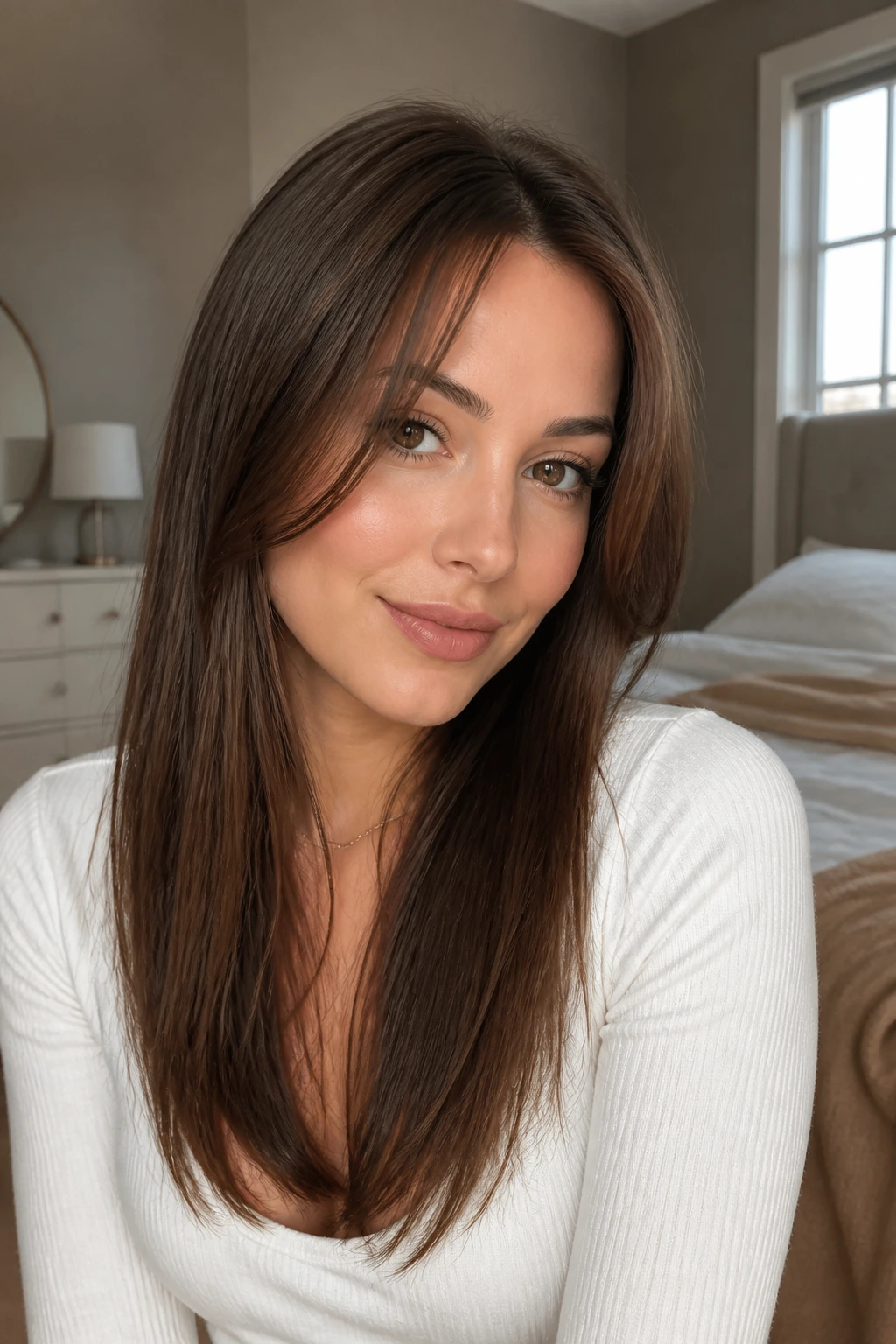
Heart-shaped faces usually carry more width through the forehead and temple area, then taper down toward a narrower chin. That shape is not a problem. It’s a starting point. The best hairstyles for it don’t fight the structure; they redistribute attention so the eye travels down the face instead of stopping at the top.
Straight hair changes the game because it does not hide anything. Curls can blur a cut. Straight hair is honest. If a layer starts too high, you’ll see it. If the ends are too blunt or too wispy, you’ll see that too. That’s why the styles in this collection lean on clean lines, soft face-framing, and smart placement rather than big, fluffy texture.
A lot of the best options do one of three things: they add width near the jaw, they soften the forehead with fringe or side parting, or they create movement from the cheekbones down so the lower half of the face feels more present. That can mean a chin-length bob with a slight bevel. It can mean long layers that start below the cheekbone. It can mean a low ponytail with lift at the crown so the face doesn’t look pulled upward and tight.
And yes, straight hair can wear short cuts. It can wear bangs. It can wear long lengths, too. The common thread is control. The shape has to be placed on purpose, or the face shape will place it for you.
Curtain Bangs with Collarbone Layers
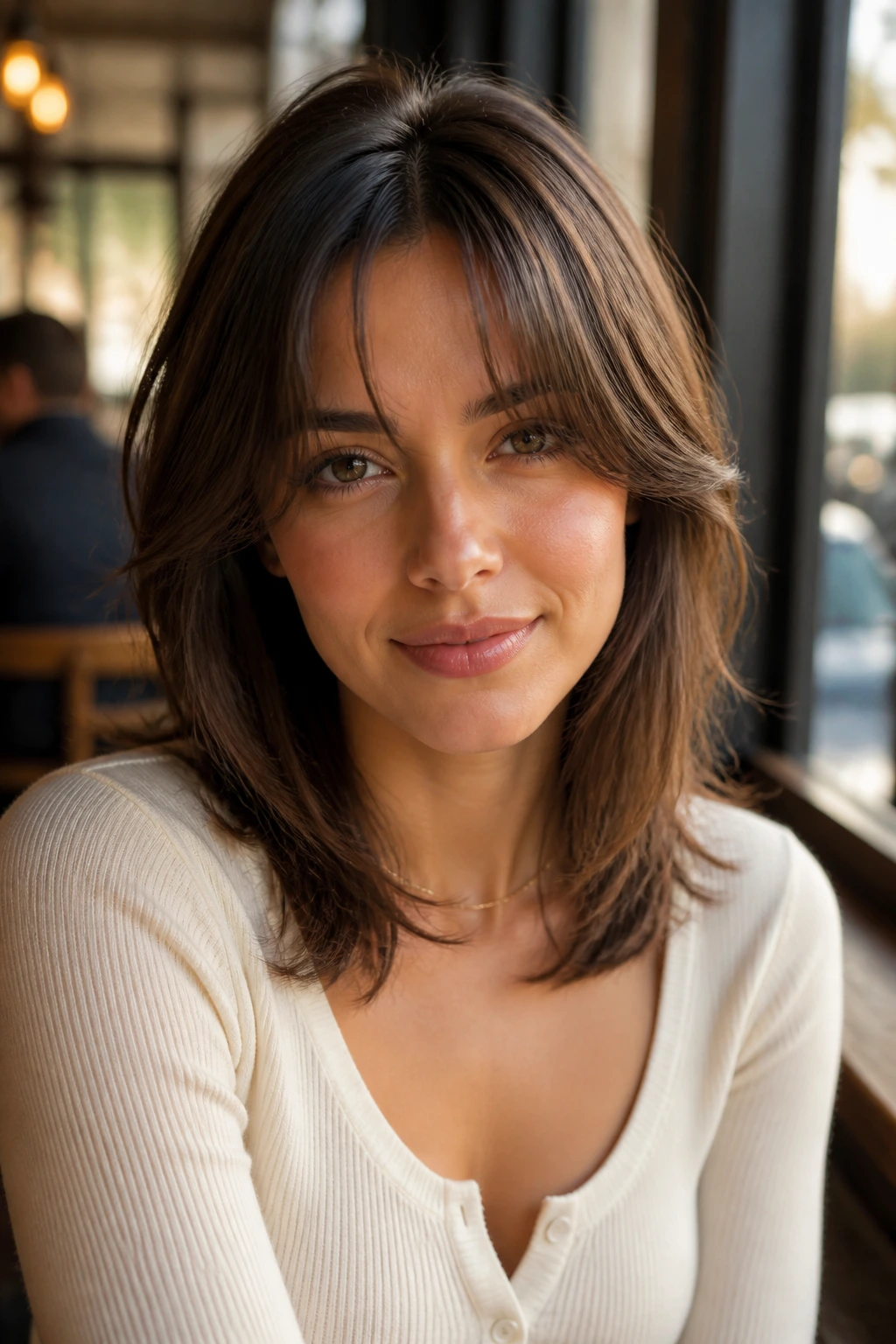
Curtain bangs are one of the cleanest fixes for a wider forehead on straight hair. Not because they hide anything. They don’t. They split the difference, which is the whole point. The center opens up enough to keep the face bright, while the longer sides graze the cheekbones and soften that upper width that heart-shaped faces often carry.
Why It Works
The collarbone length matters here. Straight hair at this length has enough weight to swing, but it still feels light enough to move. If the bangs start around eyebrow level and angle down toward the cheekbones, the eye gets pulled inward and downward instead of sitting on the forehead.
Ask for the shortest point to land around the bridge of the nose or just below the brows, then let the sides blend past the cheekbone. Too short, and the fringe starts acting like a hard line. Too long, and it disappears into the rest of the hair.
A quick blow-dry with a round brush gives the curtain shape its little lift. Roll the bangs away from the face, not under it. That outward bend is what keeps them from clumping into a flat, stringy strip by noon.
Deep Side Part with a Tucked-Behind-Ear Lob
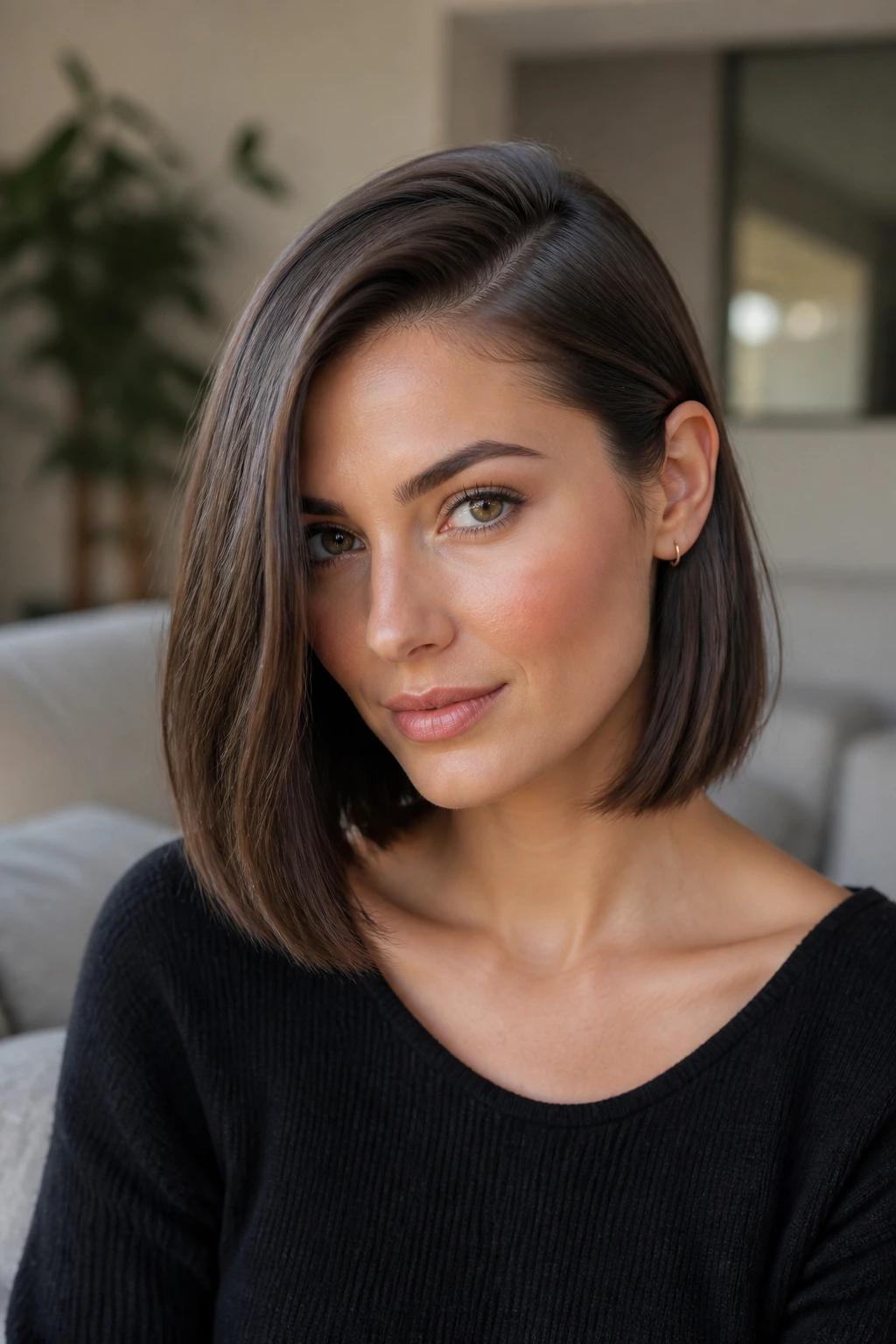
A deep side part is a cheat code for a heart-shaped face. One side gets a little more room to breathe, the forehead looks less broad, and straight hair suddenly has asymmetry instead of a flat center line. That small shift changes everything.
The tucked-behind-ear lob is the part people underestimate. One side stays sleek and exposed, the other falls forward just enough to soften the cheekbone. On straight hair, the contrast between tucked and loose reads clean and polished, not fussy.
How to Style It
Build the part while the hair is damp, then blow-dry the roots in the opposite direction for lift. That gives you the bend you need at the crown. Once the hair is dry, tuck the heavier side behind the ear and use a tiny dab of serum only on the ends. The goal is a smooth line, not a greasy one.
This look is especially good if your hair is fine and straight, because the side part creates the illusion of fullness without needing a lot of product. It also plays well with earrings. A single hoop or a small drop earring does more here than a chunky clip ever will.
Blunt Chin-Length Bob
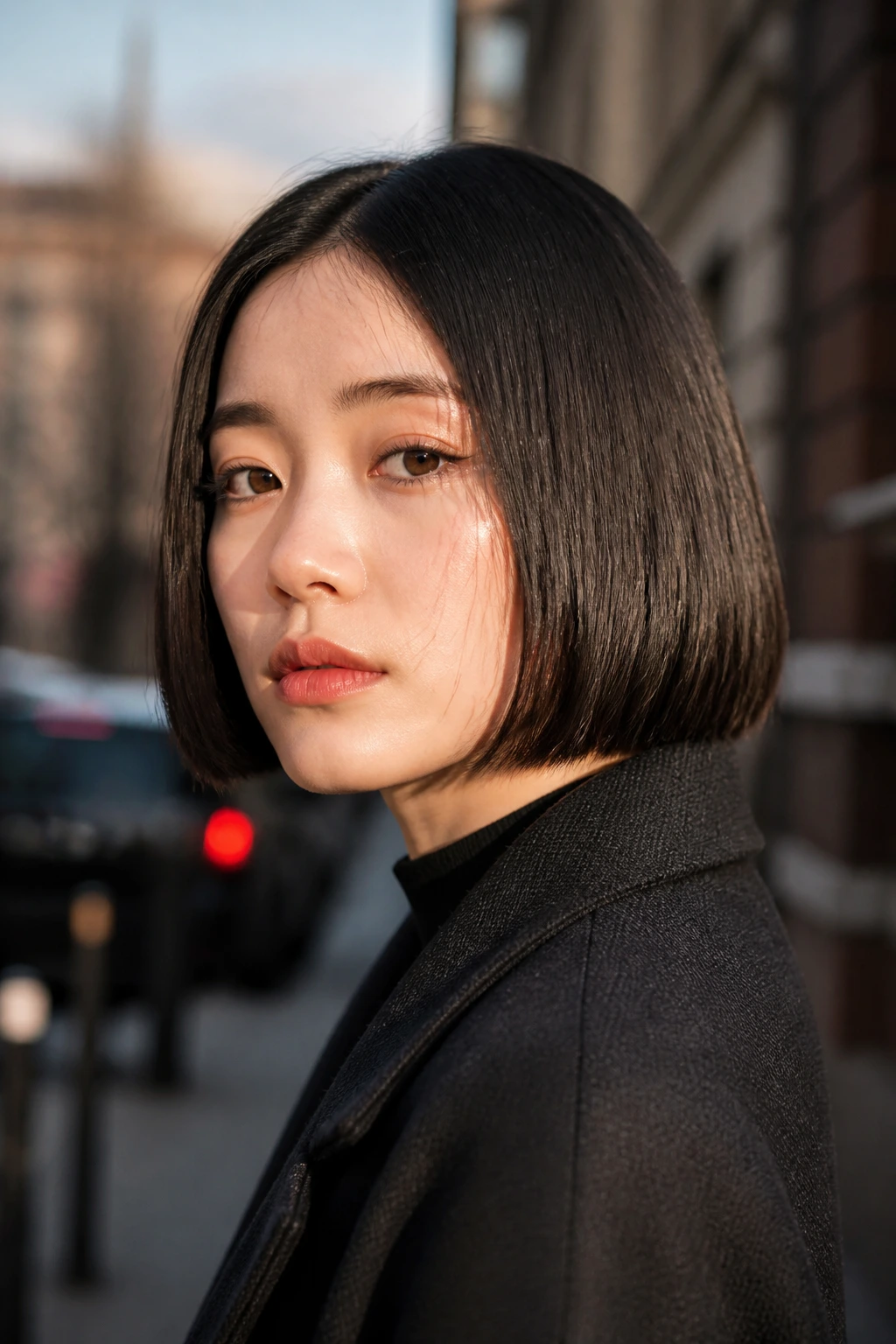
This is the bob that earns its keep. A chin-length blunt cut gives a heart-shaped face some visual weight right where it often needs it most. The straight edge creates a firm lower line, and that lower line balances the upper half of the face without adding fluff or fuss.
It works best when the bob hits right at the chin or a hair below it. Shorter than that, and it can start to expose the chin too much. Longer than that, and it loses the clean geometry that makes it interesting. Straight hair is perfect for this shape because the outline stays crisp all day.
What to Ask For
Tell your stylist you want a solid perimeter with minimal layering at the ends. A slight internal bevel is fine. Too much texturizing will make the cut look skinny at the bottom, which defeats the whole purpose. If your hair is very fine, a blunt line gives it the look of more density. If it’s thick, the weight keeps the bob from puffing out in all the wrong places.
This is one of those cuts that looks expensive even when you haven’t done much to it. That’s not magic. It’s line work.
French Bob with a Soft Side Fringe

The French bob has attitude, but the softer version is the one I reach for on heart-shaped faces. The length usually sits around the jaw or just under the ears, and the side fringe breaks up the forehead without drawing a blunt border across it.
On straight hair, a French bob can either look chic or look like it was cut in a hurry. The difference is in the edges. A soft side fringe and a tiny bend at the ends keep it from feeling severe. You want the cut to skim, not clamp.
This style suits people who like a neat shape with a little personality. It’s short enough to show the neck and jawline, but not so short that the face becomes all forehead and eyes. If you wear glasses, this one can look especially sharp, because the fringe and frames work together instead of competing.
Long Layers That Start Below the Cheekbone
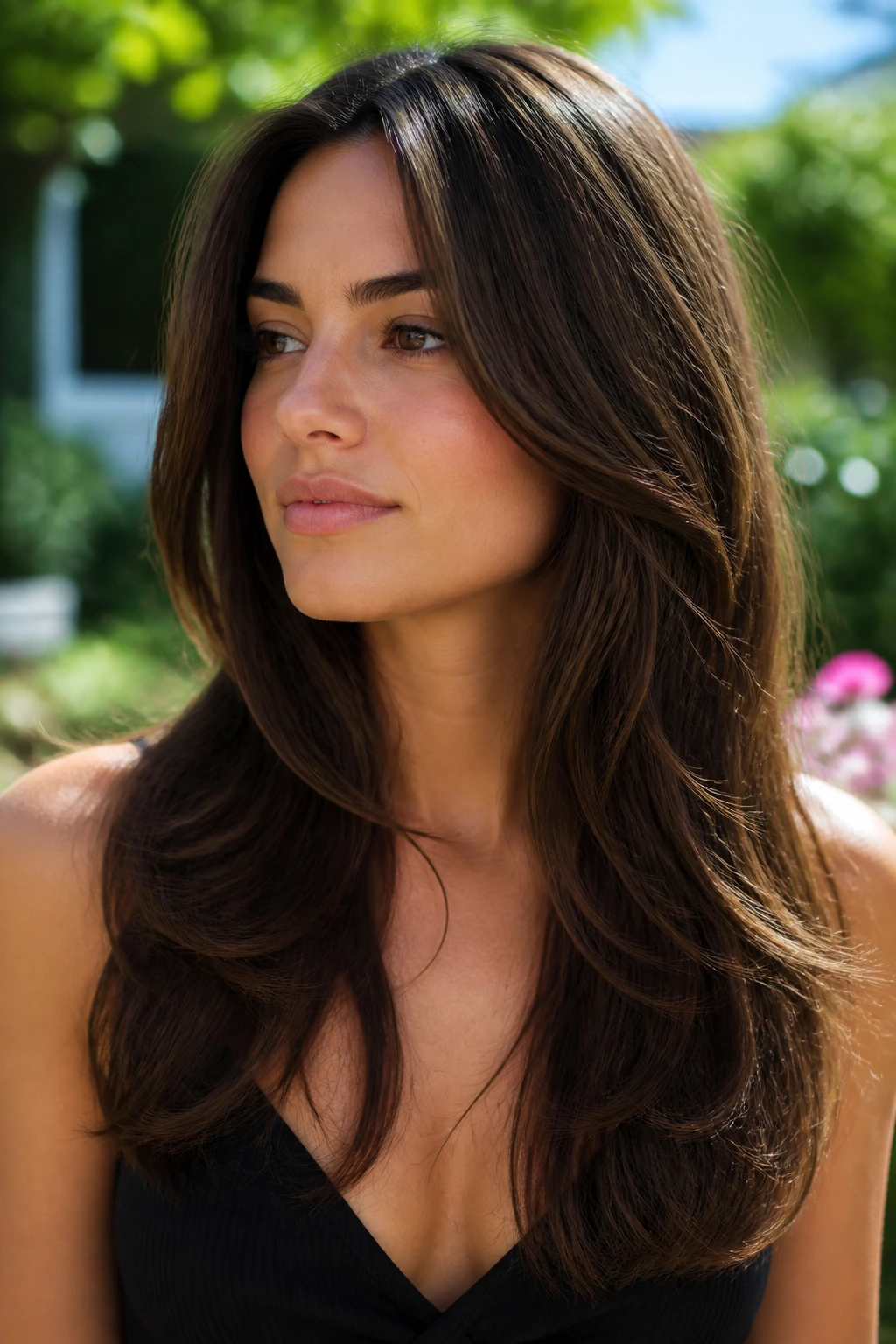
If you want to keep length, this is the move. Long layers can be great for straight hair and heart-shaped faces, but only when they start low. Below the cheekbone is the sweet spot. That’s where the layers open the face without carving too much out of the top half.
When layers begin too high, straight hair can get thin and stringy fast. Low layers keep the perimeter strong while adding movement through the middle and ends. That creates a softer line around the jaw, which is exactly what a heart-shaped face usually wants.
The Useful Detail
Ask for face-framing pieces that begin around the cheekbone or just below it, then blend into longer lengths. Keep the layers soft, not chopped. On straight hair, harsh layers look obvious in a way that wavy hair can sometimes hide. You’re aiming for movement, not shards.
This style is especially nice if you like hair that stays tidy in a ponytail but still drops around the face when you wear it down. It gives you options without forcing a dramatic change.
A-Line Bob with a Beveled Front
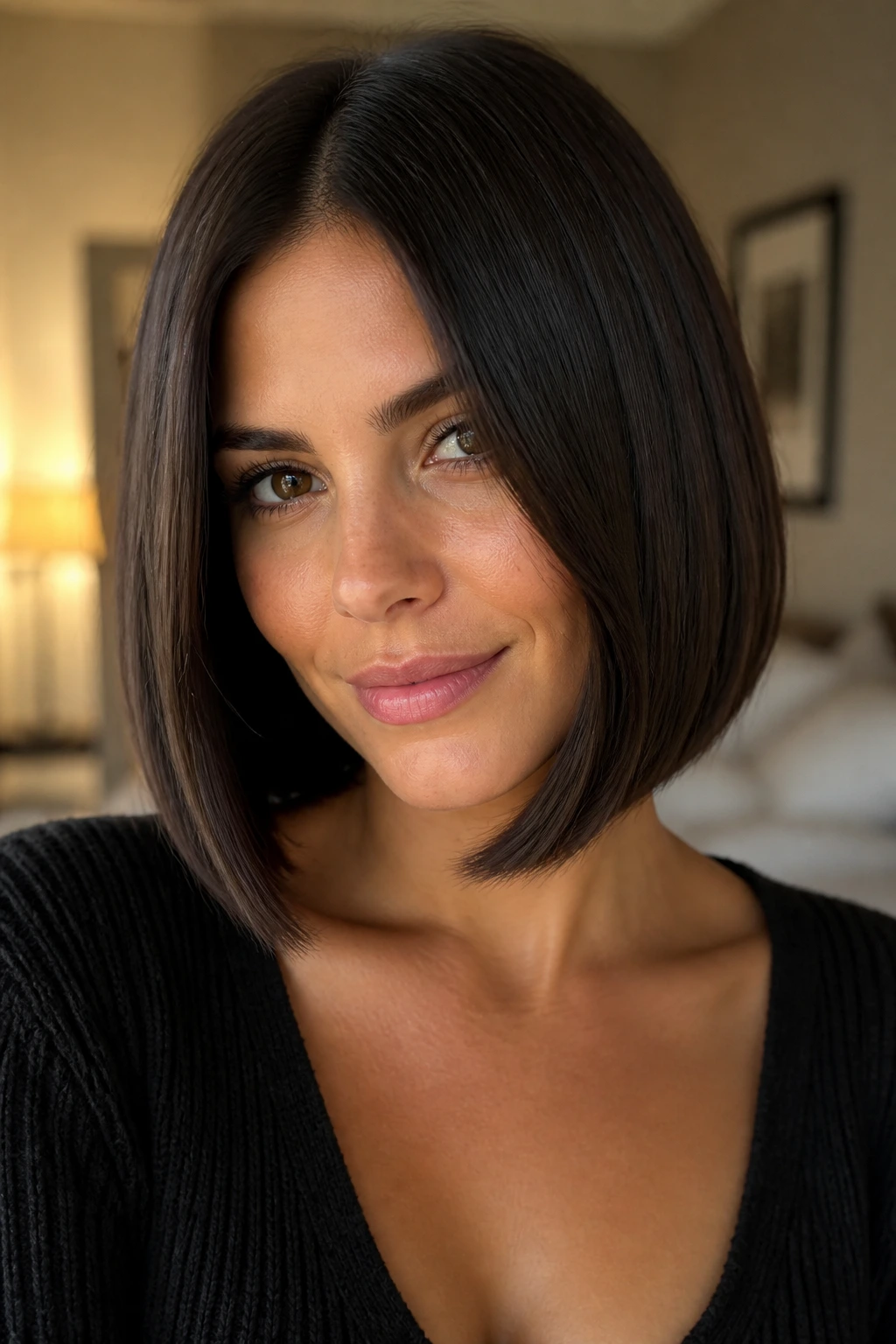
An A-line bob is one of the smartest shapes for heart-shaped faces because the front is longer than the back. That means the eye naturally travels toward the jaw. Straight hair makes the angle easy to see, and that clarity is the whole appeal.
The beveled front softens what could otherwise become a hard triangle. A little undercurve at the ends prevents the bob from sticking straight out. It also keeps the line close to the jaw rather than floating away from it. That’s especially useful if your chin is narrow and you want a bit more visual width there.
This cut tends to work best with a center or slightly off-center part. It can handle a side part too, but the angle of the cut already gives you shape, so you do not need to pile on more asymmetry than necessary. A quick round-brush finish at the front pieces is usually enough.
Side-Swept Pixie with Soft Crown Texture
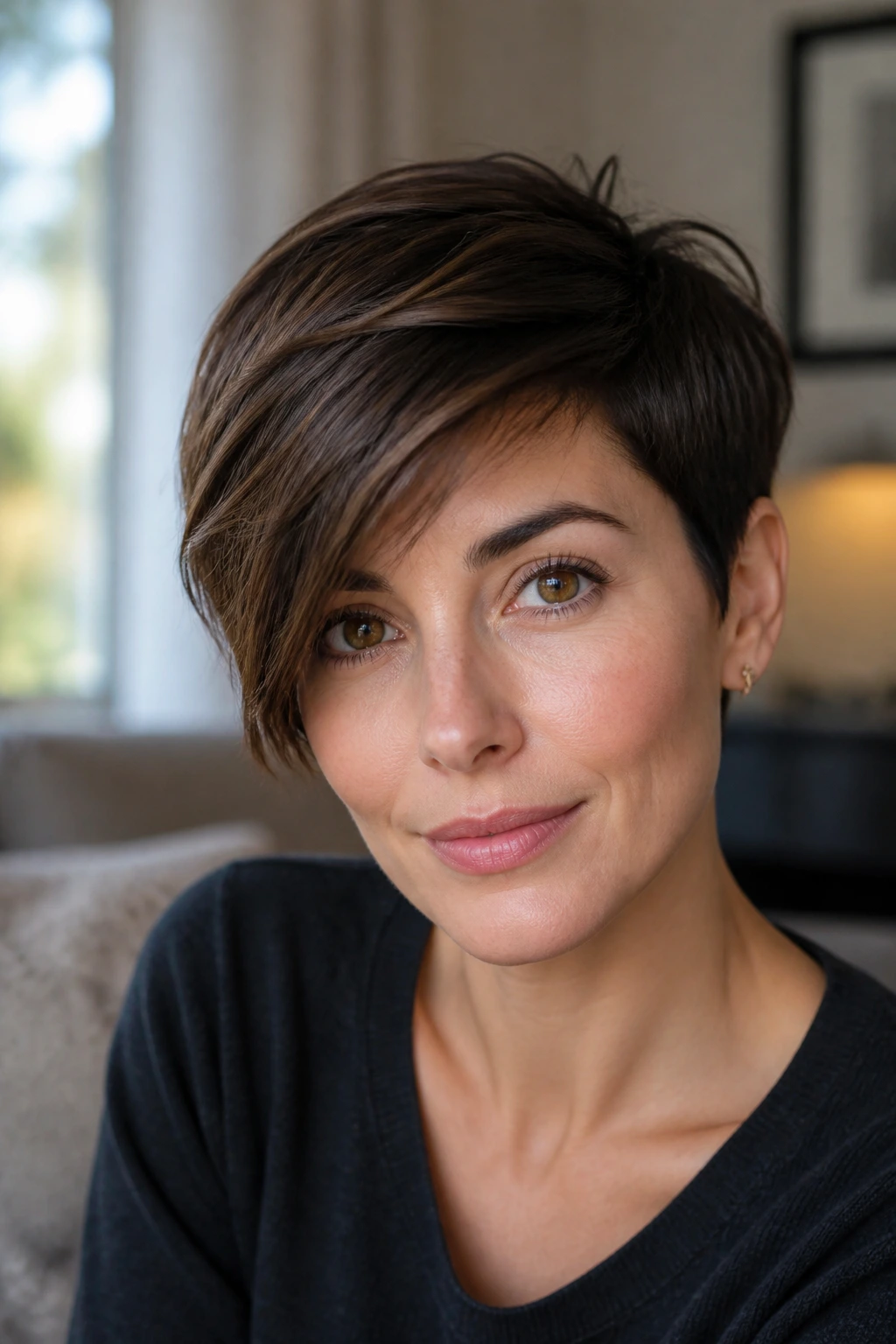
Short hair can work on a heart-shaped face if it doesn’t make the forehead feel like the loudest thing in the room. A side-swept pixie solves that problem by moving the hair across the forehead and keeping the top soft instead of spiky.
The crown should have texture, not height for its own sake. That distinction matters. Too much lift at the top pulls the face upward and leaves the chin even smaller by comparison. A softer, side-directed pixie keeps the focus on the eyes and cheekbones while letting the hairline breathe.
Good Fit, Bad Fit
This style is best if you like a little edge and you do not mind styling product. A pea-sized amount of matte cream or paste is usually enough. Work it through the top and front with your fingertips, then push the fringe to one side.
Skip this if you want a wash-and-go shape with no maintenance. Pixies are small, but they are not lazy. They ask for shape every morning.
Butterfly Layers on Straight Hair
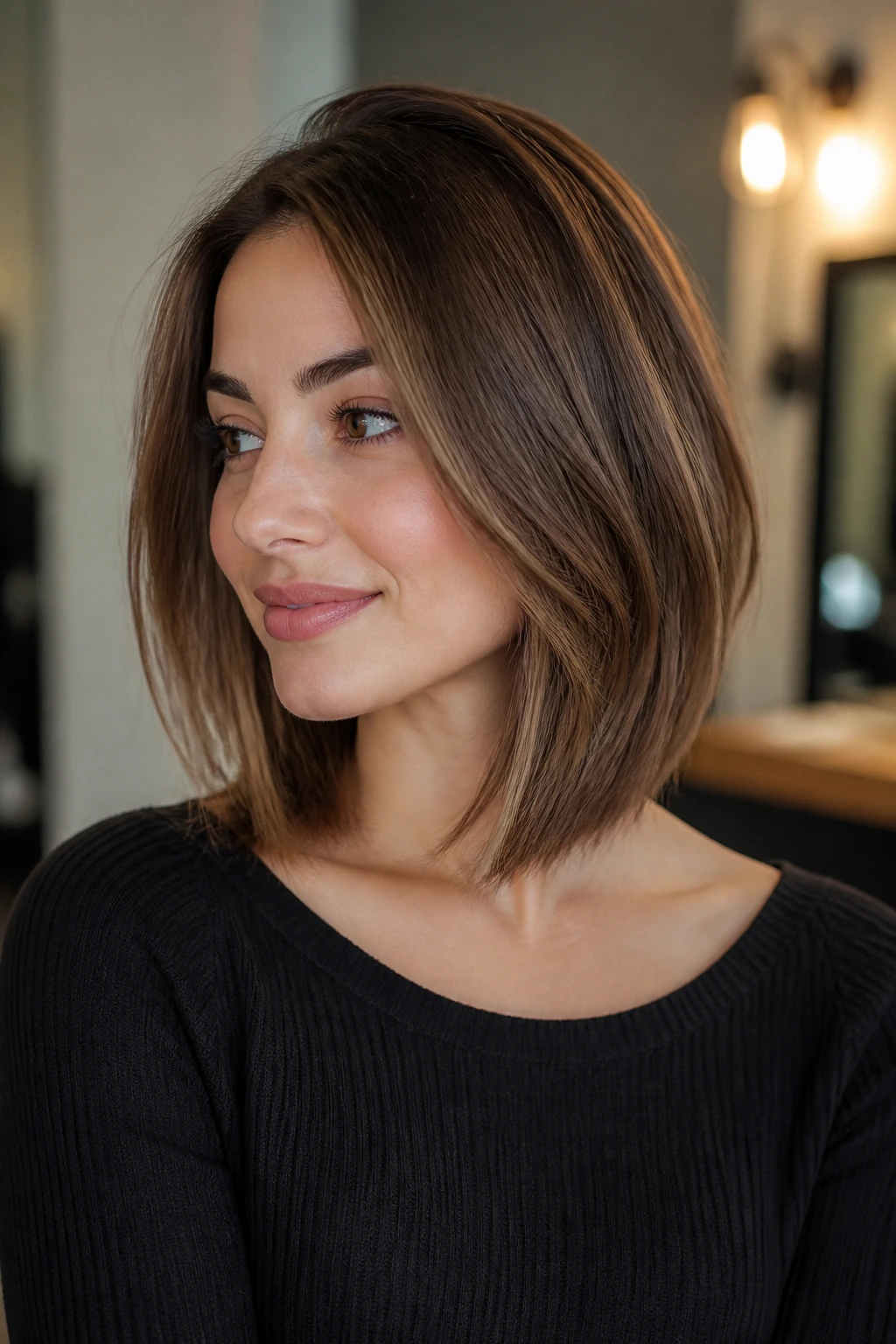
Butterfly layers are a clever answer for anyone who wants movement without sacrificing length. The shorter front layers sit around the cheekbone and collarbone, while the longer lengths stay intact underneath. On straight hair, that mix creates shape without making the ends look thin.
For heart-shaped faces, the benefit is obvious. The shorter front sections bring attention back toward the middle and lower half of the face. The long layers underneath stop the style from ballooning around the forehead. You get softness without puffiness.
How It Wears in Real Life
This cut looks best when it’s blown out with a round brush or given a slight bend through the front and mid-lengths. If you air-dry it bone straight, the effect can flatten out. A small amount of root lift at the crown helps keep the layers from collapsing into one long line.
I like butterfly layers when someone wants a “done” look that still moves around a lot. It has enough structure to feel intentional, but not so much that it locks you into one styling routine.
Textured Shag with Wispy Fringe
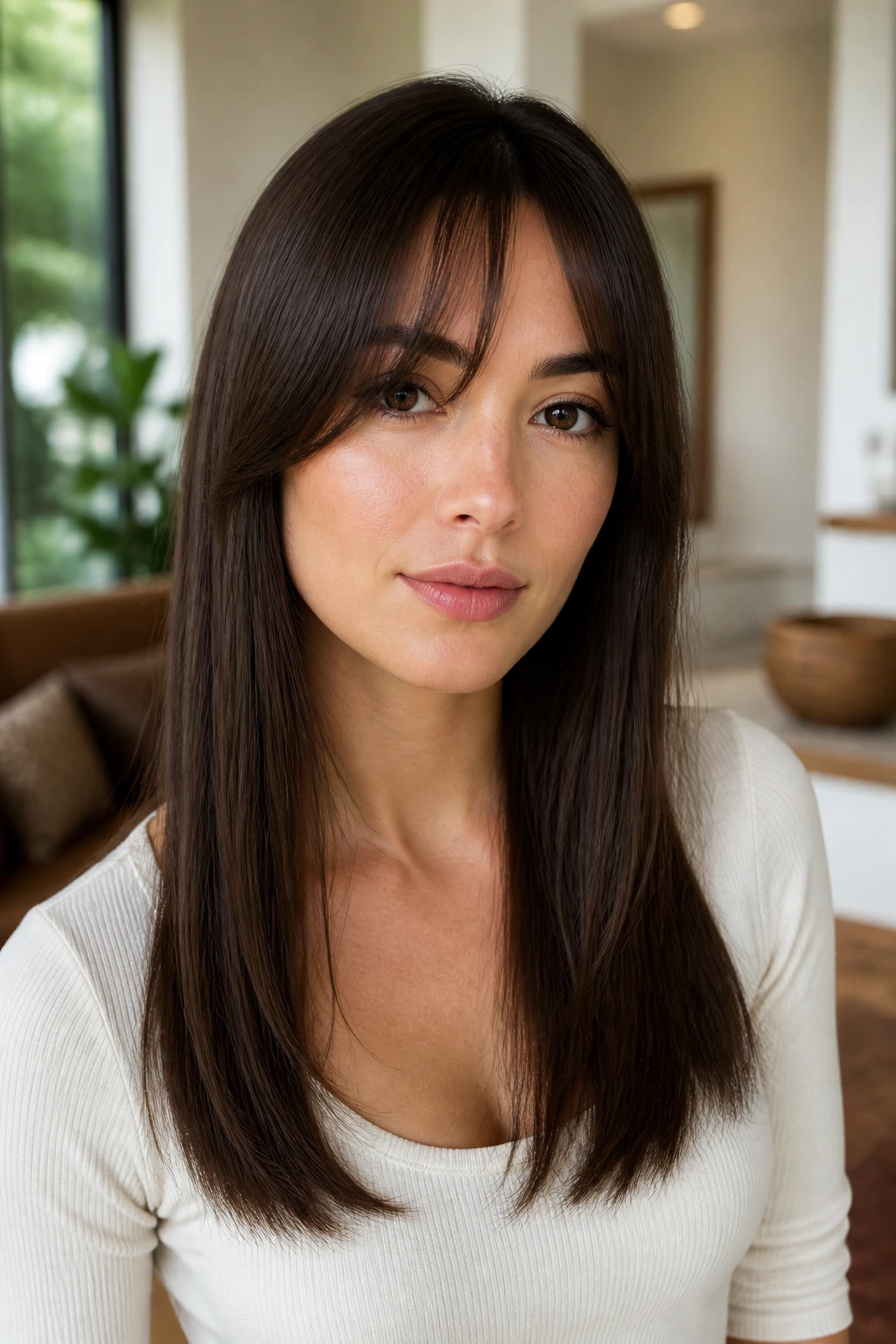
A shag can be a very good choice for straight hair if the cut is handled with restraint. The best version does not shred the ends to pieces. It uses airy, broken-up layers and a wispy fringe to soften the forehead while keeping the lower half of the face from disappearing.
Heart-shaped faces usually need some softness around the temples and cheekbones. The shag gives you that by making the silhouette less tidy. That sounds like a bad thing until you see the result. Straight hair can look severe when it’s too perfect. A little controlled mess helps.
What to Watch For
The fringe should stay light. Heavy bangs can swallow the eyes and make the top of the face feel boxed in. A thin, wispy fringe or bottleneck-style front pieces are safer. A tiny bit of texture spray on dry hair keeps the layers from falling into one flat sheet.
This cut looks best when you’re willing to rough it up with your hands. Comb it too much and it loses the point.
Sleek Low Ponytail with Crown Lift
Not every good hairstyle is a cut. Sometimes the smartest move is a shape you can build in five minutes. A sleek low ponytail with lift at the crown works because it keeps the forehead open while avoiding the harsh pull of a high ponytail.
The crown lift matters. Without it, a low pony can sit too flat and make the face feel longer and narrower. A little volume at the crown changes the balance. It gives the top of the head some height while the sides stay smooth and the pony sits low and clean at the nape.
How to Get the Shape
Use a tail comb to create a soft side or center part. Backcomb just the root area at the crown if your hair is very straight and slippery, then smooth the top layer over it. Wrap a small section of hair around the elastic. That one move makes the whole style look more finished.
This is one of my favorite options for workdays, dinners, and anything where you want your face visible but not overexposed. It’s tidy without being severe.
Half-Up Twist with Face-Framing Pieces
Half-up styles are underrated on heart-shaped faces because they let you control the crown while leaving enough hair down to balance the lower half of the face. A simple twist or half-up knot can keep the top from getting too wide and give the jawline a little help.
The face-framing pieces do the heavy lifting here. Keep them loose. A few straight strands that fall just below the cheekbone are enough. If you pull everything back tightly, you’re back to spotlighting the forehead. That’s not the goal.
This style is especially friendly on straight hair because the top section stays neat and the lower section can remain smooth. It also takes clips well. A small claw clip or two discreet pins is usually enough, which is nice when you don’t want a full styling session.
Center-Part Lob with Flipped Ends
A center part can work on a heart-shaped face when the cut itself brings some softness. A lob that hits the collarbone, with ends flipped slightly under or out, keeps the style from looking too rigid. The center part gives symmetry. The flipped ends stop the lower half from feeling flat.
Straight hair likes this look because the lines are clean. You do not need curls. You need shape. A straight lob with a polished bend at the ends reads modern, but it also keeps the face balanced by widening the silhouette a little at the bottom.
If your chin is especially narrow, keep the front pieces a touch longer than the back. That tiny detail matters more than people think. It keeps the lob from sitting too high on the face.
Shoulder-Grazing Cut with Invisible Layers
Invisible layers are the quiet workers of the haircut world. They remove weight without showing off. On shoulder-length straight hair, that can be exactly what you want. The shape stays full, but the hair no longer hangs like one solid slab.
For heart-shaped faces, this length is useful because it lands in the zone where the jaw and shoulders can share visual attention. That takes some pressure off the forehead. The layers should be long enough that they blend into the body of the hair, not float on top of it.
This cut is for people who want movement without seeing the word “layered” from across the room. It grows out well, too. That matters if you do not want to chase the salon every few weeks.
Flat-Iron Bends from Mid-Length Down
Sometimes the best hairstyle is not a cut at all. It’s a styling move. Flat-iron bends from mid-length down give straight hair enough motion to soften a heart-shaped face without turning it into waves that fight the texture.
Start the bend below the cheekbone. That keeps the forehead open and puts the movement where the face needs it. A tiny turn of the wrist toward the middle, then away at the ends, is usually enough. The point is not curl. The point is a soft directional change in the line of the hair.
A Small but Useful Rule
Keep the roots smooth. If the crown gets bulky, the face starts to feel top-heavy. Lightly mist the ends with a heat protectant and a touch of shine spray after styling. That keeps the bend neat instead of frizzy.
This is the style I’d use when straight hair needs a little life but I still want it to look like straight hair.
Wispy Bottleneck Bangs with Long Length
Bottleneck bangs are good on heart-shaped faces because they’re narrower at the center and open out around the cheekbones. That shape avoids the hard horizontal line that can make the forehead look wider. On straight hair, the effect is clean and readable.
The long length underneath keeps the style from feeling too “bang heavy.” You want the fringe to be a frame, not the whole picture. Let the side pieces blend into the rest of the hair so the transition feels soft. If the bangs end too bluntly, they can make the upper face look boxed in.
These are a solid choice if you want fringe but don’t want the maintenance of a dense bang. They still need a quick blow-dry or a pass with a round brush, but they usually grow out more gracefully than a full fringe.
Low Bun with Loose Tendrils and a Side Part
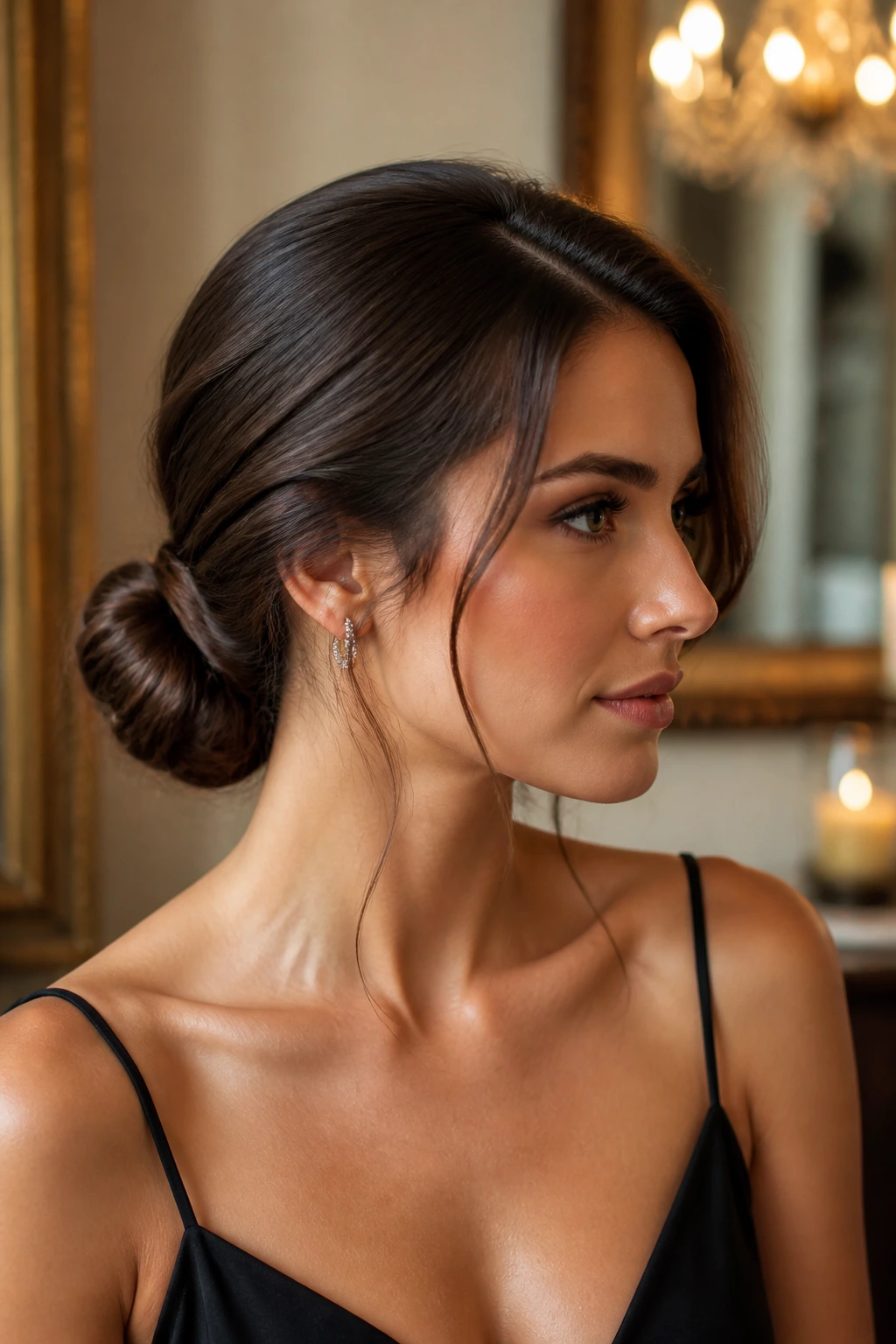
A low bun can be elegant on a heart-shaped face as long as it does not pull every single strand away from the front. That’s where the side part and loose tendrils come in. The part breaks the forehead width. The tendrils soften the jawline and keep the face from looking too bare.
On straight hair, the bun should sit close to the neck and stay smooth around the crown. Leave two or three fine pieces in front, nothing chunky. The goal is a clean neck line with a little movement around the face, not a prom updo from another century.
This style works for weddings, dinners, and any day when you want your hair off your neck but not off your face. That distinction matters.
Rounded Blunt Bob with Internal Layers
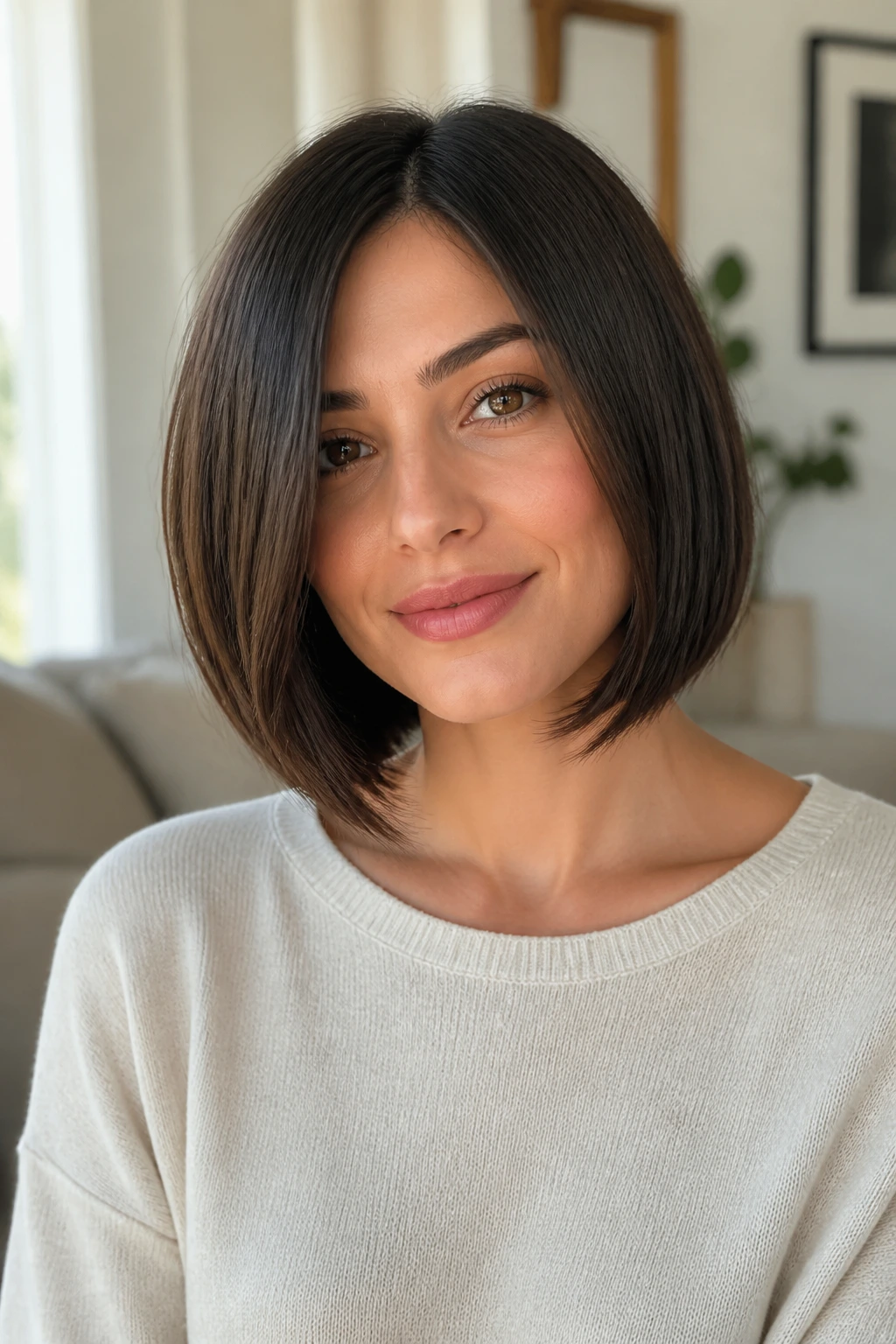
A blunt bob does not have to look boxy. If you round the perimeter just slightly and tuck a few internal layers inside the cut, you get a shape that holds its own without becoming hard. Straight hair is perfect for this, because the line stays sharp and the roundness reads clearly.
For heart-shaped faces, the rounded finish helps widen the lower half just enough. It softens the transition into the chin. The internal layers keep the bob from puffing out at the sides or turning into a helmet.
I like this version better than a super-flat, dead-straight bob. That kind can look too geometric on a narrow chin. A little curve at the ends makes the whole cut feel more lived-in.
Ear-Tucked Sleek Lob with Shine Finish
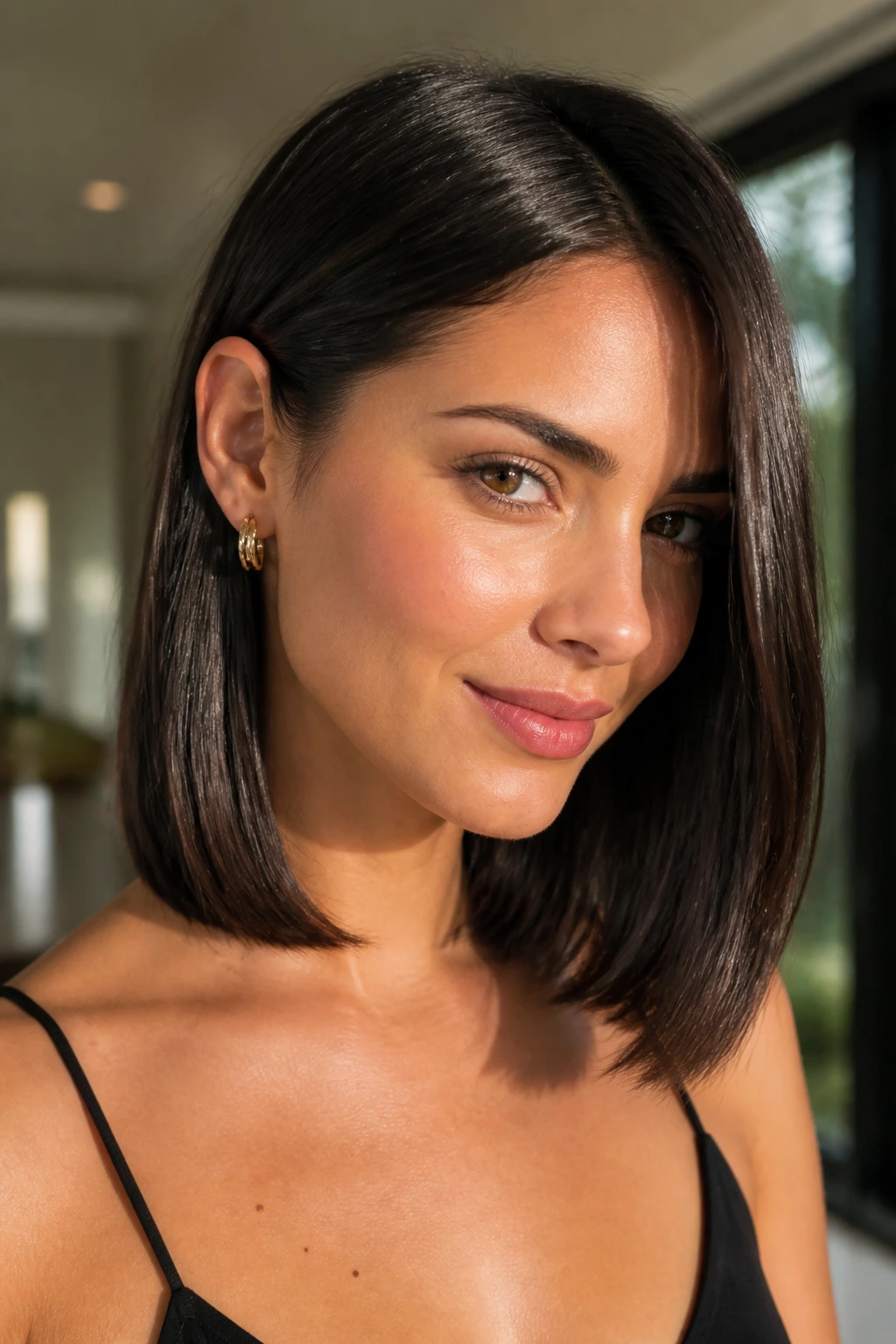
This is the polished one. The ear-tucked sleek lob is a style that leans into straight hair instead of pretending it wants texture it doesn’t have. One side gets tucked behind the ear, the other falls forward. That small asymmetry keeps a heart-shaped face from looking too top-heavy.
Shine finish matters here. A little serum on the lengths and a careful pass with a brush make the cut look deliberate. Do not load up the roots. You want the light to hit the mid-lengths and ends, not make the scalp look slick.
The tucked side also gives you a place to show off earrings, glasses, or a strong neckline. The style is simple, but that’s why it works.
Braided Crown into Straight Lengths
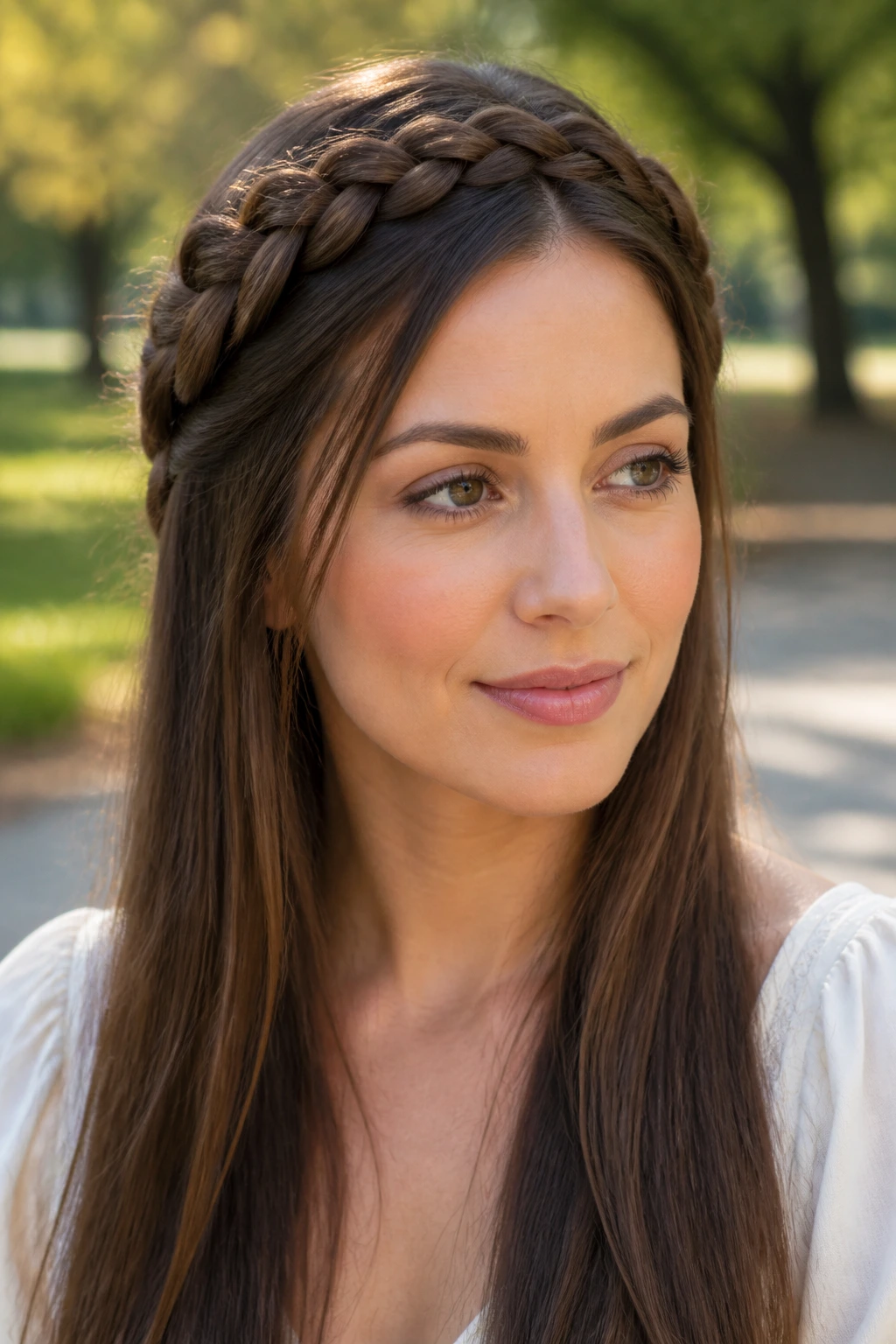
Braids are a useful tool on straight hair because they break up the crown and bring attention around the face without making the top bulky. A braided crown or a small braid along the hairline can soften a heart-shaped face by redirecting the eye outward instead of upward.
The rest of the hair stays straight and smooth, which keeps the style from feeling too sweet or too bohemian. That contrast is what makes it interesting. Straight lengths underneath stop the braid from taking over.
This works especially well on second-day hair, when a little grip helps the braid stay in place. A bit of dry shampoo at the roots first is usually enough.
High Ponytail with a Swooped Fringe
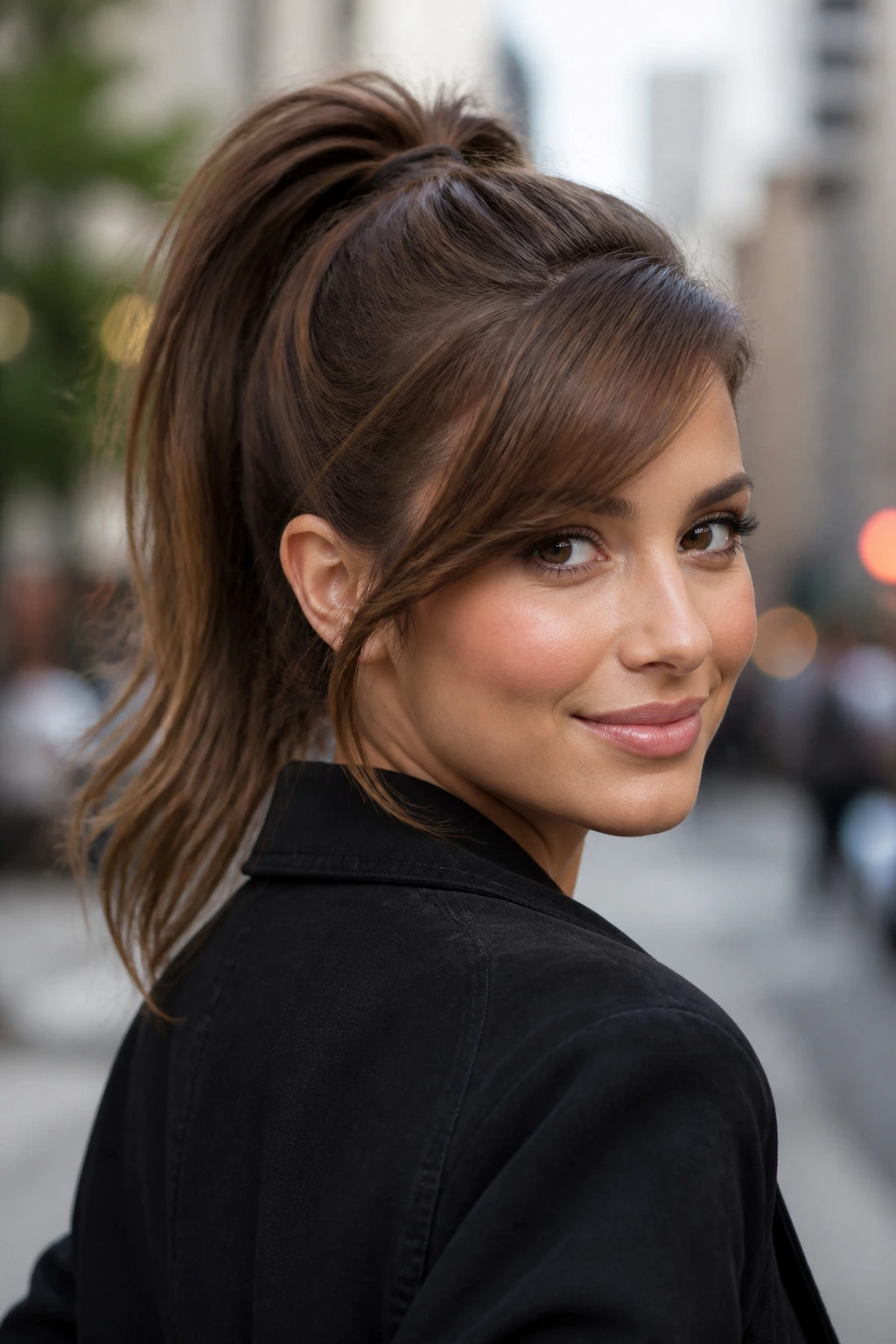
High ponytails are tricky on heart-shaped faces. Too tight and they pull everything upward, which makes the forehead feel larger and the chin smaller. The version that works has a swooped fringe or soft front pieces that break up the top and keep the line from going severe.
The pony itself should sit high enough to feel lifted, but not so high that the face looks stretched. A little crown volume helps. Keep the front smooth, then let the fringe angle across the forehead. That gives the style some softness and keeps it from reading as a gym ponytail.
This is a good choice when you want energy, not fuss. It’s also one of the best ways to show off a strong jawline without making the forehead the only thing people notice.
Long Straight Hair with a Soft C-Shape
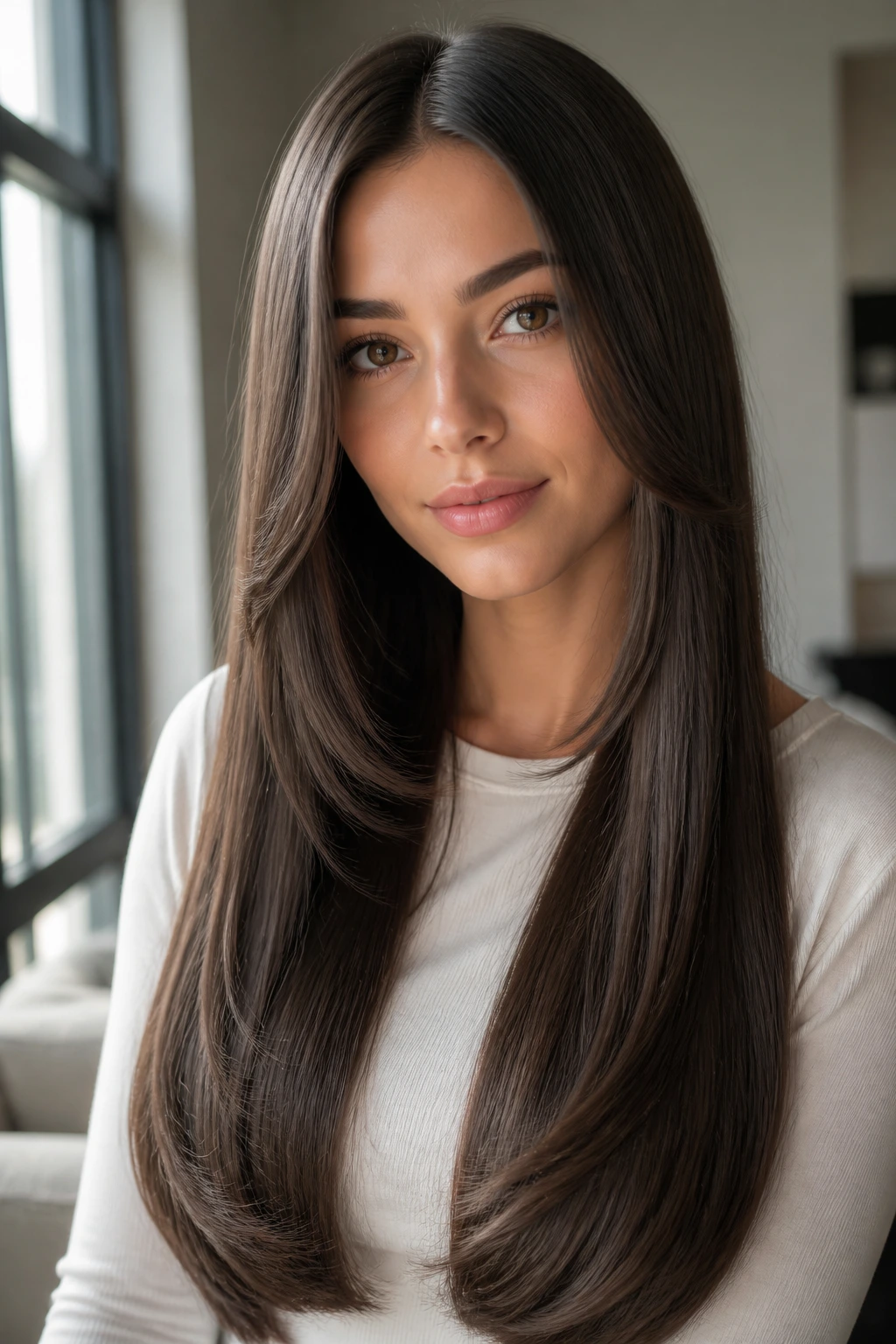
Long straight hair can be stunning on a heart-shaped face if it has shape at the ends. A soft C-shape means the front pieces curve gently inward near the cheekbone and jaw, then fall straight through the rest of the length. That little arc adds balance where a narrow chin needs it.
The trick is not to keep the hair too dead-straight from roots to ends. That can drag the face downward and make the features look sharper. A soft curve at the perimeter keeps the length, but gives the face something to sit against.
If your hair is very long and very straight, this is one of the best low-drama options. It looks simple. It isn’t accidental.
What the Shape Logic Really Is
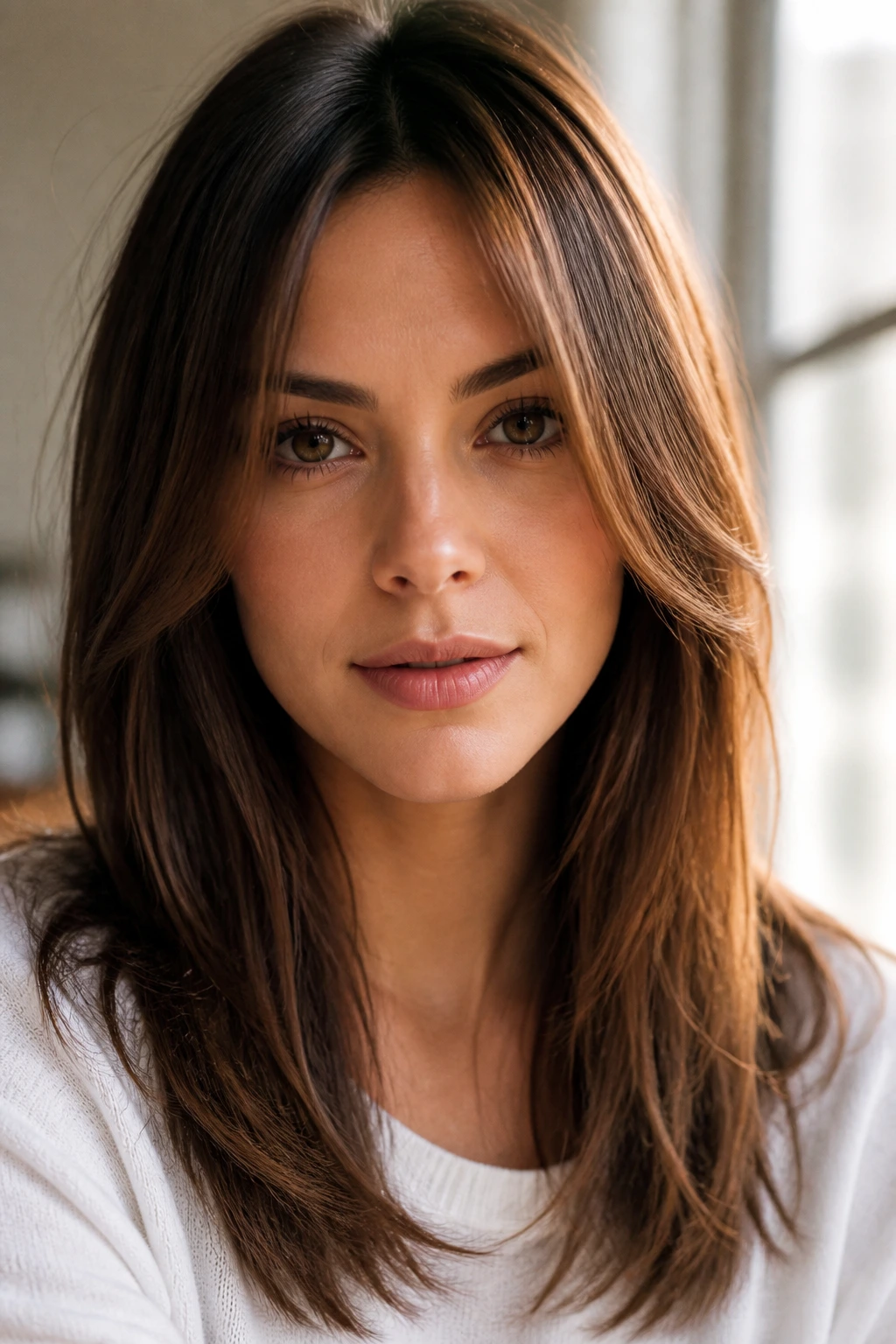
Every good style in this collection is doing the same three jobs in different ways. It softens the forehead, adds some visual weight near the jaw, or breaks up a straight fall of hair so the face has room to breathe. That’s the real logic.
You do not need all three in every look. A blunt bob can lean hard into jaw width. Curtain bangs can handle the forehead. A low ponytail can do both with just a little crown lift. The point is to know what each style is buying you before you sit down in the chair.
Essential Tools for These Styles
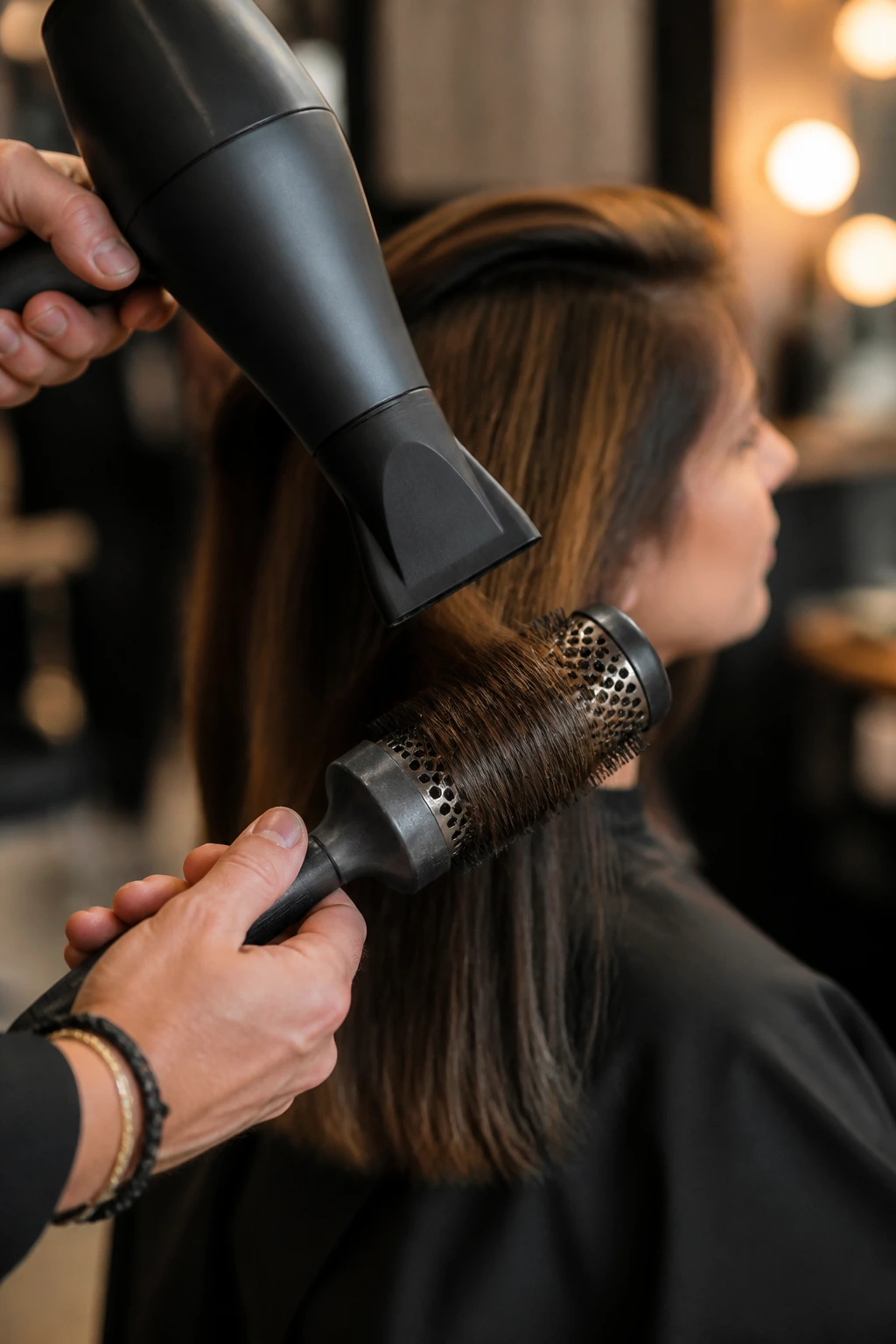
- Blow dryer with a nozzle attachment: A nozzle keeps airflow focused so the roots dry smooth instead of puffy.
- Round brush, 1 to 1.5 inches: The smaller size helps shape curtain bangs, fringe, and the front pieces of lobs without creating curls.
- Tail comb: Useful for clean parts, sectioning bangs, and teasing a little root lift where needed.
- Flat iron with rounded edges: Best for adding bends, flipping ends, and smoothing the lengths without a harsh crease.
- Duckbill or sectioning clips: These make blow-drying much easier, especially when you’re working through curtain bangs or a layered lob.
- Lightweight heat protectant: Straight hair shows heat damage quickly, so this is non-negotiable if you use hot tools.
- Root-lift mousse or spray: A small amount at the crown keeps the style from collapsing by lunchtime.
- Dry shampoo: Useful before the hair looks oily, not after. A few sprays at the roots can keep straight hair from going limp.
- Light serum or shine cream: Use only on mids and ends. Too much near the roots makes straight hair flatten fast.
- Strong but flexible hairspray: Needed for bangs, ponytails, and styles that need to keep their shape without getting stiff.
- Small elastics and bobby pins: The basics for low buns, half-up styles, and braided accents.
- Wide-tooth comb or detangling brush: Gentle enough for smoothing without pulling the shape apart.
How to Ask for the Right Cut at the Salon
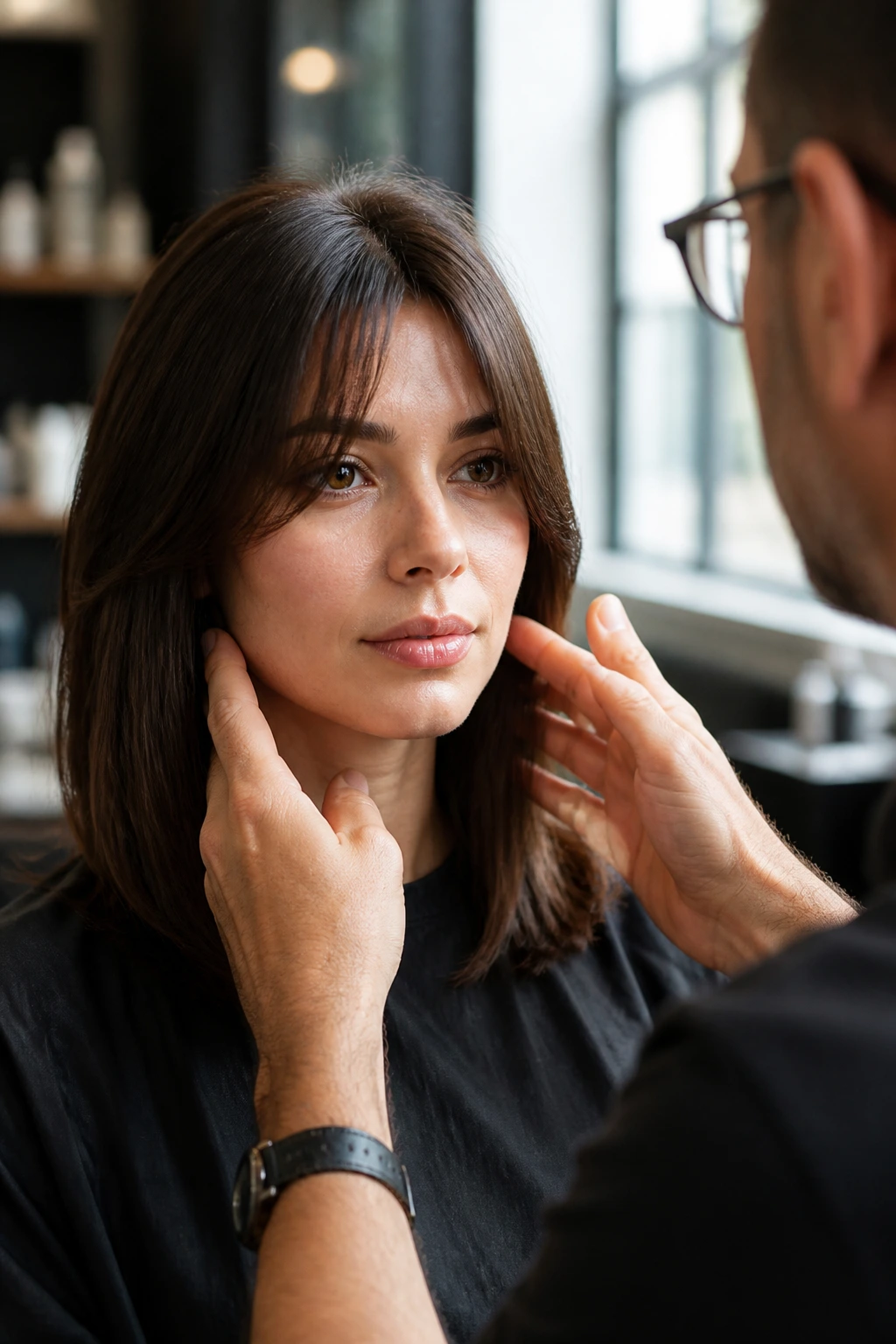
Straight hair gives a stylist less room to hide mistakes, so the consultation matters. If you have a heart-shaped face, the first thing to say is where you want the visual weight to sit. Near the cheekbones? At the jaw? At the collarbone? That answer changes everything.
For long hair, ask for face-framing pieces that start below the cheekbone, not right at it, if you want a gentler look. For bobs, decide whether you want a blunt perimeter or a slight bevel. A blunt line looks denser; a beveled line softens the edge. Both work, but they do different jobs.
Bangs need extra care. Curtain bangs should be long enough to split open in the middle and brush the cheekbones. Side-swept fringe should cross the forehead without ending in the middle of the eye. Bottleneck bangs should stay lighter in the center and longer at the sides. If your stylist reaches for the razor, ask what it will do to your ends on straight hair. A little texturizing is fine. Too much can turn clean hair into wispy static.
One more thing. If your hair is fine, keep the layers long and the ends solid. If it’s thick, you can remove more bulk, but do not hollow it out near the crown unless you want the top to go flat fast.
How to Wear These Styles in Real Life

Everyday wear: Go for the shapes that survive a little wind and a long day. A collarbone lob, a soft curtain bang, or a low ponytail with crown lift can all look polished without requiring a bathroom mirror every hour.
Work and formal settings: Sleek lobs, tucked bobs, and low buns are the strongest options here. They keep the face open, show structure, and look deliberate even when the rest of the outfit is simple.
Weekends and off-duty days: Half-up twists, braided crowns, and flat-iron bends are the easiest way to make straight hair feel less plain. They don’t need perfect symmetry. A small flaw can actually help.
When you want accessories: Heart-shaped faces wear earrings and clips well when the hair isn’t crowding the forehead. Side parts, tucked styles, and low buns give the accessory room to do its job.
Additional Tips and Style Boosters
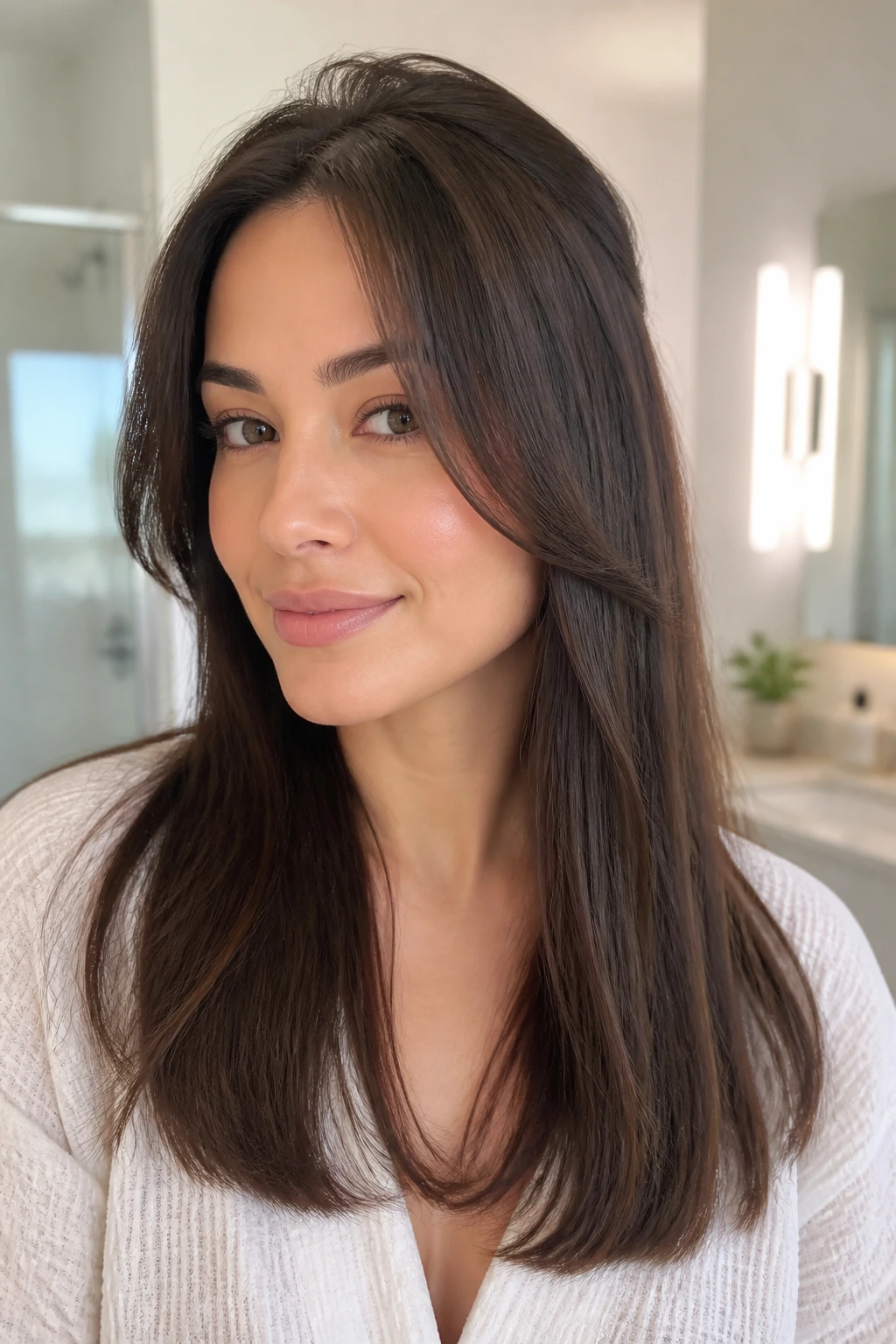
Lift at the crown: A little root lift makes a huge difference on straight hair. Blow-dry the crown in the opposite direction of your part for 20 to 30 seconds, then let it cool before smoothing it back. That tiny trick keeps the top from lying flat against the forehead.
Soften the hairline: If a style feels too severe, bend only the first inch or two of the front pieces away from the face. It’s a small move, but it changes the whole read of the hairstyle.
Keep the ends intentional: Straight hair needs an end shape. Flip them under, out, or into a soft C. Dead-straight ends can look unfinished, especially on longer cuts.
Use shine with restraint: A pea-sized amount of serum warmed between the palms is enough for most straight styles. Put it where the light hits: mids and ends. Skip the roots unless you’re aiming for a slick look.
Night Care, Day-Two Refresh, and How Long the Shape Holds

Straight hair usually tells on you the next morning. That’s not a flaw. It just means the refresh routine matters.
A good blowout with curtain bangs or a lob usually lasts one to two days before the roots start to flatten. With dry shampoo and a loose clip at the crown overnight, you can stretch it a bit further. Bobs and pixies lose shape faster because they have less weight to hold the style in place, so they often need a quicker morning touch-up.
Sleep on a silk or satin pillowcase if you can. It cuts down on frizz and keeps the ends from bending into weird angles. For longer styles, a loose, low clip or a soft scrunchie helps preserve the shape without creating a hard crease. Do not go to bed with a tight elastic and hope for the best. You’ll wake up with a ridge that takes longer to fix than the original style took to build.
If the hair goes flat at the roots, work a small amount of dry shampoo into the scalp, wait a minute, then brush it through. If the ends have lost their bend, mist them lightly with water or a styling spray and use a flat iron for 10 to 15 seconds per section. That’s usually enough. You do not need to rewash the whole head unless the style is fully gone.
Variations and Adaptations to Try
Fine-Hair Version: Keep the perimeter blunt and the layers long. Fine straight hair can vanish if the cut gets too shredded, so the safest versions are the blunt bob, the collarbone lob, and the sleek ponytail with a little crown lift.
Thick-Hair Version: Ask for weight removal inside the cut, not just at the ends. Thick straight hair can go bulky fast near the jaw, so A-line bobs, rounded lobs, and long layers below the cheekbone usually sit better.
No-Bang Version: If you do not want fringe, lean on side parts, tucked styles, and face-framing layers that begin low. That keeps the forehead from taking center stage without forcing you into upkeep you won’t enjoy.
Short-Hair Version: The side-swept pixie and French bob are the cleanest short options here. Both soften the upper face while keeping the jawline visible, which is the balancing act that matters most.
Low-Maintenance Version: Shoulder-grazing invisible layers and a soft C-shape through the ends are the least demanding. They grow out well and can be air-dried with a bit of leave-in cream.
Common Mistakes to Avoid
Cutting layers too high: This is the mistake that makes straight hair look thin and makes the forehead feel even wider. Keep the first visible layer below the cheekbone unless you’re specifically doing a fringe or pixie.
Going too short at the chin on fine hair: A bob that lands exactly at the chin can make a narrow lower face look even narrower if the hair has no density. Move the length slightly below the chin or add a bevel so the shape has more presence.
Overloading the crown with volume: A heart-shaped face already carries width up top. If you tease the crown into a tall mound, the balance tilts the wrong way. Aim for lift, not height.
Using heavy cream at the roots: Straight hair will flatten fast if you put too much product near the scalp. Keep heavier creams and oils on the mids and ends only.
Cutting bangs too short: Short fringe can look chic, but on a heart-shaped face it often exposes too much forehead. Curtain bangs, bottleneck bangs, and side-swept fringe are safer because they can open and close around the face.
Frequently Asked Questions
Are center parts bad for heart-shaped faces with straight hair?
Not always. A center part can work when the cut has enough softness near the jaw or cheekbones, like a lob with flipped ends or long layers with face-framing pieces. If the hair is stick-straight and all one length, though, a center part can make the forehead feel larger.
What bangs work best if I have a heart-shaped face?
Curtain bangs, bottleneck bangs, and side-swept fringe are the safest bets. They soften the upper half of the face without carving a hard line across the forehead. Straight, thick bangs can work, but they need to be cut long enough to sit with the rest of the shape.
Can a blunt bob work on fine straight hair?
Yes, and it can look excellent. Fine straight hair often looks fuller with a blunt edge because the cut creates the illusion of more density. Just keep the length close to the jaw or slightly below it so the face still feels balanced.
Should I avoid short hair if my chin is narrow?
No, but short hair needs a smarter shape. A side-swept pixie or a French bob with softness around the fringe works better than a very tight crop with height at the crown. The short cut should widen the lower face a little, not strip everything away.
How do I keep straight hair from falling flat at the crown?
Dry shampoo at the roots, a little root-lift mousse, and an off-direction blow-dry help more than most people think. Clip the crown while it cools after blow-drying if you want extra lift. That cooling step matters.
What if my straight hair is thick and stubborn?
Choose cuts that remove weight inside the shape, not just at the perimeter. A-line bobs, butterfly layers, and long layers below the cheekbone usually behave better than one blunt block of hair. Thick straight hair looks best when it has room to move.
Are pixie cuts good for heart-shaped faces?
They can be, especially with a side-swept fringe and soft texture through the top. The mistake is adding too much height at the crown. That makes the forehead dominate. Keep the top soft and the fringe directional.
What’s the easiest style in this list to maintain?
The shoulder-grazing invisible layers and the sleek low ponytail are probably the least annoying. Both can be refreshed fast, both work with straight hair, and neither depends on elaborate styling to keep the face balanced.
The Right Balance
The best hairstyles for straight hair and heart-shaped faces are not about hiding the face shape. They’re about steering it. A good cut or style gives the forehead a little softness, the jaw a little presence, and the hair enough shape that straight strands don’t just fall where they want to.
That’s the real difference between a style that looks “fine” and one that looks considered. The line sits in the right place. The fringe lands where it should. The ends do some work. And suddenly the whole thing feels easier to wear.
Pick the shape that matches how much time you want to spend in front of the mirror, then commit to the details that make it work. Straight hair rewards precision. Heart-shaped faces reward balance. Put the two together, and the result is hard to beat.