



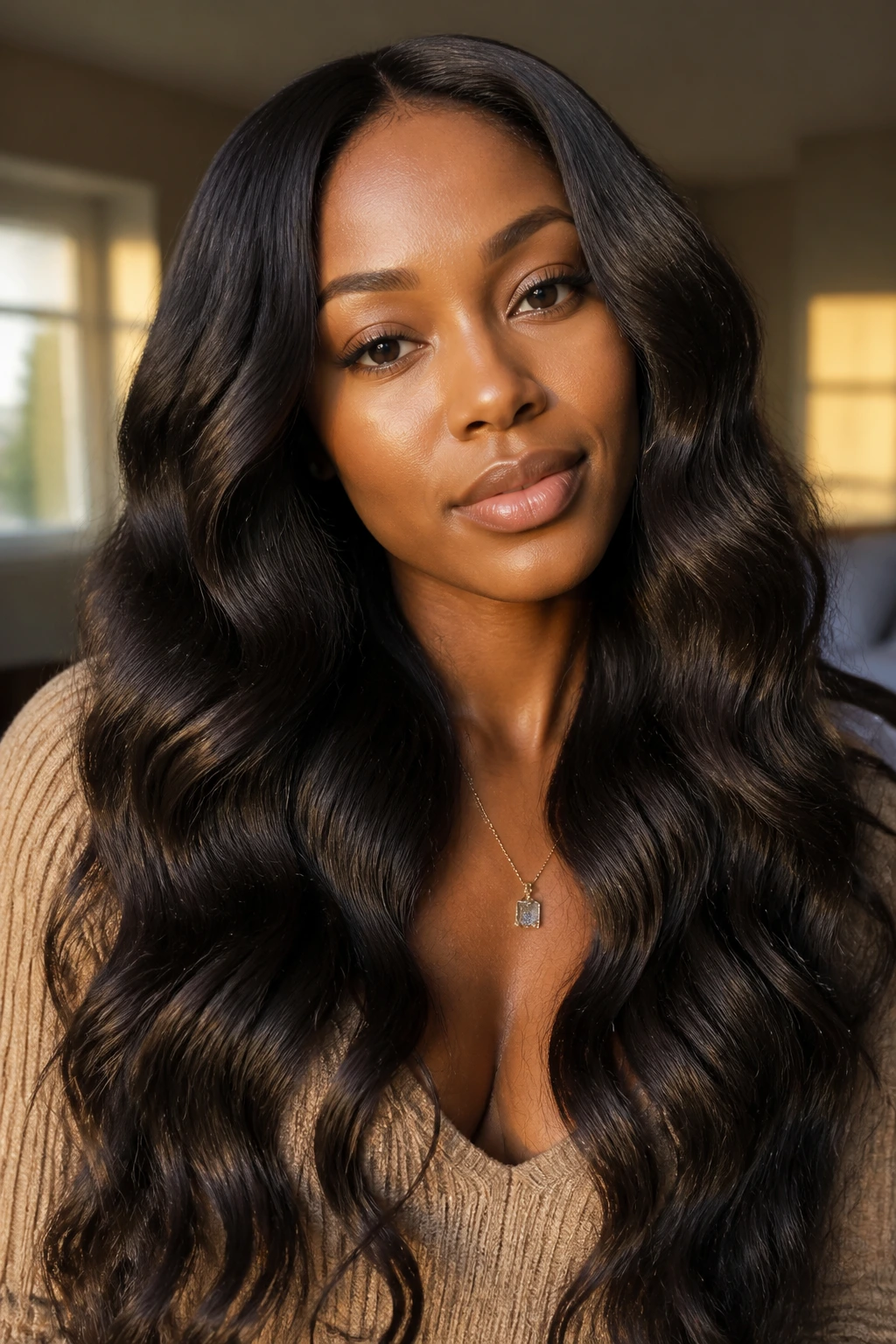
A body wavy weave does a job most long styles don’t manage well: it gives you length without letting the hair hang like a heavy curtain. On a heart-shaped face, that matters. Too much volume at the temples can make the forehead look wider, and too much weight at the ends can pull the whole look downward. The right wave placement fixes both problems at once.
What makes body waves so useful is their shape. They sit in that middle zone between straight and curly, with a bend that starts to show at mid-length and loosens toward the ends. That bend is doing quiet work. It softens the face, keeps long hair from looking flat, and gives you room to play with parting, layers, and color without changing the whole silhouette.
The styles below lean into that idea in different ways. Some sharpen the jawline a little. Some soften the forehead. A few do both. And once you start paying attention to where the waves begin, where the front pieces fall, and how much weight sits at the crown, the whole category opens up.
Why These 22 Body Wavy Weaves Work on Long Hair and Heart-Shaped Faces
-
Face-Balancing Shape: The best versions add width lower on the face, around the jaw and collarbone, so a heart-shaped face feels more even without hiding the cheekbones.
-
Length Without Drag: Long hair can look beautiful and still be too heavy. Body waves break up that straight wall of hair, which keeps 22- to 26-inch installs from sitting flat and boxy.
-
Flexible Install Options: These looks work across sew-ins, closures, frontals, wigs, and clip-ins, so you can copy the silhouette whether you like a low-maintenance setup or a more sculpted finish.
-
Easy Refreshing: A quick mist of water, a little foam, and a wide-tooth comb can wake most body waves up again. You do not need to rebuild the style every morning.
-
Dress-Up Potential: A middle part, side part, tucked side, or half-up lift changes the mood fast. That matters when you want one install to handle errands, photos, and a dinner out.
-
Color Plays Well Here: Balayage, money pieces, root shadows, and warm brunettes all show up clearly in body waves because the bends catch light instead of swallowing it.
1. Soft Center-Part Body Waves With Curtain Pieces
A center part is not the enemy of a heart-shaped face. It just needs help. The trick is to keep the front pieces soft and a little longer, so they skim the cheekbone instead of stopping high on the face like a blunt frame.
Why It Flatters the Face
Curtain pieces starting around the cheekbone give the forehead some breathing room and pull attention downward toward the jaw. That matters on long hair, where a sharp center part can turn into a straight vertical line if the front is too dense.
A 22- to 24-inch body wave works best here, especially if the front layers are cut to sit about 1.5 to 2 inches shorter than the rest of the hair. Keep the part clean, but don’t make the front too stiff. A little movement near the temples is what keeps the look soft.
- Best part: True center or a tiny off-center shift
- Best length: 22 to 24 inches
- Best density: 130% to 150%
- Best front piece length: Cheekbone to jawline
A quick bend with a 1.25-inch curling wand at the front pieces keeps them from sticking straight out. Brush them once after cooling. That’s the part people skip, and it shows.
2. Deep Side-Part Glam Waves
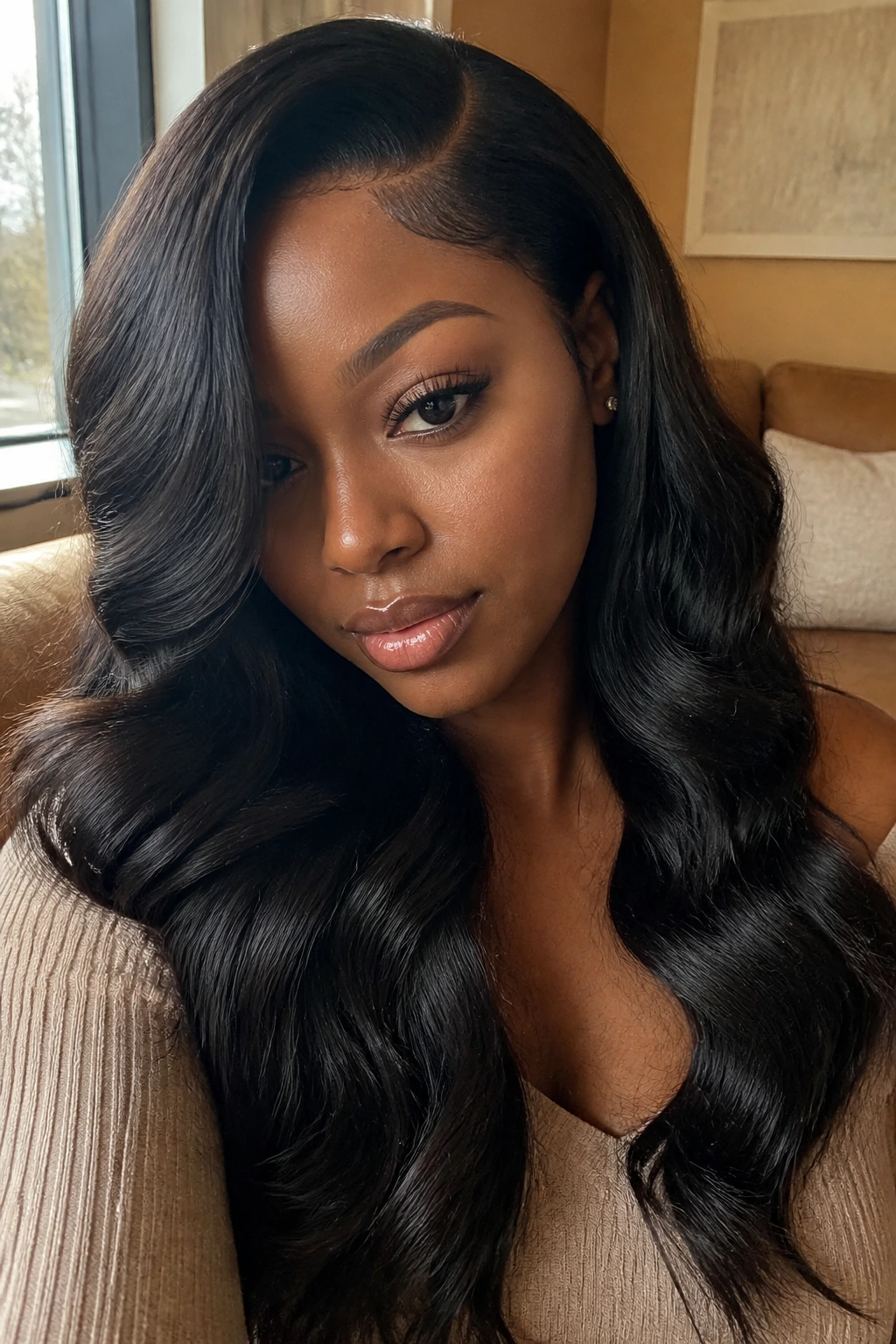
Want instant lift without teasing the crown to death? A deep side part does the work for you. It changes the way the eye reads the whole face, which is why it stays such a solid move for heart-shaped faces.
The part should sit about 2 to 2.5 inches off center, not all the way buried behind the ear. That little bit of asymmetry softens the broader forehead area and lets the waves fall more generously over the narrower lower half of the face. The result is less “hair sitting on top” and more “hair flowing around.”
This look gets better when the wave starts below the root, around the temple or ear line. If the bend begins too high, the top can swell and make the face feel top-heavy. If it starts too low, the style loses the lift that makes the side part worth bothering with in the first place.
A deep side part also works well with a frontal, because the part has room to look natural and the wave pattern can sweep across the forehead without looking pinned. It’s one of those styles that looks dressed up even when the rest of the outfit is plain.
3. Layered 24-Inch Body Waves
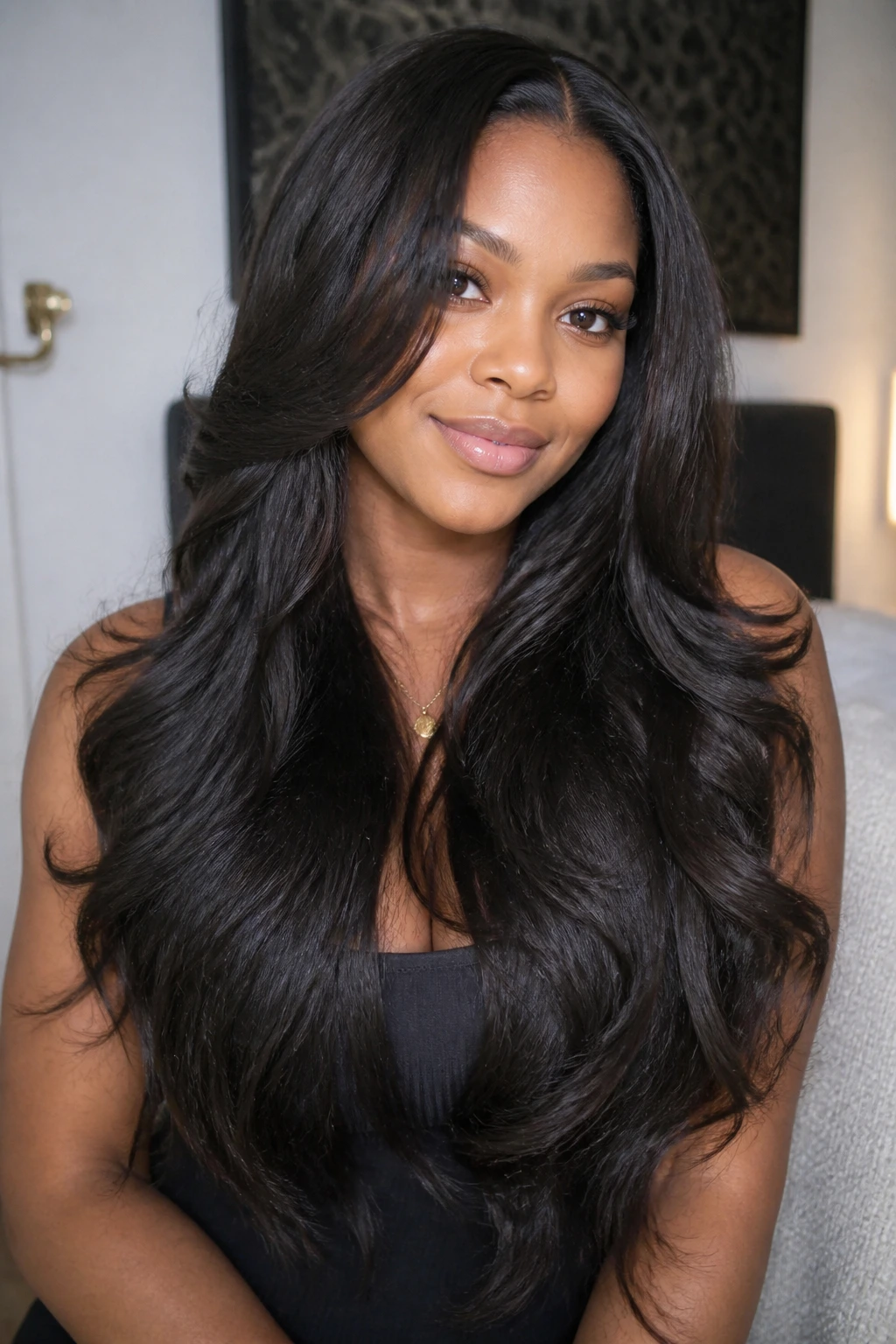
Long, heavy hair needs air in it. Otherwise, the whole thing collapses into one thick shape that swallows the neck and makes the ends look like they were cut with a ruler.
Layering changes that fast. With 24-inch body waves, long layers remove weight from the interior so the hair can move instead of hanging in one sheet. On a heart-shaped face, those layers also add a little width lower down, which helps balance the face without puffing out the crown.
How to Wear It Without Dragging the Face Down
Ask for the first layer to start around chin to collarbone level, then let the rest fall longer. That keeps the frame soft without turning the front into choppy pieces. If the layers are too short, the hair can look busy around the cheeks. Too long, and the movement disappears.
This is one of the best styles if you love a little swing when you turn your head. It also works well on sew-ins because the layered cut makes the tracks easier to hide. Heavy ends are the enemy here. Light, moving ends are the point.
Keep the finish brushed out, not tight. A body wave should ripple. It should not sit there like a set of ringlets that forgot how to relax.
4. V-Cut Body Waves That Keep the Ends Light
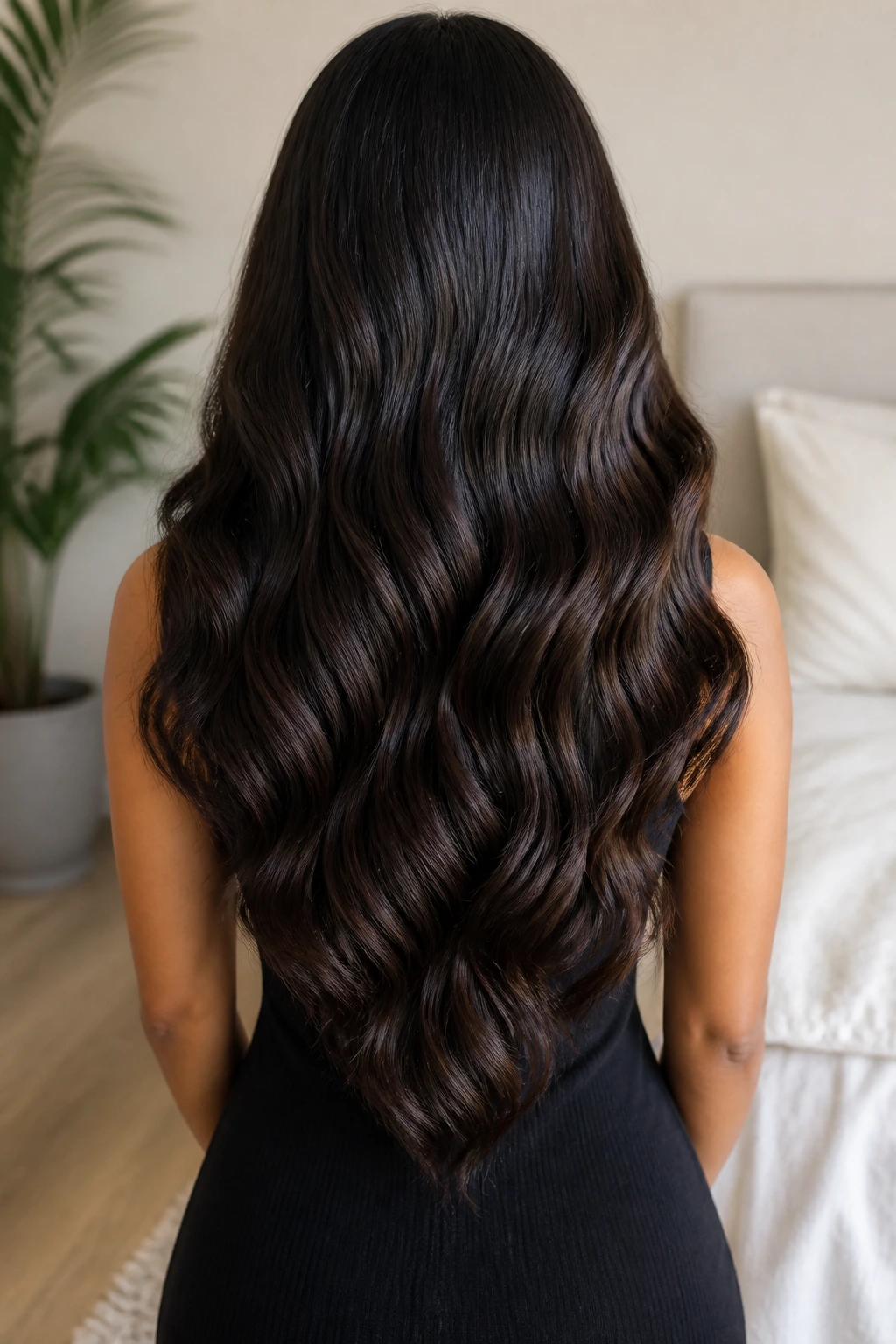
Blunt ends look tidy in photos. In real life, on very long body waves, they can make the whole style feel boxy. A V-cut fixes that by narrowing the bottom line and creating a little point at the back.
The shape matters more than people think. A subtle V lets the hair fall around the shoulders instead of hitting all at one level. That gives the eye a path to follow, which is helpful on a heart-shaped face because the face already has strong width up top. You want the lower half of the hair to feel lighter, not heavier.
Keep the V gentle. A dramatic point can look choppy once the waves loosen. A drop of 2 to 3 inches at the center back is usually enough to change the whole mood without making the cut obvious.
- Best for: Very long installs, thick bundles, and anyone who hates boxy ends
- Watch for: Over-cutting the point, which can make the back look thin
- Best finish: Softly brushed wave, not spiral curl
The V shape also helps the waves move when you walk. That’s the whole reason to pick it. Otherwise, you’re paying for length and getting a sheet.
5. U-Shape Body Waves With a Rounded Bottom Line
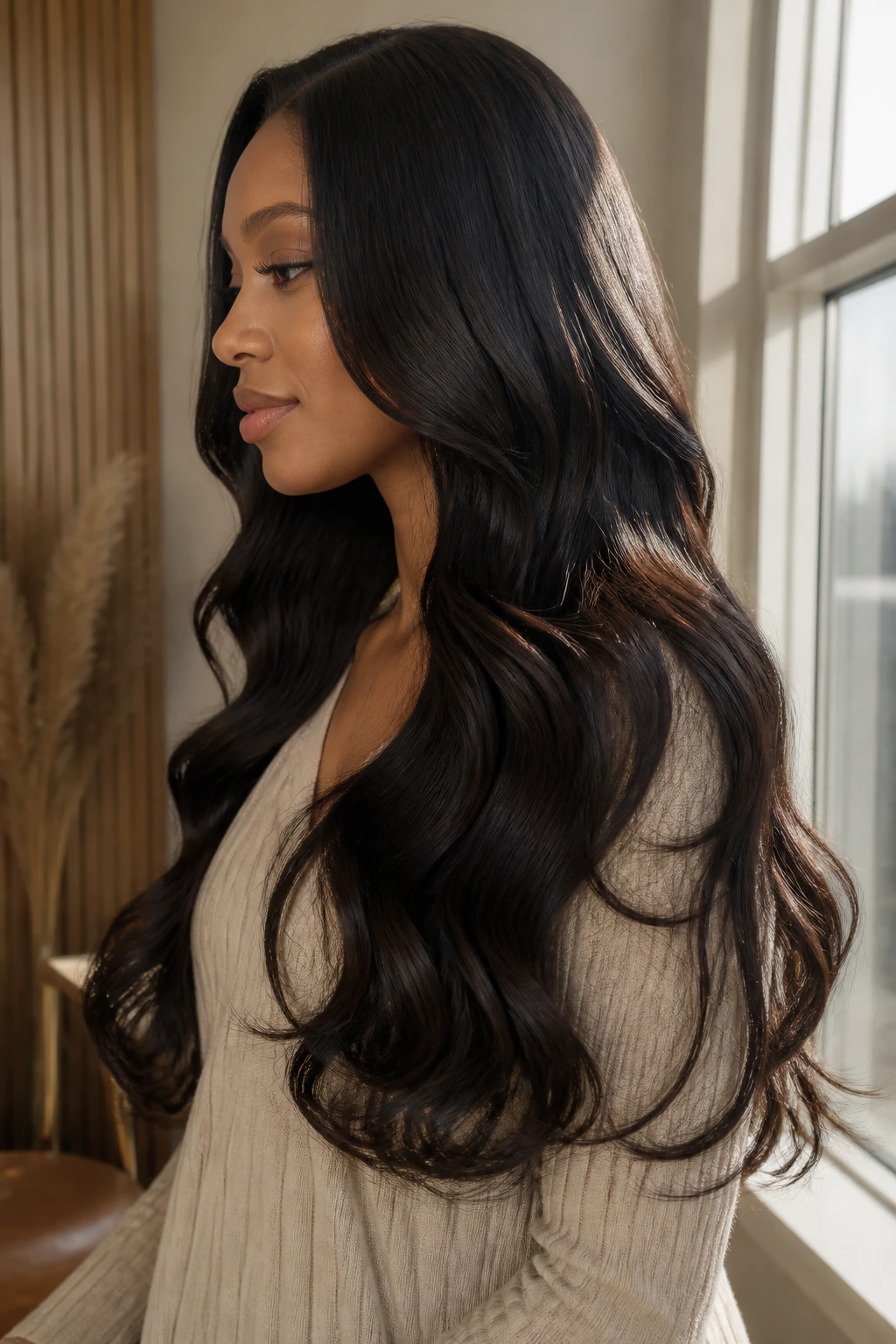
A U-shape is the softer cousin of the V-cut. Instead of pointing down at the center, it rounds the hair so the bottom edge curves gently like a shallow crescent.
That curve works well with heart-shaped faces because it mirrors the softer lines you usually want near the jaw. It doesn’t create a hard point, and it doesn’t push the ends into a square block. The style feels plush, not stiff.
If you like long hair that reads romantic rather than sharp, this is the one to save. It’s especially good on 24- to 26-inch weaves, where the length can start to feel heavy if the perimeter is too blunt. A U-shape keeps that weight from sitting all in one place.
It’s also a practical choice for people who wear body waves all week. The cut keeps the ends from tangling as much, because the hair doesn’t all sit on the same line and rub together. Little thing. Big difference.
6. Honey Blonde Waves With Dark Roots
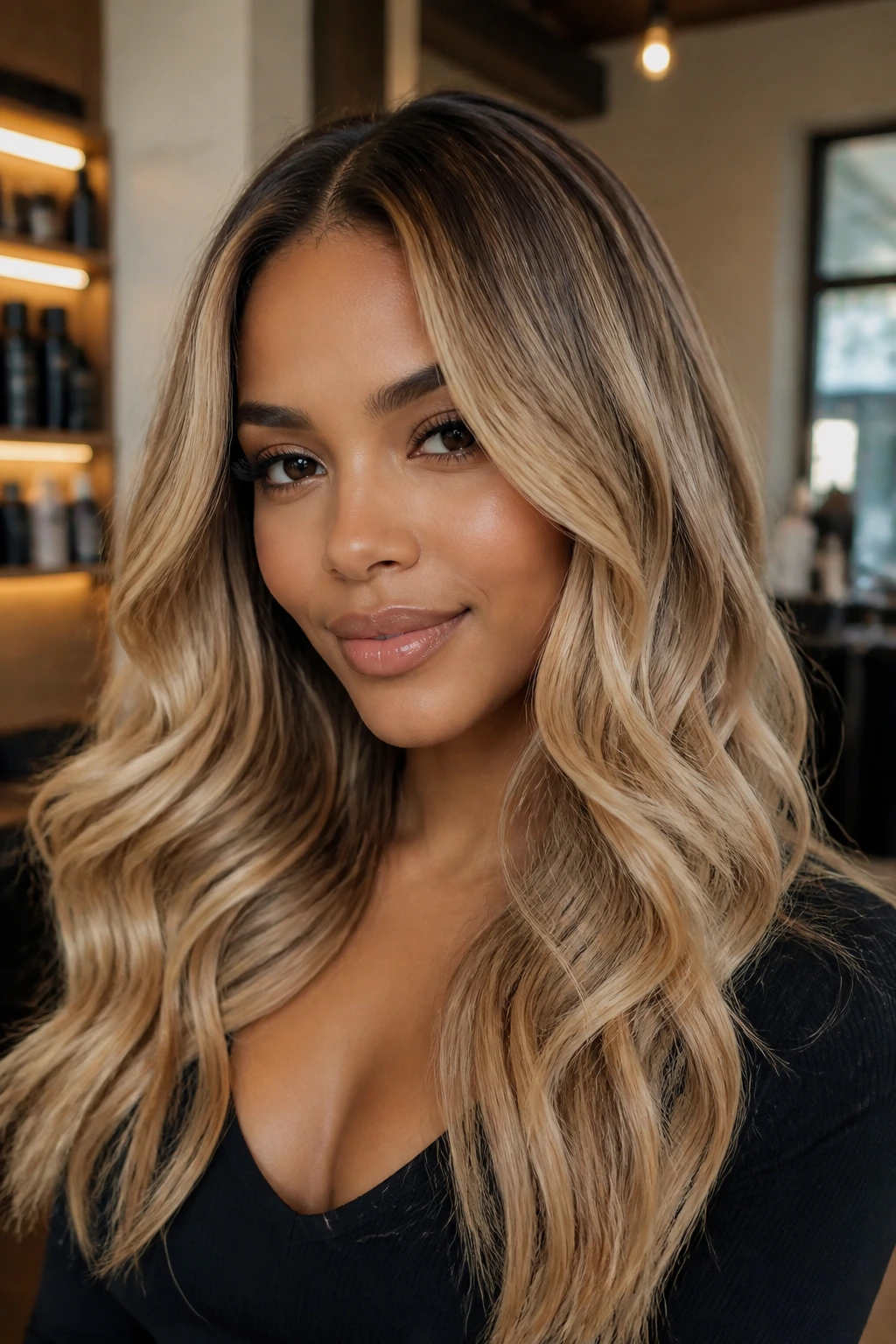
A bright blonde all over can flatten body waves. A shadow root fixes that by giving the style depth at the scalp and brightness where the movement actually happens.
Honey blonde is a smart middle ground. It warms the face, lights up the bends in the hair, and keeps the overall look from washing out a heart-shaped face. The darker root does one more thing, too: it stops the style from looking too wide at the top.
A good honey blonde weave usually has color placed from the mid-lengths down, with the lighter pieces catching around the cheekbone and collarbone. That keeps the face bright where you want it and quieter where you don’t. If you go too light right at the temples, the forehead can feel bigger. No need for that.
This color also reads especially well on body waves because the different tones show through each bend. The hair looks fuller, even when the density is moderate. That is one reason I like warm blondes more than flat platinum on long weaves. They look softer, and softer usually wins here.
7. Jet Black Body Waves With a Glassy Finish
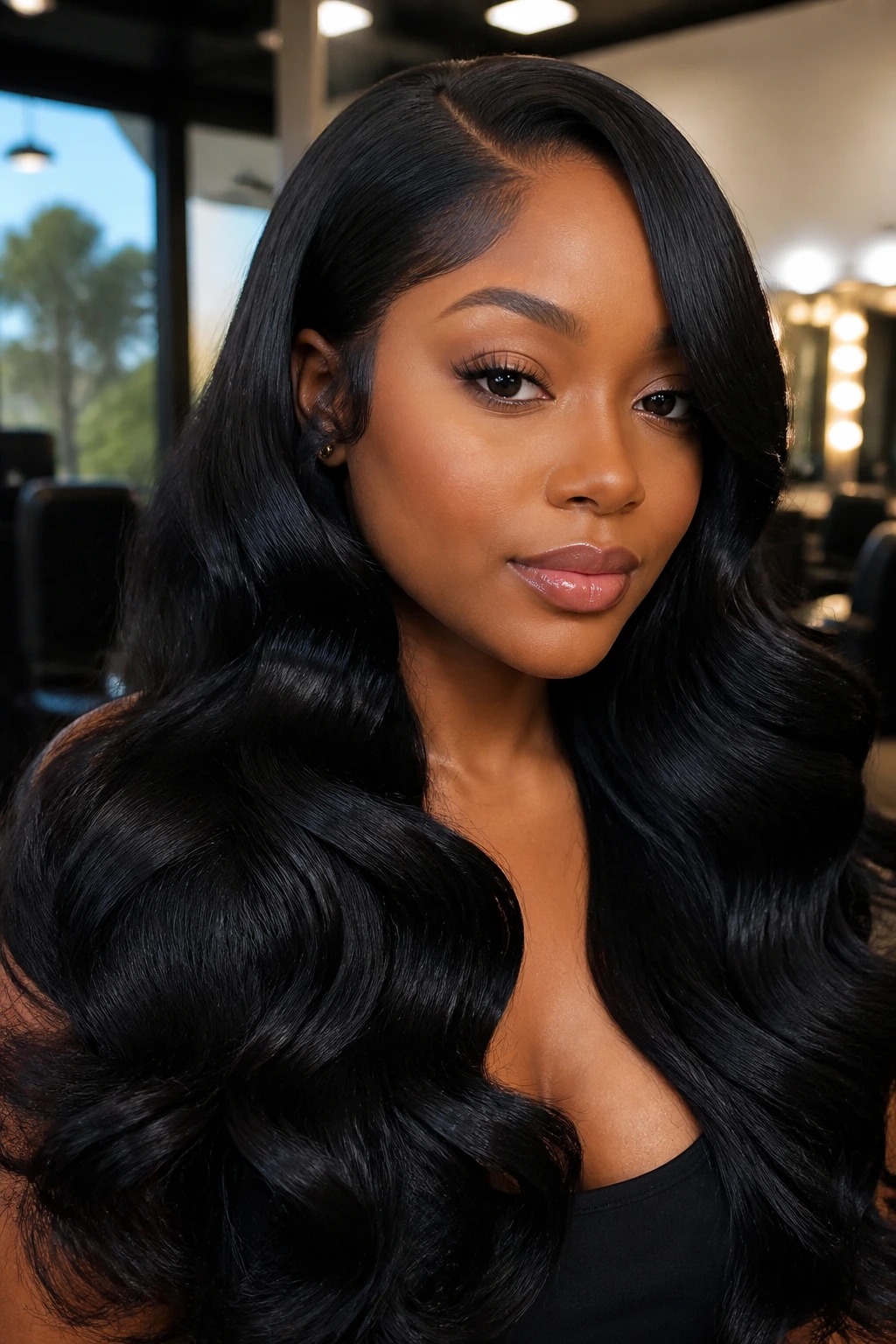
Jet black body waves can look sharp, expensive, and a little dramatic — if the shine is under control. If the finish is dull or dry, the color turns harsh fast. Black hair does not forgive lazy styling.
The Face-Framing Rule
The safest way to wear this look on a heart-shaped face is with a soft side part or a center part plus a few loose front pieces. That keeps the black from forming one hard block around the forehead. The waves need to be visible. If they collapse into a flat sheet, the whole style turns severe.
A light gloss spray or a few drops of serum on the last 4 inches is enough. Don’t drench the roots. That only flattens the crown and makes the hair look like it was pressed under a book.
Jet black also benefits from a slightly layered cut, because the shine reflects better when the hair has movement. On long lengths, that movement keeps the style from looking heavy. On heart faces, the contrast can look elegant rather than sharp if the front pieces are soft and the crown stays modest.
8. Caramel Balayage Waves With Cheekbone Framing
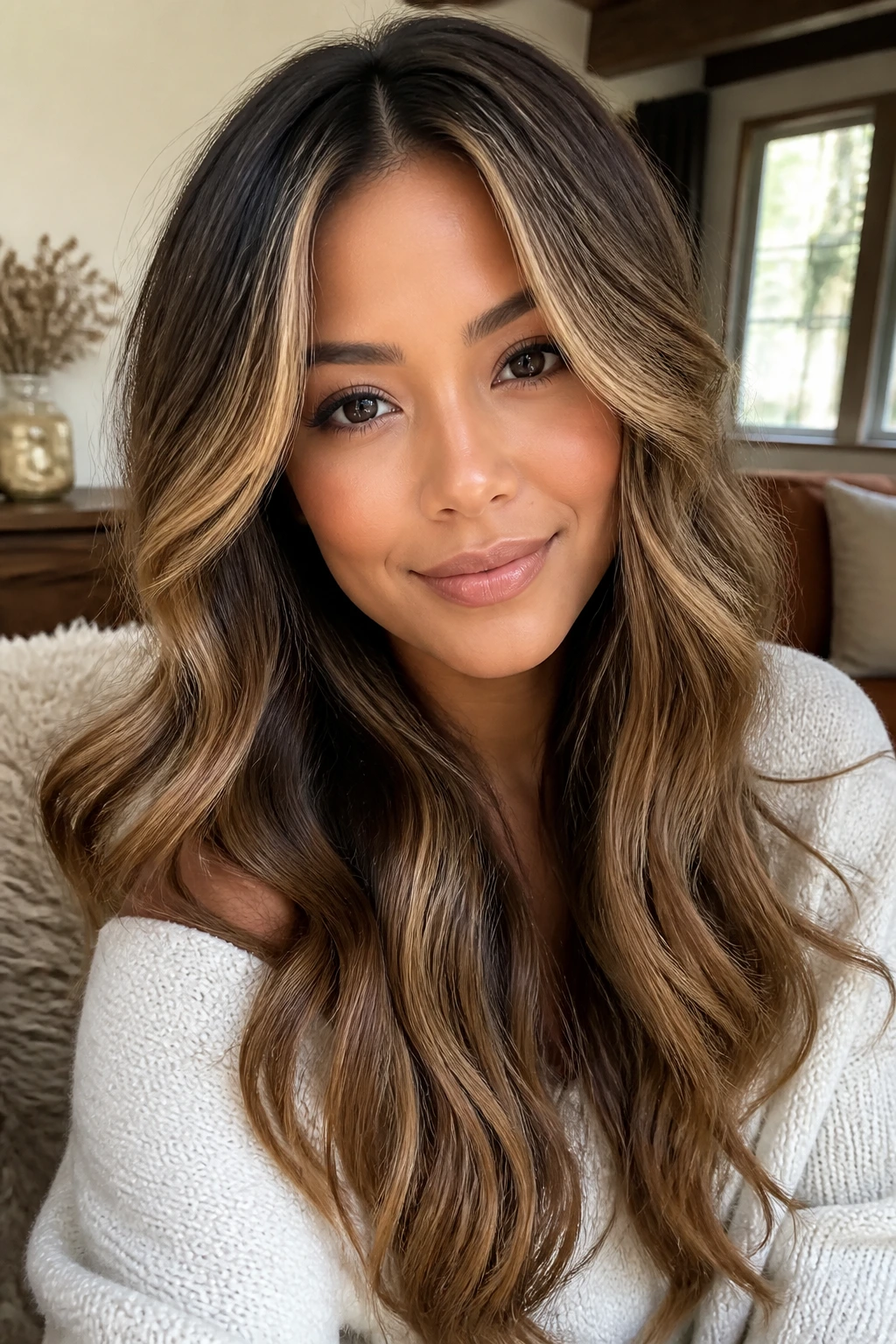
If you want the face to look lifted, put the brightness where the hair bends. That’s the whole game with caramel balayage on body waves.
Caramel ribbons placed from the cheekbone down do two things at once: they break up the mass of the hair and they pull attention toward the center of the face rather than the widest part of the forehead. On long hair, that little bit of brightness is enough to keep the ends from disappearing into one dark block.
The best version of this look keeps the roots a shade deeper and blends the lighter pieces through the front third of the hair. Think 2 to 3 visible ribbons per side, not a full streaky stripe pattern. You want softness. Not stripes.
This style is especially good if you wear a frontal or a lace wig, because the face-framing pieces can be placed with purpose. Curl them away from the face, then brush them once the heat has cooled. The color will read even better when the wave opens up.
9. Copper Brown Waves With Warm Dimension
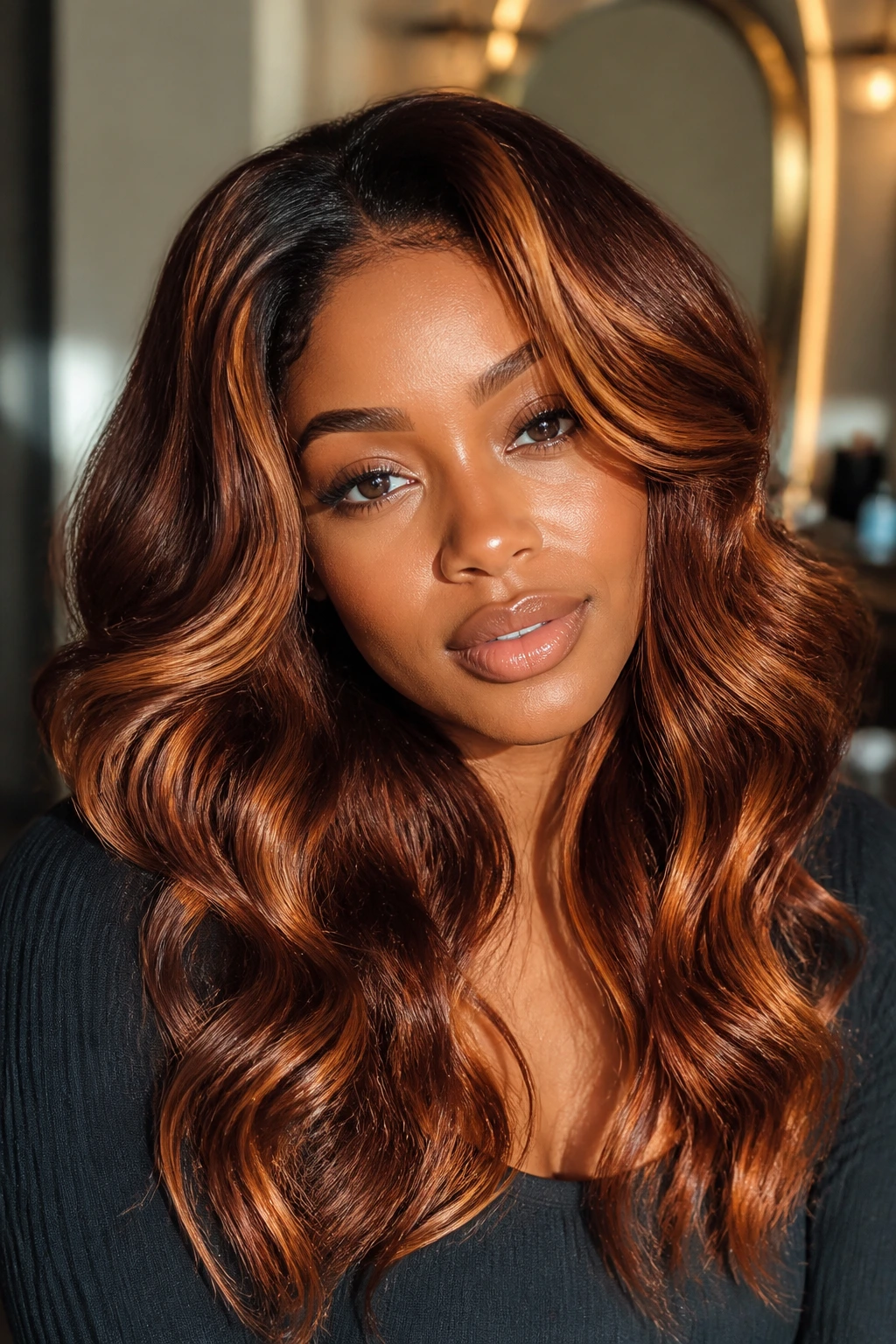
Copper and auburn tones make body waves look fuller because they catch light on every bend. The color is doing half the styling for you.
Color and Shape Together
Warm brown with copper tones can soften the sharper upper half of a heart-shaped face, especially if the lighter pieces sit around the jaw and chest rather than all at the top. That keeps the attention moving downward, which is exactly where long hair needs a little help.
A copper brown weave looks best when the wave pattern stays loose. Tight curls hide the color shift. Loose body waves show it off. If the ends are layered, even better — the lighter strands flash a little as the hair moves.
For a practical take, ask for a rich brown base with copper gloss or subtle cinnamon ribbons. You don’t need a full bright red look to get the effect. Even a small amount of warmth around the front pieces can make the face look softer and more alive.
I prefer copper tones on long installs that already have good movement. The shine and the bend work together. If the hair is too heavy or too blunt, the color can’t save it.
10. Side-Swept Waves Tucked Behind One Ear
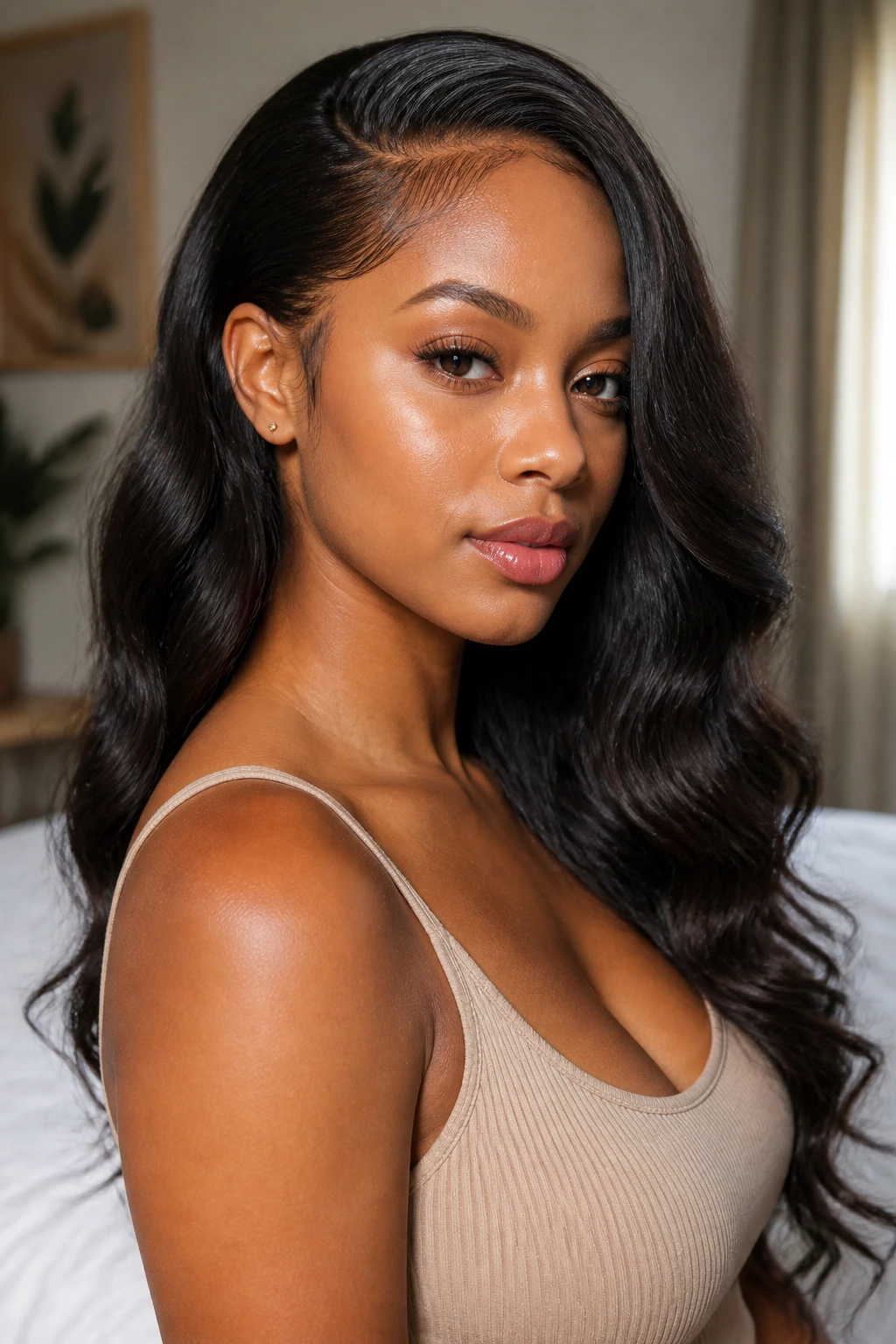
A tucked side is one of those tiny styling moves that changes the whole face. On a heart-shaped face, it opens up the jawline and gives the cheekbones some room to show.
The key is not to overdo it. You want one side tucked loosely behind the ear, not slicked flat against the scalp. Let the other side fall in a soft wave so the style feels deliberate, not lopsided. That asymmetry narrows the forehead visually and keeps the lower half of the face from disappearing under too much hair.
Use a small pin if the hair won’t stay tucked. Better yet, leave the front piece on that side a little shorter so it naturally stays back. If you’re wearing earrings, this style is a gift. The ear is visible, the waves frame the face, and the whole thing looks like you thought about it for longer than you did.
It works especially well with medium-to-long body waves, around 22 to 24 inches, because the length has enough weight to stay put without feeling stiff.
11. Half-Up Body Waves With Crown Lift
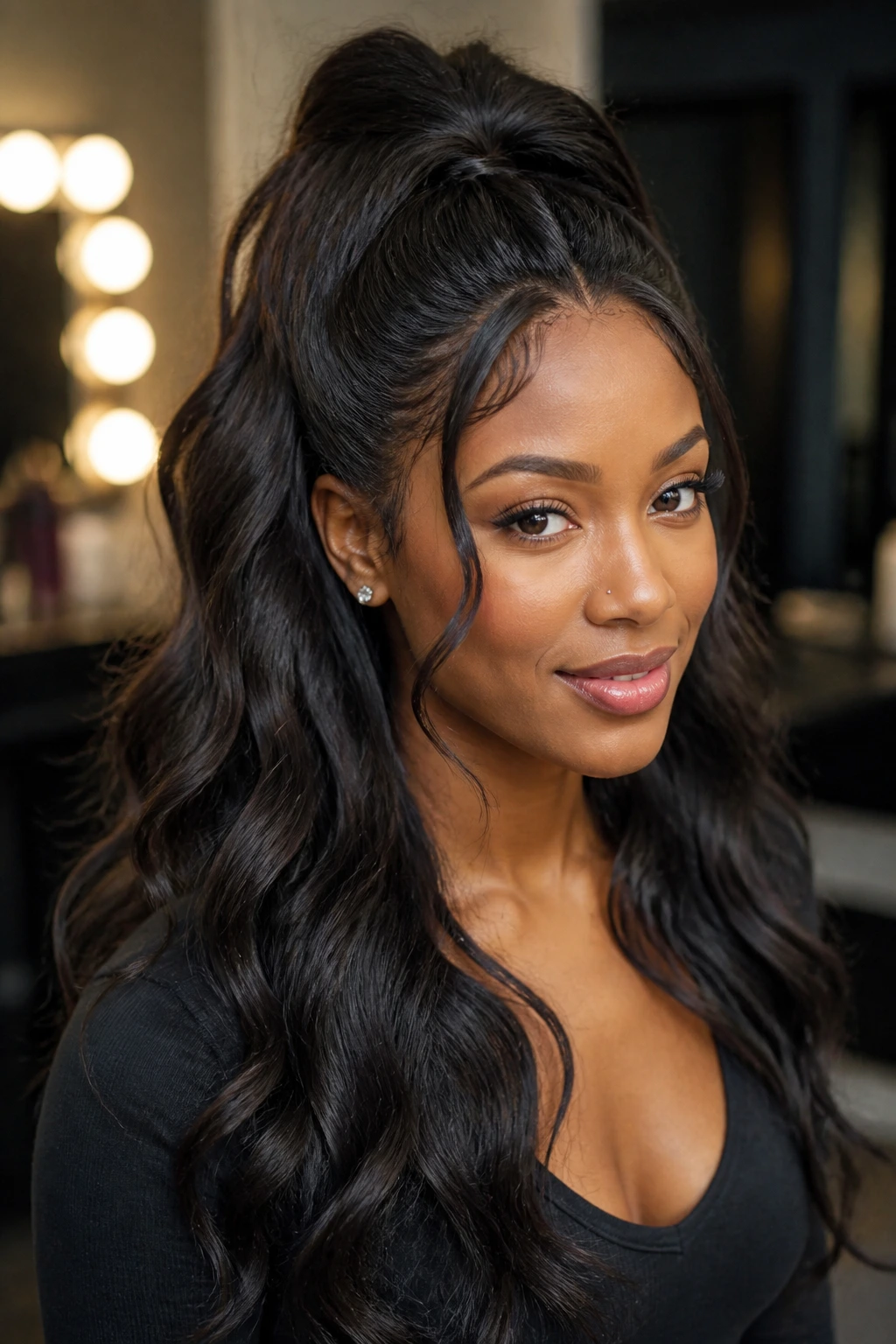
Half-up hair can go bad fast when the top is too tight. It pulls the face upward and makes the forehead the main event. A soft half-up on body waves does the opposite.
The lift should happen at the crown, but gently. Think a soft pull of hair from the temples and top section, secured with a clip or small elastic, while the lower half stays loose and wavy. That gives you height without making the top look crowded. For heart-shaped faces, that balance matters.
What I like here is the way the lower waves still frame the jaw. You get the polish of a pulled-back style and the softness of long hair at the same time. If the front is parted cleanly and the half-up section isn’t too small, the look also feels more open around the forehead.
A small wrapped strand over the elastic makes the style look cleaner than a bare tie. It takes thirty seconds. Worth it.
12. Low Ponytail Body Waves With Loose S-Curves
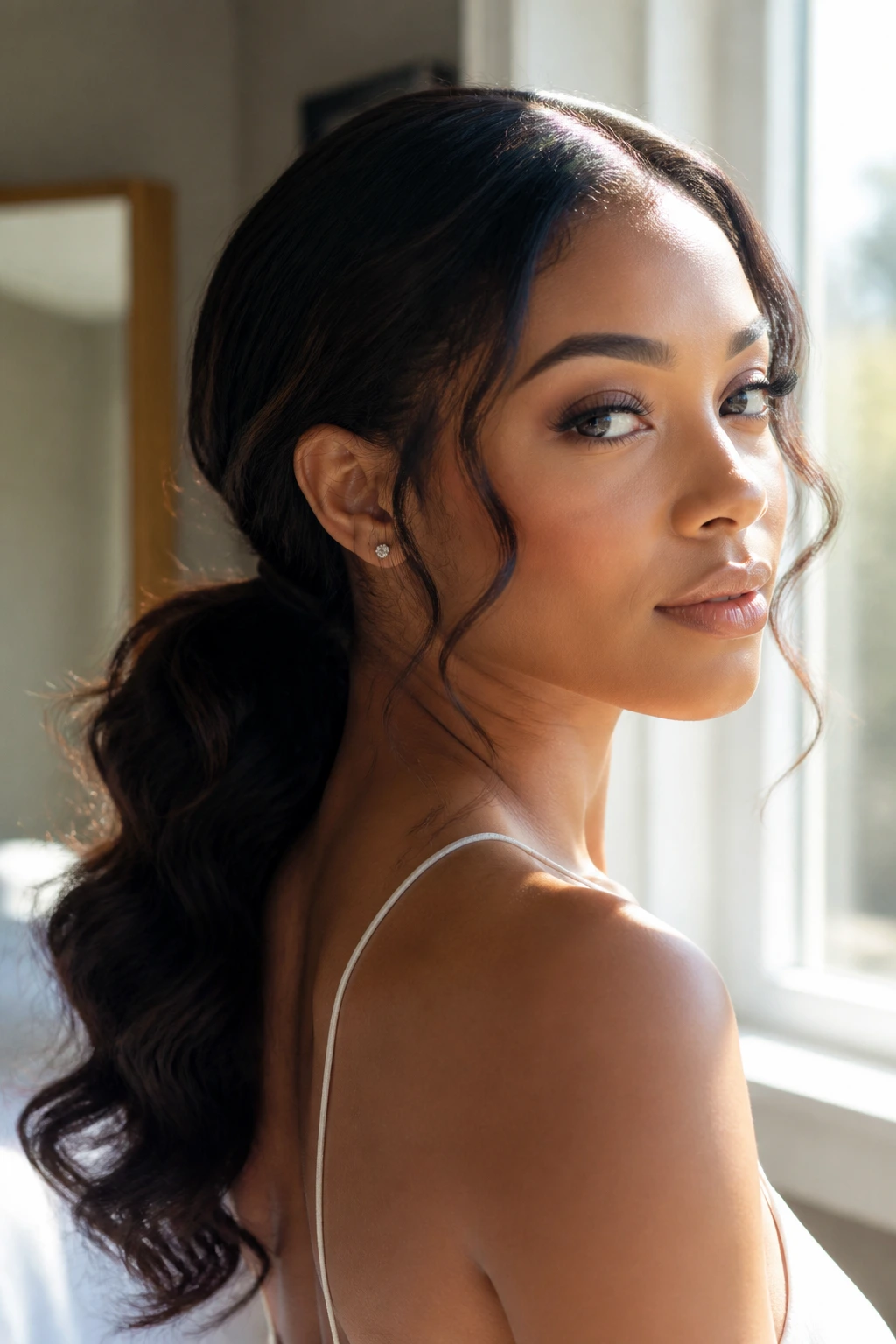
A low ponytail does not have to mean flat roots and sad ends. With body waves, it can keep a lot of movement if you leave the wave pattern alone.
The pony should sit at the nape or just above the occipital bone, not halfway up the back of the head. That placement keeps the face balanced and lets the hair fall with some swing. On a heart-shaped face, the low position also draws attention downward, which takes pressure off the forehead.
Brush the top only enough to smooth it. Don’t chase every bump. A tiny bit of softness at the hairline is better than a tight, severe pull. Then leave the tail loose so the S-curves show. If you want a cleaner finish, wrap a small section of hair around the elastic and pin it underneath.
This version is good for people who want to wear body waves in a more controlled shape without losing the point of the texture. It still reads like body waves. It just happens to be tied up.
13. Invisible Layer Body Waves for Thick Hair
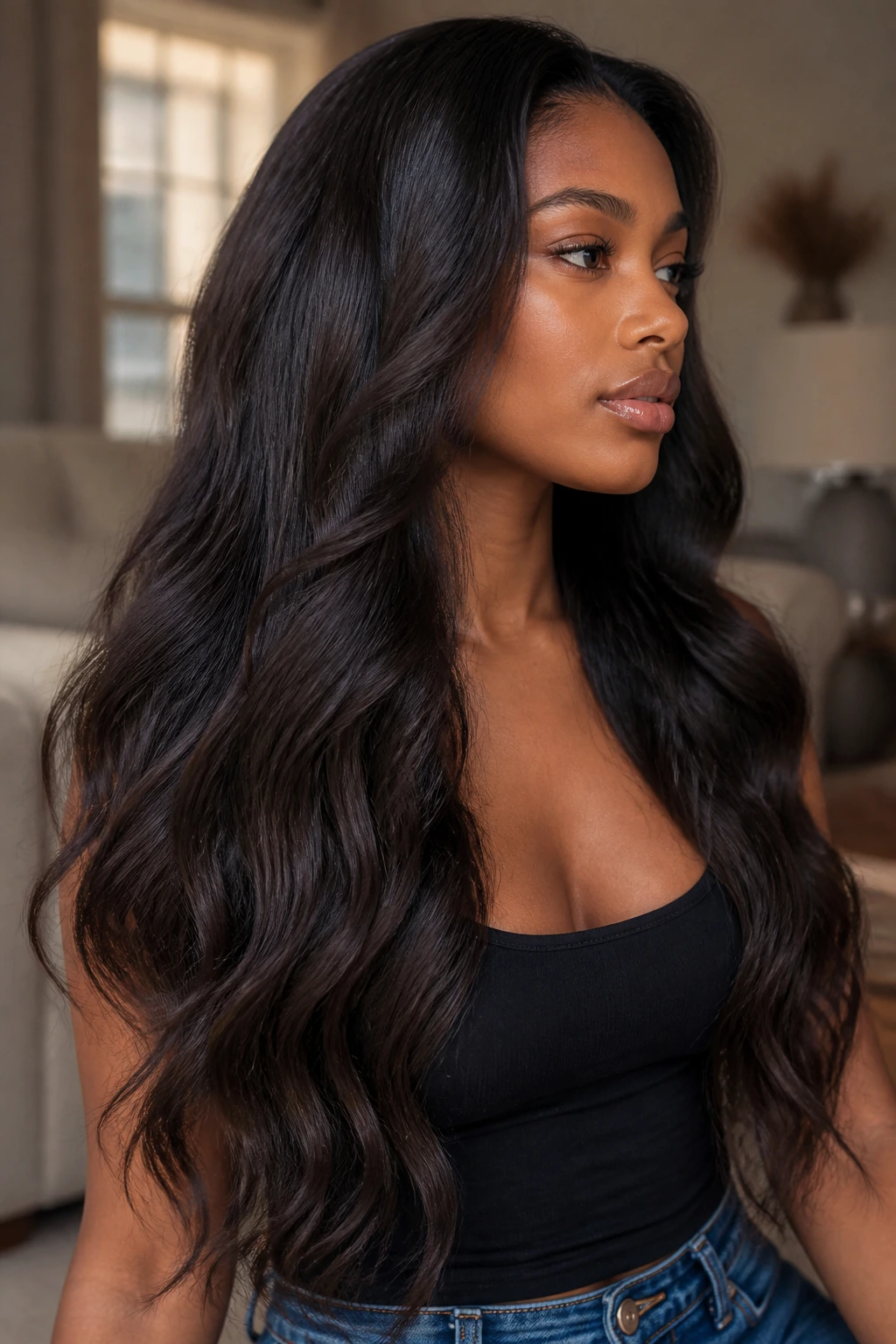
Thick long hair can be a blessing and a headache. On the right face shape, it gives you drama. On the wrong cut, it turns into a wide, heavy wall.
Invisible layers solve that by removing bulk from the inside instead of chopping obvious steps into the outside shape. The result is hair that moves more and sits flatter where it needs to. That’s a good trade on a heart-shaped face, because the goal is to keep the width low and the crown manageable.
Why the Layers Stay Invisible
The outer perimeter stays long, so the style still reads as one clean length. But the interior is lighter, which means the waves can bend and separate instead of clumping together. If the layers are cut correctly, nobody should be able to point at them. They should just notice that the hair moves better.
This is one of the best choices if your body wave weave tends to feel too dense after installation. Ask for the layers to start well below the chin and to stay subtle through the back. If you can see every layer line, the cut is too aggressive.
Keep the finish brushed with a paddle brush or a mixed-bristle brush. Thick hair can hold a wave, but it can also trap frizz. A clean brush-out makes the style look expensive. That’s the word for it.
14. Boho Waves With Tiny Braids
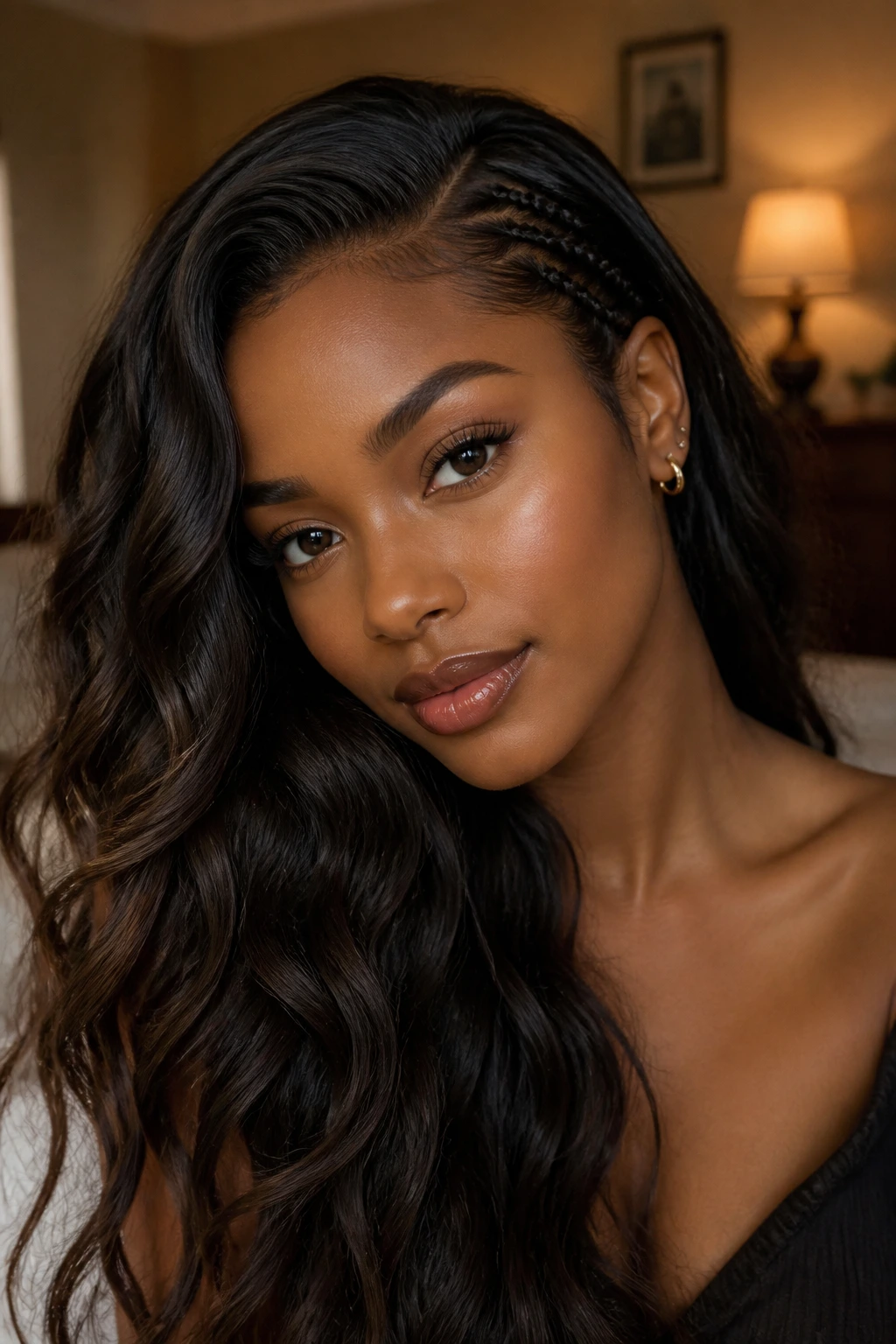
A few tiny braids can stop body waves from feeling too polished. That’s the appeal here. You keep the movement, but you add a bit of texture near the front or around one side.
For a heart-shaped face, the braids work best when they sit low and sideward, not stacked high across the forehead. Two small braids at one temple or a pair of thin face-framing braids can soften the upper face and make the whole style feel more relaxed. Keep them fine. Thick braids start to compete with the wave pattern.
This look is especially good on long hair because the waves need some visual interruption. Without it, the length can read as a single block. The braids break that up and make the hair feel less formal. If you wear hoops, even better. The braid plus wave combo plays nicely with jewelry near the jaw.
No need to overthink the placement. A tiny braid should look like it was added last, not like it was assigned a full design meeting.
15. Old-Money Waves With Polished Ends
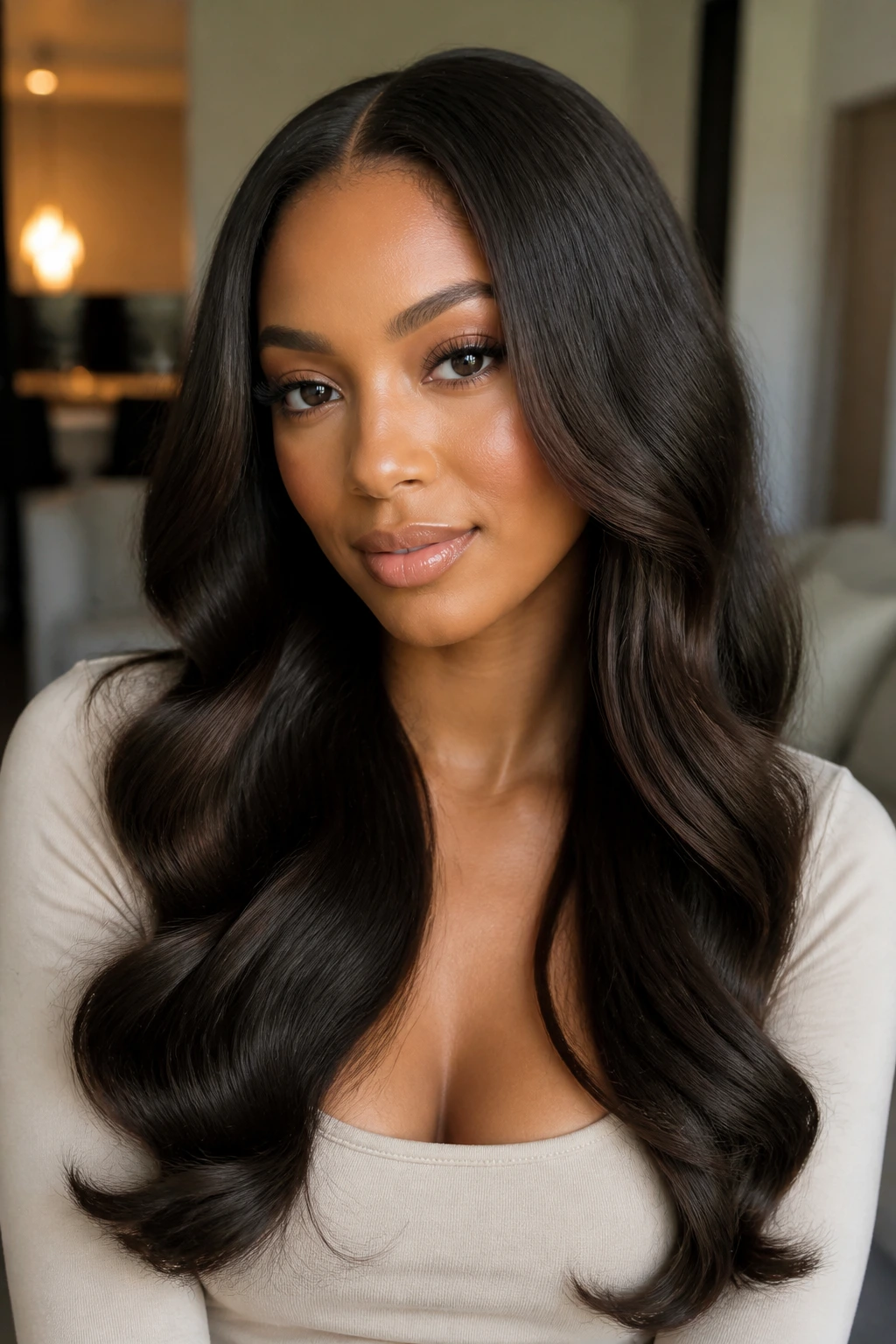
Can body waves look neat without turning stiff? Yes. The trick is brush-out and shape, not extra product.
Old-money waves are softer than Hollywood curls and cleaner than boho texture. The ends sit together, the shine stays controlled, and the part is usually center or slightly off center. On a heart-shaped face, that kind of polish works because the style doesn’t fight the face for attention. It frames it.
A 24-inch weave with 130% to 150% density is a sweet spot here. Enough body to look full. Not so much that the hair balloons at the sides. Use a light serum from mid-lengths to ends, then brush through once the waves cool. That gives you the sleekness without killing the bend.
This style is also easy to wear with blouses, blazers, or anything with a sharp neckline. The hair looks deliberate, not fussy. That’s a nice place to be.
16. Soft Wet-Look Body Waves for Sleeker Days
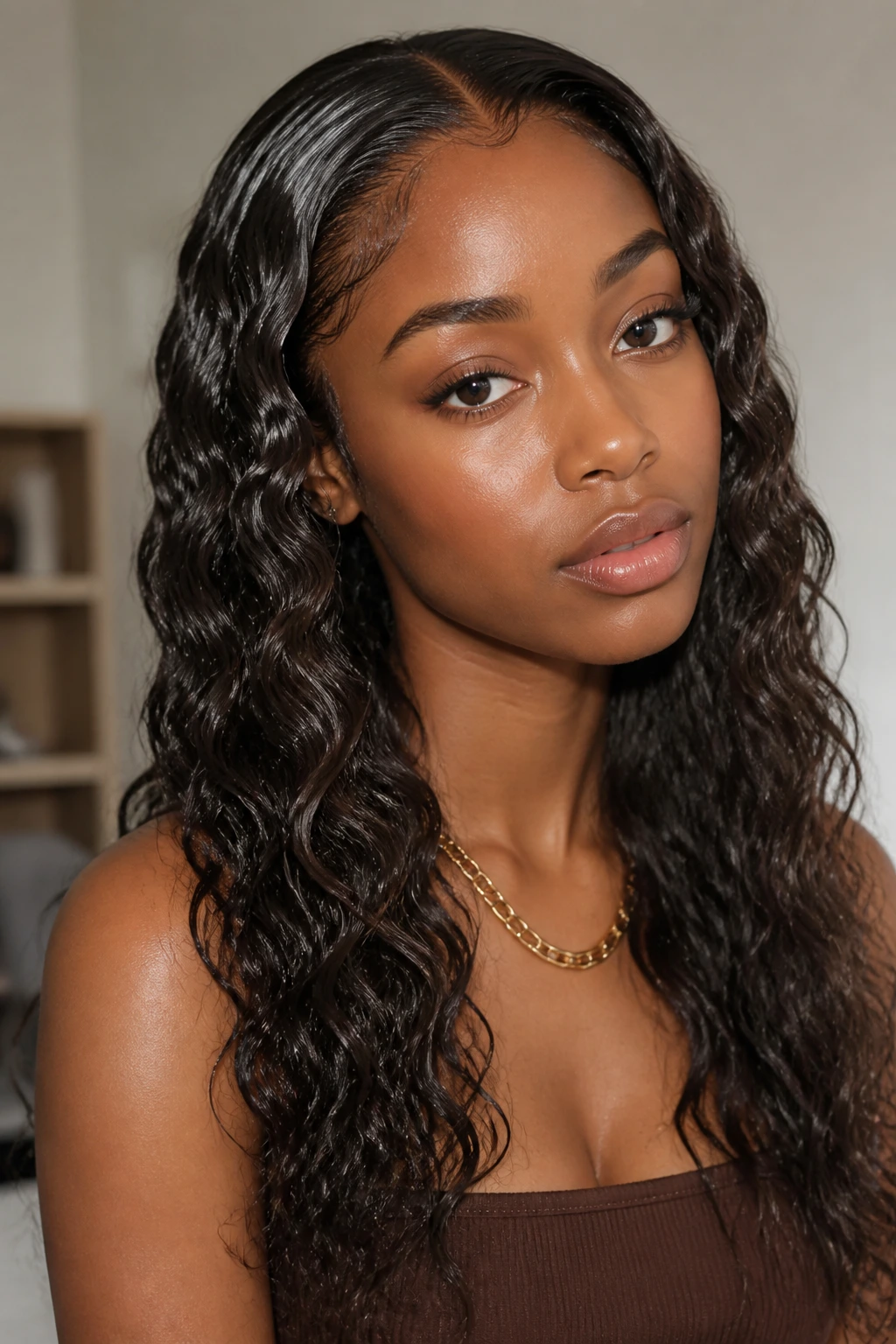
Wet-look body waves sound intense, but the best versions are more controlled than dramatic. You’re not soaking the hair. You’re giving the surface a smooth finish and letting the wave pattern show through underneath.
The Slick Finish Rule
This works well on a heart-shaped face because the sleek top reduces crown width. If the forehead feels broad, too much root volume can tip the style off balance. A smoother top with defined mid-length waves keeps the shape closer to the face without flattening everything.
Use a light mousse or wrap foam on damp hair, then comb it through evenly. Add a tiny amount of gel only at the hairline if you need it. The goal is not crunch. The goal is control. Let the waves stay soft from the ears down.
This style is one of the easiest ways to make body waves look fresh on day two or three. It also helps if the weave is a little frizzy at the top but still good through the ends. You don’t need to fight the entire style. Just tighten the parts that need discipline.
17. Hollywood Closure Waves With a Deep Part
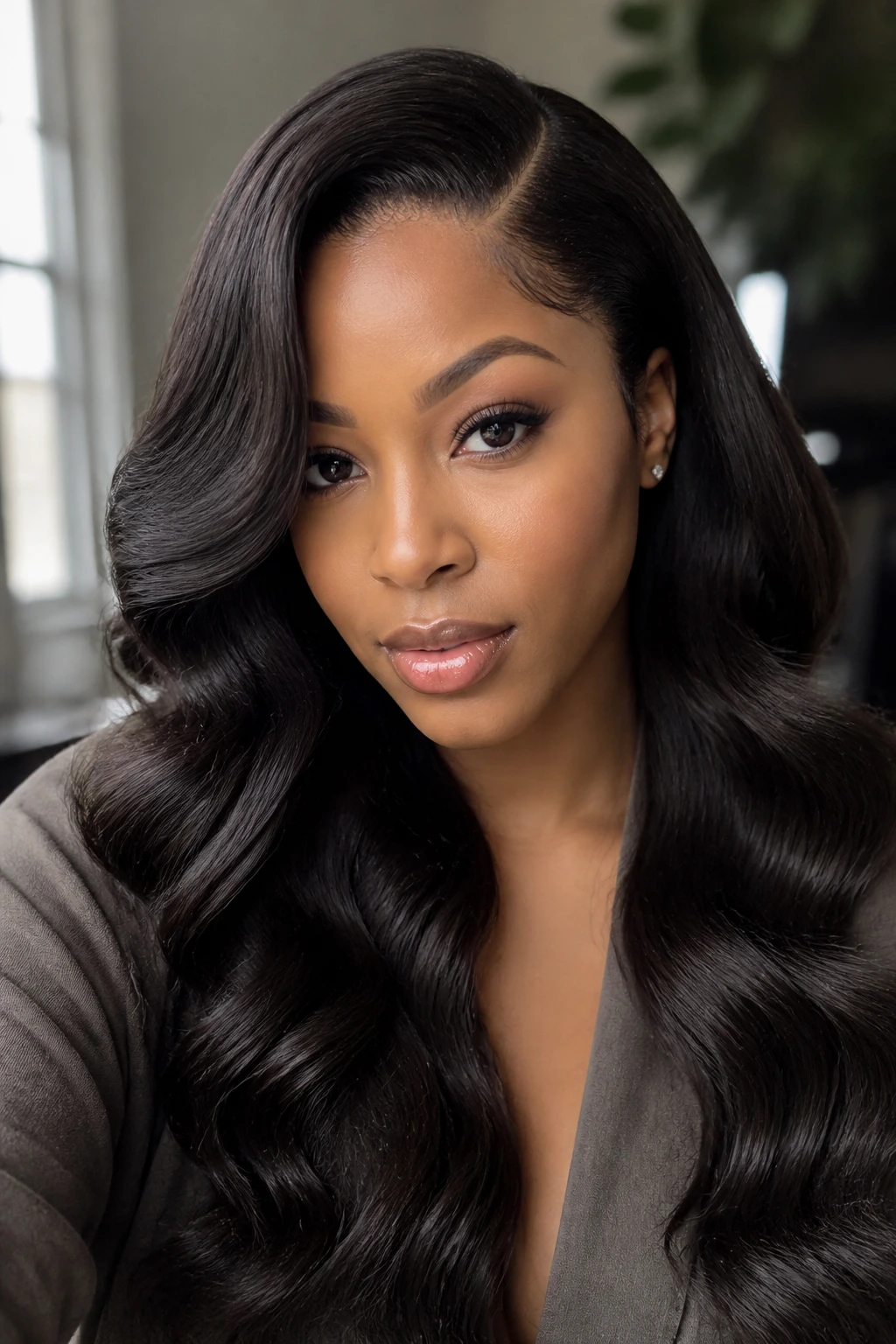
A closure install can give you a very clean deep part without the maintenance of a full frontal. Pair that with brushed-out body waves, and you get a polished shape that sits beautifully on a heart-shaped face.
The benefit is simple: the part looks neat, the front stays controlled, and the wave pattern carries the softness. A 5×5 or 6×6 closure gives enough room for a deep side part or a slightly off-center layout without making the scalp area feel cramped. That matters when you want long hair to look intentional instead of bulky.
This style is especially good when you want hair that reads dressed up but still wearable every day. The wave should fall away from the face in a wide curve, not a tight bend. If the closure is too flat at the top, give the roots a light lift with mousse and a round brush. Keep it subtle. The shine should come from the strands, not from overstyling.
18. Minimal-Leave-Out Sew-In Body Waves
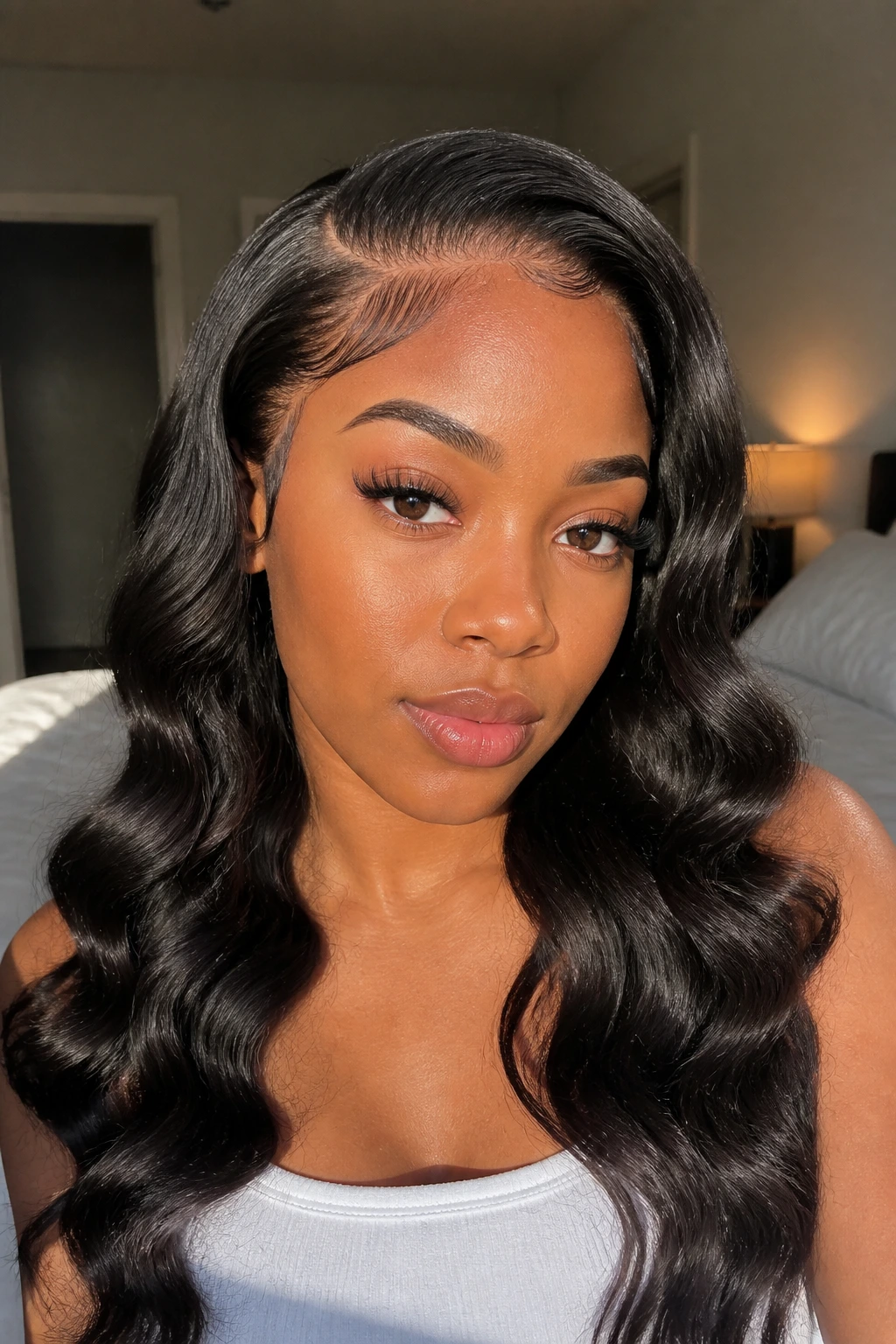
Less leave-out means less stress. That’s one reason this style keeps earning a spot in real rotation.
With a minimal-leave-out sew-in, you protect more of your natural hair while still letting the body waves blend at the hairline or part. For heart-shaped faces, the result is useful because the front can stay soft without needing a huge amount of exposed natural hair. If your leave-out is just a slim blend strip, the style stays cleaner and easier to manage.
This is the kind of install that makes sense when you want long hair but not daily heat. The body wave pattern does most of the visual work. Your own hair only needs to cover a small area. That means fewer flat-iron passes, fewer headache days, and a less obvious transition line.
The key is matching texture carefully. If your natural hair is much tighter or straighter than the weave, the blend will fight you. Match the wave pattern as closely as you can, and keep the heat low when smoothing the front.
19. Wispy Bang Body Waves
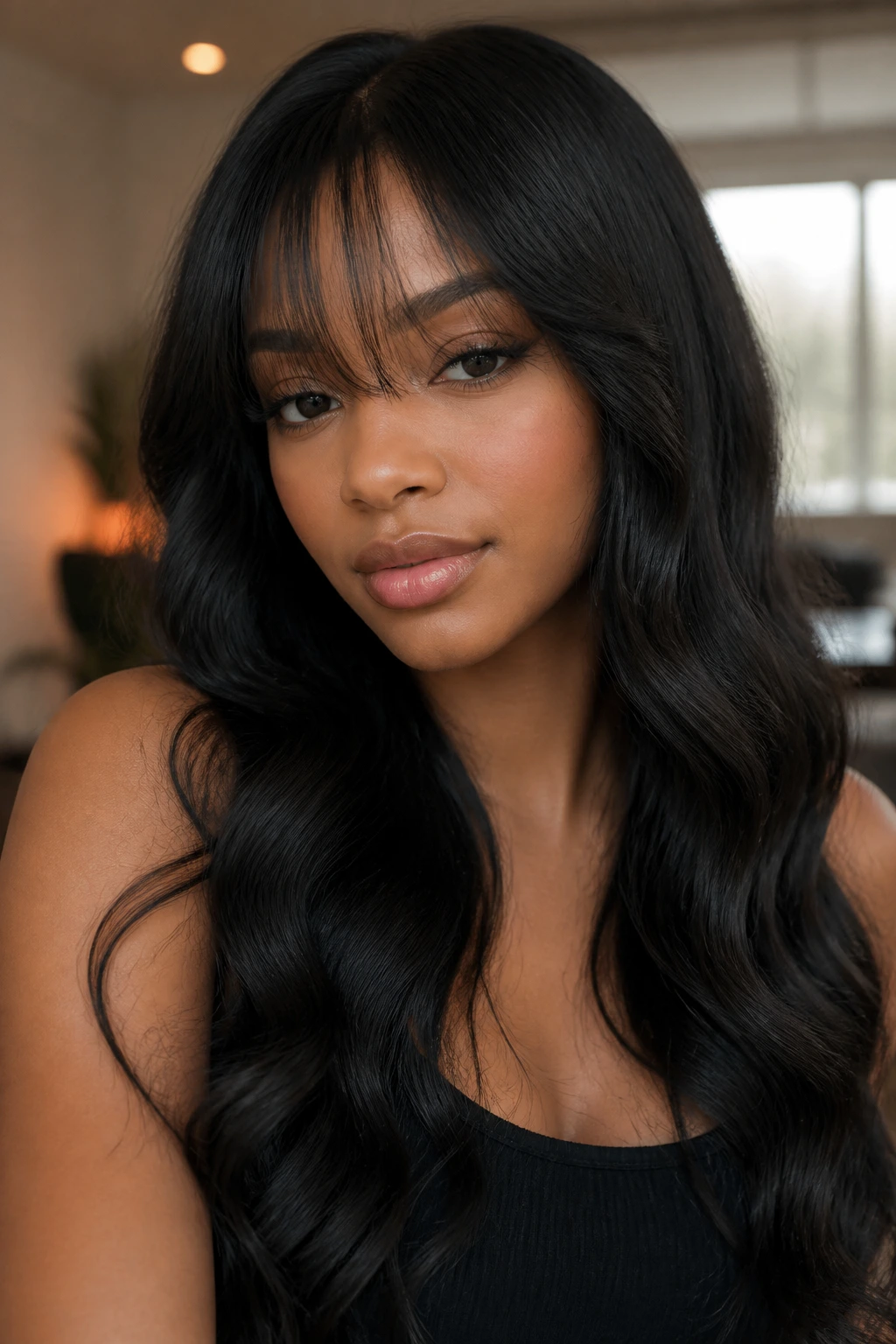
Wispy bangs can take the edge off a broad forehead without hiding the face. That’s why they make so much sense on a heart-shaped shape.
The Bangs Need Softness
Don’t think blunt fringe. Think light, see-through pieces that break up the front line and fall into the body waves. A little bang lets the forehead breathe while still keeping the eyes open. If the bangs are too thick, they can overwhelm the face. If they’re too short, they can look disconnected from the length. The sweet spot is somewhere in the middle.
This works especially well with long body waves because the bangs give the style a starting point. Without them, long hair can feel like it begins too high on the head. With them, the eye settles lower and the whole silhouette feels more balanced.
I like this look best when the bangs are brushed slightly to the side after styling. Straight down can be a bit severe. A soft sweep feels gentler and easier to wear.
20. Long Waves With Chin-Skimming Face Frames
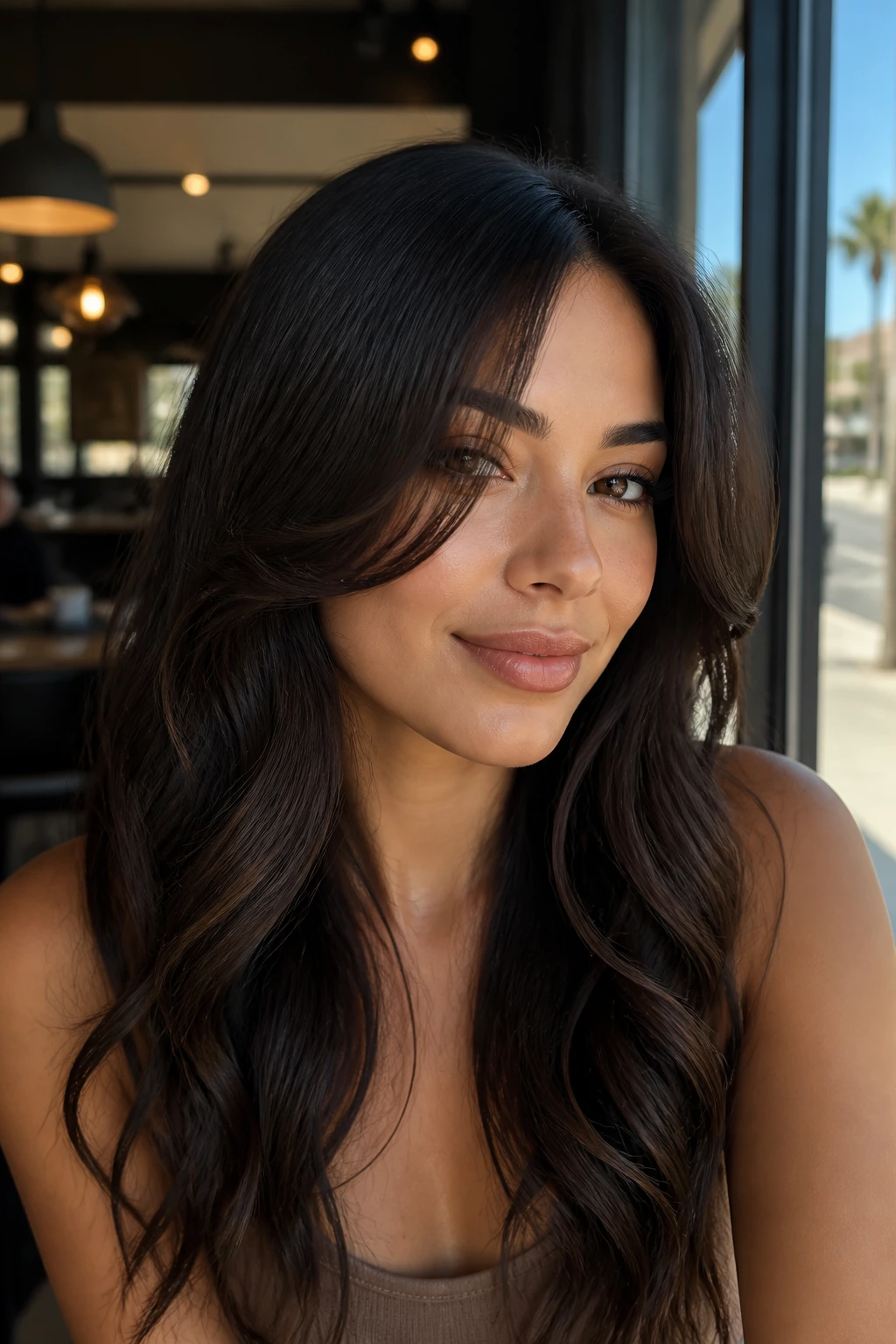
If you remember one rule for heart-shaped faces, make it this: the shortest pieces should usually live around the chin, not above it.
That is where body waves start to do their best work. Chin-skimming face frames widen the lower half of the face just enough to balance the forehead without making the cheeks look crowded. On long hair, this small choice keeps the style from turning into a straight frame that ends too high and fights the face shape.
The actual cut can be modest. You do not need dramatic layers. You need the front pieces to bend and settle in the right place. Around 1.5 to 2.5 inches of difference from the main length is often enough. That keeps the face from being swallowed by one long curtain of hair.
This is also a good option if you wear glasses. The waves stop around the jaw and the face frames sit where they won’t fight the frames. Small detail. Big difference.
21. Rooty Brunette Waves With Ashy Ends
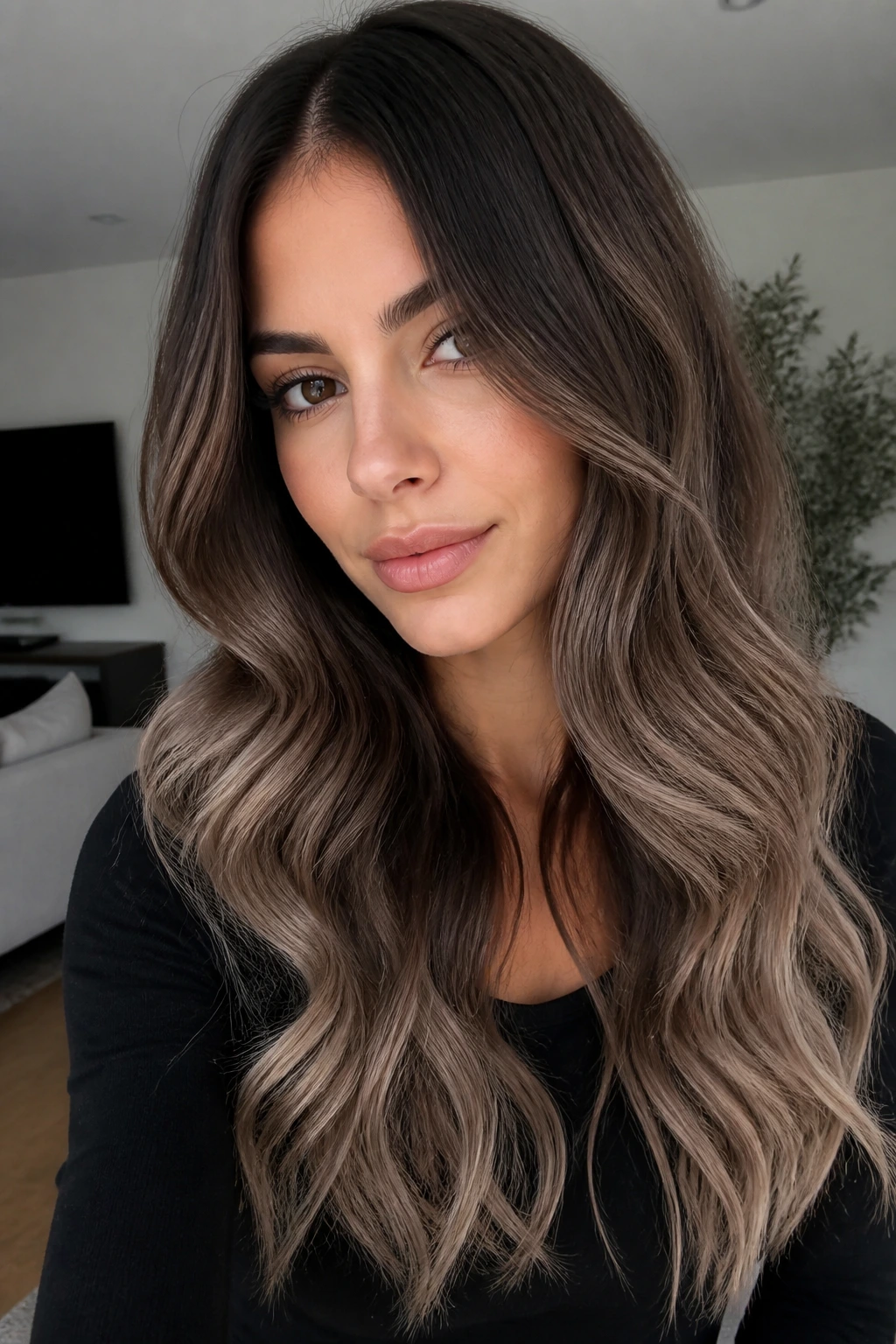
A deeper root and cooler end can make long body waves feel richer without going loud. It’s a smarter color move than people give it credit for.
The root shadow keeps the style grounded around the scalp, which helps a heart-shaped face because it prevents the top from looking too bright or too wide. The ashier ends pull the eye down the length of the hair and give the wave pattern a clean edge. If everything is the same shade, the waves can blur together. A little tonal shift keeps them visible.
This is especially useful if you want a long install to read expensive rather than flat. A brunette base with soft ash or taupe ends has more depth than plain black, but it doesn’t scream for attention. It sits quietly and does its job.
Pair it with a center part or a slightly off-center part. The color transition looks best when it has room to move. Straight lines can make the gradient too obvious. Waves keep it graceful.
22. Big Swoop Layers With Voluminous Center Waves
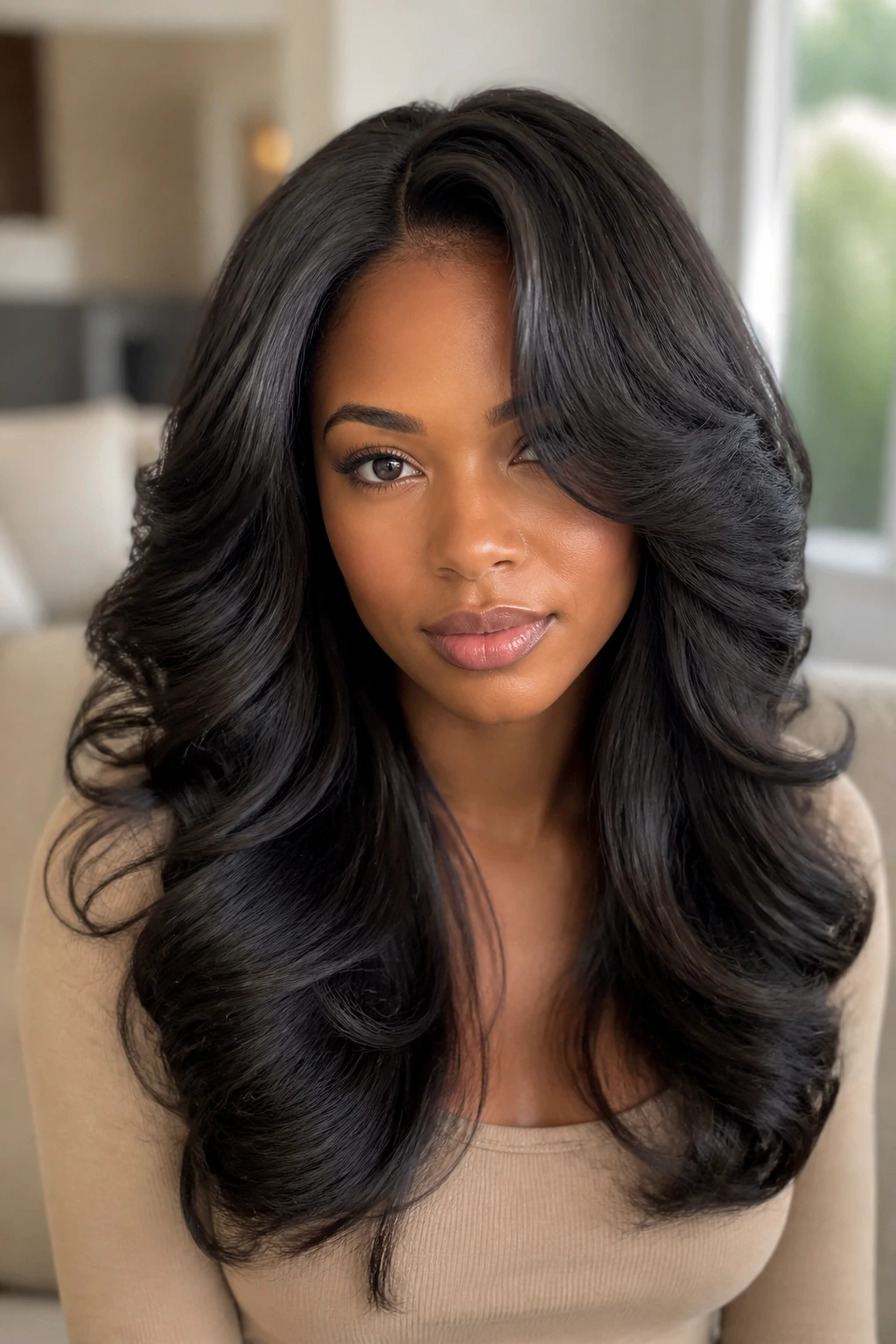
Some long styles need a little drama at the front, and this one gives it without tipping the face out of balance.
The swoop happens through the front layers, not at the root of the crown. That matters. On a heart-shaped face, you want movement that travels across the face and then settles lower, near the cheekbone and jaw. A big swoop can do that if it stays soft and the crown isn’t overbuilt.
What Makes It Different
This style is for people who like volume but not stiffness. The center part keeps the shape symmetrical, while the swooping front layers make the hair feel larger and more luxurious. The wave pattern should stay loose enough to move when you brush it, but not so loose that the layers disappear.
A 24- to 26-inch install works best here, especially if the ends are lightly feathered. Too short, and the swoop can feel abrupt. Too dense, and the hair starts to crowd the sides of the face. Keep the lift in the front only. Let the rest of the length fall.
Why Body Waves and Heart-Shaped Faces Work So Well Together
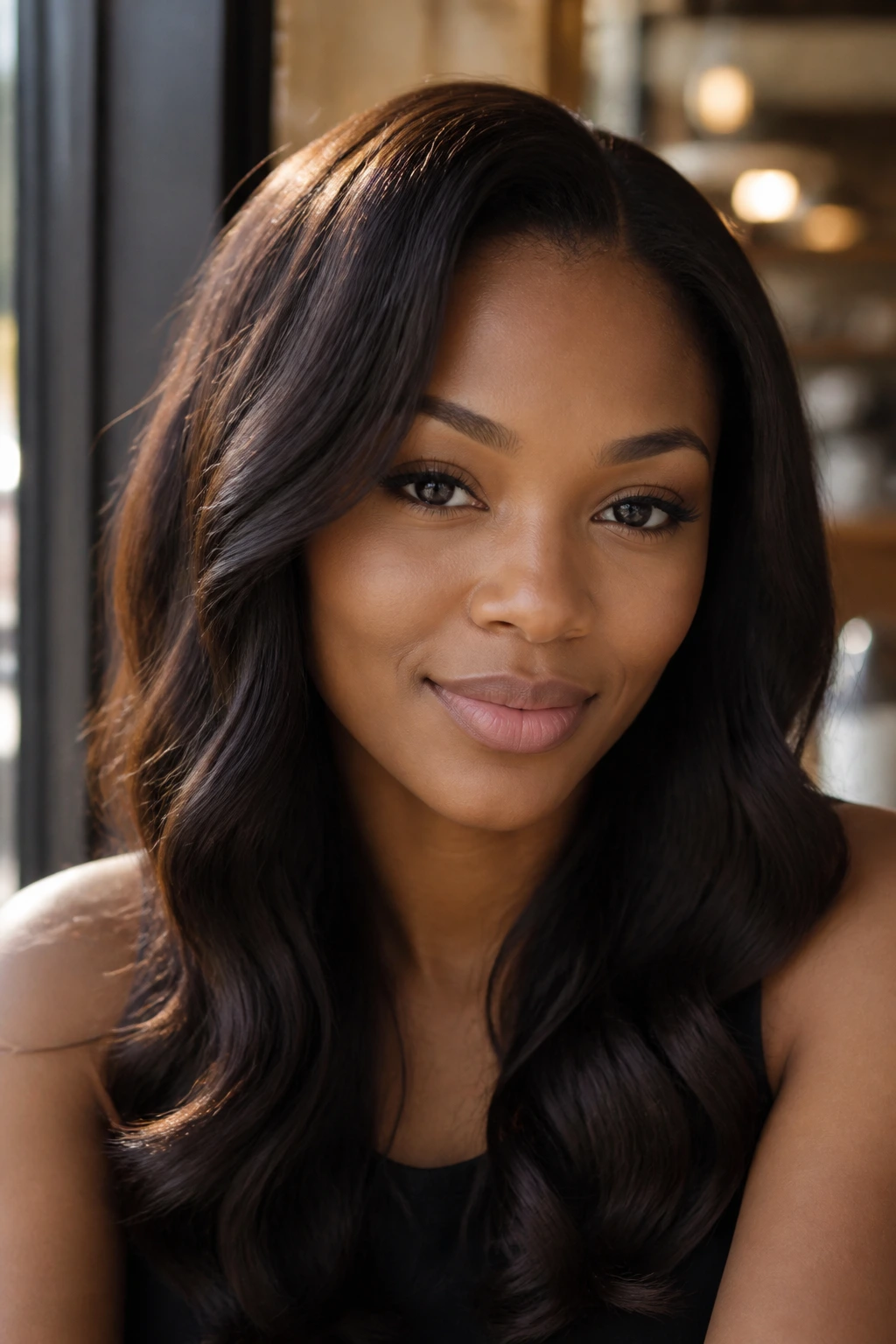
Heart-shaped faces usually carry more width through the forehead and temples, then narrow toward the chin. That shape is lovely on its own, but long hair can make it look sharper than you want if the weight sits in the wrong spot. Body waves fix that by adding motion low on the face, not just at the top.
The best body wave installs create softness around the cheekbone and jawline. That’s the sweet spot. If the wave starts too high, the forehead can feel louder. If it starts too low, the hair loses shape and starts looking like long straight extensions with a few bends tacked on. I’m picky about this, because the difference is obvious in person even when photos blur it a little.
Long hair also needs internal structure. A single blunt perimeter can look heavy on almost anyone, but on a heart-shaped face it can make the lower half of the face disappear under one big wall of hair. Layers, slight off-center parts, and face-framing pieces all help break that up. Nothing dramatic. Just enough to keep the hair from bossing the face around.
My strongest opinion here: width belongs low, not high. If the crown is tall and the sides are puffed out near the temples, the face shape gets exaggerated in the wrong way. Put the movement near the cheekbone, chin, and collarbone instead. That’s where body waves earn their keep.
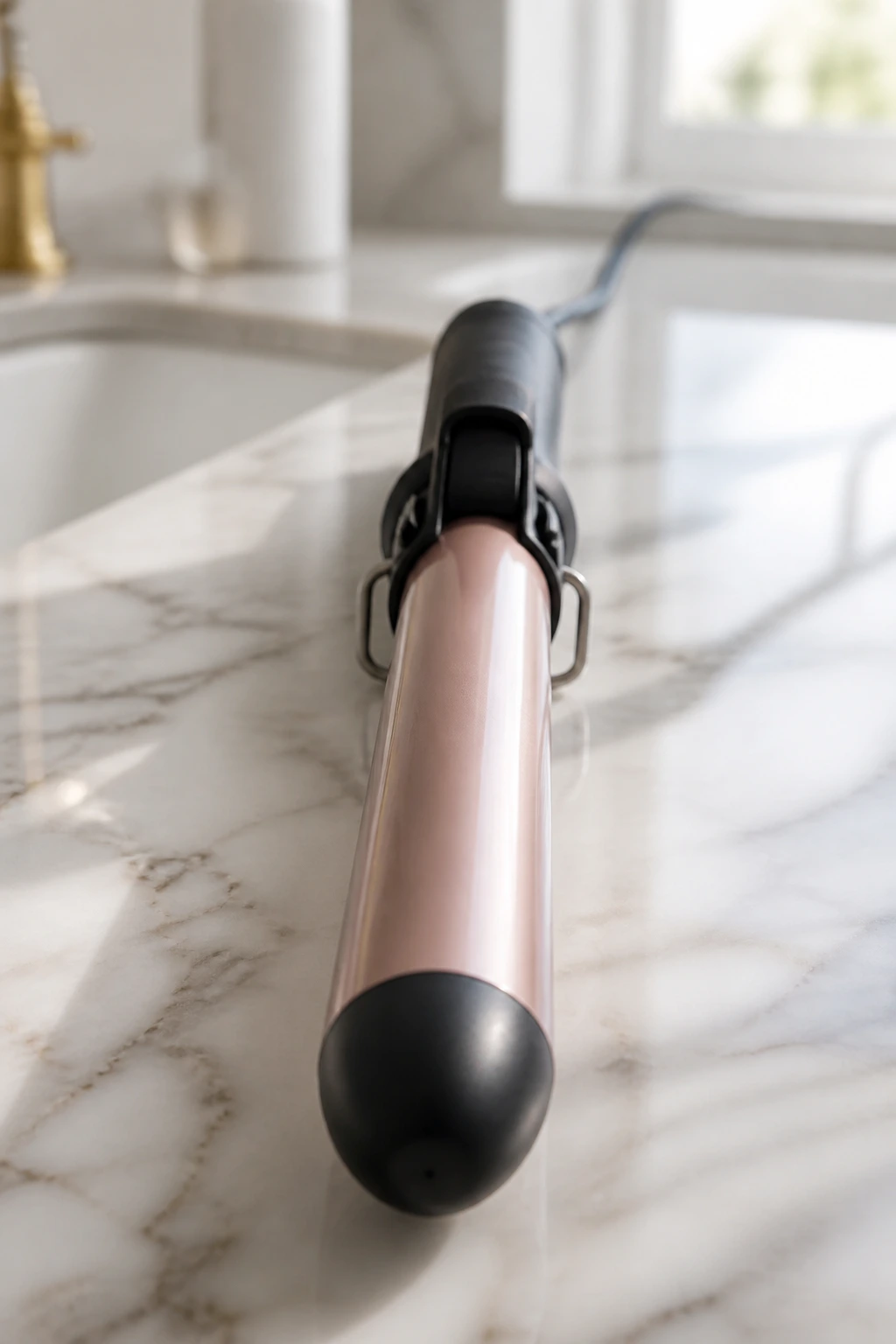
What You Need to Keep Body Waves Looking Fresh
-
1.25-inch curling wand: Best for resetting front pieces and touching up loose bends without making ringlets.
-
Heat protectant spray: Use it every time you apply hot tools, even on human hair. Dry ends show the damage first.
-
Wide-tooth comb: Good for separating waves without pulling them into frizz.
-
Paddle brush or mixed-bristle brush: Helps soften body waves into that brushed-out, lived-in finish.
-
Rat-tail comb: Handy for cleaning up parts and shaping front sections without disturbing the rest of the style.
-
Mousse or wrap foam: A little goes a long way on body waves, especially for smoothing the top and setting the pattern overnight.
-
Lightweight serum or shine spray: Use only on the mid-lengths and ends. Roots do not need extra shine.
-
Silk scarf or bonnet: Keeps the wave pattern from flattening while you sleep.
-
Satin pillowcase: Useful backup if scarves fall off at night.
-
Wig stand or mannequin head: If you wear wigs, this keeps the shape from collapsing between wears.
How to Buy the Right Hair for These Styles
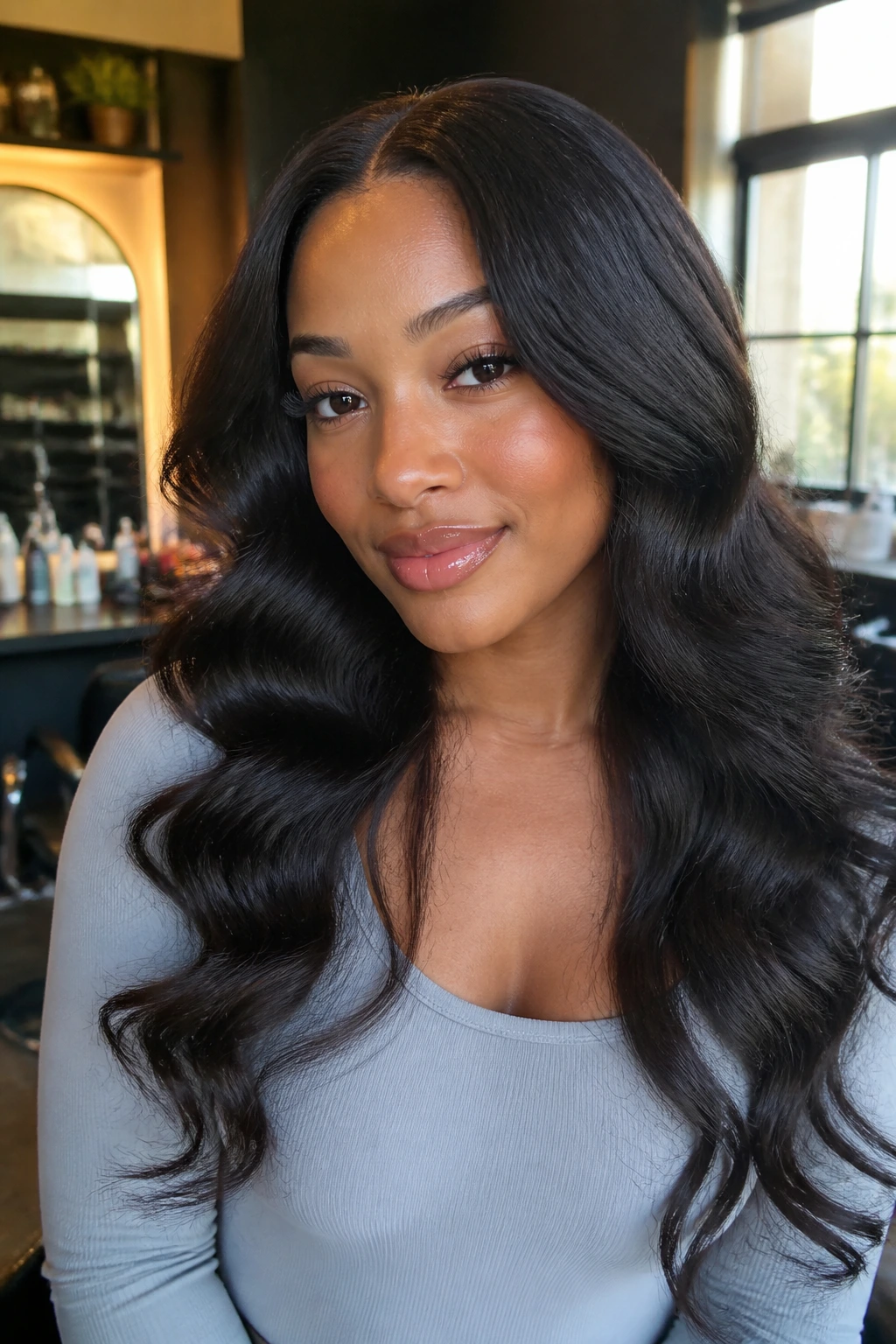
Choosing the right hair makes the style easier before you even touch a hot tool. For these looks, 100% human hair is the safest buy if you want to restyle, refresh, and wear the hair more than a few times. Synthetic can hold a shape, but it fights you once you want softer bends or a brushed-out finish.
If the label says Remy, that’s usually a good sign. It means the cuticles are aligned, which helps the hair stay smoother and tangle less. Body waves show their problems fast when the hair is rough or dry, because the bend pattern gets fuzzy instead of soft. If you’ve ever seen a wave pattern go puffy after two wearings, that’s usually where the cheapness shows.
For length, 20 to 24 inches is the easiest zone for most heart-shaped faces. You get drama without the style swallowing the shoulders. If you go longer, like 26 inches or more, add layers or keep the density moderate so the ends don’t look like a thick blanket.
Density matters more than people admit. A wig or install around 130% to 150% density usually gives enough fullness to look lush while still letting the face stay visible. If the density is too high, the sides can puff outward and make the forehead and temples look larger. Too low, and the body wave loses its whole point.
For caps and installs, choose based on parting freedom. A 5×5 closure is easy to live with and works well for center or slight off-center parts. A 13×4 frontal gives more room for deep side parts and swept styles. If you know you love switching parts, pay for that flexibility up front. It’s less annoying than pretending a fixed part is enough.
Color choice matters, too. Shadow roots, balayage, and money-piece highlights usually flatter heart-shaped faces better than one flat, bright block. If you want blonde, keep some depth near the root. If you want dark hair, let the shine and the wave pattern do the talking.
How to Style and Wear Them
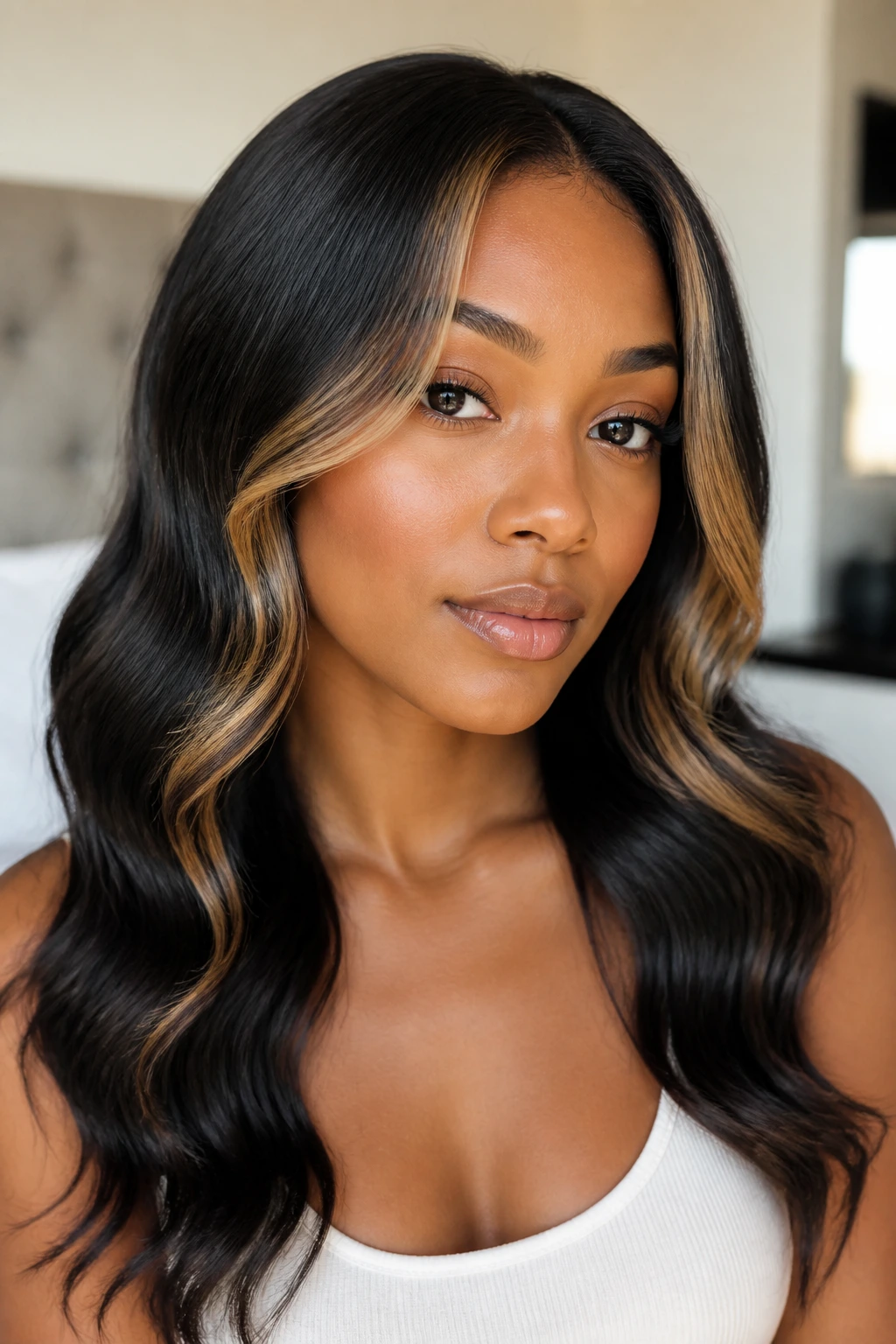
Presentation: Keep the front pieces light enough to show your cheekbones and soft enough to sit around the jaw. On heart-shaped faces, the best body wave silhouette usually starts below the temple and gets fuller as it moves toward the collarbone. If the waves start right at the root, the style can feel top-heavy fast.
Accessories: Medium hoops, narrow headbands, slim clips, and a tucked side all work well because they don’t crowd the face. Heavy statement earrings can fight with a very full install. If the hair is the main event, keep the accessories in support mode.
Proportion: For long hair, the safest sweet spot is enough length to hit the chest or lower, but not so much density that the ends sit like one solid block. If you love 24- to 26-inch hair, make sure the cut has movement. Otherwise, the length just hangs there.
Occasion Pairing: Center-part waves with curtain pieces read softer and more casual. Deep side parts, glossy finishes, and polished ends lean dressy. Half-up versions sit in the middle and work when you want the hair to look styled without feeling formal.
Extra Styling Moves That Make a Difference
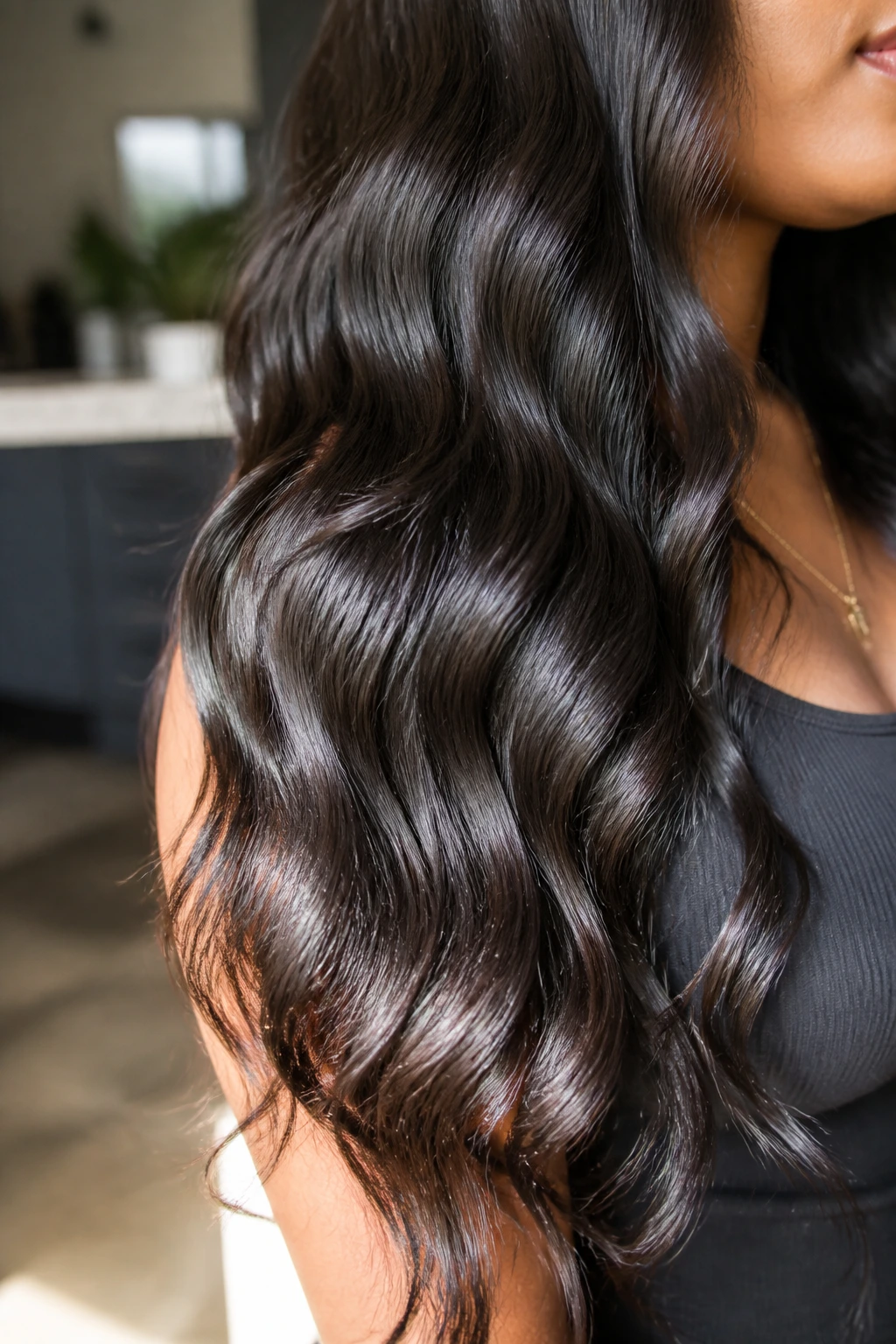
Shine Boost: Use a tiny amount of serum only from the mid-lengths down. If the roots shine too much, the top goes flat and the whole install looks older than it is.
Customization: Shift the part ¼ to ½ inch off center if your forehead feels broad. That small move can change how the whole face reads without making the style obviously “side part.”
Volume Control: If you want lift, add mousse at the crown and brush it through before drying. If you want a sleeker finish, smooth the top with a soft brush and leave the bend for the lower half.
Face-Framing: Curl the front pieces away from the face, then let them cool before brushing. That keeps the curve soft and avoids that stiff, salon-fresh look that can feel too set.
Make-It-Yours: For finer hair, stay in the 20- to 22-inch range. For dense hair or a bolder look, go longer and keep the layers invisible. Both can work; the cut just has to match the amount of hair.
How to Keep the Wave Pattern Between Washes
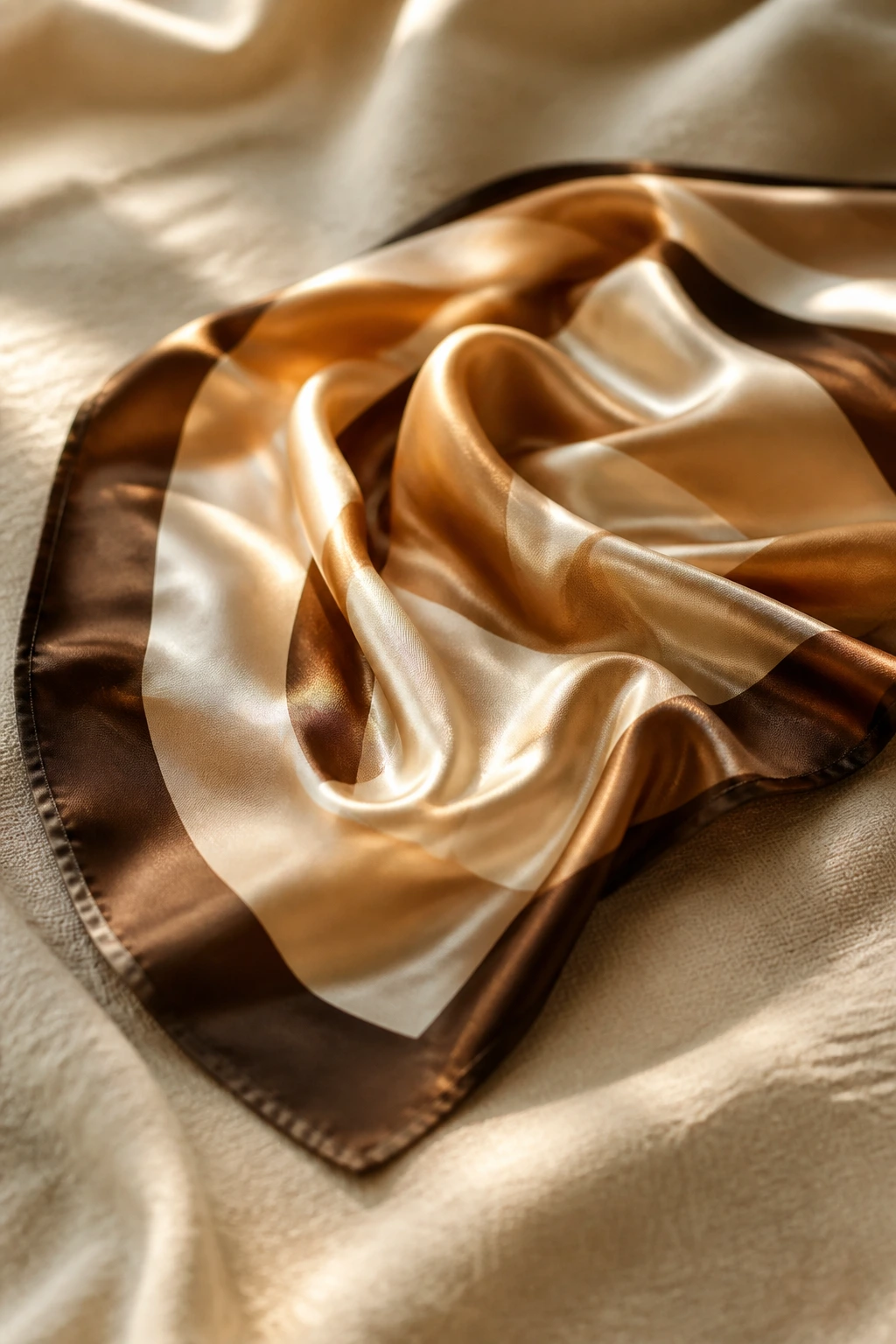
Body waves stay prettier when you stop trying to “fix” them every day. That sounds obvious, but people still overheat the hair, overbrush it, and then wonder why the pattern dies. On wigs, store the hair on a stand or mannequin head when you’re not wearing it. On sew-ins, wrap the hair in a silk scarf or bonnet before bed and keep the waves in two loose braids if they tangle easily.
If the hair starts to look sleepy, use a fine mist of water mixed with a little leave-in conditioner and scrunch the waves with your hands. A small amount of foam on the lower half can bring the bend back without making the hair stiff. That refresh method usually works best every 2 to 3 wears for wigs, or every few days for sew-ins that get handled a lot.
For washing, a wig usually does fine with a full cleanse every 7 to 10 wears if you use light products. Sew-ins depend on scalp oil and product build-up, but a gentle cleanse every 1 to 2 weeks is a sensible rhythm. Dry the hair completely at the base. Damp braids under a weave are a bad idea, and they smell worse than they sound.
Heat should stay moderate. Human hair body waves usually respond well to 300°F to 350°F for touch-ups, depending on the quality of the hair. Colored or fine hair should stay lower. Touch only the pieces that need it. If you re-curl the whole head every other day, you’ll burn through the wave pattern fast.
Deep-condition the ends every 2 to 4 weeks if the hair is human and the cuticle starts to feel rough. Keep the treatment off the roots. Roots want lift. Ends want slip. Different job.
Common Mistakes to Avoid
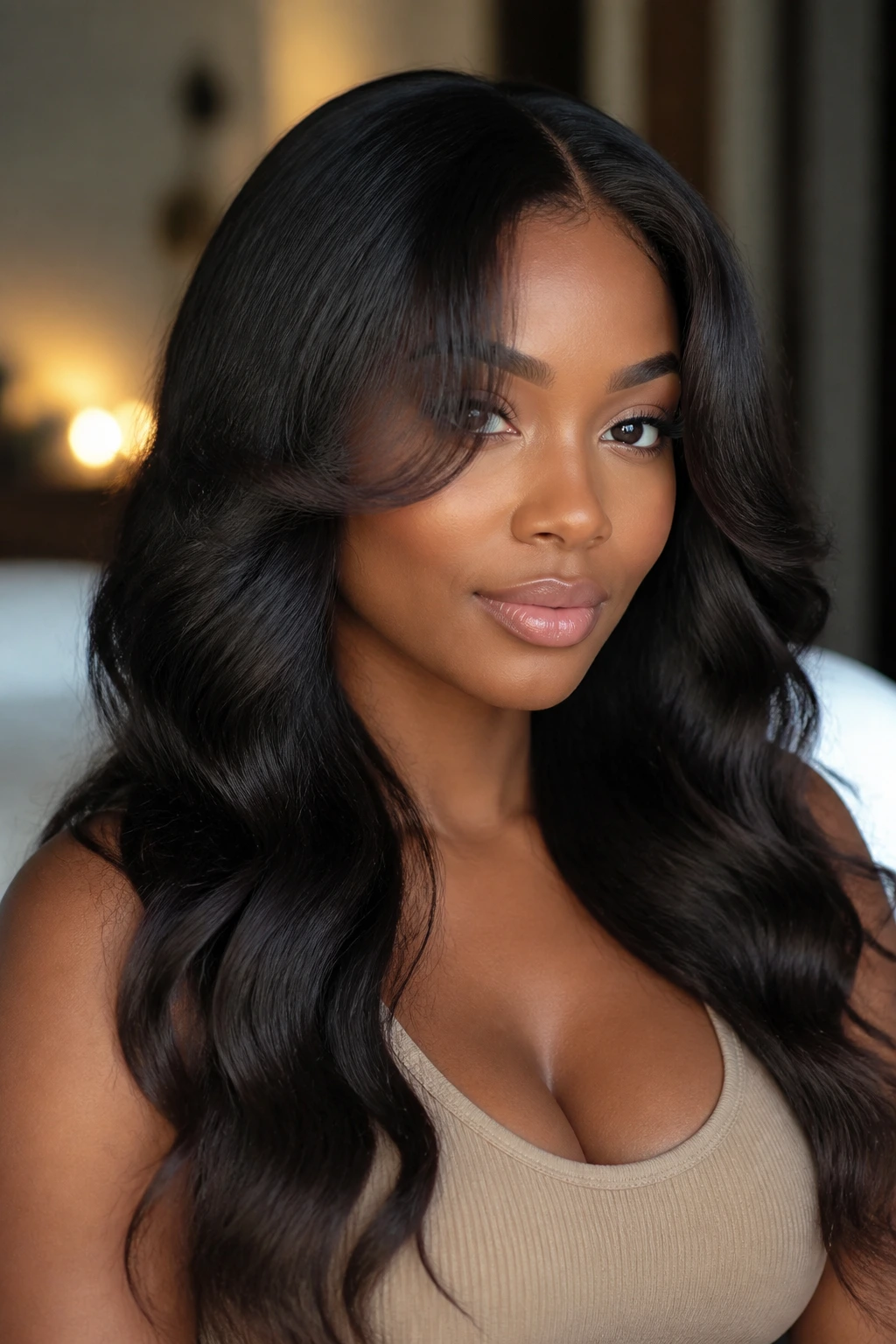
-
Starting the wave too high: If the bend begins right at the roots, the forehead can look wider and the style can feel top-heavy. Fix it by beginning the wave around the cheekbone or ear line instead.
-
Choosing too much density: Hair that’s too full at the sides can crowd the face and make the jaw look narrower. If that happens, go lighter on density or ask for internal thinning and layers.
-
Curling into tight ringlets: Body waves should stay soft and loose. If you use a small barrel or don’t brush the curls out, the style stops looking like body wave hair and starts looking overdone.
-
Skipping face-framing pieces: Long lengths with no front movement can look like a blanket hanging from the scalp. Even subtle front layers make the style softer and more balanced.
-
Using heavy oils near the root: Too much shine product flattens the crown and makes the weave look greasy. Keep products from the ear down and use only a small amount.
-
Leaving the part dead center when it doesn’t suit your face: A perfect center part can be too strict on some heart-shaped faces. Move it a little off center if the forehead feels too dominant.
Variations and Adaptations to Try
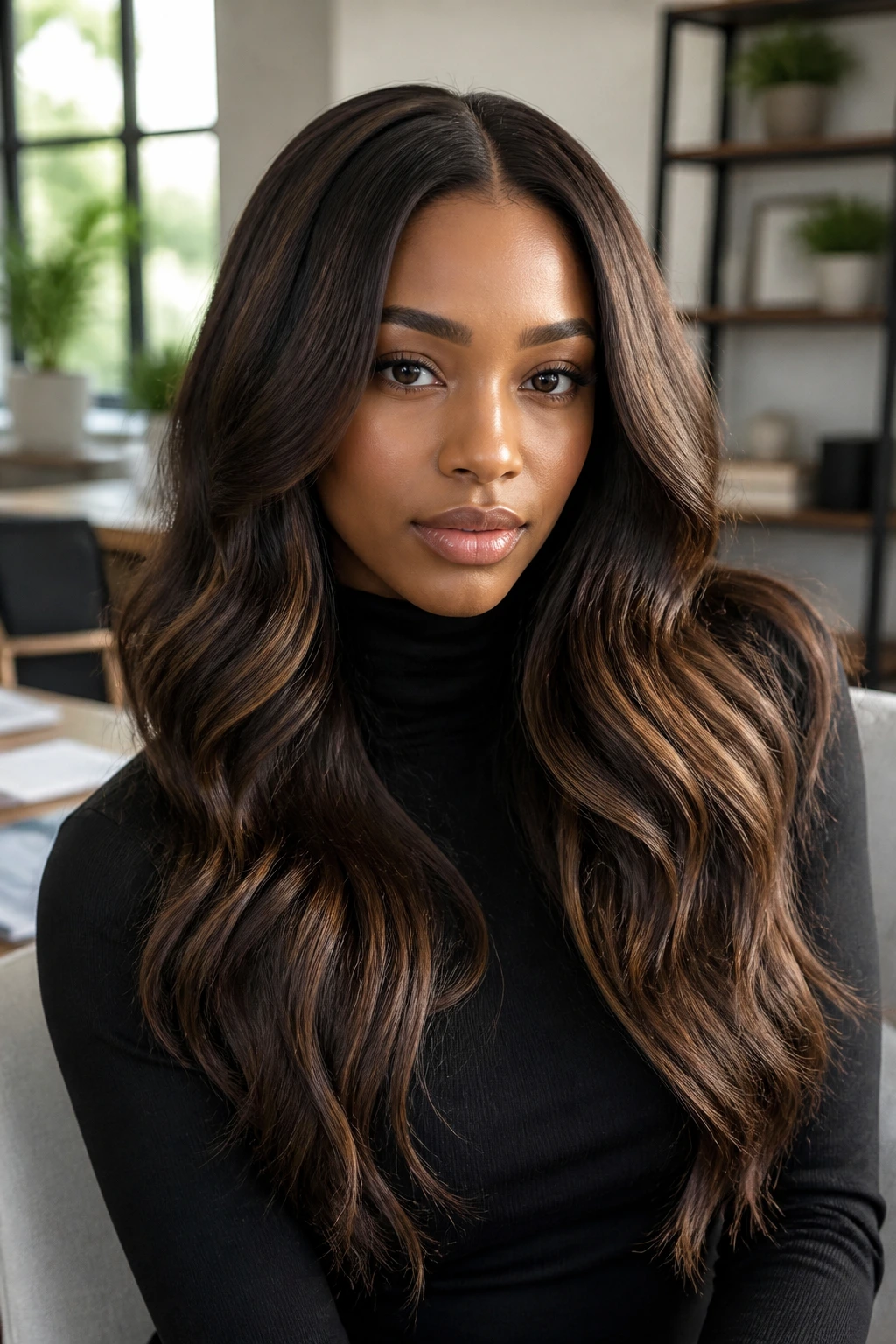
Soft Office Version: Keep the length around 20 to 22 inches, use a clean center part, and choose a natural brunette or soft highlight blend. This version stays polished without asking for constant attention. It’s the one that slides easiest under a blazer or a simple knit.
Event-Ready Glam Version: Go longer, closer to 24 or 26 inches, and lean into a deep side part with brushed-out waves. Add a little shine spray and keep the front pieces sweeping back from one temple. It’s bold without turning stiff.
Protective Closure Version: Pick a 5×5 or 6×6 closure and keep the leave-out minimal or nonexistent. That gives you a cleaner scalp area and fewer daily heat passes. It’s a smart choice if you want the shape more than the styling work.
Color-Play Version: Try caramel ribbons, honey ends, or a soft root shadow to keep the face bright but not washed out. The color should follow the wave pattern, not sit in hard blocks. A little depth near the roots keeps the forehead from taking over.
Thick-Hair Rescue Version: Ask for invisible layers, lighter ends, and moderate density so the hair moves. Thick long hair needs air. Without it, even a pretty body wave looks bulky.
Low-Heat Steam Version: Use steam or a foam wrap to reset the shape instead of hot tools every time. This is the version for people who want to keep the wave pattern alive longer and avoid frying the front pieces.
Frequently Asked Questions
Which body wave length looks best on a heart-shaped face?
Most people land well in the 20- to 24-inch range because it gives movement without dragging the face down. If you go longer, add layers so the ends don’t sit like one heavy block.
Is a center part or side part better for this face shape?
Both can work. A center part looks best when the front pieces are soft and cheekbone-length, while a side part is better if you want to reduce forehead width and add a little lift.
Should body wave extensions be layered?
Usually, yes. Long layers or invisible layers keep the style from looking flat and make the wave pattern show up better. Blunt ends on very long hair can make the whole install feel boxy.
How many bundles or what density should I choose?
For long installs, 3 bundles usually works for around 18 to 22 inches, while longer hair may need 4 bundles if you want fullness. For wigs, 130% to 150% density is often the best balance for body waves on heart-shaped faces.
Can I wear body waves with a closure instead of a frontal?
Absolutely. A closure is easier to maintain and still gives you a polished part. If you love switching between center and side parts, a larger closure like 5×5 or 6×6 helps a lot.
How do I keep body waves from falling flat?
Don’t over-oil the roots, don’t sleep on the hair without protection, and don’t re-curl the whole head every day. Use a little mousse or wrap foam, refresh the lower half, and keep the crown light.
What if the weave looks too bulky around my cheeks?
That usually means the density is too high or the layers are too blunt. Ask for interior thinning or choose a cut that removes weight below the cheekbone so the face stays visible.
Do body waves tangle easily?
They can, especially if the ends are dry or the hair is brushed rough when it’s wet. Keep a wide-tooth comb or paddle brush nearby, and smooth the hair from the ends upward rather than yanking from the root.
Can I wear this style every day without heat styling it?
Yes, if the install was cut well and the hair is good quality. A satin wrap at night, a light morning mist, and a quick finger-comb are often enough to keep it presentable for several days.
Why This Shape Keeps Working
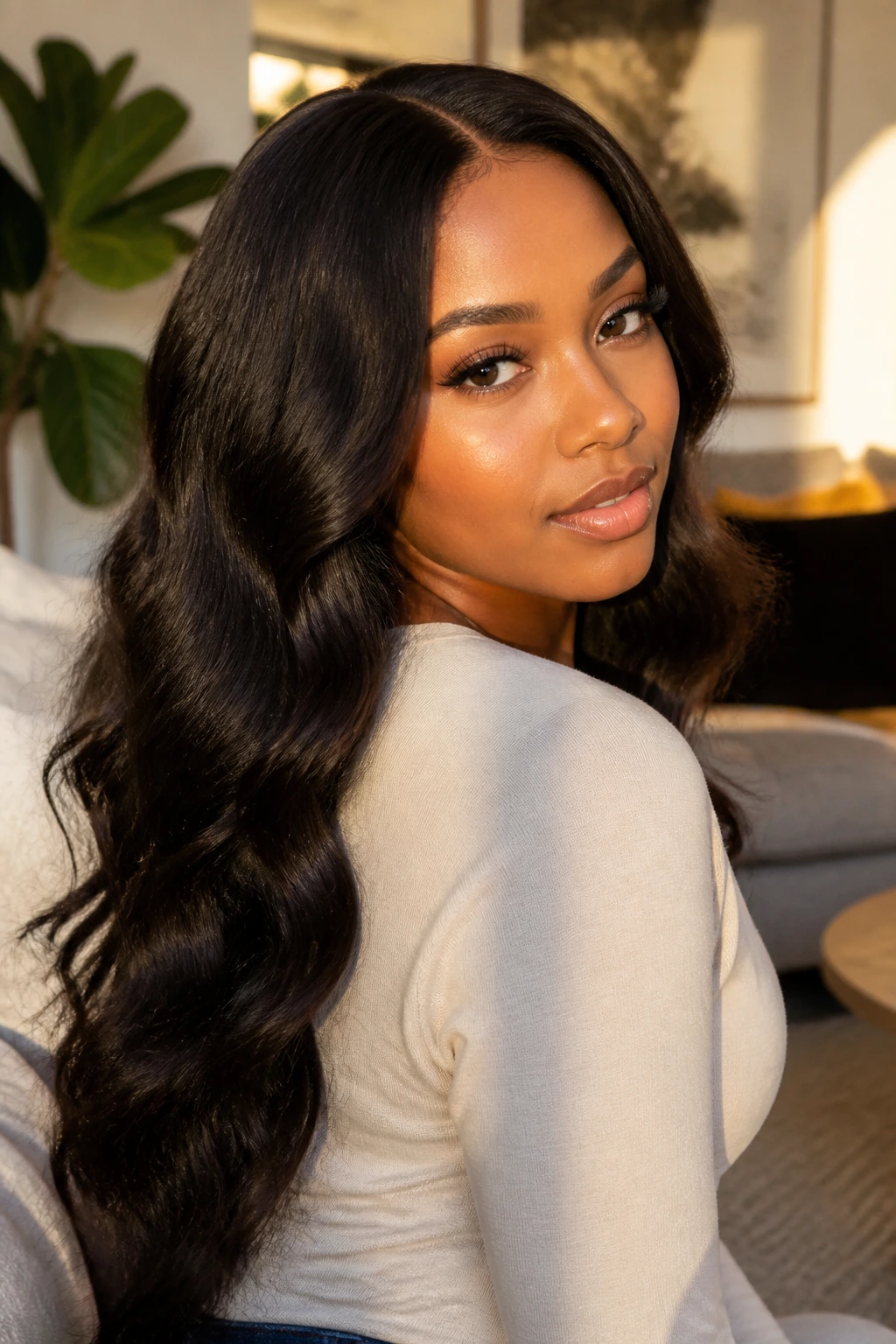
Long hair can get lazy fast. Body waves don’t. That’s the real reason they stay useful on heart-shaped faces: they create shape where long hair often loses it. The bend at the mid-length, the soft frame at the cheekbone, and the lower width near the jaw all do a little bit of work without shouting about it.
If you like the hair to feel soft but still structured, this family of styles is worth keeping around. Pick the version that matches your part preference, your maintenance level, and how much volume you actually want at the sides. Then let the wave pattern do what it’s good at. It’s steadier than most trends, and a lot less fussy than people make it sound.