



Thick hair changes the wig conversation fast. A cap that looked fine on a mannequin can start climbing at the nape, pressing at the temples, and feeling too warm by lunchtime once you put real hair under it. Monofilament wigs solve part of that problem because the top looks like a scalp instead of a flat sheet of hair, but the construction still has to play nicely with volume underneath.
That’s the part most shoppers miss. They focus on color, length, and curl pattern, then wonder why the wig feels bulky or the part looks suspicious once daylight hits it. For thick-haired wearers, the sweet spot is usually a smarter cap, a more forgiving density, and a shape that doesn’t trap every strand of your own hair under a heavy curtain of fiber.
I’m partial to styles that look calm from five feet away and still hold up when you tuck them behind one ear, throw on glasses, or spend an hour under bright office lights. A good daily wig shouldn’t feel like costume armor. It should feel like hair that has already done its job and stopped asking for applause.
Why These Picks Work Better When Your Own Hair Has Volume
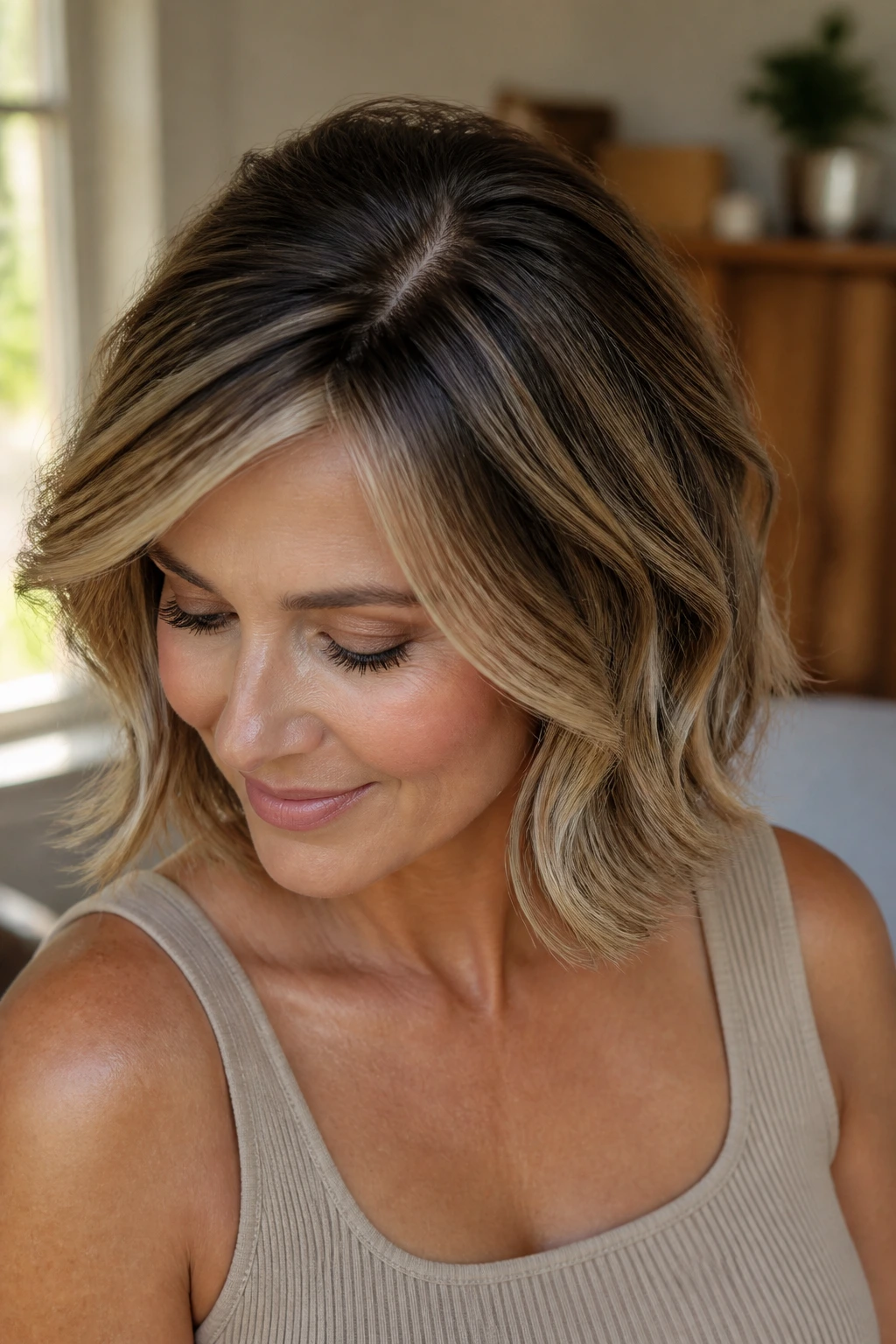
-
The part looks real: A monofilament top lets the scalp line show through, so the wig doesn’t depend on a single frozen part to look believable.
-
The cap has room to breathe: Styles built with sensible density and a little give at the nape are less likely to bunch up over braids, twists, or a flat bun.
-
The shape forgives a busy morning: Shoulder lengths, soft layers, and textured ends hide small shifts better than a poker-straight, high-density sheet of hair.
-
The weight stays manageable: Thick hair underneath already adds warmth, so lighter constructions and lighter fiber weights matter more than glossy showroom hair.
-
The styles work in daylight, not just in photos: Rooted colors, softer shine, and parting space help the wig look right when you’re sitting under an office lamp or walking outside at noon.
-
You get realism without overdoing it: The best everyday wig for thick hair usually looks a little calmer, a little softer, and a lot less “wiggy” than the dramatic options on a display head.
1. Full Monofilament Bob with a Soft Side Part

A bob is the easy answer when you want the wig to do less and still look finished. Keep it around jaw to collarbone length, give it a soft side part, and the whole shape suddenly becomes more forgiving over thick hair. The shorter length keeps the cap from feeling like it’s carrying extra weight, and the monofilament top gives the part enough realism to survive a quick glance in bad lighting.
Why it works
A bob does not have to fight your own volume. That’s the beauty of it. If your hair is braided flat or twisted close to the scalp, the shorter perimeter keeps the wig from dragging at the back of your neck, and the side part creates a little movement where a center part can look too neat. I also like bobs because they show when the cap is sitting correctly. If the nape is buckling, you’ll know right away.
What to look for
- 120% to 130% density so the shape reads like everyday hair, not a salon blowout.
- A 4×4 or 6×6 monofilament top if you want parting freedom.
- Softly textured ends instead of a hard, blunt line.
- Adjustable tabs and a nape that lies flat when you turn your head.
My bias: if you wear glasses, let the bob clear the temples by about half an inch. That tiny bit of space keeps the arms from shoving fibers apart all day.
2. Lace-Front Lob with Soft Layers
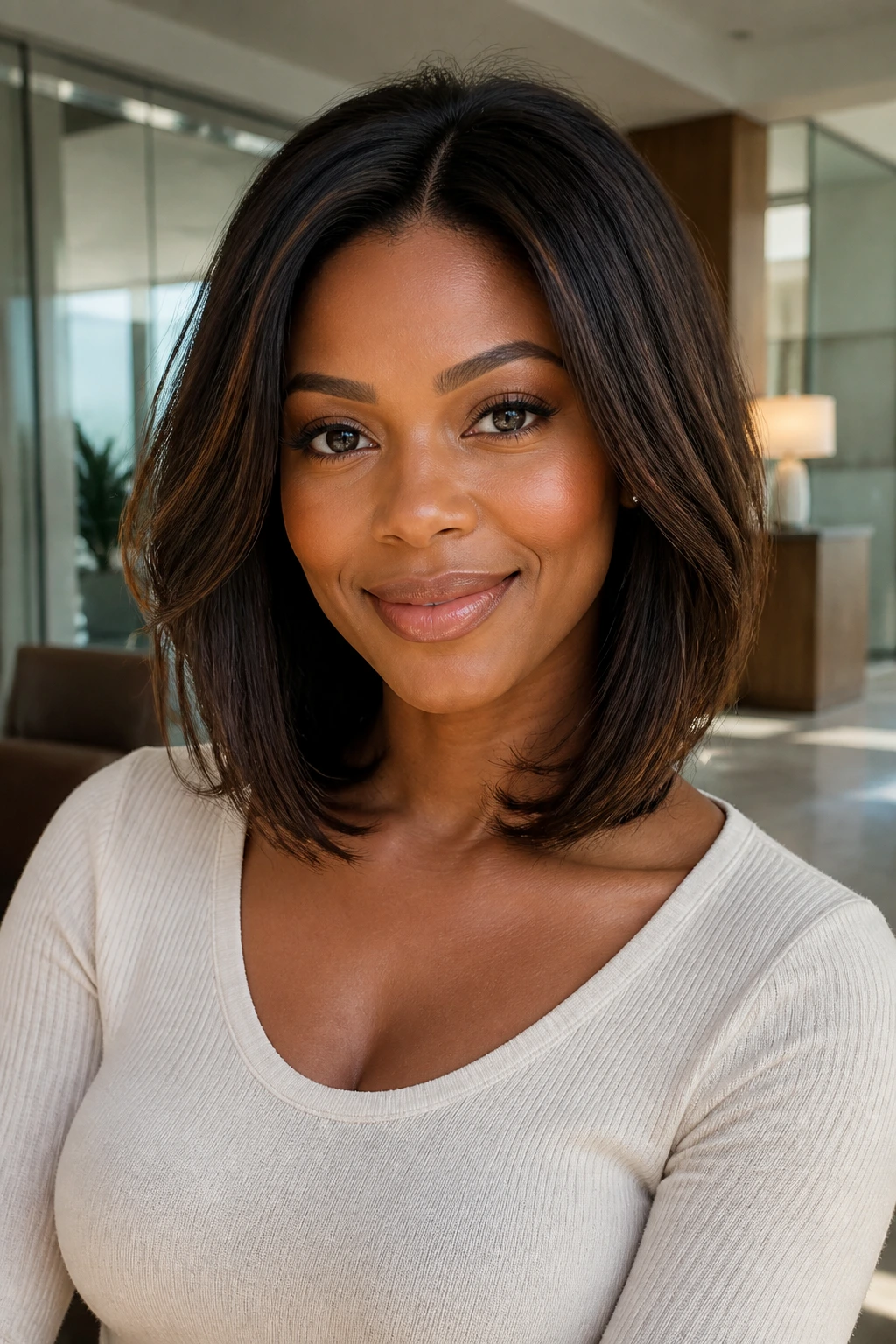
A lob gives you the nicest middle ground in this whole category. It’s long enough to feel styled, short enough to stay civilized, and soft layers keep it from piling into a thick block around your shoulders. The lace front makes the hairline less obvious, which matters if your own hair is dense around the front and you want the wig to blend instead of announce itself.
What makes it easy to live in
The collarbone length is the quiet hero here. Hair that stops around that point can be tucked behind the ear, flipped forward, or pulled over one shoulder without tangling into a scarf or jacket collar. For thick-haired wearers, that matters more than people think. You already have volume under the cap. You do not need a heavy curtain of fiber sitting on top of it.
The soft layers also help the wig breathe. Without them, a lob can turn boxy fast. With them, the movement feels less rigid, and the weight is spread out so the style settles instead of puffing.
I’d choose this cut for a workday wig, an errand wig, and a “I need to look like I made an effort” wig. It does that job well. Quietly.
3. Monofilament Shag with Feathered Ends

Why does a shag work so well when your own hair is thick? Because it cheats the eye. All those broken layers and feathered ends make the wig look softer, and the monofilament crown keeps the part believable even when the rest of the style has some texture and attitude. If you’ve ever felt like dense hair makes a wig look too solid, this is the antidote.
The science of the shape
A shag breaks up bulk instead of stacking it. That’s the whole point. Thick hair underneath already gives the wig some lift, so you want a cut that uses that lift instead of adding another heavy layer of width. Feathered ends stop the silhouette from turning into a triangle, especially if the wig falls past the chin.
How to get the most from it
- Choose medium-low density so the layers can move.
- Keep the roots rooted or shaded; a single flat color makes shags look wig-like faster.
- Finger-style first, brush only when you need to settle the ends.
- Let the fringe sit a little messy. The whole cut depends on that softness.
A shag is also forgiving if you’re wearing your own hair in braids or twists. The texture hides small changes in the cap line. That’s one of those practical advantages nobody puts on a product page, but it’s the reason people keep reaching for shaggy shapes in real life.
4. Tapered Pixie with Monofilament Crown
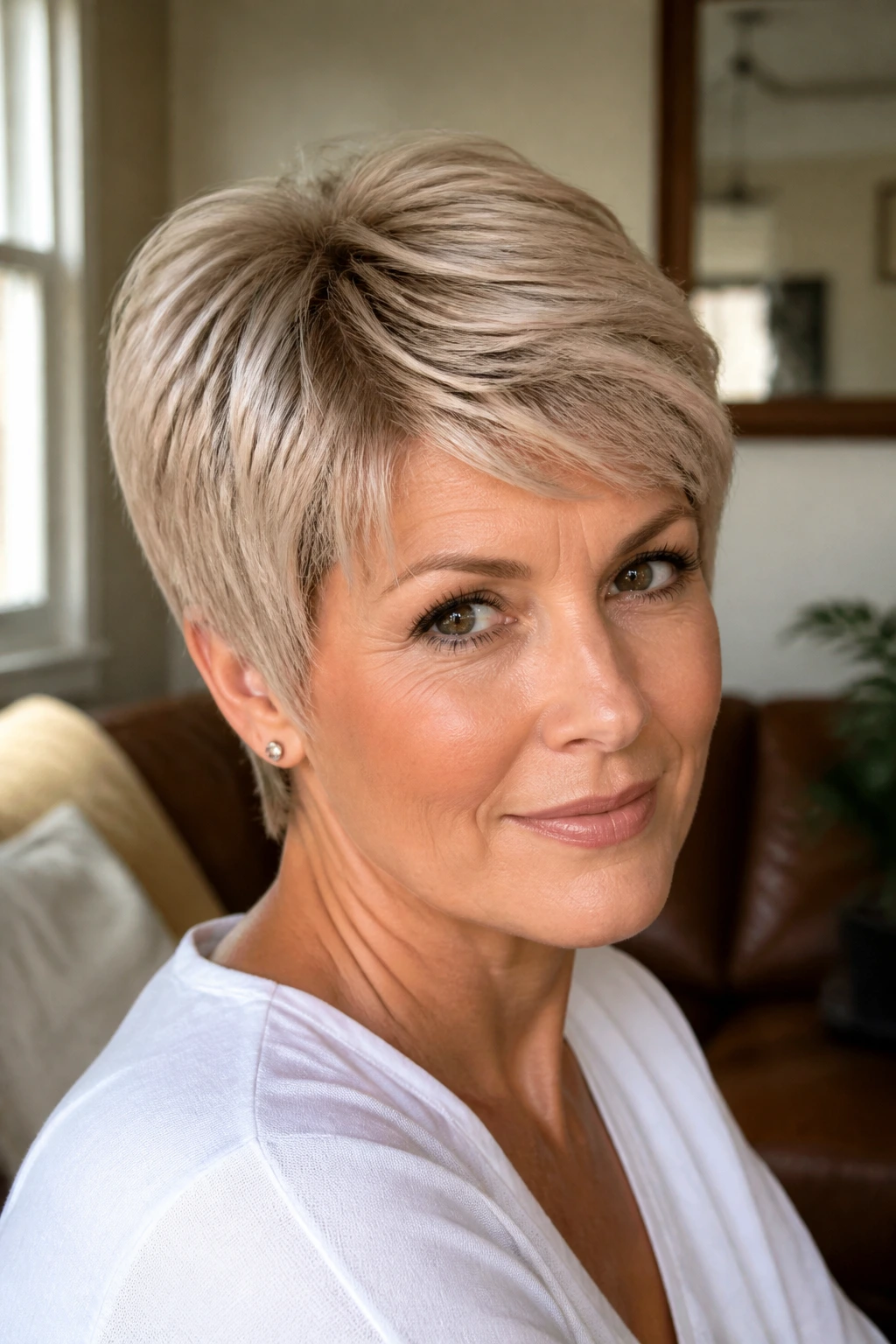
On days when you want the hair off your neck and off your shoulders, the pixie starts making sense fast. A tapered pixie with a monofilament crown gives you the most “I got dressed in ten minutes” energy in the group, but it still looks polished because the top has scalp realism where the eye goes first.
Why this cut earns its place
The short sides and tapered nape take pressure off thick hair underneath. That matters. Less length means less fabric and fiber fighting the volume you already have. The monofilament crown also helps because pixies can look flat at the top if the part or crown area is too dense. With the right construction, the cut feels light without looking sparse.
Best details to check
- A softly tapered nape so it doesn’t kick outward over the natural hair.
- Open wefts or a light back panel for airflow.
- A crown area that lets you lift the roots a little with your fingers.
- Around 100% to 115% density if you want the cut to look believable.
I like this style for commute days, warm rooms, and anyone who hates hair brushing the collar. It is not the most dramatic option. Good. That’s the point.
5. Curly Shoulder-Length Mono Wig

Curly shoulder-length wigs are sneaky-good for thick hair because they never look too perfect. The texture hides small shifts in the cap, the mono top keeps the part from looking like a painted line, and the shoulder length gives the curls enough room to move without swallowing your frame. If your own hair is thick, curly, or both, this shape usually feels more natural than ultra-straight styles.
The trick is density. Too much, and the curls balloon into a triangle. Too little, and the curl pattern collapses in the wrong places. I prefer a medium density here, with curls that start a little below the roots so the top doesn’t puff up like a sponge.
A water-based curl refresher works better than heavy cream on synthetic versions. For human hair, a little leave-in on the mid-lengths is fine, but keep it away from the monofilament area. That top section should stay clean and airy, not coated.
This is one of the easiest styles to wear when you do not want to babysit a part all day. The curls do some of the hiding for you. Nice when the rest of your morning is already noisy.
6. Hand-Tied Blunt Midi with Low Density
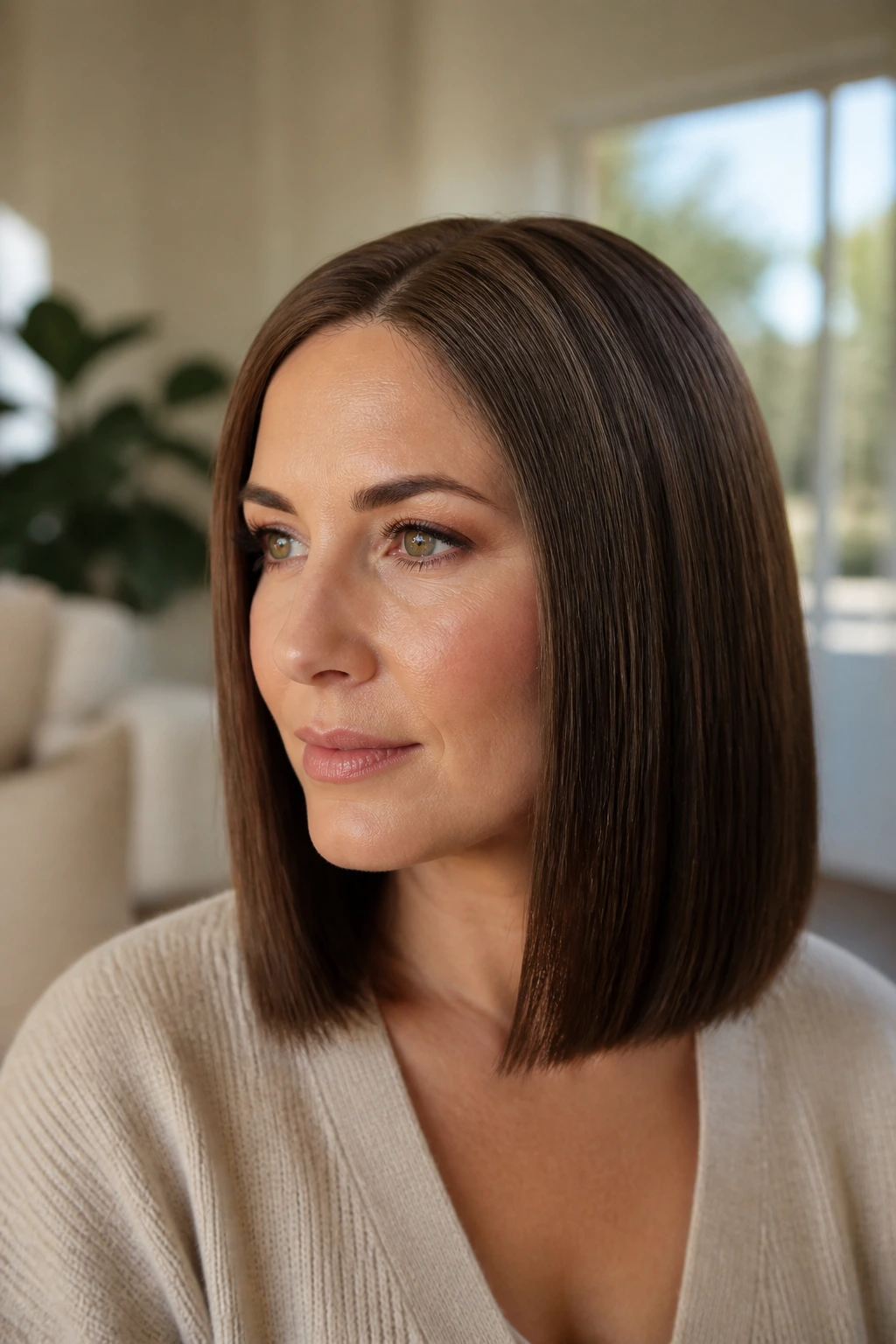
Unlike layered cuts, a blunt midi gives you a sharper silhouette. That can look expensive when it’s done right, and awkward when the cap is too full. A hand-tied construction helps because it lies flatter against dense natural hair, so you get the clean line without the extra puff at the crown or nape.
Why it’s worth the trouble
A blunt midi is a little less forgiving than a shag or lob. Every bump shows. That’s why hand-tied matters here. The cap sits smoother, the fibers move more naturally, and the wig is less likely to rub at the sides if your own hair is already doing a lot under there. If you work long shifts or wear glasses, that flatter fit can save you from temple pressure.
I’d keep the density restrained. 115% to 125% is usually enough for this cut. More than that and the straight line starts to look bulky instead of sleek. A slight bevel at the ends helps too. You want the edge to curve softly, not stick out like a ruler.
This one is for people who like clean lines and can tolerate a little more upkeep. It rewards tidy styling.
7. Heat-Friendly Wave Lob with a Deep Part
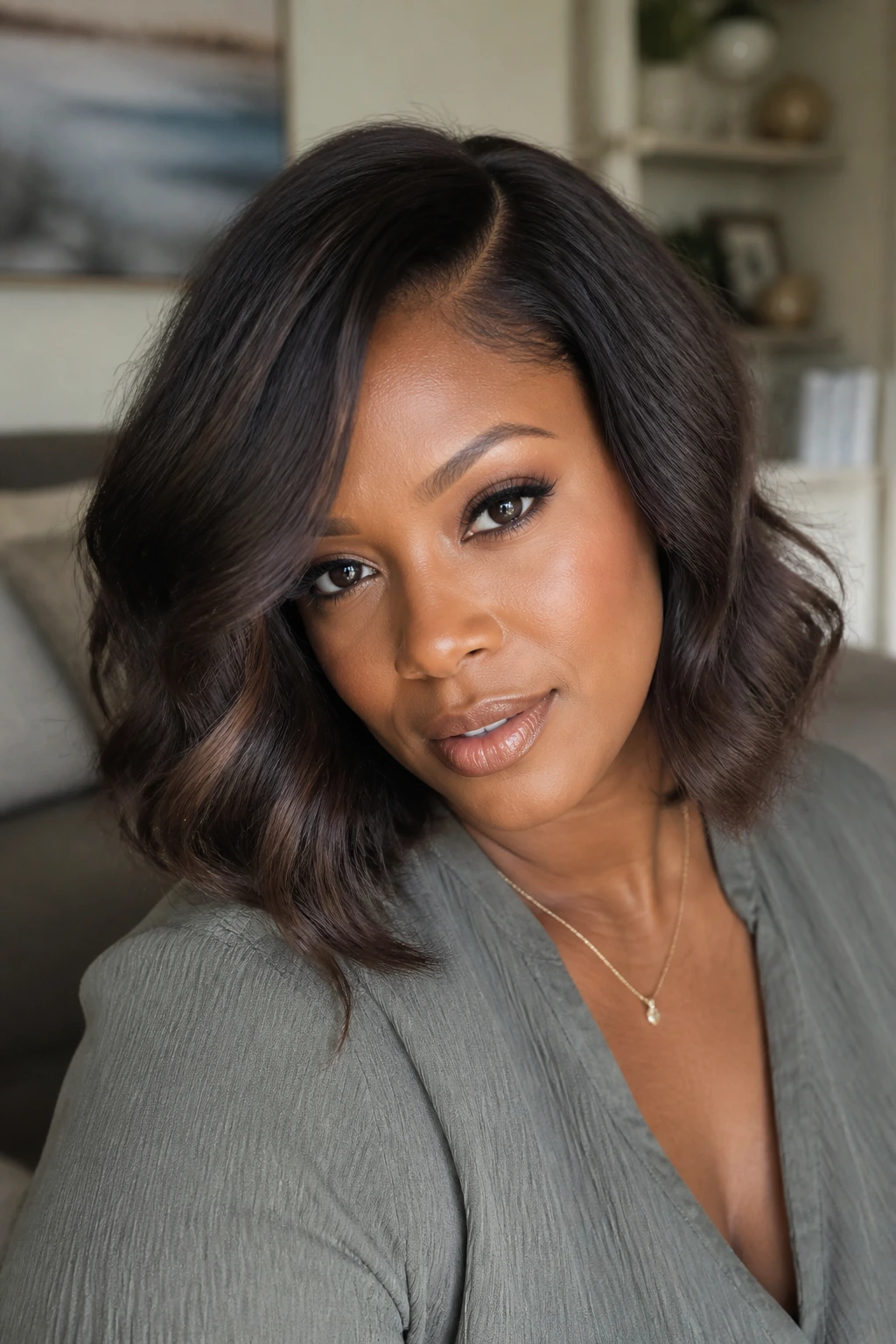
A wave lob is one of the most forgiving everyday shapes because the movement hides little cap shifts that straight hair would expose immediately. Add a deep part, and the wig gets a more natural bit of lift near the face without demanding much daily styling. If the fiber is heat-friendly synthetic, keep your tools within the listed range — usually around 275°F to 300°F — because hotter irons can fry the strands fast.
That deep part matters more than it sounds like it should. It gives the eye a reason to believe the scalp line, and it also lets thick hair underneath sit a little more comfortably because you’re not forcing a dead-center split. A slight bend through the lengths softens the outline around the shoulders. Hard waves are fussier. Soft ones are easier to live with.
I like this style for people who want movement but don’t want to curl hair every morning. Give it a quick shake, finger-comb the top, and you’re out the door. Simple. Which is rare enough to be worth saying plainly.
8. Sleek Human-Hair Monofilament for Straight Days
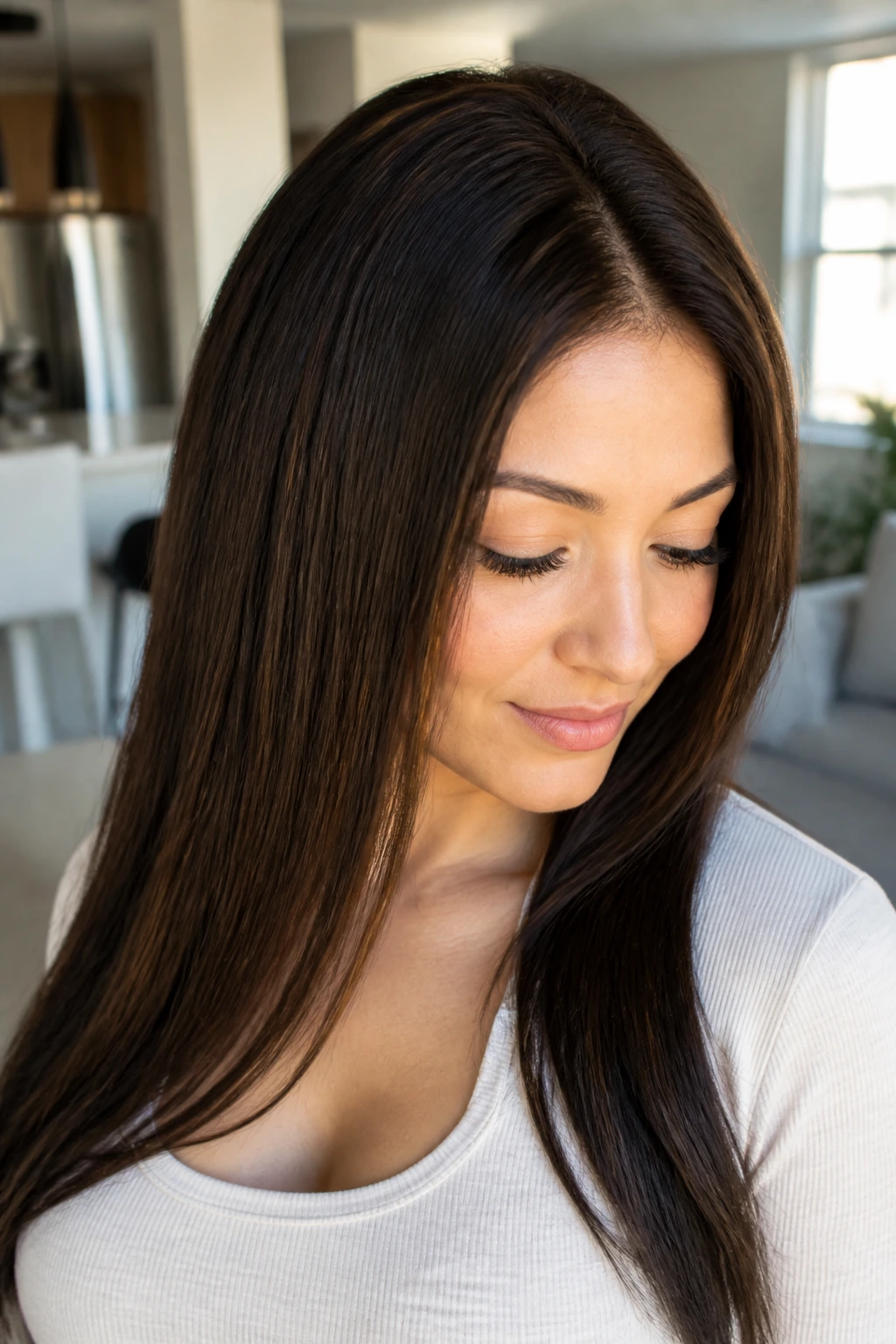
Some mornings call for straight hair that actually stays straight. Human-hair monofilament wigs handle that job better than most synthetic options because you can blow-dry, smooth, or lightly iron them into place without the fiber giving up. They are heavier, yes. But over thick hair, that weight can feel balanced rather than annoying if the cap is fitted correctly.
What to expect
Human hair moves more like hair, which sounds obvious until you compare it to a fiber that wants to snap back to its packaged shape. The monofilament top helps the part stay believable while the hair itself settles naturally along the face and shoulders. For thick-haired wearers, that combination can be worth the extra care, especially if your own hair texture is coarse or wavy and you want a closer visual match.
Keep the finish soft. Don’t flatten it into a glass sheet unless that is the exact look you want. A little body through the ends makes the wig feel less brittle and more wearable.
This is the kind of wig I’d choose if I needed one style to work with blazers, simple tees, and everything between. It reads calm. That matters.
9. Petite-Cap Monofilament for Dense Hair
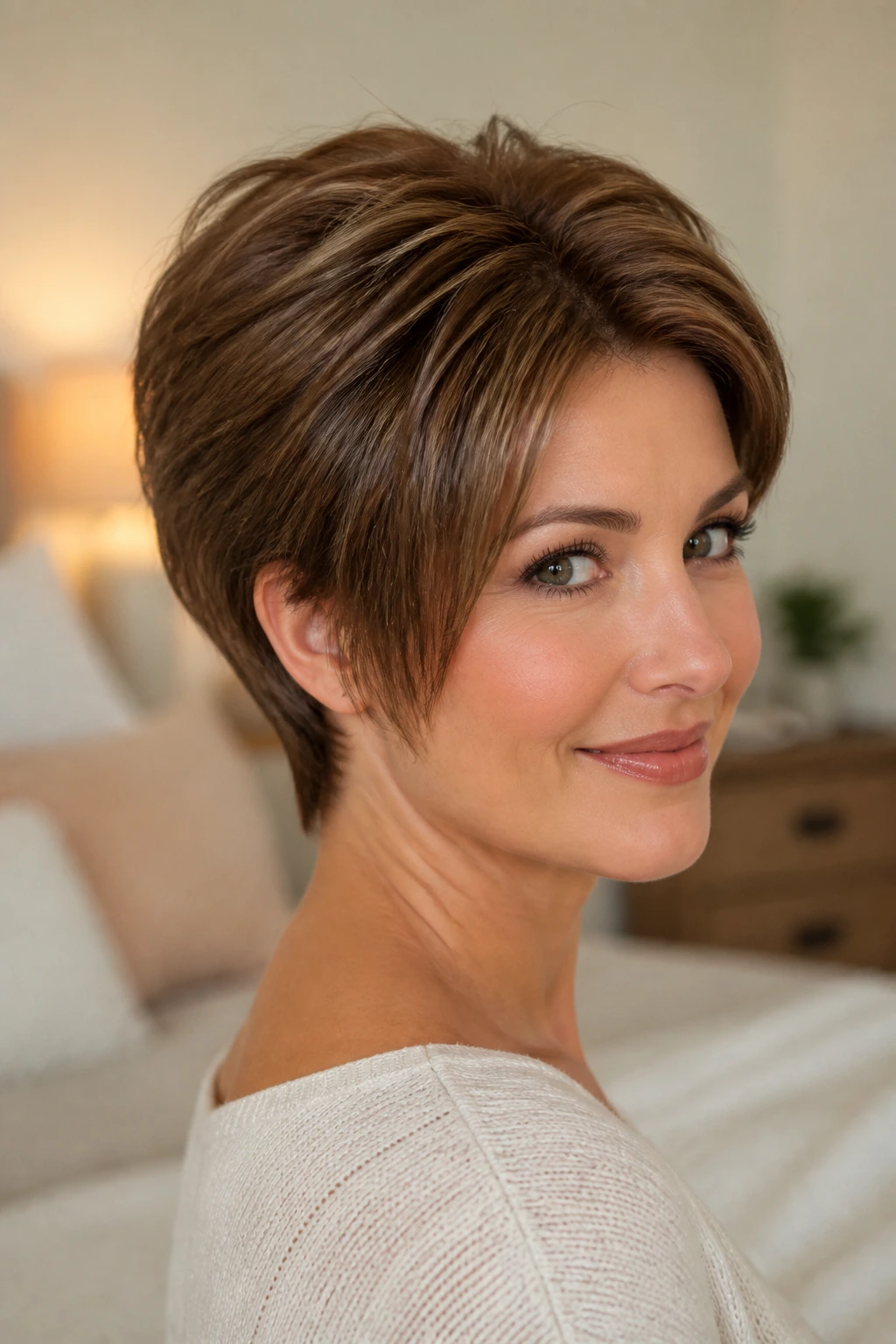
What if your hair is thick but your head is small? Then a standard average cap can feel like too much fabric wrapped around too little space. A petite-cap monofilament wig fixes that problem before it starts. The key is fit, not fantasy. If the circumference is off, everything else gets messy.
Most petite caps sit roughly around the 20 to 21.25-inch range, though sizes vary by maker. The useful part is not the exact number — it’s the way the cap hugs the head without collapsing at the temple or floating at the crown. If you have dense hair in a compact braid pattern, petite sizing can keep the wig from riding high and sliding back during the day.
I’d still look for adjustable tabs and a soft nape. Petite does not mean tight. It means proportioned. If you can feel the cap fighting you after ten minutes, the size is wrong, even if the length looks right on paper.
This is the style for people who have spent too many mornings trying to stuff a lot of hair into an average shell. Been there. It’s not worth it.
10. Large-Cap Monofilament for Braids, Twists, and Big Hair
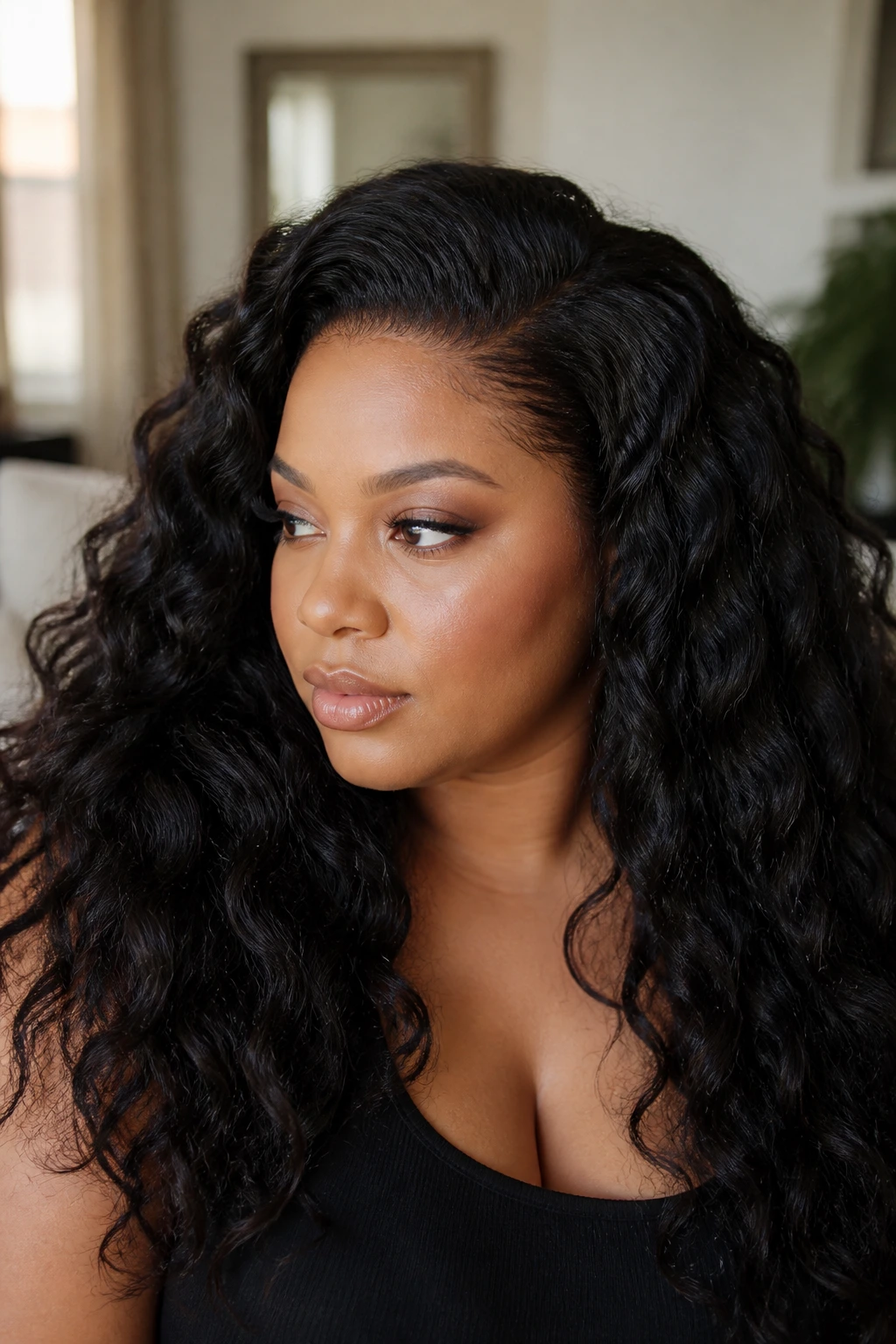
If you are forcing thick hair into a cap that barely closes, no monofilament top can rescue the fit. A large-cap wig exists for exactly that reason. The extra room matters most when your own hair is worn in two braids, flat twists, or anything that adds shape at the nape and crown. Measure over the style you actually wear, not on fresh hair that has been pressed flat just for the tape.
A large cap usually lands around 22.5 to 23.5 inches, though some brands stretch a little beyond that. What matters is how the fabric behaves once it’s on. You want enough space that the wig can settle without buckling at the ears or creating a ridge at the back. That ridge is what people see in mirrors. It’s also what you feel every time you turn your head.
I’d pick a large-cap monofilament before I’d buy a gorgeous style in the wrong size. Wrong size beats good shape every time. Not in a useful way. In a miserable one.
11. Salt-and-Pepper Monofilament with Soft Movement

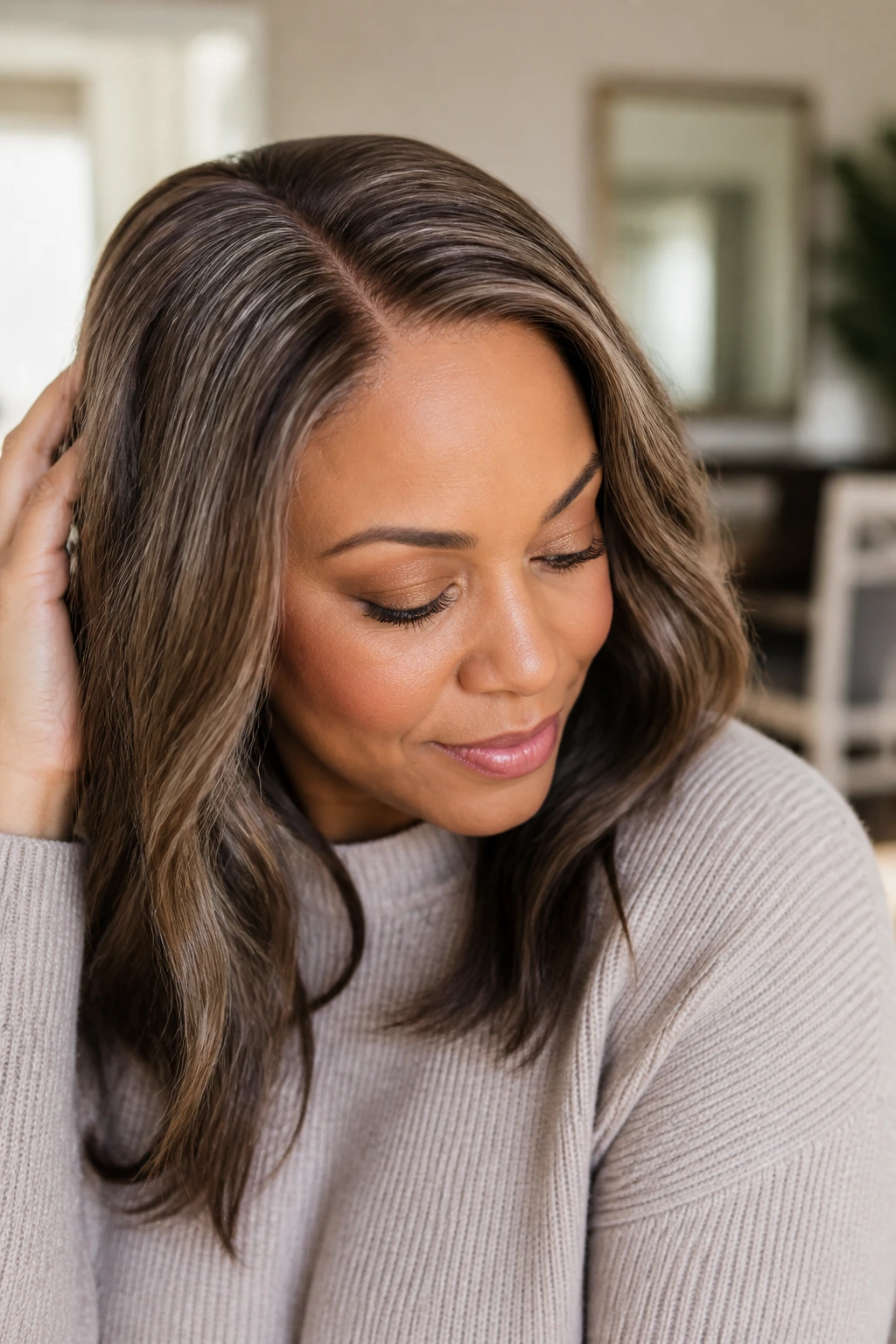
Gray blending can be tricky, because one flat silver shade often looks harsher than the real thing. A salt-and-pepper monofilament wig handles the issue better by mixing ash, charcoal, and silver tones through the top and sides. The result is softer around the part, which matters if your own hair has gray at the temples or a mix of dark and silver strands.
The soft movement is what keeps it from reading stiff. Thick hair underneath already gives the wig some lift, so a little texture helps the color look natural instead of printed on. Rooted pieces, low shine, and a gentle wave through the ends all help.
I like this style for people who are tired of pretending every strand has to match. It doesn’t. Matching the mix is often better than chasing a single perfect shade. That little mismatch is what makes a wig look too polished in the first place.
This one is quietly practical. No drama. Just a calmer color story that plays nicer with real hair.
12. Curtain-Bang Monofilament for Face Softness

Curtain bangs solve a problem most people don’t name out loud: they hide the front edge. That matters when you have thick hair, because a dense natural hairline under a wig can make the front look crowded if the style is too severe. Curtain bangs soften the transition, and the monofilament top keeps the part from looking pasted on.
Why the fringe helps
The bangs break up the front plane of the wig, which means the eye spends less time staring at the exact line where the cap begins. They also make the style easier to wear on busy days because you can skip some of the precision at the hairline and still look finished. I’m a fan of this shape for anyone who wants movement near the face without full-on bangs that need constant trimming.
Keep the fringe light and a little longer than you think. Short, heavy bangs can expose more cap than they hide. A softer sweep sits better over thick hair and gives you room to tuck one side back if needed.
Small change. Big payoff.
13. Open-Weft Back Style
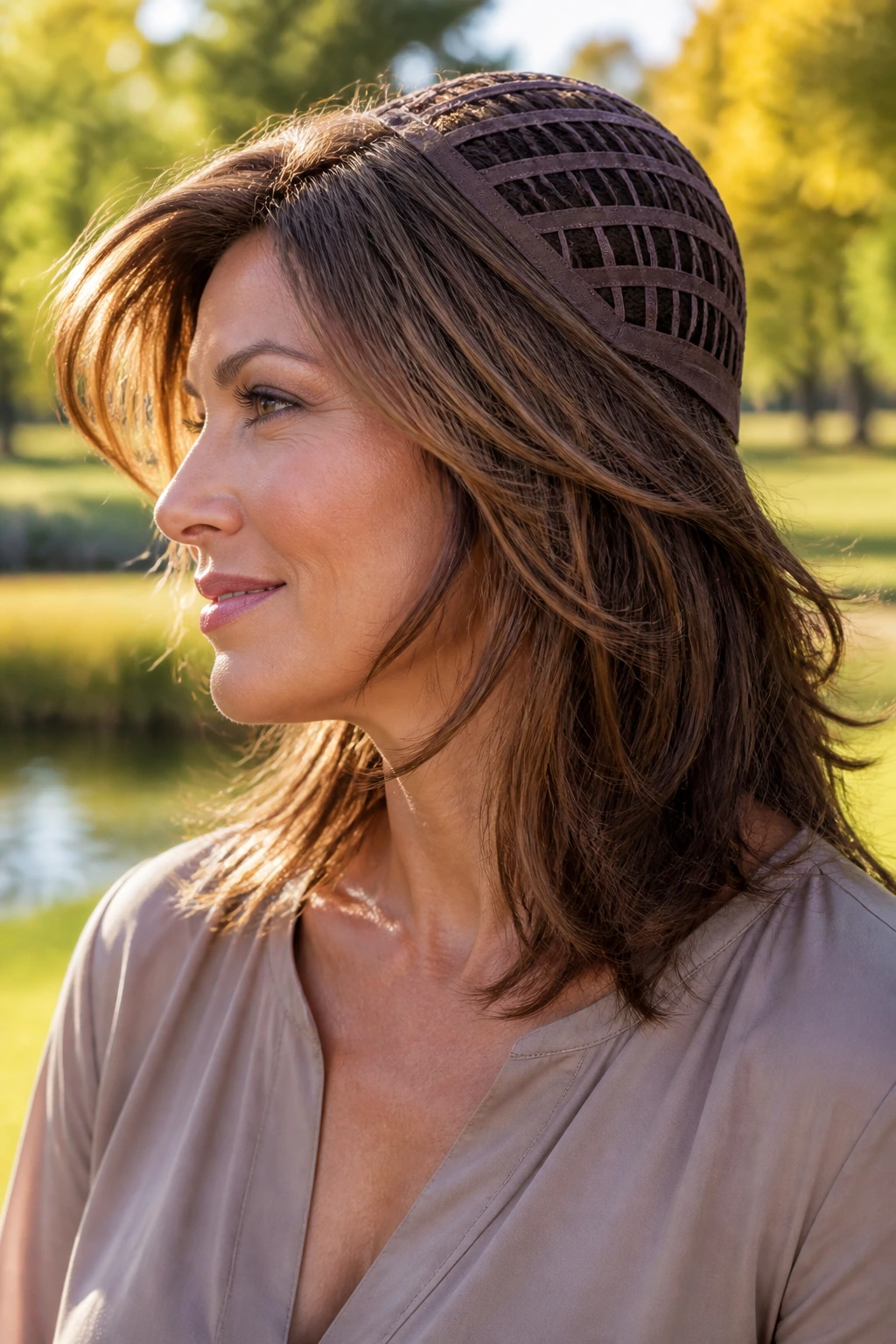
A fully hand-tied cap feels soft, but it can also get warm. An open-weft back gives you more airflow, which is not a small thing when you already have thick hair underneath. The monofilament top still handles the realism at the part, but the back panel stays lighter and usually costs less than a fully hand-tied build.
That trade-off makes sense for everyday wear. You get the natural-looking scalp line where people look first, and you avoid trapping as much heat at the crown and nape. If you commute, run warm, or spend long hours indoors, that matters more than luxury labels.
The downside is simple: open wefts can feel less plush against the scalp than a hand-tied cap. If your skin is sensitive, you may notice the difference. Still, for a lot of thick-haired wearers, the practical comfort wins. I’d take a cap I can forget about over a cap that sounds fancy on paper.
14. Monofilament Crown with Collarbone Flip
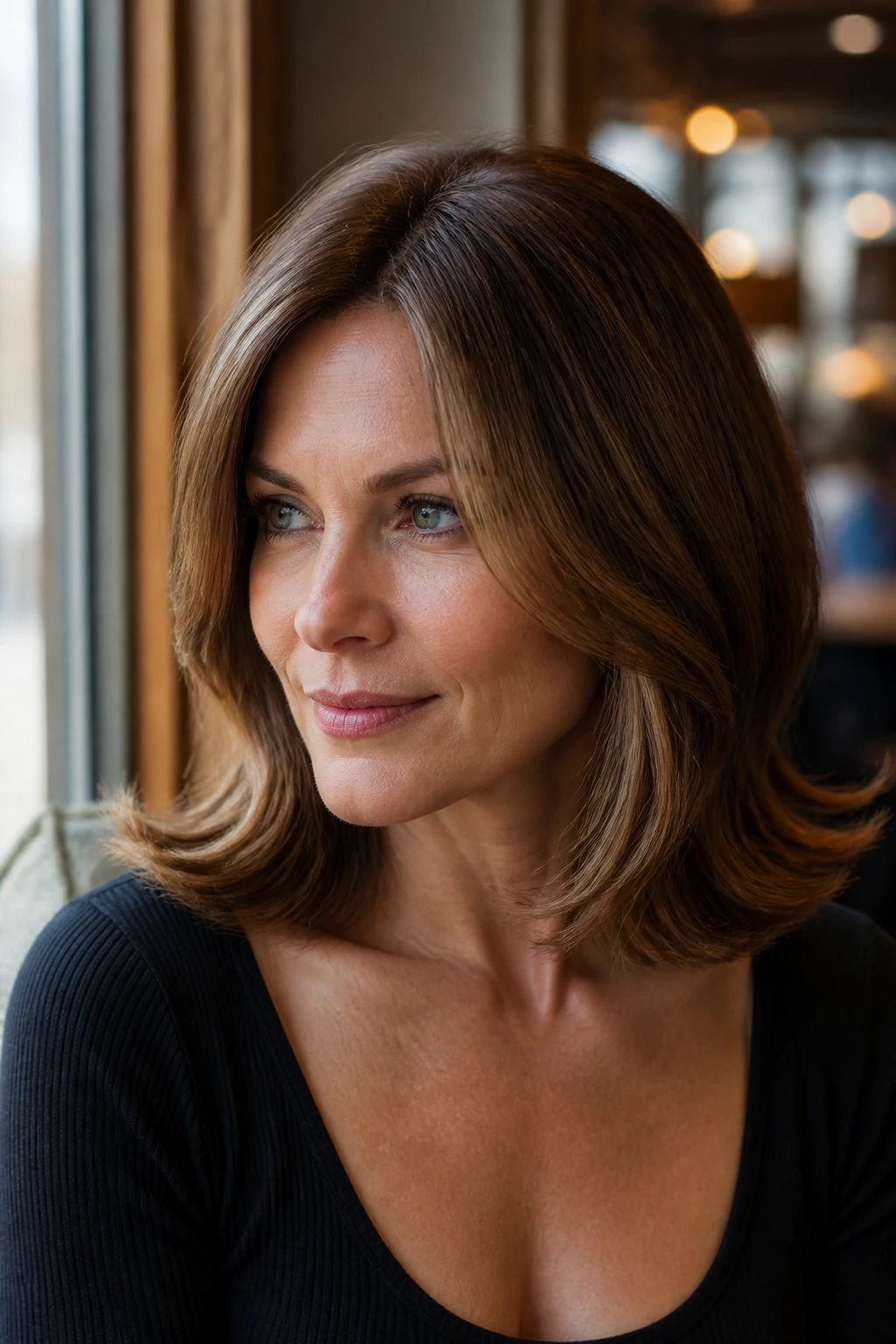
A little outward flip at the ends can save a style from looking flat or overly obedient. On a collarbone-length cut, that shape keeps the wig from clinging to the shirt or folding into a blunt sheet under your jacket collar. The monofilament crown gives you the scalp realism up top, and the bend at the ends keeps the silhouette alive.
This is a smart choice if your own hair is thick because the flip adds room without adding obvious bulk. Straight ends can look harsh over a dense base. A gentle bend softens the perimeter and makes the wig easier to wear with scarves, crewnecks, and structured collars.
I especially like this style when the fiber is a little matte. Too much shine at this length reads loud. A softer finish makes the flip look intentional instead of freshly unpacked.
The whole thing lands in that useful middle zone: polished enough for work, relaxed enough for errands.
15. Chin-Length French Bob with a Gentle Bend

A French bob sits in that sweet spot between tidy and casual. Chin-length hair takes less effort to keep in place, and a small bend under the ends keeps the shape from looking severe. If you wear thick hair under the cap, this length reduces drag and makes the wig feel lighter at the crown and nape.
The shorter cut also helps the monofilament top do its job. There’s less fiber competing for attention, so the scalp area reads more naturally. If you tuck one side behind the ear, the whole style feels even more lived in. That little asymmetry does a lot.
I’d recommend this to anyone who wants the wig to look neat without looking stiff. It is not a loud style. It is a good-looking, low-nonsense one. There’s a difference.
16. Feathered Midi with Thinned Ends

A feathered midi keeps the hair from turning into one heavy curtain. That matters when your own hair already adds shape under the cap. The feathering takes weight out of the perimeter, and the thinned ends stop the length from widening as it moves over your shoulders. It’s one of the few longer looks that can still feel easy for all-day wear.
Why it feels lighter
The ends do not carry as much visual mass, so the cut settles instead of puffing. That makes a surprising difference if you wear the wig for eight or ten hours at a stretch. A soft lift at the crown and a more controlled edge through the hemline keep the style from swallowing your neckline.
Good details to ask for
- 125% to 135% density so the feathering can actually show.
- Layers that start below the cheekbone.
- A nape that tapers inward, not out.
- Enough parting space to keep the top from looking overworked.
This cut is for people who want length but don’t want to drag length around like luggage. Fair enough.
17. Synthetic Monofilament with Rooted Color

Rooted synthetic color does half the blending for you. Darker roots, softer mids, and a little variation through the ends make the wig look less like a single block of fiber and more like hair that has actual depth. For everyday wear, that matters because synthetic wigs tend to hold their shape; if the color looks too uniform, that shape can read stiff fast.
The rooted finish also helps if your own hair has some shadow at the part or around the temples. The transition looks calmer. Less obvious. Better under bright indoor light. I like that more than a shiny single-process color, which can sometimes look too eager to be noticed.
This style is a practical pick for busy wearers who want less styling work. You shake it out, settle the part, and go. That’s the whole appeal. Not every wig needs a personality crisis before breakfast.
18. Human-Hair Monofilament with Long Layers and Thinned Ends

Long human-hair monofilament wigs are for people who want the most styling freedom and are willing to pay attention to the care. Thick hair underneath can actually support this style well, because the extra volume you already have helps the length feel balanced instead of limp. The key is keeping the layers soft and the ends thinned enough that the hair moves.
Unlike synthetic, human hair lets you blow-dry, curl, and smooth the style into a shape that suits your face. The monofilament top still gives you the scalp realism you need, but the fibers themselves behave more like natural hair, which is useful if you want to blend with coarse or wavy texture. I would not choose this as a low-effort option. I would choose it when I want the most control.
If you go long, keep the density sensible. Too much length plus too much fiber creates drag, and drag is what makes the wig feel tiring by the end of the day. Long can work. It just has to be edited.
Why Monofilament Construction Feels Better on a Long Day

A monofilament top is basically a small piece of honesty built into the wig. You get a mesh area where the fibers are tied in by hand, and that lets the scalp line show through instead of sitting under a dense, unmoving patch. For thick-haired wearers, that matters because the wig has to look believable even when the cap is shifted a little by your own hair underneath.
The parting freedom is the other big payoff. A mono part gives you one realistic line. A full monofilament top gives you more room to move the part around, which is useful if your natural hair is braided differently from one day to the next. That flexibility reduces the “same exact hairline every morning” problem that gives wigs away in the first place.
Comfort matters too. Thick hair traps warmth, and a wig that sits too heavy at the crown or nape can make you miserable fast. Open wefts, hand-tied sections, and lighter density all help. The best everyday wig is not the one with the most hair. It’s the one you stop noticing before lunch.
Essential Equipment for Daily Wig Wear
-
Flexible measuring tape: Use it for head circumference, ear-to-ear, and front-to-nape measurements before you buy anything.
-
Wig grip band or silicone-lined band: Keeps the cap from sliding when your own hair has plenty of volume underneath.
-
Nylon or mesh wig cap: Smooths the base layer and helps flatten braids, twists, or loose hair.
-
Rat-tail comb: The pointed end is useful for setting a clean part in the monofilament section.
-
Wide-tooth comb or wig brush: Safer for detangling without yanking at knots or frizzing the fibers.
-
Wig stand or canvas block head: Lets the cap dry in shape and keeps the fibers from tangling on a counter.
-
T-pins: Helpful for securing the wig on a stand while you trim bangs or let it air-dry.
-
Wig shampoo and detangling spray: Use formulas made for synthetic or human hair, depending on the fiber.
-
Small styling clips: Good for holding face-framing pieces out of the way while you set the part.
-
Low-heat styling tools, if needed: Only if the fiber allows it; heat-friendly synthetic and human hair have different temperature limits.
How to Choose the Right Cap Size, Density, and Fiber
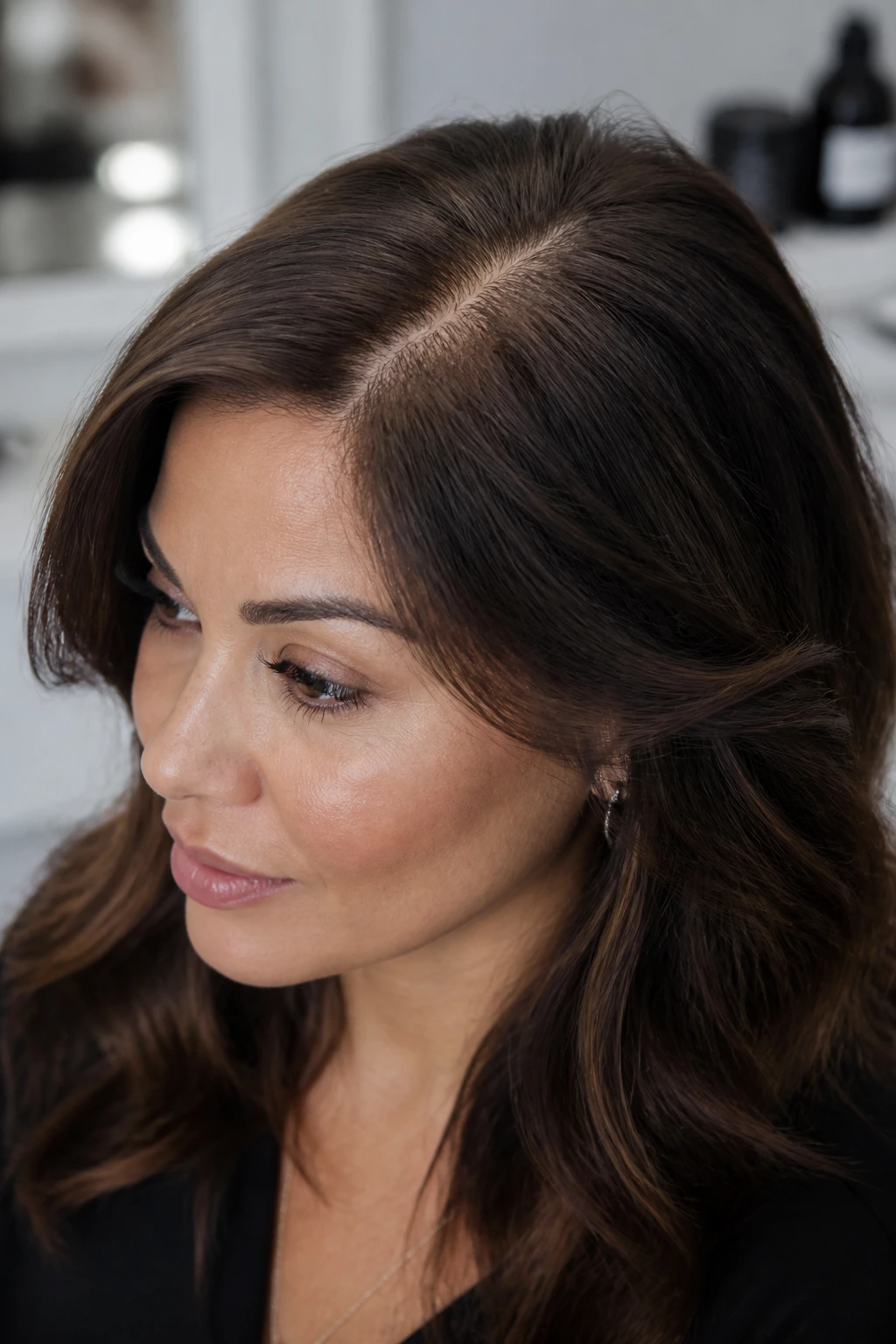
Start with the size, not the style photo. That’s the boring answer, and also the useful one. Measure the circumference around your hairline, over the ear, across the nape, and back to the front. If you wear your hair flat every day, measure it that way. If you wear braids or twists, measure it that way instead. Thick hair is not one category. A loose puff and two flat braids need different room.
For daily wear, density matters as much as length. Around 110% to 130% usually looks most believable on thick-haired wearers who want a natural everyday result. If you like more body, you can push higher, but once the density gets too heavy, the wig starts looking like it’s wearing a wig. That sounds obvious. It is still the mistake I see most often.
Fiber choice changes the whole experience. Synthetic is lighter and holds its shape, which makes it a strong pick for routine wear. Heat-friendly synthetic gives you a little styling freedom but needs careful temperature control. Human hair offers the most movement and the most work. If your own hair is already doing a lot under the cap, I usually lean synthetic or heat-friendly synthetic for the simplest daily routine. Less fuss. Fewer surprises.
How to Wear These Styles in Real Life

Parting: Set the part where your own hair naturally wants to split. If you fight your natural swirl every morning, the wig tends to sit harder and look less believable.
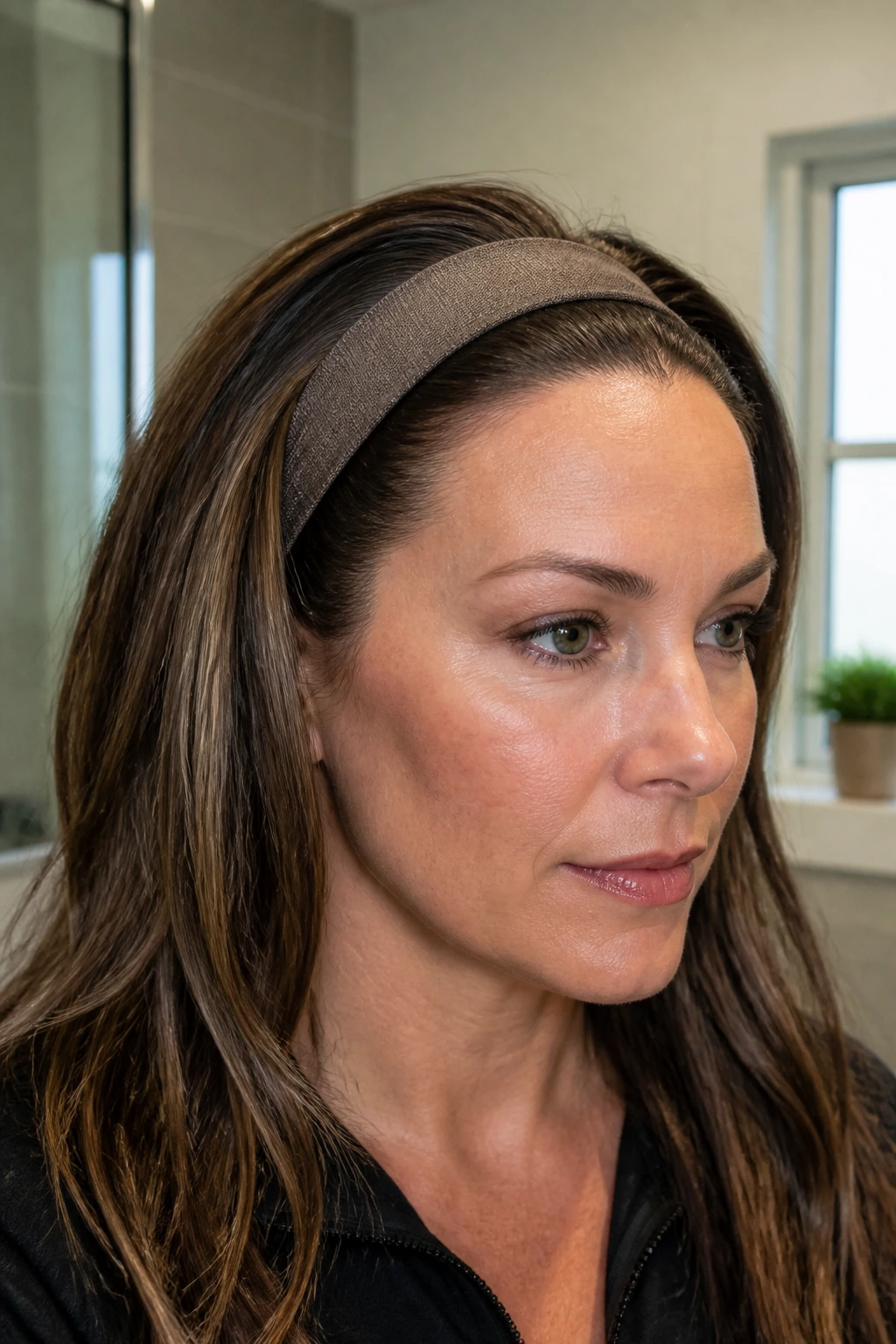
Accessories: Thin headbands, small clips, glasses, and simple earrings tend to work better than bulky pieces that press into the temples or flatten the wig’s shape. A wide headband can be useful, but keep it light.
Outfit balance: Shorter cuts handle high collars and structured jackets more easily. Longer cuts need a little more breathing room at the neckline, especially if you’re wearing a scarf or backpack.
Finish: Use your fingers first. A brush is for settling the ends, not forcing the top into submission. The monofilament section looks best when it stays softly lifted, not scraped flat.
Additional Tips and Style Boosters
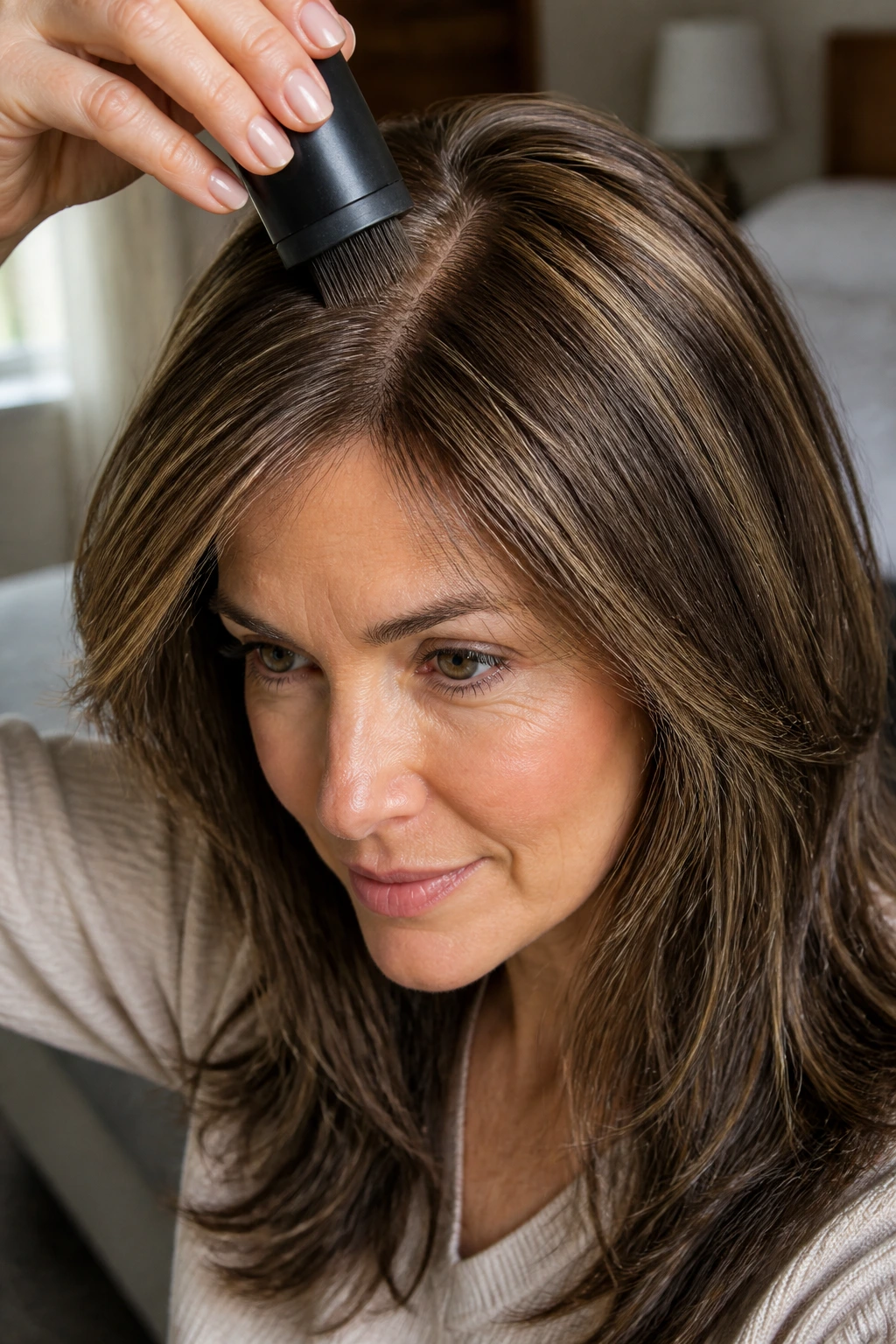
Root Softening: A tiny bit of root powder or scalp spray in the monofilament area can calm down shine and make the part look less stark. Keep it off the lace edge if the wig has one.
Texture Control: If the style is too smooth, flip the ends with a low-heat tool or finger-twist the dry sections for a minute. Tiny texture changes often look more natural than heavy restyling.
Color Choice: Rooted shades, lowlights, and mixed grays do more work than people expect. They break up the surface so the wig looks less like a solid sheet of color.
Face-Framing: A few cheekbone pieces or curtain bangs can hide the front edge and soften the whole look. You do not need a dramatic fringe to change the effect.
Make-It-Yours: If you want a custom feel, trim in tiny steps while the wig is on a stand. One quarter inch at a time. More than that is how good wigs get ruined in a bathroom mirror.
Care, Storage, and Routine Maintenance
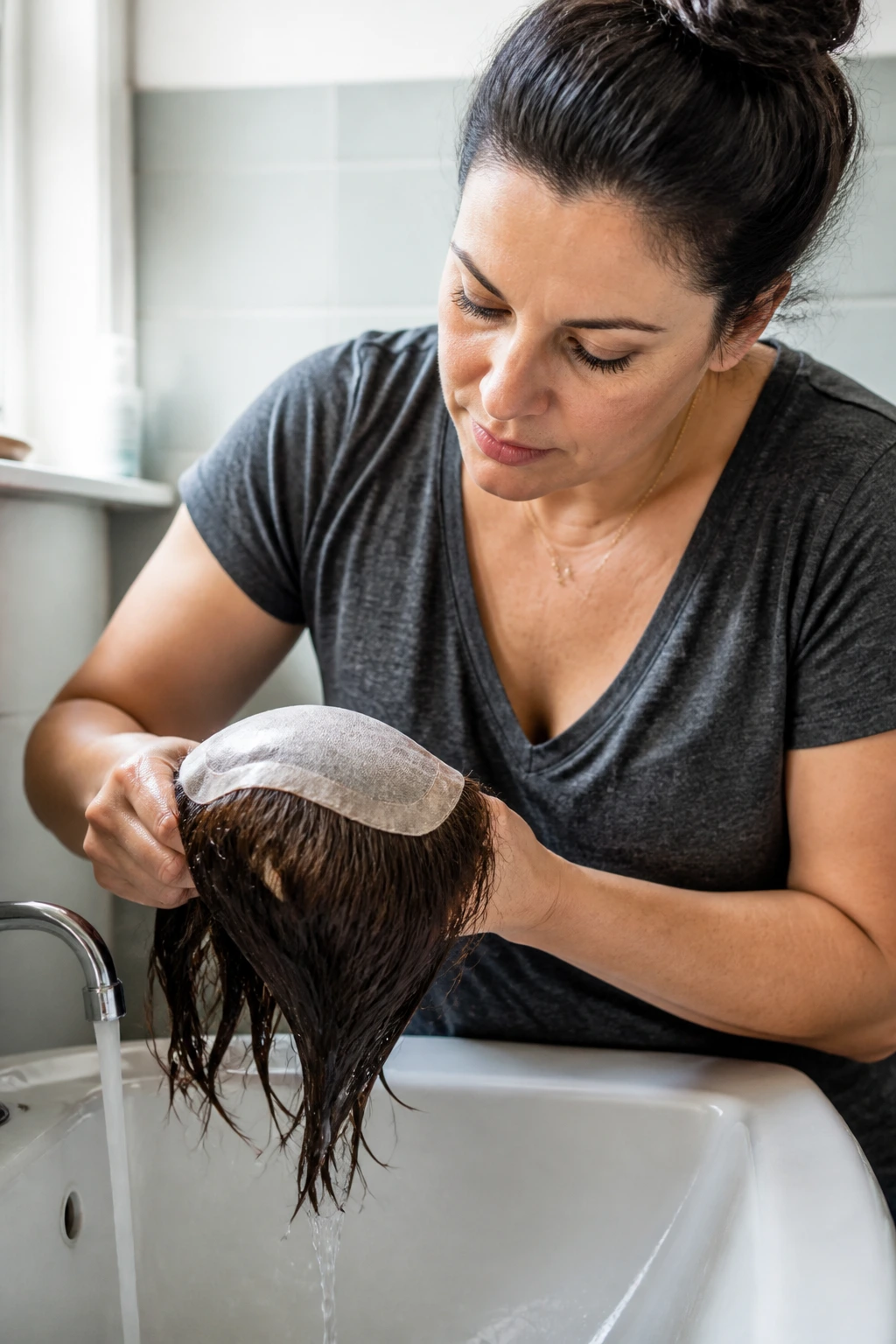
Synthetic monofilament wigs usually need a wash every 6 to 10 wears, especially if you use product or live with a warmer scalp under the cap. Human-hair versions can go a little longer between washes, often 7 to 12 wears, but product buildup will tell you when they’re ready. If the roots feel tacky or the ends stop moving cleanly, that’s your cue.
Wash with cool water and the right shampoo. For synthetic fiber, swish gently and let the water do the work. Don’t scrub the monofilament area. Don’t wring the cap. Blot with a towel, then let the wig air-dry on a stand so the part stays in shape. Human hair can handle conditioning on the mid-lengths and ends, but keep conditioner away from the base or you’ll loosen the knots faster than you expect.
Between wears, shake the wig out and store it on a stand, in a box, or on a net if space is tight. Do not leave it balled up on a dresser. That’s how you end up with weird bends at the back and tangles at the nape. If you wear the wig daily, check the adjusters and wig grip once a week. Small slippage is easier to catch early than after the cap starts drifting mid-commute.
Common Mistakes to Avoid
-
Buying too much density: If the wig looks gorgeous on a mannequin but feels bulky on your head, the density is probably the problem. Choose a lighter build for daily wear.
-
Skipping the fit check: A cap that’s too small rides up and a cap that’s too big shifts all day. Measure with your real hairstyle in place, not your flattest possible version.
-
Using heavy oils or thick styling cream: They make synthetic fiber limp and shiny in the wrong way. Use lightweight wig-safe products instead.
-
Forcing the part outside the monofilament area: That exposes knots and gives the game away fast. Stay inside the designated parting zone.
-
Over-brushing waves or curls: That’s how a good shape turns into frizz and a triangle. Finger-style, then use a wide-tooth comb only where needed.
-
Ignoring the nape and temple tabs: If those areas aren’t sitting flat, the wig will feel wrong even if the top looks fine. Fix the foundation before you fuss with the ends.
Variations and Adaptations to Try
The Barely-There Part: Choose a larger monofilament area, a rooted shade, and lower shine if you want the scalp line to disappear more easily in bright light. This works best for people who wear their part in one place every day and want the least visible transition.
The Low-Maintenance Synthetic: Pick a synthetic or heat-friendly synthetic with pre-set movement and a moderate density. It keeps its shape with minimal restyling, which is useful when your own hair already creates warmth and bulk under the cap.
The Heat-Style Freedom Build: Go with human hair or heat-friendly fiber if you like changing the ends, smoothing the crown, or swapping between straight and bendy finishes. Keep the layers soft so the length doesn’t overwhelm your frame.
The Gray-Blend Soft Focus: Add salt-and-pepper tones, ash lowlights, or a rooted silver blend. This is especially good if your own hair has some gray around the temples and you want the wig to blend with that instead of hiding it.
The Protective-Style Friendly Fit: Choose a large-cap wig with adjustable tabs, open wefts, and a forgiving nape if you wear braids or twists under the cap. Room matters more than style in that setup.
The Office-Ready Edit: Shorter lengths, a side part, soft layers, and a low-shine finish make the wig look calmer under indoor lights. That’s the version I’d reach for most often if I needed one style to work all day.
Frequently Asked Questions
Is a full monofilament top better than a monofilament part for thick hair?
Usually, yes, if you like changing the part or want more room for natural-looking movement. A monofilament part is fine when you know exactly where you’ll wear it, but a full top gives you more flexibility if your own hair sits differently from day to day.
Do I need a large cap if my hair is thick?
Not always. Thick hair and large cap are not the same thing. If your head circumference is still average, a well-designed average cap with good adjusters may fit better than a loose large cap. Measure with your real hairstyle on.
Can I wear a monofilament wig without glue or tape?
Yes, many people do. A proper fit, a wig grip, and the right cap construction are often enough for everyday wear. Glue becomes more useful when you want extra security at the hairline, not because monofilament requires it.
Which density looks best over thick natural hair?
For most daily wearers, somewhere around 110% to 130% looks most believable. Higher density can work if you like fuller hair, but it can also read heavy if your own hair already adds body under the cap.
How do I keep the part from looking flat or shiny?
Use a rat-tail comb to lift the roots gently in the monofilament area, then add a tiny amount of root powder or scalp spray if needed. The goal is not to coat the part. The goal is to break up the shine.
Can I straighten or curl these wigs every day?
Only if the fiber allows it. Human hair can take heat with proper protection, and heat-friendly synthetic can handle lower temperatures, usually within the maker’s listed range. Standard synthetic fiber should not be heat-styled unless the label says it is safe.
What if the wig slides back during the day?
That usually means the cap is too large, the grip is too loose, or the natural hair under it is creating a smooth surface. Tighten the adjusters, use a wig grip, and check whether your hairstyle underneath needs to be flatter or better pinned.
How often should I wash a daily-wear wig?
Synthetic wigs often need washing every 6 to 10 wears, while human-hair wigs can go a bit longer depending on product use. If the wig starts to feel coated, dull, or sticky near the roots, wash it sooner instead of waiting for a calendar to tell you.
The Wig That Fits Into Real Life

The smartest monofilament wig for thick hair is rarely the flashiest one. It’s the one that gives you a believable part, enough room under the cap, and a shape that still looks decent after a long day of moving, sweating, and taking it off the stand in a hurry. That sounds unglamorous. It is. It’s also what makes a wig wearable instead of aspirational.
If you remember only one thing, make it this: fit first, fantasy second. Once the cap sits right and the density stops fighting your own hair, the rest gets easier fast. The bob, the lob, the shag, the pixie — they all behave better when the foundation is doing its job.
Pick the version that disappears on your head, and the style takes care of itself.