



Fine hair does not need to be hidden under more hair. It needs shape, a little lift, and a cut that knows when to stop. That is exactly why funky pixie cuts for fine hair and oval faces work so well: the haircut does the heavy lifting, and your features stay visible instead of getting swallowed by limp ends.
Oval faces are lucky in a very specific way. They can handle a sharp fringe, a long side-sweep, a tapered nape, or a choppy crown without the proportions going sideways. Fine hair gets the other half of the deal. Shorter length removes dead weight, and once the cut is built with the right interior layers, the hair can sit up instead of lying flat like it’s tired of being in the room.
The trick is not “more volume” in the vague, salon-poster sense. The trick is where the volume lives. A little lift at the crown. A soft edge at the temples. A bite of length where the face needs a line. When those pieces are placed well, a pixie looks deliberate, not accidental—and that is where the good stuff starts.
Why These Pixie Cuts Work on Fine Hair and Oval Faces
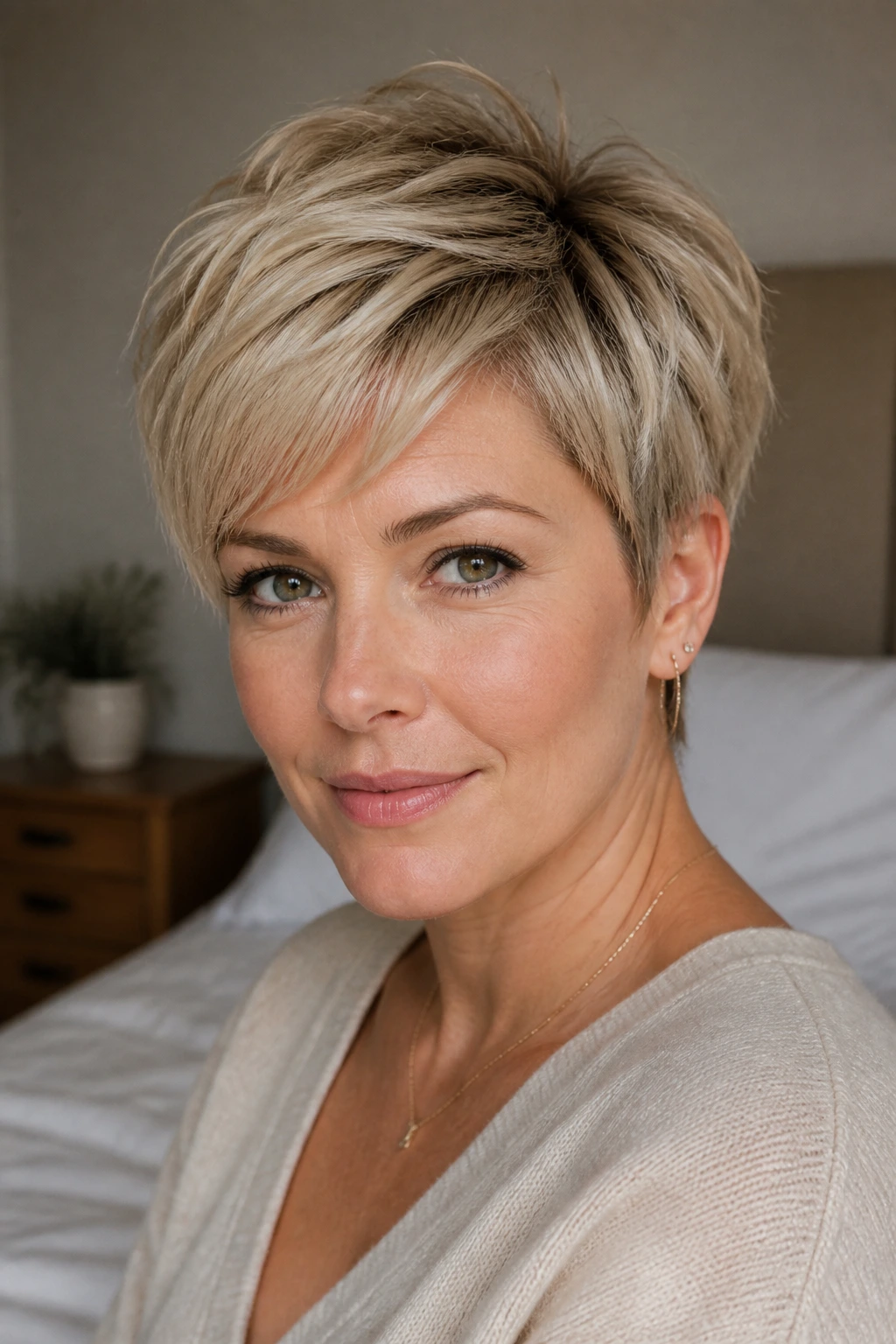
- Built for fine strands: These cuts remove bulky ends and push shape into the crown, fringe, and perimeter, which is where fine hair actually shows movement.
- Oval faces can take the fun stuff: Baby bangs, side-sweeps, undercuts, and asymmetry all sit comfortably on an oval face because the proportions are already balanced.
- Short hair still has range: Matte paste, mousse, and a quick blow-dry can take the same cut from soft and airy to spiky and sharp.
- Low-drama styling: Most of these looks can be reset with water, finger-combing, and a pea-sized bit of product, which matters when you do not want a 25-minute morning.
- Plenty of personality: You can lean sweet, punk, sleek, French, or androgynous without changing the basic pixie structure.
1. Feathered Micro Pixie
A feathered micro pixie is what I reach for when fine hair needs motion more than mass. The edges stay light, the crown gets a little lift, and the whole cut moves with your head instead of sticking to it. On an oval face, that feathering keeps the features open and lets the cheekbones do their job.
Why it works
Fine hair can look sparse when it is cut blunt and left too heavy at the ends. Feathering breaks up that hard line. Ask for soft point cutting through the top and around the fringe so the pieces separate instead of clumping into one flat sheet. The result is airy, not wispy.
Keep the sides close enough to show the jaw and temple, but not so short that the cut starts looking shaved. A micro pixie with soft feathering is one of the easiest shapes to wear if you want short hair that still feels feminine, cool, and a little playful. It looks especially good with a side part and a dab of light mousse worked through damp roots.
2. Asymmetrical Side-Sweep Pixie
Want drama without losing wearability? An asymmetrical side-sweep pixie gives you one longer panel that falls across the forehead while the other side stays cleaner and tighter. The diagonal line wakes up fine hair fast, because the eye reads the shape before it notices the density.
A long side-sweep also helps an oval face look more sculpted. It softens the forehead, sharpens the gaze, and gives the haircut a built-in direction. I like this version when the hair is naturally straight or only slightly wavy, because the longer fringe has enough weight to stay put without feeling stiff.
Styling note
Dry the fringe in the opposite direction first, then sweep it back over. That tiny trick gives the longer side a bend instead of a limp curtain. A small round brush or even your fingers will do. The point is to create a fold, not a helmet.
3. Tapered Crown-Boost Pixie
This is the cut for the person who keeps touching the top of their head because the crown collapses by lunch. A tapered crown-boost pixie leaves more height at the top and gradually narrows toward the nape and ears, so the silhouette feels lifted from the scalp.
Fine hair benefits from this structure because the volume is concentrated where it can actually survive. Too much length at the sides pulls the shape down. Too much bulk at the crown can look puffy. This cut sits in the middle and uses tapering to make the whole thing look denser.
Ask for light graduation through the back and controlled layers at the crown, not random thinning. Those are not the same thing. The first builds shape; the second can leave you with see-through ends that never settle.
4. Razored Shag Pixie
A razored shag pixie has edge, but it needs a careful hand. The ends are broken up with a razor or deep point cutting, which gives the cut that slightly hacked, lived-in look that works so well on straight or fine hair. It is not polished in the conventional sense. That’s the point.
The best version keeps enough length on top to move, but not so much that it flops into the eyes. On an oval face, the irregular texture keeps the cut from looking too neat or too severe. It reads as deliberate, not fussy.
Skip heavy layering if your hair is already soft and fragile. Heavy razoring can make the ends go stringy. Ask for texture, yes, but keep the perimeter strong enough to hold its own shape.
5. Baby-Bang Pixie
Baby bangs are not shy. They sit high on the forehead, show off the brow line, and give a pixie a sharp little punch that feels modern instead of precious. On an oval face, they work because the face shape can take the shortened fringe without looking crowded.
Fine hair is a decent match for this fringe because it does not have the bulk of thicker hair fighting to live across the forehead. A heavier bang on fine hair can split, separate, and go flat by noon. A shorter one stays cleaner and looks intentional with less effort.
If you wear makeup, this cut changes the whole balance. Brows matter more. So do earrings. So does the neck of your shirt, oddly enough. Tiny fringe, big effect.
6. Undercut Pixie with a Long Top
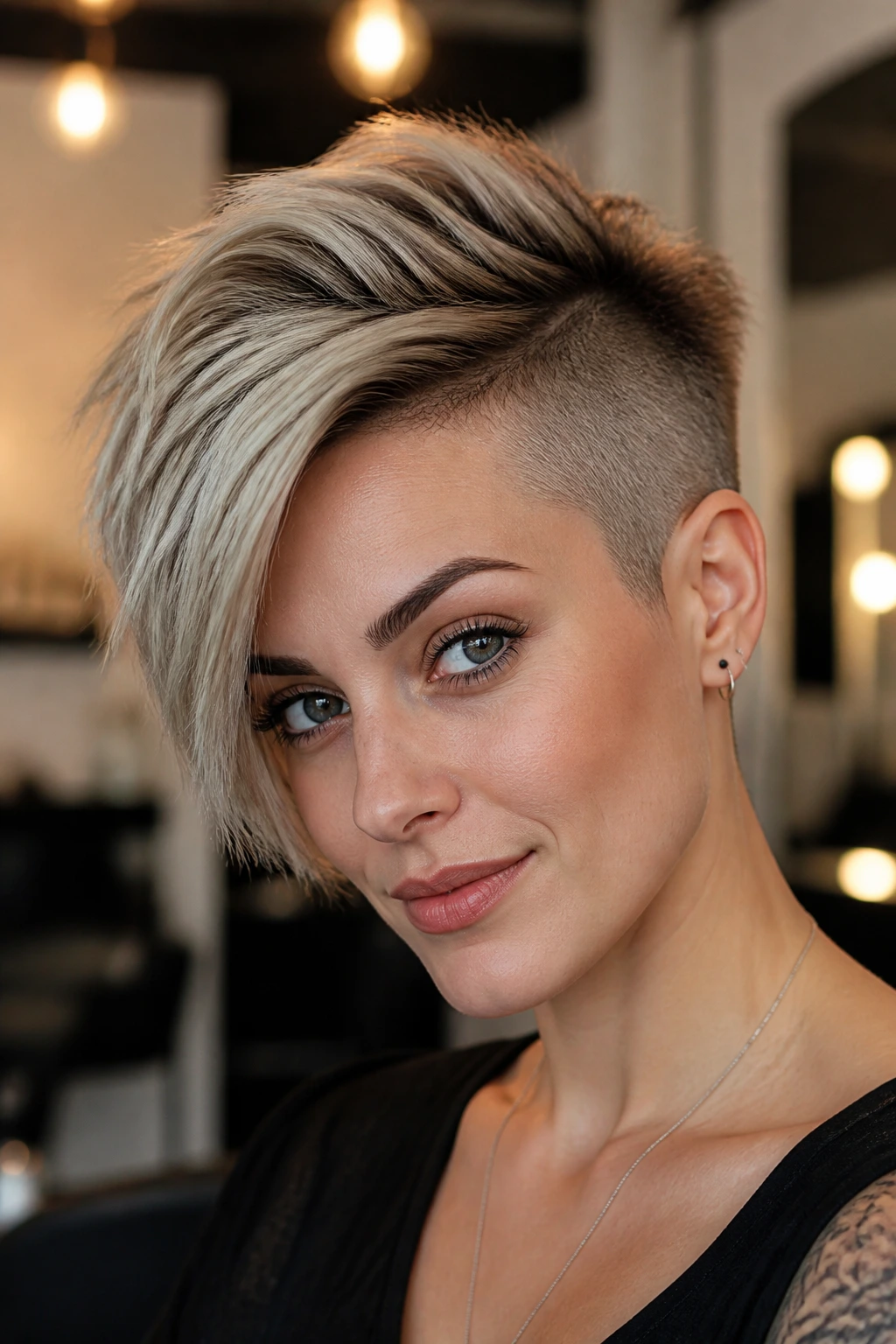
The undercut pixie is the one people ask for when they want the haircut to show some teeth. The sides and nape are cut much shorter—sometimes clipped close—while the top stays longer and more flexible. That contrast makes fine hair look fuller up top because the eye stops measuring everything by the same length.
Oval faces can handle the sharper geometry here. In fact, they usually wear it well because the face already has enough balance to handle a strong top line and a tighter side profile. The long top can be slicked, swept, or left piecey, depending on how much attitude you want.
Best for
- Fine hair that falls flat at the sides
- Oval faces that can carry a stronger shape
- People who like a 5-minute style with a visible edge
7. Curly-Texture Pixie
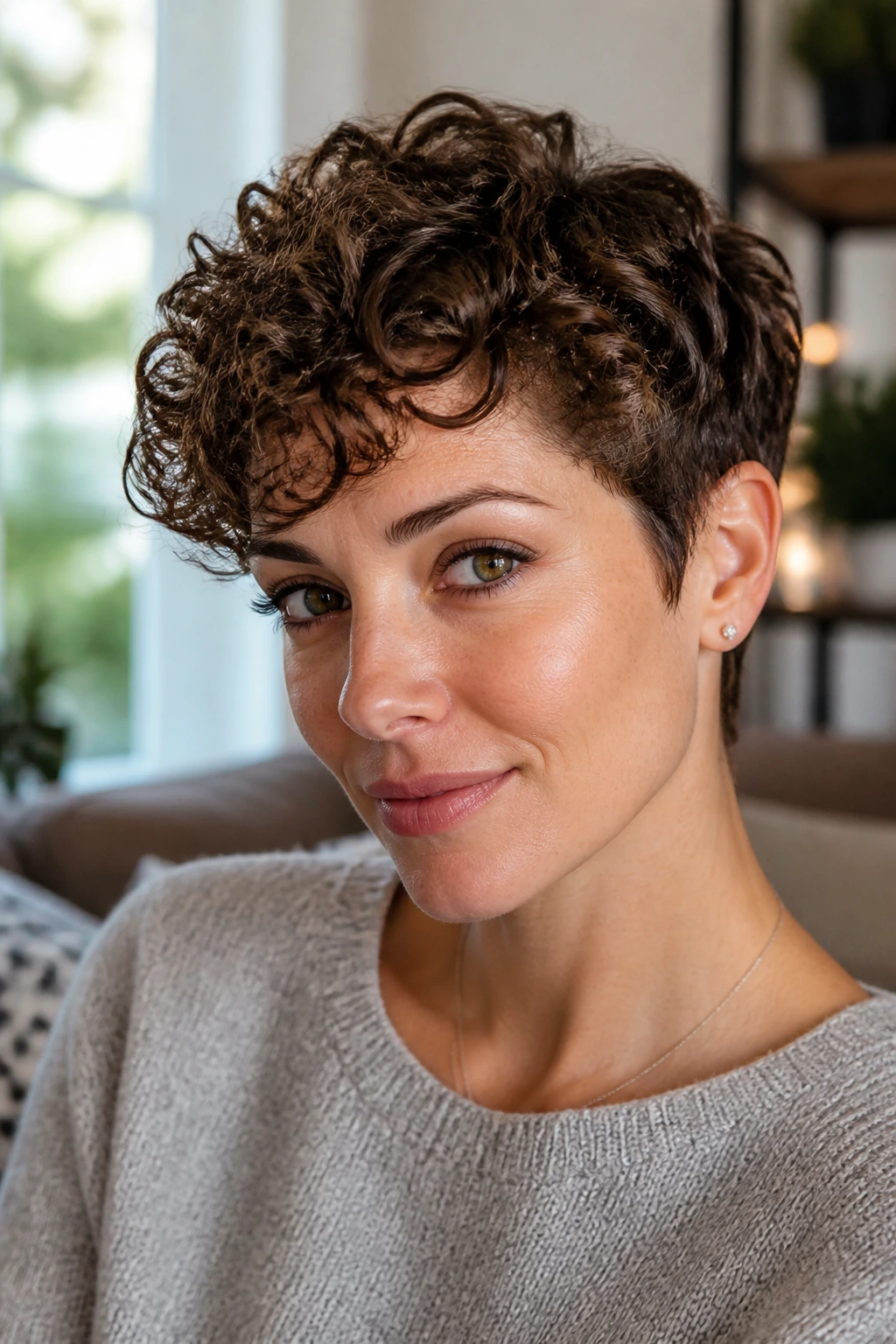
Curly hair and pixie cuts are not enemies. They just need a better plan than “make it shorter and hope.” A curly-texture pixie keeps enough length for the curl pattern to spring, then removes bulk around the nape and sides so the shape does not balloon.
For fine curls, this matters even more. The curl itself can be delicate, and too much thinning can wreck the clump pattern. Ask for a dry cut, or at least a cut that respects the natural bend of the hair. On an oval face, the softened halo of curls frames the features without stealing the whole show.
Use a light cream or foam, not a heavy butter. Heavy product weighs down fine curls fast. A diffuser on low heat is your friend here.
8. Piecey Spiky Pixie
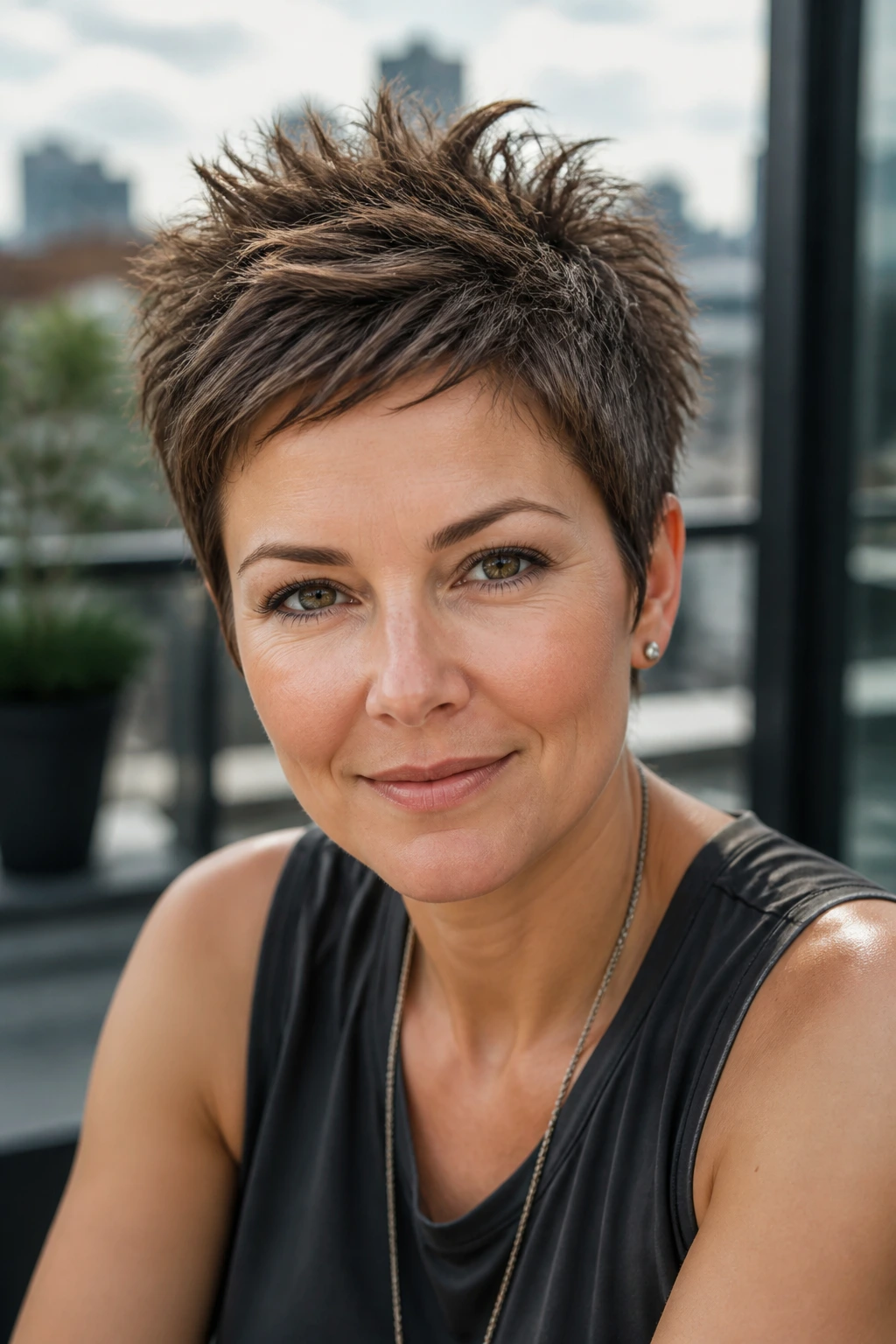
Piecey spikes are still one of the easiest ways to make fine hair look denser without pretending it has more bulk than it does. The separation between the pieces creates visual thickness. The trick is that the pieces need to look intentional, not crumbly.
This style loves matte paste. Warm a tiny amount between your fingertips, then pinch up the top and front sections while leaving the crown a little lifted. On an oval face, the spiky top adds height without throwing off balance, and the short sides keep the shape neat enough to wear daily.
Do not load the hair with gel unless you want helmet shine. Fine hair often needs less product than people think. Start with half a pea, then add only if the shape disappears.
9. Soft Mullet Pixie
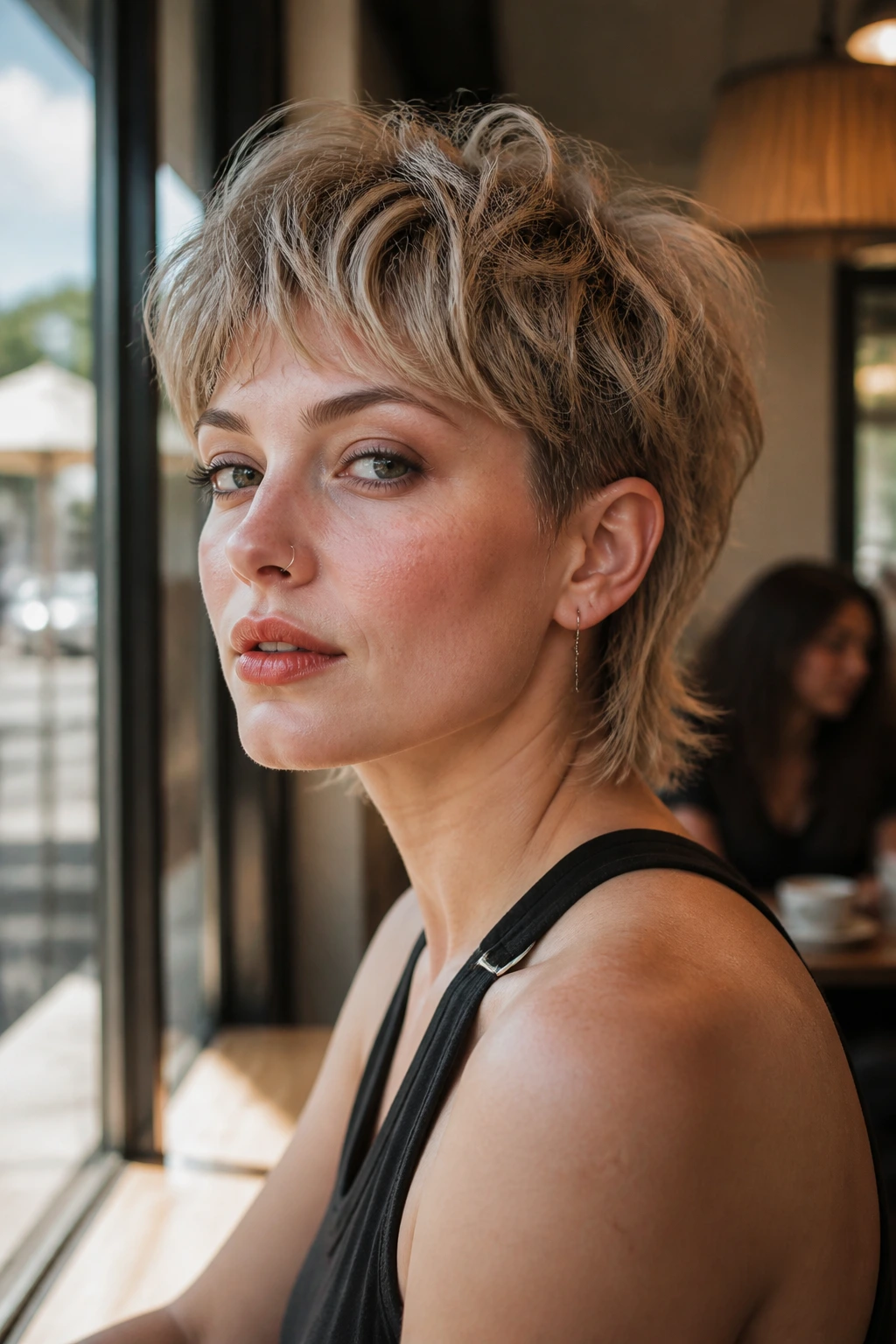
The soft mullet pixie is for someone who wants a little rebellion without going full costume. It keeps some length at the nape, leaves the top airy, and lets the sides sit somewhere in between. The result feels a bit rock-and-roll, a bit French, and a lot less boring than a standard crop.
Fine hair does well here because the longer nape gives the cut a tail of shape, while the top stays light enough to lift. On an oval face, the extra length at the back can make the neck look longer and the jawline cleaner. That sounds subtle, but on short hair subtle is everything.
This cut needs regular dusting at the nape. If the back grows into a fuzzy triangle, the whole thing loses its attitude.
10. Platinum Crop with Cropped Fringe
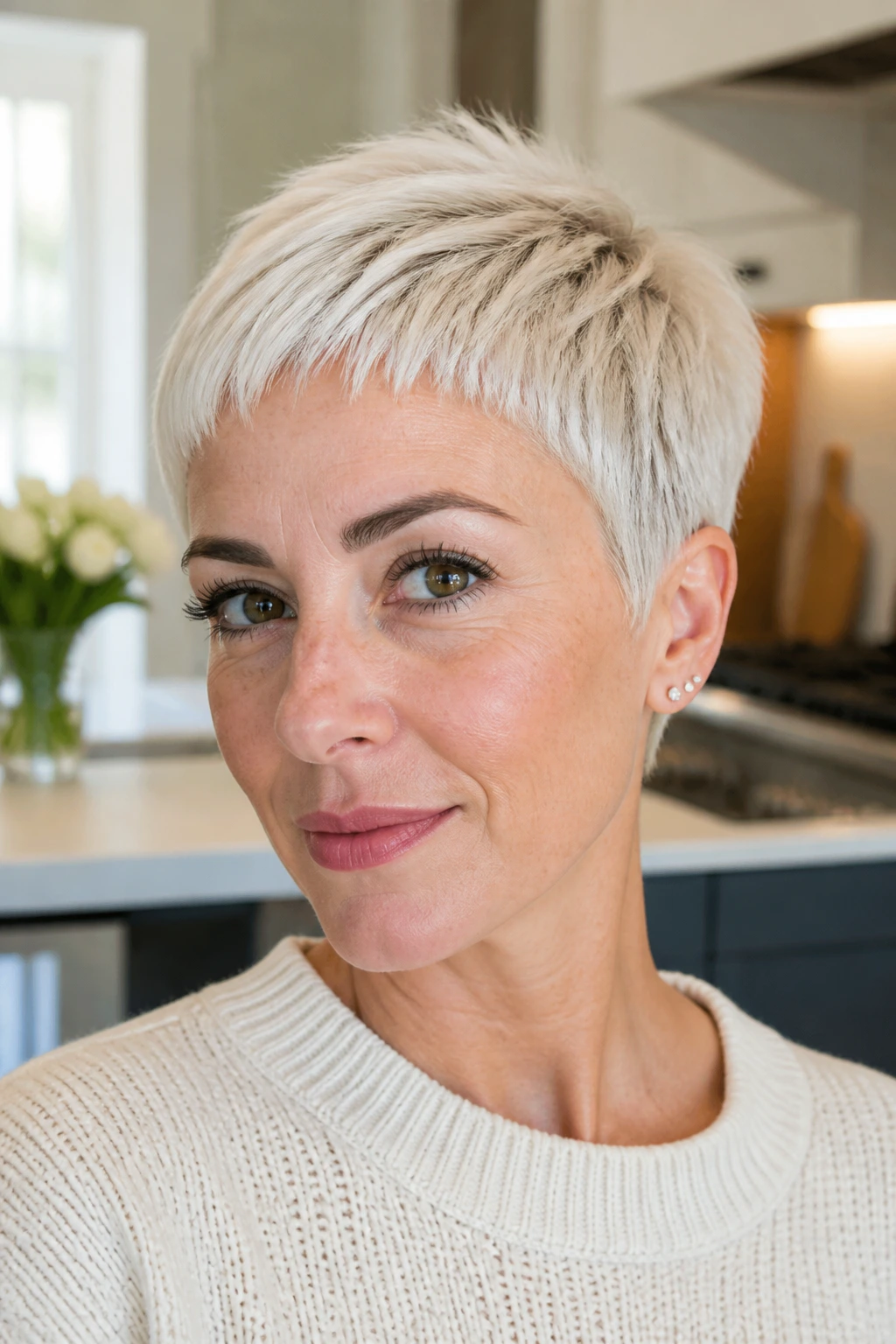
Bleach changes the whole conversation. A platinum crop with a cropped fringe is all about the color and the shape working together: the short length keeps the light hair from collapsing, and the cropped fringe gives the cut a sharp front edge.
For fine hair, platinum is a mixed blessing. It can make the hair look airy and bright, but overprocessed strands can go fragile fast. If you go this route, the cut should be planned with the color in mind. A little interior shape is enough. Too much razoring after bleach can leave the ends see-through.
Oval faces can take the high-contrast look easily. The short fringe draws attention upward, and the lightness around the face makes everything look crisp. Use bond care, low heat, and a gentle shampoo. No heroics.
11. Sideburn Statement Pixie
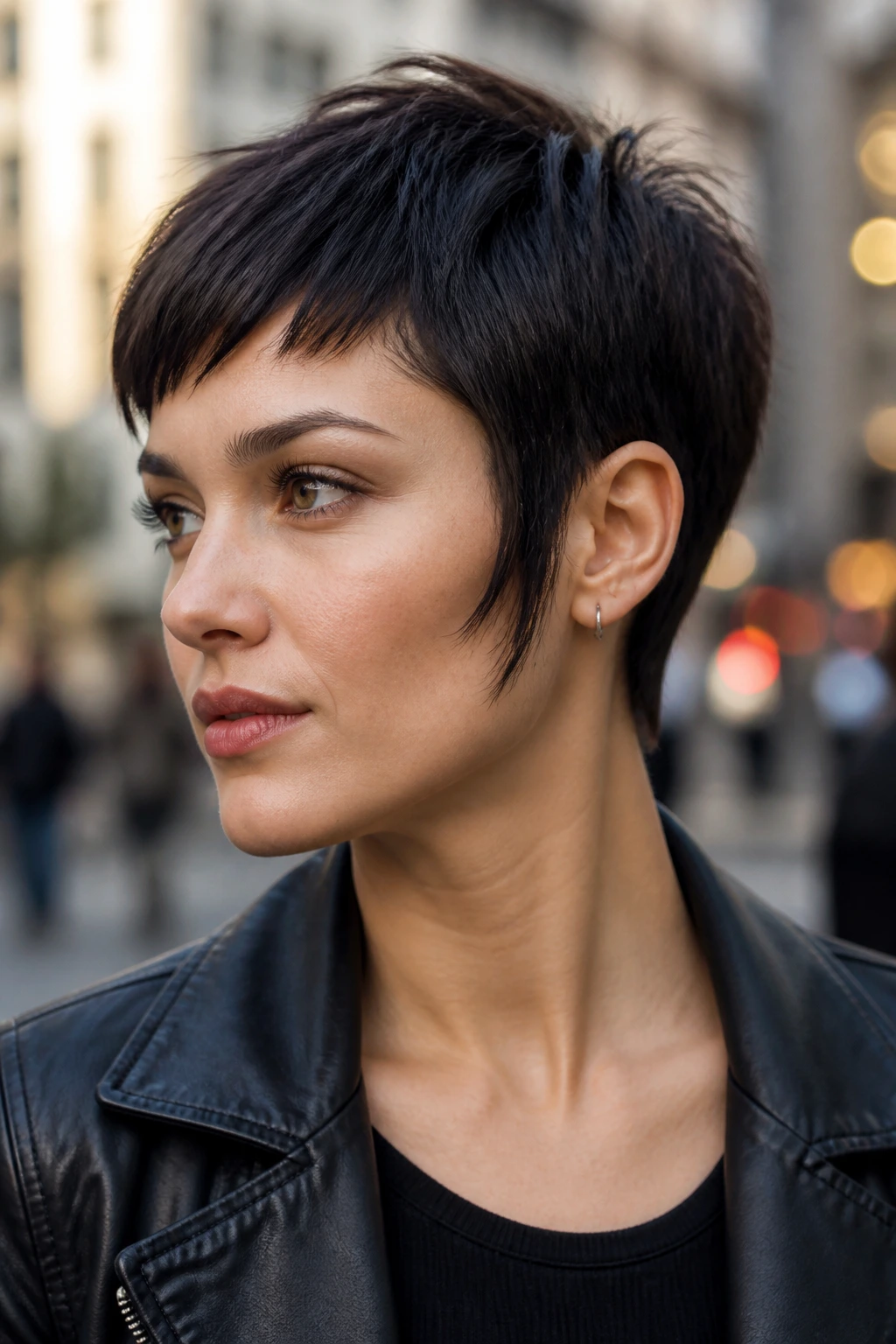
Sideburns are underrated. A sideburn statement pixie leaves a little more length around the temples and ear line, turning those areas into part of the design instead of just the leftovers. That extra framing can sharpen an oval face in a very flattering way.
Fine hair often benefits from this because you are not trying to create fullness everywhere. You are placing shape where it counts. A longer temple piece can make the cheekbone pop, especially if the top stays soft and slightly lifted.
This cut also loves glasses. The sideburn detail keeps the frames from dominating the face. If you wear earrings, even better. The whole look has a nice balance of structure and softness.
12. Tucked Ear-Length Pixie
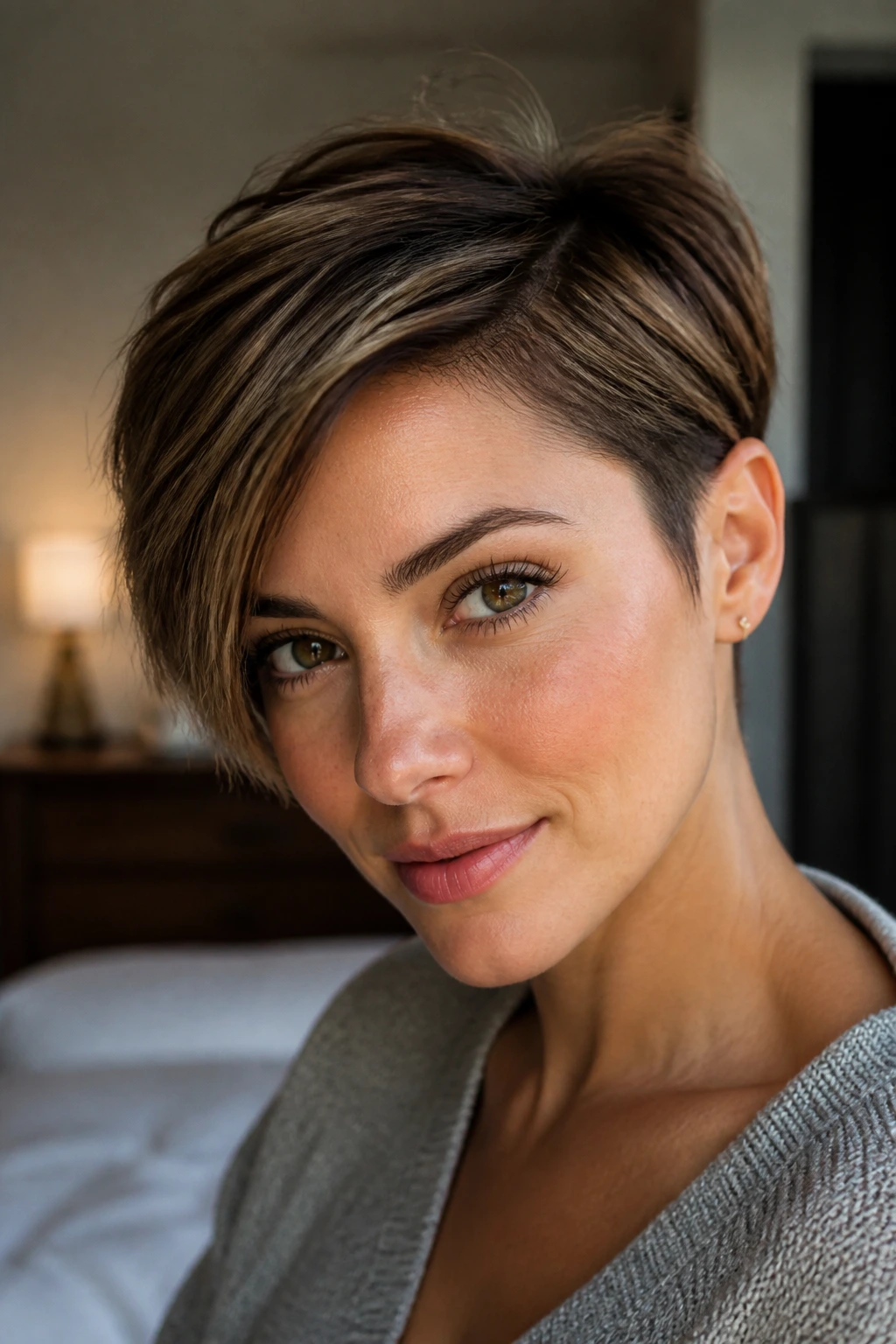
If you like hair that can move behind the ear without disappearing, this is the one. The tucked ear-length pixie sits just long enough around the ears to be pinched back, but short enough to stay neat and controlled. Fine hair likes this because the shape is clean and the ends do not drag the whole style down.
On an oval face, the tucked effect reveals the jaw and cheekbones in a tidy, almost tailored way. It has a smart, polished feel without turning severe. You can wear it sleek for one mood and slightly mussed for another.
Styling move
Tuck one side behind the ear and leave the other side loose. That uneven finish makes the cut feel less formal and gives fine hair a bit of asymmetry. A dab of lightweight cream helps keep the tucked side smooth without turning greasy.
13. Wavy Flip Pixie
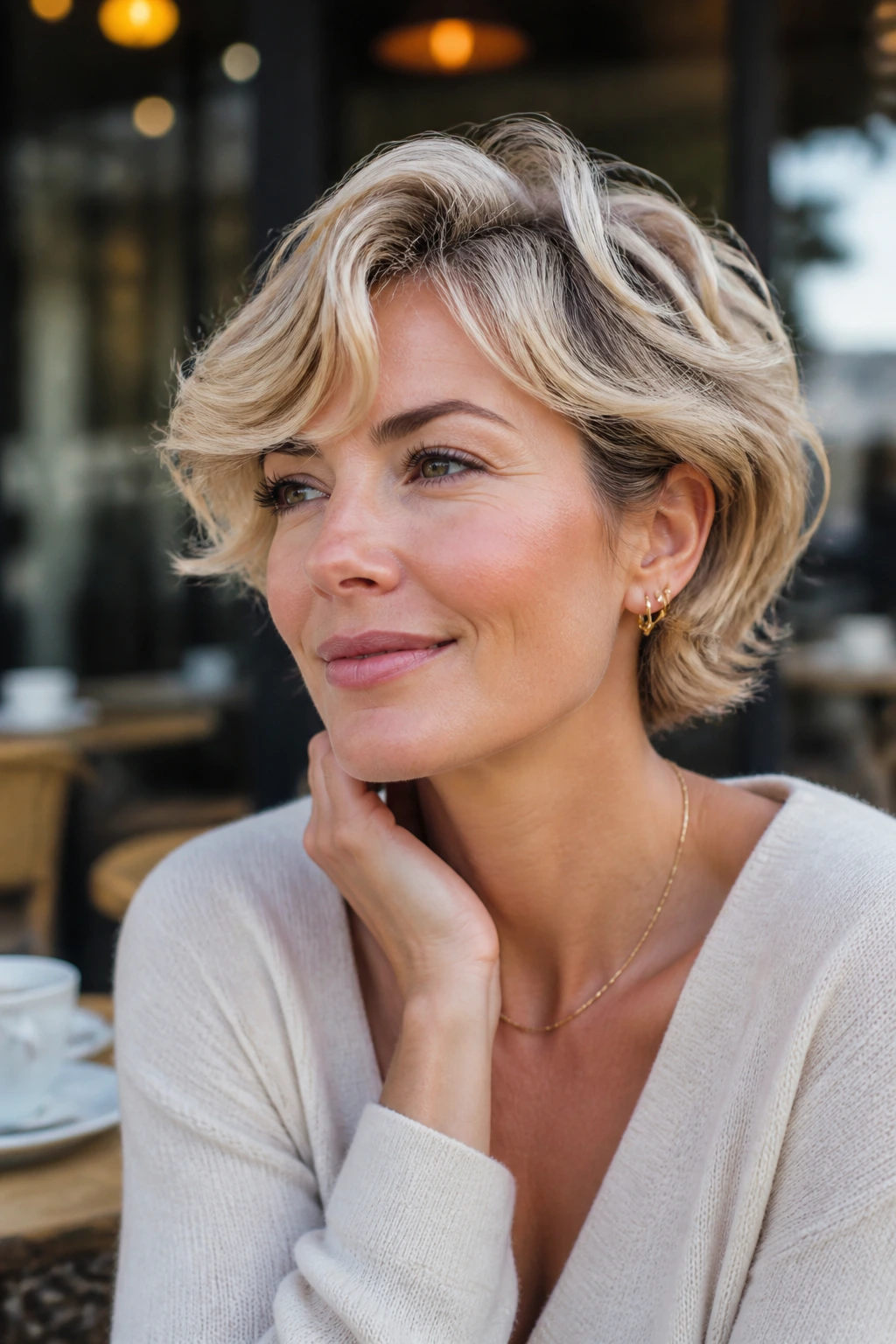
Want movement without a lot of length? A wavy flip pixie builds a gentle bend through the top and lets the ends flip away from the face. It is softer than a spiky crop and more relaxed than a polished side-sweep.
This shape is lovely on fine hair because the waves create the illusion of fullness without asking for heavy product. A light mousse or sea-salt spray on damp hair can give the bend some memory. On an oval face, the flip opens up the forehead and cheekbones at the same time, which is a tidy little win.
Use a tiny round brush or a flat iron with a subtle wrist turn if your hair is stubborn. Tiny. Not pageant-curl tiny. Just enough to make the ends forget gravity.
14. Slicked-Back Glossy Pixie
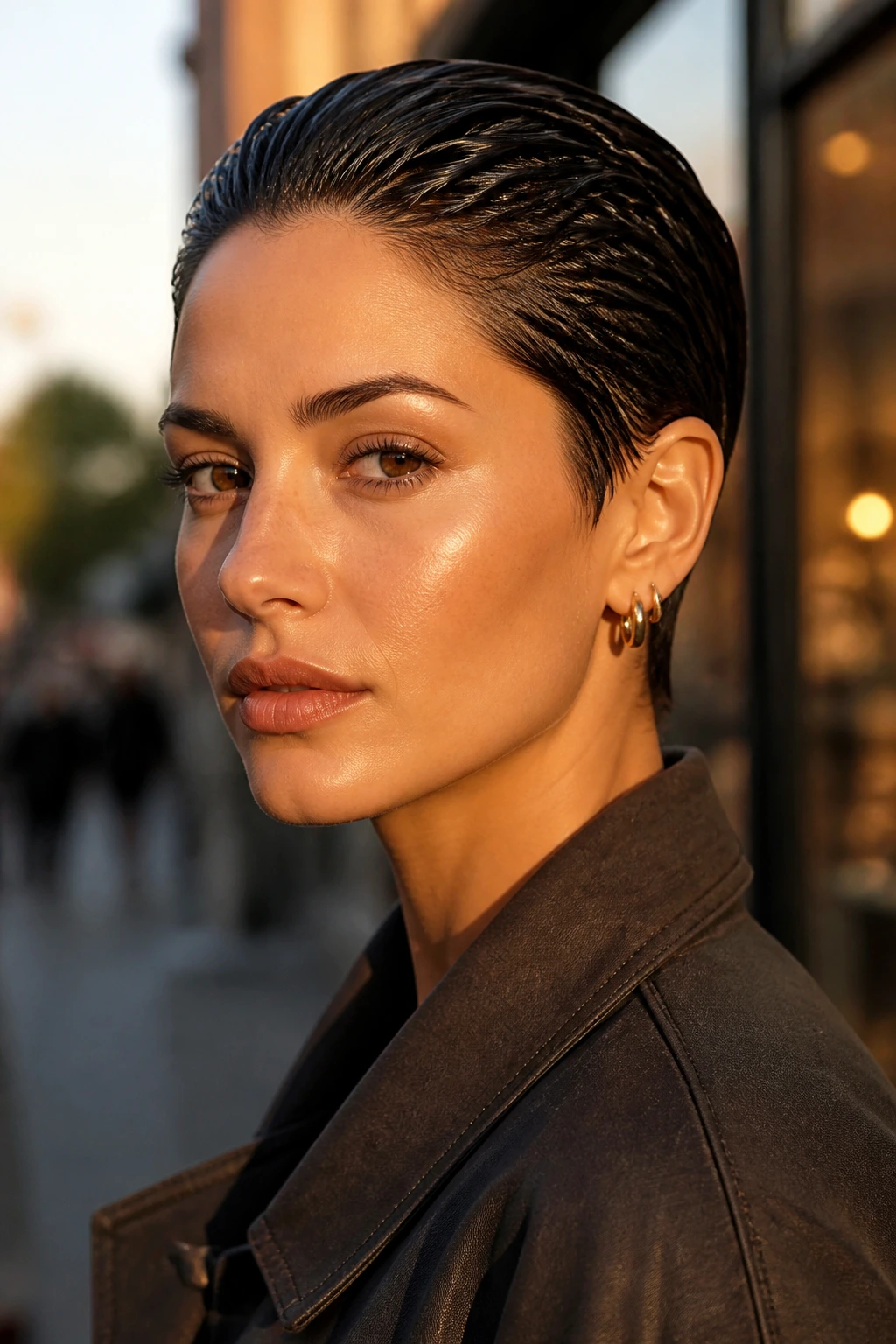
Slicked-back pixies are not only for sharp suits and expensive shoes. On fine hair, they can look clean and deliberate in a way thicker hair sometimes cannot pull off. Less bulk means the slicked shape sits close to the head instead of puffing out at the sides.
The glossy finish also gives an oval face a strong, clear outline. It exposes the bone structure and keeps the hair from competing with the face. If the cut has short sides and a slightly longer top, the slicked-back styling gives it a modern, almost liquid feel.
Use a small amount of gel at the roots, then a smoothing cream through the top if you want a softer finish. If you want a harder edge, go with gel alone and comb it back while the hair is still damp. Either way, do not drown fine hair in product. It will go limp and patchy fast.
15. Two-Tone Dimensional Pixie
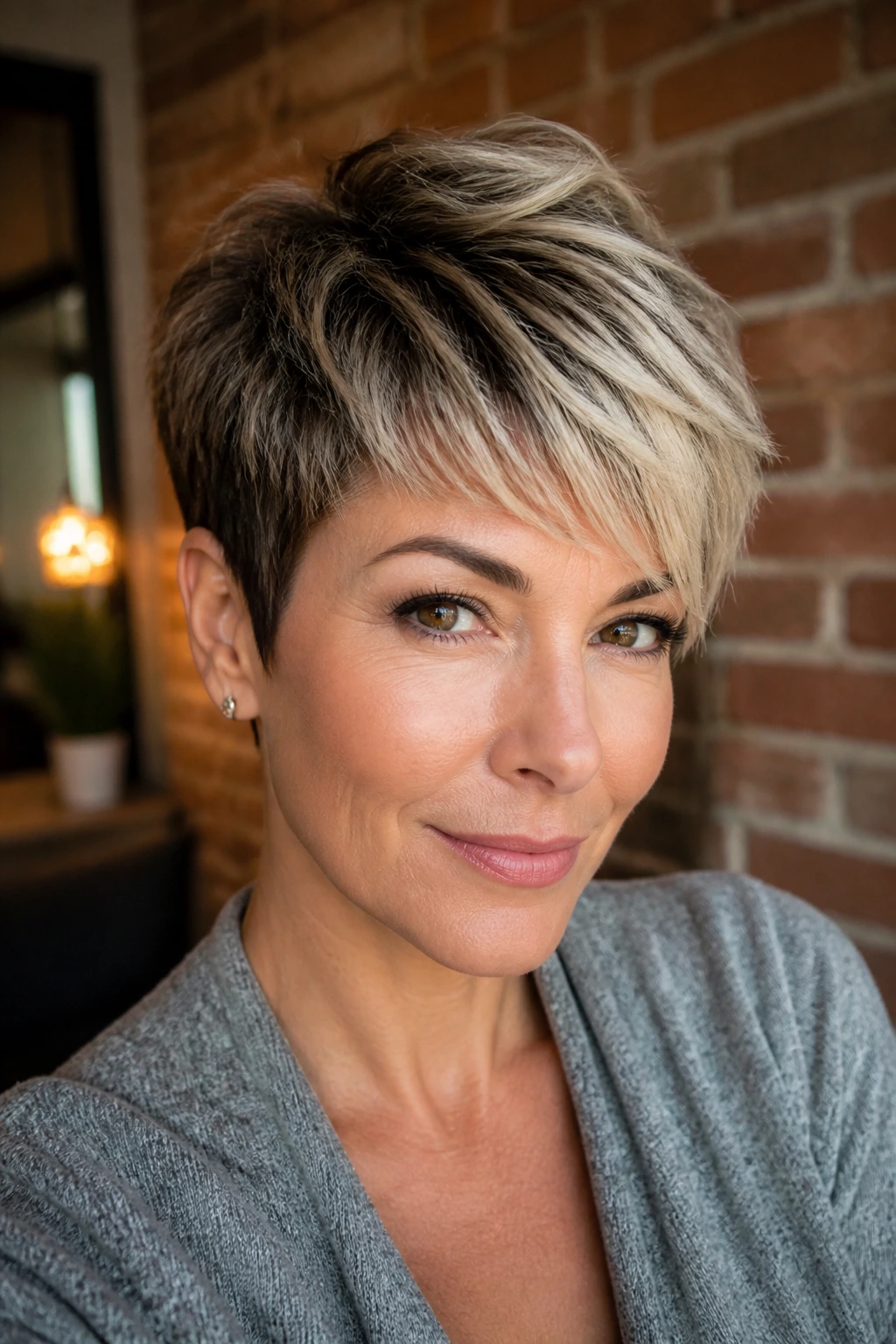
A two-tone pixie can do more for fine hair than another inch of length ever will. A darker root and a lighter top, or a subtle highlight ribbon through the fringe, creates depth where the eye expects to see volume. That visual trick matters on short hair.
Oval faces are easy to color because the face shape lets you place brightness almost anywhere without throwing off the balance. A lighter fringe can open the eyes. A shadowed nape can make the top look fuller. Even a soft money piece at the temple can change the whole haircut.
This is one of those styles where color placement is doing part of the haircut’s job. If your hair is very fine, keep the tones close enough to feel natural. Too much contrast can show scalp faster than you want.
16. Bowl-Cut Pixie Hybrid
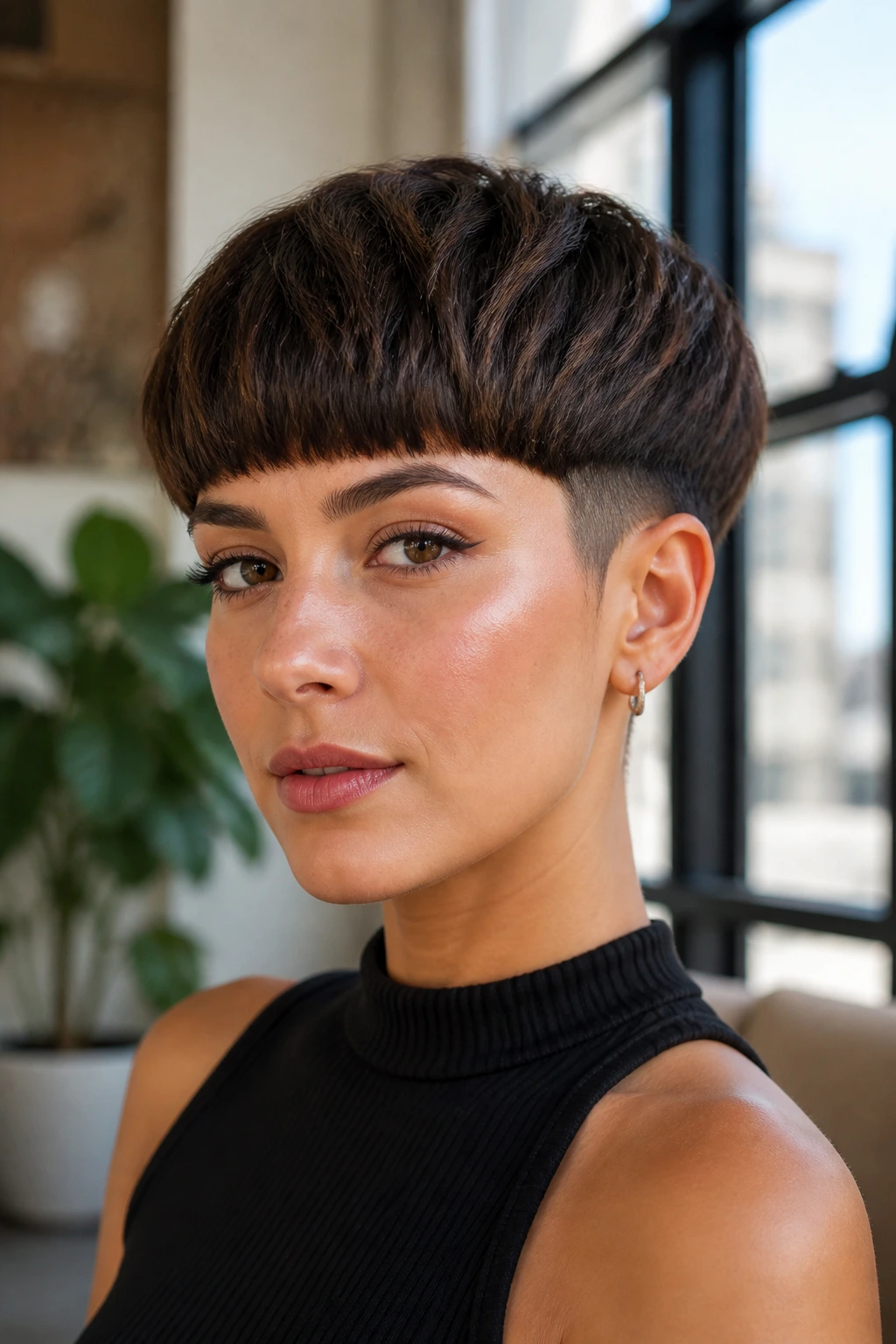
A bowl-cut pixie hybrid sounds bolder than it wears. The trick is a rounded top line with a cleaner undercut or tighter side shape, so the haircut reads graphic instead of childish. On an oval face, that strong curve can look chic, especially if the fringe sits just above the brows or skims them lightly.
Fine hair often does well with this shape because the lines stay crisp. There is less internal bulk to fight with, which means the silhouette can hold without much styling. If your hair lies flat in a sad little sheet, this is one of the few short cuts that can turn that flatness into a design choice.
The only catch is precision. A wobbly bowl line looks accidental. A clean one looks sharp. Bring a reference photo that shows the exact edge you want.
17. Crown-Stacked Layered Pixie
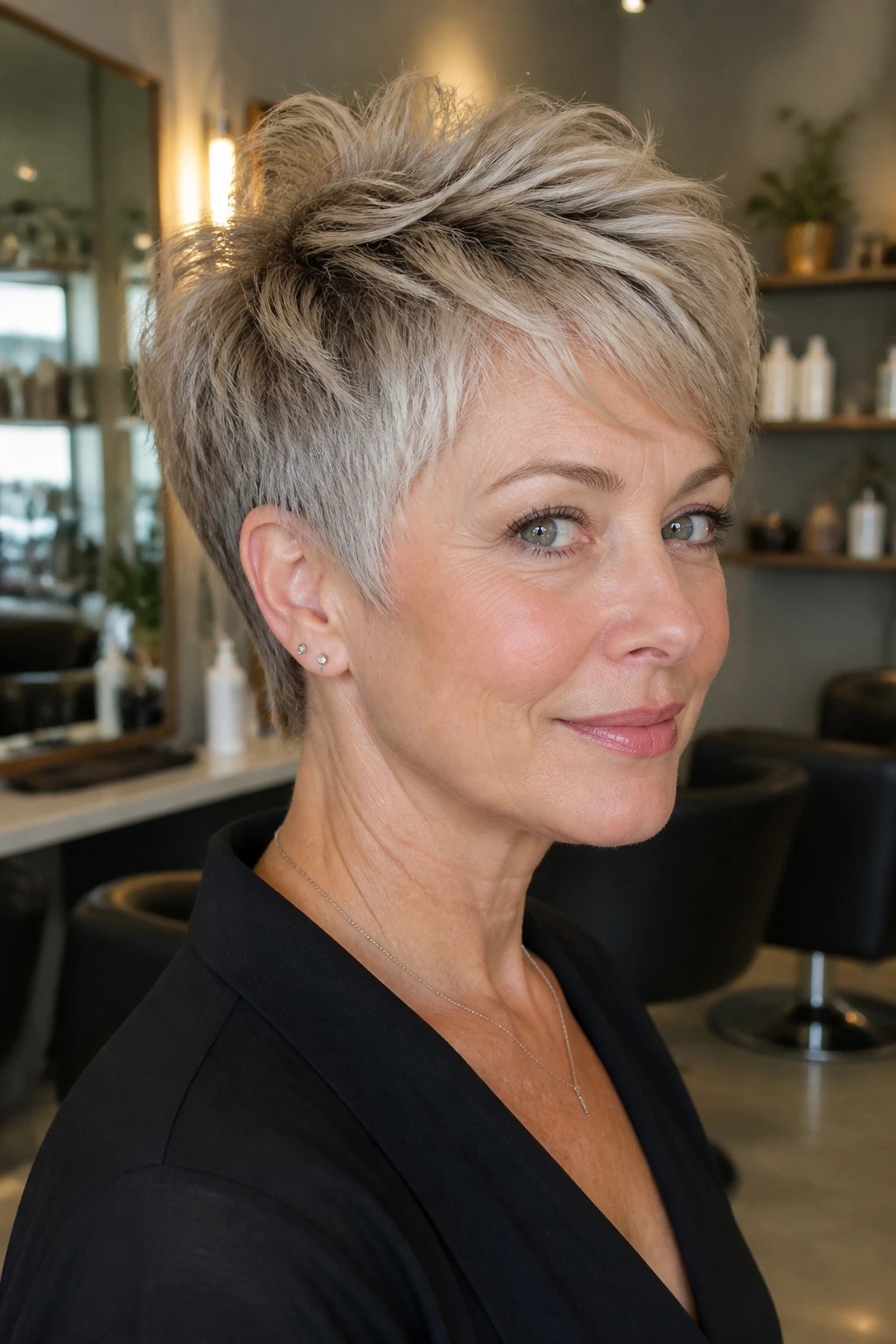
This is the more layered, more lifted cousin of the tapered crown style. A crown-stacked layered pixie uses visible graduation at the top so the hair has a little shelf of lift instead of collapsing into the head. It is especially good for hair that has a flat crown and narrow ends.
Fine hair needs that lift to be built carefully. Too many layers can make the shape airy in the wrong way. But when the stacking is controlled, the cut gives movement without sacrificing the outline. On an oval face, the raised top and tighter sides keep the proportions clean and lively.
Ask for the crown to be cut with intention, not shredded with thinning shears. That distinction matters. The first looks expensive in a very quiet way. The second can look frayed by week two.
18. Airy French Pixie
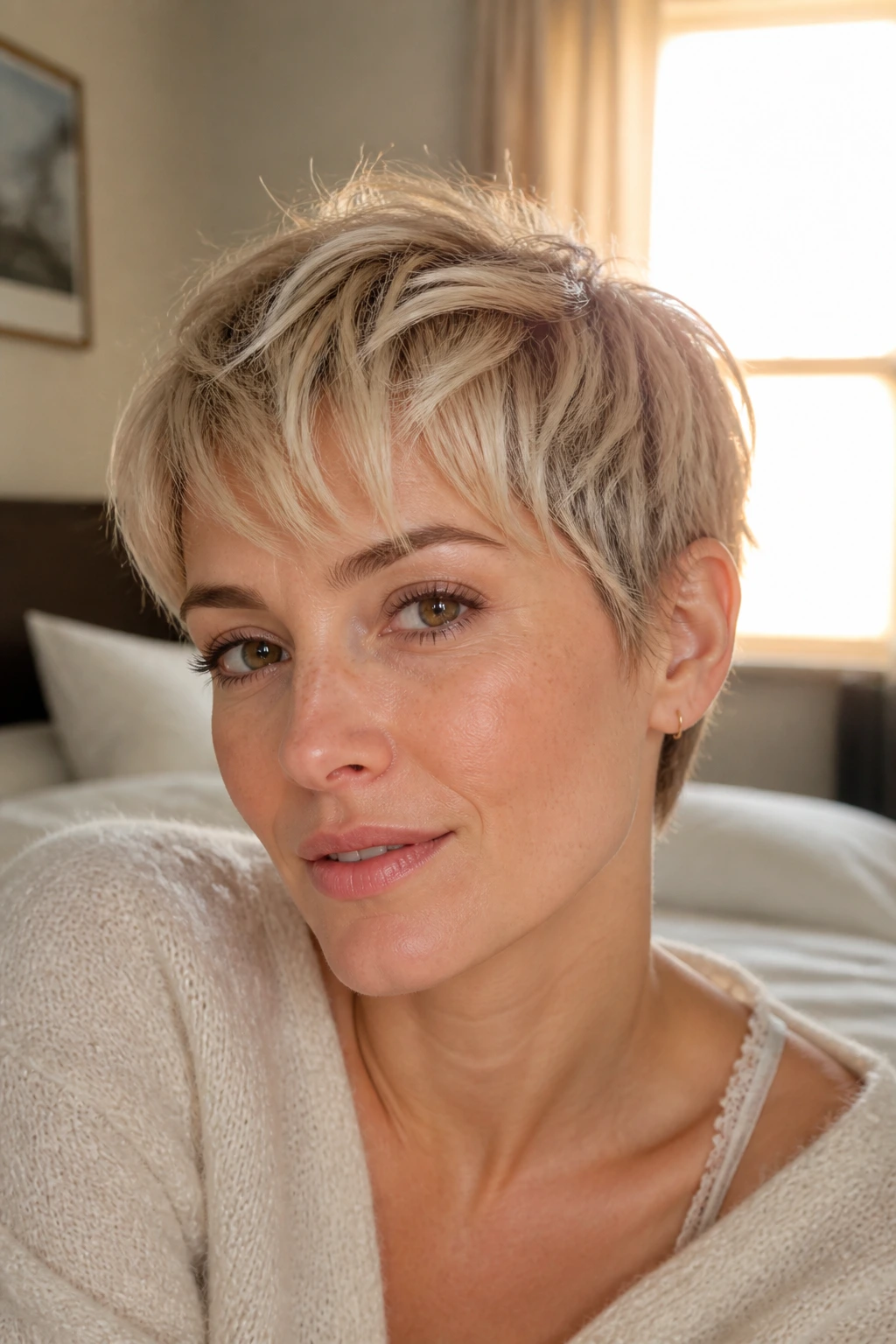
An airy French pixie feels light at the temple and soft at the fringe, like the haircut equivalent of a crisp shirt left slightly unbuttoned. It is not fussy, and it does not pretend to be severe. That slightly undone quality is why it looks so good on fine hair.
The face shape helps too. Oval faces can carry a soft fringe and a loose, airy side shape without needing hard lines to “fix” anything. If anything, the cut gets better when a few pieces shift out of place. That’s a rare and useful thing.
Keep the styling loose. A tiny amount of cream, a quick rough-dry, and maybe a finger twist at the front is enough. If you over-style it, the charm disappears.
19. Cropped Shag with Micro Fringe
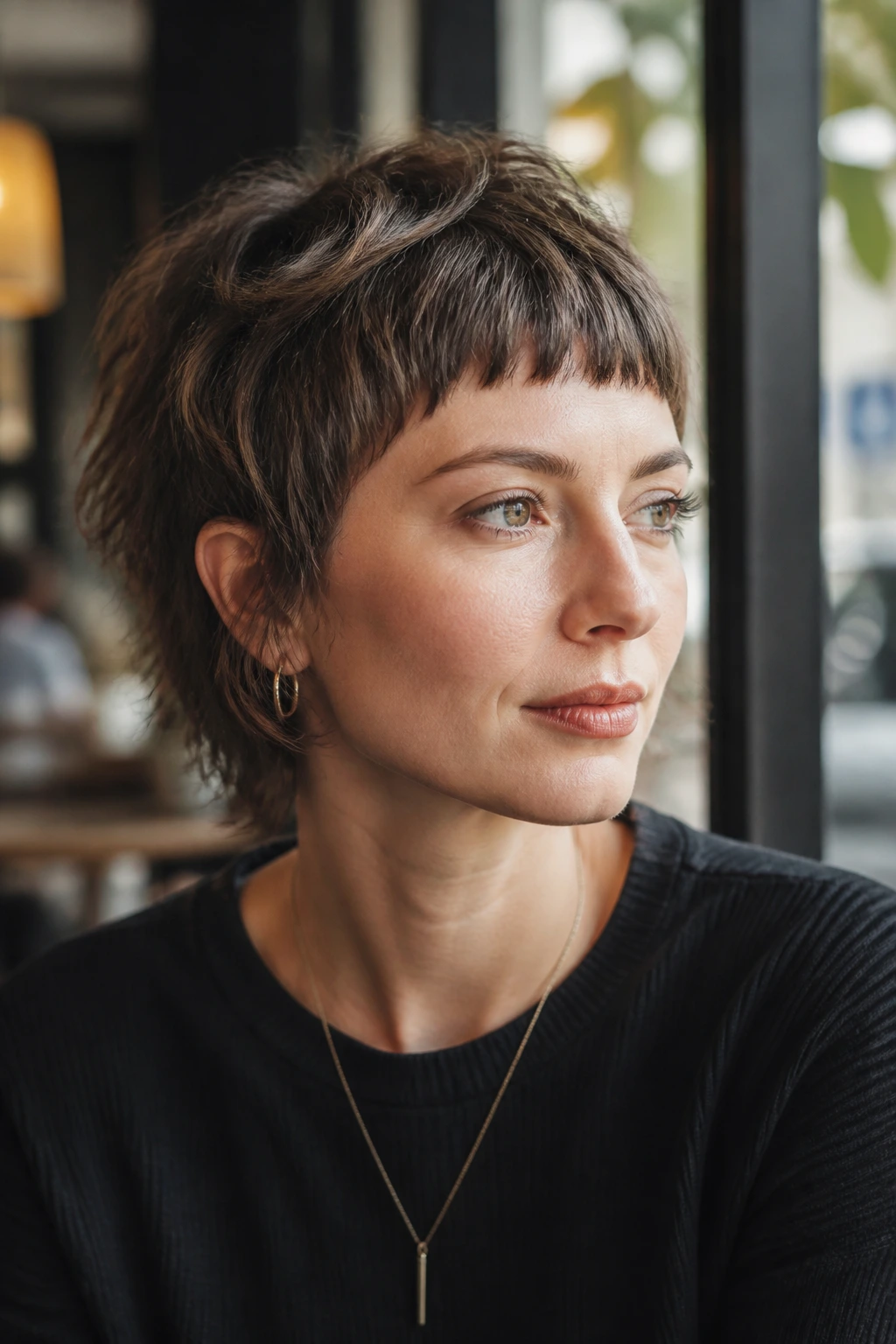
A cropped shag with micro fringe is for the person who likes a little mess with their order. The fringe sits short, the top stays choppy, and the edges are textured enough to look piecey even on a quiet day. It has that half-styled, half-wild feel that short cuts can wear well when they are cut right.
Fine hair likes this because the shaggy texture creates separation. Instead of trying to fake density, it gives the eye something to follow. On an oval face, the micro fringe keeps the eyes in focus and the choppy sides keep the shape from becoming precious.
Use a dry texture spray or a tiny bit of matte paste after the hair is fully dry. If you put it on damp hair, the cut can lose that airy separation and settle into a fluffier version of itself. Not the goal.
20. Nape-Hugging Lifted-Crown Pixie
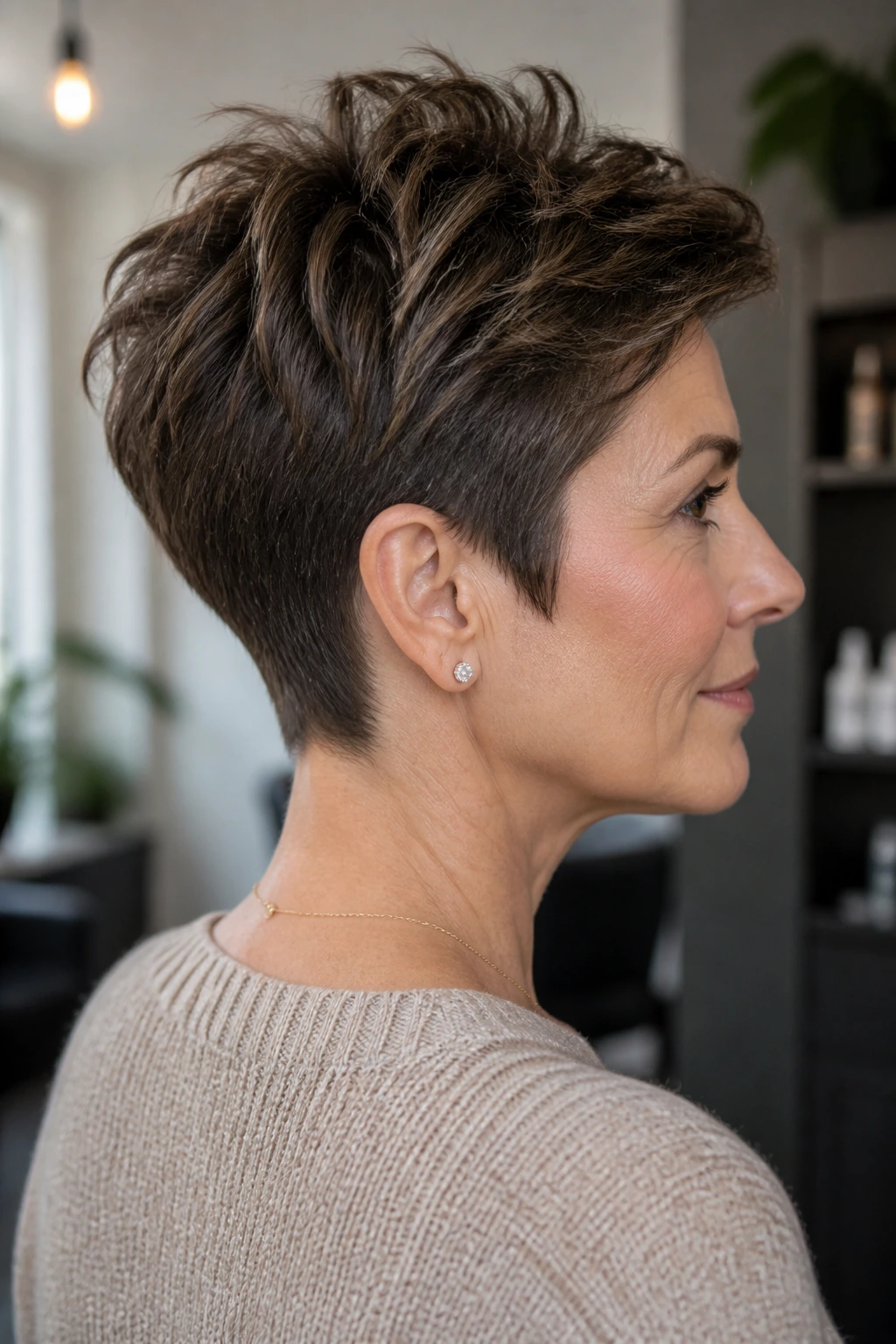
If the nape always looks bulky on your hair, this shape is worth a serious look. The nape-hugging lifted-crown pixie keeps the back clean and close while leaving enough height through the crown to avoid that mushroom effect some short cuts fall into.
Fine hair benefits from the tight back because it clears visual weight where the head curves most. The lifted crown creates balance, and an oval face wears that balance without any struggle. The whole cut looks neat from behind and taller from the front. That is a useful combination.
This version works best when the stylist respects the head shape. A good nape line should follow the neckline instead of fighting it. If the back is cut too blunt, the style can feel boxy. A soft taper usually wins.
21. Textured Brushed-Forward Pixie
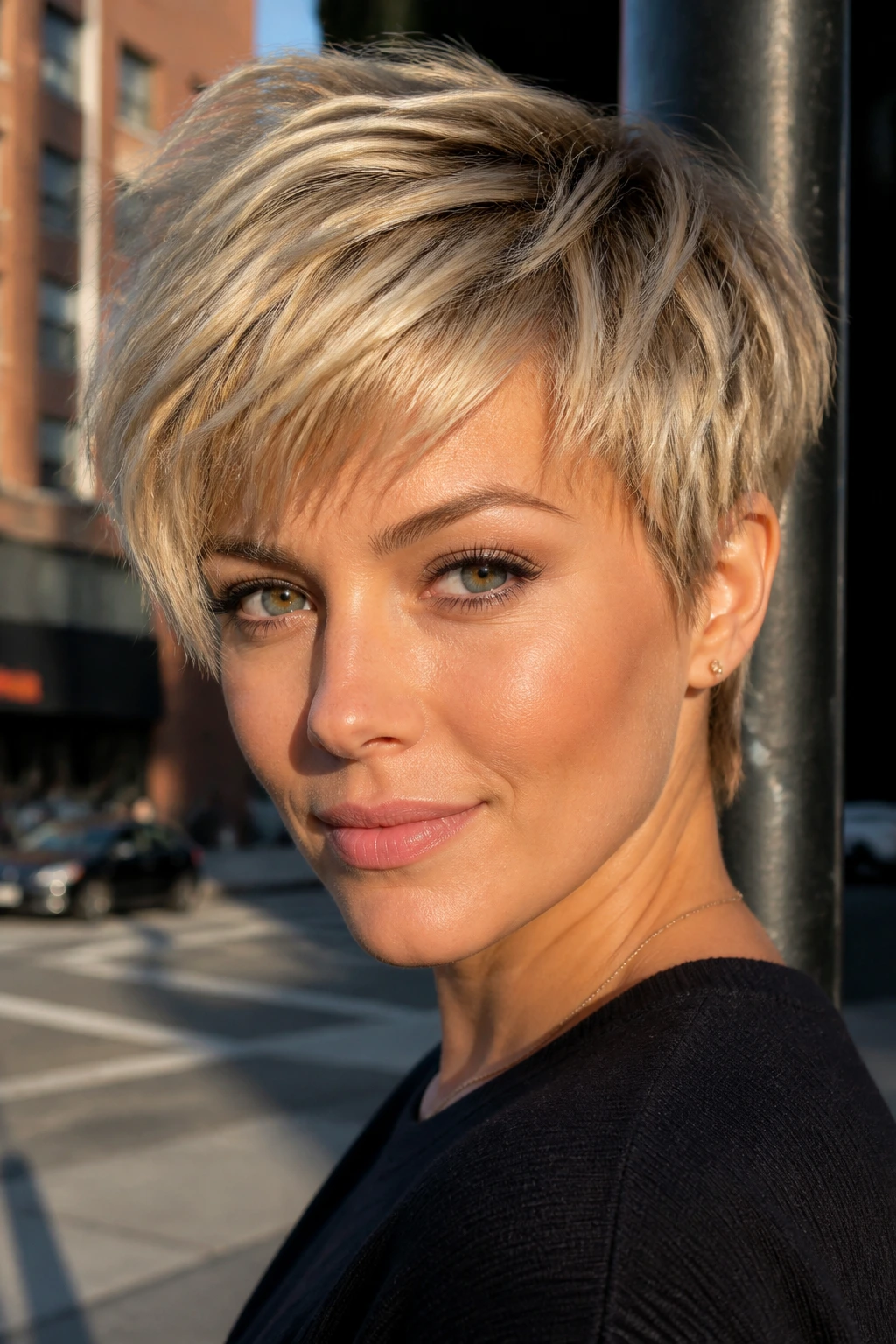
Brushing the hair forward can be the smartest move. A textured brushed-forward pixie directs the top toward the forehead and lets the fringe break in soft, uneven pieces. On an oval face, that forward motion brings attention straight to the eyes.
Fine hair does well here because the style uses direction rather than bulk. The pieces lie close enough to stay controlled, but the texture keeps them from looking flat or pasted down. It is a good choice if you want to soften a broad forehead or make the haircut feel a little more playful.
The styling trick is simple: blow-dry the hair forward first, then pinch a few bits away from the face with a tiny amount of paste. Do not over-separate it. The cut should look touched, not engineered.
22. Edgy Splice Pixie with Temple Detail
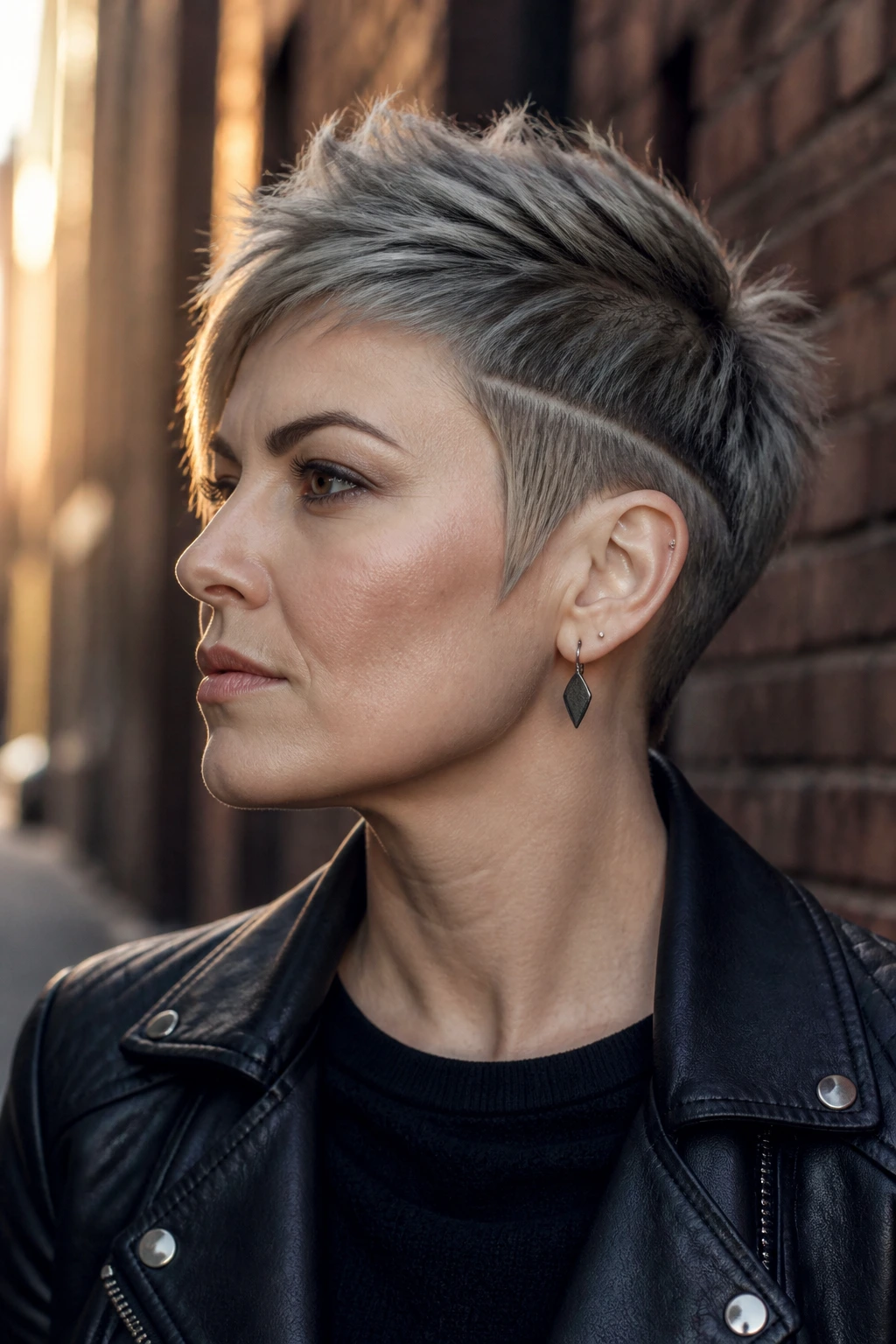
Temple detail makes a pixie look custom, not off the rack. An edgy splice pixie plays with one longer temple piece, a shaved line, a disconnected fringe, or a slight change in length from one side to the other. The splice is the point. It gives the cut a graphic edge without making the whole haircut severe.
Oval faces can handle this kind of contrast well because the shape already has balance. Fine hair benefits too, since the sharper line at the temple gives the eye something solid to read. If your hair feels too soft or too polite, this is the cut that brings the attitude back.
I like this style for people who wear simple clothes and want the hair to carry the personality. It does the job fast. And yes, one small detail—a side notch, a longer temple strip, or a narrow undercut—can change the whole mood.
What Makes Pixie Cuts Work So Well on Fine Hair and Oval Faces
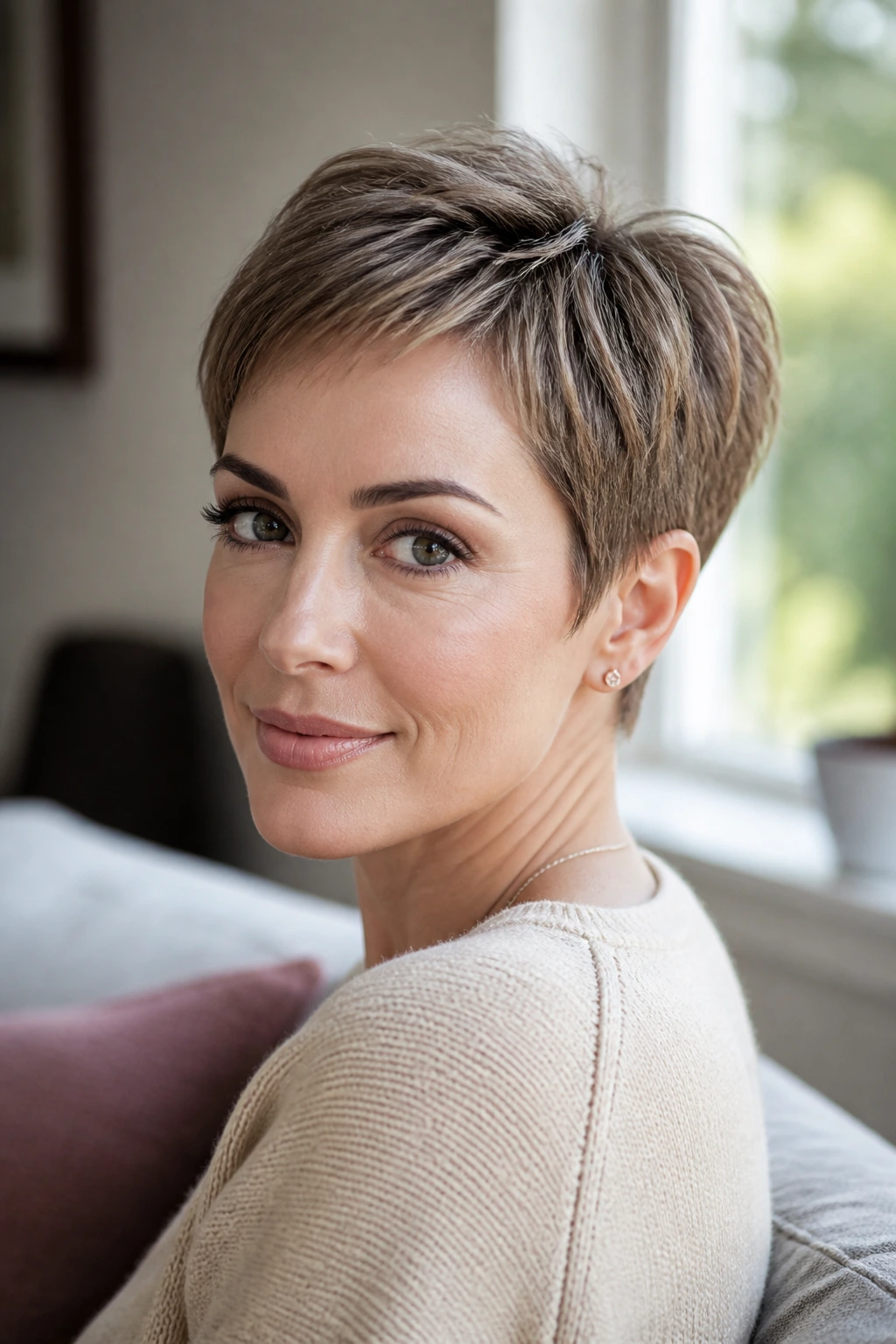
Fine hair has a bad habit of being judged by the wrong standard. People want it to behave like thick hair, then wonder why it falls flat under too much length. A pixie solves that by cutting away the dead weight and putting shape where the hair can actually support it. The crown lifts easier. The nape sits cleaner. The whole outline gets sharper because there is less hair competing with itself.
Oval faces make the situation even better. That face shape already has balance in the forehead, cheekbone, and jaw areas, so you do not need to spend the haircut “fixing” anything. You can use a fringe to make the eyes pop, or a side-sweep to sharpen the cheek line, or an undercut to add a little edge. The face does not fight the haircut. That’s the gift.
There is one caveat I always mention: fine hair is not the same thing as thin hair. Fine hair refers to strand width; thin hair refers to density. A head full of fine hair can still have plenty of coverage, and a cut that respects that distinction will behave better than one that assumes all fine hair is fragile and sparse.
How to Brief Your Stylist Without Wasting the Appointment
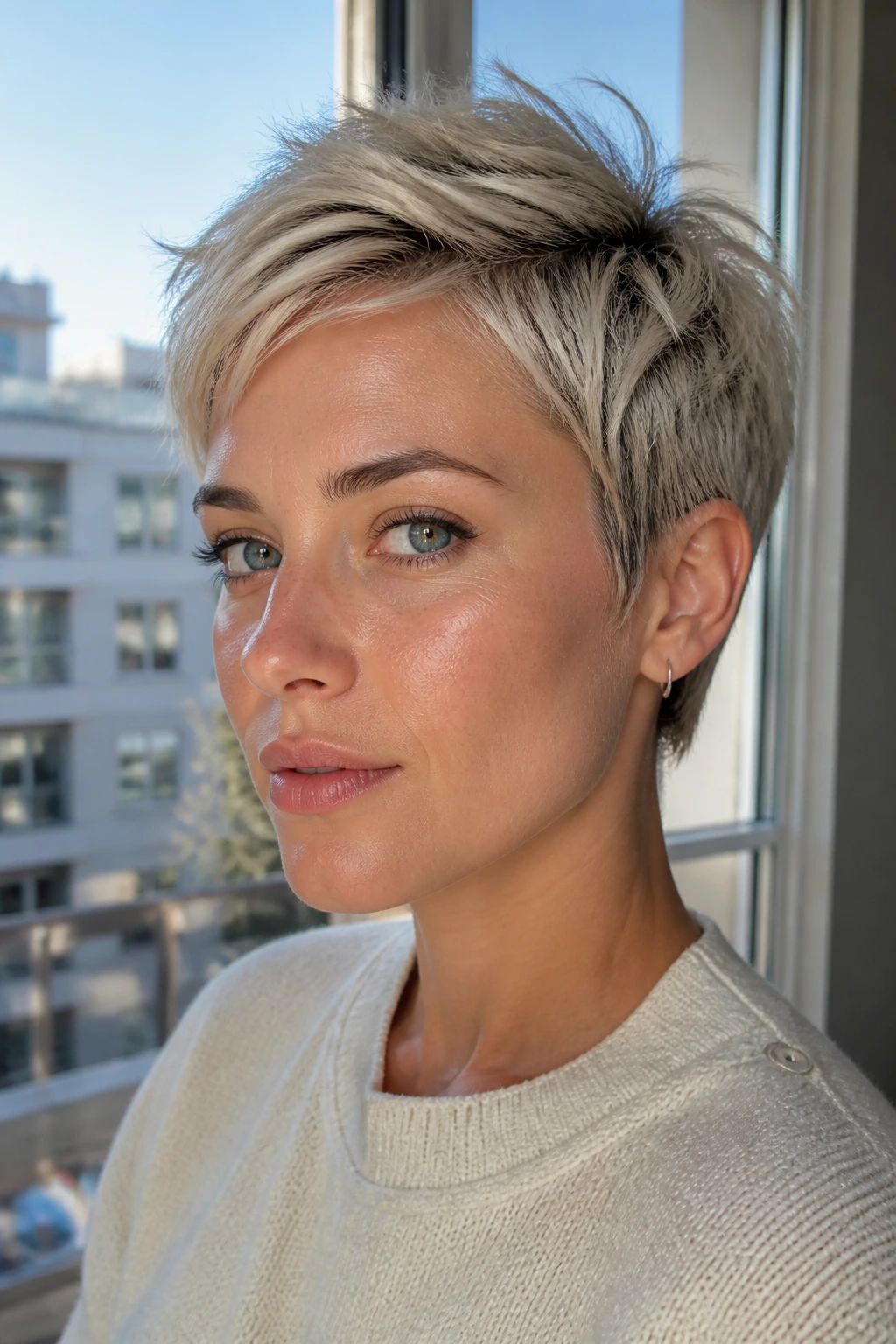
Bring photos, yes, but bring the right kind. The best reference is not a celebrity with wildly different density and bone structure. It is a photo that shows the fringe length, crown height, and nape shape you want. That saves a ton of back-and-forth at the chair.
Ask for where the weight should live, not just “more texture.” That phrase means different things to different stylists. If you want lift, say you want the crown to stay a bit longer and the sides to taper in. If you want a sharper outline, say you want the nape clean and the perimeter controlled. Those details matter.
A few useful things to mention:
- Cowlicks: Show where the hair kicks up at the crown or nape.
- Fringe length: Be specific about brow level, above the brow, or cheekbone level.
- Texture method: Ask whether they plan to point-cut, slide-cut, or razor the ends.
- Maintenance level: Tell them how often you’ll come back for trims.
- Styling habit: Say whether you air-dry, blow-dry, or use a flat iron.
One more thing. If your hair is very fine and fragile, do not let the haircut get shredded with thinning shears all over the top. A little texture is good. A see-through crown is not.
Styling Tools and Products That Keep Short Fine Hair Awake
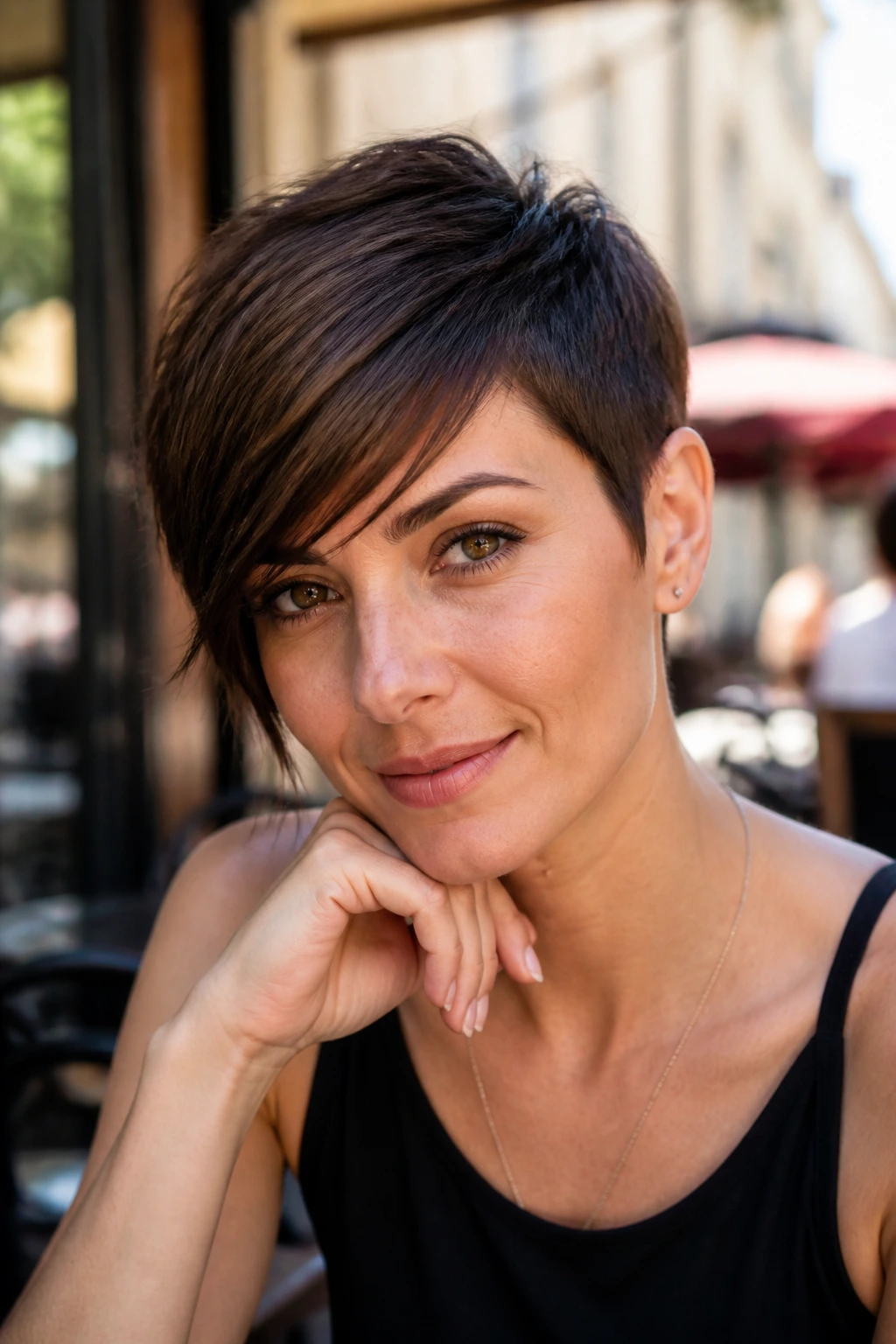
A pixie does not need a huge arsenal. It needs the right few things, and it needs them in the right amounts.
- Blow dryer with a concentrator nozzle: This helps push the hair where you want it instead of blasting it into random fluff.
- Small round brush or vent brush: Use it to lift the crown and bend the fringe without over-smoothing the whole cut.
- Tail comb: Handy for creating a clean part, teasing the roots a touch, or guiding a slick-back.
- Matte paste or light wax: Gives piecey separation without the shine that can make fine hair look thinner.
- Volumizing mousse: Best on damp roots if you want lift that lasts beyond the first hour.
- Texture spray or powder: Good for second-day hair and for reviving a flat crown.
- Flexible-hold hairspray: Keeps movement in place without turning the cut stiff.
- Mini flat iron: Useful for flipping a fringe, smoothing a temple piece, or fixing one stubborn section.
- Sectioning clips: Short hair still needs clipping if you want a neat blow-dry.
- Handheld mirror: Not glamorous, but worth it for checking the nape and side taper.
The big mistake is buying heavy product because the hair feels “soft.” Soft hair usually needs less, not more.
How to Wear a Pixie So It Looks Intentional
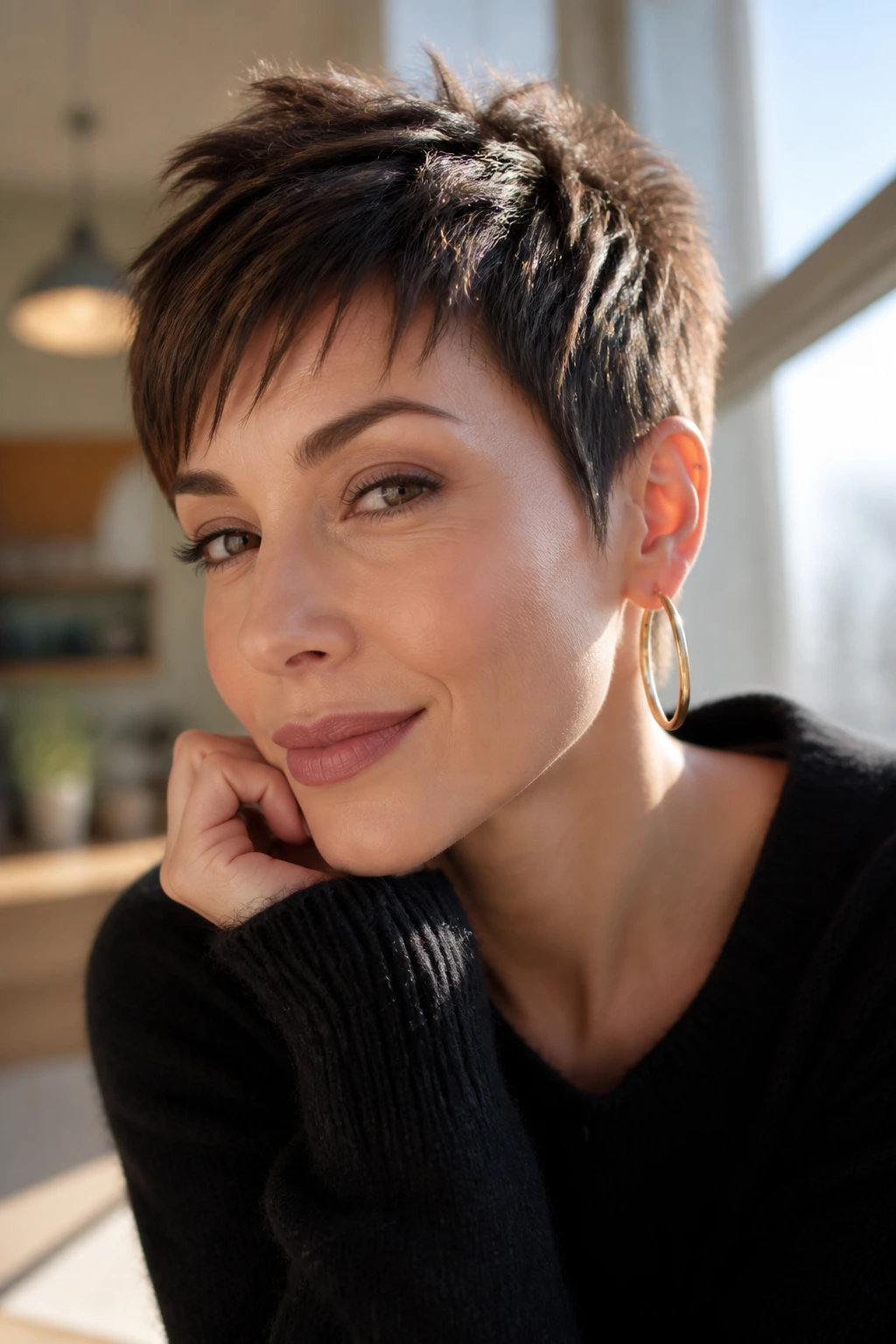
Presentation: Decide what the haircut should say before you style it. If you want it soft, use a side-sweep or loose fringe. If you want edge, go piecey or brushed-forward. If you want polish, smooth the crown and clean up the sides. Pixies look best when the finish has a point of view.
Accompaniments: Short hair makes earrings, glasses, brows, and collars matter more. A blunt neckline on a shirt can make a short cut look sharper. Hoops, narrow cat-eye glasses, and a little brow definition can change the whole balance around an oval face.
Portions: With product, start small. Think pea-sized, not walnut-sized. Fine hair shows overload fast, and once the roots go greasy, the shape collapses in a way no amount of finger fluffing can save.
Finish: Matte reads edgy, satin reads soft, and gloss reads formal. Choose the finish that matches what you wear most often. A cropped pixie can look like three different haircuts depending on shine alone, which is one reason I love it.
Small Changes That Add Lift, Grit, and Shape
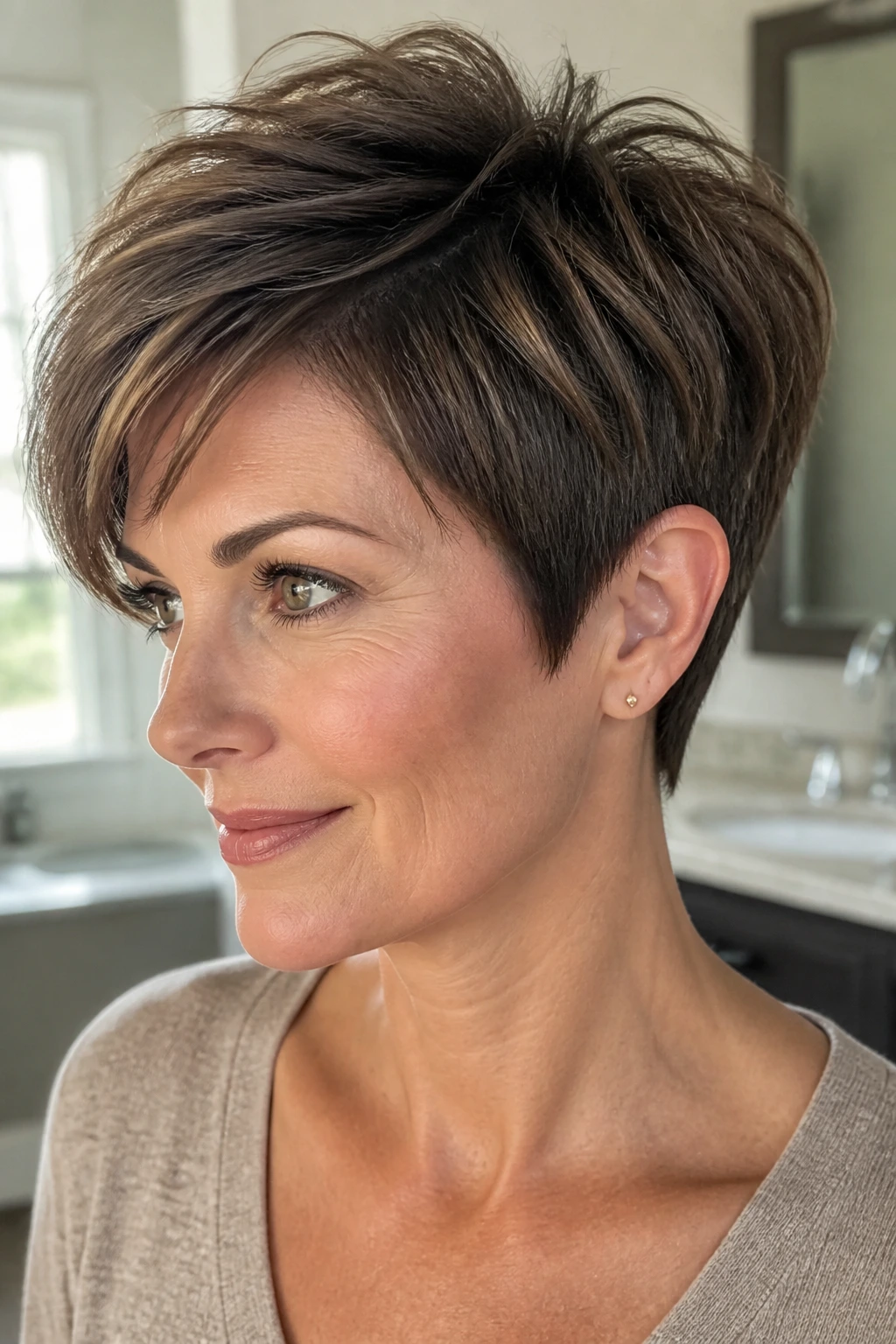
Root Lift: Blow-dry the crown in the opposite direction for 15 to 20 seconds, then swing it back. That tiny change gives the root a bend instead of a flat line.
Texture Boost: Work mousse into damp roots and texture spray into dry mid-lengths. Do not put texture spray on soaking-wet hair; it never behaves the same way twice, and fine hair tends to drink it up unevenly.
Face-Framing: Leave a touch more length at the temple or fringe if you want the cut to feel softer. Shorten the nape if you want the face to look a little taller and the jawline a little cleaner.
Color Lift: Micro highlights, a soft shadow root, or a lighter fringe can make fine hair look fuller without changing the cut. Color creates depth. Depth is what fine hair is usually missing.
Make-It-Yours: Straight hair tends to like sharper edges and cleaner silhouettes. Wavy or curly fine hair often needs a little more internal length so the texture can spring without puffing out.
The Common Mistakes That Make Fine Hair Go Flat
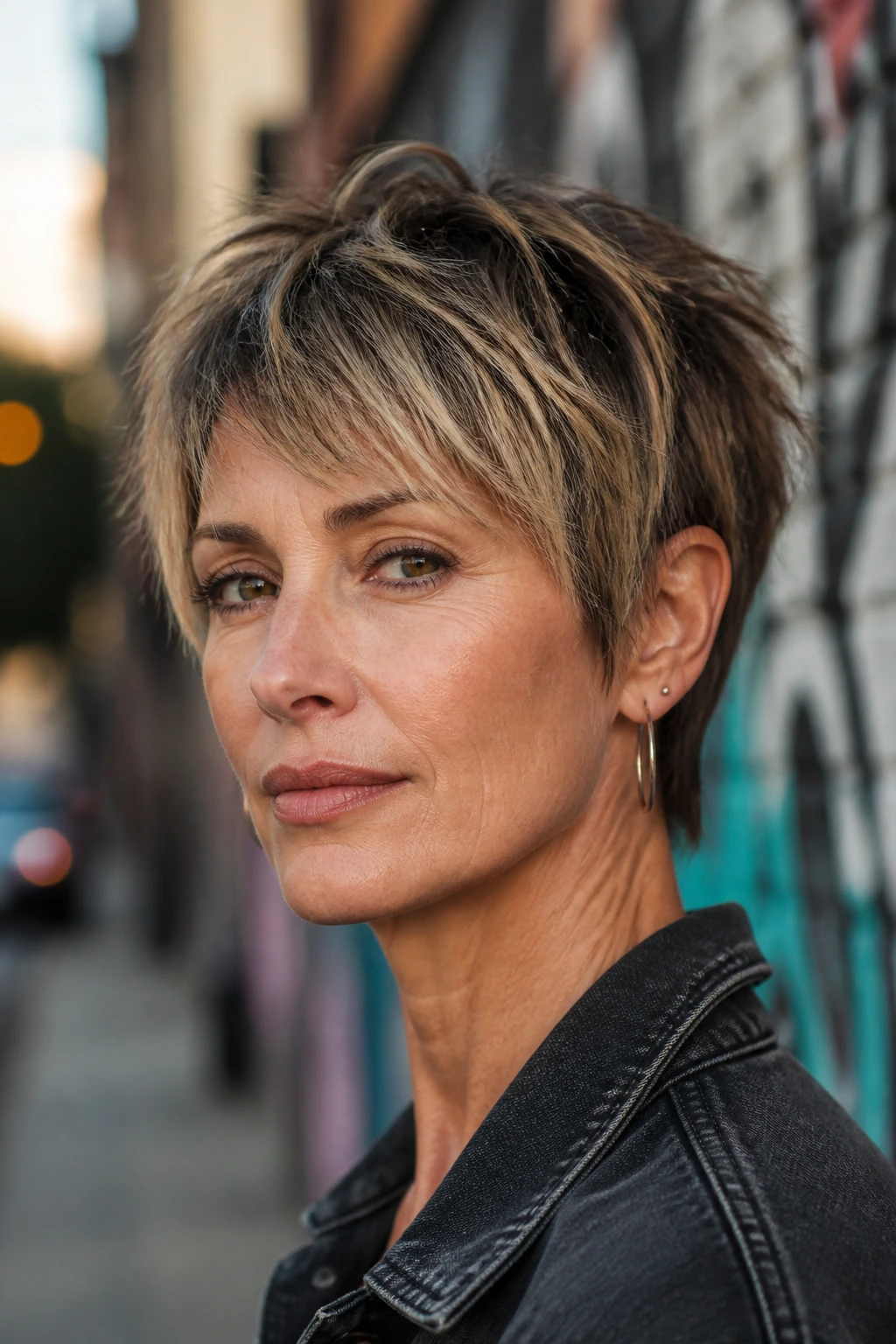
- Over-thinning the top: The hair looks airy in the chair and see-through a week later. Fix it by asking for controlled point cutting instead of aggressive thinning shears.
- Keeping the fringe too heavy: A thick, blunt bang can sit like a curtain on fine hair. The fix is a lighter fringe, a baby bang, or a soft side-sweep that does not fight gravity.
- Using too much product: Fine hair loves a small amount of paste or mousse. Too much makes the pieces separate in sad, greasy clumps.
- Ignoring growth patterns: Cowlicks at the crown or nape will push the cut around. A good stylist cuts with those patterns, not against them.
- Waiting too long for a trim: Pixies lose their line fast. Once the nape grows into fuzz and the crown drops, the shape disappears.
- Choosing a trend without a maintenance plan: A temple shave or baby bang looks sharp only if you are willing to keep it in shape. That is the price of the look.
Variations and Adaptations to Try
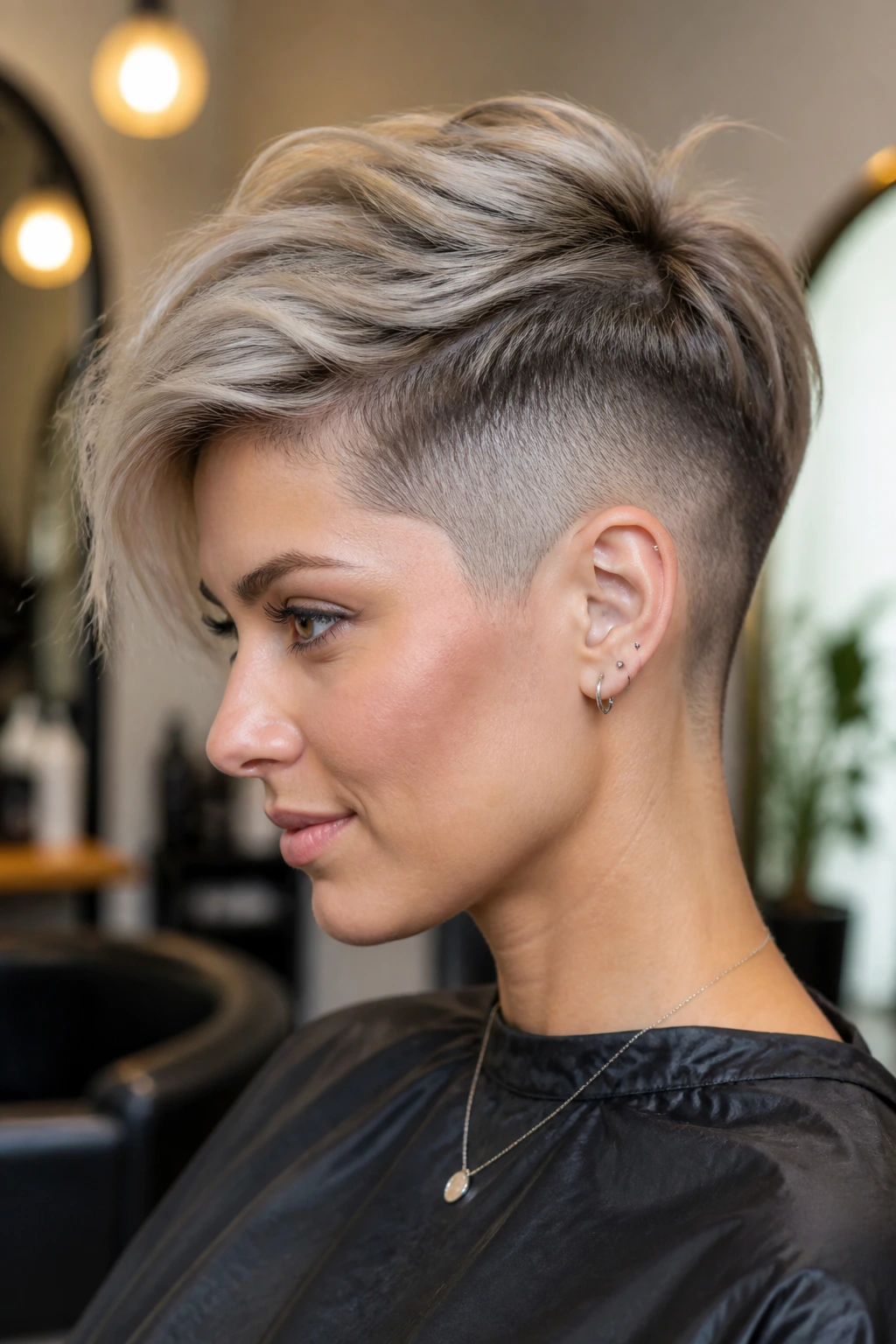
Soft Office Pixie: Keep the fringe longer and the sides gently tapered. It reads polished, not severe, and it is the easiest version to grow out if you change your mind.
Rebel Undercut Pixie: Add a tighter nape or one shaved side for a harder edge. This works best if you like contrast and do not mind booking trims more often.
Curly-Friendlier Pixie: Leave more length through the top and keep the layers soft. The shape lets curls spring without turning into a puffball.
Shadow-Root Pixie: Ask for darker roots with lighter mid-lengths or tips. That color contrast gives fine hair depth and makes the crown look fuller.
Grow-Out Pixie Bob: Keep the top and sides blended a little longer so the cut can pass into a short bob later. This is the smart move if you want the funk without getting trapped by the length.
Keeping a Pixie Sharp Between Salon Visits
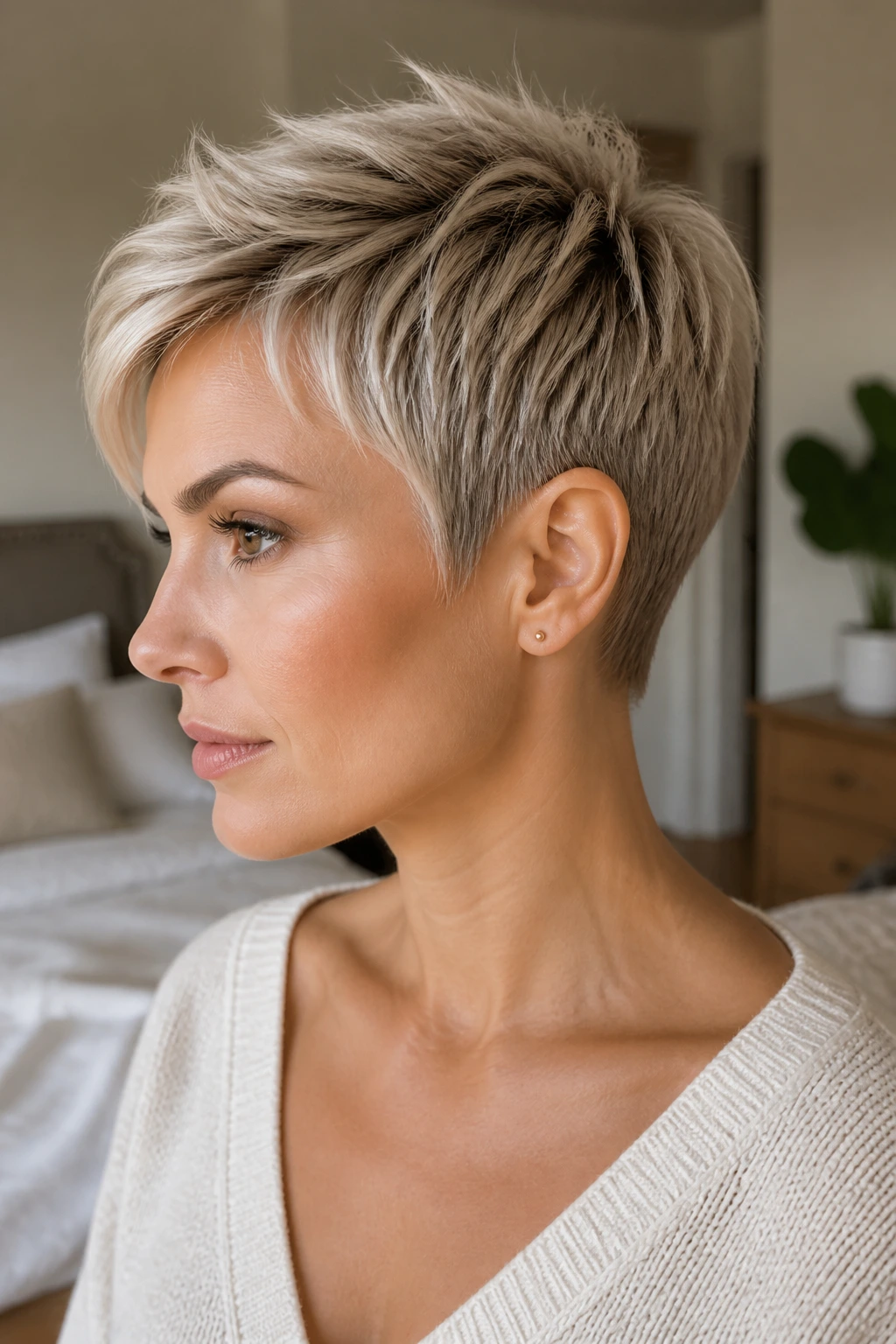
A pixie rewards maintenance. Not much, just regular maintenance. For most fine-haired pixies, a trim every 4 to 6 weeks keeps the line clean. If you wear a baby fringe or a tight nape, that window gets shorter.
Wash frequency depends on how much product you use, but fine hair often looks best when it is not overloaded with oils and dry shampoo buildup. A lightweight shampoo and a small amount of conditioner on the ends is usually enough. If the roots flatten easily, a quick rinse and re-style can work better than trying to revive a fully styled head for three straight days.
Second-day hair is where pixies either shine or go weird. A mist of water at the roots, a quick blast with the dryer, and a fresh dab of paste usually resets the shape. If the crown sticks up in one stubborn direction, wet just that section and re-dry it. Do not soak the whole head unless you want to start over.
For grow-out, ask your stylist to keep the outline soft instead of carving it too sharp. That makes the cut much easier to move toward a bob or longer crop later. And a satin pillowcase helps more than people think. Hair that is this short still gets bent by sleep.
Questions People Ask Before the Chop

Will a pixie make fine hair look thicker?
Often, yes. Shorter length removes the drag that pulls fine hair flat, and the right layering can make the crown and fringe look fuller. The haircut will not create density out of nowhere, but it can make the hair you do have look more alive.
Do oval faces suit baby bangs?
They usually do, because the face shape can handle a shorter fringe without losing balance. The key is to keep the bangs light enough that they do not box in the forehead.
Should fine hair be razored?
Sometimes, but not blindly. A razor can give movement, yet it can also make fragile fine hair look frayed. If your hair is soft and prone to flyaways, point cutting is often safer.
How often do pixie cuts need trimming?
Most need attention every 4 to 6 weeks. Tight undercuts, sharp napes, and micro bangs can need a trim even sooner if you want the shape to stay crisp.
Can I air-dry a pixie?
Yes, but the result depends on the cut and your growth pattern. Fine hair that air-dries flat usually needs a little root lift with mousse or a quick blow-dry at the crown to keep the shape from collapsing.
What if I have a cowlick at the crown?
Tell your stylist before the cut starts. A crown cowlick needs length and direction, not a fight. The haircut should work with the swirl, or it will stick up in the exact spot you least want it.
Do pixies work with glasses?
Very much so. Short hair opens space around the frames, and details like sideburns, fringe length, and temple shaping can make the glasses look intentional instead of crowded.
How do I grow out a pixie without hating every stage?
Keep the nape soft, the top blended, and the fringe long enough to move to one side. A hard line grows out badly; a soft perimeter gives you options.
A Pixie That Keeps Its Shape
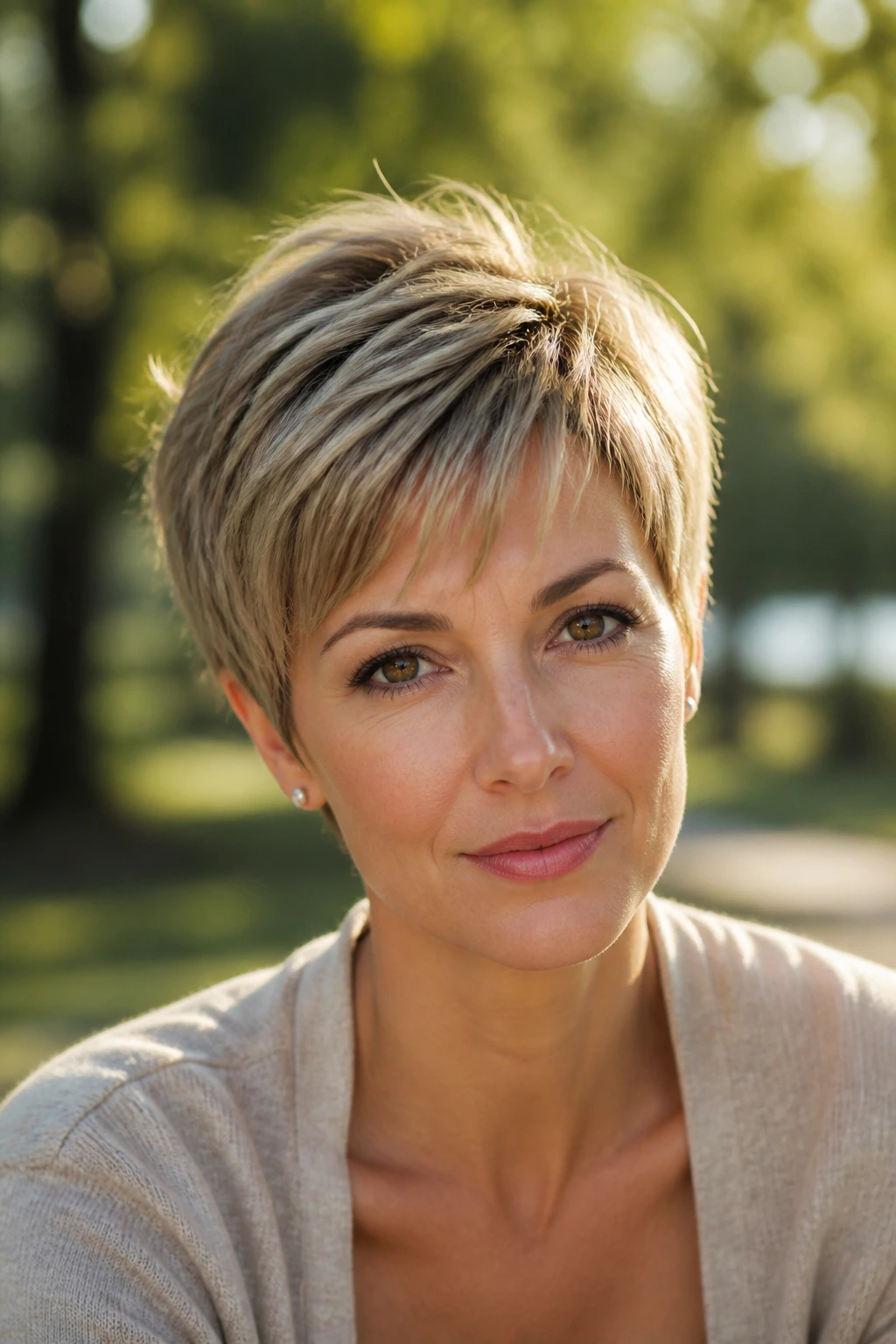
The best thing about these cuts is that they do not ask fine hair to be something it isn’t. They turn softness into shape, and they let an oval face carry the sharp stuff without losing balance. That is a very good deal.
Pick the version that matches your routine, not the one that only looks dramatic in a photo. If you like edge, go undercut or temple-detail. If you want ease, pick feathering, a soft fringe, or a French crop with movement. The haircut should fit your mornings, your glasses, your brow line, and the way your hair actually behaves when nobody is watching.
And that, honestly, is where a good pixie earns its keep.