



A wool coat collar, a dry radiator, and one quick tug from a scarf are enough to flatten a careful hairstyle into something tired-looking by lunch. That’s why winter easy updos for medium hair with curly hair make so much sense: the texture already gives you grip, the length is long enough to twist but short enough to stay lifted, and the messier the finish gets, the more it often looks intentional.
Curly medium hair has one unfair advantage in cold weather. It doesn’t need perfect smoothness to look finished. A few bends, a little shape at the crown, and enough pinning to keep the ends from rubbing against a collar can carry the whole look. That’s a much better deal than trying to force a glossy blowout to survive a knit hat.
The trick is choosing styles that work with shrinkage, frizz, and that slightly rebellious halo curls like to make in dry air. Some of these updos sit low and quiet under scarves. Some sit higher and show off texture. All of them are easy enough to build before coffee gets cold.
Why These Winter Updos Earn Their Keep
-
Less fighting, more shaping: These styles use your natural curl pattern as the structure, so you’re not smoothing and stretching hair for twenty minutes just to pin it back anyway.
-
Hat-friendly by design: Low buns, tucked knots, and half-up shapes keep bulk out of the hat band and stop that awkward flattened stripe across the crown.
-
Medium length is a sweet spot: Hair that lands around the shoulders or collarbone has enough length to coil, twist, and clip without sagging into a sad, loose tail by noon.
-
Dry weather is easier to handle: Curly hair already has texture, which means bobby pins and claws catch better than they do on slippery straight hair.
-
They save the ends: Winter scarves, coat zippers, and wool collars are rough on curl ends. Putting the hair up keeps those fragile pieces from rubbing all day.
-
You can wear them messy on purpose: A few frizz halos, a loose tendril, or a bent curl around the temple reads as texture here, not failure.
1. The Low Curly Knot
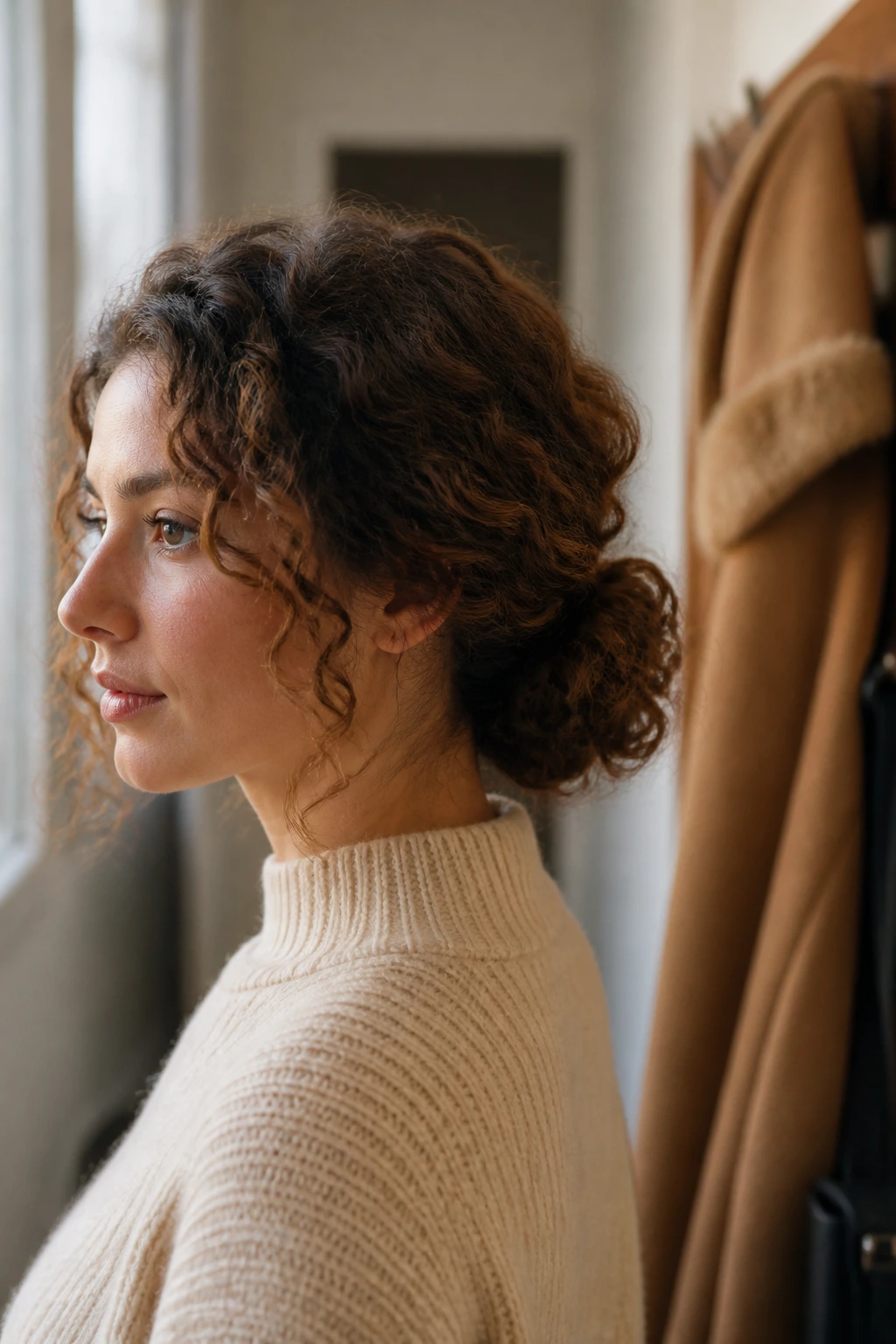
This is the style I reach for when I want the least drama possible. Gather the hair at the nape, twist it once or twice, then fold the length into a soft knot that sits just above the collar line. The whole point is to keep the silhouette low and compact so it doesn’t scrape against coats or bunch under scarf layers.
What makes it work on medium curly hair is the grip. Curls aren’t sliding around the way silky hair does, so a few medium bobby pins can hold a knot that would take twice as many pins on straighter hair. If your hair is layered, leave the shortest face-framing curls out on purpose. They soften the shape and keep the bun from looking too neat.
I like this one on days when the hair has a little texture from yesterday. Freshly washed curls can work, but second-day hair gives you a firmer base. If your ends stick out, tuck them under the knot instead of wrapping them around the outside. That keeps the style compact and stops the little fuzzy ends from poking out after you pull on a coat.
Best for: low collars, scarf-heavy outfits, and mornings when you want your hair done in four minutes.
Quick build
- Smooth the top with your hands, not a brush.
- Twist the ponytail into a loose knot.
- Pin from underneath, aiming the pins upward into the base.
- Pull one or two curls free around the ears if the shape feels too severe.
2. Rope-Twist Nape Bun
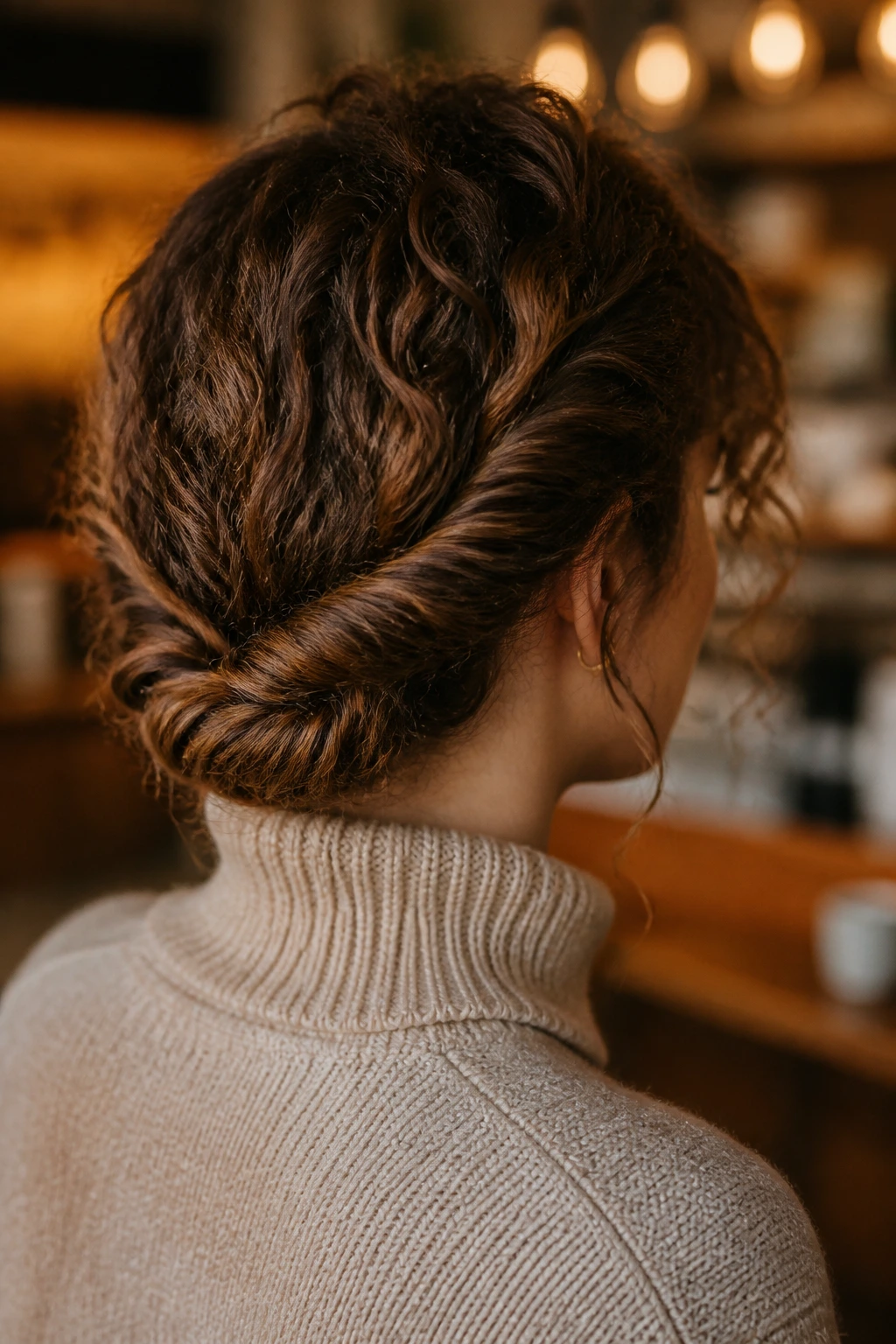
If a standard bun feels too plain, the rope twist gives it a little more shape without adding work. Split the hair into two sections, twist each one in the same direction, then wrap them around each other before coiling the rope at the nape. The result looks more detailed than a basic twist, but it doesn’t take much longer once you’ve done it twice.
This one is especially good for medium curly hair because the twist pattern grabs all those bends and coils in a way that looks deliberate. The rope itself does a lot of the decorative work, which means you don’t need a perfect finish. A bit of volume at the roots actually helps. Too much smoothing and it starts to look flat, which is a shame because curly texture is the whole advantage here.
Use three to five pins, depending on thickness. Pin the bun from opposite directions so the anchor points cross inside the coil. That tiny detail matters more than people think.
It’s a good choice for a winter dinner, a workday, or any situation where you want the style to look more finished than a messy knot without crossing into fussy.
3. The Claw-Clip French Twist
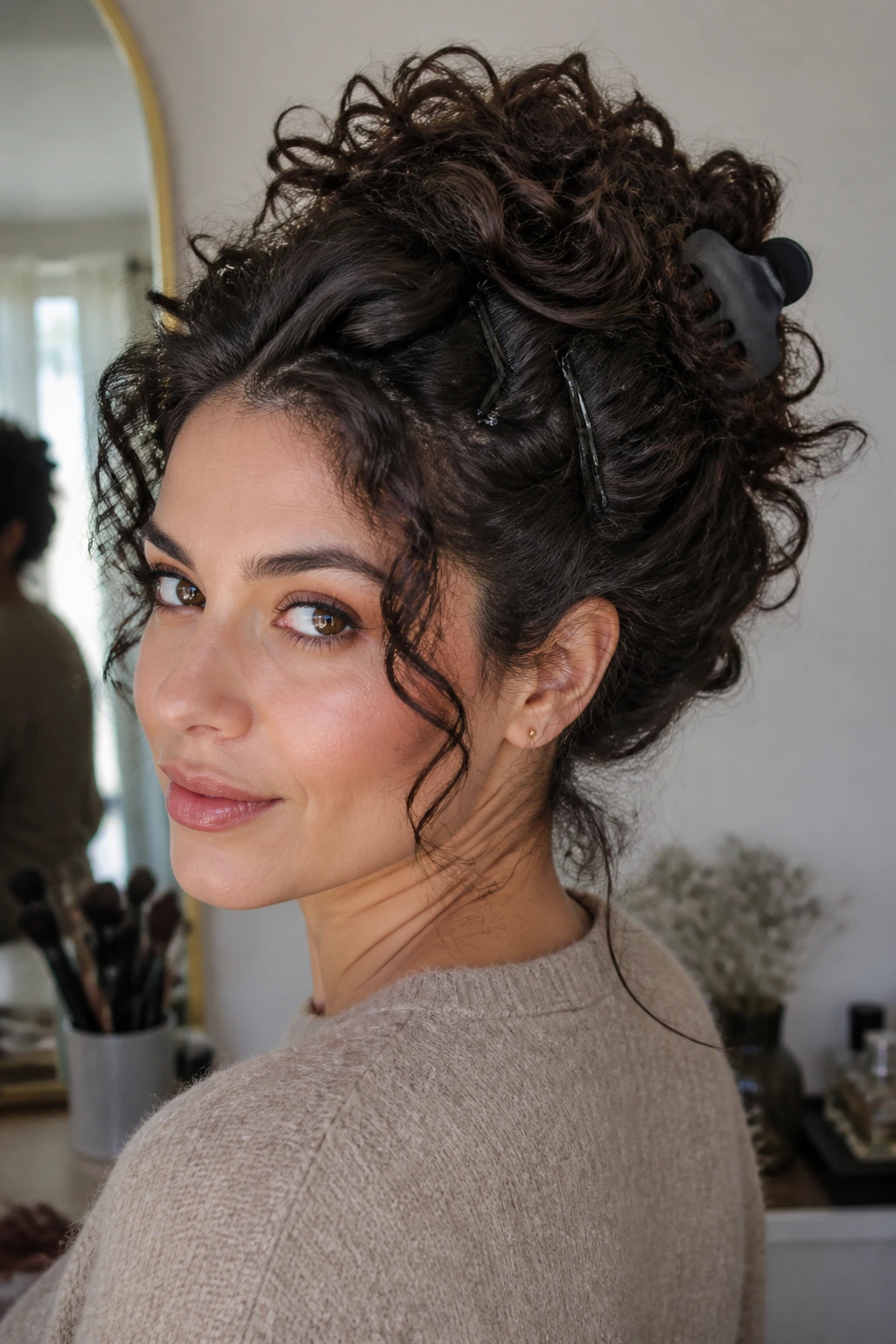
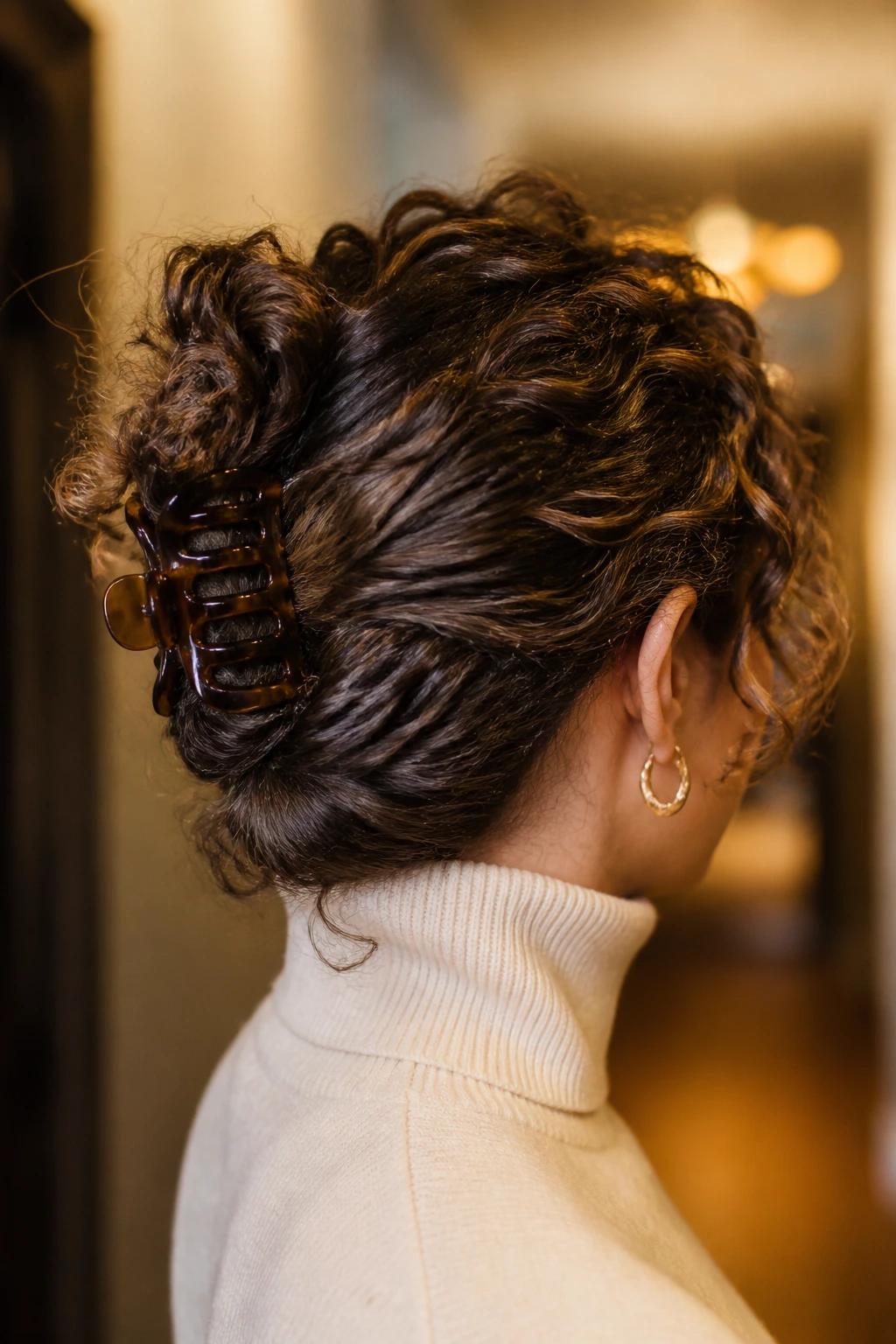
A medium claw clip can rescue a bad hair day faster than almost anything else in the bathroom. For curly medium hair, the French twist version works because it gathers the length upward, folds the ends under, and lets the clip clamp the curl mass in place without flattening it too much. The curls stack on themselves instead of getting dragged straight.
The best version of this style starts with hair that has some shape, not hair that’s been brushed into submission. Use your hands to gather the length as if you’re making a low ponytail, then twist upward until the ends tuck in. Flip the twist vertically and clip it in the center or slightly off-center, depending on how much height you want.
If your hair is dense, slide two bobby pins up from the nape before closing the clip. That gives the clip something to brace against. It sounds fussy. It isn’t. It’s the difference between a twist that lasts all afternoon and one that starts slipping when you pull on a sweater.
This style looks especially good with earrings or a turtleneck because the neck stays clean and the hair has a lifted, tidy shape.
4. The Half-Up Crown Twist
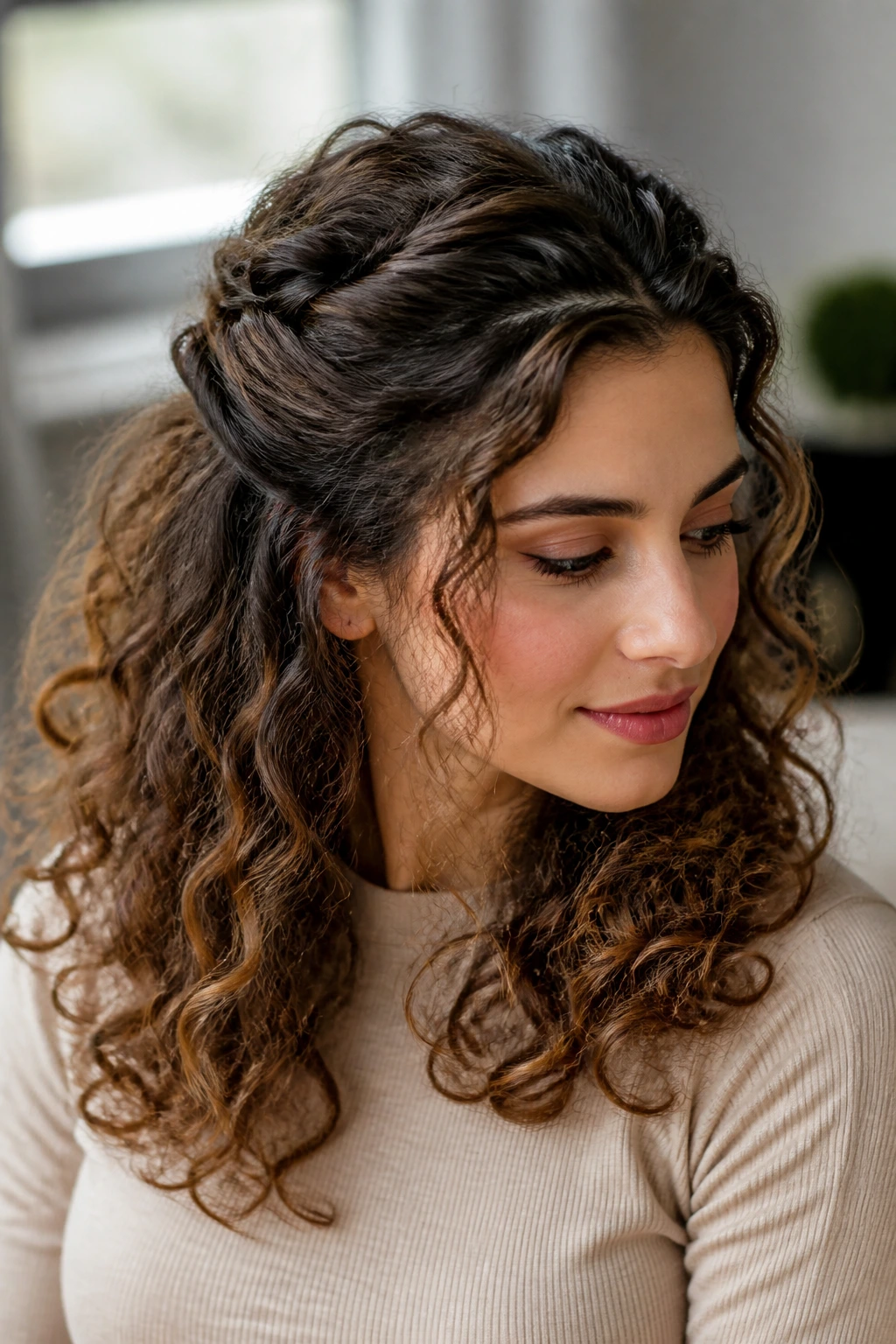
Half-up styles are where medium curly hair gets to show off without feeling overworked. Take two front sections, twist them back toward the crown, and pin them together at the back of the head. Leave the rest of the curls down. That’s the whole thing.
The appeal here is the balance. You keep curls off the face and away from winter makeup smudging, but you still get the soft movement that makes curly hair look alive. This is also one of the easiest ways to make a simple outfit feel finished without dragging out half your styling drawer.
I prefer this version when the front pieces are a little frizzy or when the curl pattern on top is getting puffy from scarf friction. Twisting the sides back pulls the shape into place while keeping the bottom half free. If you want it to hold better, mist the twist sections lightly first and smooth a tiny bit of gel or cream over the outer layer before pinning.
A single bobby pin can work if your hair is fine. Medium or thick curls usually need two pins crossed in an X at the back. That sounds like a tiny thing. It’s not.
5. The Pineapple Bun
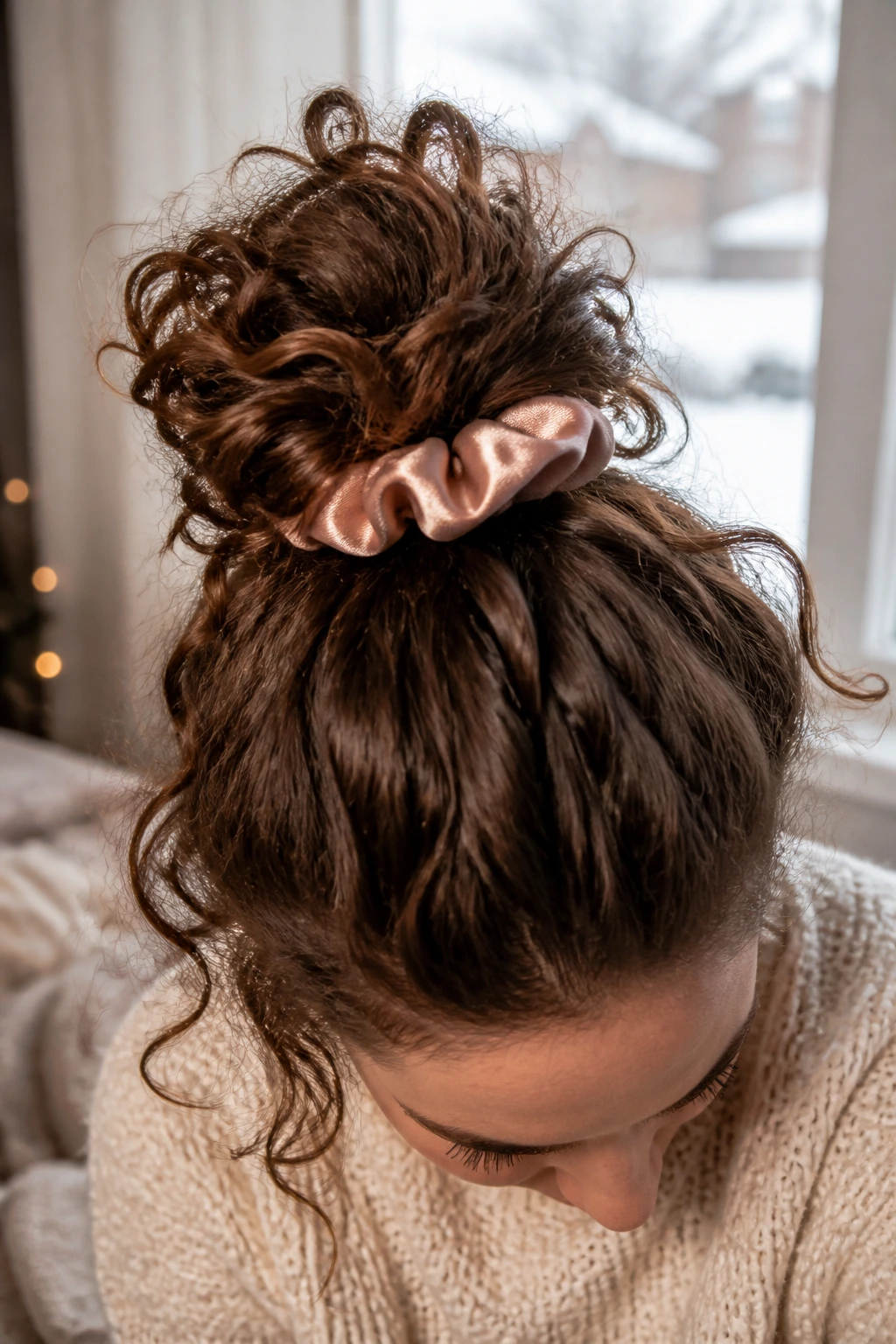
The pineapple bun is the curly-hair classic that still deserves respect. It sits high enough to keep the curls away from coat collars, but it stays loose enough that the curl pattern doesn’t get crushed into a hard lump. On medium hair, the trick is not making it too tall. You want lift, not a cartoon topknot.
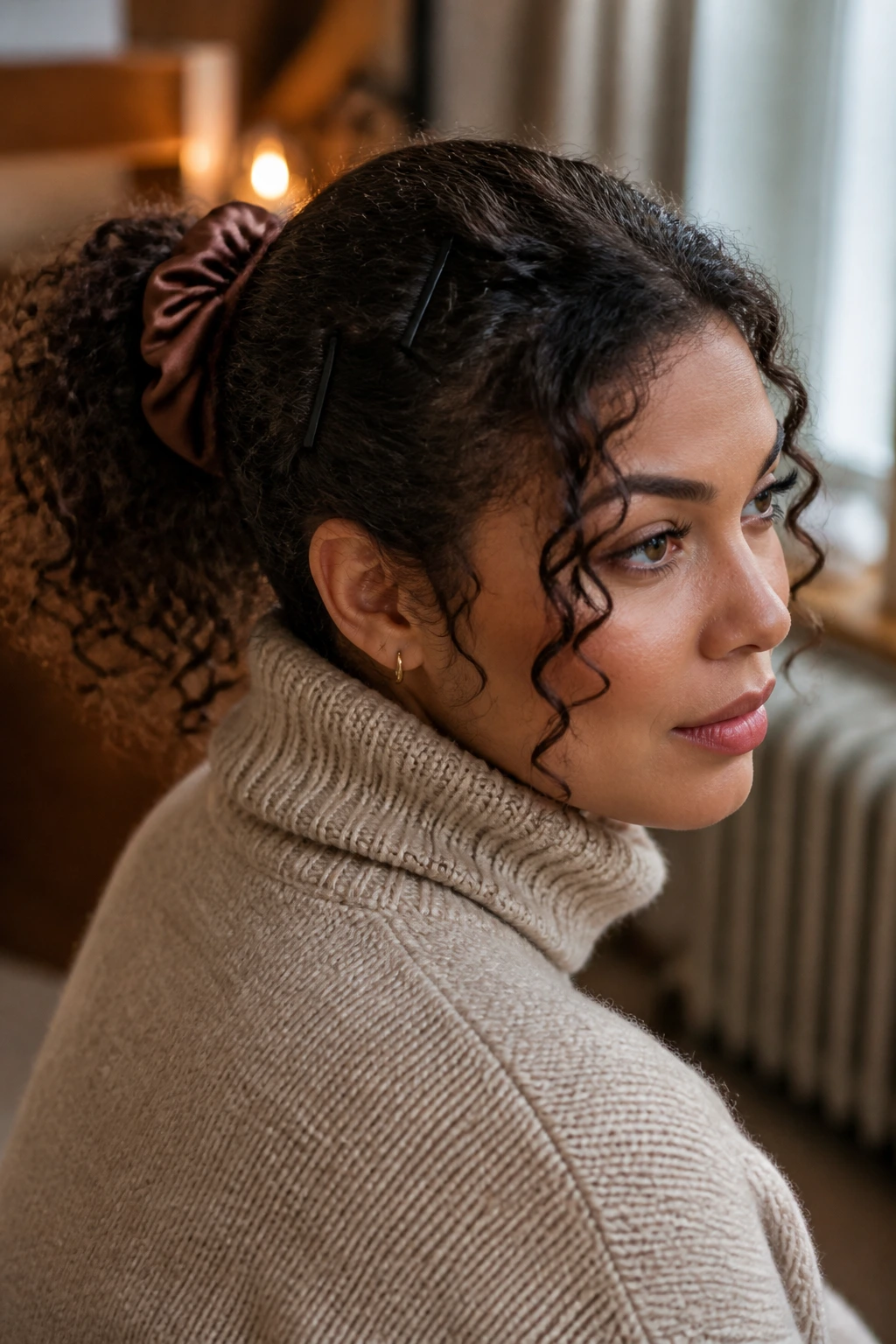
Flip your head over, gather the hair at the crown, and secure it with a satin scrunchie or a soft coil tie. Then spread the ends so they fan upward or curl over the top. If your hair is layered, some ends will inevitably escape. Good. That texture makes the style look fuller.
This is the style I’d choose for a day that starts with errands and ends somewhere nicer, because it can shift moods fast. Leave it loose and casual in the morning. Pull a few front curls down and add a little lip color later, and it suddenly reads as intentional.
The pineapple bun also doubles as a curl-preservation move if you wear it for a few hours and then take it down. The roots stay lifted, the curl pattern keeps its shape, and the whole style is easy to refresh with a mist bottle.
6. The Side-Swept Curly Chignon
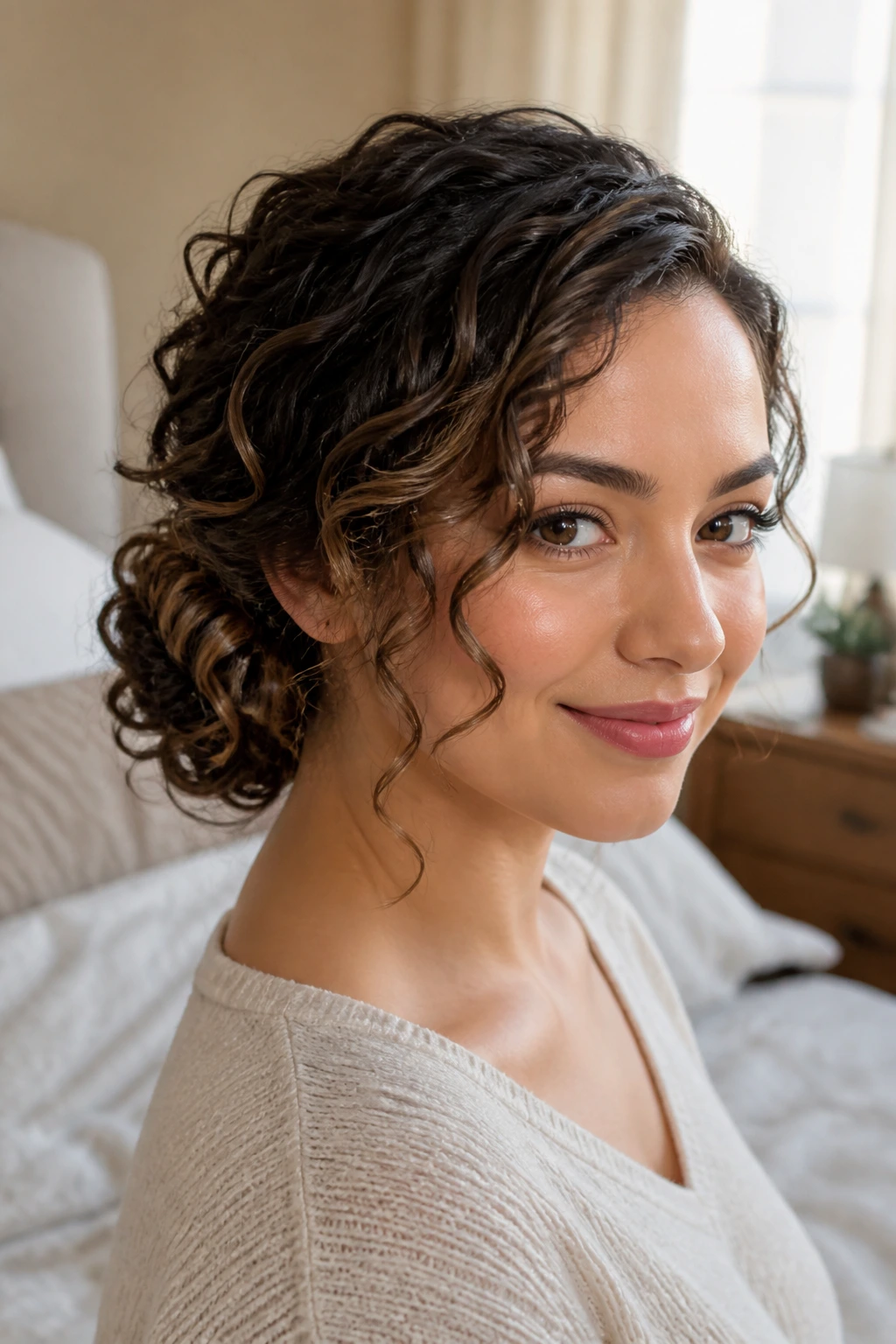
A side chignon gives curly hair a softer, slightly dressed-up line without asking for perfection. Sweep the hair to one side, gather it low behind the ear or just under it, and twist the length into a compact chignon. The asymmetry is what makes it interesting. Straight-on buns can feel a little stiff in winter. A side-set shape bends the whole look.
This style does a nice job of working with medium length, especially if the hair has layers. The curls around the face frame the style naturally, and the side placement keeps volume from building up awkwardly at the center back. If your hair is dense, make the chignon slightly flatter by folding the ends under before pinning. That stops it from jutting out like a small pillow.
A side chignon looks especially good with one statement earring or a coat with a wide lapel. The hair isn’t competing with the outfit. It’s giving it room.
Use a couple of strong pins along the curve of the bun, not just at the base. That’s the part most people skip, and it’s why side buns slip.
7. The Braided Halo Tail
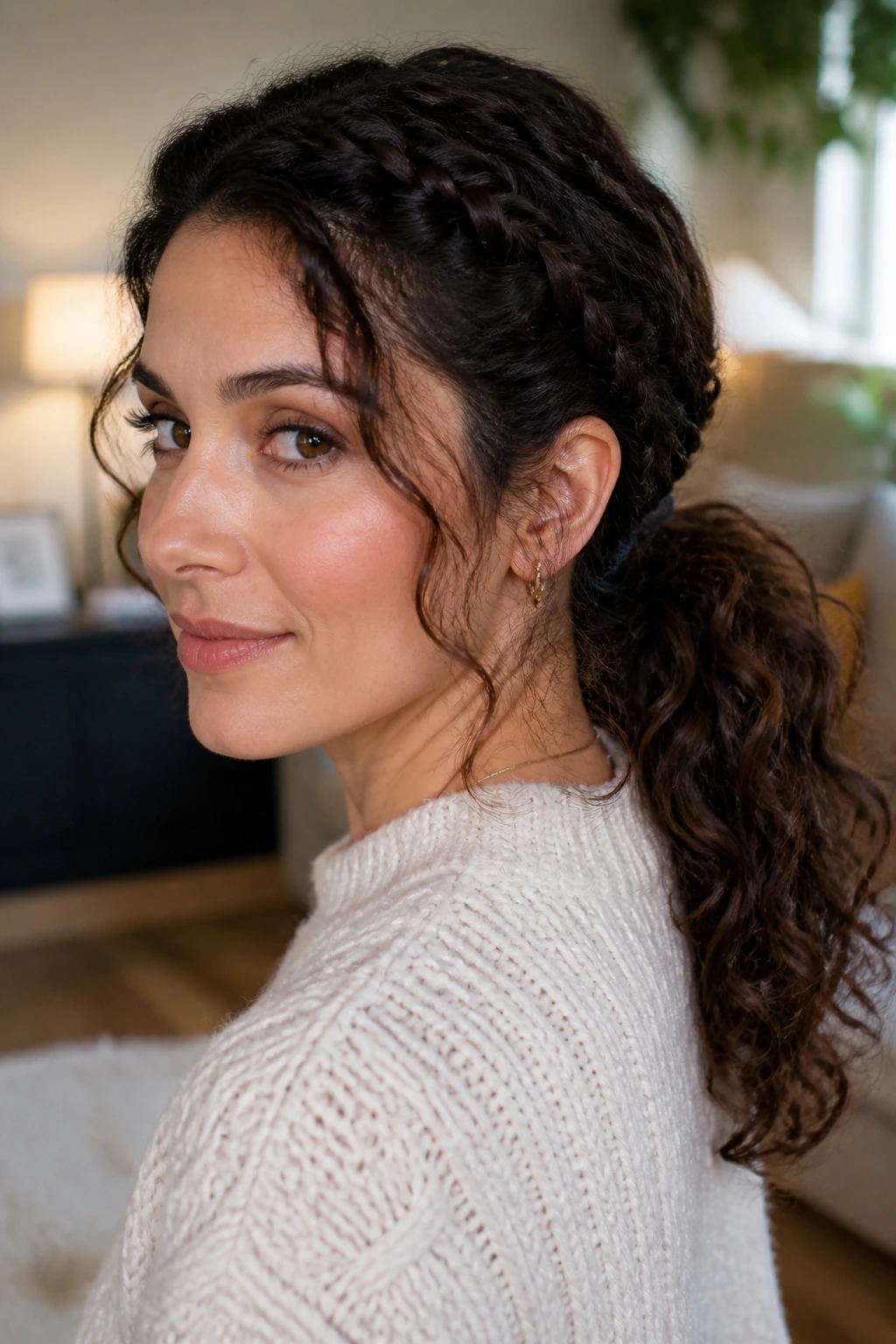
Not every winter updo needs to be a full bun. Sometimes a halo braid that feeds into a low tail is enough, especially on medium curly hair where the braid can borrow texture from the curls instead of fighting them. Take two narrow sections from the front or temples, braid them back along the sides, and join them into a low ponytail or small bun at the back.
What I like here is the mix of structure and looseness. The braids keep the front controlled, which is useful when scarves and scarves and more scarves keep messing with the sides of your hair. The tail or bun can stay loose and curly, which keeps the style from feeling too formal.
A small braid works better than a thick one on medium curly hair. Too much braid can swallow the natural curl pattern. Keep the braid sections around half an inch wide so they sit as an accent, not the whole story. Pin the braid tails under the ponytail base if they start sticking out.
This is one of those styles that looks more complex than it is. That’s useful. Very useful.
8. Double Mini Buns
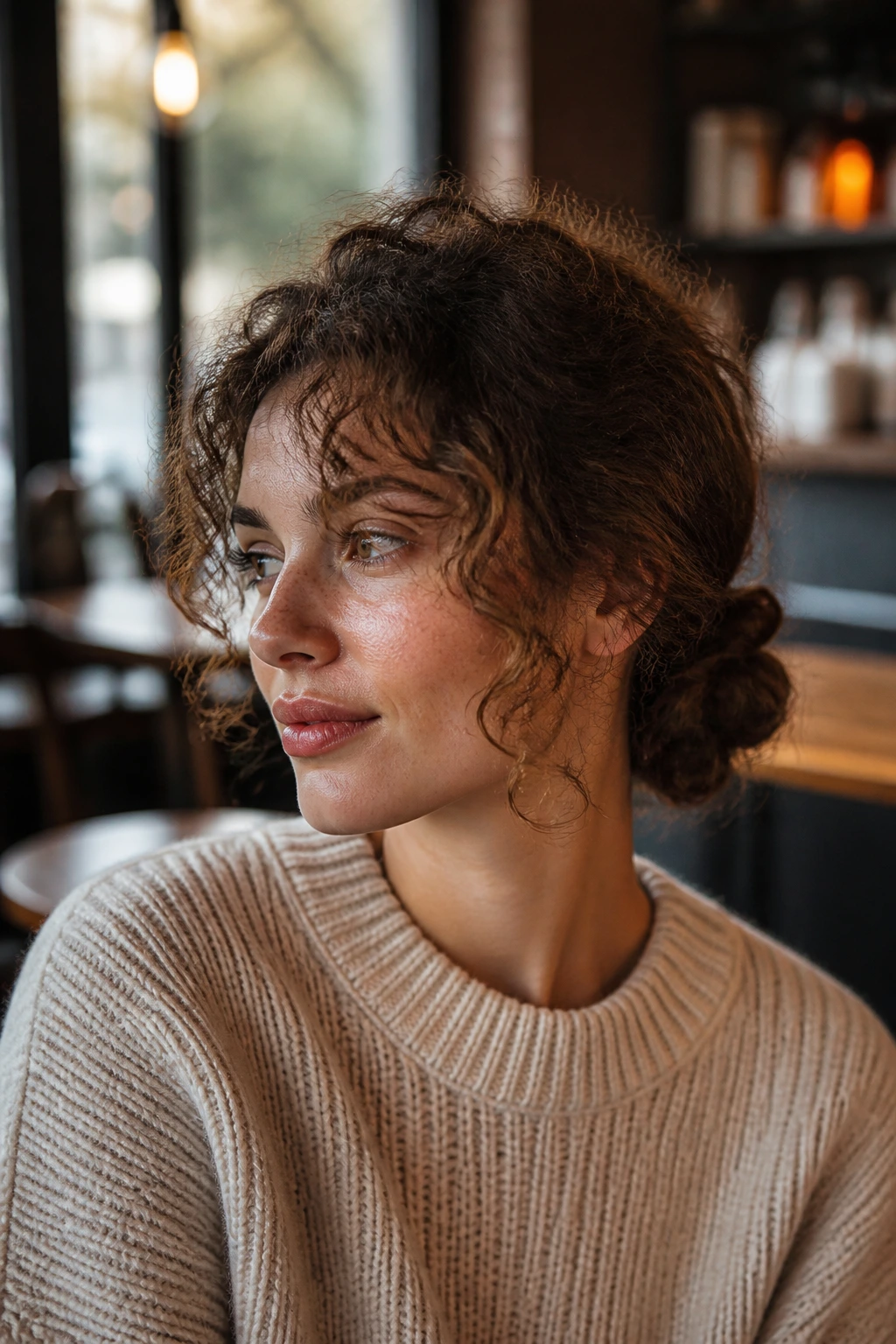
Double mini buns can go childish if they’re too high or too tight, so the version I like sits lower and softer. Split the hair into two sections, create two compact buns near the nape or just above it, and keep them slightly uneven on purpose. Medium curly hair gives them the volume they need, so they don’t have to be perfectly round.
The style works because it breaks up the weight. One bun can slump on its own with curly hair, especially if the hair is layered or medium-density. Two smaller buns distribute the shape and make it easier to keep the style balanced. Leave the front curls loose or tuck them behind the ears if you want a cleaner profile.
This is a good pick for casual winter days when you want something playful but still practical. It also handles thick scarves well because each bun sits out of the way instead of creating one bulky knot at the center back.
If your curls are very springy, don’t wrap the buns too tightly. Let the shape stay a little fuzzy. That fuzz reads as texture, which is the whole point here.
9. The Low Puff Ponytail
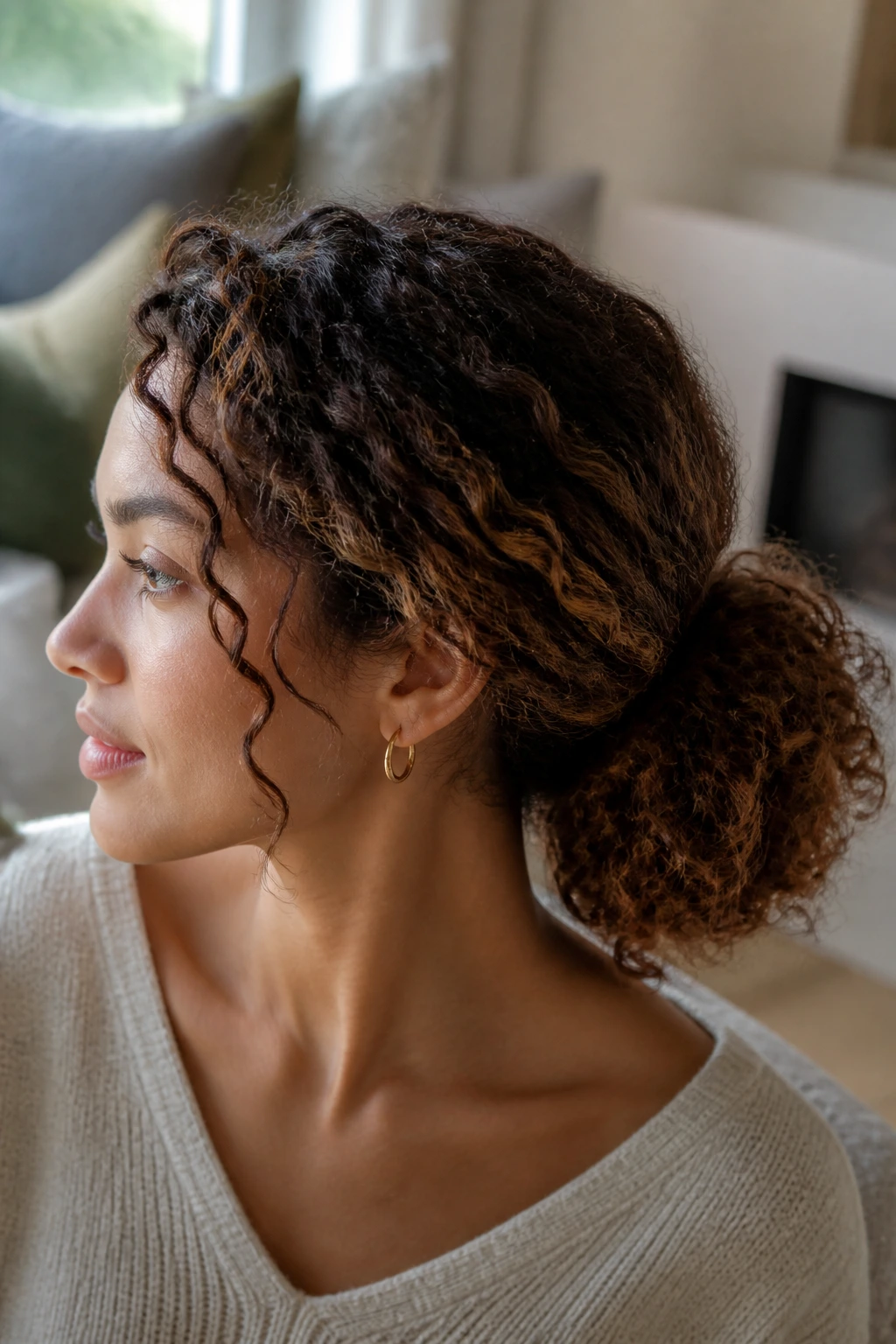
A low puff ponytail keeps the curls gathered but doesn’t crush them into a hard bun shape. Think of it as a ponytail with attitude: the base sits low, the curl body stays full, and the ends keep enough movement to look like curly hair instead of a compressed rope.
To build it, smooth the sides with your hands, gather the hair at the nape, and secure it with a soft elastic. Then gently loosen the top half so the roots puff a little above the band. That puff is the entire personality of the style. Without it, the ponytail can look too flat and too polite.
I like this one when the curls are on day two or day three and need something easy. A little dry texture helps the puff hold. If the ends are frizzing, mist them lightly and scrunch with a drop of cream. Don’t overdo it. The point is shape, not wetness.
A decorative cuff can make this style look more finished, but it’s not required. The real charm is how quickly it can go from “I gave up” to “I meant to do that.”
10. The Rolled Tuck Bun
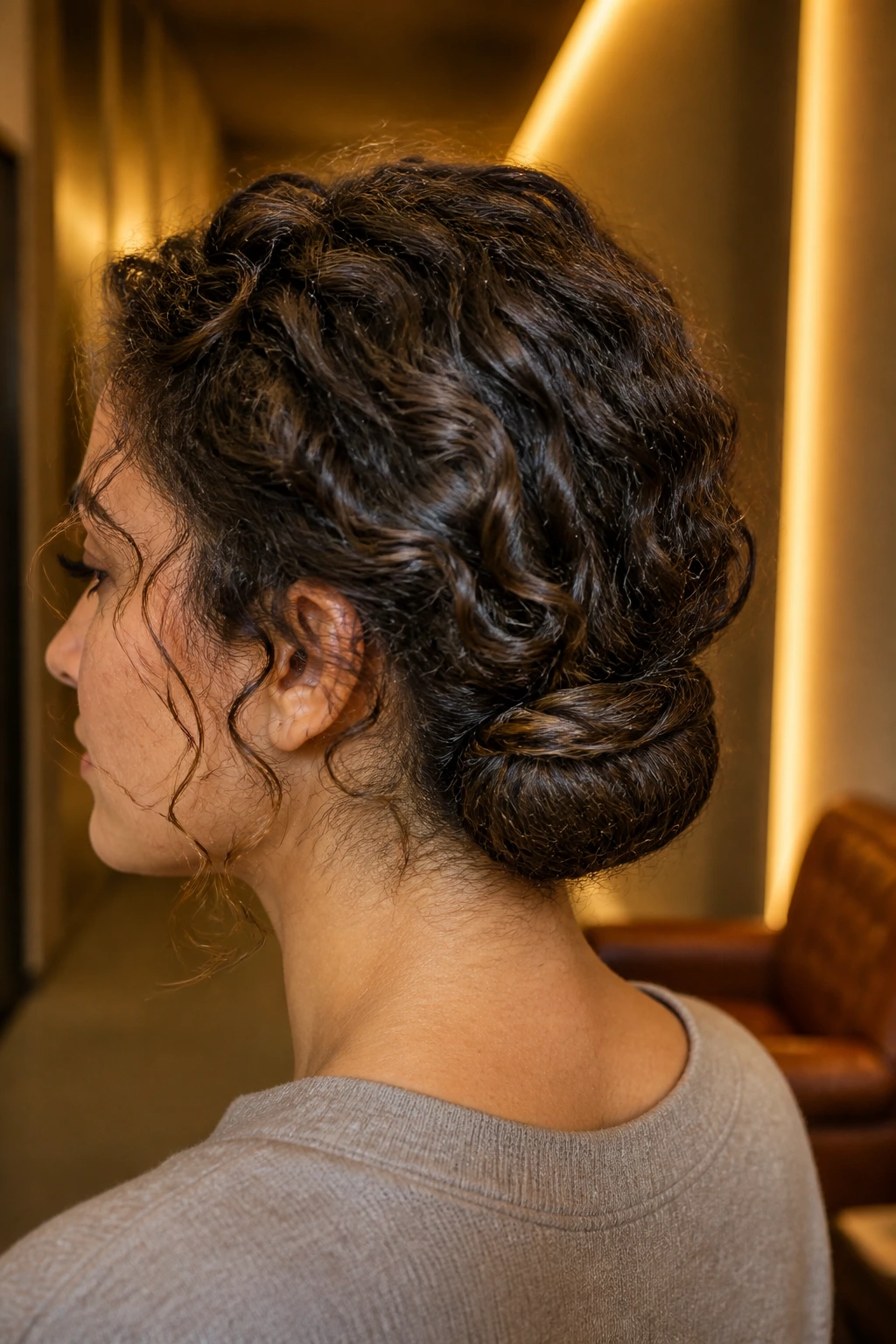
The rolled tuck bun is one of those old-school styles that keeps returning because it solves a real problem: medium curly hair can be too short for a huge bun and too thick for a tiny twist. The tuck bridges that gap nicely. Make a low ponytail, split the hair just above the elastic, and flip the length through the opening so the ends tuck inward. Then roll the shape tighter and pin it.
This works especially well on textured hair because the curls hide the mechanics. A smooth style shows every pin and every wrinkle. A curly one absorbs them. The result looks tidy without looking stiff, and the roll sits close to the neck, which makes it great under winter layers.
Use a second elastic if your ponytail is slippery or layered. Then place one or two pins horizontally across the folded seam so the tuck can’t open up. If you skip that part, the bun can unroll as the day goes on, especially when you keep pulling sweaters over your head.
It’s an understated style. That’s the charm.
11. The Scarf-Wrapped Bun
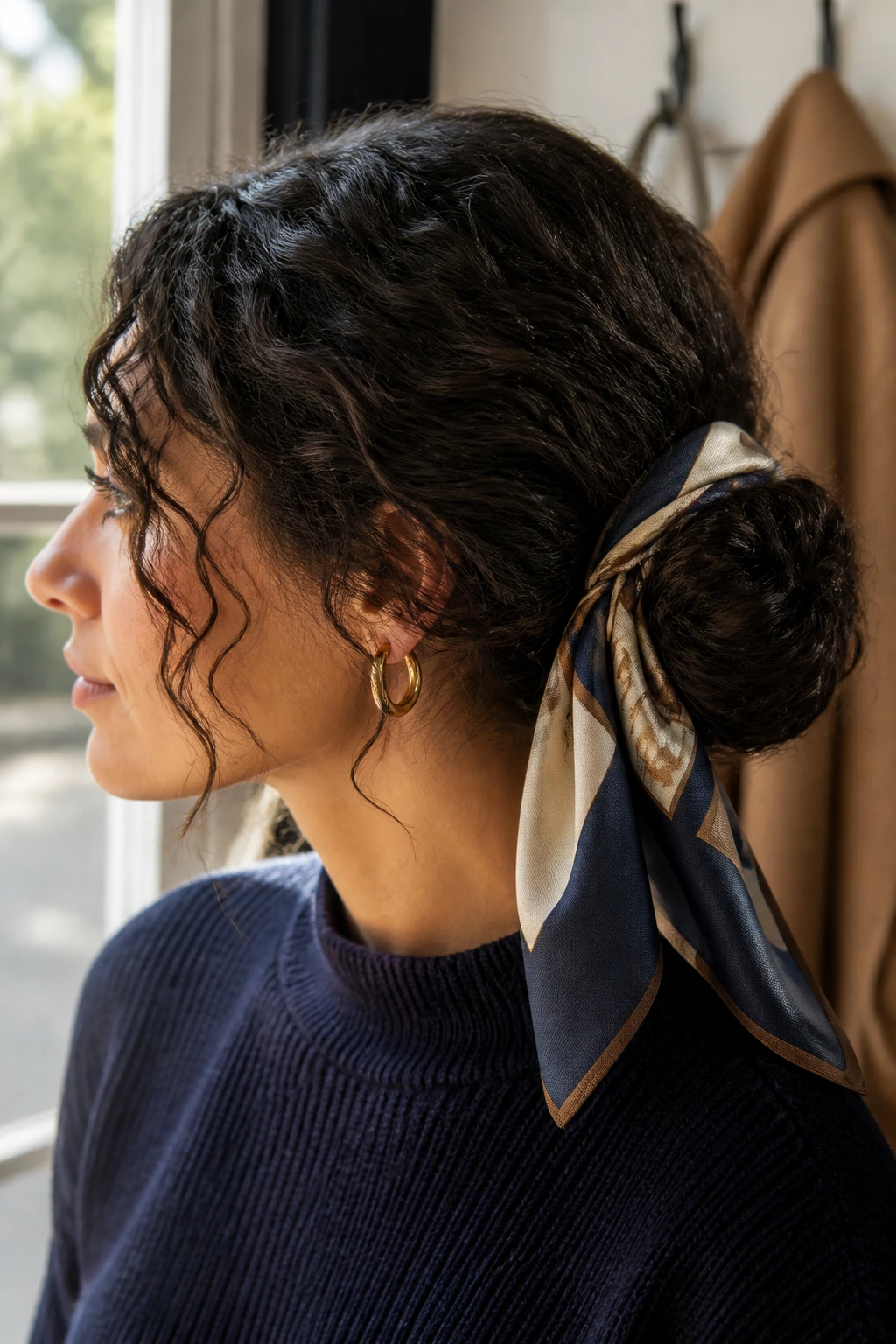
If winter had a hairstyle mascot, this might be it. The scarf-wrapped bun is a low bun or knot with a silk or satin scarf tied around the base, and it does three jobs at once: it hides frizz, adds color, and keeps the bun from looking too severe. On curly medium hair, the scarf also helps corral the little flyaways that show up the second you step into dry air.
Start with a low bun that’s already pinned securely. Then tie a narrow scarf around the base, knot it to one side, and let the tails hang or tuck them into the wrap. A silk scarf feels better than cotton here because cotton grabs the hair and can leave the bun looking rough by mid-afternoon.
This style is especially nice if your coat and hat are both plain. A patterned scarf at the hairline can carry the whole look without adding much work. If the scarf keeps sliding, fold it into a thinner band and tie it tighter around the bun base rather than around the whole head.
There’s a reason people keep coming back to this one. It looks deliberate even when the hair underneath is doing its own thing.
12. The Bubble Ponytail
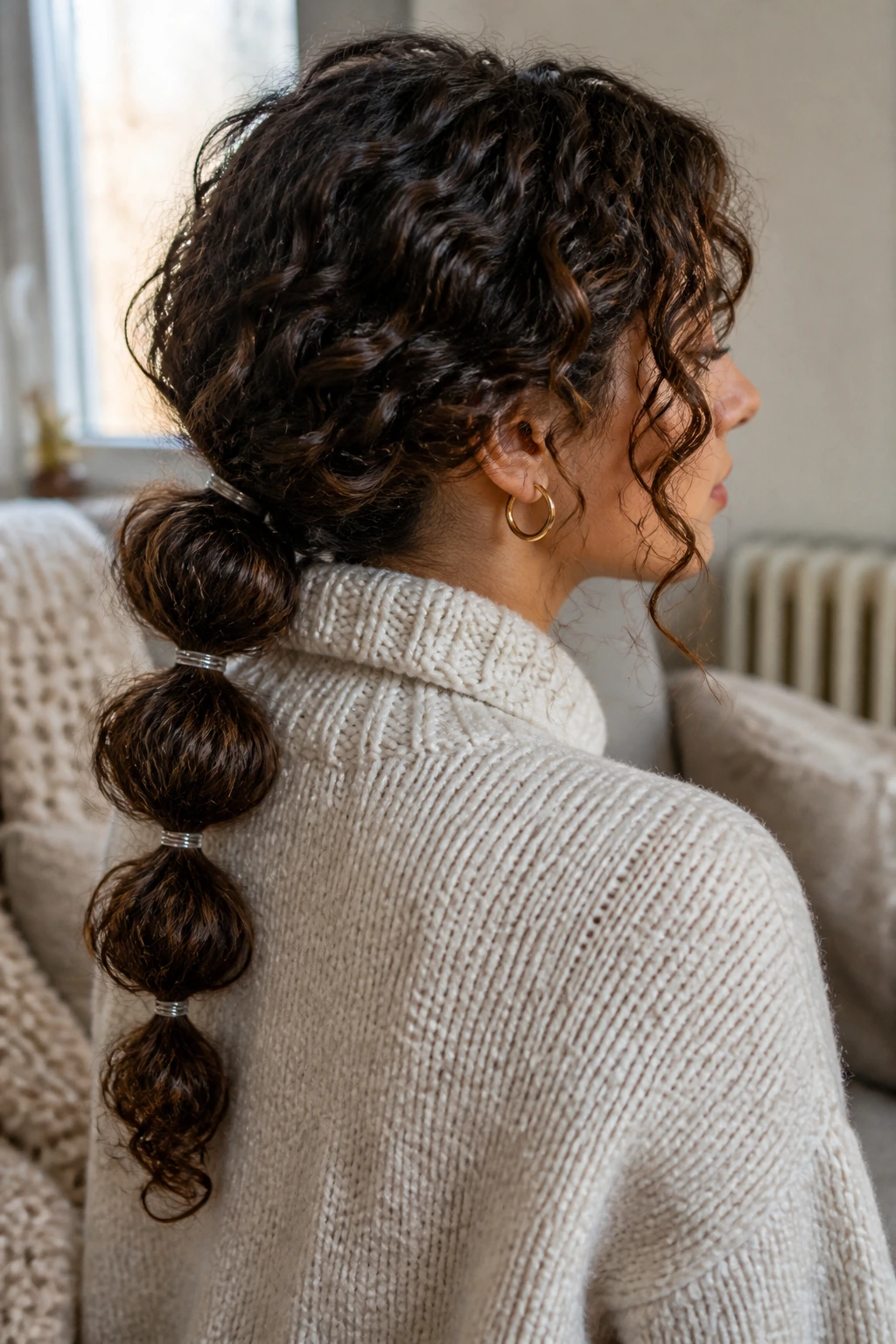
A bubble ponytail is one of the easiest ways to make medium curly hair look styled with almost no fuss. Start with a low ponytail, then add small elastics every 3 to 4 inches down the length. Gently puff each section between the elastics until you get round, separated “bubbles.” Curly hair makes this even easier because the natural bend gives each section body right away.
The shape matters here. Don’t pull every bubble into a perfect sphere. Let some of them stay irregular and a little fluffy. That makes the style feel better for winter and better for curly texture. If the ponytail is too tight at the base, the style can look severe. If it’s too loose, the bubbles slide. The middle ground is the sweet spot.
This is a useful style for layered medium hair because the elastics hold the shape even when the shorter pieces poke out. Those stray curls are not a problem. They’re part of the design.
Use clear elastics if you want the style to disappear into the curls, or matte bands if you want the sectioning to stand out a bit more. Both work. The second one just reads more playful.
13. The Messy Knot with Face-Framing Pieces
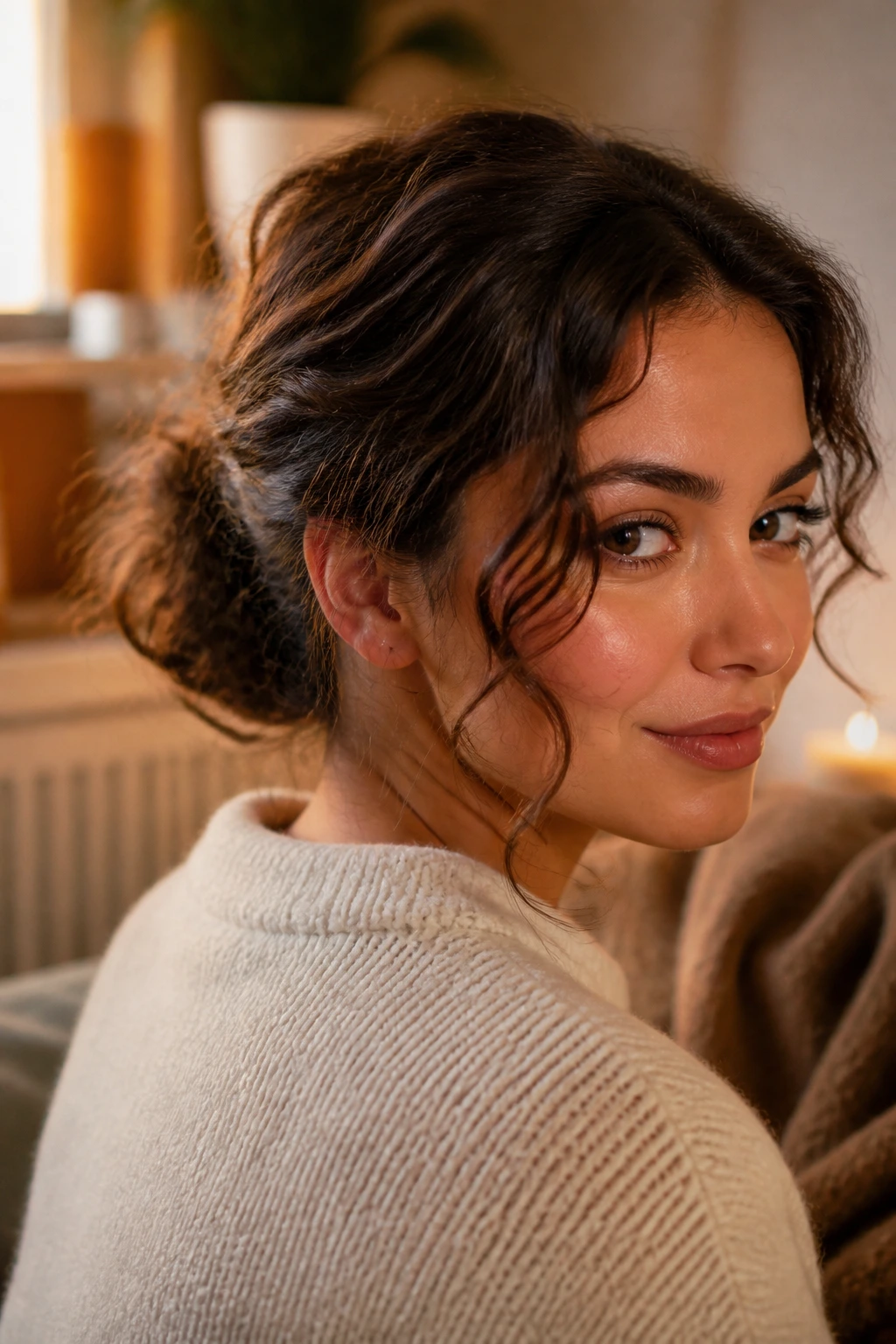
Some days call for a knot that doesn’t pretend to be polished. Pull the hair back loosely, twist it into a knot, and leave two front pieces out around the temples or cheekbones. That’s the formula. The face-framing curls keep it from looking too severe, and the knot itself stays relaxed enough to handle winter movement.
This style is especially kind to medium curly hair because the curl pattern already gives the front pieces a shape worth keeping. If those pieces dry out, mist them lightly and scrunch them once before you pin the back. A tiny bit of cream at the ends helps, but too much will make them heavy and stringy. That’s the line to watch.
I like this one on humid indoor days too, because the frizz is part of the charm. The knot can sit high, mid, or low. I prefer mid-low for winter so it stays clear of coat collars while still giving the face some structure.
If you have bangs or shorter front layers, this style basically does the work for you. Those pieces get to fall where they want, and the rest of the hair stays out of the way.
14. The Pin-Up Curly Roll
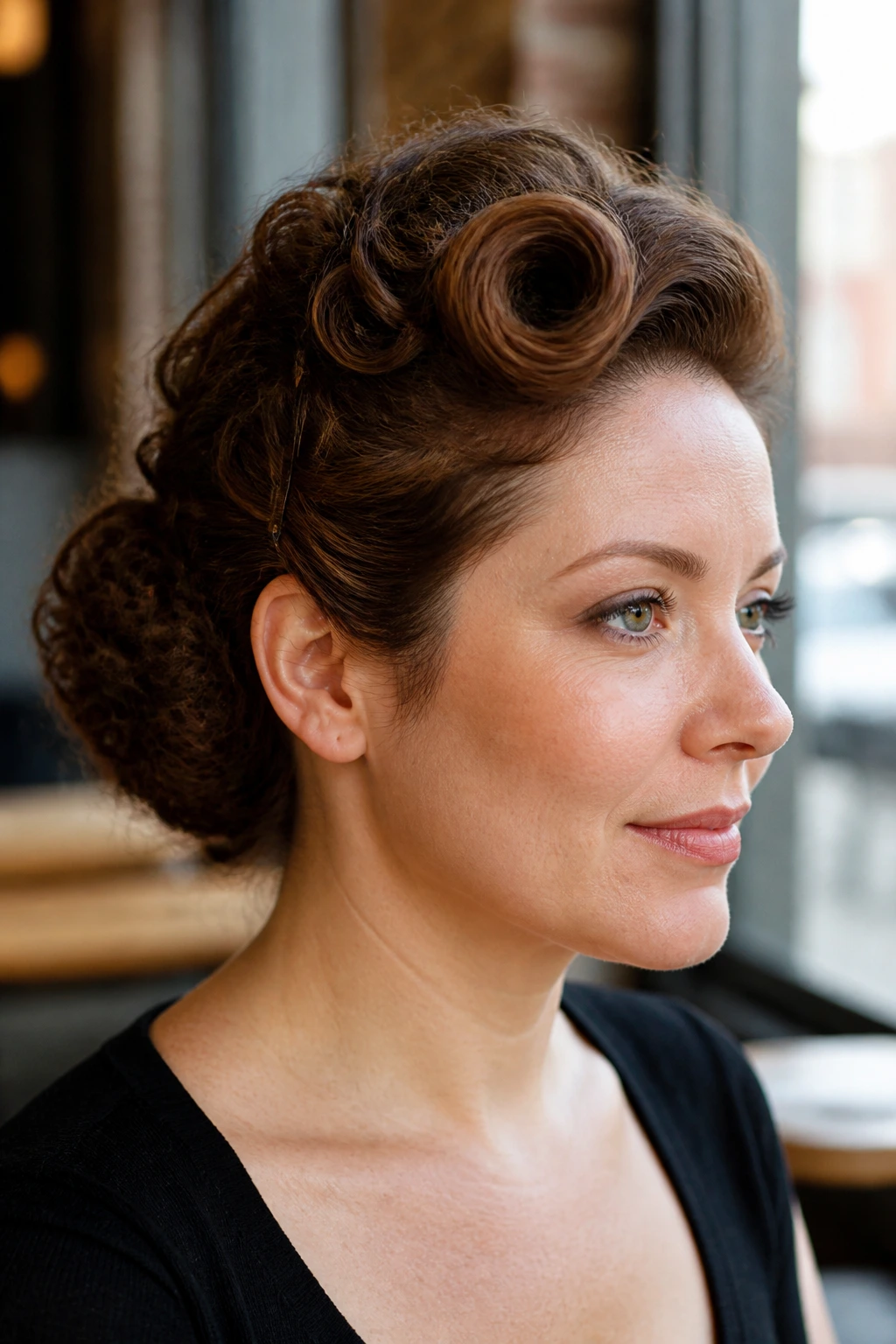
The pin-up roll brings a little vintage shape into the mix without becoming costume territory. Sweep one side of the hair back, roll it inward against the head, and pin the roll into place before gathering the rest into a low bun or tucked tail. On curly medium hair, the roll doesn’t need to be razor-smooth. In fact, a bit of texture makes it look better.
This style is good when you want one side of the hair to feel controlled and the rest to stay soft. It works particularly well with a side part because the roll follows the natural line of the hair. If the front section wants to puff, mist it slightly before rolling and smooth the surface with your fingers rather than a brush.
A couple of hidden pins under the roll keep it from drifting upward. Don’t rely on a single pin at the center. That’s asking for trouble, and the roll will start to loosen as soon as you turn your head or shrug on a coat.
The finished shape has a little drama, but not much effort behind it. Those are the styles people return to.
15. The Sleek Top Puff
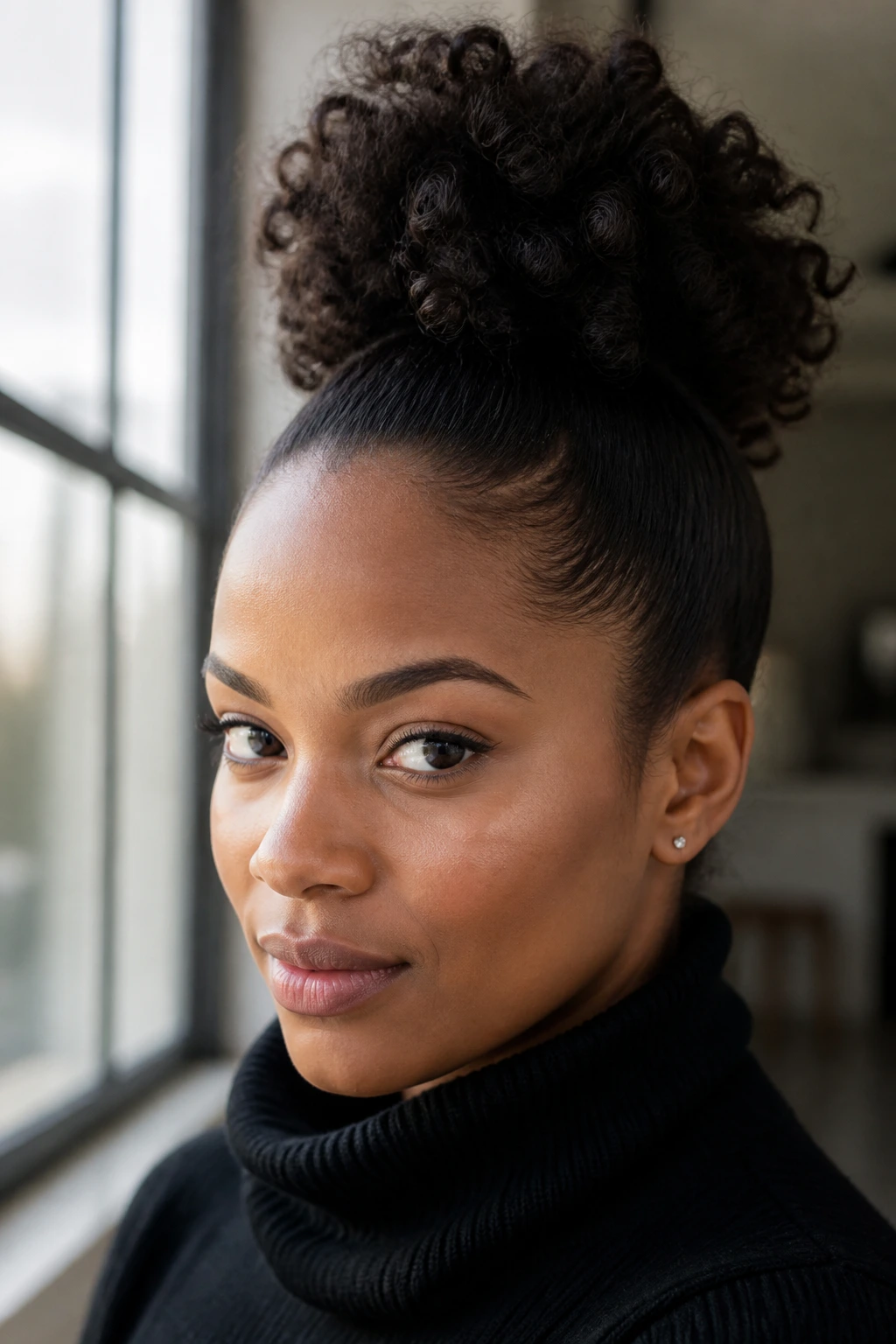
This one is for the days when you want contrast: smooth at the sides, full at the crown. Brush or smooth the front and sides upward with a light gel, then gather the curls into a high puff or compact top ponytail. The key is not erasing all texture. You’re just controlling the perimeter so the top puff has a clean base.
Curly medium hair handles this style well because the natural volume fills out the top quickly. It doesn’t need a lot of teasing. It needs direction. A soft-bristle brush or a toothbrush-sized edge brush can help if you like the front polished, but don’t drag it so hard that the curls collapse. Keep the top part lifted and the back free enough to breathe.
This style is smart on windy days because the curls stay up and away from the neck, where scarves and collars can rough them up. It also looks strong with statement earrings, since the face and neck stay open.
If you want a softer version, pull a few curls loose around the ears. If you want a sharper one, secure the sides tightly and let the puff sit higher.
16. The Side Bun with Bobby Pin Arc
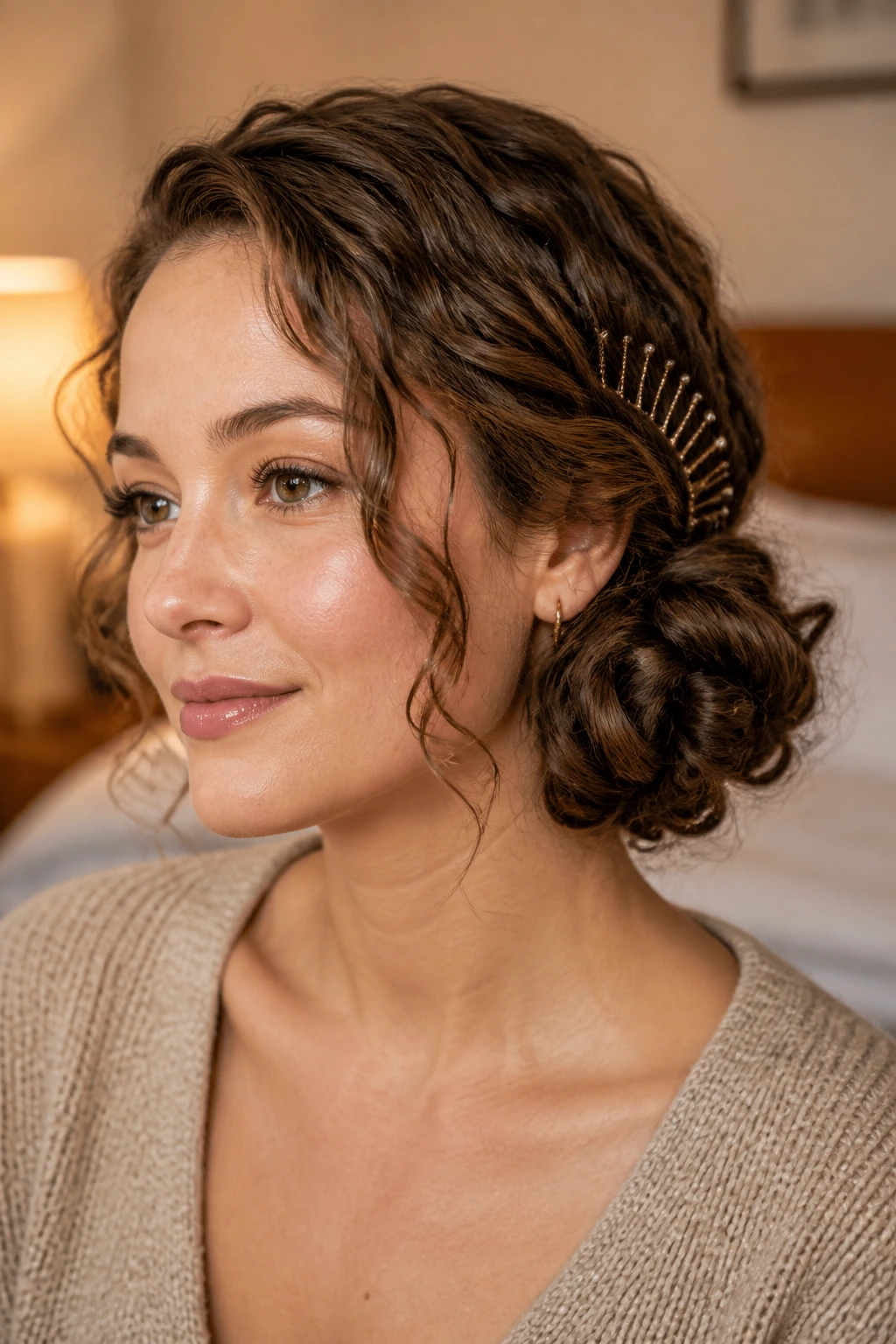
A side bun is already a little more interesting than the standard low bun, but the bobby pin arc gives it a polished edge. Sweep the hair to one side, twist it into a bun near the jawline or just below the ear, and line a few decorative pins in a curved row above or behind the bun. The pins aren’t just there to hold; they become part of the shape.
This style works best when the curls have enough body to fill out the bun without needing to be stretched. Medium curly hair is a nice match because the bun can stay compact while the texture still gives it some size. If the bun feels too flat, loosen the crown slightly before pinning.
The arc of pins lets you control the balance. One or two pins can look accidental. Three to five in a curved line looks planned. Keep the spacing even, and angle the pins the same direction so they catch the light in a neat line rather than turning into a jumble.
Wear this one with a side-parted fringe or with one ear showing. The asymmetry makes the whole thing feel more alive.
17. The Knotted Half-Up Crown
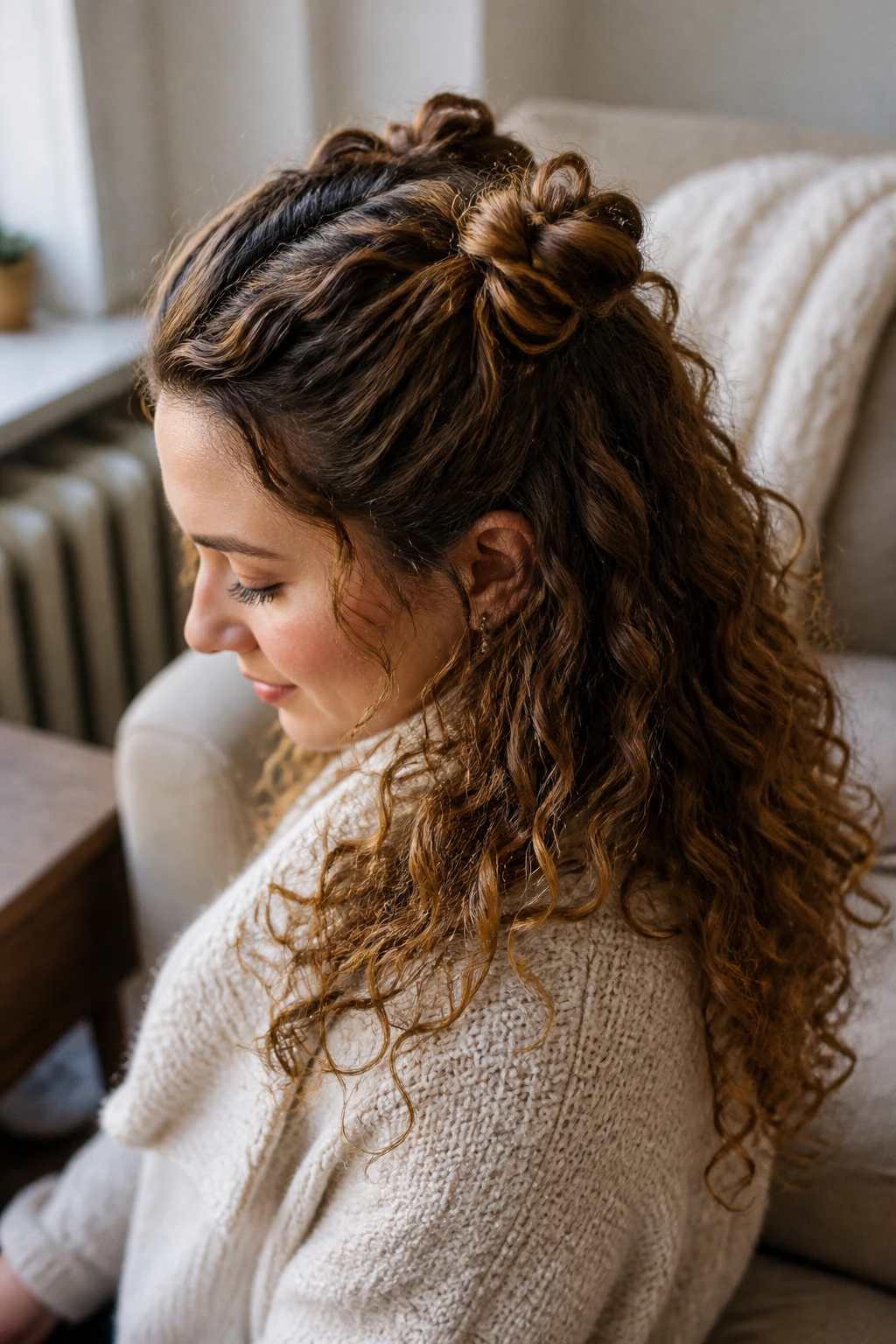
This is the version I’d give someone who wants a half-up style with a little more grip than a simple twist. Take two sections from either side of the head, knot them once at the back of the crown, and secure the knot with pins under the crossing point. Leave the rest of the curls down. The knot becomes the anchor, and the lower half stays loose.
What makes it useful for medium curly hair is the way it borrows tension from the curl texture without needing a tight elastic. The knot sits high enough to lift the face but low enough to work under a hood or hat. If the curls are especially springy, you may need to flatten the knot slightly with your hand before pinning so it doesn’t perch too high.
I like this one for layered hair because the front pieces can stay soft even when the back is controlled. It’s also a good answer to “I want an updo, but not all of it.” There’s no shame in that. It’s often the best answer.
Use two pins on each side if your hair is thick. One pin per side is fine for finer curls, but the second pin keeps the knot from shifting when you turn your head.
18. The Folded Low Bun with Clip Accent
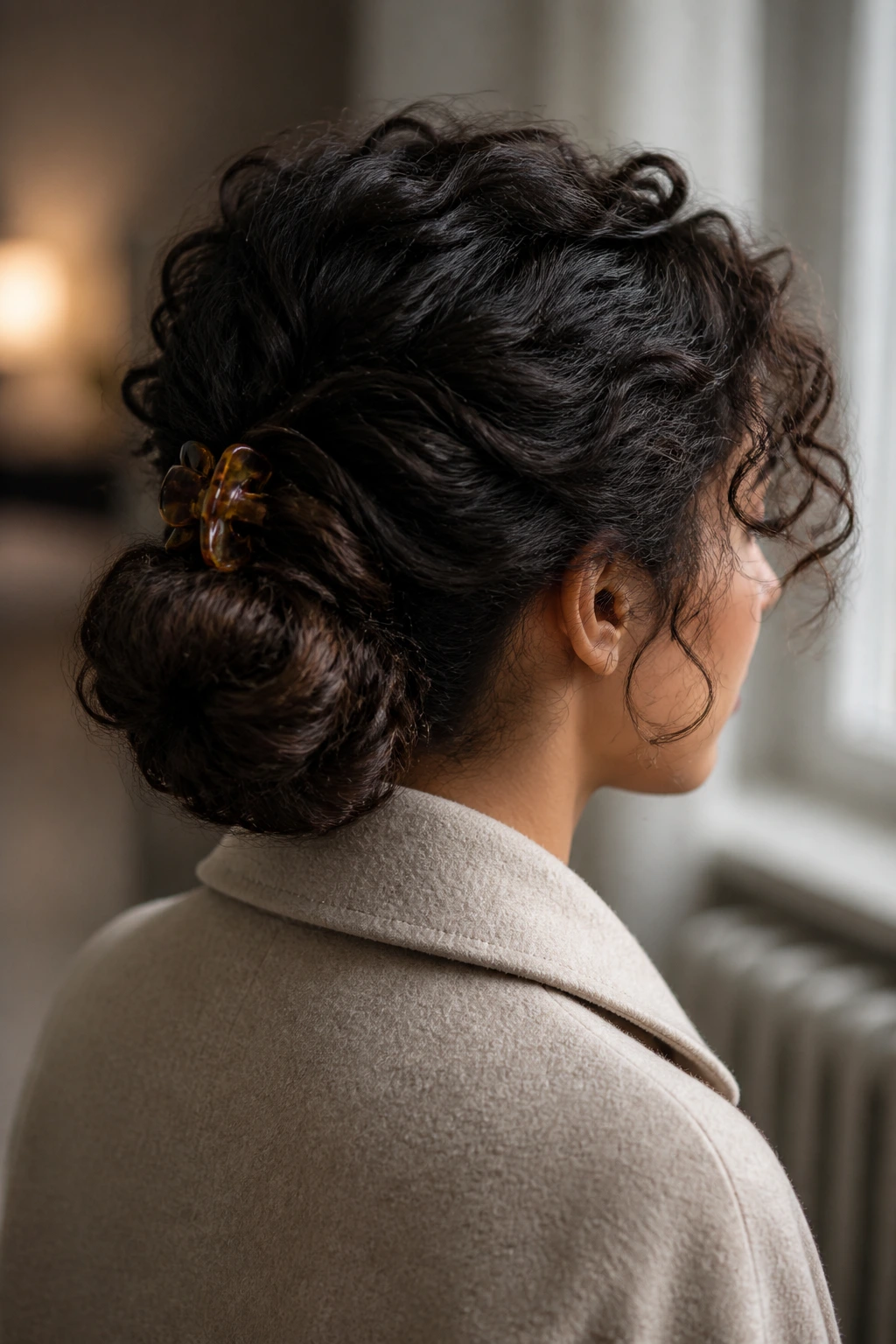
The folded low bun is one of the best styles for medium curly hair that sits right on the edge of “not quite long enough” for a large bun. Gather the hair low, fold the length under itself, and clip the whole shape with a sturdy decorative clip. The fold gives it a chunky, compact profile, and the clip finishes the shape without needing a lot of pinning.
This style benefits from medium texture because the curls help the fold stay in place. If the hair is too silky, the fold can slide. With curls, the folded layers catch on each other and hold. That makes it a good winter option when your hair has a little more dryness than usual.
Choose a clip that actually bites into the folded coil. A flimsy clip can slide off the outer shell and leave the bun hanging by lunchtime. A medium-to-large claw clip or a strong barrette works better than a tiny decorative one. If you want it to look softer, pull a few curls free at the nape and around the temples.
It’s simple. It’s fast. And it doesn’t care if your coat collar is rude.
Why Curly Medium Hair Loves Winter Updos
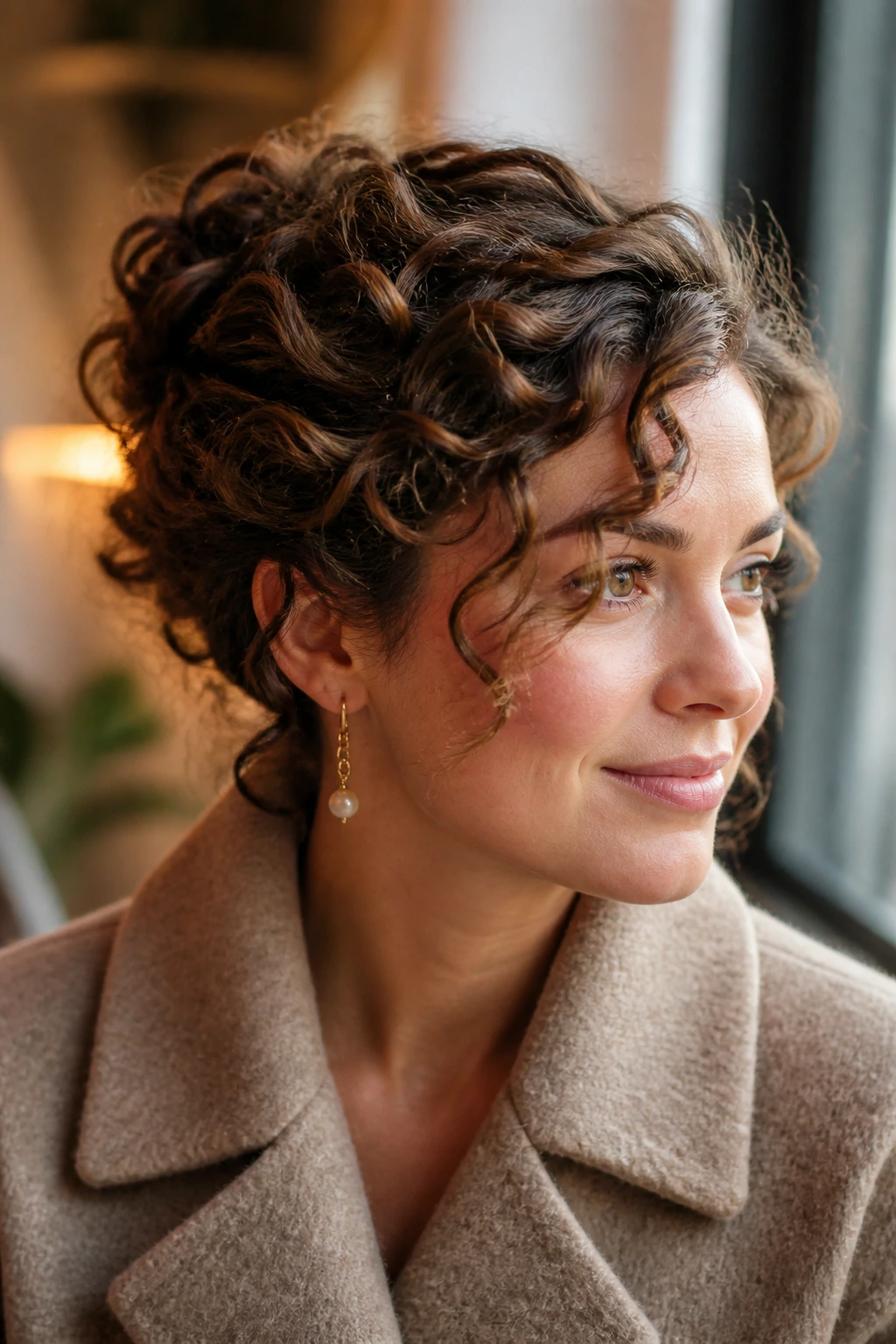
Winter can be rough on curly hair, but it also gives you a strange advantage. Dry air adds roughness to the cuticle, which means hair gets a little less slippery and a little easier to pin. That’s not glamorous, but it helps. The same texture that makes curls frizz can also make them hold a bun, twist, or clip better than smooth hair ever could.
Medium length is the sweet spot here. Hair that falls around the shoulders gives you enough length to gather at the nape, coil at the crown, or split into half-up shapes, but it doesn’t carry the extra weight that drags a bun down. Once hair gets very long, winter updos can start to feel like you’re anchoring a scarf to a rope. Medium hair behaves better.
What winter changes
Scarves rub the ends. Coat hoods flatten the crown. Indoor heat steals moisture and encourages static around the hairline. None of that means you need a harsher hairstyle. It means you need a style that already expects some movement and can survive being touched, tucked, and un-tucked a few times a day.
That’s why these looks lean low, twisted, clipped, and slightly loose. The best winter updos are not frozen in place. They move a little and still hold their shape.
Pins, Clips, and Brushes That Make These Styles Behave
The tool list for curly updos is not glamorous, but it matters. A good clip or pin can save you ten minutes of fiddling, and a bad one can sabotage the whole morning before you’ve had breakfast.
-
Medium bobby pins: Look for pins with a firm grip and a slightly rough finish. Slippery ones slide right out of curly hair.
-
U-pins or hair forks: These are especially useful for buns and tucked rolls because they anchor the coil without crushing it.
-
A 3- to 4-inch claw clip: Medium hair needs a clip that can catch a real amount of hair, not just the outer layer.
-
Satin scrunchies: These help preserve curl shape and cause less friction than tiny elastics.
-
Coil hair ties: Good for ponytails and bubble styles because they stretch without snagging.
-
A spray bottle with water: A few mists wake up curls faster than a full wash.
-
Wide-tooth comb or detangling brush: Useful for sectioning, not for brushing curls flat.
-
Light-hold gel or curl cream: Keep one that doesn’t leave the hair stiff or sticky.
-
Flexible-hold hairspray: Handy for the front and crown when the air is dry.
-
A small edge brush or toothbrush: Optional, but useful for smoothing hairline frizz without wrecking the curl pattern.
Smart Product and Accessory Picks for Cold Weather
Winter styling gets easier when you choose products for grip, not just shine. Heavy creams can make curls soft and slippery, which sounds nice until the pins start falling out. A lighter curl cream, a gel with some hold, or even a damp refresh with no extra product can be enough for an updo that needs structure.
Start with what your hair is already doing. If the curls are dry and fluffy, reach for a little water and a pea-sized amount of leave-in on the outer layer only. If the hair is soft and sliding, use a touch of gel at the roots and along the side sections before pinning. The goal is control, not helmet hair.
Accessories matter more than people expect. Satin scrunchies reduce pulling, matte pins grip better than shiny ones, and a clip with a strong spring will hold much longer than a pretty one with weak teeth. I’ve also found that scarves with a smooth lining make a huge difference around the nape. Cotton can rough up the ends fast. Silk or satin won’t.
For beanies and hoods, look for slouchy shapes or satin-lined options if you wear them often. A hard, tight knit cap can wipe out a crown twist in minutes.
How to Wear These Styles With Coats, Hats, and Scarves
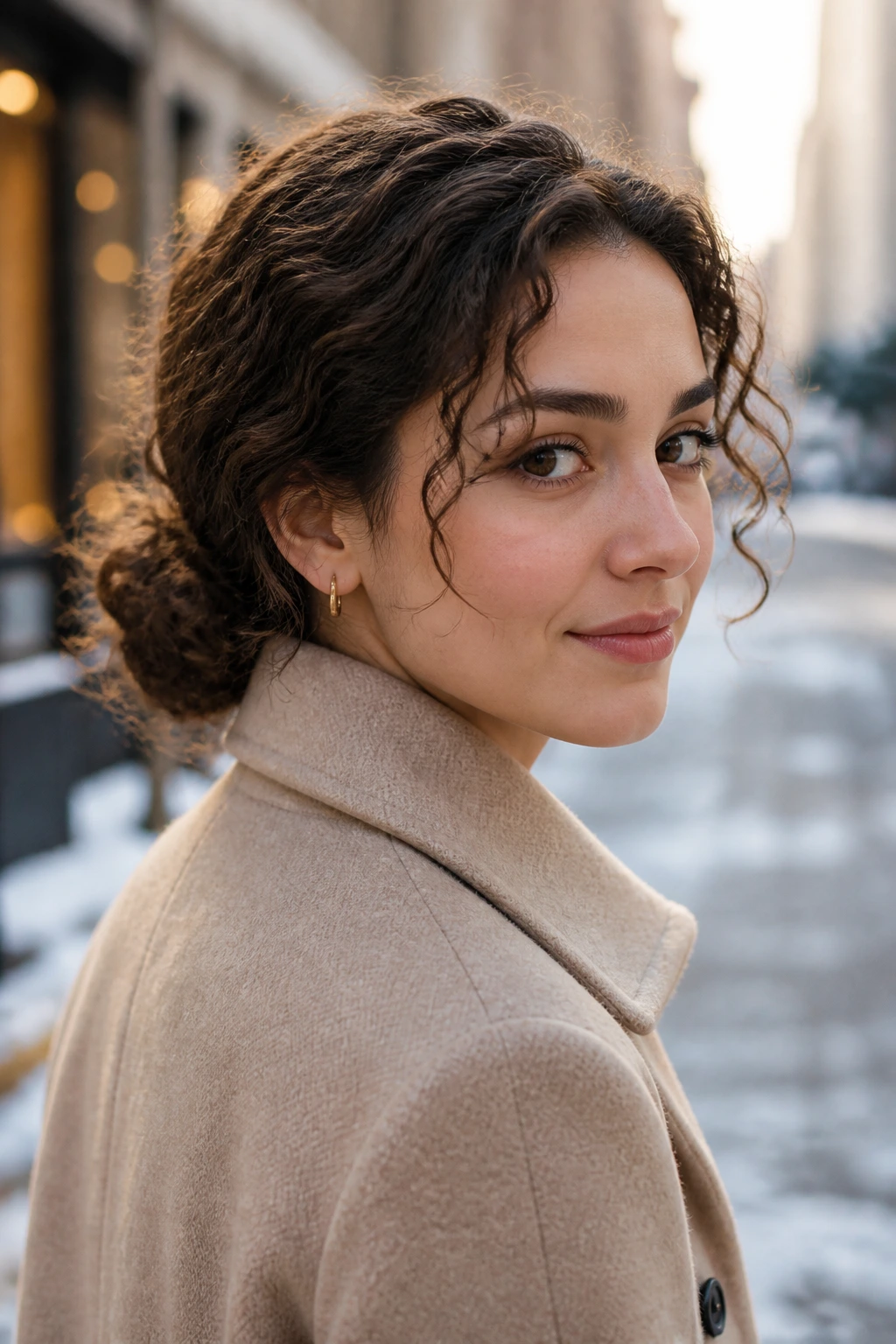
Collars: Low buns, tucked knots, and side chignons sit neatly above a coat collar or nestle right above it, which keeps the ends from getting battered. If your coat has a tall collar, keep the bun compact and low so it doesn’t press into the neck.
Hats: Pineapple buns, half-up crown twists, and low puff ponytails are the easiest to flatten and revive after a beanie. Styles that sit high can work, but they need a quick finger-fluff once the hat comes off.
Scarves: Scarf-wrapped buns and side buns are strong choices because the accessory becomes part of the look instead of fighting it. Keep the scarf smooth across the nape so it doesn’t tug on the pins.
Earrings and necklines: Side styles and French twists leave the neck open and play well with turtlenecks, statement earrings, and coats with bulky lapels. If the outfit is already doing a lot, choose a lower, simpler updo so the whole look doesn’t start competing with itself.
Additional Tips That Make These Styles Last Longer
Texture Boost: If your curls are too soft and slippery, give them a little grit before styling. A light mist of water, followed by a tiny amount of curl cream or gel, usually works better than stacking on more product.
Time Saver: Pick one “default” part line and one “default” pin pattern. For me, that’s a slight side part and crossed bobby pins at the nape. Repeating the same base cuts styling time down fast.
Shape Fix: If a bun looks too small on medium curly hair, don’t build it higher. Pull the sides out slightly first, then expand the bun with your fingers. The style gets fuller without shifting upward into hat territory.
Accessory Trick: A decorative clip can hide a folded end, a seam, or a pin cluster. Use it as the final layer, not the only support.
Weather Trick: When the air is dry, keep a spray bottle in the bathroom or bag. Two or three mists on the front curls can revive the shape faster than redoing the whole style.
Common Mistakes That Flatten Curly Updos
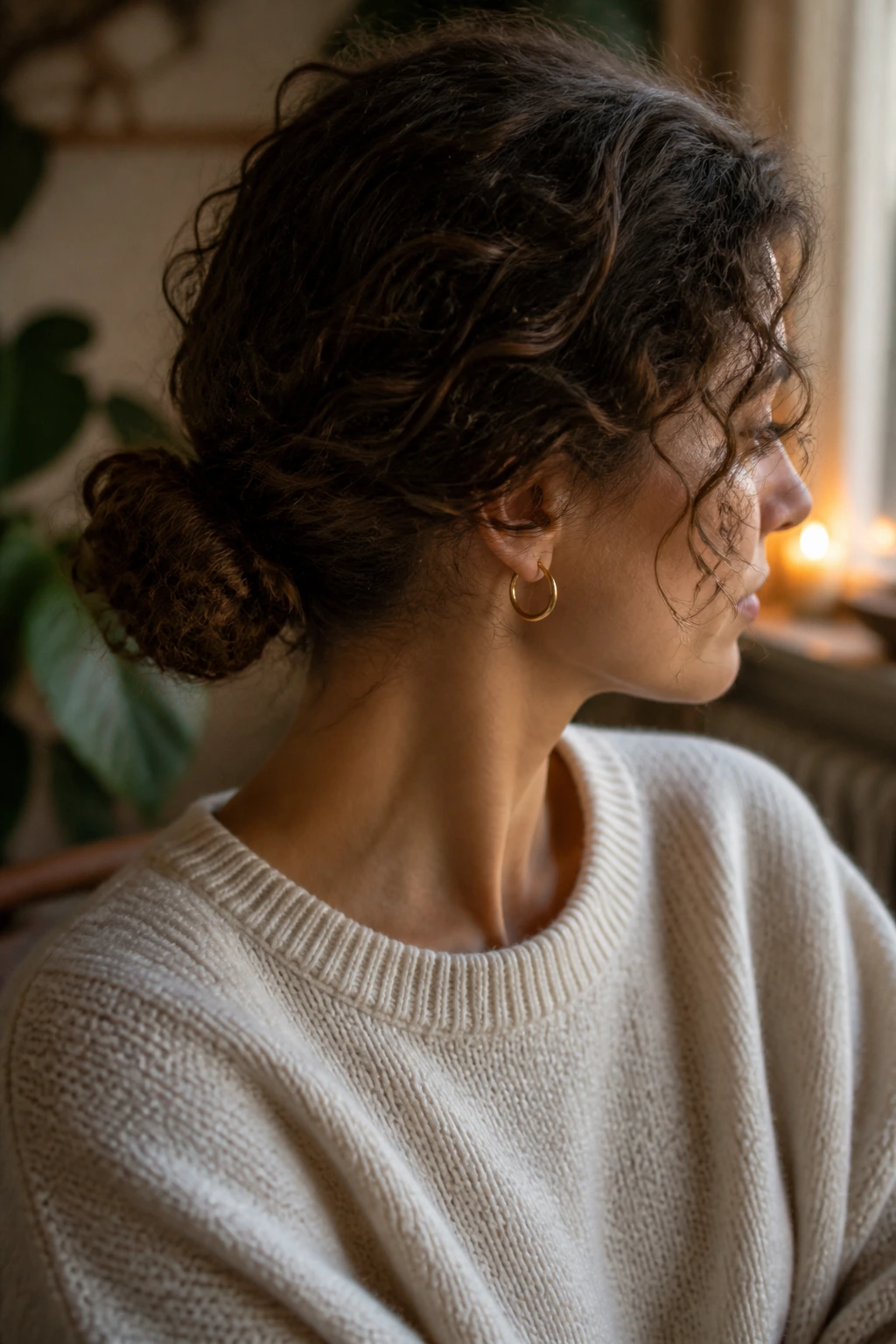
The first mistake is over-brushing. Curly medium hair can be detangled, sure, but brushing it into submission erases the grip that helps the style hold. The symptom is a bun that looks smooth for ten minutes and then starts slipping. Use your fingers or a wide-tooth comb, and leave the natural bend alone.
Another common miss is using tiny, slick elastics. They’re fine for very fine hair, but on curly medium hair they often slide or snap. If the ponytail feels like it’s losing tension while you’re still styling, switch to a coil tie or a satin scrunchie.
A third problem is placing the style too high for winter layers. A bun at the crown can seem cute until it’s trapped under a hood or flattened by a scarf. Low and mid-low styles are easier to live with once you step outside.
People also overuse heavy cream. That’s a fast way to make curls soft, shiny, and annoyingly slippery. If the hair needs product, use less than you think and keep it on the outer layer.
Finally, don’t ignore the pin direction. Pins driven straight in often slide. Pins crossed in opposing directions hold the base. Small detail. Big payoff.
Easy Variations Worth Trying
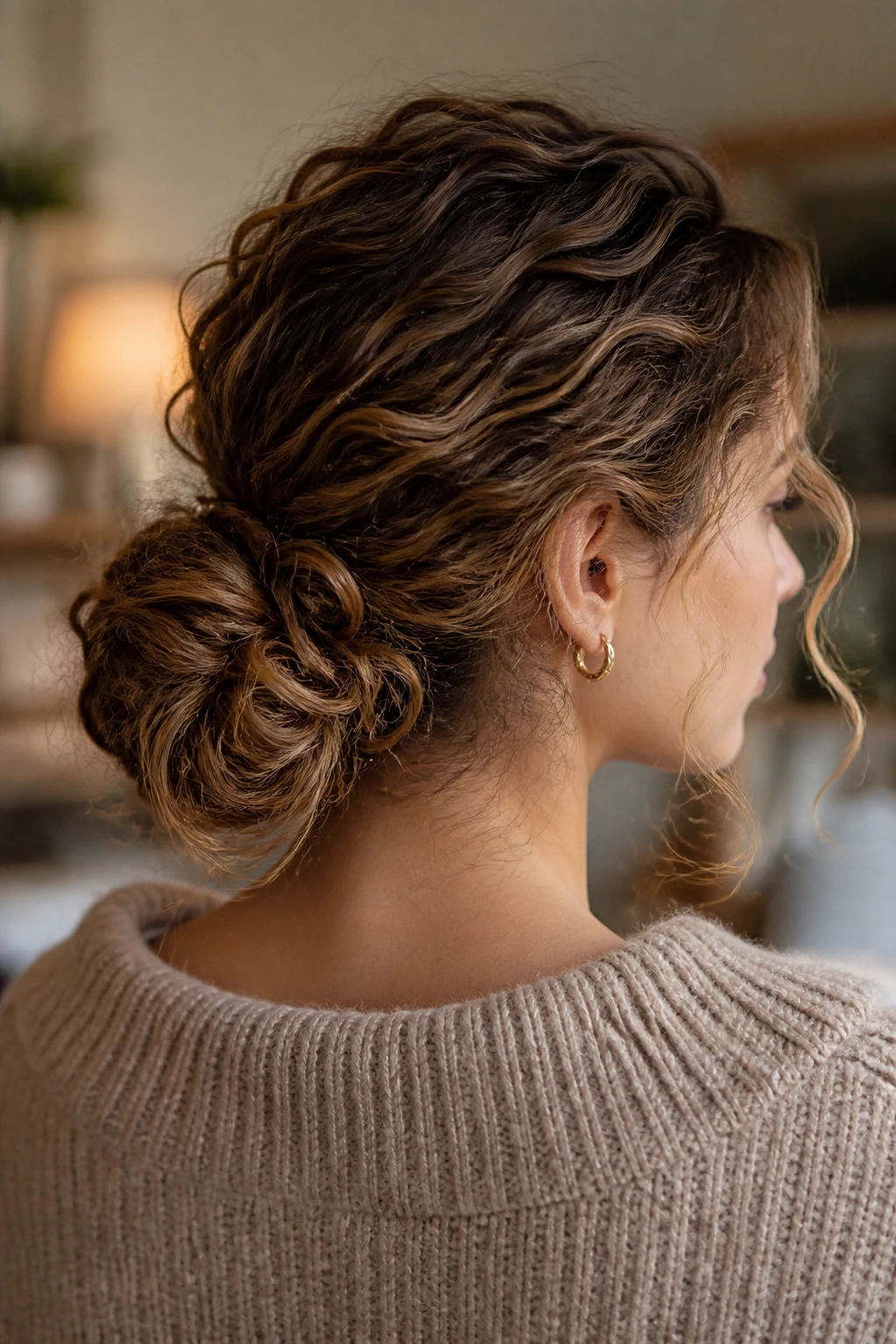
The Office Clean-Up: Keep the same style but smooth only the top and leave the ends curly. A low knot or French twist gets a more polished look without losing the hair’s texture.
The Beanie Version: Choose any low bun, tuck the ends tight, and keep volume away from the crown. Once the hat comes off, fluff the roots with your fingers and leave the bun shape alone.
The Soft Romance Edit: Pull two or three face-framing curls loose, then soften the sides of a twist or chignon. This version works especially well with scarves and knitwear.
The Fast Clip Swap: Replace pins with one strong claw clip for any twist, tuck, or folded bun. The style gets quicker, a little looser, and much easier to redo on the go.
The Braided Accent: Add one thin braid to a low bun or half-up style. It gives the whole look more structure, especially if your hair is layered and likes to escape.
How to Keep the Style Looking Good All Day
For updos like these, overnight prep matters more than people want to admit. If you know you’re styling the next morning, sleep with hair in a loose pineapple or in a satin bonnet so the curl pattern stays less tangled. That makes the updo easier to build and faster to refresh.
If the style goes flat during the day, don’t start over unless you have to. A few mists of water, a quick re-pin at the base, and a finger lift at the crown usually bring it back. For buns and knots, check the nape first; that’s where loosening shows up earliest.
A style that sits close to the head—like a tucked bun, French twist, or low puff—will usually survive scarf friction better than one with lots of loose height. If you know you’ll be indoors and outdoors repeatedly, choose the lower shape and save the taller one for a calmer day.
Frequently Asked Questions About Winter Easy Updos for Medium Curly Hair
What curl pattern works best for these styles?
Most curl patterns can handle these updos, from loose waves to tighter coils. The main difference is how much pinning you need and how much volume the style will build on its own.
Can I do these styles on wash-day hair?
Yes, but wash-day hair is usually softer and more slippery. If your curls are freshly washed, use a little more grip product or choose styles that rely on a clip, scarf, or crossed pins.
How do I keep the crown from puffing up under a hat?
Choose lower styles and keep the crown a little controlled with a light mist or gel before styling. Once the hat comes off, use your fingers to lift the roots instead of brushing.
What if my layers keep falling out?
That’s normal with medium curly hair. Pin the shortest pieces first, then pin the main bun or twist around them so the layers are locked into the structure instead of hanging free.
Are these styles okay for thick curly hair?
Yes, but thick curls usually need stronger clips, more pins, or a slightly lower placement. The style should feel secure before you leave the mirror, not after you’ve reached the car.
Can I sleep in any of these styles?
A loose pineapple bun or a very soft low bun can work overnight, but tight pins and heavy clips usually shouldn’t stay in while you sleep. Satin protection is better than sleeping in a style that pulls.
What’s the fastest style if I have five minutes?
The claw-clip French twist, low curly knot, and folded low bun are the quickest. They rely on the curl pattern and a single anchor point instead of a lot of shaping.
How do I make the style look less messy and more intentional?
Control the base. If the bun or twist looks chaotic, smooth the crown first, then leave the ends and outer curls a little softer. A neat base plus textured ends is the easiest formula.
Styles That Survive the Cold
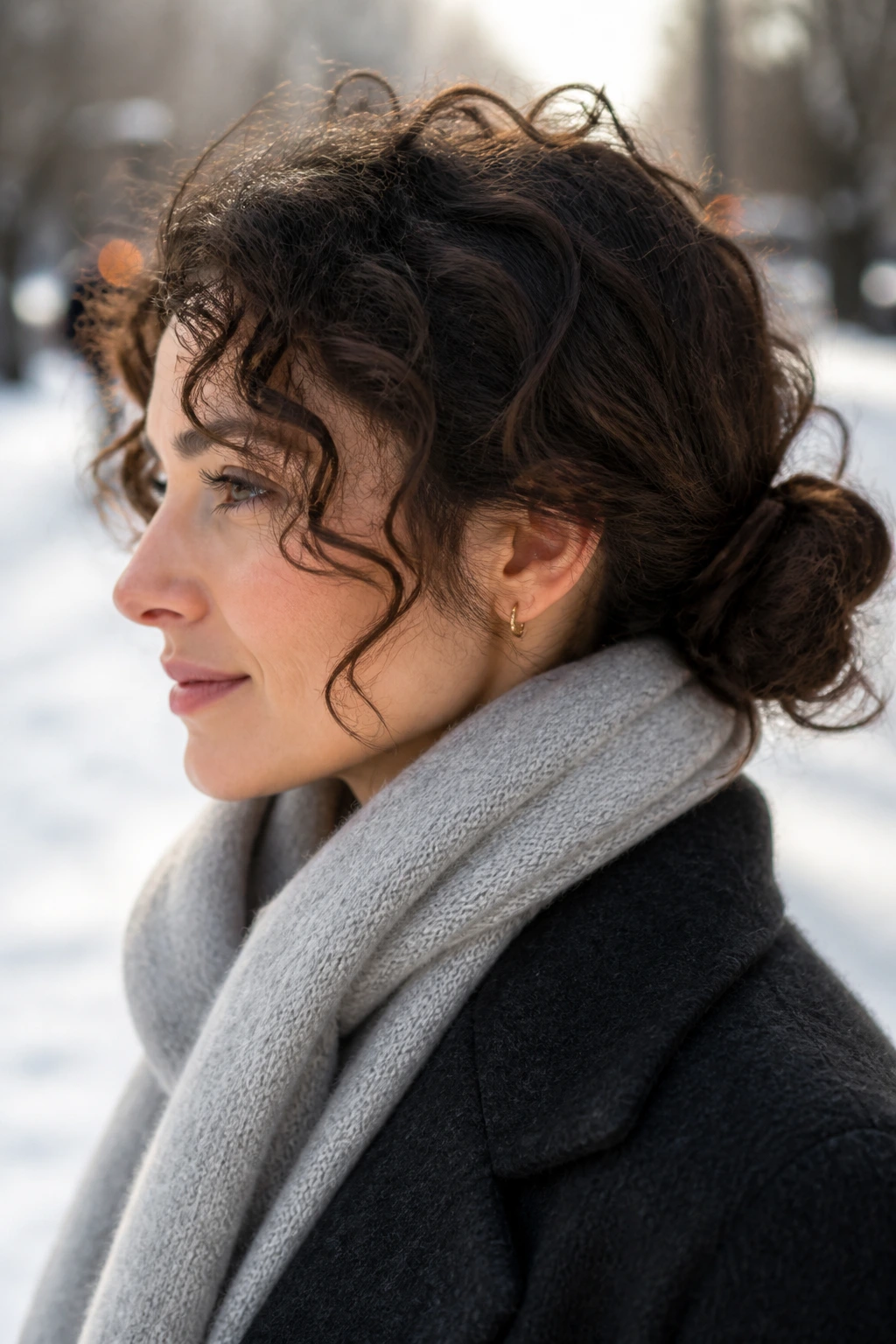
The best winter updos for medium curly hair do one thing well: they respect the curl pattern instead of flattening it into something else. That’s why these styles keep working when scarves, collars, and static start behaving badly. They don’t ask for perfect hair. They ask for a few pins, a little shape, and a willingness to let texture do some of the work.
A low knot, a clipped twist, a scarf-wrapped bun, or a half-up crown can carry an entire cold-weather outfit without much fuss. And once you find the shapes that fit your hair length and your winter routine, the morning routine gets a lot less annoying. That alone is worth something.
Keep the pins nearby, keep the ends protected, and let the curls stay a little imperfect. That’s usually where the best version of the style shows up.