



Curly hair has a memory, and boys’ haircuts feel it fast. A cut that looks crisp in the barber chair can spring into a completely different shape after a shower, a basketball game, or a nap in the back seat. That’s why haircuts for boys with curly hair need more than a short clipper setting and a hopeful shrug.
The best boys with curly hair haircuts work with the curl pattern instead of fighting it. They leave enough room for the hair to spring, bend, and settle without turning into a puffball on the sides or a flat patch on top. And yes, the shrinkage is real. A boy’s curls can sit an inch or two shorter once they dry, which is why the same cut can look perfect at the shop and chopped up by bedtime.
The trick is not “taming” curls. That word gets used way too loosely. What matters is shape: where the bulk sits, how the sides taper, whether the fringe lands in the eyes or clears them, and how much length is left for the curls to actually show. Once you start thinking in shapes instead of buzz numbers, the better cuts start making sense very quickly.
Why These Curly Haircuts Work Better Than Random Short Cuts
-
Shrinkage-friendly shapes: These cuts leave enough length on top for curls to spring up after drying, so the style keeps its outline instead of collapsing into a stubble-looking top.
-
Cleaner sides, less puff: A taper, fade, or controlled scissor cut takes bulk off the sides and around the ears, which is where curly hair usually turns into a triangle.
-
Barber-friendly language: Every style here can be described with simple barber terms—top length, fringe, taper, fade, line-up, and layers—so you can ask for the cut without guessing.
-
Works across curl types: Loose waves, ringlets, thick corkscrews, and tighter coils all show up here, because the cut choices change depending on density and curl size.
-
Better grow-out: The strongest curly haircuts still look decent three weeks later, which matters when the only thing faster than a kid’s growth is the speed of a bad trim growing out.
1. Curly Taper Fade
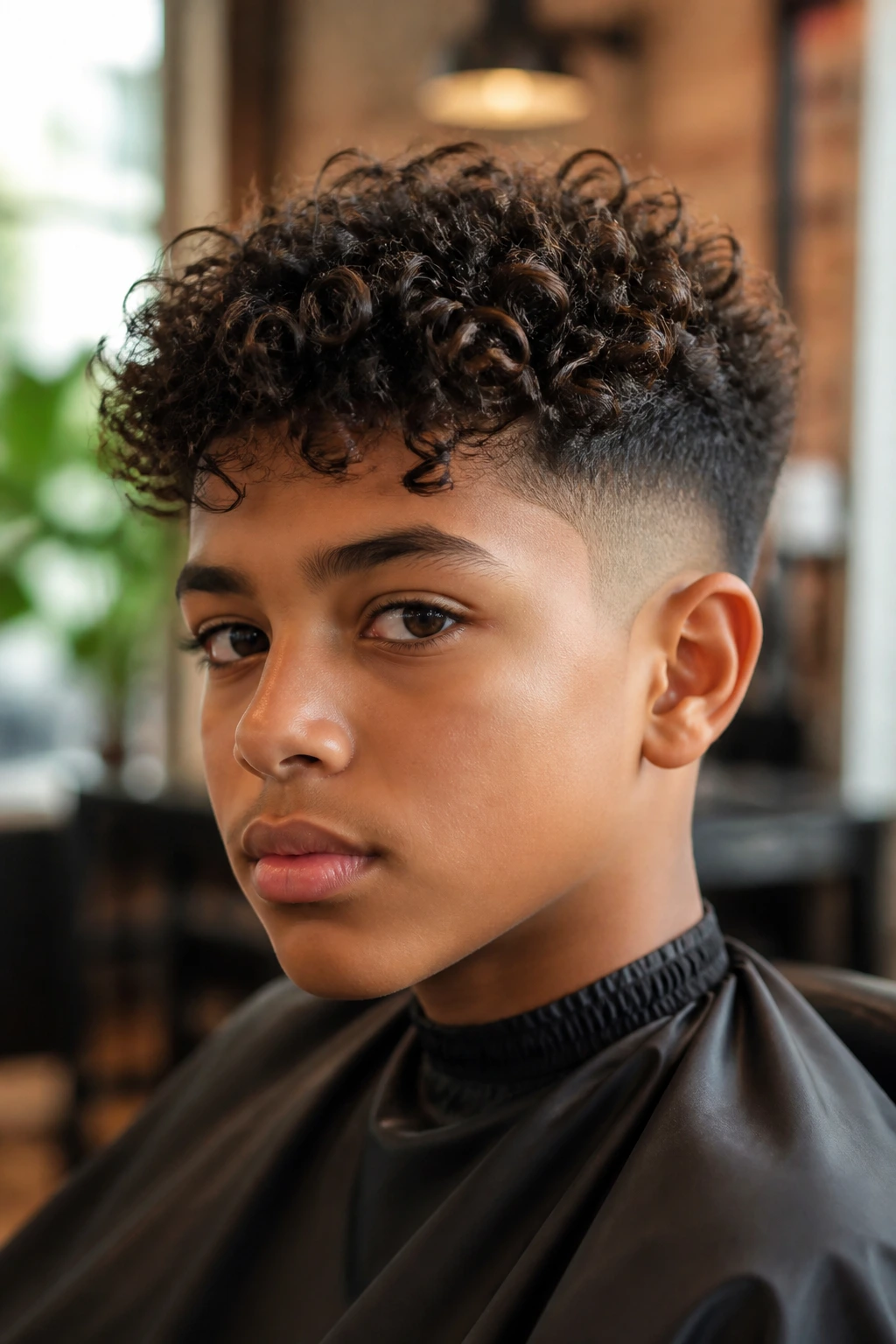
A curly taper fade is the one I’d hand to a parent who wants the safest strong choice on the list. The top stays curly and visible, while the edges around the ears and neckline get cleaned up so the whole head looks intentional instead of fluffy. It’s tidy without flattening the curls, and that balance is why it works so well for boys.
Why It Works
The taper gives the haircut a frame. Without it, curls can puff at the sideburns and around the nape, which makes even a good cut look unfinished. With it, the eye goes straight to the top where the texture lives. That’s the whole point.
Ask for 1 to 2 inches on the sides fading into the skin or a short guard, and keep the top long enough for the curls to move. On looser curls, a low taper usually feels calmer. On tighter curls, a mid taper keeps the top from sitting too heavy.
What to Tell the Barber
- Leave more length on top than feels necessary once the hair is wet.
- Keep the taper clean around the ears and neckline.
- Ask for the top to be scissor-cut or lightly textured, not hacked flat with clippers.
A small detail matters here: if the barber trims curls wet, the cut should be a little longer than you think. Wet curls lie. Dry curls tell the truth.
2. Curly French Crop
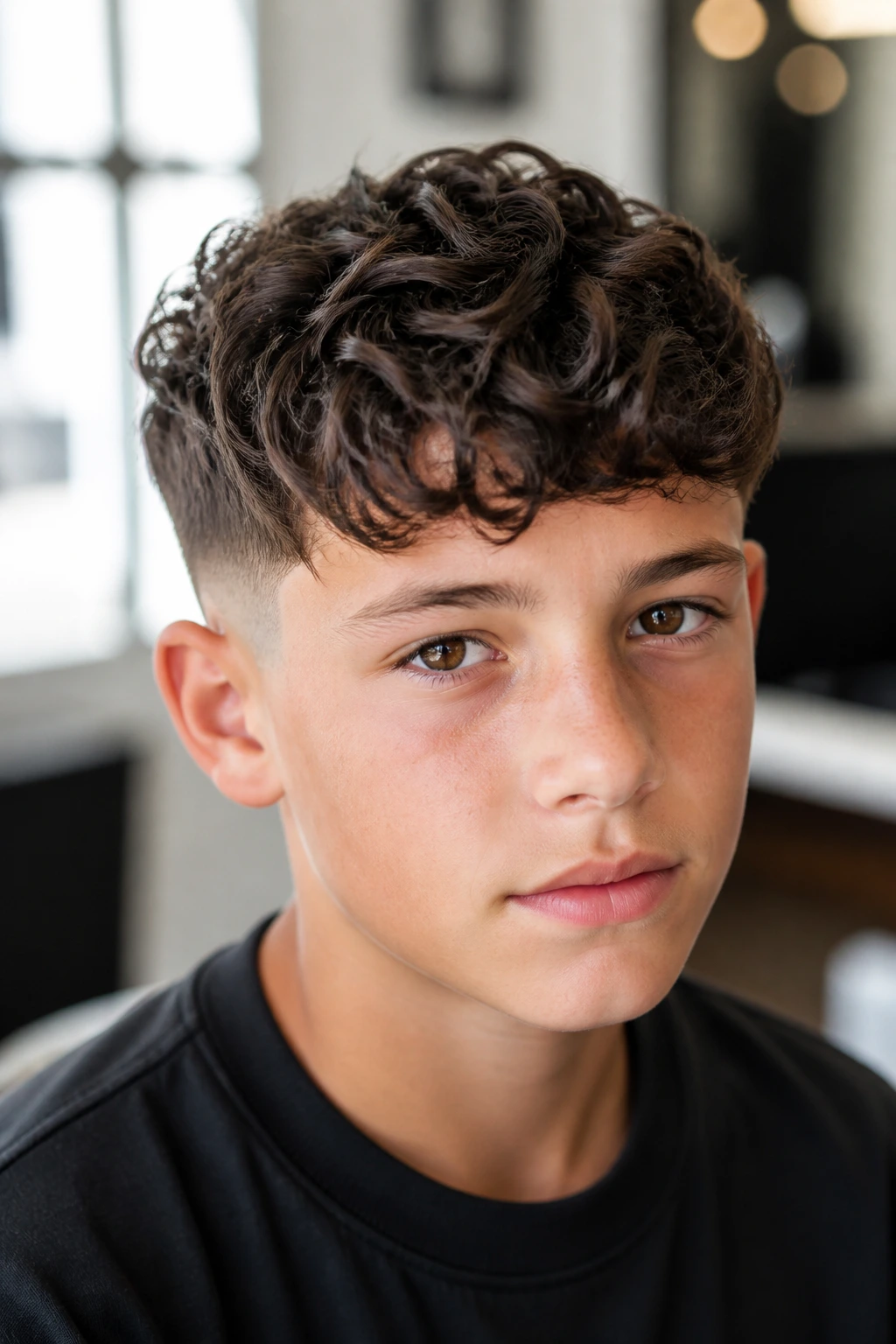
A curly French crop is blunt in the best way. The fringe sits forward, the sides stay short, and the top keeps enough texture to keep the haircut from looking like a straight-line helmet. It’s one of those cuts that reads modern immediately, especially when the curls are loose enough to fall across the forehead.
The blunt fringe is the whole story. Instead of sweeping curls back or fighting them into a part, this cut lets them fall forward in a controlled line. That makes it a smart pick for boys who hate hair in their eyes but also hate the feeling of a heavily slicked style. It’s neat, not precious.
I like this cut on boys with medium-density curls because the front fringe can be shaped without losing the curl character. If the curls are very tight, the fringe needs a little extra length so it doesn’t bounce too short once dry. A light curl cream and a quick finger-comb in the morning is usually enough.
3. Curly High Top Fade
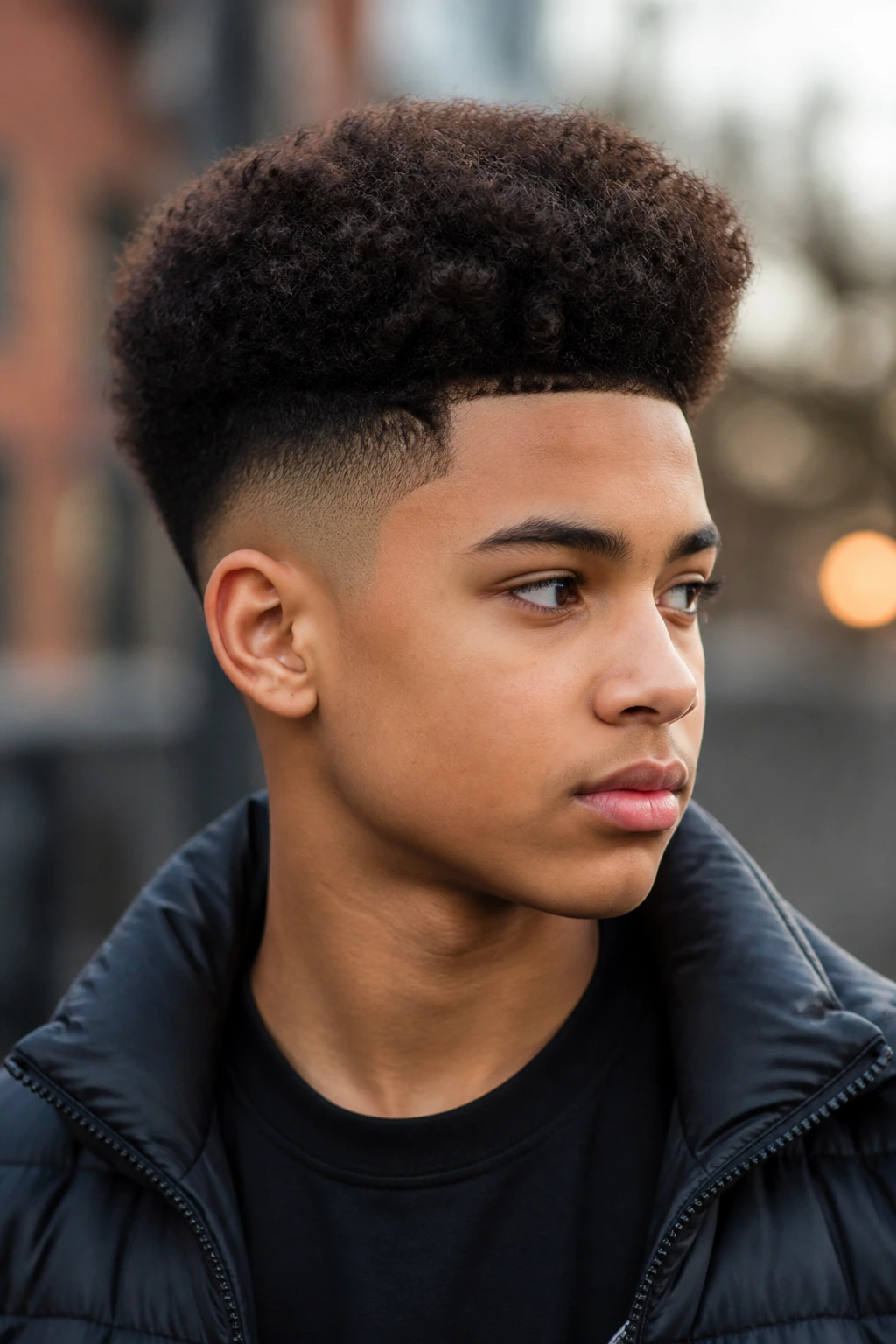
Want height without the helmet look? A curly high top fade gives you that vertical shape, but only if the top is kept full and the sides are tight enough to make the height believable. It’s a strong look on thick curls and tighter coils, because the hair already wants to lift.
How to Keep the Top Square
The shape should be clean, not blocky. Tell the barber you want the top rounded just slightly at the corners so it doesn’t look like a box sitting on the head. That tiny bit of softening makes the cut feel modern instead of retro-costume. And no, it does not need to be huge.
This cut asks for maintenance. If the sides start growing out, the whole shape loses its edge fast. A touch-up every 2 to 3 weeks keeps the fade crisp, while the top can usually go longer. Use a little leave-in conditioner and let the curls sit where they want; heavy gel kills the height.
4. Textured Curly Fringe
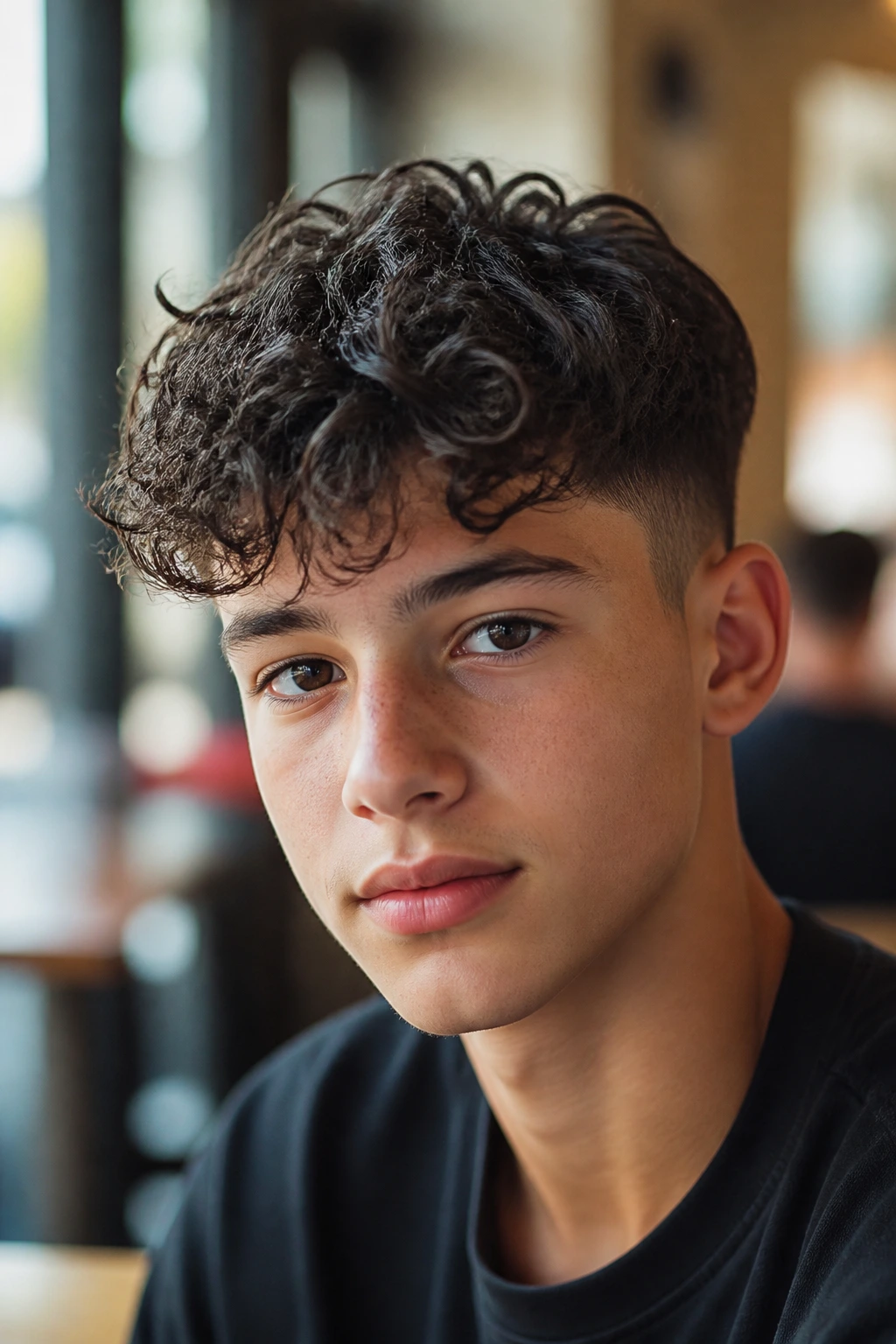
When a boy keeps pushing curls out of his eyes, this cut solves the problem without chopping the shape off. The fringe lands forward, but it’s broken up with texture so it doesn’t sit like a curtain. It feels easy, looks current, and has a little movement every time the head turns.
The sides are usually tapered or softly faded, which keeps the whole thing from swelling at the temples. The top is cut with enough layering that the fringe bends instead of hanging in one heavy line. That bend is the part that makes it look good. Straight bangs on curly hair can get weird in a hurry.
This one works especially well for loose curls and ringlets that need direction more than control. If the fringe gets too short, it springs up and disappears; leave a little extra and let the front rest near the eyebrows. That tiny buffer makes all the difference.
5. Curly Mohawk Fade
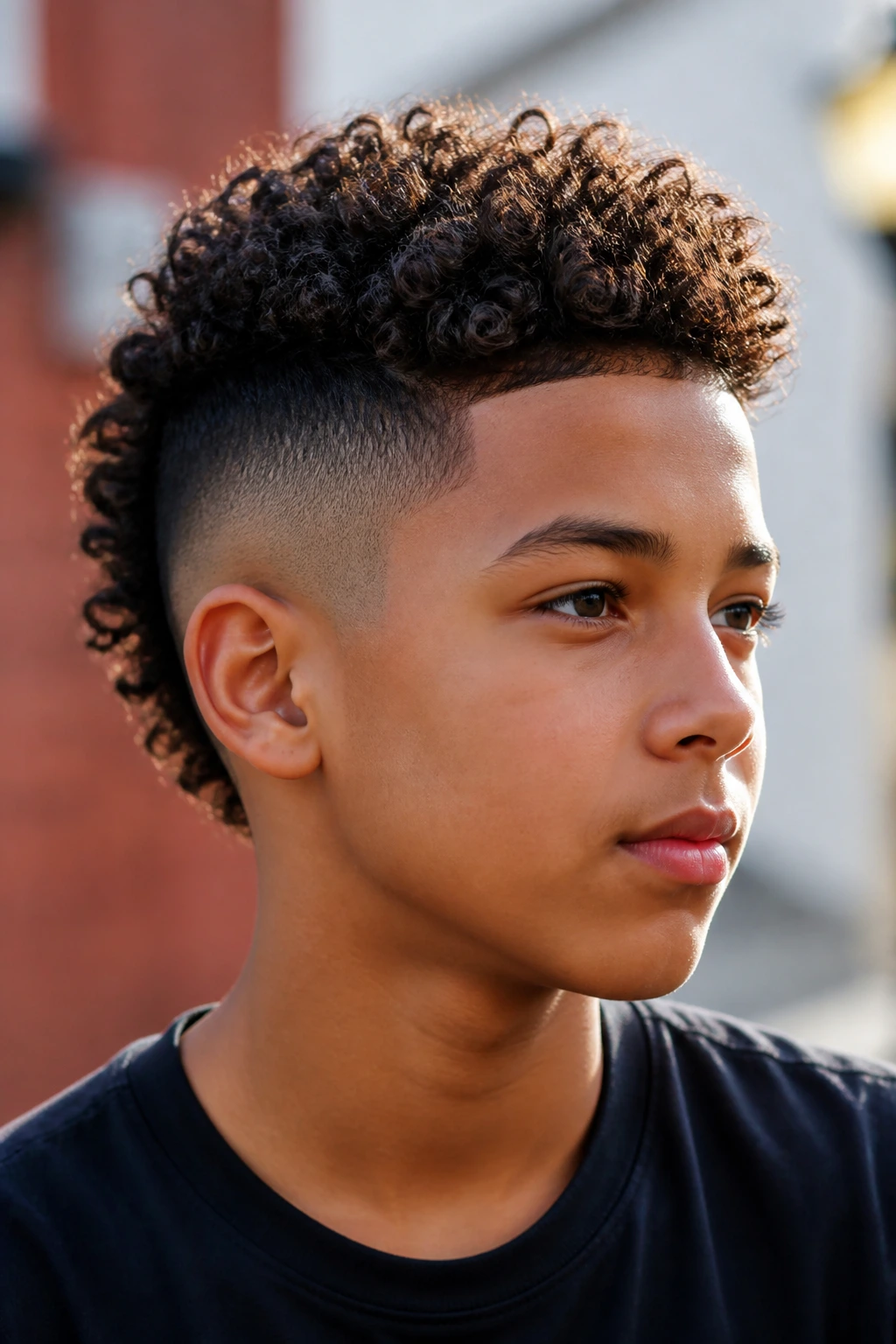
A curly mohawk fade sounds louder than it is. Kept soft, it’s more about shape than rebellion. The middle section stays longer and fuller, while the sides fade down hard enough to make the top line stand out. On a head full of curls, that center strip has real presence.
The best version doesn’t try to spike the hair up. Curls already have lift. Let them do the work. A little curl cream, a fingertip shape, and a clean fade on the sides is enough. If you load it with heavy product, the top loses movement and starts looking stiff, which defeats the whole point.
This cut is a strong choice for boys who like a style with edge but still need it to behave at school. Keep the fade lower if the dress code is strict. Push it a little higher if the curls are dense and the top needs more breathing room.
6. Short Curly Afro with Line-Up
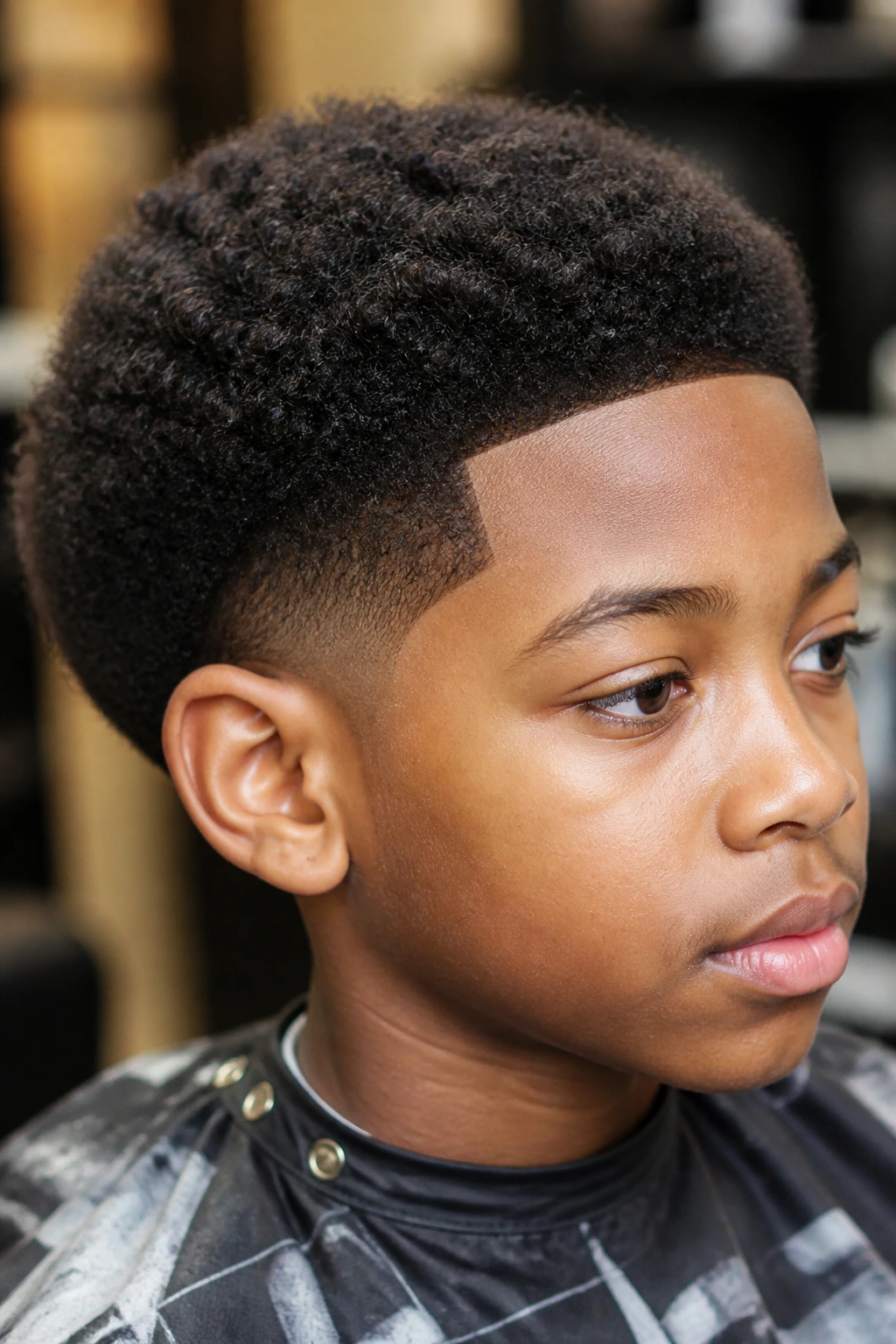
A short curly afro with a line-up is one of the cleanest ways to wear dense curls. The outline gets sharpened at the temples, forehead, and neckline, while the body of the hair stays rounded and full. That shape looks deliberate. It never looks accidental.
What Makes the Line-Up Work
The line-up is there to give the haircut a crisp border. Without it, dense curls can blur into the skin and lose their shape around the face. With it, the cut feels neat even when the top has plenty of texture. Keep the edges natural, though. A line that’s drawn too hard can look harsh on a child’s head.
This style is especially good when the curls are tight enough to hold a round shape but not so tight that they collapse flat. It also grows out well. The top can go a few weeks between cuts, while the edges only need a quick clean-up to keep the outline visible.
7. Curly Undercut
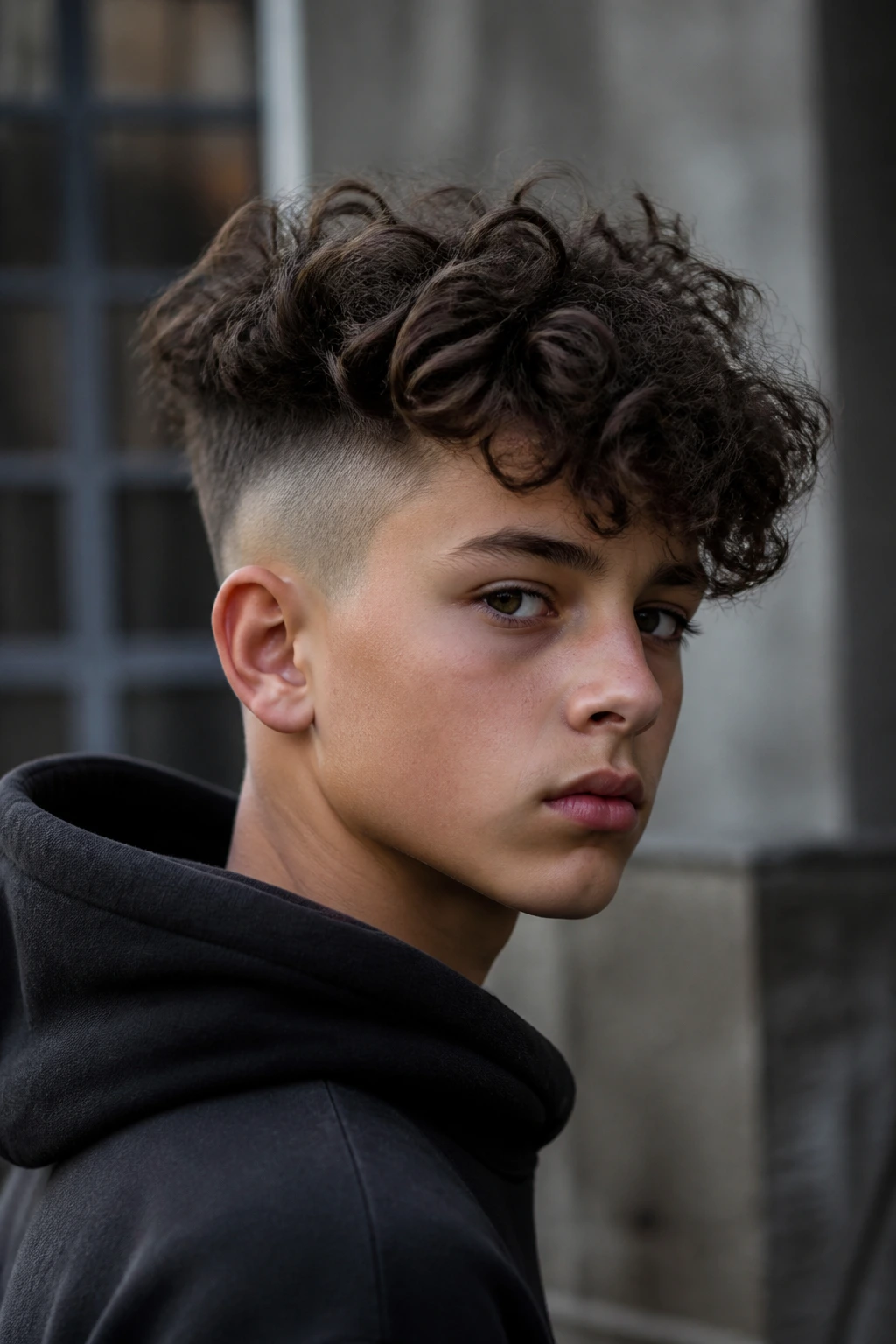
The curly undercut is all contrast. The top stays longer and gets to keep the curl pattern front and center, while the sides drop off sharply. That disconnect creates a strong silhouette, and boys who like a sharper, older look usually gravitate to it fast.
This cut works best when the top has enough length to move—usually at least 3 inches, sometimes more. If the top is too short, the undercut feels abrupt and unfinished. If it’s long enough, the curls can be worn forward, to the side, or pushed back with a little curl cream. The undercut is less about control and more about showing off the top.
It’s not the most forgiving grow-out on this list. Once the sides start expanding, the contrast softens, and the style gets messy. That’s fine if you like a rougher look. If you want the edges sharp, plan on regular side trims.
8. Curly Shag
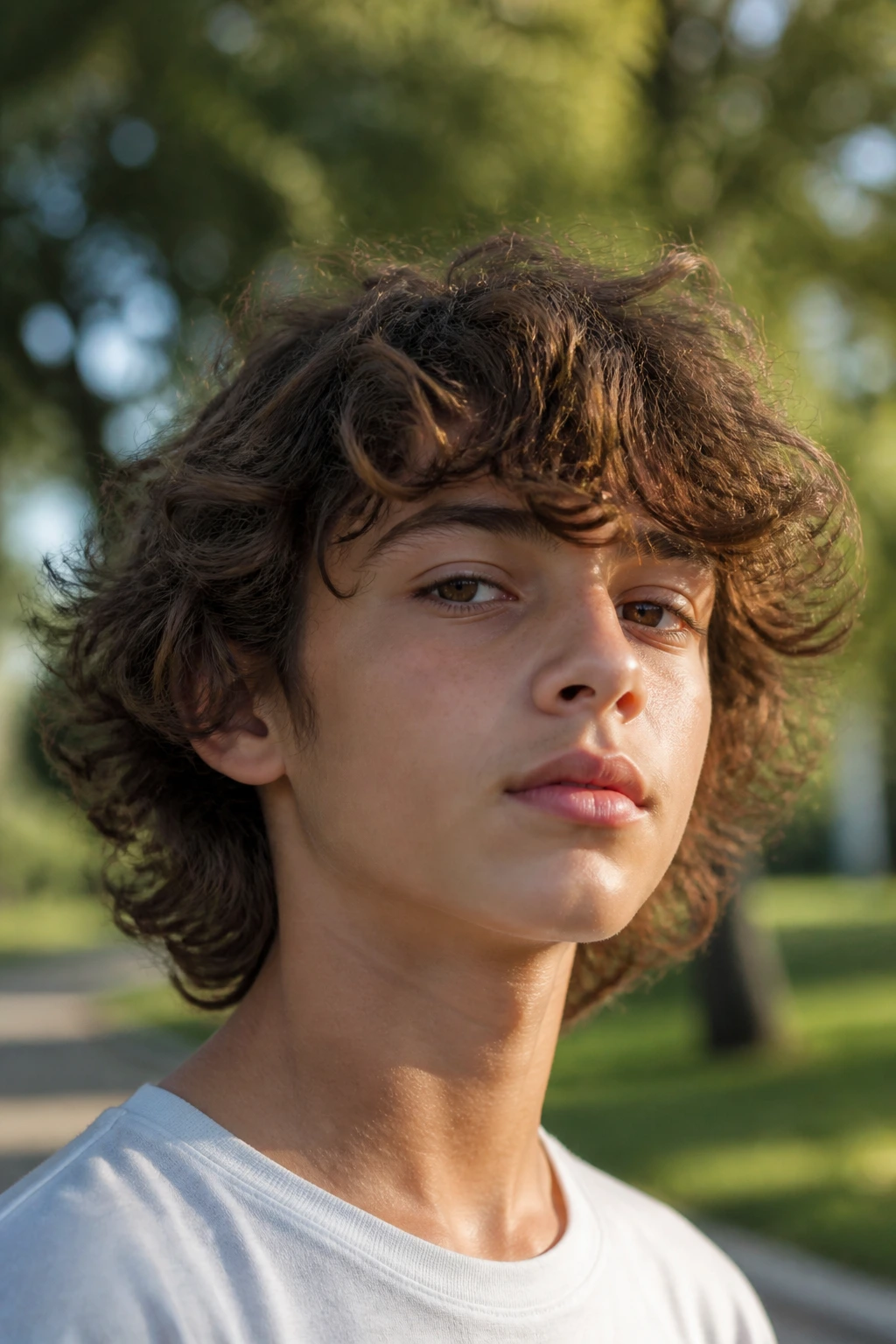
The best curly shag looks a little windblown even when it’s freshly cut. That’s the point. Layers break up the bulk, the ends move, and the hair stops trying to sit in one big round mass. For boys with medium-length curls, that shift can be a relief.
A shag is one of the few cuts that actually benefits from a bit of mess. It gives curls room to bend at different lengths, which softens the triangle effect that shows up when curly hair grows wide at the ends. If you’ve ever seen a head of curls grow outward before it grows downward, you know exactly why layers help.
This cut looks best when the barber point-cuts the ends rather than flattening them. A small amount of leave-in conditioner and a diffuser can make the layers stand up in the right places. Too much product, though, and the shag loses its airy shape. Keep it light.
9. Side-Swept Curly Top with Low Taper
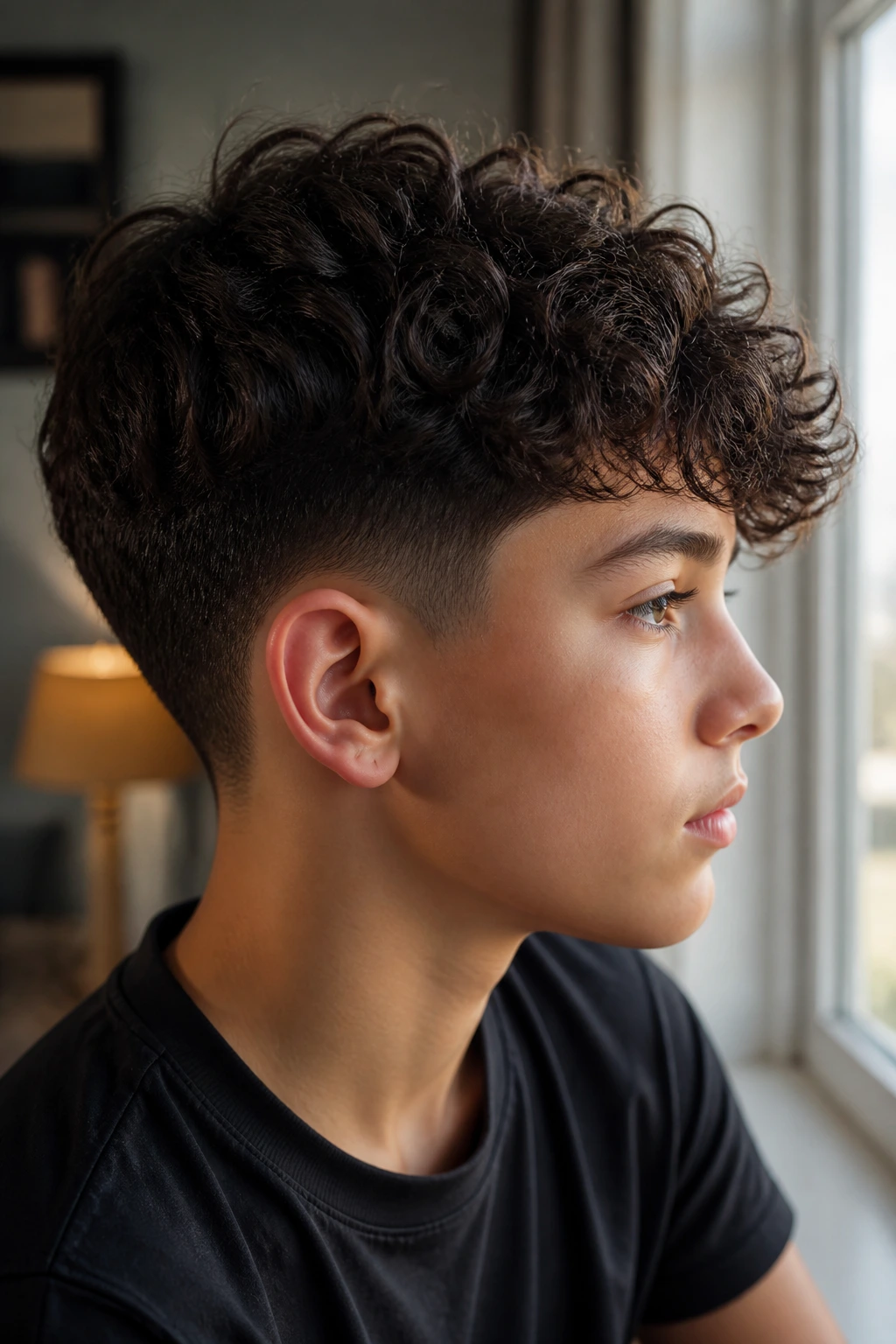
A side-swept curly top with a low taper is the haircut for boys who need to look neat without looking stiff. The curls are directed to one side, not forced into a hard part, and the taper keeps the outline clean near the ears and nape. It’s polished in a quiet way.
This style lands in that useful middle ground between casual and dressed-up. It works for school photos, family events, and ordinary weekdays where the hair needs to behave. The sweep across the forehead gives the cut direction, which is especially helpful when the curls want to grow forward on their own.
I prefer this one on boys with looser curls or waves, because they settle into the side sweep more naturally. A small amount of mousse or light cream helps the direction hold. Don’t drown it in product. The curl pattern should still be visible.
10. Burst Fade Curly Mullet
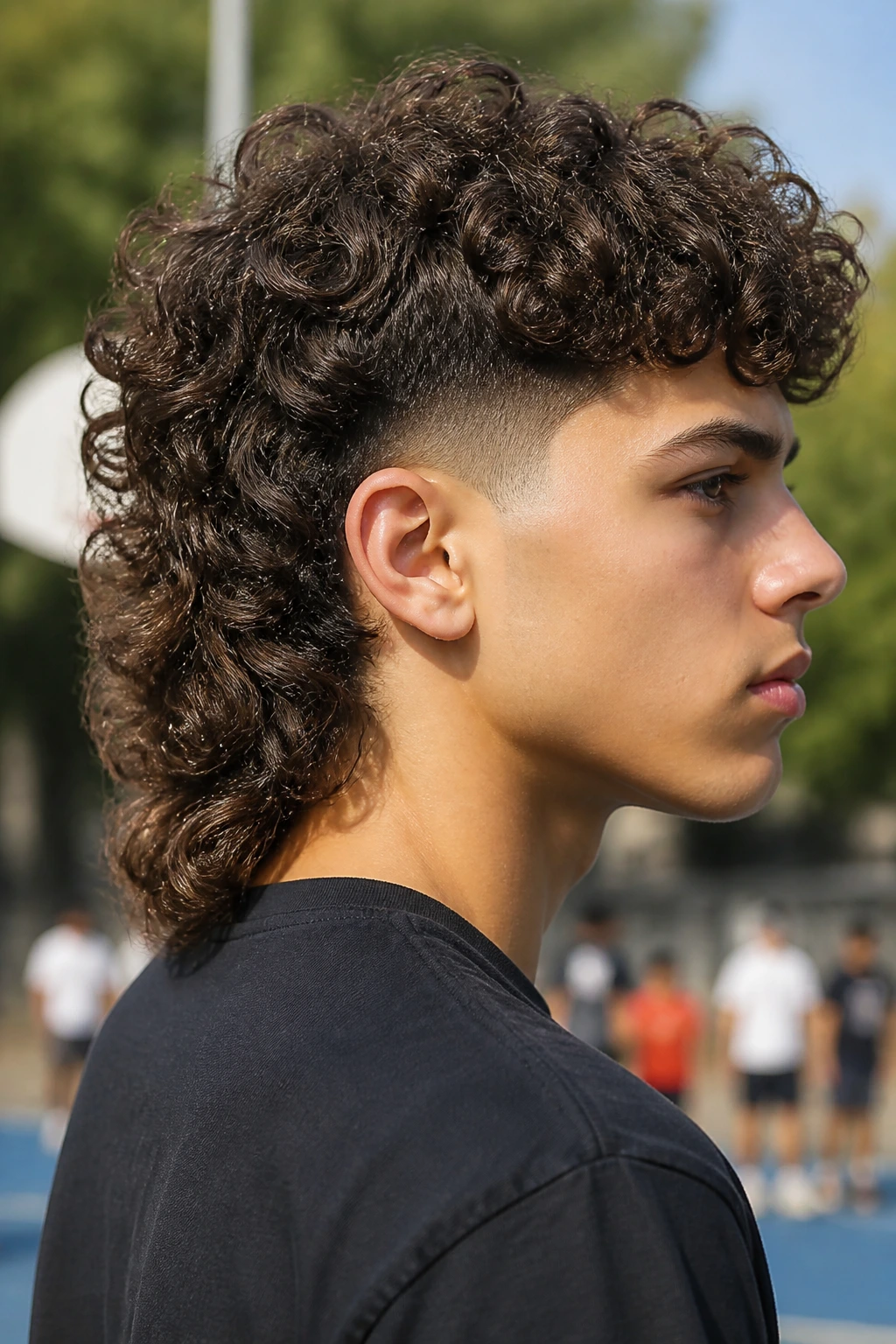
If the kid wants personality, this is the loudest haircut on the list. A burst fade curly mullet keeps the sides tight around the ears, then leaves more length in the back so the curls can hang with purpose. It is not subtle. That’s why some boys love it.
What to Ask for
- A burst fade around the ears, not a straight high fade.
- Enough length in the back for the curls to show movement.
- A top section that stays layered so the front and crown don’t puff into one shape.
The modern version of this cut works because the back is deliberate, not forgotten. A curly mullet needs some length in the neck area to make sense; otherwise it just looks grown out. Keep the back trimmed so it falls, not frays. That distinction matters more than people think.
If school rules are strict, ask for a softer version with a lower burst and only a little extra length in back. The silhouette stays fun, but the haircut doesn’t turn into a classroom argument.
11. Curly Caesar Cut
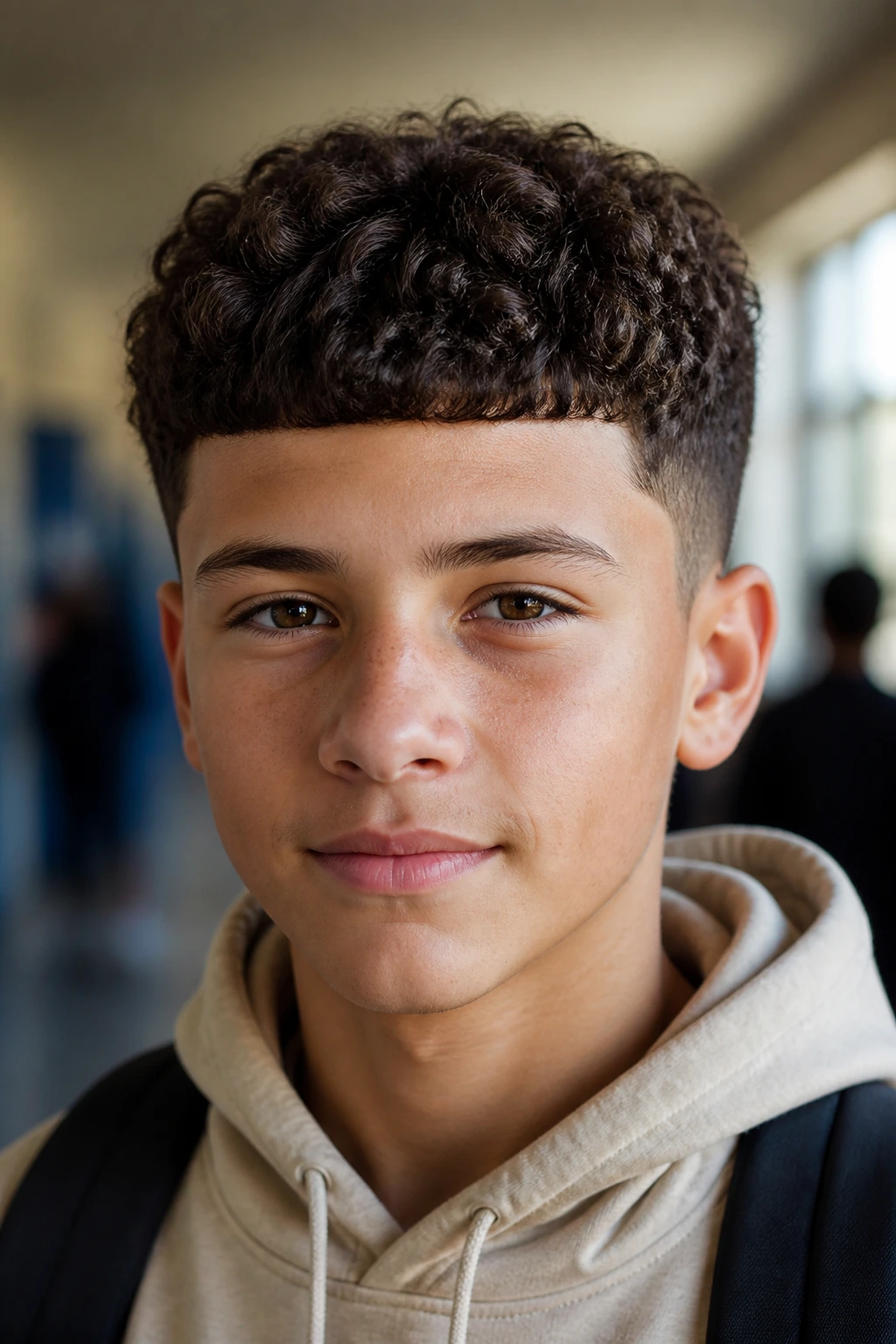
A curly Caesar cut is the neat little cousin in this whole lineup. The fringe is short and forward, the top is kept compact, and the outline stays clean. It’s a strong choice when the curls are tight enough to hold shape but not so long that they explode outward.
Why It Stays Neat
The Caesar works because it reduces decisions. There’s no sweeping top, no heavy side part, and no big volume to manage in the morning. The front edge sits low and tidy, which makes the haircut feel controlled even on busy days. That can be a relief if the child hates styling time.
The mistake people make here is cutting it too short. If the top is taken down too far, the curls disappear and the haircut starts reading like a very short buzz with texture left over. Leave enough length for the curl pattern to show. Usually that means a little more on top than you’d expect from a straight-hair Caesar.
12. Medium-Length Layered Curls
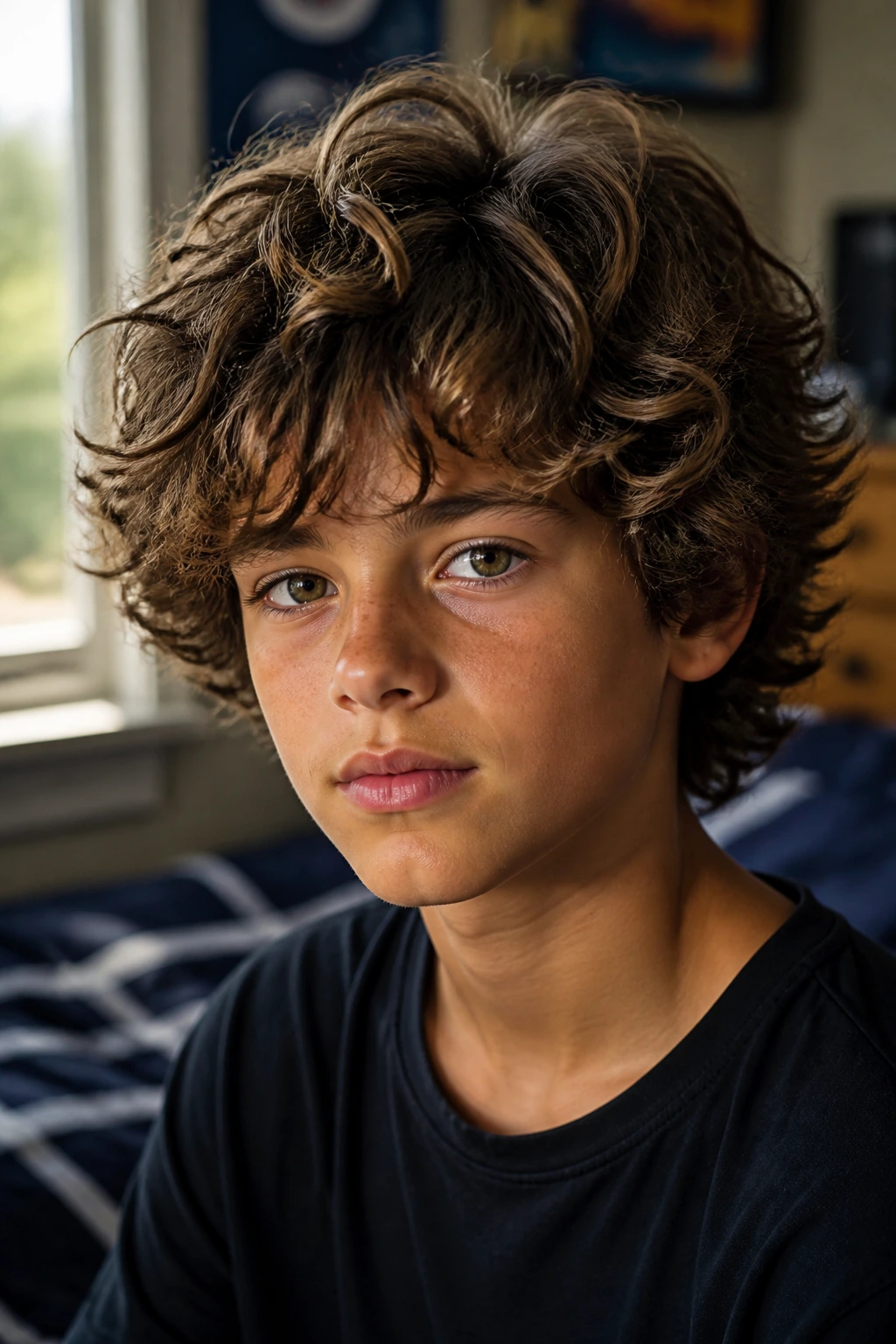
Medium-length layered curls are for the family that does not want to keep everything short just because the hair is curly. The layers take out bulk, the shape stays round, and the curls get room to move without turning into a pile on top of the head. It looks relaxed, but only if the layering is done right.
This cut is the one that benefits most from a scissor-first barber. Clippers can clean the edges, sure, but the top needs layered shaping so the curl pattern falls in pieces instead of one heavy curtain. If the hair is dense, ask for internal layers to remove weight without losing length.
The best part is the grow-out. Medium-length curls can keep their shape for a while, especially if the neckline and ears are cleaned up every few weeks. A bit of leave-in and a diffuser will bring the layers back to life after washing. Skip the heavy wax. It will only drag the curls down.
13. Temple Fade with Curly Top
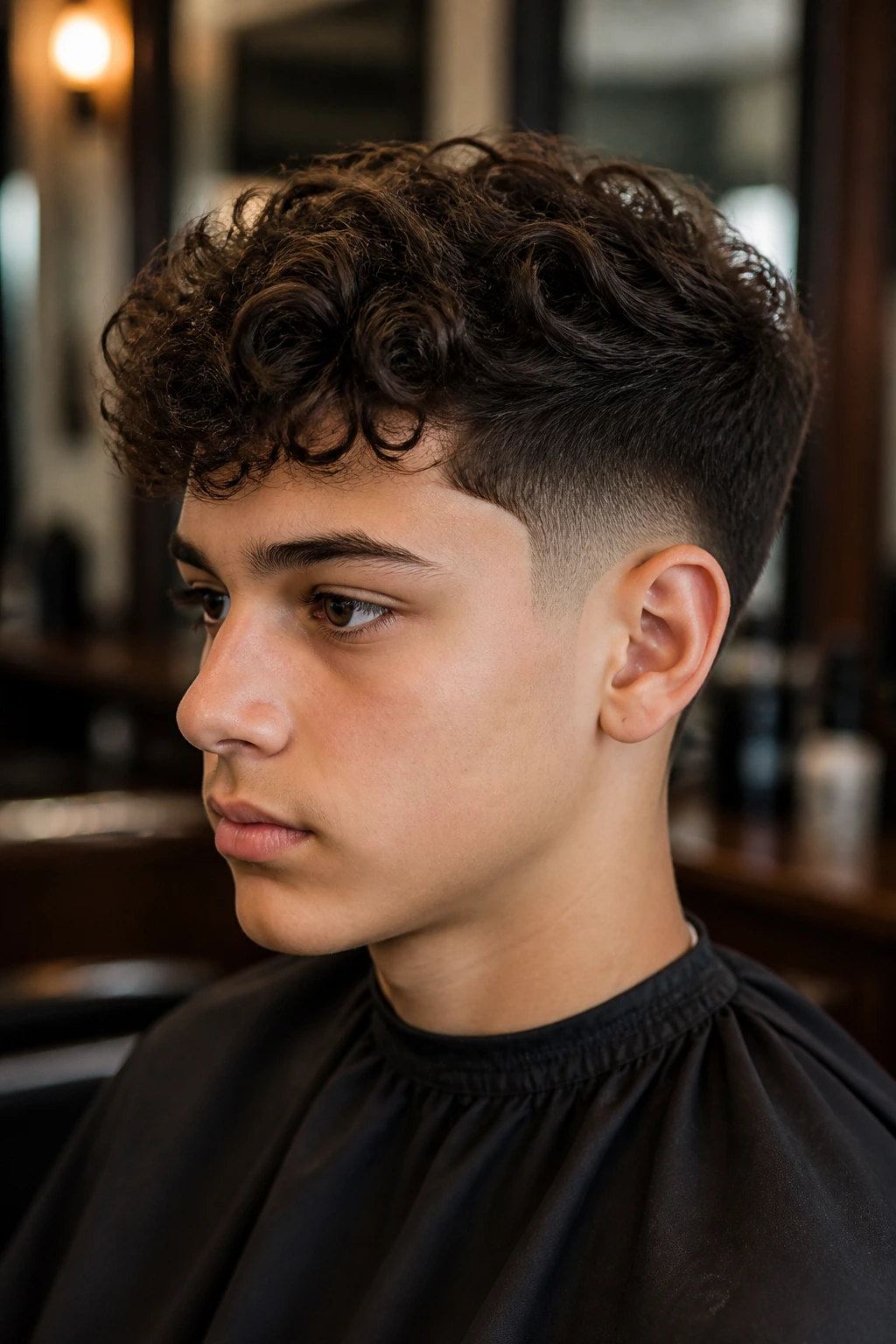
A temple fade is the small detail that makes a big mop look deliberate. The fade sits at the temples and sideburns, which cleans up the face without stripping the sides bare. On curly hair, that little frame can change everything.
The top stays fuller, so the curl pattern still gets to be the main event. That’s why this cut works so well on boys with dense curls who want shape without a full skin fade. The temples are where the haircut can start to look muddy first, so cleaning that area up keeps the whole head sharp longer.
Ask the barber not to push the fade too high. The beauty of a temple fade is that it trims the edges while leaving the rest of the silhouette intact. Too much height, and the cut loses its balance. Just enough, and the curls sit up top in a neat, rounded cloud.
14. Curly Drop Fade
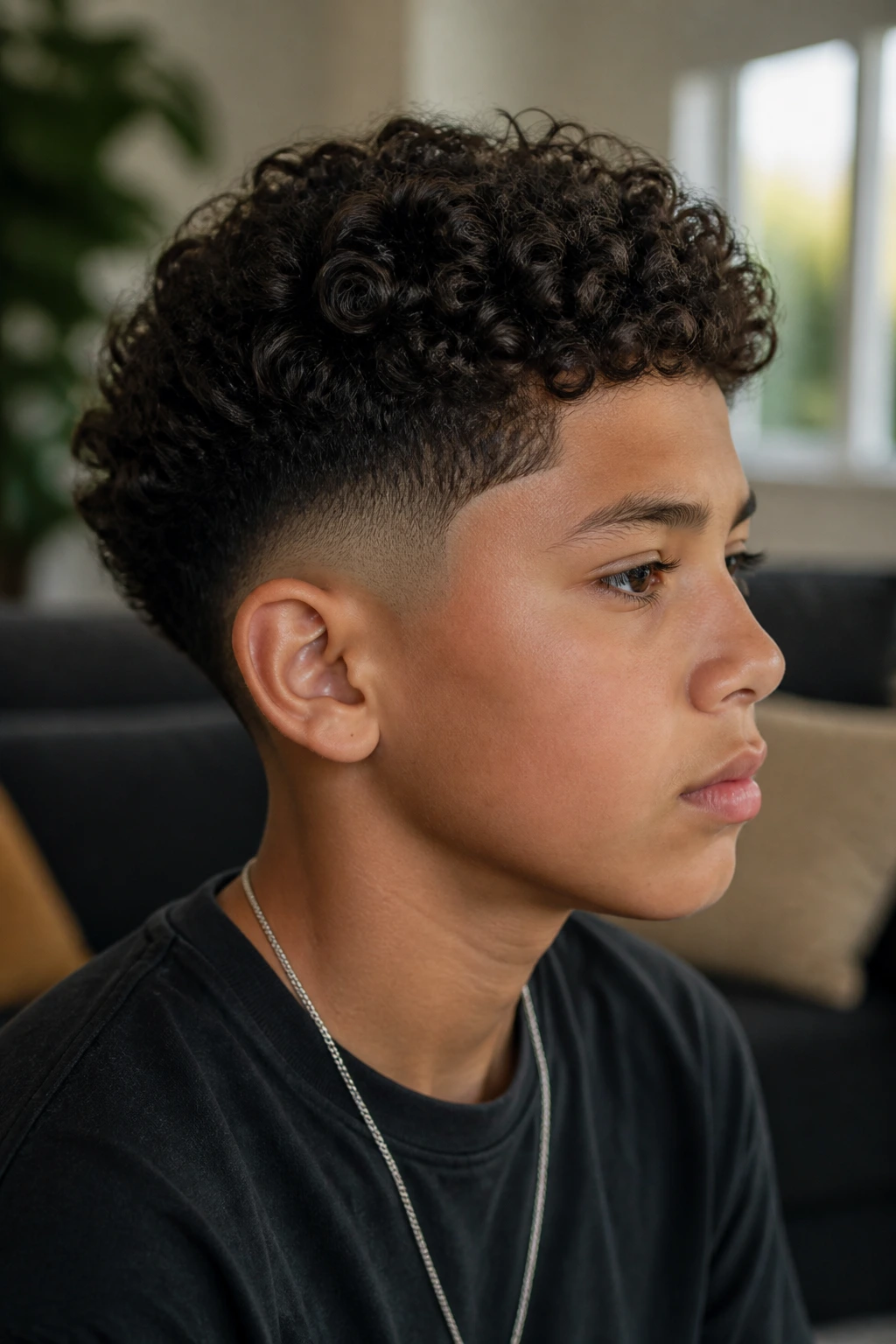
A drop fade follows the shape of the head instead of cutting a straight band around it, and that’s why it looks cleaner on curly hair than a lot of people expect. The fade dips lower behind the ears, which gives the haircut a smoother line through the back and sides. It feels shaped, not chopped.
What Makes the Silhouette Work
The drop fade works especially well when the curls on top have medium length and enough density to show texture. The curved fade line makes the head look more sculpted, which can help on round or oval face shapes. It also keeps the side profile from looking boxy.
This is one of the best cuts for boys whose curls puff out at the temples but lie flatter near the crown. The lower drop gives the barber a place to remove bulk without taking too much off the top. If you want the style to last, ask for the fade to stay soft near the transition. A harsh line makes the cut feel louder than it needs to be.
15. Curly Curtains with Tapered Sides
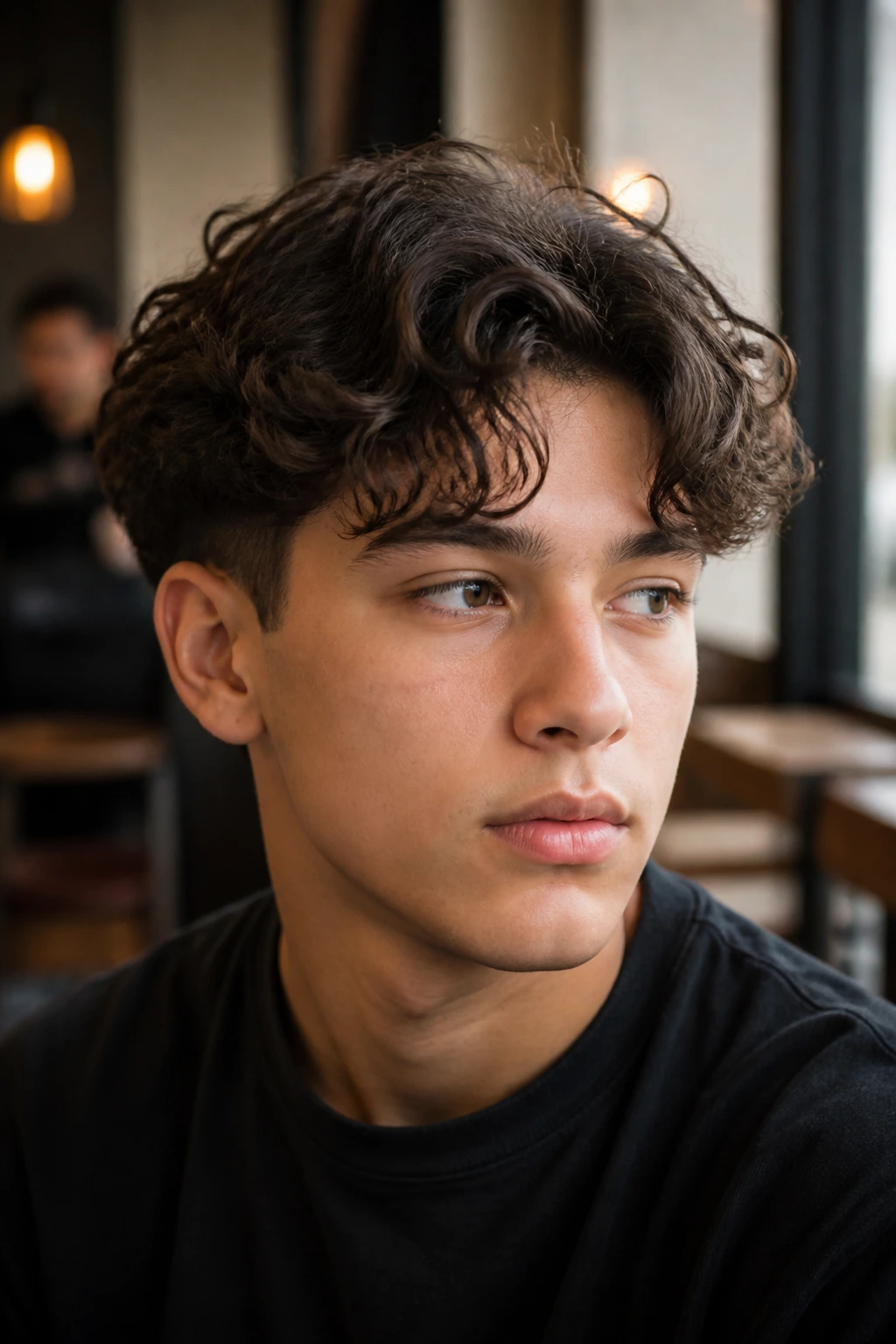
Curly curtains have a little attitude, but not the annoying kind. The hair parts loosely in the middle or just off center, the fringe falls on both sides, and the curls frame the forehead instead of hiding it. With tapered sides, the style stays light enough to move.
This cut works best when the curls are loose enough to separate into soft pieces. If the hair is dense, the curtains can get bulky fast, so the sides need a real taper to keep the top from swallowing the face. A little cream or mousse helps the fringe fall in two soft wings rather than one heavy mass.
I like this on older boys who want something more fashion-forward without going full grown-up. It looks best when the part is not too perfect. Slightly imperfect is the whole charm. If the curls fight the middle part, let them fall where they want and nudge them with damp fingers.
16. Curly Ivy League
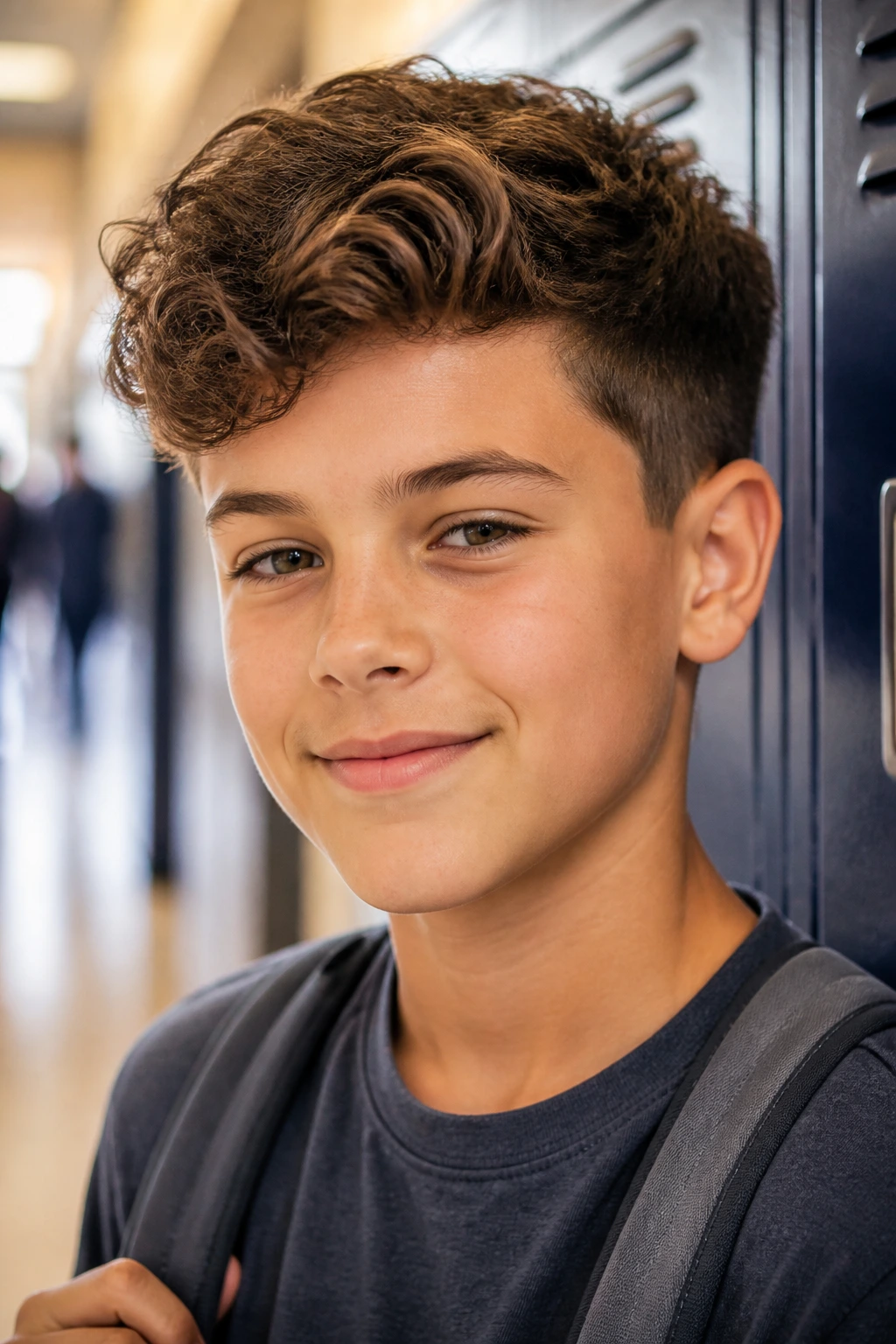
A curly Ivy League is the neat answer for boys who need a clean cut and still want to keep some curl on top. The sides are short and tidy, the top is long enough to comb to one side, and the finish is controlled without looking stiff. It’s one of the most school-friendly curly styles on this list.
The reason it works is simple: the haircut borrows structure from a classic short style, then lets the curl pattern soften it. That makes the look less severe than a straight-haired Ivy League and more forgiving when the hair grows out a bit. The top should stay long enough to move—too short, and the curls lose their shape.
This is a good choice when the hair is loose-curly to wavy and the parent wants easy mornings. A small amount of leave-in or light cream is enough. Brush the top gently to one side with damp hands, not a stiff comb, or the curls will split and frizz.
17. Curly Comb Over with Low Fade
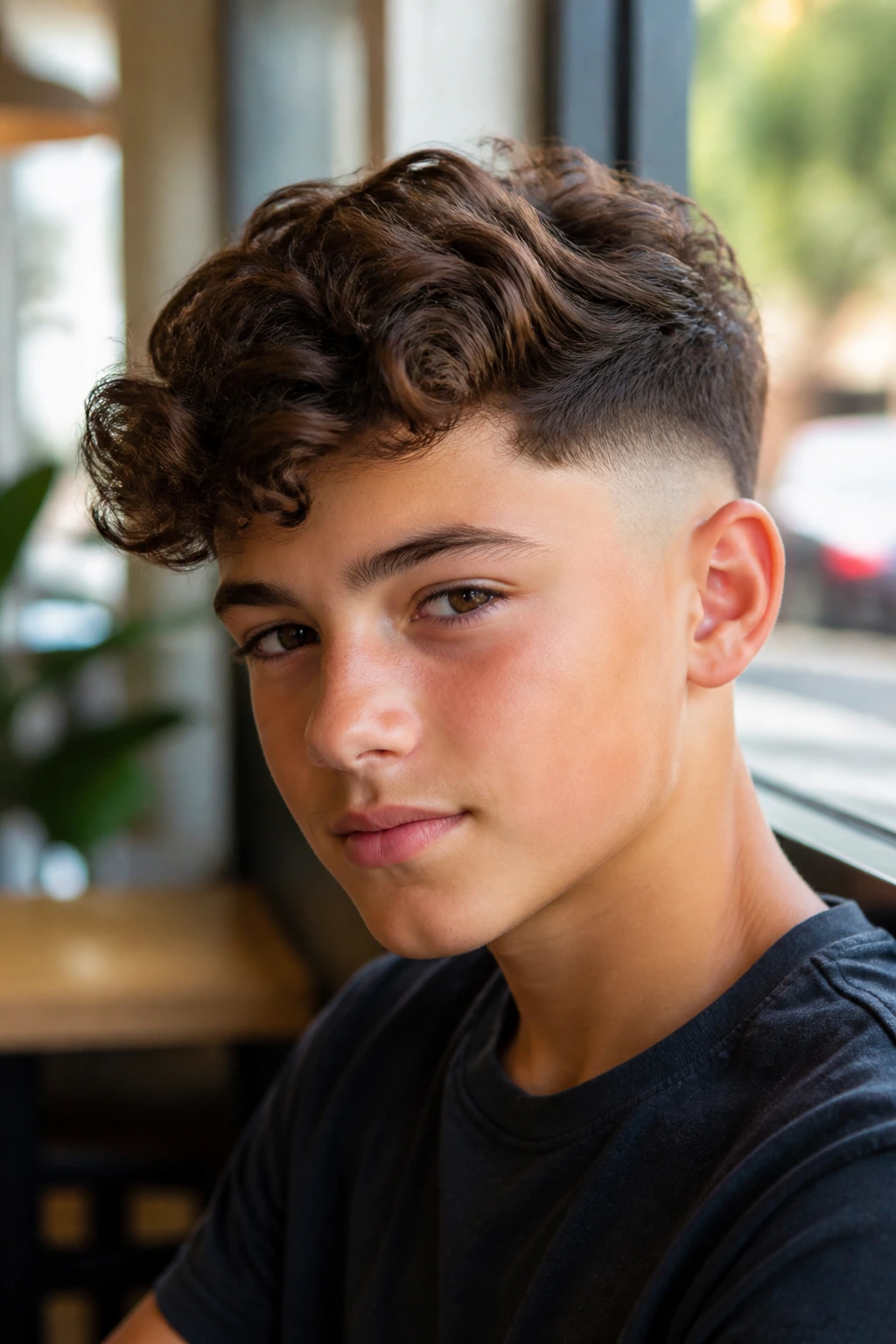
A curly comb over with a low fade is the neatest grown-up look on the list. It keeps the sides controlled and gives the top enough length to sweep across in a clear direction. Done well, it looks polished without flattening the curls into submission.
The low fade is the quiet part of the style. It keeps the haircut grounded, which stops the top from floating away visually. The comb over is where the personality lives. The curls should still show texture as they cross over, so don’t load it with shiny pomade. A light cream or soft-hold product keeps it looking touchable.
This cut suits boys who already hate messy hair in the morning and want something easy to reset with wet hands. It also works well if the hair is thick but not too coarse. The trick is to comb it while damp, then let it dry in place instead of chasing every curl with too much product.
18. Long Curly Top with Tapered Sides
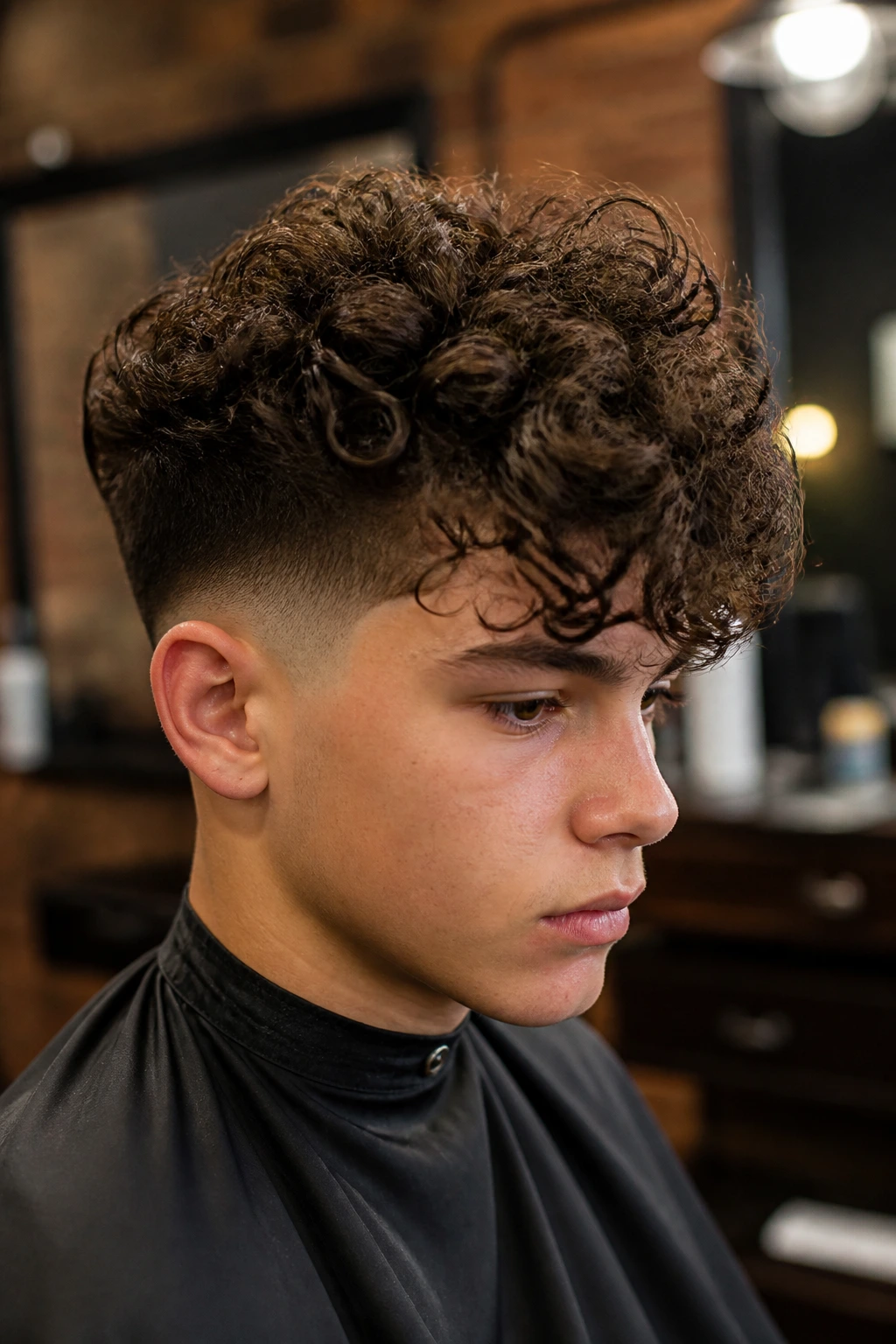
Want to keep the curls long without looking like you skipped the barber? This is the answer. The top stays long enough to show the full curl pattern, while the sides get tapered so the shape doesn’t turn into a triangle or a round mop. It feels relaxed, but it still has a plan.
How to Keep It from Turning into a Pyramid
The top needs layers, not one blunt length. That is the difference between a long curly cut that falls well and one that balloons out at the sides. The barber should remove weight near the crown and keep the sides clean enough that the length can sit on top instead of spreading outward.
This cut suits boys who don’t want a short style and are willing to do a little daily shaping. A mist of water, a dab of leave-in, and a quick scrunch are usually enough. If the curls get dry and wide, the taper on the sides will still keep the haircut looking intentional. Without that taper, the whole thing starts to look like a growing-out phase instead of a style.
Why Curly Hair Needs Shape Before Length
Curly hair does not sit the way straight hair does, and that changes everything in the chair. A boy with curls can lose two inches of visible length the moment the hair dries, which is why a cut that feels “safe” on wet hair can become too short once the curl springs back. That’s shrinkage, and it’s the first thing to respect.
The other issue is bulk. Curly hair tends to widen at the sides if the shape isn’t managed, especially around the temples, behind the ears, and at the nape. A lot of bad curly cuts happen because somebody removes length from the top but leaves too much mass on the sides, which creates the dreaded triangle. Nobody wants that.
Dry vs. Wet Cutting
Some barbers like to cut curly hair dry, at least for the top, because it shows the real pattern. That approach makes sense. The American Academy of Dermatology also advises gentle handling for curly textures, and that lines up with what good barbers already know: rough brushing and overworking curls leads to frizz and breakage. Dry curls tell the truth faster.
Wet cuts still have their place, especially for cleaning up the outline and the fade. The key is not to pretend wet curls are honest about length. They are not. If the cut is being made wet, leave more room than you think you need.
Density Changes the Shape
A boy with fine curls needs a different cut than one with dense coils. Fine curls can go flat if the sides are too short or the top is over-thinned. Dense curls need bulk removed in the right places or the cut turns round and heavy. That is why a “curly haircut” is never one single thing.
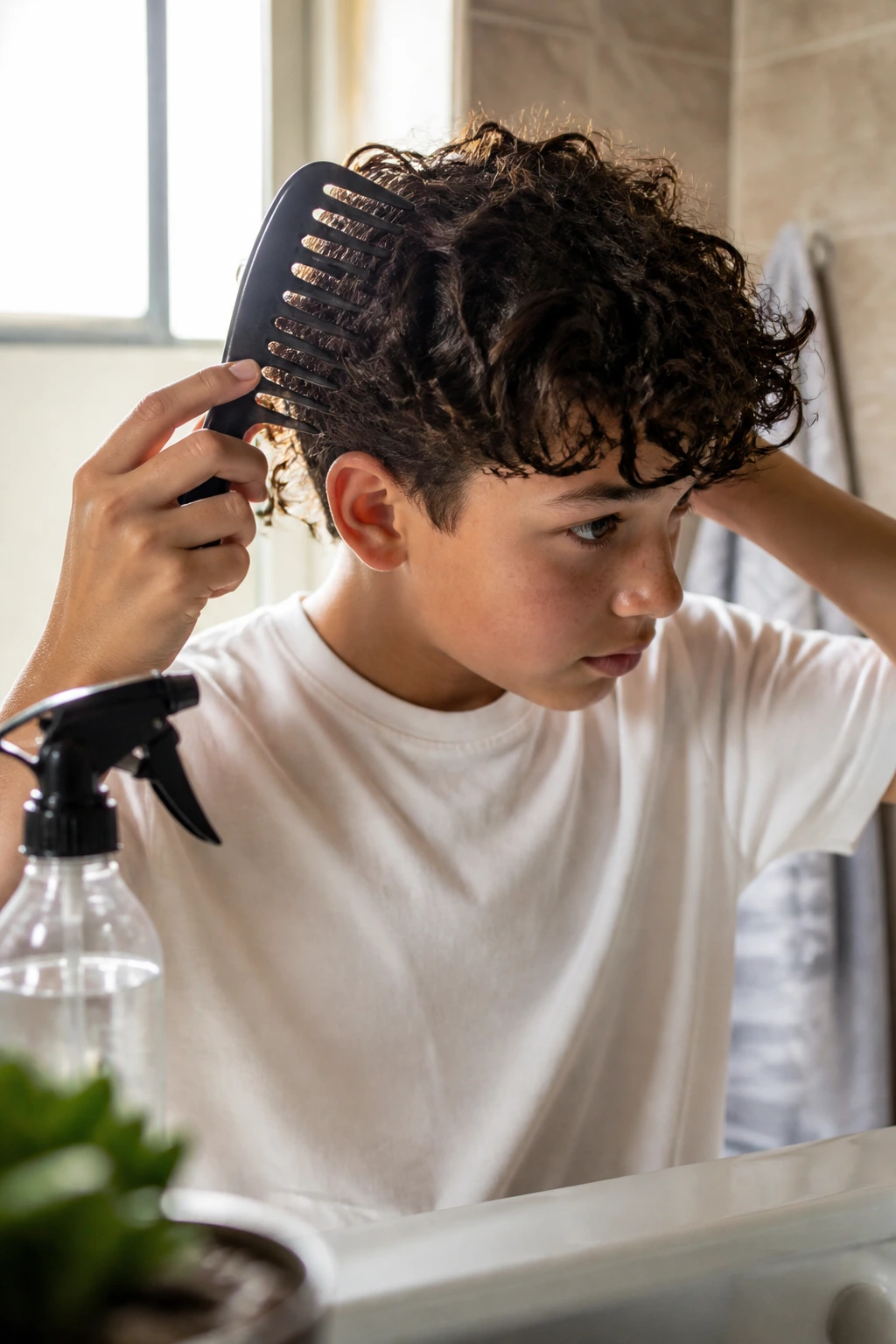
Essential Tools for Curly Boys’ Haircuts at Home
-
Wide-tooth comb: Best for detangling wet curls without ripping through the curl pattern. Use it after conditioner or leave-in, not on dry hair.
-
Spray bottle with water: A few mists reactivates curls in the morning and helps reshape a flat side or fringe without a full wash.
-
Leave-in conditioner: Keeps curls soft, reduces frizz, and helps the haircut sit the way it was meant to sit after the barber chair.
-
Light curl cream or mousse: Use a small amount for hold and definition; heavy products can flatten the top and make the sides greasy.
-
Microfiber towel or T-shirt: Dries curls with less friction than a rough bath towel, which means less fuzz around the edges.
-
Diffuser attachment: Useful if the hair dries puffy or the top needs lift; keep the heat low and the airflow gentle.
-
Soft-bristle brush: Helpful for shaping a side-swept top or cleaning up the surface of looser curls without destroying definition.
-
Satin pillowcase or bonnet: Keeps the cut from getting crushed overnight, especially on medium-length styles and layered curls.
-
Small clipper trimmer: Handy for neckline and sideburn cleanups between barber visits, if you’re comfortable using it carefully.
How to Tell the Barber What You Want Without Guessing
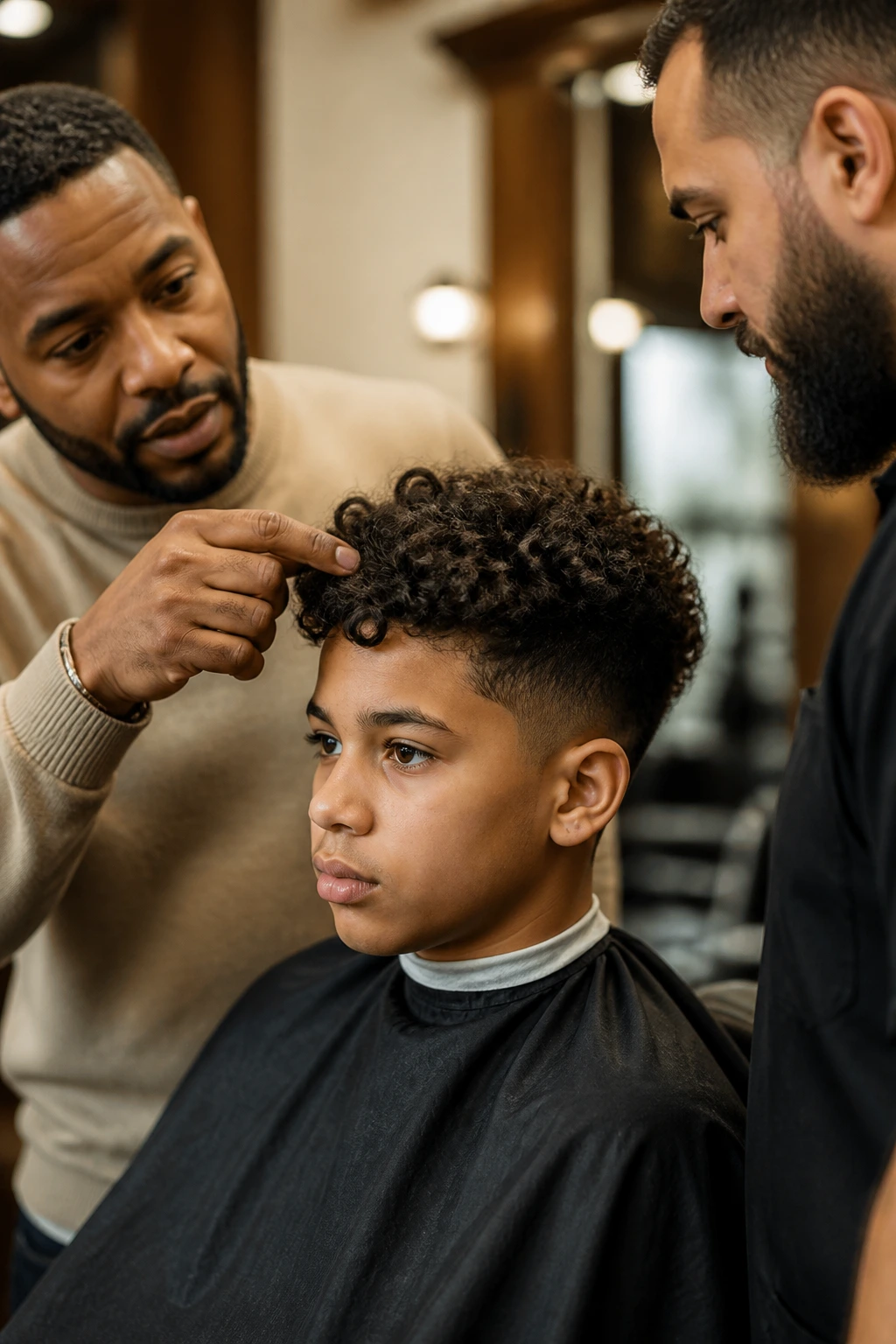
A good curly cut starts before the cape goes on. Bring a photo, sure, but do not stop there. Photos show shape. They do not show your child’s curl density, how the hair shrinks when dry, or whether the top lies flat in one spot and springs up everywhere else. Those details matter more than the image on the phone.
Say the Length in Inches, Not “Short”
“Short on the sides” means nothing by itself. One barber hears a guard 2, another hears skin tight, and now the haircut is a mess. Say the number if you know it: low taper, mid fade, half-inch on the sides, 2 inches on top, whatever fits the look. Concrete language saves you from barber roulette.
Mention the Curl Pattern and the Routine
Tell the barber if the hair is loose, dense, tight, or mixed across the head. Say whether your child will style it every morning or just shake and go. A cut that needs mousse and finger shaping is different from one that needs to survive a school bell and a backpack. The routine should decide the cut, not the other way around.
Ask for Dry-Length Cushion
Here’s the line I’d use: “Please leave a little extra on top because the curls shrink when they dry.” That one sentence prevents a lot of heartbreak. It sounds simple because it is. Curly hair rewards the people who speak plainly.
Small Styling Moves That Help the Shape Last
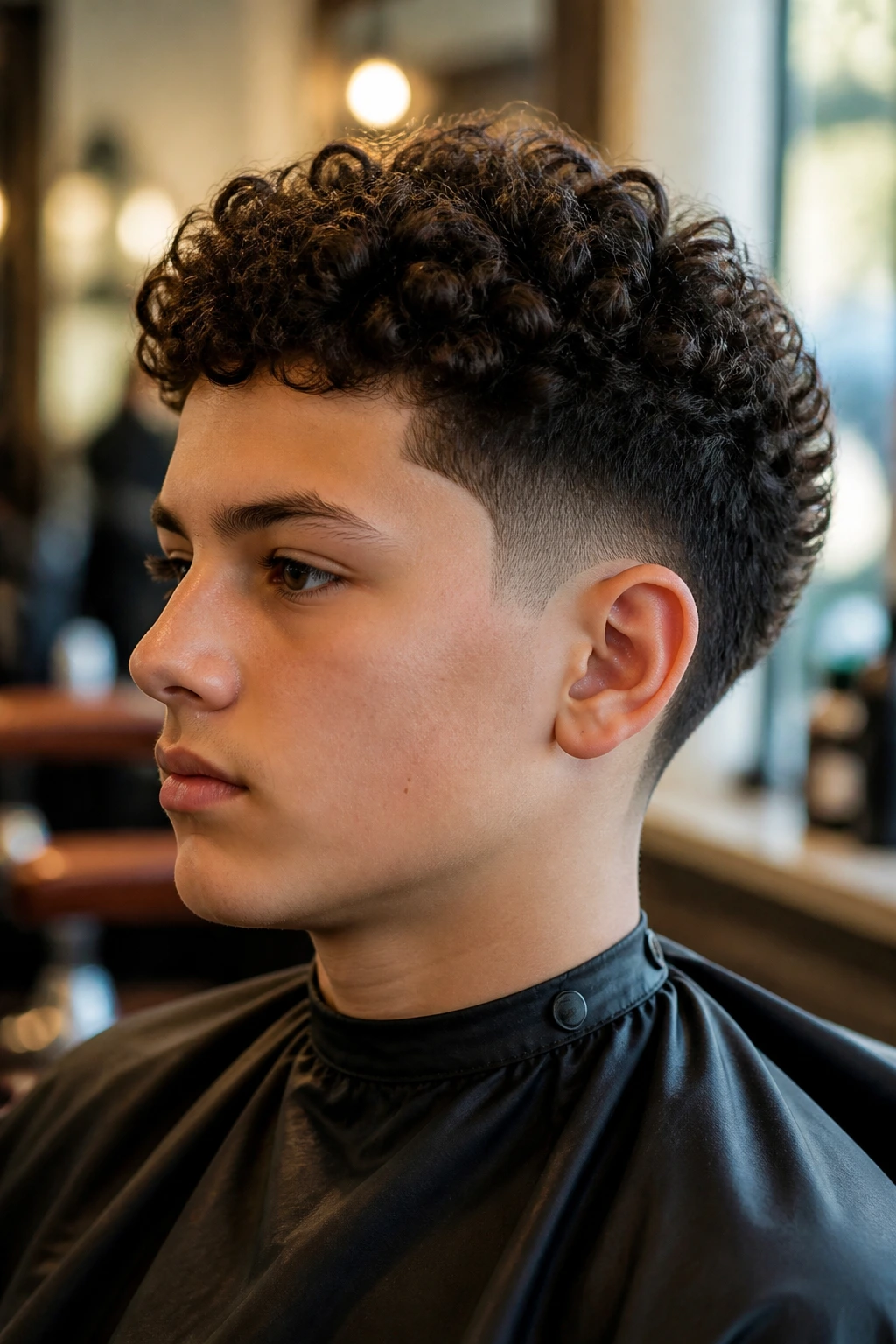
A curly cut can look clean and still fall apart if the morning routine is too rough. Start with damp hair, not soaking wet hair, and use your fingers first. Fingers preserve the natural clumps of curls better than a comb, especially on fringe-heavy cuts like the French crop or curtains. Comb only when there’s slip from leave-in or conditioner.
A dime-sized amount of product often beats a palmful. That’s especially true on boys’ cuts, where too much cream makes the top droop and the sides look dirty by lunchtime. Spread the product between your palms, then press and scrunch it into the curls. Don’t rake aggressively from root to tip unless you want frizz.
If the top needs lift, use a diffuser on low heat for a few minutes. Stop when the curls are still slightly damp. Over-drying is how you get the puffy halo nobody asked for. And if a style has a fringe, set that front section first, then let the rest dry. The front usually decides whether the whole haircut looks deliberate.
How to Keep the Cut Looking Fresh Between Appointments
Curly hair grows with attitude. A taper that looked neat two weeks ago can start to blur around the ears and neck without much warning. For shorter fades and line-ups, a cleanup every 2 to 3 weeks keeps the shape intact. Longer layered styles can usually stretch to 6 or even 8 weeks, as long as the outline stays under control.
The neckline and sideburns matter more than people think. If those edges get fuzzy, the whole haircut reads older than it is. A quick trimmer clean-up can buy another week or two of decent shape. Just go slow. Over-cleaning at home is how perfectly fine haircuts turn uneven.
Nighttime matters, too. A satin pillowcase or bonnet cuts down on friction, which means less frizz in the morning and fewer weird dents at the crown. In the morning, a few sprays of water and a small dab of leave-in usually bring the curls back. If a side sticks out, wet your fingers, press it back into place, and leave it alone for a minute. Curls settle better than they get bullied.
Common Mistakes That Make Curly Cuts Look Wrong
-
Cutting the top too short: The hair looks fine in the chair, then shrinks up and leaves no shape on top. Fix it by leaving more length than you would on straight hair.
-
Leaving too much bulk at the sides: The haircut balloons out into a triangle and the top disappears. Ask for a taper or fade that removes weight around the ears and nape.
-
Using heavy gel on loose curls: The top turns stiff and the sides get greasy, which makes the haircut look older and flatter. Use a light cream or mousse instead.
-
Brushing curls dry: That roughs up the cuticle and makes the whole style frizz out. Detangle when wet or damp, with slip from conditioner.
-
Ignoring the back of the neck: A curly cut can look tidy from the front and sloppy from behind in a week. Clean the neckline regularly or book trims before it gets shaggy.
-
Choosing one guard all over: That flattens the curl pattern and usually steals the personality from the top. Curly hair nearly always needs different lengths in different areas.
Smart Variations for Different Curl Patterns and House Rules
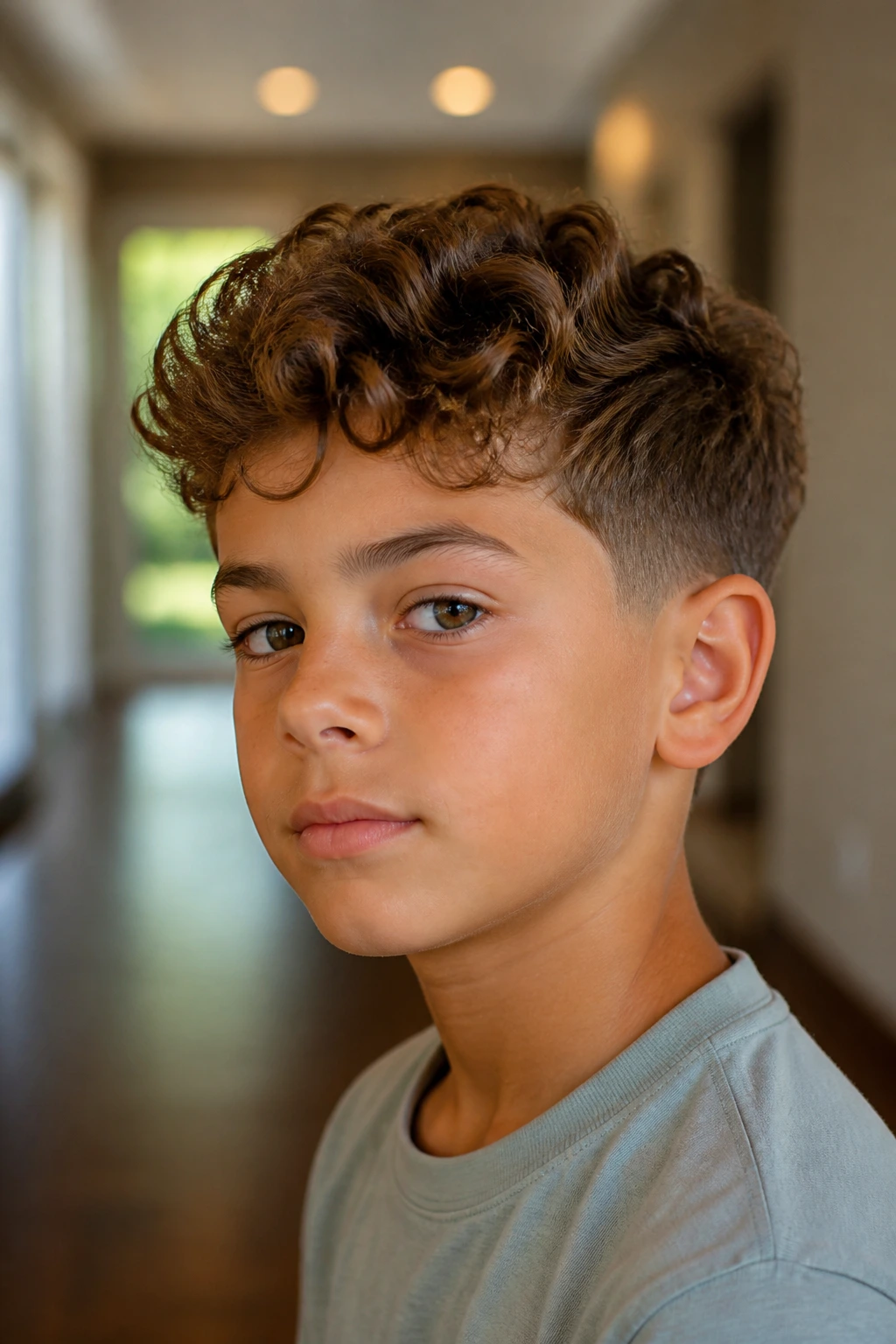
Soft Waves Version: Keep the top longer and the sides less aggressive. This works for boys whose hair bends more than it coils, and it needs almost no product beyond a little leave-in.
Tight Coil Version: Go with a low taper, line-up, or short afro shape. Tight curls can handle shorter sides better, but they need enough top length to keep the texture visible once dry.
Fine Curl Version: Avoid over-thinning the top. Fine curls lose fullness quickly, so the cut should preserve density and rely on shape instead of aggressive layering.
Dense Hair Version: Ask for internal layering and a cleaner fade or taper around the edges. This removes bulk where it builds up fastest and keeps the haircut from looking like a helmet.
School-Strict Version: Pick the curly taper fade, Caesar, or Ivy League and keep the outline clean. These cuts stay neat without needing anything flashy or hard to maintain.
Frequently Asked Questions
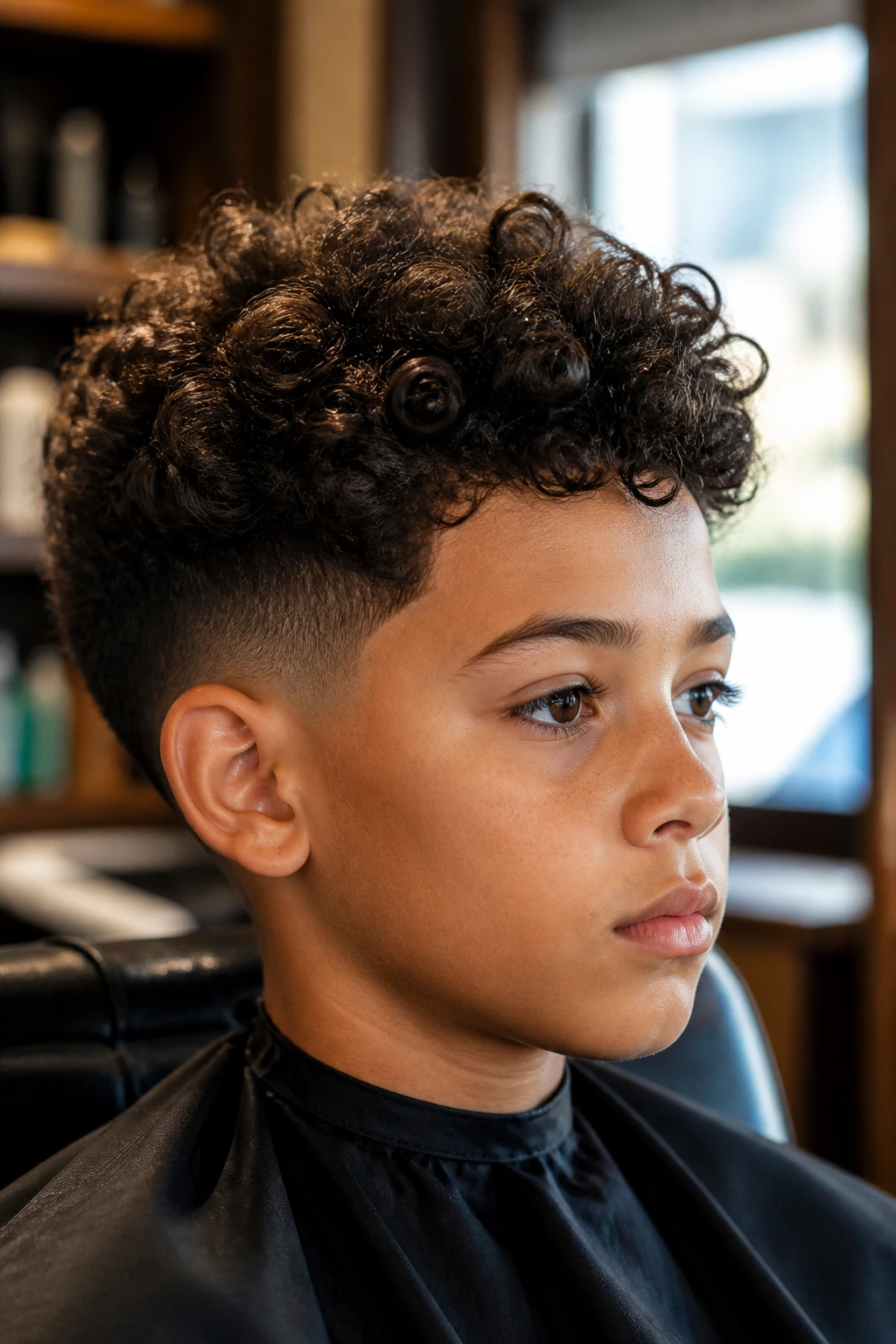
Should curly hair for boys be cut wet or dry?
Both can work, but the top often benefits from being checked dry because curls shrink after they dry. A barber who understands curly hair will usually leave extra length and shape the outline carefully so the final result matches the real curl pattern.
What is the easiest curly haircut for boys to maintain?
The curly taper fade and the short curly afro with a line-up are both low-drama choices. They keep the edges tidy, let the curls do their thing, and don’t need much daily styling beyond a little water and leave-in conditioner.
How often should a curly haircut be trimmed?
Short fades and line-ups usually need attention every 2 to 3 weeks if you want them looking sharp. Medium-length or layered cuts can go 6 to 8 weeks between trims, though the neckline may need a light cleanup sooner.
What if my child’s curls look too short after the haircut dries?
That usually means the top was cut too short for the shrinkage. Keep a little more length next time and ask the barber to cut with curl rebound in mind. For now, use a light cream and let the curls lift naturally instead of flattening them down.
Can boys with thick curly hair wear short cuts?
Yes, but the cut has to remove bulk in the right places. Short curly crops, temple fades, and high top fades work well when the barber shapes the sides and keeps enough length on top to show the texture.
What product works best without making curls crunchy?
A leave-in conditioner with a small amount of curl cream or mousse usually does the job. Heavy gel can work for some looks, but if you want touchable curls, keep the hold light and skip the stiff finish.
Is a fade better than a taper for curly hair?
Neither one is always better. A fade gives sharper contrast and more edge, while a taper looks softer and grows out more gently. For boys, a taper is often easier to live with, but a fade can make dense curls look much cleaner.
How do I stop the haircut from turning into a triangle?
Ask for layers or bulk removal on top and a taper or fade on the sides. The triangle shape usually comes from leaving the sides too full while trimming the top too evenly.
Small Moves That Make Curly Cuts Easier to Live With
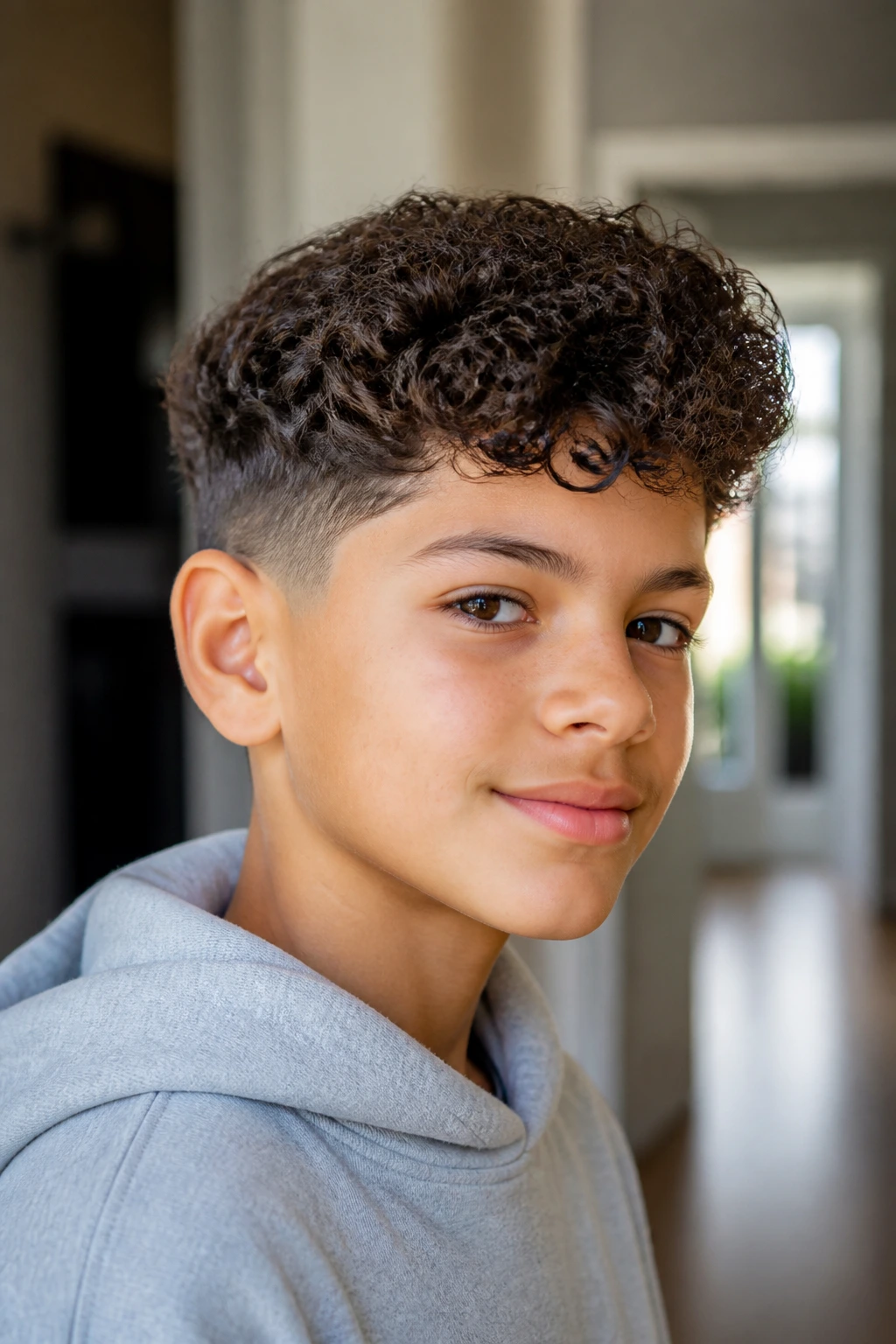
The haircut is only half the job. A spray bottle on the bathroom shelf saves time on school mornings because it wakes up the curls without a full wash. A satin pillowcase cuts down on bedhead in a way that a regular cotton pillowcase never will. Small things. They matter.
If the top starts leaning flat, don’t restart the whole routine. Wet your hands, lift the curls from the roots, and scrunch once or twice. That usually fixes more than a comb ever does. And if the fringe is the problem, work only the front section. Over-treating the whole head is how you end up undoing the cut.
A little restraint goes a long way with boys’ curly styles. The best cuts here already have a shape built in; the daily job is to preserve it, not fight it into something else.
The Cuts That Let Curls Behave
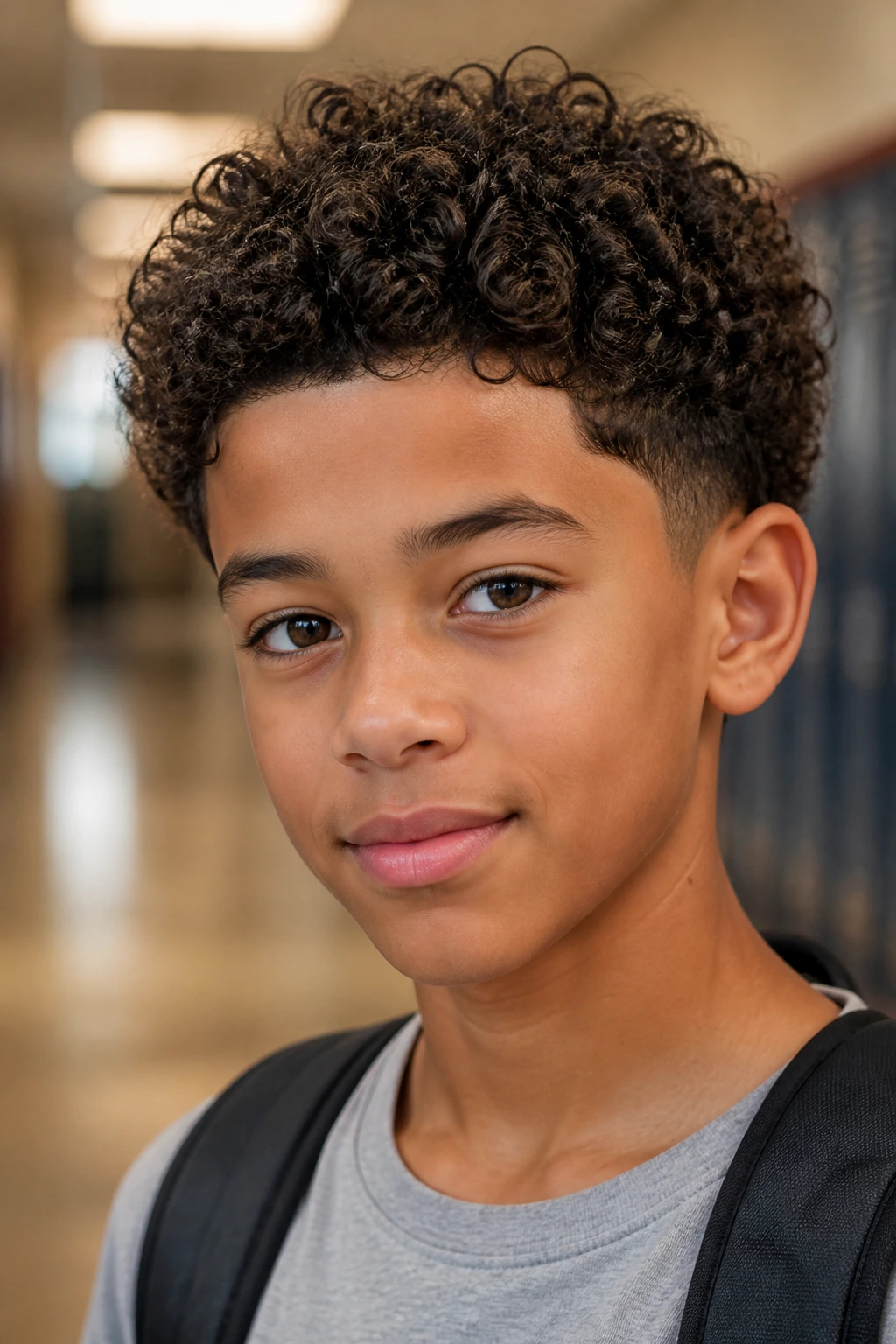
The best curly haircuts for boys don’t flatten the hair into submission, and they don’t leave the top to do all the work either. They clean up the outline, respect shrinkage, and give the curl pattern a shape that still looks like itself when the hair dries.
That’s the part too many haircuts miss. A good curly cut is not about making the hair look straight or perfectly neat every second of the day. It’s about giving the curls a frame so they can look intentional on the way to school, after soccer, and three weeks into the grow-out.
Bring a photo, say the length out loud, and mention the shrinkage. That simple combo gets you much closer to the right cut than vague instructions ever will.