



Classic taper hairstyles for older men with thin hair work because they stop pretending the hair is denser than it is. That’s the whole trick. A good taper cleans up the sides, keeps the outline neat, and leaves enough length on top to suggest shape instead of announcing every sparse spot under bright bathroom light.
The wrong cut does the opposite. A skin-tight fade can make a receding temple line look sharper than it really is, and a heavy pompadour can turn a fine head of hair into a fragile little roof that collapses by lunch. A taper sits in the middle, which is where most men with thinning hair actually live. Not too short. Not too loud. Just enough structure to make the hair look deliberate.
There’s also a useful side effect: taper cuts age well with gray hair. Silver and salt-and-pepper strands catch light in a way that can make thin hair look more textured, especially when the sides are kept soft and the top is cut with scissors instead of chopped flat by clippers. The best versions of these cuts work with the hairline you have, not the one you miss.
Why These Tapers Make Thin Hair Easier to Wear
-
Soft edges keep the scalp from stealing the show: A low or mid taper reduces contrast around the ears and neckline, so the eye looks at the overall shape instead of stopping at a hard line.
-
A little top length does more than extra product ever will: Leaving 1.5 to 3 inches on top gives the hair enough movement to cover thin zones without piling on shine or weight.
-
Gray hair usually plays nicely here: Silver strands reflect light, and a matte finish keeps that reflection from turning greasy, flat, or stringy.
-
They grow out in a civilized way: When the sides taper gradually, the cut still looks tidy at week three or four instead of turning fluffy at the edges.
-
They work with beards, glasses, and real life: These shapes don’t need perfect density or perfect mornings. They just need a clean outline and a little direction.
1. Low Taper Side Part
The low taper side part is the haircut I reach for when a man wants something steady and unflashy, especially if the temples are starting to thin. It keeps the top long enough to part naturally, then softens the sides just enough that the cut does not look severe.
Why It Flatters a Receding Temple Line
A soft side part gives the front some direction without forcing it straight back, which is where thin hair can start to separate and show more scalp than you want. Keep the top around 2 to 3 inches, and ask for the part to be implied rather than shaved in. A hard part can look crisp on thick hair; on finer hair, it often looks like a bright stripe.
- Top length: 2 to 3 inches, with the front slightly longer than the crown.
- Sides: Low taper around the ears and nape, usually with clipper-over-comb or a #2 down to #1 blend.
- Parting: Natural, soft, and placed where the hair already wants to divide.
- Finish: Light cream or matte paste, nothing glossy.
Best tip: If your hairline is uneven, keep the part a touch off-center. That small shift makes the shape look calmer.
2. Tapered Ivy League
A tapered Ivy League is what happens when a crew cut learns some manners. It still feels neat, but the top has enough length to be brushed to the side instead of lying flat like a helmet.
Why It Works for Thin Hair
The Ivy League gives you control without too much height. That matters. Thin hair usually looks worse when it’s asked to stand up too high, because the strands separate and expose gaps. Keep the top around 1.5 to 2.5 inches, and let the front sit a little longer so you can sweep it over with your fingers or a vent brush.
If your hair is fine but not sparse, this is one of the safest cuts in the book. The taper around the ears keeps the outline clean, while the top stays long enough to show texture. I like this one best for men who still want a little polish without looking like they’re trying to sell something.
A dab of lightweight cream on damp hair is enough. If you need more hold, add a pea-sized touch of matte paste after drying.
3. Tapered Crew Cut
Does short hair always solve thinning? No. But the tapered crew cut gets closer than most styles because it keeps the shape honest.
How to Wear It Without Looking Shaved
The crew cut works when the top is short enough to control but not so short that the scalp starts to dominate. Ask for about 1 to 1.25 inches on top, with the front left a shade longer than the crown if the hairline is receding. The taper on the sides should stay low and gradual, not skin-short.
This cut is useful for men whose hair sticks up in awkward directions or starts to separate after a few hours. There’s less room for the hair to misbehave, and that is a blessing. If you use product at all, keep it light. A matte cream or even a touch of leave-in conditioner can be enough on humid days.
Quick Notes
- Avoid a hard clipper line on the sides.
- Keep the crown slightly shorter if it tends to split.
- Ask the barber to use scissors on top if the hair is fine.
Pro move: The crew cut looks better after a quick blow-dry in the direction you want it to lie. Five extra seconds matters here.
4. Short Back and Sides
This is one of those old barber-shop cuts that never really left. The short back and sides is calm, tidy, and excellent for men whose hair gets flatter the longer it grows.
A Barber-Classic Shape That Ages Well
The appeal is in the balance. The top is left long enough to comb, but not so long that it collapses across a thin crown. The back and sides stay shorter with a gradual taper, which keeps the profile neat when you’re wearing a collared shirt, a jacket, or a plain T-shirt. That’s the nice part: it works in all three places.
I like this cut for straight hair that loses volume quickly. It also does a good job of hiding the difference between a dense front and a weaker crown, because the cut doesn’t rely on height. It relies on shape.
If your barber reaches for thinning shears, pause and ask whether scissor-over-comb will give a cleaner result. On thin hair, too much texturizing can leave ends looking wispy instead of tidy.
5. Tapered Caesar Cut
The Caesar is still one of the smartest moves for a receding front, because it brings the fringe forward instead of asking it to compete with the hairline.
A classic Caesar uses a short, blunt fringe. For thinning hair, I prefer a softer version with a bit of texture through the front, usually around 1 to 1.5 inches. The top should not be flat like a board; it should have tiny broken pieces at the ends so the fringe falls forward in a natural way. The taper around the temples keeps the shape from getting boxy.
This cut is especially useful if your hairline is uneven or the temples are the weakest part. The fringe draws attention to the front edge of the haircut, not to the recession behind it. That’s the beauty of it.
A little matte paste warmed between the palms is enough. Push the front forward with your fingers, then pinch a few pieces for separation. Don’t comb it into a perfect wall. That’s when it starts looking stiff.
6. French Crop with Taper
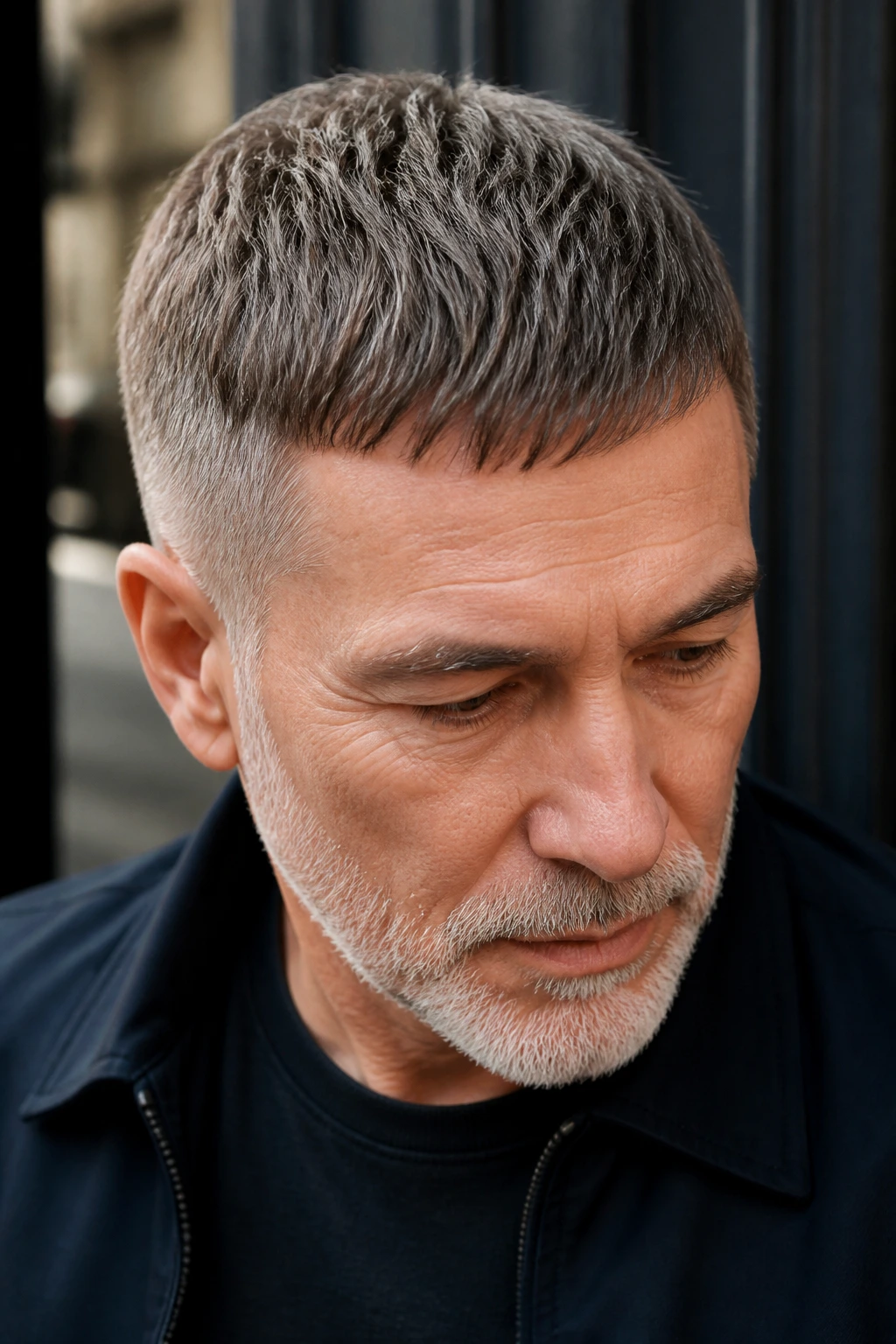
French crops and thin hair get along for a simple reason: the crop uses texture instead of volume. No towering front. No fake wave. Just a compact shape with a short fringe that falls naturally.
What Makes It Different
Compared with a Caesar, the French crop is more broken-up and a little less blunt. The top is usually cut with more texture, and the fringe is chipped or point-cut so it doesn’t form one solid line. That helps when the hairline has small gaps or the front grows in unevenly. Keep the top around 1.5 to 2 inches, then taper the sides softly so the whole cut stays balanced.
This is a good option if your hair has a bit of wave or if it refuses to lie in one exact direction. The texture gives the eye more to look at, which is useful when density is light. It also works well with a little natural gray, because textured silver hair has more visible separation and movement.
How to wear it: Use a small amount of matte clay on dry or mostly dry hair, then push the fringe forward with your fingertips. Skip heavy combing. The charm of this cut lives in the irregular edges.
7. Textured Crop with Taper

Not every crop needs to look messy to feel modern. The textured crop with a taper is cleaner than it sounds, and that matters when the hair is fine.
This version is all about broken lines. The barber should point-cut the top or use careful scissors to remove blunt weight, leaving the hair around 1.5 to 2.5 inches with enough variation that it doesn’t lie in one flat sheet. The taper on the sides keeps the haircut tight where the ear and neckline meet the face, which stops the top from looking wider than it really is.
I like this cut for men whose hair separates into little strands no matter what they do. Instead of fighting that, the haircut leans into it. A matte finish and a finger-combed shape make the texture look intentional.
Use this one if you don’t want to spend long in front of the mirror. A dry wax or clay gives the top grip, but you only need a small amount. Too much and the texture turns crusty, which is a lousy trade.
8. Tapered Comb Over
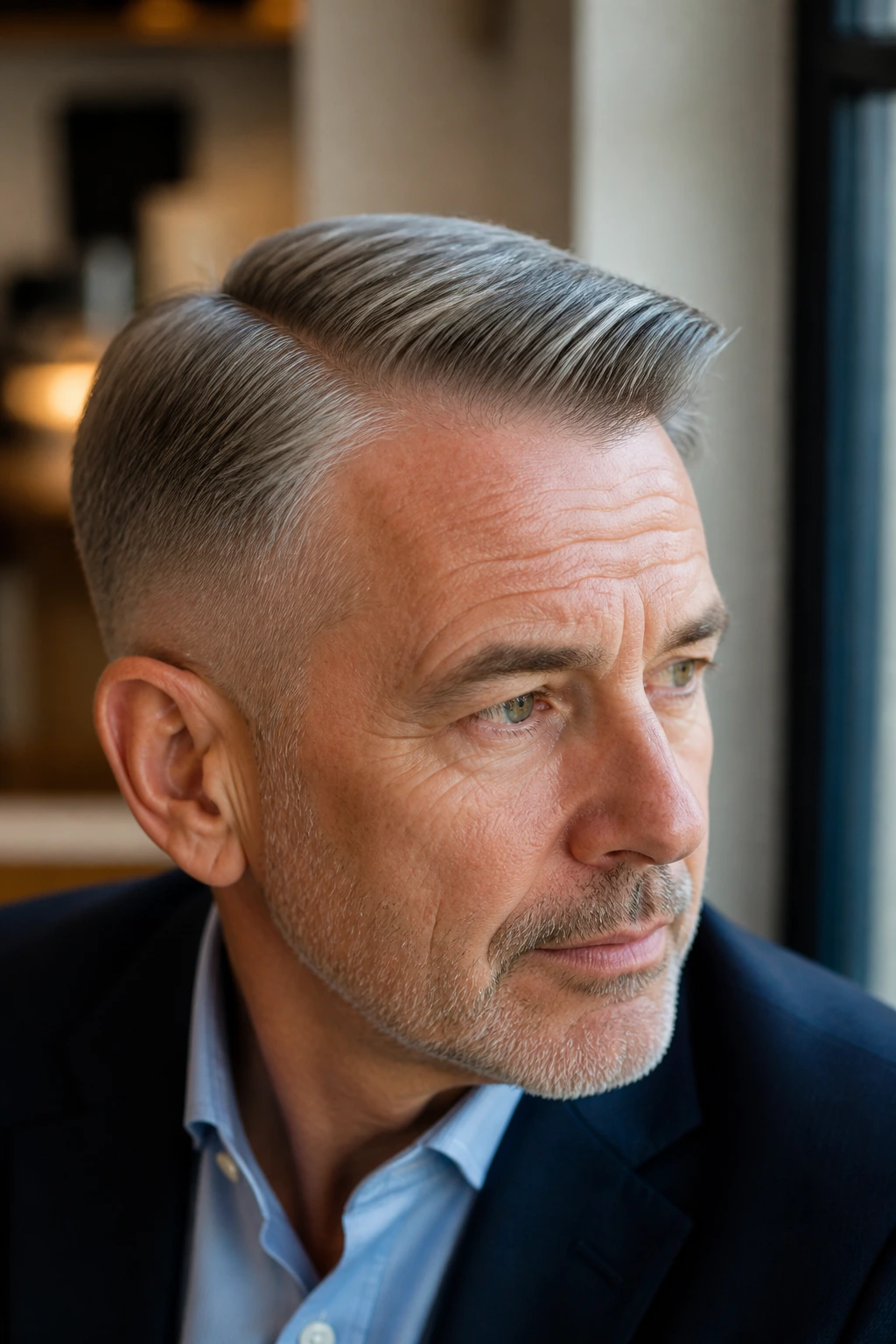
A comb over only looks desperate when the part ignores the hair’s natural direction. A good tapered comb over is simply a controlled sweep.
Why It Still Works
The sweep should start where the hair already wants to separate, not where a dramatic part line seems fashionable. Keep the top long enough to move—usually 2.5 to 3.5 inches—and taper the sides low so the head keeps a soft outline. If one side is denser than the other, sweep from the fuller side toward the lighter one. That sounds obvious, but plenty of bad comb overs fail right there.
This style is useful for men with a mild recession at the temples or a thinner patch near the crown, because the swept movement lets the hair lie over the trouble spot without a hard cover-up. Use a light cream or a very small amount of pomade. Shine will expose the scalp faster than you’d think.
If you wear glasses, this cut can be especially tidy. The clean side line keeps the frames from fighting the hair, which is a small detail that makes the whole face look more organized.
9. Tapered Brush Back

The brushed-back taper works when the front still has some lift in it. If the hairline is present but less dense than it used to be, this is a clean way to keep the forehead open without making it look bare.
A brush-back looks best when the top sits around 2 to 3 inches and the barber leaves enough length in the front to move backward in one smooth motion. The sides should taper low and soft so the back sweep doesn’t clash with sharp edges. This is a better option than a loud pompadour if you want movement without a lot of height.
What to Watch For
The crown matters here. If the top is brushed straight back but the crown is thin, the hair can split and show the scalp from above. A good barber will leave a little more density around the crown and avoid over-thinning it. That keeps the rear view cleaner, which matters more than people admit.
For product, I prefer a light cream or a small amount of mousse before blow-drying. Then I use fingers instead of a comb to break the finish a little. If it looks too perfect, it probably looks too wet.
10. Tapered Slick Back

A slick back can look sharp on thin hair, but only if you keep the shine under control. Too much gloss and every gap in the hair starts talking.
The safest version keeps the top fairly short—usually 2 to 3 inches—with the front long enough to move backward but not so long that it collapses in a shiny heap. The taper on the sides softens the transition from face to hair, which is important because a slick back already has a strong line. If the haircut is too severe, it starts looking heavy.
I prefer a matte or low-sheen finish here. Think groomed, not oily. A tiny amount of styling cream or paste, brushed back while the hair is still a little damp, gives a cleaner result than a big scoop of pomade. This style works best on straight hair that naturally falls back anyway.
If your hair is fine and straight, keep the top shorter than you think. A long slick back on fine hair can split at the parting and expose the scalp like a runway. Shorter is usually better.
11. Tapered Quiff

Quiff and thinning hair can work together, but only in small doses. The idea is lift, not architecture.
The right quiff for an older man with thin hair should be compact. Leave the front around 2 to 3 inches, keep the crown shorter, and taper the sides cleanly so the lifted front has some support. If the hair is too long, the quiff turns floppy. If it’s too short, it won’t lift at all. There’s a narrow sweet spot.
A quiff is best for men whose front hairline is still reasonably strong. If the temples are deeply recessed, the lift can expose too much skin. In that case, a side-swept taper or French crop usually looks calmer. I’m not against a quiff; I just think it should respect the hairline instead of fighting it.
Use a dryer and a vent brush to set the front up and back, then cool it with your hand for a few seconds so it holds the shape. That last part matters more than the product.
12. Regulation Cut with Taper
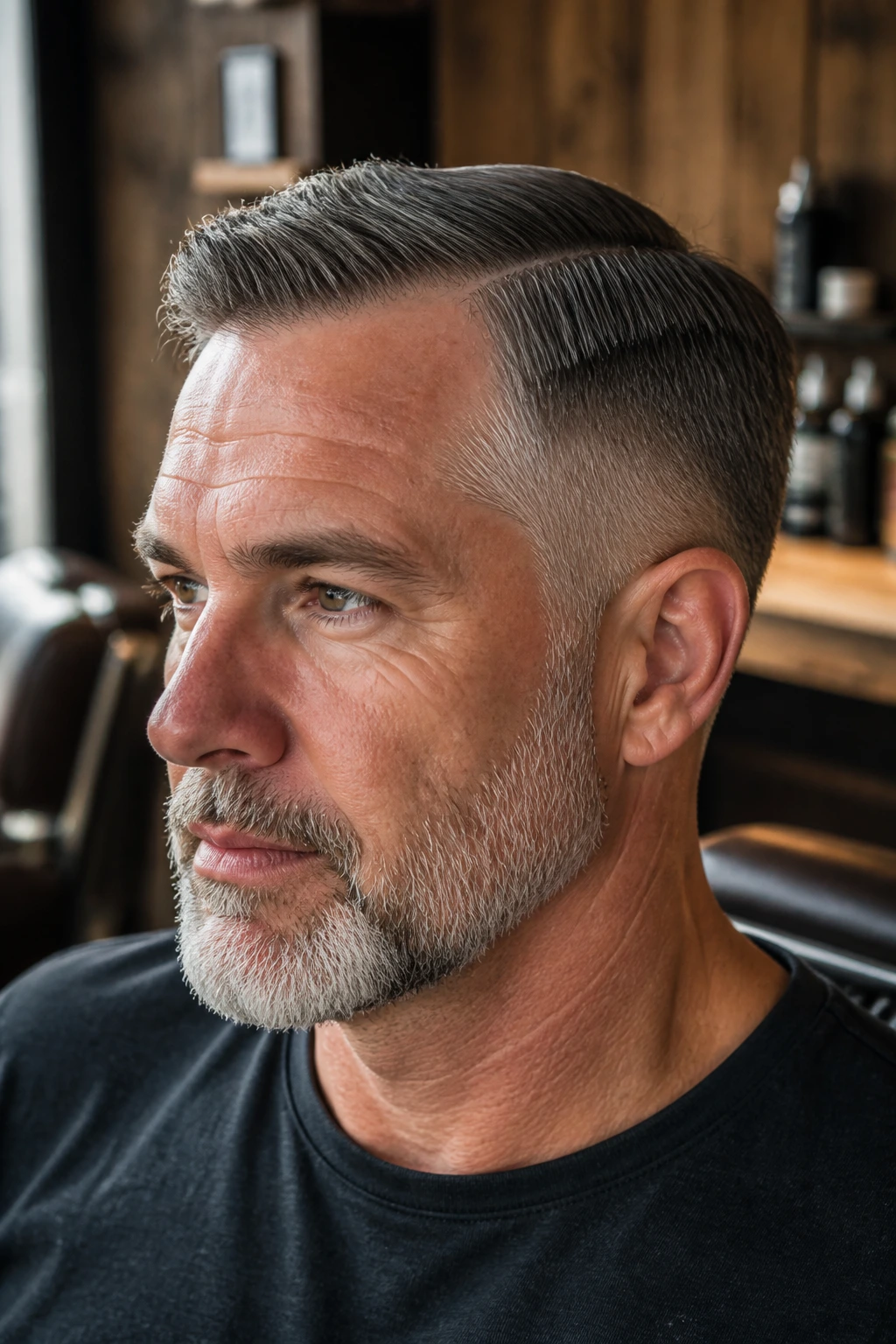
The regulation cut is one of those military-influenced styles that looks sharp on men who want discipline without drama. It is short, but not severe.
Why It Holds Up
The top is clipped or scissor-cut to a modest length—around 1.5 to 2 inches—so you still have enough hair to brush to the side or slightly forward. The sides taper neatly and the neckline stays tidy, which is useful when the hair has started to thin unevenly. The regulation cut doesn’t need volume to work. It needs order.
This cut is especially good if your hair is coarse or has a stubborn cowlick. The shorter length controls the direction without making the hair look sparse. It also works if you’re wearing a beard, because the haircut and facial hair can be balanced together instead of competing for attention.
Who Should Try It
- Men who want a clean shape with minimal styling
- Men whose hair gets puffy when left too long
- Men who prefer side parting without a dramatic part line
Best move: Ask the barber to leave the top long enough to comb, but not long enough to fold over itself. That one sentence saves a lot of bad results.
13. High and Tight Taper

A high and tight on thin hair is a knife, not a brush. That can be useful, but it is not gentle.
The style works best when the thinning is mostly on top and the sides are stronger. The sides and back are cut short and tight, while the top stays cropped to a short, controlled length rather than being shaved clean. Done well, it gives the face a strong frame and keeps the haircut from looking mushy as it grows out.
This is a good option if you like a crisp, athletic look or if your beard is fuller than your scalp hair. The contrast between the short top and the tapered sides can make the jawline look sharper. But if your hair is thin everywhere, the high and tight can expose too much scalp and make the hairline the loudest thing on your head.
So be honest with the barber. If the top is wispy, keep the cut softer and lower. No need to chase a tougher look than your hair will support.
14. Buzz Cut with Tapered Temples

Buzz cuts are not surrender. Sometimes they’re just the cleanest answer.
When It Makes Sense
If the hair is thin all over and the top has stopped pretending to be fuller than it is, a buzz cut with tapered temples can look better than almost any longer style. The trick is to leave enough length on top—usually a #2, #3, or #4 guard—to avoid that shaved-head glare, then soften the temples and neckline so the cut doesn’t look boxy. The taper keeps the outline from feeling abrupt.
This style is practical, low-fuss, and honest. It also pairs well with facial hair because the beard gives the face some lower-half weight. Without the taper, a buzz cut can feel harsh. With it, the shape looks deliberate.
If your scalp gets shiny, keep the top a little longer and use a matte, non-greasy moisturizer instead of product that adds sheen. That small adjustment keeps the scalp from becoming the brightest surface in the room.
15. Side-Swept Taper

A side-swept taper is for the man whose hair insists on moving its own way. Instead of forcing a hard part or a backward sweep, this cut follows the natural flow and lets the hair lie diagonally.
The top usually sits around 2 to 3 inches, sometimes a little more if the hair is fine and needs a touch of extra coverage. The sides are tapered softly so the diagonal movement on top has room to breathe. This is a smart choice if you have a stubborn cowlick or a crown swirl that refuses to be ignored. Fighting those patterns usually makes the cut look less natural.
How to Use It
- Brush the front slightly across, not straight over.
- Keep the ends textured so the sweep doesn’t turn into a flat sheet.
- Use a light cream or mousse; heavy wax will drag the hair down.
This cut is quieter than a comb over and less structured than a side part. That makes it useful for men who want shape without looking overly styled.
16. Tapered Pompadour
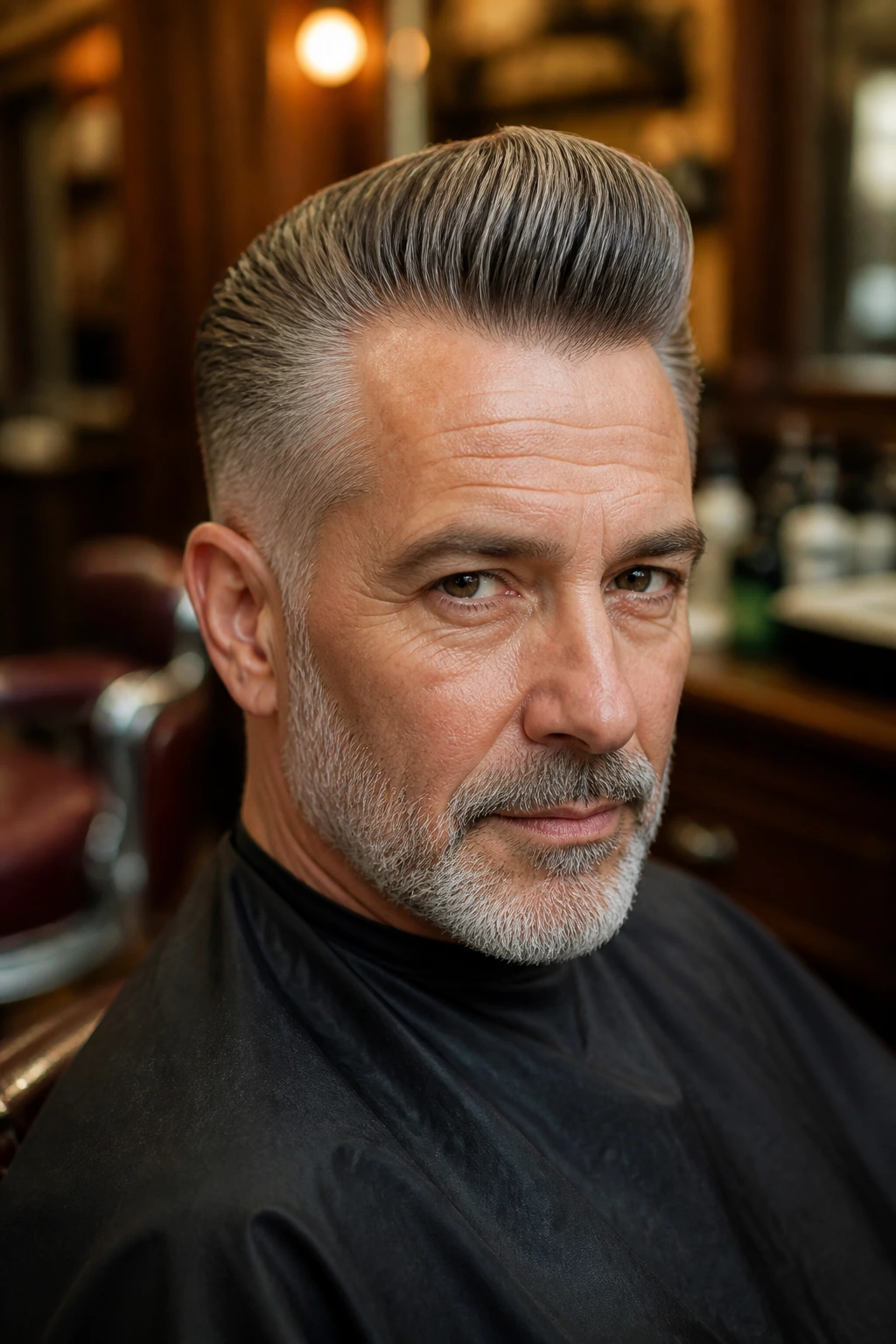
A pompadour can still work after the hair changes, but the proportions matter. A big pomp and thin hair rarely get along.
The version I’d trust keeps the front lifted only a few inches, with the rest of the top shorter so the shape does not balloon. The taper on the sides needs to be smooth, because the whole point is contrast in shape, not contrast in scalp visibility. If the hair is too fine, the pomp will separate and show more skin than you planned.
This cut works best when the front is still fairly dense and the hair is straight or slightly wavy. It also does well with a dryer and a round brush, because you need the front to hold a controlled bend rather than a stiff shell. A small amount of matte product keeps the finish from becoming shiny and thin-looking.
I like this style for men who want a little style without moving into flashy territory. The best pomps are compact and disciplined. Big pomps are for the movies.
17. Tapered Crop with Beard Blend
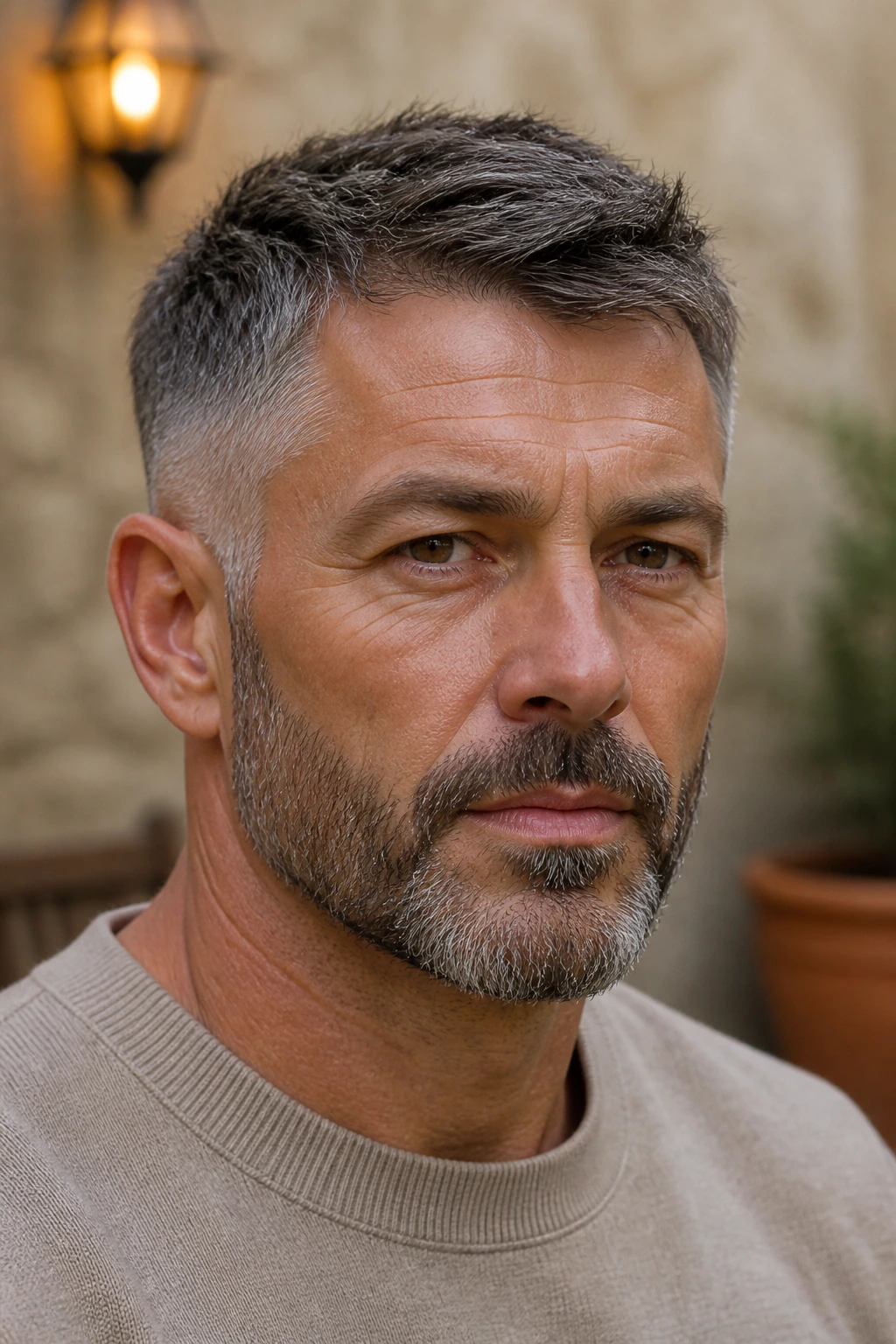
When the beard is stronger than the hair, the haircut should stop pretending otherwise. A tapered crop with a beard blend uses that facial hair as part of the overall shape.
The top is kept short and textured, usually around 1.5 to 2.5 inches, while the sideburn area tapers smoothly into the beard. That connection matters. Without it, thin hair can make the face look top-heavy or disconnected. With it, the lower half of the face anchors the haircut.
This is one of my favorite options for older men because it can make thinning hair look more intentional without asking the scalp to carry all the visual weight. The crop on top keeps styling simple, and the beard balances the profile. If the beard is patchy, keep the blend subtle and avoid a sharp disconnect line.
Use the same finish on the top and beard edges if you can: clean, matte, and tidy. A little alignment goes a long way.
18. Soft Wave Taper
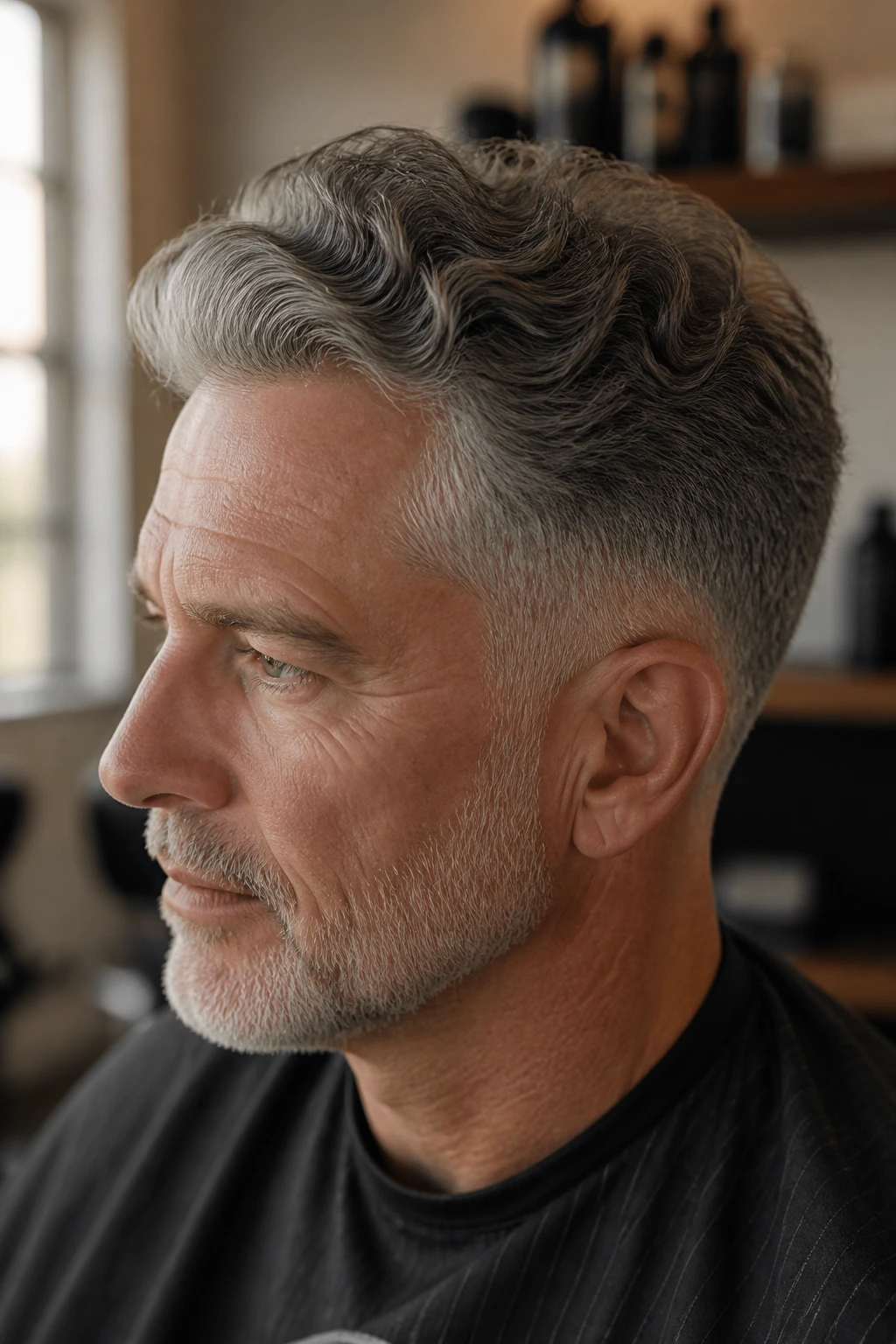
Soft waves hide thin spots better than most men realize, provided you do not flatten them with heavy cream. The natural bend does the work for you.
This cut keeps the top long enough—usually 2 to 3 inches—for the wave pattern to show, while the sides taper gradually so the head keeps a neat outline. It’s a strong choice for men with wavy or loose-curly hair because those bends create the illusion of body even when density is lower. The key is to avoid over-combing. Too much brushing stretches the wave and makes the hair look thinner.
A light styling cream or leave-in conditioner is usually enough. Work it through damp hair, then let the waves settle on their own or use a diffuser on low heat. If your hair tends to puff at the sides, ask the barber to keep the perimeter tight without removing too much weight from the top. That keeps the wave pattern from turning into a triangle.
This is one of those cuts that looks better when it’s a little imperfect. That is not a flaw. It’s the point.
Why the Taper Softens Thin Hair Without Looking Overworked

Thin hair is not one problem. Fine strands, a receding hairline, a sparse crown, and a thinning part all behave differently. That’s why a taper works so well: it gives the hair a better frame without demanding the same fix everywhere.
The taper itself is doing quiet, useful work. Around the ears and neckline, it lowers contrast so the haircut doesn’t suddenly go from hair to scalp in one sharp step. On top, it leaves enough length for direction and texture. That little bit of length matters more than many men think, because a bare-short top can make a thin scalp feel even more visible under overhead light. A taper gives the eye a place to travel.
Soft Sides, Less Scalp Show
A skin fade can look crisp, but crisp is not the same as forgiving. On thin hair, the eye often goes straight to the tightest point of contrast. A low taper avoids that trap. It keeps the edges tidy without turning the sides into a bright frame around the head.
The Top Needs Shape, Not Drama
Most men with thinning hair do better with controlled movement than with height. That means side parting, soft brush-backs, crops, and short sweeps. It does not mean trying to build a tower. The more you ask thin hair to stand straight up, the more the gaps start showing.
Gray Hair Has a Job to Do
Gray and silver strands are a blessing here. They reflect light in a way that adds visual texture, especially when the haircut is cut with scissors and styled matte. Dark dye can sometimes make scalp show more by shrinking the contrast between hair and skin. Natural gray often looks fuller, not less.
How to Ask for the Cut at the Barber Chair
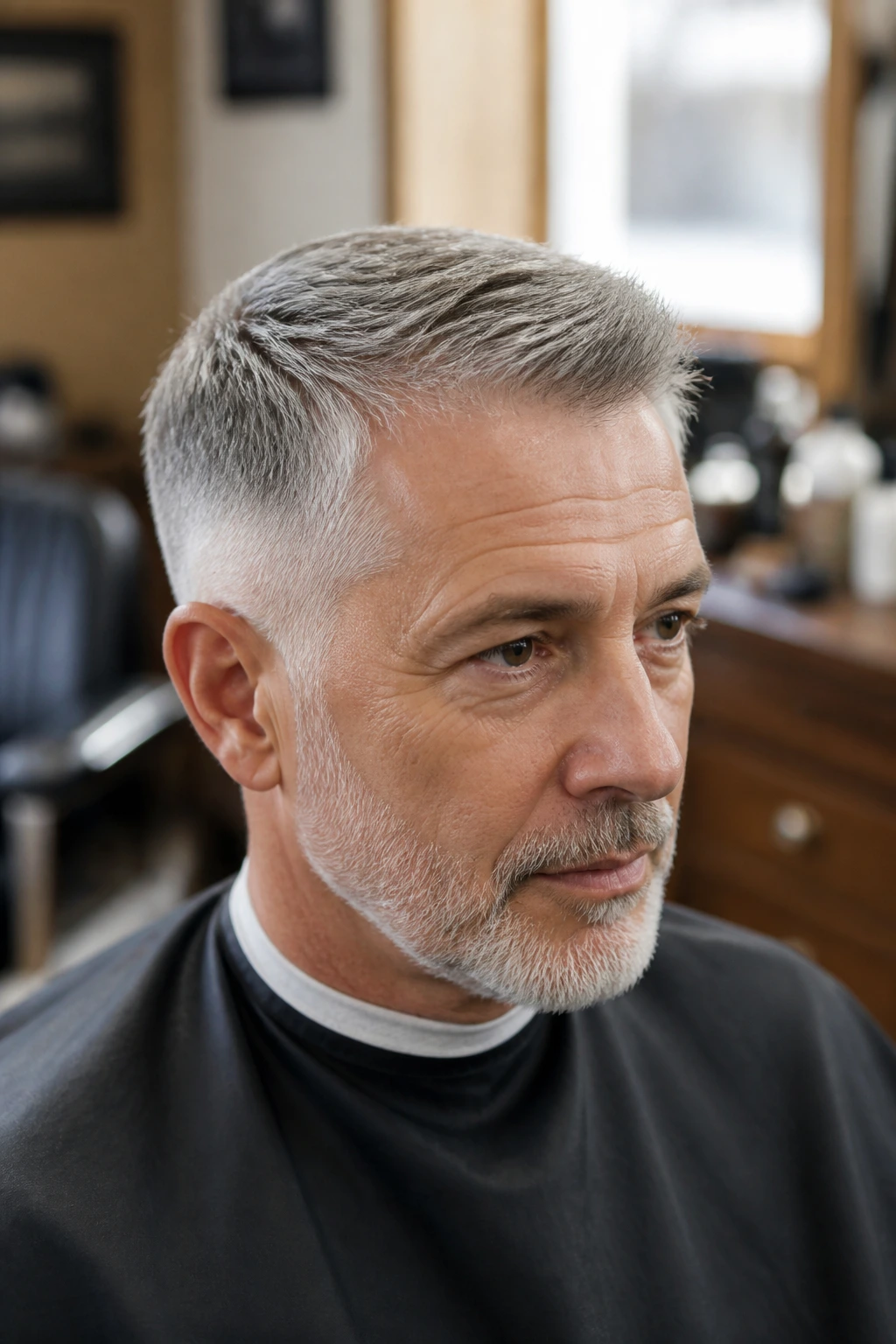
A good barber can do a lot with thin hair, but mind reading is not part of the service. Say the lengths out loud. Point to the weak spots. Be specific about how you wear it at home.
Start With the Top Length
If you want a side part, brush-back, comb over, or Ivy League, tell the barber how much length you need on top. Two inches is a useful starting point for a lot of men. Three inches gives more movement, but only if the hair still has enough density to support it. For very fine hair, shorter is often cleaner.
Be Clear About the Sides
Say “low taper” if you want the sides to stay soft around the ear and neckline. If you ask for a fade without naming the height, you might end up with something far tighter than you meant. On thin hair, that can make the head look smaller on the sides and larger on top, which is an odd little trick the mirror will happily expose.
Point Out the Problem Areas
Temples, crown, one side that grows flatter, a cowlick in front—show the barber where the hair misbehaves. A good cut respects those spots. If your crown is thin, ask the barber not to over-thin the top there. If your front hairline has gaps, ask for texture instead of a blunt line.
Agree on the Finish
If you use matte paste, say so. If you like a natural part and no hard line, say that too. A lot of bad haircuts come from silence, not bad scissors. Bring one clear photo from the front and one from the side. That helps more than a vague description ever will.
Essential Tools for Styling and Maintenance

You do not need a drawer full of grooming junk. You need a small set of tools that actually help the cut sit the right way.
- Blow dryer with a narrow nozzle: Gives you root lift without blasting the hair in every direction.
- Vent brush or small round brush: Useful for setting a side part, brush-back, or compact quiff.
- Wide-tooth comb: Better than a fine comb for thin hair because it doesn’t drag the strands flat.
- Matte clay or paste: Adds grip without making the scalp shiny.
- Lightweight styling cream: Best for side parts, soft waves, and brush-backs that need a softer finish.
- Sea-salt spray or volumizing mousse: Good for very fine hair that needs a little body before drying.
- Hand mirror: Worth keeping around so you can check the neckline and crown from the back.
- Trimmer for edge cleanup: Handy for the neck and sideburns between barber visits.
- Reference photos: Not a tool in the drawer, but absolutely a tool in the chair. Bring them.
How to Style These Cuts in Five Minutes or Less
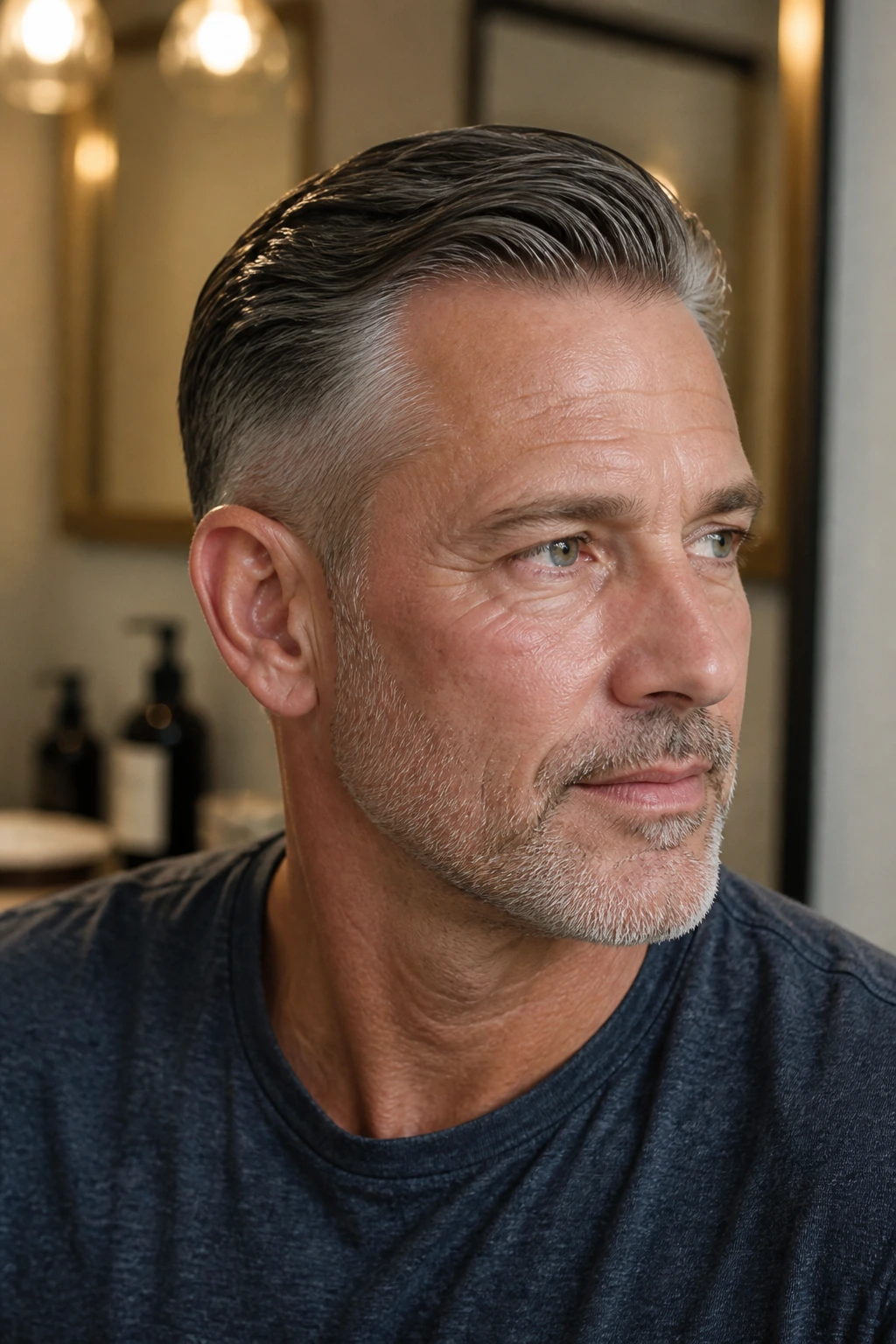
The easiest way to ruin a taper is to smother it with product before the hair has a chance to set. Start with damp hair, not soaked hair. If it’s dripping, you’ll need more time and more product.
-
Towel-dry until the hair is just damp.
Leave a little moisture in the roots. That helps the dryer move the hair into shape. -
Work in a small amount of product.
Think pea-sized, not walnut-sized. Fine hair gets greasy fast. -
Blow-dry the roots first.
Lift the front with your fingers or a brush for 20 to 30 seconds, then set the direction you want. -
Shape the top with your hands.
A side part, comb over, or brush-back usually looks better when the ends are broken a little instead of combed stiff. -
Finish with almost nothing.
If the hair still needs control, add the tiniest extra dab at the front or sides. Too much product kills movement and exposes the scalp.
The real goal is not a perfect shell. It’s a shape that still looks like hair an hour later.
Small Tweaks That Change the Whole Look

- Let the front stay a touch longer: If the hairline is uneven, an extra half-inch in front can soften the edge and make the cut look fuller.
- Keep the temples softer than the crown: A gentle taper at the sides prevents the haircut from feeling too boxed in around the face.
- Use gray instead of fighting it: Salt-and-pepper hair often looks denser when it’s cut with texture and styled matte. Darkening it too much can make thin areas more obvious.
- Balance the beard to the haircut: A fuller beard can carry a shorter top, while a clean-shaven face usually needs a little more shape on top for balance.
- Keep the neckline neat: Even a good haircut looks tired when the nape gets fuzzy. A clean neckline makes the whole head look better from the front.
If you wear glasses, keep the area around the temples and ears especially tidy. Frames and hair should not wrestle for space. One should yield a little.
Keeping the Taper Clean Between Barber Visits
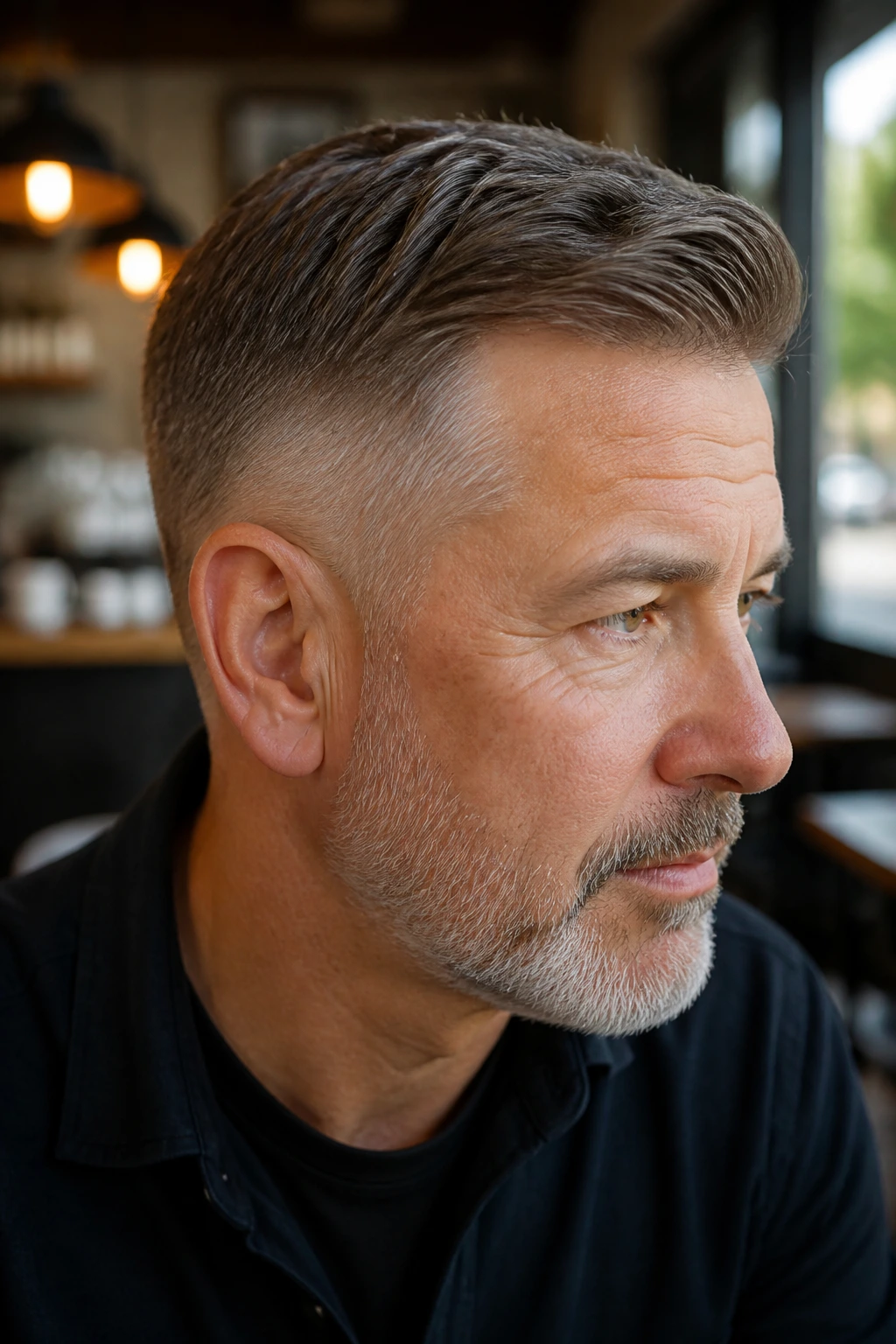
The haircut looks sharp on day one. The real test is week three.
For most men with thin hair, the sides need a touch-up every 3 to 4 weeks, and the neckline can often use a cleanup around 10 to 14 days if the nape grows fast. The top usually holds its shape longer, especially if it’s short and textured. If the cut depends on a side part, brush-back, or comb over, the outline may start to drift earlier, so keep an eye on the part line.
What to Do at Home
- Wash when the scalp needs it, not on a rigid schedule: Fine hair can get oily quickly, but over-washing strips it and leaves it flatter.
- Use conditioner lightly: Mid-length and ends only, especially if the hair is dry or gray.
- Clarify occasionally: If product starts making the hair feel waxy or limp, use a clarifying shampoo about once every 2 to 4 weeks.
- Refresh the shape with water, not more paste: A damp hand or a light mist can reset the hair better than piling on another layer of product.
If you travel, pack a small comb, a tiny tube of matte product, and a travel-size dryer if you rely on lift. Hotel mirrors are brutal, and the nape always looks worse under bad lighting.
Ways to Adapt the Same Cut for Different Hairlines and Beards
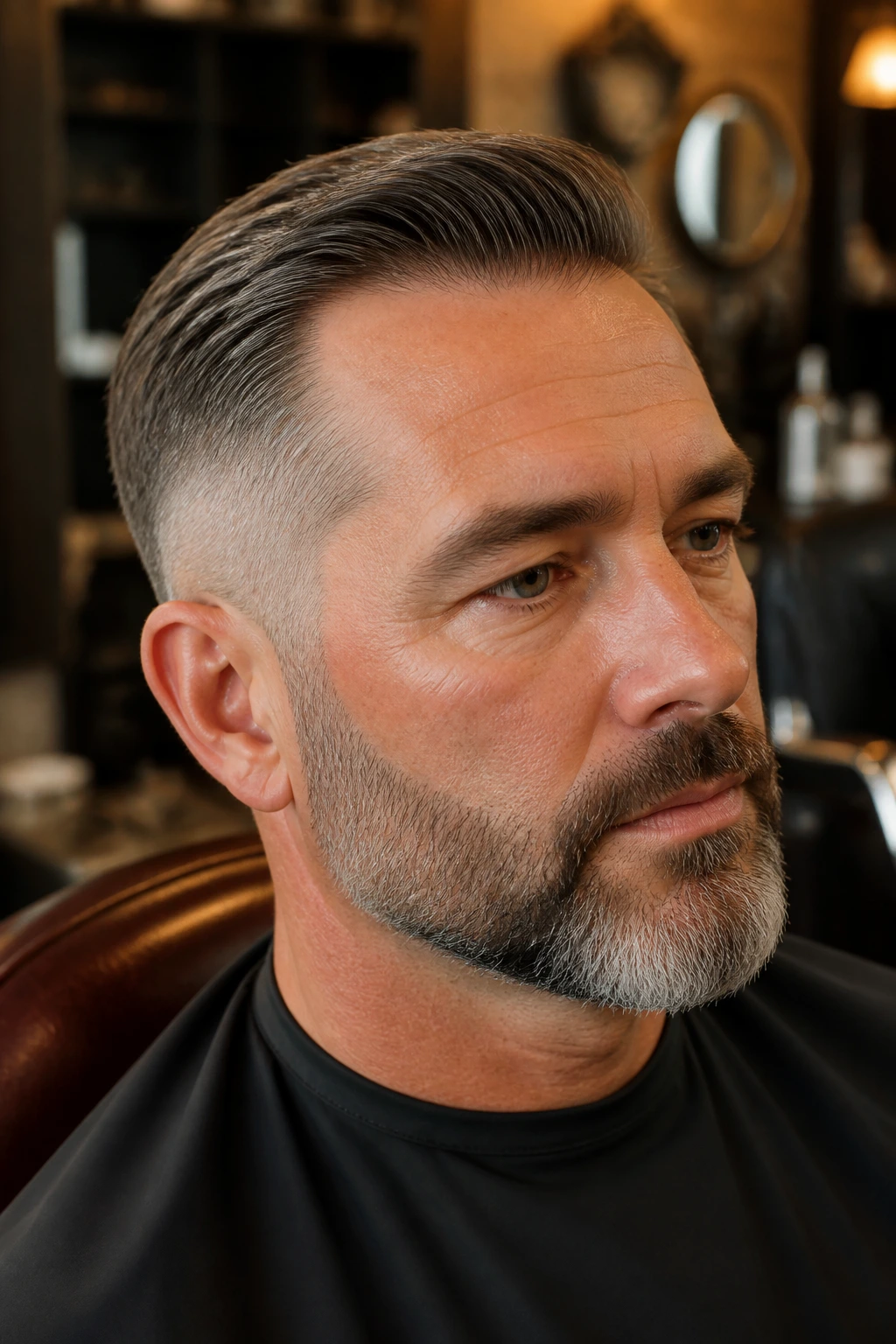
The same basic taper can look completely different depending on where the hair is thinning and what’s happening below the jawline.
Temple-Soft Side Part
Best for men whose recession sits mostly at the corners. Keep the part soft, leave the front a little longer, and avoid taking the sides too tight. The haircut looks calmer when the temple area stays blended instead of exposed.
Fringe-Forward Crop
Use this when the front hairline is the weakest part. A Caesar or French crop keeps the fringe forward and textured, which hides a sparse front better than a backward style would.
Beard-Heavy Balance
If the beard is strong, the haircut can be shorter and cleaner on top. Let the sideburns connect into the beard with a gentle taper so the face feels anchored from top to bottom.
Wavy Top, Shorter Sides
Wavy hair often does the visual work for you. Keep the sides neat, let the top hold its bend, and avoid brushing it flat. The wave gives you natural bulk.
Very Fine, Very Short
When the hair is sparse all over, the cleanest answer is often a crop or buzz with a soft taper. There’s less room for the hair to separate, and the shape stays believable longer.
Common Mistakes That Make Thin Hair Look Thinner
-
Taking the sides too short: A skin fade or near-skin taper can create harsh contrast and make the top look even lighter. Ask for a low taper instead unless your hair is very dense at the edges.
-
Overloading the top with product: Heavy pomade, thick gel, or too much clay makes fine hair clump together and show scalp in the spaces between strands. Use less than you think you need.
-
Forcing a fake part: If the hair doesn’t split naturally there, a hard part can expose a bright stripe and make the top look patchy. Follow the growth pattern.
-
Leaving the crown unchecked: A front view can look fine while the back tells a different story. If the crown is thin, keep the top balanced there instead of letting it grow long and separate.
-
Waiting too long between trims: Even a good taper starts to blur after several weeks. The nape gets fuzzy, the sideburns widen, and the clean shape disappears.
-
Using thinning shears on already-fine hair: This one bothers me. Fine hair often needs structure, not more holes cut into it. Ask for scissor work and texture with restraint.
Questions Men Ask Before They Sit Down

What’s the best taper for a receding hairline?
A low taper side part, Caesar, or French crop usually works best because they keep attention near the front without forcing the hair to stand up. If the temples are weak, avoid a very high fade or a tall quiff.
Is a taper better than a fade for thin hair?
Usually, yes. A taper keeps the perimeter softer, which reduces the contrast that makes thin hair look sparse. Fades can work, but they need more density on top and around the sides.
How long should the top be?
For most of these cuts, 1.5 to 3 inches is the sweet spot. Shorter gives more control; longer gives more coverage, but only if the hair still has enough body to hold its shape.
Can older men with thin hair wear a quiff?
Yes, but keep it compact. A small quiff can add lift without exposing too much scalp. If the front is too weak, a brush-back or side sweep will usually look calmer.
What product is best for fine hair?
A matte clay, light paste, or styling cream usually beats shiny gels and heavy pomades. Fine hair needs grip without weight.
How often should I get a taper trimmed?
Every 3 to 5 weeks is a good range for most men. If your neckline grows fast or you want the sides crisp, you may want a cleanup sooner.
Will gray hair make thin hair look fuller?
It can, especially when the cut is textured and the finish is matte. Gray hair reflects light in a way that creates visual movement, which often helps more than dark dye does.
What if my crown is thinner than the front?
Keep the top shorter and more textured so it doesn’t split. A brushed-back style can make a thin crown obvious, while a crop, side-sweep, or short Ivy League usually hides it better.
A Clean Shape That Grows Out Well
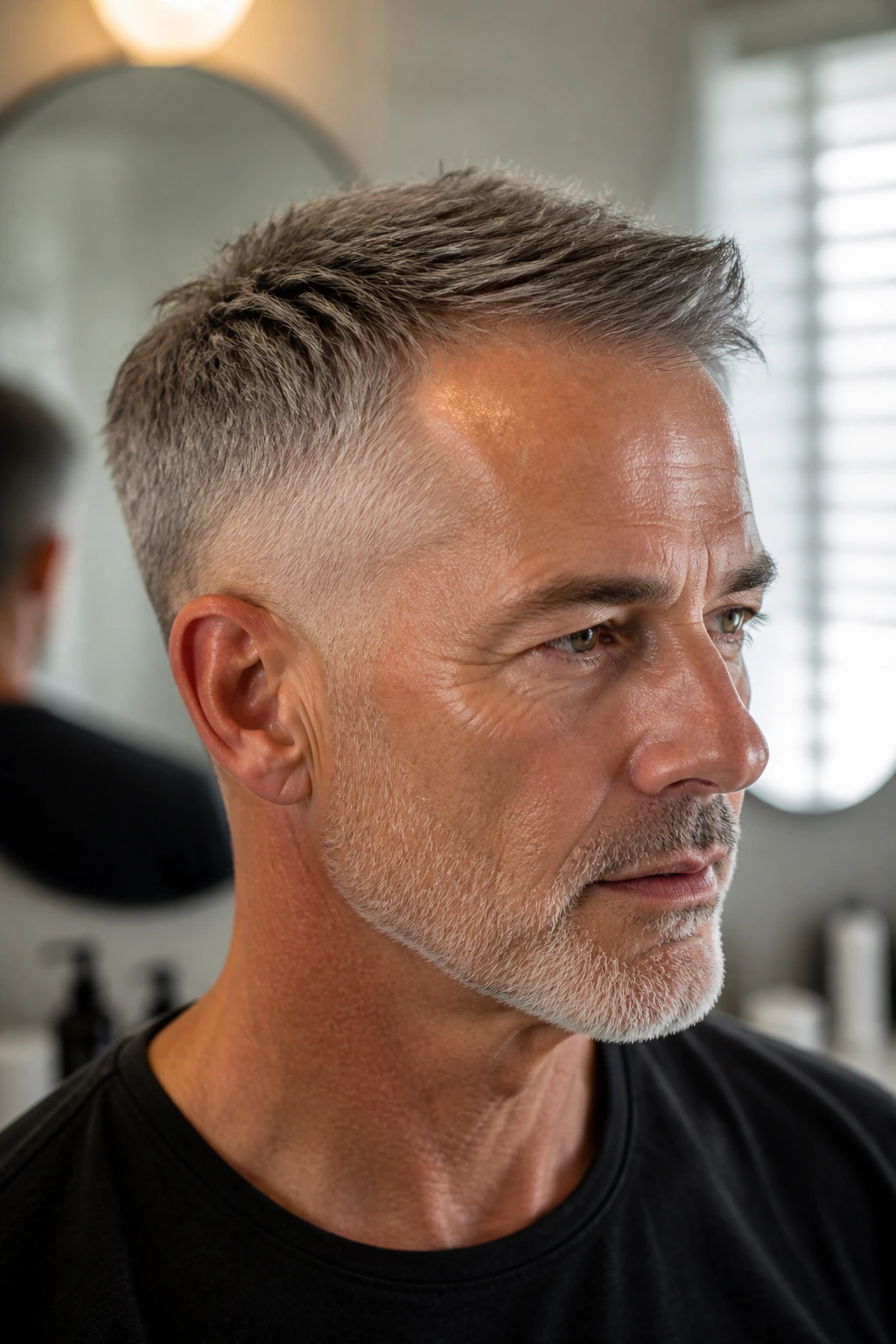
Thin hair does not need a louder haircut. It needs one that respects the hairline, keeps the sides soft, and leaves enough length where the hair still has something to do. That is why taper cuts keep coming back for older men: they don’t collapse the moment the barber cape comes off.
The best version is the one that fits your pattern of thinning, not somebody else’s idea of masculinity. Bring the barber a clear photo, say the lengths out loud, and be honest about where the hair is weakest. A taper with the right shape will still look like a haircut three weeks later. That is the part worth chasing.