



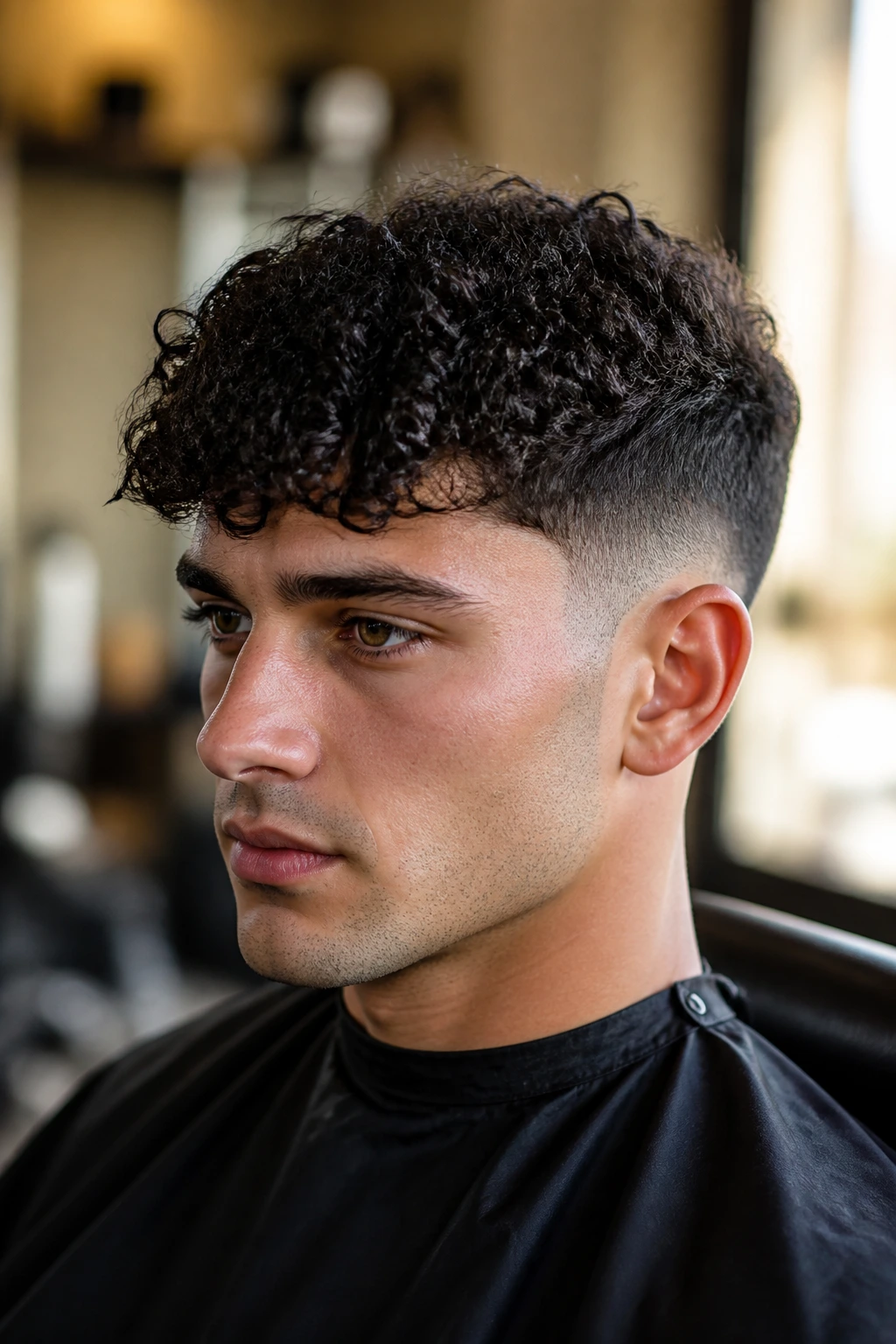
Curly hair and a textured crop get along better than most men expect. The cut keeps the curl pattern close to the head, but not flattened; the fringe brings the shape forward; the sides stay tight enough that you don’t wake up with a halo you never asked for. That balance is the whole trick. A good textured crop on curly hair does not try to erase the curl. It gives the curl a frame.
That’s why textured crop haircuts for men with curly hair deserve more than the usual “short on the sides, messy on top” treatment. Done well, the crop can look sharp at 8 a.m., survive humidity, and still look decent after a long day of moving around, sweating, or wearing a hat. Done badly, it turns into either a puffed-up triangle or a blunt little shelf that fights your natural texture every time you run your hand through it.
The best versions are not always the most dramatic ones. Sometimes the smartest cut is the one that leaves just enough length in the fringe to show your curl pattern, just enough taper around the ears to stop the bulk, and just enough texture on top to keep the shape from looking helmet-like. That’s the lane these 18 versions live in.
Why These 18 Cuts Earn a Spot on the Short List
-
They work with shrinkage: Curly hair can spring up a full inch or more once it dries, so these cuts keep the top long enough to survive that bounce without turning into a mushroom.
-
They’re easy to style in real life: Most of these shapes need little more than damp hair, a pea-sized amount of cream or paste, and 2 to 4 minutes of finger work.
-
They cover a lot of curl types: Loose waves, springy ringlets, tight coils, and thick bends all fit somewhere here if the top length and side weight are matched correctly.
-
They fix bulk without killing movement: A textured crop trims out the heavy corners that make curly hair flare outward, but it still leaves enough bend for the top to move.
-
They grow out better than many short cuts: A good crop can slide into a longer curly fringe or a soft taper without looking like you’ve simply missed your next haircut.
-
They give your barber room to work: The shape can be clean, rugged, soft, sharp, or laid-back — same general family, different outcome.
Why Curly Hair and a Textured Crop Get Along So Well
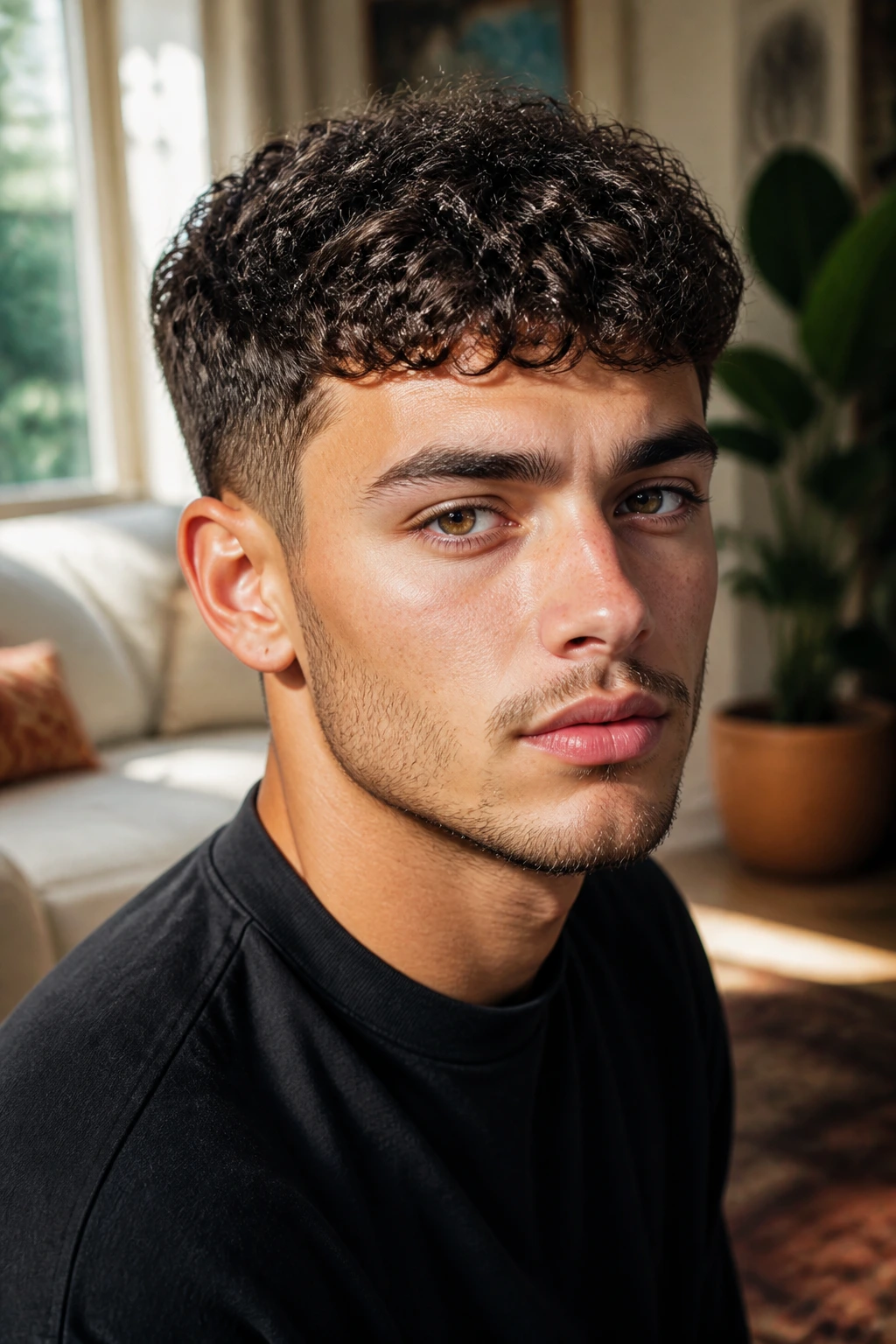
A crop haircut solves one of curly hair’s annoying little lies: hair never looks as short as it seems when it’s wet. That is why a barber who knows curls will often cut with the natural shape in mind, not with the mirror-image fantasy of straight hair. The top stays cropped, the fringe stays useful, and the sides are trimmed with enough restraint that the whole thing doesn’t puff up by lunch.
The Fringe Does More Work Than People Think
On straight hair, the fringe is often decoration. On curly hair, it can be the anchor. A forward fringe pulls the eye down and keeps the curl pattern from exploding upward. That is why a crop with a broken, choppy fringe often looks more finished than one with a blunt front line. The front edge has to move a little.
Dry Cutting Shows the Real Shape
Curly hair lies to you when it’s soaked. It stretches, droops, and pretends to be longer than it really is. Cut it fully wet and the final result can land too high, too short, or too square. Dry or mostly dry cutting gives the barber a better read on the actual curl bundle, the crown swirl, and the amount of shrinkage you’ll get once it settles.
Short Sides Stop the Triangle
Curly hair loves to build mass at the sides. It happens quickly, especially around the temples and just above the ears. Keeping that area tapered or faded changes the silhouette from “wide and fluffy” to “controlled and shaped.” That is the difference between a crop that looks deliberate and one that looks like you got tired halfway through the cut.
How to Ask for Textured Crop Haircuts for Men with Curly Hair
Most bad haircut stories start with vague instructions. “Short but not too short” is how people end up annoyed in the car mirror. Say what you want in inches, in shape, and in behavior. A barber can work with that. Mystery language helps nobody.
Bring one photo from the front and one from the side. Curly crops change a lot depending on the angle. The front tells the barber how the fringe sits. The side tells them whether you want a low taper, a mid fade, or something that disappears more slowly into the neckline.
Talk about the fringe first. On curly hair, the fringe is the point of the whole cut. Say whether you want it blunt, broken, longer, shorter, or pushed forward. If you wear your hair up and off the forehead, say that too. If you want it to fall a little, say that instead.
Mention your curl pattern and shrinkage. Not all curls behave the same. Tight coils may need more length left on top than loose waves, and a crown swirl can push the shape in a direction you do not want. If your hair springs up hard after the shower, say so. That one sentence saves a lot of guessing.
A useful barber script sounds like this: “Keep the top around 2 to 3 inches, leave the fringe piecey, taper the sides low, and don’t over-thin the top.” If you want more structure, add: “I want the curl pattern visible, not chopped away.” That’s clear. That works.
1. Low Taper Textured Crop with Soft Curls
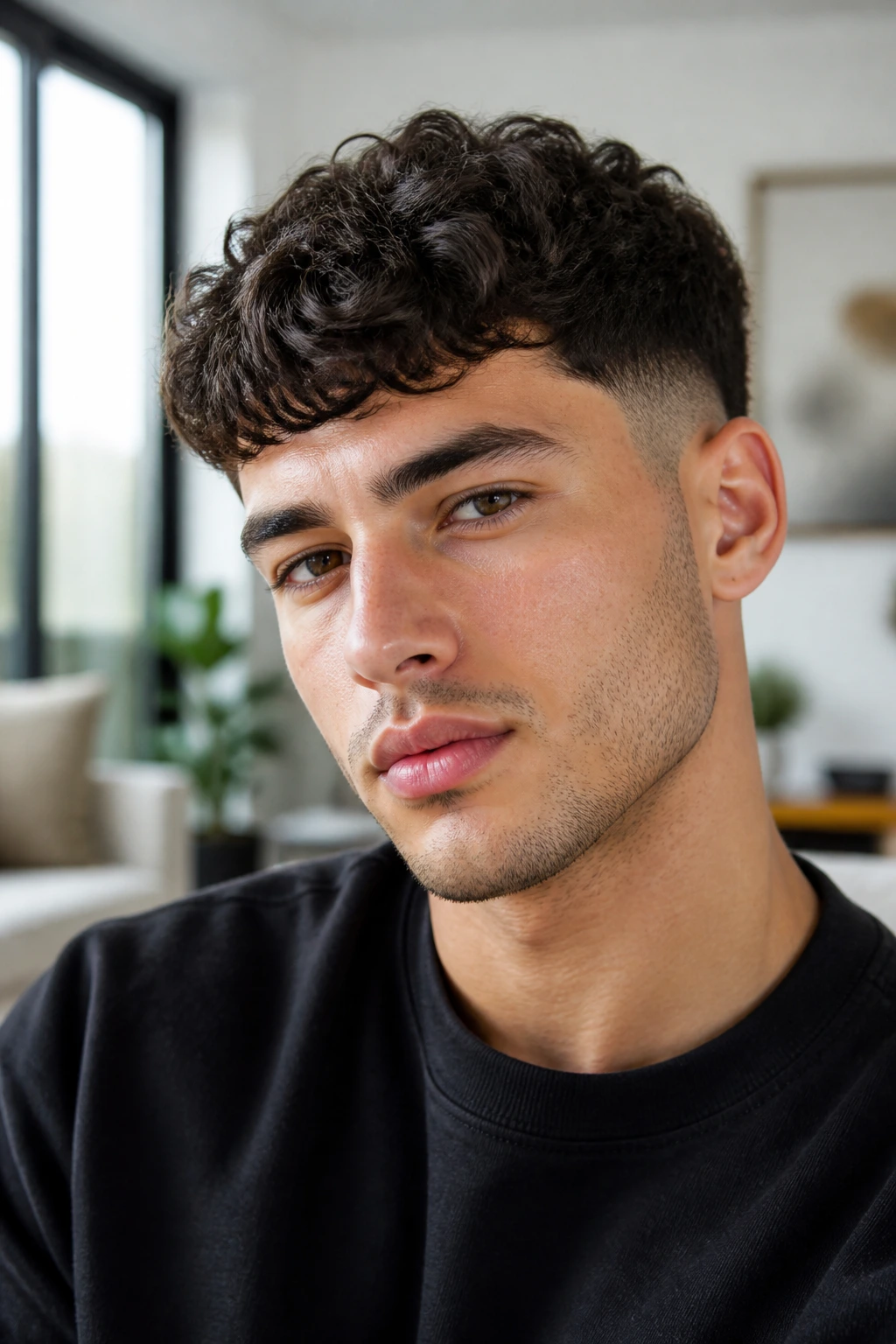
This is the version I recommend to men who want a clean crop without the haircut shouting from across the room. The low taper keeps the neckline and temples neat, but it does not erase the sides so hard that the head looks top-heavy. On soft curls, that matters. You want the texture to sit like a clean curve, not a puffball fighting the edges.
Why it works: The low taper gives the curl room to breathe while keeping the outline controlled. Leave about 2 to 3 inches on top, use point cutting through the fringe, and keep the front slightly uneven so the curl pattern shows instead of sitting in a straight line. That little bit of irregularity is what keeps the cut from looking too polished.
A small amount of curl cream on damp hair is usually enough. Work it through with your fingers, not a brush. A brush stretches the curl and can make the top look longer than it really is. Let it air-dry for softness, or hit it with a diffuser for 3 to 5 minutes if you need the shape to settle faster.
If you want one of the safest textured crop haircuts for men with curly hair, this is the one. It’s tidy, but not severe. That’s a useful lane.
2. Mid Fade French Crop for Loose Waves
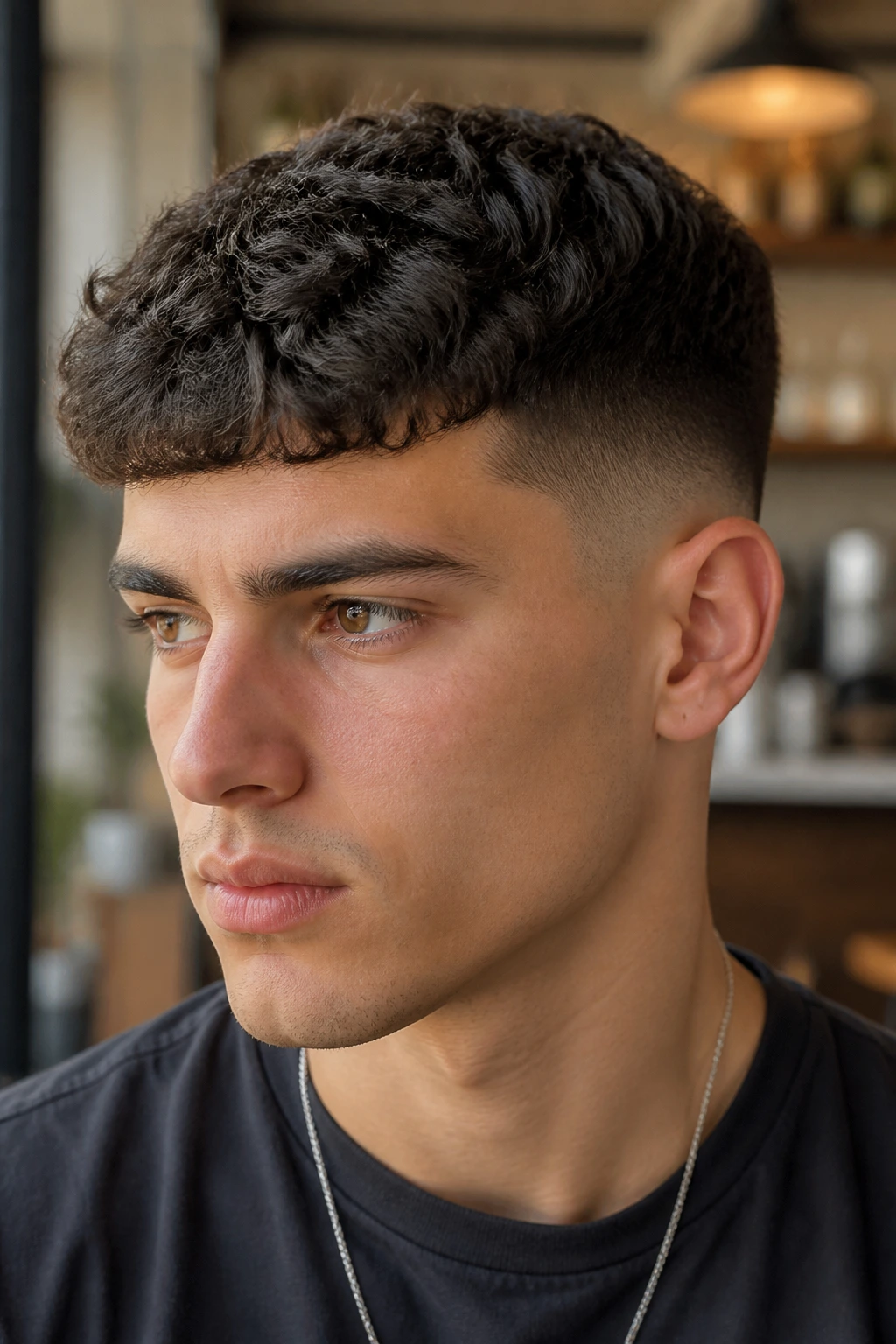
If your hair bends more than it coils, a mid fade French crop can look sharp without making the top seem overworked. The mid fade clears enough bulk above the ear to keep loose waves from spreading sideways, and the cropped fringe gives the whole thing a forward edge.
This cut works because loose waves often need a little help deciding where to go. Left alone, they can fall flat at the roots and frizz at the ends. A mid fade creates a stronger contrast, which makes the top read thicker even when the hair itself is fine. I like this one for guys who want something cleaner than a shag but less rigid than a classic short back and sides.
What to ask for: a 2-inch top, a mid fade starting around the temple area, and a fringe that is chipped rather than blunt. If your barber understands point cutting, say that. If not, just ask for the front to be broken up a little so it doesn’t sit like a shelf.
Use a matte paste or light clay on dry hair. Warm it in your palms, then pinch the fringe and crown separately. Don’t smear it everywhere like butter on toast. You want texture, not shine.
3. Heavy Fringe Crop for Dense Curls
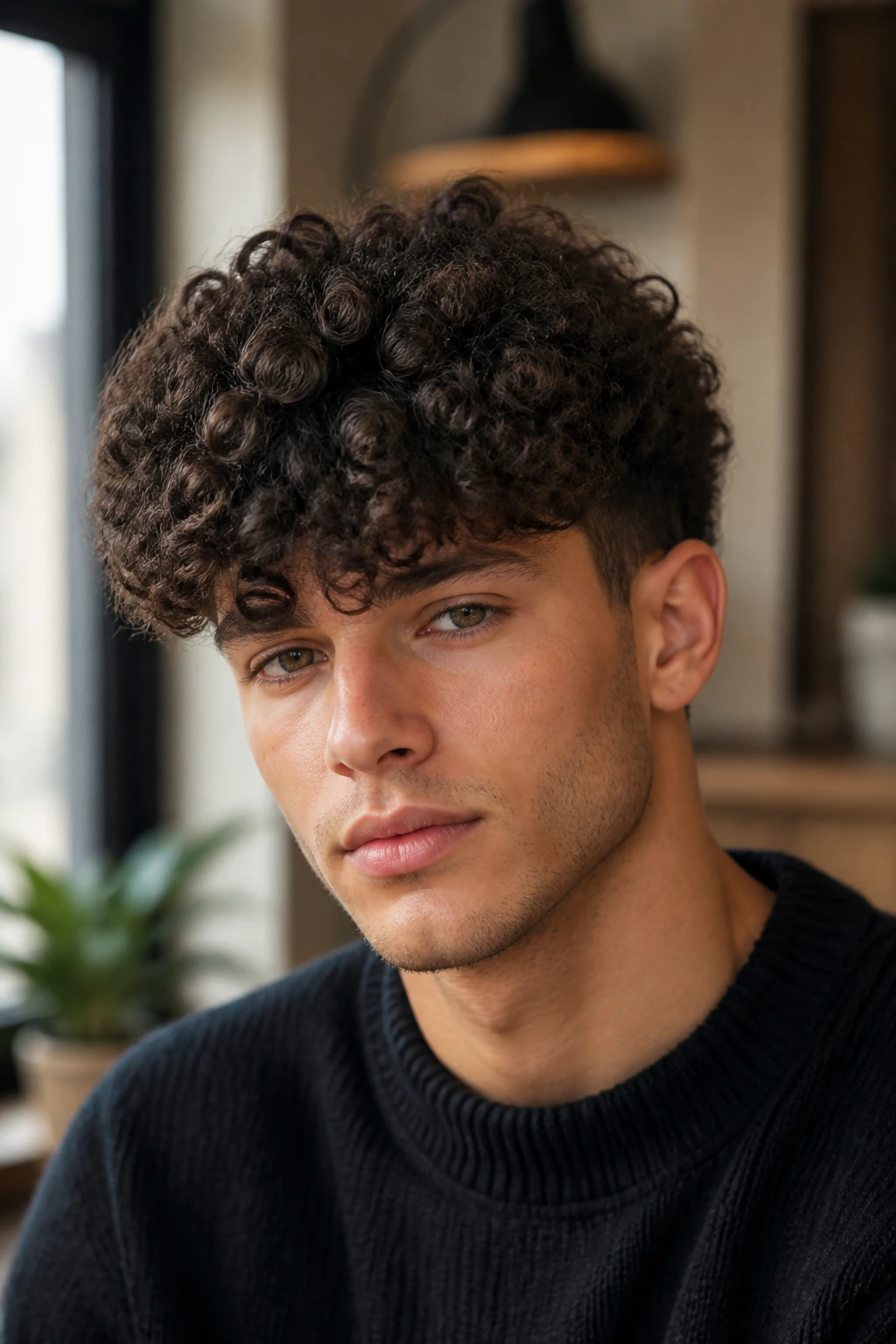
Why do dense curls sometimes look better with more length in front? Because the fringe acts like a weight belt. It holds the shape down. Without that weight, thick curls often push upward and out, especially at the center forehead and temples. The result can look bigger than you wanted.
What to Tell the Barber
Ask for a heavy fringe that lands somewhere around the eyebrows or just above them when dry. That length sounds long on paper. On curly hair, it usually isn’t. Leave enough top length for the curl bundle to collapse naturally, then remove bulk with small, careful cuts instead of aggressive thinning shears. Over-thinning thick curls is a quick way to get frizz, and frizz loves a crop more than it should.
This version works especially well if you like a low-to-mid fade on the sides but want the top to stay visibly curly. It also suits stronger foreheads because the fringe gives a little coverage without looking like you’re hiding from the mirror.
Style it with curl cream on damp hair, then let the fringe fall forward as it dries. If you want more separation, add a tiny amount of matte paste once the hair is dry. Tiny. A little goes a long way here. Too much paste will clump the fringe and make the front look greasy.
4. Skin Fade Textured Crop with Tight Ringlets
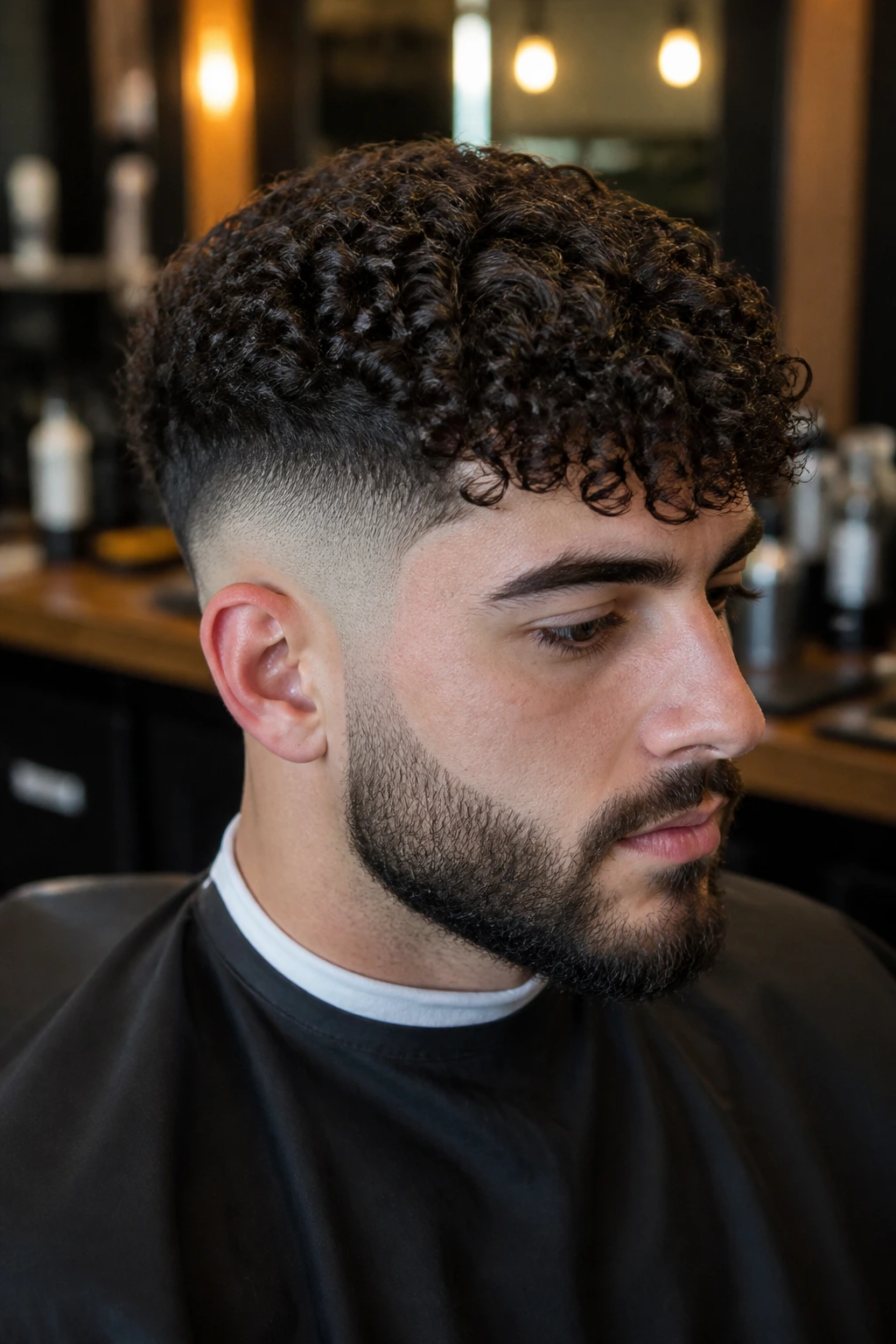
A skin fade changes the mood fast. The sides go from hair to near-nothing, which throws all the attention onto the top. On tight ringlets, that can look crisp and focused, but only if the top is left long enough to show its shape. Too short, and the curls disappear into fuzz.
The best version of this cut keeps about 2 to 3 inches on top, sometimes a touch more depending on curl tightness. The barber should leave the front a little longer than the crown so the fringe can sit forward instead of standing straight up. That front weight matters. It keeps the crop from turning into a tiny rounded bush sitting on a bare fade.
I’d call this the sharpest version in the group. It has a lot of contrast, which means the fade has to be clean and the top has to be intentional. If the sides are patchy or the top is hacked flat, the whole thing shows it immediately.
Use a curl mousse or lightweight cream if your ringlets need bounce, then diffuse on low heat. If you prefer a drier finish, use a tiny bit of matte paste after the hair dries. Do not load the top with heavy oil. Tight curls already hold moisture in a different way, and too much product can make the front collapse.
5. Drop Fade Crop That Follows the Head
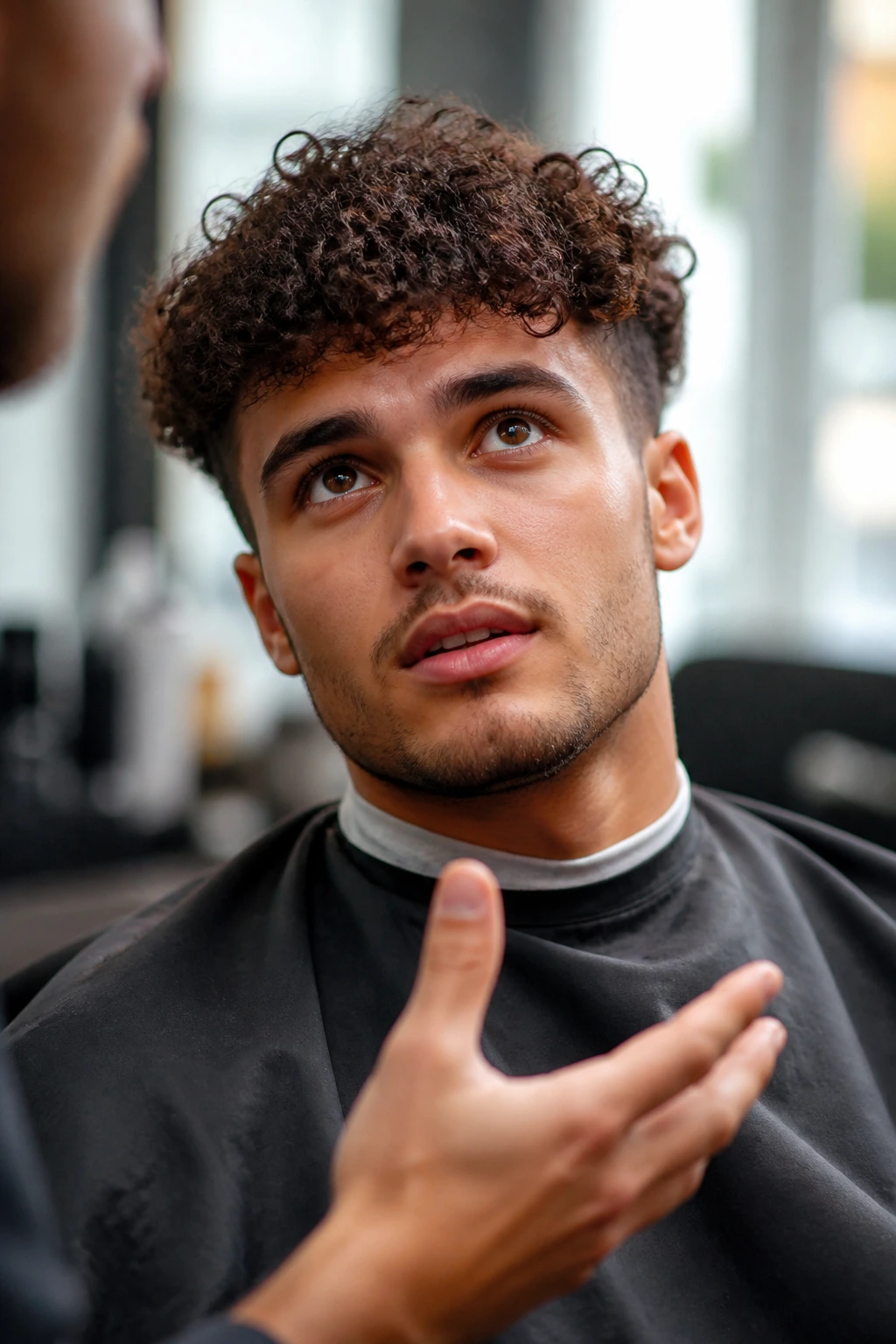
A drop fade is one of my favorite ways to make a curly crop feel shaped instead of merely shortened. The fade dips lower behind the ear, following the curve of the head, which gives the cut a more natural silhouette. On curly hair, that curved outline is a quiet fix for bulky sides.
This version is especially good if your head shape is a little round or if the crown swells when the hair gets longer. The drop fade removes weight where it tends to flare, then lets the top sit with a bit more presence. The result feels balanced from front to back, not just clean from the front mirror at the barber shop.
The top can sit around 2 to 3.5 inches, depending on curl type. I like a slightly messier finish here, with the fringe broken into small pieces so it doesn’t look like one solid line. That irregular edge is what stops the crop from looking stiff.
A diffuser helps if your curls are stubborn. If not, a small amount of curl cream and air-drying may be enough. The goal is not perfect symmetry. The goal is shape. Those are not the same thing, and curly hair punishes you if you confuse them.
6. Temple Taper Crop for Coily Texture
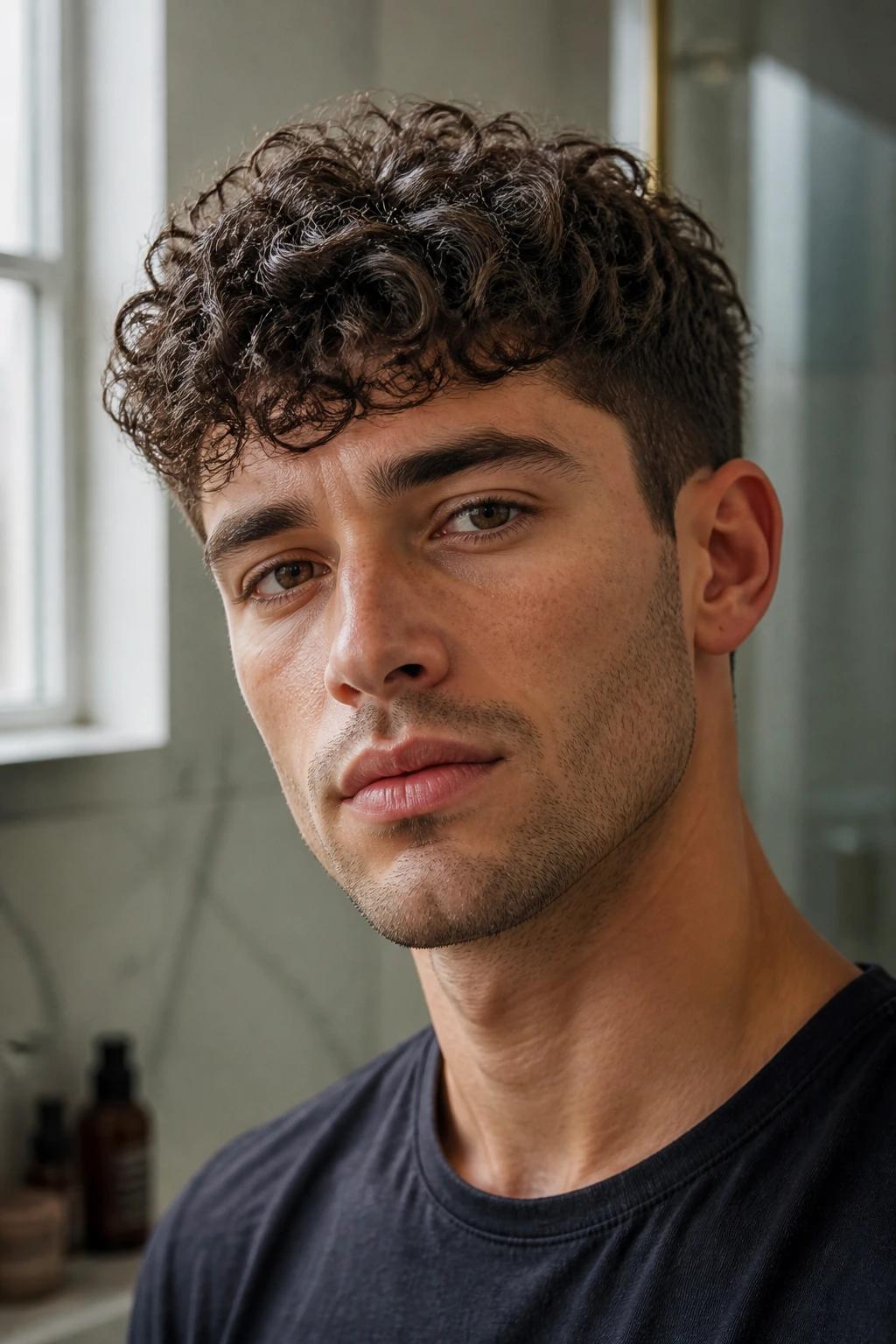
Temple tapers are underrated. They soften the edge around the temples without shaving the sides so hard that the cut loses warmth. On coily texture, that softer transition can look better than a hard fade because it respects how the hair grows and sits.
This crop works when the top is left a little fuller, usually around 3 inches, with the fringe cut into short, irregular pieces. The barber should focus on reducing bulk at the temples and above the ears while leaving the crown alone unless it truly needs shaping. Coily hair often looks best when it keeps a little architecture on top. Too much slicing can make it collapse.
Why This One Feels Easier to Wear
The temple taper gives you a cleaner outline without exposing scalp in a harsh strip. That makes the haircut easier to wear with glasses, hats, or a beard. It also grows out in a nicer way than a skin fade, which can look rough after only a week or two if your hair grows fast.
Use a moisturizing cream or curl butter sparingly. You want enough slip to stop frizz, but not so much that the top looks coated. Finger-coil a few front pieces if you want a sharper fringe. That small bit of control changes the whole face frame.
7. Scissor-Cut Crop for Thick Curly Hair
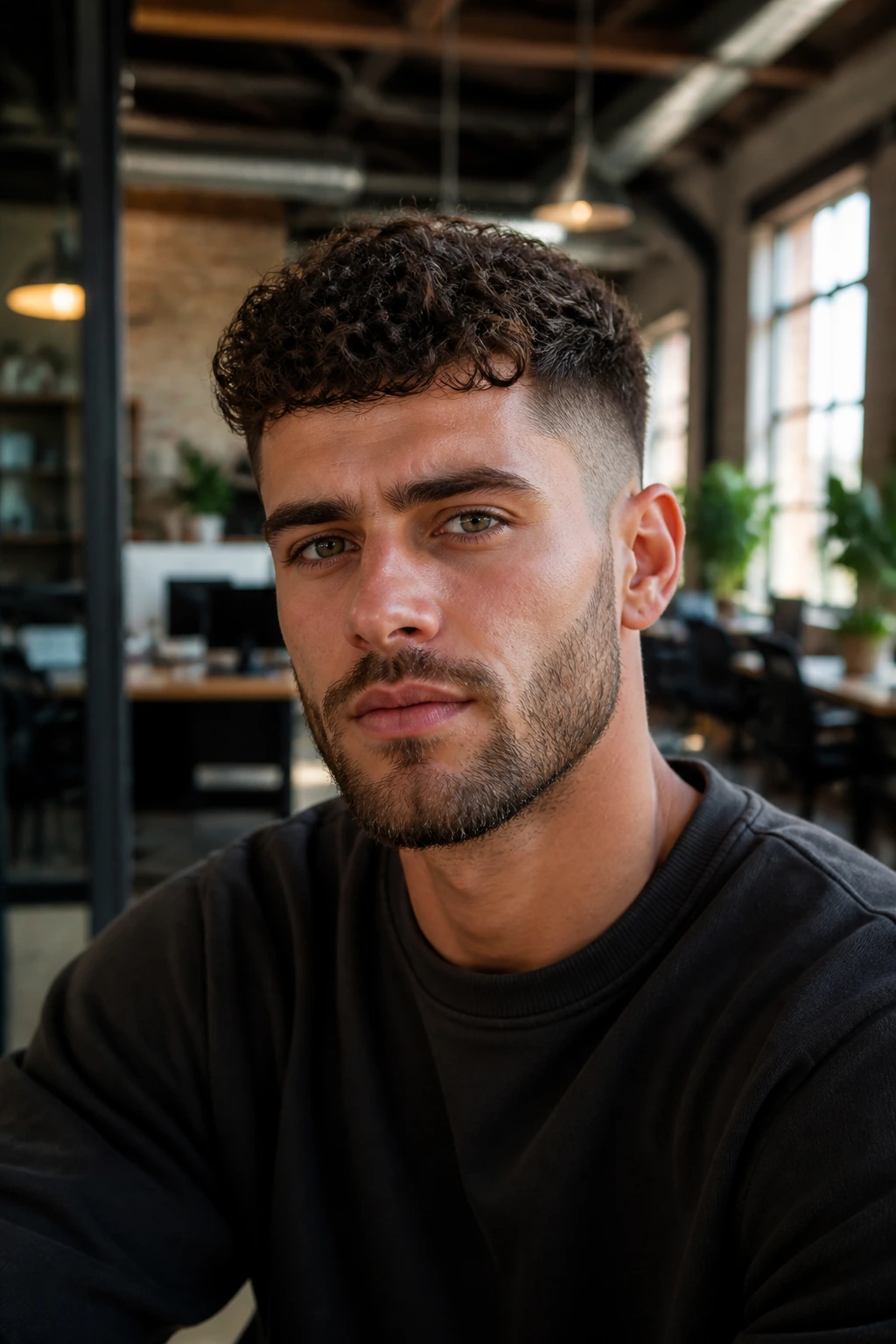
If your hair is thick enough to hold its own zip code, a scissor-cut crop is the move. Clippers can take too much out of the top too quickly. Scissors let the barber shape the bulk instead of blasting through it. That matters when the hair is curly and dense, because the top needs internal weight to sit properly.
A good scissor-cut crop leaves the sides tidier, sure, but the real job happens on top. The barber should point cut into the ends, not just chop across them. Point cutting breaks up the line so the curls can separate instead of sitting like one thick mass. You get motion, but not chaos.
This is a strong choice if you want a more polished feel. It can still be casual, but it reads a little smarter than a hard fade crop. It also suits thick hair that tends to puff out at the crown. A carefully scissor-cut top keeps the silhouette from becoming a triangle, which is the issue thick curly hair runs into every other month.
Styling is easy: a small amount of cream on damp hair, scrunch, let it dry, then use a touch of paste on the fringe if needed. That’s it. No elaborate routine. No thirty-step nonsense.
8. Burst Fade Crop with Ear-Curving Shape
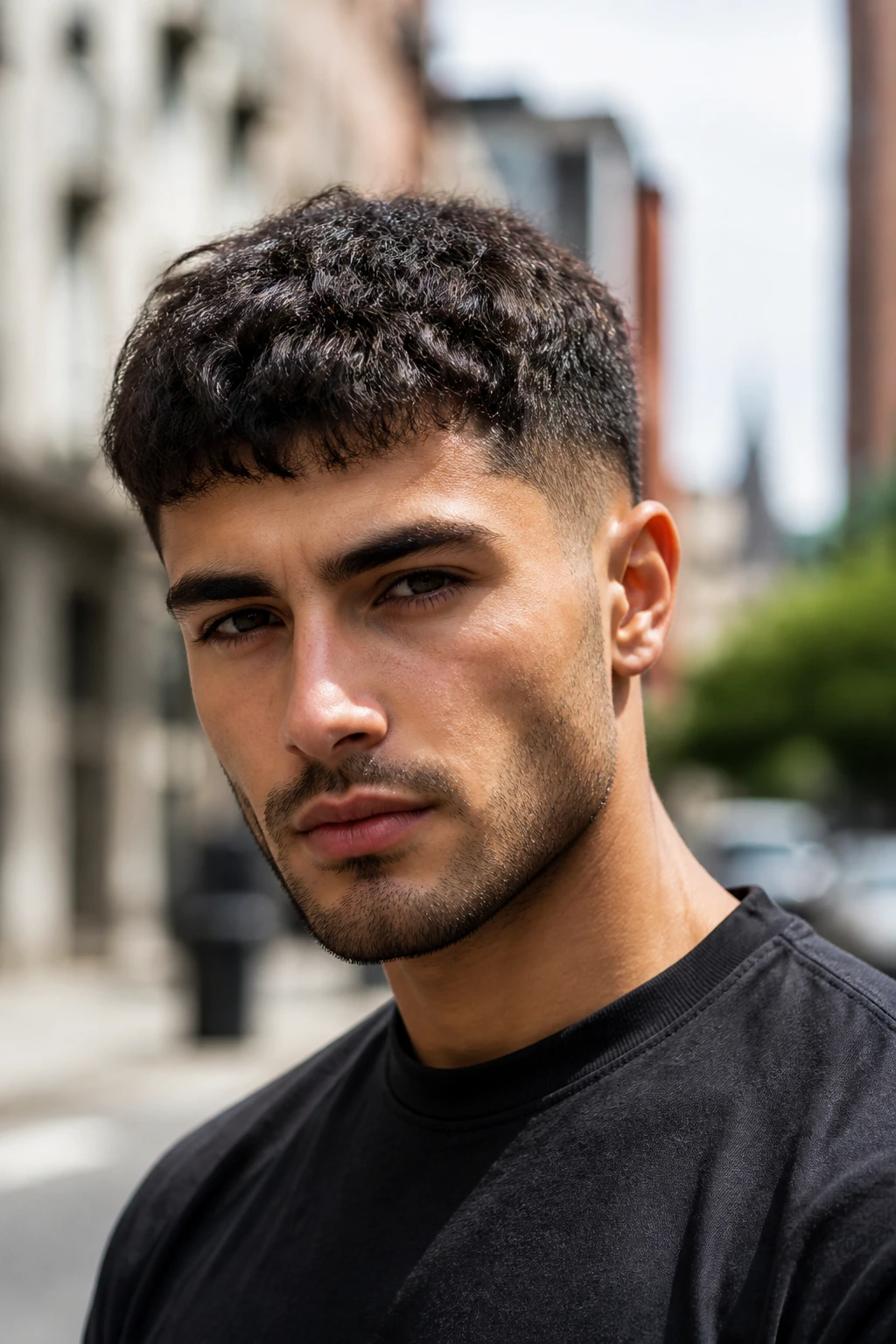
The burst fade gives the cut a curved shape around the ear, almost like the haircut is moving with the head instead of sitting on top of it. On curly hair, that arc is useful because it lets the top stay textured while the sides stay animated, not boxy.
This version works well for guys who want a little energy in the shape. It feels more modern than a plain taper, but it doesn’t veer into full fashion-mullet territory. The top stays cropped and forward, the fringe stays piecey, and the burst fade does the interesting work around the ears.
A burst fade crop looks best when the curls on top are left slightly uneven. I’m not talking about sloppy. I mean broken. Chipped. Chopped in a way that lets the curl pattern show. If the top is too uniform, the burst fade starts to look disconnected from the rest of the haircut.
A diffuser is useful here because the curve around the ears can look flat if the top dries limp. Start at the roots, hold the dryer on low heat, and stop before the curls get crispy. Crispy curls are a bad deal. They look stiff, and they feel worse.
9. Line-Up Crop with a Crisp Front Edge
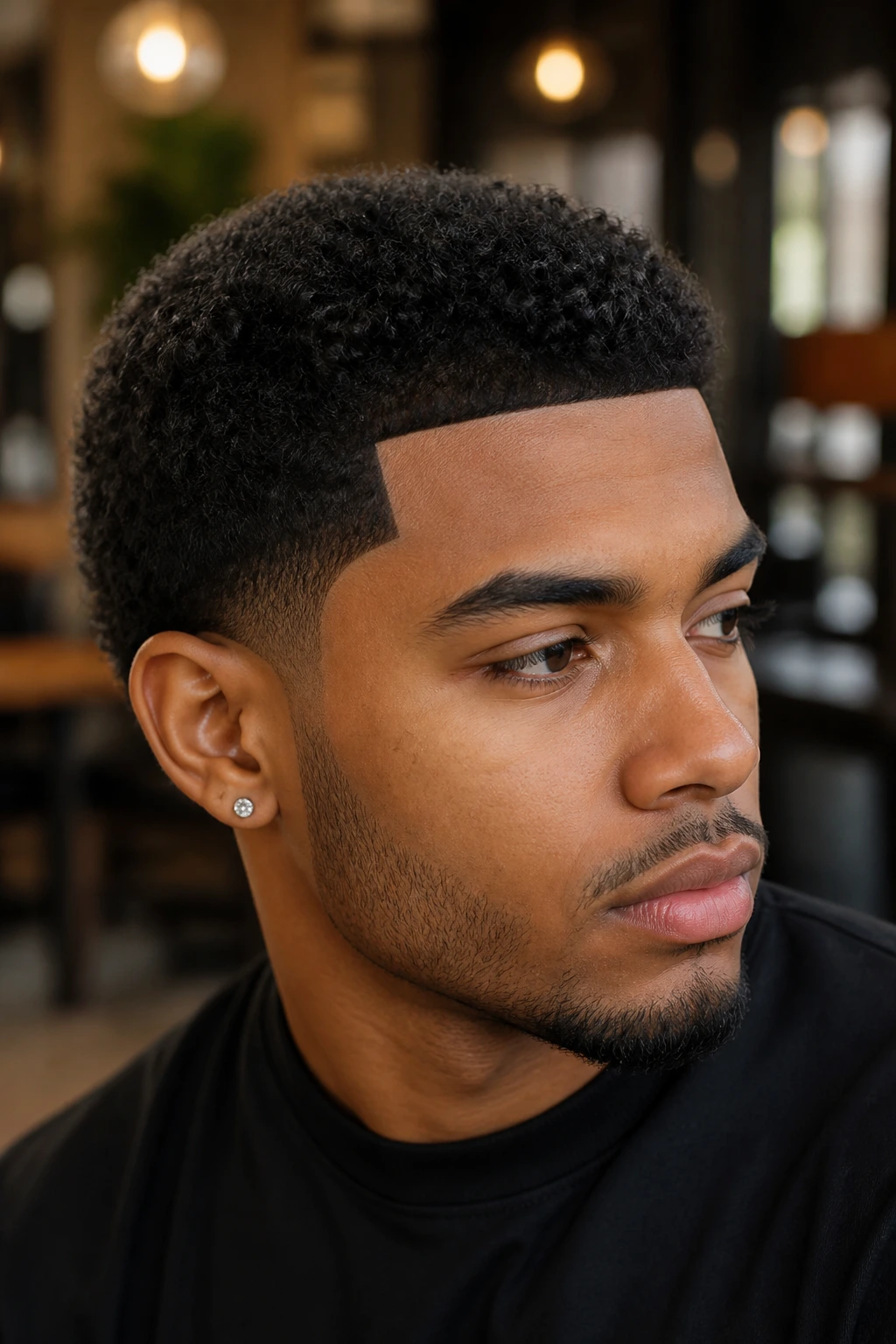
Do you want the crop to look sharper without turning your curls into a helmet? A line-up gives you exactly that. The front edge gets cleaned up into a defined hairline, but the top still keeps its texture. It’s a neat trick, and it works especially well when the hairline itself is naturally even.
This cut can look excellent with medium curls that spring a little but don’t explode upward. The barber keeps the fringe short and textured, then squares or softly angles the line across the forehead. The result is a strong frame around the face, which pairs well with strong brows or a beard.
The caution is simple: a line-up is not the same as overlining everything. If the temple corners are pushed too hard or the fringe is cut too blunt, the crop can start looking boxed in. I prefer a line-up that looks crisp from 3 feet away but still soft up close. That’s the sweet spot.
Use a lightweight styling cream, then finger the front forward before the hair sets. If the line-up is the star, the texture should play support. That keeps the haircut from looking over-edged.
10. High Fade Crop for Fine Curls
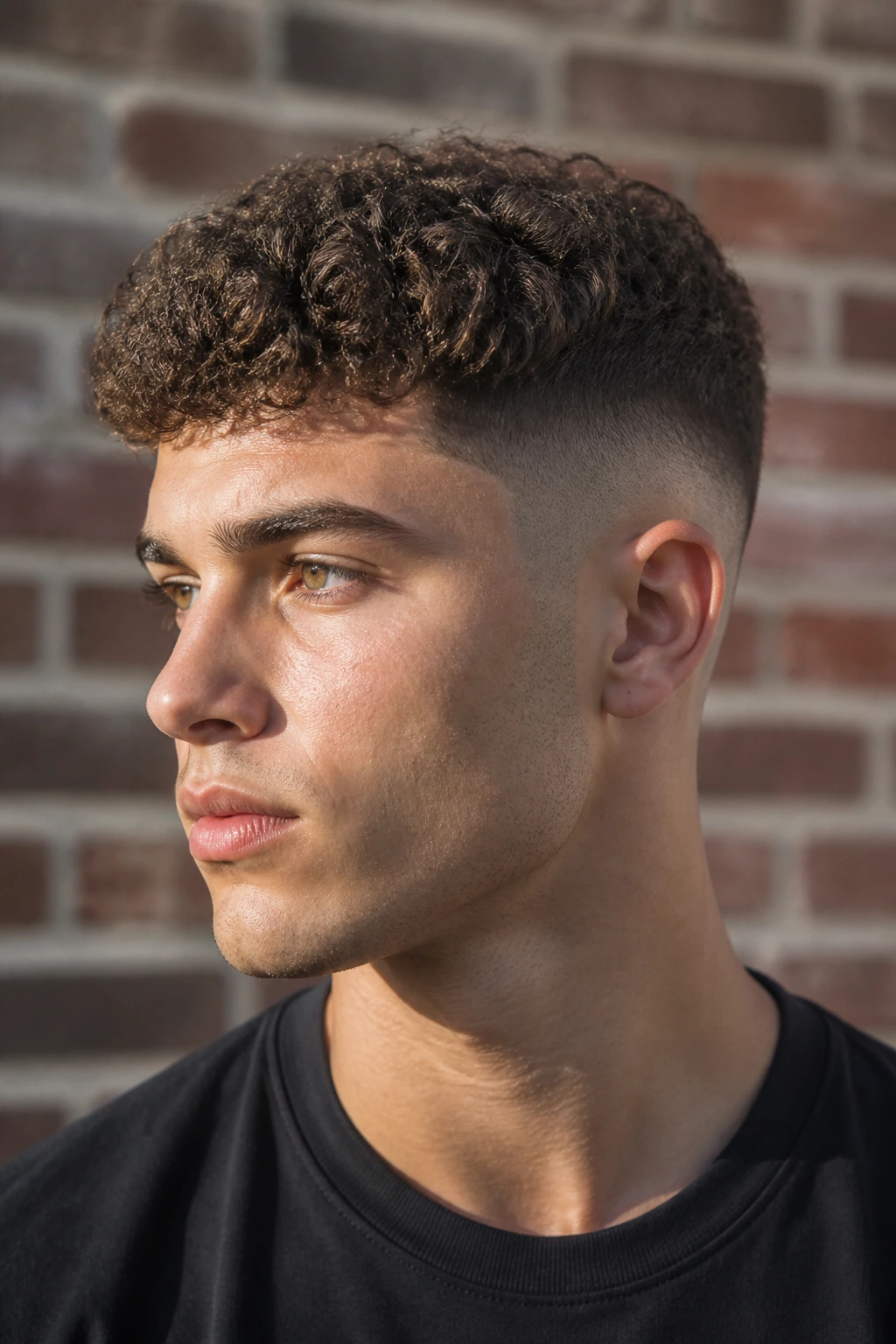
Fine curly hair can be tricky. It bends, but it does not always carry its own weight. A high fade helps because it strips away the sides and creates a stronger contrast between the top and the head shape. The eye reads that contrast as fullness, even if the strands themselves are fine.
This is one of the few times I’ll argue for a sharper fade on curly hair. The reason is simple: fine curls can look limp when too much bulk stays on the sides. A high fade gives the top a cleaner silhouette, and the curls on top can actually look denser once the bottom half of the haircut stops competing for attention.
Keep the top around 2 to 2.5 inches. Longer than that and fine curls can collapse. Shorter than that and you risk losing the pattern altogether. The front should still be broken up with a little point cutting so it doesn’t form a flat shelf across the forehead.
Mousse is your friend here. Not a heavy cream. Mousse. It gives grip without dragging the curls down. Work it through damp hair, then air-dry or use low heat with a diffuser. A tiny bit of matte paste can go on the tips once it’s dry, but only if you want more separation at the fringe.
11. Curly Caesar Crop with a Short Blunt Fringe
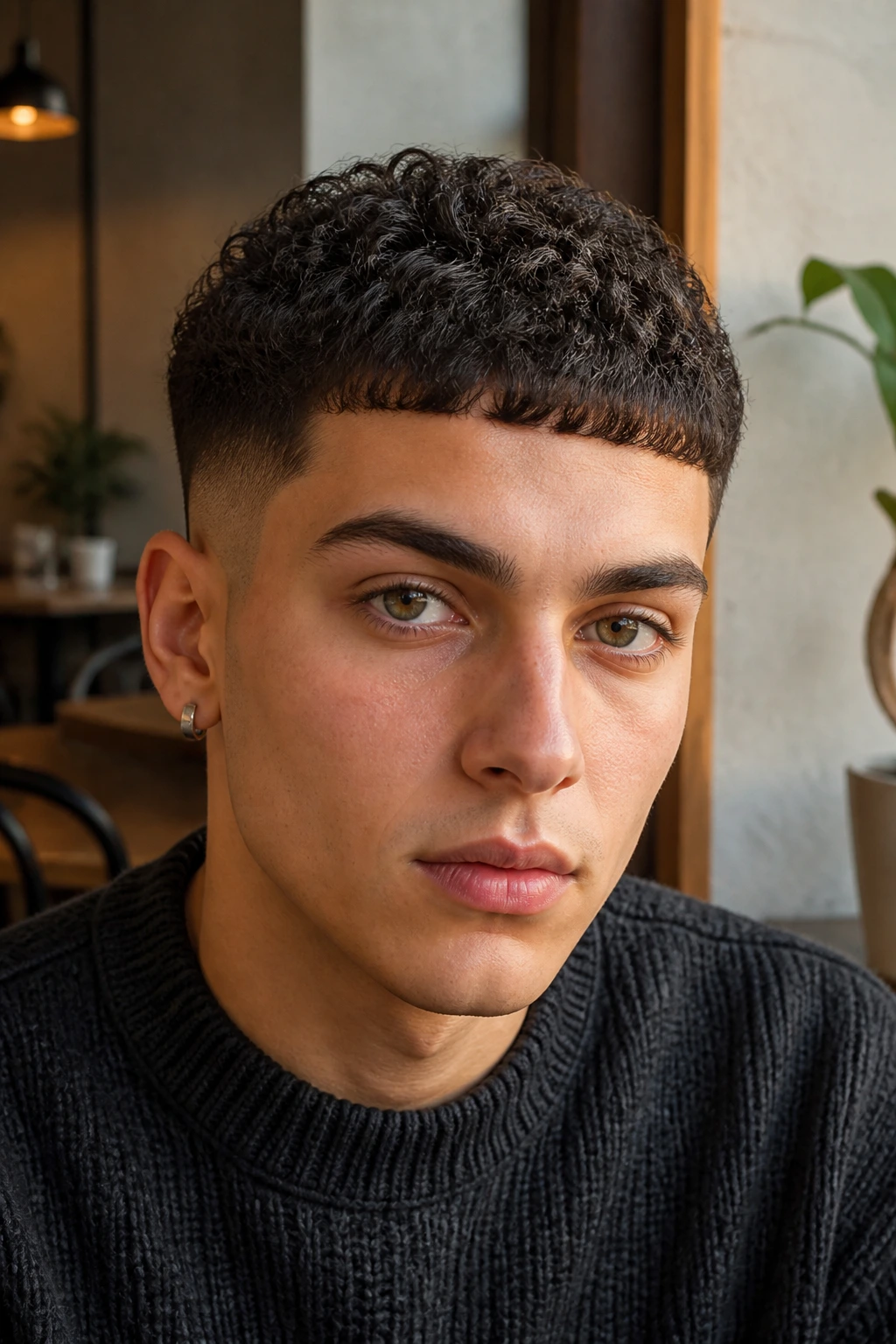
The Caesar crop is the blunt instrument in this lineup, but in a good way. It’s short, compact, and very focused on the front edge. On curly hair, a Caesar works best when the fringe is kept short enough to control the curl pattern but long enough to show the bends.
This version is ideal if you like low-maintenance hair or if your hairline is starting to do that little retreat dance at the temples. A short blunt fringe sits forward and distracts from recession without pretending the hairline is something it isn’t. That honesty matters. Bad haircuts often fail because they try too hard.
Unlike a looser textured crop, the Caesar asks for a tighter shape and less movement. That’s why it’s good for men who do not want to mess with product every morning. A little cream or a touch of matte paste is usually enough. The top should still be cut with texture, but the outline stays tidier than most other crops.
If you have tighter curls, do not cut the fringe too short. It will spring up and lose the line. Leave a little margin. Curly hair takes back what you thought you cut away.
12. Disconnected Crop with a Longer Top
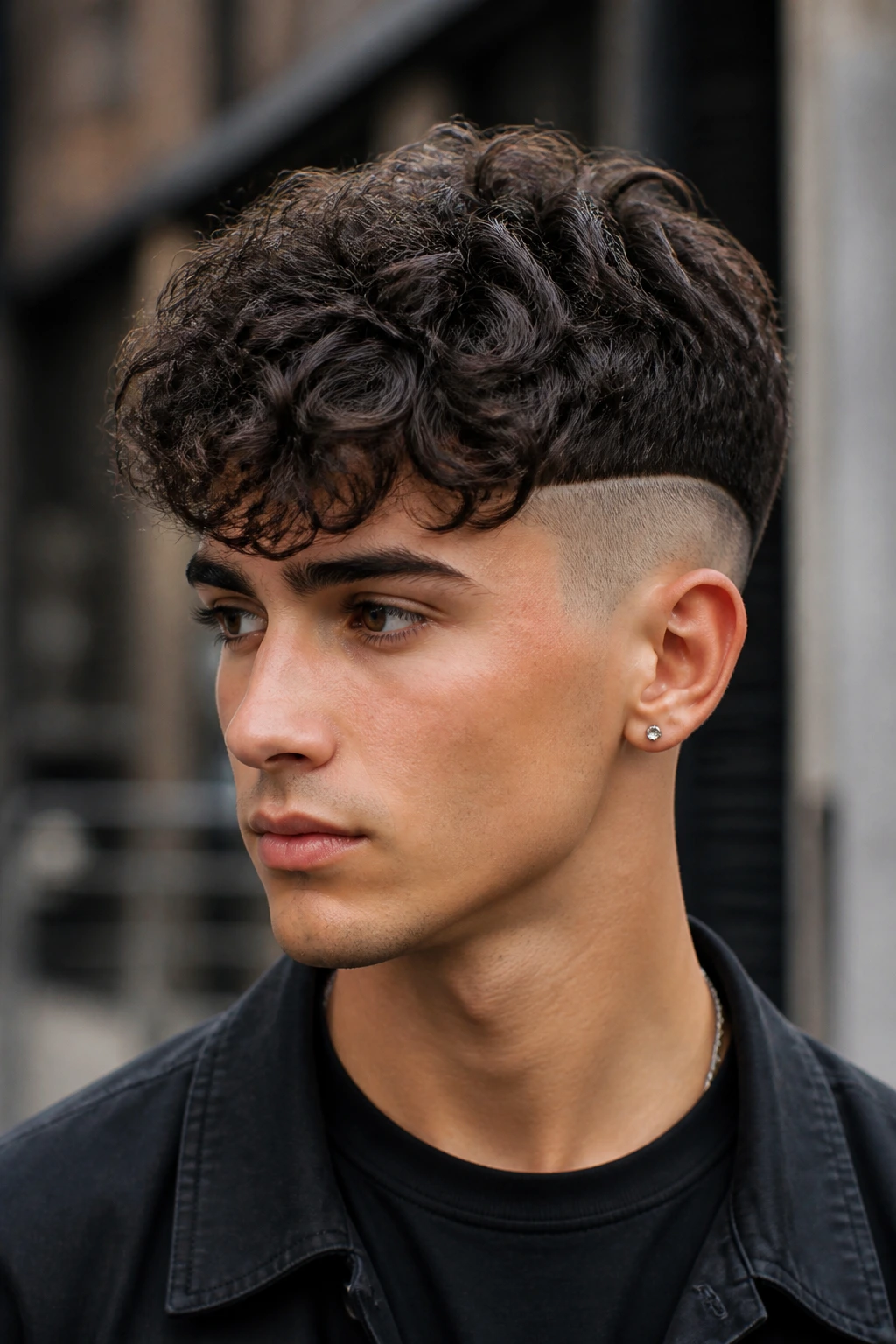
This is the boldest crop in the group. The sides are taken down very short, but the top stays clearly longer, and the disconnect between the two is part of the appeal. On curly hair, that contrast can look strong and modern, especially if the curl pattern has enough body to sit above the fade without collapsing.
The trick is restraint on the top. You want length, yes, but not so much that the curls turn into a separate hair system sitting on the skull. Around 3 to 4 inches is often enough, depending on how tight the curls are. The fringe can fall forward or slightly off-center, but it should still look cropped, not grown-out.
This version is for guys who want a little attitude in the haircut. It reads more fashion-forward than the low taper or the French crop. It also needs a barber who understands contrast, because the disconnect has to be intentional. If the blend is messy, the cut just looks unfinished.
Styling is best done with a light cream or a mousse-to-paste combo. Keep the top separated into curls, not one giant mass. A touch of dry texture spray can help if the hair tends to fall flat by midday.
13. Rounded Crop for Coarse Coils
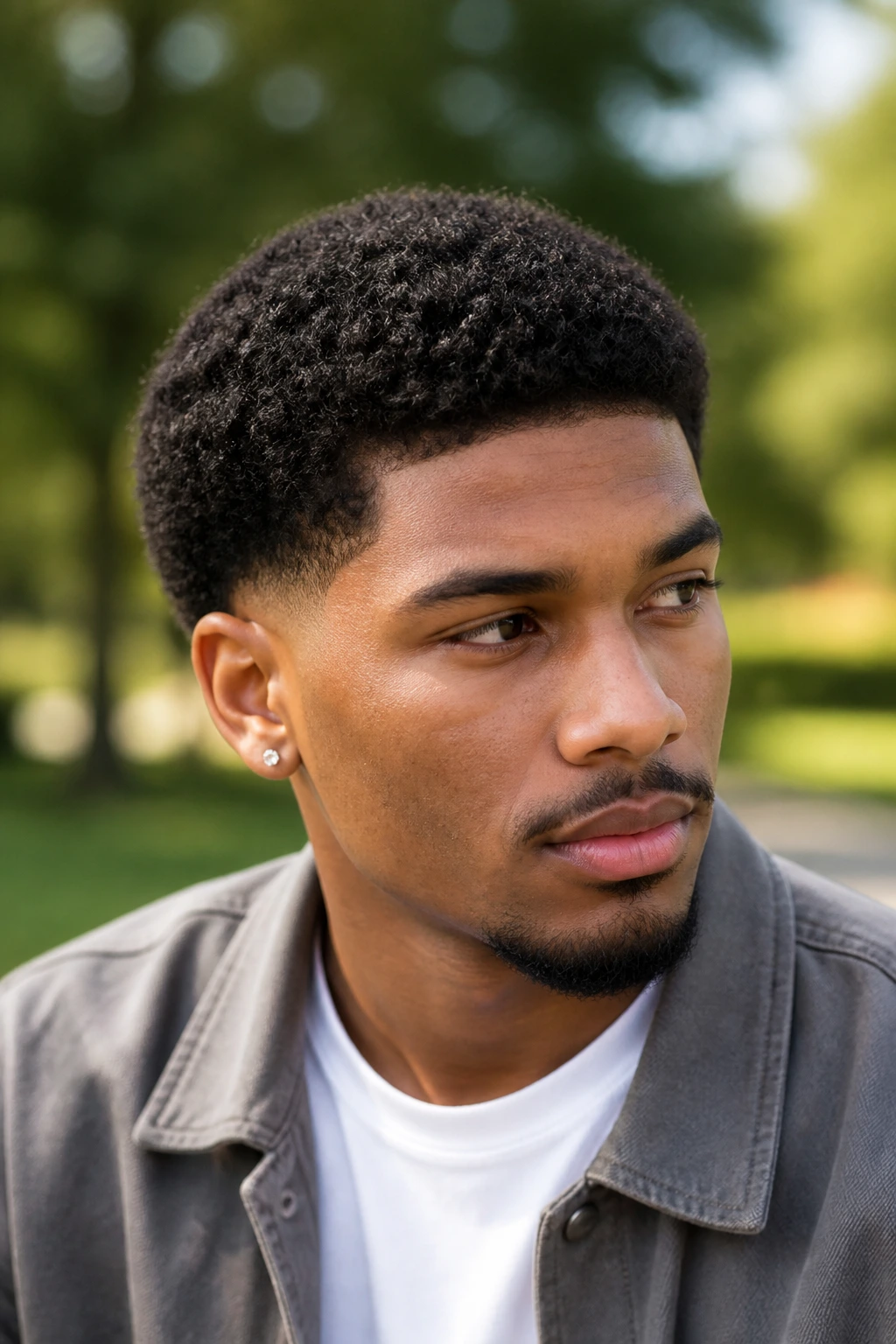
Coarse coils can get boxy fast. The rounded crop fixes that by keeping the silhouette curved from temple to crown, rather than forcing a hard square edge. It is a small thing, but on dense hair it changes the whole look. The cut sits closer to the head and avoids that awkward triangle shape some men get after a blunt trim.
Ask your barber to preserve a rounded outline on top and to be careful not to take too much off the crown. Coarse curls or coils often need a bit of weight up there, otherwise the top stands up in the wrong places. The sides can be tapered, but not stripped down so much that the top starts looking like a separate object.
This cut is especially useful for men who like structure but do not want a sharp line-up. The round shape softens the face and keeps the haircut from looking harsh. It also works well if your curl pattern is uneven from front to back, because the curved shape hides small differences better than a flat top line does.
A moisturizing curl cream is usually enough. If the hair is dry, add a few drops of lightweight oil to the ends only. The ends, not the roots. Roots don’t need to be greasy to behave.
14. Messy Crop for Low-Maintenance Mornings
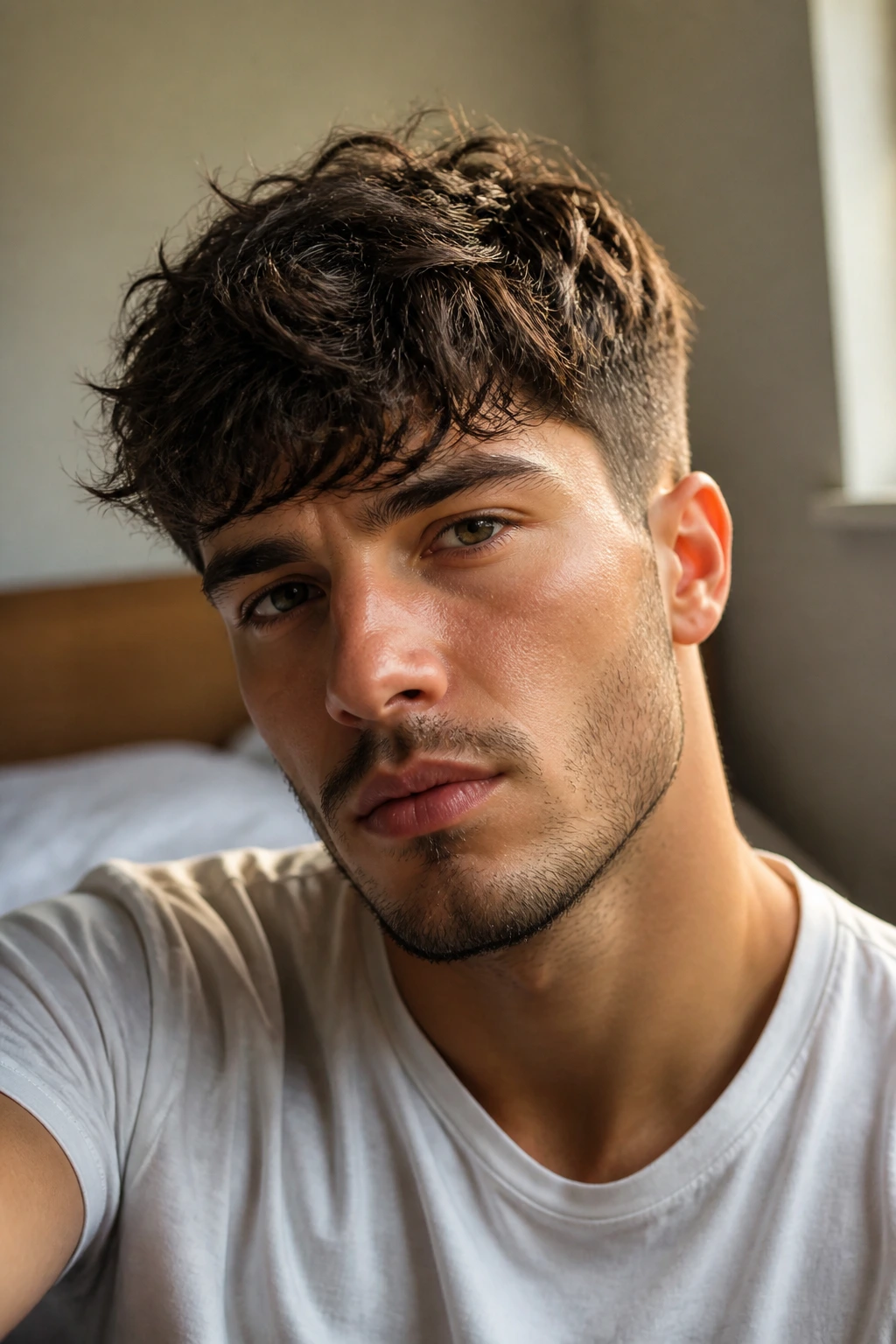
Some haircuts look best when they’re a little off. This is one of them. The messy crop keeps the top choppy and irregular, with a fringe that falls where it wants to fall. That makes it ideal for men who do not want to spend time trying to make curls obey a single direction.
The cut still needs shape, though. That’s the part people miss. “Messy” does not mean careless. It means the top is cut with enough uneven texture that the curl pattern does the styling for you. The sides should stay neat enough to keep the outline grounded, but the top can be looser and more lived-in.
This is a strong choice if your curls are naturally frizzy or if you like a slightly rugged finish. It forgives second-day hair better than a sharper crop, and it doesn’t panic when a few strands refuse to lie down. Good. They shouldn’t all lie down.
Use a light curl cream on damp hair, then stop touching it. Seriously. The more you manipulate a messy crop, the flatter or frizzier it gets. Let it dry, then separate just the front pieces if needed. That’s enough.
15. Ivy Crop with Curly Texture

The Ivy crop sits somewhere between a classic side-parted cut and a textured crop. It has a slightly smarter feel, but the curly texture keeps it from looking too stiff. If you want something that can move from office to dinner without a haircut change, this is one of the better options.
What makes it different is the control at the front and the slight suggestion of direction on top. The hair is still cropped and textured, but the top has a subtle sweep instead of falling straight down. On curly hair, that can look very clean if the curls are loose enough to follow the direction without fighting it.
I like this version for guys who wear glasses or sharper collars. The haircut gives structure to the face and the frame without demanding a lot of product. It also pairs well with a low taper or a subtle mid fade, because the cleaner sides let the top do the talking.
A matte paste or light cream is usually the right move. Work the product in with your fingers, guide the front to one side, then stop. If you keep combing, the texture disappears. That’s the trade. Texture and polish don’t always share the room politely.
16. Low Drop Fade Crop with Beard Blend
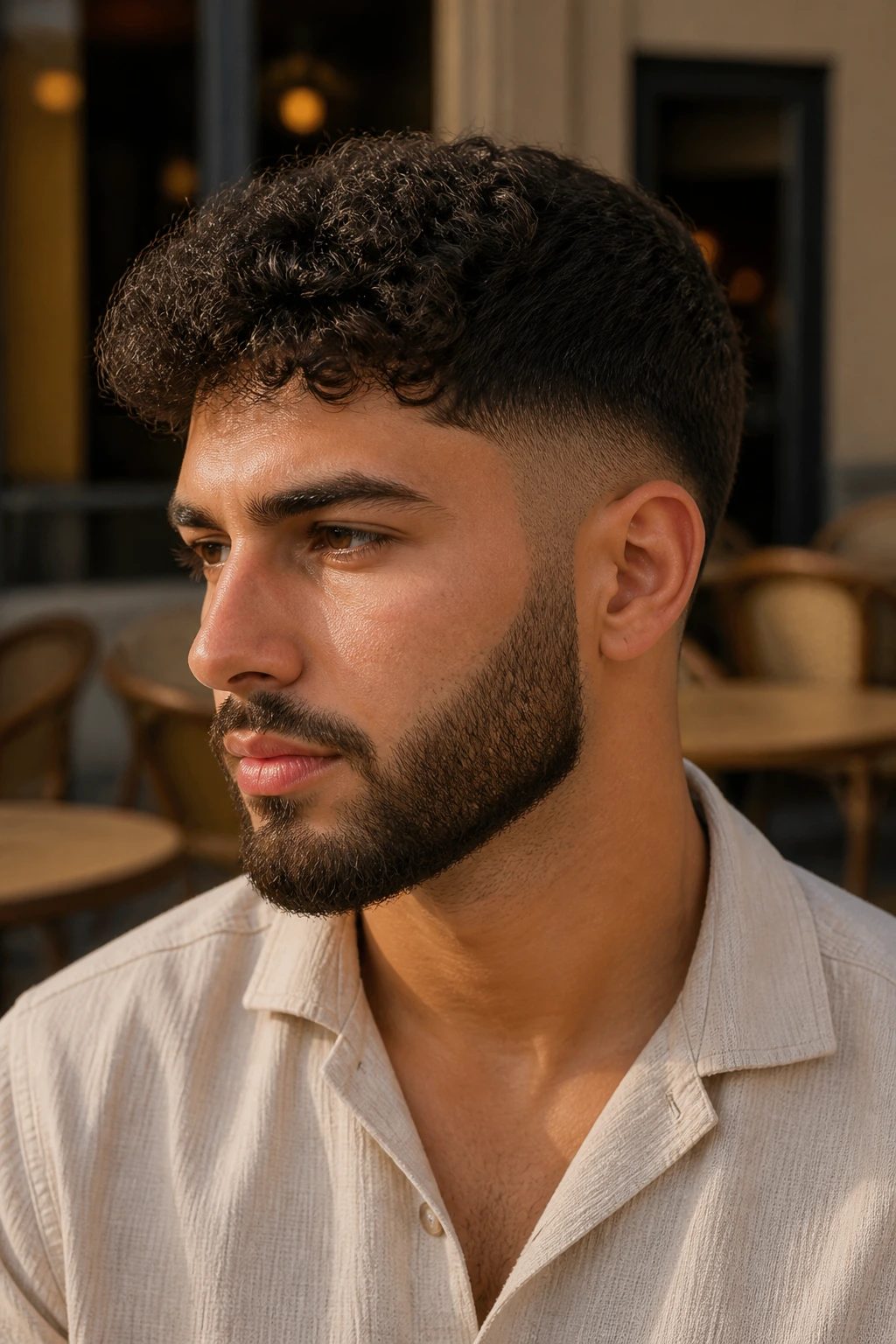
If you wear a beard, pay attention to the transition at the sideburns. A low drop fade that blends into the beard can make a curly crop look much more finished than a hard break between hair and facial hair. The haircut suddenly feels connected, not chopped into separate parts.
This version works especially well on men with stronger jawlines or fuller beards. The drop fade lowers behind the ear, the top stays cropped and textured, and the beard blend ties the lower half of the face into the haircut. That gives you a cleaner visual line from temple to jaw. It also keeps curly volume from bunching up around the ears.
The top can stay pretty simple here. You do not need an elaborate fringe if the beard is doing some of the framing. A broken, medium-length top around 2.5 to 3 inches is usually enough. Keep it soft, not stiff.
Use a beard trimmer and haircut trimmer to maintain the blend every couple of weeks. If the beard line climbs too high, the crop starts floating above it. That floating effect is not flattering. A smooth transition fixes that fast.
17. Short Crop for Athletic, Easy Wear
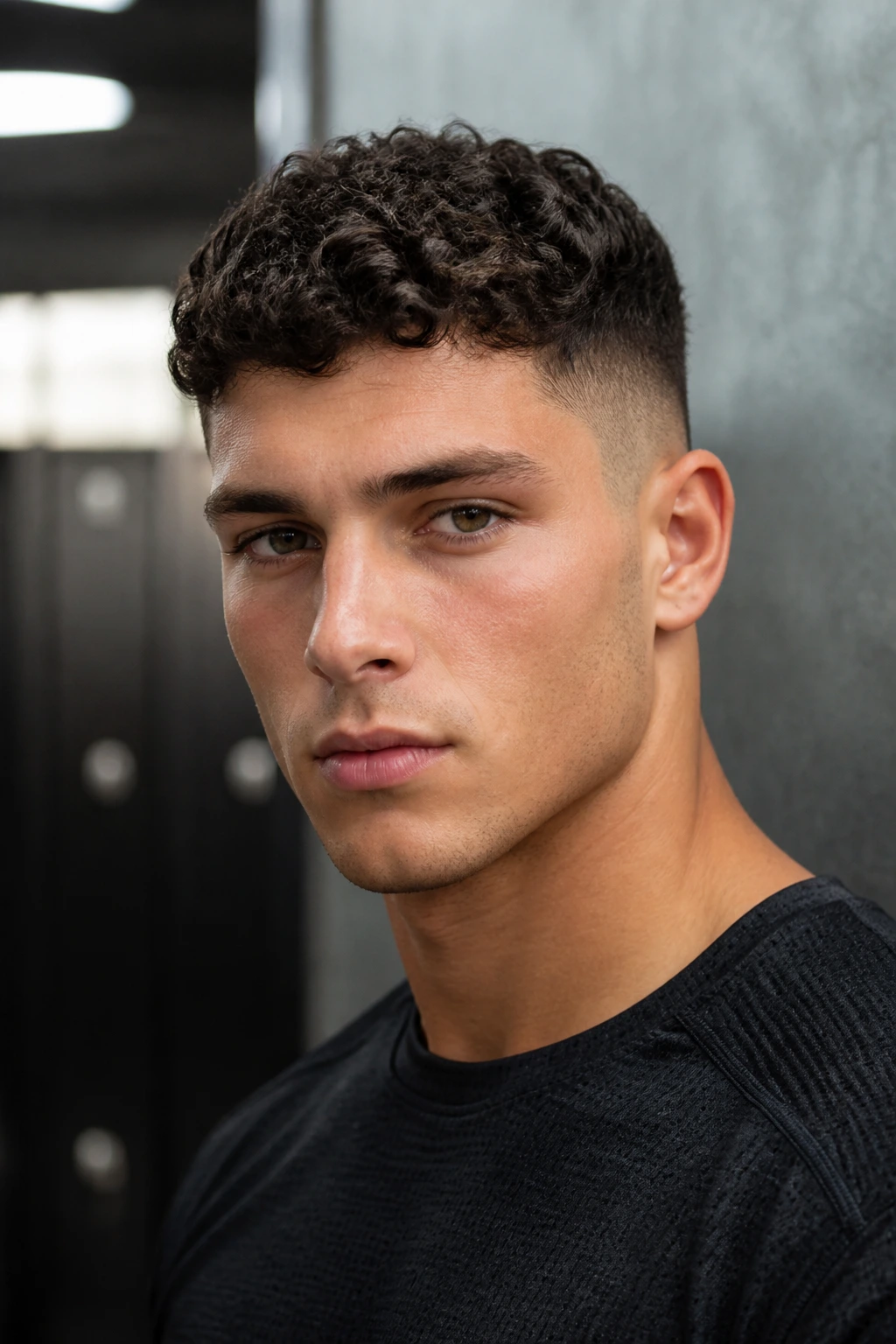
Sometimes the best haircut is the one you don’t think about. The short crop is the leanest version in the group: short top, short sides, just enough texture to keep the curls visible. It works well for men who train, sweat, wear helmets, or simply dislike spending time in front of the mirror.
Because the top is shorter, the curls need a barber who understands where the natural pattern sits. If it’s cut too short, the texture disappears. If it’s left too long, the whole thing stops being low-maintenance. The sweet spot is usually around 1.5 to 2 inches on top, with a tapered or faded side that keeps the outline tidy.
This one can be a lifesaver for thick hair that gets unruly in heat. The short crop dries fast, uses less product, and grows out in a controlled way. It’s also one of the better choices if you want a crop that looks fine even after a rough night’s sleep.
A small amount of light paste or nothing at all can be enough. If the hair bends naturally, let it. The point of this cut is not to force a style. It is to keep the curl from taking over the whole head.
18. Longer Grow-Out Crop for Transitioning Hair
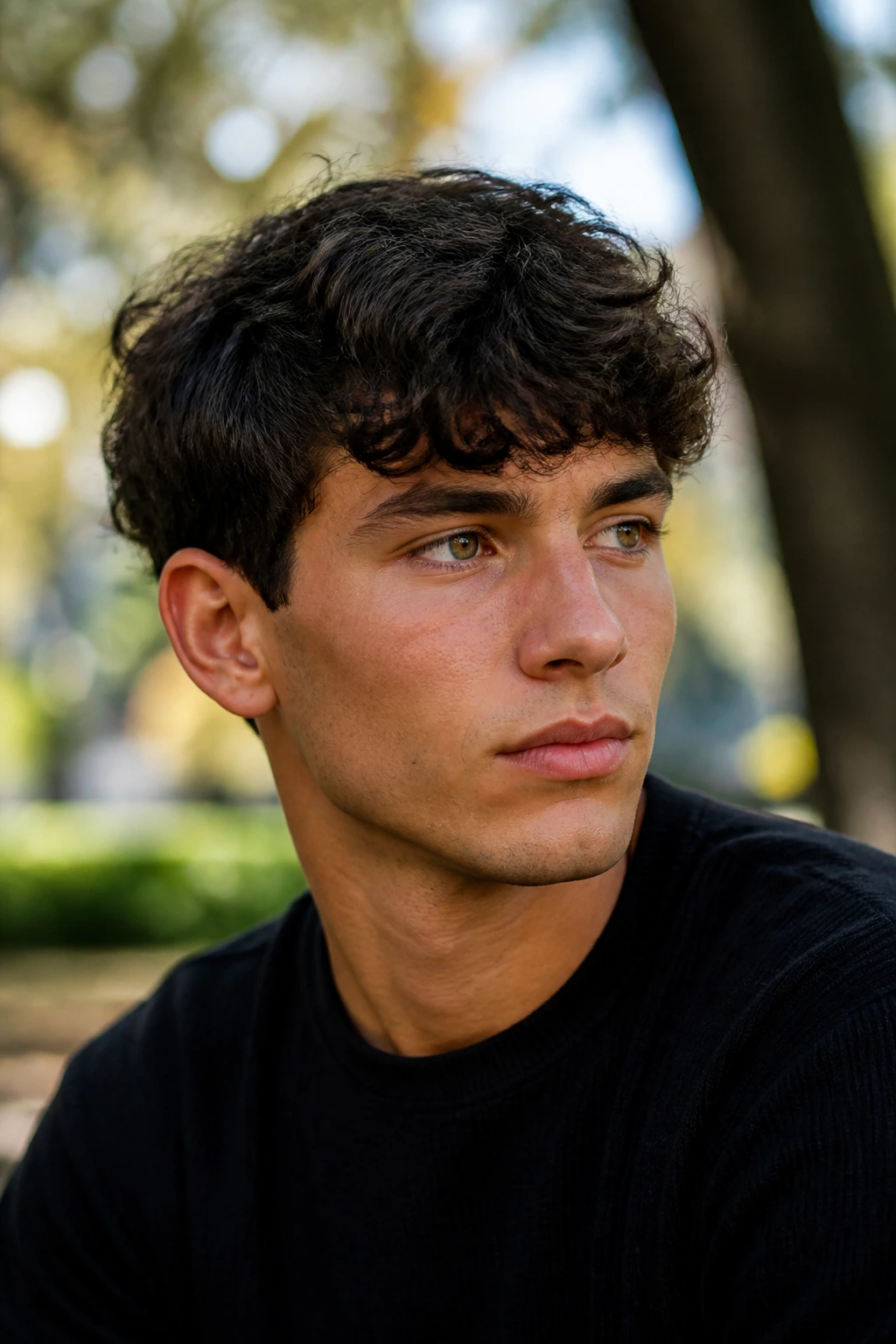
Growing out curly hair is where patience gets tested. The awkward stage can last a while, and that is exactly why a longer grow-out crop helps. It keeps the sides cleaned up and leaves enough top length to move toward a fuller curly shape without looking like you’ve given up halfway through.
The barber should preserve the front fringe and the crown length while lightly tidying the sides and back. That keeps the outline from becoming shapeless. Around 3 to 4 inches on top is often the right landing point if you want the hair to grow into a longer textured fringe later. Less than that and you lose momentum. More than that and the cut starts behaving like something else entirely.
This version is a good bridge cut if you’re coming from a shorter crop and want more movement later. It also works if you’ve had a buzz or fade for a while and want to shift toward a fuller top without enduring the ugly in-between months alone.
Use curl cream and a diffuser while the top is in this transition stage. The goal is to keep the curl pattern calm enough that the growing shape still looks deliberate. It will not be perfect every day. Fine. Hair rarely is. But it will look better than a random grow-out.
How to Style a Curly Crop Without the Crunch
The easiest way to ruin a textured crop is to drown it in product and then act surprised when the curls look stiff. Curly hair usually wants a little moisture, a little grip, and a light touch. That’s all. The texture should still move when you touch it, not crack like dried paint.
Damp hair first: Pat the hair with a microfiber towel or a soft T-shirt until it’s no longer dripping. Then work in a nickel-size amount of curl cream or mousse. Start at the back and move forward so you do not overload the fringe. The front is the part people see first; don’t cake it.
Shape with fingers, not a comb: A wide-tooth comb can help in the shower, but once you’re styling, your fingers do a better job of keeping the crop piecey. Pinch a few front curls together, push some pieces forward, and leave some smaller bends exposed. That broken texture is the whole point.
Use paste only after drying: If you want more definition, wait until the hair is dry and then use a pea-size amount of matte paste on the fringe or crown. Warm it in your hands first. Cold paste grabs in clumps and makes the top look patchy.
Fix flat roots with water, not more product: A light mist from a spray bottle can wake the curls back up. Re-scrunch the front and let it air-dry again. Most people reach for more cream when they need a little water and a little patience.
The Mistakes That Make These Cuts Look Off
-
Taking the top too short: The curls spring up once dry, and the crop ends up looking shorter than the mirror suggested. The fix is simple: leave more length than you think you need, especially in the fringe and crown.
-
Fading the sides too high for your curl density: A high fade can look sharp on fine curls, but on thick curls it can make the top seem too heavy. If your hair builds bulk fast, keep the fade lower or let the taper stay softer around the temple.
-
Using heavy cream like it’s a cure-all: Thick curl creams can make some crops collapse, especially on fine or looser curls. If the hair looks greasy by noon, switch to mousse or a lighter leave-in and use less of it.
-
Over-thinning the top: Thinning shears can feel useful in the chair, but they often create frizz and uneven ends on curly hair. Better to point cut and remove bulk in controlled passes.
-
Ignoring the crown swirl: A crop can look fine in the front and awkward from the back if the crown is left to do its own thing. Tell your barber where the swirl sits and how it normally pushes the hair.
-
Trying to force every curl into line: Curly texture looks better with small differences between pieces. If every strand is aimed the same way, the cut starts looking stiff and fake.
Ways to Adapt the Look for Different Curl Patterns
The Softer Office Crop: Keep the taper low, leave 2 to 3 inches on top, and let the fringe sit broken rather than blunt. This is the easiest variation to wear with button-down shirts, glasses, and a clean neckline.
The Sharp Contrast Crop: Push the fade higher, keep the sides skin-close, and leave the top textured but controlled. This version suits men who want the haircut to read bolder from a distance. It needs more upkeep.
The Coil-Friendly Crop: Keep a rounded top shape, preserve a little more weight at the temple, and skip aggressive thinning. This version respects tighter curls instead of trying to flatten them into a straight-haired shape.
The Beard-Linked Crop: Blend the sideburns into the beard instead of stopping abruptly at the ear. This helps the haircut feel connected, especially if your beard is fuller than your hair.
The Grow-Out Crop: Leave the top a half-inch longer than usual and ask for softer cleanup around the sides. That makes the haircut hold its shape while you move toward medium length.
Tools and Products That Make Curly Crops Easier
-
Diffuser attachment: Helps curls dry with shape instead of stretching out or frizzing at the roots.
-
Microfiber towel or soft T-shirt: Better than rough terry cloth, which can rough up the cuticle and puff up the curl.
-
Spray bottle: Useful for reactivating curls on day two without starting from scratch.
-
Curl cream: Best for soft hold and moisture on medium to thick curls that need calm more than control.
-
Mousse: A good fit for finer curls or looser waves that need lift without weight.
-
Matte paste or clay: Use sparingly for a drier, piecey finish on the fringe or crown.
-
Wide-tooth comb: Handy in the shower or while conditioner is in the hair; less useful once the curls are set.
-
Hand mirror: Worth it if you trim your neckline at home or want to check the crown, which always looks different from the front.
-
Texturizing scissors: Optional for home maintenance, but only if you actually know how to use them. They are not a toy.
Keeping the Shape Between Barber Visits
A textured crop can hold its shape for a while, but it will not babysit itself. The edges around the neck and temples usually need a tidy-up every 2 to 3 weeks if you like a sharp outline. The top can go 4 to 6 weeks before it starts losing the crop shape, though thick or fast-growing curls may need a little sooner.
Wash frequency matters more than people think. If your scalp gets oily, wash 2 to 3 times a week with a gentle shampoo and use conditioner on the mid-lengths and ends. If your hair is dry, rinse less often and focus on moisture. Curly hair likes to be clean enough to behave, not scrubbed into a straw patch.
Night care helps too. A satin or silk pillowcase reduces the friction that flattens the fringe and roughs up the sides. If your curls are longer on top, a loose pineapple or a soft push upward can keep the front from getting crushed. It sounds fussy. It isn’t. It takes ten seconds.
Between cuts, a spray bottle and your fingers are usually enough to refresh the top. If the fringe starts sticking out in weird directions, dampen it lightly, pinch it back into shape, and let it dry again. If the shape has gone too far, book the barber. Do not try to rescue a dead crop with more product. That road gets greasy fast.
Frequently Asked Questions
Can curly hair really pull off a crop, or does it need more length?
Yes, curly hair can absolutely pull off a crop, as long as the barber leaves enough length on top for the curl pattern to show. The key is balance: short enough on the sides to control bulk, long enough on top that the texture still reads as curls rather than fuzz.
Should a barber cut curly hair wet or dry?
Dry or mostly dry is safer for many curly crops because it shows the real length and shrinkage. Some barbers use a damp foundation and then refine it dry, which can work well too. Fully wet cuts are where people often get surprised later.
What product is best for a textured crop on curly hair?
That depends on how your hair behaves. Curl cream works well for softness and moisture, mousse gives lift to finer curls, and matte paste helps with piecey definition once the hair is dry. If your hair is already coarse and dry, start lighter than you think.
How short can the sides go before the cut looks too harsh?
If your curls are thick or tight, a very high skin fade can make the top seem heavy. A low or mid taper is usually easier to wear. Fine curls can handle sharper contrast because the top does not balloon as easily.
What if my curl pattern is uneven?
That’s normal. Most curly heads are uneven somewhere — one side bends more, the crown swirls one way, or the fringe sits different on each side. A good barber shapes around that instead of pretending it doesn’t exist.
Can a textured crop work if my hair is thinning?
Yes, but the length matters. Keep the top short enough that it looks full and avoid over-thinning the crown. A crop with a low taper and textured fringe often works better than a longer style that separates and shows scalp.
How often should I get it trimmed?
Most curly crops need a cleanup every 3 to 5 weeks, depending on how fast your hair grows and how sharp you like the outline. If you wear a skin fade, you may want the sides touched up sooner than the top.
Can I grow a crop into a longer curly style later?
You can, and a good grow-out crop makes that process much less awkward. Keep the fringe and top a little longer each time, clean the sides carefully, and resist the urge to chop everything down when the shape starts getting messy. That messy stage is usually temporary.
The Crop, Kept Honest
The reason these textured crop haircuts work is simple: they let curly hair be curly without letting it take over the room. A crop gives the curl pattern a boundary. A taper or fade clears the bulk. The fringe pulls the shape forward. That combination is why this cut keeps showing up in barbershops and why it keeps working on different heads, different densities, and different curl types.
Pick the version that matches your hair’s real behavior, not the version that looks coolest in a single photo. That’s where the good cuts live. And once you find the one that sits right on day one and day three, you’ll stop thinking of your curls as difficult and start treating them like the shape they were always trying to make.