



Fine hair on a toddler boy has a stubborn habit of lying flat where you want shape and puffing out where you want neatness. Nape undercut bobs for toddler boys with fine hair work because they steal weight from the neckline without stealing outline from the rest of the head. The result is cleaner than a shaggy grow-out, softer than a buzzed crop, and far less fussy than the kind of cut that needs half a tube of styling paste to survive breakfast.
I like the undercut low, almost hidden, not shaved high. A toddler’s hairline changes fast, and a hard disconnect around the neck looks sharp for about ten days and then starts looking patched and busy. Keep the cut soft at the edge, and it grows out like it was meant to be there.
There’s also a useful little hair truth that gets ignored all the time: fine hair is not the same thing as thin hair. Fine means the strand itself is small in diameter. Density may still be good. That means the right bob can give the eye a clear perimeter while the undercut removes the fuzzy bulk that makes the nape sit out like a shelf.
Some versions lean round and sweet. Others have a cleaner fringe, a little more edge, or a better answer for a nasty cowlick. The trick is choosing the shape that fits the child’s hair pattern instead of fighting it.
Why These Bob Shapes Earn Their Keep on Fine Hair

-
The nape undercut removes the limp zone: Fine hair often collapses right where shirts and collars rub, and a low clipper clean-up keeps that part from ballooning outward.
-
The bob perimeter gives the eye a line to follow: A blunt or softly rounded edge makes soft strands look intentional because the silhouette stays visible even when the texture itself is wispy.
-
The shape survives rough days better than a fussy cut: When the top is not over-layered, a quick mist of water and a finger-comb usually puts the haircut back in place.
-
Cowlicks get a job instead of a fight: Several of these shapes curve around a swirl at the crown or nape, which matters more than most parents expect.
-
Grow-out looks softer than a hard fade: A low undercut can stay tidy for weeks, and when it starts to return, it blends back into the bob instead of drawing a sharp line across the neck.
-
The cut still reads as a bob, not a boy crop: That matters if you want length around the face and ears but do not want the hair sitting on the collar all day.
1. Soft Chin-Length Bob with a Low Nape Tidy
A chin-length bob is the calmest place to start when the hair is fine and the child’s head moves constantly. The line at the chin gives the eye something solid to read, while the low nape tidy quietly removes the soft fluff that usually sticks out under the occipital bone. It looks neat without looking severe. That’s the whole appeal.
Why It Works on Fine Hair
The weight stays where it matters: around the perimeter. Fine strands need a visual boundary, and chin length gives that boundary a little swing without letting the ends scatter. Keep the underside low and narrow, not high and shaved, so the top layer can drape over it naturally.
Ask for:
- Chin-length perimeter with soft point cutting at the ends
- Low nape undercut, just enough to clear the neckline
- Slight taper around the ears, not a hard disconnect
- No heavy layering through the crown
This cut is especially good when the hair grows a little forward at the temples and a little outward at the neck. It keeps the shape civilized. If you like a haircut that still looks decent after a nap, this is the one I’d pick first.
2. Rounded Ear-Hugging Bob
Want the haircut to sit close without looking squeezed? The rounded ear-hugging bob does that better than almost any other shape in this list. The sides curve gently around the ears, the back stays compact, and the undercut stays low enough to stay hidden under the bob line.
What you get is a clean outline that follows the head instead of floating away from it. On fine hair, that rounded edge matters. Straight, wispy strands can look sparse when they’re left in a flat square; a curve gives them more presence.
This is a smart choice for toddlers who tug at their ears, hate hair brushing the collar, or wear hats a lot. The haircut sits down and behaves. Tell the barber you want the ears softly framed, not exposed, and the neckline kept neat without taking the sides too high. That little instruction saves you from a shape that grows out into a puffy mushroom on week two.
3. Hidden Undercut Mushroom Bob
A mushroom bob can go wrong fast on fine hair if it turns into a helmet. Done with restraint, though, it gives one of the best round silhouettes for little boys with soft strands. The trick is a hidden undercut at the nape and a top layer that keeps enough length to fall over it.
The result looks fuller than a simple blunt cut because the rounded outline creates the illusion of density. The hair doesn’t have to be thick to look thick. It just has to be shaped with enough honesty that the perimeter reads clearly.
What to Watch For
Keep the graduation minimal. Too much stacking and the back starts to kick up like a wedge. Too little, and the shape loses the roundness that makes it work. I’d ask for a rounded back with point-cut ends and a very low clipper clean-up underneath — not a high, obvious buzz line.
This is a good fit if the top is flat but the sides are not especially stubborn. The curve will do the heavy lifting. Fine hair likes that kind of help.
4. Side-Swept Fringe Bob
A good fringe solves more toddler haircut problems than any jar of styling product ever will. The side-swept fringe bob keeps the forehead soft, hides a sparse temple if one side grows slower than the other, and gives the cut a little movement even when the rest of the hair is very straight.
The nape undercut clears the back so the fringe can be the star. That’s the real trick. If the neck is bulky and the front is sweeping, the whole haircut looks unbalanced. Remove the weight below and the front line suddenly makes sense.
Barber Note
Ask for the fringe to fall just above or into the eyebrow, not cut short and blunt across the forehead. Fine hair often springs upward when it’s cut too short, and nobody wants a tiny hedgehog line over a toddler’s eyes. A softer side sweep also gives you some forgiveness if the front cowlick pushes one way in the morning and another way after a car seat nap.
This shape works best when the child’s face is a little rounder or the forehead is broad. The fringe softens the frame. Easy.
5. Micro-Stacked Bob for Flat Crowns
Some fine hair goes flat at the back instead of the front. That’s the whole problem. The micro-stacked bob answers it with a tiny bit of graduation in the back, just enough lift to stop the crown from lying like wet paper.
I’m not talking about a dramatic wedge or a dated stacked-bob helmet. The stack should be nearly invisible. A few millimeters of graduation can make the back look fuller while the low nape undercut keeps the neckline from puffing out underneath.
Best when: the crown is flat, the hairline at the neck is soft, and the hair lies so close to the head that it disappears in photos.
The cut works because it changes the shape without asking the hair to perform. Fine hair rarely loves a lot of layering. It does, however, respond well to a small shift in angle. That little shift is enough to stop the bob from looking dead straight and give the back a bit of life.
6. Curtain-Fringe Bob with a Soft Nape Scoop
If bangs are a battle in your house, split them. A curtain fringe gives the forehead air and keeps the hair from hanging straight down into the eyes, which is usually where toddler patience runs out. The bob underneath stays round, while the nape gets scooped low so the back doesn’t turn blocky.
This is one of the nicer options for fine hair because it avoids blunt heaviness. A center part or slightly off-center part lets the fringe fall in two soft pieces, which can be easier to push aside with damp fingers than a solid front line.
A soft nape scoop matters here. The back should curve, not square off. Square backs on fine hair can make the head look boxy and the neck look longer than it is. A gentle scoop fixes that without making the cut look feminine or precious — it just looks tidy, which is the point.
7. Blunt Bob with Feathered Ends
Blunt does not have to mean heavy. On fine hair, a blunt bob can actually make the ends look denser because the eye sees one clean edge instead of scattered wisps. Feathering just the very tips softens the line enough that it doesn’t feel stiff.
That combination is useful on toddler boys because the hair still has movement when they turn their head, but it doesn’t explode into separate little strings by noon. The low undercut under the nape removes the extra bulk that would otherwise make the bob flip outward against a shirt collar.
What I Like About It
The perimeter stays honest. Fine hair often needs a little bluntness to avoid looking scrappy. If you’ve ever seen a toddler’s hair after a too-layered cut, you know the problem: it looks fluffy in the wrong places and see-through in the others. This version skips that mess.
Ask the barber not to thin the ends with thinning shears. Point-cut the tips if you want softness. That’s the better move.
8. Bowl-Bob Hybrid with a Low Clip
This one has a bit of a retro edge, but it works well when the hair is very straight and wants to lie flat. Think of it as a modern bowl bob with a low clipper cleanup at the nape, so the haircut keeps its rounded top without turning into a full helmet.
The important part is restraint. The sides should not sit too tight to the skull, and the back should not be carved up high. Leave enough length over the ears that the shape still has some air in it. Fine hair can handle roundness; it just cannot carry too much bulk.
I like this cut on kids whose hair sticks out at the sides after washing. The rounded curve pulls that outward fluff back into a cleaner line. If the child has a strong cowlick at the nape, the low clipper section should be curved around it rather than cutting straight across it. That saves you from the little tail that pops out when the hair dries.
9. French Bob for Wispy Fine Hair

A French bob works when you want the haircut to look deliberate even when the hair itself is soft and a little scattered. It usually sits a bit shorter, around cheekbone or lip level, with a light fringe or no fringe at all and a nape that is cleaned up just enough to keep the outline sharp.
That shorter length is the reason it suits wispy fine hair so well. Long fine hair can slide into stringiness fast. A French bob trims the length back before the ends lose their shape, which makes the whole style look denser and more finished.
It also photographs well on little boys because the line around the face stays visible. The neckline should be tidy but not shaved high. Keep the undercut low and let the upper layers fall over it. If you want a bob that looks artsy without being fussy, this is the one I’d point to first.
10. Layered Bob with Point-Cut Ends
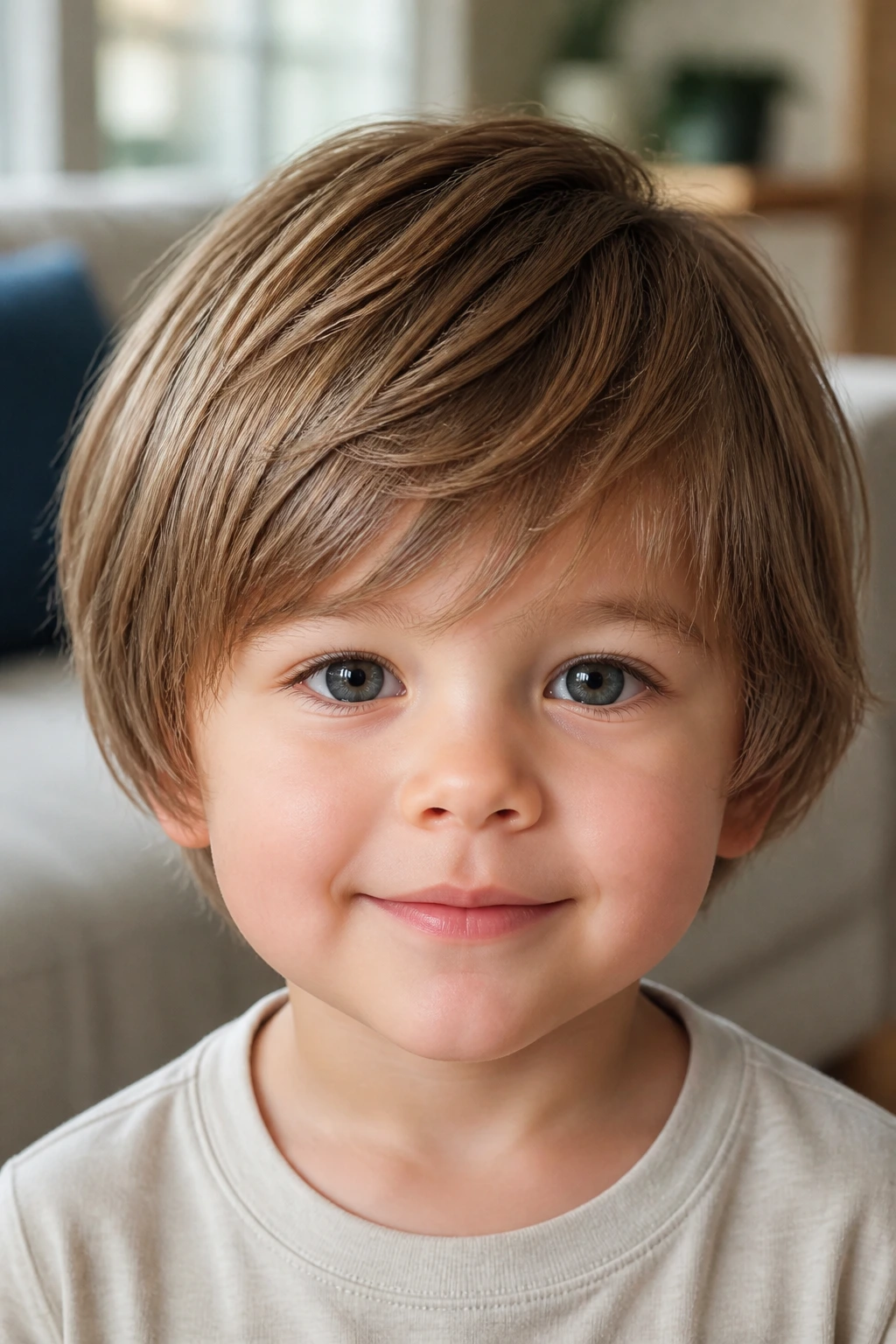
Layering on fine hair is tricky. Too much, and the haircut goes transparent. Too little, and the shape can feel stiff and blocky. A layered bob with point-cut ends sits in the middle and uses very light internal layers to create movement without exposing scalp.
Point-cutting matters more than people think. It breaks the blunt line just enough that the tips don’t sit like one hard strip. On a toddler, that softer finish helps the haircut move when they run, climb, or flop onto a couch, but it still keeps the perimeter visible.
Where the Layers Stop
They should stop well before the top starts looking empty. If the hair is already fine, the crown does not need aggressive thinning. The nape undercut takes care of the bulky part underneath; the point-cut ends handle the rest. That’s enough.
This is a nice choice when the hair has a little natural bend and you want to encourage it, not fight it. Straight and flat? Keep the layers minimal. A little movement? Perfect. The cut can take it.
11. Long-Front Bob with a Short Nape
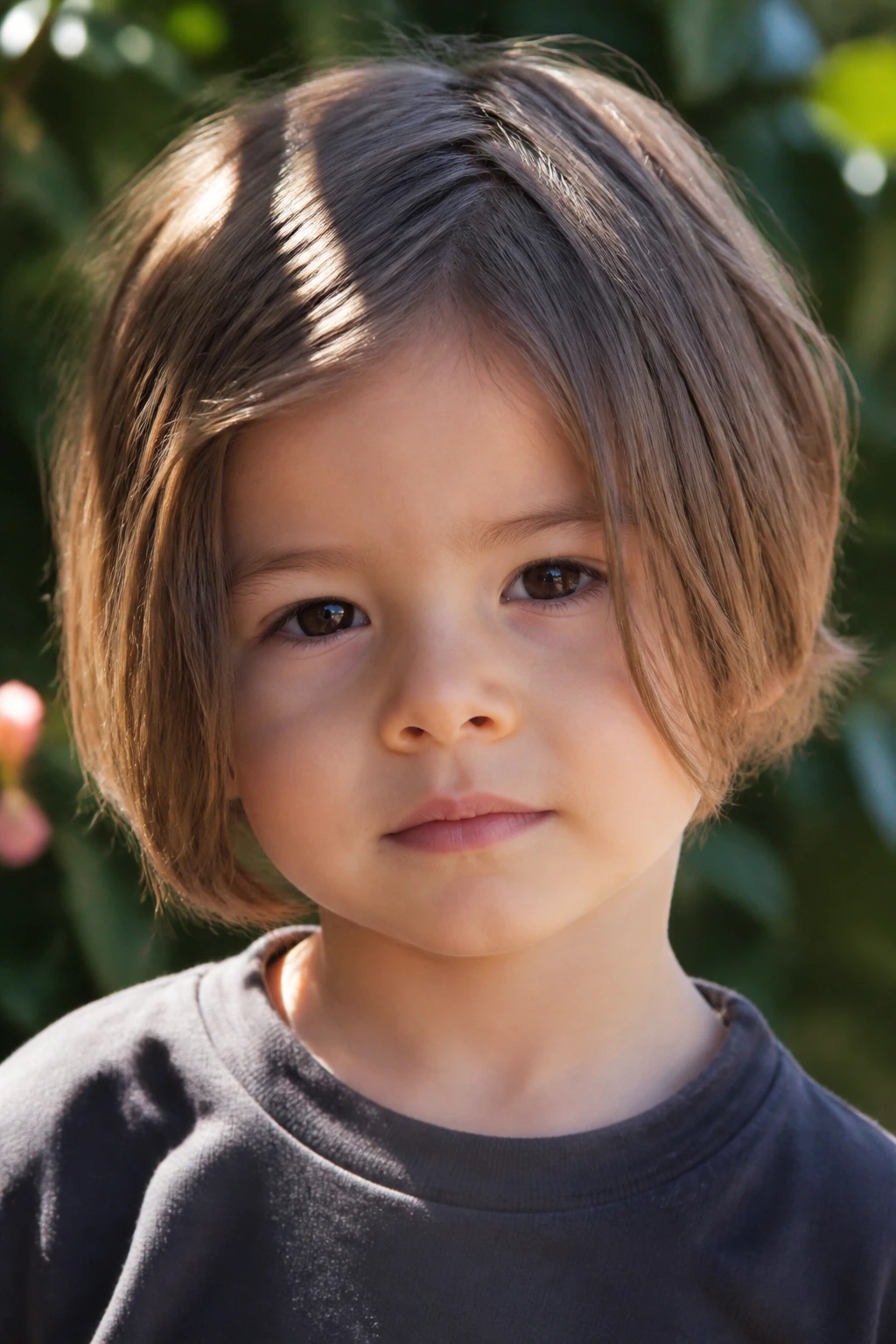
Want length without neck bulk? This shape gives you both. The front stays longer, often down near the lips or chin, while the back is shortened enough to clear the collar and sit flat against the neckline. It’s a smart compromise for parents who want the softness of a bob but not the extra maintenance of long hair.
The front pieces help fine hair look fuller because they create a frame around the face. The short nape keeps the underside from puffing out, which is the main thing that makes toddler haircuts look messy by the second week.
This cut is useful for kids who hate hair on the neck but also dislike short sides. The length lives where it can be seen. The undercut lives where it can be forgotten. Tell the barber to avoid a sharp disconnect; the back should taper into the longer front in a way that still looks like one haircut.
12. Asymmetrical Bob for Straight Fine Hair
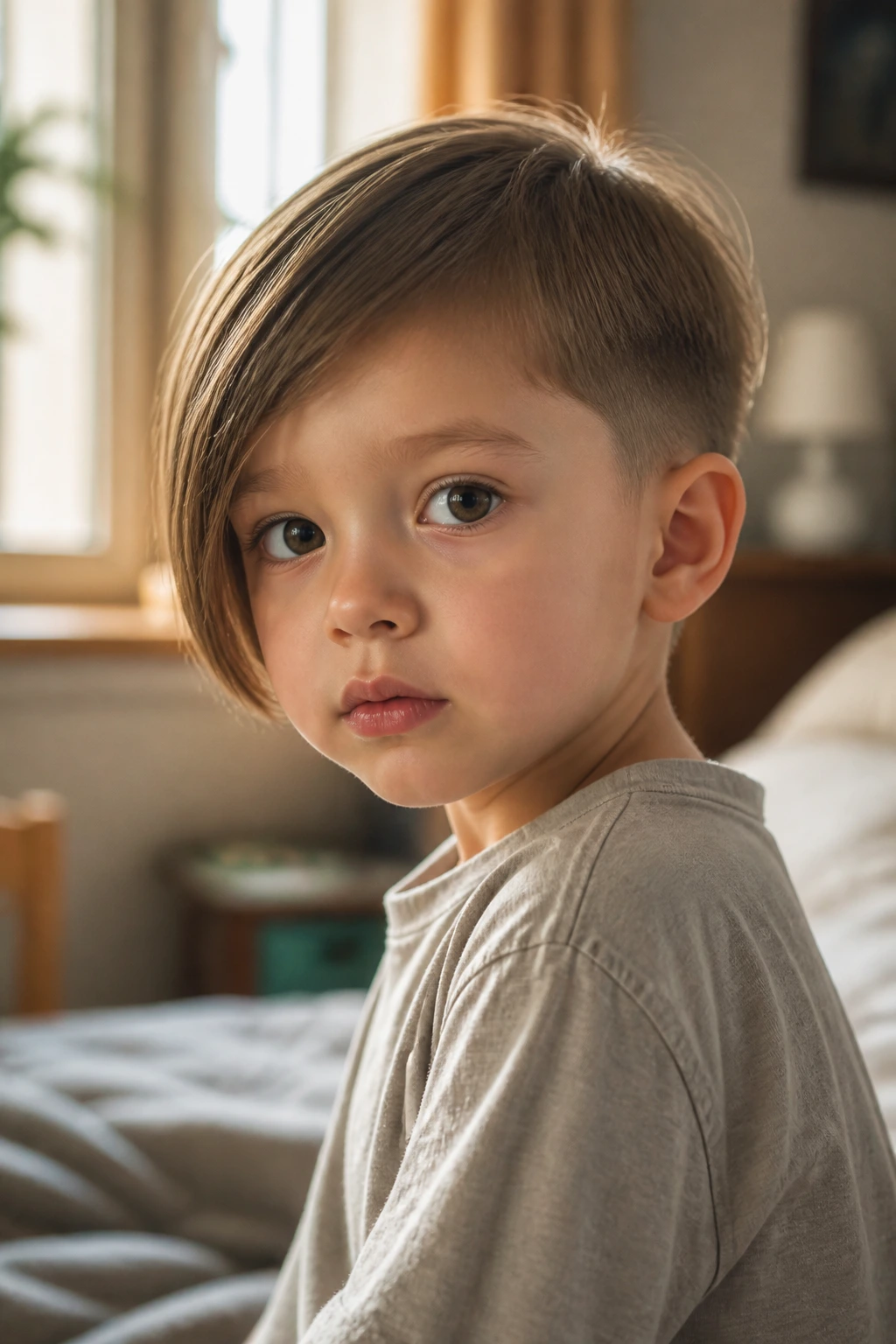
A tiny bit of imbalance can do a lot for straight fine hair. The asymmetrical bob leaves one side a touch longer — usually not more than half an inch to three-quarters of an inch — so the haircut feels like it’s moving instead of sitting dead flat.
That small difference helps hide growth patterns too. If one temple comes in thinner or a side part keeps separating in the same place, asymmetry gives the eye something else to follow. The low nape undercut keeps the back clean, so the unevenness up front looks intentional rather than accidental.
I would not make this dramatic on a toddler. A huge angle starts to feel costume-like fast. Keep it subtle, especially if the child is still getting used to hair touching the ears or forehead. The point is a little movement, not a sharp editorial shape.
13. Swept-Back Playdate Bob
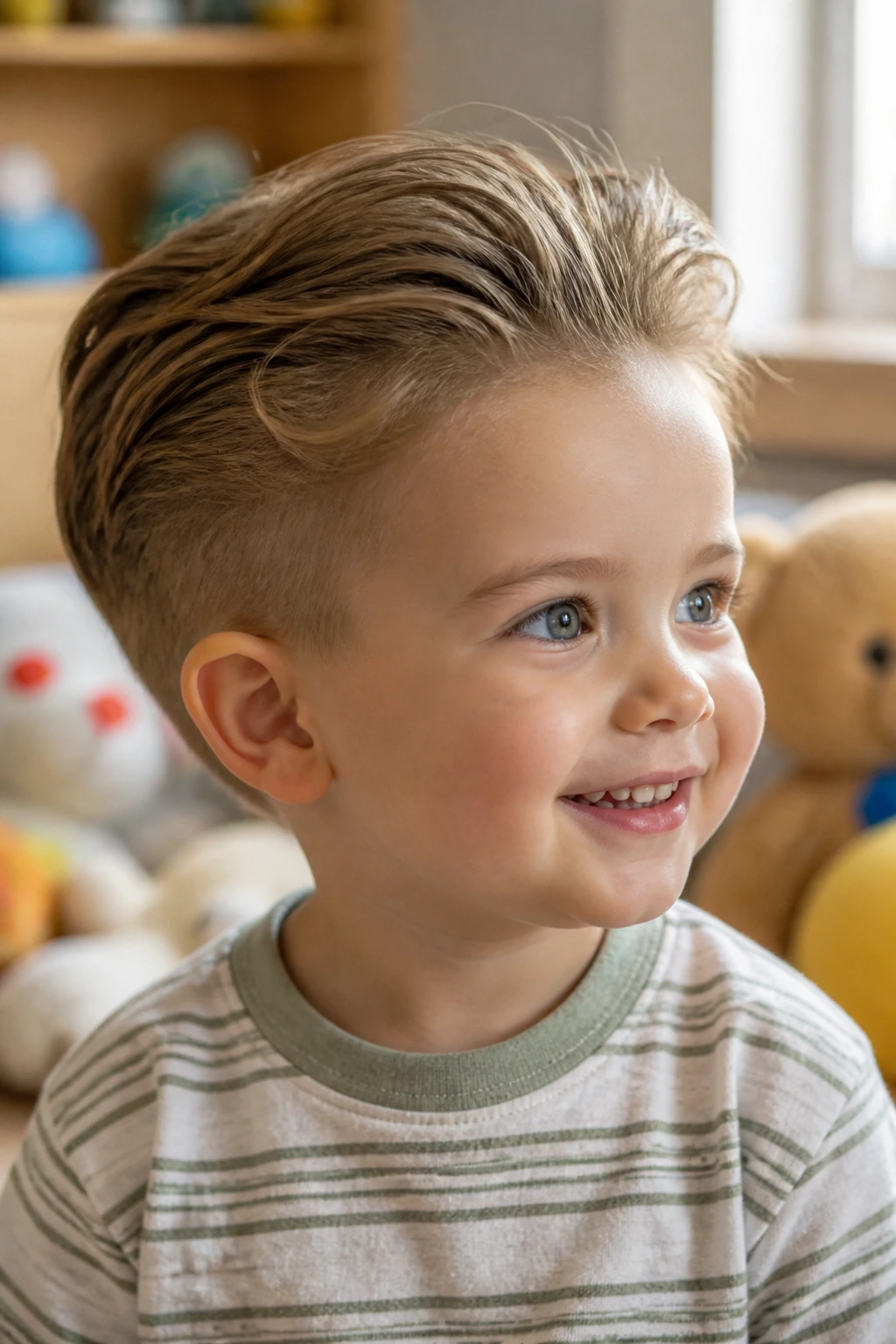
Some children will not leave a fringe alone. They rub it, twist it, blow it out of their eyes, and then complain when it falls back down. The swept-back playdate bob solves that by giving the front just enough length to push backward with damp hands, while the nape stays neatly undercut so the style doesn’t look heavy behind.
It’s a practical cut for active kids. The sweep back buys you a cleaner line during play, but the bob shape still reads as soft and rounded. That matters. A toddler’s hair should not look like it belongs to a tiny banker.
A tiny amount of lightweight leave-in, rubbed between your palms, is usually enough. No wax. No greasy paste. Fine hair will look stringy in a second if you pile on product. This cut works because the hair can move back and settle naturally, not because it has been glued into place.
14. C-Cut Rounded Bob
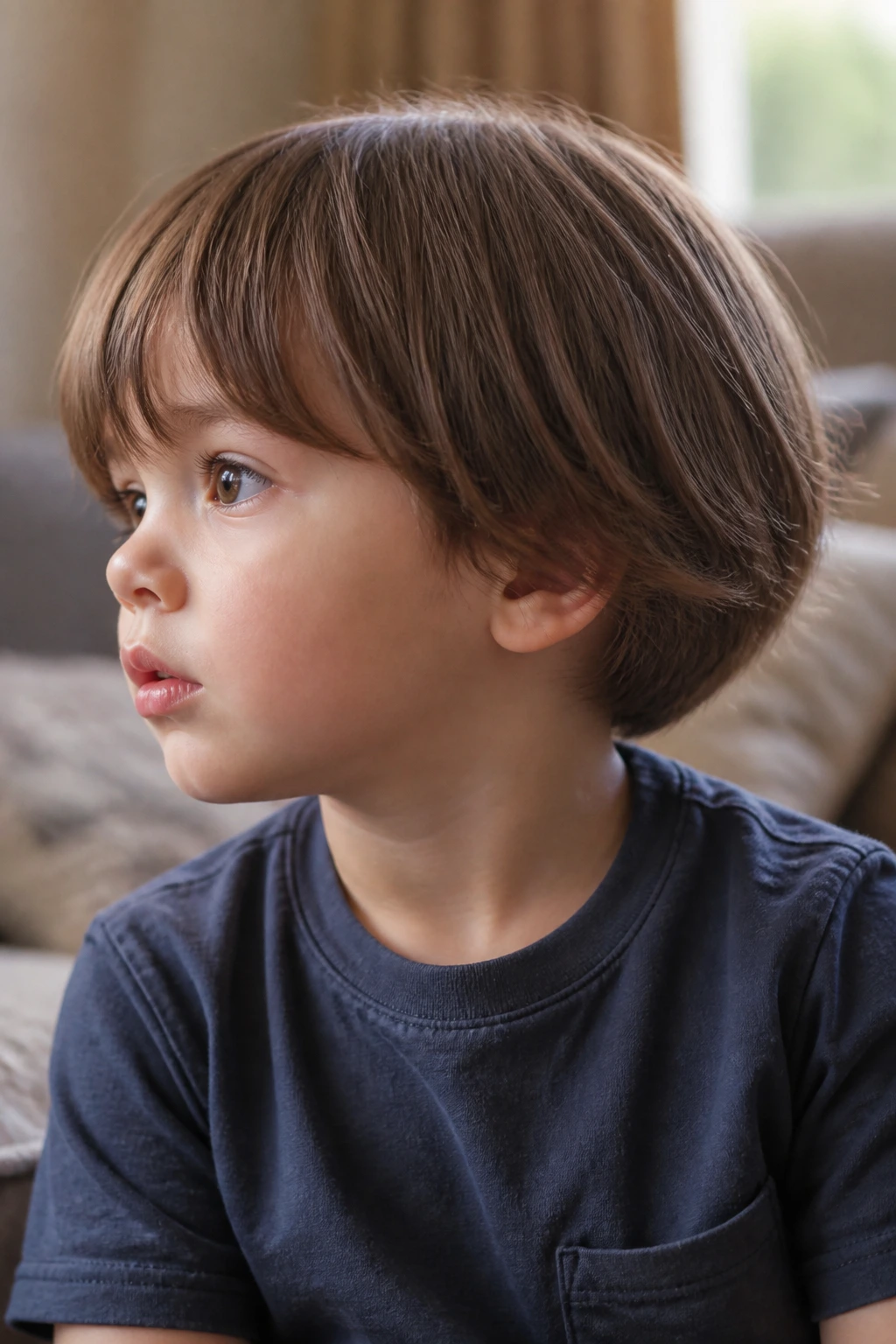
The C-cut makes a soft arc from the cheek area to the nape, and that curve is kind to fine hair. Instead of a square edge, the eye sees a rounded line that gives the haircut a little shape even if the strands themselves are light and quiet.
This is one of my favorite choices for toddlers because it softens the whole head without making it floppy. The back curves into the neck, the sides curve around the face, and the low nape undercut disappears underneath the shape. The haircut looks like it was planned, not hacked at.
If the child’s face is round, the C-shape keeps the bob from getting too boxy. If the face is long, the curve still helps by keeping width through the cheeks. Either way, it’s a nice middle ground between blunt and layered.
15. Taper-Bob Blend for Easy Grow-Out
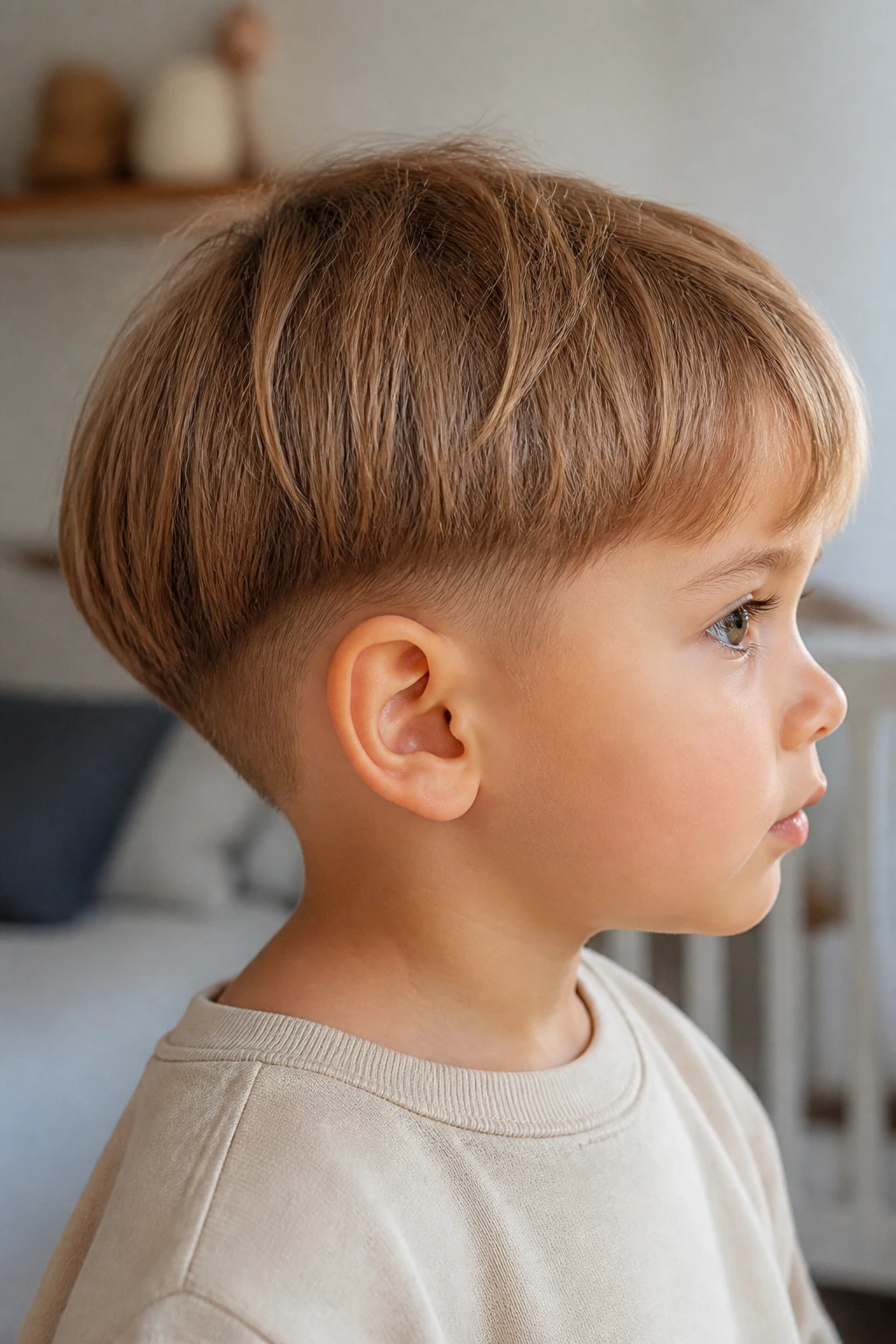
If you know trims will not happen on a perfect schedule, build the haircut for grow-out from the start. The taper-bob blend uses a bob perimeter with a soft taper around the ears and neckline, so the shape remains tidy even when the hair starts pushing past its neat little window.
That taper matters. A sharp undercut can look crisp in week one and oddly separated in week five. A taper is quieter. It blends better, and on fine hair, blending is often more useful than drama.
Grow-Out Plan
Ask for the back to stay low and soft, not shaved bare. The top should keep enough length to fall over the taper as it returns. This version is kind to kids who flinch at clippers near the neck, too, because the haircut can be maintained with light cleanup rather than a full reset every time.
It’s one of the more practical choices in the whole list. Not flashy. Very useful.
16. Ear-Tucked Narrow Bob

Narrowing the sides is sometimes smarter than shortening everything. The ear-tucked bob keeps enough length for the hair to be tucked behind the ears when needed, while the undercut at the nape stays low and hidden so the neck doesn’t bulk up under shirts and car-seat straps.
Fine hair often looks denser when the outline is narrow and tidy. That’s because the eye sees a clean side line instead of a wide puff. The tuck also helps on warm days or with kids who dislike hair touching the face.
The key is balance. You want the side length to be long enough to tuck, not so long that it starts hanging like strings. A little shape around the ears gives the haircut a clean frame, and the low undercut keeps the back from fighting the rest of it.
17. Invisible-Layer Bob with a Soft Side Part
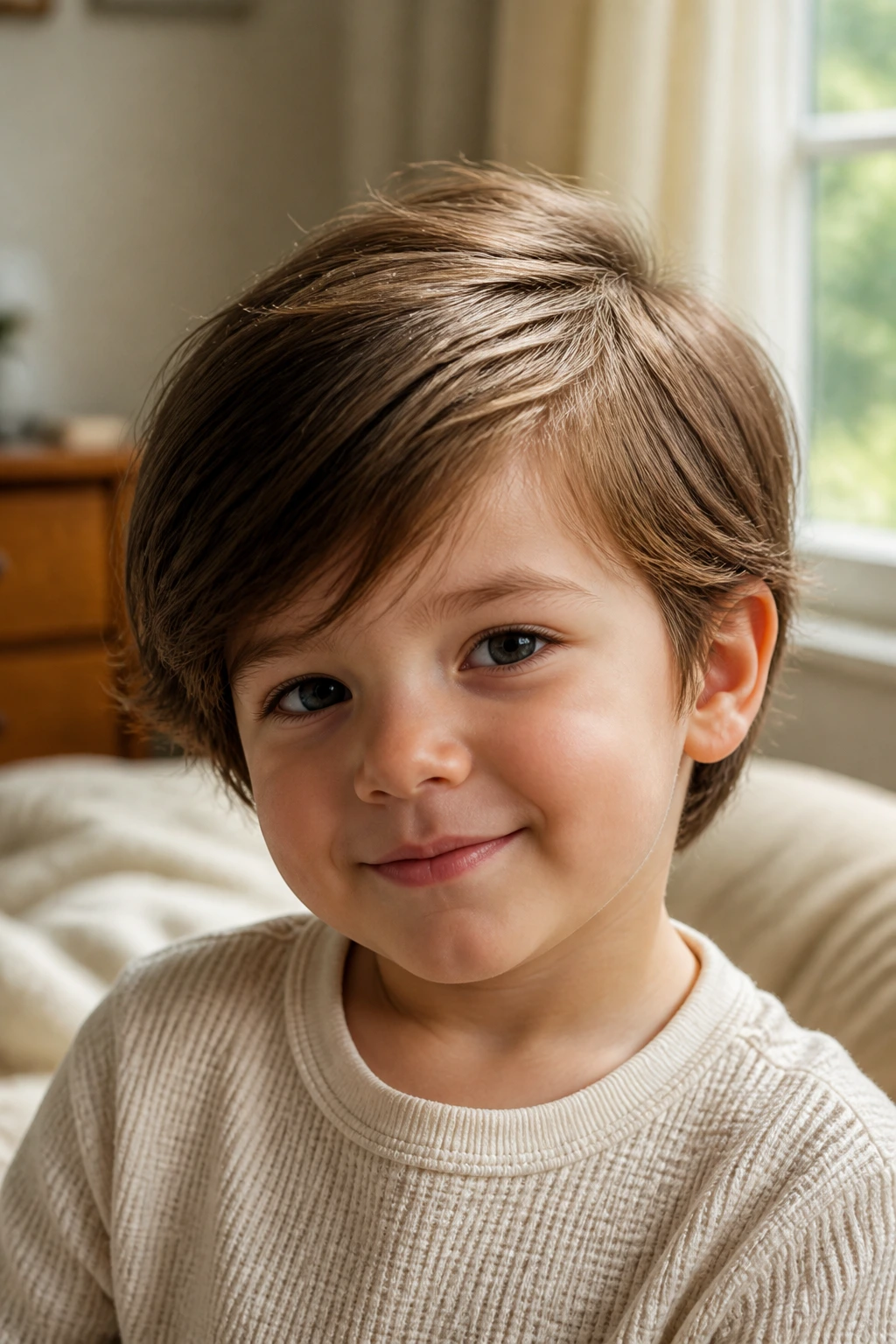
Some fine hair needs movement, but not obvious layers. Invisible layers are the answer. They live inside the shape, where they can reduce flatness without creating little holes through the perimeter. Add a soft side part, and the hair falls more naturally instead of splitting down the center and exposing the scalp.
This is a good choice when the hair has a stubborn direction or one side behaves better than the other. The side part gives you a little asymmetry without turning the whole haircut into an asymmetrical style. The bob still looks balanced. It just moves a bit more.
Use a small amount of lightweight detangler or leave-in on damp hair, then comb it to the side and let it dry there. That’s enough. If you overwork the strands, fine hair starts clumping, and the trick is gone.
18. Nap-Ready Bob with a Low Neck Sweep

Some haircuts need to survive naps, snack time, car-seat straps, and hats without falling apart. The nap-ready bob is built for that life. It stays short enough that the neckline doesn’t puff up, but long enough to read as a bob rather than a crop.
The low neck sweep keeps the back soft against the collar. The fringe stays out of the eyes without being chopped too short. The whole thing is tidy in a way that still lets the hair move, which is probably the real goal with fine toddler hair anyway.
I like this cut for families who want the least amount of morning fuss. It doesn’t need much product, and it doesn’t panic when the child rolls around on a pillow. The undercut is there to keep the bottom clean, not to show off clipper work. That restraint is what makes it work.
What the Nape Undercut Does for Fine Hair
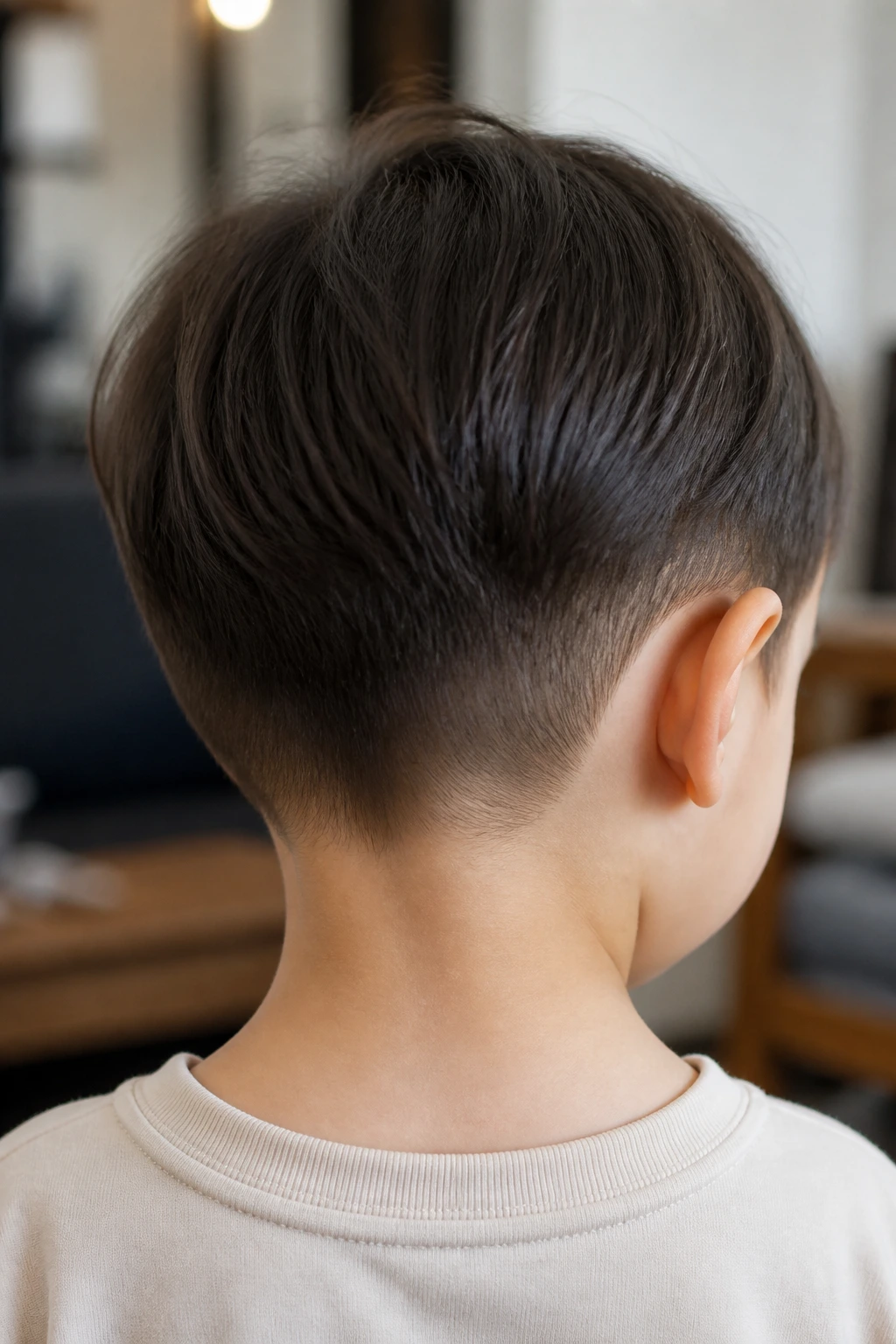
The nape undercut is doing more work than it gets credit for. On fine hair, the problem is rarely one giant bad section. It’s a series of little collapses: the neck gets fluffy, the crown lies flat, the ears puff out, and the whole outline starts losing shape by the second week. A low undercut only targets the part that causes the most visual bulk.
That matters because fine hair needs weight somewhere. Remove weight from the wrong place and the cut goes see-through. Remove it at the nape, where the hair tends to bunch and flip, and the rest of the bob can stay intact. The top still has enough length to cover the clipper work, so the haircut reads as a bob first and an undercut second.
Low Is Better Than High
A high undercut can be harsh on a toddler. It exposes more scalp, grows out in a louder line, and can make the head look narrower than it really is. A low undercut, tucked beneath the perimeter, cleans the neckline without announcing itself.
The short version: take weight off the neck, not off the whole shape. That’s the part that makes these cuts succeed on fine hair.
What to Tell the Barber Before the First Snip
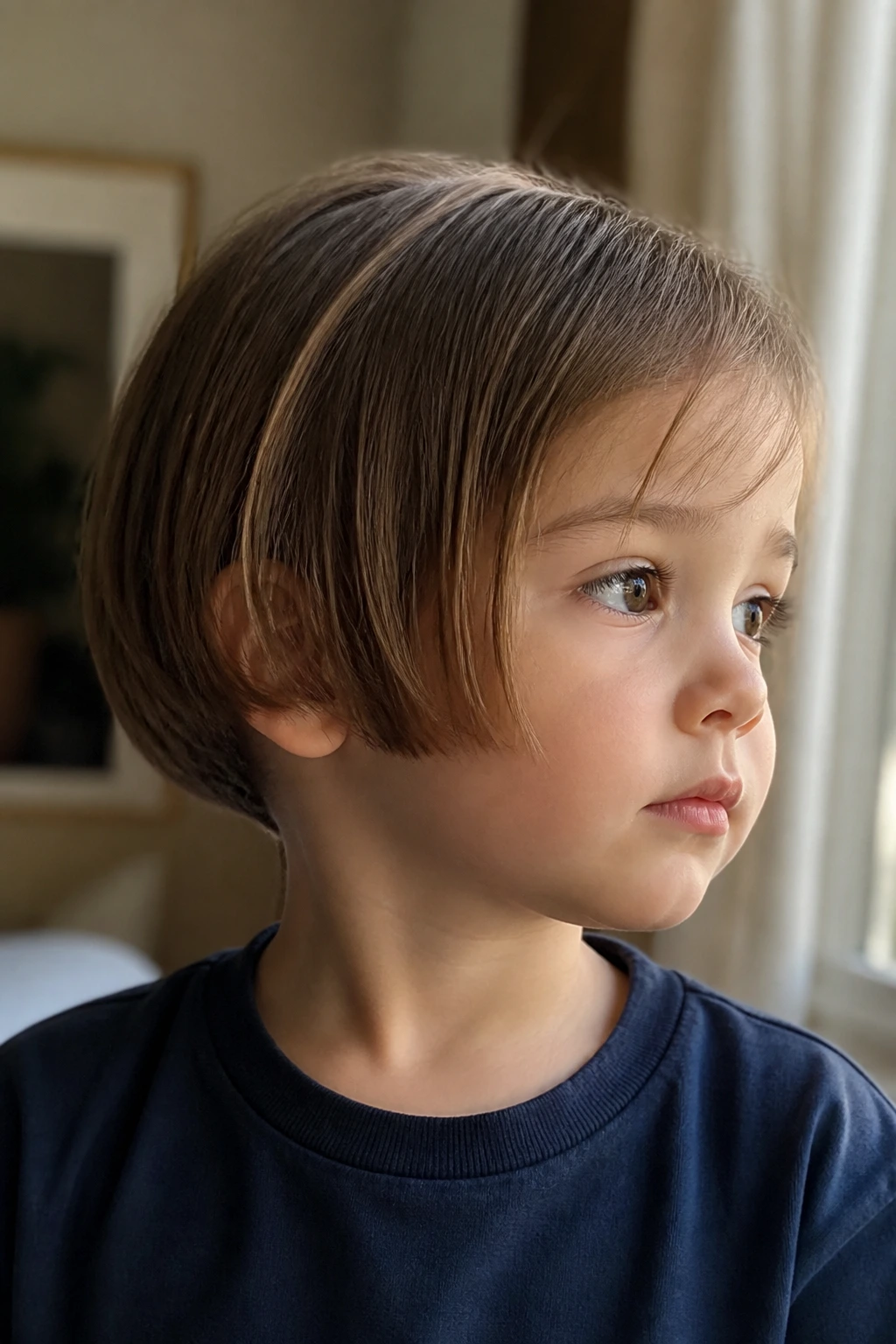
Photos help, but words matter too. A lot. If you only show one picture, the barber may fixate on the fringe or the face frame and miss the back shape entirely. Bring at least two angles if you can: one side view and one from behind. The nape undercut is the part that disappears in front-facing photos, and that is exactly the part you do not want misunderstood.
A simple script works better than a long explanation. Try this: “Low nape undercut, not high. Keep the top long enough to read as a bob. Soften the ends, don’t thin the crown, and let the back grow out cleanly.” That tells the stylist what matters and what doesn’t.
The Details That Prevent Confusion
- Say where the length should live: ear, cheek, chin, or just above the collar.
- Ask for the undercut to stay low enough that the top layer covers it.
- Mention any cowlick at the nape or temple before the cut starts.
- If the child hates clippers near the neck, ask for a softer taper instead of a hard buzz.
That last part is not a small detail. It can decide whether the haircut gets finished without a battle.
How to Choose the Right Length for a Toddler Face and Hairline
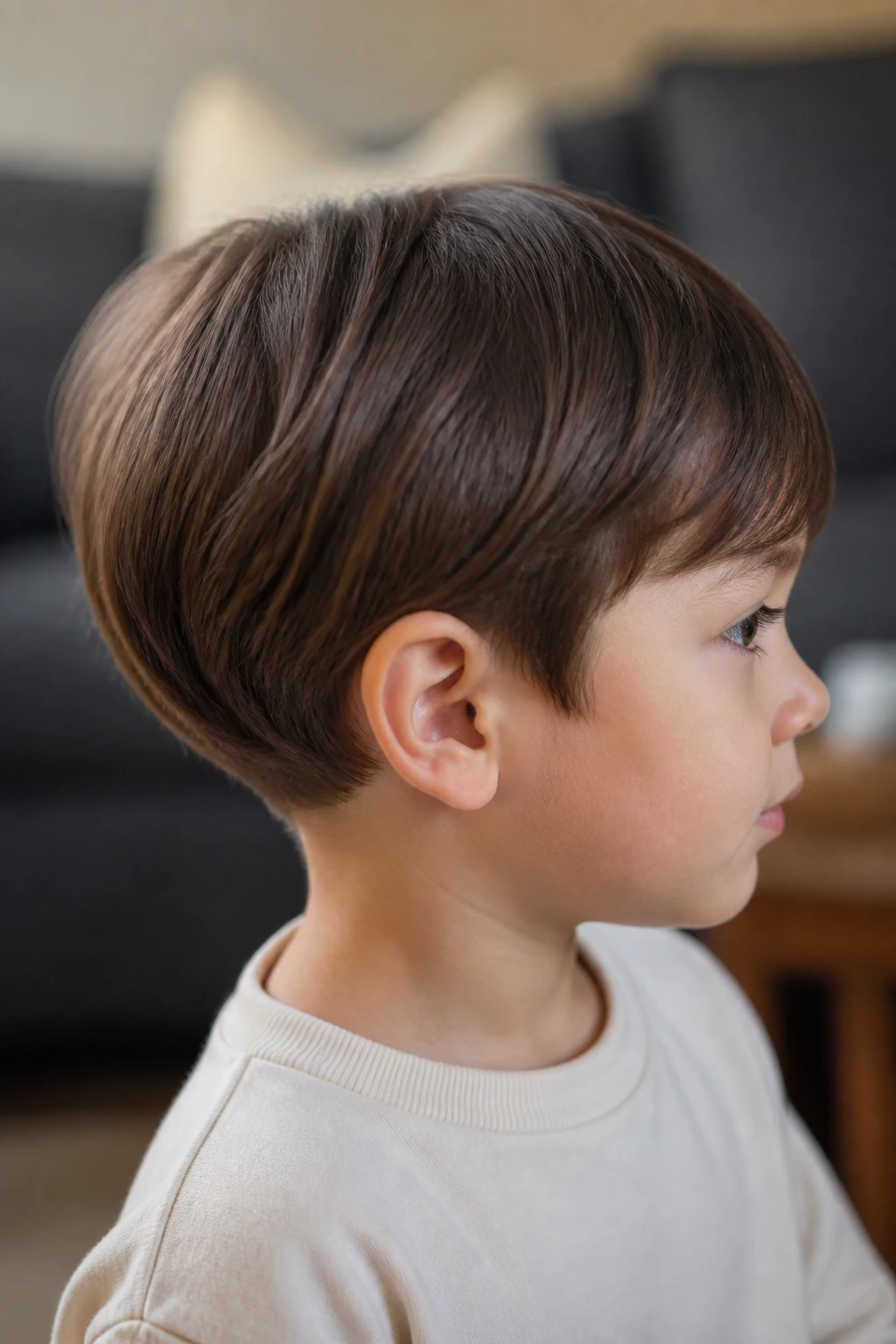
Length does more than change style. It changes how the hair behaves after washing, after naps, and after a hard morning in the back seat. With fine hair, a bob that is too long often looks stringy because the strands spread out. A bob that is too short can expose the scalp and make the line feel too sharp. The sweet spot is usually somewhere between ear and chin, but there is room to move depending on density and growth pattern.
A chin-length cut gives the strongest outline. An ear-length cut feels lighter and can be easier on kids who hate hair touching the neck. If the forehead is broad or the hairline is sparse, a slightly longer fringe or front piece can help the haircut read fuller. If the crown lies flat, a bit more length in the back can keep the shape from collapsing.
Quick Rule of Thumb
- More forehead coverage: keep the fringe a little longer.
- More neck bulk: go shorter at the nape, but keep it low.
- Very fine strands: avoid over-layering and keep the perimeter visible.
- Strong cowlicks: leave a touch more length so the swirl has somewhere to settle.
Fine hair is unforgiving when it’s cut too aggressively. It rewards restraint.
How These Bobs Sit in Real Life

Presentation: The best versions of these cuts skim the jaw, ears, or collar without floating away from the head. The line should look tidy when the child is standing still and still make sense when they’re bent over a toy box. If the nape undercut shows, it should be a whisper, not a strip.
Pairings: These cuts sit nicely with soft T-shirts, little collars, hoodies, and beanies because the neckline stays clear. That means less bunching, less flipping, and fewer mornings where you have to comb the same section three times.
Length: Chin to ear is usually the strongest range for fine toddler hair. Shoulder length can look sparse fast unless the hair has a lot more density than it appears to have. If you want more softness, add it with shape around the face, not by dragging the back too long.
Best For: Photos, daycare mornings, hat days, and kids who hate hair on the neck. The haircut should work with a child’s life, not make the child work for the haircut.
Simple Styling That Takes Less Than Two Minutes
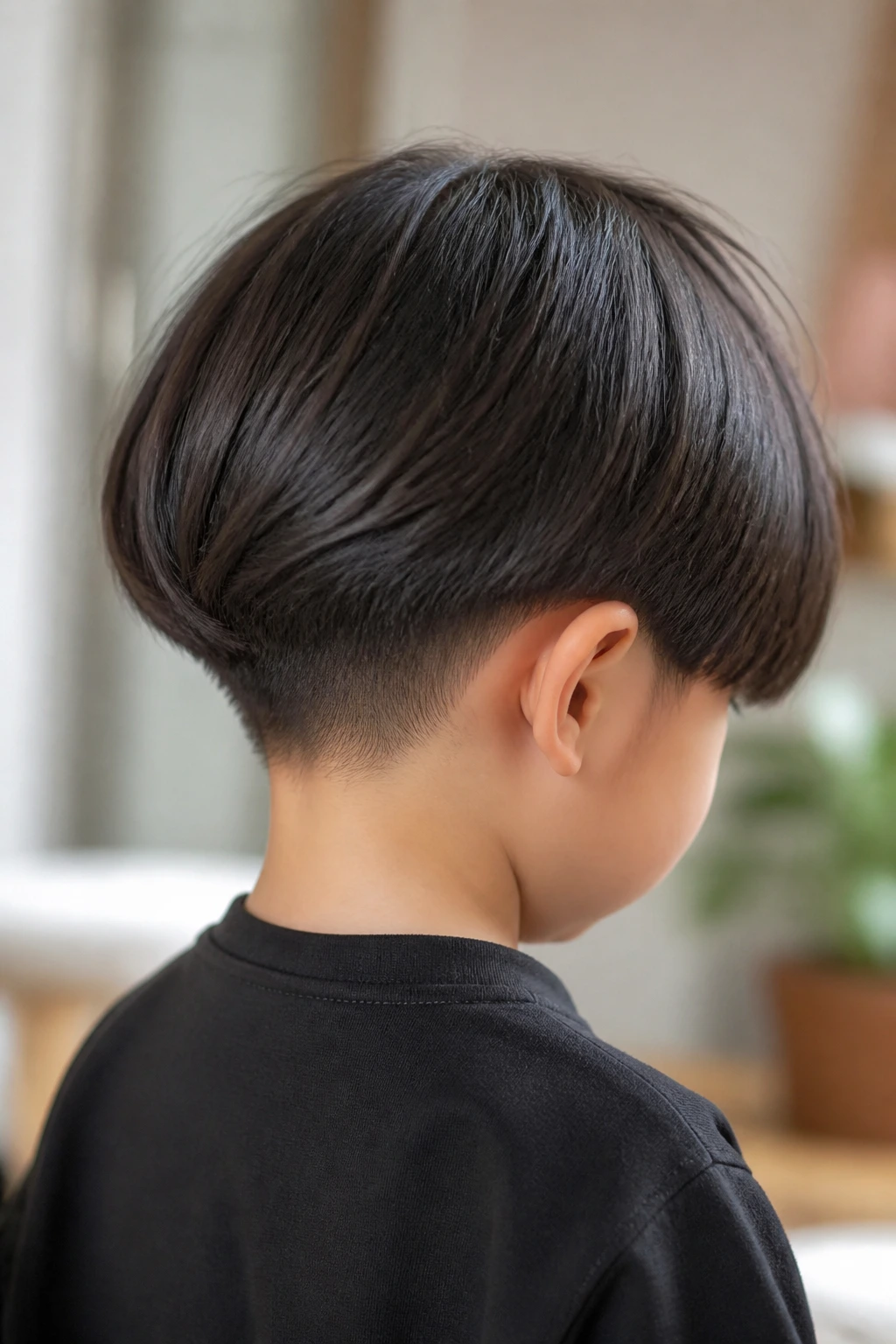
Most days, this kind of haircut needs less styling than people expect. Start with a light mist of water, not a soak. Fine hair can go from flat to soggy fast, and soggy hair takes longer to settle. Comb the fringe or front into the shape you want, then use your fingers to smooth the sides down toward the ears.
If the hair is frizzy or tangly, use a pea-sized amount of lightweight leave-in on damp hands and touch only the mid-lengths and ends. Do not smear it through the roots. Fine hair at the roots is where the style lives; heavy product there kills the shape.
A quick low-heat blow-dry can help the crown if it tends to lie flat or split. Forty to sixty seconds is usually enough. That is often all the help the cut needs. If the shape is right, the morning routine becomes a water spray, a comb, and a shrug.
Essential Tools for the Cut and the Touch-Ups
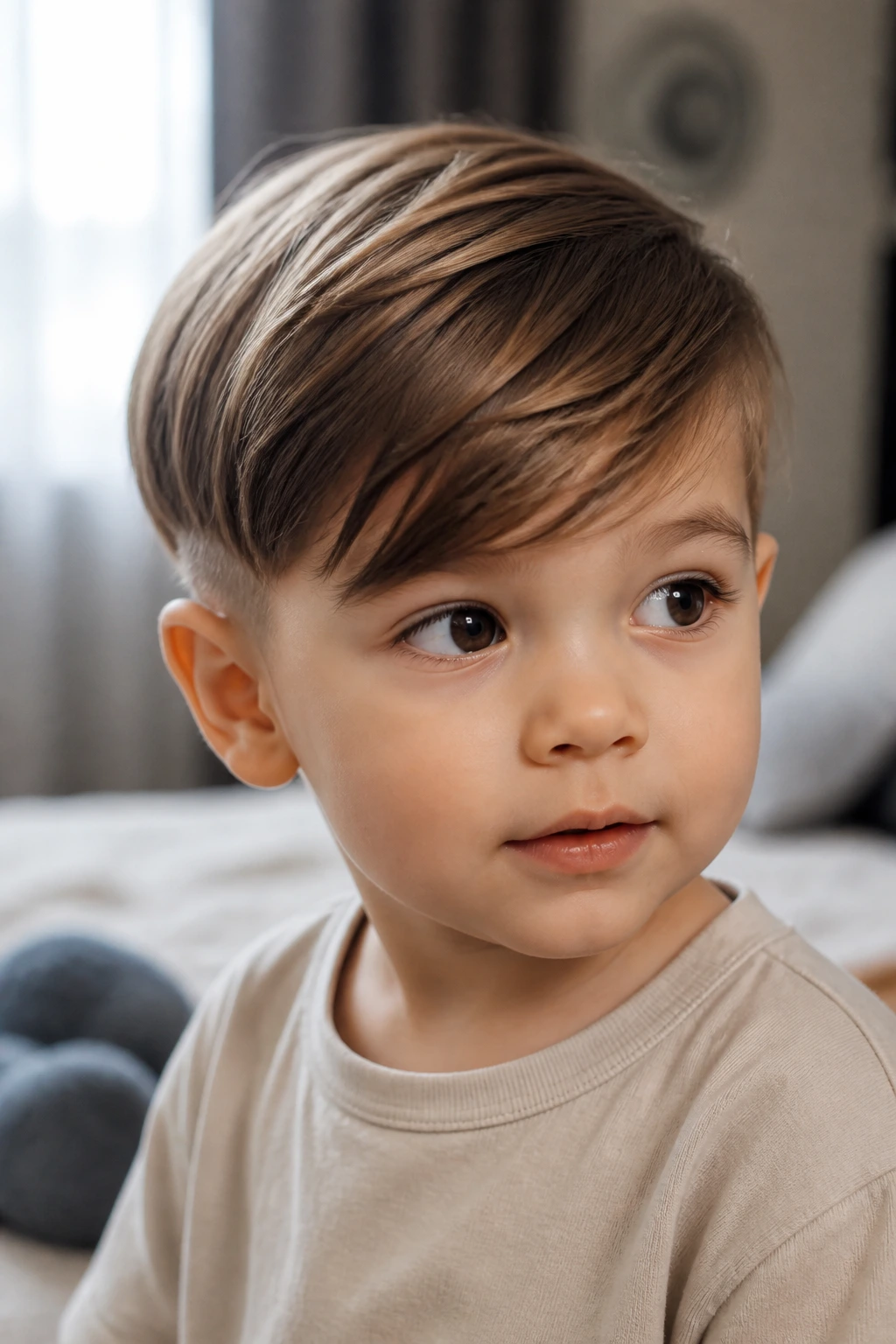
- Spray bottle: A fine mist makes fine hair easier to comb without soaking it.
- Wide-tooth comb: Good for detangling wet hair without yanking at the scalp.
- Fine-tooth comb: Useful for clean parting and for checking the neckline shape.
- Sharp haircutting shears: Better than dull scissors, which chew at fine ends.
- Clippers with low guards: A #1, #2, or #3 guard is usually enough for a low nape cleanup.
- Trimmer or detailer: Handy for the neckline and around the ears if you do touch-ups at home.
- Soft brush: Helps settle the hair after drying without flaring the ends.
- Lightweight leave-in spray: Optional, but useful if the hair tangles fast.
- Section clips: Keep longer top layers out of the way during a haircut.
- Towel or barber cape: Keeps fine baby hairs from sticking to the neck and shirt.
Extra Tips That Keep the Shape from Sagging
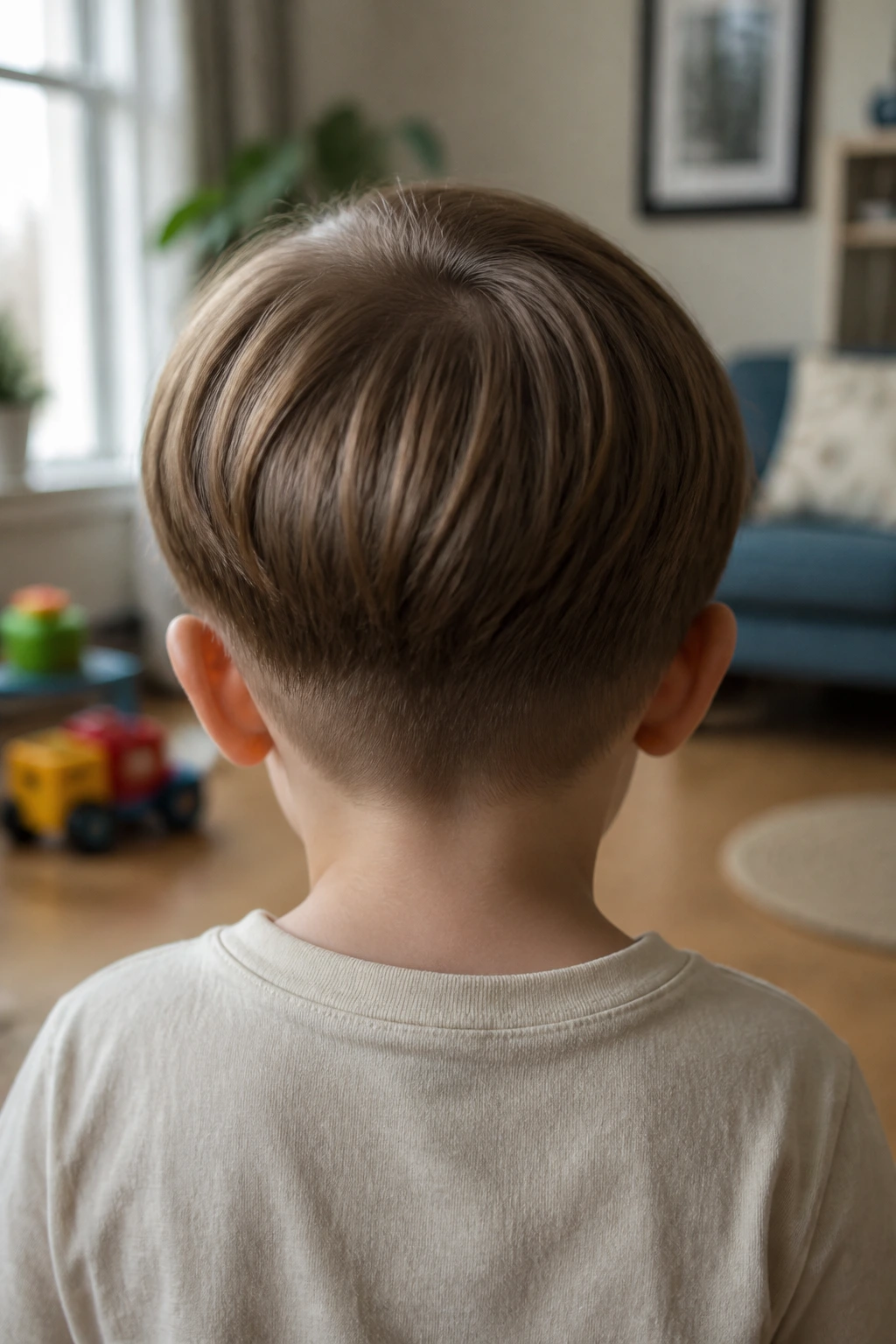
Shape Booster: Keep the perimeter blunt or softly rounded, because fine hair needs a visible line more than it needs a lot of texture. A haircut with too many layers can look airy in the wrong way, especially around the crown.
Fringe Rescue: If the front keeps dropping into the eyes, lengthen the fringe slightly and side-sweep it instead of chopping it shorter. Fine hair often springs up when it’s cut too short, and that can make the whole front stand away from the face.
Time-Saver: Cut or trim on damp hair, not dripping hair. Wet strands stretch, and when they dry, you see the real shape. That saves you from taking too much off the first pass.
Product Rule: Skip heavy waxes and thick pomades. They clump fine hair together and make the scalp show through. A light leave-in or a tiny bit of cream is usually plenty.
Parent Shortcut: If the nape grows fast, schedule a quick neckline tidy every few weeks instead of waiting for a full haircut to fall apart. A little maintenance keeps the bob looking deliberate.
Common Mistakes That Throw Off the Outline

-
Cutting the undercut too high: The neckline shows too much scalp and the top layer stops hiding the clipper work. Keep the undercut low, under the bob line, and the cut grows out far more softly.
-
Thinning the top too aggressively: Fine hair can look transparent fast when too much internal weight is removed. Use point cutting in small amounts instead of thinning shears across the crown.
-
Making the fringe too short: Short fine bangs often stick up, separate, or curl in the wrong direction. Leave enough length for the fringe to fall on its own, then adjust after it dries.
-
Using heavy product at the roots: Pomade, wax, and thick cream flatten fine hair and make the strands cling together. If product is needed, use only a tiny amount on the ends.
-
Ignoring the cowlick: A swirl at the nape or temple will push the hair outward if you cut against it. Work with the growth pattern, or the bob will flip up every morning.
-
Waiting too long between trims: The undercut grows back first, then the bob loses its shape and starts looking like an unfinished grow-out. A low tidy every few weeks keeps the outline readable.
Variations and Adaptations to Try
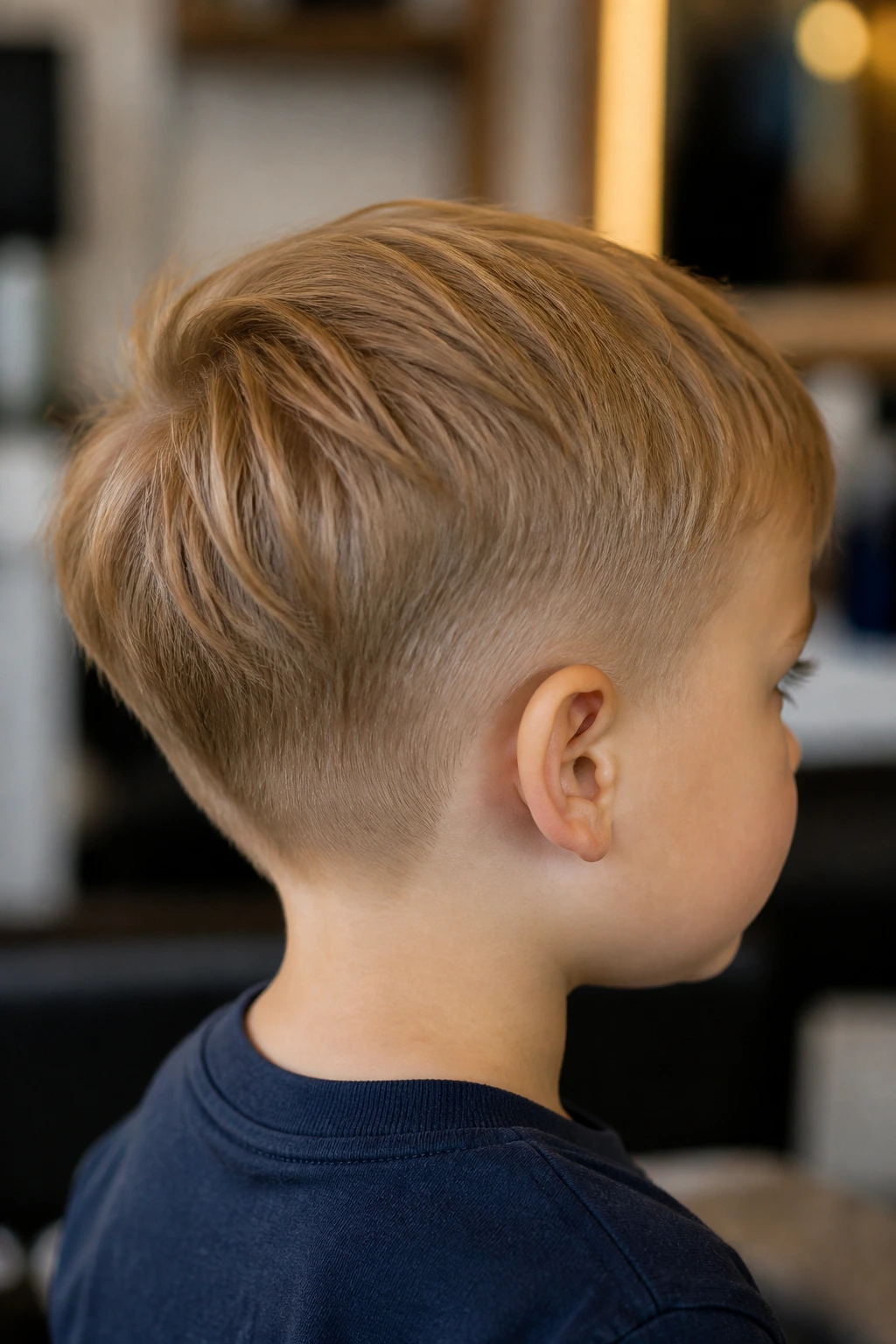
The Whisper Undercut: Keep the nape cleanup barely there, just enough to clear the neckline. This is the quietest version in the set, and it’s the one I’d choose if you want the cut to grow out with almost no drama.
The Cowlick Curve: Curve the back line around a stubborn swirl instead of forcing a straight edge through it. That tiny adjustment can stop the nape from kicking outward every afternoon.
The Hat-Friendly Taper: Use a soft taper around the ears and neckline so beanies, sun hats, and helmet straps sit more comfortably. It’s a smart pick for active kids who are outside a lot or who dislike pressure at the neck.
The Fringe-Lift Version: Keep the front a touch longer and let a side part lift it away from the eyes. That works well when the forehead grows hair slowly or the front line likes to separate.
The Soft-Stack Version: Add just enough graduation in the back to give flat crowns some lift. The stack should be subtle; if it starts looking like a wedge, it’s too much for fine hair.
The Keep-It-Short Version: Trim the bob to ear level and keep the perimeter clean. This one is handy when you want less hair at the collar but still want a shape that reads as a bob rather than a crop.
Keeping the Neckline Clean Between Trims

The neckline is usually the first place these cuts start to slide. Fine hair grows in a way that makes the nape look fuzzy before the rest of the haircut seems long. That is why a low undercut is so useful: it buys you extra time before the style loses its outline.
For most toddlers, a small tidy every 3 to 4 weeks keeps the neck and ear area neat. A full reshape often lands in the 5 to 7 week range, depending on how fast the child’s hair grows and how visible the undercut is. If the haircut is very low and soft, you can usually stretch the schedule a little. If it’s crisp and narrow, you’ll see regrowth sooner.
At home, a damp brush and a quick comb-down can reset the front and sides after sleep or hat hair. If you do any trim work yourself, keep it to the neckline only and move slowly. The ears and crown are not the place to learn by trial and error. They show every mistake.
Frequently Asked Questions
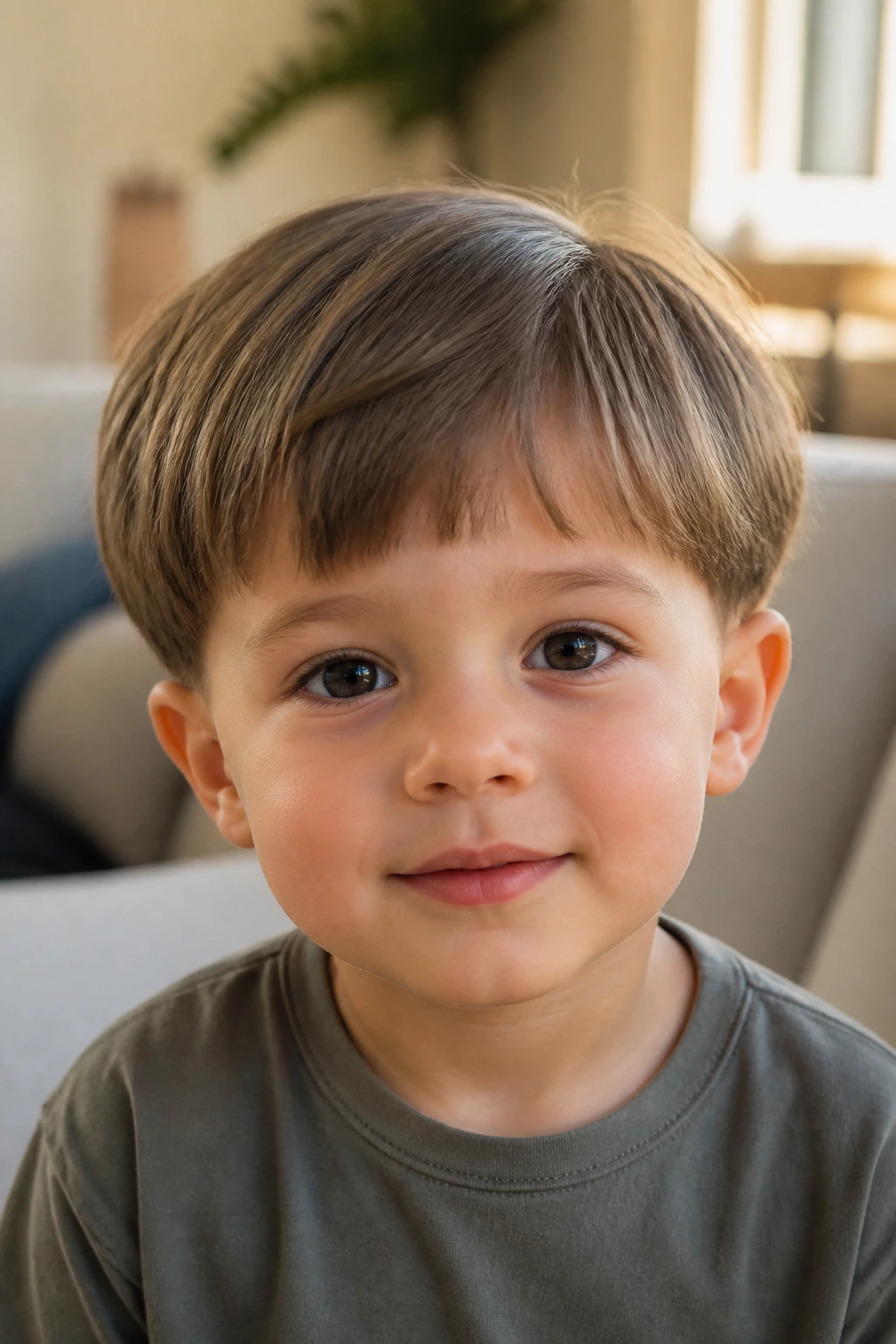
How short should the nape undercut be on a toddler boy with fine hair?
Keep it low and soft, usually just enough to clear the neckline without showing a big skin patch. A very short buzz can look harsh fast on fine hair, so a gentle guard length with a hidden top layer usually works better.
Will an undercut make fine hair look thinner?
Not if it stays low. The purpose is to remove the fluffy bulk at the neck, not to strip the whole haircut down. If the top still has enough length to cover the undercut, the haircut usually looks fuller, not thinner.
Can this work if my child has a cowlick at the nape?
Yes, but the cut needs to follow the cowlick instead of fighting it. A curved neckline or a slightly longer nape often behaves better than a straight hard line across the swirl.
How often does this haircut need trimming?
Most fine-hair bobs need a neckline tidy every 3 to 4 weeks if you want them to stay neat. If you don’t mind a softer grow-out, you can stretch longer, but the shape will start to blur first at the nape.
What product should I use, if any?
Less is more. A light leave-in spray or a pea-sized dab of lightweight cream on damp hair is usually enough. Heavy wax or pomade tends to make fine hair cling together and show the scalp.
Is this better for straight hair or wavy hair?
Both can work, but straight fine hair usually shows the bob shape more clearly. Slight waves can add movement, though, as long as the layers stay light and the undercut stays low.
What if my toddler hates clippers near the neck?
Ask for a taper instead of a hard undercut, or keep the cleanup very low and quick. Some kids tolerate scissors better, and a softer neckline still solves most of the bulk problem.
Can I show one photo and expect the barber to understand the cut?
One photo helps, but it won’t always show the back shape. Bring a second image from the side or back if you can, and say exactly where you want the length to sit around the ears and neck.
A Clean Finish on Fine Hair
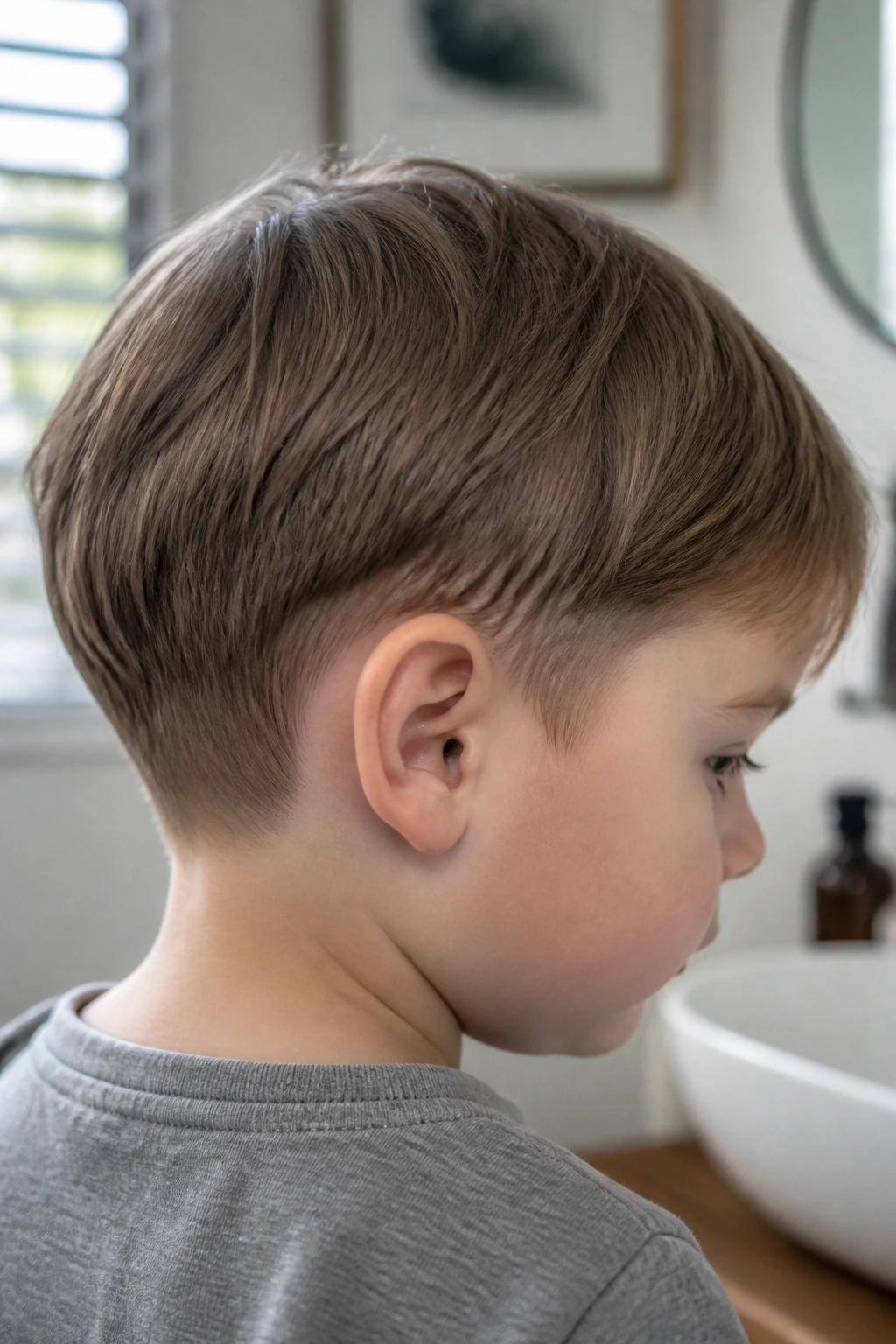
The best thing about these cuts is not that they look trendy or clever. It’s that they solve a real problem with a small, practical adjustment. Fine toddler hair needs a clear outline, and the nape undercut gives it one without asking the rest of the head to carry extra weight.
If the hair lies flat by breakfast and puffs at the neck by lunch, the right bob can make the whole shape feel calmer. Keep the undercut low, keep the perimeter honest, and let the haircut do the work. That’s usually enough.
Bring a photo, mention the neckline, and be specific about the fringe. The rest falls into place faster than people expect.