



A medium curly haircut gives curly hair the one thing it keeps asking for and rarely gets: room. Cut it too short and the curl pops outward in a shape that can feel more like a mushroom than a hairstyle. Leave it too long and the weight drags the top flat while the ends puff out in odd places, which is its own kind of mess.
For boys, medium length sits in the useful middle. The curls still spring, the shape still moves, and the head does not turn into a triangle by lunchtime. A barber who knows curls will often cut dry or nearly dry, keep some length through the crown, and avoid hacking at the bulk with thinning shears. That last part matters more than most people think.
Curly hair has its own math. A strand can shrink an inch or two once it dries, and the difference between a neat cut and a lumpy one often comes down to where the weight sits around the temples and back of the head. The styles below work with that behavior instead of fighting it.
Why Medium Curly Cuts Keep Working
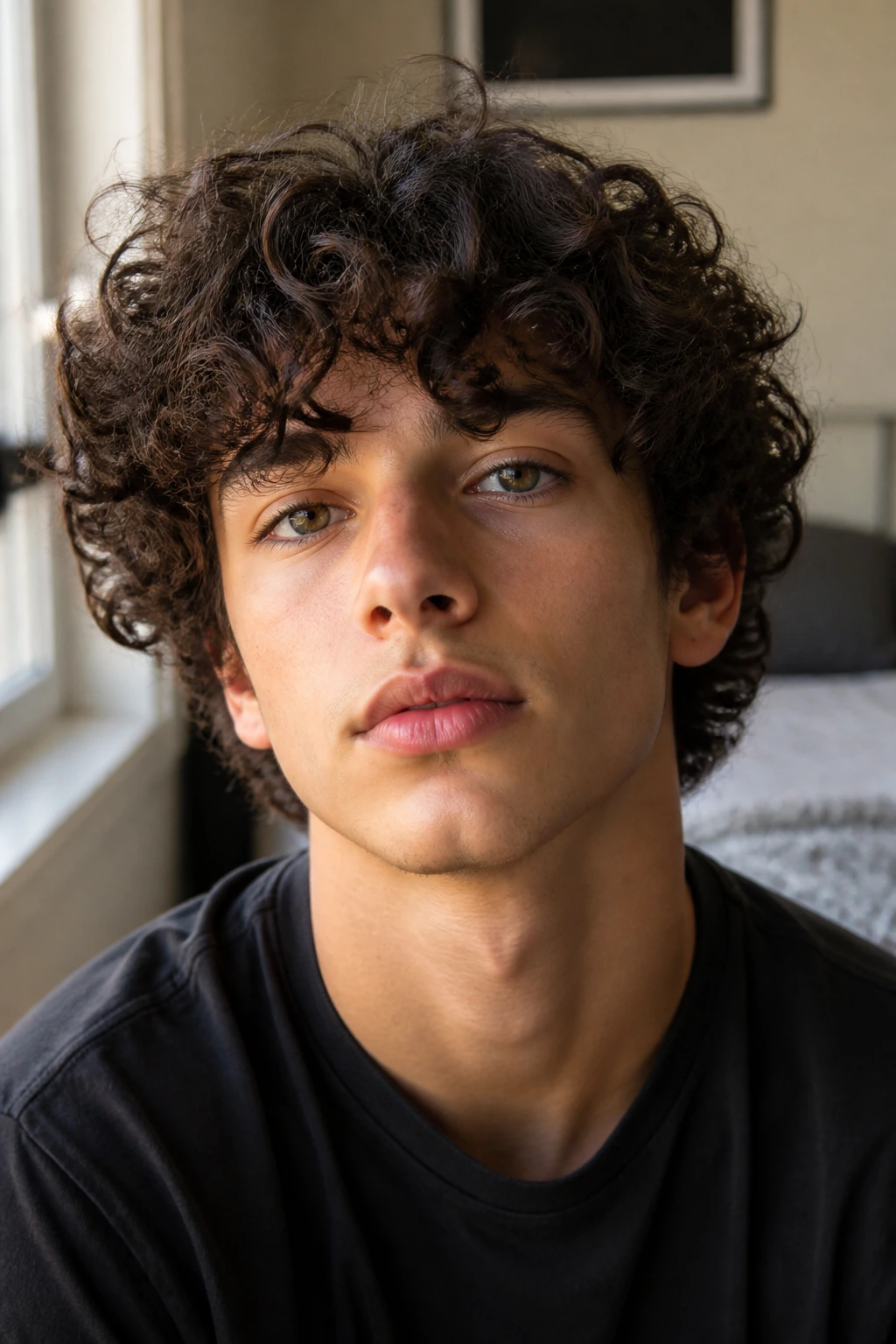
-
The curl gets space without losing control: Medium length lets the curl open up, then settle back into shape instead of sticking straight out from the scalp.
-
The grow-out is kinder: A cut with 4 to 6 inches on top usually grows out in a way that still looks intentional for several weeks, not like a haircut that fell apart on day ten.
-
The front stays usable: Medium fringe and layered tops can sit off the forehead, fall across it, or get pushed back, depending on the day.
-
Barber mistakes are easier to fix: If the sides get trimmed a touch too tight, there is still enough hair on top to balance the shape again.
-
Daily styling stays lighter: A spray bottle, a little leave-in conditioner, and a dab of curl cream usually do more for medium curls than heavy wax ever will.
-
The haircut matches a lot of curl types: Loose waves, springy ringlets, and tighter coils can all live in the medium zone if the layers are handled with care.
1. Soft Curly Shag with Layered Ends
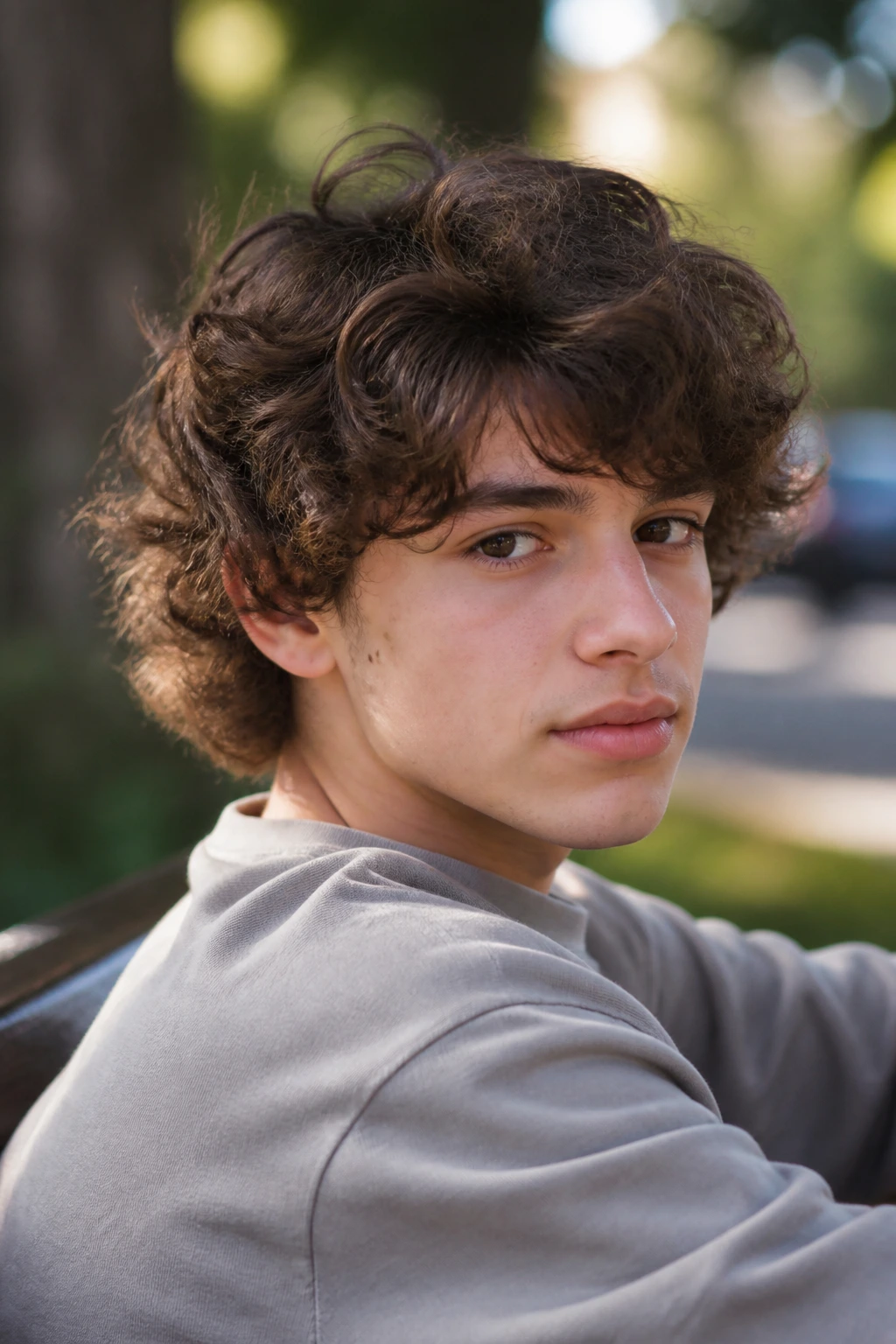
The curly shag is the haircut that makes medium curls look deliberate instead of accidental. It keeps the top full, softens the sides, and lets the curl pattern fall in uneven little pieces that feel lively rather than bulky. On a boy with thicker hair, that movement is the whole point.
What makes this cut work is the layering. A good shag keeps about 4 to 6 inches on top, then removes weight in the upper sides and crown so the curls do not stack up into a heavy dome. The trick is not to over-thin it. You want shape, not wispy ends.
What to Tell the Barber
- Leave enough length on top for the curls to spring after drying.
- Use point cutting or slide cutting at the ends instead of blunt chopping.
- Keep the sides soft, not shaved tight against the head.
- Let the fringe fall around eyebrow level when dry.
This one suits thick 2C to 3B curls especially well. It also grows out with a little attitude, which is handy when a boy is between appointments and nobody wants the haircut to look like a cleanup project.
2. Curly Curtains with a Middle Part
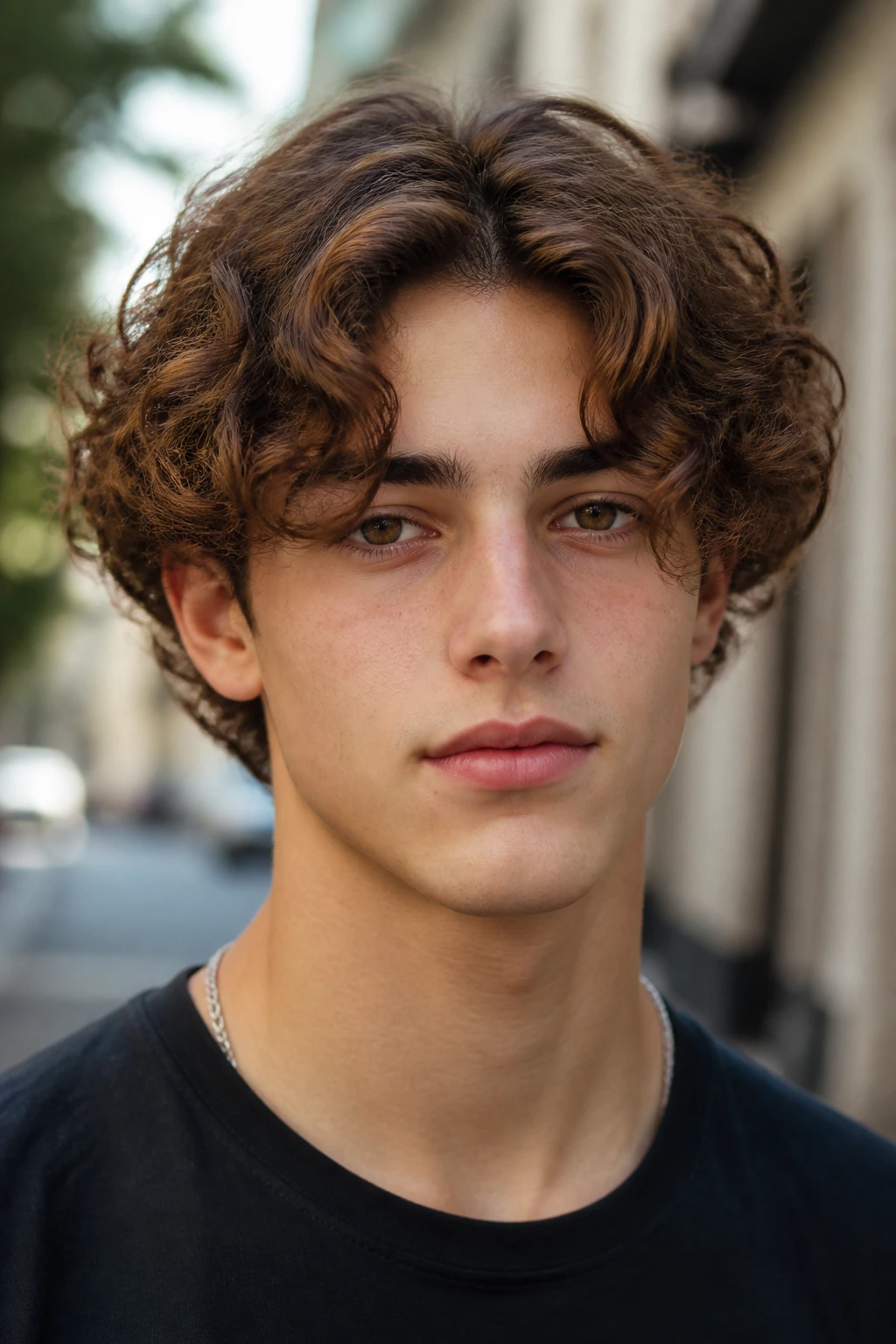
A middle part can look sharp on curly hair when the front is long enough to split naturally. Done right, curly curtains frame the face in two loose panels that fall away from the forehead and make the whole cut feel airy. Done badly, it looks like the hair got divided by accident.
The front needs length here. Think 5 to 6 inches in the fringe area, with medium layers through the sides so the curtain pieces do not balloon out. The part does not need to be a razor line. A soft valley in the hair is usually enough, and curls often fall there on their own if the shape is cut well.
What I like about this cut is how it changes with a little styling product. A mist of water, a small amount of curl cream, and a finger comb through the front can make it sit cleanly without flattening the curl. That matters on school mornings. No one has time for a wrestling match with a comb.
It works best on oval and longer faces, and on boys whose curls have a bit of loose bend rather than a tight spring. If the front is too short, the whole idea falls apart fast.
3. Low Taper with a Natural Curl Top
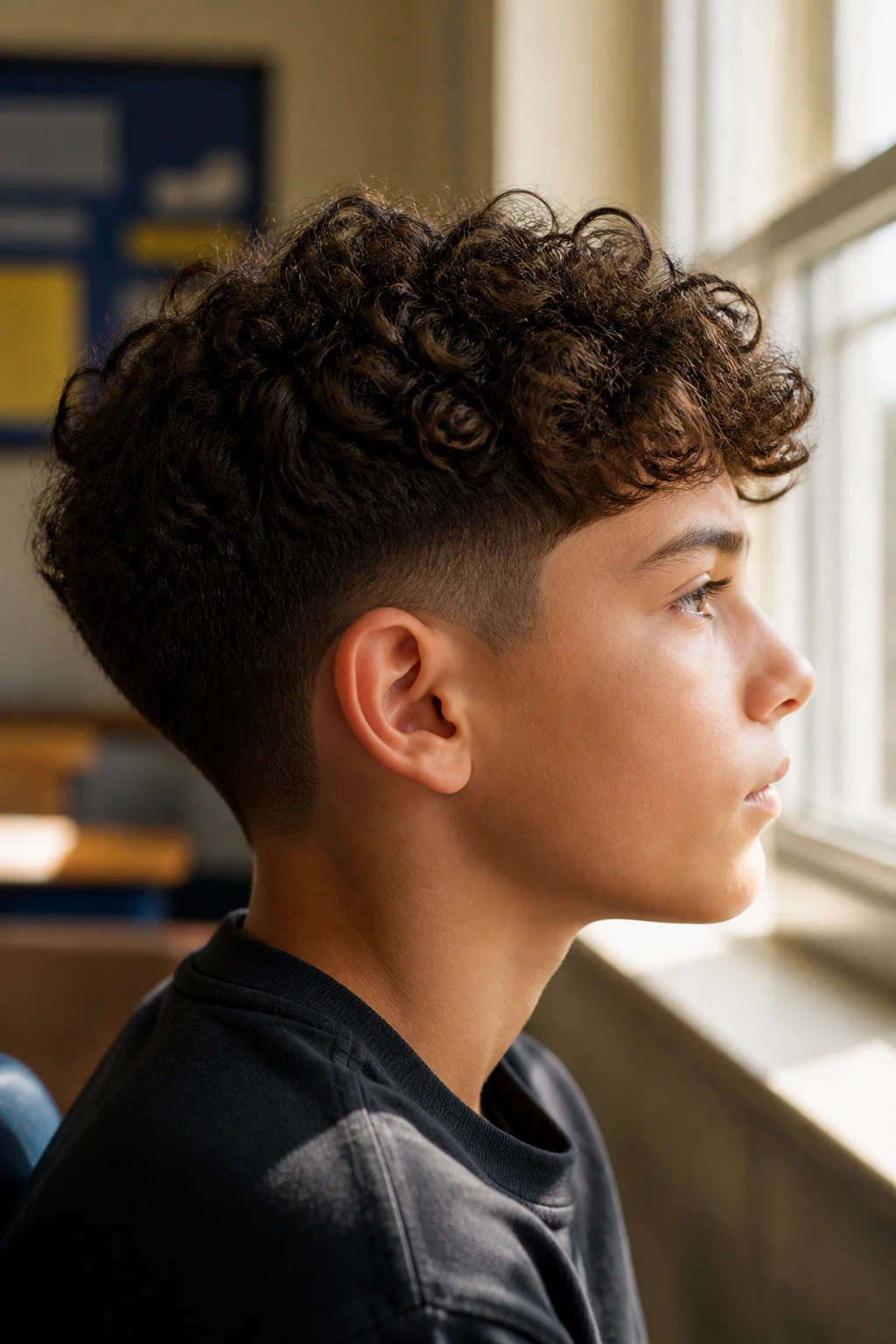
What if the neatest answer is the cut that leaves the most curl alone? A low taper does exactly that. It cleans the hairline around the ears and nape, keeps the edges tidy, and leaves the top with enough length to show the curl pattern instead of crushing it under clippers.
Keep about 4 to 5 inches on top, with a low taper that starts near the sideburn and neckline, not halfway up the head. That detail changes the whole feel. A high fade can steal too much shape from the sides, while a low taper keeps the cut balanced and school-friendly.
Why the Low Taper Matters
The taper gives structure without making the haircut look severe. It also helps curly hair grow out in a cleaner line, because the edges stay controlled while the top keeps its movement. If your boy hates fuss, this cut can take a quick spray of water and a little leave-in conditioner, then head out the door.
Ask the barber for scissor work on the top and a low taper on the sides and back. If someone reaches for a high fade by habit, slow that down. Curly hair usually looks better when the sides are left with a little softness.
4. Curly Fringe Crop
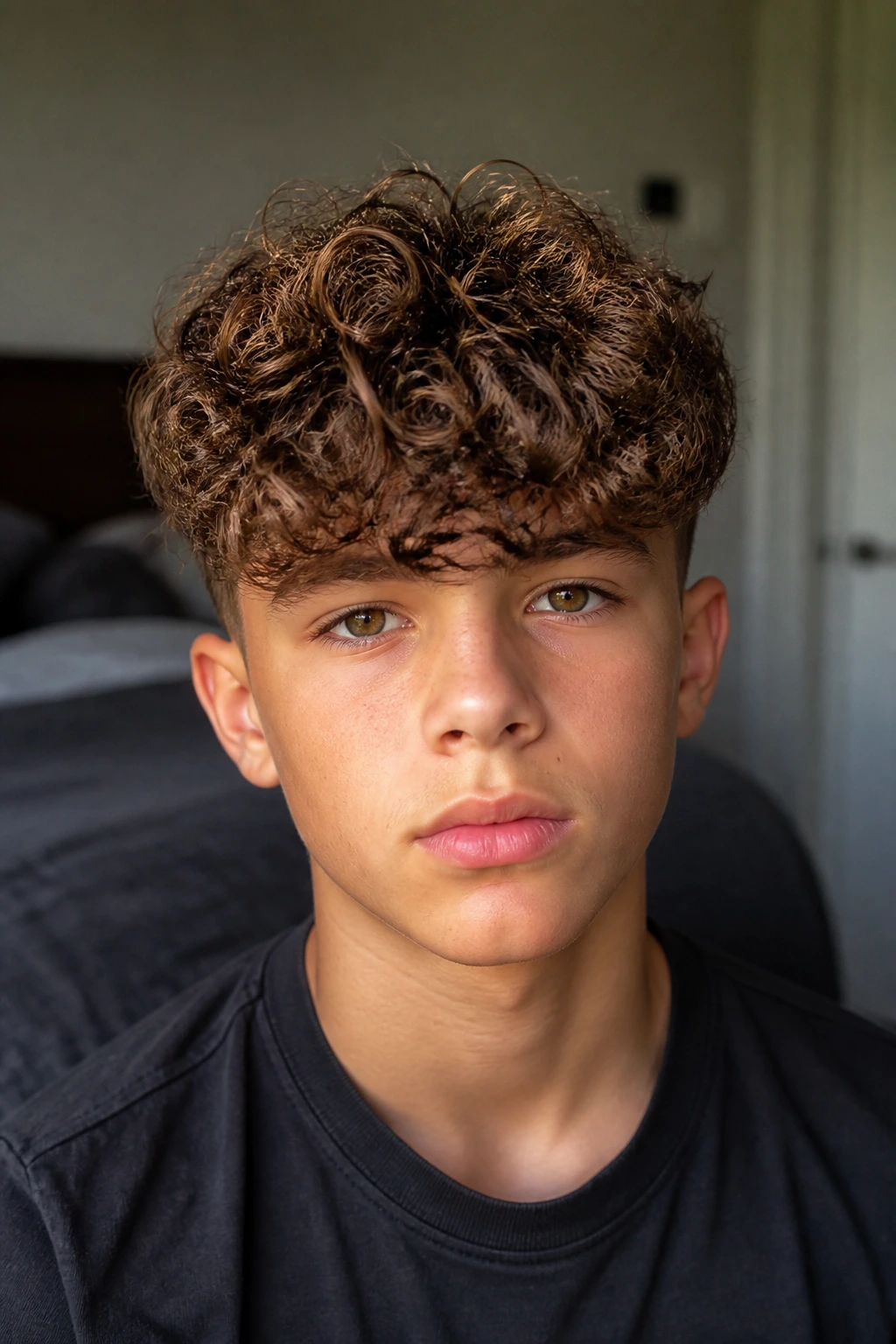
A curly fringe sitting across the brow can hide a high forehead, soften a strong hairline, or just give the haircut a bit of energy. This is a good cut for boys who want curl forward, not up and away. The shape feels younger, but not childish when the length is controlled.
Keep the fringe around eyebrow level when dry, with the top in the 3 to 4 inch range and the sides tapered rather than clipped bare. The front should be cut with the curl shrink in mind, because a wet fringe that looks long can pop up an inch after it dries. That is how people end up with a forehead fringe that no longer reaches the forehead.
This cut is at its best with a light hand. A little curl cream or mousse is enough. Heavy gel can make the fringe hard and crunchy, which ruins the soft line that makes the crop work in the first place.
It is also one of the fastest cuts to style. Shake in some water, scrunch the front forward, and let the curl do the rest. If the hair has a stubborn cowlick, ask the barber to leave a touch more length right at the front so the fringe has weight.
5. Bro Flow Curls with Soft Layers
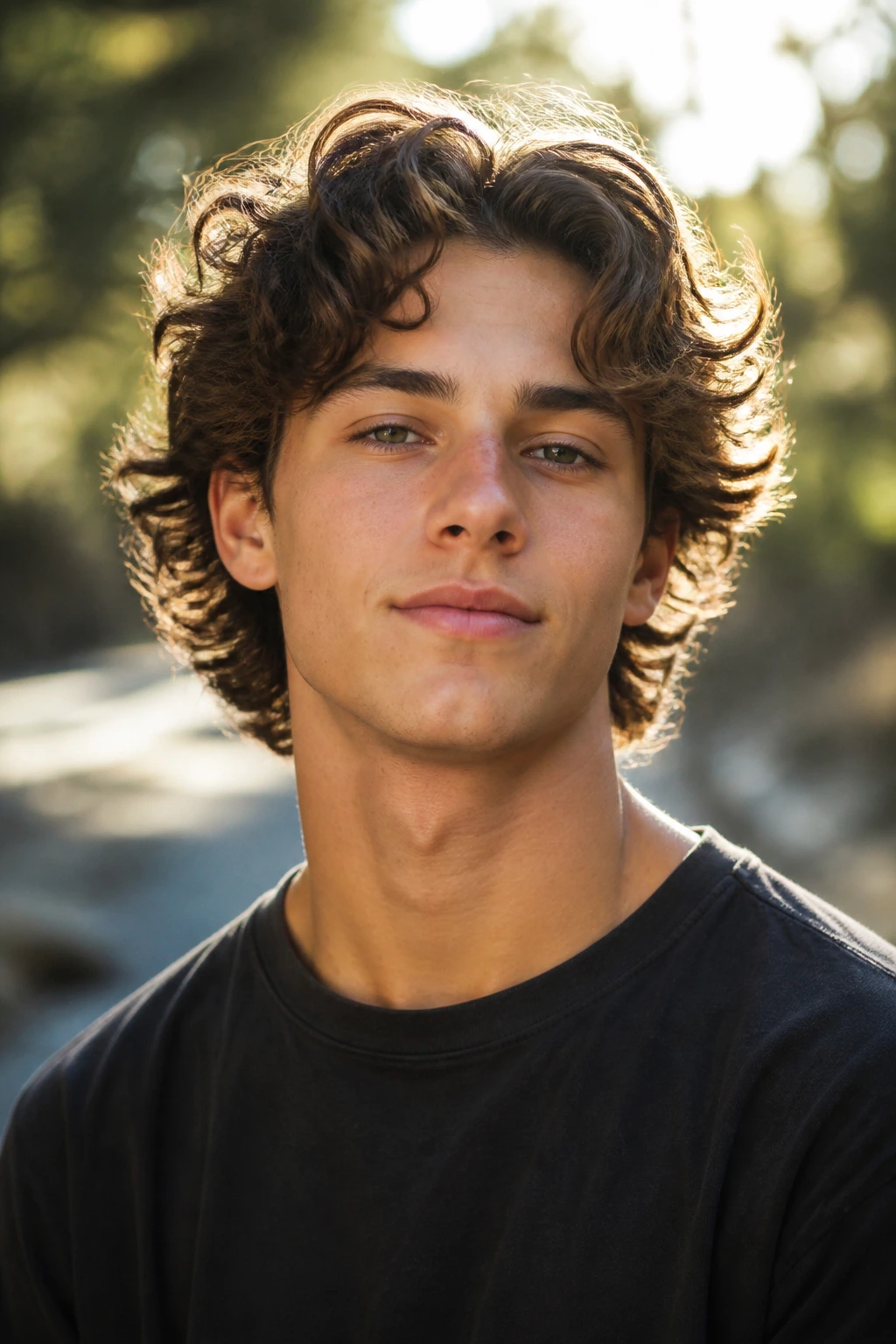
Bro flow on curly hair is not about pretending the hair is straight enough to glide back. It is about letting medium curls move back and around the ears while keeping enough length for the curl to show off. The result is looser, longer, and a little older-looking without being fussy.
This cut usually needs 5 to 7 inches on top and enough length through the sides to tuck behind the ears. The layers should be soft and gradual. If the barber carves in too many short pieces, the flow breaks apart and the hair can puff at the sides instead of moving as one shape.
A boy with thicker curls can wear this style especially well. It gives the hair some weight, so it does not spring straight out from the head. That weight is what makes the flow sit back instead of standing up.
A little leave-in conditioner and a wide-tooth comb are usually enough. Brush it back while damp, then leave the shape alone. If the hair is allowed to dry while being touched ten times, it will show it.
6. Wolf Cut Lite for Boys
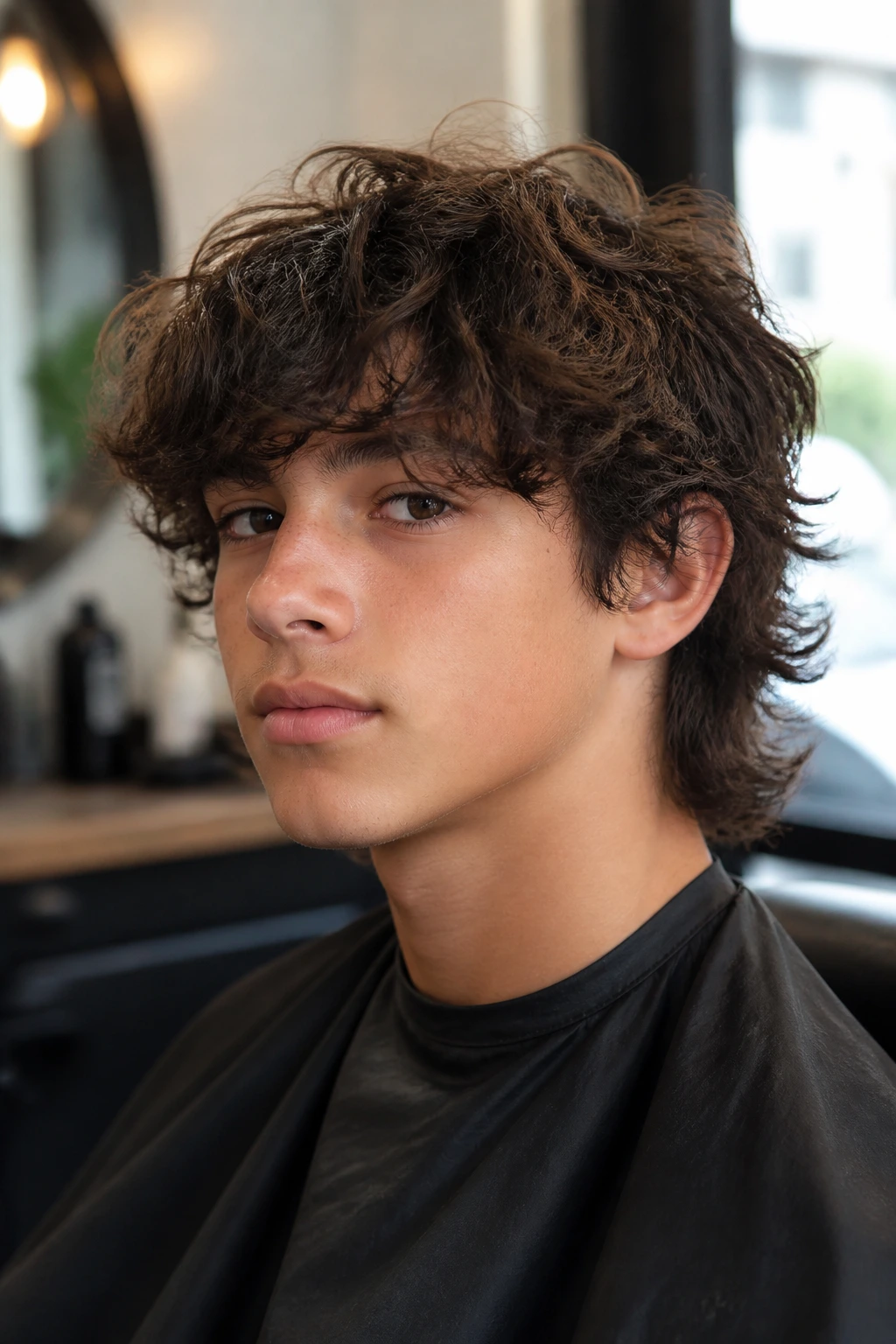
The wolf cut is the haircut that makes barbers either nod slowly or wince, depending on how heavy-handed the request gets. For boys with curly hair, the lighter version is the one worth asking for: layered, a little longer in the back, and soft around the face so it does not look theatrical.
This version keeps the crown airy, leaves the nape a touch longer than the front, and avoids the choppy extremes that can turn curls into a frayed outline. It works because curly hair already has texture built in. The cut does not need to scream. It just needs to give the curls a shape to live in.
Best for these hair types
- Dense 2C to 3B curls that need weight removed without losing shape.
- Boys who like a bit of edge but still need the cut to sit down for school.
- Hair that looks flat when cut too bluntly across the ends.
I would not push this one on fine hair. Fine curls can get stringy fast if the layers are too aggressive. Keep the layers soft, and the back only slightly longer, unless you want the whole thing to drift into costume territory.
7. Side-Parted Curly Cut with Scissor Taper
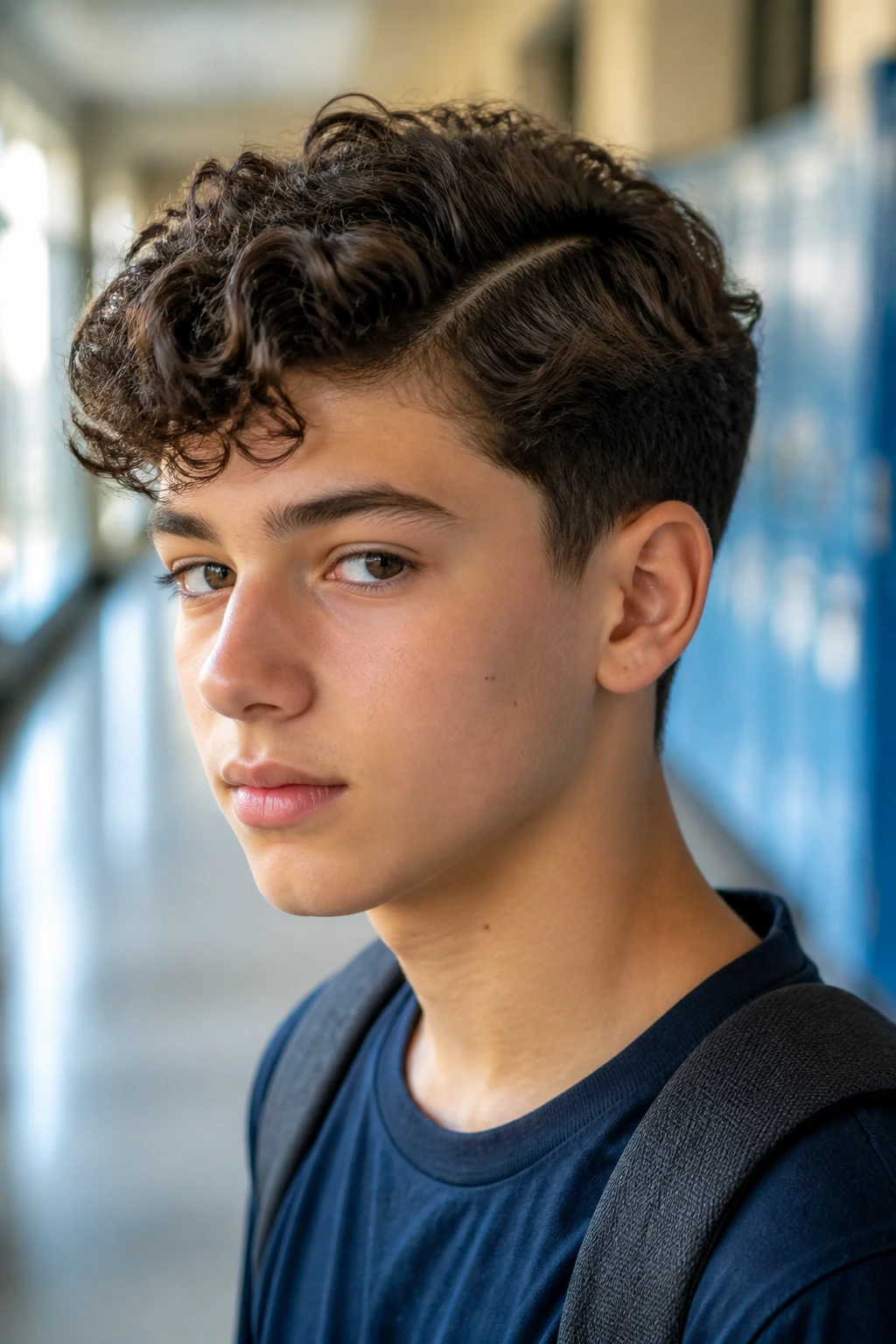
A side part on curly hair does not need to be stiff or old-fashioned. In the right hands, it gives the head a clear direction and keeps the curls from falling into the face in random pieces. It is one of the more polished medium haircuts for boys with curly hair, especially when the sides are cut with scissors instead of clipped too tight.
The top usually sits around 4 to 5 inches, long enough to sweep across but short enough to control. The part can be soft and natural; it does not need a shaved line. In fact, a hard part can look awkward once the hair grows back around it.
How to Style It
Work a little water through the front, comb the part where the hair naturally splits, then use a dime-sized amount of curl cream. Push the top sideways with your fingers, not a brush, so the curls keep a bit of bend. If the front collapses, dry the roots for 20 to 30 seconds with low heat.
This cut suits boys who want something cleaner than a shag but less severe than a short fade. It also photographs cleanly for school pictures, which is a boring sentence until you need the haircut to behave in a collared shirt.
8. Curly Quiff with a Soft Fade
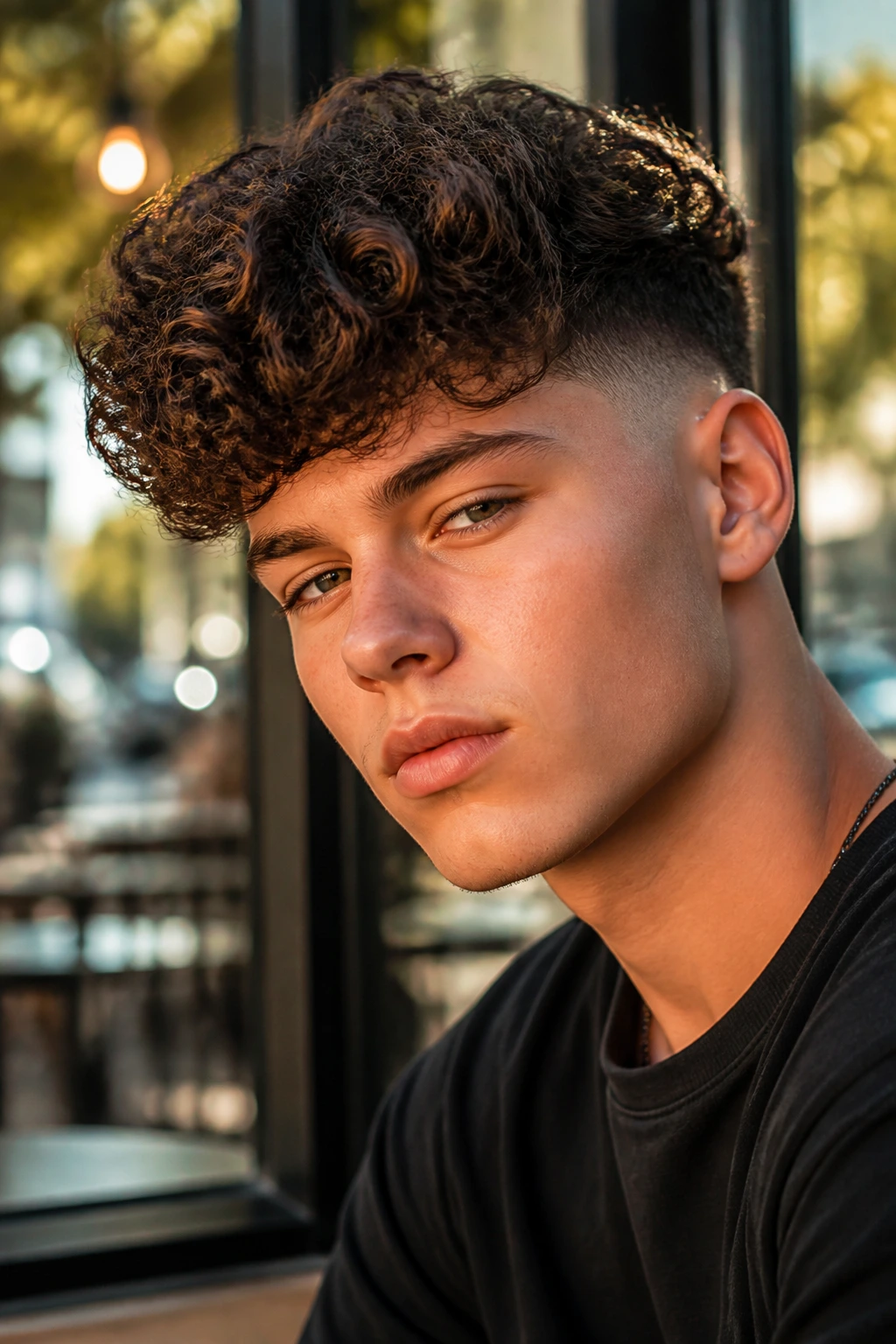
The quiff asks for a little more shape, and a little more patience. The front is lifted upward and slightly back, while the sides stay lower so the top does the talking. On curly hair, that lift has a nice roughness to it—less polished than straight hair, but more interesting.
You want enough length in the front to build height, usually 4 to 5 inches, and enough taper at the sides that the shape does not widen too much near the ears. A soft fade or low taper works better than a hard skin fade if the goal is still medium length. The top needs room to breathe.
This is one of those cuts that looks best when the hair is only half-controlled. Too much product turns the front into a stiff ridge. Too little product and the quiff falls forward by lunch. A light mousse at the roots, then a touch of curl cream through the ends, usually lands in the middle.
It suits boys with denser curls who like height at the front. If the hairline dips or the forehead is narrower, keep the quiff smaller and less vertical. A giant one can make the face look all top-heavy, and nobody needs that.
9. Drop Fade with a Curly Top
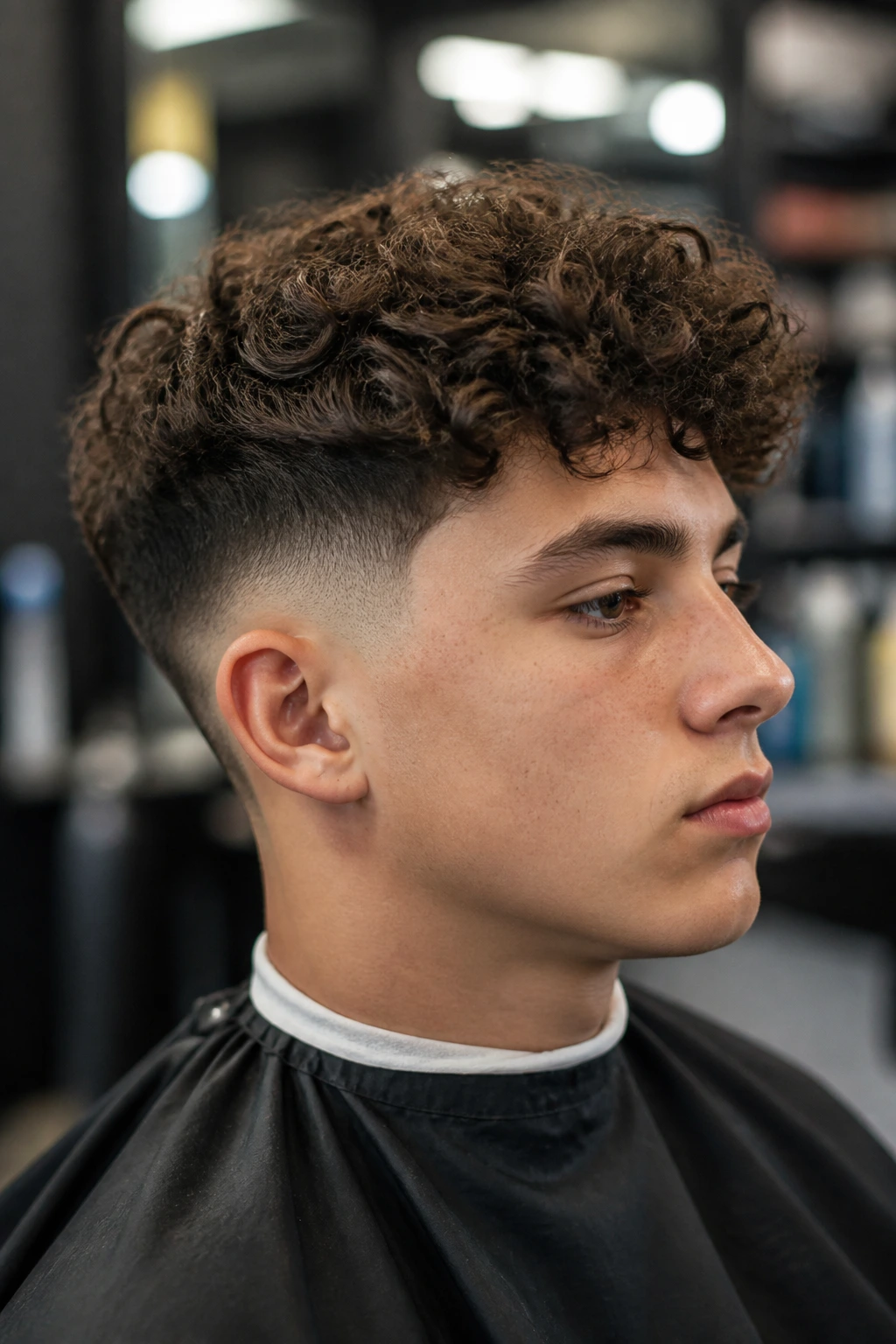
A drop fade changes the silhouette in a good way. Instead of cutting the sides in a straight line, the fade dips lower behind the ear and follows the shape of the head. That curved line makes the top feel fuller, which is useful when curly hair has a lot of volume on top.
Leave 4 to 6 inches up top and keep the curls rounded rather than pushed into a square block. The fade should drop just enough to clean the area around the ears and neck without stealing all the fullness from the sides. If the barber fades too high, the cut loses its balance and starts looking narrow.
This style is especially useful for tighter curls or thicker hair that tends to puff sideways. The drop fade gives the head a neater outline, while the top still moves. That is the whole attraction. You get control without losing the spring.
A small amount of curl cream or light gel can help the top stay separated. If the curls are left dry and brushed hard, they can bunch up and make the fade look disconnected in a bad way. Soft hands win here.
10. Layered Mop Top with a Rounded Shape
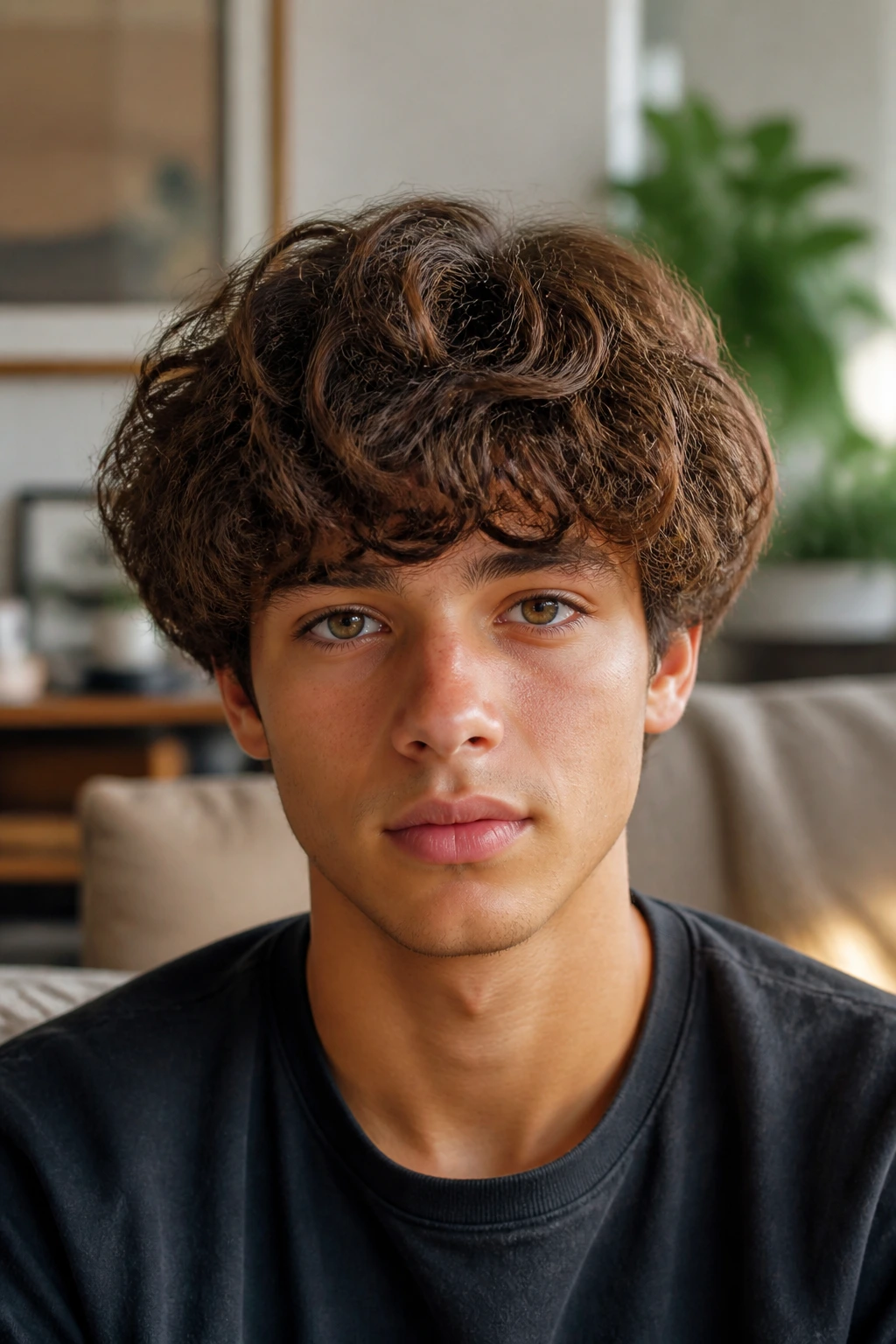
The mop top can sound old, but the modern version is just a rounded, soft medium cut with a fringe that falls into place naturally. On curly hair, it reads less like a retro haircut and more like a clean, lived-in shape that is easy to wear.
Keep the outline rounded and avoid a blunt shelf across the forehead. The sides should be cut to blend into the top, not hacked off at one level. That is where many mop-style cuts go wrong. They end up looking like a bowl with a curl problem.
The nicer version uses layers through the top so the curls sit in a soft cloud instead of clumping into one solid block. A little more length around the crown helps, because that stops the hair from standing up too aggressively. It is a quietly useful cut for younger boys who do not want to spend time styling.
If the hair is especially thick, ask the barber to remove bulk from inside the shape rather than from the surface. That keeps the top from becoming puffy while preserving the rounded outline.
11. Shoulder-Length Layered Curls
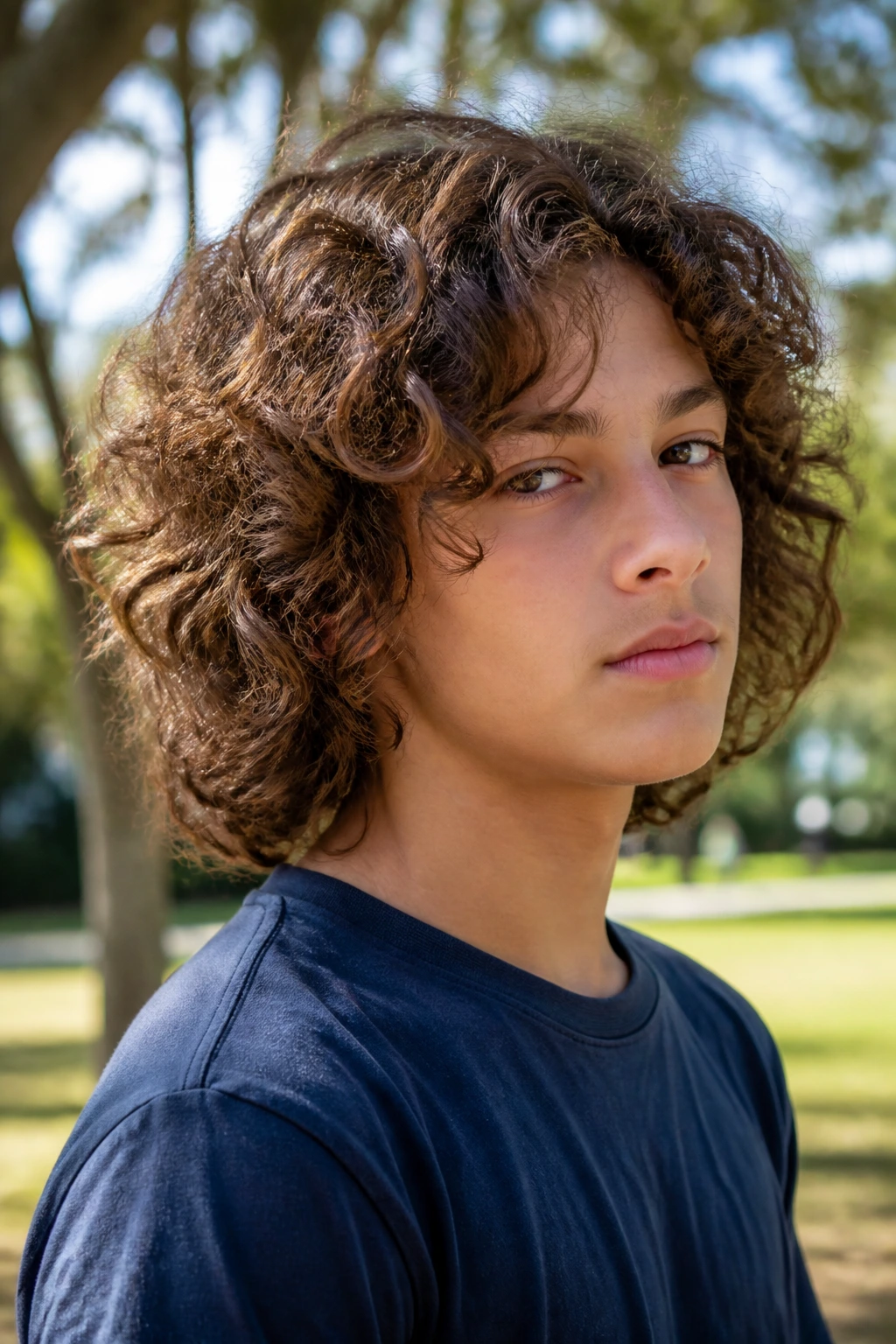
Shoulder-length curls sit at the far end of medium hair, and they work best when the layers are doing real work. Without layering, the hair hangs heavy and triangular. With the right cut, though, those same curls can fall loose, tuck behind the ears, and move like they have a little rhythm.
This is the style for boys who are growing their hair out or already have enough length that a simple trim is not enough. The ends should be cleaned up so they do not split and frizz, but the overall length needs to stay. It is a patience haircut. Not a shortcut.
A good shoulder-length cut is also the one most likely to be ruined by overbrushing. Curly hair at this length responds better to a wide-tooth comb or fingers while damp. Once it dries, leave it mostly alone. The more you keep touching it, the more the curl separates in odd places.
If the hair is dense, ask for layers that start lower around the ears and get softer toward the ends. That keeps the shape from ballooning outward. Boys with looser curls can wear this length with a center or off-center part; tighter curls may want a little more weight left near the sides.
12. Rounded Afro Shape with Soft Edges
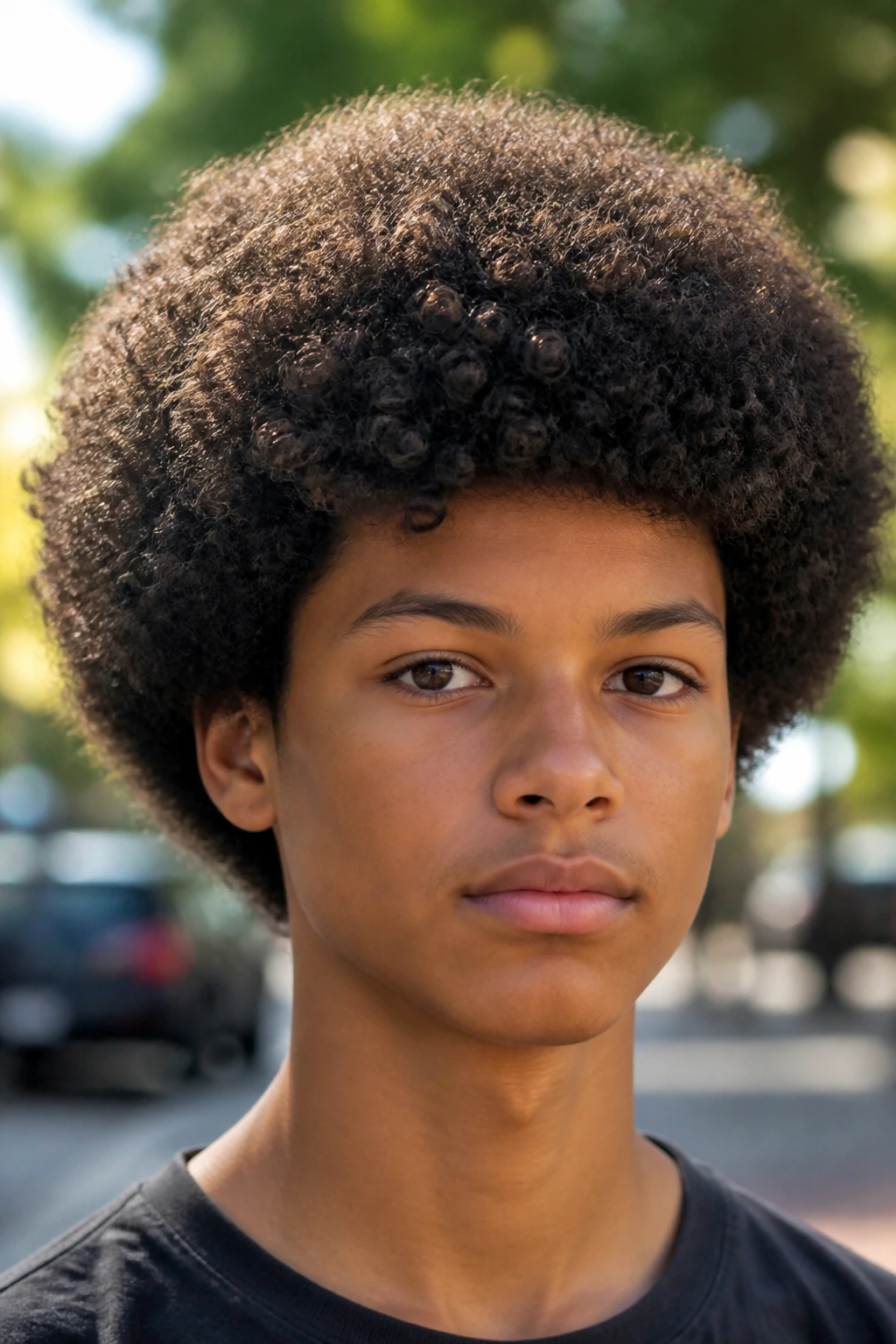
For coily hair, the shape matters more than the label. A rounded afro-inspired cut keeps the outline clean while letting the medium length stay full all over the head. The goal is not a flat top and not a square box. It is a soft, rounded shape that fits the head.
This works because coils shrink in a way that can fool the eye. Cut too sharply or too high, and the hair loses its natural balance. Leave enough length on the top and sides, then shape the perimeter so it follows the curve of the head rather than fighting it.
What to Ask For
- A rounded silhouette with no harsh corners.
- Soft edge work at the temples and neckline.
- Length left on the crown so the shape stays full after drying.
- Minimal bulk removal unless the hair is very dense.
A little moisturizer or leave-in conditioner goes a long way here. Coily hair at medium length can dry out fast if the cut is clean but the care is rough. Satin pillowcases help too. Not glamorous, but they work.
13. Curly Undercut with Textured Length
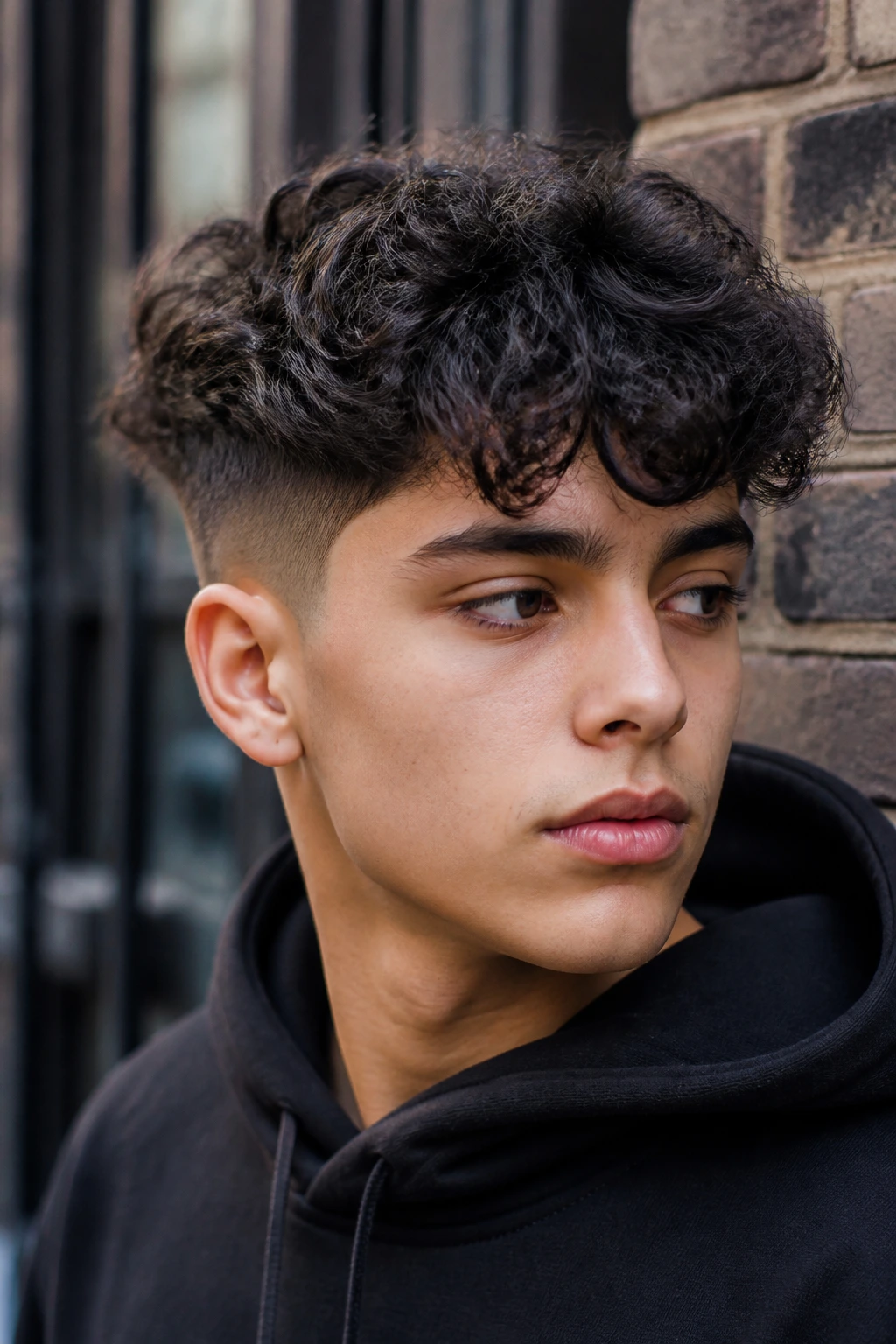
The undercut is not shy. The sides are clipped shorter, the top stays long, and the contrast is the point. On curly hair, that contrast can look sharp if the top has enough density to sit above the shorter sides without looking like it was pasted on.
Keep the top in the 5 to 6 inch range if you want real movement. Shorter than that and the disconnect can feel abrupt. The sides can be clipped tight, but a skin-bald undercut often looks harsher on boys than a soft taper, especially when the curls are dense and the grow-out is fast.
This cut suits boys who like a stronger silhouette and do not mind keeping up with trims. If the sides are left too long, the whole cut loses its point. If the top is cut too short, the contrast feels awkward. So yes, it asks for commitment.
Styling is straightforward. Use a light cream or mousse, push the top where you want it, and let the curl show off the texture. The undercut does the framing; the hair on top does the rest.
14. Temple Taper with Loose Curls
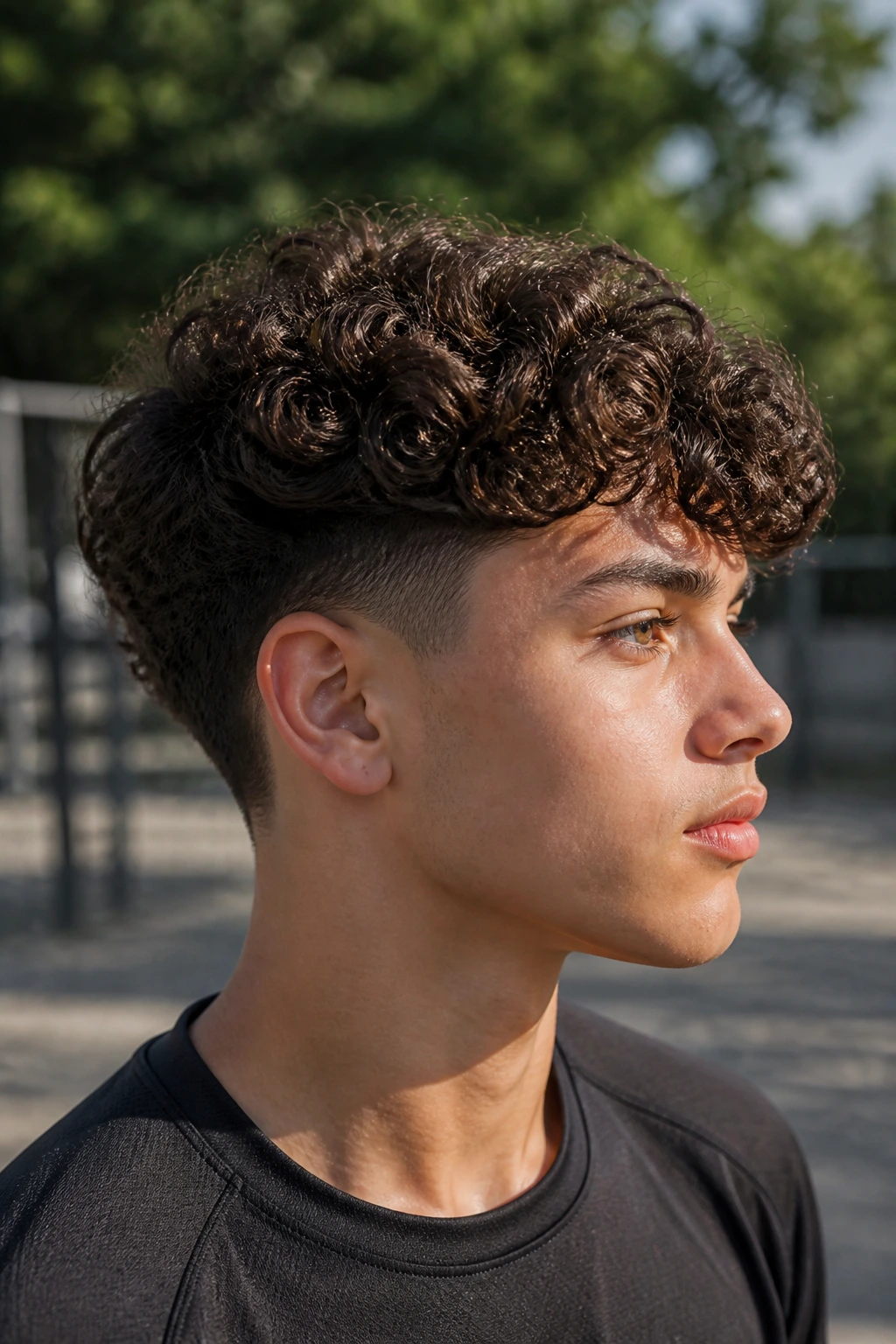
Some boys want the temples cleaned up and nothing else. That is the temple taper in a nutshell. It softens the sideburns, tidies the neckline, and leaves the rest of the medium curls alone. The result feels calm, not overworked.
This cut is especially useful if the hair already has a good shape but the edges start to look fuzzy between trims. A temple taper keeps the haircut looking fresh without taking away volume from the sides. That matters for boys who play sports or wear helmets often, because the hair still needs room to bounce back after being flattened.
Best little detail
The cut depends on restraint. A barber who goes too high with the taper turns a subtle shape into a mini fade, and that changes the whole mood of the haircut. Keep the taper low and soft. The rest of the curls should still look like themselves.
This is also one of the easiest cuts to grow out. There are fewer hard lines to soften later, so the haircut stays decent longer than sharper styles.
15. Brush-Up with a Defined Front
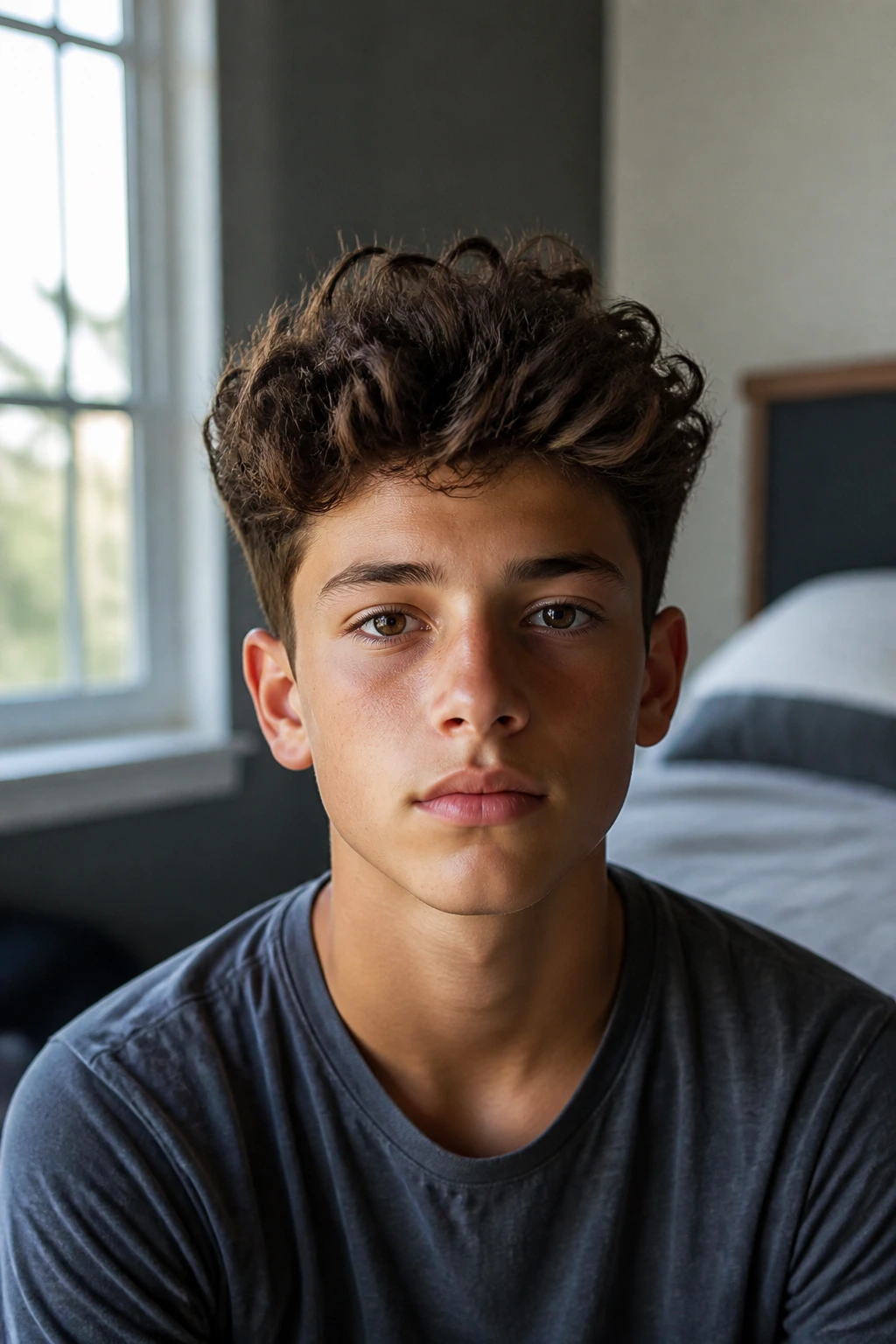
When the front needs more height, a brush-up gives curly hair a clear direction. The hair at the hairline is pushed up and slightly forward, then allowed to break into texture instead of lying flat. It gives the face lift without requiring the stiff, shellacked look that a lot of pomade-heavy styles create.
Keep enough length in the front to build that lift, and keep the sides shorter so the height has room to show. A low taper or soft fade works well underneath. The shape depends on the roots, though, not on spraying the hair into a helmet.
A small amount of mousse at the roots can help, and a diffuser is worth using if the curls are dense enough to need help standing up. Set the dryer on low heat, cup the front upward with your fingers, and stop when the roots are mostly dry. If you keep blasting the hair, it gets frizzy and loses the lift you were trying to build.
This cut works well for boys who like a little height and do not mind a few minutes of styling. It is not the fastest option on the list, but it does give the haircut a clear shape.
16. Mini Mullet with Soft Layers
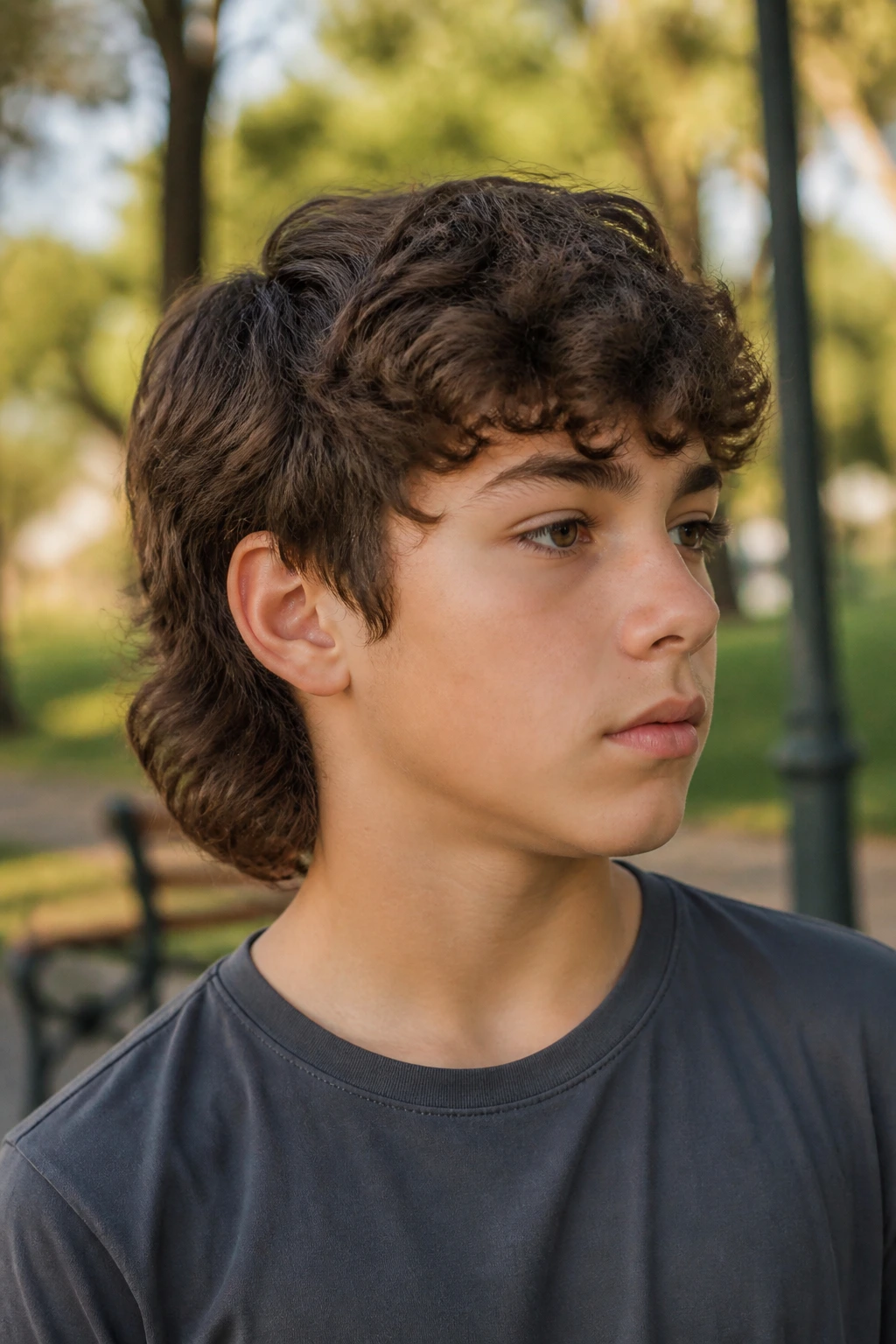
A mini mullet sounds louder than it usually looks. On curly hair, the modern version keeps the top and sides medium, then lets the back hang just a little longer. Nothing extreme. Nothing costume-like. Just enough length in the back to show movement.
The softer version matters. If the back is too long or the top too short, the whole cut starts to feel like a dare. The better version keeps the transitions soft so the head still looks balanced from the front and side. Curls help here because they blur the line between lengths.
This cut is good for boys who want something playful and a little different without going full statement haircut. It also works well when the hair is thick, because the extra length in back keeps the shape from puffing too wide at the sides.
Ask for a clean neckline and layered top, then leave a touch more length at the back than at the sides. That small difference is enough. You do not need drama to make the shape read.
17. Messy Layered Top with No Hard Part
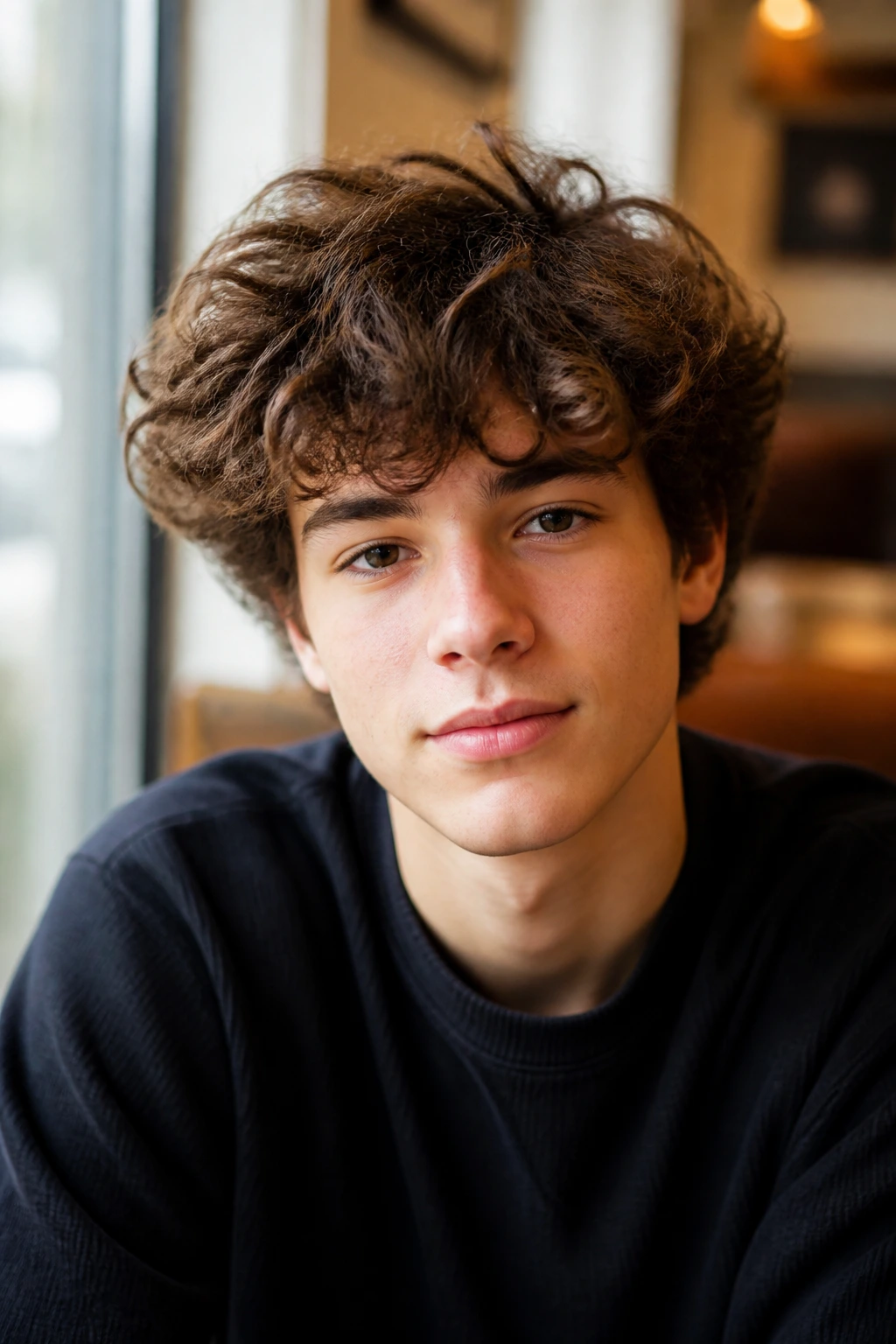
No hard part. No forced line. Just curls falling where they want, but in a cut that has enough structure to keep the head from looking wide or bulky. This is one of the most forgiving medium haircuts for boys with curly hair, which is part of why it shows up so often.
The top should be layered enough to keep the curls separated, but not chopped so much that every piece sticks out on its own. The sides can be softly tapered or left longer if the boy likes more fullness around the ears. The point is to keep the overall outline loose.
The benefit here
A messy layered top handles real life. It survives a rough morning, a football helmet, a nap in the car, and probably one bad comb-through. It does not need perfect symmetry to look right, which is a gift if the hairline is uneven or one side curls harder than the other.
This style is best when the barber follows the curl pattern instead of trying to flatten it into a neat shape. The cut should look a little better when it is not touched too much.
18. Soft Scissor Cut with a Tapered Neckline
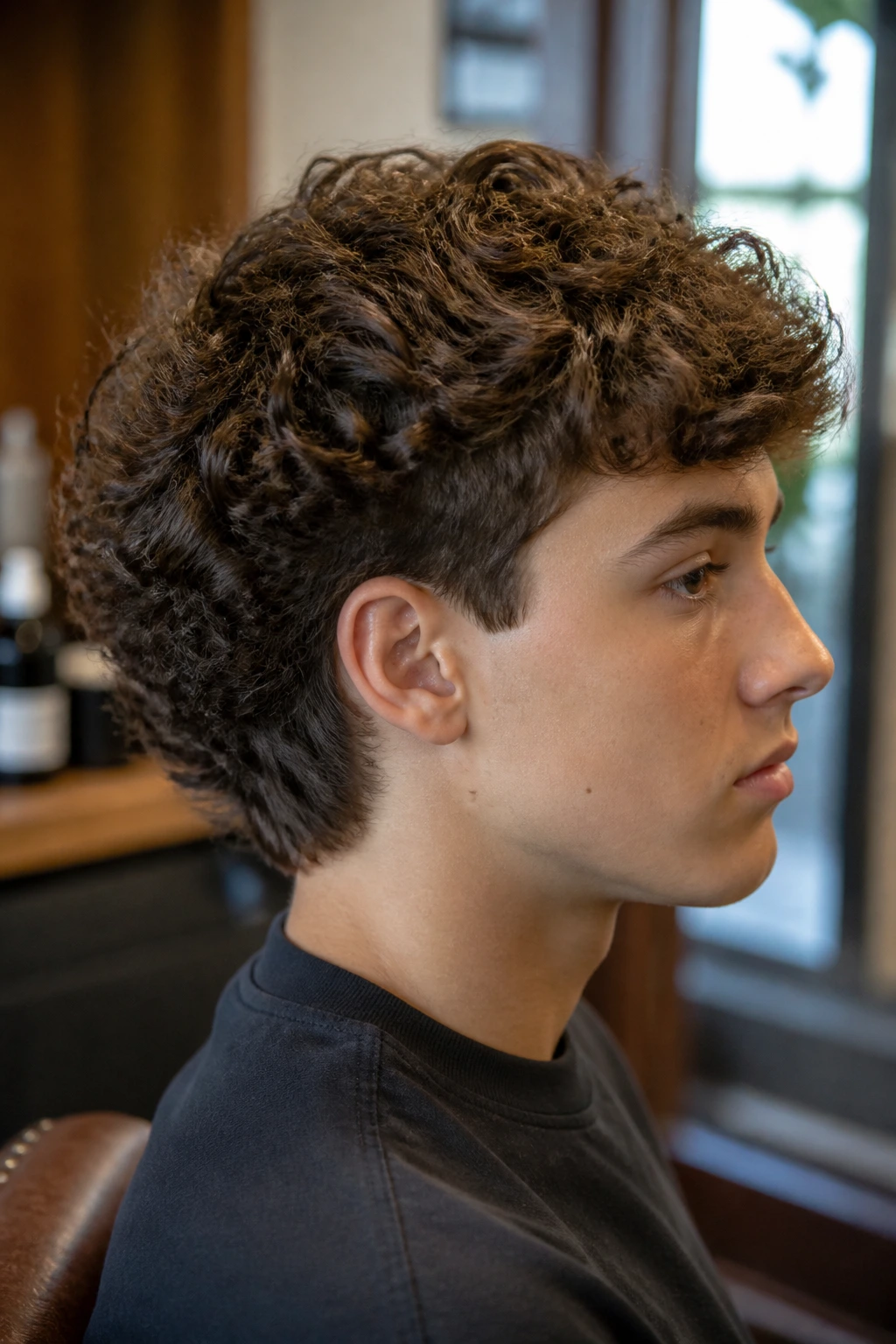
Sometimes the most useful medium cut is the one a barber can keep tidy with scissors alone. A soft scissor cut leaves the curls medium all over, trims the neckline cleanly, and keeps the sides blended without a harsh fade. It is calm, balanced, and easy to live with.
This is the haircut I point parents toward when they want one cut that can handle school, sports, and grow-out without constant correction. The top still has enough length for curls to show, but the shape stays controlled. Because the sides are not clipped down aggressively, the cut grows out in a gentler way.
If the curls are loose, this cut can be worn with a bit of side sweep. If they are tighter, the shape can stay rounded and natural. That flexibility is the reason it belongs on this list. It does not demand a single styling trick to work.
Ask the barber to keep the ends soft, not blunt, and to taper the neckline cleanly without going high around the ears. That keeps the overall look neat without stealing the curl’s movement.
Why Medium Length Keeps Curly Hair Sitting in a Better Shape
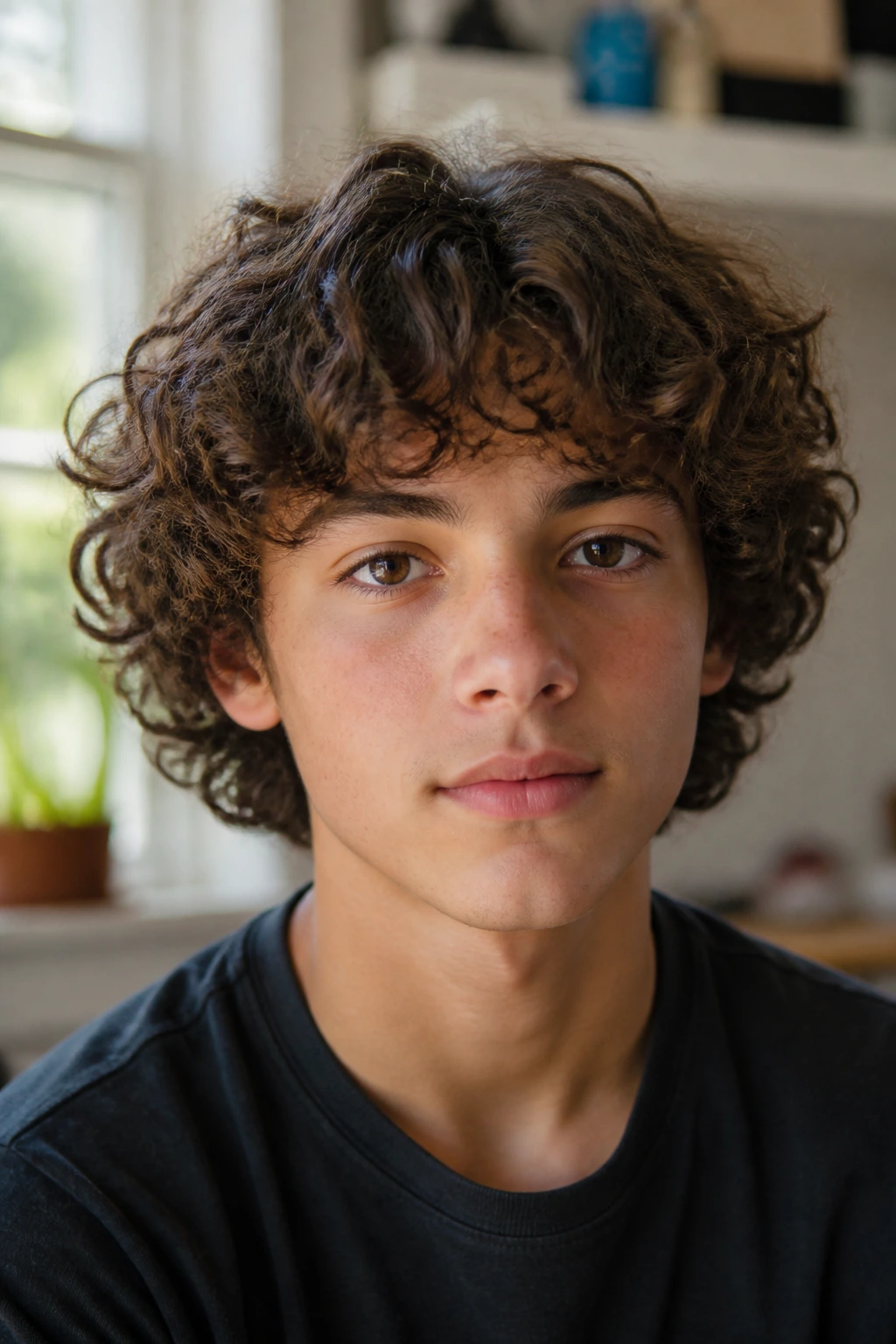
Medium length gives curly hair a place to land. Short cuts can expose every bend and kink at once, which is fine if you want a lot of texture and not much control. Longer cuts can pull the curl down and make the ends feel thin or stringy. The middle length lets the hair hold its own shape.
There is also the matter of shrinkage. Curlier hair often looks longer when wet and shorter once dry, which is why a cut done on fully soaked hair can surprise everyone in the chair. A good barber knows this and checks the line as the hair dries, or cuts dry enough to see the real shape from the start. That one habit saves a lot of regret.
The other thing medium length does well is balance. Curls like to expand at the sides and crown if they are left without layers. A medium cut can control that expansion without making the head look flat. It gives the top a little lift, the sides a little softness, and the neckline enough cleanup that the whole shape reads on purpose.
For boys, that balance matters because the haircut has to survive movement. School, sports, sleep, sweat, helmets, running around outdoors—curly hair gets tested. A medium cut can take that abuse better than a precision style that depends on every strand staying in place.
How to Explain the Cut to a Barber Without Guesswork
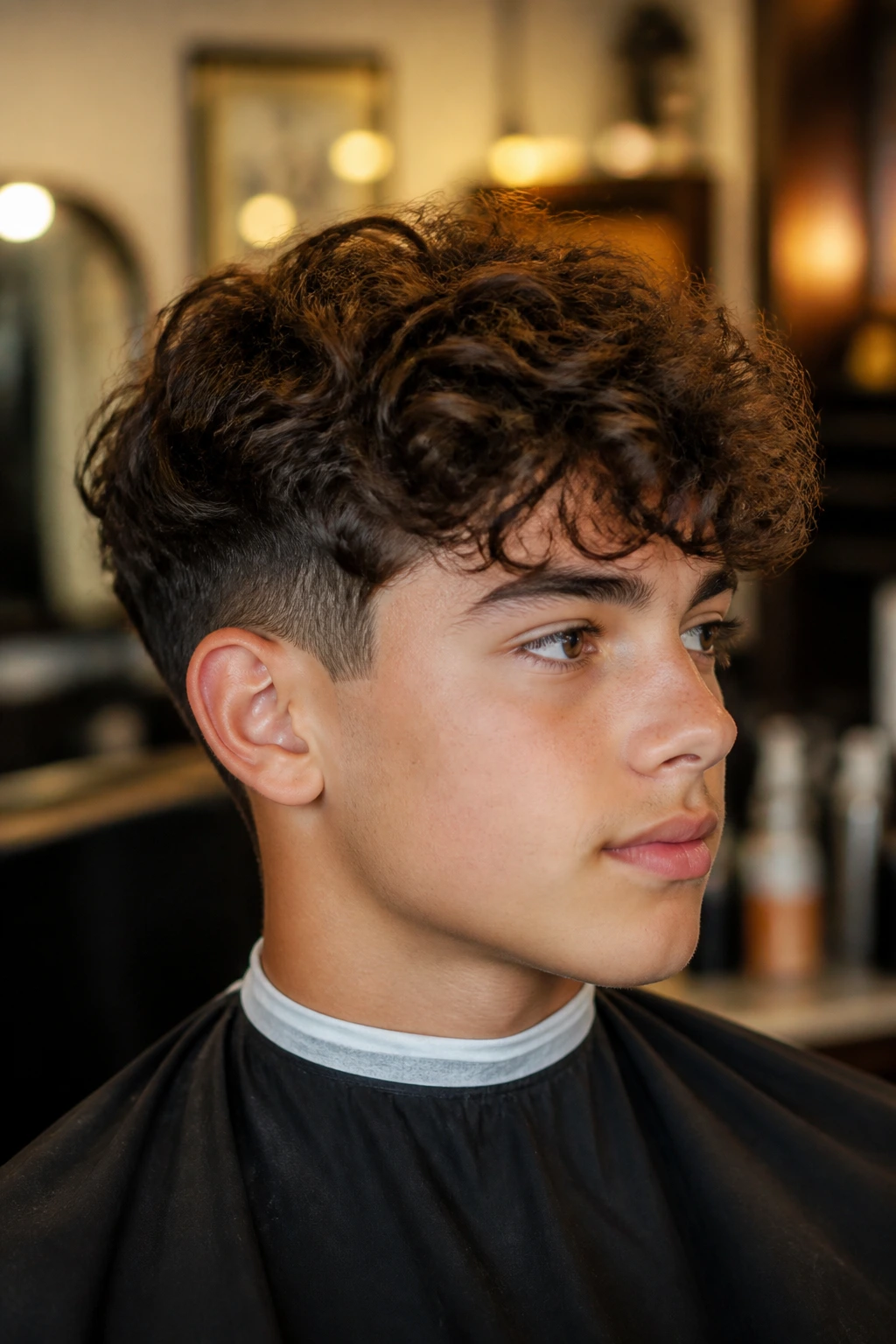
The easiest way to get the right shape is to talk in inches and in behavior, not in vague words like “a little shorter.” Bring a photo, yes, but pair it with actual length notes. Say where you want the curl to live: across the forehead, off the forehead, around the ears, or tucked toward the back.
A good script sounds more like this:
- Leave 4 to 6 inches on top if the curl needs room.
- Keep the sides low and soft, not high and tight.
- Cut it dry or nearly dry so the curl spring is visible.
- Use point cutting or scissors to soften the ends.
- Avoid aggressive thinning unless the hair is truly dense.
If the barber knows curls well, they will probably nod at this. If they do not, these details save the cut from getting too short around the crown or too blunt at the fringe. The biggest mistake people make is asking for “medium” and hoping that means the same thing to everyone. It does not.
Bring the photo anyway. Just do not trust the photo alone. Curls on one head can sit a full inch higher or lower than the same style on another, and the barber needs to know where the curl lives on your child’s head.
Tools and Products That Keep Curly Hair Cooperative

You do not need a shelf full of bottles. You need a small set of tools that respect the curl pattern instead of flattening it.
- Spray bottle: A fine mist helps re-wet sections without soaking the whole head.
- Wide-tooth comb: Best for detangling damp curls without tearing the pattern apart.
- Microfiber towel or cotton T-shirt: Cuts down on frizz better than a rough bath towel.
- Leave-in conditioner: Good for keeping medium curls soft and easier to separate.
- Light curl cream: Helps shape without making the hair greasy or heavy.
- Mousse: Useful when the top needs lift, especially on quiffs and brush-ups.
- Light gel: Gives hold for fringe or curtain styles without needing a hard shell.
- Diffuser attachment: Handy if the curls need help drying in shape instead of puffing outward.
- Small hair clip or duckbill clip: Useful for holding a part in place while the hair dries.
- Satin pillowcase: Not fancy, just practical. It cuts down on rough morning tangles.
The product mistake I see most is weight. Heavy creams, thick pomades, and sticky waxes can make curls look tired before noon. Medium curls usually look better with a lighter hand and a little more moisture. If the hair feels coated, too much has gone on.
Morning Styling Routines That Work on Busy Days
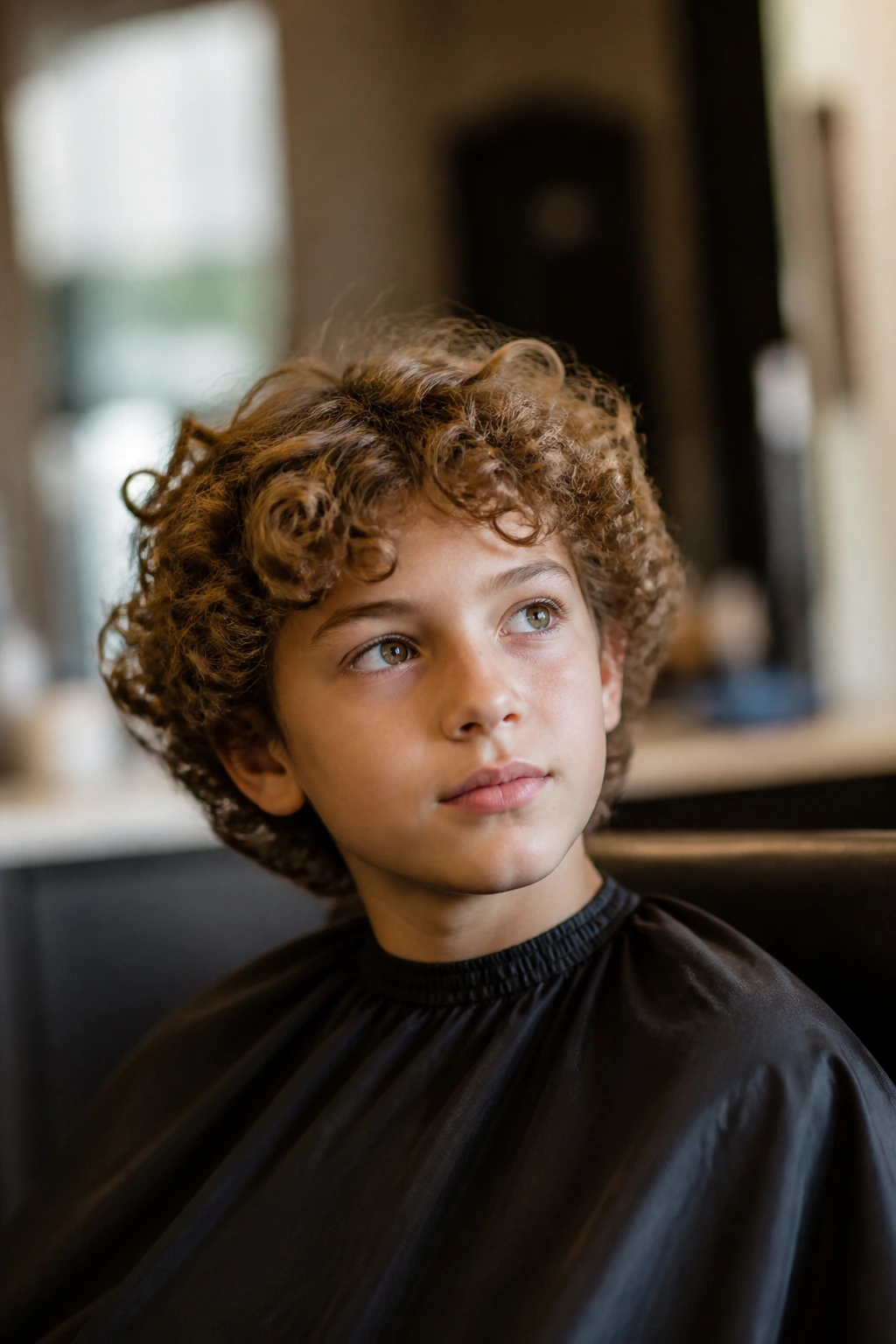
The best styling routine is the one that gets repeated without drama. For medium curly hair, that usually means working with damp hair, not wet hair dripping into the shirt collar, and not bone-dry hair that has already frizzed up.
Two-minute school routine: Mist the hair lightly, add a small amount of leave-in or curl cream, scrunch the curls upward once or twice, and let them fall where they want. This is enough for shag cuts, messy tops, and soft taper styles.
Five-minute routine for cleaner shapes: Apply mousse at the roots, use fingers to place the part or fringe, then diffuse on low heat for a few minutes. This helps with curtains, side parts, quiffs, and brush-ups where the front needs a little direction.
Sport-day routine: Keep the product light. A touch of leave-in before a helmet or cap is fine, but heavy styling product mixed with sweat usually turns into a sticky mess. After practice, a quick rinse or a spray bottle refresh is better than piling more product on top.
What to skip: Brushing dry curls into submission. That usually makes the cut wider and puffier, not neater. If the style needs smoothing, do it while the hair is damp and stop once the shape is set.
Common Mistakes That Make Curls Puff Out or Go Flat
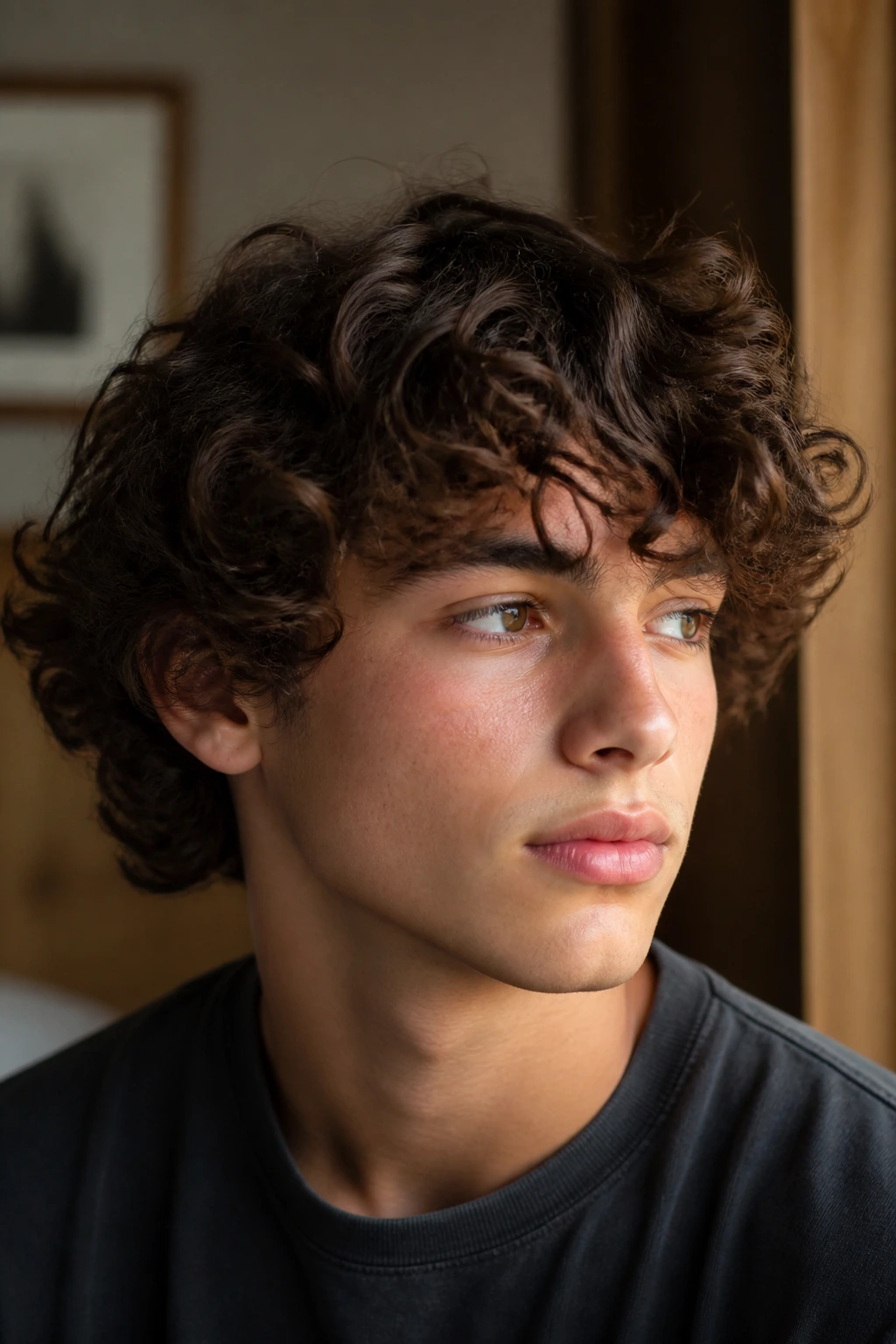
The biggest mistake is cutting curly hair too short on the first pass. Curls shrink after drying, and a cut that looks tidy in the chair can turn into a puffball at home. The fix is simple: leave more length than you think you need, then trim again later if required.
Another common error is using thinning shears everywhere. On very dense hair, a little bulk removal can help. On average curly hair, too much thinning makes the ends look see-through and the top lose its structure. If the goal is shape, point cutting is usually safer.
A third problem is chasing a hard part or razor line that the hair does not want to hold. Curly hair often refuses to sit in one exact line unless it is very short or heavily styled. A softer natural part usually behaves better and grows out cleaner.
Heavy products cause trouble too. Thick wax and greasy pomade can weigh medium curls down at the roots, then leave the ends limp and sticky. If that happens, wash it out, start again with a lighter cream or mousse, and keep the amount small. A pea-sized dab is often enough for a child’s medium cut.
Finally, people ignore the neckline and temples until the whole haircut looks fuzzy. A quick cleanup every few weeks keeps the shape visible even when the top is still growing.
How to Adjust the Shape for Loose Waves, Ringlets, and Coils
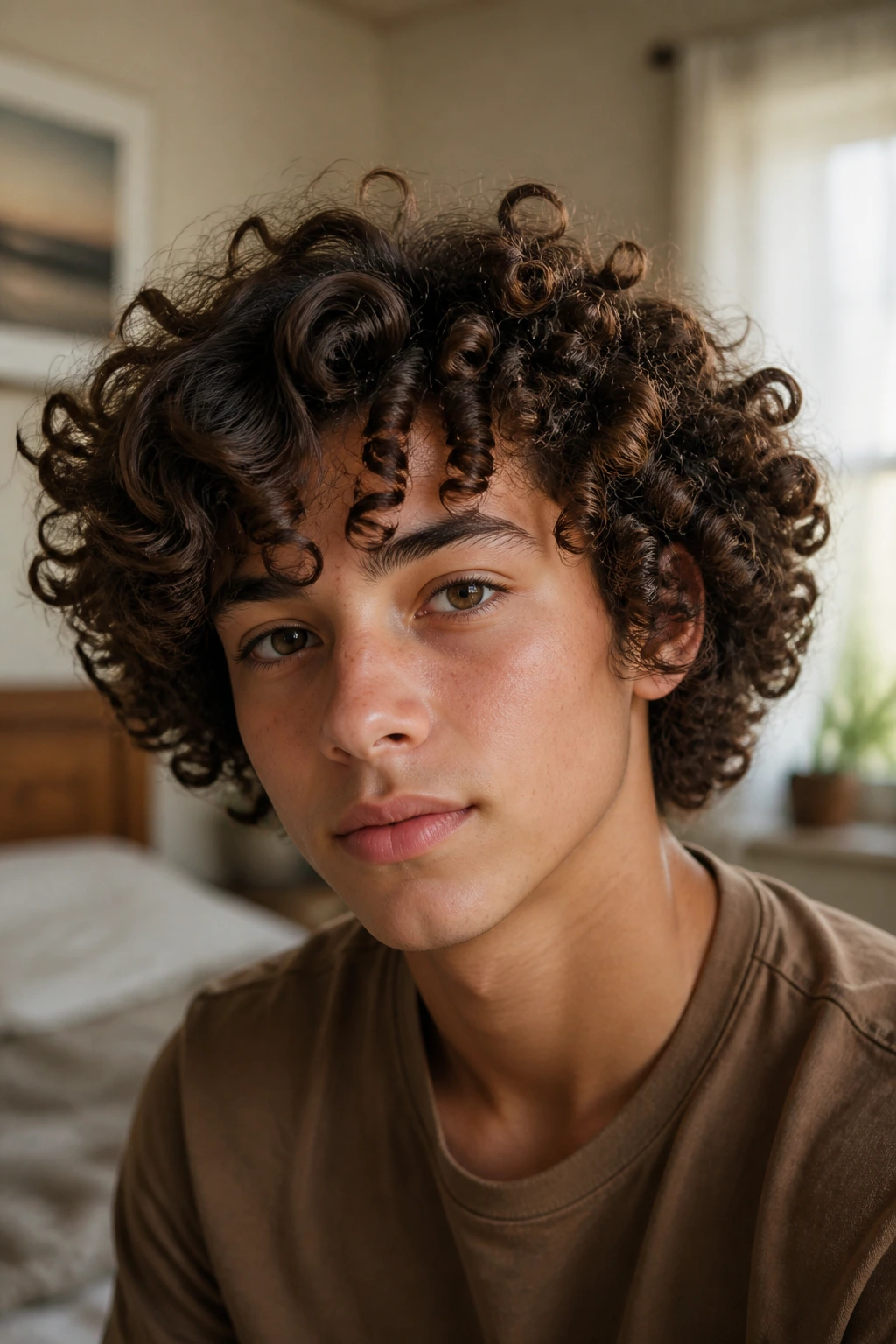
Loose waves usually need less layering and more direction. If the hair is 2B or soft 2C, too many short layers can make it flip out in weird places. A gentle curtain, side part, or scissor-cut shag usually behaves better than a dramatic fade or undercut.
Springy ringlets, especially 3A to 3B textures, can handle more layering because the curl has a stronger shape. These cuts work well with shags, quiffs, drop fades, and curly fringes. The main job is to keep the crown from bulking up too much, which means the barber should remove weight from inside the shape rather than shortening the surface too much.
Tighter coils need the haircut to respect shrinkage even more. Rounded shapes, soft tapers, and scissor work at the edges usually look better than hard, high fades unless the top has enough length to balance the contrast. Moisture matters more here too. Dry coil hair can look brittle fast if the cut is sharp but the care is rough.
And there is a simple face-shape rule that helps: if the face is long, keep the sides a touch fuller; if the face is round, keep more length on top or a fringe that breaks the vertical line. Haircuts do not need a math degree, but a little shape awareness saves bad choices.
Keeping the Cut Clean Between Trims
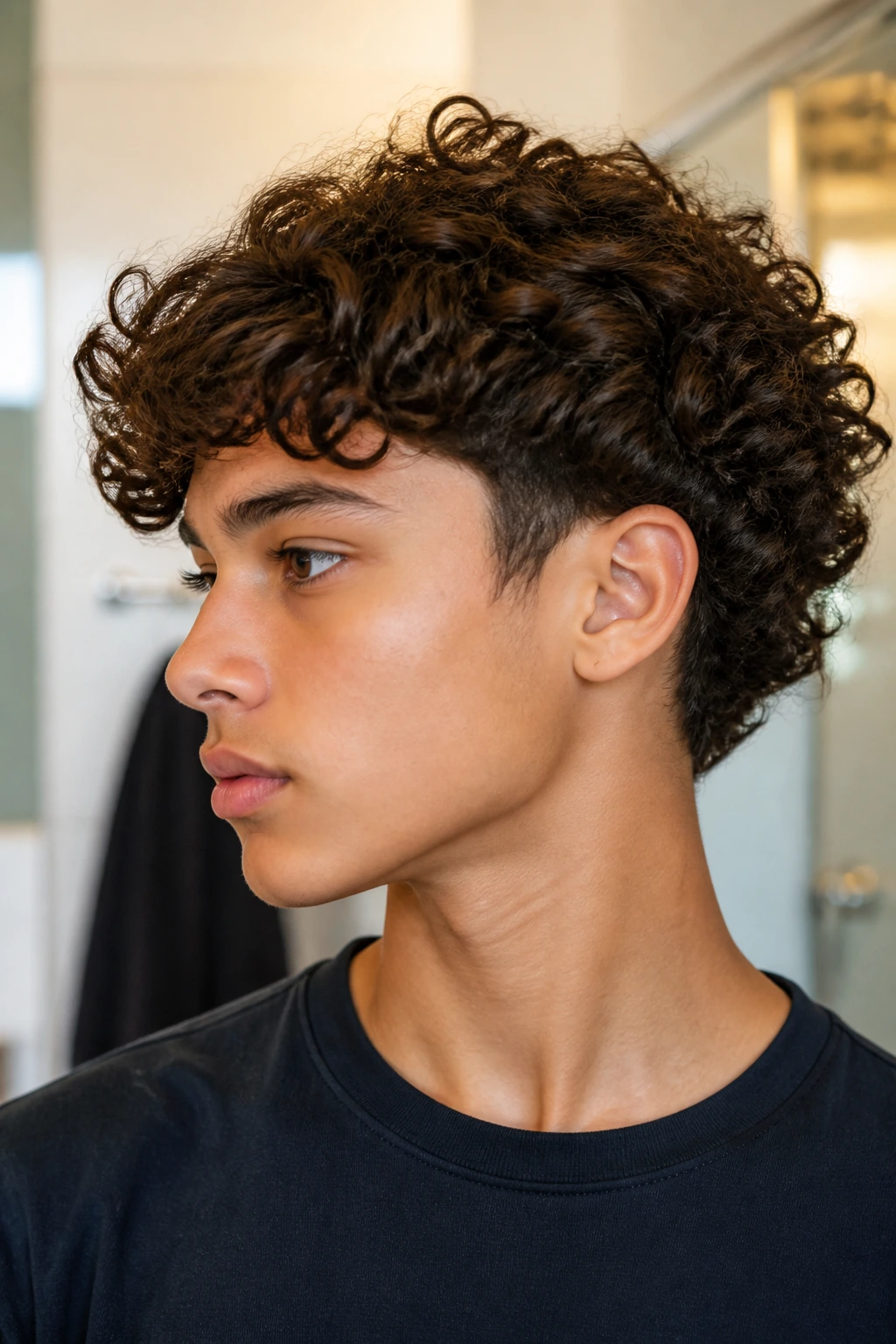
Medium curly cuts usually look best when they are trimmed before the edges go fuzzy, not after the whole shape has wandered off. For tighter curls or short-taper styles, that can mean a cleanup every 4 to 6 weeks. For longer flow styles, 6 to 8 weeks is often enough if the neckline and temples stay neat.
Washing is a separate issue. Curly hair usually does better with less rough washing and more conditioning. A gentle cleanser 1 to 3 times a week is enough for many boys, especially if the hair gets dry or frizzy easily. Between washes, a spray bottle and a little leave-in conditioner can reset the shape without stripping it.
Sleep habits matter too. A satin pillowcase cuts down on the friction that fluffs curls into knots overnight. If that sounds fussy, try it for a week and look at the morning detangling time. The difference is real.
If the cut is longer, teach the habit of finger detangling from the ends up while the hair is damp. That keeps shed hair and small knots from turning into a full comb-out fight. The haircut lasts longer when the daily handling stays gentle.
Questions Parents Ask Before the First Snip
Should curly hair be cut wet or dry?
Dry or nearly dry is often better for curly hair because the barber can see the actual spring and shrinkage. Wet cuts are not always wrong, but they can hide how high the hair will sit once it dries.
How short is still medium for boys with curly hair?
Usually, anything around 4 to 7 inches on top sits in the medium zone, depending on curl tightness. Tighter curls can look shorter at the same length because they shrink more.
Which of these styles is easiest to maintain?
A low taper with a natural curl top or a soft scissor cut with a tapered neckline usually asks for the least work. They stay neat longer and do not depend on exact styling every morning.
What if the curls puff out after the cut?
That usually means the shape was cut too bluntly or too short around the crown. A light refresh with water and leave-in can help, but the real fix is a better layer pattern at the next trim.
Can straightening or heavy heat be used to keep the style neat?
Yes, but it is a poor habit for kids if it happens often. Heat changes the texture’s feel and can dry out the hair faster than most parents expect. Gentle styling is easier on the hair and faster in the long run.
Do these cuts work for wavy hair too?
Absolutely. Loose waves often sit nicely in curtain cuts, side parts, shag shapes, and low tapers. The barber may need to leave a touch less length than they would on tighter curls.
How often should the neckline be cleaned up?
Every 3 to 5 weeks keeps most medium curly cuts looking intentional. If the top is still growing well, a quick neckline and temple cleanup can stretch the cut a little longer.
A Shape That Lets Curls Move
Medium curly hair only looks difficult when it is cut like straight hair. Once the shape follows the curl instead of fighting it, the whole haircut gets easier to wear, easier to grow out, and easier to keep tidy without turning every morning into a project.
The best cut is usually the one that leaves enough length for the curl to show, trims the edges before they get fuzzy, and keeps the sides from ballooning out of proportion. That can mean a shag, a taper, a curtain cut, or something quieter with scissors and a careful neckline. The name matters less than the shape.
If you’re sitting in the barber chair, bring one photo and one sentence about what you want the curls to do. That small bit of clarity saves a lot of guessing, and curly hair usually rewards people who give it room to move.