



Fine hair can be a rude little trickster. Leave it long, and it falls flat by lunch. Cut it too short in the wrong shape, and every swirl, cowlick, and uneven patch starts showing up under the bathroom light. Buzzed hairstyles for teen boys with fine hair solve that problem by stripping away the limp length and keeping the silhouette clean enough to look intentional.
There’s a detail people miss here: fine hair is not the same thing as thin hair. Fine describes the strand itself, while thin hair describes density. A teen can have a full head of fine hair and still look wispy if the cut hangs past the point where the strands can support themselves. Short buzzes cut right through that problem. They keep the hair close to the scalp, where it reads as cleaner and denser, not stringier.
And no, buzzed does not mean boring. A #1 all over looks nothing like a low fade with a line-up, and a Caesar-style buzz gives a very different feel from a soft burr cut or a drop fade. Some of these are school-safe and barely need styling. Others look sharper and a little more styled without asking for any real morning effort. The trick is picking the one that fits the hairline, the head shape, and the amount of maintenance a teen will actually tolerate.
Start with the cuts that play nicest with fine hair, then move toward the sharper ones if the goal is more edge. That order saves a lot of regret.
Why These Cuts Make Fine Hair Look Stronger
-
Less length, less collapse: Fine strands lose shape fast when they get too long, so shorter guards keep the hair from drooping and separating into see-through ends.
-
Fades create contrast: Tight sides make the top read thicker by comparison, even when the total amount of hair stays exactly the same.
-
Cowlicks stop fighting back: Once the top gets trimmed down to a guard length, most stubborn swirls settle instead of sticking up in one dramatic patch.
-
Morning routine gets shorter: These cuts need almost no styling, which matters when the school bell is early and the mirror time is not.
-
Grow-out stays cleaner: A good buzz with a taper or fade grows out in neat stages instead of turning into a fuzzy helmet after ten days.
1. Clean Induction Buzz Cut

The induction buzz is the bare-bones version, and that’s exactly why it works on fine hair. A #0.5 to #1 all over takes the weakness out of the strand and leaves you with a clean, even surface that reads sharp instead of sparse. On the right head shape, it looks confident. On the wrong one, it looks honest in a way some teens won’t love. That honesty is the point.
If the hair is straight and lays flat in weird directions, this cut wipes the slate clean. There’s no top to collapse, no fringe to split, and no product to fight with before school. It also keeps sweat from building up in the sides and crown, which makes it a favorite for boys who live in hoodies, practice gear, and gym bags.
Quick facts
- Best guard: #1 for a slightly softer look, #0.5 if the hair is dense enough to handle it.
- Best finish: A gentle taper around the nape and sideburns keeps it from looking like a full shave.
- Best for: Straight fine hair, active schedules, and teens who want zero styling.
- Watch for: Uneven scalp shape or a strong crown swirl; both show more at this length.
Small opinion: if the hairline is already a little uneven, I’d keep the edges soft instead of carving in a hard box. The softer finish grows out better, too.
2. Classic Butch Cut
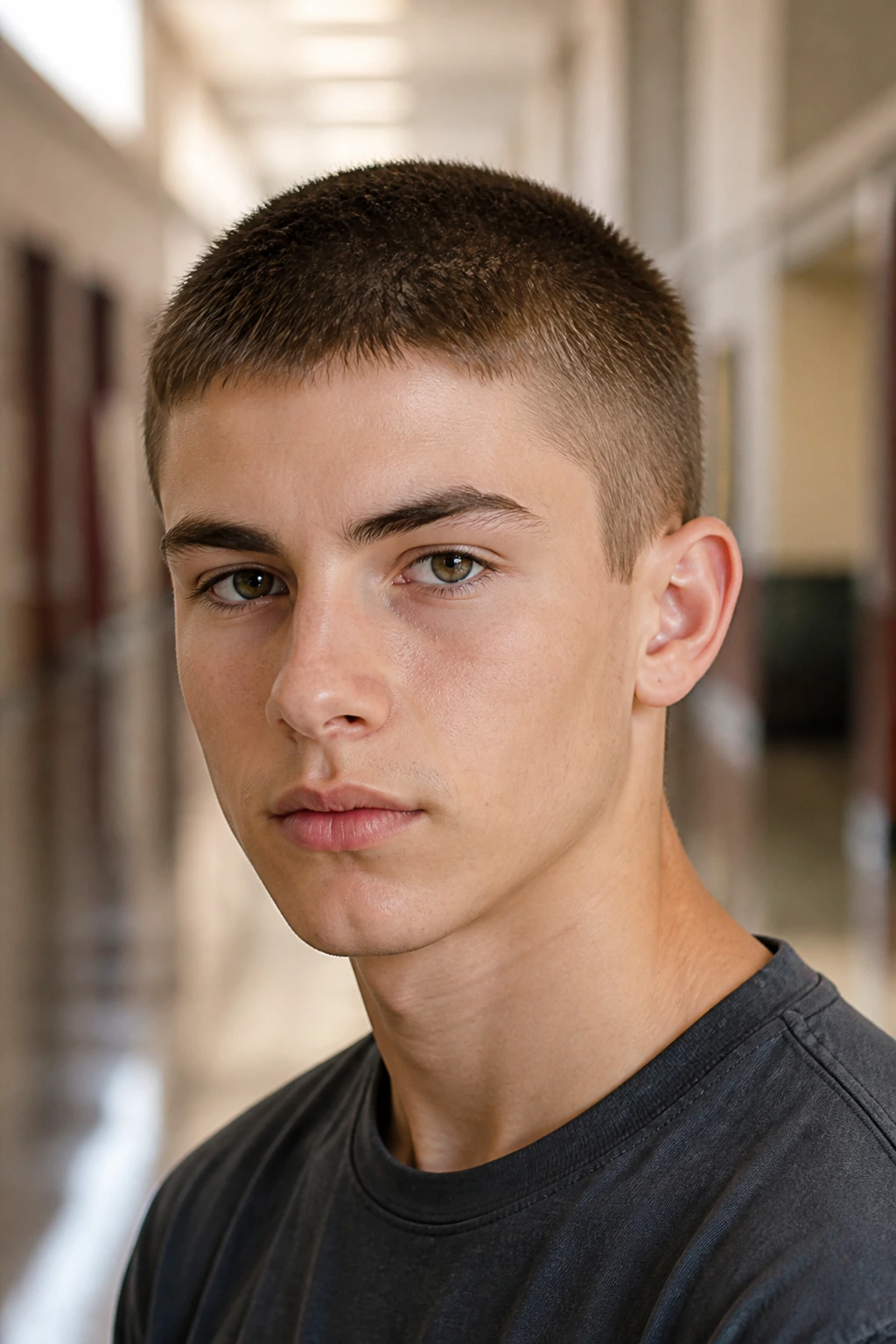
The butch cut sits in that sweet middle zone where the hair is still short, but not so short that the scalp becomes the star of the show. A #2 or #3 on top with the sides matched or slightly shorter gives fine hair enough coverage to look fuller while staying easy to wear. It’s the cut I’d pick for a teen who wants short hair but doesn’t want the head to look shaved.
What makes it work is simple: the strands stay short enough to group together, but long enough to soften the shine that can happen with an induction cut. That extra bit of length also helps if the hair is lighter in color, because pale fine hair can disappear fast when it’s clipped too close.
The butch cut is quietly versatile. Brush it forward and it gets a neat, school-ready feel. Let it sit naturally and it reads more athletic. Add a soft taper at the neckline and it looks like you actually planned the haircut instead of just taking the shortest guard in the drawer.
This one grows out well, too. Fine hair can look fuzzy after a week if it’s too short, but a butch cut gives you a little more runway before the shape starts getting messy.
3. Burr Cut with a Soft Taper
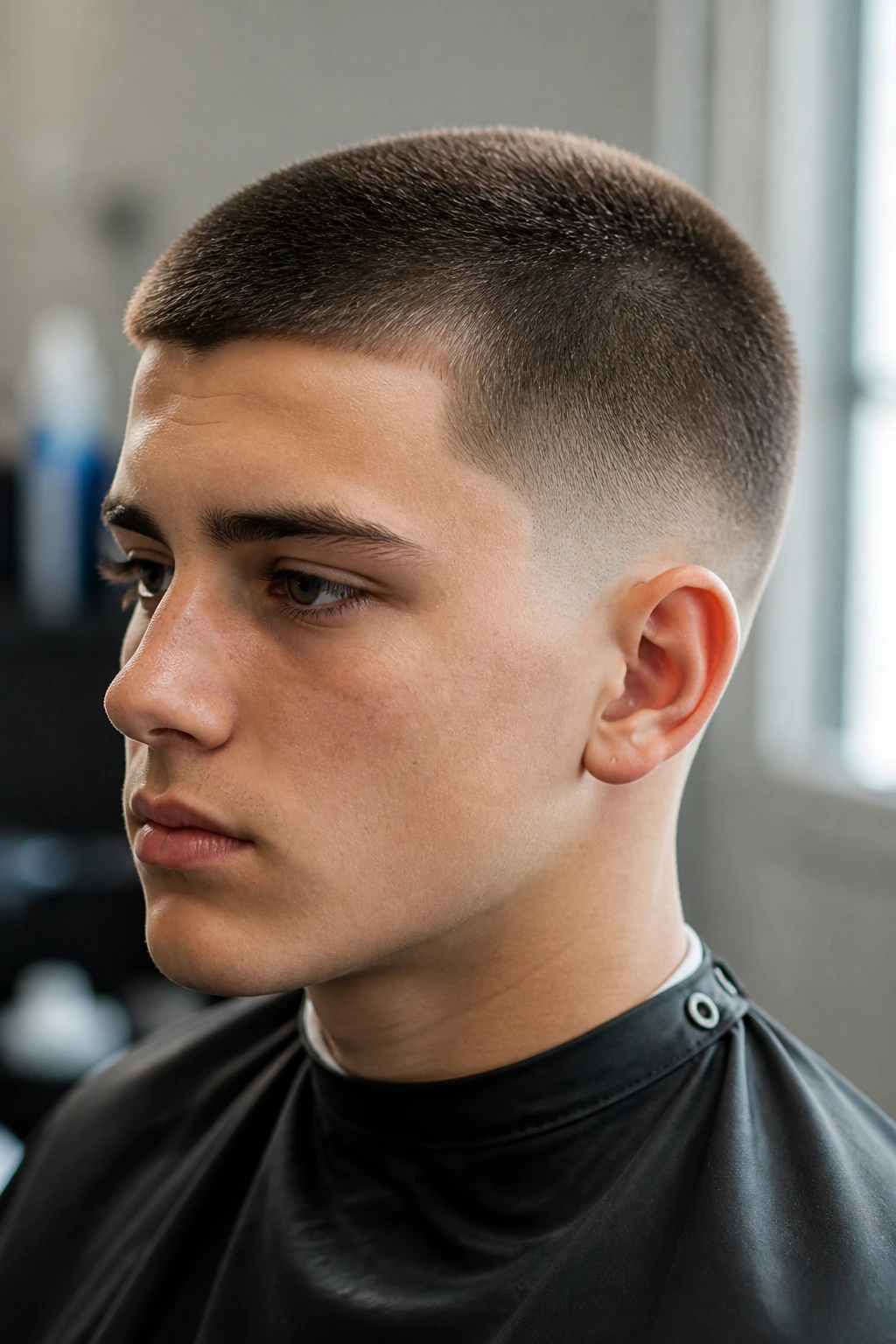
A burr cut is the cleaner, slightly softer cousin of the induction buzz. It usually lives around a #1 to #1.5 on top, then drops into a neat taper around the ears and nape. On fine hair, that soft taper matters more than people think. It keeps the haircut from looking harsh and helps the whole head read as intentional instead of just clipped short.
What to tell the barber
Ask for the top to stay even, with the sides and back blended down using a taper rather than a skin fade. That one choice changes the whole mood of the cut. A taper leaves a little shadow around the edges, which is useful if the hairline is pale or the scalp shows easily.
Why it suits fine hair
Fine hair often looks best when there’s a bit of shadow at the sides. The taper creates that shadow without piling on length. It also handles cowlicks at the crown better than a longer cut, because the short top is less likely to split apart in one stubborn direction.
Who should skip it
If the teen wants a very sharp, high-contrast look, this will feel too soft. But if the goal is neat, school-safe, and easy to keep up, it’s one of the best places to start.
4. High-and-Tight Buzz

Want something that looks sharper than a plain buzz but doesn’t need a lot of styling? The high-and-tight gives you exactly that. The sides and back are clipped very short, while the top stays a touch longer — usually around a #1.5 to #2 — so the haircut keeps a small ridge of shape. It’s tight, crisp, and very good at making fine hair look deliberate.
The reason it works is contrast. Fine hair by itself can look soft and loose, which is fine if that’s the goal, but a high-and-tight changes the outline of the head. It narrows the sides and leaves the top with just enough length to show that the cut is supposed to look this way. That matters on teen boys, because a haircut that looks “finished” in the school hallway tends to wear better than one that just looks short.
The downside is obvious: this cut puts the head shape on display. If the crown has a bump, or the temples are uneven, the high-and-tight won’t hide it. When the shape is good, though, it looks clean in a way few short cuts do.
I’d choose this for straight fine hair, strong jawlines, and boys who want a harder edge without getting into styling products.
5. Low Skin Fade Buzz
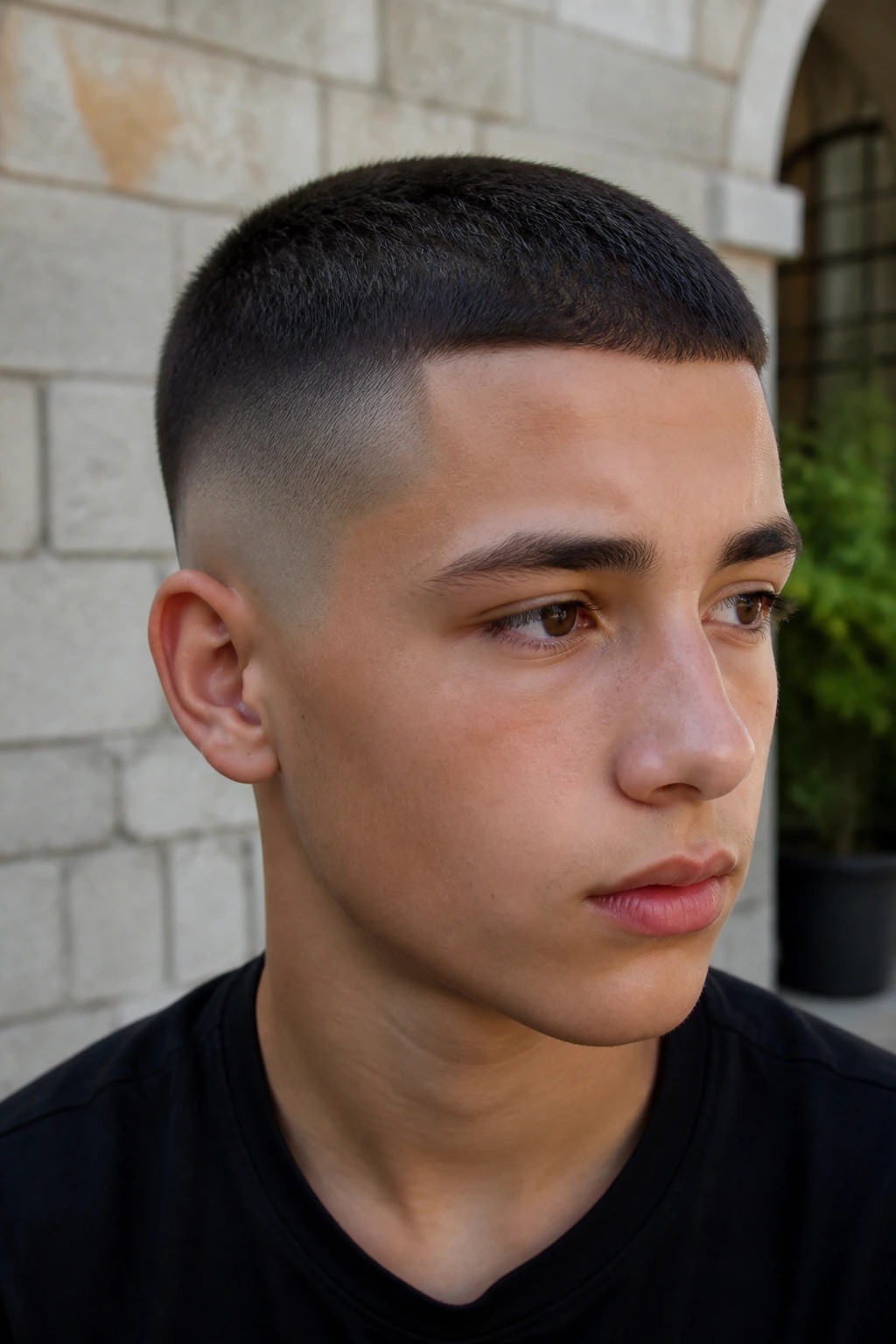
A low skin fade buzz is the cut that keeps things neat without going all the way into a severe military look. The fade starts just above the ears and stays low on the head, while the top usually sits at a #1 or #2. That lower fade is a gift for fine hair, because it tightens the outline without exposing every bit of scalp at the sides.
The result feels cleaner than a plain all-over buzz, but softer than a high fade. That balance is useful for teens who need a haircut that works in class, at sports, and in photos where the light is unforgiving. Fine hair often needs that lower transition so the eye doesn’t go straight to the skin. A low fade keeps the attention on the shape of the haircut, not on the fact that the hair is fine.
This cut is also a smart choice if the school has dress-code pressure or family rules about anything too edgy. It looks modern without shouting. The line around the ear stays neat, the neckline can be tapered, and the top is short enough to avoid drooping by the end of the day.
If I had to name one safe fade for fine hair, this would be it. It’s hard to mess up, and it grows out gracefully.
6. Mid Fade Buzz with Line-Up
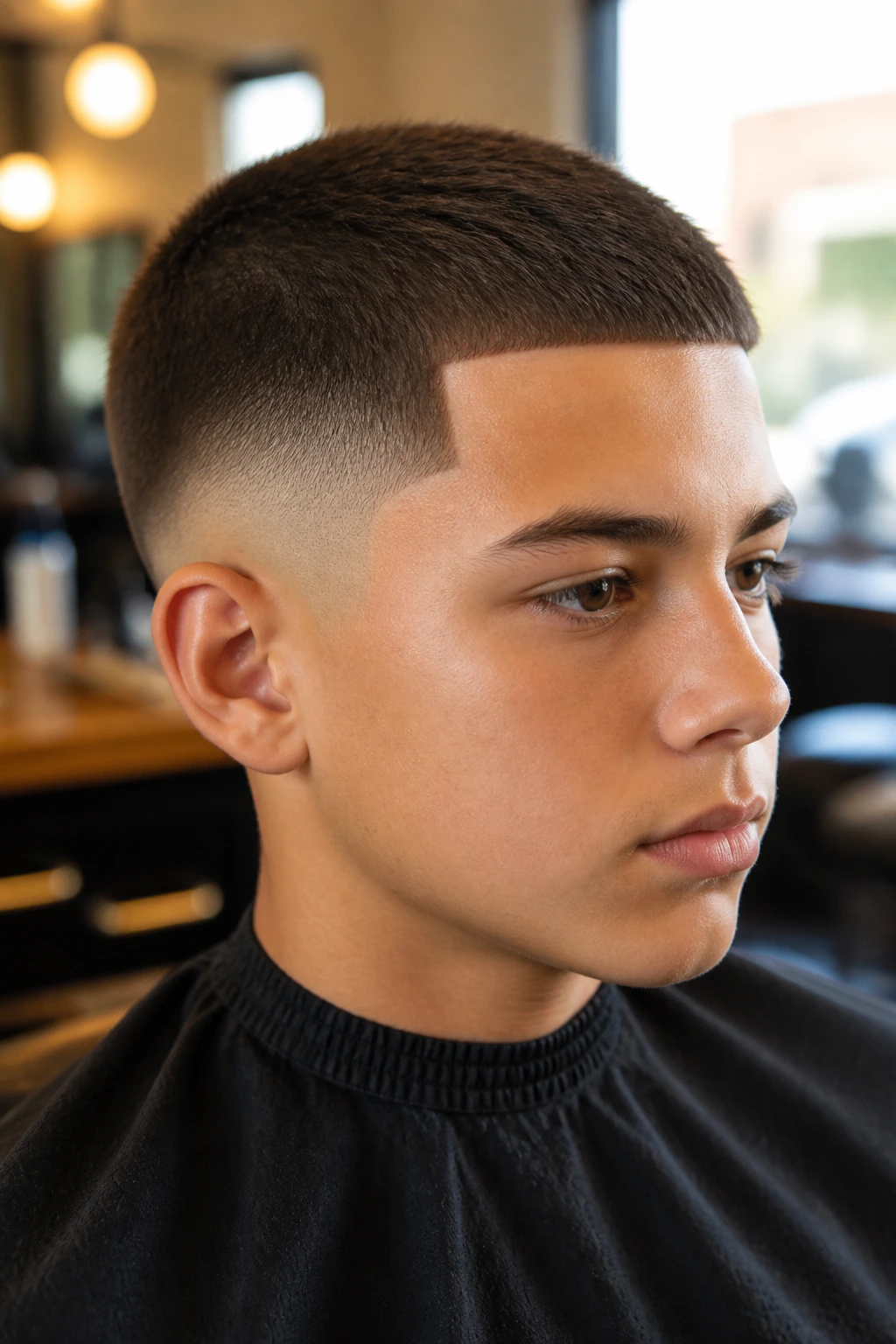
A mid fade and a crisp line-up can make even a very simple top look deliberate. The fade starts around the middle of the head, which gives more contrast than a low fade but doesn’t climb high enough to make the sides look hollow. Pair that with a squared or softly squared hairline, and the whole cut gets a clean frame.
That frame matters on fine hair. A lot of teen boys worry that fine strands make the front look weak. A line-up helps by giving the hairline a sharper edge, especially if the front is naturally a little uneven. Keep it clean, though. A line-up that is too hard can look drawn on, and on fine hair that tends to backfire fast.
The mid fade also gives some shape to the temples and sideburns, which is where short fine hair often starts to look fuzzy first. With the right clipper work, the haircut still feels short and easy, but it doesn’t disappear into the head.
I like this cut for boys who want a little more attitude than a low taper. It’s neat enough for school, but the stronger fade and front edge give it a clearer personality.
7. Textured Buzz Cut
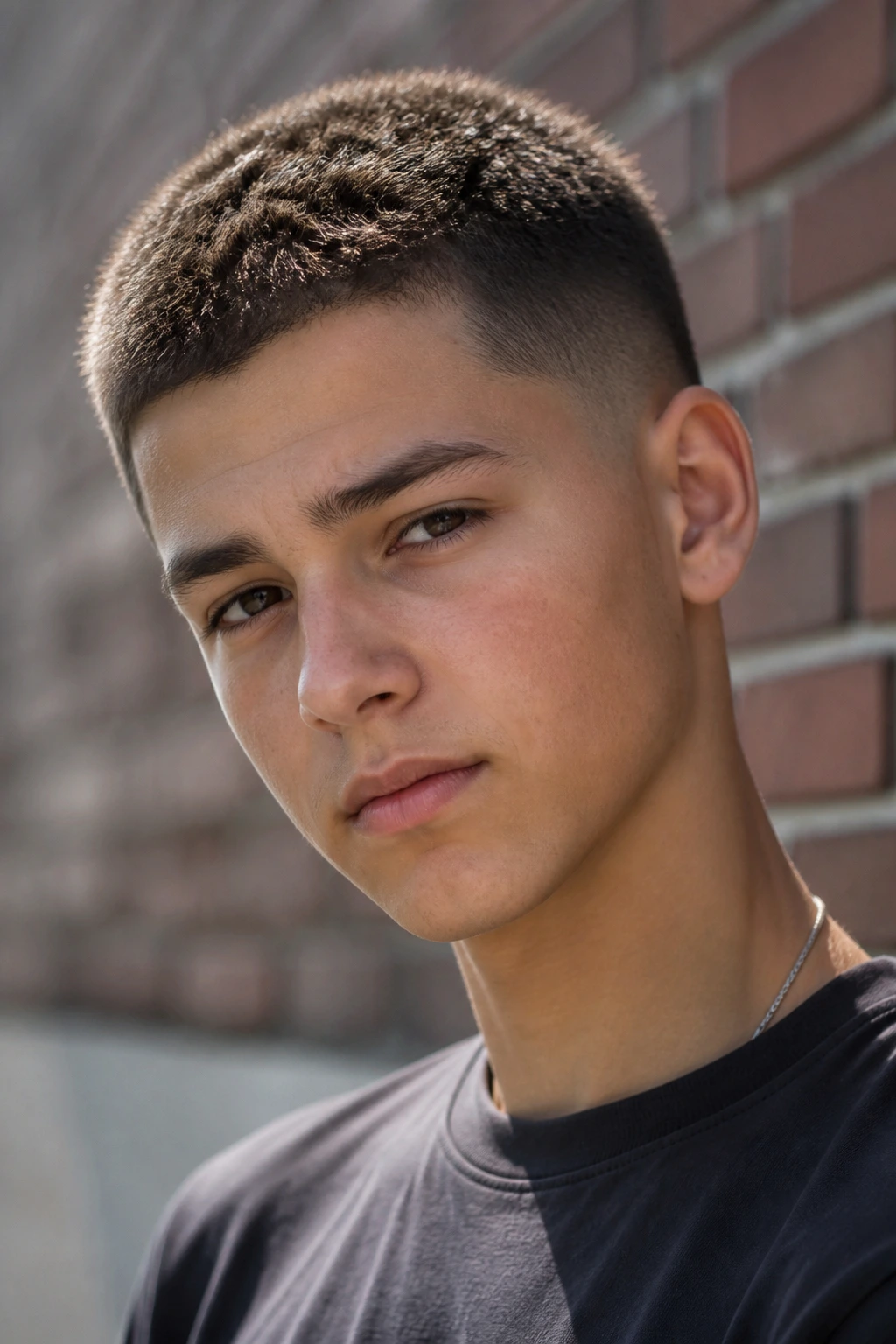
The word “textured” gets thrown around a lot, but here it means something practical. A textured buzz cut keeps the top short — usually around a #2.5 or #3 — and lets the barber rough up the top a little so it doesn’t lie perfectly flat. Fine hair can go limp fast, and a tiny bit of texture helps it look less like a helmet.
Why the texture helps
Fine hair often separates into thin little ribbons when it gets too much length. Texture breaks that up. Instead of one smooth surface that goes flat by noon, you get a short, slightly irregular top that catches the eye in a better way. It isn’t messy. It’s controlled.
How to wear it
A matte cream or a tiny bit of texture powder can lift the front, but don’t overdo it. Too much product turns fine hair into clumps, and clumps are not texture. They’re clumps.
What to ask for
Tell the barber to leave the top short and use clipper direction changes or a light point-cut approach if they do that sort of thing. The goal is movement, not choppiness for its own sake. On straight fine hair, this cut reads sharper than a plain even buzz.
8. Crew Cut Buzz

The crew cut buzz is the one that keeps showing up in barbershops for a reason. It’s short, but the front gets a little more length than the crown, which gives fine hair a place to sit instead of sliding flat across the scalp. That tiny bit of front weight helps more than people expect.
Picture a teen who wants short hair, hates product, and still wants the front to look neat in the mirror. That’s the crew cut buzz. The top is usually around a #3, the front can stay a touch longer, and the sides taper down cleanly so the haircut doesn’t puff out. On fine hair, the little front ridge creates shape without asking the hair to do anything difficult.
This cut also works nicely with glasses. The frame of the glasses and the more structured front of the haircut don’t fight each other. In fact, they usually help each other. If the face is long, keeping the front slightly lower and the sides tidy can stop the head from looking stretched.
There’s nothing flashy here. That’s the appeal. It’s a solid, quiet cut that still reads like a choice.
9. Caesar Buzz Cut
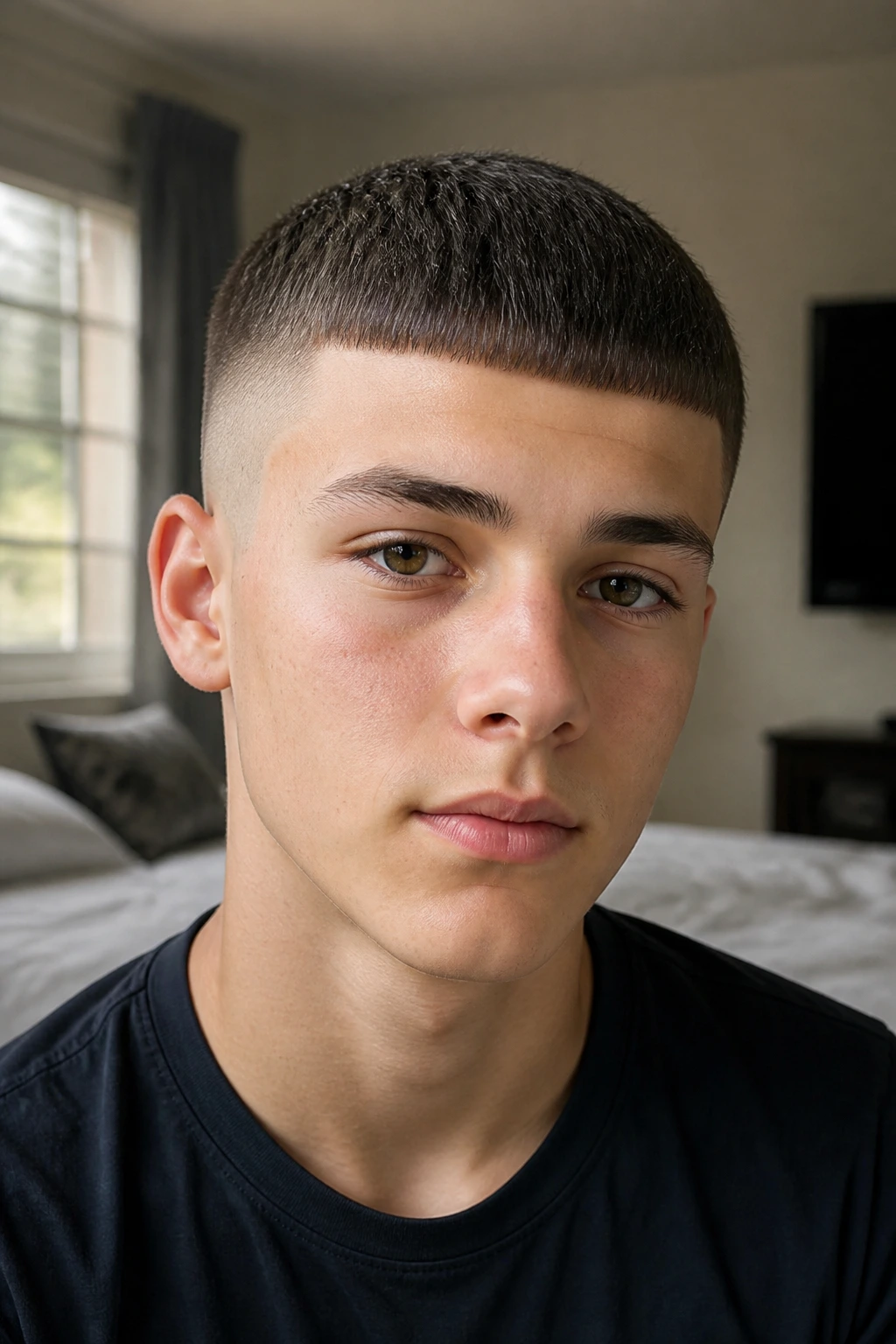
The Caesar buzz cut gives fine hair a front edge to work with, and that’s useful when the hairline is high or a little uneven. The top stays short, often around a #1.5 to #2, and the fringe is cut straight across or very slightly rounded so the front looks intentional. It’s one of the few buzz-adjacent cuts that can hide a weak front line without trying too hard.
Unlike a plain buzz, the Caesar keeps the front in the story. That short fringe helps if the hair tends to split in the middle or if the forehead is the first place the haircut starts looking sparse. Fine hair behaves better when it has a defined direction, and the Caesar gives it one.
I’d be careful with the bluntness. If the fringe is cut too heavy, it can look boxy and stubborn. Better to keep it short, light, and just textured enough that it doesn’t form one hard slab across the forehead.
This is a strong pick for straight fine hair, especially when the goal is to keep the cut low-maintenance but not plain. It has a little old-school attitude, and it wears that attitude well.
10. Forward-Brushed Buzz

A forward-brushed buzz is a good answer when the crown lies flat and the front needs a tiny bit of direction. It’s not a comb-over, and it should never pretend to be one. The top usually sits around a #2 to #3, then gets brushed forward just enough to create a little lift at the front hairline.
That movement helps fine hair because it keeps the top from looking like a smooth, featureless sheet. Fine strands can look thinner when they lie perfectly flat. A forward-brushed finish gives the eye a place to land, especially if the barber leaves a touch more length in the front third of the cut.
The best part? It still feels short. You can run your hand through it, toss on a cap, take the cap off, and the hair doesn’t collapse into a mess. A pea-sized amount of matte cream is enough if the front needs help staying in place. Beyond that, the cut does the heavy lifting.
If you’ve got a cowlick at the front, this style can tame it without fighting it. If the hair is very straight and very soft, it gives the front some shape without crossing into fake volume territory.
11. Drop Fade Buzz
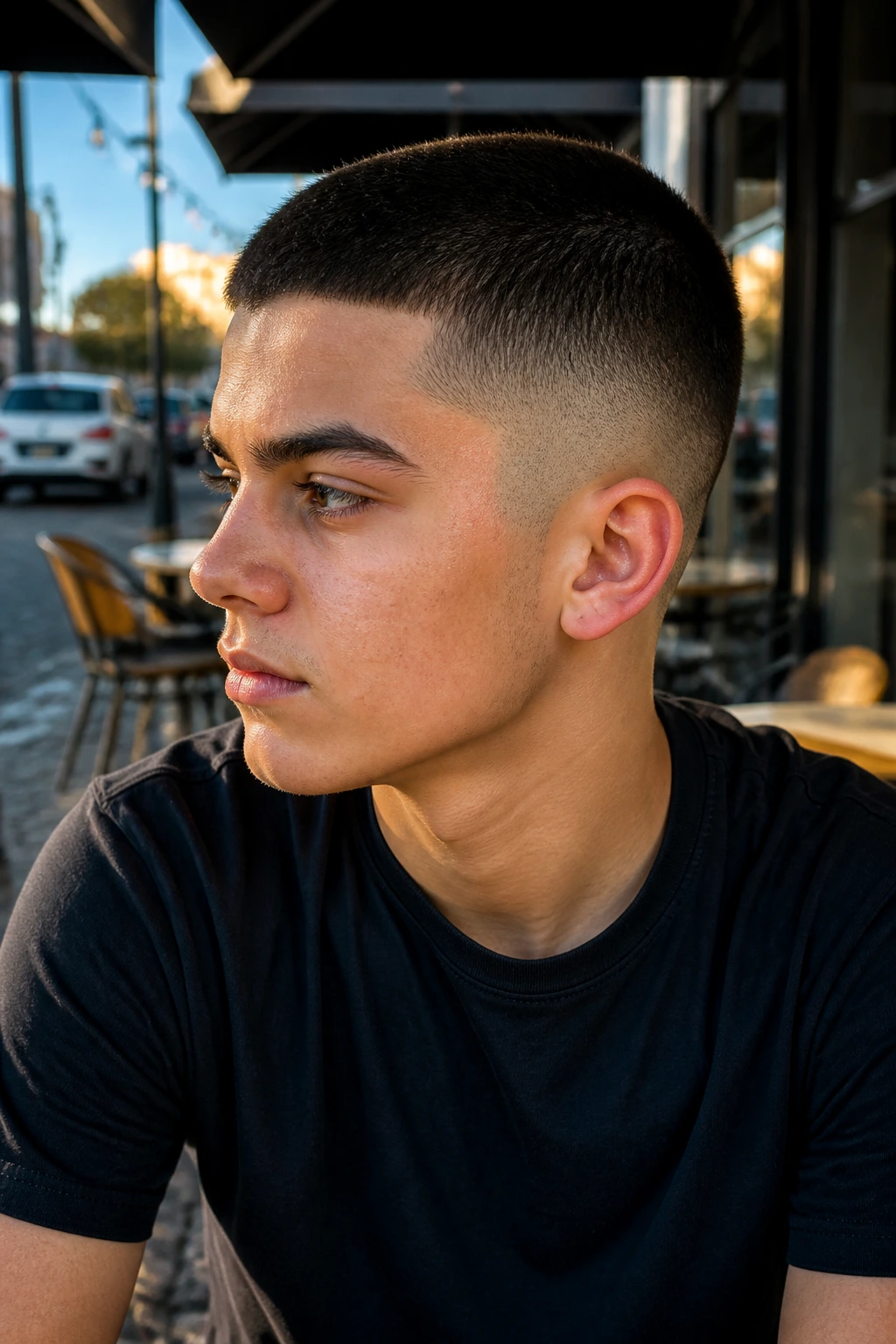
The drop fade buzz follows the shape of the head instead of cutting a straight line across it. The fade dips slightly behind the ear and then rises again toward the back, which gives the haircut a more tailored shape. On fine hair, that curved outline can make the whole cut look fuller and more balanced.
A drop fade is useful when the head has a rounder profile or when the temples need a little softening. Instead of exposing every side angle evenly, it creates a cleaner contour. The top can stay at a #1.5 to #2.5, depending on how much scalp show the teen is comfortable with, and the transition below it does the visual work.
This is one of those cuts that looks understated in the chair and much sharper once it’s finished. The curve around the ear adds interest without piling on extra length. It’s especially good if the fine hair tends to go fuzzy at the sideburns first, because the drop fade keeps those parts tight.
I’d skip it only if the goal is a very square, strict shape. The whole point of the drop fade is that gentle bend.
12. Burst Fade Buzz
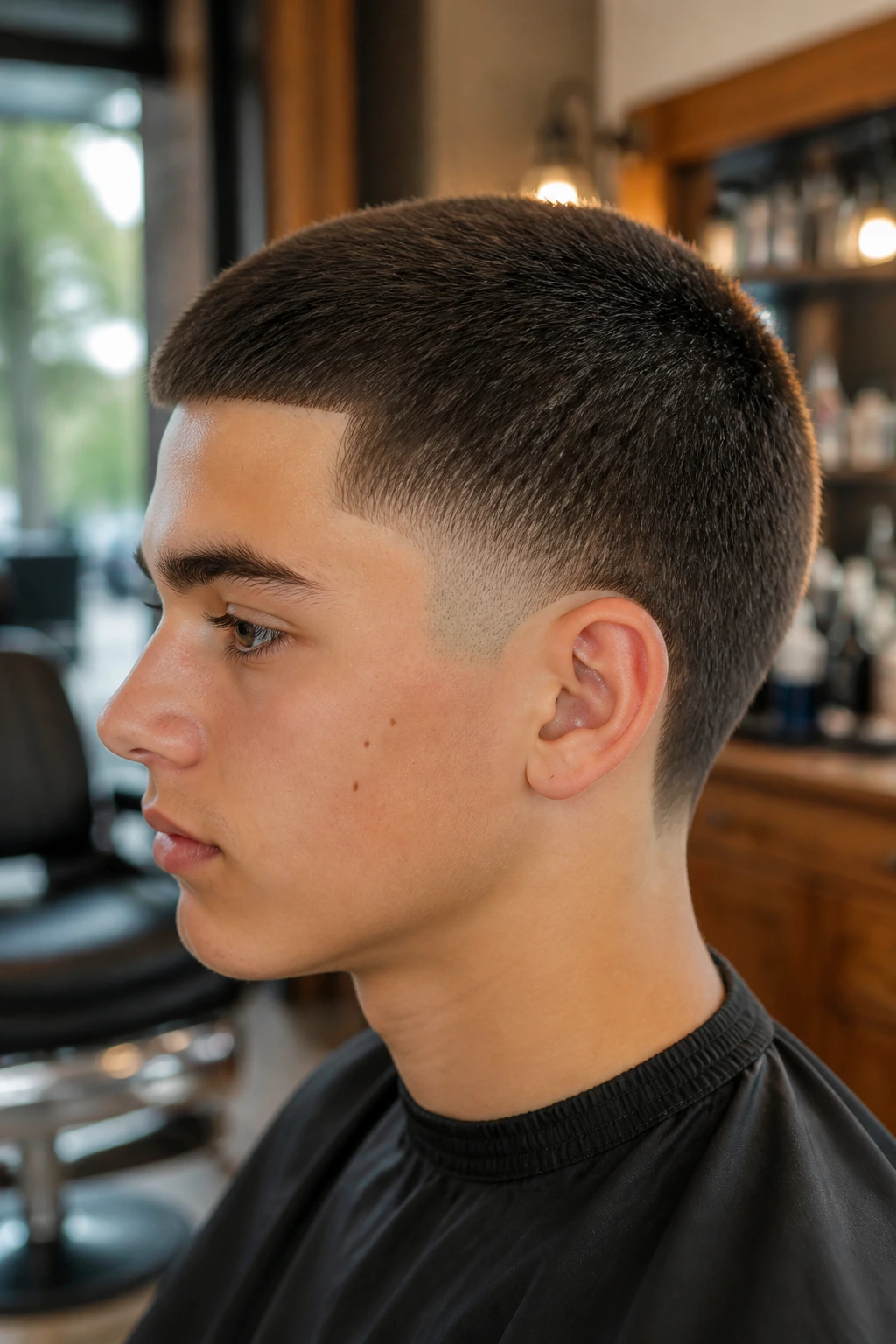
The burst fade is the cut that gives a short buzz a little more personality around the ears. Instead of fading straight back, the fade radiates out in a curved arc, leaving the back and crown a touch fuller. On fine hair, that can be a useful trick because the curve draws attention to the fade work rather than to the density of the top.
Around the ear
This is where the cut earns its name. The fade “bursts” around the ear and then flows into the nape. Done well, it looks clean and deliberate. Done badly, it looks lopsided, so the barber has to be paying attention.
Why it works for fine hair
The burst fade gives the haircut more shape without needing a lot of length on top. That means the hair doesn’t have to pretend to be thicker than it is. It just needs to be short, even, and clean around the edges.
Best use case
I like this on teens who want some style and are fine with a little more maintenance. The arc around the ear grows out faster than a plain taper, so you’ll want regular cleanup. If that doesn’t bother you, it’s a sharp option.
13. Temple Fade Buzz
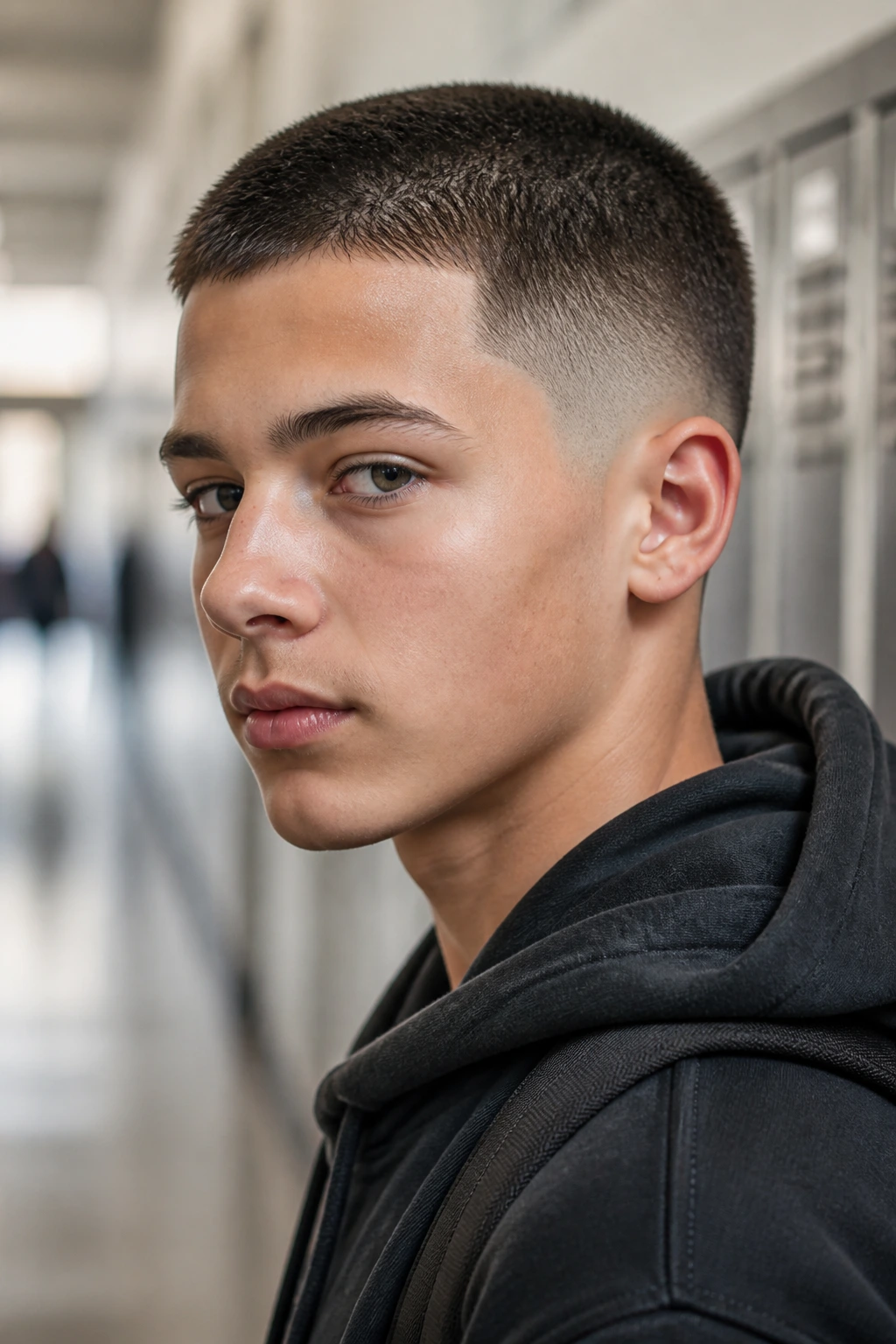
A temple fade buzz keeps the sides neat where many fine-haired cuts start to look weak first. The fade concentrates at the temples and sideburns, while the back can stay a little fuller and softer. That shape is useful when the front hairline is fine, because it removes bulk from the temples without shaving the whole side down.
I’ve always thought this cut works best for boys who wear glasses or hoodies a lot. The temples are the first place hair gets flattened by frames, straps, and collars, so a clean fade there stops the haircut from getting puffy in exactly the wrong spot. The top can stay short and even, and the back doesn’t need to be hyper-tight to look tidy.
The haircut has a good, balanced feel. It doesn’t shout for attention, but it also doesn’t disappear. On fine hair, that’s a useful middle ground. If the school has stricter grooming rules, this fade can be kept soft enough to pass. If the teen wants a little more edge, the temple work can be sharpened without changing the whole cut.
Simple. Practical. Good-looking from the side.
14. Hard Part Buzz Cut
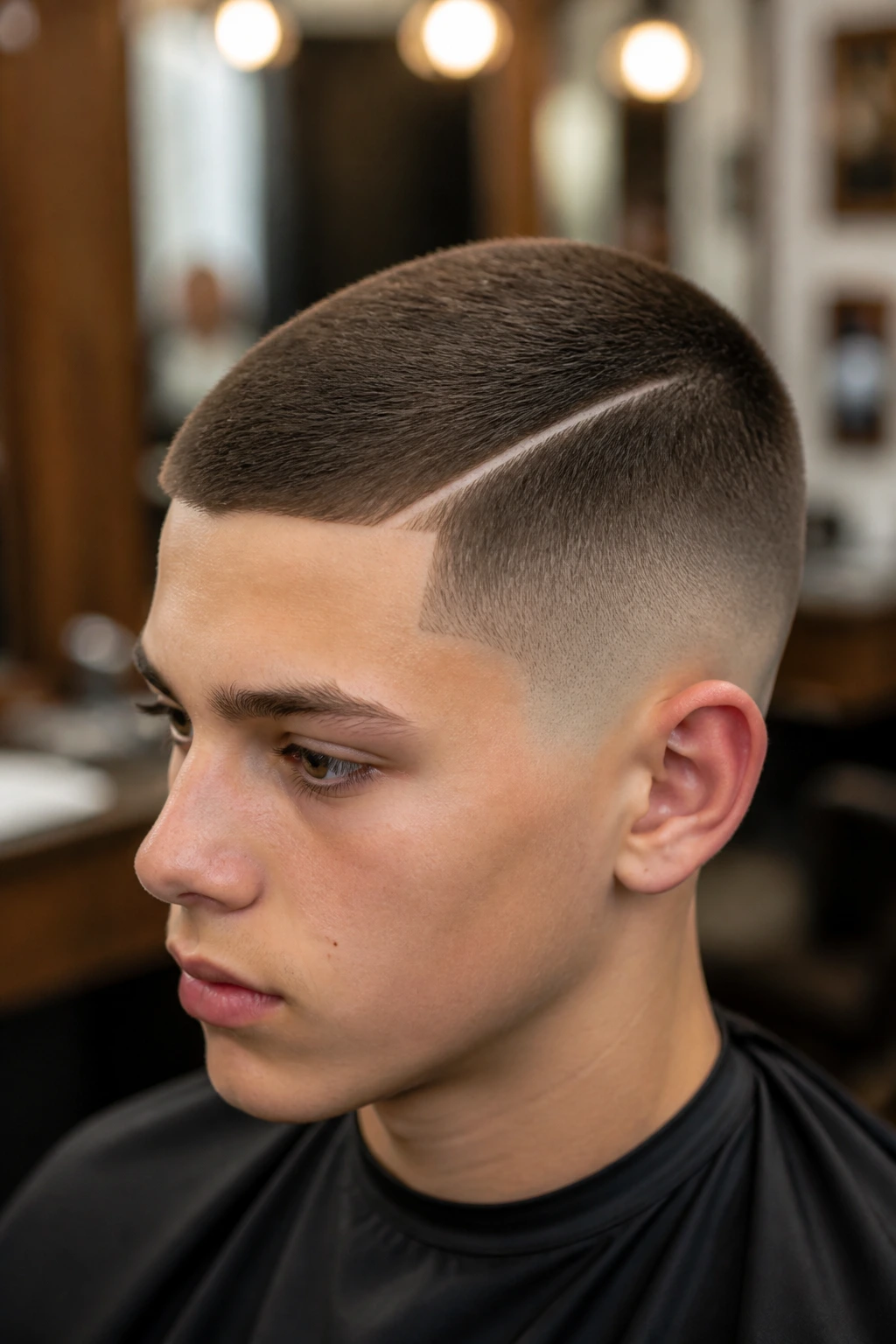
A hard part on a buzz cut is a choice, not a necessity. On fine hair, I only like it when the top has enough coverage to support the part line. If the top is too sparse, the shaved line can look more like a crack than a style detail, and nobody wants that.
When it does work, though, it adds direction. The part gives the short hair a built-in split, which helps the top read as shaped instead of just clipped. A #2 or #3 top with a low or mid fade usually gives enough length for the part to make sense. The line itself should be thin and clean, not wide enough to steal the show.
This cut suits teens who want the haircut to feel a little more polished. It’s a clean detail, but it does need upkeep. Once the hair grows a few millimeters, the hard part starts softening, which changes the look fast.
I’d pair it with a neat neckline and no heavy styling products. A hard part already gives structure. Let the cut breathe around it.
15. Shadow Fade Buzz
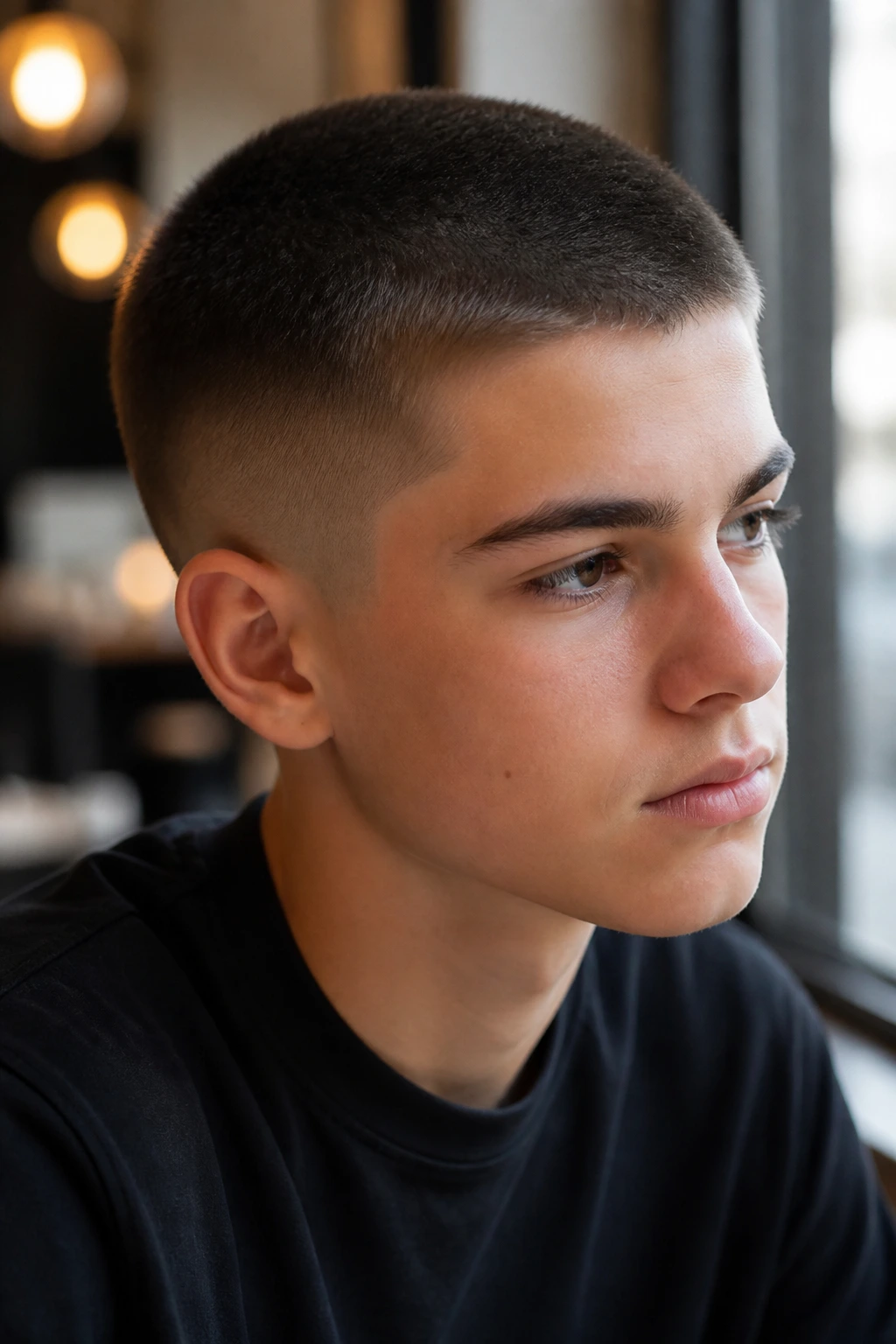
The shadow fade is the quietest fade in the bunch, and that’s why it works so well for some fine-haired boys. Instead of dropping down to skin, it leaves a soft gradient all the way through the sides. That shadow helps the haircut look denser, because the eye sees depth rather than a hard exposed patch.
This is the cut I’d reach for if the scalp shows easily, if the hair color is light, or if the teen wants something that grows out without drama. A shadow fade is forgiving. It doesn’t turn fuzzy at the first sign of regrowth, and it doesn’t need the same level of barber precision as a skin fade.
The top can sit at #1.5 to #3, depending on how soft or structured the client wants the result. Fine hair often looks thicker when the fade is gentle instead of severe, and this cut leans into that. It also plays nicely with school rules because there’s nothing flashy about it. No hard line. No shaved skin strip. Just a clean, blended shape.
If someone wants the safest first fade on fine hair, this is the one I’d point to.
16. Flat Top Buzz Cut
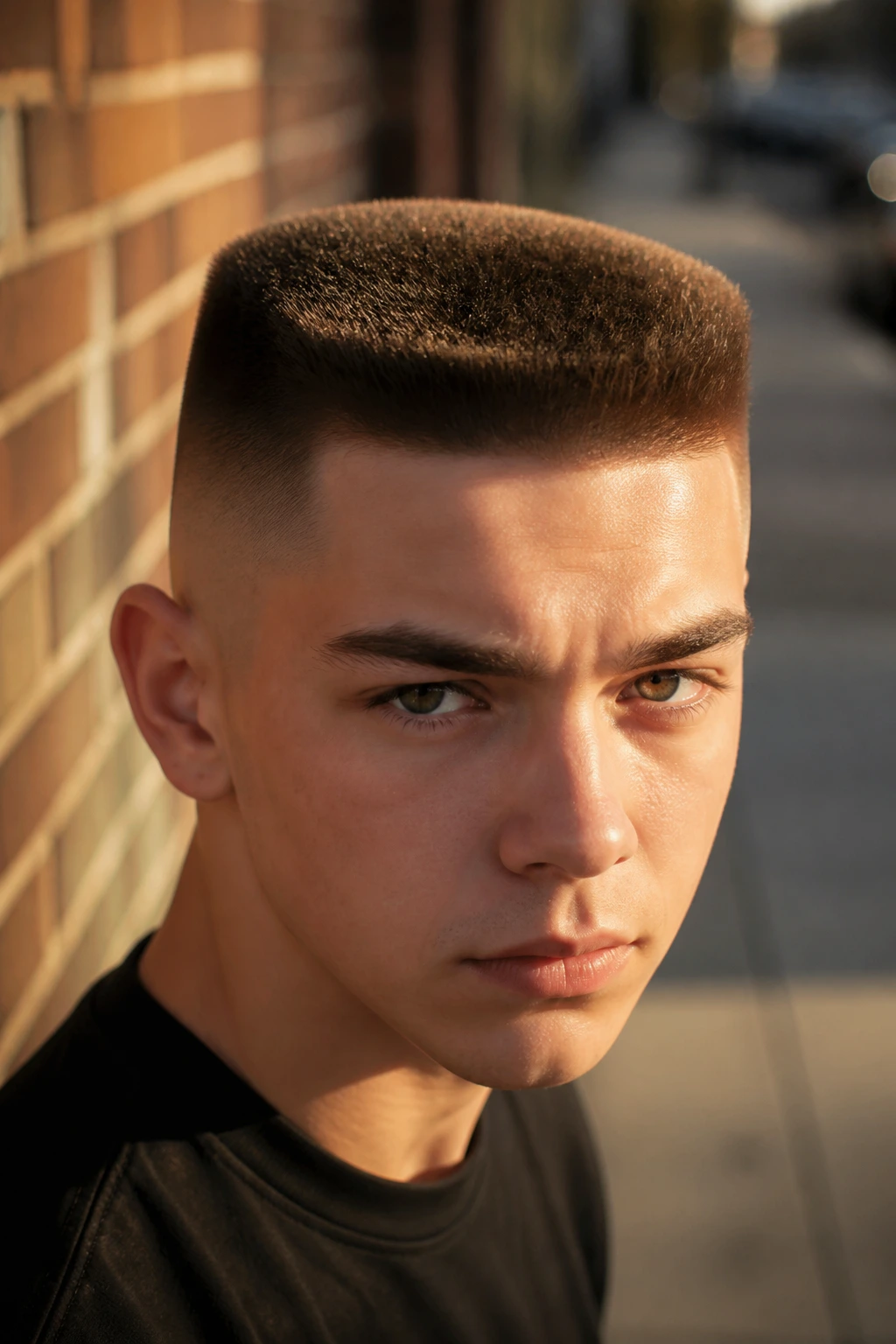
A short flat top is one of the few buzz-adjacent cuts that can give fine hair a stronger shape on purpose. The top is cut level enough to look deliberate, while the sides stay much shorter so the outline stays crisp. On the right head shape, that flat top line makes fine hair look fuller because the eye sees a clear edge instead of a soft, sagging crown.
It does take some honesty. If the crown sits low or the hair grows in a lazy swirl, a flat top can fight the head instead of helping it. But if the hair naturally stands up a bit and the teen wants something with a cleaner silhouette, the cut is worth a look. I’d keep the top modest — no need for cartoon height. Short and controlled is the whole game.
This style feels a little retro, a little bold, and a lot more deliberate than a standard buzz. Fine hair can handle it when the top stays short enough to avoid flipping over.
If you want the haircut to look engineered rather than casual, this is where the buzz family gets interesting.
17. Fringed Crop Buzz
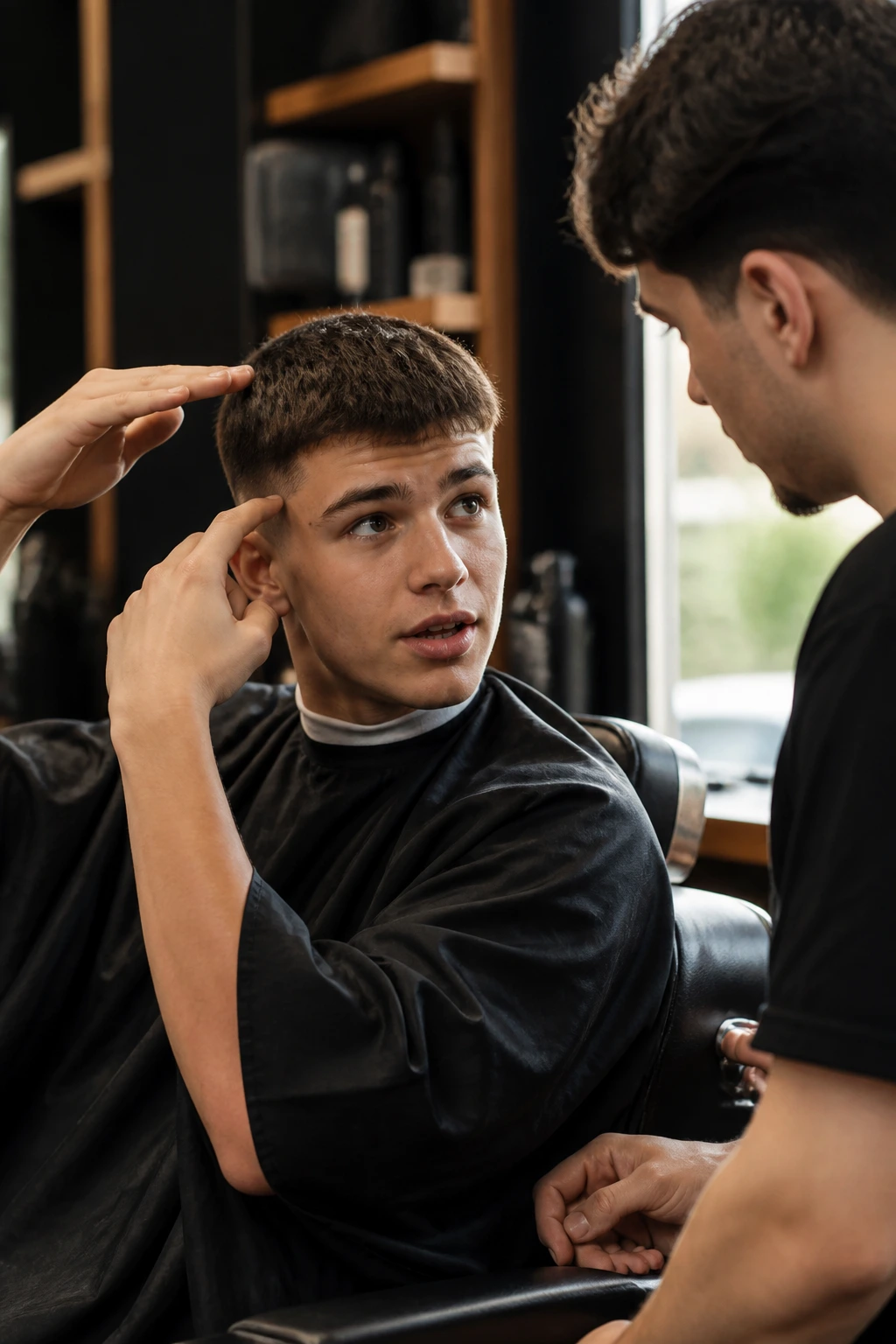
If the forehead is the first place fine hair starts to look soft, let the fringe do the work. A fringed crop buzz keeps the top short but leaves enough length in front to create a compact, forward edge. The sides stay tight, and the front gets a tiny bit of choppy texture so it doesn’t sit like one blunt rectangle.
That front movement matters. Fine hair often needs direction more than length, and a small fringe gives it exactly that. It’s especially useful for straight hair that wants to split in the middle or fall apart at the sides. With a textured front, the cut looks planned even when the rest of it is short and simple.
I like this on teens who want a bit more attitude than a crew cut without going full style-heavy. It’s still easy to maintain. The trick is keeping the fringe light. Too much weight in front and the whole thing gets heavy fast, which is the opposite of what fine hair needs.
A tiny amount of matte paste can help, but the cut should stand on its own.
18. Longer Guard Buzz with Tapered Neckline
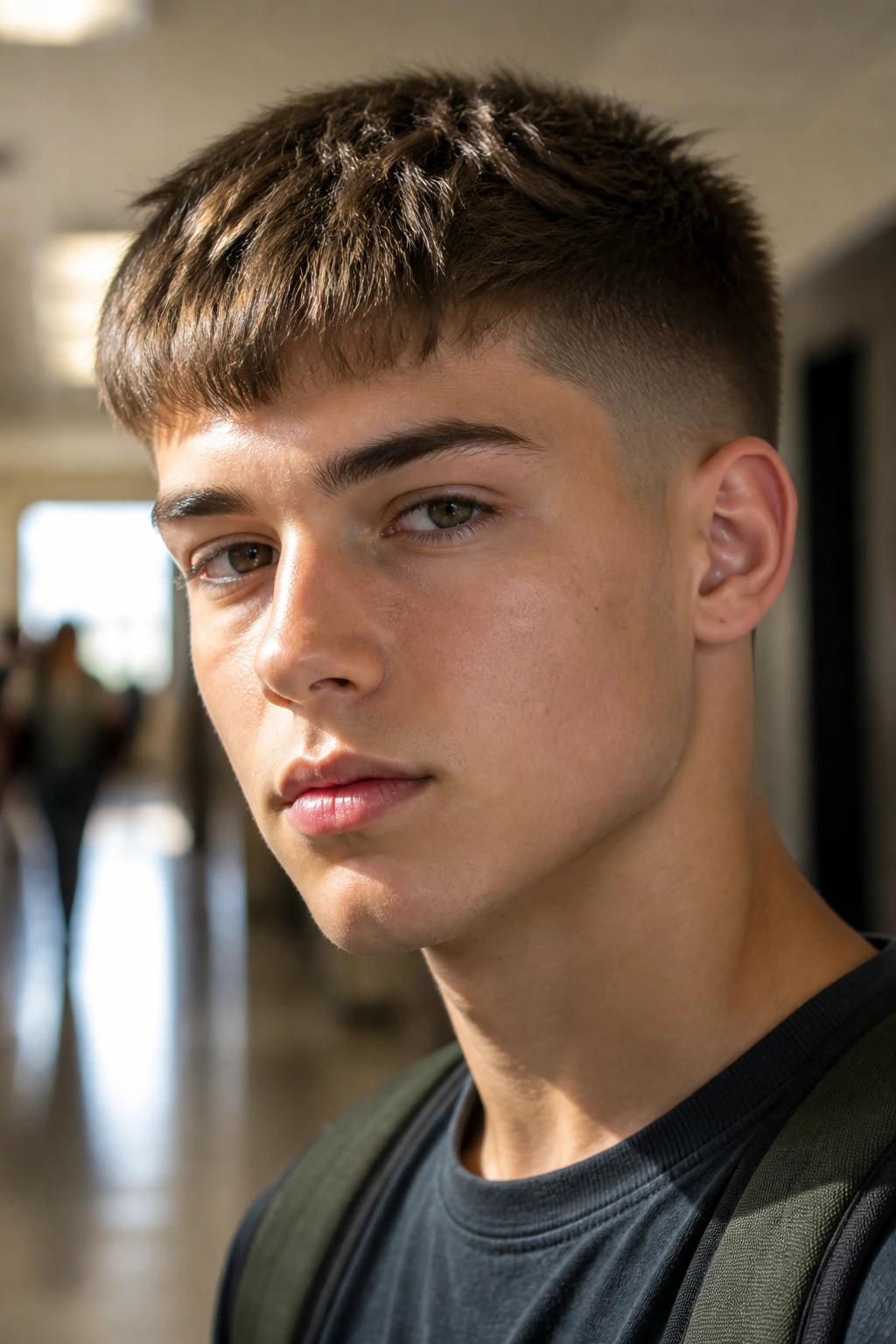
If there’s one cut I’d hand to a nervous first-timer, it’s this one. A longer guard buzz — usually around a #3 or #4 on top — keeps enough hair to feel safe, while a tapered neckline and sides keep the whole thing from looking puffy. It’s a short haircut, but not a dramatic one.
That little bit of length gives fine hair breathing room. The strands aren’t forced to stand too close to the scalp, which helps if the teen is still figuring out how short he actually wants to go. The taper at the back matters because it keeps the grow-out neat, and grow-out is where a lot of short cuts fall apart.
This version also gives the barber room to adjust for the head shape. If the crown needs a touch more length, they can leave it. If the temples need cleanup, they can tighten those areas without changing the whole cut. That flexibility is exactly why this is such a good starting point.
It’s not the flashiest option. Good. It’s the one that makes the rest of the choices easier.
Why Buzz Cuts Give Fine Hair More Shape Than Length Ever Does
Fine hair and length do not always get along. As the strands grow out, they separate, bend, and start showing the scalp between them. That can make a teen look like he has less hair than he actually does, which is frustrating when the hair is healthy, just not bulky. A short buzz fixes that by keeping the strands close together where they can support one another.
There’s also the issue of weight. Long fine hair has almost no structural help, so it falls flat fast. Short hair keeps its shape because it has less room to collapse. That’s why a #2 can look thicker than a longer cut even though it’s using the same hair. The eye reads the shape first, not the raw count of strands.
Fades and tapers help for the same reason. They create shadow and contrast around the head, which makes the top seem more solid. A soft fade is often better than a harsh one for fine hair because it adds depth without exposing every little weak spot. If the scalp is visible under bright light, that shadow becomes a real advantage.
One more thing people overlook: short cuts handle cowlicks better. The shorter the hair, the less the swirl can break the shape apart. That matters on the crown, but it also matters at the front where a single stubborn tuft can ruin a clean look.
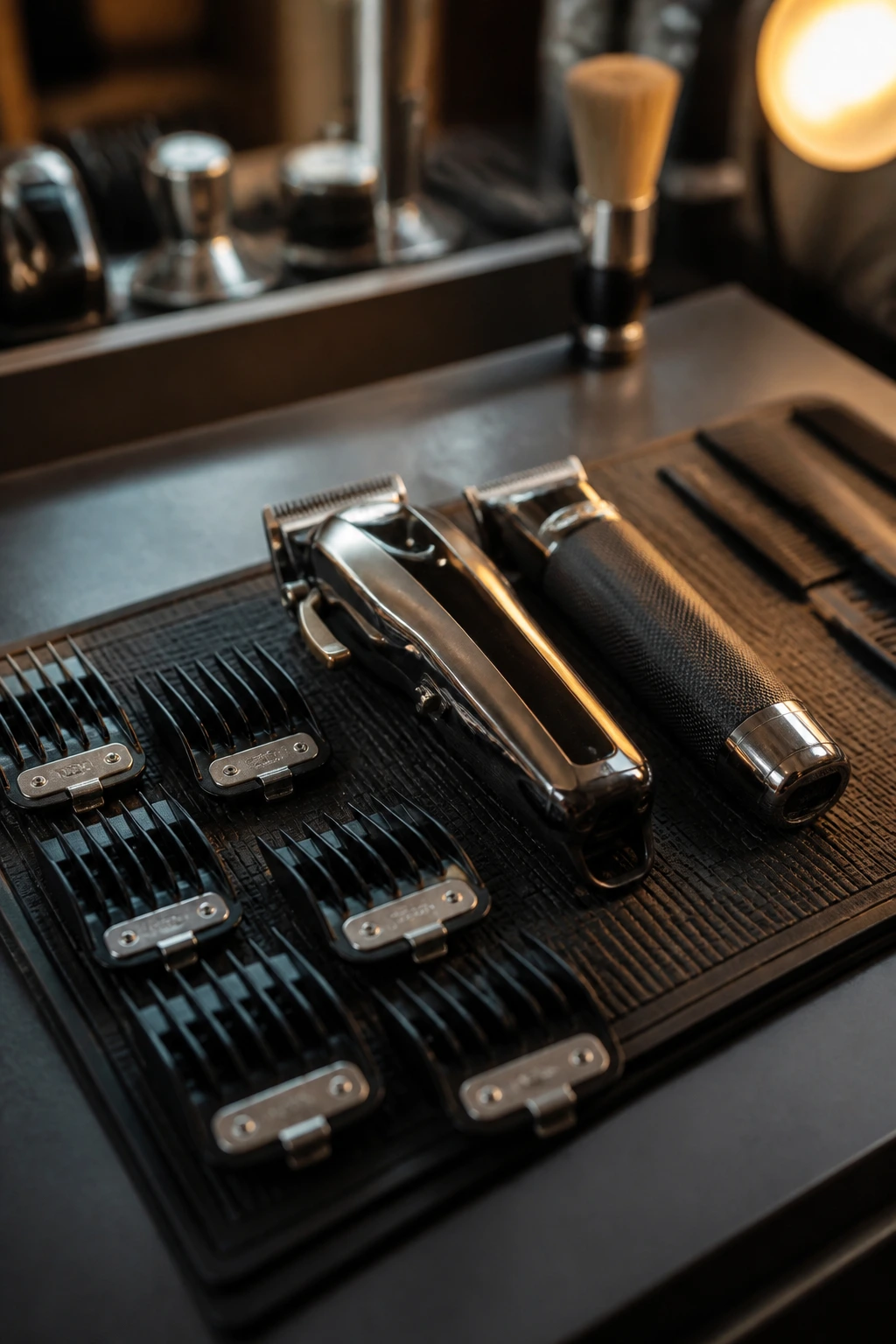
Essential Clippers, Guards, and Barber Tools
A good buzz cut depends on a few basic tools, and most of them are simple.
-
Adjustable clippers with guards #0.5 to #4: These cover almost every buzz length on the list, from induction short to longer guard cuts.
-
Detail trimmer: Useful for cleaning the neckline, sideburns, and around the ears without shaving too much skin.
-
Three-way mirror or hand mirror: Helps check the back and crown, where fine hair often shows uneven spots first.
-
Neck duster: Gets loose cut hair off the neck so the finished cut doesn’t itch like crazy on the ride home.
-
Barber cape or towel: Keeps clipped hair off the shirt, especially around collars where fine hair is annoyingly scratchy.
-
Matte styling cream or texture powder: Not needed for every cut, but helpful on the slightly longer buzzes if the front needs a little lift.
-
Spray bottle with water: Handy for taming flyaways before a trim or resetting the hair after sports practice.
-
Scalp-safe sunscreen or a hat: Shorter cuts expose more scalp, and that matters if the teen spends time outside.
How to Explain the Cut So the Barber Gets It Right
The fastest way to get a bad haircut is to say “just make it short” and hope for the best. Barbers can do a lot with a vague request, but fine hair needs a more precise sentence. Start with the top length. A #1, #2, #3, or #4 on top tells the barber how much coverage you want, and that one number changes the whole haircut.
Then talk about the sides. Low fade, mid fade, high fade, taper, or shadow fade — each one gives a different result. If the hair is fine and the scalp shows easily, I’d lean low or shadow first. If the teen wants more contrast, move up to a mid fade. For a school-safe version, ask for a taper around the ears and neckline instead of skin.
The hairline matters too. A soft natural edge is safer than a hard line-up if the front is uneven or receding at the temples. If the hairline is solid, a light line-up can make the haircut look cleaner. Just keep the corners from getting too square unless that shape actually suits the face.
Bring a photo if you can. Better yet, bring one that matches both the cut and the guard length. Style photos without length clues create confusion.
Styling Fine Hair Without Making It Look Oily
Most buzz cuts on fine hair need less product than people think. If the top is at a #1 or #2, the haircut should stand on its own. A towel dry and a quick check in the mirror is usually enough. Piling on product at that length just makes the hair look damp and separated, which is the opposite of what you want.
For slightly longer buzzes — the #2.5 to #4 zone — a matte finish helps. Use a pea-sized amount of matte cream or a dusting of texture powder, and work it through dry hair with your fingertips. Don’t smooth it down like you’re grooming a slick-back. Lift the front a little, then stop. Fine hair hates heavy hands.
If the front sticks up in one awkward spot, a fingertip of water on that section often fixes it better than gel. Press it lightly, let it dry for a minute, and move on. Heat is rarely necessary, though a few seconds of cool blow-dry can help if the teen wants a little front lift before school photos or an event.
Skip shiny pomades, thick waxes, and anything oily. Fine hair picks up that shine fast, and the result looks greasy, not neat.
Keeping the Cut Sharp Between Visits
Short hair grows fast enough to matter. On fine hair, the shape often starts slipping before the length looks long. That’s why the maintenance schedule matters almost as much as the cut itself. An induction buzz or a high fade often needs a cleanup every 2 to 3 weeks. A butch cut, burr cut, or longer guard buzz can stretch to 3 to 4 weeks before it starts looking fuzzy.
The neckline is usually the first place to go. Around the ears, then the nape, then the temple edges — that’s the usual order of surrender. A quick cleanup with a trimmer every 7 to 10 days keeps the haircut looking deliberate. If you’re doing it at home, go slow. Short hair hides mistakes badly, and once you take too much off, there’s no easy fix.
Washing matters, too. Fine hair gets oily fast, and oil can make short cuts look stringy near the scalp. A mild shampoo a few times a week is usually enough. If the teen is sweating through sports or wearing a helmet, rinse more often. Don’t scrub the scalp like it owes you money. That just makes it dry and flaky.
If the haircut is very short, sun protection matters. A buzzed scalp burns fast.
Common Mistakes That Make Fine Hair Look Thinner
-
Going too short on the first try: The scalp starts showing more than expected, and the cut looks harsher than the teen wanted. Start with a #2 or #3 if there’s any doubt.
-
Using heavy product on short hair: Fine hair clumps fast, and shiny clumps look limp. A matte cream or no product is usually cleaner.
-
Cutting the crown too short: A strong cowlick can kick up and expose the swirl. Leave the crown a touch longer so it can sit down.
-
Choosing a skin fade when the temples are weak: The sides can look hollow if the fade climbs too high. A shadow fade or low taper usually looks better on finer hair.
-
Hard-lining a shaky hairline: If the front is uneven, a square lineup can look drawn on. A softer edge keeps the cut looking natural.
-
Waiting too long between trims: Short styles do not age gracefully when the neckline goes fuzzy. A quick cleanup keeps the whole cut from turning into a patchy grow-out.
Variations and Adaptations to Try
School-Safe Shadow Buzz: If dress codes are strict, keep the top at a #2 or #3 and use a soft taper instead of a skin fade. It still looks neat, but there’s nothing extreme about it.
Sharp Athlete Fade: For boys who sweat through practice and want a harder look, try a mid fade or low skin fade with a short top and clean line-up. It stays crisp even when the schedule gets messy.
First-Time Buzz Reset: This one is for anyone nervous about going too short. Ask for a longer guard buzz with a tapered neckline, then shorten it next time if needed. It grows out in a very forgiving way.
Fringe-Forward Crop: If the hairline is high or the front splits, leave a short textured fringe in front. The rest stays buzzed and tight, but the front gets enough direction to frame the face.
Soft Contour Taper: Keep the sides blended, avoid hard edges, and skip the razor. This version suits boys with lighter hair or sensitive scalps because the finish stays gentle.
Matching the Cut to Face Shape, Hairline, and School Rules
A good buzz cut still needs the right frame. Round faces usually look better with a little more height on top and a lower fade, because that creates a longer line without making the sides disappear. A mid fade can work too, but I’d keep the top short and controlled rather than chasing height that fine hair cannot support.
Long faces usually need the opposite. Too much height at the front can stretch the head shape even more, so a shadow fade, butch cut, or burr cut tends to look calmer. Square faces can handle stronger fades and line-ups because the angles match the jaw. That’s where a high-and-tight or mid fade buzz starts to make sense.
Hairlines are a bigger deal than people admit. If the temples are uneven, skip the harsh line-up and let the edge stay soft. If the hairline is strong, a neat front line can sharpen the whole cut. Cowlicks matter too. The crown should often stay a guard length longer than the rest so it doesn’t kick upward and shout for attention.
School rules deserve respect here, because some places care a lot about skin fades, hard parts, or shaved designs. A taper, burr cut, or shadow fade usually stays safely inside conservative rules while still looking tidy. That’s the quiet win: short hair that behaves.
Frequently Asked Questions
How short should a teen boy with fine hair go the first time?
A #2 or #3 on top is the safest first move for most fine hair. It keeps enough length to avoid a scalp-heavy look while still giving the cut a clean shape.
Is a fade better than a taper for fine hair?
A taper is softer and usually easier to grow out, while a fade gives more contrast. For fine hair that shows scalp easily, I usually start with a taper or shadow fade before moving to a skin fade.
Will a buzz cut make fine hair look thinner?
Not if the length is chosen well. Fine hair often looks thinner when it gets long and separates, so a short buzz can actually make it look fuller and neater.
Can a cowlick be handled with a buzz cut?
Yes, and often better than with longer hair. Keep the crown slightly longer than the surrounding area and cut with the natural growth pattern instead of fighting it.
What product should fine hair use with a buzz cut?
Usually none for very short cuts. For slightly longer buzzes, use a matte cream or a little texture powder; avoid shiny gels and heavy pomades.
How often should the cut be cleaned up?
Most buzzed styles need a trim every 2 to 4 weeks, depending on guard length and how tight the fade is. The neckline may need a quick touch-up sooner if the growth is fast.
What if the scalp shows too much after the haircut?
That usually means the guard went too short or the fade climbed too high. Next time, go up one guard length and ask for a softer fade or taper around the edges.
Does this work for wavy fine hair too?
Yes, but the top may need a little more length than straight fine hair. Wavy fine hair can frizz if cut too short, so a burr cut, shadow fade, or longer guard buzz often behaves better.
Keeping It Sharp
The best short cut for fine hair is the one that fits the head it’s actually on. That sounds obvious, but it’s the part most people skip. They bring in a photo, ignore the hairline, and then wonder why the result looks different in real life. Fine hair needs a haircut that respects its limits instead of pretending those limits do not exist.
If you want the safest move, start with a longer guard buzz and a soft taper. That gives you room to shorten the cut later, and it keeps the grow-out from getting messy in the meantime. Once you know how the hair behaves at that length, the sharper fades, line-ups, and shorter guards are easier to choose with confidence.
Short hair should make life simpler, not more dramatic. Pick the cut that lets the hair sit where it wants to sit, keep the edges clean, and let the shape do the work.