



Fluffy haircuts for boys with wavy hair can look polished or chaotic depending on one small thing: how much weight the barber leaves at the sides and crown. Give the wave room, and the hair sits in soft bends that lift off the head. Cut it too blunt or too short in the wrong places, and the same hair turns puffy, triangular, or flat in all the wrong spots.
That’s why wavy hair is a little trickier than straight hair and a little easier than curls. It has a shape already. You’re not inventing texture from scratch; you’re letting the bend show without letting the sides explode. I’ve seen plenty of boys’ cuts ruined by over-thinning, too-short fades, or a heavy line across the fringe that looks neat for ten minutes and then starts fighting the wave by lunchtime.
The best fluffy haircuts for boys with wavy hair do one job well: they keep the top soft, keep the sides honest, and leave enough length for the wave to move. That usually means scissors on top, some restraint around the ears, and a style that still looks fine when it’s been slept on, sweat through, or pushed back with damp fingers.
Why These 18 Fluffy Haircuts Work on Wavy Hair
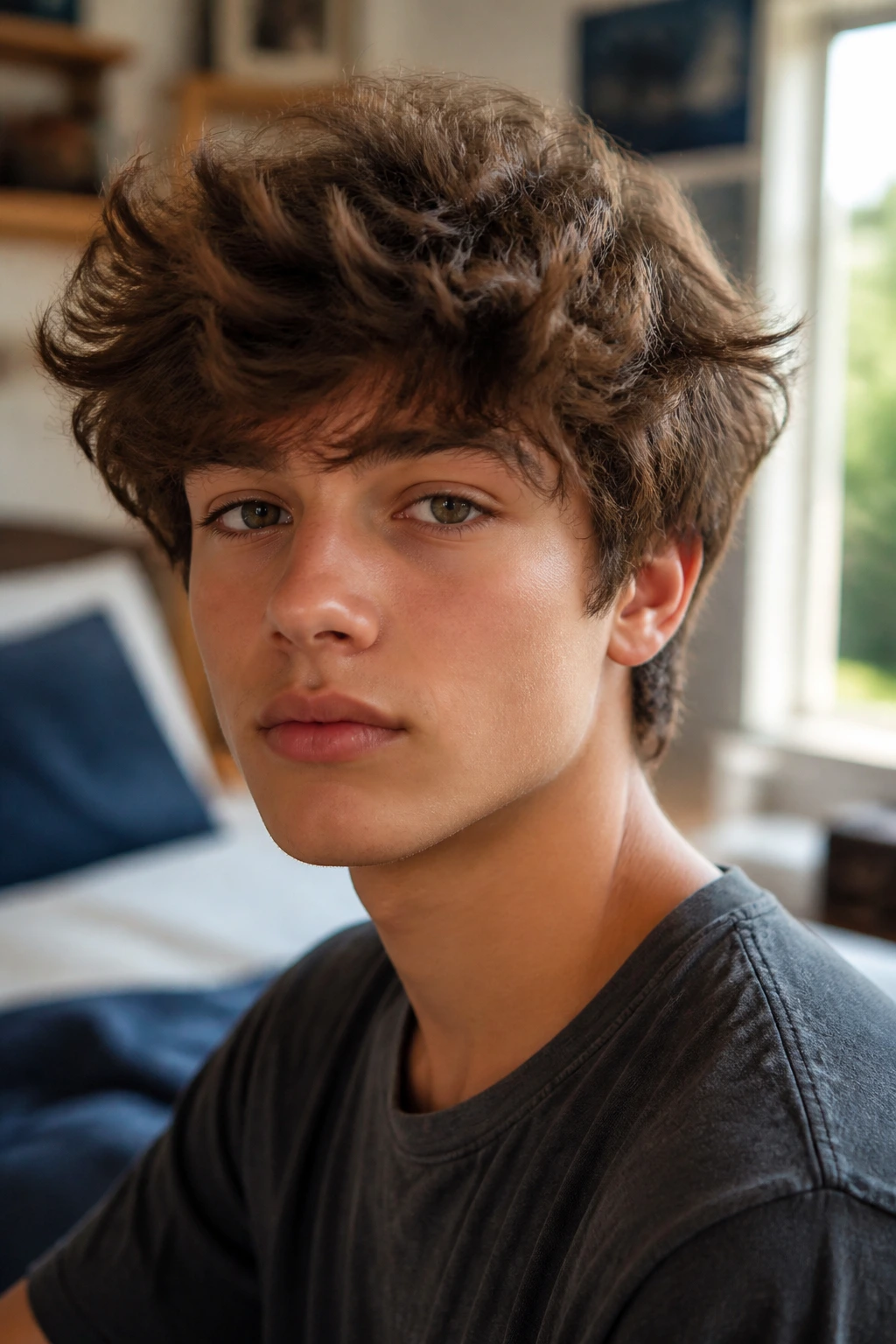
-
They keep the top long enough to bend: Most of these cuts leave roughly 2.5 to 5 inches on top, which is the sweet spot for wavy hair that needs room to form soft S-shaped movement instead of standing up in spikes.
-
They trim bulk where waves swell widest: Around the temples, above the ears, and near the crown, a little removal of weight matters more than taking everything short. That’s what stops the side profile from turning into a puffed-out triangle.
-
They grow out in a decent shape: The cleanest boys’ wavy haircuts are the ones that still look intentional after 3 to 5 weeks, not the ones that turn into a shaggy accident by the second recess.
-
They give the fringe a job: A front section that’s cut to fall forward, split in the middle, or sweep to one side gives the wave somewhere to land. That’s a lot better than forcing a hard part where the hair doesn’t want one.
-
They work with simple styling: A mist of water, a little mousse, or a pea-sized dab of cream usually does more here than a heavy gel ever will. The haircut should do most of the work.
What Makes Wavy Hair Look Fluffy Instead of Puffy
Wavy hair looks fluffy when the cut gives it height, movement, and a little air between the strands. It looks puffy when the bulk sits in the wrong place. That difference sounds small. It isn’t.
The shape matters more than the length
A boy can have medium-length hair and still look flat if the weight is packed into the sides. He can also have shorter hair and still look fluffy if the top is layered softly and the crown isn’t squashed down. The haircut lives in the shape, not just the number of inches.
The ends decide whether the cut feels soft
Blunt ends make wavy hair act heavier. Point-cut ends, feathered layers, and lightly broken fringe edges let the wave separate a little, which is what gives that airy look people usually mean when they ask for “fluffy.” The hair should move when he turns his head, not sit like a helmet.
1. Curtain Fringe with a Clean Taper
The front falls into two soft panels here, and on wavy hair that split looks natural instead of forced. The taper around the ears keeps the sides tidy, so the fringe gets all the attention without the cut drifting into mop territory. It’s a strong choice for boys who want softness up front but still need a clean outline for school.
Why it works
Curtains let the wave bend forward and then fall away from the face. Ask for about 3 to 4 inches on top, with the fringe point-cut rather than chopped bluntly across. Keep the sides low and neat, ideally with a soft taper above the ear and a clean neckline.
- Best for: medium-density hair, round or oval faces, boys who dislike hair in the eyes.
- Styling note: a light cream or mousse is enough; heavy gel kills the movement.
- Barber note: keep the fringe just above the eyebrows so it still lifts when dry.
A quick finger-dry with the front pushed slightly side to side gives it that loose, airy bend. Do not flatten it straight down with a brush.
2. Medium Flow with Soft Layers
Some cuts are meant to look polished. This one is meant to move. The medium flow lets the wave travel backward and to the side in a way that looks relaxed even when it’s not styled much. It’s one of the best boys’ wavy haircuts if you don’t want the cut to scream for attention every time he tilts his head.
The shape works because it keeps enough length on top — usually 4 to 6 inches — for the wave to show through without turning into a mushroom. Ask the barber for soft layers, not a choppy butchered top. The ends should feel feathered, almost brushed through with scissors rather than hacked into shape.
This one suits thick hair especially well. When the wave is dense, the flow stops it from feeling boxy. I like it for boys who wear hats, play sports, or just don’t want to think about their hair every morning.
3. Textured French Crop
Why does the French crop work so well on a boy whose fringe keeps jumping forward? Because it lets the front be short on purpose. The crop controls the wave instead of pretending the wave will behave like straight hair. That’s the whole trick.
Ask for a textured top around 1.5 to 2.5 inches, with a short fringe that’s broken up at the ends. The sides can be a low taper or a soft fade, but don’t take them so tight that the top starts looking like it’s sitting on a pedestal. The shape should still feel connected.
How to wear it
A matte paste works better than shiny product here. Warm a pea-sized amount between your hands, push it through damp hair, then use your fingertips to lift the top and nudge the fringe forward. If the fringe splits a little on its own, even better. That messier line is what gives the cut its energy.
4. Soft Mop Top
There’s a sweet spot between “sweet old-school mop” and “I haven’t had a trim in six months.” This lands in the good part of that range. The soft mop top keeps the roundness, the floppy fringe, and the easy shape, but trims the perimeter enough that it still feels deliberate.
This is a smart option for younger boys who don’t want hair constantly falling into their eyes. The top usually sits around 3 to 4 inches, with the sides only lightly cleaned up. The goal is not a hard fade. The goal is to keep the outline soft and the wave visible.
It works best when the hair wants to fall forward anyway. If the front naturally bends toward the forehead, this cut makes that behavior look intentional. Use a little cream and a damp comb, then stop. Too much product turns the mop into a sticky cap, and that ruins the whole point.
5. Low Taper Quiff
A low taper quiff gives height without turning the head into a billboard. That’s why I keep recommending it for boys with wavy hair. The wave already brings some lift; the quiff just organizes it.
Ask for length at the front — around 3.5 to 5 inches — with softer length toward the crown so the top can rise and fall instead of sticking up rigidly. The sides should taper low and stay tight only near the ears and neckline. Anything higher starts stealing the air from the top.
The styling move is simple. Blow-dry the front up and slightly back with your fingers, not a brush, and stop as soon as the roots lift. Then use a light cream or matte paste. This cut looks best when it still has some movement in it. If it’s frozen in place, it starts looking like a costume.
6. Feathered Shag
Unlike a polished quiff or a neat crop, a feathered shag wants the wave to stay loose. That’s what makes it feel alive. The cut takes away bulk in layers, not in hard lines, so the whole head looks softer from every angle.
It works especially well for thicker wavy hair that swells at the crown and sides. Ask for layered sections through the top and back, with feathered ends and a little extra movement around the face. You do not want a blunt bottom edge. You want broken pieces that settle into each other.
What to watch for
- Too much layering: makes fine hair look stringy.
- Too little shape at the nape: turns the back into a mop.
- Too much product: steals the airy texture and makes the hair sit heavy.
A sea salt spray or light mousse suits this cut far better than glossy styling cream. Scrunch it, let it air-dry halfway, then use a diffuser if you want more lift.
7. Side-Swept Ivy League
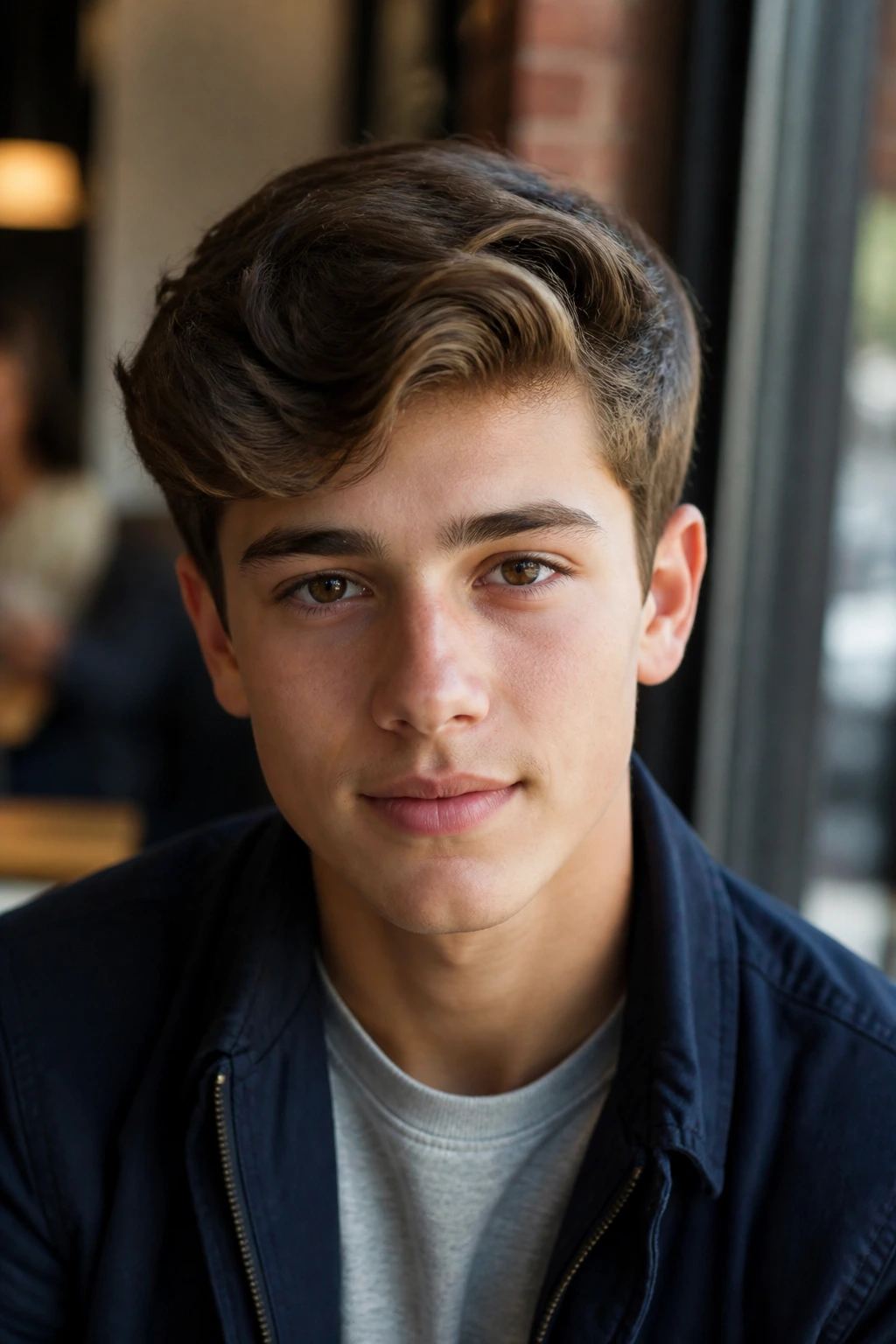
Picture a school portrait that still looks neat when he’s run around all afternoon. That’s the job here. The side-swept Ivy League is cleaner than a flow cut and softer than a buzzier short style, which is a nice middle ground for boys with wavy hair.
Keep the top around 2.5 to 3.5 inches, with the front long enough to sweep to one side. The sides should be tapered, not shaved, so the shape stays grown-up without going stiff. A hard part can work, but on wavy hair I usually prefer a soft side sweep because it looks less forced.
This is a good cut for boys who need something that can be combed quickly in the morning and still look fine after a nap in the car. A small amount of lightweight cream gives control without killing the wave. It’s tidy, not slick. Big difference.
8. Loose Middle Part
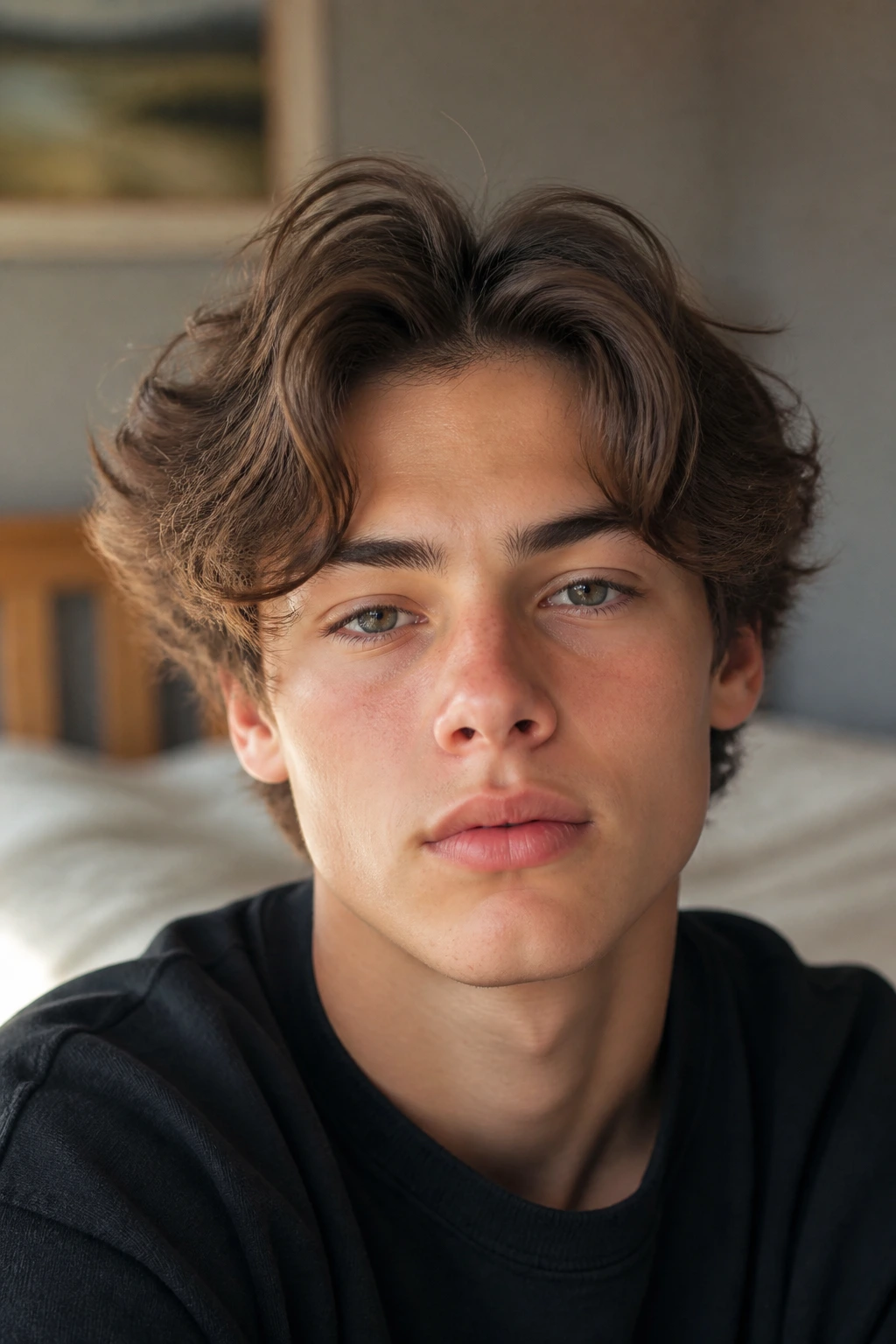
A loose middle part is basically the curtain fringe’s more casual cousin. The part doesn’t need to be a perfect line. In fact, if it’s too neat, the cut loses the relaxed feel that makes it work on wavy hair.
Leave enough length on top — often 4 to 5 inches — so the front can split and drape rather than stand up. The corners near the temples should stay soft, which helps the haircut sit around the face instead of forming a box. If the hair is thick, take some weight out with internal layering, not a blunt chop.
This cut is a strong choice for boys with natural bend at the front and a face shape that can handle a little framing. It’s also forgiving when it grows out. That matters more than people admit. A good middle part should still look useful after a few weeks, not just on the day it leaves the chair.
9. Rounded Crop with Crown Lift
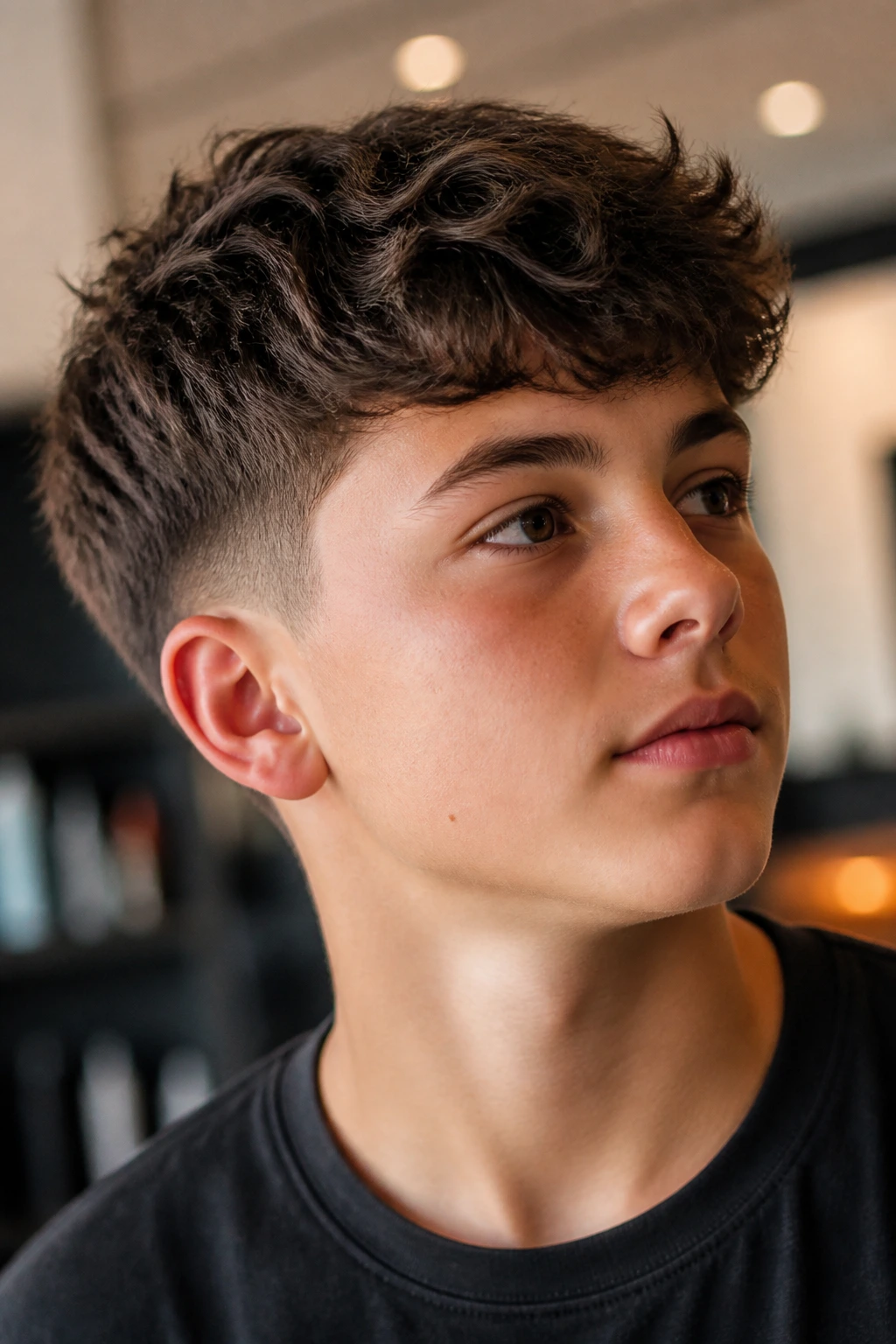
The crown matters more than people think. If that spot sits flat, or kicks up in a stubborn cowlick, the whole haircut starts arguing with itself. A rounded crop handles that by keeping the shape soft and giving the crown some lift instead of fighting it.
Ask the barber to leave a bit more length at the crown than at the front and to round the perimeter instead of squaring it off. The top should sit textured and airy, with the edges broken up lightly so the cut doesn’t become a helmet. Short sides help, but they need to be blended cleanly.
Quick shape notes
- Best for: boys with a crown that stands up or hair that refuses to lie flat.
- Better with: matte paste, finger styling, a short burst of root lift from the dryer.
- Not ideal for: very fine hair that needs more length to look full.
This cut has a funny habit of looking better when it’s not overworked. Touch the crown, lift it slightly, and let the rest fall where it wants.
10. Brushed-Back Wave Cut
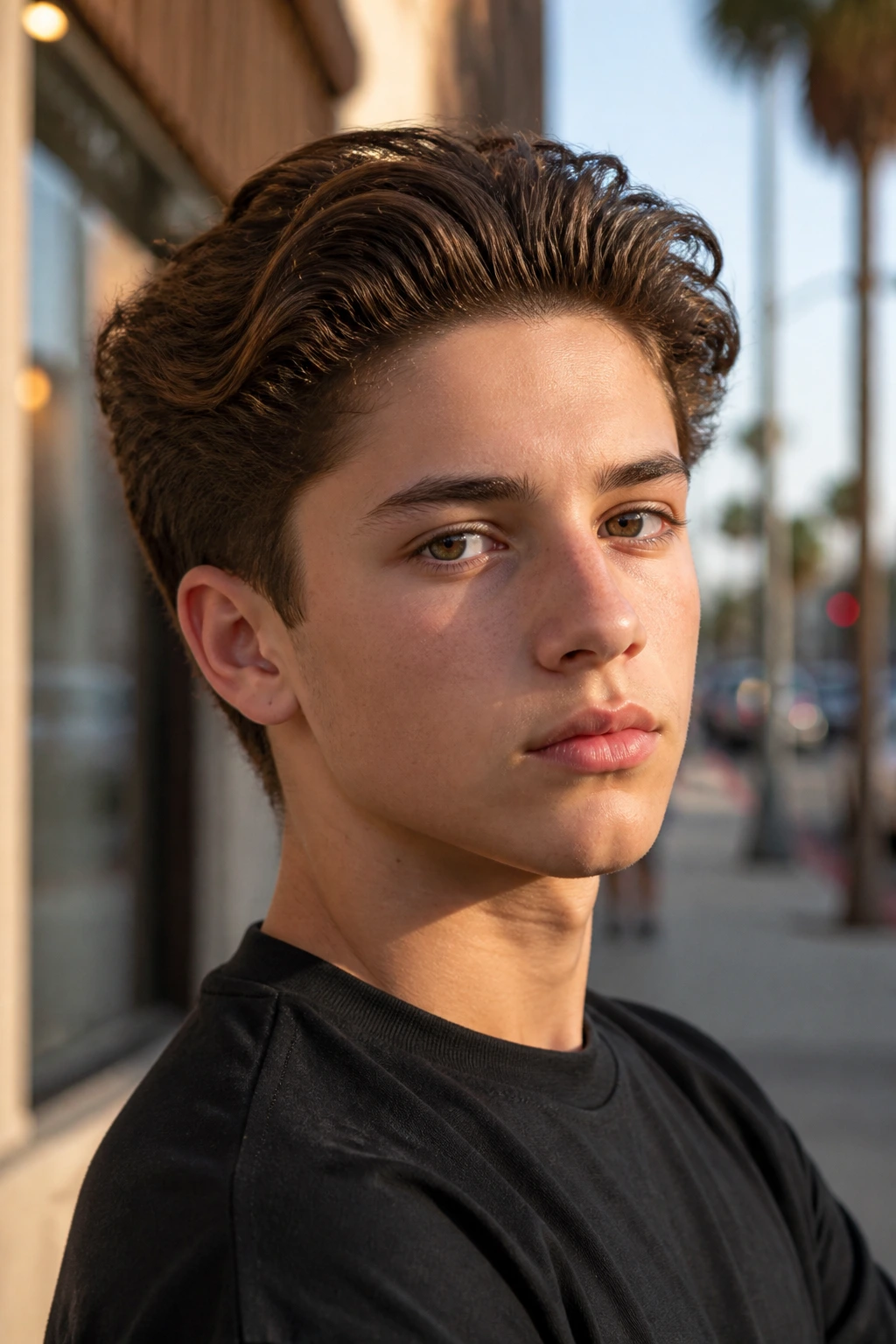
A brushed-back wave cut is for the boy who wants his hair off his forehead but doesn’t want it slick or shiny. It’s controlled, not stiff. The wave still shows through; it just moves backward instead of forward.
Keep the front long enough to brush back without standing up in a stiff ridge. Usually that means 3.5 to 5 inches on top with a low taper or soft scissors on the sides. The crown should stay textured so the back doesn’t collapse into a flat patch.
A quick blow-dry from the forehead toward the crown makes this work better than combing it straight back while soaking wet. Use your fingers to loosen the direction, then add a little cream. If it looks too neat, rake it once with damp hands. That’s often all it needs.
11. Light Wolf Cut
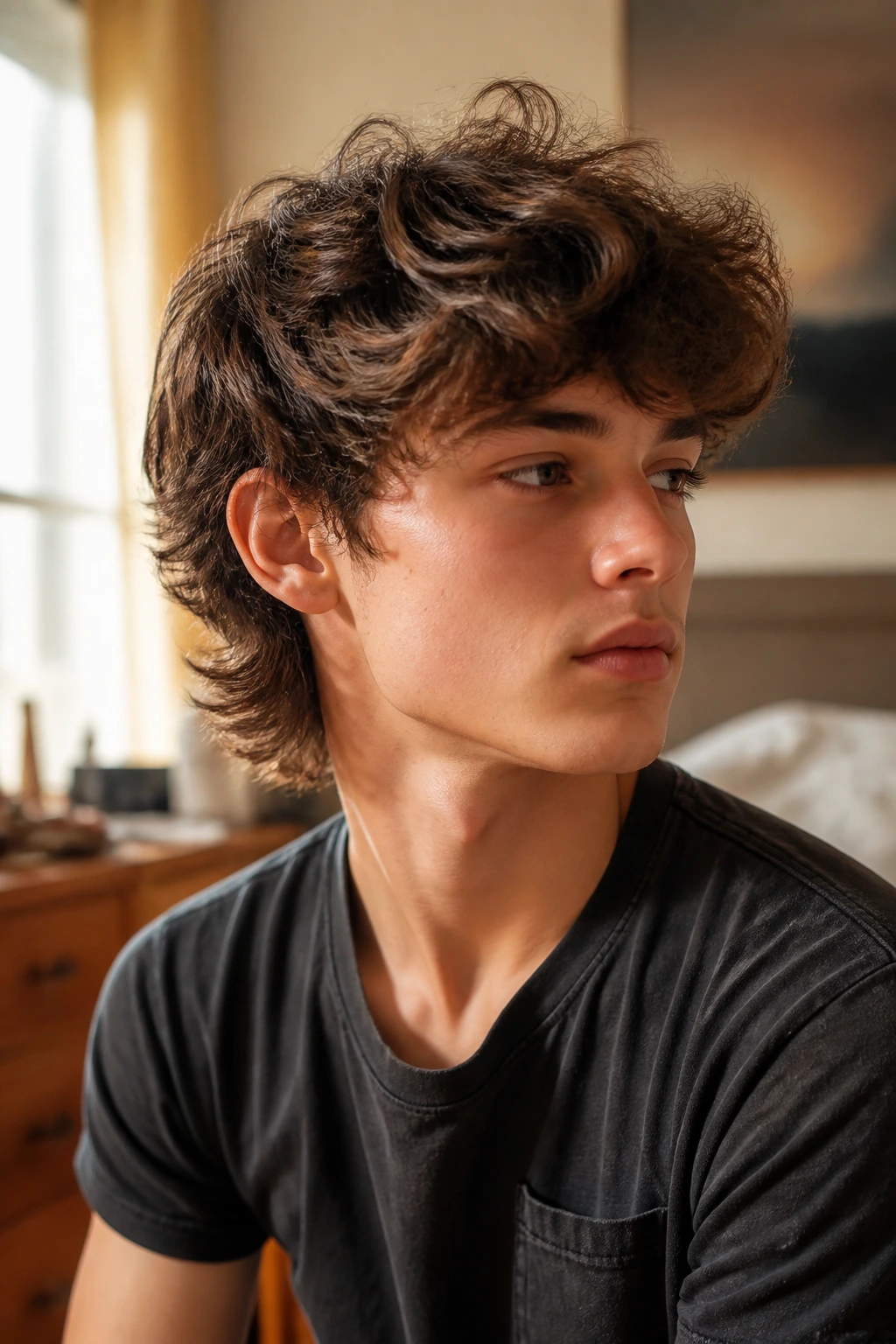
The wolf cut can go wrong fast. Too much mullet, too much disconnection, too much drama. A light wolf cut keeps the messy, layered spirit but softens the outline so it still reads like a boys’ haircut, not a costume.
This version works best on thick wavy hair with enough length to show layers. Ask for soft layers around the top and sides, a bit more length in the back, and a fringe that doesn’t sit bluntly across the forehead. The back should feel slightly longer, but not shaggy in a wild way.
It’s a strong choice for boys who like texture and don’t mind a little edge. It does need some honesty from the barber, though. If the cut is too heavy or too short in the wrong places, the whole shape loses the airy feeling that makes it interesting.
12. Classic Scissor Cut with Tapered Neck
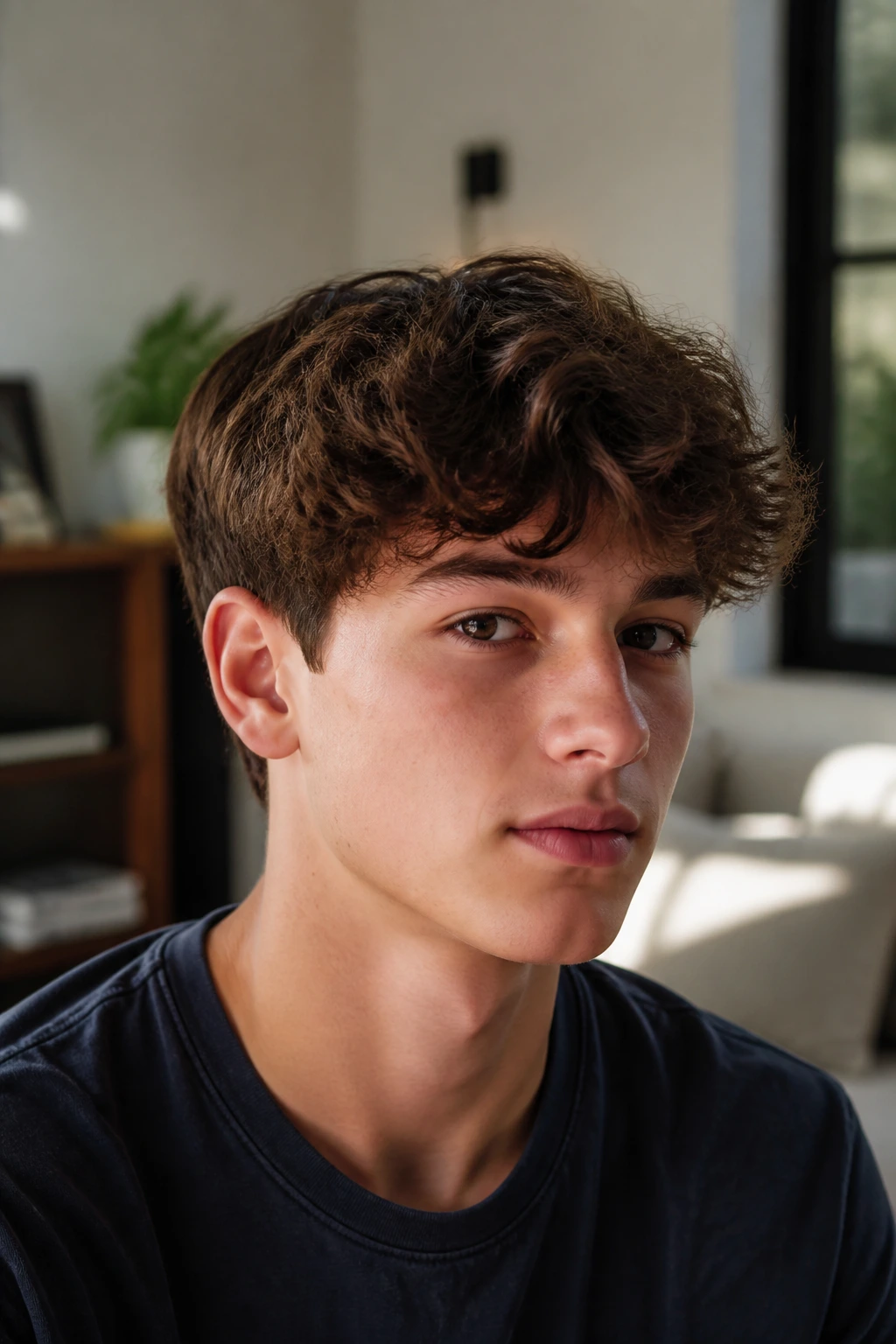
Boring in the best way. That’s how I think about this cut. The classic scissor cut with a tapered neck is for parents who want the wave to stay visible without chasing a trend that’s going to look dated or fussy in six weeks.
The top stays natural and lightly layered, usually somewhere in the 2.5 to 4 inch range, and the sides are blended with scissors instead of being blasted into a tight fade. A tapered neckline keeps the back neat, which matters when the hair starts growing out. It still looks cared for, even when it’s not styled.
This is one of the easiest fluffy haircuts for boys with wavy hair to live with. It doesn’t demand much product. It doesn’t scream for a special comb. And it lets the wave do its own thing without turning the head into a puffball.
13. Surfer Layers
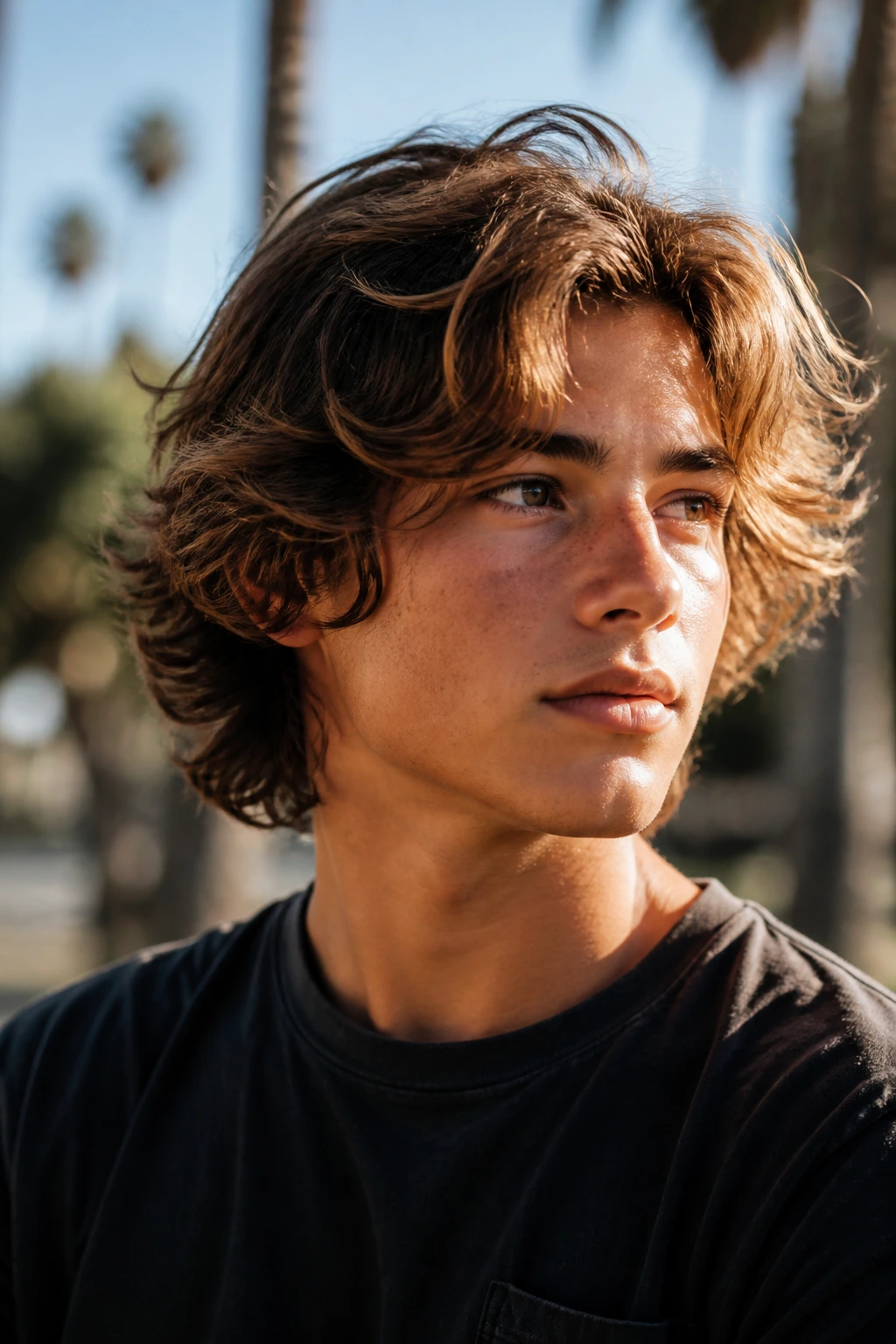
This cut looks like it spent the afternoon outside, even when it didn’t. That’s the whole charm. Surfer layers are longer, softer, and a little wild, but if the layers are done right, they stay loose instead of heavy.
Keep enough length for movement — often 4 to 6 inches on top and a little more in the fringe and sides. The layers should remove bulk without carving obvious steps into the hair. A rough line at the bottom makes this style look unfinished, so ask for feathered ends.
A sea salt spray helps, but not in a stiff, crunchy way. Mist it lightly, scrunch once, and let the wave settle. This is a good option for boys who don’t want to look too “done.” It’s relaxed, but not lazy.
14. Textured Caesar
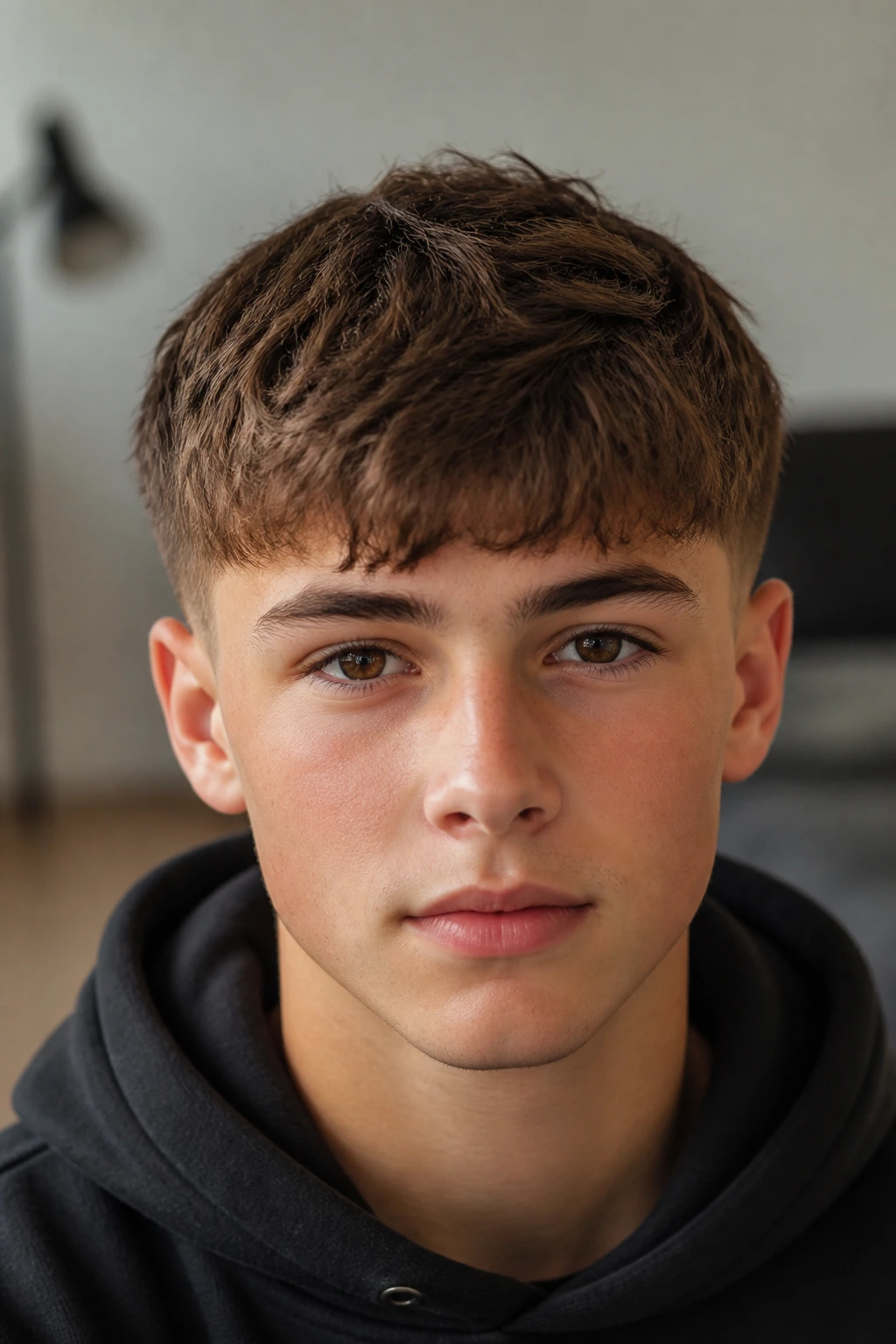
A textured Caesar is short, practical, and much less severe than people expect. The front fringe is kept forward and choppy, while the top has enough texture to stop the cut from looking like a flat block.
It’s a smart pick when the hair naturally leans forward and the boy wants a low-maintenance shape. Ask for a short fringe, broken texture on top, and a taper or fade around the sides depending on how clean you want the finish. The top usually sits around 1.5 to 2.5 inches, which is short enough to stay tidy but long enough to show some bend.
Use a matte product only. Shine makes this cut look like a plastic cap, and the wave loses all its softness. A little finger lift at the front is enough to keep it from sitting too hard across the forehead.
15. Drop Fade with Airy Top
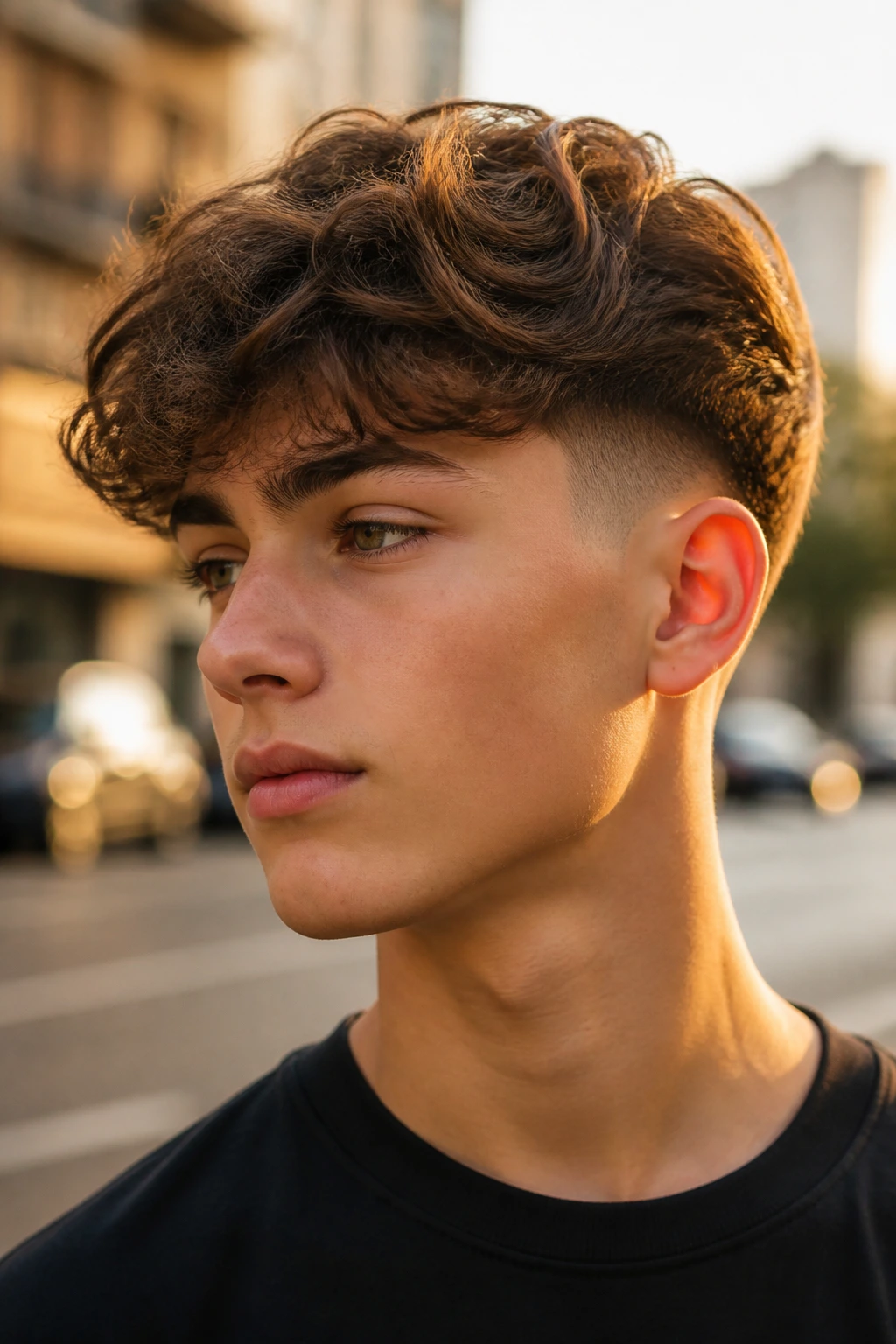
A drop fade can make fluffy hair look even fuller on top, because the sides dip lower behind the ear and give the top a bigger stage. It’s a sharper look than the classic taper, but the airy top keeps it from feeling too hard.
Ask the barber to keep the top around 3 to 4 inches and to use point cutting so the ends stay soft. The drop fade should curve neatly around the ear and lower toward the back of the head. That curve matters. It’s what gives the cut its shape instead of leaving a boxy line.
Best use case
This cut shines on dense wavy hair that needs visual separation. The fade removes bulk where it swells most, and the top keeps enough length to show the wave. If the top is cut too short, the fade starts doing all the talking. That’s the version to avoid.
16. Long Fringe with Short Sides
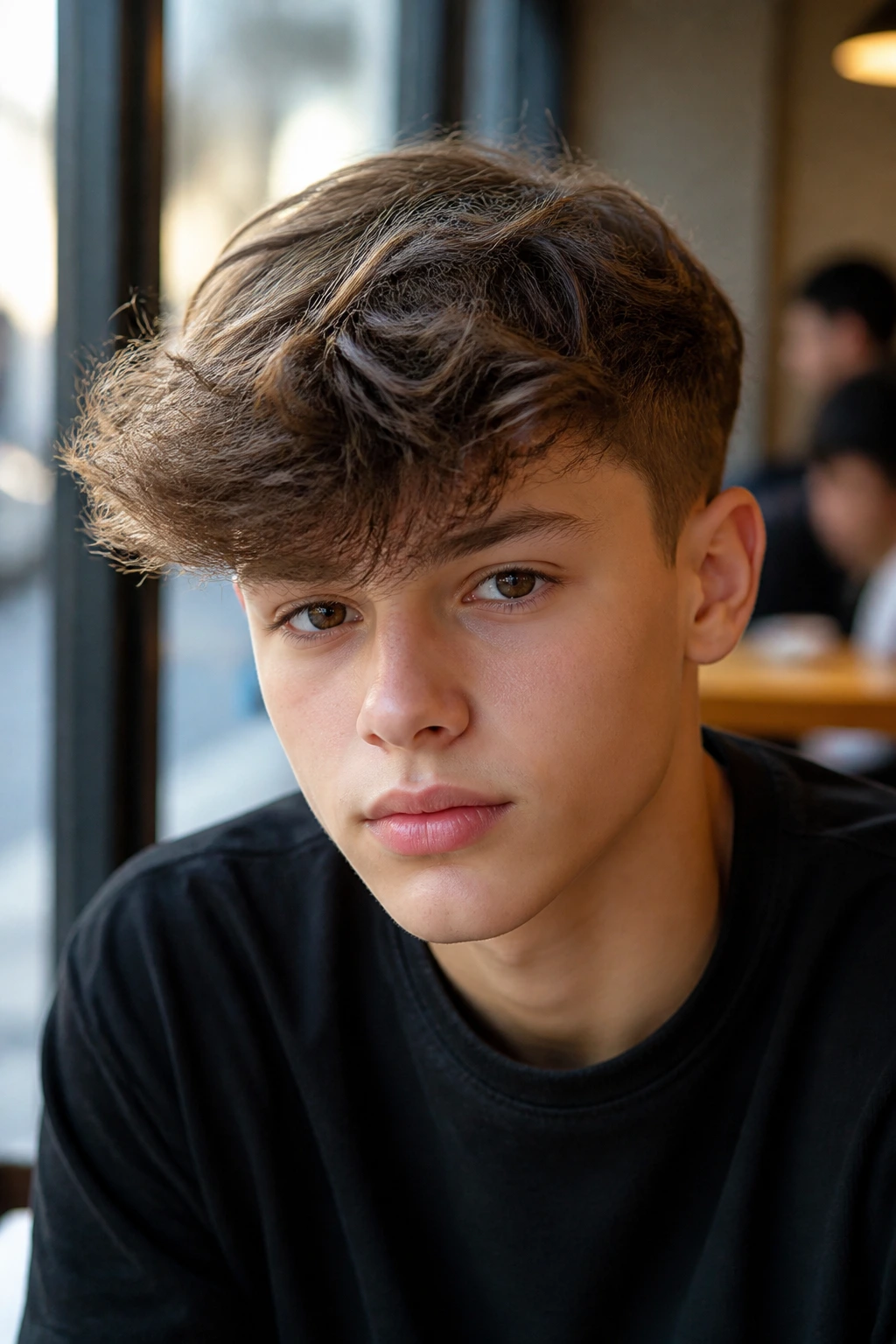
The fringe is the feature here. Everything else stays in the background. Short sides keep the head tidy, while the front hangs long enough to swing, split, or fall just over the eyebrows.
This works well for boys who like hair on the face but not all over the neck. The top usually sits around 4 to 5 inches in front, with softer length through the top so the fringe doesn’t hang like a curtain board. The sides need to stay neatly tapered so the front feels intentional.
A tiny bit of cream, then a side-to-side finger comb, is usually enough. If the fringe keeps separating too much, dampen it and let it dry while pushed slightly forward. That keeps the shape soft and stops it from exploding into random pieces.
17. Soft Bowl Cut with Feathered Edges
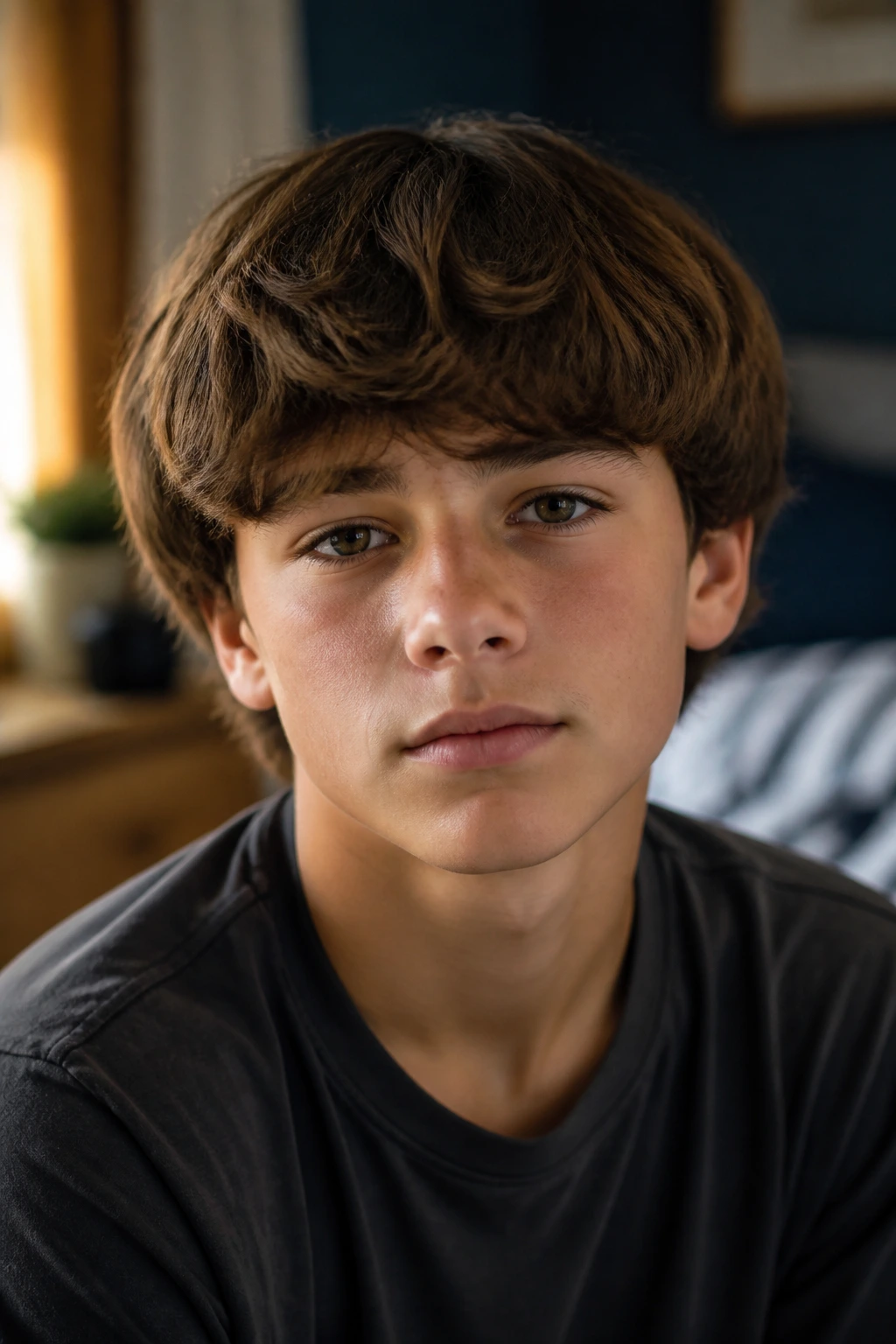
A bowl cut only works when the edge breaks a little. That’s the part most people miss. A soft bowl with feathered edges keeps the rounded shape, but the perimeter is cut lightly so it doesn’t sit like a helmet from the 1990s.
This version is excellent for thick wavy hair because the wave softens the outline on its own. Ask for a rounded silhouette, with the ends point-cut and the sides trimmed to stay connected to the top. The fringe should curve, not carve across the forehead.
It’s a bolder look. No way around that. But when the shape is clean and the texture is soft, it has a playful, tidy feel that suits younger boys especially well. It looks best when the hair has a little bend and not too much product.
18. Layered Top with Temple Fade
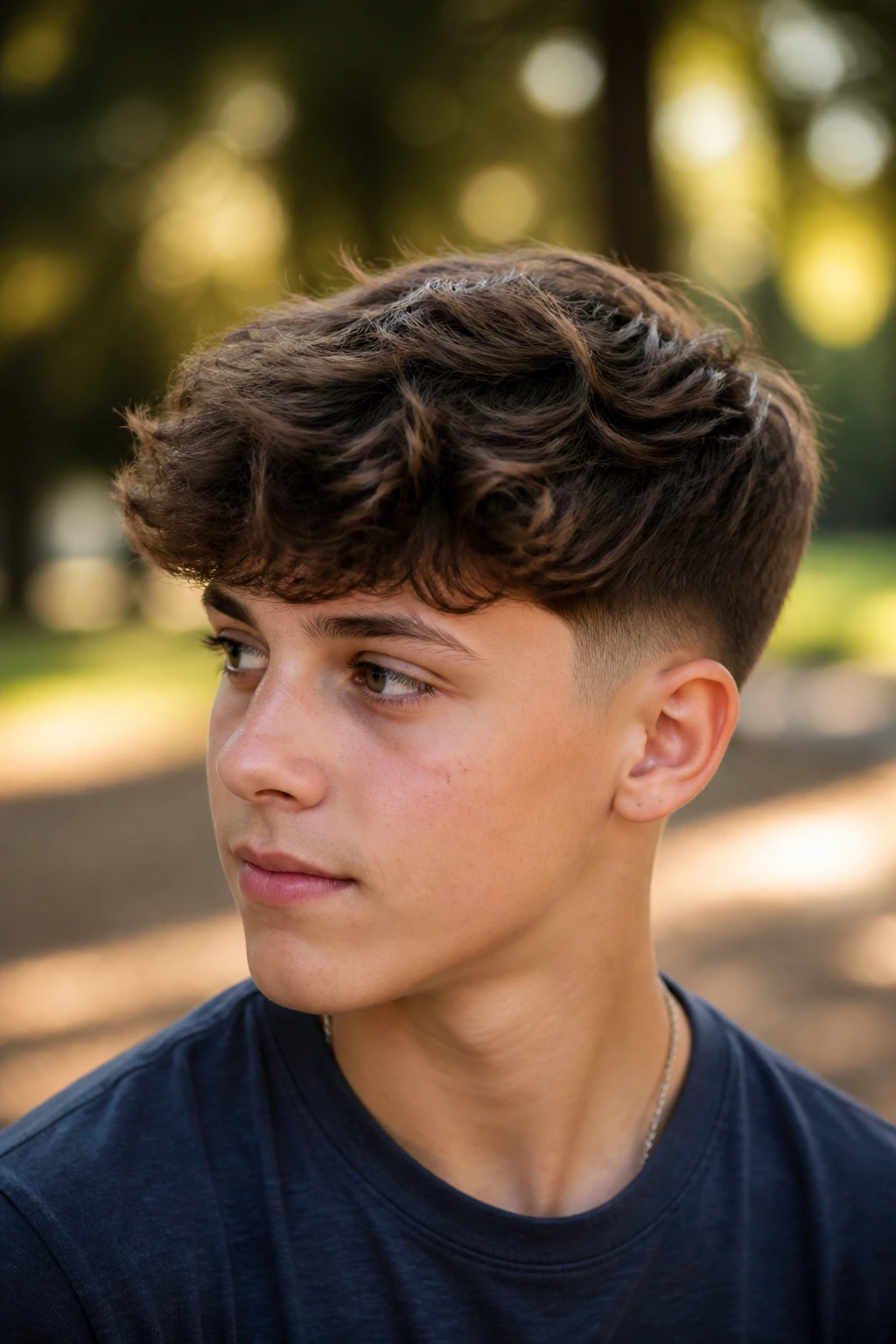
If you want one cut that can go neat or loose without a full rethink, this is the safest finish. The layered top gives the wave room. The temple fade keeps the edges sharp enough that the haircut still looks current and deliberate.
Ask for a little more length in front, softer layering through the crown, and a fade only at the temples rather than all the way up the sides. That keeps the top dominant and the outline clean. Usually, 3 to 4.5 inches on top is enough for the wave to move without collapsing.
This is a good last stop if you’re unsure which direction to go. It works on thick hair, medium hair, and a lot of face shapes. It also grows out cleanly, which I care about more than the fancy first-day finish. A haircut should survive real life.
Small Tweaks That Make the Cut Look Better
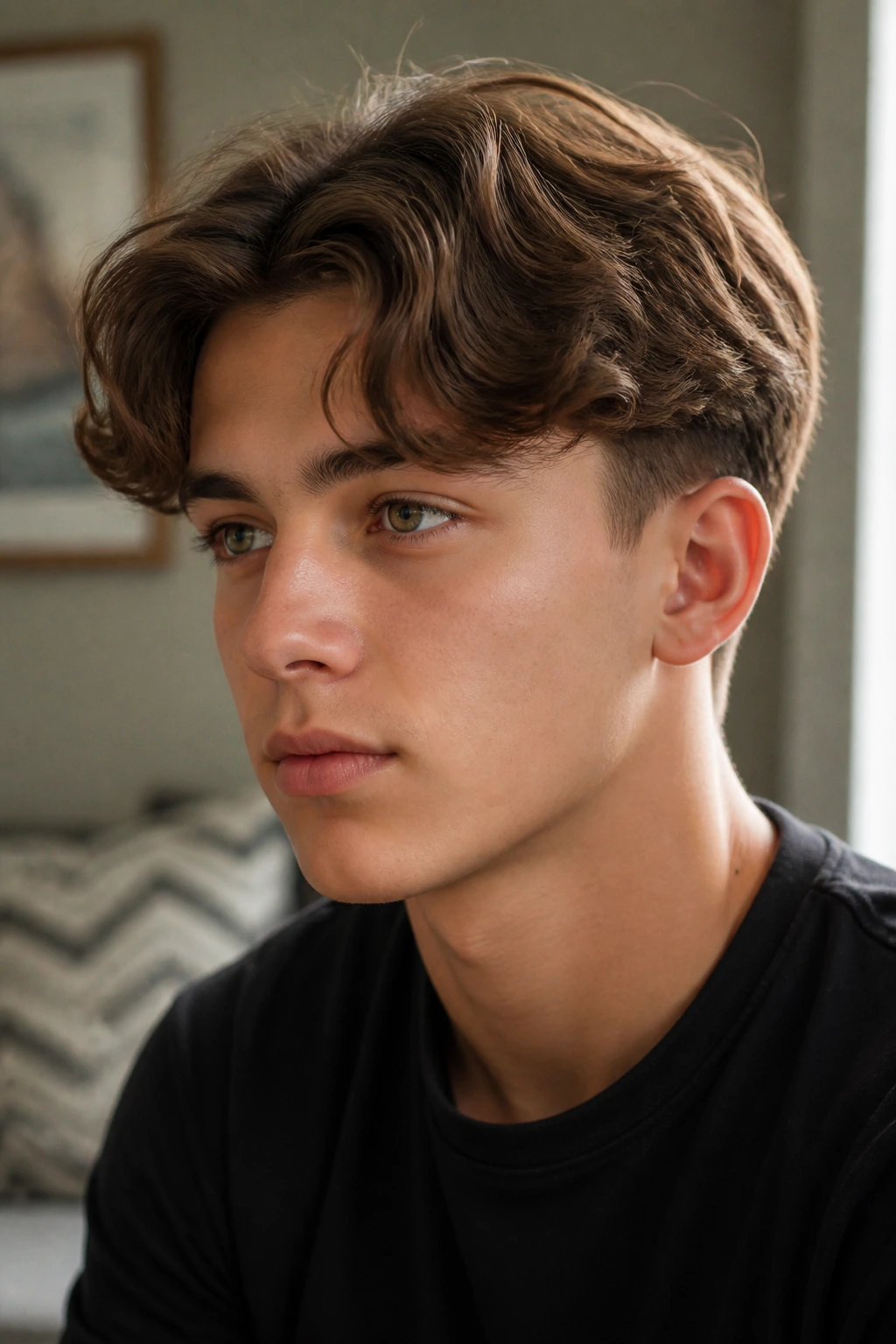
Bring a photo, but don’t hand over three at once and hope for magic. Pick one that shows the front and one that shows the sides. Then point to the part you actually like — the fringe, the crown, the taper, not the model’s jawline or shirt. That keeps the barber focused on shape instead of vibes.
Say the length in inches if you can. “Keep the top around 4 inches” is more useful than “leave it long.” Wavy hair changes personality fast at 1.5 inches versus 3 inches, and barbers know that. If the sides need to stay soft, say so directly. Soft around the ears is a better note than “not too short,” which means nothing in a noisy chair.
Product matters less than people think, but the amount matters a lot. Start with a pea-sized dab of cream or a few sprays of mousse. If the hair is damp and the wave is strong, that’s plenty. Adding more often gives you weight instead of shape, and shape is the whole point here.
Common Mistakes to Avoid
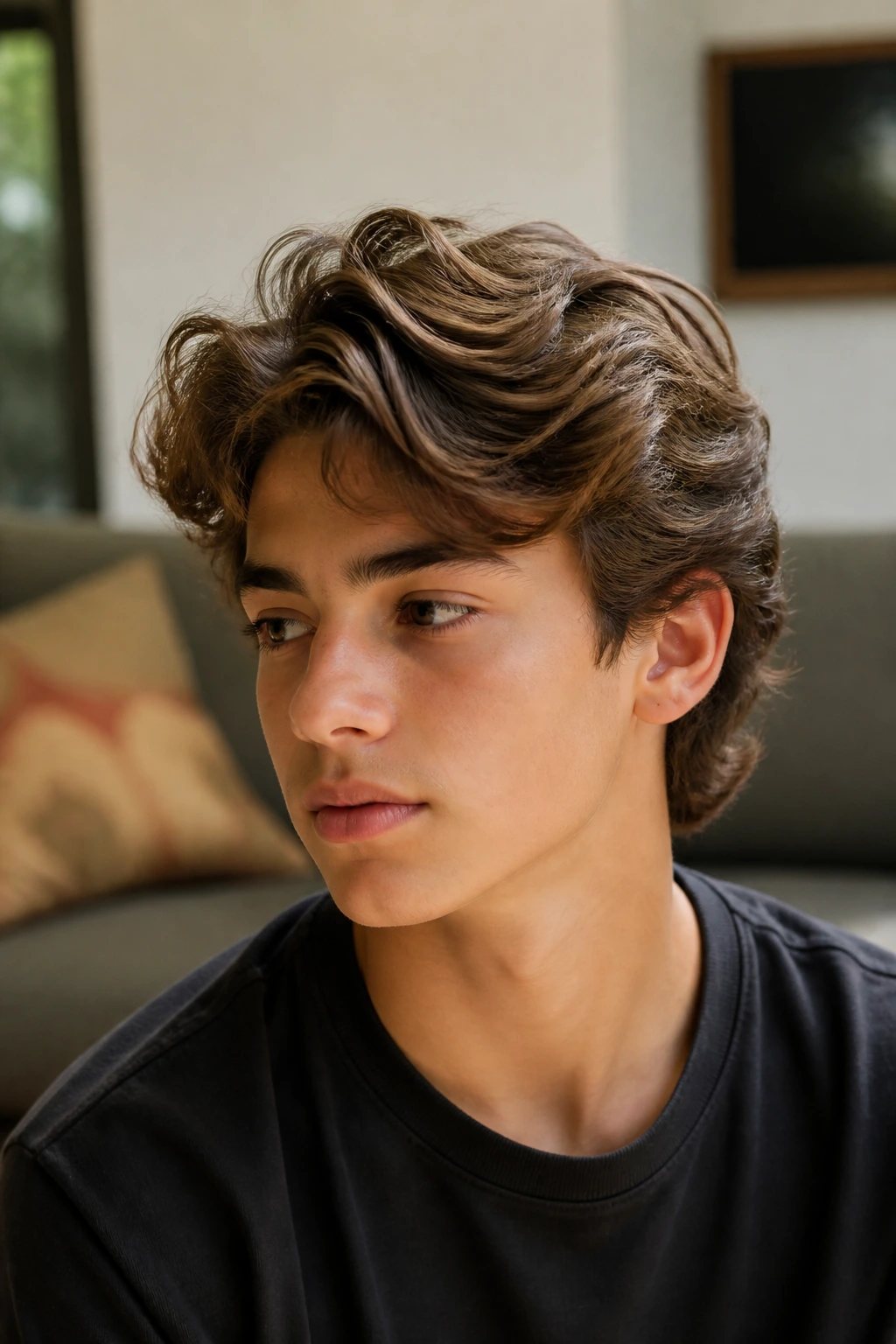
Taking the sides too high is the fastest way to lose the fluffy look. The haircut starts to widen at the temples and the top looks stranded on its own little island. The fix is simple: keep the taper low or ask for scissors above the ear instead of a high skin fade.
Over-thinning the top is another rough one. Hair that’s already wavy can turn frizzy or stringy if too much bulk is removed with thinning shears. You’ll know it happened when the top looks see-through in bright light and goes fuzzy after ten minutes outside. Point cutting is safer and usually gives a better finish.
Cutting the fringe blunt and straight across can make even good wavy hair look hard and boxy. The wave wants softness at the ends. If the front looks like a ruler line, ask for the edges to be broken up a little on the next cut.
Skipping the crown is a small mistake that makes a big mess. Boys with a cowlick or a crown that sticks up need that area handled on purpose. If it gets cut too short, it stands up more. Leave a touch more length there and the cut settles down.
Variations and Alternatives to Try
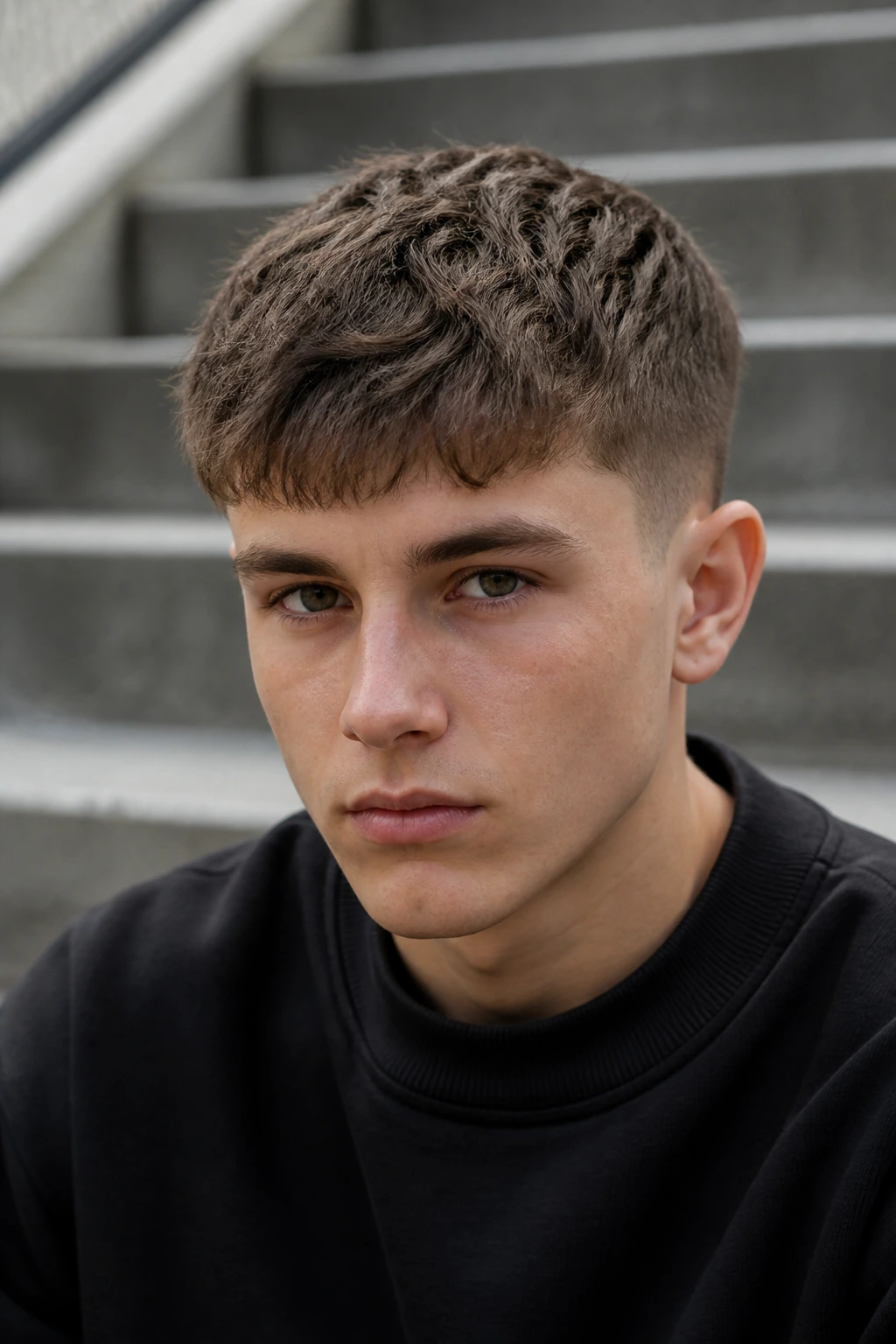
The School-Approved Version: Keep the same fluffy shape, but shorten the fringe by half an inch and tighten the neckline a little more. That keeps the haircut neat enough for uniforms and school photos without killing the texture.
The Weekend Messy Version: Leave the top a touch longer and ask for softer point-cut ends. This version works when the goal is movement and looseness, not polish. A little mousse and finger-drying are enough to wear it.
The Thick-Hair Version: Ask for internal removal of bulk rather than a hard fade. Thick wavy hair needs breathing room inside the shape, not just shorter sides. If the barber knows scissor-over-comb well, that usually gives the best result.
The Fine-Hair Version: Keep the layers softer and avoid over-texturizing. Fine wavy hair can look sparse if too much is removed from the top. A light mousse at the roots gives lift without making the ends look wispy.
The Grow-Out Version: This is the quiet hero for parents who don’t want a trim every three weeks. Keep the corners soft, leave the neckline tapered, and avoid a fringe that’s cut too short. It grows into a longer flow instead of a messy shelf.
Essential Tools and Products
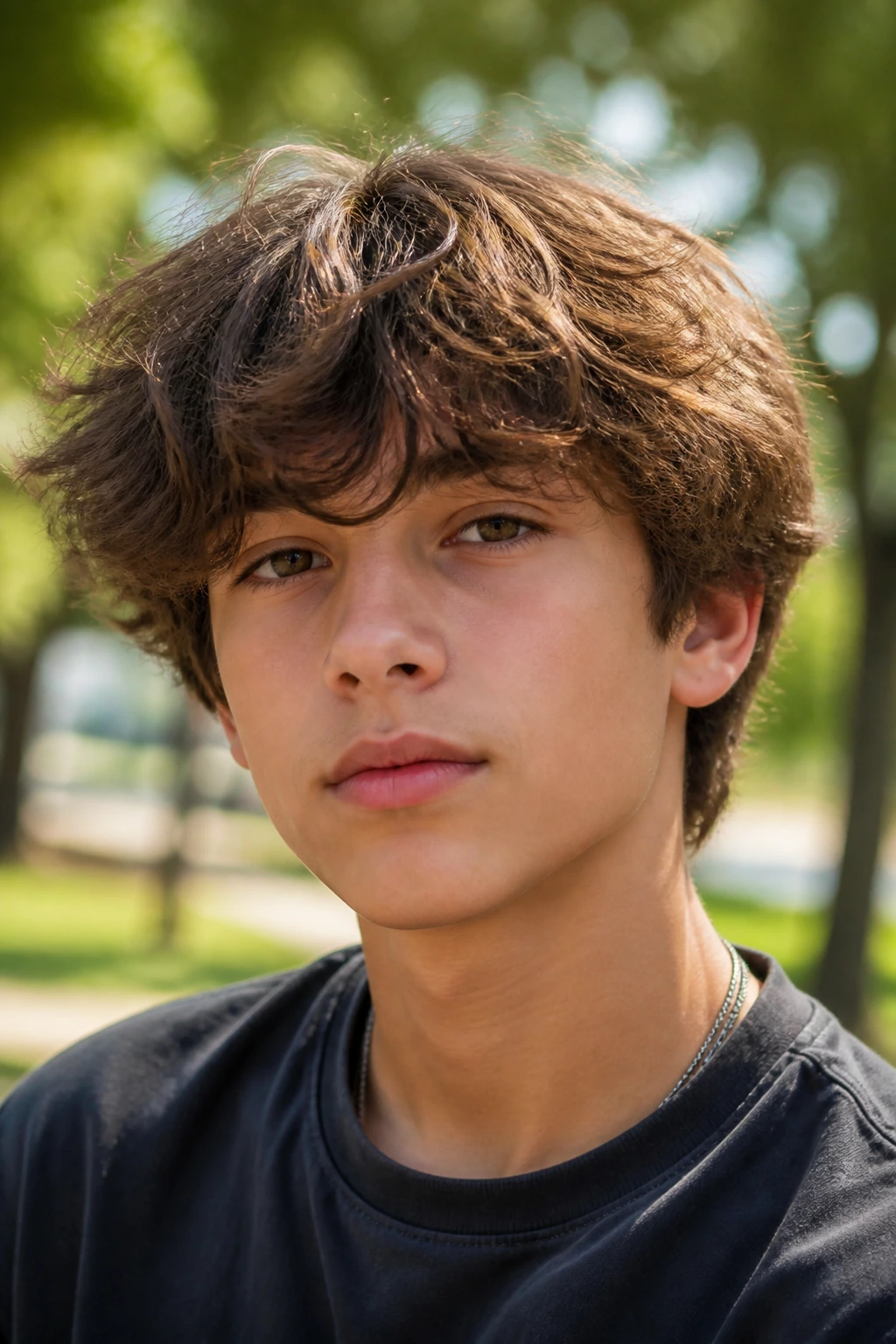
- Spray bottle: A few mists of water wake up the wave before styling and help you reset sleep-flattened hair.
- Wide-tooth comb: Good for detangling without ripping through the wave pattern; better than a fine comb for most boys.
- Vent brush or soft paddle brush: Useful for guiding the top back or to the side while blow-drying.
- Blow dryer with a nozzle attachment: Helps lift roots without blasting the hair in every direction.
- Diffuser attachment: Handy for thicker or more defined waves when you want more texture and less frizz.
- Lightweight mousse: Gives airy hold at the roots without the crunch of gel.
- Sea salt spray: Adds a rough, beachy feel; best used lightly so the hair doesn’t dry out.
- Matte cream or paste: Keeps shorter styles controlled while still showing movement.
- Microfiber towel or soft T-shirt: Better than rough towel rubbing, which can puff the wave up fast.
Keeping the Shape Between Haircuts
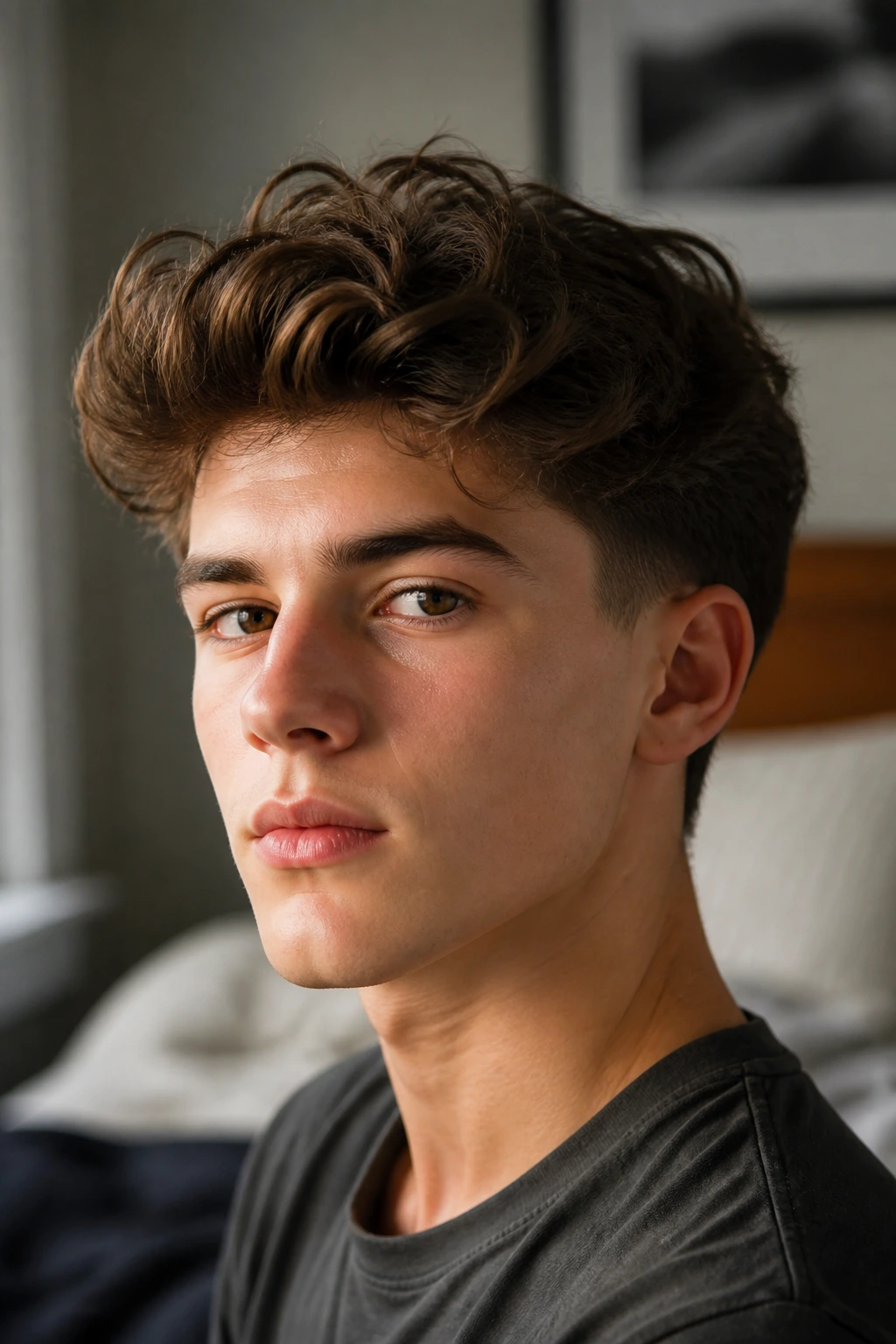
Shorter fluffy cuts usually need a clean-up every 3 to 4 weeks. Medium-length flow cuts can stretch to 5 or 6 weeks if the neckline stays tidy. Longer layered cuts can go 7 to 9 weeks, but only if the fringe isn’t falling into the eyes and the crown still sits right. Once the sides start widening past the ears, the shape stops reading as fluffy and starts reading as overgrown.
Morning reset matters more than a full wash for most of these styles. A few sprays of water, a quick rake with fingers, and 20 to 30 seconds of warm air at the roots can bring the cut back to life. If he sleeps hard on one side, mist the flat side first and push it the opposite direction while drying. That little trick fixes more bad hair mornings than a drawer full of products.
Use less product than you think. Boys’ wavy hair usually needs only enough cream or mousse to separate and guide the bends. If the hair starts feeling tacky, you’ve gone too far. And after sports or a sweaty day, rinse the salt and sweat out sooner rather than letting them dry into the ends. Wavy hair gets rough fast when it’s left to sit dirty.
Frequently Asked Questions
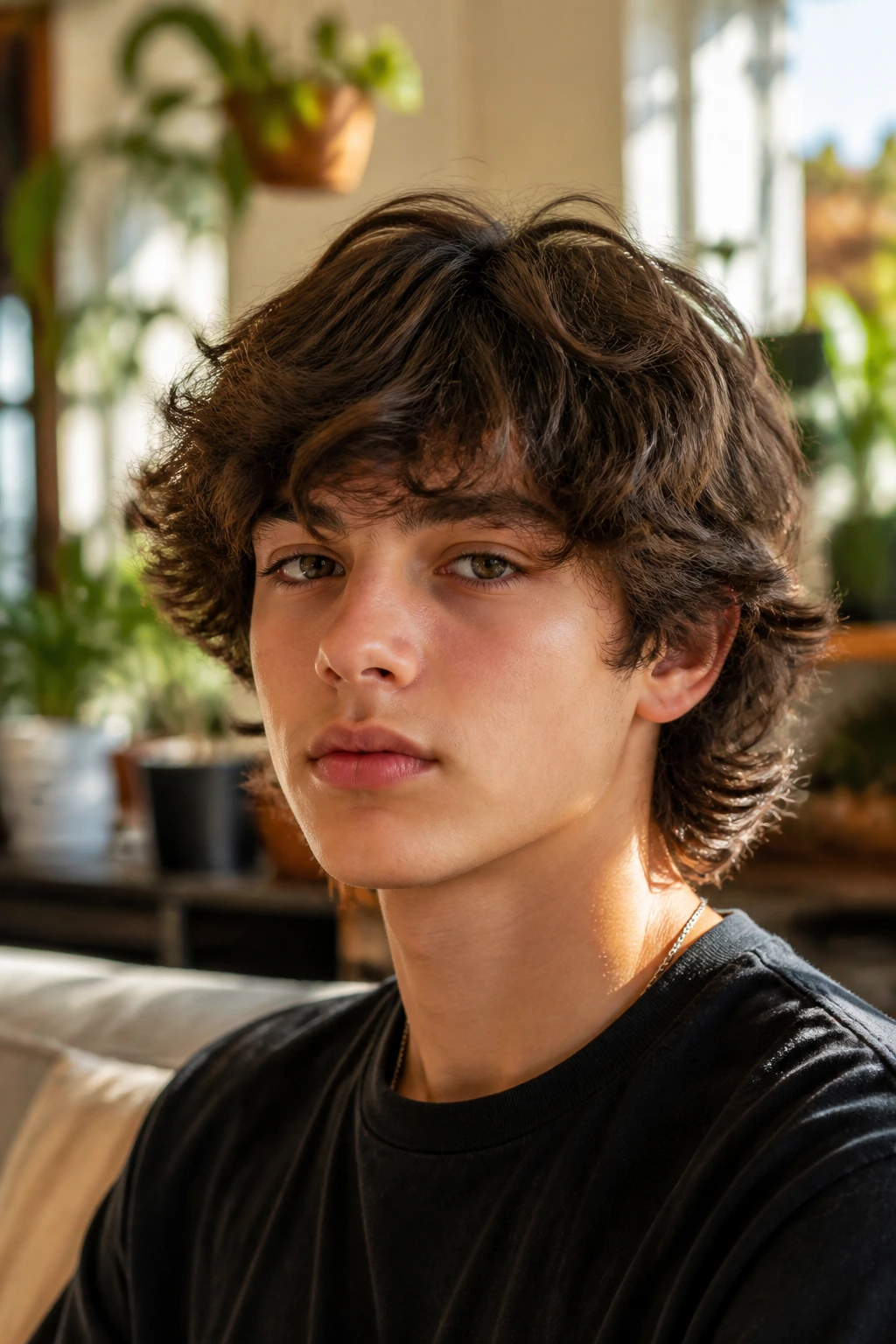
What does “fluffy” mean in a boys’ wavy haircut?
It means soft volume with movement, not puffed-out bulk. A fluffy cut lifts away from the scalp a little and lets the wave separate at the ends instead of sitting flat or sticking out in one hard shape.
Should boys with wavy hair get layers or one-length cuts?
Layers usually work better, but they need to be used carefully. A one-length cut can look thick and boxy, while light layers help the wave move and keep the shape from widening at the sides.
How short can the sides go without ruining the fluffy look?
That depends on the top, but very short fades can make the top look too heavy if the wave is thick. A low taper, a soft scissor blend, or a gentle fade usually keeps the shape more balanced than a tight skin fade.
What product works best: mousse, cream, paste, or gel?
Mousse is best for lift, cream is best for softness, and matte paste is best for short textured styles. Gel is usually the worst choice here because it freezes the wave and makes the hair look harder than it should.
Can a fluffy haircut work on fine wavy hair?
Yes, if the cut keeps enough length on top and doesn’t get over-layered. Fine wavy hair often needs mousse and root lift more than heavy thinning or a lot of product.
What if my child has a strong cowlick at the crown?
Leave a little more length there and avoid cutting that area too short. A good barber can blend around the cowlick instead of fighting it, which keeps the back from sticking up like a brush.
How often should the haircut be trimmed?
Short styles usually need a touch-up every 3 to 4 weeks. Medium and longer styles can go longer, but once the sides start spreading wider or the fringe starts blocking vision, it’s time.
Can these cuts be styled without a blow dryer?
Yes, but the finish will be softer and a little less lifted. Towel-dry gently, add a small amount of product, and use fingers to shape the wave while it air-dries. The result is looser, which some boys prefer.
A Cut That Still Looks Good at Recess

The nicest fluffy haircut for boys with wavy hair is the one that keeps its shape after a backpack, a hat, and a sprint across a playground. That usually means a top with enough length to bend, sides that don’t balloon outward, and a finish that doesn’t rely on a heavy product layer to hold the whole thing together.
Save a photo, talk in inches, and ask the barber to protect the wave instead of flattening it. That’s the difference between a cut that looks styled for ten minutes and one that still looks good when the day gets messy — which, with boys, is most of the day.