



Curly hair on boys has a funny habit of looking neat at the barber chair and then developing its own opinions a day later. The sides start to puff near the ears, the neckline fuzzes up, and the top does that familiar springy thing where it seems shorter the moment it dries. Tapered haircuts for boys with curly hair solve that problem without sanding down the part that gives the hair its shape.
The trick is not to tame the curls into submission. It’s to give the haircut a clean edge where the hair needs it most — around the ears, sideburns, and nape — while leaving enough length on top for the curl pattern to breathe. Done well, a taper makes dense curls look intentional instead of bulky, and looser curls look tidy instead of limp. Done badly, it turns into a square helmet with a fuzzy bottom. Nobody wants that.
There’s also a practical side that parents notice fast. Curly hair grows out in a way that can look unruly long before it’s actually long, which is why blunt cuts so often fail. A taper buys you time. It stretches the life of the cut, softens the grow-out, and leaves room for the hair to do its own thing on top. That’s the sweet spot.
Why These Tapered Haircuts Work on Curly Hair
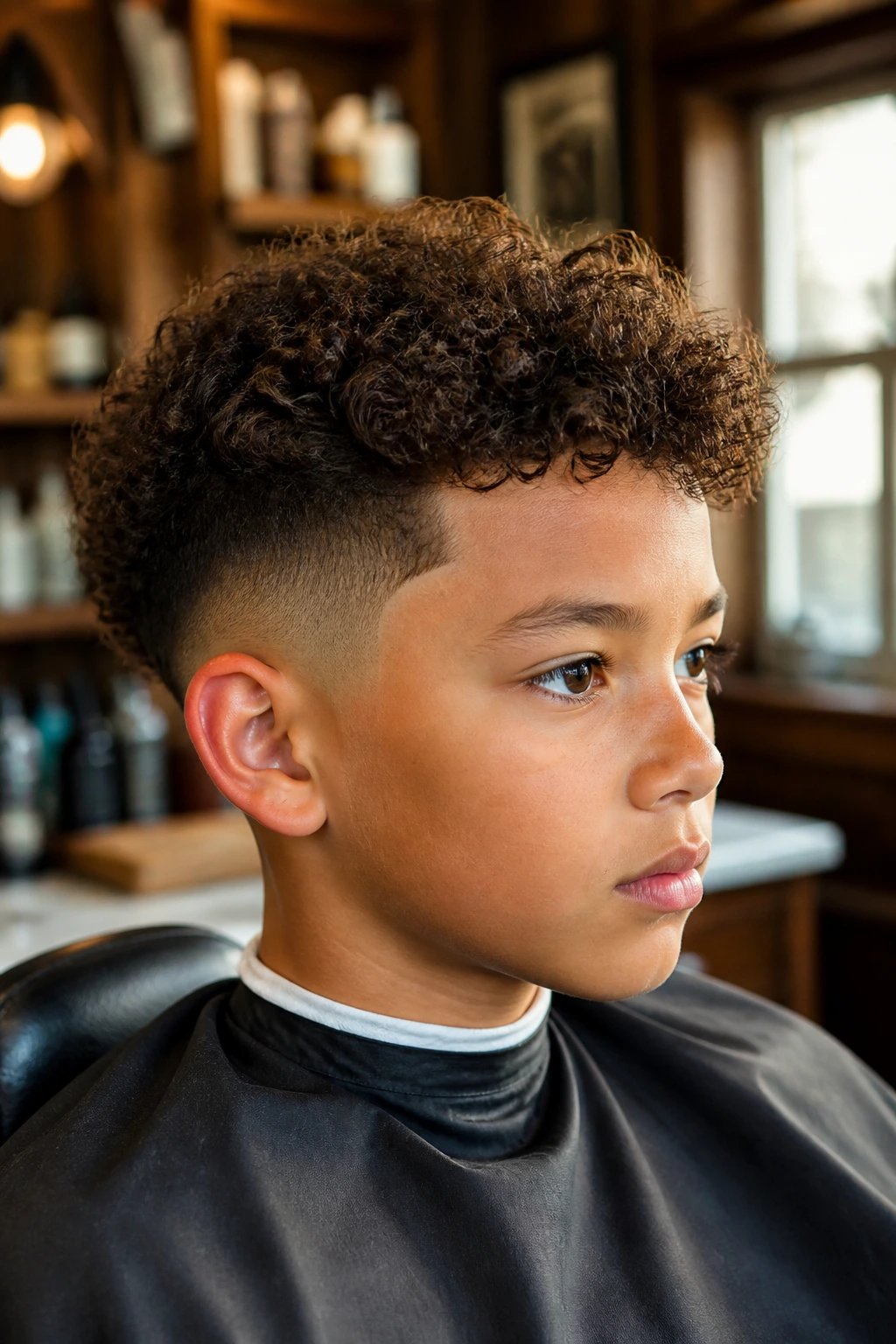
- They clean up the edges without crushing the curl pattern. The sides and neckline look deliberate, while the top keeps its bounce and texture.
- They grow out better than blunt cuts. A taper fades the transition instead of drawing a hard line, so the haircut still looks decent after a couple of weeks.
- They handle shrinkage instead of fighting it. Curly hair always looks shorter when it dries, and these cuts leave enough room for that rebound.
- They can be shaped for school, sports, or photos. A low taper feels quieter, while a high taper or line-up reads sharper.
- They work with more than one curl type. Loose ringlets, springy curls, and tight coils can all sit inside a taper if the lengths are chosen well.
- They cut down on the triangle effect. That wide, boxy puff at the sides is what ruins so many curly cuts. The taper solves it.
Why a Taper Changes Curly Hair Without Fighting It
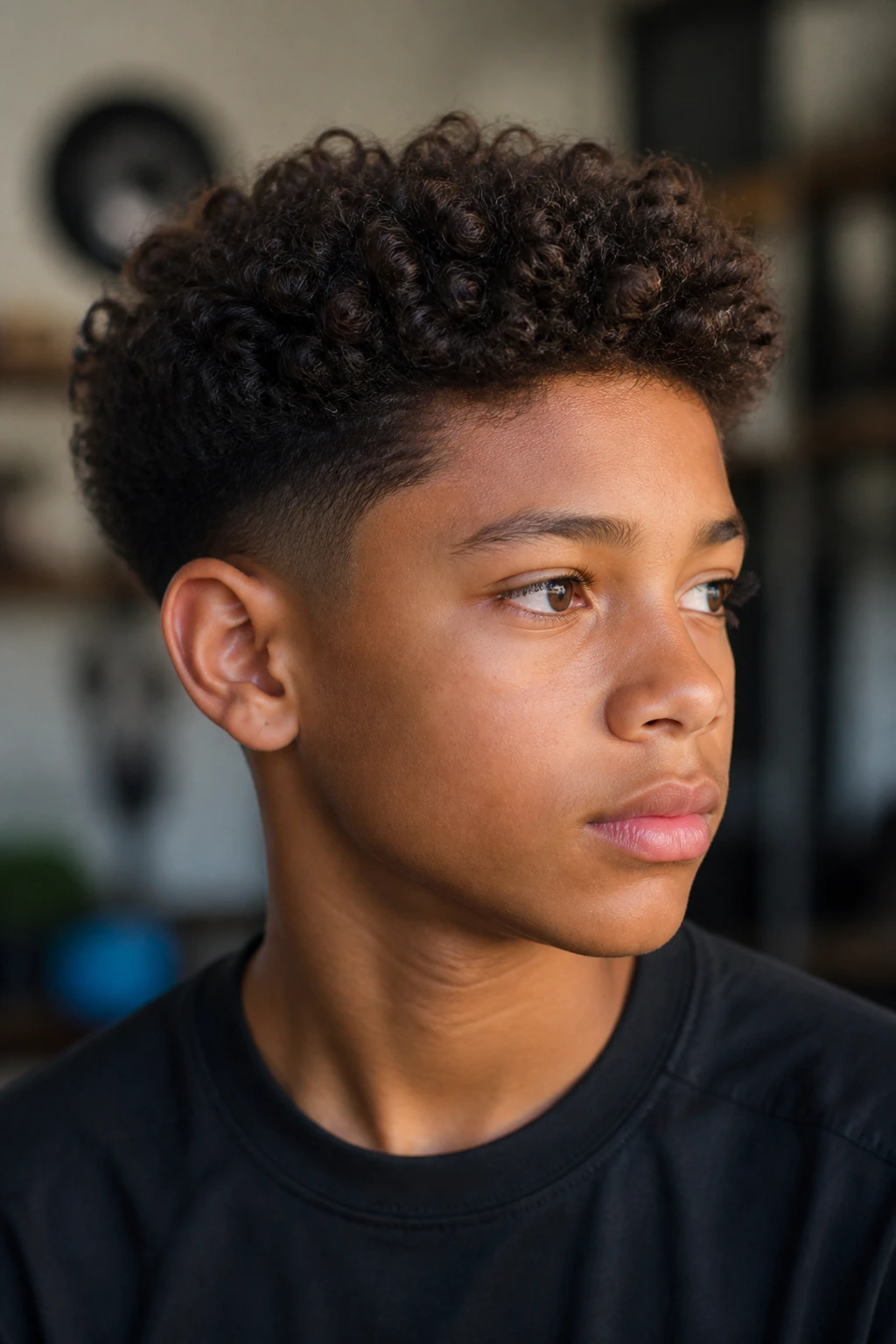
A good taper is more about shape than length. That’s the part a lot of people miss. Curly hair does not need to be made shorter everywhere; it needs a cleaner outline where bulk gathers fastest. Around the ears, sideburns, and neckline, even half an inch of extra weight can make the whole cut look heavier than it is.
Shrinkage Is Part of the Plan
Curly hair shrinks as it dries. Tight coils can bounce up a full inch or more, while looser curls usually lose less visible length but still pull inward at the ends. That means a barber has to think in terms of how the hair will sit after it dries, not just when it’s wet and stretched.
The Edges Do the Heavy Lifting
The perimeter changes the whole haircut. Clean the neckline, taper the temples, and the top suddenly looks fuller and more deliberate. Leave the edges messy, and even a nice curl pattern can look unfinished. That’s why tapering works so well on boys: the clean part is where they need it most, and the curls stay up top where they actually belong.
A Softer Grow-Out Matters
Some haircuts look good on day one and awkward by day ten. A taper usually does better than that. As the sides grow, they blend back into the top instead of forming a hard shelf, which means fewer “bad hair week” complaints and fewer emergency trims before a school event or family photo.
1. Low Taper with Soft Curly Top
A low taper is the haircut I reach for when somebody wants things neat but not severe. The taper stays low around the sideburns and nape, so the ear area looks clean without pushing the whole cut up too high. On curly hair, that matters. The top can stay loose and springy while the edges stay under control.
What to ask for
- Keep 2½ to 4 inches on top, depending on curl tightness.
- Start the taper just above the ear, not at the temple.
- Leave the front a little longer if the curls shrink a lot once dry.
- Use scissors on top and clippers only at the edges so the shape stays soft.
This cut is nice for boys who do not want a dramatic change. It still looks like curly hair — not a buzz cut with a little fluff on top. And when it grows out, the transition is gentle enough that you can stretch the next haircut a bit longer.
Tip: If the curls are very springy, have the barber check the length dry or leave an extra half inch. Wet curls lie. Dry curls tell the truth.
2. Mid Taper with Rounded Curls
This is the balanced one. A mid taper gives the haircut a stronger outline than a low taper, but it does not climb so high that the head starts looking shaved at the sides. For thick curls, that middle ground is gold. It removes enough bulk to keep the shape tidy, while the rounded top keeps the whole cut looking full and natural.
The shape matters here. Ask the barber to round the top instead of squaring it off. Curly hair cut into a boxy top can sit like a helmet, especially if the sides are tight. A rounded mid taper lets the head keep its curve, which is a lot more flattering when the curls are dense and have a mind of their own.
This one works especially well when the top is long enough to show pattern — think 3 to 5 inches — but not so long that it collapses over the forehead. If the curls are thick, a little internal scissor work can lighten the inside without removing the outer shape. That’s the part a lot of barbers skip when they’re rushing. It makes a difference.
For styling, a small amount of leave-in conditioner and curl cream is usually enough. Too much product will weigh down the top and make the edges look greasy, which defeats the whole point of a crisp taper.
3. Temple Taper with Longer Ringlets
Why does a temple taper look so clean on boys with longer curls? Because it leaves most of the texture alone and trims only the areas that start to balloon first. The temples, sideburns, and lower edge get cleaned up, while the curls can stay longer and swing a little near the cheek.
That creates a very different feel from a full fade. The haircut still has softness. It still moves. But the sides no longer flare outward like they’re trying to take over the room. For boys with looser ringlets or a wavy-curl mix, that restraint is the whole point.
How to wear it
- Keep the top around 4 to 6 inches if the curls are loose.
- Ask for a clean temple taper and a soft neckline, not a hard skin fade.
- Parting is optional. Finger-styling usually looks better than a combed line.
- A light cream or leave-in is enough; heavy gel will make the ringlets stiff.
This is also one of the easiest cuts to grow out. It can move from short to medium length without looking like it missed its appointment with the barber. I like that. It means fewer awkward stages and fewer mornings spent arguing with a comb.
4. High Taper for Tight Coils
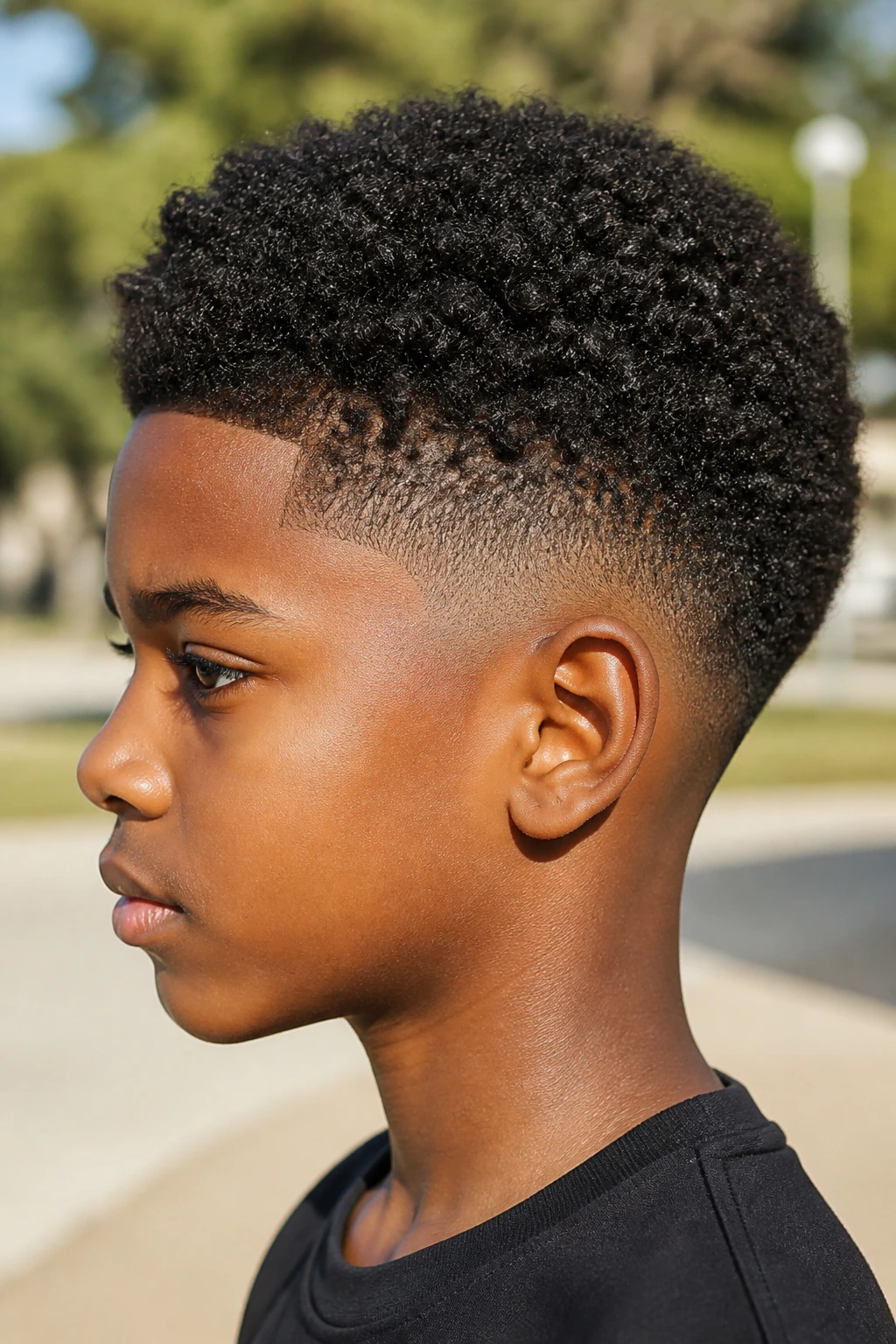
A high taper gives curly hair a sharper outline, and on tight coils it can look especially clean. The taper climbs higher around the head, so the bulk gets removed where it tends to bunch up most. That makes the top stand out more, which is useful when the curl pattern is dense and compact.
This cut works best when the top still has enough length to show texture — usually 1½ to 3½ inches, depending on the coil size. Go too short and the curls stop reading as curls. Go too long and the top can overpower the face. The balance is the whole game here.
- Start the taper above the midpoint of the side, but do not push it into a full fade unless that’s the goal.
- Keep the crown rounded so the head does not look flat from above.
- Dry cutting helps the barber see the true amount of shrinkage.
- A small sponge, curl cream, or fingertip twist can define the top without making it crunchy.
The high taper is the boldest cut in this group. It’s clean, fast to style, and useful when a boy has dense hair that grows out like weeds around the ears. But it does need upkeep. Wait too long, and the shape starts to blur faster than a low taper would.
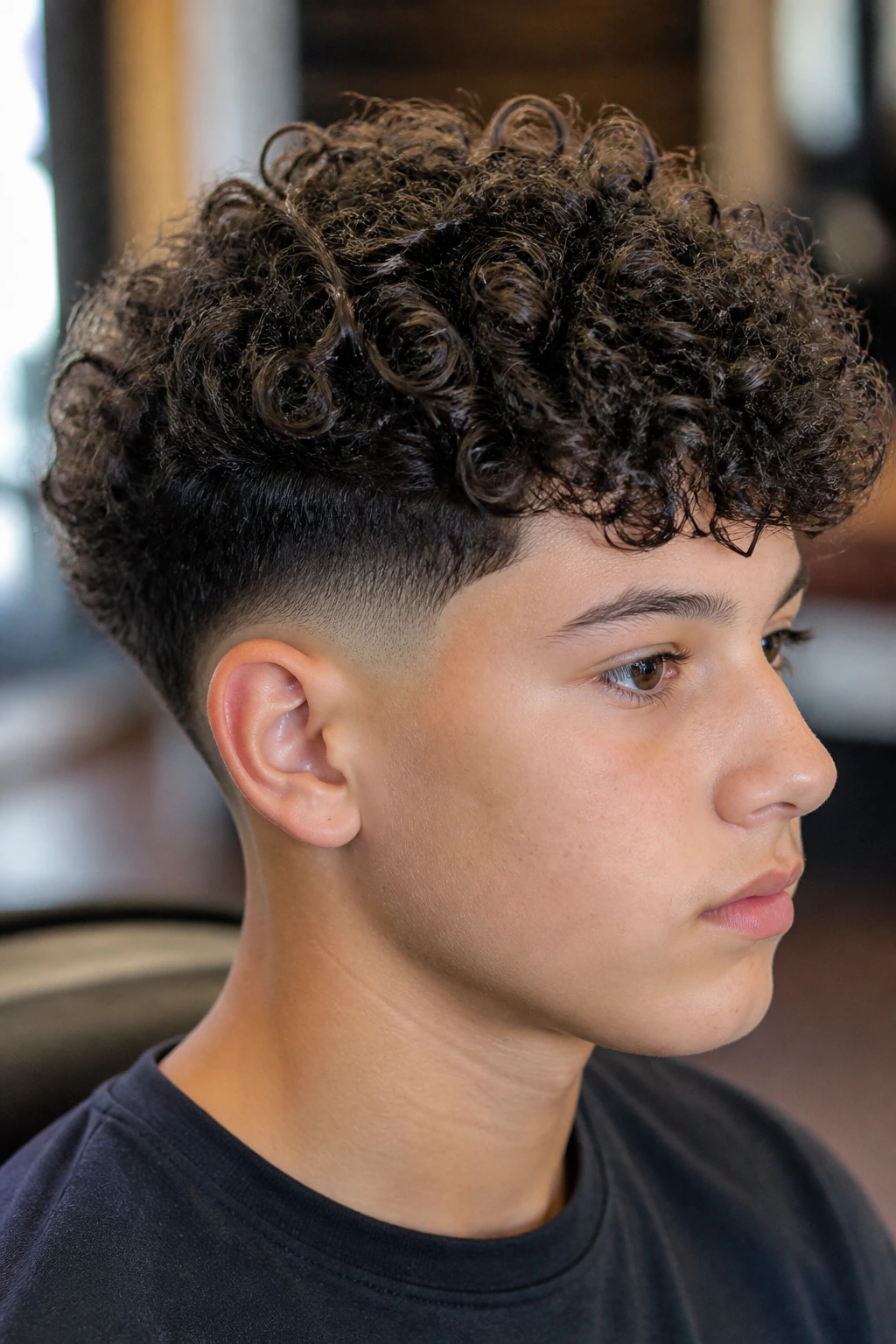
5. Drop Taper with a Curly Fringe
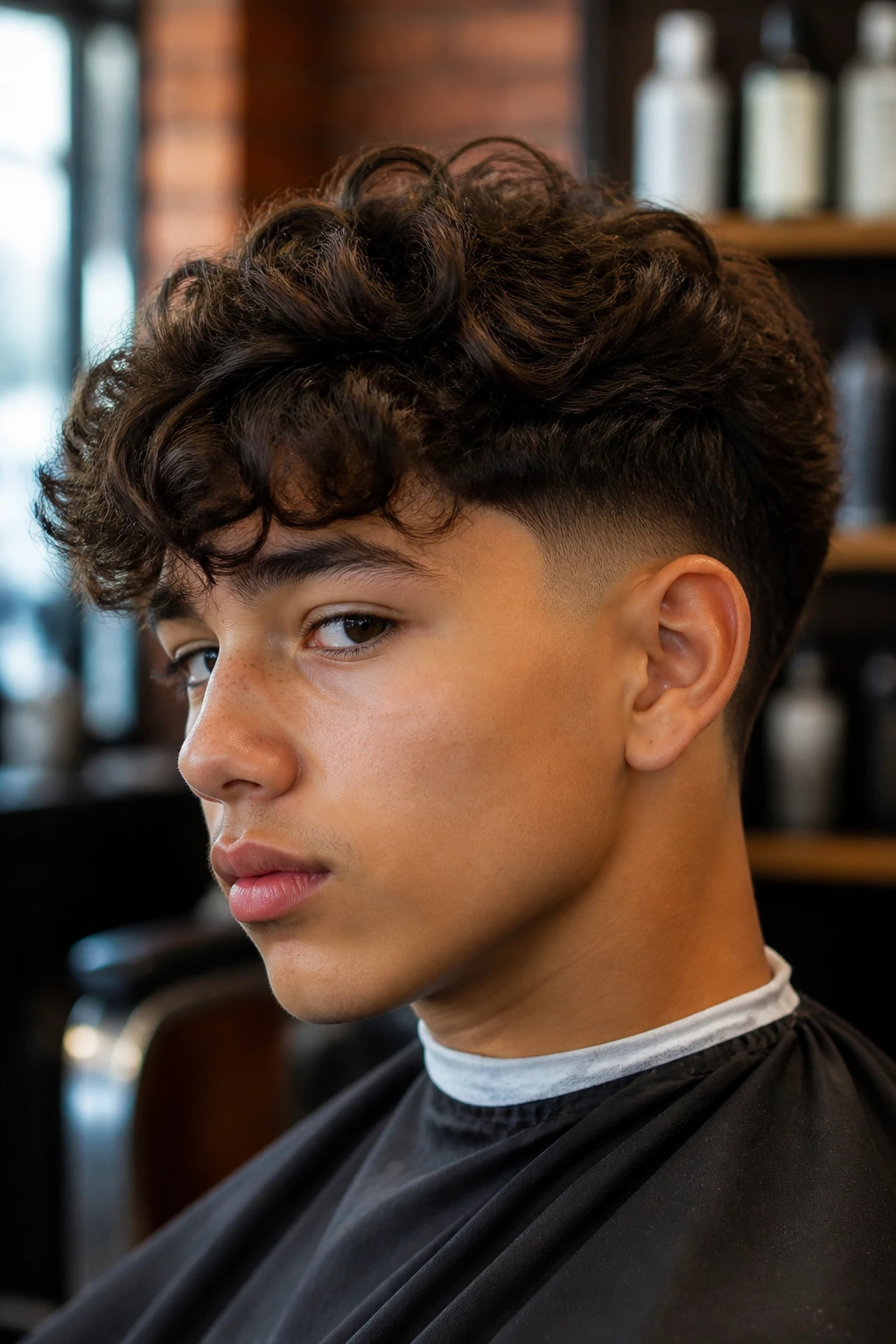
A drop taper follows the curve of the head instead of drawing one straight line around it. The taper dips lower behind the ear, which gives the haircut a softer shape and keeps the back from feeling boxy. Add a curly fringe in front, and you get a cut that feels relaxed but still intentional.
This one is especially good when the forehead is a little broad or the curls at the front have a nice spring to them. The fringe frames the face without needing a hard part or a heavy product layer. It just sits there with a bit of movement, which is honestly the nicest thing a fringe can do.
The best version of this cut is never too precise. The curls in front should move a little when the head turns. If they’re cut too short, they spring up and lose the soft line that makes the style work. If they’re left too long, they can fall into the eyes and become annoying fast. That narrow sweet spot is where the cut lives.
Give the fringe a mist of water and a little cream after washing, then scrunch it forward with your fingers. A comb can flatten the texture. Fingers keep the shape loose.
6. Burst Taper with a Curly Mohawk
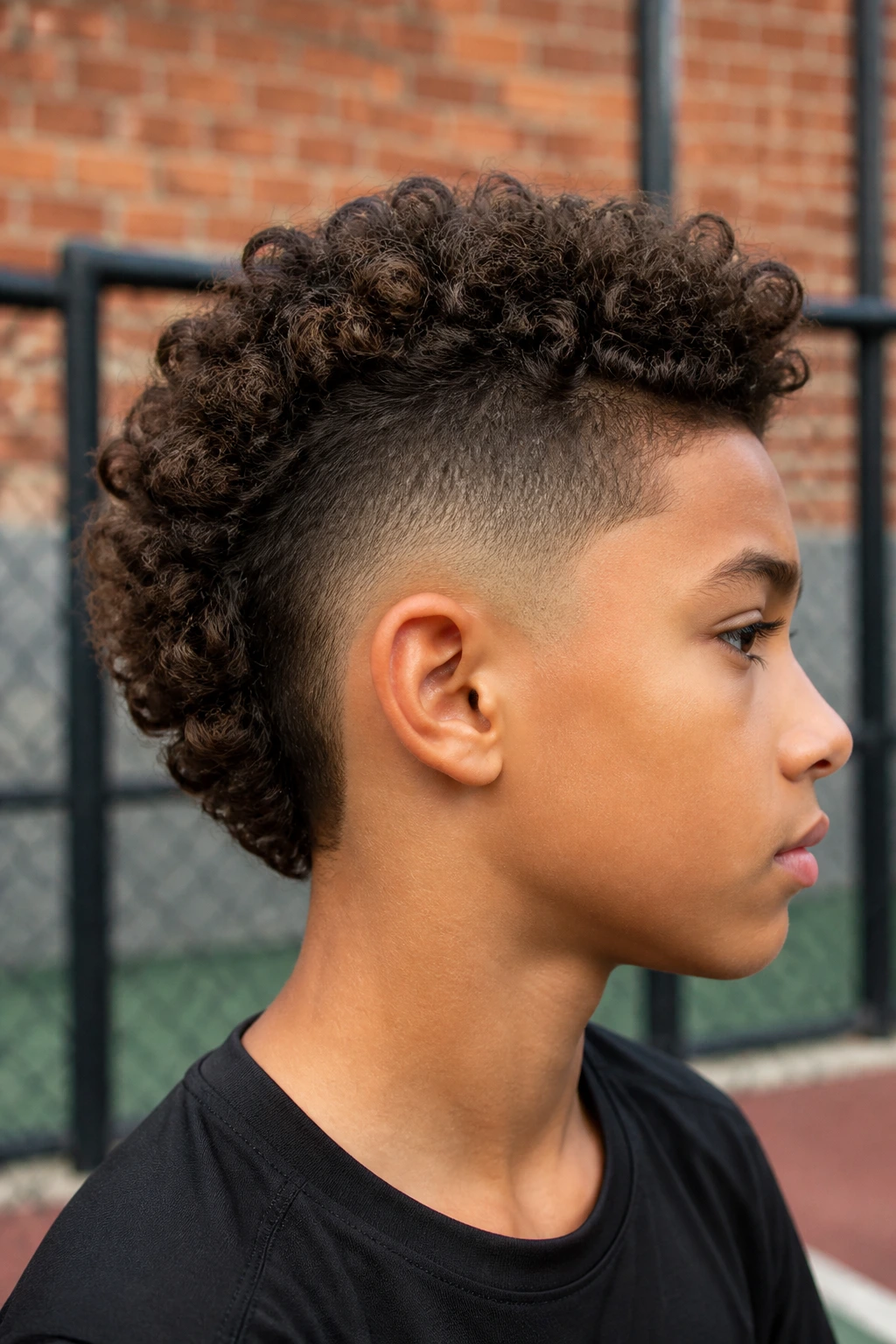
The burst taper is for boys who like a little more attitude in the haircut. Unlike a full mohawk, it does not shave away a huge strip on the sides. Instead, the taper curves tightly around the ears and drops into the neckline, which keeps the silhouette sharp while the curls run down the center like a neat ridge.
That center strip works best when the curls are thick enough to hold shape on their own. The strip does not have to be tall. In fact, I prefer it when it’s only 2½ to 4 inches long and dense enough to stand up with a bit of help. Too much height can make the cut look theatrical in a way most boys will outgrow by Tuesday.
This style is a good fit for active kids who want something sporty but still textured. It survives hats better than a taller style, and the burst taper keeps the ears clean even when the top gets a little wild. A quick mist, a small amount of curl cream, and a finger shape-through is usually enough to wake it up.
One warning: if the barber narrows the center strip too much, the curls can look stringy instead of strong. Width matters here. Keep enough hair on top for the curls to sit together.
7. Scissor Taper with Natural Volume
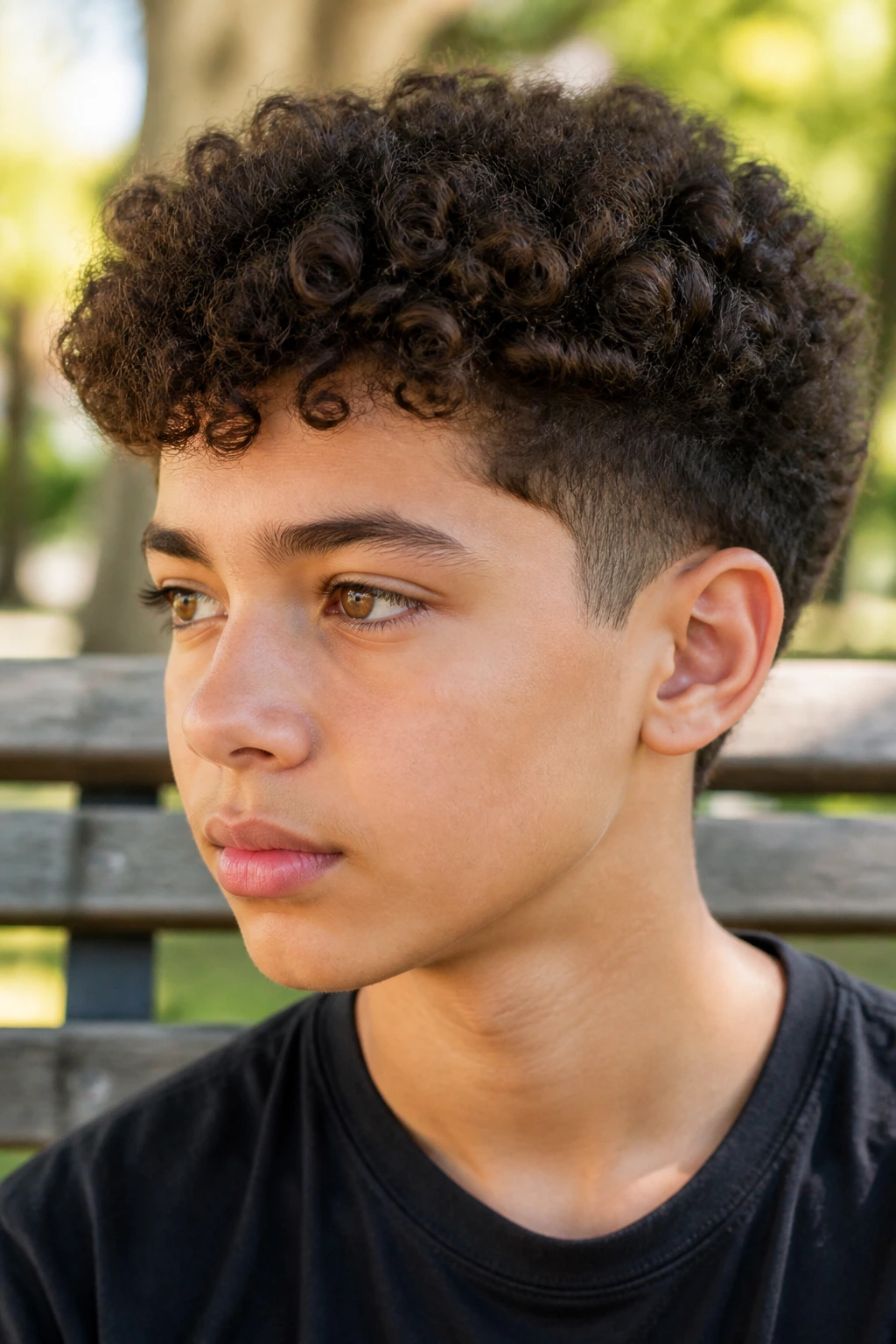
A scissor taper is the softer cousin of the clipper-heavy looks. The barber uses scissors and comb work to remove bulk in a way that keeps the edges from looking chopped. On fine curls or mixed textures, that matters a lot, because a hard clipper fade can make the hair look thin before it ever needed to be.
Why scissors matter
- The edges melt into the top instead of stopping suddenly.
- Fine curls keep more body near the sides.
- The haircut grows out with less of a shelf line.
- The whole style looks less harsh if the boy does not like very tight sides.
This is one of those cuts that looks easy until you see a bad version of it. A rushed scissor taper can leave little weight patches near the nape or around the ears. A careful one gives the head a quiet, rounded shape that works with the curl pattern instead of flattening it.
It’s a good choice for boys whose curls are springy but not super dense, or for anyone who wants volume without the sharp contrast of a skin fade. It also plays nicely with a side part, a loose fringe, or hair worn naturally forward.
8. Taper Fade with a Sharp Line-Up
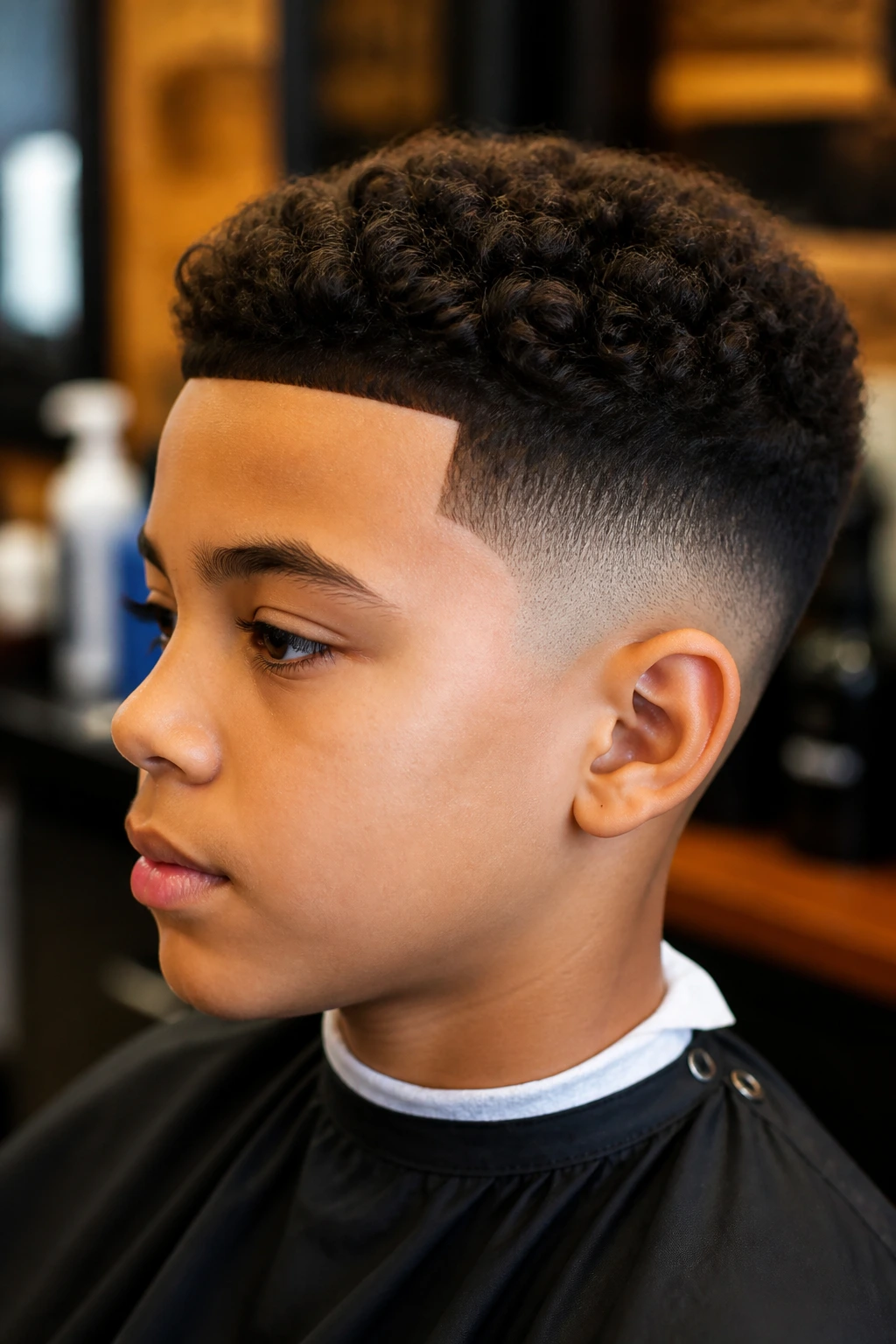
A taper fade with a line-up is the crispest option in the group. The fade cleans the sides more aggressively, and the line-up straightens the hairline in front for a sharper look. On curly hair, that contrast can look clean in a way that feels almost tailored, especially when the top still has enough curl to keep the haircut from looking stiff.
The catch is maintenance. This cut does not hide as much as a low taper. Once the edges start growing, the shape can look fuzzy fast, especially around the neckline and temples. That is not a flaw if you’re happy to keep it fresh. It’s a flaw if you want to forget about hair for a month.
A good version usually means:
- A fade that stays medium to high, not so high that the top gets disconnected.
- A line-up that follows the natural hairline instead of pushing it too far back.
- Enough length on top — usually 2 to 4 inches — to keep the curls from looking shaved down.
- Light styling product only. Too much gel makes the front hard and sticky.
I like this cut for older boys who want something sharper than a school-safe taper but still need the texture of curls on top. It’s tidy. It’s readable. It just asks for regular upkeep.
9. Curly Crop with Tapered Sides
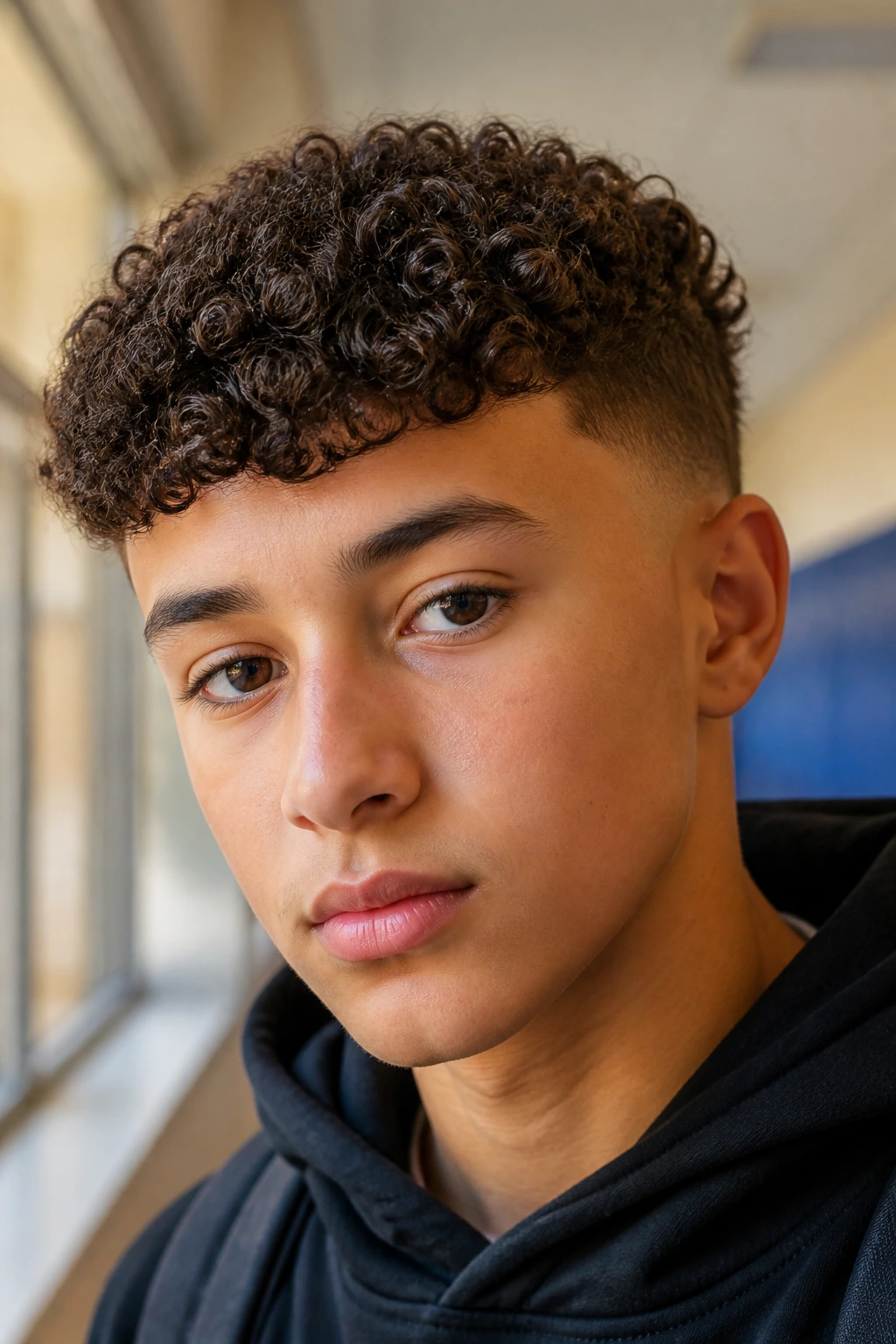
How short can you go and still keep the curls looking like curls? Pretty short, actually, if the cut is shaped right. The curly crop is one of the easiest ways to wear tight or loose curls without spending much time styling them. Keep the top cropped and forward, taper the sides low, and the whole cut becomes practical without turning bland.
The front can sit as a soft fringe or a short textured line, depending on how the curls fall. If the hair is too blunt across the forehead, it can look chopped. If it’s point-cut or textured a little, the curls land with more movement. That tiny detail changes everything.
This is a good cut for boys who are rough on their hair. Soccer practice, playground time, winter hats, backpack straps — the crop holds up better than longer styles because there’s less to knock around. It also makes morning styling fast. A little water, a dab of leave-in, and a quick finger scrunch is usually enough.
There’s a reason this cut stays around. It works. Not because it is flashy, but because it does not ask too much from the hair or the person wearing it.
10. Afro Taper with a Clean Neckline
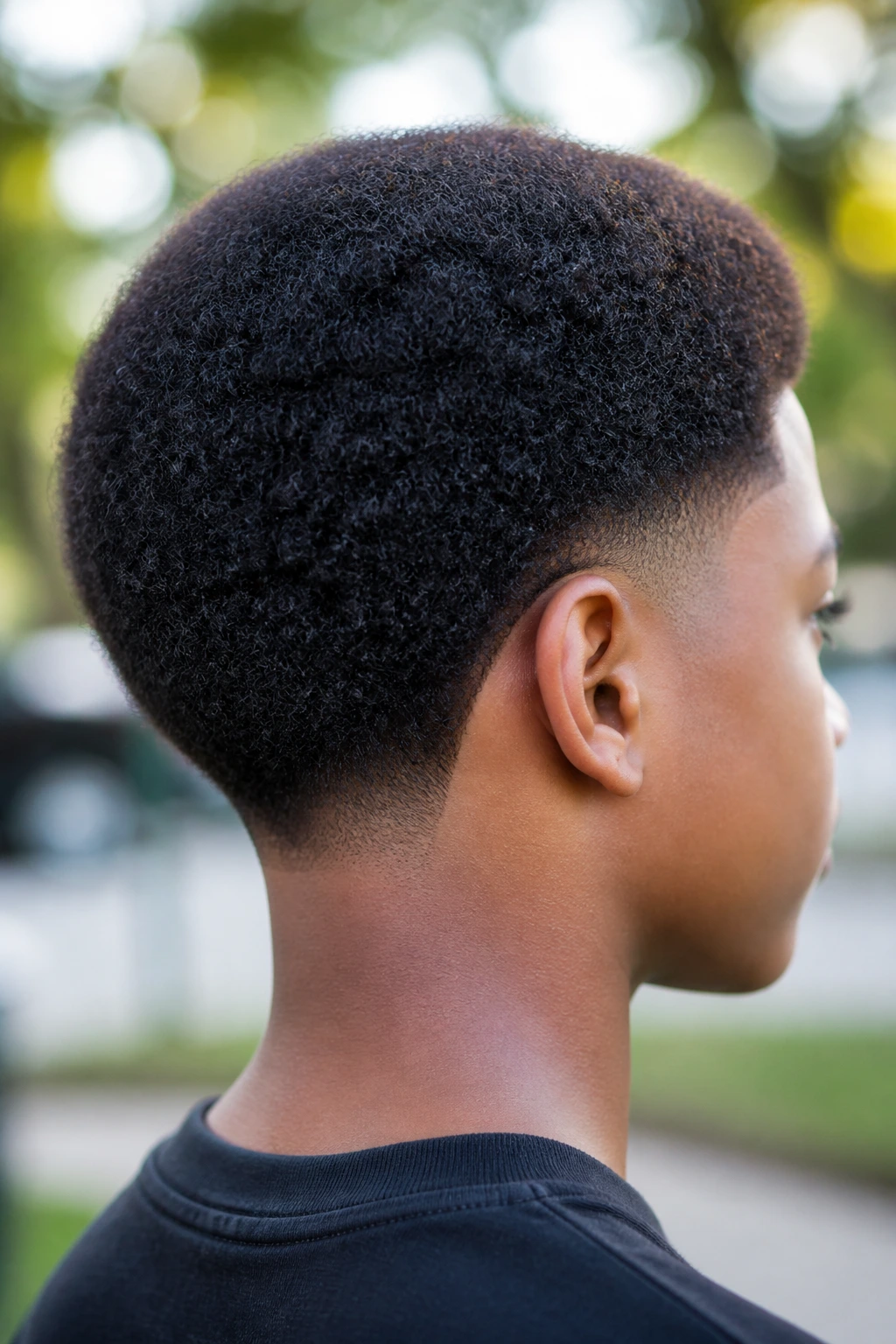
For dense coils, the afro taper is one of the cleanest shapes you can give the head. The point is not to shrink the hair into something small. The point is to keep the natural roundness while tidying the perimeter so the silhouette looks deliberate. That round top with a clean neckline is still one of the best-looking combinations in curly hair.
The key is restraint. The barber should taper around the ears and nape without flattening the crown. If the coils are cut too aggressively at the sides, the shape can look narrow at the bottom and too wide at the top, which throws off the balance. A good afro taper keeps the bottom edge neat while the body of the hair stays full.
What matters most here
- Cut dry or mostly dry so the true shape is visible.
- Keep the crown rounded, not squared.
- Clean the neckline often, because fuzzy napes show up fast.
- Use a pick or fingers to lift the roots; heavy cream will collapse the volume.
This style grows in a way that can be forgiving, as long as the outline is touched up. A clean neckline and temple edge make a big difference. It’s a small thing, but it changes how polished the whole cut feels.
11. Side-Part Taper with a Curly Sweep

A side-part taper has a more polished feel than most curly cuts, but it doesn’t need to look stiff. The part should be natural, not carved with a razor line unless that’s the look you want. The curls on top sweep to one side, and the taper keeps the outline clean so the parting doesn’t get lost in the bulk.
This is the haircut I’d pick for a school picture, a family event, or any day when somebody wants curls and neatness in the same sentence. It’s tidy without becoming formal. The top stays long enough to show texture — usually 3 to 5 inches — and the part helps the hair fall with purpose instead of just flopping over.
You can set the part while the hair is damp, then let it air dry or use a diffuser on low heat. A wide-tooth comb can help, but I’d avoid combing the curls to death. That drains the shape. Fingers are usually better, especially once the curls start to clump the way you want.
The side-part taper also works well when one side of the hair grows heavier than the other. The part gives that asymmetry a reason to exist. It looks chosen.
12. Tapered Shag for Loose, Airy Curls
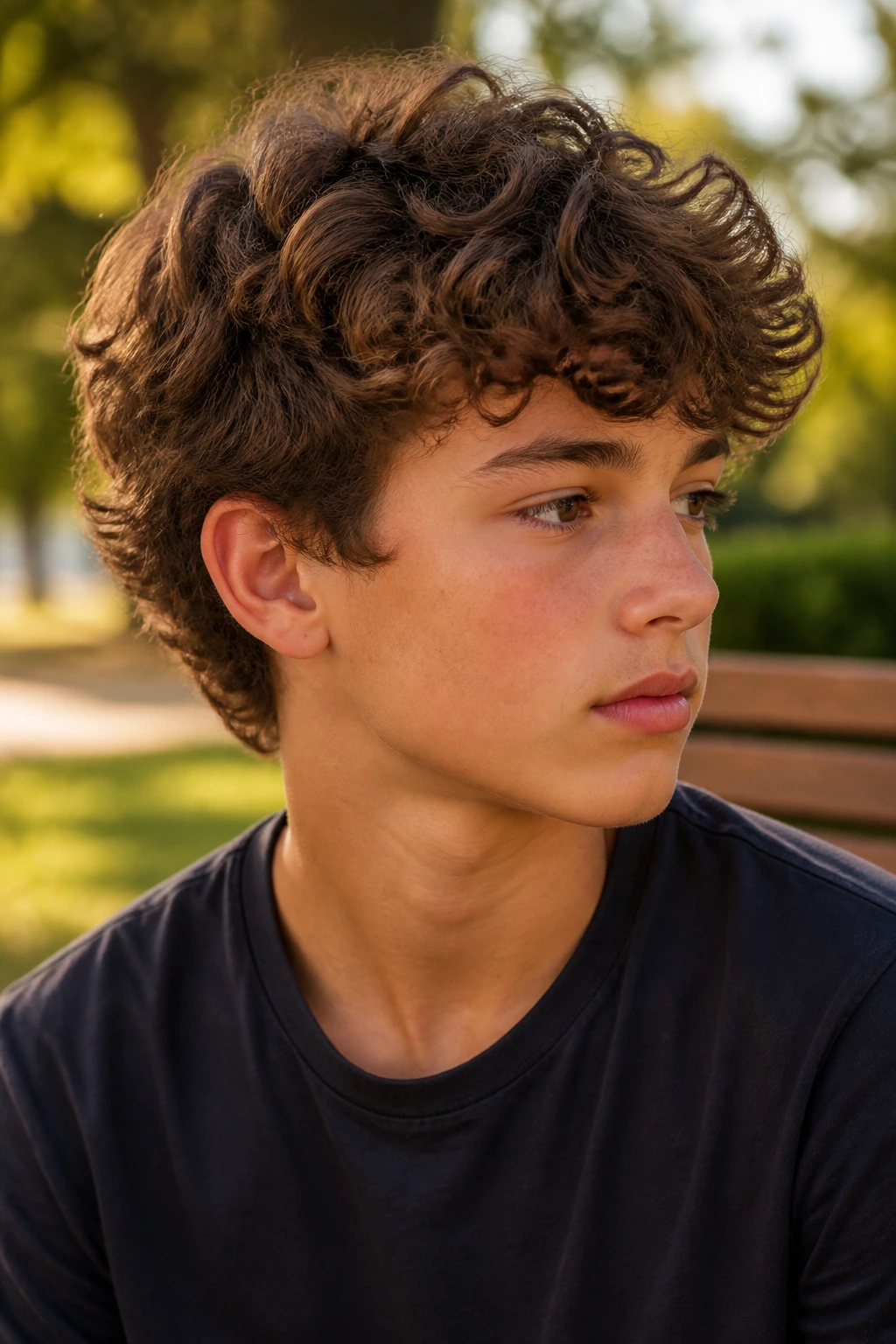
The tapered shag is for boys who want movement more than sharp lines. Unlike a cropped style that sits close to the head, this one keeps more length and adds layers so the curls fall with a bit of swing. The taper keeps the ears and nape from looking shaggy, while the top and upper sides stay airy.
This cut is especially good for looser curls or waves that can get flattened if they’re cut too blunt. Layers give the ends space to move. They also stop the haircut from turning into one big round puff, which is what happens when thick, loose curls are left at one uniform length.
The best version of this cut is textured, not choppy. Ask for soft layers and point-cut ends so the top doesn’t look heavy. The taper should stay low to medium so the shape doesn’t get too dramatic underneath. A little cream is enough. A lot of product will turn the movement sticky and heavy, and the whole point is to keep it light on its feet.
This is the cut for boys who like hair that looks a little lived-in. Not messy. Just not overworked.
How to Ask for the Right Taper at the Barber Chair
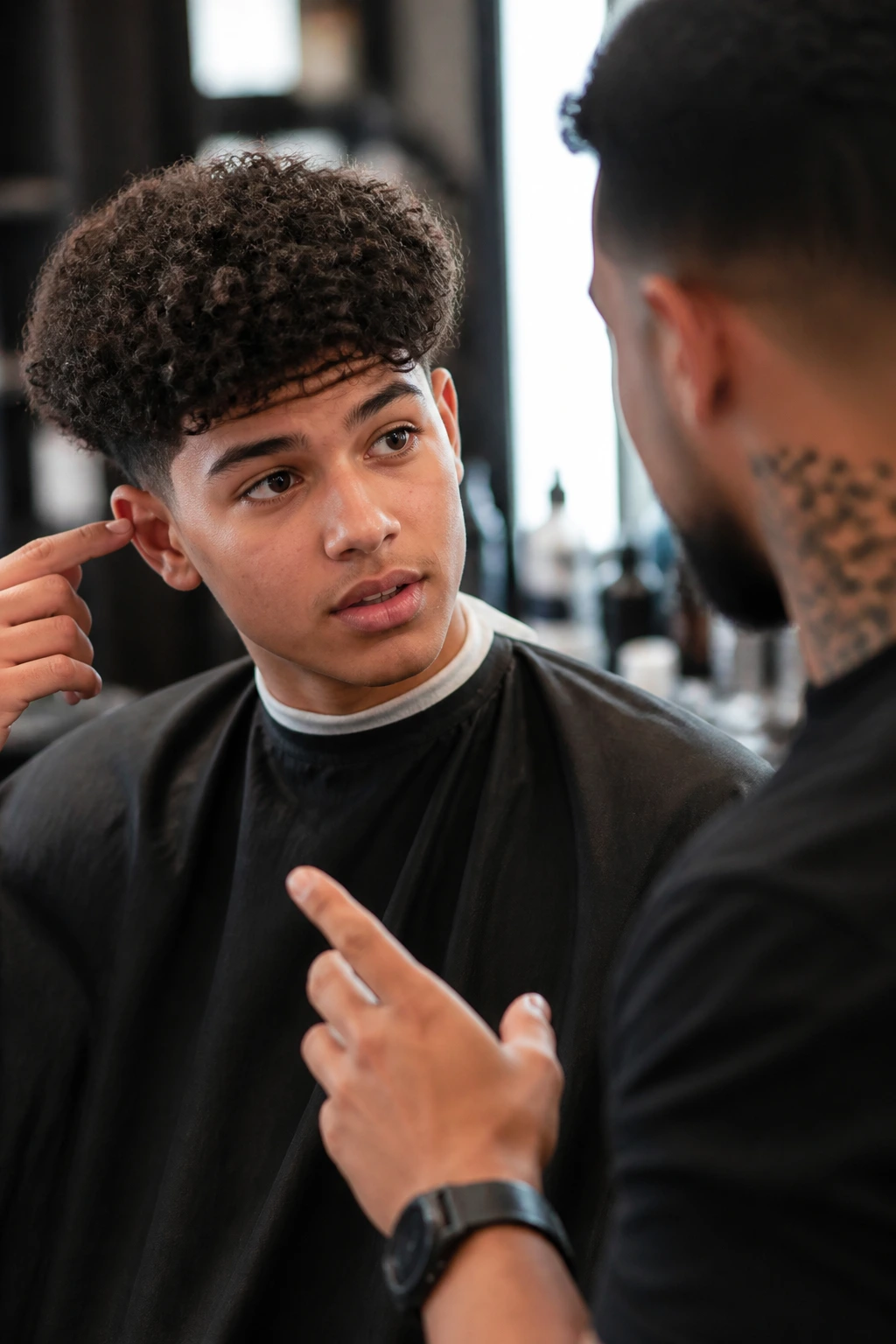
The easiest way to get a curly taper that looks right is to be specific about three things: where the taper starts, how much length stays on top, and how much maintenance you’re willing to do between cuts. A photo helps, but a photo alone is not enough. Say what you like about the photo. The barber cannot read your mind, and curly hair punishes vague instructions.
Length: Use inches if you can. “Keep about 3 inches on top” is a lot clearer than “keep it long.” If the curls are tight, mention shrinkage. A barber who knows curly hair will leave a bit more than you think you need.
Start point: Low, mid, high, or temple. That’s the language that matters. If you want the ears to stay soft and framed, say low or temple taper. If you want more cleanup, say mid or high.
Texture: Tell them whether the curls are loose, springy, thick, or tight. That changes how much weight should come out of the sides and crown.
Maintenance: If you only want a cut every month or so, ask for a taper that grows out softly. If you don’t mind regular touch-ups, a sharper fade or line-up is fine.
One more thing. If the hair is usually cut wet, ask the barber to leave extra length because the curls will bounce up once they dry. That single sentence saves a lot of regret.
Common Mistakes That Make Curly Tapers Puff, Frizz, or Collapse
-
Cutting curls too short while they’re wet. The hair looks longer in the chair and then springs up brutally once dry. The fix is to leave extra length, especially on tight curls, or ask for a dry check before the final snip.
-
Starting the taper too high. A taper that climbs too far can make the sides look hollow and the top look like it’s sitting on a shelf. Keep the start point low or mid unless the style really calls for a high contrast.
-
Leaving the top one length all the way across. Curly hair can turn boxy fast when the crown, sides, and front are all the same length. A little rounding or layering keeps the shape from puffing into a triangle.
-
Using heavy gel on soft curls. Crunchy product makes the hair stiff and can leave flakes once it dries. A light cream, leave-in, or curl lotion usually does the job better for boys.
-
Ignoring the neckline. The nape is where a curly cut starts to look old first. If the neckline fuzzes up and stays fuzzy, the whole haircut reads messy even when the top still looks good.
-
Forgetting the curl pattern at the hairline. Curls near the forehead often spring higher than expected. If the front is cut too short, it can sit awkwardly and stick up instead of framing the face.
Smart Variations and Mix-and-Match Ideas
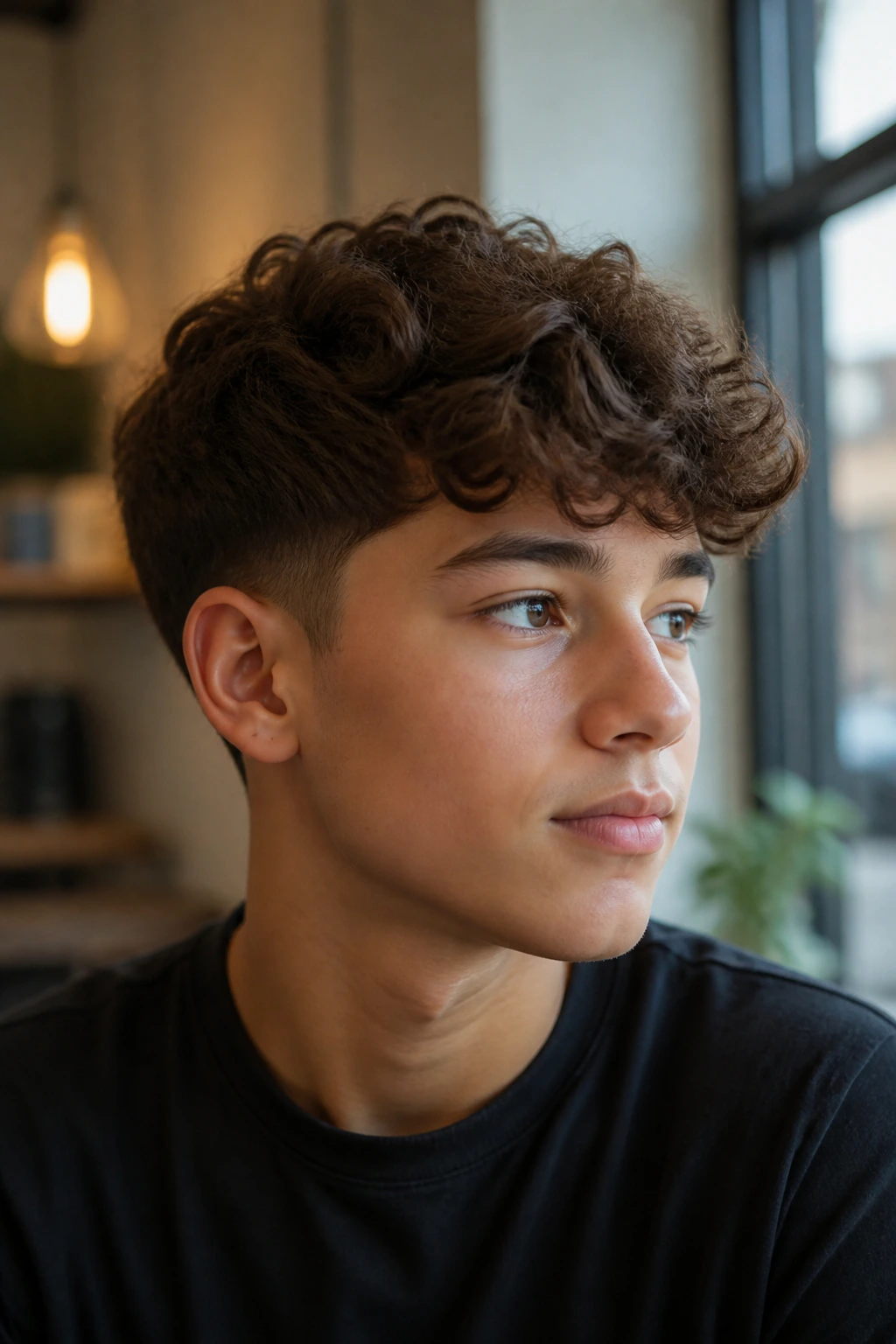
Low Taper + Curly Fringe: Keep the sides quiet and let the front fall forward a little. This is a nice option for boys who want softness around the face without losing the clean edges near the ears.
Temple Taper + Side Sweep: Clean the temples and leave more length through the top so the curls can sweep over naturally. It gives a more polished shape without needing a hard part.
Burst Taper + Longer Center Strip: If the child likes a bolder look, widen the center strip a bit and keep the burst around the ears clean. The style still reads curly and wearable, not costume-like.
Afro Taper + Soft Shape-Up: Round the top and keep the edges tidy without pushing the hairline too sharp. This works well when you want the shape to stay natural but still look fresh.
Scissor Taper + Loose Layers: Use scissors to soften the sides and add a few gentle layers through the top. That keeps fine curls from getting stripped down too much.
Short Crop + Low Taper: This is the practical one. It keeps the hair easy to manage, but the taper stops it from looking like a plain buzz with texture.
Tools and Products That Make Styling Easier
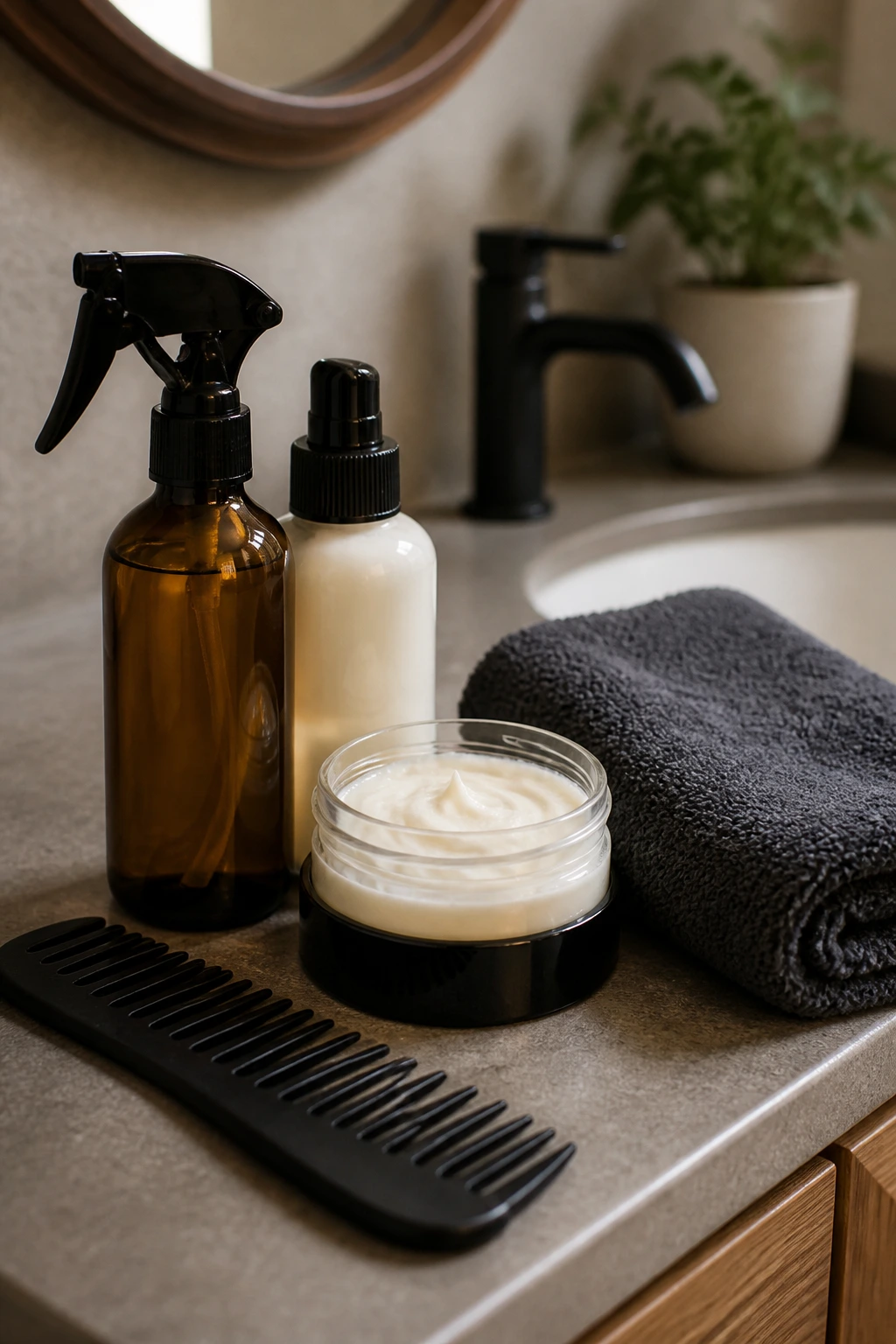
- Spray bottle: A few misted passes wake up curls fast and help the shape fall back into place.
- Leave-in conditioner: Good for softening dry curls and keeping them from turning fuzzy by midday.
- Curl cream: Best for definition when the top needs a little clumping without stiffness.
- Wide-tooth comb: Useful for gentle detangling, especially on longer curls. Don’t rake hard.
- Microfiber towel or cotton T-shirt: Better than a rough bath towel, which can lift frizz and break up curl clumps.
- Diffuser attachment: Handy if you want to dry the hair faster while keeping the curl pattern intact.
- Small trimmer or detailer: Good for cleaning the neckline between barber visits if you know what you’re doing.
- Satin pillowcase: Cuts down on roughness overnight and helps the curls hold their shape longer.
How to Keep the Shape Between Barber Visits
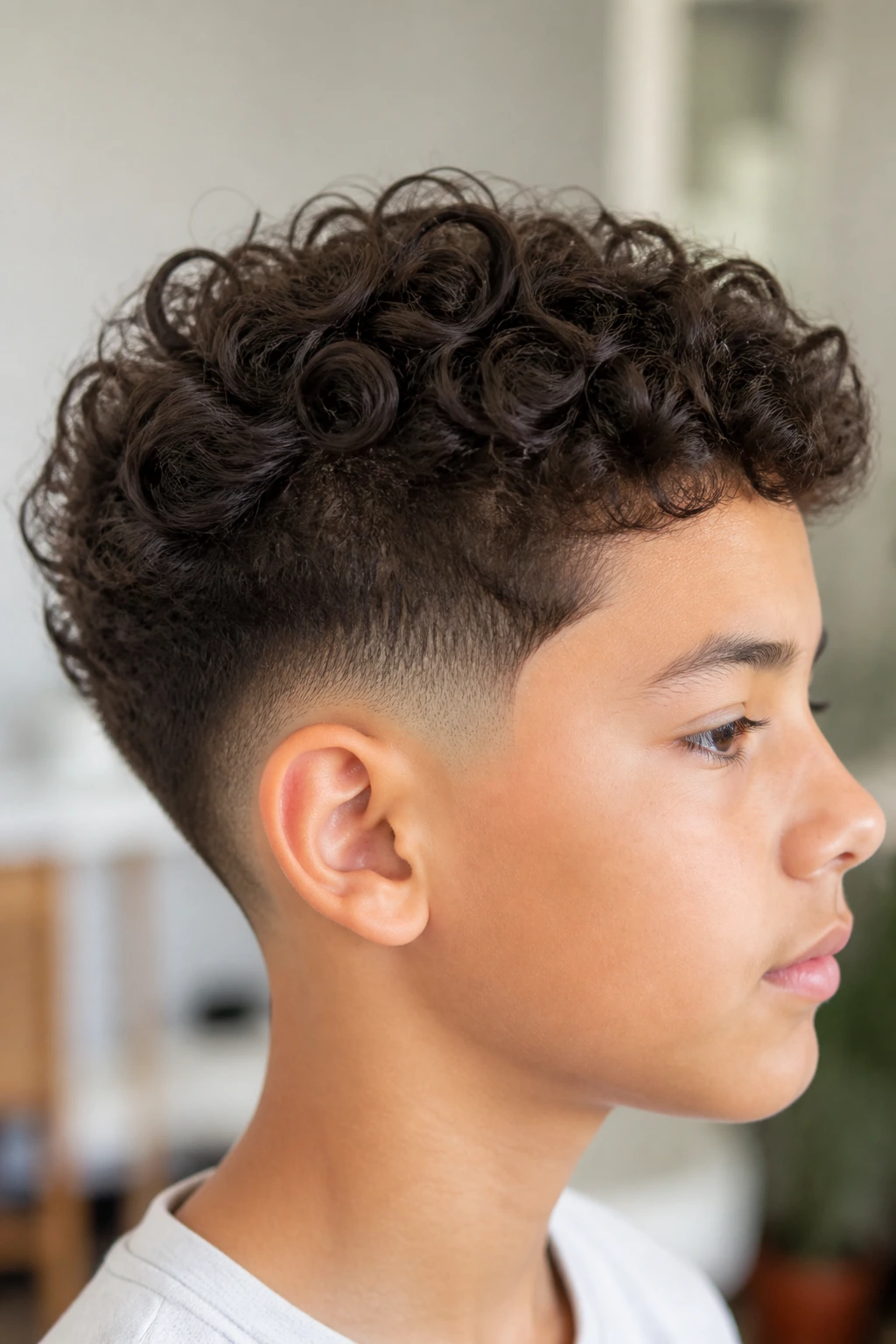
Curly tapered haircuts do not need constant babysitting, but they do need a little maintenance. The trick is to stay ahead of the fuzzy edges without overworking the whole head. For most boys, a light refresh routine beats a full wash and restyle every morning.
Start with water. A spray bottle does more than people think. If the curls look flat or mixed up after sleep, mist the top lightly, scrunch with your fingers, and add a pea-size amount of leave-in or curl cream if the hair feels dry. Do not pile on more and more product. That’s how the curls get sticky and dull.
Washing depends on scalp oil and sweat, but 2 to 3 times per week is usually enough for many curly heads. Overwashing strips the moisture the curls need to stay springy. If the hair gets sweaty after sports, a water refresh is often enough. You do not need to shampoo every time the shirt gets damp.
The neckline and sideburns are what usually need the fastest cleanup. A little fuzz there can make a great taper look tired. If the barber or parent handles trims at home, think in terms of 2 to 3 weeks for a touch-up around the nape and 4 to 6 weeks for a full haircut, depending on how fast the curls grow and how sharp the shape is.
Sleeping matters more than people expect. A satin pillowcase or bonnet reduces friction, which means fewer tangled mornings and less frizz at the edges. It’s a small upgrade that pays off fast, especially on denser curls.
Frequently Asked Questions About Boys’ Curly Tapers
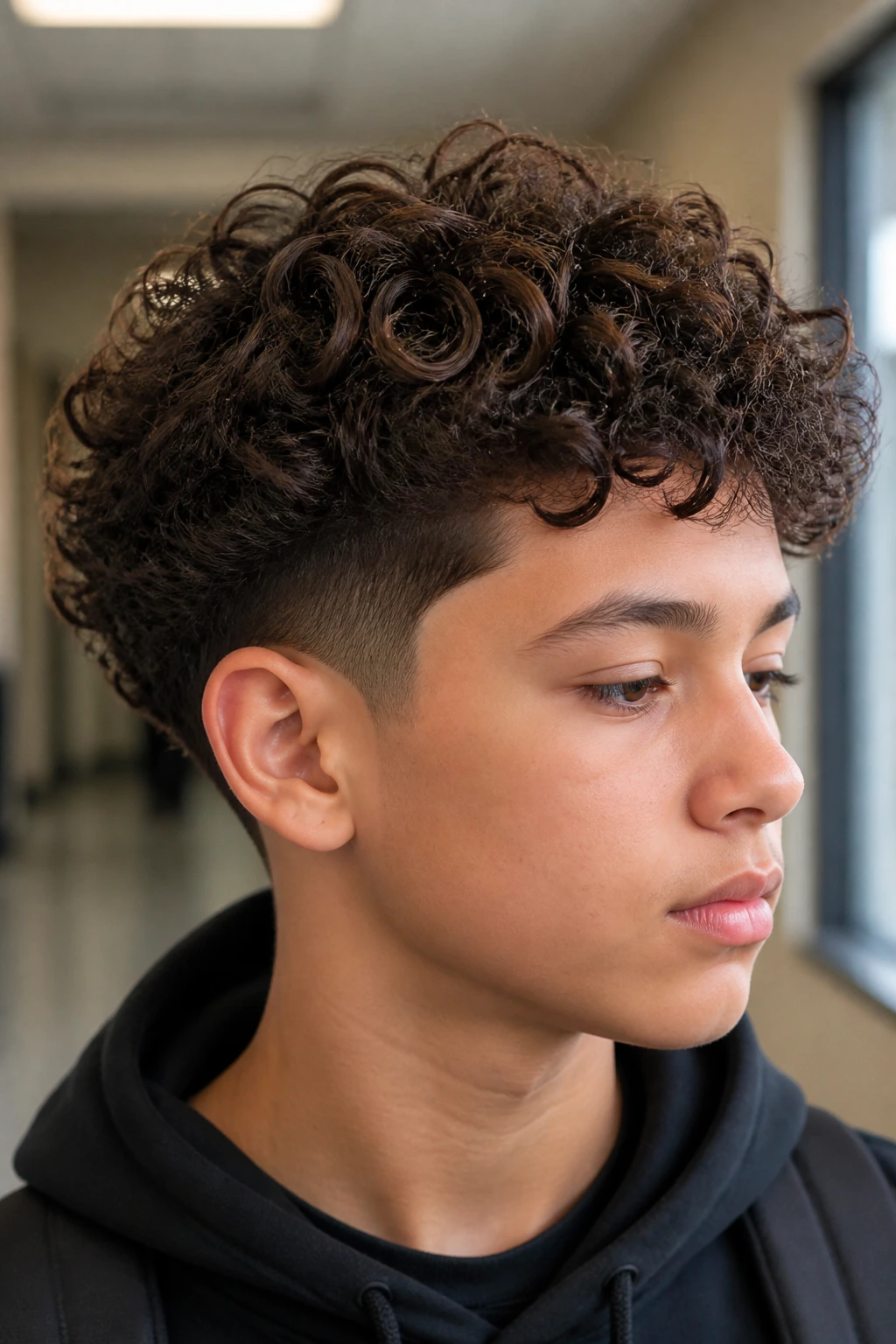
What’s the difference between a taper and a fade on curly hair?
A taper usually keeps more length as it moves down toward the neckline and sideburns, while a fade removes more hair and climbs higher or gets closer to the skin. On curls, a taper tends to grow out softer and look less severe.
How long should the top be for a curly taper?
That depends on the curl pattern. Tight curls can look good with 1½ to 3 inches, while looser curls usually need 3 to 5 inches to show enough shape. Shorter than that, and the curl pattern starts to disappear.
Should curly hair be cut wet or dry?
Dry or mostly dry is safer for very curly or tightly coiled hair because the barber can see the real length and shape. Wet cuts can work, but the length has to be left a little longer because the hair will spring up after drying.
What if the sides puff out even after a taper?
That usually means the taper isn’t taking enough bulk out of the area near the ears and nape, or the hair needs a cleaner refresh between cuts. A little water and leave-in can help daily, but a proper shape-up may be needed if the cut is already growing out.
Can boys with thick, dense curls wear a low taper without it looking too full?
Yes, but the barber has to manage the bulk inside the shape, not just at the edges. If the top is too heavy, a bit of scissor work through the interior can keep the outline round instead of blocky.
How often should a curly taper be cleaned up?
A low taper can usually stretch to 4 to 6 weeks. A sharper high taper or line-up often needs cleanup sooner, around 2 to 4 weeks, because the edges show growth faster.
What product is best for boys’ curly hair?
A light leave-in conditioner or a small amount of curl cream is usually enough. Heavy waxes and strong gels can leave the hair stiff, crunchy, or flaky, which is not the look you want on soft curls.
How do I explain what I want to the barber if I don’t know the names?
Use the parts of the haircut instead of guessing the style name. Say where you want the taper to start, how much length to keep on top, and whether you want the outline sharp or soft. That gets you much closer than saying “something curly.”
A Clean Outline, More Curl Left on Top
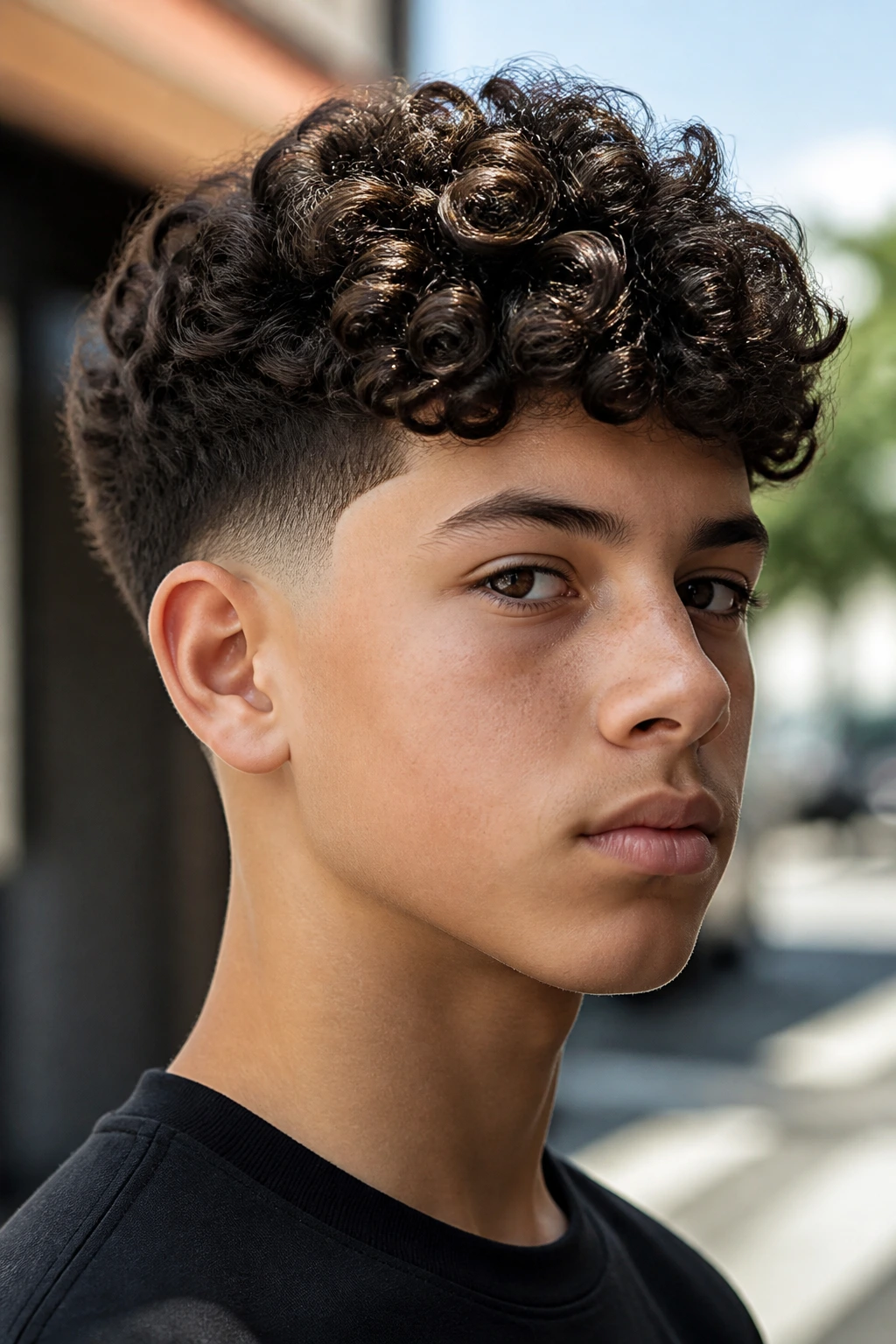
The best tapered haircuts for boys with curly hair do one thing well: they clean the edges without stealing the curl pattern. That’s why they age better, feel easier to wear, and keep working after the first week of growth. The shape stays readable. The curls stay the star.
If you pick one of these styles, the smartest move is to think about maintenance before you think about the photo. A low taper stretches farther. A high taper looks sharper but needs more touch-ups. A scissor taper feels softer. The right choice is the one that matches the hair on that head, not the haircut on the screen.
And once you get the cut right, the rest gets easier. The mornings calm down. The comb fights less. The curls start doing what they do best, which is sitting there with a little movement and a lot of personality.