



Curly hair at middle school age has a way of making adults panic for no good reason. One morning it looks neat and springy; by lunch it’s a halo, a mop, or a puffed-up triangle depending on the cut. Middle school trendy haircuts for boys with curly hair work best when they respect that movement instead of fighting it. That means shape, not force. It means knowing when to leave weight on top, when to taper the sides, and when to stop trimming because the curls are already doing the heavy lifting.
The nicest thing about a good curly cut is that it doesn’t need to look “perfect” to look put together. A clean taper, a smart fringe, a little texture at the ends, and the haircut reads as intentional even when the child ran a hand through it ten seconds before school. Wet curls lie. Dry curls tell the truth. That one detail changes everything at the barber chair.
A strong haircut also saves arguments. Less morning wrestling with a brush. Less heat styling. Less “why does it look flat on top and huge on the sides?” Curly hair wants a shape that fits the curl pattern, the head shape, and the amount of time a kid is willing to spend in front of the bathroom mirror. The cuts below do that from different angles, and some are low-maintenance enough to survive gym class, recess, and a windy walk to the bus without turning into a cloud.
Why This Collection Works for Curly Hair in Middle School
-
School-day friendly: These cuts stay neat without needing a full styling routine before first bell, which matters when the morning is already moving too fast.
-
Curl-pattern aware: The styles lean into shrinkage, bounce, and natural bend instead of flattening curls into a shape they’ll fight all day.
-
Flexible enough to grow out: A good curly cut should still look decent two or three weeks later, not collapse into a boxy mess the second the barber cape comes off.
-
Easy to explain at the chair: Most of these can be described with simple length notes, like “keep the top longer” or “taper the sides,” which makes the barber visit less guesswork.
-
Works across curl types: Loose waves, springy 3B curls, and tighter coils all have a place here. The silhouette changes, but the logic stays the same.
1. Curly Crop with Low Taper
The curly crop is the haircut I’d hand to a family that wants something neat, modern, and not fussy. The top stays short enough to control, usually around 1.5 to 3 inches depending on curl tightness, while the low taper clears the area around the ears and nape so the whole cut looks tidy. It has that clean school-photo shape, but it still lets the curls show off instead of getting shaved down to nothing.
Why It Works
A crop is one of the safest curly styles because it keeps the bulk where it belongs: on top, not out at the sides. The low taper softens the outline without turning the haircut into a fade-heavy look that needs constant upkeep. For boys with denser curls, the barber can remove weight with point-cutting at the ends instead of thinning the whole top, which keeps the texture from going stringy.
How to Ask for It
Tell the barber you want the curls left short and natural on top, with a low taper around the ears and neck. If the hair grows forward, a slightly shorter front keeps the fringe from falling into the eyes by third period. If the curls are tighter, ask for dry cutting or a final shape check after the hair has dried.
Best for
- Boys who hate hair in their face
- Families that want a low-maintenance school cut
- Curls that puff up when they get too much length
A pea-size amount of leave-in conditioner or light curl cream is usually enough. More than that, and the top can start to separate in clumps that look damp all day. Keep it simple.
2. Curly Fringe with Mid Fade
This is the cut that makes a boy look like he knows what he’s doing, even if he still forgets his water bottle. The fringe sits forward across the forehead, and the mid fade gives it a clean edge around the temples and ears. It’s a little more style-forward than the crop, but not so loud that it feels out of place in a classroom.
A mid fade works especially well when the curls are loose to medium-tight and need a bit of control at the sides. The front becomes the main feature, so the barber should leave enough length for the curls to fall with a soft bend rather than sticking straight up. If the fringe is cut too short, it springs away from the forehead and loses the whole point.
The styling trick is tiny. Damp hair, a fingertip of curl cream or mousse, then finger-shaping the fringe forward. That’s it. Don’t brush it flat. Don’t drown it in gel. Curly fringe looks best when it still moves a little, like it’s holding shape without looking glued in place.
If your kid keeps pushing hair out of his eyes all day, this cut solves the problem without forcing a harsh buzzed look. It also grows out better than a straight-across fringe because the curls disguise uneven lengths for a while.
3. Soft Curly Shag
The shag is what happens when curly hair gets to breathe. Instead of one blunt block of length, the haircut uses layers to keep the curls from stacking up into a triangle. The result is softer, looser, and a bit more relaxed than the sharper fade-heavy styles. It’s one of the few cuts here that can look a little messy on purpose and still read as polished.
What Makes It Different
A shag depends on movement. The barber keeps more length through the crown and around the sides, then removes weight so the curls can fall in separate pieces instead of one thick mound. That makes it a smart choice for medium-density hair that gets wide fast. If the hair is very thick, ask for light internal layering rather than aggressive thinning. Too much removal and the curls lose shape.
How to Wear It
The best version of a curly shag is finger-styled while damp, then left alone. A wide-tooth comb can help distribute leave-in conditioner, but after that, hands do the better job. If the curls dry in odd directions, a quick mist of water and a squeeze with the palms usually resets them without needing another wash.
This cut suits boys who don’t want a strict outline. It has a bit of skate-park energy, but it can still look tidy if the neckline stays cleaned up. That balance is the whole appeal.
4. Textured Curly Top with Drop Fade
A drop fade gives the haircut a shape that follows the head instead of running in a straight line. That small dip behind the ear changes the whole look. The top stays textured and curly, while the fade curves down at the back for a smoother silhouette from the side.
This is one of the better styles for boys with thicker curls who want something sharper than a shag but less severe than an undercut. The top can sit around 2 to 4 inches, depending on curl size, and the barber should leave enough length for the curls to show their pattern. If the fade climbs too high, the haircut can start to look narrow on the sides and too tall on top. Keep the balance.
A light curl cream or foam mousse works best here. The point is to separate the curls, not freeze them. After washing, squeeze the hair with a microfiber towel or an old T-shirt, then let it air-dry or diffuse on low heat. High heat fluffs curls in the wrong way and steals the texture the cut is supposed to show off.
This cut has a little more edge than a basic taper, but it’s still school-safe in most settings. It looks especially good on boys whose curls have a defined S-shape when they dry naturally.
5. Temple Taper with Longer Curls
Some families want a haircut that feels clean without losing the length they’ve spent months growing. The temple taper is the quiet answer. It trims and tightens the area around the temples, sideburns, and neckline while leaving the curls on top and through the back longer and freer.
What I like here is how forgiving it is. The cut can be worn brushed forward, pushed slightly to the side, or left in loose curls that fall naturally. That makes it a good first “real style” haircut for boys who are just starting to care about how their hair looks. It also works when school rules are strict and a full fade would feel too dramatic.
The barber should shape the outline carefully and avoid hacking the length off the top just because it looks bulky when wet. Curly hair shrinks. A lot. If the top seems too long in the chair, it may be exactly right once it dries. That’s the detail people miss, then they spend the next month waiting for it to grow back.
This cut sits in a nice middle place: clean enough for picture day, relaxed enough for a sweatshirt and sneakers. Not flashy. Not boring. A good compromise, which is rarer than it sounds.
6. Curly Undercut
The undercut is the sharpest contrast in the bunch. The sides go short and clean, usually with clippers, while the top stays much longer and fuller. On curly hair, that contrast can look striking in the best way, especially when the top has enough length to bend and sit over the shorter sides instead of puffing straight up.
It does ask for confidence. There’s no hiding a bad undercut shape, because the short sides make every line obvious. That means the top should be matched carefully to the head shape and the curl density. A boy with very thick curls can wear more length up top without the style swallowing his face. A boy with looser curls usually needs a little less so the top doesn’t collapse.
This is not the lowest-maintenance haircut here. It grows out fast, and the transition between long top and short sides needs regular cleanup. But when it’s fresh, it looks crisp and modern without trying too hard.
A matte cream or light gel helps the top sit where it should. Avoid heavy pomades unless the hair is very coarse, because that shiny, weighed-down finish works against the airy look that makes this cut appealing. If the curls are left soft and defined, the undercut does its job.
7. Short Curly Caesar
The Caesar is a smart move when the goal is short, simple, and still a little stylish. The fringe is cut short and usually worn forward, with the top kept even and the sides trimmed down neatly. On curly hair, it turns into a compact, textured version of the classic shape.
Why It’s Worth a Look
A curly Caesar keeps the haircut close to the head, which is useful for boys with tight curls or hair that gets huge the second it grows past a certain length. It’s also one of the best choices for active kids who don’t want to think about styling after a shower. The texture does the work. The cut does the rest.
Best way to wear it
Ask for a short, even top with a blunt-ish front that can still show the curl pattern. If the hairline is uneven, a barber can soften the edge rather than cutting a hard straight line across the forehead. That usually looks better on younger boys anyway. Too much sharpness can make the cut feel older than it needs to.
The Caesar grows out in a clean, controlled way, which is a bigger advantage than people expect. A lot of short cuts start to look messy the minute they add length. This one tends to keep its shape a bit longer, especially if the sides are maintained every few weeks.
8. Burst Fade Curly Mohawk
This one has personality. The burst fade curves around the ears and drops away from the temple area, while the curls stay longer through the middle strip. It looks sporty, playful, and a little bolder than the other styles here, which is exactly why some middle school boys love it.
The best version keeps the mohawk strip curly, not spiked. There’s no reason to flatten a curl pattern into something it isn’t. Leave enough length on top for the curls to spring up and move; usually 2 to 4 inches works, depending on curl tightness. The sides should be neat enough that the shape reads as deliberate, not like someone forgot to finish the haircut.
What to Watch For
If the burst fade climbs too high, the cut can start looking extreme in a way that school rules may not love. Keep it rounded and controlled. The whole point is contrast, not chaos.
This style does take a little more upkeep around the sides than a taper or crop. Still, for boys who like something expressive and don’t mind a sharper outline, it delivers a lot of shape without needing a drawer full of products. A light mousse, finger-styling, and a quick towel dry usually do the job.
9. Side Part with Tapered Sides
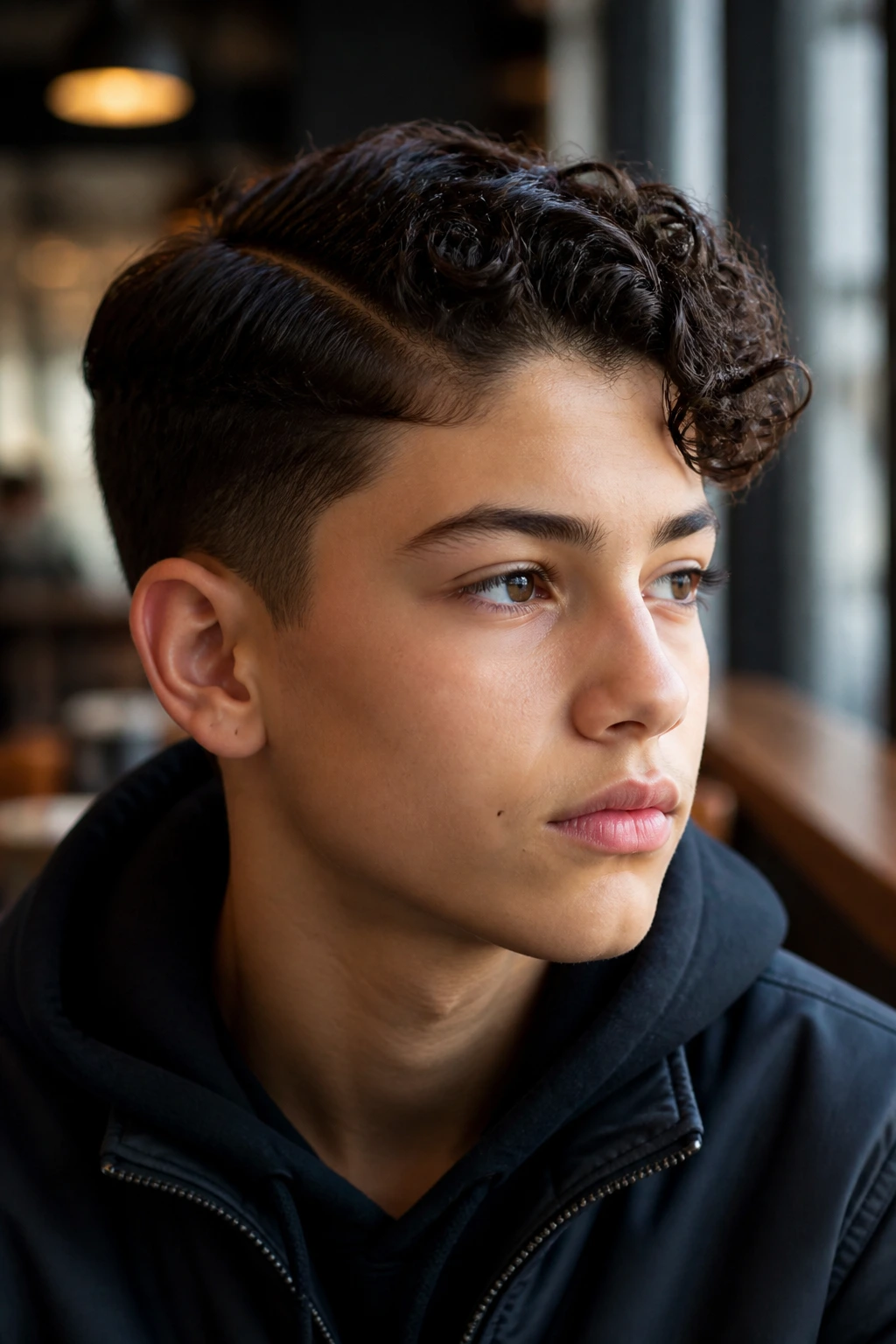
The side part is the haircut that says, “I can behave,” even when the curls have their own opinions. It’s neat, slightly dressier, and useful when you want curly hair to look organized instead of wild. The tapered sides keep the shape close, while the top is long enough to sweep naturally to one side.
This cut works best when the curls have enough direction to follow the part instead of fighting it. Loose to medium curls usually cooperate well. Tighter curls can still pull it off, but the barber may need to leave a little more length on top so the part doesn’t disappear as soon as the hair dries.
The nice thing about a side part on curly hair is that it doesn’t need a hard razor line. In fact, a soft part often looks better. Use fingers, not a comb, after a small amount of leave-in or cream. If the hair starts to poof at the root, a quick mist and a little pressure from the palm can reset it in seconds.
This is one of the better options for picture day, family events, or any school situation where a cleaner silhouette helps. It’s not flashy. It doesn’t need to be. The control is the point.
10. Shape-Up Afro
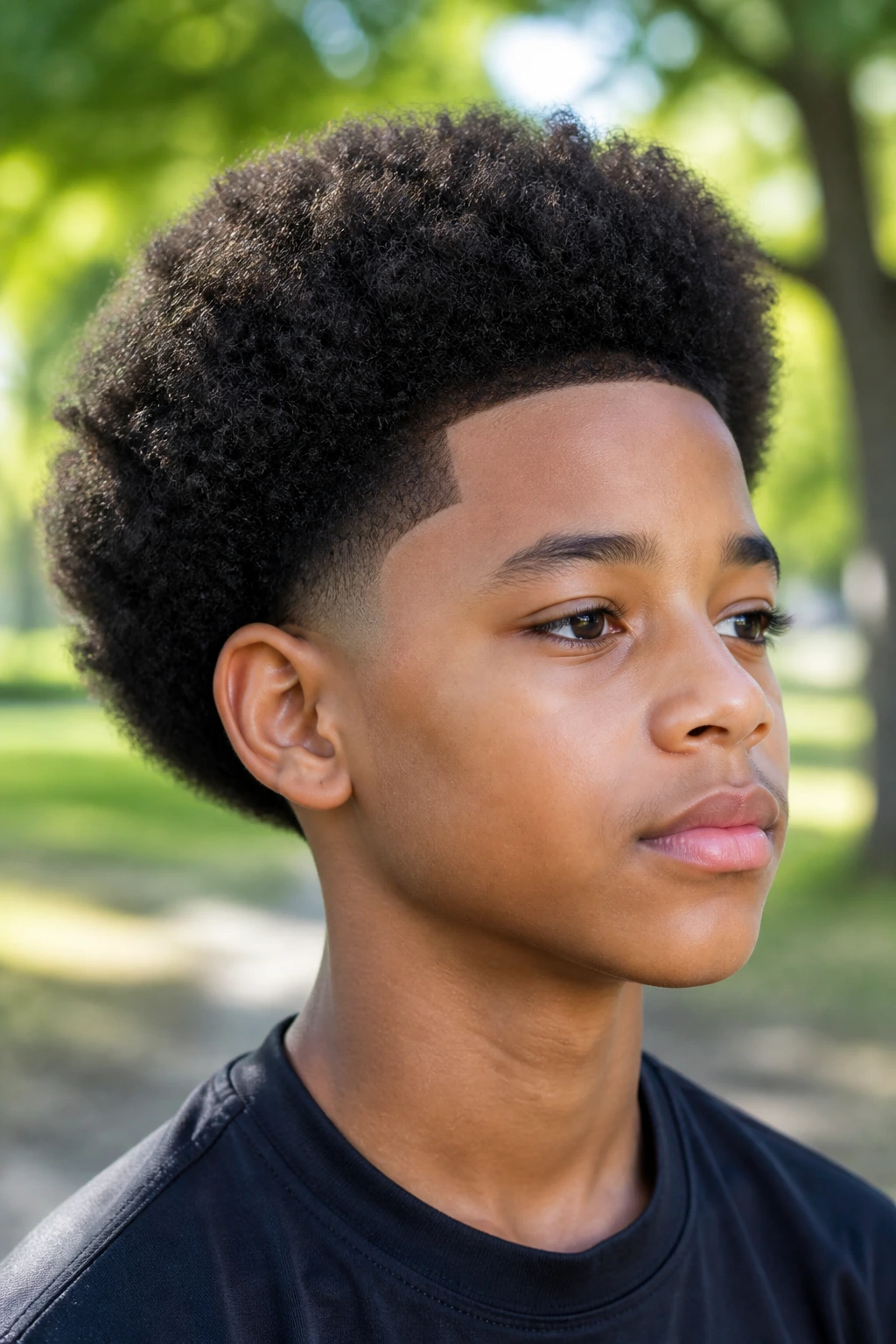
For boys with tighter curls or coils, a shape-up afro can be the most natural-looking “styled” cut in the room. The hair keeps its volume and rounded shape, while the hairline, temples, and neckline get cleaned up so the whole thing looks sharp instead of unfinished. It’s a classic shape for a reason.
The best shape-up does not carve the hair into a hard block. It rounds the silhouette, keeps the corners balanced, and respects the natural density of the hair. If the barber pushes the line too high at the corners, the head can start to look narrow and the cut loses its fullness. A gentle shape works better than a forced one.
This style is excellent for kids who want to keep their natural texture visible. There’s no need to brush it flat or stretch it into something else. A little moisture, a pick or fingers, and occasional edge cleanup are enough. If the scalp tends to get dry, a light scalp oil used sparingly can help, but heavy grease usually just sits there and attracts lint.
The shape-up afro looks strongest when it’s maintained regularly. Even a small amount of regrowth around the hairline can soften the whole effect. Keep that in mind if crisp edges matter to the kid wearing it.
11. Curly Mullet with Clean Sides
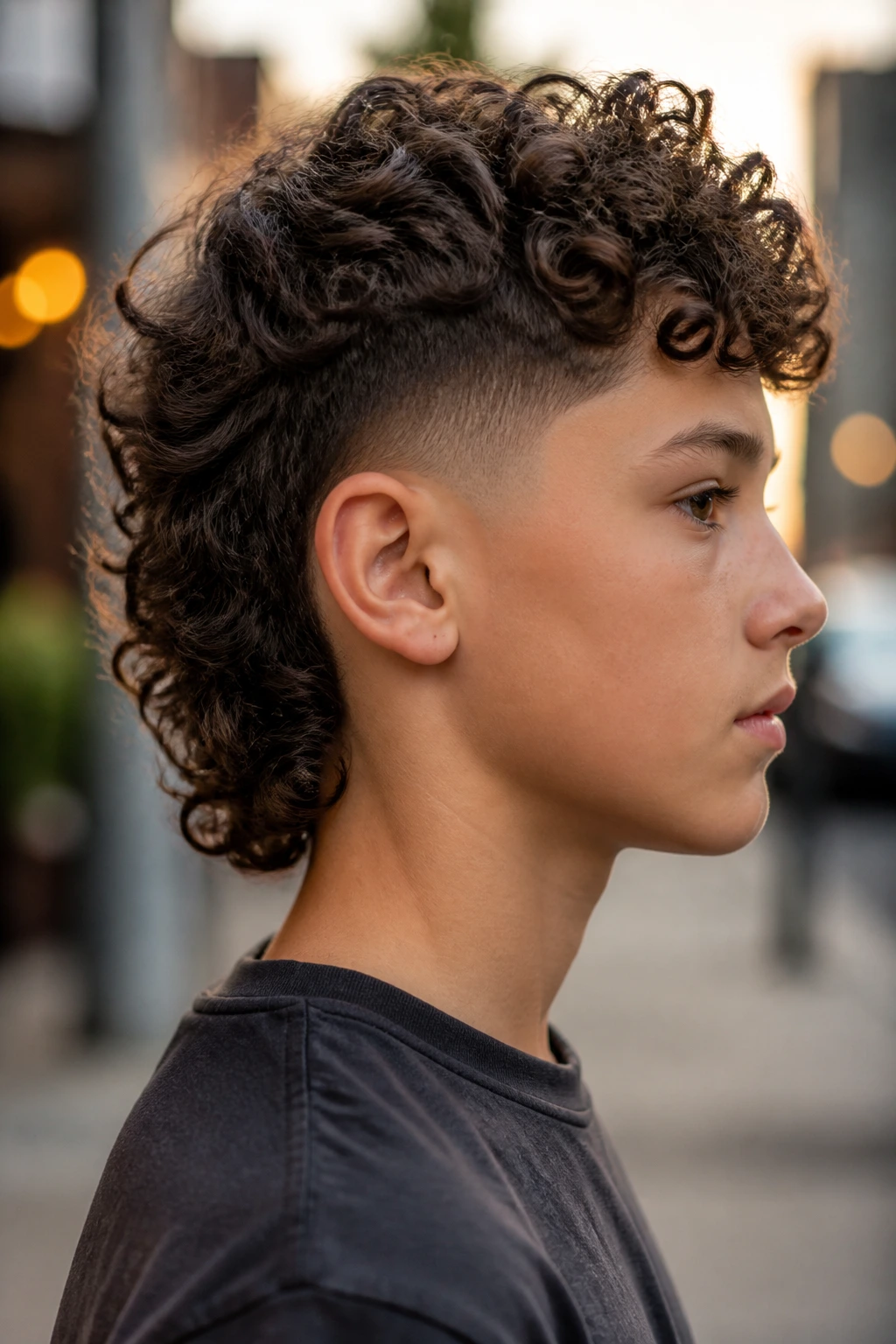
The mullet has gone from joke to style, and on curly hair it can actually work in a way that makes sense. The trick is control. Keep the sides tidy, keep the front manageable, and let the back hold a little more length so the curls have movement. If it gets too shaggy everywhere, the shape disappears. If it’s too short, it’s not really a mullet anymore.
This haircut suits boys who want something a little different without going full dramatic. The curls in the back add personality, and the cleaner sides keep the whole thing from looking like an accident. A soft taper or tight cleanup around the ears usually helps the style stay school-appropriate even when the back carries more length.
A mullet on curls looks better when the layers are subtle. Chunky layers can make the back stick out in odd places. So can over-thinning the sides. What you want is a shape that flows from front to back. The cut should feel deliberate from every angle, even the one parents usually only notice after the barber has already finished.
This isn’t for everyone. That’s part of its charm. But if a kid likes a little edge and doesn’t mind a haircut with opinions, it can be one of the most interesting looks in the hallway.
12. High Top Curls with Taper Fade
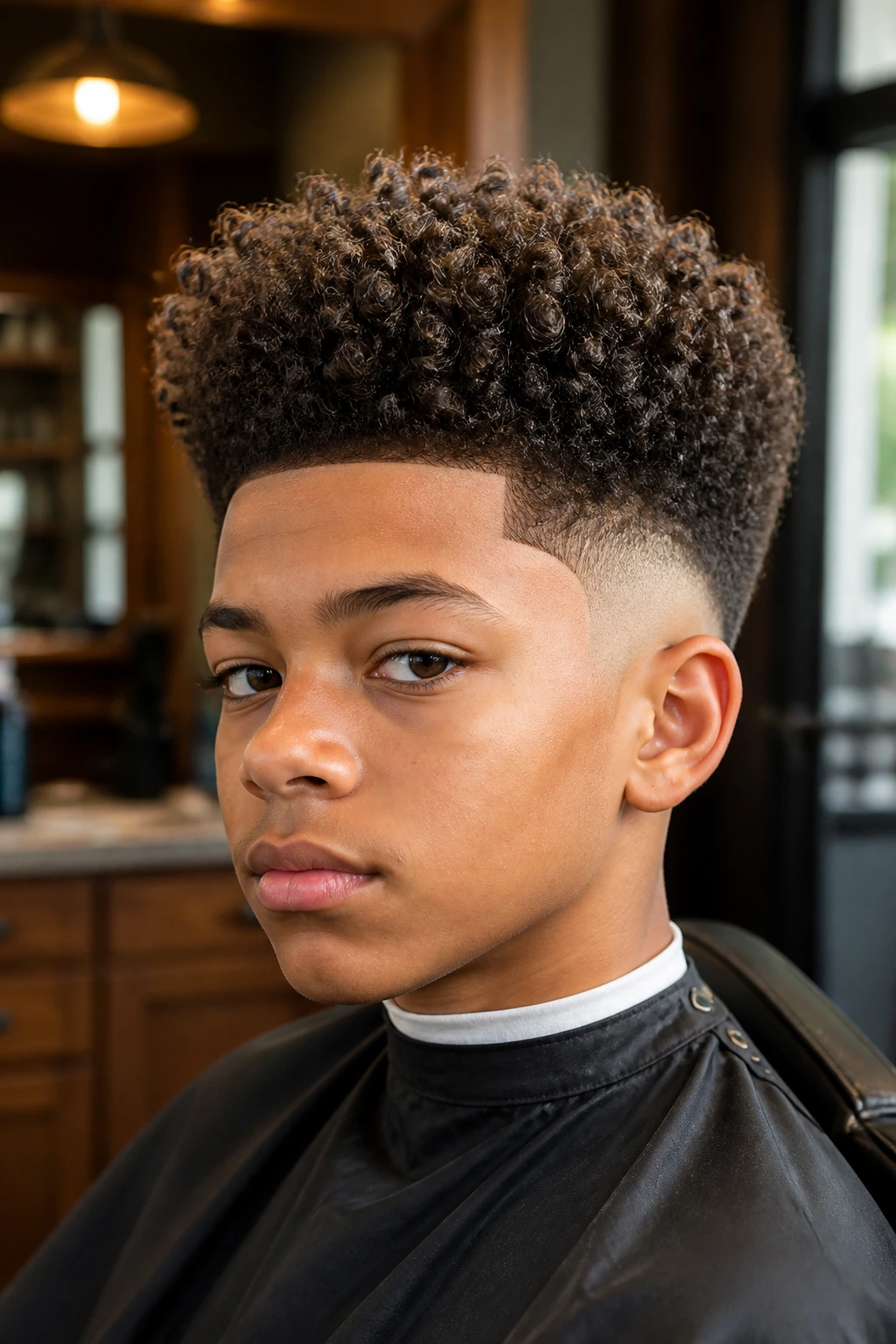
A high top on curly hair has real presence. The sides are tapered down, the top stays full, and the shape rises upward in a way that flatters dense curls and coils. It works because it uses height on purpose instead of letting bulk spread sideways.
The top should be shaped with balance in mind. Too much height and it becomes top-heavy; too little and the haircut loses its point. A barber comfortable with curly texture will usually cut it dry or dry enough to see where the curls actually stand. That matters more here than in almost any other style on this list.
A taper fade keeps the cut fresh around the edges without wiping out the natural texture. It also helps the top look cleaner by contrast. For boys who like a more defined silhouette and don’t mind a little upkeep, this is a strong choice. A pick or curl sponge can help define the coil pattern, but don’t go overboard. The top should look full, not crunchy.
This style can be a little more work than a crop or Caesar, but the payoff is strong shape and a haircut that reads clearly from across the room. That’s part of why it still shows up so often.
13. Medium Messy School Cut
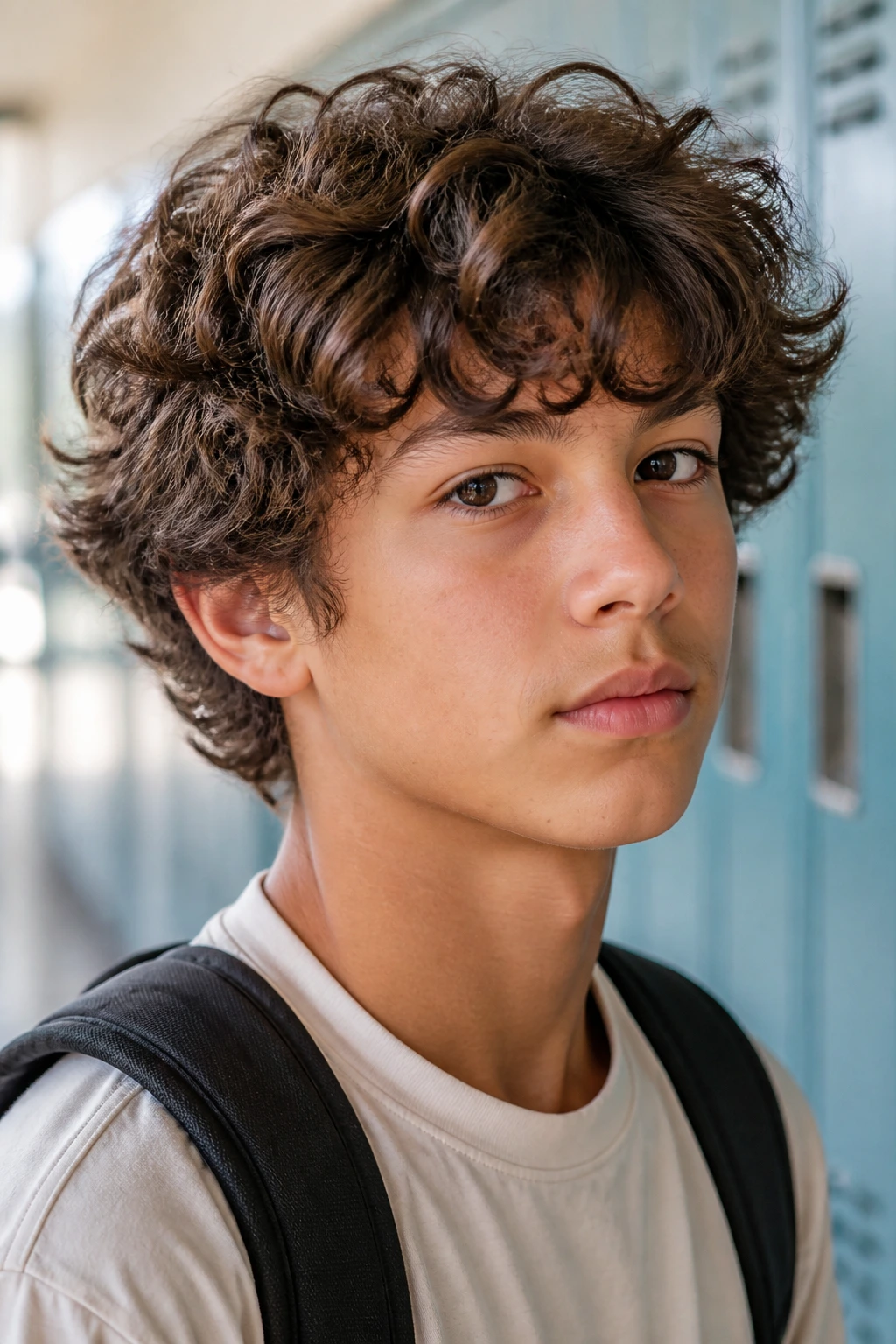
This is the “we didn’t overthink it, and somehow it looks right” haircut. The length sits in the middle—long enough to show curl texture, short enough to stay under control—and the shape is kept soft rather than carved into a hard line. It’s the kind of cut that works when a boy wants hair that looks cool without looking like it took effort.
The secret is restraint. The barber should avoid over-layering or over-fading. Curly hair at medium length already has a lot happening. The cut should guide it, not fight it. If the curls are dense, a little weight removal around the crown can stop the top from ballooning. If they’re looser, the cut may need more layering so the shape doesn’t collapse.
A quick leave-in and scrunch is enough for most mornings. Finger-combing beats brushing here because a brush can separate curls too much and make the whole cut look flat at the roots but puffy at the ends. That lopsided look is common. It’s also unnecessary.
The medium messy cut is a safe place for kids who are still figuring out what they like. It doesn’t lock them into a dramatic look, and it doesn’t demand precision every day. It just gives the curls a place to land.
14. Modern Curly Bowl Cut
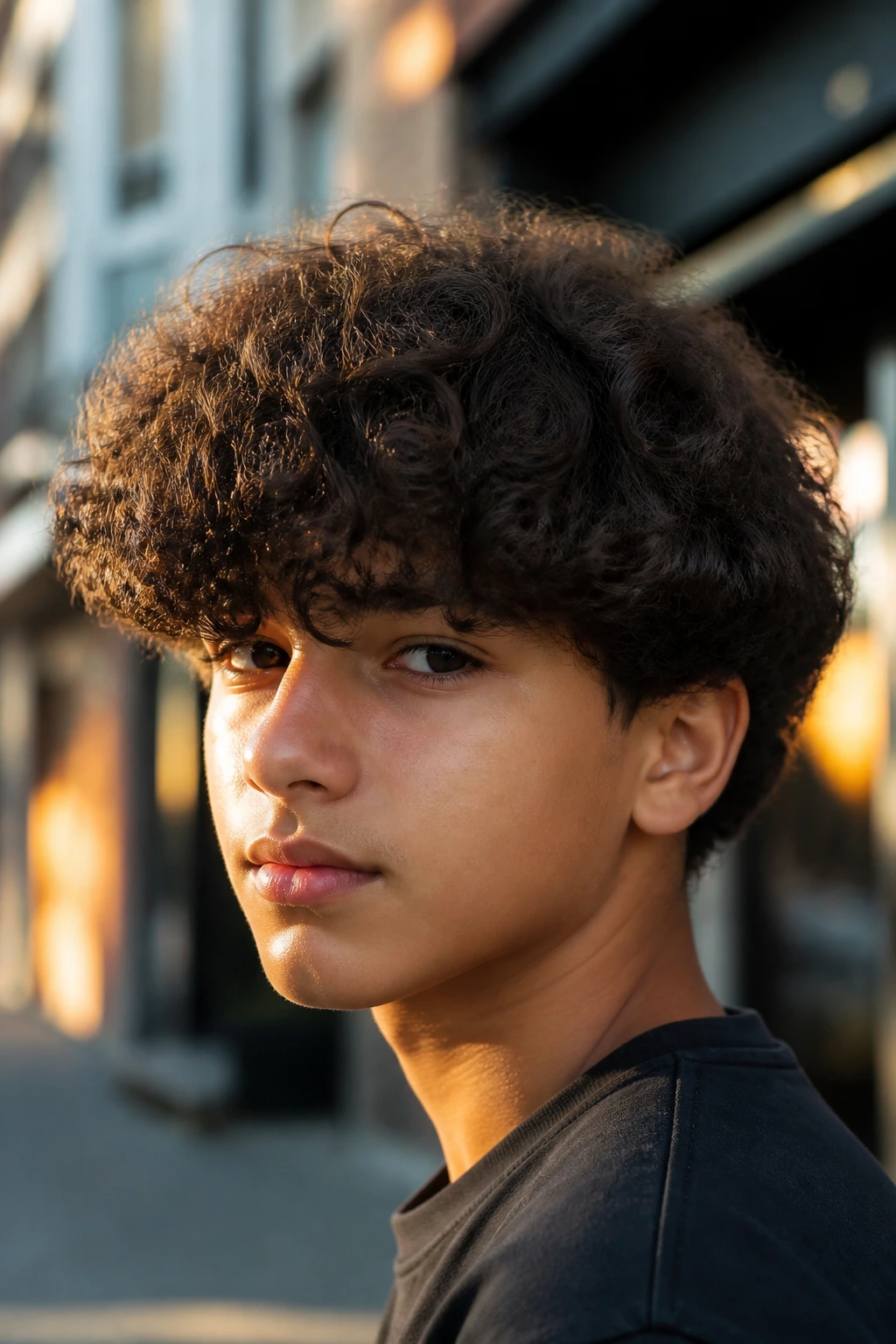
The bowl cut gets a bad reputation because people remember the old version: heavy, blunt, and helmet-like. The modern curly version is different. It uses a rounded outline, but the curls are texturized so the edge looks soft instead of pasted to the head. Done right, it has shape and personality without looking stiff.
Why It Works
Curly hair naturally creates width and roundness, so a bowl-inspired cut can actually make sense when it’s softened with layers. The key is not cutting a hard straight line around the head. The barber should follow the curve of the head, then refine the ends so the curls fall into a rounded shape that still moves.
What to ask for
Ask for a curved shape around the front and sides with texture at the ends. If the fringe is too blunt, it can look blocky once the hair dries. If it’s too short, the style loses its rounded effect. There’s a narrow window here, which is why reference photos help more than a vague description ever will.
This is a good option for boys who like fringe coverage and want a style that feels a little different from the usual fade. It also works well when the curls are fairly even in length and density. Uneven curl patterns can still pull it off, but the barber will need to pay attention to balance.
15. Long Ringlets with Light Layers
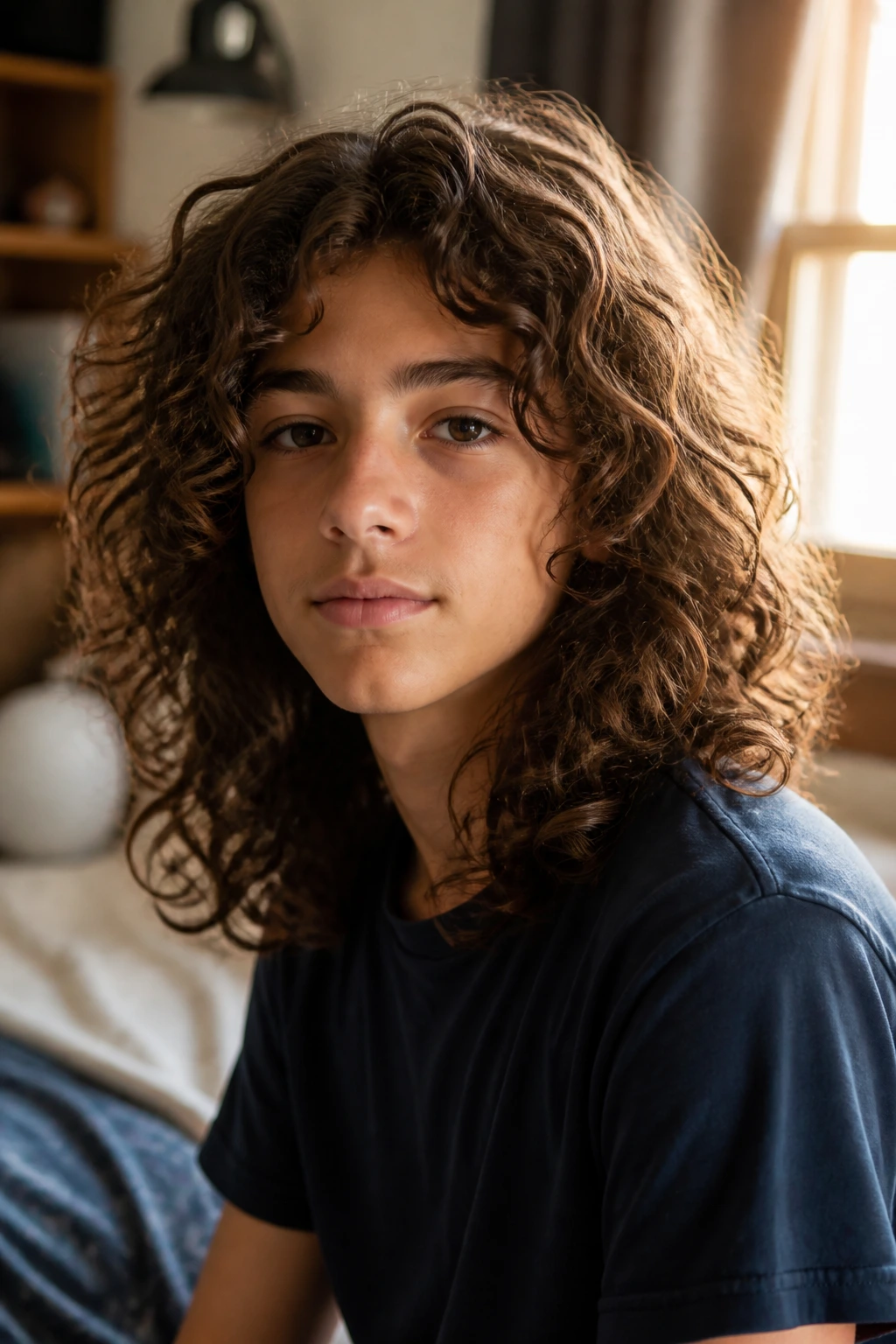
Some boys want length. Not a token inch or two. Real length. If that’s the goal, light layers are the difference between a good long curly cut and a triangle that eats the shoulders. Layers let the ringlets fall without building too much bulk at the bottom, and they keep the top from looking flat.
This style needs patience. Long curls look better when they’re cleaned up regularly, even if the goal is to keep growing. Split ends and heavy, shapeless growth make the curls lose spring. A trim that preserves the overall length while softening the shape is worth more than waiting until the haircut is beyond repair.
The care routine matters more here than in shorter styles. Conditioner in the shower, a leave-in after towel drying, and a satin pillowcase can make a noticeable difference in how the curls sit the next day. Detangling should happen when the hair is wet and coated, not dry and tugged at with a brush. Dry brushing long curls is a fast way to get frizz and complaints.
Long ringlets can look beautiful in a very ordinary, kid-friendly way when they’re maintained well. They don’t need to be flashy. They just need room.
16. Curly Crew Cut
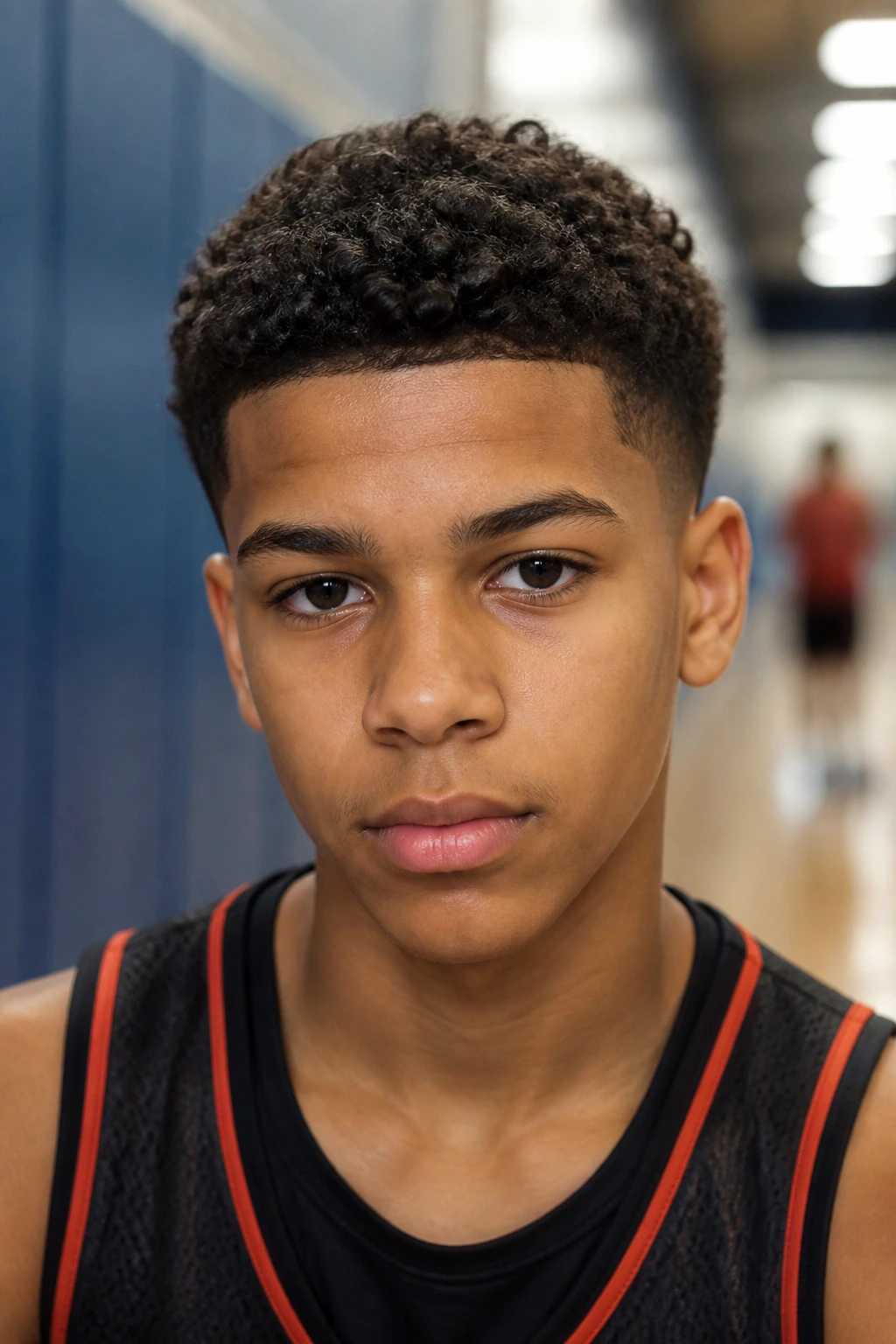
A crew cut for curls is short, clean, and a little underrated. The top stays just long enough to show texture, while the sides are tapered or faded down so the outline is neat. It’s the haircut that says “easy” without looking lazy.
This is one of the best choices for boys who play sports, wear helmets, or can’t be bothered to deal with much hair care before school. The curls still show up, but they don’t have room to turn into a puffball. If the top is left slightly longer toward the front, the haircut can still have a bit of shape instead of looking too uniform.
A crew cut also grows out in a predictable way. That matters. Some curly styles only look good for the first ten days and then fall apart. The crew cut buys more time between trims because the difference between fresh and grown-out is smaller.
Use a light cream only if the curls need a bit of separation. Otherwise, towel dry, finger fluff, and move on. Not every haircut needs a styling routine. This is one of the good exceptions.
17. Ivy League Curl Sweep
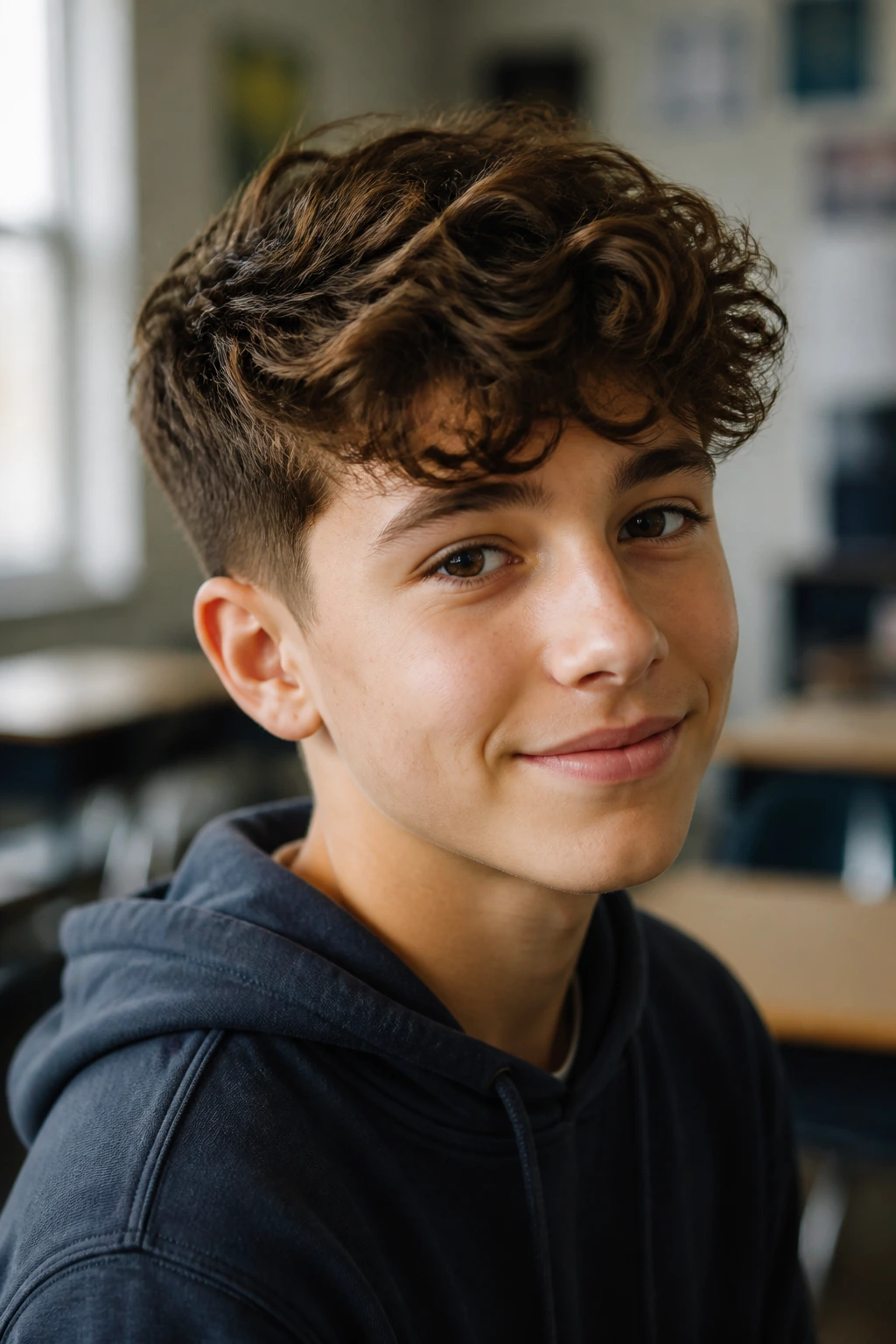
The Ivy League is the curly haircut for boys who want something a little neater without losing the movement on top. The front is long enough to sweep to the side, the sides are cleanly tapered, and the overall shape feels polished without being stiff. It’s one of the better cuts for picture day, family events, or any setting where a boy wants to look more put together.
What Makes It Work
The top needs enough length to sweep, but not so much that the curls collapse over one side. Looser curls handle this easiest. Tighter curls need a barber who understands how much shrinkage happens after the cut. That’s where a reference photo helps, especially one taken from the front and the side.
How to style it
A small amount of leave-in and a side-sweeping motion with damp fingers usually gets the shape in place. If the hair insists on rising at the front, a diffuser on low heat can help nudge it in the right direction without blasting the curl pattern apart. The goal is movement with control, not a glued-down shell.
The Ivy League is a good fit for boys who want a haircut that looks a little more mature but still suits their age. It can be dressed up, but it still feels like a kid’s haircut. That balance is harder to find than people think.
18. Tight Curl Taper with Defined Edge
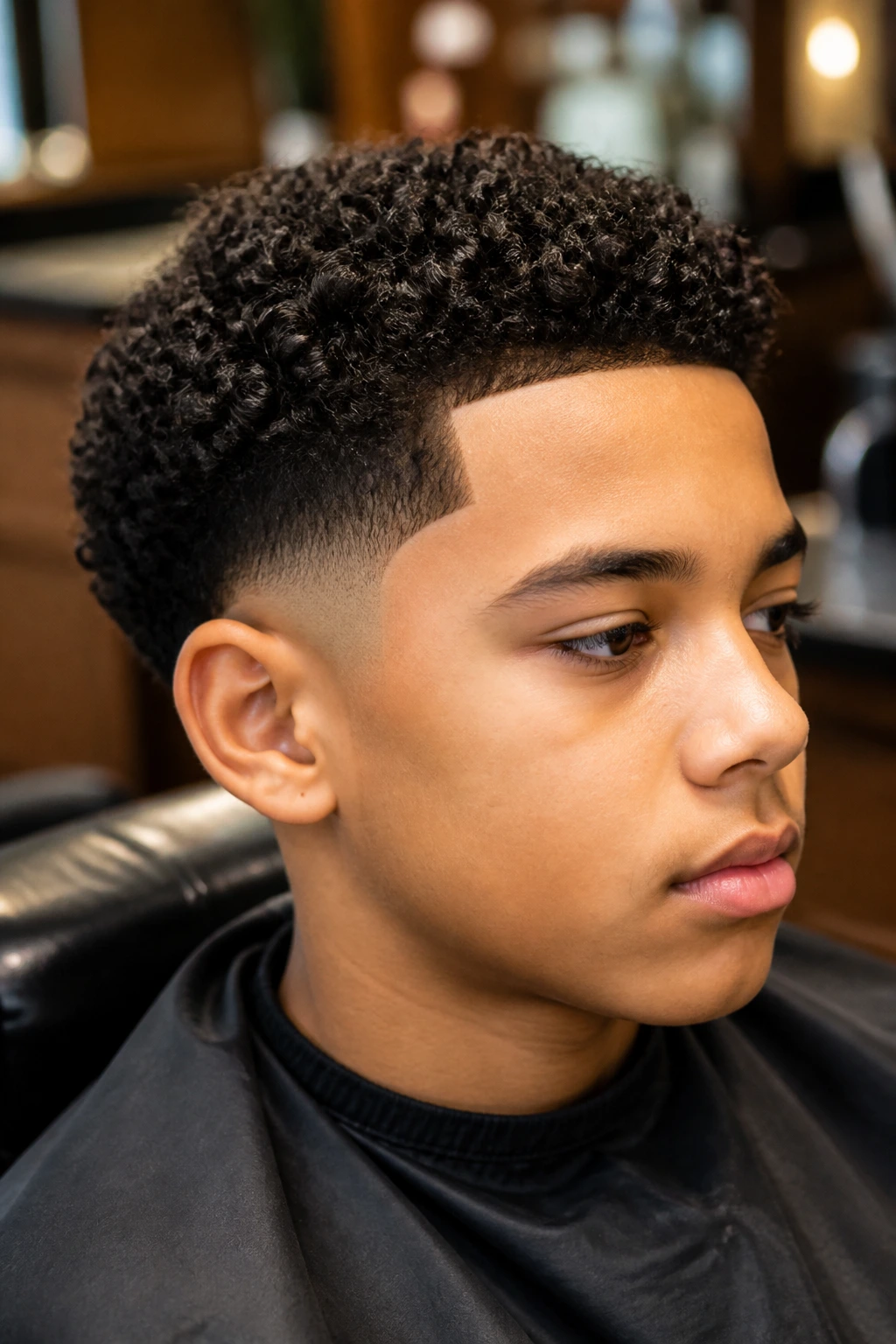
For boys with tight curls or coils, the taper with a defined edge is one of the cleanest shapes around. The sides are tapered low or mid, the top keeps enough length to show the curl pattern, and the edges around the hairline get a crisp shape-up. It’s sharp without being severe, and it respects what the hair already wants to do.
The biggest mistake with tighter curl patterns is cutting too much length off the top because the hair looks smaller when it’s wet. That’s how you end up with a shape that looks fine in the chair and too short once it dries. Leave room for shrinkage. If the curls are dense, ask the barber to shape them while dry or mostly dry so the final outline is honest.
This cut looks best when moisture is handled well. A leave-in conditioner keeps the curls from drying out, and a curl cream or light gel can help them stay defined without turning them stiff. A small pick can lift the roots a little if the top gets compressed after sleep.
The defined edge matters here. It gives the haircut a finished look and keeps the whole style from reading as unfinished. On tight curls, that line between natural and neat is where the haircut really comes alive.
Why Curly Hair Needs a Different Cutting Plan
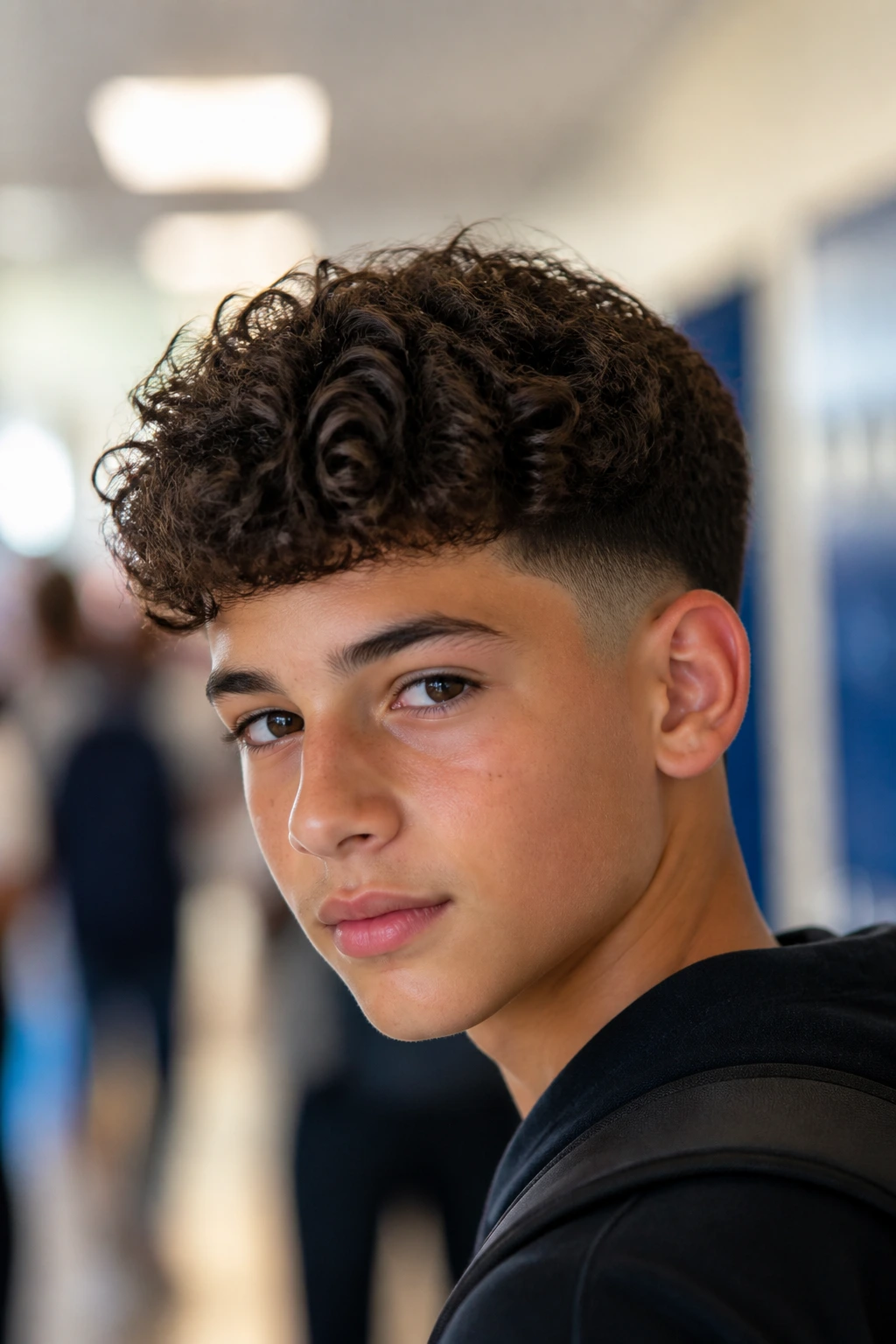
Curly hair is not straight hair with extra attitude. It grows, bends, and shrinks in its own way, and a barber who treats it like one long rectangle usually creates the problems everyone hates: puffy sides, a flat crown, and a top that looks chopped off the second it dries. The haircut has to respect where the curls sit when they’re dry, not where they lie when wet.
That’s why the best curly cuts for boys rely on shape more than simple length. A low taper can clean up the outline. A fringe can keep curls out of the eyes. Layers can stop the triangle effect. None of that works well if the hair is cut without thinking about density, curl direction, and shrinkage. A kid with loose 2C waves and a kid with tight 4A coils may both say “curly hair,” but the chair work should look different.
The other thing people miss is that curly hair changes during the day. Morning moisture, humidity, a hoodie pulled on and off, helmet hair after sports — all of it changes the outline. A good cut handles those little disruptions without falling apart. That’s why I lean toward styles with clean sides and controlled length on top. They bend with the day instead of fighting it.
Essential Equipment for These Cuts
-
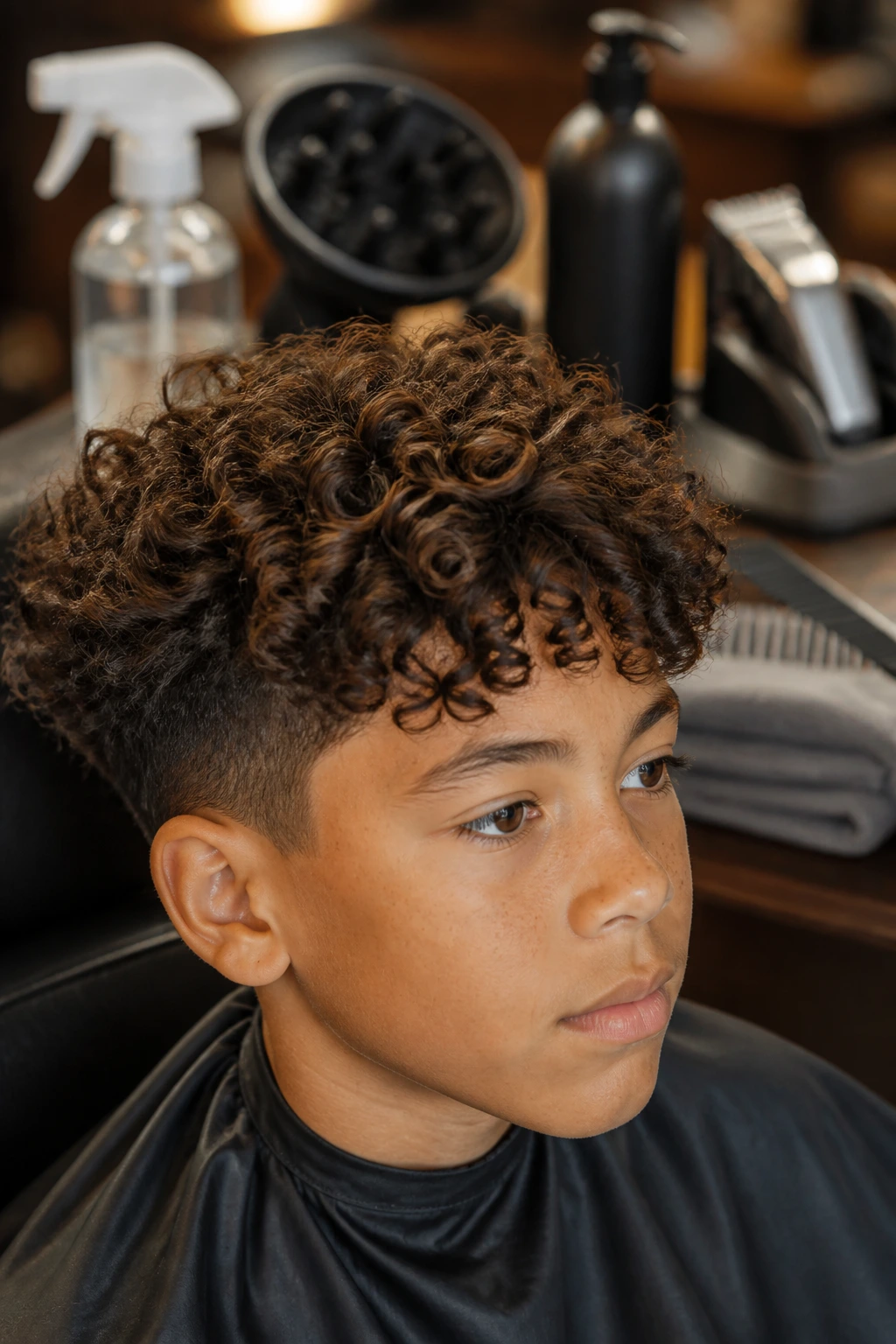
Spray bottle: A few spritzes of water wake curls up before styling and help reset flat spots in the morning.
-
Leave-in conditioner: Use a light one for looser curls and a richer one for tighter coils; it keeps the hair from frizzing apart.
-
Curl cream or foam mousse: Good for defining curls without that stiff, crunchy finish that kids usually hate.
-
Microfiber towel or soft T-shirt: Rough bath towels can frizz the cut fast; a softer cloth squeezes out water without wrecking the pattern.
-
Wide-tooth comb: Best for detangling in the shower or while conditioner is in the hair. Dry combing is a bad habit here.
-
Diffuser attachment: Helpful if you need to dry curls quickly while keeping them bouncy instead of blown out.
-
Clippers with guards: Useful for at-home neck cleanups or keeping a taper in shape between barber visits.
-
Hand mirror: Sounds boring, but it helps check the back and sides after styling so the shape stays balanced.
Smart Barber Notes and Product Picks
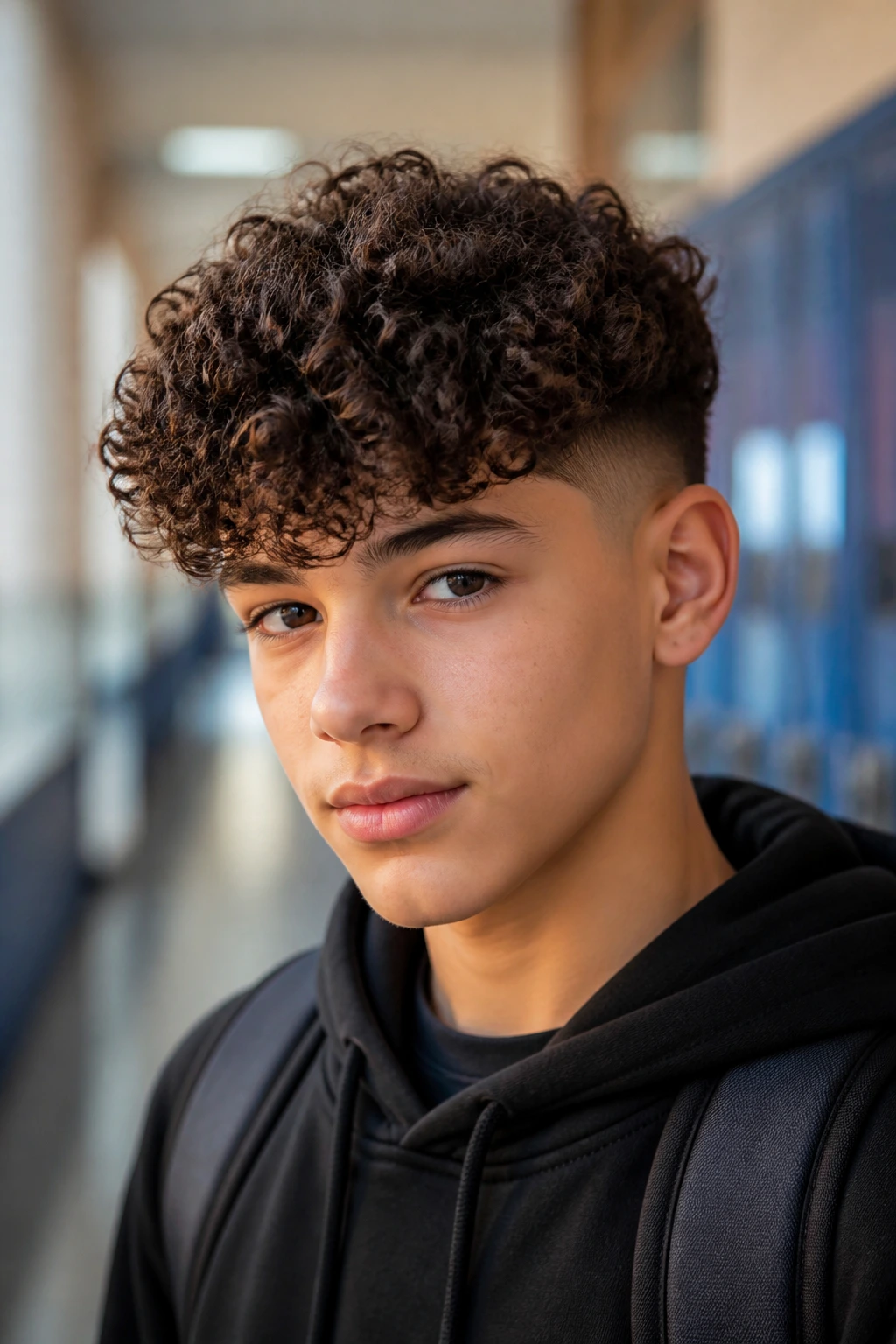
The easiest way to get a good curly haircut is to walk into the barber chair already understanding one simple thing: the cut should be judged dry or almost dry. Wet curls stretch, flatten, and pretend to be longer than they are. If the barber cuts too much off while the hair is soaked, the final result can come out shorter and puffier than anyone planned. That mistake happens all the time, and it’s avoidable.
Bring a photo, but bring the right kind of photo. Show the front, side, and back if possible, because curly hair changes shape from every angle. A single front-facing picture doesn’t tell the whole story. Also, mention how much time the child is willing to spend styling. A style that needs a diffuser and product every morning is not the same as a cut that can be finger-styled in thirty seconds.
Product choice should match curl type, not just the haircut. Loose curls usually do fine with a light leave-in and a touch of cream or mousse. Tighter curls usually need a little more moisture and a product that keeps them from drying out by lunch. Heavy grease tends to weigh curls down and can make the scalp feel sticky, which no kid enjoys. If the hair already has enough natural oil, lighter products are often better.
One more thing: if the hairline or cowlick is tricky, say so before the clippers come out. A good barber can adjust the shape around a strong cowlick, a low forehead, or a sharp widow’s peak. That small conversation saves a lot of regret.
How to Wear These Cuts at School and on Game Day
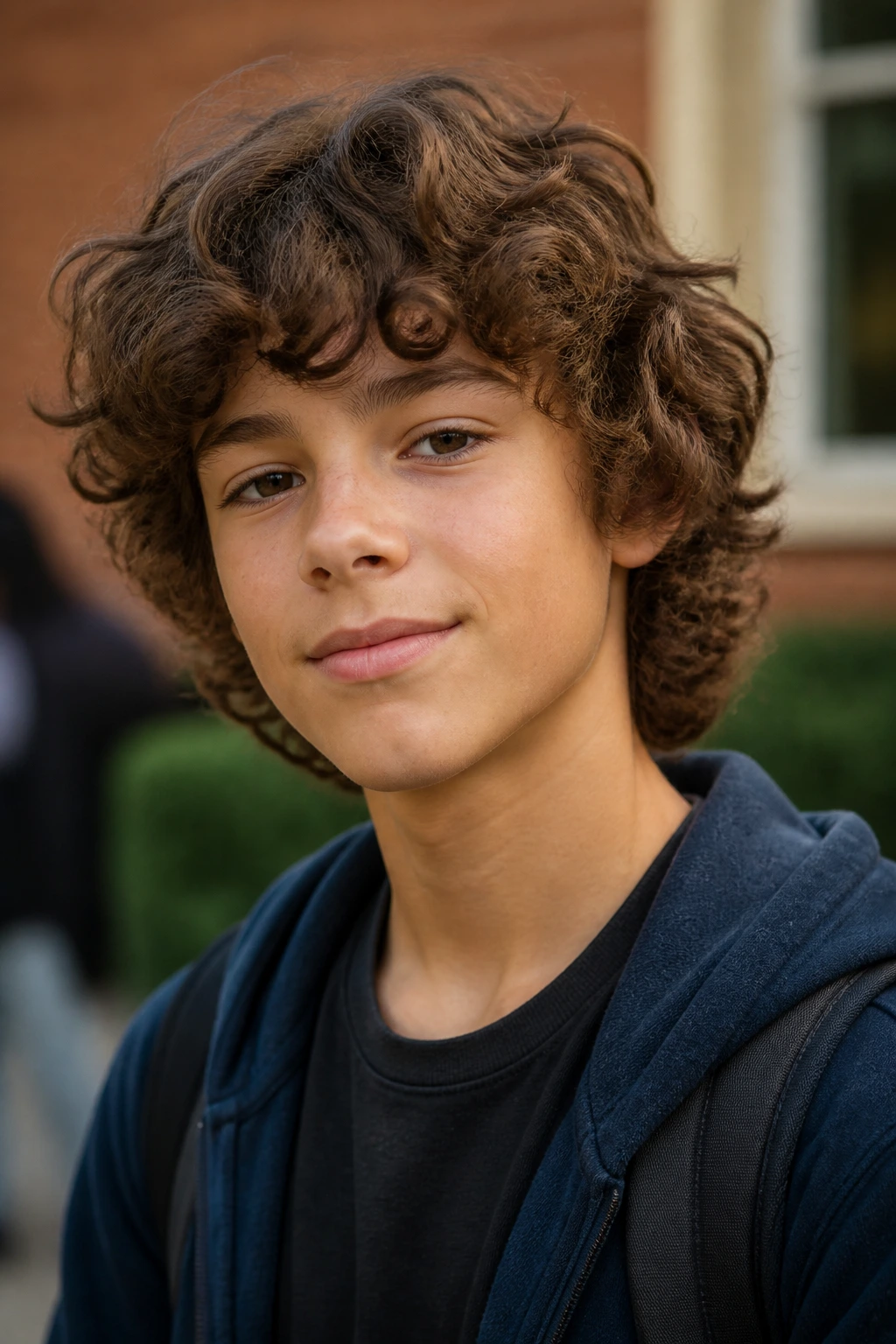
Presentation: Keep the silhouette readable from the front and side. Curly hair looks best when the top is allowed to show its texture and the edges are kept clean enough that the shape doesn’t blur into puffiness.
Accompaniments: A light leave-in, a curl cream, and, if needed, a diffuser are the useful companions here. Baseball caps and hoodies can flatten the top, so if the haircut needs volume, give it a minute to reset after pulling those off.
Portions: Shorter cuts like the crop, Caesar, and crew cut need about 1.5 to 3 inches on top. Longer looks like the shag, Ivy League, or long ringlets need enough length to bend naturally without exploding outward, which usually means more than 3 inches and careful layering.
Beverage Pairing: Water. Not because a haircut comes with a drink, obviously, but because hydrated hair and a quick mist from a spray bottle do more for curly definition than a sink full of product ever will.
Extra Styling Tweaks That Make the Cut Look Intentional
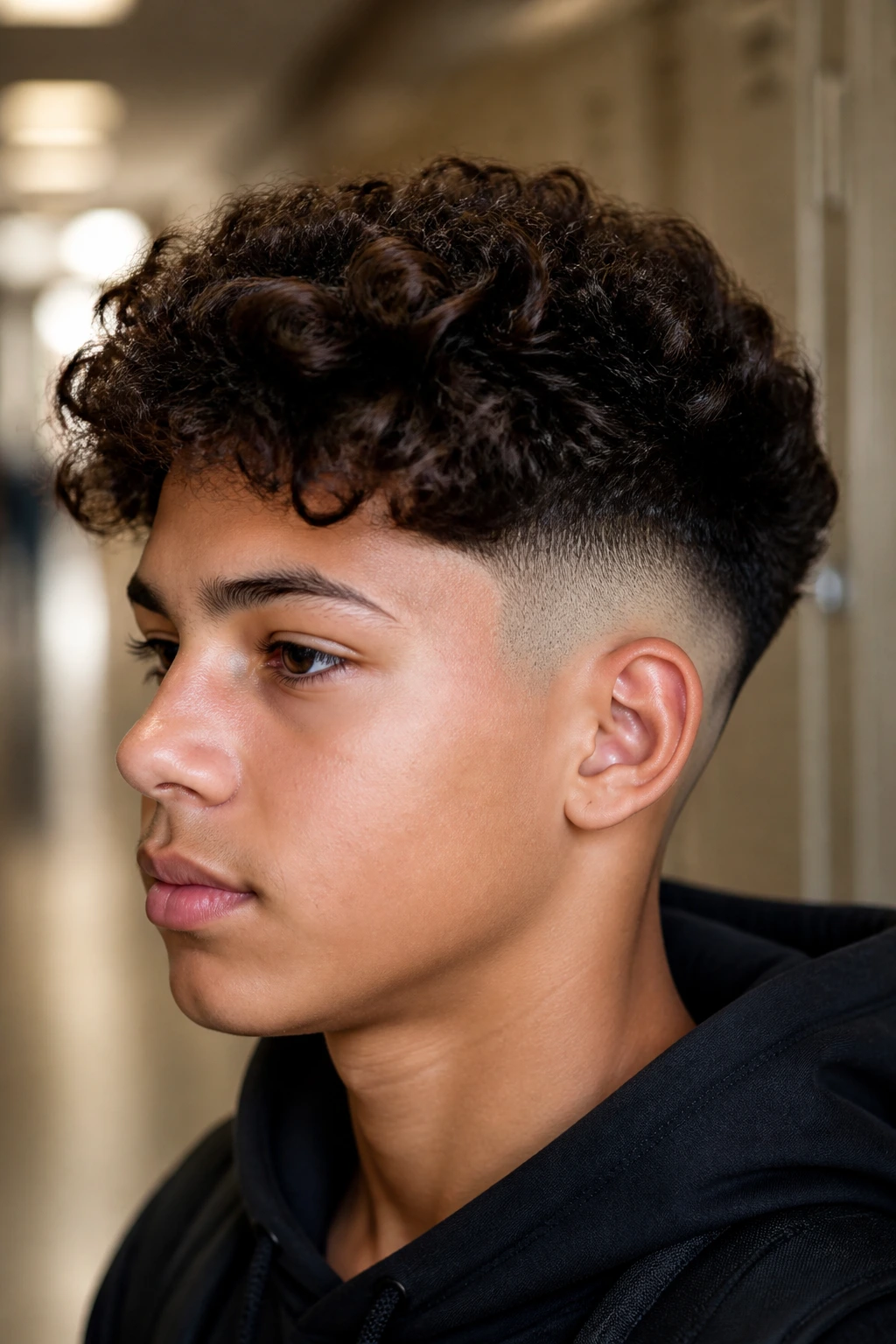
Texture Boost: A pea-size amount of curl cream worked through damp hair with the fingers gives curls a cleaner, more separated finish. If the hair is dense, scrunch upward instead of rubbing side to side, which usually creates frizz fast.
Customization: For boys who hate hair in their eyes, shorten the front a little and keep the crown fuller. For boys who want more shape, leave the fringe longer and tighten the taper around the temples. Same haircut, different feel.
Serving Suggestions: A clean neckline, a soft side part, or a tiny bit of edge cleanup around the temples can make a simple cut look much more deliberate. Those details matter more than a lot of people think. A haircut can be plain and still look sharp if the outline is handled well.
Make-It-Yours: Loose curls can wear a softer fringe and lighter taper. Tight coils can take more shape-up and slightly shorter sides. Thick hair often needs weight removed from the crown; finer curls usually need more length left in place so the top doesn’t disappear.
Keeping the Shape Between Haircuts
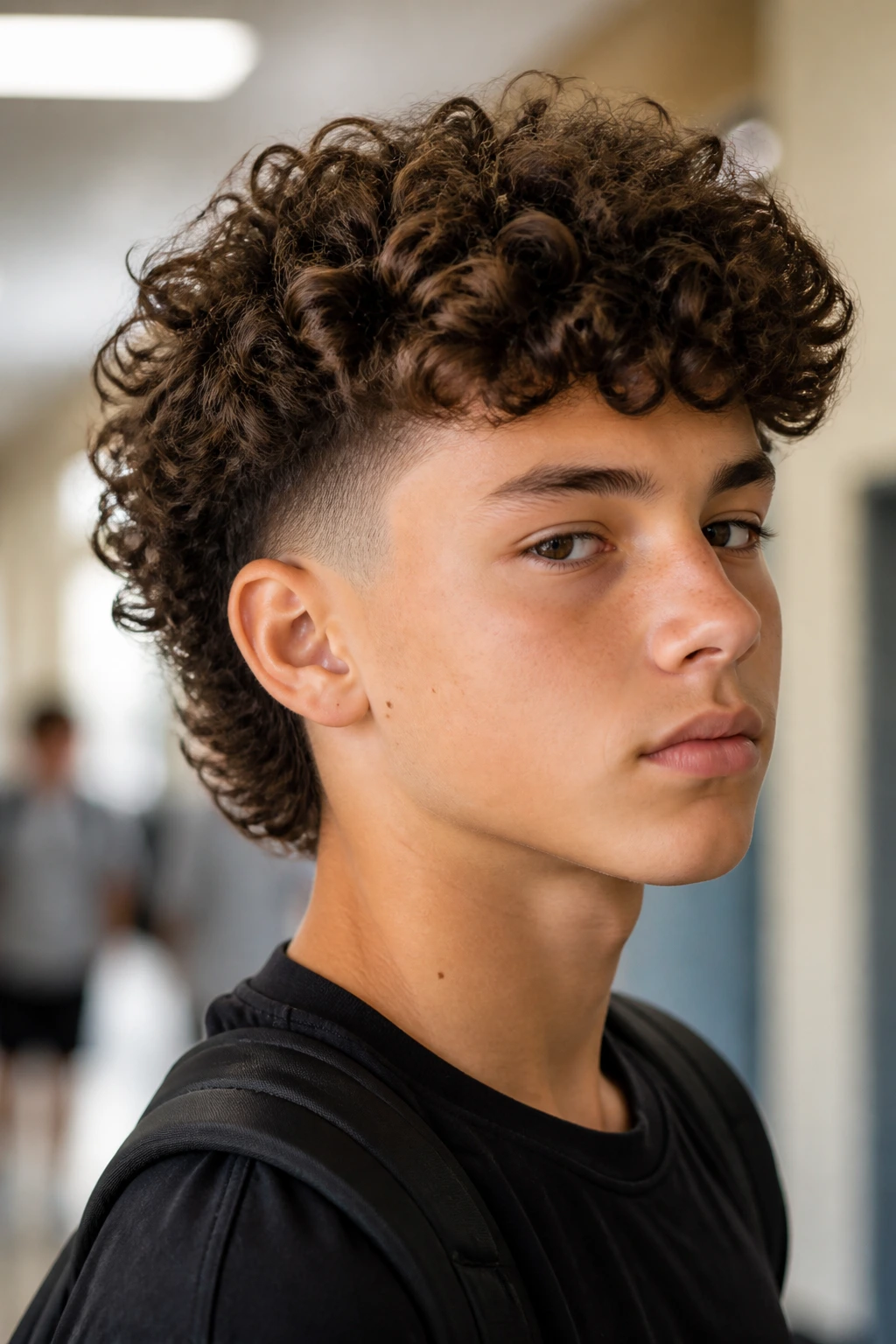
Curly hair looks its best when it’s maintained in small, regular ways instead of being ignored for a month and then rescued in a panic. A good routine starts with washing only as often as the scalp needs it. For many boys, that means every 2 to 4 days, not necessarily every day. Over-washing can strip the hair and make the curls puffier by afternoon.
Between washes, a spray bottle and a small amount of leave-in can reset the shape. Wet the hair lightly, squeeze it with your hands, and let the curls clump back together. If the top gets flattened during sleep, a quick mist and a little finger lift at the roots usually bring it back. For longer cuts, a satin pillowcase helps reduce frizz and keeps the curls from getting mashed into weird angles overnight.
Trim timing depends on the style. Tight fades and shape-ups may need cleanup every 2 to 4 weeks if the edges matter. Crops, crews, and shags can often stretch farther, but once the outline stops making sense, the haircut starts looking tired. Don’t wait until the nape is fuzzy and the temples have vanished. That extra week is almost never worth it.
If the hair is dry, add moisture before adding hold. That order matters. Product on dry curls can make them sticky or uneven, while a damp base lets the hair take shape with less fighting.
Variations and Adaptations to Try
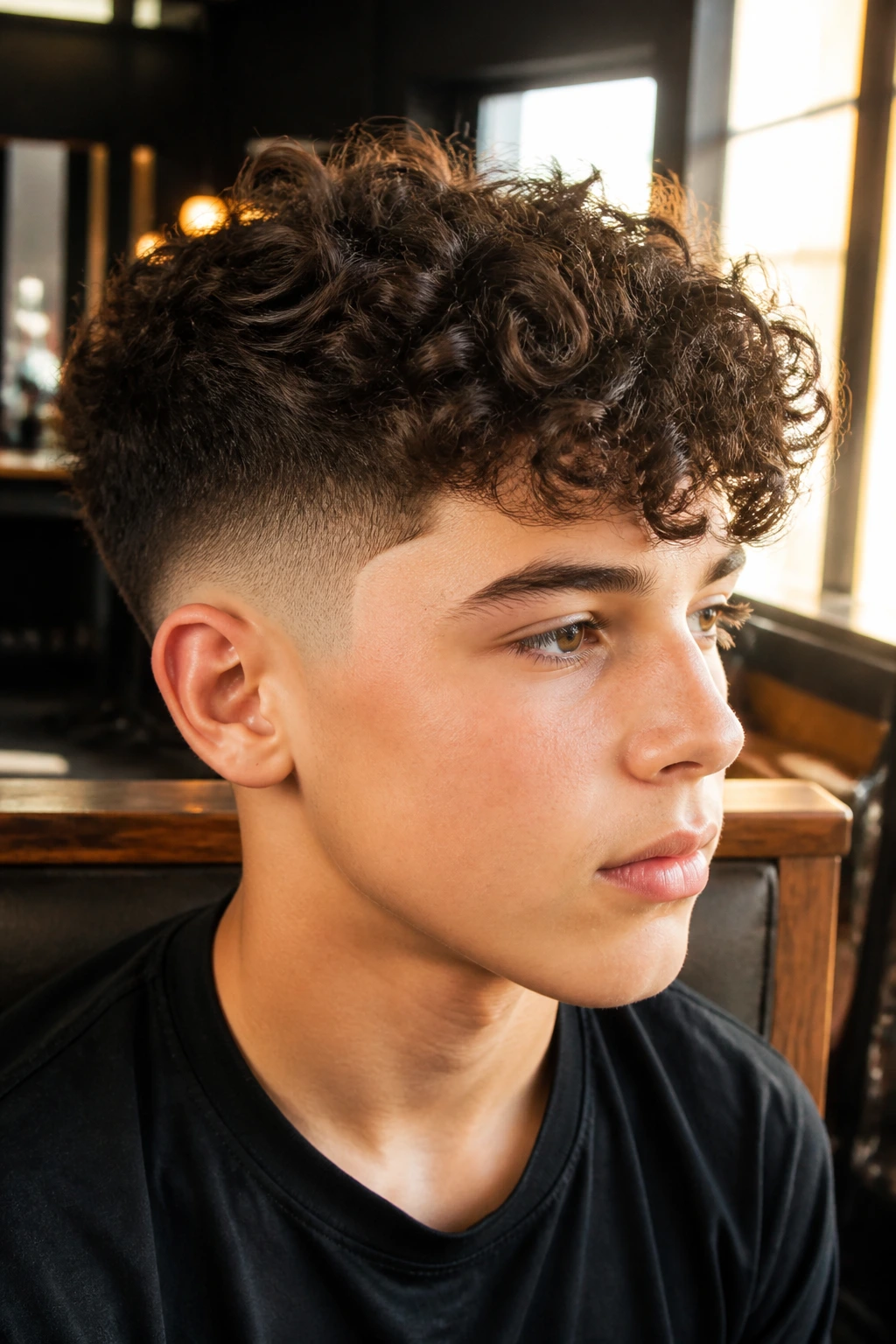
Loose-Wave School Version: If the curls lean more 2C or 3A, keep the sides a little softer and the top a little longer. That stops the haircut from looking too severe once the waves dry and loosen.
Tight-Coil Cleanup: For 4A or 4B hair, lean into the taper and shape-up while keeping enough top length to show the curl pattern. The shape matters more than the exact number of inches because shrinkage can hide a lot.
Sports-First Cut: If helmets, sweat, and daily practice are part of the routine, choose a crop, crew cut, or temple taper. These cuts come back faster after being flattened and usually need less product.
Picture-Day Polish: Side parts, Ivy League sweeps, and neat fringe cuts are better when a child needs a haircut that reads a little more dressed up. A soft cream and a clean neckline do most of the work here.
Grow-Out Friendly Shape: Soft shag, medium messy cuts, and longer ringlet styles are useful when the family wants fewer barber trips. They need a little more care, but they don’t collapse as quickly as a sharp fade.
Bold Shape for Confident Kids: Burst fades, curly mohawks, and mullet-inspired cuts have more personality. Keep the sides clean and the top controlled so the style looks intentional instead of chaotic.
Common Mistakes That Make Curly Cuts Puff Out
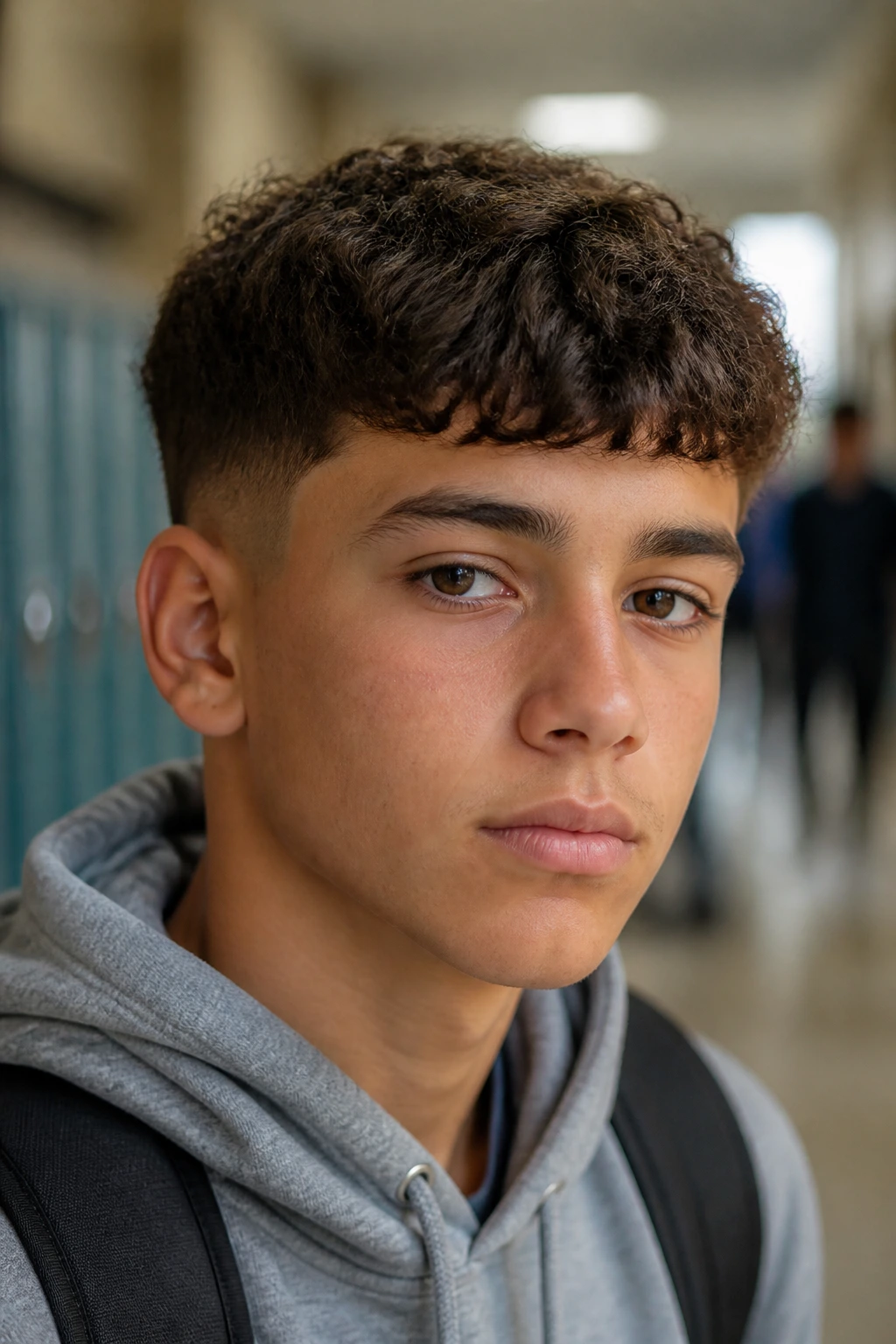
Cutting the hair too short while it’s wet: Wet curls stretch farther than dry curls, so a cut that looks safe in the chair can shrink into a blunt puff later. The fix is to leave more length than you think you need and check the shape after the hair dries.
Using thinning shears everywhere: Thinning curls indiscriminately can leave a frizzy halo and patchy ends. A better approach is point-cutting and targeted weight removal where the hair actually bulks up.
Brushing curls dry: This breaks the curl pattern and creates that wide, fuzzy look by midday. Use fingers or a wide-tooth comb only when the hair is damp and coated with conditioner or leave-in.
Choosing a product that’s too heavy: Thick grease or sticky pomade can flatten the top and make the scalp feel dirty. Light cream, mousse, or a small amount of gel usually works better unless the hair is extremely coarse.
Ignoring the cowlicks and growth pattern: A cut that fights the direction of the hair will need daily correction. The fix is to tell the barber where the hair pushes up, where it splits, and which side naturally falls forward.
Letting the fade climb too high: High fades can look sharp, but too much removal around the sides makes the top look bigger than the head. Keep the fade low or mid if the goal is balance rather than drama.
Questions Parents and Kids Ask at the Barber Chair
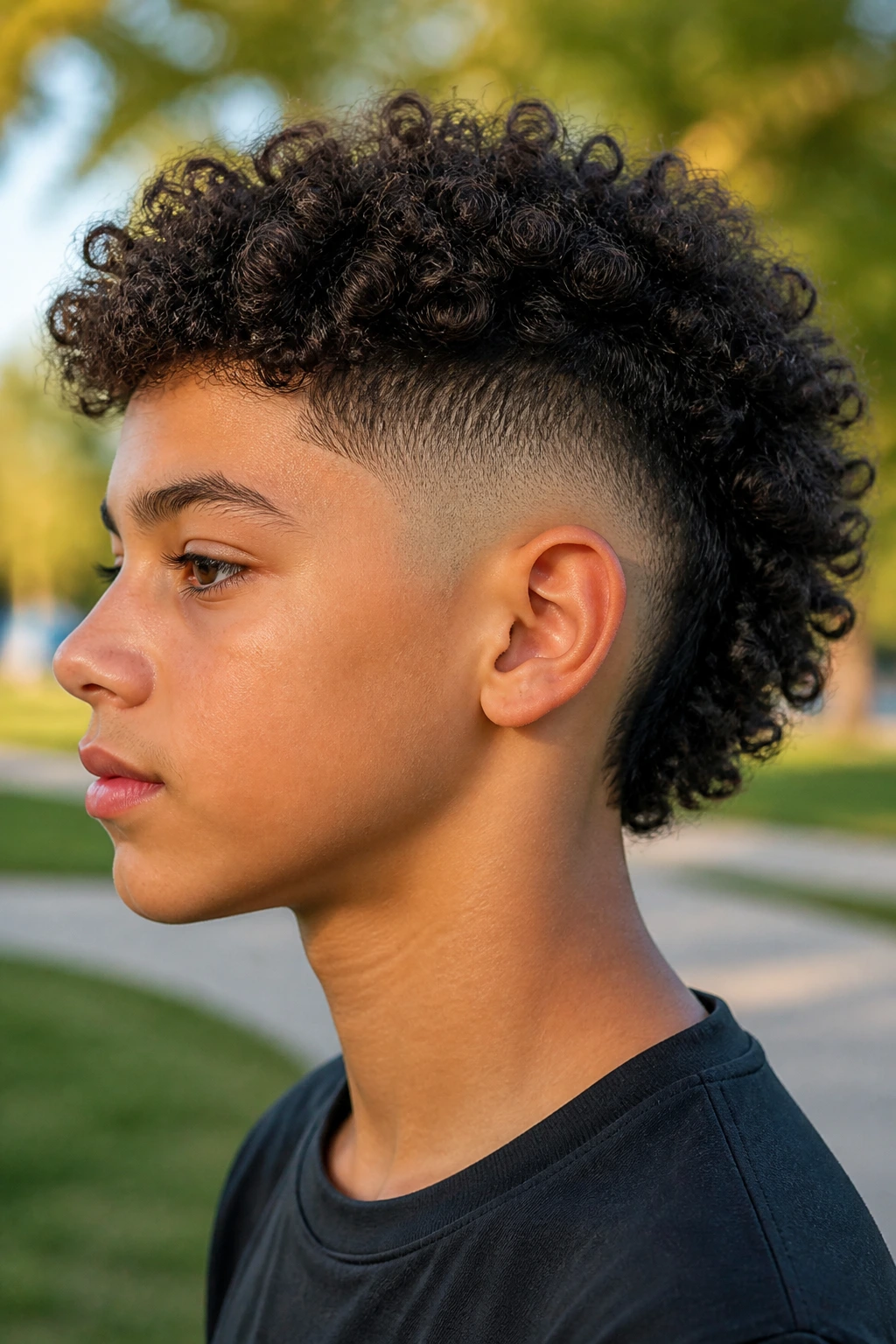
Should curly hair be cut wet or dry?
Mostly dry or at least checked dry is usually safer, because curls shrink a lot once they’re no longer stretched by water. A barber can still use damp hair for control, but the final shape should be judged when the curls are in their real state.
How short can curly hair go before it loses its shape?
That depends on the curl pattern, but very tight cuts can still show texture at short lengths while looser curls may need more room. If the goal is a visible curl pattern, leaving at least a little top length usually helps.
What if school does not allow fades?
Temple tapers, soft crops, Caesar cuts, and low shape-ups are the easier choices. They keep the sides neat without creating a sharp fade line that a stricter dress code might dislike.
How often should we get a trim?
Fades and shape-ups often need cleanup every 2 to 4 weeks. Longer shags, ringlets, and medium cuts can go longer, but once the outline starts looking fuzzy or top-heavy, it’s time.
Can a boy with thick hair still wear a fringe?
Yes, but the front usually needs careful length control so it doesn’t stand up like a shelf. A barber may remove some weight in the crown so the fringe can fall forward more naturally.
What if the curls look puffy after washing?
That usually means the hair needs more moisture or less rough towel drying. Use a T-shirt or microfiber towel, then add a small amount of leave-in and scrunch instead of rubbing.
Is gel bad for curly hair?
Not bad, but often too much for a middle school cut unless the hair is very stubborn. A lighter cream or foam usually gives enough hold without making the curls crunchy.
How do we explain the haircut to the barber without getting a bad result?
Use length, shape, and maintenance words. Say how short the sides should be, how much top length you want, and whether the cut needs to work with or without daily styling. Photos help, but clear words help too.
Fresh Curly Haircuts That Hold Their Shape
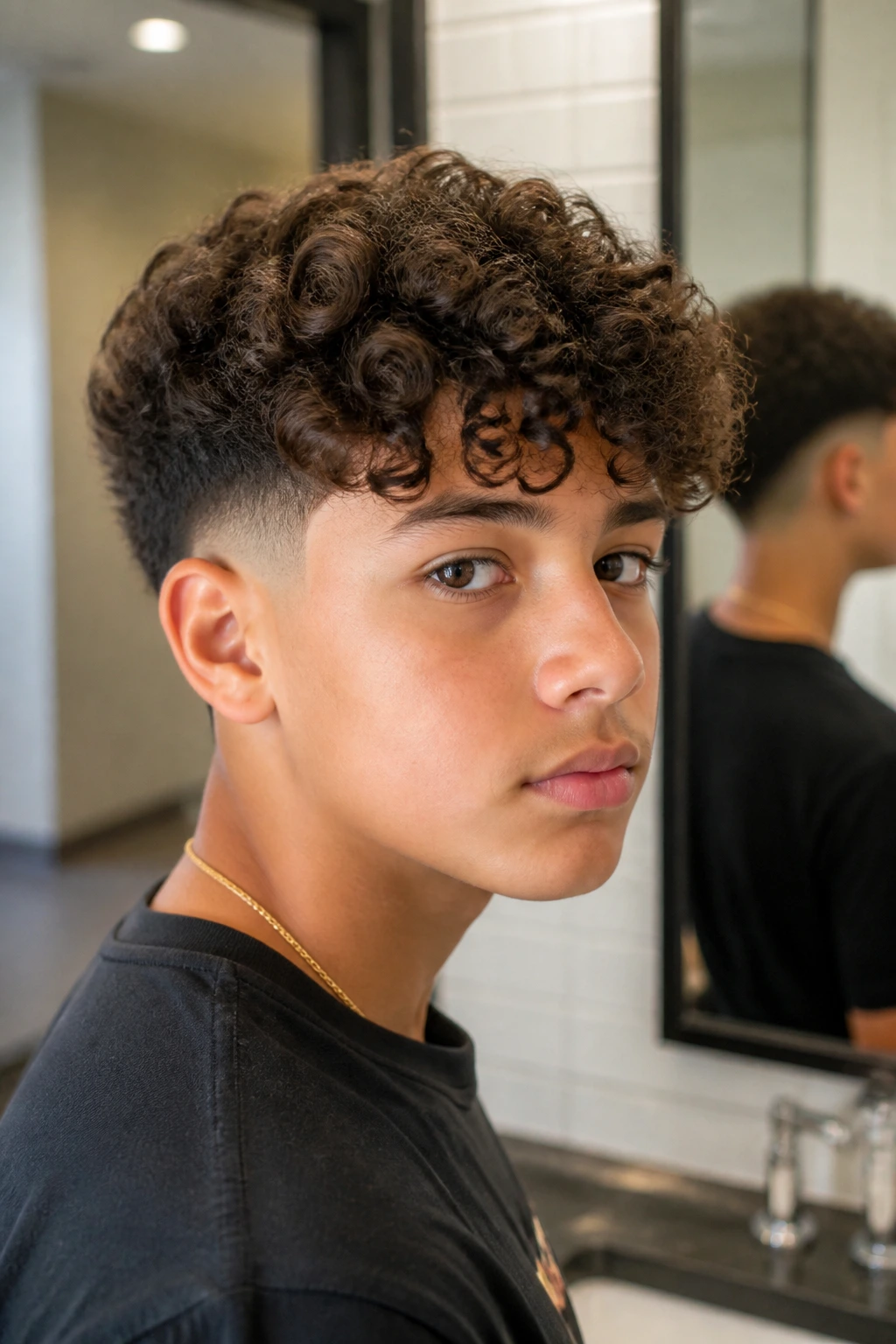
The best curly haircut for a middle school boy is the one that makes the morning easier without flattening what makes his hair interesting in the first place. Short crops, soft shags, neat tapers, bold fades — they all work for a reason, but only when the barber respects the curl pattern and the family is honest about upkeep.
That’s really the dividing line. Some cuts are built for speed. Some are built for attitude. A few handle both. The useful part is knowing which kind of shape fits the kid in your chair, not the photo on the screen.
Pick the cut that matches the curl, the school rule, and the amount of patience on a Monday morning. The good ones will still look like themselves when the curls dry, and that’s the part that matters most.