



Fade mullets for short hair and oval faces have a funny reputation. People hear “mullet” and picture something loud, shaggy, and a little bit unserious. Then they see a clean fade on the sides, a compact top, and just enough length in back to keep the shape alive, and the whole thing clicks. Sharp. Modern. Slightly unruly in the right way.
That balance matters more on oval faces than a lot of people realize. Oval proportions already give you room to play, which means the haircut doesn’t need to correct anything. It can lean into texture, contrast, and movement instead. Keep the sides too bulky and the face starts looking wider than it is. Push the fade too high, and the cut turns into a disconnected stripe with a tail. The sweet spot sits right between those two mistakes, and short hair makes the proportions easier to control.
Short hair changes the game in a useful way. You do not need a giant back section to get mullet energy. A few inches in the nape, a tight fade around the ears, and some deliberate texture on top are enough. The haircut reads from the outline first, then from the movement. That is why the best versions look intentional even when they are messy.
There are 18 solid ways to wear the shape below, and they are not all the same cut with a different name slapped on top. Some keep things neat. Some push the edge. Some work better with curls, some with straight hair, some with a little beard, some with a clean face. The good ones all solve the same problem in different ways, and that is where the fun starts.
Why These 18 Cuts Earn Their Keep
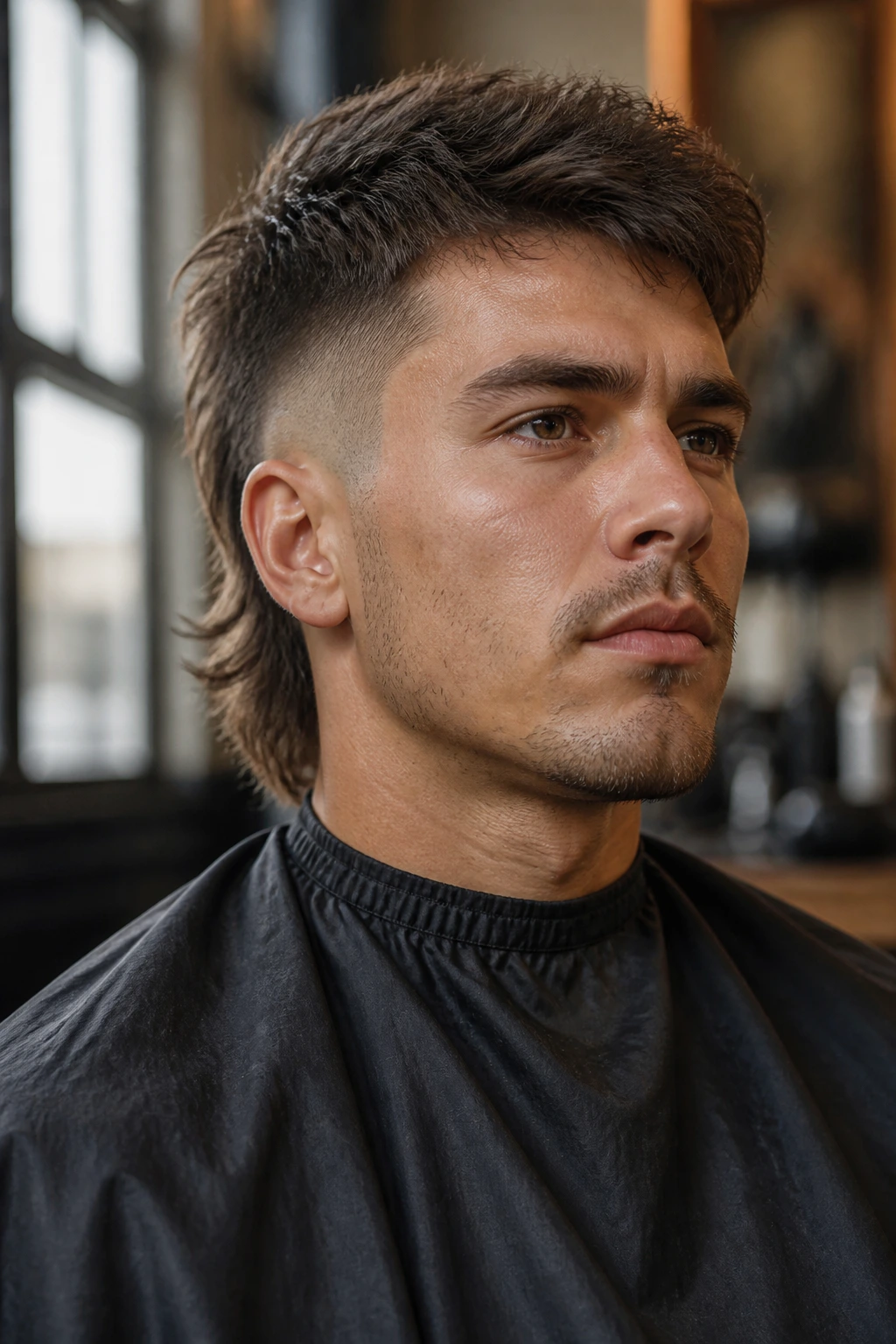
Short Hair Friendly: These versions keep the top and back compact, so you get mullet shape without waiting months for the hair to grow out.
Oval Face Balance: Oval faces already carry proportion well, which means the haircut can use height, fringe, or a stronger fade without fighting your features.
Fade First, Mullet Second: The fade keeps the sides tidy enough that the back length reads as a choice, not an accident after a bad trim.
Texture Does the Heavy Lifting: A short mullet needs choppy ends, curls, or movement on top; blunt, flat hair usually makes the whole thing look stuck.
Easy to Personalize: A half-inch change in fringe length or fade height can move the cut from clean-cut to rougher in a hurry.
Barber-Order Friendly: These styles can be explained with simple clipper numbers, rough inch counts, and one reference photo, which saves you from vague chair-side confusion.
1. Low Skin Fade With a Tight Tail
A low skin fade with a tight tail is the least theatrical version of the cut, and that is exactly why it works. The sides drop to bare skin around the ear, the top stays short and textured, and the back keeps just enough length to read as a mullet without waving a flag about it. On an oval face, that low fade preserves balance instead of stretching the head shape upward.
Why It Flatters a Shorter Top
The low fade keeps the visual weight low, which is useful when the top only has 1.5 to 2 inches to work with. You get a clean edge around the temple, a neat blend behind the ear, and a nape section that tapers instead of droops. The result feels controlled. Not stiff. Controlled.
Quick Notes to Ask For
- Keep the fade low, starting around the bottom of the sideburn.
- Leave 1.5 to 2 inches on top for texture.
- Keep 1.5 to 2.5 inches in the back so the tail actually shows.
- Use matte paste, not glossy gel, or the whole shape turns greasy fast.
- Ask for the neckline to taper into the back instead of stopping in a hard block.
Best for: guys who want the mullet idea without the full retro drama. If you work with a short haircut but want one detail that makes people look twice, this is the quietest way to do it.
2. Burst Fade With a Curly Crown
The burst fade is the cut that makes curly hair behave without stripping out its character. It curves around the ear like a tight halo, then leaves the crown and back room to breathe. On short hair and oval faces, that round fade works especially well because it follows the head’s natural shape instead of chopping it into hard boxes.
The curly crown is the part that sells it. Keep the top at about 2 to 3 inches, let the curls spring up, and allow the back to stay a touch longer so the silhouette has movement from every angle. If the top is shorter than that, the curls can lose enough weight that they sit flat and fuzzy. Too long, and the cut stops feeling short.
This one likes curl cream more than heavy clay. Work the product into damp hair, squeeze the curls upward with your hands, and leave the front slightly loose so the fringe doesn’t fight the forehead. The burst fade also gives you a clean side profile, which matters more than people think. From the side, this cut looks deliberate. From the front, it stays easy.
3. Shadow Fade With a Choppy Fringe
Why does a shadow fade look cleaner on an oval face than a hard skin fade? Because the softer blend keeps the haircut from shouting at the eye. The shadow fade leaves a faint dark band as it transitions down the side, so the cut has contrast without turning harsh. That matters when the top is short and the fringe is part of the design.
How to Wear It
The fringe should sit forward in broken pieces, not one flat curtain. A 1.5 to 2 inch front length usually does the job. Ask for point-cut texture at the ends, because blunt edges lie flat and make the haircut feel more like a buzz cut with ambitions. The back can stay in the 1.5 to 2 inch range too, which keeps the tail from getting shaggy too fast.
Use a matte cream or a light clay, then push the fringe slightly off-center. That tiny shift keeps the oval face from looking too symmetrical. Strange thing, but it matters. The cut has enough structure already; it does not need perfect alignment.
4. Drop Fade With Feathered Back Length
Picture a barber chair, clippers humming low, and someone asking for “something short, but not boring.” A drop fade is usually where that conversation starts to make sense. The fade dips behind the ear and falls lower at the back, which gives the haircut a natural curve. On short hair, that curve helps the mullet section feel built in instead of added on.
- Keep the fade dropping behind the ear rather than staying level.
- Leave the nape a little feathered, not blunt.
- Ask for the top to be textured, not heavily layered.
- If your hair is straight, use a small amount of matte paste and finger-comb it back and slightly sideways.
- If your hair has a wave, let the feathered tail stay a bit messier.
That back length should move. It should not sit like a shelf. A feathered finish lets the ends flick instead of clump, which matters if you only have a few inches to work with. I like this version on oval faces because the drop fade softens the outline near the jawline, and that keeps the haircut from feeling top-heavy.
5. Temple Fade With a Neat Mullet Spine
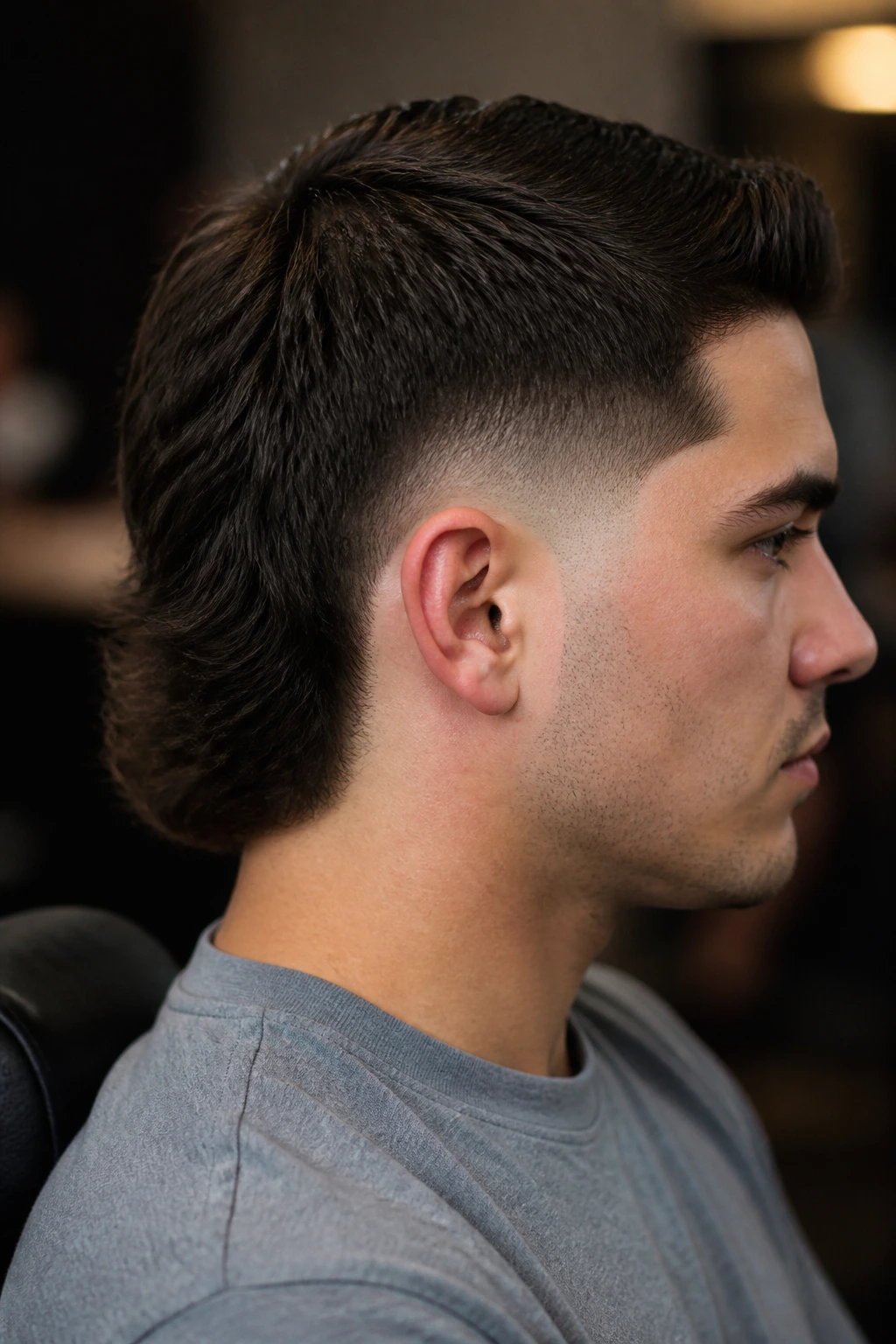
The temple fade is the neat freak in this group. It tightens the sides right where the head starts to widen near the temples, then leaves the rest of the cut free to do its thing. On short hair, that means you can keep the mullet spine visible without letting the cut sprawl.
The spine is the line of length that runs from the crown into the back. Keep it short and tidy, around 2 inches on top and slightly more at the nape, and the whole haircut reads as clean rather than wild. Oval faces handle this well because they already have a smooth balance front to back. The temple fade adds definition right where definition helps most.
I like this cut with a soft side part or a brushed-forward top. It avoids the hard, spiky look that can make a short mullet feel dated. A little matte powder at the roots gives the crown lift without turning the hair stiff. If you want the back to look more deliberate, ask for the ends to be lightly razored. Not shredded. Just softened enough to move.
6. High Fade With a Razor-Cropped Top
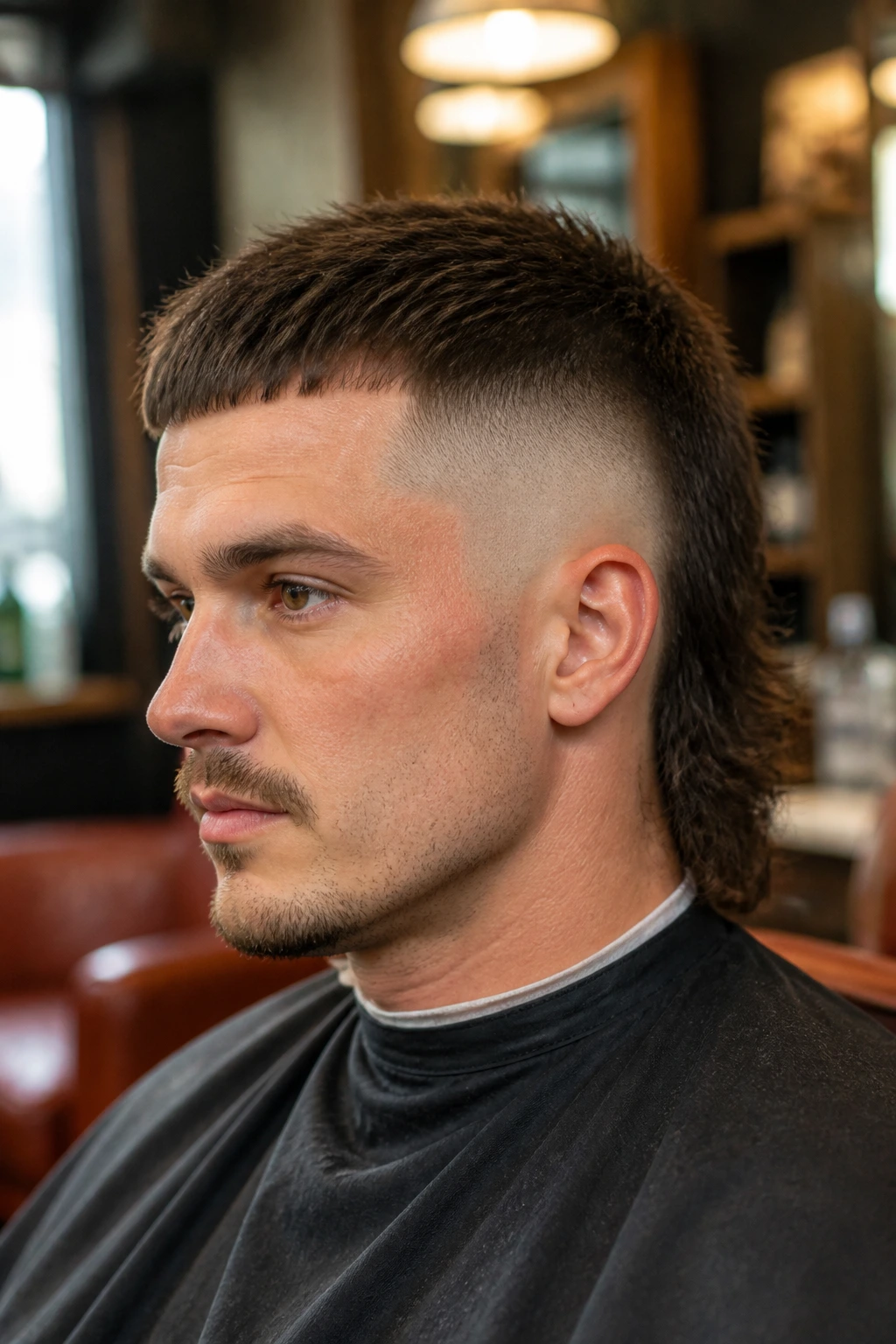
A high fade with a razor-cropped top is the loudest version here, and it is best when you want the haircut to read from across the room. The sides climb up farther than a low or mid fade, which exposes more head shape and throws the remaining length on top into sharper relief. That can work on an oval face because the face does not need side bulk to feel balanced.
Unlike a low fade, this one leans into contrast. The top stays short—often around 1 to 1.5 inches—with rough texture cut into the surface so it does not look shaved into a single block. The back should still carry enough length to be seen, though. If the nape gets too tiny, the mullet part disappears and you are left with a high fade and attitude.
This version fits thick straight hair especially well because the short cropped top avoids puffiness. Use a matte clay or even a touch of styling powder if the hair wants to collapse. I would not call this subtle. It is tidy, but not subtle.
7. Mid Fade With a Textured Crop Front
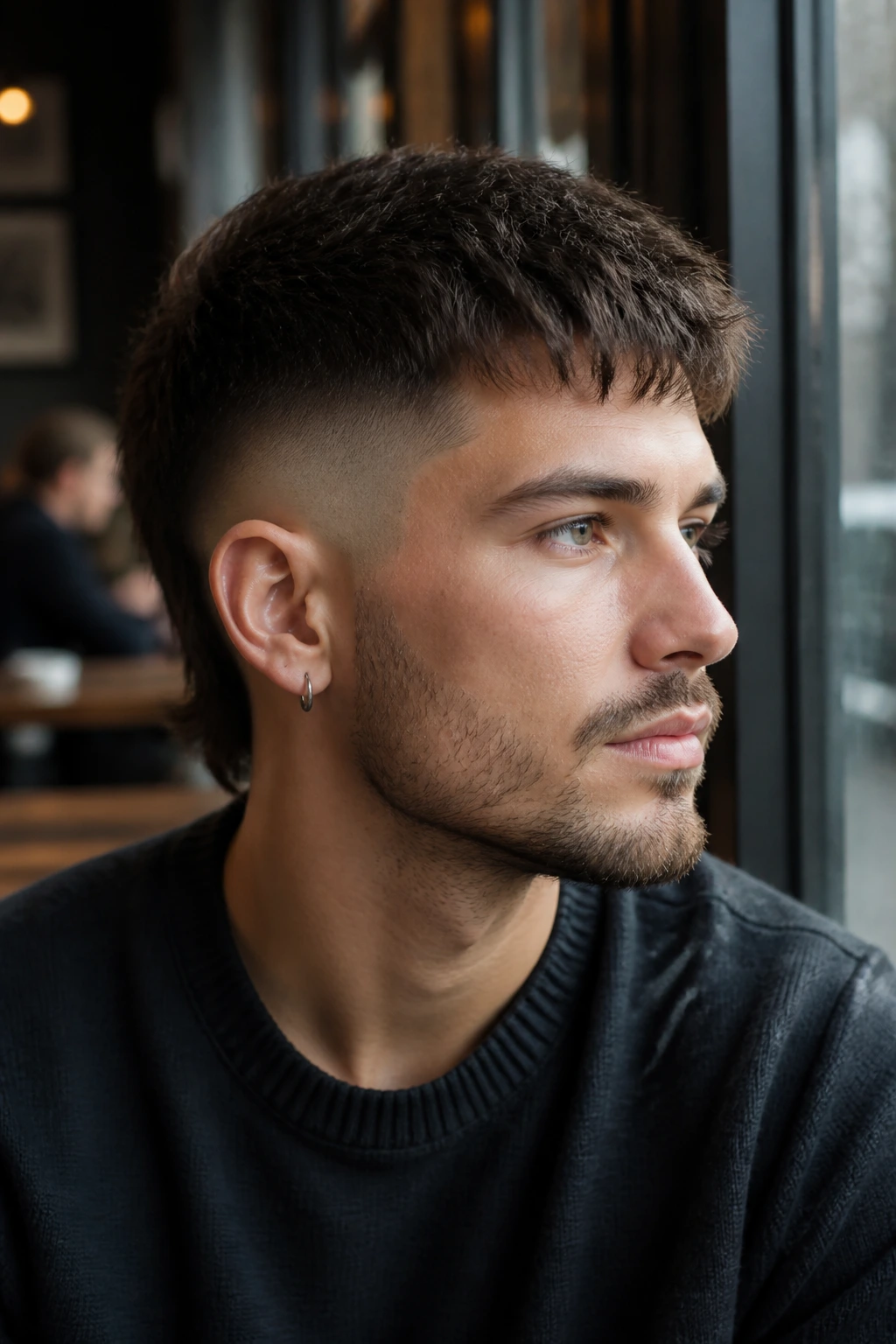
The mid fade sits in the middle for a reason: it gives you enough side clean-up without making the haircut look severe. On short hair and oval faces, that middle ground is useful because you get structure without losing softness around the profile. The front crop keeps the haircut looking modern instead of retro-costume.
A textured crop front usually means 1.5 to 2 inches up front, with the fringe cut into uneven pieces so it can sit forward or slightly to the side. The back stays a little longer than the top, but not by much. The mullet idea shows up in the outline, not in a dramatic tail.
This cut is a good match for guys who like hair that can be worn messy in five seconds. A sea-salt spray on damp hair, a quick blow-dry with fingers, and a dab of paste through the front is enough. If the top gets too polished, the texture disappears and the haircut loses its bite.
8. Skin Fade Mullet for Thick Straight Hair
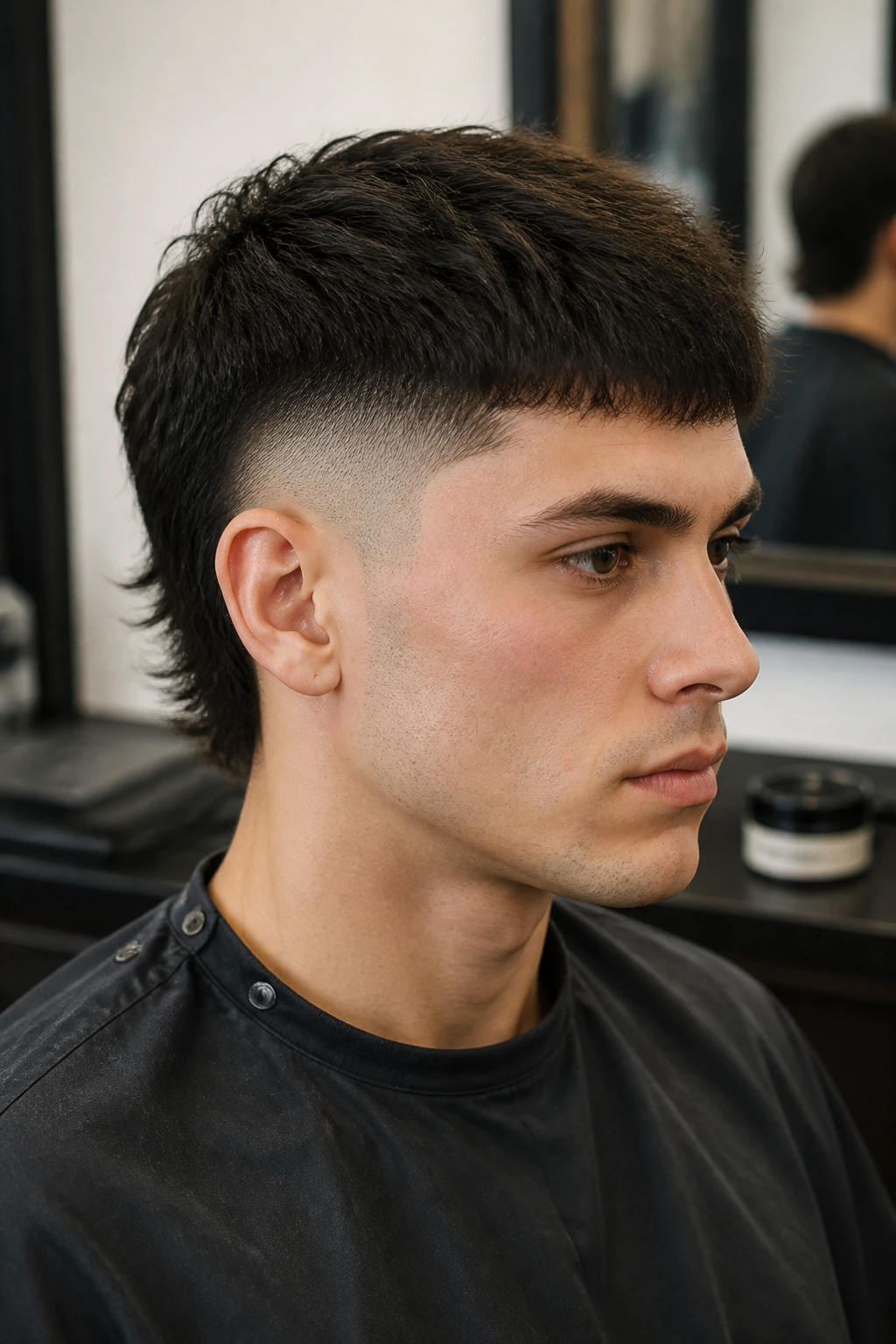
Thick straight hair can either look expensive or look like a helmet. There is very little middle ground. A skin fade helps by removing weight at the sides, which keeps the shape from ballooning out at the ear line, and the short mullet length in back gives the style somewhere to land.
The key is restraint. Keep the top around 2 inches, maybe a touch more if the hair lays very flat, and ask for internal texture so the top does not sit as one sheet. The nape can be longer than the top, but not by a mile. On thick straight hair, too much back length turns into a blunt curtain.
A matte paste with a bit of grip works better than shine. Work it through dry hair after a quick blow-dry, then push the top forward and rough it up with your fingers. This cut is one of the best examples of why fade mullets for short hair and oval faces can be practical. The fade does the cleanup, and the short back keeps the whole thing from feeling overgrown three days later.
9. Soft Burst Fade With Wavy Ends
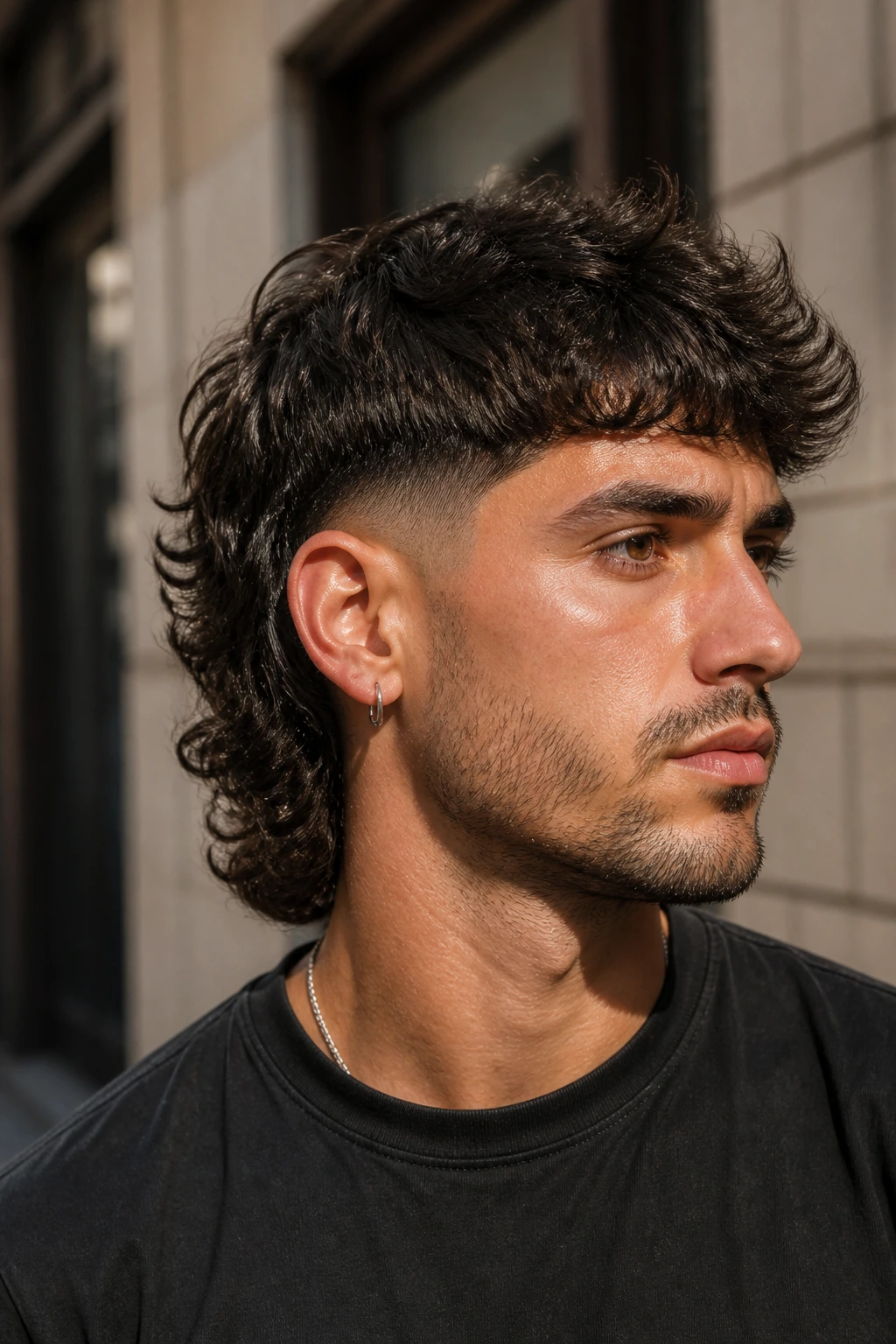
If your hair has a little wave, a soft burst fade gives you shape without boxing the wave in. The fade curves around the ear, but it stops short of the stark edge that a skin fade can create. That softer line keeps the haircut from fighting natural texture.
The wavy ends matter more than the fade, honestly. Keep the back long enough for the wave to bend—usually around 2 to 3 inches—then let the ends sit feather-light. The top can stay slightly shorter so the front does not swamp the forehead. Oval faces can handle a bit of movement near the temples, so you do not need to lock everything down.
Use a light cream or a curl-enhancing lotion, then scrunch the back section and leave the front more controlled. That contrast between the neat fade and the loose wave is where the cut comes alive. The whole shape looks easier than it is, which is usually a sign that the haircut is doing real work.
10. Disconnected Fade With a Hard Part
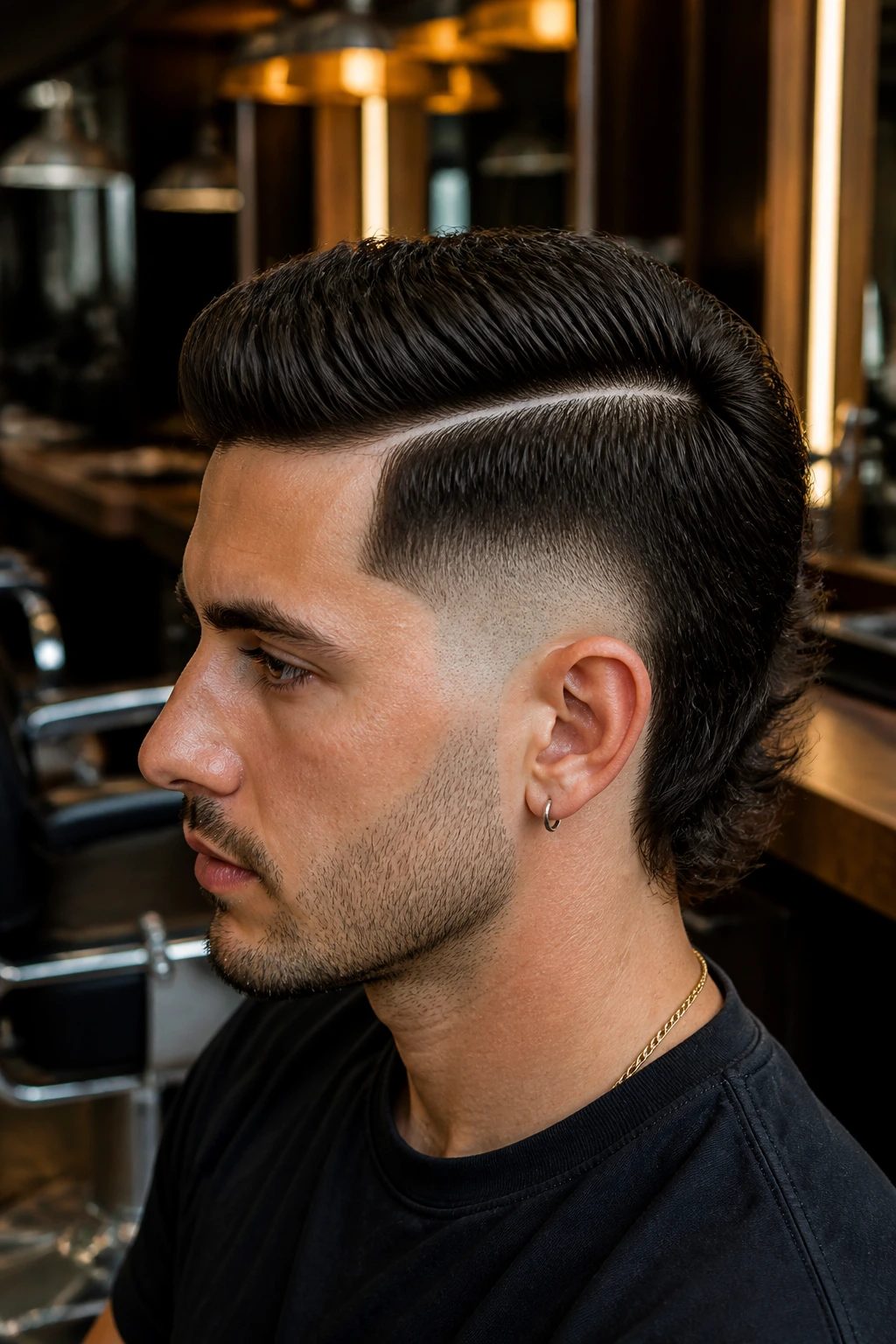
A disconnected fade with a hard part is not a shy haircut. The line is the point. The faded side stays very short, the part carves a clear break through the top, and the back keeps enough length to give the cut a mullet edge without drifting into chaos.
Why it works on an oval face: the face shape can take a hard line without getting boxy. The part gives the top direction, which helps if your hair likes to flop wherever it wants. Keep the top at about 2 inches, then direct it across the hard part with a bit of matte paste. The back should be visibly longer, but still tidy.
What to Watch For
- A hard part is sharp. It needs upkeep every 2 to 3 weeks.
- If the part line is too wide, the top looks patchy instead of clean.
- If the back grows unchecked, the disconnect starts to feel random.
- A little beard or sideburn taper helps the cut connect better.
This cut suits someone who likes clear edges and does not mind maintenance. It is one of the few short mullets that can feel almost tailored.
11. Low Taper Fade With a Swept Fringe
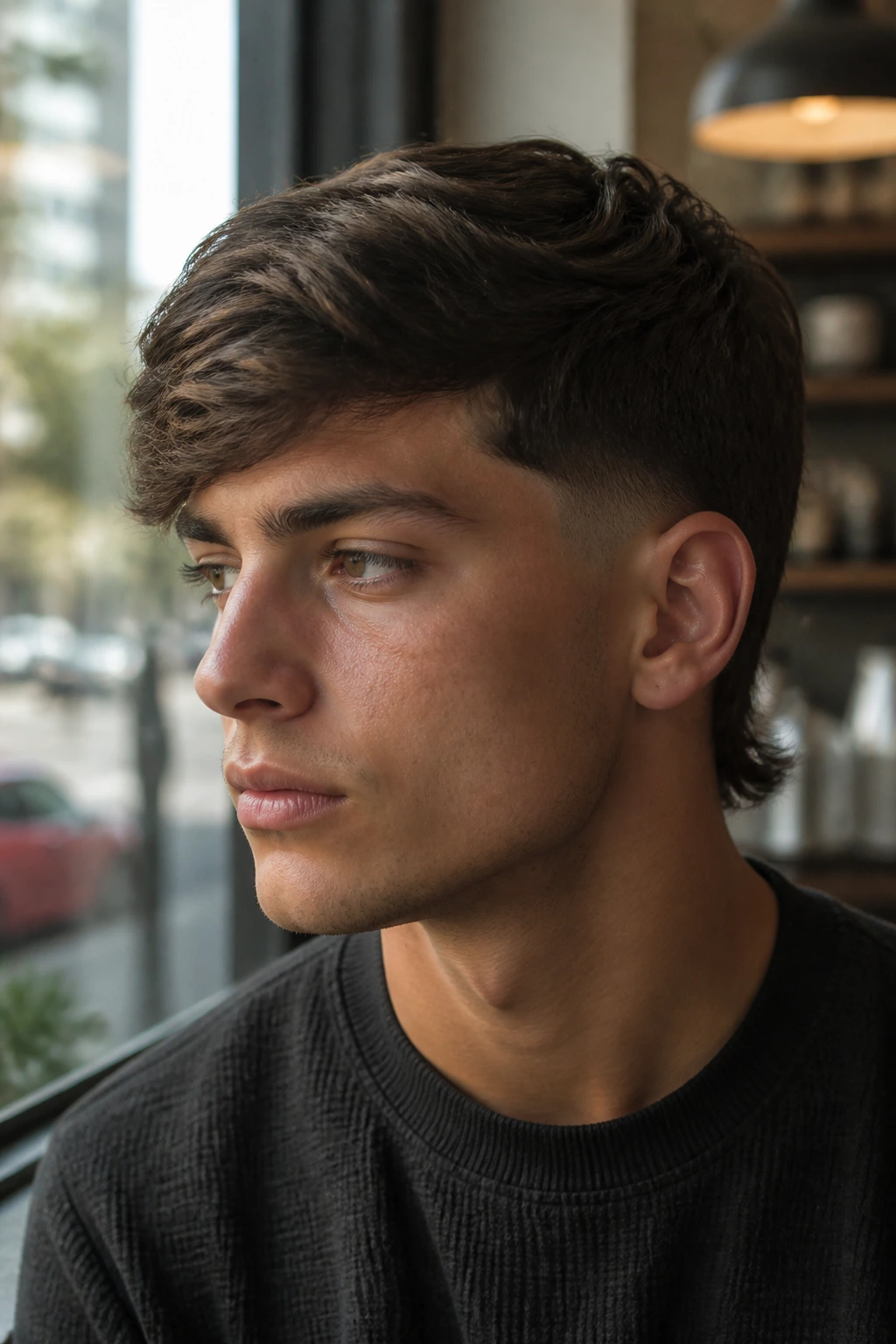
Unlike a skin fade, a low taper fade keeps more softness around the side and back, which gives the haircut a calmer read. That makes it a strong choice if you want a mullet shape but do not want the sides taken down to the skin. On an oval face, the taper lets the proportions stay relaxed.
The swept fringe is the part that keeps the cut from feeling plain. Brush the front slightly to one side, not straight back, and leave enough length—usually 2 inches or so—for the fringe to move. The back can stay short and tapered rather than shaggy. The whole point is lightness.
This is the cut I would point people toward when they want a mullet influence in a school-friendly or work-friendly package. It still has the longer nape. It still has the fade. It just does not shout about either one. A light cream or grooming lotion usually handles the style without making the hair stiff.
12. Curly Fade Mullet for Short Coils
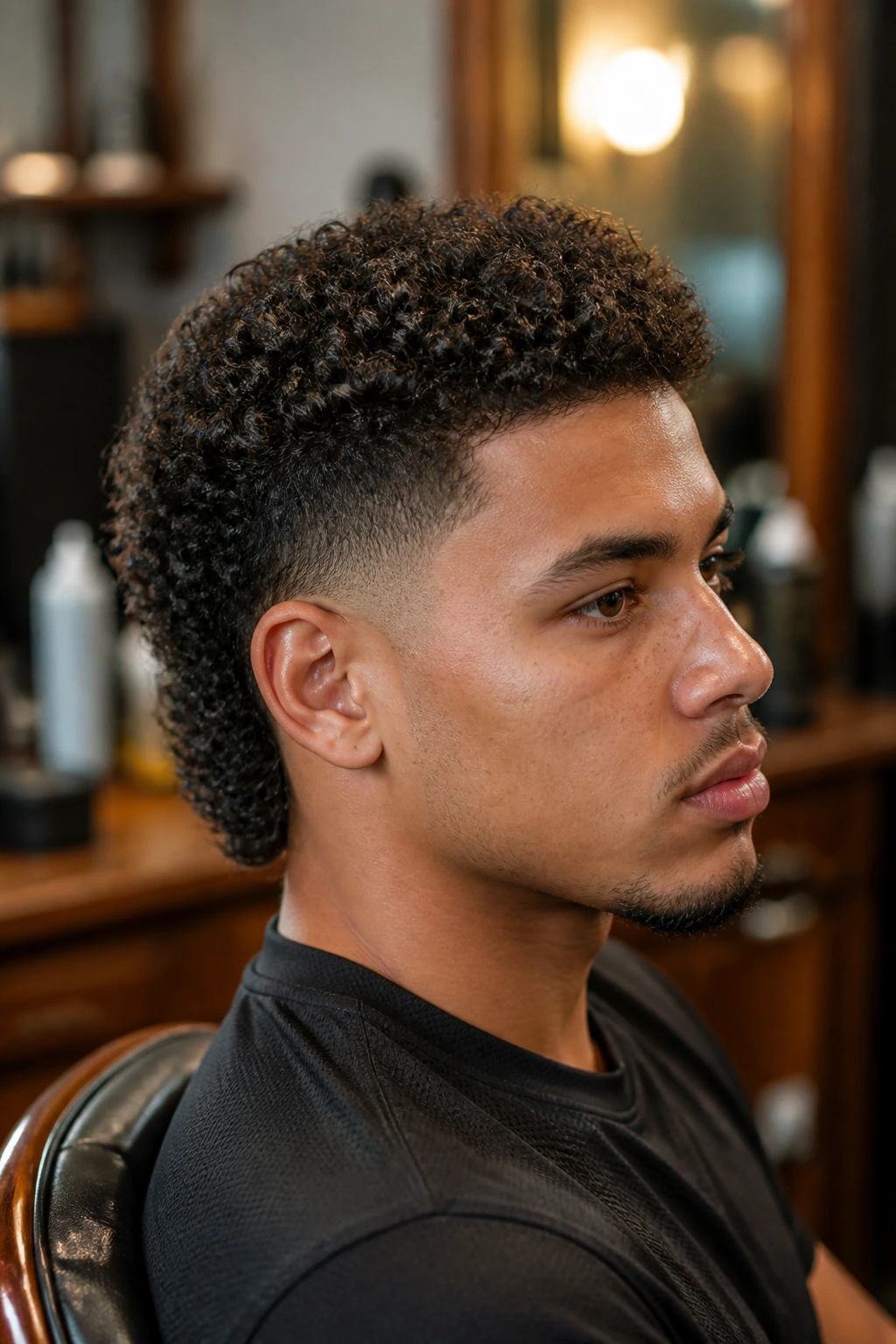
Short coils love a cut that gives them room to breathe near the crown and discipline near the sides. A curly fade mullet does exactly that. The fade removes bulk around the ears, the crown stays rounded, and the back carries enough curl length to read as intentional.
Keep the top and back in the 2 to 3 inch range if your coils shrink up a lot. That shrinkage matters. What looks long when wet can disappear once dry, and a mullet needs visible outline. Ask for the ends to stay rounded, not flattened by clipper work. Rounded ends sit better on coil patterns.
Use a leave-in conditioner first, then a cream or gel that does not flake. The goal is definition, not crunch. If the back starts puffing out, the shape loses its line. This version is one of the easiest ways to make fade mullets for short hair and oval faces look balanced, because the coils add movement while the fade keeps the outline crisp.
13. Modern Shag Mullet With a Fade
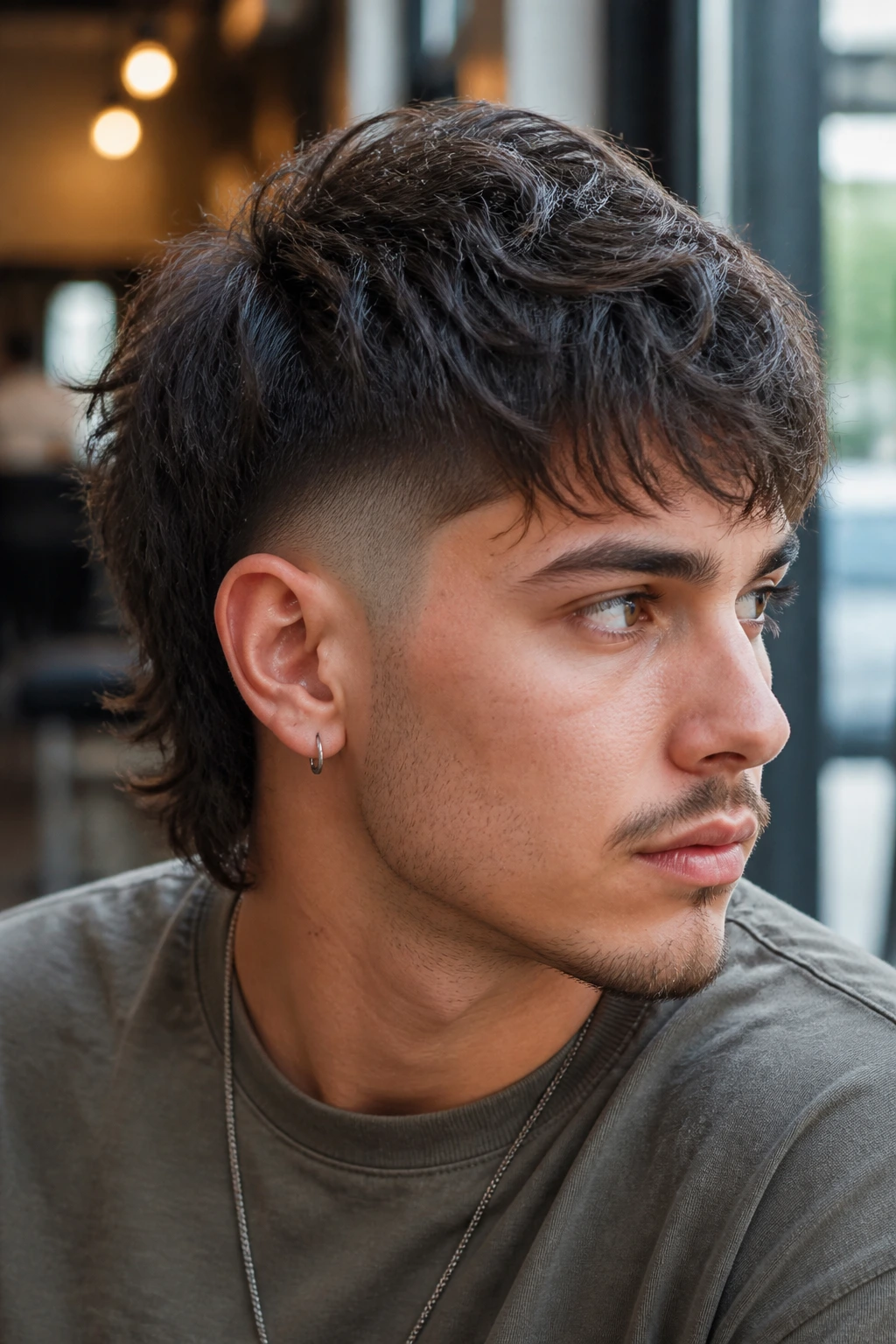
A modern shag mullet is what happens when you let texture have a little more say. The layers are softer, the crown is fuller, and the back is less tail-like than in stricter versions. The fade keeps the sides from getting bulky, so the shagginess stays on purpose.
This cut works well when the top has 2 to 4 inches to play with. That extra little bit lets the layers sit in different directions, which is the whole charm of a shag. On oval faces, the extra movement near the temples and cheek line adds softness without dragging the face down.
I like this one with a matte paste worked through almost dry hair, then scrunched and separated with the fingers. It should look like it moved a little while you were wearing it. Not like you spent 40 minutes trying to force it. There is a line there. Stay on the right side of it.
14. Rounded Fade Mullet With a Heavy Crown
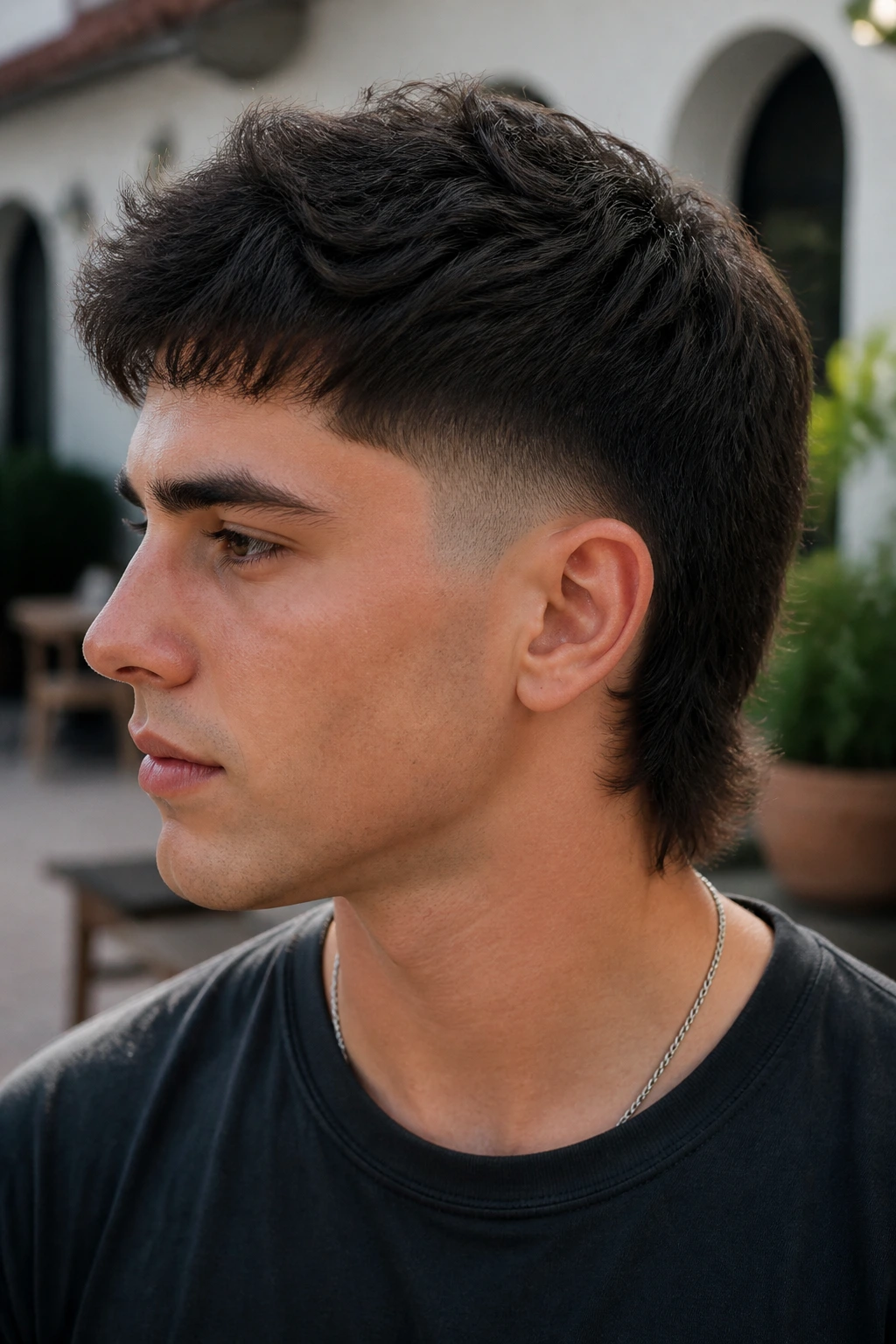
A rounded fade mullet is the closest thing here to a bowl-shape correction, and that sounds worse than it is. The crown stays a little heavier, the top rounds out slightly, and the back length keeps the silhouette from collapsing into a plain round cut. Oval faces can wear the extra crown weight because the face shape already gives the haircut enough vertical balance.
The trick is not to over-thin the sides. Ask for a fade that blends smoothly but does not strip the side volume so aggressively that the top looks disconnected from the head. The crown should sit like a soft cap, not a helmet. That means layering the top with care and keeping the back tapered.
This is a smart option for people whose hair grows forward and wants to sit flat. The crown weight helps anchor the shape. A blow-dryer and a vent brush can lift the roots a little, and a small amount of clay keeps the shape from falling apart by lunchtime. It is one of the more underused versions, which is a shame.
15. Clean Neck Taper Mullet
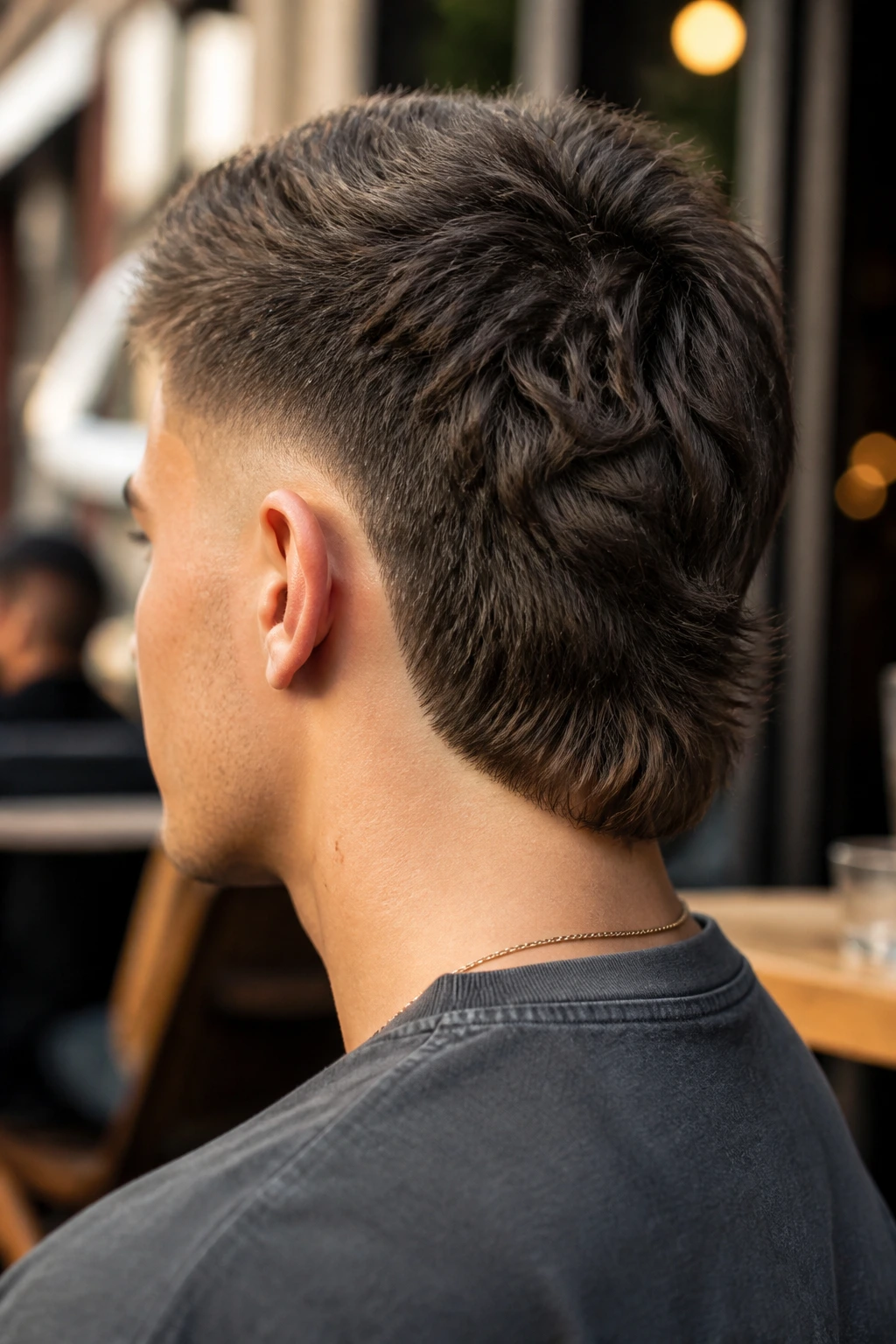
Sometimes the most useful version is the one that looks almost boring from the front and then surprises you at the nape. A clean neck taper mullet keeps the sides neat, softens the neckline, and leaves the back long enough to whisper “mullet” without forcing it.
The neckline detail matters. A tapered neck keeps the cut from looking blunt when the hair grows out, which buys you a little more time between barber visits. On an oval face, that low-key back end stops the haircut from pulling the eyes upward too hard. It’s a small thing. It changes the whole read.
Keep the top short and slightly loose. You do not need a hard shape up front. This cut is better when the front feels easy, almost casual, and the nape does the talking. A bit of cream through towel-dried hair is enough to let the shape settle naturally.
16. Messy Matte Fade Mullet
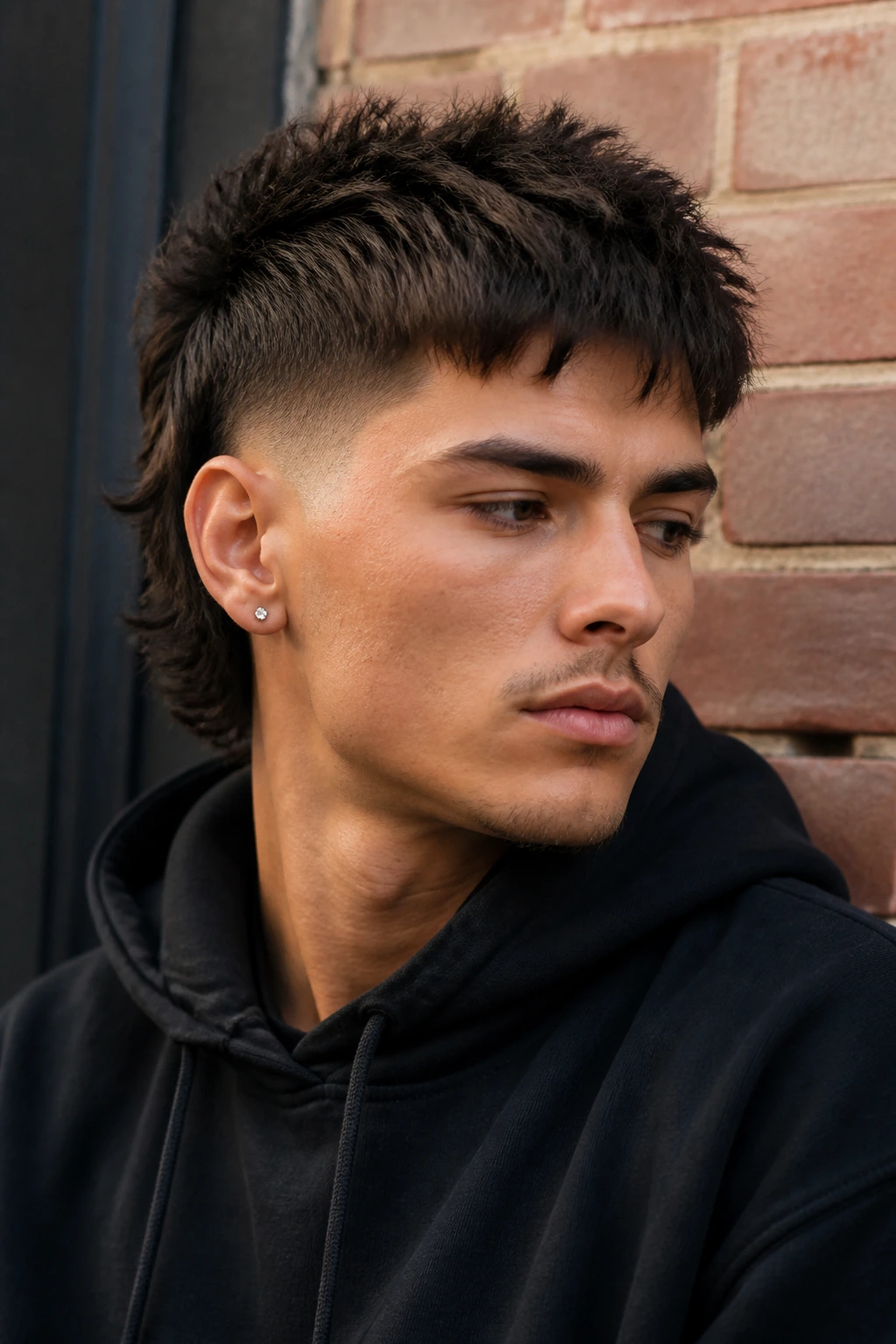
This one looks best when it is not overthought. The fade can be low or mid, the top can be jagged, and the back can have a little more flick than polish. The matte finish is what keeps it from drifting into greasy, stringy territory. Short hair needs separation here, not shine.
The oval face helps because the shape does not need a correction at the jaw or forehead. You can afford to leave a little imbalance on purpose. The roughness becomes the style. Ask the barber for texture through the top and for the back to be point-cut rather than blunt-cut so the ends break up better.
Work in matte clay on dry hair, then stop fiddling. Seriously. The more you keep touching it, the flatter it gets. If you want a haircut that looks better after a bike ride than after a mirror session, this is the one.
17. Frohawk Mullet With a Fade
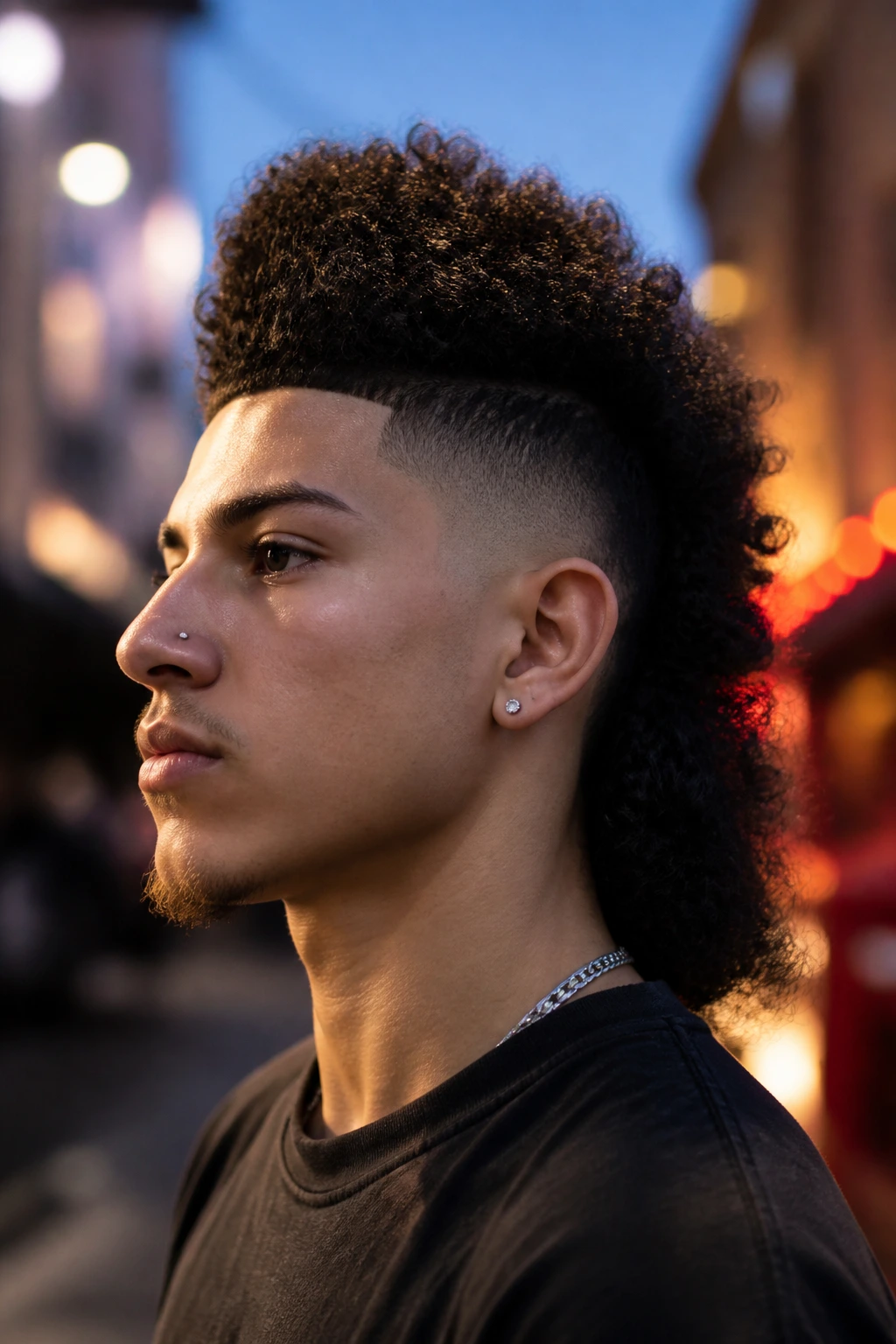
A frohawk mullet is the boldest curl-and-coil option here. The fade opens up the sides, the center strip carries the height, and the back keeps the mullet line alive. It is not subtle. It does not need to be.
Short hair works here because the shape comes from direction, not length. Keep the central ridge a touch longer than the outer sections, and let the curls or coils stand up naturally. The oval face shape helps because the strong central line does not have to compete with a square jaw or a wide cheek line.
Use curl cream or a soft gel, then shape the center upward and slightly back with your fingers. The goal is a clean ridge, not a stiff mohawk helmet. If the sides puff outward, ask for a cleaner fade next time. This cut depends on contrast. Without it, the whole idea fades away fast.
18. Minimalist Short Fade Mullet
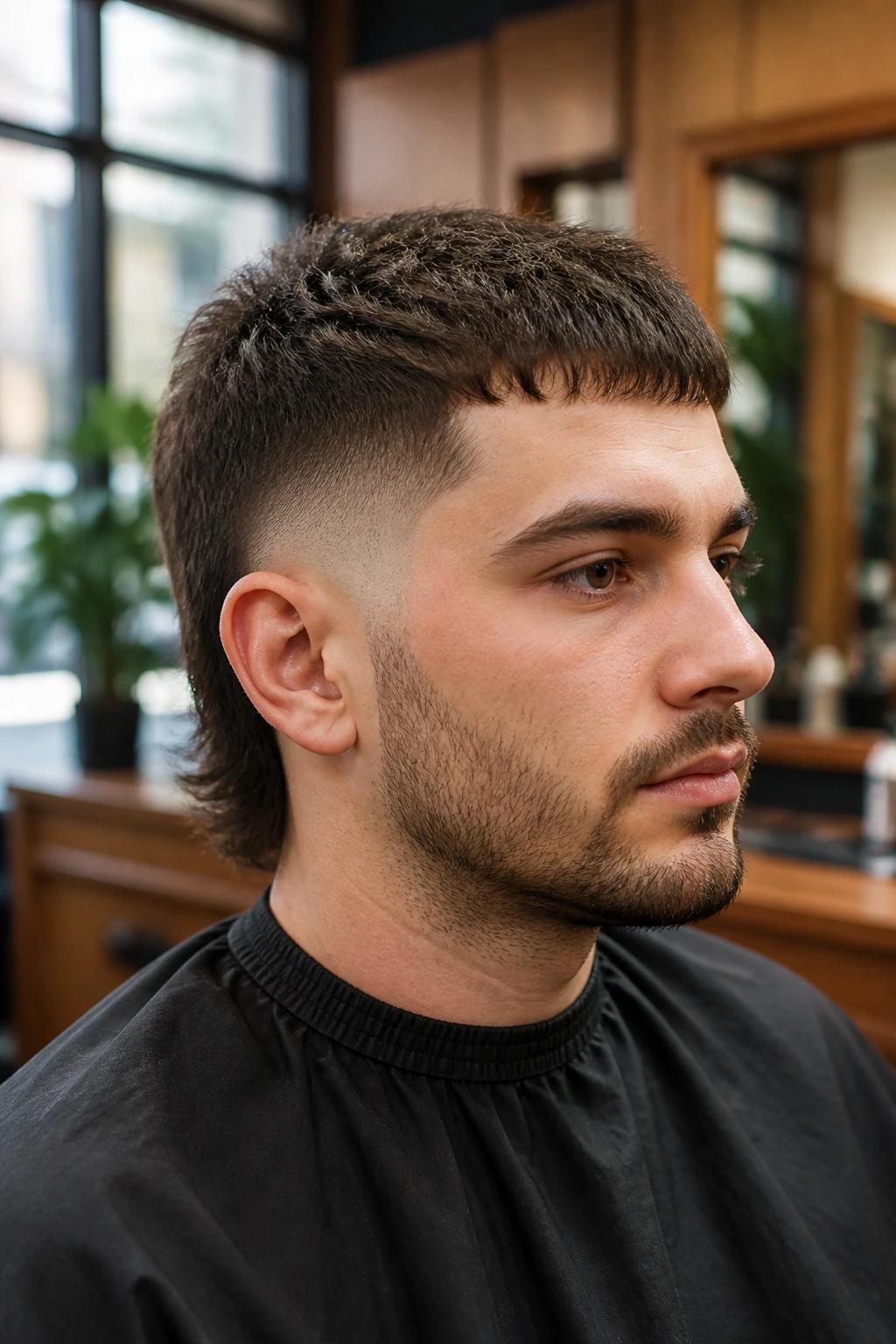
The minimalist short fade mullet is for people who like the idea of the cut more than the drama. The fade is tidy, the top is short, and the back is only a little longer than the rest. Yet the silhouette is enough. From the side, you can tell. From the back, there is no argument.
That restraint works especially well on oval faces because the shape already carries itself. You do not need a ton of extra architecture. Keep the top at 1.5 to 2 inches, the nape at about 1.5 to 2.5 inches, and the fade low or mid depending on how much contrast you want. More than that starts to feel showy.
I like this version for first-timers. It is the easiest cut to live with if you are not sure how far you want to go. And that matters. Not every mullet has to come in with a grin and a leather jacket.
Why the Fade Makes Short Hair Read as a Mullet
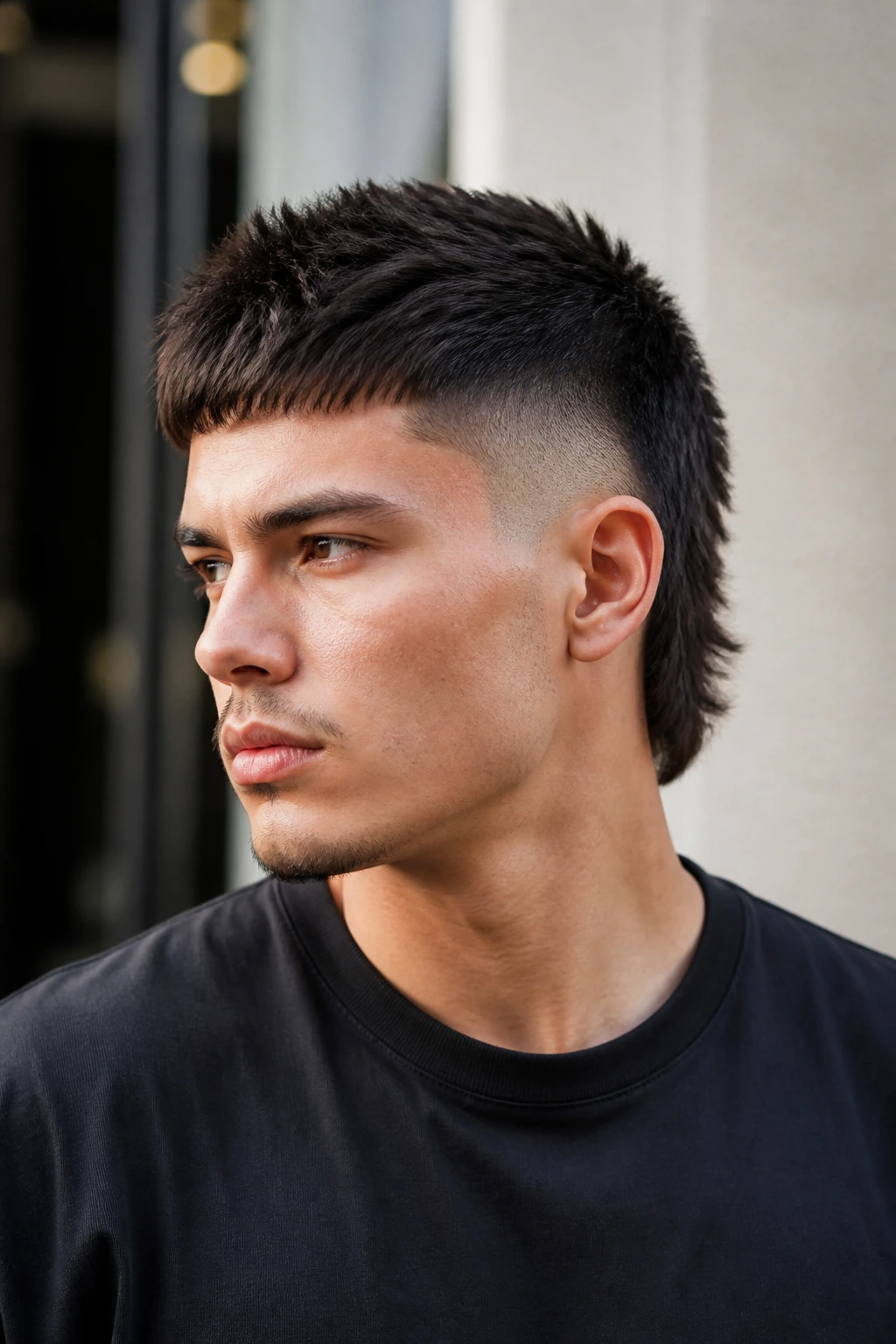
A mullet only works when the shape has a clear front-to-back story. With short hair, that story gets harder to read because the length difference is smaller, so the fade has to do more work. It trims away the sides, tightens the silhouette, and lets the back section stand out even if it is only an inch or two longer than the top.
That is the part a lot of people miss. The haircut is not just about the length in back. It is about contrast. A low taper gives a softer story. A skin fade gives a louder one. A burst fade wraps the head more cleanly, which helps curls and waves look neat instead of accidental. Each one changes how the mullet line lands.
Oval faces are useful here because the shape does not need hard correction. You can keep the sides close without making the face seem too long, and you can add fringe or crown texture without fighting a strong angular jaw. That flexibility is why this haircut family has so many good versions. The face shape gives you room to tune the cut, not just wear it.
What to Tell Your Barber Before the Clippers Start
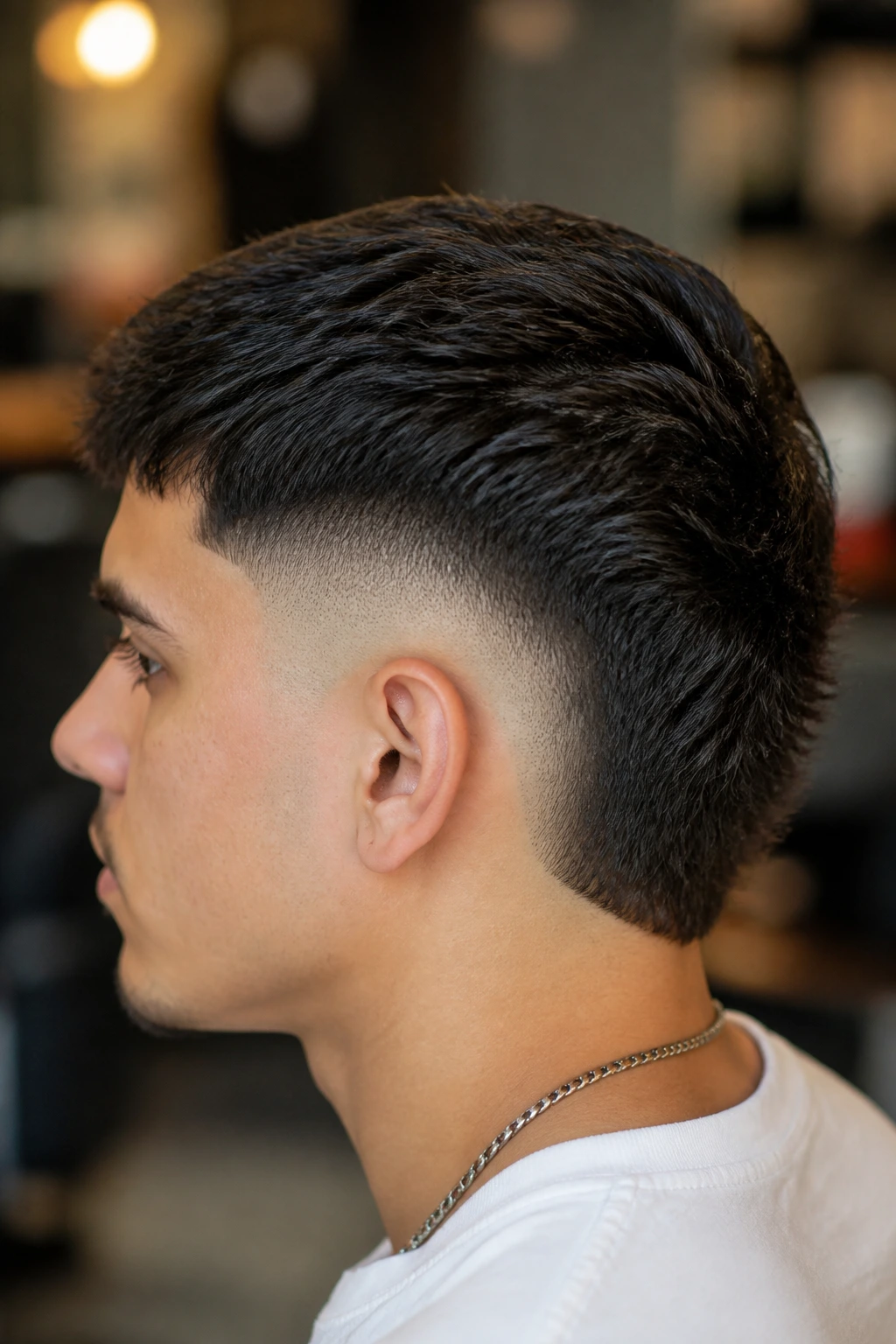
Bring a photo. Bring two, if the first one is blurry or heavily styled. Then say what matters in plain numbers. “Low fade,” “mid fade,” “keep 2 inches on top,” “leave 2 inches in back,” and “textured rather than blunt” are all useful phrases that keep everyone honest. A barber can work with that. Vibes alone are where bad haircuts are born.
If your hair is straight and flat, say so. If it grows in a stubborn cowlick at the crown, say that too. The crown changes everything in a short mullet because it affects how the back lays when it dries. On oval faces, the forehead and crown balance are worth talking through. A fringe that is too short can make the head look longer than it is. A back section that is too thin can make the haircut disappear.
The details worth naming
- Fade height: low, mid, burst, drop, or high.
- Top length: usually 1.5 to 3 inches for this kind of cut.
- Back length: enough to read as a tail, often 1.5 to 3 inches.
- Finish: matte, messy, curly, or brushed.
- Maintenance: every 2 to 4 weeks if you want the fade clean.
That conversation saves you from getting a random hybrid of three different haircuts. And yes, that happens more often than people admit.
Tools and Products That Make Styling Easier
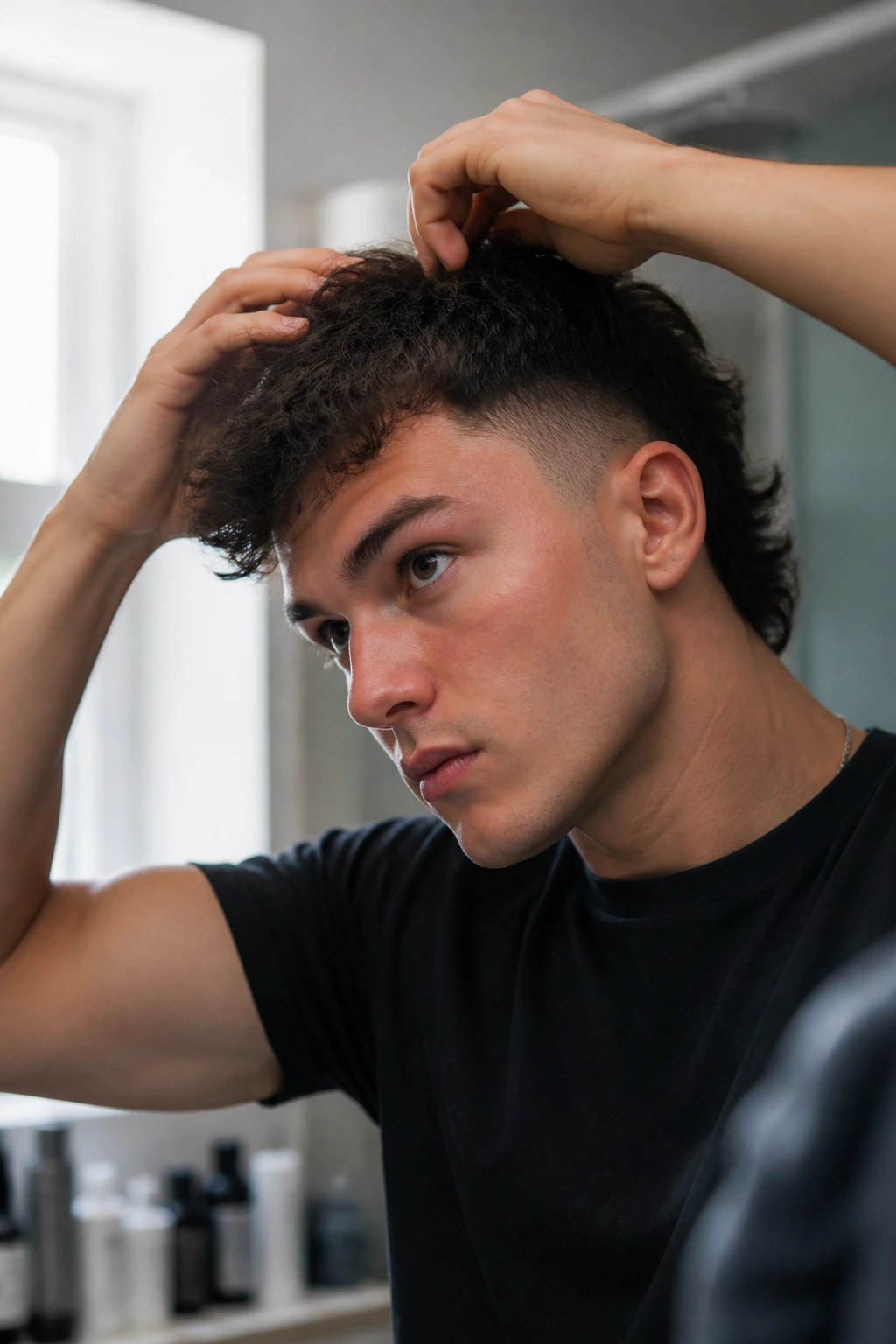
You do not need a drawer full of grooming gear. You need the few things that keep short hair from turning into a puffy, shapeless mess by noon.
- Matte clay or paste: Best for straight or slightly wavy hair when you want separation without shine.
- Light styling cream: Good for softer control, especially if the top is short and you want movement instead of stiffness.
- Sea-salt spray: Useful for wavy hair or for giving straight hair a rougher, drier texture before blow-drying.
- Curl cream or leave-in conditioner: Keeps curls and coils from frizzing out around the fade.
- Blow dryer with a nozzle: Helps push the top into shape and keeps the back from lying flat against the neck.
- Vent brush or wide-tooth comb: A vent brush adds lift; a wide-tooth comb helps curly hair stay separated.
- Handheld mirror: Worth owning if you plan to clean the neckline between cuts.
- Trimmer or neck groomer: Optional, but it helps keep the nape clean without turning you into your own bad barber.
The biggest mistake is buying heavy products because they feel “strong.” Strong is not the same as useful. On short hair, too much hold can make the top look wet and stiff by the end of the day.
How to Wear the Cut Without Fighting Your Face Shape
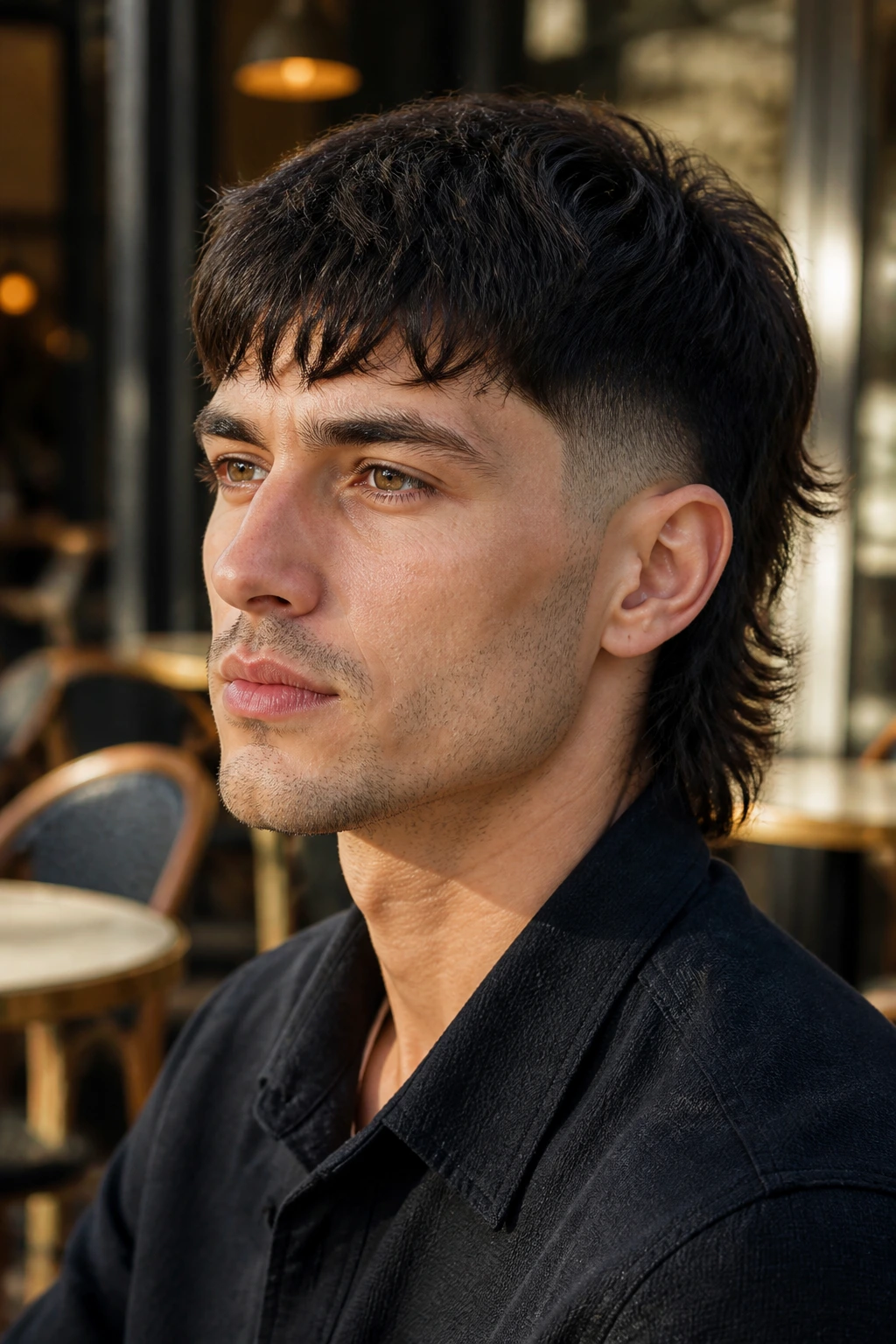
Presentation: Keep the sides cleaner than the back so the shape reads from the outline first. If everything is equally short, the haircut loses its point. A neat fade plus a little nape length gives the eye something to follow.
Pairings: Thin glasses frames, a short beard, a sharp sideburn taper, or a clean shave all change the read of the haircut. A heavy beard can ground a bolder fade mullet; a clean face makes the haircut feel younger and lighter.
Length Balance: On short hair, 1.5 to 3 inches on top and 1.5 to 2.5 inches in back is usually enough. You do not need a dramatic tail for the style to register. You need contrast, not excess.
Style Pairing: Use matte paste for straight hair, sea-salt spray for wave, and curl cream for coils. The wrong product can flatten the exact movement that makes the cut work, which is a shame because the haircut is doing half the job already.
Oval faces can wear a little more fringe, a little more height, or a little more fade than most shapes. The trick is not to stack all three at once. Pick one area to emphasize and let the rest stay quiet.
Keeping the Shape Sharp Between Cuts
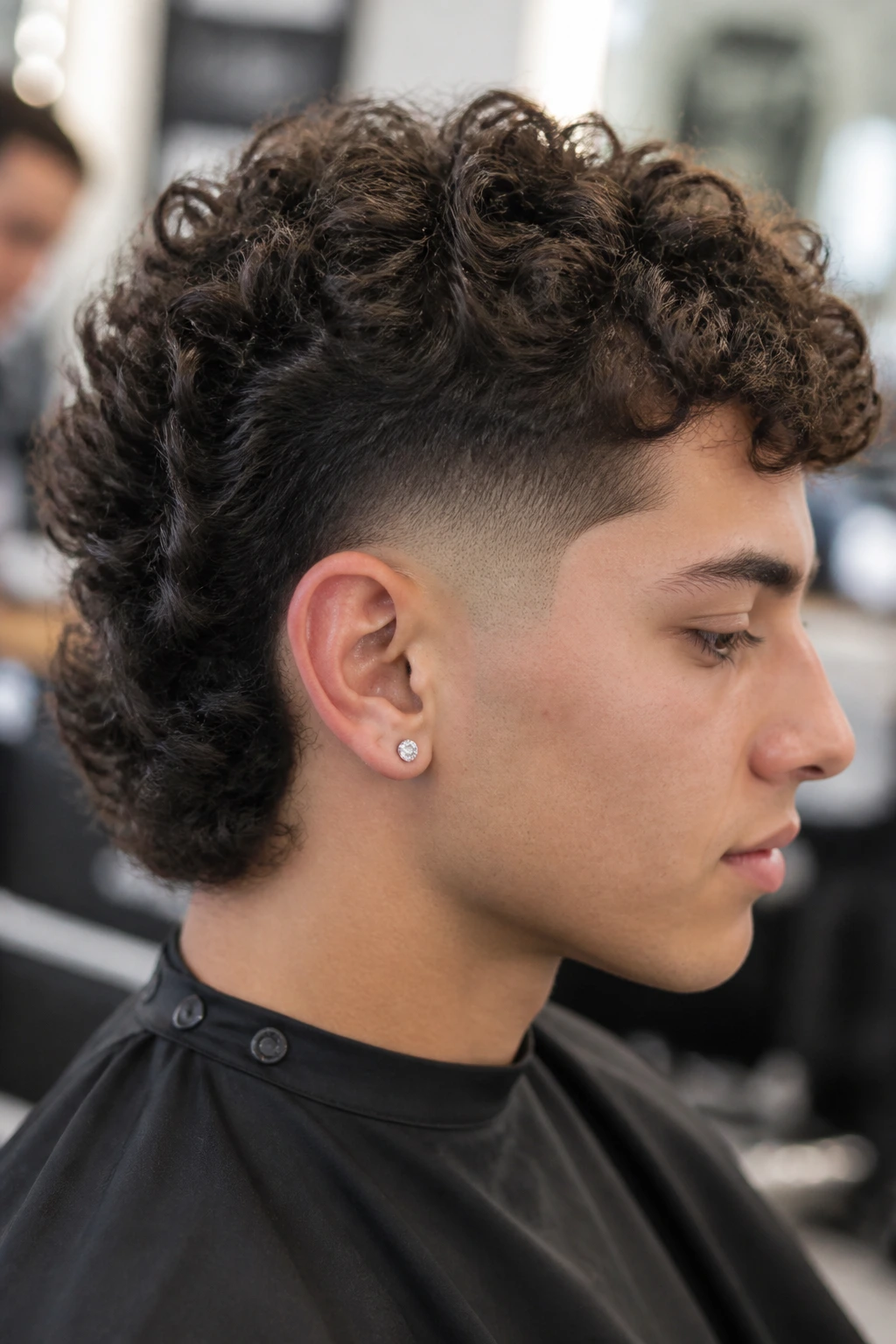
A fade mullet lives or dies by the edge work. The outline around the ears, the sideburns, and the nape are what keep the haircut from drifting into “grown out on purpose” territory. If you like the clean version, get the fade touched up every 2 to 3 weeks. If you are fine with a looser look, 4 weeks buys you more life.
The back needs a little attention too. A quick trim at the nape every few weeks stops the tail from turning wispy and uneven. For short hair, that matters more than people think. A half-inch of growth in the wrong place can make the back look like it is sinking into the shirt collar.
Wash and reset the hair when the product starts building up. Two or three shampoos a week is plenty for most hair types, though curly and coily hair often does better with less frequent shampooing and more conditioner. If you blow-dry regularly, use a heat protectant. It is boring advice. It also saves you from frizz and brittle ends.
Sleep matters too. If the top has texture you want to preserve, a satin pillowcase helps reduce the flattened patch that shows up right over the crown. Small thing. Real difference.
Ways to Bend the Cut Toward Clean, Messy, Curly, or Punk
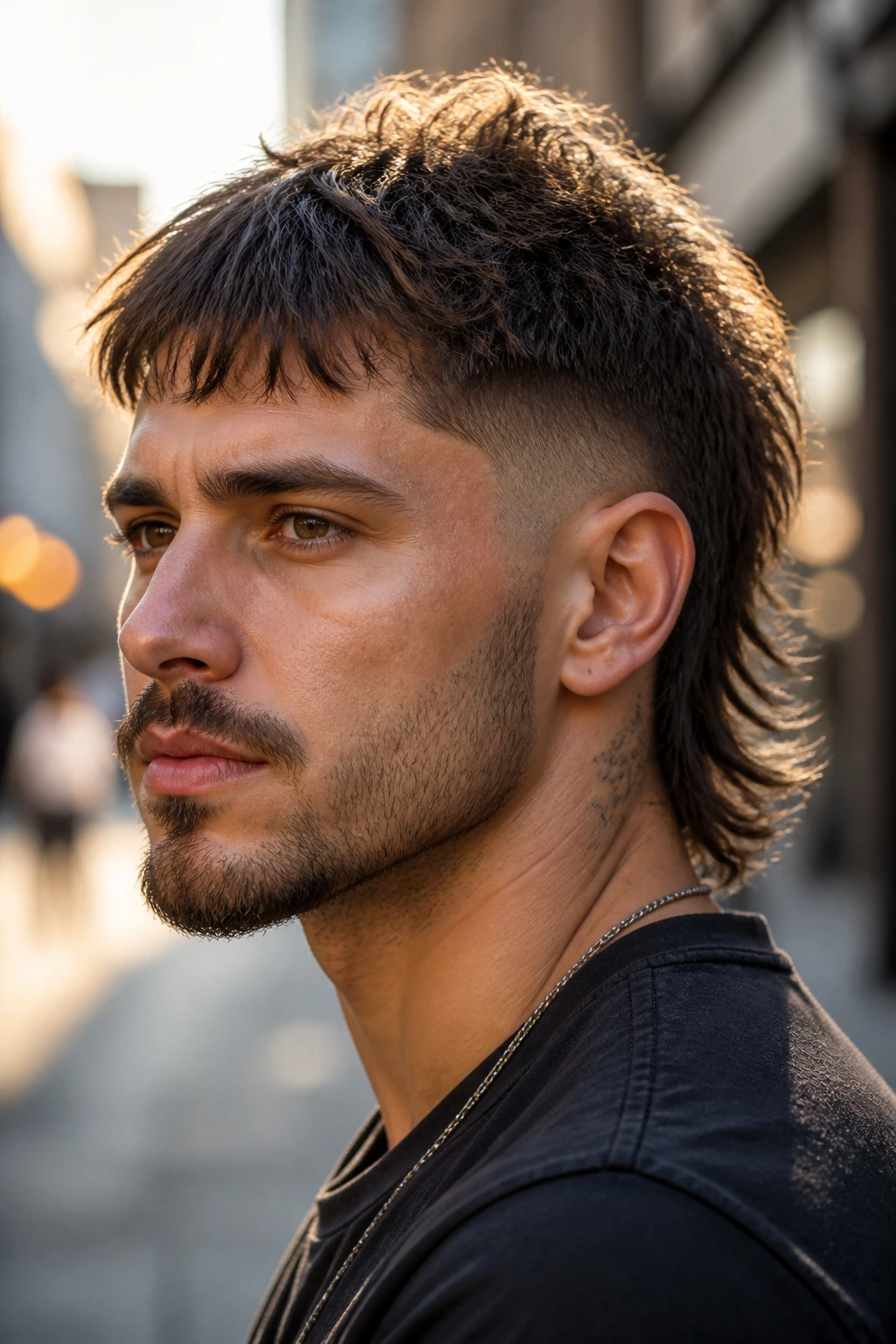
Clean and Controlled: Choose a low taper or temple fade, keep the top around 1.5 to 2 inches, and brush the fringe into place with a small amount of cream. This version works best if you want the haircut to feel sharp without looking loud.
Messy and Matte: Ask for more point-cut texture on top and leave the back a little rougher. Use clay only at the roots and let the ends stay broken up. This gives the cut a more worn-in shape that looks better when it moves.
Curly and Rounded: Keep the crown longer, use a burst fade, and avoid over-thinning the back. Curl cream and gentle scrunching are enough. The haircut should frame the curl pattern, not control it into a helmet.
Punk and Choppy: Go higher with the fade, leave a harder disconnect in the top, and add a bit more length in the back for contrast. A touch of paste and finger separation gives the style some bite without turning it stiff.
You do not have to pick the same attitude every time. That is the nice part. A mullet with a fade can move from neat to messy with one product change and a different neckline.
Common Mistakes That Flatten the Whole Look
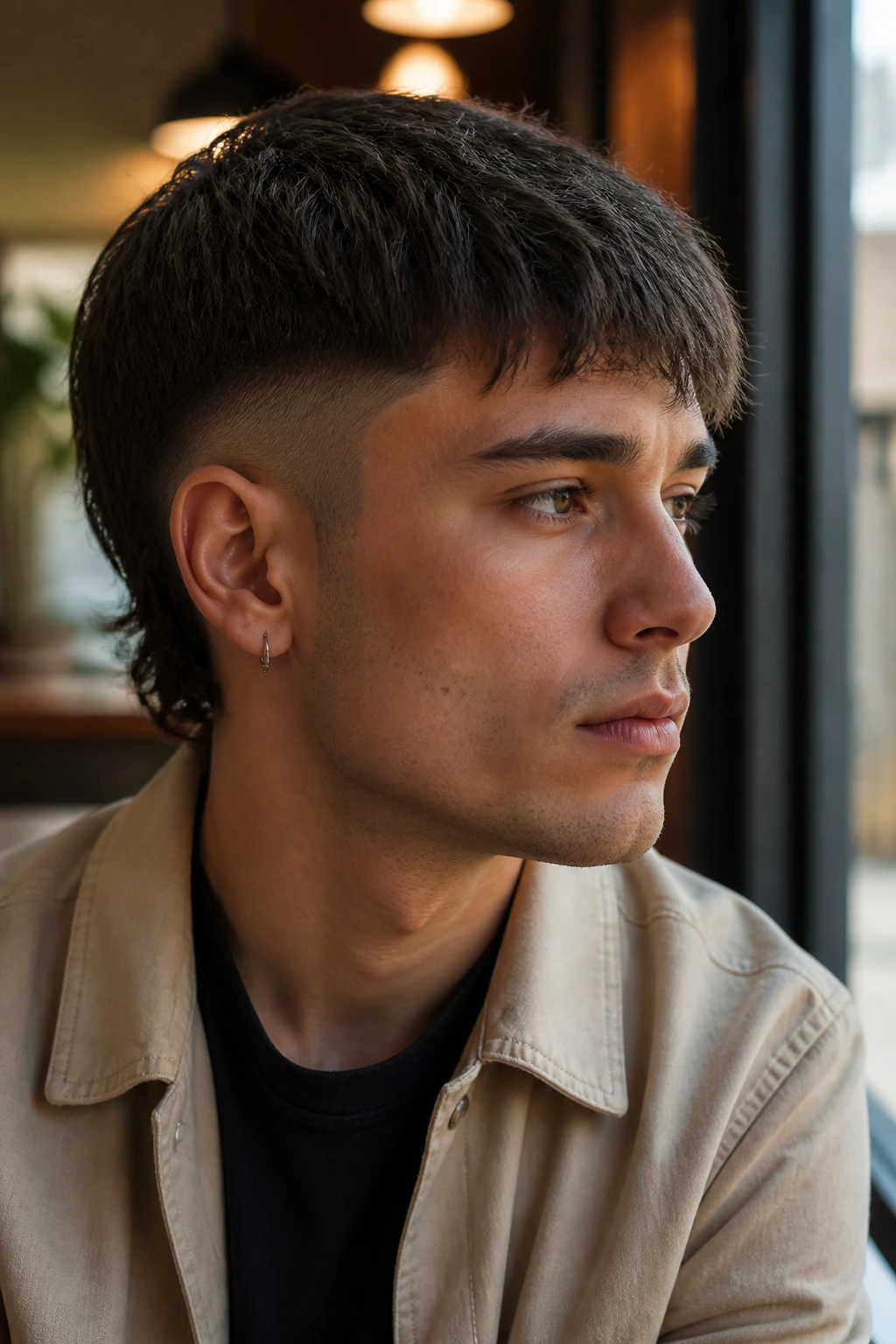
The biggest mistake is taking the fade too high. When the fade climbs too far up the head, the haircut loses side balance and starts looking narrow from the front. The fix is simple: keep the fade lower or ask for a soft blend that preserves some width around the temple area.
Another one is leaving the back too short. If the nape barely extends beyond the top, the cut reads like a short crop, not a mullet. Even one extra inch can change the silhouette. Ask your barber to leave enough length that the back is obvious from the side profile.
Overusing product is a third trap. Thick gel or too much clay can make the top look greasy, and greasy hair always looks shorter than it is. Start with a pea-sized amount, warm it in your palms, and add more only if the hair truly needs it.
The last mistake I see a lot is ignoring the crown. If the crown has a cowlick or a dip, the back can stick up, split, or flatten in ugly ways. Tell the barber where the hair pushes on its own so they can layer around it instead of pretending it does not exist.
Frequently Asked Questions
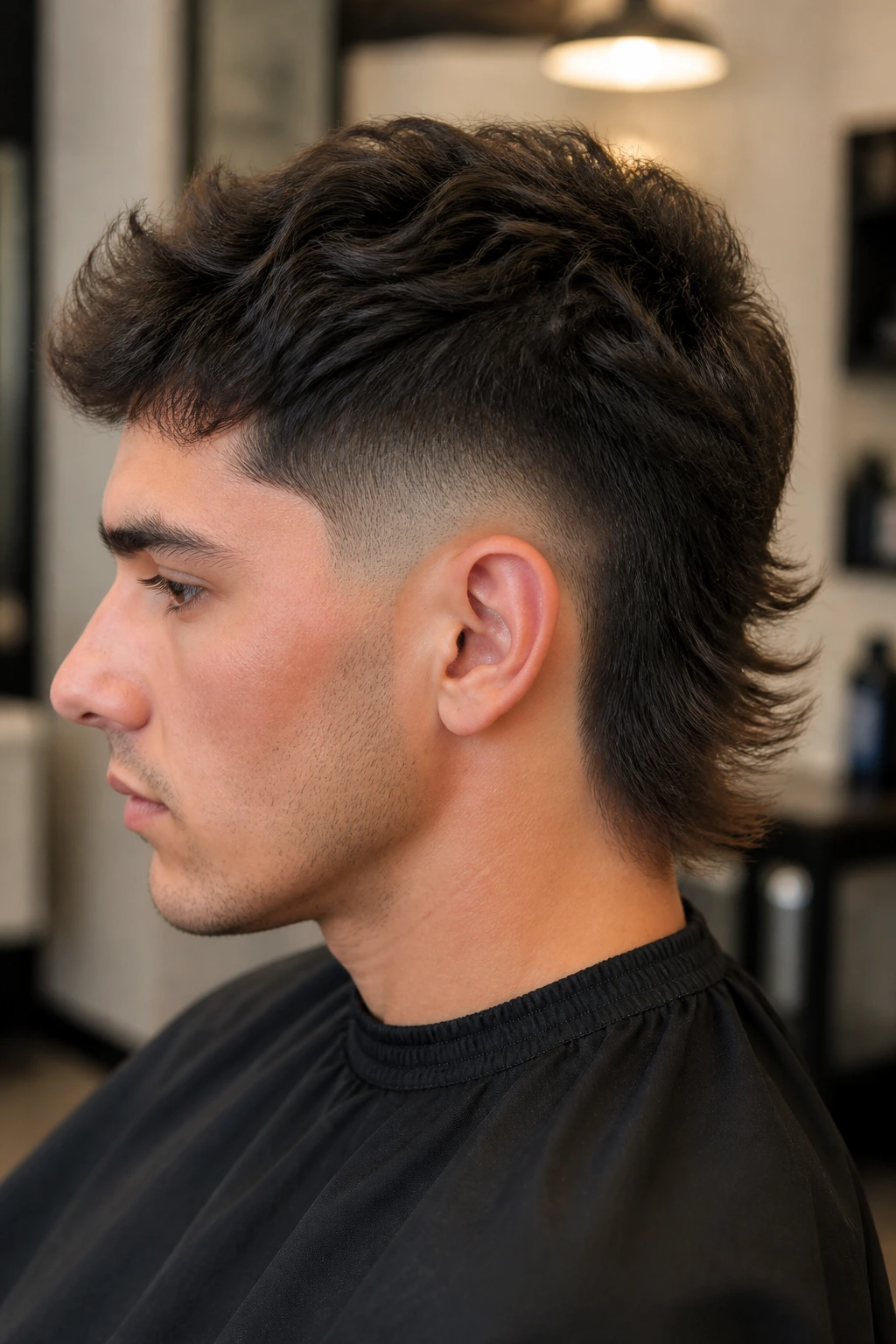
Will a fade mullet look strange on an oval face?
Not if the proportions stay tight. Oval faces can wear more contrast than most shapes, so the haircut usually looks balanced rather than awkward. The main thing is keeping the back intentional and the fade clean.
How short can the back be and still count as a mullet?
Shorter than most people expect. If the nape is a little longer than the top and the outline reads from the side, the style still lands. You do not need a dramatic tail for it to count.
Which fade works best for short hair?
Low and mid fades tend to be the easiest to wear. They keep enough side structure that the mullet shape stays visible without making the haircut feel harsh. A burst fade is the best pick if your hair is curly or wavy.
Can straight hair pull this off?
Yes, but it needs texture. Straight hair can look too flat if the top is blunt and the back is evenly cut. Ask for point-cut ends and use matte paste or sea-salt spray so the shape breaks up a little.
How often should I get it trimmed?
Every 2 to 4 weeks, depending on how tight you want the fade. The nape and sideburns start changing first, so those touch-ups matter more than the top. If you let it go too long, the cut loses its outline.
What if my hair is fine and low-density?
Keep the back modest and the top textured. Heavy layering can make fine hair look thin fast, so you want controlled mess, not shredding. A little styling powder at the roots helps lift the crown without weighing it down.
Can I wear this haircut with a beard?
Yes, and the beard can help a lot. A short beard or clean taper at the sideburns connects the fade to the jawline and keeps the whole look from feeling top-heavy. Just do not let the beard outgrow the haircut by a mile.
How do I grow it out if I change my mind?
Let the back and top catch up together for a bit, and keep the sides trimmed into a taper instead of a hard fade. That keeps the grow-out from looking like a mistake. The haircut turns into a shaggy layered cut before it turns awkward, which is the better place to land.
The Cut That Keeps Its Shape
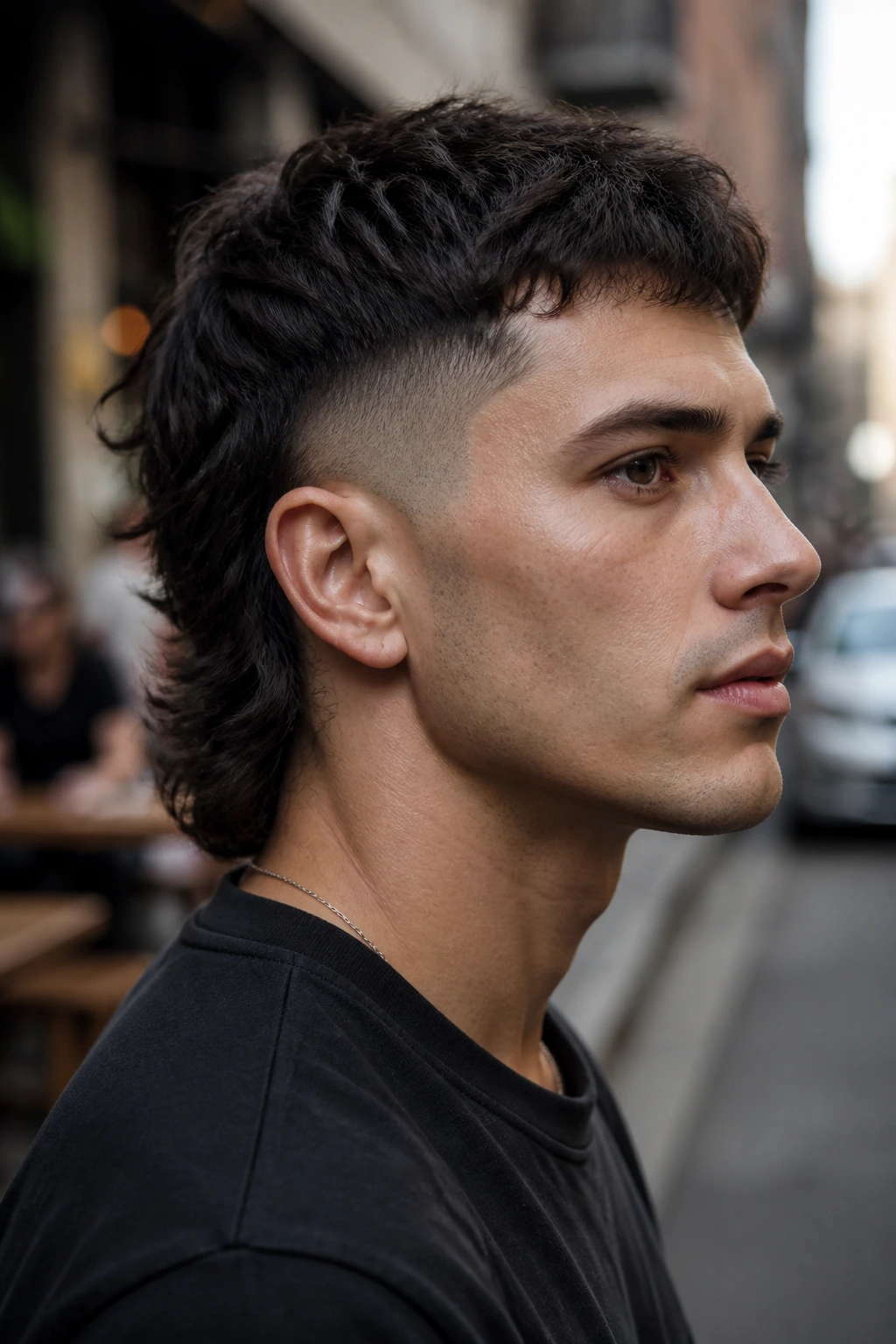
What makes these cuts work is not one dramatic feature. It is the balance between a tight fade, a short top, and a back section that still has something to say. On oval faces, that balance is easier to find because the shape already gives the haircut room to move.
And that is the real reason this style keeps showing up. It can be neat, messy, curly, sharp, or soft without losing the mullet outline. Pick the fade height, pick the texture, keep the back honest, and the rest starts to fall into place. The haircut looks best when it knows exactly what it wants to be.