



A buzz cut can look brutally plain when it’s done carelessly. Too blunt at the sides, too square at the temples, too high at the neckline, and the whole thing starts reading like an accident. The cleaner route is buzz haircuts for men with a taper fade: short on top, softly graduated around the ears and nape, and sharp enough to feel finished without turning into a neon sign for your barber’s clippers.
That combination matters because a buzz cut is unforgiving. There’s nowhere to hide a crooked line or a fade that climbs too high on one side. A taper fade fixes a lot of that by softening the edges where the hair naturally grows out fastest. It also gives the cut a little shape, which is doing a lot of work when the top is only a guard or two long.
I like this pairing for a simple reason: it can look disciplined, sporty, neat, and a little hard-edged all at once. And it doesn’t need much more than a solid clipper setup, a clear guard number, and a barber who knows when to stop. That’s the whole trick. The rest is choosing the version that fits your head shape, hair texture, and how often you’re willing to keep the edges fresh.
Why Buzz Haircuts With a Taper Fade Keep Working
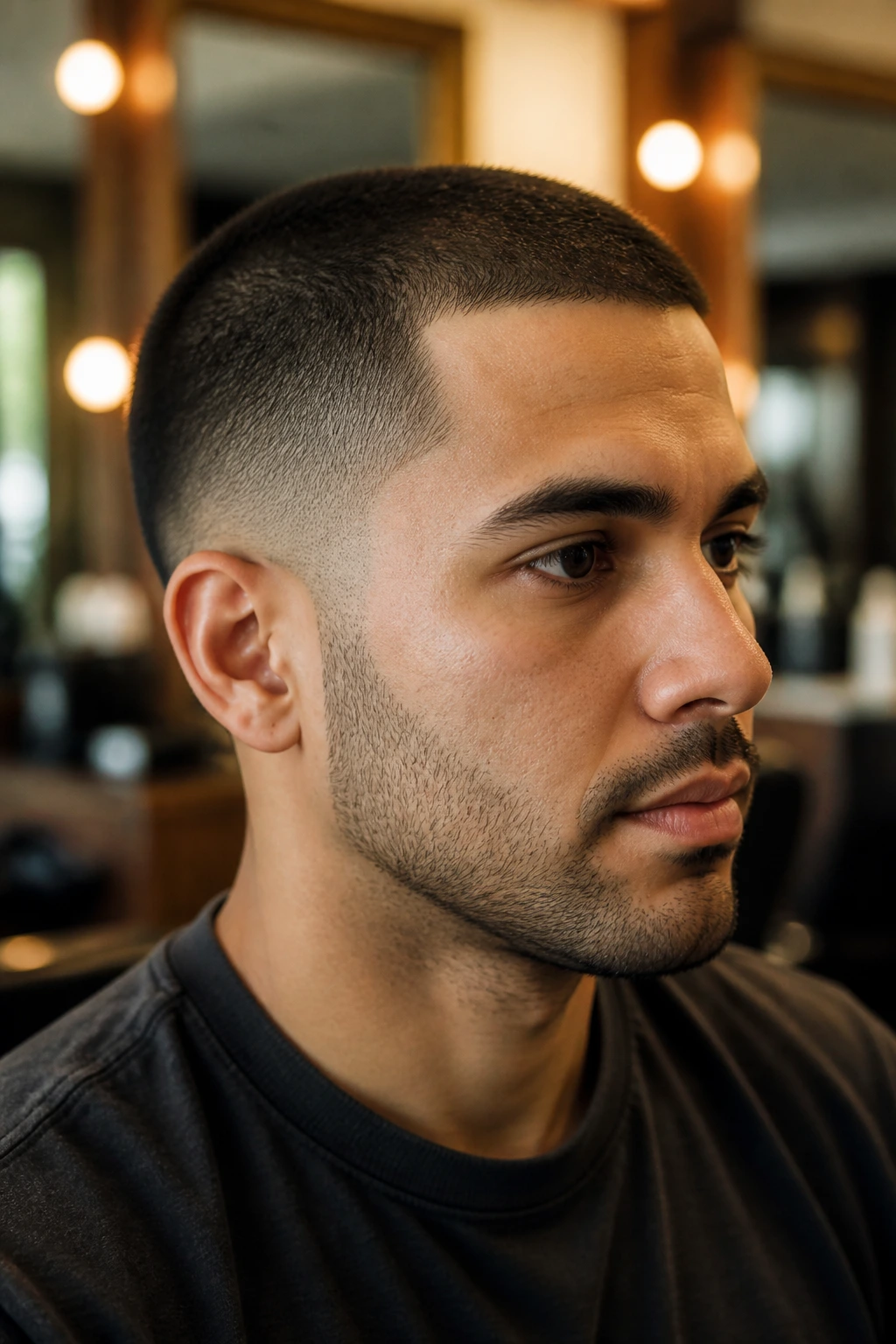
- The grow-out is kinder: A taper fade at the temples and nape buys you a few extra days before the cut starts looking shaggy, because the transition is gradual instead of blunt.
- The shape looks deliberate: Even a #1 or #2 buzz gets more structure when the sideburns and neckline are cleaned up with a lower taper.
- It fits more hair types than people think: Straight, wavy, curly, coarse, and tightly coiled hair all take on a different feel with the same base cut.
- It keeps the scalp from looking boxed in: The fade opens up the sides, which matters if your head is round, narrow, or a little uneven at the crown.
- It plays well with facial hair: A taper can connect to a beard, sit under a clean shave, or disappear into stubble without looking disconnected.
- It’s easy to explain at the chair: Guard numbers, taper height, and neckline shape are all visible, so there’s less guessing and fewer awkward surprises.
1. The Classic Induction Buzz With a Low Taper Fade
The induction buzz is the one that looks almost severe at first glance, and that’s exactly why the low taper helps. Keep the top at a #1 or #1.5 guard and let the fade start low around the sideburns and nape. You get that military-clean look without the hard shelf effect you sometimes see when the sides are taken too high.
Why It Works
A short top like this makes the taper fade part of the haircut, not an afterthought. The low taper keeps the outline tight near the ears, then drops away before it starts screaming for attention. That matters on men with stronger jawlines or fuller cheeks, because the cut doesn’t widen the face.
If you like a cut that looks neat with almost no styling, this is a good bet. No brush. No paste. Just a quick rinse and maybe a dab of matte moisturizer if your scalp runs dry.
Ask for: a #1 or #1.5 on top, low taper at the temples and neckline, and no hard line across the occipital bone.
Best for: guys who want a hard-working cut that looks the same in a T-shirt or a collared shirt.
Watch the top length: if you go down to a true #0.5, the taper becomes the only softening detail left.
2. The #2 Crew Buzz With a Mid Taper Fade
This one has a little more shape and a little less edge, which is why I think it works better than many men expect. A #2 guard on top leaves enough length to hint at the skull’s curve, and the mid taper adds lift without making the sides look shaved down to the skin.
The cut lands in that useful middle ground where it still reads as a buzz, but it doesn’t feel as bare as an induction cut. That makes it an easy pick if you’re easing into shorter hair or if you’ve got a head shape you don’t want exposed too abruptly.
What Makes It Different
The mid taper changes the balance. With a low taper, the whole cut can feel compact. With a mid taper, the eye moves a little higher, which gives the top more presence.
I especially like this version on straight hair that lies flat. A #2 keeps enough density on top to avoid that scraped look, and the taper gives the sides a cleaner finish than a plain all-over buzz.
3. The Skin-Bare Burr Cut With a Taper Fade
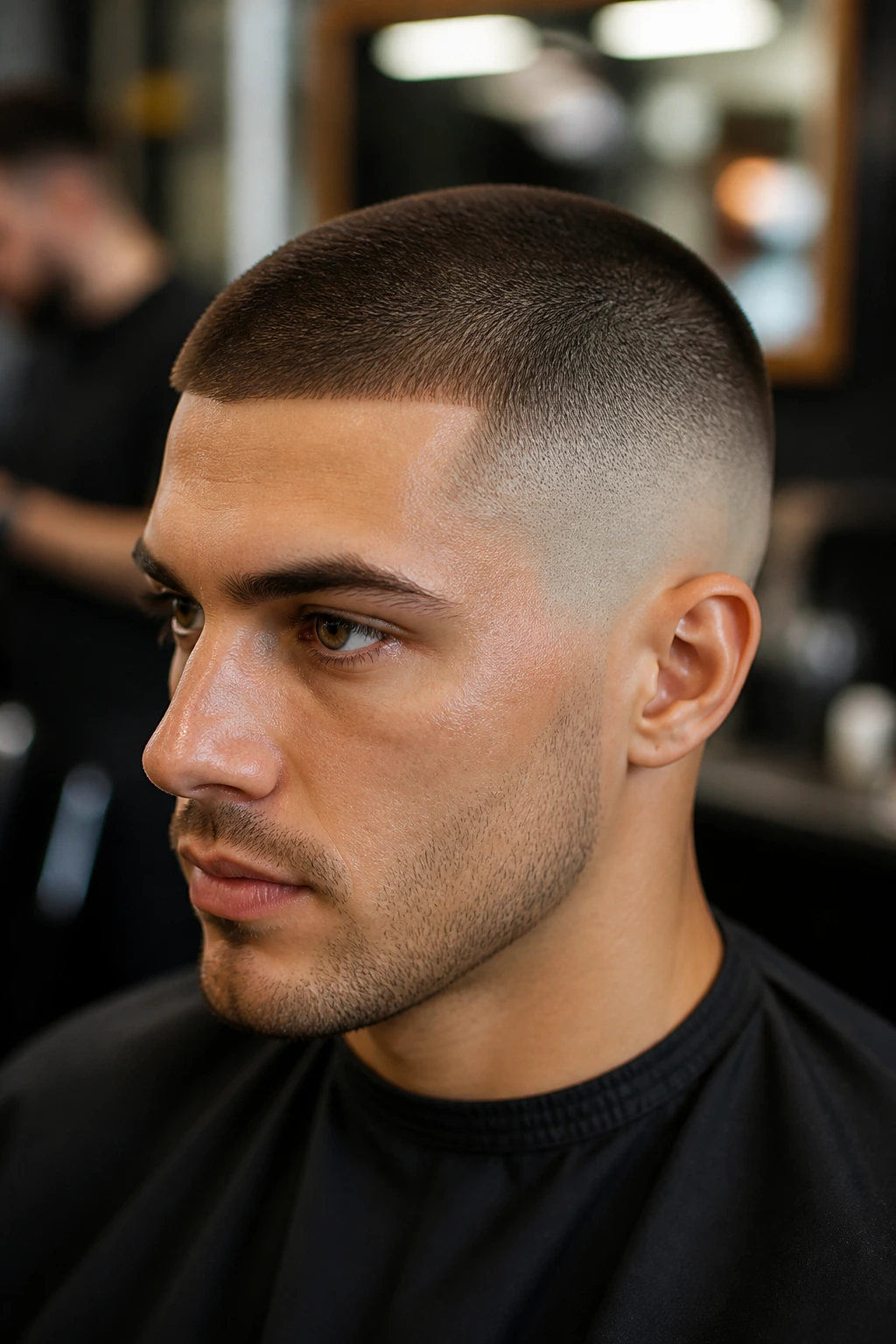
A burr cut is almost all attitude and almost no fluff. The top usually sits around a #0.5 or #1 guard, and when you pair it with a taper fade that drops cleanly to skin at the edges, the result is sharp, spare, and a little ruthless in a good way.
This is not the cut for someone who wants softness. It is the cut for someone who wants precision.
Who It Flatters Best
If your hair is thick, coarse, or grows in different directions, the burr can be a relief because it doesn’t fight the grain. It also works on men who hate spending time styling. There’s nothing to fix in the morning.
The catch is maintenance. A skin taper shows regrowth fast, especially at the sideburns and neckline. If you leave it for too long, the contrast gets muddy instead of crisp.
4. The Butch Cut With a Clean Temple Taper
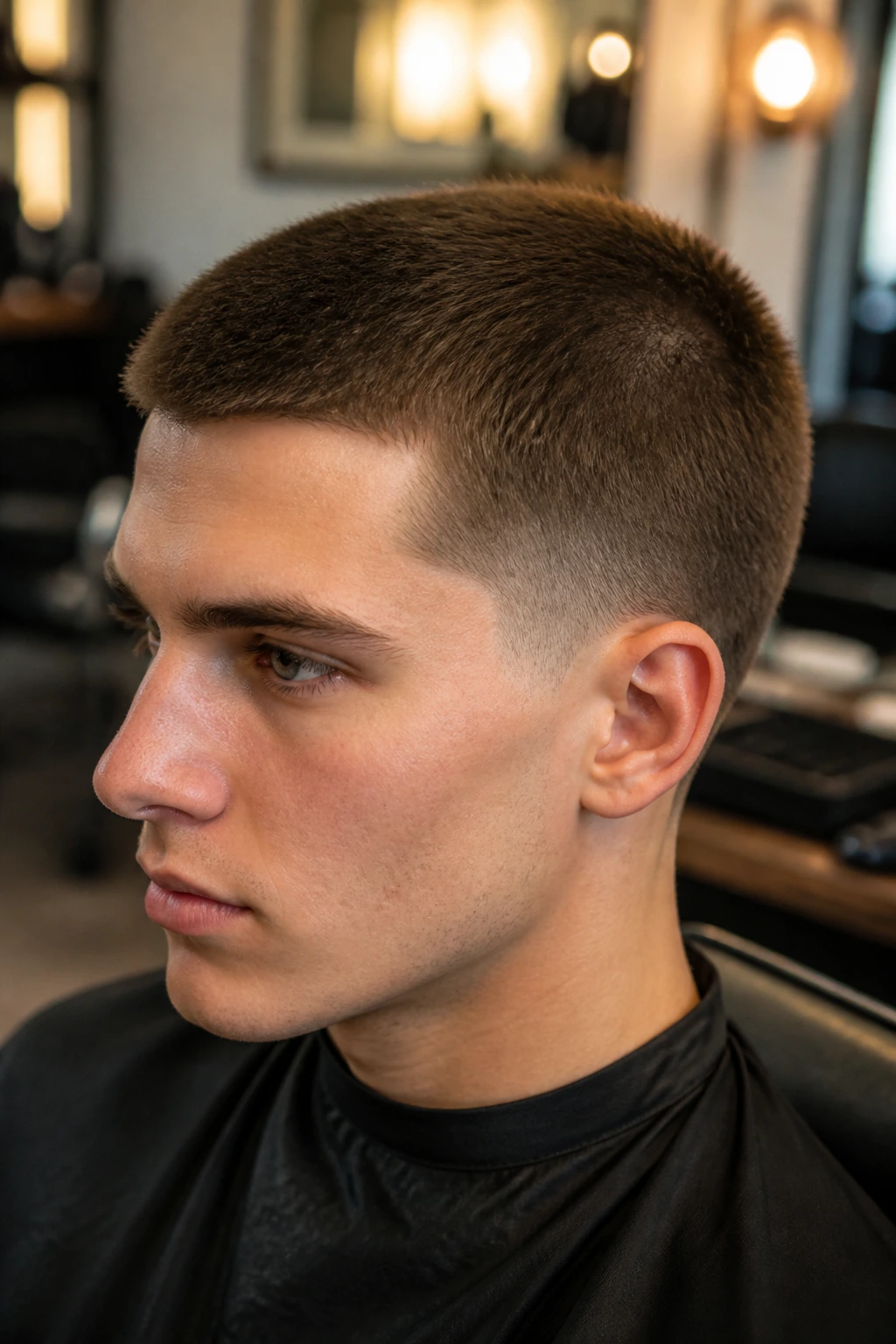
The butch cut lives a little longer on top than a burr, usually somewhere in the #3 to #4 range, and that extra length gives the haircut a more relaxed look. Add a temple taper, and suddenly the whole thing has edges that feel planned instead of bluntly clipped off.
This is one of those cuts that looks plain in a barber’s chair and excellent a week later. Why? Because it grows out with shape. The taper keeps the temples from ballooning, and the longer top doesn’t expose every tiny uneven patch in the scalp.
A Practical Barber Note
Ask your barber to keep the taper light around the temples and not push it too far back. That single detail keeps the cut from sliding into a full fade, which changes the whole mood.
This version is also useful if you wear glasses. The temple taper gives the frames a cleaner landing point and keeps the area around the arms from puffing up.
5. High-and-Tight Buzz With a Tight Neckline
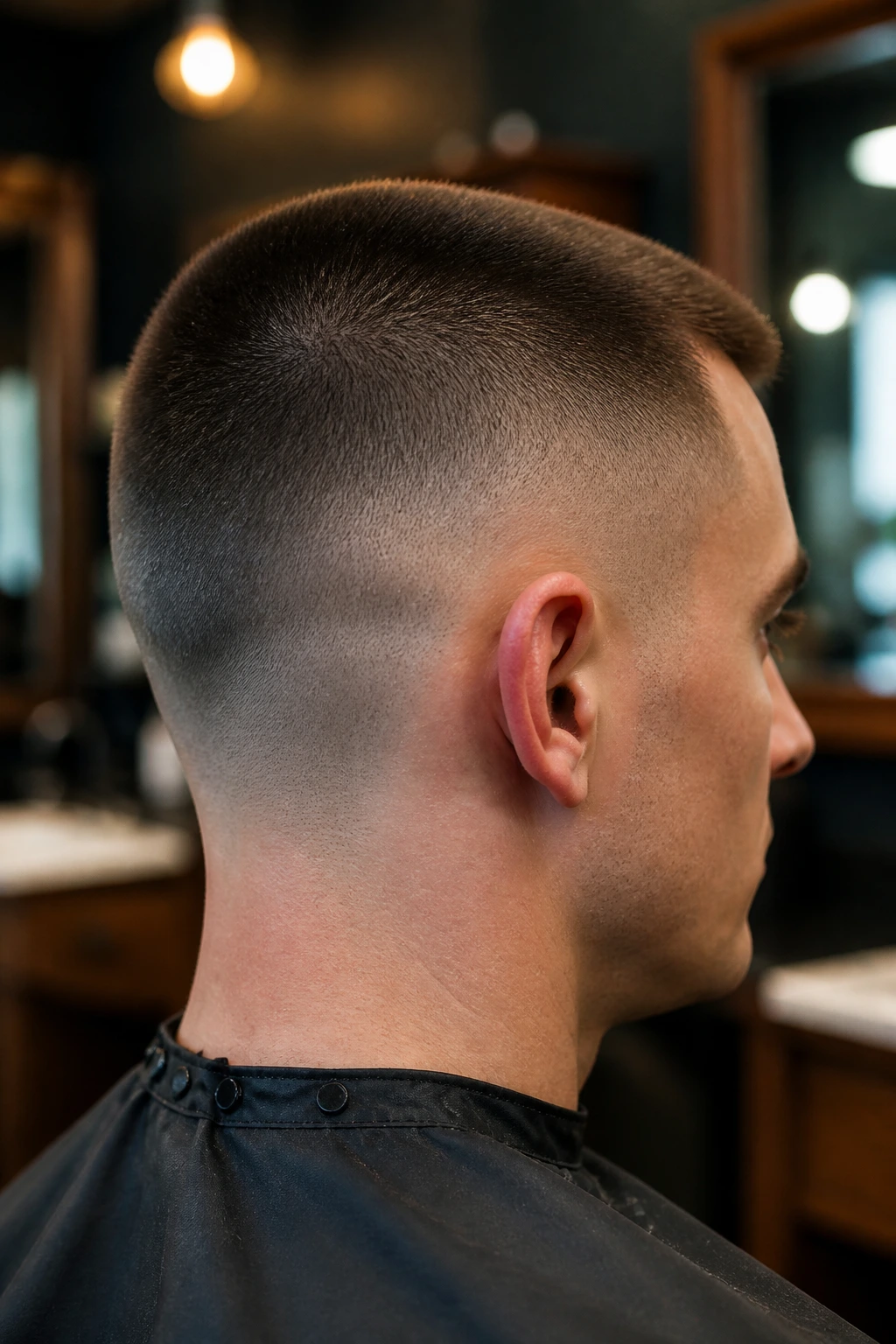
The high-and-tight has a little military DNA, but the taper fade is what keeps it from looking harsh. The sides sit very short, the top stays a touch longer—often around a #1 or #2—and the neckline gets a tight taper that sharpens the back without making it look carved.
It’s a strong cut on men with dense hair because it removes bulk fast. It also helps if your crown swirls in a stubborn direction. There’s less hair there to misbehave.
The Best Part
The back of the head matters more than people think. A sloppy neckline can ruin an otherwise clean buzz, and the high-and-tight depends on that rear profile being neat from every angle. This is the kind of cut where a bad rearview mirror check tells on you.
If you’re choosing between this and a standard buzz, go high-and-tight when you want a more disciplined silhouette and a clearer top-versus-side contrast.
6. The Lineup Buzz With Razor-Defined Edges
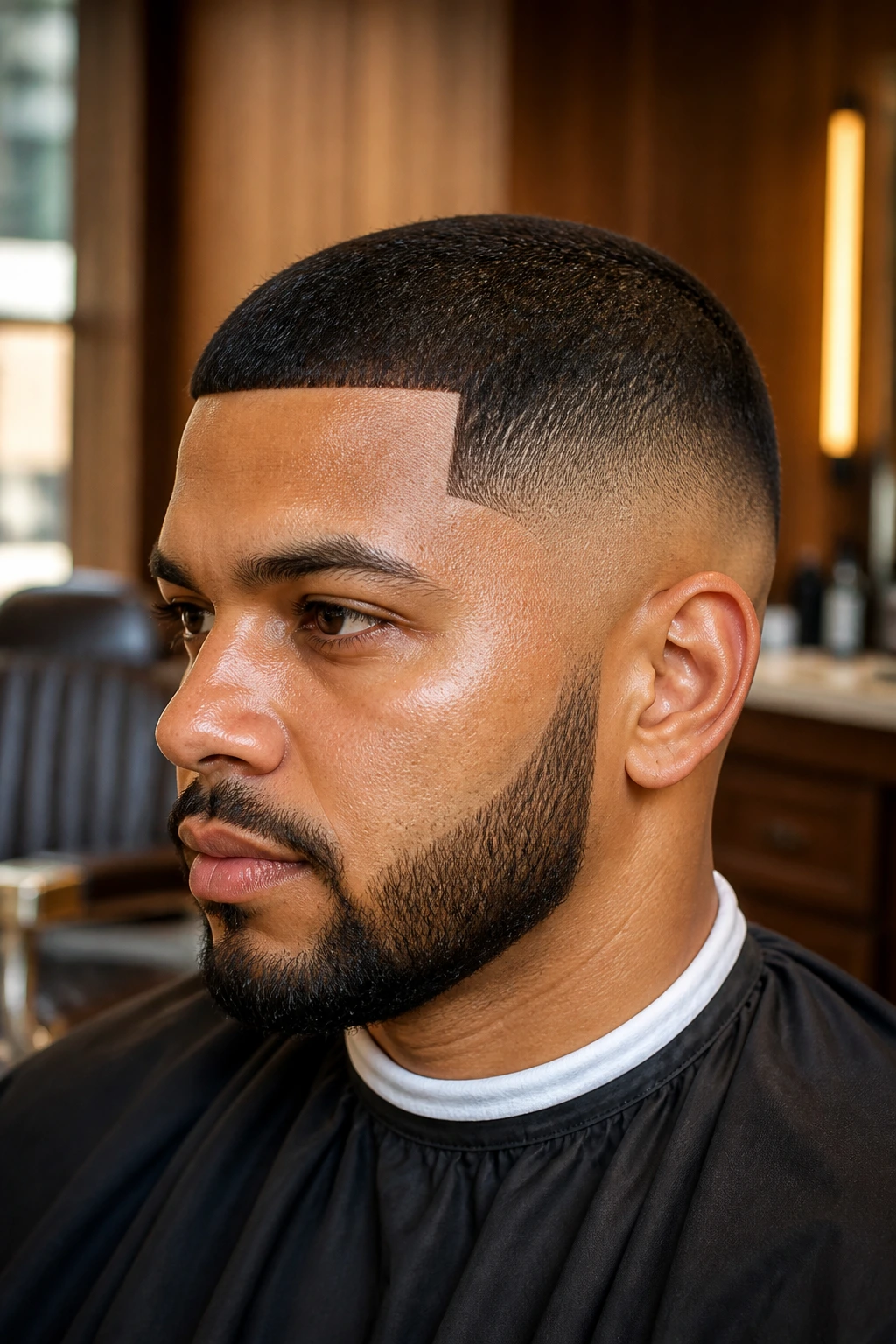
Some guys want the cut itself to be simple and let the edge work do the talking. That’s the lineup buzz: a short buzz on top, a taper fade at the sides, and a front hairline shaped with a trimmer for a straight, intentional finish.
The difference is in the details. Without the lineup, the cut can feel soft around the forehead. With it, even a very short top gets a frame.
What to Watch For
The hairline should be squared or slightly rounded, not pushed back just to make it look “clean.” Push it too far and you buy a few days of sharpness at the cost of making the forehead look larger than it is. That trade usually isn’t worth it.
This cut sits especially well on straight or coarser hair that holds a crisp edge. If your hairline has natural dips, a good barber can sharpen the perimeter without drawing a weird cartoon box across your forehead.
7. The Textured Buzz for Thick, Straight Hair
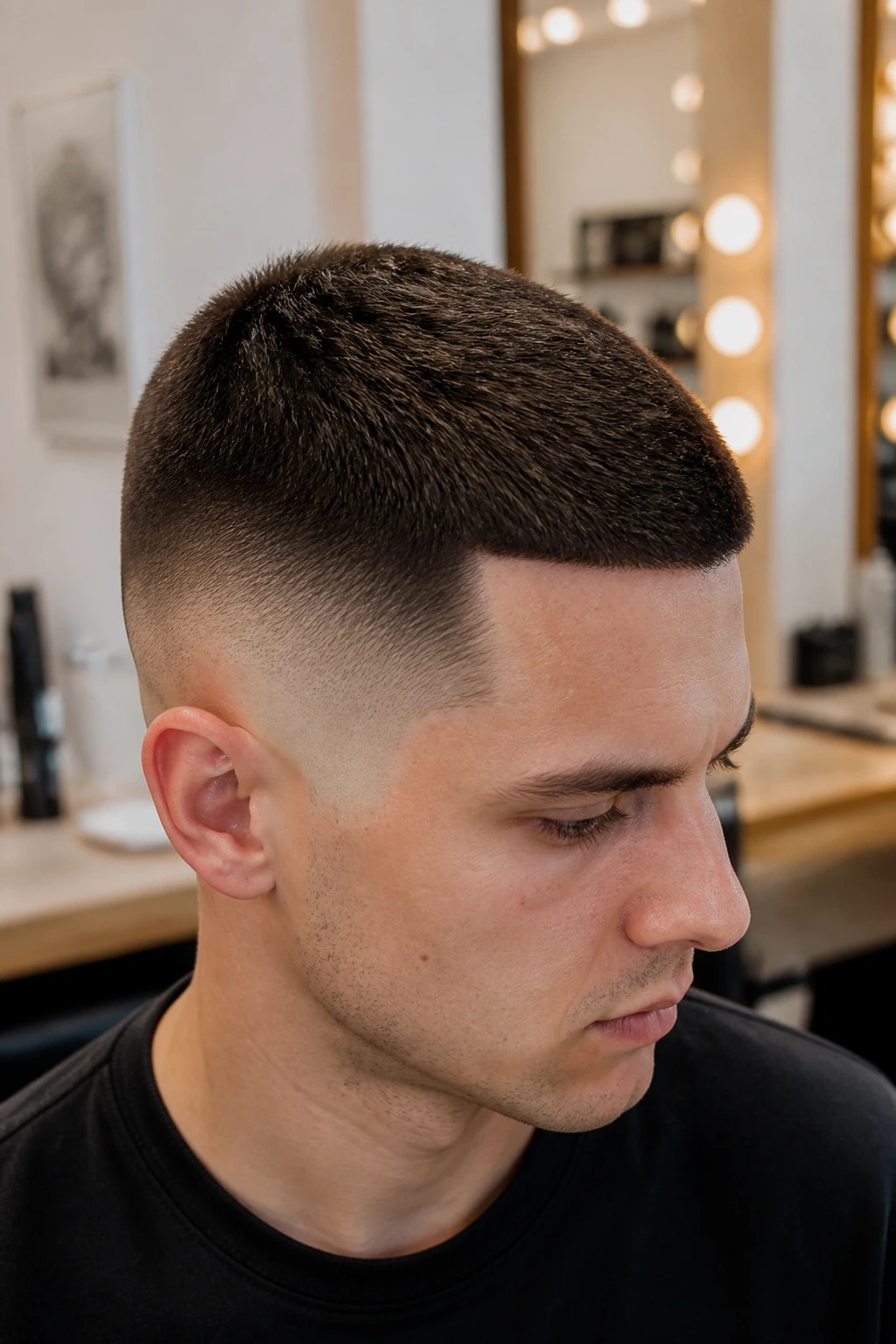
Thick, straight hair can turn into a helmet if you cut it uniformly and stop there. A textured buzz with a taper fade keeps the top short—usually in the #2 to #3 range—but breaks up the density so the top doesn’t look like a solid block.
That texture comes from subtle variation, not styling product. Some barbers use a clipper-over-comb pass or a slightly different guard pressure across the crown. The point is to keep the surface from looking too flat.
Why It’s Useful
If your hair sticks out when it grows, this cut makes that a feature instead of a fight. The taper fade cleans the sides, and the textured top keeps the whole thing from reading as a school-cadet haircut.
It’s a smart option for men who want short hair but still want a little movement when they tilt their head. Plain buzzes can look dead still. This one has more life.
8. The Wavy Buzz With a Drop Taper Fade
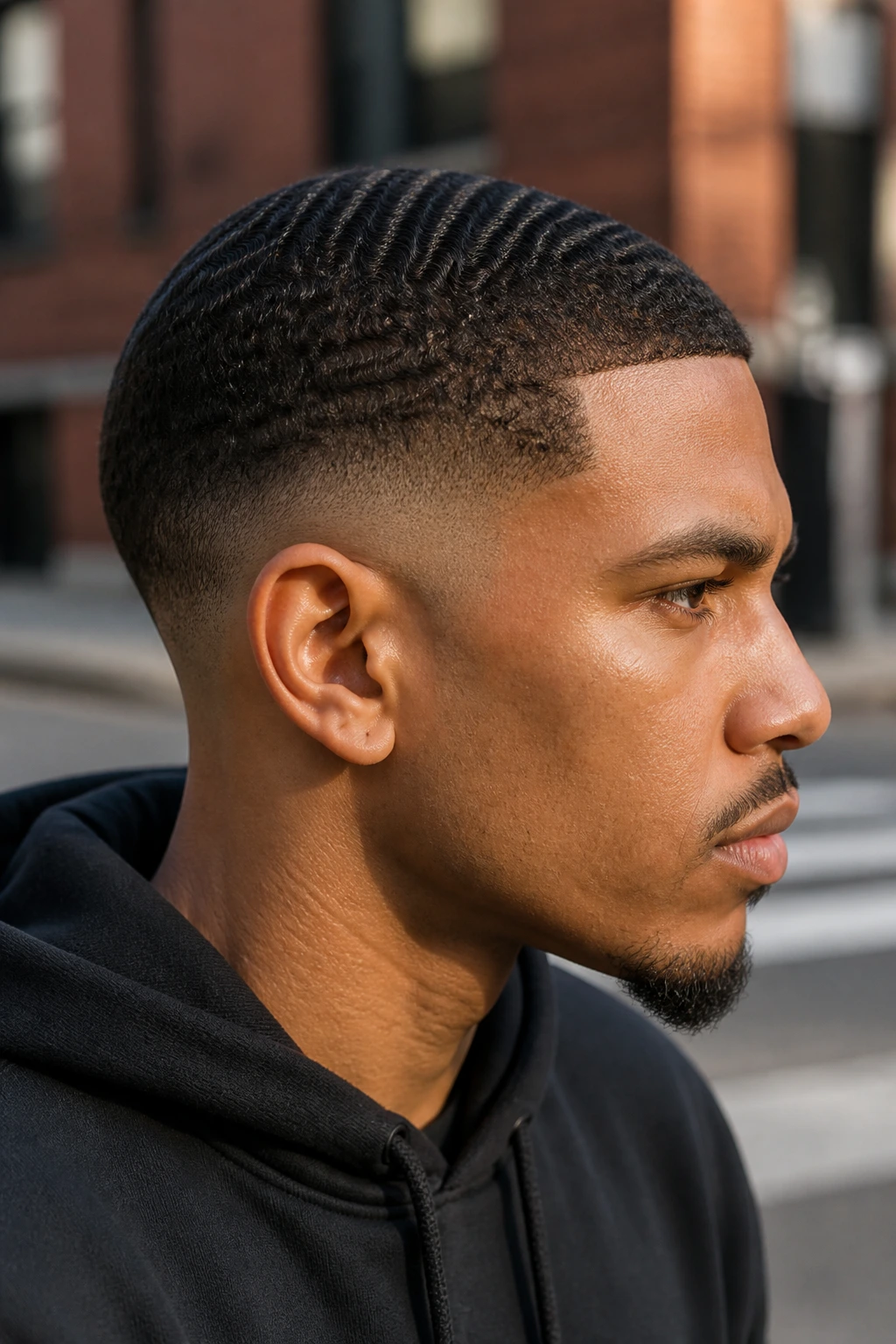
Wavy hair behaves differently under clippers, and the drop taper fade is the smartest way to follow the head instead of forcing a straight line around it. The fade curves lower behind the ear and down toward the nape, which mirrors the natural slope of the skull.
The top can sit at a #2 or #3 depending on how much wave you want to keep visible. Leave enough length and the texture will show through; go too short and you lose the whole point.
How It Reads in Real Life
This cut looks especially good when the waves break up the top in tiny ripples rather than full curls. There’s a soft shadow effect up top and a clean sweep around the ears. Not flashy. Just tidy.
It’s also one of the better choices if you hate the “boxy” look some buzz cuts get on the sides. The drop taper handles that problem without overcomplicating the haircut.
9. The Curly Buzz With a Low Taper Fade
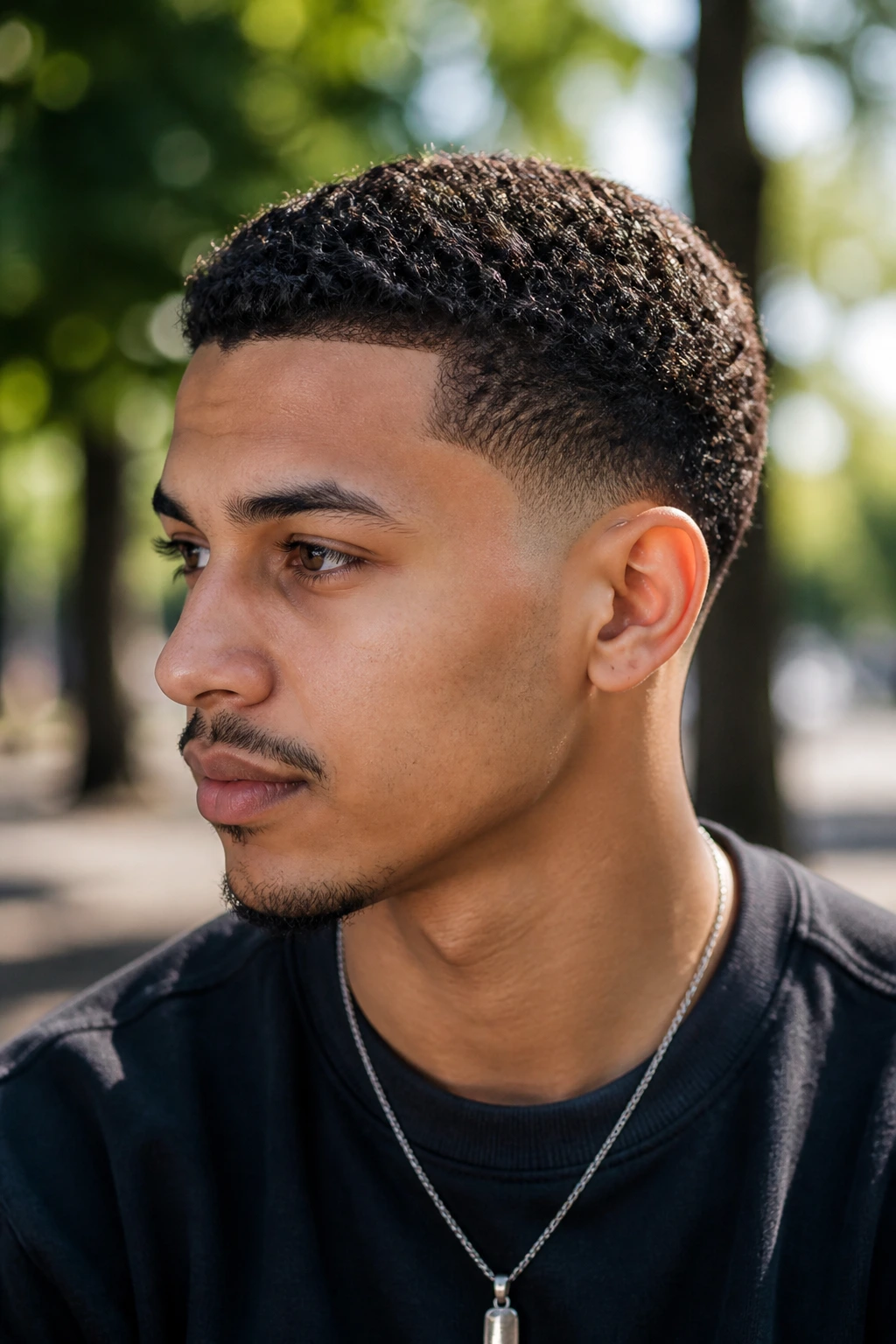
Curly hair doesn’t need to be flattened into submission to work as a buzz. In fact, a short curly buzz with a low taper fade often looks better when the curls are left just long enough to show their pattern—think #2 to #4, depending on curl tightness.
The taper keeps the edges neat, but the curl pattern gives the top a little depth that straight hair can’t fake. That’s the appeal.
What to Tell Your Barber
Ask for enough length on top to avoid exposing every scalp spot between curls. If the cut goes too short, the curl pattern disappears and the head can look patchy. The low taper helps by keeping the perimeter sharp while the top still feels soft.
A light leave-in conditioner can help here, not to style the hair, but to keep the scalp from getting dry and itchy. Short curls on a dry scalp can feel prickly fast.
10. The Short Afro Buzz With a Temple Taper
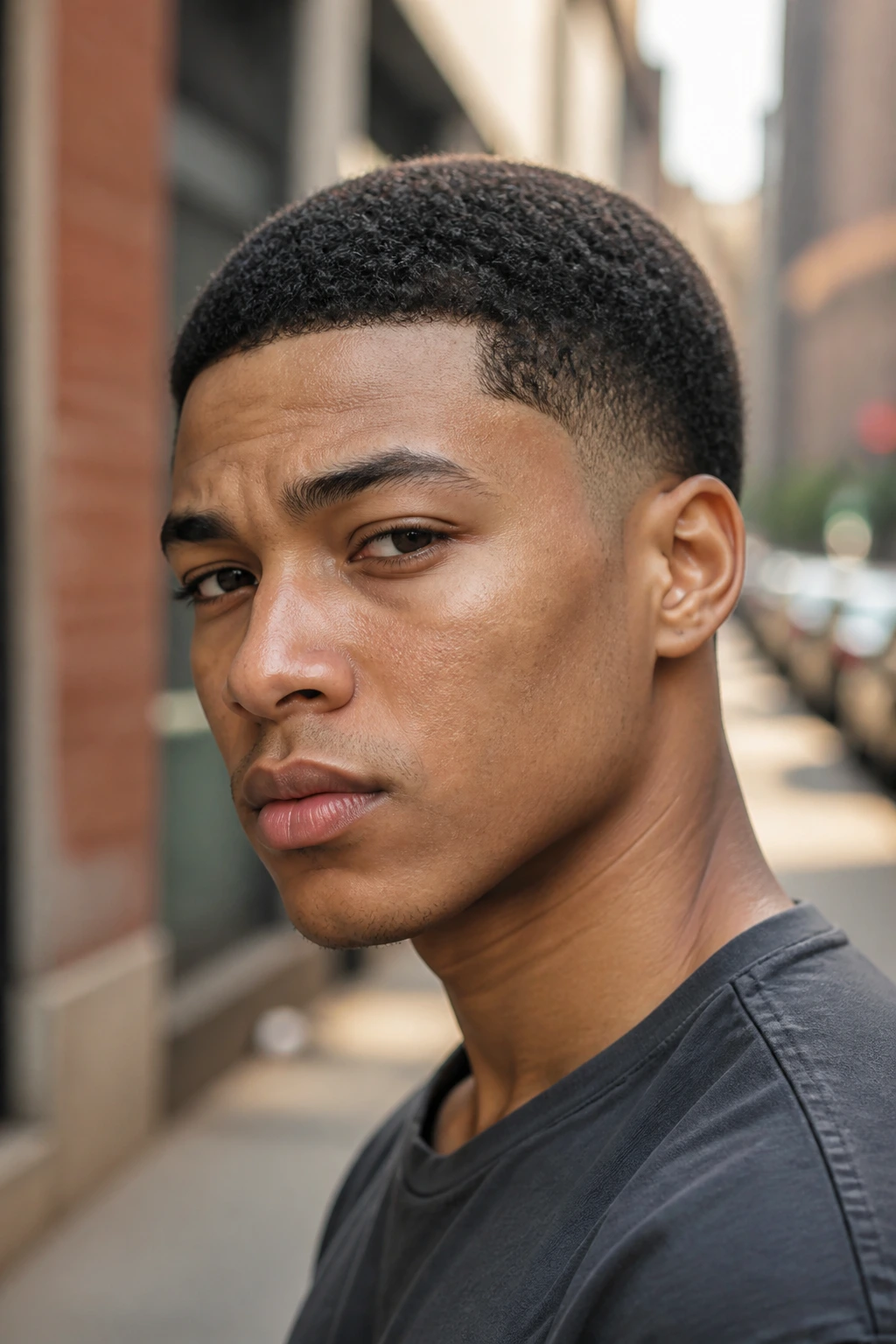
This is the version that keeps the natural shape visible without letting the cut puff out at the edges. The top stays close and even, while the temple taper cleans the front corners and sideburn area so the outline stays tidy as the hair grows.
A short afro buzz is one of the best cuts for showing texture without requiring much length. You still get the dense, soft look of coiled hair, just in a tighter frame.
Best Used When You Want Shape, Not Bulk
The temple taper matters more than people realize. It keeps the cut from turning into a block and gives the face a little space. That’s especially useful if the cheeks are full or the forehead is narrow.
I’d ask a barber to keep the taper soft rather than sharp. Hard edges can look too boxed-in on this cut, while a gentle blend gives the hair room to breathe.
11. The Caesar-Inspired Buzz With a Forward Fringe
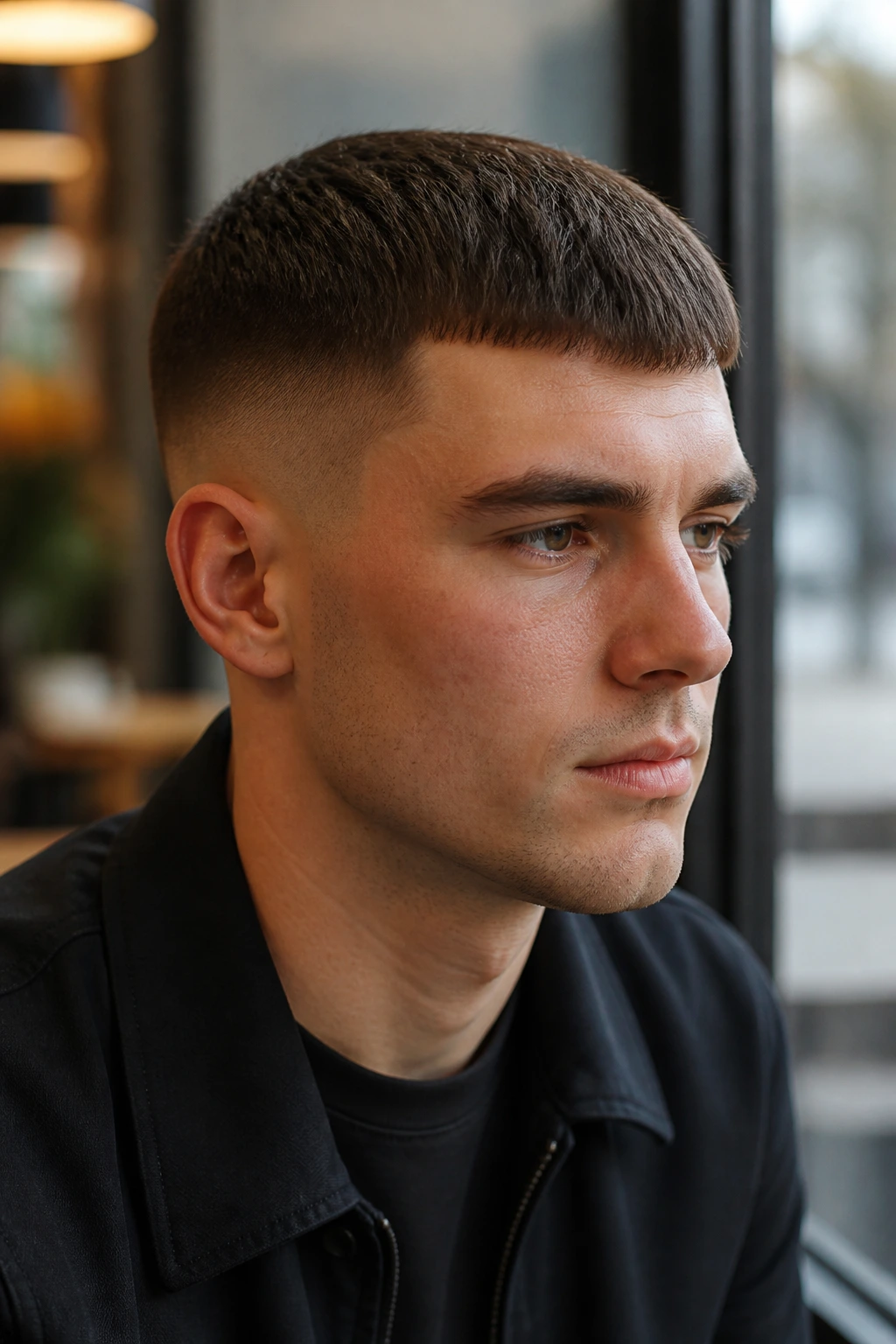
A Caesar-inspired buzz borrows the forward motion of a classic Caesar but keeps it short enough to stay in buzz territory. The top is usually around a #2 or #3, with just enough length at the front to push the fringe slightly forward.
The taper fade keeps the sides controlled so the front line becomes the main feature. That’s useful if your forehead is a little larger than you’d like or if your hairline recedes at the temples.
Why It’s a Smart Choice
The forward fringe softens the face. It doesn’t have to hang down; even a subtle push forward changes the proportions. The taper helps because it narrows the sides and keeps attention where you want it.
This cut can fall apart if the fringe is too heavy. Keep it short and light. If it looks like a shelf, the shape has gone too far.
12. The Buzz Cut With a Hard Part and Taper Fade
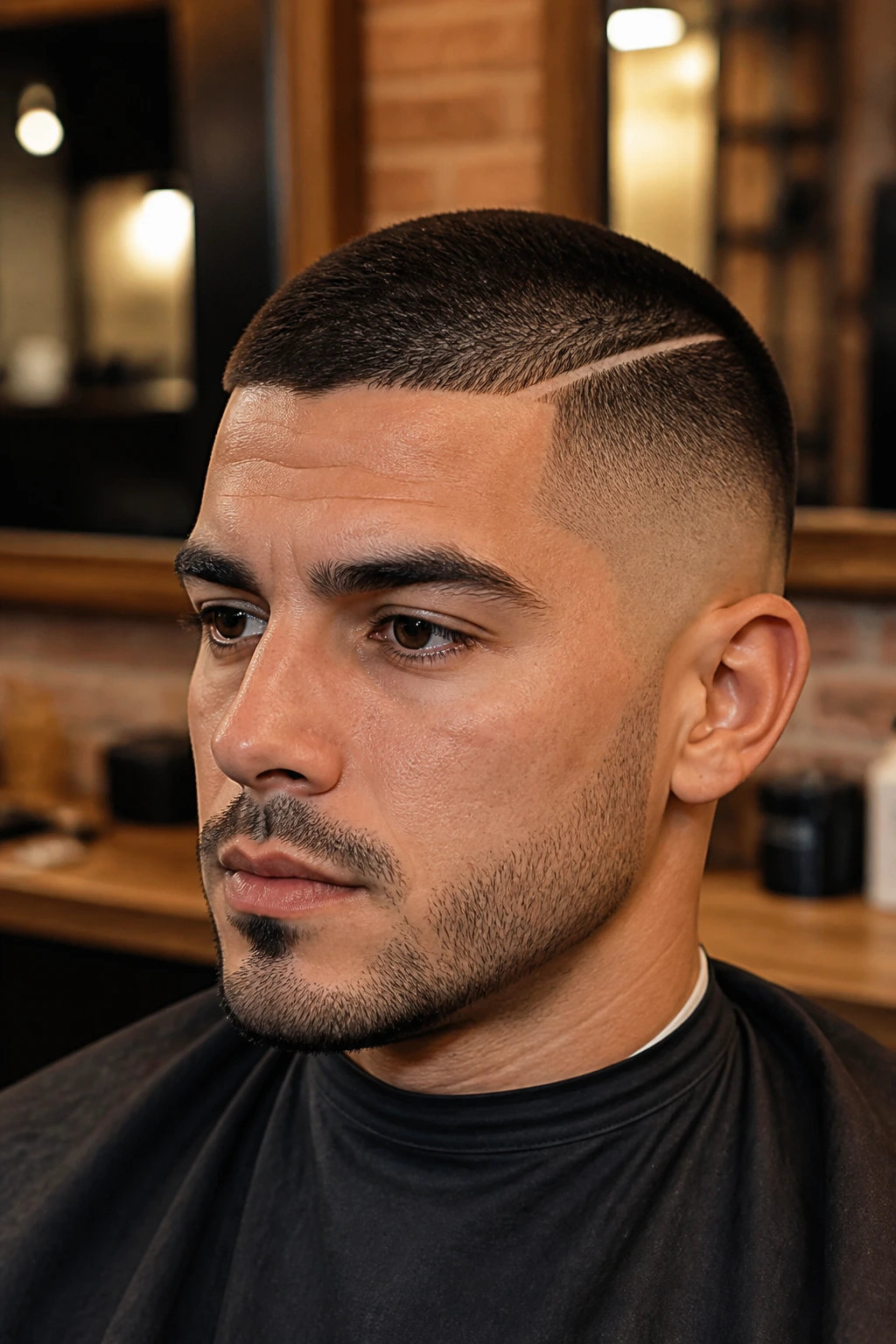
A hard part on a buzz cut is not subtle, and that’s the point. The shaved line gives the cut a graphic edge, while the taper fade keeps the surrounding hair from looking too harsh or disconnected.
I’d use this one sparingly. It can look sharp on the right face shape, but it needs a barber with a steady hand. A crooked hard part on a short cut is the kind of thing you see immediately.
When It Makes Sense
This version works best if you like a haircut with a little personality but don’t want length on top. The part line creates a visual break, which is especially useful when the top is only a #2 or #3 and could otherwise disappear into the rest of the cut.
If you’re wearing a beard, the part can tie into it nicely. If you’re clean-shaven, the line stands on its own. Either way, it needs maintenance.
13. The Buzz Cut With a Beard Fade Connection
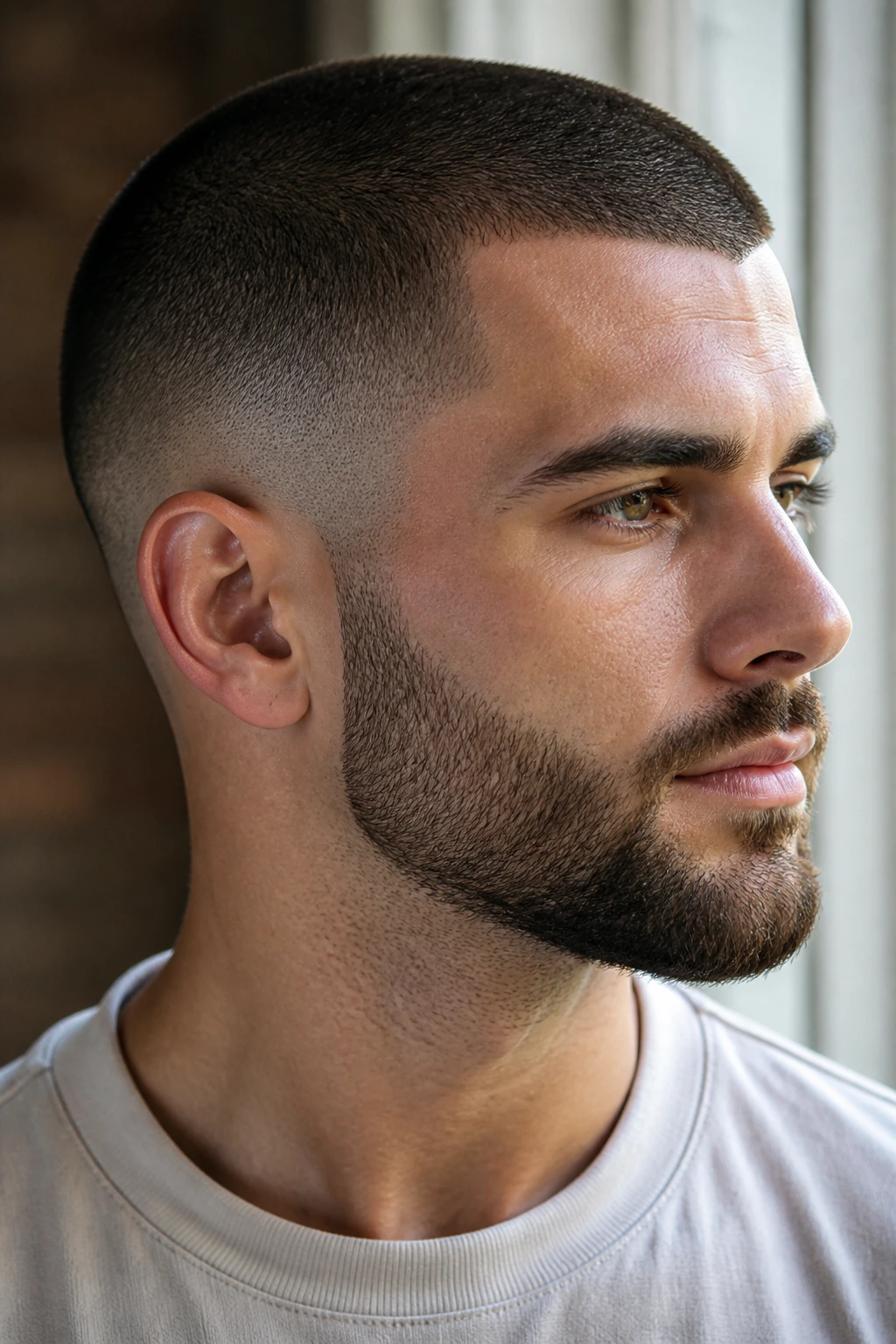
A lot of men forget that a buzz cut doesn’t stop at the scalp. If you wear facial hair, the transition from haircut to beard is part of the same look, and a taper fade makes that connection feel much smoother.
The sideburn area is where this either works or falls apart. Blend the taper into a short beard and the whole profile looks intentional. Leave a gap and it feels like two separate haircuts fighting each other.
The Best Version of This
If your beard is dense, keep the buzz slightly longer—maybe a #2 or #3—so the contrast doesn’t become too extreme. If the beard is lighter, a shorter top can still work, but the fade should stay soft around the temples so the transition doesn’t look abrupt.
This is one of my favorite pairings because it lets the head shape and jawline support each other. Clean, but not sterile.
14. The Burst Taper Buzz for Broader Cheekbones
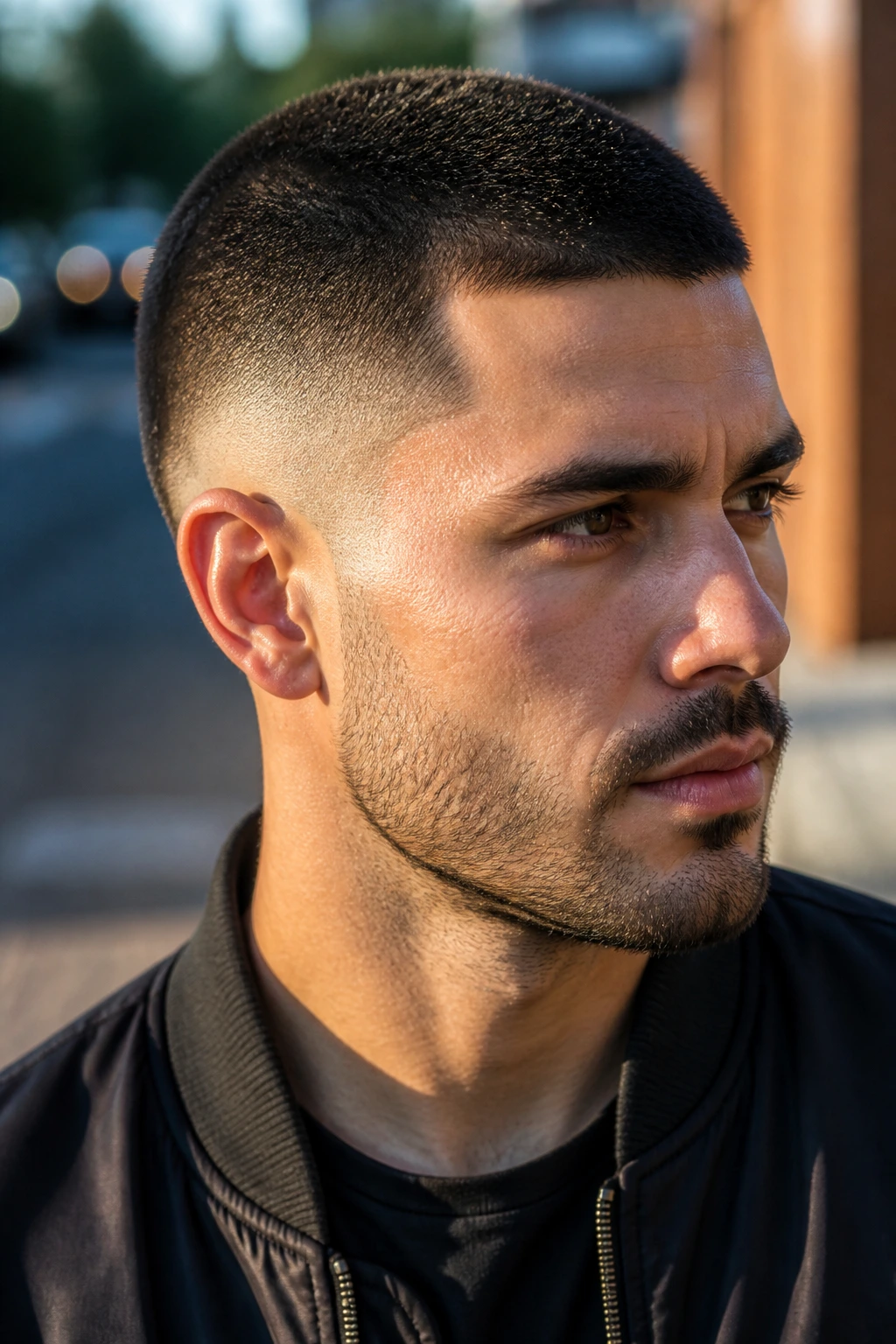
The burst taper wraps around the ear in a curved shape instead of dropping straight back. On a buzz cut, that small move changes the whole geometry of the haircut. It pulls the eye inward around the ear and gives broader cheekbones a little breathing room.
The top can stay short and even, usually around a #2 or #3, while the sides keep that rounded fade pattern. It’s subtle from far away and more noticeable when someone’s standing close.
Who Should Try It
If your face feels wide at the middle and narrow at the chin, this taper shape can help balance things out. It also works for guys who don’t like a severe fade line climbing too high around the ears.
This is one of those cuts that barber photos can undersell. In person, the curve makes the head look better proportioned. You notice it when the side profile doesn’t feel heavy anymore.
15. The Longer #4 Buzz for Men Who Want More Coverage

Not everyone wants scalp showing through the top. A #4 buzz keeps more hair in play and is often the most forgiving version for men who are cutting short for the first time or boys who need a neat school-friendly cut.
The taper fade matters here because a longer top can look bulky if the sides are left too square. The taper trims that mass down near the ears and neckline so the whole cut still feels light.
Why I’d Recommend It
If you’re nervous about going short, start here. A #4 still gives you a buzz-cut feel, but it doesn’t expose every cowlick or crown swirl. It’s also easier to grow out because the difference between “fresh cut” and “three weeks later” is less dramatic.
This is the version I’d point to for anyone who wants low maintenance without fully committing to the bare-scalp look.
16. The Military Regulation Buzz With a Tight Nape Taper
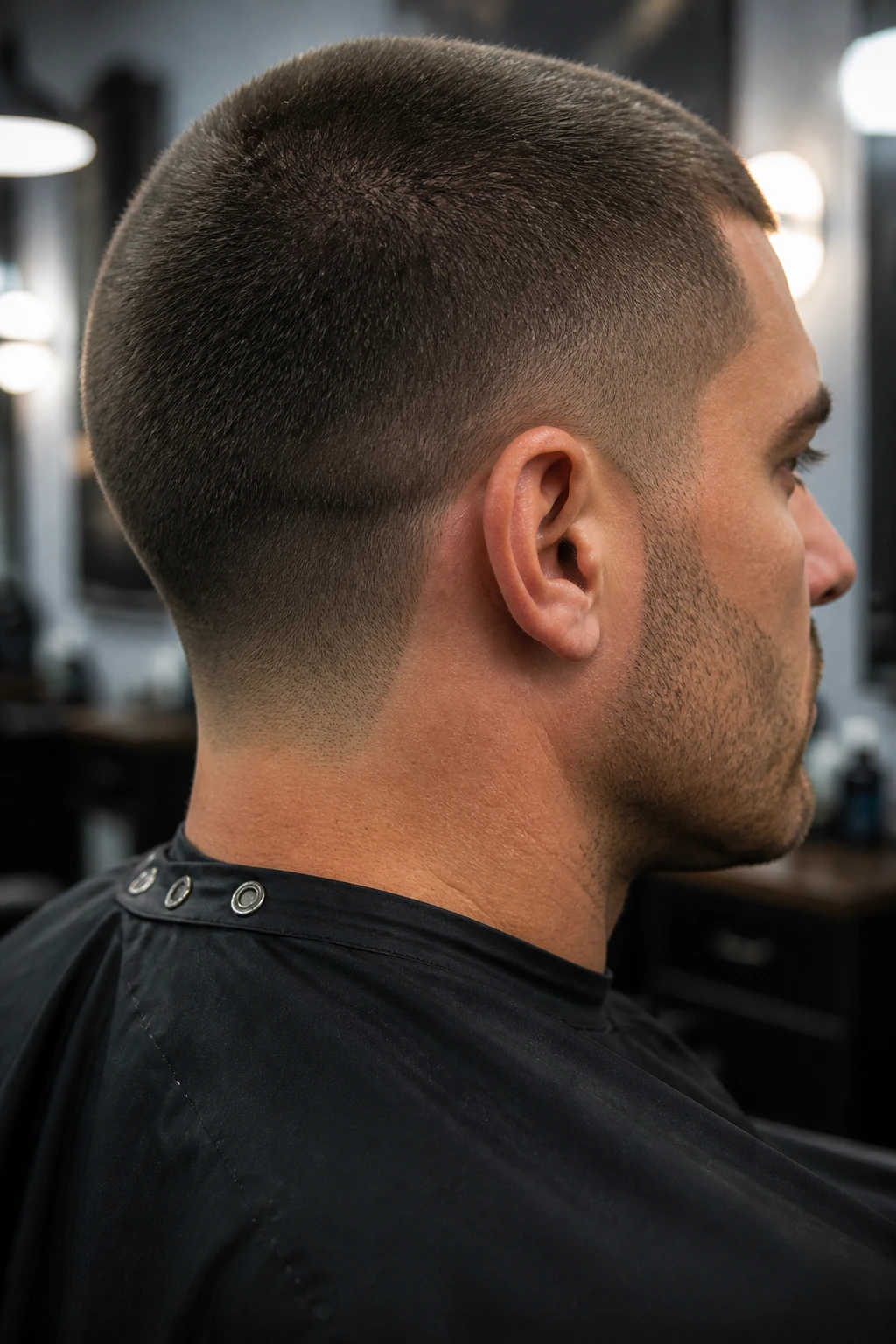
This cut is about discipline, not softness. The top stays short and even, the sides are pared down with a tighter taper, and the nape is cleaned aggressively so the back of the head looks crisp from the first day to the tenth.
It has a very specific feel. Structured. Unfussy. No extra decoration needed.
The Detail That Matters
The neckline is the whole story here. If the nape is left rounded and fuzzy, the cut loses its authority. A proper taper keeps that area controlled without turning the back into a hard block.
It’s a strong choice for work settings with a dress code, and it can also work for boys who need a haircut that stays neat through a week of running, sleeping on it, and roughhousing. Some cuts are pretty. This one is just solid.
17. The Receding-Hairline-Friendly Buzz With a Soft Taper

If the temples are starting to thin, a buzz cut can either help or expose too much. The right answer is usually a soft taper with a slightly longer top, somewhere in the #2 to #3 range, so the front doesn’t get pushed into a stark outline.
A harsh line at the front can make recession look sharper than it is. A softer cut lets the hairline sit naturally.
The Real Benefit
This style avoids the trap of trying to “hide” recession with too much hair. That usually backfires. A short, even top with tapered edges looks cleaner than a desperate comb-forward job ever will.
Ask for a tapered neckline and temple area without pushing the fade too high. Keep the front edge honest. That honesty is what makes the cut look intentional instead of reactive.
18. The Buzz Cut With a Shaved Design and Low Taper
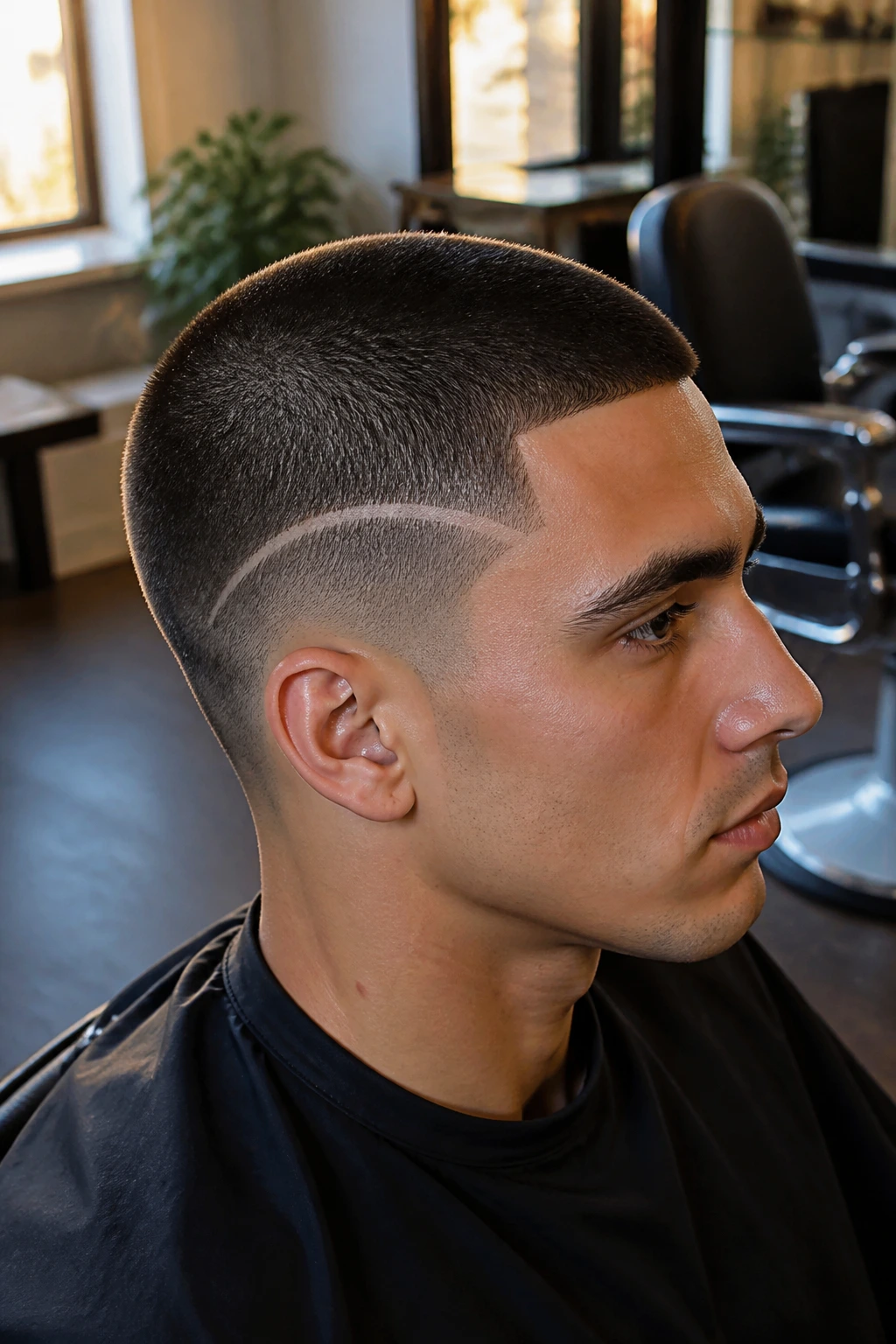
If you want the short cut to have some personality, a shaved line or small design panel can do it without turning the whole haircut into a stunt. The low taper fade keeps the sides grounded so the design has room to stand out.
The best version is restrained. One clean line, a tiny slash, or a subtle geometric edge is usually enough. Too much design and the cut stops looking sharp and starts looking busy.
When It Works Best
This is a good pick for younger guys, creative types, or anyone who wants one obvious detail in an otherwise simple cut. It also grows out better than people expect, as long as the design is small and the taper stays low.
The trap is letting the design do all the work. It shouldn’t. The buzz itself still needs a good shape, a clean neckline, and a taper that doesn’t climb too high around the ear.
Why the Buzz Cut and Taper Fade Work So Well Together
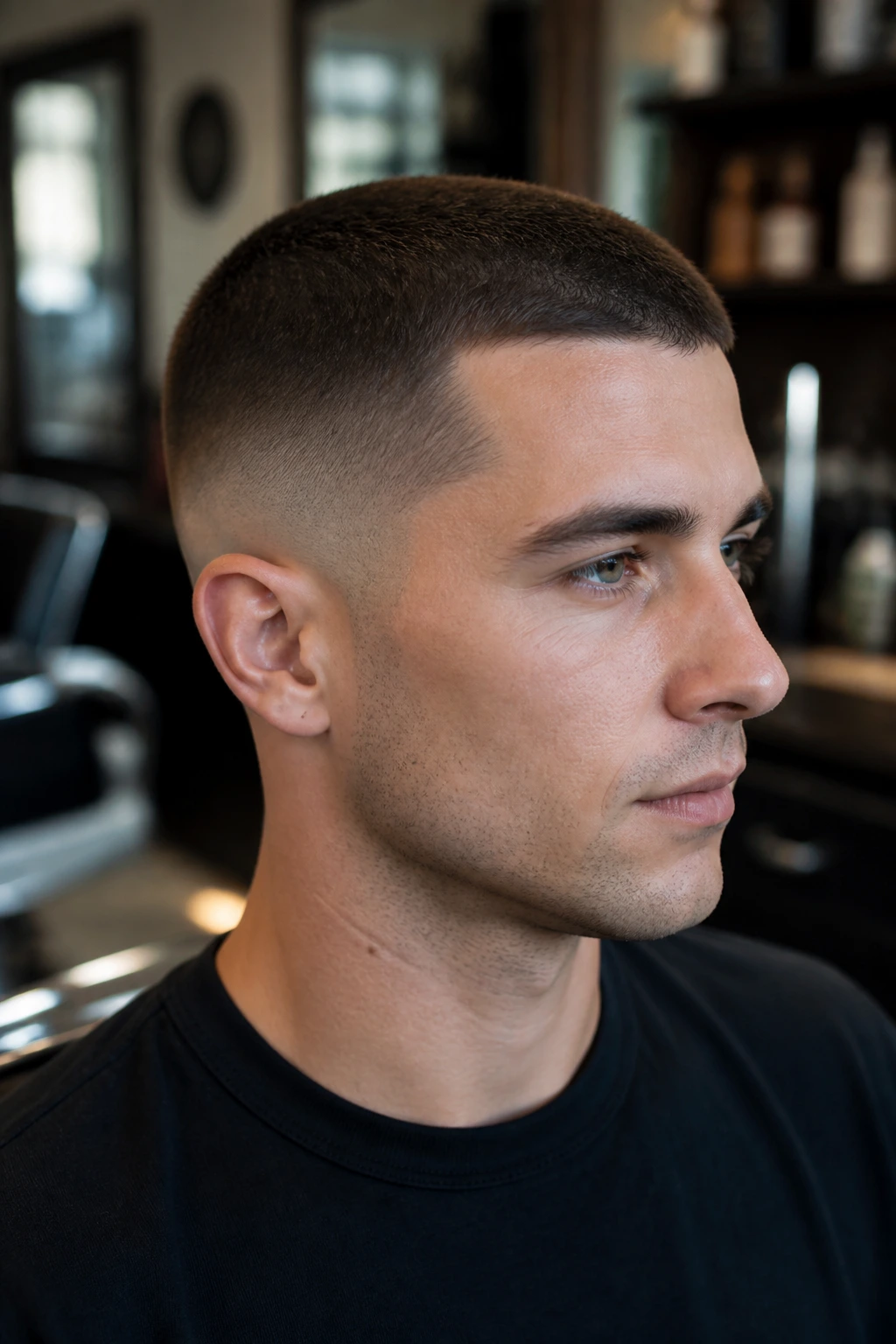
The buzz cut does the blunt work. The taper fade handles the edges. That division is why the pairing makes sense in the first place.
A plain buzz can look flat on the sides and too abrupt at the neckline. A taper fade gives the cut a landing zone. The ear area gets cleaned, the nape gets narrowed, and the grow-out doesn’t turn into a messy shelf after a week and a half. That’s the quiet win here.
The other advantage is that the taper lets the barber adjust for head shape without changing the whole haircut. A lower taper can soften a stronger jawline. A mid taper can add a little height. A temple taper can open up the face. You do not need a complicated cut to get a better silhouette.
Essential Tools for These Cuts
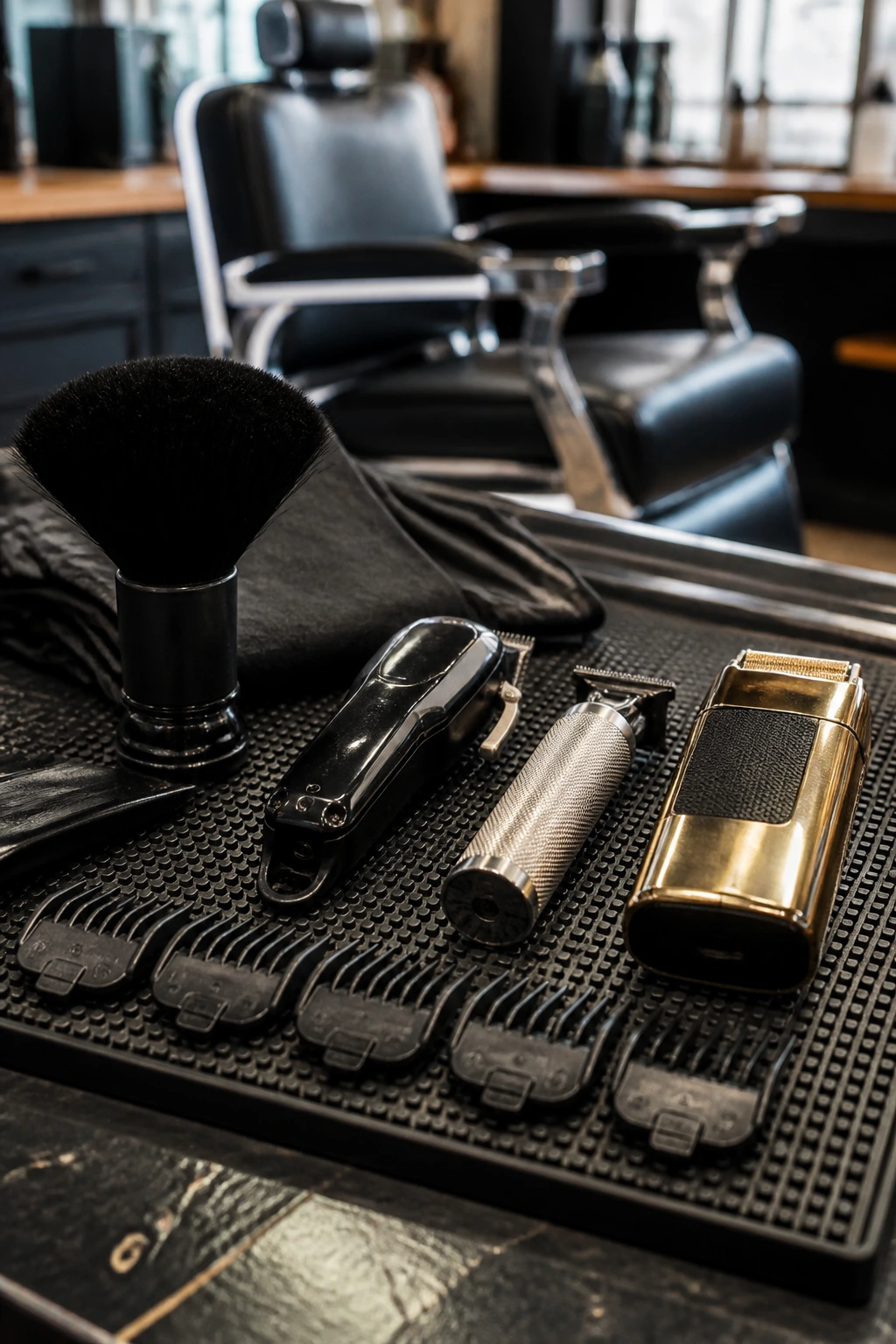
- Clippers with guards #0.5 through #4: Those guard sizes cover nearly every buzz length in this set, from skin-close burrs to longer #4 buzzes.
- Detail trimmer: Useful for cleaning sideburns, the hairline, and the neckline between full cuts.
- Foil shaver or zero-gapped trimmer: Optional, but handy if you want a skin taper or very tight fade at the edges.
- Hand mirror: Necessary for checking the back of the head and making sure both taper sides match.
- Neck brush or soft towel: Helps remove loose clippings before the fade is finished.
- Cape or old T-shirt: Keeps clippings off your shirt, which matters more than it sounds like it should.
- Lightweight scalp moisturizer: Optional, but useful if your scalp gets dry at short lengths.
How to Explain the Cut to Your Barber
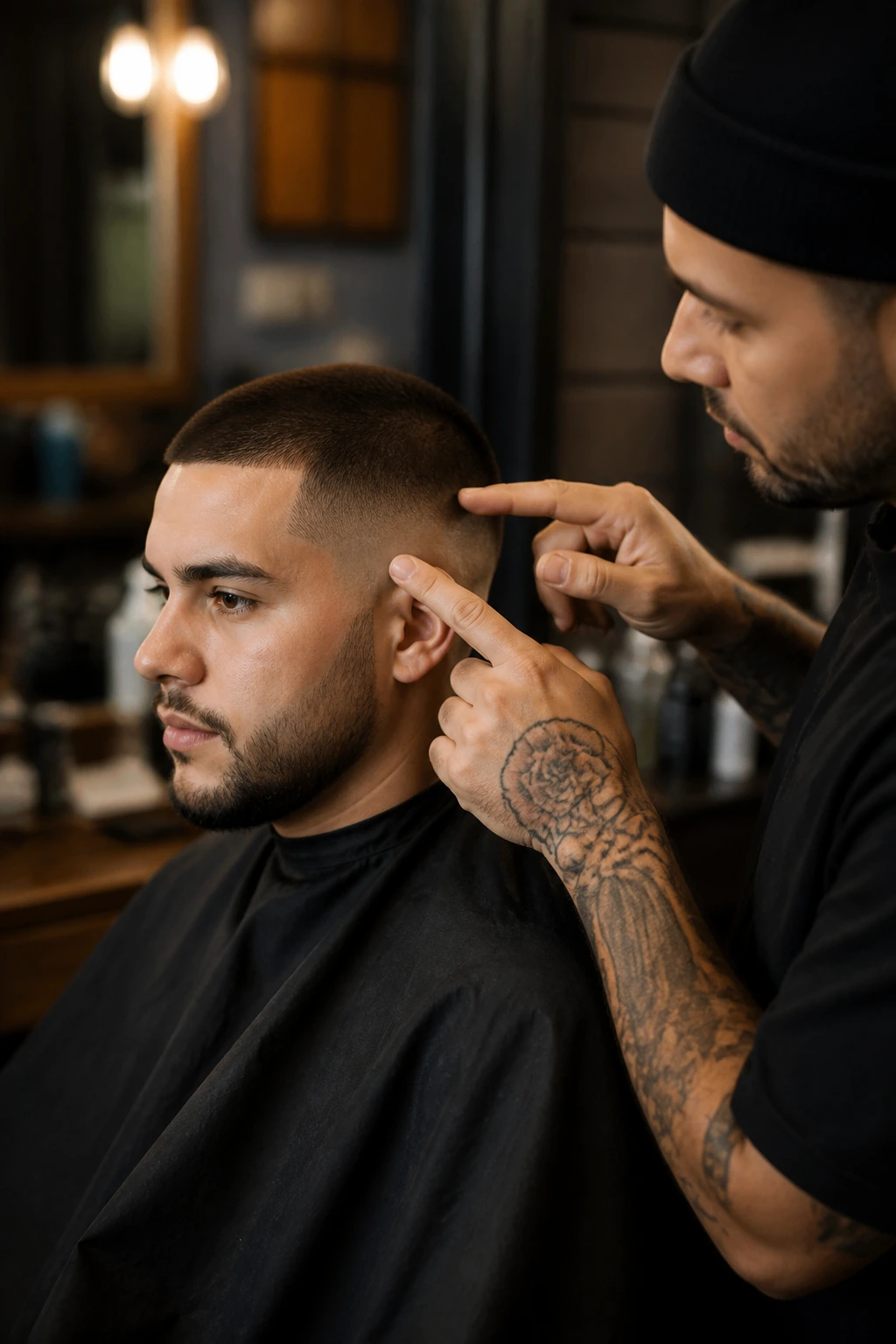
The easiest way to get a good buzz fade is to stop describing the mood and start giving numbers. Tell the barber the top guard, the taper height, and whether you want skin showing around the ears or only a soft blend. That’s the language that saves everyone time.
If you want a low taper, say so directly. If you want the fade to stay tight only at the temples and nape, say that too. A lot of bad haircuts start when someone says “just a clean fade” and assumes the barber can read their mind.
Bring up the front line if it matters. Ask for a natural hairline, a squared line, or a soft lineup. If you wear a beard, ask for the sideburns to blend into it. That one sentence can save the whole profile.
How to Wear a Buzz Fade Without It Looking Flat
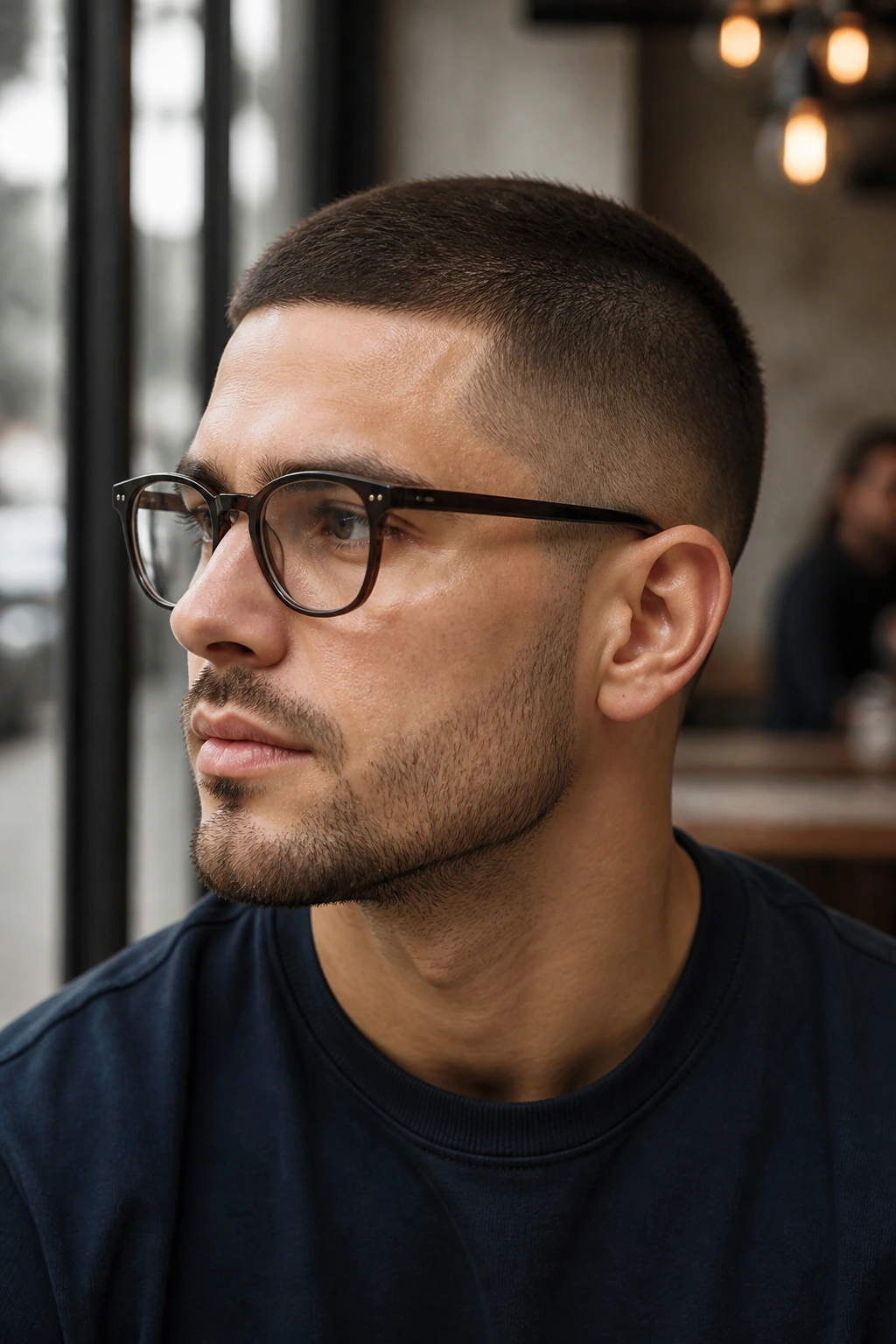
Presentation: Keep the taper lower if your head is narrow, and keep the top a guard longer if the crown has a strong swirl. The cut should frame your head, not fight it.
Pairings: A short beard, stubble, or clean shave each changes the way the buzz reads. Strong facial hair can handle a shorter top; a clean face often looks better with a little more length on top so the cut doesn’t feel too severe.
Length: If you wear glasses, avoid an over-high taper near the temples. That area needs to breathe so the frames don’t sit on a shaved cliff. If you wear hats often, a soft taper grows out more gracefully under the friction.
Finishing Touch: A tiny amount of matte scalp cream or lightweight moisturizer keeps short hair from looking chalky, especially on dry skin. Skip heavy gels. They sit on a buzz like syrup on a rock.
Smart Barber-Shop Notes and Home Trimmer Tips
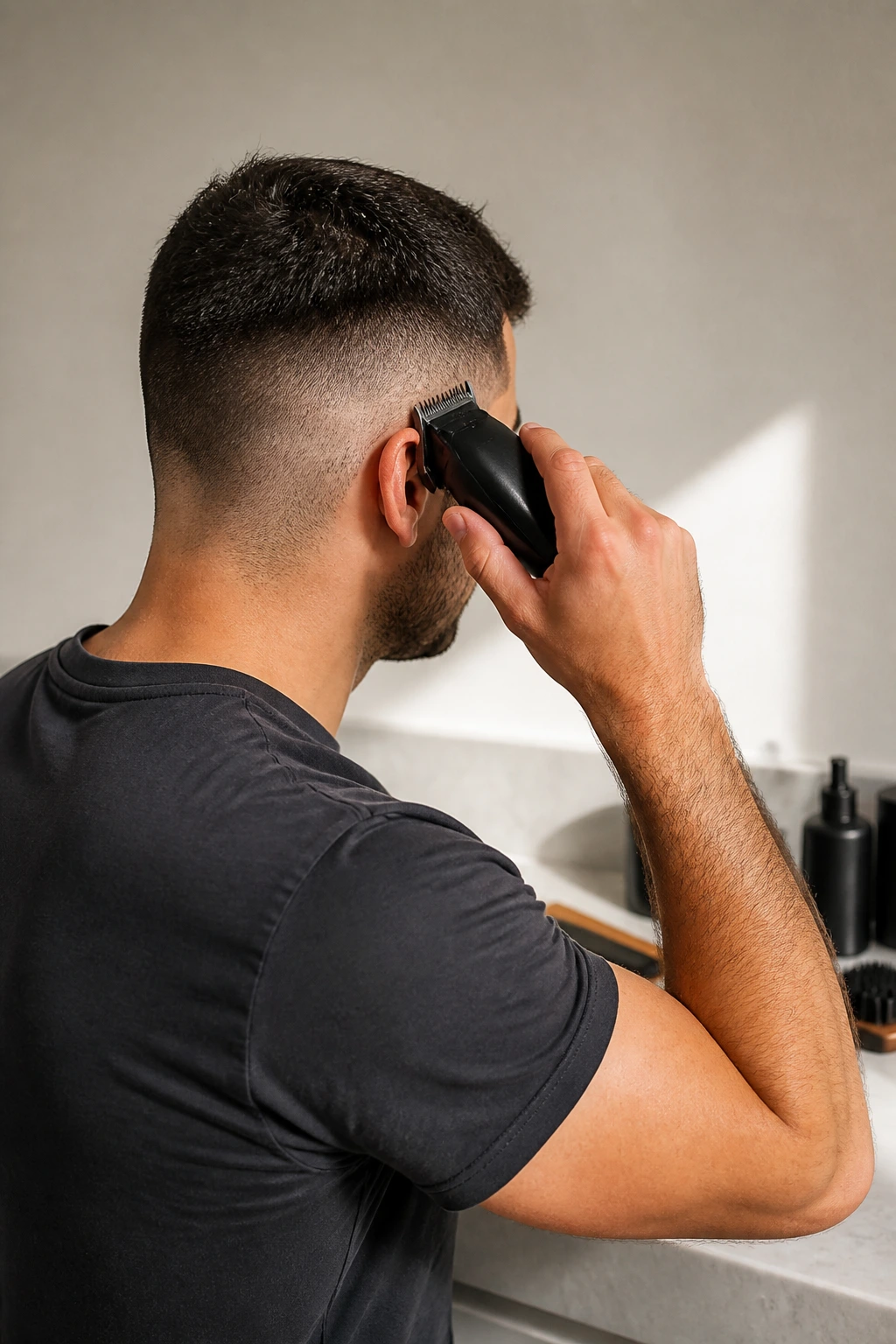
The biggest upgrade you can make is learning the difference between a true taper and a fade that starts too high. A taper should narrow the hair at the sideburns and neckline first, then blend upward gently. If it climbs halfway up the head, you’re not really in buzz-cut territory anymore.
At home, a decent clipper set matters more than fancy styling products. Look for guards that don’t flex, a trimmer with a crisp blade, and a mirror that lets you see the back without guessing. Cheap clippers can still work, but they’re the kind that tug when the battery dips, and that gets old fast.
If you cut your own hair, use the same guard on both sides before changing anything. That sounds obvious. It isn’t, when you’re rushing in bathroom light and one side already looks shorter than the other.
Extra Tips for Better Shape, Better Grow-Out
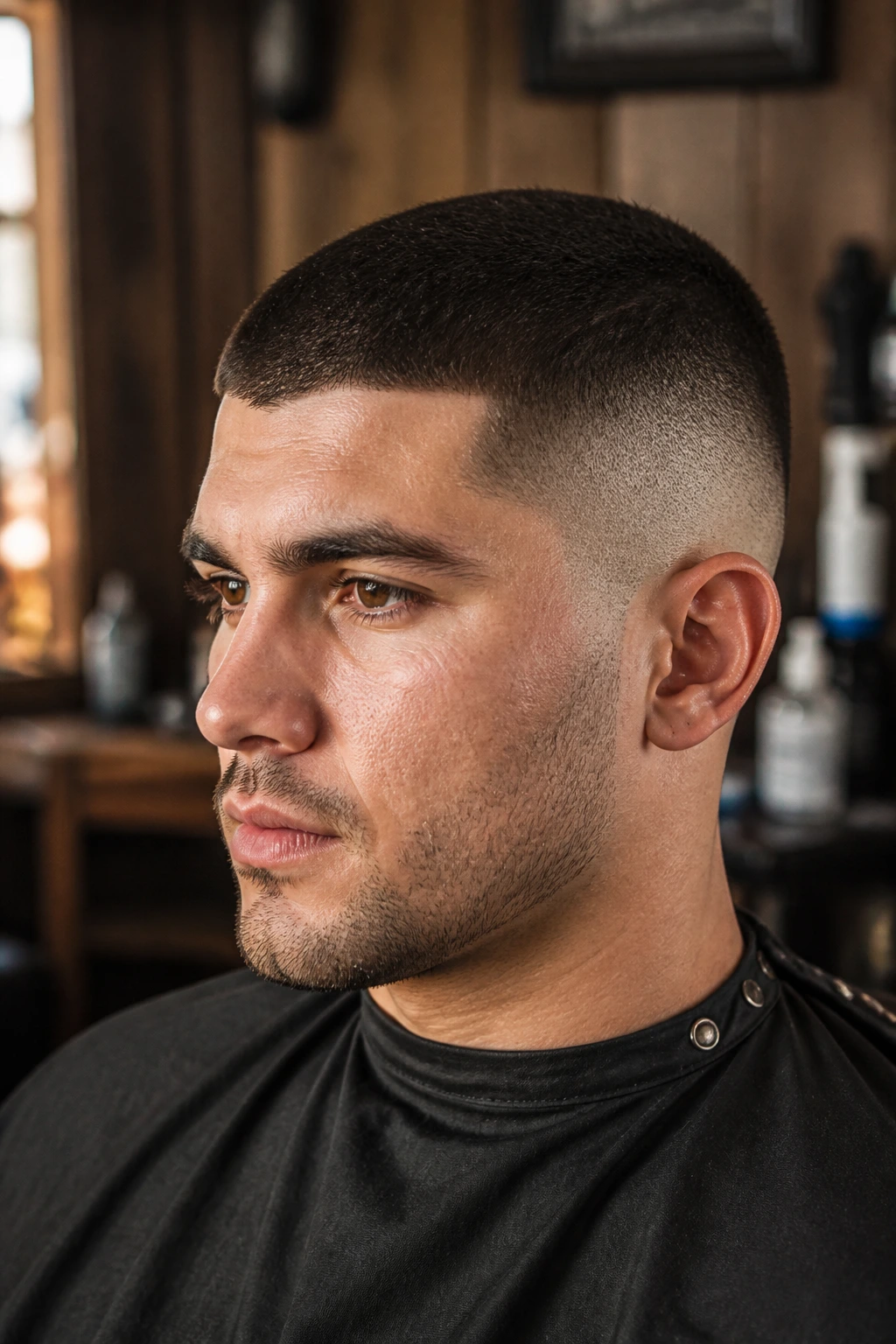
Guard Math: Keep the jump between the top and the taper reasonable. A #4 top with a skin taper can work, but it reads much softer than a #1 top with a skin taper. That contrast changes the whole vibe.
Line Control: The neckline should follow the natural curve of the neck unless you have a very strong reason to square it off. Rounded necklines grow out cleaner. Squared ones need more maintenance.
Scalp Care: Short hair shows dry skin fast. Wash with a mild shampoo, then use a light moisturizer if your scalp flakes. Don’t pile on heavy oils unless your hair texture actually needs them.
Grow-Out Plan: If you know you’ll wait three weeks between cuts, choose a slightly longer guard from the start. A #3 that grows out looks far better than a #1 that turns fuzzy in ten days.
Common Mistakes That Make a Buzz Fade Look Off
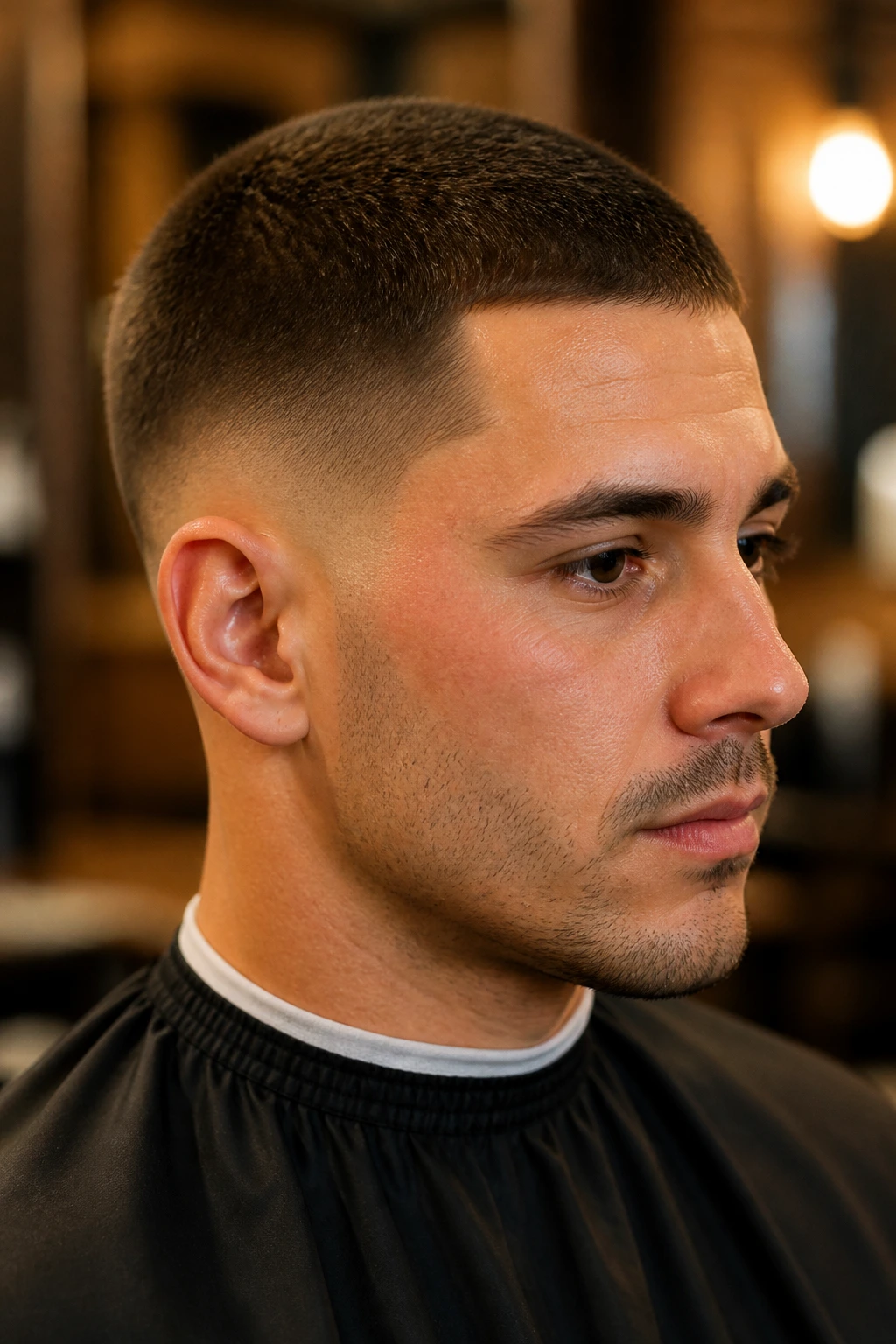
The first mistake is asking for a buzz cut and leaving the guard number vague. “Short” means nothing to a barber. A #1 and a #4 are both short, but they are not the same haircut, and the difference shows immediately.
The second mistake is taking the fade too high for your head shape. On a rounder head, a high fade can make the top feel too exposed. On a narrow head, it can make the sides look pinched. The taper should support the shape you already have, not bully it into a new one.
A third problem is ignoring the neckline. Fuzzy napes make even a sharp buzz look unfinished. Clean it every week or two if you’re keeping the cut tight.
Then there’s product overload. A buzz cut does not need a sticky paste, a glossy cream, or a mountain of pomade. A little matte moisturizer is fine. Anything heavier just makes short hair cling and clump in a weird way.
Variations and Adaptations for Different Hair Types and Rules

The Office-Quiet Version: Keep the top at a #3 or #4, use a low taper, and skip hard lines. It reads neat without drawing a lot of attention in a dressy environment.
The Weekend Sharp Version: Go shorter on top, add a skin taper, and sharpen the front line. This one has more contrast and looks strongest when the beard or stubble is already tidy.
The Curly-Friendly Version: Leave the top longer than you think you should, then taper the temples and neckline softly. That protects the texture and avoids the “bald with fuzz” problem curls can have when they’re taken too short.
The School-Approved Version: A #4 top with a low taper is the safest route for boys’ cuts and strict dress codes. It stays neat, grows out cleanly, and doesn’t need product.
The Recession-Smart Version: Keep the front a little softer and avoid a hard lineup if the temples are thinning. A gentle taper and a slightly longer guard length usually look better than trying to fake a straight hairline.
Keeping the Cut Fresh Between Barber Visits
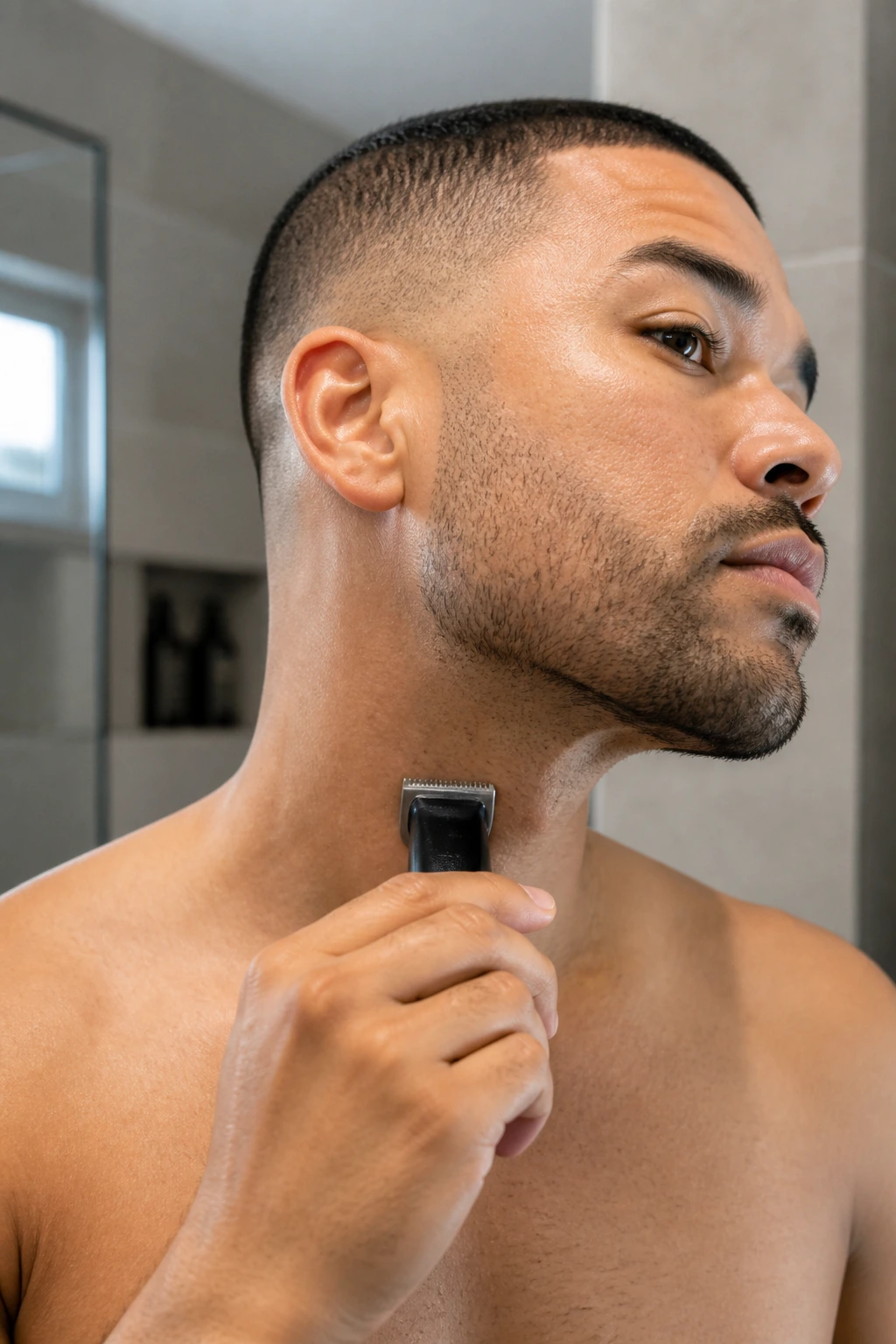
A buzz with a taper fade ages in layers. The top grows first, the taper loses its crisp edge second, and the neckline starts to fuzz last. If you want it to look intentional, plan on cleaning the edges every 7 to 10 days and getting the full cut refreshed every 2 to 4 weeks, depending on how fast your hair grows.
The neckline is the easiest place to touch up at home. Use a trimmer, follow your natural growth line, and don’t carve too high unless you like living dangerously. The sideburns can be tidied at the same time. The top usually needs less frequent work unless you’re keeping it very short.
If your scalp gets dry, wash it gently and don’t scrub it like a kitchen sponge. Short cuts expose skin, and skin complains when it’s stripped too hard. A light moisturizer after the shower helps more than most styling products ever will.
Frequently Asked Questions About Buzz Haircuts for Men With a Taper Fade
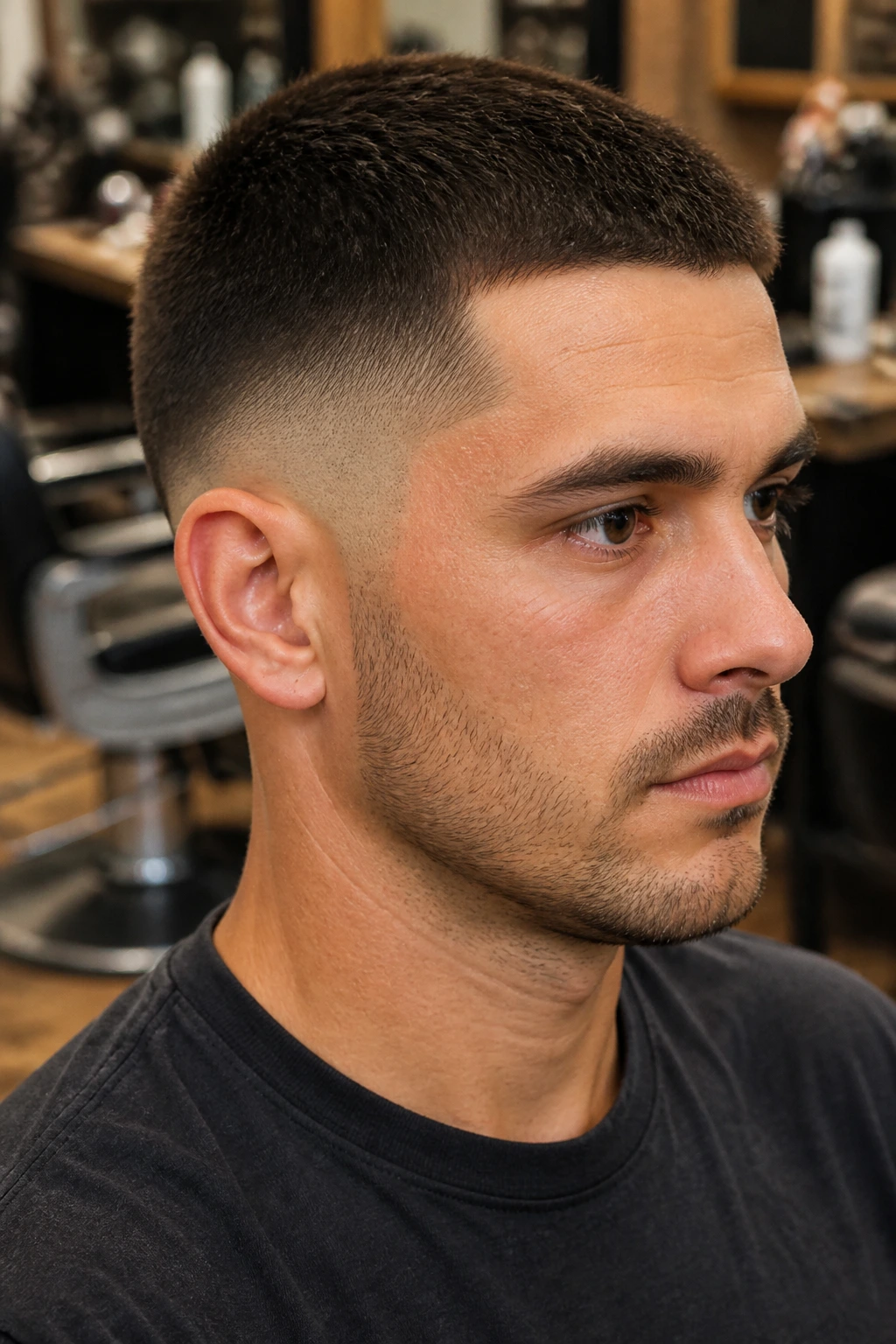
What guard number is best for a buzz cut with a taper fade?
Most men land somewhere between a #2 and #4 on top because those lengths keep enough shape to pair well with the fade. A #1 looks sharper and more severe, while a #4 feels softer and easier to grow out.
Is a taper fade the same as a regular fade?
No. A taper fade usually stays tighter at the sideburns and neckline and doesn’t climb as far up the sides. That keeps the haircut cleaner without removing as much hair from the whole side panel.
Can this cut work for curly hair?
Yes, and it often looks better than people expect. The trick is not taking the top too short, because curls need a little length to show pattern instead of turning into scalp texture.
What if my hairline is receding?
A soft taper with a slightly longer top usually beats a harsh lineup. The goal is to make the recession look like a natural part of the haircut, not a problem the barber tried too hard to hide.
How often do I need to touch up the fade?
Most men need a neckline and temple refresh every 1 to 2 weeks if they want the cut to stay crisp. If you’re fine with a looser look, you can stretch that longer.
Can I do this haircut at home?
You can, if you have a reliable clipper set, a trimmer, and a second mirror. The danger is symmetry. The fade on the back and both sides has to match, and bathroom lighting is usually a liar.
Does this cut suit boys as well as men?
It does. A longer guard like a #3 or #4 with a low taper is often the easiest version for boys because it stays neat and grows out without looking ragged too fast.
Will a taper fade show scalp more than a regular buzz?
It can, but only at the edges if the fade is skin-tight. If you want less scalp show, choose a softer taper and keep more length on top.
A Clean Finish That Holds Up
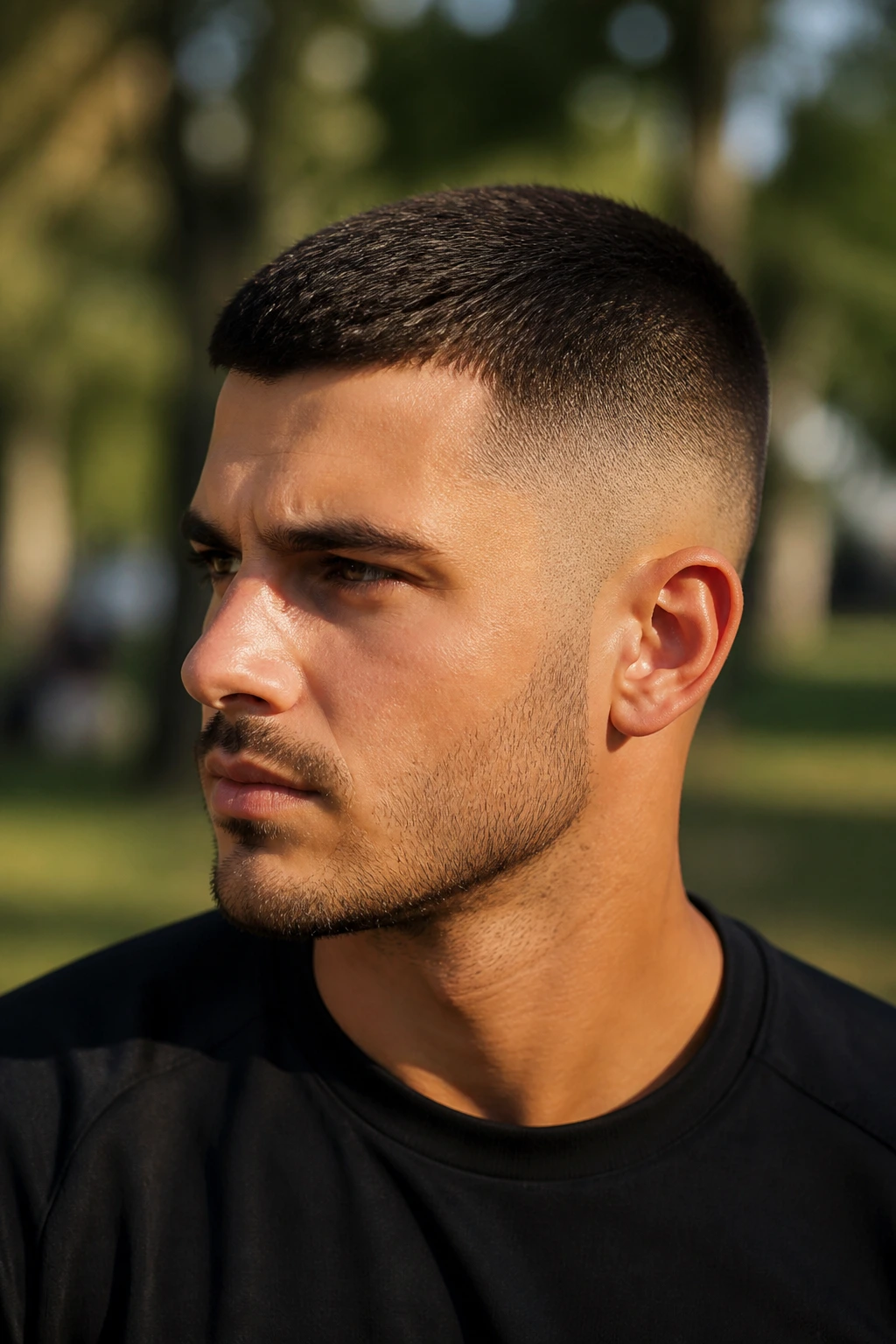
A buzz cut gets its personality from the edges. That’s the part people miss when they assume all short hair looks the same. A taper fade gives the cut shape at the temples and nape, lets it grow out without going ugly fast, and makes the whole thing feel finished instead of abrupt.
The best version for you depends on where you want the weight to sit: low and soft, tight and sharp, longer and safer, or lined up with a little extra edge. Pick the guard number first, then decide how much fade you actually want. That order matters.
If you keep the taper low enough to stay clean and the top long enough to suit your head shape, these cuts do their job with almost no fuss. That’s why they keep showing up, and why they keep making sense.