



Thin hair does not need a miracle. It needs shape.
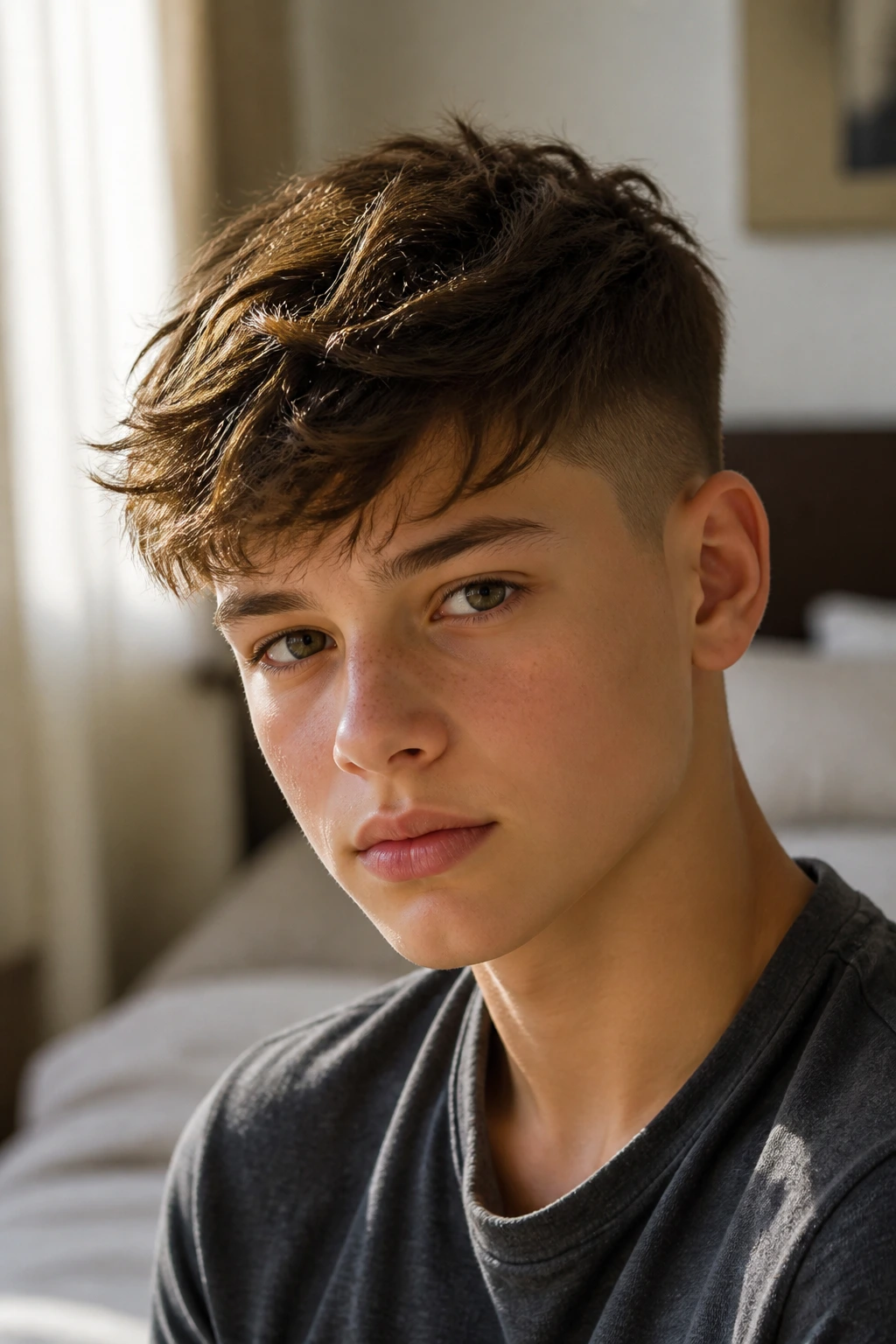
Give the sides less room, keep the top long enough to bend, and the haircut starts looking fuller from three feet away and even better up close. That’s the quiet trick behind long-on-top, short-on-sides hairstyles for boys with thin hair: the cut does some of the visual work before product ever touches the head.
The wrong haircut makes fine strands look scattered, especially around the temples and crown. The right one keeps the outline clean, lets the top carry texture, and avoids the heavy, over-layered look that can leave thin hair looking see-through. A good barber will usually leave enough length to style, but not so much that the hair collapses into a flat curtain by lunch.
Some of these cuts lean neat. Some lean messy. A few sit right in the middle, which is where thin hair often looks best anyway. The point isn’t to pretend the hair is thicker than it is; it’s to give it a shape that makes the most of the strands already there.
Why These Cuts Work So Well on Thin Hair
-
Less scalp show-through: Keeping the sides shorter pulls the eye away from the temples and around the ears, where thin hair tends to look light first.
-
Texture beats shine: Matte ends and a bit of separation make the top look fuller than a slick, glossy finish that lays every strand flat.
-
The top gets all the attention: When the sides are tight, even 2 to 4 inches on top can carry a hairstyle with real presence.
-
Cowlicks stop fighting back as hard: Fringes, side sweeps, and brushed-up tops can work with a swirl instead of forcing it straight down.
-
The cut still looks decent as it grows: A soft taper or fade gives you a little runway before the shape falls apart.
1. Textured Quiff with a Low Fade
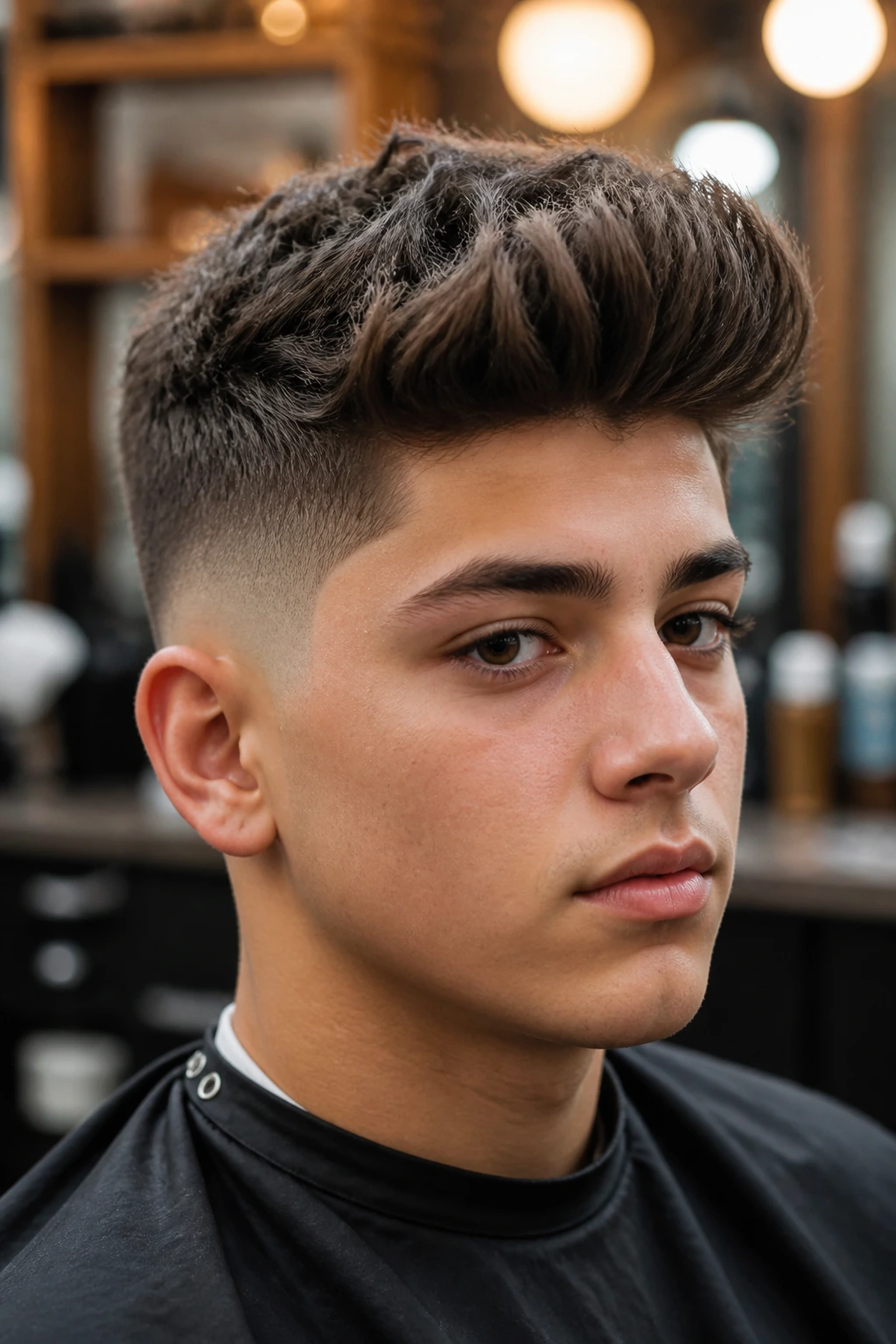
The textured quiff is one of those cuts that looks fuller because the front is doing the heavy lifting. Keep the top around 3 to 4 inches, fade the sides low, and leave enough length in front so the hair can stand up without splitting into skinny pieces.
Why It Works on Thin Hair
A quiff gives you height without making the whole head look narrow. That matters. If the top is too short, thin hair lies flat; if it’s too long, it can separate and show gaps. The sweet spot is a front section that lifts with a blow-dryer and a pea-size amount of matte paste.
Ask for point cutting through the top, not aggressive thinning. Point cutting leaves soft, uneven ends that catch light and create the look of density. A shiny gel quiff, by contrast, often exposes every strand and every weak spot.
Use a round brush or even just your fingers to push the front up and slightly back. A boy who wants a neat shape for school but doesn’t want helmet hair usually lands here first.
2. Side-Swept Fringe with Tapered Sides
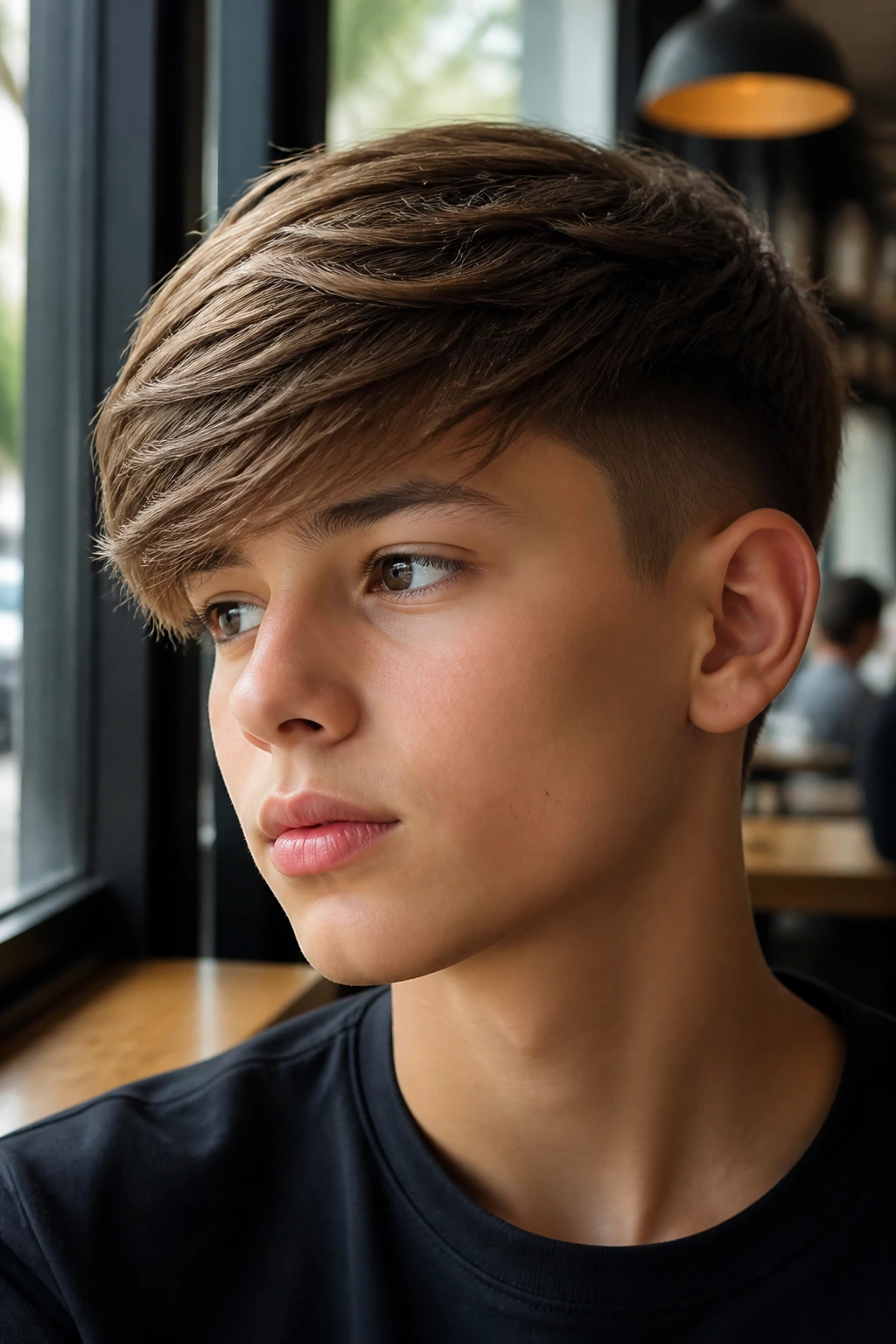
Why does a side-swept fringe help thin hair so much? Because it puts more hair where the eye expects to see it: across the front.
The fringe should sit long enough to brush across the forehead, not hang into the eyes like a curtain. Around 2.5 to 3.5 inches on top is usually enough, with tapered sides that stay soft rather than harsh. That softness matters on thin hair because a hard fade can make the top look even lighter by comparison.
Best Face Shapes for This Cut
Round faces get a little length from the diagonal line. Longer faces do well too, as long as the fringe isn’t cut too short. A side-swept front also covers a higher hairline neatly, which is useful if the front grows in lighter than the rest.
A quick spritz of sea salt spray on damp hair gives the fringe some bend before it dries. Then use fingers, not a comb, to push it sideways. Comb marks on thin hair can turn into visible lanes, and nobody needs that.
3. Brush-Up with a Mid Fade
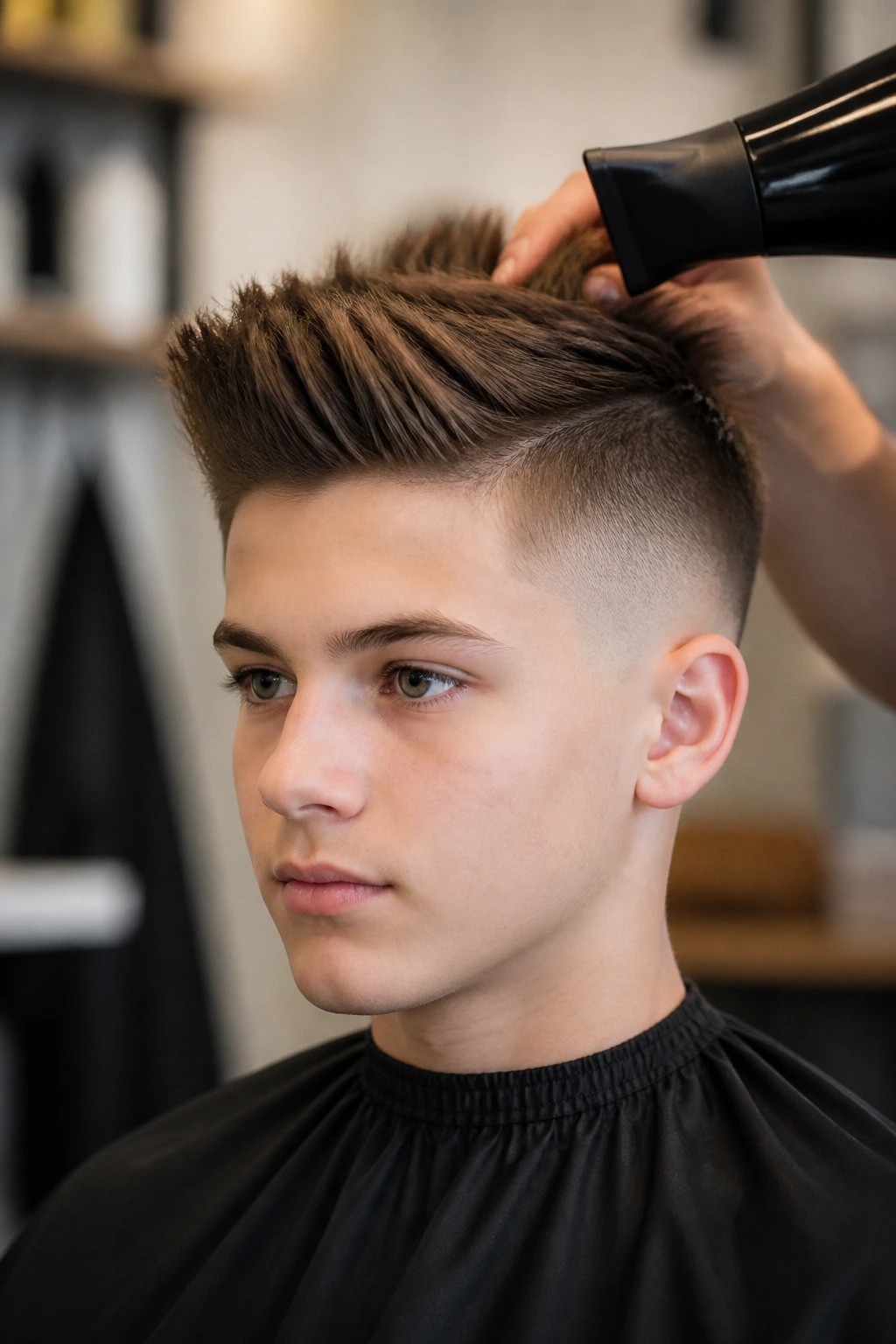
A brush-up sounds bold, but on thin hair it works because it sends the hair upward in a controlled way instead of backward into a flat sheet.
The barber should leave enough length on top to stand, usually around 3 inches, with a mid fade to tighten the shape around the head. If the hair is very fine, keep the top textured and avoid a razor-sharp front line. That line can make the hair look chopped off rather than lifted.
A blow-dryer makes this cut. Not optional. Dry the hair from the roots while brushing it up and slightly forward first, then angle it back a touch. That first push forward helps the roots stand up instead of collapsing.
A matte clay or powder gives the lift some grip without making the hair look wet. Wet hair and height rarely get along.
4. Ivy League with a Hard Part
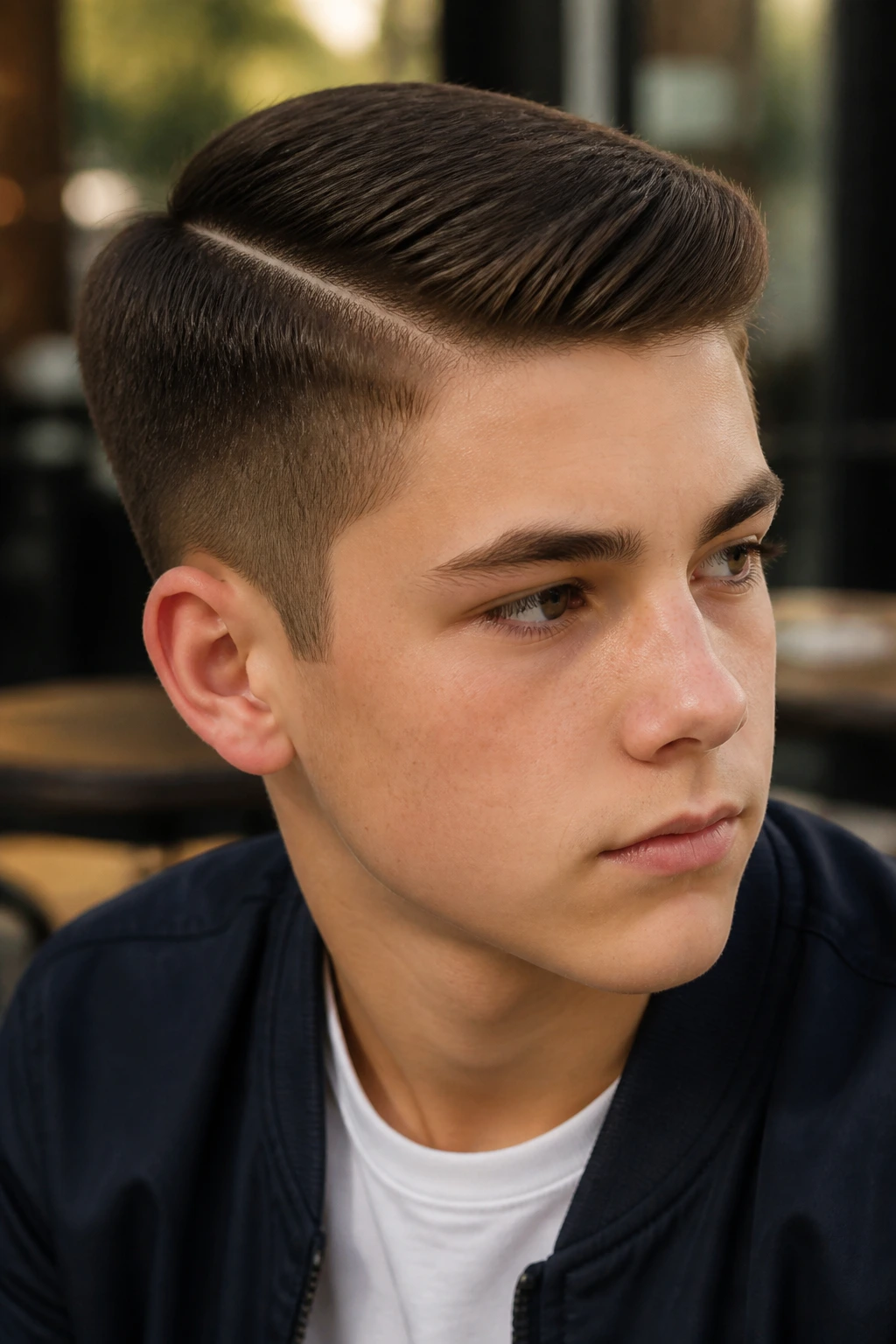
The Ivy League is neat, short enough to stay civilized, and long enough on top to look intentional. For boys with thin hair, it’s a solid middle ground when you want something cleaner than a crop but less fussy than a full side-part comb-over.
Keep the top around 1.5 to 2.5 inches and the sides tight with a taper or a low fade. The hard part can help define the style, but it should not be carved so deep that it creates a harsh line through already-light hair. A subtle part often looks better than a dramatic one.
This cut works because it gives the hair a direction. Thin hair often looks better when it knows where to go. A barber using scissors over comb on the top can leave just enough weight near the part to keep it from looking patchy.
Use a light cream or low-shine paste. Heavy pomade will flatten the top and make the part too obvious.
5. Messy French Crop with a Skin Fade
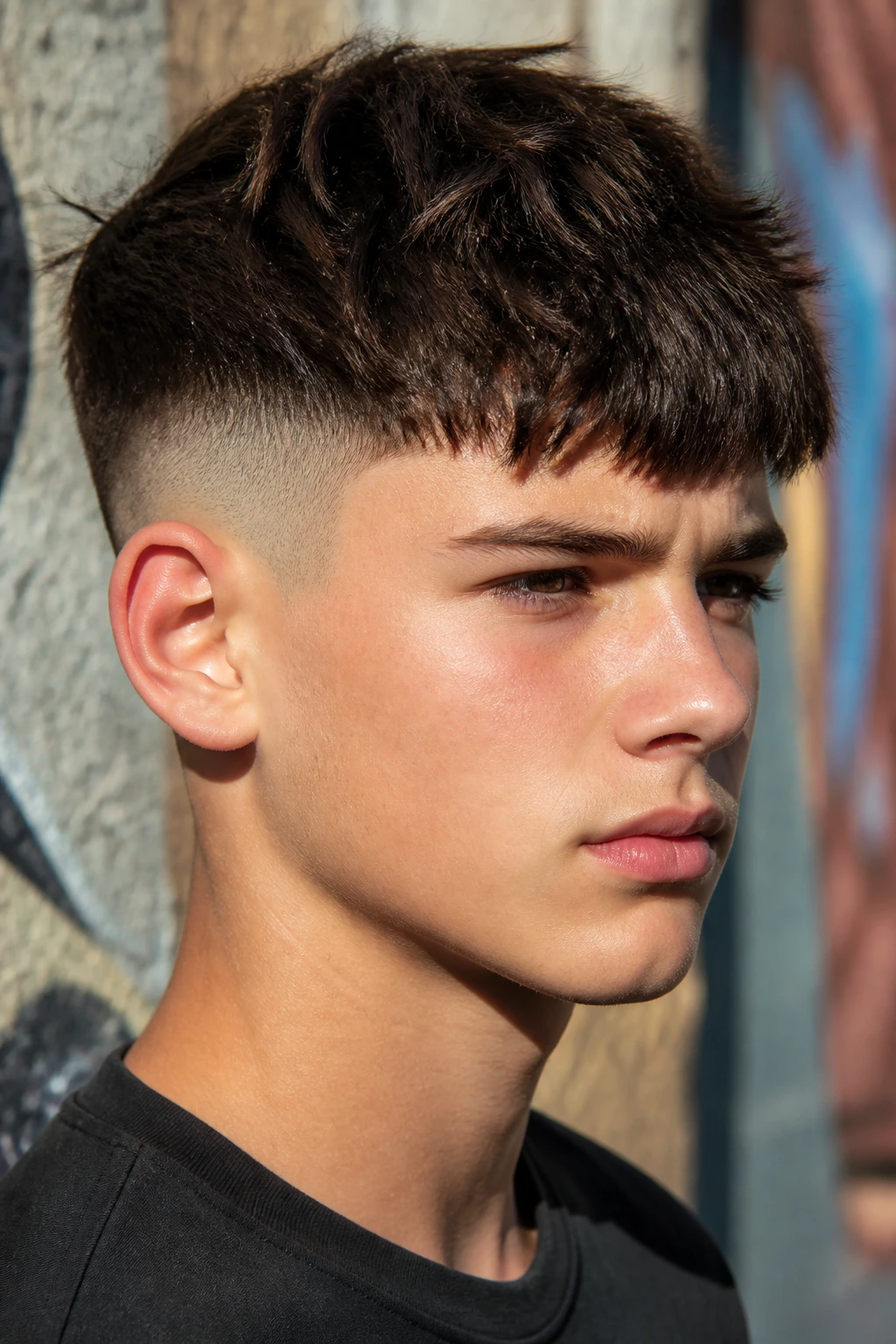
This is one of the best cuts for thin hair, full stop. The French crop puts texture forward, keeps the fringe blunt or slightly choppy, and uses the skin fade below to make the top look denser by comparison.
The top usually sits around 1.5 to 2.5 inches. Shorter than that, and it can lose its shape. Longer than that, and the front may separate too much. The fringe should land just above the eyebrows or slightly lower, depending on the cowlick pattern.
What Makes It Different
A French crop hides the hairline a bit, which is useful when the front is lighter than the back. It also looks good after a rough morning. If the hair is damp and finger-messed with a little matte paste, the style still reads as deliberate.
Avoid over-blowing the fringe straight down. Let it dry with a slight forward push, then break it up with your fingers. A crop that looks too perfect can start to expose the thin spots you were trying to hide in the first place.
6. Mini Pompadour with Scissor-Taper Sides
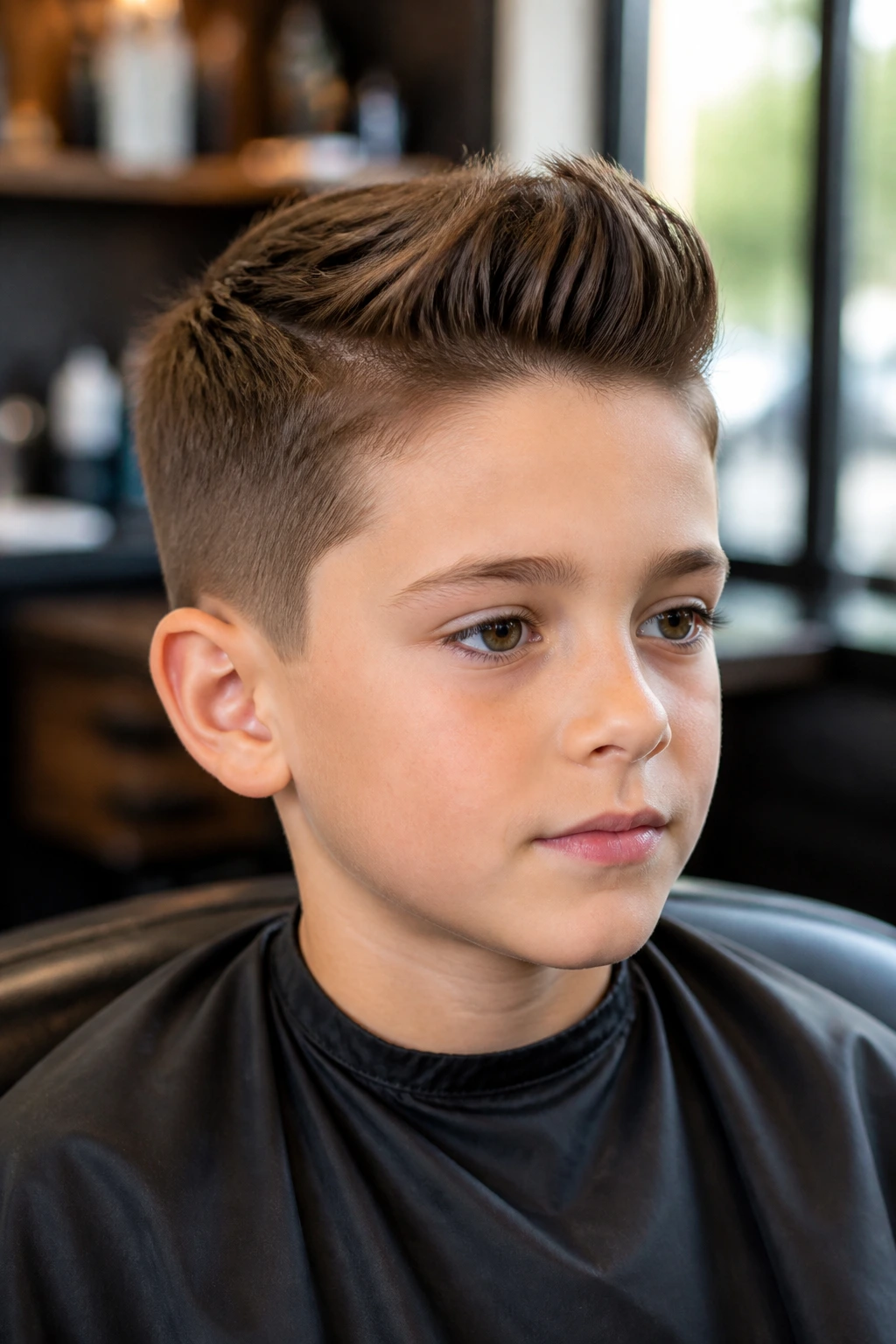
A full pompadour can be too much for thin hair. A mini version, though, gives you that lifted front without asking the hair to become a stunt double.
This cut works best when the barber keeps some length on top, usually 3 to 4 inches at the front, and tapers the sides with scissors rather than taking them down too hard with clippers. The scissor taper keeps the transition softer, which is kinder to lighter hair.
The trick is to keep the front light and airy, not puffed into a hard ridge. Blow-dry the top up and back, then lock it in with a small amount of medium-hold matte product. Too much shine turns the pompadour into a slick cap, and thin hair does not want that kind of attention.
If the boy has a strong cowlick in front, this style can still work. The hair just needs to be directed rather than forced.
7. Faux Hawk with a Taper Fade
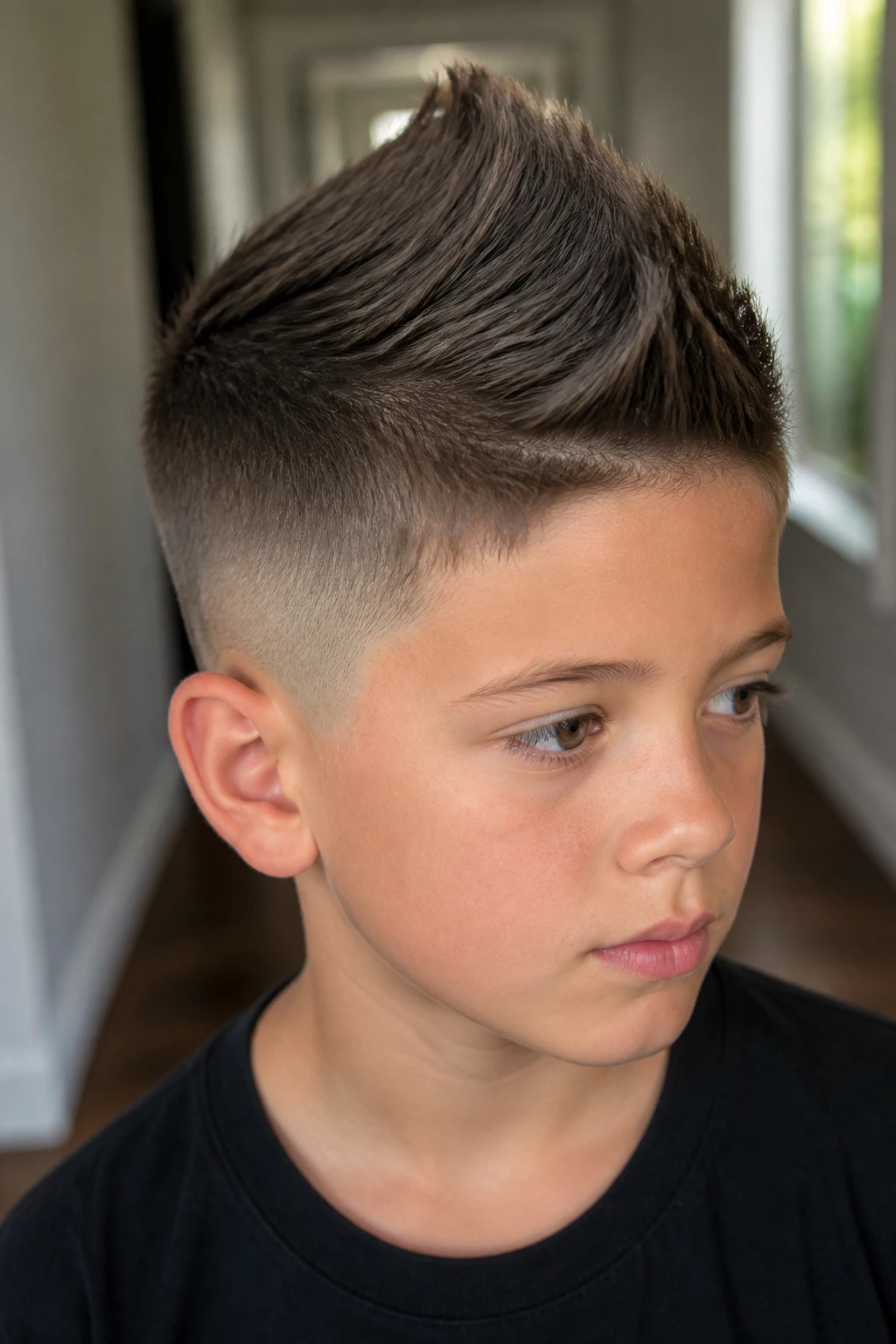
The faux hawk is useful when a boy wants a little edge without committing to a full mohawk strip. On thin hair, it can look surprisingly good because the center ridge gives the eye a clear path to follow.
Keep the sides short with a taper fade and leave the center top a little longer than the rest. Not spiky. Just a touch taller. Around 2.5 to 3.5 inches in the middle is enough for most boys, especially if the hair is straight or slightly wavy.
How to Keep It from Looking Patchy
The faux hawk should be shaped with fingers, not a comb. A comb can create too much separation, which makes thin hair look sparse. Work a small amount of matte paste from front to crown and pinch the center up into soft peaks.
This style is better with texture than with shine. If the hair looks stiff and glassy, the contrast between the high center and short sides gets too severe. Keep it loose. That’s where it looks best.
8. Curved Fringe with a Drop Fade
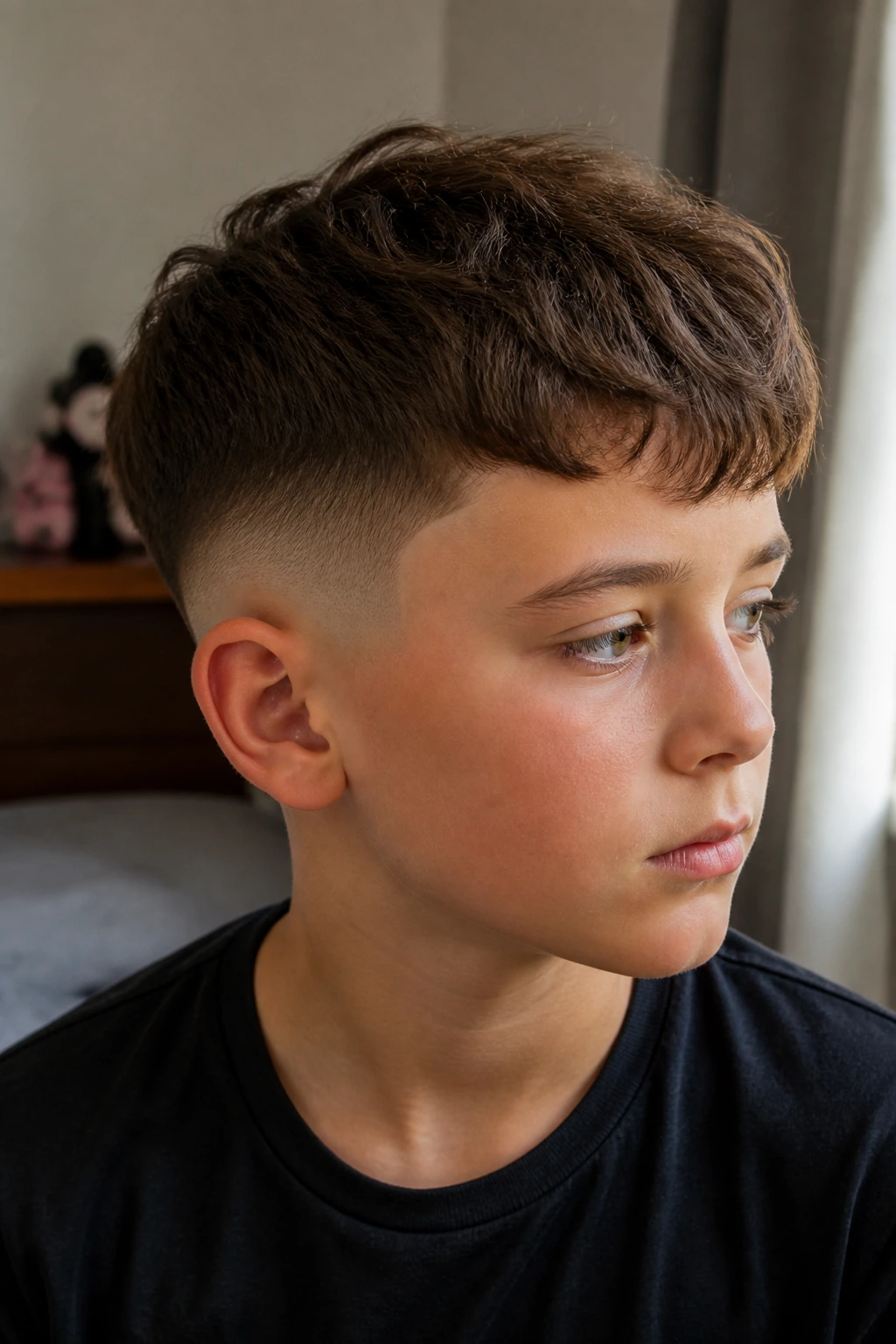
A curved fringe follows the natural line of the forehead, which makes it one of the most forgiving cuts for boys with thin hair and stubborn growth patterns.
The fringe is cut to bend slightly rather than hang straight across. That helps with cowlicks near the front or one side that grows faster than the other. The drop fade around the ears and nape keeps the outline clean without making the haircut look boxy.
This style works especially well when the hair wants to lean forward on its own. If you fight that growth pattern, you spend every morning fixing it. If you work with it, the fringe settles faster and looks thicker because it isn’t being forced flat.
Use a light mousse or texture spray before drying. Then use your fingers to sweep the fringe into a curve. A hard, straight fringe line can expose thin spots at the corners. A curved one tends to soften them.
9. Comb Over with a Burst Fade
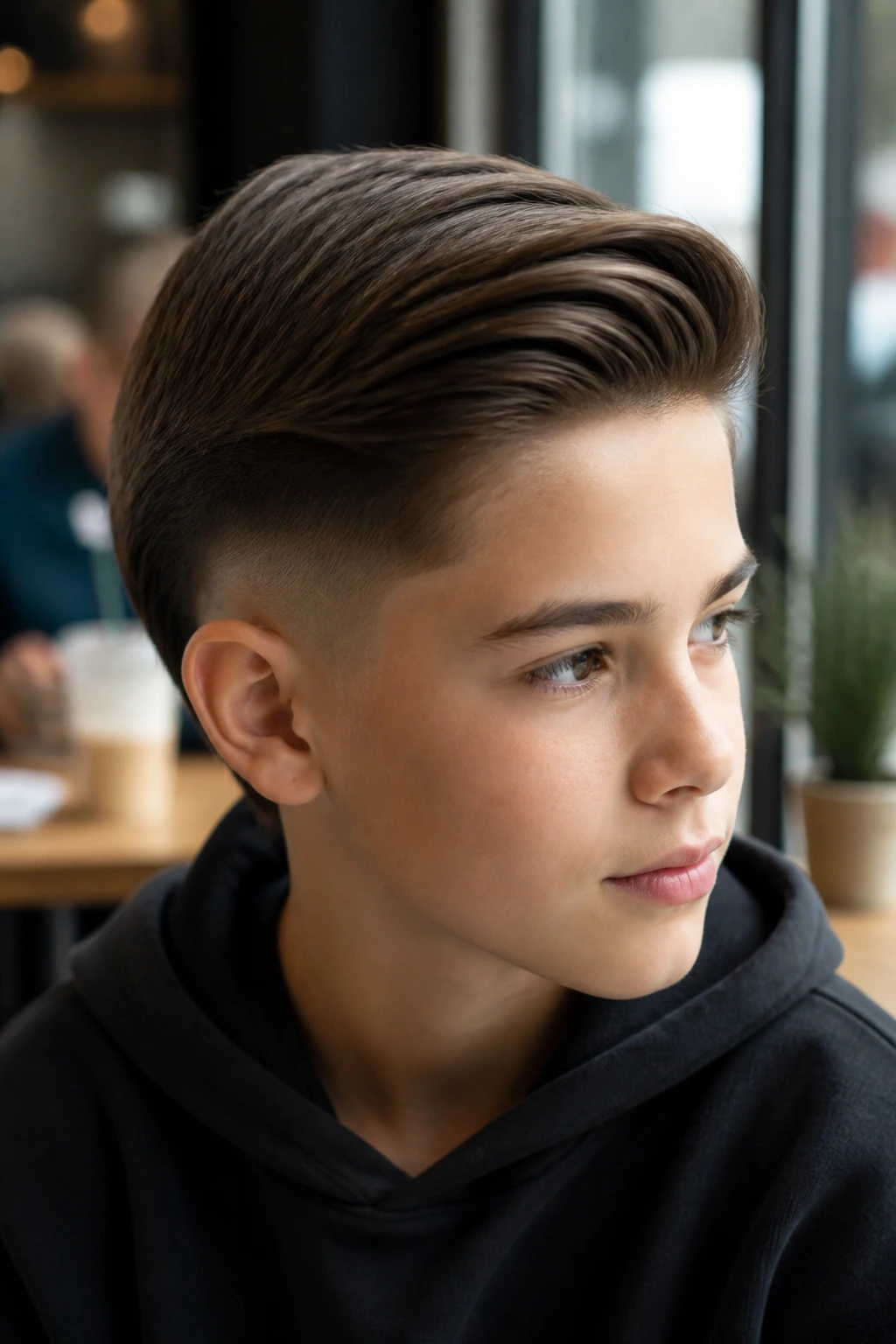
A modern comb over and an old-school comb over are not the same animal. One is sleek and heavy. The other uses direction, texture, and a clean side fade to give thin hair a structured shape.
The burst fade around the ear keeps the sides tight and rounded, which helps the top read as fuller. Leave about 3 inches on top so the hair can move across without breaking apart. If the top is too long, the part gets wide and the scalp underneath starts showing.
What to Ask For
- Keep the part soft, not razor-hard.
- Leave weight near the front so it doesn’t collapse.
- Use scissors on top if the hair is very fine.
- Avoid over-blending the crown; some structure there helps.
A tiny bit of matte cream is enough. You want the hair to move as a group, not separate into skinny strands. Thin hair loves direction. It hates overworking.
10. Mini Bro Flow with a Tapered Neckline
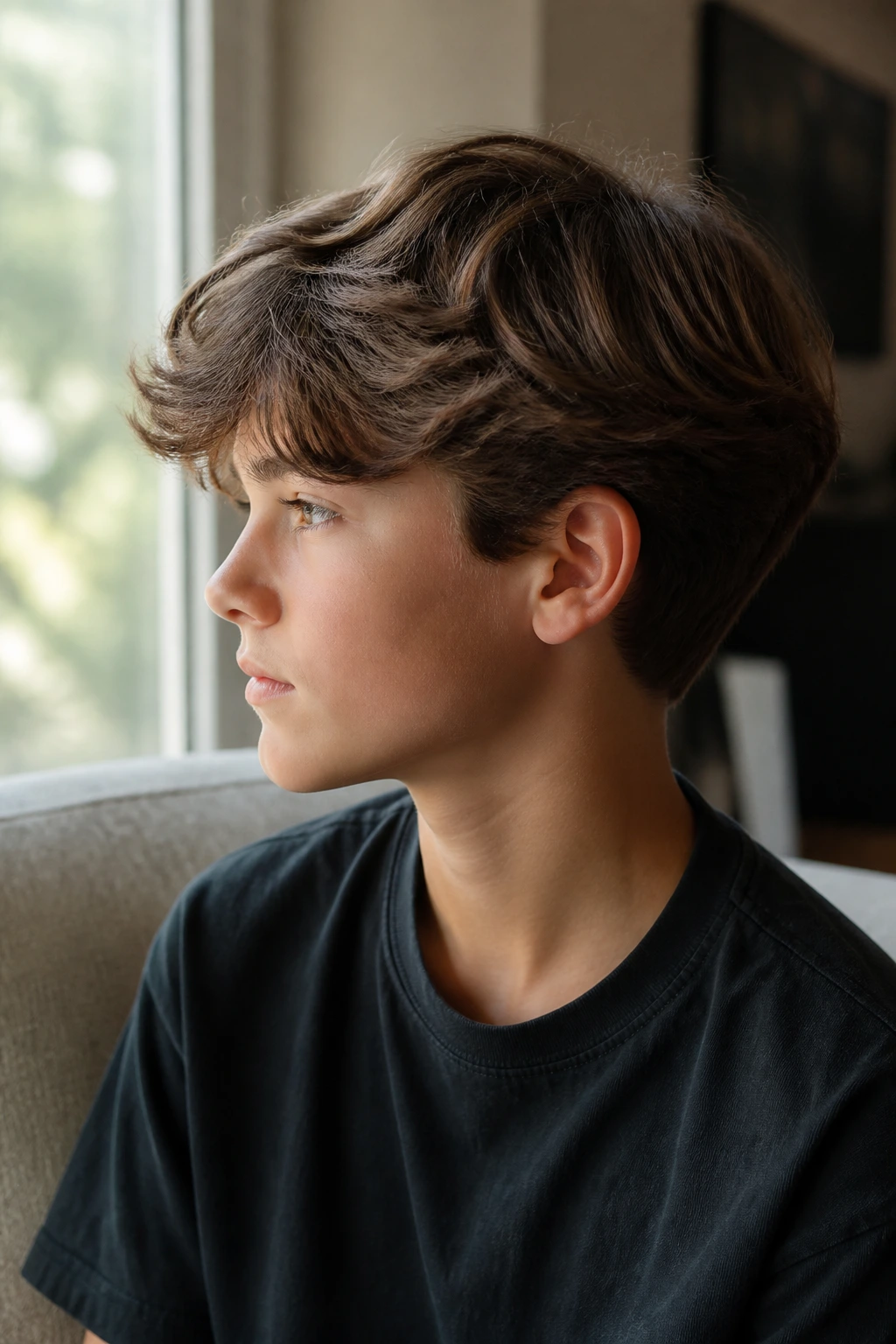
This one is for boys who want a little length without drifting into “grown-out mop” territory. The mini bro flow lets the top and back move, while the tapered neckline keeps the cut clean.
It works best on straight-to-wavy hair with at least some natural bend. Keep the top around 4 to 5 inches and the sides tapered rather than shaved. If the hair is too short, the flow won’t happen; if it’s too long, thin ends can look wispy and tired.
A good cut here uses layers, but not too many. Too much layering on thin hair can make the ends look stringy. A barber who knows how to remove bulk without stripping shape is worth keeping.
This style looks best when the hair air-dries with a little movement. If you blow-dry, do it gently with low heat and use your fingers to push the front back and outward. It should look relaxed, not sculpted.
11. Spiky Crop with a Fade
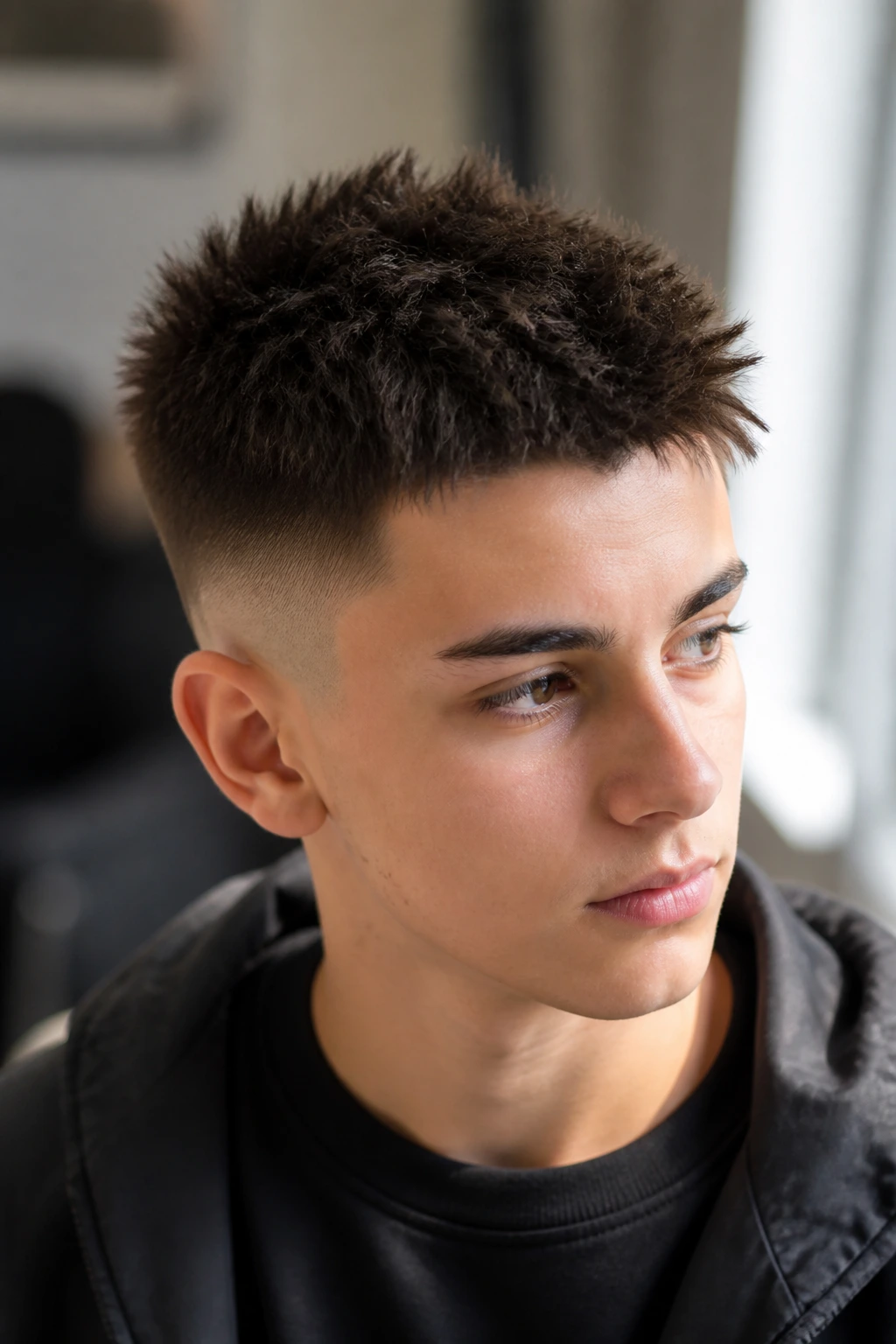
Short spikes can work on thin hair because the shorter the hair, the less chance it has to separate and show through.
Keep the top around 1.5 to 2 inches and the fade tight enough to frame the face cleanly. The spikes should be soft and directional, not stiff little needles. Stiff spikes belong in another decade.
Use a matte paste or texture powder, then pinch the top upward in small sections. The hair should look slightly irregular. That irregularity is the point. Uniform spikes can expose thinness more than they hide it.
This cut is especially useful for active boys. It stays in place better than longer styles, and it doesn’t require a heavy product layer. If the hair is very fine, a tiny mist of sea salt spray under the paste gives the spikes something to grip.
12. Slick Side Part with a Low Taper
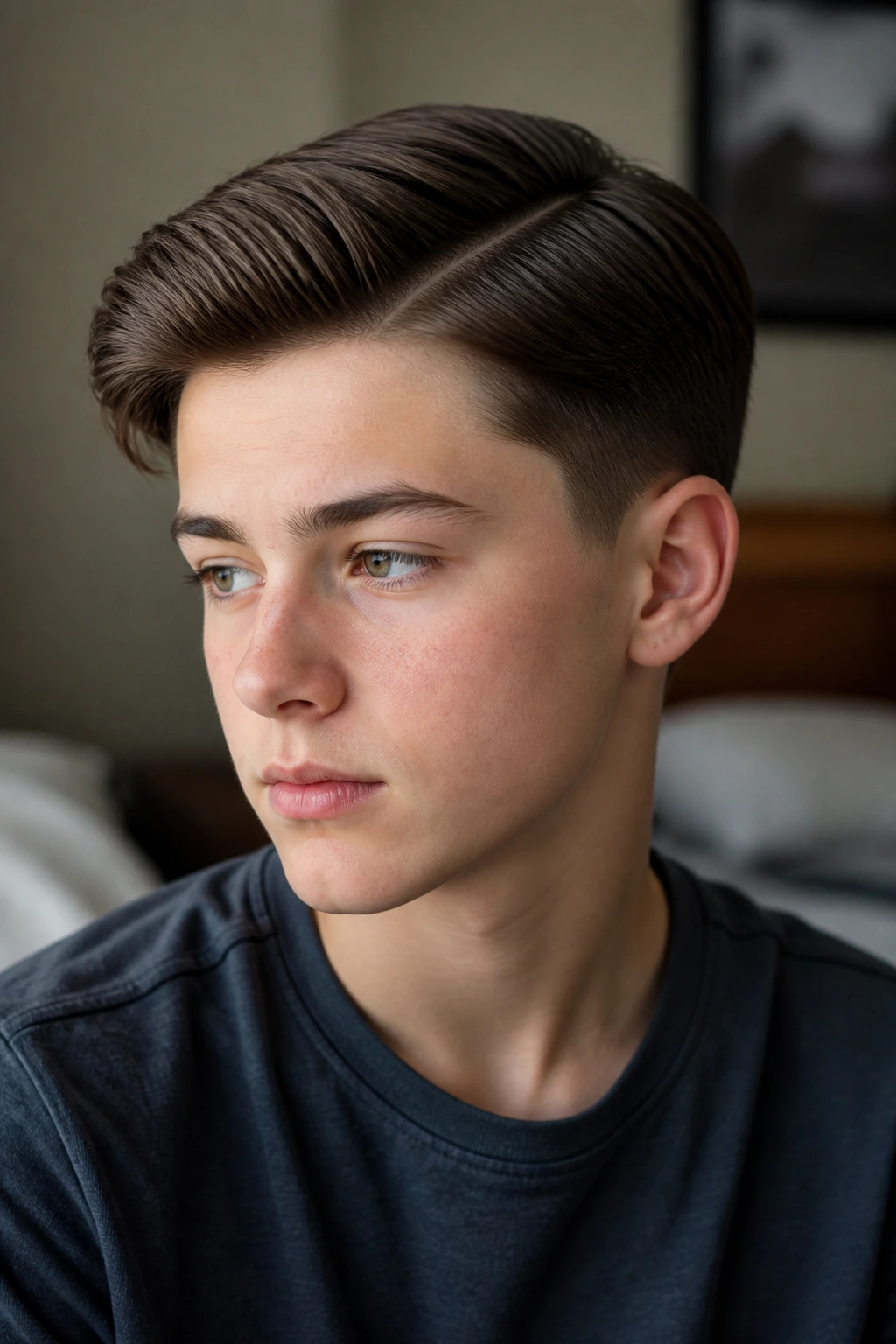
A slick side part can look sharp on thin hair if it stays controlled and does not get too glossy.
The top should sit long enough to sweep over, usually 2.5 to 3.5 inches. The low taper keeps the sides neat without a harsh jump in contrast. That matters because a hard disconnect can make thin hair on top feel even thinner by comparison.
This cut works best when the part line is clean but not severe. A comb gives you the line, then fingers soften the finish. If you push the hair too flat, it starts to show every little gap. Keep a little air in the top.
A light cream or low-hold paste is often better than pomade here. The goal is a controlled, slightly relaxed side part, not a wet helmet. If the boy has a school photo or family event, this is one of the safest choices on the list.
13. Swept-Back Top with Short Sides
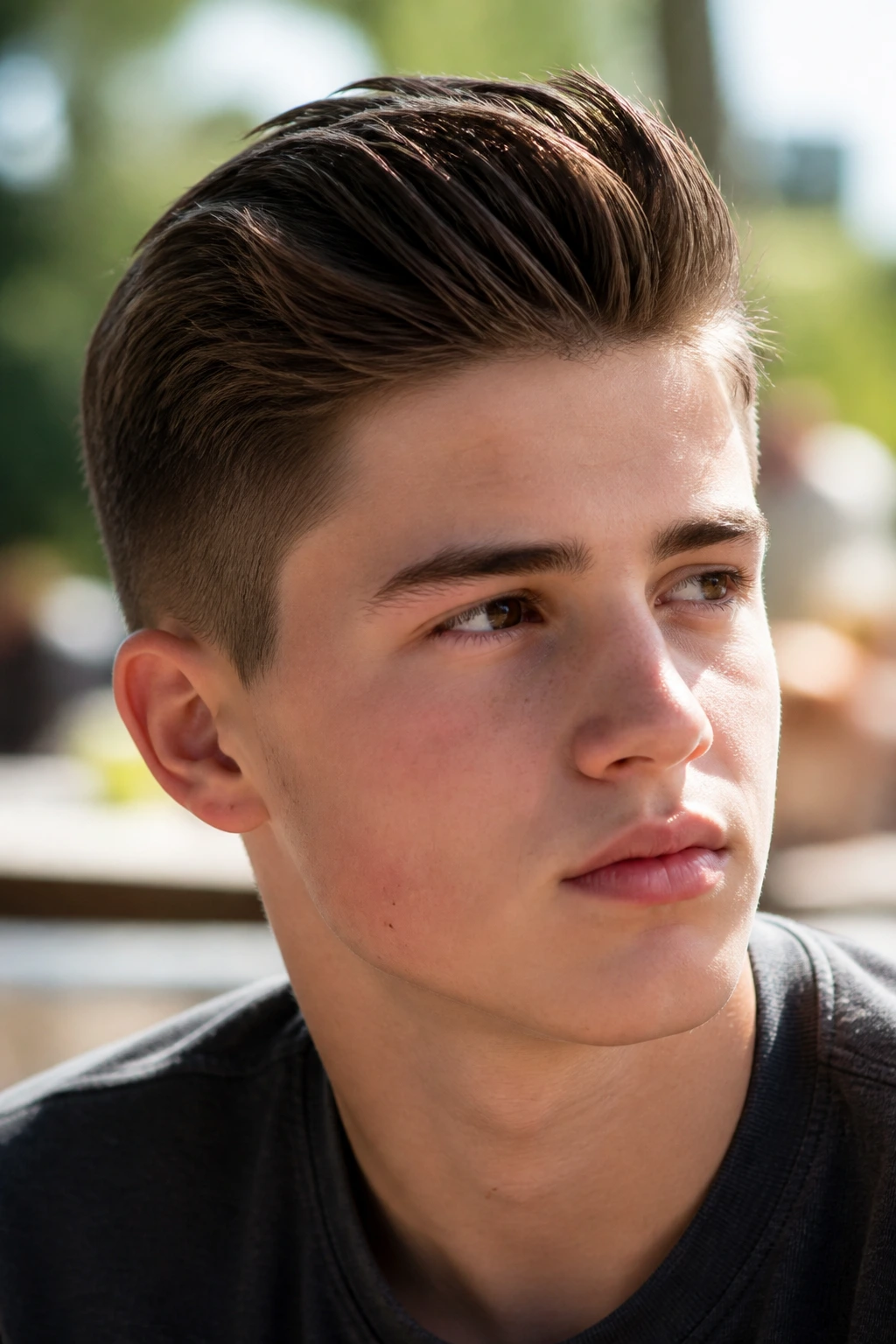
Swept-back hair can be tricky on thin hair because it can expose the front if the hairline is light. Still, it works when the top has enough length and the sides are kept short enough to support the shape.
The difference between a good swept-back cut and a bad one is usually the crown. Leave enough weight there so the hair doesn’t split open. If the crown is thin, keep the back slightly textured and avoid pushing everything straight backward.
When It Works Best
This style suits boys with straight or wavy hair and a decent front section. It also reads a little older, which some older boys like. The key is soft volume, not tall volume.
Use a round brush or vent brush while blow-drying the hair backward, then break up the surface with your fingers. A touch of matte cream keeps it from falling forward again. If the hair is very fine, this style needs less product than you think. Much less.
14. Wavy Top with Temple Fade
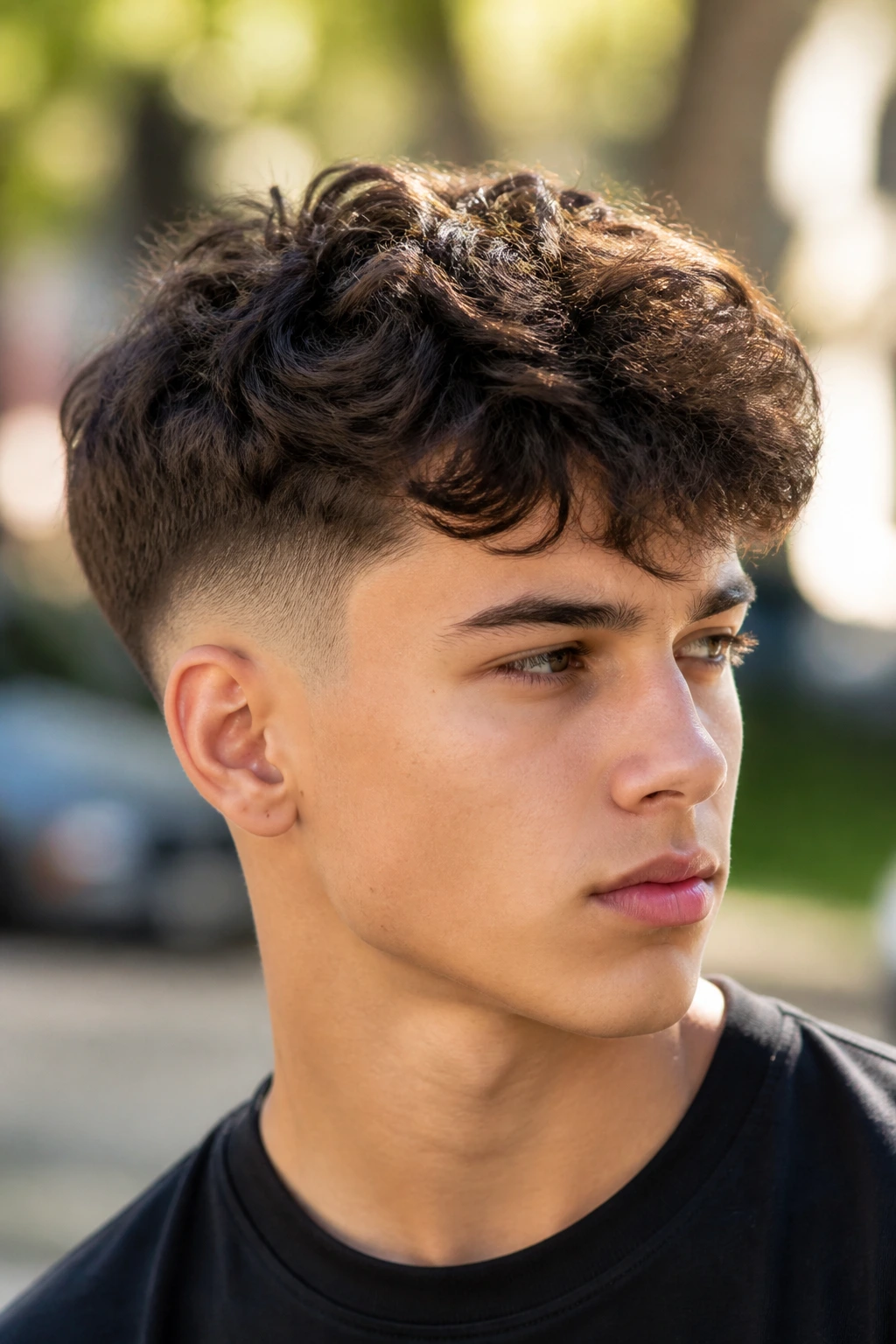
When a boy has even a little wave, the hair does half the work for him. Waves create movement, and movement reads as thickness.
A temple fade tightens the sides near the front while leaving the back and top a bit fuller. That keeps the style from looking too aggressive. Leave enough length on top—around 3 to 4 inches—so the wave can show without puffing out into a triangle.
This cut is especially nice because it doesn’t need perfect styling. A little curl cream or light mousse on damp hair is enough. Scrunch it, dry it, and leave a few pieces a little uneven. The uneven bits are what make the style look alive.
If the hair is straight but thin, you can still fake some bend with a blow-dryer and a brush. Don’t overdo it. Wavy styles look best when they move, not when they’re locked into place.
15. Textured Caesar with a Long Fringe
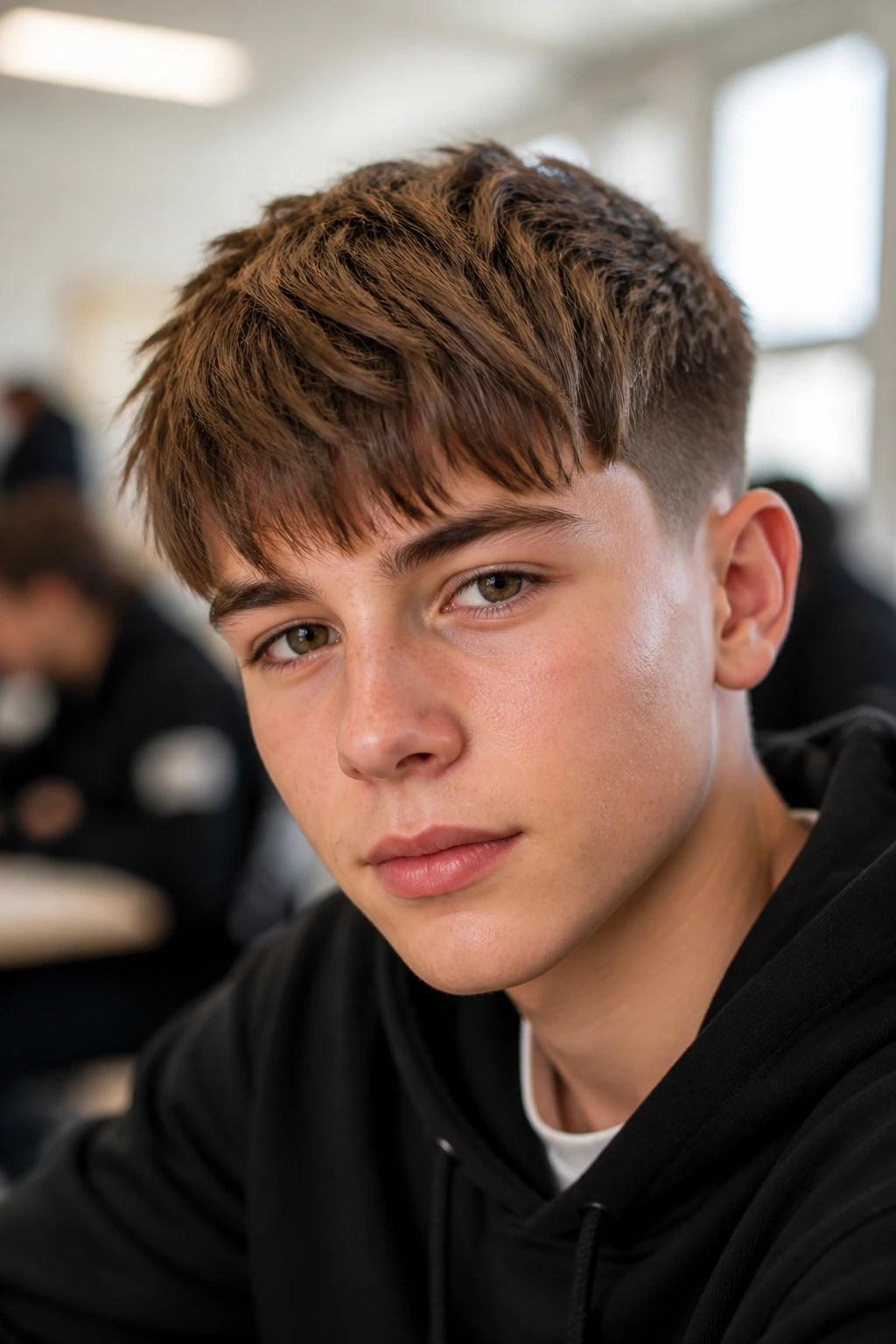
The Caesar gets better on thin hair when it isn’t cut too blunt. A textured Caesar with a longer fringe gives the front some weight and keeps the hairline less exposed.
The fringe should sit straight or slightly angled, usually just above the brows or brushing them lightly. The top can stay around 1.5 to 2.5 inches, with choppy texture through the front so it doesn’t sit like a ruler line across the head.
Why It’s So Useful
It’s forgiving. That’s the whole appeal. If the hair is thin at the front, the fringe covers it. If the cowlick is stubborn, the short length helps control it. If the haircut grows out a little, the shape still hangs together.
Use point cutting and avoid making the fringe too blunt at the corners. A blunt corner can make a thin hairline stand out in an unflattering way. A softer edge blends better and looks fuller in daylight.
16. Layered Shag with Short Sides
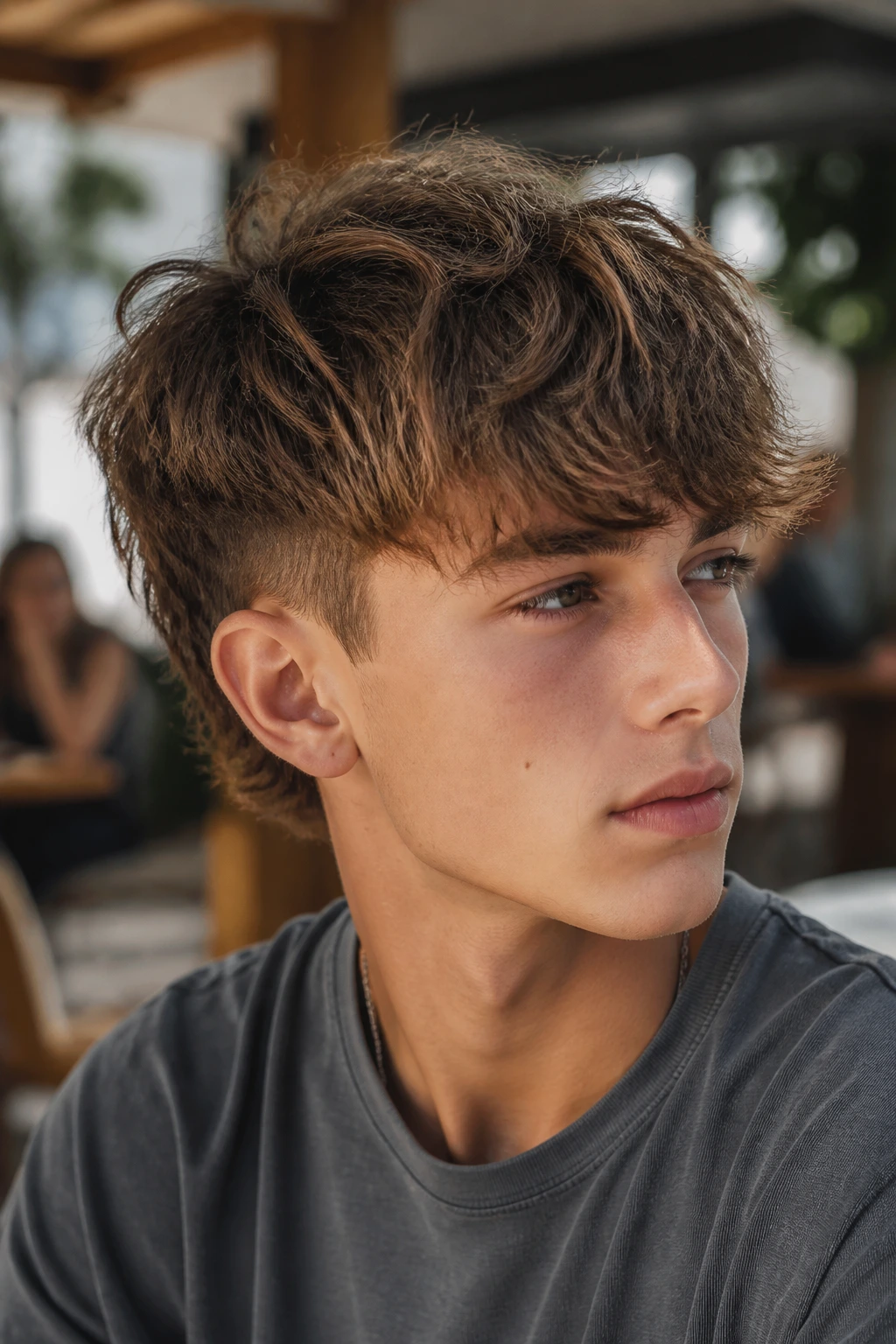
A shag sounds bold, but a short-sided shag can work beautifully on thin hair when the layers are kept light and the top isn’t overcut.
The idea is movement. Not volume for volume’s sake. The top and upper sides have soft layers, while the lower sides stay shorter so the whole shape doesn’t expand too much. For boys with wavy or slightly messy hair, this can look effortlessly natural.
A Good Fit When…
- The hair has some bend or wave.
- The boy doesn’t mind a looser shape.
- He wants a style that doesn’t look over-brushed.
- He can handle a trim every 4 to 5 weeks.
A shag on thin hair goes wrong when the layers are too choppy and the ends start looking stringy. Keep the top layered enough to move, but not so shredded that the haircut loses its body. A little volume around the crown helps a lot here, and a light mousse is usually better than wax.
17. Undercut with a Feathered Top
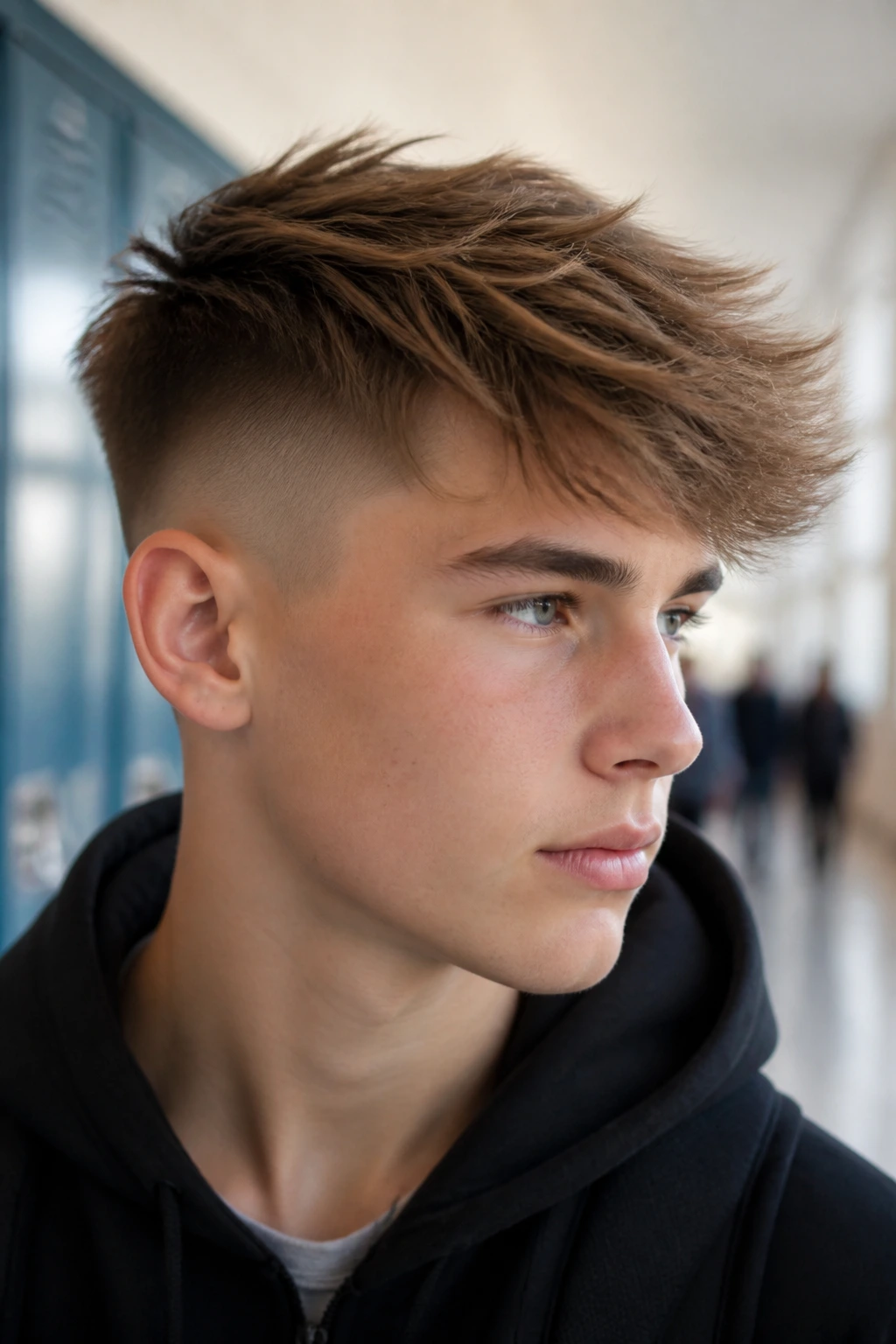
An undercut gives a strong contrast: tight sides, longer top, clear shape. On thin hair, that contrast can be useful if the top is feathered instead of left blunt.
Feathering softens the ends so they overlap and look fuller. The top should usually stay around 3 to 4 inches, with the undercut low enough that the haircut still feels balanced. If the sides are clipped too high or too stark, the top can start to look isolated and sparse.
This is a style for boys who like a bit more attitude. It’s also one of the more product-dependent cuts on this list. A matte paste or texture powder works better than shiny gel, which can make the feathered ends separate too neatly.
Keep an eye on the crown. If the crown is very thin, don’t overlift the top. A little feathering goes a long way. Too much and it can start looking airy in the wrong sense.
18. Curtain Fringe with a Fade
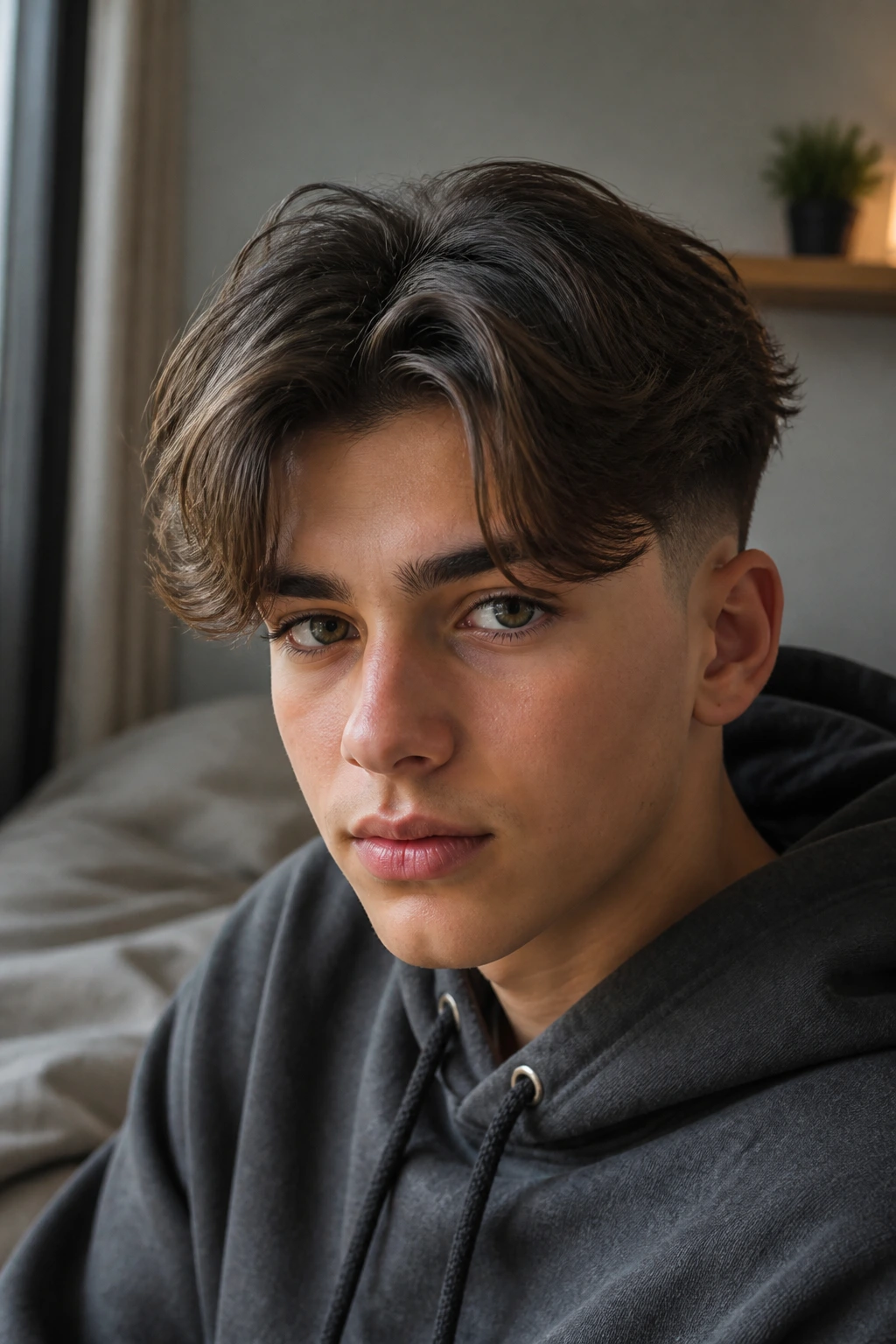
Curtain bangs are having a long run for a reason: they frame the face, soften the hairline, and give thin hair a shape that doesn’t rely on brute volume.
The fringe should be long enough to split naturally down the middle or slightly off-center. Usually that means 3 to 4 inches in front, with faded or tapered sides to keep the outline clean. If the hair is straight and fine, the curtain shape can look especially good when it’s lightly textured rather than too polished.
A middle part works best when the front has a little lift at the roots. Blow-dry the fringe in opposite directions for a few seconds, then let it fall back into place. That creates a bit of bend and prevents the part from going flat against the scalp.
This style does require a calm hand. It does not look best when forced. Let it fall, then nudge it. That’s the whole game.
Why Long-on-Top, Short-on-Sides Cuts Help Thin Hair Look Denser
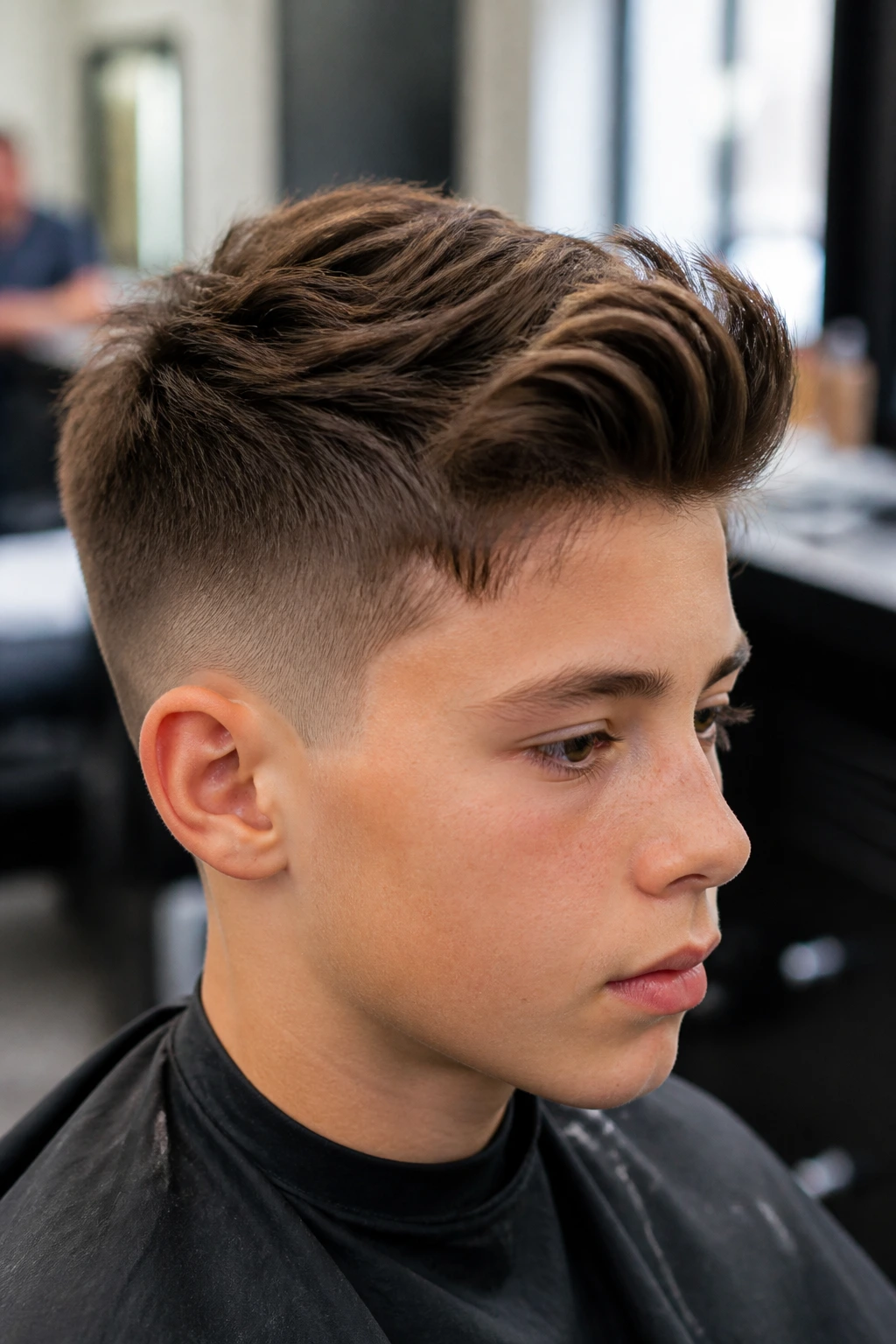
The shape works because it changes the ratio. Short sides make the top look fuller by comparison, which is exactly what thin hair needs. If the whole head is kept at the same medium length, the hair can drift into a flat, see-through shape that shows too much scalp and makes every strand work too hard.
There’s also a practical reason these cuts hold up better: the sides grow out in a way that still looks tidy for a while. A low taper, drop fade, or clean scissor taper keeps the outline sharp even when the top gets a little messy. That buys you extra days between barber visits.
The best versions of these styles are not over-designed. They use shape, texture, and a little lift at the front or crown. That’s it. No magic. Just the right haircut doing its job.
What to Tell the Barber So the Cut Lands Right
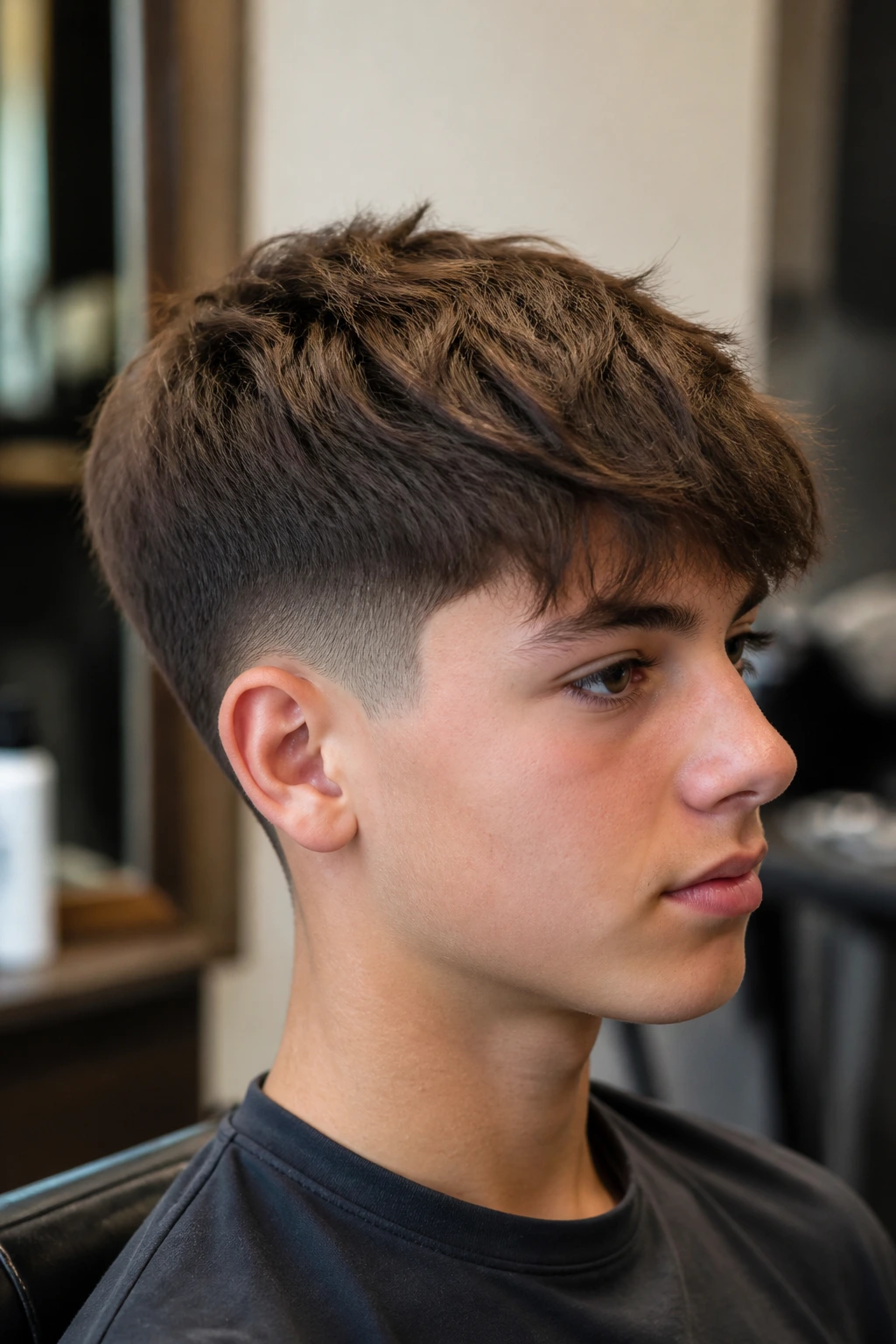
Bring photos, yes, but also say the parts that photos don’t say. Tell the barber how much length you want on top, where the hair goes wrong, and whether the crown or front is the thin spot. That makes a bigger difference than the style name alone.
A clean way to ask for many of these cuts is: keep 2.5 to 4 inches on top, taper the sides tight, and leave enough texture for matte styling. If the hair is very fine, ask for point cutting instead of heavy thinning shears. Thinning shears can remove too much bulk and leave the top wispy.
Cowlicks need to be mentioned. So do any spots that sit flat no matter what. A barber who knows that the front grows forward or the crown splits to one side can shape the cut around it instead of pretending it isn’t there.
Essential Tools for Styling at Home
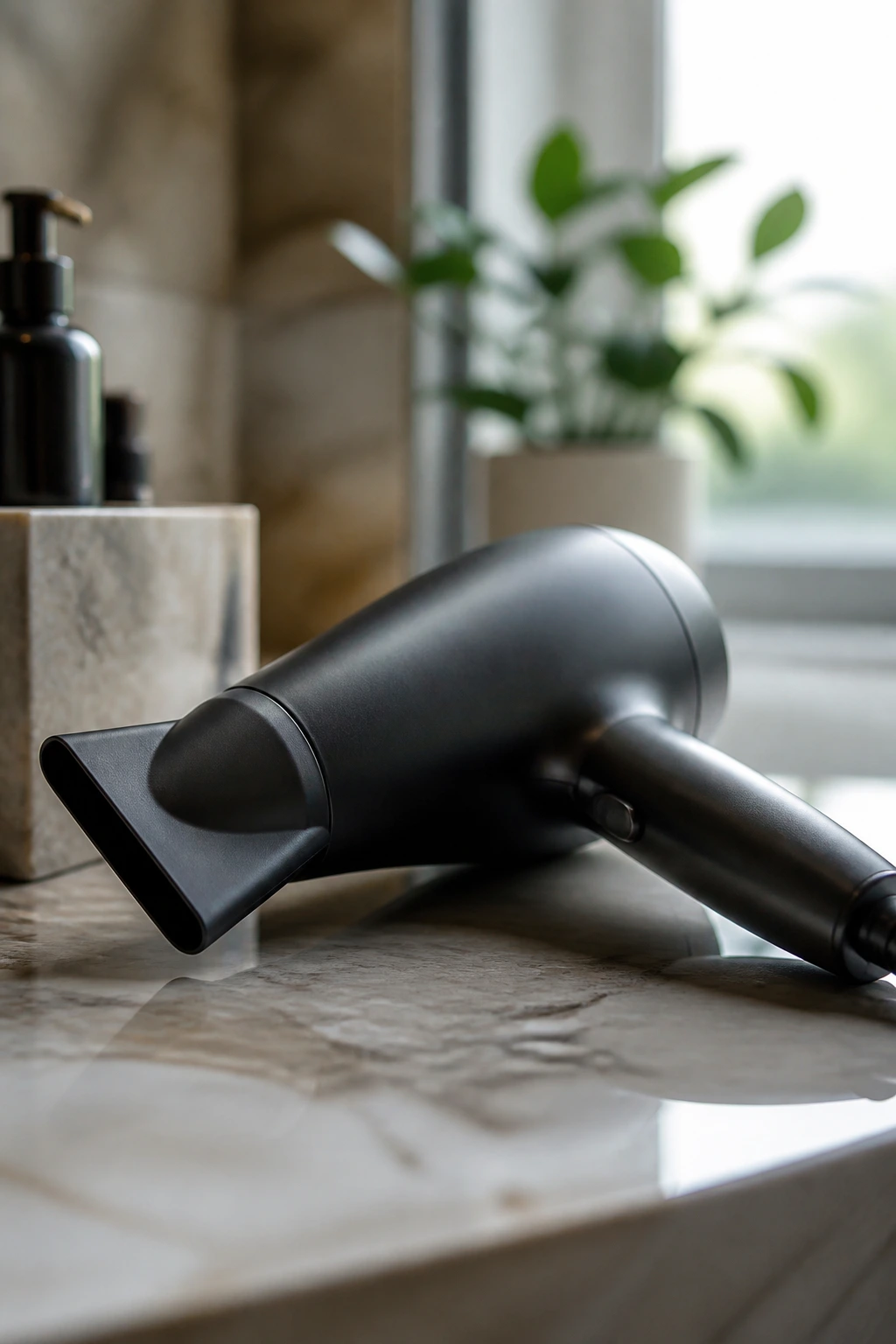
- Blow dryer with a nozzle attachment: Directs airflow into the roots and gives thin hair lift fast.
- Vent brush or small round brush: Helps guide quiffs, brushed-up tops, and side-swept styles without flattening them.
- Wide-tooth comb: Good for side parts and curtain fringes when you want control without too much pull.
- Matte paste or clay: Adds grip and texture without the shine that exposes thin spots.
- Sea salt spray: Lightly roughs up the hair and gives a looser, airier finish.
- Texture powder: Handy for quick morning volume on the crown or front.
- Microfiber towel: Dries hair without creating as much frizz as a rough bath towel.
- Hand mirror: Useful for checking the back and neckline so the shape doesn’t get sloppy.
Smart Product Picks for Thin Hair

Heavy product is the enemy here. Thick waxes, greasy pomades, and oil-heavy creams can collapse the top in half an hour and make thin hair look separated. Lightweight is the smarter lane.
For most of these cuts, a matte paste is the workhorse. Use a pea-size amount first, rub it until your hands feel almost dry, then work it through the mid-lengths and ends. If the hair is very fine, start smaller than you think you need. You can always add a little more.
A volumizing mousse or sea salt spray belongs on damp hair when you want lift before the hair dries. They’re especially useful for quiffs, brush-ups, curtain fringes, and wavy tops. Texture powder is more of a rescue tool, useful when the hair is dry and you need a quick boost at the roots.
Light conditioner matters too, but keep it off the roots. Heavy conditioning at the scalp can make fine hair go limp fast. Mid-lengths and ends only. That one habit saves a lot of flat mornings.
How to Wear These Cuts at School, on the Field, and on Special Days
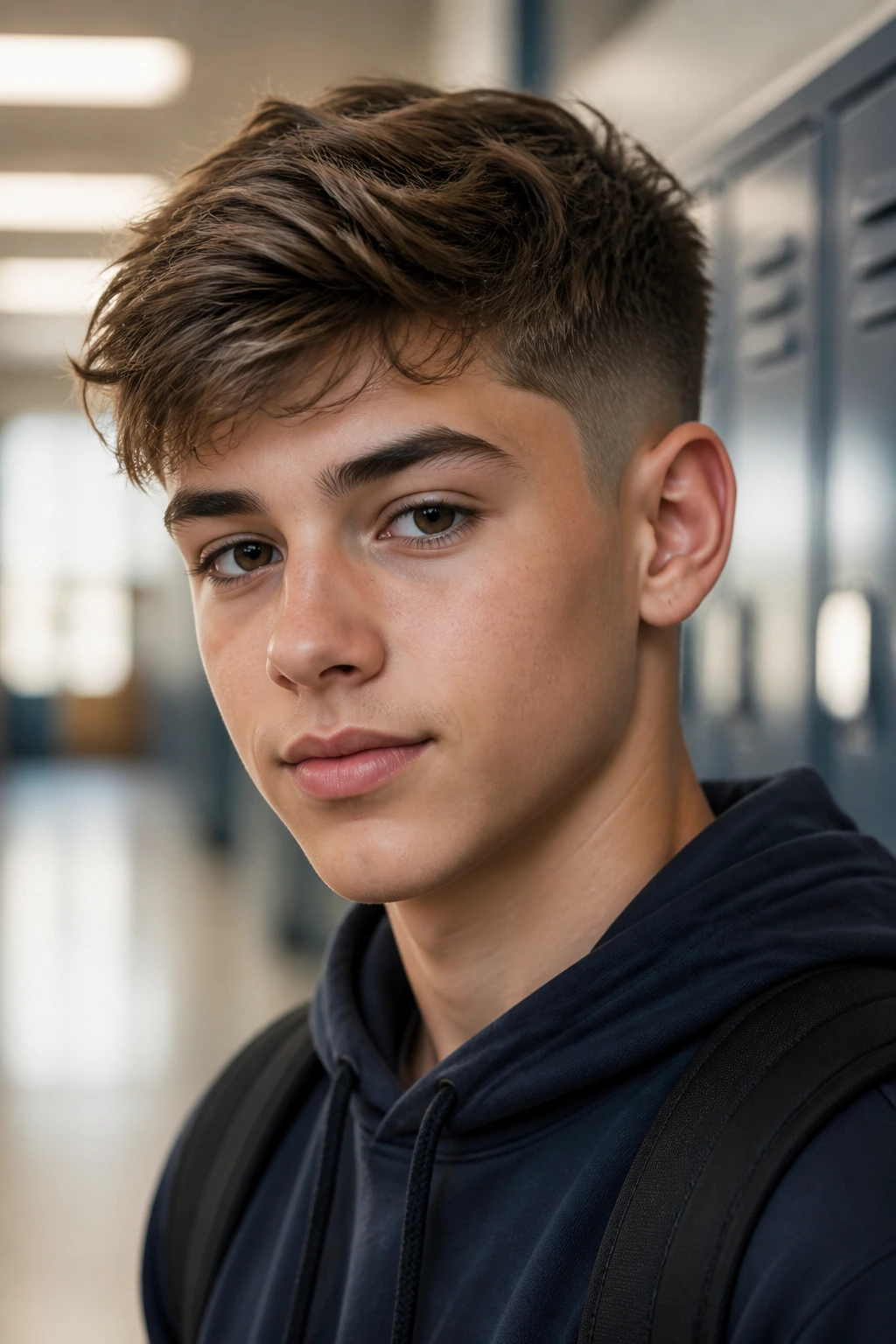
Presentation: For school mornings, the nicest-looking version is often the one that stays close to the haircut’s natural direction. A side-swept fringe should sweep. A quiff should lift only slightly. A crop should stay textured and low-maintenance. The shape should look finished even if nobody had time to fuss with it.
On the field: Sweat and motion punish heavy product, so keep the styling light. A little texture powder or matte paste is enough to keep a style from falling apart mid-day. For active boys, the French crop, Caesar, spiky crop, and short faux hawk tend to survive best because they don’t depend on perfect placement.
For dressier days: The Ivy League, slick side part, mini pompadour, and curtain fringe can all clean up nicely. Use a comb for the part or fringe, then soften the edges with fingers so it doesn’t look stiff. That little looseness keeps thin hair from looking plastered down.
When it grows out: A soft taper, side-swept fringe, or mini bro flow gives the most graceful grow-out. Harder styles like a skin fade or sharp hard part need touch-ups sooner, while layered styles can coast a little longer.
Extra Tips for More Lift and Cleaner Shape
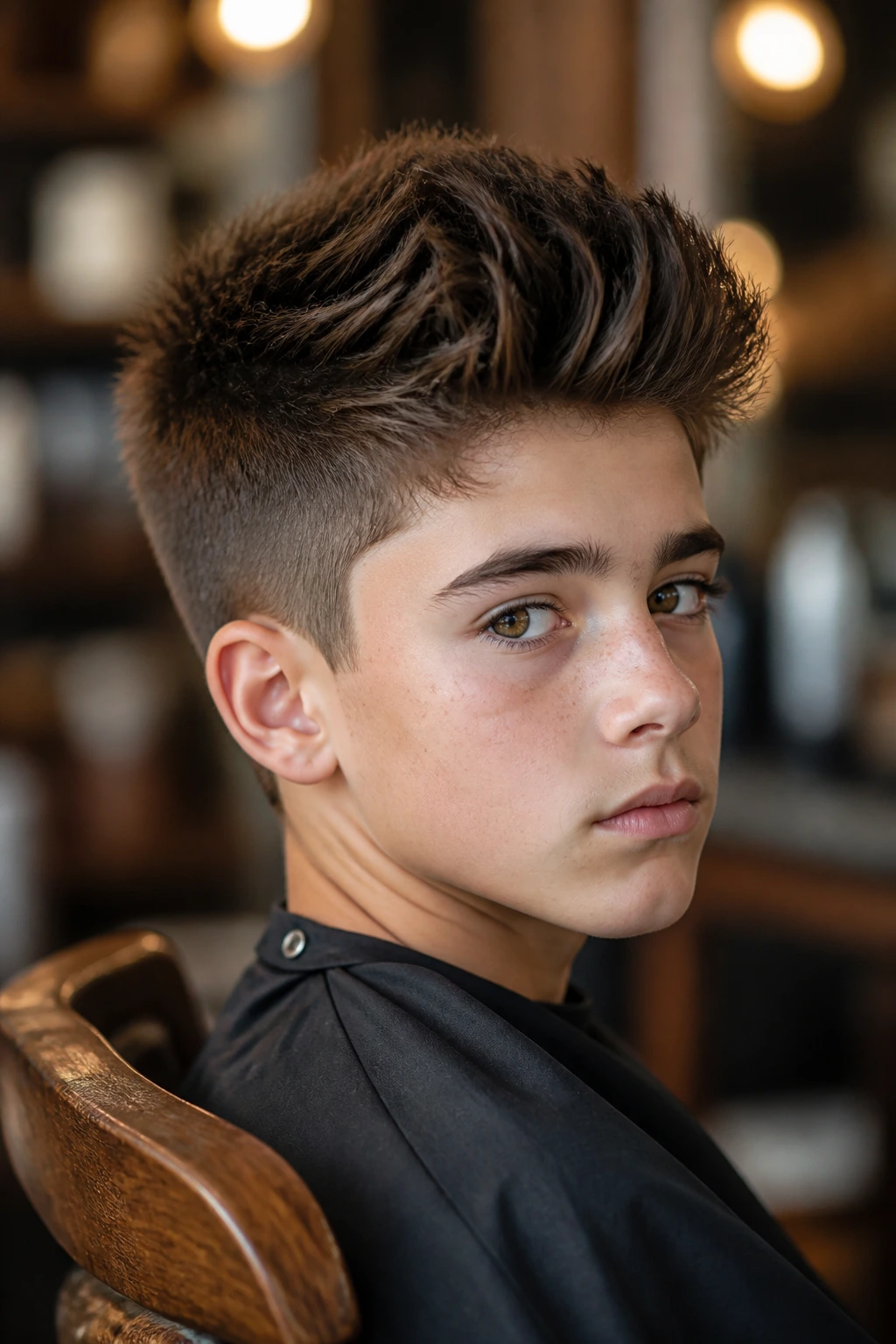
Lift Boost: Blow-dry the hair in the opposite direction of how it will sit, even for 10 to 15 seconds, then guide it back. That tiny rebellion at the roots gives thin hair more standing room.
Texture Boost: Use sea salt spray on damp hair, not drenched hair. If the hair is too wet, the spray gets diluted and does almost nothing. Damp is the target.
Clean Edge: Keep the neckline and sideburns tidy. A haircut can look thinner if the edges are fuzzy, even when the top is fine. Small cleanup trims make a bigger visual difference than most people think.
Make-It-Work Tip: If the crown shows through, don’t pile product there. Use a lighter hand and keep the top slightly shorter. Too much paste on the crown can separate the hair and make the thin spot louder.
How to Keep Boys’ Haircuts for Thin Hair Looking Sharp Between Visits
Short sides grow out fast. That is the tradeoff. A low fade or skin fade usually wants a cleanup every 2 to 3 weeks if you want it to stay crisp. Soft tapers and scissor-tapered sides can stretch closer to 4 or 5 weeks before they start looking fuzzy.
The top needs less frequent cutting, but it should still be trimmed before it gets floppy. Fringe-heavy styles often need a small touch-up every 3 weeks so the hair doesn’t creep into the eyes. Layered styles can go a little longer, though the ends should stay light and shaped.
Wash the hair only as often as it needs it. For many boys, 2 to 4 times a week is enough unless they’ve had a sweaty practice or a very greasy day. Condition the mid-lengths and ends, not the roots. If the hair gets flat on day two, a quick mist of water plus a tiny bit of texture powder is often better than reloading with more product.
Variations and Adaptations to Try
Cowlick-Friendly Front: Keep the fringe longer on the side where the swirl pushes hardest, then angle it across rather than straight down. This stops the front from popping up in one stubborn piece.
Straight-Hair Volume Version: If the hair is pin-straight and thin, lean into a quiff, brush-up, or textured crop. Straight hair shows line and separation fast, so the cut needs texture built in from the start.
Wavy-Hair Version: Leave more length on top and let the wave carry the style. A wavy top with a taper or curtain fringe often looks fuller than a heavily slicked version.
School-Rule Version: If a boy needs something quieter, choose an Ivy League, side-swept fringe, or low taper side part. These sit neatly without the sharper contrast of a skin fade or undercut.
Sports-First Version: Go shorter on top, tighter on the sides, and keep the product light. A French crop, Caesar, or spiky crop is easier to reset after a helmet, cap, or rough game.
Common Mistakes That Make Thin Hair Look Thinner
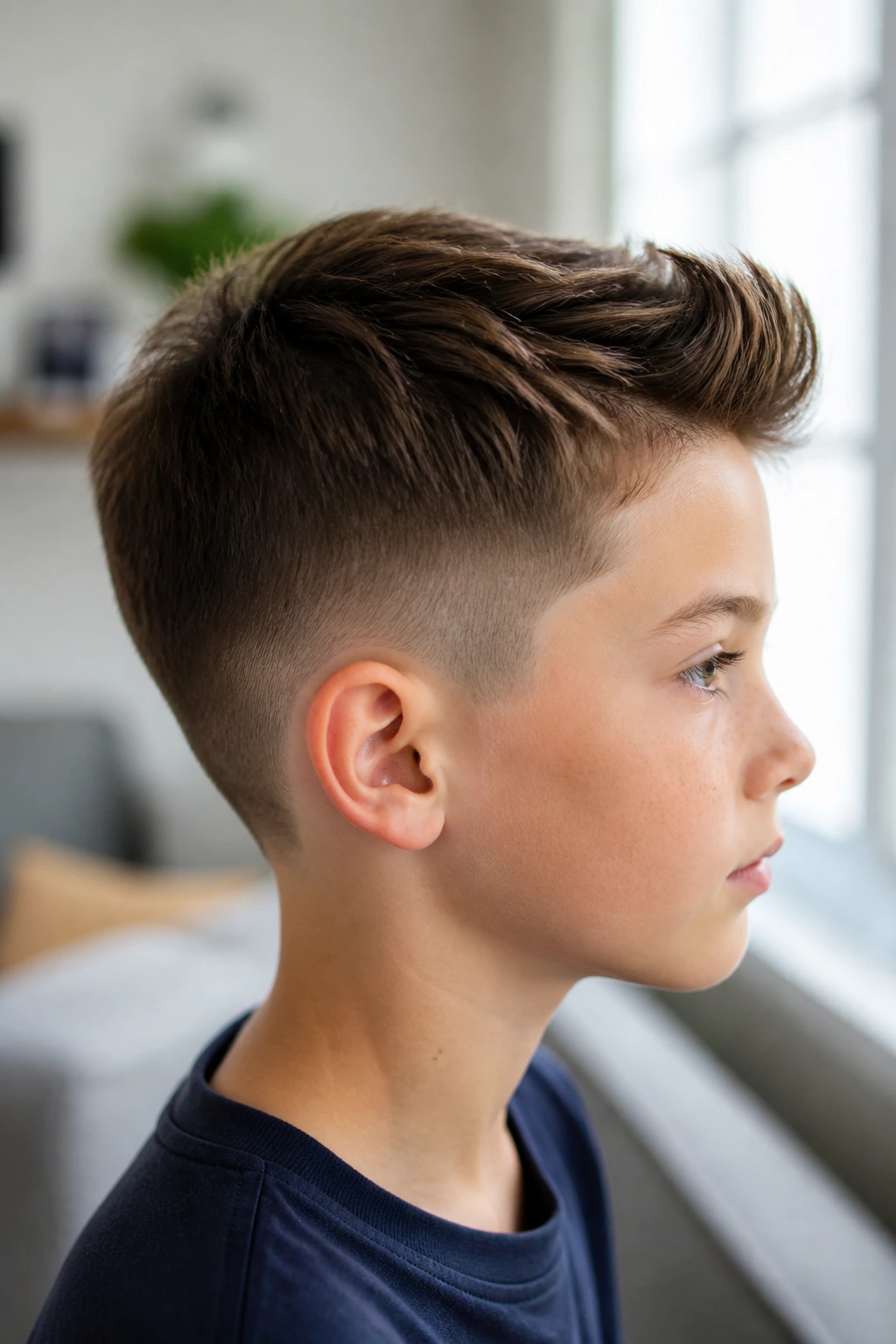
The biggest mistake is leaving too much bulk on the sides while keeping the top light. That creates a mushroom shape and makes the head look wider at the bottom and flatter on top. A cleaner taper or fade usually fixes that fast.
Another problem is using shiny product. Wet-looking hair reflects light and separates the strands, which is bad news when the strands are already fine. Matte paste, texture powder, or light cream tends to work better because it holds shape without advertising the scalp.
Over-thinning is a classic barber mistake on thin hair. If the top gets shredded with thinning shears, the ends go wispy and the haircut loses body. Ask for texture, not removal.
Skipping the blow-dryer is another one. Air-dried fine hair often falls where gravity wants it, which is usually not the same place you want it. A short round of heat at the roots changes the whole look.
Finally, making the fringe too short can backfire. Short bangs can expose the front hairline and make thinness stand out. A little extra length in front gives the style some breathing room.
Frequently Asked Questions
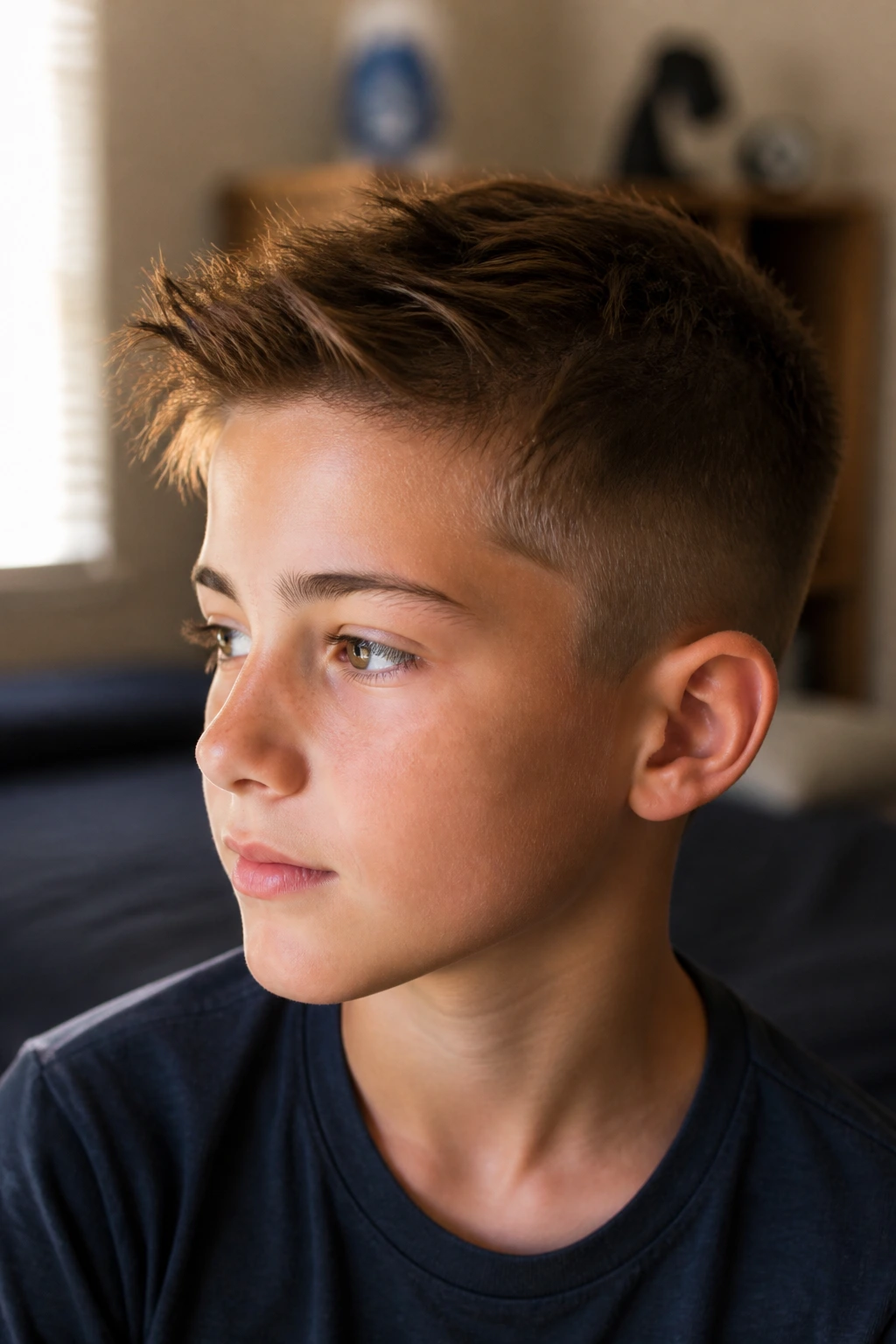
Which style on this list makes thin hair look thickest?
The French crop, textured Caesar, and side-swept fringe are usually the strongest bets. They keep the eye forward, hide the hairline a bit, and use texture instead of height to create the fuller look.
Is a fade better than a taper for thin hair?
A fade gives more contrast and a cleaner outline, which can help thin hair look denser on top. A taper is softer and grows out more quietly, so it’s a better choice if you want something lower maintenance.
Can boys with very straight thin hair wear these cuts?
Yes, but straight hair needs more texture in the cut and less shine in the product. Cuts like the quiff, brush-up, crop, and side part work well if the barber leaves enough length to style.
What should I avoid putting in thin hair?
Heavy pomades, greasy waxes, and thick conditioners at the roots are the biggest problems. They flatten the top and make separation show up faster.
How often should these cuts be trimmed?
Most short-sided styles need a clean-up every 3 to 4 weeks. Skin fades and sharp crops can need attention sooner, while taper cuts and layered styles can last a bit longer.
What if the crown shows through no matter what?
Keep the top slightly shorter and avoid piling product on the crown. A little lift at the front and cleaner sides will usually balance the look better than trying to force volume exactly where the hair is weakest.
Do these styles work for curly or wavy thin hair?
Yes, and sometimes they work better than on straight hair because the wave creates natural texture. A wavy top, curtain fringe, or layered shag can look fuller with less effort than a slick style.
Should I blow-dry thin hair every day?
Not necessarily, but a quick 30- to 60-second blast at the roots can help a lot. If the hair is short and the style is cropped, you may only need to dry the front and crown.
The Shape That Does the Heavy Lifting
Thin hair can be frustrating when the cut fights the hair’s natural behavior. It’s much easier when the cut works with it. Short sides, a textured top, and a style that bends around the hairline instead of arguing with it will do more for appearance than a shelf full of products.
The styles here all live in that same useful space: enough length to style, enough structure to hold shape, and enough restraint to keep the hair from looking overworked. Pick the one that matches the boy’s hair texture, daily routine, and tolerance for morning styling, then keep the barber notes specific. That’s where the good results come from.