



A boy with wavy hair can look freshly cut at the barber chair and puffed-up by lunch if the shape is wrong. The best haircuts for boys with wavy hair do one simple thing better than the rest: they leave enough room for the bend to show, while taking away bulk where the hair wants to flare out. That balance is the whole game.
I’ve seen the same mistake over and over. The top gets cut too short, the sides get left too full, and suddenly the wave pattern has nowhere to sit. The result is that odd helmet shape around the ears and a flat patch up top that looks fine only when it’s wet. Wavy hair needs a cut that respects movement, not one that tries to freeze it.
These 18 styles cover the full range: short and tidy, medium and easygoing, longer and messy in a good way, and a few that sit right in the middle so they can grow out without turning into a mushroom. Some need a fade. Some need only scissors. A few look better with a little cream, while others need almost nothing besides clean edges and a quick finger-comb.
Why These 18 Cuts Work With Waves Instead of Fighting Them
- They keep texture visible: Wavy hair looks best when the top is long enough to show the bend, not chopped so short that it turns into fuzz.
- They control bulk at the sides: A taper or fade removes the weight that makes wavy hair stick out around the ears and temples.
- They leave room for growth: Several of these cuts still look decent after two or three weeks, which matters when a child grows hair fast.
- They avoid the helmet effect: The shape stays narrow at the sides and fuller where the wave actually lives.
- They work with simple styling: A light cream, a mist of water, or nothing at all can be enough if the cut is right.
- They fit different school and home rules: Some read neat under a polo collar. Others lean loose and sporty without looking wild.
1. Classic Taper With Loose Texture
This is the haircut I recommend most often when a boy has soft waves and nobody wants a fussy morning routine. The sides are tapered short around the neckline and ears, but the top stays long enough—usually around 2 to 3 inches—to show that gentle bend without collapsing into a flat patch. It looks tidy from the front and still has some movement when he turns his head.
Why it works on wavy hair
A taper gives the sides a clean edge without carving the whole haircut down to the skin. That matters, because wavy hair tends to balloon at the temples if the sides are left too heavy. The top stays loose, so the wave pattern can fall naturally instead of being forced into a spike or a slick shape.
How to ask for it
Tell the barber you want the top left scissor-cut and textured, with a low or mid taper around the ears and neckline. If the hair is thick, ask for a little weight removed from the ends, not the middle of the strand. That keeps the wave soft instead of frizzy.
A dab of light styling cream on damp hair is enough. Finger-comb it forward or slightly to the side. No hard part needed.
2. Textured Crop With a Soft Fringe
This one is short, sharp, and easy to live with. The fringe sits forward, just above the eyebrows or barely touching them, and the top is cut in choppy pieces so the waves break into little bends rather than one heavy curtain. It has a crisp outline, but it does not feel severe.
The trick is in the front. On wavy hair, a blunt fringe can puff out like a triangle. A textured crop fixes that by letting the hair fall in small, uneven pieces. That broken edge is what keeps the style from looking boxy when the hair dries.
I like this cut for boys who hate long hair in their eyes but still want texture on top. Keep the sides faded low or cut them with scissors for a softer finish. A pea-sized amount of matte paste rubbed through the ends gives the fringe a little separation without turning it crunchy. Skip the wet gel. It will only make the front clump together.
3. Side-Part Taper That Lets the Waves Bend
Can a side part look relaxed on wavy hair? Absolutely, if the part is soft and the top isn’t over-controlled.
What to tell the barber
Ask for a scissor-cut top with a natural side part, not a hard razor line. The top should be long enough to brush over, usually 3 to 4 inches, while the sides get a neat taper that follows the head shape. The whole point is to guide the wave, not flatten it.
Wavy hair loves this shape because it already wants to lean one direction. A soft part works with that bend. A hard part, especially on a younger boy, can make the haircut look older and more formal than it needs to be.
A light cream or leave-in conditioner is usually enough. Comb it once, then stop. If you keep going, you’ll pull the wave apart and create frizz around the crown. The best version of this cut looks like the hair fell into place on its own, even though the outline is carefully shaped.
4. Medium Bro Flow With Layered Ends
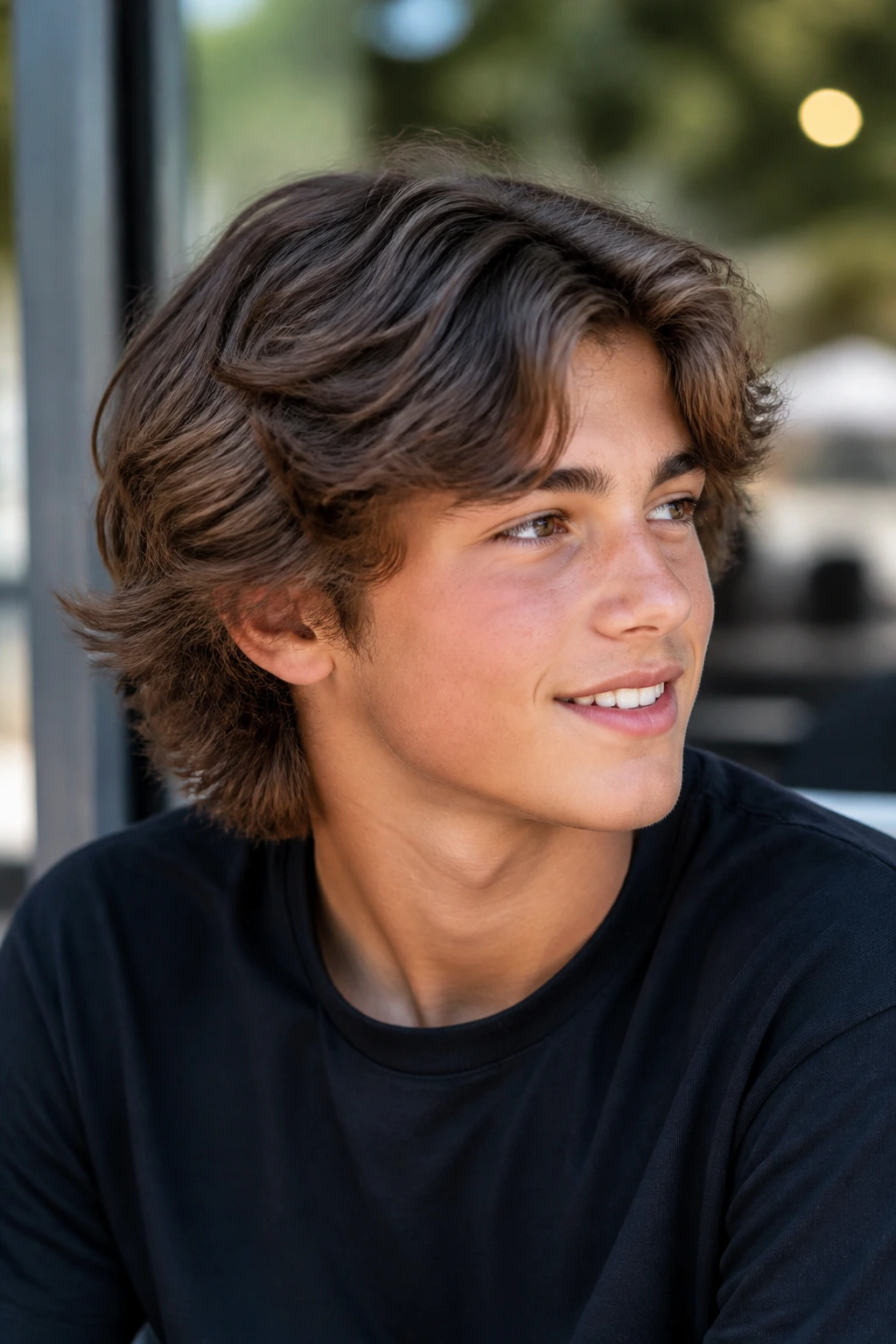
There’s a point where wavy hair stops looking neat in short cuts and starts looking better with a little length. This is that cut. The hair brushes the ears, the layers move when he walks, and the ends are light enough that the shape never turns into a heavy block.
The medium bro flow works because waves need somewhere to travel. If the top is cut too bluntly, the line hangs like a shelf. Layers solve that. They remove weight from the bottom, which lets the wave pattern fall in soft ridges instead of a thick wall.
Best for boys who won’t sit still for daily styling
This cut is a good fit for active kids who would rather finger-comb their hair and run out the door. A little water spray in the morning is usually enough. If the hair is thick, a small amount of leave-in cream on the mid-lengths keeps the ends from puffing up later in the day.
It also grows out well. That matters. A medium layered cut can start looking even better after a few weeks, which is rare enough to be worth noting.
5. Ivy League With Wavy Lift
The Ivy League is the neat cousin in this group. It keeps the sides clipped short and the top tidy, but the top is still long enough to show a bit of bend instead of lying flat like a uniform cap. On a boy with wavy hair, that little lift at the front makes all the difference.
I like this cut for school photos, formal events, and families that want something clean without turning the child into a miniature banker. The top usually lands around 2 to 3 inches, then gets brushed to the side with a slight rise at the front. The back stays narrow and controlled.
Use a small amount of light pomade or cream, no more than the size of a dime. Work it through damp hair with your fingertips, not a comb. A comb can make the wave disappear, especially if the hair is fine. The whole style should look neat but not stiff. If it looks polished from six feet away and soft up close, you got it right.
6. Messy French Crop With Choppy Top
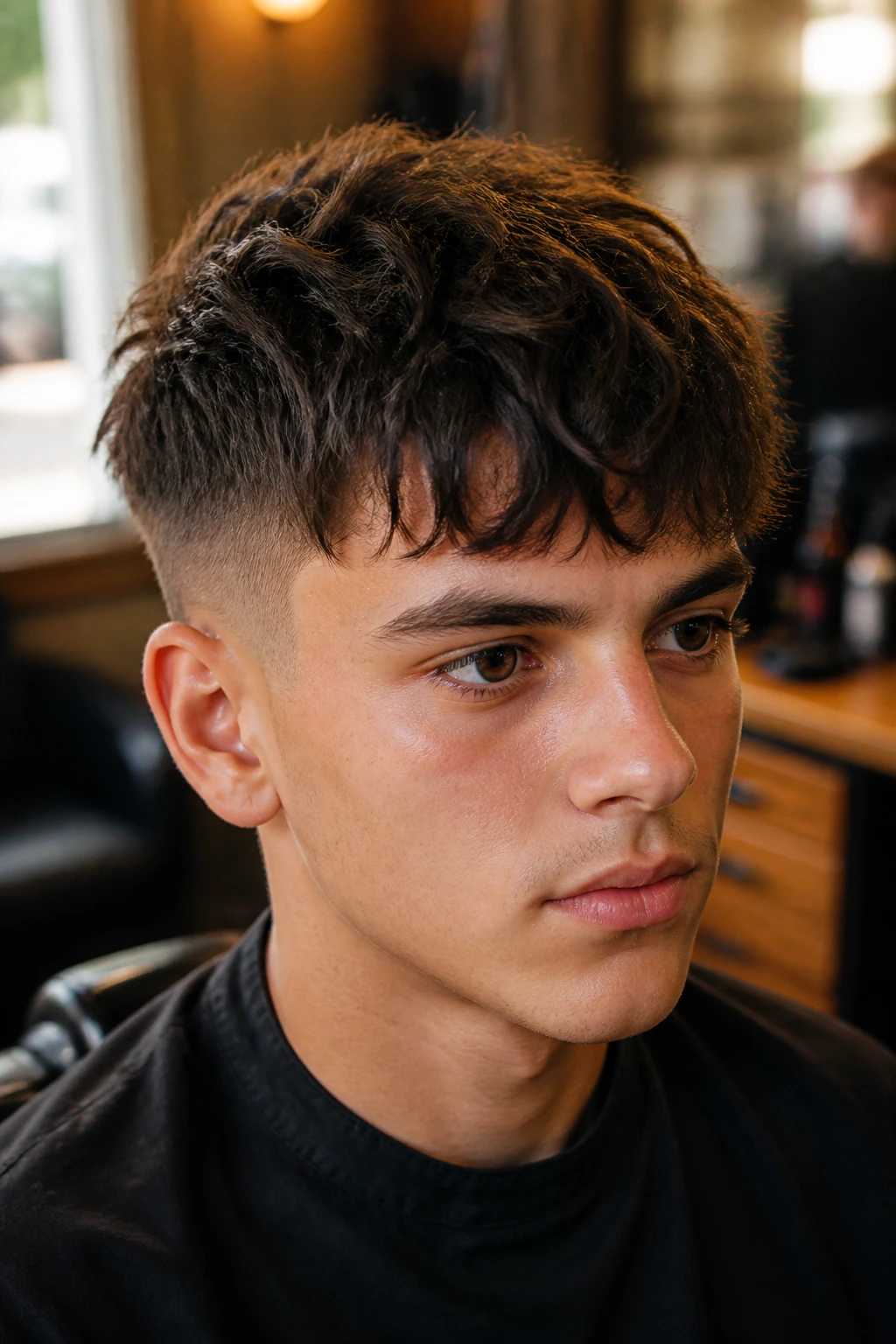
The French crop gets better on wavy hair than people expect. Not the too-short, military-looking version. The good version. The one with a choppy top, a short fringe, and enough rough texture that the wave pattern gives the style some shape instead of fighting it.
What makes this cut different from the classic crop is the movement on top. The hair is point-cut or chipped into pieces so the wave can break and fall in uneven sections. That stops the fringe from hanging in one solid line across the forehead, which is where many wavy cuts go wrong.
It’s a smart choice for boys who want low fuss but not a buzz cut. Keep the sides tight, then let the top sit forward with texture. A matte paste works better than shine here. Shine shows every uneven strand; matte absorbs that and makes the crop look fuller. If the hair is dense, ask the barber to thin only the bulk, not the ends that create the visible shape.
7. Low Fade and Wavy Quiff
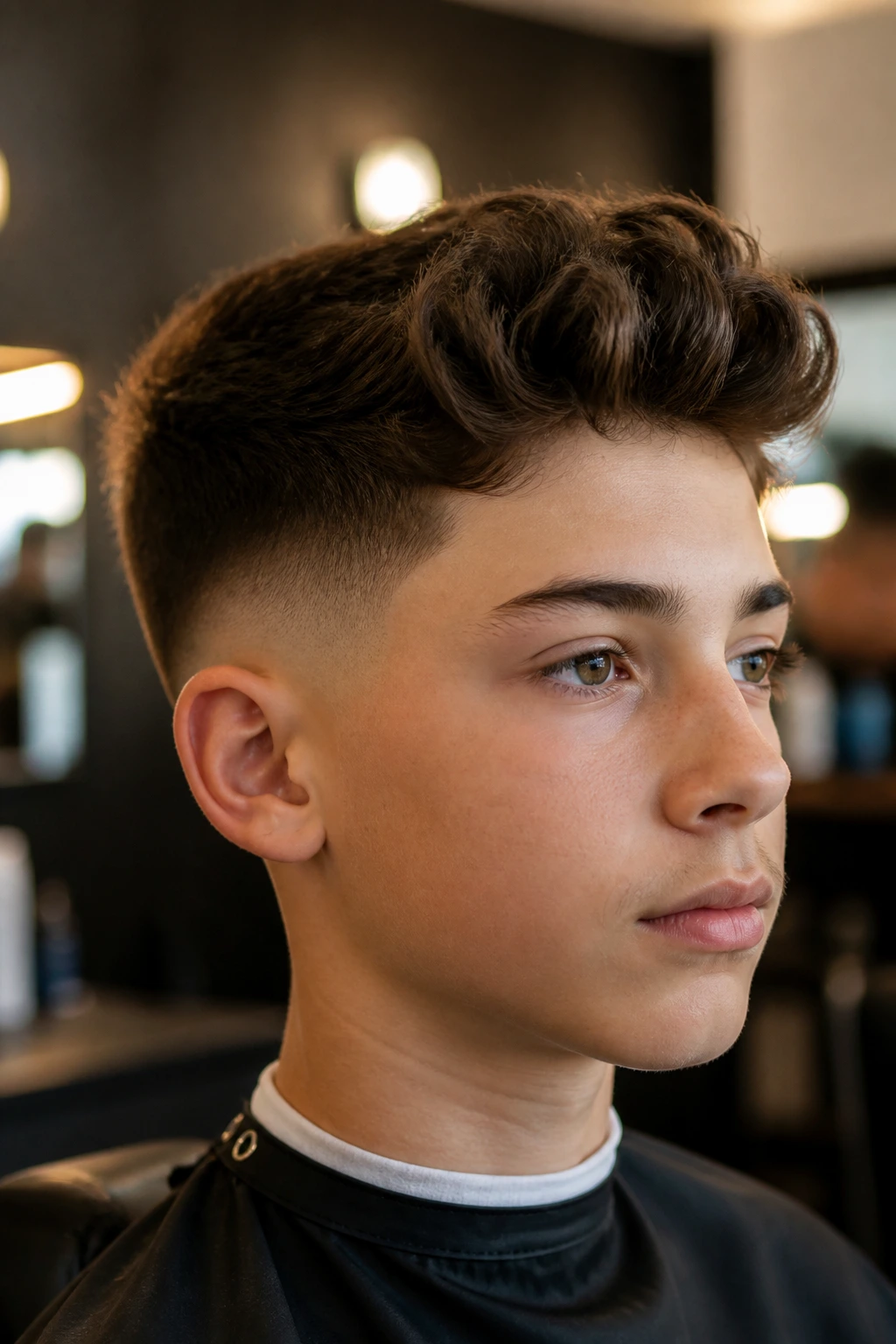
A wavy quiff can look childish in the best way or ridiculous in the wrong hands. The low fade keeps it on the right side of that line. It cleans up the sides while leaving the top long enough to push upward and slightly back, which works beautifully on boys whose waves have some spring.
The top usually needs 3 to 4 inches. Less than that and the quiff loses its height. More than that and it starts drooping unless the hair is very thick. The fade should stay low or low-mid so the haircut doesn’t get too dramatic around the ears.
How to style it without overdoing it
Blow-dry the front up and back for 30 to 45 seconds on low heat if you want extra lift. Then use a tiny bit of matte cream or light clay. Push the hair up with your fingers, not a brush. Brushes make the wave pattern too smooth and can flatten the front once the hair cools.
This cut is one of the few where the styling product matters more than people think. Too much gel and it turns helmet-hard. Too little and the front collapses. The sweet spot is a soft hold with a little texture left in the tips.
8. Curtain Cut With Center Part
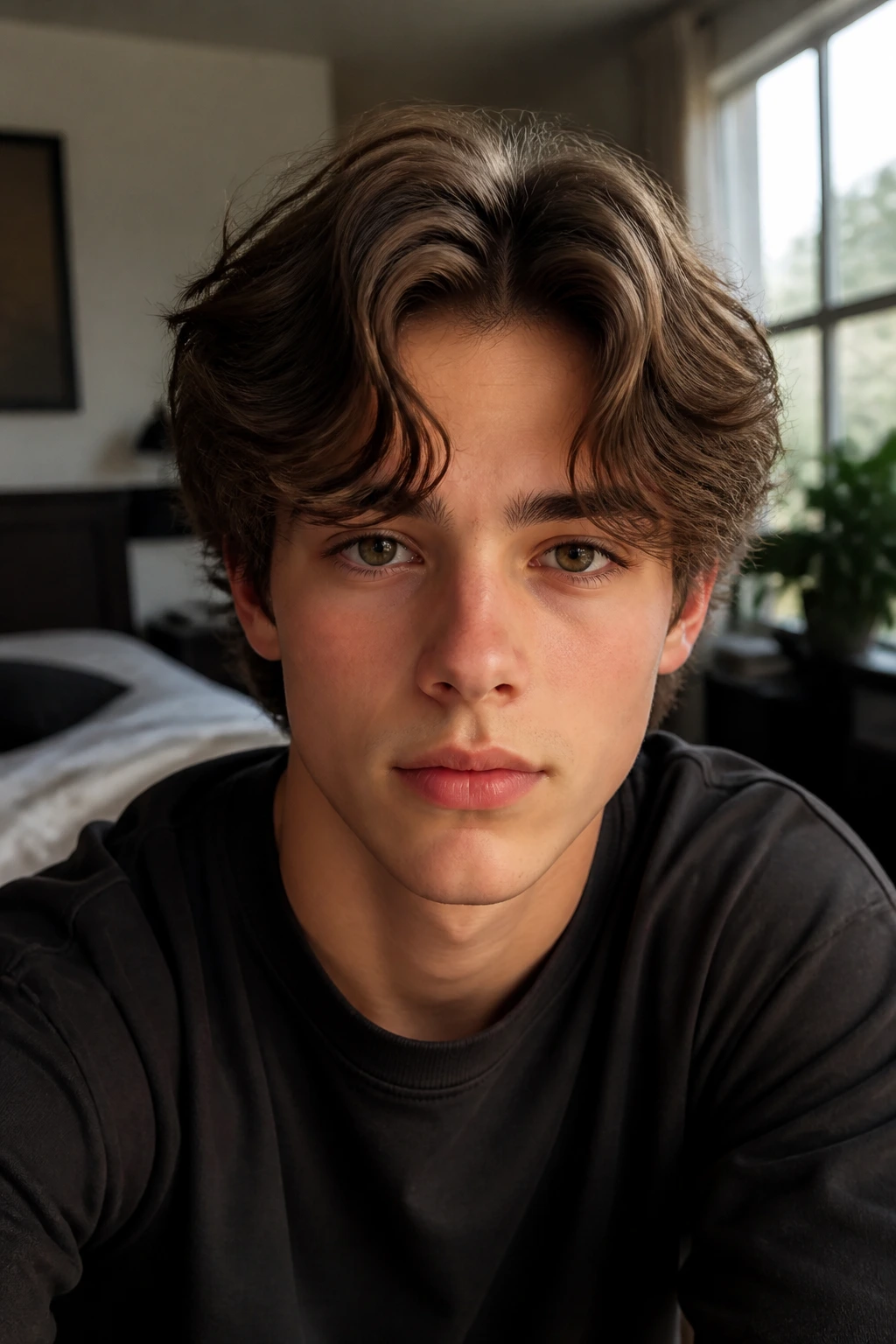
Do boys still wear curtain cuts? Yes. And on wavy hair, the style makes more sense than it does on straight hair, because the center part gives the bends a place to fall on both sides of the face.
The cut works best when the top is medium length and layered lightly through the sides. The part does not need to be razor-straight. In fact, a too-perfect center part can look forced. A loose middle split lets the waves frame the face in a softer way, with a little movement near the cheeks and temples.
Why this cut has staying power
It suits boys who like hair that feels a little longer but still deliberate. The curtain shape also grows out politely. That’s a nice change from cuts that need a cleanup every two weeks or they start to puff out around the ears.
A leave-in conditioner or very light cream is usually enough. Brush only if the hair is drying in a strange direction. After that, stop touching it. Seriously. Curtain cuts lose their shape the second someone keeps sweeping the same section back and forth with their hands.
9. Surfer Layers That Grow Out Cleanly
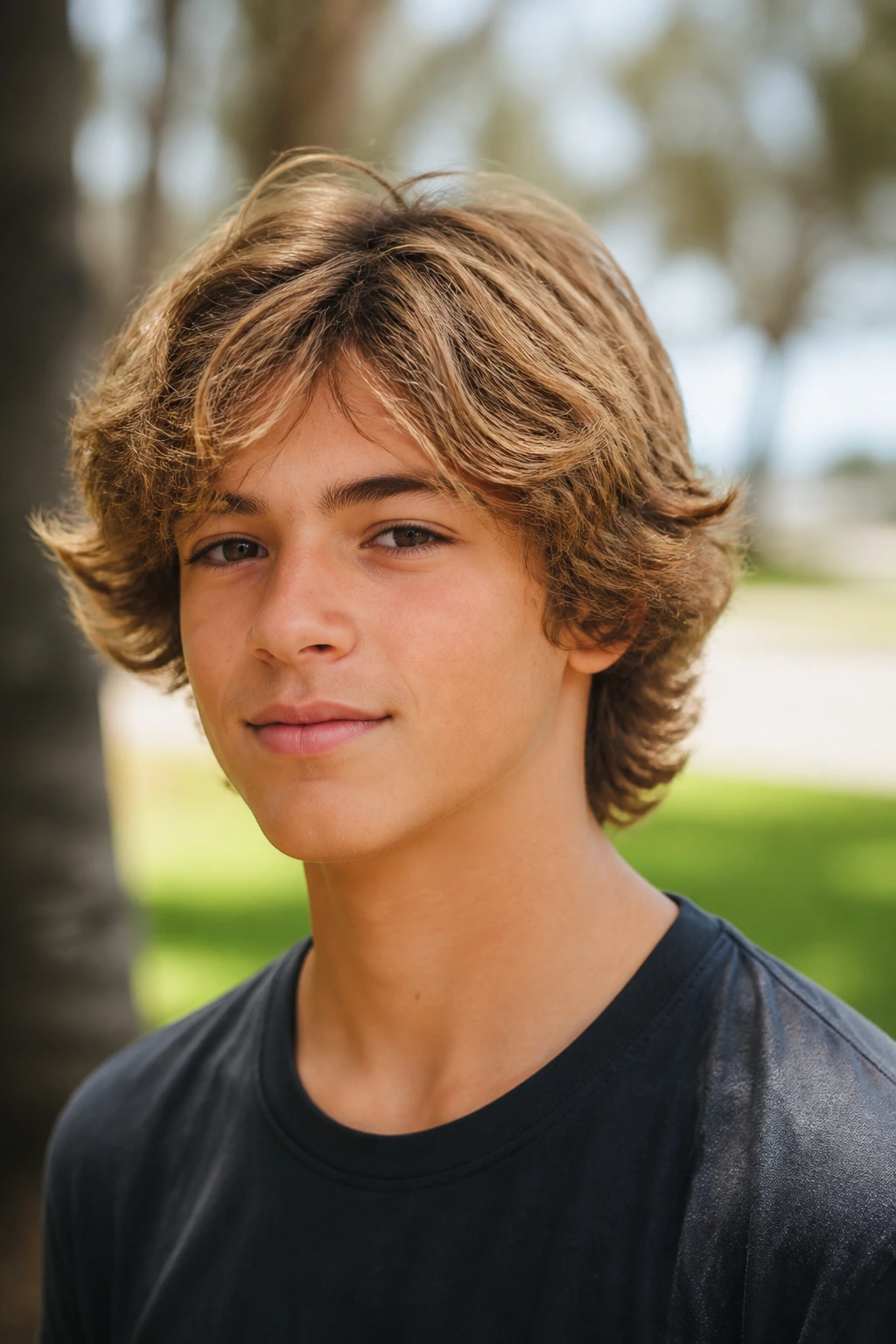
Picture a boy who swims, runs, bikes, then dries off and wants his hair to look like it belongs there anyway. That’s the surfer-layer cut. It’s longer, softer, and designed for movement rather than symmetry.
The length usually sits around the ears and neck, sometimes a little past them, with layers that remove bulk without making the ends look thin. On wavy hair, that layering is what keeps the style from going triangular as it grows. You want the hair to move, not hang in a single heavy sheet.
This cut is best when the natural wave has enough body to create shape on its own. A spray of water and a tiny bit of leave-in cream is usually enough in the morning. If the hair gets frizzy in dry weather, scrunching a small amount of styling cream into the ends can calm it down without killing the texture. I’d rather see a little texture than a perfect, sticky finish. Every time.
10. Wavy Crew Cut With Tapered Sides
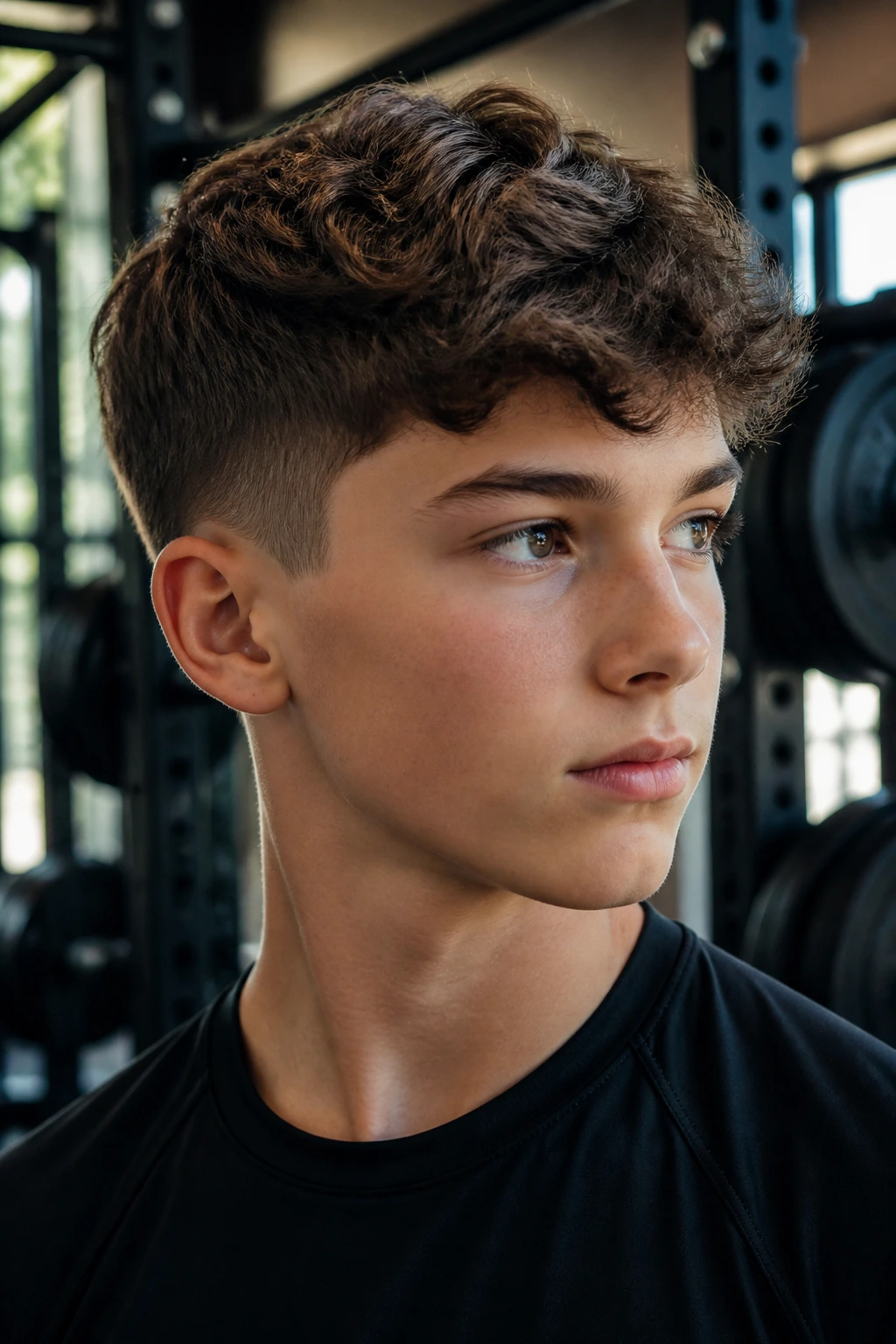
The crew cut is not just for straight hair and close buzzes. On wavy hair, a slightly longer crew cut can look crisp, athletic, and surprisingly textured. The sides stay tapered, while the top is clipped short enough to stand on its own shape—usually about 1 to 1.5 inches.
That short top is what makes this version work. Any longer and it starts to lean into a messy crop. Any shorter and the wave pattern disappears. The cut sits right in the middle, which is why it’s easy to wear and even easier to clean up.
A crew cut like this suits boys who play sports or dislike anything touching the forehead. It dries fast. It doesn’t need much product. A touch of light cream can reduce frizz, but many boys can get away with just towel-drying and going. If the crown has a stubborn cowlick, ask the barber not to fight it too hard; work with its direction instead. That little detail saves headaches later.
11. Drop Fade With Swept Waves
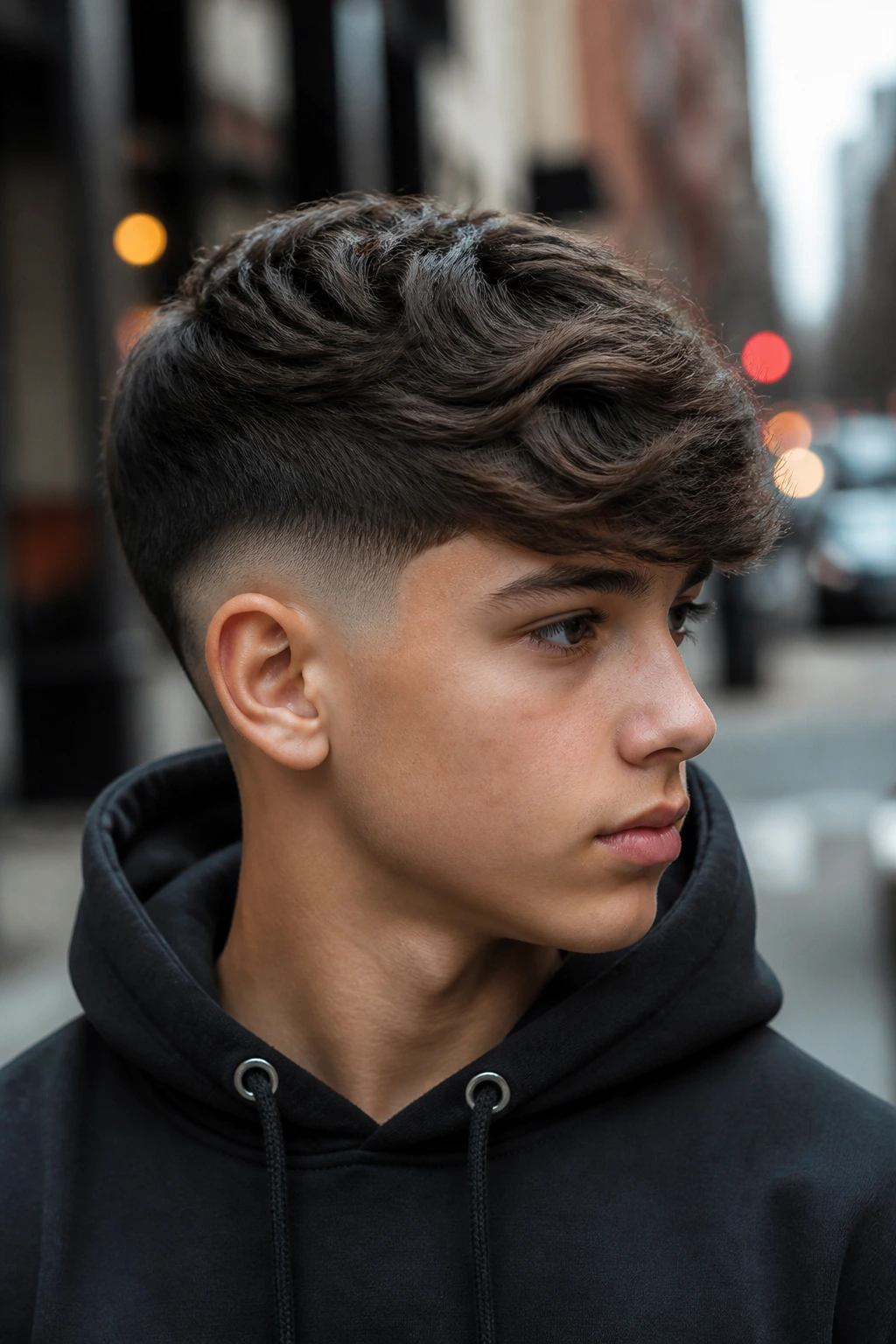
A drop fade follows the curve behind the ear, which gives wavy hair a cleaner frame than a straight fade sometimes does. It dips lower at the back and keeps the sides tight without cutting a sharp horizontal line across the head. On a boy with thicker waves, that curve matters a lot.
The top can be swept to the side, forward, or slightly back. I prefer a side sweep when the hair is dense, because it shows the movement without making the front too tall. The fade keeps the hairline neat while the top stays soft and touchable.
The difference between this and a standard fade is subtle in photos but obvious in real life. The drop shape follows the head better. It keeps the haircut from looking like a box with a fade attached. Use a small amount of matte product and rake it through the top with your fingers. A comb can make the wave pattern too uniform, and that takes away the charm of the cut.
12. Modern Mop Top With Controlled Shape
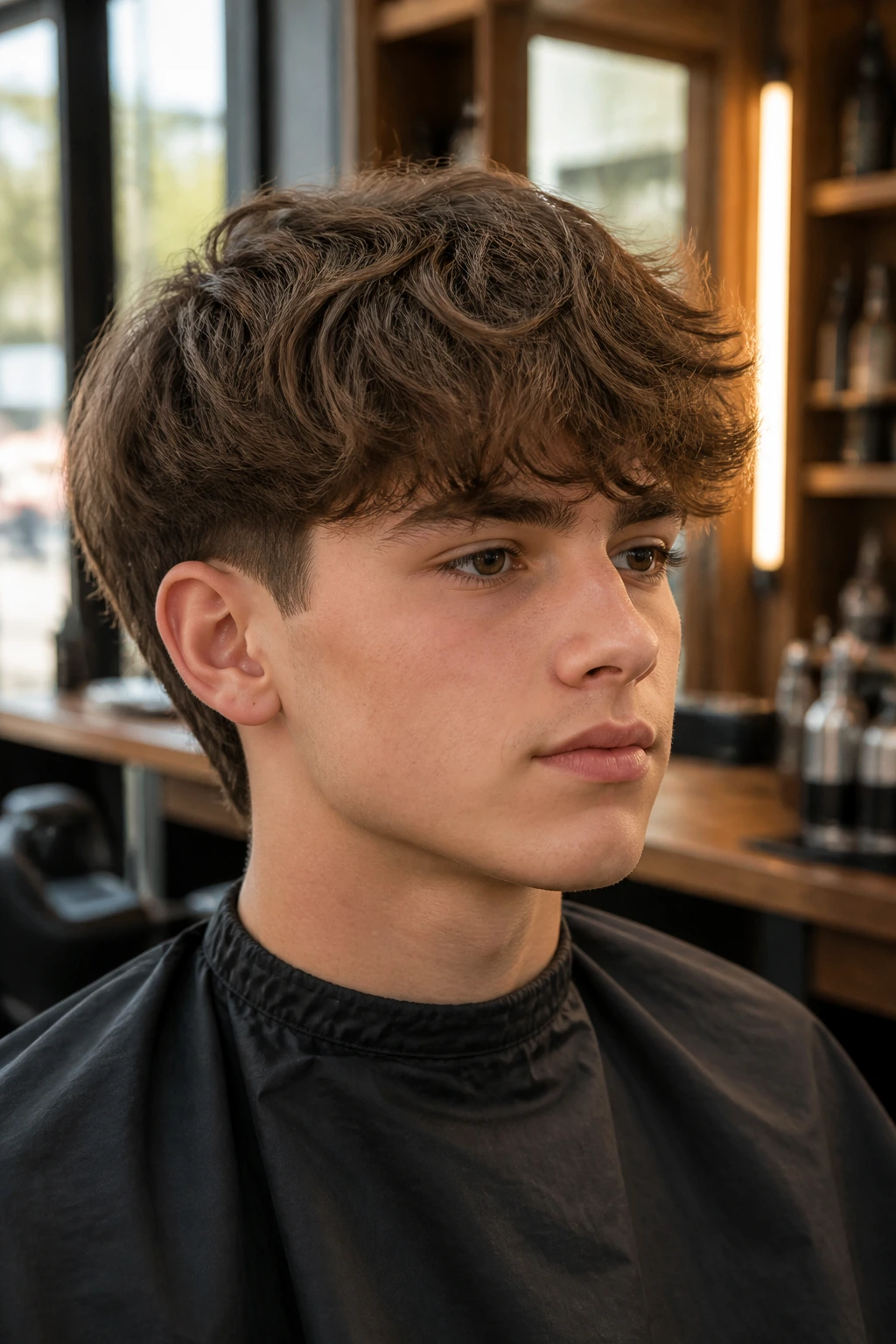
A mop top can go very wrong if the barber cuts it like a mushroom. The modern version is different. It keeps the outline soft, with enough length around the fringe and sides to let the waves spill naturally, but it removes bulk so the shape stays controlled.
This cut fits boys with fuller hair who want something casual and a little artsy. The fringe can rest near the eyebrows, and the sides should be trimmed so they don’t flare wide at the cheekbone. That’s the difference between “stylish” and “why does it look like a helmet?”
The best mop tops on wavy hair have a bit of irregularity. Not sloppy. Just not over-edited. A scissor cut with point-cut ends helps preserve that loose shape. If the hair is thick, a light styling cream can separate the strands. If the hair is fine, skip heavy product and let the texture speak for itself. Either way, the haircut needs air around it. Packed-down waves lose their character fast.
13. Burst Fade With a Wavy Crown
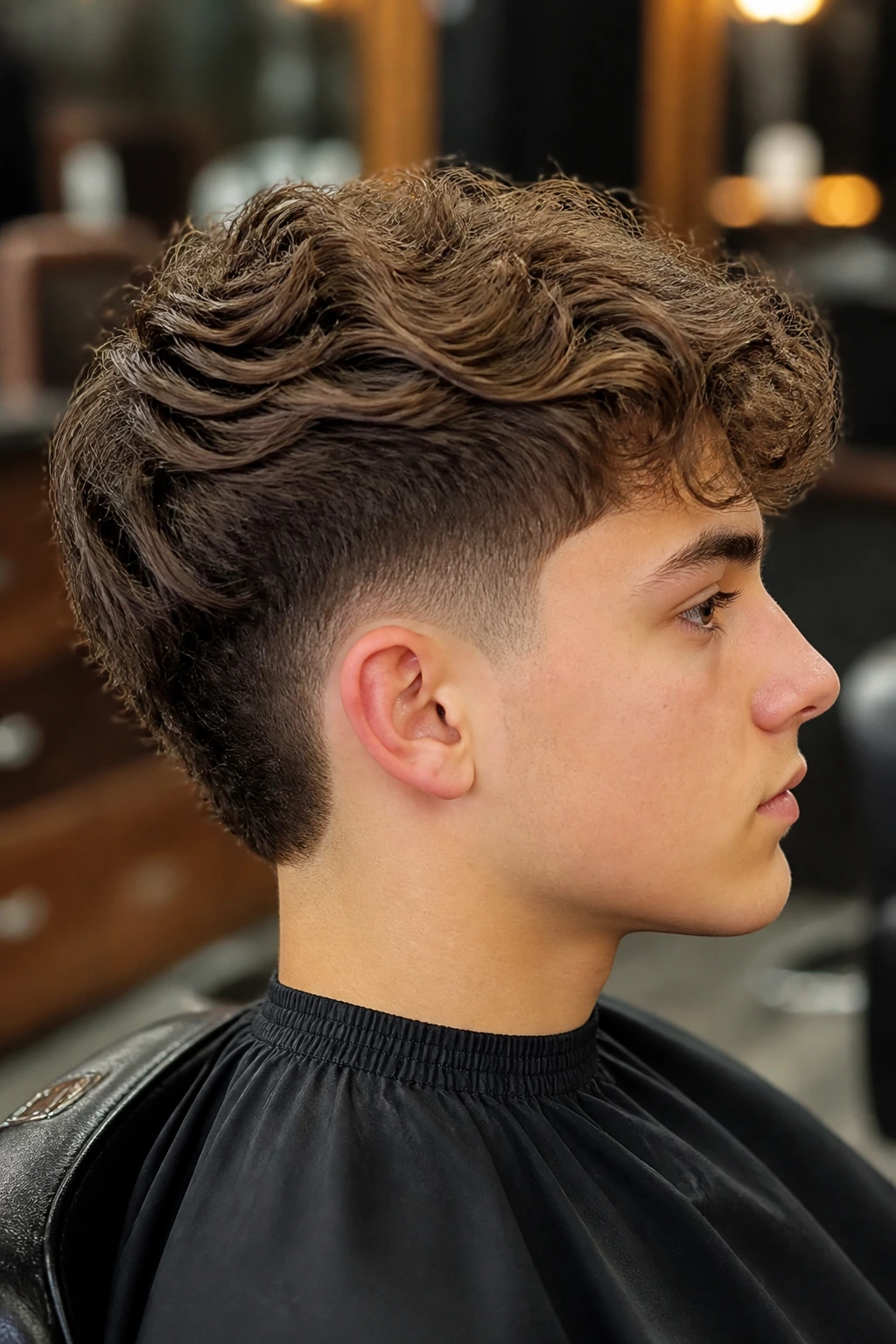
The burst fade is a bold shape, and wavy hair gives it something extra to work with. The fade curves around the ear in a tight arc, while the top stays longer and more textured, often with a little height at the crown. It reads sharper than a taper, but not as severe as a skin-tight fade all the way around.
This cut works especially well when the wave pattern is strongest near the crown or front. That natural bend gives the top a built-in lift. The fade underneath keeps the shape from puffing out at the edges, which is the biggest risk with this style.
What to ask the barber
Ask for a burst fade around the ears with a longer, textured top and no harsh disconnect unless you want a more dramatic look. If the child’s hair is thick, a barber who knows how to remove bulk with scissors should be your first choice. That keeps the top from turning into a stiff ridge.
Styling is quick. A little cream, fingers through the top, and done. This is a strong cut, so it should not look overworked.
14. Short Shag With Feathered Ends
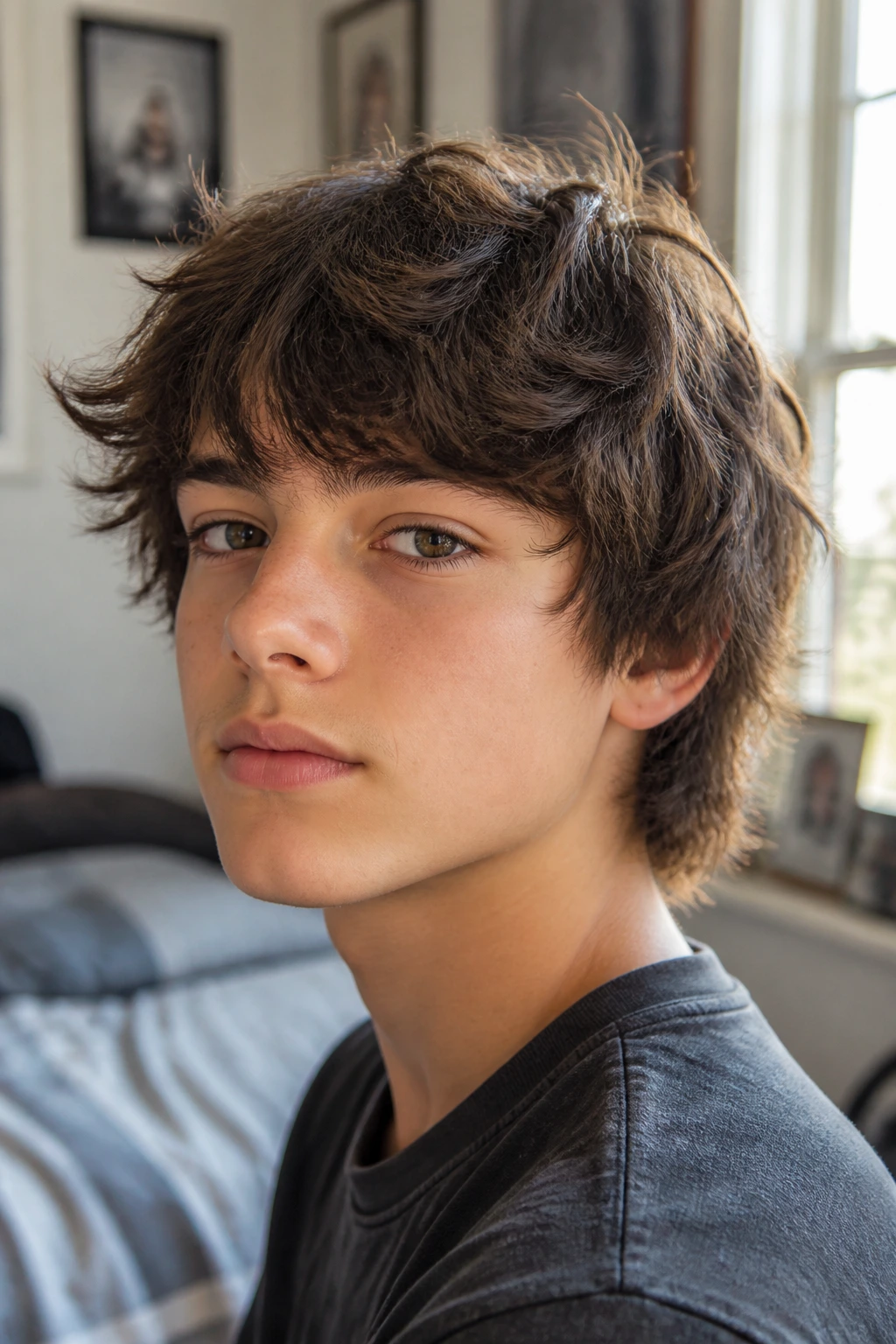
The short shag is one of the nicest options for boys whose wavy hair gets puffy when it’s cut too blunt. Layers are the whole point here. The top, sides, and back all get feathered so the shape sits soft and a little messy, but in a controlled way.
I like this cut because it doesn’t ask the hair to behave like something it isn’t. Wavy hair wants movement. The shag gives it movement and trims away the heavy ends that cause bulk. The result is a cut that looks relaxed even after a long day.
It’s also one of the easier styles to grow out. The feathered ends don’t create a hard line as quickly as one-length cuts do. That means fewer emergency trims when the schedule gets busy. Use a light styling cream or air-dry cream if the wave pattern gets frizzy. If not, a towel and fingers may be enough.
15. Brushed-Back Waves With a Temple Taper
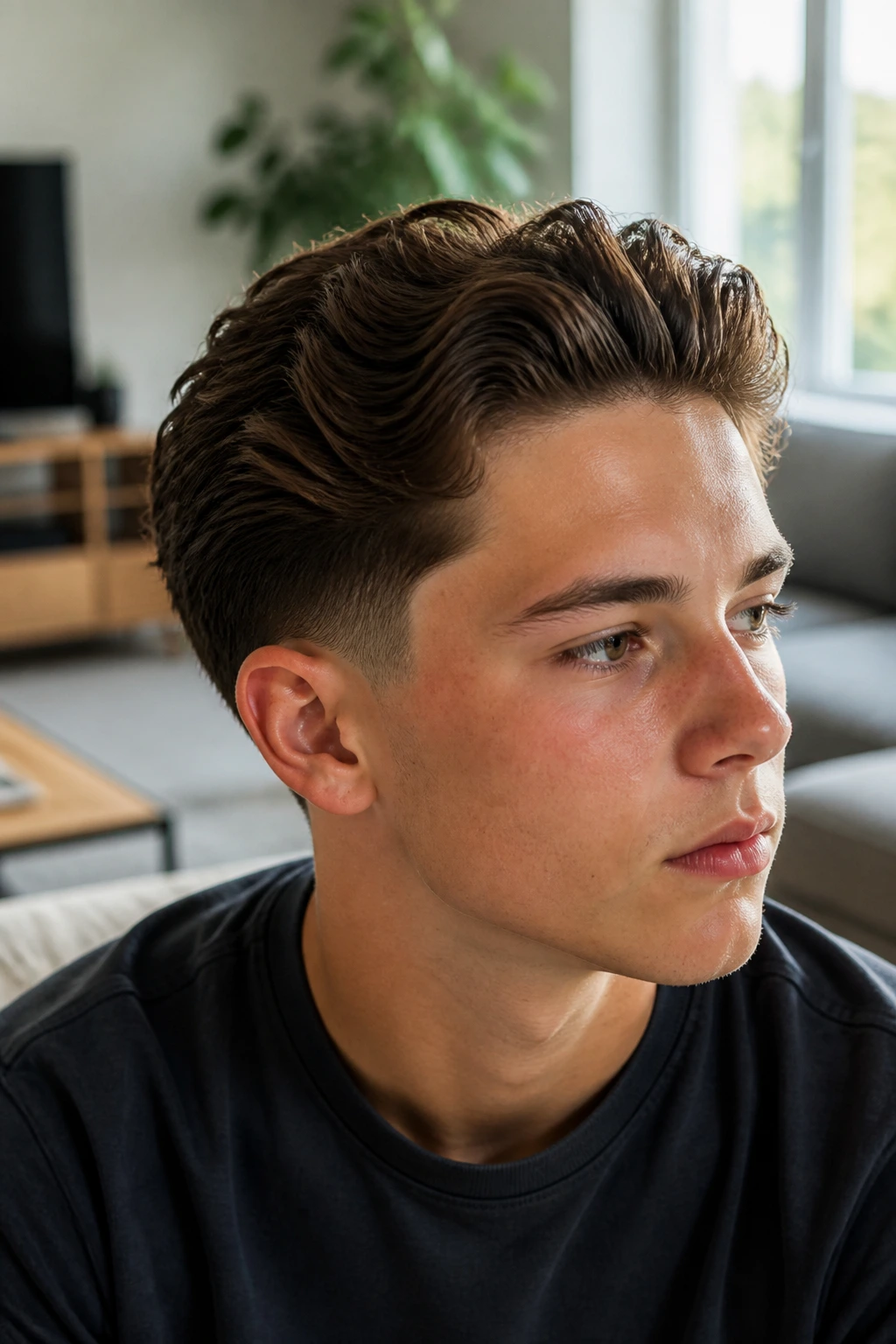
A brushed-back style on wavy hair can look handsome without looking stiff, but only if the cut leaves enough texture up top. The temple taper keeps the edges clean, while the top is long enough to move backward in soft waves instead of plastering down flat.
This is not a slick-back. I’m not a fan of slicking boys’ wavy hair into a shiny shell unless there’s a dress-up event and that’s the brief. Brushed back is different. It still shows the bend in the hair. The front has lift, but not a pompadour’s height.
The cut usually works best when the top sits around 3 to 4 inches and the back is trimmed to keep the neckline narrow. Use a wide-tooth comb or just your fingers while the hair is damp. If the top starts to separate in odd directions, a tiny bit of cream can calm it. Too much shine and the waves disappear. Too little and the front falls forward by noon.
16. Wavy Comb Over That Still Looks Soft
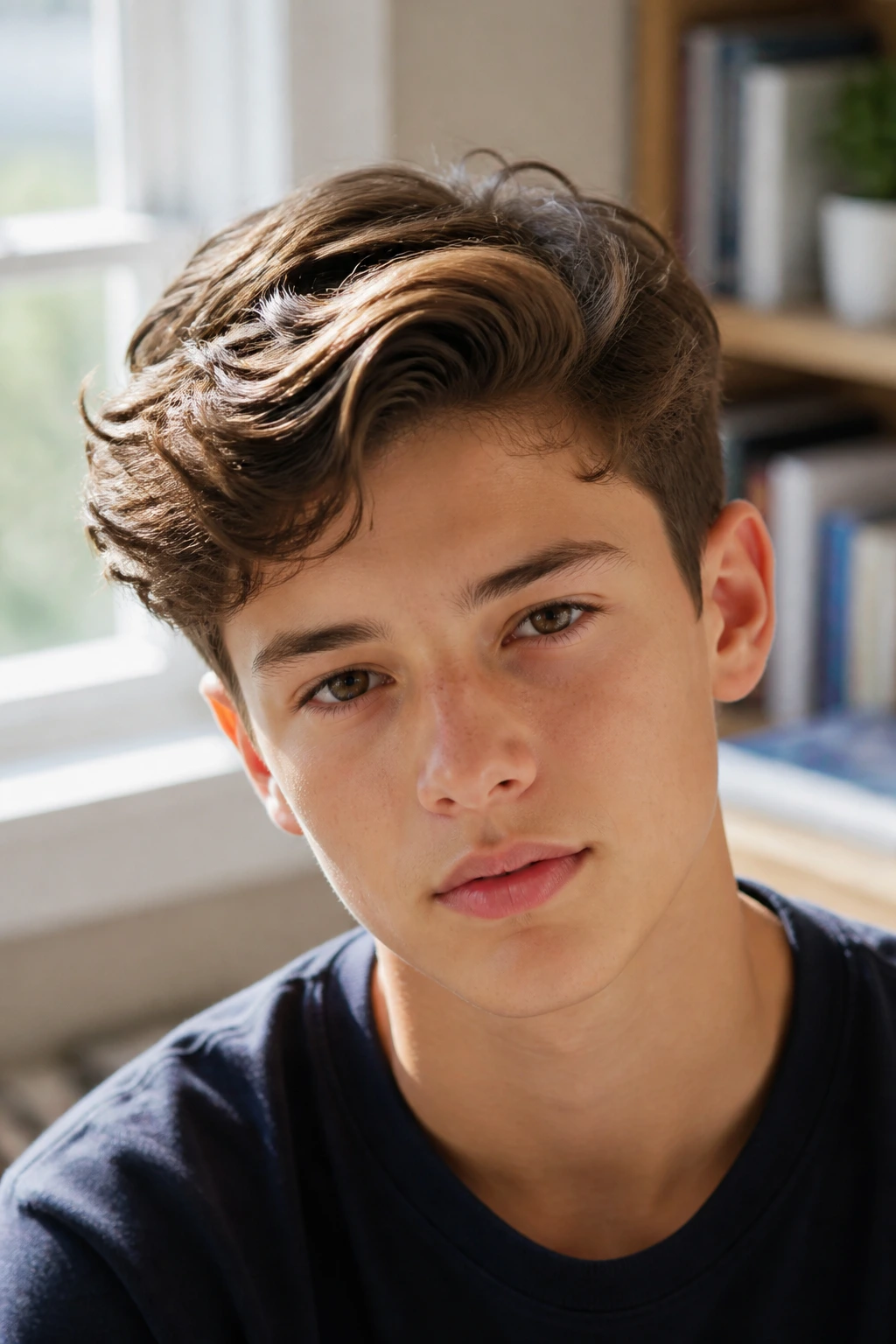
Can a comb over feel modern on a child with wavy hair? Yes, if it stays soft and textured instead of stiff and over-parted.
The haircut starts with a longer top, usually 3 inches or more, and shorter sides that keep the outline tidy. The hair is swept over from one side, but not locked into place with a hard line. That softness is what keeps it age-appropriate. It looks neat from a distance and still has enough bend up close that it doesn’t feel formal.
The detail that matters
The barber should leave enough weight in the front to keep the wave from splitting. If the front is cut too short, the comb over will fall apart and show every uneven piece. A low taper or soft fade is a better match than a high skin fade, because the top is doing the visual work here.
Use a light cream or soft clay, warmed in your palms first. Push the hair over and slightly forward, then stop fussing with it. This cut looks worse the more you try to perfect it. A bit of mess is part of the charm.
17. Long Top, Short Sides With Natural Movement
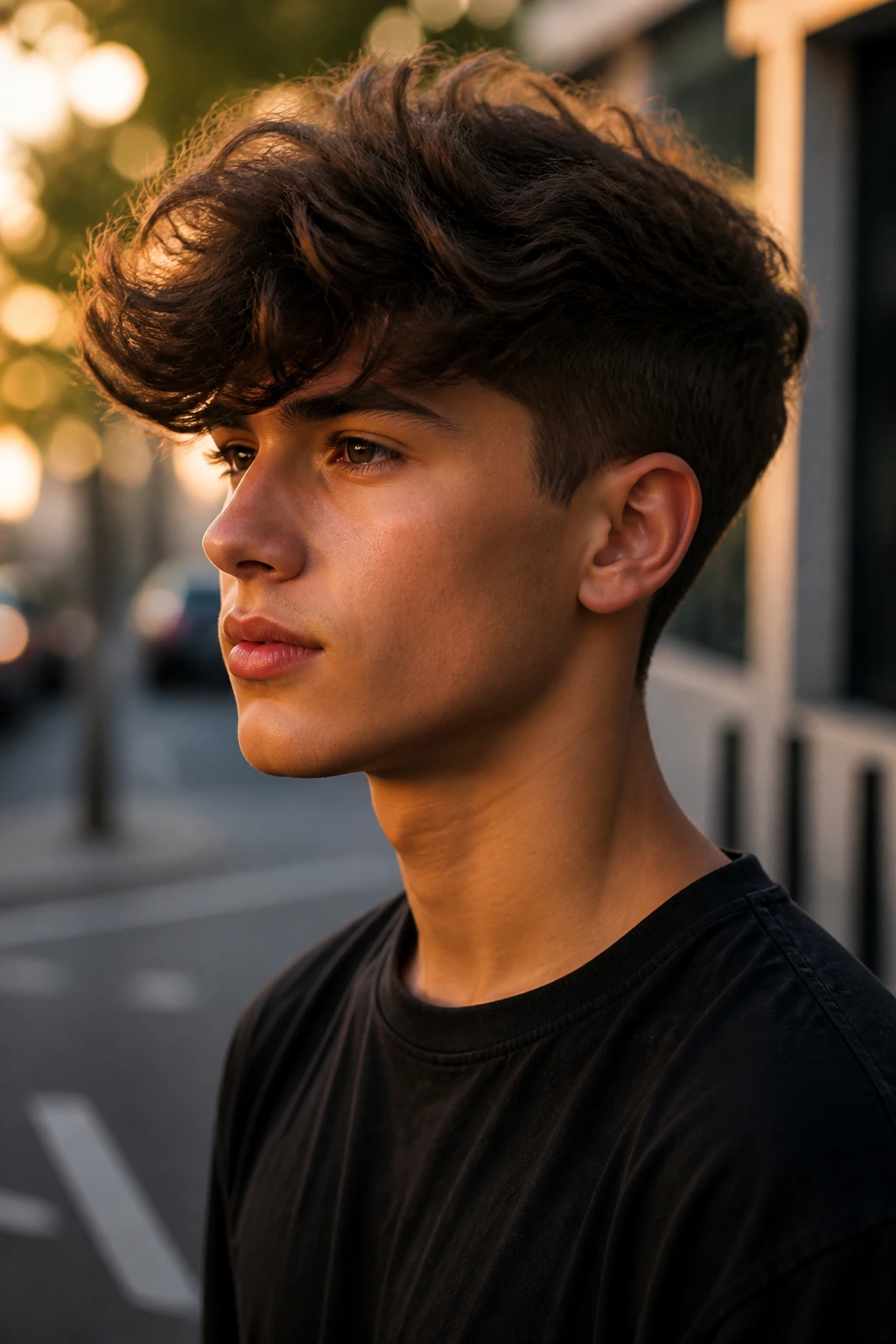
This is the classic contrast cut. The sides are short, the top is long, and the wavy texture does the rest. It’s a good choice when the hair is strong enough to hold shape but not so thick that it turns into a ball if left uncut.
What makes this version work is restraint. The top should not be chopped into too many layers, or it loses the sense of flow. At the same time, the sides need to be short enough that the haircut keeps its outline when the hair dries. That middle ground is where the style lives.
I like this cut for older boys who want some length but still need school-friendly edges. It can be worn loose, swept aside, or tucked behind the ear. A little leave-in conditioner is often better than styling paste because it keeps the hair soft and stops the ends from fraying. If the sides creep out too much, the haircut starts to look top-heavy fast, so keep the perimeter neat.
18. Grow-Out Cut With Clean Edges
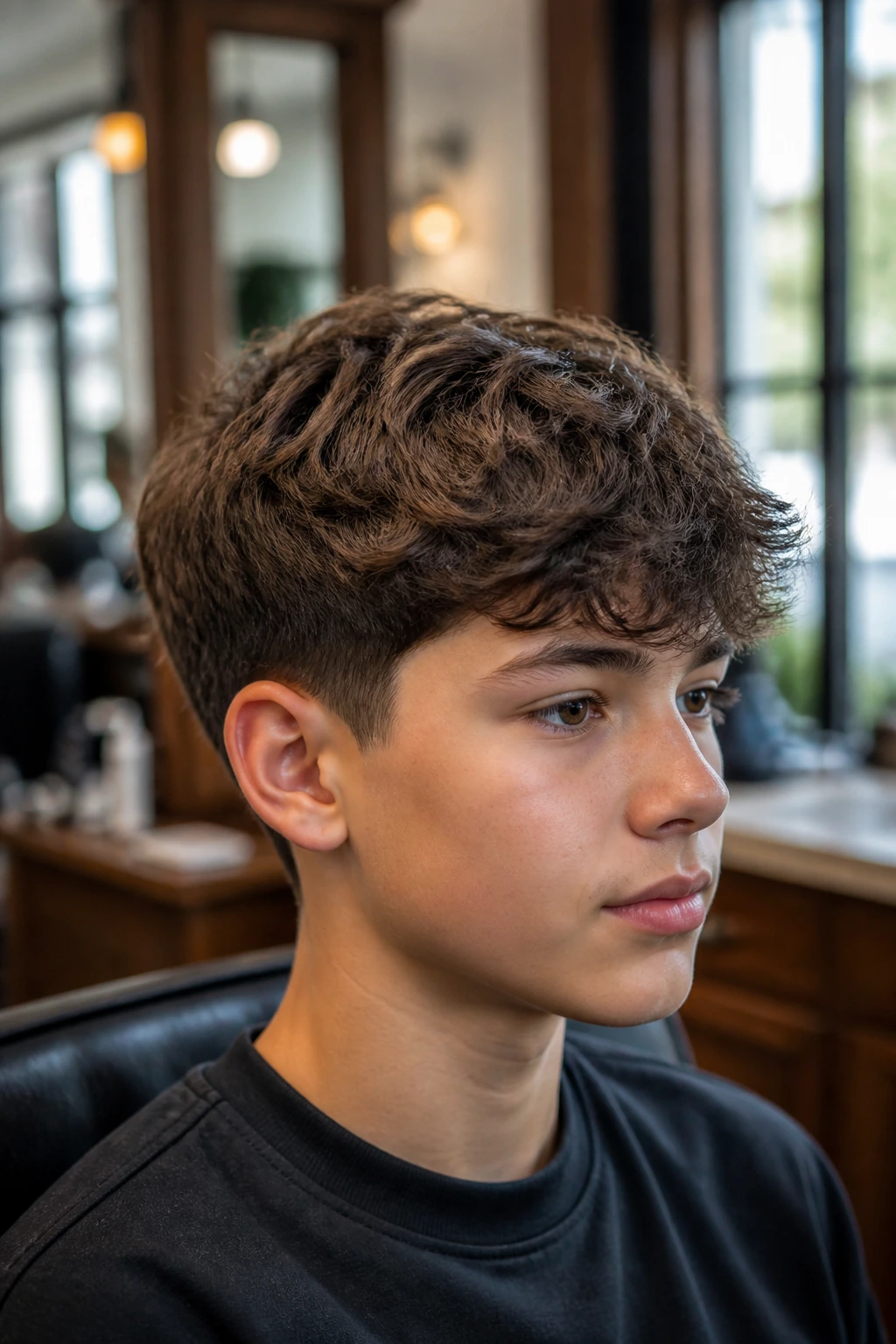
Sometimes the smartest haircut is the one that makes growing hair easier. This grow-out cut keeps the top a little longer, cleans up the neckline and ears, and trims the shape so the waves can stretch without turning wild. It is the cut you choose when you know the child is saving length, but you still want him to look put together.
The beauty of this style is that it respects the in-between stage. The hair is not short enough to feel drastic, and not long enough to get tangled into a puff at the temples. A clean edge around the ears and back buys you time. A lot of time, actually.
Ask for a light scissor trim on top, no harsh layering, and a tidy taper around the perimeter. That way the haircut can grow for several weeks before it starts to lose shape. It’s the quiet, practical option in the group. Not flashy. Very useful.
Why Wavy Hair Changes the Shape of a Haircut
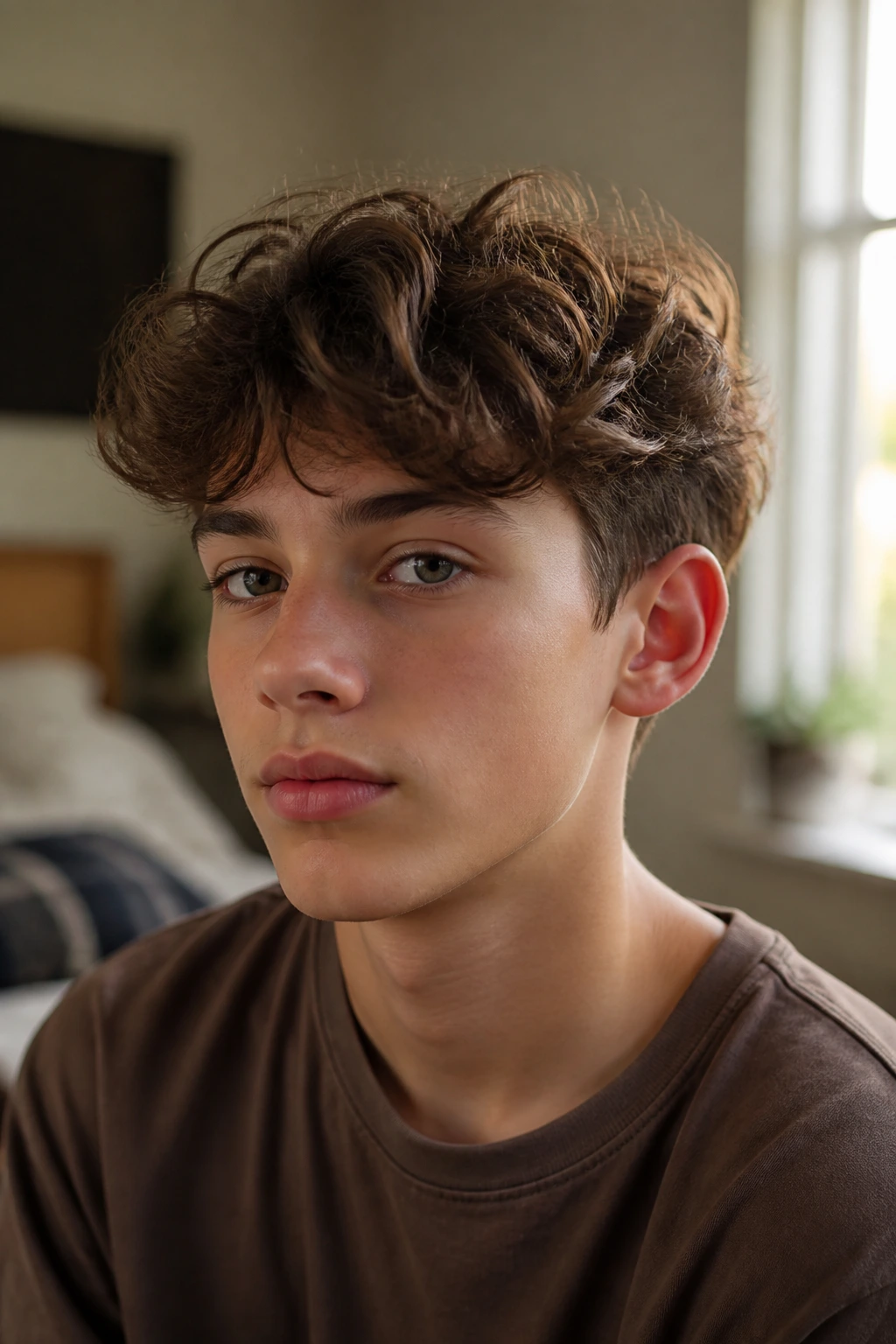
Wavy hair doesn’t sit still the way straight hair does, and it doesn’t coil the way curls do. It bends somewhere in between, which means the haircut has to leave room for movement without letting the shape explode outward. That middle ground is why so many wavy cuts go wrong. People cut for what the hair looks like when wet, then act surprised when it dries and shrinks an inch or two.
The crown matters more on wavy hair than most people think. If the top is too short there, the hair can flip up or flatten in a strange way that makes the whole cut look uneven. The sides matter too, because that’s where bulk shows first. Around the ears and temples, a little extra length can suddenly become a lot of puff.
I also pay attention to how the wave bends at the front. Some boys have loose bends that fall forward. Others get a stronger S-shape right at the hairline. Those two patterns want different cuts. One can handle a fringe. The other needs more height or it will collapse. A good barber reads that in seconds. A rushed one just grabs the clippers and hopes.
Short version: the cut should follow the wave, not erase it. That one rule explains most of the styles above.
Tools That Make These Cuts Easier at Home
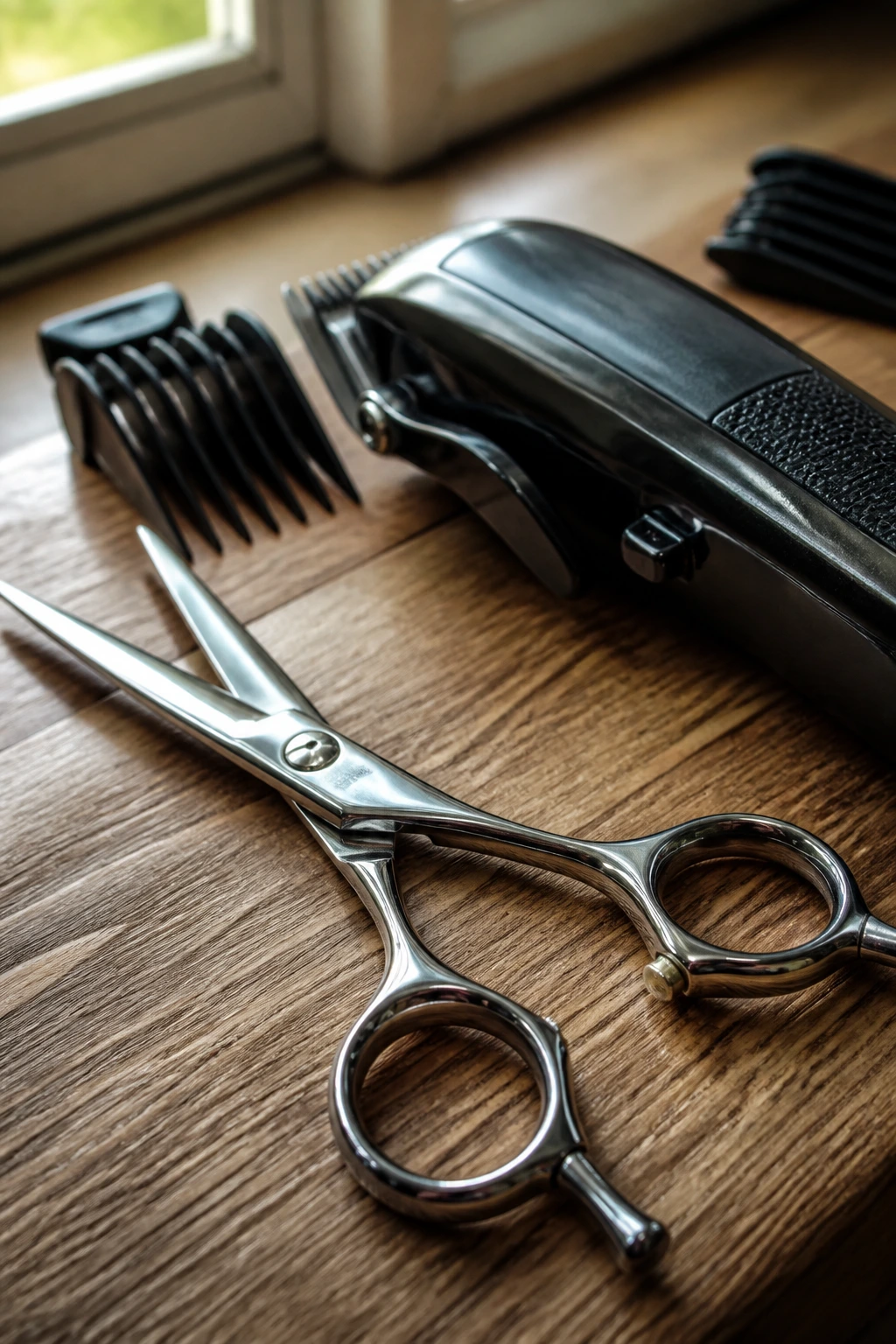
- Sharp barber scissors: Use these for tiny trims on the fringe or stray ends; dull scissors chew the hair and make the wave look frayed.
- Clipper with guards: Handy for cleaning up the neckline and around the ears between barber visits, especially on taper and fade styles.
- Fine-tooth comb: Good for drawing a part or checking symmetry, though I’d use it sparingly on very loose waves.
- Wide-tooth comb: Better for damp hair and medium-length cuts because it separates without dragging out the curl pattern.
- Spray bottle with water: A few misted pumps wake the wave pattern up before styling, and they beat soaking the hair.
- Light styling cream or matte paste: Pick one or the other depending on the cut; cream softens, matte paste adds grip and separation.
- Blow dryer with diffuser or nozzle: Optional, but useful for quiffs, brushed-back styles, and anything that needs a little lift at the front.
- Towel or microfiber cloth: A rough bath towel can rough up the cuticle and add frizz. A softer towel is kinder to wavy hair.
Smart Barber Notes and Product Picks
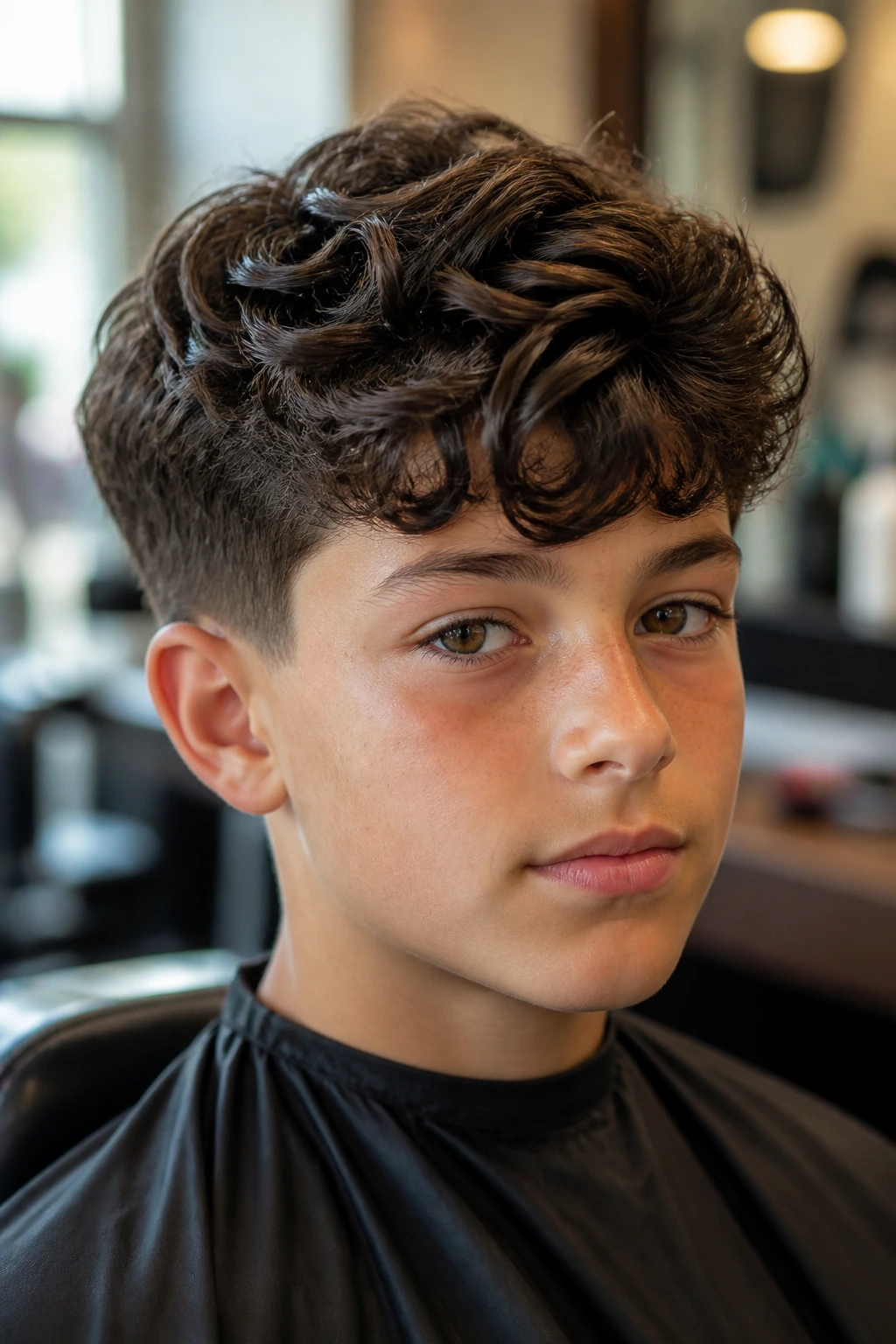
A good cut starts with a good conversation at the chair. Bring a photo, yes, but bring a second one too—one that shows the length you want on the top and another that shows how short you want the sides. One picture rarely says enough on its own. Wavy hair especially can look shorter in a photo than it does in real life.
Tell the barber whether the hair should be left soft and scissor-cut or sharpened with clippers. That matters. A lot. On thicker waves, I prefer scissors on top and clippers only for the sides and neckline. If the barber starts thinning randomly with a razor or aggressive thinning shears, the top can puff in odd places and the ends can look stringy.
Product choice should be simple. Light cream works for softer, looser waves and medium-length cuts. Matte paste or clay is better when you want shape, not shine. Sea-salt spray can help with texture, but it’s easy to overdo and leave hair feeling dry, so use a light hand. If the boy’s hair already gets frizzy, I’d reach for cream before salt every time.
The best sign that a product fits the cut is this: the hair still moves when you touch it. If it feels stuck, sticky, or crispy, you used too much or picked the wrong thing.
How to Wear These Cuts at School, Sports, and Photos
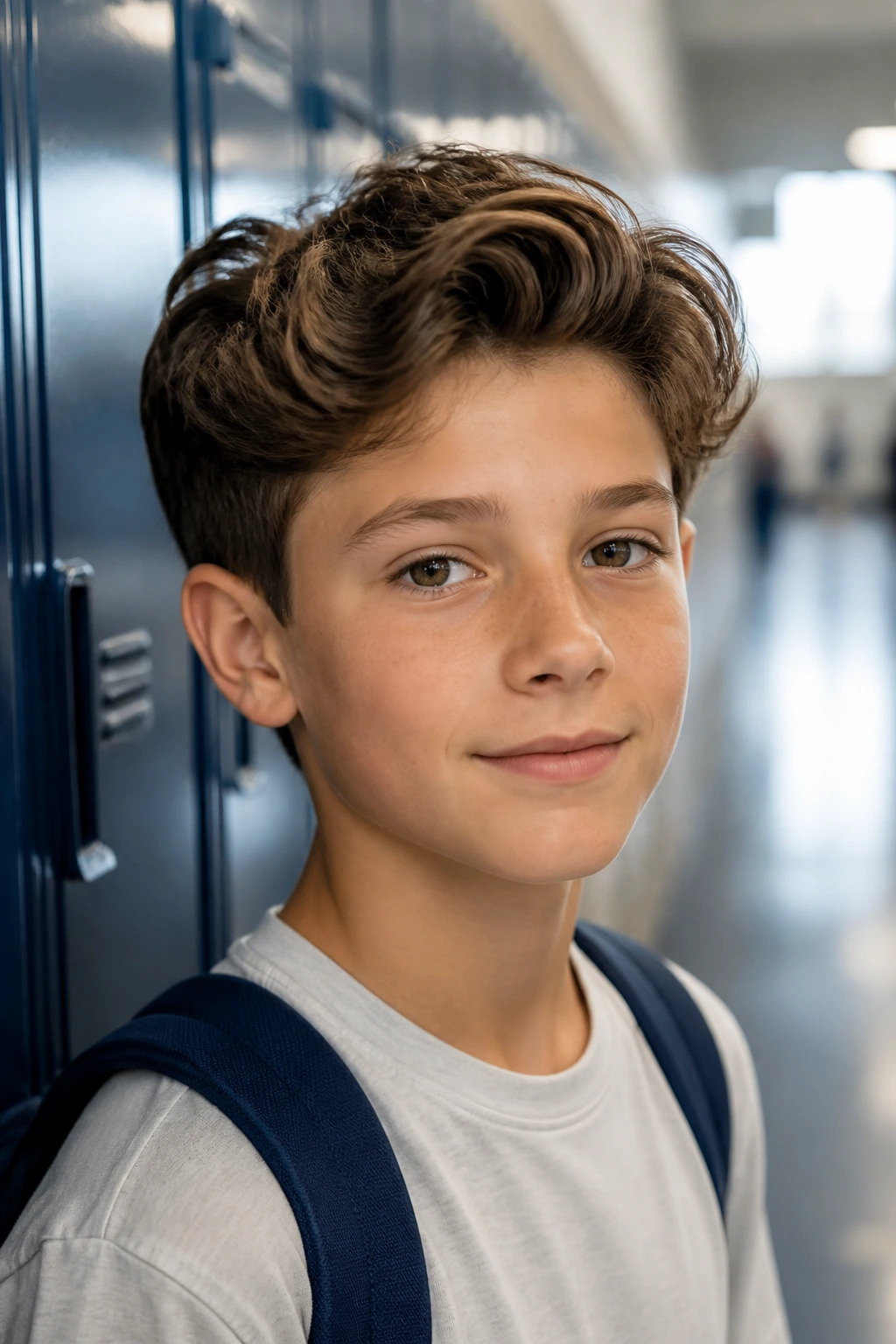
School Day: Keep it simple. A water spray, a fingertip of cream, and a quick shape-up at the crown are enough for most of these cuts. For classroom-friendly styles, the classic taper, Ivy League, and crew cut are the easiest to live with.
Sports Practice: Go shorter or cleaner at the sides if the child sweats a lot. The crew cut, low fade quiff, and drop fade hold up well because they don’t collapse into the forehead after running around.
Photo Day: This is where the side-part taper, brushed-back waves, and wavy comb over earn their keep. They look intentional without needing a stiff finish. Use less product than you think. Photos catch shine fast, and a shiny forehead line is nobody’s friend.
Growing It Out: Choose cuts with layers or soft edges—surfer layers, shag, curtain cut, or the grow-out trim. They survive awkward in-between stages better than hard-edged crops.
Additional Styling Tips and Texture Boosters
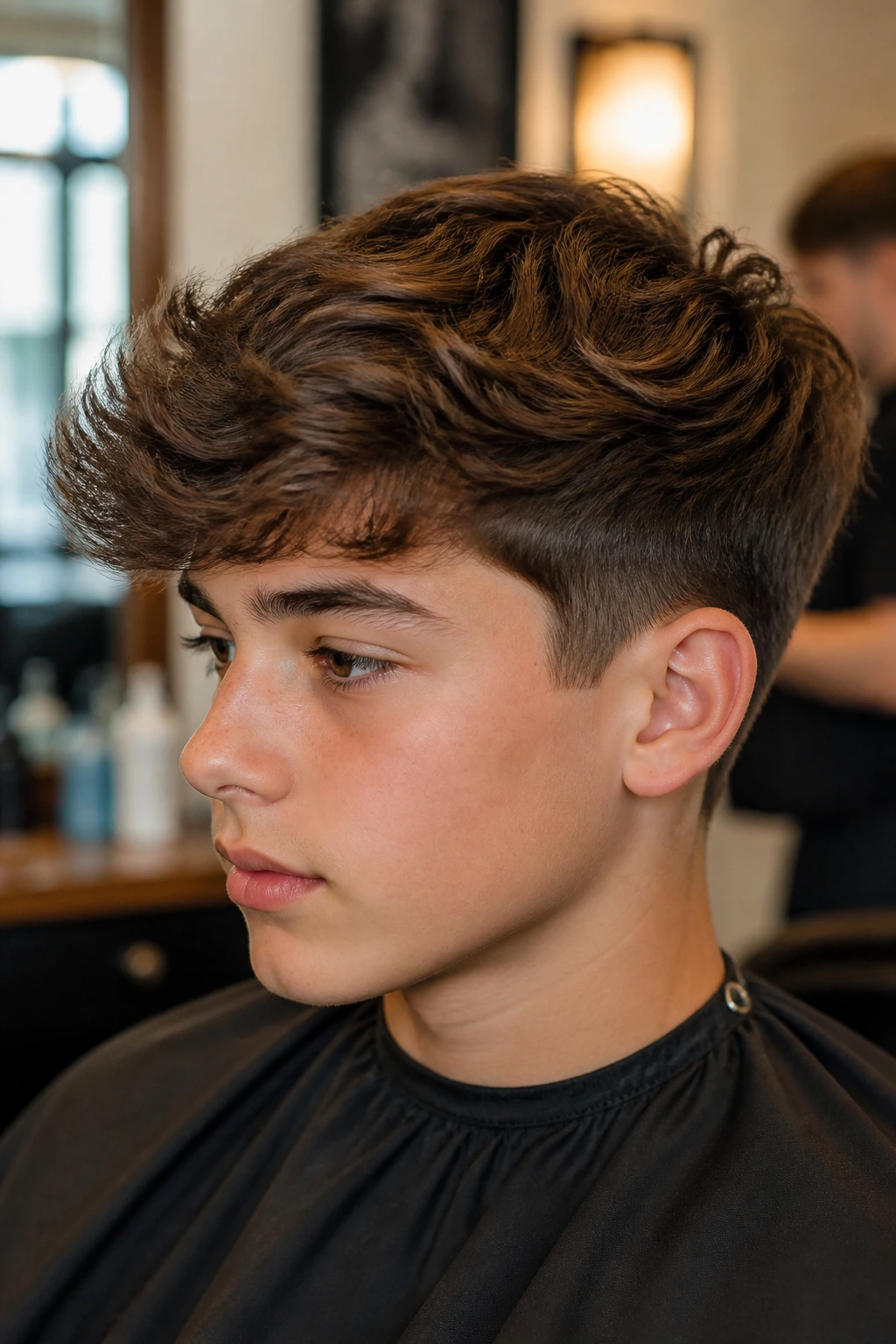
Texture Boost: Work product through damp hair, then stop. Wavy hair likes a little separation, not a full coating. If you want more texture, scrunch the ends upward with your hands instead of combing the whole head again.
Shape Control: The first place to check is the sides. If they puff, the haircut probably needs a cleaner taper next time. Styling can help, but it won’t solve a cut that leaves too much bulk around the ears.
Quick Fix: If the front falls flat, wet only the front section and re-dry it with your fingers lifted at the root. A full rewash is usually unnecessary. Five minutes and a spray bottle can rescue a messy morning.
Make-It-His: Fine waves need lighter products and a softer cut line. Thick waves can take more structure, more layering, and slightly stronger hold. Curly-wavy hair sits in the middle and often does best with extra length on top and less shaping on the ends.
Keeping the Cut in Shape as It Grows
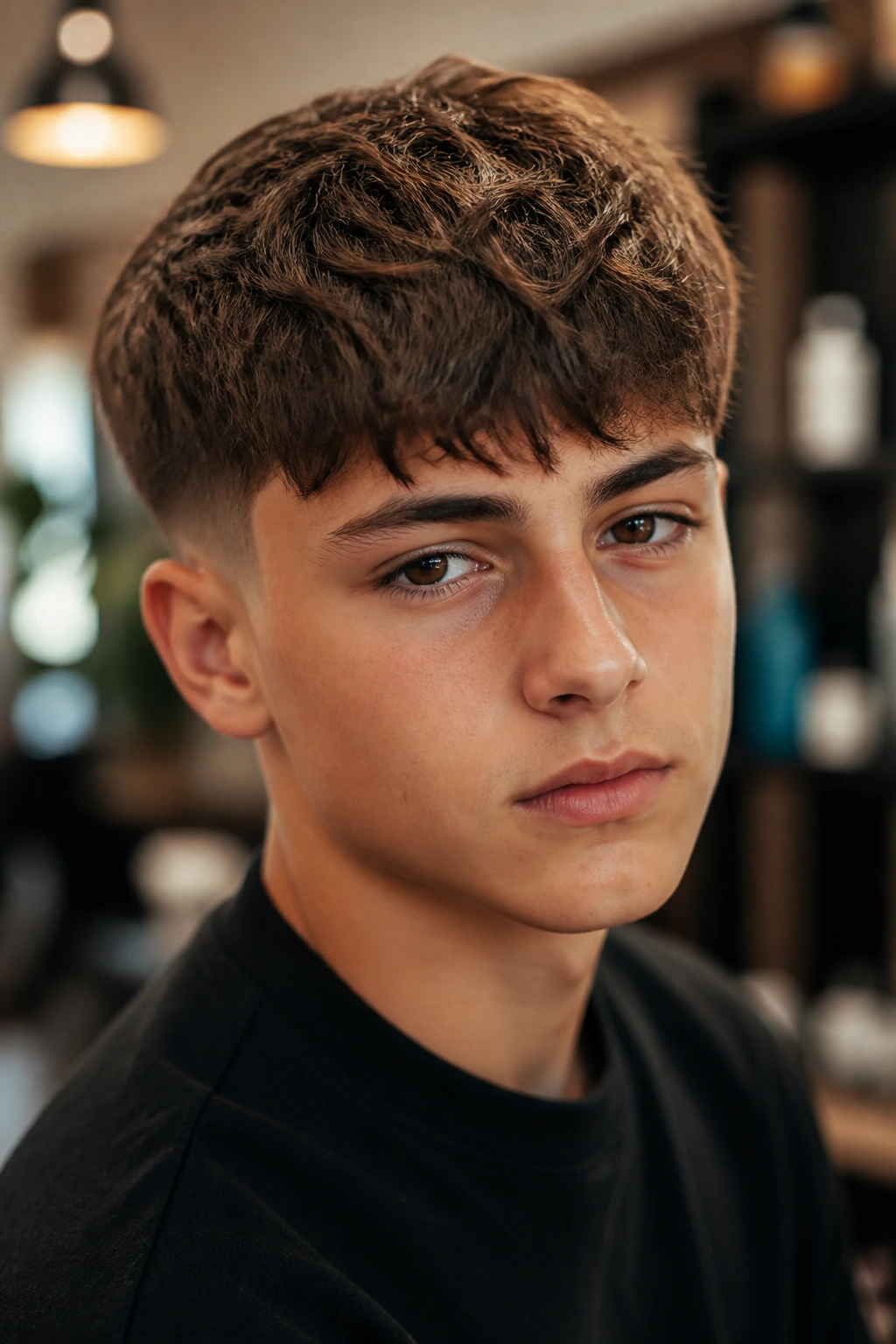
Wavy hair can go from neat to puffy faster than straight hair if the cut is too blunt. That’s why maintenance matters. A short taper or fade usually wants a touch-up every 2 to 4 weeks, while medium and longer layered cuts can stretch to 4 to 6 weeks before they lose shape.
The neckline is the easiest place to tidy between barber visits. If you know how to use clippers safely, a quick clean-up every couple of weeks keeps the back from looking fuzzy. Around the ears, though, be careful. One overzealous pass can change the whole outline.
If the haircut is growing out on purpose, keep the top shaped enough that it still falls where you want. A small trim on the fringe can stop the “hair in the eyes” problem without sacrificing length. Boys tend to notice that problem one second before they run into a doorway. True story, or close enough.
Shampooing every day is not necessary for most wavy hair. In fact, over-washing can make the hair dry and frizzy, which ruins the shape faster. A light conditioner helps the ends stay smooth, especially on longer styles.
Variations and Adaptations to Try
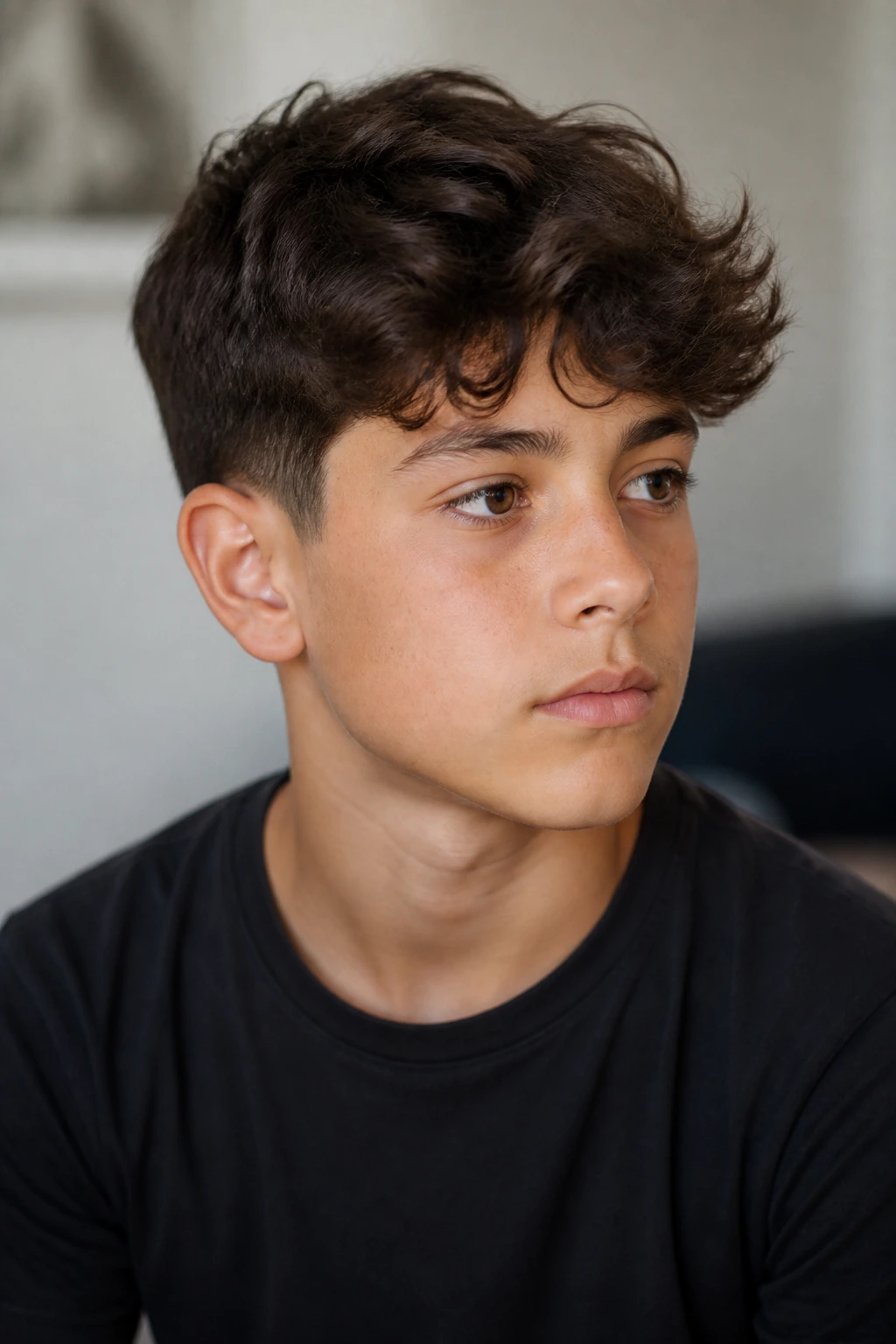
The Clean-School Version: Take the classic taper, Ivy League, or crew cut and tighten the sides a little more. This suits dress codes and families who want a haircut that looks neat even after a rough recess.
The Loose-Weekend Version: Keep the top longer, add a curtain part or surfer layers, and style with almost no product. This is the version for kids who want movement and don’t care if every strand sits in the same place.
The Thick-Wave Tame Down: Ask for more scissor work through the top and a stronger taper on the sides. Heavy waves need weight removed from the right places, or they push outward like a bell.
The Fine-Wave Volume Boost: Leave extra length on top, avoid over-thinning, and use a tiny bit of cream only at the roots. Fine waves go flat fast, so too much product or too much layering is a mistake.
The Sporty Fade Version: Choose a low fade, drop fade, or burst fade with a short textured top. This keeps the haircut cool around the ears and easy to manage after practice.
The Growing-Out Save: If the child wants longer hair but the outline is getting messy, keep the top and layer the ends while cleaning only the neck and around the ears. It buys another month without the awkward balloon shape.
Common Mistakes That Make Wavy Hair Puff Out
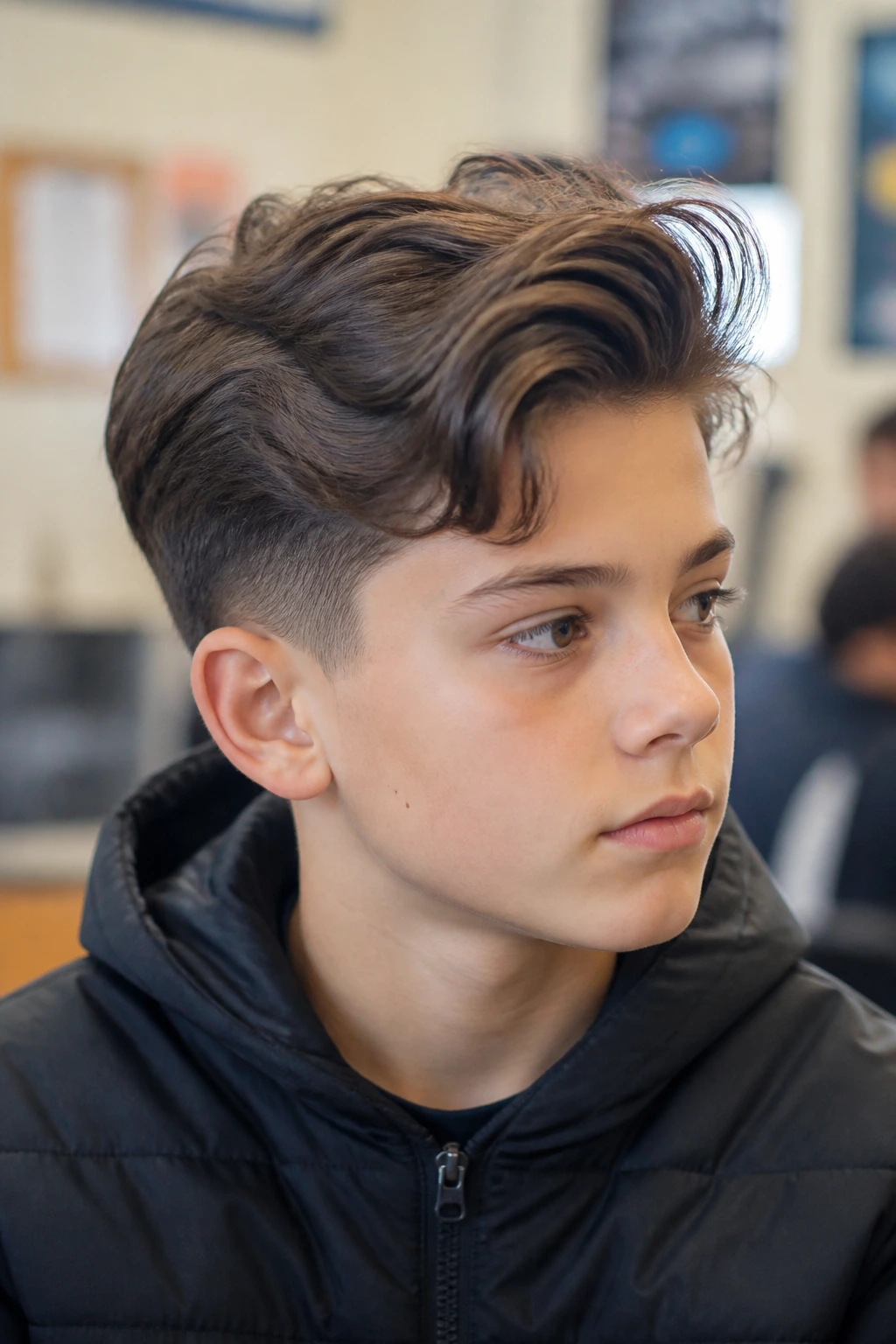
Cutting it wet and too short: Wet waves lie. They shrink when dry, sometimes by more than expected. If the top is taken too short while wet, the final result can look uneven or puffy. The fix is simple: leave more length than you think, especially on the crown and fringe.
Leaving the sides too full: This is the classic triangle problem. The top looks fine, but the sides widen at the temples and around the ears. A taper or fade solves it, and a scissor cut alone may need more shaping than people expect.
Using heavy gel on loose waves: The hair may look controlled for an hour, then it dries hard and separates into stiff little pieces. Light cream or matte paste gives the hair shape without turning it into plastic.
Thinning the top too aggressively: A little texture help is fine. Too much thinning leaves the hair frayed and frizzy, especially when the wave pattern is already loose. If the top is thick, remove weight carefully from the ends, not in random strips through the middle.
Ignoring the crown: Some boys have one stubborn swirl right where the head starts to round. If that area is cut too short or too blunt, the hair flips in odd directions. The barber should work with the cowlick, not against it.
Letting a hard part take over: A razor-sharp part can look neat on one head and awkward on another. On young boys, soft usually wins. It gives the wave room and ages better as the haircut grows out.
Questions Parents Ask About Boys’ Wavy Haircuts
What is the best haircut for boys with wavy hair?
The best choice is usually a cut that keeps the top textured and the sides tapered. A classic taper, textured crop, or medium layered style tends to work because it controls bulk without flattening the wave. The “best” one depends on how much maintenance the family wants.
Should wavy hair be cut wet or dry?
A skilled barber can do either, but wavy hair often benefits from a mix. Wet cutting helps with shape, while dry checking shows how much the hair springs up when it settles. If the barber never checks it dry, the final length can be a surprise.
Can boys with wavy hair go very short?
Yes, but there’s a tradeoff. Very short cuts can remove the wave pattern almost entirely and make the hair look like a soft buzz or crew cut. If the wave is part of the appeal, leave some length on top.
Is a fade better than a taper?
A fade is cleaner and sharper. A taper is softer and grows out more politely. I lean taper for younger boys and fades for families who want a more defined outline.
What product works best for everyday use?
A light cream or soft matte paste is the safest place to start. Cream adds softness and reduces frizz, while matte paste adds separation. Heavy gel is usually the least forgiving choice for wavy hair.
How often should the haircut be cleaned up?
Short cuts often need help every 2 to 4 weeks. Medium styles can last longer, but the neckline and around the ears still benefit from a cleanup before the shape gets fuzzy.
What if the hair puffs out at the sides no matter what?
That usually means the sides are too long or the haircut is too blunt. Ask for a tighter taper next time, and make sure the barber removes bulk near the temple without carving the top down too much. Styling alone will not fix a bad side shape.
Can wavy hair be worn with no product at all?
Yes, especially in short and medium layered cuts. The trick is making sure the haircut itself is doing the heavy lifting. If the cut is right, a little water and finger-combing may be enough.
Waves With Shape
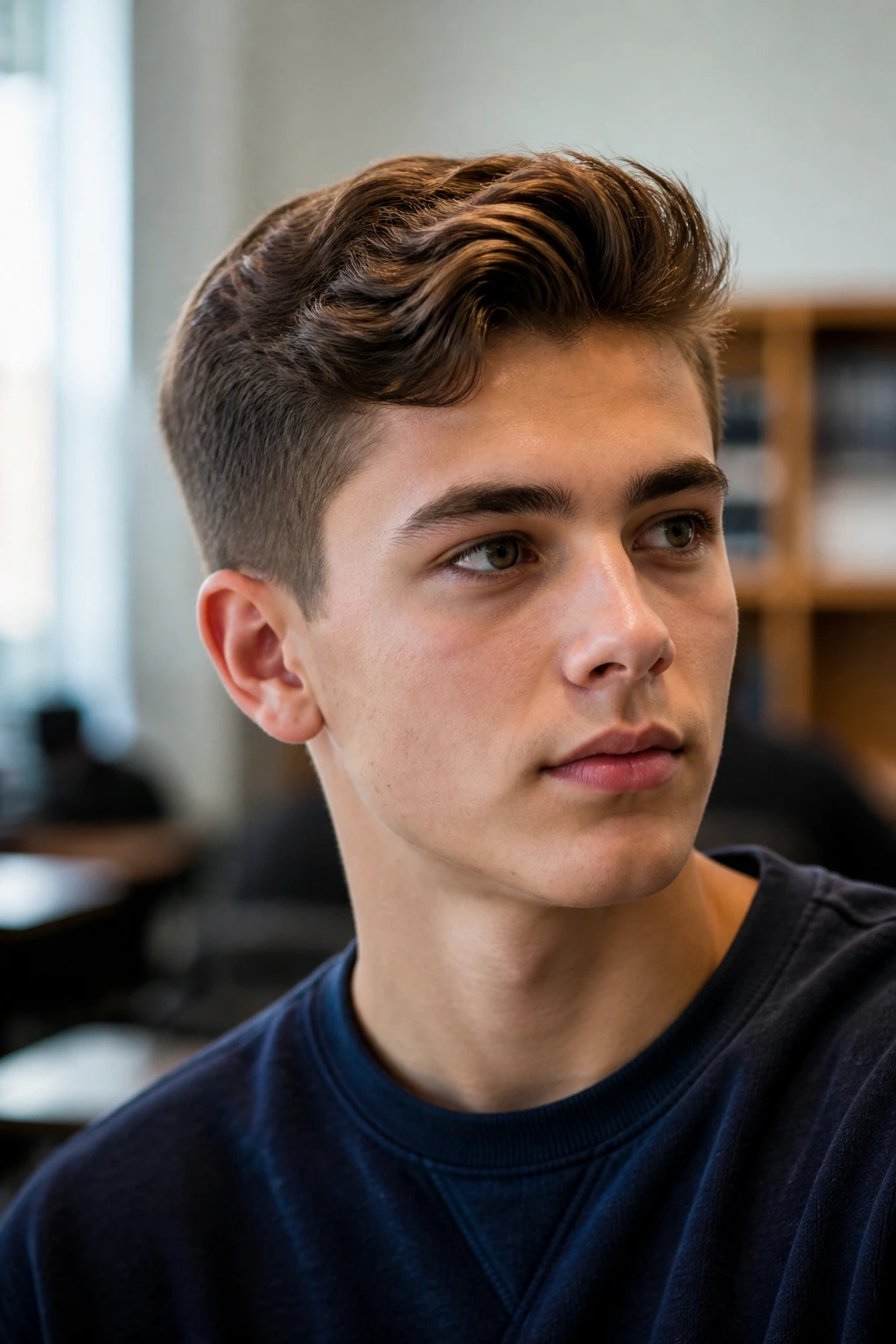
Good wavy haircuts for boys don’t try to erase the wave pattern. They frame it. That’s the difference between a cut that looks fine in the chair and one that still looks good after school, sports, and a messy night’s sleep.
The styles above give you options at every length. Short, neat, layered, shaggy, polished, loose—they all work when the shape fits the hair instead of fighting it. Pick the version that matches how much time you want to spend in the morning, then keep the sides tidy and the top just long enough to move.
That’s the part people miss. Wavy hair is already doing half the work. The right cut just lets it show up properly.