



Thick hair can make a short cut look sharp in a hurry, or it can turn the whole head into a wide, puffy shape that fights the scissors from day one. That’s the difference between a haircut that sits neatly after a two-minute comb-down and one that balloons at the temples by lunch.
Boys with dense hair usually don’t need more length. They need control. A good short cut takes weight off the sides, trims bulk at the crown, and leaves just enough top length to keep the shape from collapsing into a buzzed blur. Miss that balance, and the haircut grows into the wrong places fast.
That’s why short haircuts for boys with thick hair are worth thinking through instead of just asking for “short on the sides.” Thick hair has its own habits. It swirls at the crown, pushes forward at the fringe, and stands up where finer hair would lie flat. Work with those habits, and you get a cut that looks cleaner on day 10 than it does on day one.
Why These Cuts Work Better on Thick Hair

- Bulk control: Shorter sides and tapered edges stop thick hair from puffing out around the ears, which is usually where the shape starts to look boxy.
- Cleaner mornings: A lot of these cuts need nothing more than a towel dry and a pea-sized dab of matte paste, so you’re not fighting with heavy product before school.
- Better grow-out: Thick hair grows fast enough to blur lines quickly, so cuts with soft tapering and texture tend to look good longer than blunt shapes.
- School and sports friendly: If a boy wears helmets, sweatbands, or hoodies every day, the haircut has to keep its line after being mashed around.
- Works with cowlicks: Dense hair often comes with a strong crown swirl or a stubborn front piece, and the right short cut can redirect that instead of fighting it.
- Less helmet head: A smart taper removes the bulky outer shell that makes thick hair look wider than it is.
1. Classic Crew Cut
The crew cut is the haircut I recommend when a parent wants something neat, short, and not remotely fussy. On thick hair, it works because the top stays short enough to control, but not so short that the head shape disappears. The result is clean and tidy, with just enough texture to keep it from looking shaved.
Why It Works on Thick Hair
A crew cut usually leaves about ¾ to 1¼ inches on top with tapered or faded sides. That small amount of length is enough to show the hair’s natural density without letting it puff up. It’s one of the few short haircuts for boys with thick hair that looks just as good after a week of growing as it does on the day it’s cut.
- Ask for the top to be scissor-cut or clipper-cut depending on how neat you want it.
- Keep the sides at a #2 to #4 guard if you want a softer, school-friendly finish.
- Brush it forward or slightly upward. Both work.
A crew cut also behaves well at the crown. Thick hair with a swirl can kick up in all directions, but a short crew cut gives the barber enough room to shape that area instead of leaving a hard bump. No drama. No giant styling routine.
Best for: boys who want a low-maintenance cut that still looks intentional.
2. French Crop
The French crop is one of those cuts that looks simple until you see how well it handles dense hair. The fringe is short and blunt or lightly textured, and the sides stay tight enough to keep the head from looking wide. On thick hair, that forward weight at the front becomes the whole point.
What Makes It Useful
The top usually sits around 1 to 2 inches, with the fringe cut forward and the sides faded or tapered. Thick hair naturally wants to stand up; the French crop tells it to stay put. That makes it a smart choice for boys who hate spending time on their hair, because the cut already does most of the work.
A Small Barber Note
Tell the barber not to leave the fringe too heavy. If the front is blunt and bulky, it can drop into the eyes or sit like a shelf. A little point cutting or light texturizing at the ends keeps the front from looking blocky.
If your boy has a straight hairline or a stubborn cowlick in front, this cut can be a gift. The short fringe breaks up that front ridge and gives the hair a direction. It’s one of the cleanest options when you want short haircuts for boys with thick hair that still feel current without trying too hard.
3. Textured Crop Fade
If the French crop is neat, the textured crop fade is its slightly more relaxed brother. The difference is in the top: less blunt, more broken up, more piecey movement. Thick hair can carry texture better than fine hair, and this cut leans into that strength instead of fighting it.
Why It Sits So Well
The top usually lands around 1½ to 2 inches, with the barber using point cutting or texturizing shears to remove bulk. The fade on the sides keeps the shape tight, while the top has enough separation to stop it from looking like a helmet. That little bit of roughness is what makes the cut look good, not messy.
How to Ask for It
Say you want the top short, textured, and easy to push forward or slightly to the side. If you say “make it choppy,” that usually gets the idea across better than asking for “spikes.” Spiky hair on thick hair can turn stiff fast.
A matte clay works better here than a shiny gel. Thick hair already has presence; it does not need extra shine to look heavy. The fade gives the haircut a sharp edge, while the texture keeps it from looking too formal. If your kid likes a cut that looks a little more modern without becoming dramatic, this is a strong pick.
4. Ivy League
The Ivy League is the haircut for boys who need to look neat without looking overmanaged. It keeps more length on top than a crew cut, usually around 1½ to 2½ inches, and leaves enough room for a side part. On thick hair, that extra length matters because it gives the barber room to shape the head instead of flattening it.
Why Parents Keep Coming Back to It
The Ivy League is one of the easiest short haircuts for boys with thick hair to dress up or down. Combed neatly, it works for school photos and family events. Combed looser, it still looks tidy after a soccer game or a long day in class.
The trick is balance. The sides should be tapered, not chopped flat, and the top shouldn’t be left so long that it starts flopping. Thick hair can turn a classic side part into a heavy ridge if the top is left untouched. A little thinning near the crown and soft blending around the parietal ridge keeps the whole cut from ballooning.
If you like a cut that can move from casual to polished with one comb swipe, this is the one. It’s old-school in the best sense.
5. Buzz Cut with Taper
A buzz cut on thick hair is brutally honest. That’s the appeal. There’s nowhere for the bulk to hide, so the haircut either suits the head shape or it doesn’t. Add a taper at the edges, though, and the whole thing gets cleaner and less abrupt.
What Length Usually Works
Most boys do well with a #2 or #3 on top and a slightly shorter taper at the neckline and sideburns. If the hair is very dense, a #1 can look sharper, but it also shows the scalp more. On thick hair, a buzz cut often looks fuller than people expect, which is why it can be such a good fit for active kids.
No styling. None. That’s the point.
The taper softens the hard edge that a plain buzz cut can create. Without it, the cut can feel abrupt, almost unfinished. With it, the haircut grows out more cleanly and doesn’t suddenly look sloppy after a couple of weeks. This is one of the easiest short cuts to maintain at home with clippers, though I’d still keep the neckline tidy rather than letting it wander.
6. Caesar Cut
The Caesar cut is built around a short, straight fringe, and thick hair loves a purpose-built fringe. Instead of fighting forward growth, the cut works with it. The result is practical, blunt, and a little more interesting than a plain buzz.
The Shape That Matters
The top usually stays around 1 to 1½ inches, with the front cut into a short horizontal fringe. The sides are trimmed close, often with a taper or low fade. Thick hair benefits here because the fringe holds its shape instead of disappearing into the rest of the hair.
What I like about the Caesar on dense hair is the way it handles a strong forehead or a forward cowlick. It puts the hair where it wants to go anyway, which is the smartest way to cut hair most of the time. A tiny bit of texture through the top stops the fringe from looking like a solid block.
If a boy doesn’t like hair touching his eyes, this cut is one of the best answers. It stays out of the face, needs almost no styling, and still looks like a real haircut rather than a clipped-down compromise.
7. High and Tight
The high and tight is the no-nonsense choice. Short sides, short back, slightly longer top. That’s the whole story, and on thick hair, the simplicity is the reason it works. Heavy hair can get bulky fast around the ears and nape, so cutting that weight down makes a bigger visual difference than you’d think.
Where It Works Best
This cut usually leaves the top at about ½ to 1½ inches, with the sides taken up high and tight against the head. It’s sharper than a crew cut and more athletic-looking. Boys who play sports, wear helmets, or just refuse to sit still for styling tend to do well with it.
The catch is that the head shape shows more. A high and tight is a little unforgiving, so it looks best when the barber blends the transition carefully instead of jumping straight from skin to long top. Thick hair can handle that contrast, but the fade has to be clean.
If you want a haircut that cuts down morning argument time, this is a strong move. It is not soft, and it does not pretend to be.
8. Short Quiff
A short quiff gives thick hair a place to go upward instead of outward. That matters. Dense hair often wants to lift at the front, and if you don’t guide it, the front ends up puffy instead of shaped. The quiff makes that volume look deliberate.
Why It Needs a Little Styling
You only need about 2 to 3 inches in front, with the back shorter and the sides tapered or faded. Blow-drying the front upward for 30 to 60 seconds makes a huge difference. Seriously. That one small step keeps the fringe from falling forward and turning heavy.
A matte product works better than a glossy one. Thick hair already has body, so shiny gel can make the front look wet and stuck together. Use a pea-sized amount, warm it between your fingers, and push the front up and slightly back. Don’t overwork it.
This is a better fit for boys who want a haircut with a little more shape than a crop but don’t want anything dramatic. The style has enough lift to look intentional, yet it still reads as a short cut when the wind hits it.
9. Side Part Taper
Some cuts earn their keep by being reliable, not flashy. The side part taper is one of them. Thick hair lays into a part more easily than fine hair because there’s enough density to hold a line, which makes this an excellent school-and-family cut.
A Cut That Behaves
Keep the top around 1½ to 2 inches and the sides neatly tapered. The part can be natural or lightly defined, depending on how formal you want the finish. Thick hair does best when the barber doesn’t leave the top too long near the ridge, because that’s where the puff starts.
The best side part tapers look slightly soft, not lacquered. If you comb every strand into place with a wet, shiny product, the cut starts to look stiff and old-fashioned. A light cream or matte paste gives it enough control without making it hard.
This is also one of the easiest cuts to reset after a messy day. Wet the top, comb it into place, and let it dry for a few minutes. Done. If you want a tidy option that works for thick hair without leaning trendy, there’s a reason this one keeps showing up.
10. Messy Spiky Crop
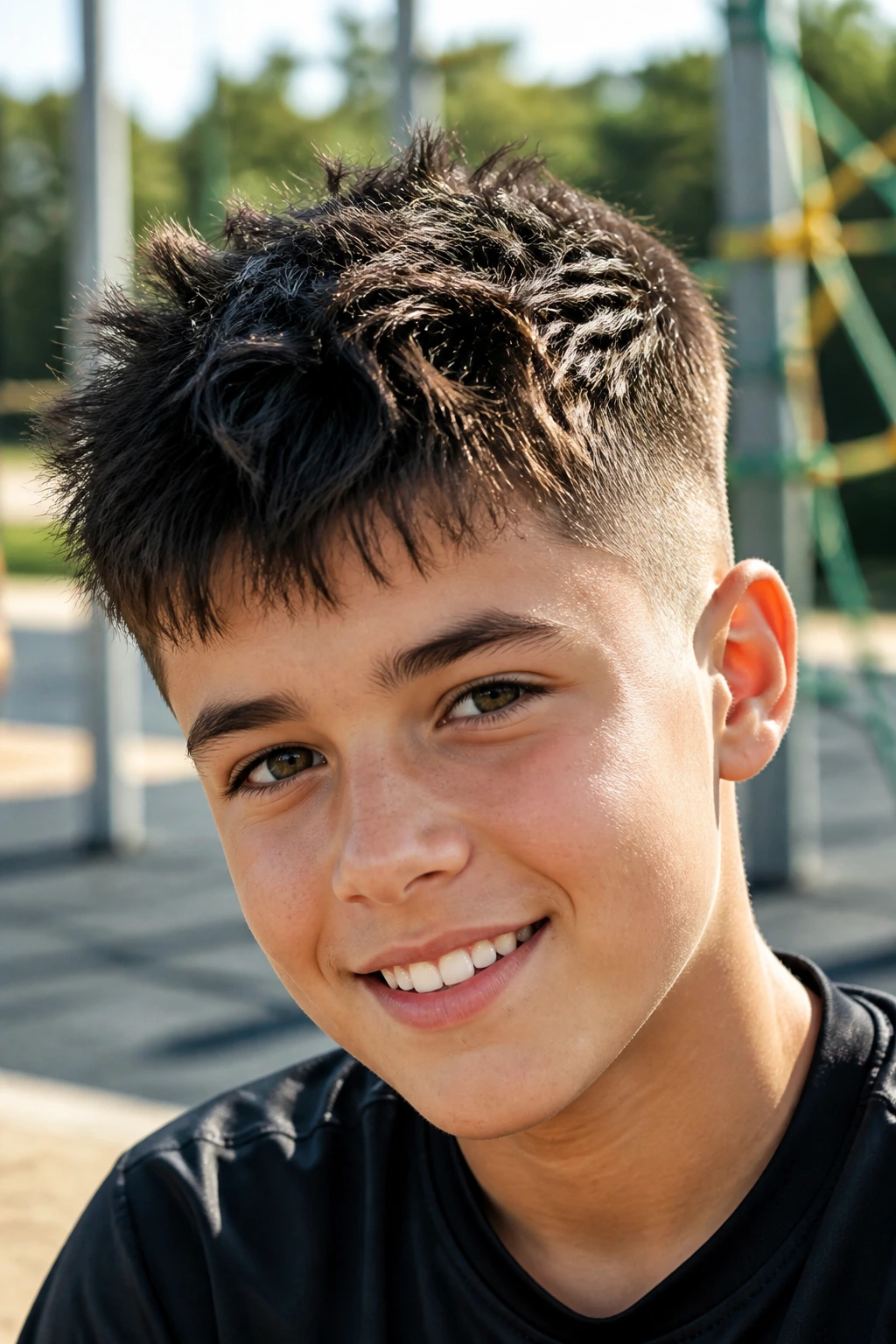
A lot of people say “spiky” when they really mean “too much gel.” That’s not what this cut should be. A messy spiky crop works because thick hair naturally stands apart in short sections, especially when the top is cut with texture and the product stays matte and light.
How It Avoids the Helmet Look
You want the top kept around 1 to 1½ inches, with the barber using point cutting to break up the shape. The sides can be faded low or mid, depending on how sharp you want the finish. When the top is too long, the spikes clump. When it’s too short, the texture vanishes. The sweet spot sits right in the middle.
The style works best when the hair is dried with fingers, not a comb. Push it in different directions, then stop before it gets perfect. That unevenness is what gives it a lived-in look.
A lot of boys like this cut because it feels active and a little playful. Just keep the product light. Thick hair does not need much help standing up, and too much paste makes the whole top look sticky instead of textured.
11. Curly Crop Fade
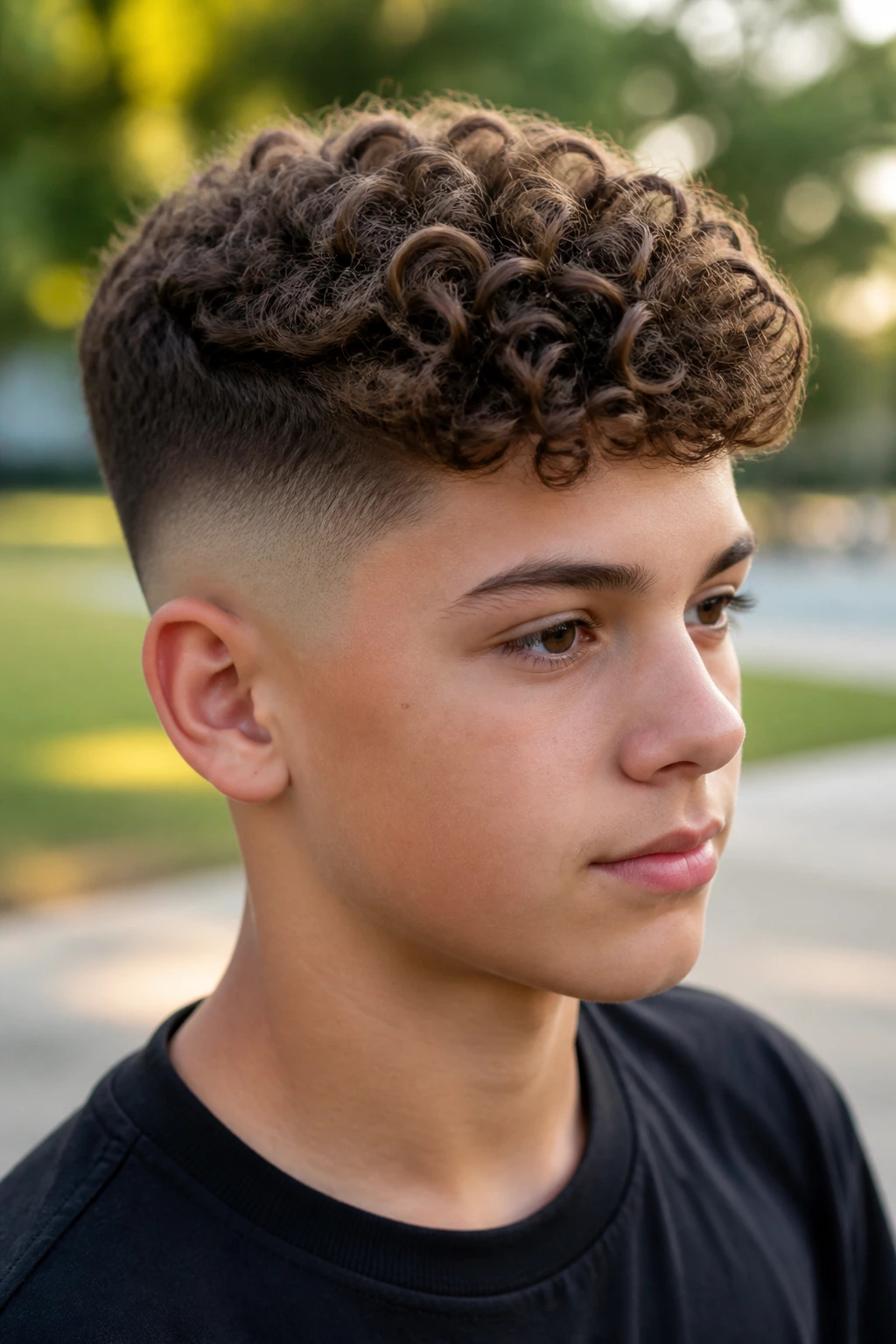
Curly hair and thick hair often arrive together, and the trick is not to flatten the curls into obedience. The curly crop fade keeps the sides tight while letting the top curls sit short and defined. That way, the shape stays neat instead of expanding like a round puff.
The Detail That Matters Most
The top usually sits at 1 to 2 inches, depending on curl tightness. The barber should shape the top to follow the curl pattern, not fight it. A fade or taper around the sides and back removes the width that makes dense curls look bulky.
A curl cream or leave-in conditioner can help, but only a little. If the hair gets weighed down, the curls lose bounce and start to droop. After washing, scrunch the curls with a towel or T-shirt, then let them air-dry or diffuse for a few minutes. No rough towel rubbing. That makes frizz worse.
This cut is one of the nicest answers when a boy has thick, springy hair that refuses to lie flat. It lets the texture do the talking without turning the head into a halo.
12. Short Afro Taper
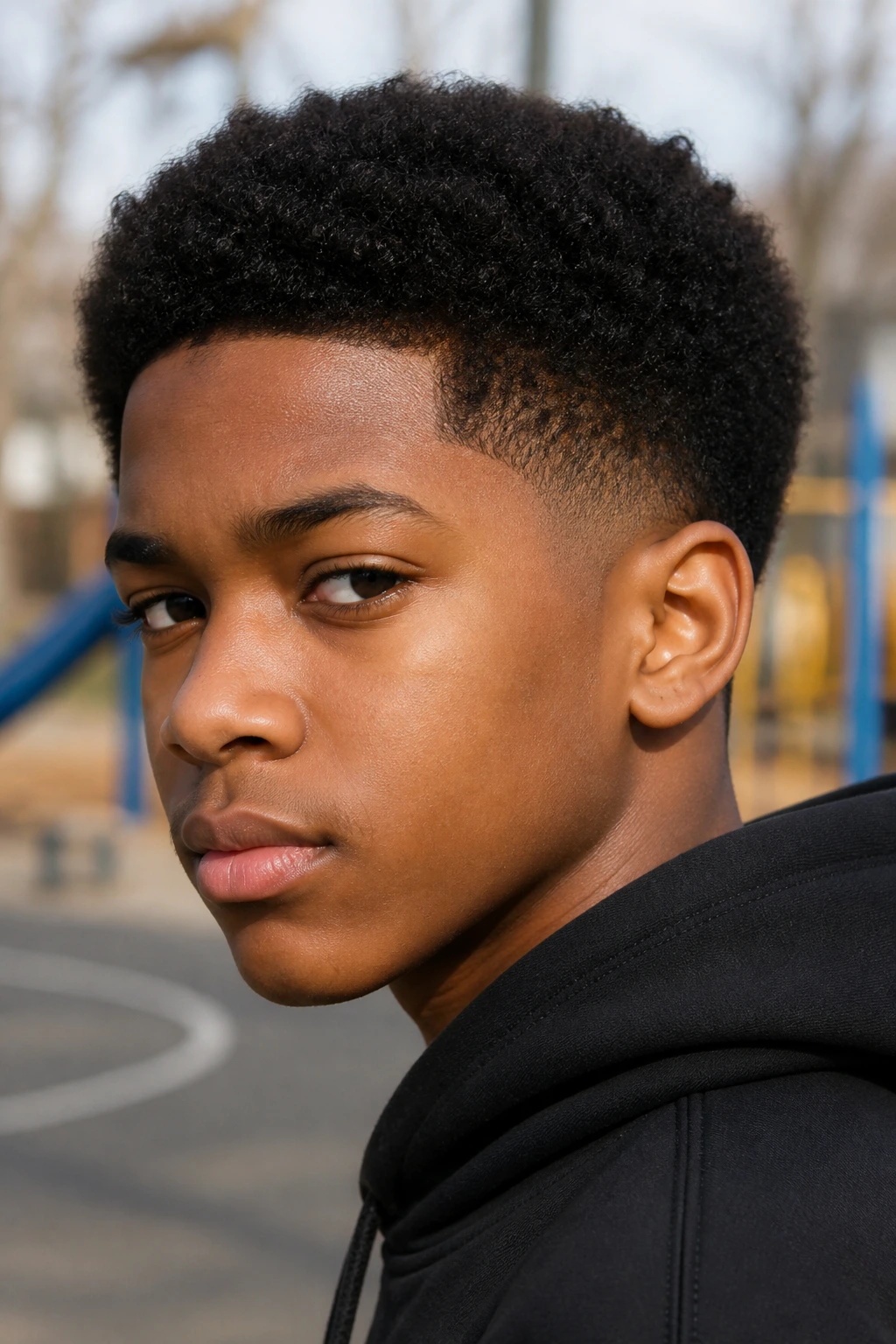
A short afro taper is a clean, shaped cut that respects the natural growth pattern of coily hair. On boys with thick, tightly curled hair, it keeps the volume where it belongs and removes bulk where it causes the most visual weight: the edges, temples, and neckline.
Why Shape Beats Sheer Shortness
Instead of chasing the hair down to a buzz, the barber leaves enough top length to show texture and then tapers the sides and back. The outline matters here. A clean taper makes the haircut look fresh even when the top is only a little grown out.
You want the hairline to look deliberate, not carved into a hard cartoon line. A soft line-up with a sharp but natural taper is usually the best balance. Too much clipper work on the top can leave the hair looking flat in patches, and thick coily hair does not need that.
This style is practical for boys who want a short cut but still need room for their natural pattern. It looks tidy, grows out gracefully, and handles everyday wear well.
13. Comb Over Fade
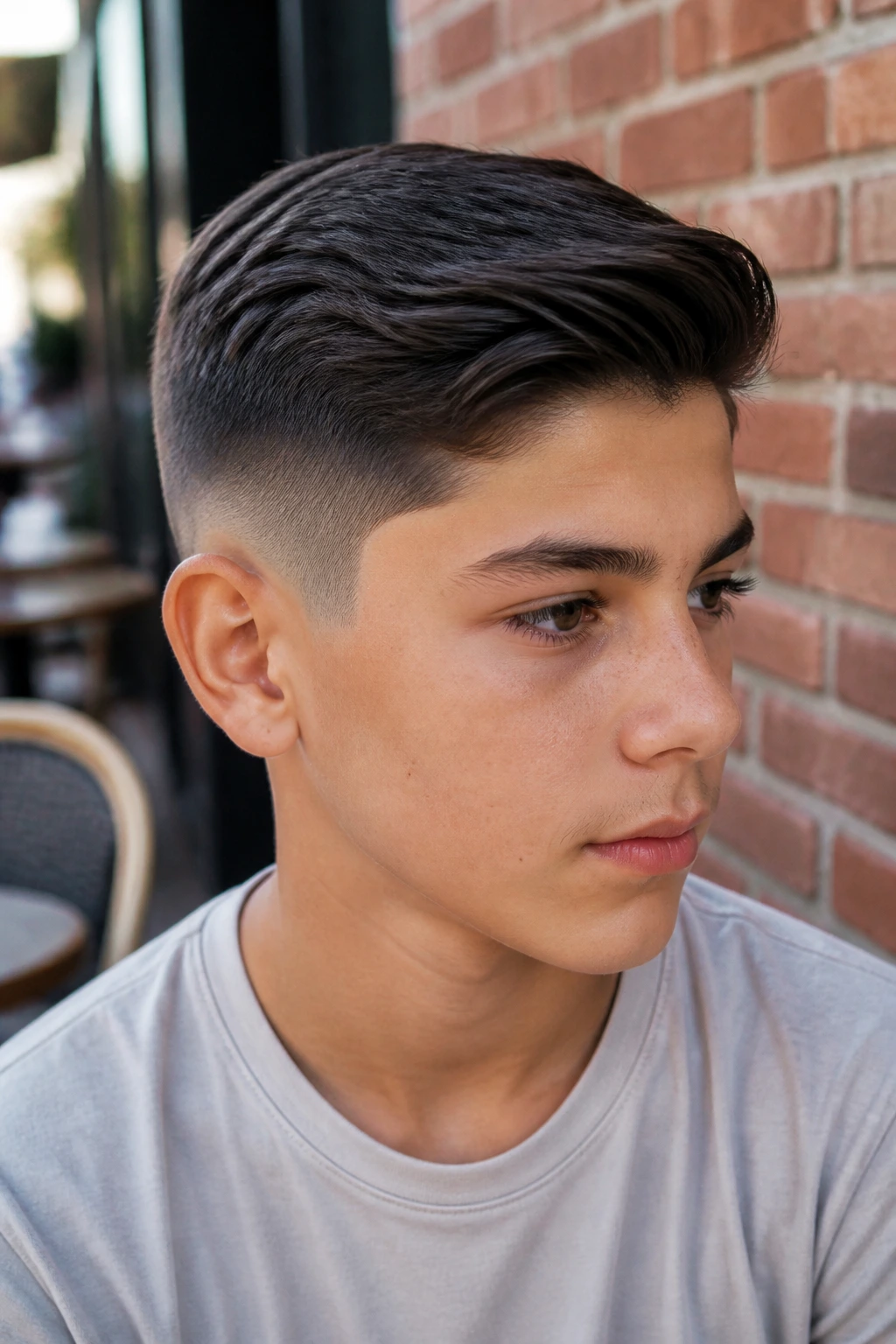
A comb over fade on thick hair only works if it stays loose. If the part is too severe, the whole thing can look dated. But when the top is left with enough length to move naturally, the cut gives thick hair a clean direction and takes control of all that density.
A Better Version of the Classic
Keep the top around 2 to 3 inches, and ask for the barber to remove bulk near the ridge so the sweep can lie over smoothly. The fade on the sides should be clean but not too high unless you want more contrast. Thick hair can support a side sweep better than fine hair because there’s enough body to hold the shape.
The trick is not to force the comb-over into a hard part. A gentle sweep looks younger and more relaxed. Use a light cream or matte clay, comb the hair while it’s still slightly damp, and stop before the front gets stiff.
This is a smart option when you want a short haircut that can be dressed up for events. It’s tidy, but it doesn’t scream for attention.
14. Brush-Up with Mid Fade
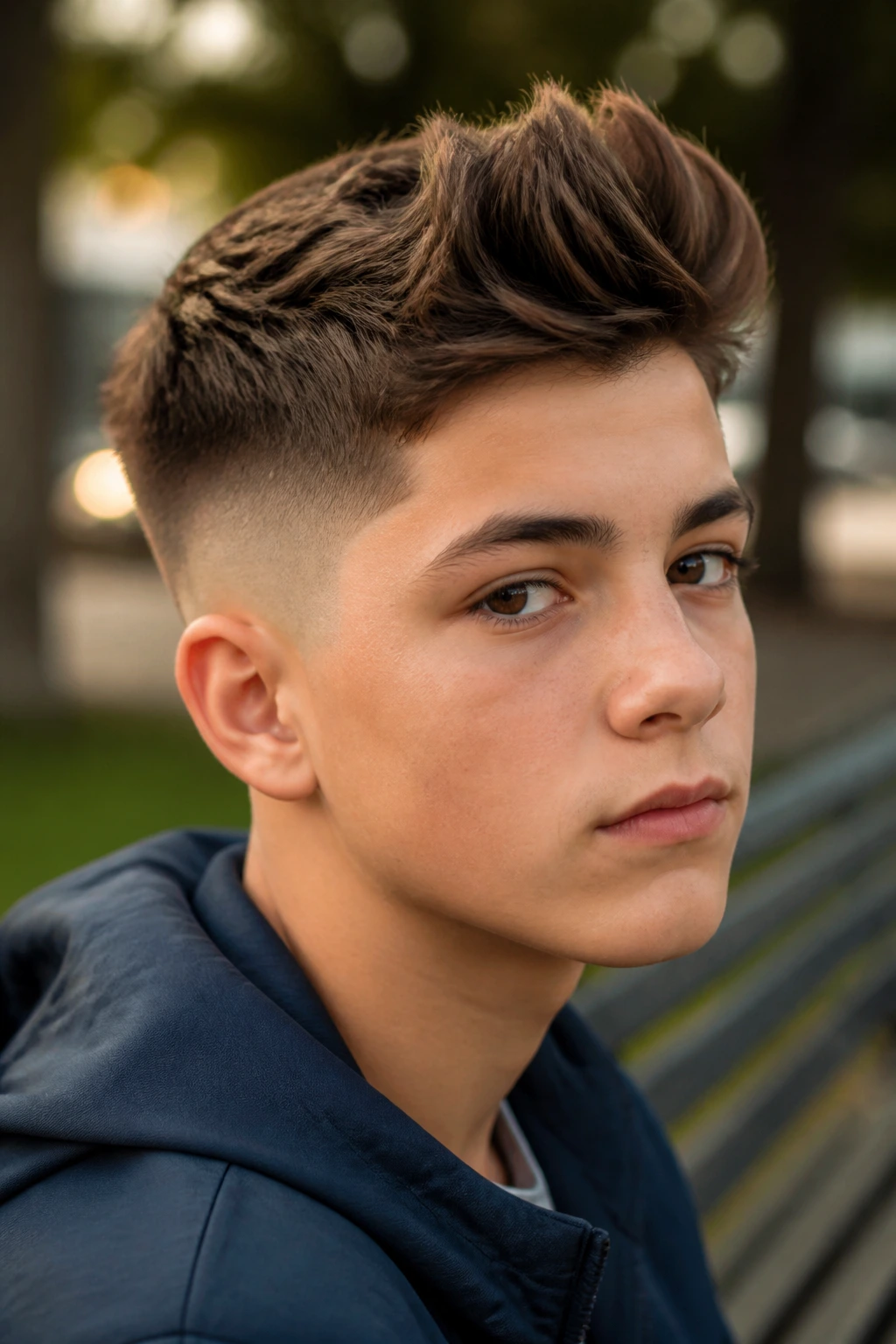
The brush-up is what happens when thick hair gets a little attitude and a little direction. The front is pushed upward and back, not flattened. That vertical lift works especially well on dense hair because the hair already has enough structure to hold volume without a ton of product.
Why It Looks Bigger Without Looking Messy
A mid fade keeps the sides tight and gives the top room to rise. The top itself usually sits around 2 to 3 inches, with the front slightly longer than the crown. That small difference is what helps the brush-up stand.
Use a blow dryer if you want the shape to last. Aim the airflow from the front upward while brushing with your fingers or a vent brush. Once it cools, add a small dab of matte product. If you skip the dryer, the style still works, but it won’t last as long through a school day or a soccer practice.
This is a good cut for boys who don’t want the hair to fall forward all the time. It gives thick hair a shape that feels energetic without becoming a full pompadour.
15. Short Pompadour
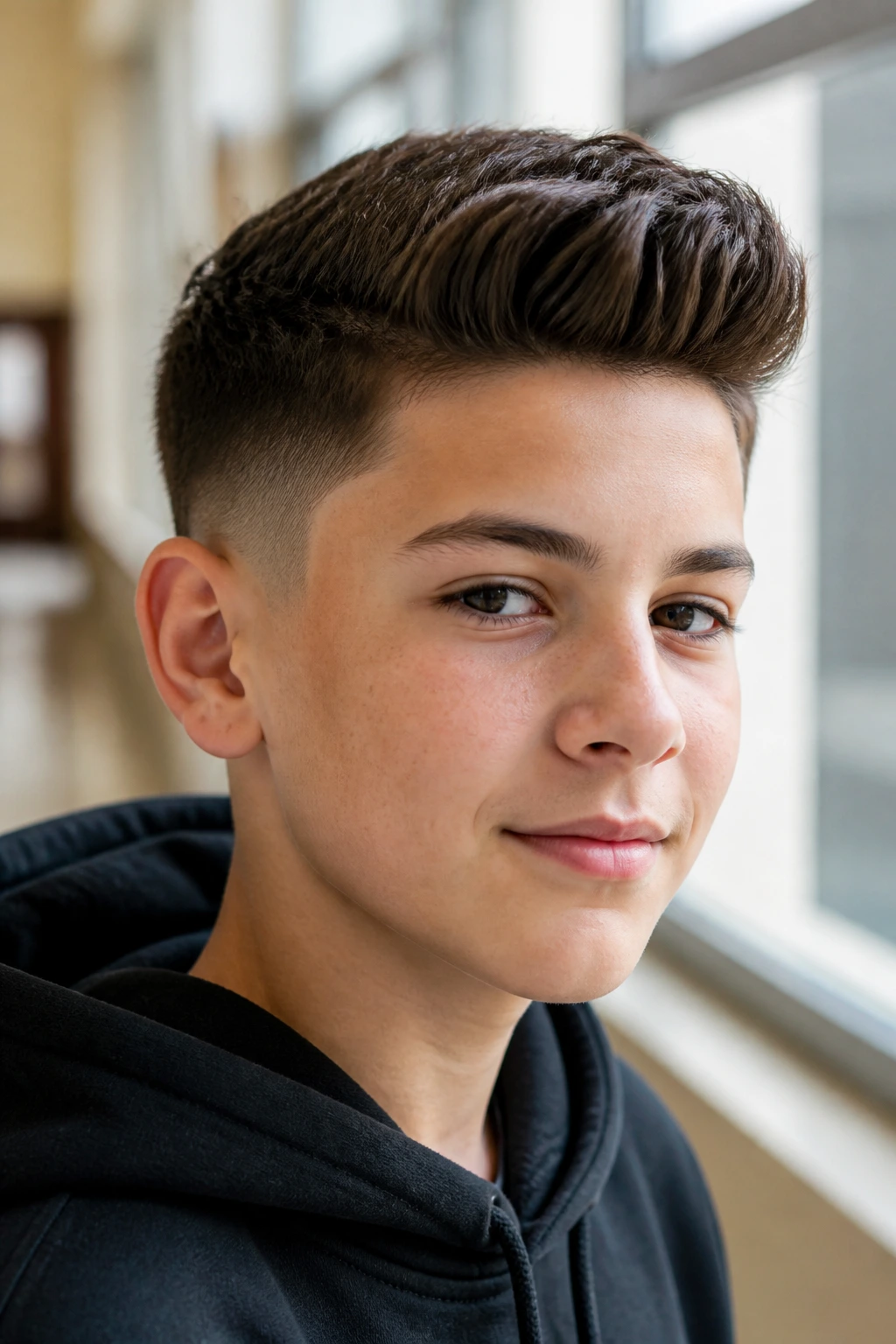
The short pompadour is a little more polished than the brush-up, and thick hair makes it easier to wear. Why? Because the front has enough body to stand up instead of collapsing into a sad wave after five minutes. The height stays modest, which is exactly what makes it wearable for boys.
Keep the Front in Check
Leave the front at about 2½ to 3 inches and taper the sides close. The crown should stay controlled, or the front will look disconnected from the rest of the head. On thick hair, that crown-to-front balance matters more than the product itself.
A matte finish is usually better than a shiny one. Thick hair already shows shape well; it does not need that glossy, slicked-back vibe unless that is the whole point. Blow-dry the front upward and slightly back, then pinch the ends into place with a tiny amount of paste.
This cut suits boys who want a little style without crossing into fussy territory. It’s neat enough for family photos and still feels young.
16. Disconnected Undercut
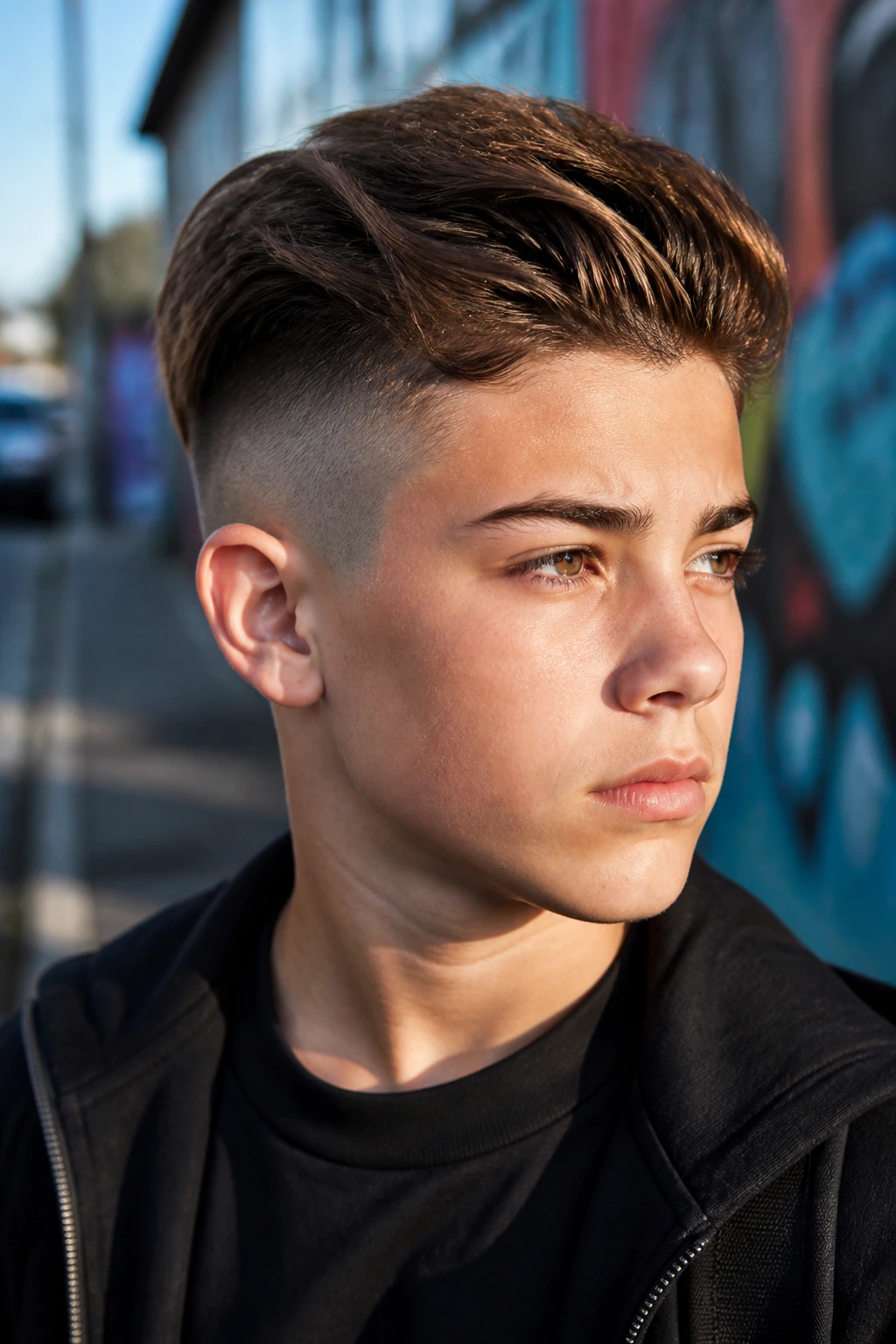
The disconnected undercut is a stronger look, and thick hair gives it the volume it needs. The sides are cut very short, often with little or no blend into the top, and the top stays noticeably longer. That contrast can look fantastic on dense hair because the top has enough weight to sit on its own.
The Catch
This is not the easiest grow-out cut. Thick hair will start to bridge the gap fast, and when it does, the whole shape can look uneven. If you go this route, be ready to maintain it every few weeks.
The top usually needs 2 to 4 inches, depending on how dramatic you want the disconnect to feel. The key is control at the crown. If the barber leaves too much bulk there, the top starts to bulge instead of falling cleanly over the short sides.
I like this cut on older boys who want something a bit more defined. It has attitude, but it also asks for upkeep. No free lunch.
17. Flat Top
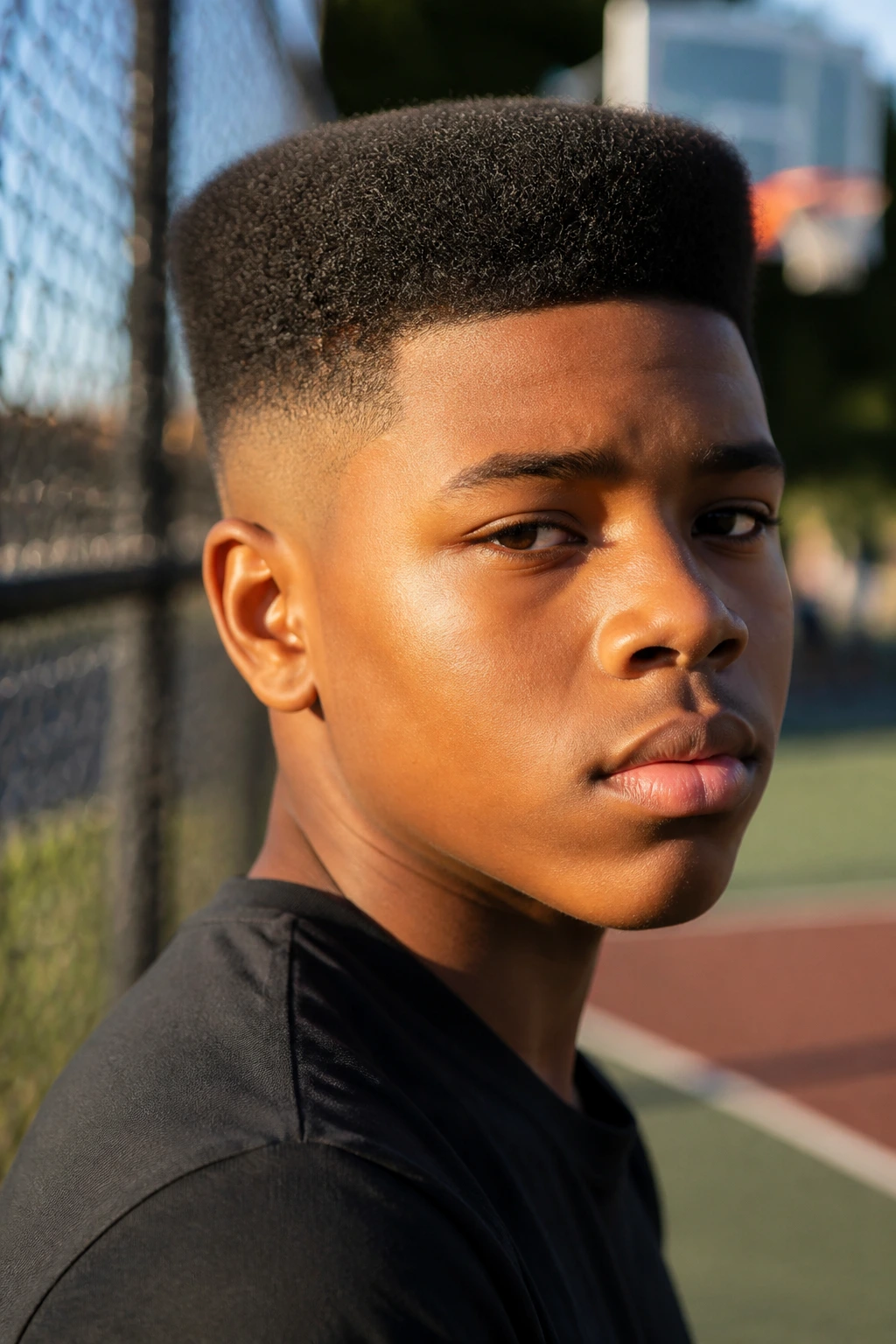
A flat top works better on thick hair than most people expect because dense hair can actually hold the squared shape. The top is cut level, the sides are kept tight, and the whole haircut becomes about structure. It’s bold, yes, but it’s also practical when the hair is coarse and stubborn.
Why It Needs a Skilled Barber
The top has to be leveled carefully. If one side sits higher, the square shape looks lopsided fast. Thick hair helps here because it stands up naturally, but that same density makes it easy to overbuild the top into something heavy.
A flat top usually needs regular shaping, not just clipping. If you wait too long, the shape goes from crisp to boxy in a bad way. That doesn’t mean it’s high-maintenance every day. It just means the outline matters more than the styling.
This cut is a nice change of pace for boys who like a cleaner, more graphic look. It’s not subtle. It doesn’t need to be.
18. Scissor-Cut Taper with Natural Fringe
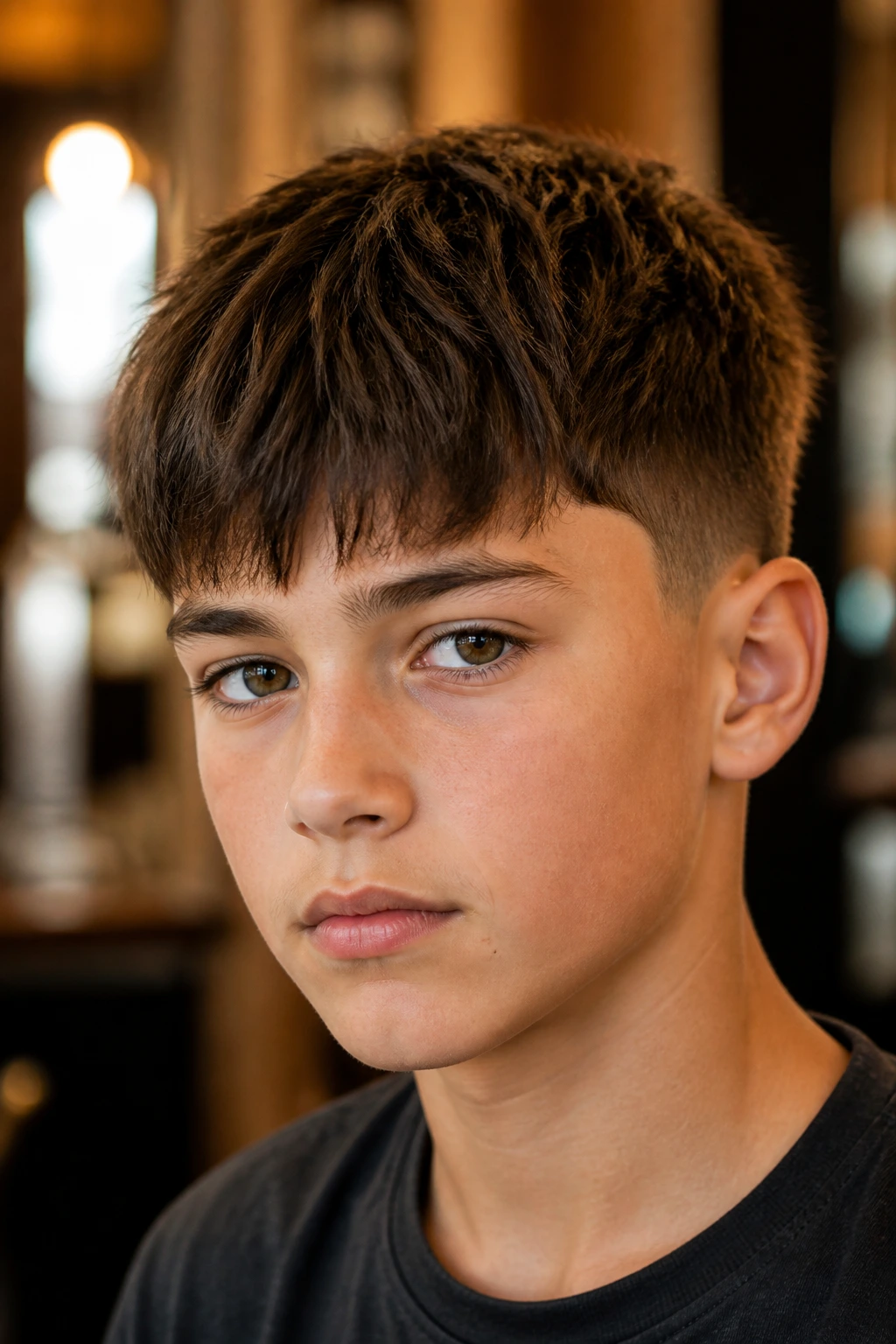
This is the cut for boys who need a short style but don’t want the sharp edges of a fade. The barber works mostly with scissors, keeps the sides softly tapered, and lets the fringe fall in a natural direction. On thick hair, that softness is a blessing.
The Quiet Strength of This Cut
Because the hair stays layered instead of clipped hard, it grows out in a gentler way. That means fewer awkward weeks between appointments. It also gives thick hair enough movement to stop it from looking like a block.
The fringe can sit forward, split slightly at the middle, or rest just above the eyebrows. The point is not precision. The point is shape. If the hair has a cowlick at the front, this cut can work with it instead of against it, as long as the barber leaves enough flexibility in the fringe.
This is one of the best choices for parents who want something clean, school-appropriate, and not too “done.” It looks like hair, which is sometimes the whole win.
Why Thick Hair Loves Shorter Sides and Clean Tapers
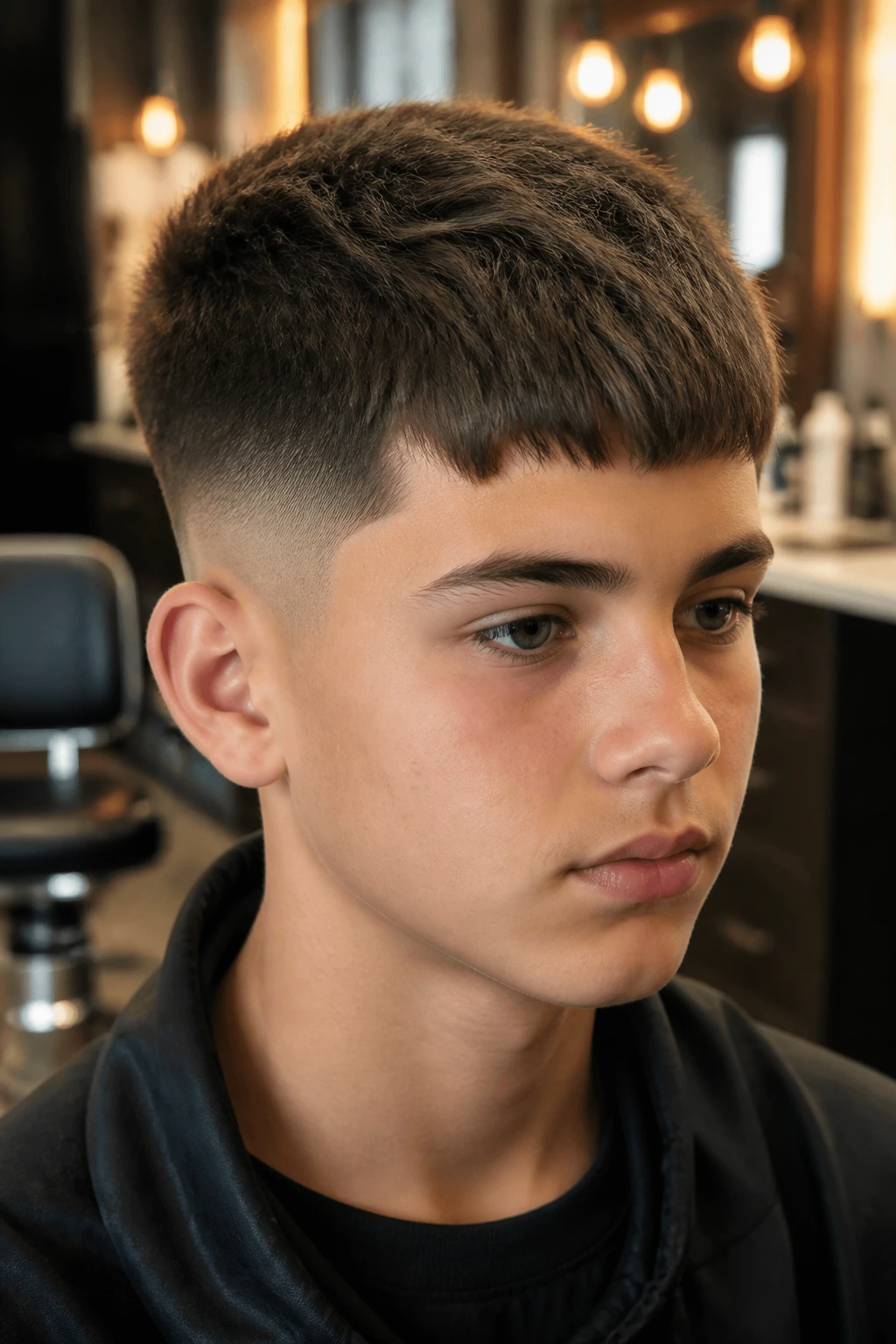
Thick hair has weight. That sounds obvious, but it changes everything. When the sides stay too long, that weight spreads outward and makes the head look wider than it is. When the sides are tapered properly, the hair sits closer to the head and the top gets to do the talking.
A clean taper also helps the haircut grow out in a more forgiving way. That matters more than people think. The week after a haircut is easy; the third week is where the shape either still looks planned or starts looking like it was done in a hurry. Thick hair grows into the ears and neckline faster than fine hair, so the outline has to be set up with that in mind.
The other piece is movement. Dense hair can hold texture, but only if the barber removes enough bulk in the right places. Too much length at the ridge between the sides and top creates a shelf. Too much thickness at the crown creates a hump. Shorter sides are not about making the haircut severe. They’re about giving the top room to sit properly.
Essential Tools for These Cuts
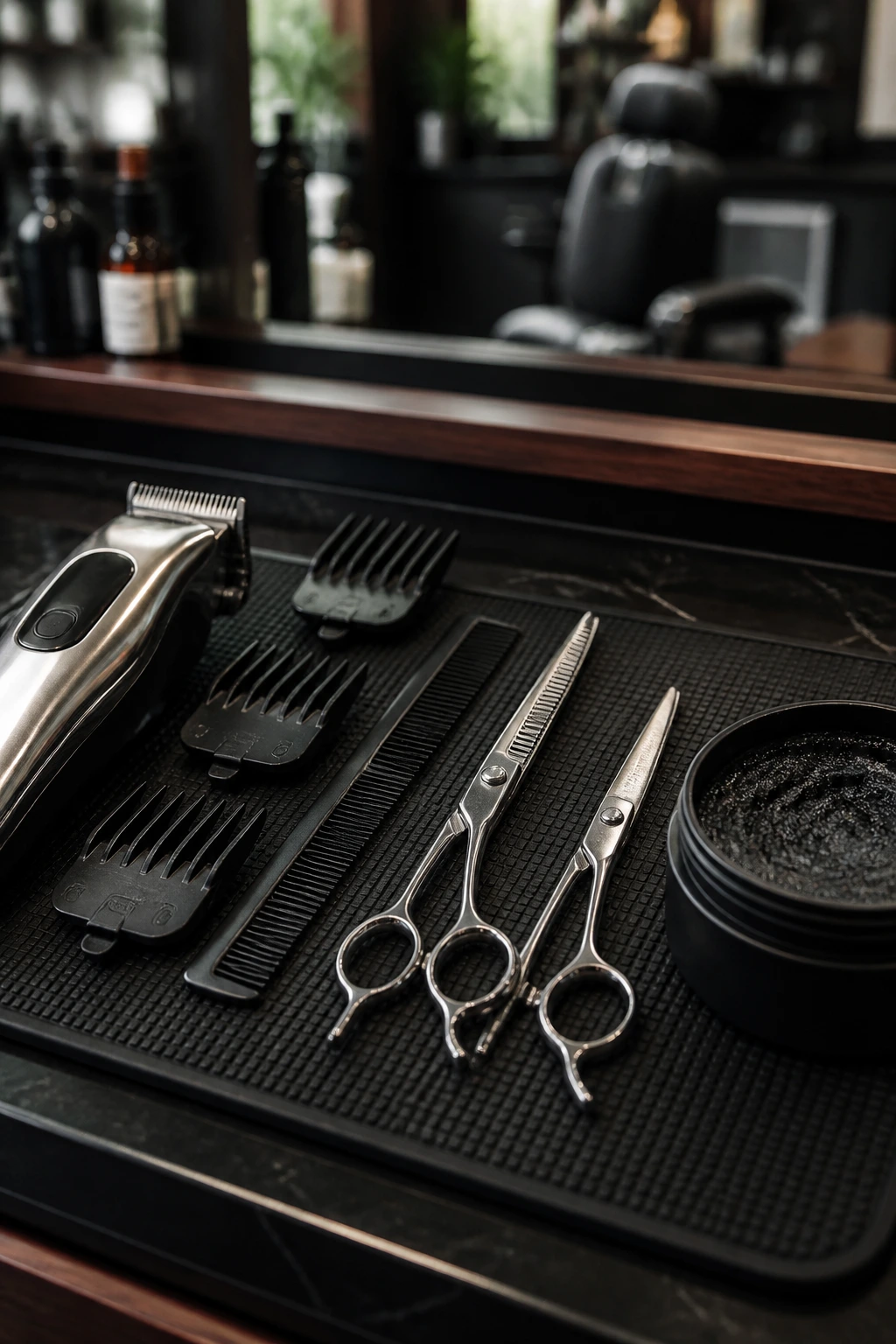
- Barber clippers with guards: Essential for buzz cuts, tapers, fades, and cleanup between appointments.
- Thinning shears or texturizing shears: Useful for thick hair that needs bulk removed without cutting the shape flat.
- A fine-tooth comb: Helps when you’re making a side part, checking evenness, or cleaning up the front.
- A blow dryer: Not required for every cut, but a huge help for quiffs, brush-ups, and pomps on dense hair.
- Matte paste or clay: Better than glossy gel for most of these cuts because it controls without making the hair look wet or heavy.
- Water spray bottle: Handy for reshaping the fringe or resetting the top before styling.
- Neck duster: Small thing, big difference after a trim. It clears loose hairs that itch around the collar.
- Hand mirror: Useful for checking the back of the taper and crown shape after a home cleanup.
How to Describe the Cut to a Barber
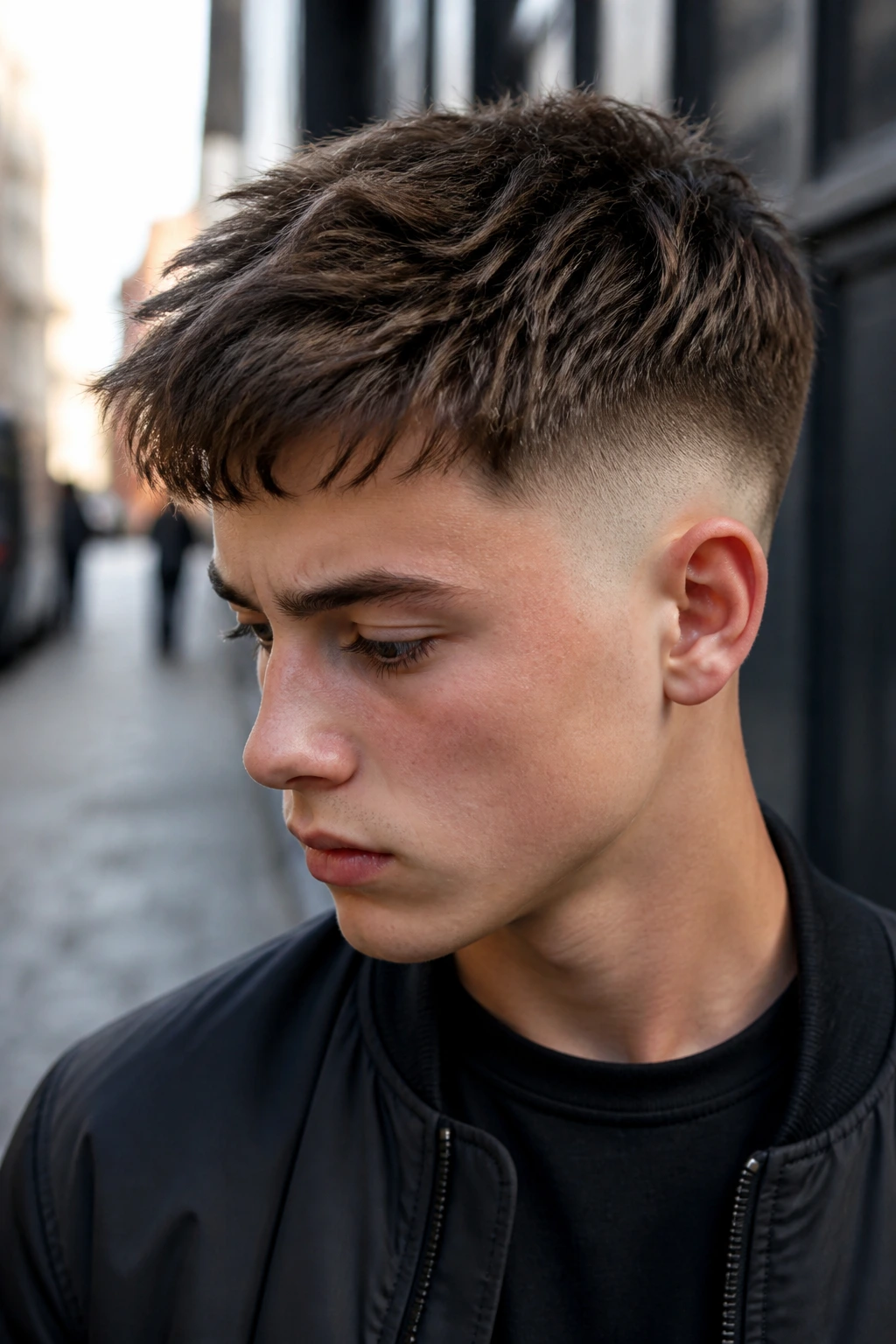
Bring a photo. Better yet, bring two or three from slightly different angles. Thick hair changes the look of a haircut enough that a single front-facing picture can lie to you.
Say how much time you want to spend styling it. That one detail matters more than trendy vocabulary. If you say “short and easy” but also show a high quiff, the barber has to guess which part of the request matters most. Use guard numbers when you know them, and if you don’t, point to the length you want on the sides and top with your fingers.
Mention the things that usually cause trouble: a strong cowlick, a flat crown, hair that sticks out at the temples, or a fringe that keeps falling into the eyes. A good barber can work around those, but only if you say them out loud. Silence is how people end up with a haircut that looks fine for one day and annoying for three weeks.
How to Wear These Cuts Day to Day
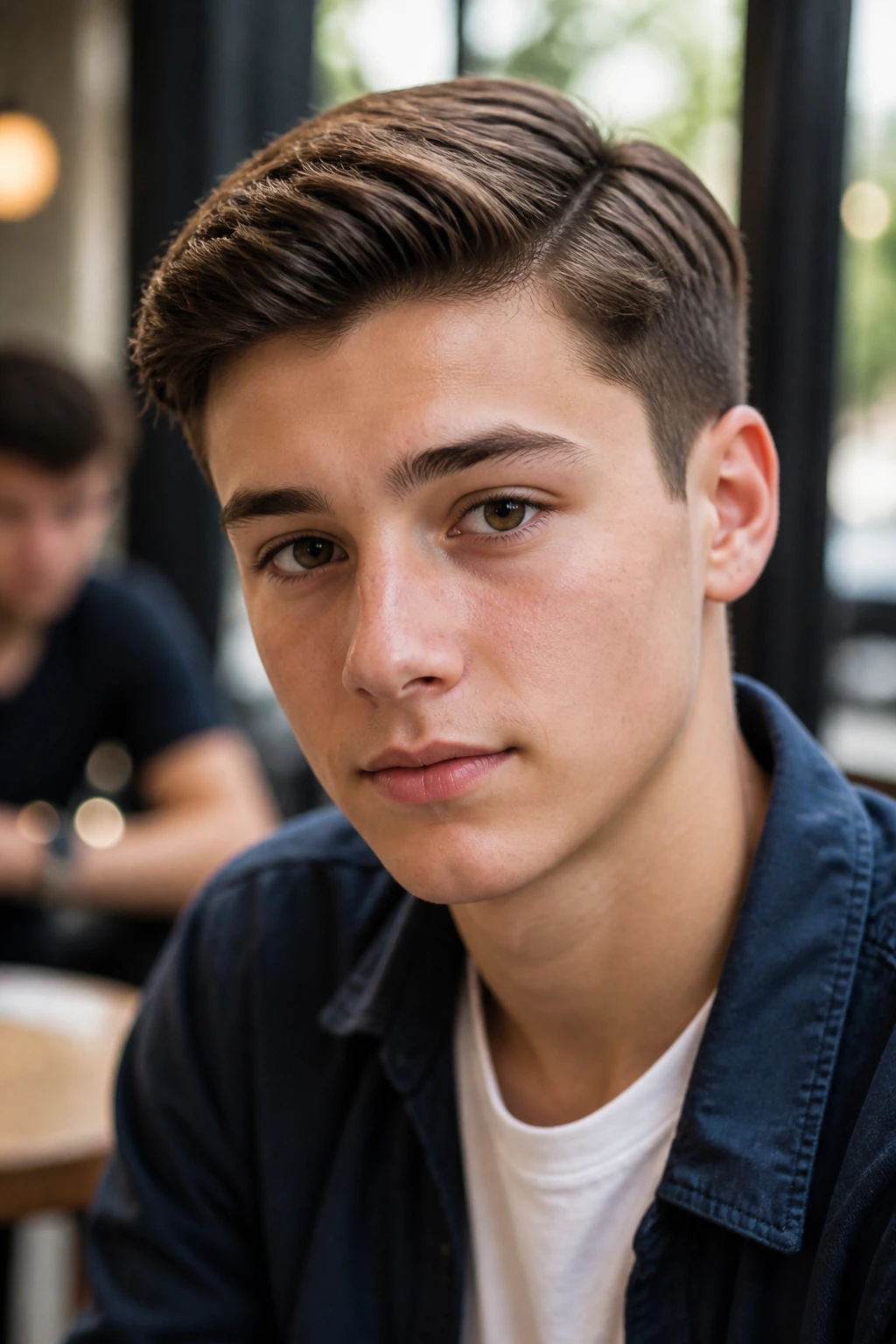
Presentation: Keep the neckline clean and the sideburns neat. Thick hair can look heavier than it is, so a crisp outline does a lot of the visual work.
Accompaniments: These cuts sit well with simple clothes, sports gear, school uniforms, hoodies, and glasses. If the haircut is sharp, the rest of the look doesn’t need to compete with it.
Portions: On younger boys, leave enough top length to avoid the “stuck-down” look, usually around 1 to 2 inches for crops and 2 to 3 inches for styles with lift. For boys who hate styling, keep the top shorter and the taper cleaner.
Beverage Pairing: A cold bottle of water after a haircut is about the only pairing that matters in the chair. Outside the shop, the better match is a low-fuss routine: quick brush, tiny amount of matte product, done.
Small Styling Moves That Change Everything
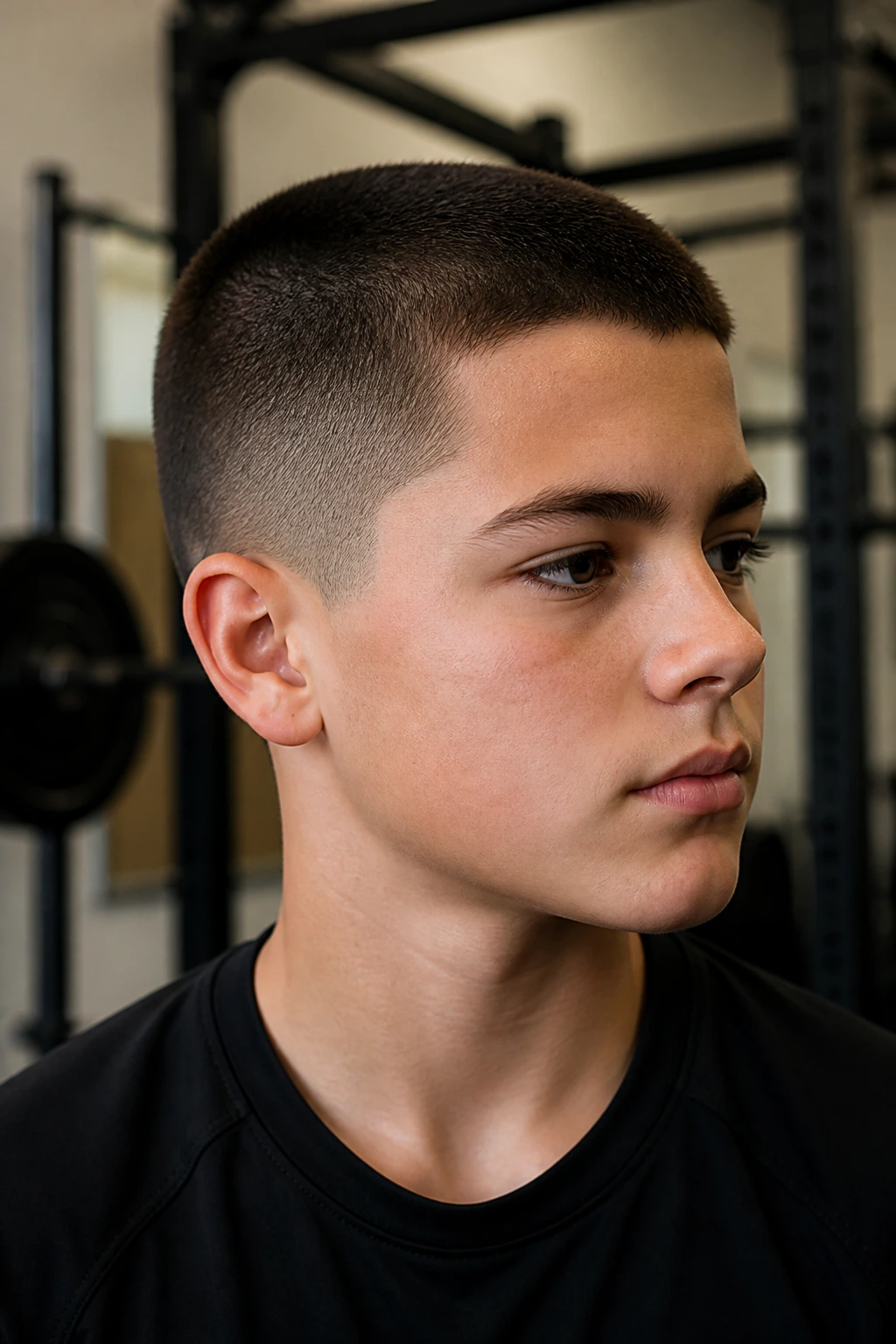
A lot of the success here comes down to tiny habits, not fancy products. Dry the hair in the direction you want it to sit. That sounds boring. It works.
For thick hair, a pea-sized amount of paste usually beats a big scoop every time. Too much product weighs the hair down and makes the texture separate in greasy clumps. Use less than you think, warm it in your hands, and add more only if the front keeps popping back up.
A side note: if the hair has a strong cowlick, don’t try to pin it flat with heavy gel. You’ll win the first hour and lose the rest of the day. Use a blow dryer, a comb, and a lighter product instead. That’s the boring answer, which is usually the right one.
Keeping the Cut Fresh Between Visits
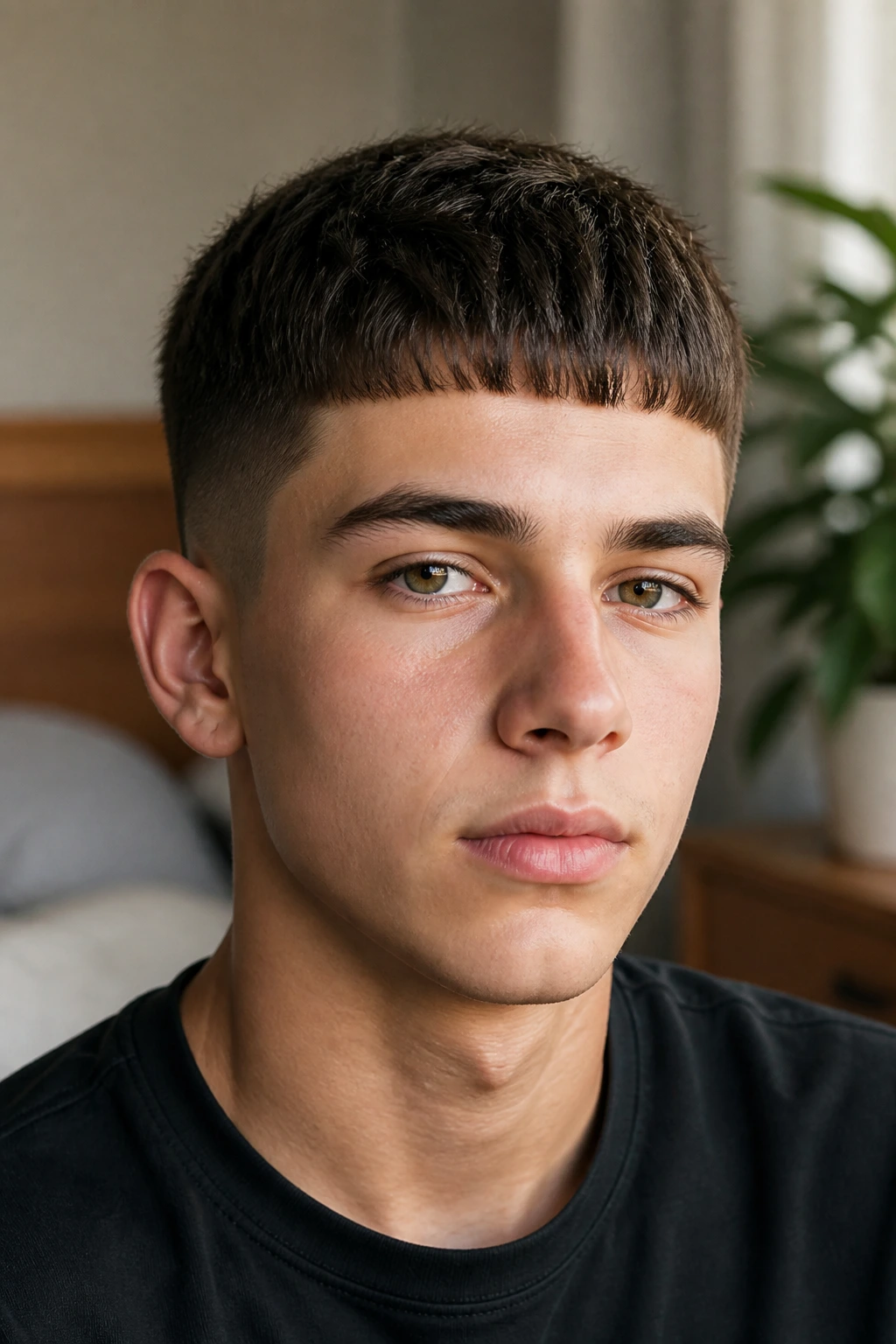
Thick hair grows out fast enough that a clean fade can blur before you’re ready for another full haircut. Plan on 2 to 4 weeks for clipped styles if you want the edges tight, and 4 to 6 weeks for softer scissor cuts. Buzz cuts can stretch a little longer, but the neckline still starts to wander.
A small home cleanup helps. Trim the neckline carefully every 10 to 14 days if you know how to do it, or just ask the barber for a quick edge-up between full cuts. Don’t chase the whole shape at home unless you’re comfortable with clippers. It’s easy to fix one uneven side and create another.
Washout matters too. Thick hair collects product near the roots faster than people think. If the top starts feeling stiff or dusty, a simple shampoo and a lighter product the next day often brings the whole cut back to life. The haircut isn’t broken; it’s just buried.
Variations and Adaptations to Try
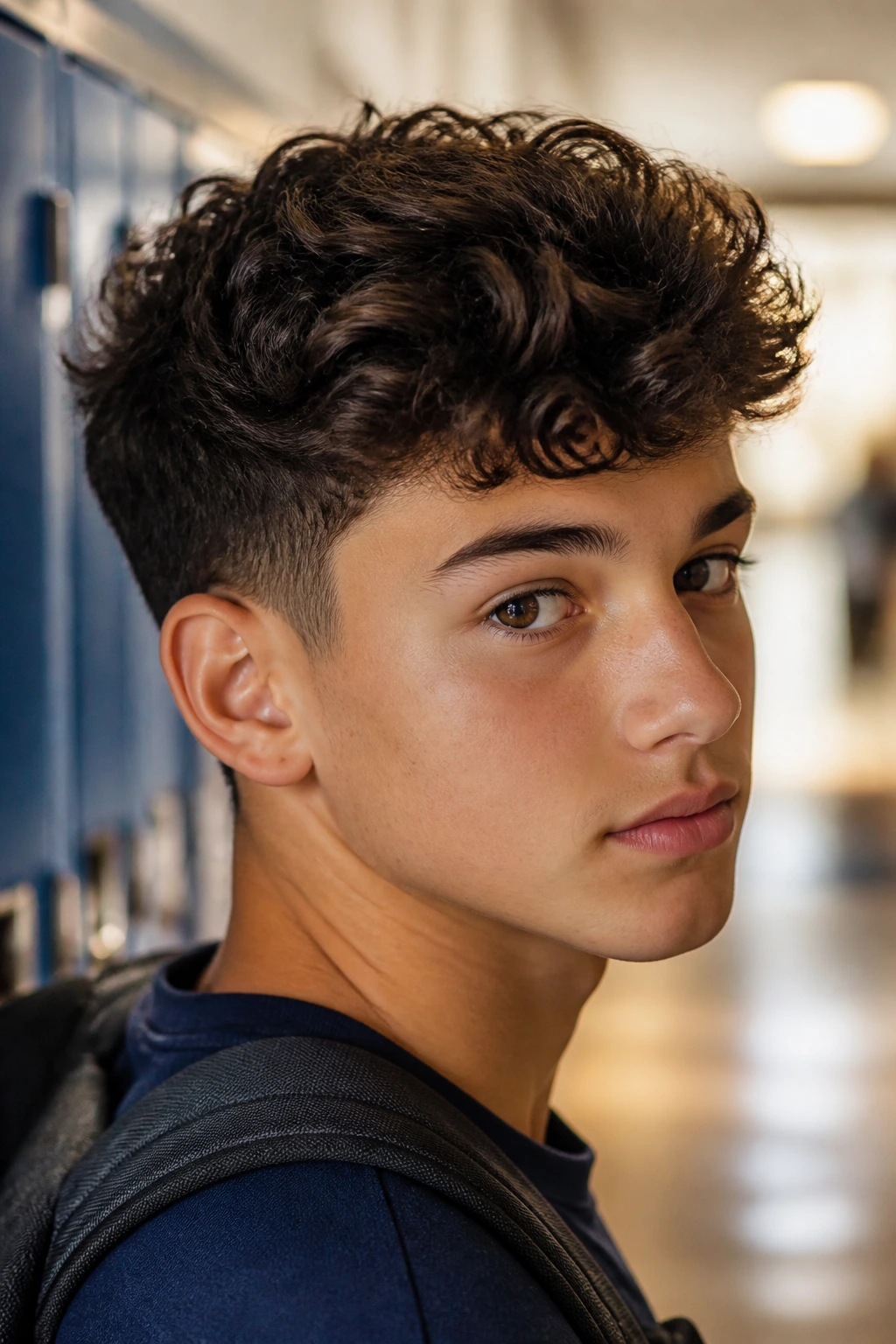
The School-Rule Taper: Keep the sides low and the top modest, with no hard line or shaved design. It reads neat in classrooms and still looks good with thick hair’s natural body.
The Sports Helmet Version: Choose a crew cut, high and tight, or short crop with a clean taper. These cuts sit flat under helmets better than longer, lifted styles and don’t need much restyling afterward.
The Curly-Control Version: For boys with thick waves or curls, ask for more length on top and a tighter taper around the sides. The goal is to keep the shape round enough to respect the curl while removing the width that makes the cut puff out.
The Dress-Up Version: If you want a cut that can look polished for photos or events, go with an Ivy League, side part taper, or short pompadour. Keep the top long enough to comb, but not so long that it collapses halfway through the day.
The Low-Fuss Home-Cut Version: Buzz cuts, crew cuts, and basic tapers are the easiest to maintain at home if you’ve got decent clippers and a steady hand. Anything with a fade or strong texture is better left to a barber unless you’ve done it before.
Common Mistakes That Make Thick Hair Harder to Manage
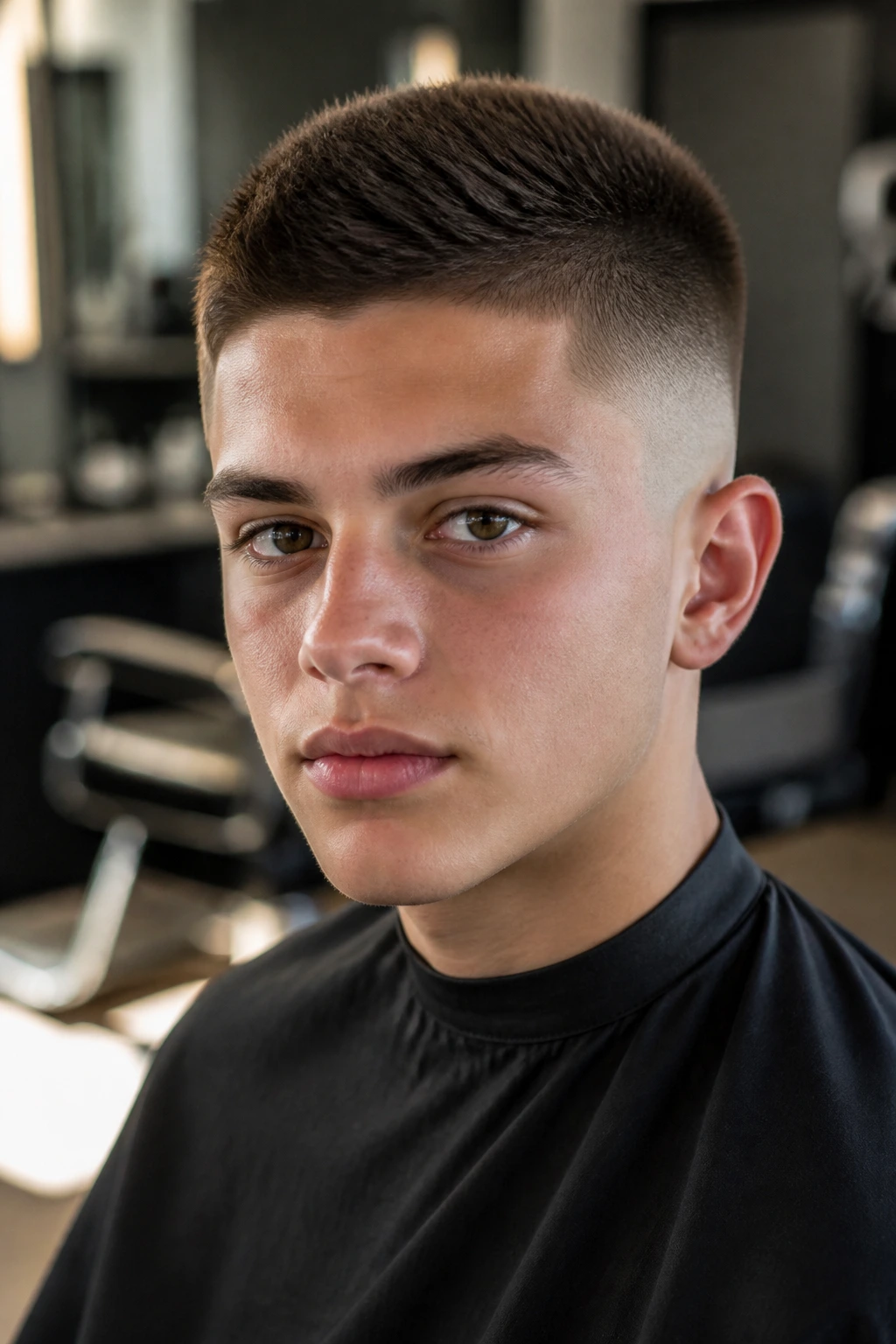
The first mistake is leaving too much bulk at the sides. Thick hair turns puffy fast, and if the barber keeps the perimeter heavy, the haircut starts looking wide even when the top is short. The fix is a taper or fade that actually removes weight, not just trims the ends.
Second, people often overstyle thick hair with too much product. The result is stiff, shiny, and heavy. If the hair looks wet all day, the product is probably doing too much. Switch to matte paste or clay and use less.
Third, don’t ignore the crown. Thick hair with a strong swirl will kick out if the barber leaves the top uneven there. That’s how you get the little shelf or bump that ruins an otherwise good cut. The barber should shape the crown with the growth pattern, not against it.
Fourth, asking for “short on the sides” without saying how short is a trap. A #1 and a #4 are not remotely the same thing. If you care about the finish, say so.
Common Questions About These Haircuts
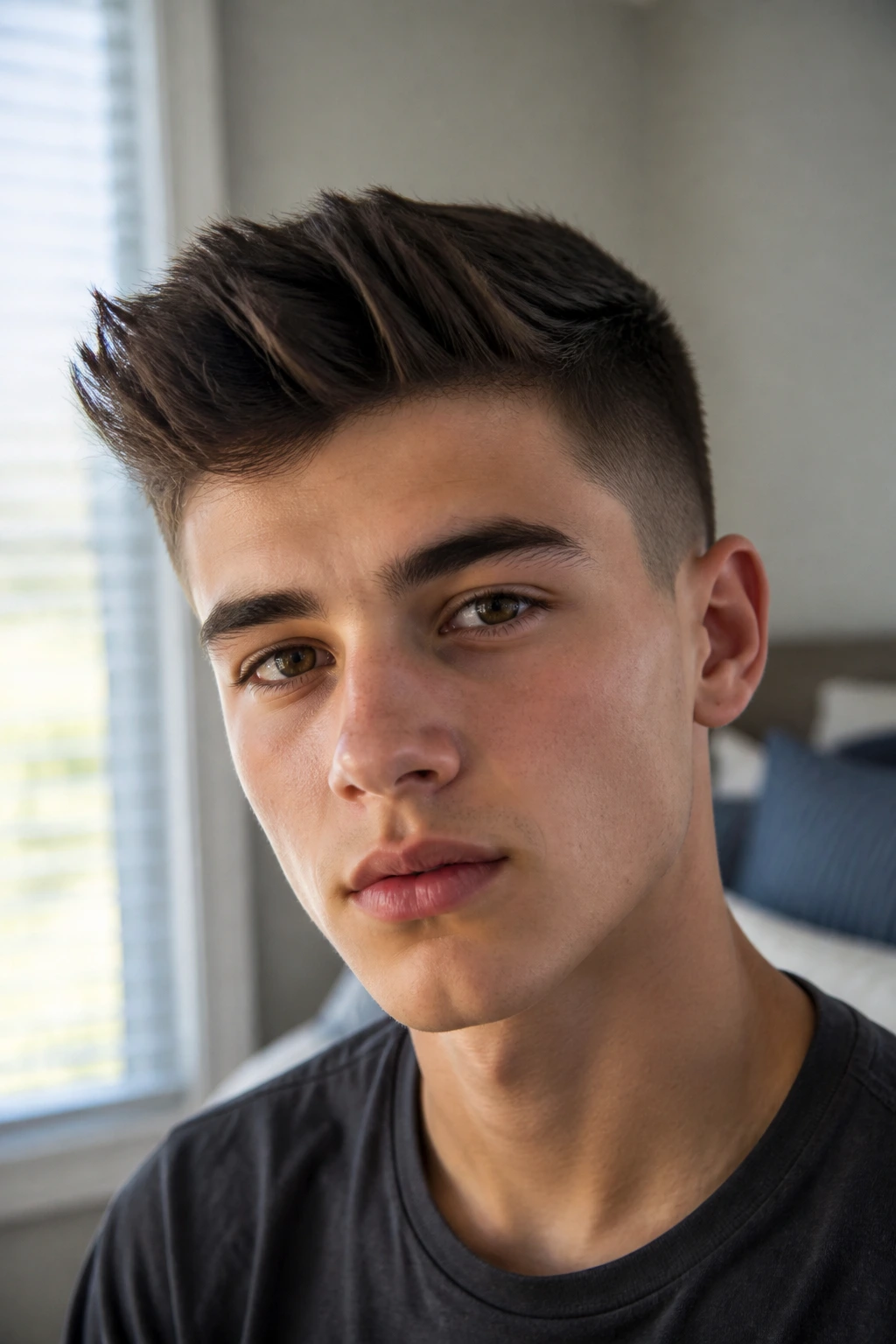
Which short haircut is easiest for boys with thick hair?
A crew cut or buzz cut is usually the simplest. Both remove enough bulk that the hair doesn’t fight back, and neither one needs much styling beyond a quick comb or towel dry.
What’s the best cut for thick hair that keeps falling into the eyes?
A French crop or Caesar cut handles that problem well because both keep the fringe short and directed forward. If the front is especially stubborn, ask the barber to keep the fringe light rather than blunt.
Can thick hair be cut short without using clippers?
Yes. A scissor-cut taper with layers or an Ivy League can be done mostly with scissors. That said, clippers are often the cleanest way to remove bulk at the sides and neckline.
How often should a fade be touched up?
Usually every 2 to 4 weeks, depending on how sharp you want it. Thick hair shows grow-out quickly around the ears and neck, so the outline blurs faster than it does on finer hair.
Is thinning shears work good for thick hair?
Used carefully, yes. Used badly, no. A little bulk removal can help a haircut sit flatter, but over-thinning creates frizz, gaps, and strange see-through spots.
What if my child has a cowlick at the front or crown?
Choose a cut that works with the swirl instead of forcing it down. French crops, Caesar cuts, and short textured styles usually handle cowlicks better than heavy, slicked shapes.
Do boys with thick curly hair need a different approach?
Usually they do. Curl pattern changes how the haircut sits, so a curly crop fade or short afro taper often works better than a straight-hair crop. The barber should shape the hair while it’s dry enough to see the pattern.
What if the haircut looks too big right after the barber?
That often means the top was left dense or the sides weren’t tapered enough. Don’t reach for heavy gel first. Ask for a lighter blend next time, and use a matte product sparingly in the meantime.
The Short Cut That Stays Put
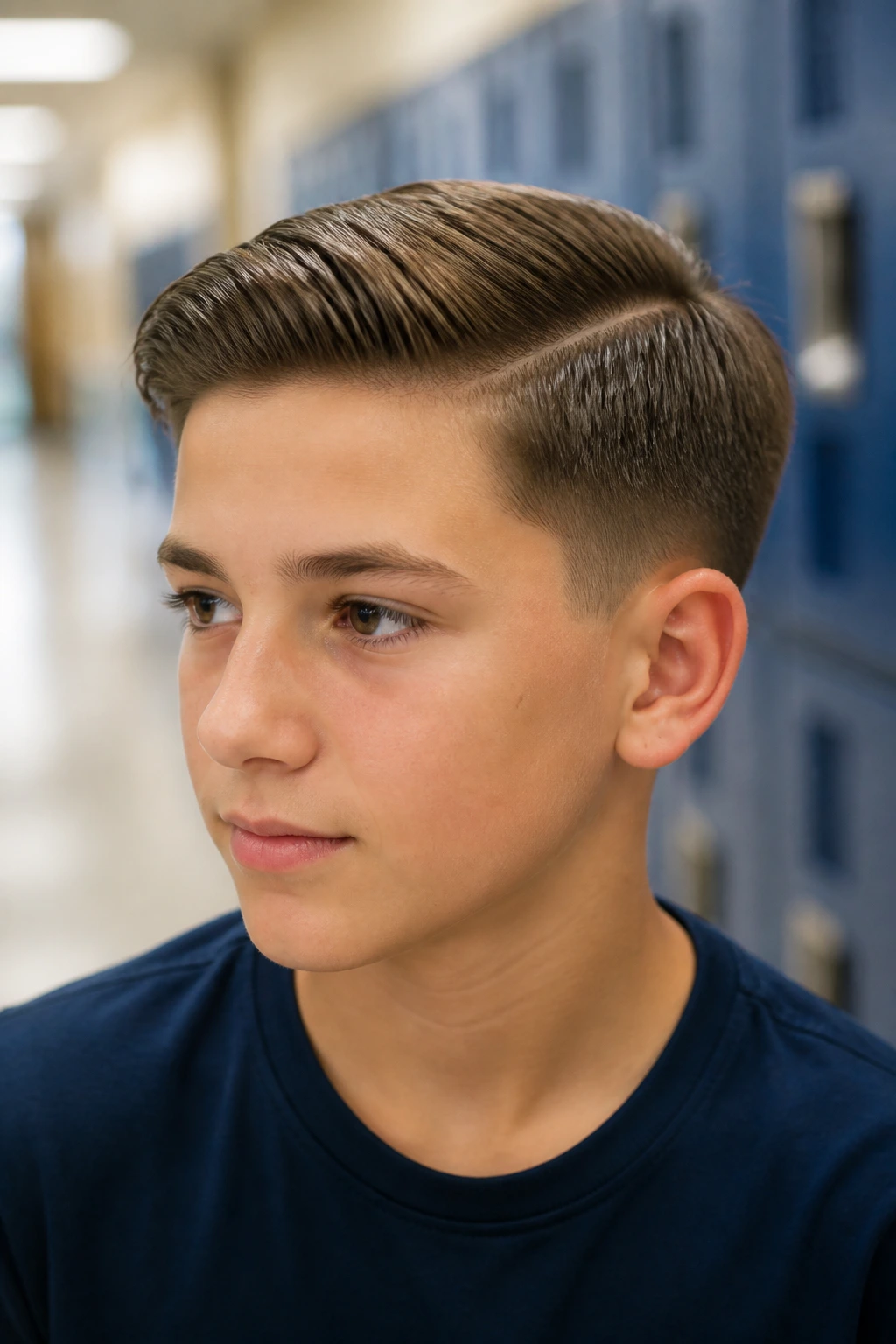
The best short haircut on thick hair isn’t the one with the most trend-friendly name. It’s the one that keeps its shape after school, after sports, and after a nap in the car on the way home. That usually means controlling the sides, trimming the crown with care, and leaving just enough texture on top to stop the whole thing from looking flat.
A good barber can do a lot with thick hair, but the haircut still has to respect the way the hair grows. When it does, the result is clean without looking overworked. And that’s the real prize: a short cut that still looks like a haircut three weeks later, not a problem waiting for the next appointment.