



A low taper fade for kids with curly hair works best when it respects the curl pattern instead of trying to flatten it into obedience. That’s the whole trick. Keep the fade low around the sideburns and neckline, leave enough length on top for the curls to spring, and the haircut suddenly looks clean even on the days when a child has been running, sweating, sleeping on one side, and picking at the front with both hands.
Curl shrinkage changes everything. A kid can leave the barber’s chair looking like the top is borderline long, then the curls dry and tighten into a neat, rounded shape that sits two inches higher than expected. If the fade starts too high, the sides disappear into the top and the cut loses its shape fast. If the top is left too short, the curls stick up with that puffy, unfinished look that makes parents reach for a hat before breakfast.
That’s why this collection leans low, soft, and realistic. These are cuts that work with coils, ringlets, loose bends, and everything in between. Some are sharp enough for picture day. Some are softer and better for kids who hate product, hate combing, or hate sitting still. All of them keep the neckline, temples, and sideburns under control without scraping the life out of the curls on top.
Why This Collection Works for Curly Kids
-
The fade sits below the curls: A low taper keeps the clean-up at the ears and nape, so the natural texture on top still has room to shape itself instead of puffing out from the sides.
-
Grow-out looks better here: Because the fade starts low, the cut can go two or three weeks before it looks shaggy in the mirror, and that matters when you’re not booking a barber every Friday.
-
Different curl types can wear it: Loose waves, springy ringlets, and tight coils each read differently, but the same low taper framework keeps the outline tidy.
-
It saves morning time: A curl cream or leave-in conditioner can do most of the work on the top, which is a relief when the child is already late for school and nobody wants a battle with a brush.
-
It leaves room for personality: A lineup, a side part, a mini frohawk, or a fuller rounded shape all fit inside the same haircut, so the style can match the kid instead of the other way around.
-
The edges stay neat without looking severe: A low taper gives structure, but it doesn’t shove the whole head into a hard, adult-looking fade that can feel too sharp on younger faces.
1. Soft Curls with a Low Taper Fade
This is the cut I recommend when you want the curls to stay the star and the fade to act like a clean frame around them. The top is left full enough for the curls to fall into soft clumps instead of standing out like dry springs, and the taper around the ears keeps the shape from ballooning outward. It looks calm. Not boring. Just calm.
What Makes It Work
A soft curly top with a low taper is forgiving in a way a tighter, more sculpted haircut is not. If the child’s hair shrinks a lot, the top still has enough length to show texture. If the hair lays looser, the fade keeps the whole cut from turning boxy. I like it especially for younger kids because it doesn’t need daily reconstruction.
A barber should usually scissor the top instead of buzzing it flat. That keeps the curl pattern intact and avoids the chopped look that happens when clippers take too much off the crown.
Quick Shape Notes
- Keep the taper low at the sideburns and nape.
- Leave the top long enough for curls to bend, not spike.
- Ask for soft edges, not a hard, sharp outline.
- Use a little leave-in conditioner on damp hair.
My take: if the curls are still new to the family routine, start here before trying anything fancier.
2. Sharp Line-Up with a Low Taper Fade
This one changes the whole mood of the haircut. The taper stays low and smooth, but the hairline gets cleaned up with a crisp line-up across the forehead and temples, which makes the curls on top look even fuller by comparison. It’s a stronger look, and on the right child it can look very polished without feeling overworked.
The key is restraint. A line-up should sharpen the edges, not carve the child’s head into a box. If the barber pushes the corners too far back, the style starts to look grown-up in a way that ages the face. I’d keep the front line natural-looking and only clean what’s already there.
This style works best when the curls on top already have some shape. If the hair is too short, the lineup ends up doing all the work, and that can look a bit bare on a little head. Keep the top at least long enough to curl over a finger.
3. Curly Crop with a Low Taper Fade
Picture a child who hates hair brushing, hates product, and wants to be done in five minutes. This is the answer. The curly crop stays close to the head, but the taper around the sides and back keeps it from turning into one solid puff.
Why Parents Like It
The shape sits neatly under a cap, which sounds minor until you’ve dealt with school uniforms, sports days, or a kid who insists on wearing a hoodie indoors. The curls are short enough to dry fast, but not so short that the haircut loses texture.
Barber Details
- Ask for a low taper only, not a high fade.
- Keep the curls on top short and even, usually with scissors.
- Leave more length at the front if the child has a cowlick.
- Let the nape stay soft so the grow-out doesn’t look chopped.
The crop works especially well for tight curls that spring upward. If you’ve ever seen a shorter cut puff out at the temples after one day, you already know why the low taper matters.
4. Side-Part Sweep with a Low Taper Fade
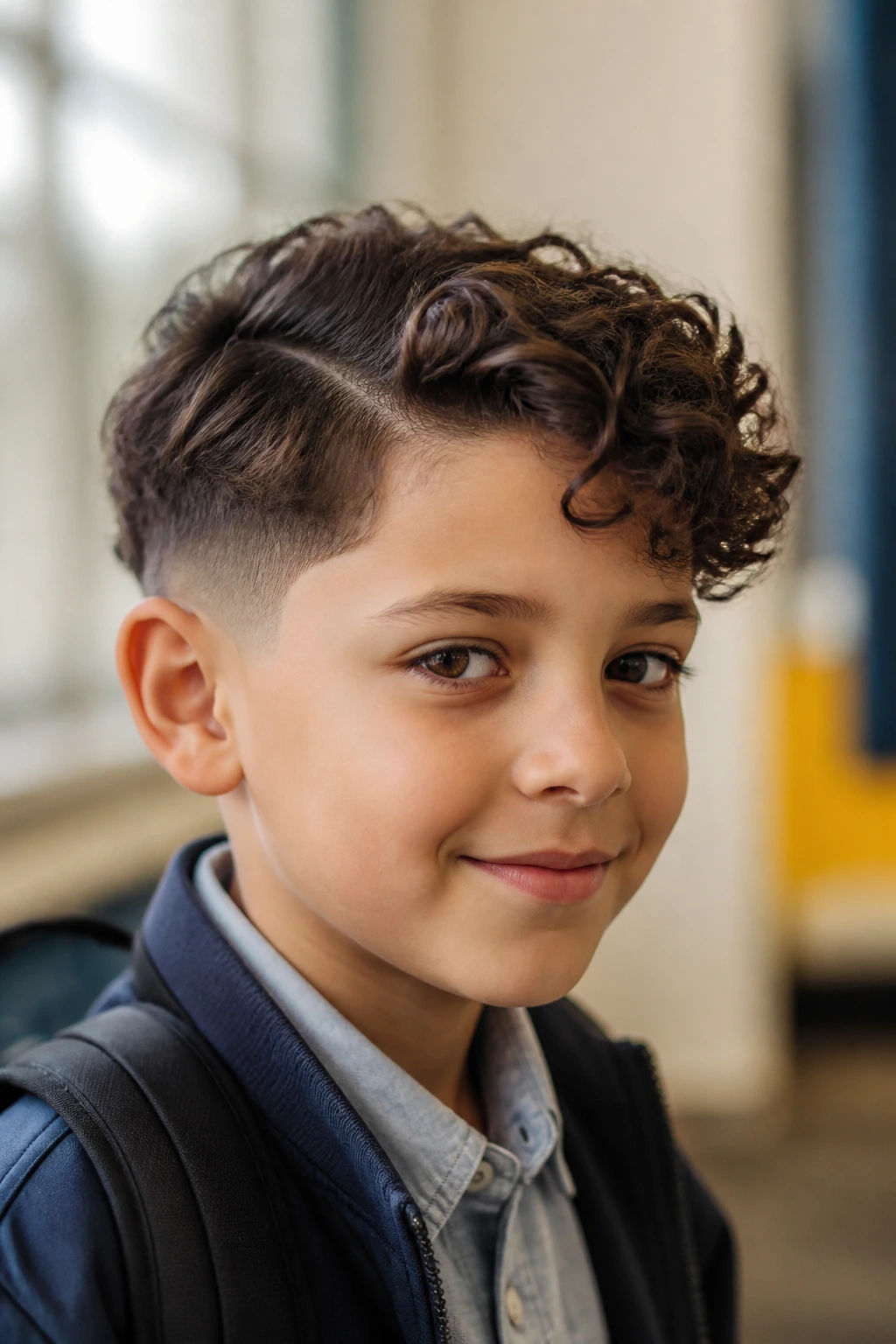
Can curly hair have a side part without looking forced? Yes, if the top has enough length and the part is suggested rather than drawn like a railroad track. The low taper gives the haircut a tidy base, while the curls sweep over just enough to create direction.
A lot of parents ask for a side part and then overdefine it. That’s the trap. With curly hair, the part should live in the way the hair falls, not in a deep shaved line unless the child really wants that look. I like a soft side part with some natural lift at the front; it keeps the style playful instead of stiff.
This is a smart choice for kids with medium curls that clump nicely when damp. A little curl cream, a quick finger part, and the hair settles into shape without much arguing.
How to Wear It on School Mornings
Run a wet hand through the top, trace the part with your fingers, and let it air dry or diffuse on low. If you want more control, use a pea-sized amount of mousse and scrunch the front upward once. Don’t overcomb it. Curly parts look better with a little looseness.
5. Ringlet Halo with a Low Taper Fade
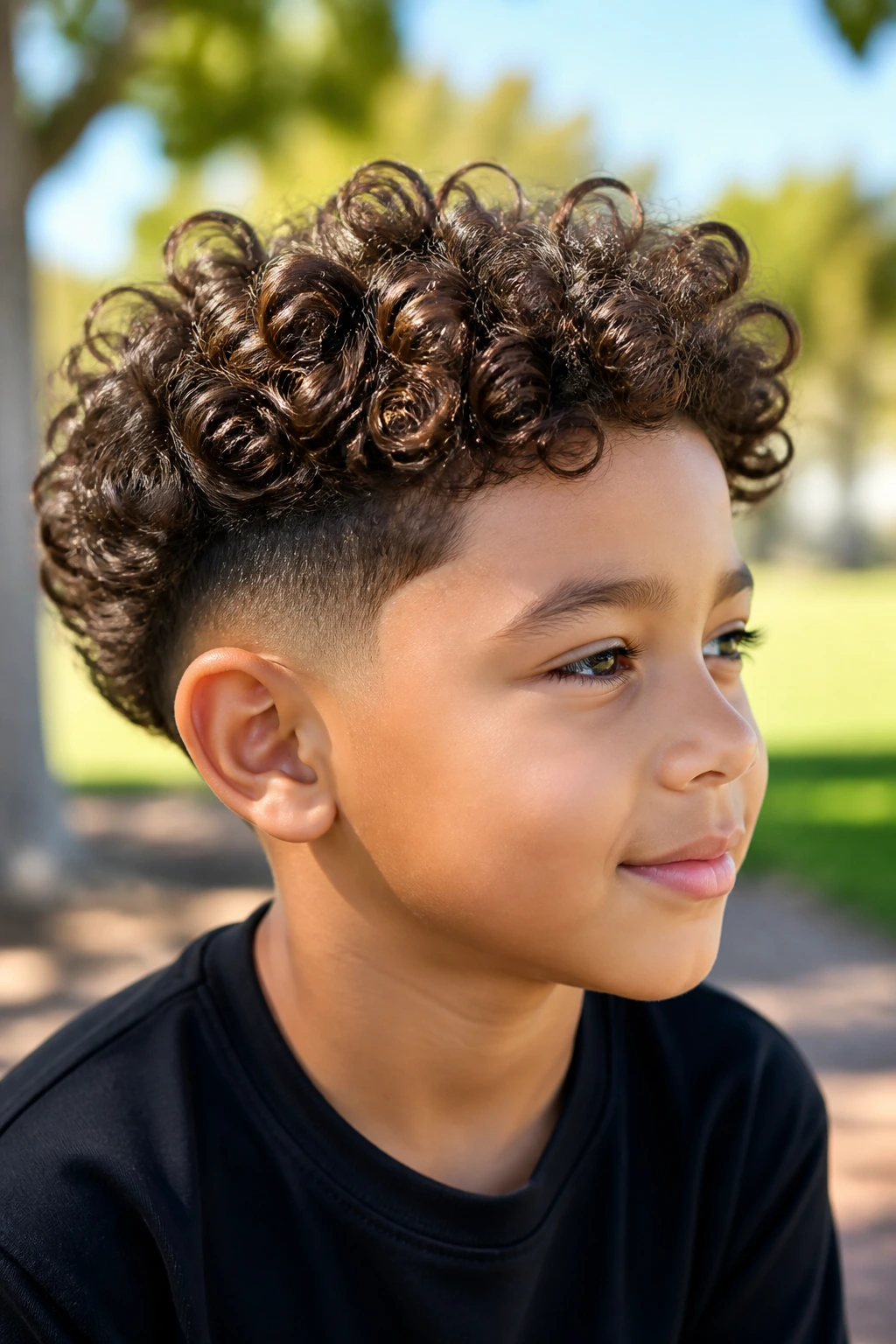
There’s something charming about ringlets left long enough to form a halo around the crown. The fade below them keeps the outline clean, but the top stays full, rounded, and visibly curly. This is the cut that makes parents say, a little surprised, “Oh, there it is,” when the curls finally dry into their real shape.
The trick is to leave enough length for the ringlets to clump naturally. If the top is too short, the curls separate and lose that rounded finish. If it’s too long, the shape can slump forward into the eyes. The sweet spot usually sits in that middle zone where the curls spring but still carry weight.
I like this cut on kids with looser spirals and a softer hairline. It looks especially good when the barber keeps the edges gentle and the crown rounded rather than flattened.
6. Sponge-Twist Top with a Low Taper Fade
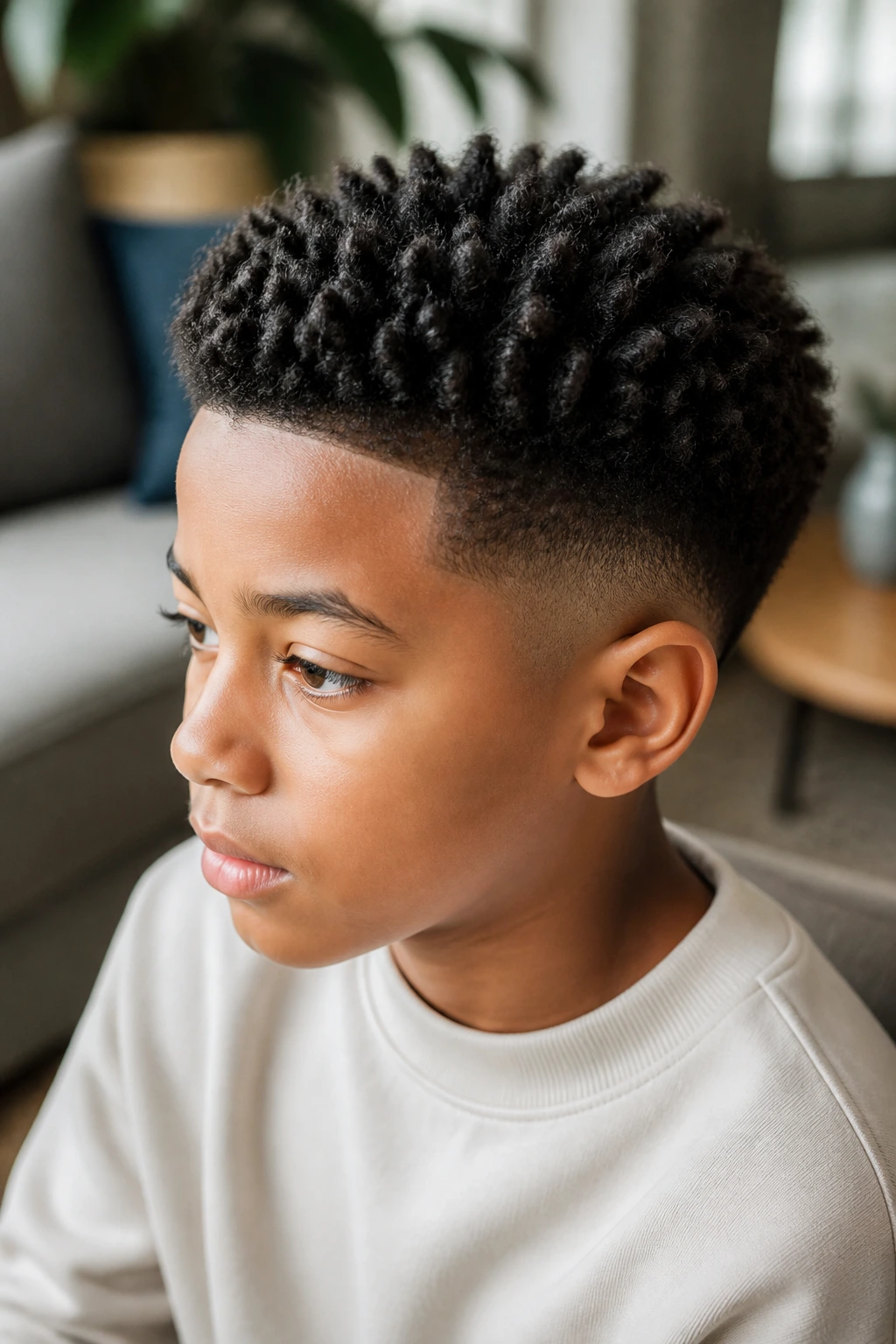
This is the pick when the curls need a little coaxing. A sponge-twist top builds extra definition on tighter coils, and the low taper fade underneath keeps the whole look neat instead of busy. It reads as intentional even on days when the child’s hair would otherwise puff in six directions.
The style does need a bit of product. A light leave-in or curl cream works better than thick gel, which can make small curls feel crunchy and dry-looking. Rub the product through damp hair, then use a curl sponge with gentle, small circles for a minute or two. Stop before the hair gets overworked. Too much sponge action can make the top frizzy.
This cut is especially handy for kids who like a defined texture but not a long grooming routine. The shape is strongest on the day it’s styled, then it softens in a good way over the next few days.
7. Curly Fringe with a Low Taper Fade
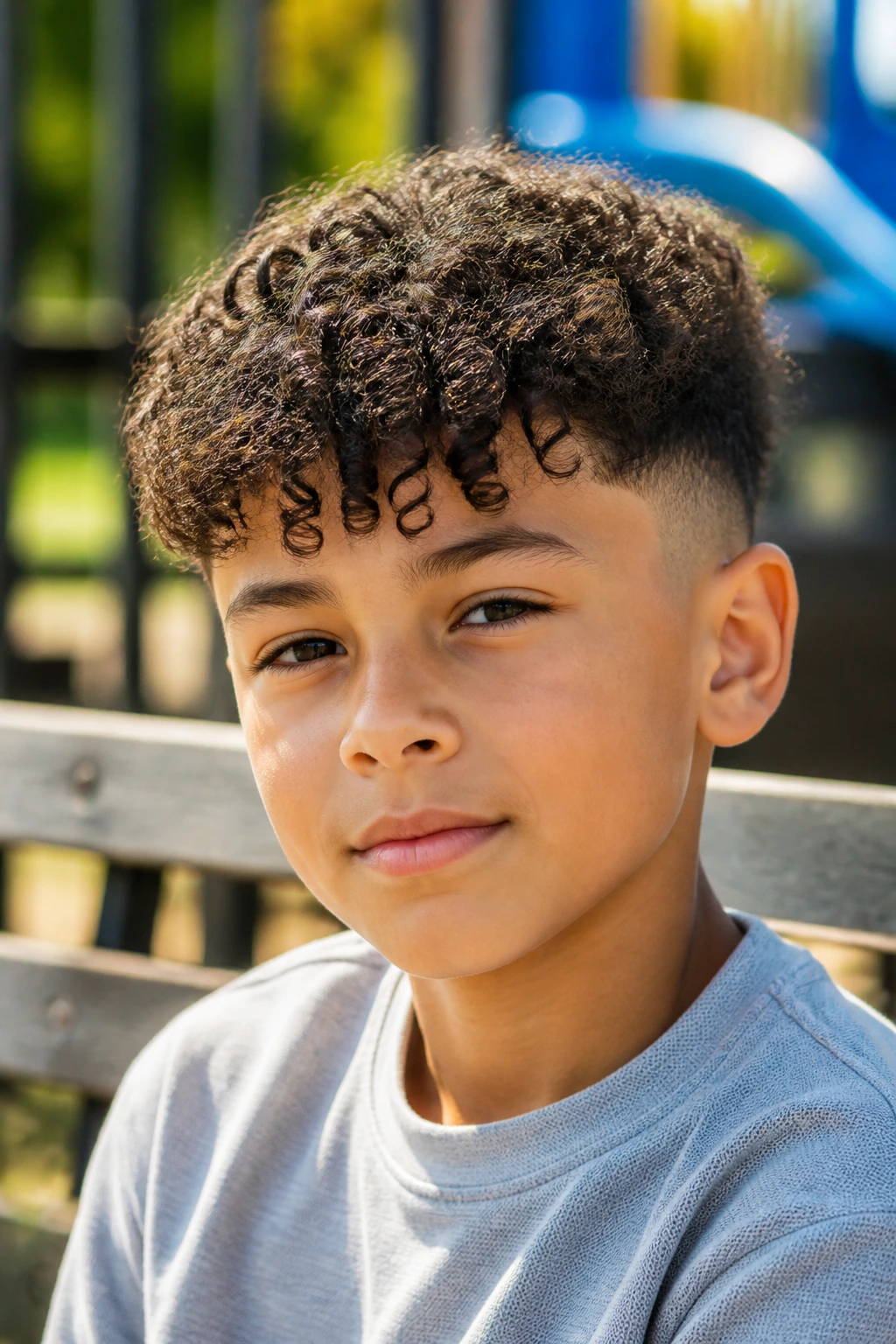
A curly fringe is the opposite of a stiff forehead line, and that’s why it works. The curls fall forward, sometimes a little over the eyebrows, while the low taper keeps the sides from looking heavy. It has a relaxed, younger feel that can suit little kids beautifully.
The fringe needs balance. Cut it too short and the front sticks up like a brush. Leave it too long and it can hang into the eyes, which is cute for approximately ten minutes and irritating after that. I’d ask the barber to shape the front so it sits just above the brow when dry, not when wet.
This cut is a good match for kids whose curls are loose enough to drape but not so loose that they hang flat. It also works when a child doesn’t want a lot of visible styling product. Let the front fall, clean the taper, and let the texture do the talking.
8. Mini Frohawk with a Low Taper Fade
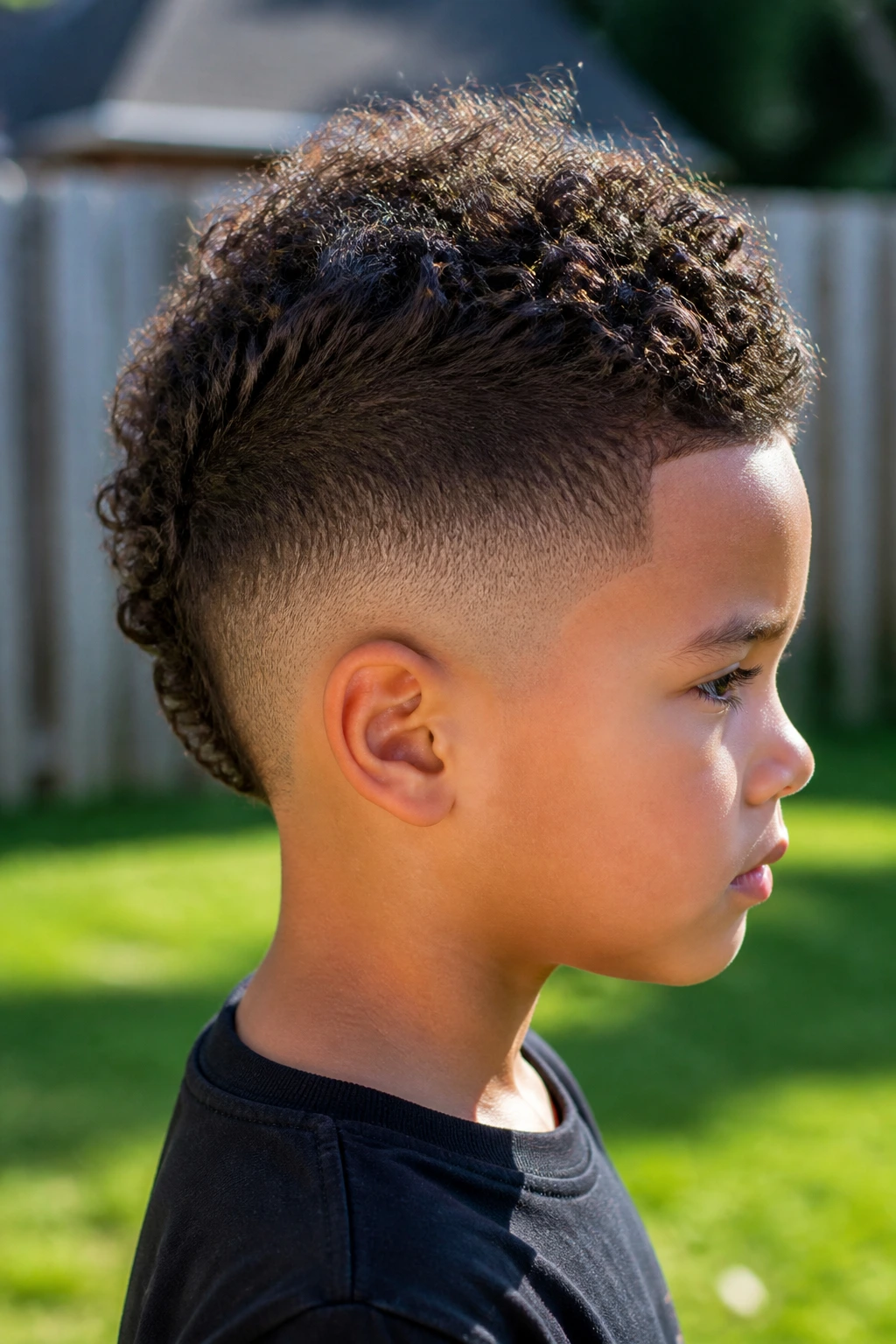
A mini frohawk sounds bolder than it often looks on a child. The low taper keeps the sides neat while the center strip of curls runs from front to back, creating a narrow ridge of texture that feels playful rather than severe. If the child likes a little swagger, this one has it.
The reason it works is simple: the taper controls the width, and the curls provide the shape. You don’t need a dramatic shaved side to get the effect. In fact, a softer low taper usually looks better because it avoids the “trying too hard” feeling some kids’ haircuts can pick up fast.
This style needs a barber who can blend carefully around the top corners so the middle strip doesn’t look pasted on. Ask for rounded transitions near the temples. That keeps the mohawk shape from turning into a sharp wedge.
9. Hard Part Combo with a Low Taper Fade
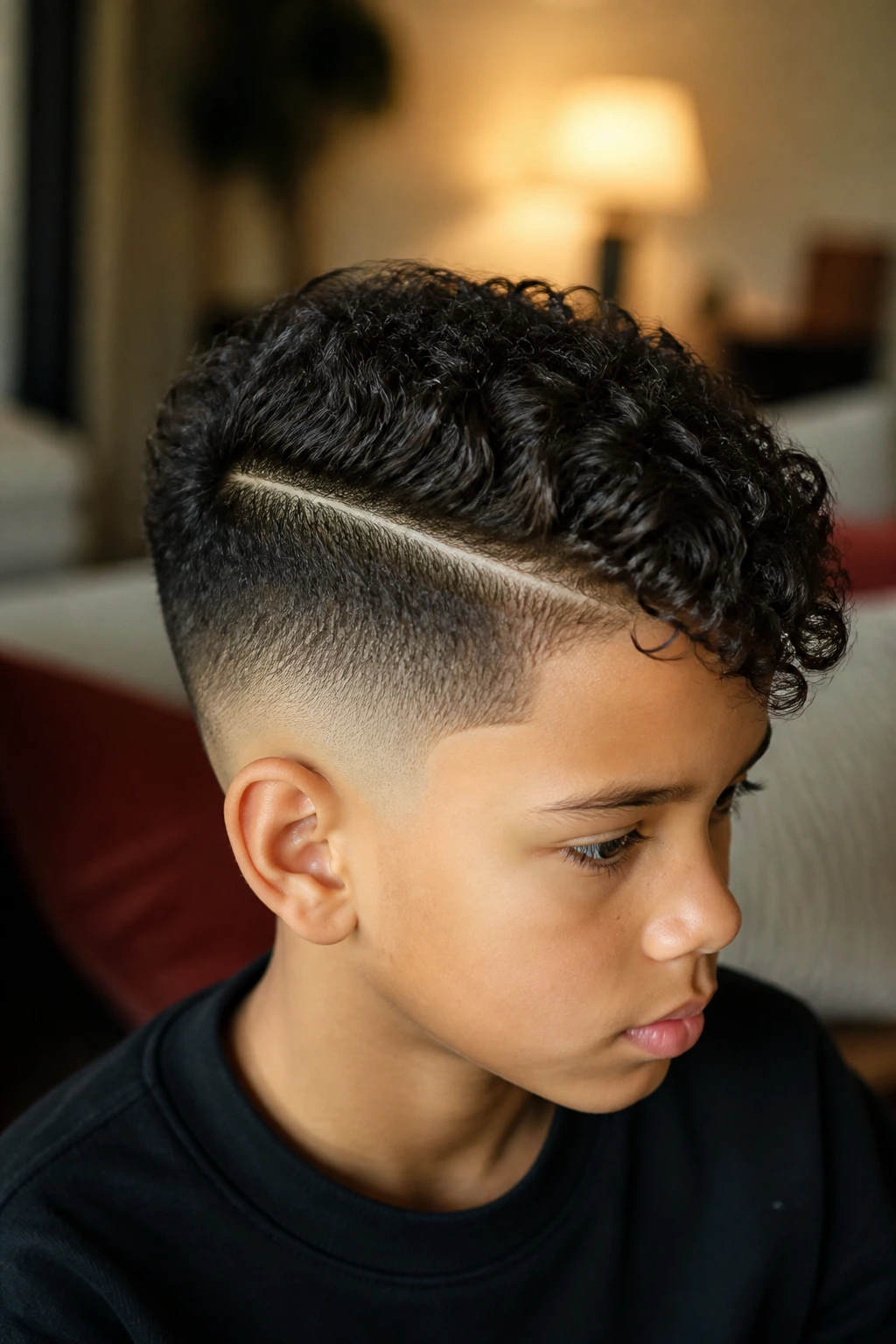
A hard part gives curly hair a clean line to lean against, and when it’s paired with a low taper fade, the result is neat in a very specific way. The part breaks up the texture. The taper keeps the lower half clean. The top does the rest.
I’m not wild about hard parts on every child, though. They look crisp when new, then they grow out unevenly and can start to look more obvious than stylish. If the child’s hair grows fast or the family doesn’t want weekly upkeep, a soft part is probably smarter.
Still, on the right kid, this is a strong style. Keep the top medium-length so the curls can sweep over the part instead of sitting upright like a helmet. Use a comb only after the hair is damp, never bone dry, or you’ll fight the curl pattern all the way through.
10. Rounded Afro Shape with a Low Taper Fade
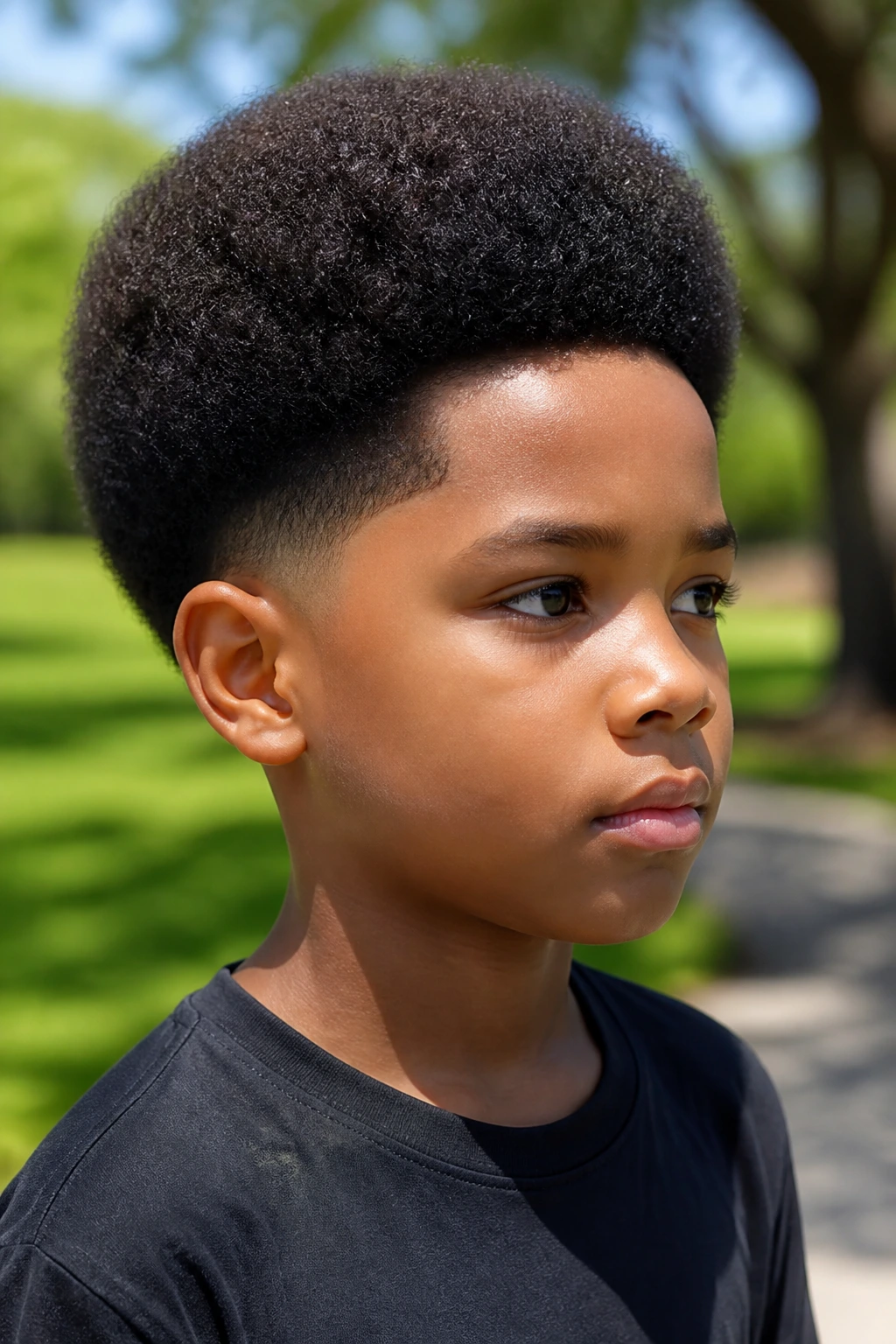
This is one of my favorite low-maintenance shapes for curly kids. The top stays full and rounded, almost like a soft dome of texture, while the low taper keeps the neckline and sides from spreading outward. It looks balanced from every angle, which is rare and useful.
The rounded afro shape is all about keeping the silhouette clean. A barber should trim the top carefully, usually with scissors, and resist the urge to flatten the sides too much. The whole point is roundness. If you cut too aggressively at the perimeter, the shape loses its clean curve.
This cut works on tighter curls especially well because the texture builds volume naturally. It’s also forgiving as it grows, which is a small blessing when the next haircut has to wait a bit longer than planned.
11. Two-Strand Twists with a Low Taper Fade
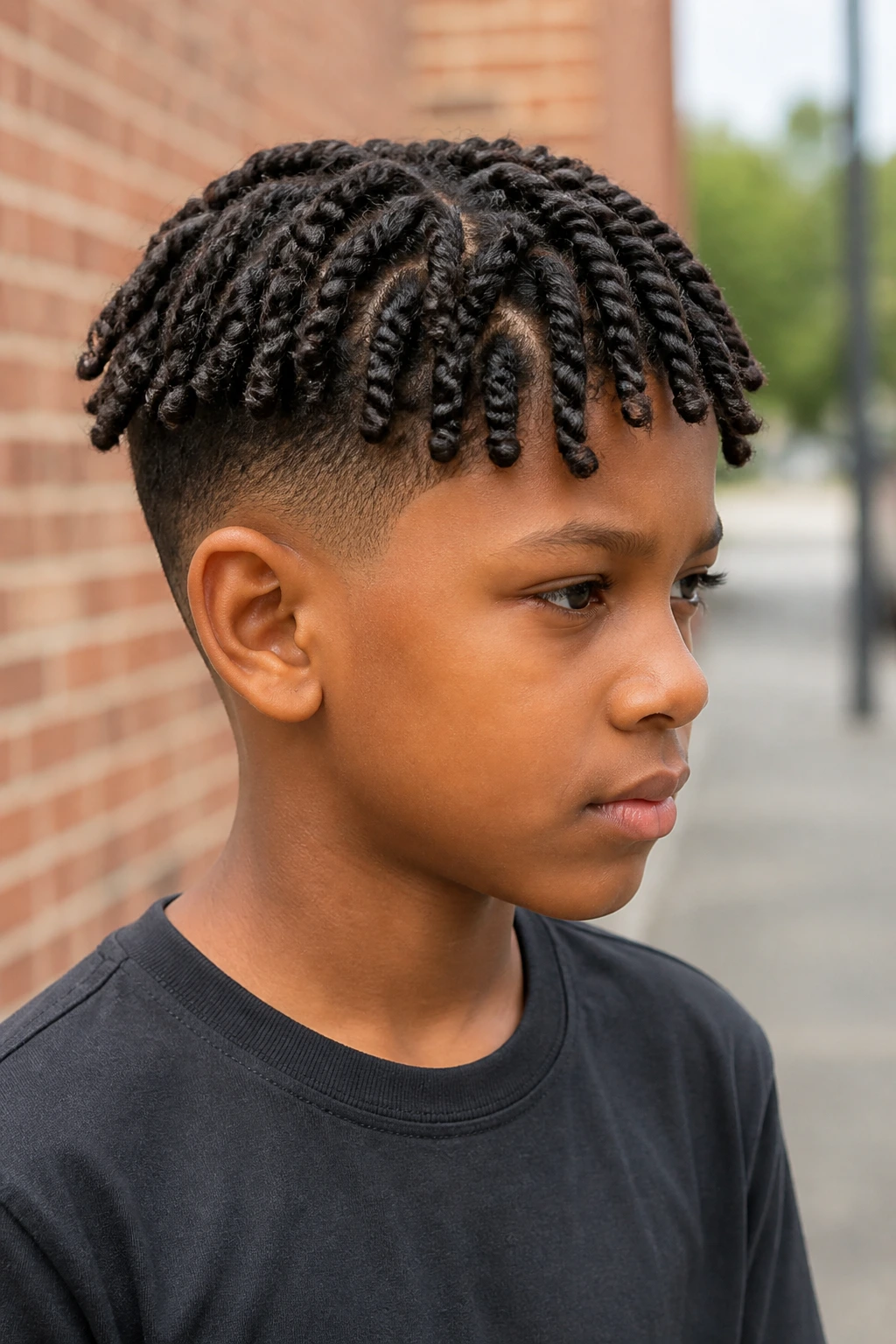
What if the child likes to keep a bit more length and definition? Twists with a low taper solve that neatly. The taper cleans up the edges, while the twists on top give the style movement and a bit of protection from daily tangling.
How to Use It
- Keep the twists small and even so the head doesn’t look bulky.
- Ask for a low taper around the temples and neckline only.
- Moisturize before twisting to reduce frizz.
- Retwist the front before school photos or special events.
This style is best when the family is willing to do some upkeep. The upside is that twists last longer than loose curls and can cut down morning styling time. The downside is that they do need refreshes, especially at the front where kids tend to touch their hair the most.
12. Loose Shoulder-Length Curls with a Low Taper Fade
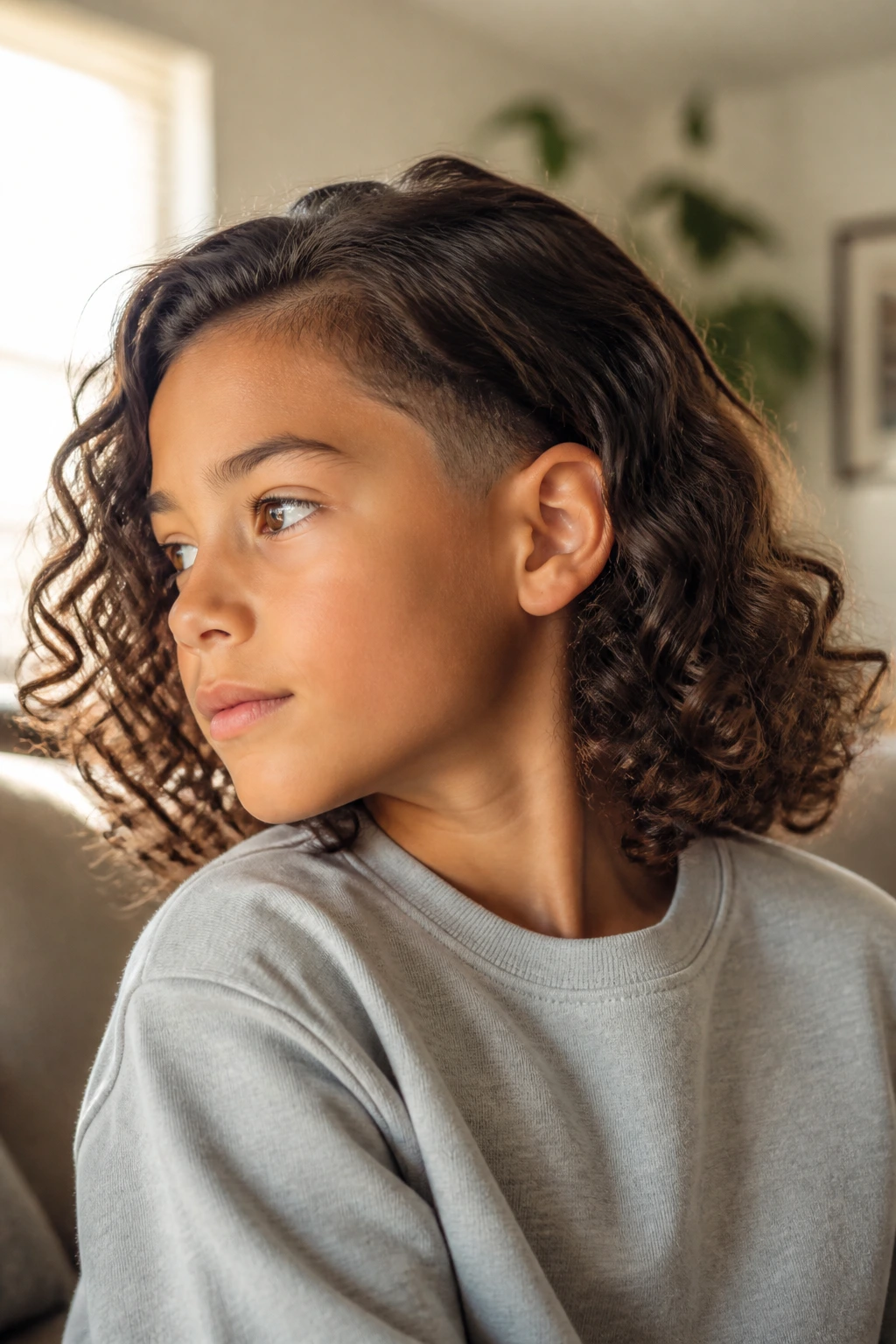
A longer curly top changes the balance of the haircut completely. The low taper still cleans up the base, but the top now falls with more weight, more swing, and a little more drama when the child turns their head. It’s a good look for kids with looser curls who are patient enough to keep the length.
The important part is shape. Long curls can go triangular fast if the sides are left too wide. A low taper prevents the bottom from fanning out, while subtle scissor shaping around the crown keeps the top from collapsing into one heavy curtain.
This is one of those cuts that looks easy and is not. It needs a barber who understands how curls shrink when dry. If the top is trimmed too short while wet, you can lose a lot more length than expected.
13. Curly Caesar with a Low Taper Fade
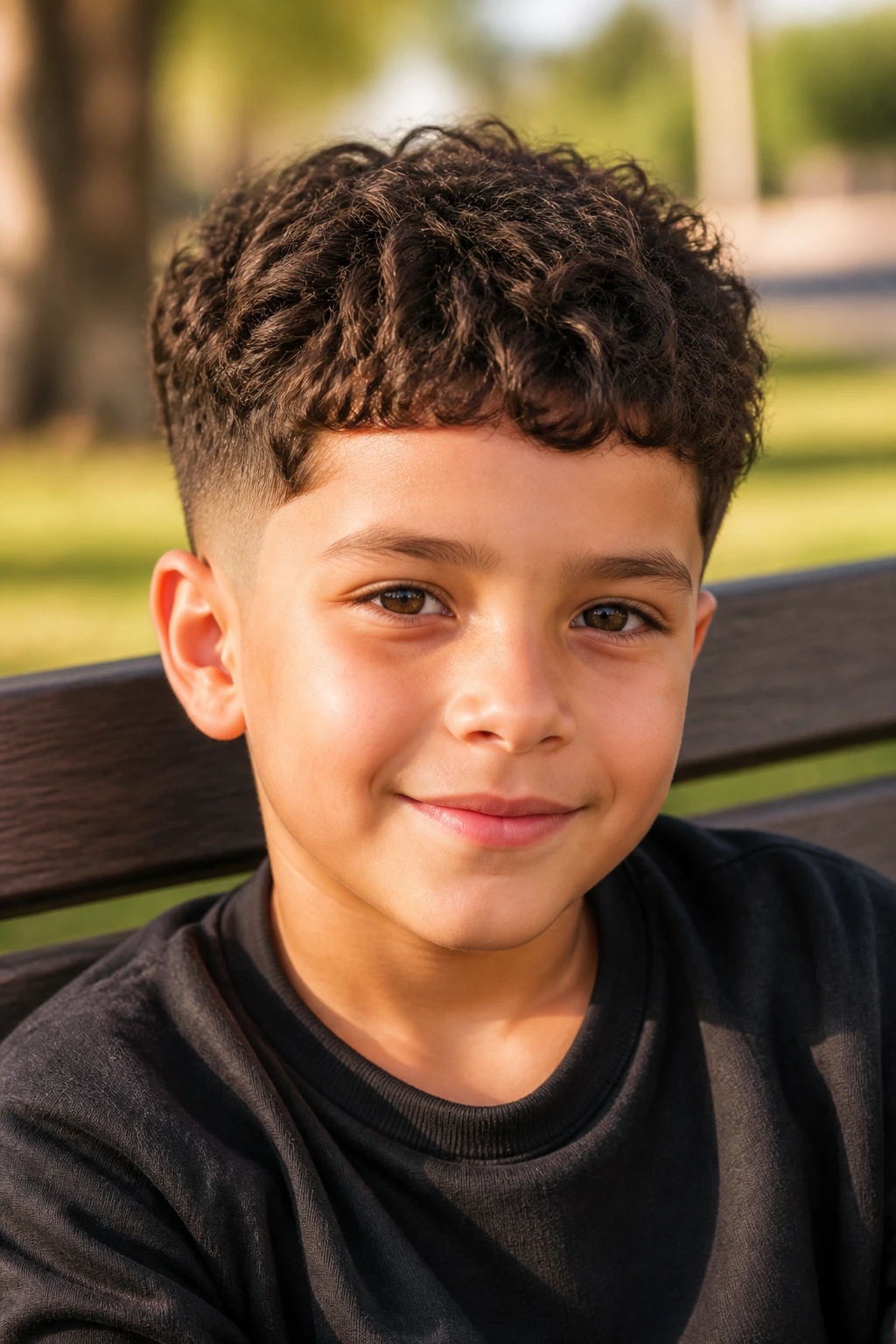
A Caesar on curly hair gives the front a short, forward-facing edge, and the low taper keeps the sides from getting bulky. It’s tidy, compact, and useful for children who want texture without a lot of hair hanging around the forehead.
The shorter length means the curls become part of the shape instead of the entire shape. That’s a nice shift. The haircut feels controlled, but it still has texture — the top isn’t shaved flat into a buzz cut, so the curls can still catch light and move a little when the child talks or laughs.
Keep the fringe short enough to stay out of the eyes, but not so short that it loses the curly line across the front. A light trim every few weeks can keep the shape crisp without overcorrecting it.
14. Temple-Clean Classic with a Low Taper Fade
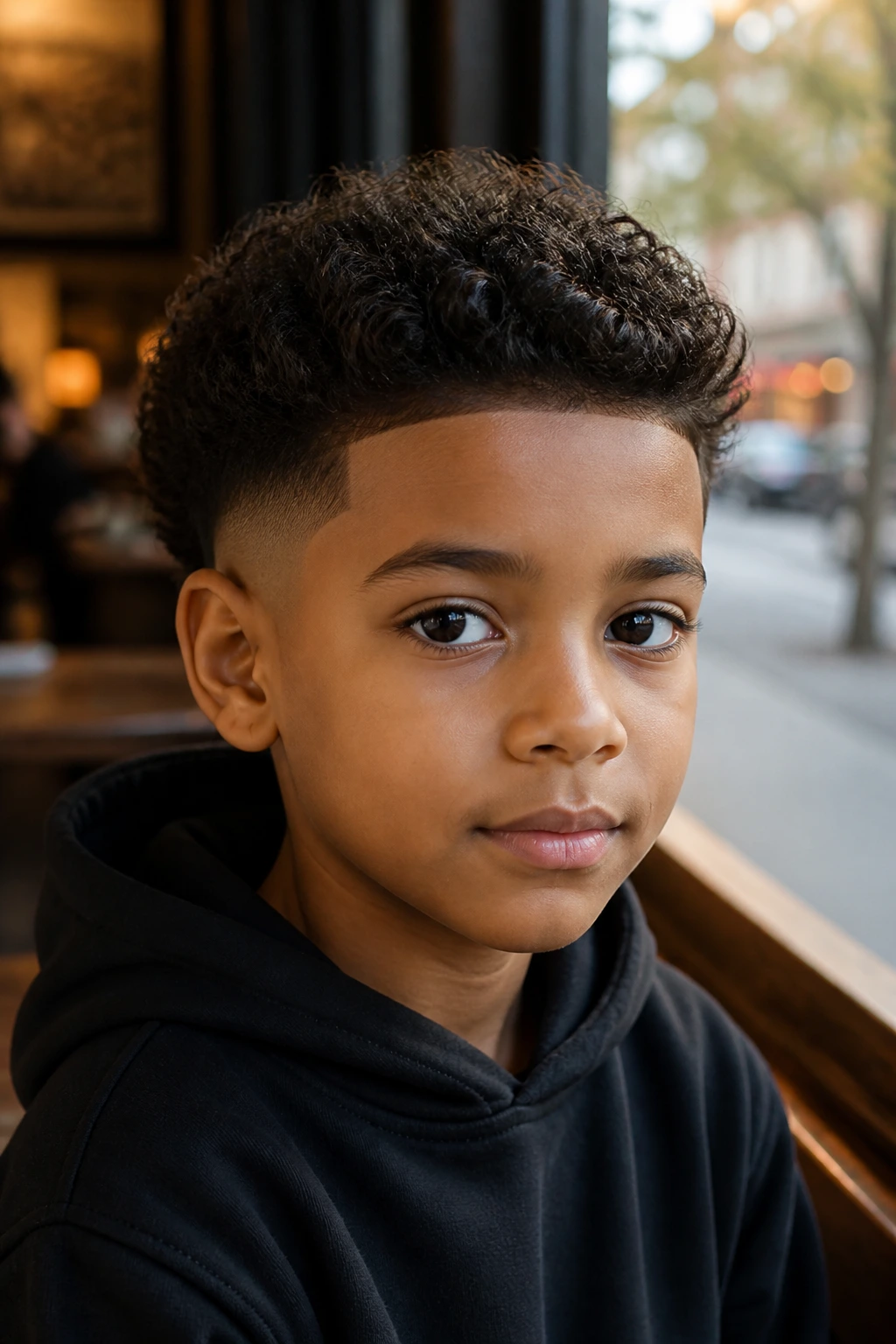
If you want clean without fuss, this is it. A temple-clean classic keeps the taper especially tidy around the sideburns and corners of the forehead, while the rest of the curls stay natural on top. It looks neat from the front, which matters more than people admit.
This version is especially useful for kids whose hair grows fast at the temples. Those little side curls can go from sharp to fuzzy in a week, and the low taper catches that growth before it starts to spread. The effect is subtle, but it changes how long the haircut stays polished.
I’d choose this for a child who wants a plain, easy cut that still looks deliberate. No hard part, no big sculpting, no extra styling time. Just good structure where the hair tends to get messy first.
15. Curly Mullet with a Low Taper Fade
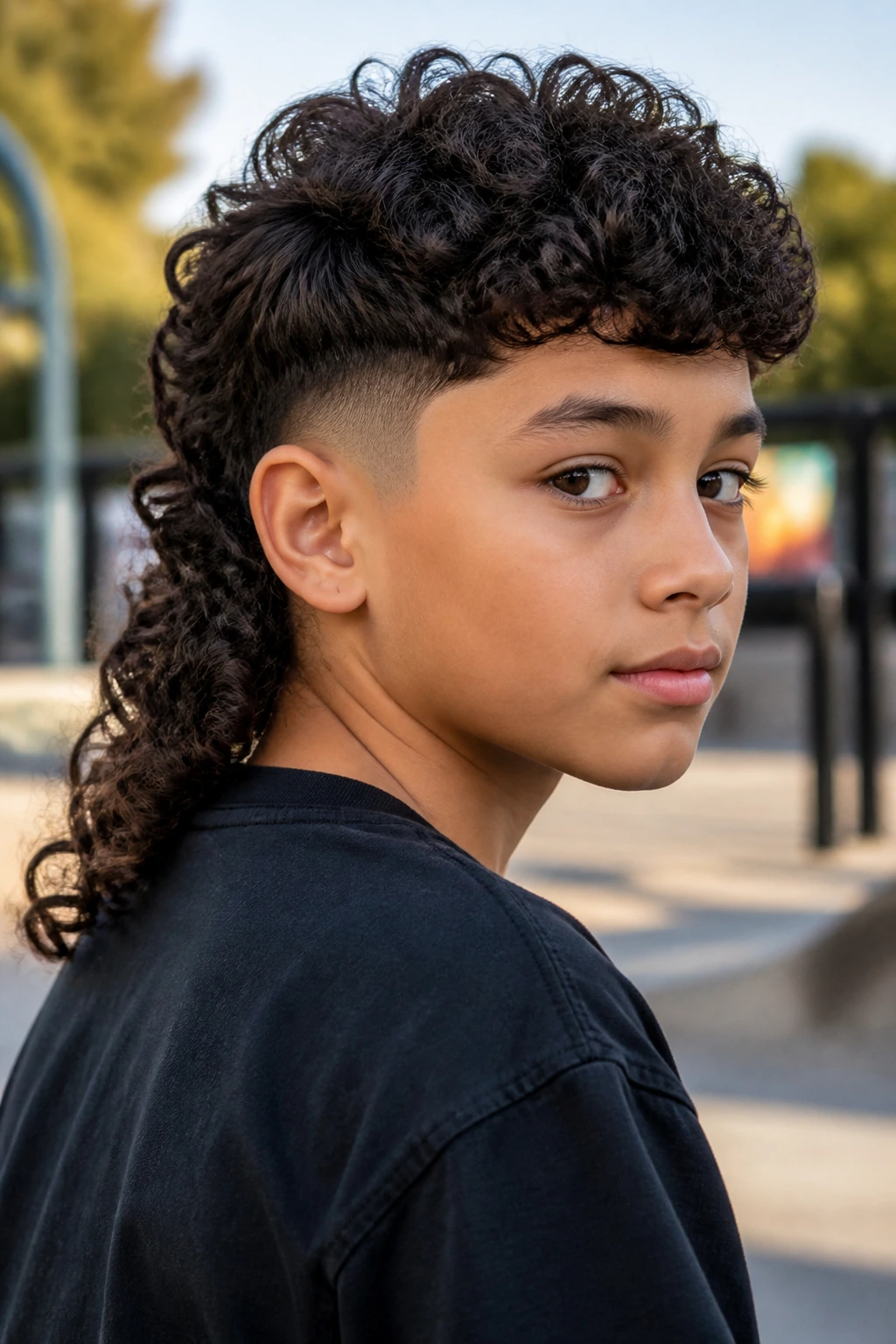
A curly mullet is not for every family. Let’s just say that up front. But when it works, it works because the low taper keeps the front and sides in order while the back gets to hold more length and movement.
The cut has a little attitude, sure, but the taper keeps it from turning into a costume. That’s the difference between a haircut and a bit. Leave the curls longer in the back, keep the sides tight enough to preserve shape, and the whole thing reads modern rather than goofy.
This one needs confidence and some curl control. If the back is frizzy or dry, it can lose the shape fast. A leave-in conditioner and gentle detangling go a long way here, especially around the neckline where mullet shapes can puff first.
16. Long Crown Fade with a Low Taper
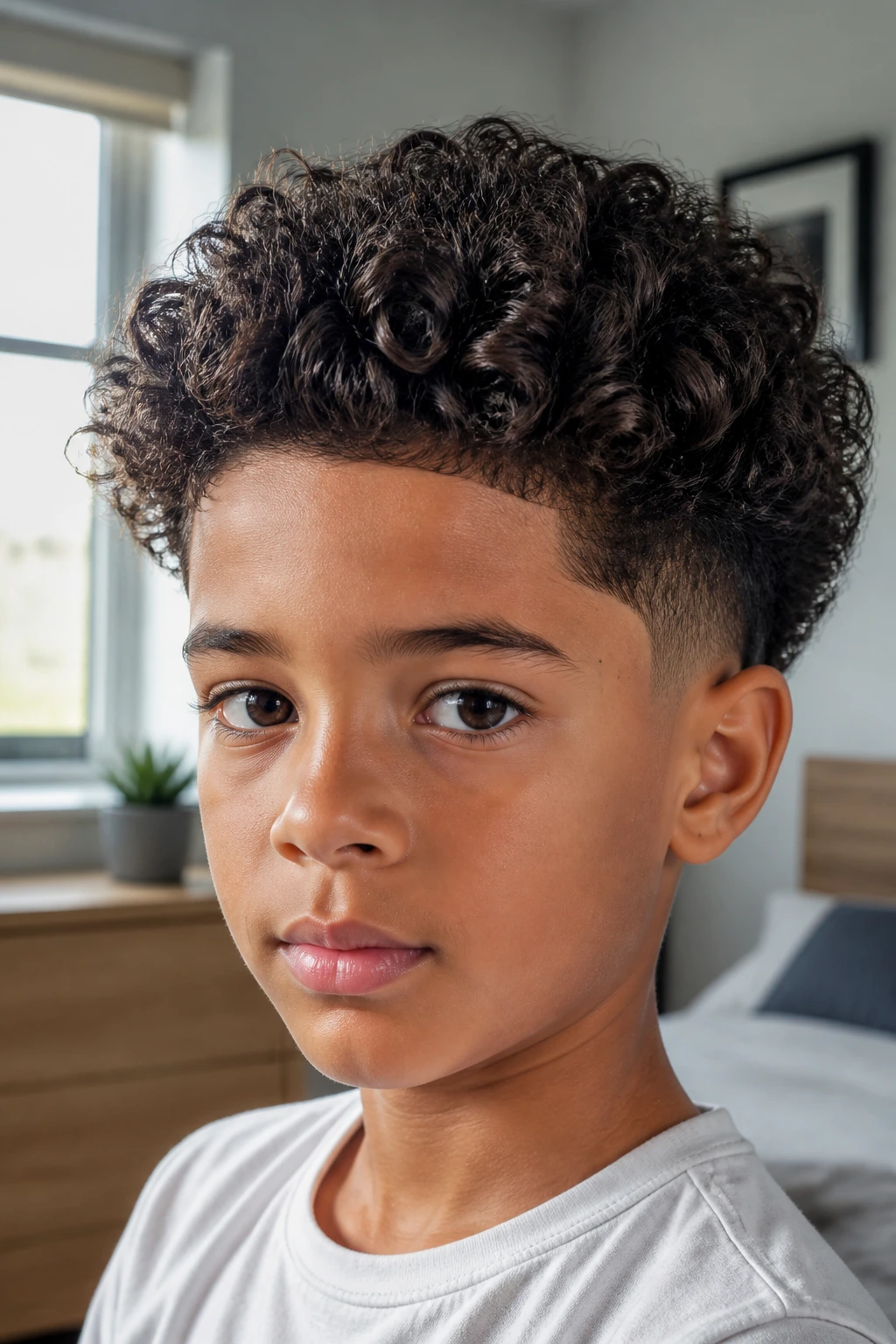
The crown does the work here. The top stays longer and fuller through the back half of the head, while the low taper trims the edges underneath so the haircut doesn’t spread outward. It suits kids with dense curls that need room to breathe.
This style is good when the child’s hair pattern changes across the head. Some kids have tighter curls at the crown and looser ones at the front, and a longer crown fade lets the barber balance those differences instead of forcing everything to match. That’s a more honest cut. And usually a better one.
Ask for even weight removal, not a shaved-down shape. The idea is to lighten the top just enough so it falls cleanly, not so much that the crown turns thin.
17. Braids and Curls with a Low Taper Fade
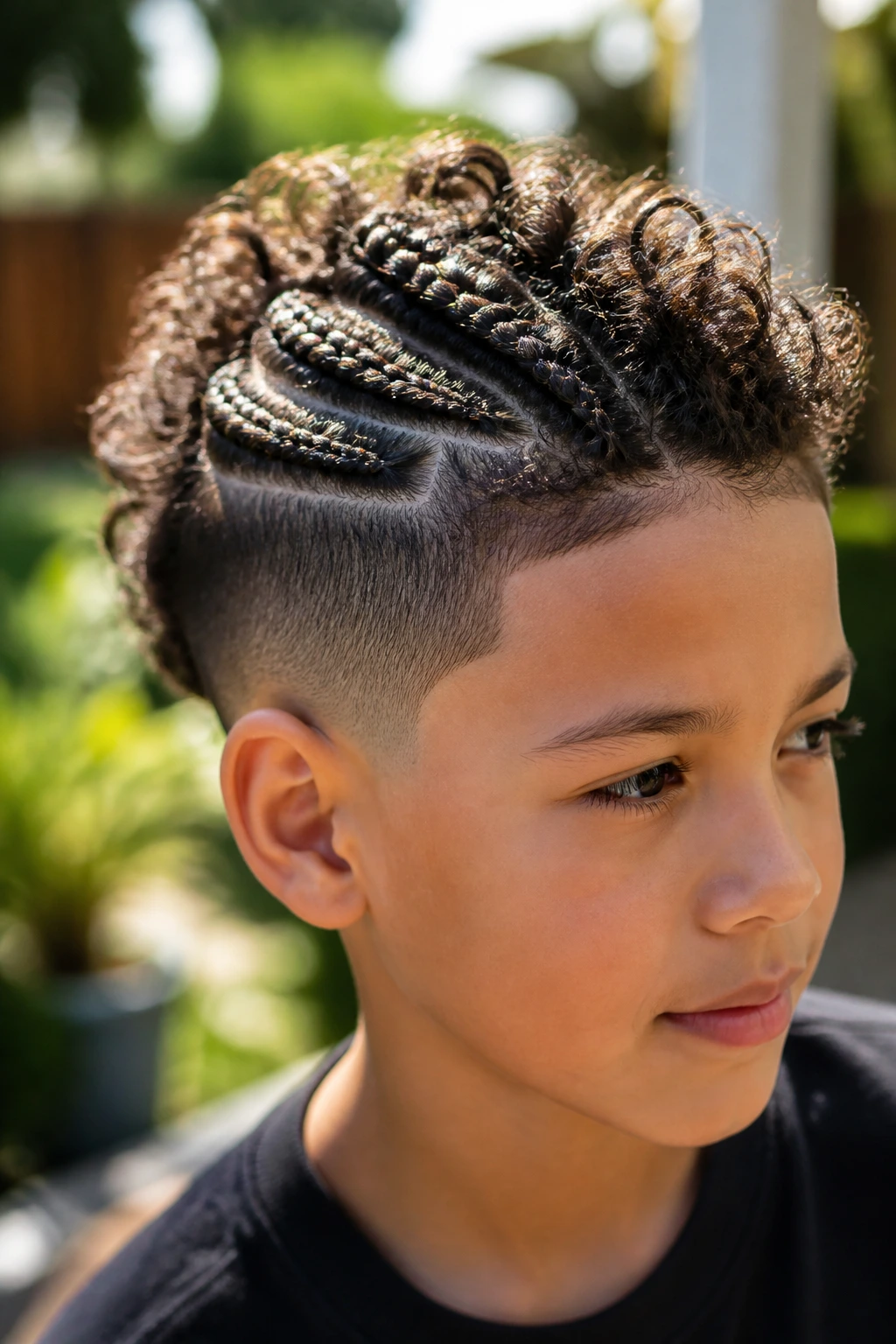
Can you mix braids with a taper and still keep the curls visible? Yes, and that’s part of the appeal. Small braids or braided sections on top, paired with a low taper around the sides, let the child wear texture in two directions at once.
This cut is useful when the hair is long enough to braid but the family still wants a clean outline. The taper keeps the neckline fresh, and the braids help control tangles on the top. If the braids end in curls, you get a bit of movement at the ends too, which keeps the style from feeling rigid.
The catch is maintenance. Braids need care at the scalp, and kids should not go too long between moisture sessions. Dry braids can get itchy fast, especially around the edges.
18. Scissor-Soft Natural with a Low Taper Fade
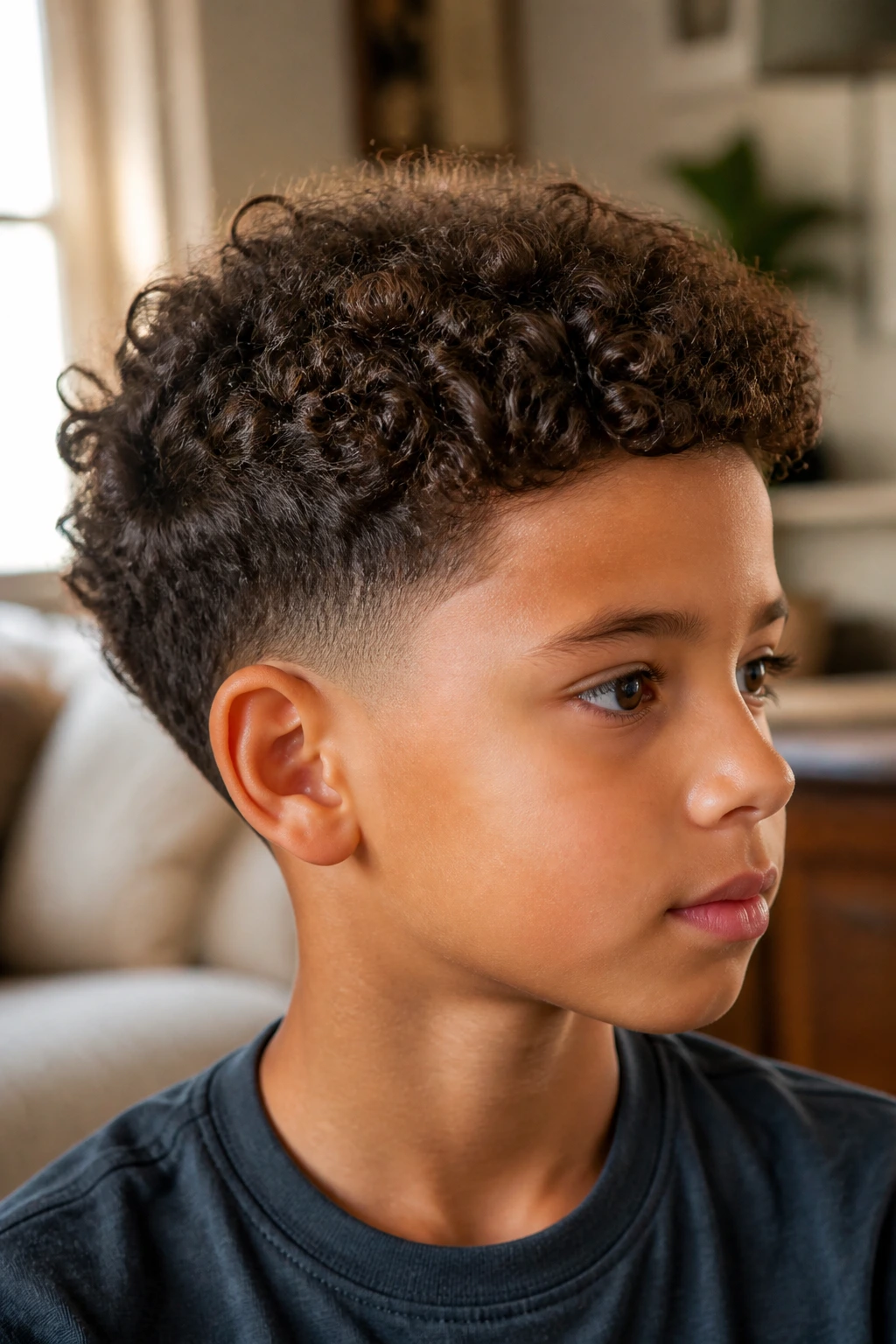
A scissor-soft natural is the version I’d choose for families who don’t want the haircut to look carved. The barber uses scissors to shape the curls on top, keeps the taper low and gentle, and avoids the kind of sharp edge work that can make curly hair look too severe.
This style sits somewhere between “done” and “natural,” which is exactly why it’s so useful. The child still looks groomed, but the haircut doesn’t announce itself from across the room. If the curls are dense, the scissor work helps remove bulk without destroying the pattern.
I’d call this the best all-purpose option for kids with sensitive scalps, mixed curl textures, or parents who hate overstyled hair. It’s soft on purpose. Not sloppy. Soft.
Why the Low Taper Wins on Curly Hair
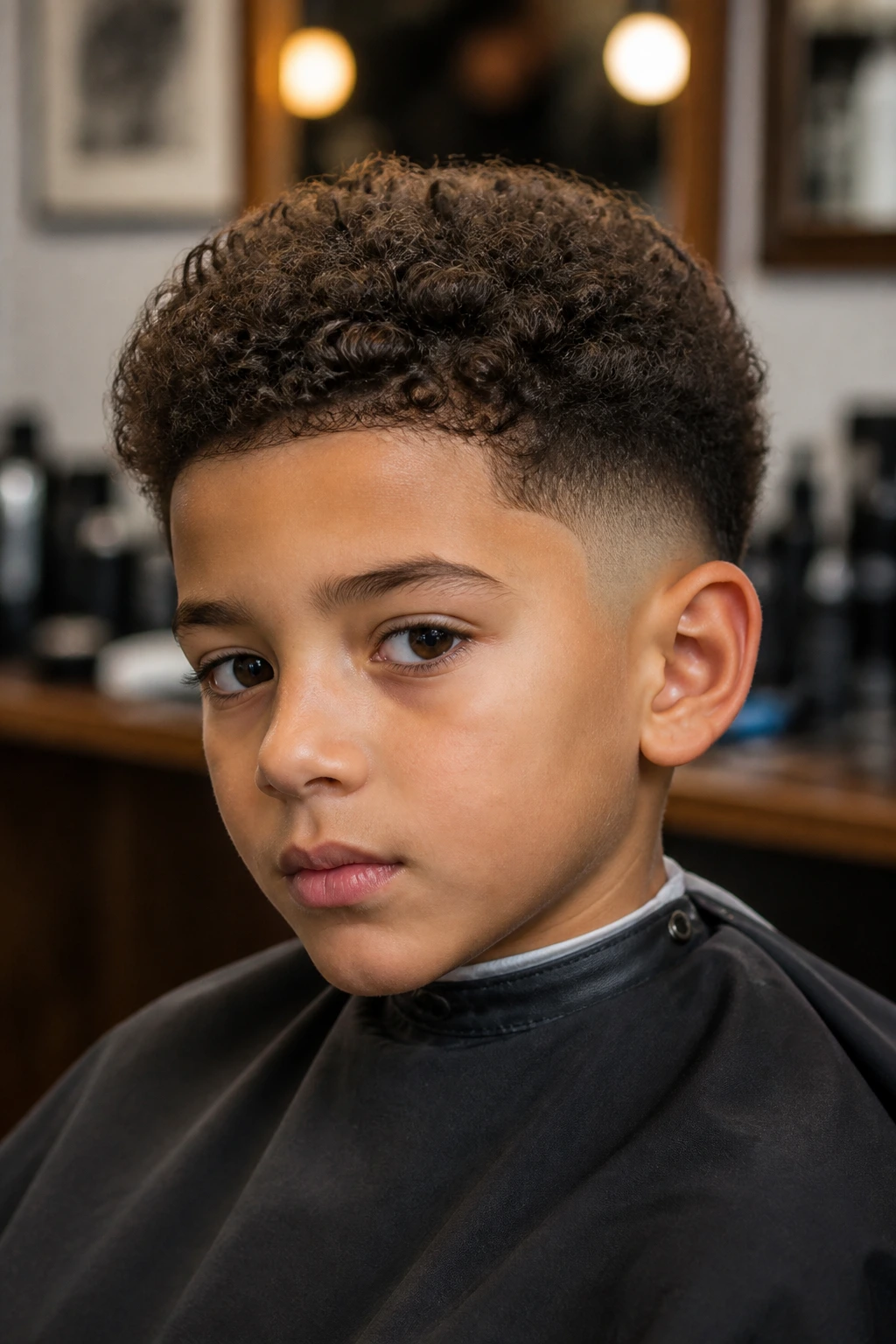
A low taper works because it respects where curly hair naturally wants to expand. The fade stays low around the ears and nape, which means the curl mass on top can stay round, tall, or forward-swept without fighting a high gradient on the sides. That sounds technical, but you see it immediately in the mirror: the haircut keeps its shape longer because the bulk is where the curls already want to live.
Curly hair grows out in a messy, uneven way if the fade starts too high. The sides can become the first thing people notice, and once that happens, the haircut starts looking bigger than the child. A low taper delays that moment. It also makes the neckline easier to clean up at home, which is a blessing if the barber chair visit is not happening every two weeks.
There’s another quiet advantage. A low taper lets you switch styles without changing the whole cut. The same base can support a fringe, a side part, twists, a rounded afro, or a longer top with more weight in the crown. That flexibility is why barbers who know curly hair often lean low before they lean dramatic.
What to Tell the Barber Before the Cape Goes On
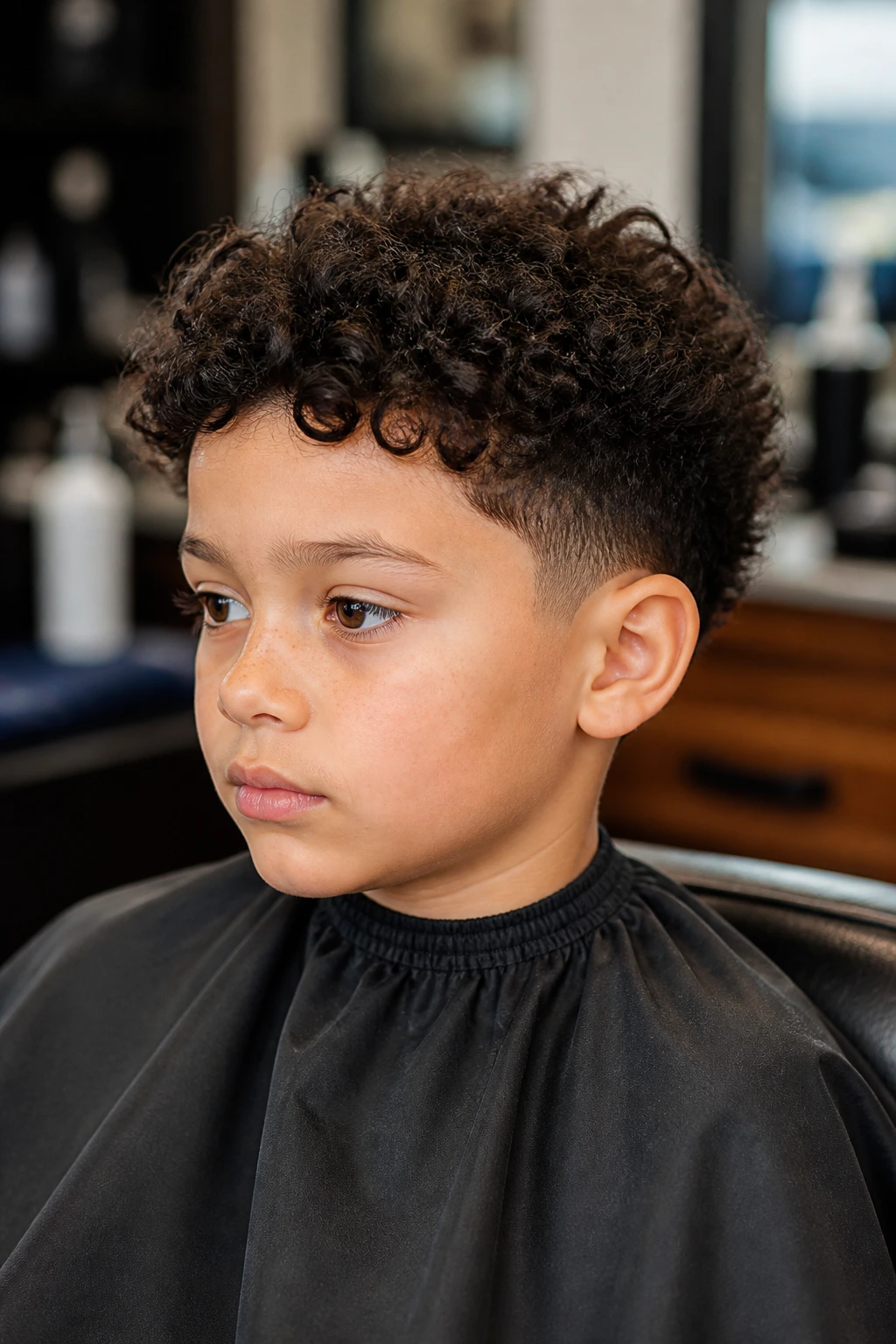
The best haircut conversations are short and specific. Don’t say “make it nice” and hope for telepathy. Say you want a low taper around the sideburns and nape, keep the top length for curl shrinkage, and avoid taking the fade too high into the crown. If you want a lineup, say whether you want it soft or sharp. That little choice changes the whole feel of the cut.
Bring one reference photo if you can, but choose one that matches the child’s curl type. A photo with loose waves won’t tell a barber much if your kid has tight coils. Better to point at the things that matter: where the taper begins, how full the top stays, and whether the front should be brushed forward, parted, or left free.
Fade Height: Ask for a true low taper, not a mid fade. The difference is visible around the temples and neckline, and it’s the difference between tidy and exposed.
Top Length: Leave enough length for shrinkage. Curly hair often needs more room than straight hair to look the same once it dries.
Edge Shape: Soft for younger kids, sharper for older ones who can handle more upkeep. No mystery there.
Around the Ears: Keep the blend clean but not shaved into a tunnel. A soft curve ages better as the hair grows.
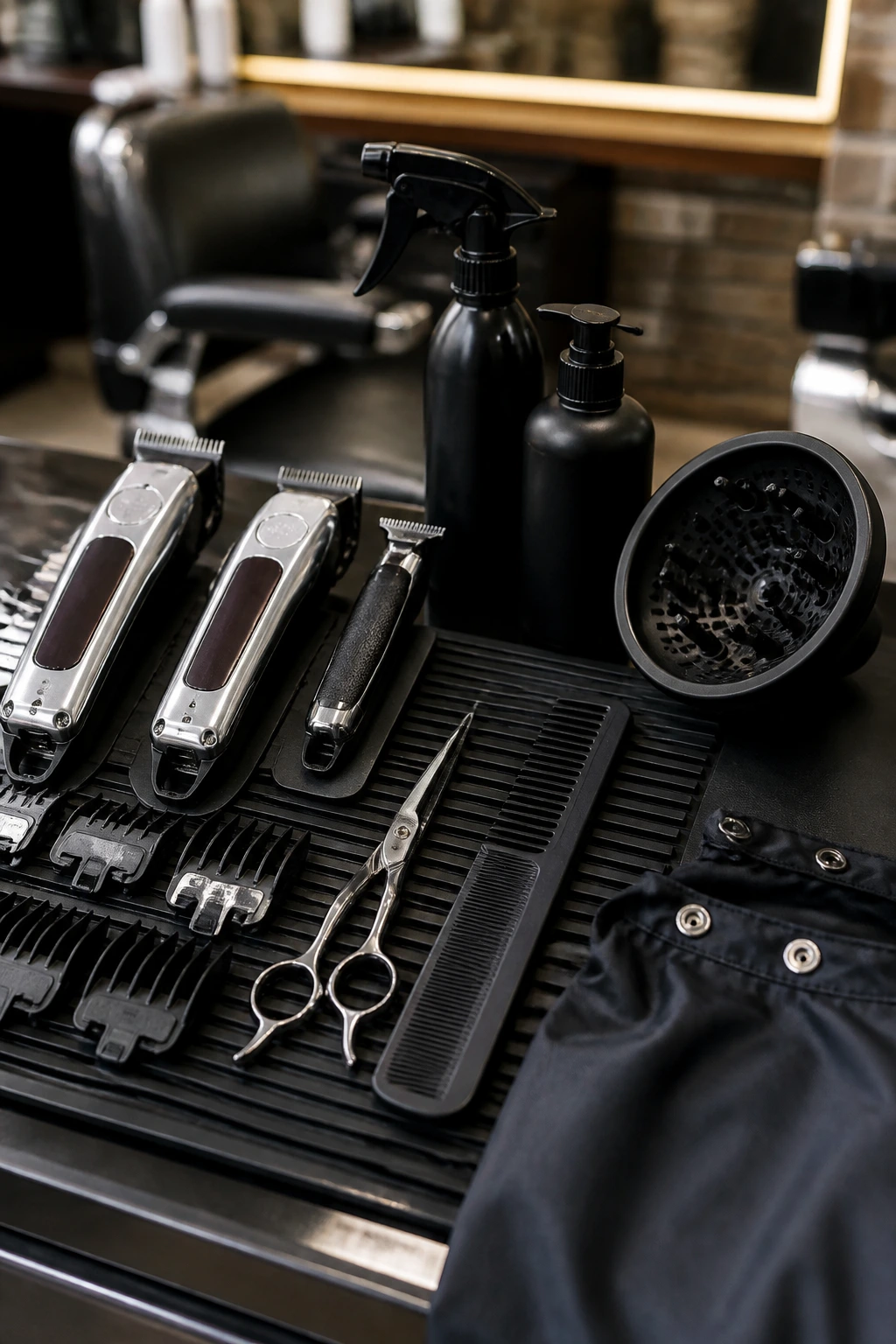
The Barber Toolkit That Makes These Cuts Easier
-
Good clippers with multiple guards: The low taper usually needs a smooth blend from short to shorter, and guard control matters more than raw power.
-
Detail trimmer: Useful for the neckline, temple cleanup, and soft edge work around the ears.
-
Sharp barber shears: Curly tops behave better when the barber can remove bulk with scissors instead of flattening the shape with clippers.
-
Wide-tooth comb: Helps separate curls gently so the top can be shaped without turning into frizz.
-
Spray bottle with water: Curly hair is easier to read when it’s lightly damp, not soaked.
-
Curl cream or leave-in conditioner: Keeps the hair pliable while styling and makes the shape easier to see.
-
Diffuser attachment: Handy if you want the curls to dry with less frizz and more definition.
-
Cape or towel with neck closure: Little kids squirm, so a snug setup keeps clipped hair off the collar.
How to Choose the Right Curl Pattern, Length, and Taper
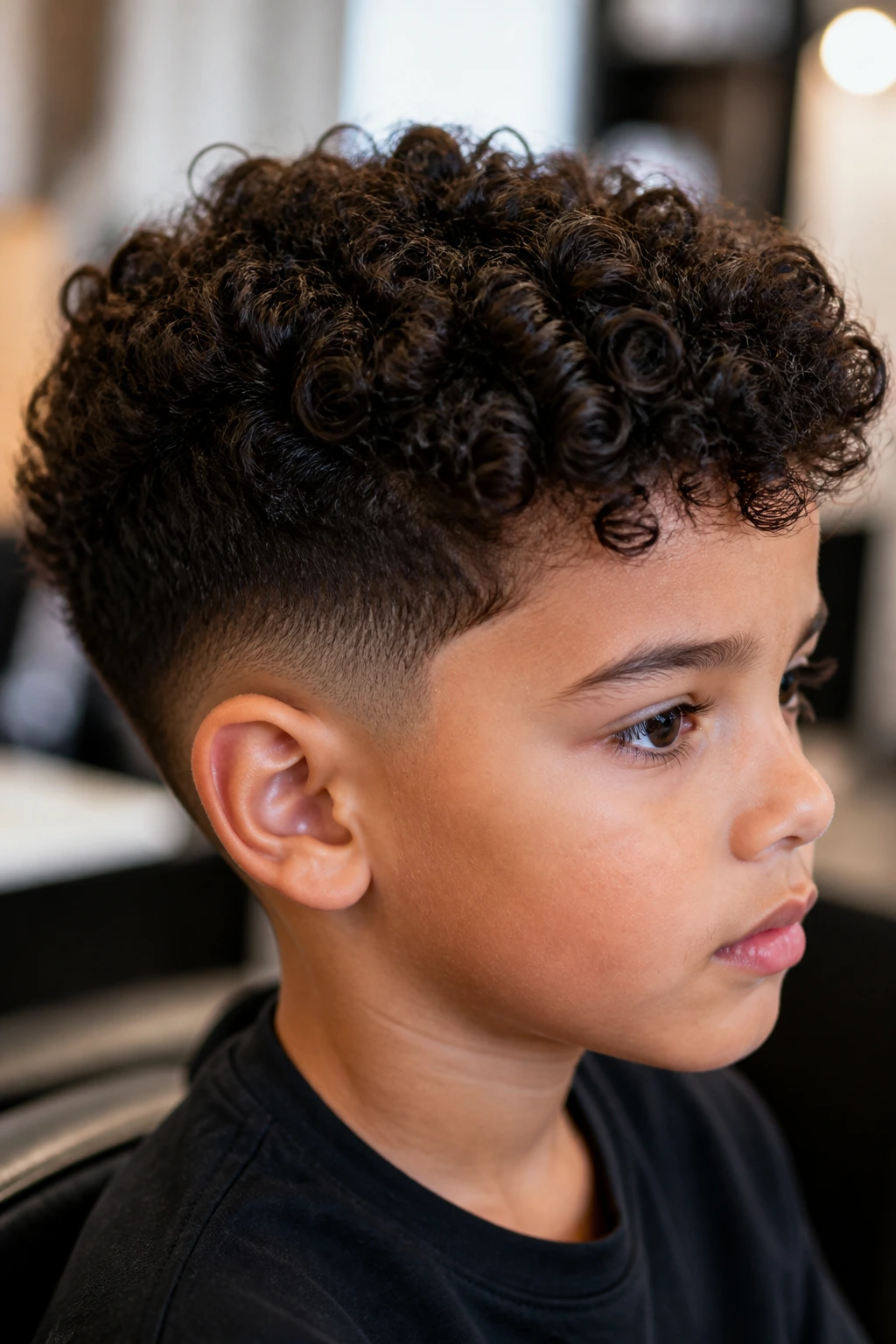
Not every low taper fade should be cut the same way, because curls are not one thing. Loose curls can handle more movement on top and still lie neatly. Tight coils usually need a bit more length to show shape. If the hair shrinks a lot, ask the barber to leave extra room on the crown and front, then check the shape after it dries.
A softer taper is usually safer for younger kids or sensitive hairlines. I’d avoid carving the edges too hard unless the child’s hair grows evenly and the family is prepared to keep up with it. The same goes for hard parts. They look clean on day one, then they ask for maintenance more often than parents expect.
If the child hates hair routines, prioritize shape over detail. A rounded top with a low taper is easier to maintain than a highly styled version with a sharp line and a product-heavy finish. If the child likes to be styled, go ahead and lean into a side part, fringe, or twist pattern. The haircut should fit the morning routine, not the other way around.
How to Style and Wear These Cuts at Home
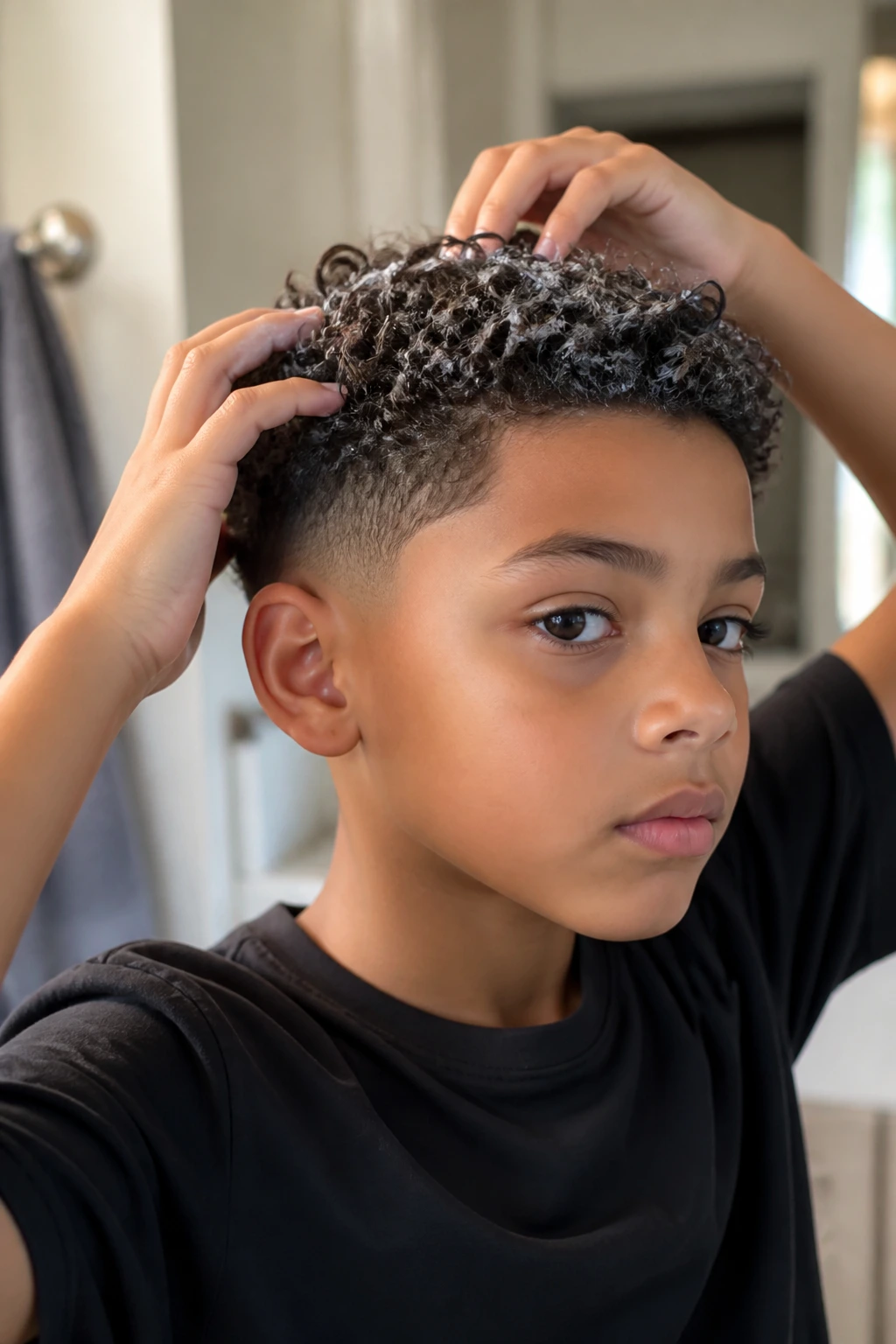
A curly low taper fade does not need a full sink-side ceremony. Most mornings, dampen the top with water, work in a small amount of leave-in conditioner, and let the curls settle with your fingers. If you use a brush, use it lightly. Curly kids usually need shaping, not scrubbing.
Best Finish: On the tighter styles, a light curl cream or mousse gives the top enough control without a crunchy shell. On looser styles, a tiny bit of leave-in is often enough.
School-Morning Shortcut: Refresh the front and temples only. That’s where the haircut starts looking tired first, and a quick cleanup there can buy another day.
Photo Day Move: Use a diffuser on low heat for three to five minutes, then stop. Overdrying is what makes curls puff outward and lose their cleaner shape.
At-Home Line Control: A small trimmer can clean the neckline between visits, but keep a very light hand. One overconfident pass can ruin a taper faster than a week of growth.
Common Mistakes That Ruin the Shape
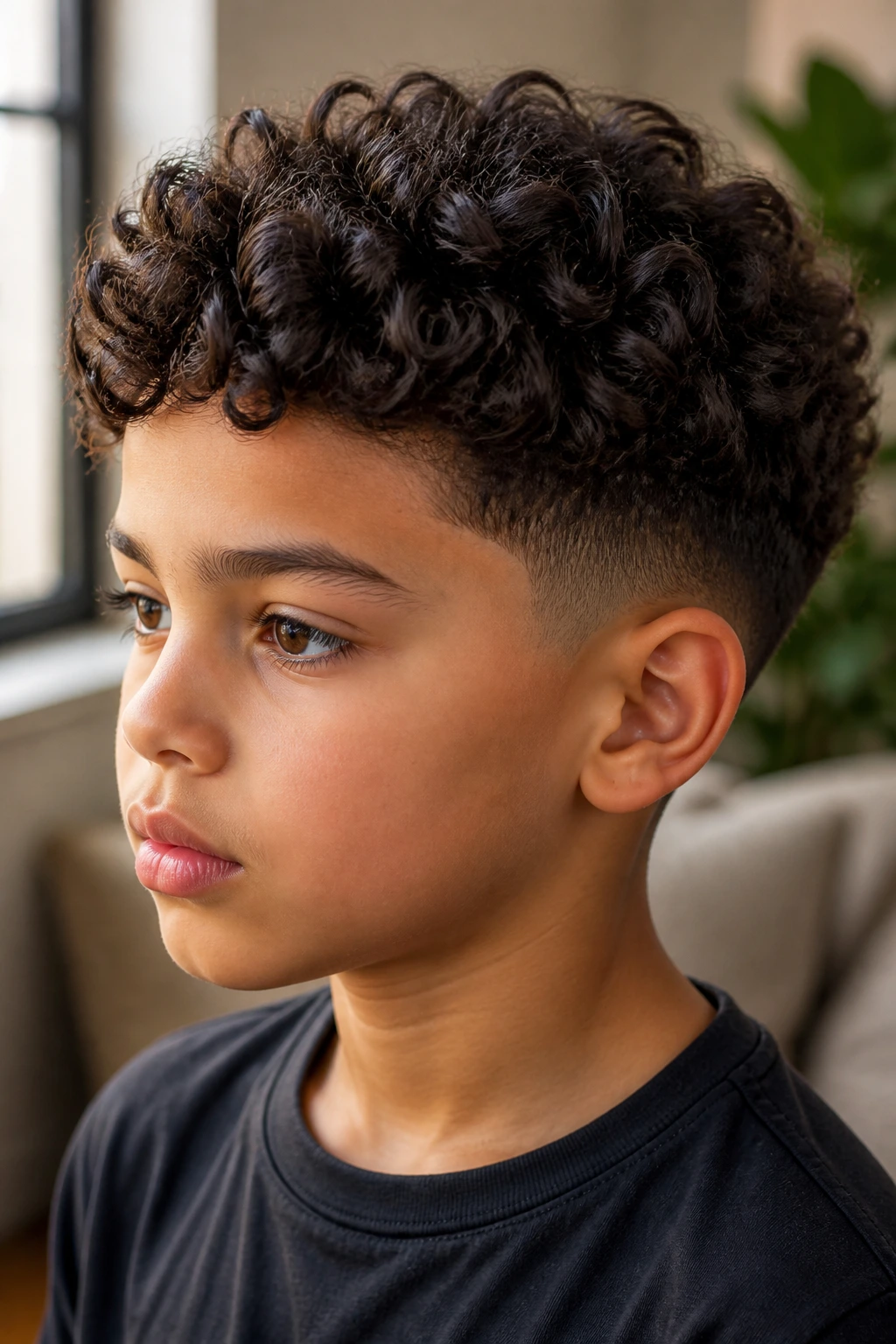
One of the biggest mistakes is pushing the fade too high. The cut stops being a low taper and starts eating into the curl volume. The top then has to do all the visual work, which makes the haircut look top-heavy. The fix is simple: keep the lowest blend near the ear and nape, and do not let the fade climb too fast.
Another problem is cutting curls too wet and too short. Wet hair stretches. When it dries, it shrinks. If the barber forgets that, the top may end up shorter than expected and the child gets a tight, puffed shape that needs weeks to settle. A careful barber checks curl behavior as the hair dries or leaves a little extra length in reserve.
Heavy gel is another one I’d avoid unless the style truly needs it. It can make curls stiff, dull, and flaky by lunchtime. A lighter cream or mousse is usually enough for kids. If the hair needs more control, add product in small amounts instead of glopping it on from the start.
And don’t ignore the neckline. A low taper can look clean on day one and scruffy by day six if the nape is left alone. A quick cleanup every week or two keeps the outline from drifting.
Different Ways to Wear the Same Cut
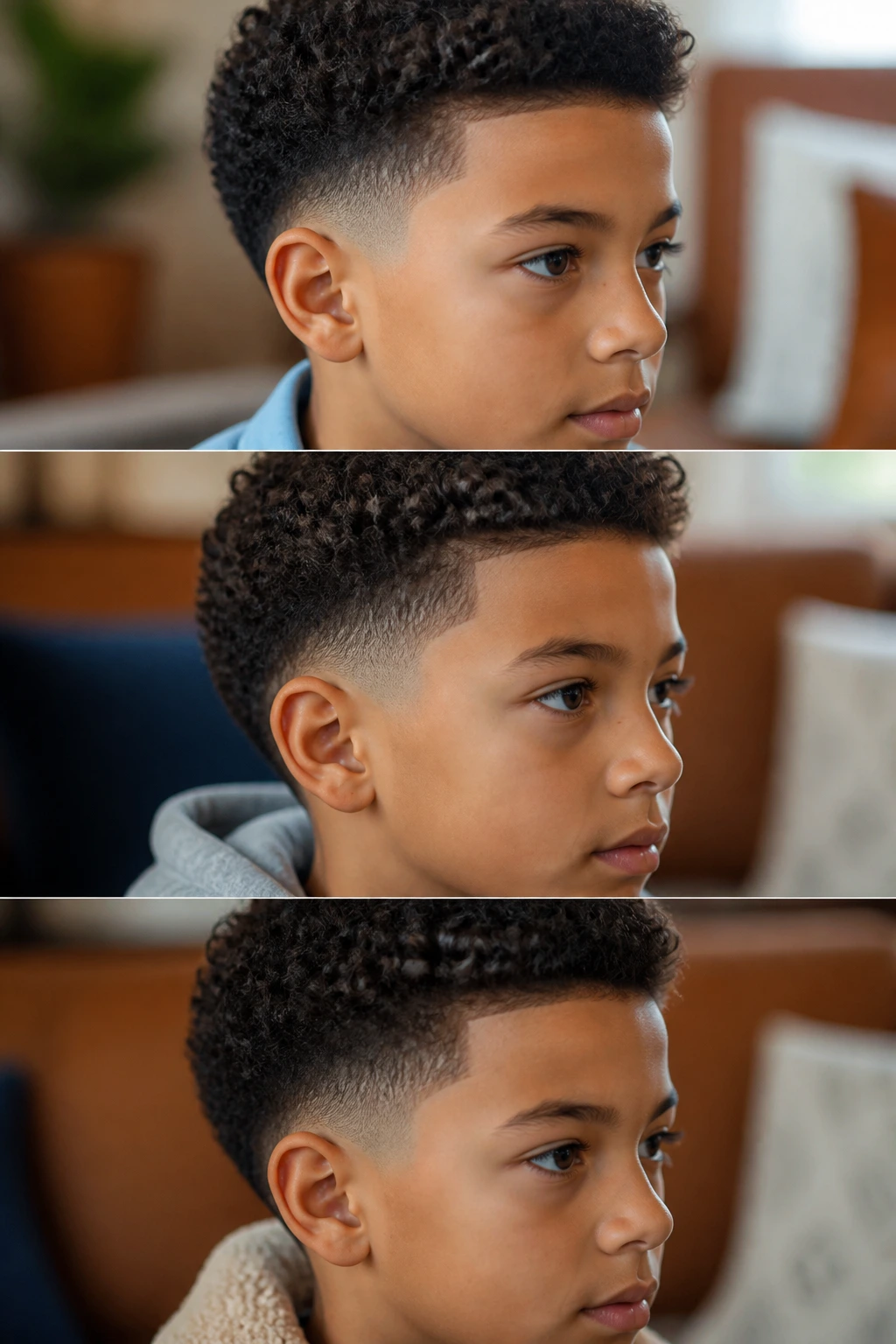
The Soft Office-Photo Version: Keep the top rounded, the edges gentle, and the taper low and quiet. This fits kids who need to look neat without looking styled within an inch of their lives.
The Play-Ready Version: Leave the top a little looser and let the curls fall where they want. Clean the neckline, keep the sides tidy, and skip the hard part entirely.
The Texture-Forward Version: Use sponge twists, a curl cream, and a slightly taller top. This version shows off the curl pattern and works well when the child likes more definition.
The Minimal-Work Version: Go shorter on top, keep the taper soft, and avoid product-heavy finishes. This is the one for families that want a haircut, not a routine.
The Statement Version: Add a hard part, a line-up, or a mini frohawk shape. Use this when the child wants the haircut to look more styled and the upkeep won’t be a hassle.
How to Keep a Low Taper Looking Fresh Between Cuts
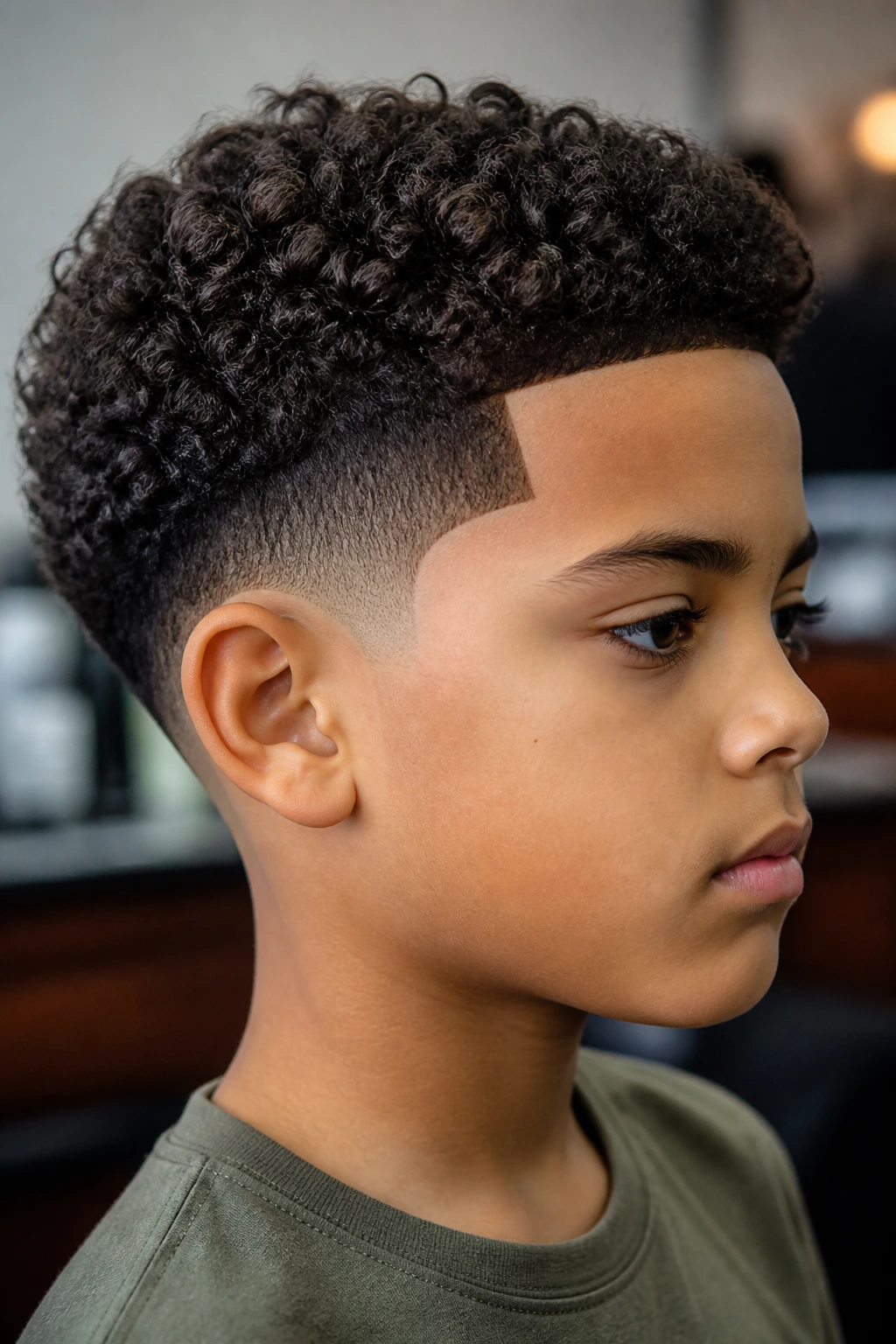
The haircut starts to drift at the edges first. That’s normal. The low taper loses its crispness around the neck, ears, and temples long before the curls on top stop looking good. A quick cleanup at the neckline every one to two weeks can stretch the life of the cut without turning it into a full barber visit.
Wash the hair based on how much product you use, not on a random schedule. If you’re using curl cream or mousse, a gentle wash every few days keeps buildup from weighing the curls down. Follow with a leave-in conditioner while the hair is still damp. Dry curls without moisture tend to frizz at the ends and puff at the sides, which makes the taper look less sharp.
A satin pillowcase or bonnet helps too. It cuts down on friction overnight, and that matters more on curly hair than people think. Less friction means less wake-up frizz and fewer weird bends at the front. If the child refuses a bonnet, even a satin pillowcase is worth it.
For most kids, a low taper stays at its best for about two to three weeks before the blend starts softening. Some can push it longer. Some can’t. Hair grows at its own pace, rude as that may be.
Questions Parents Actually Ask at the Chair
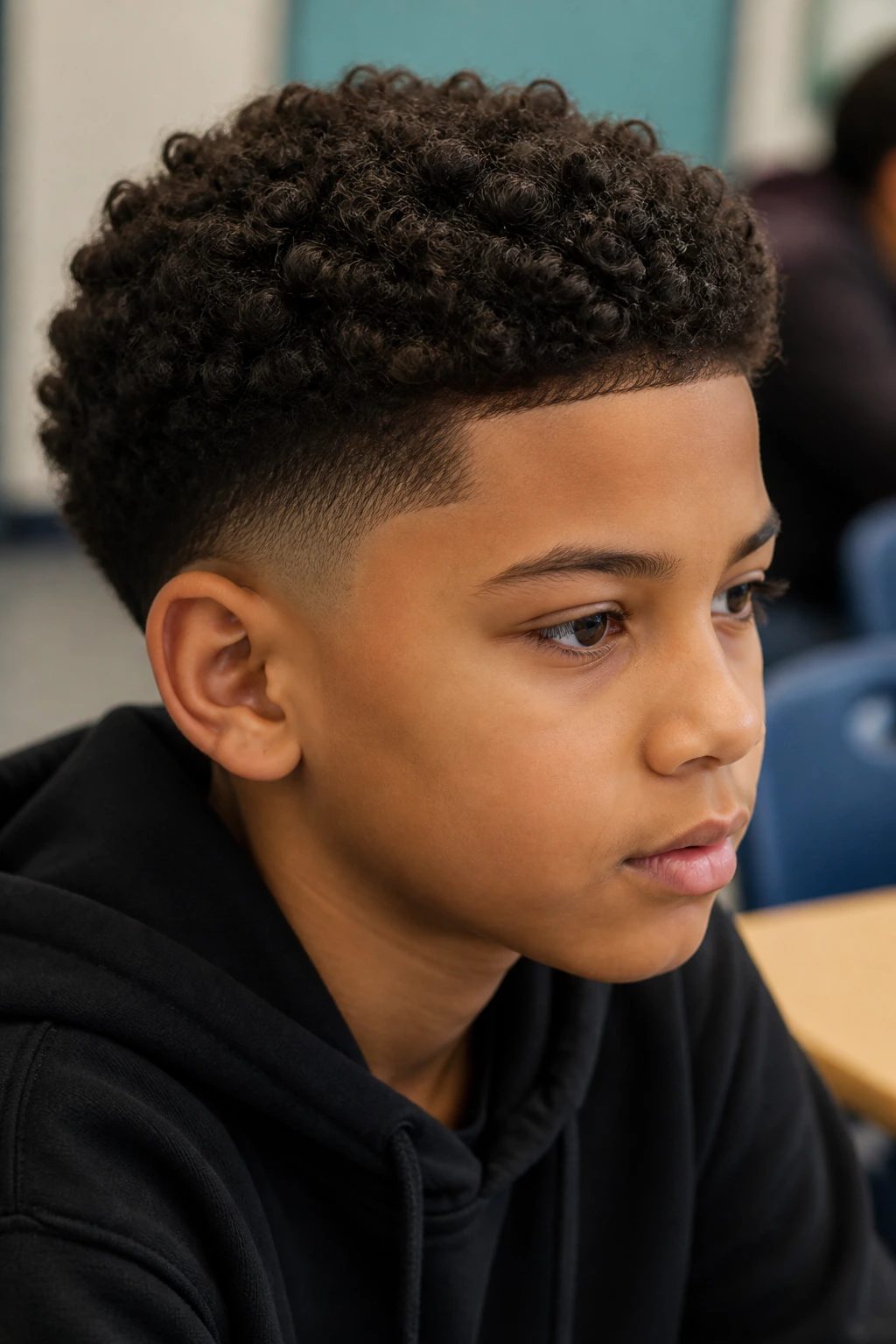
How short should the top be for a low taper fade on curly hair?
Long enough for the curls to bend. If the top is cut too close, the texture can pop straight up and lose shape. Most curly tops need a little extra length compared with straight hair because of shrinkage.
Can this cut work on tight coils and loose curls?
Yes, but the top should be handled differently. Tight coils usually need more length and more moisture, while loose curls can sit shorter and still show movement. The taper base stays the same; the top changes.
Should I ask for a skin fade?
Only if you want more contrast and you’re prepared for faster grow-out. For most kids, a true low taper is softer and easier to keep neat. Skin on the sides can look sharp fast, but it also shows regrowth fast.
What if my child hates product?
Choose a shorter top with a clean shape and skip the high-maintenance styling. A little water and a tiny bit of leave-in conditioner might be enough. Not every curly haircut needs gel.
How often should the edges be touched up?
Every one to two weeks is a comfortable rhythm for many children, though some can go longer. The neckline and around the ears usually show growth first. That’s where a quick cleanup helps most.
Can a barber cut curly hair dry?
Yes, and sometimes dry cutting gives a better read on curl shrinkage. Many barbers prefer slightly damp hair for shaping and then check how the curls settle as they dry. The method matters less than whether the barber understands the curl pattern.
What if the crown sticks up oddly?
That’s usually a weight or length issue, not a bad haircut by default. Ask for a little more scissor shaping at the crown and keep the top balanced. Cowlicks and growth patterns need accommodation, not punishment.
Is a low taper fade too grown-up for younger kids?
Not if the edges stay soft and the top keeps its natural texture. The haircut can look neat without looking adult. In fact, the lower fade often suits younger faces better because it keeps the outline gentle.
The Cut That Gives Curls Room
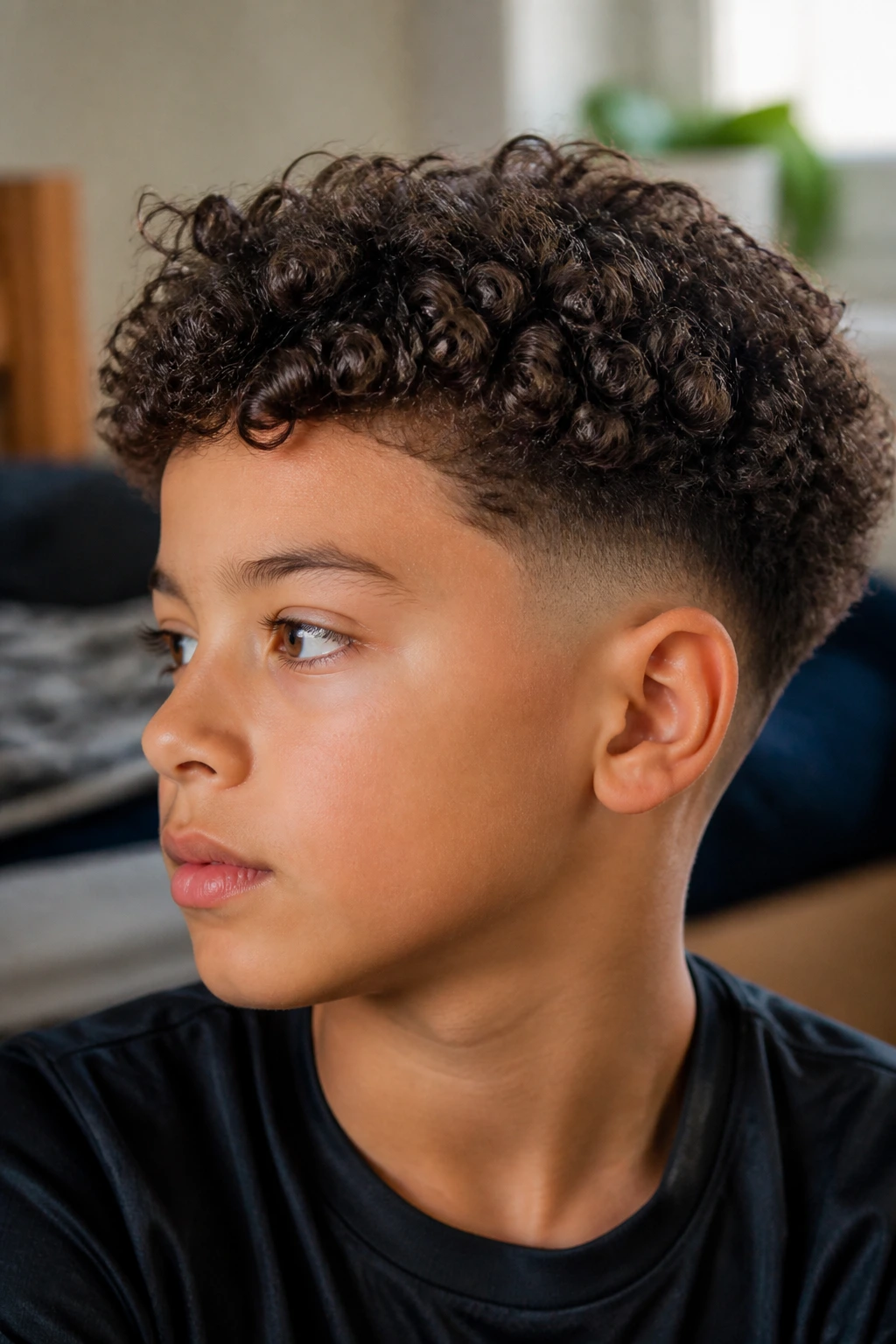
The best low taper fades for kids with curly hair have one thing in common: they leave the curls alone just enough to behave. That’s the sweet spot. Enough structure to keep the neckline, temples, and sideburns clean. Enough length on top to let the hair do what curly hair does best.
I’ll take that over a forced, overcut style almost every time. A good taper doesn’t fight the curl pattern. It frames it. And once you see that balance working on a child’s head — especially after a few days of real-life wear — it’s hard to go back to cuts that try too hard.
The next time you’re in the barber chair, ask for the low fade first and the drama later, if at all. The haircut will grow out better, the morning routine will get easier, and the curls will still look like curls. That’s a trade worth making.