



Thick hair can be a gift until it isn’t. One morning it sits neatly. The next, it’s flaring over the ears, pushing up at the crown, and turning every comb stroke into a wrestling match. A boys’ undercut fixes that by stripping away the heavy sides and letting the top do something on purpose instead of everything by accident.
The cute versions are the ones that keep a little softness. Not too severe. Not shaved into a hard shell. When the top has texture, a fringe, or a brushed-up front, the whole cut looks lighter and younger, which is exactly why these styles work so well on thick hair. The bulk comes off. The shape stays interesting.
And thick hair helps more than people think. It holds a line, keeps volume, and gives the barber something to shape instead of fight. A few good snips in the right places — especially around the temple area and the ends of the top — make the difference between a boxy cut and one that falls cleanly. The 18 cuts below lean into that strength instead of trying to flatten it.
Why These Undercuts Work So Well on Thick Hair
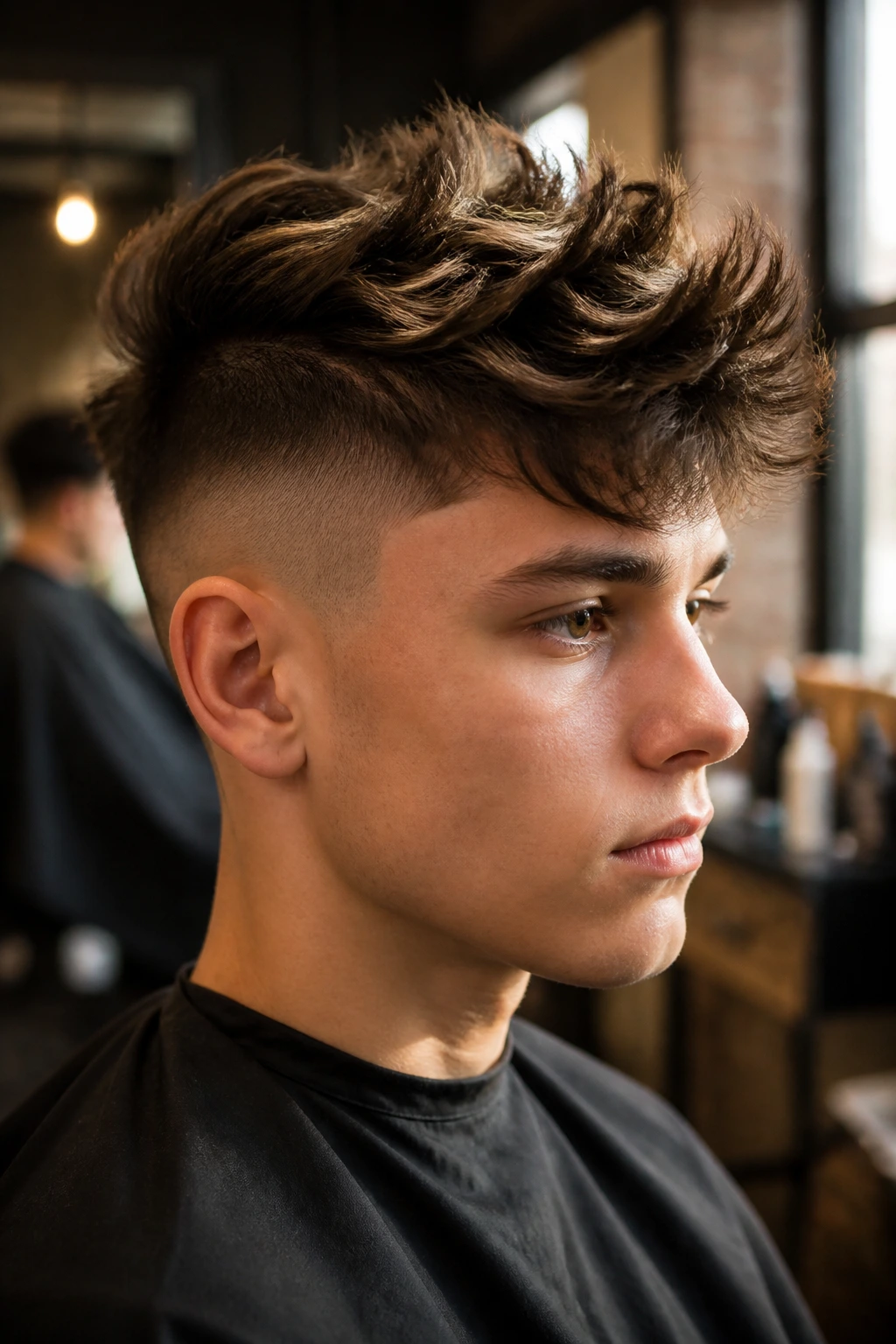
- Bulk comes off where it causes trouble: Thick hair tends to puff out at the sides first, so a tight undercut clears the ears and makes the head look slimmer from the front and the back.
- The top gets to keep personality: A little length on top — even 2 to 4 inches — gives room for texture, fringe, or lift, which keeps the cut from looking too clipped.
- Mornings get simpler: Most of these styles need a quick towel dry, a dab of matte clay, and maybe 30 seconds with a blow dryer. No marathon styling session.
- They grow out with less drama: Thick hair can look sloppy fast if the shape is too uniform. These cuts are built with contrast, so the grow-out phase usually still looks intentional.
- They work on straight, wavy, and curly hair: The sides can be kept cleaner while the top is adjusted for the hair’s natural bend, which matters more than the trendy name on the style.
1. The Classic Disconnected Undercut
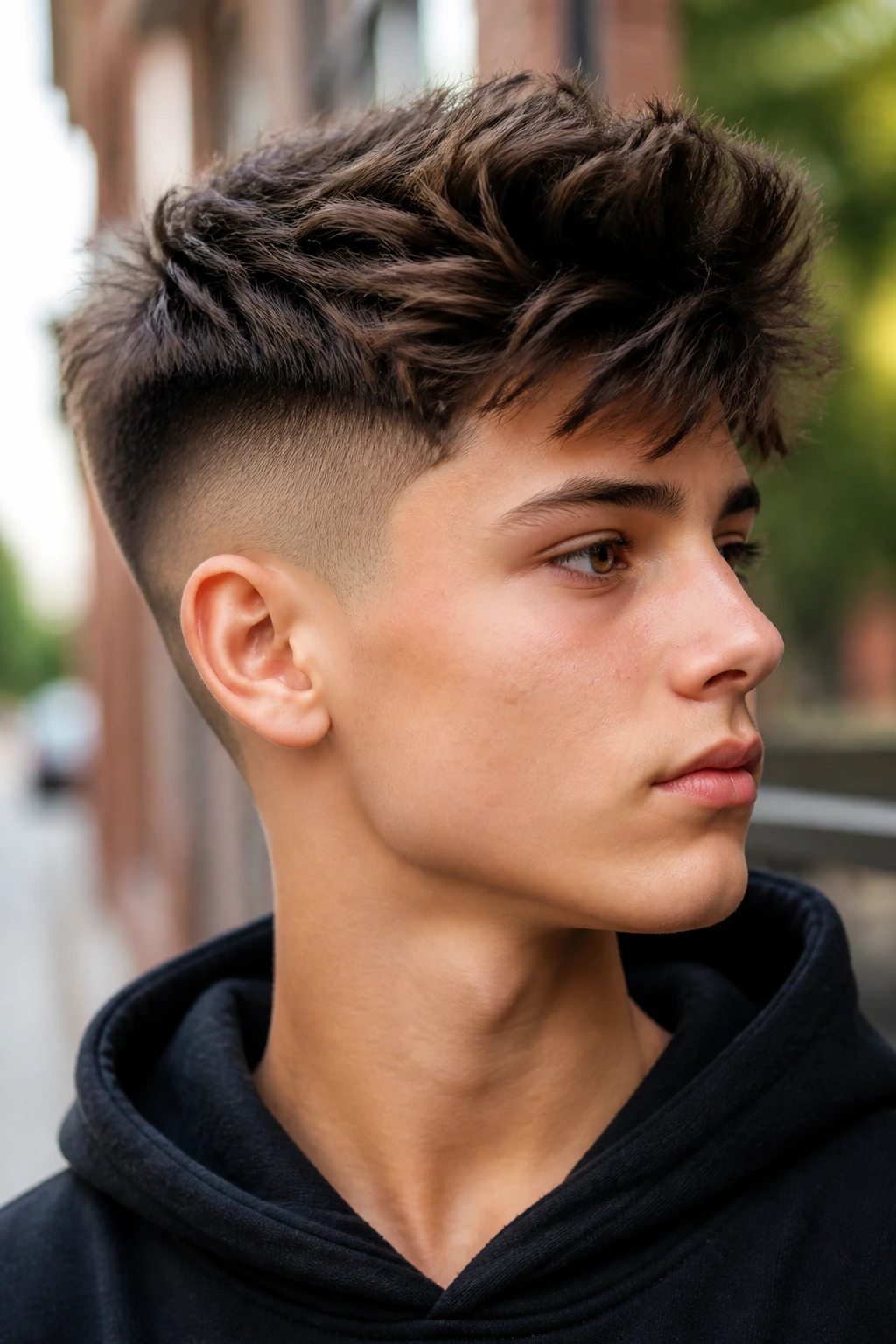
The classic disconnected undercut is the one that makes thick hair look organized without looking fussy. The sides are clipped short and the top is left longer, so the contrast is obvious the second the hair dries. On boys, it reads clean, a little bold, and still soft enough if you keep the top textured instead of shellacked flat.
Why It Works on Thick Hair
Thick hair has enough body to hold that disconnected shape without collapsing by lunchtime. The barber can take the sides down with a #1 or #2 guard, then leave 3 to 5 inches on top so the cut has room to move. If the top is blunt at the ends, it can sit like a block; point-cutting or light texturizing solves that fast.
How to Wear It
Brush the top back with a little volume at the front, or push it slightly to one side for a softer look. A small amount of matte clay works better than shiny pomade here, because shine makes thick hair look heavier. If the top feels too puffy, the fix is usually more layering, not more product.
A clean neckline and tidy ears keep the cut looking sharp. That’s the part many parents notice first. The shape can stay simple. It does not need extras.
2. The Textured Crop Undercut
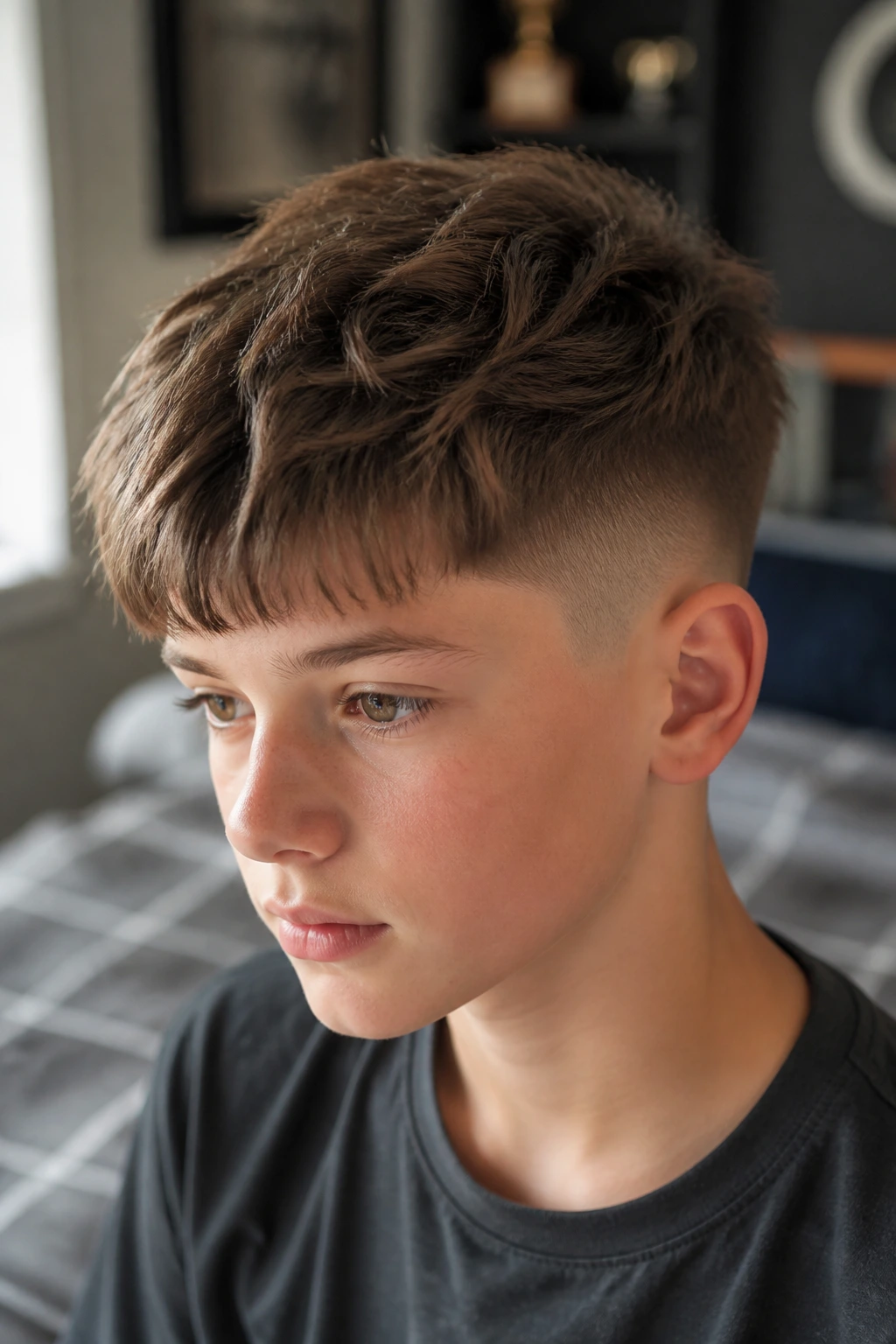
This is the cut for thick-haired boys who need something cute, short, and low-drama. The textured crop keeps the fringe a little choppy and the top cropped close enough that it never balloons into a helmet. It has a rougher edge than the classic undercut, and that works in its favor.
A good crop on thick hair usually sits around 1.5 to 2.5 inches on top, with the front cut into a short, broken fringe. The barber should remove weight through the top with texture shears or point cutting, not just chop it straight across. Straight-across ends on thick hair tend to look stiff. Choppy ends fall better.
This cut suits boys who hate spending more than a minute on hair. Towel-dry, rub a pea-size amount of matte paste between the palms, and push the hair forward and slightly down. The result looks neat but not severe. For school, sports, and picture day, that balance matters.
3. The Side-Swept Fringe Undercut
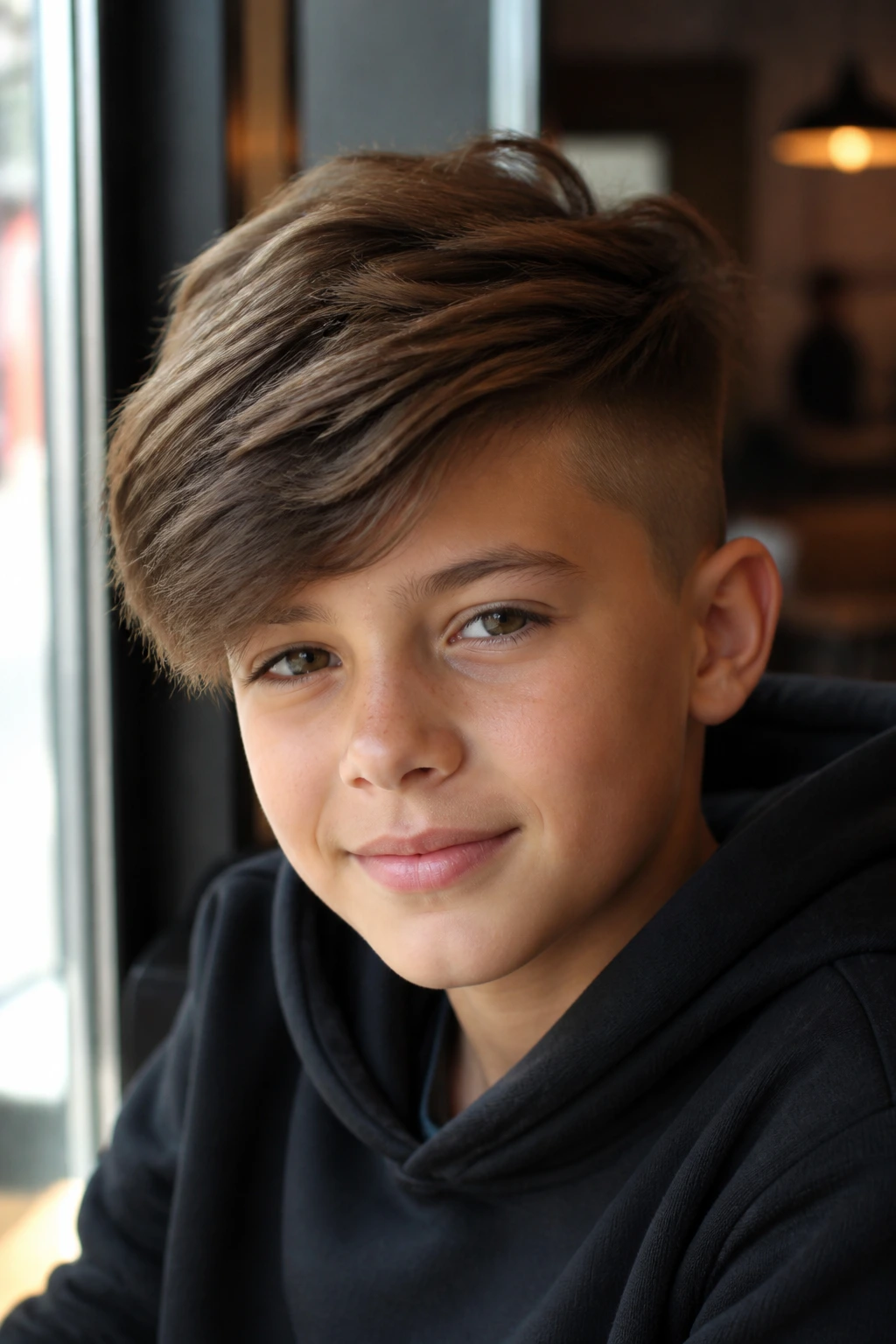
Why does this one work so well? Because thick hair gives the fringe enough weight to stay in place without hanging limp. The side-swept fringe undercut keeps the front soft and lets the rest of the top sweep diagonally across the forehead, which gives the whole cut a friendlier look than a hard, straight line.
Ask the barber for shorter sides with the top left long enough to sweep, usually 3 to 4 inches at the front and a little less toward the crown. That small length difference keeps the fringe from turning into one heavy curtain. The best version has movement, not a stiff flip.
How to Style It
- Blow-dry the fringe in the direction you want it to fall.
- Use a small round brush or your fingers to guide it.
- Finish with a matte cream if the hair is coarse, or a lightweight paste if it’s straighter.
The front should skim the forehead, not swallow it. That’s the cute part.
4. The Hard-Part Comb Over Undercut
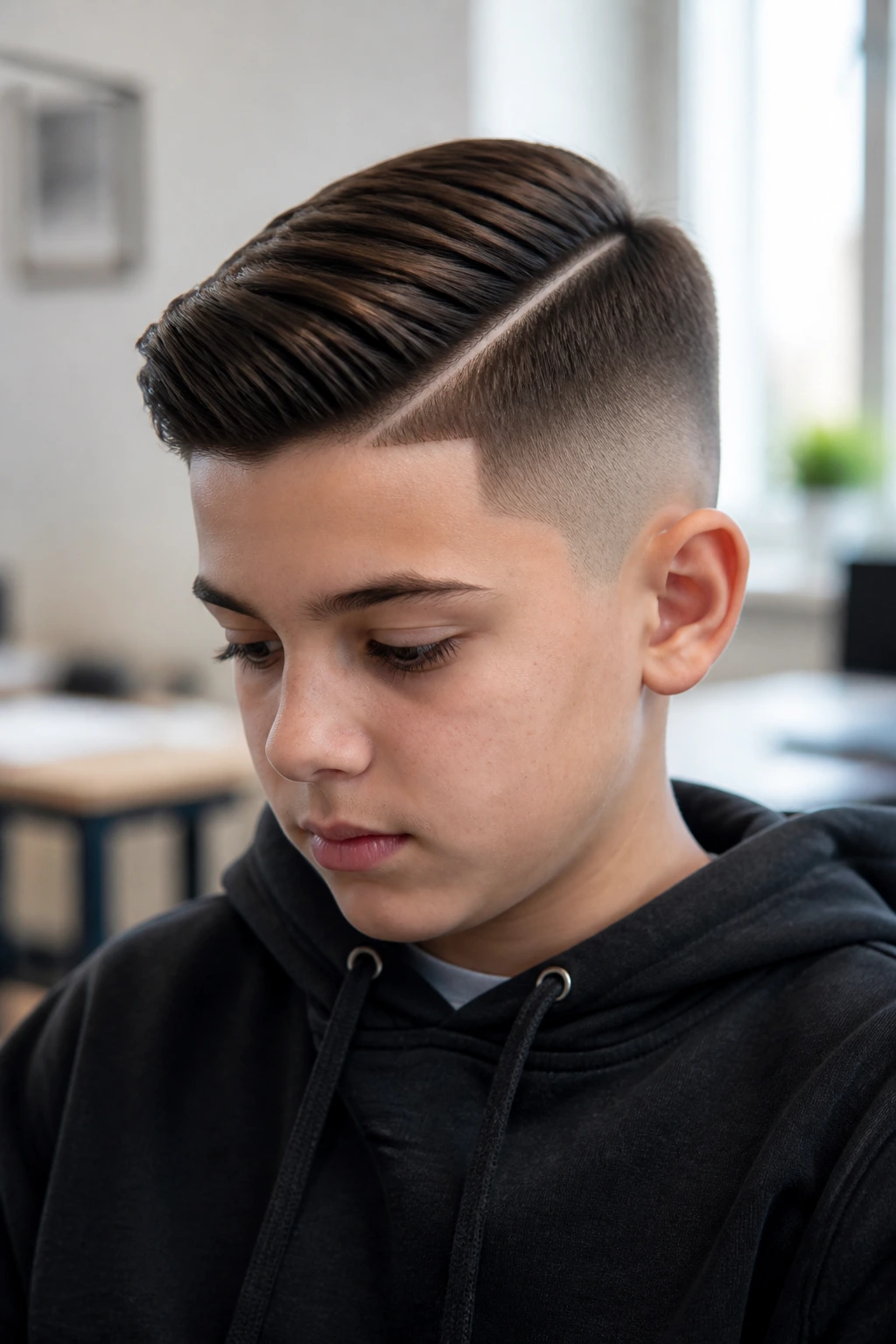
A hard-part comb over can look sharply dressed, but on thick hair it also solves a practical problem: it gives the hair a clear direction. Instead of fighting the natural bulk, the cut creates a clean line for the top to follow. The result is tidy, structured, and a little more polished than the softer styles.
The barber usually shaves a part line and keeps the sides clipped very short, often with a #0.5 to #1 guard or a tight fade. The top needs enough length — usually 3 to 4 inches — to lay over without poking up. If the top is too short, the part looks fake. If it’s too heavy, it will flip at the edges.
This cut works especially well when the hair is dense and straight. A small amount of pomade can help, but the better move is a blow dryer and a comb first, then a small amount of product. Otherwise the hair can look greasy and too flat.
It’s a nice choice when a boy wants something sharper for family events without going full adult slick-back.
5. The Curly Top Undercut
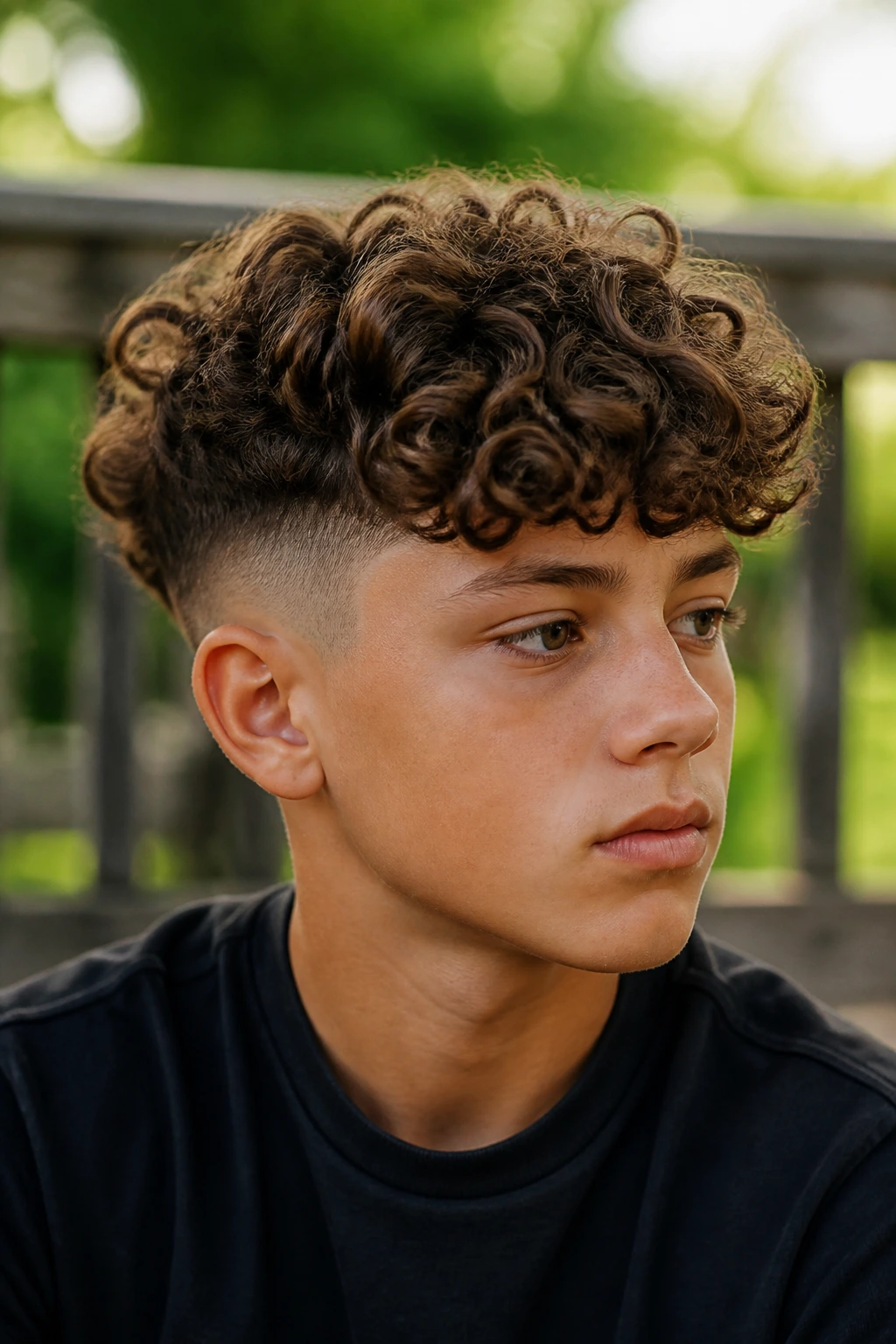
Curly thick hair and undercuts get along better than people expect. The short sides pull the shape in, while the curls on top keep the cut playful instead of severe. If the curls are left too long all the way around, they swell outward. Trim the sides short and the whole head suddenly makes sense.
The top usually needs 3 to 5 inches, depending on how tight the curls are. Coils need a little more length than loose curls because they shrink. The barber should avoid cutting the top too wet if the curl pattern springs up a lot; dry cutting or cutting with the curls in their natural shape gives a truer result.
For styling, skip heavy wax. Use curl cream or a light leave-in on damp hair, then scrunch it and let the curls set. If the top gets frizzy, a diffuser on low heat helps without blasting the curls apart. This cut looks best when the curls stay soft and touchable.
6. The Mini Pompadour Undercut
A pompadour does not have to look old-school or stiff. On a boy with thick hair, a mini pompadour can be cute because the front gets a bit of lift while the rest stays neat and controlled. The top rises at the front, then tapers back smoothly instead of sticking straight up.
Keep the top around 4 to 5 inches in the front and a little shorter toward the back. The barber should thin out the weight near the crown so the lift does not collapse into a heavy ridge. Thick hair loves to fight a pompadour if the top is left too bulky.
A quick blow-dry is the trick. Aim the dryer forward first, then back and up with a vent brush. Finish with a matte paste or low-shine cream. Too much shine makes the style look hard and dated. The mini version works because it keeps the shape light enough for a kid’s face.
7. The Messy Quiff Undercut
The messy quiff is the friendlier cousin of the pompadour. It still has lift at the front, but it doesn’t demand a perfect shape. Thick hair is useful here because it gives the quiff enough body to stand up without needing a mountain of product.
Usually the top sits around 3 to 4 inches, with the sides clipped short and the front left longest. The barber can add texture through the top so the quiff separates a little instead of forming one solid wave. That separation is what keeps it from looking too adult or too styled.
A few finger-combed ridges are better than a smooth, helmet-like sweep. Start with damp hair, add a small amount of clay, then blow-dry the front upward with your fingers. Don’t overthink the finish. A slight mess is the point.
It’s a strong choice for boys who want movement and volume but still need the hair out of the eyes by lunch.
8. The Faux Hawk Undercut
For boys who want edge without crossing into full mohawk territory, the faux hawk undercut is the safe middle ground. The sides stay tight, the center strip stays longer, and thick hair gives the whole shape enough presence that it doesn’t look flat or flimsy. It reads energetic, not aggressive.
The center strip can sit around 2.5 to 4 inches, depending on how bold the family wants to go. The barber should keep the sides short enough to show contrast but not necessarily shaved to the skin. A low fade or tight taper often looks better than a harsh disconnect if the goal is softer and more age-appropriate.
Style it by pushing the middle section up with a blow dryer and using just enough product to keep the sides of the strip from flopping. Matte paste works better than gel, which can make the hair spiky in an old, crunchy way. The best faux hawks have shape at the front and less drama at the back.
9. The Bro Flow Undercut
The bro flow undercut is for the boy whose thick hair already wants to move backward. Instead of forcing it short, this style keeps enough length on top and clears the sides so the flow has room to breathe. It’s a little more relaxed, a little less strict, and honestly one of the nicest options if the hair has good natural body.
Think 4 to 6 inches on top with the sides taken down enough to remove bulk around the ears. The back can stay slightly longer so the shape falls naturally into the neckline. A heavy-handed clipper job ruins this one fast. The whole point is movement.
This cut works well when the top is brushed back with a bit of leave-in conditioner or a light cream, especially if the hair is coarse. Thick hair can get dry at the ends, and dry ends stick out in a bad way. Keep the product soft and the finish loose.
It’s a good match for older boys or anyone who likes hair that looks like it has somewhere to go.
10. The Long Fringe Undercut
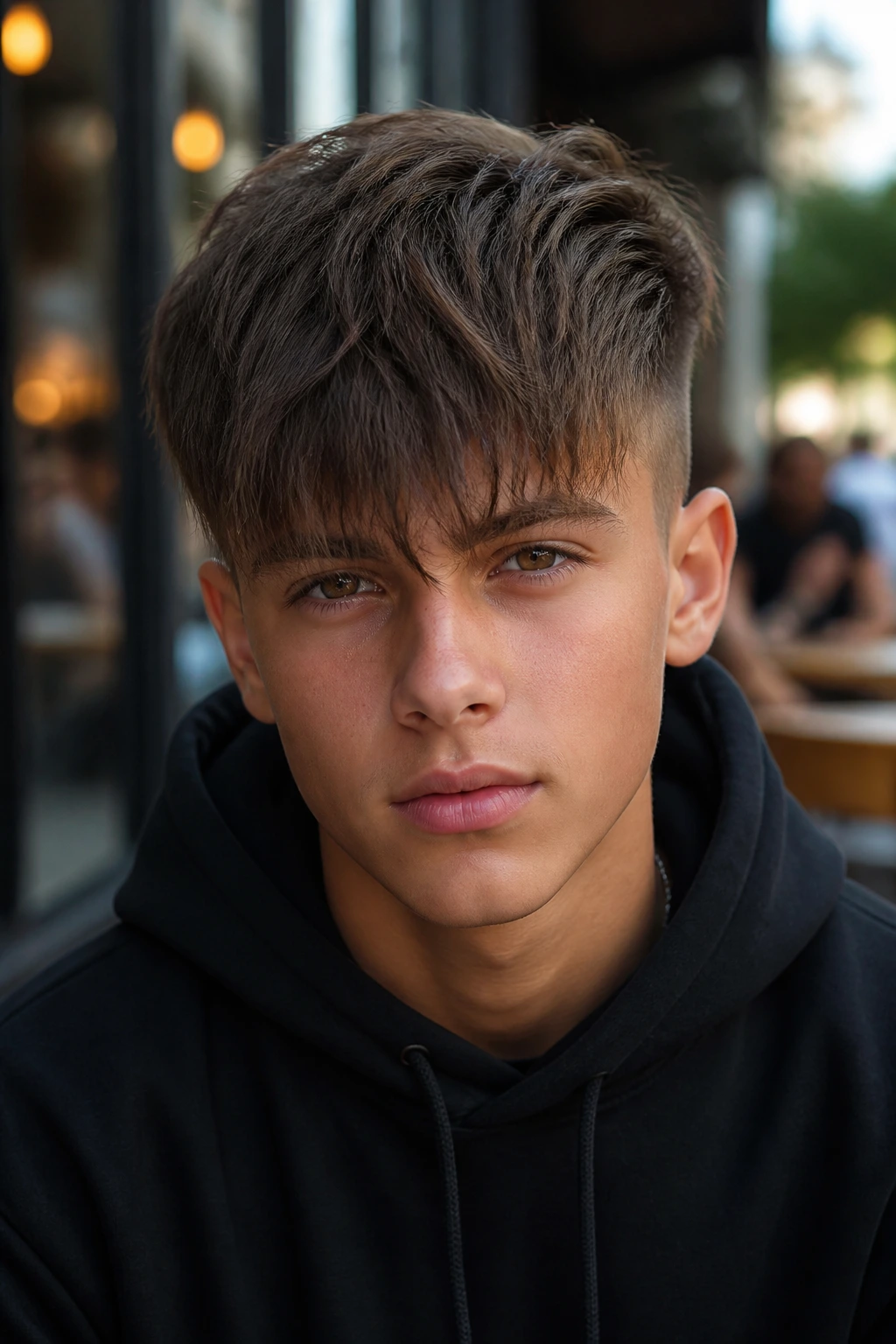
What if the front is the part you want to keep? Then this is the one. The long fringe undercut keeps the bangs or front pieces longer so they fall forward, while the sides are cut short enough to stop the whole head from puffing out at the edges. It frames the face and softens strong features.
The front usually needs 4 to 5 inches, sometimes a touch more if the hair is thick and straight. The barber should avoid making the fringe blunt unless that’s the exact look you want. A broken, feathered edge sits better on thick hair and won’t feel like a brick across the forehead.
This style can be worn neat or messy. Sweep the fringe slightly to the side, or let it fall forward in a softer curtain shape. For active kids, it’s useful because the hair can be pushed around without losing the cut’s shape. The key is keeping the fringe light enough to move.
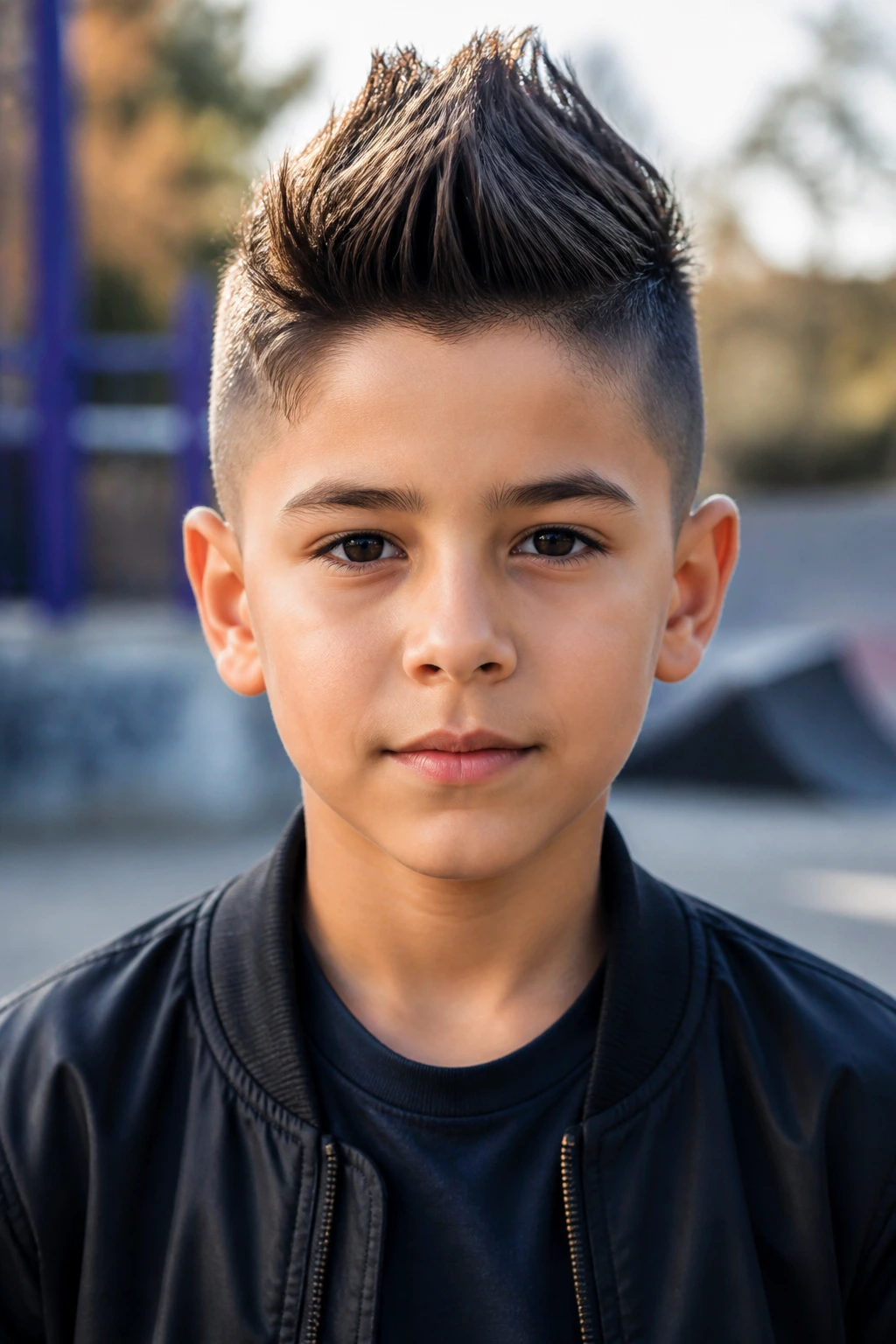
11. The Spiky School-Ready Undercut
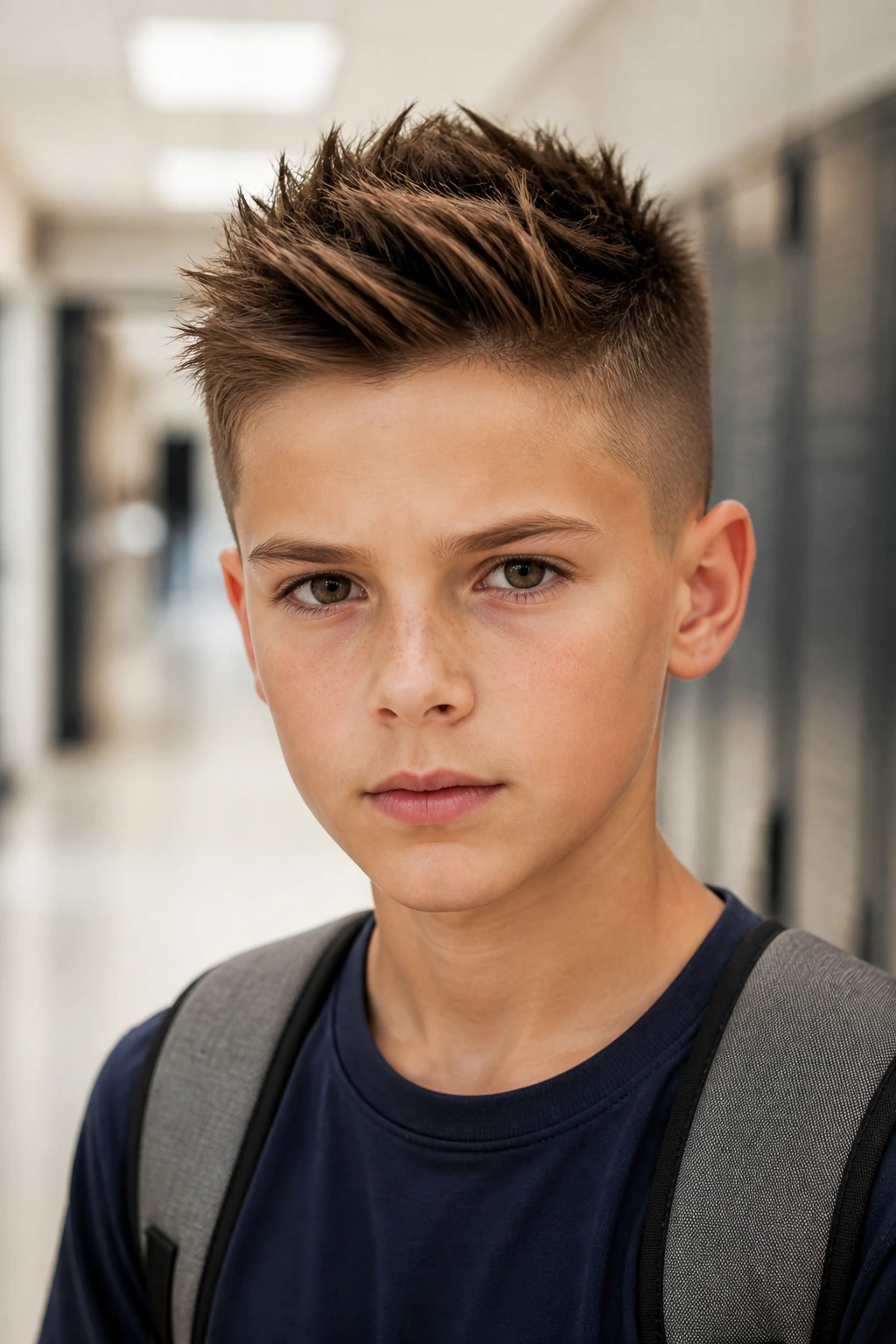
Spiky hair gets a bad reputation because people remember the stiff, crunchy version. The school-ready undercut fixes that by keeping the spikes smaller, softer, and closer together. On thick hair, that little bit of lift actually looks good because the hair can hold texture instead of collapsing.
Ask for short sides and 2 to 3 inches on top. The top should be textured, not left blunt, or the spikes end up chunky in a bad way. The barber can lightly point-cut the ends so the spikes separate cleanly.
Use a small amount of matte paste, then pinch the top into short spikes with your fingertips. Don’t build tall points. Smaller spikes look cleaner and move better. If the hair is very dense, a quick blow-dry upward before product makes a big difference.
This is one of those cuts that looks sharp after sports practice and still behaves in a classroom. That’s not a bad combination.
12. The Bowl-Crop Undercut
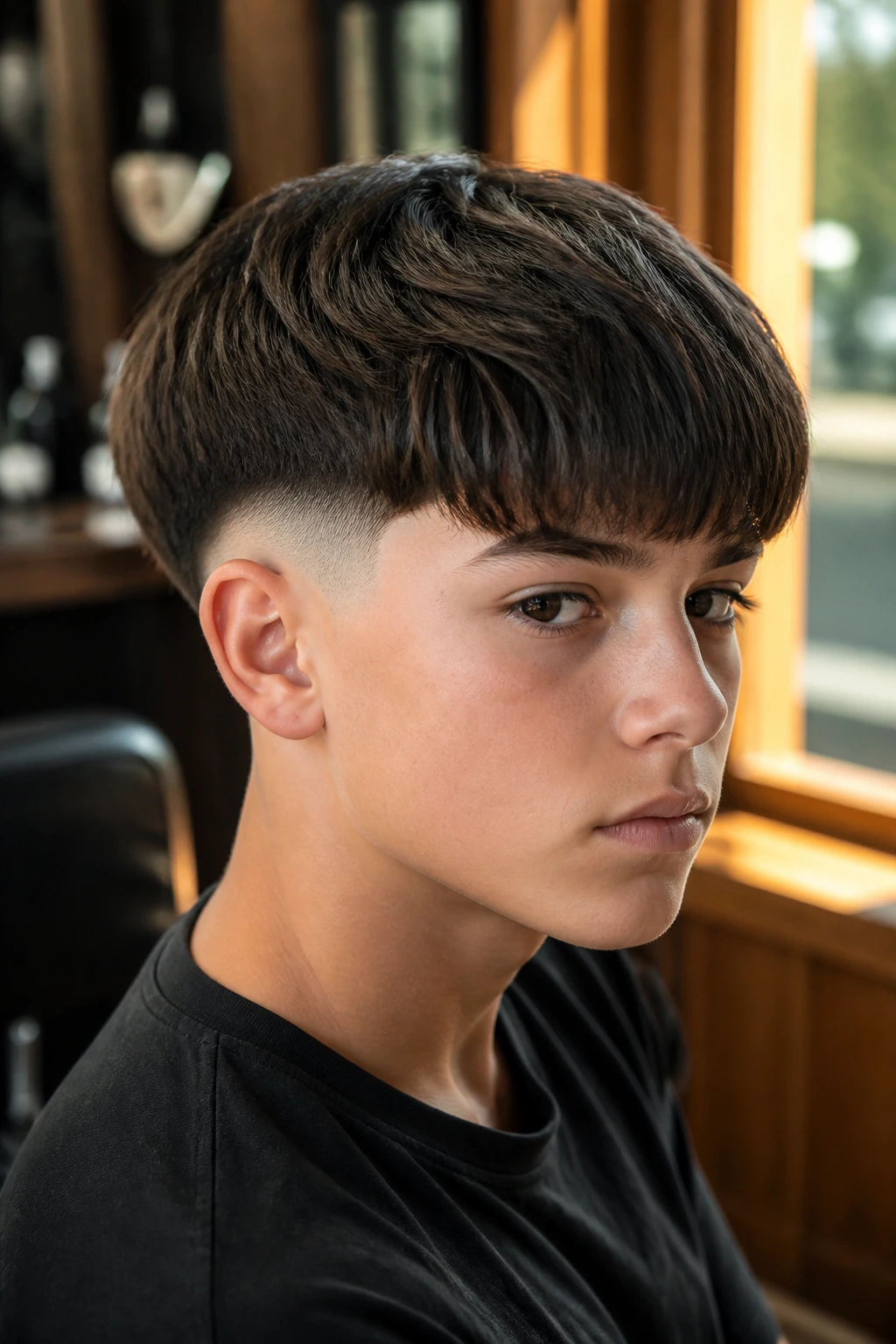
A modern bowl-crop undercut is much better than the old bowl-cut memory most people carry around. The difference is in the texture and the sides. The top keeps a rounded shape, but the edges are softened and the sides are cut tight so the whole style feels modern instead of blocky.
Thick hair is useful here because it gives the rounded top enough density to hold shape. The trick is to keep the fringe light. A hard, blunt bowl line can look too heavy on a thick head of hair. Soft layering around the perimeter solves that.
This cut suits boys who like a short top with a bit of personality. It’s tidy, a little quirky, and easier to maintain than a long brushed style. The danger is over-cutting the top. Leave enough length for the curve, or the bowl shape disappears and you’re left with a square.
A touch of matte product and a finger-combed finish is usually enough.
13. The Asymmetrical Sweep Undercut
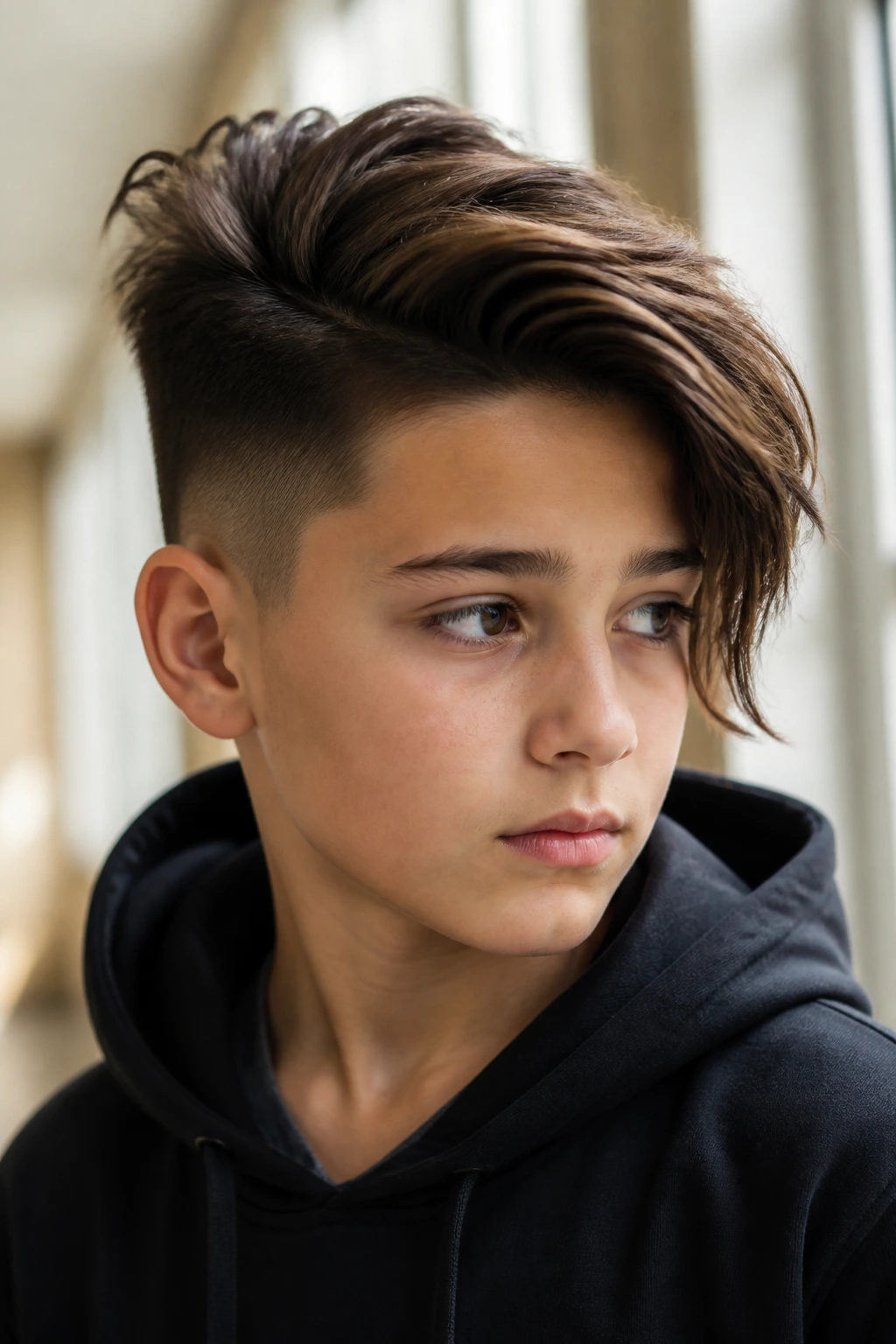
The asymmetrical sweep is the one for a kid who wants something a little different without turning the haircut into a statement piece. One side is left longer, and the top sweeps across at an angle instead of sitting straight down the middle. Thick hair gives the sweep enough weight to stay put.
The barber should keep the shorter side tight and the longer side just long enough to fall across the forehead or temple. That uneven shape works best when the top is textured, not razor-clean. Otherwise the whole thing looks too sharp for a young face.
There’s a nice side effect here: the cut can camouflage a strong cowlick or a stubborn hairline. If one side naturally pushes out more than the other, the asymmetry turns that into part of the look instead of a problem.
It’s a good choice for boys who like hair with a little movement and don’t mind a style that looks a bit more creative than classic.
14. The Skin Fade Brush-Up Undercut
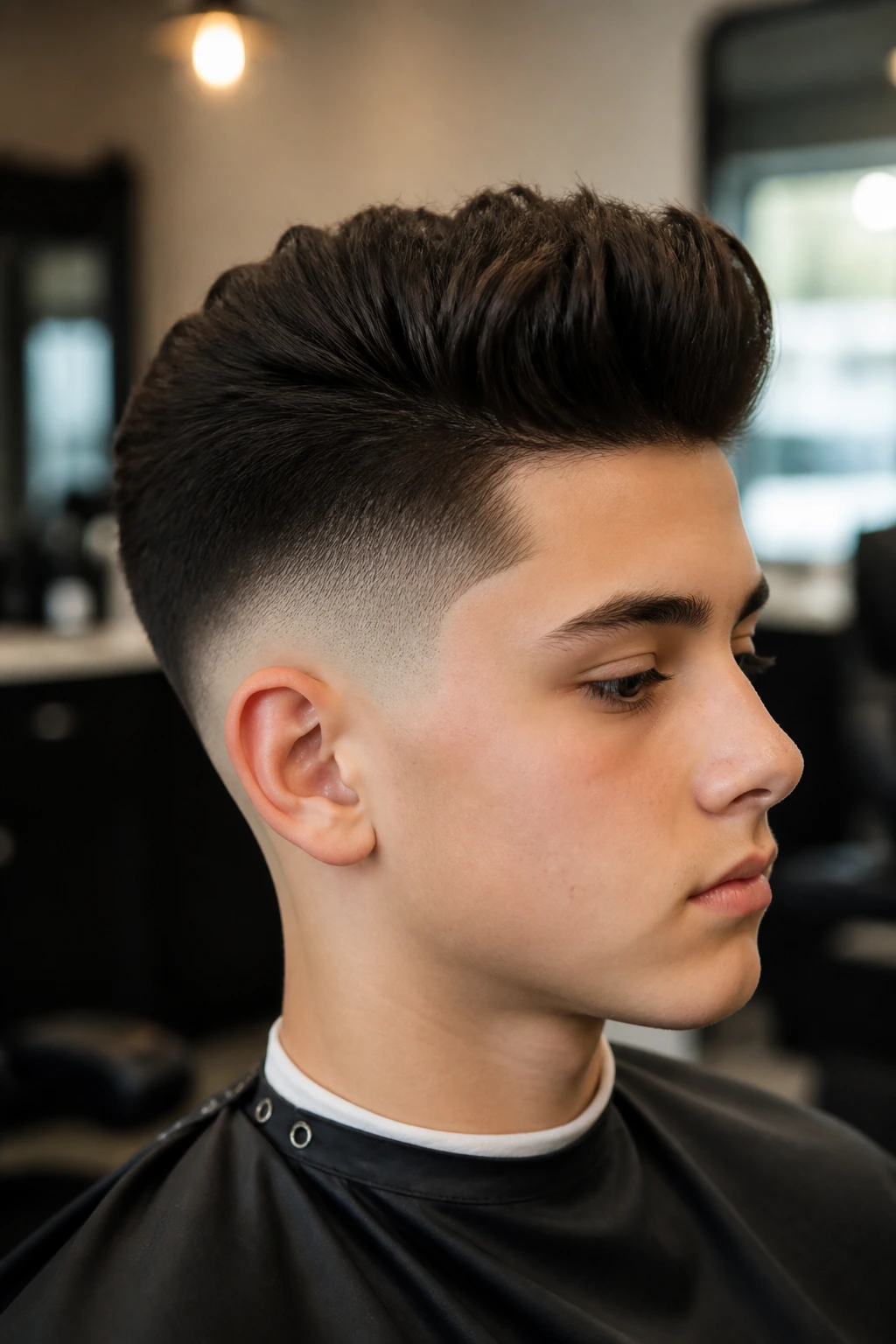
A skin fade brush-up gives thick hair a clean, modern edge. The sides drop all the way down to the skin, which removes every ounce of bulk, and the top gets brushed up and back so the shape has height. It’s a strong look, and on thick hair it works because there’s enough density left on top to hold the brushed finish.
The top usually sits around 3 to 5 inches, depending on how high the brush-up should go. A low skin fade keeps the cut softer around the ears; a high fade makes the contrast sharper. For younger boys, I usually prefer the lower version. It grows out kinder.
Blow-dry the hair upward first. That part matters. Without heat, thick hair tends to fight the brush-up and fall forward at the sides. A matte product after drying gives hold without the hard, shiny shell.
This is one of the more polished styles in the set, but it still works for daily wear if the fade is kept clean.
15. The Low-Maintenance Short Top Undercut
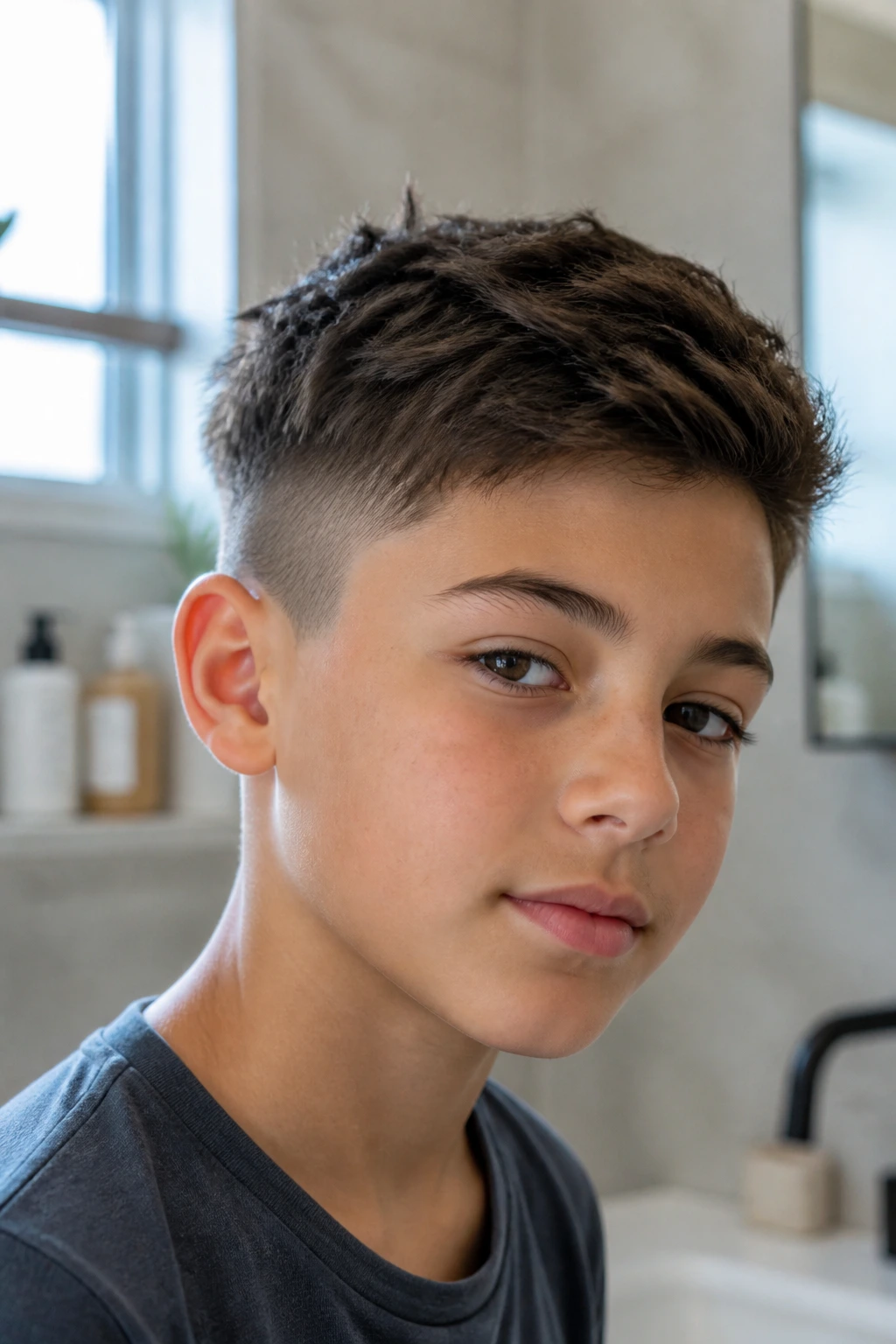
Some boys don’t want a styling routine. They want a haircut that behaves after a shower and dries in under ten minutes. This is that haircut. The top stays short — usually 1 to 2 inches — but it’s still cut with texture so thick hair doesn’t form a helmet.
The sides can be tight but not necessarily skin-short. A soft taper keeps the cut neat for longer, which is useful if you don’t want to be back in the chair every couple of weeks. Thick hair can grow fast enough that a short top starts looking dense again, so the texture is what saves it.
This cut is easy to live with. Towel-dry, rub in the smallest bit of clay if needed, and move on. It looks clean when brushed forward, brushed up, or left in a natural mess. That flexibility is why parents like it and boys don’t complain about it.
16. The Line-Detail Undercut
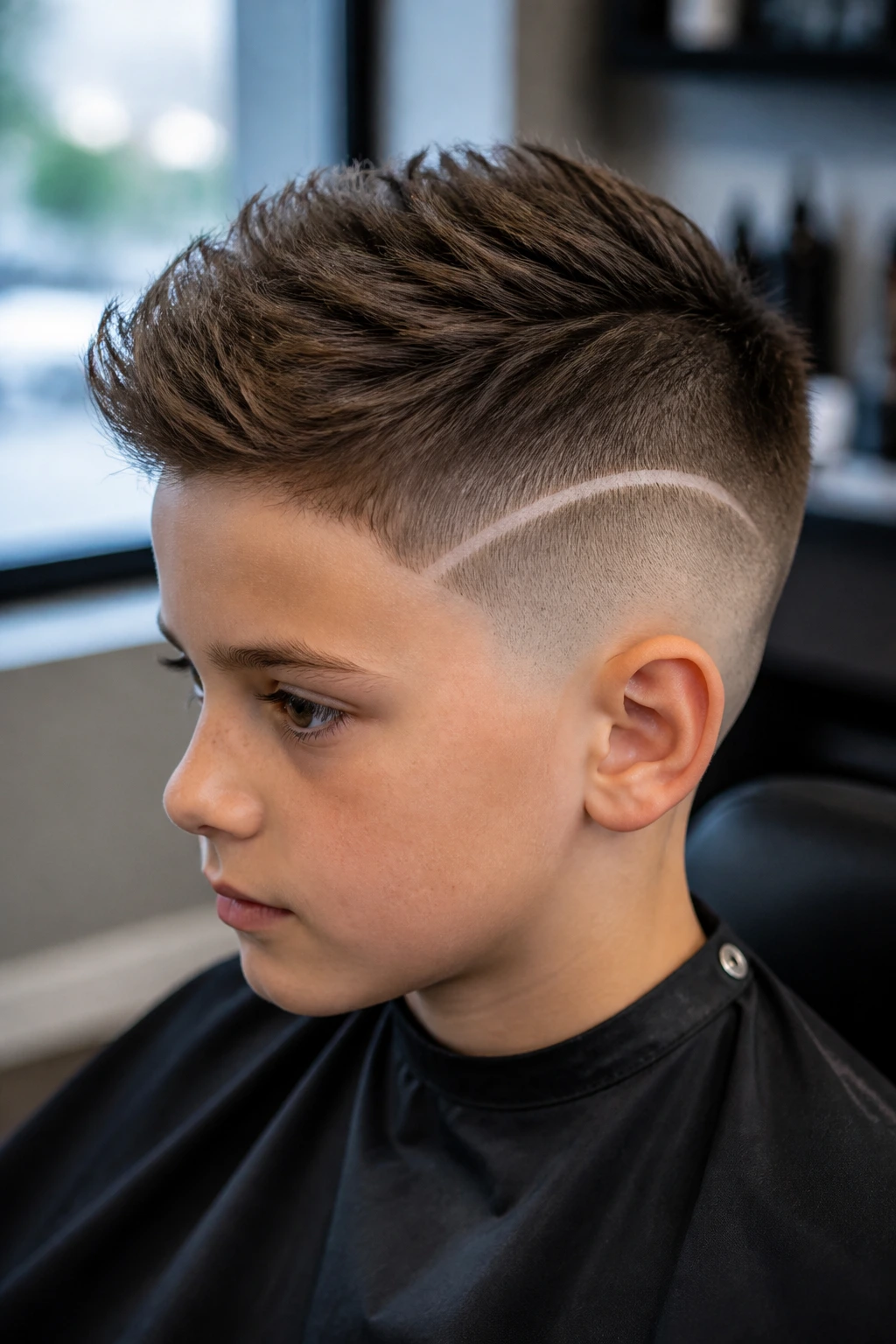
A single shaved line can make a basic undercut feel sharper without crossing into loud territory. On thick hair, the line shows up clearly, especially if the hair is dark or the sides are faded close. It adds a little edge while keeping the rest of the cut simple.
The top can be almost any length in this style, but it usually looks best when paired with a clean fade or very short undercut sides. The design should stay minimal. One line. Maybe two at most. Thick hair already has presence; it does not need a crowded pattern.
This cut is the kind that boys notice quickly in the mirror. It feels personal. That matters. If the design is too busy, the haircut starts to look like the barber was practicing. Keep it clean and intentional.
A line-detail cut does need touch-ups sooner than a plain undercut. Once the line starts to blur, the whole point of the style goes soft. That’s usually around the three-week mark.
17. The Wavy Thick-Hair Undercut
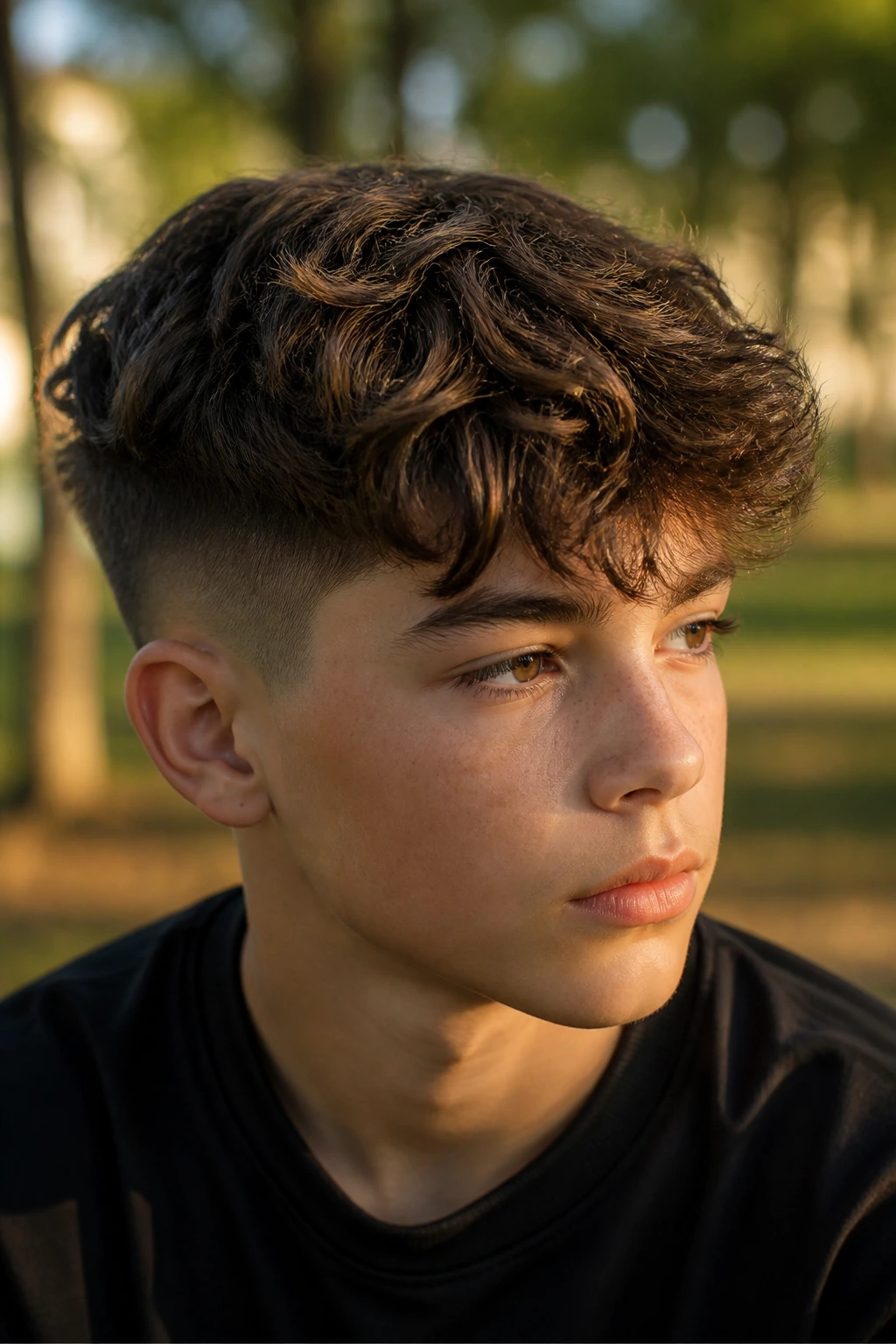
Wavy hair with a lot of density can become a triangle if the sides are left too full. The wavy undercut solves that by clearing away the bulk while leaving the wave intact on top. The result has shape and movement without the puff that thick wavy hair loves to create.
This cut looks best when the barber respects the wave pattern instead of chopping against it. The top should be texturized lightly, with enough length for the waves to form naturally. If the waves are loose, 3 to 4 inches can be enough. If they’re tighter, leave more.
Use a light cream or sea-salt spray on damp hair, then scrunch or finger-comb it into place. Over-brushing kills the wave and makes the top frizz out. That’s the mistake. Let the hair do a little of the work.
The finished look is soft, slightly tousled, and easy to wear. That’s the appeal.
18. The Center-Part Curtain Undercut
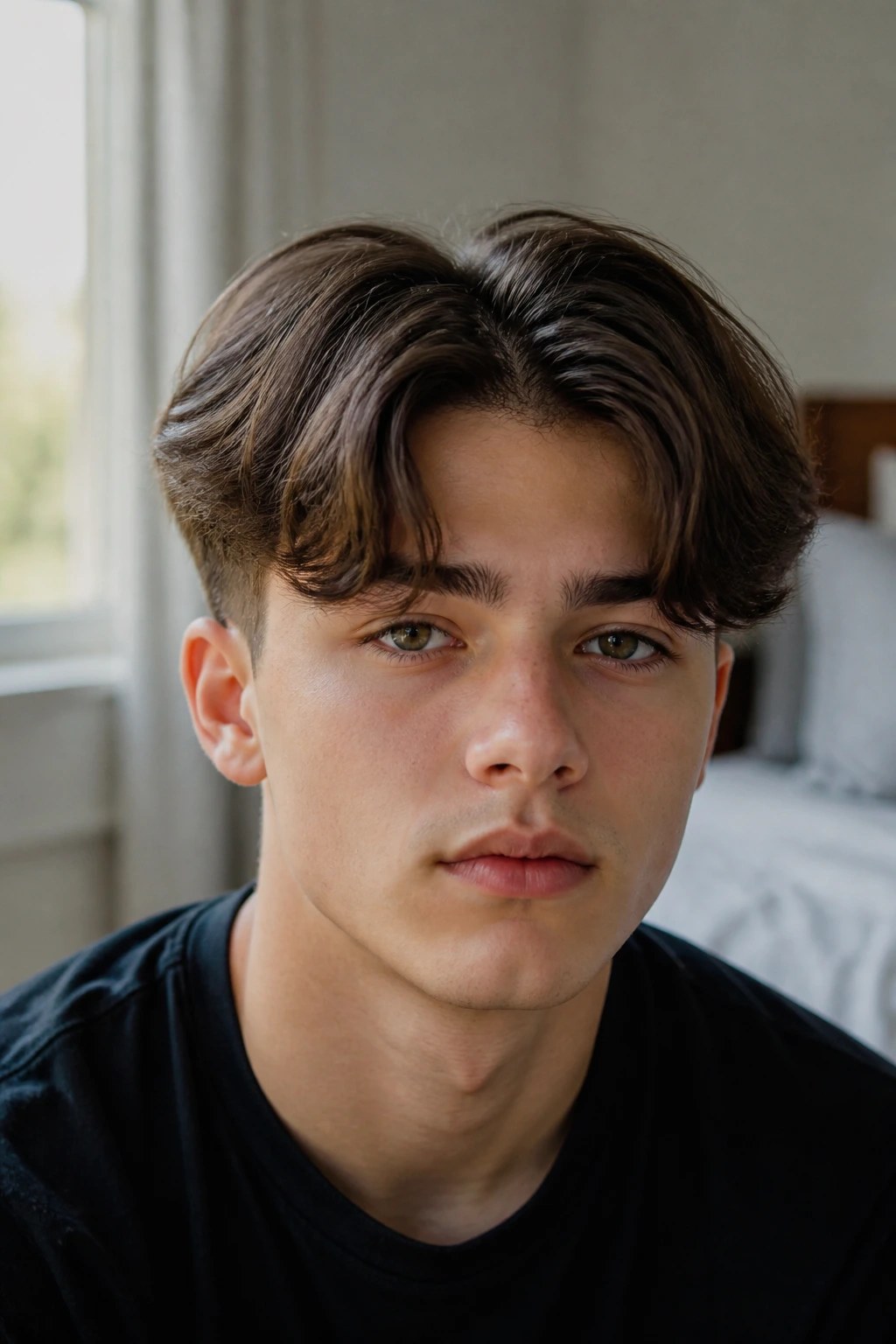
The center-part curtain undercut feels modern without trying too hard. Thick hair helps the curtain shape because the center part has enough weight to fall on both sides. The sides stay trimmed down, so the top gets all the attention and the face stays open.
You’ll want 4 to 6 inches on top, sometimes a touch more if the fringe needs to sit lower. The barber should keep the front long enough to split and frame the forehead, but not so long that it drags into the eyes. The edges around the front should be soft. Blunt curtain bangs can feel too heavy on thick hair.
A middle part looks best when the hair is dried in place from the start. Part it wet, then blow-dry each side slightly away from the center. If you skip that, thick hair often slides back to its old pattern and fights the shape all day.
This cut has a softer, more relaxed feel than the sharper undercuts, which is why it works so well on boys who want something current but not extreme.
How Thick Hair and an Undercut Work Together
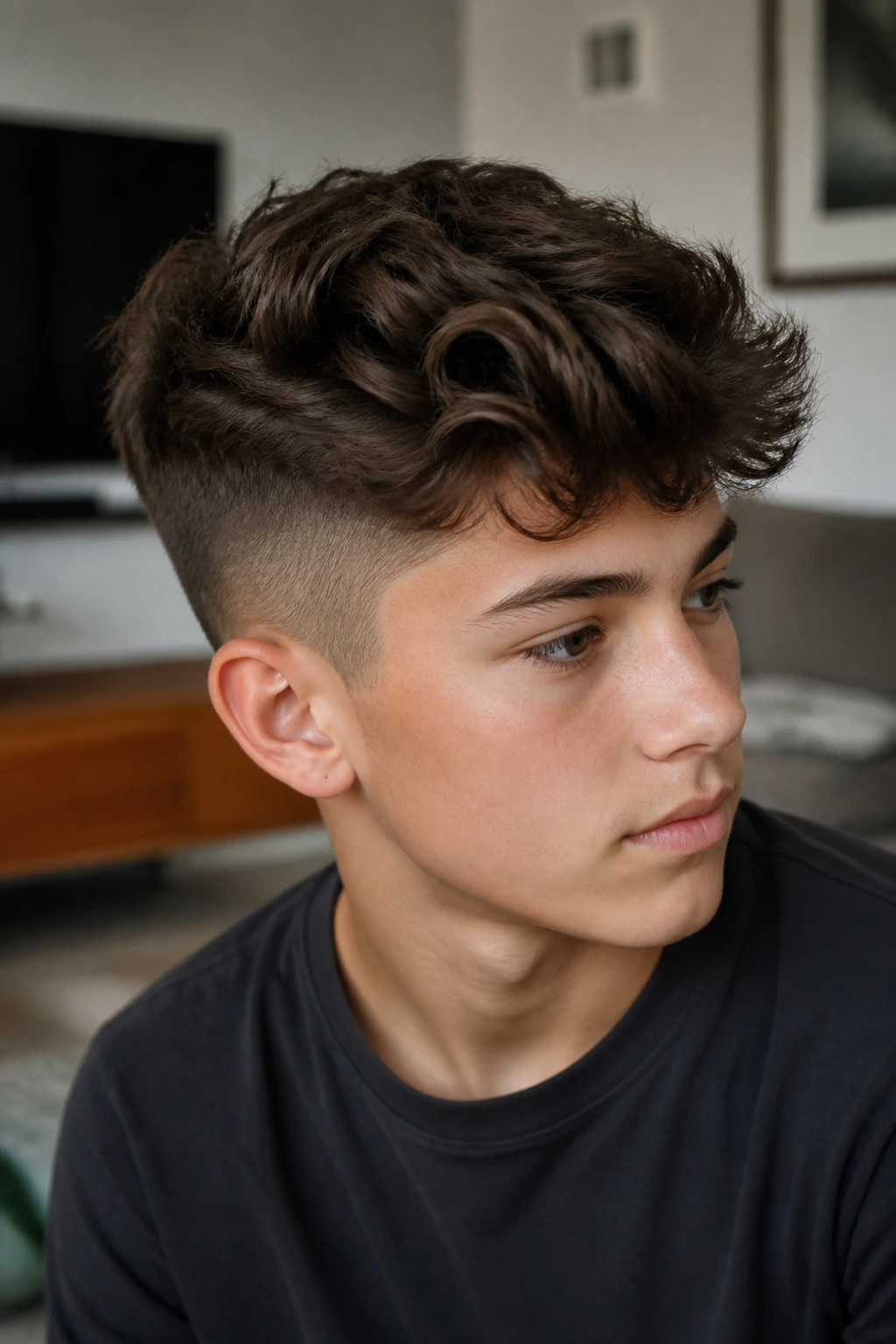
Thick hair changes the game because it gives the barber something to sculpt, not just trim. The bulk is there. The trick is deciding where that bulk should stay and where it should go. If the sides are left too heavy, the cut spreads out like a mushroom. If the top is left too blunt, the shape turns boxy. The sweet spot sits right between those two.
That’s why the best boys’ undercut styles use contrast. Tight sides. More length on top. Texture where the hair needs to bend. A little bit of movement near the front. Thick hair carries that shape better than fine hair ever could, which is why these styles often look richer and fuller rather than flatter.
A good barber will usually talk about the crown, the temples, and the hairline before even picking a guard. That matters. Thick hair often has one stubborn cowlick or one ridge that pushes the top forward, and a good cut takes that into account instead of fighting it. Hair that is cut with the grain behaves. Hair that is cut against it usually sticks out like it’s mad about something.
How to Talk to the Barber Without Guessing
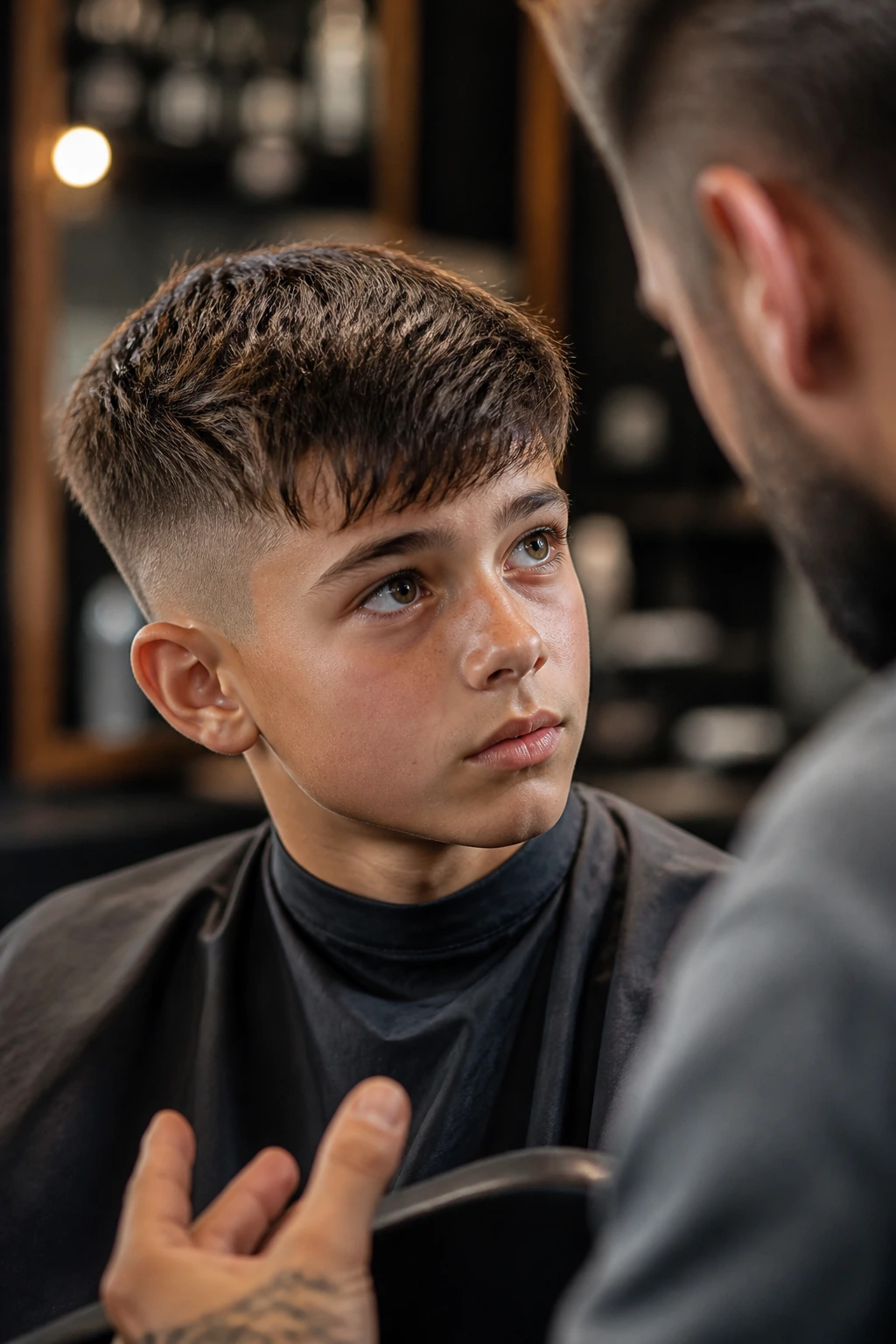
Bring a photo, yes, but don’t stop there. Point out what you want the barber to notice: the fringe, the amount of length on top, the fade height, or the texture. A picture alone can hide the important part, because two cuts can look similar from the front and behave totally differently around the crown.
Say the actual numbers if you can. If you want the sides short but not shaved, say #1 or #2 on the sides. If the top needs room to move, say keep 3 to 5 inches on top and remove weight with texture, not a blunt cut. That’s much more useful than saying “short but not too short,” which means something different to everyone in the chair.
A couple of other things help:
- Mention any cowlicks or a hard part where the hair naturally splits.
- Say whether he wants to style the hair every morning or just run his hands through it.
- Ask for the neckline and ears to be cleaned up neatly, because thick hair grows back there fast.
If the barber knows the hair is dense, they’ll usually thin and shape more carefully. That one detail saves a lot of disappointment.
Tools That Make Thick Hair Easier to Cut and Style
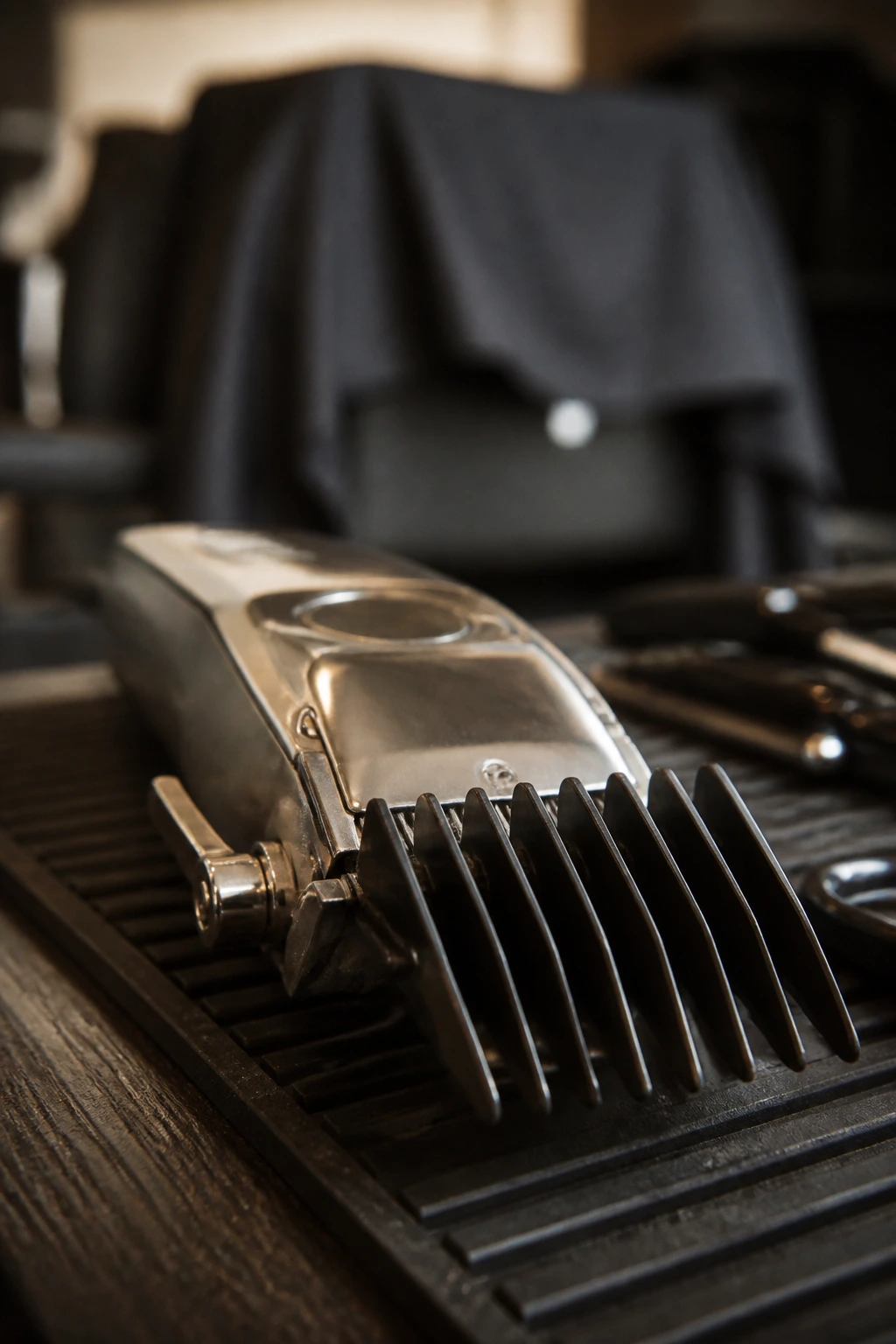
- Clippers with guard sizes from #0.5 to #4 — Useful for keeping the sides controlled without guessing at length.
- Detail trimmer — Best for cleaning around the ears, neckline, and any line design.
- Wide-tooth comb — Better than a fine comb for thick or wavy hair when it’s damp.
- Spray bottle — A little water helps the barber or parent see the shape before cutting.
- Blow dryer with nozzle attachment — The nozzle directs heat so the top can be lifted without blasting the sides everywhere.
- Round brush or vent brush — Handy for quiffs, pomps, and brush-ups.
- Texturizing shears — Good for removing weight from the top so thick hair lies better.
- Matte clay or paste — Gives hold without making the hair shiny or stiff.
- Light curl cream or leave-in conditioner — Useful for curly or wavy thick hair that needs control without crunch.
- Cape and towel — Not glamorous, but they keep hair off the neck and make the cut much easier to manage.
How to Style Thick Hair Without Making It Puffy
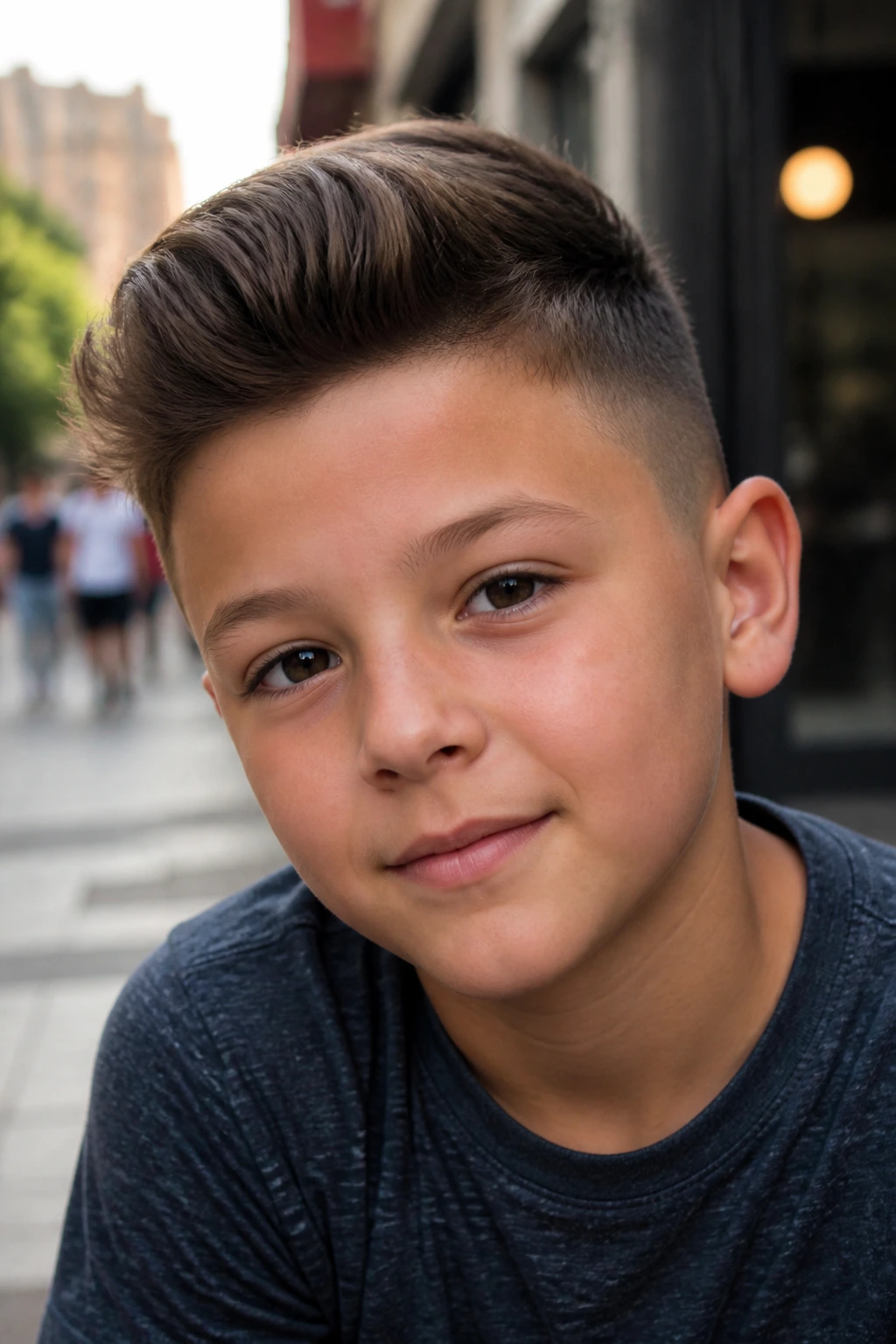
Thick hair usually needs less product than people think. Start with damp hair, not dripping hair. If it’s soaking wet, the product slips around and the shape falls apart once it dries. A towel dry first gives the top enough grip to hold.
Use a small amount first. A pea-size dab for short cuts, a nickel-size amount for longer tops. Warm it between the palms until it disappears, then work it through the back and mid-lengths before touching the front. That keeps the crown from puffing out, which is where thick hair often turns on you.
Blow-drying matters more than most people expect. Push the hair in the direction you want it to live while it’s still warm. If you want lift, blow from the roots upward. If you want a side sweep, direct the front across the forehead and let it cool there. Once thick hair cools in place, it usually stays there.
A final note: don’t chase every flyaway. Thick hair has some texture built in, and that’s part of why these cuts look good. If everything is pressed flat, the style starts to feel heavy.
Keeping the Shape Between Haircuts
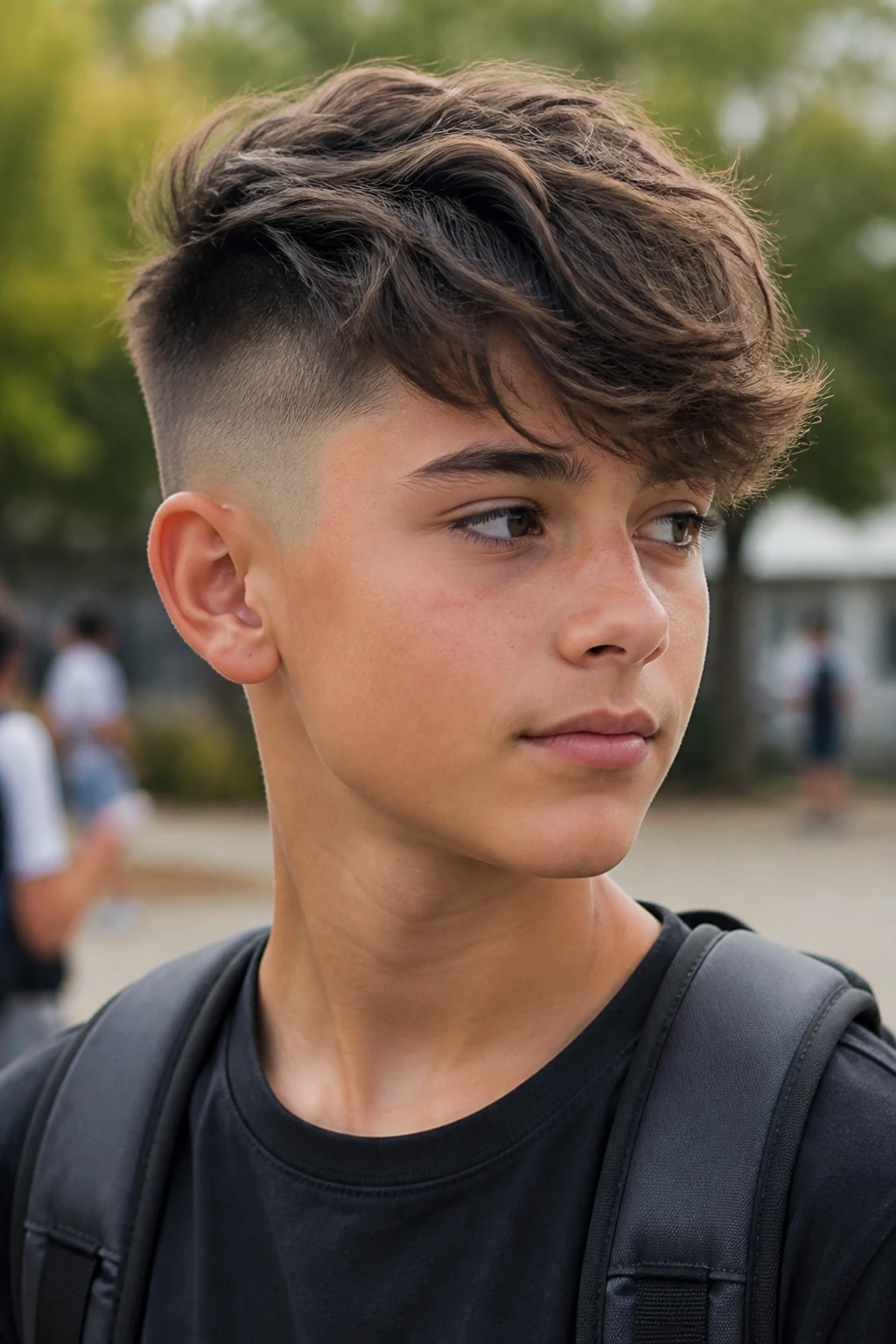
Thick hair grows out fast enough that a clean undercut can lose its shape before anyone notices. The sides usually need attention every 3 to 4 weeks if the fade is tight, and every 4 to 6 weeks if the taper is softer. The top can often go a bit longer, but once it starts falling over the ears or covering the eyes, the cut stops reading clearly.
Wash routines matter too. Over-washing can strip thick hair and make the ends feel rough. For most boys, shampooing a few times a week and using conditioner on the ends is enough. If the hair is curly or wavy, a leave-in conditioner after washing can keep the texture from puffing into frizz.
At home, a quick neck cleanup with a trimmer or the barber’s preferred touch-up tool can help, but don’t try to recreate a fade unless you really know what you’re doing. Thick hair shows mistakes fast. A bad line at the temple or an uneven sideburn stands out immediately.
If the top starts feeling heavy, it’s usually time for a trim, not more product. That’s the part people miss. Hair can be styled into shape for a day, but it can only be cut back into shape.
Common Mistakes That Make Thick Hair Harder to Wear
- Leaving the sides too bulky: The cut looks wide and puffs outward at the temples. Ask for shorter sides or a cleaner taper if the head shape starts looking square.
- Cutting the top too blunt: Thick hair ends can sit like a shelf. Texture the ends so they move and lie better.
- Using too much product: Thick hair can trap paste near the surface and start looking greasy or stiff. Start smaller than you think and add only if needed.
- Ignoring the crown: A strong crown can kick the hair forward or sideways all day. A barber should leave enough length there to control the swirl.
- Going too high with the fade: A high fade can make a young boy’s head look top-heavy if the top isn’t long enough to balance it.
- Styling only the front: If the back and crown are left dry and messy, the shape breaks apart by lunchtime. Work product through the whole top, not just the fringe.
Variations and Adaptations to Try
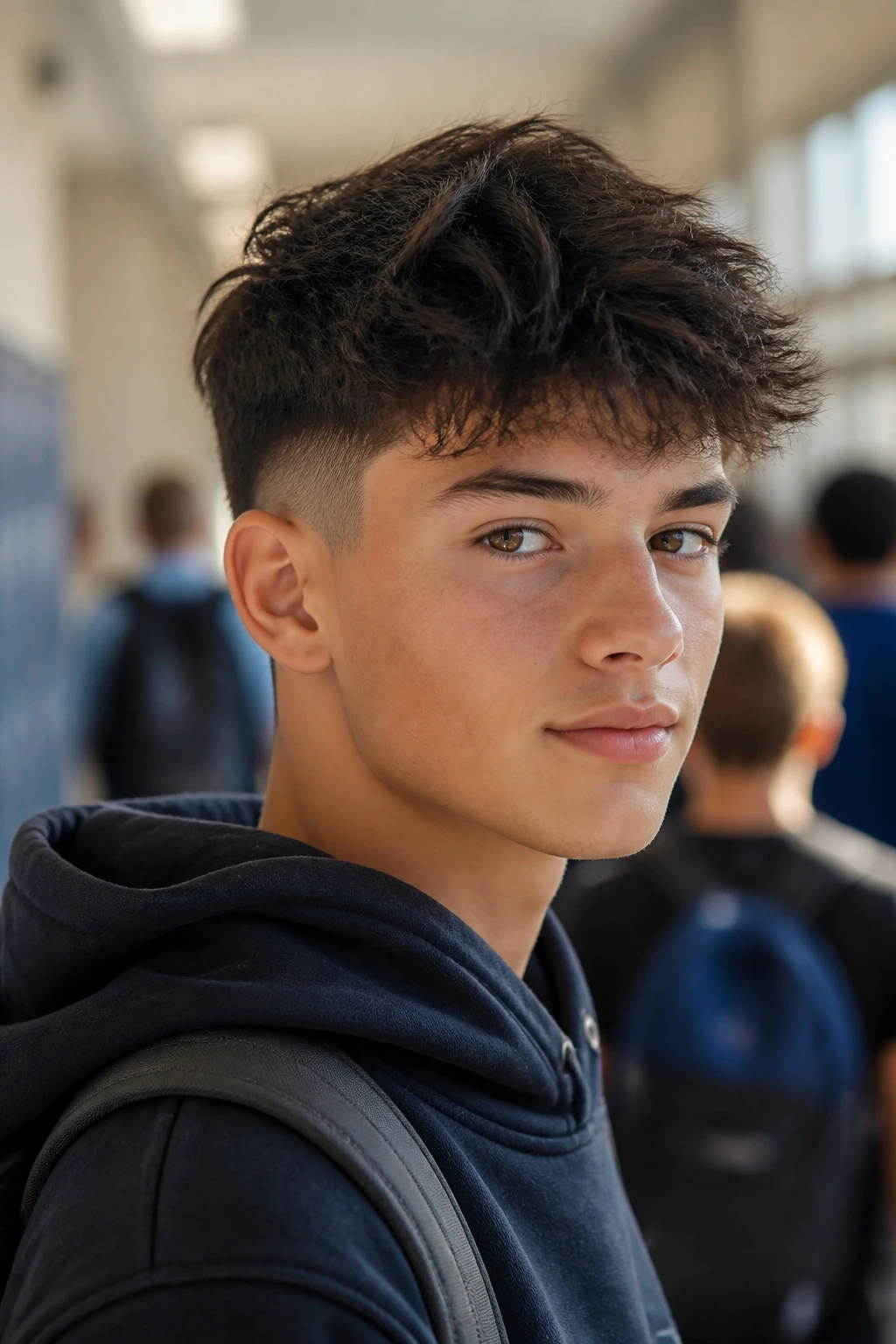
Soft School Version
Keep the top short and textured, but lower the fade or taper so the cut grows out more gently. This works well if the school prefers neat hair without anything too sharp.
Curly Crown Version
Leave extra length through the curls on top and take the sides down more firmly. That gives the curls room to bounce without spreading sideways.
Photo-Day Clean Version
Choose a hard part, a neat comb over, or a mini pompadour and finish with a small amount of low-shine cream. It looks dressed up without needing much time.
Weekend Mess Version
Go with a textured crop, messy quiff, or faux hawk and keep the styling loose. Finger-combing is enough, and the cut still looks deliberate.
Long-Grow Version
If the boy hates frequent trims, keep the sides softly tapered instead of skin-short and leave more length on top. The grow-out is much kinder, which matters when nobody wants to sit in the barber chair every few weeks.
Frequently Asked Questions
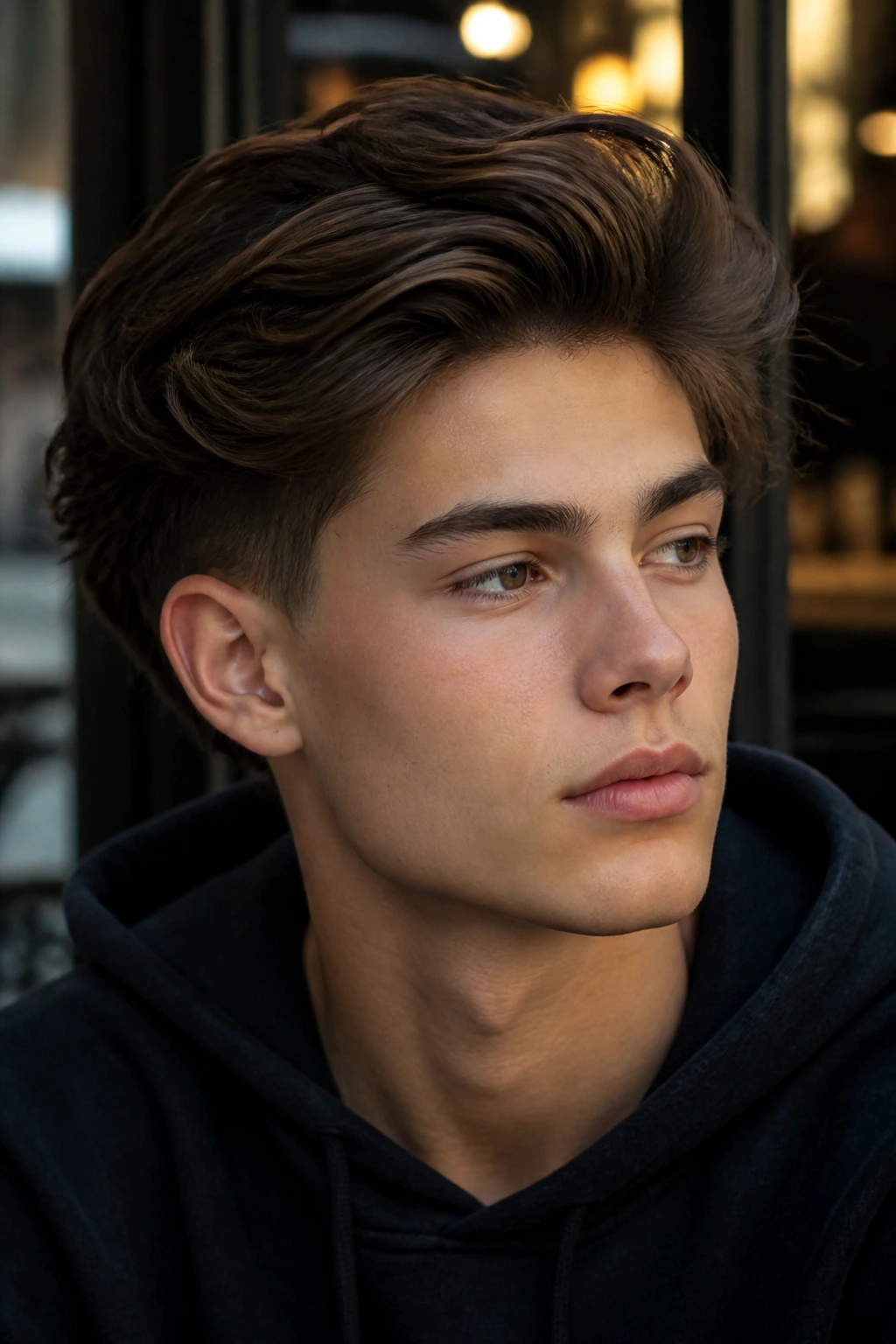
What’s the difference between an undercut and a fade for boys?
An undercut keeps a stronger contrast between the top and the sides, while a fade blends the sides gradually from short to shorter. On thick hair, an undercut shows off the top shape more clearly, while a fade softens the edges and can look less harsh as it grows out.
How short should the sides be on thick hair?
Most boys do well with a #1 or #2 guard on the sides if they want the cut to feel neat but not too severe. If the top is longer or more styled, the sides can go tighter, even to a skin fade, but the top has to carry the shape.
Will thick hair make an undercut look puffy?
Only if the weight is left in the wrong place. The fix is to remove bulk around the sides and texture the top so it bends instead of standing like one heavy layer.
Can boys with curly thick hair wear an undercut?
Yes, and the shape can look better on curls than on straight hair because the top already has movement. The important part is leaving enough length for the curl pattern to form and not shaving the sides so high that the top looks disconnected in a bad way.
What product works best for school mornings?
A matte clay or lightweight paste is usually the easiest option. It controls thick hair without the shine or stiffness of gel, and a small amount goes a long way.
How often should the haircut be cleaned up?
If the sides are clipped tight, every 3 to 4 weeks keeps the shape crisp. Softer tapers can stretch to 4 to 6 weeks, but once the ears or neckline start filling in, the whole cut looks heavier.
What if the hair sticks up after washing?
That usually means it was dried without direction or cut too blunt on top. Use a blow dryer to guide the hair while it’s damp, and ask for texture through the ends at the next cut.
Can an undercut work with a cowlick?
Yes, but the barber needs to know where it is. A cowlick at the front or crown should guide the cut length and the styling direction, or the hair will keep fighting the shape all day.
A Clean Shape That Grows Out Well
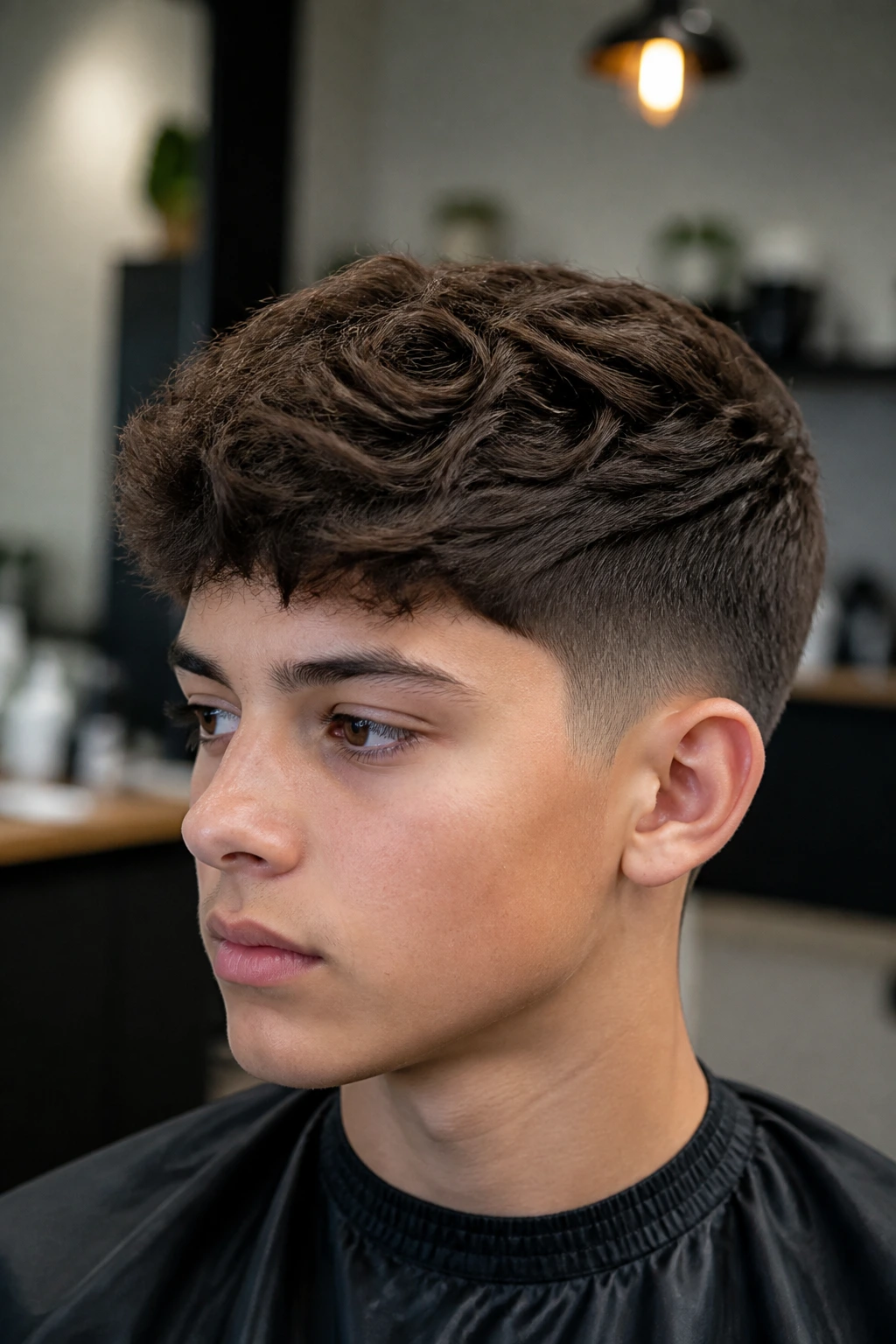
The best undercuts for thick-haired boys do more than look neat on day one. They stay readable when the top starts to move, when the sides grow a little, and when the morning routine is rushed. That’s the real test. Not the first photo.
If you keep the top textured, the sides controlled, and the length matched to the hair’s natural bend, these cuts stay cute instead of bulky. That balance is what makes thick hair such a good starting point. It already has the body. The haircut just needs to point it in the right direction.
A good barber can do a lot with a dense head of hair, but the smartest cuts leave room for the hair to behave like hair, not plastic. Choose the version that fits the child’s routine, and the style will keep paying off long after the cape comes off.