



A good haircut for boys with curly hair does not start with the clippers. It starts with the curl pattern, the crown, and the amount of patience the kid has for brushing before school. Cut curls the way you cut straight hair and you get one of two things: a puffball that grows wide by lunch, or a too-short shape that looks neat for three days and then starts sticking out in odd places.
The best curly haircuts for boys work with shrinkage instead of pretending it does not exist. A damp head of curls can look one length in the chair and something very different once it dries. That gap matters. It changes where the fringe lands, how high the top sits, and whether the sides need a clean taper or a softer blend so the haircut still looks intentional when it grows out a little.
And that’s why the usual “just take some off the sides” advice falls apart so fast. Curly hair needs shape, weight control, and enough room for the curls to do their thing. Get those pieces right, and even a simple cut can look sharp, easy, and a lot less fussy than the straight-hair versions people often try to copy.
Why These Curly Haircuts Work So Well on Boys
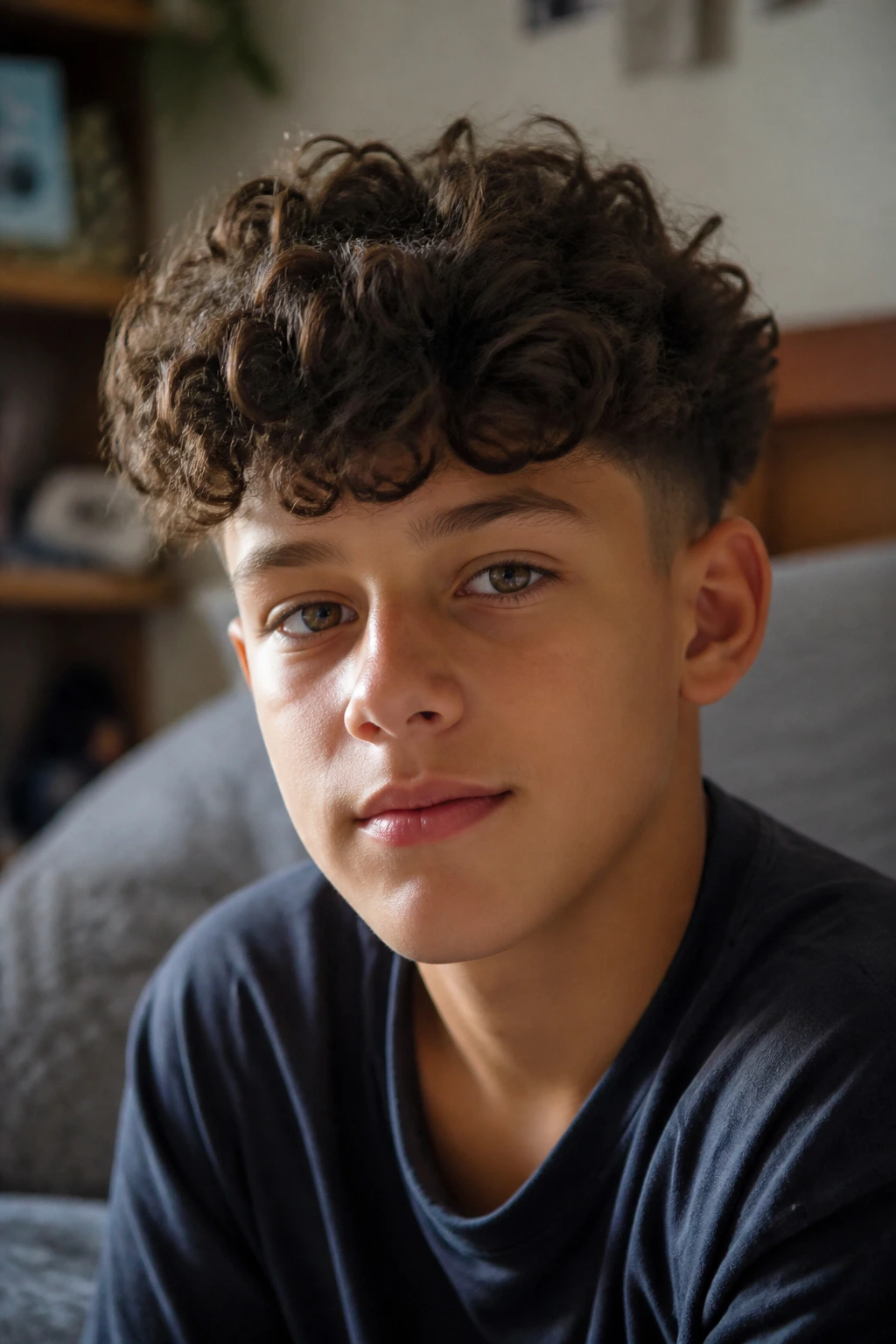
- They respect shrinkage: Each style here leaves enough length on top to let curls spring up instead of collapsing into a flat, puffy shape.
- They grow out with less drama: A clean taper, a layered top, or a rounded fringe can survive three or four weeks before it starts looking rough.
- They cover different curl types: Loose waves, ringlets, thick spirals, and tighter coils all need different amounts of weight removed.
- They fit real routines: Some boys want a quick finger-comb and out the door; others will tolerate a little cream, a mist bottle, and ten extra seconds.
- They give barbers a clear target: “Short on the sides, keep the curls” is vague. A named style with shape, length, and edge work is much easier to ask for.
- They can be neat or bold: The same curly texture can look school-photo tidy or a little rebellious, depending on how the fringe, taper, and neckline are handled.
Why Curly Hair Needs Shape, Not Just Shorter Sides
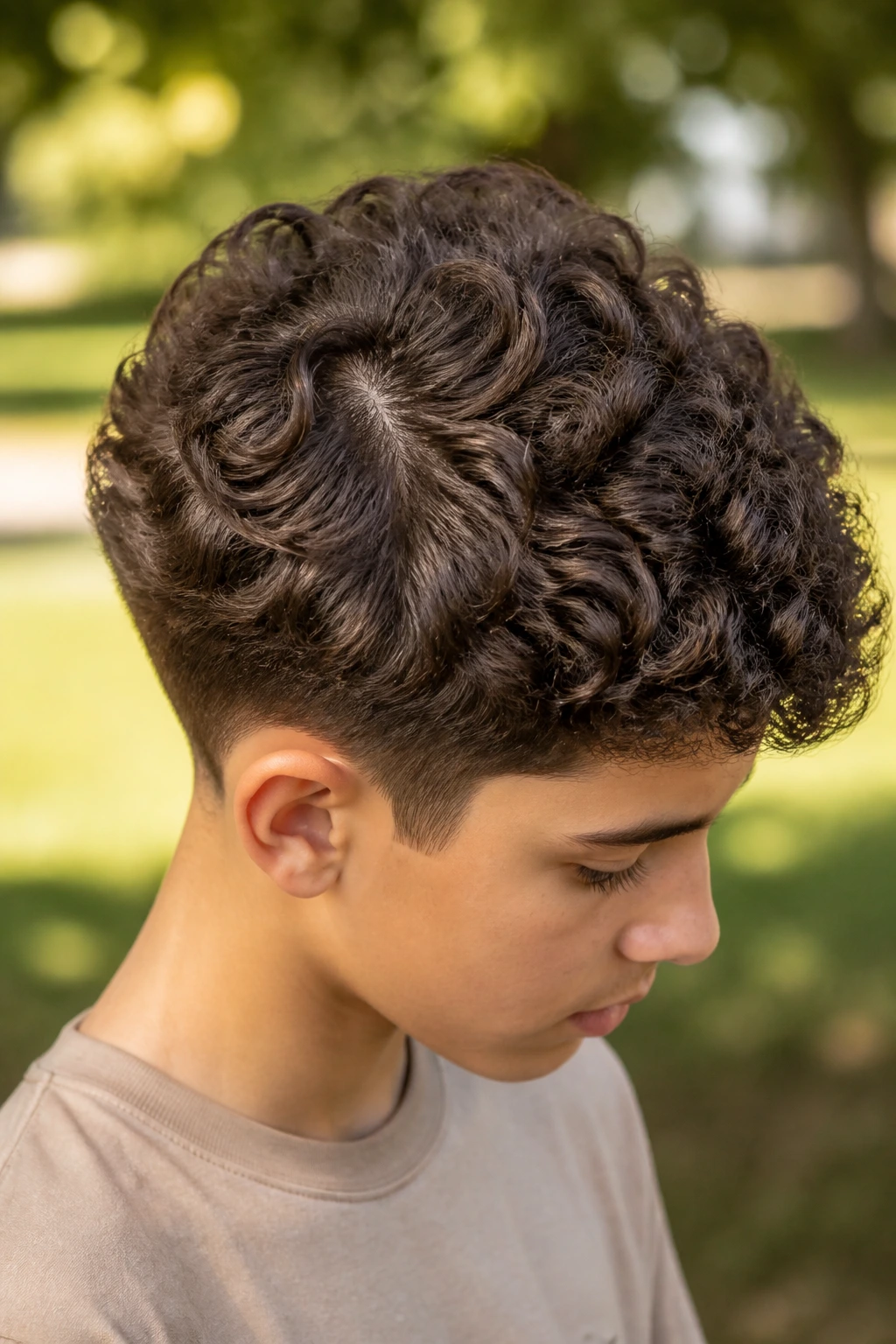
Curly hair does not sit where you leave it. It lifts. It bends. It pokes out in a direction that seems personal, almost stubborn. That is not a problem to solve; it is the whole job. If you cut curly hair like a straight helmet, you end up flattening the top and leaving the sides with too much blunt bulk, which makes the head look wider than it is.
The sweet spot is usually a balance of length and release. Too much weight left in the wrong place makes curls sag into a triangular shape. Too much thinning can turn the top frizzy and see-through, especially on tighter curls. A good boys curly haircut removes bulk where it matters, keeps enough length where the curls need to bend, and gives the edges a clean line so the cut still reads as a haircut, not just “hair that has been cut.”
I also think parents and barbers sometimes miss the crown. That swirl at the back can make a haircut lie to you. A boy may look balanced from the front and then have a cowlick or a heavy crown that pushes the back up like a little shelf. Once you know that, the rest of the cut gets easier. You stop fighting the hair and start steering it.
1. Curly Taper Fade
This is the safest place to start, and I mean that as a compliment. A curly taper fade keeps the curls alive on top while cleaning up the temples, sideburns, and neckline so the whole cut feels crisp without looking severe. It works on loose curls, ringlets, and even thicker coils if the top is left long enough to keep the curl pattern readable.
What to Ask For at the Barber
- Leave 2 to 4 inches on top if the curls are medium or tight; that gives the shape room to bounce.
- Ask for a low or mid taper around the ears and neckline, not a skin fade that disappears too fast.
- Keep the edges soft at the forehead unless the boy likes a sharper line-up.
- Blend the sideburns carefully so the fade does not look disconnected from the top.
The reason this cut works is simple: the fade takes pressure off the sides, and the curls become the point of interest. That contrast looks neat even when the top gets a little messy during the week. If the kid sweats, sleeps hard, or runs his hands through his hair all day, the taper fade usually still holds its shape.
For styling, a light leave-in conditioner on damp curls is often enough. Scrunch it in, then let the hair air-dry or use a diffuser on low heat if the curls need more definition. Skip heavy wax. It weighs curly hair down and makes the top feel sticky by the end of the day.
2. Curly Fringe Crop
A curly fringe crop puts the curls forward, which is smart when a boy has a forehead he wants covered or curls that naturally fall toward the front anyway. It can look soft and youthful, but it should still have shape. The mistake people make is cutting the fringe too blunt, like a straight line across the front. Curly bangs need a little irregularity.
Why It Looks Better Than a Flat Bang
When the fringe is cut with slight variation in length, the curls stack into a textured edge instead of a stiff curtain. That gives the cut movement. It also hides small cowlicks better than a heavily styled look, which matters when you need the haircut to work on a school morning with no real styling time.
A good version usually keeps the sides short with a taper or low fade and leaves the front heavy enough to fall forward in little curls or bends. On looser curls, the fringe can sit just above the eyebrows. On tighter curls, it often works better a touch shorter so it does not spring into the eyes when dry.
I like this cut for boys who hate feeling hair on their forehead. It solves that problem without going full buzz cut. And if the barber point-cuts the ends instead of chopping them blunt, the fringe grows out much more nicely. That tiny detail saves a lot of awkward weeks later.
3. Curly Undercut
The curly undercut is for families that want contrast. Short or clipped sides, longer curls on top, and a clear line between the two. It is less forgiving than a taper, but when it is done well, it has real shape and a bit of attitude without needing much styling.
Best for Thick Curls That Need Room
This cut works best when the top has enough length to sit over the short sides without puffing out into a mushroom. If the hair is thick, ask the barber to remove bulk from the top in controlled sections, not by shredding it with thinning shears. Curls that are cut too aggressively with thinning shears can frizz at the ends and look dry before they are even due for another trim.
The undercut suits boys who like a clean outline and do not mind the top standing out. It is also handy for kids with stronger curl patterns that would otherwise balloon around the ears. Keep the top at least long enough to coil naturally, or the cut loses the whole point.
Styling is easy: dampen the curls, work in a pea-sized amount of curl cream, then either air-dry or diffuse. If the curls are dense, a little root lift at the front keeps the top from collapsing forward. That lift should be gentle. Nobody wants a tiny pompadour unless they asked for one.
4. Layered Medium-Length Curls
Medium length is where curly hair starts to look almost mischievous in a good way. Layered medium-length curls let the curls hang, bend, and stack without turning the head into a triangle. The layers are the real trick here. They take weight out of the bulk, so the hair moves instead of sitting like one heavy block.
These cuts are good for boys whose curls are dense but not so tight that they need a near-short cut. They also work when the kid wants length on top but cannot handle anything touching the neck too much. A good barber will shape the layers so they fall around the ears and crown without making the perimeter look jagged.
This style needs a little honesty from the barber. Wet curls often look longer than they dry. So the cut should be planned around the dry curl pattern, not just the combed-out length in the chair. If the hair is cut to the jaw while wet, it may bounce up to the cheek once it dries. That is not a disaster, but it does surprise parents.
What Helps This Cut Stay Balanced
- Ask for soft internal layers instead of blunt thinning.
- Keep the perimeter rounded, especially around the back.
- Use a wide-tooth comb or fingers, not a fine brush that turns curls into fluff.
- Trim every 6 to 8 weeks if you want the shape to stay easy.
5. High-Top Fade with Curls
When the curls are tight and the hair is dense, a high-top fade with curls can be a really clean answer. The sides are cut short, often down close enough to make the top look lifted, while the curls on top are shaped upward and outward into a firm silhouette. It has structure, and boys with thicker hair often look good in structure.
This cut works because it gives the curls somewhere to go. Instead of forcing them flat, the barber lets them rise into a shape that looks deliberate. If the top is left uneven, the fade loses its edge. So this one needs careful top shaping, especially around the front and crown.
The style is sharper on tight curls and coils than on looser waves. On looser curls, it can look a little softer and more rounded, which is fine if that is the goal. The big thing is balance. If the top is too tall and the sides are too low, the head can look top-heavy. If the top is too short, the whole point of the high-top disappears.
A little curl sponge or light cream can help define the top. Keep the product light. The haircut should do most of the work.
6. Curly Shag
A curly shag is one of my favorite cuts for boys who have thick curls and do not want to look over-groomed. It has layers, movement, and a little looseness around the face that makes curly hair look lively instead of boxed in. The shag is not neat in a boring way. It is neat in a lived-in way.
The magic here is the way the layers break up the bulk. Instead of one heavy sheet of hair, the curls fall in pieces that have room to bounce. That means less triangle shape and less puff around the cheeks. If the curls are looser, the shag can feel almost surfer-like. If they are tighter, it gets more textured and a little more compact.
I’d choose this cut for boys who are happy with hair on the longer side and do not mind a fringe that shifts around a bit during the day. It is not the best choice for someone who hates touching his hair. But for a kid who likes natural texture and does not want a fussy finish, it’s excellent.
Use a leave-in on damp hair and then shake the curls out with fingers. Don’t brush it straight. That is how you kill a shag.
7. Curly Mullet
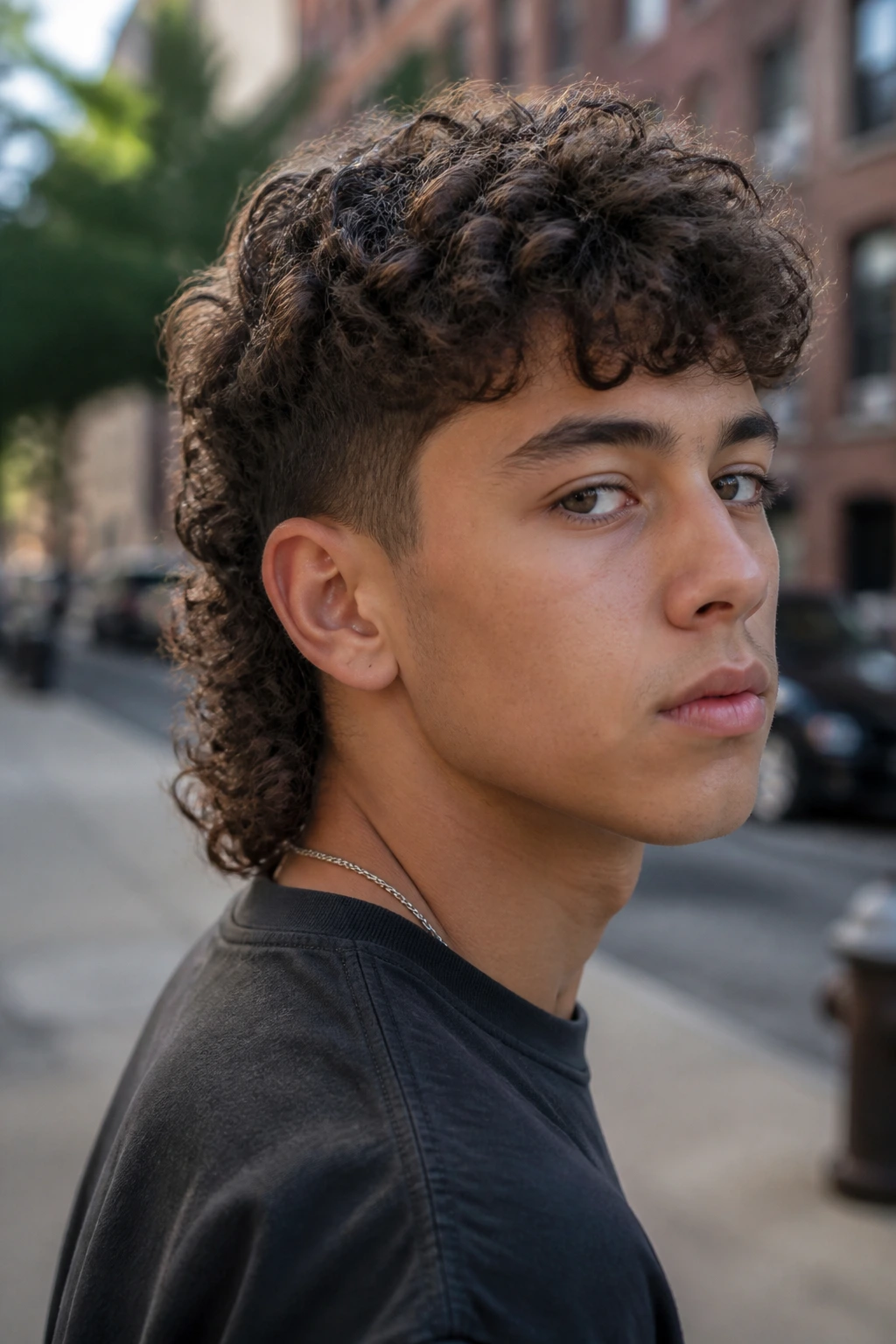
Yes, really. A curly mullet can be good when the balance is right. The front and sides stay shorter, the back keeps more length, and the curls give the shape enough softness that it does not feel harsh or costume-y. On curly hair, the mullet often looks less like a joke and more like a deliberate shape with movement.
Why It Works on Curls
Straight hair mullets depend on angles. Curly mullets depend on texture. The curls blur the line between the shorter top and the longer back, which makes the cut more wearable than people expect. The back can be just long enough to rest on the neck, or longer if the boy likes a bigger silhouette.
The danger is letting the back grow too far without cleaning up the top. Then it starts looking like three separate haircuts sewn together. A clean taper around the sides and a controlled back length make all the difference. Keep the top layered so it doesn’t sit like a helmet.
This one fits boys with a bit of personality. It’s not the shy choice. But if the curls are good and the shape is controlled, it can look sharp, funny in a good way, and weirdly polished all at once.
8. Curly Caesar
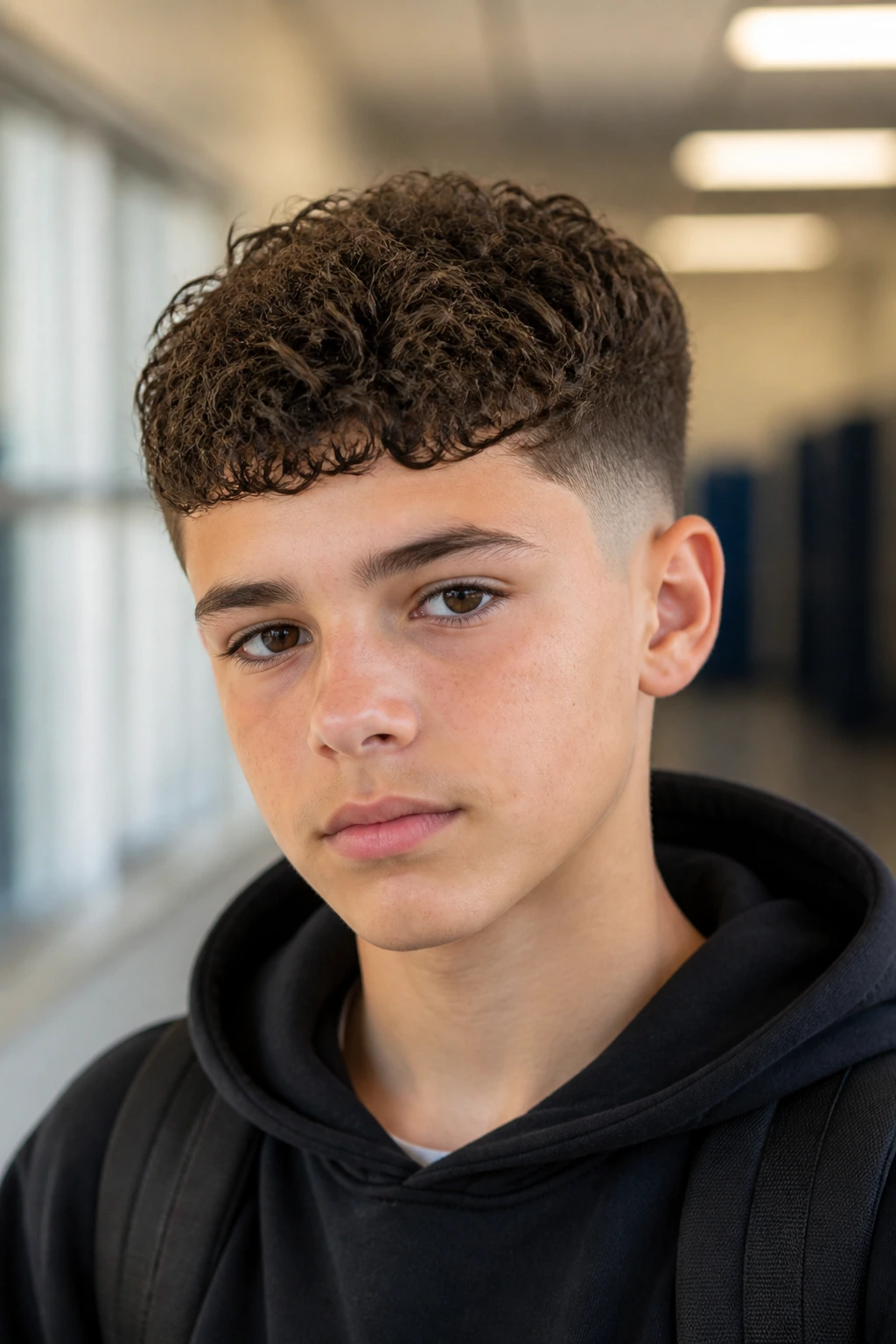
A curly Caesar is short, tidy, and a little tougher than the name sounds. The fringe is kept short and forward, the sides are trimmed close, and the top is shaped into a rounded, compact crop. It works especially well for tighter curls because those curls add texture where a straight-hair Caesar can look flat.
How to Keep It from Looking Boxy
The front line should be soft enough to let the curls show. If the barber cuts it too blunt, the whole top can look like a square sitting on the forehead. A better version uses a light point-cut or scissor-over-comb approach so the edge has texture. That keeps the hair from turning rigid as it grows out.
This is a smart cut for boys who want low maintenance and do not want a lot of product. A light cream or even a bit of water in the morning is often enough. It also behaves well in school and on sports days because there’s no long fringe to fuss with.
I’d avoid making the sides too tight if the top is already short. The contrast should feel clean, not severe. A Caesar cut on curly hair looks best when the texture stays visible.
9. Curly Side Part
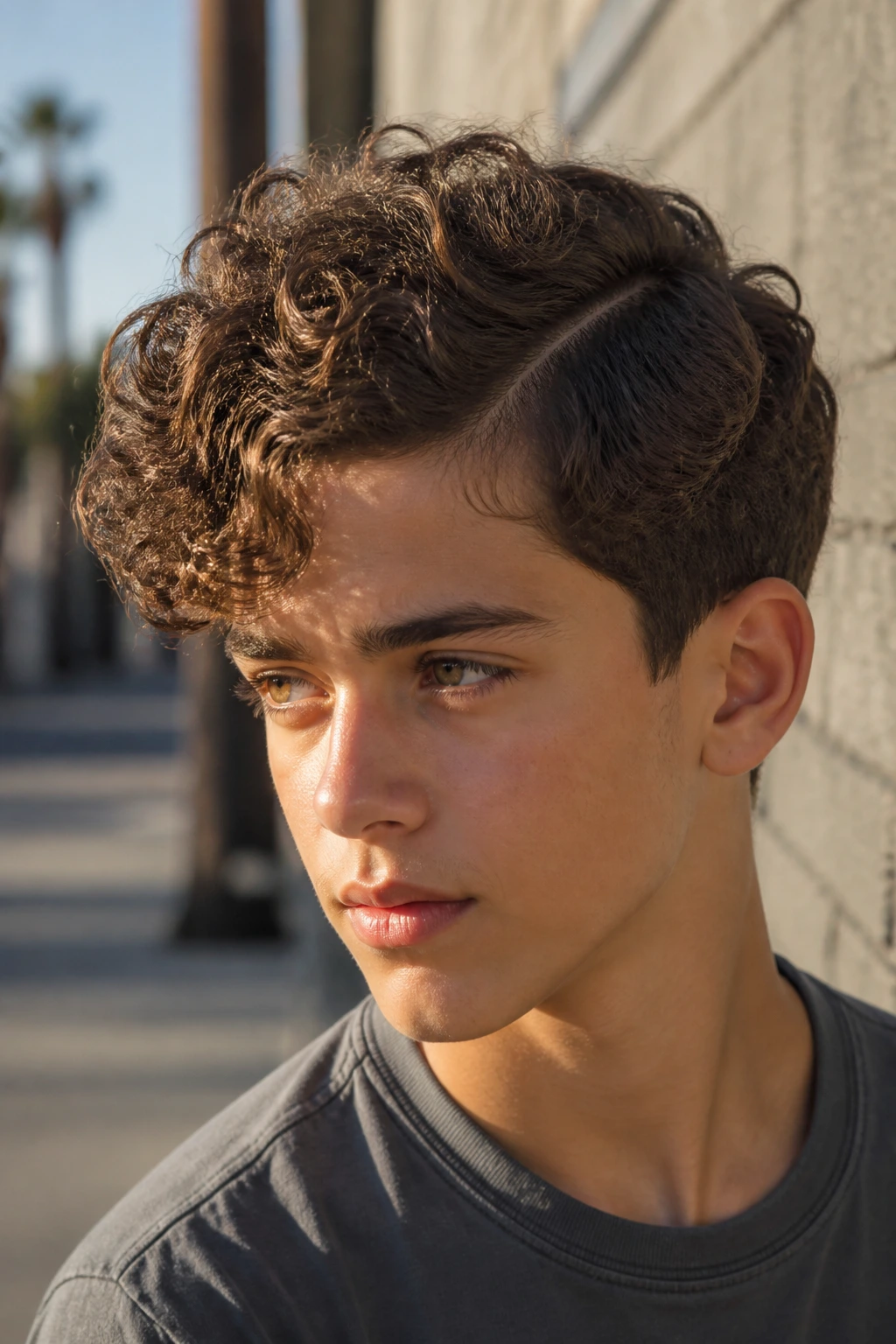
The curly side part is one of those cuts that looks quietly polished without trying too hard. It works because the part gives direction to curls that might otherwise fall all over the place. On a boy with looser curls or waves, it can look almost classic. On thicker curls, it looks more textured and modern.
This cut depends on a believable part, not a painted-on one. You do not need a razor-hard line unless the style is meant to be very sharp. A soft side part with a taper or low fade is often enough. The key is letting the top move with the part instead of forcing it to lie flat against the head.
It’s a strong pick for school photos, family events, or any kid who wants a neater look without giving up curl. The style also grows out with less drama than people expect, because the curls keep the shape from collapsing. If one side naturally pushes more than the other, the barber can adjust the part line slightly off-center to work with the crown instead of against it.
Use a light styling cream and comb the top into the part while damp. Then leave it alone. Overworking it makes the curls separate in odd ways.
10. Temple Fade with Shape-Up
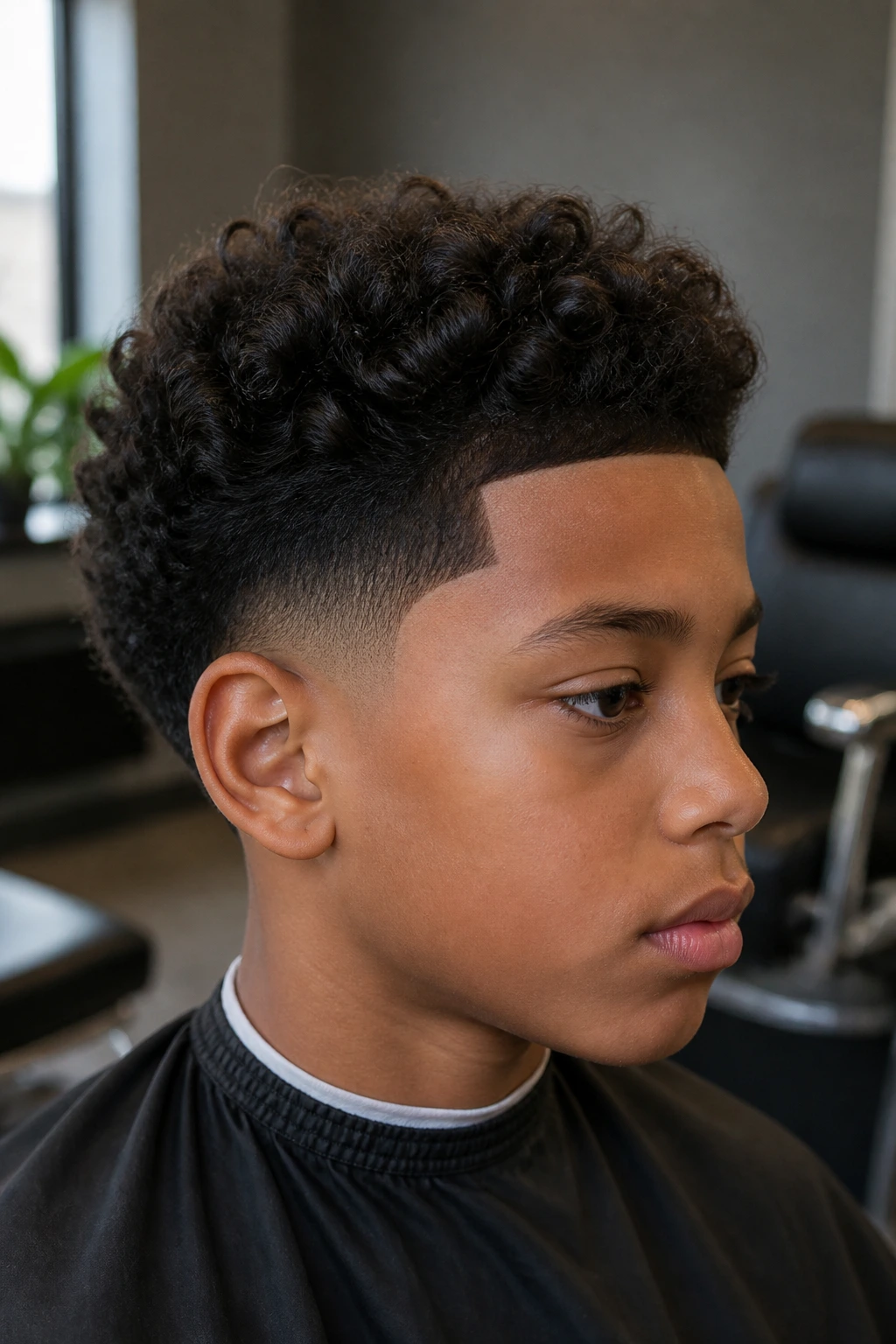
A temple fade with shape-up is all about edges. The top can stay curly and generous, but the temples, hairline, and neckline are sharpened so the cut reads clean from every angle. I like this style when the curls themselves are already doing enough work and just need framing.
The temple fade is especially useful for boys whose hair grows fast around the ears and sideburns. That area can go from neat to fuzzy in a week. A good temple fade slows down that visual mess because the fade blends naturally into the skin or near-skin at the edges. The shape-up at the front gives the haircut a crisp finish without flattening the curls.
This style can be paired with almost any top length. Short curls, medium curls, even longer textured tops all work if the shape around the face stays balanced. If the barber goes too sharp at the corners, though, the haircut starts looking boxy. A slight curve at the front usually looks better on a child’s face.
Keep the top soft and the edges clean. That is the whole game here.
11. Curly Bro Flow
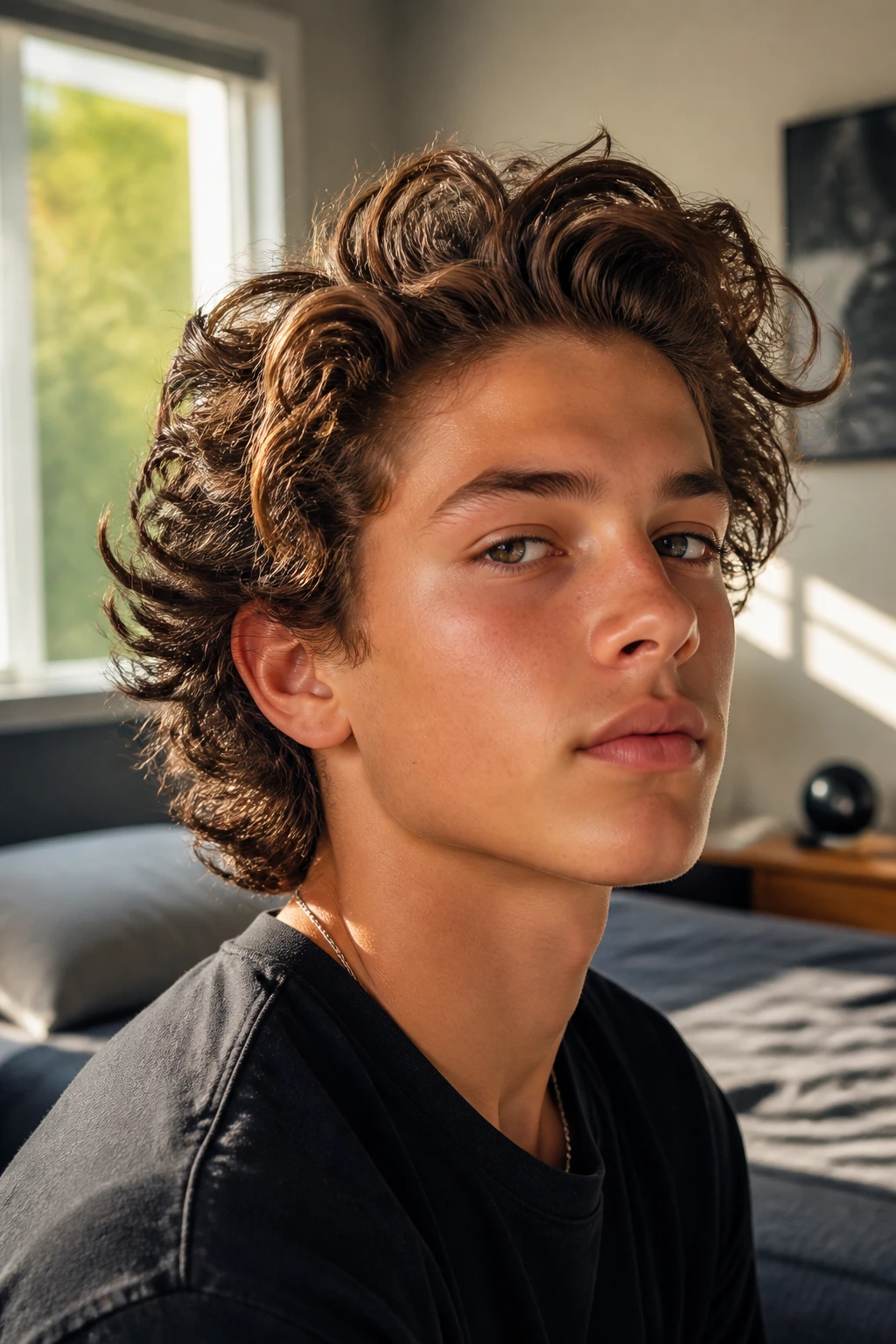
A curly bro flow is for boys who want length and movement without a heavy shape-up dominating the whole haircut. The hair flows back and outward, with enough layering to keep the curls from bunching. On loose-to-medium curls, this style can look relaxed and athletic. On thicker curls, it becomes fuller and more dramatic.
The best thing about bro flow hair on curls is that it grows out well. That matters more than people admit. Some cuts look good on day one and then turn into homework by week three. This one usually gets better as the top gains a little length, as long as the sides are kept from ballooning.
It works best when the back and sides are trimmed just enough to keep the outline tidy. You want a sense of movement, not a mullet unless you’re actually going for a mullet. The difference is in the taper and the layering. If the barber leaves the sides too bulky, the “flow” turns into a puff.
A soft cream or foam on damp hair helps the curls move backward without crunch. Finger-combing is enough. The style should look like the hair fell into place after a little help, not after a wrestling match with a brush.
12. Curly Faux Hawk
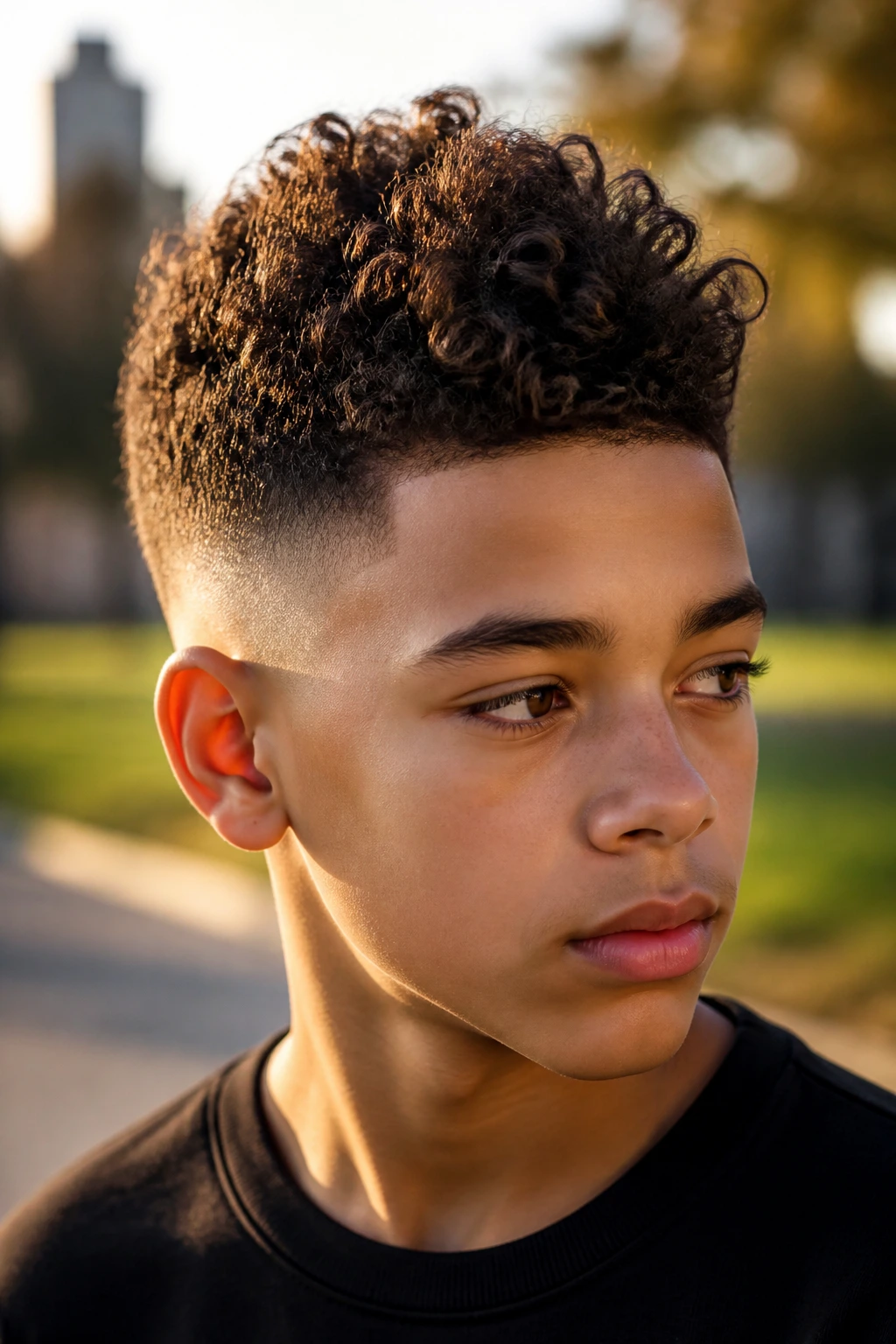
The curly faux hawk is fun without being a full mohawk. The curls are kept taller through the middle of the head, while the sides are tapered or faded so the center ridge stands out. It is a good match for boys who like a little edge but still need something that behaves in normal life.
What Makes It Work
The shape depends on contrast, but not harsh contrast. The middle needs enough length to sit up and forward, while the sides should be short enough to reveal the center. A very tight fade can make the faux hawk look almost severe, so I usually prefer a softer taper unless the boy wants a sharper look.
This cut works on many curl patterns, though tighter curls give the ridge more texture. It also has one nice practical trait: if the curls flatten a little, the style still reads as intentional. That matters when a haircut has to survive gym class, naps, hats, and all the other things boys put hair through.
A tiny bit of curl cream or mousse can help the middle stay lifted. If the top is too long, the faux hawk turns floppy. If it’s too short, it loses the shape. The sweet spot is right in the middle, and that balance is what makes it look good instead of gimmicky.
13. Long Curly Layers
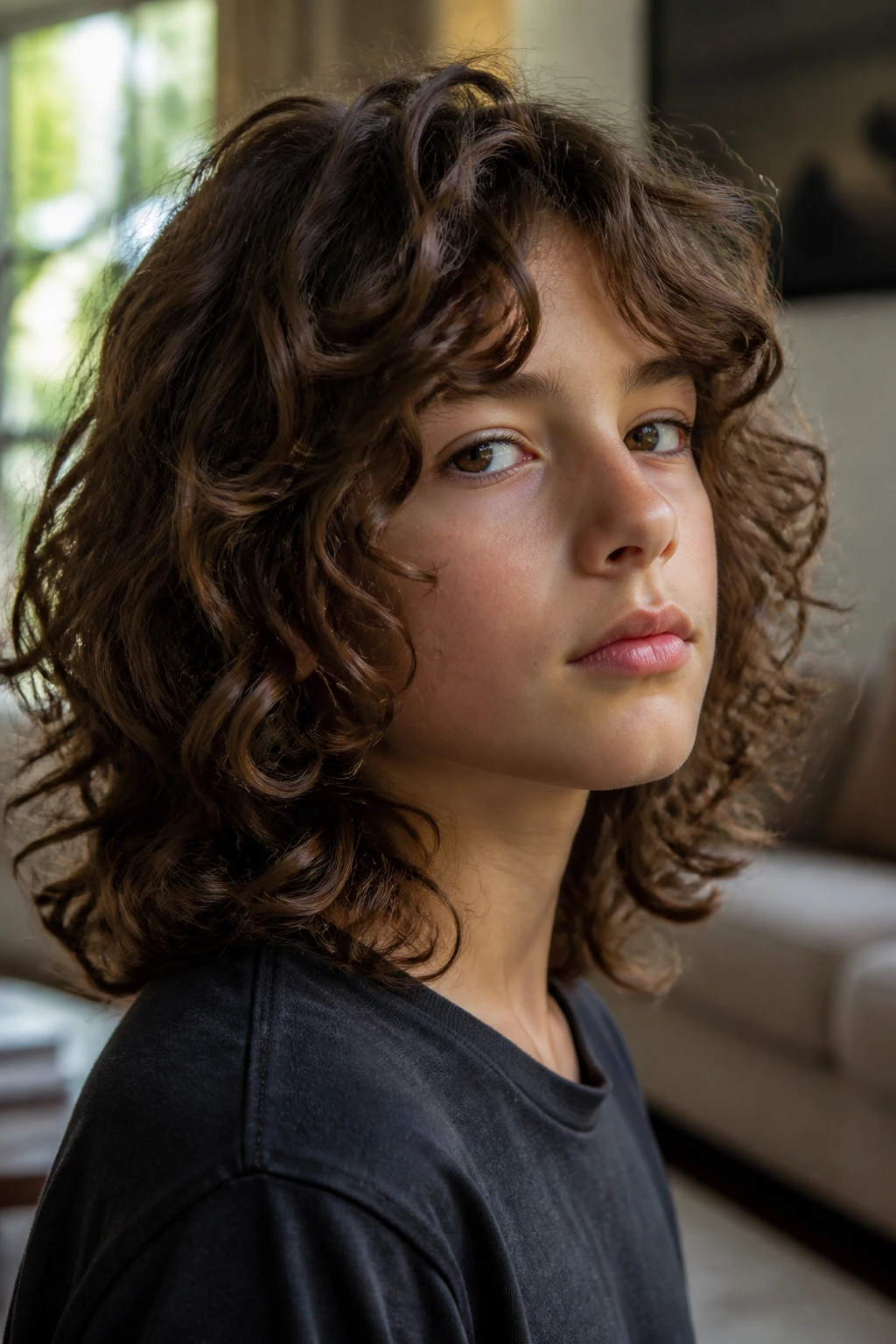
Long curls need a haircut too. Long curly layers are not about chopping the length off; they are about keeping the shape from turning into a wide, heavy curtain. The layers let the curls stack and separate, which keeps the hair moving and stops the ends from dragging the whole style down.
This is a strong choice for boys who want to keep length around the ears, jaw, or even shoulders. It works when the curls are healthy and the family is willing to spend a minute or two on detangling. If the hair is long and thick, the inside layers matter a lot. They remove bulk without destroying the outline.
I like this style when a boy has one of those curls patterns that looks better the longer it gets. Tightens up in some places, opens in others. The layers can shape that instead of fighting it. A good barber or stylist will trim around the face so the curls do not hide the eyes, then let the rest fall naturally.
Use a wide-tooth comb only when the hair is wet and conditioned. Dry brushing long curls is how you get frizz and a lot of unnecessary volume. Nobody needs that before school.
14. Drop Fade with Curls
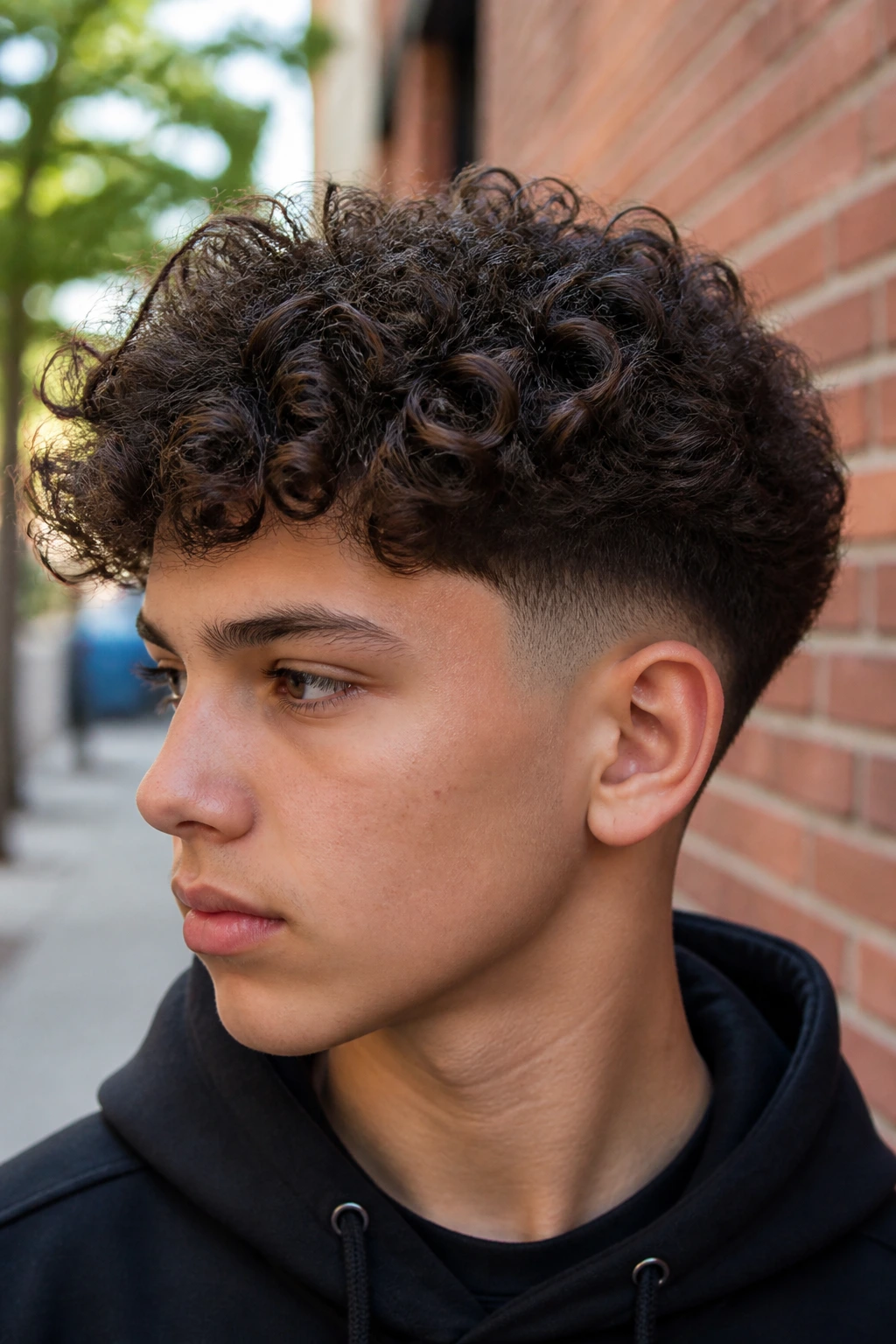
A drop fade with curls curves down behind the ear instead of running straight around the head. That little drop gives the haircut a cleaner, more shaped look, especially when the curls on top are thick or springy. It is one of those details people do not notice at first and then suddenly do.
Compared with a basic taper, the drop fade has a bit more shape in the back. That makes it useful for boys whose head shape benefits from a softer curve near the crown or occipital bone. It also makes the fade feel more tailored, less like a generic clipper cut. If the curls are dense, the drop fade can keep the sides from puffing out behind the ears.
The top can be left short or medium. Shorter tops look neater and easier for sports. Medium tops give more texture and a looser finish. Either way, the fade should be blended carefully so the drop doesn’t look like a mistake in the line.
This is a cut that rewards a barber who knows how to shape with the head, not just shave a line around it.
15. Textured Curly Bowl Cut
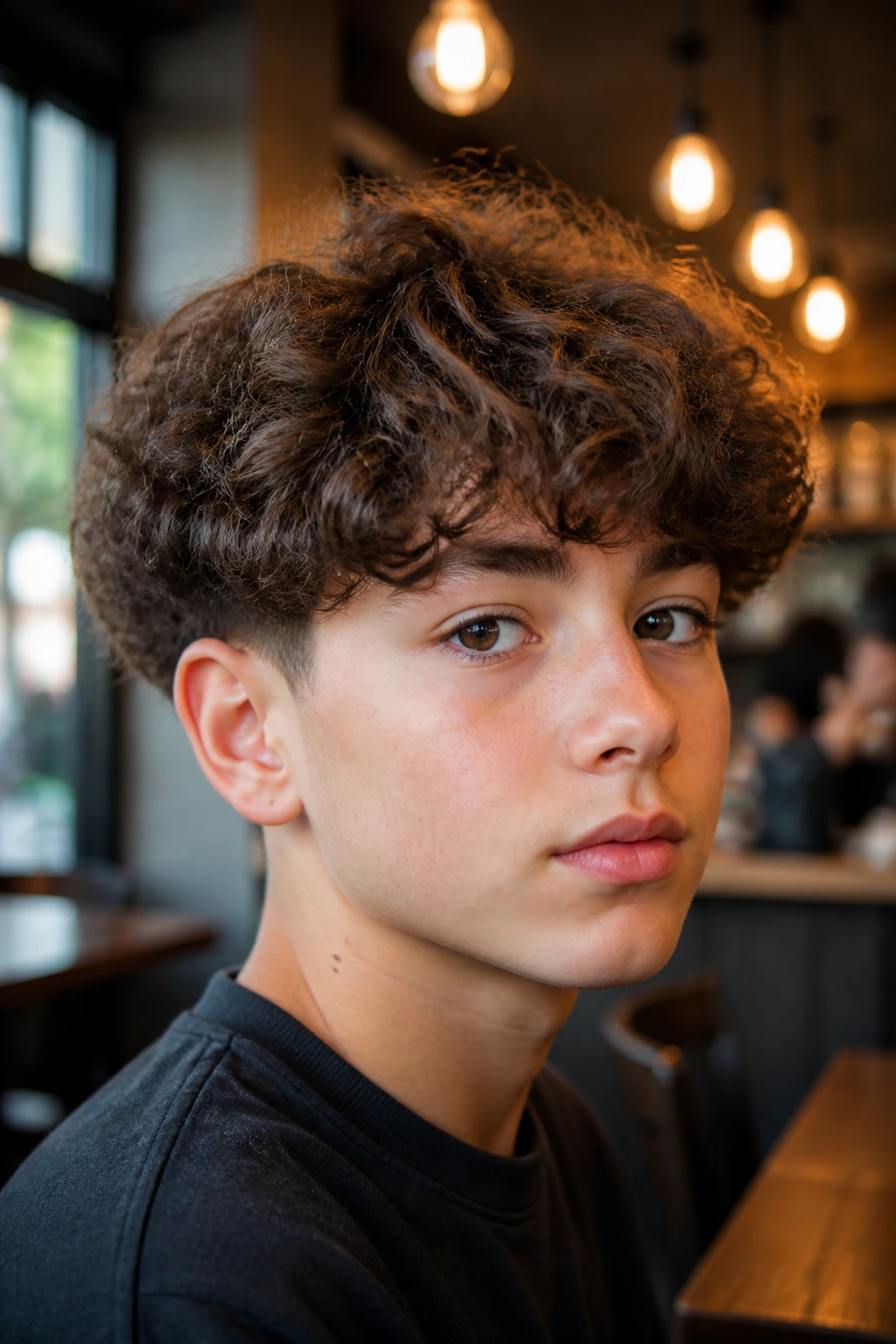
The textured curly bowl cut sounds risky, and that’s fair. But a modern version with curls can look surprisingly good when the barber softens the edge and keeps the bowl shape loose. The old mushroom effect happens when the sides are cut too blunt and the top is left too dense. A better version keeps the ends airy and follows the curve of the head instead of sitting like a helmet.
This cut works best on boys with thicker curls who can carry some roundness around the face. It also suits parents who want something short enough to manage but not too short to hide the curl pattern. The trick is texture. If the hair is cut with too much uniformity, the style goes straight back to looking dated.
I would not recommend a hard bowl shape for every boy. But a softened, curly version? That has real charm when it is done carefully. The fringe can sit just above or at the eyebrows, and the sides can be slightly tapered so the outline stays neat.
If you want a little personality without going full shag or mullet, this is one of the more interesting options in the bunch.
16. Curly Ivy League
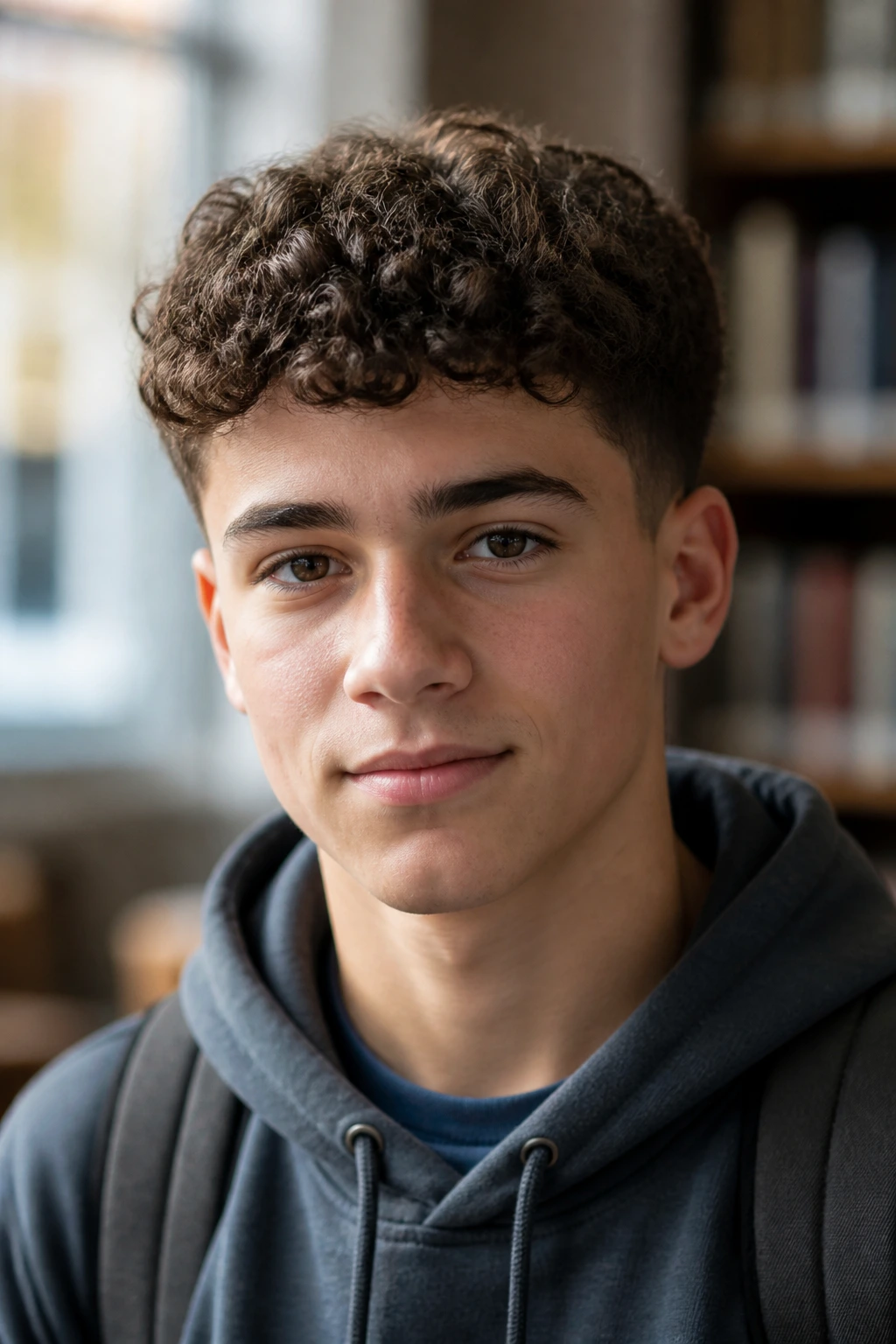
A curly Ivy League is polished without looking stiff. Think short sides, a bit more length on top, and enough curl to keep the whole thing from feeling flat. It is the kind of cut that works for school days, family events, and anywhere a clean look matters more than a big style statement.
The top is usually left long enough to part or sweep slightly to one side. On curly hair, that top will not lie perfectly flat, and that is a good thing. The texture keeps the style alive. The sides should be tapered or clipped neatly so the top reads as intentional rather than overgrown.
This cut is especially good for boys who need something tidy but still want some personality in the hair. It photographs well because the edges are controlled, and the curls add shape around the top instead of making the head look square. If the curls are tighter, the top may read more as textured crop than true part-and-sweep. That still works.
A fingertip amount of cream is enough. No need to plaster it down. If the boy can run a hand through it once and move on, the cut is doing its job.
17. Short Curly Crew Cut
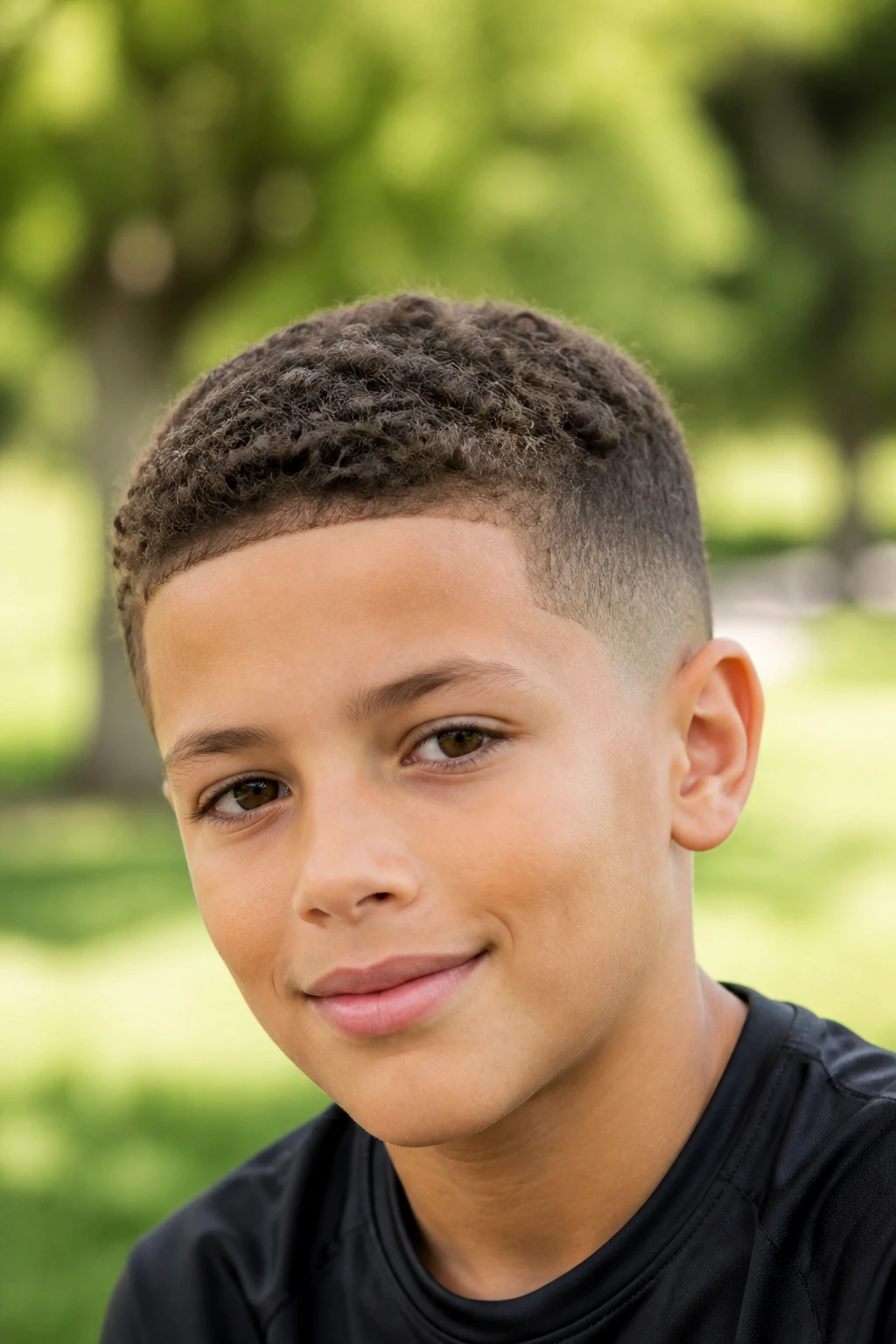
The short curly crew cut is the honest answer when a boy wants almost no fuss but still has enough curl on top to make the cut interesting. It’s short around the sides, a little longer on top, and easy to keep under control with almost no styling. The curl pattern does the work that a straight crew cut would not have.
This is a smart summer cut, a sports cut, and a practical cut all at once. It is also one of the better choices when a child hates combing or getting product in his hair. The top should not be buzzed so short that the curls vanish completely. Leaving a little length gives the hair some texture and keeps it from looking too severe.
What I like here is the grow-out. A short crew cut can drift a little before it looks bad. The curls soften the edges as they come in, which buys time between haircuts. If the hair grows fast at the crown, the barber can leave a touch more length there so the shape doesn’t pop up in a strange way.
This is the cut for parents who want simple and for kids who want out of the bathroom fast.
18. Curly Brush-Up with Tapered Sides
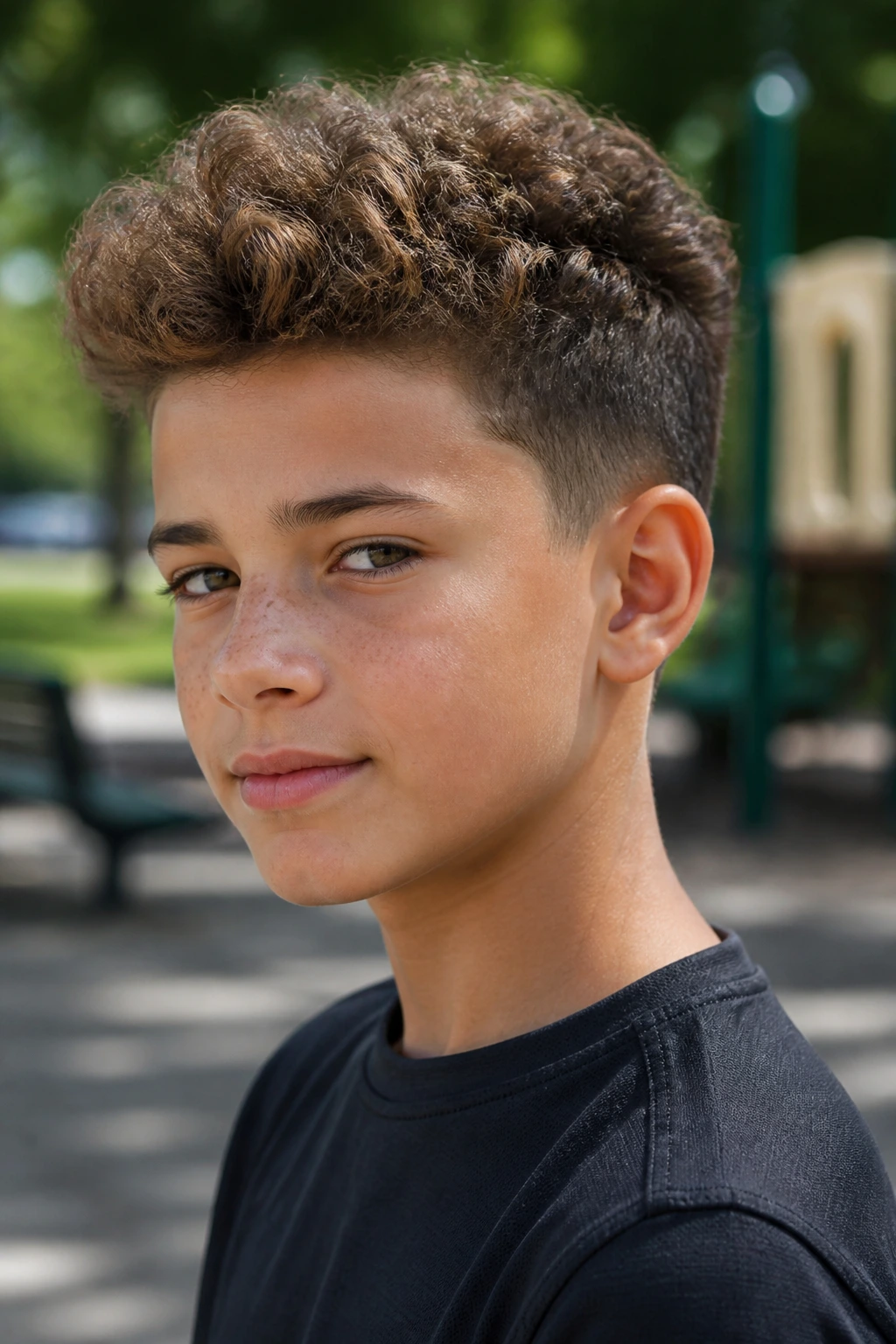
A curly brush-up with tapered sides gives the curls a little lift at the front and a clean finish around the sides. It is not as tall as a faux hawk and not as short as a crew cut. The top is brushed upward with fingers or a wide-tooth comb while damp, then allowed to dry with some natural height.
This style works nicely on boys with medium curls that need direction. The tapered sides keep the shape from spreading out too wide, and the brush-up keeps the front from falling into the eyes. If the curls are stronger, the front may sit in little bends rather than one smooth lift. That’s fine. In fact, it often looks better that way.
I think this cut gets overlooked because people assume curls cannot be brushed up. They can, as long as the product is light and the top is not forced into a stiff shape. A little cream or mousse gives enough memory for the curl to rise without turning crunchy.
If you want something neat, athletic, and easy to restyle after a nap or a hat, this is a very practical finish.
Why Curly Hair Looks Better When the Weight Is Removed Carefully
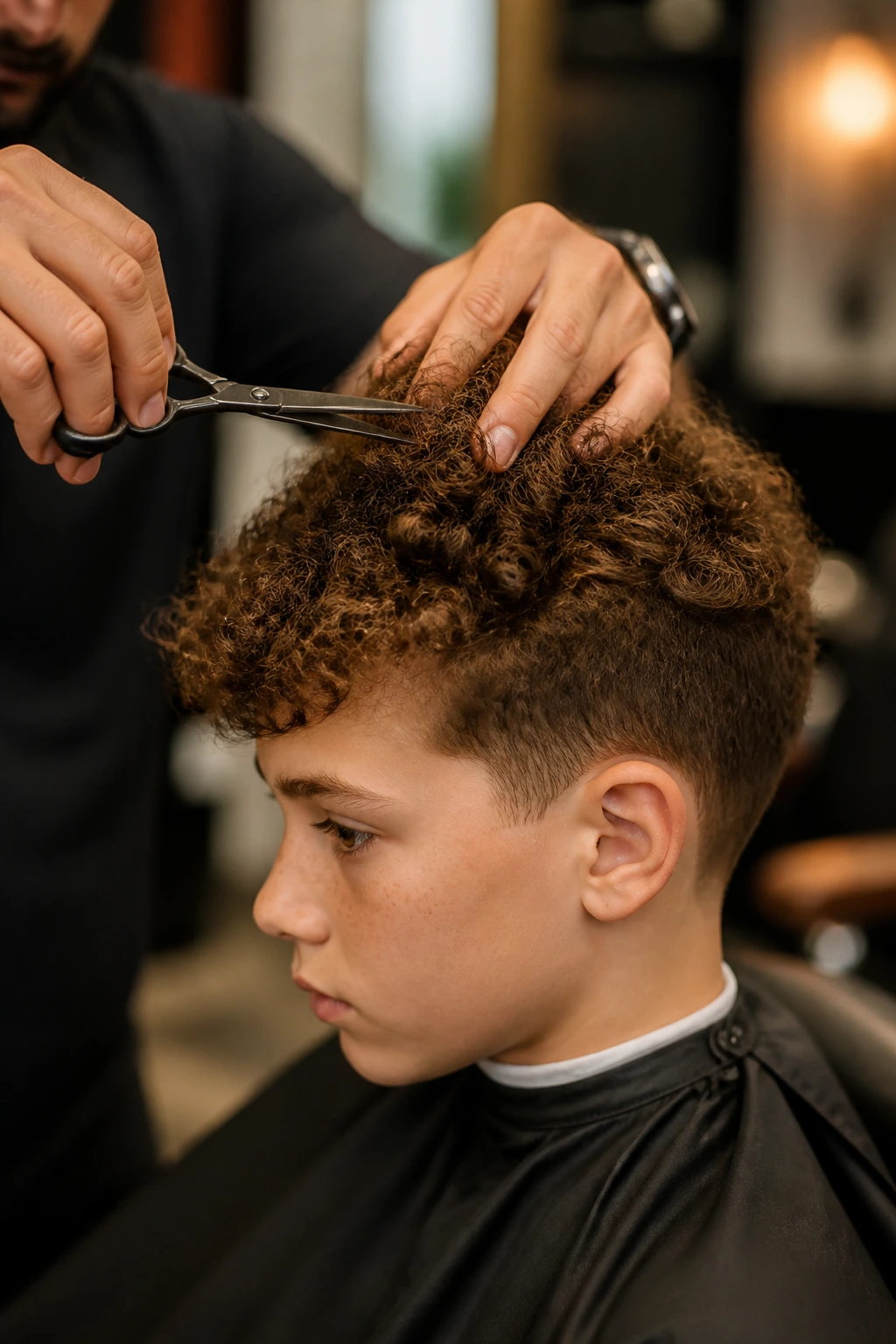
The biggest reason curly haircuts for boys fail is blunt weight removal. People hear “take bulk out” and reach for thinning shears like they’re fixing drywall. That usually leaves the ends fuzzy and the top uneven. On curls, weight should be removed with shape in mind. If the bulk comes off the wrong places, the haircut puffs in the sides or caves in around the crown.
A clean curly cut is really a control exercise. The barber trims the perimeter so the outline stays neat, then leaves enough length in the bends of the curls to keep them from springing into chaos. That is why taper fades, layered tops, and soft fringes work so well. They give the hair a place to go.
I’ve always preferred curls that keep a little motion. Dead-straight edges can look sharp for a day, but curls are happier with a small amount of looseness. The shape still needs to be intentional. It just does not need to be overdrawn.
The Barber Tools That Make These Cuts Easier
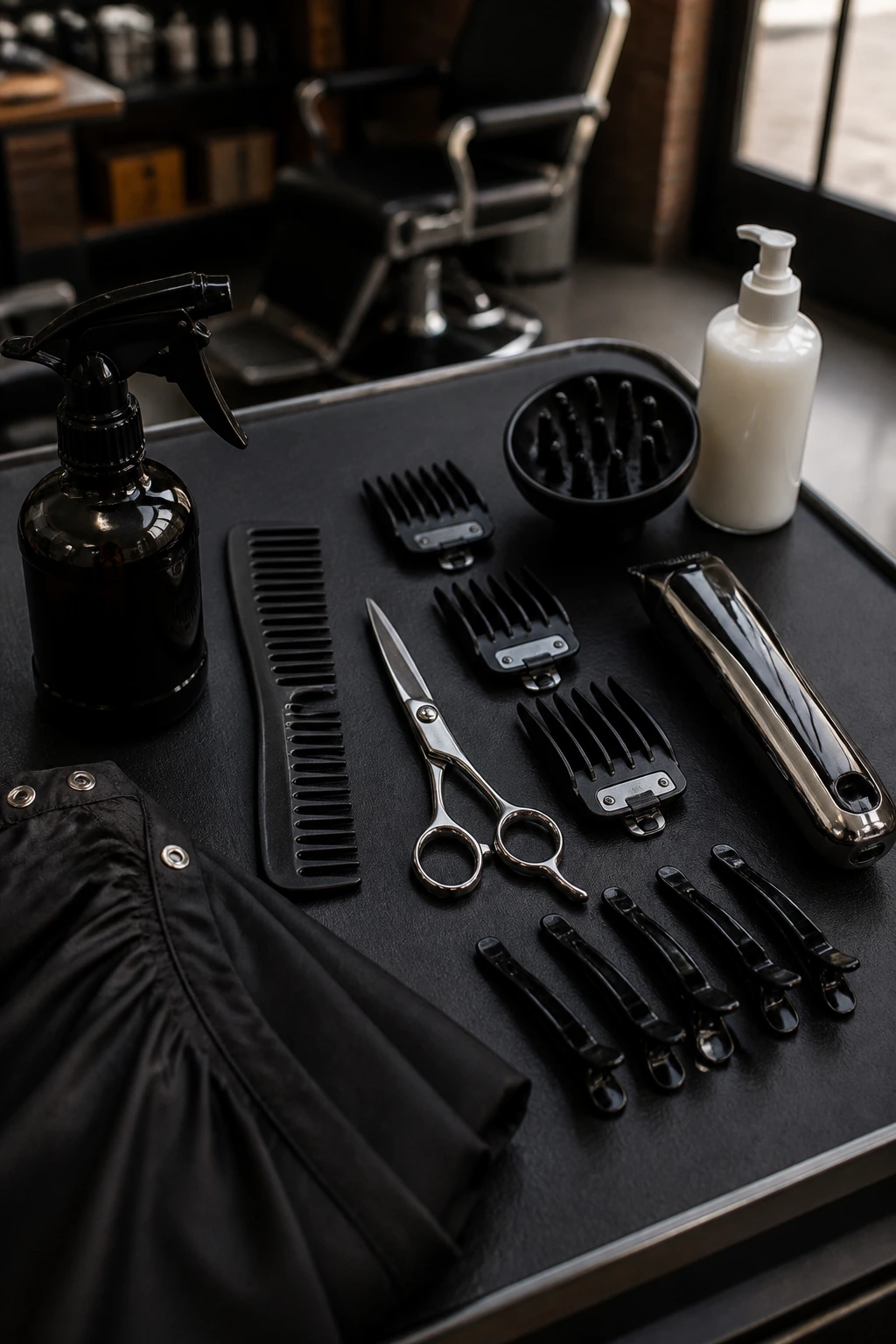
- Spray bottle: Dampens curls so the barber can see section lines without soaking the hair flat.
- Wide-tooth comb: Detangles without ripping through curls and creating frizz.
- Barber shears: Best for shaping the top and softening fringe ends.
- Clipper guards: Useful for clean fades and tapers around the sides and neckline.
- Detail trimmer: Sharpens temple edges, necklines, and sideburns.
- Diffuser attachment: Helps dry curls without blasting them into a halo of frizz.
- Sectioning clips: Handy for longer curly hair and layered cuts.
- Leave-in conditioner or curl cream: Keeps the hair soft and gives the curls enough hold to sit in shape.
- Cape or towel: Keeps product and loose curls off clothes, which parents will appreciate more than they admit.
How to Pick the Right Cut for Curl Type, Face Shape, and Daily Routine
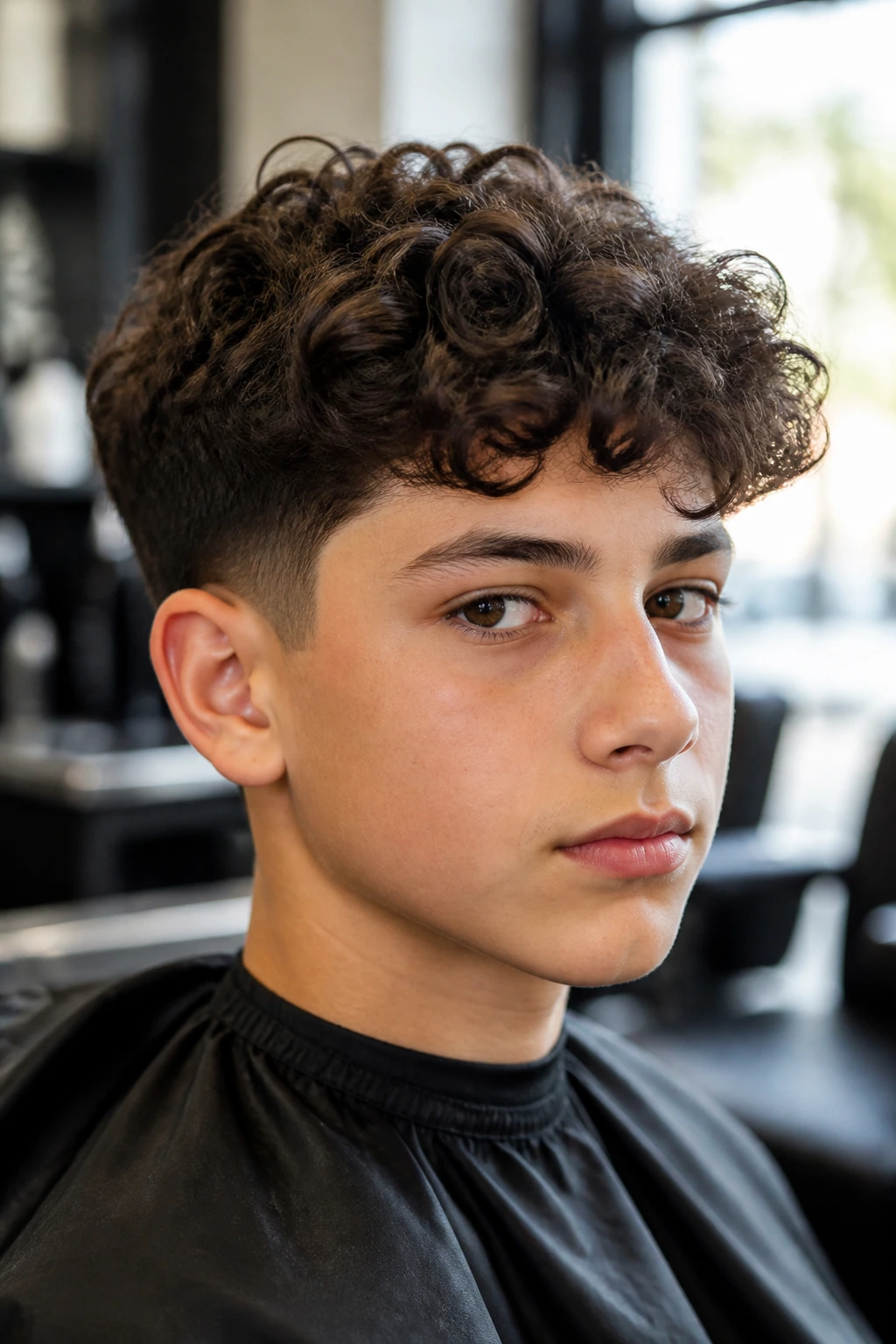
The best boys curly haircut is the one that matches the hair’s actual behavior. Loose waves can take a side part, a fringe crop, or a curly brush-up with very little fuss. Thicker ringlets usually do well with taper fades, shags, and layered medium-length shapes because those cuts keep the curls from clumping too hard. Tighter curls and coils can carry more structural shapes like a high-top fade, Caesar, or short crew cut.
Face shape matters too, even if people talk about it too vaguely. A rounder face often benefits from height on top and some neatness on the sides, so the head looks a little longer. Longer faces usually look better with fringe or a softer front shape that adds width. Strong cowlicks in the front can fight a side part, while a heavy crown might make a longer top stick up in the back unless the layers are handled carefully.
Routine is the final filter, and honestly it may matter most. If the boy hates products and combs, keep the cut short enough that the curls fall into place on their own. If he likes a little grooming, medium layers or a fringe crop can look excellent with a dab of cream. The wrong cut is not the one that looks bad in the chair. It is the one that behaves badly on a Wednesday morning.
How to Style These Cuts Without Fighting the Curl Pattern
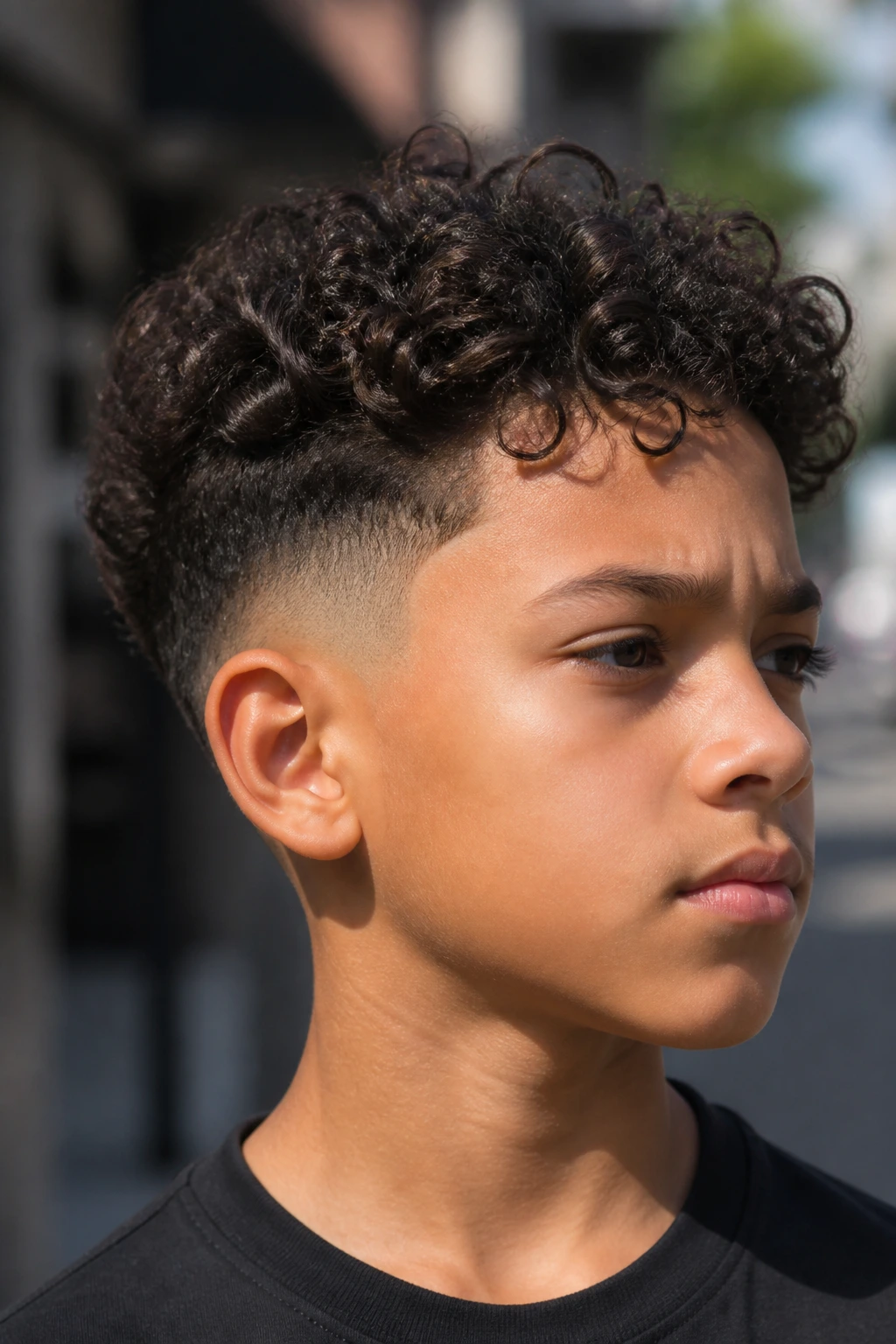
Presentation: The finished haircut should look shaped, not forced. Curls can be soft around the forehead, clean at the neckline, and still read as neat if the outline is balanced. A slight lift at the top and a tidy taper on the sides usually makes the whole style look more finished than trying to slick curls flat.
Products: Start light. A leave-in conditioner or a small amount of curl cream is enough for most boys. Use gel only when you need the curls to hold a sharper front or more defined part. Heavy wax and greasy pomades are usually a bad fit for curly hair because they drag the curl down and make the top feel dirty faster than it should.
Routine: Mist the hair until it is damp, not dripping. Work product through with fingertips, then scrunch or shape the curls with your hands. If you need more definition, diffuse on low heat for a few minutes, stopping before the hair gets too dry and frizzy. Let it finish air-drying if there’s time.
Touch-Ups: A quick mist bottle fixes a lot. If the curls go weird after a hat or a nap, wet your palms, smooth the sides, and reshape the top with your fingers. Most curly cuts need tiny corrections, not a full restyle.
Small Touches That Make a Big Difference
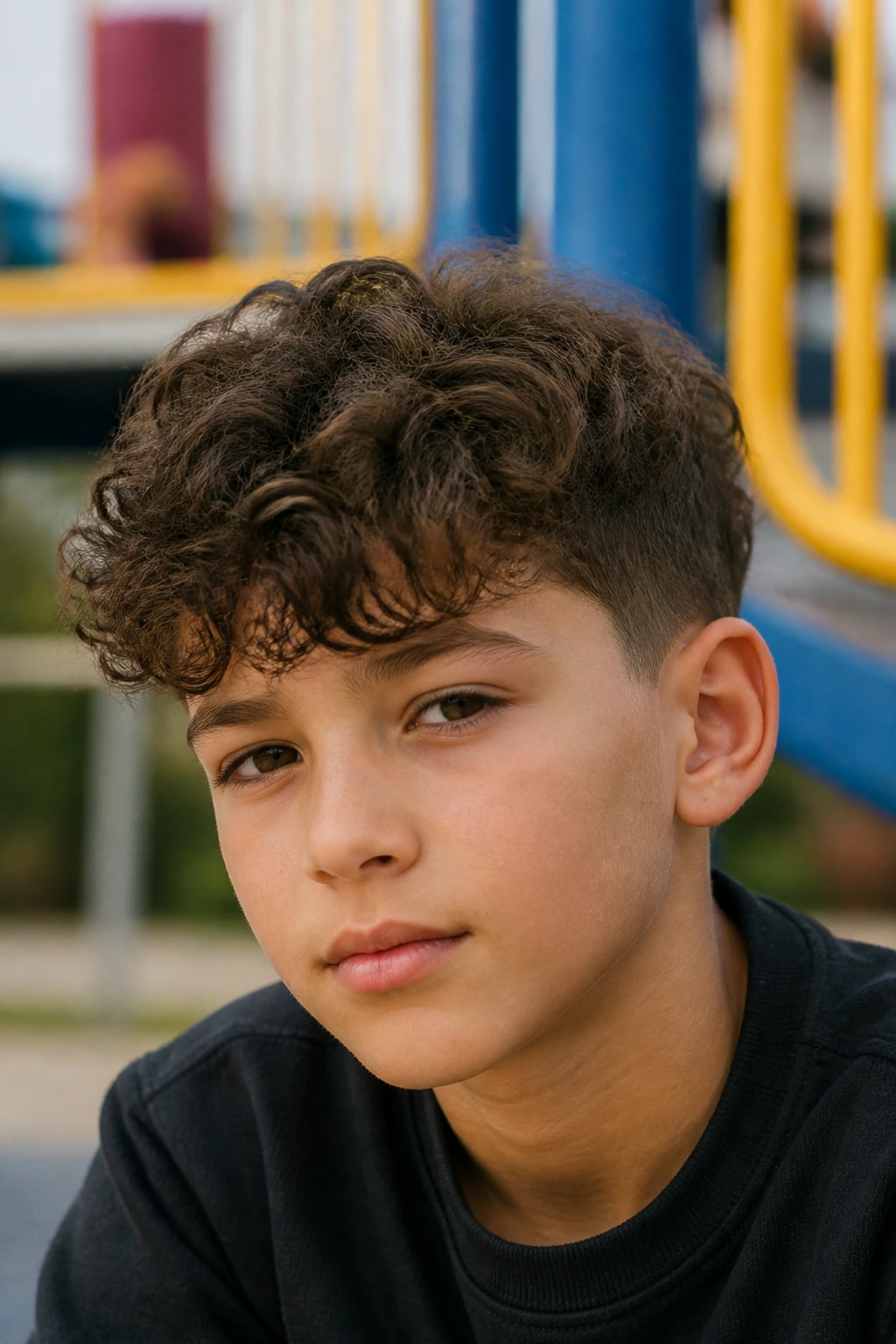
Definition Boost: A dime-sized amount of curl cream on damp hair can turn soft bends into clean spirals, especially around the fringe and top layers. Work it through with your hands first, then separate a few curls near the front so they do not clump into one thick piece.
Control: For boys with stronger curls that flare out at the sides, a tiny bit of gel along the hairline can keep the cut looking neat through the day. Use less than you think. Too much and the edges get crunchy, which looks odd on a child’s head.
Shape: A diffuser on low heat is underrated. Hold it near the roots for lift, then stop before the curl pattern gets blown apart. The goal is bounce, not volume for volume’s sake.
Personal Touch: A hard part, subtle line-up, or slightly longer fringe can make the same haircut look more personal. That is often enough. You do not need a wild design shaved into the side unless the boy actually wants that attention.
Common Mistakes That Show Up Fast
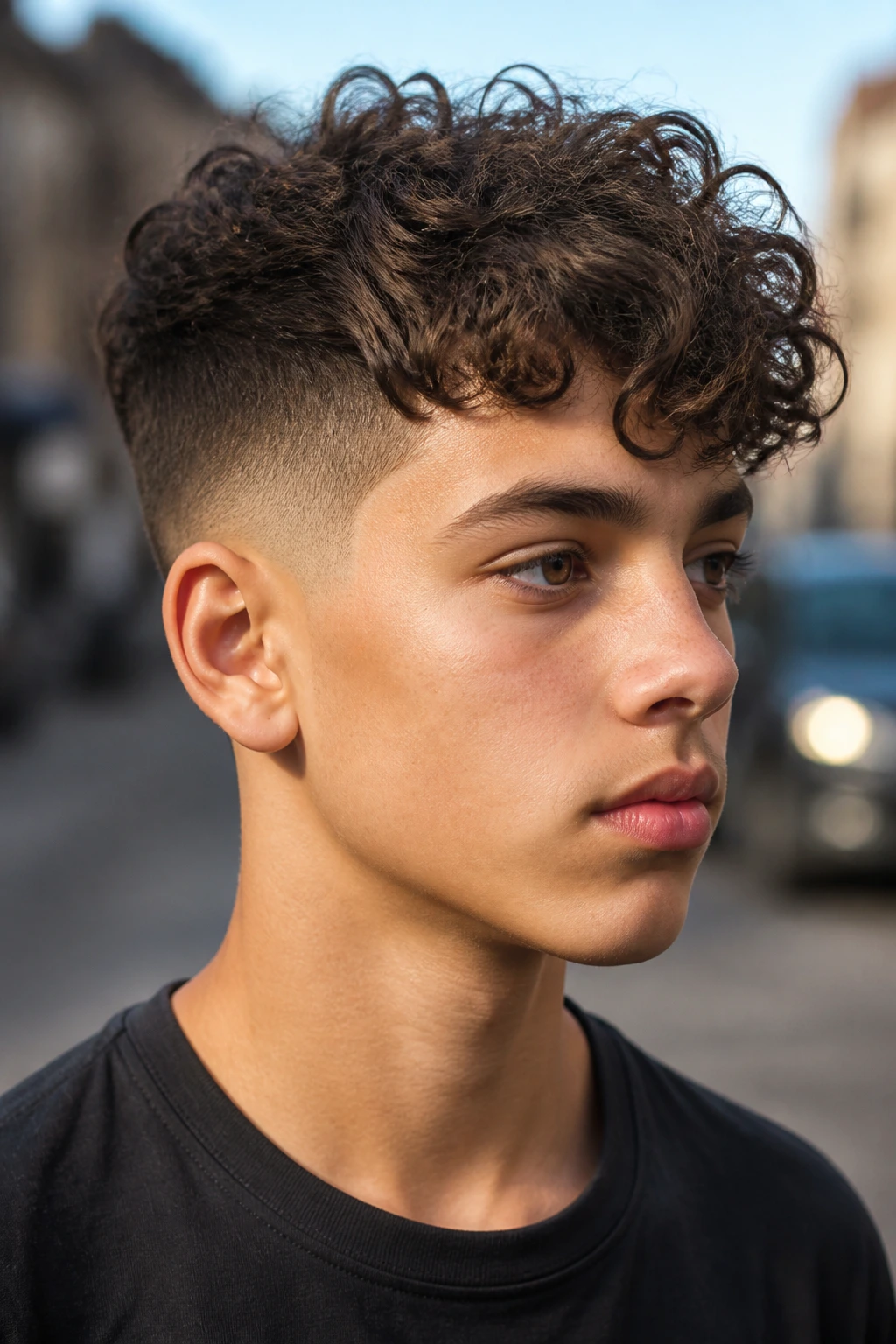
The first mistake is cutting curls too short while they’re wet. Wet curls lie and lie well. When they dry, they spring up and leave the top much shorter than expected. The fix is to leave more length than you would on straight hair and check the shape as the curl pattern dries.
The second mistake is thinning everything just to make it “lighter.” If the barber removes too much bulk from the ends, the hair frizzes and loses shape. A better move is controlled layering and careful perimeter shaping. That keeps the curl intact.
Another common problem is ignoring the crown. If the cowlick at the back is strong, the hair can stick up or split weirdly after the cut. The barber needs to cut with that growth pattern in mind, not against it. Ask them to look at the dry pattern before they finish the shape.
Heavy product is another one. It can make curls look wet for half the day and greasy by lunch. Use enough to shape, not enough to glue the hair to the head.
Finally, some families ask for a style that only works with constant combing. That usually ends badly. If the boy will not touch his hair after breakfast, choose a cut that already wants to sit right.
Variations Worth Trying
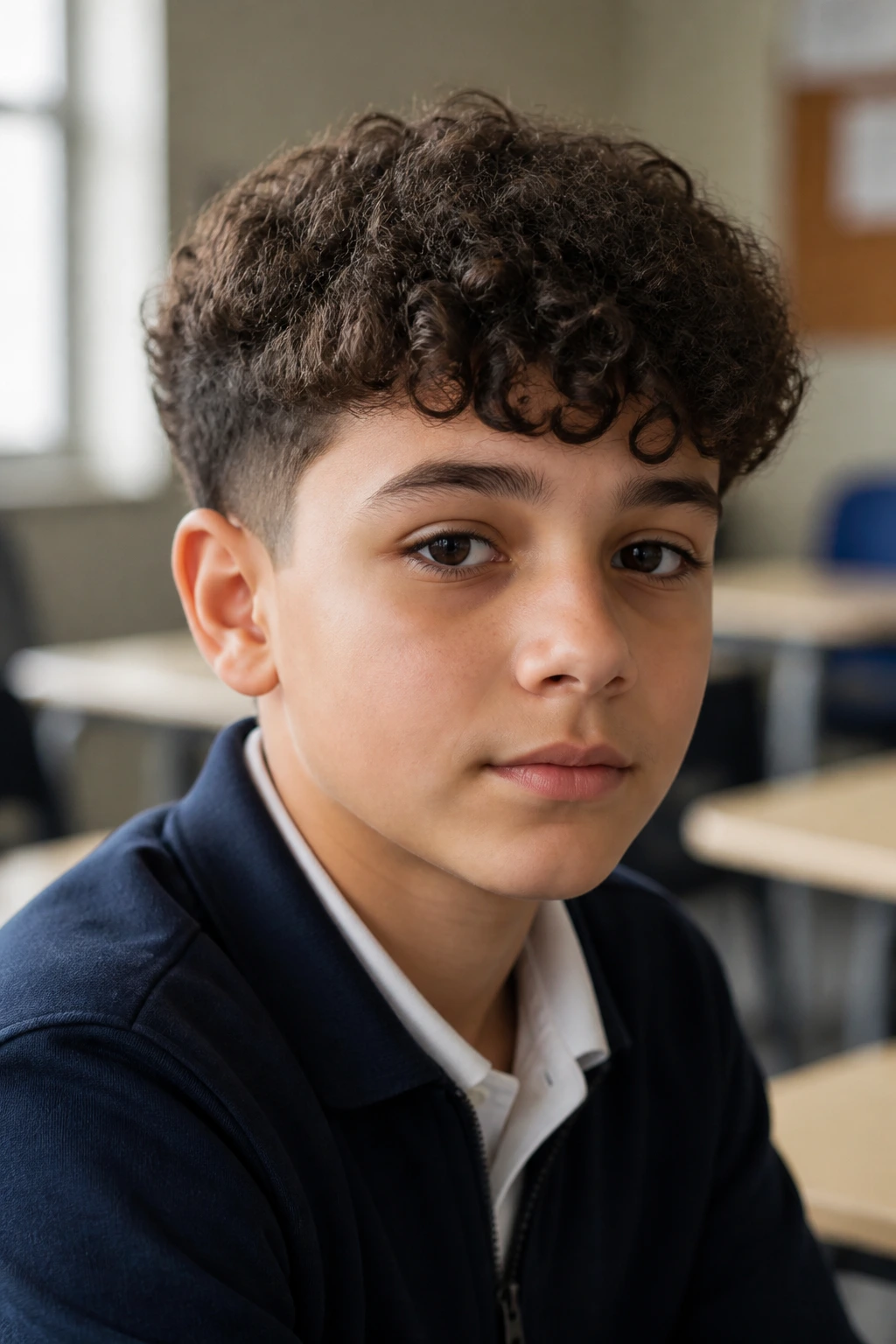
School-Day Neat: Take any of the shorter cuts — taper fade, Caesar, crew cut, Ivy League — and keep the fringe and neckline tighter. This is the version that looks tidy under fluorescent lights and still behaves after recess.
Weekend Texture: Keep the same haircut but leave the top a half inch longer and use a little curl cream instead of gel. The curls look looser and more relaxed, which works well if the boy likes hair that moves.
Sports-Ready Short Sides: For active kids, ask for a cleaner taper or fade around the ears and neck while keeping a textured top. That reduces sweat buildup and helps the haircut look decent after helmets or hats.
Length-First Grow-Out: If the boy wants to keep growing his curls, shift the cut toward layered medium length or bro flow and trim only the perimeter every 6 to 8 weeks. The shape stays controlled while the length builds.
Sharper Edge Version: Add a line-up at the forehead and sharper temples to a taper fade, undercut, or temple fade. This gives the haircut more definition, though it needs a little more upkeep.
Soft-Texture Version: Skip the hard edges and ask for point-cut ends, softer temples, and a looser fringe. This version suits younger boys and anyone whose hair looks best when it stays a little airy.
Keeping the Cut Fresh Between Visits
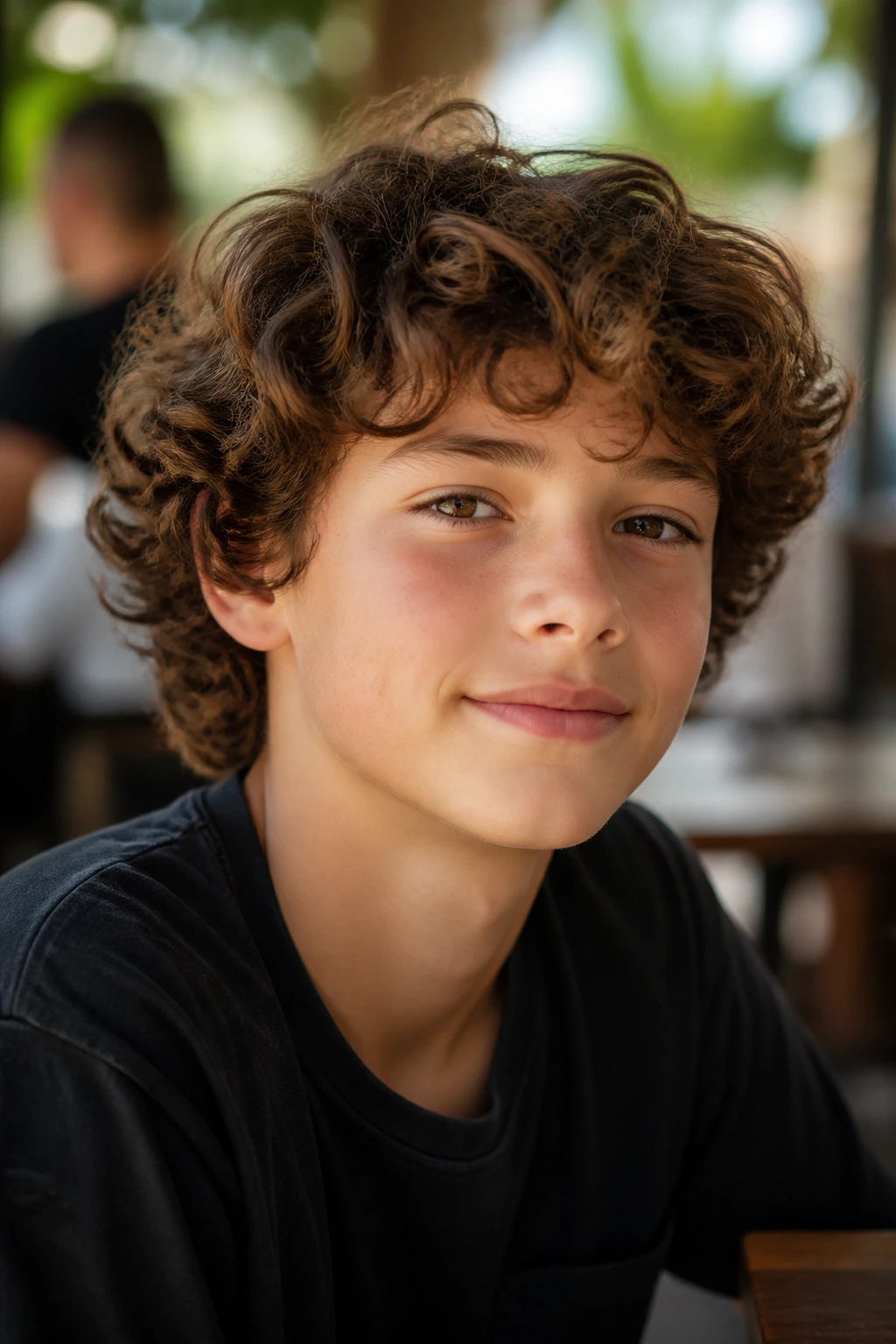
Curly haircuts on boys do not all age at the same speed. A taper fade with a short top may need a touch-up every 2 to 3 weeks if you want the edges to stay clean. A layered shag, bro flow, or longer curly style can often go 6 to 8 weeks before the shape really needs help. The haircut is half the story; the grow-out plan is the other half.
A spray bottle is the simplest tool at home. Mist the top, work in a tiny bit of leave-in or curl cream, and reshape with fingers instead of brushing everything outward. If the sides start to puff, a quick cleanup around the neckline and sideburns can buy another week or two without a full cut. Parents sometimes think the whole head needs a reset when only the edges are asking for help.
Sleep matters too. A satin or smooth pillowcase cuts down on frizz and flattening, especially for medium and longer curls. If the boy wakes up with a smashed top, dampen the curls lightly and let them reset before adding product. Wetting the hair too much in the morning can undo the shape, so keep it light and targeted.
For longer cuts, check the ends every couple of months. If they start splitting or looking see-through, a small trim will keep the curls from turning stringy. That tiny maintenance habit keeps long curly hair looking cared for instead of neglected.
Questions That Come Up at the Barber Chair
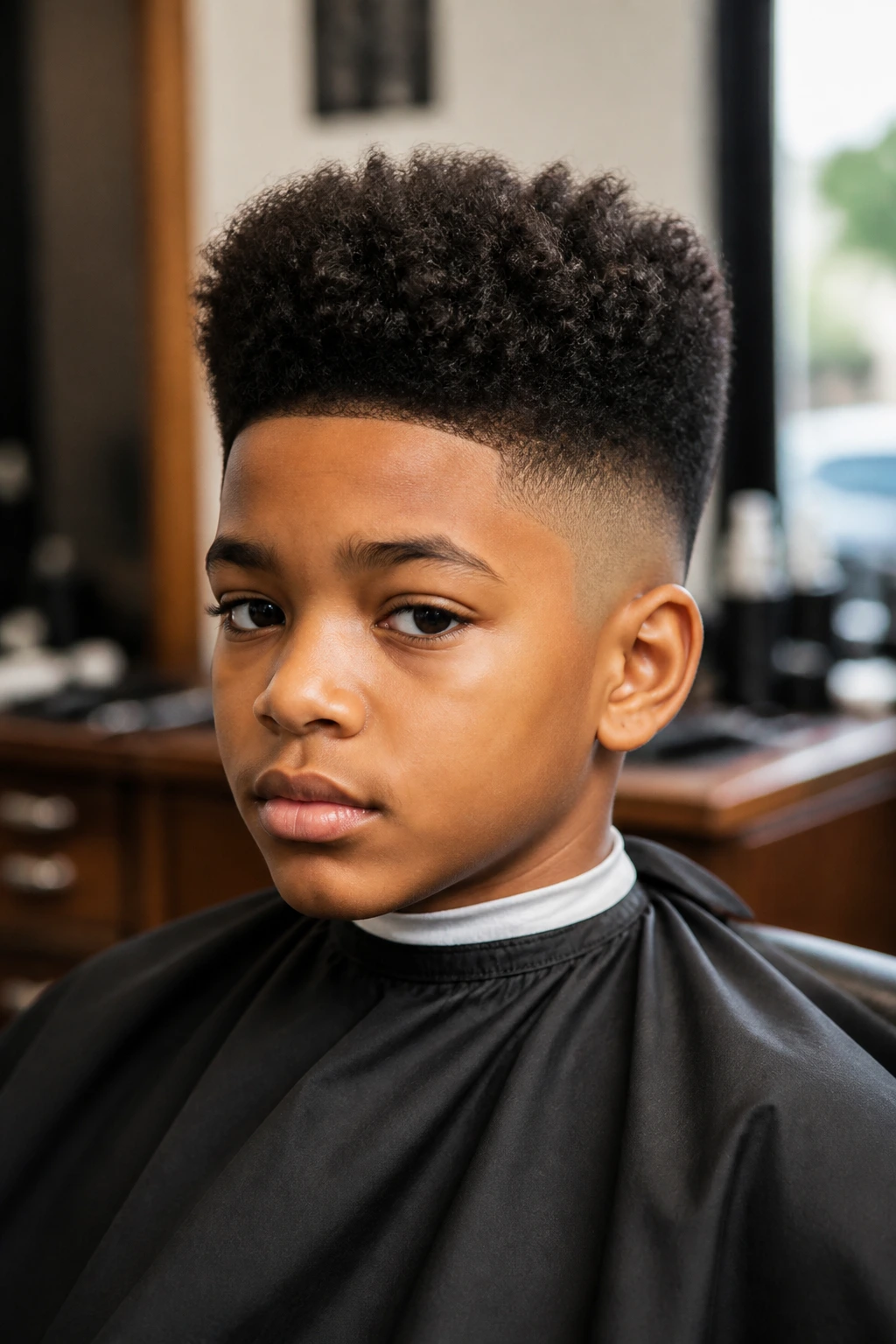
What’s the best haircut for a boy with tight curls?
A taper fade, high-top fade, Caesar, or short crew cut usually works well. Tight curls need enough length to show texture, but the sides should be controlled so the haircut does not balloon out.
Should curly hair be cut wet or dry?
Most barbers cut curly hair damp, then check the shape as it dries. Dry cutting can help with very curly or unpredictable patterns, but the key is to account for shrinkage either way. A cut that looks perfect when soaked can be wrong once dry.
How short can you go before curly hair starts looking puffy?
Shorter is fine if the fade or taper is clean, but the top usually needs enough length to show the curl pattern. If you cut curls too close to the scalp, the texture can turn fuzzy instead of defined.
Does thinning shears help curly hair?
Sometimes, but only in small, careful amounts. Too much thinning makes the ends frizzy and uneven. Controlled layering usually gives a cleaner result.
How often should boys with curly hair get trims?
Fades and short structured cuts often need a trim every 2 to 4 weeks. Medium and longer styles can usually wait 6 to 8 weeks, depending on how fast the hair grows and how tidy the family wants it to look.
What if the curls keep falling into the eyes?
Ask for a softer fringe crop, a small part, or a slight brush-up instead of leaving the front heavy. A little more shape around the forehead can solve the problem without cutting the top too short.
Can a boy with curly hair wear a hard part or line-up?
Yes, if the haircut underneath is strong enough to support it. A hard part looks best on side-part, Ivy League, and temple fade styles. It can look too stiff on a very loose, airy curl pattern.
What if one side grows faster than the other?
That happens more than people think, especially around the crown and temples. The fix is not always more length off both sides; sometimes the barber needs to adjust the part, taper, or front line so the shape looks balanced again.
A Cut That Fits the Curl
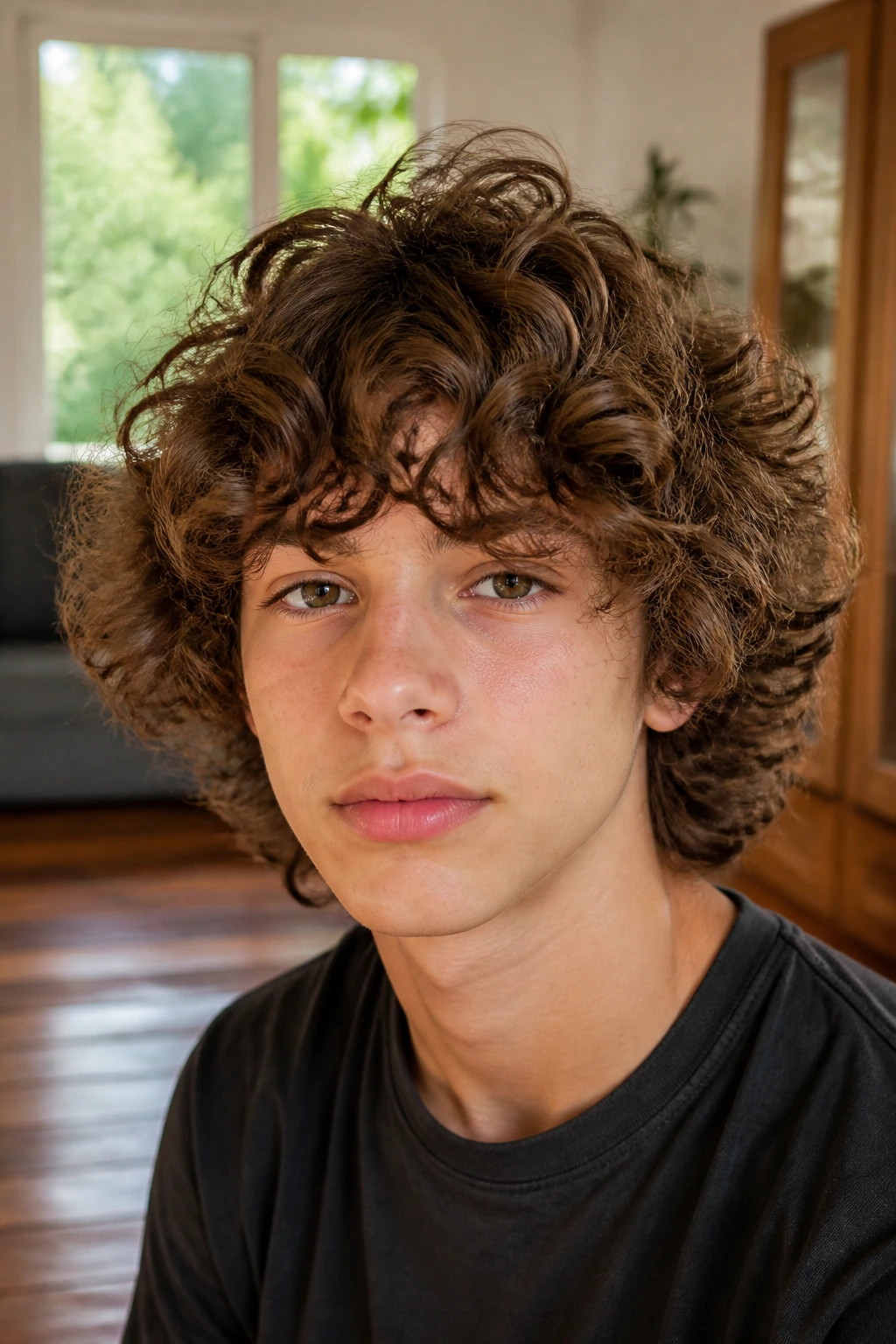
The best curly haircut for a boy is the one that respects what the hair already wants to do. Some curls want height. Some want a fringe. Some need a clean taper so the top can be wild in the right way. When the cut matches the curl pattern, the whole thing gets easier — for the kid, for the parent, and for the barber trying to make it last through school, sports, and a hundred hands in the hair.
I’d start with the routine, then the curl type, then the shape. That order saves people a lot of frustration. A haircut that looks perfect in the chair but falls apart after one nap is not a good haircut. A cut that still makes sense three weeks later? That’s the one worth keeping.