



Curly hair can make a haircut look sharp in the chair and slightly unruly by the time the school bell rings. That’s not a flaw. It’s the deal. Preteen haircuts for boys with curly hair work best when they respect the curl pattern instead of sanding it down into a flat, puffy compromise.
The cut that looks tidy at 8:00 a.m. has to survive backpack straps, gym class, lunch, and whatever the crown of the head decides to do after a little humidity. Curls shrink. They bend. They spring back in a way straight hair never will. A barber who understands that leaves enough weight where the curls need it and cleans up the edges so the whole thing looks intentional, not accidental.
And that’s why this lineup matters. Some boys need short sides and a loose top. Some need fringe control. Some need room to grow, because a big chop can turn curly hair into a shape nobody asked for. The good news: there are a lot of smart ways to handle it, and the right one usually has less to do with trend-chasing than with curl pattern, school rules, and how much time you want to spend with a spray bottle in the morning.
Why These Cuts Work on Real Curls
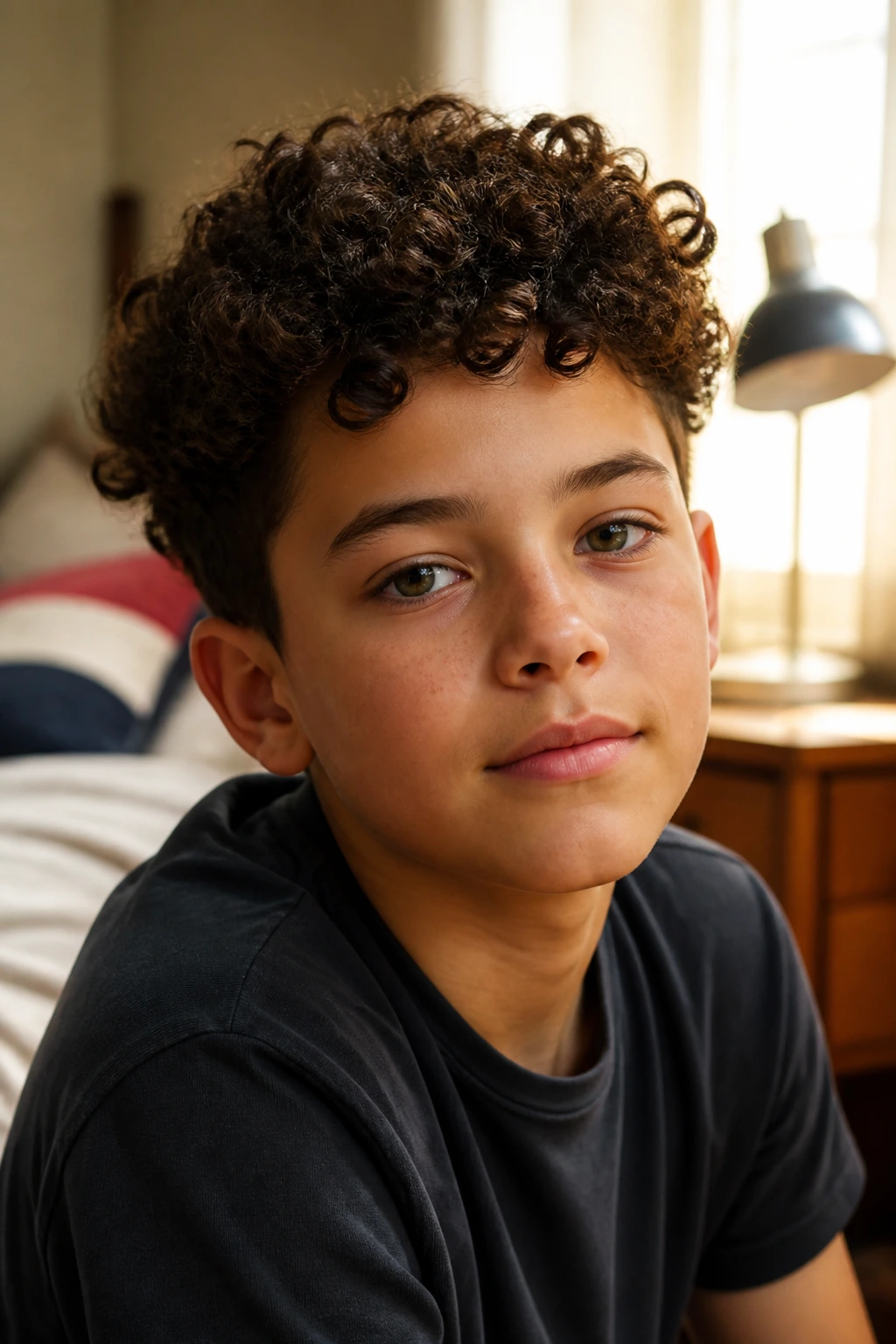
Curly hair needs shape, not a fight. The styles that age well on preteen boys are the ones that let the curls keep their spring while trimming away the bulk that piles up at the sides and nape. If you leave everything one length, the head can start reading as round in the wrong way. If you cut too aggressively, the top loses its bounce and starts looking boxy.
- Shape beats force: A taper, fade, or soft layer keeps the outline clean without crushing the curl pattern.
- Shrinkage changes everything: A top that looks long when wet can sit an inch or more shorter once it dries, so curls need room.
- The front matters most: Hair hanging in the eyes is the first thing most kids complain about, which is why fringe control shows up in so many of these cuts.
- Growth has to look decent: A good curly cut still looks like a haircut after four or five weeks, not a science experiment.
- Low-maintenance wins the week: If a style needs a blowout and a stack of products to look decent, most preteens will abandon it by Tuesday.
1. The Curly Crop With a Low Taper Fade
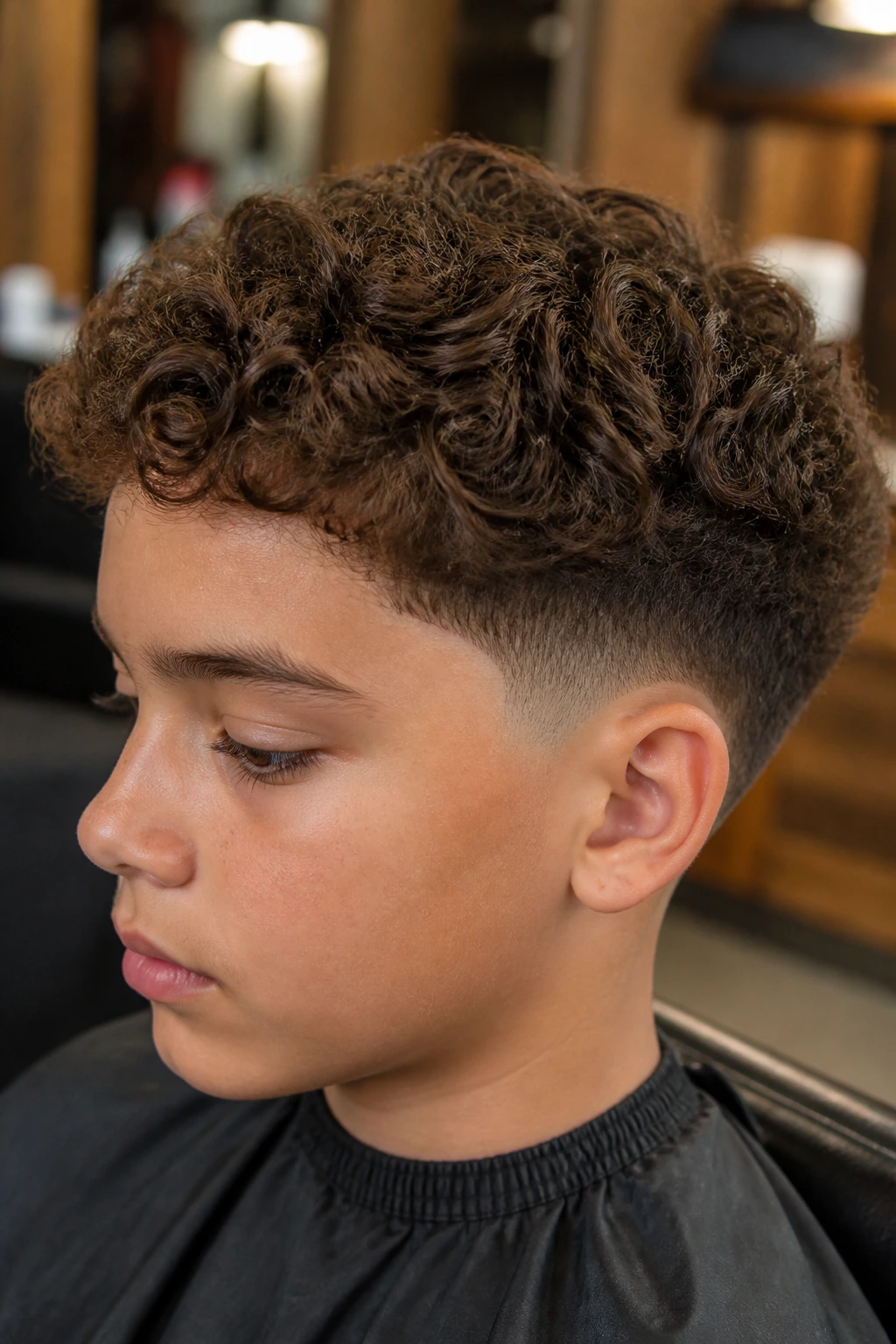
This is the haircut I’d hand to a family that wants the safest strong option. The curls stay on top where they can do their thing, while the low taper around the ears and neckline keeps the outline crisp enough for school photos and basketball practice. It’s short enough to behave, but not so short that the curls lose their personality.
Why It Works on Busy Mornings
A low taper fade trims the messy edges without turning the whole haircut into a buzz cut. That matters with curly hair because the top can keep its spring and still look neat when the sides are clean. The shape grows out slowly, which is a gift when you’re trying to get through a month without hearing, “I need a haircut” every three days.
Quick Facts
- Leave about 1.5 to 3 inches on top, depending on how tight the curls are.
- Keep the taper low around the ears and nape so the shape doesn’t shoot up too high.
- Works well for loose curls, corkscrews, and medium-texture waves.
- Ask for a soft line at the hairline, not a carved-up edge if he likes a natural look.
- Plan on a cleanup every 4 to 5 weeks if you want the outline to stay neat.
Pro tip: Have the barber check the top after it dries. Curly hair often looks longer wet, and that’s how people end up with a crop that sits too high once it springs up.
2. The Curly Fringe That Falls Straight Forward
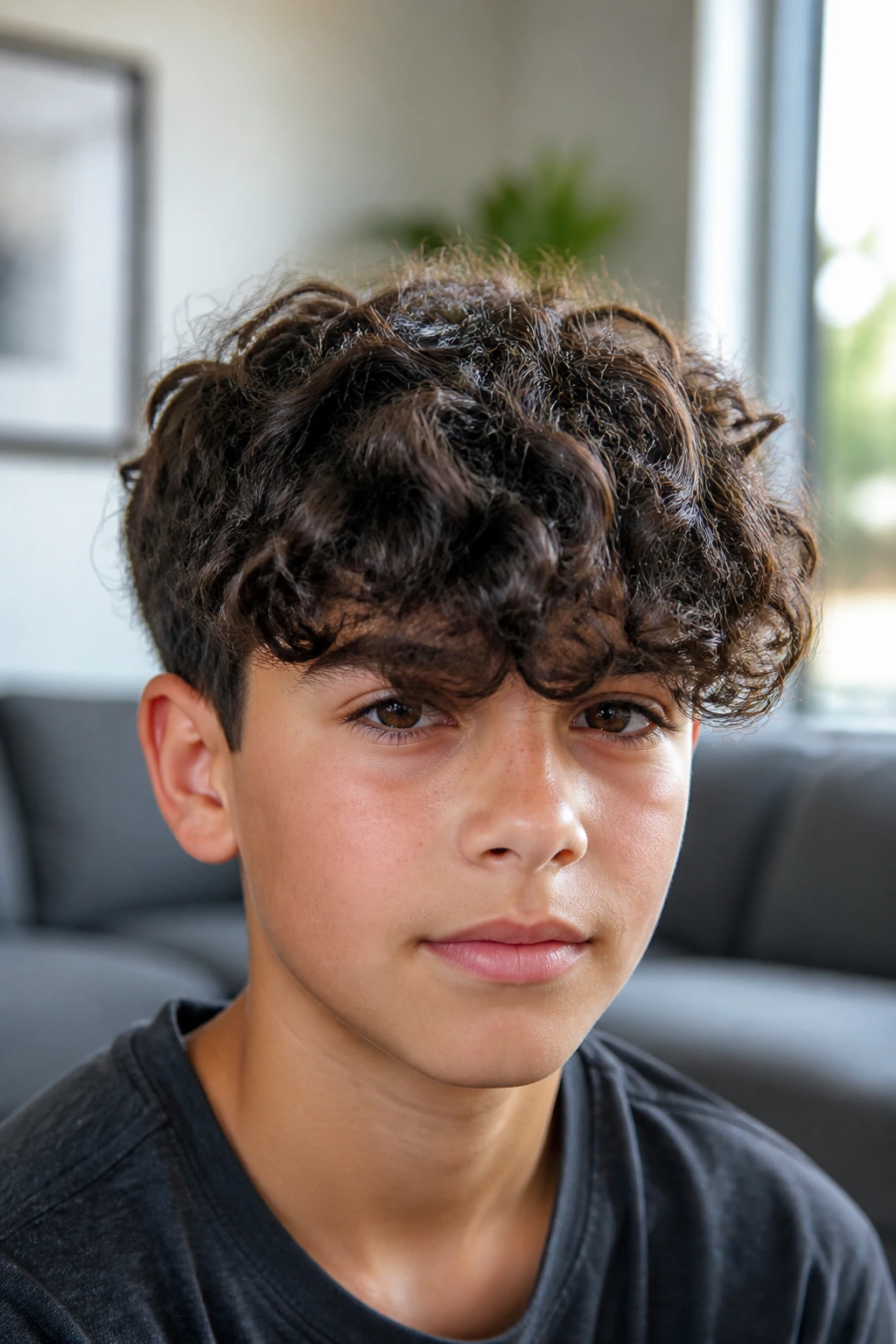
A curly fringe is the fastest way to make a kid look like he meant to have curls. It sends the front forward instead of fighting it, which is why this cut works so well on boys who hate hair touching their forehead but don’t want it clipped down to the scalp. The shape feels relaxed, but not sloppy.
The best version keeps the sides short enough to frame the face while leaving the front long enough to curl or bend across the brow. If the barber cuts the fringe too high while it’s wet, the front can end up looking choppy and short once it dries. That’s the trap. The fix is simple: leave more length than you think you need and trim the fringe after the curls have settled.
For kids who like to push their hair aside with a hand, this cut is a practical one. It still has movement. It still looks like curly hair. It just doesn’t tumble into the eyes every ten minutes.
3. The Low Taper Afro With a Clean Outline
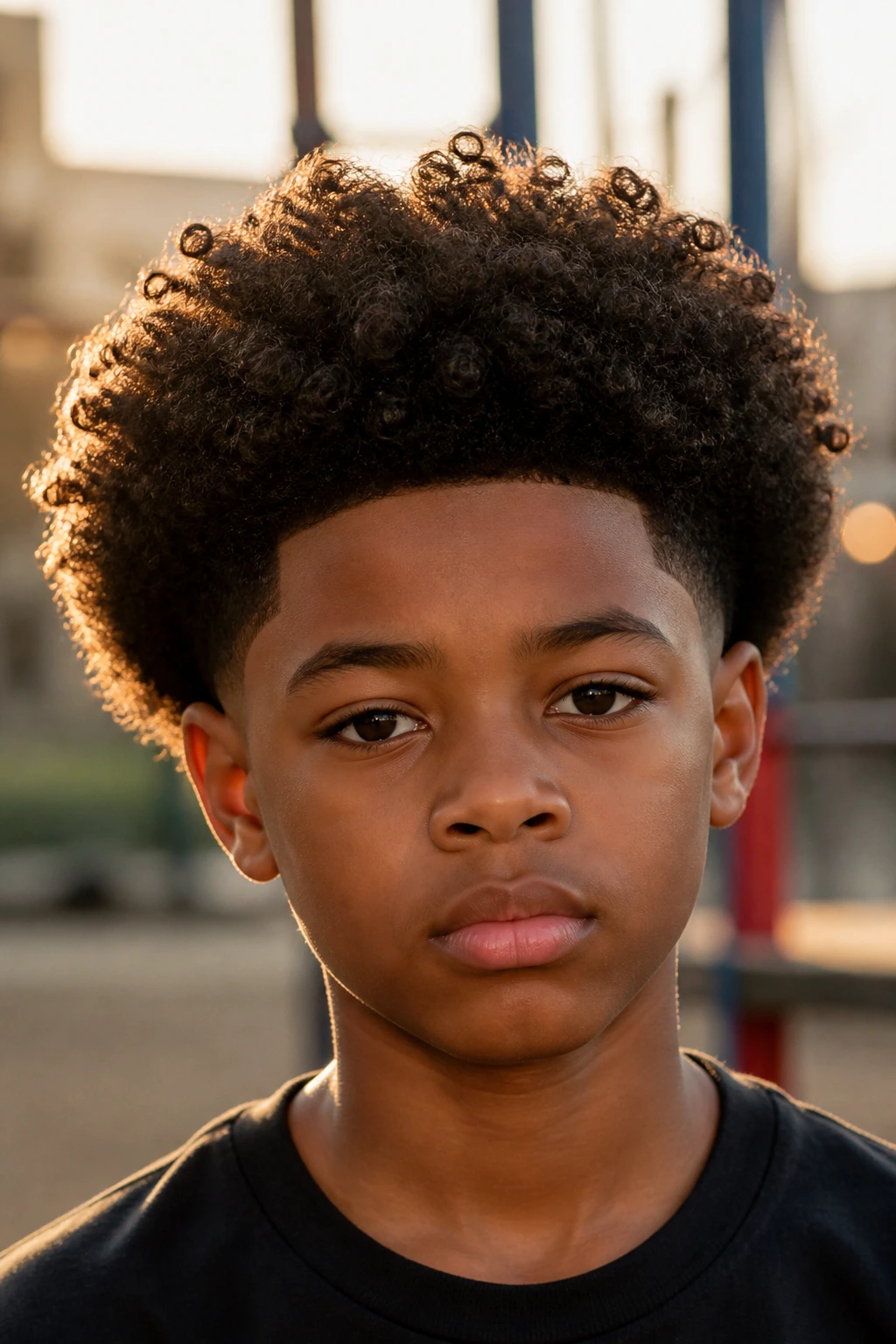
Why does a low taper afro look so good on curly boys? Because it keeps the natural roundness of the hair without letting the edges go fuzzy. This is one of those cuts that looks calm from across the room and detailed up close. The crown stays full, the sides are controlled, and the line around the ears makes the whole style read as intentional.
The low taper keeps the haircut from swelling out at the bottom, which is where many curly cuts go wrong. If the base is too wide, the hair can look like it’s sitting on a shelf. A gentle taper pulls the silhouette in so the shape feels balanced from every angle.
How to Wear It
- Let the top keep enough length to show the curl pattern.
- Ask for a softly rounded outline, not a hard cube.
- Keep the neckline neat so the shape doesn’t collapse in the back.
- Use a small amount of curl cream if the curls need definition, but don’t load it up.
This is a strong choice for boys who want their curls to look full and natural without turning into a puffball by the second week after the cut.
4. The High-Top Taper That Lets the Curls Stand Up
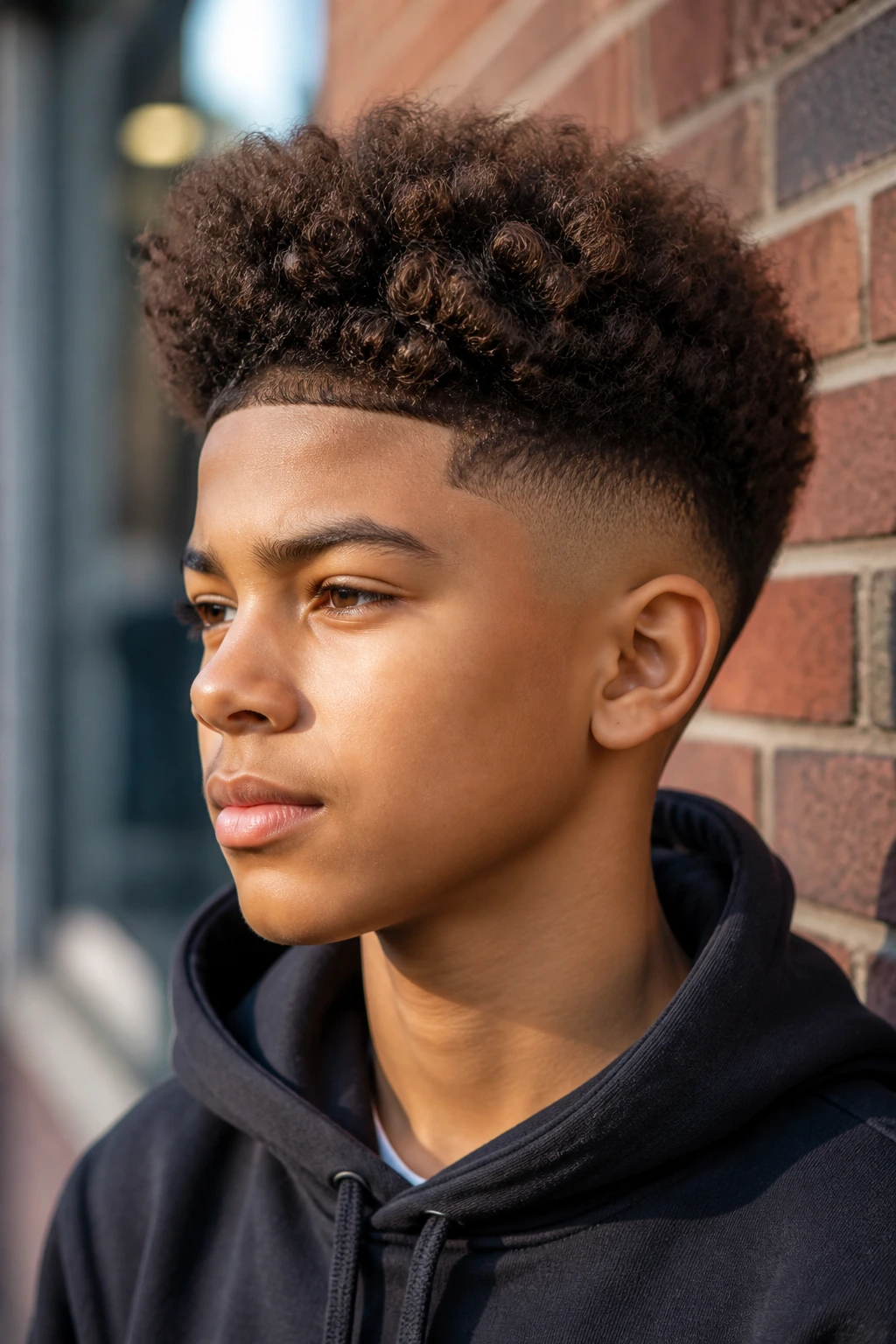
Picture a kid who likes a sharper silhouette and isn’t afraid of a haircut that has some presence. That’s the high-top taper. It gives the curls height, keeps the sides controlled, and makes the top look like it belongs there instead of just being left alone by accident.
The trick with this cut is balance. The top should be tall, yes, but not so tall that the haircut feels stiff. The sides need to stay tight enough to support the shape, and the front should still have some softness so the curls don’t look carved out with a ruler. When it’s done right, the cut has real lift without turning boxy.
- Ask for more height at the crown than at the fringe.
- Keep the taper clean but not too aggressive at the temples.
- Works best when curls have a little spring and density.
- Needs regular shaping if the outline starts to widen.
Watch this one: If the barber clips the top too evenly, the high-top loses its posture and starts to look like a flat block. The good version has movement.
5. The Curly Shag With Soft Layers
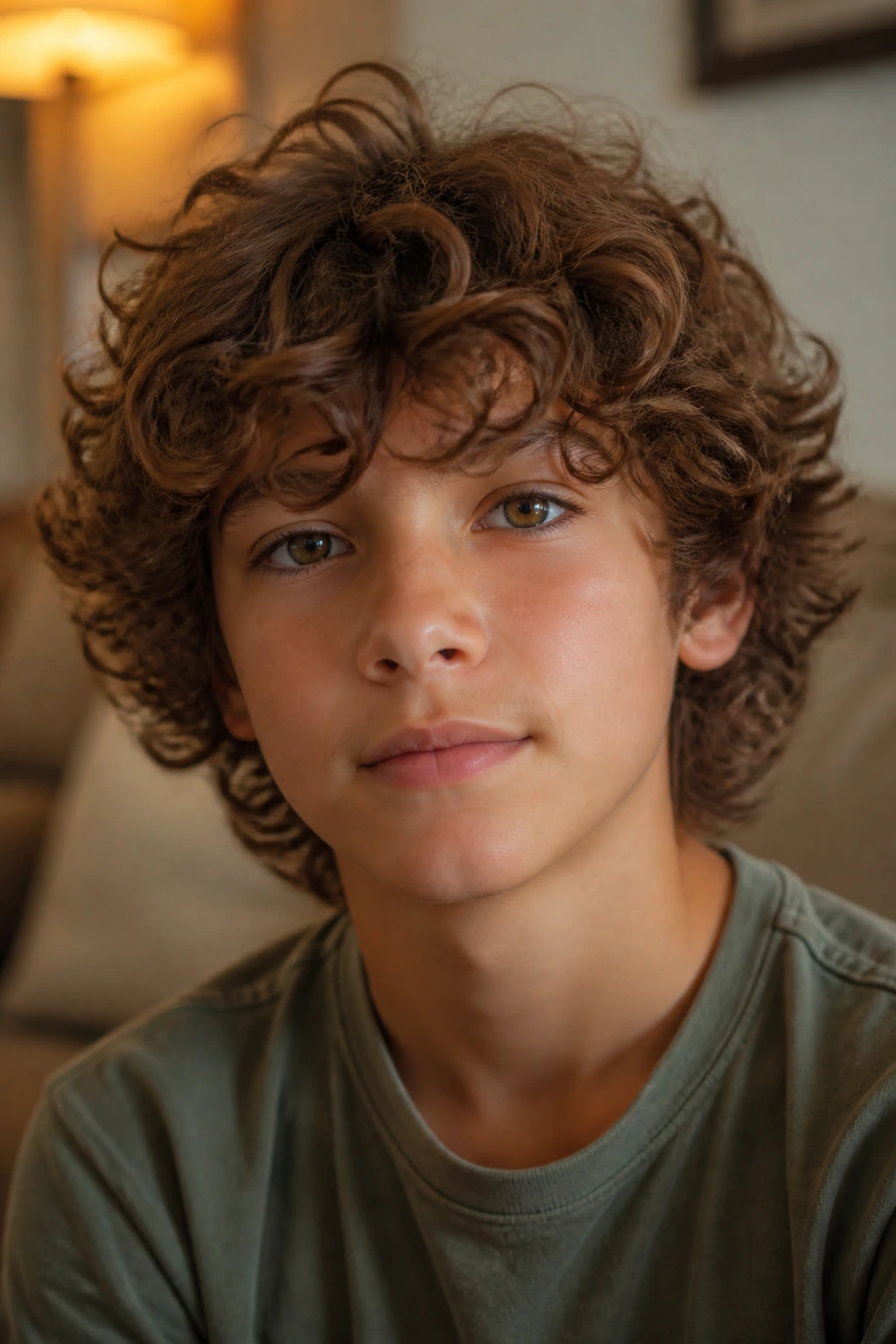
The curly shag is for the boy who hates anything that feels too polished. It’s layered, a little loose, and much better than people remember from old photos because curly hair gives the shape actual life. Instead of making the head look round, the layers let the curls fall in different directions and keep the top from getting bulky.
I like this cut for kids whose curls bunch up on the crown but go flat around the temples. Layers fix that better than one heavy length ever will. It also grows out in a forgiving way, which is a relief. A shag doesn’t need to be perfect every day to look right.
What Makes It Different
The barber should remove weight from the interior without making the ends wispy. That means scissor work matters more than clipper work here. Ask for soft layers around the ears and a bit more length on top so the curls can drape instead of standing straight out.
This is the cut for a kid who wants movement, not a helmet.
6. The Curly Undercut With a Longer Crown
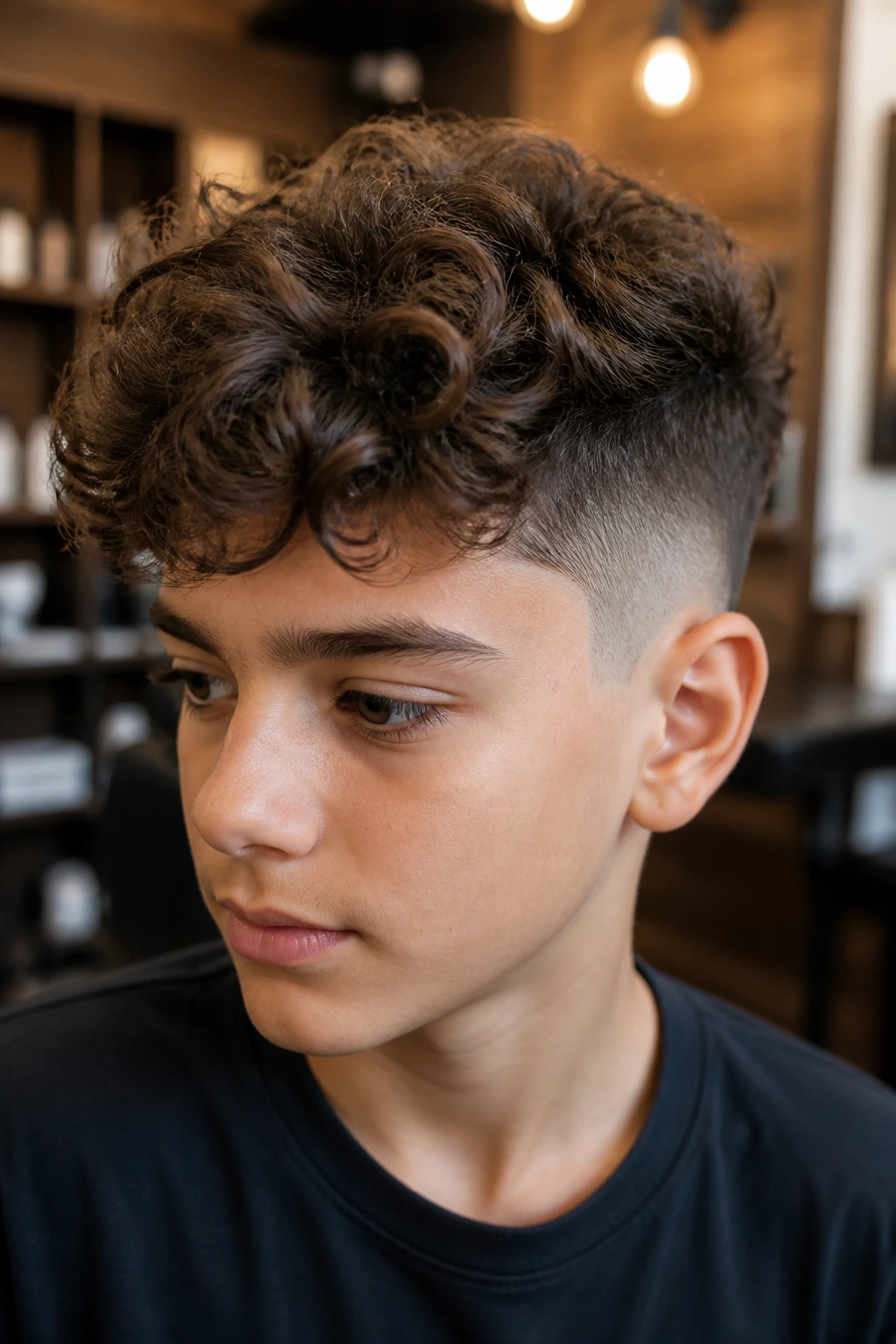
Unlike a taper, the undercut leans hard on contrast. The sides are kept short and the top stays noticeably longer, which makes the curls on top feel almost separate from the rest of the haircut. That can look cool, but it has to be handled carefully on preteens. Too much contrast and it starts to feel like an adult style wearing a school backpack.
The best version keeps the top textured and not overstyled. You want the curls to fall, not lock into a crunchy shape. A little length around the crown helps the cut sit better, especially if the curls are dense and don’t want to lay down on command.
This one is best for boys who like a little edge but still need a haircut that works with helmets, hoodies, and regular life. If the sides are too bare, the top can look oversized. Keep the difference visible, but not wild.
7. The Curly Caesar With a Short Forward Line
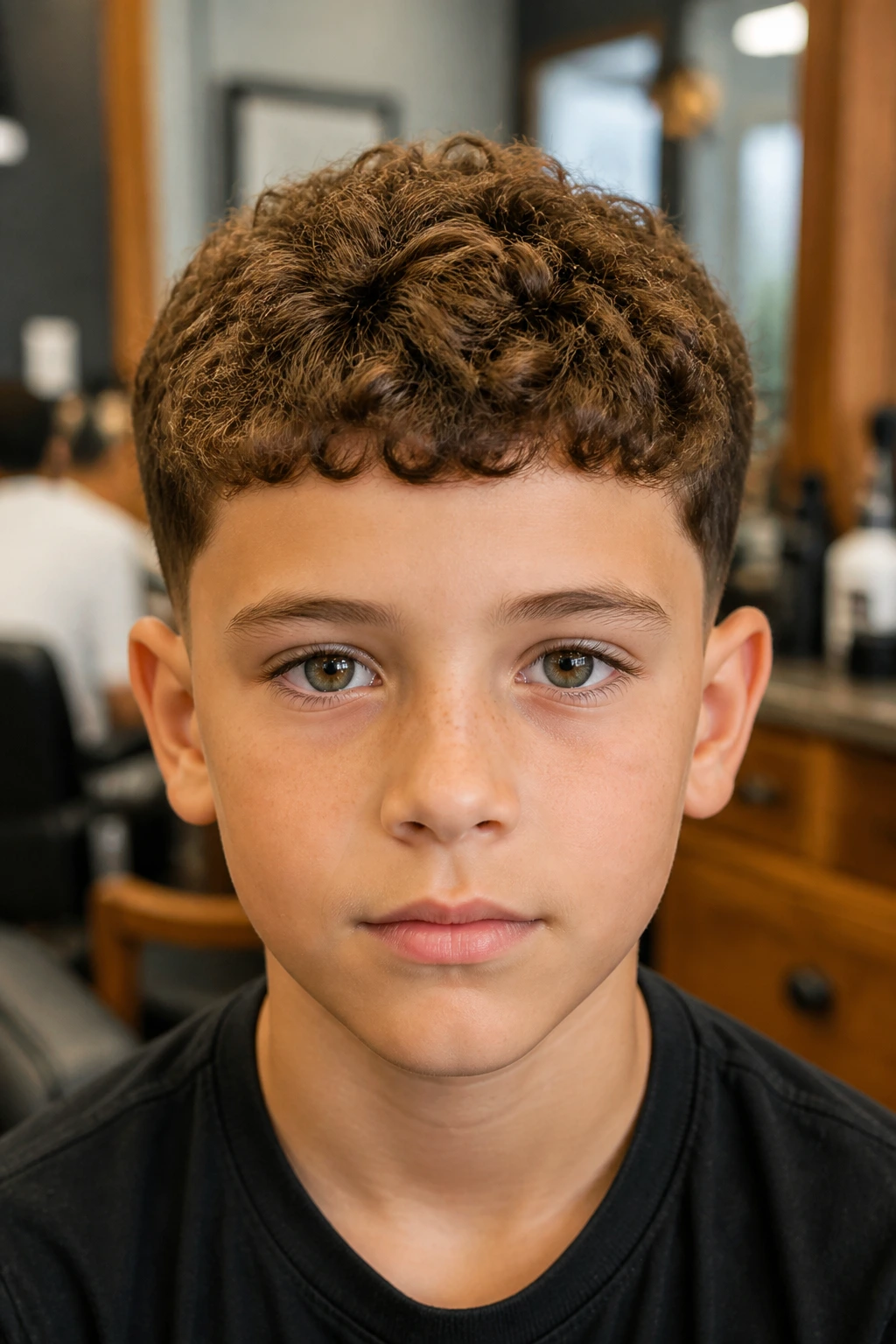
A curly Caesar is one of those cuts that looks simpler than it is. The fringe sits forward, the top stays short, and the whole haircut feels tidy without looking severe. On curls, the short forward line turns into texture instead of a hard shelf, which is why this version works better than people expect.
The win here is control. If a boy doesn’t want hair in his eyes and doesn’t want a fade that climbs too high, this is a sensible middle path. It suits tighter curl patterns especially well because the hair still has shape at a short length. Loose curls can wear it too, but the barber has to leave a touch more length in front.
How to Ask for It
Tell the barber you want the fringe kept forward, not brushed up. Ask for the sides to stay low and soft, and keep the crown from getting thinned out too much. If the front is cut too blunt, it can look choppy when dry. A little softness goes a long way.
8. The Temple Fade With Crisp Sides and Loose Curls
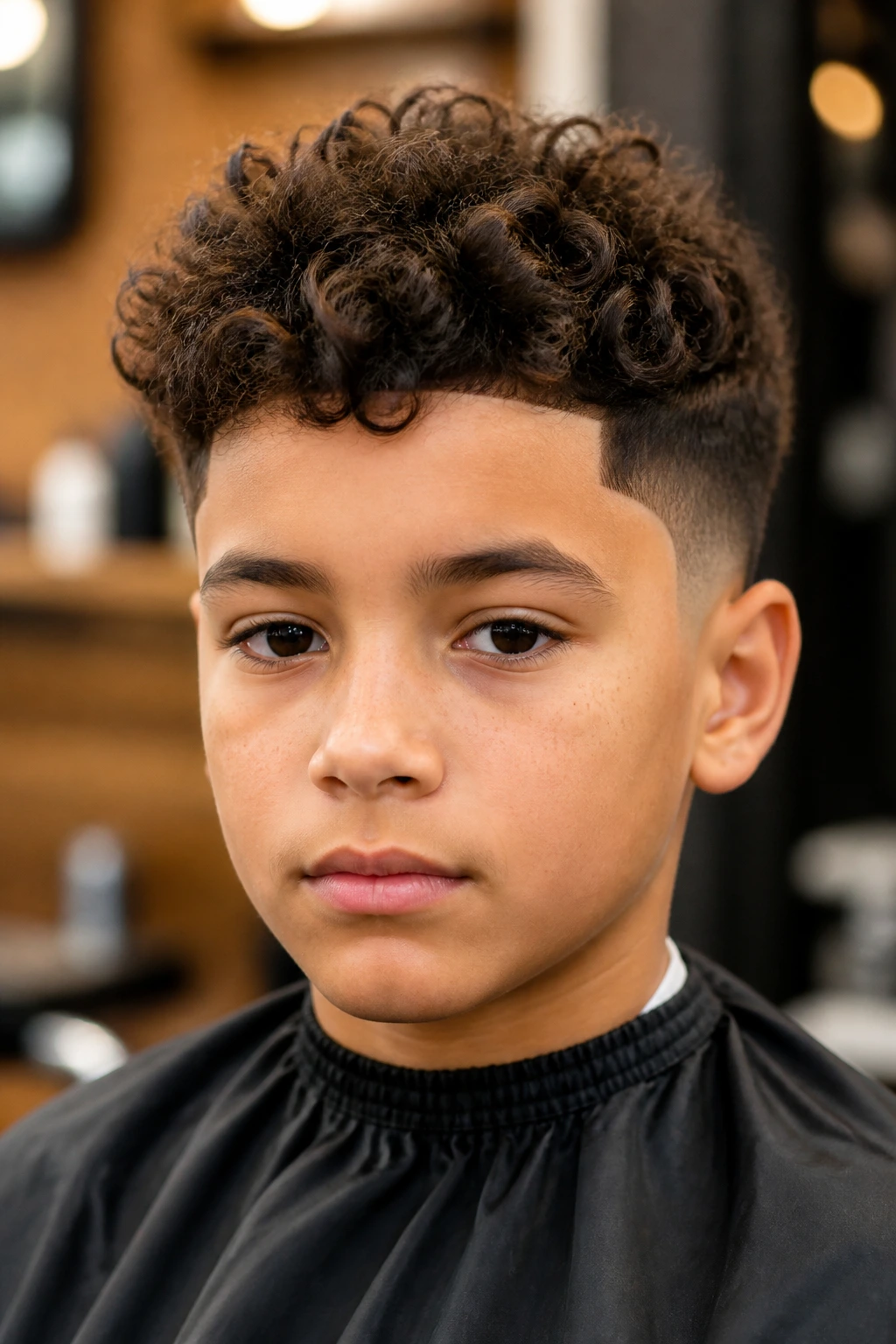
This haircut has one job: clean the temples and let the curls do the talking. A temple fade keeps the sides tight right where the face starts, then lets the top stay loose and textured. It’s a small detail, but it changes the whole read of the cut.
The temple fade is a nice move when a boy has strong curls up top but doesn’t want a full fade racing up the head. It gives the haircut edge without overcommitting. The outline looks sharp from the front, and the top still has enough freedom to bend and bounce.
Key Details to Ask For
- Keep the fade low around the temples, not high into the crown.
- Leave enough top length for the curls to show.
- Ask for the hairline to be cleaned up, not pressed into an unnatural hard line if he prefers softness.
- Works especially well with dense curls and thick temples.
This is a good choice when the top already has a shape and only the sides need discipline. It’s tidy, but not strict.
9. The Mop-Top Curly Cut That Keeps the Length Playful
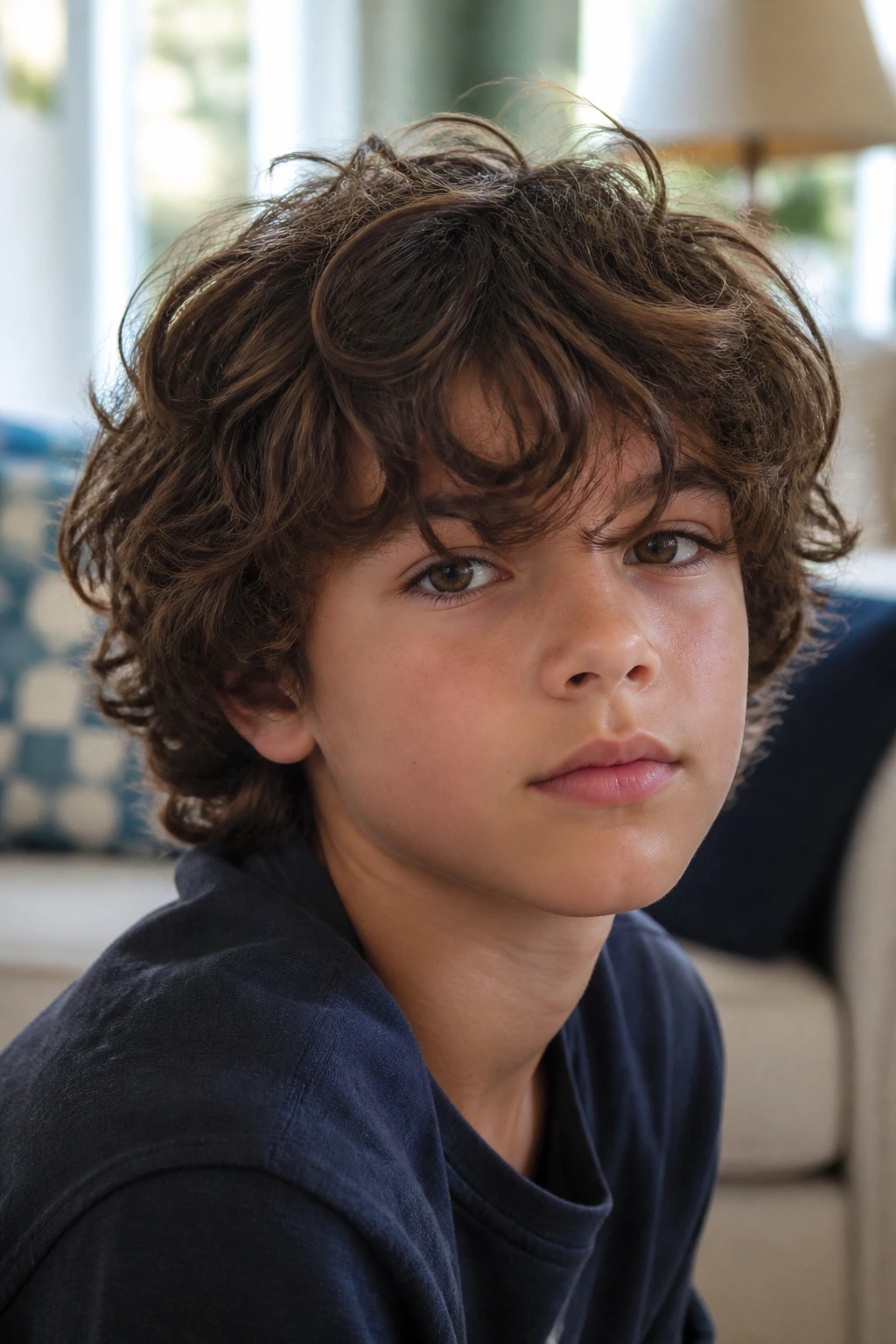
The curly mop-top sounds old-fashioned until you see it on a kid with real curls. Then it makes perfect sense. The hair stays longer all around, the fringe sweeps forward and to the side, and the overall shape feels loose in a good way. It’s one of the few longer cuts that can still look young without getting fussy.
The important part is the silhouette. The barber should remove bulk from inside the shape so the hair doesn’t turn into a heavy dome. Around the ears, a little cleanup helps the haircut read as styled, not forgotten. Up top, the curls should keep enough length to fold and settle.
This is a strong option for boys who like their curls more than their clippers. It gives room for growth and doesn’t panic when the haircut is five weeks old. Some cuts age badly. This one usually just gets a little more relaxed.
10. The Curly Faux Hawk for Sporty Kids
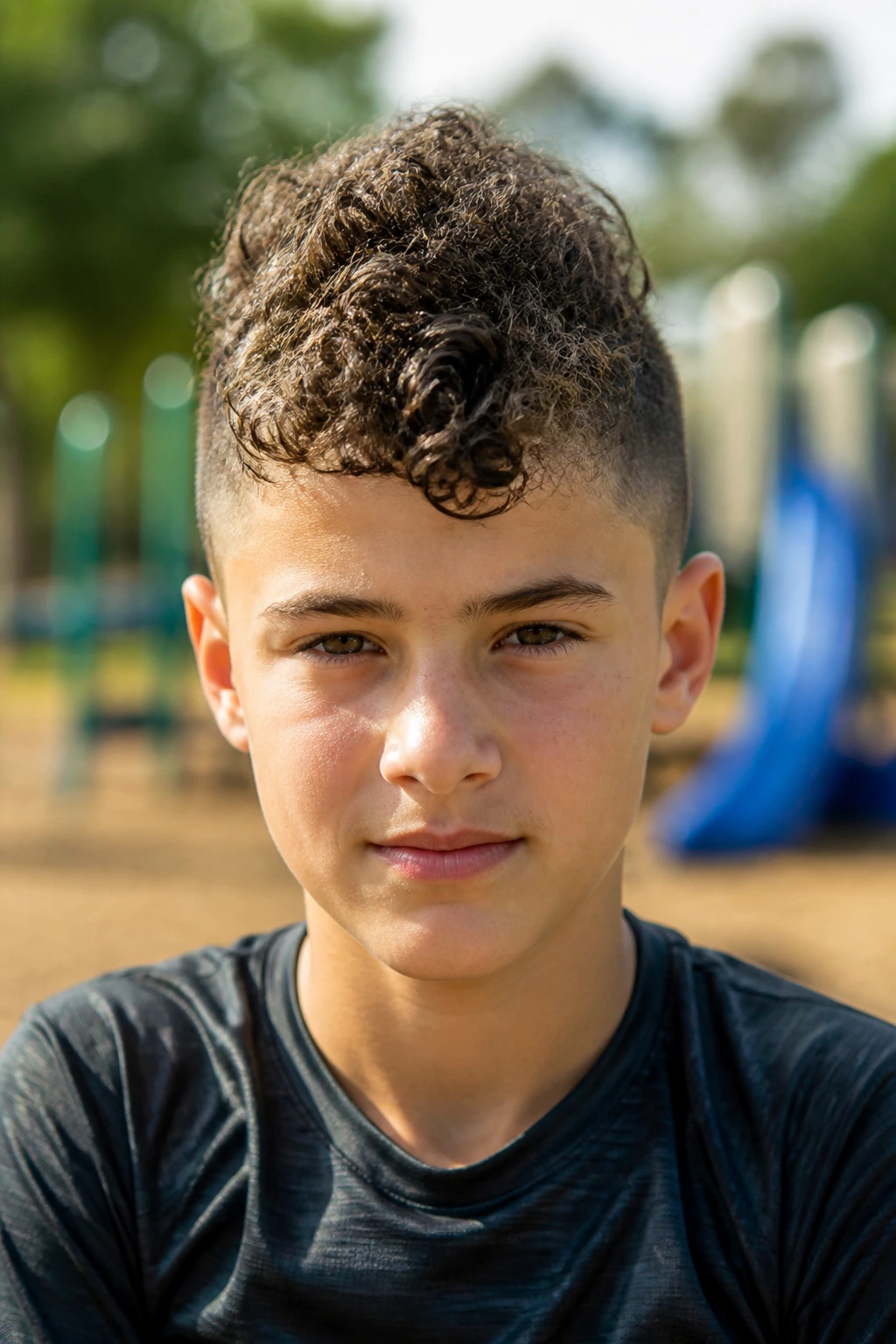
If a boy likes energy in his haircut, the curly faux hawk gives it to him without forcing a full mohawk. The sides stay shorter, the middle keeps more lift, and the curls naturally create a soft ridge down the center. It’s athletic-looking, but not overdrawn.
The best thing about this style is that it works with movement. If he runs, jumps, or wears a helmet, the top can flatten and bounce back without looking ruined. That’s a real advantage. Some styles collapse when they meet life. This one usually recovers.
The center strip should not be too skinny, though. If the middle is carved down too narrow, the haircut can look dramatic in the chair and awkward by lunch. Leave enough width so the curls can spread a little. The goal is a shape with attitude, not a costume.
11. The Burst Fade Mohawk With Rounded Sides
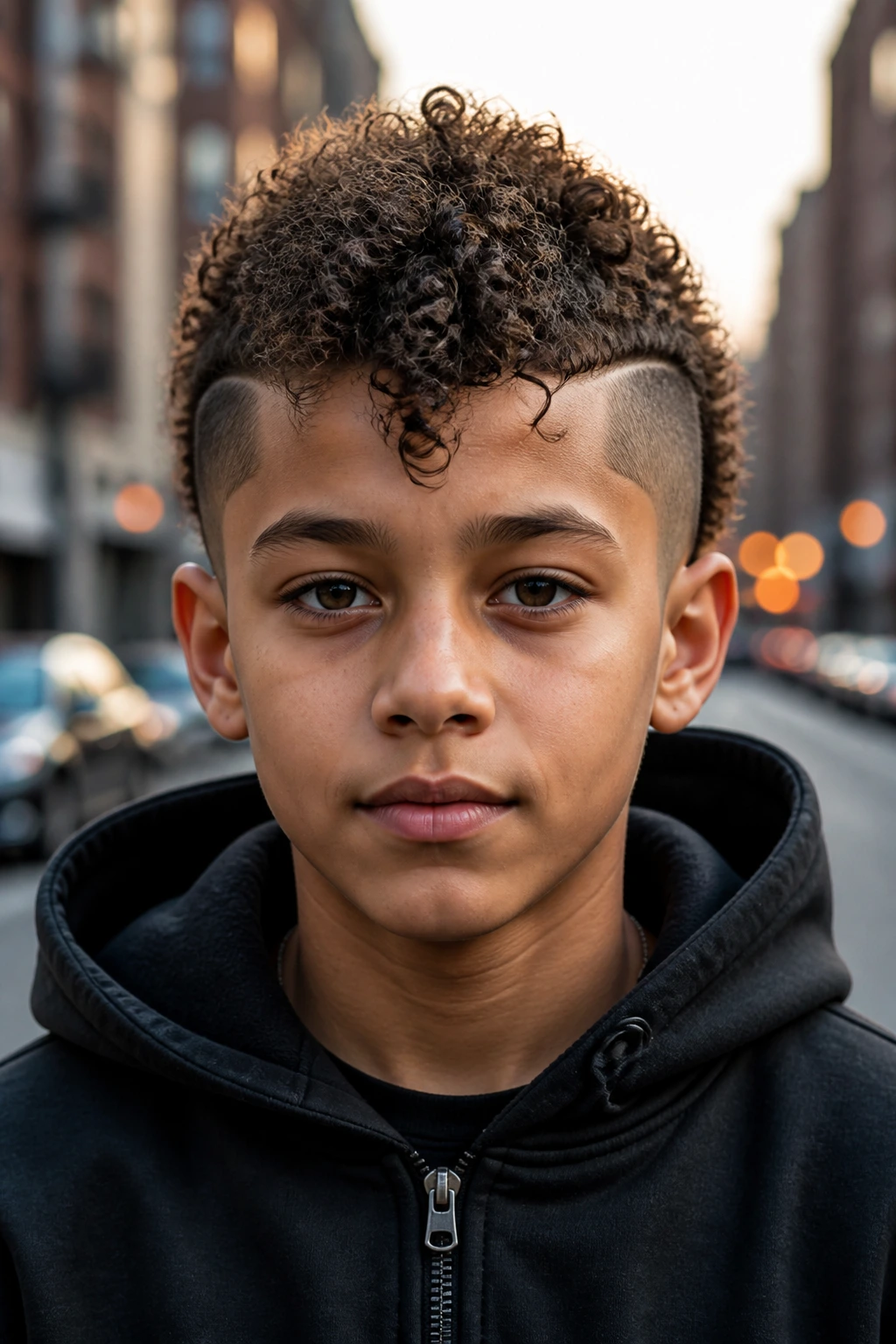
This one is bolder, and that’s the point. A burst fade mohawk sweeps the fade around the ears in a curve, which gives the haircut a rounded, almost halo-like edge while keeping the middle strip of curls active. On the right kid, it looks energetic and fun. On the wrong one, it can feel like too much. So the family has to want it.
What saves this style on preteens is the curl texture itself. Curly hair softens the mohawk idea, so it doesn’t always read as aggressive. The top can be medium length instead of towering, and the burst fade can stay low enough to remain school-friendly in many settings.
If you go this route, keep the line work clean and the top healthy. A dry, frizzy center strip kills the whole effect. The curls need shape and moisture, or the style loses its punch.
12. The Medium-Length Bro Flow With Layers
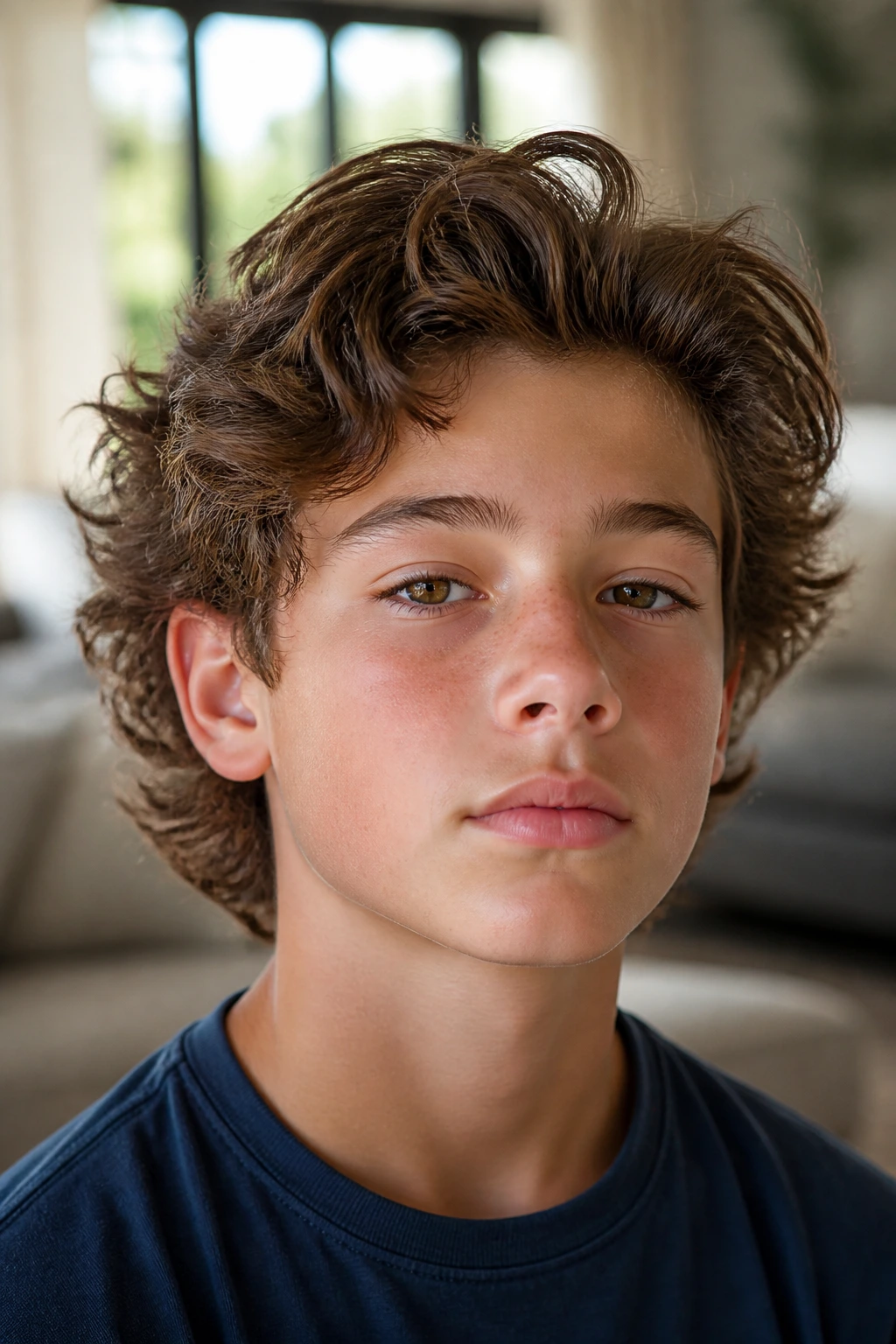
The bro flow works when the boy wants his curls to look longer, looser, and a little older without giving up shape. Layers keep the sides from ballooning, and the length around the ears gives the haircut that laid-back sweep people like. It’s not a tiny style. It’s a movement style.
A lot of curly boys are natural candidates for this cut because the hair already wants to push outward and back. The layers help guide that motion instead of making it look like bedhead. Keep the top long enough to tuck behind the ear on one side if needed, but not so long that it hangs in the eyes during class.
I like this cut for families who don’t want to schedule a trim every month. It grows out better than most short styles. It also gives a kid some freedom to part it, push it back, or let it fall.
13. The Modern Curly Bowl Cut With Shape
The bowl cut used to be a joke. Curly hair fixed that. When the edges are softened and the weight is handled properly, a modern curly bowl cut can look sharp, round, and oddly charming in the best way. The key is that the line should be soft, not severed.
This style needs a barber who understands that curls don’t want to sit in a perfect geometric shell. There should be enough texture around the perimeter to keep the shape from looking like it was stamped on. The fringe usually sits just above the brows or lightly touches them, depending on how springy the curls are.
It suits boys who like symmetry and a clean outline. It’s also useful when you want a haircut that doesn’t have to be fussed with every hour. Just don’t make it too blunt. That’s how it goes from modern to mushroom.
14. The Side-Part Curly Top With Scissor-Soft Sides
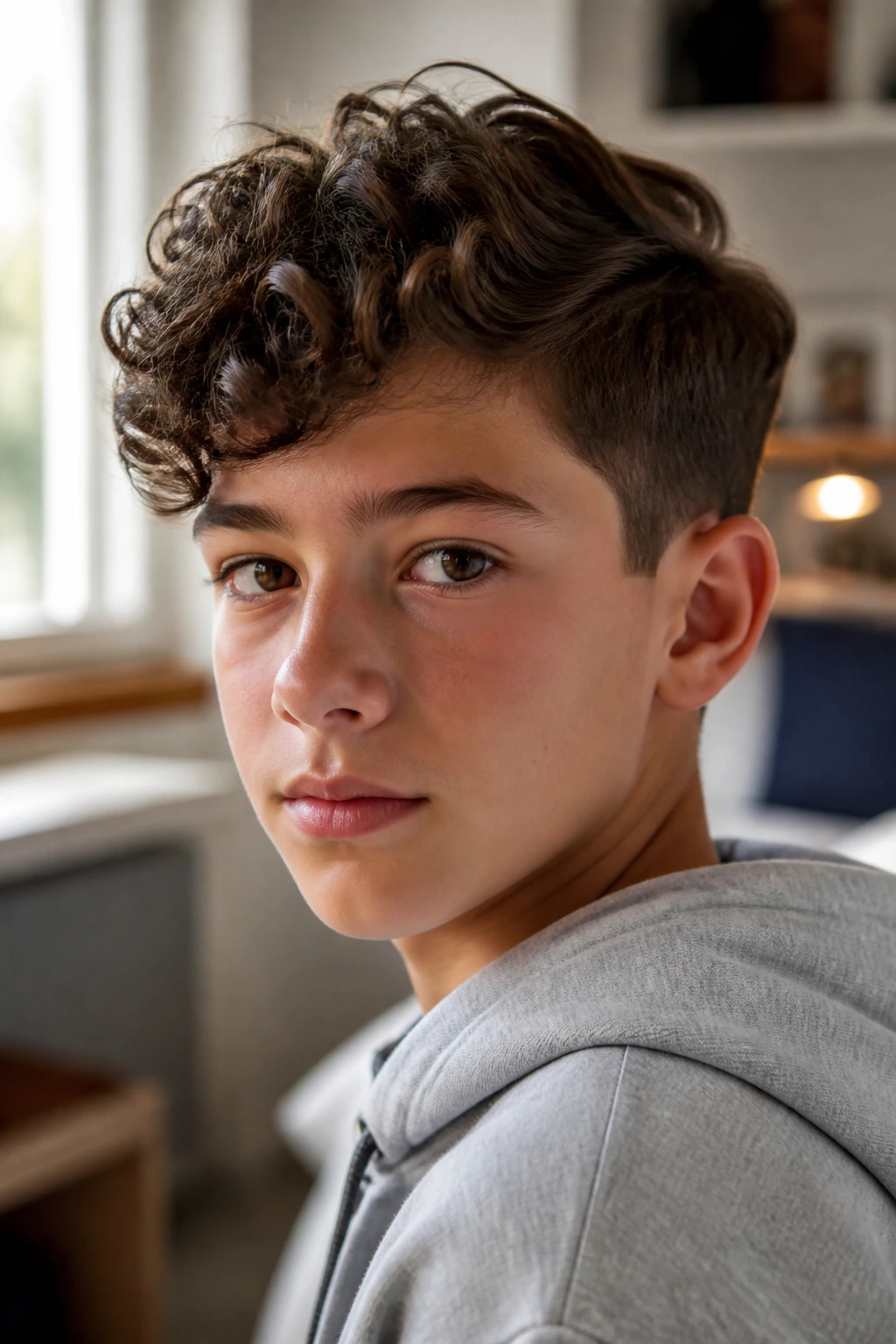
A side part on curly hair has a nice side effect: it gives the whole head a plan. The curls don’t have to be forced flat. They just need to be encouraged to fall in one direction. That makes this cut especially good for boys who want something a little neater than a shag but softer than a fade-heavy style.
The sides should be trimmed with scissors or light tapering so they don’t look chopped against the curl pattern on top. The part itself does not need to be razor-sharp. In fact, on curls, a faint part often looks better than an obvious trench. Let the texture do most of the work.
This is a smart pick for family photos, church clothes, school uniforms, and any situation where a boy needs to look put together without looking stiff. It’s a polite haircut, which is not the same thing as a boring one.
15. The Short Curly Crop With a Sharp Line-Up
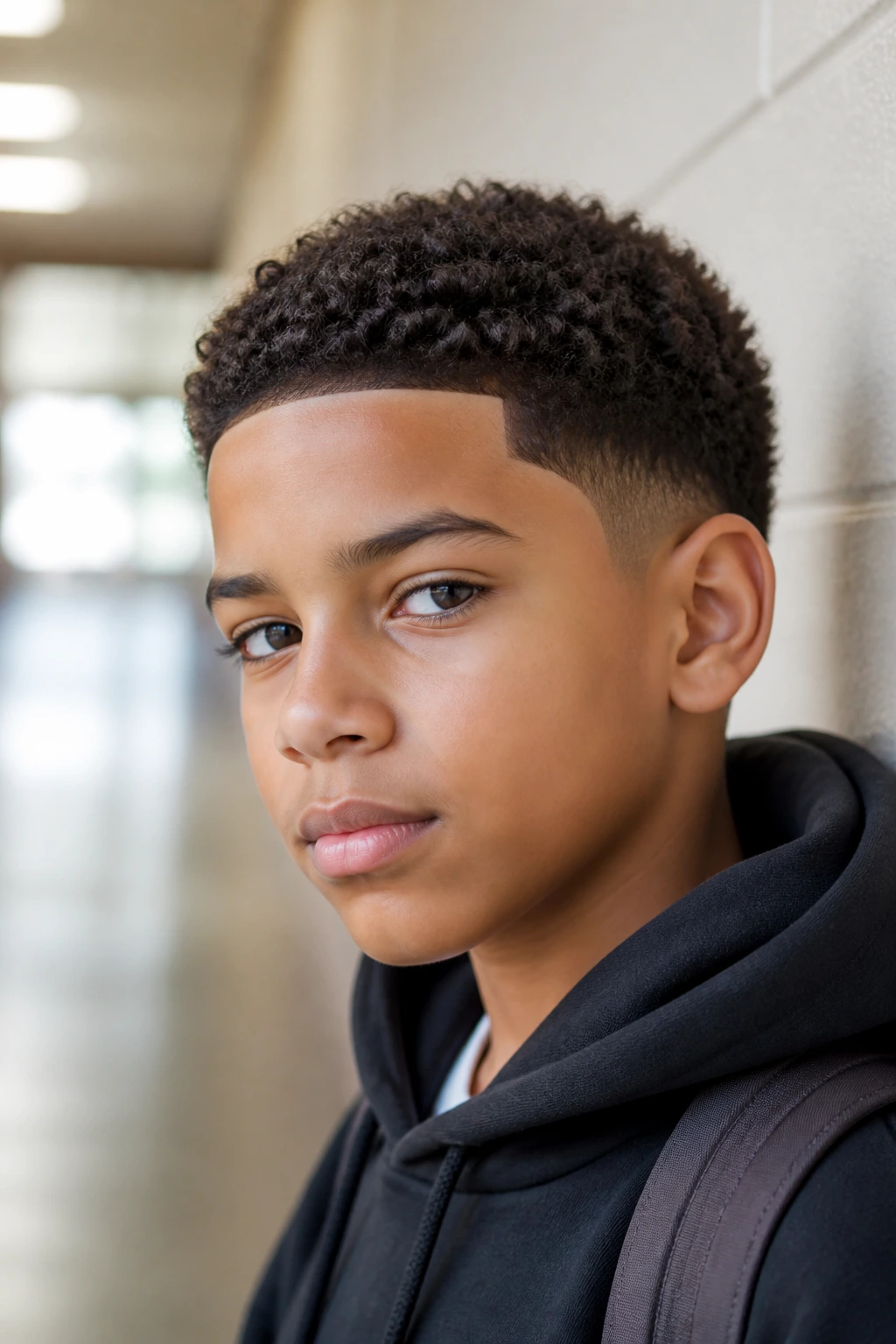
This is the cut for a kid who wants his curls short, clean, and fast to manage. The top stays cropped close enough to stay under control, while the line-up around the forehead and temples gives the haircut a crisp frame. It’s a practical cut, and I mean that as praise.
The sharp line-up is the part that gives this style its personality. Without it, the haircut can feel plain. With it, the whole head reads cleaner and more deliberate. The barber needs to be careful not to push the hairline back too far, though. A line-up should sharpen what’s already there, not redraw the face.
This style works well if the curls are thick and dense. It keeps them from ballooning out while still allowing texture to show. For active kids, it’s a strong choice because there’s less hair to sweat through and less to tangle.
16. The Wolf Cut for Boys With Bigger Curl Patterns
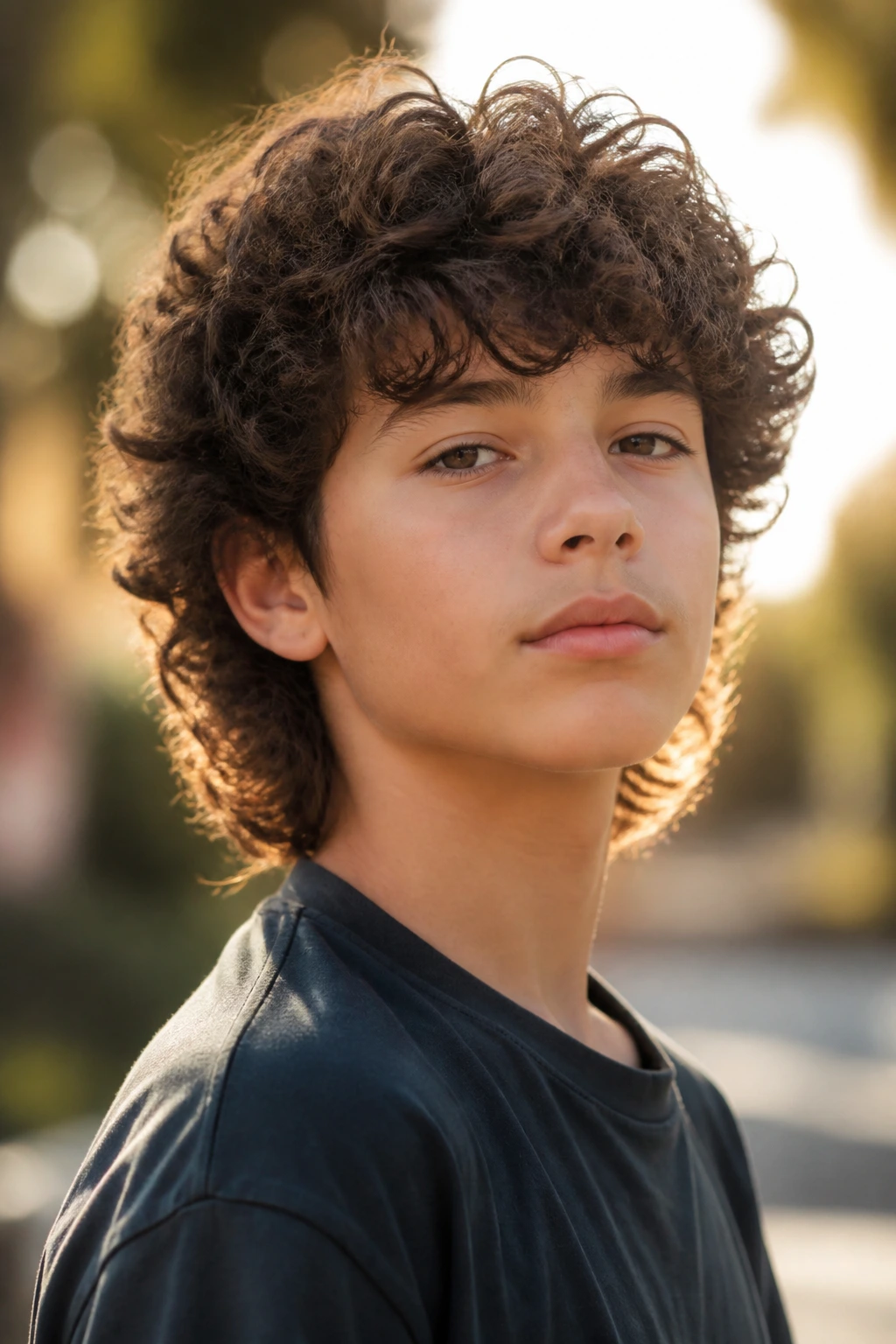
The wolf cut gets a better reputation on curly hair because the texture naturally supports the messy layers. On boys with bigger curl patterns, it creates movement from the crown down instead of building a blocky shape. The top stays fuller, the back gets a little length, and the sides sit softer than a standard fade.
It’s not a tiny haircut. That’s part of the appeal. The layers break up bulk so the head doesn’t look too wide, but the length remains long enough to feel relaxed. This style needs a barber who is comfortable taking weight out without making the ends thin and scraggly.
The wolf cut is best for a kid who likes hair with personality and doesn’t mind a little volume. If he wants a haircut that looks different from the usual taper crop, this is one of the better options.
17. The Mid Fade With Long Curls Left Loose
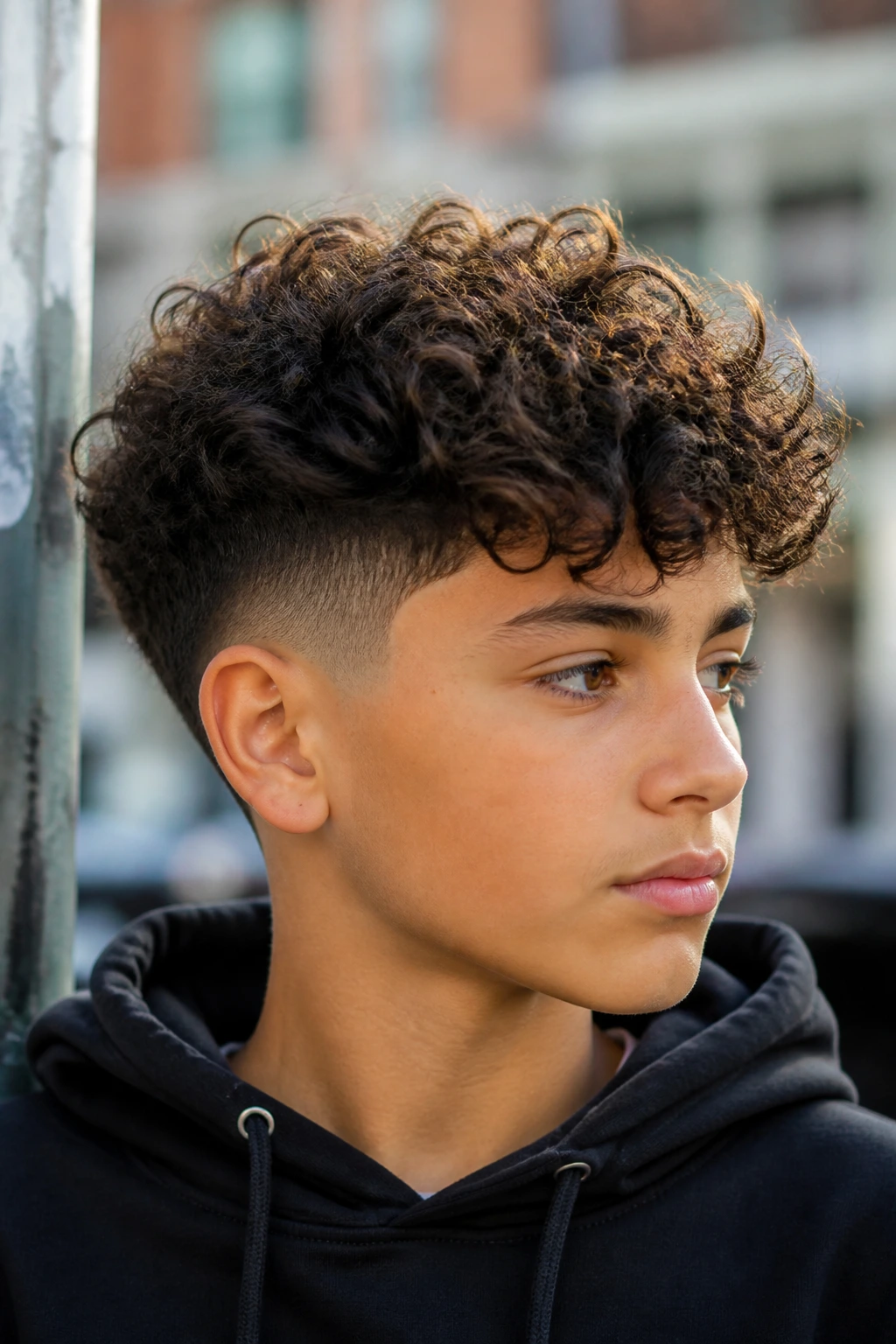
Unlike the low taper, the mid fade puts more of the fade in play. That gives the haircut stronger contrast, but it also lets the top stay longer and freer. The result is a very clean lower half and a curly top that can breathe. It’s a tidy haircut with more attitude than the low-taper crowd.
The key is keeping the fade smooth through the middle of the head so it doesn’t create a harsh shelf under the curls. The top should be long enough to curl naturally without needing constant product. If the hair is dense, the barber may need to remove some internal weight so the top doesn’t balloon out.
This is a good fit for boys who like a sharper silhouette but still want curls to be visible from the front. It’s a little more polished than the looser cuts, which makes it handy for families who want one style that can swing from everyday to dressy without much effort.
18. The Shoulder-Length Curl Shape-Up
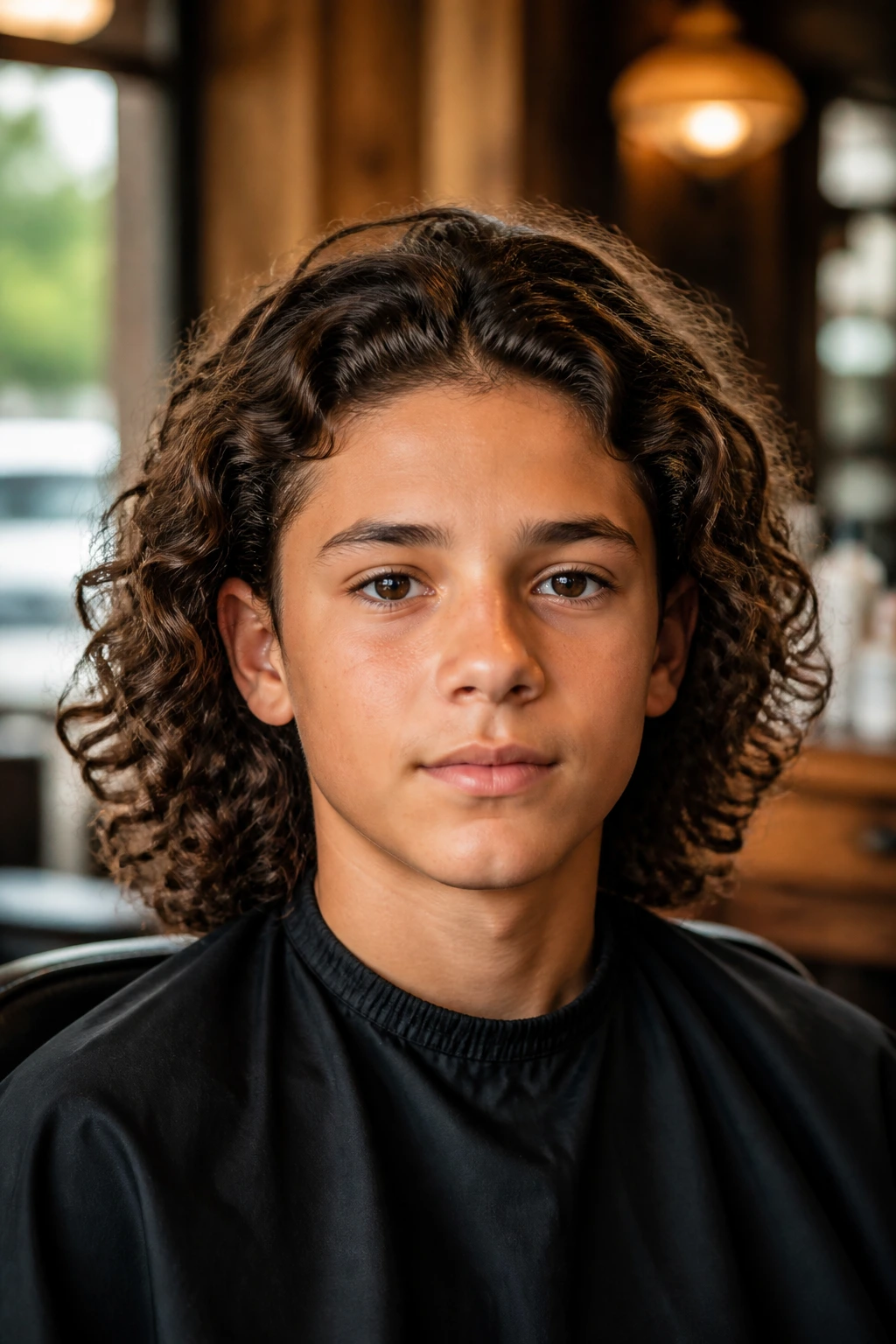
This is the longest option in the group, and it only works if the shape is respected. Shoulder-length curls can look fantastic on boys when the ends are evened out, the bulk is controlled, and the hairline is cleaned enough to keep the style from drifting into chaos. Long curls need boundaries too.
The biggest mistake with longer curly hair is treating it as if it has no shape. It does. The curls should fall with a little movement around the shoulders and collar, but the outline still needs periodic trimming so the ends don’t split into frizz. A light shape-up around the temples and neckline helps a lot.
I like this style for boys who have patience and parents who don’t mind a little more care. It’s the opposite of a quick clipper job. But when the curls are healthy and the shape is kept in check, it has a softness that shorter cuts can’t match.
What Makes Preteen Haircuts for Boys with Curly Hair Work So Well
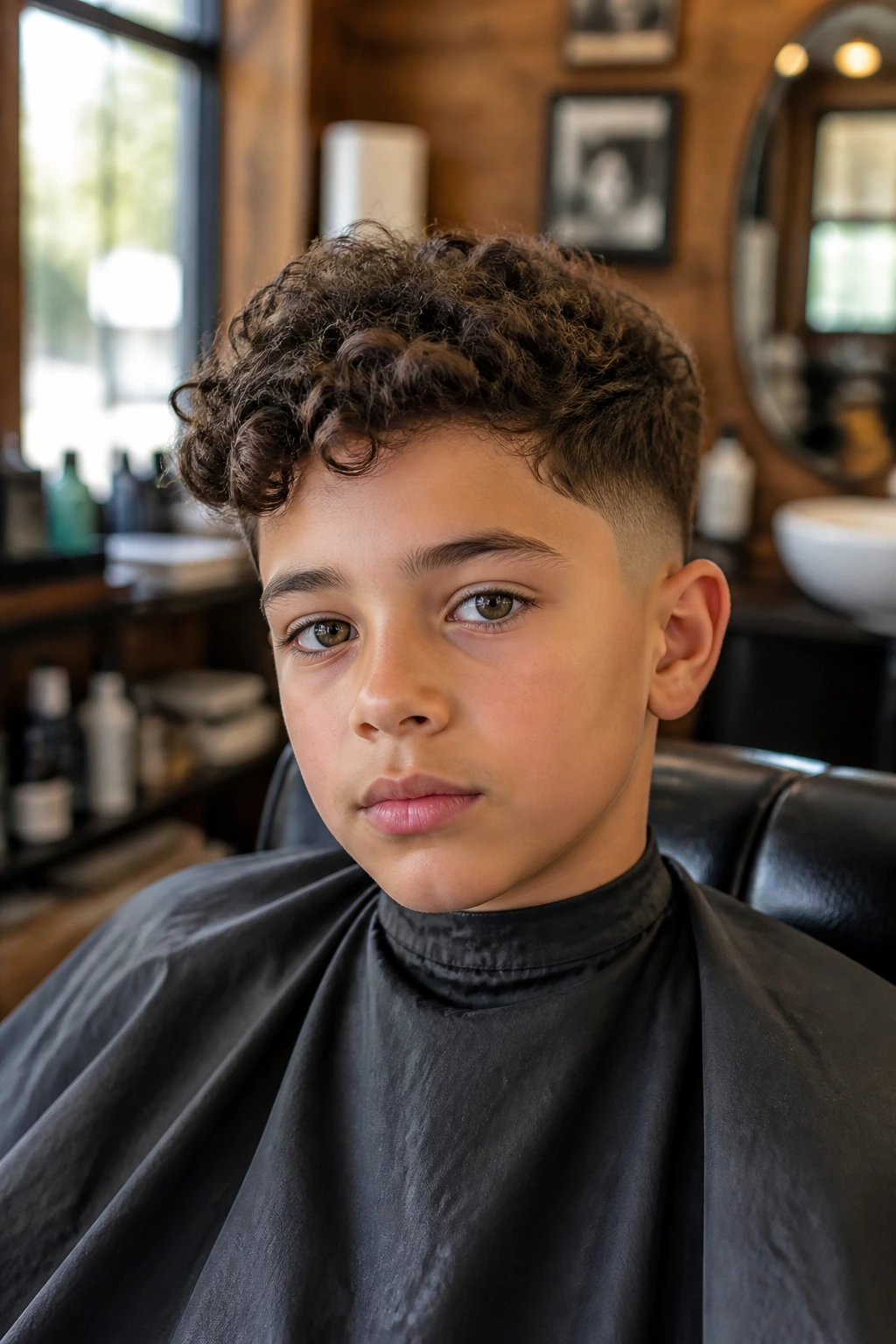
The short answer: curls need room, but they also need edges. That balance is the whole game. A good curly haircut gives the top enough length to curl naturally, then trims the sides and neckline so the head doesn’t swell into a triangle by the second week.
Why Dry Length Matters
Wet curls lie. They shrink when they dry, and that shrinkage is where a lot of bad haircuts are born. A curl that drops to the eyebrow in the barber chair can spring up far above it an hour later. That’s why many barbers prefer to cut curls dry or mostly dry, especially around the fringe and crown.
Why the Sides Matter More Than People Think
If the sides are left too full, the haircut spreads outward instead of downward. That’s the puff you see in photos where the top looks fine but the profile feels wide. A low taper, mid fade, or gentle scissor trim pulls the shape back in without taking the life out of the curls.
Why Too Much Thinning Can Backfire
Thinning shears have a bad habit of making curly hair frizzy at the edges. Sometimes they help if the hair is extremely dense, but heavy thinning can leave little holes and weird fuzzy patches that show up when the hair dries. I’d rather see a barber use careful layering or point cutting than attack the whole head with a thinning tool.
Curly hair isn’t difficult. It’s specific. Treat it that way and the haircut starts doing half the work for you.
The Tools That Make Curly Hair Easier to Cut at Home
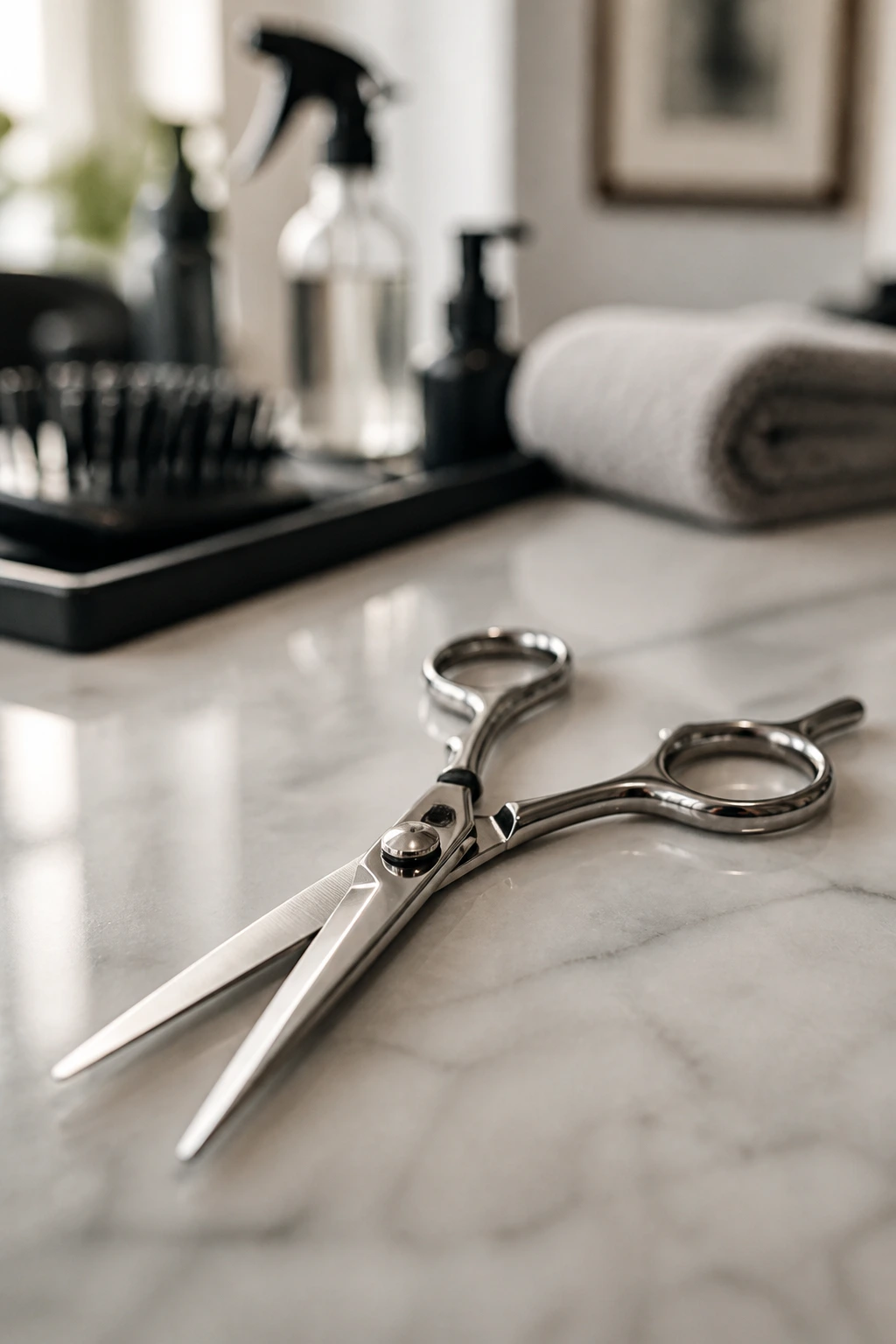
You do not need a salon drawer full of gadgets, but a few solid tools make a difference when you’re trimming, refreshing, or just keeping the shape from drifting.
- Quality barber shears: Better for removing weight at the ends of curls without carving harsh lines.
- Clipper guards in small steps: Useful for tapers and fades, especially around the neckline and temples.
- Detail trimmer: Clean edges around the ears and nape stay tidy much longer with a good trimmer.
- Spray bottle with clean water: Dampen curls lightly before shaping or refreshing; don’t soak them.
- Wide-tooth comb: Safer than fine combs for detangling curls without stretching them into frizz.
- Detangling brush: Helpful on wash day when the hair is coated with conditioner.
- Microfiber towel or T-shirt: Cuts down friction, which means less puffing after drying.
- Leave-in conditioner: Keeps curls soft enough to separate instead of clumping into dry little knots.
- Curl cream or light gel: A small amount helps shape the front and reduce flyaways.
- Hand mirror: Handy for checking the back of the head and neckline between trims.
- Satin pillowcase or bonnet: Not a styling tool in the usual sense, but it keeps morning chaos to a minimum.
What to Say at the Barber Chair So the Shape Comes Out Right
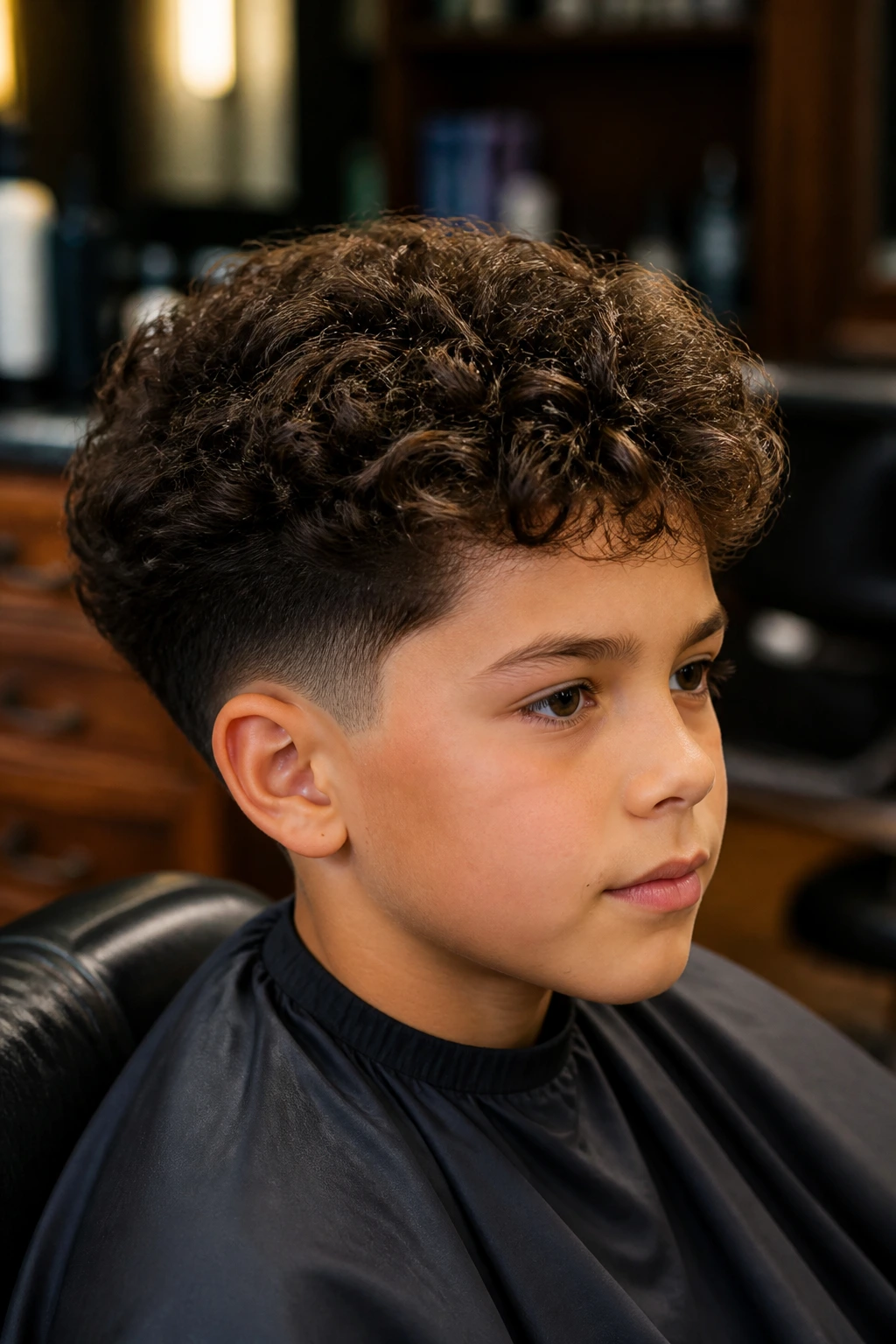
A good curly haircut starts with a clear conversation. Bring one or two photos, sure, but also say what you do not want. “Not too short on top” matters. So does “keep the fringe off the eyes” and “don’t make the sides too wide.” Those details save more haircuts than vague words ever will.
Use dry hair as the reference. If possible, show how the curls look once they’ve settled, not just when they’re wet and stretched. That one habit keeps the top from getting chopped too short. It also helps the barber judge the crown, where curls often stand up more than parents expect.
Talk about the routine. If the kid plays sports, wears a helmet, hates product, or refuses a blow-dryer, say it up front. A haircut that needs a ten-minute styling session every morning is going to fail in real life. Better to leave the top slightly longer and simplify the finish.
And one more thing: ask the barber where the longest curls should sit when dry. Brow? Temple? Top of the ear? That tiny question turns a guess into a plan.
The Little Moves That Keep Curly Hair Looking Clean
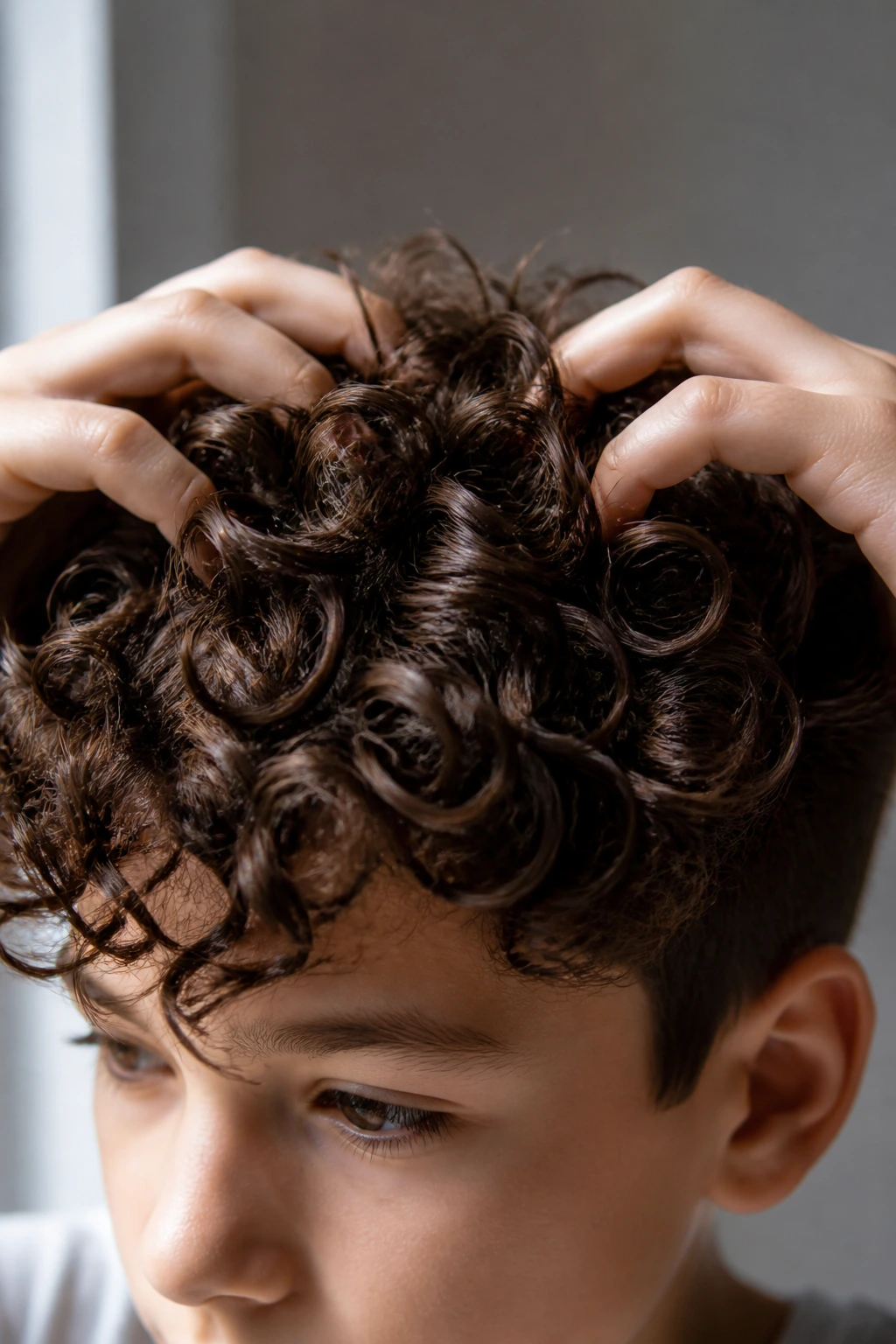
A curly haircut is not one and done. The small habits matter just as much as the cut itself. If the top gets rubbed with a regular bath towel, the curl pattern frays. If the hair is brushed dry, it puffs. If the neckline is ignored for six weeks, even a good fade starts looking like it lost a fight.
A morning refresh can be almost boring in its simplicity. Mist the top lightly, work in a pea-sized amount of leave-in or curl cream, then scrunch the curls upward with your hands. That’s usually enough. Don’t drown the hair. Wet hair plus too much product often looks heavier and dirtier, not more controlled.
Night care helps too. A satin pillowcase or bonnet cuts down on friction, which keeps the curls from waking up smashed on one side and exploded on the other. If a boy hates anything on his head while sleeping, at least swap the cotton pillowcase. It’s a small change, but it saves a lot of morning arguing.
The haircut will still matter most. But these little habits keep a good cut from going sideways too fast.
Common Mistakes That Puff Up, Flatten, or Chop Curls
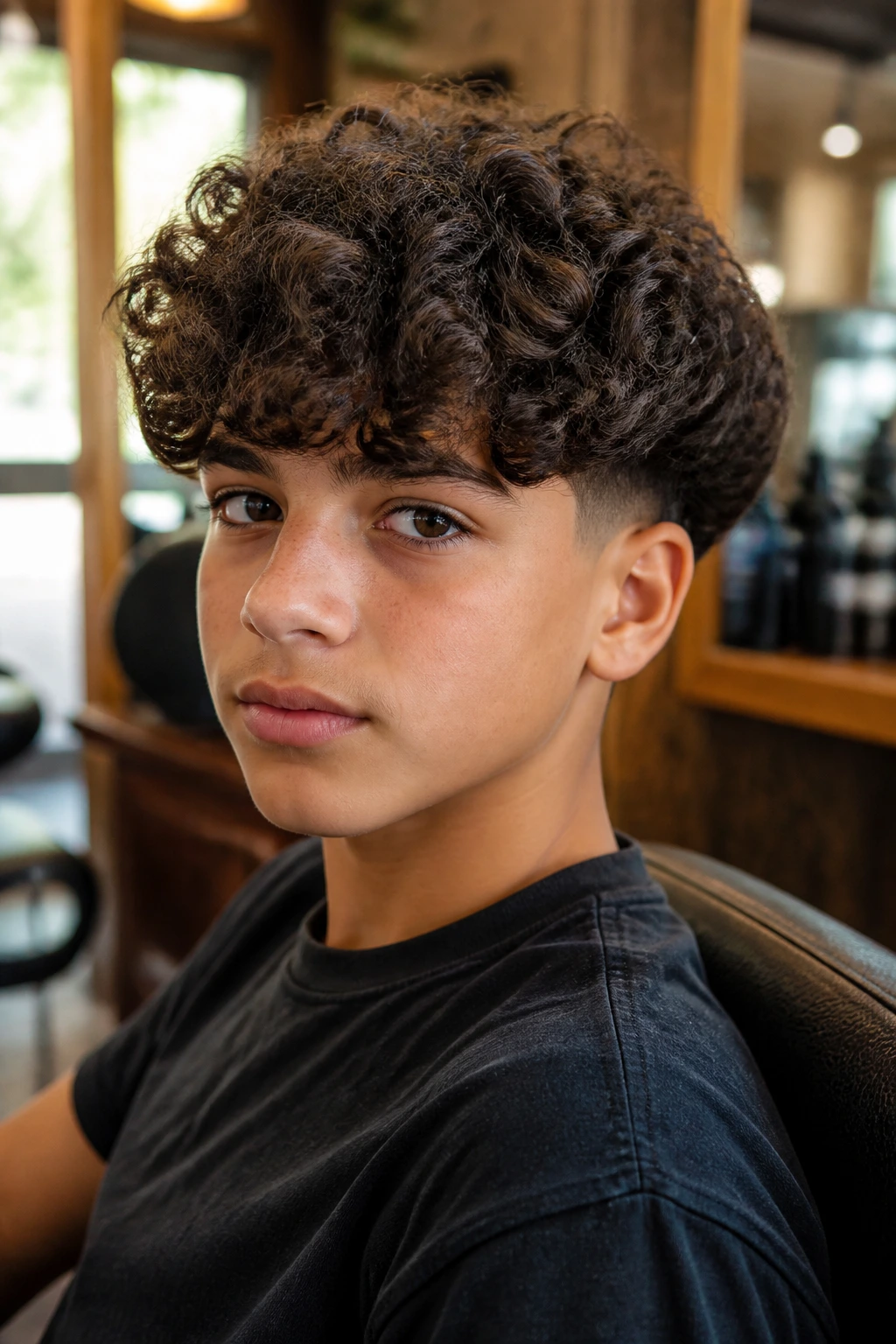
The same few mistakes show up over and over with boys’ curly cuts, and they’re easy to spot once you know the signs.
- Cutting the top too short while it’s wet: The hair springs up after drying and looks much shorter than planned. Fix it by leaving extra length and trimming in stages.
- Fading too high on the sides: The haircut starts to look wide or top-heavy. Keep the fade lower and check the profile before taking more off.
- Thinning the curls too aggressively: The ends turn fuzzy and see-through. Use layering or point cutting instead of shredding the whole head.
- Ignoring the crown: Curls on the crown often stand up and need special attention. If the top looks smooth in front but bulky in back, that’s the problem.
- Using rough towels or dry brushing: Both create frizz fast. Swap in a microfiber towel and detangle only when damp and coated with conditioner.
- Skipping trims for too long: Even good curly cuts lose shape when the neckline and ears go wild. A quick cleanup keeps the whole style believable.
Ways to Adapt These Looks for School, Sports, and Different Curl Patterns
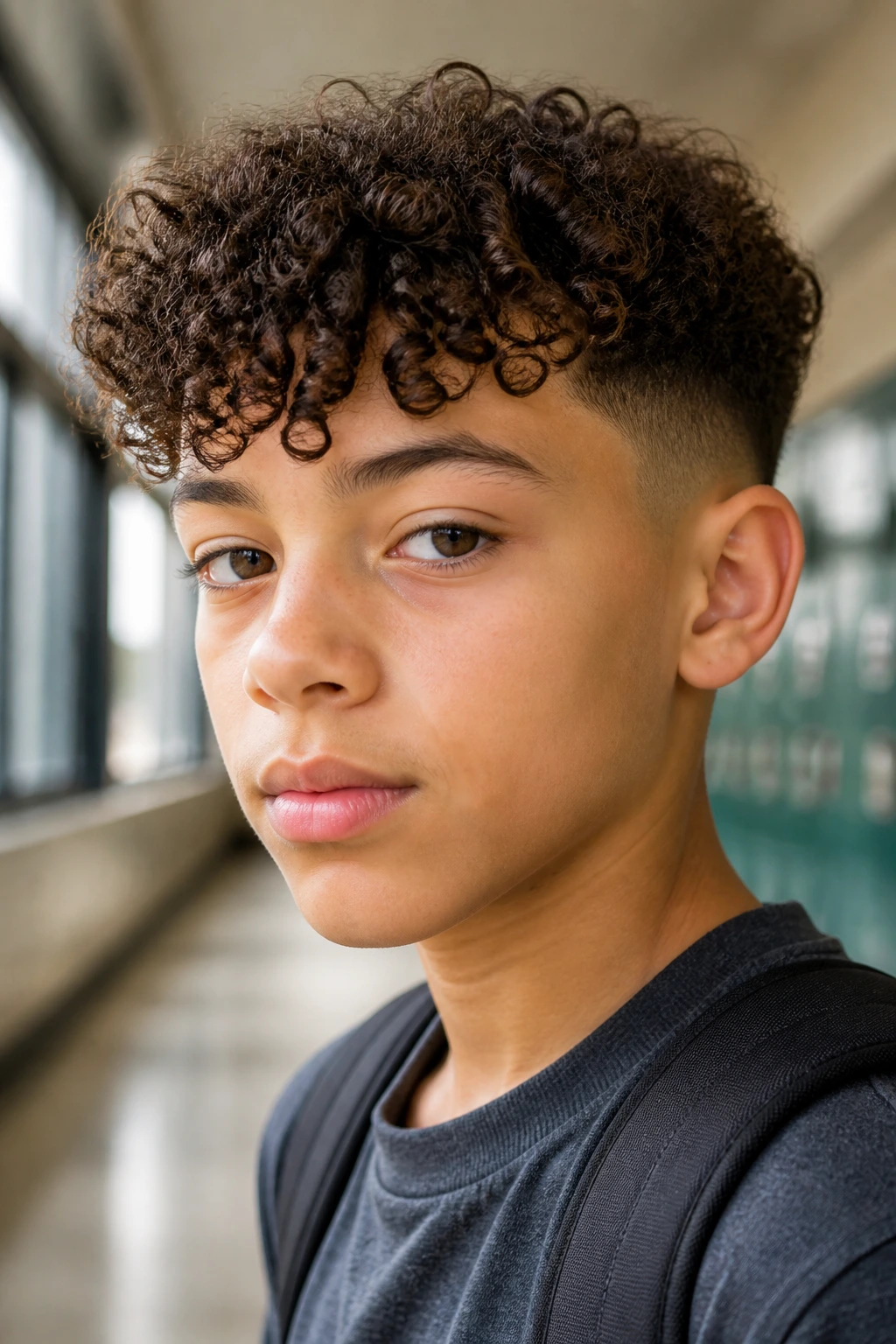
The smartest curly haircut is the one that fits the life around it. A kid in swim practice does not need the same setup as a kid who wants a photo-day fringe. A tighter curl pattern needs different length than a looser wave. You can tweak almost every cut in this list to match the day-to-day reality.
School-Rule Short Version
Take the same shape and shorten the top a little, especially around the fringe. Keep the edges clean but soft so the haircut looks neat without reading as severe. This works well when a school is picky about hair hanging over the eyes.
Sports-Helmet Version
Choose a low taper or mid fade and leave the top just long enough to show texture. This keeps the helmet from crushing a tall silhouette into a weird shape, and it grows out in a forgiving way. The shorter sides also help with sweat and tangling.
Long Curl Weekend Version
Leave more length on top and around the crown, then use soft layers to prevent bulk. This is the right move for boys who like to wear their curls loose and don’t mind a little movement. It needs more care, but the shape is nicer.
Tighter Coil Version
Keep the outline rounded and avoid over-thinning. Tight coils already have strong texture, so the best haircut usually focuses on clean sides and controlled edges rather than aggressive layering. A shape-up at the hairline can make a huge difference.
Looser Wave Version
Go a little lighter with the fade and keep the top longer so the waves can show. Too much clipper work can flatten the texture that makes the cut look good in the first place. Let the movement stay visible.
How to Keep the Shape Between Haircuts
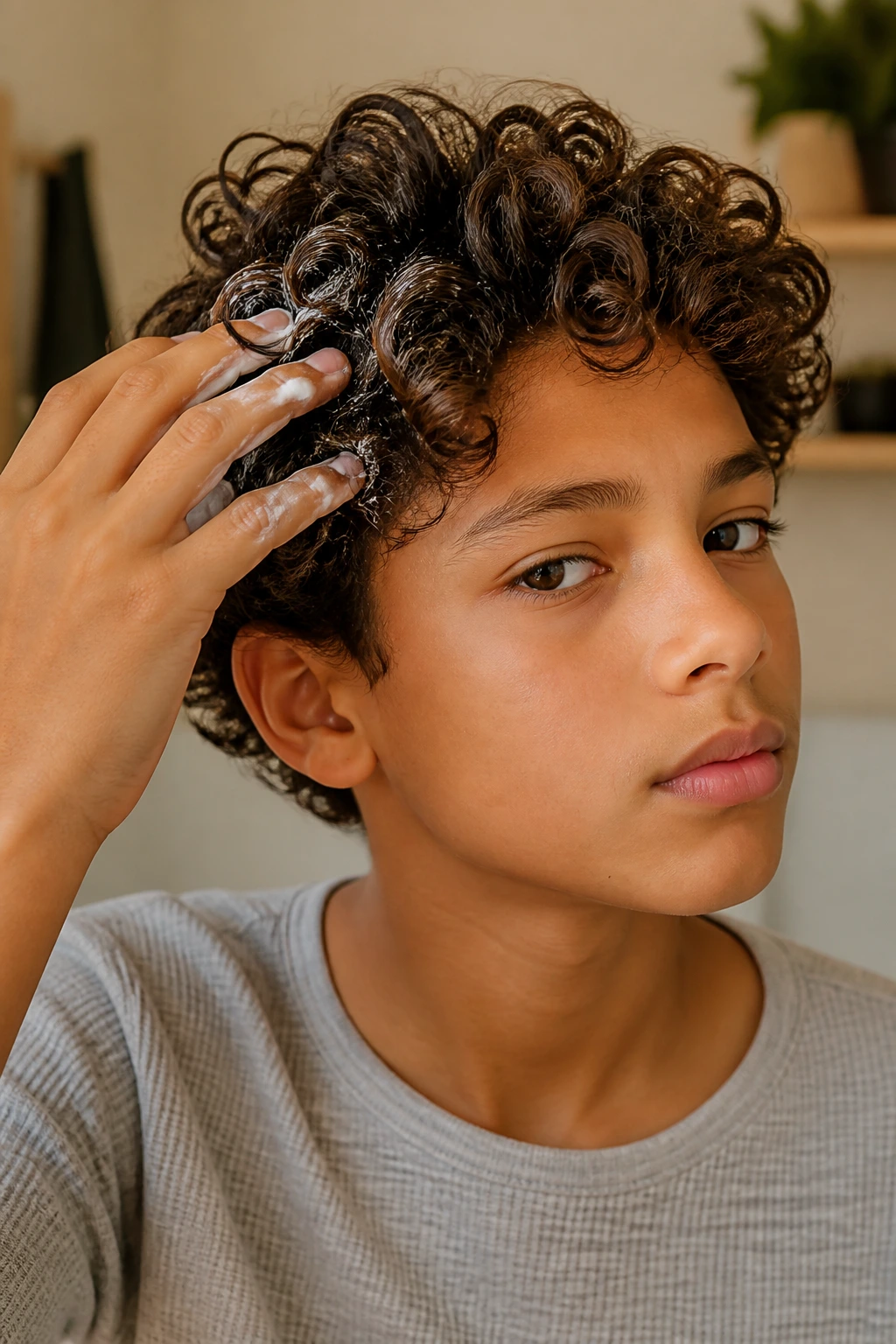
Short curly cuts usually need a cleanup every 4 to 5 weeks. Medium styles can often stretch to 6 to 8 weeks, and longer curls may make it to 8 to 10 weeks if the neckline and ears are cleaned up at home. That schedule is the difference between a haircut that looks planned and one that looks overdue.
At home, the biggest win is controlling frizz before it starts. Wash with a gentle shampoo only when the scalp needs it, not every day. Conditioner is the real workhorse for curly hair. It keeps the strands soft enough to separate instead of tangling into a rough triangle by the third day.
A quick refresh is simple: mist the hair lightly, smooth a small amount of leave-in through the curls, and scrunch. If the cut has a fringe, shape the front first while the hair is damp so it falls where you want it. If the neckline starts to look fuzzy between appointments, a barber can clean it up in minutes. Don’t let a two-minute fix become a whole haircut emergency.
Frequently Asked Questions About Curly Haircuts for Preteen Boys
Should curly hair be cut wet or dry?
Dry or mostly dry is usually safer for curly hair because it shows the real length and the real shape. Wet curls can shrink a lot, and that is how fringes end up too short. Some barbers still use a mix of both, but the key is checking the finished length after the curls settle.
How often should a preteen boy with curly hair get a haircut?
Short curly cuts usually look best with a trim every 4 to 5 weeks. Medium-length styles can go longer, especially if the neckline stays neat. If the edges start to blur or the top loses shape, it’s time.
What if my child hates hair in his eyes?
Choose a curly fringe, Caesar, or crop with a short front. Those styles keep the curls visible while moving the hairline away from the eyes. A slightly longer top can still work if the barber shapes the front carefully.
Can a fade work on very tight curls?
Yes, but the transition has to be handled with care. Very tight curls can look bulky if the fade rises too high or gets too sharp. A low taper or mid fade usually gives better control than a hard skin fade.
What if the haircut looks too puffy after the first wash?
That usually means the top is too heavy or the sides are not trimmed enough. A little leave-in conditioner, a microfiber towel, and a better side taper help, but the real fix is at the next cut: keep the outline tighter and leave the right amount of weight on top.
Is a line-up a good idea for boys?
It can be, if the barber keeps it soft and doesn’t push the hairline back too far. A light line-up sharpens the shape, but a heavy one can look harsh on a child’s face. Soft edges are safer if you want the cut to age well.
What’s the easiest style to maintain if we’re always rushing?
The curly crop with a low taper is probably the simplest one here. It dries fast, looks clean with minimal styling, and grows out in a fairly forgiving way. A little water and leave-in in the morning is usually enough.
Can these cuts be done at home with clippers?
Some of them can, especially the simpler tapers and short crops, but curls are less forgiving than straight hair. If you’re trimming at home, keep the top longer than you think and clean the nape in small steps. The first goal is not perfection. It’s avoiding a fix-it trip two days later.
Let the Curls Have Shape
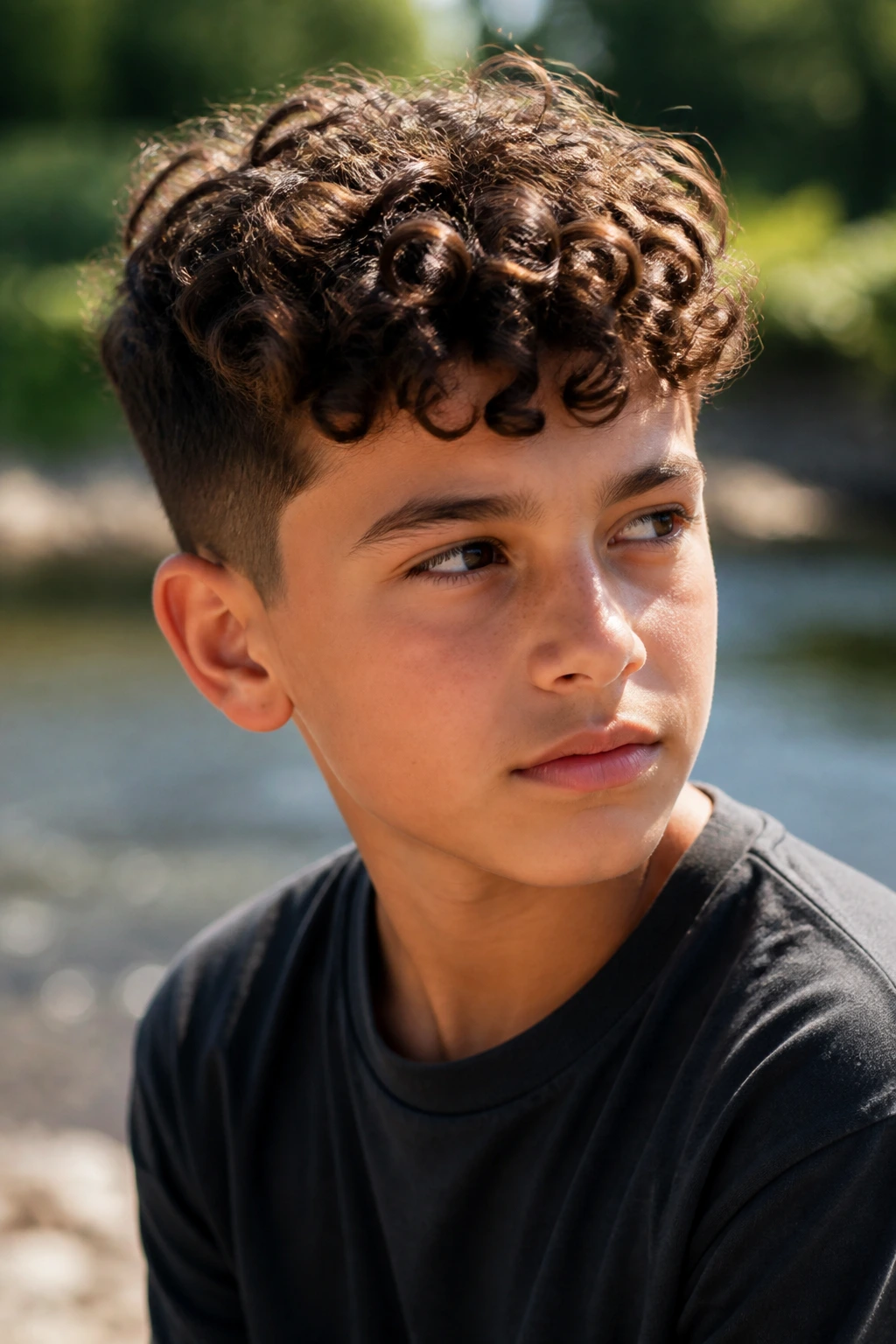
The best cuts for curly-haired preteens do not flatten the hair into something it isn’t. They give it edges, direction, and enough room to spring back after a day of actual kid life. That’s the sweet spot. Clean on the sides, alive on top, and still decent when the hair decides to do its own thing.
If you remember only one thing, make it this: the haircut should work with the curl pattern, not against it. Bring that mindset to the barber chair, and the whole thing gets easier. The curls keep their character, the outline stays neat, and the morning routine stops feeling like a wrestling match.