



Fine hair does not need more drama. It needs a cleaner outline, a smarter part, and a shape that stops the eye at the right place.
That’s why rock medium hairstyles for short hair with fine hair keep showing up in good salons. The sweet spot sits somewhere between the ear and the collarbone: short enough to lift, long enough to bend, and blunt enough at the ends to fake a little more density than your strands were born with. When the cut is right, you don’t spend the whole day chasing volume with your hands.
I keep coming back to the same truth: fine hair usually looks better when it has a clear perimeter and a little movement in the right spots, not when it’s sliced into a hundred tiny layers that turn the ends into a whisper. Some of the styles below are actual haircuts. Others are styling moves that can rescue a grown-out bob, a stubborn pixie, or that awkward in-between length that refuses to behave.
If your hair goes flat by lunch, splits at the crown, or looks thinner the moment you add too much product, the next sections will probably save you some bad trims and a few disappointing mornings.
Why Rock Medium Hairstyles Work on Short Hair with Fine Hair

They keep the ends looking full. Fine hair looks sparse when the perimeter is shredded. A blunt bob line, a soft A-line, or even a controlled shag keeps the bottom edge solid so the hair reads as thicker from across the room.
They give you lift without fighting gravity all day. Short-to-medium shapes land in a zone where the roots can rise more easily. A collarbone lob or a bixie doesn’t drag itself down the way longer fine hair often does.
They let you cheat with parts and bends. A side part, a center part, or a shallow wave can change how dense the hair looks around the face. That matters more on fine hair than any miracle serum ever will.
They grow out without turning sloppy. A good short cut should still look deliberate five or six weeks later. These styles hold their outline longer, which matters if your hair grows unevenly around the ears or nape.
They work with the texture you already have. Straight strands, slight wave, or that odd bend at the ends all play nicely here. The trick is shaping the hair around its natural movement instead of trying to force it into a style that belongs on much denser hair.
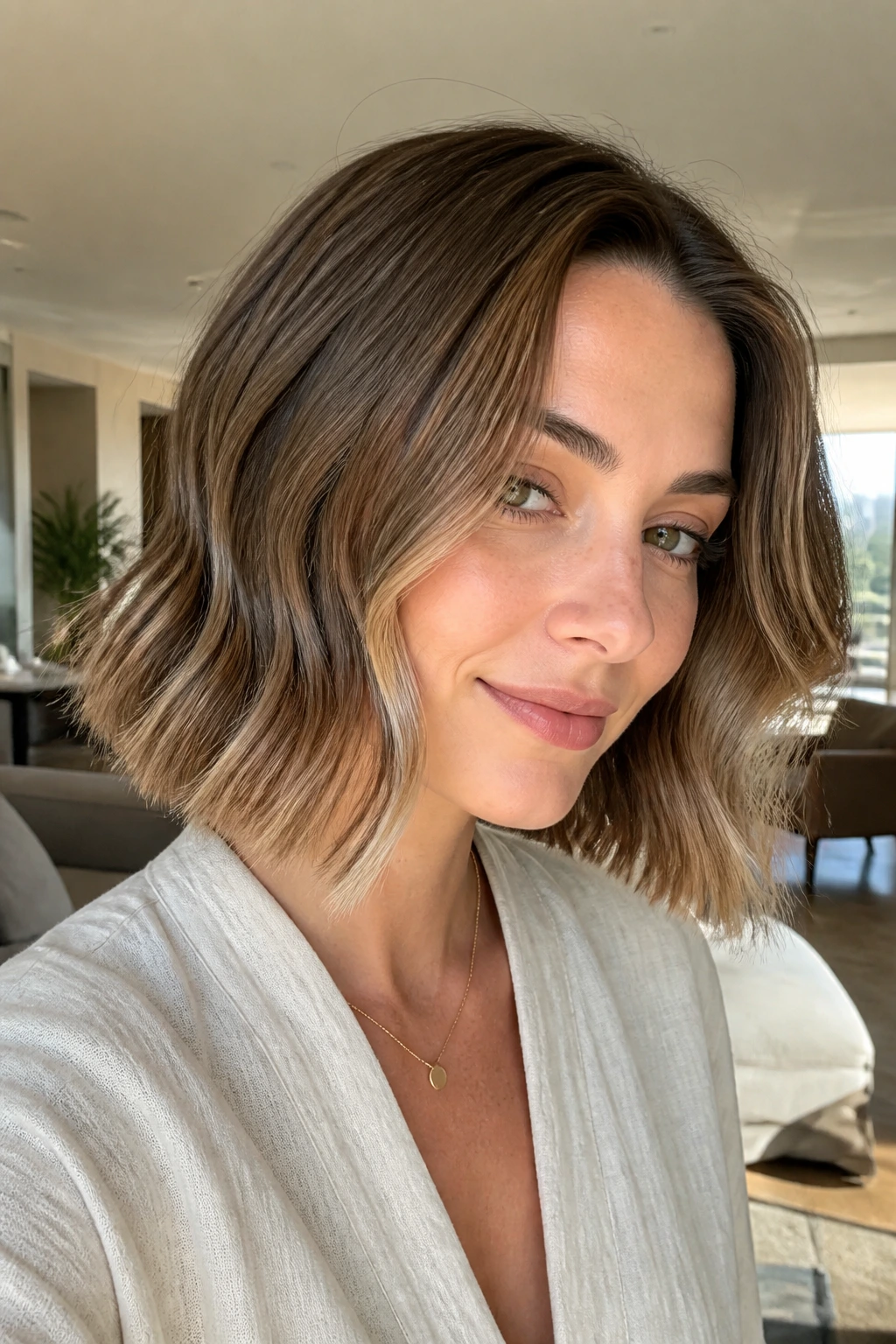
1. The Collarbone Lob With Blunt Ends
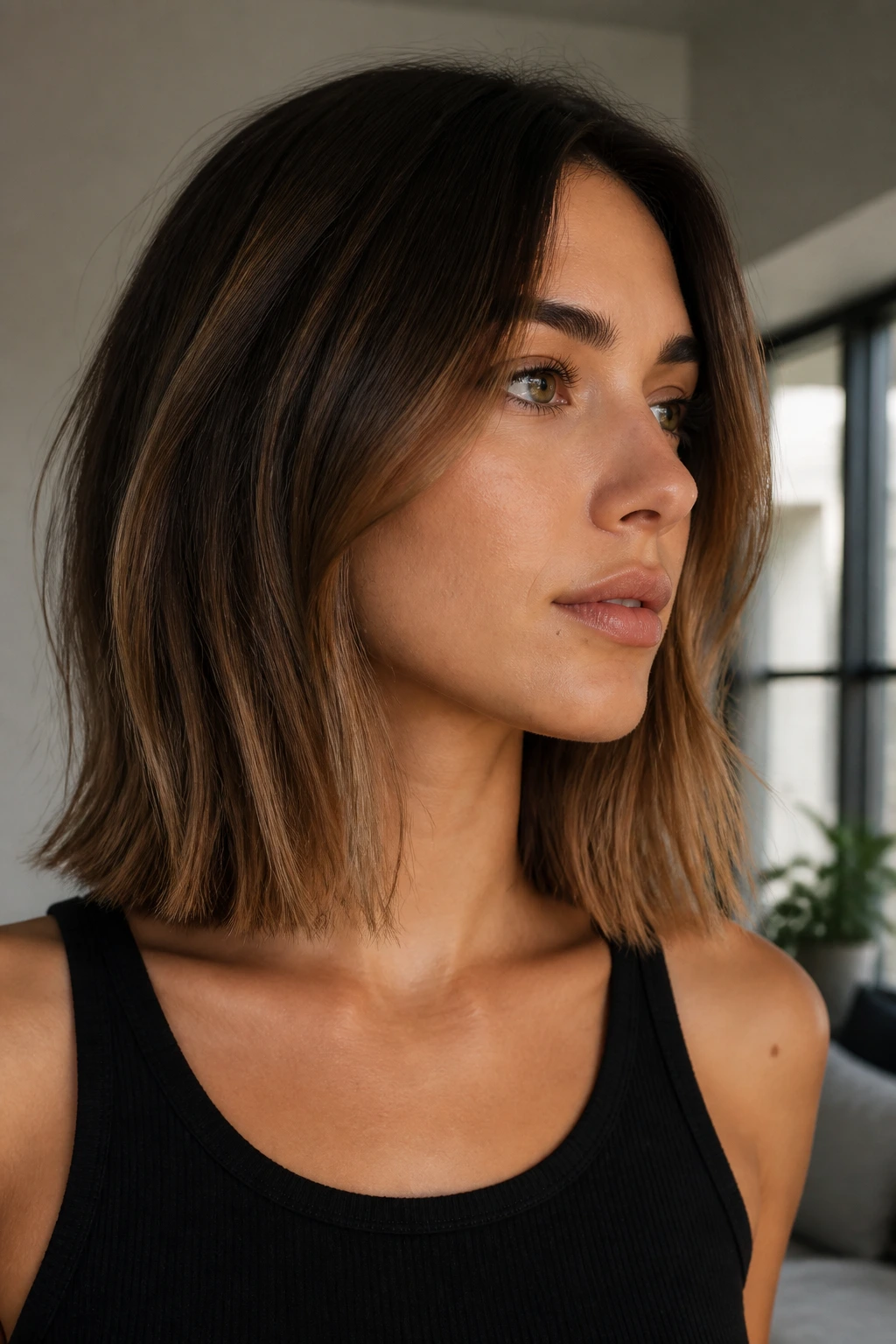
If fine hair had a cheat code, this would be it. The collarbone lob is long enough to swing, short enough to keep lift at the crown, and blunt enough at the bottom to make the ends look thicker than they really are. That last part matters more than people realize.
What to ask for at the salon
- Keep the perimeter even: A blunt baseline gives the eye one clean line to follow, which makes the whole shape look denser.
- Use only soft internal layering: If you need movement, ask for a little shaping inside the cut, not a heavy layer stack that hollows out the ends.
- Let the front skim the collarbone: That length bends nicely when you tuck it behind one ear or wrap it under with a brush.
- Skip aggressive thinning: On fine hair, thinning shears can turn the ends see-through fast. That is not the look.
A lob like this looks especially good when the hair falls naturally with a tiny bend at the ends. Not curls. Bends. A quick pass with a flat iron or a medium round brush gives it enough shape that the cut doesn’t collapse into a flat curtain by noon.
Best for: straight to slightly wavy hair, oval and heart-shaped faces, anyone who wants something clean without looking severe.
2. The French Bob With Wispy Fringe

Can a short bob feel light and still look full? Yes, if you keep the line at the jaw and the fringe soft enough to move. The French bob works because it gives fine hair a neat shape without asking it to support a ton of length.
The fringe is the part people get wrong. It should look airy, not heavy. If the bangs are dense and blunt all the way across, fine hair can suddenly look cramped around the forehead. I’d rather see a wispy fringe that brushes the brows or sits just above them, with a little separation at the ends.
This cut loves a bit of mess. Scrunch in a pea-size amount of mousse, air-dry halfway, then rough-dry the fringe with fingers or a small brush. You want a soft bend, not a helmet. If the hair has a tiny wave, even better. If it’s pin-straight, the blunt jawline does the heavy lifting.
Who should consider it: people with delicate features, shorter foreheads, or hair that naturally wants to sit close to the head. It also works well if you like a cut that looks intentional with very little styling.
3. The Stacked Nape Bob
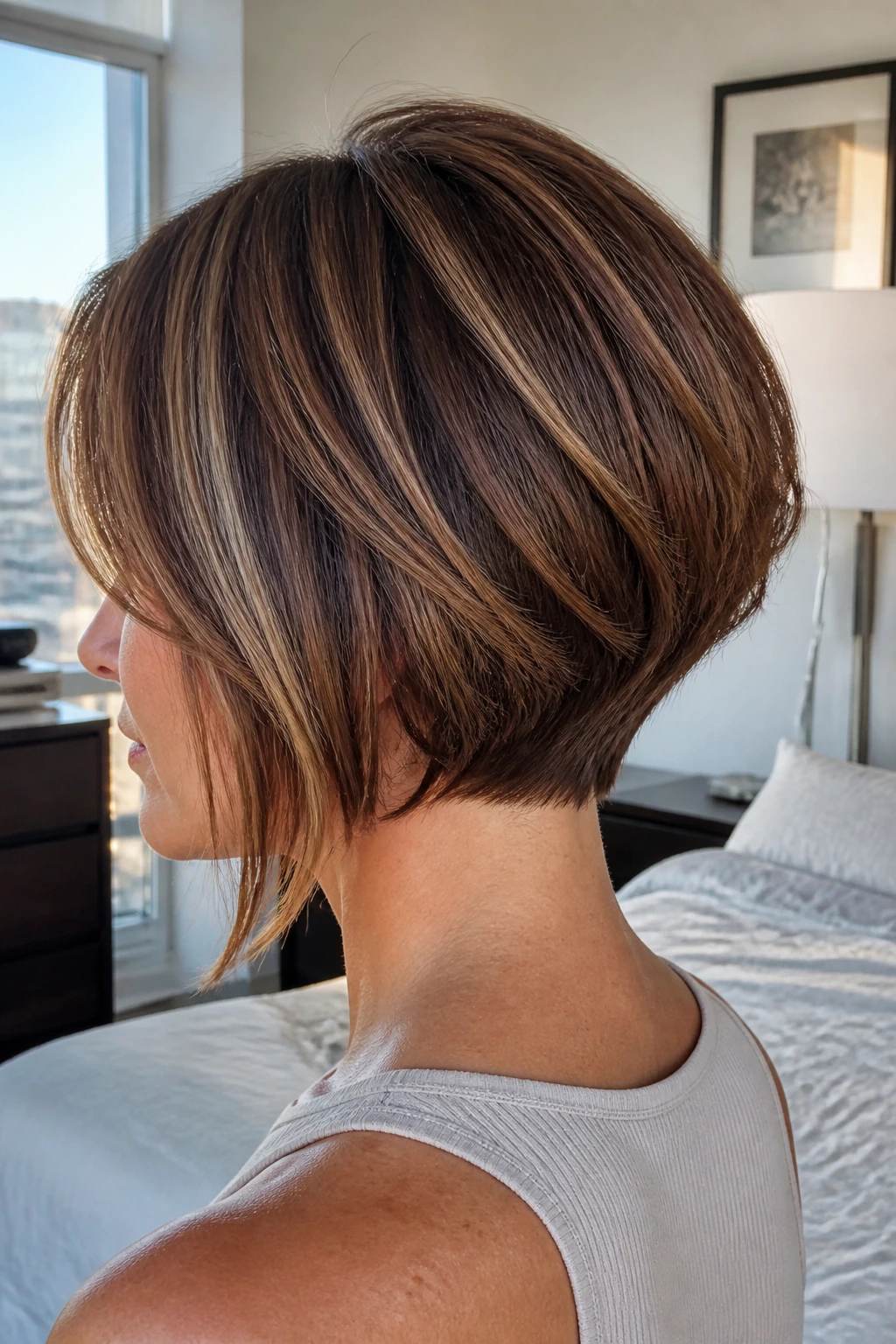
When the back of your head disappears into a flat sheet, a stacked nape bob fixes the problem faster than almost anything else. The lift lives in the back, not on top, which is exactly why it suits fine hair so well.
The shape that matters
- Shortest at the nape: The back is cut a little shorter so it can rise away from the neck instead of hanging there.
- Graduated upward toward the crown: The layers should stack softly, not spike out.
- Longer in front: You keep enough length near the cheek and jaw to balance the lift in back.
- Curved under at the ends: A slight inward bend stops the cut from looking boxy.
This is one of those styles that can look expensive even when the hair itself is pretty modest. The silhouette does the work. The nape lift gives the illusion of density because hair is layered to support itself rather than fall straight down.
The catch? It needs maintenance. The stacked back grows out faster than a blunt lob, and once it loses that shape, the whole cut starts to sag. Still, if you like structure and you hate a flat crown, it earns its keep.
4. The Bixie With Piecey Crown Lift
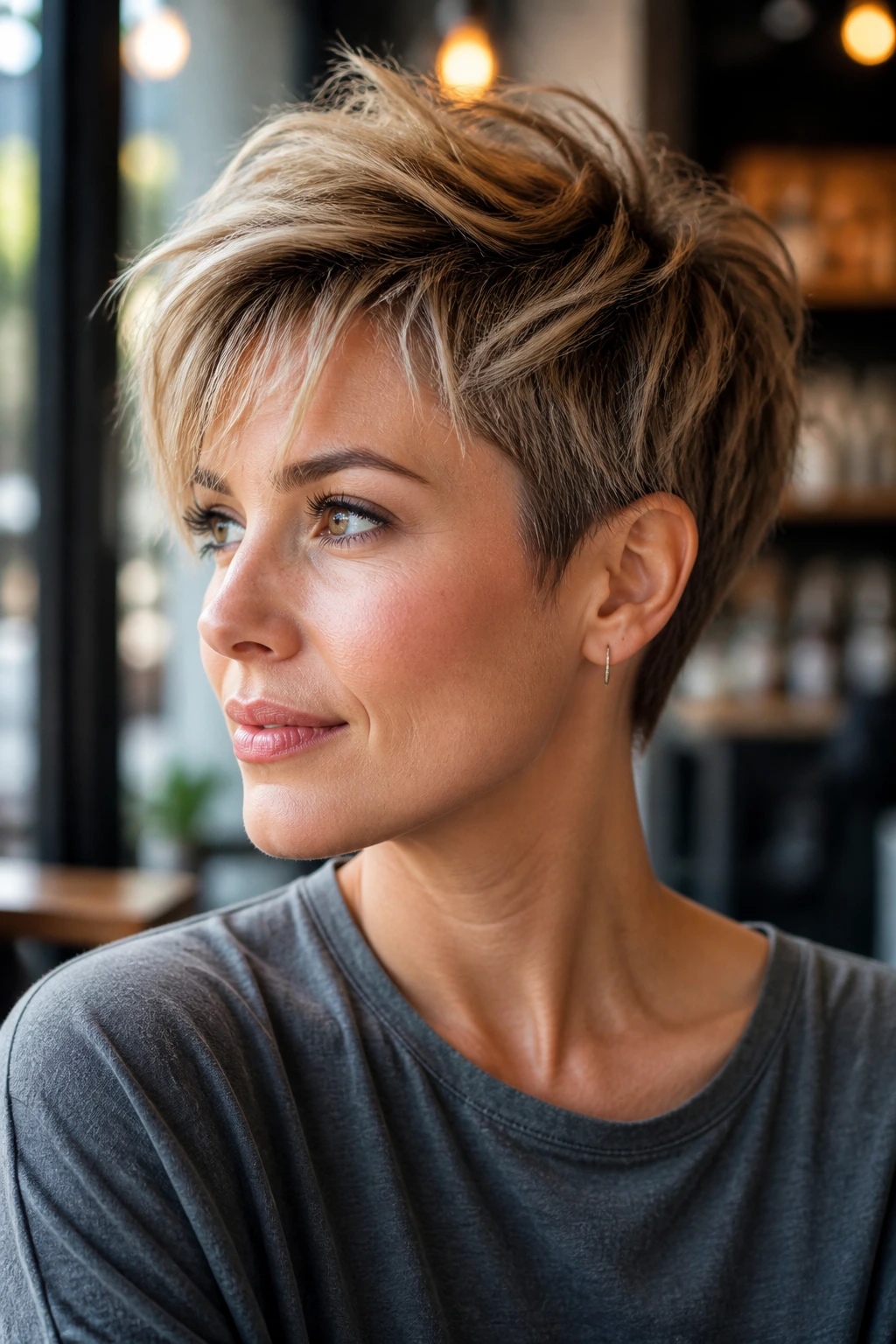
This is the cut for people who can’t decide between a bob and a pixie and don’t want to apologize for either choice. A bixie keeps the sides and nape short enough to avoid drag, then leaves enough length on top to build texture and movement.
Fine hair usually likes this because the crown gets lift without needing a lot of bulk. The top can be rough-dried with mousse, then pinched into pieces with a lightweight paste or texture cream. Not much. A little goes a long way here. Too much product, and the whole thing turns sticky and sad.
How to wear it
- Blow-dry the crown up and forward first.
- Use your fingers to separate the top into loose chunks.
- Keep the sides soft so they hug the face instead of puffing out.
- Let the fringe fall piecey, not perfect.
A bixie is especially smart if your hair grows fast and you like a cut that stays interesting during the grow-out phase. It never looks like you forgot to book a trim. It looks like you planned the shape.
5. The Side-Swept Pixie Bob
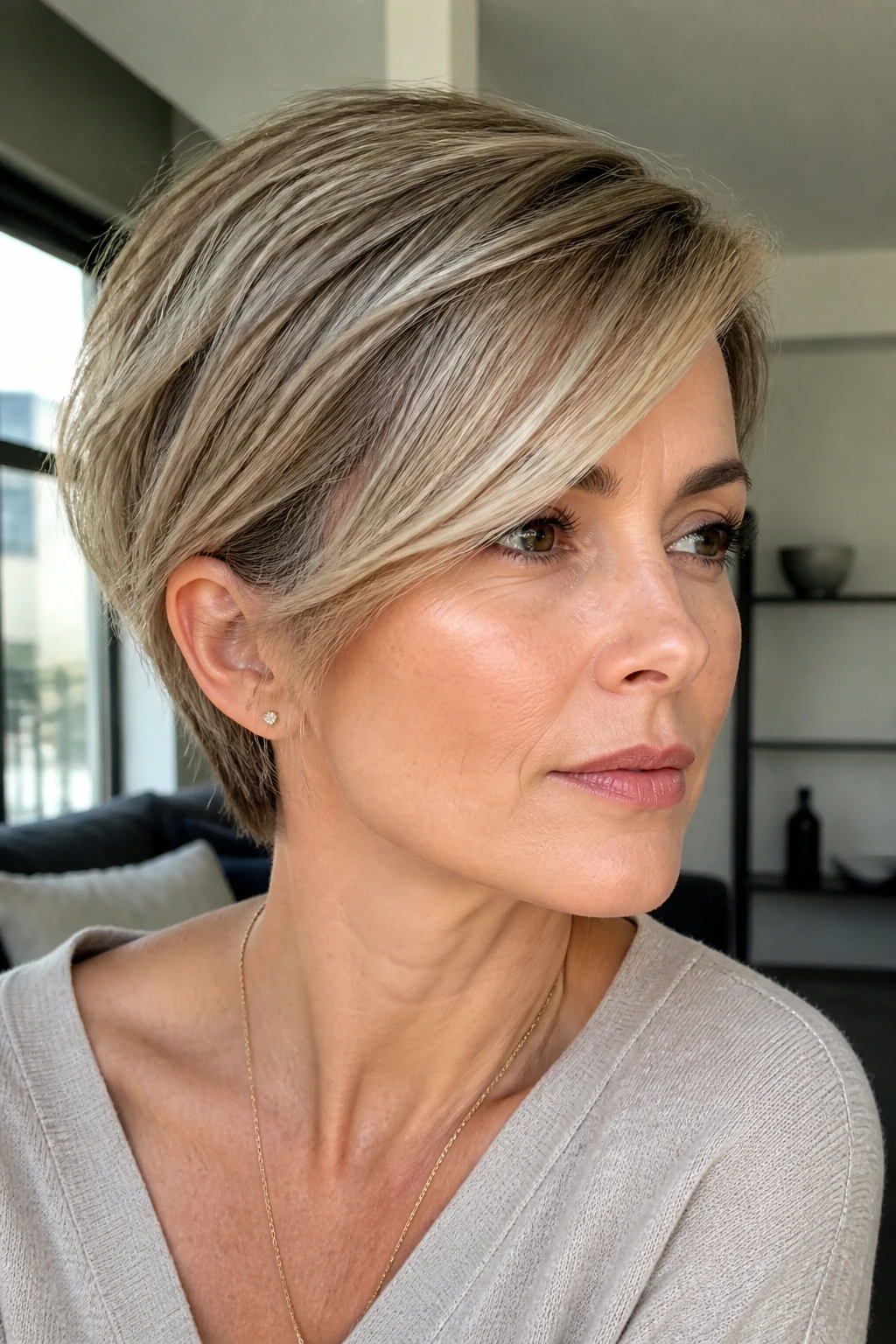
If a blunt fringe feels too heavy and a pure pixie feels too short, the side-swept pixie bob lands in the middle and does a lot of useful work. The diagonal line gives fine hair a little lift at the front, which is one of the easiest ways to fake more body.
This cut is especially kind to temples and hairlines that aren’t super dense. A deep side part pulls the eye across the forehead and keeps the top from splitting into two flat panels. That one move changes everything.
I like this shape on people who are growing out a pixie and need something less fussy than a full bob. The top stays long enough to tuck, sweep, or flatten back with a little paste. The back stays neat, which keeps the whole thing from feeling puffy.
Styling note: blow-dry the front in the opposite direction first, then sweep it back over once it cools. That little trick gives the root more memory than air-drying ever will.
6. The Curtain Bang Lob
Want movement without giving up the illusion of density? Curtain bangs do that better than almost any other face-framing trick. They open the face, soften the length, and make a lob feel layered without hacking the whole head apart.
The key is where the bangs start. On fine hair, I’d keep them long enough to hit around the cheekbone or just below it. If they begin too short, they can look thin and split. If they’re too dense, they swallow the forehead.
How to keep the bangs from splitting
- Blow-dry them forward first, then sweep them away from the face with a round brush.
- Keep conditioner off the roots and bangs. They get greasy faster than the rest of the cut.
- Trim them before they reach into your eyes and start separating in weird places.
- Use a tiny mist of hairspray on the underside, not the top.
This is one of the easiest ways to make fine hair look styled even when the rest of it is barely cooperating. The front does enough visual work that you can keep the body of the haircut light.
7. The Soft Razor Shag Bob
A shag can work on fine hair. It just cannot be the wrong kind of shag.
That’s the line people miss. If the layers are shredded too hard, the ends fray and the whole shape looks tired. But a soft razor shag bob, with longer layers and a loose edge, can give fine hair movement without turning it into a wispy mess. The difference is restraint.
This cut works best when the hair has a slight natural wave or a bend that appears after air-drying. The razor should soften the outline, not erase it. Ask for a gentle shag, not a chopped-up one. The crown gets a little lift, the ends stay visible, and the face-framing pieces should still have enough length to tuck behind the ears.
For styling, use a lightweight mousse at the roots and a touch of texturizing spray through the mids. That is enough. Anything heavier starts to kill the airy effect the cut is trying to create.
8. The Airy Wavy Bob
This is the haircut that looks like you slept on it in a silk pillowcase and woke up with perfect hair. Which, honestly, is most of the appeal. The airy wavy bob gives fine hair a little bend and separation without pushing it into full curl territory.
A 1-inch curling iron or a flat iron with a soft bend works well here. Alternate the direction of each section, but leave the last inch or so straight. That straight end keeps the wave from looking too dressed up. Once the hair cools, break the waves apart with clean hands and a tiny mist of flexible spray.
The shape matters more than the wave pattern. If every bend goes the same direction, the style starts to look stiff. If the ends are too curled, fine hair can look shorter and thinner. Soft variation is the whole point.
This one is especially good for people who don’t want a daily blowout. The waves can be refreshed on day two with a spritz of water and a quick twist of a few sections around your finger. Easy. Not fussy.
9. The Sleek Center-Part Bob
A center part can be a little unforgiving on fine hair, but when the cut is balanced, it looks sharp in the best way. The trick is to keep the line clean and the ends blunt enough that the hair feels deliberate, not scattered.
Compared with a side part, a center part can make both sides look equally full because the eye reads symmetry first. That works well if your hairline is fairly even and the crown isn’t overly sparse. If one side looks thinner, shift the part a quarter-inch off center. Nobody will notice. Your mirror will.
This is a cut that wants smoothness. A pea-size amount of heat protectant, a small flat brush or paddle brush, and a fast pass with a flat iron is usually enough. You do not need glass hair. You need a calm surface and a line that lands right at the cheek or jaw.
Best for: straight hair, angular faces, anyone who likes a neat, clean look with very little fluff.
10. The Tucked-Behind-Ears Crop
Sometimes the most flattering move is the simplest one. The tucked-behind-ears crop uses that little bit of face opening to create shape where fine hair often falls flat.
When the sides are tucked, the crown looks a touch fuller by comparison. That’s the trick. The ear area stops competing with the rest of the cut, and the jawline gets a cleaner frame. It’s one of my favorite fixes for short hair that needs to look sharper without adding more product.
Keep a few face-framing pieces long enough to escape the tuck. If everything is the same length, the style can feel boxy. A little unevenness around the front makes it look lived in.
This also pairs nicely with earrings. Small hoops, huggies, or a single bold stud can give the haircut more presence without dragging the hair down. And no, you don’t need big accessories to make it work. Fine hair usually looks better when the styling stays lean.
11. The Feathered Crop With Soft Layers
Not the old-school feathering that turned every head into a feather duster. Softer than that. Cleaner. The modern feathered crop uses longer layers to keep the cut moving while still leaving enough weight in the outline to avoid that see-through effect.
This shape works when fine hair flips at the ends or wants to poof at the sides. The feathers soften the bulk without erasing the base. If you want the hair to feel light around the face but still have a visible line, this is a useful middle ground.
What to ask for
- Soft layers around the cheek and jaw, not short choppy ones.
- Tapered ends around the neck.
- A little movement at the crown, but no heavy thinning.
- A finish that still looks solid when air-dried.
It’s a good one for anyone who hates a severe bob but also doesn’t want a shag. The style sits in the middle and behaves well.
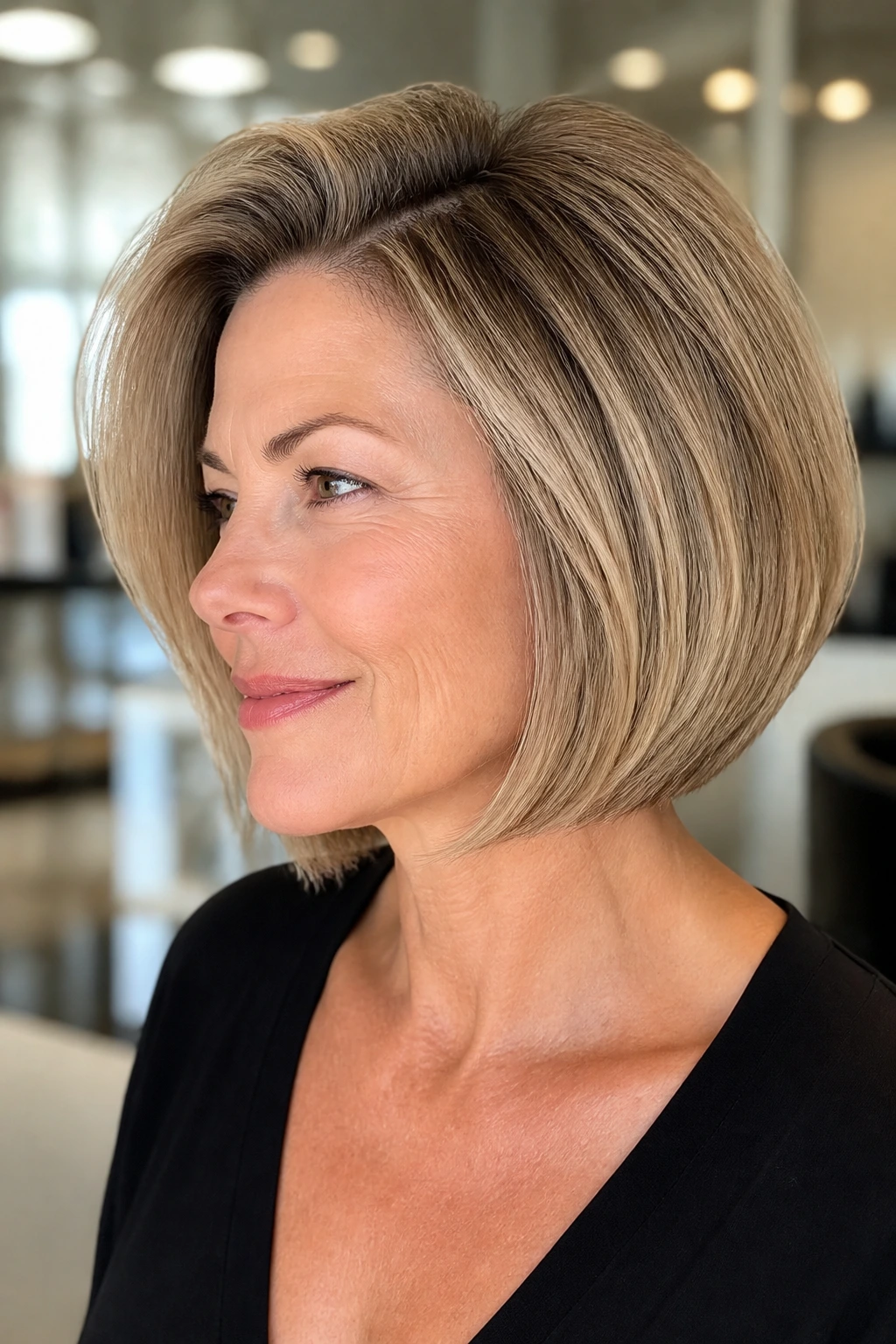
12. The Graduated A-Line Bob
The A-line bob is all about angle. Shorter in the back, longer in the front, and clean enough to give fine hair a stronger silhouette. Because the front pieces fall forward, the cut looks fuller on the eye, even if the actual density is modest.
This shape is especially useful if your hair is straight. Straight fine hair can go limp fast, and a tiny forward angle gives it something to do. The front pieces catch air and the back lifts away from the neck, which creates a little built-in movement.
You will need trims more often than with a blunt lob. The shape starts to drift once the nape grows out, and that clean angle is the whole reason you picked the cut in the first place.
Why it works so well:
- The front layers overlap and appear thicker.
- The back stays lifted instead of collapsing against the neck.
- The line stays clean around the jaw, which helps fine strands read as more structured.
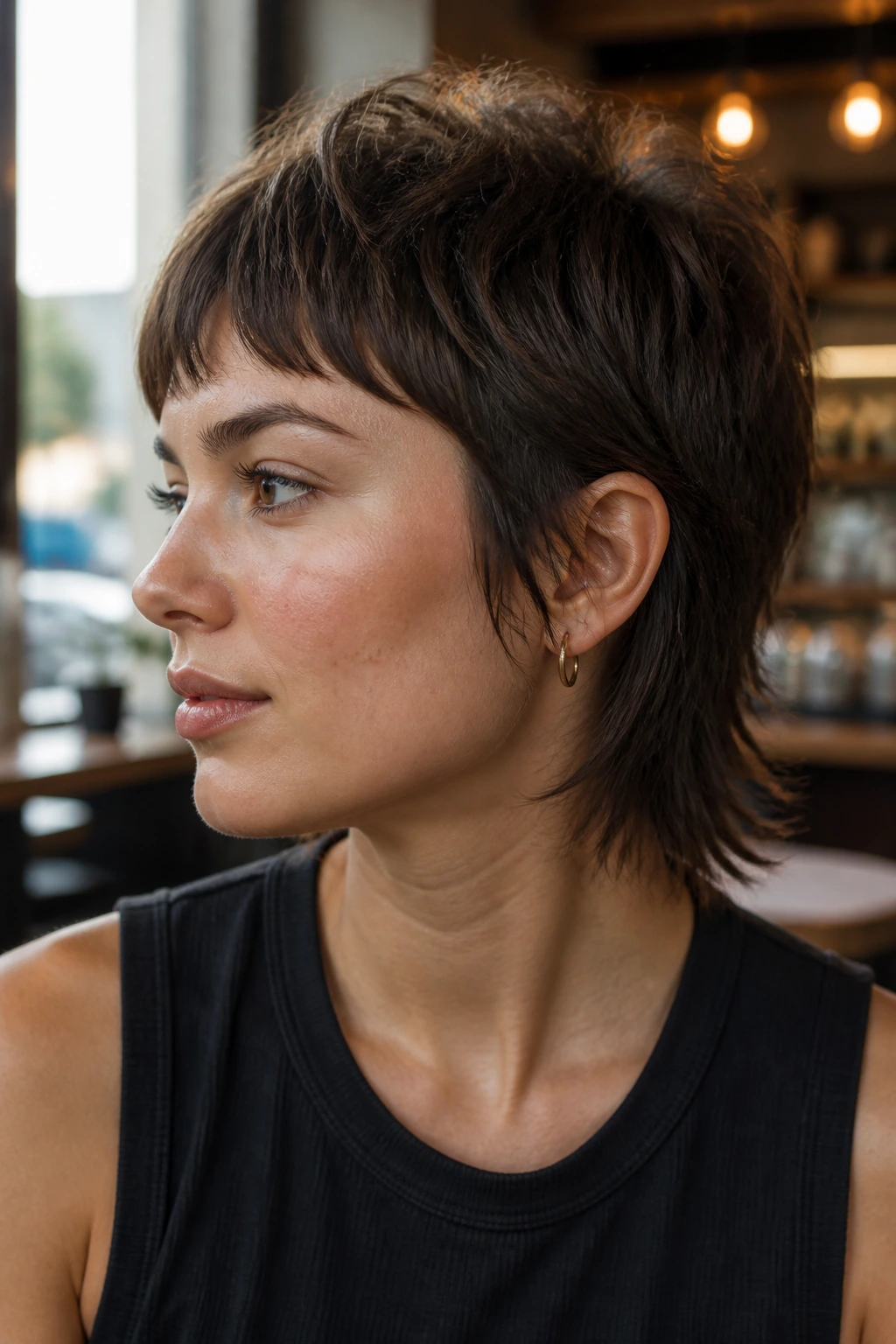
13. The Mini Mullet With Gentle Ends
A mullet does not have to shout. A mini mullet, done softly, can give fine hair more crown lift and a little edge without looking like a costume.
The trick is the transition. You want a gentle difference between the top, sides, and nape, not a hard disconnect. The crown stays a little longer to build height, while the neck area is kept neat so the shape doesn’t drag. If the ends are softened enough, the whole thing feels modern instead of dramatic.
This is one of the better choices for people who like texture but hate hair that sits too close to the head. The mini mullet creates that lift on its own. You can rough-dry it, pinch the top with paste, and leave the edges imperfect on purpose.
It is not the best cut for extremely sparse hair around the temples. There needs to be enough density to support the shape. But if your fine hair has a little body at the crown, this cut can be weirdly flattering.
14. The Root-Lift Blowout Bob
Not every good hairstyle starts with a haircut. Sometimes it starts with how you dry the thing.
The root-lift blowout bob is what happens when a blunt or slightly layered bob is styled with tension at the roots and a clean bend through the ends. Fine hair loves this because it gets support where it usually collapses: right at the scalp.
The sectioning that matters
- Clip the top crown section out of the way first.
- Dry the back in small pieces with a round brush.
- Aim the dryer at the roots, not the mid-lengths.
- Let each section cool on the brush for a few seconds before releasing it.
That cooling moment is the part people skip, and it matters. Hair remembers the shape better when it cools in position. A quick blast of cool air helps too.
Finish with a light-hold spray under the top layer only. If you spray the whole head, you can kill the movement you just built. The goal is lift with softness, not shellacked volume.
15. The Flat-Iron Bend Lob
Curling isn’t the point here. Bending is.
The flat-iron bend lob gives fine hair soft movement without the roundness that can make shorter styles feel too small. The sections are pressed into a loose S-shape, alternating direction as you move around the head. Leave the last inch or so straight. That little bit of straightness keeps the ends from curling up and looking airy in the wrong way.
A heat protectant is non-negotiable. Fine hair can scorch faster than people expect, especially if the iron runs hot. I’d stay in the low-to-medium range and move quickly rather than holding the tool on one spot.
This is a very good option when your hair is clean but flat and you need a little life before you walk out the door. It also plays nicely with second-day hair, which is half the reason it has such staying power.
Fast rule: bend the mids, leave the ends, cool before touching. That’s the whole game.
16. The Wet-Look Side-Part Pixie
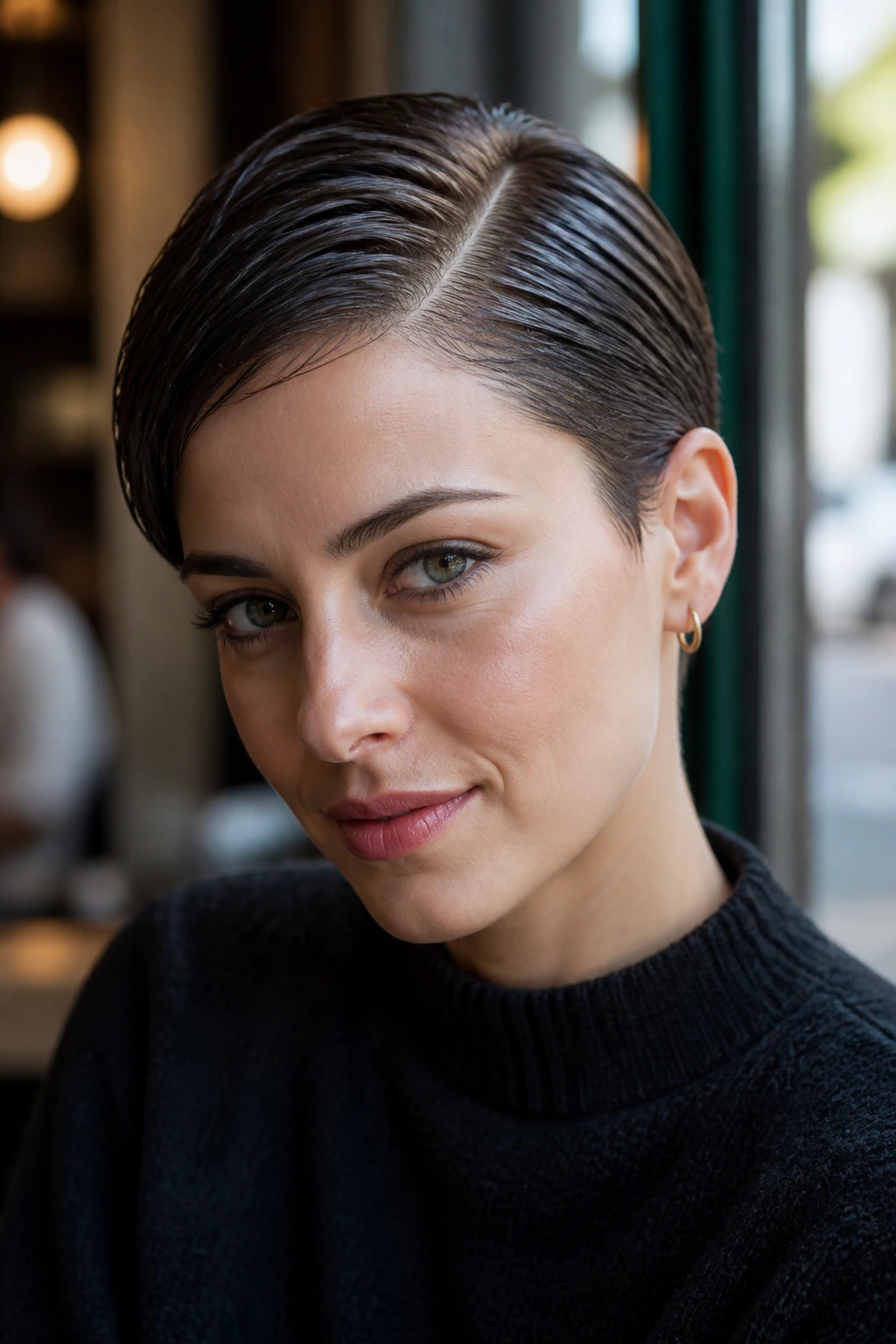
Want short hair to look denser instead of wispy? Slick it down.
The wet-look side-part pixie uses shine and control to compress the shape a little, which makes fine hair read as more concentrated. A deep side part pushes the weight to one side and creates a clean line across the head. The result is sharper, darker, and often fuller-looking than dry texture on the same hair.
Use a small amount of gel or shine cream on damp hair. Small. Not a palmful. Comb it through with a tail comb, then smooth the sides back and down while leaving a touch of lift at the roots. The finish should look glossy, not crunchy.
This works especially well for evenings or humid weather, when loose styling gets messy fast. It also hides flyaways, which can make very fine hair look even lighter than it is. If your goal is neat, dense, and controlled, this one earns its place.
17. The Half-Up Claw-Clip Bob
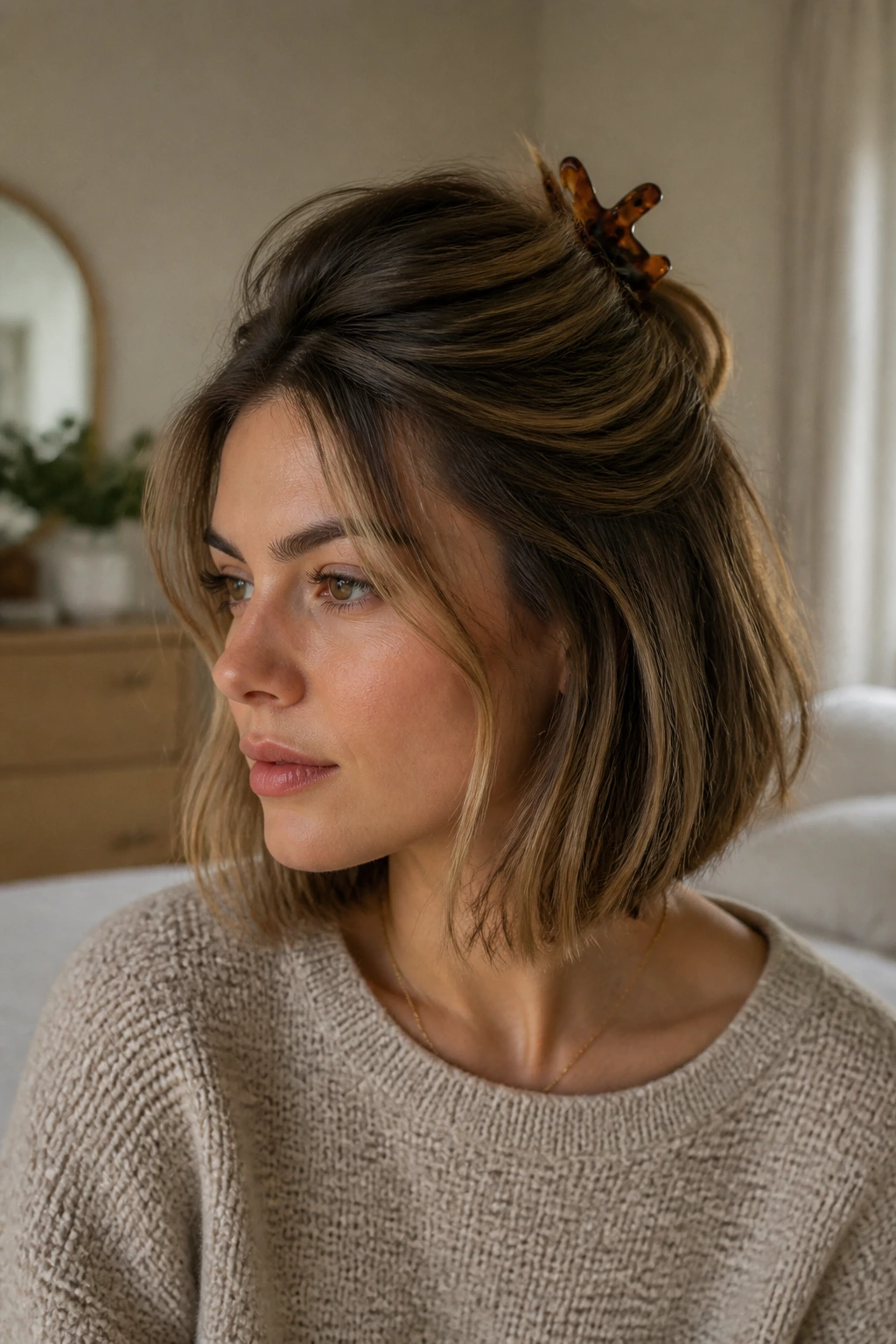
A growing-out bob can get annoying fast. The half-up claw-clip bob fixes that without turning your hair into a tight little top knot that steals all the length.
The top section gets twisted or lifted just enough to create height at the crown, then clipped loosely so the bottom half still hangs free. That’s the key. If you pull too much hair back, the look shrinks and the fine strands at the temples can disappear.
Use a small or medium claw clip, not an oversized one that dwarfs the haircut. Place it high enough to get lift, but not so high that the style starts looking like a schoolroom twist from the 1990s. A few loose pieces around the ears keep it soft.
This is one of the easiest ways to make day-old hair feel deliberate. A little dry shampoo at the roots helps, but the real win is the shape: crown lifted, ends visible, sides relaxed.
18. The Twisted-Back Grow-Out Bob
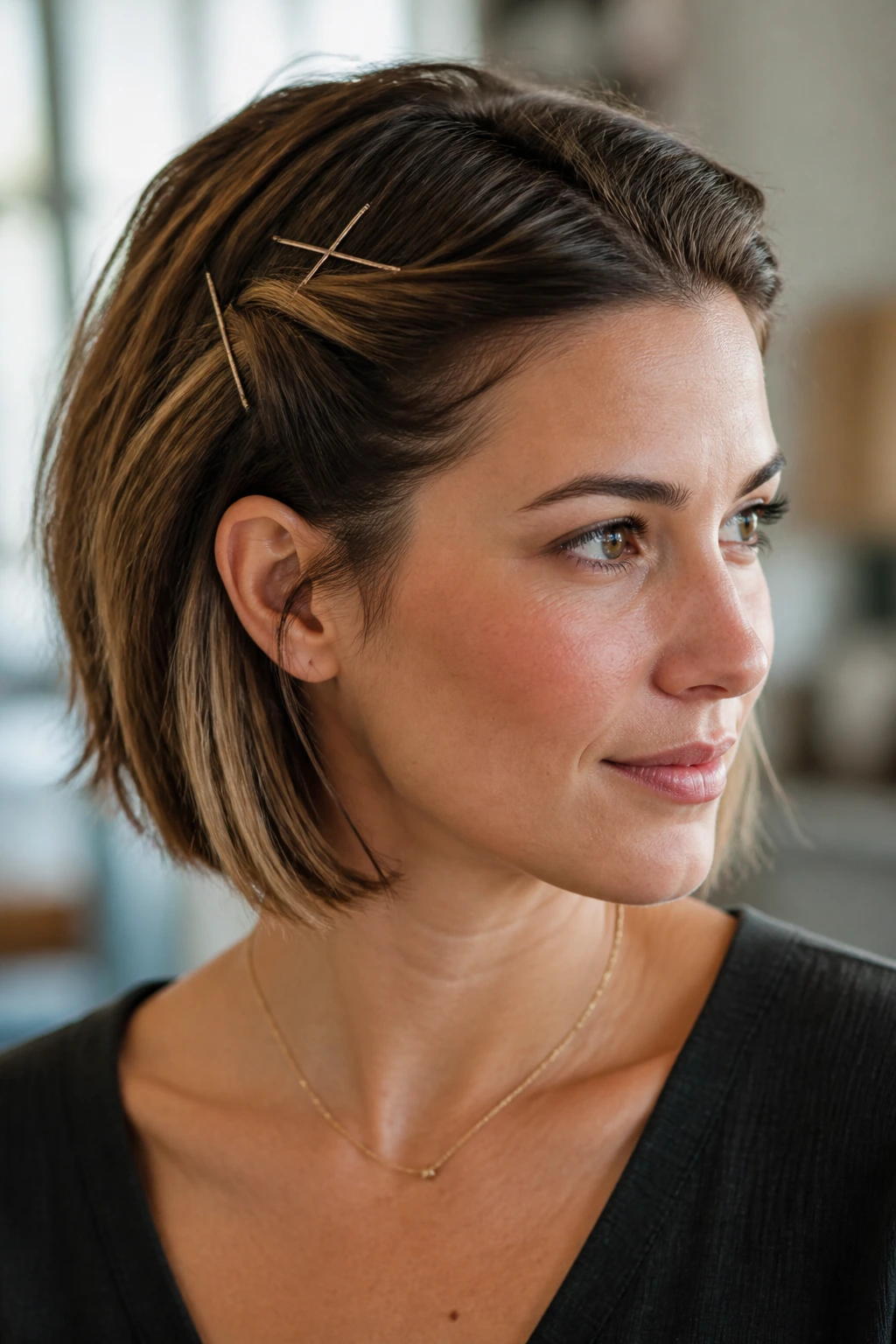
This is the bob version of a good white shirt. Clean, useful, and a lot better than you’d think at first glance.
Take the front sections, twist them back loosely, and pin them behind the ears or just above the nape. Two bobby pins crossed in an X hold better than one, especially on fine hair. The twist creates a tiny ridge at the crown, which gives you lift without needing a full blowout.
It’s a smart move for hair that’s in between cuts and getting a little shapeless at the front. The twist hides roots that are starting to separate, but it doesn’t hide the haircut itself. You still see the bob’s outline, which keeps the whole thing looking intentional.
I like this style when the hair is clean but not freshly washed. Slightly lived-in hair grips the pins better and holds the twist with less effort. Add a light mist of flexible spray, and you’re set.
Why These Shapes Feel Fuller Without Looking Overworked
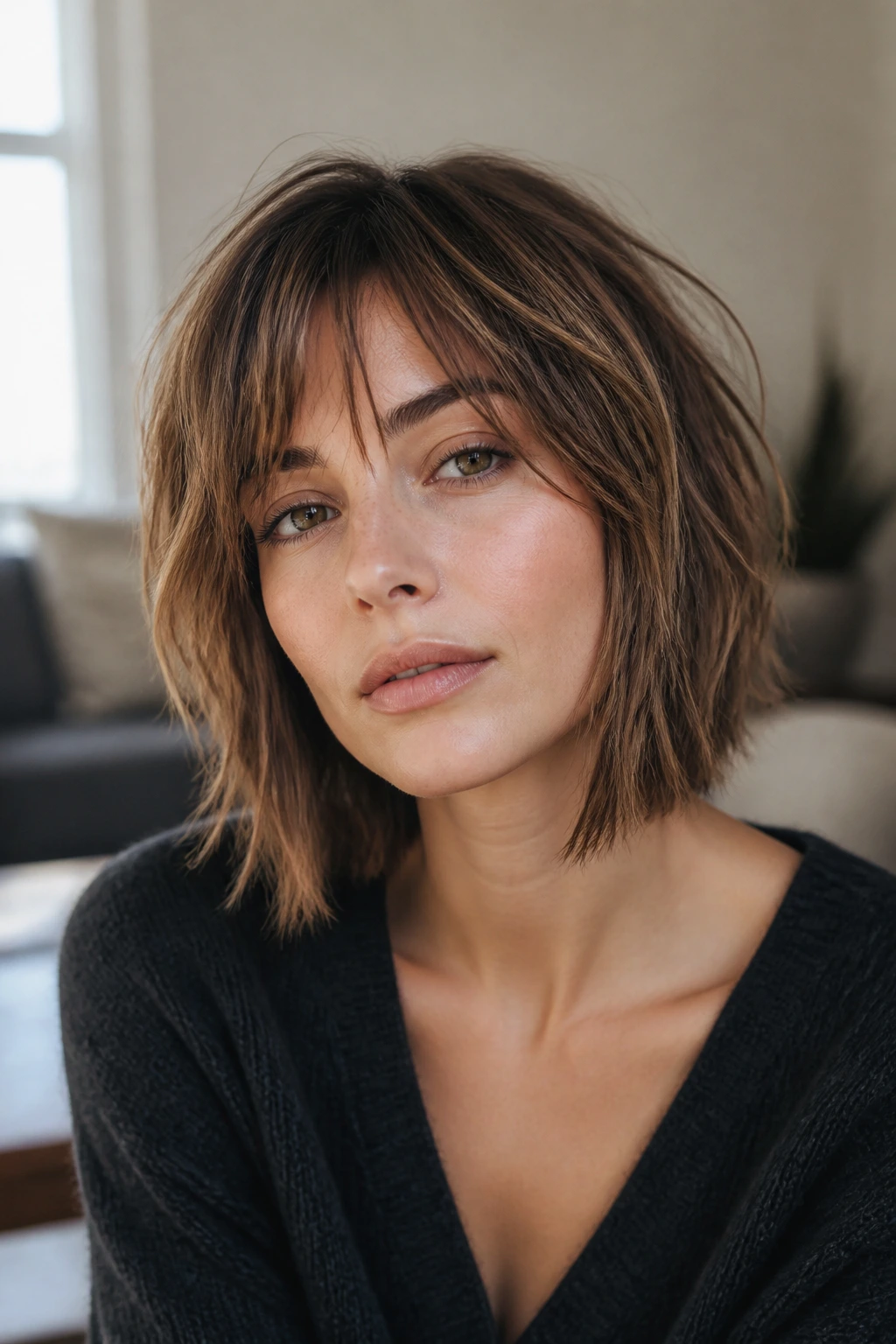
The perimeter is doing more work than the layers. That is the first thing to understand. Fine hair looks fuller when the bottom edge stays solid and the inner shape supports it quietly. A blunt lob, a stacked nape, or even a soft A-line keeps the eye from seeing through the cut.
Volume is not the same as puff. Puff comes from bad layering or too much product. Volume comes from a lifted root, a smart part, and movement in the right places. Short-to-medium cuts are better at that because the length does not weigh the root down as hard.
Face-framing matters more than people think. A few well-placed pieces around the cheekbone or jaw can make the whole style look intentional. That’s why curtain bangs, side sweeps, and tucked sections show up so often in good fine-hair cuts.
One more thing: fine hair often looks best when the style is a little imperfect. Not sloppy. Just not overfinished. A clean shape with a bit of bend usually beats a perfectly polished style that has no air in it at all.
The Tools That Earn a Spot on the Bathroom Shelf

- Blow dryer with a concentrator nozzle: The nozzle keeps airflow focused so the hair doesn’t puff out while you’re trying to smooth it.
- 1-inch round brush: Small enough to create lift at the roots and bend at the ends without making giant curls.
- Tail comb: Useful for clean parts, sectioning, and teasing just the crown when you need a little support.
- Small flat iron: Best for bending lobs, smoothing blunt ends, and touching up fringe.
- Duckbill or sectioning clips: They hold the top layers out of the way while the roots cool.
- Light mousse: Gives damp fine hair a bit of backbone without sticky buildup.
- Root-lift spray: Good for the crown and part line; use it near the scalp before blow-drying.
- Texturizing spray: Adds grip at the mids and ends, where fine hair often slips flat.
- Light-hold hairspray: Keeps the shape in place without freezing the style into a shell.
- Bobby pins and a small claw clip: Handy for tucked styles, twists, and quick fixes on day two.
Picking Products That Add Lift Without Gunk
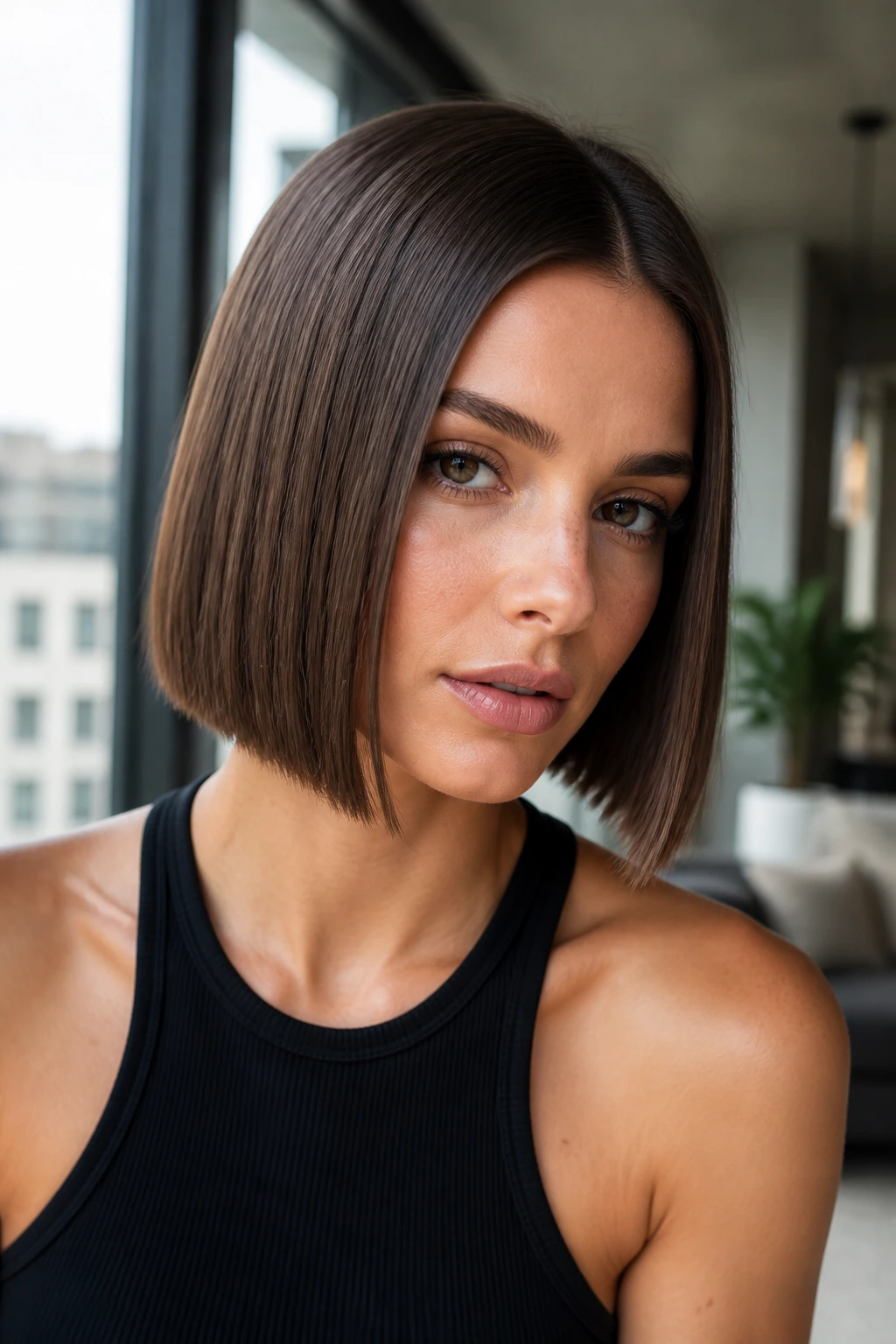
Fine hair punishes heavy product faster than almost anything else. A thick cream or a rich oil can look fine for ten minutes and then drag the roots flat by lunch. The better move is to choose lighter formulas and use less of them than your instinct says to.
Look for volumizing shampoo that cleans well without leaving a slick finish, and conditioner that can stay on the mid-lengths and ends only. If your roots collapse easily, stop putting conditioner near the scalp. That sounds basic, but it is the mistake I see most often.
For styling, mousse and root spray usually work better than dense curl creams. Mousse gives structure as the hair dries. A root-lift spray can be great if you blow-dry in sections and aim the nozzle upward at the root for a few seconds before smoothing the rest of the strand.
Heat protectant matters too, but pick one that doesn’t feel oily. If the spray or cream makes your hands slick, it will probably weigh fine hair down. Same with dry shampoo: a light starch-based formula can save day-two hair, while heavy powders can sit on the scalp and make the part look dirty instead of full.
How to Wear These Styles Day to Day
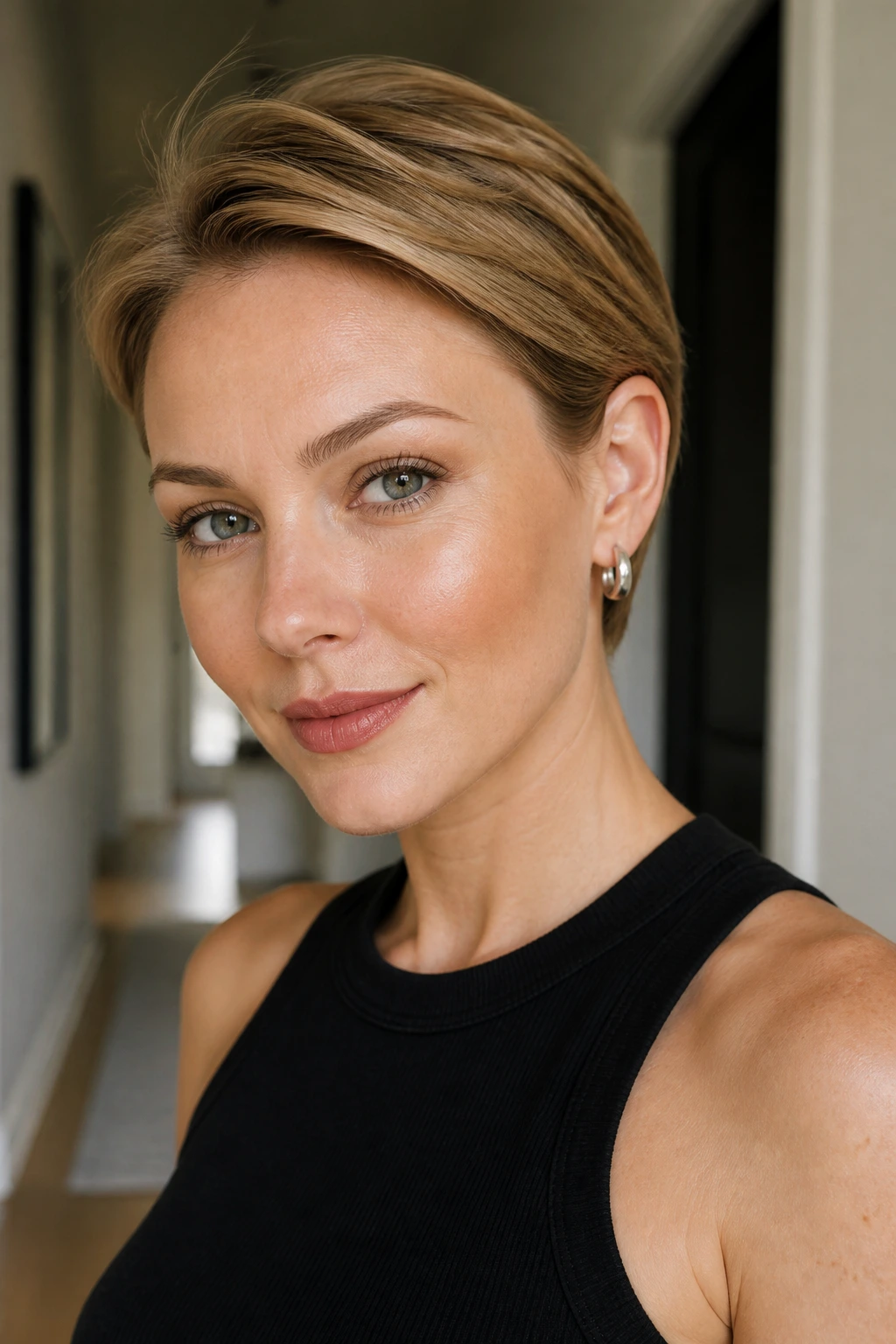
Presentation: Keep the outline visible. A clean part, a tucked side, or a soft bend at the ends helps the haircut show up instead of disappearing into the rest of your look.
Accessories: Small hoops, thin headbands, narrow clips, and a single pin usually work better than bulky barrettes. Big accessories can pull fine hair flat at the sides and swallow the shape.
Scale: If your hair is very fine, keep the style compact and the product light. If you have a bit more density on top, you can push the texture harder with bends, clips, or a more dramatic side part.
Pairings: Sleeker cuts tend to look sharp with structured clothes and clean necklines. Softer, wavier styles play nicely with knits, denim, and relaxed jackets. Wet looks and twisted-back styles can lean dressier without needing a full updo.
That’s the part people miss. Haircuts don’t live alone. They sit next to earrings, collars, glasses, and the shape of your face. A style that feels plain in the salon mirror can look unexpectedly polished once it meets the rest of your outfit.
Volume Boosters and Smart Styling Tweaks
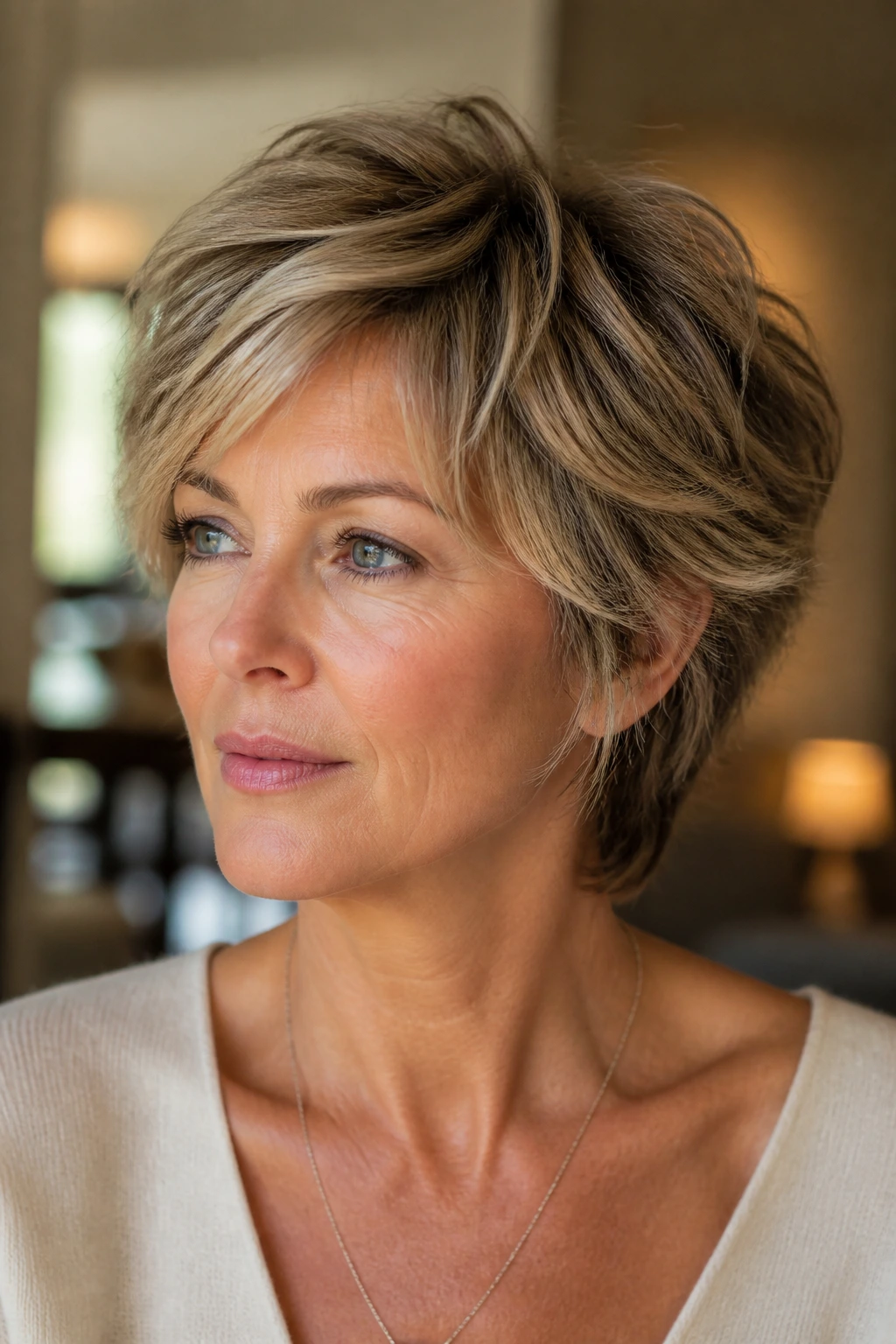
Root Lift: Put mousse or root spray on damp roots, then blow-dry by lifting each section up and away from the scalp. A small round brush or even your fingers can help, but the angle matters more than the tool.
Texture: Use texture spray on the mids and ends, not the crown. The crown needs lift. The ends need a little grip so they do not split into stringy pieces.
Polish: Finish with a tiny amount of serum on the last inch of hair, especially on blunt cuts. That keeps the ends smooth without feeding grease into the root area.
Customization: Straight hair usually looks best with clean lines, blunt ends, and a precise part. Slight wave can handle more movement and a softer outline. Fine curly hair needs the perimeter preserved and the layers kept long enough to avoid puffing out around the ears.
Color Trick: A few face-framing highlights can make the movement easier to see, but keep them subtle. Too much contrast can make sparse areas stand out more than you want. Soft dimension around the front tends to be the safer, better-looking bet.
Mistakes That Make Fine Hair Look Flatter
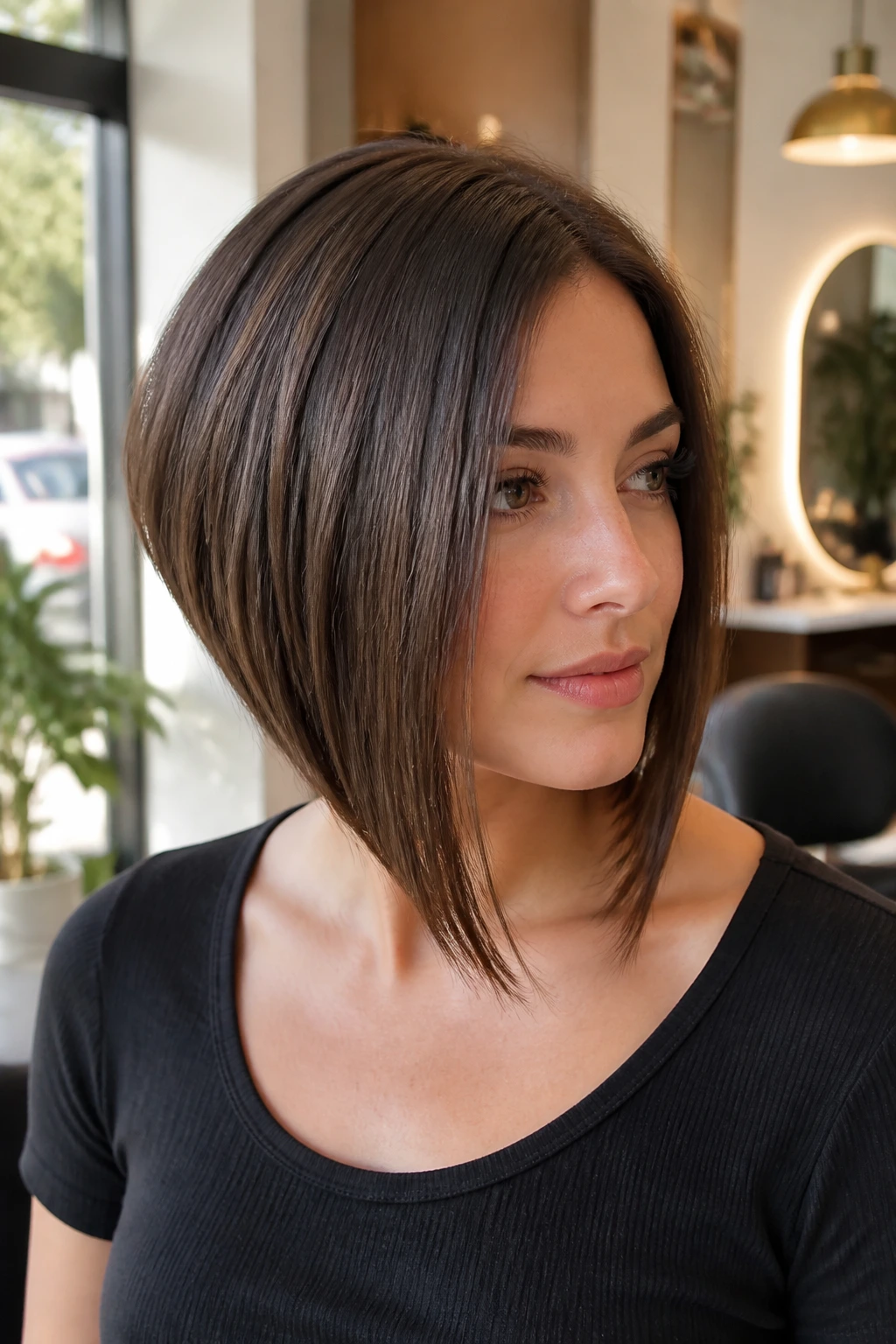
Over-layering the whole head: The symptom is easy to spot. The ends look wispy, the cut feels hollow, and the perimeter disappears. Fix it by asking for a stronger baseline and only the lightest shaping inside the cut.
Using conditioner too high up: If the roots go limp an hour after washing, the conditioner is probably creeping where it should not. Keep it from the ear down and use less than you think you need.
Choosing a part that exposes too much scalp: A deep center part can be brutal if the front density is weak. Shift it slightly off center or add a soft side sweep to spread the visual weight.
Adding too much product: Fine hair only needs a small amount of mousse, cream, or paste. Too much turns the style into a damp-looking clump, and the whole point of these cuts is air and shape.
Skipping trims for too long: The shape goes first, then the fullness. Once the ends start splitting or flipping out, fine hair looks thinner even if the actual density has not changed. Keep regular trims on the calendar.
Cutting bangs too dense: Heavy fringe can crowd the forehead and make the rest of the hair seem smaller. Wispy or curtain-style bangs usually play nicer with fine strands.
Ways to Adapt These Cuts for Different Faces and Textures
The Round-Face Sweep: Keep the front pieces longer and lean on a side part. A diagonal line through the front pulls the eye downward and gives the face a little length, which keeps the haircut from feeling too boxy.
The Long-Face Curtain: Add width at the cheekbone with curtain bangs or soft side pieces. You want shape around the middle of the face, not all the volume at the crown, or the length reads even longer.
The Square-Jaw Curve: Choose bends and curves around the jaw instead of straight, hard lines. A softened A-line bob or a rounded lob can take the edge off a strong jaw without hiding it.
The Cowlick-Friendly Drift: Work with the part your hair wants, not the one you wish it had. Fine hair with a stubborn cowlick usually behaves better with a shallow off-center part and a bit of root spray at the split.
The Air-Dry Wave Plan: If your hair takes to a slight wave, use a light mousse and scrunch the ends instead of brushing everything smooth. The hair gets body from the shape of the wave, not from heavy product.
The Pin-Straight Fix: Straight, fine hair usually needs a clean perimeter and a little bend at the ends. That’s the fastest route to a fuller-looking finish without making the style look overworked.
Keeping the Shape Between Salon Visits
Fine hair shows wear fast, so upkeep matters more than people expect. A blunt bob that looked crisp two weeks ago can start to feel fuzzy at the edges if it goes too long without a trim. Pixies and bixies need even closer attention because the nape and around the ears grow out first.
For most short-to-medium cuts, trim every 6 to 8 weeks keeps the outline honest. If you have bangs, they may need a tiny clean-up sooner, usually every 3 to 4 weeks. You do not need a full haircut every time. Sometimes just correcting the fringe and the side shape is enough.
Wash frequency depends on oiliness, but fine hair often looks better with a lighter cleaning schedule and a fast refresh on day two. A little dry shampoo at the roots, a quick blast with the dryer, and a finger-combed part can bring the shape back without starting over. Sleep on a silk pillowcase if you have one, or at least avoid flattening the hair under a tight tie.
If the cut starts losing its lift, do not drown it in more product. Dampen the crown with water, dry the roots upward for two minutes, and re-shape the front. It is a small reset, but it works.
Questions People Ask Before They Cut

Is a blunt cut better than layers for fine hair?
Usually, yes, if the goal is to make hair look thicker. A blunt perimeter keeps the ends solid, while too many layers can make the bottom look see-through. A few soft internal layers can still help movement, but the outer line should stay strong.
Will short hair make my fine hair look even thinner?
Not if the cut is shaped well. Short hair often looks fuller because the weight is removed from the ends, which lets the roots sit higher. The trick is keeping enough length in the front or the crown to build shape.
Can I still wear bangs with fine hair?
Yes, but the fringe should usually stay soft. Curtain bangs, wispy fringe, and side-swept pieces work better than heavy, blunt bangs because they do not crowd the face or split into thin strands.
What if my hair flips out at the ends?
That often means the cut is too soft at the baseline or the brush direction is working against the shape. A quick blow-dry with the ends turned under, or a blunt trim to clean up the perimeter, usually helps.
Should I avoid a center part if my hair is fine?
Not automatically. A center part can make fine hair look sleek and balanced if the density around the part is decent. If the scalp shows too much, shift the part slightly or add a soft side sweep.
How do I choose between a bob and a pixie bob?
Pick the bob if you want more face-framing and easier tucking. Pick the pixie bob if you want more crown lift and a cut that feels lighter around the neck. The pixie bob also tends to hold texture better on fine hair.
Can fine hair handle texture spray?
Yes, but use it sparingly and on the mids and ends, not the roots. A little grip is useful. Too much turns the hair stiff and dull, which is the opposite of what you want.
How often should I style it with heat?
As little as possible, but enough to support the shape. If you can make a cut look good with one quick blow-dry and a touch-up on day two, that is a better plan than reheat-styling it every morning.
The Short-Hair Sweet Spot
Fine hair behaves best when the cut gives it a clear job. Hold the line, lift the root, soften the face frame, and stop trying to make every strand do the same thing. That is the quiet logic behind the styles above.
Some days you’ll want a clean lob with blunt ends. Other days you’ll reach for a twist, a clip, or a bend through the mids and call it done. Either way, the point is the same: shape beats volume theater.
If your hair has been hiding inside layers that do it no favors, one of these cuts can change the whole feel of it. Pick the silhouette that suits your face, keep the perimeter honest, and let the styling stay light enough to move with you.