



A bob can sharpen a round face or make it look wider than it is, and the difference is often only a couple of inches. Asian bobs for round faces and wavy hair work when the cut respects three things at once: the jawline, the wave pattern, and the fact that cheeks already take up a lot of visual space. Get those wrong and the haircut puffs sideways. Get them right and the whole face reads longer, slimmer, and cleaner.
The versions that work best borrow from Korean and Japanese salon references: a clean perimeter, soft interior movement, and ends that bend in instead of flaring out. That last part matters more than most people think. A wave that turns outward at chin level can add width fast, while the same wave tucked a little lower can make the neck look longer and the face feel more open.
I keep coming back to bob lengths because they do so much with so little. A good bob does not need heavy styling, but it does need a plan. Round faces need vertical movement. Wavy hair needs room to move without turning into a triangle. Put those together, and the sweet spot is a cut with shape, not bulk.
Why These Bobs Work on Round Faces and Wavy Hair
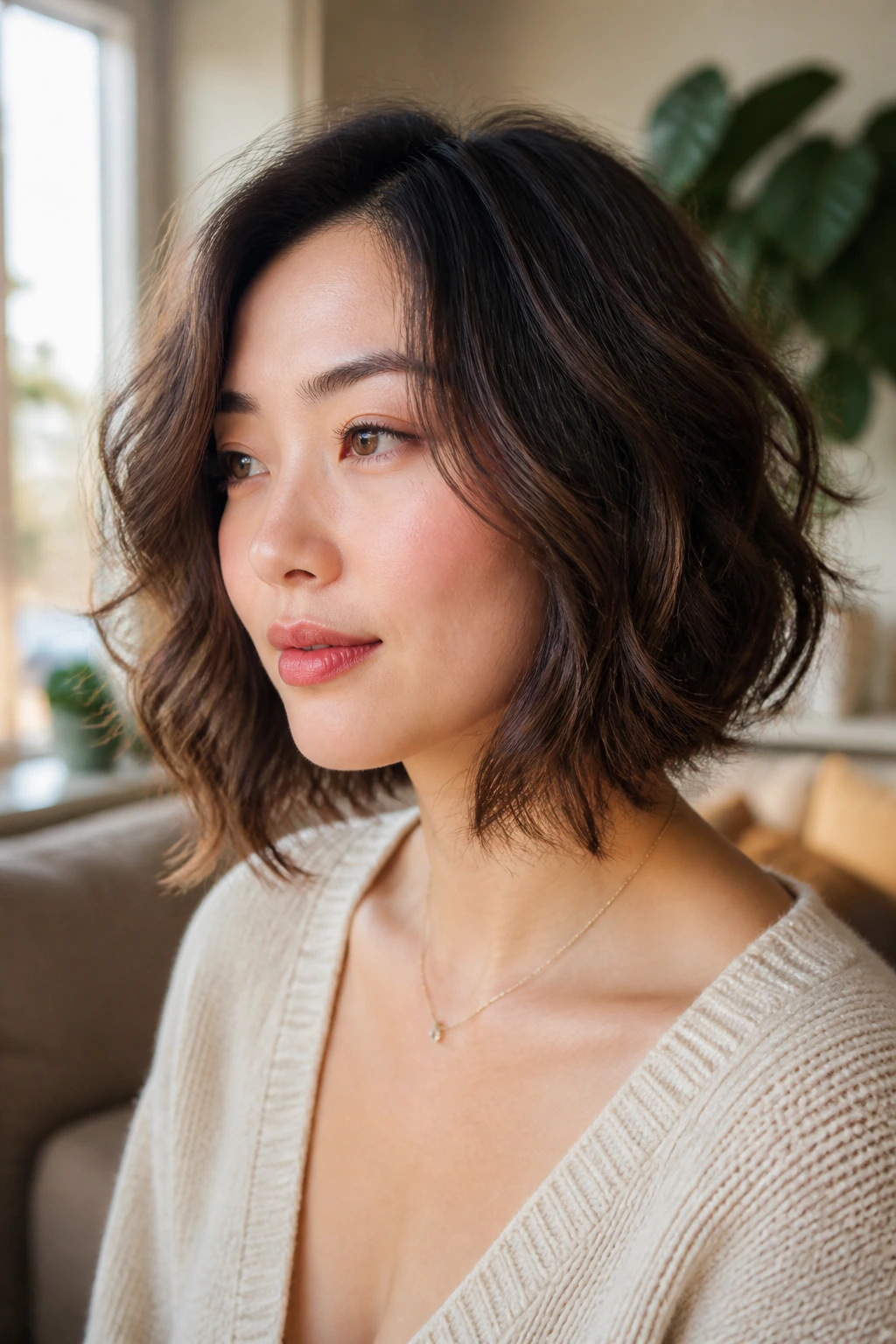
A few haircut tricks show up again and again in the styles below, and they are there for a reason.
- Longer front corners: A front piece that drops a little below the chin pulls the eye downward and keeps the cheeks from becoming the widest point.
- Soft internal layers: Light weight removal inside the shape keeps waves from stacking up at the sides.
- Off-center parting: A center part can work, but a slight offset or deep side part usually breaks the circle better.
- Controlled volume at the crown: Height near the top helps; puffiness at the cheeks does not.
- Wave-friendly ends: Point-cut, slide-cut, or lightly feathered ends move better than a blunt shelf when hair bends naturally.
Round faces like lines that travel. Wavy hair likes enough structure to behave, but not so much that it loses all movement. That balance is what makes the bobs here worth a serious look.
1. Textured Chin-Length Bob
The safest starting point is a chin-length bob with soft, textured ends. It sits right on the border of short and medium, which matters because round faces usually need a little extra length below the fullest part of the cheeks. If your waves bend from mid-length down, this cut keeps them from ballooning into one solid shape.
Why it flatters round faces
The trick is the perimeter. A blunt line that stops exactly at the chin can widen the face if the hair is thick, but a slightly textured edge softens that effect and keeps the line moving downward. I like this cut with a side part or a very slight off-center part, because it keeps the eye from landing in one wide horizontal band.
Quick notes to ask for
- Length just below the chin, not above it.
- Point-cut ends so the finish feels light.
- Face-framing pieces that begin near the mouth, not the cheeks.
- Enough interior removal to keep wave bulk from sitting at the sides.
Tip: If your waves are strong, ask the stylist to leave the front a touch longer than the back. That tiny shift changes the whole silhouette.
2. Korean C-Curl Bob
A Korean C-curl bob is polished in the best way: the ends bend in, the surface stays smooth, and the whole cut looks deliberate without feeling stiff. It is one of the easiest Asian bob styles to flatter a round face because the inward curve narrows the bottom edge instead of flaring it out.
The key is where the curl starts. If the bend begins right at cheek level, the style can make the face look fuller. Keep the curve low, around the jaw or just under it, and the shape suddenly makes sense. On wavy hair, this cut works best with a round brush or a large roller finish, not a bunch of heavy product.
Where it works best
- Hair that bends but does not curl tightly.
- Medium density, where the ends need a little discipline.
- People who like a neat finish and do not mind a 10-minute blow-dry.
A tiny amount of smoothing cream through the mids and ends is enough. Too much, and the bob loses that clean swing that makes it feel sharp.
3. Center-Part Layered Bob
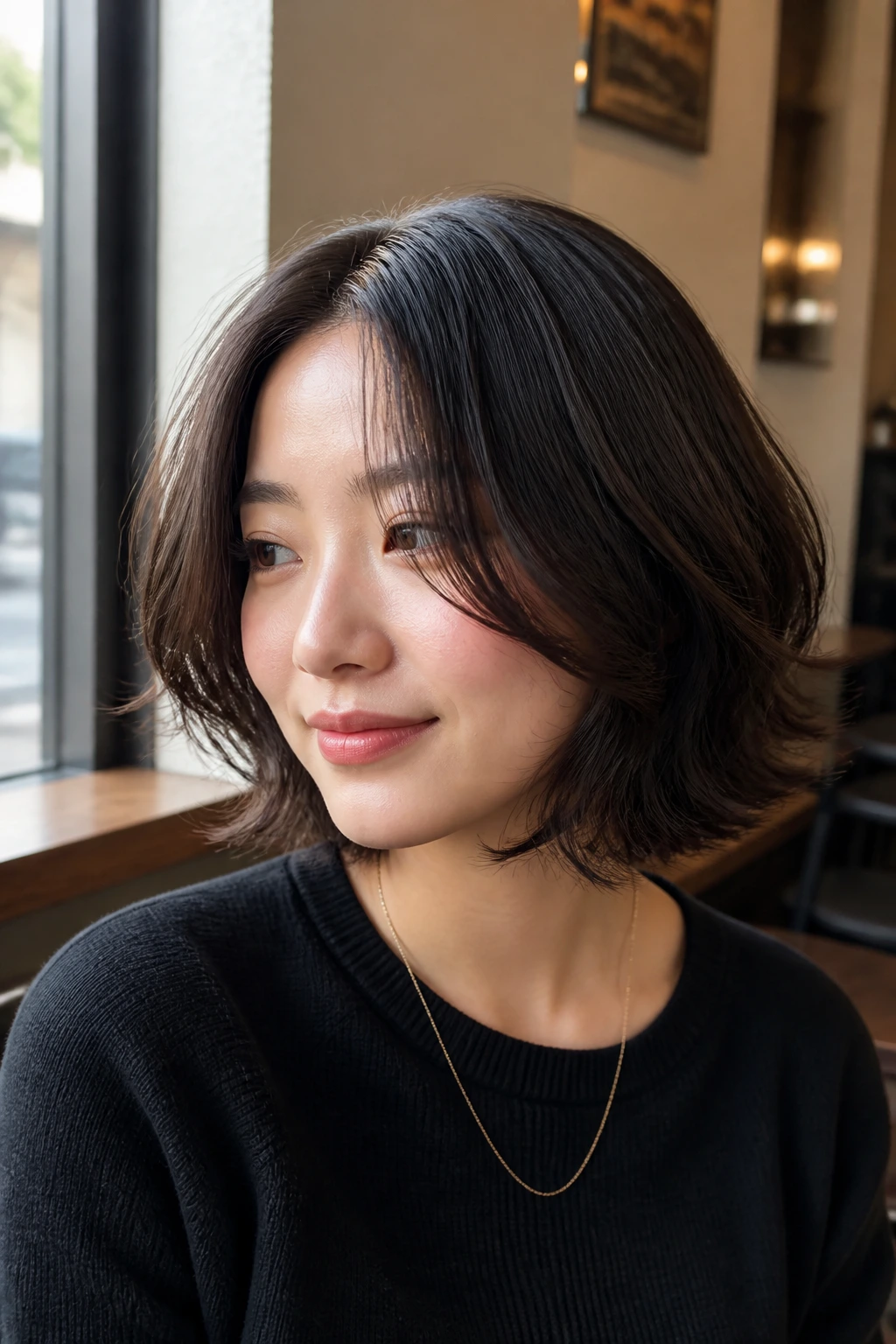
Can a center part work on a round face? Absolutely, if the front pieces are long enough to do some shape work. This version uses a middle part and light layers that begin below the cheekbone, which stops the haircut from making the face look boxed in.
The center line gives structure. The layers keep the waves from stacking into a dome. That combination is better than people expect, especially when the front pieces fall near the mouth or a little lower. If your waves separate nicely on their own, this bob can look almost effortless, but the cut itself is doing a lot of the work.
How to wear it
Keep the roots a little lifted and the ends soft. If the waves are collapsing, flip just the front corners under with a 1-inch iron or a round brush. The center part should look intentional, not severe.
4. Side-Swept Fringe Bob

A side-swept fringe is the quickest way to break up a round face. One diagonal line across the forehead does more than a whole cabinet full of volumizing sprays. It shifts attention upward and to the side, which gives the face a little more length almost immediately.
This bob works especially well when the fringe is long enough to blend into the front pieces instead of sitting as a separate chunk. On wavy hair, that matters. A short, thick fringe can puff, split, or sit like a curtain that forgot to move. A longer side sweep bends better and grows out with less drama.
The best version keeps the front around the cheekbone and lets the fringe skim the outer edge of the eye. That leaves the face open, which is the whole point. If you have a cowlick at the front hairline, this cut can still work, but the fringe needs to be a little longer than you think.
5. Feathered Jaw-Length Bob
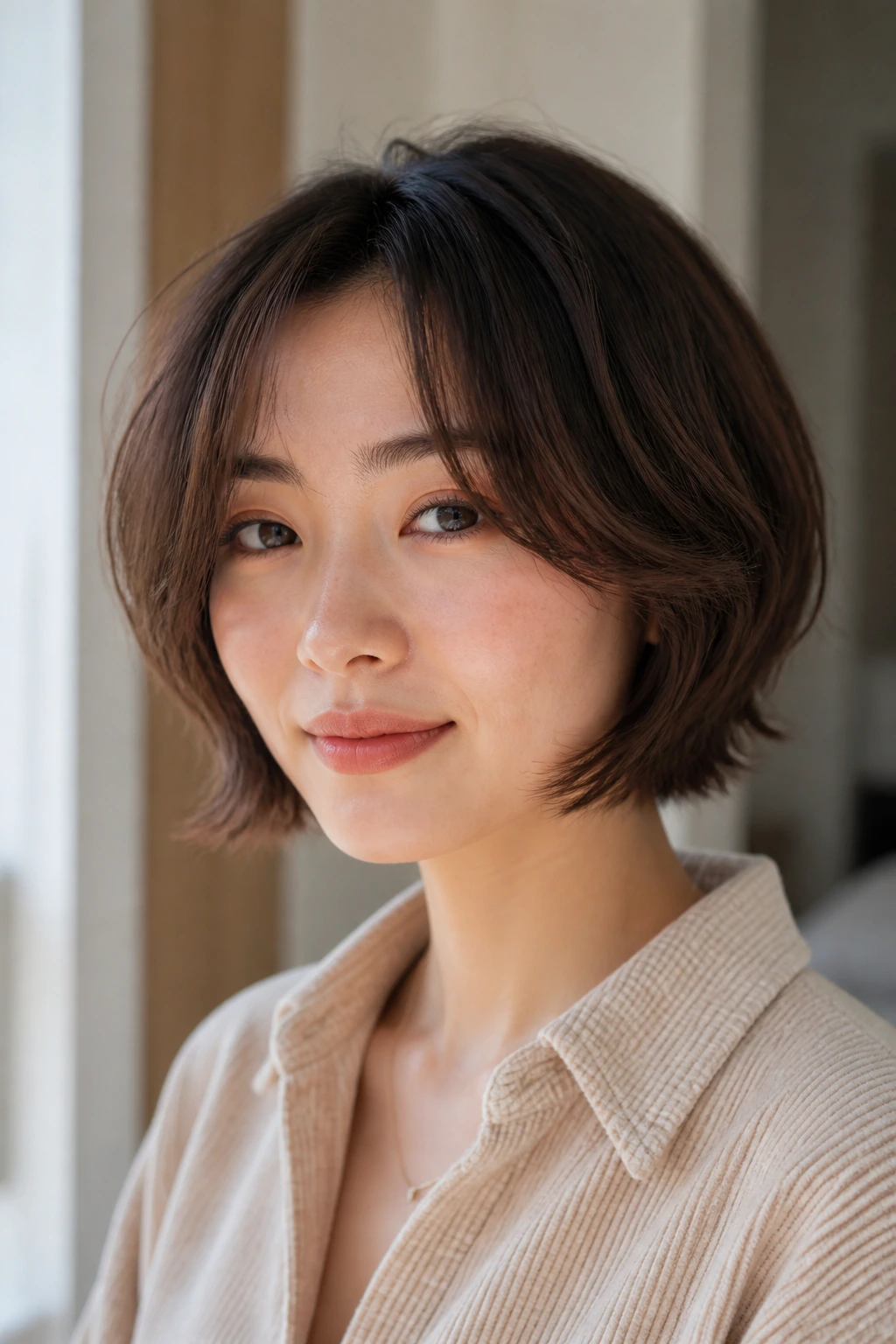
A feathered jaw-length bob is a good choice when the face needs softness more than drama. The texture matters more than the line here. Instead of one hard edge, the ends are lightly feathered so the wave can break up the shape in a flattering way.
On round faces, the jaw is a risky landing spot. You want the cut to skim it, not stop and shout about it. A feathered finish helps because it blurs the exact line where the hair ends. That keeps the lower half of the face from looking boxed in, especially if the hair has a little body.
What to ask for
Ask for a soft perimeter, not heavy thinning. There is a difference. Heavy thinning can leave the bob frizzy or hollow at the ends, while soft feathering keeps the shape full but light. If your hair is thick, this is one of the smarter bob options on the list.
6. A-Line Bob
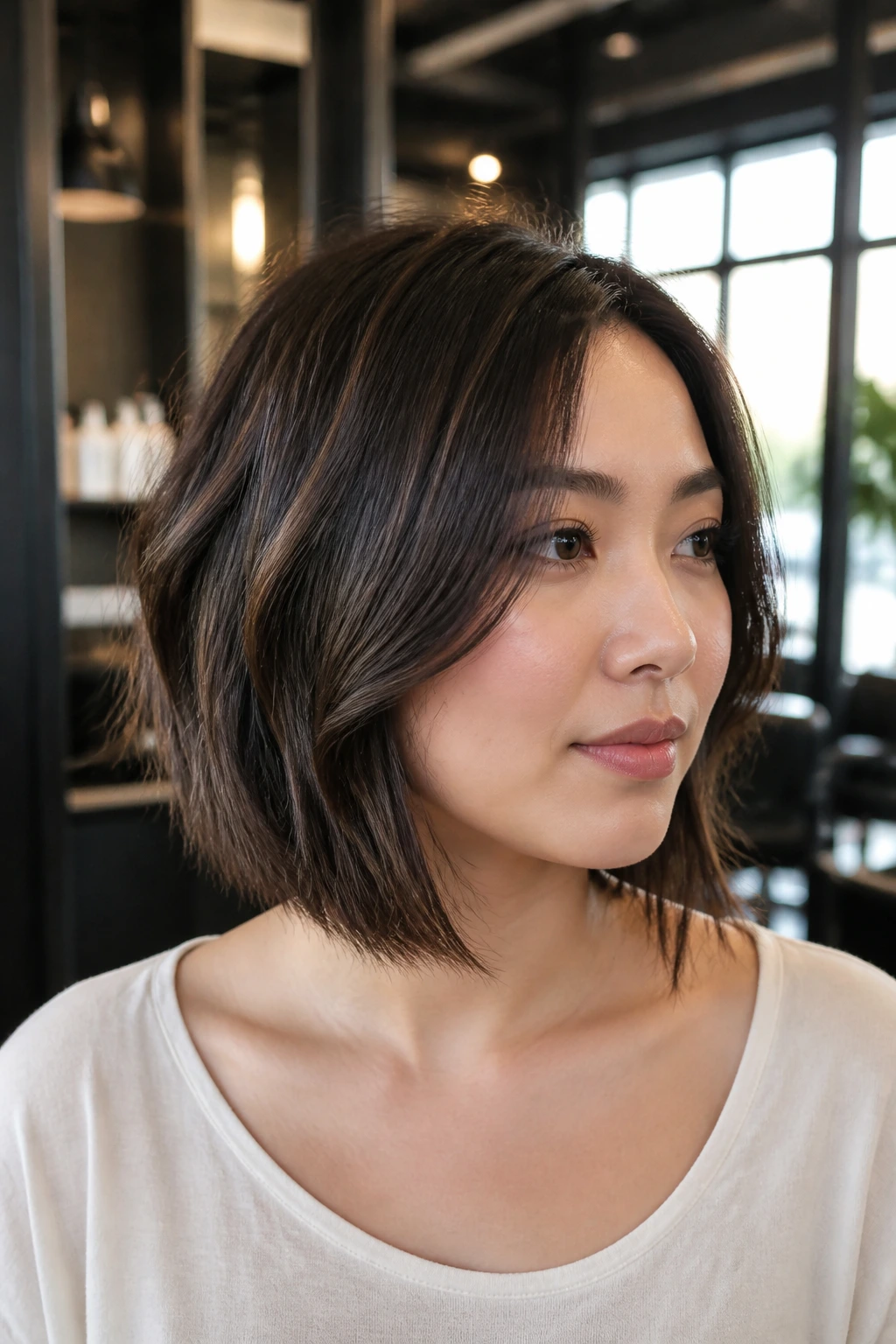
An A-line bob gives you built-in geometry, and geometry is your friend when the face is round. The back sits a bit shorter, the front drops longer, and that forward angle creates a clean line that moves the eye down and out of the cheeks.
Wavy hair needs a careful hand here. Too much stacking in the back can make the cut spring outward like a triangle. Too little shaping, and the front corners lose their job. The sweet spot is a gentle A-line with enough interior movement to let the wave fold naturally.
This is the haircut I’d point to if someone says they want a bob but worries it will make the face look fuller. It usually does the opposite, as long as the front lands below the widest part of the cheek.
7. Curtain Bang Bob

Curtain bangs earn their keep because they open the center of the face and then sweep outward where the cheekbones start to matter. On a round face, that gives you a little vertical line in the middle and a softer frame on the sides.
The bob underneath can stay simple. That is the beauty of this pairing. The fringe creates the shape story while the cut itself stays clean and movable. For wavy hair, the bangs should start a bit longer than you expect, usually around the nose bridge or just below, because they spring up when dry.
Bang length matters here
If curtain bangs are too short, they sit like little wings and widen the upper face. Keep them long enough to split naturally, and they do the opposite. A light blow-dry with a round brush is enough to make the bend sit in the right place.
8. Soft Stacked Bob
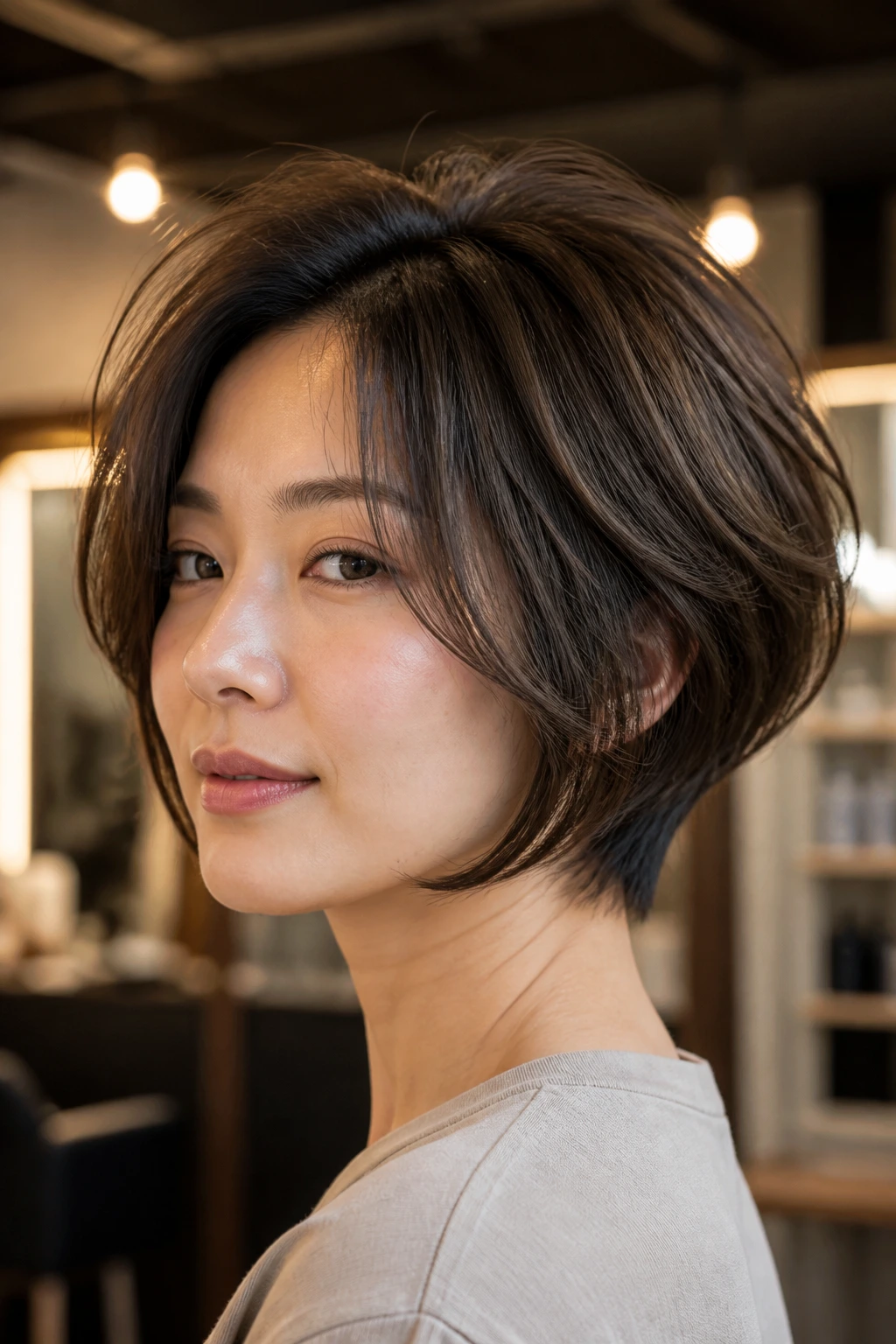
A stacked bob can be risky on round faces if the stacking is obvious and the sides get too full. A soft stacked version avoids that problem by keeping the lift tucked into the nape and underlayers instead of puffing the sides.
This is one of the better choices for thick wavy hair because it removes bulk where the haircut usually gets heavy. The back feels cleaner, the crown gets a bit of lift, and the front stays free to frame the face. Done well, the stack is almost invisible from the side.
What I like here is the restraint. You want the shape to suggest lift, not announce it. Ask for light graduation and interior debulking, not a dramatic stacked wedge. Otherwise the haircut starts to feel dated fast.
9. Collarbone Lob

If you are nervous about going short, the collarbone lob is the easy yes. It gives round faces more length than a chin bob can, and it lets wavy hair do its thing without getting too wide at the cheeks. The collarbone acts like a natural stopping point, which helps the overall look feel relaxed.
This length is forgiving. You can wear it straight, bent, braided, clipped back, or tucked behind one ear, and it still reads as intentional. That flexibility is why so many stylists lean on it for clients who want face-flattering shape without committing to a short bob.
The only warning is bulk at the bottom. If your hair is thick, the ends need some texturizing so the lob does not sit as one heavy block. Otherwise it starts to feel more square than slim.
10. Razor-Textured Bob

A razor-textured bob has a softer edge than a scissor-cut blunt bob, and that softness is a gift for wavy hair. The ends move more freely, the silhouette feels lighter, and the style can fall into a piecey shape instead of a dense wall.
This cut suits medium to fine waves especially well. If your hair is coarse or very dry, a razor can sometimes make the ends look frayed instead of airy, so the hand on the razor has to be careful. A light touch is the whole game.
What makes it different: the point is not to make the bob messy. It is to keep the perimeter alive. A good razor cut still looks controlled when the hair settles, just less stiff and less heavy at the sides.
11. Asymmetrical Bob
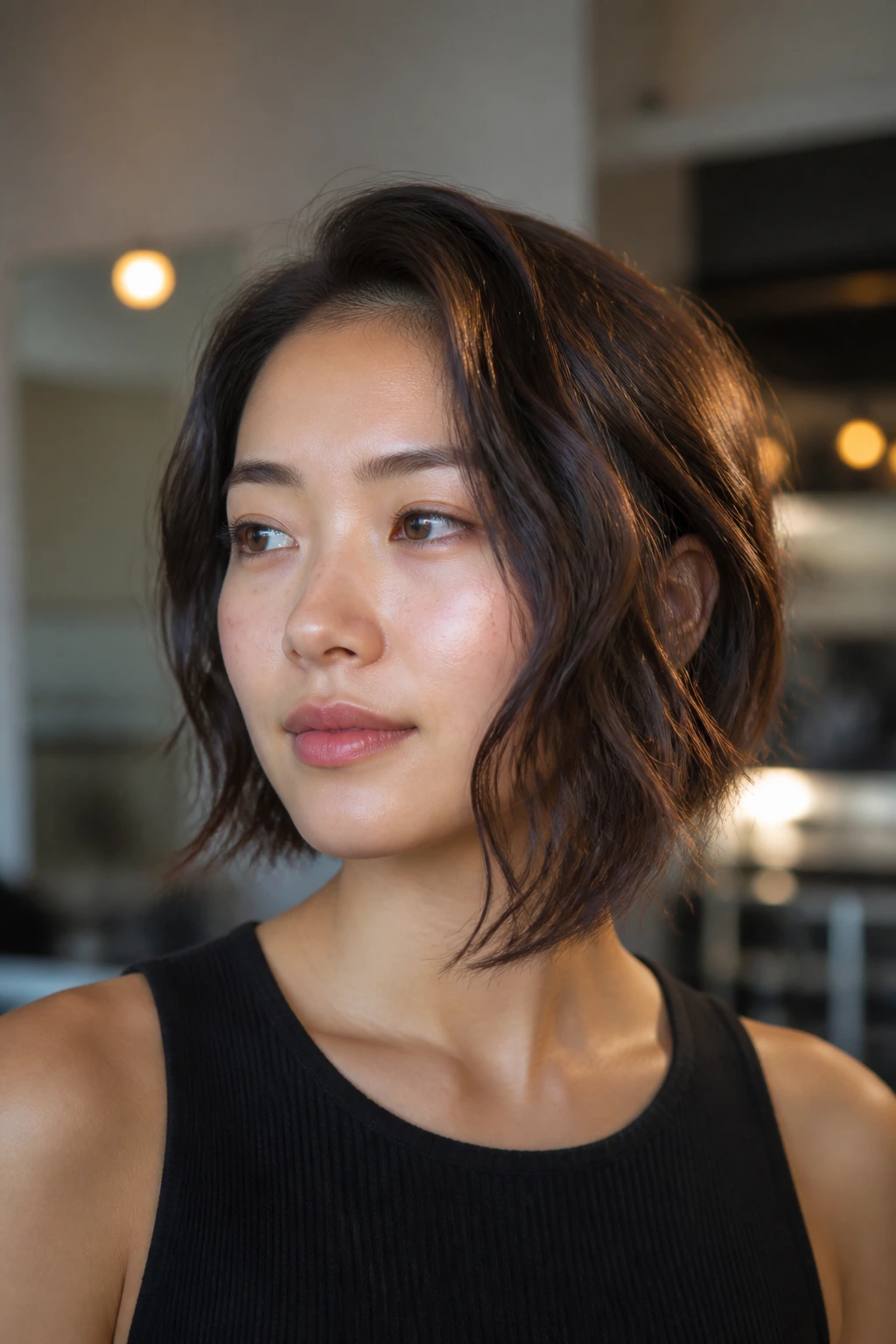
Why does one longer side help a round face so much? Because symmetry can make fullness feel stronger, while a slight imbalance gives the eye somewhere else to go. Even half an inch of difference can change the line in a useful way.
This cut works beautifully with wavy hair because the texture softens the asymmetry. A hard asymmetrical bob can feel severe on straight hair, but waves blur the edges and make the shift look natural. One side can brush the jaw while the other sits just above the collarbone, and the face still reads slim.
The best version is subtle. If the difference gets too dramatic, the haircut starts to feel like a statement piece instead of a face-flattering bob. For everyday wear, keep the longer side long enough to tuck behind the ear.
12. See-Through Bang Blunt Bob
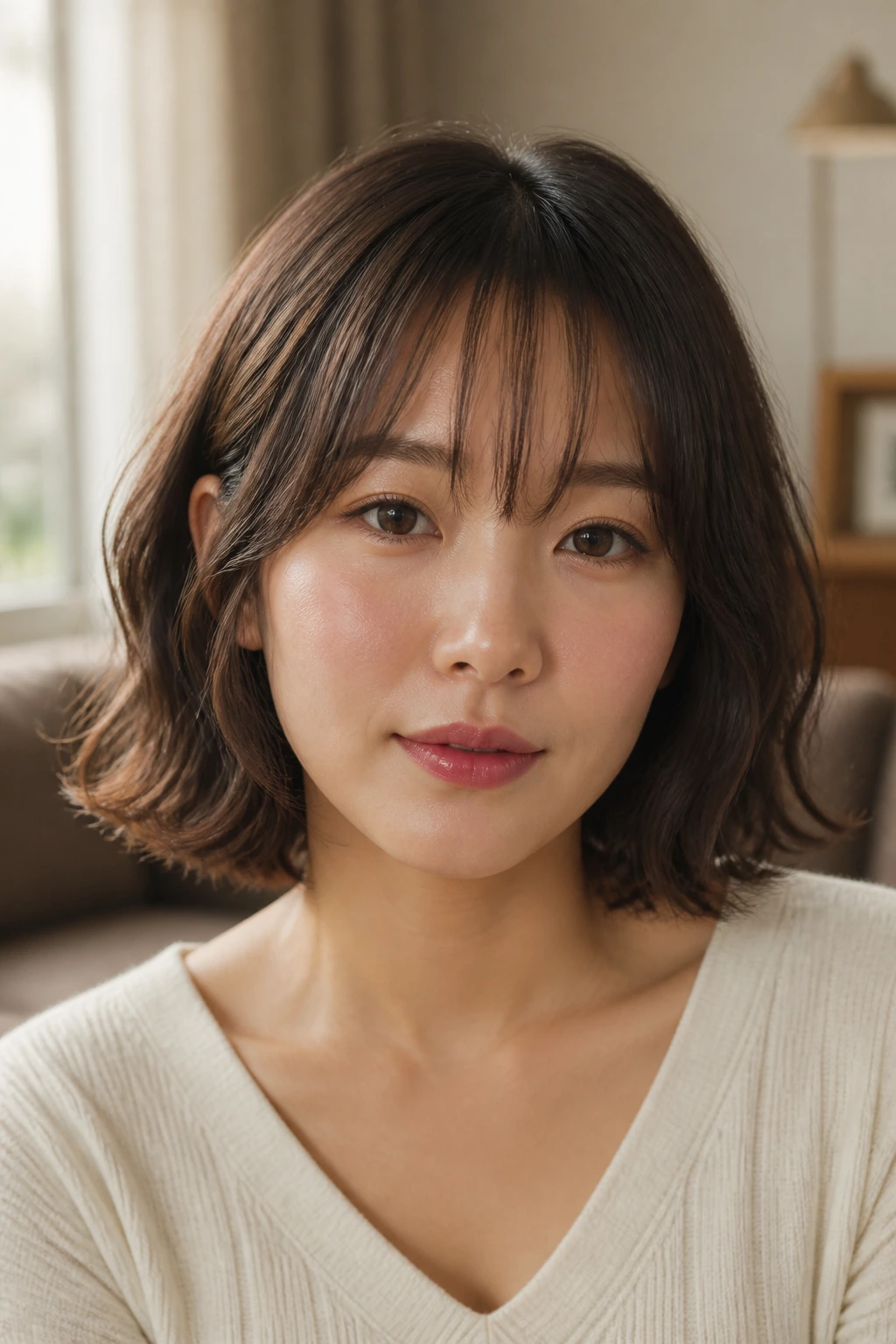
A blunt bob sounds risky on a round face, and often it is. But a blunt bob with see-through bangs changes the equation because the fringe stays airy instead of heavy, and the haircut keeps an open spot around the forehead.
The line of the bob should sit just below the jaw, not right on it. That small change matters. The ends can still look crisp, but the length gives the face a bit more vertical room. The see-through bangs prevent the front from feeling dense or boxy, which is what usually makes blunt cuts fail on fuller cheeks.
This one works best when the hair is smooth on top and wavy through the bottom half. You get the neatness of a clean perimeter and the movement of the wave where it helps most.
13. Tapered Crown Bob
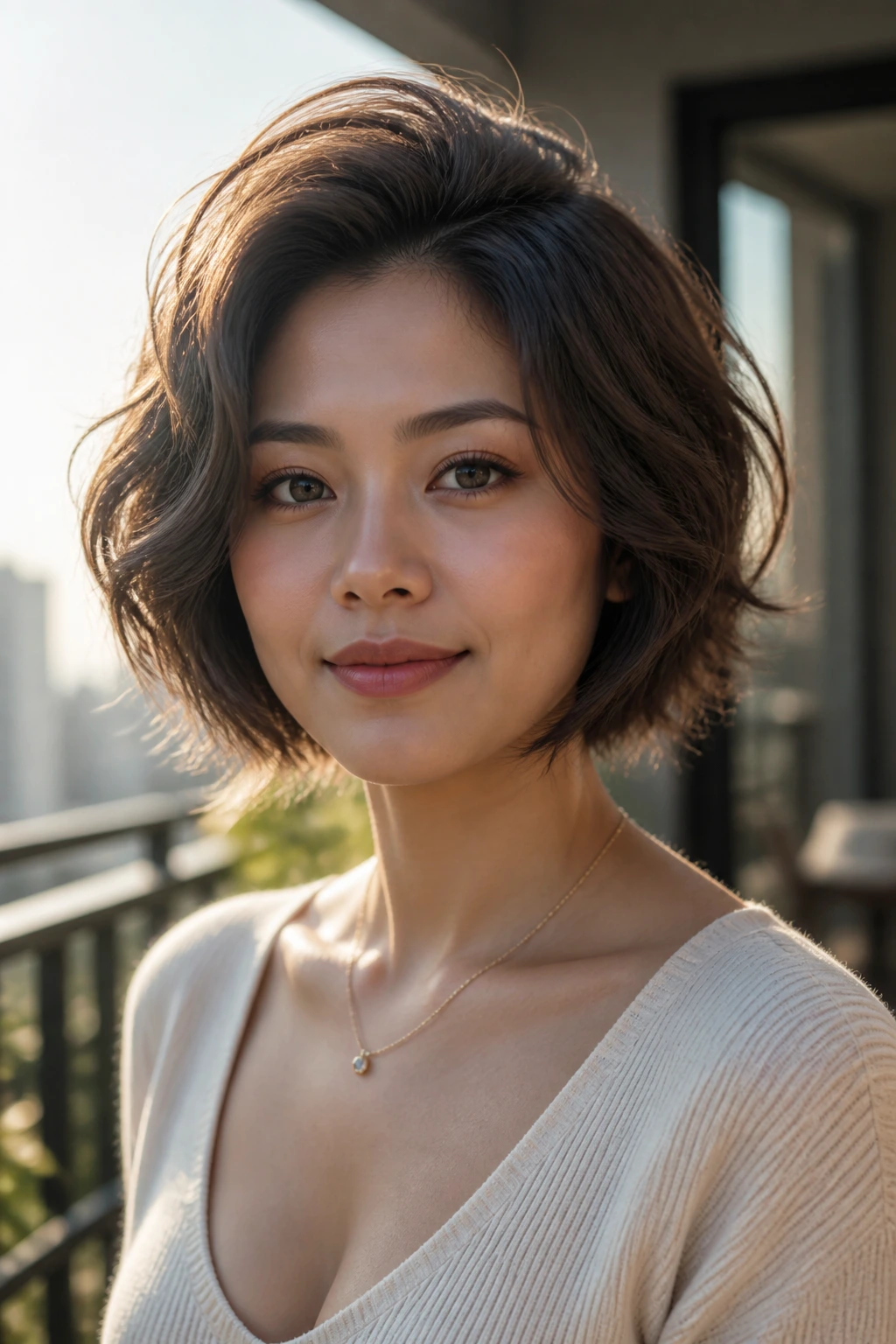
A tapered crown bob is for the person who wants lift without a puffy side profile. The crown gets a little height, the nape stays neat, and the sides taper gently so the face does not look wider than it is.
This is a good correction haircut for hair that lies flat at the top but expands around the temples. On wavy hair, a bit of crown lift can balance the cut immediately. Without it, the hair can sit like a wide oval. With it, the silhouette shifts upward and looks more expensive, for lack of a better word.
Best when your hair falls flat
If your roots collapse by noon, this bob can give you a cleaner shape with less daily effort. A root-lifting mousse at the crown and a quick blow-dry with a nozzle are enough for most people. Skip heavy creams near the top; they flatten the whole point.
14. Shag-Bob Hybrid
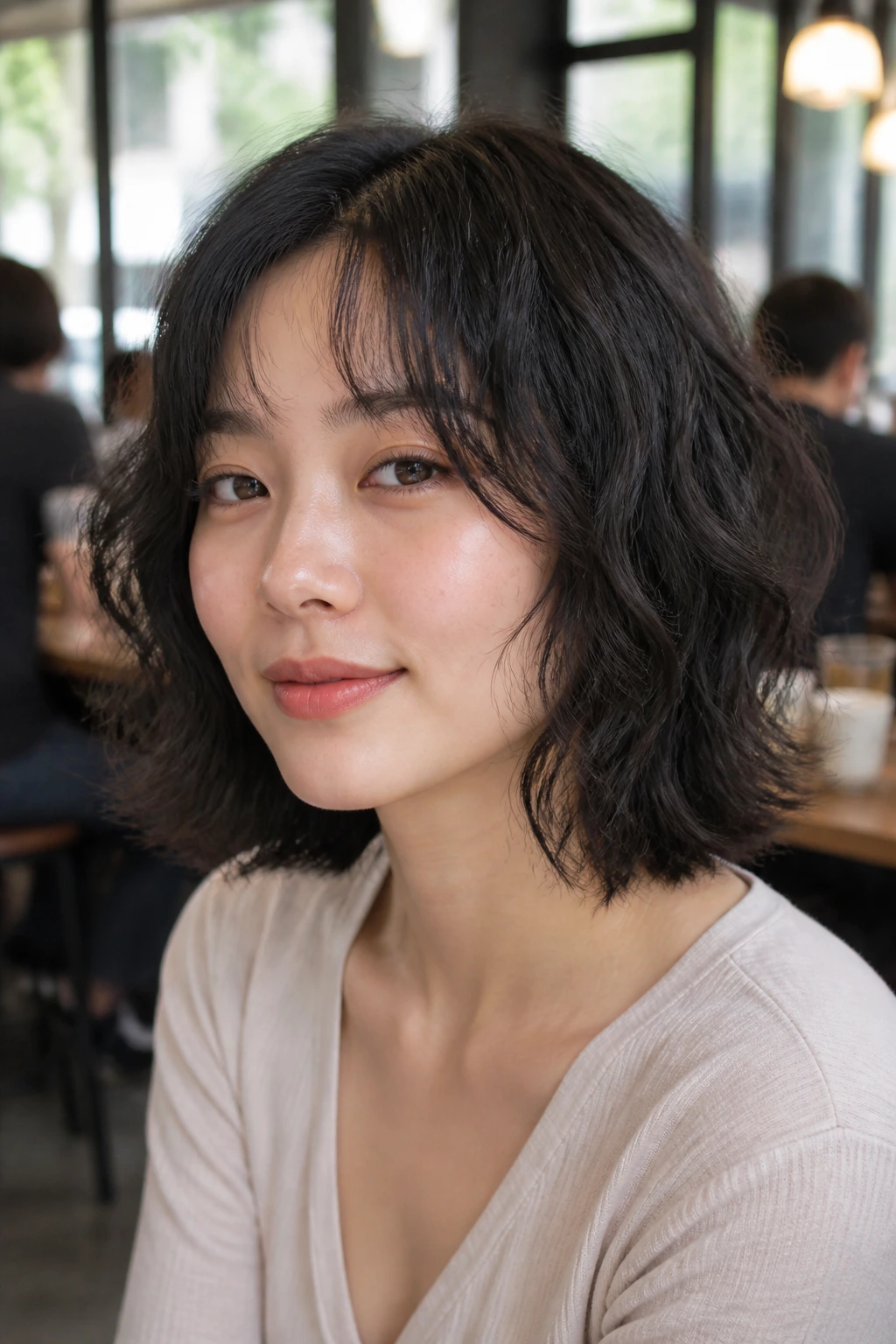
A shag-bob hybrid is for people who like movement and do not want the hair to sit still all day. The layers are looser, the ends are more broken up, and the bob feels a little freer than the polished styles above.
Round faces can wear this, but the layers need discipline. Start them too high and the cheeks get more width than they need. Start them below the cheekbone and the haircut gets bounce without bulk. That is the line to remember.
Wavy hair often loves this shape because it already has bend. The cut just nudges the wave in a better direction. If your hair is very dense, ask for the layers to be concentrated through the lower half, not all over the head. Otherwise the shape gets fluffy in a hurry.
15. Cheekbone-Frame Layered Bob
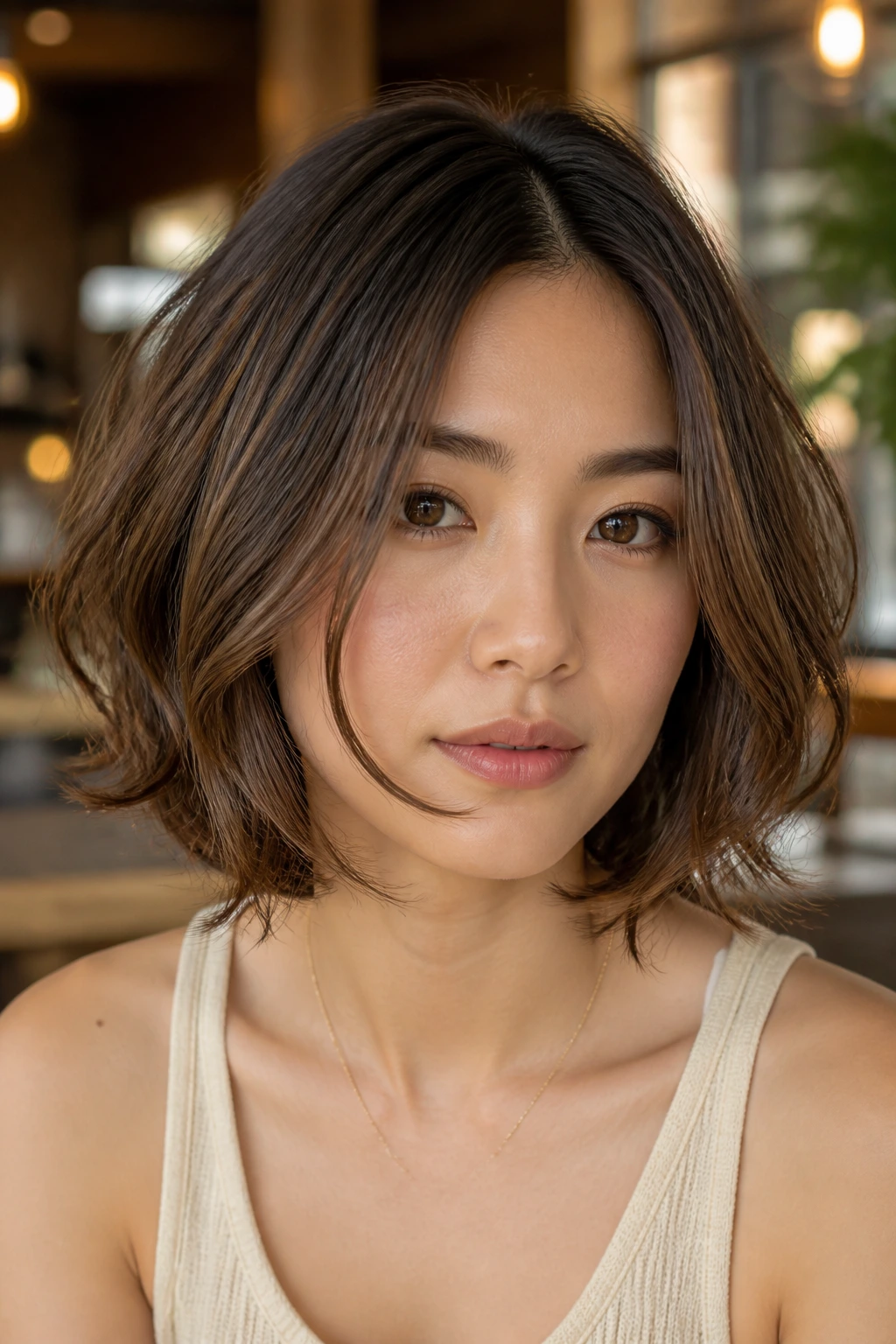
The phrase “face-framing layers” gets thrown around too freely, but this version is specific: the layers start below the cheekbone and sweep toward the jaw. That is the sweet spot for a round face because the face gets framing without extra width right where the cheeks are fullest.
This bob is one of my favorites for wavy hair that needs shape but not drama. The front pieces can be long enough to graze the lips, which makes the face look longer, while the interior stays light enough to move. It is a quiet haircut. No shouting. Just better proportions.
A little color placement can help here too. Even subtle brightness around the front pieces draws the eye downward, though the cut is doing most of the work. The layers should feel sliced, not chopped.
16. Glassy Wave Bob
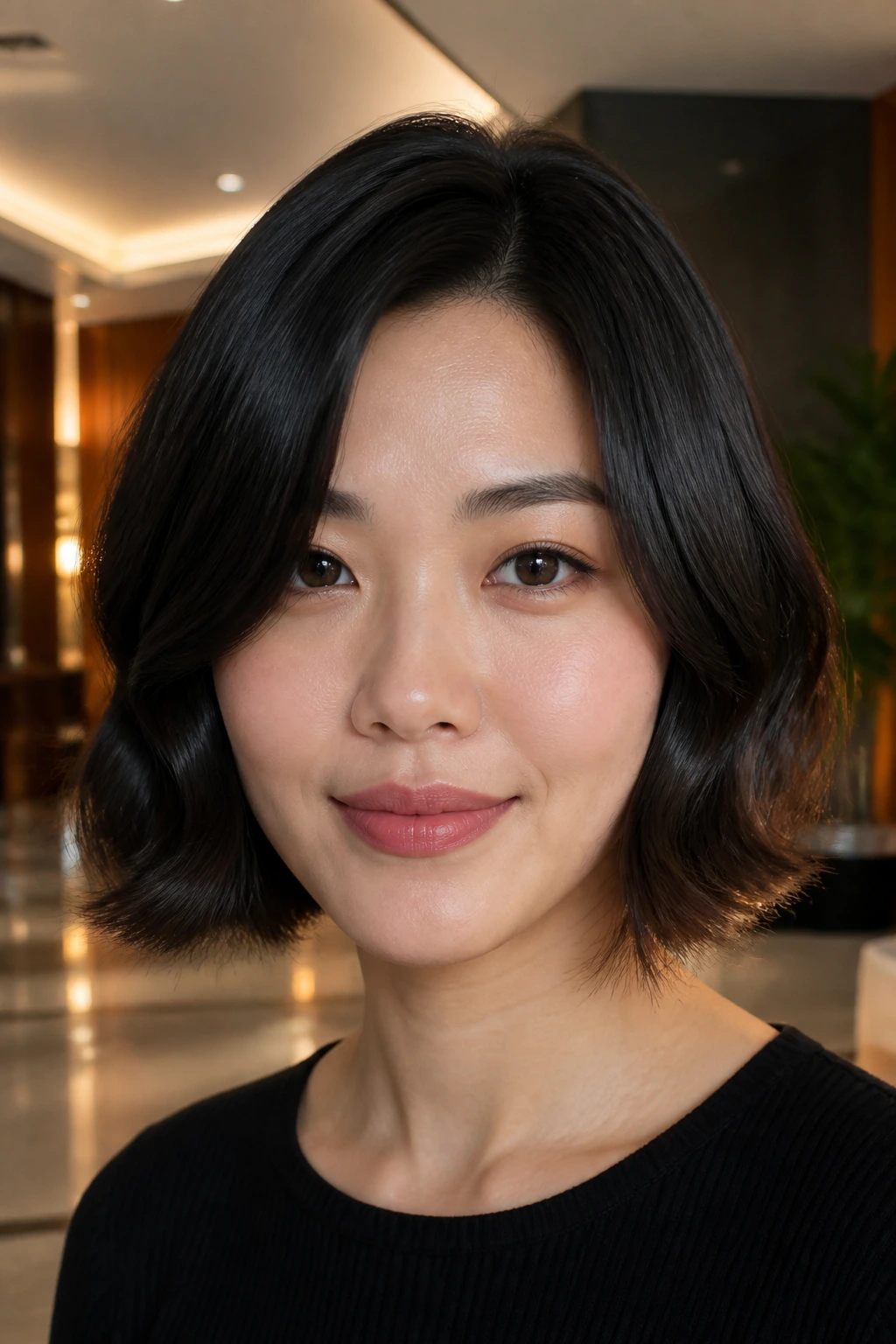
A glassy wave bob leans sleek at the top and soft at the ends. That contrast is what makes it flattering. The smooth surface keeps the haircut from expanding sideways, and the loose bend at the bottom gives it life.
This is the bob I’d choose if someone wants a sharper finish without giving up natural movement. It also plays nicely with wavy hair that likes to frizz when overhandled. You smooth the roots and mids, then leave the ends with a gentle curve or bend. The result is cleaner than a fully tousled look, and less severe than pin-straight hair.
The finish matters here. A pea-sized amount of serum on the ends is enough. More than that and the bob starts to collapse, which defeats the point.
17. Ear-Tuck Bob
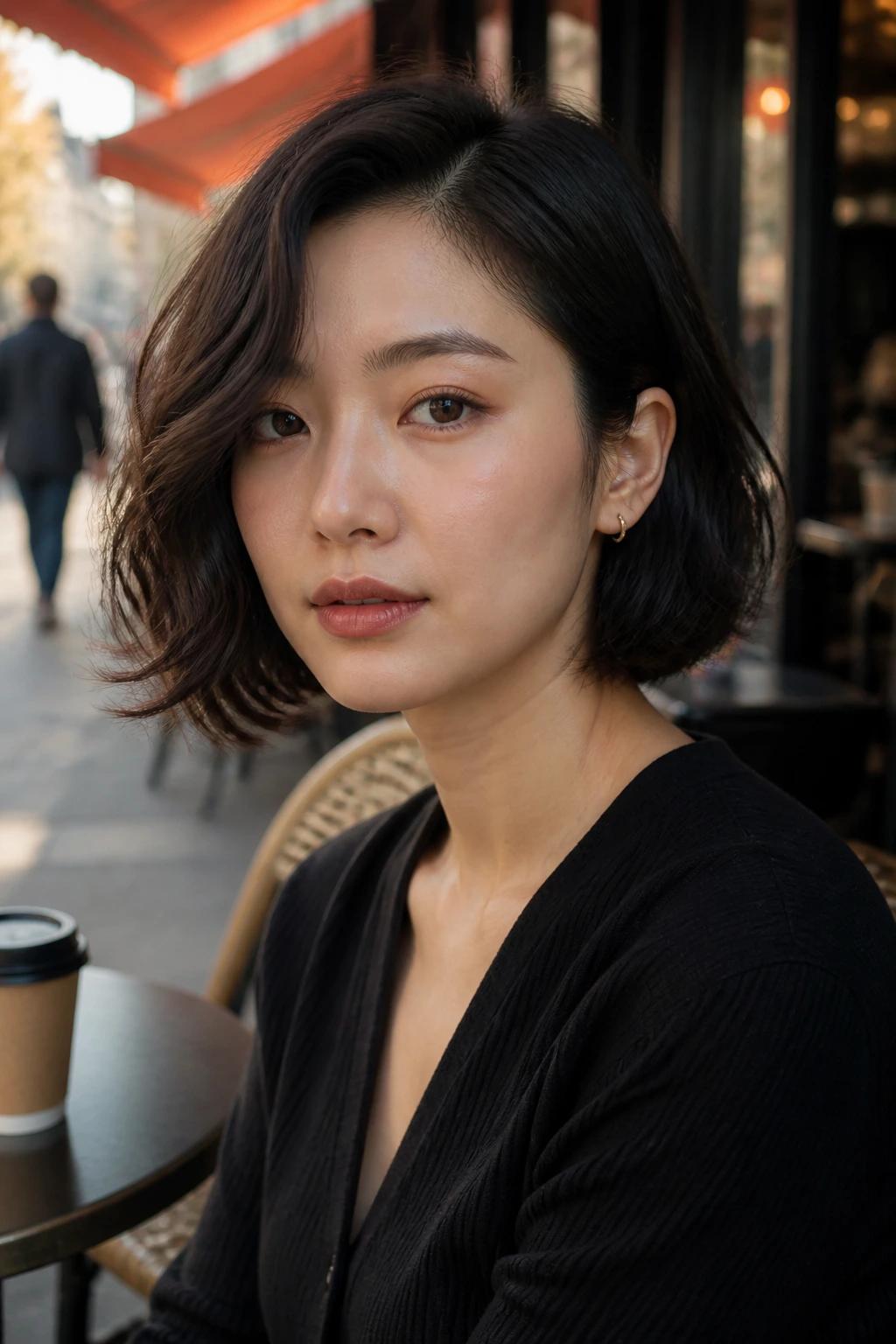
Some cuts are flattering because of the haircut itself. This one is flattering because it gives you a clean tuck. One side slips behind the ear, the other side stays out, and that slight imbalance makes the face look longer and less round.
It is a small trick, but it changes the silhouette fast. The exposed ear and jawline create a vertical break, while the tucked side gives the cheek room to breathe. On wavy hair, the movement around the untucked side keeps the style from looking forced.
If you wear glasses, this bob can be especially useful. The tuck keeps the frame area clean and stops the hair from sitting all over the cheeks. Ask for enough length in the front to tuck comfortably, otherwise the whole thing falls out by lunchtime.
18. U-Shape Bob
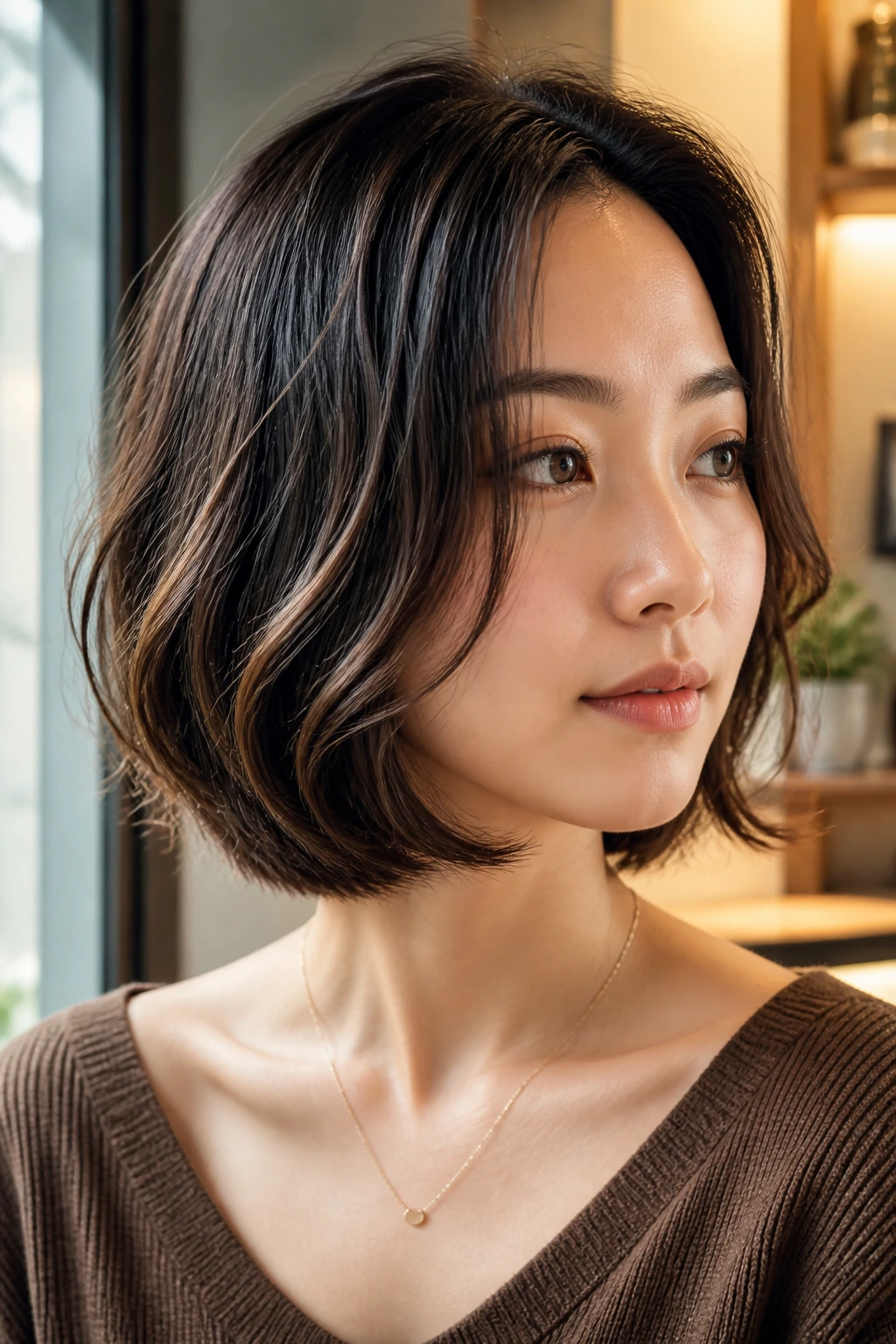
A U-shape bob sounds subtle because it is. The back curve sits a little lower, the front corners stay a touch longer, and the whole cut curves softly under instead of ending in one hard horizontal line.
That soft curve is why it works on round faces. It avoids the shelf effect that can make cheeks look fuller, and it gives wavy hair a place to fall without building bulk at the sides. If your hair naturally kicks out at the ends, the U-shape can calm that down better than a blunt cut.
This is a good middle ground for someone who wants a clean shape but not a severe one. The haircut has enough structure to look polished, but the curve keeps it friendly.
19. Mini Lob With Face-Framing Slices
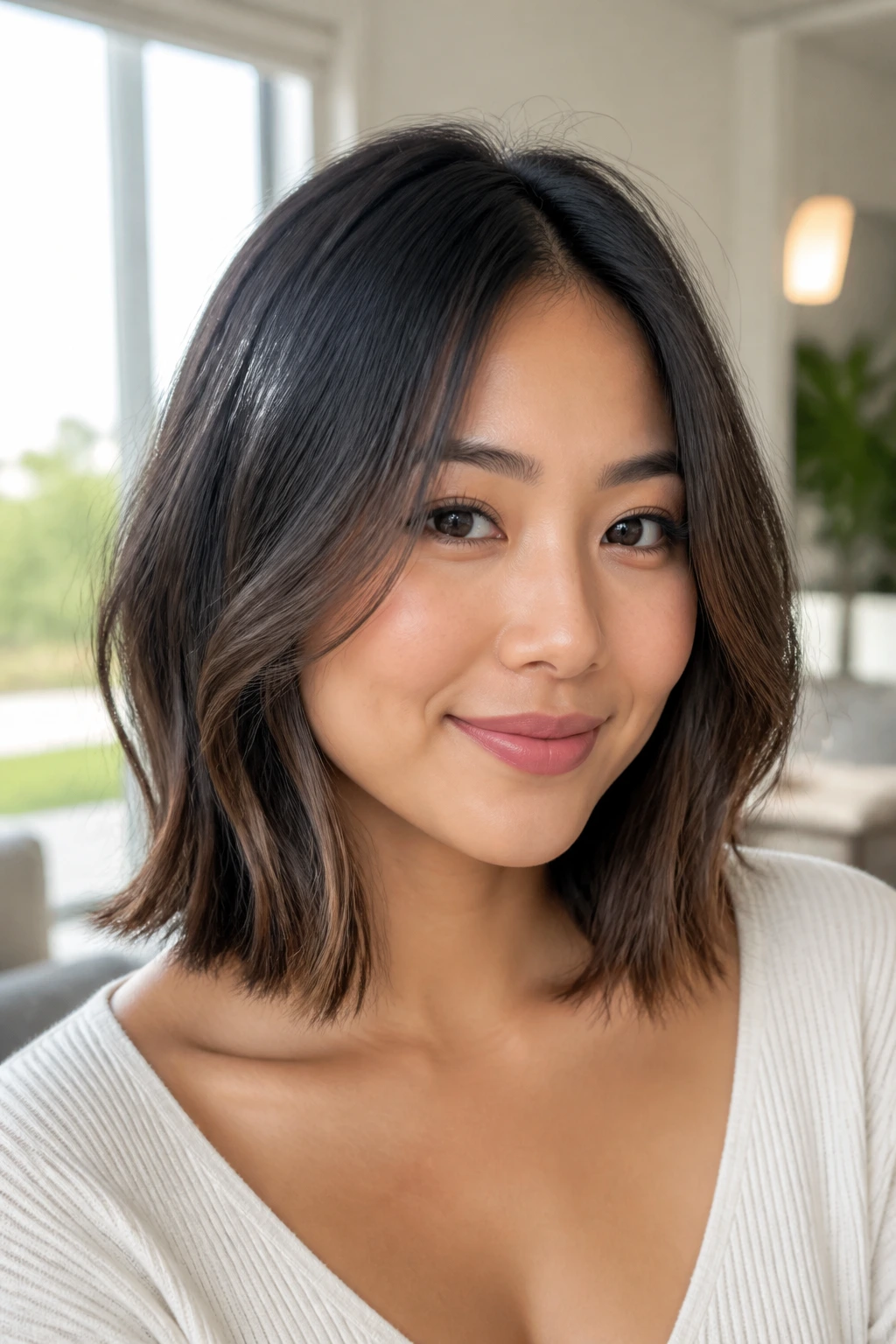
A mini lob is the in-between answer for people who want bob energy without losing shoulder-length comfort. It sits just above or at the collarbone, which gives round faces a little breathing room and keeps wavy hair from blooming too wide.
The face-framing slices are what make it interesting. They start around the chin or slightly below and then blend into the rest of the length. That keeps the cheeks from becoming the widest point and gives the style some movement near the face. If you have a stronger wave, the longer length also means less spring and less surprise shrinkage.
This is the cut I recommend to people who want a bob that can still be tied back. It is practical. And practical haircuts tend to survive longer in real life.
20. Loose Perm Bob

A loose perm bob works when the wave pattern needs help holding shape, not when it already has too much body. The goal is bounce, not puff. That sounds simple, but I see people miss it all the time.
Keep the bob long enough that the added wave does not lift the cheeks too much. A length just below the chin or at the upper neck usually works better than a micro bob here. If the perm is too tight, the shape swells sideways and the face gets wider. If it is loose, the cut stays soft and airy.
This style can look especially good with curtain bangs or longer front pieces. The wave gives the bob its life; the cut keeps it from turning into a round cloud.
21. Rounded Mushroom Bob
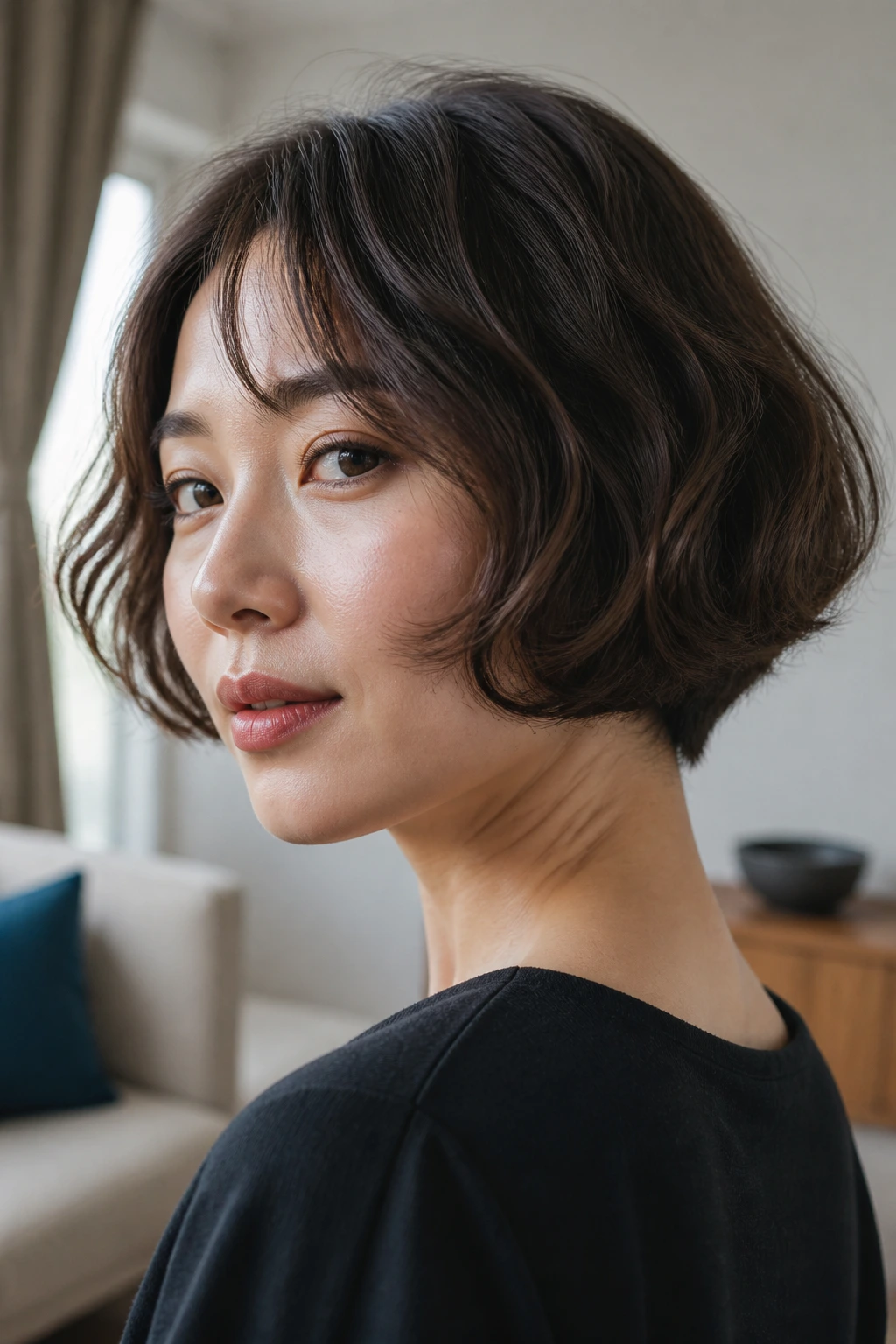
A mushroom bob can go wrong fast on a round face, which is why the modern version needs restraint. The top should stay airy, the nape should taper, and the widest part of the shape should sit lower than the cheek line.
If you keep the perimeter too level, the cut can make the face look shorter. But when the back is clean and the front corners are slightly longer, the rounded shape feels intentional instead of heavy. Wavy hair helps here because the movement breaks up the obvious bowl effect.
I would not choose this if your hair is very thick and you hate styling. I would choose it if you like a rounded silhouette and are willing to keep the ends from flaring out.
22. Bubble Bob

The bubble bob has a fuller, rounder body than the mushroom version, but it should still feel light at the edges. Think lifted crown, curved sides, and ends that fold inward or sit softly against the neck.
For round faces, the trick is to keep the bubble shape higher on the head and narrower near the cheeks. That keeps it from reading as one giant circle. Wavy hair can make this look beautiful when the waves are encouraged, not crushed. A round brush and a soft-hold spray are enough most days.
This cut suits someone who likes a little drama in the silhouette. It is not the quietest bob on the list, but it can be one of the prettiest when the proportions are right.
23. Deep Side-Part Bob
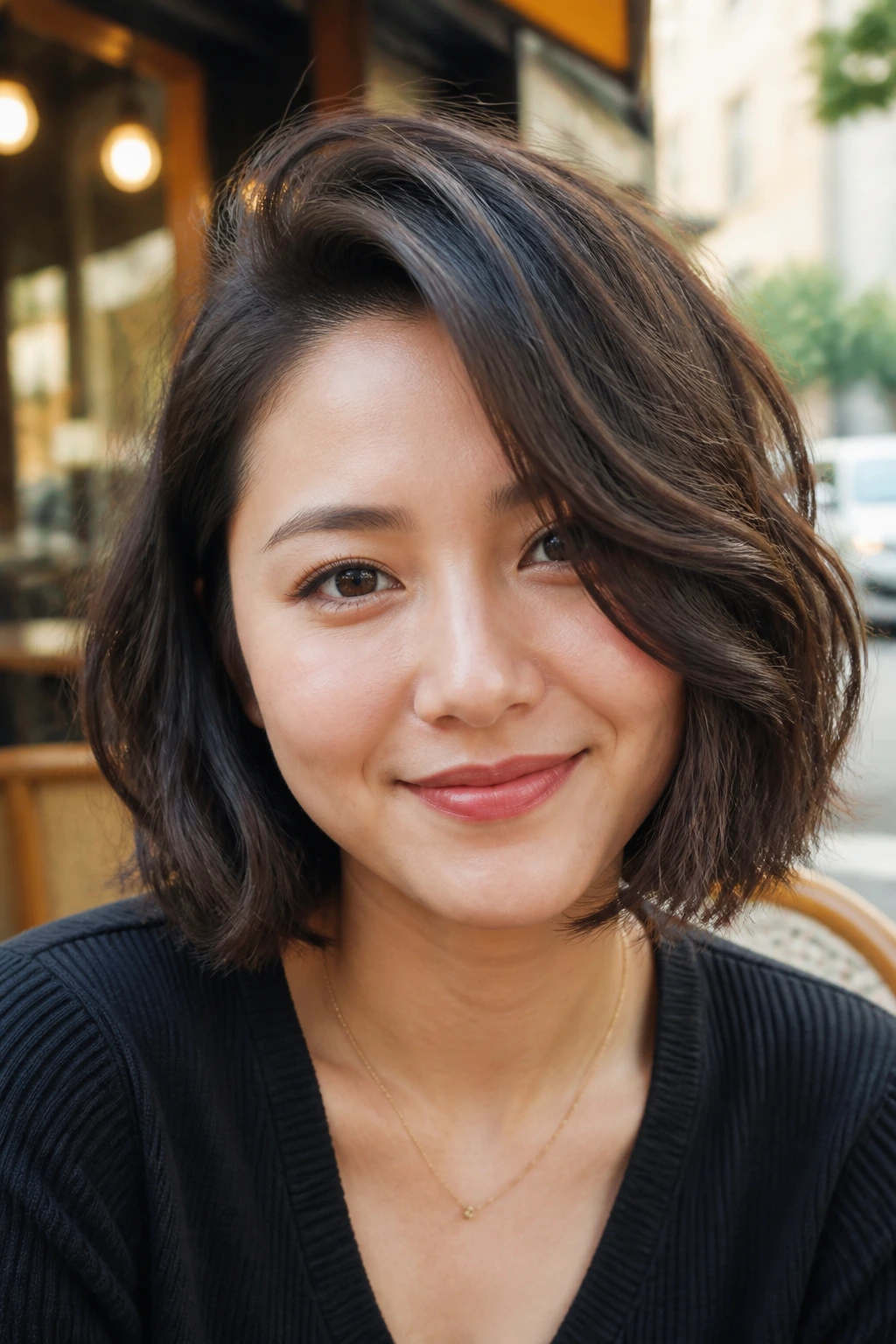
A deep side part can rescue a bob that feels too plain. It shifts volume away from the center line, creates a diagonal sweep across the forehead, and breaks the symmetry that round faces sometimes work against.
This is one of the easiest changes on the list because it does not require a new haircut. Even a simple bob can look more flattering once the part moves over by an inch or two. On wavy hair, the deeper side often lets the natural bend fall into a softer frame around one cheek instead of both at once.
If you want a style that takes five minutes and still looks intentional, this is the one. The part does the heavy lifting. The rest is just keeping the ends tidy.
24. Internal Graduation Bob
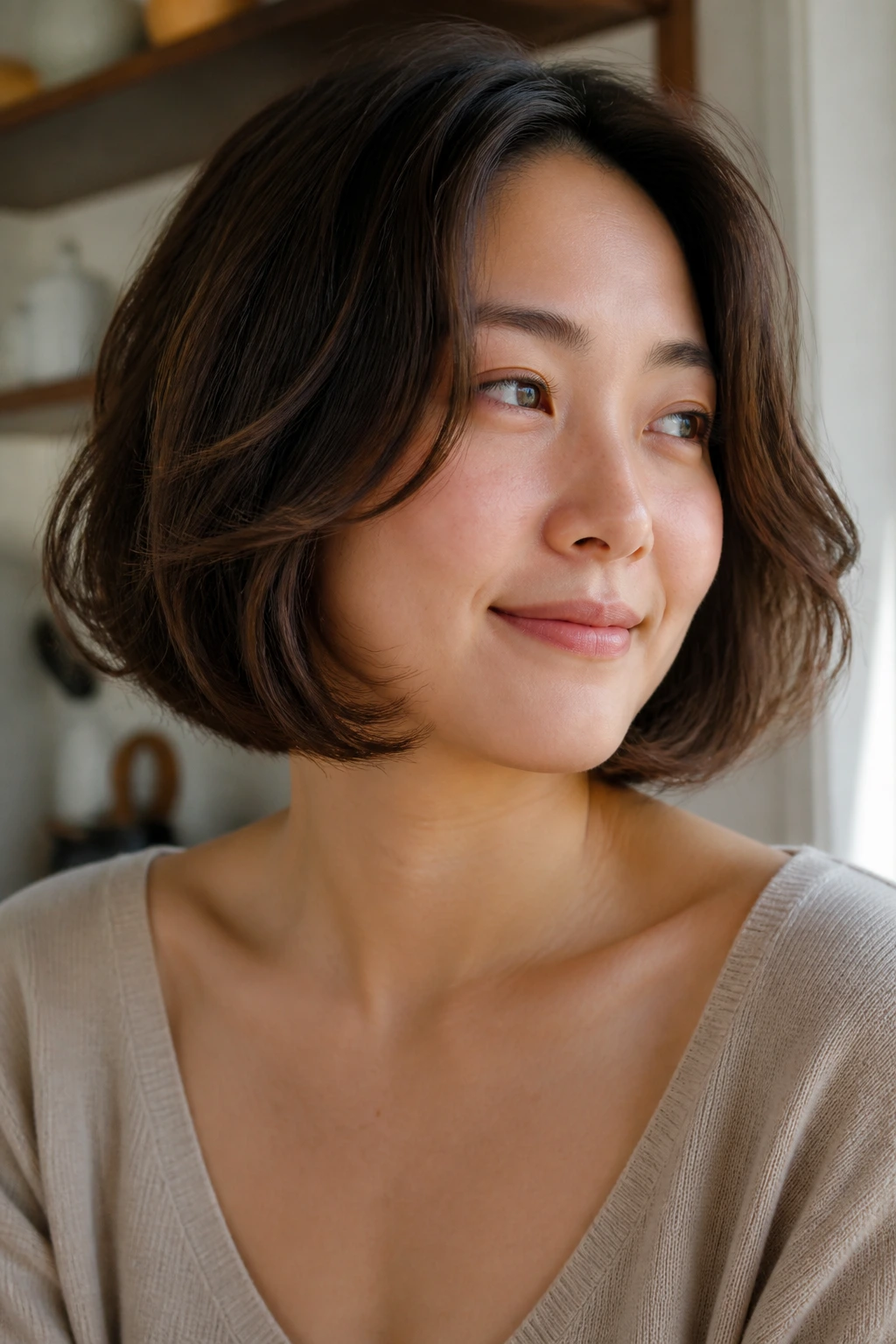
Internal graduation is the haircutting version of hiding the good stuff inside the structure. The surface can look clean and simple, while the inside carries weight removal and shape control. That makes it ideal for thick wavy hair that tends to swell at the sides.
The stylist removes bulk from underneath instead of shredding the visible perimeter. That matters because the outside line stays neat while the wave moves freely. For a round face, the result is usually better than heavy layering, which can create too much fluff around the cheeks.
Ask for this if your hair feels bulky but you still want a polished outline. It is one of the least flashy bobs here and one of the smartest.
25. Hime-Inspired Bob With Soft Side Panels

The hime-inspired bob brings a very specific shape: a blunt or softly curved base with longer side panels that skim the cheeks and jaw. On a round face, those side panels do the useful work of lengthening the face while the back keeps the haircut grounded.
The version I like best for wavy hair is softer than the classic reference. The panels should move, not hang stiffly. If they are too sharp or too thick, they can dominate the face in a bad way. Keep them airy and a little longer than the cheekbone, and the cut stays flattering.
This one has personality. If you want a bob that feels more editorial than everyday, it earns its place. If you want to tame the roundness without losing a little edge, it does that too.
What to Ask Your Stylist for Before the First Snip
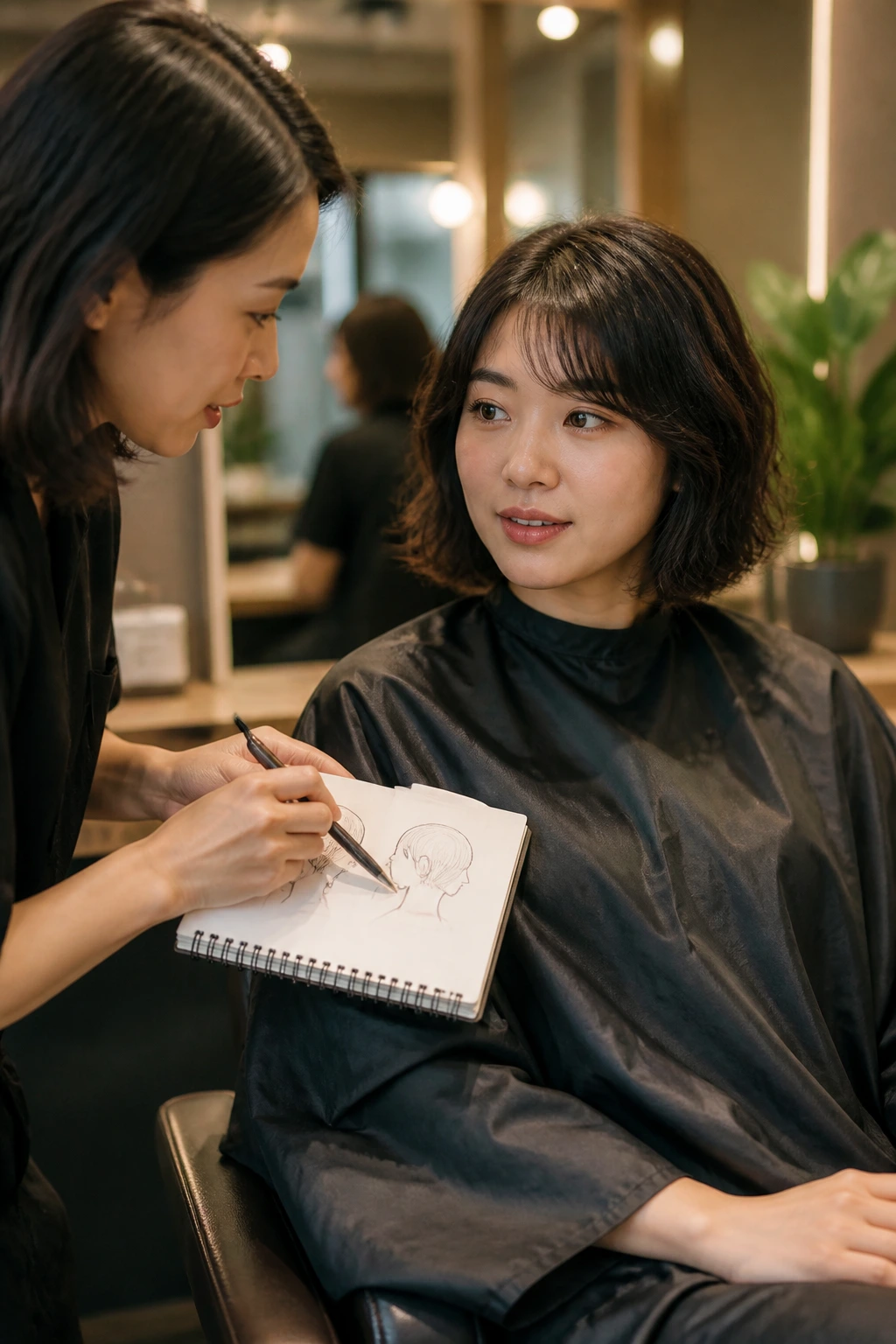
A good bob starts long before the scissors touch hair. Bring photos, yes, but also bring words that describe where the cut should sit. The most useful phrase for round faces is usually some version of “long enough to pass the widest part of the cheek.” That line keeps the haircut from stopping right on the face’s broadest point.
Length line: Ask for front pieces that land at the chin, just below the chin, or lower if your waves shrink a lot when dry. The back can sit a little shorter, but the front should keep you from losing length where you need it most.
Layer placement: Tell the stylist you want weight removed below the cheekbone rather than right at it. That keeps the cheeks from looking fuller and stops the bob from puffing out sideways.
Bang plan: If you want fringe, ask for see-through, curtain, or side-swept bangs instead of a thick block. Thick bangs can cut the face horizontally in an unhelpful way.
Dry-cut check: If your wave pattern is unpredictable, ask for a quick dry check after the main cut. Wet hair lies. Dry hair tells the truth.
Essential Styling Tools for Wavy Bob Haircuts
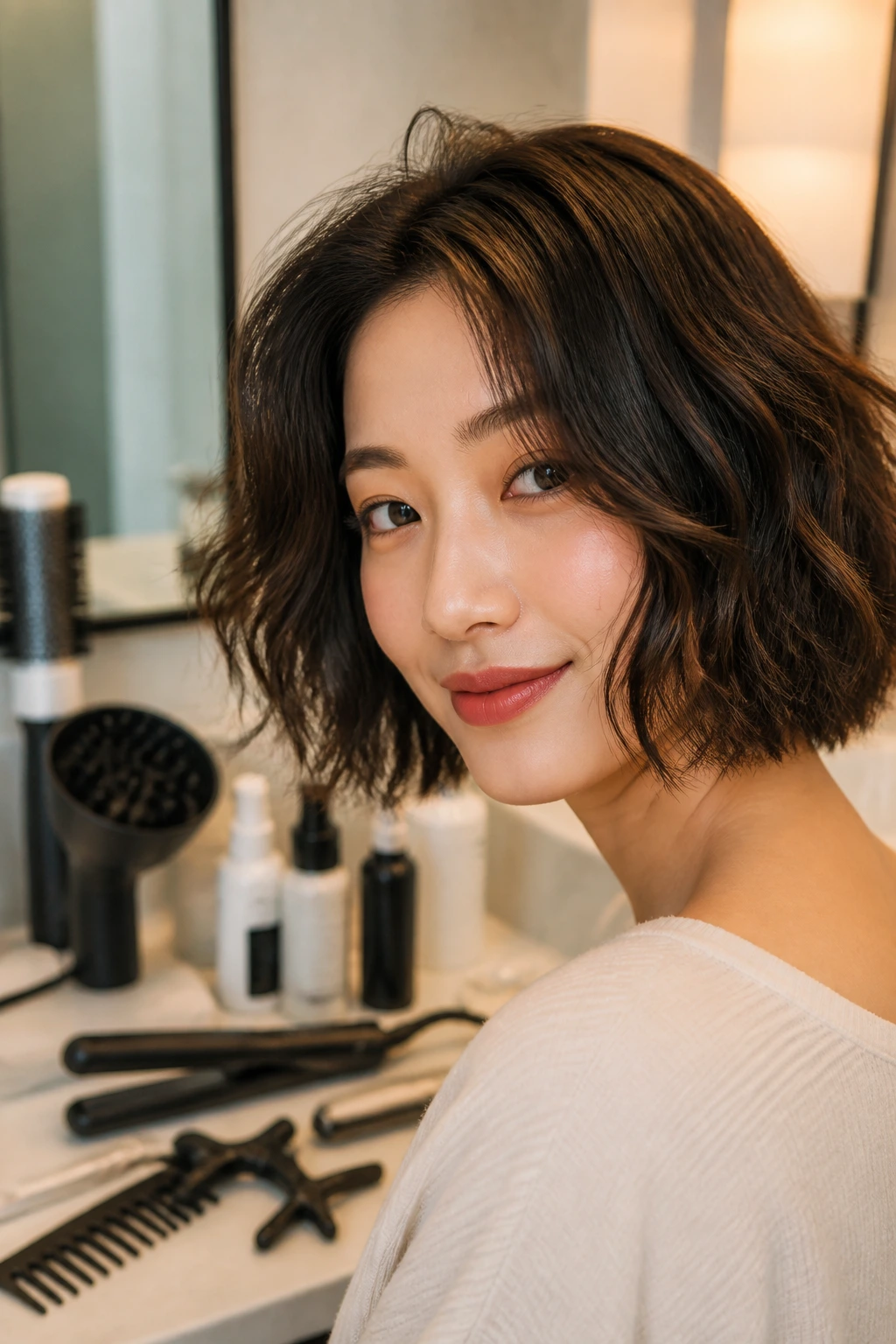
- 1.25-inch round brush: Small enough to bend the ends, not so big that it flattens the bob.
- Blow dryer with concentrator nozzle: Directs airflow and keeps the surface smoother.
- Diffuser: Helps loose waves dry with less frizz and less collapse at the roots.
- Heat protectant spray: Protects the ends, which are the first part to look fried on a bob.
- Light mousse or foam: Adds lift near the roots without leaving the hair sticky.
- Soft-hold hairspray: Useful for side parts, curtain bangs, and tucked styles.
- Mini flat iron or 1-inch iron: Handy for polishing just the front corners.
- Wide-tooth comb: Better than a brush for separating waves after washing.
- Sectioning clips: Keep the top layers out of the way while you dry the underneath.
- Light serum: One small drop on the ends can calm frizz without making the cut limp.
How to Wear These Bobs Without Fighting the Wave

Parting: Start with a slight off-center part if your face feels widest at the cheeks. A deep side part adds even more length, while a center part works best when the front pieces are long enough to drop past the cheekbone.
Drying: Don’t blast the whole head at once. Dry the roots first, then shape the mids and ends with a brush or diffuser depending on how much bend you want. If you want a smoother result, focus the dryer on the crown and let the ends fall naturally.
Texture: Use product where the hair needs control, not everywhere. A pea-sized amount of cream through the mids and ends is usually enough for softer bobs. Fine waves can disappear under too much product in a single afternoon.
Finish: Bend only the front corners if the cut looks too straight. That tiny move can slim the silhouette fast. You do not need a full curl; you just need the ends to stop sticking out horizontally.
Accessories: Small hoops, slim earrings, and collars that do not crowd the jawline all help these cuts read cleaner. Big scarves and thick turtlenecks can fight a short bob, especially if the face is already round.
Small Tweaks That Make the Bob Feel More Intentional
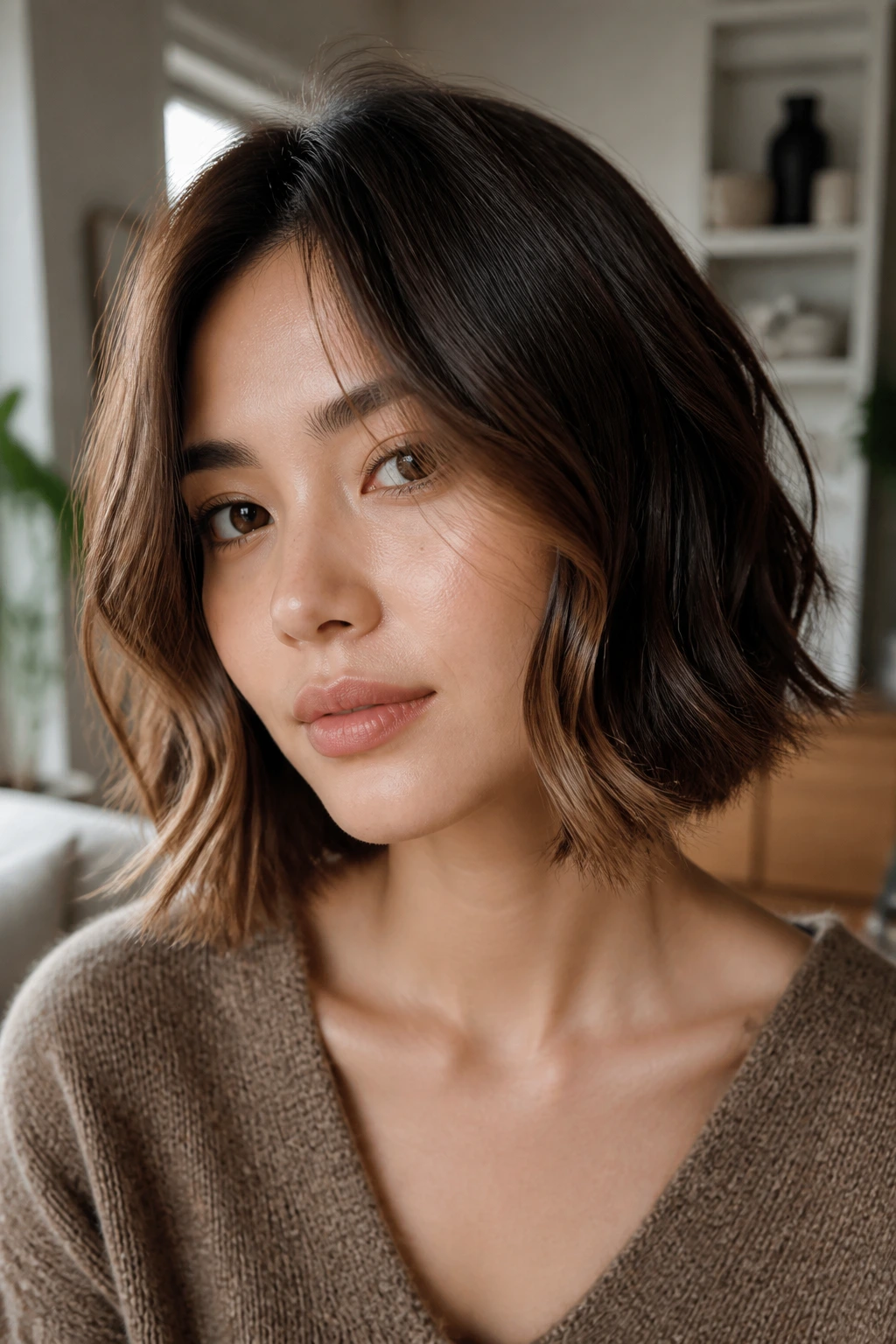
Length adjustment: If you are unsure between chin and jaw, choose the longer option. Hair can always be shortened later, and waves usually shrink more than people expect.
Texture control: Ask for point cutting or slide cutting around the perimeter if you want movement without obvious layers. That keeps the shape neat from the front.
Product load: Use less than you think. A bob shows buildup faster than long hair because there is less length to hide it.
Color bonus: Soft highlights near the front pieces can help the haircut feel lighter and more lifted, especially if the base color is dark. Even a subtle money-piece effect can change how the eye reads the face.
Common Mistakes That Make a Bob Widen the Face
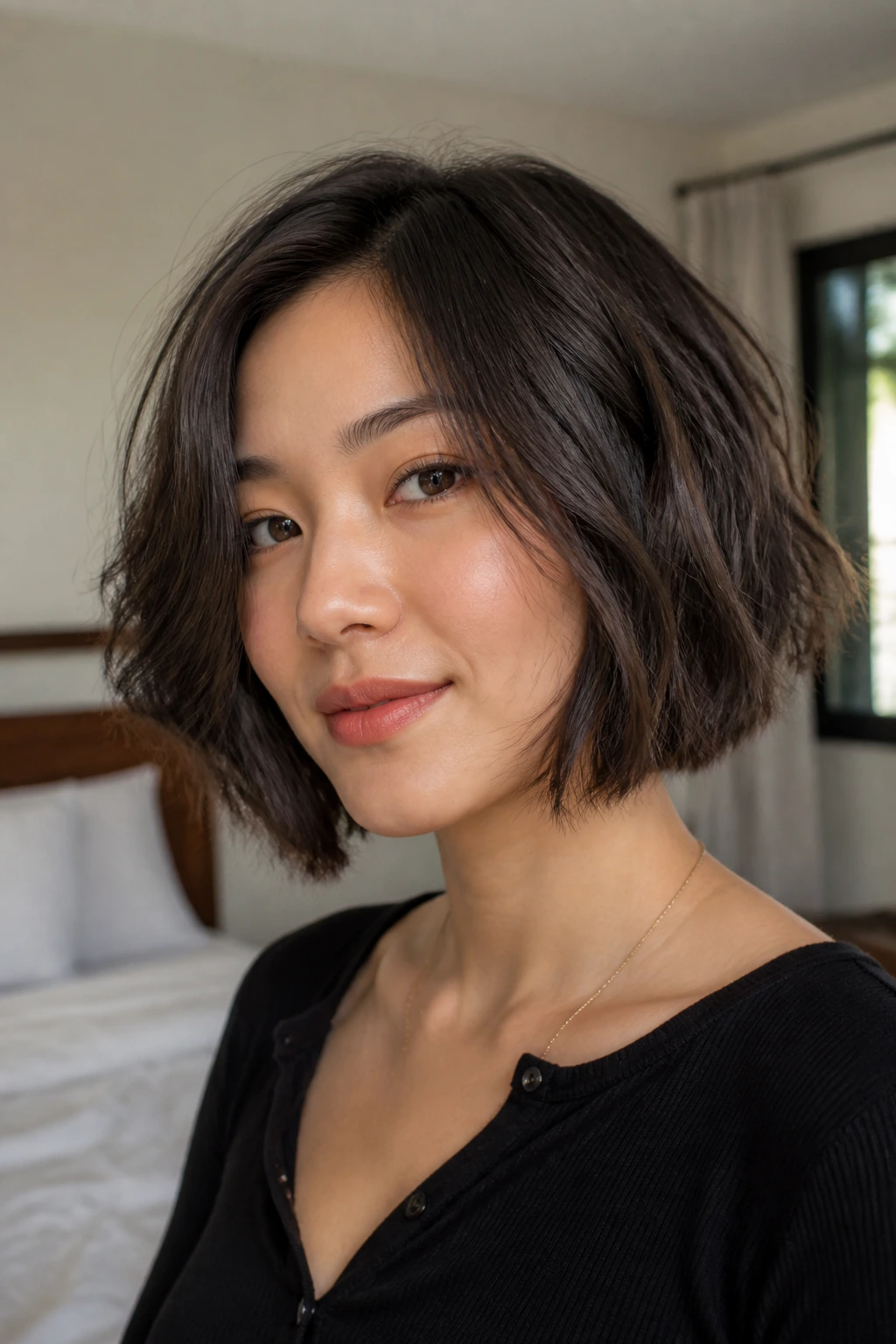
The biggest mistake is landing the cut right at the fullest part of the cheeks. It creates a horizontal stop point where you do not want one, and the face can look shorter overnight. Keep the front pieces a little lower so the eye keeps moving down.
Another common problem is over-layering the top and sides. Too many short layers create lift in the wrong place, especially on wavy hair that already wants to expand. The fix is not “more layers.” The fix is better-placed layers, usually lower and softer.
Heavy bangs can also go wrong fast. Thick fringe cuts the face in half and can make the cheeks look broader. If you want bangs, ask for see-through, side-swept, or curtain shapes that break up the forehead without swallowing it.
And then there is the product trap. Heavy creams, oils, and butters can make a bob collapse at the roots and puff at the ends. Use lightweight products and keep the smoothing stuff below the ears unless your hair is very dry.
Variations and Adaptations to Try
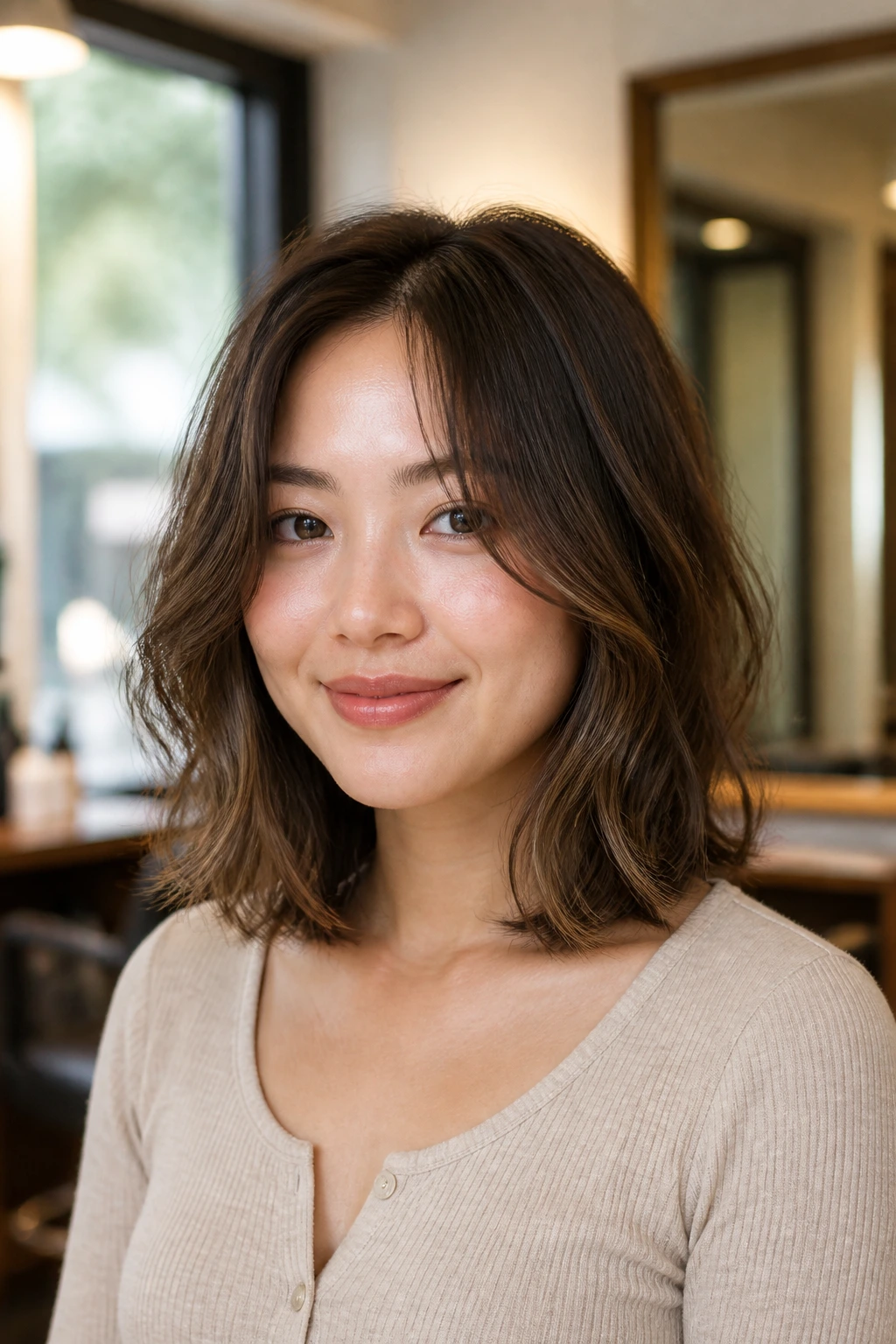
Longer Lob Reset: If you are nervous about short hair, keep the cut at the collarbone and add the same face-framing logic. It still narrows a round face, and the grow-out is much easier if you change your mind.
Sleek Glass Finish: For a cleaner, shinier look, smooth the top with a blow dryer and leave only a tiny bend at the ends. This version works best on hair that lies down easily and does not frizz the second it sees humidity.
Airy Fringe Version: Swap heavy bangs for curtain or see-through fringe. The forehead stays open, the face reads longer, and you still get that soft frame around the eyes.
Thick-Hair Undercut Version: If your bob turns wide the second it dries, a subtle undercut or hidden interior debulking can save it. The outside still looks like a normal bob; the inside just behaves better.
Perm-Boosted Version: If your waves are too loose to hold shape, a soft body wave or loose perm can add bend without turning the haircut into a puffball. Keep the length conservative and the texture relaxed.
Keeping the Cut Fresh Between Appointments
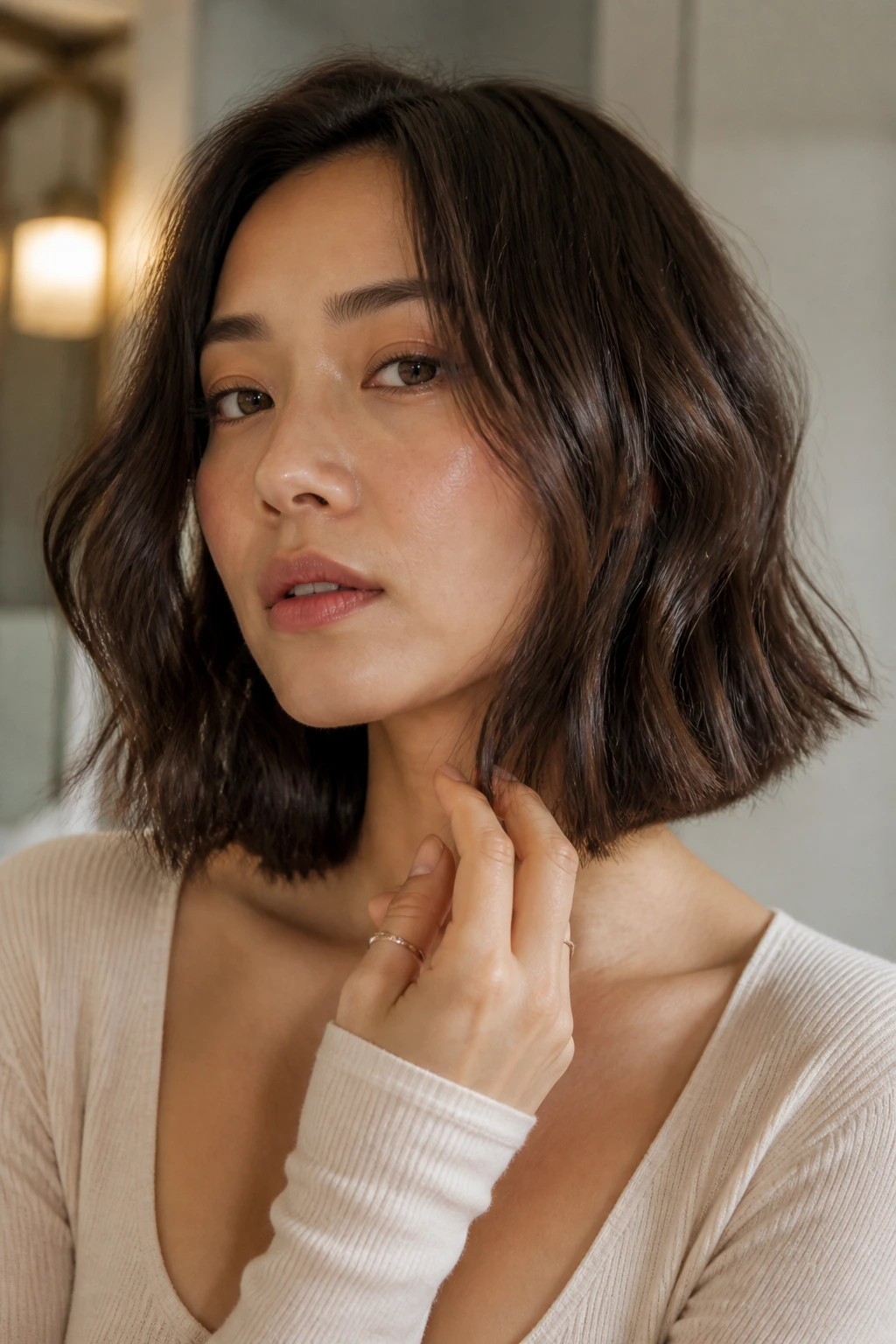
Short bobs show growth faster than long hair because every half-inch changes the silhouette. For chin-length cuts, a trim every 6 to 8 weeks keeps the perimeter crisp. Collarbone lobs can usually go a little longer, around 8 to 10 weeks, before the front pieces start sagging.
A bob also changes with the way it is worn. If the ends kick out in different directions by day three, a quick pass with a flat iron on just the front corners is usually enough. You do not need to redo the whole head. That is a waste of time and heat.
On wash day, focus on preserving the shape at the roots and the ends. A little dry shampoo at the crown can buy you another day of lift, while a drop of serum on the ends keeps the bob from fraying. Sleeping on a smooth pillowcase helps too, especially if your wave pattern gets crushed at night.
If you are growing the cut out, ask for “dusting” instead of a big reshaping. That keeps the line cleaner while you add length.
Frequently Asked Questions

What bob length is most flattering for a round face?
The safest range is usually just below the chin to the collarbone, depending on how much your hair shrinks when it dries. If the hair ends exactly at the widest part of the cheek, the cut can look wider than it needs to.
Can wavy hair pull off a blunt bob?
Yes, but the blunt line needs a little length and a lot of control. A blunt bob that sits too high on the cheek can widen the face, while a slightly longer version with airier bangs tends to work much better.
Should I choose a center part or a side part?
A side part is usually easier on a round face because it breaks symmetry and adds a diagonal line. A center part can work if the front pieces are long enough to pass the cheeks and the cut has some movement through the ends.
Are bangs a bad idea with this face shape?
Not at all. The problem is heavy bangs that cut the face horizontally. Curtain bangs, side-swept fringe, and see-through bangs are much easier to live with on round faces and wavy hair.
What if my hair is thick and puffy?
Ask for internal weight removal rather than aggressive top layers. A soft stacked bob, A-line bob, or internal graduation bob usually handles thick wave better than a wide blunt shape.
What if my waves are loose and flat?
A texturizing cut with a little crown lift can help, but avoid too much layer around the sides. Loose waves need structure at the root and softness at the ends, not a million short pieces that collapse by noon.
How often should I trim a bob like this?
Shorter bobs need more frequent trims, usually every 6 to 8 weeks. Longer lobs can stretch to 8 to 10 weeks, but if the front corners lose shape, the whole cut can start feeling boxy.
Can I air-dry these styles, or do I need heat every time?
You can air-dry many of them, especially the layered and wavier versions. The trick is to keep the front pieces under control with a little product and to shape the ends while they are still damp, not once they have fully set in the wrong direction.
The Shape That Earns Its Spot
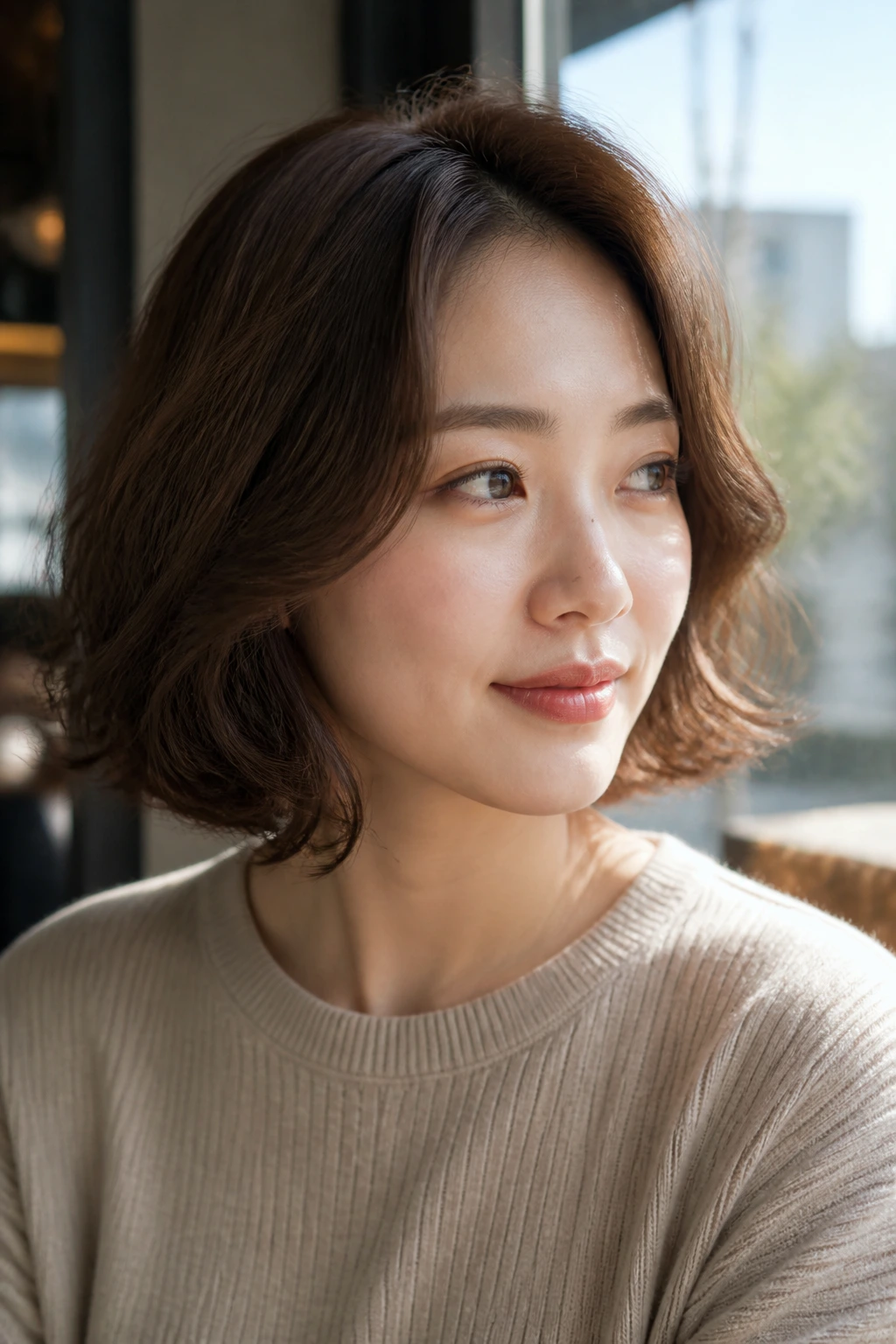
The best bobs for round faces and wavy hair do one thing well: they make the face look a little longer without making the haircut feel stiff. That is the line worth chasing. Not flatter. Not bigger. Just better proportioned, with enough movement to work in real life.
I like these cuts because they leave room for your actual texture. They do not demand perfectly straight hair or a full styling session every morning. They ask for a thoughtful length, a smarter fringe, and a little restraint around the cheeks. That’s a fair trade.
If you bring that mindset to the salon, the shortlist gets easier fast. Start with the shape that fits your hair density, then fine-tune the part, the fringe, and the front corners. The right bob will do more for your face than a stack of vague beauty advice ever could, and it will still look like your hair when you walk out the door.