



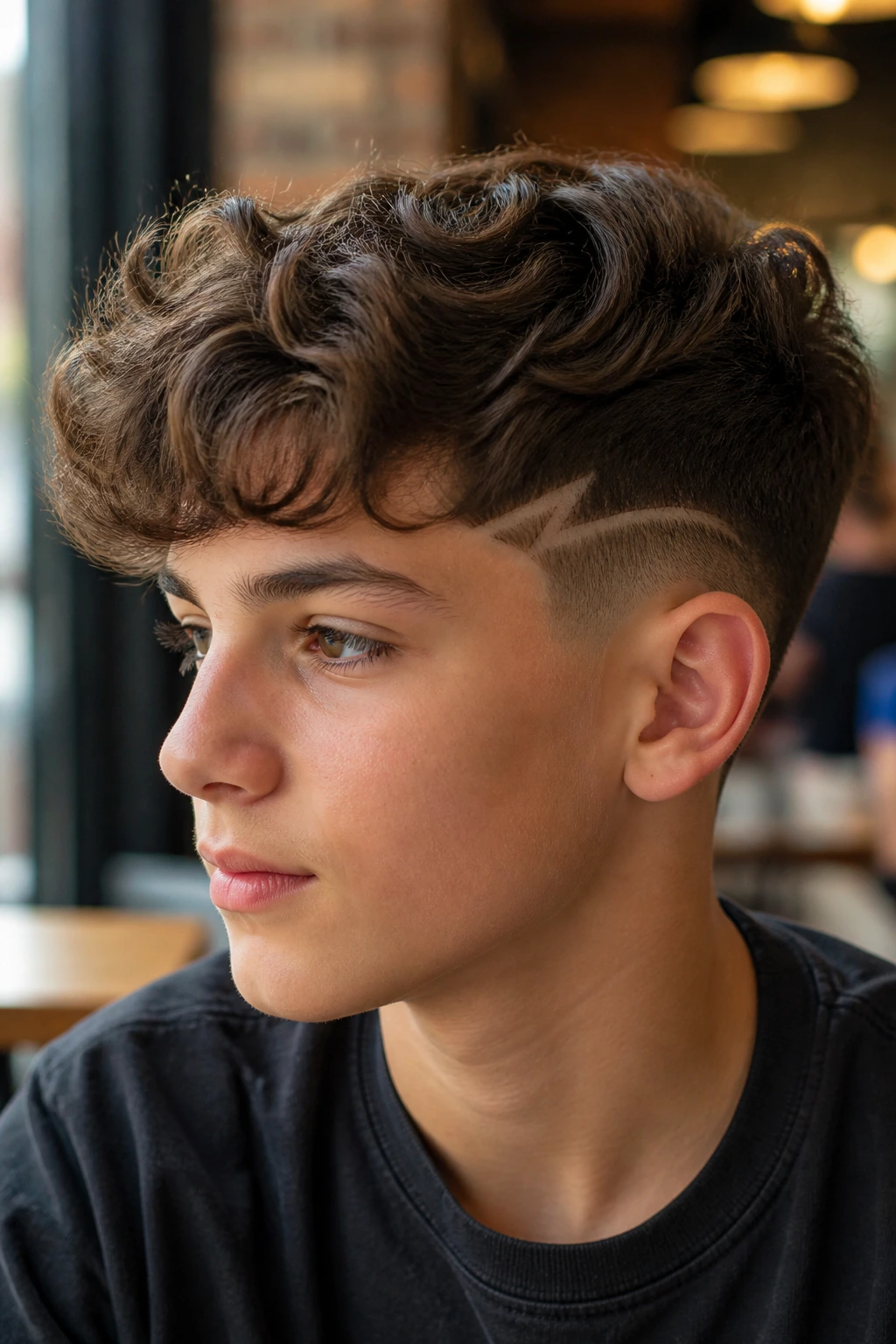
A lightning bolt can look harder and cleaner on wavy hair than on pin-straight hair. The bend in the wave gives the design a little motion, so it doesn’t sit there like a sticker; it cuts across the texture and flashes the second the head turns.
That’s why lightning bolt haircuts for boys with wavy hair keep working in real life, not just in barber photos. The wave does half the visual work for you. A strong bolt can ride the curve of the temple, disappear behind a fade, or snake along the side of the head without looking busy.
Get the placement wrong, though, and the whole thing turns muddy fast. Too thin, and the line vanishes into the waves by the second week. Too high, and it fights the crown swirl. The good versions know exactly where to stop.
Why These Bolt Cuts Work So Well on Wavy Hair
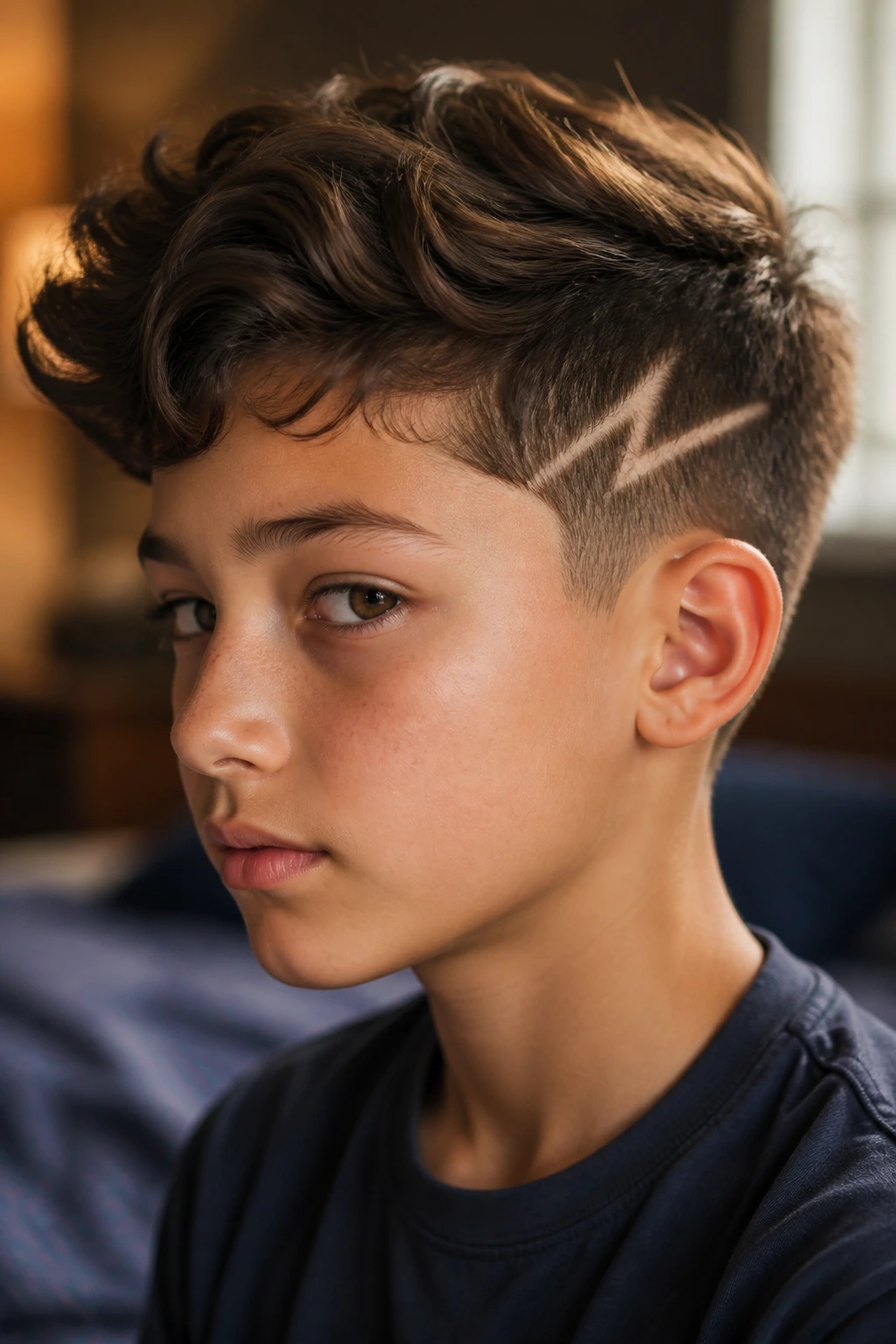
Wave pattern and razor lines play nicely together. Wavy hair already throws shadows, so a shaved bolt has something to contrast against. On flat, straight hair, the line can look a little pasted on. On a head with bend and body, it looks carved in.
The collection gives you room to choose how loud you want to be. Some of these cuts keep the bolt tucked near the temple or behind the ear, which makes them easy for school and easier for parents who don’t want daily drama in the mirror. Others push the design higher, wider, or deeper into the fade.
Maintenance changes depending on the width of the bolt. A skinny line needs more touch-ups because wavy hair softens the edge as it grows. A thicker bolt stays readable longer, but it also asks for a barber who knows where to stop before the design starts looking cartoonish.
Placement matters more than raw skill with clippers. Put the bolt where the head is flatter and the wave is calmer. Put it right over a strong cowlick or a stubborn bend, and even a clean cut can look uneven. The best versions work with the head shape, not against it.
Product choice matters too. Matte cream, light clay, or a touch of sea salt spray keeps the top from swallowing the design. Heavy gel can glue the wave into odd clumps and make the bolt seem harsher than the rest of the haircut.
1. Low Fade with a Clean Temple Bolt
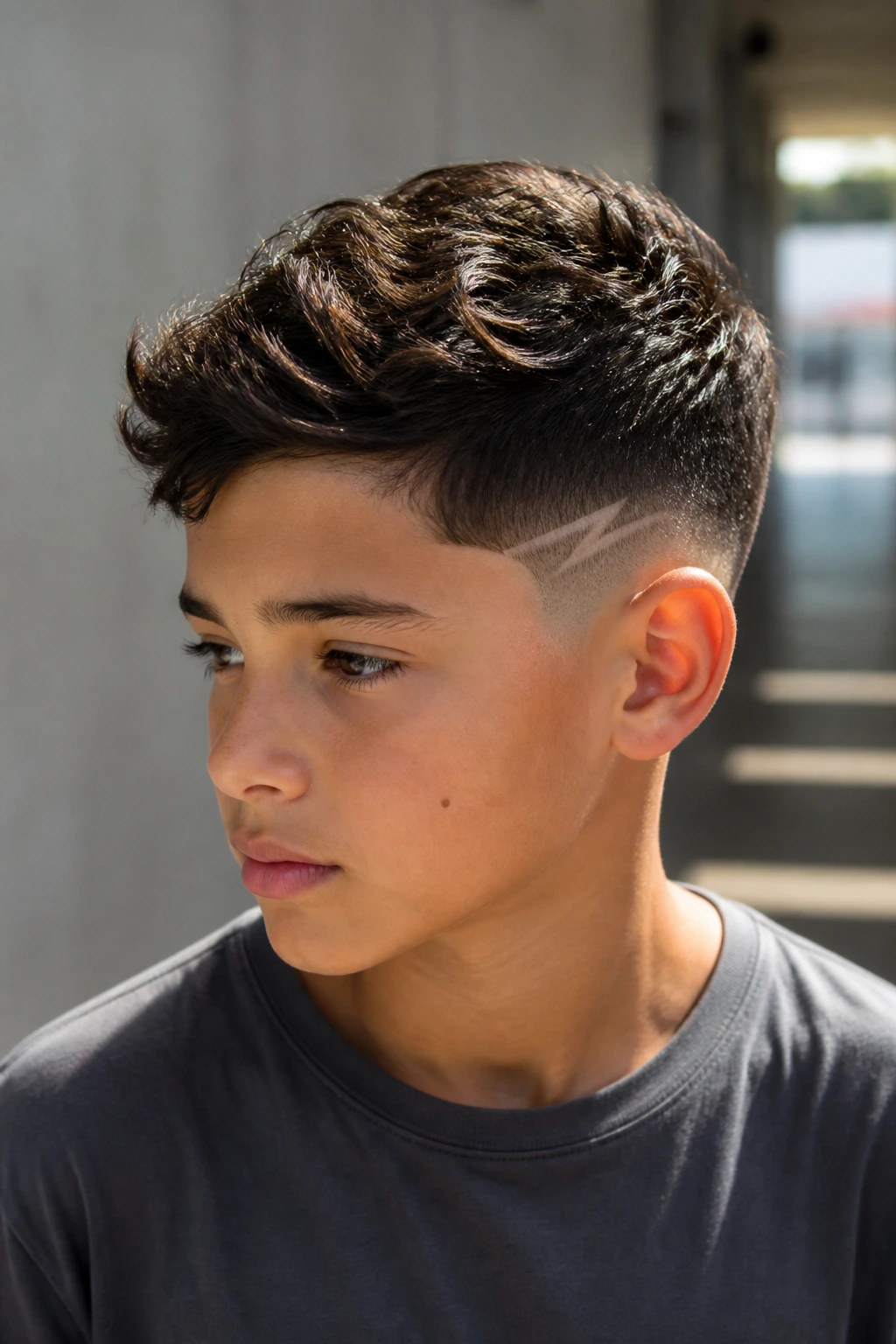
A low fade with a clean temple bolt is the safest place to start if this is the first shaved design. The bolt sits near the temple, where the head is flatter and the line reads clearly without shouting from across the room. On wavy hair, that small placement matters. The texture on top can stay loose and lived-in while the sides carry the design.
I like this version because it stays sharp even when the top grows out a little. A low fade gives the bolt a clean frame, and the wavy top can be brushed forward, pushed up, or left messy. It doesn’t force one styling routine.
Ask for the bolt to be about 1/8 inch wide at its narrowest turn. Any thinner and it can blur fast in wavy hair. Keep the top around 1.5 to 2.5 inches so the waves have shape without puffing out like a helmet.
The best result usually comes when the barber fades the side first, then carves the bolt after the blend is finished. That order keeps the line from getting swallowed by later clipper work.
2. High Skin Fade with a Sharp Lightning Slash
Want the bolt to hit first? Go high. A high skin fade throws a lot of pale skin around the design, and that contrast makes a lightning slash look almost painted on. It’s a bold cut, no question, and it suits thick wavy hair that can hold some bulk on top without feeling heavy.
The trick here is balance. The fade is doing most of the loud work, so the bolt itself should stay clean and decisive, not overly jagged. On wavy hair, a thicker bolt—closer to 3/16 or 1/4 inch—usually reads better than a hairline-thin etch. The line can turn brittle if you make it too delicate.
This cut works best when the top has enough length to show texture, usually 2 to 3 inches, styled with a matte product and finger separation. If the top is too short, the whole head can look shaved down to the same intensity and lose the point of the bolt.
It’s a strong choice for kids who like a cut that looks sharp even from the front. It’s also the one to avoid if the household wants fewer barber visits. Skin fades grow out fast. Fast-fast.
3. Mid Taper with a Soft Diagonal Bolt
A mid taper with a soft diagonal bolt feels calmer than the high-skin-fade version, and that’s the reason it works. The taper keeps the edges neat without exposing a huge amount of scalp, while the bolt runs at a slant so it looks intentional rather than loud. On wavy hair, the diagonal line actually helps, because the eye follows the angle instead of getting stuck on one curly patch.
This one is good for boys who need a haircut that can pass at school but still has personality. The top can sit around 2 to 3 inches, brushed slightly forward or to the side. The bolt should start around the temple and angle down toward the ear, never too low into the neckline where it gets lost.
Why the angle matters
A straight horizontal line on wavy hair can look boxy. A diagonal bolt has more life in it. It also gives the barber a little more room to work around a cowlick or a thick side section without forcing the design into a weird bend.
If you want something that grows out gracefully, this is one of the best bets in the whole collection. The taper softens the transition, so even when the bolt starts to fade, the haircut still looks deliberate.
4. Textured Crop with a Lightning Bolt Fringe
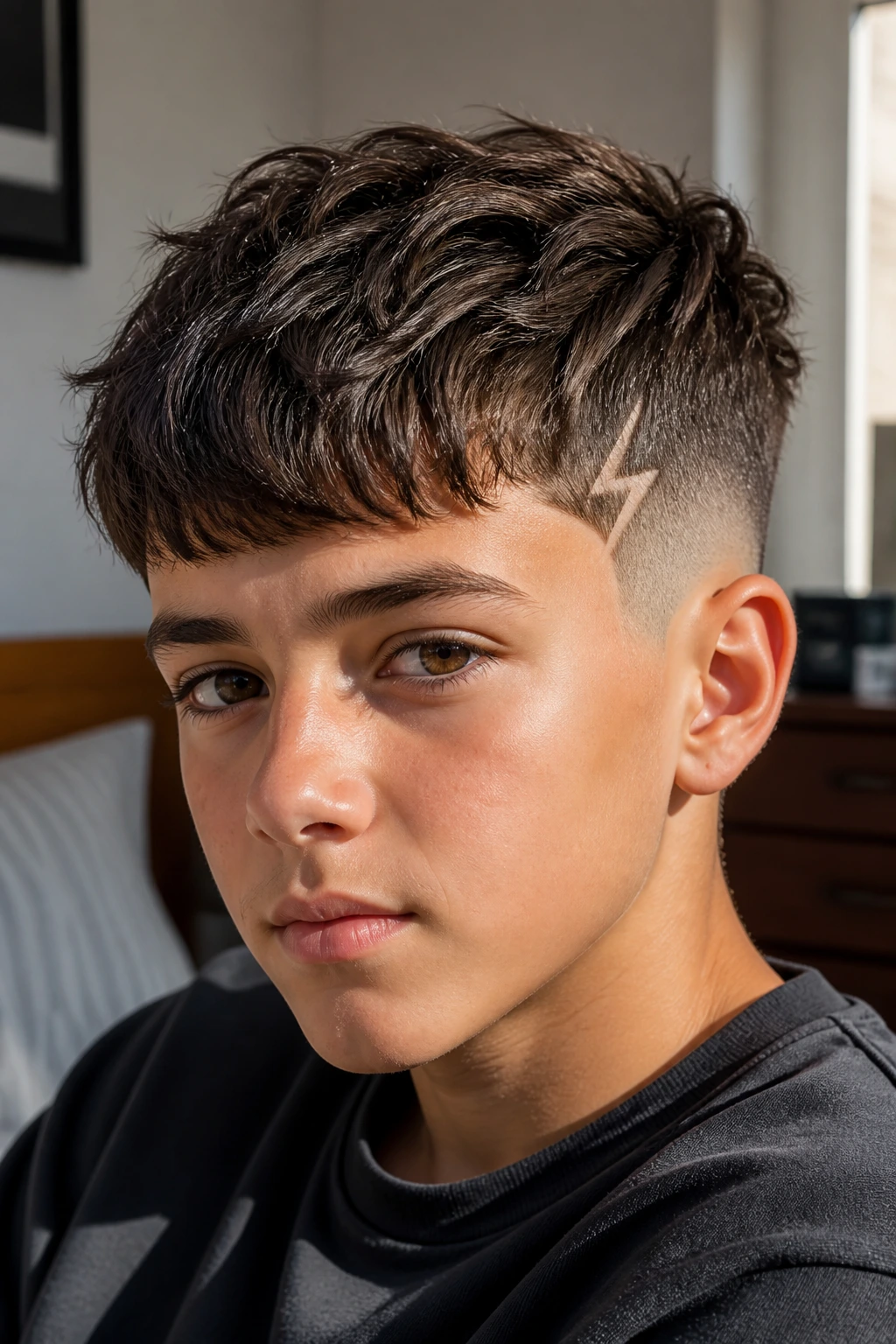
The textured crop is the blunt, practical cousin in this group. Short fringe, choppy top, tight sides, and a bolt that runs near the front panel or temple. On wavy hair, this cut works because the wave gives the crop extra bite without needing much length.
It’s a good option when you want the front to sit low and easy. The fringe usually lands just above the eyebrows, broken up with point cutting so it doesn’t hang like a curtain. The bolt adds a clean slash beside that rough texture, which keeps the whole cut from looking too plain.
A crop like this is best when the barber keeps the line clean and the top dry-finished. Wavy hair shrinks up a touch when it dries, and if the crop is cut too short while wet, it can spring up shorter than expected. A little more length up front buys you control.
This style is one of the easiest to style at home. A small dab of matte paste, worked through damp hair with fingers, is enough. No slick shine. No helmet hair. Just texture.
5. Curly Wavy Top with a Side Bolt
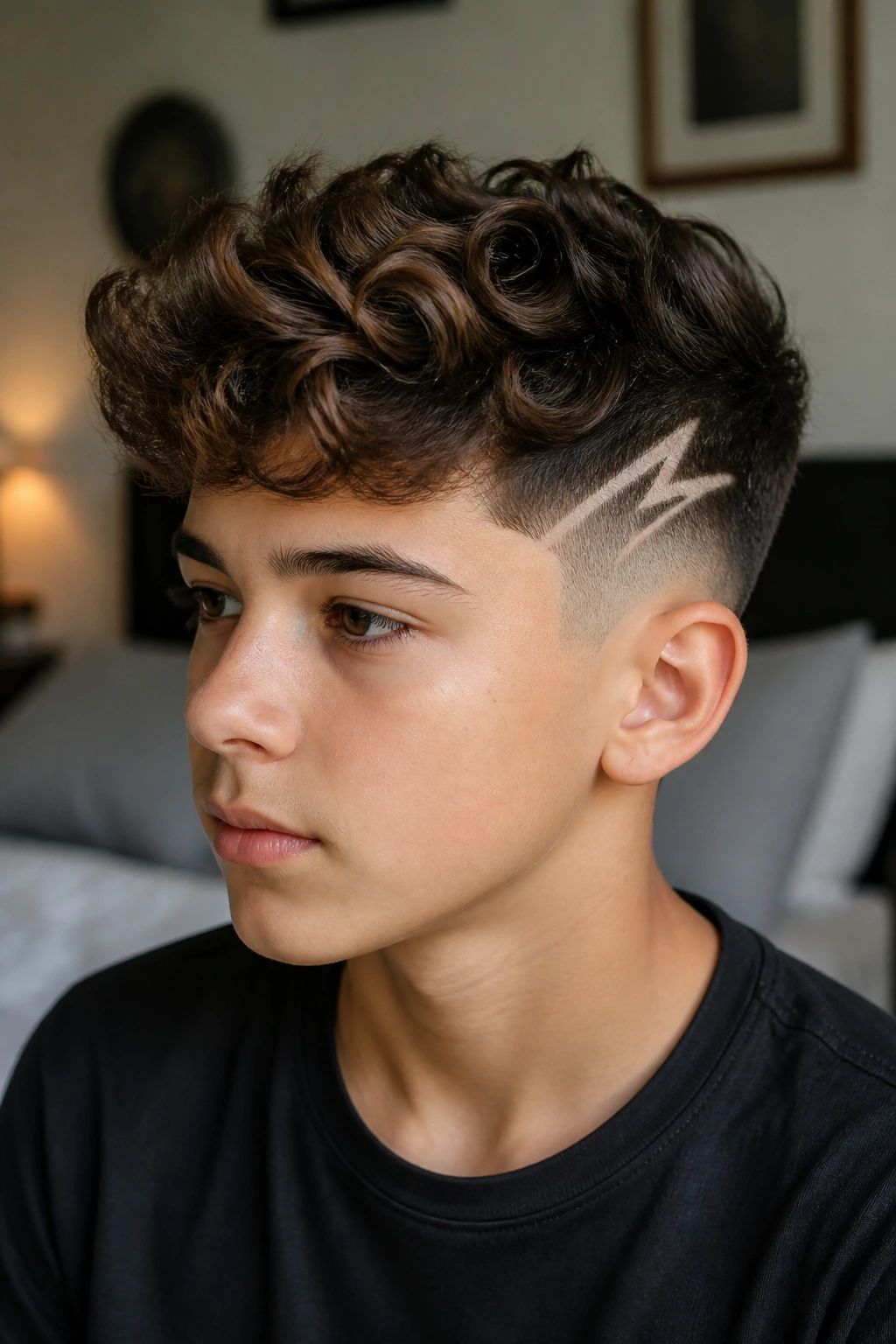
Longer waves change the mood completely. Instead of a crisp, compact cut, you get a top that moves, bends, and falls in soft ridges while the bolt slices through one side like a fast line on paper. That contrast is the whole appeal.
This version suits boys whose hair has enough wave to look full even when it’s cut to 3 or 4 inches on top. The sides should stay tight enough that the bolt doesn’t drown in bulk. A low-to-mid fade usually works best. Too much scalp exposure and the top starts looking disconnected. Too little and the bolt loses definition.
Keep the side bolt away from the strongest wave bends if possible. A good barber will usually place it on the calmer side panel, where the line can stay clean for longer. If the hair tends to puff, a lightweight sea salt spray plus a soft blow-dry helps the waves stack instead of sprawl.
This is one of the more forgiving cuts in the set. It looks relaxed on ordinary days and still sharp enough for photos.
6. Drop Fade with a Wrapped Lightning Bolt
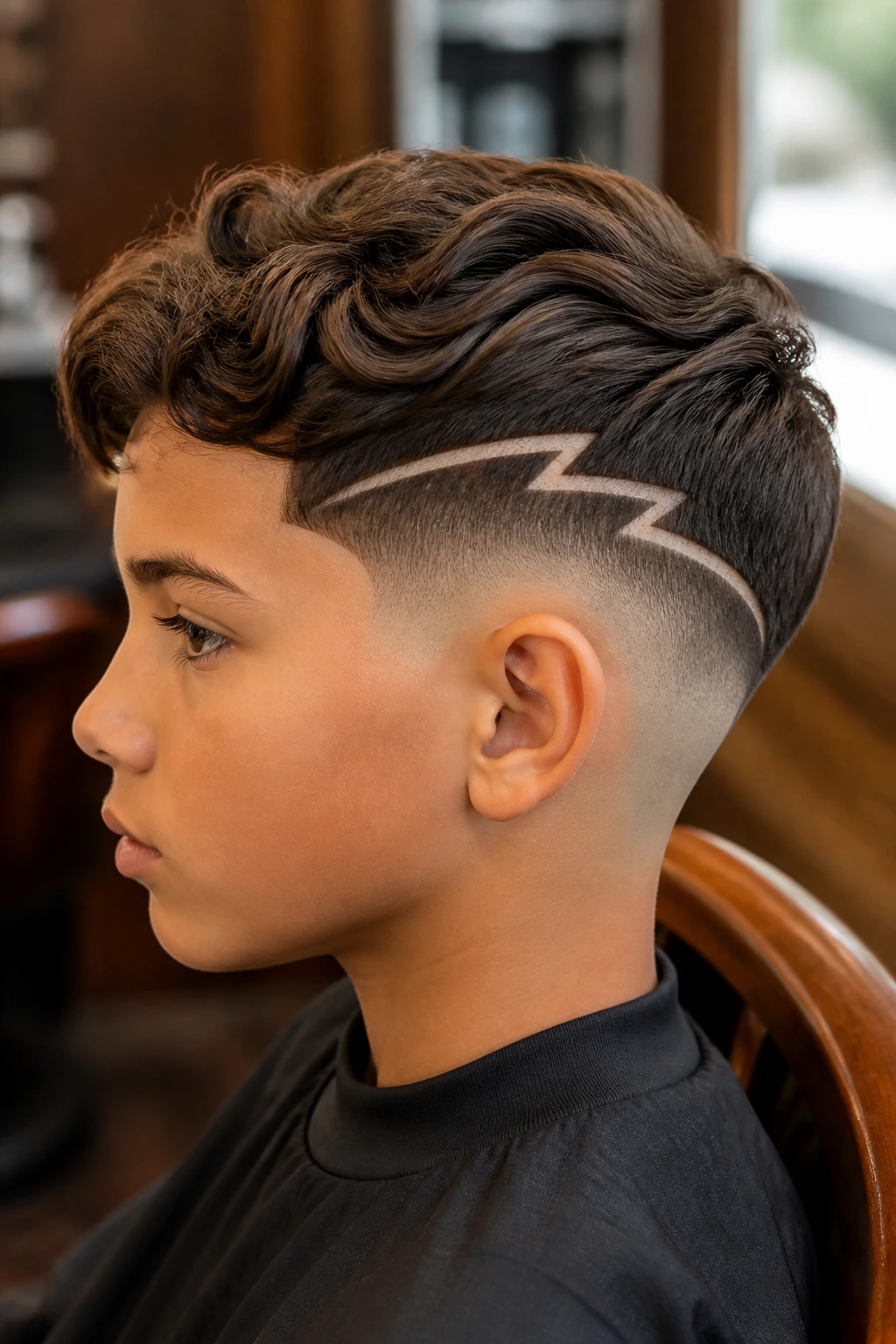
A drop fade follows the shape of the head as it dips behind the ear, and that makes it a smart choice for a bolt that needs some movement. Instead of cutting a straight path, the design can wrap with the fade and look like it belongs there.
This one is one of my favorites on wavy hair because the haircut already has a little curve. The fade drops lower toward the nape, which gives the bolt a runway. A bolt that bends with the head shape feels less forced than one chopped across a flat side panel.
Keep the top a touch longer than you think you need. Wavy hair loses visual length once it dries, and a top that starts too short can make the fade look oversized. A length in the 2.5 to 3-inch range usually gives enough movement without collapsing into frizz.
The wrapped bolt is also a good fix for heads that don’t take straight designs well. If the sides are a little round or the ears sit higher, the curve of the drop fade helps everything line up.
7. Burst Fade Mohawk with a Bolt Trail
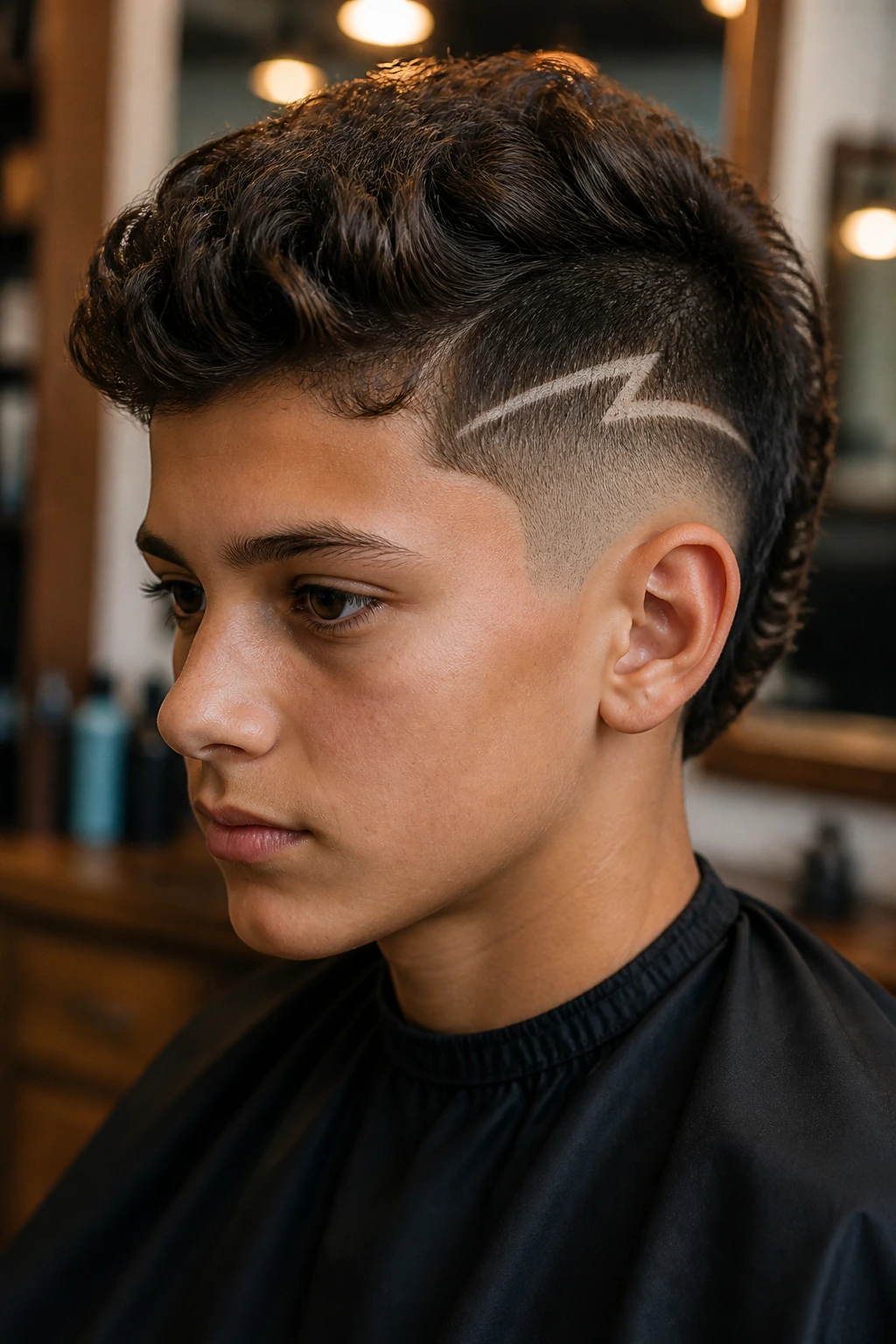
This one has attitude. A burst fade mohawk creates a center lane of height, and the bolt trail rides alongside it or peels off from one side of the burst. On wavy hair, the top strip gets a nice rough texture without needing to be overstyled.
The mohawk doesn’t have to be extreme. In fact, the better versions for boys usually keep the center strip narrow enough to stay tidy and wide enough to show the waves. The bolt trail can start near the temple and run back around the ear, which gives the side fade a more finished feel.
This cut looks best when the barber keeps the burst round and even. A lopsided burst makes the bolt look accidental, which is never the goal. The line should feel like it belongs to the fade, not like it was dragged in after the fact.
If you pick this style, be honest about upkeep. Burst fades and design lines need regular touch-ups. Miss the trim window and the whole thing softens faster than a low taper would.
8. Undercut with a Thick Lightning Bolt
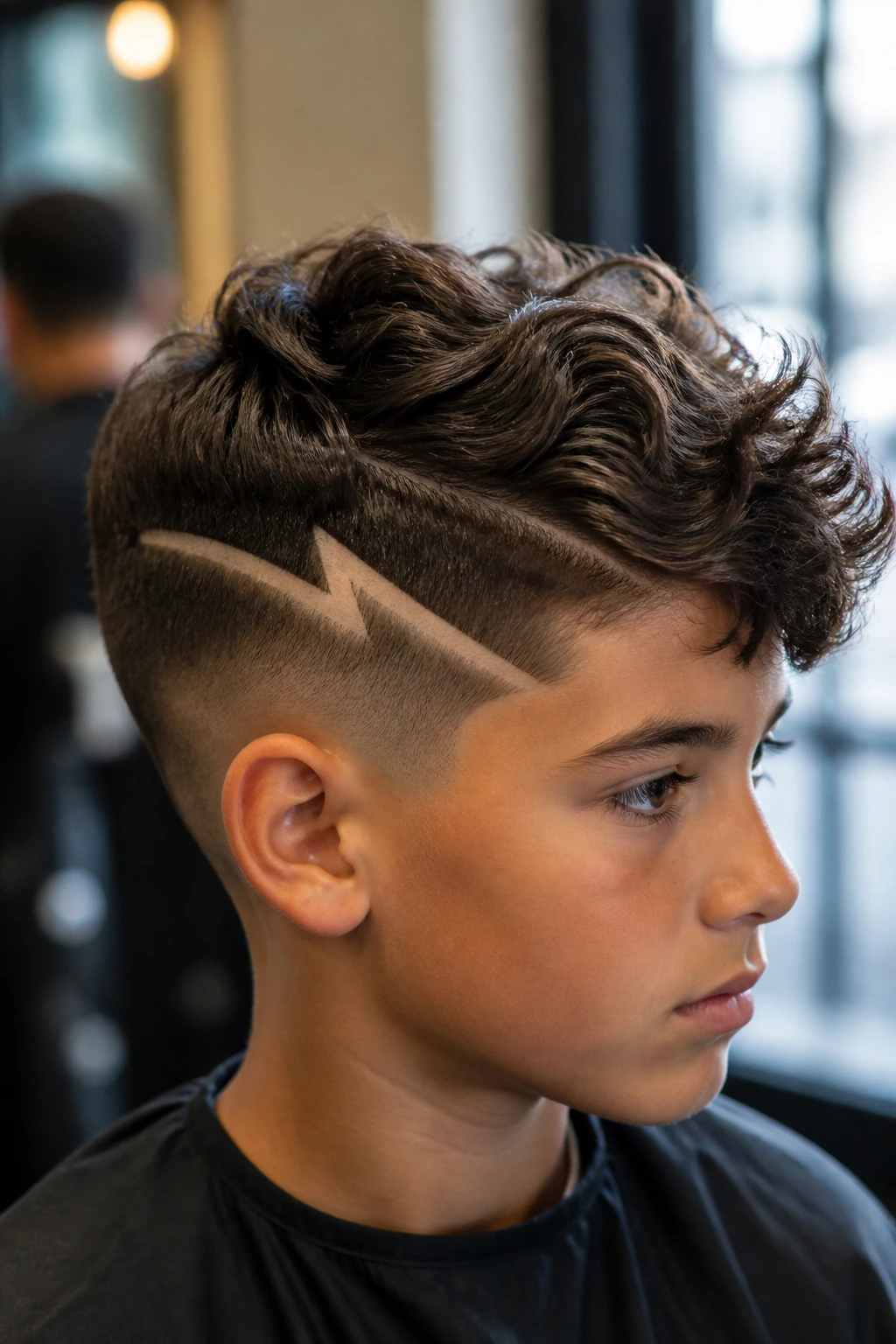
An undercut turns the top into the main event. The sides sit tight and disconnected, which gives the bolt room to run without interference. On wavy hair, that extra top length can be a gift. The waves get to fall where they want, and the bolt acts like a hard boundary under all that texture.
A thicker bolt fits this cut better than a thin one. You want contrast that can hold up under the weight of the top. If the line is too narrow, the top overwhelms it. If it’s wider, the design keeps its shape even when the hair on top starts puffing after a day in the wind.
This version is especially good for thick wavy hair that tends to lie heavy over the ears. The undercut removes that bulk. The bolt adds a point of interest so the cut doesn’t read like a plain disconnected top.
Use a matte paste or clay here, not glossy gel. The top needs separation, not shine. A quick finger rake through dry hair usually does more than a comb.
9. Side-Swept Waves with a Hidden Bolt
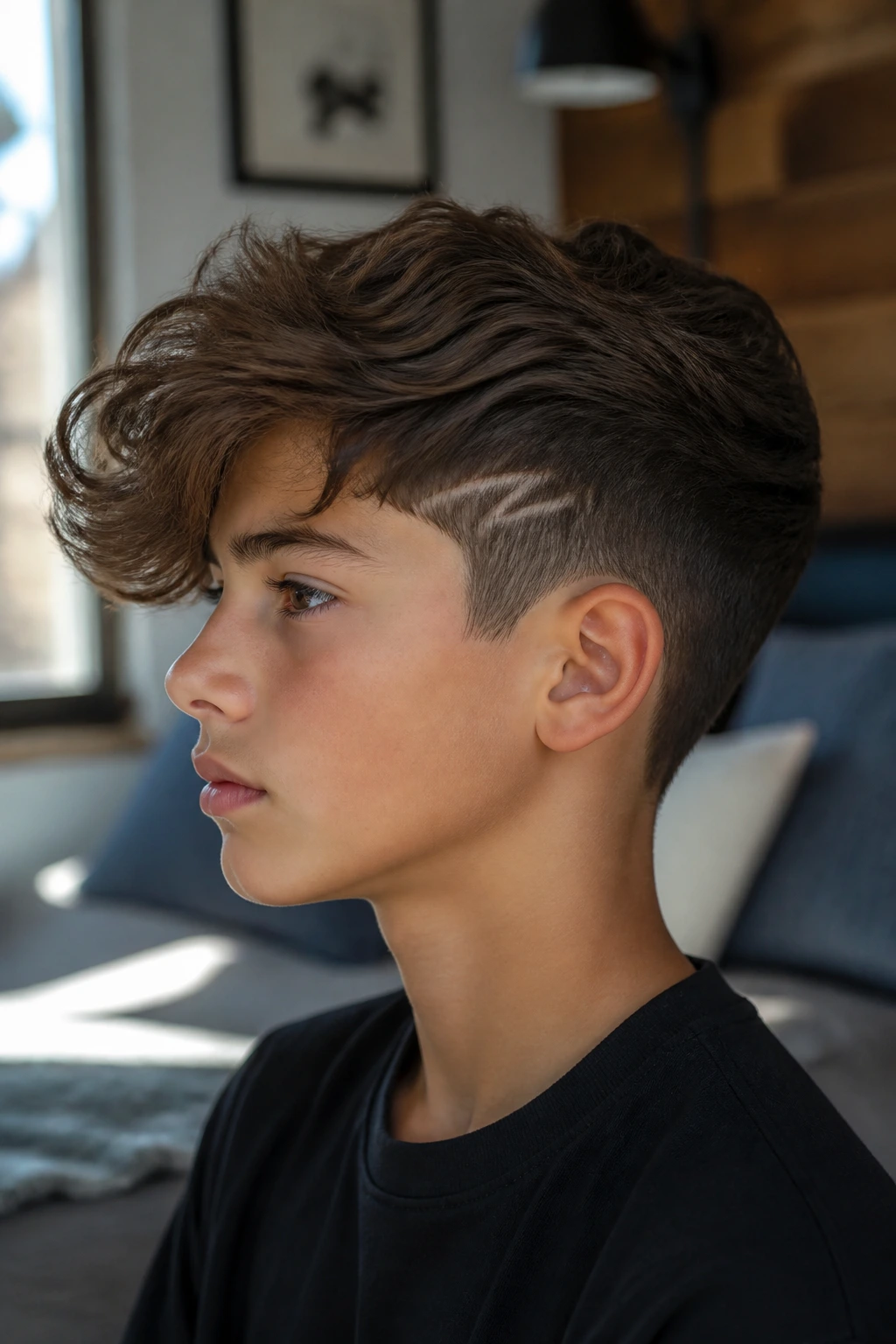
Not every bolt needs to announce itself from across the parking lot. A side-swept wave cut with a hidden bolt is for the kid who wants the design, but only when it peeks out. The bolt sits lower, often near the side panel or just behind the temple, and the hair on top can sweep over part of it.
That partial cover is the point. When the hair is neat, the bolt shows. When it’s messy, the style still looks like a normal wavy cut. It’s a useful trick for families dealing with stricter dress codes or kids who want something cool without making a big scene out of it.
The top should be long enough to sweep, usually 3 to 4 inches, with enough weight to fall naturally to one side. The barber should keep the bolt reasonably wide and avoid putting it too high, because a hidden design that sits too close to the crown becomes awkward once the hair moves.
Best for:
- school days where clean looks matter
- thicker waves that need direction
- kids who want a design without a full shaved statement
This is the cut I’d choose first for someone who asks for “something with a bolt, but not too much.”
10. French Crop with a Short Bolt
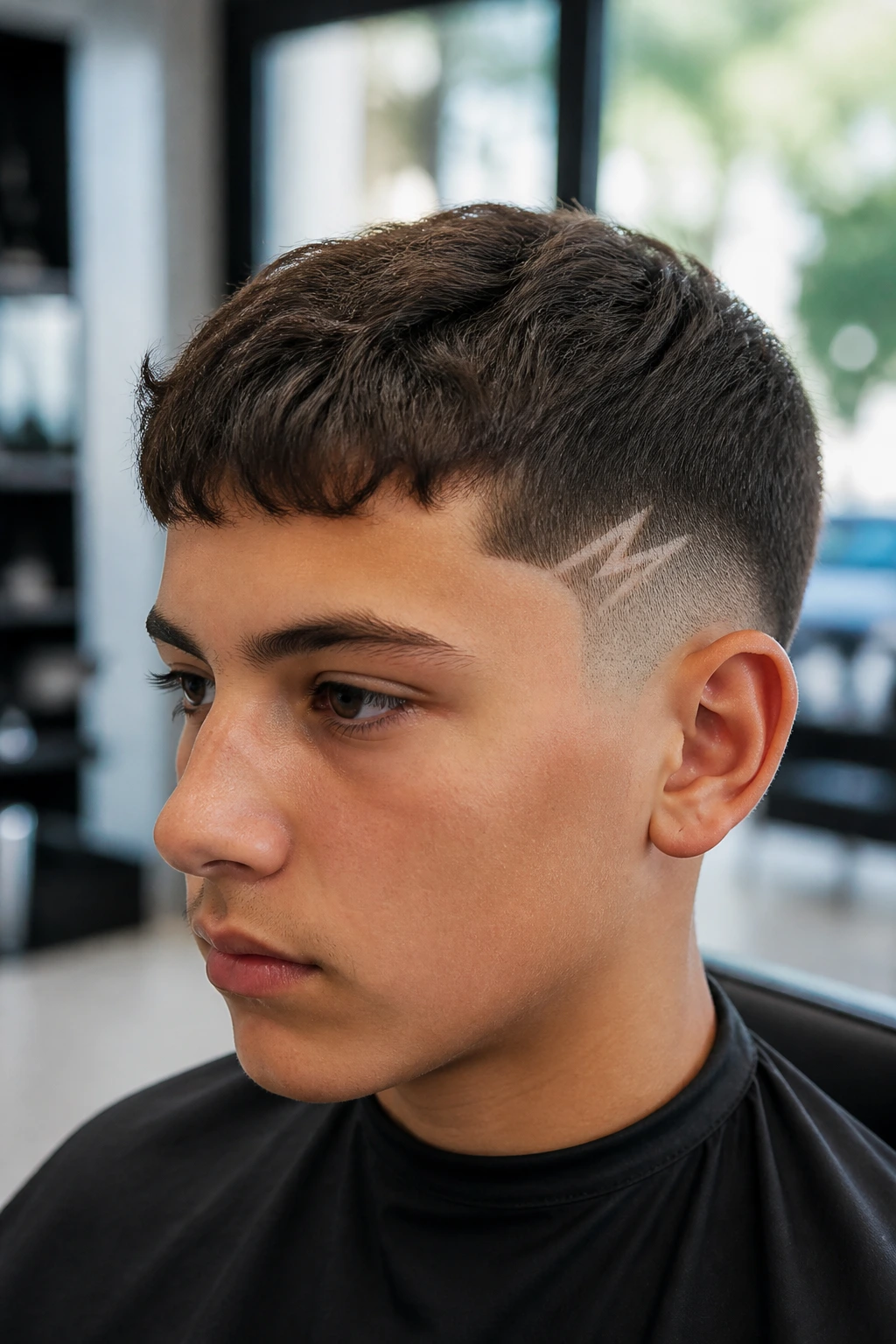
The French crop keeps things neat. Short sides, short top, blunt fringe, and a small bolt at the temple or just above the sideburn. On wavy hair, the crop removes the temptation to over-style. The wave texture still shows, but the haircut stays grounded.
A short bolt makes sense here because the haircut itself is compact. You do not want a giant design fighting a short fringe. A short, angled line gives the style a clean edge and keeps the whole head from feeling overworked.
This is one of the easiest cuts to maintain at home. The fringe usually sits straight or slightly broken, and the top only needs a small amount of matte product. If the hair is especially springy, the barber can leave a little extra length in the front to avoid the crop becoming too choppy once it dries.
It’s a good everyday cut. Not boring. Not overdone. Just neat enough to behave and sharp enough to get noticed.
11. Wavy Mullet with a Rear Bolt
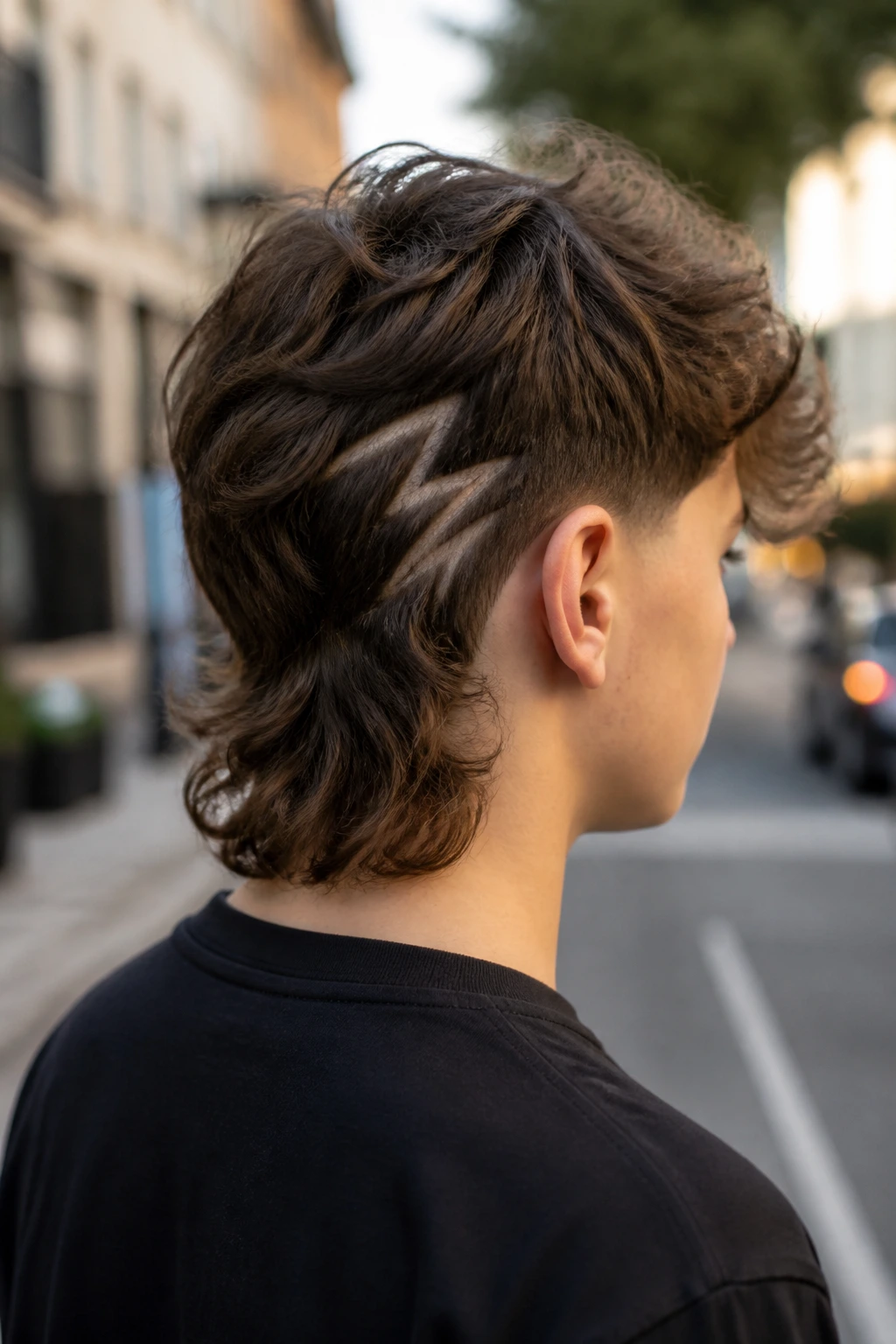
The mullet is back in a lot of barbershops, and wavy hair gives it a softer edge than straight hair does. A rear bolt can start near the temple and run toward the back section, where the longer layers live. That placement makes the design part of the shape instead of a random add-on.
This cut works because the longer back length gives the waves somewhere to move. The bolt adds structure so the style doesn’t blur into one big shag. If the top is kept textured and the back is trimmed clean enough, the result feels playful rather than messy.
Not every head shape pulls this off. The crown and nape matter here. If the back is too thin, the bolt will look lonely. If it’s too heavy, the design disappears. A good barber will taper the neckline lightly and keep the back layered so the bolt has room to breathe.
This is one of the more personality-heavy choices in the lineup. It’s not subtle. That’s the point.
12. Hard Part with a Bolt Accent
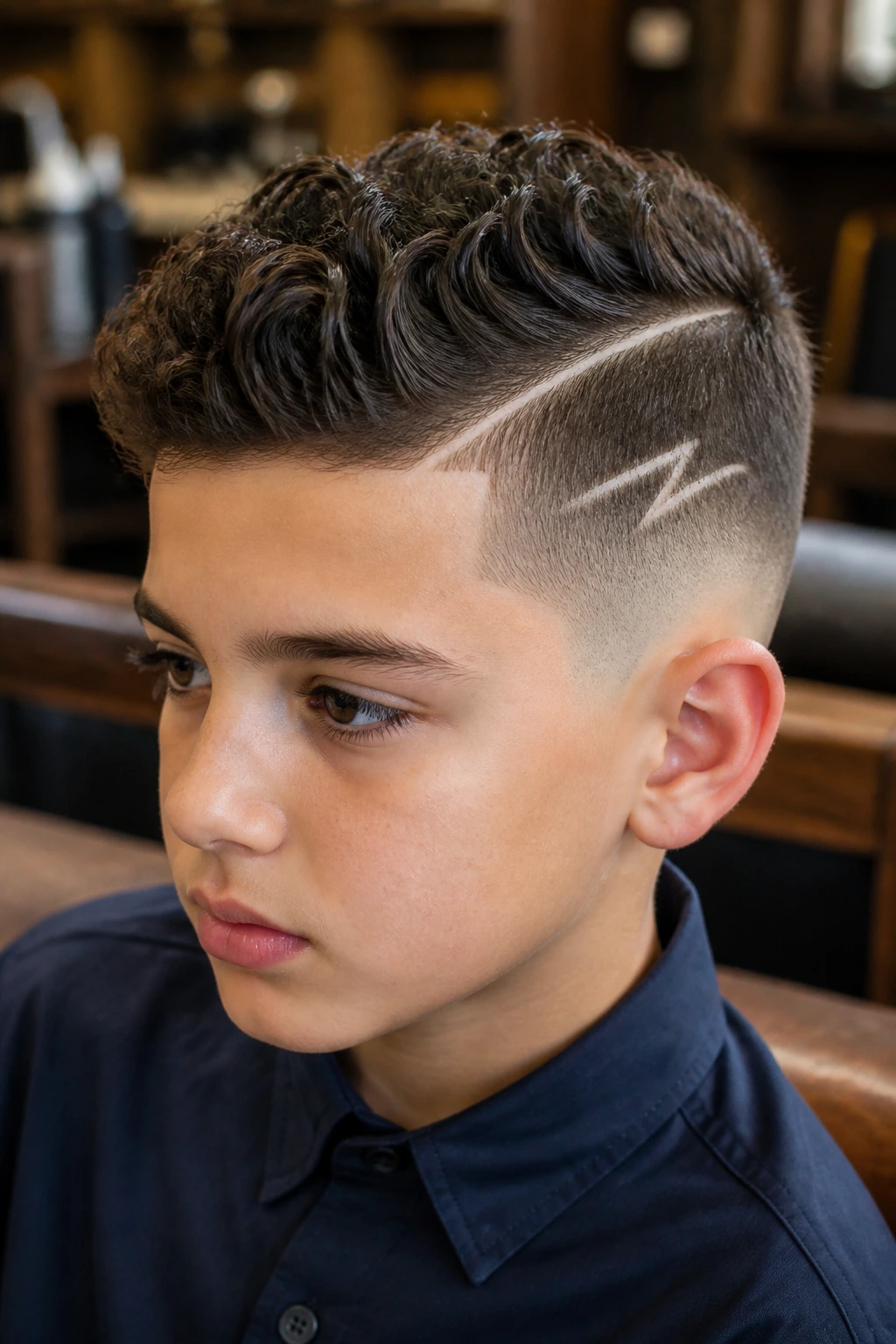
A hard part gives the haircut a built-in line, and adding a bolt accent turns that line from tidy to sharp. The key is not to overload the head with too many competing parts. The bolt should support the part, not fight it.
On wavy hair, this cut is a little more structured than most of the others. The side with the part can be brushed over neatly, while the opposite side carries the bolt or a small lightning etch. That contrast makes the haircut feel planned. There’s a reason for every line.
The hard part itself needs maintenance, or it softens into the rest of the wave pattern. If the family is okay with touch-ups every couple of weeks, this style stays crisp. If not, it can get fuzzy faster than a softer taper style.
This is a good choice for boys who like hair that looks clean in a collared shirt but still has some edge when the jacket comes off.
13. Shadow Fade with Double Bolt
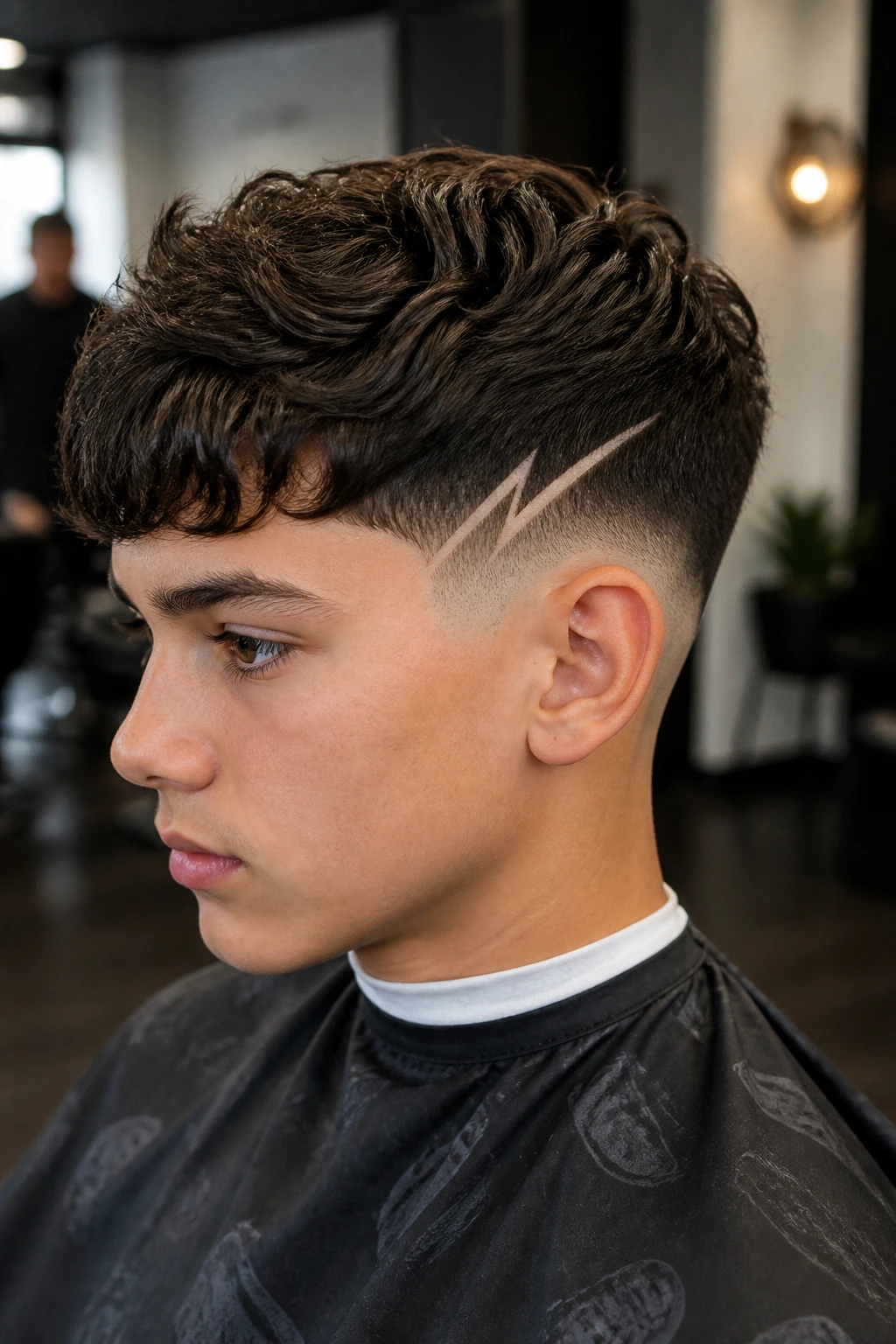
A shadow fade makes the whole cut easier on the eyes. The transition from dark to light is softer than a skin fade, which means a double bolt can sit on the side without the design becoming too loud. Two thin bolts look better here than one thick one. The fade is already doing a lot.
This style suits wavy hair that has medium density. The top can stay textured and loose, while the sides melt down gradually. A double bolt works because the separate lines echo the movement in the hair without making the head feel crowded.
The only real rule: keep the bolts spaced enough that they read as two clean marks, not a scratchy mess. The barber should use a detail trimmer carefully and clean up the edges after the main shave. Rushing the design is where this cut falls apart.
It’s a smart middle ground. You get design, but not too much. Contrast, but not the harshest version on the wall.
14. Soft Taper with a Hidden Bolt Behind the Ear
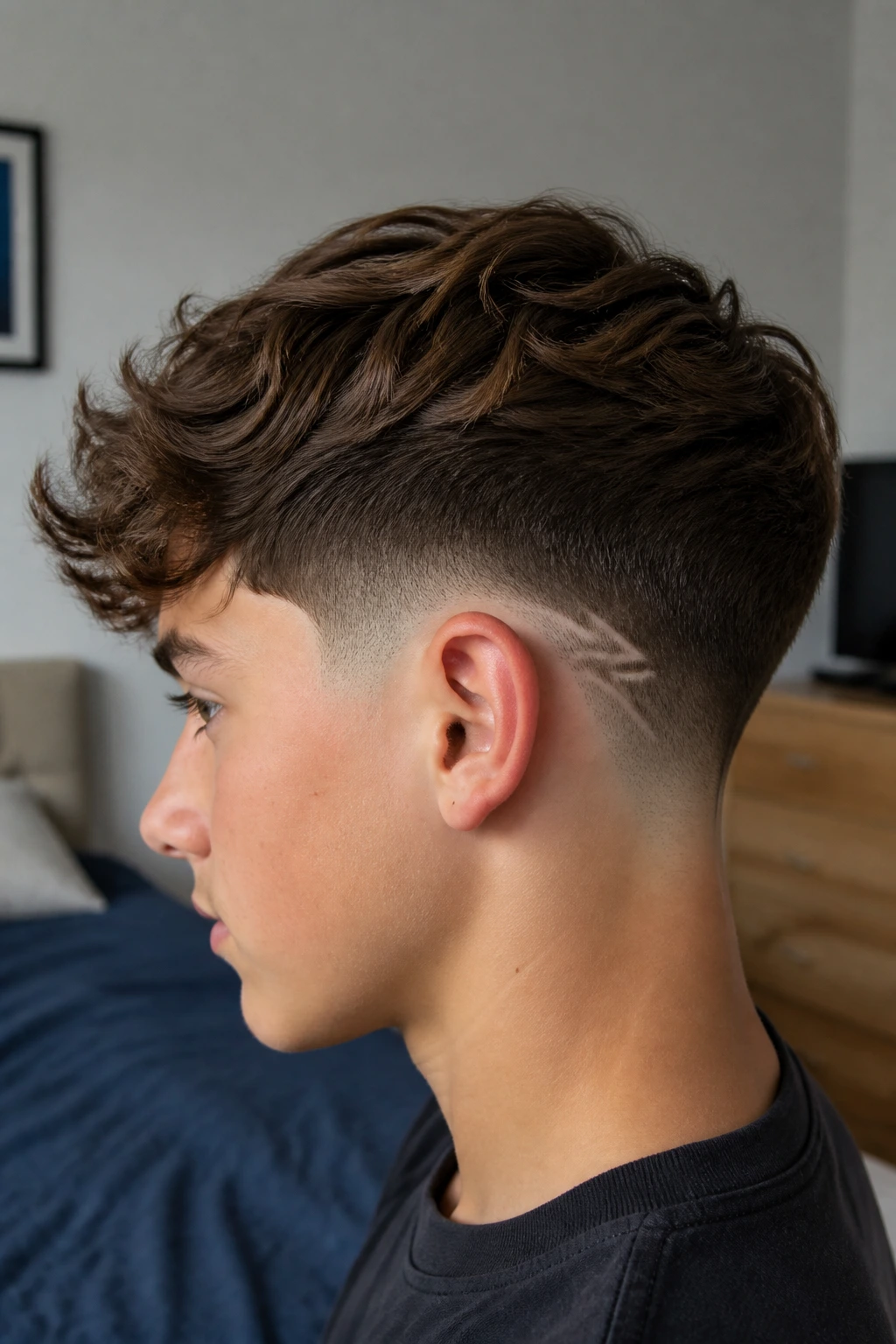
Some of the best haircut ideas are the ones you don’t fully see at first glance. A soft taper with a hidden bolt behind the ear falls into that camp. The taper keeps everything neat and low, while the bolt hides just enough that it shows when the head turns or the hair tucks back.
This is a good cut for boys who want shape without commitment. The wavy top can be brushed forward, side-swept, or left loose. The hidden bolt gives the haircut a little secret, which sounds silly until you see how well it works. It’s neat. Quiet. Still fun.
Because the design sits low, it doesn’t need a giant contrast to read. The line can be thinner here than it would be on a high fade. That also means it grows out a bit better. When the bolt softens, the taper still looks clean.
If you’re trying to avoid a style that gets old fast, this one has a lot of staying power.
15. Long Fringe with a Floating Bolt
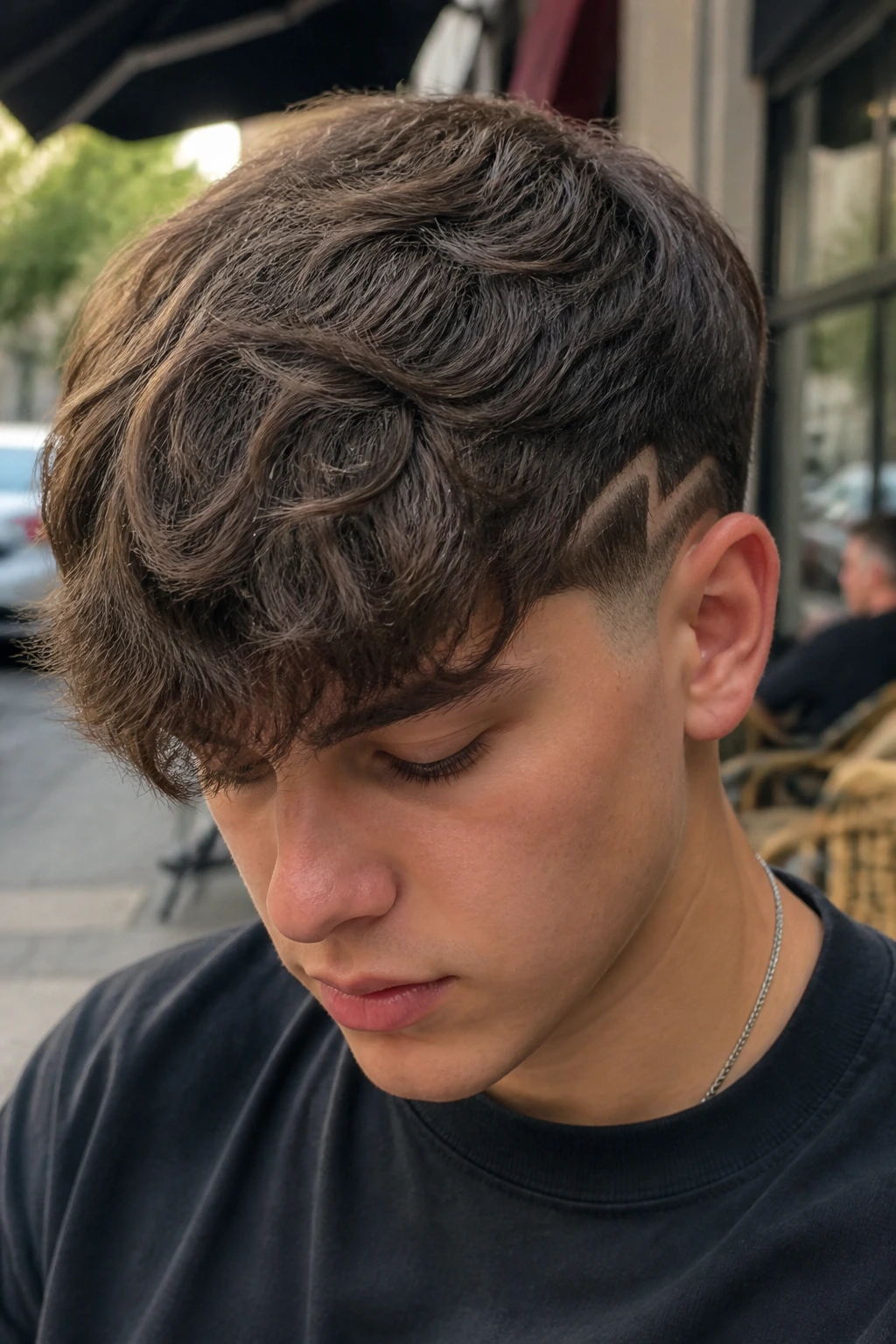
Long fringe changes the whole silhouette. Instead of opening the forehead, it drops the front forward and gives the face a softer frame. A floating bolt sits below that fringe or slightly off to one side, where it can be seen without taking over the haircut.
The wave pattern matters a lot here. Long fringes on wavy hair can go from cool to bulky if they’re cut too heavily. The best version keeps the fringe feathered, not helmet-like, and the bolt is carved where the side panel has enough open space to show it.
This cut feels fashion-forward, but it still works on ordinary days if the length is controlled. A bit of sea salt spray and finger drying is usually enough. No need to blast the fringe straight up unless you want a more dramatic shape.
The floating bolt is a nice match for hair that moves. It doesn’t need to be center stage. It just needs enough room to flick into view when the fringe shifts.
16. Low Fade with Bolt Behind the Ear
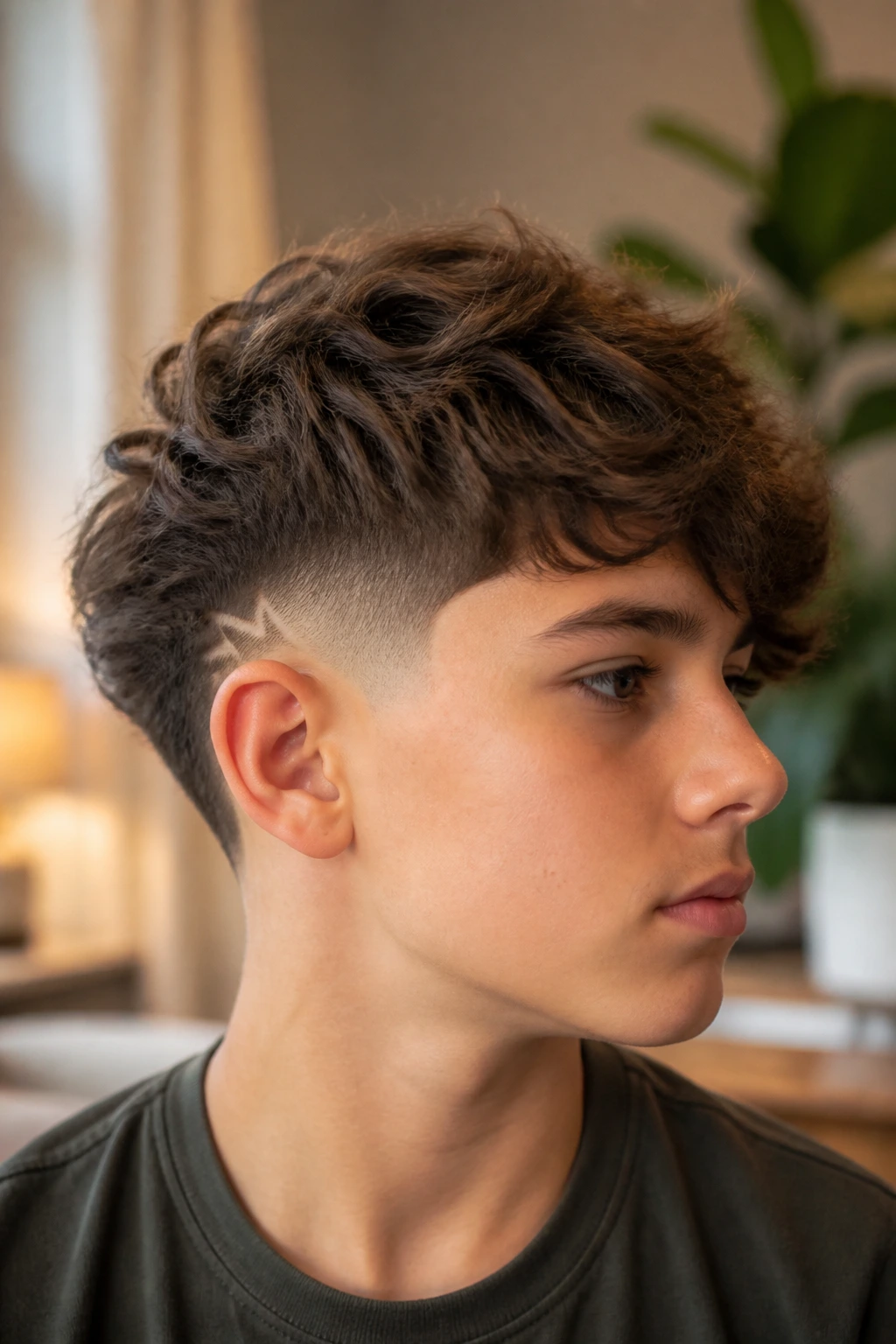
Here’s the cleanest everyday option in the whole set. A low fade with a bolt tucked behind the ear gives the haircut a little edge, but the visible surface stays neat. The wavy top can be combed, finger-styled, or left messy. The bolt is the part most people notice only after they look twice.
That hidden quality helps a lot when a haircut needs to survive school, sports, family photos, and whatever else the week throws at it. The fade keeps the side tidy around the ear, and the bolt runs through the quieter part of the haircut instead of the front.
This style does not need dramatic product. A light cream or matte paste is enough. Too much product would just weigh the wave down and make the hidden design harder to see.
If you want the idea of a lightning bolt without the full shout, start here. It is one of the easiest ways to wear the look well.
17. High Taper with a Crown Bolt
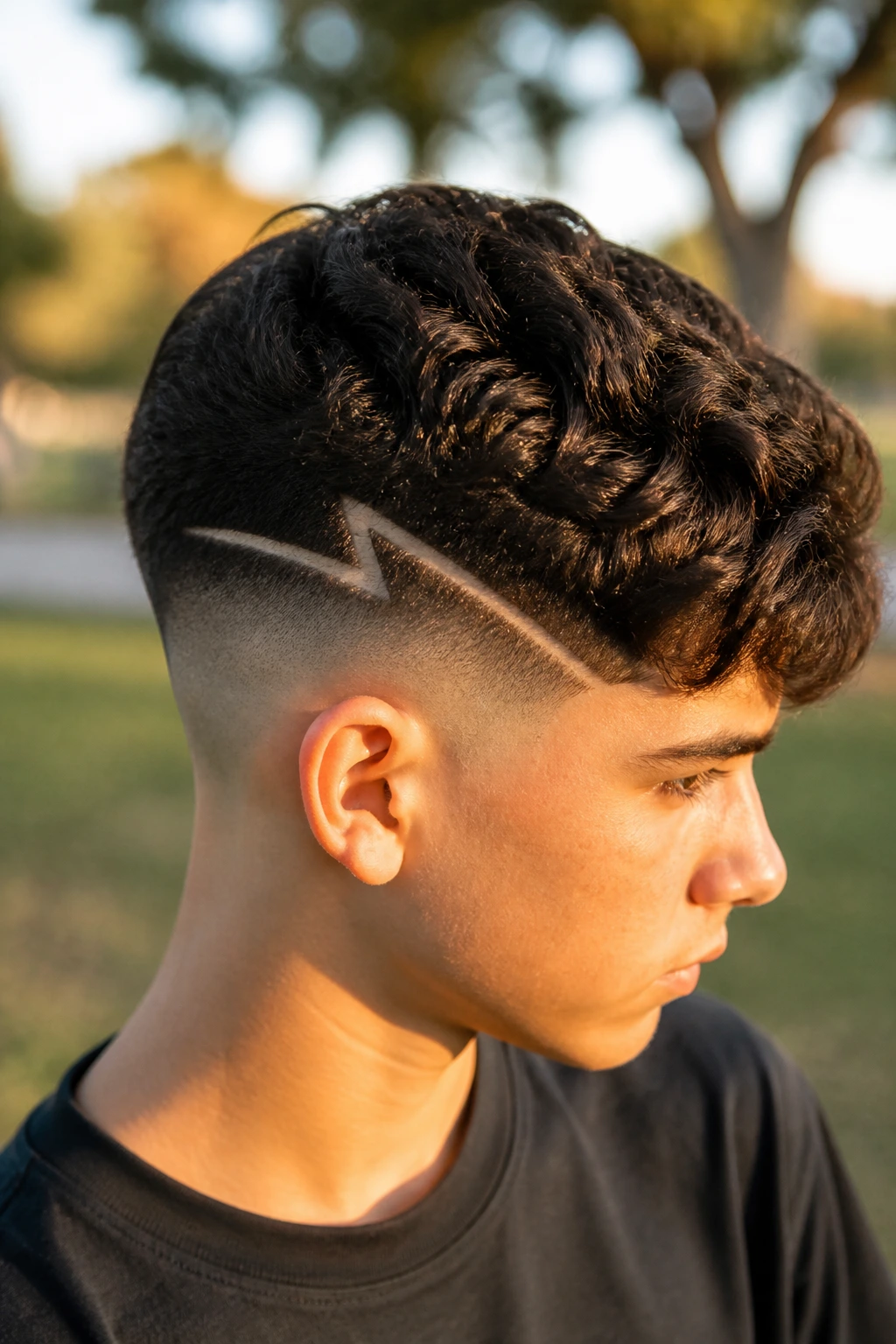
A high taper with a crown bolt is for heads with strong wave movement and a little natural height. The taper climbs higher around the sides, which opens space for the design, and the bolt shifts farther back toward the crown instead of staying at the temple.
That placement only works when the barber understands how the hair grows around the swirl. Put the line dead center on a stubborn crown pattern and it can twist in a strange way. Set it just off the swirl, though, and the bolt feels like it belongs there.
The top should stay textured and loose, with enough length to show the wave without puffing out. This cut tends to look best on thick hair that can stand some volume. Thin hair can make the crown design look too exposed.
It’s a slightly more advanced version of the bolt idea. Not difficult for the barber. Just more thoughtful.
18. Messy Wavy Top with a Split Bolt
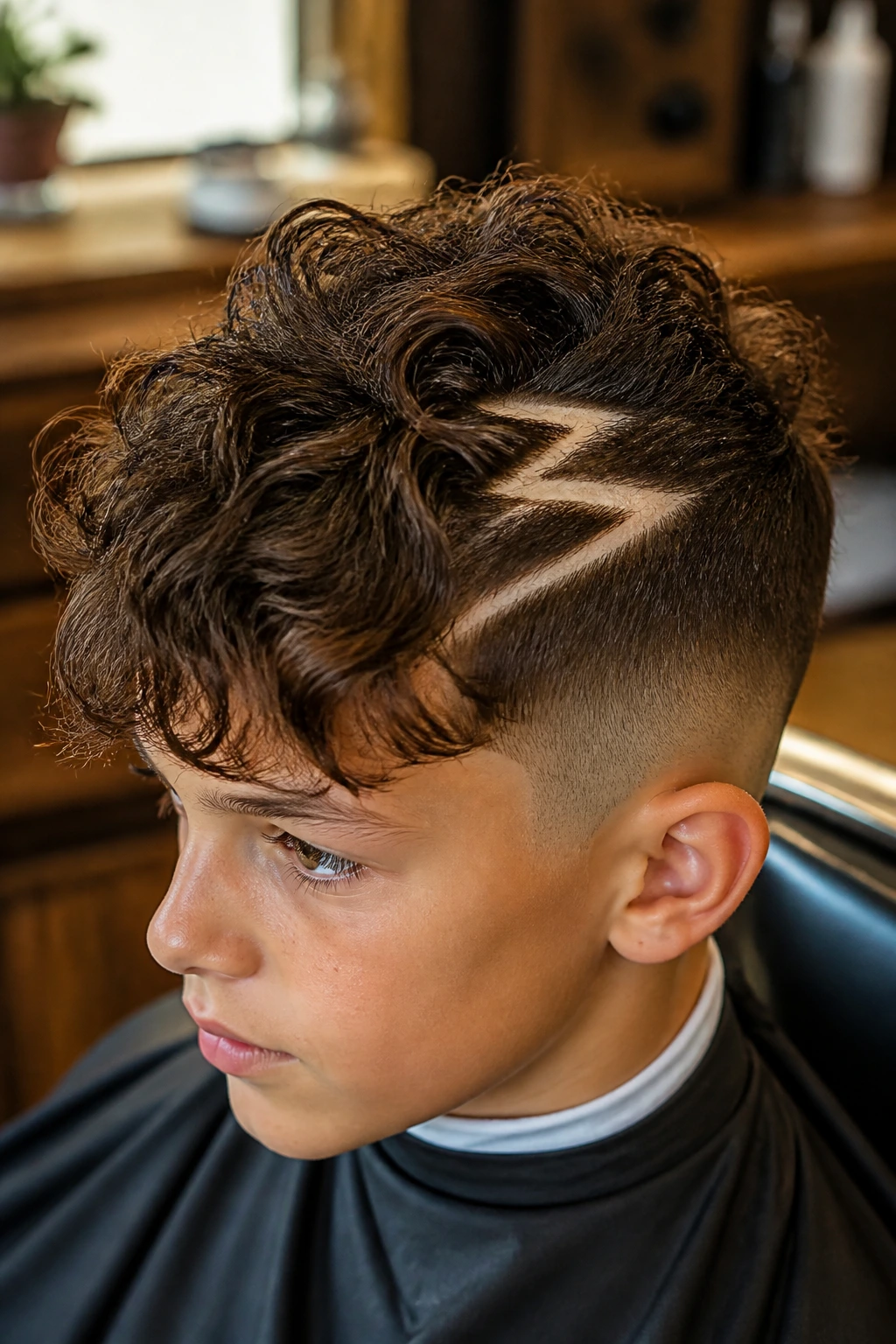
This is the wild card. The top stays messy on purpose, the waves stay loose, and the bolt splits into two parts instead of one clean slash. On the right head, that split line looks energetic rather than broken. It feels playful, which is part of the charm.
The split bolt works best when the top is full enough to contrast with the shaved area. The barber should keep the sections clean and give each part of the bolt a clear direction. If the split is too random, the design looks unfinished. If it’s deliberate, it looks smart.
I’d pick this for a kid who likes a little edge and doesn’t mind standing out. It’s the loudest choice here in spirit, even if the actual line work is smaller than some of the high fade cuts.
When waves move through a split design, the haircut gets a nice stop-and-start rhythm. That’s what makes it different from a regular lightning line. It feels less like a logo and more like motion.
What Makes a Lightning Bolt Read Cleanly on Wavy Hair
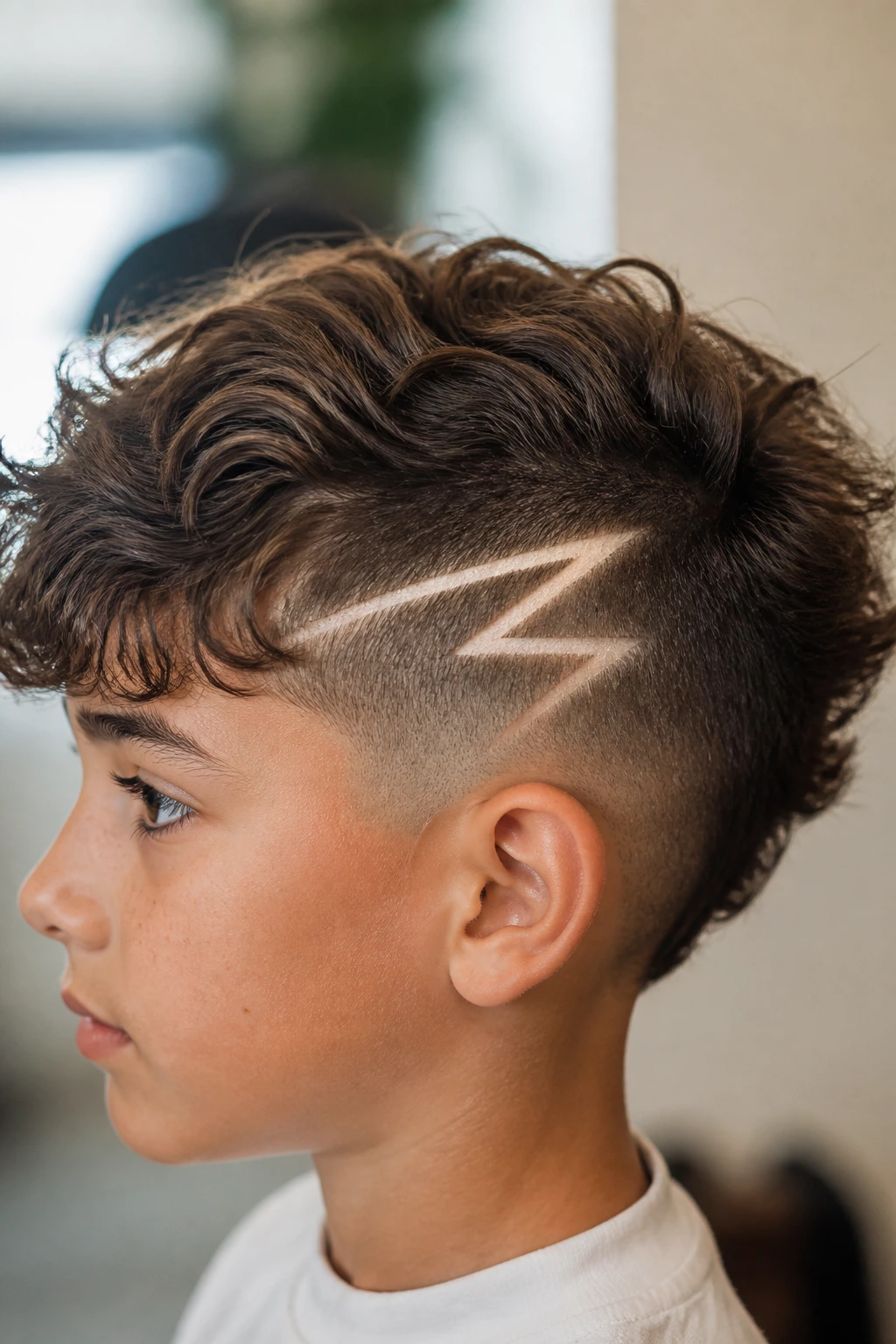
The biggest difference between a good bolt and a fuzzy one is width. Wavy hair blurs edges as it grows, so the line should usually be a touch wider than the first instinct says. A bolt that looks perfect on day one can turn vague by day ten if it’s shaved too thin.
Placement is the second piece. The cleanest bolts sit on the flatter parts of the head—temple, side panel, or just behind the ear—where the wave pattern is less aggressive. If the barber tries to force the line through a heavy cowlick or a strong ridge, the bolt can twist, and not in a good way.
Dry finishing matters too. Wavy hair shrinks and lifts when it dries. That means a bolt carved while the hair is dripping wet can look lower or longer than expected once everything settles. A good barber usually checks the design after drying the top a bit.
Color and contrast play a role as well. Dark, thick waves make a shaved line stand out faster than fine, lighter waves. On lighter hair, the fade has to be cleaner because the design itself may not pop as hard. That’s why the best version is not the same for every head. The haircut should answer the hair, not the other way around.
How to Tell the Barber Exactly What You Want
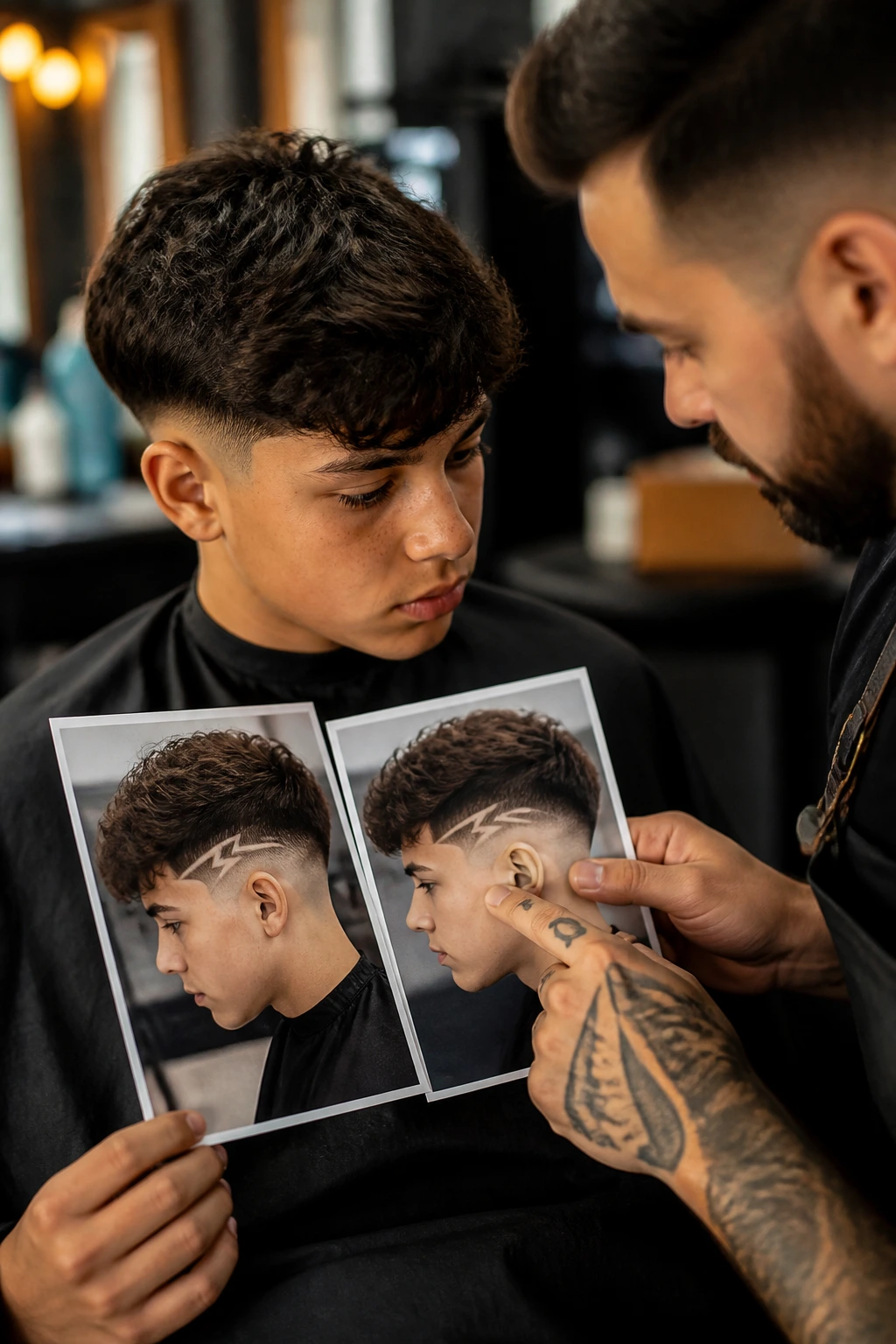
Bring at least two photos. One should show the bolt shape. The other should show the fade or taper you want. Those are not the same thing, and barbers get annoyed when people expect one picture to answer both questions.
Say where the bolt starts and where it stops. “Temple to above the ear” is useful. “Somewhere on the side” is not. If you want a thicker line, say that out loud. If you want it hidden, say that too. A barber can work with specifics. Guessing games waste everyone’s time.
Ask whether the design will be carved on dry or damp hair. With wavy hair, that detail matters more than most people think. Dry hair shows the true shape. Damp hair shows the temporary shape. One can look tidy for the cut and misleading by the time you get home.
If the child has a strong swirl, cowlick, or a spot that sticks out near the temple, point it out before the clipper turns on. Barbers can adjust the bolt so it doesn’t fight the growth pattern. That one conversation saves a lot of awkward mid-cut fixing.
Essential Tools for Keeping the Cut Sharp
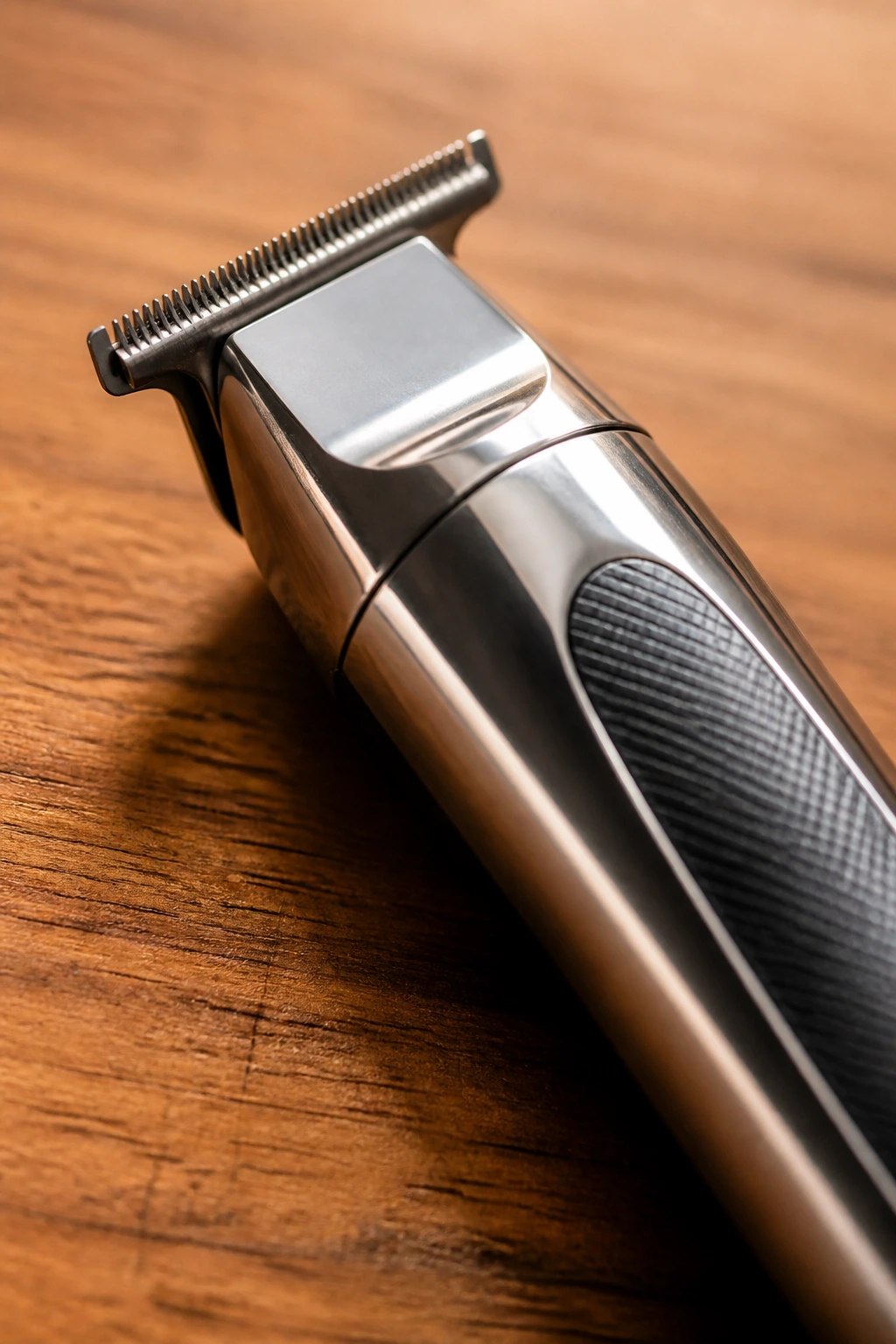
- Detail trimmer: This keeps the bolt edges clean between barber visits. A regular clipper is too bulky for touch-up work.
- Clipper guards: Guard sizes 0.5, 1, 2, and 3 cover most taper and fade requests on wavy hair.
- Barber comb: Useful for lifting the top and showing where the wave sits before you style it.
- Spray bottle with water: A light mist resets wavy hair without soaking it flat.
- Matte clay or matte paste: Helps the top stay textured instead of shiny and heavy.
- Sea salt spray: Good for loose waves that need a bit more grip and separation.
- Blow dryer with a nozzle: Optional, but handy when you want the top to lay in the right direction without crushing the bolt.
- Hand mirror: Makes it easier to check the back and side design from home.
- Cape or towel: Not glamorous, but it keeps hair off the neck while you clean up the top.
How to Style the Cut Without Flattening the Waves
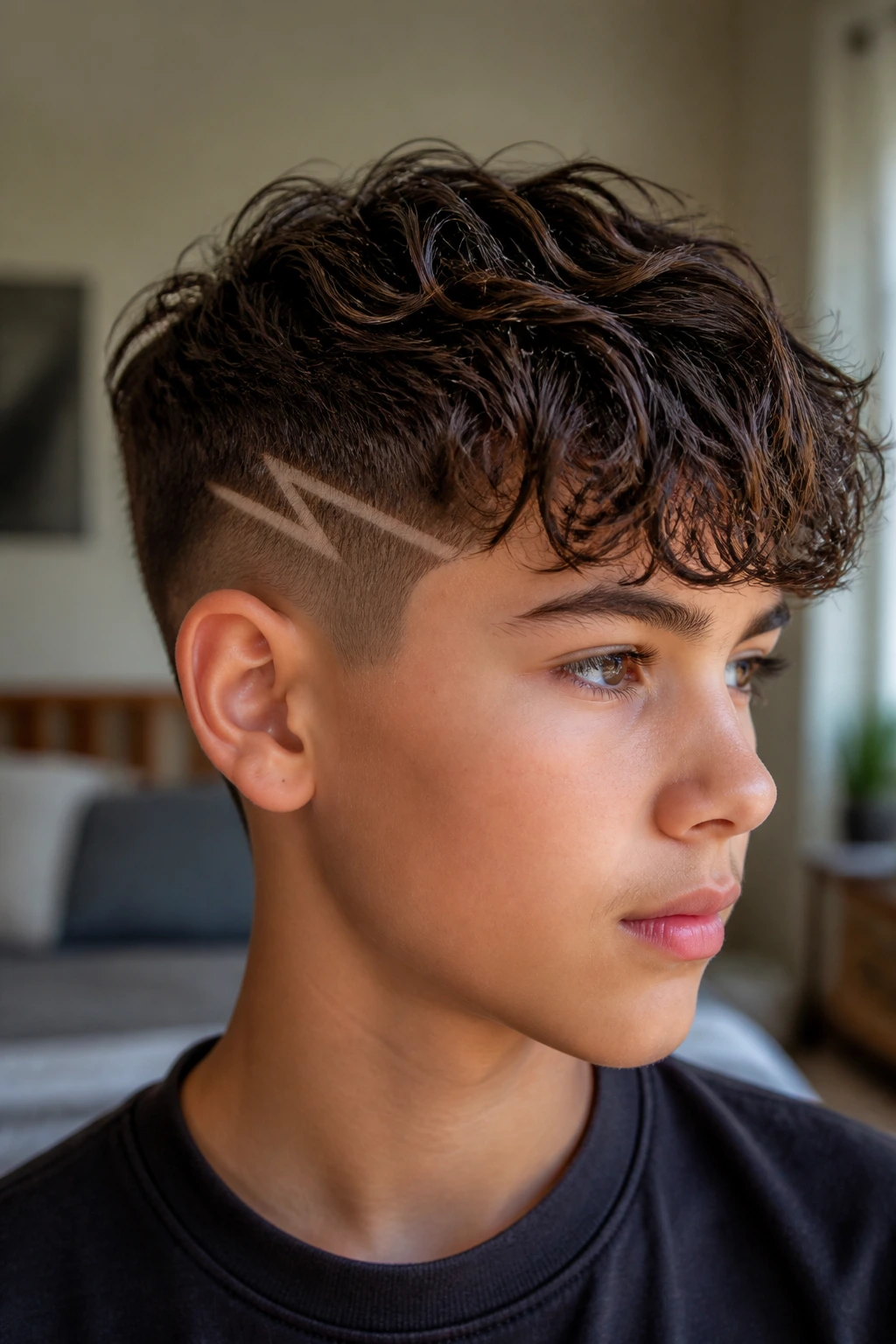
A good bolt cut falls apart fast if the styling gets too heavy. Wavy hair wants a little lift, not a bucket of product. Start with damp hair, not soaking wet hair, and work in a dime-size amount of matte cream or clay. That is usually enough for most of these cuts.
Fast school-morning style: mist the top, scrunch the front, and finger-comb the wave away from the bolt. Let the sides stay neat. Don’t overthink it. The line is the star, and the hair on top should frame it, not cover it.
Cleaner finish: use a blow dryer on low with the nozzle pointed along the direction you want the waves to fall. A few seconds at the roots keeps the top from puffing up. Once it cools, the shape holds better.
Sports-day version: skip heavy product altogether. A damp hand and a quick shake through the top are enough. If a helmet is coming on and off, the design will still read once the hair settles again.
For thick or coarse waves: use less product than you think. Too much paste on thick hair turns the top sticky and stiff, which makes the bolt look harsher by comparison.
Maintenance, Washes, and Grow-Out
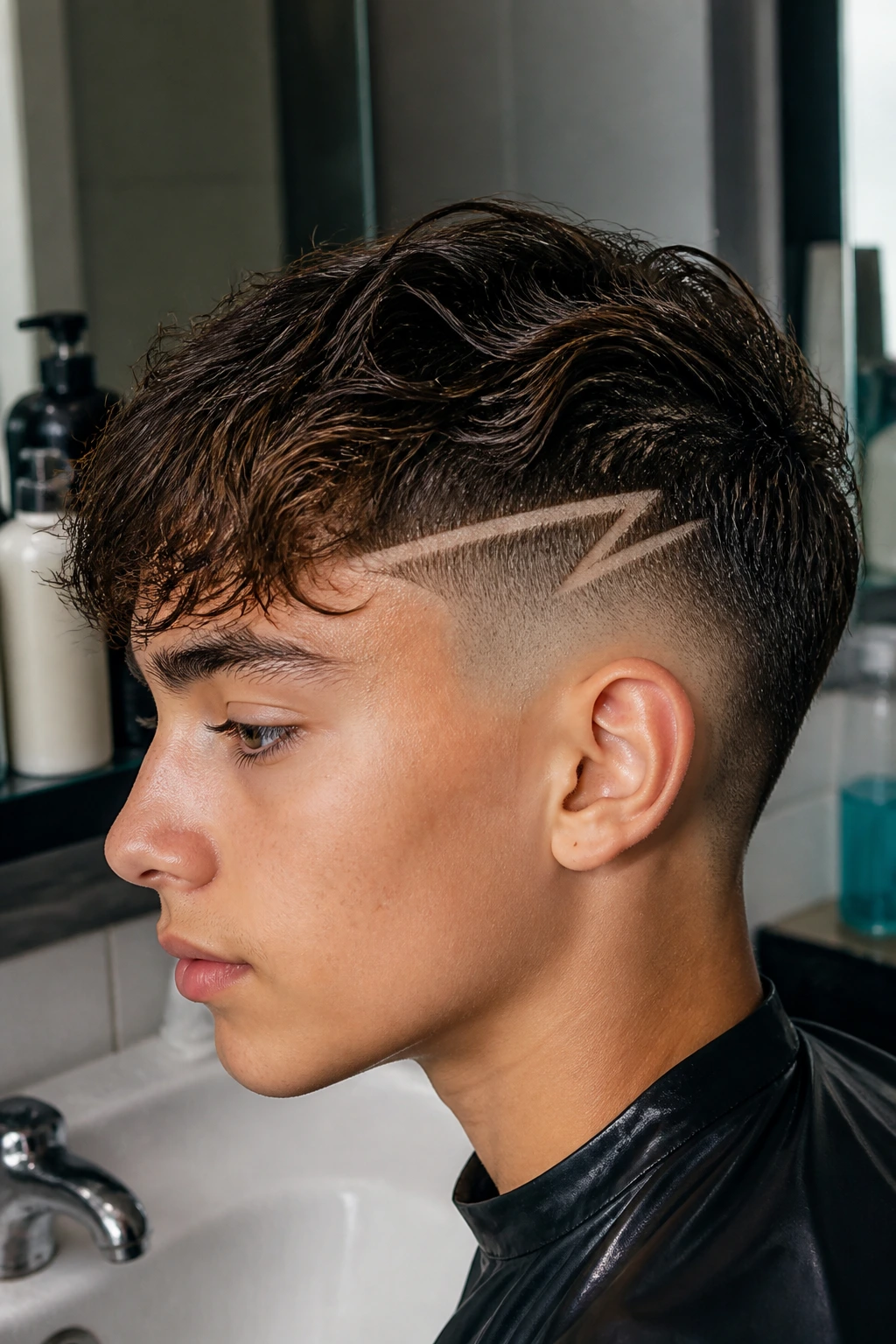
The bolt itself usually needs a touch-up every 7 to 14 days if you want it crisp. The wider and lower the line, the longer it can hold. A tiny temple bolt disappears faster than a thick side slash, especially on wavy hair that softens everything as it grows.
The fade or taper usually wants a barber visit every 2 to 4 weeks. Skin fades sit at the short end of that window. Tapers and shadows can stretch longer. If the neckline starts looking fuzzy before the bolt does, ask for a clean-up only. That’s cheaper and often enough to keep the haircut readable.
Wash the hair 2 to 4 times a week, depending on sports, sweat, and product use. Too much shampoo can dry out the waves and make them puff. Too little leaves the top greasy and heavy. Conditioner on the mid-lengths helps if the hair feels rough or triangle-shaped after drying.
Sleeping on a smoother pillowcase can help longer styles keep their shape. Not magic. Just less friction. For shorter cuts, the bigger issue is usually morning reactivation: a quick mist, a finger rake, and a tiny bit of product on the top, not the sides.
Common Mistakes That Throw the Design Off
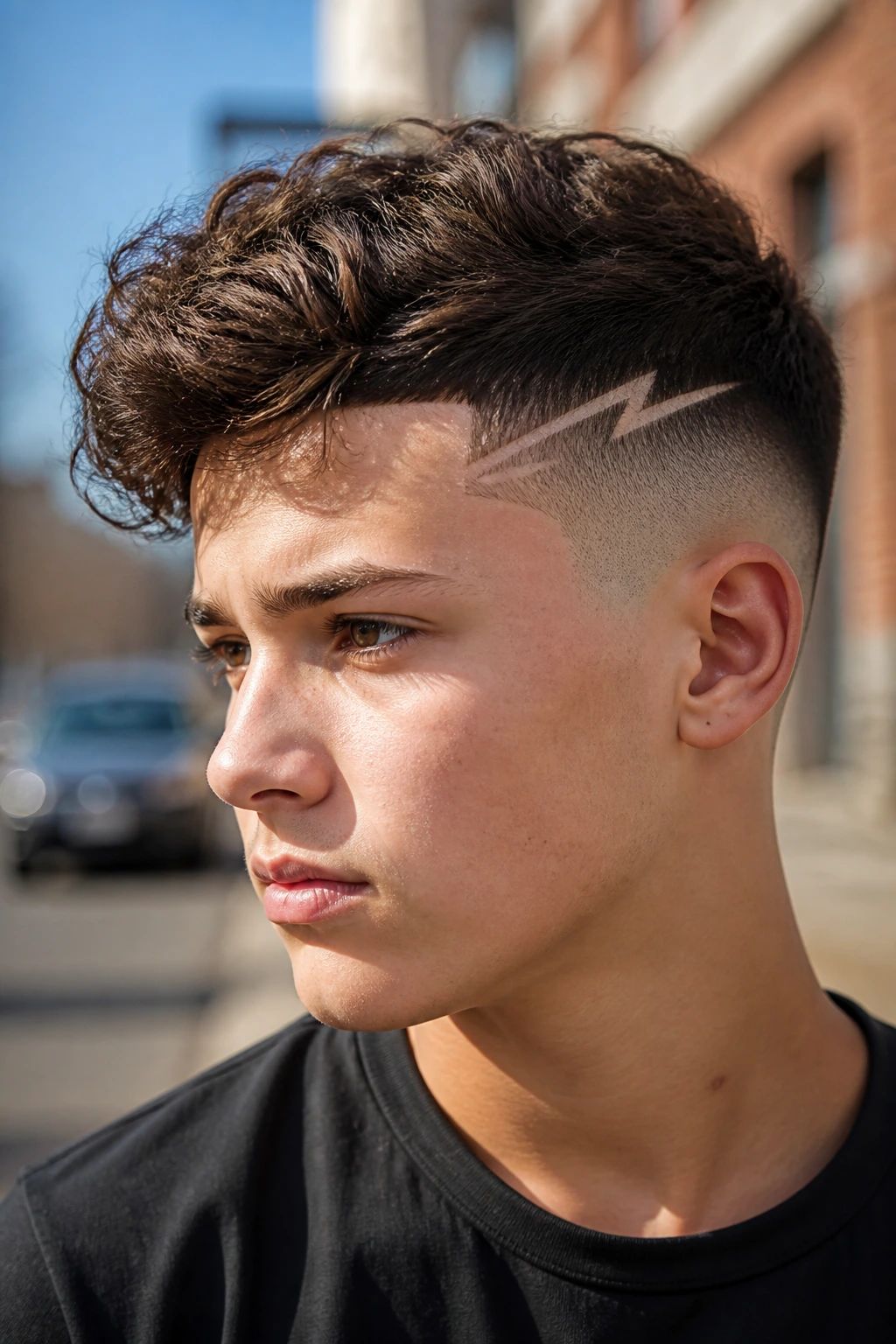
Making the bolt too thin. This is the big one. Wavy hair softens edges as it grows, so a razor-thin line can blur before the next appointment. Ask for a line with a little body if you want it to stay readable.
Putting the bolt through a strong cowlick. The haircut may look fine when it’s fresh, then twist at home once the hair dries. Point out the growth pattern before the barber starts. A small shift in placement solves a lot.
Using heavy gel on top. The hair gets shiny, the waves clump, and the bolt starts looking harsher than the rest of the cut. Matte product gives better contrast without the plastic finish.
Letting the fade grow out too long. Once the side bulk returns, the bolt loses its frame. You don’t always need a full haircut, but the sides do need touch-ups if you want the design to stay clean.
Overloading the head with extra lines. One bolt is a statement. Three bolts, a part, and a shaved stripe can start to look crowded fast. Give the eye one clear path.
Forgetting the haircut has to work from the side view. A bolt that looks good in the barber chair can vanish when the kid turns his head. Check the profile before you leave.
Variations and Alternatives to Try
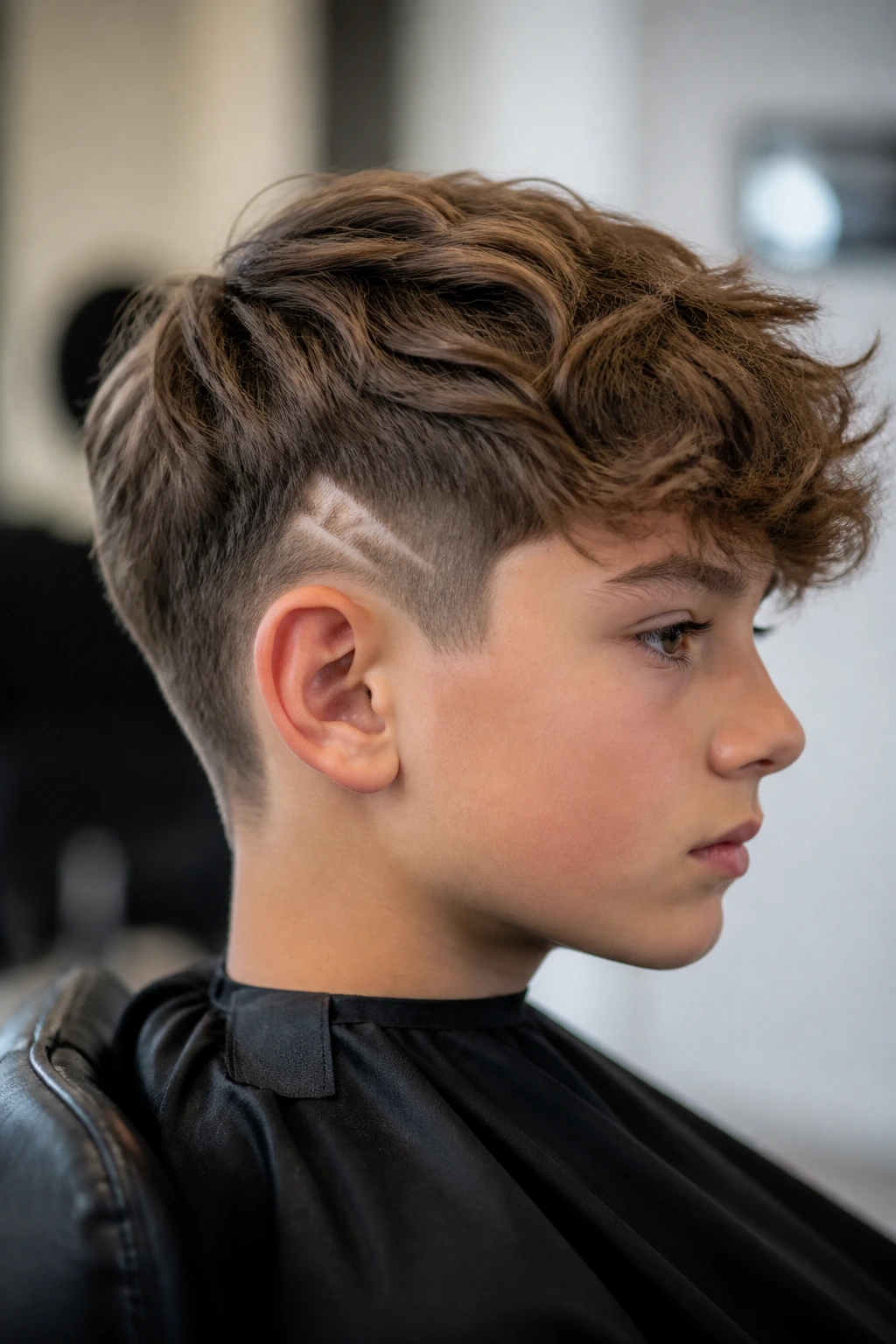
The School-Safe Bolt keeps the design low, narrow, and tucked near the temple or behind the ear. It’s the quietest version here, and it works when the haircut has to stay neat under dress-code pressure.
The Weekend Bolt pushes the fade higher and makes the line wider. It has more punch, but it also needs quicker touch-ups. Save this one for kids who like their haircut to make a statement.
The No-Shave Bolt uses a razor part or clipper line rather than a fully shaved graphic. That gives the shape without the stark contrast, which is helpful for fine or lighter hair.
The Long-Top Wave Bolt keeps extra length on top, usually 3 to 4 inches, and places the design low on the side. It’s a good choice if the waves are the part you want to show off most.
The Sport Trim Bolt is all about practicality: low fade, short top, tiny design, easy cleanup after practice. It doesn’t fight helmets, hats, or sweat.
The Double-Tone Idea isn’t a haircut change so much as a styling shift. Keep the bolt sharp, then use a lighter matte product on the top so the waves stand apart from the faded sides. The contrast does a lot of work on its own.
Frequently Asked Questions
Will a lightning bolt haircut work on loose waves?
Yes, but the bolt usually needs a cleaner frame. Loose waves can look soft around the edge, so a low fade or a mid taper helps the design stand out. Keep the line a bit wider than you would on straight hair.
How often does the bolt need a touch-up?
Most bolts look their sharpest for about a week or two. Skin fades and very thin designs need more frequent upkeep, while low tapers and thicker lines can stretch farther.
Can this style work for school?
Absolutely. A temple bolt, hidden bolt, or low taper version tends to stay within stricter rules better than a high skin-fade design. The placement matters more than the idea itself.
What if my child has a cowlick near the side of the head?
Tell the barber before the cut starts. The bolt can usually be moved a little higher, lower, or farther back so it doesn’t bend awkwardly around the growth pattern.
Do I need product every day?
Not much. A small amount of matte clay or paste is enough for most of these cuts, and some of the shorter versions need almost none. Heavy shine usually works against the haircut.
What should I ask for if I want something subtle?
Ask for a low taper with a small temple bolt or a hidden bolt behind the ear. Those are the least aggressive versions, and they still give the haircut some shape.
Can the bolt be shaved with clippers only, or does it need a razor?
Either can work. Clippers give a softer edge, which is often friendlier on wavy hair. A razor makes a sharper line, but it also shows grow-out faster.
What happens when the haircut grows out?
The bolt softens first, then the fade loses its edge. If you like the shape but not the maintenance, ask for a clean-up on the sides before the whole cut gets too heavy.
A Bolt That Holds Its Shape
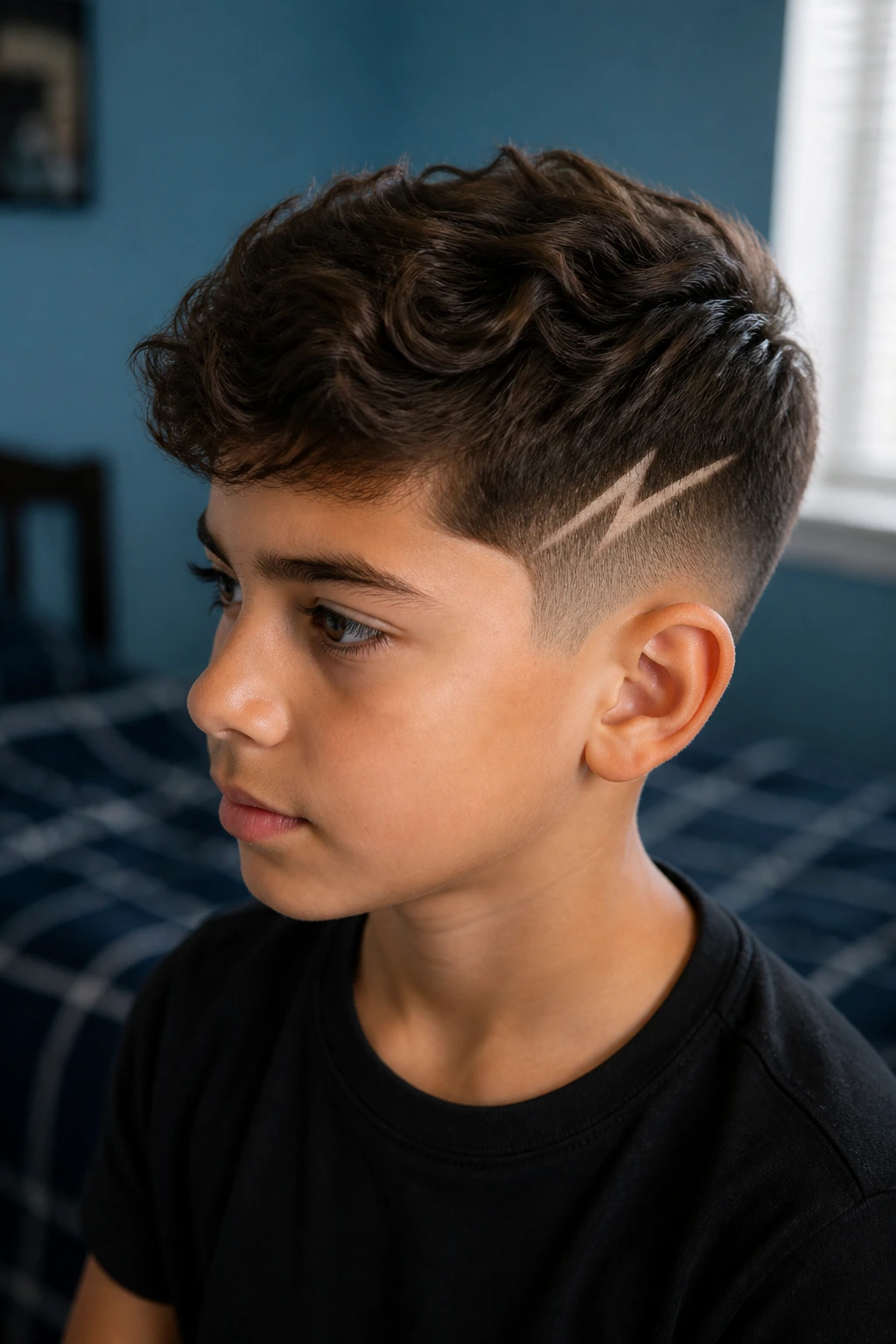
The best lightning bolt haircut on wavy hair is the one that still looks intentional after the first few days of real life. Kids run, sleep, wear hoodies, take off helmets, and forget to style their hair sometimes. A good cut can survive that. A great one still looks like it was planned.
That’s why the placement, width, and fade matter more than the size of the design alone. Wavy hair adds movement, which is half the appeal. If the barber respects that movement, the bolt stays crisp instead of turning fussy.
Pick the version that fits the way the hair actually grows, not the one that only looks good in a mirror under bright shop lights. Then book the touch-up before the fade gets shaggy.