



Thick hair on a boy’s head can look terrific, but it has a habit of fighting back. Leave it one length, and the sides balloon out. Cut it too short, and it turns into a helmet. The sweet spot is usually somewhere longer, lighter at the right spots, and shaped with enough restraint that the hair still looks like hair instead of a block.
That’s why longer hairstyles for boys with thick hair make so much sense. They keep the density that thick hair already has, then use layering, tapering, and a little bit of movement to stop the cut from turning boxy. The good ones do not rely on heavy product or constant combing. They work because the haircut itself does most of the correcting.
Thick hair is a little unforgiving in the crown, around the ears, and at the fringe. Those are the spots where a cut either sits clean or puffs into a triangle by lunchtime. So the best longer styles aren’t about “more hair.” They’re about smarter shape, better balance, and a cut that still behaves after a backpack strap, a hoodie, and a ten-minute morning.
Why These Longer Cuts Work on Thick Hair
-
They remove bulk where thick hair swells most. A good layered cut takes weight out of the mid-lengths and crown so the sides do not stick out like wings.
-
They give the hair somewhere to go. Thick hair needs direction. A center part, sweep, fringe, or loose flow gives it a path instead of letting it rise on its own.
-
They stay usable between trims. Longer cuts usually grow out more gracefully than short, hard-edged styles, which matters when hair grows fast and school schedules do not care.
-
They work with texture instead of fighting it. Wavy or curly thick hair looks better when the cut follows the bend of the hair, not when it is forced flat with a pile of gel.
-
They give parents more styling options. One haircut can be worn loose, tucked, brushed back, or tied up, which is useful when a boy wants change without a new cut every month.
-
They avoid that puffy “mushroom” shape. That shape shows up when the outline is too blunt and the bulk sits in the wrong place. The right long cut fixes the outline first.
1. Center-Part Flow with Soft Layers
A center-part flow is one of the cleanest answers for thick hair that wants to sprawl. The hair falls on both sides, which spreads the volume instead of stacking it on one heavy shelf. When the layers are cut softly around the cheekbones and jaw, the style looks relaxed, not shaggy.
What to ask the barber
Ask for medium-long length on top, a natural center part, and light layering through the sides and crown. The trick is not to remove so much weight that the hair frays. You want movement, not wisps.
How to style it
Towel-dry until damp, add a small amount of leave-in conditioner or light cream, then comb a clean middle part. Let it air-dry if the hair already falls well. If it kicks up at the ends, a quick blast from a blow-dryer on low heat will settle it.
This cut works especially well on straight to slightly wavy thick hair. It frames the face without looking stiff, and it behaves better than a blunt middle part because the layers keep the ends from flaring outward.
2. Curtain Fringe That Falls in Two Clean Wings
Curtain fringe looks easy when it is done right, which is exactly why it gets copied so often by people who cut too much off the front. The fringe needs enough length to split naturally, usually around eyebrow to nose-bridge territory depending on curl and density. Thick hair gives this style some real weight, which is a good thing.
The sides should be tapered, not hacked short. If the perimeter is left too square, the front will still look stylish while the rest of the head looks like it belongs to a different haircut. That mismatch is what ruins it.
A light matte cream or grooming lotion is usually enough. Push the fringe apart with your fingers, then let it fall back into place. No hard part. No helmet shine.
3. The Bro Flow with Tapered Sides
The bro flow works because it respects the natural direction of thick hair. Instead of forcing the top to stand up or lie flat, it lets the hair sweep back and away from the face with a little lift at the front. The whole cut feels fuller, but it does not crowd the forehead.
Best for
- Thick straight hair that resists staying neat
- Wavy hair that already has motion
- Boys who want length without a lot of visible styling
Barber note
Keep the back and sides tapered low so the head does not take on a boxy outline. The top should have enough length to push back, usually several inches, with soft graduation through the crown so the hair follows the skull instead of sticking off it.
This is one of those cuts that looks better after it has lived a little. Fresh off the chair, it can seem tame. After a few days of natural movement, it starts to sit like it belongs there.
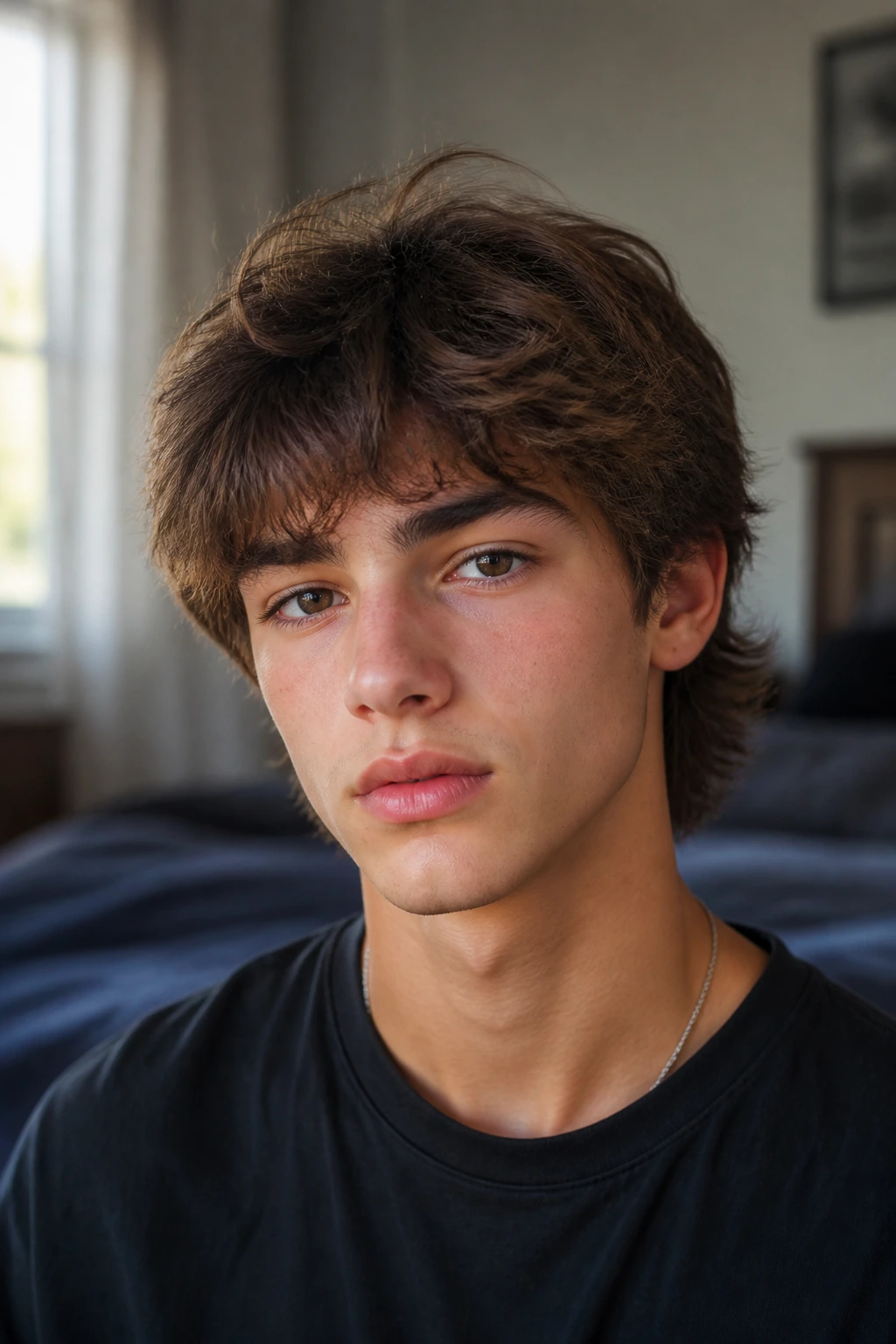
4. Shaggy Mop Layers for Wavy Thickness
A shaggy mop is what happens when thick hair is allowed to be playful instead of perfectly controlled. It’s especially good for boys whose hair bends a little on its own, because the layers break up the mass and keep the shape loose. The result should look lived-in, not neglected.
The key is point cutting and internal layering. That means the barber is removing weight from inside the shape instead of slicing a blunt line across the bottom. If the cut ends in one hard edge, the whole thing becomes too heavy and loses the shagginess that makes it work.
Air-dry with a dab of cream or curl-friendly lotion. Then scrunch the front and crown with your hands. That’s it. If you need more definition, a diffuser on low heat can help, but heavy product will make the whole thing slump.
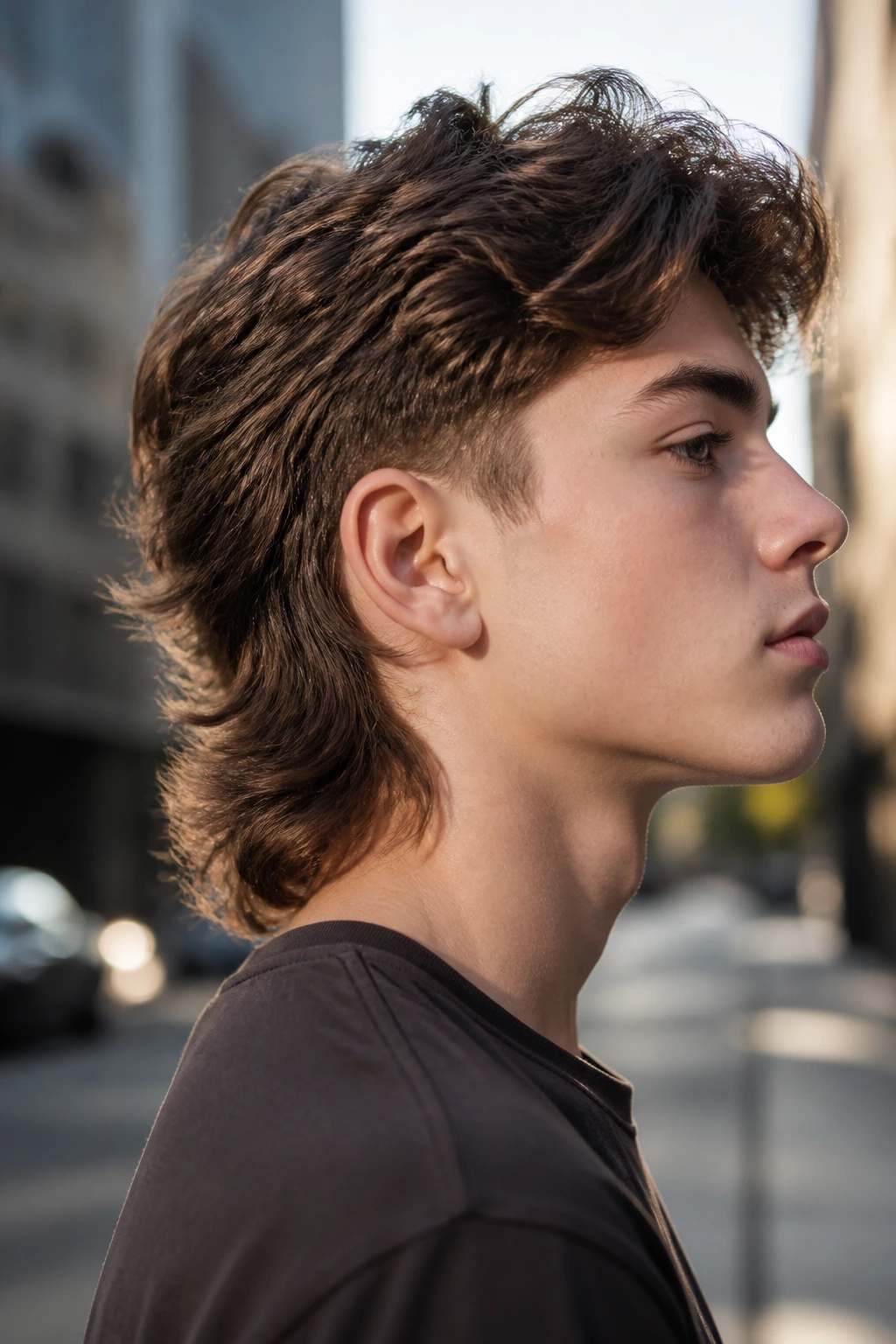
5. Modern Mullet with a Soft Tail
A modern mullet is not the sharp, shouted version people remember from old photos. The new version is softer, more layered, and far less extreme. On thick hair, it can be one of the smartest long options because the shorter front and sides keep the head from puffing out while the longer back keeps the shape interesting.
This cut needs a careful hand. If the transition from top to back is too sudden, the style can look awkward from the side. If the back is too long with no structure, it starts to feel accidental. The balance matters.
I like this cut on boys who want something with personality but not a lot of morning work. A matte paste worked through the top and a little finger-combing at the crown usually does enough.
6. Wolf Cut Lite with Airy Crown Layers
The wolf cut can go overboard fast on thick hair, which is why the lighter version earns its keep. You keep the choppy top layers and some length in the back, but the silhouette stays softer and less dramatic. That makes it easier to live with at school, on the field, and at the dinner table.
What matters here is crown removal. Thick hair often piles up there first, and if the crown stays too full, the whole style balloons. A good wolf cut lite takes weight out where the head starts to widen, then keeps enough shape around the perimeter so the cut still looks deliberate.
Use a small amount of texture cream and rough-dry with your fingers. If the hair is naturally wavy, that’s a bonus. If it is stick-straight, the cut still works, but it will look cleaner than shaggy unless you add a bit of movement with a blow-dryer.
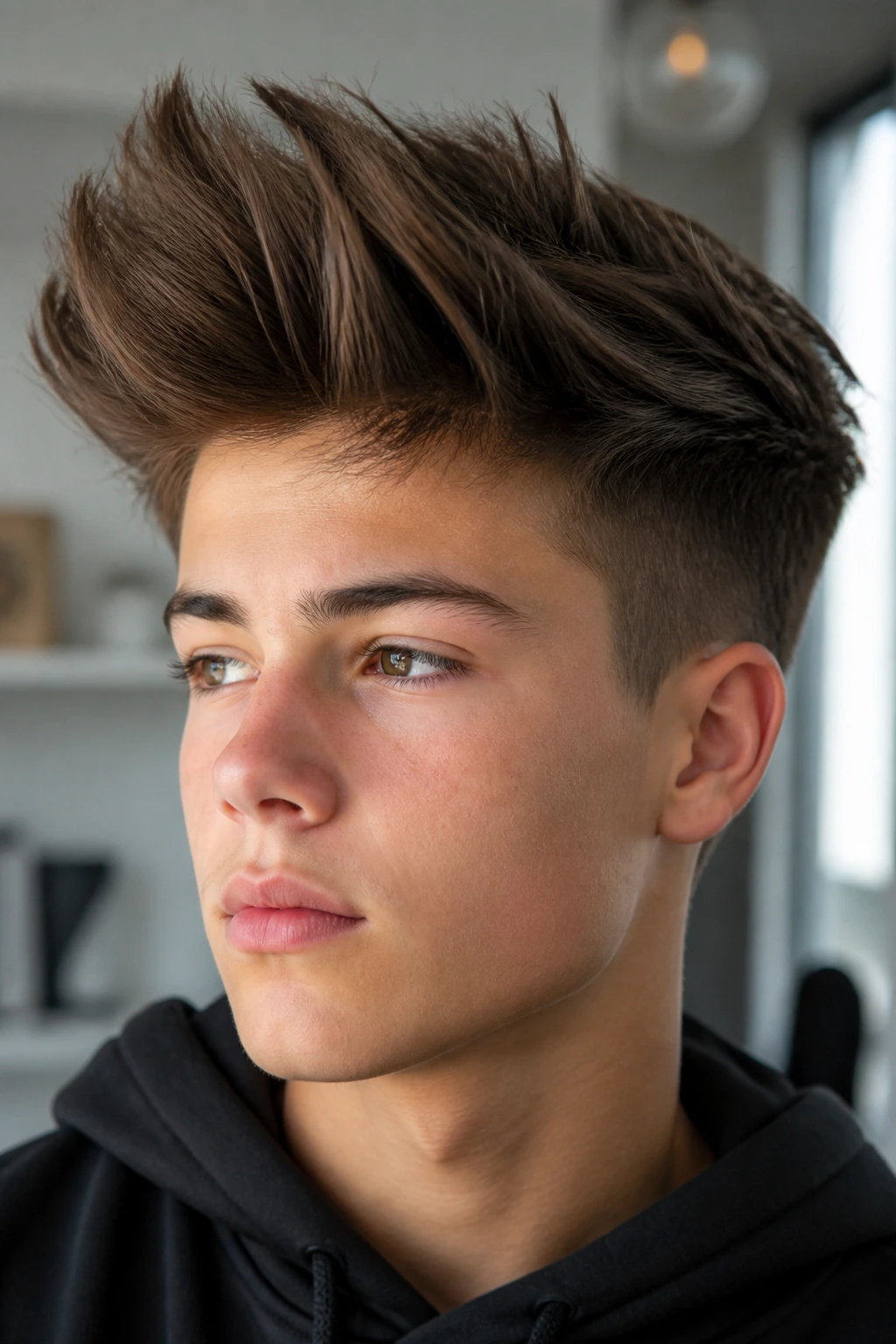
7. Long Textured Quiff with Control Up Front
The long textured quiff is for boys who want some height without turning the front into a stiff wall. Thick hair is perfect for it because the body is already there. The trick is taking the weight down inside the top so the hair can lift without becoming bulky.
What makes it different
A lot of quiffs fail because people pile product at the front and call it done. This version uses length plus texture, so the front can rise, bend, and settle in a way that still looks natural.
Styling notes
Blow-dry the front upward and slightly back, using your fingers or a vent brush. Finish with a matte paste, not a glossy gel. If the hair falls forward again, the cut is too heavy at the fringe or the product is too soft.
This style works best when the sides are tapered cleanly. You want the top to feel like the main event, not a separate object sitting on top of a thick puff of hair.
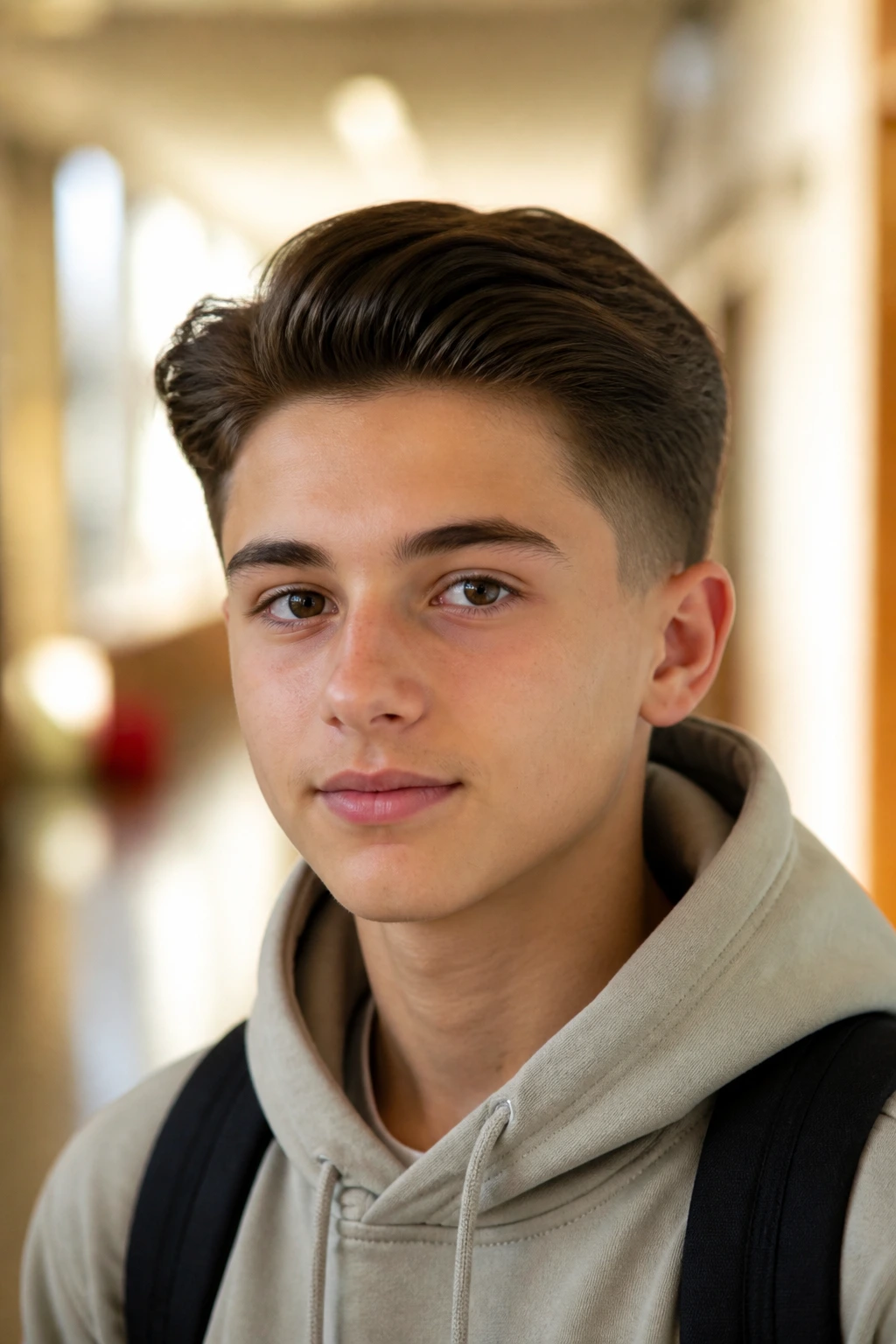
8. Swept-Back School Cut with a Low Taper
Some boys do not want a style that announces itself from across the room. Fair enough. The swept-back school cut is quiet, tidy, and far more forgiving than a short, crisp cut when thick hair starts to grow out. The low taper keeps the edges neat around the ears and neckline while the top stays long enough to sweep back with a comb or fingers.
This is a practical cut. Not boring. Practical. It works for school photos, family events, and mornings when the only styling plan is a wet brush and a minute of patience.
Ask for enough length on top to brush back smoothly, but not so much that the hair collapses forward by noon. A light cream or leave-in spray is usually all it needs. If the crown swirls hard, leave a touch more length there so the part doesn’t split itself open.
9. Side-Swept Part That Tames a Cowlick
A side-swept part is one of the best answers to a stubborn cowlick, which thick-haired boys seem to collect like badges. Instead of forcing the hair straight back, this cut works with the natural bend and lets the fringe sweep across the forehead at an angle. That single move can make the whole head look calmer.
What to watch for
If the part is too deep, the top can collapse to one side and look overly polished. If it is too shallow, the hair won’t stay put. The sweet spot is usually a soft, visible part line with plenty of length left through the front.
A light mist of water, a comb, and a dab of cream are enough on most days. Blow-drying the front in the direction you want it to sit makes a huge difference. Skip that step and the cowlick usually wins.
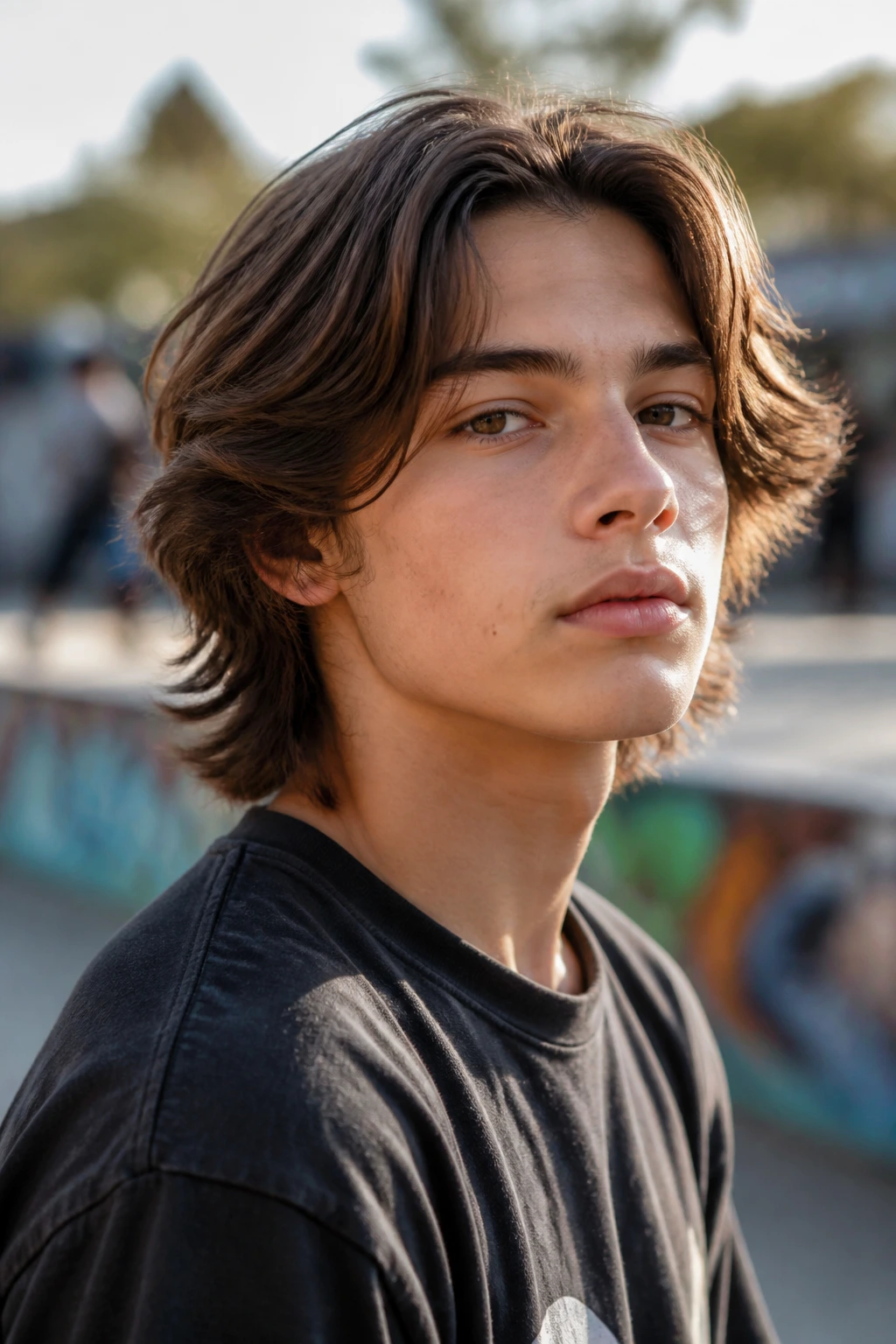
10. Shoulder-Length Layers That Move Instead of Puff
Shoulder-length thick hair can look fantastic. It can also turn into a fuzzy triangle if the cut is wrong. The difference is layering, especially around the lower half of the head and the collar line. Without that, the ends stack up and the silhouette gets too wide.
This length suits boys who like a more relaxed, almost skater-like shape. It works best when the hair is healthy and the ends are trimmed often enough to stay blunt-but-soft, not scraggly. The barber should preserve the length while removing bulk in the heavy zones, usually around the ears and lower back.
It is not a “wash and forget” cut, though. A little leave-in conditioner goes a long way here. Thick hair at this length drinks product fast, and dry ends can make the whole style look rough.
11. Long Fringe with a Taper Fade
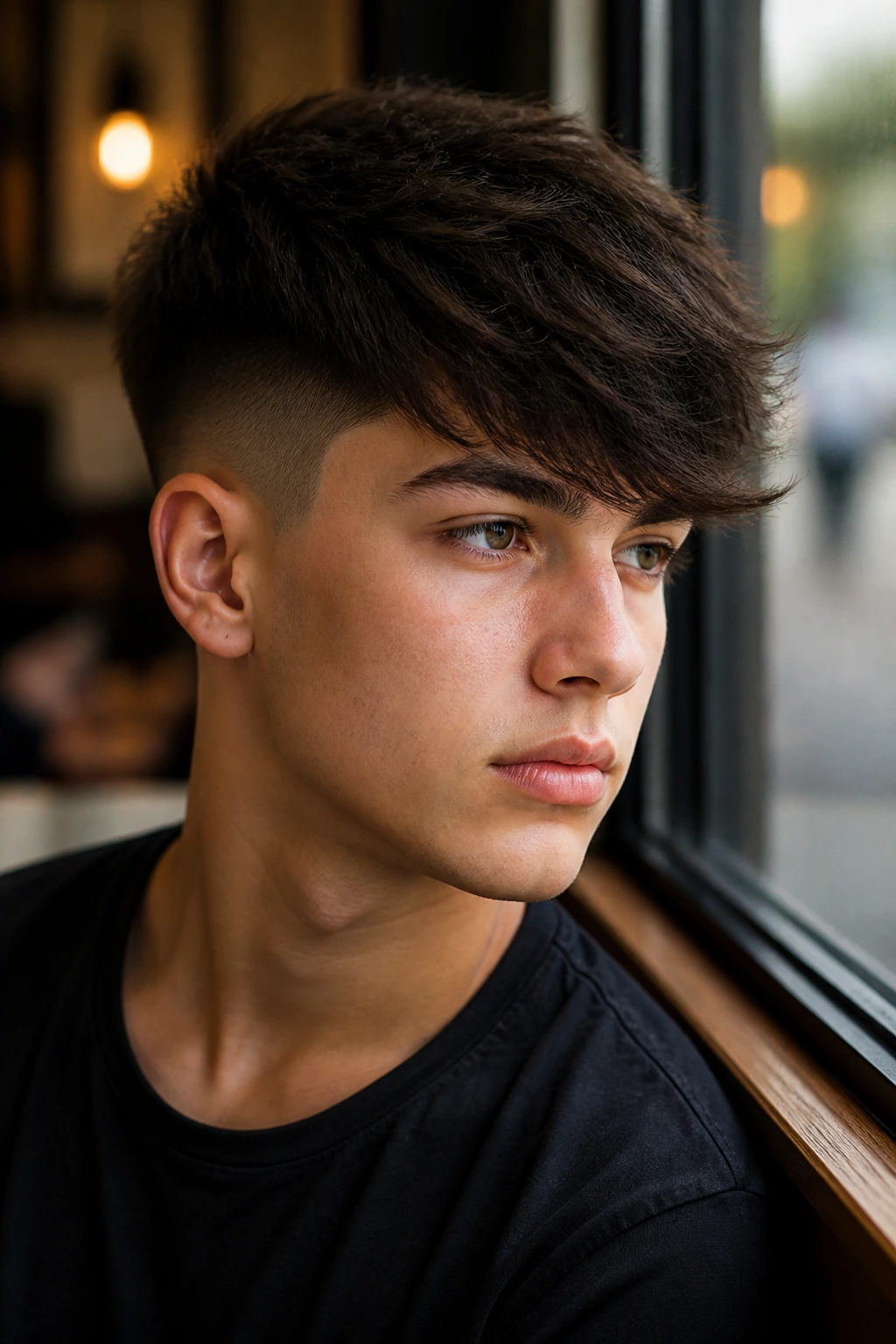
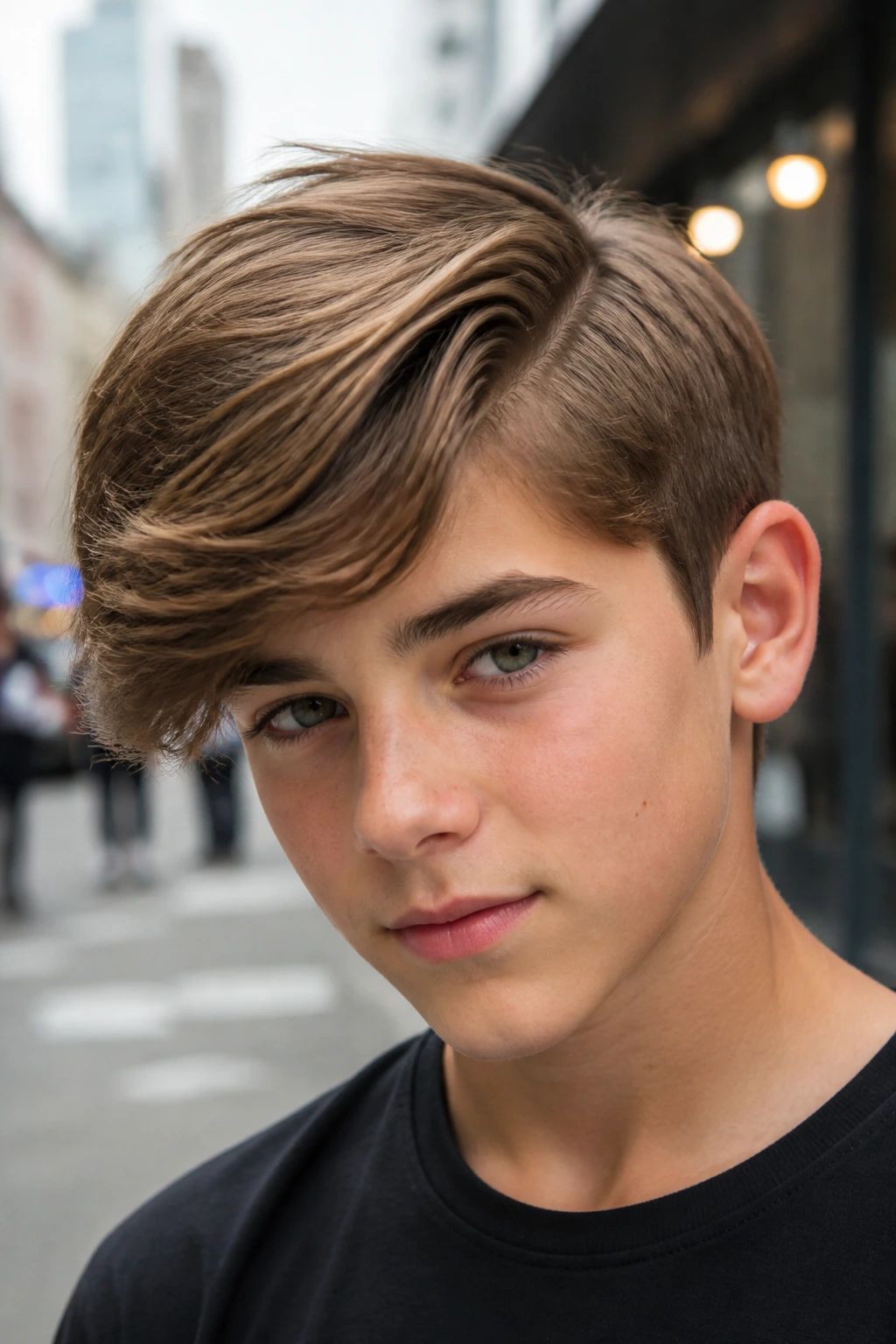
A long fringe with a taper fade gives thick hair a clean frame and keeps the front from feeling heavy. The fringe is the feature. The fade is the support act. When both are balanced, the haircut reads modern without needing loud styling.
H3: Why it works
The fringe keeps length where boys like it most — around the forehead, where it can be brushed forward or split. The taper fade removes excess bulk around the ears and neckline, which is where thick hair often gets bulky fastest.
H3: How to wear it
Push the fringe forward for a loose, street-smart look, or sweep it to one side if the hair starts to fall into the eyes. Matte paste gives grip without making the fringe cling together in little crunchy ropes.
This is a strong choice for active boys who still want some style. It holds shape after a hat comes off, which is more useful than people admit.
12. Tousled Curly Top with Shaped Sides
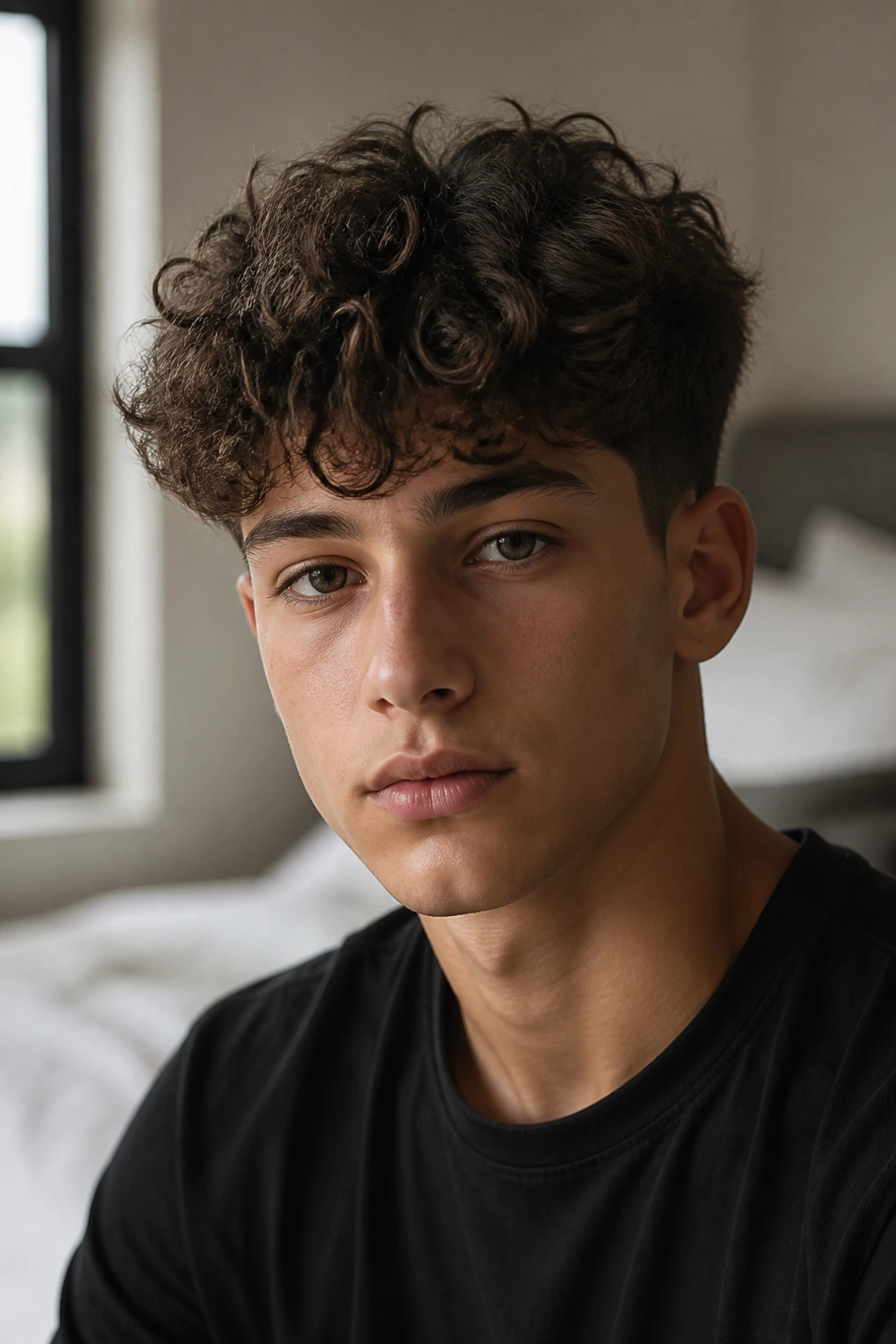
Thick curly hair does not need to be tamed into obedience. It needs shape. A tousled curly top keeps the natural bends up front while trimming the sides in a controlled way so the head does not spread outward. The result is easier to live with than one long, shapeless halo of curls.
Curly hair is happiest when it is cut dry or mostly dry, because that shows the barber where each curl actually lands. Wet curls lie. Dry curls tell the truth. If the top is cut too short, it springs up tighter than expected and the style loses the length that makes it work.
Use a curl cream or light gel on damp hair, then let it dry without touching it too much. Scrunching is fine. Raking your fingers through it over and over usually creates frizz instead of shape.
13. Rounded Bowl Revival with Broken-Up Ends
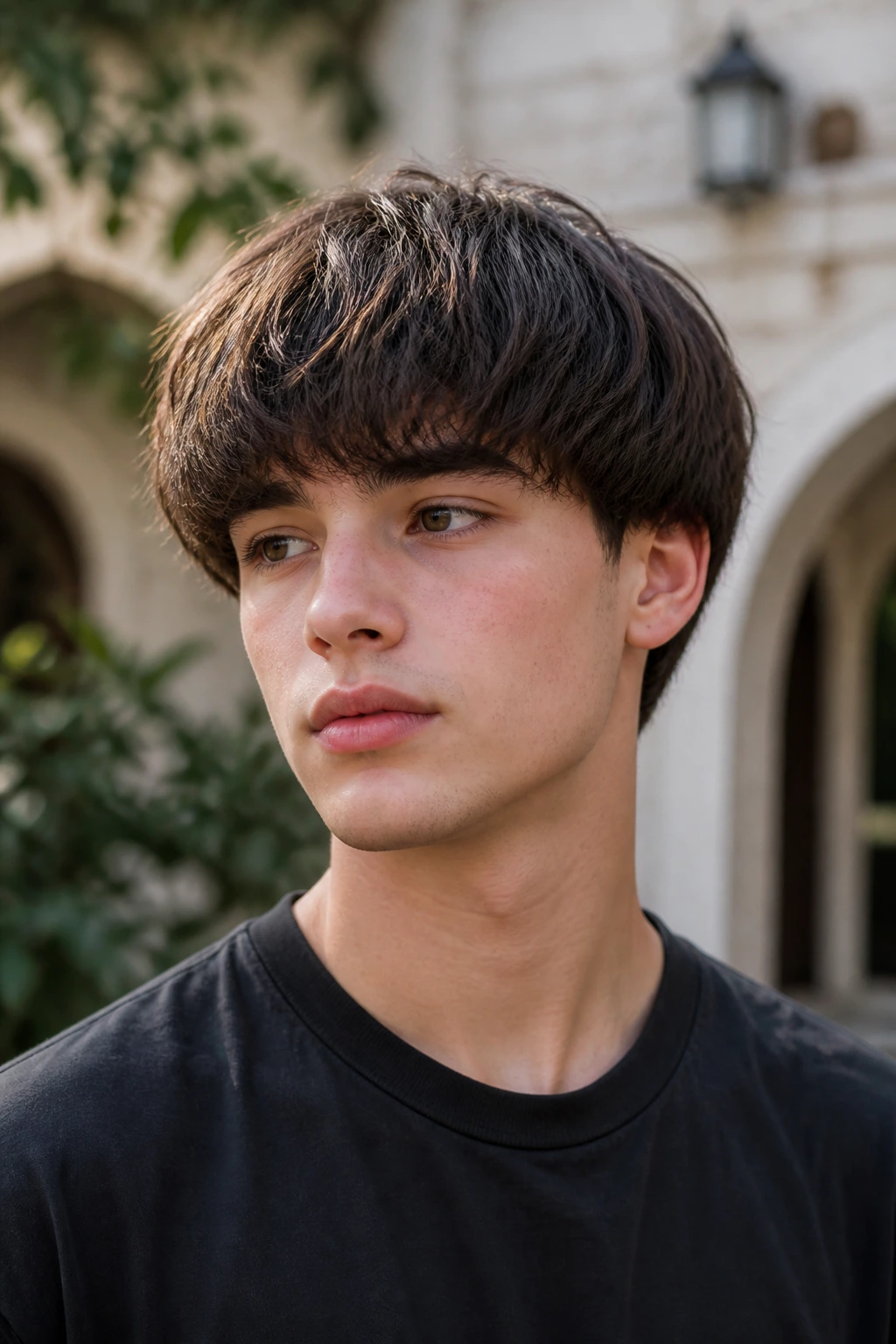
A modern bowl cut sounds risky until you see it done with texture and better edges. Thick hair is what gives this style its shape, but the cut has to be broken up so it does not look like a helmet set on the head. The outline stays rounded. The ends do not stay blunt.
This one suits boys who like a distinctive cut and do not mind a little style with the structure. The sides should be softened around the ears, and the top should not be shaved flat. Think rounded shape, not rigid line.
It looks best with minimal product. A pea-sized amount of matte cream is enough to keep the ends separated. Too much shine turns the whole thing heavy fast.
14. Brush-Back Flow for Busy Mornings
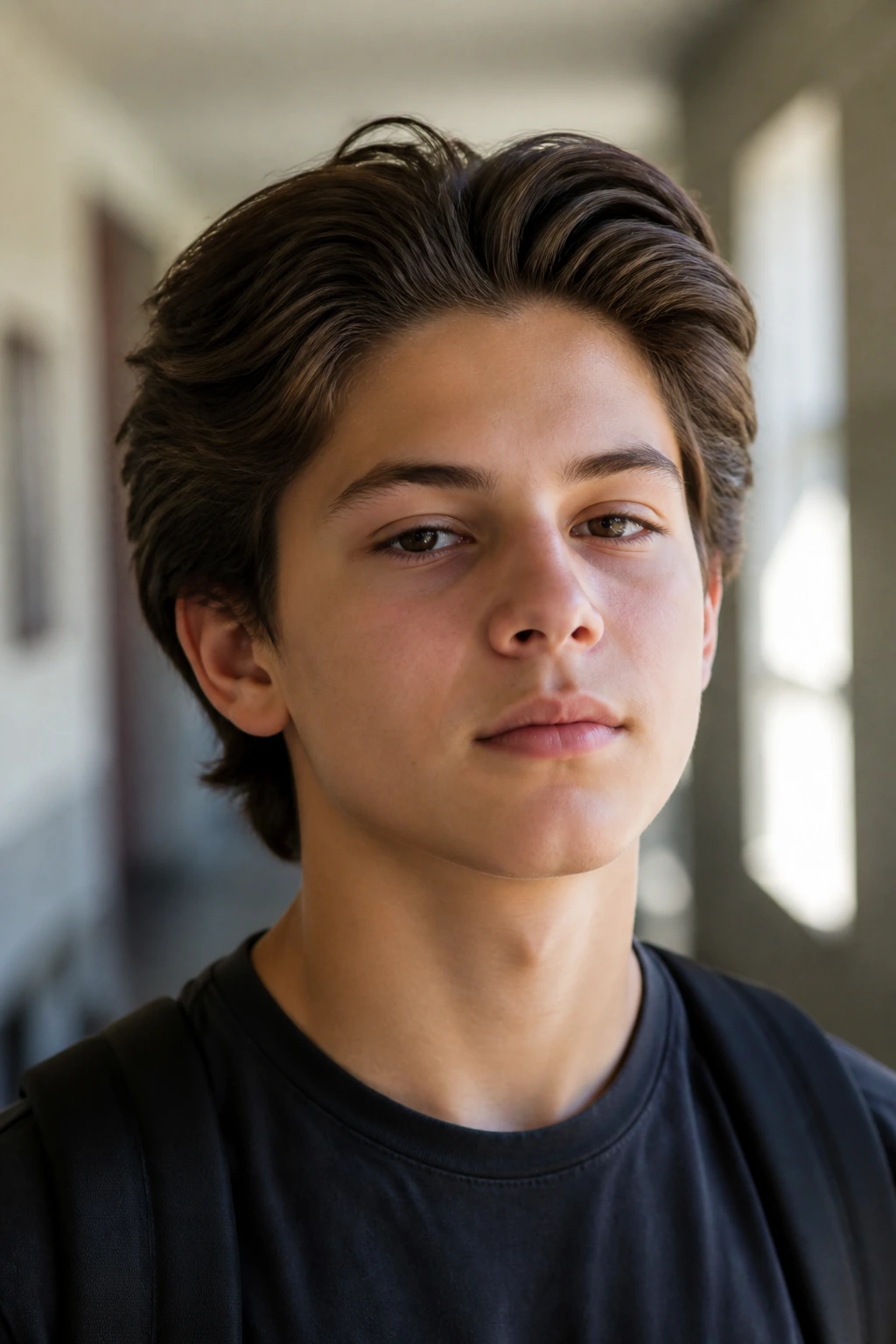
If a boy hates part lines, hates fringe in the eyes, and hates spending time on his hair, the brush-back flow earns a spot on the list. Thick hair naturally wants to have presence, so brushing it back gives it direction without forcing a high-maintenance shape.
The top should have enough length to move back easily, but the crown needs soft layering so it does not stick up in a ridge. That ridge is the enemy here. Once you see it, you cannot unsee it.
What to tell the barber
Ask for a long top with subtle graduation, tapered sides, and enough texture to keep the brush-back from looking like one smooth helmet. The barber should cut for movement, not for slickness.
A dryer and fingers are enough most mornings. No heavy gel. No crunchy finish. If the hair is especially dense, a small amount of grooming cream keeps it from puffing at the sides.
15. Half-Up Style for In-Between Lengths
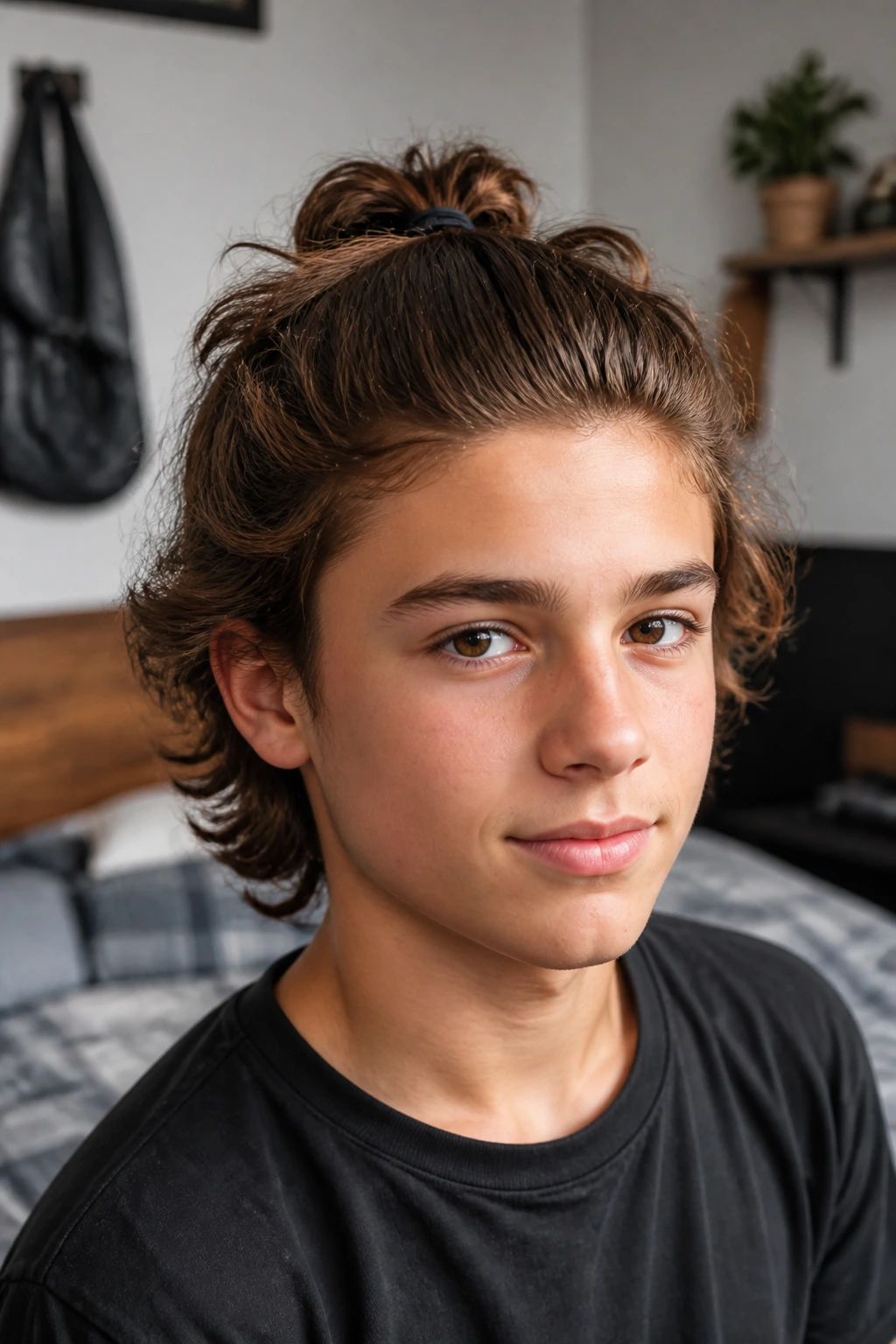
There’s a rough stage where the hair is too short to tie back neatly and too long to sit flat. The half-up style solves that awkward zone. It pulls the top back and leaves the lower layers loose, which is useful when thick hair keeps dropping into the face but the boy is not ready to lose length.
This works best when the hair has already reached enough length at the crown and front to gather cleanly. If the top is too short, the top section falls apart by lunchtime. If it is long enough, the style feels casual and clean at the same time.
Use a soft band, not a tight elastic that digs into the head. Pull the top section back loosely. If the finish looks too severe, tug out a few small pieces around the temples and ears. That little looseness keeps it from looking like a miniature man bun.
16. Loose Top Knot with Soft Tapered Edges
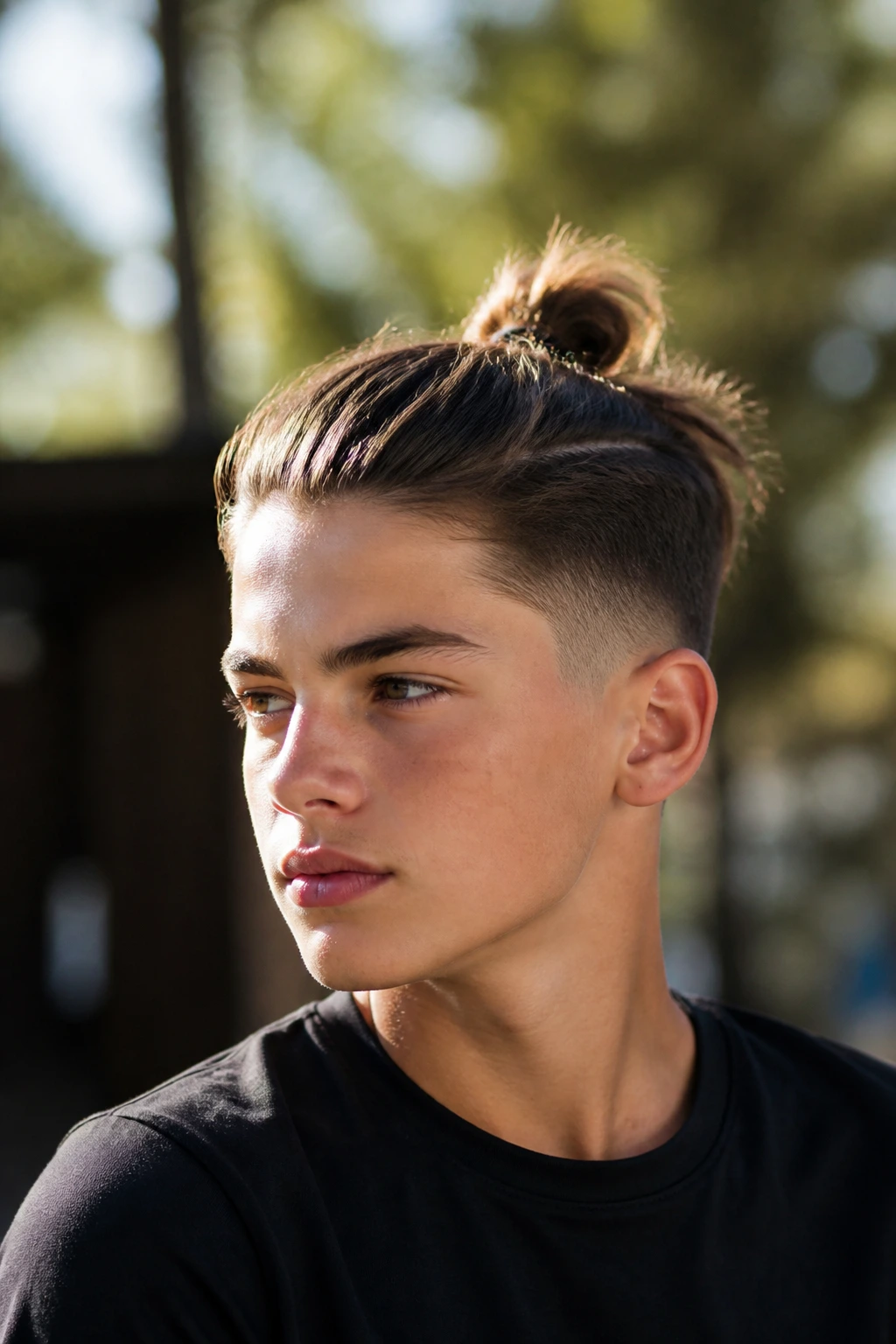
A top knot on thick hair can either look sharp or like a last-minute fix. The difference is the edges. If the sides and neckline are tapered neatly, the knot at the top reads intentional. If the sides are bulky, the whole thing can look heavy and puffy.
This style is best for boys with enough length to gather the top without yanking. It should sit comfortably. No strained scalp. No headache after 20 minutes. Leave a little softness around the nape and temples so the knot doesn’t feel severe.
A matte finishing cream on the loose ends helps keep flyaways down. And yes, the knot can be small. It does not need to be a giant bun to work.
17. Long Crop with Heavy Texture on Top
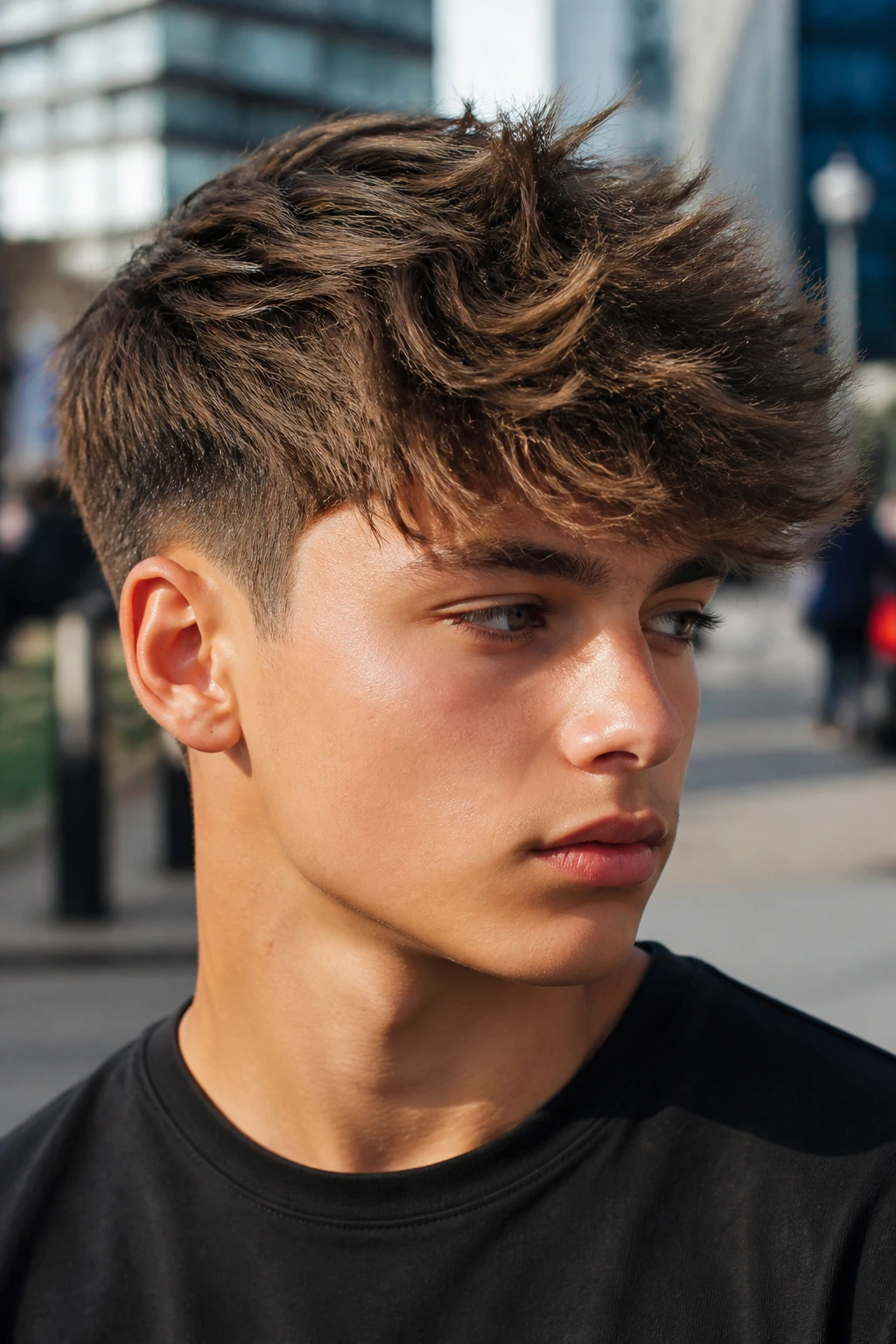
A long crop keeps the haircut closer to the head than a flow or bro style, but the length on top still gives thick hair room to move. The front is usually cut into a textured fringe or short sweep, which makes the style easier for boys who want length without a lot of face coverage.
The reason this cut works so well is balance. You get the practical feel of a shorter crop with enough length to avoid the stiff, uniform look that thick hair can create when it is cut blunt.
Quick styling shape
Push the front forward with the fingers, then pinch a few sections to break up the bulk. That’s the whole game. If it starts looking too round, the top needs more internal texture. If it falls flat, the layers are too thin or the sides are too heavy.
18. Hockey Flow with Collar-Length Motion
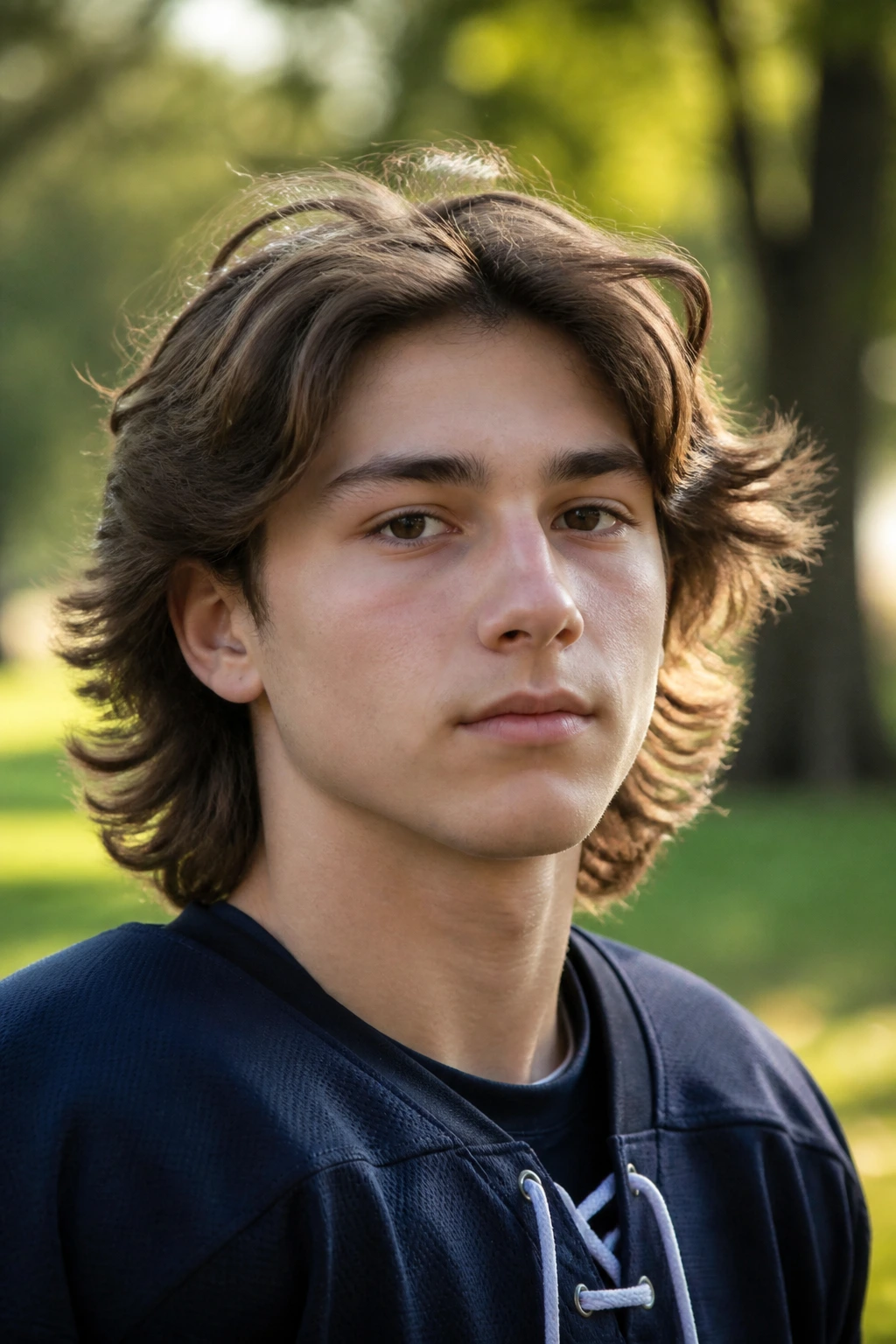
The hockey flow is one of the most forgiving long styles for thick hair, and it has a reason for sticking around. It lets the hair stay long enough to move at the collar and around the ears, but the shape is still controlled by layering and a gradual taper through the sides. Thick hair loves that kind of length because it finally has space to fall instead of stacking itself upward.
This style works best when the ends are not all chopped to the same line. A little uneven movement is the point. The hair should look wind-tossed even when it is sitting still.
If you want the cut to stay manageable, keep the neckline clean and the weight removed from the bottom half of the back. That keeps the flow from turning into a mop. Small difference. Big payoff.
Why Longer Cuts Need Weight Removed, Not Just Length Preserved
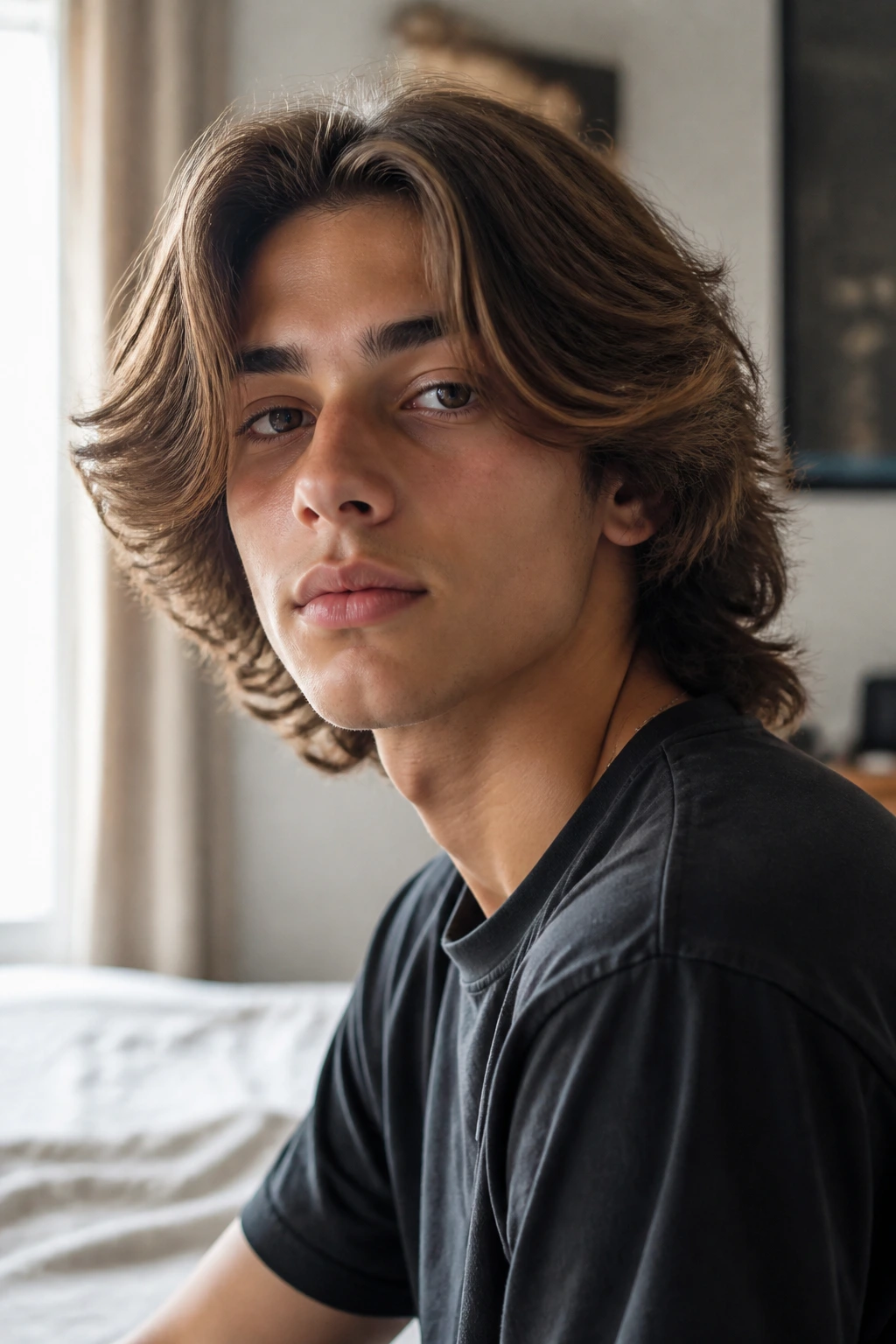
Thick hair behaves differently once it passes the ears. The longer it gets, the more it leans, swells, and folds on itself. If the barber leaves all the bulk in place, the length becomes a problem instead of a feature.
A good longer cut has three things working together: shape at the perimeter, bulk removal where the head widens, and enough length on top to move naturally. Skip any one of those and the haircut starts to look accidental. That is why so many “grow it out” plans go sideways. The hair was never shaped for the grown-out stage.
This matters even more for boys, because their hair often grows fast enough to change the silhouette in a few weeks. A cut that looks neat on day one can puff into a square shape by the second month if the sides were never tapered correctly. That is the sort of problem that shows up in the mirror first and in photos second.
Tools That Make Thick Hair Easier to Handle
-
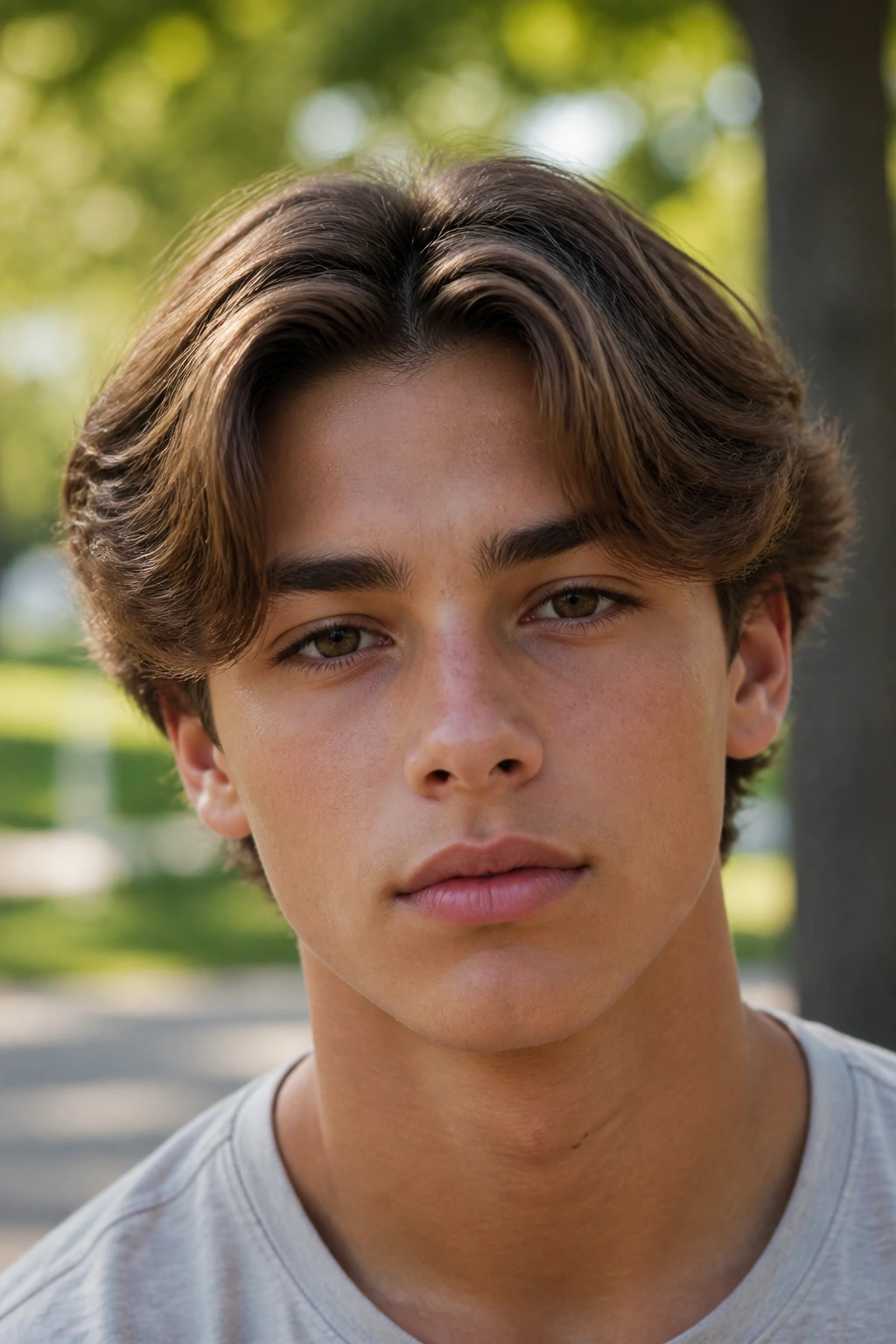
Wide-tooth comb: Better for detangling thick or wavy hair without ripping through it.
-
Fine-tooth comb: Useful for crisp parts and cleaner sectioning when a style needs direction.
-
Spray bottle with water: A few mist passes wake up the hair before styling and help product spread evenly.
-
Blow-dryer with a nozzle: Gives the top direction and keeps the sides from drying into a puff.
-
Light leave-in conditioner: Helps thick hair stay soft and manageable without coating it in grease.
-
Matte paste or cream: Good for most longer boys’ cuts because it gives hold without the shiny, sticky finish.
-
Curl cream or light gel: The better choice for wavy or curly thick hair, especially when the goal is definition.
-
Soft brush or vent brush: Handy for brushing back the top while keeping the roots from lying flat.
-
Small hair ties: Needed for half-up styles and knots; soft ones are easier on the hairline.
Product Choices That Keep Thick Hair Soft Instead of Puffy
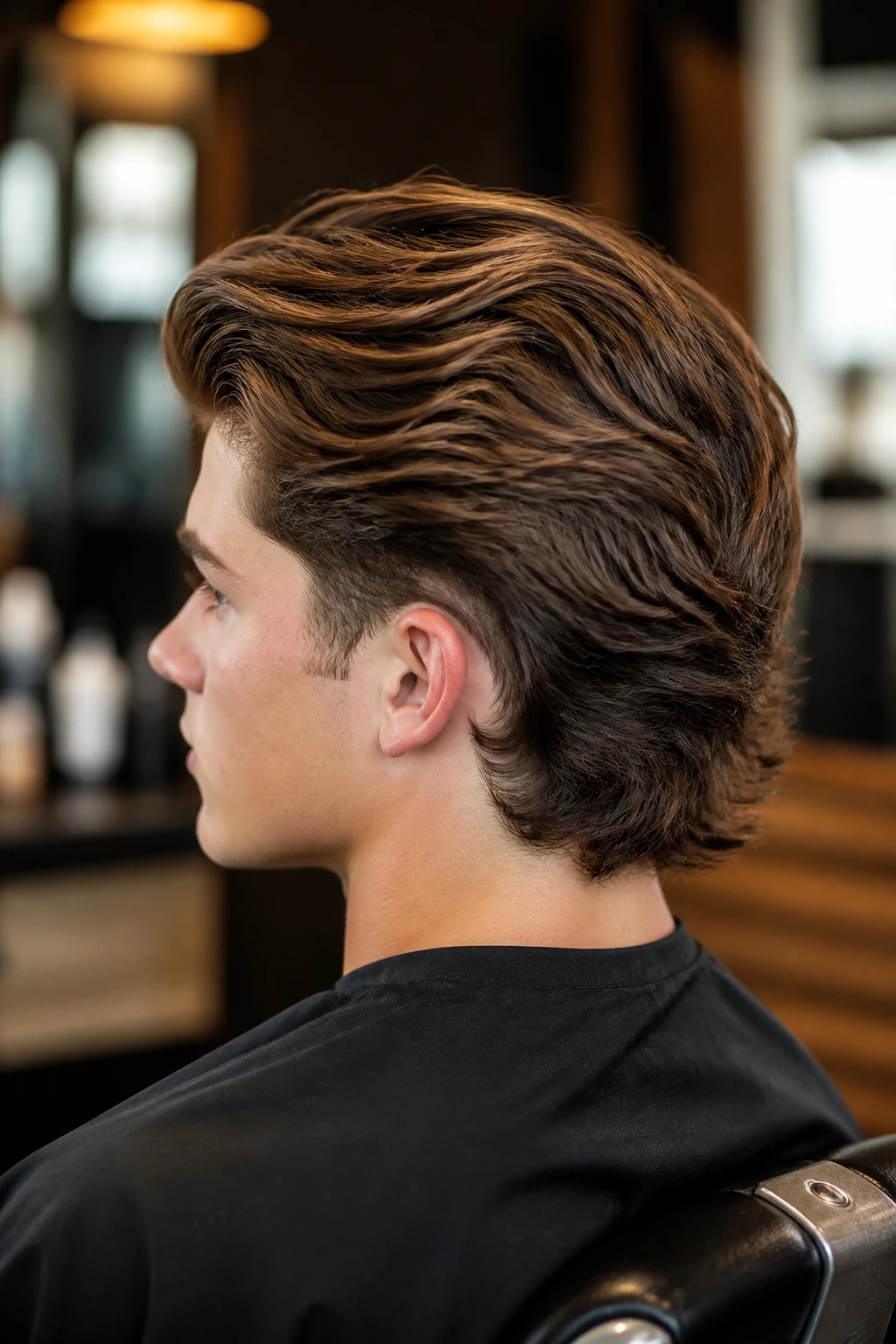
Thick hair does not need a mountain of product. It needs the right kind in the right amount. Heavy gel can make the top stiff while the sides still puff. Oily pomades can drag the hair down and make it look greasy by noon. For most longer boys’ cuts, that is not the move.
A light leave-in conditioner is usually the best first layer after washing. It helps with slip, which means fewer snags when combing and less frizz after drying. For styling, a matte cream or paste gives control without shiny buildup. If the hair is curly or wavy, a curl cream often does more good than a firm hold product because it keeps the shape soft and separated.
The amount matters. Start with a pea-sized dab. Then add only if the hair still lifts too much or falls in the eyes. Thick hair can hide product better than fine hair, which is a blessing, but it also tempts people to overdo it. Don’t.
How These Cuts Read in Daily Life
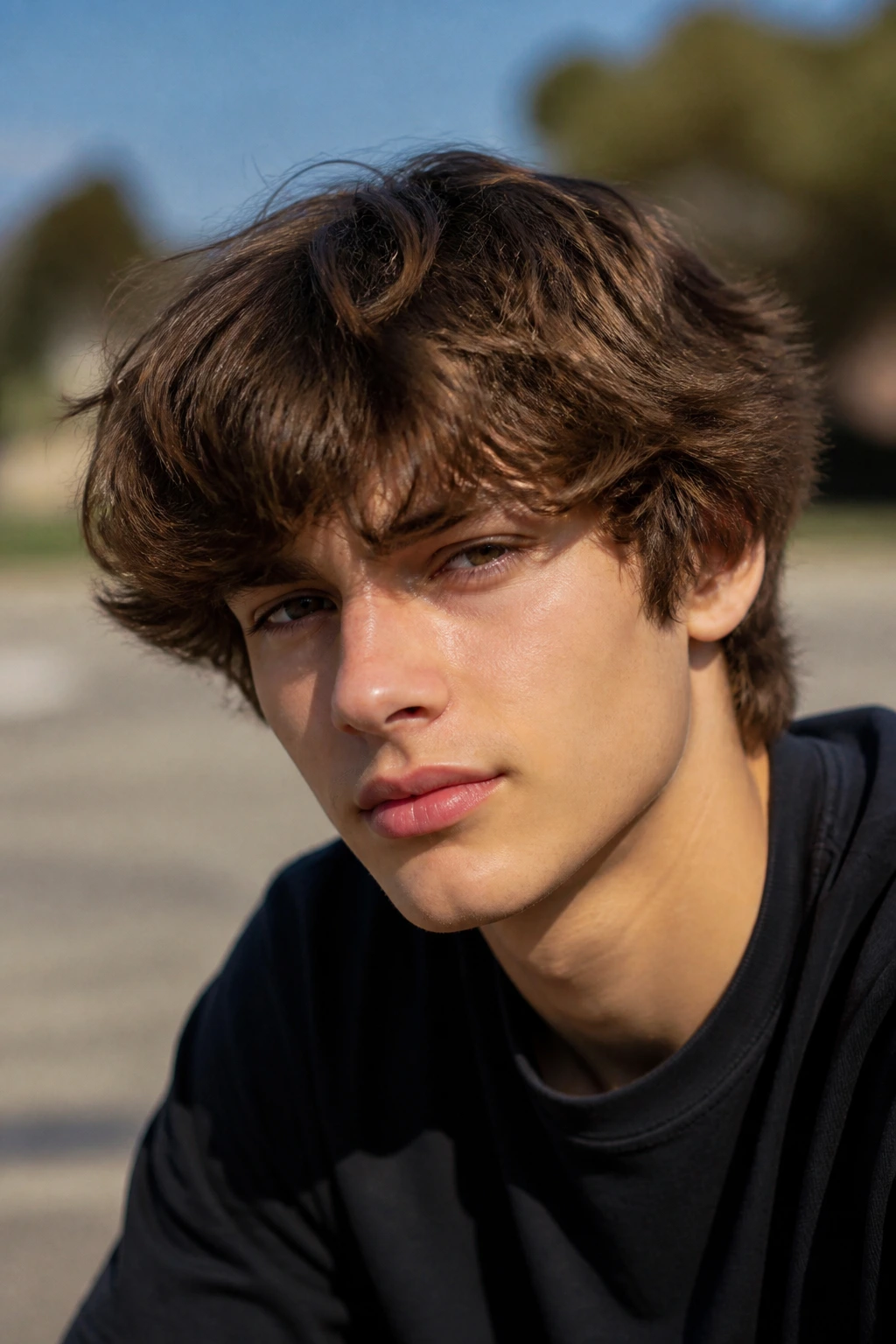
Presentation: The best look is usually the one that still sits right after a backpack strap, a hoodie, and ten minutes of actual living. Loose movement around the crown and a clean outline around the ears keep these cuts from looking overworked.
Accompaniments: Baseball caps, hoodies, school uniforms, and sports gear all matter here because they flatten longer hair fast. Tapered sides and softer fringes recover better after being pushed down by a hat.
Portions: For younger boys, keep the fringe and side length controlled so the hair does not swallow the face. For older boys and teens, a little more length through the back and around the ears gives the cut a more relaxed shape.
Maintenance: The hair should be re-shaped often enough that the outline does not balloon. For thick hair, that usually means the sides and neckline need attention before the top does.
Extra Styling Moves That Make a Big Difference
Texture Boost: If the hair looks too heavy, blow-dry the roots in the direction you want first. Product alone won’t fix a cut that is sitting flat at the base.
Frizz Control: A tiny amount of leave-in conditioner on damp hair does more than a heavy finishing cream on dry hair. Start there before piling on anything else.
Shape Control: Use the fingertips, not the palms, to break up the top. Palm-rubbing thick hair often crushes the shape you were trying to build.
Make-It-Theirs: A middle part, side sweep, or loose fringe can change the mood of the same haircut. That’s useful when a boy wants something personal without a whole new cut.
Where Boys Go Wrong With Thick Hair
The most common mistake is cutting thick hair all one length and hoping it will behave. It usually won’t. The silhouette gets boxy at the sides and puffy at the back, especially after a few weeks of growth. The fix is layering and weight removal in the heavy zones, not more scissoring on the bottom line.
Another error is over-thinning the top. The hair may feel lighter in the chair, but once it dries, it can separate into weak strands and lose the body that made the style look good in the first place. A little texture is useful. Too much texturizing shear work can make the ends look frayed.
Then there’s too much product. Boys with thick hair can hide a lot, which makes parents and teens think more product will tame it better. It often does the opposite. The hair turns greasy, the fringe clumps, and the style collapses by lunch.
Variations for Straight, Wavy, and Curly Hair
The Straight-Hair Version: Keep more internal layering and use a matte cream. Straight thick hair can fall flat fast, so the cut needs movement built in from the start.
The Wavy-Hair Version: Leave a little extra length in the fringe and crown so the wave pattern has room. A cream or light mousse usually gives enough shape without crunch.
The Curly-Hair Version: Cut it dry if possible, or at least with the curl pattern in mind. The goal is shape, not symmetry on wet hair, because curls tighten as they dry.
The Low-Maintenance Version: Choose the bro flow, brush-back, or half-up shape. These styles forgive skipped styling days better than the more sculpted cuts.
The School-Rule Version: Keep the sides tidy with a taper or low fade, then let the top and crown stay longer. That keeps the look compliant without sacrificing the style.
Keeping the Shape Between Haircuts
Thick hair does not wait politely between trims. It spreads. The neckline grows fuzzy first, then the sides start to widen, and after that the fringe begins to drop into the eyes.
A trim every 4 to 6 weeks is usually enough to keep the outline under control for most longer styles. Boys with faster growth or very dense hair may need the sides cleaned up sooner. If the haircut has a taper or fade, the edges tend to show growth faster, so don’t wait until the whole shape is gone.
At home, a rinse and a quick comb-through can reset the style after sports or sleep. If the hair is longer, sleeping on a smooth pillowcase helps keep the cut from getting mashed into a weird corner overnight. Small thing. Makes a difference.
Frequently Asked Questions
How often should thick hair boys get a trim when they wear it longer?
Most longer styles need a cleanup every 4 to 6 weeks, especially around the neckline and ears. If the cut has a taper or fade, the maintenance window is shorter because the shape shows growth sooner.
Does thick hair need thinning shears?
Sometimes, but not always. Thinning shears can help with bulk in the crown or sides, yet too much thinning leaves the ends frayed and weak. A good barber usually removes weight with layering first and reaches for thinning tools only where they’re needed.
What’s the easiest long hairstyle to manage on thick hair?
The bro flow and the brush-back are the easiest to live with. Both use the hair’s own direction, so you’re not fighting it every morning with a comb and a stubborn part.
Can boys with thick curly hair wear these longer cuts too?
Yes, and some of these styles look better on curls than on straight hair. The trick is to cut for the curl pattern, keep the sides shaped, and avoid flattening the top with too much heavy product.
What should I tell the barber if my son’s hair sticks up at the crown?
Mention the crown swirl or cowlick directly and ask to keep a little extra length there. That helps the hair settle instead of splitting or standing up in a ridge.
Do longer styles work with school dress codes?
Usually, yes, if the haircut stays tidy around the neckline, ears, and eyes. The safest option is a longer top with a tapered side and back, because it looks neat without turning short.
What if the hair looks too big after a blow-dry?
The haircut may need more internal layering, or the dryer may be aimed too high at the roots. Dry the hair in the direction you want first, then stop before it gets completely puffed up.
Can these cuts be worn without product?
Some can, especially the bro flow, half-up styles, and shaggy layers. Thicker hair often keeps enough natural shape on its own, but a small bit of leave-in or cream usually helps the cut sit cleaner.
A Better Grow-Out
Longer hairstyles for boys with thick hair work best when the haircut is planned for the grow-out, not just the first day out of the chair. That’s the real difference between a style that sits well and one that turns into a puffball after two weeks. Shape matters. So does weight removal in the right spots.
The best version is the one that fits the boy’s hair texture, daily routine, and tolerance for morning effort. Some will want the curtain fringe and a loose cream. Some will want the bro flow and a comb-through. Others will live happily in a textured quiff or a hockey flow that looks better when it’s a little messy.
Choose the cut that works with the hair, then keep the outline clean enough that the thick stuff stays a feature instead of becoming a fight. That’s the whole trick, and it keeps paying off as the hair grows.