



Long wavy hair on boys has a habit of looking best the moment it stops trying so hard. Cut it too short and the bend in the hair starts popping out in awkward little kinks; leave enough length and the same head of hair suddenly gets movement, shape, and a little bit of attitude. The phrase long hairstyles for boys with wavy hair sounds simple, but the difference between a good cut and a triangle-shaped mess is often half an inch at the temples and a few careful layers through the ends.
I’ve always liked wavy hair better when it has room to fall. A loose front, a soft tuck behind the ears, a back that swings instead of sticking out — that’s the stuff that makes the hair feel intentional. Not stiff. Not helmet-like. Just hair that knows what to do when it dries.
The hard part is choosing the right long shape for the actual texture sitting on the kid’s head. Some boys need weight at the ends so the wave lies down. Some need the sides cleaned up a little so the whole cut doesn’t balloon by lunch. Others look best when the hair stays a little messy and the part is only half there. The styles below lean into those differences instead of fighting them.
Why These 18 Cuts Work on Wavy Hair

- The wave needs room to bend: Wavy hair usually looks better at 4 to 7 inches than it does at clipper-short lengths, because the bend can form instead of flipping out.
- Weight keeps the shape calm: A little length through the perimeter stops the sides from puffing into a mushroom shape, which is the usual complaint with waves that get cut too high.
- Layers stop the ends from dragging: Long layers remove bulk without stealing the movement, so the hair still falls but doesn’t sit like a heavy sheet.
- A softer outline grows out cleaner: Boys do not always make it back for trims on schedule, and these cuts hold their shape a little longer as the hair grows.
- The style can be neat or messy: The same wavy cut can tuck behind the ears for school and fall loose for the weekend with only a small product change.
Why Long Wavy Hair Needs Weight at the Ends
Wavy hair is not straight hair with a little bend. It behaves differently from the root down. If the cut is too short, the wave rises up and starts pushing outward instead of downward, which is why the sides often look wider than they should. The hair is trying to curve, and short length leaves it nowhere to go.
That extra length is useful in a more practical way too. On a boy’s head, hair gets handled constantly — hats, hoodies, backpacks, pillow friction, towels that are a little too rough. Longer wavy hair absorbs that chaos better than a tight cut. The ends can be softened, the top can be layered, and the whole shape still looks like it belongs on the head instead of floating above it.
The best long styles for boys with wavy hair almost always respect the same idea: keep enough perimeter to hold the wave, then trim just enough inside the shape to stop the bulk. That is the whole game. Not control. Shape.
1. Soft Shoulder-Length Layers
This is the cut I’d hand to a boy who wants long hair without looking like he forgot to get a haircut. The wave lands softly around the shoulders, the ends move instead of hanging in a blunt curtain, and the whole shape feels calm even when it’s a little messy. It works especially well on medium-to-thick hair that has a visible bend but not full ringlets.
Why the Layers Matter
The trick is keeping the outer line long while letting the inside lose some weight. Ask for layers that start around the chin and fall gradually toward the collarbone. That keeps the hair from flaring out at the sides, which is the part most parents notice first when a wavy cut grows wild.
- Best length: 5 to 7 inches on top, a bit longer in back.
- Best texture: medium or thick waves with a soft bend.
- Best styling move: a small amount of leave-in conditioner on damp hair.
Pro tip: If the ends flip outward too hard, the barber likely left too much bulk at the bottom. The fix is a slight dusting, not a major chop.
2. Curtain Fringe With Long Sides
A curtain fringe gives wavy hair a point to fall from, which is why this style looks intentional almost immediately. The front sits near the eyebrows or just below them, then parts in the middle and bends toward the cheekbones. The sides stay long enough to tuck behind the ears, so the cut feels relaxed instead of fussy.
What I like here is the way it frames the face without boxing it in. Boys with wider foreheads, stronger jawlines, or a face that looks a little round in short hair usually benefit from that soft split in the front. The wave takes care of the shape; you do not have to force much.
A light cream or mousse is enough. If you blow-dry, push the front away from the face with your fingers and let the roots cool in that direction. That small step keeps the fringe from collapsing into the eyes ten minutes later.
3. Bro Flow That Tucks Behind the Ears
Can a long cut look grown-up without looking precious? Yes, and the bro flow does it with almost rude simplicity. Hair brushes back from the forehead, sways behind the ears, and keeps enough length in the back to move when the head turns. It’s one of the easiest shapes for boys who hate feeling hair on their face but don’t want short sides.
This version works best when the top has a bit of lift and the sides are not carved too hard. You want flow, not a polished slick-back. A barber can point-cut the ends so the wave lands in layers rather than in one heavy shelf.
How to wear it at school
If the hair needs to stay neat, tuck the front back with wet hands and a pea-size amount of cream. If it’s a more casual day, let the front piece fall loose and keep the sides tucked. The whole cut looks best when it bends with the head, not when every strand is frozen in place.
4. The Modern Shag
The shag is the answer for boys whose hair wants volume no matter what you do. Instead of fighting that lift, this cut breaks it up into choppy, feathered layers that create movement from crown to ends. It has a little 70s shape in it, but a cleaner version, less costume, more real life.
The modern shag is one of the best long hairstyles for boys with wavy hair because it solves a common problem: the top gets too round while the sides stay flat. The shag redistributes that bulk. The crown gets soft texture, the mid-lengths get air, and the ends do not sit in one heavy line.
If the hair has a strong wave pattern, this cut can look almost effortless after a rinse and air-dry. If the hair is thicker, ask for internal weight removal only. Too much thinning near the surface makes it frizzy, and nobody wants that.
Look for this if: the hair turns puffy by noon, the boy likes a messy shape, and you’re fine with a cut that looks best a little imperfect.
5. Wolf Cut Lite
The wolf cut can go too far fast. When it does, it starts looking theatrical. The lighter version fixes that by keeping the crown shorter and choppier while leaving the sides and back longer, but not so long that the cut turns into a mullet you have to defend at the dinner table.
I like this one for dense wavy hair because it gives the wave some rough edges. The shorter pieces around the top make the hair move, and the longer perimeter gives the style enough weight to stay on the head instead of exploding outward. It looks particularly good on boys who don’t want a polished part and don’t mind a little wildness.
A matte cream works better than gel here. Gel drags the texture down and makes the choppy layers sit oddly against each other. Keep it soft, keep it touchable, and let the ends do the interesting work.
6. Side-Parted Long Layers
The side part is the old reliable of long wavy hair, but only when it’s cut with enough softness to let the wave keep moving. A clean side part on wavy hair can look sharp in a way a middle part sometimes can’t, especially on boys with square faces or strong brows. The shape feels a little more dressed up.
Unlike a strict business cut, this version still has looseness in the layers. The part gives direction; the length gives swing. That combination is useful for boys who need a neater style for school or family events but still want the hair to fall naturally once the day gets moving.
Ask the barber to keep the part area a touch shorter and the opposite side a little longer so the hair can sweep without fighting itself. If the part collapses, don’t force it with more product. A blow-dryer on low heat with fingers at the roots usually fixes it faster.
7. Surfer-Style Waves
Surfer hair works because it pretends not to work. That sounds glib, but it’s true. The cut leaves enough length for the wave to bend, then uses loose layering so the hair looks like it dried after a swim or a windy walk, not after a salon chair. It’s one of the easiest styles to maintain if the hair already has texture.
What makes it different
- Texture first: The cut depends on air movement and a little salt spray, not on a hard part or slick styling.
- Best for: boys with medium-density waves that get prettier as they dry.
- Use: a dime-size amount of leave-in or a light sea-salt spray on damp hair.
- Avoid: heavy wax, which kills the loose movement and makes the hair look greasy fast.
This is a style I’d choose when the goal is low effort and a bit of movement around the face. It’s casual, but not sloppy. The difference is in the ends. Keep them soft and you’re fine.
8. Long Top With a Tapered Clean-Up
A clean taper solves half the problem with long wavy hair. The top stays long and flexible, while the hair around the ears and nape gets tidied up just enough to stop the shape from swallowing the head. For boys who want length but still have to look neat in a school setting, this is a smart compromise.
The taper should be subtle. You are not building a skin fade here. You’re cleaning the edges so the hair can keep its long character without turning fuzzy at the neckline. If the wave is strong, the taper also keeps the sides from puffing in humidity, which matters more than people think.
This cut works well with a side sweep, a loose middle part, or simply hair pushed back with fingers. It’s one of the few long shapes that can move from playground to family photo without a full restyle. Clean up the edges every few weeks and the whole thing stays much sharper than its length suggests.
9. Middle Part With Face-Framing Pieces
Does a center part always work on boys with wavy hair? No. But when it does work, it looks easy in the best sense of the word. The front falls into two soft curtains, the sides slide down the temples, and the face-framing pieces give the cut a little more purpose than a straight-down grow-out ever has.
This style is strongest when the hair has enough density to hold the split without collapsing. The shortest pieces should sit around the eyebrow or cheekbone, not high on the forehead, or the part starts looking awkward. I’d also keep the ends lightly layered so the two sides don’t hang like identical panels.
If the wave is uneven, this is where a blow-dryer helps. A few minutes directing the front away from the center while the hair is damp keeps the part from splitting too wide. Once it dries in the right direction, the rest is easy.
10. Textured Mop Cut
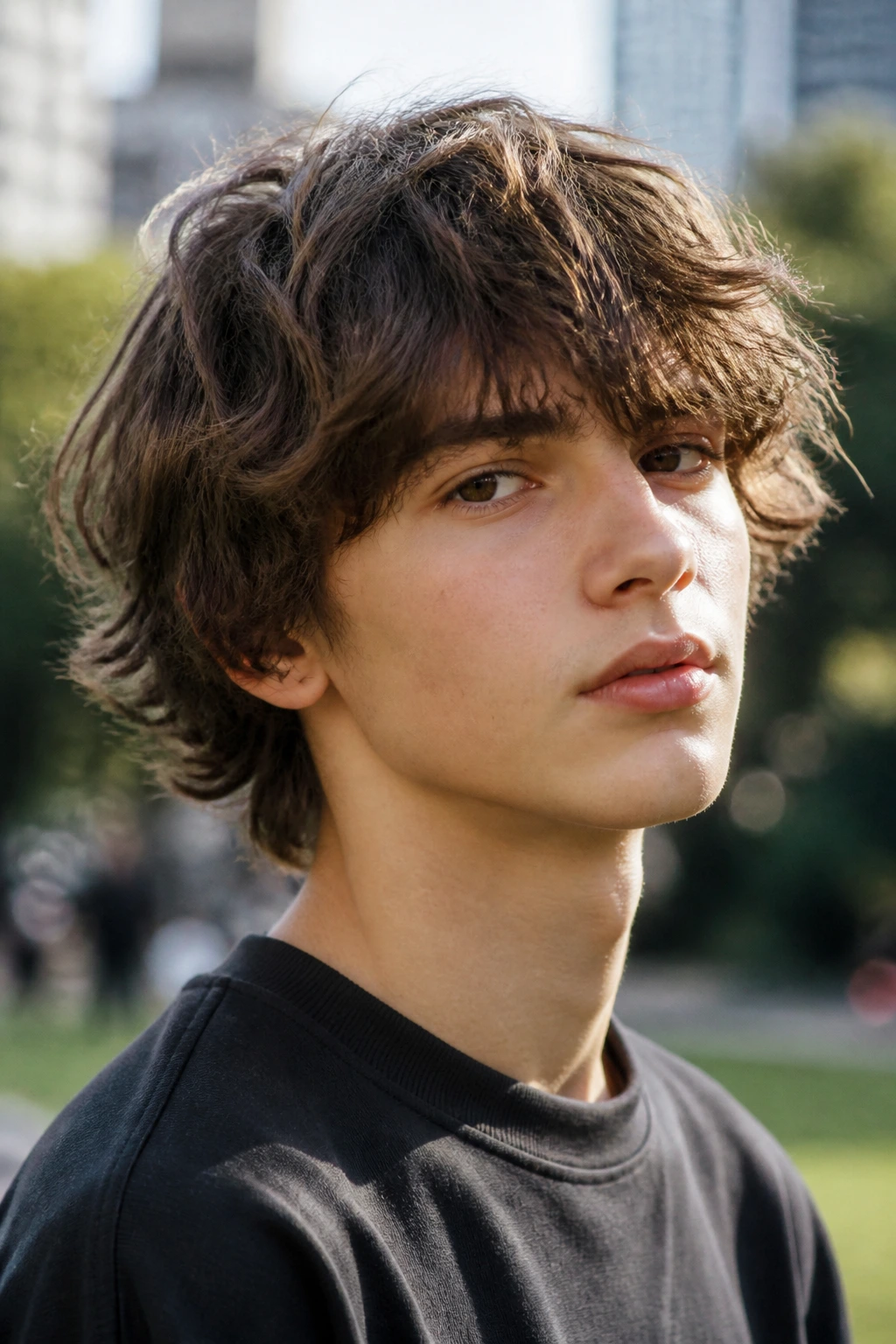
Some boys look best when their hair is a little bit chaotic. The textured mop cut is built for that. It hangs forward in soft, shaggy pieces, keeps the wave visible, and gives younger boys especially that slightly cool, slightly unruly shape that somehow works better with sneakers and a backpack than anything polished.
I’d use this style for hair that grows fast and hates staying flat. The cut should have enough length on top to fall into the eyes if you let it, but not so much that it blocks vision. A barber can keep the fringe soft and layer the crown so the hair doesn’t puff into one round shape.
A little water and a small dab of cream are usually enough. Don’t overthink this one. The cut looks best when it has movement and a bit of mess at the edges.
11. Half-Up Knot With Loose Ends

The half-up knot is more style than haircut, but on long wavy hair it can be the difference between “hair everywhere” and “this actually stays put.” Pulling the top half back keeps the face clear, while the lower half keeps the wave and length visible. It’s practical on school days, sports days, and any morning where the clock has already started winning.
The best version leaves the knot loose and low, not tight and stretched into a little pebble at the crown. That tension pulls the wave out of shape. A soft tie, two turns only, and a few loose pieces around the ears make it look relaxed instead of forced.
I like this option for boys who are growing out a cut and need a middle ground before the hair hits the shoulders. It also keeps the front from falling into the eyes without sacrificing the rest of the length. Small fix. Big difference.
12. Layered Hockey Flow
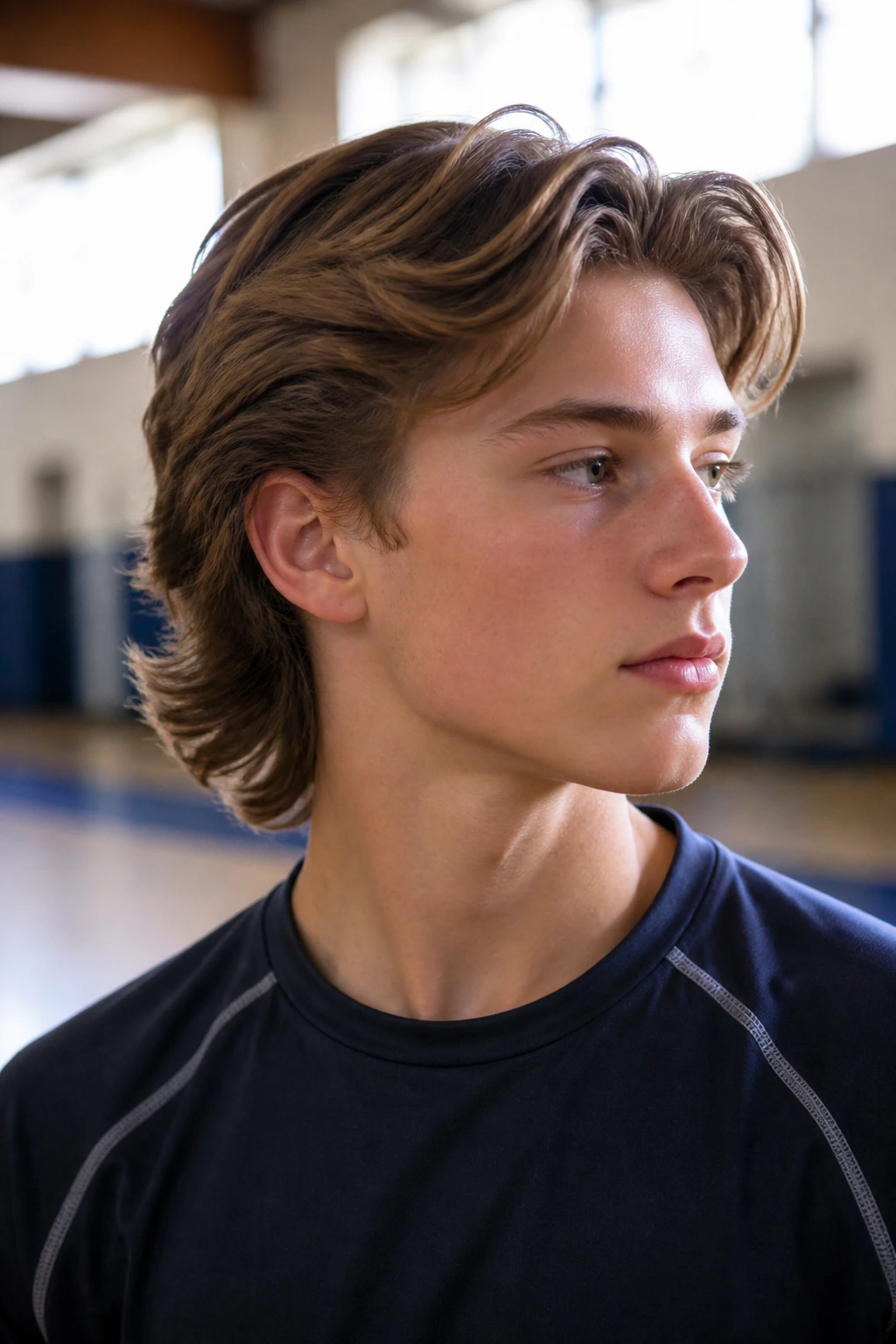
If the bro flow is laid-back, the hockey flow is its sharper cousin. The hair moves back and around the ears, but the layers are a little more structured, and the back often carries a touch more length. The result is athletic, clean, and easy to tuck under a helmet or cap.
This cut works well when the hair is thick enough to hold its shape but not so thick that it turns into a helmet of its own. The barber should keep the layers soft through the top and leave the nape long enough that the flow still looks deliberate when it peeks out from under a collar.
Compared with a curtain fringe, this one keeps more hair away from the face. Compared with a shag, it stays neater around the ears. If a boy is active but still wants length, this is one of the least annoying answers.
13. Long Wavy Crop With a Low Taper
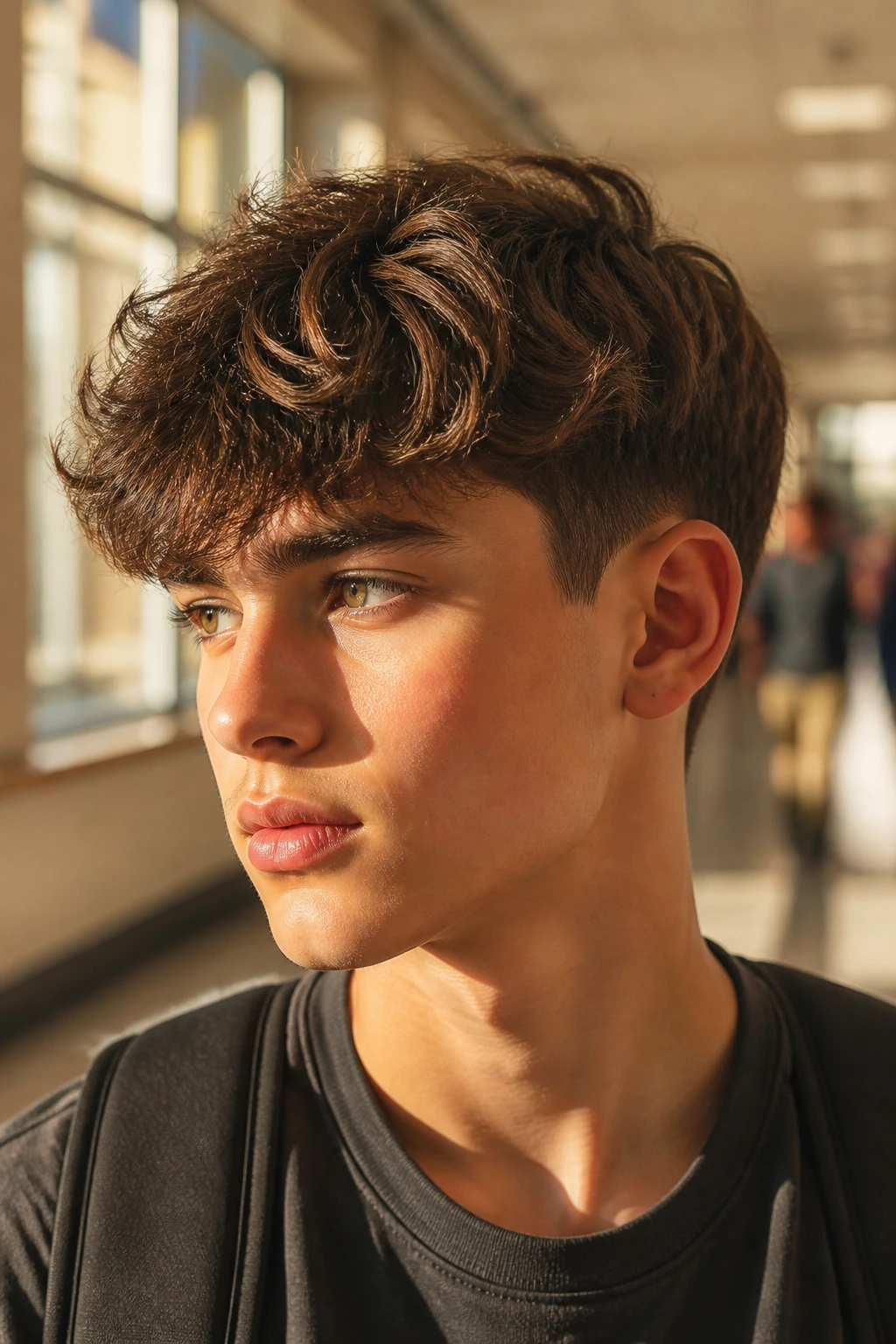
A low taper gives long wavy hair a cleaner edge without stealing the length from the top. This cut is a nice middle road for boys who want the feel of long hair but need the sides and neckline under control. The wave stays visible, the shape stays neat, and the overall look doesn’t drift into “grown out” territory.
Why this version behaves so well
A low taper keeps the hair below the temple line and around the nape from expanding too much, which matters when the hair is thick or the wave is tight. The top can still sit at 5 or 6 inches, but the edges look finished.
- Best with: school dress codes, sports, and boys who hate constant brushing.
- Ask for: light layering through the top, taper around ears and neckline, no harsh disconnect.
- Style with: a few drops of leave-in and air-drying, or a diffuser on low heat.
One rule: keep the taper low enough that the length still feels like the main event.
14. Shoulder-Length Undone Layers
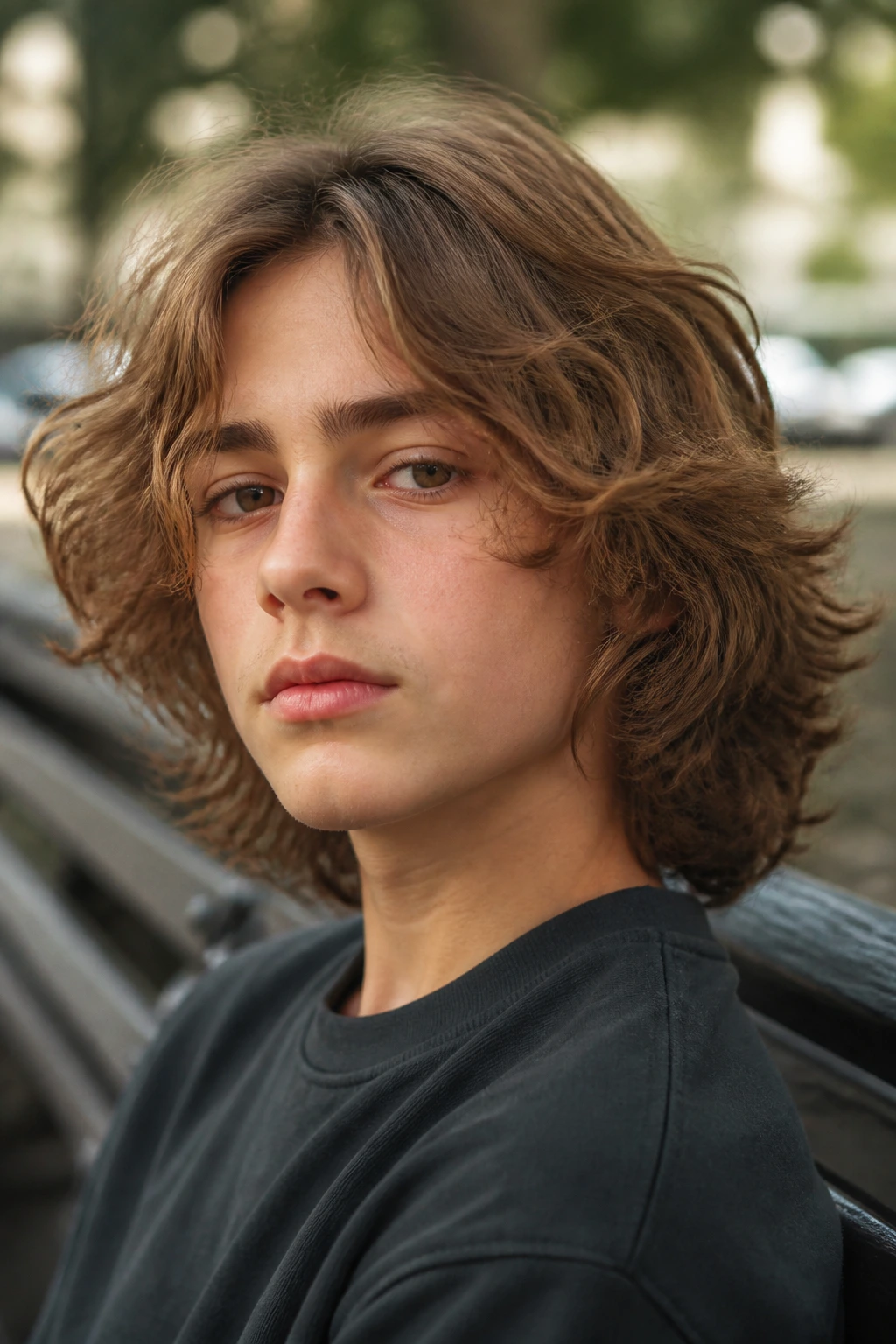
This is the style for boys who wear hair like they don’t care, even though the cut itself has plenty of thought behind it. Shoulder-length undone layers let the wave sit loose and open, with enough movement that the hair never looks carved into place. It has a little rock-band energy, but without forcing anything.
What makes it work is restraint. The layering should be soft, not choppy. The outer line should stay readable, not shredded. If the barber goes too aggressive with the razor, the ends start frizzing at the edges and the whole shape loses its calm. Keep the layers long and the wave gets to do the heavy lifting.
This style looks best when the hair is air-dried or barely diffused. Brush it dry and you’ll undo the whole point. Finger-comb it, scrunch it once or twice, and leave it alone.
15. Long Waves With Underlayer Control
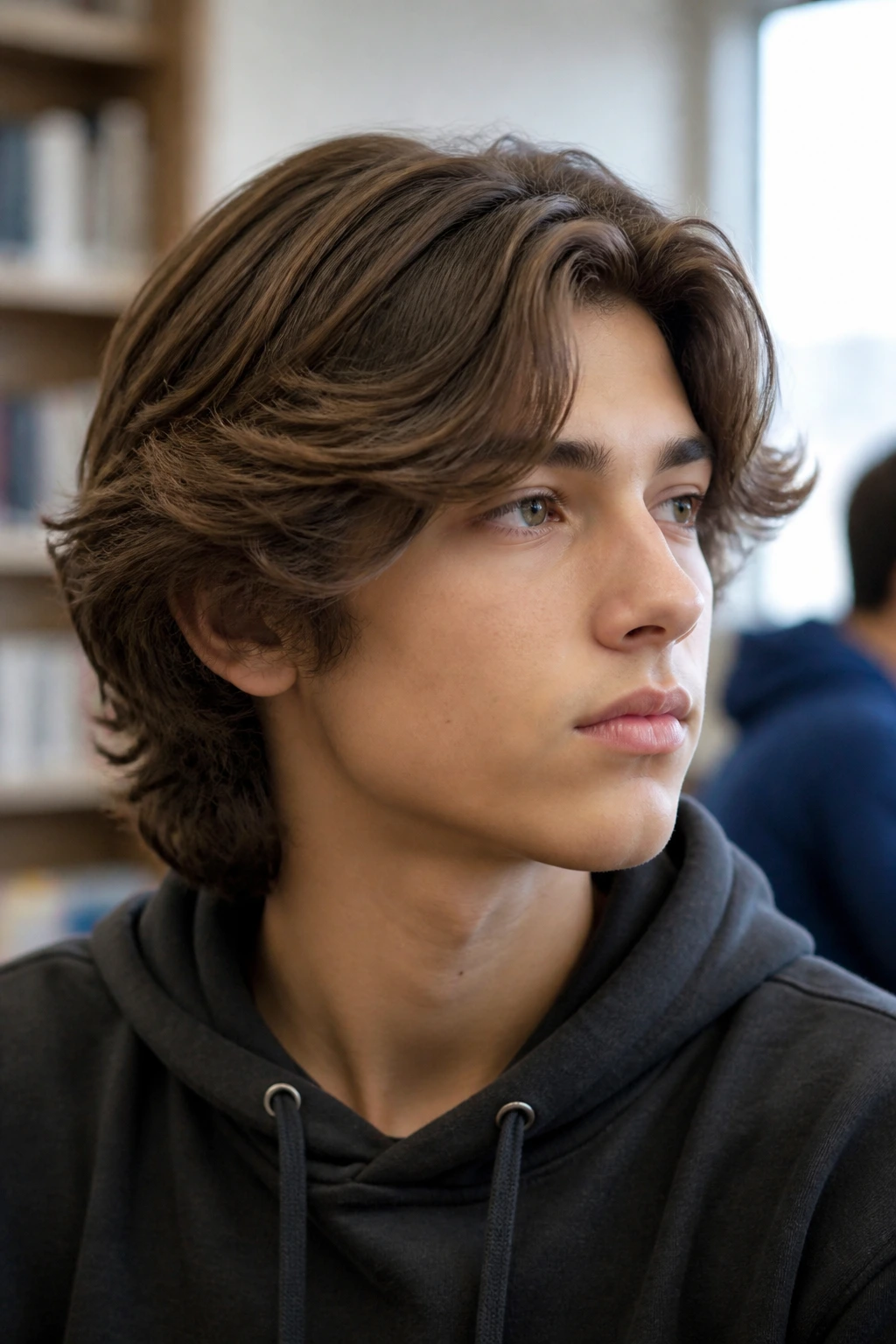
What if the wave is great on top but turns bulky underneath? That’s when the haircut needs to work below the surface. Underlayer control means the barber removes weight from the hidden inside of the shape while leaving the outer line long. The top still looks full; the underside stops pushing the whole cut outward.
This is one of the smartest choices for boys with thicker hair, especially if the crown gets puffy while the sides stay flat. The trick is subtle internal layering. Too much thinning makes the hair fray. Too little, and the sides balloon the second the air gets damp.
How to ask for it
Say you want the perimeter kept long, but the interior de-bulked so the hair lies closer to the head. That sentence does a lot of work. It tells the barber what to remove and what to protect, which is half the battle with long wavy hair.
16. Asymmetrical Side Sweep
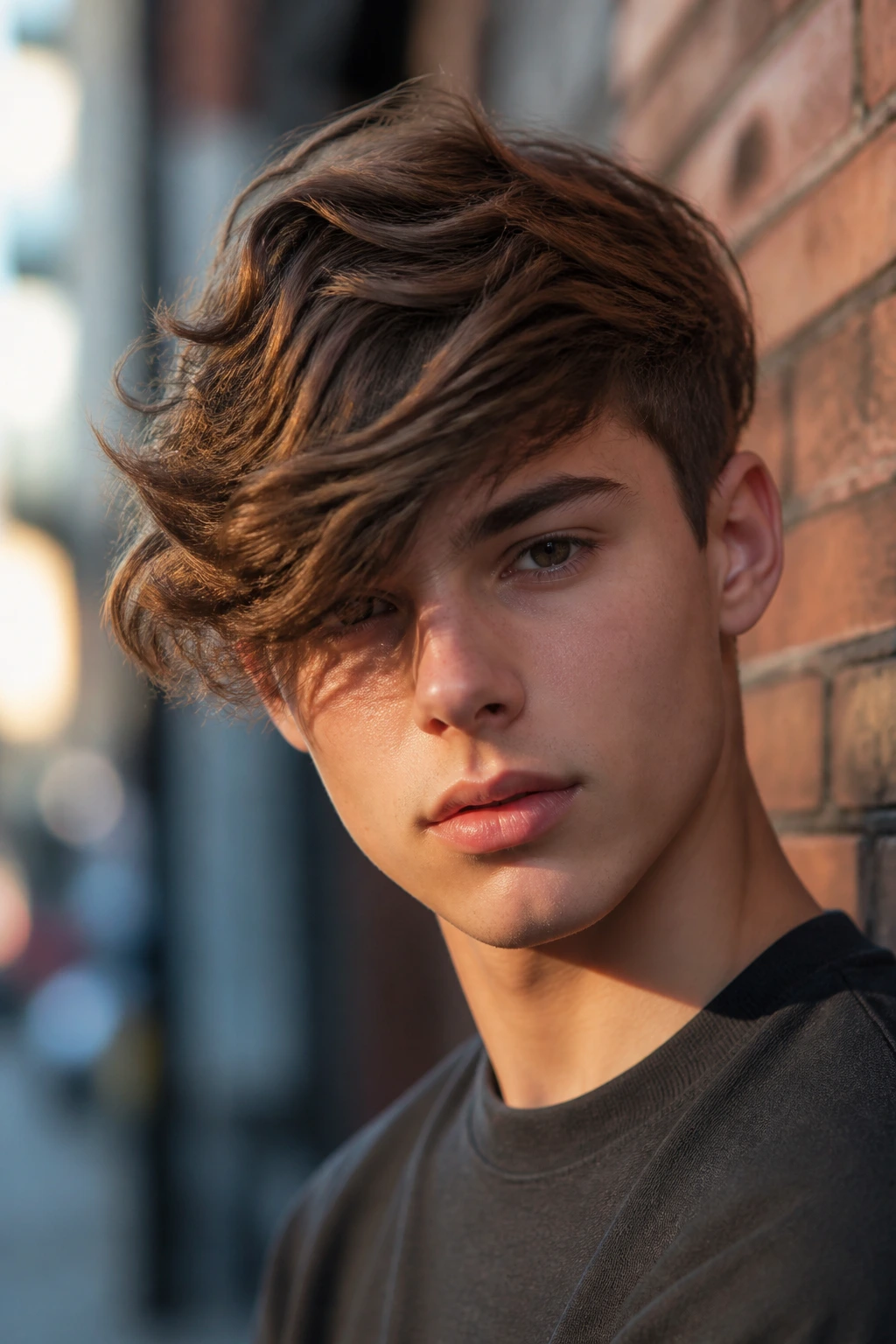
A side sweep with one side a little fuller than the other can make wavy hair look sharper without making it stiff. This is a good pick for boys who like a bit of shape but do not want a neat center part. The hair falls diagonally across the forehead, then sways off to one side with a little more drama than a basic side part.
The asymmetry helps with face shape too. Rounder faces often benefit from the line moving across the forehead instead of sitting straight down. Stronger jaws can carry the look without it feeling too soft. And because the wave is doing part of the shaping, the cut doesn’t need much product.
A light cream or mousse is enough. If one side keeps splitting, the fix is usually a softer blow-dry at the roots, not more wax. Hair remembers direction better than people expect.
17. Blunt Ends With Light Internal Layers
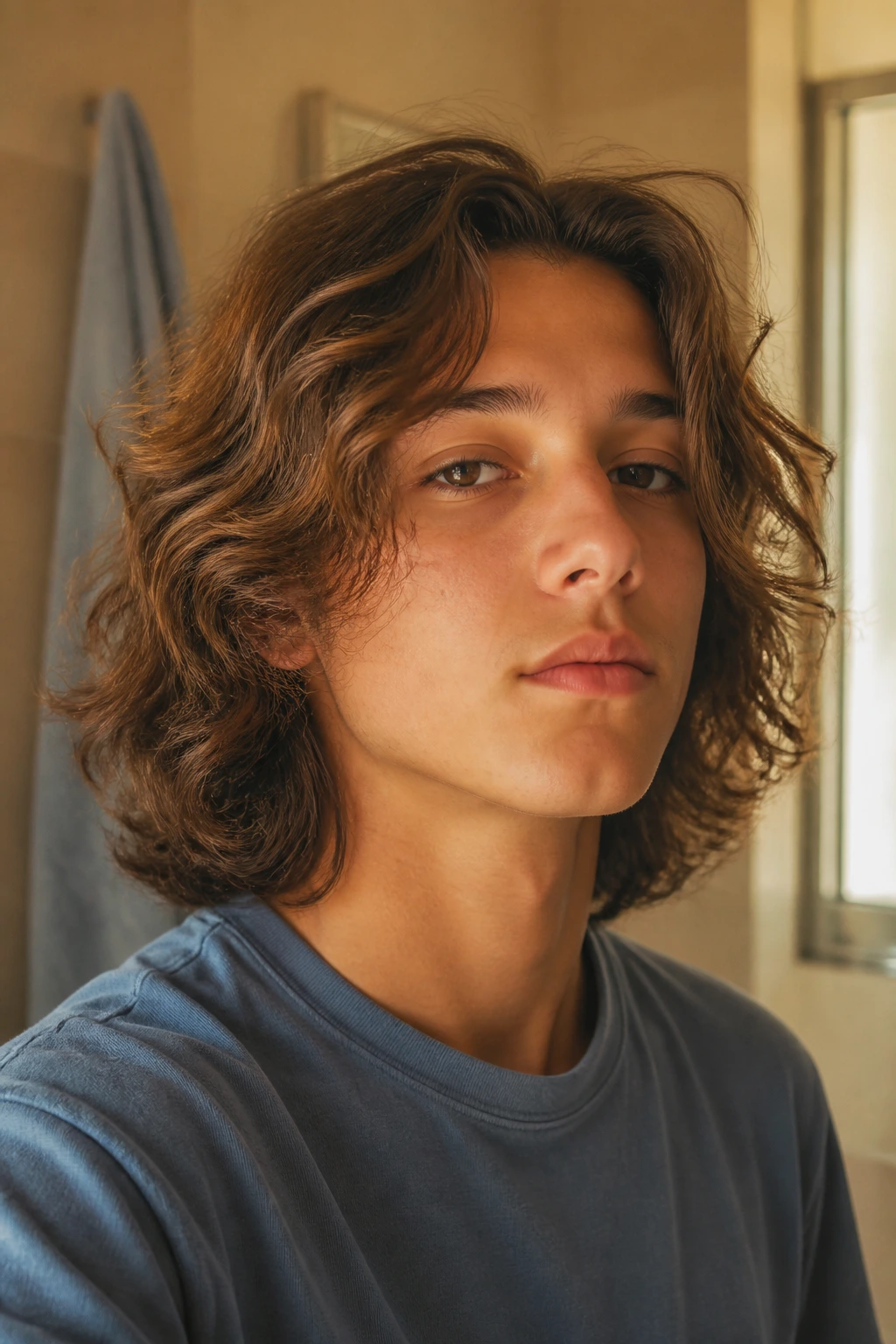
Not every long wavy cut needs a lot of feathering. On some boys, a cleaner edge with just a little internal layering is the better move. The blunt perimeter keeps the hair looking full, which is useful for fine or medium hair, while the hidden layers stop the shape from feeling boxy.
This style has a more controlled look than a shag or wolf cut. The wave still shows, but the ends land with a little more weight. I like it when the goal is long hair that still looks tidy after a wash and a quick comb-through.
It also grows out well. Because the perimeter stays readable, you can stretch the haircut a little longer between trims without it turning ragged fast. That matters in the real world, where nobody is scheduling salon visits around hair theory.
18. Soft Grow-Out Cut
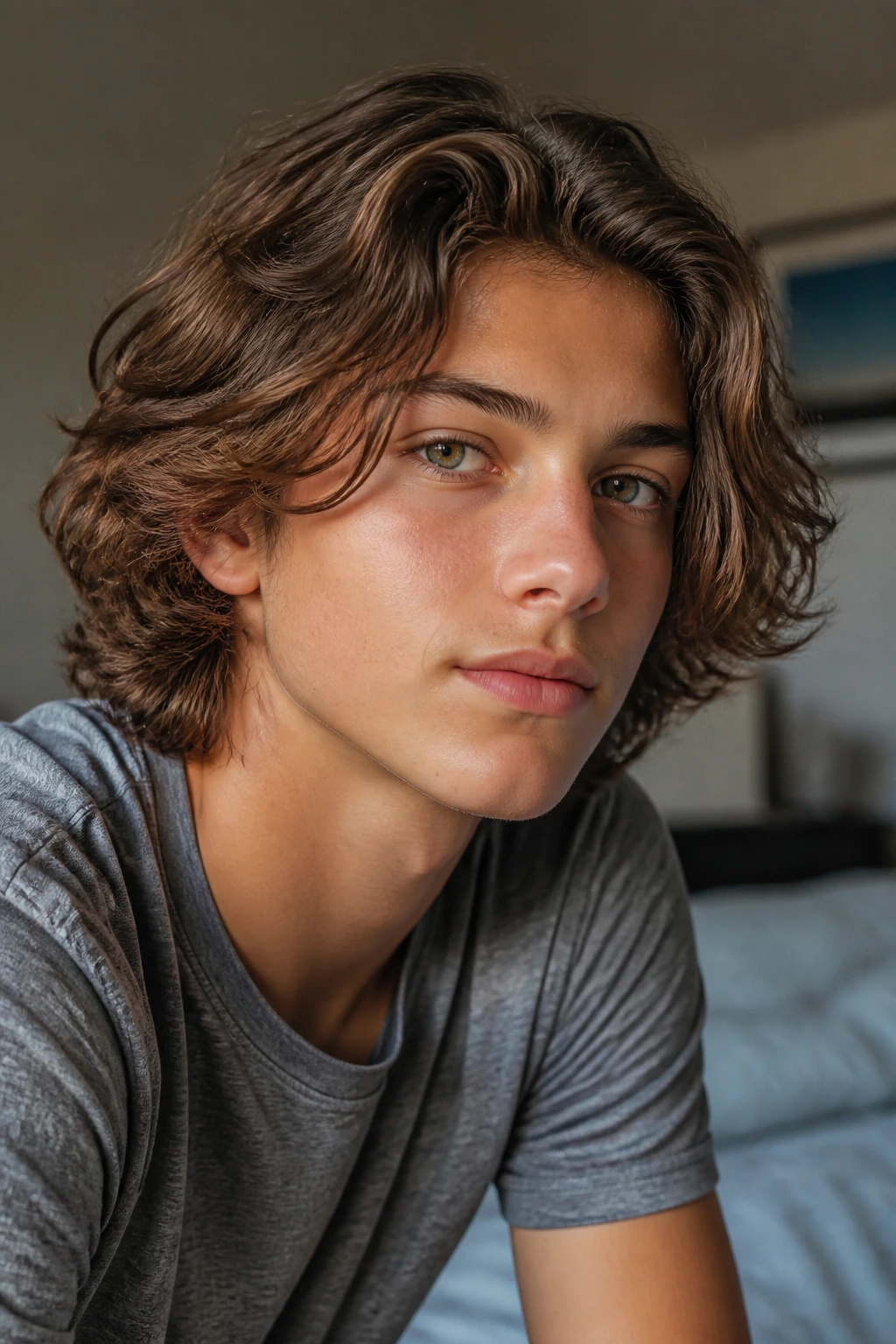
The soft grow-out cut is what happens when long hair needs to stay long, but the edges need help. It keeps the shape generous around the ears and collar, leaves the front long enough to tuck or part, and uses a few invisible layers so the whole thing does not balloon into a square. Think of it as a maintenance-friendly version of long wavy hair, not an accident.
This is a good choice when a boy is in the middle of growing his hair out from a shorter cut. The transition can be ugly if the sides catch up too fast and the top starts looking lonely. A soft grow-out cut smooths that awkward phase by keeping the wave connected from front to back.
If you ask for one thing here, ask for balance. Not a polished shape. Not a strict part. Balance. That single word covers most of what this cut needs.
What to Tell the Barber Before the Cape Goes On

A good barber can do a lot with wavy hair, but only if the request is specific enough to matter. “Keep it long” is not enough. The shape that comes back from that conversation depends on where the hair is thick, where the wave bends, and how much upkeep the family can realistically handle between cuts.
Bring at least one photo, and make sure it shows the front and the sides. Then say where the hair should land: eyebrow, cheekbone, jaw, collarbone. Those reference points are more useful than vague words like medium or long, because the ears and the fringe tell the whole story. If the boy tucks hair behind his ears, mention that. If the hair has to stay above the eyes for school, mention that too.
A few other phrases help a lot:
- “Keep the perimeter long.” This tells the barber not to remove the weight that lets waves sit down.
- “Take bulk out from underneath.” That keeps the surface from looking shredded.
- “Point-cut the ends.” This softens the outline instead of leaving it blunt and heavy.
- “Don’t thin the top too much.” Wavy hair can frizz fast when it loses too much internal structure.
Essential Tools for Styling Long Wavy Hair
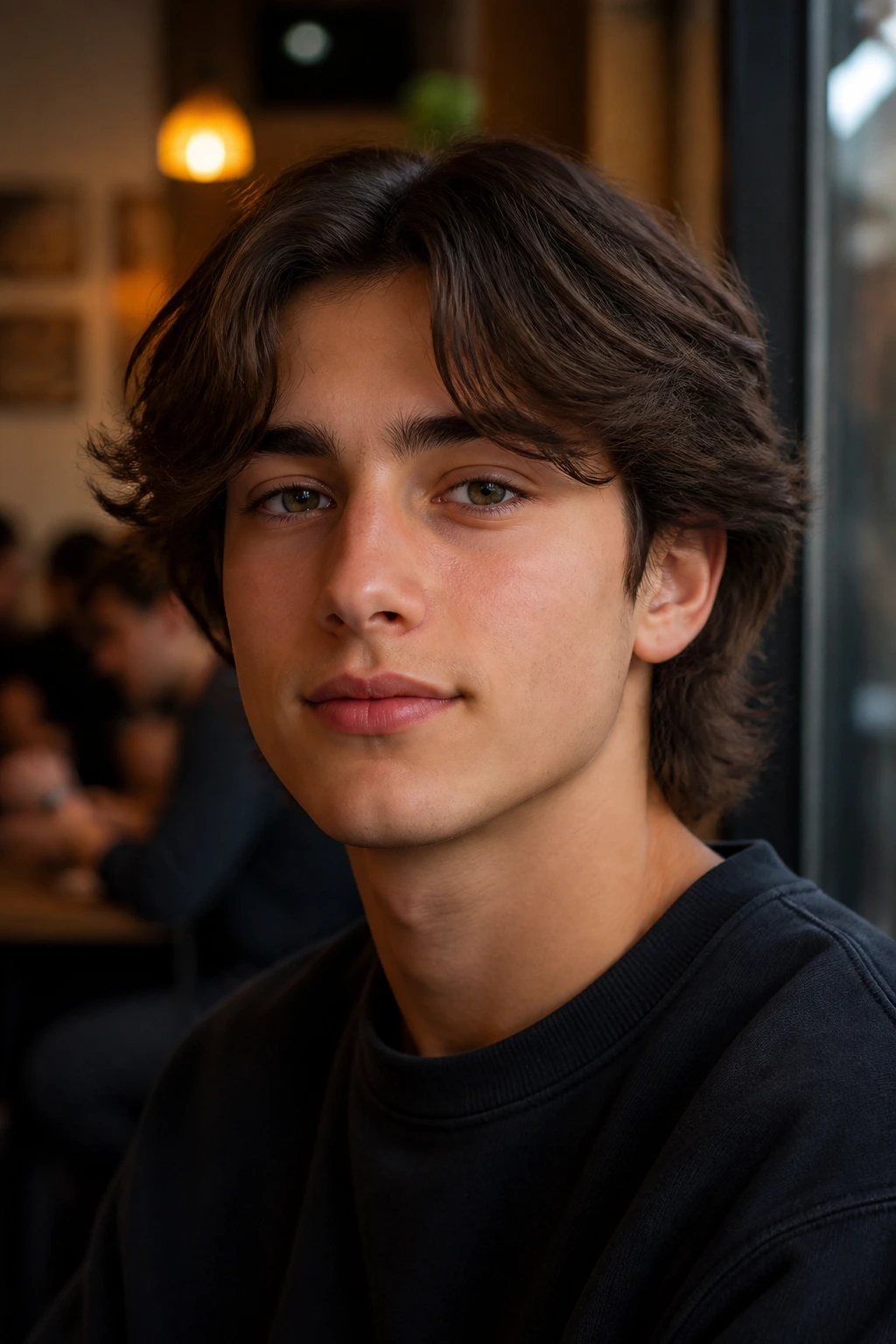
- Spray bottle with water: Useful for reactivating waves in the morning without a full wash.
- Wide-tooth comb: Helps detangle damp hair without dragging the wave out.
- Microfiber towel or soft T-shirt: Cuts down on friction, which matters a lot with long wave patterns.
- Leave-in conditioner: Keeps the ends soft and stops the hair from feeling dry after washing.
- Light curl cream or styling cream: Gives shape without turning the hair crunchy.
- Sea-salt spray: Useful for looser waves that need a little grit and separation.
- Low-heat blow dryer with diffuser: Best when you need the style to hold but do not want frizz.
- Small clips or soft ties: Handy for half-up styles, face-framing sections, or sports days.
- Satin pillowcase: Quietly helpful. It keeps the wave from getting smashed flat overnight.
How These Styles Wear in Real Life
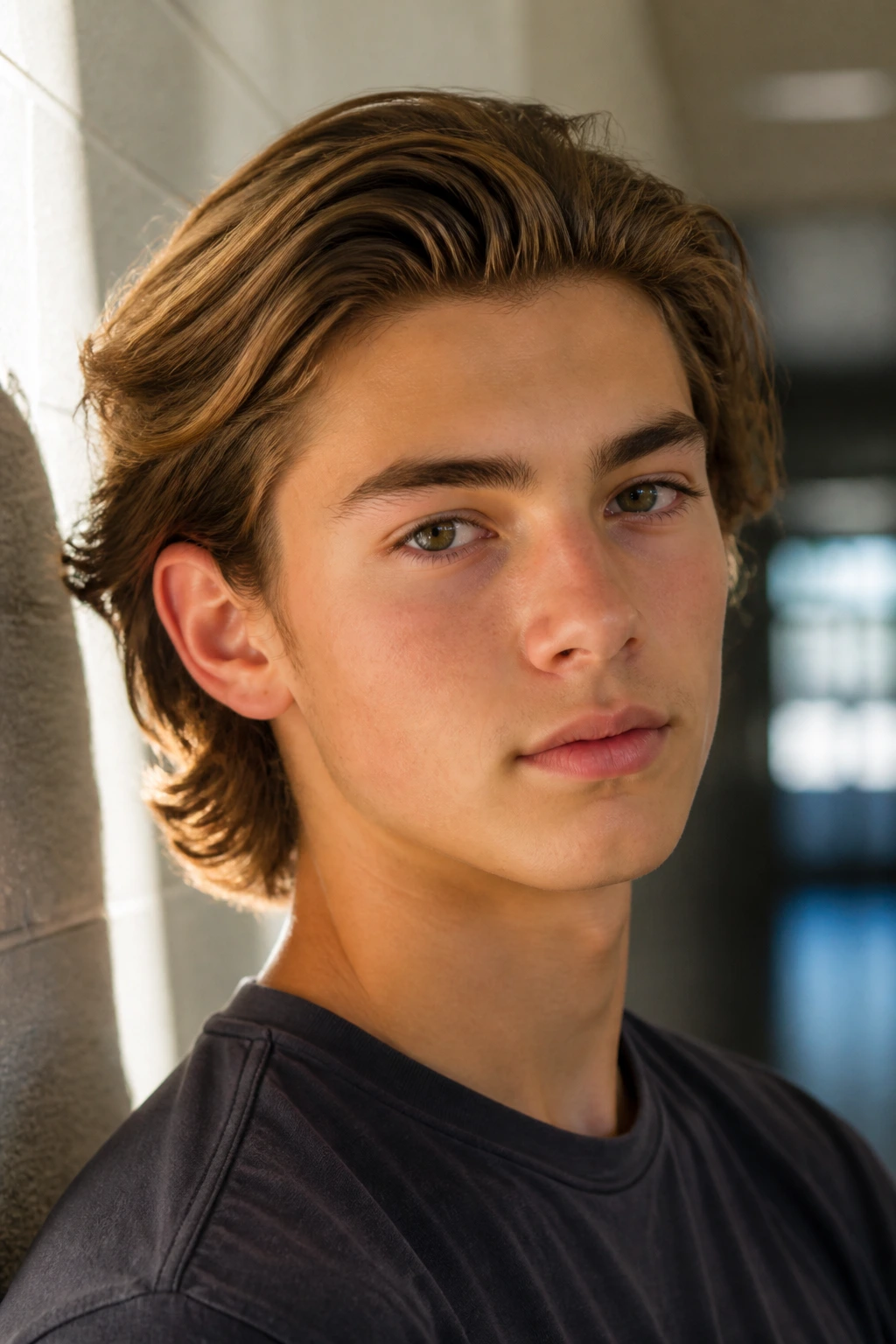
Presentation: Long wavy hair looks strongest when the front sits somewhere between the eyebrows and cheekbones, and the back follows the collar line instead of sticking out. If the hair reaches the shoulders, the ends should look like they belong there on purpose.
Accompaniments: These cuts work well with hoodies, school shirts, collared polos, and hats, especially when the sides are long enough to tuck without fighting the shape. A visible wave around the face looks better when the neckline is clean.
Portions: For most boys, 4 to 7 inches on top and a little less on the sides is the sweet spot for movement. Thick hair can usually carry more length; fine hair often needs less bulk and more careful layering.
Beverage Pairing: Not the right category here. The hair equivalent is a styling finish: soft and airy for casual days, a cleaner tuck for school, or a looser, brushed-back shape when the haircut needs to look a little more put together.
Styling Tricks That Keep Wavy Hair from Puffing Up
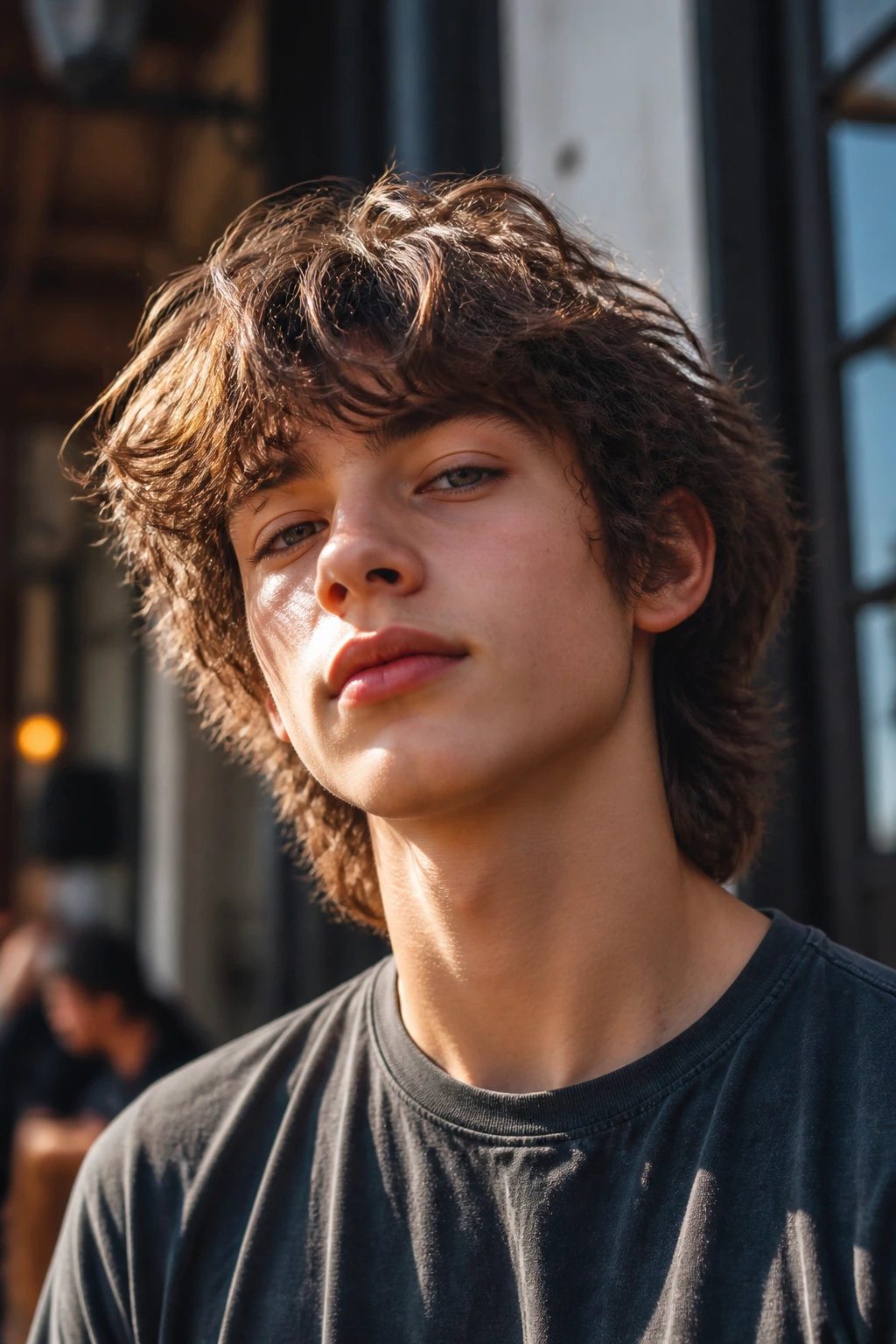
Long waves have one annoying habit: if you dry them badly, they get bigger in all the wrong places. The fix usually has less to do with product and more to do with how you dry the hair. A rough towel is the enemy. A soft T-shirt, squeezed gently from ends to roots, works better and leaves the wave less frayed.
Product should be light and placed with some restraint. A nickel-size amount of leave-in or cream is enough for most boys with shoulder-length hair. Put it mostly on the mid-lengths and ends, not the scalp. The roots don’t need help staying soft; they need room to lift.
If the hair is especially puff-prone, use a diffuser on low heat and keep your hands out of the hair once the shape starts setting. That’s the part people ignore. Touching the hair over and over breaks up the wave pattern and creates fuzzy ends that look like static.
Sleep matters too. A satin pillowcase or even just a loose braid can keep the shape from turning into a nest by morning. Small fix. Big payoff.
Common Mistakes That Turn Good Waves into a Weird Shape
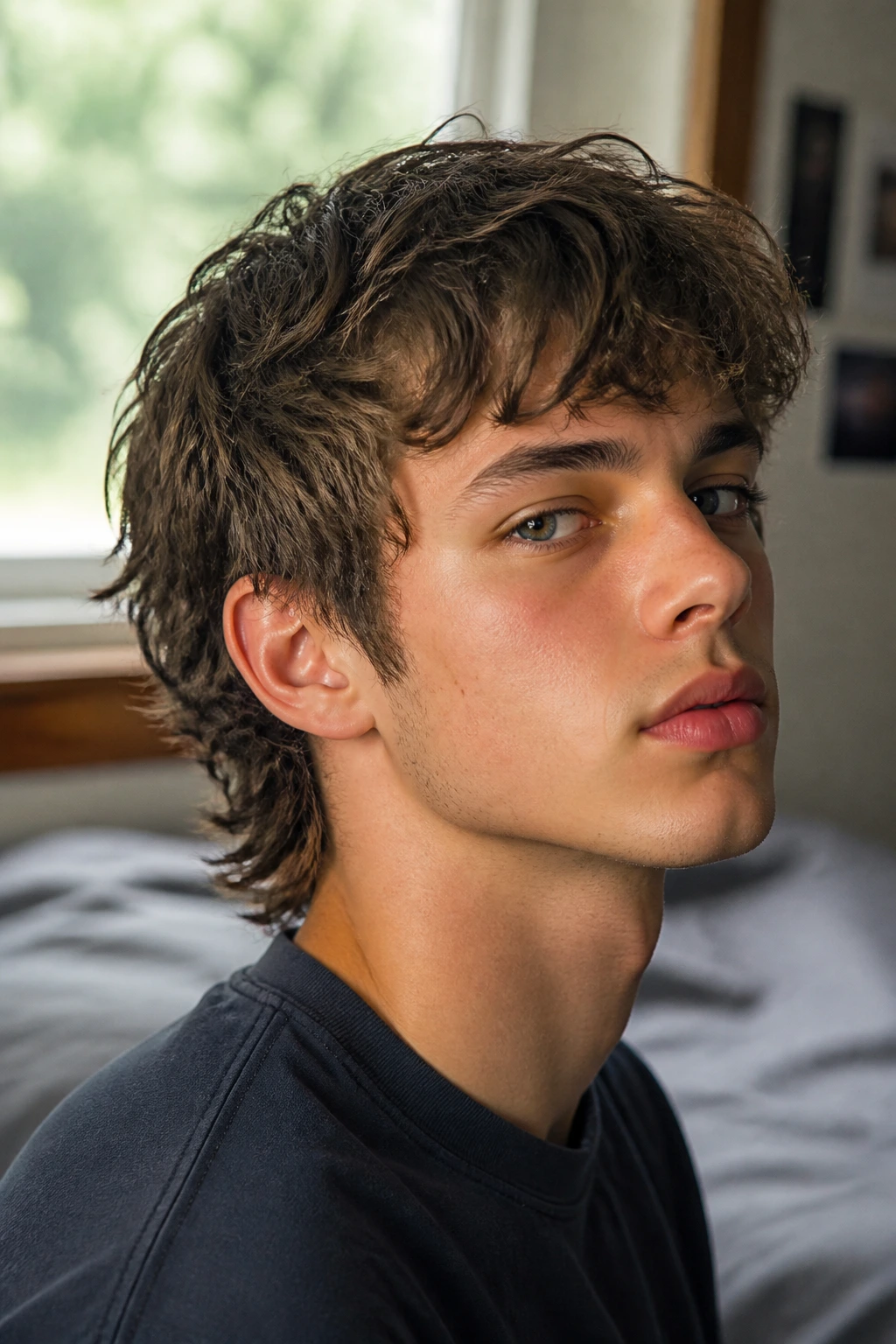
- Cutting the sides too short: This turns long wavy hair into a wide triangle, especially around the ears. The fix is to leave enough length on the sides that the wave can fall downward instead of exploding outward.
- Over-thinning the top: The hair looks okay in the chair and frizzy three days later. Ask for light internal debulking, not heavy texturizing.
- Using heavy wax or gel: Waves can’t move under stiff product, so the cut collapses into clumps or looks greasy. A light cream or mousse usually works better.
- Brushing it dry: That pulls the wave apart and leaves the ends puffing. Detangle when damp, then leave it alone.
- Skipping trims for too long: Long hair grows fast at the edges, and the neckline is usually the first place that starts looking ragged. A small cleanup keeps the whole shape believable.
Variations for Fine, Thick, Busy, or Sporty Hair
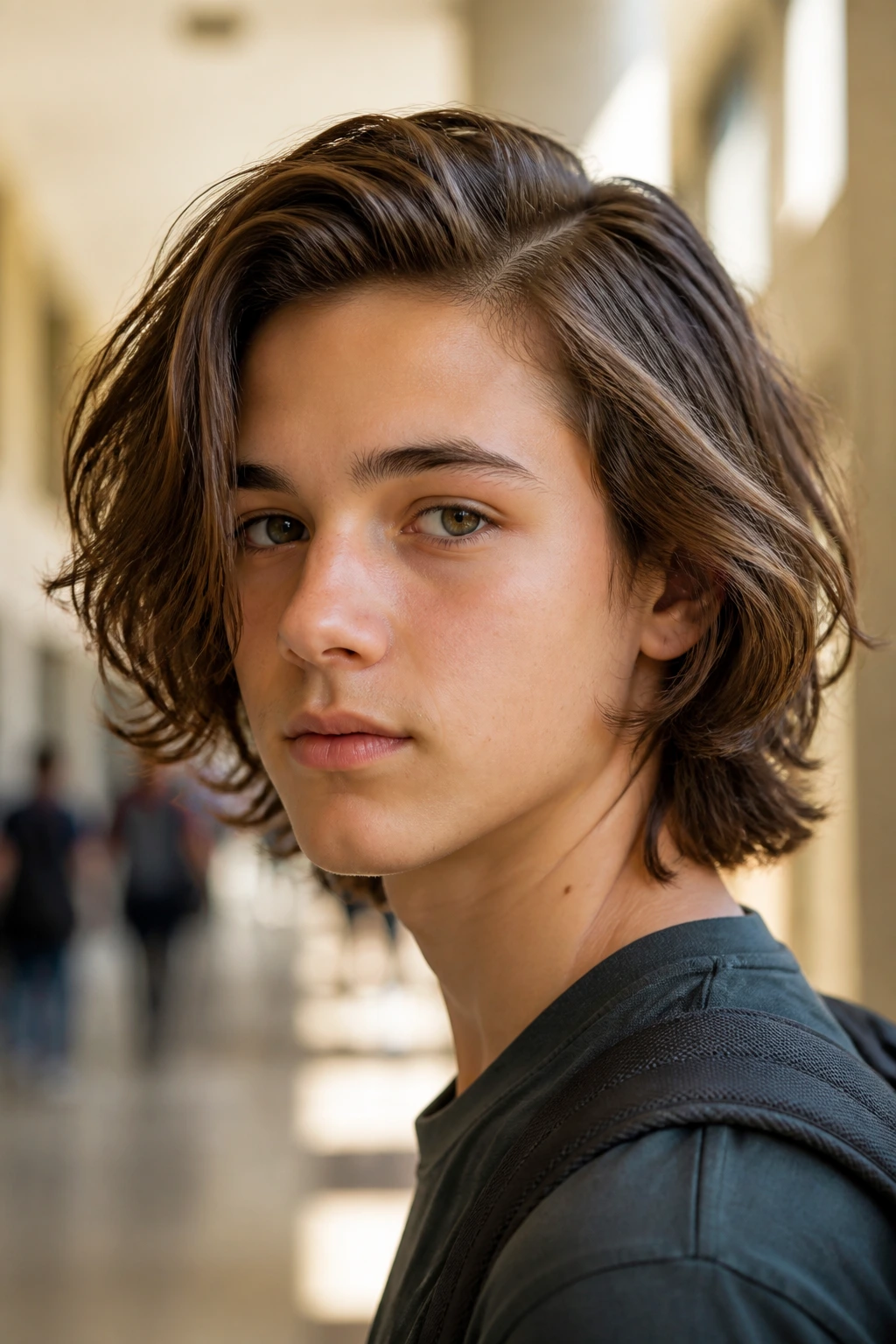
The Fine-Hair Lift: Keep the layers light and the ends blunt-ish so the hair holds the illusion of fullness. A mousse or foam gives better shape than a heavy cream, which can flatten the top and make it look thinner.
The Thick-Hair Tamer: Ask for internal weight removal, especially under the crown and near the sides. This version keeps the surface long but stops the bulk from making the head look wider than it is.
The School-Day Neat Cut: Leave enough length for a tuck, but clean the nape and around the ears every few weeks. It still looks long, just less wild when the dress code is watching.
The Sports-Ready Version: Keep the fringe long enough to push back and the back long enough to tuck under a cap or helmet. A soft tie or half-up knot makes this one practical without chopping the style off.
The Low-Product Version: Use only water and a touch of leave-in. This works best on waves that already have a natural bend and don’t need much help. Anything heavier starts feeling like work.
Keeping the Cut in Shape Between Haircuts
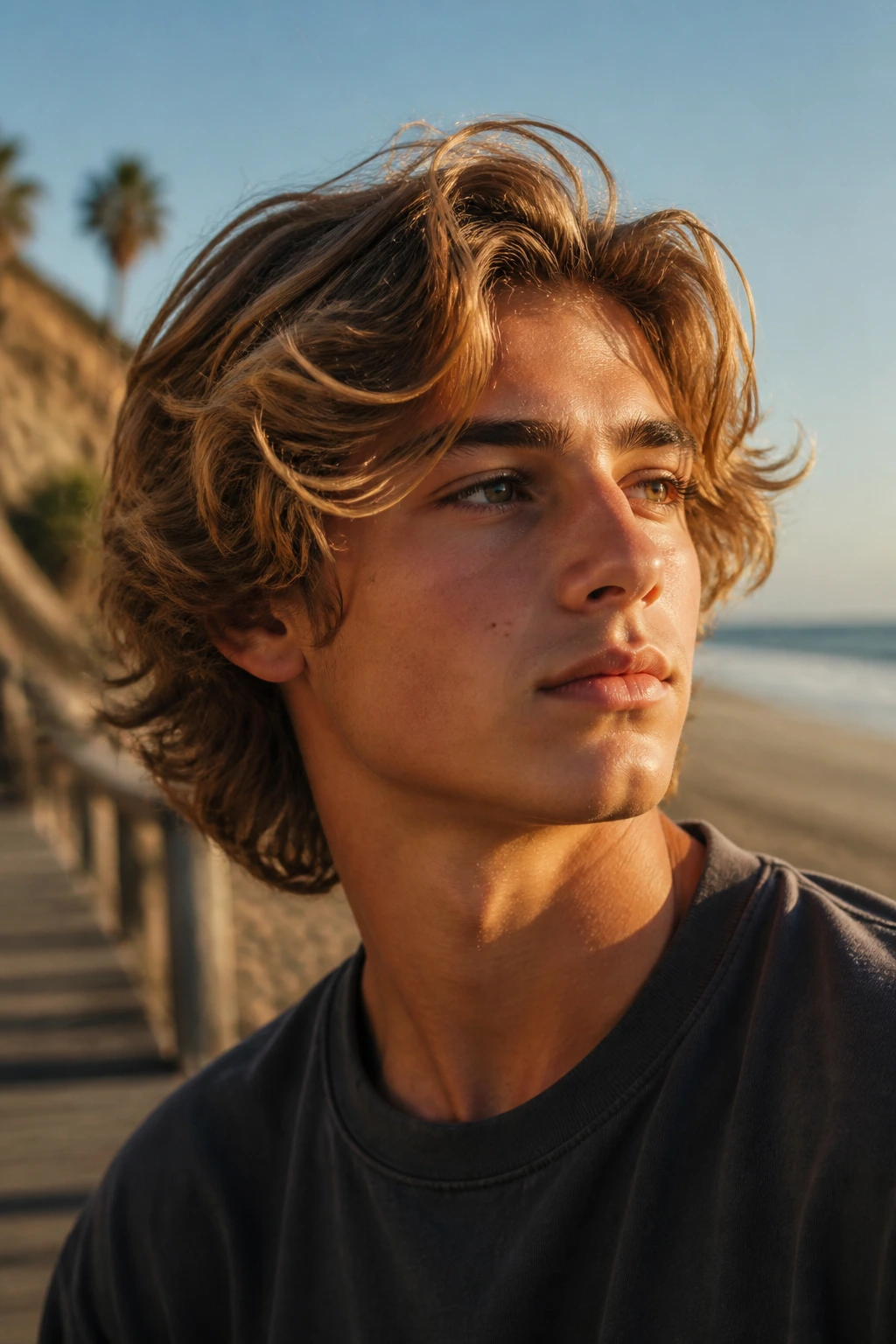
Long wavy hair does not need constant salon visits, but it does need a little maintenance or the outline gets fuzzy fast. The easiest rule is this: keep the neckline and fringe from getting sloppy, and the rest can stretch farther than people expect. A light trim every 8 to 12 weeks is usually enough for a cut that is meant to stay long. If the boy’s hair grows fast or the front falls into the eyes, shorten that schedule a bit.
Washing too often can make long waves look dry, especially at the ends. Two to four washes a week is enough for most boys, with conditioner on the mid-lengths and ends every time. If the scalp gets oily, rinse the roots more often and keep the conditioner away from the skin. That keeps the hair soft without making the whole thing collapse.
Night care sounds fussy, but it takes almost no time. A satin pillowcase, a loose braid, or even just moving the hair away from the neck before sleep helps a lot. If the ends start feeling rough, the answer is usually a tiny trim and a bit more leave-in, not a bigger product routine. Hair is blunt about that. It tells you what it needs.
Frequently Asked Questions
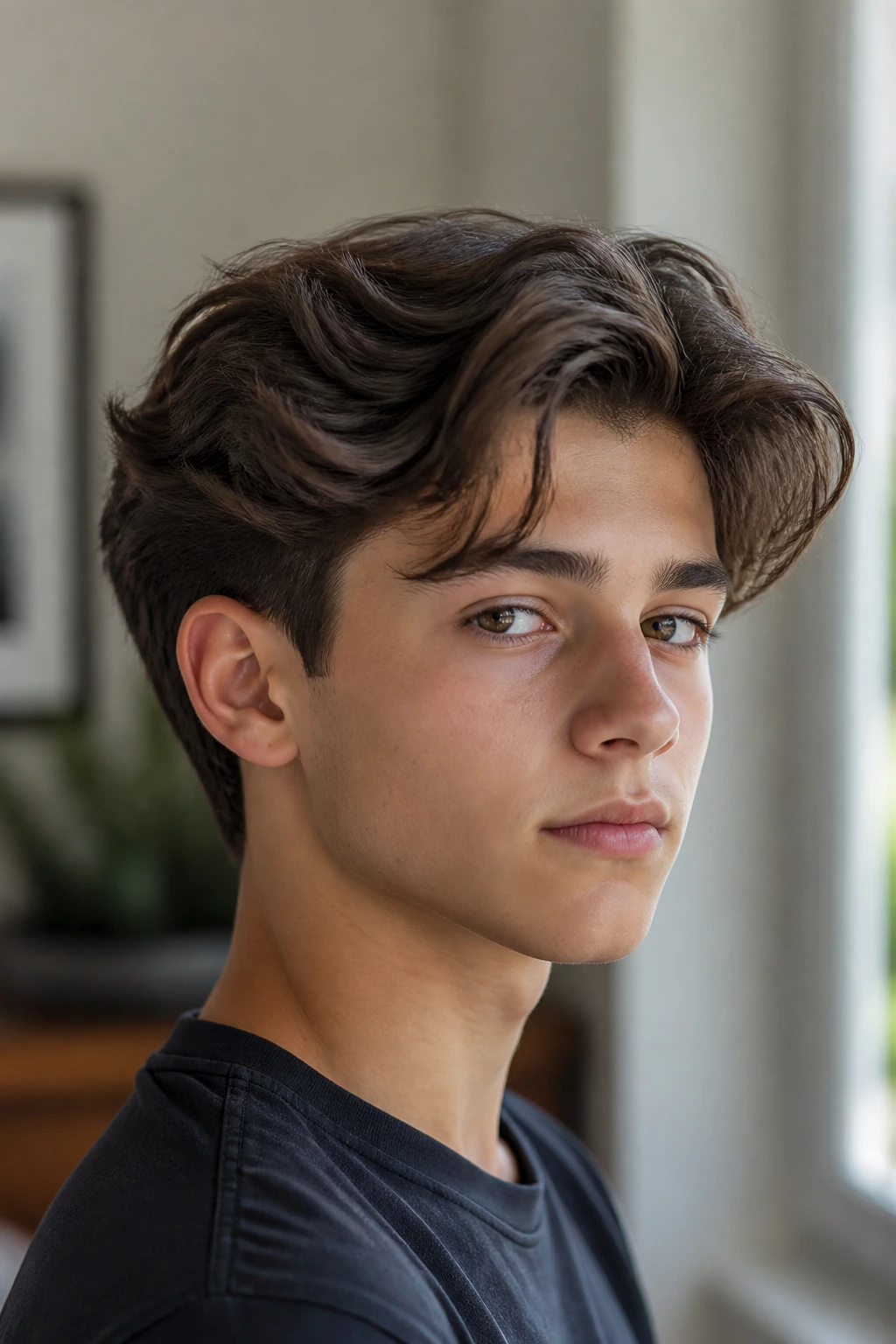
How long should boys’ wavy hair be for these styles?
Most of these looks start making sense around 4 to 7 inches, though shoulder-length versions obviously sit longer. Shorter than that and the wave can kick out at the sides instead of falling.
Should wavy hair be layered or kept one length?
Layering usually helps, but it should be controlled. One-length hair can look heavy and triangular; too many layers can make it frizzy. The sweet spot is light layering that removes bulk without erasing the outline.
What product works best for long wavy hair?
A light leave-in conditioner or styling cream is usually the safest first choice. Fine hair may prefer a mousse, and looser waves can use a touch of sea-salt spray, but heavy wax is usually the wrong move.
How often should a long wavy cut be trimmed?
Every 8 to 12 weeks is a sensible window for keeping the shape clean. If the fringe falls into the eyes or the nape starts looking fuzzy, trim sooner.
Can these styles work if the hair is very thick?
Yes, but the cut needs bulk removed from underneath. Thick wavy hair tends to balloon if the barber leaves too much weight at the sides, so ask for internal shaping rather than aggressive thinning on the surface.
What if the hair puffs up after washing?
Use a softer towel, keep product on the ends, and dry on low heat or air-dry while the wave is still guided in the right direction. Brushing it dry usually makes the puff worse.
Is a middle part better than a side part for boys with waves?
Not automatically. A middle part works well when the face is balanced and the hair falls evenly; a side part is better when the hair has a strong bend or the face needs a little diagonal line for shape.
Can a long wavy cut still look neat for school?
Absolutely. The cleanest versions keep the neckline and sides controlled while leaving the top long. A tuck behind the ears, a soft side part, or a low taper can make the whole thing feel more put together.
The Shape That Holds Up
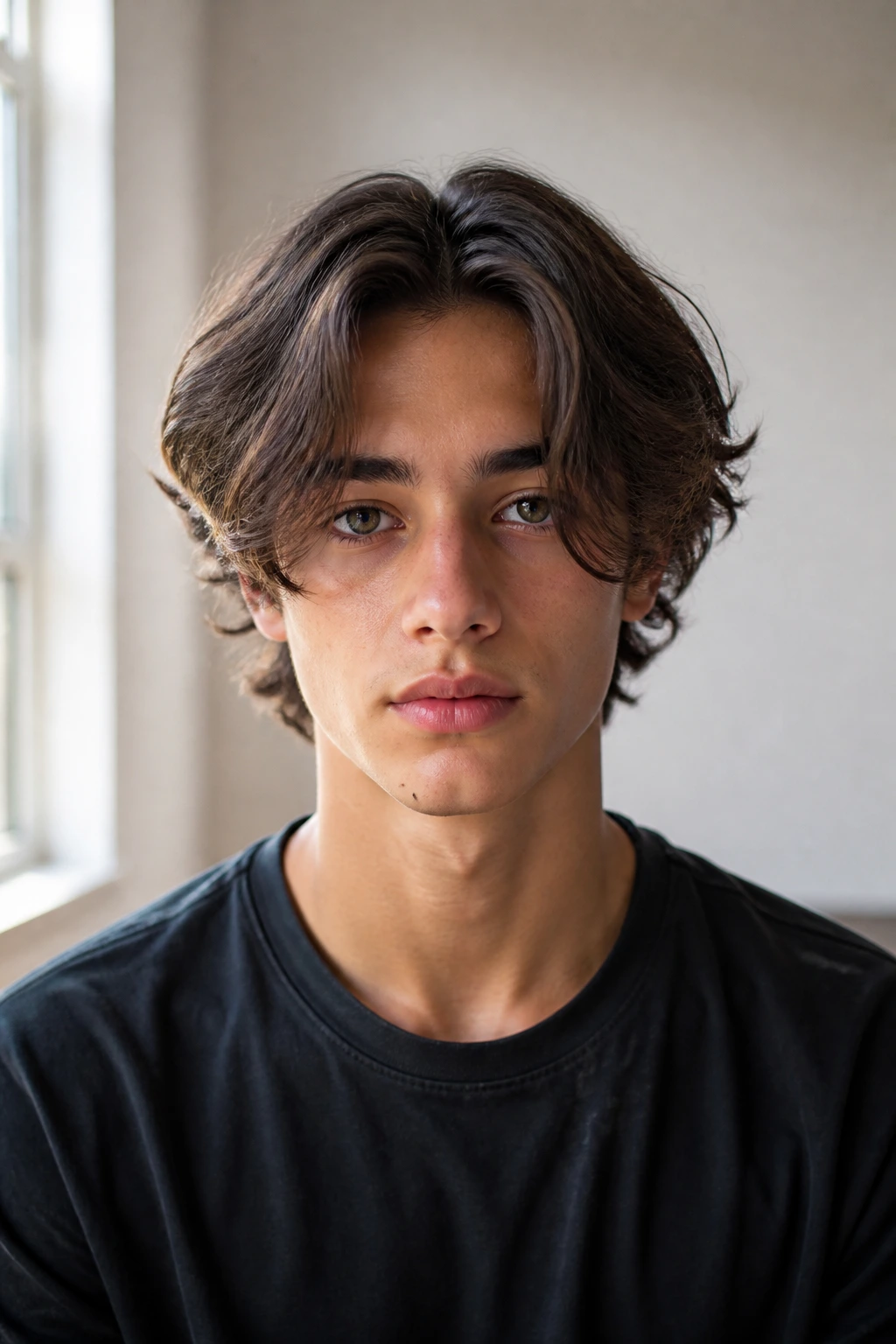
The best long hairstyle for wavy hair is the one that leaves the bend alone and trims only the parts that get in the way. That sounds almost too simple, but it’s the difference between hair that sits naturally and hair that needs a rescue mission every morning. Let the wave move. Clean up the outline. Don’t overfight the texture.
If you’re choosing from this list, start with the cut that matches the boy’s daily life, not the one that looks most dramatic in a photo. A style that survives school, sports, hats, and a rough towel is the one worth keeping. And when the next trim comes around, move in small steps. Wavy hair usually rewards patience.